EP2382985A1 - Rekombinanter impfstoff gegen hühnerschnupfen und herstellungsverfahren dafür - Google Patents
Rekombinanter impfstoff gegen hühnerschnupfen und herstellungsverfahren dafür Download PDFInfo
- Publication number
- EP2382985A1 EP2382985A1 EP09834924A EP09834924A EP2382985A1 EP 2382985 A1 EP2382985 A1 EP 2382985A1 EP 09834924 A EP09834924 A EP 09834924A EP 09834924 A EP09834924 A EP 09834924A EP 2382985 A1 EP2382985 A1 EP 2382985A1
- Authority
- EP
- European Patent Office
- Prior art keywords
- peptide
- seq
- vaccine
- amino acid
- acid sequence
- Prior art date
- Legal status (The legal status is an assumption and is not a legal conclusion. Google has not performed a legal analysis and makes no representation as to the accuracy of the status listed.)
- Granted
Links
Images
Classifications
-
- C—CHEMISTRY; METALLURGY
- C07—ORGANIC CHEMISTRY
- C07K—PEPTIDES
- C07K14/00—Peptides having more than 20 amino acids; Gastrins; Somatostatins; Melanotropins; Derivatives thereof
- C07K14/435—Peptides having more than 20 amino acids; Gastrins; Somatostatins; Melanotropins; Derivatives thereof from animals; from humans
- C07K14/46—Peptides having more than 20 amino acids; Gastrins; Somatostatins; Melanotropins; Derivatives thereof from animals; from humans from vertebrates
- C07K14/465—Peptides having more than 20 amino acids; Gastrins; Somatostatins; Melanotropins; Derivatives thereof from animals; from humans from vertebrates from birds
-
- A—HUMAN NECESSITIES
- A61—MEDICAL OR VETERINARY SCIENCE; HYGIENE
- A61K—PREPARATIONS FOR MEDICAL, DENTAL OR TOILETRY PURPOSES
- A61K39/00—Medicinal preparations containing antigens or antibodies
- A61K39/02—Bacterial antigens
-
- A—HUMAN NECESSITIES
- A61—MEDICAL OR VETERINARY SCIENCE; HYGIENE
- A61K—PREPARATIONS FOR MEDICAL, DENTAL OR TOILETRY PURPOSES
- A61K38/00—Medicinal preparations containing peptides
- A61K38/16—Peptides having more than 20 amino acids; Gastrins; Somatostatins; Melanotropins; Derivatives thereof
- A61K38/17—Peptides having more than 20 amino acids; Gastrins; Somatostatins; Melanotropins; Derivatives thereof from animals; from humans
-
- A—HUMAN NECESSITIES
- A61—MEDICAL OR VETERINARY SCIENCE; HYGIENE
- A61K—PREPARATIONS FOR MEDICAL, DENTAL OR TOILETRY PURPOSES
- A61K39/00—Medicinal preparations containing antigens or antibodies
- A61K39/02—Bacterial antigens
- A61K39/102—Pasteurellales, e.g. Actinobacillus, Pasteurella; Haemophilus
-
- A—HUMAN NECESSITIES
- A61—MEDICAL OR VETERINARY SCIENCE; HYGIENE
- A61K—PREPARATIONS FOR MEDICAL, DENTAL OR TOILETRY PURPOSES
- A61K39/00—Medicinal preparations containing antigens or antibodies
- A61K39/385—Haptens or antigens, bound to carriers
-
- A—HUMAN NECESSITIES
- A61—MEDICAL OR VETERINARY SCIENCE; HYGIENE
- A61P—SPECIFIC THERAPEUTIC ACTIVITY OF CHEMICAL COMPOUNDS OR MEDICINAL PREPARATIONS
- A61P31/00—Antiinfectives, i.e. antibiotics, antiseptics, chemotherapeutics
- A61P31/04—Antibacterial agents
-
- A—HUMAN NECESSITIES
- A61—MEDICAL OR VETERINARY SCIENCE; HYGIENE
- A61P—SPECIFIC THERAPEUTIC ACTIVITY OF CHEMICAL COMPOUNDS OR MEDICINAL PREPARATIONS
- A61P37/00—Drugs for immunological or allergic disorders
- A61P37/02—Immunomodulators
- A61P37/04—Immunostimulants
Definitions
- the present invention relates to a recombinant avian infectious coryza vaccine and a process for preparing the same. More particularly, the present invention relates to a recombinant avian infectious coryza vaccine comprising as an active ingredient a fusion peptide consisting of a part of an outer-membrane protein of Avibacterium paragallinarum (hereinafter also referred to as "A.pg") serotype A and a part of an outer-membrane protein of A.pg serotype C and process for preparing the same.
- A.pg Avibacterium paragallinarum
- Avian infectious coryza is one of the most important respiratory diseases caused by infection with A.pg. Chicken suffering from avian infectious coryza shows cardinal symptoms of a running nose, swelling of the face and epiphora. Avian infectious coryza brings about a great economical damage since it leads to decrease in the breeding rate of chicken, retarding of egg laying, decrease in egg production or failure of egg laying.
- A.pg serotype A (hereinafter also referred to as "A.pg-A") and A.pg serotype C (hereinafter also referred to as "A.pg-C").
- an inactivated vaccine For prevention of avian infectious coryza, an inactivated vaccine has hitherto been used widely which is obtained by inactivating the cells of A.pg-A or A.pg-C with formalin, thimerosal and the like.
- adverse side effects caused by such an inactivated vaccine have been an issue as it has been reported that local necrotic lesions are formed in the inoculated chicken when the vaccine is administered (see e.g. Non-patent reference 5).
- a recombinant vaccine has been investigated comprising a protective antigen against infection prepared by genetic recombination technique.
- Tokunaga et al. isolated and identified a gene coding for an outer-membrane protein of A.pg-A (outer-membrane protein gene) and found that a peptide obtained by expressing a part of said gene (HPG3.5kbp, HPG4.1kbp) in E. coli is useful as a protective antigen against infection for avian infectious coryza. Furthermore, using said DNA fragment as a probe, they obtained an outer-membrane protein gene from A.pg-C and compared nucleotide sequences of open reading frame of the outer-membrane protein gene from A.pg-A and A.pg-C.
- both nucleotide sequences had homology of about 80% as a whole, that a region of 3.4 kbp at the 5'- end (hereinafter also referred to as "Region 1”) and a region of about 1.2 kbp at the 3'- end (hereinafter also referred to as "Region 3”) had extremely high homology and that a region of about 1.5 kbp flanked by Region 1 and Region 3 (hereinafter also referred to as "Region 2”) had low homology (see Patent reference 1).
- Patent reference 2 and further reported that peptides coded by DNA fragments of about 5.1 kbp and 5.5 kbp, which are parts of the outer-membrane protein gene from A.pg-C, had similar function and effect (see e.g. Patent reference 3).
- Yamamoto et al. employed a polypeptide coded by a DNA fragment of 2,016 bp, which comprises most of the outer-membrane protein gene from A.pg-A to show usefulness of said polypeptide (see e.g. Patent reference 4) but the nucleotide sequence of about 300 bp at the 3' end of the DNA fragment reported by them was extremely different from those shown by Tokunaga et al. and Noro et al.
- the outer-membrane protein or its partial peptide from A.pg-A and A.pg-C is useful as a protective antigen against avian infectious coryza.
- the protective antigens against infection immunization to avian infectious coryza may efficiently be done.
- an approach by simple mixing necessitates separate production of the two infectious protective antigens and thus is costly.
- a vaccine for use in an animal unlike a vaccine for use in human, would not be accepted by a stock farmer unless the vaccine is not only in high quality but also is available at a low cost. Therefore, for a vaccine for use in an animal, a process for the production with less cost for production is desired.
- the present inventors have assiduously investigated in order to attain the object as described above, and as a result, have revealed that peptide fragments coded by the sequence of about 1.6 kbp comprising Region 2 (the nucleotide sequence of 3,639 bp to 5,162 bp for A.pg-A and the nucleotide sequence of 4,247 bp to 5,758 bp for A.pg-C: see Figs.
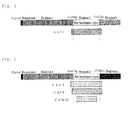
- A.pg-A and A.pg-C peptides coded by a DNA sequence of from 3,558 bp to 5,192 bp for A.pg-A and by a DNA sequence of from 4,166 bp to 5,788 bp for A.pg-C: hereinafter also referred to as "A ⁇ 5-1" and "C ⁇ 5-1", respectively: see Figs. 1 and 2 ) are useful as a protective antigen for avian infectious coryza.
- a fusion peptide (hereinafter also referred to as "AC ⁇ 5-1"), which is obtained by linking together a DNA fragment coding for A ⁇ 5-1 and a DNA fragment coding for C ⁇ 5-1 and expressing the resultant DNA fragment, maintained immunogenicity of the respective antigens even after fusion and that the fusion peptide exhibited infection protective effect to avian infectious coryza equivalent to or more than that of A ⁇ 5-1 or C ⁇ 5-1, each expressed alone. Furthermore, the present inventors have found that C ⁇ 5-1 is expressed in a soluble fraction when expressed alone whereas A ⁇ -1 is expressed in an insoluble fraction by forming an inclusion body to thereby complete the present invention.
- an object of the present invention is to provide a vaccine for avian infectious coryza comprising as an active ingredient a fusion peptide, obtained by linking to each other a peptide fragment comprising a specific region of the outer-membrane protein from A.pg-A and a peptide fragment comprising a specific region of the outer-membrane protein from A.pg-C, and a process for preparing the same.
- HMTp210 protein the outer-membrane proteins from A.pg-A and A.pg-C as isolated and identified by Tokunaga et al.
- Patent reference 1 the outer-membrane proteins from A.pg-A and A.pg-C as isolated and identified by Tokunaga et al.
- Patent reference 1 the outer-membrane proteins from A.pg-A and A.pg-C as isolated and identified by Tokunaga et al.
- Peptide A peptide fragments derived from HMTp210 protein of A.pg-A and A.pg-C
- the present invention includes the followings:
- an avian infectious coryza vaccine comprising as an active ingredient a fusion peptide consisting of a peptide fragment derived from HMTp210 protein of A.pg-A and a peptide fragment derived from HMTp210 protein of A.pg-C linked to each other and a process for preparing the same.
- the avian infectious coryza vaccine of the present invention may simultaneously provide immunization for protection from avian infectious coryza caused by A.pg-A and A.pg-C.
- the present invention is characterized by a process for preparing a recombinant avian infectious coryza vaccine comprising step of preparing an inclusion body-forming fusion peptide consisting of Peptide A derived from HMTp210 protein of Avibacterium paragarinarum (hereinafter referred to as "A.pg") serotype A and Peptide C derived from HMTp210 protein of A.pg-C.
- A.pg Avibacterium paragarinarum
- the present invention is characterized by a process for preparing an avian infectious coryza vaccine which comprises step of constructing a host that may produce as an inclusion body a fusion peptide consisting of a peptide fragment derived from HMTp210 protein of A.pg-A and a peptide fragment derived from HMTp210 protein of A.pg-C, step of culturing said host and colleting and purifying a fraction of inclusion body from culture, and step of preparing a preparation comprising said purified fraction of inclusion body, and an avian infectious coryza vaccine comprising as an active ingredient said fusion peptide.
- a DNA fragment may be obtained as described below that consists of a part of a gene (hereinafter also referred to as "HMTp210A gene”) coding for an amino acid sequence of HMTp210 protein (SEQ ID NO: 25) of A.pg-A and a gene (hereinafter also referred to as "HMTp210C gene”) coding for an amino acid sequence of HMTp210 protein (SEQ ID NO: 26) of A.pg-C
- A.pg-A and A.pg-C There are several isolated strains of A.pg-A and A.pg-C and any of these strains may be used in the present invention without limitation. Hitherto, there have been isolated, for instance, 221, 083 and W strains etc. for A.pg-A and 53-47, Modesto and HK-1 strains etc. for A.pg-C wherein mutations of substitution, deletion or addition of one or several amino acids are noted. For the present invention, any of these strains or mutants may be used.
- a culture medium may be used that suitably contains polypeptone, glucose, casamino acid, sodium glutamate, yeast extract, sodium chloride, chicken meat infusion, nicotineamide adenine dinucleotide ( ⁇ -NAD), chicken sera, and the like.
- a chicken broth supplemented with chicken sera was used herein, containing polypeptone S 5g, casamino acid 1g, sodium chloride 5g, sodium L-glutamate 5g, glucose 1g, yeast extract 10g, chicken meat infusion 175mL, chicken sera 25mL, ⁇ -NAD 0.025% in 1,000 mL of culture medium, for growth in a small/medium scale.
- Culture condition may be usually set at the temperature of 37°C for 16 to 24 hours, which condition may suitably vary depending on purpose of use, a mode of culture, an amount of bacteria inoculated, a scale of culture, and the like.
- HMTp210A gene and HMTp210C gene may be prepared from a genomic DNAs extracted from the cells by genetic recombination technique according to Sambrook et al. (Molecular Cloning, A Laboratory Manual Second Edition. Cold Spring Harbor Laboratory Press, N.Y., 1989 ).
- a commercially available kit may also be used. For instance, for extraction of chromosomal DNAs, PureGene kit (Gentra Systems), SepaGene kit (Sanko Junyaku Co., Ltd.), ISOPLANT (Wako Pure Chemical Industries, Ltd.), and the like may be used.
- chromosomal DNAs may be extracted from the cells collected by centrifugation using PureGene kit (Gentra Systems) and the like, and a genome DNA library of the cells may be prepared in accordance with Tokunaga et al. (Patent reference 1).
- PCR may be performed to amplify DNA fragments in desired sizes using Prime STAR HS DNA Polymerase (TAKARA BIO Inc.) in accordance with protocol attached thereto.
- Primers for use in PCR may be designed based on the nucleotide sequences of A.pg-A- and A.pg-C-derived HMT p210 genes as Tokunaga et al. disclosed (Patent reference 1).
- Primers for PCR may be readily available if asked to DNA synthesis contractor services (e.g. Sigma Genosys Japan K.K.). When designed, nucleotide sequences of appropriate restriction enzyme cleavage sites may be added at the 5'-end of upstream Primer and at the 5'-end of downstream Primer.
- a DNA fragment coding for the fusion peptide of the present invention may be obtained by linking together the DNA fragment coding for HMTp210A gene and the DNA fragment coding for HMTp210C gene, as obtained above, using a DNA synthase directly or after cleavage with a restriction enzyme.
- a DNA fragment coding for a linker consisting of an amino acid sequence of a suitable size may optionally be added between the DNA fragment coding for HMTp210A gene and the DNA fragment coding for HMTp210C gene.
- an amino acid with a lot of flexibility such as a neutral amino acid, e.g. glycine, serine, and the like may preferably be used.
- a linker consisting of a single sort of amino acids or two or more sorts of amino acids may be used.
- a linker may be in general in a size of 5 to 20 amino acids, preferably, in a size of 10 to 15 amino acids.
- a DNA fragment of the HMTp210A gene and the HMTp210C gene coding for a fusion peptide may be used that may protect from infection of A.pg-A and A.pg-C and form an inclusion body.
- Such a DNA fragment includes, for instance, a DNA fragment coding for a peptide of Region 2 of an outer-membrane protein, a DNA fragment coding for a peptide of Region 2 with addition of an amino acid sequence at N-terminal and/or C-terminal thereof, DNA fragment coding for a peptide of Region 2 with addition of an amino acid sequence at N-terminal or C-terminal thereof and with deletion of an amino acid sequence at the remaining N-terminal or C-terminal thereof, and a DNA fragment coding for a peptide of Region 2 with deletion of an amino acid sequence at N-terminal and/or C-terminal thereof.
- the amino acid sequence to be added or deleted may be of 1 to 200, preferably 30 to 150 amino acids in length.
- Preferable is a DNA fragment coding for a peptide derived from HMTp210 protein of A.pg-A having an amino acid sequence selected from the group consisting of SEQ ID NOs: 1, 27, 28, 29, 30, 31, 32, 33, 34 and 35 and a peptide derived from HMTp210 protein of A.pg-C having an amino acid sequence selected from the group consisting of SEQ ID NOs: 2, 3, 4, 5, 6, 7, 50, 51, 52, 53, 54, 55 and 56.
- a DNA fragment coding for a mutant of the above peptide may also be used wherein one or several amino acids are deleted, added or replaced.
- a "mutant of the above peptide wherein one or several amino acids are deleted, added or replaced" as used herein refers to a mutant of the above peptide wherein 1, 2, 3, 4 or 5 amino acids are deleted, added or replaced.
- a DNA fragment coding for such a mutant peptide may be obtained by hybridization with a DNA fragment having a nucleotide sequence complementary to the nucleotide sequence of the DNA fragment coding for the above peptide under stringent condition or a method for introducing mutation such as site directed mutagenesis. These may be done by using kits commercially available.
- a DNA fragment coding for a fusion peptide may be a DNA fragment derived from the HMTp210A gene downstream of which a DNA fragment derived from the HMTp210C gene is bound or vice versa.
- DNA fragments coding for a fusion peptide may also be combined to each other in tandem.
- two or more DNA fragments derived from the HMTp210A gene may be bound to each other and downstream thereof two or more DNA fragments derived from the HMTp210C gene may further be bound.
- a DNA coding for fusion peptide may consists of a DNA fragment derived from the HMTp210A gene and a DNA fragment derived from the HMTp210C gene at a ratio of 1 of the former to 1 to 3 of the latter. Preferably, said ratio is 1:1.
- a nucleotide sequence of the obtained DNA fragment, after cloning into pBluescript II SK+ (Stratagne) or pCR2.1-TOPO (Invitrogen), may be determined with a DNA sequencer (ABI Prism 377 Applied Biosystems).
- DNA fragments of A.pg-A and A.pg-C or the DNA fragment coding for a fusion peptide may be incorporated into an appropriate expression vector, which may then be introduced into a host for expression of each of the DNA fragments.
- a heterologous protein or peptide bacteria, yeasts, animal cells, plant cells, insect cells, and the like may ordinarily be used, among which any host may be used as far as an inclusion body may be produced.
- transformation of a host cell methods known in the art may be used.
- calcium phosphate, DEAE dextran, approach using liposome such as lipofectin, polyethylene glycol fusion of protoplast, electroporation, heat shock, and the like may be used, as appropriately selected depending on a host cell as used.
- E. coli may be used which allows for expression in a large amount.
- E. coli For expression in E. coli , various expression vectors having trp promoter, T7 promoter, cspA promoter, and the like have been developed and commercially available and may be used as appropriate. Such an expression vector includes, for instance, pET-11d (Merck) and pQE30 (Quiagen). Depending on an expression vector, suitable E. coli such as BL21, HMS174, DH5 ⁇ , HB101, JM109, and the like may be selected as a host. Transformation of E. coli may be conducted using commercially available competent cells in accordance with protocol attached thereto. Thus, recombinant E. coli producing the desired polypeptide may be obtained. For culture medium (e.g.
- LB LB, SOC, SOB, and the like
- reagents used for selection of transformant e.g. ampicillin
- reagents used for induced expression e.g. indole acetic acid (IAA), isopropylthio- ⁇ -D-galactoside (IPTG), and the like
- IAA indole acetic acid
- IPTG isopropylthio- ⁇ -D-galactoside
- a pH of a culture medium may be within a range suitable for growth of E. coli (pH 6 to 8).
- E. coli expressing a desired peptide may be carried out as described below.
- Cells cultured and grown in the presence of an expression inducer IPTG was used in an expression system in the present invention
- IPTG an expression inducer
- a homogenizer such as French press or Manton Golin
- subject to centrifugation e.g. 17,800g, 15 minutes
- a surfactant e.g. Triton X-100
- a chelating agent e.g.
- EDTA lisozyme
- a fixed amount of supernatant and precipitate recovered may be subject to SDS-polyacrylamide gel electrophoresis, and after staining with Coomassie Brilliant Blue, expression of the object may be confirmed by a molecular size and stained image.
- an antigen-antibody reaction such as ELISA, Western blot, dot blot, and the like may also be used other than approach based on a molecular size as described above. All of these approaches are commonly used for detecting a heterologous protein or polypeptide expressed in E. coli and may be selected as appropriate.
- clones recovered in the precipitate i.e. clones producing a fusion peptide that may form an inclusion body, may be selected.
- cells may be collected using centrifugation or MF membrane of a suitable size (Asahi Kasei Corporation).
- the collected cells may be disrupted in an appropriate manner so as to release inclusion bodies consisting of a fusion peptide out of the cells.
- Disruption of cells may be done by any known methods including, for instance, dissolution with a chemical substance, a surfactant, an enzyme, or physical treatment such as French press or sonication. By combining several of these, cells may be disrupted more effectively.
- an appropriate buffer and lysozyme may be added and the resulting mixture may be left at a low temperature (4 to 15°C) overnight to thereby dissolve the cellular membrane of the cells.
- the treated solution of the cells may be subject to French press (or Manton Golin) at 500 to 600 kg/cm 2 to disrupt the cells.
- a buffer may be of any kind as far as it has a buffering ability at a pH range of 7.5 to 9 at which lysozyme is active, such as Tris buffer.
- the buffer may be used at a concentration as commonly used as a buffer (10 to 50 mM).
- Lysozyme may be used at a concentration of 0.3 to 1.0 0 g/L. For instance, 20mM Tris buffer at pH 8.5 may be added, lysozyme (0.6 g/L) may be added and the mixture may be left to stand at 4°C overnight to dissolve the cell wall of the cells. After disrupting the cells with French press, dilution and concentration with a buffer or deionized water and MF membrane may be repeated to remove most of cellular components. Optionally, a surfactant such as Triton-X100 may be added. Inclusion bodies may be recovered by centrifugation of a concentrated solution containing inclusion bodies as precipitate.
- the recovered inclusion bodies may be dissolved in a solution containing a denaturing agent.
- a denaturing agent to be used includes urea, guanidine hydrochloride, and the like with urea being preferable.
- Such urea and guanidine hydrochloride may be used in a range of concentration of 4 to 8 M and 2 to 6 M, respectively.
- 8M urea may preferably be used.
- a buffer at pH 6 to 9, preferably at pH 7 to 8, may be used. Any buffer that has a buffering ability at the above pH range may be used such as phosphate buffer, Tris buffer, glycine buffer, carbonate buffer, and the like.
- Dissolution may be performed at a temperature of 40°C or less. Dissolution time may be set while observing dissolution of inclusion bodies, and usually 30 minutes to 1 hour.
- refolding i.e. reconstruction of a normal steric structure, of a fusion peptide may be carried out by adding 10 to 20-fold volume of a buffer to the solution of inclusion bodies or by dialyzing the solution against a buffer.
- a buffer for refolding, the same kind, temperature and pH of a buffer as those used for dissolution of inclusion bodies may be employed.
- Refolding may be carried out at room temperature or less and by being left to stand for 1 to 7 days, preferably, for 3 to 4 days.
- the solution containing fusion peptide may further be subject to purification procedure as occasion demands.
- a combination of the methods commonly used in the field of protein chemistry may be used such as e.g. centrifugation, salting-out, ultrafiltration, isoelectric focusing, electrophoresis, ion exchange chromatography, gel filtration chromatography, affinity chromatography, hydrophobic chromatography, hydroxyapatite chromatography, and the like.
- An amount of the obtained protein or polypeptide may be measured with a reagent for protein measurement such as BCA Protein Assay Reagent Kit (Pierce Biotechnology, Inc), Protein Assay Kit (BIO-RAD, Inc), and the like.
- fusion peptide of present invention as an avian infectious coryza vaccine may be demonstrated by immunizing chicken with a solution containing said fusion peptide and determining an antibody titer to A.pg-A and A.pg-C in sera obtained from the chicken or by challenging said immunized chicken with virulent bacteria and observing survival of the chicken and clinical symptoms such as a running nose, swelling of the face and epiphora.
- an immune enhancing agent as used for ordinary pharmaceutical preparation, may optionally be added.
- a mode of administration is not particularly restricted and administration may be done, for instance, subcutaneously, intradermally, intraperitoneally, or intranasally, oridinarily once to thrice every 2 to 4 weeks.
- a solution containing said fusion peptide may be sterile filtered through membrane filter and to the filtrate may be added, as occasion demands, an immune enhancing agent (adjuvant) such as aluminum hydroxide, aluminum phosphate, mineral oil or non-mineral oil, a stabilizing agent such as Polysorbate 80, amino acids, and sugars, e.g. lactose and sucrose, and a preservative agent such as formalin, thimerosal, 2-phenoxyethanol, benzyl alcohol, benzethonium chloride and benzalkonium chloride.
- an immune enhancing agent such as aluminum hydroxide, aluminum phosphate, mineral oil or non-mineral oil
- a stabilizing agent such as Polysorbate 80
- amino acids e.g. lactose and sucrose
- a preservative agent such as formalin, thimerosal, 2-phenoxyethanol, benzyl alcohol, benzethonium chloride and benzalkonium chloride.
- the obtained vaccine may be used alone as an avian infectious coryza vaccine or alternatively used as a mixed vaccine in combination with at least one vaccine selected from the group consisting of vaccines against other viruses such as avian infectious bronchitis virus, avian infectious bursal disease virus, avian encephalomyelitis virus, and egg drop syndrome virus, vaccinesropagainst bacteria such as Salmonella typhimurium , Salmonella enteritidis , and Salmonella pollorum and vaccines against protozoa such as Leucocytozoon cauleryi , Eimeria tenera , and Eimeria maxima.
- viruses such as avian infectious bronchitis virus, avian infectious bursal disease virus, avian encephalomyelitis virus, and egg drop syndrome virus, vaccinesropagainst bacteria such as Salmonella typhimurium , Salmonella enteritidis , and Salmonella pollorum and vaccines against protozoa such as Leucocytozoon ca
- Genome DNA libraries of A.pg-A 221 strain and A.pg-C 53-47 strain were prepared in accordance with Tokunaga et al. (Patent reference 1). Briefly, genomic DNAs were extracted using PureGene kit (Gentra Systems) from cells collected by centrifugation (Tomy, RD-20PIV, 4,400g, 20 min.). Using the obtained DNAs as a template, PCR was performed with Prime STAR HS DNA Polymerase (TAKARA BIO Inc.) to amplify DNA fragments of HMTp210 protein genes of A.pg-A and A.pg-C.
- PCR conditions were as follows: after reaction at 98°C for 1 minute, denaturation (98°C for 10 seconds), annealing (55°C for 15 seconds), and elongation reaction (72°C for 120 seconds) for 15 cycles, followed by termination reaction (72°C for 7 minutes).
- Table 1 shows names and Sequence ID NOs of the respective DNA fragments and PCR primers used in the amplification reaction. NcoI recognition sequence was added to the 5'-primer and BamHI recognition sequence was added to the 3'-primer used for amplification of the DNA fragments of A.pg-A and BamHI recognition sequence was added to both the 5'-primer and the 3'-primer used for amplification of the DNA fragments of A.pg-C.
- Figs. 1 and 2 show relative position of the respective DNA fragments.
- SEQ ID NOs indicated in the column of DNA fragments denote amino acid sequences coded by the respective DNA fragments.
- Expression plasmids were prepared as described below. First, A ⁇ 5-1 was digested with NcoI and BamHI and, after separation by 0.8% agarose gel electrophoresis, the DNA fragments were eluted and recovered using Wizard SV Gel and PCR Clean-Up System (Promega). The obtained fragments were linked to an expression vector pET-11d (Merck) digested previously with NcoI and BamHI and the resulting plasmid was used to transform E. coli BL21(DE3) strain (Merck). From this transformant, expression plasmid (pET-11d-A ⁇ 5-1) was extracted using Wizard Plus SV Minipreps DNA Purification System (Promega).
- C ⁇ 4c-1, C ⁇ 5-1 and C ⁇ 6b-1b were digested with BamHI and, after separation by 0.8% agarose gel electrophoresis, the DNA fragments were eluted and recovered using Wizard SV Gel and PCR Clean-Up System (Promega). The obtained fragments were linked in a forward orientation to pET-11d-A ⁇ 5-1 digested previously with BamHI and the resulting plasmid was used to transform E. coli BL21(DE3) strain (Merck) to give expression plasmids pET-11d-A ⁇ 5-1-C ⁇ 4c-1, pET-11d-A ⁇ 5-1-C ⁇ 5-1 and pET-11d-A ⁇ 5-1-C ⁇ 6b-1b.
- DNA fragments of HMTp210 protein gene of A.pg were amplified as described in Example 1.
- Table 3 shows names and Sequence ID NOs of the respective DNA fragments and PCR primers used in the amplification reaction. The 5'-primer was added with XbaI recognition sequence and the 3'-primer was added with BamHI recognition sequence.
- SEQ ID NOs indicated in the column of DNA fragments denote amino acid sequences coded by the respective DNA fragments.
- Expression plasmids where a linker is linked directly downstream of A ⁇ 5-1 were prepared as described below.
- a ⁇ 5-1 obtained in Example 1 was digested with NcoI and BamHI and, after separation by 0.8% agarose gel electrophoresis, the DNA fragments were eluted and recovered using Wizard SV Gel and PCR Clean-Up System (Promega).
- a linker sequence consisting of a nucleotide sequence coding for ten glycine residues Gly Linker: SEQ ID NO: 24
- Bam HI recognition sequence at the C-terminal of A ⁇ 5-1 is lost and instead thereof XbaI recognition sequence is generated.
- C ⁇ 4c-1, C ⁇ 5-1 and C ⁇ 6b-1b were digested with XbaI and BamHI and, after separation by 0.8% agarose gel electrophoresis, the DNA fragments were eluted and recovered using Wizard SV Gel and PCR Clean-Up System (Promega).
- the obtained fragments were ligated with A ⁇ 5-1 and then digested with BamHI. After separation by 0.8% agarose gel electrophoresis, the DNA fragments were eluted and recovered using Wizard SV Gel and PCR Clean-Up System (Promega). Further, the obtained fragments were inserted into an expression vector pET-11d (Merck) previously digested with NcoI and BamHI.
- the resulting expression plasmid was used to transform E. coli BL21(DE3) strain (Merck) to give expression plasmids pET-11d-A ⁇ 5-1-L-C ⁇ 4c-1, pET-11d-A ⁇ 5-1-L-C ⁇ 5-1 and pET-11d-A ⁇ 5-1-L-C ⁇ 6b-1b.
- C ⁇ 4c-1, C ⁇ 5-1 and C ⁇ 6b-1b were inserted directly downstream of the linker sequence in a forward orientation which produce the fusion peptides via glycine derived from the linker sequence as shown in Table 4.
- Genome DNA libraries of A.pg-A 221 strain were prepared as described in Example 1. PCR was performed to amplify the DNA fragments shown in Table 5. PCR conditions were as follows: after reaction at 98°C for 1 minute, denaturation (98°C for 10 seconds), annealing and elongation reactions (70°C for 120 seconds) for 15 cycles, followed by termination reaction (72°C for 7 minutes).
- Expression plasmids containing these fragments pET-11d-A ⁇ 5-1, pET-11d-A ⁇ 5-2, pET-11d-A ⁇ 5-3, pET-11d-A ⁇ 5-4, pET-11d-A ⁇ 9-2, pET-11d-A ⁇ 9-3, pET-11d-A ⁇ 9-4, pET-11d-A ⁇ 6-2, pET-11d-A ⁇ 6-3, and pET-11d-A ⁇ 6-4, were extracted.
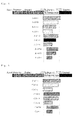
- Table 5 shows names and Sequence ID NOs of the respective DNA fragments and PCR primers used in the amplification reaction. The 5'-primer was added with NcoI recognition sequence and the 3'-primer was added with BamHI recognition sequence. Fig.
- SEQ ID NOs indicated in the column of DNA fragments denote amino acid sequences coded by the respective DNA fragments.
- Table 5 DNA fragment 5'-primer 3'-primer A ⁇ 5-1 (SEQ ID NO: 1) A ⁇ 5-1-P5 (SEQ ID NO: 14) A ⁇ 5-1-P3 (SEQ ID NO: 15) A ⁇ 5-2 (SEQ ID NO: 27) A ⁇ 5-1-P5 (SEQ ID NO: 14) A ⁇ 2-P3 (SEQ ID NO: 38) A ⁇ 5-3 (SEQ ID NO: 28) A ⁇ 5-1-P5 (SEQ ID NO: 14) A ⁇ 3-P3 (SEQ ID NO: 39) A ⁇ 5-4 (SEQ ID NO: 29) A ⁇ 5-1-P5 (SEQ ID NO: 14) A ⁇ 4-P3 (SEQ ID NO: 40) A ⁇ 9-2 (SEQ ID NO: 30) A ⁇ 9-P5 (SEQ ID NO: 36) A ⁇ 2-P3 (SEQ ID NO:
- C ⁇ 5-1 obtained in Example 1 was digested with BamHI and, after separation by 0.8% agarose gel electrophoresis, the DNA fragments were eluted and recovered using Wizard SV Gel and PCR Clean-Up System (Promega). Further, the obtained fragments were linked in a forward orientation to pET-11d-A ⁇ 5-1, pET-11d-A ⁇ 5-2, pET-11d-A ⁇ 5-3, pET-11d-A ⁇ 5-4, pET-11d-A ⁇ 9-2, pET-11d-A ⁇ 9-3, pET-11d-A ⁇ 9-4, pET-11d-A ⁇ 6-2, pET-11d-A ⁇ 6-3 and pET-11d-A ⁇ 6-4 previously digested with BamHI.
- the resulting expression plasmids were used to transform E. coli BL21(DE3) strain (Merck) to give expression plasmids pET-11d-A ⁇ 5-1-C ⁇ 5-1, pET-11d-A ⁇ 5-2-C ⁇ 5-1, pET-11d-A ⁇ 5-3-C ⁇ 5-1, pET-11d-A ⁇ 5-4-C ⁇ 5-1, pET-11d-A ⁇ 9-2-C ⁇ 5-1, pET-11d-A ⁇ 9-3-C ⁇ 5-1, pET-11d-A ⁇ 9-4-C ⁇ 5-1, pET-11d-A ⁇ 6-2-C ⁇ 5-1, pET-11d-A ⁇ 6-3-C ⁇ 5-1 and pET-11d-A ⁇ 6-4-C ⁇ 5-1.
- C ⁇ 5-1 was inserted directly downstream of the Peptide A expression gene in a forward orientation which produce the fusion peptides as shown in Table 6.
- Table 6 Plasmid Fusion peptide pET-11d-A ⁇ 5-1-C ⁇ 5-1 AC ⁇ 5-1 (SEQ ID NO: 9) pET-11d-A ⁇ 5-2-C ⁇ 5-1 A ⁇ 5-2/C ⁇ 5-1 (SEQ ID NO: 41) pET-11d-A ⁇ 5-3-C ⁇ 5-1 A ⁇ 5-3/C ⁇ 5-1 (SEQ ID NO: 42) pET-11d-A ⁇ 5-4-C ⁇ 5-1 A ⁇ 5-4/C ⁇ 5-1 (SEQ ID NO: 43) pET-11d-A ⁇ 9-2-C ⁇ 5-1 A ⁇ 9-2/C ⁇ 5-1 (SEQ ID NO: 44) pET-11d-A ⁇ 9-3-C ⁇ 5-1 A ⁇ 9-3/C ⁇ 5-1 (SEQ ID NO: 45) pET-11d-A ⁇ 9-4-C ⁇
- Genome DNA libraries of A.pg-C 53-47 strain were prepared as described in Example 1 to give the DNA fragments shown in Table 7.
- PCR conditions were as described in Example 3.
- Table 7 shows names and Sequence ID NOs of the respective DNA fragments and PCR primers used in the amplification reaction. Both the 5'-primer and the 3'-primer were added with BamHI recognition sequence.
- Fig. 5 shows relative position of the respective DNA fragments.
- SEQ ID NOs indicated in the column of DNA fragments denote amino acid sequences coded by the respective DNA fragments.
- C ⁇ 5-1, C ⁇ 5-2, C ⁇ 5-4, C ⁇ 9-0, C ⁇ 9-2, C ⁇ 9-4, C ⁇ 6-2 and C ⁇ 6-4 were digested with BamHI and, after separation by 0.8% agarose gel electrophoresis, the DNA fragments were eluted and recovered using Wizard SV Gel and PCR Clean-Up System (Promega).
- the obtained fragments were linked in a forward orientation to pET-11d-A ⁇ 5-1 previously digested with BamHI to give expression plasmids pET-11d-A ⁇ 5-1-C ⁇ 5-1, pET-11d-A ⁇ 5-1-C ⁇ 5-2, pET-11d-A ⁇ 5-1-C ⁇ 5-4, pET-11d-A ⁇ 5-1-C ⁇ 9-0, pET-11d-A ⁇ 5-1-C ⁇ 9-2, pET-11d-A ⁇ 5-1-C ⁇ 9-4, pET-11d-A ⁇ 5-1-C ⁇ -2 and pET-11d-A ⁇ 5-1-C ⁇ 6-4.
- Genome DNA libraries of A.pg-C 53-47 strain were prepared as described in Example 1 to give DNA fragments similar to those shown in Table 7.
- PCR conditions were as described in Example 3.
- Names and Sequence ID NOs of the respective DNA fragments and PCR primers used in the amplification reaction were the same as in Table 7 with exception that a restriction enzyme recognition sequence in the 3'-primer was changed from BamHI recognition sequence to HindIII recognition sequence so that the amplified fragments may be inserted into expression vector pQE30 (QIAGEN) more efficiently.
- C ⁇ 5-1, C ⁇ 5-2, C ⁇ 5-4, C ⁇ 9-0, C ⁇ 9-2, C ⁇ 9-4, C ⁇ 6-2 and C ⁇ 6-4 were digested with BamHI and HindIII and, after separation by 0.8% agarose gel electrophoresis, the DNA fragments were eluted and recovered using Wizard SV Gel and PCR Clean-Up System (Promega). The obtained fragments were linked to expression vector pQE30 digested with BamHI and HindIII. The resulting expression plasmids were used to transform E.
- coli JM109 strain QIAGEN to give plasmids expressing C ⁇ 5-1, C ⁇ 5-2, C ⁇ 5-4, C ⁇ -0, C ⁇ 9-2, C ⁇ 9-4, C ⁇ 6-2 and C ⁇ 6-4.
- the amino acid sequences of peptides obtained from these expression plasmids are those coded by the respective DNA fragments shown in Table 7 with addition at their N-terminal of histidine tag sequence (MRGSHHHHHHGS) derived from the vectors.
- E. coli BL21 (DE3) strain (Merck) possessing the respective expression plasmids obtained in Examples 1 and 2 were inoculated to 1 to 5 mL of LB medium containing 50 ⁇ g/mL ampicillin and shake cultured while shaking at 30 to 37°C until OD 600 of the culture fluid reached 0.5. IPTG was then added at a final concentration of 1 mM and culture was continued for 3 hours. After centrifugation (Tomy, MX-300, 9,100g, 5 minutes), supernatant was discarded, a washing buffer (PBS) was added at an amount equivalent to the amount of the initial culture fluid and the cells were suspended to uniformity.
- PBS washing buffer
- the suspension was subject to sonication under ice cooling using handy sonicater (Tomy, UR-20P) at power 10 for 10 seconds for ten times and centrifuged at 17,800g for 15 minutes.
- the supernatant was isolated and to the precipitate was added, a washing buffer at an amount equivalent to the amount of the sonicated solution before centrifugation and the precipitate was suspended to uniformity.
- a sample buffer (2 x SDS)
- SDS-PAGE and staining with Coomassie Brilliant Blue were performed in the conventional manner.
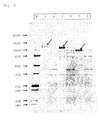
- C ⁇ 4c-1 When expressed alone, C ⁇ 4c-1 was expressed in a soluble fraction and fraction of C ⁇ 5-1 expression was not constant whereas all the fusion peptides were stably expressed as an inclusion body. Regarding an expression level, it was somewhat low for A ⁇ 5-1/C ⁇ 4c-1 and was almost equal to each other for the remaining two fusion peptides AC ⁇ 5-1 and A ⁇ 5-1/C06b-1b with good expression.
- the fusion peptides with addition of linker showed an expression level equivalent to that of the fusion peptides without addition of linker.
- a challenge test was carried out using homologous virulent strain.
- the inclusion bodies in the precipitate suspension of AC ⁇ 5-1 and AC ⁇ 5-1-L obtained in Example 6 were solubilized with 8M urea and the buffer was replaced with PBS (pH 7.4) using a dialysis membrane.
- a vaccine prepared by emulsifying AC ⁇ 5-1 at the amount of antigen shown in Table 9 in 0.5 mL per dose with oil adjuvant was once administered intramuscularly to the leg of SPF chickens of 8 weeks old for immunization.
- Example 7 To confirm the vaccine efficacy of the fusion peptides to the other strains (heterologous strains) than A.pg-A 221 strain and A.pg-C 53-47 strain used for preparing the fusion peptide, the challenge test was carried out as in Example 7. The procedures of Example 7 were repeated except that a different amount of antigen for immunization and different virulent strains, i.e. A.pg-A 083 strain (1.0 x 10 9 CFU/mL), A.pg-A W strain (4.1 x 10 9 CFU/mL) and A.pg-C Modesto strain (2.8 8 x 10 9 CFU/mL), for challenge were used.
- A.pg-A 083 strain 1.0 x 10 9 CFU/mL
- A.pg-A W strain 4.1 x 10 9 CFU/mL
- A.pg-C Modesto strain 2.8 8 x 10 9 CFU/mL
- A.pg-A complete identity between 083 strain and W strain and 1 nucleotide mutation (A/G: glutamic acid at No. 1227 of SEQ ID NO: 25 is replaced with glycine) between 221 strain and 083 strain and between 221 strain and W strain were observed.
- A.pg-C deletion of 3 nucleotides AAG (glutamic acid at No. 1144 of SEQ ID NO: 26) was observed in Modesto strain as compared to 53-47 strain.
- an immunization test was carried out.
- the vaccines were prepared as described in Example 7.
- a vaccine prepared by emulsifying AC ⁇ 5-1, Peptide A or Peptide C at the amount of antigen shown in Table 11 in 0.5 mL per dose with oil adjuvant was once administered intramuscularly to the leg of SPF chickens of 4 weeks old for immunization.
- group with no administration was set.
- an antibody titer was determined as described by Ushijima et al. (Japanese patent application No. 2008-29589 ). Specifically, antibody measurement was carried out by ELISA.
- the different peptides within Region 2 of A.pg-A and A.pg-C were diluted with 50 mM bicarbonate buffer to 1 ⁇ g/mL and each 50 ⁇ L of the solution was added to 96-well plate for immobilization. After adsorption at 4°C overnight, the solution was discarded, and the plate was washed with 300 ⁇ L of PBS-T (8.1 mM disodium hydrogenphosphate, 1.5 mM potassium dihydrogenphosphate, 137 mM sodium chloride, 2.7 mM potassium chloride, 0.1% Tween 20) and added with 300 ⁇ L of PBS-T supplemented with 5% skim milk for blocking. The blocking solution was discarded.
- PBS-T 8.1 mM disodium hydrogenphosphate, 1.5 mM potassium dihydrogenphosphate, 137 mM sodium chloride, 2.7 mM potassium chloride, 0.1% Tween 20
- Serum was diluted with PBS-T supplemented with 10% skim milk to 100-fold and each 50 ⁇ L of the solution was added for reaction at room temperature for 1 hour. After removing the reaction solution, the plate was washed with PBS-T three times. An anti-chicken IgG-HRP-labeled antibody was diluted with PBS-T supplemented with 5% skim milk to 20,000-fold and each 50 ⁇ L of the solution was added to each well for reaction at room temperature for 30 minutes in the dark. After removing the reaction solution, the plate was washed with PBS-T three times. Each 100 ⁇ L of a substrate solution (TMB + substrate-chromogen: DAKO) was added for reaction at room temperature for 15 minutes. Each 100 ⁇ L of 3M sulfuric acid was added to stop the reaction. Absorbance at the wavelength of 450 nm was measured with 96-well plate reader (Molecular Devices Japan).
- the chicken immunized with the fusion peptide AC ⁇ 5-1 exhibited a high antibody titer at 0.6 ⁇ g/dose and 100% of a positive conversion rate for both A.pg-A and A.pg-C.
- 80% and 40% of a positive conversion rate were observed for both A.pg-A and A.pg-C, respectively.
- a positive conversion rate was 60% and 0% for A.pg-A and A.pg-C, respectively.
- E. coli BL21 (DE3) strain (Merck) possessing the respective expression plasmids obtained in Examples 3 and 4 were subject to expression as described in Example 6 and an expression level was determined.
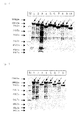
- Figs. 6 and 7 show the respective expression patterns.
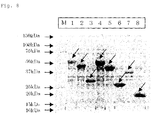
- Peptide A, A ⁇ 5-4, A ⁇ 9-2, A ⁇ 9-4, A ⁇ 6-2 and A ⁇ 6-4 when expressed alone, were expressed in a soluble fraction but, upon fusion with C ⁇ 5-1, the resulting fusion peptides stably formed an inclusion body except for A ⁇ 6-4.
- a ⁇ 6-4/C ⁇ 5-1 though principally formed an inclusion body, may sometimes be expressed in a soluble fraction and hence its expression was instable. All the fusion peptides had the same and excellent expression level.
- Example 10 To confirm the vaccine efficacy of the fusion peptides obtained in Example 10, a challenge test was carried out using homologous virulent strain (A.pg-A 221 strain) as described in Example 7. The procedures of Example 7 were repeated except that a different amount of antigen for immunization and different number of cells of virulent strain, i.e. A.pg-A 221 strain, 1.2 x 10 9 CFU/mL, for challenge were used. As a result, as shown in Table 12, chicken immunized with the respective fusion peptides exhibited excellent protective effects against challenge from A.pg-A 221 strain where 80% protection for A ⁇ 6-4/C ⁇ 5-1 and 100% protection for the longer fusion peptides were confirmed.
- E. coli JM109 possessing the respective expression plasmids obtained in Example 5 were subject to expression as described in Example 6 and an expression level for the respective cells was determined by SDS-PAGE ( Fig. 8 ).
- the thus obtained peptides were named as C ⁇ 5-1-pQE, C ⁇ 5-2-pQE, C ⁇ 5-4-pQE, C ⁇ 9-0-pQE, C ⁇ 9-2-pQE, C ⁇ 9-4-pQE, C ⁇ 6-2-pQ and C ⁇ 6-4-pQE. All the peptides except for C ⁇ 6-2-pQE were expressed in a soluble fraction with an excellent expression level.
- Example 12 To confirm the vaccine effect of Peptides C obtained in Example 12, a challenge test was carried out as described in Example 7. A vaccine prepared by emulsifying Peptide C at the amount of antigen shown in Table 13 with oil adjuvant was once administered intramuscularly to the leg of SPF chickens of 4 weeks old for immunization. Four weeks after immunization, 0.2 mL of a solution containing A.pg-C 53-47 strain (5.2 X 10 9 CFU/mL) was administered intranasally and clinical symptoms of a running nose, swelling of the face and epiphora were observed for a week.
- A.pg-C 53-47 strain 5.2 X 10 9 CFU/mL
- a vaccine of avian infectious coryza caused by Avibacterium paragarinarum serotypes A and C may be provided.
Landscapes
- Health & Medical Sciences (AREA)
- Life Sciences & Earth Sciences (AREA)
- Chemical & Material Sciences (AREA)
- Medicinal Chemistry (AREA)
- General Health & Medical Sciences (AREA)
- Immunology (AREA)
- Public Health (AREA)
- Veterinary Medicine (AREA)
- Pharmacology & Pharmacy (AREA)
- Animal Behavior & Ethology (AREA)
- Epidemiology (AREA)
- Microbiology (AREA)
- Mycology (AREA)
- Organic Chemistry (AREA)
- Zoology (AREA)
- Proteomics, Peptides & Aminoacids (AREA)
- Gastroenterology & Hepatology (AREA)
- Biophysics (AREA)
- Genetics & Genomics (AREA)
- Engineering & Computer Science (AREA)
- Bioinformatics & Cheminformatics (AREA)
- Molecular Biology (AREA)
- Chemical Kinetics & Catalysis (AREA)
- General Chemical & Material Sciences (AREA)
- Toxicology (AREA)
- Biochemistry (AREA)
- Nuclear Medicine, Radiotherapy & Molecular Imaging (AREA)
- Communicable Diseases (AREA)
- Oncology (AREA)
- Medicines Containing Antibodies Or Antigens For Use As Internal Diagnostic Agents (AREA)
- Peptides Or Proteins (AREA)
- Preparation Of Compounds By Using Micro-Organisms (AREA)
Priority Applications (1)
| Application Number | Priority Date | Filing Date | Title |
|---|---|---|---|
| EP14197266.1A EP2853270B1 (de) | 2008-12-25 | 2009-12-24 | Rekombinanter Impfstoff gegen Hühnerschnupfen und Verfahren zur Herstellung davon |
Applications Claiming Priority (2)
| Application Number | Priority Date | Filing Date | Title |
|---|---|---|---|
| JP2008330448 | 2008-12-25 | ||
| PCT/JP2009/071398 WO2010074126A1 (ja) | 2008-12-25 | 2009-12-24 | 組換え鶏伝染性コリーザワクチン及びその製造方法 |
Related Child Applications (2)
| Application Number | Title | Priority Date | Filing Date |
|---|---|---|---|
| EP14197266.1A Division EP2853270B1 (de) | 2008-12-25 | 2009-12-24 | Rekombinanter Impfstoff gegen Hühnerschnupfen und Verfahren zur Herstellung davon |
| EP14197266.1A Division-Into EP2853270B1 (de) | 2008-12-25 | 2009-12-24 | Rekombinanter Impfstoff gegen Hühnerschnupfen und Verfahren zur Herstellung davon |
Publications (3)
| Publication Number | Publication Date |
|---|---|
| EP2382985A1 true EP2382985A1 (de) | 2011-11-02 |
| EP2382985A4 EP2382985A4 (de) | 2013-05-29 |
| EP2382985B1 EP2382985B1 (de) | 2015-05-06 |
Family
ID=42287733
Family Applications (2)
| Application Number | Title | Priority Date | Filing Date |
|---|---|---|---|
| EP20090834924 Active EP2382985B1 (de) | 2008-12-25 | 2009-12-24 | Rekombinanter impfstoff gegen hühnerschnupfen und herstellungsverfahren dafür |
| EP14197266.1A Active EP2853270B1 (de) | 2008-12-25 | 2009-12-24 | Rekombinanter Impfstoff gegen Hühnerschnupfen und Verfahren zur Herstellung davon |
Family Applications After (1)
| Application Number | Title | Priority Date | Filing Date |
|---|---|---|---|
| EP14197266.1A Active EP2853270B1 (de) | 2008-12-25 | 2009-12-24 | Rekombinanter Impfstoff gegen Hühnerschnupfen und Verfahren zur Herstellung davon |
Country Status (9)
| Country | Link |
|---|---|
| US (2) | US8647634B2 (de) |
| EP (2) | EP2382985B1 (de) |
| JP (1) | JP5568017B2 (de) |
| KR (1) | KR101652060B1 (de) |
| CN (1) | CN102333539B (de) |
| BR (1) | BRPI0924068A2 (de) |
| ES (2) | ES2616533T3 (de) |
| MX (1) | MX2011006903A (de) |
| WO (1) | WO2010074126A1 (de) |
Families Citing this family (8)
| Publication number | Priority date | Publication date | Assignee | Title |
|---|---|---|---|---|
| CN106267176B (zh) * | 2015-05-12 | 2020-03-10 | 普莱柯生物工程股份有限公司 | 鸡传染性鼻炎疫苗组合物及其制备方法和应用 |
| CN110540579B (zh) * | 2018-05-29 | 2022-09-06 | 普莱柯生物工程股份有限公司 | 一种副鸡禽杆菌抗原蛋白、含有副鸡禽杆菌抗原的疫苗组合物、及其制备方法和应用 |
| CN114573708B (zh) * | 2020-11-30 | 2024-05-17 | 普莱柯生物工程股份有限公司 | 副鸡禽杆菌ha融合蛋白及其三聚体、制备的疫苗组合物、制备方法和应用 |
| CN114262719B (zh) * | 2021-12-07 | 2023-05-16 | 扬州优邦生物药品有限公司 | 副鸡嗜血杆菌三价基因工程亚单位疫苗制备方法及运用 |
| CN115960185B (zh) * | 2023-01-13 | 2026-03-17 | 乾元浩生物股份有限公司 | 一种c型鸡传染性鼻炎亚单位疫苗及其制备方法与应用 |
| CN117018174B (zh) * | 2023-08-28 | 2024-05-28 | 武汉科前生物股份有限公司 | 用于副鸡禽杆菌a型的酿酒酵母口服疫苗及应用 |
| CN117535218A (zh) * | 2023-11-10 | 2024-02-09 | 山东滨州博莱威生物技术有限公司 | 一种鸡鼻炎基因工程大肠杆菌高密度发酵培养基及其发酵工艺 |
| CN120136983B (zh) * | 2025-03-11 | 2026-04-07 | 扬州大学 | 一种广谱副鸡禽杆菌保护性抗原及其应用 |
Family Cites Families (14)
| Publication number | Priority date | Publication date | Assignee | Title |
|---|---|---|---|---|
| JPS58149956A (ja) | 1982-03-02 | 1983-09-06 | Sumitomo Chem Co Ltd | セルロ−ス系繊維の不均一染色法 |
| NZ219516A (en) | 1987-02-10 | 1991-02-26 | Wellcome Found | Fusion proteins of hbcag (hepatitis b virus core antigen) |
| IL99097A0 (en) * | 1990-09-05 | 1992-07-15 | Akzo Nv | Haemophilus paragallinarum vaccine |
| US6153406A (en) | 1993-07-23 | 2000-11-28 | North American Vaccine, Inc. | Method for the high level expression, purification and refolding of the outer membrane protein P2 from Haemophilus influenzae type B |
| GB9409962D0 (en) * | 1994-05-18 | 1994-07-06 | Smithkline Beecham Biolog | Novel compounds |
| JPH1084969A (ja) * | 1996-09-19 | 1998-04-07 | Chemo Sero Therapeut Res Inst | ヘモフィルス・パラガリナルム由来新規ポリペプチド及びその製法 |
| GB0110431D0 (en) * | 2001-04-27 | 2001-06-20 | Glaxosmithkline Biolog Sa | Novel compounds |
| JP2004057078A (ja) | 2002-07-29 | 2004-02-26 | Nippon Inst For Biological Science | ヘモフィルス・パラガリナルム由来新規ポリペプチドとその遺伝子及び製法 |
| CN1674933B (zh) | 2002-08-02 | 2012-09-26 | 葛兰素史密丝克莱恩生物有限公司 | 疫苗组合物 |
| GB0220199D0 (en) | 2002-08-30 | 2002-10-09 | Univ Utrecht | Mutant protein and refolding method |
| JP3524546B2 (ja) * | 2003-06-18 | 2004-05-10 | 富士通株式会社 | 一覧表画面表示装置 |
| JP4001117B2 (ja) * | 2004-02-09 | 2007-10-31 | 株式会社微生物化学研究所 | ヘモフィルス・パラガリナラムa型菌由来の感染防御抗原である組み換え蛋白 |
| JP2008029589A (ja) | 2006-07-28 | 2008-02-14 | Fujishoji Co Ltd | 弾球遊技機 |
| JP2008156317A (ja) | 2006-12-26 | 2008-07-10 | Biseibutsu Kagaku Kenkyusho:Kk | アビバクテリウム・パラガリナラムc型菌由来の発症防御抗原である新規組換え蛋白 |
-
2009
- 2009-12-24 KR KR1020117017233A patent/KR101652060B1/ko not_active Expired - Fee Related
- 2009-12-24 BR BRPI0924068A patent/BRPI0924068A2/pt not_active IP Right Cessation
- 2009-12-24 JP JP2010544112A patent/JP5568017B2/ja active Active
- 2009-12-24 US US13/142,178 patent/US8647634B2/en not_active Expired - Fee Related
- 2009-12-24 EP EP20090834924 patent/EP2382985B1/de active Active
- 2009-12-24 ES ES14197266.1T patent/ES2616533T3/es active Active
- 2009-12-24 EP EP14197266.1A patent/EP2853270B1/de active Active
- 2009-12-24 MX MX2011006903A patent/MX2011006903A/es active IP Right Grant
- 2009-12-24 ES ES09834924.4T patent/ES2537426T3/es active Active
- 2009-12-24 CN CN200980157652.3A patent/CN102333539B/zh not_active Expired - Fee Related
- 2009-12-24 WO PCT/JP2009/071398 patent/WO2010074126A1/ja not_active Ceased
-
2012
- 2012-09-14 US US13/616,255 patent/US20130183330A1/en not_active Abandoned
Also Published As
| Publication number | Publication date |
|---|---|
| US20120003257A1 (en) | 2012-01-05 |
| BRPI0924068A2 (pt) | 2016-07-26 |
| KR101652060B1 (ko) | 2016-08-29 |
| US8647634B2 (en) | 2014-02-11 |
| EP2853270B1 (de) | 2017-02-08 |
| JP5568017B2 (ja) | 2014-08-06 |
| EP2382985A4 (de) | 2013-05-29 |
| WO2010074126A1 (ja) | 2010-07-01 |
| KR20110114600A (ko) | 2011-10-19 |
| JPWO2010074126A1 (ja) | 2012-06-21 |
| ES2616533T3 (es) | 2017-06-13 |
| CN102333539A (zh) | 2012-01-25 |
| EP2853270A1 (de) | 2015-04-01 |
| ES2537426T3 (es) | 2015-06-08 |
| CN102333539B (zh) | 2014-06-25 |
| MX2011006903A (es) | 2011-09-15 |
| EP2382985B1 (de) | 2015-05-06 |
| US20130183330A1 (en) | 2013-07-18 |
Similar Documents
| Publication | Publication Date | Title |
|---|---|---|
| US11998597B2 (en) | Vaccine against RSV | |
| EP2853270B1 (de) | Rekombinanter Impfstoff gegen Hühnerschnupfen und Verfahren zur Herstellung davon | |
| US8361749B2 (en) | Process for preparing variant of Erysipelothrix rhusiopathiae surface protective antigen in E. coli | |
| WO2007144647A2 (en) | Adjuvant compositions | |
| JP2019070035A (ja) | 免疫原およびそのスクリーニング方法 | |
| WO2015157820A1 (en) | Group a streptococcus vaccine | |
| JP2026062907A (ja) | 流行性耳下腺炎ウイルスおよび麻疹ウイルスの免疫原およびそれらの使用 | |
| US7201912B2 (en) | Recombinant immunogenic compositions and methods for protecting against lethal infections from Bacillus anthracis | |
| EP4234029A1 (de) | Chimäres antigen mit der extrazellulären domäne von pd-l1 | |
| EP4081534B1 (de) | Impfstoff zum schutz gegen staphylokokken-exotoxin | |
| WO2009113664A1 (ja) | 組換え皮膚壊死トキソイドを含有する豚萎縮性鼻炎用薬剤 | |
| HK40081764A (en) | Protective staphylococcal exotoxin vaccine | |
| WO2024105539A1 (en) | Recombinant lsdv vectored bovine coronavirus antigen constructs | |
| WO2009113665A1 (ja) | 豚萎縮性鼻炎用薬剤の製造方法 | |
| HK1250939B (en) | Vaccine against rsv |
Legal Events
| Date | Code | Title | Description |
|---|---|---|---|
| PUAI | Public reference made under article 153(3) epc to a published international application that has entered the european phase |
Free format text: ORIGINAL CODE: 0009012 |
|
| 17P | Request for examination filed |
Effective date: 20110725 |
|
| AK | Designated contracting states |
Kind code of ref document: A1 Designated state(s): AT BE BG CH CY CZ DE DK EE ES FI FR GB GR HR HU IE IS IT LI LT LU LV MC MK MT NL NO PL PT RO SE SI SK SM TR |
|
| DAX | Request for extension of the european patent (deleted) | ||
| RAP1 | Party data changed (applicant data changed or rights of an application transferred) |
Owner name: THE CHEMO-SERO-THERAPEUTIC RESEARCH INSTITUTE |
|
| A4 | Supplementary search report drawn up and despatched |
Effective date: 20130429 |
|
| RIC1 | Information provided on ipc code assigned before grant |
Ipc: A61P 37/04 20060101ALI20130422BHEP Ipc: A61P 31/04 20060101ALI20130422BHEP Ipc: A61K 39/102 20060101ALI20130422BHEP Ipc: A61K 39/02 20060101AFI20130422BHEP |
|
| 17Q | First examination report despatched |
Effective date: 20131218 |
|
| GRAP | Despatch of communication of intention to grant a patent |
Free format text: ORIGINAL CODE: EPIDOSNIGR1 |
|
| INTG | Intention to grant announced |
Effective date: 20140822 |
|
| GRAS | Grant fee paid |
Free format text: ORIGINAL CODE: EPIDOSNIGR3 |
|
| GRAP | Despatch of communication of intention to grant a patent |
Free format text: ORIGINAL CODE: EPIDOSNIGR1 |
|
| INTG | Intention to grant announced |
Effective date: 20150123 |
|
| GRAA | (expected) grant |
Free format text: ORIGINAL CODE: 0009210 |
|
| AK | Designated contracting states |
Kind code of ref document: B1 Designated state(s): AT BE BG CH CY CZ DE DK EE ES FI FR GB GR HR HU IE IS IT LI LT LU LV MC MK MT NL NO PL PT RO SE SI SK SM TR |
|
| REG | Reference to a national code |
Ref country code: GB Ref legal event code: FG4D |
|
| REG | Reference to a national code |
Ref country code: CH Ref legal event code: EP |
|
| REG | Reference to a national code |
Ref country code: IE Ref legal event code: FG4D |
|
| REG | Reference to a national code |
Ref country code: ES Ref legal event code: FG2A Ref document number: 2537426 Country of ref document: ES Kind code of ref document: T3 Effective date: 20150608 |
|
| REG | Reference to a national code |
Ref country code: AT Ref legal event code: REF Ref document number: 725235 Country of ref document: AT Kind code of ref document: T Effective date: 20150615 |
|
| REG | Reference to a national code |
Ref country code: DE Ref legal event code: R096 Ref document number: 602009031165 Country of ref document: DE Effective date: 20150618 |
|
| REG | Reference to a national code |
Ref country code: AT Ref legal event code: MK05 Ref document number: 725235 Country of ref document: AT Kind code of ref document: T Effective date: 20150506 |
|
| REG | Reference to a national code |
Ref country code: NL Ref legal event code: MP Effective date: 20150506 |
|
| REG | Reference to a national code |
Ref country code: LT Ref legal event code: MG4D Ref country code: FR Ref legal event code: PLFP Year of fee payment: 7 |
|
| PG25 | Lapsed in a contracting state [announced via postgrant information from national office to epo] |
Ref country code: PT Free format text: LAPSE BECAUSE OF FAILURE TO SUBMIT A TRANSLATION OF THE DESCRIPTION OR TO PAY THE FEE WITHIN THE PRESCRIBED TIME-LIMIT Effective date: 20150907 Ref country code: FI Free format text: LAPSE BECAUSE OF FAILURE TO SUBMIT A TRANSLATION OF THE DESCRIPTION OR TO PAY THE FEE WITHIN THE PRESCRIBED TIME-LIMIT Effective date: 20150506 Ref country code: NO Free format text: LAPSE BECAUSE OF FAILURE TO SUBMIT A TRANSLATION OF THE DESCRIPTION OR TO PAY THE FEE WITHIN THE PRESCRIBED TIME-LIMIT Effective date: 20150806 Ref country code: HR Free format text: LAPSE BECAUSE OF FAILURE TO SUBMIT A TRANSLATION OF THE DESCRIPTION OR TO PAY THE FEE WITHIN THE PRESCRIBED TIME-LIMIT Effective date: 20150506 Ref country code: LT Free format text: LAPSE BECAUSE OF FAILURE TO SUBMIT A TRANSLATION OF THE DESCRIPTION OR TO PAY THE FEE WITHIN THE PRESCRIBED TIME-LIMIT Effective date: 20150506 |
|
| PG25 | Lapsed in a contracting state [announced via postgrant information from national office to epo] |
Ref country code: GR Free format text: LAPSE BECAUSE OF FAILURE TO SUBMIT A TRANSLATION OF THE DESCRIPTION OR TO PAY THE FEE WITHIN THE PRESCRIBED TIME-LIMIT Effective date: 20150807 Ref country code: LV Free format text: LAPSE BECAUSE OF FAILURE TO SUBMIT A TRANSLATION OF THE DESCRIPTION OR TO PAY THE FEE WITHIN THE PRESCRIBED TIME-LIMIT Effective date: 20150506 Ref country code: IS Free format text: LAPSE BECAUSE OF FAILURE TO SUBMIT A TRANSLATION OF THE DESCRIPTION OR TO PAY THE FEE WITHIN THE PRESCRIBED TIME-LIMIT Effective date: 20150906 Ref country code: AT Free format text: LAPSE BECAUSE OF FAILURE TO SUBMIT A TRANSLATION OF THE DESCRIPTION OR TO PAY THE FEE WITHIN THE PRESCRIBED TIME-LIMIT Effective date: 20150506 Ref country code: BG Free format text: LAPSE BECAUSE OF FAILURE TO SUBMIT A TRANSLATION OF THE DESCRIPTION OR TO PAY THE FEE WITHIN THE PRESCRIBED TIME-LIMIT Effective date: 20150806 |
|
| PG25 | Lapsed in a contracting state [announced via postgrant information from national office to epo] |
Ref country code: DK Free format text: LAPSE BECAUSE OF FAILURE TO SUBMIT A TRANSLATION OF THE DESCRIPTION OR TO PAY THE FEE WITHIN THE PRESCRIBED TIME-LIMIT Effective date: 20150506 Ref country code: EE Free format text: LAPSE BECAUSE OF FAILURE TO SUBMIT A TRANSLATION OF THE DESCRIPTION OR TO PAY THE FEE WITHIN THE PRESCRIBED TIME-LIMIT Effective date: 20150506 |
|
| REG | Reference to a national code |
Ref country code: DE Ref legal event code: R097 Ref document number: 602009031165 Country of ref document: DE |
|
| PG25 | Lapsed in a contracting state [announced via postgrant information from national office to epo] |
Ref country code: CZ Free format text: LAPSE BECAUSE OF FAILURE TO SUBMIT A TRANSLATION OF THE DESCRIPTION OR TO PAY THE FEE WITHIN THE PRESCRIBED TIME-LIMIT Effective date: 20150506 Ref country code: PL Free format text: LAPSE BECAUSE OF FAILURE TO SUBMIT A TRANSLATION OF THE DESCRIPTION OR TO PAY THE FEE WITHIN THE PRESCRIBED TIME-LIMIT Effective date: 20150506 Ref country code: RO Free format text: LAPSE BECAUSE OF NON-PAYMENT OF DUE FEES Effective date: 20150506 Ref country code: SK Free format text: LAPSE BECAUSE OF FAILURE TO SUBMIT A TRANSLATION OF THE DESCRIPTION OR TO PAY THE FEE WITHIN THE PRESCRIBED TIME-LIMIT Effective date: 20150506 |
|
| PLBE | No opposition filed within time limit |
Free format text: ORIGINAL CODE: 0009261 |
|
| STAA | Information on the status of an ep patent application or granted ep patent |
Free format text: STATUS: NO OPPOSITION FILED WITHIN TIME LIMIT |
|
| 26N | No opposition filed |
Effective date: 20160209 |
|
| PG25 | Lapsed in a contracting state [announced via postgrant information from national office to epo] |
Ref country code: IT Free format text: LAPSE BECAUSE OF FAILURE TO SUBMIT A TRANSLATION OF THE DESCRIPTION OR TO PAY THE FEE WITHIN THE PRESCRIBED TIME-LIMIT Effective date: 20150506 |
|
| PG25 | Lapsed in a contracting state [announced via postgrant information from national office to epo] |
Ref country code: SI Free format text: LAPSE BECAUSE OF FAILURE TO SUBMIT A TRANSLATION OF THE DESCRIPTION OR TO PAY THE FEE WITHIN THE PRESCRIBED TIME-LIMIT Effective date: 20150506 Ref country code: BE Free format text: LAPSE BECAUSE OF NON-PAYMENT OF DUE FEES Effective date: 20151231 |
|
| PG25 | Lapsed in a contracting state [announced via postgrant information from national office to epo] |
Ref country code: MC Free format text: LAPSE BECAUSE OF FAILURE TO SUBMIT A TRANSLATION OF THE DESCRIPTION OR TO PAY THE FEE WITHIN THE PRESCRIBED TIME-LIMIT Effective date: 20150506 Ref country code: LU Free format text: LAPSE BECAUSE OF FAILURE TO SUBMIT A TRANSLATION OF THE DESCRIPTION OR TO PAY THE FEE WITHIN THE PRESCRIBED TIME-LIMIT Effective date: 20151224 |
|
| REG | Reference to a national code |
Ref country code: CH Ref legal event code: PL |
|
| GBPC | Gb: european patent ceased through non-payment of renewal fee |
Effective date: 20151224 |
|
| PG25 | Lapsed in a contracting state [announced via postgrant information from national office to epo] |
Ref country code: BE Free format text: LAPSE BECAUSE OF FAILURE TO SUBMIT A TRANSLATION OF THE DESCRIPTION OR TO PAY THE FEE WITHIN THE PRESCRIBED TIME-LIMIT Effective date: 20150506 |
|
| REG | Reference to a national code |
Ref country code: IE Ref legal event code: MM4A |
|
| PG25 | Lapsed in a contracting state [announced via postgrant information from national office to epo] |
Ref country code: CH Free format text: LAPSE BECAUSE OF NON-PAYMENT OF DUE FEES Effective date: 20151231 Ref country code: GB Free format text: LAPSE BECAUSE OF NON-PAYMENT OF DUE FEES Effective date: 20151224 Ref country code: LI Free format text: LAPSE BECAUSE OF NON-PAYMENT OF DUE FEES Effective date: 20151231 Ref country code: IE Free format text: LAPSE BECAUSE OF NON-PAYMENT OF DUE FEES Effective date: 20151224 |
|
| REG | Reference to a national code |
Ref country code: FR Ref legal event code: PLFP Year of fee payment: 8 |
|
| PG25 | Lapsed in a contracting state [announced via postgrant information from national office to epo] |
Ref country code: SM Free format text: LAPSE BECAUSE OF FAILURE TO SUBMIT A TRANSLATION OF THE DESCRIPTION OR TO PAY THE FEE WITHIN THE PRESCRIBED TIME-LIMIT Effective date: 20150506 Ref country code: HU Free format text: LAPSE BECAUSE OF FAILURE TO SUBMIT A TRANSLATION OF THE DESCRIPTION OR TO PAY THE FEE WITHIN THE PRESCRIBED TIME-LIMIT; INVALID AB INITIO Effective date: 20091224 |
|
| PG25 | Lapsed in a contracting state [announced via postgrant information from national office to epo] |
Ref country code: SE Free format text: LAPSE BECAUSE OF FAILURE TO SUBMIT A TRANSLATION OF THE DESCRIPTION OR TO PAY THE FEE WITHIN THE PRESCRIBED TIME-LIMIT Effective date: 20150506 Ref country code: NL Free format text: LAPSE BECAUSE OF FAILURE TO SUBMIT A TRANSLATION OF THE DESCRIPTION OR TO PAY THE FEE WITHIN THE PRESCRIBED TIME-LIMIT Effective date: 20150506 Ref country code: CY Free format text: LAPSE BECAUSE OF FAILURE TO SUBMIT A TRANSLATION OF THE DESCRIPTION OR TO PAY THE FEE WITHIN THE PRESCRIBED TIME-LIMIT Effective date: 20150506 |
|
| PG25 | Lapsed in a contracting state [announced via postgrant information from national office to epo] |
Ref country code: TR Free format text: LAPSE BECAUSE OF FAILURE TO SUBMIT A TRANSLATION OF THE DESCRIPTION OR TO PAY THE FEE WITHIN THE PRESCRIBED TIME-LIMIT Effective date: 20150506 Ref country code: MT Free format text: LAPSE BECAUSE OF FAILURE TO SUBMIT A TRANSLATION OF THE DESCRIPTION OR TO PAY THE FEE WITHIN THE PRESCRIBED TIME-LIMIT Effective date: 20150506 |
|
| REG | Reference to a national code |
Ref country code: FR Ref legal event code: PLFP Year of fee payment: 9 |
|
| PG25 | Lapsed in a contracting state [announced via postgrant information from national office to epo] |
Ref country code: MK Free format text: LAPSE BECAUSE OF FAILURE TO SUBMIT A TRANSLATION OF THE DESCRIPTION OR TO PAY THE FEE WITHIN THE PRESCRIBED TIME-LIMIT Effective date: 20150506 |
|
| REG | Reference to a national code |
Ref country code: DE Ref legal event code: R081 Ref document number: 602009031165 Country of ref document: DE Owner name: MEIJI ANIMAL HEALTH CO., LTD., JP Free format text: FORMER OWNER: THE CHEMO-SERO-THERAPEUTIC RESEARCH INSTITUTE, KUMAMOTO-SHI, JP Ref country code: DE Ref legal event code: R082 Ref document number: 602009031165 Country of ref document: DE Representative=s name: VOSSIUS & PARTNER PATENTANWAELTE RECHTSANWAELT, DE Ref country code: DE Ref legal event code: R081 Ref document number: 602009031165 Country of ref document: DE Owner name: KM BIOLOGICS CO., LTD., JP Free format text: FORMER OWNER: THE CHEMO-SERO-THERAPEUTIC RESEARCH INSTITUTE, KUMAMOTO-SHI, JP |
|
| REG | Reference to a national code |
Ref country code: FR Ref legal event code: PLFP Year of fee payment: 10 |
|
| REG | Reference to a national code |
Ref country code: ES Ref legal event code: PC2A Owner name: KM BIOLOGICS CO., LTD Effective date: 20190719 |
|
| REG | Reference to a national code |
Ref country code: DE Ref legal event code: R081 Ref document number: 602009031165 Country of ref document: DE Owner name: MEIJI ANIMAL HEALTH CO., LTD., JP Free format text: FORMER OWNER: KM BIOLOGICS CO., LTD., KUMAMOTO-SHI, JP |
|
| REG | Reference to a national code |
Ref country code: ES Ref legal event code: PC2A Owner name: MEIJI ANIMAL HEALTH CO., LTD. Effective date: 20220916 |
|
| PGFP | Annual fee paid to national office [announced via postgrant information from national office to epo] |
Ref country code: FR Payment date: 20251009 Year of fee payment: 17 |
|
| PGFP | Annual fee paid to national office [announced via postgrant information from national office to epo] |
Ref country code: ES Payment date: 20260102 Year of fee payment: 17 |
|
| PGFP | Annual fee paid to national office [announced via postgrant information from national office to epo] |
Ref country code: DE Payment date: 20251230 Year of fee payment: 17 |