EP2385936B1 - Wasserstoffperoxidkomplexe und ihre verwendung für das aushärtungssystem anaerober klebstoffe - Google Patents
Wasserstoffperoxidkomplexe und ihre verwendung für das aushärtungssystem anaerober klebstoffe Download PDFInfo
- Publication number
- EP2385936B1 EP2385936B1 EP10729441.5A EP10729441A EP2385936B1 EP 2385936 B1 EP2385936 B1 EP 2385936B1 EP 10729441 A EP10729441 A EP 10729441A EP 2385936 B1 EP2385936 B1 EP 2385936B1
- Authority
- EP
- European Patent Office
- Prior art keywords
- meth
- group
- alkyl
- composition
- formula
- Prior art date
- Legal status (The legal status is an assumption and is not a legal conclusion. Google has not performed a legal analysis and makes no representation as to the accuracy of the status listed.)
- Not-in-force
Links
- 0 *C(*)(CCN1*)C1=O Chemical compound *C(*)(CCN1*)C1=O 0.000 description 4
Images


Classifications
-
- C—CHEMISTRY; METALLURGY
- C07—ORGANIC CHEMISTRY
- C07C—ACYCLIC OR CARBOCYCLIC COMPOUNDS
- C07C275/00—Derivatives of urea, i.e. compounds containing any of the groups, the nitrogen atoms not being part of nitro or nitroso groups
- C07C275/02—Salts; Complexes; Addition compounds
-
- C—CHEMISTRY; METALLURGY
- C07—ORGANIC CHEMISTRY
- C07C—ACYCLIC OR CARBOCYCLIC COMPOUNDS
- C07C233/00—Carboxylic acid amides
- C07C233/01—Carboxylic acid amides having carbon atoms of carboxamide groups bound to hydrogen atoms or to acyclic carbon atoms
- C07C233/02—Carboxylic acid amides having carbon atoms of carboxamide groups bound to hydrogen atoms or to acyclic carbon atoms having nitrogen atoms of carboxamide groups bound to hydrogen atoms or to carbon atoms of unsubstituted hydrocarbon radicals
- C07C233/08—Carboxylic acid amides having carbon atoms of carboxamide groups bound to hydrogen atoms or to acyclic carbon atoms having nitrogen atoms of carboxamide groups bound to hydrogen atoms or to carbon atoms of unsubstituted hydrocarbon radicals with carbon atoms of carboxamide groups bound to acyclic carbon atoms of a saturated carbon skeleton containing rings
-
- C—CHEMISTRY; METALLURGY
- C07—ORGANIC CHEMISTRY
- C07C—ACYCLIC OR CARBOCYCLIC COMPOUNDS
- C07C233/00—Carboxylic acid amides
- C07C233/01—Carboxylic acid amides having carbon atoms of carboxamide groups bound to hydrogen atoms or to acyclic carbon atoms
- C07C233/02—Carboxylic acid amides having carbon atoms of carboxamide groups bound to hydrogen atoms or to acyclic carbon atoms having nitrogen atoms of carboxamide groups bound to hydrogen atoms or to carbon atoms of unsubstituted hydrocarbon radicals
- C07C233/09—Carboxylic acid amides having carbon atoms of carboxamide groups bound to hydrogen atoms or to acyclic carbon atoms having nitrogen atoms of carboxamide groups bound to hydrogen atoms or to carbon atoms of unsubstituted hydrocarbon radicals with carbon atoms of carboxamide groups bound to carbon atoms of an acyclic unsaturated carbon skeleton
-
- C—CHEMISTRY; METALLURGY
- C07—ORGANIC CHEMISTRY
- C07C—ACYCLIC OR CARBOCYCLIC COMPOUNDS
- C07C275/00—Derivatives of urea, i.e. compounds containing any of the groups, the nitrogen atoms not being part of nitro or nitroso groups
- C07C275/04—Derivatives of urea, i.e. compounds containing any of the groups, the nitrogen atoms not being part of nitro or nitroso groups having nitrogen atoms of urea groups bound to acyclic carbon atoms
- C07C275/06—Derivatives of urea, i.e. compounds containing any of the groups, the nitrogen atoms not being part of nitro or nitroso groups having nitrogen atoms of urea groups bound to acyclic carbon atoms of an acyclic and saturated carbon skeleton
-
- C—CHEMISTRY; METALLURGY
- C09—DYES; PAINTS; POLISHES; NATURAL RESINS; ADHESIVES; COMPOSITIONS NOT OTHERWISE PROVIDED FOR; APPLICATIONS OF MATERIALS NOT OTHERWISE PROVIDED FOR
- C09J—ADHESIVES; NON-MECHANICAL ASPECTS OF ADHESIVE PROCESSES IN GENERAL; ADHESIVE PROCESSES NOT PROVIDED FOR ELSEWHERE; USE OF MATERIALS AS ADHESIVES
- C09J4/00—Adhesives based on organic non-macromolecular compounds having at least one polymerisable carbon-to-carbon unsaturated bond ; adhesives, based on monomers of macromolecular compounds of groups C09J183/00 - C09J183/16
-
- C—CHEMISTRY; METALLURGY
- C09—DYES; PAINTS; POLISHES; NATURAL RESINS; ADHESIVES; COMPOSITIONS NOT OTHERWISE PROVIDED FOR; APPLICATIONS OF MATERIALS NOT OTHERWISE PROVIDED FOR
- C09J—ADHESIVES; NON-MECHANICAL ASPECTS OF ADHESIVE PROCESSES IN GENERAL; ADHESIVE PROCESSES NOT PROVIDED FOR ELSEWHERE; USE OF MATERIALS AS ADHESIVES
- C09J5/00—Adhesive processes in general; Adhesive processes not provided for elsewhere, e.g. relating to primers
- C09J5/06—Adhesive processes in general; Adhesive processes not provided for elsewhere, e.g. relating to primers involving heating of the applied adhesive
Definitions
- the present invention relates to hydrogen peroxide complexes as well as anaerobic curable compositions employing these complexes.
- Anaerobic adhesive compositions are well known for their ability to remain in a liquid, unpolymerized state in the presence of oxygen and to cure to a solid state upon the exclusion of oxygen.
- Early work on anaerobic adhesive compositions concentrated on developing a cure system which improved the speed and/or bond strength of the adhesive composition.
- Various cure systems for anaerobic adhesive compositions have been developed to primarily focus on efficiently performing the redox reaction, which is the basis for anaerobic chemistry.
- Anaerobic compositions generally contain (meth)acrylic functional monomers, an organic hydroperoxy or perester initiator, accelerators such as saccharin and/or dimethyl-p-toluidene, stabilizers such as hydroquinone or other phenolic stabilizers and metal chelators such as sodium EDTA.
- accelerators such as saccharin and/or dimethyl-p-toluidene
- stabilizers such as hydroquinone or other phenolic stabilizers
- metal chelators such as sodium EDTA.
- initiators are the diacyl peroxides such as benzoyl peroxide; dialkyl peroxides such as di-tert-butyl peroxide; ketone peroxides such as methylethyl ketone peroxide; and peresters which readily hydrolyze, e.g., tert-butyl peracetate, tert-butyl perbenzoate and di-tert-butyl diperphithalate.
- diacyl peroxides such as benzoyl peroxide
- dialkyl peroxides such as di-tert-butyl peroxide
- ketone peroxides such as methylethyl ketone peroxide
- peresters which readily hydrolyze, e.g., tert-butyl peracetate, tert-butyl perbenzoate and di-tert-butyl diperphithalate.
- a particularly useful class of peroxy initiators is the organic hydroperoxides such as cumene hydroperoxide (“CHP”), methylethylketone hydroperoxide, tert-butyl hydroperoxide (“TBH”) and methylethyl ketone hydroperoxide.
- CHP cumene hydroperoxide
- TH tert-butyl hydroperoxide
- methylethyl ketone hydroperoxide is especially popular.
- the peroxy initiators currently used in the art suffer from several deficiencies. For instance, alkyl hydroperoxides, such as cumene hydroperoxide, have a distinctive, objectionable odor. In addition, there are concerns about the toxicity of cumene hydroperoxide.
- US 4,446,246 discloses catalyst systems and method for curing a peroxide-curable ethylenically unsaturated (e.g. acrylic or vinyl) composition wherein the catalyst system is a combination of the peroxide curing agent and a Cu +1 activator or a combination of a peroxides curing agent and an activator systems comprising a furfuryl alcohol and an acid catalyst.
- a peroxide-curable ethylenically unsaturated e.g. acrylic or vinyl
- an aerobic cure system which comprises one or more Anaerobic cure components selected from the group consisting of saccharin, toluidines, acetyl phenyl hydrazine, and maleic acid; and, a complex comprising hydrogen peroxide and at least one compound represented by Formula I: wherein: either X is selected from the group consisting of - C(R 3 ) 3 ,-C ⁇ C(R 3 ), -O(R 3 ), and -S(R 3 ), and R 1 , R 2 , and R 3 are each independently selected from the group consisting of H, alkyl groups, alkenyl, C 2 -C8 alkynyl groups, aralkyl, aryl,heteroaryl, heteroarylalkyl, Heterocyclyl, and saturated cycloalkyl groups having from 3 to 20 ring carbon atoms, or R 2 and an R 3 are "optionally taken together to form an alicyclic ring
- an anaerobic curable composition comprising: a (meth)acrylate component; and, a complex comprising hydrogen peroxides and at least one compound represented by Formula I:
- X is selected from the group consisting of - C ( R 3 ) 3 , - C ⁇ C(R 3 ), -O(R 3 ), and -S(R 3 )
- R 1 , R 2 , and R 3 are each independently selected from the group consisting of H, alkyl groups, alkenyl, C 2 -C 8 alkynyl groups, aralkyl, aryl, heteroaryl, heteroarylalkyl, heterocyclyl, and saturated cycloalkyl groups having from 3 to 20 ring carbon atoms, or R 2 and an R 3 are optionally taken together to form an alicyclic ring, or X is -N(R 3 ) 2 and Formula I is represented by the structure: in which: R 1 is an alkyl
- a method of preparing an anaerobic curable composition comprises the step of mixing together a meth(acrylate) component and an anaerobic cure system which comprises a complex of hydrogen peroxide and at least one compound represented by Formula I: wherein X is: -C(R 3 ) 3 , -C ⁇ C(R 3 ), -O(R 3 ), -N(R 3 ) 2 , or -S(R 3 ); and R 1 , R 2 and R 3 are each independently selected from H, alkyl, alkenyl, alkynyl, aralkyl, aryl, heteroaryl heteroarylalkyl, heterocyclyl, and cycloalkyl, or R 2 and an R 3 are optionally taken together to form an alicyclic ring.
- a method of bonding two or more substrates comprises the steps of: (a) providing at least two substrates; (b) dispensing onto a surface of one or both of the at least two substrates an adhesive composition comprising: (1) a complex comprising hydrogen peroxide and at least one compound represented by Formula I: wherein X is: -C(R 3 ) 3 , -C ⁇ C(R 3 ), -O(R 3 ), -N(R 3 ) 2 , or -S(R 3 ); and R 1 , R 2 and R 3 are each independently selected from H, alkyl, alkenyl, alkynyl, aralkyl, aryl, heteroaryl heteroarylalkyl, heterocyclyl, and cycloalkyl, or R 2 and an R 3 are optionally taken together to form an alicyclic ring; and (2) a (meth)acrylate component; (c) contacting the surfaces of the at least two substrates having the adhesive
- any numerical range recited herein is intended to include all sub-ranges subsumed therein.
- a range of "1 to 10" is intended to include all sub-ranges between and including the recited minimum value of 1 and the recited maximum value of 10, that is, having a minimum value equal to or greater than 1 and a maximum value of equal to or less than 10.
- composition is intended to encompass a product comprising the specified ingredients in the specified amounts, as well as any product which results, directly or indirectly, from combination of the specified ingredients in the specified amounts.
- the term "cured” as used in connection with a composition means that any curable or crosslinkable components of the composition are at least partially cured or crosslinked.
- the chemical conversion of the crosslinkable components i.e., the degree of crosslinking, ranges from 5% to 100% of complete crosslinking where complete crosslinking means full reaction of all crosslinkable components. In other non-limiting embodiments, the degree of crosslinking ranges from 15% to 80% or 50% to 60% of full crosslinking.
- the presence and degree of crosslinking i.e., the crosslink density
- the crosslink density can be determined by a variety of methods, such as dynamic mechanical thermal analysis (DMA) using a TA Instruments DMA 2980 DMA analyzer over a temperature range of -65°F (-18°C) to 350°F (177°C) conducted under nitrogen according to ASTM D 4065-01.
- DMA dynamic mechanical thermal analysis
- This method determines the glass transition temperature and crosslink density of free films of coatings or polymers.
- equivalents means molar equivalents unless otherwise indicated. With respect to a complex, the number of equivalents is equal to the number of moles of the complex formed.
- complex refers to a molecular entity formed by the association of two or more molecules, usually by non-covalent bonding, such as hydrogen or ionic bonding.
- non-covalent bonding such as hydrogen or ionic bonding.
- formation of the complex is commonly attributed to hydrogen bonding between electron-rich functional groups in the organic compound and the peroxide hydrogen.
- Fig. 3 depicts a representative structure of a complex of urea and hydrogen peroxide where the dashed bond lines represent the associative forces between the molecules formed from, i.e., hydrogen bonding.
- substituted means that one or more hydrogens on the designated atom is replaced with a selection from the indicated group, provided that the designated atom's normal valency under the existing circumstances is not exceeded, and that the substitution results in a stable compound. Combinations of substituents and/or variables are permissible only if such combinations result in stable compounds.
- stable compound or “stable structure” is meant a compound that is sufficiently robust to survive isolation to a useful degree of purity from a reaction mixture, and formulation into an efficacious therapeutic agent.
- optionally substituted means optional substitution with the specified groups, radicals, or moieties.
- interrupted means that a designated atom along the backbone of the compound is replaced with a selection from the indicated group, provided that the designated atom's normal valency under the existing circumstances is not exceeded, and that the interruption results in a stable compound.
- stable compound or “stable structure” is meant a compound that is sufficiently robust to survive isolation to a useful degree of purity from a reaction mixture, and formulation into an efficacious therapeutic agent.
- optionally interrupted means optional interruption of the backbone with the specified groups, radicals or moieties.
- compositions “formed from” or “prepared from” denotes open, e.g., “comprising,” claim language. As such, it is intended that a composition “formed from” or “prepared from” a list of recited components be a composition comprising at least these recited components or the reaction product of at least these recited components, and can further comprise other, non-recited components, during the composition's formation or preparation.
- the invention concerns an anaerobic cure systems comprising one or more anaerobic cure components and hydrogen peroxide complexes and anaerobic curable compositions employing hydrogen peroxide complexes which can be useful in polymerizable (curable) adhesives and sealants.
- Anaerobic compositions are commonly composed of curable unsaturated monomers, specifically methacrylate ester monomers, in combination with an anaerobic cure system, which may include one or more peroxy-based polymerization initiators.
- the present inventors have discovered hydrogen peroxide complexes that can be used as the peroxy-based polymerization initiators in the cure system of anaerobic curable compositions, and particularly anaerobic adhesives.
- the addition of these complexes as a replacement for some or all of the conventional peroxy-based initiators which include alkyl hydroperoxide initiators (such as cumene hydroperoxide) surprisingly provides at least comparable cure speeds and physical properties for the products formed therefrom, as compared with those observed from conventional anaerobic curable compositions.
- these materials provide many benefits to anaerobic adhesives, including but not limited to: reduced odor and safety concerns, reduced bioavailability, good formulation stability, and good solubility in anaerobic curable compositions.
- the present invention provides a complex comprising hydrogen peroxide and at least one compound represented by Formula I: wherein X is: -C(R 3 ) 3 , -C ⁇ C(R 3 ), -O(R 3 ), N(R 3 ) 2 , or -S(R 3 ); and R 1 , R 2 and R 3 are each independently selected from H, alkyl, alkenyl, alkynyl, aralkyl, aryl, heteroaryl heteroarylalkyl, heterocyclyl, and cycloallcyl, or R 2 and an R 3 are optionally taken together to form an alicyclic ring.
- Alkyl means an aliphatic hydrocarbon group which may be straight or branched and comprising 1 to 20 carbon atoms in the chain, 1 to 12 carbon atoms in the chain, or 1 to 6 carbon atoms in the chain. Branched means that one or more lower alkyl groups such as methyl, ethyl, or propyl, are attached to a linear alkyl chain.
- Lower alkyl means a group having 1 to 6 carbon atoms in the chain which may be straight or branched.
- the alkyl group may be unsubstituted or optionally substituted by one or more substituents which may be the same or different, each substituent being independently selected from halo, alkyl, aryl, cycloalkyl, cyano, hydroxy, alkoxy, alkylthio, amino, -NH(alkyl), -NH(cycloalkyl), -N(alkyl) 2 , carboxy, and -C(O)O-alkyl.
- suitable alkyl groups include methyl, ethyl, n-propyl, isopropyl, t-butyl, and diacetone.
- alkenyl means a monovalent, unbranched, or branched hydrocarbon chain having one or more double bonds therein. The double bond of an alkenyl group can be unconjugated or conjugated to another unsaturated group. Suitable alkenyl groups include, but are not limited to (C 2 -C 8 ) alkenyl groups, such as vinyl, allyl, butenyl, pentenyl, hexenyl, butadienyl, pentadienyl, hexadienyl, 2-ethylhexenyl,2-propyl-2-butenyl,4-(2-methyl-3-butene)-pentenyl.
- alkenyl group can be unsubstituted or substituted with one or two suitable substituents.
- Alkynyl means a monovalent, unbranched or branched hydrocarbon chain having one or more triple bonds therein. The triple bond of an alkynyl group can be unconjugated or conjugated to another unsaturated group.
- Suitable alkynyl groups include, but are not limited to, (C 2 -C 8 ) alkynyl groups, such as ethynyl, propynyl, butynyl, pentynyl, hexynyl, methylpropynyl, 4-methyl-1-butynyl,4-propyl-2-pentynyl-, and 4-butyl-2-hexynyl.
- An alkynyl group can be unsubstituted or substituted with one or two suitable substituents.
- Alkyl means a radical in which an aryl group, as defined below, is substituted for a hydrogen atom of an alkyl group, as defined above.
- Aryl means an aromatic monocyclic or multicyclic ring system comprising 6 to 14 carbon atoms, preferably 6 to 10 carbon atoms.
- the aryl group can be optionally substituted with one or more "ring system substituents" which may be the same or different, and are as defined herein.
- suitable aryl groups include phenyl and naphthyl.
- Heteroaryl means an aromatic monocyclic or multicyclic ring system comprising 5 to 14 ring atoms, preferably 5 to 10 ring atoms, in which one or more of the ring atoms is an element other than carbon, for example, nitrogen, oxygen or sulfur, alone or in combination.
- Non-limiting examples of useful heteroaryls include those containing 5 to 6 ring atoms.
- the "heteroaryl” can be optionally substituted by one or more "ring system substituents" which may be the same or different, and are as defined herein.
- the prefix aza, oxa, or thia before the heteroaryl root name means that at least one of a nitrogen, oxygen, or sulfur atom respectively, is present as a ring atom.
- a nitrogen atom of a heteroaryl can be optionally oxidized to the corresponding N-oxide.
- suitable heteroaryls include pyridyl, pyrazinyl, furanyl, thienyl, pyrimidinyl, pyridone (including N-substituted pyridones), isoxazolyl, isothiazolyl, oxazolyl, thiazolyl, pyrazolyl, furazanyl, pyrrolyl, pyrazolyl, triazolyl, 1,2,4-thiadiazolyl, pyrazinyl, pyridazinyl, quinoxalinyl, phthalazinyl, oxindolyl, imidazo[1,2-a]pyridinyl, imidazo[2,1-b]thiazolyl, benzofurazanyl, indolyl, azaindolyl, benzimidazolyl, benzothieny
- Heteroarylalkyl means a radical of the formula -R a R f where R a is an alkyl as defined above and R f is a heteroaryl radical as defined above.
- the heteroaryl part of the heteroarylalkyl radical may be optionally substituted as defined above for a heteroaryl group.
- the alkyl part of the heteroarylalkyl radical may be optionally substituted as defined above for an alkyl group.
- Cycloalkyl means an unsaturated or saturated hydrocarbon that forms at least one ring, having from 3 to 20 ring carbon atoms, preferably from 3 to 10 ring carbon atoms.
- the rings in a cycloalkyl group are not aromatic.
- a cycloalkyl group can be unsubstituted or substituted and includes cycloalkenyl groups.
- Heterocyclyl means a 4-7 membered non-aromatic cyclic group containing one, two or three heteroatom(s) independently selected from N, O, and S.
- the heterocyclyl group can be optionally substituted with one or more "ring system substituents" which may be the same or different, and are as defined herein. Examples include pyrrolidinyl, imidazolidinyl, pyrazolidinyl, isothiazolyl, thiazolyl, piperidinyl, piperazinyl, morpholinyl, thiomorpholinyl, tetrahydrofuranyl, dioxolanyl, tetrahydrothienyl, dioxanyl, and dithianyl.
- Alicyclic means a group that is both aliphatic and cyclic and contains one or more carbon rings which may be either saturated or unsaturated but not aromatic.
- the heterocyclyl group can be optionally substituted with one or more "ring system substituents" which may be the same or different, and are as defined herein.
- Non-limiting examples of alicyclic rings include cycloalkanes, such as cyclopropane, cyclobutane, and cyclohexane, polycyclic cycloalkanes, and bicyclic alkanes, such as norbornene and norbornadiene.
- Ring system substituent means a substituent attached to an aromatic or non-aromatic ring system which, for example, replaces an available hydrogen on the ring system.
- Ring system substituents may be the same or different, each being independently selected from the alkyl, alkenyl, alkynyl, aryl, heteroaryl, aralkyl, alkylaryl, heteroaralkyl, heteroarylalkenyl, heteroarylalkynyl, alkylheteroaryl, hydroxy, hydroxyalkyl, alkoxy, aryloxy, aralkoxy, acyl, aroyl, halo, nitro, cyano, carboxy, alkoxycarbonyl, aryloxycarbonyl, aralkoxycarbonyl, alkylsulfonyl, arylsulfonyl, heteroarylsulfonyl, alkylthio, arylthio, heteroarylthio, aralkylthio, heteroaral
- the compound of Formula I may be a urea compound according to Formula II: wherein in Formula II: R 1 , R 2 , and each R 3 are each independently selected from H, alkyl, alkenyl, alkynyl, aralkyl, aryl, heteroaryl heteroarylalkyl, heterocyclyl, and cycloalkyl.
- R 2 and one R 3 can be optionally taken together to form an alicyclic ring.
- each of R 1 , R 2 , and each R 3 are independently selected from H and lower (C 1 -C 6 ) alkyl, such as C 1 -C 3 alkyl.
- Non-limiting examples of compounds of Formula II include:
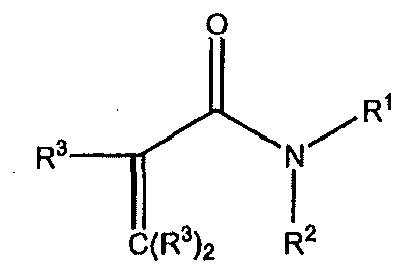
- the compound of Formula I may be an acrylic amide compound according to Formula III: wherein in Formula III: R 1 , R 2 and R 3 are each independently selected from H, alkyl, alkenyl, alkynyl, aralkyl, aryl, heteroaryl heteroarylalkyl, heterocyclyl, and cycloalkyl.
- Non-limiting examples of compounds of Formula III include:
- the compound of Formula I may be a pyrrolidinone compound according to Formula IV: wherein in Formula IV: R 1 is selected from H, alkyl, alkenyl, alkynyl, aralkyl, aryl, heteroaryl heteroarylalkyl, heterocyclyl, and cycloalkyl. In some non-limiting embodiments, R 1 is alkyl, such as C 1 -C 12 alkyl.
- Non-limiting examples of compounds of Formula IV include:
- the complexes of the present invention may be prepared using conventional methods which are well known to those persons of skill in the art. Common methods of producing complexes include crystallization of the complex from an aqueous solution by adding the complexing compound (here, the compound of Formula I) to a solution of hydrogen peroxide and allowing the complex to crystallize under the proper conditions. See, e.g., Lu, Hughes and Giguere (J. Am. Chem. Soc., 1941, v. 63 pgs. 1507-1513 ). Nonaqueous methods of preparing a hydrogen peroxide complex are also known, as described in United States Patent No. 5,770,739 (Lin ).
- the hydrogen peroxide is present in an amount ranging from 0.33 to 2.0 equivalents based on the total equivalents of the complex, such as from 0.66 to about 1.5.
- the anaerobic cure systems of the present invention are formed by combining complexes with one or more anaerobic cure components selected from the group consisting of saccharin, toluidines, acetyl phenyl hydrazine, and maleic acid.
- anaerobic cure components include saccharin, toluidines, such as N,N-diethyl-p-toluidine (“DE-p-T”) and N,N-dimethyl-o-toluidine (“DM-o-T”), acetyl phenylhydrazine (“APH”), and maleic acid.
- toluidines such as N,N-diethyl-p-toluidine (“DE-p-T") and N,N-dimethyl-o-toluidine (“DM-o-T”)
- APH acetyl phenylhydrazine
- maleic acid See e.g. United States Patent Nos. 3,218,305 (Krieble ), 4,180,640 (Melody ), 4,287,330 (Rich ) and 4,321,349 (Rich ).
- the anaerobic cure systems of the present invention may be prepared using conventional methods which are well known to those persons of skill in the art.
- the components of the cure system may be mixed together in any convenient order consistent with the roles and functions the components are to perform in the cure system.
- Conventional mixing techniques using known apparatus may be employed.
- the present invention provides an anaerobic curable composition.
- anaerobic curable compositions are based on a (meth)acrylate component together with an anaerobic cure-inducing composition.
- the anaerobic curable composition of the present invention is based on the (meth)acrylate component, together with the anaerobic cure system described above.
- G may be hydrogen, halogen or alkyl groups having from 1 to 4 carbon atoms
- R 8 may be selected
- Additional (meth)acrylate monomers suitable for use herein include polyfunctional (meth)acrylate monomers, for example, di-or tri-functional (meth)acrylates such as polyethylene glycol di(meth)acrylates, tetrahydrofuran (meth)acrylates and di(meth)acrylates, hydroxypropyl (meth)acrylate ("HPMA”), hexanediol di(meth)acrylate, trimethylol propane tri(meth)acrylates (“TMPTMA”), diethylene glycol dimethacrylate, triethylene glycol dimethacrylates (“TRIEGMA”), tetraethylene glycol di(meth)acrylates, dipropylene glycol di(meth)acrylates, di-(pentamethylene glycol) di(meth)acrylates, tetraethylene diglycol di(meth)acrylates, diglycerol tetra(meth)acrylates, tetramethylene di(meth)acrylates, ethylene di(meth)acryl
- Still other (meth)acrylate monomers that may be used herein include silicone (meth)acrylate moieties (“SiMA”), such as those taught by and claimed in United States Patent No. 5,605,999 (Chu ).
- SiMA silicone (meth)acrylate moieties
- Suitable monomers include polyacrylate esters represented by the formula wherein R 4 is a radical selected from hydrogen, halogen, and alkyl of from 1 to 4 carbon atoms; q is an integer equal to at least 1, and preferably equal to from 1 to 4; and X is an organic radical containing at least two carbon atoms and having a total bonding capacity of q plus 1.
- R 4 is a radical selected from hydrogen, halogen, and alkyl of from 1 to 4 carbon atoms
- q is an integer equal to at least 1, and preferably equal to from 1 to 4
- X is an organic radical containing at least two carbon atoms and having a total bonding capacity of q plus 1.
- workable monomers exist at essentially any value. As a practical matter, however, a general upper limit is 50 carbon atoms, preferably 30, and most preferably 20.
- X can be an organic radical of the formula: wherein each of Y 1 and Y 2 is an organic radical, preferably a hydrocarbon group, containing at least 2 carbon atoms, and preferably from 2 to 10 carbon atoms, and Z is an organic radical, preferably a hydrocarbon group, containing at least 1 carbon atom, and preferably from 2 to 10 carbon atoms.
- Non-limiting examples of useful acrylic ester oligomers include those having the following general formula: wherein R 5 represents a radical selected from hydrogen, lower alkyl of from 1 to 4 carbon atoms, hydroxy alkyl of from 1 to 4 carbon atoms, and wherein R 4 is a radical selected from hydrogen, halogen, and lower alkyl of from 1 to 4 carbon atoms; R 6 is a radical selected from hydrogen, hydroxyl, and m is an integer equal to at least 1, e.g., from 1 to 15 or higher, and preferably from 1 to 8; n is an integer equal to at least 1, e.g., 1 to 40 or more, and preferably between 2 and 10; and p is 0 or 1.
- acrylic ester oligomers corresponding to the above general formula include di-, tri- and tetraethyleneglycol dimethacrylate; di(pentamethyleneglycol)dimethacrylate; tetraethyleneglycol diacrylate; tetraethyleneglycol di(chloroacrylate); diglycerol diacrylate; diglycerol tetramethacrylate; butyleneglycol dimethacrylate; neopentylglycol diacrylate; and trimethylolpropane triacrylate.
- monofunctional acrylate esters esters containing one acrylate group
- an ester which has a relatively polar alcoholic moiety Such materials are less volatile than low molecular weight alkyl esters and, more important, the polar group tends to provide intermolecular attraction during and after cure, thus producing more desirable cure properties, as well as a more durable sealant or adhesive.
- the polar group is selected from labile hydrogen, heterocyclic ring, hydroxy, amino, cyano, and halo polar groups.
- Typical examples of compounds within this category are cyclohexyl methacrylate, tetrahydrofurfuryl methacrylate, hydroxyethyl acrylate, hydroxypropyl methacrylate (“HPMA”), t-butylaminoethyl methacrylate, cyanoethylacrylate, and chloroethyl methacrylate.
- Another useful class of monomers is prepared by the reaction of a monofunctionally substituted alkyl or aryl acrylate ester containing an active hydrogen atom on the functional substituent. This monofunctional, acrylate-terminated material is reacted with an organic polyisocyanate in suitable proportions so as to convert all of the isocyanate groups to urethane or ureido groups.
- the monofunctional alkyl and aryl acrylate esters are preferably the acrylates and methacrylates containing hydroxy or amino functional groups on the nonacrylate portion thereof.
- Acrylate esters suitable for use have the formula wherein X is selected from -O- and and R 9 is selected from hydrogen and lower alkyl of 1 through 7 carbon atoms; R 7 is selected from hydrogen, chlorine and methyl and ethyl radicals; and R 8 is a divalent organic radical selected from lower alkylene of 1 through 8 carbon atoms, phenylene or naphthylene.
- n is an integer from 2 to 6;
- B is a polyvalent organic radical selected from alkyl, alkenyl, cycloalkyl, cycloalkenyl, aryl, aralkyl, alkaryl orheterocyclic radicals both substituted and unsubstituted; and R 7 , R 8 and X have the meanings given above.
- hydroxy- and amine-containing materials suitable for use in the preparation of the above monomeric products are exemplified by, but not limited to, such materials as hydroxyethyl acrylate, hydroxyethyl methacrylate, aminoethyl methacrylate, 3-hydroxypropyl methacrylate, aminopropyl methacrylate, hydroxyhexyl acrylate, t-butylaminoethyl methacrylate, and hydroxyoctyl methacrylate.
- the preferred organic polyisocyanates comprise the higher alkenyl diisocyanates, the cycloalkenyl diisocyanates and the aromatic diisocyanates containing 8 or more carbon atoms and preferably from 8 to 30 carbon atoms, such as, for example, octamethylene diisocyanate, durene diisocyanate, 4,4'-diphenyldiisocyanate, and toluene diisocyanate.
- the complex of hydrogen peroxide and the one or more compounds of Formula I is typically employed in the range of from 0.1 to 10 percent by weight, based on the total weight of the composition, with 1 to 5 percent by weight being desirable.
- the (meth)acrylate component typically comprises from 10 to 90 percent by weight of the composition, such as 60 to 90 percent by weight, based on the total weight of the composition.
- maleimide components may be included to modify the physical property and/or cure profile of the formulation and/or the strength or temperature resistance of the cured adhesive.
- the maleimide, coreactant, reactive diluent, plasticizer, and/or mono- or poly-hydroxyalkanes may be present in an amount within the range of about 1 percent to about 30 percent by weight, based on the total weight of the anaerobic curable composition.
- Stabilizers and inhibitors such as phenols including hydroquinones and tetrahydroquinones and quinones, such as napthaquinone and anthraquinone
- Stabilizers and inhibitors may also be employed to control and prevent premature peroxide decomposition and polymerization of the composition of the present invention, as well as chelating agents (such as the tetrasodium salt of ethylenediamine tetraacetic acid (“EDTA”) and beta keto esters) to trap trace amounts of metal contaminants therefrom.
- chelators may ordinarily be present in the compositions in an amount from 0.001 percent by weight to 0.1 percent by weight, based on the total weight of the anaerobic curable composition.
- Metal catalyst solutions or pre-mixes thereof are used in amounts of 0.03 to 0.1 percent by weight.
- Other agents such as thickeners, non-reactive plasticizers, fillers, toughening components (such as elastomers and rubbers), and other well-known additives may be incorporated therein where the art-skilled believes it would be desirable to do so.
- the present invention also provides methods of preparing and using the inventive anaerobic curable compositions.
- compositions of the present invention may be prepared using conventional methods which are well known to those persons of skill in the art.
- the components of the inventive compositions may be mixed together in any convenient order consistent with the roles and functions the components are to perform in the compositions.
- Conventional mixing techniques using known apparatus may be employed.
- compositions of this invention may be applied to a variety of substrates to perform with the desired benefits and advantages described herein.
- appropriate substrates may be constructed from steel, brass, copper, aluminum, zinc, glass and other metals and alloys, ceramics and thermosets.
- An appropriate primer may be applied to a surface of the chosen substrate to enhance cure rate. See e.g. United States Patent No. 5,811,473 (Ramos ).
- One particularly desirable use of the compositions disclosed herein is as a threadlocker, i. e., to secure a nut to a bolt. This is achieved by applying the composition to the threads of a bolt, mating it with a nut and allowing it to cure.
- Curing can be accomplished over a wide range of times depending on specific composition, application and application geometry, curing temperature. For anaerobic compositions the cure speed typically varies from minutes (very fast) to days (very slow).
- Curing of a polymerizable composition can be obtained by subjecting the composition to curing conditions, such as but not limited to heating, etc., leading to the reaction of reactive groups of the composition and resulting in polymerization and formation of a solid polymerizate.
- curing conditions such as but not limited to heating, etc.
- the rate of reaction of the remaining unreacted reactive groups becomes progressively slower.
- the polymerizable composition can be subjected to curing conditions until it is at least partially cured.
- the term "at least partially cured” means subjecting the polymerizable composition to curing conditions, wherein reaction of at least a portion of the reactive groups of the composition occurs, to form a solid polymerizate.
- the polymerizable composition can be subjected to curing conditions such that a substantially complete cure is attained and wherein further exposure to curing conditions results in no significant further improvement in polymer properties, such as strength or hardness.
- this invention provides a method of preparing an anaerobic curable composition, a step of which includes mixing together a (meth)acrylate component and an anaerobic cure system described above.
- the invention also provides for an article prepared from the anaerobic curable compositions described herein.
- the invention also provides a method of bonding two or more substrates using the anaerobic adhesive compositions of the present invention, the steps of which include applying the composition to a desired substrate surface and exposing the composition to an anaerobic environment for a time sufficient to cure the composition.
- Bond strength tests were carried out according to testing method ASTM D1002-05.
- the 82°C stability of the formulations was determined according to an evaluation in which the formulation is judged to have acceptable shelf stability if the adhesive formulation remains liquid for 3 hours or longer at 82°C. The results are shown in Table 2 below. Poorer 82°C stability was seen particularly at the higher level of UHP (Composition 1-2). Composition 1-2 did, however, set up after a few days. TABLE 2 Test Comparative Ex. Composition 1-1 Composition 1-2 24 hr. room temp. cure on SWAI at 0 gap 9.1 N/mm 2 3.4 N/mm 2 4.6 N/mm 2 24 hr. room temp.
- a complex of N, N' dimethyl urea and hydrogen peroxide (“dimethyl UHP”) and a complex of tetramethyl urea and hydrogen peroxide (“tetramethyl UHP”) were prepared according to the synthesis scheme of FIG. 3 .
- Each sample composition contained an equal amount of the base acrylate composition of Table 3 and a different peroxide-based initiator.
- the samples were prepared by hand mixing the components in individual 30 ml bottles.
- Composition 2-1 Composition 2-2 Composition 2-3 Composition 2-4
- UHP urea hydrogen peroxide complex
- Dimethyl complex of N, N' dimethylurea and hydrogen peroxide
- Tetramethyl UHP complex of tetramethylurea and hydrogen peroxide
- Breakloose adhesion testing was performed according to ASTM D5649. Breakloose torque is the initial torque required to decrease or eliminate the axial load in a seated assembly. Twenty nut and bolt specimens were assembled for each adhesive formulation tested. Adhesive was applied to the bolt, and the nut was screwed onto the bolt with a steel collar as a spacer. For the break adhesion tests, the specimens were maintained at ambient temperature for 15 minutes, 30 minutes, 1 hour and 24 hours after assembly (five specimens each). The break strengths (in-lbf) were then recorded for five specimens of each adhesive formulation after 15 minutes, 30 minutes, 1 hour and after 24 hours at ambient temperature (25°C) and 45-50% relative humidity, respectively. The data for these evaluations is set forth below in Table 5.
- NMP N-methyl pyrrolidinone
- H 2 O 2 H 2 O 2
- 9 g (100 mmol) of N-methyl pyrrolidinone (“NMP") and 8.75 g of 50% aq. hydrogen peroxide (125 mmol) were combined in a 50 mL Erlenmeyer flask.
- the solution was heated on a stirrer/hot plate to approximately 60°C. After stirring at 60°C, the solution was poured into a 125 mL crystallization dish, and water was allowed to evaporate for 72 hours at ambient temperature. This process yielded 14.7 g of NMP/H 2 O 2 complex.
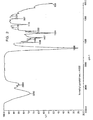
- the complex was analyzed by 1 H NMR (shown in FIG. 1 ) and FT-IR (shown in FIG. 2 ). The complex was essentially odorless.
- a complex of N-dodecyl pyrrolidinone and hydrogen peroxide was prepared as follows. 12.7 g (50 mmol) of N-dodecyl pyrrolidinone and 6.8 g of 50% aq. hydrogen peroxide (100 mmol) were combined in a 50 mL Erlenmeyer flask. The solution was heated on a stirrer/hot plate to approximately 60°C with stirring. The reaction mixture remained cloudy during the heating. After stirring at 60°C for 5 minutes, the solution was poured into a crystallization dish. Two phases were apparent. The water was allowed to evaporate for 72 hours at ambient temperature. This process yielded 15.3 g of N-dodecyl pyrrolidinone/H 2 O 2 complex. The complex was essentially odorless.
- Dodecyl Pyrr/H 2 O 2 complex of dodecyl pyrrolidinone and hydrogen peroxide
- Breakloose adhesion testing was performed according to ASTM D5649 in a manner as discussed above.
- the break and prevail torque strengths (in-lb f ) were recorded for five specimens of each adhesive composition after 15 minutes, 30 minutes, 1 hour and after 24 hours at ambient temperature (25°C) and 45-50% relative humidity, respectively.
- the data for these evaluations is set forth below in Table 11.
- TABLE 11 Time Interval Composition 4-1 Composition 4-2 Composition 4-3
- Composition 4-4 15 minutes 3 in.lbs.* 6 in.lbs.* 23 in.lbs.* 11 in.lbs.* 30 minutes 52 ⁇ 27 in.lbs. 54 ⁇ 27 in.lbs. 28 in.lbs.* 19 in.lbs.* 60 minutes 152 ⁇ 55 in.lbs. 146 ⁇ 38 in.lbs.
- TA BLE 11A - in.lbs results converter to Nm Time Interval Composition 4-1
- Composition 4-2 Composition 4-3
- Composition 4-4 15 minutes 0.34 Nm * 0.68 Nm * 2.60 Nm * 1.24 Nm* 30 minutes 5.88 ⁇ 3.05 Nm 6.10 ⁇ 3.05 Nm 3.16 Nm* 2.15 Nm* 60 minutes 17.17 ⁇ 6.21 Nm 16.04 ⁇ 4.29 Nm 11.41 Nm* 2.94 Nm* 240 minutes 27.01 ⁇ 4.52 Nm 21.24 ⁇ 3.72 Nm 4.07 Nm* 2.26 Nm* 1440 minutes 29.38 ⁇ 4.0 Nm 30.28 ⁇ 4.29 Nm 8.25 Nm* 2.37 ⁇ 0.27 Nm *test result values were too scattered for a meaningful standard deviation calculation.
- N-diacetone acrylamide and hydrogen peroxide were synthesized and this complex was found to have significantly improved solubility over a complex of urea and hydrogen peroxide ("UHP," as discussed above) in non-polar acrylic monomers.
- UHP urea and hydrogen peroxide
- N-diacetone acrylamide/H 2 O 2 complex was used as the peroxide curative in a model anaerobic threadlocking adhesive and it was found to work as well as cumene hydroperoxide, the standard hydroperoxide in anaerobic adhesives. It is believed this concept would also work with N, N-dialkyl acrylamides.
Landscapes
- Chemical & Material Sciences (AREA)
- Organic Chemistry (AREA)
- Adhesives Or Adhesive Processes (AREA)
- Organic Low-Molecular-Weight Compounds And Preparation Thereof (AREA)
- Addition Polymer Or Copolymer, Post-Treatments, Or Chemical Modifications (AREA)
- Pyrrole Compounds (AREA)
Claims (14)
- Anaerobes Aushärtungssystem, umfassend:eine oder mehrere anaerobe Aushärtungskomponenten, die aus der Gruppe ausgewählt ist, die aus Saccharin, Toluidinen, Acetylphenylhydrazin und Maleinsäure besteht; undeinen Komplex, der Wasserstoffperoxid und mindestens eine Verbindung umfasst, die dargestellt ist durch Formel I:


- Anaerobes Aushärtungssystem nach Anspruch 1, wobei Wasserstoffperoxid in einer Menge von 0,33 bis 2,0 Äquivalenten beruhend auf den Gesamtäquivalenten des Komplexes vorhanden ist.
- Anaerobes Aushärtungssystem nach Anspruch 1, wobei X gleich -N(R3)2 und Formel I durch folgende Struktur dargestellt ist:

- Anaerobes Aushärtungssystem nach Anspruch 1, wobei X gleich

- Anaerobes Aushärtungssystem nach Anspruch 1, wobei X gleich -C(R3)3 ist.
- Anaerobes Aushärtungssystem nach Anspruch 5, wobei ein R3 und R2 zusammengefasst werden, um einen alizyklischen C2-C6-Ring zu bilden, und Formel I durch die folgende Struktur dargestellt ist:

- Anaerobes Aushärtungssystem nach Anspruch 6, wobei R1 aus H und Alkyl ausgewählt ist.
- Anaerobes Aushärtungssystem nach Anspruch 1, wobei der Komplex Wasserstoffperoxid und mindestens eine Verbindung umfasst, die aus der Gruppe ausgewählt ist, die aus N-substituiertem Harnstoff, N-substituiertem Pyrrolidinon und N-substituiertem Acrylamid besteht.
- Anaerobe aushärtbare Zusammensetzung, umfassend:eine (Meth)acrylat-Komponente; undeinen Komplex, der Wasserstoffperoxid und mindestens eine Verbindung aufweist, die durch Formel I dargestellt ist:


- Zusammensetzung nach Anspruch 9, wobei die (Meth)acrylat-Komponente Verbindungen umfasst, die durch H2C=CGCO2R4 dargestellt sind, wobei G ein Element ist, das aus der Gruppe ausgewählt ist, die aus Wasserstoff, Halogen und Alkyl mit 1 bis ca. vier Kohlenstoffatomen besteht, und R4 ein Element ist, das aus der Gruppe ausgewählt ist, die aus Alkyl-, Cycloalkyl-, Alkenyl-, Cycloalkenyl-, Alkaryl- und Arylgruppen mit 1 bis ca. 16 Kohlenstoffatomen besteht, mit oder ohne Substitution oder Unterbrechung durch ein Element, das aus der Gruppe ausgewählt ist, die aus Silan, Silizium, Wasserstoff, Halogen, Carbonyl, Hydroxyl, Ester, Carboxylsäure, Harnstoff, Urethan, Carbamat, Amin, Amid, Schwefel, Sulfonat und Sulfon besteht.
- Aushärtbare Zusammensetzung nach Anspruch 9, wobei die (Meth)acrylat-Komponente Elemente umfasst, die aus der Gruppe ausgewählt sind, die aus Silikon(meth)acrylaten, Polyethylenglykoldi(meth)acrylaten, Bisphenol-A-(meth)acrylaten, ethoxylierten Bisphenol-A-(meth)acrylaten, Bisphenol-F-(meth)acrylaten, ethoxylierten Bisphenol-F-(meth)acrylaten, Tetrahydrofuran(meth)acrylaten und -di(meth)acrylaten, Hydroxypropyl(meth)acrylat, Hexandioldi(meth)acrylat und Trimethylolpropantri(meth)acrylat besteht.
- Zusammensetzung nach Anspruch 9, wobei der Komplex in einer Menge zwischen 0,1 und 10 Gew.-% beruhend auf dem Gesamtgewicht der
Zusammensetzung vorhanden ist. - Verfahren zur Herstellung einer anaeroben aushärtbaren Zusammensetzung, umfassend, eine Meth(acrylat)-Komponente und einen Komplex zu mischen, der Wasserstoffperoxid und mindestens eine Verbindung umfasst, die durch Formel I dargestellt ist:


- Verfahren zur Verbindung zweier oder mehrerer Substrate, umfassend:(a) mindestens zwei Substrate bereitzustellen;(b) auf einer Oberfläche von einem oder beiden der mindestens zwei Substrate eine Klebstoffzusammensetzung nach Anspruch 9 zu verteilen;(c) die Oberflächen der mindestens zwei Substrate mit der darauf befindlichen Klebstoffzusammensetzung in Kontakt zu bringen; und(d) die Klebstoffzusammensetzung Aushärtungsbedingungen auszusetzen.
Applications Claiming Priority (2)
| Application Number | Priority Date | Filing Date | Title |
|---|---|---|---|
| US14300109P | 2009-01-07 | 2009-01-07 | |
| PCT/US2010/020206 WO2010080795A2 (en) | 2009-01-07 | 2010-01-06 | Hydrogen peroxide complexes and their use in the cure system of anaerobic adhesives |
Publications (3)
| Publication Number | Publication Date |
|---|---|
| EP2385936A2 EP2385936A2 (de) | 2011-11-16 |
| EP2385936A4 EP2385936A4 (de) | 2012-08-08 |
| EP2385936B1 true EP2385936B1 (de) | 2015-03-04 |
Family
ID=42317115
Family Applications (1)
| Application Number | Title | Priority Date | Filing Date |
|---|---|---|---|
| EP10729441.5A Not-in-force EP2385936B1 (de) | 2009-01-07 | 2010-01-06 | Wasserstoffperoxidkomplexe und ihre verwendung für das aushärtungssystem anaerober klebstoffe |
Country Status (9)
| Country | Link |
|---|---|
| US (1) | US8524034B2 (de) |
| EP (1) | EP2385936B1 (de) |
| JP (1) | JP5632857B2 (de) |
| KR (2) | KR101634625B1 (de) |
| CN (1) | CN102405210B (de) |
| CA (1) | CA2749031A1 (de) |
| ES (1) | ES2537827T3 (de) |
| MX (1) | MX2011007304A (de) |
| WO (1) | WO2010080795A2 (de) |
Families Citing this family (7)
| Publication number | Priority date | Publication date | Assignee | Title |
|---|---|---|---|---|
| JP5627574B2 (ja) | 2008-06-03 | 2014-11-19 | インターミューン, インコーポレイテッド | 炎症性および線維性疾患を治療するための化合物および方法 |
| AR092742A1 (es) | 2012-10-02 | 2015-04-29 | Intermune Inc | Piridinonas antifibroticas |
| WO2015149223A1 (en) | 2014-03-31 | 2015-10-08 | Dow Global Technologies Llc | Crosslinkable polymeric compositions with diallylamide crosslinking coagents, methods for making the same, and articles made therefrom |
| US10233195B2 (en) | 2014-04-02 | 2019-03-19 | Intermune, Inc. | Anti-fibrotic pyridinones |
| WO2020119908A1 (en) * | 2018-12-13 | 2020-06-18 | Henkel IP & Holding GmbH | (meth)acrylate-functionalized waxes and curable compositions made therewith |
| GB2582957B (en) * | 2019-04-11 | 2022-08-17 | Henkel IP & Holding GmbH | Anaerobically curable compositions |
| EP4061864B1 (de) | 2019-11-18 | 2023-10-18 | Henkel AG & Co. KGaA | Einkomponentige (1k) anaerobische härtbare zusammensetzung |
Family Cites Families (24)
| Publication number | Priority date | Publication date | Assignee | Title |
|---|---|---|---|---|
| US3218305A (en) | 1963-12-26 | 1965-11-16 | Loctite Corp | Accelerated anaerobic compositions and method of using same |
| DE1719144C3 (de) | 1967-12-01 | 1974-08-22 | Henkel & Cie Gmbh, 4000 Duesseldorf | Unter Sauerstoffausschluß beschleunigt erhärtende Klebstoffe oder Dichtungsmittel |
| US3684477A (en) * | 1969-08-28 | 1972-08-15 | Fmc Corp | Microorganism control |
| US4321349A (en) | 1975-05-23 | 1982-03-23 | Loctite Corporation | Accelerator for curable compositions |
| US4287330A (en) | 1975-05-23 | 1981-09-01 | Loctite Corporation | Accelerator for curable compositions |
| IE43811B1 (en) | 1976-11-08 | 1981-06-03 | Loctite Ltd | Curable acrylate ester compositions containing hydrazine acelerators and acid co-accelerators |
| US4446246A (en) * | 1982-09-09 | 1984-05-01 | Three Bond Co., Ltd. | Catalyst systems for two-pack acrylic adhesive formulations |
| US4855001A (en) * | 1987-02-10 | 1989-08-08 | Lord Corporation | Structural adhesive formulations and bonding method employing same |
| JPH04352758A (ja) * | 1991-05-28 | 1992-12-07 | Nippon Synthetic Chem Ind Co Ltd:The | 1,3−ジアルキル尿素の製造方法 |
| US5206385A (en) * | 1992-01-24 | 1993-04-27 | Isp Investments Inc. | Urea-hydrogen peroxide-polyvinylpyrrolidone process |
| US5520727A (en) * | 1993-08-16 | 1996-05-28 | The Regents Of University Of California | Aqueous algal-based phenolic type adhesives and glues |
| US5674450A (en) * | 1994-04-28 | 1997-10-07 | Johnson & Johnson Medical, Inc. | Vapor sterilization using a non-aqueous source of hydrogen peroxide |
| US5605999A (en) | 1995-06-05 | 1997-02-25 | Loctite Corporation | Anaerobically curable silicones |
| US5811473A (en) * | 1996-04-02 | 1998-09-22 | Loctite Corporation | Primer activator composition for anaerobic adhesives |
| US6043327A (en) | 1997-07-03 | 2000-03-28 | Loctite Corporation | Anaerobic adhesive compositions of acrylates coreactants and maleimides curable under ambient conditions |
| WO2000040664A1 (en) | 1999-01-08 | 2000-07-13 | Loctite (R & D) Limited | Novel curative for anaerobic adhesive compositions |
| JP4547735B2 (ja) | 1999-07-14 | 2010-09-22 | ダイキン工業株式会社 | 含フッ素重合体の硬化方法 |
| AU2003228209B2 (en) | 2002-02-13 | 2007-04-26 | Van Beek Natural Science, Llc | Compositions and methods for increasing milk production in animals |
| US6835762B1 (en) * | 2002-05-31 | 2004-12-28 | Henkel Corporation | Cure accelerators for anaerobic curable compositions |
| US6958368B1 (en) | 2002-05-31 | 2005-10-25 | Henkel Corporation | Cure accelerators for anaerobic curable compositions |
| CN1418871A (zh) * | 2002-11-28 | 2003-05-21 | 陶华西 | 过氧化尿素的制备方法 |
| US7411025B1 (en) | 2003-12-22 | 2008-08-12 | Henkel Corporation | Cure accelerators for anaerobic curable compositions |
| GB0401113D0 (en) * | 2004-01-19 | 2004-02-18 | Glaxo Group Ltd | Tooth whitening composition |
| US20050266095A1 (en) * | 2004-06-01 | 2005-12-01 | Erning Xia | Gentle preservative compositions |
-
2010
- 2010-01-06 EP EP10729441.5A patent/EP2385936B1/de not_active Not-in-force
- 2010-01-06 CA CA2749031A patent/CA2749031A1/en not_active Abandoned
- 2010-01-06 KR KR1020117018313A patent/KR101634625B1/ko not_active Ceased
- 2010-01-06 WO PCT/US2010/020206 patent/WO2010080795A2/en not_active Ceased
- 2010-01-06 CN CN201080007225.XA patent/CN102405210B/zh not_active Expired - Fee Related
- 2010-01-06 ES ES10729441.5T patent/ES2537827T3/es active Active
- 2010-01-06 MX MX2011007304A patent/MX2011007304A/es active IP Right Grant
- 2010-01-06 JP JP2011545401A patent/JP5632857B2/ja not_active Expired - Fee Related
- 2010-01-06 KR KR1020167000162A patent/KR20160008657A/ko not_active Ceased
-
2011
- 2011-07-07 US US13/177,921 patent/US8524034B2/en not_active Expired - Fee Related
Also Published As
| Publication number | Publication date |
|---|---|
| CN102405210B (zh) | 2015-04-22 |
| MX2011007304A (es) | 2011-10-06 |
| KR20110112413A (ko) | 2011-10-12 |
| KR101634625B1 (ko) | 2016-06-30 |
| KR20160008657A (ko) | 2016-01-22 |
| CA2749031A1 (en) | 2010-07-15 |
| JP2012514642A (ja) | 2012-06-28 |
| EP2385936A4 (de) | 2012-08-08 |
| WO2010080795A2 (en) | 2010-07-15 |
| US20110290418A1 (en) | 2011-12-01 |
| ES2537827T3 (es) | 2015-06-12 |
| US8524034B2 (en) | 2013-09-03 |
| WO2010080795A8 (en) | 2011-02-17 |
| JP5632857B2 (ja) | 2014-11-26 |
| EP2385936A2 (de) | 2011-11-16 |
| WO2010080795A3 (en) | 2010-10-14 |
| CN102405210A (zh) | 2012-04-04 |
Similar Documents
| Publication | Publication Date | Title |
|---|---|---|
| US8524034B2 (en) | Hydrogen peroxide complexes and their use in the cure system of anaerobic adhesives | |
| EP2285773B1 (de) | Härtungsbeschleuniger für anaerobe härtbare zusammensetzungen | |
| US4287330A (en) | Accelerator for curable compositions | |
| EP3209702B1 (de) | Anaerobe härtbare zusammensetzungen mit novolacvinylestern | |
| EP1044245A1 (de) | Funktionelle farbstoffe als indikator in aerob härtenden zusammensetzungen | |
| KR102601879B1 (ko) | 혐기 경화성 조성물을 위한 경화 촉진제 | |
| US8519023B2 (en) | Fast,curing two part anaerobic adhesive composition | |
| CN116323723A (zh) | 用于可厌氧固化组合物的固化促进剂 | |
| EP3209640B1 (de) | Phenylhydrazin-/anhydridaddukte und härtbare anaerobe zusammensetzungen damit | |
| EP3204461B1 (de) | Härtungsbeschleuniger für anaerobe härtbare zusammensetzungen | |
| EP3174932B1 (de) | Härtungsbeschleuniger für anaerobe härtbare zusammensetzungen | |
| EP4486804A1 (de) | Härtungsbeschleuniger für anaerobe härtbare zusammensetzung |
Legal Events
| Date | Code | Title | Description |
|---|---|---|---|
| PUAI | Public reference made under article 153(3) epc to a published international application that has entered the european phase |
Free format text: ORIGINAL CODE: 0009012 |
|
| 17P | Request for examination filed |
Effective date: 20110721 |
|
| AK | Designated contracting states |
Kind code of ref document: A2 Designated state(s): AT BE BG CH CY CZ DE DK EE ES FI FR GB GR HR HU IE IS IT LI LT LU LV MC MK MT NL NO PL PT RO SE SI SK SM TR |
|
| DAX | Request for extension of the european patent (deleted) | ||
| A4 | Supplementary search report drawn up and despatched |
Effective date: 20120705 |
|
| RIC1 | Information provided on ipc code assigned before grant |
Ipc: C07C 233/08 20060101ALI20120629BHEP Ipc: C09J 5/06 20060101ALI20120629BHEP Ipc: C07C 233/09 20060101ALI20120629BHEP Ipc: C07C 275/06 20060101ALI20120629BHEP Ipc: C07C 275/02 20060101AFI20120629BHEP Ipc: C09J 4/02 20060101ALI20120629BHEP Ipc: C09J 4/00 20060101ALI20120629BHEP |
|
| RAP1 | Party data changed (applicant data changed or rights of an application transferred) |
Owner name: HENKEL CORPORATION Owner name: HENKEL IRELAND LIMITED |
|
| 17Q | First examination report despatched |
Effective date: 20130715 |
|
| RAP1 | Party data changed (applicant data changed or rights of an application transferred) |
Owner name: HENKEL US IP LLC Owner name: HENKEL IRELAND LIMITED |
|
| GRAP | Despatch of communication of intention to grant a patent |
Free format text: ORIGINAL CODE: EPIDOSNIGR1 |
|
| RAP1 | Party data changed (applicant data changed or rights of an application transferred) |
Owner name: HENKEL IP & HOLDING GMBH Owner name: HENKEL US IP LLC |
|
| INTG | Intention to grant announced |
Effective date: 20140902 |
|
| RIN1 | Information on inventor provided before grant (corrected) |
Inventor name: FARRELL, DAVID Inventor name: MCARDLE, CIARAN Inventor name: KLEMARCZYK, PHILIP, T. Inventor name: CLARKE, GREG Inventor name: WROBEL, PETER Inventor name: BIRKETT, DAVID |
|
| GRAS | Grant fee paid |
Free format text: ORIGINAL CODE: EPIDOSNIGR3 |
|
| GRAA | (expected) grant |
Free format text: ORIGINAL CODE: 0009210 |
|
| AK | Designated contracting states |
Kind code of ref document: B1 Designated state(s): AT BE BG CH CY CZ DE DK EE ES FI FR GB GR HR HU IE IS IT LI LT LU LV MC MK MT NL NO PL PT RO SE SI SK SM TR |
|
| REG | Reference to a national code |
Ref country code: GB Ref legal event code: FG4D |
|
| REG | Reference to a national code |
Ref country code: CH Ref legal event code: EP |
|
| REG | Reference to a national code |
Ref country code: IE Ref legal event code: FG4D |
|
| REG | Reference to a national code |
Ref country code: AT Ref legal event code: REF Ref document number: 713731 Country of ref document: AT Kind code of ref document: T Effective date: 20150415 |
|
| REG | Reference to a national code |
Ref country code: DE Ref legal event code: R096 Ref document number: 602010022818 Country of ref document: DE Effective date: 20150416 |
|
| REG | Reference to a national code |
Ref country code: ES Ref legal event code: FG2A Ref document number: 2537827 Country of ref document: ES Kind code of ref document: T3 Effective date: 20150612 |
|
| REG | Reference to a national code |
Ref country code: NL Ref legal event code: T3 |
|
| REG | Reference to a national code |
Ref country code: AT Ref legal event code: MK05 Ref document number: 713731 Country of ref document: AT Kind code of ref document: T Effective date: 20150304 |
|
| RAP2 | Party data changed (patent owner data changed or rights of a patent transferred) |
Owner name: HENKEL IP & HOLDING GMBH |
|
| PG25 | Lapsed in a contracting state [announced via postgrant information from national office to epo] |
Ref country code: FI Free format text: LAPSE BECAUSE OF FAILURE TO SUBMIT A TRANSLATION OF THE DESCRIPTION OR TO PAY THE FEE WITHIN THE PRESCRIBED TIME-LIMIT Effective date: 20150304 Ref country code: HR Free format text: LAPSE BECAUSE OF FAILURE TO SUBMIT A TRANSLATION OF THE DESCRIPTION OR TO PAY THE FEE WITHIN THE PRESCRIBED TIME-LIMIT Effective date: 20150304 Ref country code: LT Free format text: LAPSE BECAUSE OF FAILURE TO SUBMIT A TRANSLATION OF THE DESCRIPTION OR TO PAY THE FEE WITHIN THE PRESCRIBED TIME-LIMIT Effective date: 20150304 Ref country code: NO Free format text: LAPSE BECAUSE OF FAILURE TO SUBMIT A TRANSLATION OF THE DESCRIPTION OR TO PAY THE FEE WITHIN THE PRESCRIBED TIME-LIMIT Effective date: 20150604 Ref country code: SE Free format text: LAPSE BECAUSE OF FAILURE TO SUBMIT A TRANSLATION OF THE DESCRIPTION OR TO PAY THE FEE WITHIN THE PRESCRIBED TIME-LIMIT Effective date: 20150304 |
|
| REG | Reference to a national code |
Ref country code: LT Ref legal event code: MG4D |
|
| PG25 | Lapsed in a contracting state [announced via postgrant information from national office to epo] |
Ref country code: AT Free format text: LAPSE BECAUSE OF FAILURE TO SUBMIT A TRANSLATION OF THE DESCRIPTION OR TO PAY THE FEE WITHIN THE PRESCRIBED TIME-LIMIT Effective date: 20150304 Ref country code: LV Free format text: LAPSE BECAUSE OF FAILURE TO SUBMIT A TRANSLATION OF THE DESCRIPTION OR TO PAY THE FEE WITHIN THE PRESCRIBED TIME-LIMIT Effective date: 20150304 Ref country code: GR Free format text: LAPSE BECAUSE OF FAILURE TO SUBMIT A TRANSLATION OF THE DESCRIPTION OR TO PAY THE FEE WITHIN THE PRESCRIBED TIME-LIMIT Effective date: 20150605 |
|
| PG25 | Lapsed in a contracting state [announced via postgrant information from national office to epo] |
Ref country code: PT Free format text: LAPSE BECAUSE OF FAILURE TO SUBMIT A TRANSLATION OF THE DESCRIPTION OR TO PAY THE FEE WITHIN THE PRESCRIBED TIME-LIMIT Effective date: 20150706 Ref country code: SK Free format text: LAPSE BECAUSE OF FAILURE TO SUBMIT A TRANSLATION OF THE DESCRIPTION OR TO PAY THE FEE WITHIN THE PRESCRIBED TIME-LIMIT Effective date: 20150304 Ref country code: RO Free format text: LAPSE BECAUSE OF FAILURE TO SUBMIT A TRANSLATION OF THE DESCRIPTION OR TO PAY THE FEE WITHIN THE PRESCRIBED TIME-LIMIT Effective date: 20150304 Ref country code: CZ Free format text: LAPSE BECAUSE OF FAILURE TO SUBMIT A TRANSLATION OF THE DESCRIPTION OR TO PAY THE FEE WITHIN THE PRESCRIBED TIME-LIMIT Effective date: 20150304 Ref country code: EE Free format text: LAPSE BECAUSE OF FAILURE TO SUBMIT A TRANSLATION OF THE DESCRIPTION OR TO PAY THE FEE WITHIN THE PRESCRIBED TIME-LIMIT Effective date: 20150304 |
|
| PG25 | Lapsed in a contracting state [announced via postgrant information from national office to epo] |
Ref country code: IS Free format text: LAPSE BECAUSE OF FAILURE TO SUBMIT A TRANSLATION OF THE DESCRIPTION OR TO PAY THE FEE WITHIN THE PRESCRIBED TIME-LIMIT Effective date: 20150704 Ref country code: PL Free format text: LAPSE BECAUSE OF FAILURE TO SUBMIT A TRANSLATION OF THE DESCRIPTION OR TO PAY THE FEE WITHIN THE PRESCRIBED TIME-LIMIT Effective date: 20150304 |
|
| REG | Reference to a national code |
Ref country code: DE Ref legal event code: R097 Ref document number: 602010022818 Country of ref document: DE |
|
| PLBE | No opposition filed within time limit |
Free format text: ORIGINAL CODE: 0009261 |
|
| STAA | Information on the status of an ep patent application or granted ep patent |
Free format text: STATUS: NO OPPOSITION FILED WITHIN TIME LIMIT |
|
| REG | Reference to a national code |
Ref country code: FR Ref legal event code: PLFP Year of fee payment: 7 |
|
| PG25 | Lapsed in a contracting state [announced via postgrant information from national office to epo] |
Ref country code: DK Free format text: LAPSE BECAUSE OF FAILURE TO SUBMIT A TRANSLATION OF THE DESCRIPTION OR TO PAY THE FEE WITHIN THE PRESCRIBED TIME-LIMIT Effective date: 20150304 |
|
| 26N | No opposition filed |
Effective date: 20151207 |
|
| PG25 | Lapsed in a contracting state [announced via postgrant information from national office to epo] |
Ref country code: SI Free format text: LAPSE BECAUSE OF FAILURE TO SUBMIT A TRANSLATION OF THE DESCRIPTION OR TO PAY THE FEE WITHIN THE PRESCRIBED TIME-LIMIT Effective date: 20150304 |
|
| PG25 | Lapsed in a contracting state [announced via postgrant information from national office to epo] |
Ref country code: BE Free format text: LAPSE BECAUSE OF NON-PAYMENT OF DUE FEES Effective date: 20160131 |
|
| PG25 | Lapsed in a contracting state [announced via postgrant information from national office to epo] |
Ref country code: BE Free format text: LAPSE BECAUSE OF FAILURE TO SUBMIT A TRANSLATION OF THE DESCRIPTION OR TO PAY THE FEE WITHIN THE PRESCRIBED TIME-LIMIT Effective date: 20150304 Ref country code: LU Free format text: LAPSE BECAUSE OF FAILURE TO SUBMIT A TRANSLATION OF THE DESCRIPTION OR TO PAY THE FEE WITHIN THE PRESCRIBED TIME-LIMIT Effective date: 20160106 |
|
| REG | Reference to a national code |
Ref country code: CH Ref legal event code: PL |
|
| PG25 | Lapsed in a contracting state [announced via postgrant information from national office to epo] |
Ref country code: MC Free format text: LAPSE BECAUSE OF FAILURE TO SUBMIT A TRANSLATION OF THE DESCRIPTION OR TO PAY THE FEE WITHIN THE PRESCRIBED TIME-LIMIT Effective date: 20150304 |
|
| PG25 | Lapsed in a contracting state [announced via postgrant information from national office to epo] |
Ref country code: CH Free format text: LAPSE BECAUSE OF NON-PAYMENT OF DUE FEES Effective date: 20160131 Ref country code: LI Free format text: LAPSE BECAUSE OF NON-PAYMENT OF DUE FEES Effective date: 20160131 |
|
| REG | Reference to a national code |
Ref country code: IE Ref legal event code: MM4A |
|
| REG | Reference to a national code |
Ref country code: FR Ref legal event code: PLFP Year of fee payment: 8 |
|
| PG25 | Lapsed in a contracting state [announced via postgrant information from national office to epo] |
Ref country code: IE Free format text: LAPSE BECAUSE OF NON-PAYMENT OF DUE FEES Effective date: 20160106 |
|
| REG | Reference to a national code |
Ref country code: GB Ref legal event code: 732E Free format text: REGISTERED BETWEEN 20170223 AND 20170303 |
|
| PG25 | Lapsed in a contracting state [announced via postgrant information from national office to epo] |
Ref country code: MT Free format text: LAPSE BECAUSE OF FAILURE TO SUBMIT A TRANSLATION OF THE DESCRIPTION OR TO PAY THE FEE WITHIN THE PRESCRIBED TIME-LIMIT Effective date: 20150304 |
|
| REG | Reference to a national code |
Ref country code: FR Ref legal event code: PLFP Year of fee payment: 9 |
|
| PG25 | Lapsed in a contracting state [announced via postgrant information from national office to epo] |
Ref country code: CY Free format text: LAPSE BECAUSE OF FAILURE TO SUBMIT A TRANSLATION OF THE DESCRIPTION OR TO PAY THE FEE WITHIN THE PRESCRIBED TIME-LIMIT Effective date: 20150304 Ref country code: HU Free format text: LAPSE BECAUSE OF FAILURE TO SUBMIT A TRANSLATION OF THE DESCRIPTION OR TO PAY THE FEE WITHIN THE PRESCRIBED TIME-LIMIT; INVALID AB INITIO Effective date: 20100106 Ref country code: SM Free format text: LAPSE BECAUSE OF FAILURE TO SUBMIT A TRANSLATION OF THE DESCRIPTION OR TO PAY THE FEE WITHIN THE PRESCRIBED TIME-LIMIT Effective date: 20150304 |
|
| PG25 | Lapsed in a contracting state [announced via postgrant information from national office to epo] |
Ref country code: TR Free format text: LAPSE BECAUSE OF FAILURE TO SUBMIT A TRANSLATION OF THE DESCRIPTION OR TO PAY THE FEE WITHIN THE PRESCRIBED TIME-LIMIT Effective date: 20150304 Ref country code: MK Free format text: LAPSE BECAUSE OF FAILURE TO SUBMIT A TRANSLATION OF THE DESCRIPTION OR TO PAY THE FEE WITHIN THE PRESCRIBED TIME-LIMIT Effective date: 20150304 Ref country code: MT Free format text: LAPSE BECAUSE OF FAILURE TO SUBMIT A TRANSLATION OF THE DESCRIPTION OR TO PAY THE FEE WITHIN THE PRESCRIBED TIME-LIMIT Effective date: 20160131 |
|
| PG25 | Lapsed in a contracting state [announced via postgrant information from national office to epo] |
Ref country code: BG Free format text: LAPSE BECAUSE OF FAILURE TO SUBMIT A TRANSLATION OF THE DESCRIPTION OR TO PAY THE FEE WITHIN THE PRESCRIBED TIME-LIMIT Effective date: 20150304 |
|
| PGFP | Annual fee paid to national office [announced via postgrant information from national office to epo] |
Ref country code: DE Payment date: 20200121 Year of fee payment: 11 Ref country code: NL Payment date: 20200121 Year of fee payment: 11 Ref country code: GB Payment date: 20200124 Year of fee payment: 11 Ref country code: IT Payment date: 20200131 Year of fee payment: 11 |
|
| PGFP | Annual fee paid to national office [announced via postgrant information from national office to epo] |
Ref country code: FR Payment date: 20200121 Year of fee payment: 11 |
|
| REG | Reference to a national code |
Ref country code: ES Ref legal event code: FD2A Effective date: 20210602 |
|
| REG | Reference to a national code |
Ref country code: DE Ref legal event code: R119 Ref document number: 602010022818 Country of ref document: DE |
|
| PG25 | Lapsed in a contracting state [announced via postgrant information from national office to epo] |
Ref country code: ES Free format text: LAPSE BECAUSE OF NON-PAYMENT OF DUE FEES Effective date: 20200107 |
|
| REG | Reference to a national code |
Ref country code: NL Ref legal event code: MM Effective date: 20210201 |
|
| GBPC | Gb: european patent ceased through non-payment of renewal fee |
Effective date: 20210106 |
|
| PG25 | Lapsed in a contracting state [announced via postgrant information from national office to epo] |
Ref country code: NL Free format text: LAPSE BECAUSE OF NON-PAYMENT OF DUE FEES Effective date: 20210201 Ref country code: FR Free format text: LAPSE BECAUSE OF NON-PAYMENT OF DUE FEES Effective date: 20210131 |
|
| PG25 | Lapsed in a contracting state [announced via postgrant information from national office to epo] |
Ref country code: GB Free format text: LAPSE BECAUSE OF NON-PAYMENT OF DUE FEES Effective date: 20210106 Ref country code: DE Free format text: LAPSE BECAUSE OF NON-PAYMENT OF DUE FEES Effective date: 20210803 |
|
| PG25 | Lapsed in a contracting state [announced via postgrant information from national office to epo] |
Ref country code: IT Free format text: LAPSE BECAUSE OF NON-PAYMENT OF DUE FEES Effective date: 20210106 |