EP2386532B1 - Corps fritté composite à base de nitrure de silicium-mélilite et substrat, élément, dispositif et carte de sonde l'utilisant - Google Patents
Corps fritté composite à base de nitrure de silicium-mélilite et substrat, élément, dispositif et carte de sonde l'utilisant Download PDFInfo
- Publication number
- EP2386532B1 EP2386532B1 EP10250942.9A EP10250942A EP2386532B1 EP 2386532 B1 EP2386532 B1 EP 2386532B1 EP 10250942 A EP10250942 A EP 10250942A EP 2386532 B1 EP2386532 B1 EP 2386532B1
- Authority
- EP
- European Patent Office
- Prior art keywords
- silicon nitride
- sintered body
- melilite
- composite sintered
- range
- Prior art date
- Legal status (The legal status is an assumption and is not a legal conclusion. Google has not performed a legal analysis and makes no representation as to the accuracy of the status listed.)
- Active
Links
Images




Classifications
-
- C—CHEMISTRY; METALLURGY
- C04—CEMENTS; CONCRETE; ARTIFICIAL STONE; CERAMICS; REFRACTORIES
- C04B—LIME, MAGNESIA; SLAG; CEMENTS; COMPOSITIONS THEREOF, e.g. MORTARS, CONCRETE OR LIKE BUILDING MATERIALS; ARTIFICIAL STONE; CERAMICS; REFRACTORIES; TREATMENT OF NATURAL STONE
- C04B35/00—Shaped ceramic products characterised by their composition; Ceramics compositions; Processing powders of inorganic compounds preparatory to the manufacturing of ceramic products
- C04B35/515—Shaped ceramic products characterised by their composition; Ceramics compositions; Processing powders of inorganic compounds preparatory to the manufacturing of ceramic products based on non-oxide ceramics
- C04B35/58—Shaped ceramic products characterised by their composition; Ceramics compositions; Processing powders of inorganic compounds preparatory to the manufacturing of ceramic products based on non-oxide ceramics based on borides, nitrides, i.e. nitrides, oxynitrides, carbonitrides or oxycarbonitrides or silicides
- C04B35/584—Shaped ceramic products characterised by their composition; Ceramics compositions; Processing powders of inorganic compounds preparatory to the manufacturing of ceramic products based on non-oxide ceramics based on borides, nitrides, i.e. nitrides, oxynitrides, carbonitrides or oxycarbonitrides or silicides based on silicon nitride
-
- C—CHEMISTRY; METALLURGY
- C04—CEMENTS; CONCRETE; ARTIFICIAL STONE; CERAMICS; REFRACTORIES
- C04B—LIME, MAGNESIA; SLAG; CEMENTS; COMPOSITIONS THEREOF, e.g. MORTARS, CONCRETE OR LIKE BUILDING MATERIALS; ARTIFICIAL STONE; CERAMICS; REFRACTORIES; TREATMENT OF NATURAL STONE
- C04B35/00—Shaped ceramic products characterised by their composition; Ceramics compositions; Processing powders of inorganic compounds preparatory to the manufacturing of ceramic products
- C04B35/515—Shaped ceramic products characterised by their composition; Ceramics compositions; Processing powders of inorganic compounds preparatory to the manufacturing of ceramic products based on non-oxide ceramics
- C04B35/58—Shaped ceramic products characterised by their composition; Ceramics compositions; Processing powders of inorganic compounds preparatory to the manufacturing of ceramic products based on non-oxide ceramics based on borides, nitrides, i.e. nitrides, oxynitrides, carbonitrides or oxycarbonitrides or silicides
- C04B35/584—Shaped ceramic products characterised by their composition; Ceramics compositions; Processing powders of inorganic compounds preparatory to the manufacturing of ceramic products based on non-oxide ceramics based on borides, nitrides, i.e. nitrides, oxynitrides, carbonitrides or oxycarbonitrides or silicides based on silicon nitride
- C04B35/593—Shaped ceramic products characterised by their composition; Ceramics compositions; Processing powders of inorganic compounds preparatory to the manufacturing of ceramic products based on non-oxide ceramics based on borides, nitrides, i.e. nitrides, oxynitrides, carbonitrides or oxycarbonitrides or silicides based on silicon nitride obtained by pressure sintering
-
- C—CHEMISTRY; METALLURGY
- C04—CEMENTS; CONCRETE; ARTIFICIAL STONE; CERAMICS; REFRACTORIES
- C04B—LIME, MAGNESIA; SLAG; CEMENTS; COMPOSITIONS THEREOF, e.g. MORTARS, CONCRETE OR LIKE BUILDING MATERIALS; ARTIFICIAL STONE; CERAMICS; REFRACTORIES; TREATMENT OF NATURAL STONE
- C04B35/00—Shaped ceramic products characterised by their composition; Ceramics compositions; Processing powders of inorganic compounds preparatory to the manufacturing of ceramic products
- C04B35/515—Shaped ceramic products characterised by their composition; Ceramics compositions; Processing powders of inorganic compounds preparatory to the manufacturing of ceramic products based on non-oxide ceramics
- C04B35/58—Shaped ceramic products characterised by their composition; Ceramics compositions; Processing powders of inorganic compounds preparatory to the manufacturing of ceramic products based on non-oxide ceramics based on borides, nitrides, i.e. nitrides, oxynitrides, carbonitrides or oxycarbonitrides or silicides
- C04B35/584—Shaped ceramic products characterised by their composition; Ceramics compositions; Processing powders of inorganic compounds preparatory to the manufacturing of ceramic products based on non-oxide ceramics based on borides, nitrides, i.e. nitrides, oxynitrides, carbonitrides or oxycarbonitrides or silicides based on silicon nitride
- C04B35/593—Shaped ceramic products characterised by their composition; Ceramics compositions; Processing powders of inorganic compounds preparatory to the manufacturing of ceramic products based on non-oxide ceramics based on borides, nitrides, i.e. nitrides, oxynitrides, carbonitrides or oxycarbonitrides or silicides based on silicon nitride obtained by pressure sintering
- C04B35/5935—Shaped ceramic products characterised by their composition; Ceramics compositions; Processing powders of inorganic compounds preparatory to the manufacturing of ceramic products based on non-oxide ceramics based on borides, nitrides, i.e. nitrides, oxynitrides, carbonitrides or oxycarbonitrides or silicides based on silicon nitride obtained by pressure sintering obtained by gas pressure sintering
-
- C—CHEMISTRY; METALLURGY
- C04—CEMENTS; CONCRETE; ARTIFICIAL STONE; CERAMICS; REFRACTORIES
- C04B—LIME, MAGNESIA; SLAG; CEMENTS; COMPOSITIONS THEREOF, e.g. MORTARS, CONCRETE OR LIKE BUILDING MATERIALS; ARTIFICIAL STONE; CERAMICS; REFRACTORIES; TREATMENT OF NATURAL STONE
- C04B35/00—Shaped ceramic products characterised by their composition; Ceramics compositions; Processing powders of inorganic compounds preparatory to the manufacturing of ceramic products
- C04B35/515—Shaped ceramic products characterised by their composition; Ceramics compositions; Processing powders of inorganic compounds preparatory to the manufacturing of ceramic products based on non-oxide ceramics
- C04B35/58—Shaped ceramic products characterised by their composition; Ceramics compositions; Processing powders of inorganic compounds preparatory to the manufacturing of ceramic products based on non-oxide ceramics based on borides, nitrides, i.e. nitrides, oxynitrides, carbonitrides or oxycarbonitrides or silicides
- C04B35/597—Shaped ceramic products characterised by their composition; Ceramics compositions; Processing powders of inorganic compounds preparatory to the manufacturing of ceramic products based on non-oxide ceramics based on borides, nitrides, i.e. nitrides, oxynitrides, carbonitrides or oxycarbonitrides or silicides based on silicon oxynitride, e.g. SIALONS
-
- C—CHEMISTRY; METALLURGY
- C04—CEMENTS; CONCRETE; ARTIFICIAL STONE; CERAMICS; REFRACTORIES
- C04B—LIME, MAGNESIA; SLAG; CEMENTS; COMPOSITIONS THEREOF, e.g. MORTARS, CONCRETE OR LIKE BUILDING MATERIALS; ARTIFICIAL STONE; CERAMICS; REFRACTORIES; TREATMENT OF NATURAL STONE
- C04B2235/00—Aspects relating to ceramic starting mixtures or sintered ceramic products
- C04B2235/02—Composition of constituents of the starting material or of secondary phases of the final product
- C04B2235/30—Constituents and secondary phases not being of a fibrous nature
- C04B2235/32—Metal oxides, mixed metal oxides, or oxide-forming salts thereof, e.g. carbonates, nitrates, (oxy)hydroxides, chlorides
- C04B2235/3205—Alkaline earth oxides or oxide forming salts thereof, e.g. beryllium oxide
- C04B2235/3206—Magnesium oxides or oxide-forming salts thereof
-
- C—CHEMISTRY; METALLURGY
- C04—CEMENTS; CONCRETE; ARTIFICIAL STONE; CERAMICS; REFRACTORIES
- C04B—LIME, MAGNESIA; SLAG; CEMENTS; COMPOSITIONS THEREOF, e.g. MORTARS, CONCRETE OR LIKE BUILDING MATERIALS; ARTIFICIAL STONE; CERAMICS; REFRACTORIES; TREATMENT OF NATURAL STONE
- C04B2235/00—Aspects relating to ceramic starting mixtures or sintered ceramic products
- C04B2235/02—Composition of constituents of the starting material or of secondary phases of the final product
- C04B2235/30—Constituents and secondary phases not being of a fibrous nature
- C04B2235/32—Metal oxides, mixed metal oxides, or oxide-forming salts thereof, e.g. carbonates, nitrates, (oxy)hydroxides, chlorides
- C04B2235/3205—Alkaline earth oxides or oxide forming salts thereof, e.g. beryllium oxide
- C04B2235/3208—Calcium oxide or oxide-forming salts thereof, e.g. lime
-
- C—CHEMISTRY; METALLURGY
- C04—CEMENTS; CONCRETE; ARTIFICIAL STONE; CERAMICS; REFRACTORIES
- C04B—LIME, MAGNESIA; SLAG; CEMENTS; COMPOSITIONS THEREOF, e.g. MORTARS, CONCRETE OR LIKE BUILDING MATERIALS; ARTIFICIAL STONE; CERAMICS; REFRACTORIES; TREATMENT OF NATURAL STONE
- C04B2235/00—Aspects relating to ceramic starting mixtures or sintered ceramic products
- C04B2235/02—Composition of constituents of the starting material or of secondary phases of the final product
- C04B2235/30—Constituents and secondary phases not being of a fibrous nature
- C04B2235/32—Metal oxides, mixed metal oxides, or oxide-forming salts thereof, e.g. carbonates, nitrates, (oxy)hydroxides, chlorides
- C04B2235/3205—Alkaline earth oxides or oxide forming salts thereof, e.g. beryllium oxide
- C04B2235/3213—Strontium oxides or oxide-forming salts thereof
-
- C—CHEMISTRY; METALLURGY
- C04—CEMENTS; CONCRETE; ARTIFICIAL STONE; CERAMICS; REFRACTORIES
- C04B—LIME, MAGNESIA; SLAG; CEMENTS; COMPOSITIONS THEREOF, e.g. MORTARS, CONCRETE OR LIKE BUILDING MATERIALS; ARTIFICIAL STONE; CERAMICS; REFRACTORIES; TREATMENT OF NATURAL STONE
- C04B2235/00—Aspects relating to ceramic starting mixtures or sintered ceramic products
- C04B2235/02—Composition of constituents of the starting material or of secondary phases of the final product
- C04B2235/30—Constituents and secondary phases not being of a fibrous nature
- C04B2235/32—Metal oxides, mixed metal oxides, or oxide-forming salts thereof, e.g. carbonates, nitrates, (oxy)hydroxides, chlorides
- C04B2235/3217—Aluminum oxide or oxide forming salts thereof, e.g. bauxite, alpha-alumina
-
- C—CHEMISTRY; METALLURGY
- C04—CEMENTS; CONCRETE; ARTIFICIAL STONE; CERAMICS; REFRACTORIES
- C04B—LIME, MAGNESIA; SLAG; CEMENTS; COMPOSITIONS THEREOF, e.g. MORTARS, CONCRETE OR LIKE BUILDING MATERIALS; ARTIFICIAL STONE; CERAMICS; REFRACTORIES; TREATMENT OF NATURAL STONE
- C04B2235/00—Aspects relating to ceramic starting mixtures or sintered ceramic products
- C04B2235/02—Composition of constituents of the starting material or of secondary phases of the final product
- C04B2235/30—Constituents and secondary phases not being of a fibrous nature
- C04B2235/32—Metal oxides, mixed metal oxides, or oxide-forming salts thereof, e.g. carbonates, nitrates, (oxy)hydroxides, chlorides
- C04B2235/3224—Rare earth oxide or oxide forming salts thereof, e.g. scandium oxide
-
- C—CHEMISTRY; METALLURGY
- C04—CEMENTS; CONCRETE; ARTIFICIAL STONE; CERAMICS; REFRACTORIES
- C04B—LIME, MAGNESIA; SLAG; CEMENTS; COMPOSITIONS THEREOF, e.g. MORTARS, CONCRETE OR LIKE BUILDING MATERIALS; ARTIFICIAL STONE; CERAMICS; REFRACTORIES; TREATMENT OF NATURAL STONE
- C04B2235/00—Aspects relating to ceramic starting mixtures or sintered ceramic products
- C04B2235/02—Composition of constituents of the starting material or of secondary phases of the final product
- C04B2235/30—Constituents and secondary phases not being of a fibrous nature
- C04B2235/32—Metal oxides, mixed metal oxides, or oxide-forming salts thereof, e.g. carbonates, nitrates, (oxy)hydroxides, chlorides
- C04B2235/3224—Rare earth oxide or oxide forming salts thereof, e.g. scandium oxide
- C04B2235/3225—Yttrium oxide or oxide-forming salts thereof
-
- C—CHEMISTRY; METALLURGY
- C04—CEMENTS; CONCRETE; ARTIFICIAL STONE; CERAMICS; REFRACTORIES
- C04B—LIME, MAGNESIA; SLAG; CEMENTS; COMPOSITIONS THEREOF, e.g. MORTARS, CONCRETE OR LIKE BUILDING MATERIALS; ARTIFICIAL STONE; CERAMICS; REFRACTORIES; TREATMENT OF NATURAL STONE
- C04B2235/00—Aspects relating to ceramic starting mixtures or sintered ceramic products
- C04B2235/02—Composition of constituents of the starting material or of secondary phases of the final product
- C04B2235/30—Constituents and secondary phases not being of a fibrous nature
- C04B2235/32—Metal oxides, mixed metal oxides, or oxide-forming salts thereof, e.g. carbonates, nitrates, (oxy)hydroxides, chlorides
- C04B2235/3224—Rare earth oxide or oxide forming salts thereof, e.g. scandium oxide
- C04B2235/3227—Lanthanum oxide or oxide-forming salts thereof
-
- C—CHEMISTRY; METALLURGY
- C04—CEMENTS; CONCRETE; ARTIFICIAL STONE; CERAMICS; REFRACTORIES
- C04B—LIME, MAGNESIA; SLAG; CEMENTS; COMPOSITIONS THEREOF, e.g. MORTARS, CONCRETE OR LIKE BUILDING MATERIALS; ARTIFICIAL STONE; CERAMICS; REFRACTORIES; TREATMENT OF NATURAL STONE
- C04B2235/00—Aspects relating to ceramic starting mixtures or sintered ceramic products
- C04B2235/02—Composition of constituents of the starting material or of secondary phases of the final product
- C04B2235/30—Constituents and secondary phases not being of a fibrous nature
- C04B2235/32—Metal oxides, mixed metal oxides, or oxide-forming salts thereof, e.g. carbonates, nitrates, (oxy)hydroxides, chlorides
- C04B2235/3224—Rare earth oxide or oxide forming salts thereof, e.g. scandium oxide
- C04B2235/3229—Cerium oxides or oxide-forming salts thereof
-
- C—CHEMISTRY; METALLURGY
- C04—CEMENTS; CONCRETE; ARTIFICIAL STONE; CERAMICS; REFRACTORIES
- C04B—LIME, MAGNESIA; SLAG; CEMENTS; COMPOSITIONS THEREOF, e.g. MORTARS, CONCRETE OR LIKE BUILDING MATERIALS; ARTIFICIAL STONE; CERAMICS; REFRACTORIES; TREATMENT OF NATURAL STONE
- C04B2235/00—Aspects relating to ceramic starting mixtures or sintered ceramic products
- C04B2235/02—Composition of constituents of the starting material or of secondary phases of the final product
- C04B2235/30—Constituents and secondary phases not being of a fibrous nature
- C04B2235/38—Non-oxide ceramic constituents or additives
- C04B2235/3852—Nitrides, e.g. oxynitrides, carbonitrides, oxycarbonitrides, lithium nitride, magnesium nitride
- C04B2235/3873—Silicon nitrides, e.g. silicon carbonitride, silicon oxynitride
-
- C—CHEMISTRY; METALLURGY
- C04—CEMENTS; CONCRETE; ARTIFICIAL STONE; CERAMICS; REFRACTORIES
- C04B—LIME, MAGNESIA; SLAG; CEMENTS; COMPOSITIONS THEREOF, e.g. MORTARS, CONCRETE OR LIKE BUILDING MATERIALS; ARTIFICIAL STONE; CERAMICS; REFRACTORIES; TREATMENT OF NATURAL STONE
- C04B2235/00—Aspects relating to ceramic starting mixtures or sintered ceramic products
- C04B2235/02—Composition of constituents of the starting material or of secondary phases of the final product
- C04B2235/50—Constituents or additives of the starting mixture chosen for their shape or used because of their shape or their physical appearance
- C04B2235/54—Particle size related information
- C04B2235/5418—Particle size related information expressed by the size of the particles or aggregates thereof
- C04B2235/5436—Particle size related information expressed by the size of the particles or aggregates thereof micrometer sized, i.e. from 1 to 100 micron
-
- C—CHEMISTRY; METALLURGY
- C04—CEMENTS; CONCRETE; ARTIFICIAL STONE; CERAMICS; REFRACTORIES
- C04B—LIME, MAGNESIA; SLAG; CEMENTS; COMPOSITIONS THEREOF, e.g. MORTARS, CONCRETE OR LIKE BUILDING MATERIALS; ARTIFICIAL STONE; CERAMICS; REFRACTORIES; TREATMENT OF NATURAL STONE
- C04B2235/00—Aspects relating to ceramic starting mixtures or sintered ceramic products
- C04B2235/02—Composition of constituents of the starting material or of secondary phases of the final product
- C04B2235/50—Constituents or additives of the starting mixture chosen for their shape or used because of their shape or their physical appearance
- C04B2235/54—Particle size related information
- C04B2235/5418—Particle size related information expressed by the size of the particles or aggregates thereof
- C04B2235/5445—Particle size related information expressed by the size of the particles or aggregates thereof submicron sized, i.e. from 0,1 to 1 micron
-
- C—CHEMISTRY; METALLURGY
- C04—CEMENTS; CONCRETE; ARTIFICIAL STONE; CERAMICS; REFRACTORIES
- C04B—LIME, MAGNESIA; SLAG; CEMENTS; COMPOSITIONS THEREOF, e.g. MORTARS, CONCRETE OR LIKE BUILDING MATERIALS; ARTIFICIAL STONE; CERAMICS; REFRACTORIES; TREATMENT OF NATURAL STONE
- C04B2235/00—Aspects relating to ceramic starting mixtures or sintered ceramic products
- C04B2235/70—Aspects relating to sintered or melt-casted ceramic products
- C04B2235/74—Physical characteristics
- C04B2235/77—Density
-
- C—CHEMISTRY; METALLURGY
- C04—CEMENTS; CONCRETE; ARTIFICIAL STONE; CERAMICS; REFRACTORIES
- C04B—LIME, MAGNESIA; SLAG; CEMENTS; COMPOSITIONS THEREOF, e.g. MORTARS, CONCRETE OR LIKE BUILDING MATERIALS; ARTIFICIAL STONE; CERAMICS; REFRACTORIES; TREATMENT OF NATURAL STONE
- C04B2235/00—Aspects relating to ceramic starting mixtures or sintered ceramic products
- C04B2235/70—Aspects relating to sintered or melt-casted ceramic products
- C04B2235/80—Phases present in the sintered or melt-cast ceramic products other than the main phase
-
- C—CHEMISTRY; METALLURGY
- C04—CEMENTS; CONCRETE; ARTIFICIAL STONE; CERAMICS; REFRACTORIES
- C04B—LIME, MAGNESIA; SLAG; CEMENTS; COMPOSITIONS THEREOF, e.g. MORTARS, CONCRETE OR LIKE BUILDING MATERIALS; ARTIFICIAL STONE; CERAMICS; REFRACTORIES; TREATMENT OF NATURAL STONE
- C04B2235/00—Aspects relating to ceramic starting mixtures or sintered ceramic products
- C04B2235/70—Aspects relating to sintered or melt-casted ceramic products
- C04B2235/80—Phases present in the sintered or melt-cast ceramic products other than the main phase
- C04B2235/85—Intergranular or grain boundary phases
-
- C—CHEMISTRY; METALLURGY
- C04—CEMENTS; CONCRETE; ARTIFICIAL STONE; CERAMICS; REFRACTORIES
- C04B—LIME, MAGNESIA; SLAG; CEMENTS; COMPOSITIONS THEREOF, e.g. MORTARS, CONCRETE OR LIKE BUILDING MATERIALS; ARTIFICIAL STONE; CERAMICS; REFRACTORIES; TREATMENT OF NATURAL STONE
- C04B2235/00—Aspects relating to ceramic starting mixtures or sintered ceramic products
- C04B2235/70—Aspects relating to sintered or melt-casted ceramic products
- C04B2235/96—Properties of ceramic products, e.g. mechanical properties such as strength, toughness, wear resistance
-
- C—CHEMISTRY; METALLURGY
- C04—CEMENTS; CONCRETE; ARTIFICIAL STONE; CERAMICS; REFRACTORIES
- C04B—LIME, MAGNESIA; SLAG; CEMENTS; COMPOSITIONS THEREOF, e.g. MORTARS, CONCRETE OR LIKE BUILDING MATERIALS; ARTIFICIAL STONE; CERAMICS; REFRACTORIES; TREATMENT OF NATURAL STONE
- C04B2235/00—Aspects relating to ceramic starting mixtures or sintered ceramic products
- C04B2235/70—Aspects relating to sintered or melt-casted ceramic products
- C04B2235/96—Properties of ceramic products, e.g. mechanical properties such as strength, toughness, wear resistance
- C04B2235/9607—Thermal properties, e.g. thermal expansion coefficient
-
- G—PHYSICS
- G01—MEASURING; TESTING
- G01R—MEASURING ELECTRIC VARIABLES; MEASURING MAGNETIC VARIABLES
- G01R3/00—Apparatus or processes specially adapted for the manufacture or maintenance of measuring instruments, e.g. of probe tips
-
- G—PHYSICS
- G01—MEASURING; TESTING
- G01R—MEASURING ELECTRIC VARIABLES; MEASURING MAGNETIC VARIABLES
- G01R31/00—Arrangements for testing electric properties; Arrangements for locating electric faults; Arrangements for electrical testing characterised by what is being tested not provided for elsewhere
- G01R31/28—Testing of electronic circuits, e.g. by signal tracer
- G01R31/2851—Testing of integrated circuits [IC]
- G01R31/2855—Environmental, reliability or burn-in testing
- G01R31/286—External aspects, e.g. related to chambers, contacting devices or handlers
- G01R31/2863—Contacting devices, e.g. sockets, burn-in boards or mounting fixtures
-
- G—PHYSICS
- G01—MEASURING; TESTING
- G01R—MEASURING ELECTRIC VARIABLES; MEASURING MAGNETIC VARIABLES
- G01R31/00—Arrangements for testing electric properties; Arrangements for locating electric faults; Arrangements for electrical testing characterised by what is being tested not provided for elsewhere
- G01R31/28—Testing of electronic circuits, e.g. by signal tracer
- G01R31/2851—Testing of integrated circuits [IC]
- G01R31/2855—Environmental, reliability or burn-in testing
- G01R31/2872—Environmental, reliability or burn-in testing related to electrical or environmental aspects, e.g. temperature, humidity, vibration, nuclear radiation
- G01R31/2874—Environmental, reliability or burn-in testing related to electrical or environmental aspects, e.g. temperature, humidity, vibration, nuclear radiation related to temperature
Definitions
- the present invention relates to a silicon nitride-melilite composite sintered body, as well as to a substrate composed of the silicon nitride-melilite composite sintered body, a member composed of the silicon nitride-melilite composite sintered body, a device including a member composed of the silicon nitride-melilite composite sintered body, and a probe card including a member composed of the silicon nitride-melilite composite sintered body.
- a semiconductor inspection device for example, a probe card
- the probe card typically has a large number of needle-like probe terminals provided on a lower face of a ceramic substrate made of, for example, alumina. The probe terminals are brought into contact with terminal pads of the semiconductor wafer. The semiconductor wafer is checked for conduction of the integrated circuit and insulation between respective circuits by application of electric current.
- the inspection of the operating conditions of the integrated circuit formed on the semiconductor wafer may be required not only at room temperature but in a high temperature condition of not lower than 100°C (for example, 150°C).
- the probe card is required to quickly increase its temperature with a temperature increase of the semiconductor wafer and have a practically equivalent behavior of thermal expansion to that of the semiconductor wafer.
- the different behaviors of thermal expansion may cause poor contact of the probe terminals of the probe card with the terminal pads of the semiconductor wafer.
- the desired ceramic material accordingly has a sufficiently high mechanical strength and an average thermal expansion coefficient that is arbitrarily adjustable in a range of 2 to 6 ppm/K or more preferably in a range of 3 to 5 ppm/K according to the demand characteristics of the device in a temperature range from room temperature (23°C) to 150°C.
- One proposed probe card utilizes a ceramic substrate made of a non-oxide ceramic material, such as aluminum nitride or silicon nitride, to allow for inspection of integrated circuits in the high temperature condition.
- This probe card has excellent thermal conductivity but only a substantially fixed average thermal expansion coefficient (23°C to 150°C).
- the average thermal expansion coefficient of the probe card is approximately 4 ppm/K, which is relatively close to the average thermal expansion coefficient of the semiconductor wafer but is not adjustable to another arbitrary value. Namely this proposed technique does not fulfill the recent high demand for the probe card.
- the average thermal expansion coefficient of the probe card is undesirably low as 2 ppm/K or below.
- Alumina widely used as an oxide ceramic material of the ceramic substrate has an undesirably high average thermal expansion coefficient (23°C to 150°C) of about 6 ppm/K or above.
- the ceramic material having the sufficiently high mechanical strength and the average thermal expansion coefficient that is arbitrarily adjustable in the range of 2 to 6 ppm/K in the temperature range from room temperature (23°C) to 150°C would be demanded for the probe card or another equivalent device used for inspection of semiconductor wafers.
- the ceramic material having the sufficiently high mechanical strength and the average thermal expansion coefficient that is arbitrarily adjustable in the above range would also be demanded for various substrates and boards, for example, circuit boards with various parts, such as an electronic part and a stiffener, mounted and arranged thereon and heater substrates.
- silicon nitride-based ceramic material has a thermal expansion coefficient in a range of 3.5 to 4.1 ppm/K, which practically satisfies the above condition of the average thermal expansion coefficient in the range of 2 to 6 ppm/K.
- This silicon nitride-based ceramic material does not have a sufficiently high Young's modulus, which is required for large-size ceramic substrates (having a diameter of not smaller than 30 cm or even a diameter of not smaller than 45 cm).
- the silicon nitride-based ceramic material also has difficulty in preventing the occurrence of warpage in the cause of sintering relatively thin, large-size ceramic materials having a thickness of not greater than 1 cm and a diameter of not smaller than 30 cm or even a diameter of not smaller than 45 cm.
- US-B1-6,294,244 discloses a wiring board equipped with an insulation board formed of a sintered product of silicon nitride containing a rare earth element (RE) and magnesium in a total amount of from 4 to 30 mol % calculated as oxides and at a mol ration (RE 2 O 3 /MgO) calculated as oxides of from 0.1 to 15. This is intended to improve the heat conductivity and heat radiation properties while maintaining strength by reduction of the glass phase in the sintered product.
- JP-2002-128567 discloses a silicon nitride sintered compact containing melilite in order to prevent oxidation at low temperatures while maintaining excellent mechanical properties.
- US-A-5,114,888 discloses a silicon nitride sintered body containing at least one rare earth element as oxide and at least one group VIa element as oxide to provide high strength and high oxidation resistance for use as a high temperature structural material.
- JP-6-27029 discloses a silicon nitride sintered body including an oxide of at least one group III A element and tungsten or a tungsten compound other than tungsten carbide so that grain boundary structures mainly contain crystalline and partially glassy structures to give high oxidation resistance and mechanical strength at high temperatures.
- the inventors of the present invention have found that composing silicon nitride and a melilite at a specific composition gives a composite sintered body having a high mechanical strength, a high Young's modulus, and excellent sinterability or production stability, as well as an average thermal expansion coefficient arbitrarily adjustable to the above range of 2 to 6 ppm/K in the temperature range from room temperature (23°C) to 150°C.
- the inventors of the present invention have also found that compounding silicon nitride and a melilite at a specific composition gives a relatively thin, large-size ceramic material (having a thickness of not greater than 1 cm and a diameter of not smaller than 30 cm or even a diameter of not smaller than 45 cm) with the excellent controllability of thermal expansion coefficient and a low warpage (or a high potential for flatness).
- a silicon nitride-melilite composite sintered body would be provided to have a high mechanical strength, a high Young's modulus, and excellent sinterability, as well as an average thermal expansion coefficient arbitrarily adjustable in a range of 2 to 6 ppm/K or more specifically in a range of 3 to 5 ppm/K at temperatures of 23°C to 150°C.
- the silicon nitride-melilite composite sintered body would be usable as a primary material of a substrate or a member that is included in, for example, a probe card, a device for inspection of semiconductor, and a device for production of semiconductor.
- a silicon nitride-melilite composite sintered body as defined in Claim 1.
- the silicon nitride-melilite composite sintered body according to the first aspect of the invention has an arbitrarily adjustable average thermal expansion coefficient by composing the silicon nitride crystalline phases with a relatively low average thermal expansion coefficient (about 2 ppm/K or below) at temperatures of 23°C to 150°C and the melilite crystalline phases with a relatively high average thermal expansion coefficient (about 5.5 ppm/K or above) at the temperatures of 23°C to 150°C.
- the ratio of the melilite crystalline phases, which have a higher Young's modulus than that of glass phases, is set to be not less than 20 area% on the cross section of the silicon nitride-melilite composite sintered body.
- the glass phases are a non-crystallized but vitrified portion of the grain boundary phases.
- the adjustment of the average thermal expansion coefficient by the contents of the silicon nitride crystalline phases and the melilite crystalline phases gives a composite sintered body with a sufficiently high Young's modulus, compared with a sintered body having an average thermal expansion coefficient adjusted by the content of oxide glass phases having the lower Young's modulus than those of the silicon nitride crystalline phases and the melilite crystalline phases.
- the silicon nitride-melilite composite sintered body according to the first aspect of the invention has the high mechanical strength, the high Young's modulus, and the excellent sinterability, as well as the average thermal expansion coefficient in the range of 2 to 6 ppm/K at the temperatures of 23°C to 150°C.
- the silicon nitride-melilite composite sintered body has various applications, such as a probe card use for inspection of semiconductor wafers.
- the silicon nitride-melilite composite sintered body according to the first aspect of the invention is usable as a primary material of a substrate having the excellent controllability of thermal expansion coefficient and a low warpage (or a high potential for flatness), and as a primary material of a member included in a device for inspection of semiconductor with high reliability or in a device for production of semiconductor with high reliability.
- a second aspect of the invention is directed to a substrate includes the silicon nitride-melilite composite sintered body according to the first aspect of the invention discussed above.
- the substrate according to the second aspect of the invention has the excellent controllability of thermal expansion coefficient and the low warpage (or the high potential for flatness).
- the substrate composed of the silicon nitride-melilite composite sintered body has various applications including a probe card, a substrate of a heater, a circuit board, a dummy wafer, a vacuum chuck, and other chuck parts.
- a third aspect of the invention is directed to a member attached to a circuit board with an electronic part mounted thereon.
- the member includes the silicon nitride-melilite composite sintered body according to the first aspect of the invention discussed above.
- the member according to the third aspect of the invention has the excellent controllability of thermal expansion coefficient and the low warpage (or the high potential for flatness).
- the member composed of the silicon nitride-melilite composite sintered body has various applications including a stiffener or a cap attached to a circuit board.
- a fourth aspect of the invention is directed to a device used for inspection of semiconductor.
- the device has a member.
- the member includes the silicon nitride-melilite composite sintered body according to the first aspect of the invention discussed above.
- the device according to the fourth aspect of the invention allows for highly reliable inspection of a target semiconductor sample having an average thermal expansion coefficient in a range of 2 to 6 ppm/K at temperatures of 23°C to 150°C.
- a fifth aspect of the invention is directed to a device used for production of semiconductor.
- the device has a member.
- the member includes the silicon nitride-melilite composite sintered body according to the first aspect of the invention discussed above.
- the device according to the fifth aspect of the invention allows for highly reliable production of semiconductor.
- the probe card has a member.
- the member includes the silicon nitride-melilite composite sintered body according to the first aspect of the invention discussed above.
- the probe card according to the sixth aspect of the invention allows for highly reliable inspection of a target semiconductor sample having an average thermal expansion coefficient in a range of 2 to 6 ppm/K at temperatures of 23°C to 150°C.
- a silicon nitride-melilite composite sintered body includes silicon nitride crystalline phases, melilite crystalline phases of Me 2 Si 3 O 3 N 4 , and grain boundary phases.
- Me denotes a metal element combining with silicon nitride to generate a melilite.
- the melilite crystalline phases have a crystalline structure substantially equivalent to the crystalline structure of Y 2 Si 3 O 3 N 4 .
- the melilite crystalline phases may have the ratio Y:Si:O:N that is slightly deviated from a ratio 2:3:3:4 and may further contain one or multiple additives incorporated in the crystalline structure.
- a ratio of the melilite crystalline phases is not less than 20 area % (or are percent) a cross section of the composite sintered body.
- the ratio of the melilite crystalline phases to the total of the silicon nitride crystalline phases and the melilite crystalline phases on the cross section of the silicon nitride-melilite composite sintered body is in a range of 25 to 98 area%, preferably in a range of 35 to 98 area%, more preferably in a range of 45 to 98 area%, or most preferably in a range of 50 to 98 area%.
- a water absorption rate is not higher than 1.5%, and a sum of the ratio of the melilite crystalline phases and a ratio of the silicon nitride crystalline phases is not less than 80 area% on the cross section of the composite sintered body.
- the method of measuring and converting the contents of Si and Me in the embodiment dissolves the silicon nitride-melilite composite sintered body, measures the ratios of the respective elements other than O (oxygen) and N (nitrogen) by ICP (Inductively Coupled Plasma), and converts the Si ratio into Si 3 N 4 equivalent and the non-Si fractions into oxide equivalents (for example, Y 2 O 3 , SrO, and Al 2 O 3 ) to calculate the content ratios of the respective elements relative to the total content of 100 mol%.
- ICP Inductively Coupled Plasma
- the molar ratio of Me in oxide equivalent relative to 100 mol% of Si in Si 3 N 4 equivalent is in a range of 15 to 100 mol%, preferably in a range of 21 to 100 mol%, more preferably in a range of 30 to 100 mol%, or most preferably in a range of 35 to 100 mol%.
- addition of a sintering additive for sintering at ordinary pressure allows for densification of the resulting sintered body.
- An excess of the sintering additive increases the ratio of the glass phase and thereby lowers the Young's modulus and the corrosion resistance.
- Typical examples of the metal element Me combining with silicon nitride to generate the melilite are group 3 elements Y (yttrium), Sc (scandium), La (lanthanum), Ce (cerium), Pr (praseodymium), Nd (neodymium), Pm (promethium), Sm (samarium), Eu (europium), Gd (gadolinium), Tb (terbium), Dy (dysprosium), Ho (holmium), Er (erbium), Tm (thulium), Yb (ytterbium), Lu (lutetium), Ac (actinium), Th (thorium), Pa (protactinium), U (uranium), Np (neptunium), Pu (plutonium), Am (americium), Cm (curium), Bk (berkelium), Cf (californium), Es (einsteinium), Fm (fermium), Md (mendelevium), No (nobelium), and Lr (lawren
- the resulting silicon nitride-melilite composite sintered body has the undesirably high average thermal expansion coefficient (23°C to 150°C) that is similar to the average thermal expansion coefficient of alumina.
- the content of Si is greater than the above range in Si 3 N 4 equivalent, on the other hand, generation of the melilite is interfered or prevented and the resulting silicon nitride-melilite composite sintered body has the undesirably low average thermal expansion coefficient (23°C to 150°C) that is similar to the thermal expansion coefficient of silicon nitride.
- the resulting silicon nitride-melilite composite sintered body has the undesirably low average thermal expansion coefficient (23°C to 150°C) that is not significantly different from the thermal expansion coefficient of silicon nitride.
- the resulting silicon nitride-melilite composite sintered body has the undesirably high average thermal expansion coefficient (23°C to 150°C) that is not significantly different from the thermal expansion coefficient of alumina.
- the resulting silicon nitride-melilite composite sintered body has the undesirably lowered mechanical strength or lowered Young's modulus.
- the complex compounds of Me 2 O 3 and Si 3 N 4 include not only the melilite Me 2 Si 3 O 3 N 4 as a 1:1 compound of Me 2 O 3 and Si 3 N 4 but Me 2 O 3 ⁇ 2Si 3 N 4 as a 1:2 compound of Me 2 O 3 and Si 3 N 4 , Me 2 O 3 ⁇ 3Si 3 N 4 as a 1:3 compound of Me 2 O 3 and Si 3 N 4 , and 2Me 2 O 3 ⁇ 3Si 3 N 4 as a 2:3 compound of Me 2 O 3 and Si 3 N 4 .
- the silicon nitride-melilite composite sintered body of the embodiment may contain any of these complex compounds.
- the additive used in the present invention is at least one element selected among group 2 elements, La, Ce, and Pr.
- the resulting silicon nitride-melilite composite sintered body preferably contains Si in a range of 41 to 79 mol% or preferably in a range of 46 to 78 mol% in Si 3 N 4 equivalent, Me in a range of 13 to 46 mol% or preferably in a range of 13 to 43 mol% in oxide equivalent, and the group 2 element in a range of 5 to 20 mol% or preferably in a range of 7 to 16 mol% in oxide equivalent.
- the content of the group 2 element of not lower than 5 mol% allows for sintering under ordinary pressure, as well as sintering under a pressurized condition, such as gas pressure, HIP (hot isostatic pressing), and hot pressing.
- the content of the group 2 element of higher than 20 mol% tends to lower the mechanical strength and the Young's modulus.
- the resulting silicon nitride-melilite composite sintered body preferably contains Si in a range of 45 to 83 mol% or preferably in a range of 46 to 78 mol% in Si 3 N 4 equivalent, Me in a range of 15 to 49 mol% or preferably in a range of 13 to 43 mol% in oxide equivalent, and the at least one element selected among La, Ce, and Pr in a range of 0.3 to 12 mol% or preferably in a range of 1 to 9 mol% in oxide equivalent.
- the content of the selected element of not lower than 0.3 mol% allows for sintering under ordinary pressure, as well as sintering under a pressurized condition, such as gas pressure, HIP, and hot pressing.
- the content of the selected element of higher than 12 mol% tends to lower the mechanical strength or the Young's modulus or increase the average thermal expansion coefficient (23°C to 150°C) to or over 6 ppm/K.
- the sintering additive is added for the purpose of accelerating densification.
- the composite sintered body of the embodiment has a large content of melilite having a substantially unknown effect on densification.
- the content of melilite exceeds the content of silicon nitride in a characteristic area having a high thermal expansion property.
- the silicon nitride-melilite composite sintered body is obtained as a composite system of multiple different materials.
- the silicon nitride and the melilite are expected to have different behaviors of densification.
- the type and the amount of the sintering additive suitable for densification of the compound sintered body are unpredictable.
- the additive in order to further enhance and stabilize the sinterability, is preferably at least one element selected among Mg, Ca, and Sr. Especially preferable is Sr.
- Another selected element but those mentioned above is added as another additive to the silicon nitride-melilite composite sintered body of the embodiment.
- This additive is Al (aluminum). Addition of this element ensures the more stable sinterability. Addition of a transition metal, such as W (tungsten) or Mo (molybdenum), blackens the resulting composite sintered body and thus effectively reduces the potential for uneven color of the resulting composite sintered body.
- the content of Al is in a range of 2.0 to 10 mol%, more preferably in a range of 2 to 9 mol%, or most preferably in a range of 2 to 4 mol% in oxide equivalent. The optimum range is below 5 mol%.
- the content of A1 of higher than 10 mol% in oxide equivalent increases the ratio of the other phases but the silicon nitride crystalline phases and the melilite crystalline phases and thereby undesirably lowers the Young's modulus.
- Fig. 1 A is an electron micrograph at a 5000-fold magnification by SEM imaging of a mirror-like finished and etched cross section of a silicon nitride-melilite composite sintered body in accordance with the embodiment (a composite sintered body of Working Example 31 discussed later).
- Fig. 1B is a schematic reproduction view of the electron micrograph of Fig. 1A .
- the typical silicon nitride-melilite composite sintered body in accordance with the embodiment includes silicon nitride crystalline phases 11, melilite crystalline phases 13, and grain boundary phases 15.
- the grain boundary phases 15 are present in the form of glass phases and/or other crystalline phases but the silicon nitride crystalline phases and the melilite crystalline phases.
- the preferable area ratios on a cross section of the silicon nitride-melilite composite sintered body are 2 to 70 area% of the silicon nitride crystalline phases, 20 to 97 area% of the melilite crystalline phases, and 1 to 20 area% of the glass phases and the other crystalline phases but the silicon nitride crystalline phases and the melilite crystalline phases.
- the preferable area ratio of the glass phases and the other crystalline phases but the silicon nitride crystalline phases and the melilite crystalline phases in the range of 1 to 20 area% means that the total area ratio of the silicon nitride crystalline phases 11 and the melilite crystalline phases 13 is preferably not less than 80% on the cross section of the composite sintered body.
- the area ratio of the silicon nitride crystalline phases to a range of 9 to 60 area% and the area ratio of the melilite crystalline phases to a range of 25 to 90 area% enables the average thermal expansion coefficient (23°C to 150°C) of the resulting silicon nitride-melilite composite sintered body to be regulated to a range of 2 to 6 ppm/K or preferably to a range of 3 to 5 ppm/K.
- Such regulation is especially desirable for the favorable matching of the thermal expansion coefficient of the composite sintered body with that of a semiconductor wafer.
- the silicon nitride crystalline phases, the area ratio of the melilite crystalline phases, and the area ratio of the glass phases and the other crystalline phases but the silicon nitride crystalline phases and the melilite crystalline phases to the above respective ranges enables the resulting silicon nitride-melilite composite sintered body to have any arbitrary average thermal expansion coefficient in the range of 2 to 6 ppm/K or more preferably in the range of 3 to 5 ppm/K at the temperatures of 23°C to 150°C and the sufficiently high Young's modulus of not lower than 200 GPa.
- the ratio (area ratio) of the melilite crystalline phases on the cross section of the silicon nitride-melilite composite sintered body is determinable by any of the techniques, electron probe microanalysis (EPMA), transmission electron microscopy (TEM), scanning electron microscope (SEM), X-ray diffractometry (XRD), and energy dispersive X-ray spectroscopy (EDS).
- EPMA electron probe microanalysis
- TEM transmission electron microscopy
- SEM scanning electron microscope
- XRD X-ray diffractometry
- EDS energy dispersive X-ray spectroscopy
- the structure of the crystalline phases included in the composite sintered body, the element ratios of individual particles, and TEM diffraction patterns of the individual particles (when required) are obtained from such measurements. These obtained pieces of information are used to identify the crystalline particles mainly made of Me, Si, O, and N as melilite particles and determine the ratio of the melilite crystalline phases.
- the identification is made sequentially from crystalline particles of the greater particle diameter in any preset visual field.
- the crystalline particles mainly made of Si and N are identified as silicon nitride particles.
- the measurement is made in multiple different measurement ranges, each having a squared area of, for example, 50 ⁇ m, and the observed values in the respective measurement ranges are averaged.
- the measurement ranges are not restricted to this example but should be selected adequately without any extreme localization of the microstructures for identification of particles.
- the presence of the silicon nitride and the melilite in the silicon nitride-melilite composite sintered body of the embodiment is observable by powder X-ray diffractometry of the composite sintered body.
- a diffraction intensity 'a' of a main peak of the silicon nitride (diffraction intensity of a highest peak among all the peaks of the P silicon nitride)
- a diffraction intensity 'b' of a main peak of the melilite (diffraction intensity of a highest peak among all the peaks of the melilite) satisfy a relation of: 50 ⁇ b / a + b ⁇ 100 ⁇ 98.
- the silicon nitride-melilite composite sintered body satisfying the above relation has any arbitrary average thermal expansion coefficient in the range of 2 to 6 ppm/K at the temperatures of 23°C to 150°C.
- the silicon nitride-melilite composite sintered body of the embodiment may be manufactured according to a procedure discussed below.
- the procedure (i) prepares a powdery mixture by mixing silicon nitride powder, an oxide or a salt of an organic acid containing a metal element Me that combines with silicon nitride to generate a melilite (for example, yttria Y 2 O 3 , yttrium formate, or yttrium carbonate), and an additive (if any) containing at least one element selected among group 2 elements, La, Ce, and Pr with a dispersant and a dispersion medium, such as ethanol, in a ball mill, (ii) dries the prepared powdery mixture, and (iii) granulates the dried powdery mixture to particles.
- a melilite for example, yttria Y 2 O 3 , yttrium formate, or yttrium carbonate
- an additive if any
- a dispersant and a dispersion medium such as ethanol
- the particles are then pressed or otherwise molded or formed into a body in a desired shape. Remaining dispersant and other organic compounds are removed by heat treatment.
- the body is sintered in a nitrogen atmosphere of 0.1 to 1.0 MPa in a sintering furnace at temperatures of 1700 to 1800°C for 2 through 8 hours.
- the sintering method is not specifically restricted, but any suitable technique may be adopted as the sintering method. Any combination of multiple different techniques may also be adopted as the sintering method.
- the pressure applied by hot pressing may give the anisotropic property of the microstructure of a resulting composite sintered body.
- a significant anisotropic property of the microstructure may lead to different average thermal expansion coefficients in different directions of the composite sintered body.
- a sintering technique other than hot pressing for example, sintering under ordinary pressure, sintering under gas pressure, or HIP, may thus be preferable to give the isotropic property of the microstructure of the resulting composite sintered body.
- the hot pressing technique may be adopted for products specifically designed with consideration of the potential anisotropic nature or products with no practical effect of the anisotropic nature.
- the silicon nitride-melilite composite sintered body of the embodiment is thus effectively applied as the substrate material or the structural material of a device used for inspection of semiconductor wafers, such as a probe card.
- the silicon nitride-melilite composite sintered body of the embodiment is also effectively applied as the substrate material or the structural material of a device used for production of semiconductor.
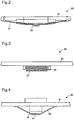
- FIGs. 2 through 4 are sectional views schematically showing probe cards utilizing the silicon nitride-melilite composite sintered body of the embodiment.
- a probe card 20 shown in Fig. 2 has a large number of cantilevers 23 mounted on a lower face of a ceramic substrate 21. Probes 25 formed on respective free ends of the multiple cantilevers 23 are brought into contact with terminal pads (not shown) of a semiconductor wafer (not shown).
- a probe card 30 shown in Fig. 3 has a large number of probes 33 provided on a lower face of a ceramic substrate 31. The probes 33 utilize the buckling stress to come into contact with terminal pads (not shown) of a semiconductor wafer (not shown).
- a probe card 40 shown in Fig. 4 has a cushion member 43 and a membrane 45 mounted on a lower face of a ceramic substrate 41.
- the ceramic substrate 41 is pressed against a semiconductor wafer (not shown), so that a large number of terminals 47 provided on a lower face of the membrane 45 are brought into contact with terminal pads (not shown) of a semiconductor wafer (not shown).
- the ceramic substrates 21, 31, and 41 are mainly made of the silicon nitride-melilite composite sintered body of the embodiment.
- the silicon nitride-melilite composite sintered body of the embodiment may also be used for some constituents other than the ceramic substrates 21, 31, and 41.
- the buckling restriction member 35 may be made of the silicon nitride-melilite composite sintered body of the embodiment.
- Each of the probe cards 20, 30, and 40 utilizes the material having the adequate thermal expansion coefficient. In the case of inspection of the operating conditions of a semiconductor wafer both in a condition from room temperature to high temperatures and in a condition from room temperature to low temperatures, each of the probe cards 20, 30, and 40 assures inspection with the high reliability without causing poor contact of the terminal pads of the semiconductor wafer with the probes or terminals 25, 33, or 47 of the probe card 20, 30, or 40.
- the silicon nitride-melilite composite sintered body of the embodiment may be utilized for production of a large-size substrate having a diameter of not smaller than 30 cm or even a diameter of not smaller than 45 cm.
- the resulting large-size substrate has a low warpage and may even be corrected to be free from warpage by its own weight by sintering.
- a warpage of 5 mm occurring in its non-sintered condition is still left as a warpage of 2 to 3 mm even after sintering.
- Application of loading and heat to this thin, large-size substrate for correction of the warpage may cause cracking.
- the hot pressing technique may be adopted to sinter such a thin, large-size substrate. It is, however, rather difficult to sinter the thin, large-size substrate in a carbon die under application of loading without causing any damage or breakage.
- a sintered substrate of the silicon nitride-melilite composite sintered body of the embodiment advantageously has only insignificant warpage of less than 1 mm.
- the sintering process of the silicon nitride-melilite composite sintered body of the embodiment is expected to cause changes and migrations of various elements with a temperature increase to the sintering temperature and eventually complete the melilite crystalline phases through multi-stage changes of the crystalline phases.
- the sintering process of the silicon nitride-melilite composite sintered body is expected to proceed in a relatively flexible state. The warpage in the non-sintered condition may automatically be corrected by the dead weight of the silicon nitride-melilite composite sintered body in the sintering process.
- the silicon nitride-melilite composite sintered body of the embodiment includes the silicon nitride crystalline phases and the melilite crystalline phases having significantly different thermal expansion coefficients.
- the resulting sintered body does not have micro-cracking caused by a thermal expansion difference. This may be ascribed to the stable existence of the silicon nitride crystalline phases and the melilite crystalline phases and relatively clear separation of the boundaries of these crystalline phases. The clear separation of the boundaries may allow the grain boundary migration to absorb a residual stress caused by the thermal expansion difference.
- the silicon nitride-melilite composite sintered body of the embodiment inhibits uneven sintering results between the central area and the peripheral area. Sintering a thin, large-size substrate having a diameter of 40 cm and a thickness of 6 mm causes little characteristic differences, such as unevenness of color and a variation in characteristic between the exterior and the interior of the substrate.
- the silicon nitride-melilite composite sintered body has a large content of the Me oxide as the melilite component and further contains a certain amount of the other sintering additives. This composition may accelerate densification of the resulting sintered substrate, while preventing vaporization of silicon nitride. Even when a sintering environment in a sintering case is rather unstable, the silicon nitride-melilite composite sintered body of the embodiment gives a stable large-size product.
- the silicon nitride-melilite composite sintered body of the embodiment has the thermal expansion characteristic mainly adjusted by the contents of the silicon nitride crystalline phases and the melilite crystalline phases.
- the silicon nitride-melilite composite sintered body of the embodiment accordingly has the excellent corrosion resistance, compared with a sintered body having the thermal expansion characteristic adjusted by the content of oxide glass phases.
- the silicon nitride-melilite composite sintered body of the embodiment is thus effectively applicable to parts for a semiconductor production device requiring an etching step. Reduction of the amount of the sintering additive remaining as the glass phases is essential for the further improvement of the corrosion resistance.
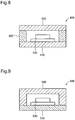
- the silicon nitride-melilite composite sintered body of the embodiment is effectively usable as the material of various substrates. Examples of substrates having members composed of the silicon nitride-melilite composite sintered body of the embodiment are described below with reference to Figs. 5 through 9 .
- Fig. 5 is a diagrammatic sectional-view representation of one circuit board 100 with a semiconductor element mounted thereon.
- the circuit board 100 includes a substrate 110 and a semiconductor element 130 arranged on one principal surface 111 of the substrate 110.
- a frame stiffener 120 is attached to the circuit board 100, such that the semiconductor element 130 is located inside the frame stiffener 120.
- the stiffener 120 is a reinforcement member and is mainly composed of the silicon nitride-melilite composite sintered body of the embodiment.
- the semiconductor element 130 may be a Si element (operating temperature range of -50°C to room temperature to 150°C) or a SiC element (operating temperature range of -50°C to room temperature to 350°C).
- the stiffener 120 mainly composed of the silicon nitride-melilite composite sintered body of the embodiment has a little thermal expansion difference from the semiconductor element 130 and a high potential for flatness.
- the stiffener 120 may be structured to have the thermal expansion characteristic adjusted considering to the temperature distribution of the circuit board 100.
- Fig. 6 is a diagrammatic sectional-view representation of another circuit board 200 with a semiconductor element mounted thereon.
- the circuit board 200 includes a frame substrate 210, and a plate stiffener 220 is attached to one principal surface 211 of the substrate 210.
- a circuit 222 made of, for example, tungsten is formed inside the plate stiffener 220.
- a semiconductor element 230, for example, Si or SiC is arranged inside the frame substrate 210 on one face 221 of the plate stiffener 220.
- the stiffener 220 is mainly composed of the silicon nitride-melilite composite sintered body of the embodiment.
- the circuit 222 When the circuit 222 is made of the oxidizable material such as tungsten, it is required to sinter the stiffener 220 in a reductive atmosphere. In this case, carbon may not be completely burn out but remain in a via hole of the circuit 222. This 'remaining carbon' may prevent the ceramic material around the via hole of tungsten from being densified or may lower the mechanical strength. Such 'remaining carbon', however, does not have significant effect on the densification and the mechanical strength of the silicon nitride-melilite composite sintered body of the embodiment.
- the silicon nitride-melilite composite sintered body has a large content of the Me oxide as the melilite component, which accelerates sintering the silicon nitride component and prevents the remaining carbon from decomposing and volatilizing the silicon nitride.
- the remaining carbon accordingly combines with part of the silicon nitride component to produce SiC, which is stable in the sintered body.
- the application of the silicon nitride-melilite composite sintered body of the embodiment to the circuit-including stiffener 220 gives the highly reliable circuit board 200 that is relatively free from the characteristic degradation due to the 'remaining carbon' and has a little thermal expansion difference from the semiconductor element even under a high temperature condition.
- Fig. 7 is a diagrammatic perspective-view representation of a heater substrate 300 with a heat pattern.
- the heater substrate 300 includes a plate substrate 310, a heat pattern 320 formed as a heating element on one principal surface 311 of the plate substrate 310, and electrodes 330 connecting with both ends of the heat pattern 320.
- the substrate 310 is mainly composed of the silicon nitride-melilite composite sintered body of the embodiment.
- the heat pattern 320 is made of a heat resistant material, such as tungsten.
- the heat pattern 320 is made of the oxidizable material such as tungsten, it is required to sinter the substrate 310 in a reductive atmosphere.
- carbon may not be completely burn out but remain in the heat pattern 320 as the 'remaining carbon'.
- such 'remaining carbon' does not have significant effect on the densification and the mechanical strength of the silicon nitride-melilite composite sintered body of the embodiment.
- the application of the silicon nitride-melilite composite sintered body of the embodiment having the adequate thermal expansion characteristic and no substantial effect of the 'remaining carbon' to the heater substrate 300 gives a ceramic heater that has a high mechanical strength and a sufficient resistance to thermal shocks induced by repeated temperature variations over a wide temperature range from ordinary temperature to high temperature.
- the heat pattern 320 is arranged on the surface of the substrate 310 in the illustrated example of Fig. 7 but may alternatively be embedded in the substrate 310.
- the circuit board 400 includes a substrate 410, a semiconductor element 430 arranged on the substrate 410, and a cap structure arranged on the substrate 410.
- the cap structure has a lid 420 and a frame wall 422 arranged to place the semiconductor element 430 therein.
- the lid 420 and the wall 422 are mainly composed of the silicon nitride-melilite composite sintered body of the embodiment.
- the circuit board 500 includes a substrate 510, a semiconductor element 530 arranged on the substrate 510, and a cap 520 arranged on the substrate 510 to place the semiconductor element 530 therein.
- the cap 520 is mainly composed of the silicon nitride-melilite composite sintered body of the embodiment. Although not being specifically illustrated, all the ceramic materials included in the respective circuit boards 100, 200, 400, and 500 may be composed of the silicon nitride-melilite composite sintered body of the embodiment.
- Another application of the invention prepares multiple sheets having different ratios of silicon nitrite crystalline phases to melilite crystalline phases (that is, different molar ratios of Si in Si 3 N 4 equivalent to Me in oxide equivalent) and stacks the multiple sheets.
- This application may cause the substrate to have bimetal-like characteristics.
- the presence of layers with different thermal expansion coefficients produces compression stress and gives the high toughness to the substrate.
- Silicon nitride (Si 3 N 4 ) powder having an average particle diameter of 0.7 ⁇ m, yttria (Y 2 O 3 ) powder having an average particle diameter of 1.2 ⁇ m, and some of SrCO 3 powder, La 2 O 3 powder, CeO 2 powder, and Al 2 O 3 powder as an additive were used as the materials to prepare diversity of powdery mixtures having the compositions shown in Tables 1 through 6.
- Each of the resulting powdery mixtures was mixed with ethanol in a ball mill, was heated and dried, and was granulated to particles.
- Strontium in its oxide form SrO readily combines with the water content to produce a hydroxide, such as Sr(OH) 2 , in the manufacturing process.
- Strontium in its carbonate form, such as SrCO 3 was thus used as the additive.
- the strontium content actually added in its carbonate form SrCO 3 is expressed as conversion in its oxide SrO equivalent in Tables 1 through 6.
- the particles were pressed into a rectangular parallelepiped body of 70 mm x 70 mm x 20 mm.
- the prismatic body was subject to cold isostatic pressing (CIP) under a pressure of 98 MPa and was sintered in a nitrogen atmosphere of 0.1 MPa in a sintering furnace at temperatures of 1700 to 1800°C for 4 hours.
- CIP cold isostatic pressing
- the particles were pressed into a prismatic body of 70 mm x 70 mm x 20 mm.
- the prismatic body was placed in a carbon mold and was subject to hot pressing to be densified under a pressure of 30 MPa at a temperature of 1750°C for 2 hours.
- the particles were pressed into a prismatic body of 70 mm ⁇ 70 mm ⁇ 20 mm.
- the prismatic body was subject to cold isostatic pressing (CIP) under a pressure of 98 MPa, was sintered in a nitrogen atmosphere of 0.1 MPa in a sintering furnace at a temperature of 1750°C for 4 hours, and was further subject to gas pressure sintering to be densified under a pressure of 8.0 MPa at a temperature of 1700°C for 2 hours.
- CIP cold isostatic pressing
- the particles were pressed into a prismatic body of 70 mm ⁇ 70 mm ⁇ 20 mm.
- the prismatic body was subject to cold isostatic pressing (CIP) under a pressure of 98 MPa, was sintered in a nitrogen atmosphere of 0.1 MPa in a sintering furnace at a temperature of 1750°C for 4 hours, and was further subject to hot isostatic pressing (HIP) under a pressure of 100 MPa at a temperature of 1700°C for 2 hours.
- CIP cold isostatic pressing
- HIP hot isostatic pressing
- the composite sintered bodies of the respective working examples and comparative examples were evaluated by measurement of various properties and characteristics according to the procedures discussed below.
- the procedure measured the bulk density in conformity with Japanese Industrial Standards JIS R 1634 and calculated a ratio of the measured bulk density to a theoretical density.
- the theoretical density of Y 2 Si 3 O 3 N 4 was 4.25 (g/cm 3 ). Under the condition of the theoretical density ratio of not lower than 95%, there was no substantial difference between the apparent density and the bulk density in conformity with JIS R 1634.
- Water Absorption Rate The procedure defoamed each composite sintered body in water to make the composite sintered body absorb water and dried the water-absorbed composite sintered body.
- the water absorption rate may be measured in conformity with JIS-R2205.
- the X-ray diffractometry reduces the crystalline orientation of each test sample to a sufficiently low level before measurement of diffraction or adopts a measurement method of reducing the crystalline orientation.
- the measurement conditions of RING-TTRIII were: monochromator, copper target, tube current of 300 mA, tube voltage of 50 kV, scanning speed of 4°/minute, and sampling width of 0.02°.
- the diffraction intensity ' a ' of the main peak of silicon nitride represents a diffraction intensity of a highest peak among all peaks of ⁇ silicon nitride.
- the diffraction intensity ' b ' of the main peak of the melilite represents a diffraction intensity of a highest peak among all peaks of the melilite.
- the abscissa of the graph is 2 ⁇ that varies in a range of 20° to 40°.
- the ratio of the X-ray diffraction intensity or the peak intensity is practically equivalent to the ratio of the area intensity or the integral intensity. Because of its simplicity and versatility, the ratio of the diffraction intensity or the peak intensity was used as the ratio of the melilite crystalline phases to the silicon nitride crystalline phases.
- the procedure also observed a secondary electron image and a reflected electron image of the composite sintered body by electron probe microanalysis with an EPMA (electron probe microanalyzer) JXA-8500F (manufactured by JEOL Ltd.) and conducted mapping with a WDS (wavelength dispersive X-ray spectrometer), in order to determine the respective area ratios of the silicon nitride crystalline phases, the melilite crystalline phases, and the grain boundary phases.
- the grain boundary phases include glass phases and other crystalline phases but the silicon nitride crystalline phases and the melilite crystalline phases and are shown as 'other phase' in Tables 1 through 6.
- the area ratios were determined on the assumption that a total area other than pores is 100 (area%).
- the procedure further conducted scanning transmission electron microscopy with an STEM (scanning transmission electron microscope) HD-2000 (manufactured by Hitachi High-Technologies Corporation) and energy dispersive X-ray analysis with an EDS (energy dispersive X-ray analyzer) Genesis (manufactured by EDAX Division, AMETEK Inc.).
- the procedure additionally etched the mirror-like finished surface of the composite sintered body and observed the etched surface with the SEM and the other instruments to determine the respective area ratios.
- the silicon nitride-melilite composite sintered bodies of Working Examples 1 to 80 had (i) the silicon nitride crystalline phases, (ii) the melilite crystalline phases of Me 2 Si 3 O 3 N 4 where Me denotes a metal element combining with silicon nitride to generate the melilite, and (iii) the grain boundary phases.
- the ratio of the melilite crystalline phases was not less than 20 area% on the cross section of the composite sintered body.
- the resulting composite sintered bodies of these Working Examples had the arbitrarily adjustable average thermal expansion coefficient at the temperatures of 23°C to 150°C and mostly had the sufficiently high levels of the bending strength and the Young's modulus.
- the composite sintered bodies of Working Examples 20, 38, and 64 through 68 had relatively low theoretical density ratios and thereby the relatively low levels of the bending strength and the Young's modulus, while having sufficient levels of the average thermal expansion coefficient (23°C to 150°C). These composite sintered bodies are still usable for various applications, for example, a porous material and a metallic impregnation material.
- the composite sintered body of Comparative Example 1 on the other hand, had a low ratio of the melilite crystalline phases and thereby an undesirably low average thermal expansion coefficient (23°C to 150°C).
- the composite sintered body of Comparative Example 2 had no silicon nitride crystalline phases. Irrespective of densification with the relatively high theoretical density ratio, the composite sintered body of Comparative Example 2 had an undesirably low level of the Young's modulus and a high average thermal expansion coefficient (23°C to 150°C).
- the water absorption rate was not higher than 1.5 %, and the sum of the ratio of the melilite crystalline phases and the ratio of the silicon nitride crystalline phases was not less than 80 area% on the cross section of the composite sintered body.
- the resulting composite sintered bodies of these Working Examples all had the sufficiently high Young's modulus of not lower than 200 GPa and the sufficiently high bending strength of not lower than 200 MPa.
- the composite sintered bodies of Working Example 64 to 68 with the water absorption rate of higher than 1.5% had the relatively low levels of the bending strength, while having sufficient levels of the average thermal expansion coefficient (23°C to 150°C). These composite sintered bodies are still usable for various applications, for example, a porous material and a metallic impregnation material.
- the silicon nitride-melilite composite sintered bodies of Working Examples 1 to 6 had Si in a range of 41 to 83 mol% in Si 3 N 4 equivalent and Y in a range of 13 to 50 mol% in oxide equivalent but included no additives.
- the composite sintered bodies of these Working Examples were prepared by hot pressing and had the adequate average thermal expansion coefficient in the range of 2 to 6 ppm/K at the temperatures of 23°C to 150°C, the favorable bending strength, and the favorable Young's modulus.
- the composite sintered body of Comparative Example 1 had the content of silicon nitride of not lower than 90 mol% and accordingly had an undesirably low ratio of the melilite crystalline phases and an undesirably low average thermal expansion coefficient (23°C to 150°C).
- the composite sintered body of Comparative Example 2 on the other hand, had the content of silicon nitride of not higher than 40 mol% and thereby had no silicon nitride crystalline phases remain after sintering and an undesirably high average thermal expansion coefficient (23°C to 150°C).
- the silicon nitride-melilite composite sintered bodies of Working Examples 7 to 19 had Si in a range of 41 to 79 mol% in Si 3 N 4 equivalent, Y in a range of 13 to 46 mol% in oxide equivalent, and a group 2 element Sr in a range of 5 to 20 mol% in oxide equivalent.
- the composite sintered bodies of these Working Examples had the more excellent sinterability, compared with the composite sintered bodies of Working Examples 20 to 23 having the less content of Sr than 5 mol% in oxide equivalent.
- the composite sintered bodies of Working Examples 7 to 19 all had the adequate average thermal expansion coefficient in the range of 2 to 6 ppm/K at the temperatures of 23°C to 150°C, the high bending strength, and the high Young's modulus.
- the composite sintered bodies of Working Example 24 and 25 having the greater content of Sr than 20 mol% in oxide equivalent had the decreasing tendencies of the Young's modulus and the mechanical strength.
- the silicon nitride-melilite composite sintered bodies of Working Examples 26 to 37 had Si in a range of 45 to 83 mol% in Si 3 N 4 equivalent, Y in a range of 15 to 49 mol% in oxide equivalent, and La in a range of 0.3 to 12 mol% in oxide equivalent.
- the composite sintered bodies of these Working Examples had the more excellent sinterability, compared with the composite sintered bodies of Working Examples 38 to 40 having the less content of La than 0.3 mol% in oxide equivalent.
- the composite sintered bodies of Working Examples 26 to 37 all had the adequate average thermal expansion coefficient in the range of 2 to 6 ppm/K at the temperatures of 23°C to 150°C, the high bending strength, and the high Young's modulus.
- the composite sintered body of Working Example 41 having the greater content of La than 12 mol% in oxide equivalent and the composite sintered bodies of Working Examples 42 and 43 having the greater content of Ce than 12 mol% in oxide equivalent had the increasing tendency of the average thermal expansion coefficient (23°C to 150°C) and the decreasing tendency of the mechanical strength.
- the silicon nitride-melilite composite sintered bodies of Working Examples 44 to 63 and 69 to 80 had Si in a range of 41 to 83 mol% in Si 3 N 4 equivalent, Y in a range of 13 to 49 mol% in oxide equivalent, Sr in a range of 0 to 20 mol% in oxide equivalent, and La or Ce in a range of 0 to 12 mol% in oxide equivalent.
- the composite sintered bodies of these Working Examples also had the good sinterability, the adequate average thermal expansion coefficient in the range of 2 to 6 ppm/K at the temperatures of 23°C to 150°C, the high bending strength, and the high Young's modulus.
- the composite sintered bodies of Working Examples 44 to 46, 48 to 62, and 69 to 80 further containing Al as an additive in a range of 0.5 to 10 mol% in oxide equivalent had the more stable sinterability.
- the composite sintered body of Working Example 63 containing 15 mol% of A1 in oxide equivalent had the increasing tendency of the ratio of glass phases other than the silicon nitride crystalline phases and the melilite crystalline phases and the decreasing tendency of the Young's modulus.
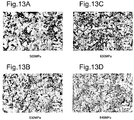
- Working Examples 57, 58, 77, and 78 performed longer-time blending (for example, crushing and mixing for 60 hours) of the powdery mixture and ethanol in the ball mill.
- the resulting composite sintered bodies of these Working Examples had the finer microstructures and the higher strengths.
- La or Ce may be replaced with Pr as the additive.
- Sr may be replaced with Mg or Ca as the additive.
- Al may be replaced with at least one element selected among Al, Si, group 4 elements, group 5 elements, and group 6 elements as the additive. Such modification assures the similar effect of stabling the sinterability to those of the corresponding Working Examples discussed above.
- the silicon nitride-melilite composite sintered body of the invention may be utilized to provide a probe card used for inspection of semiconductor wafers, a device for inspection of semiconductor, and a device for production of semiconductor, which have the high mechanical strength and the average thermal expansion coefficient arbitrarily adjustable in a range of 2 to 6 ppm/K in a temperature range of room temperature (23°C) to 150°C.
- the silicon nitride-melilite composite sintered body of the invention may also be utilized to provide a substrate and a stiffener, which have the average thermal expansion coefficient arbitrarily adjustable in the above range and a low warpage (or a high potential for flatness).
- the silicon nitride-melilite composite sintered body of the invention is effectively applicable to a substrate requiring the high mechanical strength and the high corrosion resistance.
- the silicon nitride crystalline phases and the melilite crystalline phases have no significant change in the crystal structure over a wide temperature range from low temperature to high temperature. As the temperature gradually increases from room temperature, oxidation of the melilite crystals starts at approximately 700°C, so that the silicon nitride-melilite composite sintered body of the invention is not preferable in applications at high temperatures of or over 700°C in an oxidizing atmosphere.
- the silicon nitride-melilite composite sintered body of the invention has the average thermal expansion coefficient mainly adjusted not by the content of the glass phases but by the contents of the silicon nitride crystalline phases and the melilite crystalline phases.
- results of repeated tests show stable thermal expansion behaviors over a wide temperature range from a relatively low temperature condition (for example, -50°C) to a relatively high temperature condition (for example, 350°C as the operating temperature of SiC semiconductor). This assures stable inspection.
- the results of semiconductor wafer tests show substantially matching thermal expansion behaviors over a wide temperature range from low temperature to high temperature. This advantageously expands the coverage of inspection.
- the content of the melilite crystalline phases has no substantial variation against the sintering temperature in a temperature range of 1700°C to 1800°C. Namely the melilite crystalline phases are stably generated in this sintering temperature range of 1700°C to 1800°C.
- Fig. 11 is a graph of melilite main peak intensity ratios of melilite crystalline phases plotted against the sintering temperature with regard to composite sintered bodies of Working Examples 65 to 67 sintered at temperatures of 1700°C to 1800°C. Fig.
- FIG. 12 is a graph of melilite main peak intensity ratios of melilite crystalline phases plotted against the sintering temperature with regard to composite sintered bodies of Working Examples 58 to 60 sintered at the temperatures of 1700°C to 1800°C. These results prove stable generation of the melilite crystalline phases over this sintering temperature range. This characteristic assures stable mass production. Another advantage is stable generation of the melilite crystalline phases in various dimensions of composite sintered bodies. This characteristic assures application to substrates of various sizes and shapes.
- silicon nitride-melilite composite sintered body according to the first aspect of the invention may be actualized by any of various arrangements and applications discussed below.
- the silicon nitride-melilite composite sintered body according to the first aspect of the invention has a water absorption rate of not higher than 1.5%, and a sum of the ratio of the melilite crystalline phases and the ratio of the silicon nitride crystalline phases is not less than 80% on the cross section of the composite sintered body.
- the silicon nitride-melilite composite sintered body of this application is a dense composite sintered body having the water absorption rate of not higher than 1.5%.
- the ratio of the melilite crystalline phases is not less than 20 area% on the cross section of the silicon nitride-melilite composite sintered body.
- the sum of the ratio of the melilite crystalline phases and the ratio of the silicon nitride crystalline phases is not less than 80 area% on the cross section of the composite sintered body.
- the silicon nitride-melilite composite sintered body of the embodiment accordingly has a sufficiently large ratio of the crystallized parts.
- the high density of the composite sintered body has a less decrease of the Young's modulus due to the presence of pores, while the crystallized parts contribute to increase the Young's modulus.
- the silicon nitride-melilite composite sintered body of the embodiment accordingly has the high Young's modulus.
- the ratio of the silicon nitride crystalline phases and the ratio of the melilite crystalline phases may be determined by any of the techniques, electron probe microanalysis (EPMA), transmission electron microscopy (TEM), scanning electron microscopy (SEM), X-ray diffractometry (XRD), and energy dispersive X-ray spectroscopy (EDS).
- EDS energy dispersive X-ray spectroscopy
- the silicon nitride-melilite composite sintered body according to the first aspect of the invention contains Si in a range of 41 to 79 mol% in Si 3 N 4 equivalent, Me in a range of 13 to 46 mol% in oxide equivalent, and a group 2 element as an additive in a range of 5 to 20 mol% in oxide equivalent.
- the silicon nitride-melilite composite sintered body of the embodiment has the desirable composition for the enhanced sinterability.
- the adequate content of the group 2 element as the additive allows for production of the composite sintered body by sintering at ordinary pressure, as well as by sintering under a pressurizing condition, for example, gas pressure sintering, hot isostatic pressing, or hot pressing.
- This arrangement accordingly has the industrial advantages, for example, the reduced restrictions on the dimensions and the shape of the resulting composite sintered body and the lowered manufacturing cost by large scale production.
- the additive may be at least one element selected among Mg, Ca, and Sr.
- the silicon nitride-melilite composite sintered body of the embodiment contains the favorable additive for the enhanced sinterability. This arrangement assures the more stable production of the silicon nitride-melilite composite sintered body having the sufficiently high Young's modulus of not lower than 200 GPa and the average thermal expansion coefficient arbitrarily adjustable in the range of 2 to 6 ppm/K at the temperatures of 23°C to 150°C.
- the additive may be Sr.
- the silicon nitride-melilite composite sintered body of the embodiment contains the most favorable additive for the further enhanced sinterability. This arrangement assures the more stable production of the silicon nitride-melilite composite sintered body having the sufficiently high Young's modulus of not lower than 200 GPa and the average thermal expansion coefficient arbitrarily adjustable in the range of 2 to 6 ppm/K at the temperatures of 23°C to 150°C.
- the group 2 element Mg, Ca, or Sr added in the form of an oxide (for example, SrO) tends to react with the water content and produce a hydroxide (for example, Sr(OH) 2 ) in the manufacturing process.
- the group 2 element Mg, Ca, or Sr is accordingly added in the form of a carbonate (for example, SrCO 3 ).
- the thermal stability of the carbonates of these group 2 elements increases in the order of Mg ⁇ Ca ⁇ Sr. This proves that Sr is especially preferable for the stable production of the silicon nitride-melilite composite sintered body.
- the silicon nitride-melilite composite sintered body according to the first aspect of the invention contains Si in a range of 45 to 83 mol% in Si 3 N 4 equivalent, Me in a range of 15 to 49 mol% in oxide equivalent, and at least one element selected among La, Ce, and Pr as an additive in a range of 0.3 to 12 mol% in oxide equivalent.
- the silicon nitride-melilite composite sintered body of the embodiment has the desirable composition for the enhanced sinterability.
- the adequate content of at least one element selected among La, Ce, and Pr as the additive allows for production of the composite sintered body by sintering at ordinary pressure, as well as by sintering under a pressuring condition, for example, gas pressure sintering, hot isostatic pressing, or hot pressing.
- This arrangement accordingly has the industrial advantages, for example, the reduced restrictions on the dimensions and the shape of the resulting composite sintered body and the lowered manufacturing cost by large scale production.
- This arrangement also assures the stable production of the silicon nitride-melilite composite sintered body having the sufficiently high Young's modulus of not lower than 200 GPa and the average thermal expansion coefficient arbitrarily adjustable in the range of 2 to 6 ppm/K at the temperatures of 23°C to 150°C.
- Me is a group 3 element.
- the silicon nitride-melilite composite sintered body of the embodiment has the favorable metal element Me.
- Me is Y.
- the silicon nitride-melilite composite sintered body of this application has the most favorable metal element Me that combines with silicon nitride to generate the melilite. Yttrium is readily combined with silicon nitride to form the melilite and is readily available. This arrangement assures the easy and stable production of the silicon nitride-melilite composite sintered body having the sufficiently high Young's modulus of not lower than 200 GPa and the average thermal expansion coefficient arbitrarily adjustable in the range of 2 to 6 ppm/K at the temperatures of 23°C to 150°C, while effectively reducing the manufacturing cost.
- a diffraction intensity ' a ' of a main peak of the silicon nitride and a diffraction intensity 'b' of a main peak of the melilite observed by X-ray diffractometry of the silicon nitride-melilite composite sintered body satisfy a relation of: 50 ⁇ b / a + b ⁇ 100 ⁇ 98.
- the diffraction intensity ' a ' of the main peak of the silicon nitride represents a diffraction intensity of a highest peak among all the peaks of the silicon nitride.
- the diffraction intensity ' b ' of the main peak of the melilite represents a diffraction intensity of a highest peak among all the peaks of the melilite.
- This arrangement assures the stable production of the silicon nitride-melilite composite sintered body having the sufficiently high Young's modulus of not lower than 200 GPa and the average thermal expansion coefficient arbitrarily adjustable in the range of 2 to 6 ppm/K at the temperatures of 23°C to 150°C.
- the silicon nitride-melilite composite sintered body has the average thermal expansion coefficient in the range of 2 to 6 ppm/K at the temperatures of 23°C to 150°C.
- This arrangement assures the production of the silicon nitride-melilite composite sintered body having the average thermal expansion coefficient arbitrarily adjustable in the range of 2 to 6 ppm/K at the temperatures of 23°C to 150°C.
- the silicon nitride-melilite composite sintered body has the Young's modulus of not lower than 200 GPa.
- This arrangement assures the production of the silicon nitride-melilite composite sintered body having the sufficiently high Young's modulus of not lower than 200 GPa.
- the strength of the material and the Young's modulus may be increased by regulation of the microstructure.
- Figs. 13A through 13D are electron micrographs at a 3000-fold magnification by SEM imaging of silicon nitride-melilite composite sintered bodies having a fixed composition but different microstructures.
- the values under the respective electron micrographs show the bending strengths of the respective composite sintered bodies measured at room temperature (23°C) in conformity with JIS R 1601.
- the fineness of the microstructures of the composite sintered bodies increases in the order of Fig. 13A, Fig. 13B, Fig. 13C, and Fig. 13D .
- the bending strength of the composite sintered bodies also increases in this order, that is, with an increase in fineness of the microstructures of the composite sintered bodies.
- the silicon nitride-melilite composite sintered body according to the first aspect of the invention may have an amount of surplus oxygen in a range of 2 to 16 mol% in SiO 2 equivalent.
- the amount of surplus oxygen represents a residual amount of oxygen calculated by subtracting an amount of oxygen belonging to the components other than Si from the total amount of oxygen contained in the whole composite sintered body.
- the surplus oxygen is mainly from oxygen included in the silicon nitride and oxygen included in the additives and may be additionally from oxygen adsorbed in the manufacturing process or from oxygen of SiO 2 added as an oxygen source.
- the amount of surplus oxygen is converted into SiO 2 equivalent.
- the amount of surplus oxygen of lower than 2 mol% in SiO 2 equivalent causes the poor sinterability.
- the amount of surplus oxygen of higher than 16 mol% in SiO 2 equivalent causes aggregation of the melilite and the silicon nitride.
- Such aggregates of the melilite and the silicon nitride may work as the origin of the fracture, so that the composite sintered body having the excessive amount of surplus oxygen has the undesirably lowered mechanical strength.
- the preferable range of the amount of surplus oxygen is 2 to 14 mol%.
- silicon nitride crystalline phases and the melilite crystalline phases may be generated according to the content of the additive or according to the amount of surplus oxygen.
- an excessive amount of SrO generates crystalline phases of, for example, SrSiO 3 and Sr 2 SiO 4 .
- An excessive amount of surplus oxygen generates crystalline phases of, for example, Y 20 Si 12 O 48 N 4 .
- crystalline phases of, for example, Y 2 SiO 5 , Y 2 Si 2 O 7 , Y 4 Si 2 O 7 N 2 (J phases), YSiO 2 N (K phases), and Y 10 Si 7 O 23 N 4 (H phases) may also be generated according to the sintering conditions or according to some influence factors in the manufacturing process.
- the device according to the fourth aspect of the invention may be a probe card having a substrate as the member.
- the probe card is used to inspect integrated circuits formed on semiconductor wafers with the high reliability.
- the silicon nitride-melilite composite sintered body of the invention is the more favorable material than the conventional ceramic material made of a single component (for example, alumina, aluminum nitride, silicon carbide, or silicon nitride).
- the silicon nitride-melilite composite sintered body of the invention has the thermal expansion coefficient arbitrarily adjustable in some adequate range to be sufficiently closer to the required level of thermal expansion characteristic for the probe card used for inspection of semiconductor wafers.
- the semiconductor inspection device according to the fourth aspect of the invention utilizing the silicon nitride-melilite composite sintered body of the invention thus assures inspection of semiconductor wafers with the high reliability.
Landscapes
- Engineering & Computer Science (AREA)
- Chemical & Material Sciences (AREA)
- Ceramic Engineering (AREA)
- Manufacturing & Machinery (AREA)
- Materials Engineering (AREA)
- Structural Engineering (AREA)
- Organic Chemistry (AREA)
- Ceramic Products (AREA)
- Measuring Leads Or Probes (AREA)
- Testing Or Measuring Of Semiconductors Or The Like (AREA)
Claims (10)
- Corps fritté composite de nitrure de silicium-mélilite comprenant :des phases cristallines de nitrure de silicium ;des phases cristallines de mélilite de Me2Si3O3N4 où « Me » représente un élément métallique se combinant avec le nitrure de silicium pour produire une mélilite ; etdes phases de joint de grain ;et un additif choisi parmi :(A) : les éléments du groupe 2, ou(B) : La, Ce et Prdans lequel le rapport des phases cristallines de mélilite n'est pas inférieur à 20 % en surface sur une section transversale du corps fritté composite de nitrure de silicium-mélilite ;dans lequel le corps fritté composite de nitrure de silicium-mélilite contient de l'Al dans une plage de 2 à 10 % en moles en équivalents d'oxyde ;et dans lequel :dans le cas de (A) utilisant au moins un élément choisi parmi les éléments du groupe 2 en tant qu'additif, le corps fritté composite de nitrure de silicium-mélilite résultant contient du Si dans la plage de 41 à 79 % en moles en équivalent de Si3N, du Me dans la plage de 13 à 46 % en moles en équivalent d'oxyde, et l'élément du groupe 2 dans la plage allant de 5 à 20 % en moles en équivalent d'oxyde ; oudans le cas de (B) utilisant au moins un élément choisi parmi La, Ce et Pr en tant qu'additif, le corps fritté composite de nitrure de silicium-mélilite résultant contient du Si dans une plage allant de 45 à 83 % en moles en équivalent de Si3N, du Me dans la plage de 15 à 49 % en moles en équivalent d'oxyde, et l'au moins un élément choisi parmi La, Ce et Pr dans une plage de 0,3 à 12 % en moles en équivalent d'oxyde.
- Corps fritté composite de nitrure de silicium-mélilite selon la revendication 1, dans lequel le corps fritté composite de nitrure de silicium-mélilite a un taux d'absorption d'eau non supérieur à 1,5 %,
dans lequel la somme du rapport des phases cristallines de mélilite et du rapport des phases cristallines de nitrure de silicium n'est pas inférieure à 80 % en surface sur la section transversale du corps fritté composite de nitrure de silicium-mélilite. - Corps fritté composite de nitrure de silicium-mélilite selon la revendication 1 ou 2, dans lequel l'additif est au moins un élément choisi parmi Mg, Ca et Sr.
- Corps fritté composite de nitrure de silicium-mélilite selon l'une quelconque des revendications 1 à 3, dans lequel Me est un élément du groupe 3, de préférence Y (yttrium).
- Corps fritté composite de nitrure de silicium-mélilite selon l'une quelconque des revendications 1 à 4, dans lequel une intensité de diffraction 'a' d'un pic principal du nitrure de silicium et une intensité de diffraction 'b' d'un pic principal de la mélilite observées par diffractométrie des rayons X du corps fritté composite de nitrure de silicium-mélilite satisfont à la relation :

- Corps fritté composite de nitrure de silicium-mélilite selon l'une quelconque des revendications 1 à 5, dans lequel le corps fritté composite de nitrure de silicium-mélilite a au moins un de : (a) un coefficient d'expansion thermique moyen dans une plage de 2 à 6 ppm/K à des températures de 23 à 150 °C ; ou (b) un module de Young mesuré à température ambiante (23 °C) non inférieur à 200 GPa.
- Corps fritté composite de nitrure de silicium-mélilite selon l'une quelconque des revendications 1 à 6, dans lequel son rapport de densité théorique tel que défini ici est d'au moins 98 %.
- Substrat comprenant un corps fritté composite de nitrure de silicium-mélilite ; ou un élément attaché à une carte imprimée avec une partie électronique montée sur celui-ci, l'élément comprenant un corps fritté composite de nitrure de silicium-mélilite, dans lequel
le corps fritté composite de nitrure de silicium-mélilite est selon l'une quelconque des revendications 1 à 7. - Dispositif utilisé pour l'inspection ou la production d'un semiconducteur, le dispositif ayant un élément, ou le dispositif comprenant une carte sonde ayant un élément, l'élément comprenant un corps fritté composite de nitrure de silicium-mélilite selon l'une quelconque des revendications 1 à 7.
- Carte sonde, la carte sonde ayant un élément, l'élément comprenant un corps fritté composite de nitrure de silicium-mélilite selon l'une quelconque des revendications 1 à 7.
Applications Claiming Priority (1)
| Application Number | Priority Date | Filing Date | Title |
|---|---|---|---|
| JP2010112131A JP5481273B2 (ja) | 2010-05-14 | 2010-05-14 | 窒化珪素・メリライト複合焼結体を用いた基板および部材 |
Publications (3)
| Publication Number | Publication Date |
|---|---|
| EP2386532A2 EP2386532A2 (fr) | 2011-11-16 |
| EP2386532A3 EP2386532A3 (fr) | 2012-10-03 |
| EP2386532B1 true EP2386532B1 (fr) | 2017-03-29 |
Family
ID=42272563
Family Applications (1)
| Application Number | Title | Priority Date | Filing Date |
|---|---|---|---|
| EP10250942.9A Active EP2386532B1 (fr) | 2010-05-14 | 2010-05-18 | Corps fritté composite à base de nitrure de silicium-mélilite et substrat, élément, dispositif et carte de sonde l'utilisant |
Country Status (2)
| Country | Link |
|---|---|
| EP (1) | EP2386532B1 (fr) |
| JP (1) | JP5481273B2 (fr) |
Families Citing this family (2)
| Publication number | Priority date | Publication date | Assignee | Title |
|---|---|---|---|---|
| AU2014211053B2 (en) * | 2013-01-31 | 2015-07-16 | Fuji Kogyo Co., Ltd. | Fishing-line guide member, and fishing-line guide and fishing rod provided with said fishing-line guide member |
| KR102176900B1 (ko) * | 2016-10-31 | 2020-11-10 | 교세라 가부시키가이샤 | 프로브 카드용 기판, 프로브 카드 및 검사장치 |
Citations (2)
| Publication number | Priority date | Publication date | Assignee | Title |
|---|---|---|---|---|
| JP2009298688A (ja) * | 2008-05-16 | 2009-12-24 | National Institute Of Advanced Industrial & Technology | 高熱伝導・低誘電損失の高周波用緻密質誘電体材料、その製造方法及び部材 |
| EP2546216A1 (fr) * | 2010-03-09 | 2013-01-16 | Kyocera Corporation | Comprimé fritté en céramique, carte de circuits imprimés l'utilisant, dispositif électronique et module de conversion thermoélectrique |
Family Cites Families (8)
| Publication number | Priority date | Publication date | Assignee | Title |
|---|---|---|---|---|
| JPH0627029B2 (ja) * | 1984-12-28 | 1994-04-13 | 京セラ株式会社 | 窒化珪素質焼結体及びその製造法 |
| US5114888A (en) * | 1989-11-21 | 1992-05-19 | Ngk Spark Plug Co., Ltd. | Silicon nitride sintered body and method for producing same |
| US6294244B1 (en) * | 1997-12-22 | 2001-09-25 | Kyocera Corporation | Wiring board having excellent heat-radiating property |
| JP2001019556A (ja) * | 1999-07-08 | 2001-01-23 | Denki Kagaku Kogyo Kk | 窒化珪素質焼結体、その製造方法及びそれを用いた回路基板 |
| JP2002257853A (ja) * | 2001-02-27 | 2002-09-11 | Ibiden Co Ltd | プローブカード |
| JP2002128567A (ja) * | 2001-09-14 | 2002-05-09 | Ngk Spark Plug Co Ltd | 窒化珪素質焼結体及びその製造方法 |
| JP4716855B2 (ja) * | 2005-11-08 | 2011-07-06 | 日本特殊陶業株式会社 | サイアロン製切削工具及びこれを備えた工具 |
| JP5481137B2 (ja) * | 2008-11-21 | 2014-04-23 | 日本特殊陶業株式会社 | 窒化珪素・メリライト複合焼結体 |
-
2010
- 2010-05-14 JP JP2010112131A patent/JP5481273B2/ja active Active
- 2010-05-18 EP EP10250942.9A patent/EP2386532B1/fr active Active
Patent Citations (2)
| Publication number | Priority date | Publication date | Assignee | Title |
|---|---|---|---|---|
| JP2009298688A (ja) * | 2008-05-16 | 2009-12-24 | National Institute Of Advanced Industrial & Technology | 高熱伝導・低誘電損失の高周波用緻密質誘電体材料、その製造方法及び部材 |
| EP2546216A1 (fr) * | 2010-03-09 | 2013-01-16 | Kyocera Corporation | Comprimé fritté en céramique, carte de circuits imprimés l'utilisant, dispositif électronique et module de conversion thermoélectrique |
Non-Patent Citations (1)
| Title |
|---|
| DATABASE WPI Week 201002, Derwent World Patents Index; AN 2009-S58677 * |
Also Published As
| Publication number | Publication date |
|---|---|
| JP2011241098A (ja) | 2011-12-01 |
| JP5481273B2 (ja) | 2014-04-23 |
| EP2386532A2 (fr) | 2011-11-16 |
| EP2386532A3 (fr) | 2012-10-03 |
Similar Documents
| Publication | Publication Date | Title |
|---|---|---|
| US8071496B2 (en) | Silicon nitride-melilite composite sintered body and device utilizing the same | |
| US7122490B2 (en) | Aluminum nitride materials and members for use in the production of semiconductors | |
| KR101412404B1 (ko) | 산화물 소결체, 산화물 소결체로 이루어지는 스퍼터링 타깃, 산화물 소결체의 제조 방법 및 산화물 소결체 스퍼터링 타깃 게이트의 제조 방법 | |
| Oh et al. | Controlling the width of particle size distribution of Si powder and properties of sintered reaction-bonded silicon nitride (SRBSN) ceramics with high thermal conductivity | |
| Kim et al. | Effects of debinding process on properties of sintered AlN substrate | |
| Ma et al. | Phase composition, microstructure and thermophysical properties of the Srx (Zr0. 9Y0. 05Yb0. 05) O1. 95+ x ceramics | |
| EP1314707A2 (fr) | Céramiques à base de nitride d'aluminium, membres pour l'utilisation dans une système pour la production des semi-conducteurs, les membres ayant résistances contre la corrosion et les membres conductives | |
| KR20210036141A (ko) | 질화알루미늄 소결체 및 질화알루미늄 소결체의 제조방법 | |
| EP2386532B1 (fr) | Corps fritté composite à base de nitrure de silicium-mélilite et substrat, élément, dispositif et carte de sonde l'utilisant | |
| EP3854767A1 (fr) | Corps fritté en céramique et substrat pour dispositifs semiconducteurs | |
| US7749932B2 (en) | Composition, sintered product of silicon nitride, article of manufacture, and cutting method | |
| EP4317057A1 (fr) | Procédé de fabrication d'un corps fritté en nitrure de silicium | |
| Sakai et al. | Effects of adding Y2O3 on the electrical resistivity of aluminum nitride ceramics | |
| EP3778989A1 (fr) | Stratifié de céramique composite et son procédé de fabrication | |
| CN119874334A (zh) | 陶瓷基座及其制造方法 | |
| Zhao et al. | Preparation and mechanical properties of β-Zr2O (PO4) 2: A soft and damage tolerant ceramic with machinability and good thermal shock resistance | |
| Santos et al. | Highly dense Si3N4 crucibles used for Al casting: An investigation of the aluminum–ceramic interface at high temperatures | |
| JP2943300B2 (ja) | 窒化アルミニウム焼結体の製造方法 | |
| US20260125822A1 (en) | Doped substantially single-phase rare earth oxide-zirconia materials and methods of making the same | |
| JP2005075695A (ja) | 窒化アルミニウム焼結体及びその製造方法 | |
| JP2021138581A (ja) | セラミックス焼結体およびその製造方法 | |
| EP1452510B1 (fr) | Matériau de nitrure d'aluminium et éléments utilisés pour la production de semi-conducteurs | |
| JP7615652B2 (ja) | 窒化シリコン用グリーンシート、および、その製造方法 | |
| US10787392B2 (en) | Aluminum nitride sintered compact and method for producing same | |
| WO2025010168A1 (fr) | Matériaux d'oxyde de terre rare-zircone sensiblement monophasés dopés et leurs procédés de fabrication |
Legal Events
| Date | Code | Title | Description |
|---|---|---|---|
| AK | Designated contracting states |
Kind code of ref document: A2 Designated state(s): AL AT BE BG CH CY CZ DE DK EE ES FI FR GB GR HR HU IE IS IT LI LT LU LV MC MK MT NL NO PL PT RO SE SI SK SM TR |
|
| AX | Request for extension of the european patent |
Extension state: BA ME RS |
|
| PUAI | Public reference made under article 153(3) epc to a published international application that has entered the european phase |
Free format text: ORIGINAL CODE: 0009012 |
|
| PUAL | Search report despatched |
Free format text: ORIGINAL CODE: 0009013 |
|
| AK | Designated contracting states |
Kind code of ref document: A3 Designated state(s): AL AT BE BG CH CY CZ DE DK EE ES FI FR GB GR HR HU IE IS IT LI LT LU LV MC MK MT NL NO PL PT RO SE SI SK SM TR |
|
| AX | Request for extension of the european patent |
Extension state: BA ME RS |
|
| RIC1 | Information provided on ipc code assigned before grant |
Ipc: C04B 35/593 20060101ALI20120829BHEP Ipc: C04B 35/584 20060101AFI20120829BHEP Ipc: C04B 35/597 20060101ALI20120829BHEP |
|
| 17P | Request for examination filed |
Effective date: 20130325 |
|
| 17Q | First examination report despatched |
Effective date: 20160224 |
|
| RIC1 | Information provided on ipc code assigned before grant |
Ipc: C04B 35/584 20060101AFI20160825BHEP Ipc: G01R 31/28 20060101ALI20160825BHEP Ipc: C04B 35/597 20060101ALI20160825BHEP Ipc: C04B 35/593 20060101ALI20160825BHEP Ipc: G01R 3/00 20060101ALI20160825BHEP |
|
| GRAP | Despatch of communication of intention to grant a patent |
Free format text: ORIGINAL CODE: EPIDOSNIGR1 |
|
| INTG | Intention to grant announced |
Effective date: 20161018 |
|
| GRAS | Grant fee paid |
Free format text: ORIGINAL CODE: EPIDOSNIGR3 |
|
| STAA | Information on the status of an ep patent application or granted ep patent |
Free format text: STATUS: GRANT OF PATENT IS INTENDED |
|
| GRAA | (expected) grant |
Free format text: ORIGINAL CODE: 0009210 |
|
| STAA | Information on the status of an ep patent application or granted ep patent |
Free format text: STATUS: THE PATENT HAS BEEN GRANTED |
|
| AK | Designated contracting states |
Kind code of ref document: B1 Designated state(s): AL AT BE BG CH CY CZ DE DK EE ES FI FR GB GR HR HU IE IS IT LI LT LU LV MC MK MT NL NO PL PT RO SE SI SK SM TR |
|
| REG | Reference to a national code |
Ref country code: GB Ref legal event code: FG4D |
|
| REG | Reference to a national code |
Ref country code: CH Ref legal event code: EP |
|
| REG | Reference to a national code |
Ref country code: AT Ref legal event code: REF Ref document number: 879592 Country of ref document: AT Kind code of ref document: T Effective date: 20170415 |
|
| REG | Reference to a national code |
Ref country code: IE Ref legal event code: FG4D |
|
| REG | Reference to a national code |
Ref country code: DE Ref legal event code: R096 Ref document number: 602010041081 Country of ref document: DE Ref country code: FR Ref legal event code: PLFP Year of fee payment: 8 |
|
| PG25 | Lapsed in a contracting state [announced via postgrant information from national office to epo] |
Ref country code: LT Free format text: LAPSE BECAUSE OF FAILURE TO SUBMIT A TRANSLATION OF THE DESCRIPTION OR TO PAY THE FEE WITHIN THE PRESCRIBED TIME-LIMIT Effective date: 20170329 Ref country code: FI Free format text: LAPSE BECAUSE OF FAILURE TO SUBMIT A TRANSLATION OF THE DESCRIPTION OR TO PAY THE FEE WITHIN THE PRESCRIBED TIME-LIMIT Effective date: 20170329 Ref country code: HR Free format text: LAPSE BECAUSE OF FAILURE TO SUBMIT A TRANSLATION OF THE DESCRIPTION OR TO PAY THE FEE WITHIN THE PRESCRIBED TIME-LIMIT Effective date: 20170329 Ref country code: GR Free format text: LAPSE BECAUSE OF FAILURE TO SUBMIT A TRANSLATION OF THE DESCRIPTION OR TO PAY THE FEE WITHIN THE PRESCRIBED TIME-LIMIT Effective date: 20170630 Ref country code: NO Free format text: LAPSE BECAUSE OF FAILURE TO SUBMIT A TRANSLATION OF THE DESCRIPTION OR TO PAY THE FEE WITHIN THE PRESCRIBED TIME-LIMIT Effective date: 20170629 |
|
| REG | Reference to a national code |
Ref country code: NL Ref legal event code: MP Effective date: 20170329 |
|
| REG | Reference to a national code |
Ref country code: AT Ref legal event code: MK05 Ref document number: 879592 Country of ref document: AT Kind code of ref document: T Effective date: 20170329 |
|
| PG25 | Lapsed in a contracting state [announced via postgrant information from national office to epo] |
Ref country code: BG Free format text: LAPSE BECAUSE OF FAILURE TO SUBMIT A TRANSLATION OF THE DESCRIPTION OR TO PAY THE FEE WITHIN THE PRESCRIBED TIME-LIMIT Effective date: 20170629 Ref country code: LU Free format text: LAPSE BECAUSE OF NON-PAYMENT OF DUE FEES Effective date: 20170531 Ref country code: SE Free format text: LAPSE BECAUSE OF FAILURE TO SUBMIT A TRANSLATION OF THE DESCRIPTION OR TO PAY THE FEE WITHIN THE PRESCRIBED TIME-LIMIT Effective date: 20170329 Ref country code: LV Free format text: LAPSE BECAUSE OF FAILURE TO SUBMIT A TRANSLATION OF THE DESCRIPTION OR TO PAY THE FEE WITHIN THE PRESCRIBED TIME-LIMIT Effective date: 20170329 |
|
| PG25 | Lapsed in a contracting state [announced via postgrant information from national office to epo] |
Ref country code: NL Free format text: LAPSE BECAUSE OF FAILURE TO SUBMIT A TRANSLATION OF THE DESCRIPTION OR TO PAY THE FEE WITHIN THE PRESCRIBED TIME-LIMIT Effective date: 20170329 |
|
| PG25 | Lapsed in a contracting state [announced via postgrant information from national office to epo] |
Ref country code: EE Free format text: LAPSE BECAUSE OF FAILURE TO SUBMIT A TRANSLATION OF THE DESCRIPTION OR TO PAY THE FEE WITHIN THE PRESCRIBED TIME-LIMIT Effective date: 20170329 Ref country code: CZ Free format text: LAPSE BECAUSE OF FAILURE TO SUBMIT A TRANSLATION OF THE DESCRIPTION OR TO PAY THE FEE WITHIN THE PRESCRIBED TIME-LIMIT Effective date: 20170329 Ref country code: IT Free format text: LAPSE BECAUSE OF FAILURE TO SUBMIT A TRANSLATION OF THE DESCRIPTION OR TO PAY THE FEE WITHIN THE PRESCRIBED TIME-LIMIT Effective date: 20170329 Ref country code: ES Free format text: LAPSE BECAUSE OF FAILURE TO SUBMIT A TRANSLATION OF THE DESCRIPTION OR TO PAY THE FEE WITHIN THE PRESCRIBED TIME-LIMIT Effective date: 20170329 Ref country code: SK Free format text: LAPSE BECAUSE OF FAILURE TO SUBMIT A TRANSLATION OF THE DESCRIPTION OR TO PAY THE FEE WITHIN THE PRESCRIBED TIME-LIMIT Effective date: 20170329 Ref country code: RO Free format text: LAPSE BECAUSE OF FAILURE TO SUBMIT A TRANSLATION OF THE DESCRIPTION OR TO PAY THE FEE WITHIN THE PRESCRIBED TIME-LIMIT Effective date: 20170329 Ref country code: AT Free format text: LAPSE BECAUSE OF FAILURE TO SUBMIT A TRANSLATION OF THE DESCRIPTION OR TO PAY THE FEE WITHIN THE PRESCRIBED TIME-LIMIT Effective date: 20170329 |
|
| PG25 | Lapsed in a contracting state [announced via postgrant information from national office to epo] |
Ref country code: PL Free format text: LAPSE BECAUSE OF FAILURE TO SUBMIT A TRANSLATION OF THE DESCRIPTION OR TO PAY THE FEE WITHIN THE PRESCRIBED TIME-LIMIT Effective date: 20170329 Ref country code: IS Free format text: LAPSE BECAUSE OF FAILURE TO SUBMIT A TRANSLATION OF THE DESCRIPTION OR TO PAY THE FEE WITHIN THE PRESCRIBED TIME-LIMIT Effective date: 20170729 Ref country code: SM Free format text: LAPSE BECAUSE OF FAILURE TO SUBMIT A TRANSLATION OF THE DESCRIPTION OR TO PAY THE FEE WITHIN THE PRESCRIBED TIME-LIMIT Effective date: 20170329 Ref country code: PT Free format text: LAPSE BECAUSE OF FAILURE TO SUBMIT A TRANSLATION OF THE DESCRIPTION OR TO PAY THE FEE WITHIN THE PRESCRIBED TIME-LIMIT Effective date: 20170731 |
|
| REG | Reference to a national code |
Ref country code: CH Ref legal event code: PL |
|
| REG | Reference to a national code |
Ref country code: DE Ref legal event code: R097 Ref document number: 602010041081 Country of ref document: DE |
|
| PG25 | Lapsed in a contracting state [announced via postgrant information from national office to epo] |
Ref country code: MC Free format text: LAPSE BECAUSE OF FAILURE TO SUBMIT A TRANSLATION OF THE DESCRIPTION OR TO PAY THE FEE WITHIN THE PRESCRIBED TIME-LIMIT Effective date: 20170329 Ref country code: DK Free format text: LAPSE BECAUSE OF FAILURE TO SUBMIT A TRANSLATION OF THE DESCRIPTION OR TO PAY THE FEE WITHIN THE PRESCRIBED TIME-LIMIT Effective date: 20170329 |
|
| PLBE | No opposition filed within time limit |
Free format text: ORIGINAL CODE: 0009261 |
|
| STAA | Information on the status of an ep patent application or granted ep patent |
Free format text: STATUS: NO OPPOSITION FILED WITHIN TIME LIMIT |
|
| REG | Reference to a national code |
Ref country code: IE Ref legal event code: MM4A |
|
| PG25 | Lapsed in a contracting state [announced via postgrant information from national office to epo] |
Ref country code: LI Free format text: LAPSE BECAUSE OF NON-PAYMENT OF DUE FEES Effective date: 20170531 Ref country code: CH Free format text: LAPSE BECAUSE OF NON-PAYMENT OF DUE FEES Effective date: 20170531 |
|
| 26N | No opposition filed |
Effective date: 20180103 |
|
| PG25 | Lapsed in a contracting state [announced via postgrant information from national office to epo] |
Ref country code: LU Free format text: LAPSE BECAUSE OF NON-PAYMENT OF DUE FEES Effective date: 20170518 |
|
| REG | Reference to a national code |
Ref country code: FR Ref legal event code: PLFP Year of fee payment: 9 |
|
| REG | Reference to a national code |
Ref country code: BE Ref legal event code: MM Effective date: 20170531 |
|
| PG25 | Lapsed in a contracting state [announced via postgrant information from national office to epo] |
Ref country code: IE Free format text: LAPSE BECAUSE OF NON-PAYMENT OF DUE FEES Effective date: 20170518 |
|
| PG25 | Lapsed in a contracting state [announced via postgrant information from national office to epo] |
Ref country code: SI Free format text: LAPSE BECAUSE OF FAILURE TO SUBMIT A TRANSLATION OF THE DESCRIPTION OR TO PAY THE FEE WITHIN THE PRESCRIBED TIME-LIMIT Effective date: 20170329 |
|
| PG25 | Lapsed in a contracting state [announced via postgrant information from national office to epo] |
Ref country code: BE Free format text: LAPSE BECAUSE OF NON-PAYMENT OF DUE FEES Effective date: 20170531 |
|
| PG25 | Lapsed in a contracting state [announced via postgrant information from national office to epo] |
Ref country code: MT Free format text: LAPSE BECAUSE OF NON-PAYMENT OF DUE FEES Effective date: 20170518 |
|
| PG25 | Lapsed in a contracting state [announced via postgrant information from national office to epo] |
Ref country code: HU Free format text: LAPSE BECAUSE OF FAILURE TO SUBMIT A TRANSLATION OF THE DESCRIPTION OR TO PAY THE FEE WITHIN THE PRESCRIBED TIME-LIMIT; INVALID AB INITIO Effective date: 20100518 |
|
| PG25 | Lapsed in a contracting state [announced via postgrant information from national office to epo] |
Ref country code: CY Free format text: LAPSE BECAUSE OF NON-PAYMENT OF DUE FEES Effective date: 20170329 |
|
| PG25 | Lapsed in a contracting state [announced via postgrant information from national office to epo] |
Ref country code: MK Free format text: LAPSE BECAUSE OF FAILURE TO SUBMIT A TRANSLATION OF THE DESCRIPTION OR TO PAY THE FEE WITHIN THE PRESCRIBED TIME-LIMIT Effective date: 20170329 |
|
| PG25 | Lapsed in a contracting state [announced via postgrant information from national office to epo] |
Ref country code: TR Free format text: LAPSE BECAUSE OF FAILURE TO SUBMIT A TRANSLATION OF THE DESCRIPTION OR TO PAY THE FEE WITHIN THE PRESCRIBED TIME-LIMIT Effective date: 20170329 |
|
| PG25 | Lapsed in a contracting state [announced via postgrant information from national office to epo] |
Ref country code: AL Free format text: LAPSE BECAUSE OF FAILURE TO SUBMIT A TRANSLATION OF THE DESCRIPTION OR TO PAY THE FEE WITHIN THE PRESCRIBED TIME-LIMIT Effective date: 20170329 |
|
| REG | Reference to a national code |
Ref country code: FR Ref legal event code: PLFP Year of fee payment: 14 |
|
| REG | Reference to a national code |
Ref country code: DE Ref legal event code: R081 Ref document number: 602010041081 Country of ref document: DE Owner name: NITERRA CO., LTD., NAGOYA-SHI, JP Free format text: FORMER OWNER: NGK SPARK PLUG CO., LTD., NAGOYA-SHI, AICHI-KEN, JP |
|
| PGFP | Annual fee paid to national office [announced via postgrant information from national office to epo] |
Ref country code: DE Payment date: 20250402 Year of fee payment: 16 |
|
| PGFP | Annual fee paid to national office [announced via postgrant information from national office to epo] |
Ref country code: FR Payment date: 20250401 Year of fee payment: 16 |
|
| PGFP | Annual fee paid to national office [announced via postgrant information from national office to epo] |
Ref country code: GB Payment date: 20260323 Year of fee payment: 17 |