EP2386542A1 - Diindolylmethan und C-substituierte Diindolylmethanzusammensetzungen sowie Verfahren zur Behandlung von mehreren Krebsarten - Google Patents
Diindolylmethan und C-substituierte Diindolylmethanzusammensetzungen sowie Verfahren zur Behandlung von mehreren Krebsarten Download PDFInfo
- Publication number
- EP2386542A1 EP2386542A1 EP11169753A EP11169753A EP2386542A1 EP 2386542 A1 EP2386542 A1 EP 2386542A1 EP 11169753 A EP11169753 A EP 11169753A EP 11169753 A EP11169753 A EP 11169753A EP 2386542 A1 EP2386542 A1 EP 2386542A1
- Authority
- EP
- European Patent Office
- Prior art keywords
- cancer
- cancer cells
- cells
- diindolylmethane
- hydrogen
- Prior art date
- Legal status (The legal status is an assumption and is not a legal conclusion. Google has not performed a legal analysis and makes no representation as to the accuracy of the status listed.)
- Withdrawn
Links
Images






Classifications
-
- A—HUMAN NECESSITIES
- A61—MEDICAL OR VETERINARY SCIENCE; HYGIENE
- A61K—PREPARATIONS FOR MEDICAL, DENTAL OR TOILETRY PURPOSES
- A61K31/00—Medicinal preparations containing organic active ingredients
- A61K31/33—Heterocyclic compounds
- A61K31/395—Heterocyclic compounds having nitrogen as a ring hetero atom, e.g. guanethidine or rifamycins
- A61K31/40—Heterocyclic compounds having nitrogen as a ring hetero atom, e.g. guanethidine or rifamycins having five-membered rings with one nitrogen as the only ring hetero atom, e.g. sulpiride, succinimide, tolmetin, buflomedil
- A61K31/403—Heterocyclic compounds having nitrogen as a ring hetero atom, e.g. guanethidine or rifamycins having five-membered rings with one nitrogen as the only ring hetero atom, e.g. sulpiride, succinimide, tolmetin, buflomedil condensed with carbocyclic rings, e.g. carbazole
- A61K31/404—Indoles, e.g. pindolol
-
- A—HUMAN NECESSITIES
- A61—MEDICAL OR VETERINARY SCIENCE; HYGIENE
- A61P—SPECIFIC THERAPEUTIC ACTIVITY OF CHEMICAL COMPOUNDS OR MEDICINAL PREPARATIONS
- A61P35/00—Antineoplastic agents
-
- A—HUMAN NECESSITIES
- A61—MEDICAL OR VETERINARY SCIENCE; HYGIENE
- A61P—SPECIFIC THERAPEUTIC ACTIVITY OF CHEMICAL COMPOUNDS OR MEDICINAL PREPARATIONS
- A61P35/00—Antineoplastic agents
- A61P35/02—Antineoplastic agents specific for leukemia
-
- A—HUMAN NECESSITIES
- A61—MEDICAL OR VETERINARY SCIENCE; HYGIENE
- A61P—SPECIFIC THERAPEUTIC ACTIVITY OF CHEMICAL COMPOUNDS OR MEDICINAL PREPARATIONS
- A61P35/00—Antineoplastic agents
- A61P35/04—Antineoplastic agents specific for metastasis
-
- C—CHEMISTRY; METALLURGY
- C07—ORGANIC CHEMISTRY
- C07D—HETEROCYCLIC COMPOUNDS
- C07D209/00—Heterocyclic compounds containing five-membered rings, condensed with other rings, with one nitrogen atom as the only ring hetero atom
- C07D209/02—Heterocyclic compounds containing five-membered rings, condensed with other rings, with one nitrogen atom as the only ring hetero atom condensed with one carbocyclic ring
- C07D209/04—Indoles; Hydrogenated indoles
- C07D209/08—Indoles; Hydrogenated indoles with only hydrogen atoms or radicals containing only hydrogen and carbon atoms, directly attached to carbon atoms of the hetero ring
Definitions
- the invention relates generally to methods and compositions for the treatment of cancer.
- diindolylmethane, ring substituted diindolylmethane, C-substituted diindolylmethane, and analogs thereof that possess potent antiestrogenic and antitumorigenic activities are disclosed and used in anti-cancer applications.
- U.S. Patent No. 5,516,790 (issued May 14, 1996 ) suggests a method of inhibiting estrogen activity by administering a biologically active amount of a substituted dibenzofuran or substituted dibenzodioxin.
- U.S. Patent No. 5,948,808 offers compounds and compositions of substituted indole-3-carbinols and diindolylmethane suitable for treating estrogen-dependent tumors along with methods of treating such cancerous-conditions.
- U.S. Patent No. 6,136,845 (issued October 24, 2000 ) suggests methods and pharmaceutical combinations for inhibiting estrogen-dependent tumors via the co-administration of antiestrogen triphenylethylenes, including tamoxifen and alkyl PCDFs.
- soy isoflavones can inhibit bladder tumor growth through a combination of direct effects on tumor cells and indirect effects on the tumor neovasculature.
- Cancer is one of the leading causes of premature death in most developed countries. Since 1990, more than five million people have died from various forms of cancer. Presently, many cancer treatments are ineffective, or display significant negative side effects. Thus, there exists a need for the development of new and more effective treatments of cancer.
- DIM diindolylmethane
- I3C indole-3-carbinol
- I3C and related compounds inhibit formation or growth of estrogen-regulated tumors in the rodent mammary, endometrium and uterus, suggesting that this compound may be acting as an antiestrogen.
- Cruciferous vegetables including broccoli, cauliflower, Brussels sprouts, and cabbage contain several compounds such as indoles, isothiocyanates and dithiolthiones which modulate carcinogenesis in different animal models.
- glucobrassicin 3-indolylmethyl glucosinolate
- cabbage 0.1 to 1.9 mmol/kg
- Brussels sprouts 0.5 to 3.2 mmol/kg
- I3C indole-3-carbinol
- Figure Description 1 Illustrates induced transformation of the rat hepatic cytosolic AhR and binding to [ 32 P]DRE in a gel mobility shift assays as described (Chen et al. , 1998). Cytosol was treated with DMSO (lane 1), TCDD (lane 2), TCDD plus excess DRE (lane 3) or mutant DRE (lane 4).
- C-PhDIM C 6 H 5
- 3 Illustrates estrogenic and antiestrogenic activities of substitutes DIMs in T47D cells. Effects of different concentrations of substitutes DIMs alone or in combination with 1 nM E2 on cell proliferation was determined as described in Materials and Methods. Results are expressed as means ⁇ SE for at least three replicate experiments for each treatment group. *Significant inhibition (p ⁇ 0.05) of E2-induced cell proliferation.
- 4 Illustrates inhibition of DMBA-induced mammary tumor growth in female Sprague-Dawley rats.
- 5 Illustrates inhibition of DMBA-induced mammary tumor growth in female Sprague-Dawley rats.
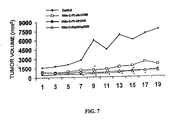
- 7 Illustrates inhibition of DMBA-induced mammary tumor growth in female Sprague-Dawley rats.
- AhR refers to aryl hydrocarbon receptor.
- DIM refers to diindolylmethane
- DMBA refers to 7, 12-dimethylbenz[a]anthracene.
- ER refers to estrogen receptor
- EROD refers to ethoxyresorufin O-deethylase.
- E2 refers to 17 ⁇ -estradiol.
- I3C refers to indole-3-carbinol.
- MAPKK refers to mitogen-activated protein kinase kinase.
- PAR ⁇ refers to peroxisome proliferator activity receptor ⁇ .
- PCDF refers to polycholorinated dibenzofuran.
- TCDD refers to 2,3,7,8-tetrachlorodibenzo-p-dioxin.
- R 1 , R 2 , R 4 , R 5 , R 6 , R 7 , R 1 ', R 2 ', R 4 ', R 5 ', R 6 ', and R 7 ' individually and independently, is hydrogen, or a substituent selected from the group consisting of a halogen, a nitro group, and a linear or branched alkyl or alkoxy group of about one to about ten carbons, preferably of about one to about five carbons, said compound having at least one substituent.
- the halogen is selected from the group consisting of chlorine, bromine, and fluorine.
- a compound such as this is referred to as a DIM derivative or a DIM analog.
- R 1 , R 2 , R 4 , R 6 , R 7 , R 1 ', R 2 ', R 4 ', R 6 ', and R 7 ' are hydrogen
- R 5 and R 5 ' are a halogen selected from the group consisting of chlorine, bromine and fluorine.
- preferred DIM derivatives include 5,5'-dichloro-diindolylmethane, 5,5'-dibromo-diindolylmethane, and 5,5'-difluoro-diindolylmethane.
- Additional preferred DIM derivatives include compounds wherein R 1 , R 2 , R 4 , R 6 , R 7 , R 1 ', R 2 ', R 4 ', R 6 ', and R 7 ' are hydrogen, R 5 and R 5 ' are an alkyl or alkoxyl having from one to ten carbons, and most preferably one to five carbons.
- Additional preferred DIM derivatives include compounds wherein R 2 , R 4 , R 5 , R 6 , R 7 , R 2 ', R 4 ', R 5 ', R 6 ', and R 7 ' are hydrogen, R 1 and R 1 ' are an alkyl or alkoxyl having from one to ten carbons, and most preferably one to five carbons.
- Such useful derivatives include, but are not limited to, N,N'-dimethyl-diindolylmethane, N,N'-diethyl-diindolylmethane, N,N'-dipropyl-diindolylmethane, N,N'-dibutyl-diindolylmethane, and N,N'-dipentyl-diindolylmethane.
- R 1 , R 4 , R 5 , R 6 , R 7 , R 1 ', R 4 ', R 5 ', R 6 ', and R 7 ' are hydrogen
- R 2 and R 2 ' are alkyl of one to ten carbons, and most preferably one to about five carbons.
- Such compounds include, but are not limited to, 2,2'-dimethyl-diindolylmethane, 2,2'-diethyl-diindolylmethane, 2,2'-dipropyl-diindolylmethane, 2,2'-dibutyl-diindolylmethane, and 2,2'-dipenyl-diindolylmethane.
- R 1 , R 2 , R 4 , R 6 , R 7 , R 1 ', R 2 ', R 4 ', R 6 ', and R 7 ' are hydrogen, and R 5 and R 5 ' are nitro.
- C-substituted DIMs DIM compounds with modifications at the bridge carbon
- These compounds can be symmetrical or asymmetrical, depending on whether a single indole precursor is used in the synthesis (leading to a symmetrical C-substituted DIM, or if two different indole precursors were used (leading to an asymmetrical C-substituted DIM).
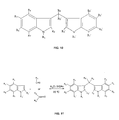
- the C-substituted DIMs are generally represented by the following structure:
- R 8 and R 8 ' are each independently selected from the group consisting of hydrogen, a linear alkyl group containing one to about ten carbon atoms, a branched alkyl group containing one to about ten carbon atoms, a cycloalkyl group containing one to about ten carbon atoms, and an aryl group. At least one of R 8 and R 8 ' are not hydrogen (if both R 8 and R 8 ' are hydrogen, the compound is a DIM).
- a preferred embodiment of C-substituted DIMs includes when R 1 , R 2 , R 1 ', and R 2 ' are each individually hydrogen or methyl; R 4 , R 5 , R 6 , R 7 , R 4 ', R 5 ', R 6 ', and R 7 ' are each hydrogen; and R 8 and R 8 ' are each individually hydrogen, methyl, C 6 H 5 , C 6 H 4 OH, C 6 H 4 CH 3 , C 6 H 4 CF 3 , C 10 H 7 , C 6 H 4 C 6 H 5 , or C 6 H 4 OCH 3 .
- the bridging carbon atom may be a chiral center (a carbon atom with four different substituents attached). If a chiral center exists, then the resulting C-substituted DIM would consist of two mirror image enantiomers, each of which is optically active. Resolution of the mixture using a chiral chromatography column or other means would result in the isolation of purified or pure enantiomer products. The different enantiomers may prove to have different biological activities.
- substituted I3C derivatives from the commercially-available substituted indoles is a convenient method for preparation of these compounds.
- the substituted DIM analogs can also be prepared by condensation of formaldehyde with substituted indoles; however, a disadvantage of the latter reaction is the formation of by-products which will complicate purification of the desired substituted DIM.
- the compounds of the present invention can be synthesized by dimethylformamide condensation of a suitable substituted indole to form a substituted indole-3-carboxaldehyde.
- Suitable substituted indoles include those indoles having substituents at R 1 , R 2 , R 4 , R 5 , R 6 and R 7 positions.
- substituted indole 3-aldehyde product is treated with a suitable alcohol such a methanol and solid sodium borohydride to reduce the aldehyde moiety to give substituted I3Cs.
- a suitable alcohol such as methanol and solid sodium borohydride
- substituted I3Cs substituted I3Cs.
- Substituted DIMs are prepared by condensing the substituted indole-3-carbinol products. This may be achieved, for example, by treatment with a phosphate buffer having a pH of about 5.5. Use of a single indole starting material will lead to symmetrical products, while use of two different indole starting materials will lead to asymmetrical products.
- the agents of the present invention may be administered topically, orally, by injection (IV, IP, IM), intranasally, transdermally, rectally, or by any means which delivers an effective amount of the active agent to the tissue or site to be treated. Suitable dosages are those which achieve the desired endpoint. It will be appreciated that different dosages may be required for treating different disorders.
- An effective amount of an agent is that amount which causes a significant decrease in neoplastic cell count, growth, or size.
- the cancer is generally any type of cancer, preferably adrenal cortical cancer, anal cancer, bile duct cancer, bone cancer, bone metastasis, brain cancer, cervical cancer, non-Hodgkin's lymphoma, rectum cancer, esophageal cancer, eye cancer, gallbladder cancer, gastrointestinal carcinoid tumors, gestational trophoblastic disease, Hodgkin's disease, Kaposi's sarcoma, kidney cancer, laryngeal and hypopharyngeal cancer, leukemia, liver cancer, lung cancer, lung carcinoid tumors, malignant mesothelioma, metastatic cancer, multiple myeloma, myelodysplastic syndrome, nasal cavity and paranasal cancer, nasopharyngeal cancer, neuroblastoma, oral cavity and oropharyngeal cancer, osteosarcoma, ovarian cancer
- the active agents may be administered along with a pharmaceutical carrier and/or diluent.
- the agents of the present invention may also be administered in combination with other agents, for example, in association with other chemotherapeutic or immunostimulating drugs or therapeutic agents.
- pharmaceutical carriers or diluents useful in the present invention include any physiological buffered medium, i.e., about pH 7.0 to 7.4 comprising a suitable water soluble organic carrier.
- suitable water soluble organic carriers include, but are not limited to corn oil, dimethylsulfoxide, gelatin capsules, and so on.
- the present invention is exemplified in terms of in vitro and in vivo activity against various neoplastic and normal cell lines.
- the test cell lines employed in the in vitro assays are well recognized and accepted as models for antitumor activity in animals.
- the term "animals” as used herein includes, but is not limited to, mice, rats, domesticated animals such as, but not limited to cats and dogs, and other animals such as, but not limited to cattle, sheep, pigs, horses, and primates such as, but not limited to monkeys and humans.
- the mouse experimental tumor in vivo assays are also well recognized and accepted as predictive of in vivo activity in other animals such as, but not limited to, humans.
- Indole or ring-substituted indoles are commercially available and these compounds are used for synthesis of diindolylmethane analogs.
- Alkyl, substituted alkyl, aromatic, or substituted aromatic aldehydes (0.01 mole) are incubated with indole or a substituted indole (0.02 mole) in water (50 ml) plus glacial acetic acid (0.5 ml).
- the reaction is continued with stirring for 2 days to 2 weeks.
- the reaction product is either filtered or isolated by extraction with chloroform and the residue crystallized from benzene/petroleum spirit.
- the resulting substituted DIM is then used in in vivo or in vitro studies. DIMs tend to be photosensitive and should be stored in dark brown vials.
- Example 2 Diindolylmethane analogs as antitumorigenic agents for the treatment of multiple cancers
- HT-29 human colon cancer cells studies with HT-29 human colon cancer cells also indicate that DIM and related analogs protect against colon cancer.
- HT-29 cells were grown in DMEM and serum and treated with 25 ⁇ M DIM and 4,4'-dichloroDIM. After 72 hr, there was a 73 and 92% decrease in cell proliferation, respectively, and these antiproliferative effects could be observed with cell concentrations as low as 10 ⁇ M. These growth inhibitory effects were also accompanied by programmed cell death or apoptosis.
- Peroxisome proliferator-activated receptor ⁇ PPAR is a nuclear receptor that induces differentiation in multiple tissues and cell lines. Synthetic compounds that bind PPAR ⁇ inhibit growth, induce differentiation in multiple tumor cell lines, and inhibit mammary carcinogenesis in rodent models ( Mueller et al., "Terminal differentiation of human breast cancer through PPAR" Mol. Cell 1:465-470, 1998 ; Elstner et al., "Ligands for peroxisome proliferator-activated receptor gamma and retinoic acid receptor inhibit growth and induce apoptosis of human breast cancer cells in vitro and in BNX mice" Proc. Natl. Acad. Sci.
- MAPKK mitogen-activated protein kinase
- pMAPKK constitutively active MAPKK expression plasmid
- SRE MAPKK-inducible serum response element
- condensation mixture is filtered, washed with distilled water, dried and crystallized from benzene or benzene/petroleum spirit to give a pure condensation product.
- the reaction products may be light sensitive and should be synthesized and stored in the dark.
- unsymmetrical condensation products using different substituted indoles can also be synthesized, purified and separated by high performance liquid chromatography for biological screening.
- C-substituted diindolylmethanes include the generalized set of compounds shown in Figure 10 , where R 8 /R 8 ' are substituents at the C-bridge, and R 1 /R 1 ' - R 7 /R 7 ' are substituents at positions 1, 2, 4, 5, 6 and 7.
- Table 1 illustrates a range of prepared compounds. Table 1 1 , CH 3 , CH 3 , CH 3 , CH 3 , CH 3 , CH 3 , CH 3 , CH 3 , CH 3 , CH 3 2,4-7 -CH 3 8 H 3 6 H 5 6 H 4- OH 6 H 4 -CH 3 6 H 4 -CF 3 10 H 7 6 H 4 -C 6 H 5 6 H 4 -OCH 3 H 3
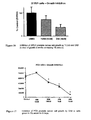
- the DIM series of compounds containing both ring and methylene -C substituents can be used for treating multiple cancers through both Ah receptor-dependent and -independent pathways. Many of these compounds bind the Ah receptor; however, it is suspected that they may also inhibit tumor growth by other mechanisms, such as through activation of PPAR ⁇ (Example 3). Results illustrated below summarize the concentration-dependent induction of CYP1A1-dependent ethoxyresorufin O-deethylase (EROD) activity by DIM and TCDD in androgen-nonresponsive PC3 human prostate cancer cells ( Fig. 12 ).
- EROD ethoxyresorufin O-deethylase
- DIM and ring-substituted DIM analogs exhibit antiestrogenic activities in breast cancer cells and antitumorigenic activity in the carcinogen-induced rat mammary tumor model ( Chen et al., "Aryl Hydrocarbon receptor-mediated antiestrogenic and antitumorigenic activity of diindolylmethane," Carcinogenesis, 19:1631-1639, 1998 ; McDougal et al., "Inhibition of carcinogen-induced rat mammary tumor growth and other estrogen-dependent responses by symmetrical dihalo-substituted analogs of diindolylmethane” Cancer Letts., 151:169-179, 2000 ).
- Example 9 In vivo antitumorigenic activity of C-Phenyl substituted DIM in the DMBA-induced rat mammary tumor model
- AhR agonists exhibit antiestrogenic activity in both in vivo and in vitro models ( Chen et al., "Aryl Hydrocarbon receptor-mediated antiestrogenic and antitumorigenic activity of diindolylmethane," Carcinogenesis, 19:1631-1639, 1998 ; McDougal et al., "Inhibition of carcinogen-induced rat mammary tumor growth and other estrogen-dependent responses by symmetrical dihalo-substituted analogs of diindolylmethane” Cancer Letts., 151:169-179, 2000 ).
- PCDFs alternate substituted alkyl polychlorinated dibenzofurans
- the anticarcinogenic response was observed at a dose of 1.0 mg/kg every 2 days and as shown in Table 2, this was not accompanied by changes in body/organ weights or altered tissue histopathology.
- DIM and related compounds may be not only chemopreventative, but also act as antitumorigenic agents for bladder and other cancers through the AhR and possibly other mechanistic pathways.
- HT-29 human colon cancer cells Preliminary studies with HT-29 human colon cancer cells also indicate that DIM and related analogs protect against colon cancer.
- HT-29 cells were grown in DMEM and serum and treated with 25 ⁇ M DIM and 4,4'-dichloroDIM. After 72 hours, there was a 73 and 92% decrease in cell proliferation, respectively, and these antiproliferative effects could be observed with concentrations as low as 10 ⁇ M. These growth inhibitory effects were also accompanied by programmed cell death, or apoptosis.
- Previous studies have demonstrated that DIM and ring-substituted DIM analogs exhibit antiestrogenic activities in breast cancer cells and antitumorigenic activity in the carcinogen-induced rat mammary tumor model. However, the activities of the C-substituted analogs have not been determined.
- C-substituted with alkyl, phenyl or other aromatic substituents would decrease binding affinity to the Ah receptor and render these compounds inactive as Ah receptor-based antiestrogens.
- the C-substituted DIMs retained their binding affinity for the Ah receptor and IC 50 competitive binding values of 1.1 ⁇ 10 -8 , 9.8 ⁇ 10 -8 , 5.5 ⁇ 10 -10 , and 1.8 ⁇ 10 -9 M have been observed for the C-methyl, C-phenyl, 1-methyl/C-p-chlorophenyl and 1-methyl/C-biphenyl substituents, respectively.
- Figure 2 illustrates the potent inhibition of mammary tumor growth by C-phenylDIM in DMBA-induced Sprague-Dawley rats.
- the anticarcinogenic response was observed at a dose as low as 1.0 mg/kg every 2 days, and, as shown in Table 1, this was not accompanied by changes in body/organ weights on altered tissue histopathology.
- Both ring- and C-substituted DIMs are also Ah receptor-based antiestrogens and exhibit antiestrogenic activity in both the breast and uterus, and thus these compounds in combination with ER antagonists such as tamoxifen can also be used in combined therapy.
- the combined therapy would act synergistically or additively in blocking tumor growth in the breast and also protect against potential induction of endometrial cancer by ER antagonists such as tamoxifen.
- compositions and/or methods disclosed and claimed herein can be made and executed without undue experimentation in light of the present disclosure. While the compositions and methods of this invention have been described in terms of preferred embodiments, it will be apparent to those of skill in the art that variations may be applied to the compositions and/or methods and in the steps or in the sequence of steps of the methods described herein without departing from the concept, spirit and scope of the invention. More specifically, it will be apparent that certain agents which are both chemically and physiologically related may be substituted for the agents described herein while the same or similar results would be achieved. All such similar substitutes and modifications apparent to those skilled in the art are deemed to be within the spirit, scope and concept of the invention.
Landscapes
- Health & Medical Sciences (AREA)
- Chemical & Material Sciences (AREA)
- Organic Chemistry (AREA)
- Public Health (AREA)
- Veterinary Medicine (AREA)
- General Health & Medical Sciences (AREA)
- Medicinal Chemistry (AREA)
- Animal Behavior & Ethology (AREA)
- Pharmacology & Pharmacy (AREA)
- Life Sciences & Earth Sciences (AREA)
- Nuclear Medicine, Radiotherapy & Molecular Imaging (AREA)
- General Chemical & Material Sciences (AREA)
- Chemical Kinetics & Catalysis (AREA)
- Oncology (AREA)
- Epidemiology (AREA)
- Hematology (AREA)
- Pharmaceuticals Containing Other Organic And Inorganic Compounds (AREA)
- Acyclic And Carbocyclic Compounds In Medicinal Compositions (AREA)
- Indole Compounds (AREA)
Applications Claiming Priority (3)
| Application Number | Priority Date | Filing Date | Title |
|---|---|---|---|
| US23867500P | 2000-10-06 | 2000-10-06 | |
| US23867000P | 2000-10-06 | 2000-10-06 | |
| EP01986299A EP1328513A2 (de) | 2000-10-06 | 2001-10-05 | Diindolylmethan und c-substituierte diindolylmethanzusammensetzungen und verfahren zur behandlung von multiplen karzinomen |
Related Parent Applications (1)
| Application Number | Title | Priority Date | Filing Date |
|---|---|---|---|
| EP01986299.4 Division | 2001-10-05 |
Publications (1)
| Publication Number | Publication Date |
|---|---|
| EP2386542A1 true EP2386542A1 (de) | 2011-11-16 |
Family
ID=26931856
Family Applications (2)
| Application Number | Title | Priority Date | Filing Date |
|---|---|---|---|
| EP01986299A Withdrawn EP1328513A2 (de) | 2000-10-06 | 2001-10-05 | Diindolylmethan und c-substituierte diindolylmethanzusammensetzungen und verfahren zur behandlung von multiplen karzinomen |
| EP11169753A Withdrawn EP2386542A1 (de) | 2000-10-06 | 2001-10-05 | Diindolylmethan und C-substituierte Diindolylmethanzusammensetzungen sowie Verfahren zur Behandlung von mehreren Krebsarten |
Family Applications Before (1)
| Application Number | Title | Priority Date | Filing Date |
|---|---|---|---|
| EP01986299A Withdrawn EP1328513A2 (de) | 2000-10-06 | 2001-10-05 | Diindolylmethan und c-substituierte diindolylmethanzusammensetzungen und verfahren zur behandlung von multiplen karzinomen |
Country Status (5)
| Country | Link |
|---|---|
| US (4) | US7709520B2 (de) |
| EP (2) | EP1328513A2 (de) |
| AU (1) | AU2002219782A1 (de) |
| CA (1) | CA2425281A1 (de) |
| WO (1) | WO2002028832A2 (de) |
Families Citing this family (37)
| Publication number | Priority date | Publication date | Assignee | Title |
|---|---|---|---|---|
| US7041691B1 (en) | 1999-06-30 | 2006-05-09 | Amgen Inc. | Compounds for the modulation of PPARγ activity |
| US20030171399A1 (en) | 2000-06-28 | 2003-09-11 | Tularik Inc. | Quinolinyl and benzothiazolyl modulators |
| US7709520B2 (en) | 2000-10-06 | 2010-05-04 | The Texas A&M University System | Diindolylmethane and C-substituted diindolylmethane compositions and methods for the treatment of multiple cancers |
| JP2006514692A (ja) * | 2002-05-22 | 2006-05-11 | テキサス エイ アンド エム ユニバーシティ システム | 前立腺ガンに対する処置としてのアルキル置換pcdf |
| WO2004032861A2 (en) | 2002-10-11 | 2004-04-22 | Bristol-Myers Squibb Company | Hexahydro-benzimidazolone compounds useful as anti-inflammatory agents |
| WO2005007223A2 (en) * | 2003-07-16 | 2005-01-27 | Sasha John | Programmable medical drug delivery systems and methods for delivery of multiple fluids and concentrations |
| US20050058600A1 (en) * | 2003-09-16 | 2005-03-17 | Bjeldanes Leonard F. | 3,3'-Diindolylmethane antiandrogenic compositions |
| US7223761B2 (en) | 2003-10-03 | 2007-05-29 | Amgen Inc. | Salts and polymorphs of a potent antidiabetic compound |
| WO2005092854A1 (en) | 2004-03-03 | 2005-10-06 | Eli Lilly And Company | Bicyclic substituted indole-derivative steroid hormone nuclear receptor modulators |
| US20050209551A1 (en) * | 2004-03-18 | 2005-09-22 | Takemoto Arnold C | Detoxification and breast health preparations |
| WO2005107747A2 (en) * | 2004-05-06 | 2005-11-17 | Bioresponse, Llc | Diindolymethane formulations for the treatment of leiomyomas |
| CA2576094A1 (en) * | 2004-08-23 | 2006-03-02 | The Texas A&M University System | Ligand-dependant activation of nur77 and uses thereof |
| TW200616634A (en) | 2004-10-01 | 2006-06-01 | Bristol Myers Squibb Co | Crystalline forms and process for preparing spiro-hydantoin compounds |
| US20060100264A1 (en) | 2004-11-06 | 2006-05-11 | Bjeldanes Leonard F | 3,3'-Diindolylmethane immune activating compositions |
| US7186727B2 (en) | 2004-12-14 | 2007-03-06 | Bristol-Myers Squibb Company | Pyridyl-substituted spiro-hydantoin compounds and use thereof |
| CA2593084C (en) | 2004-12-30 | 2014-03-18 | Bioresponse, Llc | Use of diindolylmethane-related indoles for the treatment and prevention of respiratory syncytial virus associated conditions |
| US20060264497A1 (en) * | 2005-03-28 | 2006-11-23 | Zeligs Michael A | Diindolylmethane-based compositions and methods of use thereof for promoting oral mucosal and bone health |
| US20060229355A1 (en) * | 2005-04-08 | 2006-10-12 | The Regents Of The University Of California | 3.3'-Diindolylmethane compositions inhibit angiogenesis |
| EP1893576A4 (de) | 2005-05-27 | 2010-03-17 | Univ Kingston | Behandlung von proteinfaltungsstörungen |
| US20090035345A1 (en) * | 2005-06-15 | 2009-02-05 | Academisch Medisch Centrum, Bureau | Nuclear Receptors Agonists for Treatment of Atherosclerosis and/or Related Cardiovascular Disease |
| CN100378073C (zh) * | 2005-12-29 | 2008-04-02 | 中国海洋大学 | 二吲哚基甲烷及其制备方法 |
| EP1842541A1 (de) | 2006-03-29 | 2007-10-10 | G.I.M.-Gesellschaft Für Innovative Medizin Gmbh Nfg Ohg | Pflanzenextrakte, pflanzliche Wirkstoffe und ihre Verwendung |
| CN100376555C (zh) * | 2006-04-26 | 2008-03-26 | 浙江大学 | 一种二吲哚甲烷衍生物的制备方法 |
| BRPI0717753B1 (pt) | 2006-10-27 | 2022-04-12 | Bioresponse, Llc | Uso de uma composição compreendendo 50-250 mg de um ou mais indóis relacionados com dim e um ou mais agentes anti-protozoários, e, composição |
| US8580843B2 (en) * | 2008-10-07 | 2013-11-12 | Colorado State University Research Foundation | Use of diindolylmethane (DIM) compounds and derivatives as neuroprotective agents |
| US10632106B2 (en) | 2009-11-02 | 2020-04-28 | Ariagen, Inc. | Methods of cancer treatment with 2-(1′H-Indole-3′-carbonyl)-thiazole-4-carboxylic acid methyl ester |
| EP3689347A1 (de) * | 2009-11-02 | 2020-08-05 | Ariagen, Inc. | Ite zur krebsbehandlung und -eliminierung |
| CN102153500B (zh) * | 2011-03-02 | 2012-09-05 | 河北大学 | 一种二吲哚甲烷衍生物的合成方法 |
| RU2477723C2 (ru) | 2011-06-16 | 2013-03-20 | Общество С Ограниченной Ответственностью "Фьюжн Фарма" | Ингибиторы протеинкиназ (варианты), их применение для лечения онкологических заболеваний и фармацевтическая композиция на их основе |
| WO2015042170A1 (en) | 2013-09-17 | 2015-03-26 | Wayne State University | Compositions and uses of combinations of dim-related indoles and selected anti-androgen compounds |
| ES2532436B1 (es) * | 2013-09-25 | 2016-02-05 | Consejo Superior De Investigaciones Científicas (Csic) | Uso de un compuesto indólico con sustituyentes nucleofílicos en el c3 y sus variantes diméricas en la preparación de una composición farmacéutica útil para el tratamiento de neoplasias linfoides b. |
| CA2982162C (en) | 2015-04-10 | 2023-10-10 | Bioresponse, L.L.C. | Self-emulsifying formulations of dim-related indoles |
| US10703716B2 (en) | 2016-03-18 | 2020-07-07 | Wayne State University | Antibacterial compounds and methods of use thereof |
| CN108239083B (zh) | 2016-12-26 | 2021-08-17 | 阿里根公司 | 芳香烃受体调节剂 |
| EP3713937A2 (de) | 2017-11-20 | 2020-09-30 | Ariagen, Inc. | Indolverbindungen als modulatoren des aryl-kohlenwasserstoff-rezeptors (ahr) |
| CA3137027A1 (en) | 2019-04-15 | 2020-10-22 | Ariagen, Inc. | Chiral indole compounds and their use |
| AU2020320289B2 (en) * | 2019-07-31 | 2026-03-12 | The Texas A&M University System | Anticancer agents |
Citations (4)
| Publication number | Priority date | Publication date | Assignee | Title |
|---|---|---|---|---|
| US5516790A (en) | 1989-01-23 | 1996-05-14 | Texas A&M University System Technology Licensing Office | Synthesis and application of alkyl-substituted dibenzofurans as antitumorigenic agents |
| EP0887348A1 (de) * | 1997-06-25 | 1998-12-30 | Boehringer Mannheim Italia S.p.A. | Bis-Indolderivative mit antimetastatischer Wirkung, Verfahren für deren Herstellung und sie enthaltende pharmazeutische Zusammensetzungen |
| US5948808A (en) | 1997-03-07 | 1999-09-07 | The Texas A&M University System | Indole-3-carbinol, diindolylmethane and substituted analogs as antiestrogens |
| US6136845A (en) | 1998-12-21 | 2000-10-24 | The Texas A&M University System | Endocrine therapy for breast cancer: combined treatment with tamoxifen plus alkyl PCDFs |
Family Cites Families (2)
| Publication number | Priority date | Publication date | Assignee | Title |
|---|---|---|---|---|
| SE506948C2 (sv) | 1996-07-01 | 1998-03-09 | Skaltek Ab | Apparat och förfarande för att uppfånga, dämpa och frammata en till en ring upprullad kabel, vajer, lina eller liknande |
| US7709520B2 (en) | 2000-10-06 | 2010-05-04 | The Texas A&M University System | Diindolylmethane and C-substituted diindolylmethane compositions and methods for the treatment of multiple cancers |
-
2001
- 2001-10-04 US US09/971,152 patent/US7709520B2/en not_active Expired - Fee Related
- 2001-10-05 EP EP01986299A patent/EP1328513A2/de not_active Withdrawn
- 2001-10-05 AU AU2002219782A patent/AU2002219782A1/en not_active Abandoned
- 2001-10-05 EP EP11169753A patent/EP2386542A1/de not_active Withdrawn
- 2001-10-05 WO PCT/US2001/042519 patent/WO2002028832A2/en not_active Ceased
- 2001-10-05 CA CA002425281A patent/CA2425281A1/en not_active Abandoned
-
2004
- 2004-06-21 US US10/872,928 patent/US7232843B2/en not_active Expired - Fee Related
-
2010
- 2010-02-02 US US12/698,437 patent/US8148547B2/en not_active Expired - Lifetime
-
2011
- 2011-12-02 US US13/309,837 patent/US8389563B2/en not_active Expired - Lifetime
Patent Citations (4)
| Publication number | Priority date | Publication date | Assignee | Title |
|---|---|---|---|---|
| US5516790A (en) | 1989-01-23 | 1996-05-14 | Texas A&M University System Technology Licensing Office | Synthesis and application of alkyl-substituted dibenzofurans as antitumorigenic agents |
| US5948808A (en) | 1997-03-07 | 1999-09-07 | The Texas A&M University System | Indole-3-carbinol, diindolylmethane and substituted analogs as antiestrogens |
| EP0887348A1 (de) * | 1997-06-25 | 1998-12-30 | Boehringer Mannheim Italia S.p.A. | Bis-Indolderivative mit antimetastatischer Wirkung, Verfahren für deren Herstellung und sie enthaltende pharmazeutische Zusammensetzungen |
| US6136845A (en) | 1998-12-21 | 2000-10-24 | The Texas A&M University System | Endocrine therapy for breast cancer: combined treatment with tamoxifen plus alkyl PCDFs |
Non-Patent Citations (24)
Also Published As
| Publication number | Publication date |
|---|---|
| WO2002028832A2 (en) | 2002-04-11 |
| CA2425281A1 (en) | 2002-04-11 |
| US20120077859A1 (en) | 2012-03-29 |
| US7709520B2 (en) | 2010-05-04 |
| US8389563B2 (en) | 2013-03-05 |
| US7232843B2 (en) | 2007-06-19 |
| EP1328513A2 (de) | 2003-07-23 |
| AU2002219782A1 (en) | 2002-04-15 |
| US8148547B2 (en) | 2012-04-03 |
| WO2002028832A3 (en) | 2003-01-16 |
| US20100227906A1 (en) | 2010-09-09 |
| US20020115708A1 (en) | 2002-08-22 |
| US20040235929A1 (en) | 2004-11-25 |
Similar Documents
| Publication | Publication Date | Title |
|---|---|---|
| US7709520B2 (en) | Diindolylmethane and C-substituted diindolylmethane compositions and methods for the treatment of multiple cancers | |
| US5948808A (en) | Indole-3-carbinol, diindolylmethane and substituted analogs as antiestrogens | |
| US6656963B2 (en) | Indole-3-carbinol (I3C) derivatives and methods | |
| Safe et al. | Development of selective aryl hydrocarbon receptor modulators for treatment of breast cancer | |
| McDougal et al. | Inhibition of carcinogen-induced rat mammary tumor growth and other estrogen-dependent responses by symmetrical dihalo-substituted analogs of diindolylmethane | |
| Tilekar et al. | Thiazolidinedione “magic bullets” simultaneously targeting PPARγ and HDACs: Design, synthesis, and investigations of their in vitro and in vivo antitumor effects | |
| AU2015314772B2 (en) | Compositions and methods for treatment of prostate carcinoma | |
| EP0804191A1 (de) | Behandlung von erkrankungen, die mit dem von blutpättchen abstammendenwachstumsfaktoren wie z. b. krebserkrankungen unter verwendung von inhibitoren des rezeptors der von blutplättchen abstammenden wachstumsfaktoren | |
| Melin et al. | Development of LM98, a small‐molecule TEAD inhibitor derived from flufenamic acid | |
| EP1218342A2 (de) | Mono- und bis-indolylchinon derivate und deren verwendung zur behandlung von krebs und diabetes | |
| Saraf et al. | Novel 5, 6-diphenyl-1, 2, 4-triazine-3-thiol derivatives as dual COX-2/5-LOX inhibitors devoid of cardiotoxicity | |
| WO2014207213A1 (en) | Novel inhibitors of protein kinase c epsilon signaling | |
| EP1728790A1 (de) | Shp-2-Inhibitoren, Arzneimittel, die sie enthalten sowie deren Verwendung zur Behandlung von Phosphatasen-vermittelten Krankheiten | |
| US9174951B2 (en) | Glucose transporter inhibitors | |
| WO2014038894A1 (ko) | 에틸(2-메틸-3{(E)-[(나프타[2,1-b]퓨란-2-일카보닐)하이드라조노]메틸}-1H-인돌-1-일)아세테이트, 이의 유사체를 유효성분으로 포함하는 암 예방 및 치료용 조성물 | |
| Safe | C-substituted diindolylmethane compositions and methods for the treatment of multiple cancers | |
| CN100363347C (zh) | 作为治疗剂的4-(1-(磺酰基)-1h-吲哚-2-基)-4-(羟基)-环己-2,5-二烯酮化合物及其类似物 | |
| US7799811B2 (en) | Agent for prevention and treatment of cancer comprising oxadiazole urea compound obstructing activity of stat | |
| Safe | Indole-3-carbinol, diindolylmethane and substituted analogs as antiestrogens | |
| US20060148848A1 (en) | Compounds and methods for treating cancer and inflammation | |
| JP5371763B2 (ja) | プロテインキナーゼck2の新規阻害物質としての置換インデノ[1,2−b]インドール誘導体及び腫瘍治療剤、細胞増殖抑制剤及び診断剤としてのその使用 | |
| WO2006121633A2 (en) | Activation of the dax-1 and shp nuclear orphan receptors | |
| WO2005113561A1 (en) | Cyclicsulfonate pyrrole indolinones as kinase inhibitors |
Legal Events
| Date | Code | Title | Description |
|---|---|---|---|
| AC | Divisional application: reference to earlier application |
Ref document number: 1328513 Country of ref document: EP Kind code of ref document: P |
|
| AK | Designated contracting states |
Kind code of ref document: A1 Designated state(s): AT BE CH CY DE DK ES FI FR GB GR IE IT LI LU MC NL PT SE TR |
|
| AX | Request for extension of the european patent |
Extension state: AL LT LV MK RO SI |
|
| PUAI | Public reference made under article 153(3) epc to a published international application that has entered the european phase |
Free format text: ORIGINAL CODE: 0009012 |
|
| 17P | Request for examination filed |
Effective date: 20120516 |
|
| 17Q | First examination report despatched |
Effective date: 20120911 |
|
| STAA | Information on the status of an ep patent application or granted ep patent |
Free format text: STATUS: THE APPLICATION IS DEEMED TO BE WITHDRAWN |
|
| 18D | Application deemed to be withdrawn |
Effective date: 20140501 |