EP2387178B1 - Steuerung einer Multicast-Inhaltsverteilung - Google Patents
Steuerung einer Multicast-Inhaltsverteilung Download PDFInfo
- Publication number
- EP2387178B1 EP2387178B1 EP11165418.2A EP11165418A EP2387178B1 EP 2387178 B1 EP2387178 B1 EP 2387178B1 EP 11165418 A EP11165418 A EP 11165418A EP 2387178 B1 EP2387178 B1 EP 2387178B1
- Authority
- EP
- European Patent Office
- Prior art keywords
- router
- multicast
- data
- multicast group
- permitted
- Prior art date
- Legal status (The legal status is an assumption and is not a legal conclusion. Google has not performed a legal analysis and makes no representation as to the accuracy of the status listed.)
- Active
Links
Images

Classifications
-
- H—ELECTRICITY
- H04—ELECTRIC COMMUNICATION TECHNIQUE
- H04L—TRANSMISSION OF DIGITAL INFORMATION, e.g. TELEGRAPHIC COMMUNICATION
- H04L12/00—Data switching networks
- H04L12/02—Details
- H04L12/16—Arrangements for providing special services to substations
- H04L12/18—Arrangements for providing special services to substations for broadcast or conference, e.g. multicast
- H04L12/185—Arrangements for providing special services to substations for broadcast or conference, e.g. multicast with management of multicast group membership
-
- H—ELECTRICITY
- H04—ELECTRIC COMMUNICATION TECHNIQUE
- H04L—TRANSMISSION OF DIGITAL INFORMATION, e.g. TELEGRAPHIC COMMUNICATION
- H04L65/00—Network arrangements, protocols or services for supporting real-time applications in data packet communication
- H04L65/60—Network streaming of media packets
- H04L65/61—Network streaming of media packets for supporting one-way streaming services, e.g. Internet radio
- H04L65/611—Network streaming of media packets for supporting one-way streaming services, e.g. Internet radio for multicast or broadcast
-
- H—ELECTRICITY
- H04—ELECTRIC COMMUNICATION TECHNIQUE
- H04N—PICTORIAL COMMUNICATION, e.g. TELEVISION
- H04N21/00—Selective content distribution, e.g. interactive television or video on demand [VOD]
- H04N21/20—Servers specifically adapted for the distribution of content, e.g. VOD servers; Operations thereof
- H04N21/25—Management operations performed by the server for facilitating the content distribution or administrating data related to end-users or client devices, e.g. end-user or client device authentication, learning user preferences for recommending movies
- H04N21/258—Client or end-user data management, e.g. managing client capabilities, user preferences or demographics, processing of multiple end-users preferences to derive collaborative data
- H04N21/25808—Management of client data
- H04N21/25841—Management of client data involving the geographical location of the client
-
- H—ELECTRICITY
- H04—ELECTRIC COMMUNICATION TECHNIQUE
- H04N—PICTORIAL COMMUNICATION, e.g. TELEVISION
- H04N21/00—Selective content distribution, e.g. interactive television or video on demand [VOD]
- H04N21/60—Network structure or processes for video distribution between server and client or between remote clients; Control signalling between clients, server and network components; Transmission of management data between server and client, e.g. sending from server to client commands for recording incoming content stream; Communication details between server and client
- H04N21/63—Control signaling related to video distribution between client, server and network components; Network processes for video distribution between server and clients or between remote clients, e.g. transmitting basic layer and enhancement layers over different transmission paths, setting up a peer-to-peer communication via Internet between remote STB's; Communication protocols; Addressing
- H04N21/64—Addressing
- H04N21/6405—Multicasting
-
- H—ELECTRICITY
- H04—ELECTRIC COMMUNICATION TECHNIQUE
- H04L—TRANSMISSION OF DIGITAL INFORMATION, e.g. TELEGRAPHIC COMMUNICATION
- H04L41/00—Arrangements for maintenance, administration or management of data switching networks, e.g. of packet switching networks
- H04L41/28—Restricting access to network management systems or functions, e.g. using authorisation function to access network configuration
-
- H—ELECTRICITY
- H04—ELECTRIC COMMUNICATION TECHNIQUE
- H04L—TRANSMISSION OF DIGITAL INFORMATION, e.g. TELEGRAPHIC COMMUNICATION
- H04L41/00—Arrangements for maintenance, administration or management of data switching networks, e.g. of packet switching networks
- H04L41/32—Specific management aspects for broadband networks
-
- H—ELECTRICITY
- H04—ELECTRIC COMMUNICATION TECHNIQUE
- H04L—TRANSMISSION OF DIGITAL INFORMATION, e.g. TELEGRAPHIC COMMUNICATION
- H04L63/00—Network architectures or network communication protocols for network security
- H04L63/10—Network architectures or network communication protocols for network security for controlling access to devices or network resources
- H04L63/104—Grouping of entities
-
- H—ELECTRICITY
- H04—ELECTRIC COMMUNICATION TECHNIQUE
- H04L—TRANSMISSION OF DIGITAL INFORMATION, e.g. TELEGRAPHIC COMMUNICATION
- H04L65/00—Network arrangements, protocols or services for supporting real-time applications in data packet communication
- H04L65/60—Network streaming of media packets
- H04L65/70—Media network packetisation
-
- H—ELECTRICITY
- H04—ELECTRIC COMMUNICATION TECHNIQUE
- H04N—PICTORIAL COMMUNICATION, e.g. TELEVISION
- H04N21/00—Selective content distribution, e.g. interactive television or video on demand [VOD]
- H04N21/20—Servers specifically adapted for the distribution of content, e.g. VOD servers; Operations thereof
- H04N21/23—Processing of content or additional data; Elementary server operations; Server middleware
- H04N21/239—Interfacing the upstream path of the transmission network, e.g. prioritizing client content requests
- H04N21/2393—Interfacing the upstream path of the transmission network, e.g. prioritizing client content requests involving handling client requests
- H04N21/2396—Interfacing the upstream path of the transmission network, e.g. prioritizing client content requests involving handling client requests characterized by admission policies
-
- H—ELECTRICITY
- H04—ELECTRIC COMMUNICATION TECHNIQUE
- H04N—PICTORIAL COMMUNICATION, e.g. TELEVISION
- H04N7/00—Television systems
- H04N7/16—Analogue secrecy systems; Analogue subscription systems
- H04N7/173—Analogue secrecy systems; Analogue subscription systems with two-way working, e.g. subscriber sending a programme selection signal
- H04N7/17309—Transmission or handling of upstream communications
- H04N7/17318—Direct or substantially direct transmission and handling of requests
Definitions
- Operators of networks often provide numerous types of data, video and/or audio content to the premises of network users.
- Such content may include programming from broadcast television networks (e.g., ABC, CBS, NBC), from "cable" programming service providers (e.g., HBO, ESPN), programming from local television stations, and numerous other types of content.
- broadcast television networks e.g., ABC, CBS, NBC
- "cable" programming service providers e.g., HBO, ESPN
- Numerous techniques have been used to deliver content data to users over coaxial cable, fiber optic cable and other types of physical media.
- a physical medium connected to a user premises will continuously deliver each of multiple content-containing services that are available to the user.
- one set of services may be carried in a first frequency band, a second set of services in a second frequency band, etc.
- a user wishing to view content from one of those services may utilize a device to tune to the appropriate frequency sub-band and isolate data packets in the frequency sub-band for the desired content.
- IP television IPTV
- IPTV internet protocol television
- EP 1715628 discloses a method for implementing multicast services.
- a mapping relation between a multicast user address and a multicast group address is preset.
- a request packet sent by the multicast user who requests to join in the multicast is acquired.
- a determination is made as to whether the multicast group address in the request packet is the same as that corresponding to the multicast user in the established mapping relation according to the multicast user address and multicast group address carried in the request packet.
- WO 2006/077575 proposes a technique for multicast transmission in a PON communication system, using IGMP protocol and an IGMP router, to a plurality of IGMP hosts to serve respective end customers of the PON communication system.
- WO 2002/045334 describes a method of providing secure multicast over a local access network by means of a network access unit having a channel request vetting function and a permitted channel list.
- EP 1858262 discloses a method for generating an Internet Protocol broadband video service bill that includes returning, by an access device, authorization information indicating whether the user is allowed to watch or preview based on a watching or previewing right, recording the joining time point of the user, and sending a received multicast stream to a port of the user.
- content includes, for example, video images, audio sounds and other forms of information that can be encoded into data for communication to a user device, and then decoded so as to be displayed or otherwise conveyed in understandable form.
- content include, but are not limited to, audio and video communications associated with a television program, a video on demand (VOD) movie, or other media asset.
- a "user” may be a person, corporation or other entity that has access to one or more services from a network. Such arrangements may or may not involve a fee and/or subscription agreement.
- a "user device” is a device, positioned at a user premises or other location, that receives content data from a network.
- the device may display or otherwise render the data, or may output that data in a form usable by another device (e.g., a television, a computer, a local network in the user premises).
- IP networks include networks that employ internet protocol (“IP networks”)
- IP networks an IP network is not synonymous with the Internet (with a capital “I,” sometimes known as the "public” Internet).
- IP network may include portions that utilize the public Internet for some links, an IP network could also be a completely private network or a combination thereof.
- Embodiments of the invention include networks using one or more different versions of internet protocol (e.g., IPv4 and/or IPv6).
- exemplary multicast IP addresses used when discussing aspects of the disclosure will be in the form " ⁇ mcast IP dest_>.”
- Actual formats of IPv4 and IPv6 addresses, as well as ranges of such addresses that may be set aside for multicast purposes, are well-known and described in Internet Engineering Task Force (IETF) Requests for Comments (RFC) and in other standards.
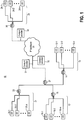
- FIG. 1 is a block diagram showing portions of an exemplary packet data network 10 capable of implementing devices and methods according to at least some embodiments.
- An operator of network 10 may provide numerous types of content to one or more user premises.
- user devices (“UD") 12-1 through 12- n located at different user premises may communicate over an access network 13 with a local router 14.
- Devices 12-1 through 12- n may be set top terminals, televisions, computers, mobile devices, and the like.
- an italicized lower case letter merely indicates an arbitrary number. Different letters may represent the same or different numbers (e.g., access network 13 with user devices 12-1 through 12- n may have more, fewer or the same number of user devices as access network 17 with user devices 16-1 through 16-m).
- access network 13 may be a hybrid fiber-coax (HFC) network that includes electro/optical nodes, splitters, amplifiers, QAM modulators and other elements not shown in FIG. 1 .
- access network 13 could be a Fiber To The Home (FTTH) passive optical network (PON) having Optical Line Terminals (OLTs), splitters, amplifiers, Optical Network Terminals (ONTs) and other elements not shown in FIG. 1 .
- FTTH Fiber To The Home
- PON passive optical network
- ONTs Optical Line Terminals
- ONTs Optical Line Terminals
- ONTs Optical Network Terminals
- a user device may be an ONT or an ONT in combination with other devices at a user premises.
- access network 13 could be a WiMAX or other type of wireless access network.
- a user device might be a wireless transceiver or a wireless transceiver in combination with other devices at a user location.
- access network 13 may be a digital subscriber line (DSL) network.
- a user device might be a DSL modem or a DSL modem in combination with other devices at a user premises.
- Access network 13 and/or user devices could take still other forms in other embodiments.
- network 10 could include a combination of similar or different types of access networks (e.g., one access network could be an HFC network and another access network could be a FTTH network).
- operations, methods and devices similar to those described herein can be performed or used.
- IP internet protocol
- Upstream messages from user devices 12-1 through 12- n to local router 14 similarly may be sent in IP packets. Examples of upstream messages from user devices include multicast group "join” and "leave” requests as described below.
- Network 10 may include numerous additional local routers that communicate content data and other downstream data to user devices in IP packets, and that may receive multicast join and leave requests (and other messages), from user devices in IP packets. For simplicity, only four such additional local routers are shown in FIG. 1 .
- local router 18 communicates with user devices 16-1 through 16- m over an access network 17
- local router 22 communicates with user devices 20-1 through 20- p over an access network 21
- local router 26 communicates with user devices 24-1 through 24- r over an access network 25.
- Each of local routers 14, 18 and 22 may communicate through a regional router 27 and one or more additional upstream routers (not shown) with various content data providers. Some of those content providers (e.g., providers 31 and 32) may, for example, be in the same local region as router 27. Other content providers (such as provider 33) may be located in more distant regions and accessed via a national IP backbone 35.
- a content provider may have a single server.
- a content provider could have a data distribution center controlled by an operator of network 10 or by another entity.
- One example could include a regional or national hub where the operator of network 10 receives programming from multiple sources (e.g., fee-based programming service providers, broadcast networks, local television stations, etc.) via various mechanisms (e.g., satellite downlink, data feed over a separate network, etc.) and then distributes that content to users in network 10.
- Another example could include a point of presence (POP) maintained by the operator of network 10 in a facility operated by a single cable programming service provider, local television station or broadcast network.
- POP point of presence
- Yet another example could be a provider of Pay Per View (PPV) programming.
- content data from providers 31, 32 and 33 is distributed over network 10, using IP multicast techniques, to a large number (thousands, hundreds of thousands, or even millions) of individual users.
- data packets for a particular content e.g., packets containing encoded audio and/or video data, or other data
- This multicast destination IP address may be assigned by the content provider or by an element of network 10 receiving data from the provider.
- a router in network 10 Upon receiving an IP packet with a multicast destination IP address, a router in network 10 forwards the packet on output ports that correspond to network elements (e.g., other network routers, user devices) that have joined a multicast group associated with the multicast destination IP address.
- provider 33 may offer programming service A assigned a multicast IP address of ⁇ mcast IP dest01>. Further, a user of user device 12-1 may wish to view service A, but none of user devices 12-1 through 12- n is a member of the ⁇ mcast IP dest01> multicast group.
- user device 12-1 Upon receiving an appropriate user input, user device 12-1 sends a join request to local router 14 that includes ⁇ mcast IP dest01> and requests that data packets having that destination IP address be forwarded to user device 12-1.
- the user device join request may be in accordance with Internet Group Membership Protocol (IGMP).
- IGMP Internet Group Membership Protocol
- Such embodiments include embodiments employing IGMP version 2 (described, e.g., in IETF RFC 2236) and/or IGMP version 3 (described, e.g., in IETF RFC 3376).
- IGMP version 2 join request a user device seeking to join a multicast group need only specify the group of interest.
- IGMP version 3 join request a user device seeking to join a multicast group specifies the source and group ("S,G").
- S,G source and group
- the user device join request would be in accordance with Multicast Listener Discovery (MLD) protocol as described, e.g., in IETC RFC 3810.
- MLD Multicast Listener Discovery
- local router 14 Upon receiving the join request from user device 12-1, and assuming other conditions such as those described below are satisfied, local router 14 configures itself to forward data packets associated with the joined multicast group to user device 12-1. In some embodiments, local router 14 may perform this configuration by identifying the port used for communication with user device 12-1 and then noting (e.g., by adding a port identifier to a forwarding list) that data packets with a ⁇ mcast IP dest01> destination address should be forwarded over that port. Local router 14 may also send its own join request containing ⁇ mcast IP dest01> to regional router 27. The join request from local router 14 may also be an IGMP or MLD join request.
- the local router 14 join request may be a PIM (Protocol Independent Multicast) join request.
- PIM is described, e.g., in IETF RFC 4601.
- regional router 27 will forward ⁇ mcast IP dest01> packets on a port used to communicate with local router 14. Similar operations are performed at regional router 27 and other routers between regional router 27 and content providers 33, 32 and 31.
- local router 14 typically will only accept a user device join request if certain conditions are satisfied. In particular, local router 14 will only accept user device join requests that seek to join a multicast group identified in a content distribution map stored, for example, at router 14. If local router 14 receives a user device join request seeking to receive content data packets having a multicast address not specified by that content distribution map, local router 14 will not send a join request to regional router 27 for that multicast address, and content data packets having that address will not be sent from regional router 27 to local router 14.
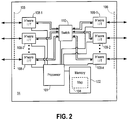
- FIG. 2 is a partially schematic block diagram of local router 14 according to at least some embodiments.
- Local routers 18, 22 and 26, as well as other local routers in network 10 may be similar to local router 14 and operate in a similar manner.
- a processor 101 executes instructions and controls operation of local router 14 so as to carry out operations described herein.
- Local router 14 further includes memory 102 storing instructions for execution by processor 101 as well as other data that is stored and/or retrieved by processor 101.
- Data stored on memory 102 includes one or more content distribution maps 104, routing tables and other data. Although single blocks are shown for processor 101 and for memory 102, memory and computational operations of local router 14 could respectively be distributed across multiple memory devices and multiple processors.
- Memory 102 may include volatile and non-volatile memory and can include any of various types of storage technology, including one or more of the following types of storage devices: read only memory (ROM) modules, random access memory (RAM) modules, magnetic tape, magnetic discs (e.g., a fixed hard disk drive or a removable floppy disk), optical disk (e.g., a CD-ROM disc, a CD-RW disc, a DVD disc), flash memory, and EEPROM memory.
- Processor 101 may be implemented with any of numerous types of devices, including but not limited to one or more general purpose microprocessors, one or more application specific integrated circuits, one or more field programmable gate arrays, and combinations thereof. In at least some embodiments, processor 101 carries out operations described herein according to machine readable instructions stored in memory 102 and/or stored as hardwired logic gates within processor 101.
- Local router 14 communicates with regional router 27 and/or other network elements over a network-side interface 105, and with user devices user devices 12-1 through 12- n over an access-side interface 106.
- Interface 105 may include multiple hardware interface cards 108-1 through 108- i pr oviding multiple physical ports for communication with regional router 27 and other network-side elements.
- interface 106 may include multiple hardware interface cards 109-1 through 109- k that provide physical ports for communication with user devices 12 -1 through 12- n and other access-side elements (not shown).
- inbound and outbound queue buffers and other components of hardware interface cards 108 and 109 are not shown.
- hardware interface cards 108 and 109 could be Gigabit Ethernet cards.
- some or all of the hardware interfaces over which local router 14 communicates with external devices could be cards (or other components) that send and receive data using some other packet network protocol.
- Processor 101 may control a hardware switch 110 to forward packets received on a port of interface 105 over one or more ports of interface 106.
- Processor 101 may add data to (and/or strip data from) packet headers as the packets pass through switch 110.
- Processor 101 can also generate packets and forward those packets to hardware interfaces 108 and 109 for transmission on ports of interface 105 and interface 106.
- local router 14 may store a content distribution map 104 in memory 102.
- map 104 specifies multicast distribution groups that user devices in access network 13 are permitted to join.
- map 104 may be analogous to a "channel map" used in many television networks to list available programming services and information about those services.
- Other local routers in network 10 may also store a content distribution map, but the maps stored on different local routers may specify different sets of multicast groups.
- Content distribution map 104 can reach local router 14 in any of various methods.
- map 104 and updates to map 104 are provided to router 14 via a multicast signal.
- router 14 might be configured to join a multicast group associated with content distribution maps and updates to such maps, and may extract map data from packets having a multicast IP address corresponding to the map data multicast group.
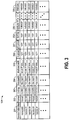
- FIG. 3 shows exemplary details of the data in content distribution map 104.
- the table of FIG. 3 is merely one example of how content distribution data can be arranged in accordance with some embodiments.
- the actual format of data and/or of the tables or other data structures used to organize that data will vary among different embodiments.
- Each row of map 104 may correspond to a separate programming service.
- a service may correspond to one or more data streams representing all data needed for a particular media asset.
- a service may correspond to a data stream that includes packets containing data encoding the audio portion of the asset and to a data stream that includes packets containing data encoding the video portion of the asset.
- each of multiple services might represent a different version of a particular content.
- video for television program B may be available in both standard definition (SD) and in high definition (HD) versions.
- the audio for program B might be available in multiple languages.
- a first service might correspond to a data stream in which packets carry data encoding the SD version of B video and to a data stream in which packets carry data encoding an English language version of B audio.
- a second service might correspond to a stream in which packets carry data encoding the HD version of B video and to a stream in which packets carry data encoding a Spanish language version of B audio. Still other services may represent other versions of B and correspond to streams carrying the associated data for those versions.
- Each field in column 201 of map 104 holds an identifier for the service corresponding to the row in which the field is located.
- the service identifier could include a character string portion that a human user would recognize as an identifier for a particular service provider (e.g., "HBO," "ESPN”).
- the service identifier might also include (or might alternatively consist of) a number assigned to uniquely identify a service.
- fields of column 201 are populated with an angle-bracketed expression (" ⁇ service id>"). Such expressions merely indicate, in a generic manner, different values for the type of information that can be contained in column 201 fields. A similar convention is followed to generically show different values in other columns.
- Each field in column 202 holds a value or indication of the format of the service corresponding to the row in which the field is located. Examples of formats could include HD, SD, stereo, mono, etc.
- Each field in column 203 holds one or more values indicating the type of audio CODEC (COder DECoder) and/or video CODEC used to encode data for the service on the corresponding row.
- SD versions of program B could use one type of video CODEC and HD versions of program B might use a different type of video CODEC.
- Other information that might be included in column 203 fields includes whether content is MPEG-2 or MPEG-4 encoded. Similar audio content could also be transmitted in separate services using different audio CODECs.
- Each field in column 204 may have a value indicating the bandwidth requirements for the corresponding service on the row.
- “Bandwidth” here refers to a measurement of information carrying capacity (e.g., in megabits/second). Entries in column 204, together with information about current data traffic levels, can be used to determine whether there is sufficient free bandwidth on a particular data path to begin forwarding data for a service. Such a data path could be a port emanating from a particular hardware interface card that serves a specific subset of user devices in an access network. Exemplary use of data in column 204 is further described below.
- Each field in column 205 holds a value indicating the destination IP address for the multicast group associated with the corresponding service on the same row.
- local router 14 compares addresses in map 104 with multicast addresses in user device join requests to determine whether access to a requested service is permitted.
- Each multicast address in column 205 thus specifies a different multicast group that at least some of the user devices and/or other devices in access network 13 are permitted to join.
- fields in column 205 may also hold values indicating source IP addresses for multicast groups.
- these source IP addresses for multicast groups could be contained in fields of a separate column. These source IP addresses for multicast groups could also (or alternatively) be used in determining whether user devices are permitted to join multicast groups.
- the data needed for a complete version of a particular content might correspond to separate services.
- data for an HD version of program C video might correspond to a service having a particular multicast address
- data for an SD version of program C video might correspond to a separate service having a different multicast address
- data for the English version of program C audio may correspond to yet another service with yet another multicast address, etc.
- a user device would thus need to join one of the multicast groups associated with program C video and one of the multicast groups associated with program C audio.
- Each field in column 206 holds a value ('yes" or "no,” for example) indicating whether local router 14 is currently joined to the multicast group for the corresponding service on the same row.
- local router 14 Before local router 14 can forward content data packets associated with a multicast group to user devices in access network 13, local router 14 must join that multicast group in order to receive those content data packets from regional router 27. If local router 14 receives a user device join request identifying a multicast group to which local router 14 is not currently joined, router 14 can generate and send a join request to regional router 27. Conversely, local router 14 need not send a join request to regional router 27 if local router 14 receives a user device join request identifying a multicast group which local router 14 has already joined in response to a previous user device join request.
- Each field in column 207 of map 104 holds a value that indicates whether any user devices in access network 13 are currently joined to the multicast group for the corresponding service on the same row. If local router 14 is joined to a multicast group but there cease to be any user devices joined to that same group, local router 14 can generate and send a multicast group "leave” (or "prune") message to regional router 27 so that regional router 27 may stop forwarding packets for that multicast group to local router 14.
- Each field on column 208 of map 104 holds a value that indicates whether the content data for the corresponding service on the same row is delivered as a "stream" or as one or more "objects.”
- content data for a service is delivered in the form of a data stream that continues as long as the service is available. In some embodiments, however, content data for a service may be delivered as a discrete (and smaller) number of data fragment objects.
- object type of service information about that service can be provided to user devices in a manifest file that is also contained in one or more data packets having the multicast destination address associated with the object-type service.
- a field in map 104 corresponding to an object-type service could contain a URL or URI for a network resource that can be accessed by the user device to retrieve a service manifest.
- This URL or URI could be provided to the user device by router 14 at the time the user device joins the multicast group for the service in question.
- Fields in columns 209-1 through 209- j may hold values for additional attributes of corresponding services on the same rows. As described in more detail below, some services/multicast groups may be permitted in a particular access network, but not be permitted as to all user devices in that access network.
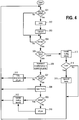
- FIG. 4 is a flow chart for an exemplary algorithm performed by local router 14 according to at least some embodiments.
- the algorithm of FIG. 4 may be carried out by processor 101 of local router 14 according to instructions stored in memory 102 as executable code and/or according to hardwired logic instructions within processor 101.
- processor 101 may carry out the algorithm of FIG. 4 in multiple iterations. For example, the following description may relate to actions taken in a single iteration in connection with a user device request received during that iteration.
- local router 14 may determine if it has access to or has received an initial or updated content distribution map.
- a content distribution map can be received across interface 105 at local router 14 from a network-side element of network 10. If a content distribution map has not been received (e.g., if block 301 is reached during a subsequent algorithm iteration), local router 14 proceeds to block 304 (described below) on the "No" branch. If a content distribution map has been received, local router 14 proceeds to block 302 on the "Yes" branch and stores the received content distribution map in memory 102 ( FIG. 2 ).
- local router 14 forwards at least a portion of the newly-received content distribution map to user devices 12-1 through 12- n across interface 106.
- the content distribution map is also utilized by user devices as a source of information about available services.
- information from the content distribution map is utilized by an user devices or other user device to generate an onscreen service guide from which a user can select a service for viewing. Once a user has selected a desired service, the user device can obtain the multicast destination IP address (and the multicast group's source IP address, if needed) for the selected service and send a join request for that service to local router 14.
- local router 14 proceeds to block 304 and determines if a user device join request or a user device leave request has been received from any of user devices 12-1 through 12- n over interface 106. If not, local router 14 loops back to block 304 on the "No" branch until a user device join or leave request is received. If a user device join or leave request has been received, local router 14 proceeds to block 305 on the "Yes" branch. If the received request is a user device leave request, local router 14 proceeds to block 313 on the "Leave” branch. Blocks 313 through 315 are described below. If the received request is a user device join request, the algorithm continues to block 306.
- local router 14 compares a multicast destination IP address identified in the received user device join request with the permitted multicast destination IP addresses (column 205, for example) in the stored content distribution map 104.
- Local router 14 might also (or alternatively) compare a multicast group's source IP address identified in the received user device join request with permitted multicast group source IP addresses in the stored content distribution map 104.
- Local router 14 then ascertains whether the user device is attempting to join a permitted multicast group. If the user device join request identifies a multicast destination and/or source IP address that is not specified in the content distribution map as a permitted multicast group, the user device has identified and is attempting to join a multicast group for a service that is not authorized for user devices in access network 13.
- local router 14 proceeds on the "No" branch from block 307 to block 311.
- Local router 14 logs the attempt to access an unauthorized service in block 311. Information in a log of such attempts might later be utilized to identify users that have attempted to violate a contract with the operator of network 10.
- Local router 14 also determines in block 311 that it will not attempt to join the multicast group identified by the received user device join request, and local router 14 will thus not send a local router join request containing the multicast destination and/or source IP address identified by the received user device join request. From block 311, local router 14 returns to block 301 to begin the next algorithm iteration.
- local router 14 determines whether any applicable constraints may be violated.
- FIG. 5 is a flow chart showing additional details of block 308.
- local router 14 determines if there is sufficient available bandwidth in access network 13 to send data for the requested multicast group. For example, the user device join request may have identified a multicast destination and/or source IP address for an HD service having a relatively large bandwidth requirement, and the request may have been received at a time of heavy access network traffic. Under some such conditions, there may be insufficient available access network bandwidth to forward data for the requested HD service. If an HD service has been requested and there is not sufficient access network bandwidth to accommodate the bandwidth requirement for that HD service (shown, for example, in column 204 of map 104), local router 14 proceeds on the "No" branch to block 402-1. After performing one or more additional operations in block 402-1 (e.g., logging the condition, sending a "service temporarily unavailable message" to the requesting user device, etc.), local router 14 proceeds to block 301 of FIG. 4 .
- additional operations in block 402-1 e.g., logging the condition, sending a "service temporarily unavailable message
- local router 14 determines in block 400-1 that there is sufficient available bandwidth in access network 13 to send data for the requested multicast group, local router 14 proceeds on the "Yes" branch to evaluate whether additional constraints on forwarding the requested service are satisfied.
- additional constraints on forwarding the requested service are shown in FIG. 5 by blocks 400-2 through 400- u .
- One example of such a constraint could include determining whether the user device join request was received on a specified port of interface 106.
- access network 13 could be configured so that some user devices authorized to receive a particular service (e.g., devices associated with users paying a higher subscription fee) communicate with local router 14 over one set of ports and other user devices communicate over a different set of ports.
- local router 14 For each additional constraint tested in blocks 400-2 through 400- u that is satisfied (or determined to be inapplicable), local router 14 proceeds on the "yes" branch. If any constraint is applicable but not satisfied, local router 14 proceeds on the "No” branch to a block representing appropriate additional operations (one of blocks 402-2 through 402- u ). If all applicable constraints in block 308 are satisfied (i.e., local router 14 proceeds on the "Yes" branch of each of blocks 400-1 through 400- u ), local router 14 proceeds to block 309 of FIG. 4 . In some embodiments, block 308 may only contain one or two additional constraint evaluations regarding the requested service. In still other embodiments, block 308 is not included and local processor 14 proceeds directly to block 309 on the "Yes" branch from block 307.
- local router 14 determines if local router 14 is currently joined to the multicast group that has been identified in the join request being processed in the current iteration.
- the user device join request may have requested a service that was previously requested by (and for which content data is currently being forwarded to) another user device in access network 13.
- local router 14 would have already joined that multicast group in response to the previous request and would already be receiving data for that multicast group across interface 105.
- local router 14 If local router 14 is currently joined to the requested multicast group, it proceeds on the "Yes" branch to block 312 and updates its routing tables to indicate that IP packets having the multicast destination IP address of the requested service should be forwarded on the interface 106 port over which local router 14 communicates with the user device that sent the join request currently being processed. Local router 14 then returns to block 301 for another iteration of the FIG. 4 algorithm. If local router 14 determines in block 309 that it is not currently joined to the requested multicast group, local router 14 proceeds to block 310. Local router 14 then generates a local router join request that identifies the multicast destination and/or source IP address identified in the received user device join request and forwards the generated local router join request to regional router 27 across interface 105. Local router 14 then proceeds to block 312.
- local router 14 determines that a received user device request is a "leave" request indicating a particular user device no longer wishes to receive data for a multicast group identified in that leave request.
- local router 14 proceeds on the "Leave” branch.
- Local router 14 determines in block 313 if it must update its routing tables for the interface 106 port used to communicate with the user device sending the leave request. If none of the other user devices with which local router 14 communicates over that same port are currently joined to the multicast group in question, then local router 14 can cease forwarding content data for that multicast group on that port. Conversely, local router 14 will continue to forward content data packets for that multicast group on that port if other user devices are still joined to that group.
- local router 14 After updating the routing table (if necessary) in block 313, local router 14 proceeds to block 314 and determines if there are other user devices in access network 13 that remain joined to the multicast group in question. Even if local router 14 determines in block 313 that no other devices on the relevant port are joined to the relevant multicast group, user devices on other ports might be joined to that multicast group. If the user devices sending the leave request is the last user device in access network 13 to have been joined to the multicast group, local router 14 proceeds to block 315. Local router 14 then generates a local router leave (or prune) request and forwards same to regional router 27 across interface 105. In this manner, bandwidth in the link between regional router 27 and local router 14 can potentially be saved by no longer transmitting content data that no users wish to receive. From block 315, or from the "No" branch of block 314 if other user devices remain joined to the multicast group in question, local router 14 returns to block 301 to start another algorithm iteration.
- FIG. 1 Other local routers in network 10 ( FIG. 1 ) perform algorithms similar to that described in connection with FIGS. 4 and 5 , but based on different content distribution maps stored those local routers.
- content distribution maps stored at each of local routers 14, 18 and 22 may include a multicast destination and/or source IP address for a service emanating from content provider 33.
- that service is not available to user devices in the local region in which access network 25 is located.
- a content distribution map stored at local router 26 does not include the multicast destination and/or source IP address for the service emanating from provider 33.
- various embodiments can be implemented in networks using IPv4, in networks using IPv6, and in networks using both IPv4 and IPv6 (e.g., IPv4 in some areas and IPv6 in others).
- IPv4 in some areas and IPv6 in others.
- the invention is not limited to embodiments that employ IPv4 or IPv6, and includes embodiments utilizing other versions and/or protocols other than IP.
- FIGS. 4 and 5 merely represent examples of algorithms according to some embodiments. Other embodiments include algorithms in which various steps shown in FIGS. 4 and/or 5 might be rearranged, omitted and/or replaced with different steps.
- a content distribution map could include other types of data (e.g., a source IP address associated with a service), and/or may not include all of the data types described in connection with FIG. 3 .
- a user device join or leave request could identify more than one multicast group.
- the local router compares each identified multicast group in a user device join request to permitted groups specified in a content distribution map and only attempts to join multicast groups that are permitted. In other such embodiments, the local router does not attempt to join any of the multicast groups identified in a user device join request unless all are permitted groups.
- a user device may be a home gateway or other type of device that includes a memory for caching service data and that includes one or more processors configured to cache data for a service before a user has attempted to access that service.
- map 104 might include object-type services R, S, T, U and V. Each of these services might also be defined as "cacheable.” Users of a first home gateway in the router 14 service area might currently be accessing services R and S only, which accessing could be noted in appropriate fields of map 104.
- the first home gateway In response to one or more communications from router 14 regarding other cacheable services currently available in the router 14 service area, the first home gateway might join the multicast groups for T, U and/or V so as to download and cache objects for services T, U and/or V irrespective of whether a user of the first home gateway has attempted to access one of those services. If a user of the first home gateway should later attempt to access one of those cached services, the first home gateway can simply output the service data from its own memory and need not obtain that data from the network. This scheme could allow more efficient utilization of network resources by transmitting data to user devices for caching at times of lower access network traffic. Various types of rules can be programmed into a home gateway to achieve such caching.
- a user might explicitly program the gateway to cache certain services (e.g., instruct the gateway to always cache HBO).
- a home gateway could be configured to monitor services occasionally accessed by a user and to cache those services (and/or cache similar services) at times when a user has not attempted to access those services.
- Embodiments of the invention include a machine readable storage medium (e.g., a CD-ROM, CD-RW, DVD, floppy disc, FLASH memory, RAM, ROM, magnetic platters of a hard drive, etc.) storing machine readable instructions that, when executed by one or more processors, cause a router or other network device to carry out operations such as are described herein.
- a machine-readable storage medium is a physical structure that can be touched by a human. A signal would not by itself constitute a machine-readable storage medium.
Landscapes
- Engineering & Computer Science (AREA)
- Multimedia (AREA)
- Signal Processing (AREA)
- Databases & Information Systems (AREA)
- Computer Networks & Wireless Communication (AREA)
- Computer Graphics (AREA)
- Data Exchanges In Wide-Area Networks (AREA)
Claims (14)
- Verfahren, das beinhaltet:Speichern (302) eines Inhalteverteilungsplans (104) in einem zu einem Zugangsnetz (13) gehörenden Router (14), der zum Empfang von Multicast-Datenpaketen über eine erste Netzschnittstelle (105) ausgeführt ist und mit einem oder mehr Nutzergeräten (12-1 bis 12-n) im Zugangsnetz über eine zweite Netzschnittstelle (106) kommunizieren kann, wobei der Inhalteverteilungsplan eine Vielzahl zugelassener Multicast-Gruppen (205), an die das eine oder die Nutzergeräte im Zugangsnetz sich anschließen dürfen, und eine geforderte Bandbreite zum Aussenden jeder der Vielzahl zugelassener Multicast-Gruppen anzeigt;Empfangen einer oder mehr Nutzergerät-Nachrichten am Router über die zweite Netzschnittstelle, die Zugang zu einer oder mehr Multicast-Gruppen anfordern;Ermitteln (306) am Router unter Verwendung des Inhalteverteilungsplans und für eine von einer empfangenen Nutzergerät-Nachricht angegebenen Multicast-Gruppe, ob diese eine der zugelassenen Multicast-Gruppen ist, an die das eine oder die Nutzergeräte sich anschließen dürfen;bei Feststellung, dass die Multicast-Gruppe eine der zugelassenen Multicast-Gruppen ist: Ermitteln (308, 400-1), ob auf dem Zugangsnetz genug Bandbreite verfügbar ist, um die Datenübertragung der Multicast-Gruppe an das eine oder mehr Nutzergeräte zu beginnen, und auf Grund der vom Inhalteverteilungsplan angegebenen Sollbandbreite zum Senden der von der Multicast-Gruppe geforderten Bandbreite sowie Informationen, die jeweils das Datenverkehrsniveau für das Zugangsnetzwerk beschreiben;Senden (310) einer oder mehr Router-Nachrichten aus dem Router und über die erste Netzschnittstelle mit der Anforderung der Zugehörigkeit zur Multicast-Gruppe bei Feststellung, dass auf dem Zugangsnetz genug Bandbreite für das Senden der Daten der Multicast-Gruppe an das eine oder die Geräte zu beginnen;Empfangen von Multicast-Datenpaketen am Router über die erste Netzschnittstelle ansprechend auf die eine oder mehreren Router-Nachrichten, wobei die Multicast-Datenpakete den Multicast-Gruppen zugeordnete Inhaltedaten aufweisen; undVersenden von Daten aus den Multicast-Datenpaketen über die zweite Netzschnittstelle.
- Verfahren nach Anspruch 1 weiterhin mit dem Festlegen (311) am Router (14) und ansprechend auf die Bestätigung, dass eine oder mehr zusätzliche Nutzergerät-Nachrichten eine nicht zugelassene Multicast-Gruppe anzeigen, dass die Router-Nachricht, die Zugehörigkeit zur nicht zugelassenen Multicast-Gruppe anfordert, vom Router nicht ausgesendet wird.
- Verfahren nach Anspruch 1 oder 2, bei dem die zugelassenen Multicast-Gruppen nach dem Internet-Protokoll (IP-Protokoll) ausgeführt sind.
- Verfahren nach einem der Ansprüche 1 bis 3, bei dem es sich bei den versandten Daten um Videodaten handelt.
- Verfahren nach einem der Ansprüche 1 bis 4, bei dem der Inhalteverteilungsplan (104) weiterhin Daten aufweist, die jeder der zugelassenen Multicast-Gruppen (205) zugeordnete Attribute (209-1 bis 209-j) sind, sowie beinhaltet:Ermitteln am Router (14) und Erfüllen mindestens eines Kriteriums auf Grund mindestens eines der Multicast-Gruppe zugeordneten Attributs bei Feststellung, dass die jeweilige Multicast-Gruppe eine der zugelassenen ist;wobei das Senden der eine Gruppenzugehörigkeit anfordernden einen oder mehr Router-Nachricht vom Router über die erste Schnittstelle weiterhin davon abhängt, dass das Erfüllen des mindestens einen Kriteriums bestätigt wird.
- Verfahren nach Anspruch 5, bei dem das mindestens eine Kriterium einer der Multicast-Gruppe zugeordneten, Netzinformationen beinhaltenden Kapazitätsanforderung entspricht.
- Verfahren nach einem der Ansprüche 1 bis 6, das weiterhin beinhaltet, den Inhalteverteilungsplan (104) mindestens teilweise über die zweite Netzschnittstelle (106) zu versenden.
- Verfahren nach einem der Ansprüche 1 bis 7, bei dem
das Senden des Inhalteverteilungsplans beinhaltet, diesen an jedem einer Vielzahl von Routern (14, 18, 22, 26) zu speichern, so dass an den Routern eine Vielzahl von Inhalteverteilungsplänen gespeichert werden,
die Router jeweils ausgeführt sind, Inhaltedaten von Inhalteanbietern (31, 32, 33) über eine entsprechende erste Netzschnittstelle (105) zu empfangen und mit Nutzergeräten (12-1 bis 12-n; 16-1 bis 16-m; 20-1 bis 20-p; 24-1 bis 24-r) über eine entsprechende zweite Netzschnittstelle (106) in einem entsprechenden Zugangsnetz (13, 17, 21, 25) zu kommunizieren, und
ein erster der Inhalteverteilungspläne eine erste Menge zugelassener Multicast-Gruppen anzeigt, die nicht von anderen Inhalteverteilungsplänen aus deren Vielzahl angezeigt sind. - Verfahren nach Anspruch 8, bei dem der Router (14) den ersten Verteilungsplan speichert und die anderen Inhalteverteilungspläne von einem oder mehr anderen als der Vielzahl von Routern gespeichert werden, die Nutzergeräte (24-1 bis 24-r) in einer oder mehr geografischen Regionen bedienen, die sich von denen in einem geografischen Bereich unterscheiden, der dem einen oder den Nutzergeräten (12-a bis12-n) zugeordnet ist.
- Maschinenlesbarer Aufzeichnungsträger mit maschinell ausführbaren Befehlen zum Ausführen eines Verfahrens nach einem der Ansprüche 1 bis 9.
- Router, der aufweist:eine erste Netzschnittstelle (105);eine zweite Netzschnittstelle (106);mindestens einen Speicher (102); undmindestens einen Prozessor (101, der ausgeführt ist, den Router zu Folgendem zu veranlassen:Speichern (302) eines Inhalteverteilungsplans (104) im mindestens einen Speicher, wobei der Inhalteverteilungsplan eine Vielzahl zugelassener Multicast-Gruppen (205) angibt, an die sich ein oder mehr Nutzergeräte (12-1 bis 12-n) in einem Zugangsnetz anschließen dürfen, sowie eine Sollbandbreite zum Senden jeder der Vielzahl zugelassener Multicast-Gruppen angibt,Empfangen einer oder mehrerer Nutzergerät-Nachrichten, die Zugang zu einer oder mehr Multicast-Gruppen anfordern,unter Benutzung des Inhalteverteilungsplans und für eine von einer empfangenen Nutzergerätenachricht angegebene Multicast-Gruppe: Bestimmung, ob letztere eine der zugelassenen Multicast-Gruppen ist, an die sich Nutzergeräte anschließen dürfen,auf Grund der erforderlichen Bandbreite zum Senden der vom Inhalte-verteilungsplan angegebenen Multicast-Gruppe sowie von Informationen, die momentane Datenverkehrsniveaus für das Zugangsnetz beschreiben: Ermitteln (308, 400-1), ob auf dem Netz genug Bandbreite verfügbar ist, um das Aussenden der Multicast-Gruppe an das oder die Nutzergeräte zu beginnen, wenn sich ergibt, dass die Multicast-Gruppe eine der zugelassenen ist, und auf Grund der erforderlichen Bandbreite zum Senden der vom Inhalteverteilungsplan angegebenen Multicast-Gruppe sowie von Informationen, die momentane Datenverkehrsniveaus für das Zugangsnetz beschreiben;Senden (310) von einer oder mehr Router-Nachrichten mit der Anforderung der Zugehörigkeit zur Multicast-Gruppe über die erste Netzschnittstelle, wenn sich ergibt, dass auf dem Zugangsnetzwerk genug Bandbreite für das Aussenden von Daten der Multicast-Gruppe an ein oder mehr Geräte verfügbar ist;Empfangen von Multicast-Datenpaketen, die der Multicast-Gruppe zugeordnete Inhaltedaten aufweisen, über die erste Netzschnittstelle und ansprechend auf die eine oder mehr Router-Nachrichten, undVersenden von Daten aus den Multicast-Datenpaketen über die zweite Netzschnittstelle.
- Router nach Anspruch 11, bei dem der mindestens eine Prozessor (101) weiterhin ausgeführt ist, den Router (14) zu veranlassen (311), dass Router-Nachrichten, die Zugehörigkeit in nicht zugelassenen Multicast-Gruppen anfordern, nicht ausgesendet werden, wenn festgestellt wird, dass eine oder mehr zusätzliche Nutzergerät-Nachrichten eine nicht zugelassene Multicast-Gruppe bezeichnen
- Router nach Anspruch 11 oder 12, bei dem die zugelassenen Multicast-Gruppen nach dem Internet-Protokoll (IP-Protokoll) ausgeführt sind.
- Router (14) nach einem der Ansprüche 11 bis 13, bei dem die ausgesendeten Daten Videodaten sind.
Applications Claiming Priority (1)
| Application Number | Priority Date | Filing Date | Title |
|---|---|---|---|
| US12/779,134 US8995439B2 (en) | 2010-05-13 | 2010-05-13 | Control of multicast content distribution |
Publications (2)
| Publication Number | Publication Date |
|---|---|
| EP2387178A1 EP2387178A1 (de) | 2011-11-16 |
| EP2387178B1 true EP2387178B1 (de) | 2017-05-10 |
Family
ID=44317851
Family Applications (1)
| Application Number | Title | Priority Date | Filing Date |
|---|---|---|---|
| EP11165418.2A Active EP2387178B1 (de) | 2010-05-13 | 2011-05-10 | Steuerung einer Multicast-Inhaltsverteilung |
Country Status (3)
| Country | Link |
|---|---|
| US (4) | US8995439B2 (de) |
| EP (1) | EP2387178B1 (de) |
| CA (1) | CA2739298C (de) |
Families Citing this family (30)
| Publication number | Priority date | Publication date | Assignee | Title |
|---|---|---|---|---|
| US9270681B2 (en) * | 2007-10-02 | 2016-02-23 | Microsoft Technology Licensing, Llc | Network access and profile control |
| US8995439B2 (en) * | 2010-05-13 | 2015-03-31 | Comcast Cable Communications, Llc | Control of multicast content distribution |
| CN102523098B (zh) * | 2011-11-21 | 2014-12-10 | 华为技术有限公司 | 一种业务接入的方法、装置及系统 |
| WO2014071538A1 (en) * | 2012-11-08 | 2014-05-15 | Telefonaktiebolaget L M Ericsson (Publ) | Method and apparatus for configuring multicast group |
| US10349225B2 (en) * | 2013-08-27 | 2019-07-09 | Verizon Patent And Licensing Inc. | Private multicast networks |
| US9681192B2 (en) * | 2013-11-13 | 2017-06-13 | Time Warner Cable Enterprises Llc | Content management in a network environment |
| US10390059B2 (en) * | 2014-09-04 | 2019-08-20 | Comcast Cable Communications, Llc | Latent binding of content based on user preference |
| US9407968B2 (en) * | 2014-12-22 | 2016-08-02 | Verizon Patent And Licensing Inc. | Multicast and unicast adaptive bitrate services |
| US10819673B2 (en) | 2016-02-23 | 2020-10-27 | Level 3 Communications, Llc | Systems and methods for content server rendezvous in a dual stack protocol network |
| US10382552B2 (en) * | 2016-12-12 | 2019-08-13 | Verizon Patent And Licensing Inc. | User device ad-hoc distributed caching of content |
| US10742512B2 (en) * | 2017-07-24 | 2020-08-11 | Singlewire Software, LLC | System and method for multicast mapping |
| US10496153B2 (en) | 2017-10-27 | 2019-12-03 | EMC IP Holding Company LLC | Method and system for binding chassis and components |
| US11075925B2 (en) | 2018-01-31 | 2021-07-27 | EMC IP Holding Company LLC | System and method to enable component inventory and compliance in the platform |
| US10514907B2 (en) | 2018-03-28 | 2019-12-24 | EMC IP Holding Company LLC | System and method for out-of-the-box solution-level management via logical architecture awareness |
| US10754708B2 (en) | 2018-03-28 | 2020-08-25 | EMC IP Holding Company LLC | Orchestrator and console agnostic method to deploy infrastructure through self-describing deployment templates |
| US10693722B2 (en) * | 2018-03-28 | 2020-06-23 | Dell Products L.P. | Agentless method to bring solution and cluster awareness into infrastructure and support management portals |
| US10795756B2 (en) | 2018-04-24 | 2020-10-06 | EMC IP Holding Company LLC | System and method to predictively service and support the solution |
| US11086738B2 (en) | 2018-04-24 | 2021-08-10 | EMC IP Holding Company LLC | System and method to automate solution level contextual support |
| US11599422B2 (en) | 2018-10-16 | 2023-03-07 | EMC IP Holding Company LLC | System and method for device independent backup in distributed system |
| KR102643885B1 (ko) * | 2018-12-11 | 2024-03-08 | 삼성전자주식회사 | 전자 장치 및 이의 제어방법 |
| US10862761B2 (en) | 2019-04-29 | 2020-12-08 | EMC IP Holding Company LLC | System and method for management of distributed systems |
| US11301557B2 (en) | 2019-07-19 | 2022-04-12 | Dell Products L.P. | System and method for data processing device management |
| US11171798B2 (en) | 2019-08-01 | 2021-11-09 | Nvidia Corporation | Scalable in-network computation for massively-parallel shared-memory processors |
| MX2022004068A (es) * | 2019-10-04 | 2022-07-13 | Novi Digital Entertainment Private Ltd | Sistemas y métodos para optimización dinámica de entrega de contenido en una red de comunicación inalámbrica. |
| CN113395731A (zh) * | 2020-03-13 | 2021-09-14 | 华为技术有限公司 | 一种数据缓存情况的确定方法及其装置 |
| CN111404940B (zh) * | 2020-03-17 | 2022-01-21 | 深信服科技股份有限公司 | 一种数据包识别方法、装置及电子设备和存储介质 |
| US11831601B2 (en) * | 2021-09-01 | 2023-11-28 | Comcast Cable Communications, Llc | Methods and systems for communication session management |
| US20230246946A1 (en) * | 2022-01-28 | 2023-08-03 | Comcast Cable Communications, Llc | Methods and systems for multicast communication session management |
| CN115623253B (zh) * | 2022-12-02 | 2023-04-07 | 浙江宇视科技有限公司 | 场景感知的视频流管理方法、系统、设备和介质 |
| CN118660152B (zh) * | 2024-07-09 | 2026-01-30 | 翼盛(武汉)科技有限公司 | 一种iptv测试方法、系统、设备及计算机可读存储介质 |
Family Cites Families (44)
| Publication number | Priority date | Publication date | Assignee | Title |
|---|---|---|---|---|
| US6816966B1 (en) * | 1997-06-30 | 2004-11-09 | Sun Microsystems, Inc. | Techniques for securing data flow in internet multicasting |
| US6611872B1 (en) | 1999-01-11 | 2003-08-26 | Fastforward Networks, Inc. | Performing multicast communication in computer networks by using overlay routing |
| US6970461B2 (en) | 2000-11-29 | 2005-11-29 | Nortel Networks Limited | Access control enhancements for delivery of video and other services |
| US7936752B2 (en) * | 2002-07-31 | 2011-05-03 | Cisco Technology, Inc. | Source specific multicast group to source mapping |
| JP4165196B2 (ja) * | 2002-11-26 | 2008-10-15 | 株式会社日立製作所 | パケット中継装置 |
| US7590114B1 (en) * | 2003-03-24 | 2009-09-15 | Marvell International Ltd | Efficient IP multicast bridging in ethernet switches |
| ATE512528T1 (de) | 2004-01-22 | 2011-06-15 | Ericsson Telefon Ab L M | Zugangsregelung für multicast-kanalanforderung |
| CN1272943C (zh) * | 2004-03-24 | 2006-08-30 | 华为技术有限公司 | 一种组播业务的实现方法 |
| US7969980B1 (en) * | 2004-05-04 | 2011-06-28 | Cisco Technology, Inc. | Internet protocol multicast distribution in Ethernet networks |
| US7499419B2 (en) * | 2004-09-24 | 2009-03-03 | Fortinet, Inc. | Scalable IP-services enabled multicast forwarding with efficient resource utilization |
| US7697547B2 (en) * | 2004-12-08 | 2010-04-13 | Alcatel Lucent | Internet protocol video delivery in passive optical networks |
| IL166456A0 (en) | 2005-01-24 | 2006-01-15 | Eci Telecom Ltd | Provisioning of services to multiple customers viaa passive optical network (pon) |
| US7567565B2 (en) * | 2005-02-01 | 2009-07-28 | Time Warner Cable Inc. | Method and apparatus for network bandwidth conservation |
| IL167180A (en) * | 2005-03-01 | 2011-02-28 | Eci Telecom Ltd | Method and device for providing multicast services to multiple customers |
| JP2006246395A (ja) * | 2005-03-07 | 2006-09-14 | Fujitsu Ltd | マルチキャストプロキシ装置 |
| CN1838766B (zh) * | 2005-03-22 | 2010-08-25 | 华为技术有限公司 | Ip宽带视频业务计费方法 |
| US8054849B2 (en) * | 2005-05-27 | 2011-11-08 | At&T Intellectual Property I, L.P. | System and method of managing video content streams |
| US7716662B2 (en) * | 2005-06-22 | 2010-05-11 | Comcast Cable Holdings, Llc | System and method for generating a set top box code download step sequence |
| CN101548275A (zh) * | 2005-09-09 | 2009-09-30 | 史密斯探测公司 | 多媒体内容点播的多播传送 |
| KR100785299B1 (ko) * | 2005-09-22 | 2007-12-17 | 삼성전자주식회사 | 방송채널정보 제공시스템 및 그 방법 |
| US8588249B2 (en) * | 2005-10-11 | 2013-11-19 | Arris Enterprises, Inc. | Method and system for delivering video content using internet protocol over a coaxial cable |
| CN1997240B (zh) * | 2006-01-04 | 2010-12-08 | 华为技术有限公司 | 无源光网络组播流量控制方法、系统及无源光网络终端 |
| US8037506B2 (en) * | 2006-03-03 | 2011-10-11 | Verimatrix, Inc. | Movie studio-based network distribution system and method |
| US7640301B2 (en) * | 2006-04-06 | 2009-12-29 | Att Knowledge Ventures, L.P. | System and method for distributing video conference data over an internet protocol television system |
| KR100842284B1 (ko) * | 2006-12-08 | 2008-06-30 | 한국전자통신연구원 | 차세대 네트워크 망에서 iptv 서비스 제공 시스템 및방법 |
| JP4886500B2 (ja) * | 2006-12-20 | 2012-02-29 | 株式会社日立製作所 | データ転送装置、及びそのシステム |
| WO2008116137A2 (en) * | 2007-03-22 | 2008-09-25 | Nielsen Media Research, Inc. | Digital rights management and audience measurement systems and methods |
| US20080189298A1 (en) * | 2008-04-02 | 2008-08-07 | Steve Cha | Method and apparatus for wireless access to personalized multimedia at any location |
| US8458462B1 (en) * | 2008-08-14 | 2013-06-04 | Juniper Networks, Inc. | Verifying integrity of network devices for secure multicast communications |
| US8266249B2 (en) * | 2008-08-22 | 2012-09-11 | At&T Mobility Ii Llc | Providing remote access to multimedia content |
| JP5017218B2 (ja) * | 2008-09-12 | 2012-09-05 | アラクサラネットワークス株式会社 | パケット転送装置 |
| US20100179984A1 (en) * | 2009-01-13 | 2010-07-15 | Viasat, Inc. | Return-link optimization for file-sharing traffic |
| EP2387835B1 (de) * | 2009-01-19 | 2013-03-13 | Entropic Communications Inc. | Verfahren und vorrichtung zur schicht-2-erkennung in einem verwalteten gemeinsamen netz |
| KR101048572B1 (ko) * | 2009-05-07 | 2011-07-11 | 한양대학교 산학협력단 | 수동형 가입자 네트워크에서 푸시형 멀티캐스트의 인터넷 그룹 관리 시스템 및 그 방법 |
| US8121124B2 (en) * | 2009-06-16 | 2012-02-21 | Calix, Inc. | Applying adaptive thresholds to multicast streams within computer networks |
| US8767607B2 (en) * | 2009-06-18 | 2014-07-01 | Entropic Communications, Inc. | Method and apparatus for performing multicast in communications network |
| US8291459B2 (en) * | 2009-07-15 | 2012-10-16 | Comcast Cable Communications, Llc | Communication signaling engine |
| US10264029B2 (en) * | 2009-10-30 | 2019-04-16 | Time Warner Cable Enterprises Llc | Methods and apparatus for packetized content delivery over a content delivery network |
| US8254385B2 (en) * | 2009-12-11 | 2012-08-28 | Comcast Cable Communications, Llc | Internet protocol multicast content delivery |
| US8359246B2 (en) * | 2010-03-19 | 2013-01-22 | Buchheit Brian K | Secondary marketplace for digital media content |
| US8345540B2 (en) * | 2010-04-13 | 2013-01-01 | Calix, Inc. | Virtual snooping bridge in computer networks |
| US8995439B2 (en) * | 2010-05-13 | 2015-03-31 | Comcast Cable Communications, Llc | Control of multicast content distribution |
| US8468568B2 (en) * | 2010-10-14 | 2013-06-18 | Comcast Cable Communications, LLC. | Transmission of video signals |
| US8660004B2 (en) * | 2011-02-16 | 2014-02-25 | Calix, Inc. | Systems and methods for multicast admission control |
-
2010
- 2010-05-13 US US12/779,134 patent/US8995439B2/en active Active
-
2011
- 2011-05-10 CA CA2739298A patent/CA2739298C/en active Active
- 2011-05-10 EP EP11165418.2A patent/EP2387178B1/de active Active
-
2015
- 2015-02-23 US US14/628,773 patent/US9344289B2/en active Active
-
2016
- 2016-04-14 US US15/098,807 patent/US9692609B2/en active Active
-
2017
- 2017-05-24 US US15/603,612 patent/US10091013B2/en active Active
Non-Patent Citations (1)
| Title |
|---|
| None * |
Also Published As
| Publication number | Publication date |
|---|---|
| EP2387178A1 (de) | 2011-11-16 |
| CA2739298C (en) | 2019-08-06 |
| US20160337140A1 (en) | 2016-11-17 |
| US10091013B2 (en) | 2018-10-02 |
| US9692609B2 (en) | 2017-06-27 |
| US9344289B2 (en) | 2016-05-17 |
| CA2739298A1 (en) | 2011-11-13 |
| US20110280241A1 (en) | 2011-11-17 |
| US20170264445A1 (en) | 2017-09-14 |
| US20150236865A1 (en) | 2015-08-20 |
| US8995439B2 (en) | 2015-03-31 |
Similar Documents
| Publication | Publication Date | Title |
|---|---|---|
| EP2387178B1 (de) | Steuerung einer Multicast-Inhaltsverteilung | |
| US12549823B2 (en) | Internet protocol television streaming methods and apparatus | |
| US9380079B2 (en) | Content multicasting | |
| US8254385B2 (en) | Internet protocol multicast content delivery | |
| US7742407B2 (en) | Quality of service management in a switched digital video environment | |
| US9609393B2 (en) | Broadcast interactive television system | |
| US20220385585A1 (en) | Methods and systems for providing services | |
| US8468558B2 (en) | Method and apparatus for bandwidth consumption usage reporting of non-managed sources | |
| KR100670786B1 (ko) | 가입자 프로파일을 이용하여 ip 방송 서비스를선택적으로 제공하는 장치 및 그 방법 | |
| US20120243537A1 (en) | Transmission of content through access network | |
| KR20150000803A (ko) | 콘텐츠 중심 네트워크에서 콘텐츠의 수신 방법 |
Legal Events
| Date | Code | Title | Description |
|---|---|---|---|
| AK | Designated contracting states |
Kind code of ref document: A1 Designated state(s): AL AT BE BG CH CY CZ DE DK EE ES FI FR GB GR HR HU IE IS IT LI LT LU LV MC MK MT NL NO PL PT RO RS SE SI SK SM TR |
|
| AX | Request for extension of the european patent |
Extension state: BA ME |
|
| PUAI | Public reference made under article 153(3) epc to a published international application that has entered the european phase |
Free format text: ORIGINAL CODE: 0009012 |
|
| 17P | Request for examination filed |
Effective date: 20120511 |
|
| 17Q | First examination report despatched |
Effective date: 20150423 |
|
| GRAP | Despatch of communication of intention to grant a patent |
Free format text: ORIGINAL CODE: EPIDOSNIGR1 |
|
| STAA | Information on the status of an ep patent application or granted ep patent |
Free format text: STATUS: GRANT OF PATENT IS INTENDED |
|
| INTG | Intention to grant announced |
Effective date: 20161118 |
|
| GRAS | Grant fee paid |
Free format text: ORIGINAL CODE: EPIDOSNIGR3 |
|
| GRAJ | Information related to disapproval of communication of intention to grant by the applicant or resumption of examination proceedings by the epo deleted |
Free format text: ORIGINAL CODE: EPIDOSDIGR1 |
|
| GRAL | Information related to payment of fee for publishing/printing deleted |
Free format text: ORIGINAL CODE: EPIDOSDIGR3 |
|
| STAA | Information on the status of an ep patent application or granted ep patent |
Free format text: STATUS: EXAMINATION IS IN PROGRESS |
|
| GRAR | Information related to intention to grant a patent recorded |
Free format text: ORIGINAL CODE: EPIDOSNIGR71 |
|
| STAA | Information on the status of an ep patent application or granted ep patent |
Free format text: STATUS: GRANT OF PATENT IS INTENDED |
|
| GRAA | (expected) grant |
Free format text: ORIGINAL CODE: 0009210 |
|
| STAA | Information on the status of an ep patent application or granted ep patent |
Free format text: STATUS: THE PATENT HAS BEEN GRANTED |
|
| INTC | Intention to grant announced (deleted) | ||
| AK | Designated contracting states |
Kind code of ref document: B1 Designated state(s): AL AT BE BG CH CY CZ DE DK EE ES FI FR GB GR HR HU IE IS IT LI LT LU LV MC MK MT NL NO PL PT RO RS SE SI SK SM TR |
|
| INTG | Intention to grant announced |
Effective date: 20170403 |
|
| REG | Reference to a national code |
Ref country code: GB Ref legal event code: FG4D |
|
| REG | Reference to a national code |
Ref country code: AT Ref legal event code: REF Ref document number: 893369 Country of ref document: AT Kind code of ref document: T Effective date: 20170515 Ref country code: CH Ref legal event code: EP |
|
| REG | Reference to a national code |
Ref country code: FR Ref legal event code: PLFP Year of fee payment: 7 |
|
| REG | Reference to a national code |
Ref country code: IE Ref legal event code: FG4D |
|
| REG | Reference to a national code |
Ref country code: DE Ref legal event code: R096 Ref document number: 602011037731 Country of ref document: DE |
|
| REG | Reference to a national code |
Ref country code: NL Ref legal event code: MP Effective date: 20170510 |
|
| REG | Reference to a national code |
Ref country code: LT Ref legal event code: MG4D |
|
| REG | Reference to a national code |
Ref country code: AT Ref legal event code: MK05 Ref document number: 893369 Country of ref document: AT Kind code of ref document: T Effective date: 20170510 |
|
| PG25 | Lapsed in a contracting state [announced via postgrant information from national office to epo] |
Ref country code: LT Free format text: LAPSE BECAUSE OF FAILURE TO SUBMIT A TRANSLATION OF THE DESCRIPTION OR TO PAY THE FEE WITHIN THE PRESCRIBED TIME-LIMIT Effective date: 20170510 Ref country code: GR Free format text: LAPSE BECAUSE OF FAILURE TO SUBMIT A TRANSLATION OF THE DESCRIPTION OR TO PAY THE FEE WITHIN THE PRESCRIBED TIME-LIMIT Effective date: 20170811 Ref country code: NO Free format text: LAPSE BECAUSE OF FAILURE TO SUBMIT A TRANSLATION OF THE DESCRIPTION OR TO PAY THE FEE WITHIN THE PRESCRIBED TIME-LIMIT Effective date: 20170810 Ref country code: HR Free format text: LAPSE BECAUSE OF FAILURE TO SUBMIT A TRANSLATION OF THE DESCRIPTION OR TO PAY THE FEE WITHIN THE PRESCRIBED TIME-LIMIT Effective date: 20170510 Ref country code: AT Free format text: LAPSE BECAUSE OF FAILURE TO SUBMIT A TRANSLATION OF THE DESCRIPTION OR TO PAY THE FEE WITHIN THE PRESCRIBED TIME-LIMIT Effective date: 20170510 Ref country code: FI Free format text: LAPSE BECAUSE OF FAILURE TO SUBMIT A TRANSLATION OF THE DESCRIPTION OR TO PAY THE FEE WITHIN THE PRESCRIBED TIME-LIMIT Effective date: 20170510 Ref country code: ES Free format text: LAPSE BECAUSE OF FAILURE TO SUBMIT A TRANSLATION OF THE DESCRIPTION OR TO PAY THE FEE WITHIN THE PRESCRIBED TIME-LIMIT Effective date: 20170510 |
|
| PG25 | Lapsed in a contracting state [announced via postgrant information from national office to epo] |
Ref country code: NL Free format text: LAPSE BECAUSE OF FAILURE TO SUBMIT A TRANSLATION OF THE DESCRIPTION OR TO PAY THE FEE WITHIN THE PRESCRIBED TIME-LIMIT Effective date: 20170510 Ref country code: BG Free format text: LAPSE BECAUSE OF FAILURE TO SUBMIT A TRANSLATION OF THE DESCRIPTION OR TO PAY THE FEE WITHIN THE PRESCRIBED TIME-LIMIT Effective date: 20170810 Ref country code: LV Free format text: LAPSE BECAUSE OF FAILURE TO SUBMIT A TRANSLATION OF THE DESCRIPTION OR TO PAY THE FEE WITHIN THE PRESCRIBED TIME-LIMIT Effective date: 20170510 Ref country code: IS Free format text: LAPSE BECAUSE OF FAILURE TO SUBMIT A TRANSLATION OF THE DESCRIPTION OR TO PAY THE FEE WITHIN THE PRESCRIBED TIME-LIMIT Effective date: 20170910 Ref country code: PL Free format text: LAPSE BECAUSE OF FAILURE TO SUBMIT A TRANSLATION OF THE DESCRIPTION OR TO PAY THE FEE WITHIN THE PRESCRIBED TIME-LIMIT Effective date: 20170510 Ref country code: SE Free format text: LAPSE BECAUSE OF FAILURE TO SUBMIT A TRANSLATION OF THE DESCRIPTION OR TO PAY THE FEE WITHIN THE PRESCRIBED TIME-LIMIT Effective date: 20170510 Ref country code: RS Free format text: LAPSE BECAUSE OF FAILURE TO SUBMIT A TRANSLATION OF THE DESCRIPTION OR TO PAY THE FEE WITHIN THE PRESCRIBED TIME-LIMIT Effective date: 20170510 |
|
| REG | Reference to a national code |
Ref country code: CH Ref legal event code: PL |
|
| PG25 | Lapsed in a contracting state [announced via postgrant information from national office to epo] |
Ref country code: CZ Free format text: LAPSE BECAUSE OF FAILURE TO SUBMIT A TRANSLATION OF THE DESCRIPTION OR TO PAY THE FEE WITHIN THE PRESCRIBED TIME-LIMIT Effective date: 20170510 Ref country code: EE Free format text: LAPSE BECAUSE OF FAILURE TO SUBMIT A TRANSLATION OF THE DESCRIPTION OR TO PAY THE FEE WITHIN THE PRESCRIBED TIME-LIMIT Effective date: 20170510 Ref country code: SK Free format text: LAPSE BECAUSE OF FAILURE TO SUBMIT A TRANSLATION OF THE DESCRIPTION OR TO PAY THE FEE WITHIN THE PRESCRIBED TIME-LIMIT Effective date: 20170510 Ref country code: RO Free format text: LAPSE BECAUSE OF FAILURE TO SUBMIT A TRANSLATION OF THE DESCRIPTION OR TO PAY THE FEE WITHIN THE PRESCRIBED TIME-LIMIT Effective date: 20170510 Ref country code: DK Free format text: LAPSE BECAUSE OF FAILURE TO SUBMIT A TRANSLATION OF THE DESCRIPTION OR TO PAY THE FEE WITHIN THE PRESCRIBED TIME-LIMIT Effective date: 20170510 |
|
| REG | Reference to a national code |
Ref country code: DE Ref legal event code: R097 Ref document number: 602011037731 Country of ref document: DE |
|
| REG | Reference to a national code |
Ref country code: IE Ref legal event code: MM4A |
|
| PG25 | Lapsed in a contracting state [announced via postgrant information from national office to epo] |
Ref country code: SM Free format text: LAPSE BECAUSE OF FAILURE TO SUBMIT A TRANSLATION OF THE DESCRIPTION OR TO PAY THE FEE WITHIN THE PRESCRIBED TIME-LIMIT Effective date: 20170510 Ref country code: IT Free format text: LAPSE BECAUSE OF FAILURE TO SUBMIT A TRANSLATION OF THE DESCRIPTION OR TO PAY THE FEE WITHIN THE PRESCRIBED TIME-LIMIT Effective date: 20170510 Ref country code: LI Free format text: LAPSE BECAUSE OF NON-PAYMENT OF DUE FEES Effective date: 20170531 Ref country code: CH Free format text: LAPSE BECAUSE OF NON-PAYMENT OF DUE FEES Effective date: 20170531 |
|
| PLBE | No opposition filed within time limit |
Free format text: ORIGINAL CODE: 0009261 |
|
| STAA | Information on the status of an ep patent application or granted ep patent |
Free format text: STATUS: NO OPPOSITION FILED WITHIN TIME LIMIT |
|
| PG25 | Lapsed in a contracting state [announced via postgrant information from national office to epo] |
Ref country code: LU Free format text: LAPSE BECAUSE OF NON-PAYMENT OF DUE FEES Effective date: 20170510 |
|
| 26N | No opposition filed |
Effective date: 20180213 |
|
| REG | Reference to a national code |
Ref country code: BE Ref legal event code: MM Effective date: 20170531 |
|
| PG25 | Lapsed in a contracting state [announced via postgrant information from national office to epo] |
Ref country code: IE Free format text: LAPSE BECAUSE OF NON-PAYMENT OF DUE FEES Effective date: 20170510 |
|
| REG | Reference to a national code |
Ref country code: FR Ref legal event code: PLFP Year of fee payment: 8 |
|
| PG25 | Lapsed in a contracting state [announced via postgrant information from national office to epo] |
Ref country code: SI Free format text: LAPSE BECAUSE OF FAILURE TO SUBMIT A TRANSLATION OF THE DESCRIPTION OR TO PAY THE FEE WITHIN THE PRESCRIBED TIME-LIMIT Effective date: 20170510 |
|
| PG25 | Lapsed in a contracting state [announced via postgrant information from national office to epo] |
Ref country code: BE Free format text: LAPSE BECAUSE OF NON-PAYMENT OF DUE FEES Effective date: 20170531 |
|
| PG25 | Lapsed in a contracting state [announced via postgrant information from national office to epo] |
Ref country code: MT Free format text: LAPSE BECAUSE OF NON-PAYMENT OF DUE FEES Effective date: 20170510 |
|
| PG25 | Lapsed in a contracting state [announced via postgrant information from national office to epo] |
Ref country code: MC Free format text: LAPSE BECAUSE OF FAILURE TO SUBMIT A TRANSLATION OF THE DESCRIPTION OR TO PAY THE FEE WITHIN THE PRESCRIBED TIME-LIMIT Effective date: 20170510 Ref country code: HU Free format text: LAPSE BECAUSE OF FAILURE TO SUBMIT A TRANSLATION OF THE DESCRIPTION OR TO PAY THE FEE WITHIN THE PRESCRIBED TIME-LIMIT; INVALID AB INITIO Effective date: 20110510 |
|
| PG25 | Lapsed in a contracting state [announced via postgrant information from national office to epo] |
Ref country code: CY Free format text: LAPSE BECAUSE OF NON-PAYMENT OF DUE FEES Effective date: 20170510 |
|
| PG25 | Lapsed in a contracting state [announced via postgrant information from national office to epo] |
Ref country code: MK Free format text: LAPSE BECAUSE OF FAILURE TO SUBMIT A TRANSLATION OF THE DESCRIPTION OR TO PAY THE FEE WITHIN THE PRESCRIBED TIME-LIMIT Effective date: 20170510 |
|
| PG25 | Lapsed in a contracting state [announced via postgrant information from national office to epo] |
Ref country code: TR Free format text: LAPSE BECAUSE OF FAILURE TO SUBMIT A TRANSLATION OF THE DESCRIPTION OR TO PAY THE FEE WITHIN THE PRESCRIBED TIME-LIMIT Effective date: 20170510 |
|
| PG25 | Lapsed in a contracting state [announced via postgrant information from national office to epo] |
Ref country code: PT Free format text: LAPSE BECAUSE OF FAILURE TO SUBMIT A TRANSLATION OF THE DESCRIPTION OR TO PAY THE FEE WITHIN THE PRESCRIBED TIME-LIMIT Effective date: 20170510 |
|
| PG25 | Lapsed in a contracting state [announced via postgrant information from national office to epo] |
Ref country code: AL Free format text: LAPSE BECAUSE OF FAILURE TO SUBMIT A TRANSLATION OF THE DESCRIPTION OR TO PAY THE FEE WITHIN THE PRESCRIBED TIME-LIMIT Effective date: 20170510 |
|
| P01 | Opt-out of the competence of the unified patent court (upc) registered |
Effective date: 20230504 |
|
| PGFP | Annual fee paid to national office [announced via postgrant information from national office to epo] |
Ref country code: DE Payment date: 20250529 Year of fee payment: 15 |
|
| PGFP | Annual fee paid to national office [announced via postgrant information from national office to epo] |
Ref country code: GB Payment date: 20250527 Year of fee payment: 15 |
|
| PGFP | Annual fee paid to national office [announced via postgrant information from national office to epo] |
Ref country code: FR Payment date: 20250526 Year of fee payment: 15 |