EP2388694A2 - Techniques pour la combinaison de veneers, opérators pour l'adressage indirect utilisées dans de code pour un processor ARM. - Google Patents
Techniques pour la combinaison de veneers, opérators pour l'adressage indirect utilisées dans de code pour un processor ARM. Download PDFInfo
- Publication number
- EP2388694A2 EP2388694A2 EP10187449A EP10187449A EP2388694A2 EP 2388694 A2 EP2388694 A2 EP 2388694A2 EP 10187449 A EP10187449 A EP 10187449A EP 10187449 A EP10187449 A EP 10187449A EP 2388694 A2 EP2388694 A2 EP 2388694A2
- Authority
- EP
- European Patent Office
- Prior art keywords
- data image
- update package
- computer
- new data
- bde
- Prior art date
- Legal status (The legal status is an assumption and is not a legal conclusion. Google has not performed a legal analysis and makes no representation as to the accuracy of the status listed.)
- Withdrawn
Links
Images


Classifications
-
- G—PHYSICS
- G06—COMPUTING OR CALCULATING; COUNTING
- G06F—ELECTRIC DIGITAL DATA PROCESSING
- G06F8/00—Arrangements for software engineering
- G06F8/60—Software deployment
- G06F8/65—Updates
- G06F8/658—Incremental updates; Differential updates
Definitions
- aspects of the present invention relate to techniques for remotely updating software in an electronic device. More particularly, aspects of the present invention relate to techniques for resolving a reunion of veneers that minimizes the size of an update package.
- FOTA Firmware Over The Air
- FUMO Firmware Update Management Object
- OMA-DM Open Mobile Alliance Device Management
- the existing software version is referred to as a base data image
- the new software version is referred to as a new data image
- the information based on the difference between the base data image and the new data image is referred to as an update package.
- Data images are generated by a delta image generation tool, an example of which is the Advanced Reduced Instruction Set Computer (RISC) Machine (ARM) Corporation ARMLINK tool.
- RISC Advanced Reduced Instruction Set Computer
- ARM Advanced Reduced Instruction Set Computer
- the update package is generated by comparing the new data image to the base data image to determine their differences.
- the update package contains all of the information used to change the base data image into the new data image, and is smaller than the new data image.
- a tool to generate an update package is referred to as a Binary Differencing Engine (BDE).
- BDE Binary Differencing Engine
- An example of a BDE is the Samsung TM Binary Patch (BP) package operating on a computing device that includes a processor and memory.
- the effective usage of the Samsung TM BP package requires that the successive data images be formatted in a manner that assures a high degree of comparability between two successive data images.
- a new data image generated by the ARMLINK tool should be formatted to be compatible with a base data image with respect to the Samsung TM BP package.
- the Segmented Linking procedure is a precoding procedure that attempts to stabilize the successive data images by generating a script file used by the ARMLINK tool when generating the new data image to place unchanged code segments of successive data images in the same location in memory.
- the FotaARM tool places the unchanged code segments more precisely within a new data image than the Segmented Linking procedure.
- the FotaARM tool is sensitive to the intricacies of the ARMLINK tool, and needs continual maintenance for each new release of the ARM tool-chain suite.
- the FotaARM tool is closely tied to the ARM corporation software suite, and thus is not easily adaptable to other software suites such as GNU/LD, or IAR V5.
- the differences caused by the shifting of code segments may be addressed through a computation of target addresses of the branch and call instructions, and their resolution in the code of the electronic device.
- a veneer is an autonomous object that is automatically created by the ARMLINK program to help branch and call instructions operate in the electronic device.
- a veneer may be used to transfer control of a branch instruction from thumb mode to arm mode and help overcome a strict limitation on the address range that branch and call instructions can reach. Examples, for various types of code, of a maximum distance address range that branch and call instructions can reach is provided below in Table 1. Table 1 Type of code performing branch or call Maximum distance to target in megabytes ARM32 +/- 32 Mb Thumb-2 +- 16 Mb Thumb +/- 4 Mb
- provisional veneers are also created when there is a chance that the veneer may be transformed into a direct branch instruction.
- An example of the provisional is:
- the size of the veneer is 8 bytes.
- veneers may alternatively be 12 or 16 bytes.
- the FotaARM tool also creates provisional veneers to help reach a target address.
- the veneers created in a base data image of a phone do not need to bear any relation to the veneers created in the new data image.
- the first set of anonymous veneers get thrown out, and are replaced by a different set of autonomous veneers in the new data image.
- An aspect of the present invention is to address at least the above-mentioned problems and/or disadvantages and to provide at least the advantages described below. Accordingly, an aspect of the present invention is to provide techniques for a reunion of veneers that minimizes the size of an update package.
- a method for generating an update package based on a comparison between a base data image and a new data image, wherein the update package includes a set of instructions used for, in a remote client device, creating the new data image from the base data image is provided.
- the method includes determining, by a Binary Differencing Engine (BDE), differences between the base data image and the new data image, determining, by the BDE, whether to use at least one of a branch and call instructions, generating, by the BDE, a veneer when any of the at least one of a branch and call instructions exceeds a corresponding address range, each veneer including an address, associating, by the BDE, addresses of two or more veneers with a common update package instruction, and generating, by the BDE, the update package using one or more update package instructions and associated addresses.
- BDE Binary Differencing Engine
- a method for generating an update package based on a comparison between a base data image and a new data image, wherein the update package includes a set of instructions used for, in a remote client device, creating the new data image from the base data image includes generating, by a BDE, a provisional update package, applying, by the BDE, the provisional update package to the base data image to generate a trial new data image, comparing, by the BDE, the trial new data image to the new data image, and generating, by the BDE, the update package by modifying the provisional update package based on a result of the comparison between the trial new data image to the new data image.
- a computer program product comprising a computer usable medium having control logic stored therein for causing a computer to generating an update package based on a comparison between a base data image and a new data image, wherein the update package includes a set of instructions used for, in a remote client device, creating the new data image from the base data image, is provided.
- the control logic includes a first computer readable program code means for causing the computer to determine differences between the base data image and the new data image, a second computer readable program code means for causing the computer to determine whether to use at least one of a branch and call instructions, a third computer readable program code means for causing the computer to generate a veneer when any of the at least one of a branch and call instructions exceeds a corresponding address range, each veneer including an address, a fourth computer readable program code means for causing the computer to associate addresses of two or more veneers with a common update package instruction, and a fifth computer readable program code means for causing the computer to generate the update package using one or more update package instructions and associated addresses.
- a computer program product comprising a computer usable medium having control logic stored therein for causing a computer to generating an update package based on a comparison between a base data image and a new data image, wherein the update package includes a set of instructions used for, in a remote client device, creating the new data image from the base data image, is provided.
- the control logic includes a first computer readable program code means for causing the computer to generate a provisional update package, a second computer readable program code means for causing the computer to apply the provisional update package to the base data image to generate a trial new data image, a third computer readable program code means for causing the computer to compare the trial new data image to the new data image, and a fourth computer readable program code means for causing the computer to generate the update package by modifying the provisional update package based on a result of the comparison between the trial new data image to the new data image.
- FIG. 1 illustrates a software update system according to an exemplary embodiment of the present invention
- FIG. 2 is a flowchart for generating an update package using an LDR_VENEER update instruction according to an exemplary embodiment of the present invention
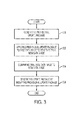
- FIG. 3 is a flowchart for generating an update package using a second pass according to an exemplary embodiment of the present invention.
- Exemplary embodiments of the present invention relate to techniques for remotely updating software in an electronic device. More specifically, exemplary embodiments of the present invention include techniques for the reunion of veneers that minimize the size of an update package.
- the software of the electronic device may include firmware, operating code, applications or other software loaded thereon, which may collectively be referred to as "binary images", or simply "images”.
- Exemplary embodiments of the present invention will be described below in the context of an exemplary wireless communications system utilizing mobile handsets that may update their software in a standalone configuration. Although particularly well-suited for use in conjunction with a wireless communications system and for updating handsets used in such a system, the invention is not limited to use with such system or types of mobile devices.
- Use of the term "mobile handset” is in no way intended to limit the application of the present invention from use with a much broader class of client devices which may be mobile or fixed, and which may be the form of a telephone handset but may also be of any number of other form factors or varieties of devices.
- client device denotes the broadest description possible of a class of electronic devices that can be connected to a network (whether by fixed, wireless, intermittent, removably connected or other connection) and to which the software updating techniques exemplified herein may be applied, which includes, without limitation, mobile handsets, Personal Digital Assistants (PDAs), pagers, personal computers, printers and other peripheral devices.
- PDAs Personal Digital Assistants
- the term "communications network” or “communications system” as used herein is used in its most expansive sense and applies to any communications system through which an update package or other information may be transferred to and from a client device, whether by static, active, dynamic communications protocols or otherwise, and includes, without limitation, anything from a single client device connected by fixed wire to a host server or computer system, or to a Local Area Network (LAN), Wide Area Network (WAN), wireless communication networks, conventional telephony, the Internet, etc.
- the disclosed updating techniques may be used in any number, type or combination of communications systems and client devices in which it is desirable to reduce the size of the update package, reduce the number of update instructions or otherwise provide more efficient updating of the binary image stored in the device.
- stored As used herein "stored,” “saved,” “reprogrammed,” and similar terms all refer to the same process of storing a binary image in a memory device in accordance with the techniques for storing associated with the particular memory device, whether it be non-volatile flash memory, volatile Read Access Memory (RAM) or otherwise, unless specifically described otherwise.
- RAM Read Access Memory
- FIG. 1 An exemplary wireless communications system in which exemplary embodiments of the present invention may be implemented is described below with reference to FIG. 1 .
- FIG. 1 illustrates a software update system according to an exemplary embodiment of the present invention.
- the software update system 100 includes an update server 110 in communication with a client device 150 through a communications network 140.
- the update server 110 includes, generally, an update generator 112 and an update manager 114. While not illustrated, the update server 110 may include a processor, memory and a communications interface. While depicted as a single element, the update server 110 may alternatively be comprised of a server array or set of distributed computing devices that fulfill the purposes of the update server 110.
- the update generator 112 creates an update package 124 through the use of a Binary Differencing Engine (BDE) 118 and an update encoder 116.
- BDE Binary Differencing Engine
- the BDE 118 and update encoder 116 may be implemented as hardware modules or as software modules that include instructions that are stored in memory and executed by a processor.
- the update generator 112 maintains, or receives from an external source, a base data image 120 corresponding to the subject client device 150 and is also supplied with or obtains a copy of a new data image 122 for the subject client device 150.
- the BDE 118 receives a copy of the base data image 120 and a copy of the new data image 122 to be applied and, through a process of comparisons, generates lists or sets of instructions which are potential candidate operations usable in generating the update package 124.
- the update encoder 116 communicates with the BDE 118 to combine additional encoding information to select instructions from the BDE 118 and incorporates other instructions derived from additional information to ultimately create the update package 124.
- the update encoder 116 is highly integrated with the functionality of the BDE 118 so as to enhance optimization and speed of selecting and encoding instructions sets.
- the update package 124 includes the update instructions, chosen as described above, as well as the code strings or data sequences to be added. Thus, the update package 124, in its most basic form contains a sequence of instructions that can be used to create the new data image 122 given the base data image 120.
- the update package 124 After the update generator 112 generates the update package 124, the update package 124, at the appropriate time or interval, is supplied to the client device 150 via the update manager 114 through the communications network 140.
- the client device 150 is representative of any number of devices that may comprise a homogeneous or heterogeneous population of client devices capable of being updated by the update system 100.
- Each such client device 150 includes the base data image 120 constituting the software or operating code to be updated.
- the base data image 120 may be stored in non-volatile memory (not illustrated) of the client device 150.
- the client device 150 also contains an update agent 156 that is comprised of a download agent 152 for communicating with the update server 110 and receiving an update package 124 though the communications network 140.
- the update agent 156 further comprises an update decoder 154 that interprets and applies the update instruction set of the update package 124 in order to convert the base data image 120 into the new data image 122.
- the download agent 152 and the update decoder 154 may be parts of the same application or software, be embedded firmware or specialized hardware such as an Application Specific Integrated Circuit (ASIC), which variations and possibilities for implementing the functionalities of the download agent 152 and the update decoder 154 will be obvious to one skilled in the art.
- the client device 150 may include a non-volatile memory device, a controller, a RAM device, and a communications device.
- the client device 150 may likely include, without limitation, other elements, such as a display or visual user interface element, audio input/output elements and a keypad or other input devices or peripherals, the depiction of which with the client device is not essential to the understanding of the exemplary embodiments of the present invention by one skilled in the art.
- the update decoder 154 applies the update instruction set in the update package 124 to the base data image 120 to transform it into the new data image 122.
- the first exemplary technique includes the creation of an update package instruction by a BDE that can operate on a series of contiguous veneers since both ARMLINK and FotaARM create large chunks of contiguous veneers.
- the second exemplary technique includes the forcible application of an offset into branch/call instructions when there is a chance that a calculated offset to a target would skip the veneer. While exemplary embodiments of the present invention are described in the context of ARM32 instructions for an ARM 11 processor, the present invention is equally applicable to other instruction types and instructions for other types of processors.
- LDR_VENEER a new update package instruction for use in the update package is proposed that is referred to as "LDR_VENEER.”
- the LDR_VENEER instruction knows that the first address that it needs to patch contains an:
- the LDR_VENEER instruction may be accompanied by one or more sets of addresses of four bytes inserted into the data image after patching in one or more LDR instruction. This reduces the size of the update package by not having to repeat the op-code for the LDR instruction for each individual veneer.
- An example of the LDR_VENEER instruction is provided in Table 2. Table 2 LDR VENEER Offset in delta Value Offset in target Result 0 0x12345678 0 LDR PC, #0x12345678 4 0x56789999 8 LDR PC, #0x56789999 8 0x99998888 16 LDR PC, #0x99998888
- the LDR_VENEER instruction may be accompanied by three bytes of a four byte address when the first byte of the four byte address is highly predictable and common to each address. This further reduces the size of the update package by reducing the address information of the LDR_VENEER instruction.
- the LDR_VENEER instruction may be utilized by the BDE to generate one or more veneers that are used when generating the update package.
- FIG. 2 is a flowchart for generating an update package using an LDR_VENEER instruction according to an exemplary embodiment of the present invention.
- a BDE determines differences between a base data image and a new data image in step 200.
- the BDE determines whether to use at least one of a branch and call instructions.
- the BDE generates a veneer when any of the at least one of a branch and call instructions exceeds a corresponding address range.
- the BDE associates addresses of two or more veneers with a common update package instruction. The addresses may be all bytes of a four byte address or three bytes of a four byte address.
- the BDE generates the update package using the update package instruction and associated addresses. Thereafter, the BDE terminates the procedure.
- FIG. 3 is a flowchart for generating an update package using a second pass according to an exemplary embodiment of the present invention.
- the BDE generates a provisional update package in step 300.
- the BDE applies the provisional update package to the base date image.
- the BDE compares the resulting trial new data image to the actual new data image.
- the BDE generates the final update package by modifying the provisional update package based on the results of the comparison in step 304 such that the final update package, when applied to the base data image, generates the new data image.
- the provisional update package may be modified to unsure that each and every branch instruction chooses the same target address in the actual base image as ARMLINK chooses.
- the final update package may be tested by the BDE to verify that the new data image is properly generated when applied to the base data image. Thereafter, the BDE terminates the procedure.
- a comparatively smaller update package may be produced that describes the differences between a base data image and a new data image.
- This update package is then applied to the base data image with the ability to re-establish the new target locations correctly when simple reference changes are identified that are the targets of branch and call instructions.
- the application of the update package to the base data image is outside the scope of this disclosure and therefore a more detailed description thereof is omitted for conciseness.
- a Python program was written to examine the statistical effect of the implementation of the two techniques described above.
- the Python program read an arbitrary number of bytes from a Samsung TM SGH-ZX10 Universal Mobile Telecommunications System (UMTS) mobile terminal thumb code data image, and treated each set of four bytes as an address.
- Two files were created by the Python program.
- the first file was prepared from the buffer of bytes to create the same binary image effect as described herein according to exemplary embodiments of the present invention.
- a second file was prepared by splicing the hex pattern "OxE51FF004" in front of each set of four bytes that were extracted. This image matches what a veneer created by ARMLINK.
- These two files were zipped using the Winzip TM program for various lengths of data.
- Table 3 Number of bytes First Zip file size Second Zip file size Percent improvement 8,192 5547 6876 19.3 50,000 28658 35234 18.7 64,000 38128 47391 19.5 200,000 134,897 168,608 20 400,000 276,083 346,781 20.4
- the Samsung TM SGH-ZX10 UMTS mobile terminal data image contains 50,000 veneers, requiring 400,000 bytes of uncompressed image. Thus a delta size reduction of 70,698 bytes could be expected by implementation the techniques described in this disclosure.
- Certain aspects of the present invention may also be embodied as control logic stored on a computer useable medium that causes a computer to process the control logic so as to operate in a manner corresponding to the control logic.
- the control logic comprises one or more computer readable program code means.
- a computer useable medium is any data storage device that can store data, which may be thereafter read by a computer system. Examples of the computer useable medium include Read-Only Memory (ROM), Random-Access Memory (RAM), CD-ROMs, magnetic tapes, floppy disks, and optical data storage devices.
- the computer useable medium can also be distributed over network coupled computer systems so that the computer readable code is stored and executed in a distributed fashion. Also, functional programs, code, and code segments for accomplishing the present invention may be easily construed by programmers skilled in the art to which the present invention pertains.
Landscapes
- Engineering & Computer Science (AREA)
- Software Systems (AREA)
- General Engineering & Computer Science (AREA)
- Theoretical Computer Science (AREA)
- Computer Security & Cryptography (AREA)
- Physics & Mathematics (AREA)
- General Physics & Mathematics (AREA)
- Stored Programmes (AREA)
- Information Transfer Between Computers (AREA)
Applications Claiming Priority (1)
| Application Number | Priority Date | Filing Date | Title |
|---|---|---|---|
| US12/781,454 US20110283271A1 (en) | 2010-05-17 | 2010-05-17 | Techniques for reunion of veneers |
Publications (2)
| Publication Number | Publication Date |
|---|---|
| EP2388694A2 true EP2388694A2 (fr) | 2011-11-23 |
| EP2388694A3 EP2388694A3 (fr) | 2012-01-04 |
Family
ID=44358243
Family Applications (1)
| Application Number | Title | Priority Date | Filing Date |
|---|---|---|---|
| EP10187449A Withdrawn EP2388694A3 (fr) | 2010-05-17 | 2010-10-13 | Techniques pour la combinaison de veneers, opérators pour l'adressage indirect utilisées dans de code pour un processor ARM. |
Country Status (2)
| Country | Link |
|---|---|
| US (1) | US20110283271A1 (fr) |
| EP (1) | EP2388694A3 (fr) |
Families Citing this family (3)
| Publication number | Priority date | Publication date | Assignee | Title |
|---|---|---|---|---|
| US10241773B2 (en) * | 2014-02-28 | 2019-03-26 | Vmware, Inc. | Automatic application layer capture |
| US10332182B2 (en) | 2014-02-28 | 2019-06-25 | Vmware, Inc. | Automatic application layer suggestion |
| US9575993B2 (en) * | 2014-12-30 | 2017-02-21 | Here Global B.V. | Binary difference operations for navigational bit streams |
Family Cites Families (9)
| Publication number | Priority date | Publication date | Assignee | Title |
|---|---|---|---|---|
| US6988271B2 (en) * | 1998-10-02 | 2006-01-17 | Microsoft Corporation | Heavyweight and lightweight instrumentation |
| US8479189B2 (en) * | 2000-11-17 | 2013-07-02 | Hewlett-Packard Development Company, L.P. | Pattern detection preprocessor in an electronic device update generation system |
| US20070169073A1 (en) * | 2002-04-12 | 2007-07-19 | O'neill Patrick | Update package generation and distribution network |
| US7860834B2 (en) * | 2003-06-23 | 2010-12-28 | Evyatar Meller | Method and system for updating versions of content stored in a storage device |
| US7661102B2 (en) * | 2004-08-20 | 2010-02-09 | Smith Micro Software, Inc. | Method for reducing binary image update package sizes |
| US7698698B2 (en) * | 2004-09-30 | 2010-04-13 | Smith Micro Software, Inc. | Method for over-the-air firmware update of NAND flash memory based mobile devices |
| EP1793311A3 (fr) * | 2005-12-01 | 2007-08-29 | Samsung Electronics Co., Ltd. | Système et procédé pour un outil de minimisation de fiche |
| EP2095236B1 (fr) * | 2006-12-18 | 2010-08-11 | International Business Machines Corporation | Procédé, système et programme informatique pour le test d'applications logicielles basées sur des sources de données multiples |
| US9665498B2 (en) * | 2008-07-30 | 2017-05-30 | Vmware, Inc. | Memory management using transparent page transformation |
-
2010
- 2010-05-17 US US12/781,454 patent/US20110283271A1/en not_active Abandoned
- 2010-10-13 EP EP10187449A patent/EP2388694A3/fr not_active Withdrawn
Non-Patent Citations (1)
| Title |
|---|
| None |
Also Published As
| Publication number | Publication date |
|---|---|
| EP2388694A3 (fr) | 2012-01-04 |
| US20110283271A1 (en) | 2011-11-17 |
Similar Documents
| Publication | Publication Date | Title |
|---|---|---|
| CN103744709B (zh) | 补丁加载方法及装置 | |
| US8296535B2 (en) | Generating incremental program updates | |
| EP1548587A2 (fr) | Composants autodescriptifs de mise à a jour des images logiciel | |
| CN111538651B (zh) | 接口测试方法、装置、服务器及存储介质 | |
| US8413132B2 (en) | Techniques for resolving read-after-write (RAW) conflicts using backup area | |
| CN101329633A (zh) | 一种软件升级的方法和软件升级装置 | |
| WO2016078263A1 (fr) | Terminal et dispositif de commande de mise à niveau, procédé et système de mise à niveau de terminal et support de stockage associé | |
| CN104731696A (zh) | 定位程序代码中bug的方法及相关装置 | |
| CN111124288A (zh) | 一种vpd存储管理方法、装置、设备及可读存储介质 | |
| EP2388694A2 (fr) | Techniques pour la combinaison de veneers, opérators pour l'adressage indirect utilisées dans de code pour un processor ARM. | |
| CN115688119A (zh) | 漏洞修复方法、装置、电子设备及存储介质 | |
| CN116522368A (zh) | 一种物联网设备固件解密解析方法、电子设备、介质 | |
| CN110750310A (zh) | 基于ios系统组件化开发的二进制和源码切换方法 | |
| CN109976751A (zh) | 模型操作方法、相关装置及计算机可读介质 | |
| CN101169726A (zh) | 基于MTD分区的嵌入式Linux系统在线升级方法 | |
| CN114115979A (zh) | 配置文件的自适应方法、系统、电子设备及存储介质 | |
| CN107451050A (zh) | 函数获取方法和装置、服务器 | |
| CN109002710A (zh) | 一种检测方法、装置及计算机可读存储介质 | |
| US8549049B2 (en) | Systems and methods for updating an application on a mobile information device | |
| CN113282435B (zh) | 应用异常的处理方法和电子设备 | |
| CN112100622B (zh) | 一种数据处理方法以及设备 | |
| US20060271771A1 (en) | Exception tagging | |
| CN1272709C (zh) | 更新存储于便携式装置存储器的操作码的方法 | |
| US7716658B2 (en) | Method and apparatus for optimizing patching of objects containing references | |
| CN100458719C (zh) | 基本输入输出系统信息的获取及编辑方法及系统 |
Legal Events
| Date | Code | Title | Description |
|---|---|---|---|
| AK | Designated contracting states |
Kind code of ref document: A2 Designated state(s): AL AT BE BG CH CY CZ DE DK EE ES FI FR GB GR HR HU IE IS IT LI LT LU LV MC MK MT NL NO PL PT RO RS SE SI SK SM TR |
|
| AX | Request for extension of the european patent |
Extension state: BA ME |
|
| PUAI | Public reference made under article 153(3) epc to a published international application that has entered the european phase |
Free format text: ORIGINAL CODE: 0009012 |
|
| PUAL | Search report despatched |
Free format text: ORIGINAL CODE: 0009013 |
|
| AK | Designated contracting states |
Kind code of ref document: A3 Designated state(s): AL AT BE BG CH CY CZ DE DK EE ES FI FR GB GR HR HU IE IS IT LI LT LU LV MC MK MT NL NO PL PT RO RS SE SI SK SM TR |
|
| AX | Request for extension of the european patent |
Extension state: BA ME |
|
| RIC1 | Information provided on ipc code assigned before grant |
Ipc: G06F 9/445 20060101AFI20111125BHEP |
|
| 17P | Request for examination filed |
Effective date: 20120704 |
|
| RAP1 | Party data changed (applicant data changed or rights of an application transferred) |
Owner name: SAMSUNG ELECTRONICS CO., LTD. |
|
| 17Q | First examination report despatched |
Effective date: 20120911 |
|
| STAA | Information on the status of an ep patent application or granted ep patent |
Free format text: STATUS: THE APPLICATION HAS BEEN WITHDRAWN |
|
| 18W | Application withdrawn |
Effective date: 20121024 |