EP2389885A1 - Dispositif de traitement et procédé pour traiter des lésions cutanées avec l'application de chaleur - Google Patents
Dispositif de traitement et procédé pour traiter des lésions cutanées avec l'application de chaleur Download PDFInfo
- Publication number
- EP2389885A1 EP2389885A1 EP11174303A EP11174303A EP2389885A1 EP 2389885 A1 EP2389885 A1 EP 2389885A1 EP 11174303 A EP11174303 A EP 11174303A EP 11174303 A EP11174303 A EP 11174303A EP 2389885 A1 EP2389885 A1 EP 2389885A1
- Authority
- EP
- European Patent Office
- Prior art keywords
- treatment
- tip
- replaceable
- thermal
- treatment device
- Prior art date
- Legal status (The legal status is an assumption and is not a legal conclusion. Google has not performed a legal analysis and makes no representation as to the accuracy of the status listed.)
- Withdrawn
Links
- 238000011282 treatment Methods 0.000 title claims abstract description 355
- 238000000034 method Methods 0.000 title abstract description 44
- 206010040882 skin lesion Diseases 0.000 title abstract description 28
- 231100000444 skin lesion Toxicity 0.000 title abstract description 27
- 238000010438 heat treatment Methods 0.000 claims description 32
- 150000001875 compounds Chemical class 0.000 claims description 10
- 230000000007 visual effect Effects 0.000 claims description 9
- 238000004382 potting Methods 0.000 claims description 8
- 238000013021 overheating Methods 0.000 claims description 6
- 238000013459 approach Methods 0.000 claims description 2
- 230000003902 lesion Effects 0.000 abstract description 48
- 206010040880 Skin irritation Diseases 0.000 abstract description 4
- 230000007794 irritation Effects 0.000 abstract description 3
- 208000017520 skin disease Diseases 0.000 abstract description 2
- 210000003491 skin Anatomy 0.000 description 40
- 206010000496 acne Diseases 0.000 description 33
- 238000012546 transfer Methods 0.000 description 28
- 208000002874 Acne Vulgaris Diseases 0.000 description 25
- 241000186427 Cutibacterium acnes Species 0.000 description 19
- 239000002085 irritant Substances 0.000 description 19
- 231100000021 irritant Toxicity 0.000 description 19
- 230000001580 bacterial effect Effects 0.000 description 14
- 210000000282 nail Anatomy 0.000 description 14
- 230000002538 fungal effect Effects 0.000 description 13
- 206010017533 Fungal infection Diseases 0.000 description 12
- 208000031888 Mycoses Diseases 0.000 description 11
- 229940079593 drug Drugs 0.000 description 11
- 239000003814 drug Substances 0.000 description 11
- 241000894007 species Species 0.000 description 11
- 208000002474 Tinea Diseases 0.000 description 10
- 230000004044 response Effects 0.000 description 10
- 208000010195 Onychomycosis Diseases 0.000 description 9
- 230000000694 effects Effects 0.000 description 9
- 239000000463 material Substances 0.000 description 9
- 201000005882 tinea unguium Diseases 0.000 description 9
- 230000007704 transition Effects 0.000 description 9
- 208000006877 Insect Bites and Stings Diseases 0.000 description 7
- 206010067152 Oral herpes Diseases 0.000 description 7
- 206010000269 abscess Diseases 0.000 description 7
- 230000008901 benefit Effects 0.000 description 7
- 230000034994 death Effects 0.000 description 7
- 238000010586 diagram Methods 0.000 description 7
- 210000004904 fingernail bed Anatomy 0.000 description 7
- 230000035876 healing Effects 0.000 description 7
- 239000000203 mixture Substances 0.000 description 7
- 206010037844 rash Diseases 0.000 description 7
- 208000024891 symptom Diseases 0.000 description 7
- 241000894006 Bacteria Species 0.000 description 6
- 241000223238 Trichophyton Species 0.000 description 6
- 239000002585 base Substances 0.000 description 6
- 230000006399 behavior Effects 0.000 description 6
- 230000006378 damage Effects 0.000 description 6
- 239000012678 infectious agent Substances 0.000 description 6
- 208000015181 infectious disease Diseases 0.000 description 6
- 238000004519 manufacturing process Methods 0.000 description 6
- 238000002483 medication Methods 0.000 description 6
- 230000003685 thermal hair damage Effects 0.000 description 6
- 201000004647 tinea pedis Diseases 0.000 description 6
- 210000001519 tissue Anatomy 0.000 description 6
- 230000000699 topical effect Effects 0.000 description 6
- 208000035143 Bacterial infection Diseases 0.000 description 5
- 241001480035 Epidermophyton Species 0.000 description 5
- 208000004898 Herpes Labialis Diseases 0.000 description 5
- 208000036142 Viral infection Diseases 0.000 description 5
- 208000022362 bacterial infectious disease Diseases 0.000 description 5
- 230000015572 biosynthetic process Effects 0.000 description 5
- 238000013461 design Methods 0.000 description 5
- 238000005755 formation reaction Methods 0.000 description 5
- 230000007246 mechanism Effects 0.000 description 5
- 238000011084 recovery Methods 0.000 description 5
- 210000004906 toe nail Anatomy 0.000 description 5
- 208000003251 Pruritus Diseases 0.000 description 4
- 201000010618 Tinea cruris Diseases 0.000 description 4
- 241000893966 Trichophyton verrucosum Species 0.000 description 4
- XAGFODPZIPBFFR-UHFFFAOYSA-N aluminium Chemical compound [Al] XAGFODPZIPBFFR-UHFFFAOYSA-N 0.000 description 4
- 229910052782 aluminium Inorganic materials 0.000 description 4
- 239000003242 anti bacterial agent Substances 0.000 description 4
- 239000002537 cosmetic Substances 0.000 description 4
- 230000007423 decrease Effects 0.000 description 4
- 210000004905 finger nail Anatomy 0.000 description 4
- 230000001965 increasing effect Effects 0.000 description 4
- 230000004054 inflammatory process Effects 0.000 description 4
- 238000002360 preparation method Methods 0.000 description 4
- 230000008569 process Effects 0.000 description 4
- 230000001105 regulatory effect Effects 0.000 description 4
- 230000002123 temporal effect Effects 0.000 description 4
- 230000009385 viral infection Effects 0.000 description 4
- 230000003612 virological effect Effects 0.000 description 4
- 241000196324 Embryophyta Species 0.000 description 3
- 241000233866 Fungi Species 0.000 description 3
- 206010061218 Inflammation Diseases 0.000 description 3
- SHGAZHPCJJPHSC-NUEINMDLSA-N Isotretinoin Chemical compound OC(=O)C=C(C)/C=C/C=C(C)C=CC1=C(C)CCCC1(C)C SHGAZHPCJJPHSC-NUEINMDLSA-N 0.000 description 3
- 241001480037 Microsporum Species 0.000 description 3
- 241000223229 Trichophyton rubrum Species 0.000 description 3
- 230000002411 adverse Effects 0.000 description 3
- 229940088710 antibiotic agent Drugs 0.000 description 3
- 230000003115 biocidal effect Effects 0.000 description 3
- 230000006870 function Effects 0.000 description 3
- 210000004013 groin Anatomy 0.000 description 3
- 230000028993 immune response Effects 0.000 description 3
- 230000007803 itching Effects 0.000 description 3
- 230000007774 longterm Effects 0.000 description 3
- 238000012544 monitoring process Methods 0.000 description 3
- 230000036407 pain Effects 0.000 description 3
- 238000012545 processing Methods 0.000 description 3
- 230000009467 reduction Effects 0.000 description 3
- 238000011160 research Methods 0.000 description 3
- 230000035945 sensitivity Effects 0.000 description 3
- 230000009885 systemic effect Effects 0.000 description 3
- BWMISRWJRUSYEX-SZKNIZGXSA-N terbinafine hydrochloride Chemical compound Cl.C1=CC=C2C(CN(C\C=C\C#CC(C)(C)C)C)=CC=CC2=C1 BWMISRWJRUSYEX-SZKNIZGXSA-N 0.000 description 3
- 230000001225 therapeutic effect Effects 0.000 description 3
- 238000002560 therapeutic procedure Methods 0.000 description 3
- 206010003399 Arthropod bite Diseases 0.000 description 2
- 206010005913 Body tinea Diseases 0.000 description 2
- 241000222122 Candida albicans Species 0.000 description 2
- 208000017667 Chronic Disease Diseases 0.000 description 2
- 206010012504 Dermatophytosis Diseases 0.000 description 2
- 108090000790 Enzymes Proteins 0.000 description 2
- 102000004190 Enzymes Human genes 0.000 description 2
- 206010017543 Fungal skin infection Diseases 0.000 description 2
- NTYJJOPFIAHURM-UHFFFAOYSA-N Histamine Chemical compound NCCC1=CN=CN1 NTYJJOPFIAHURM-UHFFFAOYSA-N 0.000 description 2
- 241000893980 Microsporum canis Species 0.000 description 2
- 241001460074 Microsporum distortum Species 0.000 description 2
- 206010054107 Nodule Diseases 0.000 description 2
- 206010033733 Papule Diseases 0.000 description 2
- 206010037888 Rash pustular Diseases 0.000 description 2
- 241000191940 Staphylococcus Species 0.000 description 2
- 241000194017 Streptococcus Species 0.000 description 2
- 241000130764 Tinea Species 0.000 description 2
- 241001045770 Trichophyton mentagrophytes Species 0.000 description 2
- 208000027418 Wounds and injury Diseases 0.000 description 2
- 239000002253 acid Substances 0.000 description 2
- 239000003513 alkali Substances 0.000 description 2
- 238000004458 analytical method Methods 0.000 description 2
- 230000000843 anti-fungal effect Effects 0.000 description 2
- 230000005540 biological transmission Effects 0.000 description 2
- 229940095731 candida albicans Drugs 0.000 description 2
- 230000015556 catabolic process Effects 0.000 description 2
- 230000008859 change Effects 0.000 description 2
- 238000006243 chemical reaction Methods 0.000 description 2
- HVYWMOMLDIMFJA-DPAQBDIFSA-N cholesterol Chemical compound C1C=C2C[C@@H](O)CC[C@]2(C)[C@@H]2[C@@H]1[C@@H]1CC[C@H]([C@H](C)CCCC(C)C)[C@@]1(C)CC2 HVYWMOMLDIMFJA-DPAQBDIFSA-N 0.000 description 2
- 239000004020 conductor Substances 0.000 description 2
- 238000010276 construction Methods 0.000 description 2
- 208000031513 cyst Diseases 0.000 description 2
- 230000009849 deactivation Effects 0.000 description 2
- 210000004207 dermis Anatomy 0.000 description 2
- 238000005516 engineering process Methods 0.000 description 2
- 210000002615 epidermis Anatomy 0.000 description 2
- 238000002474 experimental method Methods 0.000 description 2
- 210000002683 foot Anatomy 0.000 description 2
- 238000011534 incubation Methods 0.000 description 2
- 230000005764 inhibitory process Effects 0.000 description 2
- 208000014674 injury Diseases 0.000 description 2
- 239000002609 medium Substances 0.000 description 2
- 244000005700 microbiome Species 0.000 description 2
- 230000008520 organization Effects 0.000 description 2
- 239000007800 oxidant agent Substances 0.000 description 2
- 239000002245 particle Substances 0.000 description 2
- 229940055019 propionibacterium acne Drugs 0.000 description 2
- 208000029561 pustule Diseases 0.000 description 2
- 230000002441 reversible effect Effects 0.000 description 2
- YGSDEFSMJLZEOE-UHFFFAOYSA-N salicylic acid Chemical compound OC(=O)C1=CC=CC=C1O YGSDEFSMJLZEOE-UHFFFAOYSA-N 0.000 description 2
- 210000002374 sebum Anatomy 0.000 description 2
- 230000035807 sensation Effects 0.000 description 2
- 230000035939 shock Effects 0.000 description 2
- 229910052710 silicon Inorganic materials 0.000 description 2
- 239000010703 silicon Substances 0.000 description 2
- 206010040872 skin infection Diseases 0.000 description 2
- 230000036556 skin irritation Effects 0.000 description 2
- 231100000475 skin irritation Toxicity 0.000 description 2
- 239000007787 solid Substances 0.000 description 2
- 230000002459 sustained effect Effects 0.000 description 2
- 238000007669 thermal treatment Methods 0.000 description 2
- 201000003875 tinea corporis Diseases 0.000 description 2
- 231100000331 toxic Toxicity 0.000 description 2
- 230000002588 toxic effect Effects 0.000 description 2
- 241001529453 unidentified herpesvirus Species 0.000 description 2
- 230000035899 viability Effects 0.000 description 2
- YREOLPGEVLLKMB-UHFFFAOYSA-N 3-methylpyridin-1-ium-2-amine bromide hydrate Chemical compound O.[Br-].Cc1ccc[nH+]c1N YREOLPGEVLLKMB-UHFFFAOYSA-N 0.000 description 1
- 108010068327 4-hydroxyphenylpyruvate dioxygenase Proteins 0.000 description 1
- 206010063409 Acarodermatitis Diseases 0.000 description 1
- 241001480043 Arthrodermataceae Species 0.000 description 1
- 238000009631 Broth culture Methods 0.000 description 1
- 206010007882 Cellulitis Diseases 0.000 description 1
- 201000006082 Chickenpox Diseases 0.000 description 1
- 208000032544 Cicatrix Diseases 0.000 description 1
- 201000004624 Dermatitis Diseases 0.000 description 1
- 241000255925 Diptera Species 0.000 description 1
- 206010013786 Dry skin Diseases 0.000 description 1
- 241001635598 Enicostema Species 0.000 description 1
- ULGZDMOVFRHVEP-RWJQBGPGSA-N Erythromycin Natural products O([C@@H]1[C@@H](C)C(=O)O[C@@H]([C@@]([C@H](O)[C@@H](C)C(=O)[C@H](C)C[C@@](C)(O)[C@H](O[C@H]2[C@@H]([C@H](C[C@@H](C)O2)N(C)C)O)[C@H]1C)(C)O)CC)[C@H]1C[C@@](C)(OC)[C@@H](O)[C@H](C)O1 ULGZDMOVFRHVEP-RWJQBGPGSA-N 0.000 description 1
- 206010016936 Folliculitis Diseases 0.000 description 1
- 206010017553 Furuncle Diseases 0.000 description 1
- 241001670157 Gymnura Species 0.000 description 1
- 208000001688 Herpes Genitalis Diseases 0.000 description 1
- 208000009889 Herpes Simplex Diseases 0.000 description 1
- 208000007514 Herpes zoster Diseases 0.000 description 1
- 206010021531 Impetigo Diseases 0.000 description 1
- 108010060231 Insect Proteins Proteins 0.000 description 1
- 208000032912 Local swelling Diseases 0.000 description 1
- 206010024774 Localised infection Diseases 0.000 description 1
- 241001465754 Metazoa Species 0.000 description 1
- 206010027626 Milia Diseases 0.000 description 1
- 206010027940 Mood altered Diseases 0.000 description 1
- 206010028693 Nail discomfort Diseases 0.000 description 1
- 208000012868 Overgrowth Diseases 0.000 description 1
- 241000447727 Scabies Species 0.000 description 1
- 241000242583 Scyphozoa Species 0.000 description 1
- 241000270295 Serpentes Species 0.000 description 1
- 241000700584 Simplexvirus Species 0.000 description 1
- 206010067868 Skin mass Diseases 0.000 description 1
- 208000003589 Spider Bites Diseases 0.000 description 1
- 206010042566 Superinfection Diseases 0.000 description 1
- 239000004098 Tetracycline Substances 0.000 description 1
- 206010043866 Tinea capitis Diseases 0.000 description 1
- 241000159241 Toxicodendron Species 0.000 description 1
- 241000159243 Toxicodendron radicans Species 0.000 description 1
- 241000871311 Toxicodendron vernix Species 0.000 description 1
- 241001584775 Tunga penetrans Species 0.000 description 1
- 206010046980 Varicella Diseases 0.000 description 1
- UFUVLHLTWXBHGZ-MGZQPHGTSA-N [(2r,3r,4s,5r,6r)-6-[(1s,2s)-2-chloro-1-[[(2s,4r)-1-methyl-4-propylpyrrolidine-2-carbonyl]amino]propyl]-4,5-dihydroxy-2-methylsulfanyloxan-3-yl] dihydrogen phosphate Chemical compound CN1C[C@H](CCC)C[C@H]1C(=O)N[C@H]([C@H](C)Cl)[C@@H]1[C@H](O)[C@H](O)[C@@H](OP(O)(O)=O)[C@@H](SC)O1 UFUVLHLTWXBHGZ-MGZQPHGTSA-N 0.000 description 1
- 229960004150 aciclovir Drugs 0.000 description 1
- MKUXAQIIEYXACX-UHFFFAOYSA-N aciclovir Chemical compound N1C(N)=NC(=O)C2=C1N(COCCO)C=N2 MKUXAQIIEYXACX-UHFFFAOYSA-N 0.000 description 1
- 230000009471 action Effects 0.000 description 1
- 239000000853 adhesive Substances 0.000 description 1
- 230000001070 adhesive effect Effects 0.000 description 1
- 238000013019 agitation Methods 0.000 description 1
- 230000004075 alteration Effects 0.000 description 1
- 239000003098 androgen Substances 0.000 description 1
- 229940030486 androgens Drugs 0.000 description 1
- 230000002421 anti-septic effect Effects 0.000 description 1
- 229940121375 antifungal agent Drugs 0.000 description 1
- 229940124977 antiviral medication Drugs 0.000 description 1
- 239000003212 astringent agent Substances 0.000 description 1
- 239000008280 blood Substances 0.000 description 1
- 210000004369 blood Anatomy 0.000 description 1
- 230000017531 blood circulation Effects 0.000 description 1
- 230000036755 cellular response Effects 0.000 description 1
- 239000003795 chemical substances by application Substances 0.000 description 1
- 239000005482 chemotactic factor Substances 0.000 description 1
- 229960002291 clindamycin phosphate Drugs 0.000 description 1
- 239000011248 coating agent Substances 0.000 description 1
- 238000000576 coating method Methods 0.000 description 1
- 230000002995 comedolytic effect Effects 0.000 description 1
- 238000004891 communication Methods 0.000 description 1
- 238000007796 conventional method Methods 0.000 description 1
- 238000001816 cooling Methods 0.000 description 1
- 238000012937 correction Methods 0.000 description 1
- 230000003247 decreasing effect Effects 0.000 description 1
- 230000006735 deficit Effects 0.000 description 1
- 238000004925 denaturation Methods 0.000 description 1
- 230000036425 denaturation Effects 0.000 description 1
- 230000001419 dependent effect Effects 0.000 description 1
- 230000008021 deposition Effects 0.000 description 1
- 230000037304 dermatophytes Effects 0.000 description 1
- 239000002274 desiccant Substances 0.000 description 1
- 239000003599 detergent Substances 0.000 description 1
- 238000011161 development Methods 0.000 description 1
- 230000018109 developmental process Effects 0.000 description 1
- 208000037265 diseases, disorders, signs and symptoms Diseases 0.000 description 1
- 208000035475 disorder Diseases 0.000 description 1
- 230000005059 dormancy Effects 0.000 description 1
- 230000037336 dry skin Effects 0.000 description 1
- 238000001035 drying Methods 0.000 description 1
- 201000010582 ecthyma Diseases 0.000 description 1
- 230000001999 effect on insects Effects 0.000 description 1
- 230000002708 enhancing effect Effects 0.000 description 1
- 230000001815 facial effect Effects 0.000 description 1
- 229960004396 famciclovir Drugs 0.000 description 1
- GGXKWVWZWMLJEH-UHFFFAOYSA-N famcyclovir Chemical compound N1=C(N)N=C2N(CCC(COC(=O)C)COC(C)=O)C=NC2=C1 GGXKWVWZWMLJEH-UHFFFAOYSA-N 0.000 description 1
- 230000005669 field effect Effects 0.000 description 1
- 201000004946 genital herpes Diseases 0.000 description 1
- 239000001963 growth medium Substances 0.000 description 1
- 210000003780 hair follicle Anatomy 0.000 description 1
- 210000004247 hand Anatomy 0.000 description 1
- 230000036541 health Effects 0.000 description 1
- 230000005802 health problem Effects 0.000 description 1
- 230000017525 heat dissipation Effects 0.000 description 1
- 231100000304 hepatotoxicity Toxicity 0.000 description 1
- 229960001340 histamine Drugs 0.000 description 1
- 229940088597 hormone Drugs 0.000 description 1
- 239000005556 hormone Substances 0.000 description 1
- 238000000338 in vitro Methods 0.000 description 1
- 230000002458 infectious effect Effects 0.000 description 1
- 230000004968 inflammatory condition Effects 0.000 description 1
- 230000002757 inflammatory effect Effects 0.000 description 1
- 230000002401 inhibitory effect Effects 0.000 description 1
- 229960005280 isotretinoin Drugs 0.000 description 1
- 230000003780 keratinization Effects 0.000 description 1
- 239000007788 liquid Substances 0.000 description 1
- 230000007056 liver toxicity Effects 0.000 description 1
- 238000002690 local anesthesia Methods 0.000 description 1
- 238000012986 modification Methods 0.000 description 1
- 230000004048 modification Effects 0.000 description 1
- 230000007510 mood change Effects 0.000 description 1
- 230000000877 morphologic effect Effects 0.000 description 1
- 230000035772 mutation Effects 0.000 description 1
- 231100000417 nephrotoxicity Toxicity 0.000 description 1
- 230000037311 normal skin Effects 0.000 description 1
- 239000002674 ointment Substances 0.000 description 1
- 229940127249 oral antibiotic Drugs 0.000 description 1
- FJKROLUGYXJWQN-UHFFFAOYSA-N papa-hydroxy-benzoic acid Natural products OC(=O)C1=CC=C(O)C=C1 FJKROLUGYXJWQN-UHFFFAOYSA-N 0.000 description 1
- 244000052769 pathogen Species 0.000 description 1
- 230000008506 pathogenesis Effects 0.000 description 1
- 230000007170 pathology Effects 0.000 description 1
- 238000003359 percent control normalization Methods 0.000 description 1
- 210000002640 perineum Anatomy 0.000 description 1
- 230000002085 persistent effect Effects 0.000 description 1
- 238000001126 phototherapy Methods 0.000 description 1
- 239000000049 pigment Substances 0.000 description 1
- 231100000614 poison Toxicity 0.000 description 1
- 230000007096 poisonous effect Effects 0.000 description 1
- 230000002062 proliferating effect Effects 0.000 description 1
- 230000035755 proliferation Effects 0.000 description 1
- 230000001681 protective effect Effects 0.000 description 1
- 108090000623 proteins and genes Proteins 0.000 description 1
- 102000004169 proteins and genes Human genes 0.000 description 1
- 230000001823 pruritic effect Effects 0.000 description 1
- 230000005855 radiation Effects 0.000 description 1
- 150000004508 retinoic acid derivatives Chemical class 0.000 description 1
- 229960004889 salicylic acid Drugs 0.000 description 1
- 208000005687 scabies Diseases 0.000 description 1
- 210000004761 scalp Anatomy 0.000 description 1
- 231100000241 scar Toxicity 0.000 description 1
- 230000036573 scar formation Effects 0.000 description 1
- 230000037390 scarring Effects 0.000 description 1
- 230000037387 scars Effects 0.000 description 1
- 238000004904 shortening Methods 0.000 description 1
- 230000037380 skin damage Effects 0.000 description 1
- 230000036620 skin dryness Effects 0.000 description 1
- 230000007480 spreading Effects 0.000 description 1
- 238000003892 spreading Methods 0.000 description 1
- 230000001954 sterilising effect Effects 0.000 description 1
- 238000004659 sterilization and disinfection Methods 0.000 description 1
- 230000000638 stimulation Effects 0.000 description 1
- 210000000434 stratum corneum Anatomy 0.000 description 1
- 239000000126 substance Substances 0.000 description 1
- 238000006467 substitution reaction Methods 0.000 description 1
- 229940126703 systemic medication Drugs 0.000 description 1
- 235000019364 tetracycline Nutrition 0.000 description 1
- 150000003522 tetracyclines Chemical class 0.000 description 1
- 229940040944 tetracyclines Drugs 0.000 description 1
- 201000009642 tinea barbae Diseases 0.000 description 1
- 238000002604 ultrasonography Methods 0.000 description 1
Images



Classifications
-
- A—HUMAN NECESSITIES
- A61—MEDICAL OR VETERINARY SCIENCE; HYGIENE
- A61B—DIAGNOSIS; SURGERY; IDENTIFICATION
- A61B18/00—Surgical instruments, devices or methods for transferring non-mechanical forms of energy to or from the body
- A61B18/04—Surgical instruments, devices or methods for transferring non-mechanical forms of energy to or from the body by heating
-
- A—HUMAN NECESSITIES
- A61—MEDICAL OR VETERINARY SCIENCE; HYGIENE
- A61F—FILTERS IMPLANTABLE INTO BLOOD VESSELS; PROSTHESES; DEVICES PROVIDING PATENCY TO, OR PREVENTING COLLAPSING OF, TUBULAR STRUCTURES OF THE BODY, e.g. STENTS; ORTHOPAEDIC, NURSING OR CONTRACEPTIVE DEVICES; FOMENTATION; TREATMENT OR PROTECTION OF EYES OR EARS; BANDAGES, DRESSINGS OR ABSORBENT PADS; FIRST-AID KITS
- A61F7/00—Heating or cooling appliances for medical or therapeutic treatment of the human body
- A61F7/007—Heating or cooling appliances for medical or therapeutic treatment of the human body characterised by electric heating
-
- A—HUMAN NECESSITIES
- A61—MEDICAL OR VETERINARY SCIENCE; HYGIENE
- A61B—DIAGNOSIS; SURGERY; IDENTIFICATION
- A61B17/00—Surgical instruments, devices or methods
- A61B2017/00017—Electrical control of surgical instruments
- A61B2017/00022—Sensing or detecting at the treatment site
- A61B2017/00084—Temperature
-
- A—HUMAN NECESSITIES
- A61—MEDICAL OR VETERINARY SCIENCE; HYGIENE
- A61B—DIAGNOSIS; SURGERY; IDENTIFICATION
- A61B17/00—Surgical instruments, devices or methods
- A61B2017/00017—Electrical control of surgical instruments
- A61B2017/00115—Electrical control of surgical instruments with audible or visual output
-
- A—HUMAN NECESSITIES
- A61—MEDICAL OR VETERINARY SCIENCE; HYGIENE
- A61B—DIAGNOSIS; SURGERY; IDENTIFICATION
- A61B90/00—Instruments, implements or accessories specially adapted for surgery or diagnosis and not covered by any of the groups A61B1/00 - A61B50/00, e.g. for luxation treatment or for protecting wound edges
- A61B90/08—Accessories or related features not otherwise provided for
- A61B2090/0803—Counting the number of times an instrument is used
-
- A—HUMAN NECESSITIES
- A61—MEDICAL OR VETERINARY SCIENCE; HYGIENE
- A61B—DIAGNOSIS; SURGERY; IDENTIFICATION
- A61B90/00—Instruments, implements or accessories specially adapted for surgery or diagnosis and not covered by any of the groups A61B1/00 - A61B50/00, e.g. for luxation treatment or for protecting wound edges
- A61B90/08—Accessories or related features not otherwise provided for
- A61B2090/0814—Preventing re-use
-
- A—HUMAN NECESSITIES
- A61—MEDICAL OR VETERINARY SCIENCE; HYGIENE
- A61F—FILTERS IMPLANTABLE INTO BLOOD VESSELS; PROSTHESES; DEVICES PROVIDING PATENCY TO, OR PREVENTING COLLAPSING OF, TUBULAR STRUCTURES OF THE BODY, e.g. STENTS; ORTHOPAEDIC, NURSING OR CONTRACEPTIVE DEVICES; FOMENTATION; TREATMENT OR PROTECTION OF EYES OR EARS; BANDAGES, DRESSINGS OR ABSORBENT PADS; FIRST-AID KITS
- A61F7/00—Heating or cooling appliances for medical or therapeutic treatment of the human body
- A61F7/007—Heating or cooling appliances for medical or therapeutic treatment of the human body characterised by electric heating
- A61F2007/0071—Heating or cooling appliances for medical or therapeutic treatment of the human body characterised by electric heating using a resistor, e.g. near the spot to be heated
-
- A—HUMAN NECESSITIES
- A61—MEDICAL OR VETERINARY SCIENCE; HYGIENE
- A61F—FILTERS IMPLANTABLE INTO BLOOD VESSELS; PROSTHESES; DEVICES PROVIDING PATENCY TO, OR PREVENTING COLLAPSING OF, TUBULAR STRUCTURES OF THE BODY, e.g. STENTS; ORTHOPAEDIC, NURSING OR CONTRACEPTIVE DEVICES; FOMENTATION; TREATMENT OR PROTECTION OF EYES OR EARS; BANDAGES, DRESSINGS OR ABSORBENT PADS; FIRST-AID KITS
- A61F7/00—Heating or cooling appliances for medical or therapeutic treatment of the human body
- A61F7/007—Heating or cooling appliances for medical or therapeutic treatment of the human body characterised by electric heating
- A61F2007/0077—Details of power supply
- A61F2007/0078—Details of power supply with a battery
-
- A—HUMAN NECESSITIES
- A61—MEDICAL OR VETERINARY SCIENCE; HYGIENE
- A61F—FILTERS IMPLANTABLE INTO BLOOD VESSELS; PROSTHESES; DEVICES PROVIDING PATENCY TO, OR PREVENTING COLLAPSING OF, TUBULAR STRUCTURES OF THE BODY, e.g. STENTS; ORTHOPAEDIC, NURSING OR CONTRACEPTIVE DEVICES; FOMENTATION; TREATMENT OR PROTECTION OF EYES OR EARS; BANDAGES, DRESSINGS OR ABSORBENT PADS; FIRST-AID KITS
- A61F7/00—Heating or cooling appliances for medical or therapeutic treatment of the human body
- A61F2007/0093—Heating or cooling appliances for medical or therapeutic treatment of the human body programmed
-
- A—HUMAN NECESSITIES
- A61—MEDICAL OR VETERINARY SCIENCE; HYGIENE
- A61F—FILTERS IMPLANTABLE INTO BLOOD VESSELS; PROSTHESES; DEVICES PROVIDING PATENCY TO, OR PREVENTING COLLAPSING OF, TUBULAR STRUCTURES OF THE BODY, e.g. STENTS; ORTHOPAEDIC, NURSING OR CONTRACEPTIVE DEVICES; FOMENTATION; TREATMENT OR PROTECTION OF EYES OR EARS; BANDAGES, DRESSINGS OR ABSORBENT PADS; FIRST-AID KITS
- A61F7/00—Heating or cooling appliances for medical or therapeutic treatment of the human body
- A61F2007/0095—Heating or cooling appliances for medical or therapeutic treatment of the human body with a temperature indicator
- A61F2007/0096—Heating or cooling appliances for medical or therapeutic treatment of the human body with a temperature indicator with a thermometer
Definitions
- Bacterial and fungal skin infections lead to common lesions such as acne, pimples and under-nail fungal infections.
- Other lesions are caused by irritants, which may be introduced as a result of bug bites or by exposure to other natural or man-made skin irritants.
- Still other skin lesions are caused by viral infection, a common example being the lesions known as "cold sores" or "fever blisters". These skin lesions are often unsightly and painful, and current methods of treatment are often inadequate.
- Pustular eruptions, localized abscessed formations and local inflammatory conditions of the dermis and epidermis represent a particularly significant cosmetic and health problem.
- One of the most common afflictions of this type are lesion caused by the condition known as acne vulgaris.
- Acne vulgaris is associated with the Gram-positive anaerobic bacterium, Propionibacterium acnes.
- Acne afflicts 90% of all teenagers, and often continues to afflict men and women in the second, third and forth decade of life, sometimes persisting throughout adulthood.
- Yonkosky, D.M, and P.E. Pochi Acne vulgaris in childhood. Pathogenesis and management. Dermatol Clin, 1.986. 4(1): p.
- endogenous hormones mainly androgens
- endogenous hormones mainly androgens
- stratum corneum the stratum corneum
- the horny cells proliferate, they can form an occlusive plug or comedone which, coupled with the increased production of the sebum, represents an ideal medium for the proliferation of bacterial strains frequently resident on skin, such as P. acnes.
- plugged follicles eventually rupture, allowing discharge of their contents and causing local swelling and inflammation.
- the exposed follicles may darken from the deposition of pigment from damaged cells in the deeper layer of skin.
- Acne vulgaris is therefore a chronic disorder of the pilosebaceous follicles characterized by comedones (blackheads), papules, pustules, cysts, nodules, and often results in the formation of permanent scars ( Cunliffe, W.J., et al., Comedogenesis: some aetiological, clinical and therapeutic strategies. Dermatology, 2003. 206(1):11-6 ) that appear on the most visible areas of the skin particularly on the face, chest, back and occasionally neck, and upper arms. It is known that P. acnes also produces low-molecular-weight chemotactic factors which attract leulcocytes, thereby causing or enhancing inflammation ( Scholdgen, W., Hautchentechnik, 1965. 16(11):518-20 ; Lever, L. and R. Marks, Drugs, 1990. 3 9(5): 681-92 ). This increased inflammatory process, if left untreated, can produce significant immediate and long-term cosmetic problems including permanent scar formation.
- Acne is a multistage condition. In its most severe form it leads to hospitalization of the patient, extensive discomfort and long term scarring of the skin.
- cis-Retinioc Acid Another widespread treatment option for P. acnes has been the use of oral Vitamin A acid derivatives such as cis-Retinioc Acid (Accutane).
- cis-Retinoic Acid has been reserved for severe cases of acne vulgaris since significant side effects can be seen with the use of cis-Retinioc acid.
- Some of these side effects include liver toxicity, severe skin drying, increase sensitivity to UV radiation, elevations in triglicyride and cholesterol levels, as well as mood changes including severe depression.
- cis-Retinoic Acid has been reserved for severe or refractory cases of acne vulgaris.
- oxidizing agents include, broadly, drying agents, oxidizing agents and astringents, also a wide variety of skin detergents and cleansers, as well as preparations, which attempt to form oxidizing agents which are reportedly toxic to P. acnes.
- bacterial skin lesions include bacterial folliculitis, (a localized infection of hair follicles) dermatitis, cellulitis, impetigo, ecthyma, furuncles and the like.
- hot compresses are generally non-uniform in the amount of heat delivered. Over-heating of the compresses by the user may easily result in burns. Other disadvantages include the fact that hot compresses generally only maintain heat for a very limited period of time, and when moved about or reused may result in spread of infectious agents to healthy tissue.
- a further type of skin lesion that has proved difficult to treat are viral skin lesions such as cold sores, also known as fever blisters.
- Cold sores are usually caused by strains of the Herpes Simplex virus and commonly result in lesions on and near the lips and inside the mouth of an infected individual.
- the sores are painful and unsightly, and like other facial lesions, frequently result in psychological stresses for the patients suffering from the condition.
- the eruption of the sores is often, but not always, preceded by a painful sensation that warns of an impending lesion.
- Certain anti-viral medications such as Acyclovir and Famvir, may also be used to prevent outbreaks and reduce healing time.
- these medications are generally expensive and only available with a prescription. Furthermore, they may result in adverse side effects such as renal toxicity and therefore physicians are sometimes reluctant to prescribe these medications for simple outbreak cases.
- the medications usually must be taken prophylactically or upon the first sign of an outbreak. Once the sore has erupted, the lesions generate infectious particles which may in turn infect other individuals.
- Alkali inhibition is commonly used for laboratory inhibition of Herpes viruses, but application of alkali is impractical in a clinical setting due to the harshness of the treatment to normal skin.
- a further type of skin lesions are fungal infections, also known as fungal dermatitis, including conditions known medically as Tinea corporis, Tinea pedis, Tinea unguium, Tinea capitis, Tinea cruris, and Tinea barbae.
- Particularly troublesome is the condition known as Tinea unguium which is a fungal infection occuring under toenails or fingernails, a condition also referred to medically as onychomycosis or ringworm of the nails.
- Onychomycosis may be caused by several types of fungi, including Trichophyton mentagrophytes, Candida albicans or Trichophyton rubrum. Such infections are extremely difficult to treat effectively due to the difficulty in delivering effective amounts of antifungal medications to the area beneath the nail.
- Onychomycosis can cause the nail to appear thickened and lusterless, and often causes nail discomfort. Also, the infected nail harbors a reservoir of pathogenic organisms which can spread to and re-infect other parts of the body, causing chronic diseases such as onychomycosis in other nails, athletes foot, foot dry skin and the like. Onychomycosis is prevalent throughout a large proportion of the population, with most of those afflicted from the ages of 40 years and older.
- a human's nail has a nail plate, which is a hard outer surface of dead cells, and a nail bed below the nail plate.
- the nail plate is non-porous, whereas the nail bed is porous.
- the nail plate and the nail bed are relatively insensitive to pain.
- the underlying flesh is sensitive to pain. In onychomycosis, the nail plate, nail bed, and, in severe cases, the flesh below the nail bed can be infected.
- Methods of treating onychomycosis include various methods of delivering medication to the nail bed, including various methods of introducing medication under or through the nail plate or of removing the nail plate partially or entirely to access the infected tissue.
- Other treatments include systemic anti-fungal medications. The difficulty with systemic medications is that they are not localized to the nail area and therefore it is difficult to achieve an effective dose without producing undesirable side effects in other parts of the body.
- Tinea corporis also known as tinea circinata or tinea glabrosa and referred to generally as ringworm of the body, is a fungal infection or dermatophytosis of the glabrous skin, i.e., areas of skin other than bearded area, scalp, groin, hands and feet, generally caused by fungal species such as those of Microsporum such as Microsporum canis , Trichophyton such as Trichophyton rubrum , T. Mentagrophytes , and Epidermophyton , particularly by the fungal species of Trichophyton and Epidermophyton .
- the condition generally includes the presence of one or more well-demarcated erythematous, scaly mascules with slightly raised borders and central healing, producing annular outlines.
- Various other types of lesions may also occur, such as those that are vesicular, eczematous, psoriasiform, verrucous, plaque-like, or deep.
- Tinea cruris also referred to generally as "jock itch" or ringworm of the groin, is a fungal infection or dermatophytosis of the groin, perineum and perineal regions, generally seen in males, and sometimes spreading to contiguous areas, generally caused by fungal species such as those of Microsporum , Trichophyton , and Epidermophyton , particularly by the fungal species of Trichophyton and Epidermophyton.
- the condition generally includes severely pruritic, sharply demarcated lesions with a raised erythematous margin and thin, dry scaling. Tinea cruris often accompanies tinea pedis (also known as "athlete's foot”).
- Tinea pedis results in interdigital lesions.
- Athlete's foot is an itching, malodorous, uncomfortable disorder resulting from large numbers of ordinary, nonvirulent bacteria proliferating in the fungus infected interspace.
- Certain insect bites and contact with certain plants can expose skin to irritants that result in an itchy or painful immune response.
- the symptoms generally manifest soon after the introduction of the irritant, but can persist or sporadically reoccur for extended periods of time when the irritant is not effectively removed or inactivated by the immune response.
- Various treatments have been proposed for the treatment of the symptoms caused by these irritants.
- the treatment involves that application of compounds that inhibit the immune response that generates the itching and inflammation usually associated with these conditions. These compounds tend to mask the symptoms of the insect bite without addressing the root cause of the irritation. They also tend to require repeated applications in order to obtain continuous symptom relief and frequently do not speed healing time in any appreciable manner.
- ItchZapperTM For insect bites, a device has recently been marketed that is known as an "ItchZapperTM". This device allegedly treats insect bites by applying one or more bursts of heat to the area of the bite thereby breaking down the irritants introduced by the insect bite and stopping the release of histamine.
- the device represented as heating to a temperature of 122°F, and insect proteins are said to break down at 118°F.
- the ItchZapperTM device heats to a peak temperature over a period of 2 to 4 seconds.
- the device cools as residual heat bled off the device for a few seconds after the heating cycle was completed.
- the upward and downward ramping of the temperature is pronounced and the device is not capable of holding a sustained temperature for any appreciable period of time. Additionally, the extremely brief treatment period is unlikely to have any appreciable effect on insect bite symptoms without repeated treatments.
- This invention relates to the use of a regulated heat source that can be applied to a skin lesion, such as pustular-form eruption or localized abscess, in order to accelerate the death of invading bacteria, fungi or viral particles, or to assist in the breakdown of a skin irritant and thereby speed the recovery process.
- a regulated heat source that can be applied to a skin lesion, such as pustular-form eruption or localized abscess, in order to accelerate the death of invading bacteria, fungi or viral particles, or to assist in the breakdown of a skin irritant and thereby speed the recovery process.
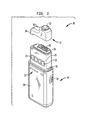
- FIGURE 1 shows a perspective view of an embodiment of treatment device according to the present invention
- FIGURE 2a shows a side view of an embodiment of a replaceable treatment tip according to the present invention
- FIGURE 2b shows a perspective view of the replaceable treatment tip of FIGURE 2a ;
- FIGURE 3 shows a simplified block diagram of the major electrical components treatment device of FIGURE 1 ;
- FIGURE 4 is a diagram illustrating the control functionality of the firmware used in the present invention.
- FIGURE 5 shows a state diagram illustrating the operation of a treatment device according to an embodiment of the present invention
- FIGURE 6 is a perspective view of an embodiment of a treatment device capable of treating multiple locations simultaneously according to the present invention.
- FIGURE 7 is a perspective view of an embodiment of a treatment device capable of wireless treatment of multiple locations simultaneously according to the present invention.
- FIGURE 8 is a perspective view of a treatment tip for use with the treatment device of FIGURE 5 or FIGURE 6 ;
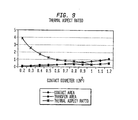
- FIGURE 9 shows a graph of the Thermal Aspect Ratio in accordance with an embodiment of the present invention.
- FIGURE 10 shows temperature death curves for P. acnes.
- the present invention describes methods and devices for the treatment of skin diseases, lesions, irritants, and other localized skin conditions, collectively "lesions", involving the application of a controlled dose of thermal energy to the infected or irritated tissue and thereby speeding the recovery process.
- a lesion according to the present invention is any infected or irritated tissue caused by bacterial, fungal or viral infections, or other type of skin irritant, which can be treated through the application of a regulated amount of heat.
- the invention can also be used to cause the thermal breakdown of certain skin irritants.
- "treating" a skin lesion means to slow, halt or even reverse the development of skin lesions and to reduce the lesion's healing time.
- Skin lesions of the dermis, epidermis, follicle or other cutaneous structures can be treated by the methods and devices of the present invention, as well as skin lesions on mucosal surfaces such as the gums or other skin on the inside of the mouth. Additional skin structures in and around the finger or toe nails and cuticle are also potential sites prone to develop bacterial and fungal infections.
- the lesions can be the result of infection by a bacterial strain including but not limited to strains such as Propionibacterium acnes, Staphylococcus species or Streptococcus species.
- the present invention provides methods and devices for the treatment of skin lesions such as the kind commonly associated with acne vulgaris. These skin lesions include pustular eruptions and localized abscesses such as cysts, nodules, pustules, papules, comedones (blackheads) and the like. These lesions include those that are commonly referred to as pimples, whiteheads, zits, acne and the like.
- the lesions can further be result of infection by fungal species, including but not limited to fungal species capable of producing conditions such as toenail or fingernail infections, ringworm and the like.
- fungal species include Microsporum species such as Microsporum canis, Trichophyton species such as Trichophyton rubrum, Trichophyton. Mentagrophytes, Epidermophyton species, Candida albicans, and the like.
- Such fungal species are sometimes referred to broadly as "dertnatophytes”.
- the skin lesions can be the result of viral infections, including infections caused by Herpes viruses such as Herpes simplex types I and II (cold sores and genital herpes), Varicella zoster (chicken pox) and the like.
- Herpes viruses such as Herpes simplex types I and II (cold sores and genital herpes), Varicella zoster (chicken pox) and the like.
- treatment of skin lesions caused by bacterial, fungal and viral infections can be effectively treated by the application of controlled quantities of heat either by the stimulation of a "heat-shock" response in the microorganism resulting in its death, impairment, dormancy or other loss of viability of the infectious agent.
- embodiments of the present invention provide methods and devices for the controlled application of heat for the treatment of skin lesions caused by an irritant.
- skin irritants that can be treated by the present invention include those introduced by bug bites, such as mosquito, chigger, ant, spider bites, scabies and the like.
- Other skin irritants introduced by other animal species, such as jellyfish, stingrays, snakes and the like, or by plants such as poison ivy, poison oak, poison sumac and the like, can also be treated using the methods and devices of the present invention.
- the application of regulated quantities of heat can result in the biochemical denaturation of the foreign irritant proteins, or can disrupt the host reaction to the particular irritant, or both. The disruption of the host reaction can occur by the heat producing an affect on the cellular response to the foreign material.
- the methods and devices of the present invention provide the application to a lesion of an amount of heat (thermal energy) wherein the heat is applied over one or more treatment periods in an amount sufficient to result in improved recovery times for the treated lesion.
- An effective therapeutic amount is therefore any application or applications of heat that are capable of measurably decreasing average recovery times for a given type of skin lesion, preferably by improving the average recovery time by 1, 2, 3, 4, 5 or more days, preventing nascent outbreaks of new lesions, and additionally or alternatively, appreciably or substantially reducing the discomfort associated with the lesion, such as itching or sensations of pain, pressure, heat and the like.
- Treatment device 10 operates to transfer heat energy to a skin lesion at a set temperature for a set period of time.
- the set temperature and set period of time can be varied to accommodate different skin lesions, but embodiments of treatment device 10 should be capable of heating a treatment surface to a temperature between 38°C and 67°C and sustaining one or more temperatures within that range for at least 5 seconds, but, in most cases, for between 60 seconds and 240 seconds.
- thermal damage generally occurs when human skin is heated to a temperature of approximately 66°C (150°F) or greater
- an interface according to an embodiment of the invention heated to this temperature or a higher temperature can nevertheless deliver an effective therapeutic amount of heat to a lesion without resulting in thermal damage, depending on the amount of thermal energy delivered over a particular surface area and how readily the thermal energy is dissipated by the heated tissue.
- Treatment device 10 of the illustrated embodiment includes body 14 and replaceable treatment tip 12.
- Replaceable treatment tip 12 is used to transfer the heat energy from treatment device 10 to the patient's skin.
- Replaceable treatment tip 12 will be described in greater detail with reference to Figures 2a and 2b , but generally includes heat transfer, or treatment surface 16 and tip housing 18.
- Replaceable treatment tip 12 connects to body 14 using tip engagement mechanism 20, which engages and holds treatment tip 12 in the proper orientation with respect to body 14.
- End 38 of treatment tip 12 is configured to selectively engage with body 14 to ensure the proper orientation of treatment tip 12.
- Tip engagement mechanism 20 includes electrical connectors 22 which provide electrical connection between the electrical components in treatment tip 12 and the electrical components in body 14.
- Body 14 includes power button 24 and treatment button 26.
- Power button 14 is used to turn treatment device 10 on and off
- Treatment button 26 is used to initiate and/or cancel treatments.
- Treatment button 26 can include light emitting diodes (LEDs) 28 that indicate whether treatment device 10 is ready to begin a treatment. While the illustrated embodiment is shown using LEDs as a display, any display technology such as LCDs or other display may be used without departing from the concepts described herein.
- LEDs 28 could include an amber light to indicate that the device is not ready to begin a treatment and a green light to indicate that treatment device 10 is ready to begin a treatment.
- LEDs 32 provide additional visual information to the user, such as the charge remaining in the battery, the number of remaining treatments available using the current replaceable treatment tip 12, the type of treatment tip 12 currently connected to body 14, and any other information which may be useful or interesting to the user.
- a speaker not shown, is also housed in body 14. The speaker can be used to provide audible information to the user such as the amount of time remaining in the treatment, an error condition, low battery charge, and any other audible information that might be useful or interesting to the user.
- Housing 30 of body 14 provides a protective cover to hold the internal components of treatment device 10.
- Housing 30 holds the internal electrical components and the power source, such as rechargeable batteries. While treatment device 10 is described as using rechargeable batteries as the preferred power source, any suitable power source may be used by embodiments of the invention, including receiving power from an ordinary wall socket using a power cord.
- Battery charge port 34 is used to plug in a charger to charge the internal batteries.
- a data port 36 can be included in body 14. Data port 36 allows treatment device 10 to communicate with another device, such as a computer or PDA, and allows the internal electrical components to receive new programs or new data to be used in treatment device 10.
- Replaceable treatment tip 12 is shown with tip housing 18 from Figure 1 removed.
- Replaceable treatment tip 12 of the illustrated embodiment includes thermal mass 40 which is used to transfer the heat energy of the applied treatment.
- Thermal mass 40 includes thermal transfer cup 46.
- Thermal transfer cup 46 has treatment surface 54 which is placed in contact with the region of skin that is being treated.
- Thermal transfer cup 46 is preferably formed from hard anodized aluminum, but could be formed from any material with suitable heat transfer properties.
- Thermal transfer cup 46 encloses a tip of circuit board 42.
- Circuit board 42 has electrical components used to perform the treatment mounted on its surface and provides the electrical contact between treatment tip 12 and body 14 of treatment device 10 shown in Figure 1 .
- Resistors 48 are mounted onto the tip of circuit board 42 enclosed by thermal transfer cup 46 and are used to convert electrical energy from the batteries to heat energy used in the treatment. Resistors 48 are brought into thermal communication with thermal treatment cup 46 by means of a thermally conductive potting compound 56 that at least partially fills thermal transfer cup 46 and holds thermal transfer cup 46 onto circuit board 42. Potting compound 56 of the illustrated embodiment provides the majority of thermal mass for thermal mass 40. Thermal mass 40 is preferably be chosen to balance competing factors that come into play during each treatment.
- Thermal mass 40 is preferably be chosen large enough so that the treatment device can reach and hold as closely as possible to a constant treatment temperature during the entire treatment cycle. If the thermal mass is too small, the treatment device is unable to maintain a constant temperature when treatment surface 50 is brought into contact with the patient's skin which acts a heat sink, drawing heat out of thermal mass 40 as resistors 48 are unable to generate enough heat quickly enough to replace the heat transferred to the patient's skin. This also increases the chances of overshoot, where the temperature of the thermal mass, in trying to replace the heat transferred to the treatment site, overshoots the intended treatment temperature causing the thermal mass to reach a temperature higher than the intended temperature.
- thermal mass 40 Conversely, if thermal mass 40 is chosen too large, it becomes hard to control as the thermal mass becomes slow to respond to input changes. Additionally, if the thermal mass is too large, the amount of power needed to bring it to the operating temperature becomes larger, either reducing the number of treatments that can be performed by a single battery charge or requiring a larger battery capacity. Thermal mass 40, therefore, should be chosen to provide sufficient thermal mass to allow a well regulated treatment to occur at a set temperature.
- Control of the temperature of thermal mass 40 is done in response to signals from thermister 50, mounted on circuit board 42 in potting compound 56.
- Thermister 50 provides an electrical signal indicative of the temperature of thermal mass 40 to a microprocessor in body 14 of Figure 1 .
- Thermister 50 is mounted as close as possible to treatment surface 54 such that the signal provided by thermister 50 most closely indicates the temperature of thermal mass 40 at the treatment site. Mounting thermistor 50 further from treatment surface 54 might allow treatment surface 54 to exceed the treatment temperature despite readings from the thermister due to thermal gradients within thermal mass 40.
- redundant thermister 52 is provided in thermal mass 40 of embodiments to ensure that a failure of thermister 50 cannot result in thermal mass 40 reaching temperatures that could be dangerous to the patient.
- Redundant thermister 52 can be connected to the same microprocessor as thermister 50, but is preferably connected to a separate safety circuit outside of the control loop of thermister 50. This provides another level of safety to the treatment device as redundant thermister 52 would not be affected by a failure in the main control loop that includes thermister 50 and the microprocessor.
- Treatment tip 12 also includes memory element 44 mounted to circuit board 42.
- Memory element 44 can be any combination of processing and memory elements utilized to store and implement treatment tip specific functions. Memory element 44 is used to store tip specific information. One example of such tip specific information would be a limit to the number of uses for each replaceable treatment tip. Treatment tips can lose their ability to strictly maintain the treatment temperatures as the elements within the treatment tip are altered through repeated heating and cooling cycles. As a result, treatment tips are only intended for a limited number of treatments. Memory element 44 is able to track the number of treatments for a treatment tip and to disable a treatment tip after the predetermined number of treatment cycles.
- memory element 44 of the illustrated embodiment includes calibration information for its associated treatment tip. As the individual components used in each treatment tip have their own variances from their marked values, each tip is calibrated during manufacturing to provide calibration information stored in memory element 44 and used to adjust the heating algorithm of treatment device 10 to account for the particular values of the components in the treatment tip.
- the memory element can also store treatment variables such as treatment cycle duration, treatment temperature and treatment frequency based on the particular lesion the tip is designed to treat.
- treatment variables such as treatment cycle duration, treatment temperature and treatment frequency based on the particular lesion the tip is designed to treat.
- other treatment tip specific information can be stored in memory element 44 that aids the treatment device in its operation.
- Such information can, for example, be information that identifies the type of tip and the intended treatment protocols, as well as algorithm information used during a treatment cycle.
- Device 10 includes microprocessor 62.
- Microprocessor 62 is programmed to respond to and control the various inputs and outputs of treatment device 10 from Figure 1 .
- Microprocessor 62 receives input from power button 24, and in response operates to power-up or power-down the treatment device accordingly.
- Microprocessor 62 also receives input from treatment button 70 and operates to start or stop treatment based on input from treatment button 70.
- LEDs 74 are turned on and off by microprocessor 62 to communicate visual information to information to the user, while speaker 90 is controlled by microprocessor 62 to communicate audible information to the user.
- Microprocessor 62 is also connected to treatment tip 12. Microprocessor communicates with memory element 44 and exchanges information on tip cycles, calibration, treatment variations and other tip specific information. Microprocessor also receives the signal from thermister 50 through interface 88. Using the signal from thermister 50, microprocessor 62 is operable to control the temperature of the thermal mass of treatment tip 12. Microprocessor 62 of the illustrated embodiment is connected to the gate of field effect transistor ("FET") 86, and by varying the voltage at the gate of FET 86 is able to control the amount of current flowing through resistors 48. The heat produced by resistors 48 is proportional to the amount of current passing through them. Thermal interlock 80 provides a safety mechanism to ensure that the failure of thermister 50 does not cause a dangerous operating temperature in the treatment tip.
- FET field effect transistor
- Microprocessor 62 is programmed with a control algorithm referred to as a proportional, integral, derivative or PID.
- a PID is a control algorithm which uses three modes of operation: the proportional action is used to dampen the system response, the integral corrects for droop, and the derivative prevents overshoot and undershoot.
- the PID algorithm implemented in Microprocessor 62 operates to bring the thermal mass to the desired operating temperature as quickly as possible with minimal overshoot, and also operates to respond to changes in the temperature of the thermal mass during the treatment cycle that are caused by the heat sink effect of the treatment area.
- resistors 48 are connected to battery 64 through thermal interlock 80, which can be a fuse having a maximum current rating chosen to prevent runaway overheating of resistors 48.
- Battery 64 which can be comprised of one or more individual cells, is charged by battery charger 66 when battery charger 66 is connected to external power supply 68.
- External power supply 68 can be any type of power supply, but is normally an AC to DC converter connected between battery charger 66 and an ordinary wall outlet.
- the output voltage of battery 66 is directly related to the amount of charge left in battery 66, therefore, by monitoring the voltage across battery 66 microprocessor 62 can determine the amount of charge remaining in battery 66 and convey this information to the user using LEDs 74 or speaker 90.
- Other methods of determining battery voltages or charge for different battery technologies can also be used and are well within the scope of the present invention.
- Firmware 92 represents the programming loaded on microprocessor 62 from Figure 3 .
- microprocessor 62 is operable to respond to and control the various aspects of treatment device 10 from Figure 1 .
- Firmware 92 is able to accept inputs from power button 70, treatment button 26, tip thermister 50 and battery 64.
- Firmware 92 is also able to exchange information with memory element 44, such as the maximum number of treatments for the tip, the number of tip treatments actually performed by the tip, and calibration data.
- the microprocessor 62 and memory element 44 may exchange any other information that may increase the efficacy of treatment device 10.
- firmware 92 controls FET 86 to regulate the temperature of the thermal mass in the treatment tip according to the PID algorithm programmed into firmware 92.
- Firmware 92 also controls speaker 90 to provide audible feedback to the user and LEDs 94, 96, and 98 which are subsets of LEDs 74 from Figure 3 , and provide indications of tip life (LEDs 94), battery charge (LED 96), and treatment status (LEDs 98).
- the state diagram begins a Suspended state 110 which is the power off state. During the power off mode the microprocessor is still receiving some power to allow it to monitor the power button. The Suspended state 110 is left when the power on button is pressed, and the state proceeds to the Processing Tip Memory state 112. In the Processing Tip Memory state 112 the microprocessor 62 and memory element 44 from Figure 3 exchange tip specific treatment information. If the tip usage count is not low or zero, the state passes to Heating state 116.
- the state progresses to the Warning state which provides visual and or audible signals to the user to indicate that the tip count is low or zero. If the tip count is zero or the tip is removed, the state passes from the Warning state 114 to the Suspended state 110. If the tip count is low, but not zero the state passes from the Warning state 114 to the Heating state 116.
- the tip is heated using resistors 48 from Figure 3 .
- a predictive model is used to set a timer based on the amount of time that should be required for the tip to come to temperature. This timer acts as in indicator that the thermal mass is responding to the heating correctly. If the tip does not reach the predetermined operating temperature by the expiration of the timer, it is an indication of a potentially faulty component and the treatment device shuts down by transitioning to Suspended state 110. Other predictions of thermal mass behavior can also be used to detect potentially faulty components.
- the treatment device powers down by transitioning to the Suspended state if the power button is pressed, the tip is removed or the battery voltage falls below a threshold, and indication of the fault is provided to the user through visual and/or audible signals. If the tip successfully reaches the operating temperature within the designated time the state transitions to Ready state 118. A timer is started upon entering the Ready state 118. If the timer expires or the power button is pressed while in the Ready state 118, the state transitions to the Suspended state 110.
- Treatment state 120 If the treatment button is pressed while in Ready state 118 the state transitions to Treatment state 120.
- the safety timer is slightly longer than the treatment timer so that if there is a failure in the treatment timer the safety timer will expire and transition the state to the Power Reset state 124 before transitioning to the Suspended state 110.
- the state also transitions from Treatment state 120 to Suspended state 110 if the power button is pressed during a treatment cycle.
- the treatment device can also be programmed to provide visual and/or audible indications of the progress of the treatment timer.
- speaker 90 of Figure 3 can be used to provide intermittent tones during the treatment to let the user know that the treatment is continuing.
- the time between the tones could be spaced to provide an indication of the remaining time in the treatment cycle, such as by shortening the time between the tones as the cycle gets closer to the end.
- Many other methods of providing visual or audible feedback could be contemplated and are well within the scope of the present invention.
- the state transitions from Treatment state 120 to Wait state 122 which forces an inter-treatment delay. If the power button is pressed or the tip removed during the Wait state, the state transitions to Suspended state 110. After the expiration of the inter-treatment delay the state transitions back to Ready state 118.
- the Wait state 122 can be used to force a temporal treatment limit. While the inter-treatment delay forces a relatively brief delay between treatment cycles, the temporal treatment limit acts to limit the number of treatments that can be performed in specified period. For example, if the treatment cycle is two and a half minutes and the inter-treatment delay is 10 seconds, a temporal treatment limit of 30 minutes could be used to limit the device to approximately 10 to 11 consecutive treatments before a forced interval is imposed.
- Multi-location treatment device 130 includes treatment base station 132 and multiple treatment dots 134.
- Base station 132 includes all the essential functionality of the body 14 of treatment device 10 from Figure 1
- treatment dots 134 each contain the essential functionality of replaceable treatment tip 12 from Figure 1 .
- the change between treatment device 10 of Figure 1 and multi-location treatment device 10 is primarily a change in form factor to accommodate multiple treatment locations simultaneously.
- Base station 132 communicates with treatment dots 134 either by wires 136 connecting the base station 132 to the treatment dots 134, as is shown in Figure 6 , or by means of a wireless connection as is shown in Figure 7 using wireless transmitters 142.
- the base station 132 also includes LEDs used to convey visual information to the user of device 130.
- Base station 132 and treatment dots operate in the same manner as described above for the single tip treatment system.
- Treatment dots 134 can be formed with an adhesive coating on the treatment surface to allow treatment dots 134 to adhere to the treatment area.
- Treatment dot 134 includes housing 146, which holds the electrical components mounted on circuit board 160. As with tip 12 from Figure 2 , the circuit board and electrical components are covered with a thermally conductive potting compound to create a thermal mass. Mounted on circuit board 160 are memory and logic element 154, resistors 148 and thermister 152, which operate as similarly as described with respect to Figure 2 .
- treatment dot 134 includes port 156 which can either be the connection point for wire 136 from Figure 6 , or can hold a wireless transceiver for use with the wireless treatment device shown in Figure 7 . In the wireless device power source 150 might also be utilized to supply the power necessary for resistors 148 to generate the desired heat.
- Treatment dot 134 shown in Figure 8 also illustrates an alternative treatment surface.
- Treatment surface 54 from Figure 2 was described as formed from aluminum or other rigid thermally conductive material.
- a rigid surface such as aluminum works very well when used against a deformable surface such as skin.
- a non-deformable surface such as a fingernail or toenail
- the rigid treatment surface is unable to contact all of the surface to be treated.
- heat is not transferred to the entire treatment area.
- a deformable treatment surface and thermal mass can be used such that the treatment surface and thermal mass conform to the treatment area.
- tip 162 One embodiment of such a deformable treatment tip is illustrated by tip 162.
- Tip 162 is formed by a deformable material 158 such as silicon or similar material formed by a thermally conductive material 164 which is also deformable, such as a silicon or similar gel. Resistors 148 are able to transfer heat to the thermal material 164 and deformable surface 158.
- tip designs could easily be contemplated and are well within the scope of the present invention.
- Other tip designs could include treatment surfaces in the form of pads with larger surface areas to treat larger regions of skin.
- the intervening layer or layers can be any desired substance capable of allowing transmission of thermal energy.
- an intervening layer can be composed of a solid, semi-solid or liquid layer such as the gel described above, or such an intervening layer can be a sterilizable or disposable covering for the treatment surface which is intended to prevent the transmission of infectious agent from one use to the next.
- the treatment device can be sterilized by heating the device to a high enough temperature and for a sufficient period of time to result in loss of viability of any microorganisms that are present on the treatment surface.
- the treatment surface itself can be sterilized by conventional methods of sterilization such as application of an antiseptic to the surface to be sterilized.
- the shape of the treatment surface can be any shape and composed of any material that is appropriate for the treatment of a particular type of lesion.
- the interface can be substantially planar, convex or concave.
- a treatment surface intended for the treatment of pustular eruptions or localized abscesses on the face might preferably be substanially planar or convex so as to come in contact with one or more lesions and possibly their immediate surrounding.
- a treatment surface for the treatment of fungal infections of the toenail might preferably be shaped as a ring, arc, cap, or other appropriate shape so as to be placed in close proximity to the infected tissue.
- Other shapes for the treatment surface will be readily apparent, depending on the types of lesions intended to be treated with a treatment device in accordance with the present invention.
- the concepts described herein also contemplate a calibration method for calibrating the treatment tip.
- power would be applied to the tip resistors to heat the tip, and the result would be measured with an outside temperature sensor, such as an infrared thermometer or a contact thermister. The resulting temperature reading would be compared with what the an expected thermister value.
- the tip is buried un-powered in a pre-heated thermal mass, such as a heated aluminum block with receiving holes milled into it, that is being held at a constant temperature. The tip's thermister value is determined and used to calculate a calibration constant.
- the aspect ratio between a thermal transfer area and thermal contact area plays a significant role in determining the internal skin temperature resulting from a give size of thermal treatment tip. This Thermal Aspect Ratio should be used to design appropriate treatment devices, as well as to drive predictive models on given design specifications.
- the treatment device of the present invention relies on a thermal contact tip used to heat a limited region of the skin to a temperature sufficient to induce heat shock in bacterial, viral or fungal lesions.
- the size and temperature of the tip are tuned to result in a carefully targeted temperature which is sufficient to induce heat shock, but not high enough to create significant or permanent skin damage.
- This analysis relies on a fixed heat transfer coefficient for skin.
- This fixed coefficient results in a fixed transfer area width (0.125") which is the area immediately surrounding the circumference of the contact area through which the higher temperature of the contact area is wicked away and dissipated through contact with the air and blood-circulating skin mass. Because of the fixed heat transfer coefficient, the transfer area acts much like a fence, preventing additional heat transfer beyond that which is permitted by its own heat transfer coefficient.
- the contact area gets relatively good and uniform heat dissipation via the transfer area (in addition to the heat transfer via blood flow and body mass contact directly beneath the contact area).
- the Thermal Aspect Ratio drops, a larger and larger contact area takes on more and more heat energy which cannot be dissipated via the transfer area resulting in rapid heat buildup. In essence, larger contact areas lose their ability to shed heat and ramp up to higher temperatures at a rapidly increasing rate.
- the Thermal Aspect Ratio dynamic therefore, creates an inflection point in contact tip design.
- a relatively high capacity for dissipation allows the use of higher temperature therapy to a concentrated area without significant risk of thermal damage.
- Beyond the inflection point (tip diameters above a certain point) maintaining a safe and predictable temperature becomes more and more difficult to do and tip operating temperature (and therefore, therapy temperature) must come down in order to avoid thermal damage.
- the set temperature and treatment time must be sufficient to cause thermal damage to the infectious agent or irritant causing the skin lesion being treated.
- the set temperature and treatment time must be below the threshold that would damage the skin being treated.
- the first factor is discussed with reference to Examples 1-3 below using exemplary infectious agents. Based on Examples 1-3 a set temperature of 121°F (49.44°C) for a period of 150 seconds proves to be effective for a variety of infectious agent and irritants. While a set temperature of 121°F and a treatment time of 150 seconds are chosen for an embodiment of the present invention, other embodiments using combinations of set temperatures and treatment times which depart significantly from the described embodiment are well within the scope of the present invention.
- the bacterial strain P. acnes was purchased from The American Type Culture Collection ATCC (No. 11827, Lot 419571, Manassas, VA). The cultures were stored in KWIK-STIK lyophilized preparations. The lyophilized cells (P.acnes) were rehydrated according to the manufacturers recommendations and initially grown on a streak plate to isolate individual colonizes under anaerobic conditions. These plates were then incubated overnight at 37° C in an anaerobic chamber. Individual colonies were then isolated and inoculated into TSB-growth media with medium agitation overnight. From these aliquots of 0.1 ml of TSB broth culture was added to the 0.9 ml of PBS sterile buffer.
- the electrical device used in the present study had an interface of approximately 0.4 cm2.
- the interface of the device was heated to a constant temperature of approximately 48-50°C prior to application of the device to the skin surface, and the temperature was maintained during the treatment period.
- Each of the subjects were given instructions on how to use the device and were monitored during the treatment.
- the treatment consisted of a 21 ⁇ 2 minute application of the device to the lesion site.
- the study called for the application of two treatment cycles to each patient, with the second treatment cycle being administered 12 hours after the first. In practice, however, the treatments were frequently only conducted once on each subject because twelve hours after the first treatment many of the lesions had healed to an extent that they did not require any further treatment.
- Results of experiments performed on volunteer subjects are listed in Table 1. Members of the control group were not treated. Members of the treatment group were treated as described above. Both groups either examined or self-reported the results of treatment over the following 14 days. Only results from study participants who reported data for 14 days were included in the table. The data is reported in terms of the size of the lesion prior to treatment. A lesion size of 100% indicates that the lesion size was unchanged. Lesion size was approximated in increments of 10%. A lesion size of 0% indicates that the lesion had fully healed.
- the inventors have tested the device on multiple oral herpes lesions of human volunteers, and the results have shown a complete termination of the herpetic lesion after two applications of the device at 2 1/2 minutes per treatment, 12 hours apart, as described in Example 2.
- the volunteers reported a marked decrease in healing time after treatment versus the usual healing cycle for lesions of this type.
- compositions and methods disclosed and claimed herein can be made and executed without undue experimentation in light of the present disclosure. While the compositions and methods of this invention have been described in terms of preferred embodiments, it will be apparent to those of skill in the art that variations can be applied to the devices or methods and in the steps or in the sequence of steps of the methods described herein without departing from the concept, spirit and scope of the invention. More specifically, it will be apparent that certain mechanical elements related to those described above can be substituted for the mechanical elements described herein to achieve the same or similar results. All such similar substitutes and modifications apparent to those skilled in the art are deemed to be within the spirit, scope and concept of the invention as defined by the appended claim.
Landscapes
- Health & Medical Sciences (AREA)
- Engineering & Computer Science (AREA)
- Life Sciences & Earth Sciences (AREA)
- Biomedical Technology (AREA)
- Heart & Thoracic Surgery (AREA)
- Animal Behavior & Ethology (AREA)
- General Health & Medical Sciences (AREA)
- Public Health (AREA)
- Veterinary Medicine (AREA)
- Surgery (AREA)
- Vascular Medicine (AREA)
- Physics & Mathematics (AREA)
- Nuclear Medicine, Radiotherapy & Molecular Imaging (AREA)
- Otolaryngology (AREA)
- Plasma & Fusion (AREA)
- Medical Informatics (AREA)
- Molecular Biology (AREA)
- Thermotherapy And Cooling Therapy Devices (AREA)
- Medicinal Preparation (AREA)
- Pharmaceuticals Containing Other Organic And Inorganic Compounds (AREA)
- Agricultural Chemicals And Associated Chemicals (AREA)
- Surgical Instruments (AREA)
Applications Claiming Priority (2)
| Application Number | Priority Date | Filing Date | Title |
|---|---|---|---|
| US68222905P | 2005-05-18 | 2005-05-18 | |
| EP06760108A EP1885252A4 (fr) | 2005-05-18 | 2006-05-17 | Dispositif et methode de traitement de lesions de la peau par l'application de chaleur |
Related Parent Applications (1)
| Application Number | Title | Priority Date | Filing Date |
|---|---|---|---|
| EP06760108.8 Division | 2006-05-17 |
Publications (1)
| Publication Number | Publication Date |
|---|---|
| EP2389885A1 true EP2389885A1 (fr) | 2011-11-30 |
Family
ID=37432146
Family Applications (2)
| Application Number | Title | Priority Date | Filing Date |
|---|---|---|---|
| EP06760108A Withdrawn EP1885252A4 (fr) | 2005-05-18 | 2006-05-17 | Dispositif et methode de traitement de lesions de la peau par l'application de chaleur |
| EP11174303A Withdrawn EP2389885A1 (fr) | 2005-05-18 | 2006-05-17 | Dispositif de traitement et procédé pour traiter des lésions cutanées avec l'application de chaleur |
Family Applications Before (1)
| Application Number | Title | Priority Date | Filing Date |
|---|---|---|---|
| EP06760108A Withdrawn EP1885252A4 (fr) | 2005-05-18 | 2006-05-17 | Dispositif et methode de traitement de lesions de la peau par l'application de chaleur |
Country Status (13)
| Country | Link |
|---|---|
| US (1) | US20070049998A1 (fr) |
| EP (2) | EP1885252A4 (fr) |
| JP (1) | JP2008540050A (fr) |
| KR (1) | KR20080039340A (fr) |
| CN (1) | CN101175450A (fr) |
| AU (1) | AU2006247109A1 (fr) |
| BR (1) | BRPI0611269A2 (fr) |
| CA (1) | CA2607612A1 (fr) |
| MX (1) | MX2007014439A (fr) |
| RU (1) | RU2007146978A (fr) |
| TW (1) | TW200716055A (fr) |
| WO (1) | WO2006125092A2 (fr) |
| ZA (1) | ZA200709045B (fr) |
Families Citing this family (37)
| Publication number | Priority date | Publication date | Assignee | Title |
|---|---|---|---|---|
| US7648483B2 (en) * | 2004-11-22 | 2010-01-19 | Intelliject, Inc. | Devices, systems and methods for medicament delivery |
| US9022980B2 (en) | 2005-02-01 | 2015-05-05 | Kaleo, Inc. | Medical injector simulation device |
| US7793666B2 (en) * | 2005-07-28 | 2010-09-14 | Innovation Biomedical Devices, Inc. | Apparatus and method for treatment of infected nail |
| US20080008978A1 (en) * | 2006-05-08 | 2008-01-10 | Tyrell, Inc. | Treatment device and method for treating or preventing periodontal disease through application of heat |
| US20070259316A1 (en) * | 2006-05-08 | 2007-11-08 | Tyrell, Inc. | Treatment device and method for treating or preventing periodontal disease through application of heat |
| US20080027399A1 (en) * | 2006-07-28 | 2008-01-31 | Becton, Dickinson And Company | Antimicrobial vascular access device |
| US20090048590A1 (en) * | 2007-08-15 | 2009-02-19 | Tyrell, Inc. | Systems and methods for treating nail-bed fungus through application of heat |
| US8921746B2 (en) * | 2008-05-23 | 2014-12-30 | Access Business Group International Llc | Inductively-heated applicator system |
| WO2010011354A2 (fr) * | 2008-07-25 | 2010-01-28 | Innovation Biomedical Devices, Inc. | Administration de médicament de trans-kératine améliorée |
| US8788060B2 (en) * | 2009-07-16 | 2014-07-22 | Solta Medical, Inc. | Tissue treatment systems with high powered functional electrical stimulation and methods for reducing pain during tissue treatments |
| KR101159779B1 (ko) * | 2009-08-17 | 2012-06-26 | (주)메딕콘 | 광 및 열을 병용하는 휴대용 피부 질환 치료기 |
| US20110125205A1 (en) * | 2009-11-25 | 2011-05-26 | Mohn Louise | Thermostimulation system including multilayer pads with integrated temperature regulations |
| US20110125204A1 (en) * | 2009-11-25 | 2011-05-26 | Mohn Louise | Electrostimulation pad with integrated temperature sensor |
| US20110122058A1 (en) * | 2009-11-25 | 2011-05-26 | Louise Mohn | Inline control system for therapeutic pad |
| US20130006337A1 (en) * | 2010-02-04 | 2013-01-03 | Americo Fernandes | Chemical warming device and method for the treatment of viruses such as herpes |
| US8882378B2 (en) * | 2010-02-15 | 2014-11-11 | Access Business Group International Llc | Heating and dispenser system |
| CN103037938B (zh) * | 2010-08-17 | 2016-05-25 | 皇家飞利浦电子股份有限公司 | 柔性的光疗装置、膏药及绷带 |
| KR101024468B1 (ko) * | 2010-08-20 | 2011-03-23 | 정일우 | 종양 노출용 시술장치 |
| US9592374B2 (en) | 2010-09-01 | 2017-03-14 | Becton, Dickinson And Company | Catheter adapter having UV-C antimicrobial radiation source and access window within catheter lumen for intravenous therapy |
| EP2446865A1 (fr) | 2010-10-28 | 2012-05-02 | Louise Mohn | Appareil de thermostimulation |
| US10709600B2 (en) * | 2011-09-20 | 2020-07-14 | The Centre, P.C. | Stretch mark removal device |
| DK3209319T3 (da) | 2014-10-21 | 2021-10-04 | Hexima Ltd | En fremgangsmåde til behandling af svampeinfektioner |
| CN107427323B (zh) | 2015-03-31 | 2021-02-02 | 圣犹达医疗用品心脏病学部门有限公司 | 高热敏性消融导管和导管尖端 |
| ITUA20164304A1 (it) * | 2016-05-24 | 2016-08-24 | Umberto Trotta | Dispositivo e metodo dopo - puntura di insetto |
| US20170354533A1 (en) * | 2016-06-08 | 2017-12-14 | Larada Sciences, Inc. | Heated air ectoparasite treatment devices and related methods |
| TWI772314B (zh) * | 2016-07-12 | 2022-08-01 | 德商得瑪法公司 | 用於瘙癢症的高熱治療之裝置 |
| PL3308752T3 (pl) * | 2016-10-11 | 2020-09-21 | Dermapharm Ag | Urządzenie do hipertermicznego leczenia świądu |
| US11992640B2 (en) | 2016-11-28 | 2024-05-28 | The Jenex Corporation | Devices for applying a topical treatment |
| US11344707B2 (en) * | 2016-11-28 | 2022-05-31 | Therma Bright Inc. | Devices for applying a topical treatment |
| KR200483954Y1 (ko) * | 2017-02-09 | 2017-07-12 | 고재정 | 휴대용 해충 퇴치 및 물림 진정기구 |
| EP3578146A1 (fr) | 2018-06-07 | 2019-12-11 | Dermapharm AG | Dispositif mobile de traitement de démangeaisons pourvu d'interface |
| EP3620141A1 (fr) * | 2018-09-05 | 2020-03-11 | Dermapharm AG | Dispositif de traitement des infections liées au prurit et à l'éruption herpitiforme à l'aide d'un capteur de contact |
| EP3620142A1 (fr) * | 2018-09-05 | 2020-03-11 | Dermapharm AG | Dispositif de traitement des infections liées à l'éruption herpitiforme |
| TW202023486A (zh) * | 2018-09-05 | 2020-07-01 | 德商得瑪法公司 | 用於治療疱疹疾病之裝置 |
| EP3685810A1 (fr) | 2019-01-23 | 2020-07-29 | Dermapharm AG | Dispositif mobile de traitement de démangeaisons pourvu d'interface |
| CN112244993B (zh) * | 2020-10-31 | 2022-03-15 | 杭州诺生医疗科技有限公司 | 射频消融仪 |
| CN112716774A (zh) * | 2021-01-07 | 2021-04-30 | 佛山市顺德区安宝力电器有限公司 | 可拆式止痒器 |
Citations (5)
| Publication number | Priority date | Publication date | Assignee | Title |
|---|---|---|---|---|
| US4090517A (en) * | 1976-07-01 | 1978-05-23 | Nagatoki Takenaka | Medical appliance |
| US6162217A (en) * | 1999-04-21 | 2000-12-19 | Oratec Interventions, Inc. | Method and apparatus for controlling a temperature-controlled probe |
| US6183500B1 (en) | 1998-12-03 | 2001-02-06 | Sli Lichtsysteme Gmbh | Process and apparatus for the cosmetic treatment of acne vulgaris |
| US6350262B1 (en) * | 1997-10-22 | 2002-02-26 | Oratec Interventions, Inc. | Method and apparatus for applying thermal energy to tissue asymetrically |
| US20040030332A1 (en) * | 1996-01-05 | 2004-02-12 | Knowlton Edward W. | Handpiece with electrode and non-volatile memory |
Family Cites Families (82)
| Publication number | Priority date | Publication date | Assignee | Title |
|---|---|---|---|---|
| US1771076A (en) * | 1929-07-08 | 1930-07-22 | Ultra Violet Generator Corp | Orificial therapeutic device |
| US1817823A (en) * | 1930-02-07 | 1931-08-04 | Ito Kinitsu | Medical moxa heater |
| US2533955A (en) * | 1948-10-22 | 1950-12-12 | Norman H Pitts | Portable therapeutic device |
| US3938526A (en) * | 1974-05-20 | 1976-02-17 | Anderson Weston A | Electrical acupuncture needle heater |
| US3978312A (en) * | 1974-10-17 | 1976-08-31 | Concept, Inc. | Variable temperature electric cautery assembly |
| US4106478A (en) * | 1975-06-09 | 1978-08-15 | Sunao Higashijima | Packaged heat generator |
| US4074110A (en) * | 1975-12-02 | 1978-02-14 | Slaughter Philip E | Hand held electric heating device |
| US4359052A (en) * | 1976-01-26 | 1982-11-16 | Concept Inc. | Removable tip cautery |
| US4381009A (en) * | 1980-01-28 | 1983-04-26 | Bon F Del | Hand-held device for the local heat-treatment of the skin |
| US4449528A (en) * | 1980-03-20 | 1984-05-22 | University Of Washington | Fast pulse thermal cautery probe and method |
| US4511829A (en) * | 1980-07-17 | 1985-04-16 | Exploration Logging, Inc. | Direct current control in inductive loads |
| US4582057A (en) * | 1981-07-20 | 1986-04-15 | Regents Of The University Of Washington | Fast pulse thermal cautery probe |
| US4531524A (en) * | 1982-12-27 | 1985-07-30 | Rdm International, Inc. | Circuit apparatus and method for electrothermal treatment of cancer eye |
| US4961422A (en) * | 1983-01-21 | 1990-10-09 | Marchosky J Alexander | Method and apparatus for volumetric interstitial conductive hyperthermia |
| US4878493A (en) * | 1983-10-28 | 1989-11-07 | Ninetronix Venture I | Hand-held diathermy apparatus |
| DE3532603A1 (de) * | 1984-09-13 | 1986-03-20 | Olympus Optical Co., Ltd., Tokio/Tokyo | Kauterisations-blutstilleinrichtung |
| US4657531A (en) * | 1985-02-10 | 1987-04-14 | Choi Jei C | Therapeutic heating apparatus |
| US4658823A (en) * | 1986-04-15 | 1987-04-21 | Beddoe Alexander F | Incandescent lamp structure for applying therapeutic heat |
| US4691703A (en) * | 1986-04-25 | 1987-09-08 | Board Of Regents, University Of Washington | Thermal cautery system |
| US4763657A (en) * | 1987-04-06 | 1988-08-16 | Chen Chen Wei | Thermally-treated electronic acupuncturer |
| US5074305A (en) * | 1987-07-14 | 1991-12-24 | Venomex, Incorporated | Method for treatment of toxins received from snake bites and the like |
| ATE88882T1 (de) * | 1987-10-07 | 1993-05-15 | Georges Ratkoff | Tragbares geraet zur lokalen erwaermung der haut fuer therapeutische zwecke. |
| US4907589A (en) * | 1988-04-29 | 1990-03-13 | Cosman Eric R | Automatic over-temperature control apparatus for a therapeutic heating device |
| US4873609A (en) * | 1988-06-20 | 1989-10-10 | Mackey Clifford R | Portable electronic unit for treatment of bites by poisonous snakes or other animals or allergic contracts |
| US5097828A (en) * | 1990-09-25 | 1992-03-24 | Richard Deutsch | Thermoelectric therapy device |
| US5235990A (en) * | 1991-06-28 | 1993-08-17 | Dempsey Robert N | Apparatus for neutralizing irritants introduced into a body via a bite or sting |
| US5445146A (en) * | 1995-03-31 | 1995-08-29 | Bellinger; Gary J. | Biological tissue stimulation by low level optical energy |
| US5531775A (en) * | 1991-07-19 | 1996-07-02 | Kabushiki Kaisya Advance | Skin attachment type electric thermal treatment device |
| US5169384A (en) * | 1991-08-16 | 1992-12-08 | Bosniak Stephen L | Apparatus for facilitating post-traumatic, post-surgical, and/or post-inflammatory healing of tissue |
| DE69233091T2 (de) * | 1991-11-08 | 2004-05-06 | Boston Scientific Ltd., St. Michael | Ablationselektrode mit isoliertem temperaturmesselement |
| DK168420B1 (da) * | 1992-03-27 | 1994-03-28 | Coloplast As | Varmebandage |
| US5290281A (en) * | 1992-06-15 | 1994-03-01 | Medicon Eg | Surgical system |
| US5327886A (en) * | 1992-08-18 | 1994-07-12 | Chiu Cheng Pang | Electronic massage device with cold/hot compress function |
| US5421816A (en) * | 1992-10-14 | 1995-06-06 | Endodermic Medical Technologies Company | Ultrasonic transdermal drug delivery system |
| US5496356A (en) * | 1993-03-29 | 1996-03-05 | Hudz; Paul H. | Piezo de-toxifier |
| US5406053A (en) * | 1993-07-29 | 1995-04-11 | Masreliez; C. Johan | Heating probe having a heated tip forming a thermocouple |
| US5445608A (en) * | 1993-08-16 | 1995-08-29 | James C. Chen | Method and apparatus for providing light-activated therapy |
| US6245093B1 (en) * | 1993-10-04 | 2001-06-12 | Huan-Chen Li | Method and apparatus for treatment of skin itch and disease |
| US7537605B2 (en) * | 1993-10-04 | 2009-05-26 | Huan-Chen Li | Medical device for treating skin itch and rash |
| US6635075B2 (en) * | 1993-10-04 | 2003-10-21 | Huan-Chen Li | Method and apparatus for treatment of skin itch and disease |
| US20030088298A1 (en) * | 1993-10-04 | 2003-05-08 | Huan-Chen Li | Method and apparatus for treatment of skin itch and disease |
| US5524809A (en) * | 1994-08-22 | 1996-06-11 | The United States Of America As Represented By The United States Department Of Energy | Soldering instrument safety improvements |
| US5817145A (en) * | 1994-11-21 | 1998-10-06 | Augustine Medical, Inc. | Wound treatment device |
| US6245347B1 (en) * | 1995-07-28 | 2001-06-12 | Zars, Inc. | Methods and apparatus for improved administration of pharmaceutically active compounds |
| IT1281688B1 (it) * | 1996-01-19 | 1998-02-26 | Tecnica S R L | Strumento portatile per trattare punture d'insetti |
| EP0715809A3 (fr) * | 1996-02-08 | 1996-08-21 | Klaus Nielsen Radgivende Ingen | Méthode pour améliorer la qualité de l'air interieur en détruisant thermiquementles champignons sur des surfaces de bâtiments |
| US5792211A (en) * | 1996-05-01 | 1998-08-11 | Teague; Thomas Wade | Method for localized neutralization of poison |
| US5804795A (en) * | 1996-05-28 | 1998-09-08 | Fortune; William S. | Soldering tip heat accumulator |
| US6091995A (en) * | 1996-11-08 | 2000-07-18 | Surx, Inc. | Devices, methods, and systems for shrinking tissues |
| US6134475A (en) * | 1997-01-22 | 2000-10-17 | Will; Frank J. | Therapeutic device |
| US7083613B2 (en) * | 1997-03-05 | 2006-08-01 | The Trustees Of Columbia University In The City Of New York | Ringed forceps |
| US6626901B1 (en) * | 1997-03-05 | 2003-09-30 | The Trustees Of Columbia University In The City Of New York | Electrothermal instrument for sealing and joining or cutting tissue |
| US5830211A (en) * | 1997-03-10 | 1998-11-03 | Santana; Jose A. | Probe to treat viral lesions |
| AT407480B (de) * | 1997-05-06 | 2001-03-26 | Macher David | Heizeinrichtung zum erwärmen einer hautoberfläche bzw. teilbereiche eines menschlichen körpers |
| US5817139A (en) * | 1997-05-22 | 1998-10-06 | Polytronics, Ltd. | Skin-contact type antiallergic skin-therapeutic apparatus using voltage pulse train |
| WO1999004628A1 (fr) * | 1997-07-28 | 1999-02-04 | Dermatolazer Technologies Ltd. | Methode de traitement de pathogenes basee sur la phototherapie et composition utile dans ce procede |
| US20020169442A1 (en) * | 1997-08-12 | 2002-11-14 | Joseph Neev | Device and a method for treating skin conditions |
| US6080189A (en) * | 1998-04-06 | 2000-06-27 | Augustine Medical, Inc. | Wound treatment apparatus including a heater and an IR-Transparent or IR-Transmissive bandage |
| US6095992A (en) * | 1998-04-06 | 2000-08-01 | Augustine Medical, Inc. | Wound treatment apparatus for normothermic treatment of wounds |
| IN187160B (fr) * | 1998-09-26 | 2002-02-16 | Kijang Medical Co | |
| US6726673B1 (en) * | 1999-05-24 | 2004-04-27 | Zars, Inc. | Methods and apparatus for improved administration of testosterone pharmaceuticals |
| US6708060B1 (en) * | 1998-11-09 | 2004-03-16 | Transpharma Ltd. | Handheld apparatus and method for transdermal drug delivery and analyte extraction |
| US6235027B1 (en) * | 1999-01-21 | 2001-05-22 | Garrett D. Herzon | Thermal cautery surgical forceps |
| WO2000053113A1 (fr) * | 1999-03-09 | 2000-09-14 | Thermage, Inc. | Appareil et procede destines au traitement de tissus |
| US20030036749A1 (en) * | 1999-12-10 | 2003-02-20 | Durkin Anthony J. | Method of treating disorders associated with sebaceous follicles |
| US6743222B2 (en) * | 1999-12-10 | 2004-06-01 | Candela Corporation | Method of treating disorders associated with sebaceous follicles |
| US6840955B2 (en) * | 2000-01-27 | 2005-01-11 | Robert J. Ein | Therapeutic apparatus |
| US6629974B2 (en) * | 2000-02-22 | 2003-10-07 | Gyrus Medical Limited | Tissue treatment method |
| US6471716B1 (en) * | 2000-07-11 | 2002-10-29 | Joseph P. Pecukonis | Low level light therapy method and apparatus with improved wavelength, temperature and voltage control |
| US20020165529A1 (en) * | 2001-04-05 | 2002-11-07 | Danek Christopher James | Method and apparatus for non-invasive energy delivery |
| WO2003002009A1 (fr) * | 2001-06-27 | 2003-01-09 | Radiancy Inc. | Traitement de l'acne |
| US7041102B2 (en) * | 2001-10-22 | 2006-05-09 | Surgrx, Inc. | Electrosurgical working end with replaceable cartridges |
| US6960201B2 (en) * | 2002-02-11 | 2005-11-01 | Quanticum, Llc | Method for the prevention and treatment of skin and nail infections |
| US7108694B2 (en) * | 2002-11-08 | 2006-09-19 | Olympus Corporation | Heat-emitting treatment device |
| US20050011876A1 (en) * | 2002-11-26 | 2005-01-20 | Takashi Uetani | Soldering iron with replaceable tip cap |
| US20050015125A1 (en) * | 2003-03-14 | 2005-01-20 | Mioduski Paul C. | Hyperthermia treatment systems and methods |
| US7137979B2 (en) | 2003-05-31 | 2006-11-21 | Tyrell, Inc. | Methods and devices for the treatment of skin lesions |
| US20070179482A1 (en) * | 2004-05-07 | 2007-08-02 | Anderson Robert S | Apparatuses and methods to treat biological external tissue |
| US8277495B2 (en) * | 2005-01-13 | 2012-10-02 | Candela Corporation | Method and apparatus for treating a diseased nail |
| US7793666B2 (en) * | 2005-07-28 | 2010-09-14 | Innovation Biomedical Devices, Inc. | Apparatus and method for treatment of infected nail |
| US20070104664A1 (en) * | 2005-10-26 | 2007-05-10 | California Institute Of Technology | Treatment of toenail fungus |
| US20110202048A1 (en) * | 2010-02-12 | 2011-08-18 | Solta Medical, Inc. | Methods for pain reduction with functional thermal stimulation and tissue treatment systems |
-
2006
- 2006-05-17 CA CA002607612A patent/CA2607612A1/fr not_active Abandoned
- 2006-05-17 RU RU2007146978/14A patent/RU2007146978A/ru not_active Application Discontinuation
- 2006-05-17 EP EP06760108A patent/EP1885252A4/fr not_active Withdrawn
- 2006-05-17 WO PCT/US2006/019260 patent/WO2006125092A2/fr not_active Ceased
- 2006-05-17 KR KR1020077029125A patent/KR20080039340A/ko not_active Withdrawn
- 2006-05-17 AU AU2006247109A patent/AU2006247109A1/en not_active Abandoned
- 2006-05-17 MX MX2007014439A patent/MX2007014439A/es not_active Application Discontinuation
- 2006-05-17 BR BRPI0611269-2A patent/BRPI0611269A2/pt not_active Application Discontinuation
- 2006-05-17 CN CNA2006800167836A patent/CN101175450A/zh active Pending
- 2006-05-17 US US11/435,568 patent/US20070049998A1/en not_active Abandoned
- 2006-05-17 JP JP2008512509A patent/JP2008540050A/ja active Pending
- 2006-05-17 EP EP11174303A patent/EP2389885A1/fr not_active Withdrawn
- 2006-05-18 TW TW095117684A patent/TW200716055A/zh unknown
-
2007
- 2007-10-19 ZA ZA200709045A patent/ZA200709045B/xx unknown
Patent Citations (5)
| Publication number | Priority date | Publication date | Assignee | Title |
|---|---|---|---|---|
| US4090517A (en) * | 1976-07-01 | 1978-05-23 | Nagatoki Takenaka | Medical appliance |
| US20040030332A1 (en) * | 1996-01-05 | 2004-02-12 | Knowlton Edward W. | Handpiece with electrode and non-volatile memory |
| US6350262B1 (en) * | 1997-10-22 | 2002-02-26 | Oratec Interventions, Inc. | Method and apparatus for applying thermal energy to tissue asymetrically |
| US6183500B1 (en) | 1998-12-03 | 2001-02-06 | Sli Lichtsysteme Gmbh | Process and apparatus for the cosmetic treatment of acne vulgaris |
| US6162217A (en) * | 1999-04-21 | 2000-12-19 | Oratec Interventions, Inc. | Method and apparatus for controlling a temperature-controlled probe |
Non-Patent Citations (19)
| Title |
|---|
| BRONIARCZYK-DYLA, G., C. ARKUSZEWSKA, DERMATOL MONATSSCHR, vol. 175, no. 1, 1989, pages 40 - 3 |
| CUNLIFFE, W.J. ET AL.: "Comedogenesis: some aetiological, clinical and therapeutic strategies", DERMATOLOGY, vol. 206, no. 1, 2003, pages 11 - 6 |
| GOLLNICK, H.P., A. KRAUTHEIM, DERMATOLOGY, vol. 206, no. 1, 2003, pages 29 - 36 |
| KAYE, E.T., K.M. KAYE: "Topical antibacterial agents", INFECT DIS CLIN NORTH AM, vol. 9, no. 3, 1995, pages 547 - 59 |
| LESTER, R.S.: "Topical formulary for the pediatrician", PEDIATR CLIN NORTH AM, vol. 30, no. 4, 1983, pages 749 - 65 |
| LEVER, L., R. MARKS, DRUGS, vol. 39, no. 5, 1990, pages 681 - 92 |
| MELSKI, J.W., K.A. ARNDT: "Current concepts: topical therapy for acne", N ENGL J MED, vol. 302, no. 9, 1980, pages 503 - 6 |
| MORITZ, HENRIQUES: "Studies of Thermal Energy", AMERICAN JOURNAL OF PATHOLOGY, vol. 23, 1947, pages 695 - 720 |
| PEPALL, L.M., M.P. COSGROVE, W.J. CUNLIFFE, BR J DERMATOL, vol. 125, no. 3, 1991, pages 256 - 9 |
| RIZER, R.L. ET AL.: "Clindamycin phosphate 1% gel in acne vulgaris", ADV THER, vol. 18, no. 6, 2001, pages 244 - 52 |
| RUIZ-ESPARZA, J., J.B. GOMEZ, DERMATOL SURG, vol. 29, no. 4, 2003, pages 333 - 9 |
| RUSSELL, J.J., AM FAM PHYSICIAN, vol. 61, no. 2, 2000, pages 357 - 66 |
| SCHOLDGEN, W., HAUTARZT, vol. 16, no. 11, 1965, pages 518 - 20 |
| SCHOLDGEN, W., Z ALLGEMEINMED, vol. 48, no. 17, 1972, pages 833 - 5 |
| THOME, E.G., BR J DERMATOL, vol. 127, no. 41, 1992, pages 31 - 6 |
| VERMEULEN, B., J.P. REMON, H. NELIS, INT J PHARM, vol. 178, no. 1, 1999, pages 137 - 41 |
| XU, QIAN: "Analysis of Thermal Injury Process Based on Enzyme Deactivation Mechanisms", JOURNAL OF BIOMECHANICAL ENGINEERING, TRANSACTIONS OF THE ASME, vol. 117, 1995, pages 462 - 465 |
| YONKOSKY, D.M., P.E. POCHI: "Acne vulgaris in childhood. Pathogenesis and management", DERMATOL CLIN, vol. 4, no. 1, 1986, pages 127 - 36 |
| ZANDER, E., S. WEISMAN: "Treatment of acne vulgaris with salicylic acid pads", CLIN THER, vol. 14, no. 2, 1992, pages 247 - 53 |
Also Published As
| Publication number | Publication date |
|---|---|
| EP1885252A2 (fr) | 2008-02-13 |
| KR20080039340A (ko) | 2008-05-07 |
| CA2607612A1 (fr) | 2006-11-23 |
| BRPI0611269A2 (pt) | 2010-08-24 |
| WO2006125092A3 (fr) | 2007-09-27 |
| JP2008540050A (ja) | 2008-11-20 |
| RU2007146978A (ru) | 2009-06-27 |
| US20070049998A1 (en) | 2007-03-01 |
| AU2006247109A1 (en) | 2006-11-23 |
| TW200716055A (en) | 2007-05-01 |
| WO2006125092A2 (fr) | 2006-11-23 |
| MX2007014439A (es) | 2008-02-11 |
| EP1885252A4 (fr) | 2009-10-21 |
| CN101175450A (zh) | 2008-05-07 |
| ZA200709045B (en) | 2008-11-26 |
Similar Documents
| Publication | Publication Date | Title |
|---|---|---|
| EP2389885A1 (fr) | Dispositif de traitement et procédé pour traiter des lésions cutanées avec l'application de chaleur | |
| US8182475B2 (en) | Methods and devices for the treatment of skin lesions | |
| US12076542B2 (en) | Applicator for cryoanesthesia and analgesia | |
| US20090048590A1 (en) | Systems and methods for treating nail-bed fungus through application of heat | |
| Jalian et al. | Cryolipolysis: a historical perspective and current clinical practice | |
| HK1164667A (en) | Treatment device and method for treating skin lesions through application of heat | |
| ZA200509668B (en) | Methods and devices for the treatment of skin lesions |
Legal Events
| Date | Code | Title | Description |
|---|---|---|---|
| AC | Divisional application: reference to earlier application |
Ref document number: 1885252 Country of ref document: EP Kind code of ref document: P |
|
| AK | Designated contracting states |
Kind code of ref document: A1 Designated state(s): AT BE BG CH CY CZ DE DK EE ES FI FR GB GR HU IE IS IT LI LT LU LV MC NL PL PT RO SE SI SK TR |
|
| PUAI | Public reference made under article 153(3) epc to a published international application that has entered the european phase |
Free format text: ORIGINAL CODE: 0009012 |
|
| RIN1 | Information on inventor provided before grant (corrected) |
Inventor name: CONRAD, CHARLES Inventor name: KLEMP, WALTER V. Inventor name: WUCHER, JAMES Inventor name: LORD, RANDALL DEAN Inventor name: MARTIN, ROBERT GEOFFREY Inventor name: CONRAD, ROBERT Inventor name: DUMAS, ROBERT Inventor name: ROGERS, JEFF |
|
| 17P | Request for examination filed |
Effective date: 20120612 |
|
| 17Q | First examination report despatched |
Effective date: 20120713 |
|
| RAP1 | Party data changed (applicant data changed or rights of an application transferred) |
Owner name: LUMATHERM, INC. |
|
| REG | Reference to a national code |
Ref country code: HK Ref legal event code: DE Ref document number: 1164667 Country of ref document: HK |
|
| STAA | Information on the status of an ep patent application or granted ep patent |
Free format text: STATUS: THE APPLICATION IS DEEMED TO BE WITHDRAWN |
|
| 18D | Application deemed to be withdrawn |
Effective date: 20130124 |
|
| REG | Reference to a national code |
Ref country code: HK Ref legal event code: WD Ref document number: 1164667 Country of ref document: HK |