EP2390228A1 - Hydro-composite avec un laitier de fer et d'acier en tant que matière de départ et son procédé de fabrication - Google Patents
Hydro-composite avec un laitier de fer et d'acier en tant que matière de départ et son procédé de fabrication Download PDFInfo
- Publication number
- EP2390228A1 EP2390228A1 EP20100733565 EP10733565A EP2390228A1 EP 2390228 A1 EP2390228 A1 EP 2390228A1 EP 20100733565 EP20100733565 EP 20100733565 EP 10733565 A EP10733565 A EP 10733565A EP 2390228 A1 EP2390228 A1 EP 2390228A1
- Authority
- EP
- European Patent Office
- Prior art keywords
- hydrocomposite
- ray diffraction
- crystal face
- iron
- ratio
- Prior art date
- Legal status (The legal status is an assumption and is not a legal conclusion. Google has not performed a legal analysis and makes no representation as to the accuracy of the status listed.)
- Withdrawn
Links
Images









Classifications
-
- C—CHEMISTRY; METALLURGY
- C22—METALLURGY; FERROUS OR NON-FERROUS ALLOYS; TREATMENT OF ALLOYS OR NON-FERROUS METALS
- C22B—PRODUCTION AND REFINING OF METALS; PRETREATMENT OF RAW MATERIALS
- C22B7/00—Working up raw materials other than ores, e.g. scrap, to produce non-ferrous metals and compounds thereof; Methods of a general interest or applied to the winning of more than two metals
- C22B7/04—Working-up slag
-
- B—PERFORMING OPERATIONS; TRANSPORTING
- B01—PHYSICAL OR CHEMICAL PROCESSES OR APPARATUS IN GENERAL
- B01J—CHEMICAL OR PHYSICAL PROCESSES, e.g. CATALYSIS OR COLLOID CHEMISTRY; THEIR RELEVANT APPARATUS
- B01J20/00—Solid sorbent compositions or filter aid compositions; Sorbents for chromatography; Processes for preparing, regenerating or reactivating thereof
- B01J20/02—Solid sorbent compositions or filter aid compositions; Sorbents for chromatography; Processes for preparing, regenerating or reactivating thereof comprising inorganic material
- B01J20/04—Solid sorbent compositions or filter aid compositions; Sorbents for chromatography; Processes for preparing, regenerating or reactivating thereof comprising inorganic material comprising compounds of alkali metals, alkaline earth metals or magnesium
- B01J20/043—Carbonates or bicarbonates, e.g. limestone, dolomite, aragonite
-
- B—PERFORMING OPERATIONS; TRANSPORTING
- B01—PHYSICAL OR CHEMICAL PROCESSES OR APPARATUS IN GENERAL
- B01J—CHEMICAL OR PHYSICAL PROCESSES, e.g. CATALYSIS OR COLLOID CHEMISTRY; THEIR RELEVANT APPARATUS
- B01J20/00—Solid sorbent compositions or filter aid compositions; Sorbents for chromatography; Processes for preparing, regenerating or reactivating thereof
- B01J20/02—Solid sorbent compositions or filter aid compositions; Sorbents for chromatography; Processes for preparing, regenerating or reactivating thereof comprising inorganic material
- B01J20/10—Solid sorbent compositions or filter aid compositions; Sorbents for chromatography; Processes for preparing, regenerating or reactivating thereof comprising inorganic material comprising silica or silicate
- B01J20/16—Alumino-silicates
-
- B—PERFORMING OPERATIONS; TRANSPORTING
- B01—PHYSICAL OR CHEMICAL PROCESSES OR APPARATUS IN GENERAL
- B01J—CHEMICAL OR PHYSICAL PROCESSES, e.g. CATALYSIS OR COLLOID CHEMISTRY; THEIR RELEVANT APPARATUS
- B01J20/00—Solid sorbent compositions or filter aid compositions; Sorbents for chromatography; Processes for preparing, regenerating or reactivating thereof
- B01J20/02—Solid sorbent compositions or filter aid compositions; Sorbents for chromatography; Processes for preparing, regenerating or reactivating thereof comprising inorganic material
- B01J20/10—Solid sorbent compositions or filter aid compositions; Sorbents for chromatography; Processes for preparing, regenerating or reactivating thereof comprising inorganic material comprising silica or silicate
- B01J20/16—Alumino-silicates
- B01J20/18—Synthetic zeolitic molecular sieves
-
- B—PERFORMING OPERATIONS; TRANSPORTING
- B01—PHYSICAL OR CHEMICAL PROCESSES OR APPARATUS IN GENERAL
- B01J—CHEMICAL OR PHYSICAL PROCESSES, e.g. CATALYSIS OR COLLOID CHEMISTRY; THEIR RELEVANT APPARATUS
- B01J41/00—Anion exchange; Use of material as anion exchangers; Treatment of material for improving the anion exchange properties
- B01J41/08—Use of material as anion exchangers; Treatment of material for improving the anion exchange properties
- B01J41/10—Inorganic material
-
- C—CHEMISTRY; METALLURGY
- C01—INORGANIC CHEMISTRY
- C01B—NON-METALLIC ELEMENTS; COMPOUNDS THEREOF; METALLOIDS OR COMPOUNDS THEREOF NOT COVERED BY SUBCLASS C01C
- C01B39/00—Compounds having molecular sieve and base-exchange properties, e.g. crystalline zeolites; Their preparation; After-treatment, e.g. ion-exchange or dealumination
- C01B39/02—Crystalline aluminosilicate zeolites; Isomorphous compounds thereof; Direct preparation thereof; Preparation thereof starting from a reaction mixture containing a crystalline zeolite of another type, or from preformed reactants; After-treatment thereof
- C01B39/14—Type A
-
- C—CHEMISTRY; METALLURGY
- C01—INORGANIC CHEMISTRY
- C01F—COMPOUNDS OF THE METALS BERYLLIUM, MAGNESIUM, ALUMINIUM, CALCIUM, STRONTIUM, BARIUM, RADIUM, THORIUM, OR OF THE RARE-EARTH METALS
- C01F7/00—Compounds of aluminium
- C01F7/78—Compounds containing aluminium, with or without oxygen or hydrogen, and containing two or more other elements
-
- C—CHEMISTRY; METALLURGY
- C22—METALLURGY; FERROUS OR NON-FERROUS ALLOYS; TREATMENT OF ALLOYS OR NON-FERROUS METALS
- C22B—PRODUCTION AND REFINING OF METALS; PRETREATMENT OF RAW MATERIALS
- C22B7/00—Working up raw materials other than ores, e.g. scrap, to produce non-ferrous metals and compounds thereof; Methods of a general interest or applied to the winning of more than two metals
- C22B7/006—Wet processes
-
- C—CHEMISTRY; METALLURGY
- C01—INORGANIC CHEMISTRY
- C01P—INDEXING SCHEME RELATING TO STRUCTURAL AND PHYSICAL ASPECTS OF SOLID INORGANIC COMPOUNDS
- C01P2002/00—Crystal-structural characteristics
- C01P2002/70—Crystal-structural characteristics defined by measured X-ray, neutron or electron diffraction data
- C01P2002/72—Crystal-structural characteristics defined by measured X-ray, neutron or electron diffraction data by d-values or two theta-values, e.g. as X-ray diagram
-
- C—CHEMISTRY; METALLURGY
- C21—METALLURGY OF IRON
- C21B—MANUFACTURE OF IRON OR STEEL
- C21B3/00—General features in the manufacture of pig-iron
- C21B3/04—Recovery of by-products, e.g. slag
-
- Y—GENERAL TAGGING OF NEW TECHNOLOGICAL DEVELOPMENTS; GENERAL TAGGING OF CROSS-SECTIONAL TECHNOLOGIES SPANNING OVER SEVERAL SECTIONS OF THE IPC; TECHNICAL SUBJECTS COVERED BY FORMER USPC CROSS-REFERENCE ART COLLECTIONS [XRACs] AND DIGESTS
- Y02—TECHNOLOGIES OR APPLICATIONS FOR MITIGATION OR ADAPTATION AGAINST CLIMATE CHANGE
- Y02P—CLIMATE CHANGE MITIGATION TECHNOLOGIES IN THE PRODUCTION OR PROCESSING OF GOODS
- Y02P10/00—Technologies related to metal processing
- Y02P10/20—Recycling
-
- Y—GENERAL TAGGING OF NEW TECHNOLOGICAL DEVELOPMENTS; GENERAL TAGGING OF CROSS-SECTIONAL TECHNOLOGIES SPANNING OVER SEVERAL SECTIONS OF THE IPC; TECHNICAL SUBJECTS COVERED BY FORMER USPC CROSS-REFERENCE ART COLLECTIONS [XRACs] AND DIGESTS
- Y02—TECHNOLOGIES OR APPLICATIONS FOR MITIGATION OR ADAPTATION AGAINST CLIMATE CHANGE
- Y02W—CLIMATE CHANGE MITIGATION TECHNOLOGIES RELATED TO WASTEWATER TREATMENT OR WASTE MANAGEMENT
- Y02W30/00—Technologies for solid waste management
- Y02W30/50—Reuse, recycling or recovery technologies
Definitions
- the present invention relates to a method for producing valuable hydrocomposites from iron and steel slag.
- iron and steel slag such as blast furnace slag and steel slag is produced as a by-product.
- iron and steel slag has been used as a resource for a wide range of applications such as road-paving material, concrete additives, and soil conditioner, in order to completely process the iron and steel slag of which the amount is increasing every year, it is necessary to develop new usages.
- the iron and steel slag includes many components such as oxide of e.g. Ca, Si, Al, Fe, and Mg. It is assumed that various functional substances can be produced by controlling these components. Examples of the functional substances obtained from the above components include: composite oxides such as zeolite, hydrogarnet, and hydrocalumite; hydroxide; and carbonate. These can be suitably used as, for example, ion-exchange materials, immobilizing materials for refractory substances, and absorbents. These functional substances can be produced by various methods (for example, see Patent documents 1 to 4.); there is a possibility for synthesis and production of these using iron and steel slag as a starting material (this may be referred to as "raw material").
- Patent documents 5 and 6 propose methods for producing zeolite A with iron and steel slag as a starting material.
- the methods include the steps of: preparing the components in the iron and steel slag into a predetermined composition; dissolving the composition in an alkaline solution; and carrying out hydrothermal treatment.
- Patent documents 1 to 4 do not specifically study iron and steel slag as a starting material.
- Patent document 5 to obtain zeolite A from iron and steel slag, an iron and steel slag is processed by acid treatment in advance for removing Ca and Mg to adjust the composition. Then, the acid-treated iron and steel slag is dissolved in an alkaline solution and the dissolved components only are hydrothermally treated. Accordingly, this method requires the step of removing Ca and Mg components before the synthesis reaction, which makes the process complicated; moreover, it is necessary to add other components to supplement components poorly-soluble in the solution.
- Patent document 6 also discloses a method including the steps of: adjusting the composition of the iron and steel slag in advance; then carrying out hydrothermal treatment for components only dissolved in the alkaline solution.
- This method requires addition of deficient components before the synthesis reaction and removal of excess components, which make the process complicated.
- an object of the present invention is to provide a novel method for producing functional substances (particularly hydrocomposites) from iron and steel slag, which simplifies the process and which provides a new recycling idea for iron and steel slag with a mode which is capable of effectively utilizing the entire slag including the poorly-soluble portion as well as the readily-soluble portion of the components.
- Another object of the invention is to provide a characteristic hydrocomposite obtained by the method.
- the first aspect of the present invention solves the above problems by providing a hydrocomposite produced from an iron and steel slag, which comprises hydrogarnet and calcite, a ratio ( ⁇ 1 / ⁇ 1 ) of the strength in X-ray diffraction ( ⁇ 1 ) of the (420) crystal face of the hydrogarnet to the strength in X-ray diffraction ( ⁇ 1 ) of the (104) crystal face of the calcite respectively obtained by X-ray diffraction measurement being 0.05-200.
- the term "X-ray diffraction measurement” means a powder X-ray diffraction measurement employing CuK ⁇ (wavelength 0.154 nm) as a radiation source.
- the term "(420) crystal face of the hydrogarnet” means, in the above powder X-ray diffraction measurement, a crystal face related to diffraction peak(s) at around 32-33°.
- the term " (104) crystal face of the calcite” means, in the above powder X-ray diffraction measurement, a crystal face related to diffraction peak (s) at around 29-30°.
- the ratio ( ⁇ 1 / ⁇ 1 ) is preferably 0.05-10. Particularly, it is preferably 0.1-9.5, more preferably 0.3-4. Within the above ranges, hydrogarnet can be easily obtained from iron and steel slag.
- the second aspect of the invention solves the above problems by providing a hydrocomposite produced from an iron and steel slag, which comprises hydrocalumite and calcite, the ratio ( ⁇ 2 / ⁇ 2 ) of the strength in X-ray diffraction ( ⁇ 2 ) of the (102) crystal face of the hydrocalumite to the strength in X-ray diffraction ( ⁇ 2 ) of the (104) crystal face of the calcite respectively obtained by X-ray diffraction measurement being 0.05-200.
- hydrocalumite means a concept including calcium-based hydrocalumite itself and magnesium-based hydrotalcite having a crystal structure equivalent to that of hydrocalumite.
- (102) crystal face of the hydrocalumite means, in the above X-ray diffraction measurement, a crystal face related to diffraction peak(s) at around 11-12°.
- the ratio ( ⁇ 2 / ⁇ 2 ) is preferably 0.05-10. Particularly, it is preferably 0.1-6, more preferably 0.2-3. Within the above ranges, hydrocalumite can be easily obtained from iron and steel slag.
- the third aspect of the invention solves the above problems by providing a hydrocomposite produced from an iron and steel slag, which comprises at least: zeolite X, zeolite A, calcite, and hydroxysodalite.
- the term"(111) crystal face of the zeolite X means, in the above powder X-ray diffraction measurement, a crystal face related to diffraction peak(s) at around 6-7°.
- the term "(200) crystal face of the zeolite A” means, in the above powder X-ray diffraction measurement, a crystal face related to diffraction peak(s) at around 7-8°.
- the term " (211) crystal face of the hydroxysodalite” means, in the above powder X-ray diffraction measurement, a crystal face related to diffraction peak(s) at around 24-25°.
- the ratio ( ⁇ 3 / ⁇ 3 , ⁇ 4 / ⁇ 3 , or ⁇ 5 / ⁇ 3 ) is preferably 0.5-1.
- the first to third aspects of the present invention are preferably produced from the entirety of the components contained in the iron and steel slag.
- the fourth aspect of the present invention solves the above problems by providing a method for producing hydrocomposite, which comprises: a mixture producing step of adding solid base to an iron and steel slag-containing starting material and mixing them to produce a mixture; a molten chips producing step of melting the mixture obtained in the mixture producing step at a temperature within the range of 100-1000 °C to produce molten chips; a hydrocomposite producing step of adding the molten chips obtained in the molten chips producing step to a solvent to produce a solution and then producing a hydrocomposite from the solution.
- the starting material to be mixed with the solid base may contain 20-80 mass % of calcium component equivalent to CaO.
- the method even if the starting material contains a large amount of components such as components conventionally removed and components poorly-soluble in the solution, it is possible to readily dissolve these components. Accordingly, as the method also enables the effective use of calcium components, it is possible to produce various hydrocomposites.
- iron and steel slag contains a large amount of calcium components, the invention can use the iron and steel slag only itself as the starting material without removing the calcium components or adding other components.
- the mixture producing step of the fourth aspect of the invention 40-200 parts by mass of the solid base is preferably added and mixed to 100 parts by mass of the starting material.
- the solid base is preferably sodium hydroxide or lithium hydroxide, which enables the production cost to be lowered, enables the melting treatment to be carried out easily, and enables a suitable form of the molten chips to be obtained.
- the solution in which the molten chips are dissolved may be aged for 3 hours or more to obtain hydrocalumite.
- the poorly-soluble components in the iron and steel slag-containing components is made readily-soluble and dissolved in the solution, it is possible to cause reaction in the solution by only aging the solution; thereby it is possible to obtain hydrocalumite easily.
- the solution in which the molten chips are dissolved may be heated at a temperature within the range of 80-200 °C to obtain hydrogarnet.
- the poorly-soluble components in the iron and steel slag-containing components are made readily-soluble and dissolved in the solution, it is possible to obtain hydrogarnet easily by only heating the solution, without adding other components.
- a chelator may be added to the solution in which the molten chips are dissolved and then the mixture is heated at a temperature within the range of 20-200 °C to obtain zeolite.
- the components which are conventionally treated as poorly-soluble components can be ionized. So, the chelator can adequately function and easily trap a particular components compared with the case of removing the components from solids or gases; thereby it is possible to obtain zeolite easily.
- the components trapped by the chelator can be collected easily by adjusting the pH.
- the chelator is preferably ethylenediamine tetraacetate (EDTA). This is because zeolite can be produced more easily by trapping the calcium components.
- the iron and steel slag can be made readily-soluble and be powderized and the entire iron and steel slag-containing components can be used when producing the hydrocomposites; thereby it is possible to produce hydrocomposites such as zeolite and hydrogarnet with easy processes.
- the solution can be made alkaline without adding thereto other components and the hydrocomposite can be produced with simplified processes.
- the method can contribute to a recycling-intensive society with zero emissions.
- characteristic hydrocomposites having functions such as ion-exchange property can be obtained; so, the iron and steel slag can be effectively used.
- Fig. 1 is a schematic view showing a production method of the first embodiment of the present invention.
- the method of the first embodiment comprising: a mixture producing step S1 of adding solid base to an iron and steel slag-containing starting material and mixing them to produce a mixture; a molten chips producing step S2 of melting the mixture to obtain molten chips; and a hydrocomposite producing step S3 of dissolving the obtained molten chips in a solvent (solution) to obtain hydrocomposites.
- the hydrocomposite producing step S3 comprises: a step for obtaining hydrocalumite S13 by aging the solution in which the molten chips are dissolved; a step for obtaining hydrogarnet S23 by heating the solution in which the molten chips are dissolved; or a step for obtaining zeolite S33 by adding a chelator to the solution in which the molten chips are dissolved and heating the mixture.
- a material including iron and steel slag is used as a starting material (it may also be called “raw material") for the molten chips.
- iron and steel slag is preferably the main component.
- main component in this context means a component accounting for 80 mass % or more based on the total mass of the raw material.
- the raw material may consist of the iron and steel slag only.
- the raw material may also contain components other than iron and steel slag.
- an iron and steel slag which is produced in a steel production process may be used without any limitation: such as blast furnace slag obtained by separating and recovering components of iron ore melted in the blast furnace for producing pig iron, together with ash portion in limestone and coke as auxiliary material; and steel slag produced in the steel-making process to process molten iron in the blast furnace into steel.
- the iron and steel slag has various compositions depending on the types of slag; it contains components such as: lime (CaO), silica (Si0 2 ), and alumina (Al 2 O 3 ); but also sulfur compounds(S, etc.), phosphorus compounds (P 2 0 5 , etc.), manganese compounds (MnO), magnesia (MgO), and T-Fe (Total Fe: FeO and Fe). Particularly, the proportion of CaO is large.
- the iron and steel slag is mixed with the below-described solid base to make it readily-soluble and to be powderized.
- an iron and steel slag in which a particular component is removed or added to may be mixed with the solid base to produce the below-described molten chips in a conventional manner, it is also possible to produce molten chips by mixing the iron and steel slag only with the solid base. It should be noted that by combining: a conventional step of removing a particular component from the iron and steel slag or adding a particular component to the iron and steel slag; and the production method of the present invention, hydrocomposites can be produced more efficiently.
- the starting material to be mixed with the solid base a material containing 20-80 mass % of CaO based on the total mass of the starting material may be acceptable.
- any solid base can be used without any limitation as long as it is a substance which can suitably carry out alkaline melting treatment for iron and steel slag to make the iron and steel slag readily-soluble.
- the solid base include: preferably alkali metal hydroxide such as sodium hydroxide and alkali metal carbonate such as sodium carbonate; more preferably alkali metal hydroxide; and particularly preferably sodium hydroxide.
- the solid base is preferably sufficiently finely pulverized and mixed, then, heated at a temperature within the range of 200-600 °C with melting treatment.
- the method of pulverizing and mixing the solid base may be known methods without any limitation.
- the molten chips are a powdery solid produced by the steps of: mixing a starting material containing the above iron and steel slag with a solid base; pulverizing the mixture; and processing by melting treatment.
- the molten chips are produced by adding a solid base at an amount of preferably 40-200 parts by mass, more preferably 80-200 parts by mass, and particularly preferably 120-160 parts by mass based on 100 parts by mass of the above iron and steel slag (starting material).
- starting material By setting the proportion of the starting material and the solid base, it is possible to obtain sufficiently readily-soluble molten chips; thereby it is possible to obtain the molten chips without causing unintended side reactions.
- the hydrocomposite thus obtained in accordance with the production method of this embodiment of the invention contains hydrocalumite, hydrogarnet, or zeolite. These are made from components derived from the iron and steel slag; so, it is different from the conventional ones in that the iron and steel slag as a whole is utilized. Specific conditions and the like for synthesizing each hydrocomposite will be described as follows.
- a solid base and a material containing the above iron and steel slag are mixed at a predetermined proportion to produce a mixture.
- the iron and steel slag is preferably pulverized.
- the mixing method is not particularly limited as long as it is capable of mixing a solid with other solids.
- the mixture is kneaded by, for example, a ball mill to be additionally finely pulverized and then supplied to the molten chips producing step.
- the mixture obtained in the above step S1 is processed by melting treatment to produce powdery molten chips.
- the pressure of the melting treatment is not specifically limited.
- the temperature of the melting treatment is not specifically limited either, as long as the temperature is sufficient for the melting treatment. In view of shortening the reaction time and inhibiting side reaction, the temperature is within the range of 100-1000 °C, preferably 200-800 °C, more preferably 500-700 °C, and further more preferably 600 °C. It should be noted that by adequately changing the heating time and heating temperature in the melting treatment, the composition and yield of the hydrocomposites obtained in the below-described hydrocomposite producing step S3 can be changed. After the melting treatment, by cooling the heated mixture, powdery molten chips in which components contained in the iron and steel slag have been made readily-soluble can be obtained.
- the molten chips obtained in the above step S2 are dissolved in a solvent (solution) until the entirety of the components derived from the iron and steel slag are dissolved; then, the hydrocomposite is obtained.
- the solvent (solution) for dissolving the molten chips is not particularly limited as long as it can adequately dissolve the molten chips; water is preferably used. Water includes: not only distilled water and deionized water; but also highly adulterated water such as industrial water, sea water, river water, and hot-spring water.
- hydrocalumite When synthesizing the hydrocomposite, by aging the solution in which the molten chips are dissolved for 3 hours or more, preferable24-48 hours, hydrocalumite can be obtained.
- the concentration of the solution is not specifically limited; the molten chips are preferably contained at an amount of about 1-3 g to 10 mL solvent.
- the iron and steel slag component is made readily-soluble and dissolved in the solution, it is possible to obtain the hydrocalumite easily by only aging the solution without adding any other components; thus, the process can be simplified.
- the solution since the solution is made alkaline by the solid base contained in the molten chips, it is capable of adequately adjusting the pH of the solution without adding other basic components.
- the hydrocalumite contains calcium and aluminum as the main components; these have high anion exchange performance, so that these can be suitably used as anion trapping materials for, for instance, preventing corrosion.
- hydrogarnet When obtaining the hydrocomposite, by heating the solution in which the molten chips are dissolved at a temperature within the range of 80-200 °C, preferably 80-120 °C, and then starting the reaction, hydrogarnet can also be obtained.
- the concentration of the solution is not specifically limited; the molten chips are preferably contained at an amount of about 1-3 g to 10 mL solvent.
- Garnet is a silicate which may contain, for example, calcium, aluminum, magnesium, and iron; so, the components contained in the iron and steel slag can be fully used.
- step S23 iron and steel slag components as a whole are made readily-soluble and dissolved in the solution; so, the components of the iron and steel slag can be fully used and it is possible to obtain the hydrogarnet without adding other components.
- Hydrogarnet has properties of absorbing and fixing high-temperature acid gas, therefore it can be suitably used as an absorbent or capture agent for the toxic exhaust gas of an incinerator or the like.
- zeolite When obtaining the hydrocomposite, by adding a chelator to the solution in which the molten chips are dissolved and then making the mixture react at a temperature within the range of 20-200 °C, preferably 60-120 °C, zeolite can be obtained.
- concentration of the solution is not particularly limited; the molten chips are preferably contained at an amount of about 0.5-2 g to 10 mL solvent.
- the chelator is preferably added at an amount of about 100-250 parts by mass to 100 parts by mass of the molten chips.
- Zeolite is synthesized by using mainly aluminum components and silicon components both contained in the iron and steel slag. Due to this, a chelator is added so as to prevent other components such as calcium from contributing to the reaction.
- the molten chips are made readily-soluble, the whole of the components of the iron and steel slag are dissolved and ionized in the solution. Therefore, compared with the case of removing a particular component from solid components or gas components, the particular components can be easily captured by using the chelator and thereby the process will not be complicated.
- the chelator is not particularly limited as long as it can capture ions of components other than aluminum components and silicon components; it is particularly preferably ethylenediamine tetraacetate (EDTA). With the chelator, it is possible to capture particularly the calcium component and prevent it from contributing to the reaction. The calcium component captured by the chelator can be easily recovered by adjusting the pH of the solution after the reaction.
- each of the hydrocomposites are produced from the iron and steel slag.
- iron and steel slag is made into the form of molten chips and the components contained in the iron and steel slag are made readily-soluble; thereby it is possible to effectively utilize the iron and steel slag as a whole in the synthetic reaction without adding other components.
- the production method of the invention and the hydrocomposites obtained by the production method will be described in further detail with reference to the Examples.
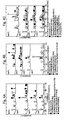
- a granulated slag was pulverized down to 1 mm or less by pulverizer. Ten grams each of the powder thus obtained was charged in crucibles made of nickel; 16g solid base was added to each crucible. In different crucibles, the base used was respectively sodium hydroxide, potassium hydroxide, or lithium hydroxide. The granulated slag powder and the solid base were then pulverized and mixed. The obtained mixture was heated and melted at 600 °C for 6 hours by electric furnace to produce respective molten chips. To 20 mL distilled water, 2g of the obtained molten chips was added and stirred at 700 rpm for 24 hours.
- each of the products were analyzed by XRD (that means powder X-ray diffraction measurement using CuK ⁇ as a radiation source.
- XRD powder X-ray diffraction measurement using CuK ⁇ as a radiation source.
- Fig. 2A As seen from the Fig. 2A , calcite and poltlandite were produced; it is understood that yield of the intended product is different depending on the species of the solid base (production of NiO is attributed to the crucible) .
- a granulated slag was pulverized down to 1 mm or less by pulverizer.
- Ten grams of the powder thus obtained was charged in a crucible made of nickel; 16g each of sodium hydroxide was added to the crucible and then the granulated slag powder and the solid base were pulverized and mixed.
- the obtained mixture was heated and melted at 600 °C for 6 hours by electric furnace to produce molten chips.
- To 0M, 0.1M, 0.25M, 0.5M concentration of 20 mL ethylenediamine tetraacetate (EDTA) solutions 2g each of molten chips was respectively added and stirred at 700 rpm for 24 hours. Then, each of the products were analyzed by XRD.
- EDTA ethylenediamine tetraacetate
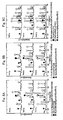
- each of the ratios i.e. ⁇ 3 / ⁇ 3 , ⁇ 4 / ⁇ 3 , or ⁇ 5 / ⁇ 3 ) is 0.5 or more and 1 or less. Specifically, ⁇ 3 / ⁇ 3 is 0.86, ⁇ 4 / ⁇ 3 is 0.88, and ⁇ 5 / ⁇ 3 is 0.58.
- a granulated slag, a slowly-cooled slag, and a converter slag were respectively pulverized down to 1 mm or less by pulverizer.
- 16g of sodium hydroxide was added; then, the powder and sodium hydroxide were pulverized and mixed.
- the obtained mixture was charged in a crucible made of nickel and then melted with heating at 200 °C, 400 °C, 600 °C, and 800 °C for 6 hours by electric furnace.
- the molten chips after melting were added to 80 mL distilled water and then aged with stirring at 700 rpm at room temperature for 24 hours.
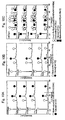
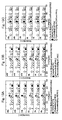
- Each of the products derived from the respective slags was analyzed by XRD. The results are shown in Figs.
- Fig. 4A shows the results for granulated slag
- Fig. 4B shows the results for slowly-cooled slag
- Fig. 4C shows the results for converter slag.
- the granulated slag is not influenced by the melting temperature much.
- the other slags when the melting temperature is between 200 °C and 400 °C, crystalline components in the slag are seen to remain; when the melting temperature is at 600 °C, the crystalline components in the slag disappear and hydrocalumite (including hydrotalcite) is seen to be produced most.
- hydrocalumite including hydrotalcite
- molten chips melted under the same conditions as above were added to a solution in the same manner as above and then stirred for 24 hours. After that, it was sealed in a pressure tight case and then heated at 80 °C for 6 hours.
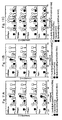
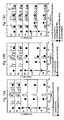
- Each of the products was analyzed by XRD. The results are shown in Figs. 5A to 5C.
- Fig. 5A shows the results for granulated slag
- Fig. 5B shows the results for slowly-cooled slag
- Fig. 5C shows the results for converter slag.
- hydro-grossular garnet is seen to be favorably produced under the same conditions as those of hydrocalumite.
- the melting temperature of molten chips before synthesis and conversion to hydrocomposite is assumed to be 600 °C.
- the ratio ( ⁇ 2 / ⁇ 2 ) in Fig. 5B is 0.07-0.30
- the ratio ( ⁇ 2 / ⁇ 2 ) in Fig. 5C is 0.1-0.65.
- the ratio ( ⁇ 2 / ⁇ 2 ) is within the range of 0.07-0.65; particularly the ratio ( ⁇ 2 / ⁇ 2 ) is concentrated in the range of 0.1-0.3.
- the ratio ( ⁇ 1 / ⁇ 1 ) in Fig. 5A is 0.11-0.38
- the ratio ( ⁇ 1 / ⁇ 1 ) in Fig. 5B is 0.1-1.09
- the ratio ( ⁇ 1 / ⁇ 1 ) in Fig. 5C is 1.85-5.2.
- the ratio ( ⁇ 1 / ⁇ 1 ) is within the range of 0.1-5.2; particularly the ratio ( ⁇ 1 / ⁇ 1 ) is concentrated in the range of 0.6-1.0.
- a granulated slag, a slowly-cooled slag, and a converter slag were respectively pulverized down to 1 mm or less by pulverizer.
- 2g, 4g, 5g, 8g, and 10g of sodium hydroxide were respectively added; then, the powder and sodium hydroxide were pulverized and mixed.
- Each of the obtained mixtures was charged in a crucible made of nickel and then melted with heating at 600 °C for 6 hours by electric furnace.
- the molten chips after melting were added to 40 mL distilled water and then stirred at 700 rpm at room temperature for 24 hours.
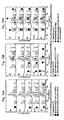
- Each of the products was analyzed by XRD. The results are shown in Figs. 6A to 6C.
- FIG. 6A shows the results for granulated slag
- Fig. 6B shows the results for slowly-cooled slag
- Fig. 6C shows the results for converter slag.
- hydrocalumite including hydrotalcite
- Figs. 6A to 6C The results of Figs. 6A to 6C will be described in detail as follows.
- the ratio ( ⁇ 2 / ⁇ 2 ) in Fig. 6A is 0.37-0.87
- Fig. 6B is 0.11-1.02, and the ratio ( ⁇ 2 / ⁇ 2 ) in Fig. 6C is 0.53-3.78. As a whole, the ratio ( ⁇ 2 / ⁇ 2 ) is within the range of 0.11-0.38; particularly the ratio ( ⁇ 2 / ⁇ 2 ) is concentrated in the range of 0.7-0.8.
- each of the molten chips melted under the same conditions as above was added to each of the solutions in the same manner as above and then stirred for 24 hours. After that, it was sealed in a pressure tight case and then heated at 80 °C for 6 hours.
- Each of the products was analyzed by XRD. The results are shown in Figs. 7A to 7C.
- Fig. 7A shows the results for granulated slag
- Fig. 7B shows the results for slowly-cooled slag
- Fig. 7C shows the results for converter slag.
- the mixing ratio of the powder and the solid base is 0.8-1.6 (i.e.
- hydro-grossular garnet (it may be called hydrogarnet) is seen to be favorably produced.
- hydro-grossular garnet (it may be called hydrogarnet) is seen to be favorably produced.
- a mixture which is melted with the mixing ratio of about 1.6 is most suitably used for hydrocalumite and a mixture which is melted with the mixing ratio of about 0.8 to about 1. 6 is most suitably used for hydro-grossular garnet.
- Figs. 7A to 7C The results of Figs. 7A to 7C will be described in detail as follows.
- the strength in X-ray diffraction relating to the (420) crystal face of hydrogarnet is denoted " ⁇ 1 "
- the strength in X-ray diffraction relating to the (104) crystal face of calcite is denoted " ⁇ 1 ", looking into the results in which hydrogarnet is produced
- the ratio ( ⁇ 1 / ⁇ 1 ) in Fig. 7A is 0.17-0.27
- the ratio ( ⁇ 1 / ⁇ 1 ) in Fig. 7B is 0.1-0.3
- Figs. 7C is 0.08-0.94.
- the ratio ( ⁇ 1 / ⁇ 1 ) is within the range of 0.08-0.94; particularly the ratio ( ⁇ 1 / ⁇ 1 ) is concentrated in the range of 0.15-0.18.
- the results shown in Figs. 7A and 7B will be described in further detail as follows.
- the ratio ( ⁇ 2 / ⁇ 2 ) in Fig. 7A is 0.46-1.23 and the ratio ( ⁇ 2 / ⁇ 2 ) in Fig. 7B is 0.1-1.32.
- the ratio ( ⁇ 2 / ⁇ 2 ) is within the range of 0.1-1.32; particularly the ratio ( ⁇ 2 / ⁇ 2 ) is concentrated in the range of 1.2-1.3.
- a granulated slag, a slowly-cooled slag, and a converter slag were respectively pulverized down to 1 mm or less by pulverizer.
- 16g of sodium hydroxide was added; then, the powder and sodium hydroxide were pulverized and mixed.
- the obtained mixture was charged in a crucible made of nickel and then melted with heating at 600 °C for 6 hours by electric furnace.
- the molten chips after melting were added to 40 mL, 80 mL, and 160 mL distilled water (i.e. 4, 8, 16 mL/g-mixture.) and then respectively stirred at 700 rpm at room temperature for 24 hours.
- Each of the products was analyzed by XRD.
- Figs. 8A to 8C show the results for granulated slag
- Fig. 8B shows the results for slowly-cooled slag
- Fig. 8C shows the results for converter slag.
- calcite is produced from granulated slag and slowly-cooled slag
- hydro-grossular garnet i.e. hydrogarnet.
- the ratio ( ⁇ 2 / ⁇ 2 ) in Fig. 8B is 0.1-0.54
- the ratio ( ⁇ 2 / ⁇ 2 ) in Fig. 8C is 0.41-2.33.
- the ratio ( ⁇ 2 / ⁇ 2 ) is within the range of 0.1-2.33; particularly the ratio ( ⁇ 2 / ⁇ 2 ) is concentrated in the range of 0.4-0.5.
- each of the molten chips melted under the same conditions as above was added to each of the solutions in the same manner as above and then stirred for 24 hours. After that, it was sealed in a pressure tight case and then heated at 80 °C for 6 hours.
- Each of the products was analyzed by XRD. The results are shown in Figs. 9A to 9C.
- Fig. 9A shows the results for granulated slag
- Fig. 9B shows the results for slowly-cooled slag
- Fig. 9C shows the results for converter slag.
- hydro-grossular garnet hydrogarnet
- hydro-grossular garnet is seen to be favorably produced from granulated slag and slowly-cooled slag under the same conditions of hydrocalumite.
- the ratio ( ⁇ 2 / ⁇ 2 ) in Fig. 9A is 0.32-0.84
- the ratio ( ⁇ 2 / ⁇ 2 ) in Fig. 9B is 0.15-1.12
- the ratio ( ⁇ 2 / ⁇ 2 ) in Fig. 9C is 0.27-0.31.
- the ratio ( ⁇ 2 / ⁇ 2 ) is within the range of 0.15-1.12; particularly the ratio ( ⁇ 2 / ⁇ 2 ) is concentrated in the range of 0.2-0.4.
- the ratio ( ⁇ 1 / ⁇ 1 ) in Fig. 9C is 2.41-4.0. As a whole, the ratio ( ⁇ 1 / ⁇ 1 is within the range of 0.1-4.0; particularly the ratio ( ⁇ 1 ⁇ 1 is concentrated in the range of 0.9-1.2.
- a granulated slag, a slowly-cooled slag, and a converter slag were respectively pulverized down to 1 mm or less by pulverizer.
- 16g of sodium hydroxide was added; then, the powder and sodium hydroxide were pulverized and mixed.
- the obtained mixture was charged in a crucible made of nickel and then melted with heating at 600 °C for 6 hours by electric furnace.
- the molten chips after melting were added to 80 mL distilled water and then stirred at room temperature for 24 hours.
- the stirring speed was 0 rpm, 350 rpm, 700 rpm, and 1400 rpm.
- Each of the products was analyzed by XRD. The results are shown in Figs.
- Fig. 10A shows the results for granulated slag
- Fig. 10B shows the results for slowly-cooled slag
- Fig. 10C shows the results for converter slag.
- Figs. 10A to 10C The results of Figs. 10A to 10C will be described in detail as follows.
- the strength in X-ray diffraction relating to the (102) crystal face of hydrocalumite is denoted " ⁇ 2 " and the strength in X-ray diffraction relating to the (104) crystal face of calcite is denoted " ⁇ 2
- the ratio ( ⁇ 2 / ⁇ 2 ) in Fig. 10A is 1.07-1.81
- Fig. 10B is 0.94-2.12, and the ratio ( ⁇ 2 / ⁇ 2 ) in Fig. 10C is 0.95-3.89. As a whole, the ratio ( ⁇ 2 / ⁇ 2 ) is within the range of 0.94-3.89; particularly the ratio ( ⁇ 2 / ⁇ 2 ) is concentrated in the range of 1.0-2.1.
- each of the molten chips melted under the same conditions as above was added to each of the solutions in the same manner as above and then stirred for 24 hours. After that, it was sealed in a pressure tight case and then heated at 80 °C for 6 hours.
- Each of the products was analyzed by XRD. The results are shown in Figs. 11A to 11C.
- Fig. 11A shows the results for granulated slag
- Fig. 11B shows the results for slowly-cooled slag
- Fig. 11C shows the results for converter slag.
- hydro-grossular garnet hydrogarnet
- Figs. 11A to 11C The results of Figs. 11A to 11C will be described in detail as follows.
- the strength in X-ray diffraction relating to the (102) crystal face of hydrocalumite is denoted " ⁇ 2 "
- the strength in X-ray diffraction relating to the (104) crystal face of calcite is denoted " ⁇ 2 "
- the ratio ( ⁇ 2 / ⁇ 2 ) in Fig. 11A is 0.16-0.32
- FIG. 11B is 0.20-0.40, and the ratio ( ⁇ 2 / ⁇ 2 ) in Fig. 11C is 0.4-0.6. As a whole, the ratio ( ⁇ 2 / ⁇ 2 ) is within the range of 0.16-0.6; particularly the ratio ( ⁇ 2 / ⁇ 2 ) is concentrated in the range of 0.3-0.4.
- the ratio ( ⁇ 1 / ⁇ 1 ) in Fig. 11A is 0.78-1.36
- the ratio ( ⁇ 1 / ⁇ 1 ) in Fig. 11B is 1.19-2.0
- the ratio ( ⁇ 1 / ⁇ 1 ) in Fig. 11C is 2.63-6.63.
- the ratio ( ⁇ 1 / ⁇ 1 ) is within the range of 0.78-6.63; particularly the ratio ( ⁇ 1 / ⁇ 1 ) is concentrated in the range of 1.1-1.3.
- a granulated slag, a slowly-cooled slag, and a converter slag were respectively pulverized down to 1 mm or less by pulverizer.
- 16g of sodium hydroxide was added; then, the powder and sodium hydroxide were pulverized and mixed.
- the obtained mixture was charged in a crucible made of nickel and then melted with heating at 600 °C for 6 hours by electric furnace.
- the molten chips after melting were added to 80 mL distilled water and then stirred at 700 rpm at room temperature for each stirring time.
- the stirring times were respectively 5 minutes (shown as 0 hour in Figs. 12A to 12C ), 3 hours, 6 hours, 12 hours, 24 hours, and 48 hours.
- Figs. 12A to 12C Each of the products was analyzed by XRD. The results are shown in Figs. 12A to 12C.
- Fig. 12A shows the results for granulated slag
- Fig. 12B shows the results for slowly-cooled slag
- Fig. 12C shows the results for converter slag.
- portlandite disappears, while hydrocalumite is produced instead.
- hydrocalumite is produced most with 24-hour stirring; while, from converter slag, hydrocalumite is produced most with 6-hour stirring.
- Figs. 12A to 12C The results of Figs. 12A to 12C will be described in detail as follows.
- the strength in X-ray diffraction relating to the (102) crystal face of hydrocalumite is denoted " ⁇ 2 "
- the strength in X-ray diffraction relating to the (104) crystal face of calcite is denoted " ⁇ 2 ", looking into the results in which hydrocalcite is produced
- the ratio ( ⁇ 2 / ⁇ 2 ) in Fig. 12B is 0.1-1.55
- the ratio ( ⁇ 2 / ⁇ 2 ) in Fig. 12C is 0.58-5.95.
- the ratio ( ⁇ 2 / ⁇ 2 ) is within the range of 0.1-5.95; particularly the ratio ( ⁇ 2 / ⁇ 2 ) is concentrated in the range of 0.6-1.5.
- each of the molten chips melted under the same conditions as above was added to each of the solutions in the same manner as above and then stirred for each stirring time. After that, it was sealed in a pressure tight case and then heated at 80 °C for 6 hours.
- Each of the products was analyzed by XRD. The results are shown in Figs. 13A to 13C.
- Fig. 13A shows the results for granulated slag
- Fig. 13B shows the results for slowly-cooled slag
- Fig. 13C shows the results for converter slag.
- hydro-grossular garnet hydrogarnet
- Figs. 13A to 11C The results of Figs. 13A to 11C will be described in detail as follows.
- the strength in X-ray diffraction relating to the (102) crystal face of hydrocalumite is denoted " ⁇ 2 "
- the strength in X-ray diffraction relating to the (104) crystal face of calcite is denoted " ⁇ 2 "
- the ratio ( ⁇ 2 / ⁇ 2 ) in Fig. 13A is 0.19-0.57
- the ratio ( ⁇ 1 / ⁇ 1 ) in Fig. 13A is 0.47-1.27
- the ratio ( ⁇ 1 / ⁇ 1 ) in Fig. 13B is 0.79-1.79
- the ratio ( ⁇ 1 / ⁇ 1 ) in Fig. 13C is 2.24-4.92.
- the ratio ( ⁇ 1 / ⁇ 1 ) is within the range of 0.47-4.92; particularly the ratio ( ⁇ 1 / ⁇ 1 ) is concentrated in the range of 1.2-3.3.
- a granulated slag, a slowly-cooled slag, and a converter slag were respectively pulverized down to 1 mm or less by pulverizer.
- 16g of sodium hydroxide was added; then, the powder and sodium hydroxide were pulverized and mixed.
- the obtained mixture was charged in a crucible made of nickel and then melted with heating at 600 °C for 6 hours by electric furnace.
- the molten chips after melting was added to 80 mL distilled water and then stirred at 700 rpm at room temperature for 24 hours. After that, it was sealed in a pressure tight case and then heated at 80 °C, 100 °C, 120 °C, 150 °C, and 180 °C, for 6 hours.
- Figs. 14A and 14B show the results for granulated slag and Fig. 14B shows the results for converter slag.
- hydro-grossular garnet hydrogarnet
- portlandite is produced at a higher temperature.
- ⁇ 2 the strength in X-ray diffraction relating to the (102) crystal face of hydrocalumite
- ⁇ 2 the strength in X-ray diffraction relating to the (104) crystal face of calcite
- the ratio ( ⁇ 2 / ⁇ 2 ) in Fig. 14A is 0.19-2.6.
- the strength in X-ray diffraction relating to the (420) crystal face of hydrogarnet is denoted " ⁇ 1 "
- the strength in X-ray diffraction relating to the (104) crystal face of calcite is denoted " ⁇ 1 "
- the ratio ( ⁇ 1 / ⁇ 1 ) in Fig. 14A is 0.37-0.53
- the ratio ( ⁇ 1 / ⁇ 1 ) in Fig. 14B is 0.50-8.1.
- the ratio ( ⁇ 1/ ⁇ 1 ) is within the range of 0.37-8.1; particularly the ratio ( ⁇ 1 / ⁇ 1 ) is concentrated in the range of 0.3-0.5.
- a granulated slag, a slowly-cooled slag, and a converter slag were respectively pulverized down to 1 mm or less by pulverizer.
- 16g of sodium hydroxide was added; then, the powder and sodium hydroxide were pulverized and mixed.
- the obtained mixture was charged in a crucible made of nickel and then melted with heating at 600 °C for 6 hours by electric furnace.
- the molten chips after melting were added to 80 mL distilled water and then stirred at 700 rpm at room temperature for 24 hours. After that, it was sealed in a pressure tight case and then heated at 80 °C and 180 °C for 0 hour, 0.5 hour, 1.2 hours, and 4 hours to obtain the products.
- Figs. 15A to 15C The results at 80 °C heating temperature are shown in Figs. 15A to 15C ; the results at 180 °C heating temperature are shown in Figs. 16A to 16C.
- Fig. 16A shows the results for granulated slag
- Fig. 16B shows the results for slowly-cooled slag
- Fig. 16C shows the results for converter slag.
- hydrocalumite rapidly decreases and hydro-grossular garnet (hydrogarnet) is produced.
- Figs. 15A to 15C The results of Figs. 15A to 15C will be described in detail as follows.
- the strength in X-ray diffraction relating to the (102) crystal face of hydrocalumite is denoted " ⁇ 2 "
- the strength in X-ray diffraction relating to the (104) crystal face of calcite is denoted " ⁇ 2 "
- the ratio ( ⁇ 2 / ⁇ 2 ) in Fig. 15A is 0.11-1.61
- Fig. 15B is 0.19-2.6, and the ratio ( ⁇ 2 / ⁇ 2 ) in Fig. 15C is 0.20-5.48. As a whole, the ratio ( ⁇ 2 / ⁇ 2 ) is within the range of 0.11-5.48; particularly the ratio ( ⁇ 2 / ⁇ 2 ) is concentrated in the range of 1.3-1.9.
- the ratio ( ⁇ 1 / ⁇ 1 ) in Fig. 15A is 0.1-0.99
- the ratio ( ⁇ 1 / ⁇ 1 ) in Fig. 15B is 0.1-1.3
- the ratio ( ⁇ 1 / ⁇ 1 ) in Fig. 15C is 0.97-5.45.
- the ratio ( ⁇ 1 / ⁇ 1 ) is within the range of 0.1-5.45; particularly the ratio ( ⁇ 1 / ⁇ 1 ) is concentrated in the range of 0.1-1.
- Figs. 16A and 16B The results of Figs. 16A and 16B will be described in detail as follows.
- the strength in X-ray diffraction relating to the (102) crystal face of hydrocalumite is denoted " ⁇ 2 "
- the strength in X-ray diffraction relating to the (104) crystal face of calcite is denoted " ⁇ 2 "
- the ratio ( ⁇ 2 / ⁇ 2 ) in Fig. 16A is 0.07-0.27
- Fig. 16B is 0-1.19, and the ratio ( ⁇ 2 / ⁇ 2 ) in Fig. 16C is 0-0. As a whole, the ratio ( ⁇ 2 / ⁇ 2 ) is within the range of 0.07-1.19; particularly the ratio ( ⁇ 2 / ⁇ 2 ) is concentrated in the range of 0.1-0.8.
- the ratio ( ⁇ 1 / ⁇ 1 ) in Fig. 16A is 0.4-1.07
- the ratio ( ⁇ 1 / ⁇ 1 ) in Fig. 16B is 0.1-2.29
- the ratio ( ⁇ 1 / ⁇ 1 ) in Fig. 16C is 3.1-9.2.
- the ratio ( ⁇ 1 / ⁇ 1 ) is within the range of 0.1-9.2; particularly the ratio ( ⁇ 1 / ⁇ 1 ) is concentrated in the range of 0.4-1.1.
- a granulated slag, a slowly-cooled slag, and a converter slag were respectively pulverized down to 1 mm or less by pulverizer.
- 16g of sodium hydroxide was added; then, the powder and sodium hydroxide were pulverized and mixed.
- the obtained mixture was charged in a crucible made of nickel and then melted with heating at 600 °C for 6 hours by electric furnace.
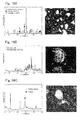
- the molten chips after melting were added to 80 mL distilled water and then stirred at 700 rpm at room temperature for 24 hours. Untreated slags, molten chips, and each of the products was respectively analyzed by XRD and those surfaces were observed by SEM. The results are shown in Figs.
- Figs. 17A to 17C show the results for granulated slag
- Figs. 18A to 18C show the results for slowly-cooled slag
- Figs. 19A to 19C show the results for converter slag
- Figs. 17A , 18A , and 19A show the results for untreated slags
- Figs. 17B , 18B , and 19B show the results for molten chips
- Figs. 17C , 18C , and 19C show the results for each of the products after 24-hour stirring.
- the strength in X-ray diffraction relating to the (102) crystal face of hydrocalumite is denoted " ⁇ 2 "
- the strength in X-ray diffraction relating to the (104) crystal face of calcite is denoted " ⁇ 2 "
- the ratio ( ⁇ 2 / ⁇ 2 ) is 1.83.
- the strength in X-ray diffraction relating to the (420) crystal face of hydrogarnet is denoted " ⁇ 1 "
- the strength in X-ray diffraction relating to the (104) crystal face of calcite is denoted " ⁇ 1 "
- the ratio ( ⁇ 1 / ⁇ 1 ) is 0.31.
- Performance of iron and steel slag and hydrocomposites of the present invention obtained from the iron and steel slag was evaluated. Specifically, an adsorption test of a predetermined anion was carried out with various iron and steel slags used as the raw material and the hydrocalumites (products) obtained from the iron and steel slag; then, the performance was evaluated.
- the hydrocalumites used in the adsorption test were the ones obtained in the same manner as Example 10. In other words, comparison between a granulated slag and a hydrocalumite obtained from the granulated slag and comparison between a slowly-cooled slag and a hydrocalumite obtained from the slowly-cooled slag were carried out.
- the evaluation test was carried out in accordance with the following procedures. That is, 0.lg of samples for adsorption test were prepared; then, 10 mL of 1 mM anionic solution was added to each of the prepared samples and shaken for 12 hours; finally, anionic adsorption performance of each mixture was evaluated.
- Figs. 20A, 20B and Figs. 21A, 21B The results of anionic adsorption performance are shown in Figs. 20A, 20B and Figs. 21A, 21B .
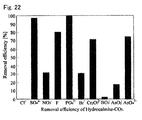
- anionic adsorption performance when using test reagent of hydrocalumite is shown in Fig.22 .
- Figs. 20A , 21A show the results for iron and steel slag as it is (as a raw material) and Figs. 20B , 21B show the results for the obtained hydrocalumite (as the product).
- Zeolite and hydrogarnet both obtained from iron and steel slag are much the same.
- Zeolite can be used for, for example, detergent for water and soil conditioner;
- hydrogarnet can be used for, for example, immobilizing material for hydrochloric gas.
- the present invention it is possible to produce hydrocomposites such as zeolite and hydrogarnet from iron and steel slag without adding other components and requiring complex treatment process. Therefore, the method is useful for the new application of iron and steel slag and is useful as the new processing method. In addition, by recycling of the whole slag, zero emissions can be achieved thereby it is possible to contribute to a recycling-intensive society.
Landscapes
- Chemical & Material Sciences (AREA)
- Organic Chemistry (AREA)
- Inorganic Chemistry (AREA)
- Life Sciences & Earth Sciences (AREA)
- Geology (AREA)
- Chemical Kinetics & Catalysis (AREA)
- Engineering & Computer Science (AREA)
- General Life Sciences & Earth Sciences (AREA)
- Analytical Chemistry (AREA)
- Materials Engineering (AREA)
- Mechanical Engineering (AREA)
- Metallurgy (AREA)
- Manufacturing & Machinery (AREA)
- Environmental & Geological Engineering (AREA)
- Silicates, Zeolites, And Molecular Sieves (AREA)
- Processing Of Solid Wastes (AREA)
- Solid-Sorbent Or Filter-Aiding Compositions (AREA)
- Compounds Of Alkaline-Earth Elements, Aluminum Or Rare-Earth Metals (AREA)
Applications Claiming Priority (2)
| Application Number | Priority Date | Filing Date | Title |
|---|---|---|---|
| JP2009013406 | 2009-01-23 | ||
| PCT/JP2010/050817 WO2010084958A1 (fr) | 2009-01-23 | 2010-01-22 | Hydro-composite avec un laitier de fer et d'acier en tant que matière de départ et son procédé de fabrication |
Publications (1)
| Publication Number | Publication Date |
|---|---|
| EP2390228A1 true EP2390228A1 (fr) | 2011-11-30 |
Family
ID=42356008
Family Applications (1)
| Application Number | Title | Priority Date | Filing Date |
|---|---|---|---|
| EP20100733565 Withdrawn EP2390228A1 (fr) | 2009-01-23 | 2010-01-22 | Hydro-composite avec un laitier de fer et d'acier en tant que matière de départ et son procédé de fabrication |
Country Status (4)
| Country | Link |
|---|---|
| US (1) | US20110278498A1 (fr) |
| EP (1) | EP2390228A1 (fr) |
| JP (2) | JP5610442B2 (fr) |
| WO (1) | WO2010084958A1 (fr) |
Cited By (1)
| Publication number | Priority date | Publication date | Assignee | Title |
|---|---|---|---|---|
| TWI482863B (zh) * | 2012-12-05 | 2015-05-01 | China Steel Corp | 鋼爐渣的安定化方法 |
Families Citing this family (9)
| Publication number | Priority date | Publication date | Assignee | Title |
|---|---|---|---|---|
| AT382084B (de) | 1985-07-05 | 1987-01-12 | Tyrolia Freizeitgeraete | Sicherheitsskibindung |
| WO1995012057A1 (fr) | 1993-10-29 | 1995-05-04 | Siemens Aktiengesellschaft | Moteur de commande, notamment pour soupapes a fermeture rapide |
| EP2390228A1 (fr) * | 2009-01-23 | 2011-11-30 | Akita University | Hydro-composite avec un laitier de fer et d'acier en tant que matière de départ et son procédé de fabrication |
| JP5585905B2 (ja) * | 2009-07-03 | 2014-09-10 | 国立大学法人秋田大学 | 無機イオン交換体の製造方法 |
| JP6302311B2 (ja) * | 2014-03-20 | 2018-03-28 | 公立大学法人大阪市立大学 | 球状ハイドロタルサイトとその製造方法 |
| JP6881094B2 (ja) * | 2017-06-30 | 2021-06-02 | 宇部興産株式会社 | 耐酸性混和材 |
| CN110950351B (zh) * | 2019-12-26 | 2021-05-25 | 吉林大学 | 一种x沸石分子筛及其制备方法 |
| CN112456638B (zh) * | 2020-09-29 | 2023-03-17 | 江苏环保产业技术研究院股份公司 | 一种改性钢渣填料及其制备方法和应用 |
| CN113955795A (zh) * | 2021-12-06 | 2022-01-21 | 苏州北美国际高级中学 | 一种纳米氧化铜的制备方法 |
Family Cites Families (13)
| Publication number | Priority date | Publication date | Assignee | Title |
|---|---|---|---|---|
| JPS58167421A (ja) * | 1982-03-26 | 1983-10-03 | Nippon Kokan Kk <Nkk> | ゼオライト質組成物の製造方法 |
| JP4330182B2 (ja) * | 1996-03-11 | 2009-09-16 | 電気化学工業株式会社 | 炭酸型ハイドロカルマイトの合成方法 |
| JP3082855B1 (ja) | 1999-08-24 | 2000-08-28 | 高温酸性ガス固定化技術研究組合 | ハイドロガーネットの製造法及びハイドロガーネットによる高温酸性排ガスの除去法 |
| JP3693283B2 (ja) * | 1999-12-24 | 2005-09-07 | 彰男 逸見 | 珪酸4配位アルミニウム塩類の製造方法並びに珪酸4配位アルミニウム塩類を用いた土壌斜面および宅地造成地の土壌改良方法 |
| JP3517379B2 (ja) * | 2000-02-04 | 2004-04-12 | 彰男 逸見 | 産業廃棄物からのゼオライトの合成方法 |
| JP3692443B2 (ja) | 2000-02-07 | 2005-09-07 | 日本インシュレーション株式会社 | 石炭ガス化スラグを用いたハイドログロシュラーの製造方法 |
| JP3818822B2 (ja) * | 2000-03-17 | 2006-09-06 | 株式会社Inax | 水熱固化体の製造方法 |
| JP4210750B2 (ja) * | 2002-08-21 | 2009-01-21 | 独立行政法人産業技術総合研究所 | 活性酸素を包含した無機化合物及びその製造法 |
| JP2005239459A (ja) | 2004-02-25 | 2005-09-08 | Tohoku Techno Arch Co Ltd | ゼオライトの製造方法 |
| JP4988187B2 (ja) * | 2005-11-14 | 2012-08-01 | 隆昌 和嶋 | ゼオライトの製造方法 |
| JP5175472B2 (ja) | 2005-12-20 | 2013-04-03 | 日本化学工業株式会社 | ハイドロカルマイトの製造方法 |
| JP2007222713A (ja) | 2006-02-21 | 2007-09-06 | Tohoku Univ | 鉄鋼産業副生成物からのマグネシウム及びカルシウム除去回収とa型ゼオライト製造方法 |
| EP2390228A1 (fr) * | 2009-01-23 | 2011-11-30 | Akita University | Hydro-composite avec un laitier de fer et d'acier en tant que matière de départ et son procédé de fabrication |
-
2010
- 2010-01-22 EP EP20100733565 patent/EP2390228A1/fr not_active Withdrawn
- 2010-01-22 JP JP2010547534A patent/JP5610442B2/ja not_active Expired - Fee Related
- 2010-01-22 US US13/145,922 patent/US20110278498A1/en not_active Abandoned
- 2010-01-22 WO PCT/JP2010/050817 patent/WO2010084958A1/fr not_active Ceased
-
2014
- 2014-08-12 JP JP2014164316A patent/JP5843118B2/ja not_active Expired - Fee Related
Non-Patent Citations (1)
| Title |
|---|
| See references of WO2010084958A1 * |
Cited By (1)
| Publication number | Priority date | Publication date | Assignee | Title |
|---|---|---|---|---|
| TWI482863B (zh) * | 2012-12-05 | 2015-05-01 | China Steel Corp | 鋼爐渣的安定化方法 |
Also Published As
| Publication number | Publication date |
|---|---|
| JP5843118B2 (ja) | 2016-01-13 |
| JP2015038022A (ja) | 2015-02-26 |
| JPWO2010084958A1 (ja) | 2012-07-19 |
| JP5610442B2 (ja) | 2014-10-22 |
| US20110278498A1 (en) | 2011-11-17 |
| WO2010084958A1 (fr) | 2010-07-29 |
Similar Documents
| Publication | Publication Date | Title |
|---|---|---|
| US20110278498A1 (en) | Hydrocomposite with iron and steel slag as starting material and method for producing the same | |
| He et al. | Extraction of alumina from aluminum dross by a non-hazardous alkaline sintering process: Dissolution kinetics of alumina and silica from calcined materials | |
| Cheng et al. | Phosphate adsorption from sewage sludge filtrate using zinc–aluminum layered double hydroxides | |
| JP4829610B2 (ja) | 水酸アパタイト結晶を主成分とする吸着材の製造方法 | |
| AU2017353194A1 (en) | Process for the recovery of lithium | |
| CN102424391A (zh) | 一种综合利用含铝物料的方法 | |
| CN114149063B (zh) | 一种硅酸盐-碳酸盐复合矿物材料、其制备方法及在沉淀重金属离子方面的应用 | |
| CN111592001A (zh) | 一种粉煤灰制备层状双氢氧化物和白炭黑的方法 | |
| Zdah et al. | Green method of phosphogypsum waste conversion to lithium sulfate monohydrate and calcium hydroxide | |
| JP5768293B2 (ja) | フッ素含有無機系廃棄物を用いる土壌固化材の製造方法及び得られた土壌固化材並びに同土壌固化材を用いる軟弱な土壌の固化方法 | |
| Shu et al. | Cooperative removal of Mn2+, NH4+− N, PO43−− P and F− from electrolytic manganese residue leachate and phosphogypsum leachate | |
| Wajima | Synthesis of zeolite from blast furnace slag using alkali fusion with addition of EDTA | |
| Yuan et al. | Synergistic carbonation reaction mechanism of steel slag-magnesium slag | |
| Wajima et al. | Synthesis of hydrocalumite-like adsorbent from blast furnace slag using alkali fusion | |
| CN114028758A (zh) | 一种铝灰渣固化稳定化药剂 | |
| Iwama et al. | Research and Development on Utilization of Steelmaking Slag and Recovery of Valuable Slag Elements | |
| KR20120061435A (ko) | 메카노케미스트리 기술을 이용한 폐유동상 촉매성 촉매로부터 이산화규소 및 산화알루미늄 등의 유가자원 회수방법 | |
| Ju et al. | Extraction of valuable metals from acidic wastewater and blast furnace slag by a collaborative utilization process | |
| Wajima | Preparation of HCl Gas Scavenger from Blast Furnace Slag through Alkali Fusion | |
| JP2008007606A (ja) | バイオマス燃料の製造方法及びこれを利用したバイオマス燃料システム | |
| KR101196805B1 (ko) | 전기로 환원슬래그를 이용한 고-기 반응 공정으로써 이산화탄소 고정화 방법 | |
| US12570523B2 (en) | Process for producing a hydrogen-rich gas stream from aluminium waste | |
| Feng et al. | Hydrothermal conversion from hydrogarnet to hydroandradite based on alumina recovery from red mud | |
| JP2006335578A (ja) | 葉片状二水石膏及びその製造方法 | |
| WAJIMA | Conversion of Steel Converter Slag into HCl Gas Scavenger Using Alkali Fusion |
Legal Events
| Date | Code | Title | Description |
|---|---|---|---|
| PUAI | Public reference made under article 153(3) epc to a published international application that has entered the european phase |
Free format text: ORIGINAL CODE: 0009012 |
|
| 17P | Request for examination filed |
Effective date: 20110812 |
|
| AK | Designated contracting states |
Kind code of ref document: A1 Designated state(s): AT BE BG CH CY CZ DE DK EE ES FI FR GB GR HR HU IE IS IT LI LT LU LV MC MK MT NL NO PL PT RO SE SI SK SM TR |
|
| DAX | Request for extension of the european patent (deleted) | ||
| RAP1 | Party data changed (applicant data changed or rights of an application transferred) |
Owner name: NATIONAL UNIVERSITY CORPORATION CHIBA UNIVERSITY |
|
| STAA | Information on the status of an ep patent application or granted ep patent |
Free format text: STATUS: THE APPLICATION HAS BEEN WITHDRAWN |
|
| 18W | Application withdrawn |
Effective date: 20150729 |