EP2390806A2 - Système et procédé pour identifier des motifs de replikine complexes d'acides aminés - Google Patents
Système et procédé pour identifier des motifs de replikine complexes d'acides aminés Download PDFInfo
- Publication number
- EP2390806A2 EP2390806A2 EP11158093A EP11158093A EP2390806A2 EP 2390806 A2 EP2390806 A2 EP 2390806A2 EP 11158093 A EP11158093 A EP 11158093A EP 11158093 A EP11158093 A EP 11158093A EP 2390806 A2 EP2390806 A2 EP 2390806A2
- Authority
- EP
- European Patent Office
- Prior art keywords
- amino acid
- replikin
- protein
- amino acids
- sequence
- Prior art date
- Legal status (The legal status is an assumption and is not a legal conclusion. Google has not performed a legal analysis and makes no representation as to the accuracy of the status listed.)
- Withdrawn
Links
Images



Classifications
-
- G—PHYSICS
- G16—INFORMATION AND COMMUNICATION TECHNOLOGY [ICT] SPECIALLY ADAPTED FOR SPECIFIC APPLICATION FIELDS
- G16B—BIOINFORMATICS, i.e. INFORMATION AND COMMUNICATION TECHNOLOGY [ICT] SPECIALLY ADAPTED FOR GENETIC OR PROTEIN-RELATED DATA PROCESSING IN COMPUTATIONAL MOLECULAR BIOLOGY
- G16B30/00—ICT specially adapted for sequence analysis involving nucleotides or amino acids
-
- G—PHYSICS
- G16—INFORMATION AND COMMUNICATION TECHNOLOGY [ICT] SPECIALLY ADAPTED FOR SPECIFIC APPLICATION FIELDS
- G16B—BIOINFORMATICS, i.e. INFORMATION AND COMMUNICATION TECHNOLOGY [ICT] SPECIALLY ADAPTED FOR GENETIC OR PROTEIN-RELATED DATA PROCESSING IN COMPUTATIONAL MOLECULAR BIOLOGY
- G16B30/00—ICT specially adapted for sequence analysis involving nucleotides or amino acids
- G16B30/20—Sequence assembly
-
- G—PHYSICS
- G16—INFORMATION AND COMMUNICATION TECHNOLOGY [ICT] SPECIALLY ADAPTED FOR SPECIFIC APPLICATION FIELDS
- G16B—BIOINFORMATICS, i.e. INFORMATION AND COMMUNICATION TECHNOLOGY [ICT] SPECIALLY ADAPTED FOR GENETIC OR PROTEIN-RELATED DATA PROCESSING IN COMPUTATIONAL MOLECULAR BIOLOGY
- G16B30/00—ICT specially adapted for sequence analysis involving nucleotides or amino acids
- G16B30/10—Sequence alignment; Homology search
Definitions
- This invention relates generally to the field of bioinformatics. More particularly, the invention relates to techniques for facilitating the identification of complex patterns of nucleotide or amino acid sequences.
- amino acids are the building blocks of proteins. Proteins make up the bulk of cellular structures, and some proteins serve as enzymes for facilitating cellular reactions. Twenty different amino acids are known to occur in proteins. The properties of each protein are dictated in part by the precise sequence of component amino acids.
- Databases of amino acids and proteins are maintained by a variety of research organizations, including, for example, the National Center for Biotechnology Information (NCBI) at the U.S. National Library of Medicine, and the Influenza Sequence Database at the Los Alamos National Laboratory. These databases are typically accessible via the Internet through web pages that provide a researcher with capabilities to search for and retrieve specific proteins. These databases may also be accessible to researchers via local-area and wide-area networks. Additionally, researchers may directly access amino acid and protein databases stored on peripheral devices, such as magnetic disks, optical disks, static memory devices, and a variety of other digital storage media known in the art.
- peripheral devices such as magnetic disks, optical disks, static memory devices, and a variety of other digital storage media known in the art.
- amino acids are typically encoded as alphabetic characters.
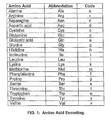
- FIG. 1 lists each amino acid known to occur in proteins and provides a typical 3-letter abbreviation and single-letter code by which the amino acids may be represented in databases, according to a standard supplied by the International Union of Pure and Applied Chemistry (IUPAC).
- IUPAC International Union of Pure and Applied Chemistry
- a given protein may be described by its sequence of amino acids.
- the character string "crvpsgvdla” corresponds to the protein defined by the following sequence of amino acids: cysteine, arginine, valine, proline, serine, glycine, valine, aspartic acid, leucine, and alanine.
- the protein database search engine may respond by identifying hundreds or thousands of matching proteins. This set of matching proteins may be narrowed by supplying additional search criteria. At any point during the search process, specific proteins may be selected and reviewed.
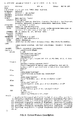
- a printout describes a specific protein identified from an NCBI search for proteins relating to human cancer.
- a protein description may include detailed information describing, among other identifying factors, such information as the title of the protein ("Differential expression of a novel serine protease homologue in squamous cell carcinoma of the head and neck"), the authors of the protein description ("Lang,J.C. and Schuller,D.E.”), and the organism from which the protein was isolated (“Homo sapiens”).
- Protein descriptions may include a specific sequence of amino acids that define the protein.
- amino acid sequence data is found at the end of the description of the protein, in a section of the printout prefaced by the word "ORIGIN.”
- the first few amino acids are "myrpdvvrar,” (SEQ ID NO: 1) which correspond to methionine, tyrosine, arginine, proline, aspartic acid, valine, valine, arginine, alanine, and arginine.
- nucleic acid base triplet may correspond to an amino acid according to a mapping provided by the table found in FIG. 3 .
- Each nucleic acid base triplet identified in the table represents or corresponds to a specific amino acid.
- the nucleic acid triplet GCT (guanine-cytosine-thymine) corresponds to the amino acid Alanine.
- the nucleic acid triplet GCA (guanine-cytosine-adenine) also corresponds to the amino acid Alanine.
- nucleic acid triplets AAA and AAG each corresponds to the amino acid Lysine.
- a Replikin pattern comprises a sequence of about 7 to about 50 contiguous amino acids that includes the following three (3) characteristics:
- the sequence has at least one lysine residue located six to ten amino acid residues from a second lysine residue;
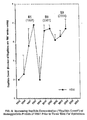
- Replikins have been shown to be associated with rapid replication in ) fungi, yeast, viruses, bacteria, algae, and cancer cells. Based on this association, it is believed that Replikins may be an indicator of disease. Additionally, an increase in concentration of Replikins over time may be an indicator of the imminent onset of disease. For example, before each of the three influenza pandemics of the last century (identified as H1N1, H2N2 and H3N2), there was a significant increase in the concentration of Replikins in the corresponding influenza virus. With respect to the H5N1 influenza, FIG. 4 illustrates a rapid increase in the concentration of Replikins per 100 amino acids just prior to epidemics in 1997 (indicated as E1), 2001 (indicated as E2) and 2004 (indicated as E3).
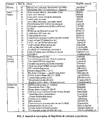
- Replikin patterns have been found in a variety of disease-related proteins, including cancers of the lung, brain, liver, soft-tissue, salivary gland, nasopharynx, esophagus, stomach, colon, rectum, gallbladder, breast, prostate, uterus, cervix, bladder, eye, forms of melanoma, lymphoma, leukemia, and kidney. Importantly, Replikin patterns appear to be absent from the normal healthy human genome. FIG. 5 lists selected examples of Replikin patterns that have been found in various organisms.
- the 13-residue pattern "hyppkpgcivpak,” (SEQ ID NO: 18) occurring in Hepatitis C is a Replikin pattern because: (1) it contains two lysine residues that are 8 positions apart; (2) it contains a histidine residue; and (3) the percentage of lysine residues is 2/13, which is 15.4%.
- PROSITE pattern description may be assembled according to the following rules:
- Ambiguities are also indicated by listing between a pair of curly brackets ' ⁇ ' the amino acids that are not accepted at a given position.
- ⁇ AM ⁇ stands for any amino acid except Alanine and Methionine.
- Each element in a pattern is separated from its neighbor by a '-'.
- Repetition of an element of the pattern can be indicated by following that element with a numerical value or a numerical range between parenthesis. Examples: x(3) corresponds to x-x-x, x(2,4) corresponds to x-x or x-x-x or x-x-x-x.
- a period ends the pattern.
- PROSITE patterns examples include:
- PA [AC]-x-V-x(4)- ⁇ ED ⁇ This pattern is translated as: [Alanine or Cysteine]-any- Valine -any-any-any-any- ⁇ any but Glutamic Acid or Aspartic Acid ⁇
- amino acid sequence patterns In the context of describing amino acid sequence patterns, a simplified set of regular expression capabilities is typically employed. Amino acid sequence patterns defined by these simple regular expression rules end up looking quite similar to PROSITE patterns, both in appearance and in result. A regular expression description for an amino acid sequence may be created according to the following rules:
- [LIVM] means that any one of the amino acids L, I, V, or M can be in that position.
- ⁇ CF ⁇ means C and F should not be in that particular position.
- exclusion capability can be specified with a " ⁇ " character.
- ⁇ G would represent all amino acids except Glycine
- [ ⁇ ILMV] would represents all amino acids except I, L, M, and V.
- BLAST Basic Local Alignment Search Tool
- NCBI Accession numbers NCBI Accession numbers
- GenBank sequence numbers NCBI Accession numbers
- PROSITE patterns An example sequence in FASTA format is (SEQ ID NO: 3):
- BLAST sequence comparison algorithms that are used to search sequence databases for regions of local alignments in order to detect relationships among sequences which share regions of similarity.
- the BLAST tools are limited in terms of the structure of amino acid sequences that can be discovered and located.
- BLAST is not capable of searching for a sequence that has "at least one lysine residue located six to ten amino acid residues from a second lysine residue," as required by a Replikin pattern, for example.
- BLAST capable of searching for amino acid sequences that contain a specified percentage or concentration of a particular amino acid, such as a sequence that has "at least 6% lysine residues.”
- Replikin pattern description cannot be represented as a single linear sequence of amino acids.
- PROSITE patterns and regular expressions both of which are well suited to describing ordered strings obtained by following logical set-constructive operations such as negation, union and concatenation, are inadequate for describing Replikin patterns.
- a Replikin pattern In contrast to linear sequences of amino acids, a Replikin pattern is characterized by attributes of amino acids that transcend simple contiguous ordering. In particular, the requirement that a Replikin pattern contain at least 6% lysine residues, without more, means that the actual placement of lysine residues in a Replikin pattern is relatively unrestricted. Thus, in general, it is not possible to represent a Replikin pattern description using a single PROSITE pattern or a single regular expression.
- FIG. 1 is a conversion table that enables amino acids to be encoded as single alphabetic characters according to a standard supplied by the International Union of Pure and Applied Chemistry (IUPAC).
- IUPAC International Union of Pure and Applied Chemistry
- FIG. 2 is a printout of a human cancer protein (SEQ ID NO: 4) obtained by searching a protein database maintained by the National Center for Biotechnology Information (NCBI).
- SEQ ID NO: 4 a human cancer protein obtained by searching a protein database maintained by the National Center for Biotechnology Information (NCBI).
- FIG. 3 is a conversion table illustrating a correspondence between nucleic acid base triplets and amino acids.
- FIG. 4 is a graph illustrating a rapid increase in the concentration of Replikin patterns in a selected strain of Hemagglutinin prior to the outbreak of three "Bird Flu” epidemics.
- FIG. 5 is a table illustrating selected examples of Replikin patterns that have been found in various organisms (SEQ ID NOS 10, 18, 43, and 48-89).
- FIG. 6 is a high-level block diagram of a computer system incorporating a system and method for identifying Replikin patterns in amino acid sequences, in accordance with an embodiment of the present invention.
- FIG. 7 is a simple flow chart illustrating a general method for locating a Replikin pattern in a sequence of amino acids, according to an embodiment of the present invention.
- FIG. 8 is a flow chart illustrating a generalized method for locating a plurality of Replikin-like patterns in a sequence of amino acids, according to an embodiment of the present invention.
- FIG. 9 is a source code listing containing a procedure for discovering Replikin patterns in a sequence of amino acids, in accordance with an embodiment of the present invention.
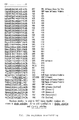
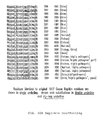
- FIG. 10 is a table illustrating Replikin scaffolds occurring in substantially fixed amino acid positions in different proteins (SEQ ID NOS 5-9, 11-17, 19-42, 44-47, 90-107, and 2 are disclosed respectively from top to bottom).
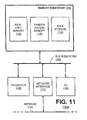
- FIG. 11 is a simplified block diagram of a computer system platform useful with the present invention.
- Embodiments of the present invention are directed to a system and method for identifying and/or locating complex patterns in an amino acid sequence.
- techniques are provided to facilitate queries of protein databases.
- embodiments of the present invention may scan the received protein descriptions to identify and locate Replikin patterns.
- a Replikin pattern is a sequence of from 7 to about 50 amino acids that include the following three (3) characteristics, each of which may be recognized by an embodiment of the present invention: (1) the sequence has at least one lysine residue located six to ten amino acid residues from a second lysine residue; (2) the sequence has at least one histidine residue; and (3) at least 6% of the amino acids in the sequence are lysine residues.
- Another embodiment of the present invention may identify and/or locate a complex amino acid sequence having specified length constraints, which further includes any combination of the following characteristics: (1) a first amino acid residue located more than N positions and less than M positions away from a second amino acid residue; (2) a third amino acid residue located anywhere in the sequence; and (3) at least R percent of a fourth amino acid residue.
- the present invention may count occurrences of the identified amino acid sequences and may report the counted occurrences, either as raw absolute values or as ratios of the number of identified amino acid sequences per N amino acids in the protein.
- Still another embodiment of the present invention may analyze the evolution of identified amino acid sequence patterns in variants of a given protein over time, and may also analyze the similarities and differences between instances of identified amino acid sequence patterns across a plurality of different proteins over time. As a result of the analysis, yet another embodiment of the present invention may identify potential amino acid scaffolding structures that appear to be preserved over time and across different proteins, as component elements of the identified amino acid sequence patterns mutate and/or evolve.
- FIG. 6 is a high-level block diagram of a computer system incorporating a system and method for identifying Replikin patterns in amino acid sequences, in accordance with an embodiment of the present invention.
- computer workstation 610 may be a computer having a processor and a memory configured to permit a researcher to search protein databases and to scan protein descriptions for selected amino acid patterns.
- computer workstation 610 may include protein and amino acid research system 630, which may receive instructions from a user/researcher to conduct protein searching and amino acid scanning operations.
- protein and amino acid research system 630 may further include amino acid sequence scanner 640 that scans and searches retrieved protein and amino acid sequences for specific patterns of amino acids, including Replikin patterns.
- Protein and amino acid research system 630 may communicate with network interface 620 to obtain protein sequences and amino acid sequences from resources on network 660, which may include the Internet. Alternatively, protein and amino acid research system 630 may obtain protein sequences and amino acid sequences from a local protein database 650. In addition, protein and amino acid research system 630 may obtain protein sequences and amino acid sequences directly from other input means, such as keyboard input. Protein and amino acid research system 630 may also communicate with network interface 620 to transmit results to other computers on network 660.
- Embodiments of the present invention may include a generalized method and system for identifying complex patterns of amino acids within proteins.
- the user may direct embodiments of the invention to search for a variety of complex patterns of amino acids.
- the present invention provides a method for identifying nucleotide or amino acid sequences that include a Replikin pattern.
- FIG. 7 is a simple flow chart illustrating a general method for locating a Replikin pattern in a sequence of amino acids, according to an embodiment of the present invention.
- the method 700 may begin after a sequence of amino acids has been obtained.
- the sequence of amino acids may be represented by alphabetic characters according to the code supplied in FIG. 1 .
- other encodings are envisioned by the present invention as well.
- Replikin pattern which comprises a subsequence (or string) of amino acids that includes the following characteristics:
- the string contains from 7 to about 50 amino acids
- the string contains at least one lysine residue located 6 to 10 positions from a second lysine residue
- the string contains at least one histidine residue
- the string contains at least 6% lysine residues.
- the string may be identified or marked (720) accordingly.
- a given sequence of amino acids may contain many subsequences or strings that match the Replikin pattern. Additionally, Replikin patterns may overlap each other. Thus, to locate and identify all possible Replikin patterns in a sequence of amino acids, method 700 may be invoked iteratively for each subsequence of amino acids contained within the original sequence of amino acids.
- an embodiment of the present invention may count the number of resulting Replikin patterns.
- a Replikin count may be reported as an absolute number.
- embodiments of the invention may also determine a ratio of the number of Replikins per N amino acids in the sequence. For example, an embodiment may determine that a given protein contains a ratio of 6 Replikins for every 100 amino acids.
- Replikin ratios have been shown by laboratory experiment and by epidemiological evidence to correlate directly to the rate that a given protein replicates. Rapid replication of proteins may be an indication of disease. For example, the presence of relatively high ratios of Replikin patterns has been correlated to epidemics of influenza.
- an increase in the count of Replikin patterns observed in a protein over time may also be an indication of future disease caused by the organism from which the protein was obtained ( see , e.g. , FIG. 4 ).
- the ability to detect and count Replikin patterns within sequences of amino acids is a significant advantage of the present invention.
- embodiments of the present invention may utilize method 700 to identify and locate other complex patterns of amino acids, which exhibit characteristics similar to Replikin patterns. That is, although some embodiments of the present invention may specify exact values for: (1) distances between amino acids, (2) acceptable lengths of recognized amino acid sequences, and (3) the percentage or concentration of specific amino acids, these exact values may also be expressed as variables. Thus a researcher may employ an embodiment of the present invention to identify sequences of amino acids in a protein that have the following characteristics:
- the sequence contains at least one lysine residue located kmin to kmax amino acid residues from a second lysine residue;
- the sequence contains at least kpercent lysine residues.
- FIG. 8 is a flow chart illustrating a generalized method 800 for locating a plurality of Replikin-like patterns in a given sequence of amino acids, according to an embodiment of the present invention.
- the method 800 begins by locating a first lysine residue in the given sequence (810). Then, the method 800 may determine whether a second lysine residue resides within kmin to kmax positions of the first lysine residue (820). As indicated in FIG. 8 , kmin and kmax define the limits on the distance between the first and second lysine residues. For a typical Replikin pattern, kmin will equal 6 and kmax will equal 10. However, these values may be varied by a researcher interested in discovering other similar patterns.
- method 800 may examine every histidine residue that resides within rmax positions of both the first and second lysine residues (830).
- rmax will usually be set to equal 50.
- method 800 will construct the shortest string of amino acid residues that includes the first lysine residue, the second lysine residue, and the identified histidine residue (840).
- method 800 will determine whether the length of that shortest string is within the desired range - that is, whether it contains at least rmin amino acid residues and no more than rmax amino acid residues (850). Finally, if the identified string of amino acids also contains at least kpercent of lysine residues (860), the string will be identified as matching the desired Replikin-like pattern (870).
- method 800 may identify several Replikin-like patterns from a single given amino acid sequence. This may happen because method 800 may examine more than one histidine residue that resides within rmax positions of the two identified lysine residues. Each identified histidine residue may, in combination with the two lysine residues, match the desired Replikin-like pattern.
- FIG. 9 is a source code listing containing a procedure for discovering all Replikin patterns present in a given sequence of amino acids, in accordance with an embodiment of the present invention.
- the "match" procedure shown in FIG. 9 is programmed in an interpreted shell language called “Tcl” and recognizes Replikins in a straightforward fashion.
- Tcl interpreted shell language
- the "Tool Command Language” or Tcl is a simple interpreted scripting language that has its roots in the Unix command shells, but which has additional capabilities that are well-suited to network communication, Internet functionality and the rapid development of graphical user interfaces.
- Replikin recognizing Replikin patterns are also covered by the teachings of the present invention.
- the match procedure shown in FIG. 9 could be implemented in other programming languages such as Java or C or C++.
- alternative embodiments of the Replikin recognizing algorithm may identify the characteristics of a Replikin pattern in any order, and may also traverse component amino acid sequences and subsequences using recursive techniques, iterative techniques, parallel processing techniques, divide-and-conquer techniques or any combination thereof.
- the present invention may include a search engine to access and interact with amino acid and protein databases, either locally or over a network such as the Internet, to retrieve protein definitions.
- protein and amino acid research system 630 may accept protein search criteria from a user and may then access a plurality of on-line amino acid and protein database search engines to retrieve protein definitions that match the supplied search criteria.
- Protein database search criteria may comprise any text string that may form a valid search term in any of the on-line protein or amino acid search engines. Typically, these search criteria relate to text that may be found in the printout that describes each specific protein.
- embodiments of the present invention may forward this text string to a plurality of Internet protein and amino acid search engines, each of which may then return any protein descriptions found in their databases that contained the terms "influenza type A.”
- amino acid sequence scanner 640 each of the returned protein descriptions may be scanned for the presence of Replikin patterns.
- Additional embodiments of the present invention may permit a user to select or de-select a plurality of Internet protein search engines and to customize the search criteria and protein retrieval capabilities of the present invention for each of the selected on-line protein search engines.
- embodiments of the invention may also permit a user to access a local protein database 650 or to supply a specific protein definition directly, for example, by supplying a local file name containing the protein definition, or by other methods known in the art for supplying parameters to computer software.
- Embodiments of the present invention may be employed not only to identify and locate Replikin patterns in amino acid sequences. Embodiments may also be used to discover and analyze similarities in the structure of Replikin patterns occurring in different proteins, or to analyze different Replikin patterns occurring in the same protein over time.
- FIG. 10 is a table illustrating a Replikin "fixed scaffold" structure that was preserved in a "Bird Flu” influenza virus over an 87 year period from 1917 to 2004.
- Embodiments of the present invention may assemble a number of discovered Replikin patterns in proteins, including Replikin patterns discovered in variants of the same protein. Along with each Replikin pattern, embodiments of the present invention may also associate a date when each protein was first identified.
- an embodiment may sort and display a plurality of selected Replikin patterns according to content, date or other criteria, in order to reveal substantially fixed amino acid structures that have been preserved in Replikin patterns over time and which may be present in different proteins as well as variants of the same protein. Further, when directed by a researcher, an embodiment may employ known methods of pattern analysis to compare a plurality of selected Replikin patterns in order to identify such fixed amino acid structures automatically. As an example, in FIG.
- the illustrated Replikin patterns appear to demonstrate - in this case - a relatively fixed scaffold structure of (usually) 29 amino acids that begins with a pair of lysine residues (kk) at the amino terminal, ends with a pair of histidine residues (hh) at the carboxyl terminal, and contains a lysine residue in either position 8, 10 or 11.
- This conservation of scaffold structure over decades permits synthetic vaccines to be prepared rapidly and inexpensively.
- a researcher may select elements of that scaffolding structure that are conserved over time and which are also present in a current variant of a protein.
- a vaccine may then be prepared based on the selected elements from the scaffolding structure. Because such vaccines are based on conserved scaffolding structures, they may be effective for multiple years and may also be developed well in advance of an anticipated outbreak.
- Replikins themselves, as well as embodiments of the present invention for identifying and locating Replikin patterns, provides targets for the identification of pathogens, as well as facilitates the development of anti-pathogen therapies, including vaccines.
- knowledge of and identification of the Replikin family of peptides enables development of effective therapies and vaccines for any organism that harbors Replikins.
- identification of Replikins provides for the detection of viruses and virus vaccine development, including the influenza virus.
- identification of Replikins also provides for the detection of other pathogens, such as malaria, anthrax and small pox virus, in addition to enabling the development of therapies and vaccines that target Replikin structures. Additional examples provided by the identification of Replikins include the detection of infectious disease Replikins, cancer immune Replikins and structural protein Replikins.
- Embodiments of the present invention enable important Replikin patterns of amino acids to be recognized, located and analyzed in manners that are not found in the prior art.
- researchers have been limited in by existing techniques for describing sequences of amino acids. Indeed, limitations of the prior art have in some ways dampened research in this field, since heretofore it has not been possible to specify sequences of amino acids that comprise non-linear attributes.
- descriptions of amino acid sequences were limited to linear sequences containing, at most, repetitive substrings and logical constraints on substring content.
- Embodiments of the present invention enable a new class of amino acid sequences to be discovered, located and analyzed using tools not found in the prior art. This new class of amino acids is characterized by attributes such as specific amino acid concentration and distance relationships between specific amino acids. These attributes transcend simple contiguous ordering and thus are not easily described, discovered or located by existing methods known in the art.
- FIG. 11 One such platform 1100 is illustrated in the simplified block diagram of FIG. 11 . There, the platform 1100 is shown as being populated by a processor 1160, which communicates with a number of peripheral devices via a bus subsystem 1150. These peripheral devices typically include a memory subsystem 1110, a network interface subsystem 1170, and an input/output (I/O) unit 1180.
- the processor 1160 may be any of a plurality of conventional processing systems, including microprocessors, digital signal processors and field programmable logic arrays. In some applications, it may be advantageous to provide multiple processors (not shown) in the platform 1100.
- the processor(s) 1160 execute program instructions stored in the memory subsystem 1110.
- the memory subsystem 1110 may include any combination of conventional memory circuits, including electrical, magnetic or optical memory systems. As shown in FIG. 11 , the memory system may include read only memories 1120, random access memories 1130 and bulk storage 1140. Memory subsystem 1110 not only stores program instructions representing the various methods described herein but also may store the data items on which these methods operate.
- Network interface subsystem 1170 may provide an interface to outside networks, including an interface to communications network 1190 comprising, for example, the Internet. I/O unit 1180 would permit communication with external devices, which are not shown.
Landscapes
- Physics & Mathematics (AREA)
- Life Sciences & Earth Sciences (AREA)
- Biotechnology (AREA)
- Evolutionary Biology (AREA)
- Biophysics (AREA)
- Proteomics, Peptides & Aminoacids (AREA)
- Health & Medical Sciences (AREA)
- Engineering & Computer Science (AREA)
- Bioinformatics & Cheminformatics (AREA)
- Bioinformatics & Computational Biology (AREA)
- Chemical & Material Sciences (AREA)
- Analytical Chemistry (AREA)
- General Health & Medical Sciences (AREA)
- Medical Informatics (AREA)
- Spectroscopy & Molecular Physics (AREA)
- Theoretical Computer Science (AREA)
- Investigating Or Analysing Biological Materials (AREA)
- Information Retrieval, Db Structures And Fs Structures Therefor (AREA)
- Management, Administration, Business Operations System, And Electronic Commerce (AREA)
- Peptides Or Proteins (AREA)
- Medicines Containing Antibodies Or Antigens For Use As Internal Diagnostic Agents (AREA)
Applications Claiming Priority (4)
| Application Number | Priority Date | Filing Date | Title |
|---|---|---|---|
| US56584704P | 2004-04-28 | 2004-04-28 | |
| US10/860,050 US7442761B2 (en) | 2003-06-06 | 2004-06-04 | Replikin peptides and uses thereof |
| US65308305P | 2005-02-16 | 2005-02-16 | |
| EP05743059.7A EP1745401B1 (fr) | 2004-04-28 | 2005-04-28 | Systeme et methode d'identification de modeles complexe d'acides amines de replikin |
Related Parent Applications (2)
| Application Number | Title | Priority Date | Filing Date |
|---|---|---|---|
| EP05743059.7A Division-Into EP1745401B1 (fr) | 2004-04-28 | 2005-04-28 | Systeme et methode d'identification de modeles complexe d'acides amines de replikin |
| EP05743059.7 Division | 2005-04-28 |
Publications (2)
| Publication Number | Publication Date |
|---|---|
| EP2390806A2 true EP2390806A2 (fr) | 2011-11-30 |
| EP2390806A3 EP2390806A3 (fr) | 2012-03-07 |
Family
ID=44856975
Family Applications (4)
| Application Number | Title | Priority Date | Filing Date |
|---|---|---|---|
| EP11158097A Withdrawn EP2390807A3 (fr) | 2004-04-28 | 2005-04-28 | Système et procédé pour identifier des motifs de replikine complexes d'acides aminés |
| EP11158084A Withdrawn EP2390805A3 (fr) | 2004-04-28 | 2005-04-28 | Système et procédé pour identifier des motifs de replikine complexes d'acides aminés |
| EP11158102A Withdrawn EP2390808A3 (fr) | 2004-04-28 | 2005-04-28 | Système et procédé pour identifier des motifs de replikine complexes d'acides aminés |
| EP11158093A Withdrawn EP2390806A3 (fr) | 2004-04-28 | 2005-04-28 | Système et procédé pour identifier des motifs de replikine complexes d'acides aminés |
Family Applications Before (3)
| Application Number | Title | Priority Date | Filing Date |
|---|---|---|---|
| EP11158097A Withdrawn EP2390807A3 (fr) | 2004-04-28 | 2005-04-28 | Système et procédé pour identifier des motifs de replikine complexes d'acides aminés |
| EP11158084A Withdrawn EP2390805A3 (fr) | 2004-04-28 | 2005-04-28 | Système et procédé pour identifier des motifs de replikine complexes d'acides aminés |
| EP11158102A Withdrawn EP2390808A3 (fr) | 2004-04-28 | 2005-04-28 | Système et procédé pour identifier des motifs de replikine complexes d'acides aminés |
Country Status (1)
| Country | Link |
|---|---|
| EP (4) | EP2390807A3 (fr) |
Citations (1)
| Publication number | Priority date | Publication date | Assignee | Title |
|---|---|---|---|---|
| US10523202B2 (en) | 2010-12-02 | 2019-12-31 | SeeScan, Inc. | Magnetically sensed user interface devices |
Family Cites Families (2)
| Publication number | Priority date | Publication date | Assignee | Title |
|---|---|---|---|---|
| US7420028B2 (en) * | 2001-03-27 | 2008-09-02 | Samuel Bogoch | Replikins and methods of identifying replikin-containing sequences |
| US7189800B2 (en) * | 2001-03-27 | 2007-03-13 | Samuel Bogoch | Replikin peptides in rapid replication of glioma cells and in influenza epidemics |
-
2005
- 2005-04-28 EP EP11158097A patent/EP2390807A3/fr not_active Withdrawn
- 2005-04-28 EP EP11158084A patent/EP2390805A3/fr not_active Withdrawn
- 2005-04-28 EP EP11158102A patent/EP2390808A3/fr not_active Withdrawn
- 2005-04-28 EP EP11158093A patent/EP2390806A3/fr not_active Withdrawn
Patent Citations (1)
| Publication number | Priority date | Publication date | Assignee | Title |
|---|---|---|---|---|
| US10523202B2 (en) | 2010-12-02 | 2019-12-31 | SeeScan, Inc. | Magnetically sensed user interface devices |
Also Published As
| Publication number | Publication date |
|---|---|
| EP2390805A2 (fr) | 2011-11-30 |
| EP2390807A3 (fr) | 2012-02-29 |
| EP2390807A2 (fr) | 2011-11-30 |
| EP2390808A3 (fr) | 2012-02-29 |
| EP2390805A3 (fr) | 2012-02-29 |
| EP2390808A2 (fr) | 2011-11-30 |
| EP2390806A3 (fr) | 2012-03-07 |
Similar Documents
| Publication | Publication Date | Title |
|---|---|---|
| US8417462B2 (en) | System and method for identifying complex patterns of amino acids | |
| Lieutaud et al. | How disordered is my protein and what is its disorder for? A guide through the “dark side” of the protein universe | |
| US5556749A (en) | Oligoprobe designstation: a computerized method for designing optimal DNA probes | |
| Yang | Comprehensive description of protein structures using protein folding shape code | |
| EP1745401B1 (fr) | Systeme et methode d'identification de modeles complexe d'acides amines de replikin | |
| Sternberg | PROMOT: a FORTRAN program to scan protein sequences against a library of known motifs | |
| EP2390806A2 (fr) | Système et procédé pour identifier des motifs de replikine complexes d'acides aminés | |
| Pouliot et al. | DIAN: a novel algorithm for genome ontological classification | |
| KR102902195B1 (ko) | 생물학적 정보 핸들링 | |
| HK1100414B (en) | System and method for identifying complex patterns of amino acids | |
| KR102614401B1 (ko) | 생물학적 서열 정보 핸들링 | |
| KR100513266B1 (ko) | 클라이언트/서버 기반 est 서열 분석 시스템 및 방법 | |
| KR20210126030A (ko) | 생물학적 서열분석 | |
| Wyman et al. | Annotating animal mitochondrial tRNAs: A new scoring scheme and an empirical evaluation of four methods | |
| JP2007207113A (ja) | 系統樹表示システム | |
| Han et al. | A gene clustering method with masking cross-matching fragments using modified suffix tree clustering method | |
| Shih et al. | BiMFG: Bioinformatics tools for marine and freshwater species | |
| Wolfson | Multiple structural alignment by secondary structures: Algorithm and applications | |
| HK40061633B (en) | Biological sequence information handling | |
| Graphics | Data mining takes OH ut fhe speed of the Web | |
| JP2001290822A (ja) | 候補遺伝子に優先度をつける装置 | |
| US20030130800A1 (en) | Region definition procedure and creation of a repeat sequence file | |
| Newman | Computational Methods for Exploring the Tandem Repeat Protein Universe |
Legal Events
| Date | Code | Title | Description |
|---|---|---|---|
| 17P | Request for examination filed |
Effective date: 20110314 |
|
| AC | Divisional application: reference to earlier application |
Ref document number: 1745401 Country of ref document: EP Kind code of ref document: P |
|
| AK | Designated contracting states |
Kind code of ref document: A2 Designated state(s): AT BE BG CH CY CZ DE DK EE ES FI FR GB GR HU IE IS IT LI LT LU MC NL PL PT RO SE SI SK TR |
|
| PUAI | Public reference made under article 153(3) epc to a published international application that has entered the european phase |
Free format text: ORIGINAL CODE: 0009012 |
|
| PUAL | Search report despatched |
Free format text: ORIGINAL CODE: 0009013 |
|
| AK | Designated contracting states |
Kind code of ref document: A3 Designated state(s): AT BE BG CH CY CZ DE DK EE ES FI FR GB GR HU IE IS IT LI LT LU MC NL PL PT RO SE SI SK TR |
|
| RIC1 | Information provided on ipc code assigned before grant |
Ipc: C07K 16/10 20060101ALI20120130BHEP Ipc: G06F 19/00 20110101AFI20120130BHEP Ipc: G01N 33/50 20060101ALI20120130BHEP Ipc: G06F 17/00 20060101ALI20120130BHEP Ipc: G06F 19/22 20110101ALN20120130BHEP Ipc: G06F 19/16 20110101ALN20120130BHEP |
|
| STAA | Information on the status of an ep patent application or granted ep patent |
Free format text: STATUS: THE APPLICATION IS DEEMED TO BE WITHDRAWN |
|
| 18D | Application deemed to be withdrawn |
Effective date: 20120908 |