EP2391175A1 - Procédé et système permettant d'empêcher l'établissement de connexion de données pour des applications - Google Patents
Procédé et système permettant d'empêcher l'établissement de connexion de données pour des applications Download PDFInfo
- Publication number
- EP2391175A1 EP2391175A1 EP10193106A EP10193106A EP2391175A1 EP 2391175 A1 EP2391175 A1 EP 2391175A1 EP 10193106 A EP10193106 A EP 10193106A EP 10193106 A EP10193106 A EP 10193106A EP 2391175 A1 EP2391175 A1 EP 2391175A1
- Authority
- EP
- European Patent Office
- Prior art keywords
- tunnel
- state
- mobile device
- data connection
- application
- Prior art date
- Legal status (The legal status is an assumption and is not a legal conclusion. Google has not performed a legal analysis and makes no representation as to the accuracy of the status listed.)
- Granted
Links
Images

Classifications
-
- H—ELECTRICITY
- H04—ELECTRIC COMMUNICATION TECHNIQUE
- H04W—WIRELESS COMMUNICATION NETWORKS
- H04W76/00—Connection management
- H04W76/10—Connection setup
- H04W76/18—Management of setup rejection or failure
-
- H—ELECTRICITY
- H04—ELECTRIC COMMUNICATION TECHNIQUE
- H04L—TRANSMISSION OF DIGITAL INFORMATION, e.g. TELEGRAPHIC COMMUNICATION
- H04L67/00—Network arrangements or protocols for supporting network services or applications
- H04L67/01—Protocols
- H04L67/04—Protocols specially adapted for terminals or networks with limited capabilities; specially adapted for terminal portability
-
- H—ELECTRICITY
- H04—ELECTRIC COMMUNICATION TECHNIQUE
- H04L—TRANSMISSION OF DIGITAL INFORMATION, e.g. TELEGRAPHIC COMMUNICATION
- H04L67/00—Network arrangements or protocols for supporting network services or applications
- H04L67/14—Session management
- H04L67/141—Setup of application sessions
-
- H—ELECTRICITY
- H04—ELECTRIC COMMUNICATION TECHNIQUE
- H04L—TRANSMISSION OF DIGITAL INFORMATION, e.g. TELEGRAPHIC COMMUNICATION
- H04L69/00—Network arrangements, protocols or services independent of the application payload and not provided for in the other groups of this subclass
- H04L69/40—Network arrangements, protocols or services independent of the application payload and not provided for in the other groups of this subclass for recovering from a failure of a protocol instance or entity, e.g. service redundancy protocols, protocol state redundancy or protocol service redirection
-
- H—ELECTRICITY
- H04—ELECTRIC COMMUNICATION TECHNIQUE
- H04W—WIRELESS COMMUNICATION NETWORKS
- H04W76/00—Connection management
- H04W76/10—Connection setup
- H04W76/12—Setup of transport tunnels
-
- H—ELECTRICITY
- H04—ELECTRIC COMMUNICATION TECHNIQUE
- H04W—WIRELESS COMMUNICATION NETWORKS
- H04W80/00—Wireless network protocols or protocol adaptations to wireless operation
- H04W80/04—Network layer protocols, e.g. mobile IP [Internet Protocol]
Definitions
- the present disclosure relates to radio bearers for mobile device and in particular to the establishment of radio bearers.
- a mobile device requires the establishment of a radio access bearer in order to communicate with the wireless network infrastructure. Furthermore, some devices allow the establishment of multiple radio access bearers for communication. In one instance, multiple radio access bearers can be dependent on the device requiring multiple (PDP) contexts.
- PDP Packet Data Protocol
- a device may have a propriety PDP context for the manufacturer of the device, a general wireless application protocol (WAP) context for browsing, a multi-media messaging service (MMS) PDP context for MMS applications, a streaming media PDP context for streaming media applications, among others.
- WAP wireless application protocol
- MMS multi-media messaging service
- streaming media PDP context for streaming media applications, among others.
- a PDP context is a term that is generally referred to in the third generation partnership project (3GPP) and more generally, the term "tunnel" is used herein to refer to a data connection to a particular network.
- connection may fail for a variety of reasons. For example, the network may indicate that a particular data connection is not allowed in the current network area. However, user-level applications may not know how to interpret this information and have little knowledge of when a data connection can or cannot be established. An application or client may thus initiate a data connection process continually, even on data connections which are known to fail.
- the present disclosure provides a method comprising: receiving a request from an application on a mobile device at a tunnel management module on the mobile device, the request being to establish a data connection with a network; checking a state of a tunnel for the data connection at the tunnel management module; blocking the connection request if the tunnel for the data connection is in a stalled state; and allowing the connection request to proceed to a networking access interface module if the tunnel for the data connection is not in a stalled state.
- the tunnel is registered with the tunnel management module prior to the application requesting the data connection.
- the tunnel management module stores a state for a plurality of tunnels registered with the tunnel management module.
- the tunnel management module receives, from the networking access interface module, a state for the tunnel.
- the state corresponds with a rejected connection attempt between the networking access interface module and a network element.
- the rejected connection attempt is based on receipt of a Roaming Not Allowed in Public Land Mobile Network message from the network element.
- the state corresponds with the mobile device moving into a new routing area.
- the application is a user level application selected from the group consisting of a browser application, an email application, a multimedia service application, and a data streaming application.
- the tunnel is a packet data protocol context.
- the tunnel is one of a device proprietary tunnel, a wireless access protocol tunnel, a multimedia messaging service tunnel, and a streaming media tunnel.
- the present disclosure further provides a mobile device comprising: a processor; a communications subsystem; and a memory, wherein the processor and communications subsystem cooperate to: receive a request from the application at the tunnel management module, the request being to establish a data connection with a network; check a state of a tunnel for the data connection at the tunnel management module; block the connection request if the tunnel for the data connection is in a stalled state; and allow the connection request to proceed to the networking access interface module if the tunnel for the data connection is not in a stalled state.
- user-level applications have little or no knowledge of when a data connection can or cannot be established. This may make the data connection process inefficient as the user-level application may continually try to establish data connections which are known to fail. For example, a network may indicate that a particular data connection is not allowed in the current network area. However the user-level application may not know how to interpret the information.
- the present disclosure provides for a registry of data connections which associate particular connection states to each data connection registered. Further, radio code associated with a particular radio communication method may interpret radio access technology specific causes received over a radio network, and may signal to the registry a state for the radio connection.
- GPRS general packet radio service
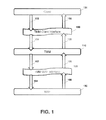
- FIG. 1 shows an exemplary block diagram of various components within a mobile device that may be used to establish connections from the mobile device to a network.
- a tunnel management module (TMM) 110 is an intermediate module between a client 120 and a wireless access family (WAF) 130.
- WAF wireless access family
- Client 120 may be any service or application that requires a data connection with a network. Examples of clients 120 include, but are not limited to, email applications, web browsers, multimedia services, streaming media, among others.
- Wireless access family (WAF) 130 provides for the various wireless access options on the mobile device.
- CDMA code division multiple access
- 3GPP third generation partnership project
- GSM global system for mobile communication
- UMTS universal mobile telecommunications system
- LTE long term evolution
- LTE-A long term evolution advanced
- the wireless access family may have a WAF-CDMA and a WAF-3GPP option.
- the WAF 130 may have access to wireless local area networks (WLANs) over technologies such as WiFi TM or WiMAX TM .
- WLANs wireless local area networks
- WAF 130 may be customized for each particular mobile device.
- WAF 130 is also referred to as a networking access interface. Further, the networking access interface does not need to be wireless in some embodiments.
- TMM 110 provides a registry of data connections for clients 120.
- the tunnels for the data connection are each provided with a state, as described in more detail below.
- TMM 110 Requests to establish a data connection proceed from client 120 to TMM 110. TMM 110 then proceeds to forward the request to WAF 130 in certain situations, as described in more detail below.
- an interface 150 is provided between the client 120 and TMM 110.
- Client to TMM functions may be provided using TMM-Client interface 150, as shown by arrow 152.
- TMM-Client interface 150 may provide client to TMM messaging, as shown by arrow 154.
- TMM-to-client functions may be provided, as shown by arrow 156, between TMM 110 and TMM-Client interface 150. Also, TMM-Client interface 150 may provided TMM-to-client messaging, as shown by arrow 158.
- TMM-WAF interface 160 an interface between TMM 110 and WAF 130 is provided, as shown by TMM-WAF interface 160.
- TMM-to-WAF functions may be provided to TMM-WAF interface 160, as shown by arrow 162.
- the TMM-WAF interface 160 may then provide TMM-to-WAF messaging, as shown by arrow 164.
- WAF-to-TMM functions may be provided to the TMM-WAF interface 160, as shown by arrow 166. Further, TMM-WAF interface 160 may provide WAF-to-TMM messaging, as shown by arrow 168.
- TMM-client interface 150 allows various clients to communicate with TMM 110.
- TMM-WAF interface 160 allows for various WAF 130 to be able to communicate with TMM 110.
- TMM 110 maintains registry with a state for each tunnel registered with TMM 110.
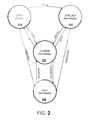
- Figure 2 shows an exemplary state machine in which four internal states are defined. Namely, the internal states may be null state 210, closed state 212, open state 214, and stalled state 216. Each is described in more detail below.
- the internal states shown by state machine of Figure 2 can be mapped to external states.
- the external states may be ready or not-ready.
- a ready external state means that the tunnel could be used to send and receive data.
- a not-ready state means that the tunnel cannot be used to send or receive data at the moment.
- the description below discusses internal states and may provide a link to an external state.
- a tunnel may be in a null state 210. This indicates that the tunnel record is not allocated. Messages regarding activation and deactivation are flushed for a tunnel is null state 210.
- null state 210 cannot be considered for activation by TMM 110.
- the null state 210 may be considered to be not-ready from an external state perspective.
- tunnels may be considered but only if clear.
- a clear pending flag is used for this purpose. In other words, if there are pending messages for the tunnels, the clear pending flag ensures that newly allocated tunnels do not receive stale activation or deactivation messages from the WAF when reallocated.
- a tunnel may be registered. Registration moves the state of the tunnel from null state 210 to closed state 212.
- Closed state 212 indicates that the tunnel record is allocated, but the tunnel is not activated. Tunnels in this state are considered for activation by TMM 110.
- TMM 110 one purpose of TMM 110 is to provide service to a maximal set of registered tunnels, and thus, closed state 212 is, in effect, a continual retry state. Further, the closed state 212 maps to the not ready external state.
- the tunnel may be activated by TMM 110, in which case the state proceeds to open state 214. Further, the tunnel may be deregistered, which would cause the state to move back to null state 210. Finally, the tunnel may be considered to be stalled, in which case the state would change to stalled state 216.
- Open state 214 indicates that the tunnel record is allocated and the tunnel is activated. Tunnels in this state are used for communication of data. Open state 214 maps to a ready external state.
- the state may change from open state 214 if the tunnel is deactivated, in which case the state changes to closed state 212. This may, for example, be required if a prioritization algorithm changes the priority of the tunnels and the current tunnel does not have a high enough priority.
- a network may have a "watermark" which indicates how many tunnels are allowed to be open. If two tunnels are allowed to be open and two other services have a higher priority than the current tunnel, the prioritization algorithm may find that the present tunnel needs to be deactivated which would move the tunnel to closed state 212.
- the tunnel may be finished with the exchange of data, and may be deactivated, causing the state of the tunnel to change to closed state 212.
- the tunnel may further be deregistered, which would change the state to null state 210.
- the tunnel may be stalled, which would move the state to stalled state 216.
- Stalled state 216 indicates that the tunnel record is allocated, but the tunnel is not activated. Messages regarding activation and deactivation are flushed for a tunnel in stalled state 216.
- stalled state 216 One difference between stalled state 216 and closed state 212 is that tunnels that are in stalled state 216 are not considered for activation by TMM 110. Entering stalled state 216 effectively halts retries and the state is considered externally as not-ready.
- the tunnel may be deregistered, causing the state to change to null state 210.
- the tunnel may also be unstalled, and change the state to closed state 212.
- the TMM keeps a state for each registered tunnel which may be one of the closed, open or stalled states shown. Tunnels that are not registered with TMM 110 are considered to be in a null state 210. However, as will be appreciated, since the tunnel in null state 210 is not registered with the TMM 110, no entry in the registry will exist for the tunnel in one embodiment.
- a client 120 uses a tunnel to obtain data from a network.
- the tunnel must change to an open state by being activated through a tunnel establishment attempt.
- the result of the establishment attempt is that the tunnel may be successfully established or that the establishment may fail.
- WAF 130 is in a better position to interpret radio codes than client 120. Having client 120 interpret radio codes may cause the client 120 to misinterpret the radio code or ignore the radio code. Therefore, if the radio code indicates that a data connection cannot be established at this time, the client may ignore the radio code or not be capable of interpreting the radio code, and continue to try to establish a data connection. This uses unnecessary network resources since connection requests are continually being made. Further, the continual attempt to establish a connection can drain battery resources on the mobile device.
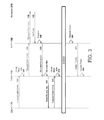
- Figure 3 shows a data flow diagram between a client 120, TMM 110, WAF 130 and a network 310.
- Client 110 in Figure 3 may for example be a browser application.
- the browser application may be brought up by a user of a mobile device and an attempt to connect to the internet may be made over a WAP tunnel.
- WAP tunnel is previously registered with TMM 110 and that tunnel has therefore been placed in a closed state by TMM 110.
- Client 120 requests a data connection over a WAP tunnel be established as shown by message 320.
- TMM 110 checks the state of the tunnel for the service of client 120, as shown by arrow 322 and determines that the tunnel is currently in a closed state. Based on this, the TMM 110 sends a message to WAF 130 requesting a data connection, as shown by arrow 324. WAF 130 then requests a data connection with network 310, as shown by arrow 330.
- Network 310 may determine that the data connection is now allowed for the current public land mobile network (PLMN) based on agreements between the mobile device carrier and the current network, for example. Therefore, a fail message 340 is returned to WAF 130, indicating a cause code of "roaming not allowed in PLMN".
- PLMN public land mobile network
- WAF 130 interprets the fail code received in message 340, as shown by arrow 342 and determines that the tunnel should be set to a stalled state 216.
- the WAF 130 then sends a message 350 to TMM 110 indicating that the tunnel should be set to stalled state 216.
- TMM 110 receives message 350 and updates the state of the tunnel, as shown by arrow 352.
- TMM 110 may then optionally send a refusal indication to client 120, as shown by arrow 360.
- client 120 may decide that it wants to again attempt to establish a data connection.
- a message 370 may be sent to TMM 110.
- TMM 110 checks the state of the tunnel and determines that the tunnel is in a stalled state, as shown by arrow 372. TMM 110 therefore does not consider activation of the tunnel and no further messaging is sent to WAF 130 or to network 310, thereby saving battery resources on the mobile device, as well as network resources.
- an event may occur.
- the routing area or the location area of the network may change.
- WAF 130 interprets the event, as shown by arrow 380, and determines that the routing area has changed.
- the interpretation at arrow 380 decides that the tunnels may be unstalled and thus an unstall message 382 is sent to TMM 110 which may be then update the state of the tunnel, as shown by arrow 384.
- FIG. 3 utilizes a "roaming is not allowed in the PLMN" fail code at arrow 340.
- Other indications that a data connection cannot be established would be known to those in the art. Examples, which are not limiting, include a set of Session Management errors (for the 3GPP WAF), including:
- the above therefore provides for the maintaining of a state registry at a TMM to prevent user level applications such as client 120 from initiating a data connection establishment attempt in the case that an indication from radio code has been previously received indicating that the data connection cannot be established for the current network.
- the tunnel management module 110 may be a software module located on a mobile device and in particular located in memory on the device. Further, client 120 may be any user-level application or other application on the device, stored in the memory on the device or accessible by the device, and using a processor of the device for running the application.
- WAF 130 may be comprised of both the communications subsystem and software associated with it to use various communication technologies supported by the mobile device and to interpret radio level cause codes received by the device from a network that the device connects to.
- the registering of tunnels with a tunnel registry, maintaining states for tunnels at the tunnel registry, and deciding whether to initiate a data connection establishment request may be done utilizing the processor on a mobile device, in combination with a communications subsystem of the mobile device.
- a mobile device is illustrated below with reference to Figure 4 .
- the mobile device of Figure 4 is however not meant to be limiting and other mobile devices could also be used.
- Mobile device 400 is typically a two-way wireless communication device having voice and data communication capabilities. Mobile device 400 generally has the capability to communicate with other computer systems on the Internet. Depending on the exact functionality provided, the mobile device may be referred to as a data messaging device, a two-way pager, a wireless e-mail device, a cellular telephone with data messaging capabilities, a wireless Internet appliance, a wireless device, a user equipment, or a data communication device, as examples.
- mobile device 400 When mobile device 400 is enabled for two-way communication, it will incorporate a communication subsystem 411, including both a receiver 412 and a transmitter 414, as well as associated components such as one or more antenna elements 416 and 418, local oscillators (LOs) 413, and a processing module such as a digital signal processor (DSP) 420.
- LOs local oscillators
- DSP digital signal processor
- Network access requirements will also vary depending upon the type of network 419.
- network access is associated with a subscriber or user of mobile device 400.
- a mobile device may require a removable user identity module (RUIM) or a subscriber identity module (SIM) card in order to operate on a network.
- the SIM/RUIM interface 444 is normally similar to a card-slot into which a SIM/RUIM card can be inserted and ejected like a diskette or PCMCIA card.
- the SIM/RUIM card can have memory and hold many key configuration 451, and other information 453 such as identification, and subscriber related information.
- mobile device 400 may send and receive communication signals over the network 419.
- network 419 can consist of multiple base stations communicating with the mobile device.
- a CDMA base station and an EVDO base station communicate with the mobile station and the mobile device is connected to both simultaneously.
- the EVDO and CDMA 1x base stations use different paging slots to communicate with the mobile device.
- Signals received by antenna 416 through communication network 419 are input to receiver 412, which may perform such common receiver functions as signal amplification, frequency down conversion, filtering, channel selection and the like, and in the example system shown in Figure 4 , analog to digital (A/D) conversion.
- A/D conversion of a received signal allows more complex communication functions such as demodulation and decoding to be performed in the DSP 420.
- signals to be transmitted are processed, including modulation and encoding for example, by DSP 420 and input to transmitter 414 for digital to analog conversion, frequency up conversion, filtering, amplification and transmission over the communication network 419 via antenna 418.
- DSP 420 not only processes communication signals, but also provides for receiver and transmitter control. For example, the gains applied to communication signals in receiver 412 and transmitter 414 may be adaptively controlled through automatic gain control algorithms implemented in DSP 420.
- Mobile device 400 generally includes a processor 438 which controls the overall operation of the device. Communication functions, including data and voice communications, are performed through communication subsystem 411. Processor 438 also interacts with further device subsystems such as the display 422, flash memory 424, random access memory (RAM) 426, auxiliary input/output (I/O) subsystems 428, serial port 430, one or more keyboards or keypads 432, speaker 434, microphone 436, other communication subsystem 440 such as a short-range communications subsystem and any other device subsystems generally designated as 442. Serial port 430 could include a USB port or other port known to those in the art.
- Some of the subsystems shown in Figure 4 perform communication-related functions, whereas other subsystems may provide "resident" or on-device functions.
- some subsystems such as keyboard 432 and display 422, for example, may be used for both communication-related functions, such as entering a text message for transmission over a communication network, and device-resident functions such as a calculator or task list.
- Operating system software used by the processor 438 may be stored in a persistent store such as flash memory 424, which may instead be a read-only memory (ROM) or similar storage element (not shown).
- flash memory 424 may instead be a read-only memory (ROM) or similar storage element (not shown).
- ROM read-only memory
- Those skilled in the art will appreciate that the operating system, specific device applications, or parts thereof, may be temporarily loaded into a volatile memory such as RAM 426. Received communication signals may also be stored in RAM 426.
- flash memory 424 can be segregated into different areas for both computer programs 458 and program data storage 450, 452, 454 and 456. These different storage types indicate that each program can allocate a portion of flash memory 424 for their own data storage requirements.
- Processor 438 in addition to its operating system functions, may enable execution of software applications on the mobile device. A predetermined set of applications that control basic operations, including at least data and voice communication applications for example, will normally be installed on mobile device 400 during manufacturing. Other applications could be installed subsequently or dynamically.
- the computer readable storage medium may be a tangible or intransitory/non-transitory medium such as optical (e.g., CD, DVD, etc.), magnetic (e.g., tape) or other memory known in the art.
- One software application may be a personal information manager (PIM) application having the ability to organize and manage data items relating to the user of the mobile device such as, but not limited to, e-mail, calendar events, voice mails, appointments, and task items. Naturally, one or more memory stores would be available on the mobile device to facilitate storage of PIM data items.
- PIM application may have the ability to send and receive data items, via the wireless network 419.
- the PIM data items are seamlessly integrated, synchronized and updated, via the wireless network 419, with the mobile device user's corresponding data items stored or associated with a host computer system.
- auxiliary I/O subsystem 428 may also be loaded onto the mobile device 400 through the network 419, an auxiliary I/O subsystem 428, serial port 430, short-range communications subsystem 440 or any other suitable subsystem 442, and installed by a user in the RAM 426 or a non-volatile store (not shown) for execution by the processor 438.
- Such flexibility in application installation increases the functionality of the device and may provide enhanced on-device functions, communication-related functions, or both.
- secure communication applications may enable electronic commerce functions and other such financial transactions to be performed using the mobile device 400.
- a received signal such as a text message or web page download will be processed by the communication subsystem 411 and input to the processor 438, which may further process the received signal for output to the display 422, or alternatively to an auxiliary I/O device 428.
- a user of mobile device 400 may also compose data items such as email messages for example, using the keyboard 432, which may be a complete alphanumeric keyboard or telephone-type keypad, among others, in conjunction with the display 422 and possibly an auxiliary I/O device 428. Such composed items may then be transmitted over a communication network through the communication subsystem 411.
- mobile device 400 For voice communications, overall operation of mobile device 400 is similar, except that received signals would typically be output to a speaker 434 and signals for transmission would be generated by a microphone 436.
- Alternative voice or audio I/O subsystems such as a voice message recording subsystem, may also be implemented on mobile device 400.
- voice or audio signal output is preferably accomplished primarily through the speaker 434, display 422 may also be used to provide an indication of the identity of a calling party, the duration of a voice call, or other voice call related information for example.
- Serial port 430 in Figure 4 would normally be implemented in a personal digital assistant (PDA)-type mobile device for which synchronization with a user's desktop computer (not shown) may be desirable, but is an optional device component.
- PDA personal digital assistant
- Such a port 430 would enable a user to set preferences through an external device or software application and would extend the capabilities of mobile device 400 by providing for information or software downloads to mobile device 400 other than through a wireless communication network.
- the alternate download path may for example be used to load an encryption key onto the device through a direct and thus reliable and trusted connection to thereby enable secure device communication.
- serial port 430 can further be used to connect the mobile device to a computer to act as a modem.
- Other communications subsystems 440 such as a short-range communications subsystem, is a further optional component which may provide for communication between mobile device 400 and different systems or devices, which need not necessarily be similar devices.
- the subsystem 440 may include an infrared device and associated circuits and components or a Bluetooth TM communication module to provide for communication with similarly enabled systems and devices.
- UMTS Universal Mobile Telecommunications System
- GSM Global System for Mobile telephony
- LTE Long Term Evolution
- the channels are cumulative and the data must therefore be shared between the channels.
Landscapes
- Engineering & Computer Science (AREA)
- Computer Networks & Wireless Communication (AREA)
- Signal Processing (AREA)
- Computer Security & Cryptography (AREA)
- Mobile Radio Communication Systems (AREA)
Priority Applications (1)
| Application Number | Priority Date | Filing Date | Title |
|---|---|---|---|
| CA2739027A CA2739027C (fr) | 2010-05-31 | 2011-05-04 | Methode et systeme pour empecher des applications d'amorcer l'etablissement de liaisons de donnees |
Applications Claiming Priority (1)
| Application Number | Priority Date | Filing Date | Title |
|---|---|---|---|
| US34996810P | 2010-05-31 | 2010-05-31 |
Publications (2)
| Publication Number | Publication Date |
|---|---|
| EP2391175A1 true EP2391175A1 (fr) | 2011-11-30 |
| EP2391175B1 EP2391175B1 (fr) | 2013-04-17 |
Family
ID=43531011
Family Applications (1)
| Application Number | Title | Priority Date | Filing Date |
|---|---|---|---|
| EP10193106.1A Active EP2391175B1 (fr) | 2010-05-31 | 2010-11-30 | Procédé et système permettant d'empêcher l'établissement de connexion de données pour des applications |
Country Status (3)
| Country | Link |
|---|---|
| US (1) | US8898302B2 (fr) |
| EP (1) | EP2391175B1 (fr) |
| CA (1) | CA2739027C (fr) |
Cited By (3)
| Publication number | Priority date | Publication date | Assignee | Title |
|---|---|---|---|---|
| GB2494858A (en) * | 2011-08-31 | 2013-03-27 | Samsung Electronics Co Ltd | Managing connections to a network in a mobile device |
| EP2712256A1 (fr) * | 2012-09-24 | 2014-03-26 | BlackBerry Limited | Niveau de service de données à commande de flux de données de liaison montante |
| US9247548B2 (en) | 2012-09-24 | 2016-01-26 | Blackberry Limited | Data service level uplink data flow control |
Families Citing this family (1)
| Publication number | Priority date | Publication date | Assignee | Title |
|---|---|---|---|---|
| US10193993B2 (en) * | 2013-05-30 | 2019-01-29 | Ebay Inc. | Systems and methods of token piggybacking |
Citations (3)
| Publication number | Priority date | Publication date | Assignee | Title |
|---|---|---|---|---|
| EP1655901A1 (fr) * | 2004-11-05 | 2006-05-10 | Research In Motion Limited | Commande de fonction de répétition de session de transmission de données par paquets d'un station mobile dans un réseau de donnés par paquets sans fil |
| US20080160958A1 (en) * | 2006-12-28 | 2008-07-03 | United States Cellular Corporation | Application access control in a mobile environment |
| WO2009135290A1 (fr) * | 2008-05-09 | 2009-11-12 | Research In Motion Limited | Procédés et appareil pour accorder la priorité à une assignation d’une session de paquets de données pour une pluralité d’applications d’un dispositif de communication mobile |
Family Cites Families (6)
| Publication number | Priority date | Publication date | Assignee | Title |
|---|---|---|---|---|
| CN1723674B (zh) * | 2002-11-08 | 2012-06-13 | 捷讯研究有限公司 | 用于无线移动通信设备的连接控制的系统和方法 |
| US20090041014A1 (en) * | 2007-08-08 | 2009-02-12 | Dixon Walter G | Obtaining Information From Tunnel Layers Of A Packet At A Midpoint |
| US8422466B2 (en) * | 2007-11-26 | 2013-04-16 | Nokia Corporation | Multiple network connections |
| EP2241130B1 (fr) * | 2008-02-08 | 2016-10-26 | Telefonaktiebolaget LM Ericsson (publ) | Procédé et équipement utilisateur dans un réseau de communication |
| US8634873B2 (en) * | 2010-03-17 | 2014-01-21 | Microsoft Corporation | Mobile communication device having multiple, interchangeable second devices |
| US8842535B2 (en) * | 2010-08-03 | 2014-09-23 | Apple Inc. | Method and apparatus for radio link control during network congestion in a mobile wireless device |
-
2010
- 2010-11-30 US US12/956,794 patent/US8898302B2/en active Active
- 2010-11-30 EP EP10193106.1A patent/EP2391175B1/fr active Active
-
2011
- 2011-05-04 CA CA2739027A patent/CA2739027C/fr active Active
Patent Citations (3)
| Publication number | Priority date | Publication date | Assignee | Title |
|---|---|---|---|---|
| EP1655901A1 (fr) * | 2004-11-05 | 2006-05-10 | Research In Motion Limited | Commande de fonction de répétition de session de transmission de données par paquets d'un station mobile dans un réseau de donnés par paquets sans fil |
| US20080160958A1 (en) * | 2006-12-28 | 2008-07-03 | United States Cellular Corporation | Application access control in a mobile environment |
| WO2009135290A1 (fr) * | 2008-05-09 | 2009-11-12 | Research In Motion Limited | Procédés et appareil pour accorder la priorité à une assignation d’une session de paquets de données pour une pluralité d’applications d’un dispositif de communication mobile |
Cited By (4)
| Publication number | Priority date | Publication date | Assignee | Title |
|---|---|---|---|---|
| GB2494858A (en) * | 2011-08-31 | 2013-03-27 | Samsung Electronics Co Ltd | Managing connections to a network in a mobile device |
| GB2494858B (en) * | 2011-08-31 | 2014-01-29 | Samsung Electronics Co Ltd | Managing connections to a network in a mobile device |
| EP2712256A1 (fr) * | 2012-09-24 | 2014-03-26 | BlackBerry Limited | Niveau de service de données à commande de flux de données de liaison montante |
| US9247548B2 (en) | 2012-09-24 | 2016-01-26 | Blackberry Limited | Data service level uplink data flow control |
Also Published As
| Publication number | Publication date |
|---|---|
| EP2391175B1 (fr) | 2013-04-17 |
| CA2739027A1 (fr) | 2011-11-30 |
| CA2739027C (fr) | 2016-04-12 |
| US20110296017A1 (en) | 2011-12-01 |
| US8898302B2 (en) | 2014-11-25 |
Similar Documents
| Publication | Publication Date | Title |
|---|---|---|
| EP1475983B1 (fr) | Dispositif et procédé pour la transmission montante durant la mise à jour de cellules dans l'équipement d'utilisateur dans un système de télécommunication mobile universel | |
| KR20040050696A (ko) | 무선 디바이스와 서버 사이의 핸드쉐이킹을 위한 시스템및 방법 | |
| WO2012037674A2 (fr) | Commutation dynamique d'une connexion de réseau basée sur des restrictions de réseau | |
| EP2391173B1 (fr) | Procédé et appareil pour l'algorithme de réduction ayant classes différentes de durée de relance | |
| US8811943B2 (en) | Apparatus and method of handling simultaneous universal terrestrial radio access network radio resource control procedures which change the security configuration in a universal mobile telecommunications system user equipment | |
| KR20230049684A (ko) | 네트워크의 전송 방법, 단말 및 네트워크 측 장치 | |
| KR101300340B1 (ko) | 최대수의 ip 세션이 설정되었는지를 판정하는 시스템 및 방법 | |
| EP2391175B1 (fr) | Procédé et système permettant d'empêcher l'établissement de connexion de données pour des applications | |
| EP1712096A4 (fr) | Procedes et appareil pour la communication d'une information de capacite de reseau sur un canal de trafic | |
| EP4131894B1 (fr) | Fonctionnement d'un équipement utilisateur à l'intérieur ou en tant que partie d'un réseau de télécommunications utilisant une fonctionnalité de plan de commande | |
| US20100246479A1 (en) | Method and system for establishing and maintaining a high speed radio access bearer for foreground application | |
| US8949349B2 (en) | Communications system including trusted server to verify a redirection request and associated methods | |
| US8472375B2 (en) | Method and apparatus for scan mode selection during an EVDO traffic state | |
| JP4629075B2 (ja) | Ipセッションの最大数が確立されていることを決定するシステムおよび方法 | |
| EP1475977A1 (fr) | Dispositif et procédé pour la gestion de procédures simultanées de contrôle de ressources radio UTRAN ayant des temps d'activation dans un terminal utilisateur UMTS | |
| US20080301146A1 (en) | System and method for efficient dynamic and connectivity aware web page rendering | |
| CA2739044C (fr) | Methode et dispositif servant a personnaliser une minuterie de temps d'inactivite reposant sur l'etat du filigrane de reseau | |
| EP1475978B1 (fr) | Dispositif et procédé pour la gestion de procédures UTRAN de contrôle de ressouces radio simultanées, capables de modifier la configuration de sécurité, dans un terminal utilisateur UMTS | |
| EP1722510B1 (fr) | Blocage du choix de réseau dans un dispositif mobile hybride qui se trouve dans l'état de trafic EVDO | |
| EP1912386A1 (fr) | Système et procédé de gestion de sessions IP basé sur le nombre de sessions supporté | |
| EP2506618A1 (fr) | Système de communication incluant un serveur sécurisé afin de vérifier une requête de redirection et procédés associés | |
| WO2004100583A1 (fr) | Appareil et procede permettant de gerer des procedures de commande de ressources radio utran | |
| HK1072864B (en) | Apparatus and method of handling simultaneous utran radio resource control procedures which change the security configuration in a umts user equipment |
Legal Events
| Date | Code | Title | Description |
|---|---|---|---|
| 17P | Request for examination filed |
Effective date: 20101130 |
|
| AK | Designated contracting states |
Kind code of ref document: A1 Designated state(s): AL AT BE BG CH CY CZ DE DK EE ES FI FR GB GR HR HU IE IS IT LI LT LU LV MC MK MT NL NO PL PT RO RS SE SI SK SM TR |
|
| AX | Request for extension of the european patent |
Extension state: BA ME |
|
| PUAI | Public reference made under article 153(3) epc to a published international application that has entered the european phase |
Free format text: ORIGINAL CODE: 0009012 |
|
| GRAP | Despatch of communication of intention to grant a patent |
Free format text: ORIGINAL CODE: EPIDOSNIGR1 |
|
| RIC1 | Information provided on ipc code assigned before grant |
Ipc: H04L 29/08 20060101ALI20121026BHEP Ipc: H04W 76/02 20090101AFI20121026BHEP Ipc: H04L 29/14 20060101ALI20121026BHEP |
|
| GRAS | Grant fee paid |
Free format text: ORIGINAL CODE: EPIDOSNIGR3 |
|
| GRAA | (expected) grant |
Free format text: ORIGINAL CODE: 0009210 |
|
| AK | Designated contracting states |
Kind code of ref document: B1 Designated state(s): AL AT BE BG CH CY CZ DE DK EE ES FI FR GB GR HR HU IE IS IT LI LT LU LV MC MK MT NL NO PL PT RO RS SE SI SK SM TR |
|
| REG | Reference to a national code |
Ref country code: GB Ref legal event code: FG4D |
|
| REG | Reference to a national code |
Ref country code: CH Ref legal event code: EP |
|
| REG | Reference to a national code |
Ref country code: IE Ref legal event code: FG4D |
|
| REG | Reference to a national code |
Ref country code: AT Ref legal event code: REF Ref document number: 607954 Country of ref document: AT Kind code of ref document: T Effective date: 20130515 |
|
| REG | Reference to a national code |
Ref country code: DE Ref legal event code: R096 Ref document number: 602010006232 Country of ref document: DE Effective date: 20130613 |
|
| REG | Reference to a national code |
Ref country code: CH Ref legal event code: PFA Owner name: BLACKBERRY LIMITED, CA Free format text: FORMER OWNER: RESEARCH IN MOTION LIMITED, CA |
|
| RAP2 | Party data changed (patent owner data changed or rights of a patent transferred) |
Owner name: BLACKBERRY LIMITED |
|
| REG | Reference to a national code |
Ref country code: NL Ref legal event code: T3 |
|
| REG | Reference to a national code |
Ref country code: AT Ref legal event code: MK05 Ref document number: 607954 Country of ref document: AT Kind code of ref document: T Effective date: 20130417 |
|
| REG | Reference to a national code |
Ref country code: LT Ref legal event code: MG4D |
|
| PG25 | Lapsed in a contracting state [announced via postgrant information from national office to epo] |
Ref country code: LT Free format text: LAPSE BECAUSE OF FAILURE TO SUBMIT A TRANSLATION OF THE DESCRIPTION OR TO PAY THE FEE WITHIN THE PRESCRIBED TIME-LIMIT Effective date: 20130417 Ref country code: AT Free format text: LAPSE BECAUSE OF FAILURE TO SUBMIT A TRANSLATION OF THE DESCRIPTION OR TO PAY THE FEE WITHIN THE PRESCRIBED TIME-LIMIT Effective date: 20130417 Ref country code: PT Free format text: LAPSE BECAUSE OF FAILURE TO SUBMIT A TRANSLATION OF THE DESCRIPTION OR TO PAY THE FEE WITHIN THE PRESCRIBED TIME-LIMIT Effective date: 20130819 Ref country code: BE Free format text: LAPSE BECAUSE OF FAILURE TO SUBMIT A TRANSLATION OF THE DESCRIPTION OR TO PAY THE FEE WITHIN THE PRESCRIBED TIME-LIMIT Effective date: 20130417 Ref country code: SE Free format text: LAPSE BECAUSE OF FAILURE TO SUBMIT A TRANSLATION OF THE DESCRIPTION OR TO PAY THE FEE WITHIN THE PRESCRIBED TIME-LIMIT Effective date: 20130417 Ref country code: NO Free format text: LAPSE BECAUSE OF FAILURE TO SUBMIT A TRANSLATION OF THE DESCRIPTION OR TO PAY THE FEE WITHIN THE PRESCRIBED TIME-LIMIT Effective date: 20130717 Ref country code: GR Free format text: LAPSE BECAUSE OF FAILURE TO SUBMIT A TRANSLATION OF THE DESCRIPTION OR TO PAY THE FEE WITHIN THE PRESCRIBED TIME-LIMIT Effective date: 20130718 Ref country code: ES Free format text: LAPSE BECAUSE OF FAILURE TO SUBMIT A TRANSLATION OF THE DESCRIPTION OR TO PAY THE FEE WITHIN THE PRESCRIBED TIME-LIMIT Effective date: 20130728 Ref country code: SI Free format text: LAPSE BECAUSE OF FAILURE TO SUBMIT A TRANSLATION OF THE DESCRIPTION OR TO PAY THE FEE WITHIN THE PRESCRIBED TIME-LIMIT Effective date: 20130417 Ref country code: FI Free format text: LAPSE BECAUSE OF FAILURE TO SUBMIT A TRANSLATION OF THE DESCRIPTION OR TO PAY THE FEE WITHIN THE PRESCRIBED TIME-LIMIT Effective date: 20130417 Ref country code: IS Free format text: LAPSE BECAUSE OF FAILURE TO SUBMIT A TRANSLATION OF THE DESCRIPTION OR TO PAY THE FEE WITHIN THE PRESCRIBED TIME-LIMIT Effective date: 20130817 |
|
| REG | Reference to a national code |
Ref country code: CH Ref legal event code: PCOW Free format text: NEW ADDRESS: 2200 UNIVERSITY AVENUE EAST, WATERLOO, ON N2K 0A7 (CA) |
|
| RAP2 | Party data changed (patent owner data changed or rights of a patent transferred) |
Owner name: BLACKBERRY LIMITED |
|
| PG25 | Lapsed in a contracting state [announced via postgrant information from national office to epo] |
Ref country code: RS Free format text: LAPSE BECAUSE OF FAILURE TO SUBMIT A TRANSLATION OF THE DESCRIPTION OR TO PAY THE FEE WITHIN THE PRESCRIBED TIME-LIMIT Effective date: 20130417 Ref country code: PL Free format text: LAPSE BECAUSE OF FAILURE TO SUBMIT A TRANSLATION OF THE DESCRIPTION OR TO PAY THE FEE WITHIN THE PRESCRIBED TIME-LIMIT Effective date: 20130417 Ref country code: BG Free format text: LAPSE BECAUSE OF FAILURE TO SUBMIT A TRANSLATION OF THE DESCRIPTION OR TO PAY THE FEE WITHIN THE PRESCRIBED TIME-LIMIT Effective date: 20130717 Ref country code: LV Free format text: LAPSE BECAUSE OF FAILURE TO SUBMIT A TRANSLATION OF THE DESCRIPTION OR TO PAY THE FEE WITHIN THE PRESCRIBED TIME-LIMIT Effective date: 20130417 Ref country code: HR Free format text: LAPSE BECAUSE OF FAILURE TO SUBMIT A TRANSLATION OF THE DESCRIPTION OR TO PAY THE FEE WITHIN THE PRESCRIBED TIME-LIMIT Effective date: 20130417 Ref country code: CY Free format text: LAPSE BECAUSE OF FAILURE TO SUBMIT A TRANSLATION OF THE DESCRIPTION OR TO PAY THE FEE WITHIN THE PRESCRIBED TIME-LIMIT Effective date: 20130417 |
|
| PG25 | Lapsed in a contracting state [announced via postgrant information from national office to epo] |
Ref country code: EE Free format text: LAPSE BECAUSE OF FAILURE TO SUBMIT A TRANSLATION OF THE DESCRIPTION OR TO PAY THE FEE WITHIN THE PRESCRIBED TIME-LIMIT Effective date: 20130417 Ref country code: CZ Free format text: LAPSE BECAUSE OF FAILURE TO SUBMIT A TRANSLATION OF THE DESCRIPTION OR TO PAY THE FEE WITHIN THE PRESCRIBED TIME-LIMIT Effective date: 20130417 Ref country code: DK Free format text: LAPSE BECAUSE OF FAILURE TO SUBMIT A TRANSLATION OF THE DESCRIPTION OR TO PAY THE FEE WITHIN THE PRESCRIBED TIME-LIMIT Effective date: 20130417 Ref country code: SK Free format text: LAPSE BECAUSE OF FAILURE TO SUBMIT A TRANSLATION OF THE DESCRIPTION OR TO PAY THE FEE WITHIN THE PRESCRIBED TIME-LIMIT Effective date: 20130417 |
|
| PLBE | No opposition filed within time limit |
Free format text: ORIGINAL CODE: 0009261 |
|
| STAA | Information on the status of an ep patent application or granted ep patent |
Free format text: STATUS: NO OPPOSITION FILED WITHIN TIME LIMIT |
|
| PG25 | Lapsed in a contracting state [announced via postgrant information from national office to epo] |
Ref country code: RO Free format text: LAPSE BECAUSE OF FAILURE TO SUBMIT A TRANSLATION OF THE DESCRIPTION OR TO PAY THE FEE WITHIN THE PRESCRIBED TIME-LIMIT Effective date: 20130417 Ref country code: IT Free format text: LAPSE BECAUSE OF FAILURE TO SUBMIT A TRANSLATION OF THE DESCRIPTION OR TO PAY THE FEE WITHIN THE PRESCRIBED TIME-LIMIT Effective date: 20130417 |
|
| 26N | No opposition filed |
Effective date: 20140120 |
|
| REG | Reference to a national code |
Ref country code: DE Ref legal event code: R097 Ref document number: 602010006232 Country of ref document: DE Effective date: 20140120 |
|
| PG25 | Lapsed in a contracting state [announced via postgrant information from national office to epo] |
Ref country code: MC Free format text: LAPSE BECAUSE OF FAILURE TO SUBMIT A TRANSLATION OF THE DESCRIPTION OR TO PAY THE FEE WITHIN THE PRESCRIBED TIME-LIMIT Effective date: 20130417 |
|
| REG | Reference to a national code |
Ref country code: IE Ref legal event code: MM4A |
|
| REG | Reference to a national code |
Ref country code: DE Ref legal event code: R082 Ref document number: 602010006232 Country of ref document: DE Representative=s name: MERH-IP MATIAS ERNY REICHL HOFFMANN, DE |
|
| PG25 | Lapsed in a contracting state [announced via postgrant information from national office to epo] |
Ref country code: IE Free format text: LAPSE BECAUSE OF NON-PAYMENT OF DUE FEES Effective date: 20131130 |
|
| REG | Reference to a national code |
Ref country code: DE Ref legal event code: R082 Ref document number: 602010006232 Country of ref document: DE Representative=s name: MERH-IP MATIAS ERNY REICHL HOFFMANN, DE Effective date: 20140926 Ref country code: DE Ref legal event code: R081 Ref document number: 602010006232 Country of ref document: DE Owner name: BLACKBERRY LIMITED, WATERLOO, CA Free format text: FORMER OWNER: RESEARCH IN MOTION LIMITED, WATERLOO, ONTARIO, CA Effective date: 20140926 Ref country code: DE Ref legal event code: R082 Ref document number: 602010006232 Country of ref document: DE Representative=s name: MERH-IP MATIAS ERNY REICHL HOFFMANN PATENTANWA, DE Effective date: 20140926 |
|
| PG25 | Lapsed in a contracting state [announced via postgrant information from national office to epo] |
Ref country code: SM Free format text: LAPSE BECAUSE OF FAILURE TO SUBMIT A TRANSLATION OF THE DESCRIPTION OR TO PAY THE FEE WITHIN THE PRESCRIBED TIME-LIMIT Effective date: 20130417 |
|
| PG25 | Lapsed in a contracting state [announced via postgrant information from national office to epo] |
Ref country code: TR Free format text: LAPSE BECAUSE OF FAILURE TO SUBMIT A TRANSLATION OF THE DESCRIPTION OR TO PAY THE FEE WITHIN THE PRESCRIBED TIME-LIMIT Effective date: 20130417 |
|
| REG | Reference to a national code |
Ref country code: CH Ref legal event code: PL |
|
| PG25 | Lapsed in a contracting state [announced via postgrant information from national office to epo] |
Ref country code: MK Free format text: LAPSE BECAUSE OF FAILURE TO SUBMIT A TRANSLATION OF THE DESCRIPTION OR TO PAY THE FEE WITHIN THE PRESCRIBED TIME-LIMIT Effective date: 20130417 Ref country code: LI Free format text: LAPSE BECAUSE OF NON-PAYMENT OF DUE FEES Effective date: 20141130 Ref country code: LU Free format text: LAPSE BECAUSE OF NON-PAYMENT OF DUE FEES Effective date: 20131130 Ref country code: HU Free format text: LAPSE BECAUSE OF FAILURE TO SUBMIT A TRANSLATION OF THE DESCRIPTION OR TO PAY THE FEE WITHIN THE PRESCRIBED TIME-LIMIT; INVALID AB INITIO Effective date: 20101130 Ref country code: CH Free format text: LAPSE BECAUSE OF NON-PAYMENT OF DUE FEES Effective date: 20141130 |
|
| PG25 | Lapsed in a contracting state [announced via postgrant information from national office to epo] |
Ref country code: MT Free format text: LAPSE BECAUSE OF FAILURE TO SUBMIT A TRANSLATION OF THE DESCRIPTION OR TO PAY THE FEE WITHIN THE PRESCRIBED TIME-LIMIT Effective date: 20130417 |
|
| REG | Reference to a national code |
Ref country code: FR Ref legal event code: PLFP Year of fee payment: 6 |
|
| REG | Reference to a national code |
Ref country code: FR Ref legal event code: PLFP Year of fee payment: 7 |
|
| REG | Reference to a national code |
Ref country code: FR Ref legal event code: PLFP Year of fee payment: 8 |
|
| REG | Reference to a national code |
Ref country code: DE Ref legal event code: R079 Ref document number: 602010006232 Country of ref document: DE Free format text: PREVIOUS MAIN CLASS: H04W0076020000 Ipc: H04W0076100000 |
|
| PG25 | Lapsed in a contracting state [announced via postgrant information from national office to epo] |
Ref country code: AL Free format text: LAPSE BECAUSE OF FAILURE TO SUBMIT A TRANSLATION OF THE DESCRIPTION OR TO PAY THE FEE WITHIN THE PRESCRIBED TIME-LIMIT Effective date: 20130417 |
|
| REG | Reference to a national code |
Ref country code: DE Ref legal event code: R082 Ref document number: 602010006232 Country of ref document: DE Ref country code: DE Ref legal event code: R081 Ref document number: 602010006232 Country of ref document: DE Owner name: MALIKIE INNOVATIONS LTD., IE Free format text: FORMER OWNER: BLACKBERRY LIMITED, WATERLOO, ONTARIO, CA |
|
| PGFP | Annual fee paid to national office [announced via postgrant information from national office to epo] |
Ref country code: NL Payment date: 20251124 Year of fee payment: 16 |
|
| PGFP | Annual fee paid to national office [announced via postgrant information from national office to epo] |
Ref country code: DE Payment date: 20251126 Year of fee payment: 16 |
|
| PGFP | Annual fee paid to national office [announced via postgrant information from national office to epo] |
Ref country code: GB Payment date: 20251125 Year of fee payment: 16 |
|
| PGFP | Annual fee paid to national office [announced via postgrant information from national office to epo] |
Ref country code: FR Payment date: 20251125 Year of fee payment: 16 |