EP2396403B1 - Kälteaktive beta-galactosidase, verfahren zur herstellung davon und verwendung eines solchen enzyms - Google Patents
Kälteaktive beta-galactosidase, verfahren zur herstellung davon und verwendung eines solchen enzyms Download PDFInfo
- Publication number
- EP2396403B1 EP2396403B1 EP10703071.0A EP10703071A EP2396403B1 EP 2396403 B1 EP2396403 B1 EP 2396403B1 EP 10703071 A EP10703071 A EP 10703071A EP 2396403 B1 EP2396403 B1 EP 2396403B1
- Authority
- EP
- European Patent Office
- Prior art keywords
- beta
- galactosidase
- lactose
- seq
- ikka
- Prior art date
- Legal status (The legal status is an assumption and is not a legal conclusion. Google has not performed a legal analysis and makes no representation as to the accuracy of the status listed.)
- Not-in-force
Links
Images






Classifications
-
- A—HUMAN NECESSITIES
- A23—FOODS OR FOODSTUFFS; TREATMENT THEREOF, NOT COVERED BY OTHER CLASSES
- A23C—DAIRY PRODUCTS, e.g. MILK, BUTTER OR CHEESE; MILK OR CHEESE SUBSTITUTES; PREPARATION THEREOF
- A23C9/00—Milk preparations; Milk powder or milk powder preparations
- A23C9/12—Fermented milk preparations; Treatment using microorganisms or enzymes
- A23C9/1203—Addition of, or treatment with, enzymes or microorganisms other than lactobacteriaceae
- A23C9/1206—Lactose hydrolysing enzymes, e.g. lactase, beta-galactosidase
-
- A—HUMAN NECESSITIES
- A23—FOODS OR FOODSTUFFS; TREATMENT THEREOF, NOT COVERED BY OTHER CLASSES
- A23C—DAIRY PRODUCTS, e.g. MILK, BUTTER OR CHEESE; MILK OR CHEESE SUBSTITUTES; PREPARATION THEREOF
- A23C19/00—Cheese; Cheese preparations; Making thereof
- A23C19/02—Making cheese curd
- A23C19/032—Making cheese curd characterised by the use of specific microorganisms, or enzymes of microbial origin
-
- A—HUMAN NECESSITIES
- A23—FOODS OR FOODSTUFFS; TREATMENT THEREOF, NOT COVERED BY OTHER CLASSES
- A23C—DAIRY PRODUCTS, e.g. MILK, BUTTER OR CHEESE; MILK OR CHEESE SUBSTITUTES; PREPARATION THEREOF
- A23C9/00—Milk preparations; Milk powder or milk powder preparations
- A23C9/12—Fermented milk preparations; Treatment using microorganisms or enzymes
- A23C9/123—Fermented milk preparations; Treatment using microorganisms or enzymes using only microorganisms of the genus lactobacteriaceae; Yoghurt
-
- C—CHEMISTRY; METALLURGY
- C12—BIOCHEMISTRY; BEER; SPIRITS; WINE; VINEGAR; MICROBIOLOGY; ENZYMOLOGY; MUTATION OR GENETIC ENGINEERING
- C12N—MICROORGANISMS OR ENZYMES; COMPOSITIONS THEREOF; PROPAGATING, PRESERVING, OR MAINTAINING MICROORGANISMS; MUTATION OR GENETIC ENGINEERING; CULTURE MEDIA
- C12N9/00—Enzymes; Proenzymes; Compositions thereof; Processes for preparing, activating, inhibiting, separating or purifying enzymes
- C12N9/14—Hydrolases (3)
- C12N9/24—Hydrolases (3) acting on glycosyl compounds (3.2)
- C12N9/2402—Hydrolases (3) acting on glycosyl compounds (3.2) hydrolysing O- and S- glycosyl compounds (3.2.1)
- C12N9/2468—Hydrolases (3) acting on glycosyl compounds (3.2) hydrolysing O- and S- glycosyl compounds (3.2.1) acting on beta-galactose-glycoside bonds, e.g. carrageenases (3.2.1.83; 3.2.1.157); beta-agarase (3.2.1.81)
- C12N9/2471—Beta-galactosidase (3.2.1.23), i.e. exo-(1-->4)-beta-D-galactanase
-
- C—CHEMISTRY; METALLURGY
- C12—BIOCHEMISTRY; BEER; SPIRITS; WINE; VINEGAR; MICROBIOLOGY; ENZYMOLOGY; MUTATION OR GENETIC ENGINEERING
- C12Y—ENZYMES
- C12Y302/00—Hydrolases acting on glycosyl compounds, i.e. glycosylases (3.2)
- C12Y302/01—Glycosidases, i.e. enzymes hydrolysing O- and S-glycosyl compounds (3.2.1)
- C12Y302/01023—Beta-galactosidase (3.2.1.23), i.e. exo-(1-->4)-beta-D-galactanase
Definitions
- the present invention relates to a novel cold-active beta-galactosidase enzyme specific for lactose.
- the enzyme is thus useful in e.g. the food industry for catalyzing at low temperatures the hydrolysis of lactose disaccharide into its constituent monosaccharides, glucose and galactose.
- Beta-galactosidase (beta-D-galactoside galactohydrolase, EC 3.2.1.23) is an enzyme capable of hydrolyzing the disaccharide lactose to its monosaccharide constituents, D-glucose and D-galactose.
- Beta-galactosidases are found in a large variety of organisms, like mammals, plants, fungi, yeasts, and bacteria. In Nature, beta-galactosidases hydrolyze lactose and other D-galactose-containing carbohydrates. In the industry, beta-galactosidases have been used primarily within the food industry.
- Beta-galactosidase hydrolysis of lactose and lactose-containing dairy products are used throughout in the dairy industry in the preparation of lactose-free or low-lactose products, which may be consumed by humans suffering from lactose intolerance. Hydrolysis of lactose by beta-galactosidases may also be used in applications where the removal of lactose is required, i.e. prevention of crystallisation of lactose in food and removal of D-galactose moieties in glycosylated proteins.
- beta-galactosidases comprise hydrolysis of lactose into D-galactose and D-glucose with the subsequent modification of the monosaccharides to high value products, like the sweetener D-tagatose (J ⁇ rgensen et al. 2004).
- beta-galactosidases could be used to produce lactose-free and low-lactose dairy products for lactose intolerant humans.
- the conventional approach in food processing is to carry out the hydrolysis of lactose at 40 °C during approximately four hours.
- milk or lactose solution as a raw material is a preferable nutrition source for bacteria.
- the putrefaction owing to the saprophyte contamination during the treatment is a serious problem in the food production.
- the fact is that the conventional beta-galactosidase is of limited use.
- beta-galactosidases in practical use are active only at temperatures above 20-30 °C, temperatures where food spoiling bacteria thrive at best.
- thermophilic beta-galactosidases Attempts to use thermophilic beta-galactosidases have been used but the products have suffered from off flavours and reduced organoleptic properties due to the heat treatment, and the processes have demanded high energetic costs.
- the beta-galactosidase from the yeast Guehomyces pullulans had approximately 17% at 0 °C (Nakagawa et al. 2005), the beta-galactosidases from Carnobacterium piscicola BA showed approximately 24% activity at 10 °C (Coombs and Brenchley, 1999) and the enzymes from Pseudoalteromonas isolates showed 39% activity (Fernandes et al.
- the cold-active beta-galactosidase from the Antarctic Arthrobacter was produced in low amounts in native cells and attempts to produce the enzyme recombinantly in E. coli were unsuccessful since about 90% of the enzyme was located in insoluble inclusion bodies (Coker et al. 2003).
- the cold-active beta-galactosidase from A. psychrolactophilus F2 could be produced heterologously, but had lower activity than the other Arthrobacter beta-galactosidases (Nakagawa et al. 2006).
- the present invention has, by using recombinant DNA technology, for the first time made it possible to provide a cold-active beta-galactosidase with high specific activity in industrially appropriate quantities for the manufacturing of food products and pharmaceuticals.
- the present invention provides a purified cold-active beta-galactosidase, specific for lactose, having a stable enzymatic activity at temperatures less than 8°C, and specifically at 4°C, which corresponds to refrigerating conservation temperature for dairy products.
- the enzyme of the present invention is consequently able to hydrolyse lactose in dairy products and milk processing at such a low temperature that saprophytes are hindered to proliferate.
- the hydrolysis of lactose can be carried out in these refrigeration conditions with no need of a particular treatment to the dairy product concerned.
- the present invention provides a cold active beta-galactosidase having the sequence as defined in SEQ ID NO. 1, or one having at least 80% homology to the amino acid sequence as defined in SEQ ID NO. 1, the amino acid sequence being selected so that the enzyme has a stable enzymatic activity at temperatures less than 8 °C.
- the amino acid sequence has at least 90%, and more preferably 95%, homology to the amino acid sequence as defined in SEQ ID NO. 1.
- the DNA sequence is derived from the genus Alkalilactibacillus, such as the species Alkalilactibacillus ikkense, and has a nucleotide sequence as given in SEQ ID NO. 2.
- the present invention provides a recombinant vector comprising a DNA sequence that encodes a protein with an amino acid sequence as given in SEQ ID NO. 1, or one having at least 80% homology to the amino acid sequence as defined in SEQ ID NO. 1, the amino acid sequence being selected so that the enzyme has a stable enzymatic activity at temperatures less than 8 °C.
- the amino acid sequence has at least 90%, and more preferably 95%, homology to the amino acid sequence as defined in SEQ ID NO. 1.
- Another object of the present invention is a strain of an isolated Alkalilactibacillus bacterium capable of producing a cold-active beta-galactosidase according to the present invention.
- a preferable strain is Alkalilactibacillus ikkense deposited on the 3rd of March, 2009, under the Budapest Treaty at the BCCM/LMG-Collection (Belgian Coordinated Collections of Microorganisms) with the Accession No LMG P-24866 and variants and mutants derived therefrom.
- beta-galactosidase To purify the cold-active beta-galactosidase according to the present invention, a bacterium living in the Greenland area was isolated and characterised in order to study how its enzymes, and particularly, the beta-galactosidase was adapted to cold. These studies led to the purification of the beta-galactosidase, meaning that this protein was obtained substantially free of other proteins using protein purification steps known in the art.
- another object of the present invention is a strain of an isolated Alkalilactibacillus bacterium capable of producing a cold-active beta-galactosidase according to the present invention.
- a preferable strain is alkalilactibacillus ikkense.
- Another object of the invention is a recombinant plasmid or vector suited for transformation of a host, capable of directing the expression of a DNA sequence according to the invention in such a manner that the host expresses the cold-active beta-galactosidase of the present invention in recoverable form.
- another object is the so transformed host.
- a variety of host-expression systems may be conceived to express the cold-active beta-galactosidase coding sequence, for example bacteria, yeast, insect cells, plant cells, mammalian cells, etc. Particularly, in yeast and in bacteria, a number of vectors containing constitutive or inducible promoters may be used.
- An appropriate host organism is preferably selected from the group consisting of Escherichia, Bacillus, Bifidobacterium, Lactococcus, Lactobacillus, Streptomyces, Leuconostoc, Streptomyces, Saccharomyces , Kluyveromyces , Candida , Torula, Torulopsis and Aspergillus.
- the invention relates to a recombinant DNA molecule comprising a DNA fragment encoding a polypeptide having cold-active beta-galactosidase activity and to a microbial cell comprising such recombinant DNA molecule.
- Beta-galactosidase (beta-D-galactoside galactohydrolase, EC 3.2.1.23) is defined as an enzyme capable of hydrolysing lactose to the monosaccharides D-glucose and D-galactose.
- Cold-active is defined as having activity at temperatures at 15 °C and below, preferably at 10 °C and below and most preferably at 5 °C and below.
- a "host cell” is selected from a group of microorganisms comprising fungi, yeasts, and prokaryotes.
- the microorganism is more preferably a prokaryote and most preferably a bacterium.
- Conditions of incubating beta-galactosidase with lactose are defined by performing incubation at a temperature between 0 °C and 20 °C, preferably between 5 °C and 15 °C.
- stringent condition refers to a condition such that a hybridization is conducted in a solution containing 6xSSC (20xSSC represents 333 mM Sodium citrate, 333 mM NaCl), 0.5% SDS and 50% formamide at 42 °C, and then the hybridized products are washed in a solution of 0.1xSSC, 0.5% SDS at 68°C, or to conditions as described in Nakayama, et al., Bio-Jikken-Illustrated, vol. 2, "Idenshi-Kaiseki-No-Kiso (A Basis for Gene Analysis)", pp. 148-151, Shujunsha, 1995 .
- Ikaite material was collected by scuba divers in the Ikka Fjord, South West Greenland (61°11'N, 48°01'W) from a depth of approximately six to ten meters.
- the columns were between 36-70 cm in length and between 5 and 30 cm in diameter. The columns were kept cold during transportation to the field laboratory.
- DNA for phylogenetic analysis was extracted from cells of isolate 517 using FastDNA SPIN Kit for Soil as described by the manufacturer (BIO 101, Irvine, CA). 16S rRNA gene amplification was carried out using the primers 27F and 1492R (Lane 1991), and DNA sequencing was carried out at MWG Biotech AG (Ebersberg, Germany) using the same two primers plus additional primers 519R, 532F, 907F, and 907R (Lane 1991). The near full length DNA sequence of the 16S rRNA gene from isolate 517 was submitted to GenBank/EMBL/DDBJ with the accession number EU281853.
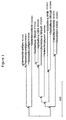
- Isolate 517 was most closely related to N. azotifigens, P. ryukyuensis and A. tropicus with 95,9%, 94.4% and 93.9% sequence similarity, respectively. The sequence similarity between isolate 517 and both H.
- halophilus, H. miurensis, and G. halotolerans was 93.4%.
- the distance in 16S rRNA gene sequence similarity between isolate 517 and the closest related is below the 97% similarity, which is often used as a preliminary guideline for species separation.
- DNA-DNA hybridization and DNA base composition were carried out at DSMZ (Braunschweig, Germany). DNA was isolated using a French pressure cell (Thermo Spectronic) and was purified by chromatography on hydroxyapatite as described by Cashion et al. (1977). DNA-DNA hybridization was carried out as described by De Ley et al. (1970) under consideration of the modifications described by Huss et al. (1983) using a model Cary 100 Bio UV/VIS-spectrophotometer equipped with a Peltier-thermostatted 6x6 multicell changer and a temperature controller with in-situ temperature probe (Varian). DNA-DNA hybridization between isolate 517 and the closest related based on 16S rRNA sequence similarity P. ryukyuensis was 28.8%, and between isolate 517 and H. miurensis it was 24.7%.
- the DNA was hydrolyzed with P1 nuclease and the nucleotides dephosphorylated with bovine alkaline phosphatase (Mesbah et al. 1989) .
- the resulting deoxyribonucleotides were analyzed by HPLC.
- the DNA G+C content of isolate 517 was 38.4 mol%, which is fairly similar to the closest related species.
- the G+C content of N. azotifigens is 36.1-38.5 mol% (Sorokin et al. 2008), H. halophilus and H. miurensis is reported to be 38.5-40.7 mol% (Ishikawa et al. 2005), for P. ryukyuensis it is 35.6 mol% (Ishikawa et al. 2002), and for G. halotolerans it is reported to be 38 mol% (Wain ⁇ et al. 1999).
- isolate 517 represent a new species within a new genus, since the threshold value for DNA-DNA hybridization to separate two species is 70 % (Wayne et al., 1987).
- isolate 517 represents a new genus Alkalilactibacillus gen. nov. comprising the species Alkalilactibacillus ikkense sp. nov.
- Beta-galactosidase activity was assayed by hydrolysis of o- nitrophenyl-beta-D-galactopyranoside (ONPG) and measuring the absorbancy of the released o-nitrophenyl (ONP) compound in a spectrophotometer at 415 nm.
- ONPG o- nitrophenyl-beta-D-galactopyranoside
- ONP o-nitrophenyl
- the pH activity profile was studied using a mixed pH buffer (250 mM Tris, 250 mM MES, 250 mM acetic acid) adjusted from pH 4 to pH 10 with HCl or NaOH. The samples were incubated at 20 °C for 1 hour and assayed as described above.
- a mixed pH buffer 250 mM Tris, 250 mM MES, 250 mM acetic acid
- Alkalilactibacillus ikkense cells were cultivated in liquid R2 medium supplemented with lactose and IPTG at 15 °C for 3 days on a rotary shaker.
- Cells were harvested by centrifugation in a Sigma® 3-18M centrifuge at 4,700 rpm and the pellet was resuspended in 2 ml of 0.1 M NaH 2 PO 4 /Na 2 HPO 4 , pH 7.
- Cells were lysed by bead beating in a FastPrep FP120 instrument (Bio101/Savant) for 3 times 25 sec at speed 5.5. The supernatant was then removed from the glass beads and centrifuged for 15 min at 10,000*g at 4 °C. The cell free supernatant was then used for assaying.
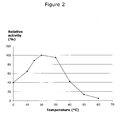
- the native Ikka-beta-galactosidase displayed maximal activity at 20 °C, 40% of the maximal activity was obtained at 0 °C, and more than 60% of the maximal activity was observed at 10 °C ( Fig. 2 ). Above 30 °C the enzyme was only moderately active and virtually no activity was observed at 60 °C.
- Fig. 3 shows that almost 100% of the residual activity was observed after 24 hours incubation at 0 °C and that more than 80% activity was left after 24 hours at 20 °C.
- the native Ikka-beta-galactosidase rapidly lost activity ( Fig. 3 ). The inactivation at high temperatures was shown to be irreversible.
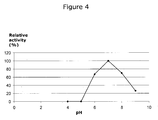
- Fig. 4 shows that maximal activity of the native Ikka-beta-galactosidase was observed at pH 7, and that the enzyme displayed approximately 70% of the maximal activity at pH 6 and at pH 8. At pH 9, approximately 25% of maximal activity was observed. The enzyme showed no activity at pH 5 and below or at pH 10 and above ( Fig. 4 ).
- Extracts from cells of A. ikkense induced with 1 mM IPTG and uninduced were analysed in SDS-PAGE (sodium dodecyl sulfate - polyacrylamide gel electrophoresis) ( Fig. 5 ).
- Intracellular extracts were prepared by lysing the cells using bead-beating as described above in 3.2. The extracts (0.5-5 ⁇ l) were mixed with 12.5 ⁇ l 4*LDS sample buffer, 5 ⁇ l 10*DTT and 0.1 M NaH 2 PO 4/ Na 2 HPO 4 to a final volume of 50 ⁇ l. The samples were heated to 70 °C for 10 minutes and 30 ⁇ l was loaded onto a 4-12% SDS gel.
- Fig. 5 shows that a strong 120 kDa band was observed in the lanes with extracts from A. ikkense cells induced with IPTG and that this band was missing in lanes with extracts from non-induced cells. Thus, the 120 kDa band was assumed to be the native Ikka-beta-galactosidase.
- DNA from A. ikkense was isolated from a culture of 50 ml. The cells were harvested by centrifugation and the chromosomal DNA was isolated using conventional phenolchloroform extraction methods (Maniatis et al., 1982). The DNA was partially digested using Sau3AI (New England Biolabs, MA, USA), and fragments with the lengths between 3 kb and 10 kb were purified from an agarose gel using the QIAquick Gel Extraction Kit (Qiagen, Hilden, Germany) as described by the producer.
- Sau3AI New England Biolabs, MA, USA
- the vector for cloning chromosomal DNA from A. ikkense was a modified pUC18 plasmid (Stratagene, CA, USA). Plasmid pUC18 was restricted by NdeI and Hind III endonucleases (New England Biolabs). The sticky ends were refilled using Klenow fragment of DNA polymerase (New England Biolabs) and the blunt ends were ligated using T4 DNA ligase (New England Biolabs).
- plasmid pUC18dlacZ was not able to mediate ⁇ -complementation when introduced into E. coli cells harbouring the beta-galactosidase ⁇ Z15 mutation. Sau3A I restricted and gel-purified chromosomal DNA from A.
- ikkense was ligated into plasmid pUC18dlacZ treated with the restriction endonuclease BamH I and Antarctic Phosphatase (New England Biolabs).
- the ligation mixture was transformed into chemically competent E. coli TOP10 cells.
- Transformed cells were plated onto LB agar (10 g/l Bacto tryptone, 5 g/l yeast extract, 10 g/l NaCl) containing 20 ⁇ g/ml X-gal, 0.1 mM IPTG, and 100 ⁇ g/ml ampicillin and incubated over night at 37 °C. After a 16 hours over night incubation, the plates were transferred to 20 °C and incubated for another 20 hours.
- the insert in the plasmid was sequenced at GATC Biotech AG (Konstanz, Germany) using primer walking with the primer M13 reverse and custom made primers specific for the insert in pUCIkka-bgal (SEQ ID 3: 5'CCGTCATCCATATCACC3'; SEQ ID 4: 5'CCTTTGCCCAAGAGCCAACC3'; SEQ ID 5: 5'GCTATTATCAGACTTGGCACC3'; SEQ ID 6: 5'GTAATTCAAT GTTCCAACGTG3'; Seq ID 7: 5'CGCTTATGGTGTGAAG3') and a sequence just downstream of the multiple cloning site in pUC18dlacZ, (SEQ ID 8: 5'GGGCTGGCTTAACTATGCGG3').
- SEQ ID 8 5'GGGCTGGCTTAACTATGCGG3'.
- the calculated subunit molecular weight and pI of the Ikka-beta-galactosidase was 119 kDa and pI 5.0, respectively (ExPASy ProtParam tool).
- the calculated subunit molecular weight was confirmed by SDS-PAGE, Figs. 5 and 6 .
- Alignment of the Ikka-beta-galactosidase with structurally resolved enzymes showed that the conserved active site region in E. coli (ILCEYAHAMGN) (pos. 534-544) (Gebler et al. 1992) is well conserved in the Ikka-beta-galactosidase (ILCEFSHAMGN) (pos. 547-557), and the active site nucleophile Glu-537 is probably found as Glu-550.
- Native Alkalilactibacillus ikkense was shown to produce only moderate amounts of Ikka-beta-galactosidase. Therefore, in order to produce larger amounts of the beta-galactosidase, subcloning of the Ikka-beta-galactosidase gene into expression plasmids was carried out.
- the Ikka-beta-galactosidase gene was subcloned further using chromosomal DNA from A. ikkense as template and the PCR primers bGal5': 5'CT GAATTC GCATATGGCAAAAAAATTAAAAAAATTC3' ( EcoR I restriction site underlined) (SEQ ID 9), and bGal3': 5'CC AAGCTT ATCTGTTTAAACTATTCAACATG3' ( Hind III site double underlined) (SEQ ID 10).
- the polymerase used was the proofreading polymerase Phusion ® High-Fidelity DNA Polymerase (New England BioLabs).
- the PCR reaction was analyzed by gel electrophoresis on a 0.8% agarose gel (Seakem GTG) and the 3.9 kb fragment was ligated into pJET1.2/blunt cloning vector (Fermentas, Helsingborg, Sweden) and transformed into E. coli TOP10 cells.
- E. coli transformants containing pJET1.2/blunt were isolated on ampicillin containing LB agar plates and plasmid DNA was prepared as described above. Plasmid DNA was restricted with the enzymes EcoRI and Hind III and analysed on 0.8% (w/v) agarose gels as described.
- the 3.9 kb DNA fragment was purified from the gel using the QIAquick Gel Extraction Kit as described by the producer.
- the purified DNA fragment was ligated into plasmid pUC18dlacZ similar restricted with the enzymes EcoRI and Hind III and gel purified as described above.
- the ligation mixture was transformed into E. coli TOP10 cells and recombinant cells harbouring the plasmid pUC18dlacZ with the Ikka-beta-galactosidase gene were selected as blue colonies on LA plates containing 100 ⁇ g/ml ampicillin, 1 mM IPTG, and 40 ⁇ g/ml X-gal. Transformants were selected and analysed for plasmids and inserts.
- Plasmid DNA was prepared from a 10 ml culture and the DNA was sent for sequencing at GATC biotech (Konstanz, Germany) using the primers described above in 4.1. The entire Ikka-beta-galactosidase gene was sequenced on both strands in order to ensure that no mutations were introduced during PCR.
- E. coli TOP10 cells harbouring plasmid pUCIkka-bgal and pUCIkka-bgal_exp were cultivated in 30 ml LB broth containing 100 ⁇ g/ml ampicillin over night at 37 °C. After an over night incubation, the cells were supplemented with 0.1 mM IPTG and incubated at 20 °C for further 20 hours. Cells were harvested by centrifugation for 30 min at 4,700 rpm at 10 °C and resuspended in 1 ml 0.1 M NaH 2 PO 4 /Na 2 HPO 4 pH 7.
- the cells were lysed by bead beating in a Fast Prep instrument (Fast Prep FP120, Bio101/Savant Instruments Inc., Holbrook, NY) at speed 5.5 for 3 times 25 sek.
- the samples were cooled on ice in between the beating/shaking.
- the lysate was centrifuged at 10,000 g for 15 min at 4 °C, and the supernatant containing the Ikka-beta-galactosidase enzyme was transferred to a clean tube. This crude extract was used for subsequent analyses.
- Intracellular extracts from recombinant E. coli cells harbouring plasmid pUCIkka-bgal were analysed on SDS-PAGE (SDS gel 4-12%, PAGEgel, CA, USA) as described above in 3.4. Cultures induced with 1 mM IPTG and control cultures not induced were analysed.
- Extracts from cultures of plasmid pUCIkka-bgal harbouring E. coli were prepared as described above and diluted before electrophoresis on SDS-PAGE.
- Beta-galactosidases,from E. coli (Sigma-Aldrich, MO, USA) and K. lactis (Novozymes, Bagsvaerd, Denmark) with known molecular mass and in defined concentrations were co-electrophorezed on the same gel for comparison (arrows in Fig. 6 ).
- the extract which was used for the subsequent analyses was estimated to have a concentration of Ikka-beta-galactosidase of 2 mg/ml.
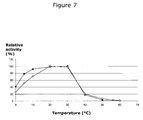
- the temperature optimum of recombinant Ikka-beta-galactosidase was determined as described above for the native enzyme using ONPG as a substrate. The temperature profile was determined at 0, 5, 10, 20, 30, 40, 50, and 60 °C for 30, 60 and 120 minutes for the recombinant Ikka-beta-galactosidase and, as controls, for the beta-galactosidases from E. coli and K. lactis. The optimal temperature for activity of the recombinant Ikka-beta-galactosidase was determined to be 20-30 °C ( Fig. 7 ).
- the Ikka-beta-galactosidase also showed high activity at low temperatures with more than 40% activity at 0 °C, approximately 80% activity at 5 °C and more than 90% at 10 °C.
- the specific activity of the Ikka-beta-galactosidase was almost twice as high at temperatures between 0 °C and 30 °C ( Fig. 8 ). Both enzymes showed close to zero activity at 40 °C and above ( Fig. 8 ).
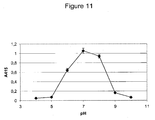
- the pH activity profile was studied using a mixed pH buffer (250 mM Tris, 250 mM MES, 250 mM acetic acid) adjusted from pH 4 to pH 10 with HCl or NaOH. The samples were incubated at 20 °C for 2 hours.
- the optimal pH value for the Ikka-beta-galactosidase was shown to be approximately pH 7.0. At pH 6.0 the enzyme showed 60% of maximal activity and at pH 8.0 the Ikka-enzyme displayed 90% activity. At pH 9.0 15% activity was observed whereas no activity could be detected at pH 5.0 or below or at pH 10 and above.
- the substrate specificity of the Ikka-beta-galactosidase was determined in assays performed at pH 7.0 and 20 °C for 20 minutes using nine different chromogenic substrates, o- nitrophenyl-beta-D-galactopyranoside, p-nitrophenyl-alpha-D-galactopyranoside, o -nitrophenyl-beta-D-glucopyranoside, p-nitrophenyl-beta-D-glucopyranoside, p-nitrophenyl-beta-D-arabinopyranoside, p-nitrophenyl-beta-D-cellobioside, p-nitrophenyl-beta-D-fucopyranoside, p-nitrophenyl-beta-D-lactopyranoside, and p-nitrophenyl-beta-D-mannopyranoside.
- Each substrate was used at a concentration of 10 mM.
- the assays showed that the Ikka-beta-galactosidase was only able to hydrolyze o-nitrophenyl-beta-D-galactopyranoside (ONPG) and p-nitrophenyl-beta-D-fucopyranoside (4 % of the relative activity compared to hydrolysis of ONPG). The utilization of the remaining substrates was below detection.
- Beta-galactosidase was purified from crude extracts by ion exchange chromatography. Portions of two ml were subjected to chromatography on a 1 ml High Q cartridge on a BioLogic LP System (Bio-Rad).
- the column was washed with 10 ml of 50 mM phosphate buffer (pH 7) and eluted by a gradient from 0 to 1 M of NaCl in 50 mM phosphate buffer (pH 7) at a flow rate of 0.5 ml/min. Fractions of 1 ml were collected. Crude extracts were also subjected to affinity chromatography on a 2 ml column of agarose coupled with p-aminobenzyl-1-thio-beta-D-galactopyranoside (PABTG-agarose, Sigma).
- PBTG-agarose p-aminobenzyl-1-thio-beta-D-galactopyranoside
- the column was washed with 10 ml of 50 mM phosphate buffer (pH 7) before it was eluted by 100 mM NaCl in 50 mM phosphate buffer (pH 7) at a flow rate of 0.5 ml/min. Fractions of 1 ml were collected.
- the fractions were analysed for the presence of proteins using a BCA Protein Assay Kit (Pierce), and beta-galactosidase was measured in o-nitrophenyl (ONP)-beta-D-galactopyranoside assays as described above.
- Fractions containing beta-galactosidase activity were analysed by SDS polyacrylamide gel electrophoresis (4-20 %, PAGEgel, CA, USA). Purified beta-galactosidase was used for subsequentstability and activity experiments.
- Fig. 13 shows that the crude extract from E. coli contained recombinant beta-galactosidase with a monomeric molecular weight of approximately 115-120 kDa. Ion exchange chromatography resulted in pure beta-galactosidase ( Fig. 13 , lane 2), whereas affinity chromatography ( Fig. 13 , lane 3) only resulted in partially purified recombinant enzyme. Thus, for the subsequent analyses, pure beta-galactosidase from ion exchange was used, unless otherwise specified.
- the molecular weight of the A. ikkense beta-galactosidase was determined to be approximately 115-120 kDa when analyzed on SDS-PAGE using known beta-galactosidases from E. coli and K. lactis as references. This result is in agreement with the calculated molecular weight as determined from the DNA sequence (119 kDa).
- the crude extract from E. coli was estimated to contain 10 mg/ml A. ikkense beta-galactosidase.
- Extract of E. coli expressing recombinant A. ikkense beta-galactosidase was analyzed for beta-galactosidase activity.
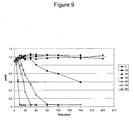
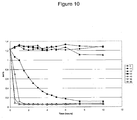
- the thermal stability of the purified, recombinant A. ikkense beta-galactosidase enzyme was tested as shown in Figure 15 .
- An equal amount of enzyme was incubated at the temperatures indicated and samples were withdrawn at different time intervals.
- Y-axis is the residual activity in percent of maximal activity.
- Enzyme samples were incubated at temperatures from 0 °C to 60 °C and at the time points indicated (X-axis), samples were withdrawn and assayed for active beta-galactosidase at 20 °C. Assays were performed in triplicates, and standard error was below 0.05.
- the enzyme displayed more than 60 % of the maximal activity, and at 10 °C, more than 70 % of the maximal activity was observed both for purified recombinant enzyme.
- Analysis of enzyme stability showed that purified, recombinant beta-galactosidase was 100% stable at 0 °C to 20 °C for at least 5 hours ( Fig. 15 ), and that the residual activity after 5 days storage at 0 °C to 20 °C was 50-60 % (data not shown).
- the purified beta-galactosidase lost more than 80 % of its activity within 5 hours. Complete, irreversible inactivation was achieved within 5 minutes at 50 °C and within 10 minutes at 40 °C ( Fig. 15 ).
- Y-axis is the relative activity in percent of maximal activity.
- X-axis is the incubation temperature (A) or pH (B).
- the relative activity of the purified, recombinant enzyme with ONPG as substrate is illustrated by black squares. Assays were performed in triplicates, and standard error was below 0.05.
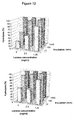
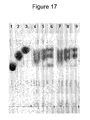
- the recombinant A. ikkense beta-galactosidase was benchmarked with Lactozyme 3000® 13 from K. lactis. At temperatures between 0 °C and 20 °C the A. ikkense beta-galactosidase showed a twofold increase in conversion rate, when compared to the K. lactis -beta-galactosidase ( Fig. 16 ); A. ikkense beta-galactosidase (black squares) compared with commercially available Lactozyme® 3000L from K. lactis (open circles).
- Lanes 7-9 samples incubated at 20 °C for 21 ⁇ 2 h (7: 1.25 mg/ml lactose, 8: 2.5 mg/ml lactose, 9: 5 mg/ml lactose). Lanes 1-3: Controls, 0.0125 mg of each of the carbohydrates lactose (lane 1), galactose (lane 2) and glucose (lane 3).
- the Ikka-beta-galactosidase was further subcloned in a Bacillus subtilis expression vector, pAL10 (MoBiTech, GmbH). PCR was performed using chromosomal DNA from Alkalilactibacillus ikkense as template and the PCR primers Bs_pAL_bGal5' : 5'GGCCAT GGATCC ATGGCAAAAAAATTAAAAAAATTC3' ( BamHI restriction site underlined) (SEQ ID NO 11) and Bs_pAL_bGal3': 5'GGCCAT CCCGGG TTATCTGTTTAAACTATTCAACATG3' (XmaI restriction site double underlined) (SEQ ID NO 12).
- Plasmid pUC18dLacZ carrying the Ikka-beta-galactosidase gene was prepared and sequenced, before the plasmid DNA was restricted with restriction endonucleases BamH I and Xma I.
- the 3.1 kb fragment encoding Ikka-beta-galactosidase was purified, inserted into plasmid pAL10 similarly restricted with BamH I and Xma I, and transformed into E. coli as described in 5.1. Recombinant E.
- Plasmid pAL10_Ikka-bGal was purified and transformed into B. subtilis cells using an electroporation protocol for B. subtilis from Eppendorf (Germany) (Protocol No. 4308 915.504 - 08/2003). Recombinant cells harbouring plasmid pAL10 were selected on LB agar containing 5 ⁇ g/ml chloramphenicol.
- Production of recombinant Ikka-beta-galactosidase in B. subtilis was carried out by growing B. subtilis pAL10_Ikka-bGal cells in LB containing 5 ⁇ g/ml of chloramphenicol at 37 °C for 16 hours. Induction of Ikka-beta-galactosidase synthesis was carried out by changing the temperature to 20 °C. B. subtilis pAL10_Ikka-bGal cells were cultivated at 20 °C for another 5 hours after which, the cells were harvested, and intracellular enzyme was isolated by Fast Prep as described in 5.2.
- ONPG assays showed the presence of a cold-active Ikka-beta-galactosidase with an activity similar to the native enzyme, to the recombinant enzyme in crude E. coli extracts, and to the pure enzyme produced in E. coli cells.
Landscapes
- Life Sciences & Earth Sciences (AREA)
- Chemical & Material Sciences (AREA)
- Engineering & Computer Science (AREA)
- Organic Chemistry (AREA)
- Microbiology (AREA)
- Health & Medical Sciences (AREA)
- Food Science & Technology (AREA)
- Polymers & Plastics (AREA)
- Zoology (AREA)
- Bioinformatics & Cheminformatics (AREA)
- Wood Science & Technology (AREA)
- Genetics & Genomics (AREA)
- General Health & Medical Sciences (AREA)
- General Engineering & Computer Science (AREA)
- Biochemistry (AREA)
- Medicinal Chemistry (AREA)
- Molecular Biology (AREA)
- Biomedical Technology (AREA)
- Biotechnology (AREA)
- Enzymes And Modification Thereof (AREA)
- Micro-Organisms Or Cultivation Processes Thereof (AREA)
Claims (16)
- Gereinigte kaltaktive Beta-Galactosidase, die eine Aminosäuresequenz aufweist, wie sie in SEQ ID NR. 1 definiert ist oder mit einer, die wenigstens 80% Homologie zur Aminosäuresequenz, wie sie in SEQ ID NR. 1 definiert ist, aufweist, wobei die Aminosäuresequenz so ausgewählt ist, dass das Enzym eine stabile enzymatische Aktivität bei Temperaturen von weniger als 8°C aufweist.
- Beta-Galactosidase nach Anspruch 1, wobei die Aminosäuresequenz wenigstens 90%, vorzugsweise 95% Homologie zur Aminosäuresequenz, wie sie in SEQ ID NR. 1 definiert ist, aufweist.
- Beta-Galactosidase gemäß Anspruch 1 oder 2, wobei sie durch einen Strang eines Alkalilactibazillus produziert wird.
- Beta-Galactosidase nach Anspruch 1, 2 oder 3, wobei sie durch Alkalilactibacillus ikkense produziert wird.
- Isolierte DNA-Sequenz umfassend ein Gen, das für die Beta-Galactosidase nach einem der Ansprüche 1 bis 4 kodiert.
- Isolierte DNA-Sequenz, die:a) ein Protein mit einer Aminosäuresequenz, wie sie im SEQ ID NR. 2 angegeben ist, kodiert, oderb) unter stringenten Bedingungen zur Sequenz von a) hybridisiert, oderc) eine entartete Sequenz der Sequenzen a) oder b) ist.
- DNA-Sequenz nach Anspruch 6, wobei die Sequenz im SEQ ID NR. 2 angegeben ist.
- Ein rekombinanter Vektor umfassend eine DNA-Sequenz nach einem der Ansprüche 5 bis 7.
- Vektor nach Anspruch 8, wobei der Vektor ein Expressionsvektor ist.
- Wirtszelle transformiert mit einem Vektor nach Anspruch 8 oder 9.
- Zelle nach Anspruch 10, wobei die Zelle ausgewählt ist aus der Gruppe bestehend aus Escherichia, Bazillus, Bifidobakterium, Lactococcus, Lactobacillus, Streptomyces, Leuconostoc, Streptomyces, Saccharomyces, Kluyveromyces, Candida, Torula, Torulopsis und Aspergillus.
- Zelle nach Anspruch 11, wobei die Zelle ausgewählt ist aus der Gruppe bestehend aus Bifidobacterium breve, Bifidobacterium longum, Bifidobacterium infantis, Bifidobacterium bifidum, Bifidobacterium animalis und Lactococcus lactis.
- Verwendung einer Zelle nach einem der Ansprüche 10 bis 12 zur Herstellung eines Produktes ausgewählt aus der Gruppe bestehend aus laktosefreier Milch, Milch mit niedrigem Laktosegehalt, Joghurt, Käse, fermentierten Milchprodukten, Nahrungszusätzen und probiotischen Nahrungsmitteln.
- Verwendung nach Anspruch 13 zur Herstellung eines Milchprodukts mit einer Laktosekonzentration von 1% oder weniger.
- Verwendung nach Anspruch 14, wobei die Laktosekonzentration 0,1% oder weniger ist.
- Psychrophiles Bakterium Alkalilactibacillus ikkense BCCM Zugangsnummer LMG P-24866 und Varianten und Mutanten, die davon abgeleitet sind, das in der Lage ist, eine kaltaktive Beta- Galactosidase, wie sie in Anspruch 1 oder 2 definiert ist, herzustellen.
Applications Claiming Priority (3)
| Application Number | Priority Date | Filing Date | Title |
|---|---|---|---|
| US15120809P | 2009-02-10 | 2009-02-10 | |
| US17695609P | 2009-05-11 | 2009-05-11 | |
| PCT/EP2010/051596 WO2010092057A1 (en) | 2009-02-10 | 2010-02-09 | Cold-active beta-galactosidase, a method of producing same and use of such enzyme |
Publications (3)
| Publication Number | Publication Date |
|---|---|
| EP2396403A1 EP2396403A1 (de) | 2011-12-21 |
| EP2396403B1 true EP2396403B1 (de) | 2015-09-23 |
| EP2396403B8 EP2396403B8 (de) | 2015-11-18 |
Family
ID=42105847
Family Applications (1)
| Application Number | Title | Priority Date | Filing Date |
|---|---|---|---|
| EP10703071.0A Not-in-force EP2396403B8 (de) | 2009-02-10 | 2010-02-09 | Kälteaktive beta-galactosidase, verfahren zur herstellung davon und verwendung eines solchen enzyms |
Country Status (6)
| Country | Link |
|---|---|
| US (1) | US8288143B2 (de) |
| EP (1) | EP2396403B8 (de) |
| CN (1) | CN102361974B (de) |
| CA (1) | CA2751957C (de) |
| DK (1) | DK2396403T3 (de) |
| WO (1) | WO2010092057A1 (de) |
Families Citing this family (14)
| Publication number | Priority date | Publication date | Assignee | Title |
|---|---|---|---|---|
| CN102220301B (zh) * | 2011-05-30 | 2012-10-24 | 云南师范大学 | 一种耐碱性低温α-半乳糖苷酶AgaAJB13及基因 |
| EP2530148B1 (de) | 2011-05-30 | 2015-04-29 | B.R.A.I.N. Biotechnology Research And Information Network AG | Neue beta-Galactosidasen zur Herstellung von lactoseverarmten Milchprodukten |
| KR101619863B1 (ko) * | 2014-05-23 | 2016-05-24 | 주식회사 제노포커스 | 신규 베타-갈락토시다아제 |
| BR112017011607A2 (pt) | 2014-12-05 | 2018-01-09 | Godo Shusei Kk | solução de lactase e produto lácteo usando a mesma |
| CN110678479A (zh) | 2017-04-11 | 2020-01-10 | 科·汉森有限公司 | 性能改善的乳糖酶 |
| ES3057273T3 (en) | 2017-04-11 | 2026-02-27 | Kerry Group Services Int Ltd | Lactase enzymes with improved properties |
| US12435326B2 (en) * | 2017-04-11 | 2025-10-07 | Kerry Group Services International Ltd | Lactase enzymes with improved properties |
| FI3609909T3 (fi) | 2017-04-11 | 2025-09-03 | Kerry Group Services Int Ltd | Laktaasientsyymit, joilla on parannettu aktiivisuus matalissa lämpötiloissa |
| EP3778625A4 (de) * | 2018-04-05 | 2022-02-09 | Godo Shusei Co., Ltd. | Aus paenibacillus pabuli abgeleitetes enzym zur herstellung von galactooligosaccharid und verfahren zur herstellung von galactooligosaccharid |
| BR112021007244A2 (pt) * | 2018-10-17 | 2021-08-10 | Chr. Hansen A/S | enzimas lactase com propriedades melhoradas em ph ácido |
| WO2021037986A1 (en) | 2019-08-30 | 2021-03-04 | Chr. Hansen A/S | Production of lactase enzymes using altered regulation strains |
| CN112626052B (zh) * | 2020-12-09 | 2021-11-19 | 山东隆科特酶制剂有限公司 | 一种热稳定性提高的多聚半乳糖醛酸酶突变体及应用 |
| CN113637660B (zh) * | 2021-08-05 | 2023-09-08 | 云南师范大学 | 一种β-半乳糖苷酶GalNC3-89及其制备方法和应用 |
| CN113621550B (zh) * | 2021-09-23 | 2022-06-21 | 武汉瀚海新酶生物科技有限公司 | 用于发酵产碱性磷酸酶的培养基和碱性磷酸酶的制备方法 |
Family Cites Families (1)
| Publication number | Priority date | Publication date | Assignee | Title |
|---|---|---|---|---|
| JP2003504048A (ja) * | 1999-07-09 | 2003-02-04 | ユニベルシテ ドゥ リエージュ | 低温活性ベータ・ガラクトシダーゼ、その製法、及びその使用 |
-
2010
- 2010-02-09 CA CA2751957A patent/CA2751957C/en not_active Expired - Fee Related
- 2010-02-09 EP EP10703071.0A patent/EP2396403B8/de not_active Not-in-force
- 2010-02-09 DK DK10703071.0T patent/DK2396403T3/en active
- 2010-02-09 CN CN201080012589.7A patent/CN102361974B/zh not_active Expired - Fee Related
- 2010-02-09 WO PCT/EP2010/051596 patent/WO2010092057A1/en not_active Ceased
- 2010-02-09 US US13/148,853 patent/US8288143B2/en not_active Expired - Fee Related
Also Published As
| Publication number | Publication date |
|---|---|
| DK2396403T3 (en) | 2016-01-11 |
| CN102361974B (zh) | 2013-11-06 |
| EP2396403B8 (de) | 2015-11-18 |
| US8288143B2 (en) | 2012-10-16 |
| CA2751957C (en) | 2018-07-24 |
| US20120058223A1 (en) | 2012-03-08 |
| EP2396403A1 (de) | 2011-12-21 |
| CN102361974A (zh) | 2012-02-22 |
| CA2751957A1 (en) | 2010-08-19 |
| WO2010092057A1 (en) | 2010-08-19 |
Similar Documents
| Publication | Publication Date | Title |
|---|---|---|
| EP2396403B1 (de) | Kälteaktive beta-galactosidase, verfahren zur herstellung davon und verwendung eines solchen enzyms | |
| US12215367B2 (en) | Lactase enzymes with improved properties | |
| CA2645783C (en) | Beta-galactosidase with transgalactosylating activity | |
| CN112654251A (zh) | 在酸性pH下具有改善的特性的乳糖酶 | |
| US12486305B2 (en) | Lactase enzymes with improved properties | |
| US12435326B2 (en) | Lactase enzymes with improved properties | |
| US12369597B2 (en) | Lactase enzymes with improved activity at low temperatures | |
| US12538929B2 (en) | Production of lactase enzymes using altered regulation strains | |
| RU2814542C2 (ru) | Ферменты лактазы с улучшенными свойствами при кислом pH | |
| Srila et al. | Cloning of beta-galactosidase gene from Lactobacillus delbrueckii subsp. bulgaricus TISTR 892 and expression in Escherichia coli. | |
| Devi et al. | Production and optimization of β-galactosidase enzyme from probiotic Lactobacillus sps |
Legal Events
| Date | Code | Title | Description |
|---|---|---|---|
| PUAI | Public reference made under article 153(3) epc to a published international application that has entered the european phase |
Free format text: ORIGINAL CODE: 0009012 |
|
| 17P | Request for examination filed |
Effective date: 20110808 |
|
| AK | Designated contracting states |
Kind code of ref document: A1 Designated state(s): AT BE BG CH CY CZ DE DK EE ES FI FR GB GR HR HU IE IS IT LI LT LU LV MC MK MT NL NO PL PT RO SE SI SK SM TR |
|
| RIN1 | Information on inventor provided before grant (corrected) |
Inventor name: STOUGAARD, PETER Inventor name: SCHMIDT, MARIANE |
|
| DAX | Request for extension of the european patent (deleted) | ||
| 17Q | First examination report despatched |
Effective date: 20131015 |
|
| GRAP | Despatch of communication of intention to grant a patent |
Free format text: ORIGINAL CODE: EPIDOSNIGR1 |
|
| INTG | Intention to grant announced |
Effective date: 20150410 |
|
| GRAS | Grant fee paid |
Free format text: ORIGINAL CODE: EPIDOSNIGR3 |
|
| GRAA | (expected) grant |
Free format text: ORIGINAL CODE: 0009210 |
|
| AK | Designated contracting states |
Kind code of ref document: B1 Designated state(s): AT BE BG CH CY CZ DE DK EE ES FI FR GB GR HR HU IE IS IT LI LT LU LV MC MK MT NL NO PL PT RO SE SI SK SM TR |
|
| REG | Reference to a national code |
Ref country code: GB Ref legal event code: FG4D |
|
| REG | Reference to a national code |
Ref country code: CH Ref legal event code: EP |
|
| REG | Reference to a national code |
Ref country code: AT Ref legal event code: REF Ref document number: 751270 Country of ref document: AT Kind code of ref document: T Effective date: 20151015 |
|
| REG | Reference to a national code |
Ref country code: IE Ref legal event code: FG4D |
|
| REG | Reference to a national code |
Ref country code: DE Ref legal event code: R096 Ref document number: 602010027696 Country of ref document: DE |
|
| RAP2 | Party data changed (patent owner data changed or rights of a patent transferred) |
Owner name: COLDZYMES APS |
|
| REG | Reference to a national code |
Ref country code: SE Ref legal event code: TRGR |
|
| REG | Reference to a national code |
Ref country code: DK Ref legal event code: T3 Effective date: 20160107 |
|
| PG25 | Lapsed in a contracting state [announced via postgrant information from national office to epo] |
Ref country code: GR Free format text: LAPSE BECAUSE OF FAILURE TO SUBMIT A TRANSLATION OF THE DESCRIPTION OR TO PAY THE FEE WITHIN THE PRESCRIBED TIME-LIMIT Effective date: 20151224 Ref country code: LT Free format text: LAPSE BECAUSE OF FAILURE TO SUBMIT A TRANSLATION OF THE DESCRIPTION OR TO PAY THE FEE WITHIN THE PRESCRIBED TIME-LIMIT Effective date: 20150923 Ref country code: LV Free format text: LAPSE BECAUSE OF FAILURE TO SUBMIT A TRANSLATION OF THE DESCRIPTION OR TO PAY THE FEE WITHIN THE PRESCRIBED TIME-LIMIT Effective date: 20150923 Ref country code: FI Free format text: LAPSE BECAUSE OF FAILURE TO SUBMIT A TRANSLATION OF THE DESCRIPTION OR TO PAY THE FEE WITHIN THE PRESCRIBED TIME-LIMIT Effective date: 20150923 |
|
| REG | Reference to a national code |
Ref country code: LT Ref legal event code: MG4D |
|
| REG | Reference to a national code |
Ref country code: NO Ref legal event code: T2 Effective date: 20150923 Ref country code: AT Ref legal event code: MK05 Ref document number: 751270 Country of ref document: AT Kind code of ref document: T Effective date: 20150923 |
|
| REG | Reference to a national code |
Ref country code: FR Ref legal event code: PLFP Year of fee payment: 7 |
|
| REG | Reference to a national code |
Ref country code: NL Ref legal event code: FP |
|
| PG25 | Lapsed in a contracting state [announced via postgrant information from national office to epo] |
Ref country code: HR Free format text: LAPSE BECAUSE OF FAILURE TO SUBMIT A TRANSLATION OF THE DESCRIPTION OR TO PAY THE FEE WITHIN THE PRESCRIBED TIME-LIMIT Effective date: 20150923 |
|
| PG25 | Lapsed in a contracting state [announced via postgrant information from national office to epo] |
Ref country code: ES Free format text: LAPSE BECAUSE OF FAILURE TO SUBMIT A TRANSLATION OF THE DESCRIPTION OR TO PAY THE FEE WITHIN THE PRESCRIBED TIME-LIMIT Effective date: 20150923 Ref country code: SK Free format text: LAPSE BECAUSE OF FAILURE TO SUBMIT A TRANSLATION OF THE DESCRIPTION OR TO PAY THE FEE WITHIN THE PRESCRIBED TIME-LIMIT Effective date: 20150923 Ref country code: EE Free format text: LAPSE BECAUSE OF FAILURE TO SUBMIT A TRANSLATION OF THE DESCRIPTION OR TO PAY THE FEE WITHIN THE PRESCRIBED TIME-LIMIT Effective date: 20150923 Ref country code: IS Free format text: LAPSE BECAUSE OF FAILURE TO SUBMIT A TRANSLATION OF THE DESCRIPTION OR TO PAY THE FEE WITHIN THE PRESCRIBED TIME-LIMIT Effective date: 20160123 Ref country code: CZ Free format text: LAPSE BECAUSE OF FAILURE TO SUBMIT A TRANSLATION OF THE DESCRIPTION OR TO PAY THE FEE WITHIN THE PRESCRIBED TIME-LIMIT Effective date: 20150923 |
|
| PG25 | Lapsed in a contracting state [announced via postgrant information from national office to epo] |
Ref country code: PT Free format text: LAPSE BECAUSE OF FAILURE TO SUBMIT A TRANSLATION OF THE DESCRIPTION OR TO PAY THE FEE WITHIN THE PRESCRIBED TIME-LIMIT Effective date: 20160125 Ref country code: PL Free format text: LAPSE BECAUSE OF FAILURE TO SUBMIT A TRANSLATION OF THE DESCRIPTION OR TO PAY THE FEE WITHIN THE PRESCRIBED TIME-LIMIT Effective date: 20150923 Ref country code: BE Free format text: LAPSE BECAUSE OF NON-PAYMENT OF DUE FEES Effective date: 20160229 Ref country code: AT Free format text: LAPSE BECAUSE OF FAILURE TO SUBMIT A TRANSLATION OF THE DESCRIPTION OR TO PAY THE FEE WITHIN THE PRESCRIBED TIME-LIMIT Effective date: 20150923 Ref country code: RO Free format text: LAPSE BECAUSE OF FAILURE TO SUBMIT A TRANSLATION OF THE DESCRIPTION OR TO PAY THE FEE WITHIN THE PRESCRIBED TIME-LIMIT Effective date: 20150923 |
|
| REG | Reference to a national code |
Ref country code: DE Ref legal event code: R097 Ref document number: 602010027696 Country of ref document: DE |
|
| PLBE | No opposition filed within time limit |
Free format text: ORIGINAL CODE: 0009261 |
|
| STAA | Information on the status of an ep patent application or granted ep patent |
Free format text: STATUS: NO OPPOSITION FILED WITHIN TIME LIMIT |
|
| 26N | No opposition filed |
Effective date: 20160624 |
|
| PG25 | Lapsed in a contracting state [announced via postgrant information from national office to epo] |
Ref country code: LU Free format text: LAPSE BECAUSE OF FAILURE TO SUBMIT A TRANSLATION OF THE DESCRIPTION OR TO PAY THE FEE WITHIN THE PRESCRIBED TIME-LIMIT Effective date: 20160209 Ref country code: MC Free format text: LAPSE BECAUSE OF FAILURE TO SUBMIT A TRANSLATION OF THE DESCRIPTION OR TO PAY THE FEE WITHIN THE PRESCRIBED TIME-LIMIT Effective date: 20150923 |
|
| PG25 | Lapsed in a contracting state [announced via postgrant information from national office to epo] |
Ref country code: SI Free format text: LAPSE BECAUSE OF FAILURE TO SUBMIT A TRANSLATION OF THE DESCRIPTION OR TO PAY THE FEE WITHIN THE PRESCRIBED TIME-LIMIT Effective date: 20150923 |
|
| REG | Reference to a national code |
Ref country code: IE Ref legal event code: MM4A |
|
| PG25 | Lapsed in a contracting state [announced via postgrant information from national office to epo] |
Ref country code: BE Free format text: LAPSE BECAUSE OF FAILURE TO SUBMIT A TRANSLATION OF THE DESCRIPTION OR TO PAY THE FEE WITHIN THE PRESCRIBED TIME-LIMIT Effective date: 20150923 |
|
| PG25 | Lapsed in a contracting state [announced via postgrant information from national office to epo] |
Ref country code: IE Free format text: LAPSE BECAUSE OF NON-PAYMENT OF DUE FEES Effective date: 20160209 |
|
| REG | Reference to a national code |
Ref country code: FR Ref legal event code: PLFP Year of fee payment: 8 |
|
| PG25 | Lapsed in a contracting state [announced via postgrant information from national office to epo] |
Ref country code: MT Free format text: LAPSE BECAUSE OF FAILURE TO SUBMIT A TRANSLATION OF THE DESCRIPTION OR TO PAY THE FEE WITHIN THE PRESCRIBED TIME-LIMIT Effective date: 20150923 |
|
| REG | Reference to a national code |
Ref country code: FR Ref legal event code: PLFP Year of fee payment: 9 |
|
| PG25 | Lapsed in a contracting state [announced via postgrant information from national office to epo] |
Ref country code: SM Free format text: LAPSE BECAUSE OF FAILURE TO SUBMIT A TRANSLATION OF THE DESCRIPTION OR TO PAY THE FEE WITHIN THE PRESCRIBED TIME-LIMIT Effective date: 20150923 Ref country code: CY Free format text: LAPSE BECAUSE OF FAILURE TO SUBMIT A TRANSLATION OF THE DESCRIPTION OR TO PAY THE FEE WITHIN THE PRESCRIBED TIME-LIMIT Effective date: 20150923 Ref country code: HU Free format text: LAPSE BECAUSE OF FAILURE TO SUBMIT A TRANSLATION OF THE DESCRIPTION OR TO PAY THE FEE WITHIN THE PRESCRIBED TIME-LIMIT; INVALID AB INITIO Effective date: 20100209 |
|
| PG25 | Lapsed in a contracting state [announced via postgrant information from national office to epo] |
Ref country code: MT Free format text: LAPSE BECAUSE OF FAILURE TO SUBMIT A TRANSLATION OF THE DESCRIPTION OR TO PAY THE FEE WITHIN THE PRESCRIBED TIME-LIMIT Effective date: 20160229 Ref country code: MK Free format text: LAPSE BECAUSE OF FAILURE TO SUBMIT A TRANSLATION OF THE DESCRIPTION OR TO PAY THE FEE WITHIN THE PRESCRIBED TIME-LIMIT Effective date: 20150923 Ref country code: TR Free format text: LAPSE BECAUSE OF FAILURE TO SUBMIT A TRANSLATION OF THE DESCRIPTION OR TO PAY THE FEE WITHIN THE PRESCRIBED TIME-LIMIT Effective date: 20150923 |
|
| PG25 | Lapsed in a contracting state [announced via postgrant information from national office to epo] |
Ref country code: BG Free format text: LAPSE BECAUSE OF FAILURE TO SUBMIT A TRANSLATION OF THE DESCRIPTION OR TO PAY THE FEE WITHIN THE PRESCRIBED TIME-LIMIT Effective date: 20150923 |
|
| PGFP | Annual fee paid to national office [announced via postgrant information from national office to epo] |
Ref country code: NL Payment date: 20190218 Year of fee payment: 10 |
|
| PGFP | Annual fee paid to national office [announced via postgrant information from national office to epo] |
Ref country code: DE Payment date: 20190219 Year of fee payment: 10 Ref country code: NO Payment date: 20190220 Year of fee payment: 10 Ref country code: GB Payment date: 20190218 Year of fee payment: 10 Ref country code: IT Payment date: 20190225 Year of fee payment: 10 Ref country code: CH Payment date: 20190218 Year of fee payment: 10 |
|
| PGFP | Annual fee paid to national office [announced via postgrant information from national office to epo] |
Ref country code: DK Payment date: 20190220 Year of fee payment: 10 Ref country code: SE Payment date: 20190218 Year of fee payment: 10 Ref country code: FR Payment date: 20190220 Year of fee payment: 10 |
|
| REG | Reference to a national code |
Ref country code: DE Ref legal event code: R119 Ref document number: 602010027696 Country of ref document: DE |
|
| REG | Reference to a national code |
Ref country code: DK Ref legal event code: EBP Effective date: 20200229 |
|
| REG | Reference to a national code |
Ref country code: NO Ref legal event code: MMEP |
|
| REG | Reference to a national code |
Ref country code: SE Ref legal event code: EUG |
|
| REG | Reference to a national code |
Ref country code: CH Ref legal event code: PL |
|
| REG | Reference to a national code |
Ref country code: NL Ref legal event code: MM Effective date: 20200301 |
|
| GBPC | Gb: european patent ceased through non-payment of renewal fee |
Effective date: 20200209 |
|
| PG25 | Lapsed in a contracting state [announced via postgrant information from national office to epo] |
Ref country code: SE Free format text: LAPSE BECAUSE OF NON-PAYMENT OF DUE FEES Effective date: 20200210 Ref country code: NO Free format text: LAPSE BECAUSE OF NON-PAYMENT OF DUE FEES Effective date: 20200229 |
|
| PG25 | Lapsed in a contracting state [announced via postgrant information from national office to epo] |
Ref country code: CH Free format text: LAPSE BECAUSE OF NON-PAYMENT OF DUE FEES Effective date: 20200229 Ref country code: LI Free format text: LAPSE BECAUSE OF NON-PAYMENT OF DUE FEES Effective date: 20200229 |
|
| PG25 | Lapsed in a contracting state [announced via postgrant information from national office to epo] |
Ref country code: NL Free format text: LAPSE BECAUSE OF NON-PAYMENT OF DUE FEES Effective date: 20200301 |
|
| PG25 | Lapsed in a contracting state [announced via postgrant information from national office to epo] |
Ref country code: FR Free format text: LAPSE BECAUSE OF NON-PAYMENT OF DUE FEES Effective date: 20200229 Ref country code: DE Free format text: LAPSE BECAUSE OF NON-PAYMENT OF DUE FEES Effective date: 20200901 Ref country code: GB Free format text: LAPSE BECAUSE OF NON-PAYMENT OF DUE FEES Effective date: 20200209 Ref country code: DK Free format text: LAPSE BECAUSE OF NON-PAYMENT OF DUE FEES Effective date: 20200229 |
|
| PG25 | Lapsed in a contracting state [announced via postgrant information from national office to epo] |
Ref country code: IT Free format text: LAPSE BECAUSE OF NON-PAYMENT OF DUE FEES Effective date: 20200209 |