EP2397006B1 - Steuerung des energieverbrauchs eines drahtlosen netzknotens - Google Patents
Steuerung des energieverbrauchs eines drahtlosen netzknotens Download PDFInfo
- Publication number
- EP2397006B1 EP2397006B1 EP09788488.6A EP09788488A EP2397006B1 EP 2397006 B1 EP2397006 B1 EP 2397006B1 EP 09788488 A EP09788488 A EP 09788488A EP 2397006 B1 EP2397006 B1 EP 2397006B1
- Authority
- EP
- European Patent Office
- Prior art keywords
- cell
- transmission
- information
- served
- base station
- Prior art date
- Legal status (The legal status is an assumption and is not a legal conclusion. Google has not performed a legal analysis and makes no representation as to the accuracy of the status listed.)
- Active
Links
Images





Classifications
-
- H—ELECTRICITY
- H04—ELECTRIC COMMUNICATION TECHNIQUE
- H04W—WIRELESS COMMUNICATION NETWORKS
- H04W52/00—Power management, e.g. Transmission Power Control [TPC] or power classes
- H04W52/02—Power saving arrangements
- H04W52/0203—Power saving arrangements in the radio access network or backbone network of wireless communication networks
- H04W52/0206—Power saving arrangements in the radio access network or backbone network of wireless communication networks in access points, e.g. base stations
-
- H—ELECTRICITY
- H04—ELECTRIC COMMUNICATION TECHNIQUE
- H04W—WIRELESS COMMUNICATION NETWORKS
- H04W52/00—Power management, e.g. Transmission Power Control [TPC] or power classes
- H04W52/04—Transmission power control [TPC]
- H04W52/18—TPC being performed according to specific parameters
- H04W52/28—TPC being performed according to specific parameters using user profile, e.g. mobile speed, priority or network state, e.g. standby, idle or non-transmission
-
- H—ELECTRICITY
- H04—ELECTRIC COMMUNICATION TECHNIQUE
- H04W—WIRELESS COMMUNICATION NETWORKS
- H04W52/00—Power management, e.g. Transmission Power Control [TPC] or power classes
- H04W52/04—Transmission power control [TPC]
- H04W52/30—Transmission power control [TPC] using constraints in the total amount of available transmission power
- H04W52/34—TPC management, i.e. sharing limited amount of power among users or channels or data types, e.g. cell loading
- H04W52/343—TPC management, i.e. sharing limited amount of power among users or channels or data types, e.g. cell loading taking into account loading or congestion level
-
- H—ELECTRICITY
- H04—ELECTRIC COMMUNICATION TECHNIQUE
- H04W—WIRELESS COMMUNICATION NETWORKS
- H04W72/00—Local resource management
- H04W72/04—Wireless resource allocation
- H04W72/044—Wireless resource allocation based on the type of the allocated resource
- H04W72/0473—Wireless resource allocation based on the type of the allocated resource the resource being transmission power
-
- H—ELECTRICITY
- H04—ELECTRIC COMMUNICATION TECHNIQUE
- H04W—WIRELESS COMMUNICATION NETWORKS
- H04W72/00—Local resource management
- H04W72/20—Control channels or signalling for resource management
-
- H—ELECTRICITY
- H04—ELECTRIC COMMUNICATION TECHNIQUE
- H04W—WIRELESS COMMUNICATION NETWORKS
- H04W36/00—Hand-off or reselection arrangements
- H04W36/16—Performing reselection for specific purposes
- H04W36/22—Performing reselection for specific purposes for handling the traffic
-
- H—ELECTRICITY
- H04—ELECTRIC COMMUNICATION TECHNIQUE
- H04W—WIRELESS COMMUNICATION NETWORKS
- H04W88/00—Devices specially adapted for wireless communication networks, e.g. terminals, base stations or access point devices
- H04W88/08—Access point devices
-
- Y—GENERAL TAGGING OF NEW TECHNOLOGICAL DEVELOPMENTS; GENERAL TAGGING OF CROSS-SECTIONAL TECHNOLOGIES SPANNING OVER SEVERAL SECTIONS OF THE IPC; TECHNICAL SUBJECTS COVERED BY FORMER USPC CROSS-REFERENCE ART COLLECTIONS [XRACs] AND DIGESTS
- Y02—TECHNOLOGIES OR APPLICATIONS FOR MITIGATION OR ADAPTATION AGAINST CLIMATE CHANGE
- Y02D—CLIMATE CHANGE MITIGATION TECHNOLOGIES IN INFORMATION AND COMMUNICATION TECHNOLOGIES [ICT], I.E. INFORMATION AND COMMUNICATION TECHNOLOGIES AIMING AT THE REDUCTION OF THEIR OWN ENERGY USE
- Y02D30/00—Reducing energy consumption in communication networks
- Y02D30/70—Reducing energy consumption in communication networks in wireless communication networks
Definitions
- the present invention relates generally to controlling energy consumption of a wireless network node, such as a base station.
- US 2007/066329 A1 (LAROIA RAJIV [US] ET AL) 22 March 2007 (2007-03-22) relates to methods and apparatus for implementing wireless communications with base stations which support multiple modes of operation.
- An object of the present invention is to reduce the amount of energy used by a wireless network node.
- the basic idea of the present invention is to monitor the number of active terminals served by the cell. During time periods when there are no active terminals served by the cell, downlink transmission is restricted to intermittent transmission of information assisting active terminals not served by the cell in finding the cell.
- the present invention has the further advantage of reducing interference generated by the node.
- the present invention is especially useful in cell scenarios where macro cells overlay micro cells and hence, in case of low load (no or few active cells in the micro cell area), idle terminals (in the micro cell area) can camp on the macro cells and hence use their sync symbols to be in sync with the network.
- a radio terminal receives signals indicating a time schedule for intermittent transmission of information from a cell and synchronizes mobility measurements with the intermittent transmission of information.
- a radio terminal performs a first cell search over a multitude of frequencies, and then, if the first cell search fails, a second cell search in which the search duration on each frequency is extended.
- LTE Long-Term Evolution
- WCDMA Long-Term Evolution
- GSM Global System for Mobile communications
- base stations especially LTE base stations.
- the same principles may also be applied to other wireless network nodes, such as relays and repeaters and home base stations.
- base station For the purposes of the present application a base station is assumed to serve one or more radio cells. Thus, “base station” also refers to more recent entities, such as NodeB and eNodeB (evolved NodeB), which are capable of handling more than one cell.
- NodeB and eNodeB evolved NodeB
- terminal will be used to indicate different types of radio terminals, such as mobile stations, UEs (User Equipments), laptops, etc.
- the base stations In current cellular systems, e.g. HSPA (High-Speed Packet Access) and LTE, the base stations continuously transmit certain forms of signals in the cell. Examples of such signals are reference signals (pilots), synchronization signals and the broadcast channel. These signals are used for many purposes:
- the signals necessary for mobility and cell search should be intermittently transmitted. This can be accomplished by defining a DTX (Discontinuous Transmission) cycle for the base station.
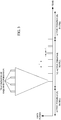
- the DTX cycle is defined such that the base station is active every T a out of T p seconds as illustrated in Fig. 3 .
- the energy reduction at the transmitter side is then approximately proportional to T a / T p .
- T a The value of T a should be selected large enough to allow the terminal to find synchronization with sufficiently high probability as well as being able to do signal measurements on the cell. The time needed for this depends on the signal-to-noise ratio at the terminal, but if T a is in the order of a few hundred milliseconds the probability of not finding the idle cell is expected to be sufficiently low.
- T p should be large enough to allow for efficient reduction in energy consumption. At the same time, a too large T p means that terminals may not find the idle cell. A typical value of T p could be in the order of several seconds or tens of seconds.
- the DTX pattern in the base station is selected to match the DRX pattern configured in the terminals. If the terminals wake up according to a certain pattern to perform neighboring cell measurements, it is beneficial if the DTX pattern in the base station matches this pattern.
- the synchronization signals are not transmitted continuously.
- synchronization signals are transmitted in (part of) subframe 0 and 5 in each radio frame (for FDD, for TDD the subframes used are different but the principle remains the same).
- Similar rules typically apply for the broadcasted system information (in LTE, the most important part of the system information is transmitted in subframe 0 and 5).
- the active period of the DTX pattern could still allow the base station to sleep in the remaining subframes of a radio frame, as indicated by the expanded time segment T a in the top part of Fig. 3 .
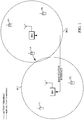
- An idle cell would exit the DTX period when it detects that a terminal, for example T1 in Fig. 1 or 2 , is attempting a random access.
- the network can also wake up idle base stations in conjunction with the handover procedure. For example base station BS2 (managing cell RC2) commanding a terminal, for example T4 in Fig. 1 or 2 , to perform handover from cell RC2 to cell RC1 (managed by base station BS1) would, in addition to the handover command to the terminal, also send a wake up command to base station BS1 over a base station interface, for example the X2 interface in LTE.
- Fig. 4 is a flow chart illustrating an embodiment of the method of controlling energy consumption in accordance with the present invention.
- CTX continuous transmission
- step S1 monitors the number of active terminals served by the cell.
- Step S2 tests whether the number of active terminals served by the cell is less than a predetermined threshold TH. If so, step S3 hands over active terminals still served by the cell to at least one other cell (more than one cell may be required, depending on the location of the active terminals).
- step S4 instructs the base station managing the cell to enter a discontinuous transmission mode (DTX) in which transmission downlink in the cell is restricted to intermittent transmission of information assisting active terminals not served by the cell in finding the cell.
- DTX discontinuous transmission mode
- the threshold TH is set to, for example, a value representing between 0 and 5% of the maximum load the cell can handle. If the threshold TH is set to 0, step S3 may be omitted, since there are no remaining active terminals served by the cell.
- step S3 is omitted even if there still are active terminals served by the cell.
- the remaining active terminals are forced to initiate handovers to other cells after the cell has already entered DTX mode. Since there is a risk that some terminals may not be handed over to another cell, for example due to high load in these cells, the threshold TH is typically set lower in this embodiment to minimize the risk of dropped connections.
- the threshold TH is typically set lower in this embodiment to minimize the risk of dropped connections.
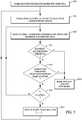
- Fig. 5 is a flow chart illustrating further details of an embodiment of the method of controlling energy consumption in accordance with the present invention.
- the base station enters DTX mode. This corresponds to step S4 in Fig. 4 .
- Step S11 wakes the base station (for this cell) at the start of the next DTX transmission period.
- the base station transmits information assisting terminals in finding the cell, corresponding to the first bar in the expanded upper part of Fig. 3 .
- Step S13 detects whether there are any random access attempts from terminals. If so, step S14 instructs the base station to leave DTX mode, and to enter normal continuous mode. Otherwise step S15 detects whether any handover commands have been received from neighboring base stations.
- step S14 instructs the base station to leave DTX mode, and to enter normal CTX mode. Otherwise the base station remains in DTX mode, and step S16 tests whether the time period T a has elapsed since the base station was wakened up. If not, the procedure returns to step S12 and starts the next transmission cycle, corresponding to the next bar in the upper part of Fig. 3 . Otherwise the base station goes idle (in the downlink) during the time period T p - T a in step S17, and then the procedure returns to step S11 to wake up the base station again.
- a modification of the above flowchart includes allowing the cell to exit the DTX mode not only during the active period T a but at any time. This can be accomplished by including a test for handover commands from neighboring cells and/or random access attempts also in step S 17.
- a base station When a base station enters DTX mode it may inform its neighbor cells of this fact. In this way the neighbor cells can decide to reject handover requests to the idle cell to reduce energy consumption in the system. In such an embodiment handover requests to the idle cell will be accepted only if a cell is congested or there is an apparent risk of loosing a connection.
- Fig. 6 is a block diagram illustrating an embodiment of an arrangement for controlling energy consumption of a base station in accordance with the present invention.
- An antenna is connected to a transmitter 10 and a receiver 12, which are connected to a baseband processing unit 14.
- a terminal activity monitor 16 is connected to baseband processing unit 14 to receive a list of active terminals served by the cell. Active terminal monitor 16 determines the length of the list, and tests whether the number of active terminals is less than the threshold TH. If terminal activity monitor 20 detects that the number of active terminals served by the cell falls below the threshold TH, then a handover command is forwarded to baseband processing unit 14. This will hand the terminals on the active terminal list over to other cells. When the list is empty, terminal activity monitor 16 indicates this in a binary terminal activity indicator to a transmitter controller 18, which controls a switch SW that disconnects a power supply 20 from transmitter 10.
- the arrangement in Fig. 6 also includes a random access monitor 22, which receives preambles from terminals that attempt random accesses during DTX mode.
- a random access attempt indicator is forwarded to transmission controller 18, which reconnects power supply 20 to transmitter 10 when a preamble is detected.
- the arrangement in Fig. 6 includes a handover command monitor, which receives handover commands from other base stations, for example over the X2 interface, during DTX mode.
- a handover command indicator is forwarded to transmission controller 18, which reconnects power supply 20 to transmitter 10 when a handover request is detected.
- the embodiment illustrated in Fig. 6 may optionally also include a DTX/CTX indicator back to baseband processing unit 14 to switch baseband processing between DTX and CTX mode. In this way unnecessary baseband signal processing can be avoided during DTX mode.
- Terminal activity monitor 16 in Fig. 6 may also be configured to restrict transmission downlink when the number of active terminals served by the cell falls below the threshold, as discussed with reference to step S3 in Fig. 4 .
- Blocks 16, 18, 22, 24 may be integrated into baseband processing unit 14, which already has this type of hardware.
- baseband processing unit 14 which already has this type of hardware.
- Several procedures may be performed by the network and the terminals to facilitate the correct reception of this information:
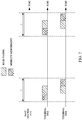
- An active terminal which can perform mobility measurements at any time, may be instructed by a base station to perform measurements at time instants that lie in time periods T a of a base station in DTX mode. This functionality can be obtained in existing terminals by a firmware update.
- Fig. 8 and 9 illustrate an embodiment of this aspect of the present invention.
- step S20 receives signals indicating a time schedule for intermittent transmission of information from a cell.
- Step S21 synchronizes mobility measurements with the intermittent transmission of information. If the terminal is active, the terminal is instructed to synchronize the mobility measurements with the intermittent transmission. On the other hand, if the terminal is inactive, it is instead instructed to listen to the paging channel during transmission periods of the intermittent transmission. In this way the mobility measurements are indirectly synchronized with the intermittent transmissions.
- the radio terminal illustrated in Fig. 9 includes an antenna connected to a receiver 30, which forwards baseband signals to a baseband processing unit 32.
- Baseband processing unit 32 extracts, among other signals, the DTX schedule of an idle base station. This schedule has been received from an active base station, either directly as an actual DTX schedule if the terminal is active, or indirectly as a paging schedule if the terminal is inactive.
- the DTX schedule is forwarded to a synchronizer 34, which controls the mobility measurement schedule of the receiver 30 and baseband processing unit 32. If desirable synchronizer 34 may be integrated into unit 32.
- the network can synchronize the DTX mode of several base stations. Both local (base station to base station) and centralized (via the Operations Support System, OSS) synchronization is possible.
- Terminals may be provided with a two step cell search procedure.
- the terminal performs a normal cell search scanning over a multitude of frequencies. If this fails, the terminal performs an extended cell search in which the search duration on each frequency is extended (i.e. longer than the idle time period T p - T a of base stations in DTX mode).
- This functionality can be obtained in existing terminals by a firmware update.
- Fig. 10 and 11 illustrate an embodiment of this aspect of the present invention.
- step S30 performs a first, normal cell search over a multitude of frequencies.
- Step S31 tests whether the cell search failed, i.e. whether the search failed to find any cells. If so, a second cell search with an extended cell search duration on each frequency is performed in step S32. Otherwise the cell search is completed in step S33.
- Fig. 11 is a block diagram of a radio terminal incorporating this two-step cell search. It includes an antenna connected to a receiver 30, which forwards baseband signals to a baseband processing unit 32, which is connected to a cell search unit 36.
- Cell search unit 36 implements two cell search modes, namely a normal cell search mode and an extended cell search mode, and is configured to perform the cell search procedure described with reference to Fig. 10 . It outputs a list of found cells to baseband processing unit 32. If desirable unit 36 may be integrated into unit 32.
- Reference signals and synchronization signals are primarily designed for different purposes, but during idle mode operation they could have more or less the same function. UEs that are not served by the idle eNodeB use these signals to find the cell and to measure the signal strength. Since synchronization signals are designed to be easily detected they are beneficial to use for this purpose also during eNodeB idle mode. However it would be possible to only transmit reference signals from an idle eNodeB, and with somewhat more effort the UEs would eventually find such a transmission and measure on it. It would also be possible to only transmit the synchronization signals during eNodeB idle mode operation. In that case the UE would have to estimate the signal strength based on measurements on synchronization channels. However, synchronization channels are not primarily designed for this purpose and the accuracy of such measurements would be slightly lower. Therefore the preferred operation would be to transmit both synchronization signals as well as reference signals also during eNodeB idle mode operation.
- a UE could potentially detect such a transmission from an idle eNodeB even if synchronization signals and reference signals were not transmitted, but it would result in degraded performance and longer cell search durations.
- the broadcast channel carries the information that the UE needs in order to perform a random access, but it is possible to let the UE receive this information from a macro cell that encloses the idle cell instead.
- all three types of signals i.e. synchronization, reference and broadcast
- are transmitted from an eNodeB in idle mode but theoretically it is sufficient if only one of the signals are transmitted.
Landscapes
- Engineering & Computer Science (AREA)
- Computer Networks & Wireless Communication (AREA)
- Signal Processing (AREA)
- Mobile Radio Communication Systems (AREA)
- Multimedia (AREA)
Claims (19)
- Verfahren zur Regelung des Energieverbrauchs eines drahtlosen Netzknotens (BS1, BS2), der mit einer Zelle (RC1, RC2) assoziiert ist, umfassend die folgenden Schritte:Überwachen (S1) der Anzahl von aktiven Endgeräten (T1, T2, T3, T5), die von der Zelle (RC1, RC2) versorgt werden;Beschränken (S4) in Zeitperioden, in welchen es keine aktiven Endgeräte (T1, T2, T3, T5) gibt, die von der Zelle (RC1, RC2) versorgt werden, von Übertragung in Abwärtsrichtung in der Zelle (RC1, RC2) auf periodische Übertragung von Informationen in einem diskontinuierlichen Übertragungszyklus, wobei der diskontinuierliche Übertragungszyklus eine Nichtübertragungsperiode und eine Übertragungsperiode umfasst, und die Informationen aktiven Endgeräten (T1, T2, T3, T5), die nicht von der Zelle (RC1, RC2) versorgt werden, beim Suchen der Zelle (RC1, RC2) und Durchführen von Mobilitätsmessungen helfen.
- Verfahren nach Anspruch 1, umfassend die folgenden Schritte:Erkennen (S2), wenn die Anzahl von aktiven Endgeräten (T1, T2, T3, T5), die von der Zelle (RC1, RC2) versorgt werden, unter eine vorbestimmte Schwelle fällt;Weiterreichen (S3) von aktiven Endgeräten (T1, T2, T3, T5), die noch von der Zelle (RC1, RC2) versorgt werden, an mindestens eine andere Zelle (RC1, RC2);Einschränken (S4) der Übertragung in Abwärtsrichtung, wenn es keine aktiven Endgeräte (T1, T2, T3, T5) mehr gibt, die von der Zelle (RC1, RC2) versorgt werden.
- Verfahren nach Anspruch 1, umfassend den Schritt des Einschränkens der Übertragung in Abwärtsrichtung, wenn die Anzahl von aktiven Endgeräten (T1, T2, T3, T5), die von der Zelle (RC1, RC2) versorgt werden, unter eine vorbestimmte Schwelle fällt.
- Verfahren nach Anspruch 1, 2 oder 3, umfassend die folgenden Schritte:Überwachen von Direktzugriffsversuchen (S13) von Endgeräten (T1, T2, T3, T5), die nicht von der Zelle (RC1, RC2) versorgt werden, während der periodischen Übertragung;Verlassen der periodischen Übertragung (S15) und Zurückkehren zu uneingeschränkter kontinuierlicher Übertragung, wenn mindestens ein Direktzugriffsversuch erkannt wurde.
- Verfahren nach Anspruch 1, 2 oder 3, umfassend die folgenden Schritte:Überwachen von Weiterreichungsbefehlen (S15) während der periodischen Übertragung;Verlassen der periodischen Übertragung (S14) und Zurückkehren zu uneingeschränkter kontinuierlicher Übertragung, wenn mindestens ein Weiterreichungsbefehl erkannt wurde.
- Verfahren nach Anspruch 1, 2, 3, 4 oder 5, wobei der Versorgungsbereich der Zelle (RC1, RC2) innerhalb des Versorgungsbereichs einer anderen Zelle (RC1, RC2) liegt.
- Verfahren nach Anspruch 1, wobei die Zelle (RC1, RC2) eine Mikrozelle (RC1) in einer Makrozelle (RC2) ist.
- Verfahren nach Anspruch 6, wobei der drahtlose Netzknoten (BS1, BS2) eine Basisstation oder eine Heimat-Basisstation ist.
- Verfahren nach einem der vorhergehenden Ansprüche, wobei die periodische Übertragung von Informationen mindestens eine von Folgenden umfasst:Übertragung von Referenzsignalen;Übertragung von Synchronisationssignalen;Übertragung von Broadcast-Informationen.
- Verfahren nach einem der vorhergehenden Ansprüche, umfassend den Schritt des Synchronisierens der periodischen Übertragung von Informationen zwischen mehreren Netzknoten.
- Basisstation (BS1, BS2), umfassend eine Anordnung zum Regeln des Energieverbrauchs eines drahtlosen Netzknotens, der mit einer Zelle (RC1, RC2) assoziiert ist, wobei die Anordnung umfasst:eine Endgeräteaktivitätsüberwacher (16), der so konfiguriert ist, dass er aktive Endgeräte (T1, T2, T3, T5) erkennt, die von der Zelle (RC1, RC2) versorgt werden;eine Übertragungssteuerung (18), die mit dem Endgeräteaktivitätsüberwacher verbunden und so konfiguriert ist, dass sie in Zeitperioden, in welchen es keine aktiven Endgeräte (T1, T2, T3, T5) gibt, die von der Zelle (RC1, RC2) versorgt werden, Übertragung in Abwärtsrichtung in der Zelle (RC1, RC2) auf periodische Übertragung von Informationen in einem diskontinuierlichen Übertragungszyklus beschränkt, wobei der diskontinuierliche Übertragungszyklus eine Nichtübertragungsperiode und eine Übertragungsperiode umfasst, und die Informationen aktiven Endgeräten (T1, T2, T3, T5), die nicht von der Zelle (RC1, RC2) versorgt werden, beim Suchen der Zelle (RC1, RC2) und Durchführen von Mobilitätsmessungen helfen.
- Basisstation (210) nach Anspruch 11, wobei Endgeräteaktivitätsüberwacher (16) konfiguriert ist zum:Erkennen, wenn die Anzahl von aktiven Endgeräten (T1, T2, T3, T5), die von der Zelle (RC1, RC2) versorgt werden, unter eine vorbestimmte Schwelle fällt;Befehlen von Weiterreichung von aktiven Endgeräten (T1, T2, T3, T5), die noch von der Zelle (RC1, RC2) versorgt werden, an mindestens eine andere Zelle (RC1, RC2);Einschränken der Übertragung in Abwärtsrichtung, wenn es keine aktiven Endgeräte (T1, T2, T3, T5) mehr gibt, die von der Zelle (RC1, RC2) versorgt werden.
- Basisstation (BS1, BS2) nach Anspruch 11, wobei der Endgeräteaktivitätsüberwacher (16) so konfiguriert ist, dass er Übertragung in Abwärtsrichtung einschränkt, wenn die Anzahl von aktiven Endgeräten (T1, T2, T3, T5), die von der Zelle (RC1, RC2) versorgt werden, unter eine vorbestimmte Schwelle fällt.
- Basisstation (BS1, BS2) nach Anspruch 11, 12 oder 13, umfassend einen Direktzugriffsversuchsüberwacher (22), der so konfiguriert ist, dass er Direktzugriffsversuche von Endgeräten (T1, T2, T3, T5), die nicht von der Zelle (RC1, RC2) versorgt werden, während der periodischen Übertragung erkennt und die Übertragungssteuerung (18) anweist, die periodische Übertragung zu verlassen und zu uneingeschränkter normaler Übertragung zurückzukehren, wenn mindestens ein Direktzugriffsversuch erkannt wurde.
- Basisstation (BS1, BS2) nach Anspruch 11, 12 oder 13, umfassend einen Weiterreichungsanforderungsüberwacher (24), der so konfiguriert ist, dass er Weiterreichungsbefehle während der periodischen Übertragung erkennt und die Übertragungssteuerung (18) anweist, die periodische Übertragung zu verlassen und zu uneingeschränkter normaler Übertragung zurückzukehren, wenn mindestens ein Weiterreichungsbefehl erkannt wurde.
- Funkendgerät, umfassend eine Synchronisationseinheit (34), die Signale empfängt, die einen Zeitplan für periodische Übertragung von Informationen von einer Zelle (RC1, RC2) in einem diskontinuierlichen Übertragungszyklus angeben, der eine Nichtübertragungsperiode und eine Übertragungsperiode umfasst, und wobei die Informationen Informationen sind, um dem Funkendgerät beim Suchen der Zelle und Durchführen von Mobilitätsmessungen zu helfen.
- Funkendgerät nach Anspruch 16, wobei die Synchronisationseinheit (34) so konfiguriert ist, dass sie einen diskontinuierlichen Empfangsmodus des Funkendgeräts mit der periodischen Übertragung von Informationen in einem diskontinuierlichen Übertragungszyklus synchronisiert, wobei der diskontinuierliche Übertragungszyklus eine Übertragungsperiode und eine Nichtübertragungsperiode umfasst, und die Informationen Informationen zum Ermöglichen von Mobilitätsmessungen sind.
- Verfahren zum Betreiben eines Funkendgeräts, umfassend die folgenden Schritte:Empfangen von Signalen, die einen Zeitplan für periodische Übertragung von Informationen von einer Zelle (RC1, RC2) in einem diskontinuierlichen Übertragungszyklus angeben, der eine Nichtübertragungsperiode und eine Übertragungsperiode umfasst, und wobei die Informationen Informationen sind, um dem Funkendgerät beim Suchen der Zelle und Durchführen von Mobilitätsmessungen zu helfen.
- Verfahren nach Anspruch 18, ferner umfassend ein Synchronisieren eines diskontinuierlichen Empfangsmodus des Funkendgeräts mit der periodischen Übertragung von Informationen in einem diskontinuierlichen Übertragungszyklus, wobei der diskontinuierliche Übertragungszyklus eine Übertragungsperiode und eine Nichtübertragungsperiode umfasst, und die Informationen Informationen zum Ermöglichen von Mobilitätsmessungen sind.
Priority Applications (5)
| Application Number | Priority Date | Filing Date | Title |
|---|---|---|---|
| DK17165037T DK3206443T3 (da) | 2009-02-13 | 2009-02-13 | Styring af energiforbrug af en trådløs netværksknude |
| PL17165037T PL3206443T3 (pl) | 2009-02-13 | 2009-02-13 | Kontrolowanie zużycia energii przez węzeł sieci bezprzewodowej |
| EP19188081.4A EP3609246B1 (de) | 2009-02-13 | 2009-02-13 | Steuerung des energieverbrauchs eines drahtlosnetzwerkknotens |
| HUE09788488A HUE033078T2 (hu) | 2009-02-13 | 2009-02-13 | Vezeték nélküli hálózati csomópont energiafogyasztásának vezérlése |
| EP17165037.7A EP3206443B1 (de) | 2009-02-13 | 2009-02-13 | Steuerung des energieverbrauchs eines drahtlosen netzknotens |
Applications Claiming Priority (1)
| Application Number | Priority Date | Filing Date | Title |
|---|---|---|---|
| PCT/SE2009/050156 WO2010093296A1 (en) | 2009-02-13 | 2009-02-13 | Controlling energy consumption of a wireless network node |
Related Child Applications (3)
| Application Number | Title | Priority Date | Filing Date |
|---|---|---|---|
| EP19188081.4A Division EP3609246B1 (de) | 2009-02-13 | 2009-02-13 | Steuerung des energieverbrauchs eines drahtlosnetzwerkknotens |
| EP17165037.7A Division EP3206443B1 (de) | 2009-02-13 | 2009-02-13 | Steuerung des energieverbrauchs eines drahtlosen netzknotens |
| EP17165037.7A Division-Into EP3206443B1 (de) | 2009-02-13 | 2009-02-13 | Steuerung des energieverbrauchs eines drahtlosen netzknotens |
Publications (2)
| Publication Number | Publication Date |
|---|---|
| EP2397006A1 EP2397006A1 (de) | 2011-12-21 |
| EP2397006B1 true EP2397006B1 (de) | 2017-05-17 |
Family
ID=41119834
Family Applications (3)
| Application Number | Title | Priority Date | Filing Date |
|---|---|---|---|
| EP17165037.7A Active EP3206443B1 (de) | 2009-02-13 | 2009-02-13 | Steuerung des energieverbrauchs eines drahtlosen netzknotens |
| EP19188081.4A Active EP3609246B1 (de) | 2009-02-13 | 2009-02-13 | Steuerung des energieverbrauchs eines drahtlosnetzwerkknotens |
| EP09788488.6A Active EP2397006B1 (de) | 2009-02-13 | 2009-02-13 | Steuerung des energieverbrauchs eines drahtlosen netzknotens |
Family Applications Before (2)
| Application Number | Title | Priority Date | Filing Date |
|---|---|---|---|
| EP17165037.7A Active EP3206443B1 (de) | 2009-02-13 | 2009-02-13 | Steuerung des energieverbrauchs eines drahtlosen netzknotens |
| EP19188081.4A Active EP3609246B1 (de) | 2009-02-13 | 2009-02-13 | Steuerung des energieverbrauchs eines drahtlosnetzwerkknotens |
Country Status (9)
| Country | Link |
|---|---|
| US (5) | US9408161B2 (de) |
| EP (3) | EP3206443B1 (de) |
| JP (1) | JP5603885B2 (de) |
| DK (1) | DK3206443T3 (de) |
| ES (2) | ES2759599T3 (de) |
| HU (1) | HUE033078T2 (de) |
| PL (1) | PL3206443T3 (de) |
| RU (1) | RU2535785C2 (de) |
| WO (1) | WO2010093296A1 (de) |
Families Citing this family (37)
| Publication number | Priority date | Publication date | Assignee | Title |
|---|---|---|---|---|
| ES2759599T3 (es) * | 2009-02-13 | 2020-05-11 | Ericsson Telefon Ab L M | Control del consumo de energía de un nodo de red inalámbrica |
| WO2010123417A1 (en) * | 2009-04-20 | 2010-10-28 | Telefonaktiebolaget Lm Ericsson (Publ) | Controlling cell activation in a radio communication network |
| JP5540592B2 (ja) * | 2009-07-23 | 2014-07-02 | ソニー株式会社 | 通信システム、通信制御方法、移動端末、および中継装置 |
| CN101778459B (zh) * | 2010-01-08 | 2012-06-27 | 华为技术有限公司 | 一种基站发送信号方法和节能基站 |
| WO2011090412A1 (en) | 2010-01-25 | 2011-07-28 | Telefonaktiebolaget L M Ericsson (Publ) | A method of bringing a wireless telecommunication cell into dtx mode |
| BR112012019294B1 (pt) | 2010-02-12 | 2022-03-29 | Mitsubishi Electric Corporation | Sistema de comunicação móvel, estação base e terminal móvel |
| EP2567564B1 (de) * | 2010-05-06 | 2014-03-12 | Koninklijke KPN N.V. | Verfahren, Computerprogramm und Telekommunikationsinfrastruktur zur Aktivierung einer inaktiven Zelle |
| CN102340852B (zh) * | 2010-07-20 | 2015-02-18 | 电信科学技术研究院 | 移动通信系统基站节能方法及装置 |
| CN102378326B (zh) * | 2010-08-09 | 2017-04-05 | 中兴通讯股份有限公司 | 一种家庭基站环境下节能控制的方法及装置 |
| JP5243501B2 (ja) * | 2010-08-12 | 2013-07-24 | 株式会社エヌ・ティ・ティ・ドコモ | 通信システム、移動機及びネットワーク装置 |
| KR20120018266A (ko) | 2010-08-20 | 2012-03-02 | 삼성전자주식회사 | 직교 주파수 분할 다중 접속 방법을 사용하는 무선 통신 시스템에서 기지국의 전력 증폭기 소모 전력 제어 방법 및 장치 |
| JP5551103B2 (ja) * | 2011-03-31 | 2014-07-16 | Kddi株式会社 | 基地局装置および通信端末 |
| US9363738B2 (en) * | 2011-12-30 | 2016-06-07 | Qualcomm Incorporated | Apparatus and method for dynamic pilot acquisition in a wireless communication system |
| US9723558B2 (en) * | 2012-04-27 | 2017-08-01 | Qualcomm Incorporated | Method and apparatus for signaling in dense network operations |
| US9357499B2 (en) * | 2012-06-22 | 2016-05-31 | Qualcomm Incorporated | Method and apparatus for energy savings and interference reduction in a wireless communications network |
| US9445410B2 (en) * | 2012-08-03 | 2016-09-13 | Qualcomm Incorporated | Communicating with an enhanced new carrier type |
| SG11201501371SA (en) * | 2012-11-06 | 2015-03-30 | Nokia Solutions & Networks Oy | Method and apparatus for receiving timing information from a cell or network a less active mode |
| EP2941062A4 (de) * | 2012-12-27 | 2015-11-18 | Huawei Tech Co Ltd | Übertragungssteuerungsverfahren und übertragungsverfahren und -vorrichtung |
| JP6392247B2 (ja) * | 2013-01-18 | 2018-09-19 | ノキア ソリューションズ アンド ネットワークス オサケユキチュア | 方法及び装置 |
| US9264951B2 (en) * | 2013-02-15 | 2016-02-16 | Qualcomm Incorporated | Activation procedure for dormant cells |
| US9509469B2 (en) | 2013-04-04 | 2016-11-29 | Futurewei Technologies, Inc. | Device, network, and method for utilizing a downlink discovery reference signal |
| US9900872B2 (en) * | 2013-04-17 | 2018-02-20 | Futurewei Technologies, Inc. | Systems and methods for adaptive transmissions in wireless network |
| US20140335858A1 (en) * | 2013-05-08 | 2014-11-13 | Electronics & Telecommunications Research Institute | Cell search method for supporting discontinuous transmission and/or reception of base station |
| US20160205539A1 (en) * | 2013-07-01 | 2016-07-14 | Nokia Technologies Oy | Configurable base station |
| US20150189574A1 (en) * | 2013-12-26 | 2015-07-02 | Samsung Electronics Co., Ltd. | Methods for dormant cell signaling for advanced cellular network |
| CN105981447B (zh) | 2014-02-21 | 2019-11-29 | 华为技术有限公司 | 关于使用dtx的基站的激活状态的定时信息的传输 |
| JP6466560B2 (ja) * | 2014-03-21 | 2019-02-06 | ホアウェイ・テクノロジーズ・カンパニー・リミテッド | ワイヤレス通信ネットワークにおける方法およびノード |
| JP6406097B2 (ja) * | 2015-03-31 | 2018-10-17 | ブラザー工業株式会社 | 識別情報の検索方法、および、無線通信装置 |
| CN115955261B (zh) | 2015-10-12 | 2026-01-06 | 诺基亚技术有限公司 | 在蜂窝系统中的发现信号传输 |
| EP3434041B1 (de) * | 2016-03-22 | 2023-10-11 | British Telecommunications public limited company | Senderausfallmeldung |
| WO2018063051A1 (en) * | 2016-09-30 | 2018-04-05 | Telefonaktiebolaget Lm Ericsson (Publ) | Network, network node, user equipment and method therein for establishing active mode beam to idle mode cells neighbour relations in a wireles communication network |
| JP6916274B2 (ja) | 2016-09-30 | 2021-08-11 | テレフオンアクチーボラゲット エルエム エリクソン(パブル) | 無線通信ネットワークにおける接続を処理するためのネットワーク、ネットワークノード、およびその方法 |
| US10499255B2 (en) | 2017-03-31 | 2019-12-03 | Qualcomm Incorporated | Discovery reference signal (DRS) search modes and mode switching techniques |
| RU2735332C1 (ru) | 2017-08-25 | 2020-10-30 | Гуандун Оппо Мобайл Телекоммьюникейшнз Корп., Лтд. | Способ прерывистого приема, терминал и сетевое устройство |
| US11606741B2 (en) * | 2020-04-25 | 2023-03-14 | Motorola Mobility Llc | Method to enhance WLAN connection based on activity recognition |
| US20240171959A1 (en) * | 2021-04-01 | 2024-05-23 | Henry Chang | Restricted relay selection procedure based on communication link quality thresholds |
| WO2025243728A1 (ja) * | 2024-05-22 | 2025-11-27 | シャープ株式会社 | 基地局装置及び通信システム |
Citations (1)
| Publication number | Priority date | Publication date | Assignee | Title |
|---|---|---|---|---|
| US20070066329A1 (en) * | 2005-09-19 | 2007-03-22 | Rajiv Laroia | Methods and apparatus for use in a wireless communications system that uses a multi-mode base station |
Family Cites Families (67)
| Publication number | Priority date | Publication date | Assignee | Title |
|---|---|---|---|---|
| JP3715197B2 (ja) | 2000-11-20 | 2005-11-09 | 三菱電機株式会社 | 無線通信システムの省電力モード移行方法と再起動方法 |
| JP3938854B2 (ja) | 2001-07-23 | 2007-06-27 | 株式会社エヌ・ティ・ティ・ドコモ | 移動通信システムにおける無線基地局での送信電力制御方法及び移動通信システム並びに無線基地局 |
| CN100379312C (zh) * | 2002-08-27 | 2008-04-02 | 高通股份有限公司 | 空闲模式小区的重新获取和重新选择 |
| US7133702B2 (en) * | 2002-08-27 | 2006-11-07 | Qualcomm Incorporated | Idle mode cell reacquisition and reselection |
| JP2004159078A (ja) | 2002-11-06 | 2004-06-03 | Matsushita Electric Ind Co Ltd | セルサーチ制御装置およびセルサーチ制御方法 |
| JP2004201188A (ja) * | 2002-12-20 | 2004-07-15 | Nec Saitama Ltd | 携帯電話アンテナ切替回路 |
| CN1512794A (zh) * | 2002-12-30 | 2004-07-14 | �ʼҷ����ֵ��ӹɷ�����˾ | 一种tdd-cdma系统中用于移动终端的小区搜索方法及装置 |
| KR20050098975A (ko) * | 2003-01-23 | 2005-10-12 | 인터디지탈 테크날러지 코포레이션 | 무선 통신 시스템에서의 부적합 셀 배제 |
| ES2303026T3 (es) * | 2004-02-09 | 2008-08-01 | Research In Motion Limited | Aparato y metodo para efectuar mediciones en un equipo de usuario de un sistema universal de comunicaciones moviles. |
| US7747275B2 (en) * | 2004-05-06 | 2010-06-29 | M-Stack Limited | Cell selection in mobile communications |
| JP4592358B2 (ja) * | 2004-08-31 | 2010-12-01 | 株式会社エヌ・ティ・ティ・ドコモ | 移動通信システム及び移動通信方法 |
| GB2420053A (en) * | 2004-11-05 | 2006-05-10 | Agilent Technologies Inc | Monitoring synchronisation of signal measurement reports |
| KR100663278B1 (ko) | 2004-11-15 | 2007-01-02 | 삼성전자주식회사 | 상향링크 패킷 데이터 서비스를 지원하는이동통신시스템에서 하향링크 제어정보의 송수신 방법 및장치 |
| JP4160568B2 (ja) | 2005-02-23 | 2008-10-01 | 株式会社東芝 | 移動無線端末 |
| JP4684071B2 (ja) * | 2005-05-20 | 2011-05-18 | 株式会社エヌ・ティ・ティ・ドコモ | セルサーチ制御方法および該方法を用いた移動機 |
| WO2006130662A2 (en) * | 2005-06-01 | 2006-12-07 | Millennial Net, Inc. | Communicating over a wireless network |
| US8094595B2 (en) * | 2005-08-26 | 2012-01-10 | Qualcomm Incorporated | Method and apparatus for packet communications in wireless systems |
| DE102005051291A1 (de) * | 2005-10-26 | 2007-05-03 | Siemens Ag | Verfahren zur Steuerung von Basisstationen in drahtlosen Kommunikationsnetzen |
| US8134977B2 (en) * | 2005-10-27 | 2012-03-13 | Qualcomm Incorporated | Tune-away protocols for wireless systems |
| US8145135B2 (en) * | 2005-11-02 | 2012-03-27 | Nokia Corporation | Apparatus, method and computer program product providing automatically adjusted time periods used for event evaluation |
| EP2384066B1 (de) * | 2005-12-22 | 2013-04-24 | Electronics and Telecommunications Research Institute | Verfahren für diskontinuierlichen Sende-/Empfangsbetrieb zur Verringerung des Stromverbrauchs in einem zellularen System |
| JP4732924B2 (ja) | 2005-12-28 | 2011-07-27 | 株式会社エヌ・ティ・ティ・ドコモ | 移動局装置および基地局装置並びに周辺セル測定制御方法 |
| US7864732B2 (en) * | 2006-01-27 | 2011-01-04 | Mediatek Inc. | Systems and methods for handoff in wireless network |
| EP1983775A1 (de) | 2006-02-08 | 2008-10-22 | Matsushita Electric Industrial Co., Ltd. | Funkkommunikationsbasisstationseinrichtung, funkkommunikationsendgeräteeinrichtung und funkkommunikationssystem |
| CN101438511A (zh) * | 2006-03-24 | 2009-05-20 | 交互数字技术公司 | 用于保持上行链路同步并且降低电池功耗的方法和设备 |
| US8311011B2 (en) * | 2006-05-13 | 2012-11-13 | Lg Electronics Inc. | Method of performing procedures for initial network entry and handover in a broadband wireless access system |
| WO2007144956A1 (ja) * | 2006-06-16 | 2007-12-21 | Mitsubishi Electric Corporation | 移動体通信システム及び移動端末 |
| MX2008016164A (es) * | 2006-06-19 | 2009-01-20 | Ntt Docomo Inc | Estacion base, estacion movil, metodo de control sincronico y chip ic. |
| KR20070121505A (ko) * | 2006-06-21 | 2007-12-27 | 엘지전자 주식회사 | 무선링크 재설정 방법 |
| WO2007147808A1 (en) * | 2006-06-21 | 2007-12-27 | Nokia Siemens Networks Gmbh & Co. Kg | Method for maintaining synchronisation in a radio communications system |
| JP4898806B2 (ja) * | 2006-06-26 | 2012-03-21 | パナソニック株式会社 | 無線通信端末装置、無線通信基地局装置及び無線通信方法 |
| WO2008023638A1 (en) * | 2006-08-21 | 2008-02-28 | Panasonic Corporation | Wireless communication system, communication control method and communication node |
| JP4829049B2 (ja) * | 2006-08-30 | 2011-11-30 | 京セラ株式会社 | 無線通信方法及び無線基地局 |
| US8121552B2 (en) | 2006-09-05 | 2012-02-21 | Motorola Mobility, Inc. | Method and apparatus for providing channel quality feedback in a wireless communication system |
| JP4967561B2 (ja) * | 2006-09-20 | 2012-07-04 | 富士通株式会社 | 移動通信端末、移動通信システム、基地局及び通信方法 |
| GB2445779B (en) * | 2007-01-11 | 2009-07-08 | Samsung Electronics Co Ltd | Wireless communication system |
| EP2127456B2 (de) | 2007-01-15 | 2025-03-26 | Nokia Technologies Oy | Verfahren und vorrichtung zur bereitstellung von kontext-recovery |
| US8169957B2 (en) * | 2007-02-05 | 2012-05-01 | Qualcomm Incorporated | Flexible DTX and DRX in a wireless communication system |
| EP2120378A4 (de) * | 2007-02-07 | 2014-04-30 | Sharp Kk | Kommunikationsendgerät, kommunikationssteuereinrichtung, funkkommunikationssystem und betriebsmittelzuteilungs-anforderungsverfahren |
| JP4879054B2 (ja) | 2007-03-20 | 2012-02-15 | 株式会社エヌ・ティ・ティ・ドコモ | 移動通信システムで使用されるユーザ装置、基地局装置及び方法 |
| TW200910984A (en) * | 2007-04-27 | 2009-03-01 | Interdigital Tech Corp | Active mode discontinuous reception synchronization and resynchronization operation |
| WO2008131588A1 (en) * | 2007-04-28 | 2008-11-06 | Huawei Technologies Co., Ltd. | Method and system for interference reduction through proximity based transmission mode change |
| US8218526B2 (en) * | 2007-04-30 | 2012-07-10 | Texas Instruments Incorporated | Uplink synchronization maintenance principles in wireless networks |
| US8014329B2 (en) * | 2007-07-03 | 2011-09-06 | Cisco Technology, Inc. | Path selection and power management in mesh networks |
| JP5106969B2 (ja) * | 2007-10-01 | 2012-12-26 | 株式会社エヌ・ティ・ティ・ドコモ | ユーザ装置及びセルサーチ方法 |
| US8180335B2 (en) * | 2008-01-11 | 2012-05-15 | Qualcomm Incorporated | System information modification notification and detection in wireless communications |
| JP5217459B2 (ja) * | 2008-01-29 | 2013-06-19 | 富士通株式会社 | 基地局装置、及び移動通信システム |
| KR20100106550A (ko) * | 2008-01-29 | 2010-10-01 | 교세라 가부시키가이샤 | 무선통신단말의 제어방법 및 무선통신단말 |
| FI20085104A0 (fi) * | 2008-02-06 | 2008-02-06 | Nokia Corp | Menetelmä ja järjestelmä epäjatkuvan vastaanoton/lähetyksen ohjaamiseksi |
| US8265682B2 (en) * | 2008-03-18 | 2012-09-11 | Texas Instruments Incorporated | Scheduling request usage in DRX mode in wireless networks |
| JP5256825B2 (ja) * | 2008-04-04 | 2013-08-07 | 株式会社日立製作所 | 基地局装置 |
| US9237598B2 (en) * | 2008-07-23 | 2016-01-12 | Lg Electronics Inc. | Method for self-configuring a cellular infrastructure as desired, and a device therefor |
| US9119164B2 (en) * | 2008-08-20 | 2015-08-25 | Qualcomm Incorporated | Generating access point beacons at different power levels |
| US8576760B2 (en) * | 2008-09-12 | 2013-11-05 | Qualcomm Incorporated | Apparatus and methods for controlling an idle mode in a wireless device |
| US8107422B2 (en) * | 2008-09-25 | 2012-01-31 | Qualcomm Incorporated | Method and apparatus for uplink and downlink channel alignments for 3GPP continuous packet data connection (CPC) channels |
| US8139542B2 (en) * | 2008-09-26 | 2012-03-20 | Qualcomm Incorporated | Cell timing acquisition in a W-CDMA hard handover |
| US8391252B2 (en) * | 2008-10-31 | 2013-03-05 | Intel Corporation | Techniques to support multiple radio-access technologies |
| US8768257B2 (en) * | 2008-12-09 | 2014-07-01 | Lg Electronics Inc. | Method and apparatus for releasing blank zone by macro base station in wireless communication system |
| US8311061B2 (en) * | 2008-12-17 | 2012-11-13 | Research In Motion Limited | System and method for multi-user multiplexing |
| WO2010078674A1 (zh) * | 2008-12-29 | 2010-07-15 | 中兴通讯股份有限公司 | 一种基站节能控制的实现方法及系统 |
| US8520632B2 (en) * | 2008-12-29 | 2013-08-27 | Qualcomm Incorporated | Method and apparatus for synchronization during a handover failure in a wireless communication system |
| US8355352B2 (en) * | 2009-01-08 | 2013-01-15 | Trapeze Networks, Inc. | Access point agitation |
| WO2010078969A1 (en) * | 2009-01-12 | 2010-07-15 | Nokia Siemens Networks Oy | Method for adapting a downlink transmit power of a first base station adapted for serving a closed subscriber group in the presence of second base station |
| EP2393316A4 (de) * | 2009-01-29 | 2017-04-26 | Fujitsu Limited | Drahtloses kommunikationssystem |
| US8203986B2 (en) * | 2009-02-04 | 2012-06-19 | Trapeze Networks, Inc. | Throttling access points |
| US8095143B2 (en) * | 2009-02-13 | 2012-01-10 | Telefonaktiebolaget L M Ericsson | Random access channel (RACH) reconfiguration for temporarily extended cell coverage |
| ES2759599T3 (es) * | 2009-02-13 | 2020-05-11 | Ericsson Telefon Ab L M | Control del consumo de energía de un nodo de red inalámbrica |
-
2009
- 2009-02-13 ES ES17165037T patent/ES2759599T3/es active Active
- 2009-02-13 RU RU2011137533/07A patent/RU2535785C2/ru active
- 2009-02-13 JP JP2011550088A patent/JP5603885B2/ja active Active
- 2009-02-13 US US13/148,200 patent/US9408161B2/en active Active
- 2009-02-13 EP EP17165037.7A patent/EP3206443B1/de active Active
- 2009-02-13 WO PCT/SE2009/050156 patent/WO2010093296A1/en not_active Ceased
- 2009-02-13 PL PL17165037T patent/PL3206443T3/pl unknown
- 2009-02-13 EP EP19188081.4A patent/EP3609246B1/de active Active
- 2009-02-13 DK DK17165037T patent/DK3206443T3/da active
- 2009-02-13 ES ES09788488.6T patent/ES2637012T3/es active Active
- 2009-02-13 HU HUE09788488A patent/HUE033078T2/hu unknown
- 2009-02-13 EP EP09788488.6A patent/EP2397006B1/de active Active
-
2015
- 2015-04-30 US US14/700,460 patent/US9730166B2/en active Active
-
2017
- 2017-06-21 US US15/629,010 patent/US10588091B2/en active Active
-
2020
- 2020-01-23 US US16/750,228 patent/US11265823B2/en active Active
-
2022
- 2022-02-09 US US17/667,687 patent/US11696238B2/en active Active
Patent Citations (1)
| Publication number | Priority date | Publication date | Assignee | Title |
|---|---|---|---|---|
| US20070066329A1 (en) * | 2005-09-19 | 2007-03-22 | Rajiv Laroia | Methods and apparatus for use in a wireless communications system that uses a multi-mode base station |
Also Published As
| Publication number | Publication date |
|---|---|
| EP3609246A1 (de) | 2020-02-12 |
| US20200163029A1 (en) | 2020-05-21 |
| US11696238B2 (en) | 2023-07-04 |
| US9730166B2 (en) | 2017-08-08 |
| EP2397006A1 (de) | 2011-12-21 |
| JP5603885B2 (ja) | 2014-10-08 |
| JP2012518327A (ja) | 2012-08-09 |
| US20150289214A1 (en) | 2015-10-08 |
| EP3206443B1 (de) | 2019-09-04 |
| US11265823B2 (en) | 2022-03-01 |
| EP3206443A1 (de) | 2017-08-16 |
| HUE033078T2 (hu) | 2017-11-28 |
| US20120094661A1 (en) | 2012-04-19 |
| RU2011137533A (ru) | 2013-03-20 |
| US10588091B2 (en) | 2020-03-10 |
| RU2535785C2 (ru) | 2014-12-20 |
| WO2010093296A1 (en) | 2010-08-19 |
| US20170289891A1 (en) | 2017-10-05 |
| DK3206443T3 (da) | 2019-11-25 |
| ES2637012T3 (es) | 2017-10-10 |
| US20220272641A1 (en) | 2022-08-25 |
| US9408161B2 (en) | 2016-08-02 |
| ES2759599T3 (es) | 2020-05-11 |
| PL3206443T3 (pl) | 2020-03-31 |
| EP3609246B1 (de) | 2023-05-17 |
Similar Documents
| Publication | Publication Date | Title |
|---|---|---|
| US11696238B2 (en) | Controlling energy consumption of a wireless network node | |
| EP2397002B1 (de) | Steuerung der zellenaktivierung in einem funkkommunikationsnetz | |
| US8917668B1 (en) | System and method for energy saving in a wireless system | |
| US9049689B2 (en) | Controlling cell activation in a radio communication network | |
| US10225028B2 (en) | Adaptation of dual connectivity procedures | |
| EP3737155A1 (de) | Vorrichtung und verfahren zur unterstützung einer bereichserweiterung in einem drahtlosen netzwerk | |
| EP3823350A1 (de) | Verfahren und vorrichtung zur steuerung der wartezeit zur bestimmung von funkverbindungsfehlern in einem drahtlosen kommunikationssystem | |
| US8359034B2 (en) | Mobile communication system, base station apparatus, user equipment and method | |
| US20160360475A1 (en) | Methods of communication device and network node, computer programs, communication device and network node | |
| US10645661B2 (en) | Configuring discovery signals | |
| CN102656924A (zh) | 用于无线通信网络的终端的方法和设备 | |
| JP5802311B2 (ja) | 無線ネットワークノードのエネルギー消費の制御 | |
| JP6001138B2 (ja) | 無線ネットワークノードのエネルギー消費の制御 |
Legal Events
| Date | Code | Title | Description |
|---|---|---|---|
| PUAI | Public reference made under article 153(3) epc to a published international application that has entered the european phase |
Free format text: ORIGINAL CODE: 0009012 |
|
| 17P | Request for examination filed |
Effective date: 20110715 |
|
| AK | Designated contracting states |
Kind code of ref document: A1 Designated state(s): AT BE BG CH CY CZ DE DK EE ES FI FR GB GR HR HU IE IS IT LI LT LU LV MC MK MT NL NO PL PT RO SE SI SK TR |
|
| DAX | Request for extension of the european patent (deleted) | ||
| 17Q | First examination report despatched |
Effective date: 20120426 |
|
| REG | Reference to a national code |
Ref country code: DE Ref legal event code: R079 Ref document number: 602009046176 Country of ref document: DE Free format text: PREVIOUS MAIN CLASS: H04W0052340000 Ipc: H04W0052020000 |
|
| GRAP | Despatch of communication of intention to grant a patent |
Free format text: ORIGINAL CODE: EPIDOSNIGR1 |
|
| RIC1 | Information provided on ipc code assigned before grant |
Ipc: H04W 52/28 20090101ALI20160616BHEP Ipc: H04W 72/04 20090101ALI20160616BHEP Ipc: H04W 52/02 20090101ALI20160616BHEP Ipc: H04W 52/34 20090101ALI20160616BHEP Ipc: H04W 36/22 20090101AFI20160616BHEP Ipc: H04W 72/12 20090101ALI20160616BHEP Ipc: H04L 29/08 20060101ALI20160616BHEP Ipc: H04W 88/08 20090101ALI20160616BHEP |
|
| RIC1 | Information provided on ipc code assigned before grant |
Ipc: H04W 52/28 20090101ALI20160617BHEP Ipc: H04W 52/02 20090101AFI20160617BHEP Ipc: H04W 72/04 20090101ALI20160617BHEP Ipc: H04L 29/08 20060101ALI20160617BHEP Ipc: H04W 36/22 20090101ALI20160617BHEP Ipc: H04W 72/12 20090101ALI20160617BHEP Ipc: H04W 52/34 20090101ALI20160617BHEP Ipc: H04W 88/08 20090101ALI20160617BHEP |
|
| INTG | Intention to grant announced |
Effective date: 20160704 |
|
| GRAJ | Information related to disapproval of communication of intention to grant by the applicant or resumption of examination proceedings by the epo deleted |
Free format text: ORIGINAL CODE: EPIDOSDIGR1 |
|
| STAA | Information on the status of an ep patent application or granted ep patent |
Free format text: STATUS: EXAMINATION IS IN PROGRESS |
|
| GRAP | Despatch of communication of intention to grant a patent |
Free format text: ORIGINAL CODE: EPIDOSNIGR1 |
|
| STAA | Information on the status of an ep patent application or granted ep patent |
Free format text: STATUS: GRANT OF PATENT IS INTENDED |
|
| INTC | Intention to grant announced (deleted) | ||
| INTG | Intention to grant announced |
Effective date: 20161202 |
|
| GRAS | Grant fee paid |
Free format text: ORIGINAL CODE: EPIDOSNIGR3 |
|
| GRAA | (expected) grant |
Free format text: ORIGINAL CODE: 0009210 |
|
| STAA | Information on the status of an ep patent application or granted ep patent |
Free format text: STATUS: THE PATENT HAS BEEN GRANTED |
|
| AK | Designated contracting states |
Kind code of ref document: B1 Designated state(s): AT BE BG CH CY CZ DE DK EE ES FI FR GB GR HR HU IE IS IT LI LT LU LV MC MK MT NL NO PL PT RO SE SI SK TR |
|
| REG | Reference to a national code |
Ref country code: GB Ref legal event code: FG4D |
|
| REG | Reference to a national code |
Ref country code: CH Ref legal event code: EP |
|
| REG | Reference to a national code |
Ref country code: IE Ref legal event code: FG4D |
|
| REG | Reference to a national code |
Ref country code: CH Ref legal event code: NV Representative=s name: ISLER AND PEDRAZZINI AG, CH Ref country code: AT Ref legal event code: REF Ref document number: 895469 Country of ref document: AT Kind code of ref document: T Effective date: 20170615 |
|
| REG | Reference to a national code |
Ref country code: NL Ref legal event code: FP |
|
| REG | Reference to a national code |
Ref country code: DE Ref legal event code: R096 Ref document number: 602009046176 Country of ref document: DE |
|
| REG | Reference to a national code |
Ref country code: SE Ref legal event code: TRGR |
|
| REG | Reference to a national code |
Ref country code: RO Ref legal event code: EPE |
|
| REG | Reference to a national code |
Ref country code: ES Ref legal event code: FG2A Ref document number: 2637012 Country of ref document: ES Kind code of ref document: T3 Effective date: 20171010 Ref country code: LT Ref legal event code: MG4D |
|
| REG | Reference to a national code |
Ref country code: AT Ref legal event code: MK05 Ref document number: 895469 Country of ref document: AT Kind code of ref document: T Effective date: 20170517 |
|
| PG25 | Lapsed in a contracting state [announced via postgrant information from national office to epo] |
Ref country code: FI Free format text: LAPSE BECAUSE OF FAILURE TO SUBMIT A TRANSLATION OF THE DESCRIPTION OR TO PAY THE FEE WITHIN THE PRESCRIBED TIME-LIMIT Effective date: 20170517 Ref country code: LT Free format text: LAPSE BECAUSE OF FAILURE TO SUBMIT A TRANSLATION OF THE DESCRIPTION OR TO PAY THE FEE WITHIN THE PRESCRIBED TIME-LIMIT Effective date: 20170517 Ref country code: HR Free format text: LAPSE BECAUSE OF FAILURE TO SUBMIT A TRANSLATION OF THE DESCRIPTION OR TO PAY THE FEE WITHIN THE PRESCRIBED TIME-LIMIT Effective date: 20170517 Ref country code: NO Free format text: LAPSE BECAUSE OF FAILURE TO SUBMIT A TRANSLATION OF THE DESCRIPTION OR TO PAY THE FEE WITHIN THE PRESCRIBED TIME-LIMIT Effective date: 20170817 Ref country code: GR Free format text: LAPSE BECAUSE OF FAILURE TO SUBMIT A TRANSLATION OF THE DESCRIPTION OR TO PAY THE FEE WITHIN THE PRESCRIBED TIME-LIMIT Effective date: 20170818 Ref country code: AT Free format text: LAPSE BECAUSE OF FAILURE TO SUBMIT A TRANSLATION OF THE DESCRIPTION OR TO PAY THE FEE WITHIN THE PRESCRIBED TIME-LIMIT Effective date: 20170517 |
|
| REG | Reference to a national code |
Ref country code: HU Ref legal event code: AG4A Ref document number: E033078 Country of ref document: HU |
|
| PG25 | Lapsed in a contracting state [announced via postgrant information from national office to epo] |
Ref country code: BG Free format text: LAPSE BECAUSE OF FAILURE TO SUBMIT A TRANSLATION OF THE DESCRIPTION OR TO PAY THE FEE WITHIN THE PRESCRIBED TIME-LIMIT Effective date: 20170817 Ref country code: LV Free format text: LAPSE BECAUSE OF FAILURE TO SUBMIT A TRANSLATION OF THE DESCRIPTION OR TO PAY THE FEE WITHIN THE PRESCRIBED TIME-LIMIT Effective date: 20170517 Ref country code: PL Free format text: LAPSE BECAUSE OF FAILURE TO SUBMIT A TRANSLATION OF THE DESCRIPTION OR TO PAY THE FEE WITHIN THE PRESCRIBED TIME-LIMIT Effective date: 20170517 Ref country code: IS Free format text: LAPSE BECAUSE OF FAILURE TO SUBMIT A TRANSLATION OF THE DESCRIPTION OR TO PAY THE FEE WITHIN THE PRESCRIBED TIME-LIMIT Effective date: 20170917 |
|
| PG25 | Lapsed in a contracting state [announced via postgrant information from national office to epo] |
Ref country code: EE Free format text: LAPSE BECAUSE OF FAILURE TO SUBMIT A TRANSLATION OF THE DESCRIPTION OR TO PAY THE FEE WITHIN THE PRESCRIBED TIME-LIMIT Effective date: 20170517 Ref country code: DK Free format text: LAPSE BECAUSE OF FAILURE TO SUBMIT A TRANSLATION OF THE DESCRIPTION OR TO PAY THE FEE WITHIN THE PRESCRIBED TIME-LIMIT Effective date: 20170517 Ref country code: SK Free format text: LAPSE BECAUSE OF FAILURE TO SUBMIT A TRANSLATION OF THE DESCRIPTION OR TO PAY THE FEE WITHIN THE PRESCRIBED TIME-LIMIT Effective date: 20170517 |
|
| REG | Reference to a national code |
Ref country code: DE Ref legal event code: R097 Ref document number: 602009046176 Country of ref document: DE |
|
| REG | Reference to a national code |
Ref country code: FR Ref legal event code: PLFP Year of fee payment: 10 |
|
| PLBE | No opposition filed within time limit |
Free format text: ORIGINAL CODE: 0009261 |
|
| STAA | Information on the status of an ep patent application or granted ep patent |
Free format text: STATUS: NO OPPOSITION FILED WITHIN TIME LIMIT |
|
| 26N | No opposition filed |
Effective date: 20180220 |
|
| PG25 | Lapsed in a contracting state [announced via postgrant information from national office to epo] |
Ref country code: SI Free format text: LAPSE BECAUSE OF FAILURE TO SUBMIT A TRANSLATION OF THE DESCRIPTION OR TO PAY THE FEE WITHIN THE PRESCRIBED TIME-LIMIT Effective date: 20170517 |
|
| PG25 | Lapsed in a contracting state [announced via postgrant information from national office to epo] |
Ref country code: MC Free format text: LAPSE BECAUSE OF FAILURE TO SUBMIT A TRANSLATION OF THE DESCRIPTION OR TO PAY THE FEE WITHIN THE PRESCRIBED TIME-LIMIT Effective date: 20170517 |
|
| REG | Reference to a national code |
Ref country code: BE Ref legal event code: MM Effective date: 20180228 |
|
| PG25 | Lapsed in a contracting state [announced via postgrant information from national office to epo] |
Ref country code: LU Free format text: LAPSE BECAUSE OF NON-PAYMENT OF DUE FEES Effective date: 20180213 |
|
| PG25 | Lapsed in a contracting state [announced via postgrant information from national office to epo] |
Ref country code: BE Free format text: LAPSE BECAUSE OF NON-PAYMENT OF DUE FEES Effective date: 20180228 |
|
| PG25 | Lapsed in a contracting state [announced via postgrant information from national office to epo] |
Ref country code: MT Free format text: LAPSE BECAUSE OF NON-PAYMENT OF DUE FEES Effective date: 20180213 |
|
| PG25 | Lapsed in a contracting state [announced via postgrant information from national office to epo] |
Ref country code: PT Free format text: LAPSE BECAUSE OF FAILURE TO SUBMIT A TRANSLATION OF THE DESCRIPTION OR TO PAY THE FEE WITHIN THE PRESCRIBED TIME-LIMIT Effective date: 20170517 |
|
| PG25 | Lapsed in a contracting state [announced via postgrant information from national office to epo] |
Ref country code: MK Free format text: LAPSE BECAUSE OF NON-PAYMENT OF DUE FEES Effective date: 20170517 Ref country code: CY Free format text: LAPSE BECAUSE OF FAILURE TO SUBMIT A TRANSLATION OF THE DESCRIPTION OR TO PAY THE FEE WITHIN THE PRESCRIBED TIME-LIMIT Effective date: 20170517 |
|
| P01 | Opt-out of the competence of the unified patent court (upc) registered |
Effective date: 20230523 |
|
| PGFP | Annual fee paid to national office [announced via postgrant information from national office to epo] |
Ref country code: IE Payment date: 20240227 Year of fee payment: 16 Ref country code: NL Payment date: 20240226 Year of fee payment: 16 Ref country code: ES Payment date: 20240301 Year of fee payment: 16 |
|
| PGFP | Annual fee paid to national office [announced via postgrant information from national office to epo] |
Ref country code: CZ Payment date: 20240123 Year of fee payment: 16 Ref country code: GB Payment date: 20240227 Year of fee payment: 16 |
|
| PGFP | Annual fee paid to national office [announced via postgrant information from national office to epo] |
Ref country code: TR Payment date: 20240131 Year of fee payment: 16 Ref country code: SE Payment date: 20240307 Year of fee payment: 16 Ref country code: IT Payment date: 20240222 Year of fee payment: 16 Ref country code: FR Payment date: 20240226 Year of fee payment: 16 |
|
| REG | Reference to a national code |
Ref country code: SE Ref legal event code: EUG |
|
| REG | Reference to a national code |
Ref country code: NL Ref legal event code: MM Effective date: 20250301 |
|
| PG25 | Lapsed in a contracting state [announced via postgrant information from national office to epo] |
Ref country code: CZ Free format text: LAPSE BECAUSE OF NON-PAYMENT OF DUE FEES Effective date: 20250213 |
|
| GBPC | Gb: european patent ceased through non-payment of renewal fee |
Effective date: 20250213 |
|
| PG25 | Lapsed in a contracting state [announced via postgrant information from national office to epo] |
Ref country code: NL Free format text: LAPSE BECAUSE OF NON-PAYMENT OF DUE FEES Effective date: 20250301 |
|
| PG25 | Lapsed in a contracting state [announced via postgrant information from national office to epo] |
Ref country code: GB Free format text: LAPSE BECAUSE OF NON-PAYMENT OF DUE FEES Effective date: 20250213 |
|
| PG25 | Lapsed in a contracting state [announced via postgrant information from national office to epo] |
Ref country code: FR Free format text: LAPSE BECAUSE OF NON-PAYMENT OF DUE FEES Effective date: 20250228 Ref country code: IT Free format text: LAPSE BECAUSE OF NON-PAYMENT OF DUE FEES Effective date: 20250213 |
|
| PG25 | Lapsed in a contracting state [announced via postgrant information from national office to epo] |
Ref country code: IE Free format text: LAPSE BECAUSE OF NON-PAYMENT OF DUE FEES Effective date: 20250213 |
|
| REG | Reference to a national code |
Ref country code: CH Ref legal event code: U11 Free format text: ST27 STATUS EVENT CODE: U-0-0-U10-U11 (AS PROVIDED BY THE NATIONAL OFFICE) Effective date: 20260301 |
|
| PGFP | Annual fee paid to national office [announced via postgrant information from national office to epo] |
Ref country code: HU Payment date: 20260127 Year of fee payment: 18 |
|
| REG | Reference to a national code |
Ref country code: ES Ref legal event code: FD2A Effective date: 20260401 |
|
| PG25 | Lapsed in a contracting state [announced via postgrant information from national office to epo] |
Ref country code: ES Free format text: LAPSE BECAUSE OF NON-PAYMENT OF DUE FEES Effective date: 20250214 |
|
| PGFP | Annual fee paid to national office [announced via postgrant information from national office to epo] |
Ref country code: DE Payment date: 20260227 Year of fee payment: 18 |
|
| PGFP | Annual fee paid to national office [announced via postgrant information from national office to epo] |
Ref country code: RO Payment date: 20260126 Year of fee payment: 18 |
|
| PGFP | Annual fee paid to national office [announced via postgrant information from national office to epo] |
Ref country code: CH Payment date: 20260301 Year of fee payment: 18 |