EP2401247B1 - Hplc-trennung und -quantifizierung schwerer petroleumfraktionen - Google Patents
Hplc-trennung und -quantifizierung schwerer petroleumfraktionen Download PDFInfo
- Publication number
- EP2401247B1 EP2401247B1 EP10759138.0A EP10759138A EP2401247B1 EP 2401247 B1 EP2401247 B1 EP 2401247B1 EP 10759138 A EP10759138 A EP 10759138A EP 2401247 B1 EP2401247 B1 EP 2401247B1
- Authority
- EP
- European Patent Office
- Prior art keywords
- arc
- column
- sample
- sulfides
- star7
- Prior art date
- Legal status (The legal status is an assumption and is not a legal conclusion. Google has not performed a legal analysis and makes no representation as to the accuracy of the status listed.)
- Active
Links
Images



Classifications
-
- G—PHYSICS
- G01—MEASURING; TESTING
- G01N—INVESTIGATING OR ANALYSING MATERIALS BY DETERMINING THEIR CHEMICAL OR PHYSICAL PROPERTIES
- G01N30/00—Investigating or analysing materials by separation into components using adsorption, absorption or similar phenomena or using ion-exchange, e.g. chromatography or field flow fractionation
- G01N30/96—Investigating or analysing materials by separation into components using adsorption, absorption or similar phenomena or using ion-exchange, e.g. chromatography or field flow fractionation using ion-exchange
-
- G—PHYSICS
- G01—MEASURING; TESTING
- G01N—INVESTIGATING OR ANALYSING MATERIALS BY DETERMINING THEIR CHEMICAL OR PHYSICAL PROPERTIES
- G01N30/00—Investigating or analysing materials by separation into components using adsorption, absorption or similar phenomena or using ion-exchange, e.g. chromatography or field flow fractionation
- G01N30/02—Column chromatography
- G01N30/26—Conditioning of the fluid carrier; Flow patterns
- G01N30/38—Flow patterns
- G01N30/46—Flow patterns using more than one column
- G01N30/461—Flow patterns using more than one column with serial coupling of separation columns
- G01N30/462—Flow patterns using more than one column with serial coupling of separation columns with different eluents or with eluents in different states
-
- G—PHYSICS
- G01—MEASURING; TESTING
- G01N—INVESTIGATING OR ANALYSING MATERIALS BY DETERMINING THEIR CHEMICAL OR PHYSICAL PROPERTIES
- G01N30/00—Investigating or analysing materials by separation into components using adsorption, absorption or similar phenomena or using ion-exchange, e.g. chromatography or field flow fractionation
- G01N30/02—Column chromatography
- G01N30/26—Conditioning of the fluid carrier; Flow patterns
- G01N30/38—Flow patterns
- G01N30/46—Flow patterns using more than one column
- G01N30/468—Flow patterns using more than one column involving switching between different column configurations
-
- G—PHYSICS
- G01—MEASURING; TESTING
- G01N—INVESTIGATING OR ANALYSING MATERIALS BY DETERMINING THEIR CHEMICAL OR PHYSICAL PROPERTIES
- G01N33/00—Investigating or analysing materials by specific methods not covered by groups G01N1/00 - G01N31/00
- G01N33/26—Oils; Viscous liquids; Paints; Inks
- G01N33/28—Oils, i.e. hydrocarbon liquids
- G01N33/2823—Raw oil, drilling fluid or polyphasic mixtures
-
- G—PHYSICS
- G01—MEASURING; TESTING
- G01N—INVESTIGATING OR ANALYSING MATERIALS BY DETERMINING THEIR CHEMICAL OR PHYSICAL PROPERTIES
- G01N30/00—Investigating or analysing materials by separation into components using adsorption, absorption or similar phenomena or using ion-exchange, e.g. chromatography or field flow fractionation
- G01N30/02—Column chromatography
- G01N30/84—Preparation of the fraction to be distributed
- G01N2030/8447—Nebulising, aerosol formation or ionisation
- G01N2030/847—Nebulising, aerosol formation or ionisation by pneumatic means
-
- G—PHYSICS
- G01—MEASURING; TESTING
- G01N—INVESTIGATING OR ANALYSING MATERIALS BY DETERMINING THEIR CHEMICAL OR PHYSICAL PROPERTIES
- G01N30/00—Investigating or analysing materials by separation into components using adsorption, absorption or similar phenomena or using ion-exchange, e.g. chromatography or field flow fractionation
- G01N30/02—Column chromatography
- G01N30/62—Detectors specially adapted therefor
- G01N30/74—Optical detectors
-
- Y—GENERAL TAGGING OF NEW TECHNOLOGICAL DEVELOPMENTS; GENERAL TAGGING OF CROSS-SECTIONAL TECHNOLOGIES SPANNING OVER SEVERAL SECTIONS OF THE IPC; TECHNICAL SUBJECTS COVERED BY FORMER USPC CROSS-REFERENCE ART COLLECTIONS [XRACs] AND DIGESTS
- Y10—TECHNICAL SUBJECTS COVERED BY FORMER USPC
- Y10T—TECHNICAL SUBJECTS COVERED BY FORMER US CLASSIFICATION
- Y10T436/00—Chemistry: analytical and immunological testing
- Y10T436/21—Hydrocarbon
Definitions
- the present invention relates to a method and system for analyzing hydrocarbon containing oils.
- the present invention relates to the chromatographic analysis of hydrocarbon containing oils to provide quantification of seven classes of compounds (saturates, 1-4 + ring aromatics, sulfides, and polars).
- compositional analysis of heavy petroleum streams is essential in order to improve efficiency of refinery operations.
- these streams are too complex to be analyzed as such, for detailed compositional information, even with the most modern analytical techniques/instruments. It is, therefore, essential to fractionate them into sub-groups of different classes of compounds so that the detail/extensive molecular compositional analyses can be performed using characterizing tools, e.g. high resolution mass spectroscopy.
- Preparative liquid chromatography has been used very extensively to fractionate heavy streams in terms of mainly three classes of compounds, namely 'saturates' (consist of n-paraffins, iso-paraffins, and naphthenes), 'aromatics' (consists of aromatic-hydrocarbons, aromatic-thiophenes, and some sulfides), and 'polars' (consists of heteroatom containing complex organic compounds). Additionally, 'aromatics' are further fractionated, using preparative liquid chromatography, mostly into four classes of aromatic compounds based upon number of aromatic rings such as one-, two-, three-, and four+- rings.
- the present invention provides quantitation of seven classes of compounds (saturates, 1 -4+ ring aromatics, sulfides, and polars) present in petroleum streams boiling from 550 - 1050°F (288 - 565°C). Operating the present invention in the preparative mode will allow us to load and collect multi-milligram amounts of material. In the present invention, all seven fractions are produced in a single run, whereas the most commonly used preparative liquid chromatographic separations requires two or more large scale separations to generate similar fractions. The present invention uses 100 times less solvent.
- the present invention protocol provides a quicker and cheaper alternative to most commonly used preparative liquid chromatographic separations and is flexible enough to target many refining and chemicals problems.
- the present invention provides a method for the chromatographic analysis of hydrocarbon oil comprising the steps defined in claim 1.
- the present invention is an automated analytical high performance liquid chromatographic (HPLC) method for rapid quantitative determination of seven classes of compounds present in heavy petroleum streams boiling between 550°F and 1050°F.
- the vacuum gas oil (VGO) samples are covered in this boiling range.
- the seven classes of compounds are: 'Saturates', 'Aromatic-Ring-Classes 1-4 (4 fractions)', 'Sulfides', and 'Polars'.
- the HPLC method of the present invention is called STAR7 ( S ynthesis TAR get of 7 classes of compounds). Results from this type of analysis relates to the compositional analysis of both refinery and research samples.
- Synthesis refers to a data reconciliation procedure in which a detailed model-of-composition is adjusted to match analytical test results referred to as targets.
- Models-of-composition and a data reconciliation procedure are described in US 2007/0114377A1 , Micro-Hydrocarbon Analysis.
- STAR7 provides seven analytical test results that are used in the reconciliation process. STAR7 may be employed as part of the analytical protocol used in developing a model of composition for a hydrocarbon sample. In addition, STAR7 can provide targets to which a reference model-of-composition is reconciled in estimating a model-of-composition for a sample under test.
- the data obtained in separations can be used to reconcile other measurements including other chromatographic separations methods and MS or GC/MS data.
- the molecular composition information obtained by using this method with further analysis by GC and MS methods can be used to develop and apply refinery process models for process optimization, monitoring and troubleshooting, feedstock and catalyst selection, and serve as a reference of typical stream compositions (see R. J. Quann and S. B. Jaffe (Ind. Eng. Chem. Res., 1992, 31, 2483-2497 and Quann, R. J. and Jaffe, S. B. Chemical Engineering Science v51 no 10 pt A May 1996, p 1615-1635 , 1996).
- the present invention includes the features discussed below.
- the development of the system includes two features. First, the use of both a silver ion loaded strong cation exchange (Ag + /SCX) column for 'sulfides' separation and a new more retentive charge transfer column for superior separation of aromatic-ring classes and 'polars' compounds. Second, the optimization of a newly marketed evaporative light scattering detector (ELSD) to extend its use for the first time for quantitative determination to the lower boiling materials of above 550°F.
- ELSD evaporative light scattering detector
- STAR7 analysis of a sample takes about 150 minutes to complete and a set of twenty-five samples could be analyzed unattended. Sample preparation takes approximately 60 minutes per ten samples. In a typical analysis, 40 microliters of a 10-mg/ml sample-solution in cyclohexane are injected into the STAR7 system.
- the analytical STAR7 system can also be modified so that much heavier samples (de-asphalted oils of vacuum resides) can be analyzed.
- the analytical STAR7 system can be modified by adding a fraction collector to run in the preparative mode to collect fraction for further analyses by NMR. GC, and GC-TOF-MS. These analyses would provide detail compositional information of various classes of compounds present in the heavy petroleum streams.
- a modification of the STAR7 allows an accurate determination of total saturates content and 1-4 ring aromatics distribution for high quality Group II/III lube basestocks.
- the STAR7 data has been used to quantify the aromatics of dozens of Group II and III basestocks to expand the database from which to build improved UV-aromatics correlations.
- HPLC high performance liquid chromatographic separation method
- STAR7 is suitable for 550+F samples instead of 650+F (HPLC2: US Patents - 4,988,446 & 5,076,909 ) and, hence, eliminates distillation requirement for samples having a 550-650F fraction.
- STAR7 uses both a silver ion loaded strong cation exchange silica gel based (Ag + /SCX - -SG) column for 'sulfides' separation and a new more retentive charge transfer silica gel based column (DNAP-SG) for superior separation of aromatic-ring classes and 'polars' compounds.
- HPLC2 uses much less retentive columns (DNAP and PAC) which do not provide nearly as good separations as STAR7. [See Example 3]
- STAR7 uses a newly marketed evaporative light scattering detector (ELSD) to extend its use for the first time for quantitative determination to the lower boiling materials as compared to that of HPLC2.
- ELSD evaporative light scattering detector
- STAR7 provides baseline separated narrow peaks for 7 classes of compounds, and hence more precise quantitation.
- STAR7 provides accurate quantitative data similar to that of very time consuming preparative liquid chromatographic separations.
- STAR7 provides quantitation of an additional class of compounds, 'sulfides' .
- the separating columns in STAR7 are back-flushed for 'polars' and 'sulfides' recoveries which result in sharp peaks and hence more precise quantitation. Additionally, the columns are cleaned more thoroughly in this process and are ready to be used for next separation.
- STAR7 is more robust because it is based on a newer instrumental technology as compared to about 20 years old instrumentation for the HPLC2 approach.
- the analytical STAR7 can be modified to run in the preparative mode to collect fractions for further analyses by NMR, GC, and GC-TOF-MS etc.
- the steps of the method for the chromatographic analysis of hydrocarbon oil include:
- the STAR7 system was assembled using an Agilent 1100 quaternary solvent delivery pump equipped with a degasser, thermostated column compartment, 1100 Agilent photo-diode array detector (DAD - used only during method development and shown in STAR7 configuration), and four switching valves.
- the solvent delivery unit can be programmed to deliver one of the four different solvents or their mixture in a selected ratio for the specified duration at a desired rate of up to 10 ml/min.
- ELSD evaporative light scattering detector
- the operation of the HPLC system is controlled by the Agilent ChemStation software system.
- a stainless steel column (dimensions: 250 mm x 4.6 mm) packed with 2,4-dinitro-anilinopropyl-silica gel (DNAP-SG) was purchased from the ES Industries Inc., Berlin, New Jersey.
- DNAP-SG 2,4-dinitro-anilinopropyl-silica gel
- a stainless steel column packed with silver-ion loaded strong cation ion-exchange-silica gel (Ag + /SCX - -SG, dimensions: 250 mm x 4.6 mm) was purchased from Phenomenex.
- Phenomenex prepared this column using LUNA R base silica having ultra-pure particles with the improved surface smoothness and particle sphericity.
- the consistent pore structure and extremely narrow pore size distribution provided by the LUNA R packing enhances column mechanical strength and hence highly reproducible separations for a relatively long time.
- the instrument method which controls all the switching valves at the specified timing intervals, was created using the Agilent ChemStation. The instrument method also controls operation of the quaternary solvent system and rest of the separation system in such a way that both the columns were regenerated at the end of the run.
- Table 1 Quaternary Pump Solvent Programming Initial Solvent: Hexane Initial Flow: 2.0 ml/min Run Stop Time: 80 min.
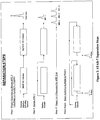
- Figure 1 shows an arrangement of switching valves for the first step of a separation where the saturates fraction is eluted and then detected/quantified.
- the separation steps for eluting and then detecting/quantifying the other six fractions are performed as per programmed.
- the solvent delivery system is programmed (Table 1) to run hexane at a flow-rate of 2.0 ml/min that changes to 1.5 ml/min at 0.01 minute run-time.
- the switching valves are set in such a way that the mobile phase from the DNAP-SG column passes through the Ag + /SCX - -SG column and a 2.0 ml loop (to broaden the peak profile to improve detection) before going to the ELSD (detector).
- the two analytical HPLC columns, DNAP and Ag + /SCX - were initially evaluated by testing elution behavior of some selected model compounds with different mobile phases. During these evaluations, several neat solvents and their mixtures were used. At the very initial stages of column evaluation, we found out that the batch of the DNAP columns used was more retentive than the ones most commonly used. The high retentivity of the DNAP column provided greater flexibility in adjusting the mobile phase strength during separations of aromatic ring classes of compounds. Having significant prior experience with different batches of the DNAP, only a limited amount of HPLC work on the elution behavior of limited sets of aromatic model compounds was needed.
- hexane & methylene chloride Only two organic solvents, namely hexane & methylene chloride and their mixtures were used to learn the quality of separations of 1-, 2-, 3-, & 4+ -ring aromatics (ARC1-4+), and sulfides.
- the retention time (RT) data of model compounds and chromatographically separated fractions of a typical petroleum distillate (650-1000°F) are provided in Table 2.
- the RT data clearly suggests that the DNAP column does not provide adequate separation of saturates (e.g., n-hexadecane) from 1-ring aromatics, even with a non-polar solvent, hexane.
- IPA iso-propanol
- benzothiophenes and dibenzothiophenes should follow the ring class separation behavior. For example, benzothiophene and dibenzothiophenes elute close to the 2-ring and 3-ring aromatics, respectively. However, the more retentive behavior of 4,6-dimethyl-dibenzothiophene is not understood at this time.
- Evaporative light scattering detectors are the best known as relatively less complicated, inexpensive, very reliable, and easy to use mass detectors with HPLC systems. ELSDs were initially developed mostly for pharmaceutical applications and became available to the rest of the analytical community only about a couple of decades ago. In an ELSD, the HPLC mobile phase is removed by evaporation under a high flow of nitrogen after the effluent emerges out of the HPLC column, and then finally the solvent free solute particles of interest are detected by a light scattering technique. Under the most commonly used conditions (the solvent, evaporating temperature, and the nitrogen flow rate), most of the organic molecules boiling below 650°F are lost during solvent evaporation and hence are not detected by the ELSD.
- FIG. 3 An illustration in Figure 3 demonstrates that the ELSD-1000 can be used for detecting quantitatively the 550+F boiling material if the detector was optimized to operate under un-common conditions.
- the ELSD-1000 gave equal area response for 550°F and 650°F samples
- the separations were performed over Ag + /SCX - column using 15% methylene chloride in hexane at a flow rate of 1.5 ml/min.
- Table 4 A summary of separation steps along with column-switching orders, valve-arrangements & their switching orders Step # Time (min) STEP Valve Location/NALVE # /Position/Contacts Thermostat More Pump INJECTOR Valve 1 Valve 2 Contacts for ELSD Signal Valve3 Valve 4 ( Column In-line ) Position Contact 1 Contact 2 Signal Contact 3 Contact 4 Position Contact 1 Contact 2 Position Contact 3 Contact 4 1 Initial Start-up and Transfer of "Saturates & ARC-1+Some Sulfides" to Column 2 Column 1 (Both Columns in-line) Load Closed Open 1 Volt Closed Open Load Closed Open Load Open Closed 2 4.0 Elution of "Saturates & (ARC-1 + Some Sulfides)" Column 2 (Column 2 in-line) Load Closed Open 1 Volt Closed Open Load Closed Open Load Open Closed 3 13.0 Transfer of "ARC-2+Some Sulfides” to Column 2 Column 1 Load Closed Open 1
- a six peak solution was prepared by dissolving approximately same amount of each of the model compounds representing the 6 classes of compounds, namely n-eicosane (saturate component), n-nonadecyl-benzene (ARC-1 component), 2,6-di-iso-propyl-naphthalene (ARC-2 component), phenanthrene (ARC-3 component), pyrene (ARC-4 component), and n-dodecyl sulfide in hexane solvent, and then analyzed using the final STAR-7 method. As shown in Figure 4 that all the components are baseline separated. However, the peaks' shapes and hence the peak areas vary significantly from component to component.
- the ELSD calibrations could be made using model compounds, we found out that the calibration curves change slightly, depending upon the type of compound chosen, for example n-eicosane (paraffinic saturate) versus cholestane (naphthenic saturate). Also, since the goal was to match the STAR7 quantitation with that of preparative HPLC separations, we decided to use a petroleum distillate (a preparative HPLC quality control sample) sample as a single calibration sample for calibration of all the STAR7 peaks over a wide range of concentrations. Because the ELSD is a non-linear detector, we had to find the best fit for the detector response against the sample amount in order to convert the peak area into the individual component amount for quantitation. After trying several combinations, we found that the square root of the peak area fits very well with the component amount over a wide range of concentrations. We also forced the fits to pass through zero intercepts.
- Ys, and Xs are respectively the amounts in milligrams and peak area square roots of saturates, ARC1-4, sulfides, and polars peaks.
- Constants As, Bs, Cs, and Ds are the fits constants (see Figure 6 ).
- Wt% 100 * Y Sats / Y Sats + Y ARC 1 + Y ARC 2 + Y ARC 3 + Y ARC 4 + Y Sulf + Y Polars
- the total mass recovery is determined as follows: 100 * Y Sats + Y ARC 1 + Y ARC 2 + Y ARC 3 + Y ARC 4 + Y Sulf + Y Polars / Amount Injected
- the STAR7 results can be used along with other analyses such as density, GC-simulated distillation, %S and %N as targets for "synthesis" of relatively accurate full compositional information from the gas oil 'models of compostion'.
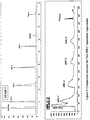
- STAR7 For comparison purposes, a solution (Approx. 100 mg in 10 ml of cyclohexane) of a petroleum distillate was analyzed using the two analytical (STAR7 and HPLC-2) methods. The two chromatograms shown in Figure 9 clearly demonstrate the superiority of the STAR7 method. In STAR7 in addition to the saturates and ARC-1 baseline separation, the rest of the 5 components are also well-defined and baseline separated. Also, STAR7 provides quantition of an additional fraction, the sulfides.
- Step I Silica Gel Separation
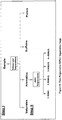
- about 5 grams of the sample is fractionated into four classes of compounds: 'saturates', 'aromatics', 'sulfides', and 'polars'. (see Figure 8 ).
- the HPLC system is equipped with a Waters quaternary solvent delivery pump and a dual wavelength UV detector.
- the solvent delivery pump can be programmed to deliver either one of the four different solvents or a mixture in a desired ratio for the specific duration at a selected rate of up to 40 ml/min.
- the refractive index detector Shodex RI-72, purchased from J. M. Science Inc. (New York) was used to observe the goodness of the separation between saturates and aromatics.
- Four switching valves (three 6-port and one 4-port) are used in order to have the options of back-flushing both of the 'sulfides' and 'polars' columns independently.
- One 6-port switching valve was converted to be used as an injector.
- One large volume injection loop was installed to accommodate up to 40 ml of the sample solution in cyclohexane.
- a fraction-collector was used to collect all of the necessary fractions generated in a separation.
- the main column (1000 x 30 mm) and the polars column (500 x 21 mm) are laboratory packed with approximately 650 g and 120 g of freshly activated silica gel (grade 923, 100-200 mesh, 60A°), respectively.
- the main column is found to stay useable for a year or more based upon the number of separations performed.
- the polars column not only adsorbs polars but also acts as a guard column and is, therefore, replaced each time a separation is performed.
- a commercially prepared silver-loaded silica gel-based-sulfonic acid (Ag + /SCX - -silica gel - Strong Cation Exchange) column (250 x 21 mm) is used to isolate sulfides.
- the Ag + /SCX - -silica gel column (250 x 21 mm) is purchased from Phenomenex.
- the solvent delivery system is programmed to run cyclohexane at a flow rate of 20 ml/min through all the three columns. After about 30-60 min, once the system is stabilized, a 40 ml cyclohexane solution of ⁇ 5 g sample is injected. Initially, the total effluent after passing through the three columns is passed through the UV and RI detectors and then to the fraction collector. This arrangement allows saturates to be separated and eluted.
- the pump is switched to run toluene (100%) which will allow aromatics to be eluted out and the polars and sulfides to be retained by the polars and sulfides column, respectively.
- the polars and sulfides are back-flushed individually. Sulfides are back-flushed using 500 ml of each of the 4% and 20% methanol in toluene, whereas polars are recovered using 1000 ml of 100% methanol.
- a portion of the aromatics is further fractionated using a low temperature (-40°C) A romatic R ing C lass ( ARC ) preparative HPLC separation Step II ( Figure 8 ).
- the sub-ambient (-40°C) ARC system can handle only about 200 mg of aromatics.
- the ARC HPLC system consisted of a Waters quaternary solvent delivery systems (W600), a manual 2 ml sample loop injector, a 10-position electrically actuated valve (Valco Model ECSD10P), a Valco backflush valve (EC6V), and a Waters photodiode-array detector (Model PDA-991).
- W600 Waters quaternary solvent delivery systems
- ECSD10P 10-position electrically actuated valve
- EC6V Valco backflush valve
- PDA-991 Waters photodiode-array detector
- the column always remains completely immersed in a continuous flow of methanol maintained at -40 ⁇ 1°C with a constant temperature refrigerated re-circulating bath (Neslab Model LT-50DD).
- the initial mobile phase (100% n-pentane) was passed through the HPLC system for about 60 min at a flow rate of 8.0 ml/min in order to ensure that the sample loop, the column, the detector cell and the valves are thoroughly cleaned and equilibrated with n-pentane.
- the photodiode-array detector (PDA-991) was set to measure the spectra in the range of 190-400 nm at intervals of 1.3 nm every 25 sec over a period of 600 min.
- a 1-mm path length cell was used for the UV/Vis measurements.
- ARC aromatic ring classes
- ARC-1 e.g., toluene with 1 aromatic ring
- ARC-2 e.g. naphthalene
- ARC-3 e.g. phenanthrene
- the chromatographic column was back flushed beyond 480 min; consequently any molecule whose retention time was greater than 480 min was lumped into ARC-4+.
- the chromatographic retention time data (in minutes) for the different pure molecules investigated are summarized elsewhere ( Ghosh et al., Energy & Fuels, vol 20, No. 2, pp 609-619 (2006 ).
Landscapes
- Chemical & Material Sciences (AREA)
- Health & Medical Sciences (AREA)
- Life Sciences & Earth Sciences (AREA)
- Physics & Mathematics (AREA)
- Analytical Chemistry (AREA)
- Biochemistry (AREA)
- General Health & Medical Sciences (AREA)
- General Physics & Mathematics (AREA)
- Immunology (AREA)
- Pathology (AREA)
- Engineering & Computer Science (AREA)
- Chemical Kinetics & Catalysis (AREA)
- General Chemical & Material Sciences (AREA)
- Oil, Petroleum & Natural Gas (AREA)
- Food Science & Technology (AREA)
- Medicinal Chemistry (AREA)
- Treatment Of Liquids With Adsorbents In General (AREA)
- Production Of Liquid Hydrocarbon Mixture For Refining Petroleum (AREA)
- Separation Using Semi-Permeable Membranes (AREA)
- Nitrogen And Oxygen Or Sulfur-Condensed Heterocyclic Ring Systems (AREA)
Claims (2)
- Verfahren zur chromatographischen Analyse eines Kohlenwasserstofföls, bei dem
in einem ersten Schritt ein Gemisch des Kohlenwasserstofföls und eines ersten Lösungsmittels sequentiell durch eine 2,4-Dinitroanilinopropylsilikagel- (DNAP) und eine Silberionen-starke Kationen-Ionenaustauschsäule (Ag+/SCX-) geleitet wird, um eine reine, "gesättigte" Fraktion des Öls zu eluieren und zu einem Lichtstreudetektor (ELSD) zu leiten,
in einem zweiten Schritt ein Lösungsmittel durch diese Ag+/SCX--Säule geleitet wird, um eine Fraktion des Kohlenwasserstofföls zu eluieren und anschließend die Schritte eins und zwei mit Lösungsmitteln wiederholt werden, die zur Eluierung unterschiedlicher Fraktionen des Kohlenwasserstofföls ausgewählt sind,
die DNAP- und Ag+/SCX--Säulen rückgespült werden, um verschiedene Fraktionen zu eluieren,
die eluierten Fraktionen zu einem Lichtstreudetektor (ELSD) geleitet werden, wobei die Fraktionen mindestens eine aus gesättigten Verbindungen, aromatischen Ringklassen (1-4), Sulfiden und polaren Verbindungen enthalten. - Verfahren nach Anspruch 1, bei dem als Lösungsmittel Hexan, Methylenchlorid und Toluol in unterschiedlichen Verhältnissen; Methylenchlorid, Toluol und Isopropanol in unterschiedlichen Verhältnissen eingesetzt werden.
Applications Claiming Priority (3)
| Application Number | Priority Date | Filing Date | Title |
|---|---|---|---|
| US20845709P | 2009-02-24 | 2009-02-24 | |
| US12/658,566 US8114678B2 (en) | 2009-02-24 | 2010-02-05 | Multi-dimensional high performance liquid chromatographic separation technique (STAR7) for quantitative determinations of 7 fractions in heavy petroleum streams boiling above 550 degrees F |
| PCT/US2010/000429 WO2010114587A1 (en) | 2009-02-24 | 2010-02-16 | Hplc separation and quantitation of heavy petroleum fractions |
Publications (3)
| Publication Number | Publication Date |
|---|---|
| EP2401247A1 EP2401247A1 (de) | 2012-01-04 |
| EP2401247A4 EP2401247A4 (de) | 2012-12-19 |
| EP2401247B1 true EP2401247B1 (de) | 2018-04-25 |
Family
ID=42666412
Family Applications (1)
| Application Number | Title | Priority Date | Filing Date |
|---|---|---|---|
| EP10759138.0A Active EP2401247B1 (de) | 2009-02-24 | 2010-02-16 | Hplc-trennung und -quantifizierung schwerer petroleumfraktionen |
Country Status (9)
| Country | Link |
|---|---|
| US (1) | US8114678B2 (de) |
| EP (1) | EP2401247B1 (de) |
| CN (1) | CN102428059B (de) |
| AR (1) | AR075595A1 (de) |
| AU (1) | AU2010232960B2 (de) |
| CA (1) | CA2753358C (de) |
| MY (1) | MY152083A (de) |
| SG (1) | SG173660A1 (de) |
| WO (1) | WO2010114587A1 (de) |
Families Citing this family (33)
| Publication number | Priority date | Publication date | Assignee | Title |
|---|---|---|---|---|
| WO2008150763A1 (en) * | 2007-05-29 | 2008-12-11 | Waters Investments Limited | Apparatus and methods for multidimensional analysis |
| US9487723B2 (en) | 2010-06-29 | 2016-11-08 | Exxonmobil Research And Engineering Company | High viscosity high quality group II lube base stocks |
| US8992764B2 (en) | 2010-06-29 | 2015-03-31 | Exxonmobil Research And Engineering Company | Integrated hydrocracking and dewaxing of hydrocarbons |
| CN102382484A (zh) * | 2010-08-31 | 2012-03-21 | 中国石油大学(北京) | 一种多核芳烃光敏材料和由其制备的染料敏化太阳能电池 |
| US20150106029A1 (en) * | 2011-06-28 | 2015-04-16 | Omer Refa Koseoglu | Method of characterizing crude oil by high pressure liquid chromatography |
| US10677718B2 (en) | 2011-02-22 | 2020-06-09 | Saudi Arabian Oil Company | Characterization of crude oil by near infrared spectroscopy |
| US10684239B2 (en) | 2011-02-22 | 2020-06-16 | Saudi Arabian Oil Company | Characterization of crude oil by NMR spectroscopy |
| US11022588B2 (en) | 2011-02-22 | 2021-06-01 | Saudi Arabian Oil Company | Characterization of crude oil by simulated distillation |
| US10571452B2 (en) * | 2011-06-28 | 2020-02-25 | Saudi Arabian Oil Company | Characterization of crude oil by high pressure liquid chromatography |
| US10725013B2 (en) | 2011-06-29 | 2020-07-28 | Saudi Arabian Oil Company | Characterization of crude oil by Fourier transform ion cyclotron resonance mass spectrometry |
| US8887557B2 (en) * | 2011-09-01 | 2014-11-18 | Exxonmobil Research And Engineering Company | Fractionation of de-asphalted oil of vacuum resid using preparative high performance liquid chromatographic separations |
| US20140131257A1 (en) * | 2012-11-12 | 2014-05-15 | Exxonmobil Research And Engineering Company | Preparatory high performance liquid chromatographic (hplc) separation technique for quantitative fractionation of heavy petroleum streams |
| US20140166542A1 (en) * | 2012-12-18 | 2014-06-19 | Exxonmobil Research And Engineering Company | Preparatory high performance liquid chromatographic (hplc) separation system and technique for quantitative fractionation of total vacuum resid |
| WO2014151460A1 (en) * | 2013-03-15 | 2014-09-25 | Florida State University Research Foundation, Inc. | Determination of the distribution of reactive and non-reactive sulfur in petroleum and its fractions |
| JP6836507B2 (ja) | 2015-01-05 | 2021-03-03 | サウジ アラビアン オイル カンパニー | 紫外可視分光法による原油のキャラクタリゼーション |
| JP2018509594A (ja) | 2015-01-05 | 2018-04-05 | サウジ アラビアン オイル カンパニー | ナフサ流の相対評価法 |
| SG11201705503PA (en) | 2015-01-05 | 2017-08-30 | Saudi Arabian Oil Co | Characterization of crude oil by near infrared spectroscopy |
| CN107257918B (zh) | 2015-01-05 | 2020-10-23 | 沙特阿拉伯石油公司 | 通过热重分析表征原油及其级分 |
| EP3294842A1 (de) | 2015-06-30 | 2018-03-21 | ExxonMobil Research and Engineering Company | Brennstoffherstellung aus katalytischem schlammöl |
| US10414995B2 (en) | 2016-03-31 | 2019-09-17 | Exxonmobil Research And Engineering Company | Base stocks and lubricant compositions containing same |
| US20180080915A1 (en) * | 2016-09-19 | 2018-03-22 | Exxonmobil Research And Engineering Company | Methods for quantifying olefins in hydrocarbons |
| SG10201912580VA (en) | 2016-12-29 | 2020-02-27 | Exxonmobil Res & Eng Co | Block processing configurations for base stock production from deasphalted oil |
| EP3396372B1 (de) * | 2017-04-26 | 2020-04-08 | Watrex Praha, s.r.o. | Vorrichtung und verfahren zur rückführung von flüssigkeiten mit zwei 4-port 2-wegeventilen |
| US10316263B2 (en) | 2017-06-27 | 2019-06-11 | Exxonmobil Research And Engineering Company | Fuel components from hydroprocessed deasphalted oils |
| CN112088204B (zh) | 2018-06-01 | 2023-06-06 | 埃克森美孚科技工程公司 | 利用膜级联对烃料流进行无沸腾分流 |
| CN110870985B (zh) * | 2018-08-31 | 2021-12-17 | 中国石油化工股份有限公司 | 重油芳烃组分的分离、表征方法和二维液相色谱及装置 |
| US11377605B2 (en) | 2019-04-12 | 2022-07-05 | ExxonMobil Technology and Engineering Company | Molecular separations process |
| WO2022241386A1 (en) | 2021-05-14 | 2022-11-17 | ExxonMobil Technology and Engineering Company | Products from fcc processing of high saturates and low heteroatom feeds |
| US12354712B2 (en) | 2022-02-28 | 2025-07-08 | Saudi Arabian Oil Company | Method to prepare virtual assay using nuclear magnetic resonance spectroscopy |
| US11913332B2 (en) | 2022-02-28 | 2024-02-27 | Saudi Arabian Oil Company | Method to prepare virtual assay using fourier transform infrared spectroscopy |
| US12243627B2 (en) | 2022-02-28 | 2025-03-04 | Saudi Arabian Oil Company | Method to prepare virtual assay using Fourier transform ion cyclotron resonance mass spectroscopy |
| US11781988B2 (en) | 2022-02-28 | 2023-10-10 | Saudi Arabian Oil Company | Method to prepare virtual assay using fluorescence spectroscopy |
| WO2026039139A1 (en) | 2024-08-16 | 2026-02-19 | ExxonMobil Technology and Engineering Company | Compositions comprising group ii base stock and c18-c48-polyalphaolefin |
Family Cites Families (10)
| Publication number | Priority date | Publication date | Assignee | Title |
|---|---|---|---|---|
| US4430205A (en) | 1983-06-13 | 1984-02-07 | Exxon Research And Engineering Company | Method for the improvement of the oxidation resistance of hydrocarbon oil, especially transformer oils by the selective removal of pro-oxidant nitrogen and sulfur compounds therefrom |
| US4826603A (en) | 1986-09-09 | 1989-05-02 | United States Of America As Represented By The Secretary Of The Air Force | Hydrocarbon group-type analyzer system |
| US4851355A (en) | 1987-06-05 | 1989-07-25 | Hayes Jr Paul C | Hydrocarbon group-type analyzer system |
| CN2195758Y (zh) * | 1994-03-22 | 1995-04-26 | 中国石油化工总公司石油化工科学研究院 | 高效液相色谱移动丝检测器双向进样装置 |
| US6175409B1 (en) | 1999-04-02 | 2001-01-16 | Symyx Technologies, Inc. | Flow-injection analysis and variable-flow light-scattering methods and apparatus for characterizing polymers |
| WO2000050547A1 (en) | 1999-02-26 | 2000-08-31 | Monsanto Company | Process for separating a triglyceride comprising a docosahexaenoic acid residue from a mixture of triglycerides |
| US6339182B1 (en) | 2000-06-20 | 2002-01-15 | Chevron U.S.A. Inc. | Separation of olefins from paraffins using ionic liquid solutions |
| US6849774B2 (en) | 2001-12-31 | 2005-02-01 | Chevron U.S.A. Inc. | Separation of dienes from olefins using ionic liquids |
| US20070183928A1 (en) * | 2005-09-09 | 2007-08-09 | Eksigent Technologies, Llc | Variable flow rate system for column chromatography |
| US7598487B2 (en) | 2005-11-22 | 2009-10-06 | Exxonmobil Research And Engineering Company | Micro-hydrocarbon analysis |
-
2010
- 2010-02-05 US US12/658,566 patent/US8114678B2/en active Active
- 2010-02-16 SG SG2011058120A patent/SG173660A1/en unknown
- 2010-02-16 CA CA2753358A patent/CA2753358C/en active Active
- 2010-02-16 EP EP10759138.0A patent/EP2401247B1/de active Active
- 2010-02-16 MY MYPI2011003934 patent/MY152083A/en unknown
- 2010-02-16 WO PCT/US2010/000429 patent/WO2010114587A1/en not_active Ceased
- 2010-02-16 AU AU2010232960A patent/AU2010232960B2/en not_active Ceased
- 2010-02-16 CN CN201080017696.9A patent/CN102428059B/zh not_active Expired - Fee Related
- 2010-02-24 AR ARP100100533A patent/AR075595A1/es not_active Application Discontinuation
Non-Patent Citations (1)
| Title |
|---|
| None * |
Also Published As
| Publication number | Publication date |
|---|---|
| MY152083A (en) | 2014-08-15 |
| CN102428059A (zh) | 2012-04-25 |
| CA2753358A1 (en) | 2010-10-07 |
| CN102428059B (zh) | 2014-05-14 |
| CA2753358C (en) | 2015-09-29 |
| US20100218585A1 (en) | 2010-09-02 |
| US8114678B2 (en) | 2012-02-14 |
| AU2010232960B2 (en) | 2016-01-07 |
| AU2010232960A1 (en) | 2011-09-15 |
| EP2401247A4 (de) | 2012-12-19 |
| AR075595A1 (es) | 2011-04-20 |
| EP2401247A1 (de) | 2012-01-04 |
| WO2010114587A1 (en) | 2010-10-07 |
| SG173660A1 (en) | 2011-09-29 |
Similar Documents
| Publication | Publication Date | Title |
|---|---|---|
| EP2401247B1 (de) | Hplc-trennung und -quantifizierung schwerer petroleumfraktionen | |
| Bissada et al. | Group-type characterization of crude oil and bitumen. Part I: Enhanced separation and quantification of saturates, aromatics, resins and asphaltenes (SARA) | |
| Barman et al. | Chromatographic techniques for petroleum and related products | |
| EP0400989B1 (de) | Verfahren zur spektroskopischen Analyse von Kohlenwasserstoffen, Verfahren zur chromatographischen Analyse von Kohlenwasserstoffen und Raffinierverfahren unter Benutzung dieser Verfahren | |
| Ahuja | Selectivity and detectability optimizations in HPLC | |
| US5076909A (en) | Method for refining or upgrading hydrocarbons with analysis | |
| Bissada et al. | Group-type characterization of crude oil and bitumen. Part II: Efficient separation and quantification of normal-paraffins iso-paraffins and naphthenes (PIN) | |
| US4865746A (en) | Chromatographic analysis of hydrocarbons | |
| Kosal et al. | Determination of hydrocarbon types in naphthas, gasolines and kerosenes: a review and comparative study of different analytical procedures | |
| US4826603A (en) | Hydrocarbon group-type analyzer system | |
| Martin | Determination of Hydrocarbon Types in Gasoline by Gas Chromatography. | |
| Reymond et al. | Input of an off-line, comprehensive, three-dimensional method (CPC× SFC/HRMS) to quantify polycyclic aromatic hydrocarbons in vacuum gas oils | |
| Yue et al. | Ion pair-based mobile phase additives to improve the separation of alkaloids in supercritical fluid chromatography | |
| EP0444946A2 (de) | Verfahren zur quantitativen Messung von gesättigten Olefinen und Aromaten in einem Gemisch | |
| US8887557B2 (en) | Fractionation of de-asphalted oil of vacuum resid using preparative high performance liquid chromatographic separations | |
| CN105738515B (zh) | 一种环境样品中16种多环芳烃的分析方法 | |
| EP2936143B1 (de) | Vorbereitendes hplc-trennsystem und verfahren zur quantitativen fraktionierung von gesamtvakuumrückstand | |
| US4802986A (en) | Hydrocarbon group-type analyzer system | |
| Karevan | Development of New Chromatographic Approaches for Bitumen Characterization | |
| DiSanzo et al. | Determination of total aromatic hydrocarbons in lube base stocks by liquid chromatography with novel thermospray flame ionization detection | |
| Pauls | Chromatographic characterization of gasolines | |
| US20140131257A1 (en) | Preparatory high performance liquid chromatographic (hplc) separation technique for quantitative fractionation of heavy petroleum streams | |
| Xu et al. | Analysis of alkylbenzene samples by comprehensive capillary liquid chromatography× capillary gas chromatography | |
| Neal | HPLC and column liquid chromatography | |
| Robert | Applications of SFC in the Petroleum Industry |
Legal Events
| Date | Code | Title | Description |
|---|---|---|---|
| PUAI | Public reference made under article 153(3) epc to a published international application that has entered the european phase |
Free format text: ORIGINAL CODE: 0009012 |
|
| 17P | Request for examination filed |
Effective date: 20110909 |
|
| AK | Designated contracting states |
Kind code of ref document: A1 Designated state(s): AT BE BG CH CY CZ DE DK EE ES FI FR GB GR HR HU IE IS IT LI LT LU LV MC MK MT NL NO PL PT RO SE SI SK SM TR |
|
| DAX | Request for extension of the european patent (deleted) | ||
| A4 | Supplementary search report drawn up and despatched |
Effective date: 20121120 |
|
| RIC1 | Information provided on ipc code assigned before grant |
Ipc: C07C 7/12 20060101AFI20121114BHEP Ipc: G01N 33/28 20060101ALN20121114BHEP Ipc: G01N 30/88 20060101ALI20121114BHEP |
|
| GRAP | Despatch of communication of intention to grant a patent |
Free format text: ORIGINAL CODE: EPIDOSNIGR1 |
|
| STAA | Information on the status of an ep patent application or granted ep patent |
Free format text: STATUS: GRANT OF PATENT IS INTENDED |
|
| RIC1 | Information provided on ipc code assigned before grant |
Ipc: G01N 33/28 20060101ALN20171005BHEP Ipc: G01N 30/88 20060101ALI20171005BHEP Ipc: C07C 7/12 20060101AFI20171005BHEP Ipc: G01N 30/46 20060101ALN20171005BHEP |
|
| RIC1 | Information provided on ipc code assigned before grant |
Ipc: G01N 30/46 20060101ALN20171012BHEP Ipc: G01N 33/28 20060101ALN20171012BHEP Ipc: G01N 30/88 20060101ALI20171012BHEP Ipc: C07C 7/12 20060101AFI20171012BHEP |
|
| INTG | Intention to grant announced |
Effective date: 20171027 |
|
| RIC1 | Information provided on ipc code assigned before grant |
Ipc: G01N 30/88 20060101ALI20171016BHEP Ipc: C07C 7/12 20060101AFI20171016BHEP Ipc: G01N 30/46 20060101ALN20171016BHEP Ipc: G01N 33/28 20060101ALN20171016BHEP |
|
| GRAJ | Information related to disapproval of communication of intention to grant by the applicant or resumption of examination proceedings by the epo deleted |
Free format text: ORIGINAL CODE: EPIDOSDIGR1 |
|
| STAA | Information on the status of an ep patent application or granted ep patent |
Free format text: STATUS: REQUEST FOR EXAMINATION WAS MADE |
|
| GRAR | Information related to intention to grant a patent recorded |
Free format text: ORIGINAL CODE: EPIDOSNIGR71 |
|
| GRAS | Grant fee paid |
Free format text: ORIGINAL CODE: EPIDOSNIGR3 |
|
| STAA | Information on the status of an ep patent application or granted ep patent |
Free format text: STATUS: GRANT OF PATENT IS INTENDED |
|
| GRAA | (expected) grant |
Free format text: ORIGINAL CODE: 0009210 |
|
| STAA | Information on the status of an ep patent application or granted ep patent |
Free format text: STATUS: THE PATENT HAS BEEN GRANTED |
|
| INTC | Intention to grant announced (deleted) | ||
| RIC1 | Information provided on ipc code assigned before grant |
Ipc: C07C 7/12 20060101AFI20180305BHEP Ipc: G01N 33/28 20060101ALN20180305BHEP Ipc: G01N 30/46 20060101ALN20180305BHEP Ipc: G01N 30/88 20060101ALI20180305BHEP |
|
| INTG | Intention to grant announced |
Effective date: 20180314 |
|
| AK | Designated contracting states |
Kind code of ref document: B1 Designated state(s): AT BE BG CH CY CZ DE DK EE ES FI FR GB GR HR HU IE IS IT LI LT LU LV MC MK MT NL NO PL PT RO SE SI SK SM TR |
|
| REG | Reference to a national code |
Ref country code: GB Ref legal event code: FG4D |
|
| REG | Reference to a national code |
Ref country code: CH Ref legal event code: EP |
|
| REG | Reference to a national code |
Ref country code: AT Ref legal event code: REF Ref document number: 992703 Country of ref document: AT Kind code of ref document: T Effective date: 20180515 |
|
| REG | Reference to a national code |
Ref country code: IE Ref legal event code: FG4D |
|
| REG | Reference to a national code |
Ref country code: DE Ref legal event code: R096 Ref document number: 602010050203 Country of ref document: DE |
|
| REG | Reference to a national code |
Ref country code: NL Ref legal event code: FP |
|
| REG | Reference to a national code |
Ref country code: LT Ref legal event code: MG4D |
|
| REG | Reference to a national code |
Ref country code: NO Ref legal event code: T2 Effective date: 20180425 |
|
| PG25 | Lapsed in a contracting state [announced via postgrant information from national office to epo] |
Ref country code: ES Free format text: LAPSE BECAUSE OF FAILURE TO SUBMIT A TRANSLATION OF THE DESCRIPTION OR TO PAY THE FEE WITHIN THE PRESCRIBED TIME-LIMIT Effective date: 20180425 Ref country code: SE Free format text: LAPSE BECAUSE OF FAILURE TO SUBMIT A TRANSLATION OF THE DESCRIPTION OR TO PAY THE FEE WITHIN THE PRESCRIBED TIME-LIMIT Effective date: 20180425 Ref country code: LT Free format text: LAPSE BECAUSE OF FAILURE TO SUBMIT A TRANSLATION OF THE DESCRIPTION OR TO PAY THE FEE WITHIN THE PRESCRIBED TIME-LIMIT Effective date: 20180425 Ref country code: PL Free format text: LAPSE BECAUSE OF FAILURE TO SUBMIT A TRANSLATION OF THE DESCRIPTION OR TO PAY THE FEE WITHIN THE PRESCRIBED TIME-LIMIT Effective date: 20180425 Ref country code: FI Free format text: LAPSE BECAUSE OF FAILURE TO SUBMIT A TRANSLATION OF THE DESCRIPTION OR TO PAY THE FEE WITHIN THE PRESCRIBED TIME-LIMIT Effective date: 20180425 Ref country code: BG Free format text: LAPSE BECAUSE OF FAILURE TO SUBMIT A TRANSLATION OF THE DESCRIPTION OR TO PAY THE FEE WITHIN THE PRESCRIBED TIME-LIMIT Effective date: 20180725 |
|
| PG25 | Lapsed in a contracting state [announced via postgrant information from national office to epo] |
Ref country code: GR Free format text: LAPSE BECAUSE OF FAILURE TO SUBMIT A TRANSLATION OF THE DESCRIPTION OR TO PAY THE FEE WITHIN THE PRESCRIBED TIME-LIMIT Effective date: 20180726 Ref country code: HR Free format text: LAPSE BECAUSE OF FAILURE TO SUBMIT A TRANSLATION OF THE DESCRIPTION OR TO PAY THE FEE WITHIN THE PRESCRIBED TIME-LIMIT Effective date: 20180425 Ref country code: LV Free format text: LAPSE BECAUSE OF FAILURE TO SUBMIT A TRANSLATION OF THE DESCRIPTION OR TO PAY THE FEE WITHIN THE PRESCRIBED TIME-LIMIT Effective date: 20180425 |
|
| REG | Reference to a national code |
Ref country code: AT Ref legal event code: MK05 Ref document number: 992703 Country of ref document: AT Kind code of ref document: T Effective date: 20180425 |
|
| PG25 | Lapsed in a contracting state [announced via postgrant information from national office to epo] |
Ref country code: PT Free format text: LAPSE BECAUSE OF FAILURE TO SUBMIT A TRANSLATION OF THE DESCRIPTION OR TO PAY THE FEE WITHIN THE PRESCRIBED TIME-LIMIT Effective date: 20180827 |
|
| REG | Reference to a national code |
Ref country code: DE Ref legal event code: R097 Ref document number: 602010050203 Country of ref document: DE |
|
| PG25 | Lapsed in a contracting state [announced via postgrant information from national office to epo] |
Ref country code: CZ Free format text: LAPSE BECAUSE OF FAILURE TO SUBMIT A TRANSLATION OF THE DESCRIPTION OR TO PAY THE FEE WITHIN THE PRESCRIBED TIME-LIMIT Effective date: 20180425 Ref country code: SK Free format text: LAPSE BECAUSE OF FAILURE TO SUBMIT A TRANSLATION OF THE DESCRIPTION OR TO PAY THE FEE WITHIN THE PRESCRIBED TIME-LIMIT Effective date: 20180425 Ref country code: RO Free format text: LAPSE BECAUSE OF FAILURE TO SUBMIT A TRANSLATION OF THE DESCRIPTION OR TO PAY THE FEE WITHIN THE PRESCRIBED TIME-LIMIT Effective date: 20180425 Ref country code: EE Free format text: LAPSE BECAUSE OF FAILURE TO SUBMIT A TRANSLATION OF THE DESCRIPTION OR TO PAY THE FEE WITHIN THE PRESCRIBED TIME-LIMIT Effective date: 20180425 Ref country code: DK Free format text: LAPSE BECAUSE OF FAILURE TO SUBMIT A TRANSLATION OF THE DESCRIPTION OR TO PAY THE FEE WITHIN THE PRESCRIBED TIME-LIMIT Effective date: 20180425 Ref country code: AT Free format text: LAPSE BECAUSE OF FAILURE TO SUBMIT A TRANSLATION OF THE DESCRIPTION OR TO PAY THE FEE WITHIN THE PRESCRIBED TIME-LIMIT Effective date: 20180425 |
|
| PG25 | Lapsed in a contracting state [announced via postgrant information from national office to epo] |
Ref country code: SM Free format text: LAPSE BECAUSE OF FAILURE TO SUBMIT A TRANSLATION OF THE DESCRIPTION OR TO PAY THE FEE WITHIN THE PRESCRIBED TIME-LIMIT Effective date: 20180425 |
|
| PLBE | No opposition filed within time limit |
Free format text: ORIGINAL CODE: 0009261 |
|
| STAA | Information on the status of an ep patent application or granted ep patent |
Free format text: STATUS: NO OPPOSITION FILED WITHIN TIME LIMIT |
|
| 26N | No opposition filed |
Effective date: 20190128 |
|
| PG25 | Lapsed in a contracting state [announced via postgrant information from national office to epo] |
Ref country code: SI Free format text: LAPSE BECAUSE OF FAILURE TO SUBMIT A TRANSLATION OF THE DESCRIPTION OR TO PAY THE FEE WITHIN THE PRESCRIBED TIME-LIMIT Effective date: 20180425 |
|
| REG | Reference to a national code |
Ref country code: CH Ref legal event code: PL |
|
| PG25 | Lapsed in a contracting state [announced via postgrant information from national office to epo] |
Ref country code: LU Free format text: LAPSE BECAUSE OF NON-PAYMENT OF DUE FEES Effective date: 20190216 Ref country code: MC Free format text: LAPSE BECAUSE OF FAILURE TO SUBMIT A TRANSLATION OF THE DESCRIPTION OR TO PAY THE FEE WITHIN THE PRESCRIBED TIME-LIMIT Effective date: 20180425 |
|
| REG | Reference to a national code |
Ref country code: IE Ref legal event code: MM4A |
|
| PG25 | Lapsed in a contracting state [announced via postgrant information from national office to epo] |
Ref country code: CH Free format text: LAPSE BECAUSE OF NON-PAYMENT OF DUE FEES Effective date: 20190228 Ref country code: LI Free format text: LAPSE BECAUSE OF NON-PAYMENT OF DUE FEES Effective date: 20190228 |
|
| PG25 | Lapsed in a contracting state [announced via postgrant information from national office to epo] |
Ref country code: IE Free format text: LAPSE BECAUSE OF NON-PAYMENT OF DUE FEES Effective date: 20190216 |
|
| PG25 | Lapsed in a contracting state [announced via postgrant information from national office to epo] |
Ref country code: TR Free format text: LAPSE BECAUSE OF FAILURE TO SUBMIT A TRANSLATION OF THE DESCRIPTION OR TO PAY THE FEE WITHIN THE PRESCRIBED TIME-LIMIT Effective date: 20180425 |
|
| PGFP | Annual fee paid to national office [announced via postgrant information from national office to epo] |
Ref country code: DE Payment date: 20200115 Year of fee payment: 11 Ref country code: IT Payment date: 20200220 Year of fee payment: 11 |
|
| PGFP | Annual fee paid to national office [announced via postgrant information from national office to epo] |
Ref country code: BE Payment date: 20200117 Year of fee payment: 11 |
|
| PG25 | Lapsed in a contracting state [announced via postgrant information from national office to epo] |
Ref country code: MT Free format text: LAPSE BECAUSE OF NON-PAYMENT OF DUE FEES Effective date: 20190216 |
|
| PG25 | Lapsed in a contracting state [announced via postgrant information from national office to epo] |
Ref country code: CY Free format text: LAPSE BECAUSE OF FAILURE TO SUBMIT A TRANSLATION OF THE DESCRIPTION OR TO PAY THE FEE WITHIN THE PRESCRIBED TIME-LIMIT Effective date: 20180425 |
|
| PG25 | Lapsed in a contracting state [announced via postgrant information from national office to epo] |
Ref country code: IS Free format text: LAPSE BECAUSE OF FAILURE TO SUBMIT A TRANSLATION OF THE DESCRIPTION OR TO PAY THE FEE WITHIN THE PRESCRIBED TIME-LIMIT Effective date: 20180825 |
|
| PG25 | Lapsed in a contracting state [announced via postgrant information from national office to epo] |
Ref country code: HU Free format text: LAPSE BECAUSE OF FAILURE TO SUBMIT A TRANSLATION OF THE DESCRIPTION OR TO PAY THE FEE WITHIN THE PRESCRIBED TIME-LIMIT; INVALID AB INITIO Effective date: 20100216 |
|
| REG | Reference to a national code |
Ref country code: DE Ref legal event code: R119 Ref document number: 602010050203 Country of ref document: DE |
|
| REG | Reference to a national code |
Ref country code: BE Ref legal event code: MM Effective date: 20210228 |
|
| PG25 | Lapsed in a contracting state [announced via postgrant information from national office to epo] |
Ref country code: DE Free format text: LAPSE BECAUSE OF NON-PAYMENT OF DUE FEES Effective date: 20210901 |
|
| PG25 | Lapsed in a contracting state [announced via postgrant information from national office to epo] |
Ref country code: IT Free format text: LAPSE BECAUSE OF NON-PAYMENT OF DUE FEES Effective date: 20210216 |
|
| PG25 | Lapsed in a contracting state [announced via postgrant information from national office to epo] |
Ref country code: MK Free format text: LAPSE BECAUSE OF FAILURE TO SUBMIT A TRANSLATION OF THE DESCRIPTION OR TO PAY THE FEE WITHIN THE PRESCRIBED TIME-LIMIT Effective date: 20180425 |
|
| PG25 | Lapsed in a contracting state [announced via postgrant information from national office to epo] |
Ref country code: BE Free format text: LAPSE BECAUSE OF NON-PAYMENT OF DUE FEES Effective date: 20210228 |
|
| P01 | Opt-out of the competence of the unified patent court (upc) registered |
Effective date: 20230518 |
|
| PGFP | Annual fee paid to national office [announced via postgrant information from national office to epo] |
Ref country code: NL Payment date: 20260220 Year of fee payment: 17 |
|
| PGFP | Annual fee paid to national office [announced via postgrant information from national office to epo] |
Ref country code: GB Payment date: 20260223 Year of fee payment: 17 |
|
| PGFP | Annual fee paid to national office [announced via postgrant information from national office to epo] |
Ref country code: NO Payment date: 20260218 Year of fee payment: 17 |
|
| PGFP | Annual fee paid to national office [announced via postgrant information from national office to epo] |
Ref country code: FR Payment date: 20260224 Year of fee payment: 17 |