EP2405018A9 - Méthode de détermination des voies de synthèse des acides gras d'un micro-organisme, et groupe d'amorces pcr utilisé dans cette méthode - Google Patents
Méthode de détermination des voies de synthèse des acides gras d'un micro-organisme, et groupe d'amorces pcr utilisé dans cette méthode Download PDFInfo
- Publication number
- EP2405018A9 EP2405018A9 EP10748811A EP10748811A EP2405018A9 EP 2405018 A9 EP2405018 A9 EP 2405018A9 EP 10748811 A EP10748811 A EP 10748811A EP 10748811 A EP10748811 A EP 10748811A EP 2405018 A9 EP2405018 A9 EP 2405018A9
- Authority
- EP
- European Patent Office
- Prior art keywords
- fatty acid
- microorganism
- acid synthesis
- gene
- seq
- Prior art date
- Legal status (The legal status is an assumption and is not a legal conclusion. Google has not performed a legal analysis and makes no representation as to the accuracy of the status listed.)
- Withdrawn
Links
Images


Classifications
-
- C—CHEMISTRY; METALLURGY
- C12—BIOCHEMISTRY; BEER; SPIRITS; WINE; VINEGAR; MICROBIOLOGY; ENZYMOLOGY; MUTATION OR GENETIC ENGINEERING
- C12Q—MEASURING OR TESTING PROCESSES INVOLVING ENZYMES, NUCLEIC ACIDS OR MICROORGANISMS; COMPOSITIONS OR TEST PAPERS THEREFOR; PROCESSES OF PREPARING SUCH COMPOSITIONS; CONDITION-RESPONSIVE CONTROL IN MICROBIOLOGICAL OR ENZYMOLOGICAL PROCESSES
- C12Q1/00—Measuring or testing processes involving enzymes, nucleic acids or microorganisms; Compositions therefor; Processes of preparing such compositions
- C12Q1/68—Measuring or testing processes involving enzymes, nucleic acids or microorganisms; Compositions therefor; Processes of preparing such compositions involving nucleic acids
- C12Q1/6876—Nucleic acid products used in the analysis of nucleic acids, e.g. primers or probes
- C12Q1/6888—Nucleic acid products used in the analysis of nucleic acids, e.g. primers or probes for detection or identification of organisms
- C12Q1/689—Nucleic acid products used in the analysis of nucleic acids, e.g. primers or probes for detection or identification of organisms for bacteria
Definitions
- the present invention relates to a method for determining the fatty acid synthetic pathway of a microorganism, and to a primer set for the detection thereof.
- the present invention relates to a microorganism fatty acid synthetic pathway determining method that includes producing degenerate primers for a fatty acid synthesis-related enzyme gene, and determining the presence or absence of the fatty acid synthesis-related gene in a microorganism using the degenerate primers, and to a PCR primer set and a probe set for use in the method.
- the present invention is useful as a method for screening microorganisms that synthesize fatty acids.
- Polyunsaturated ⁇ 3-fatty acid and ⁇ 6-fatty acid are important components in animal and human nutrition.
- Polyunsaturated long-chain ⁇ 3-fatty acids including eicosapentaenoic acid (EPA) and docosahexaenoic acid (DHA), have various roles in many aspects of health, including brain development in children, eye functions, hormone and other signaling substance syntheses, and prevention of cardiovascular disturbances, cancers, and diabetes (see Non-Patent Literature 1), and thus represent an important component in human nutrition. Production of polyunsaturated long-chain fatty acids is thus needed in this regard.
- EPA eicosapentaenoic acid
- DHA docosahexaenoic acid
- microorganisms categorized in the class Labyrinthulea are known to produce long-chain unsaturated fatty acids.
- Concerning the microorganisms of the family Thraustochytriaceae there is a report of a process that makes use of microorganisms of the genus Schizochytrium to produce a long-chain highly unsaturated fatty acid-containing phospholipid (see Patent Literature 1).
- Microorganisms of the genus Thraustochytrium capable of producing DHA are also reported (see Patent Literature 2).
- the unsaturated fatty acids can enrich food and/or feed, and thus a simple, economical producing process of these unsaturated fatty acids is greatly needed, particularly in the eukaryotic system.
- For efficient production of unsaturated fatty acids using a microorganism it is important to find a means that can be used to efficiently determine a microorganism that produces fatty acids.
- One conventionally known method of examining the presence or absence of a known gene in a different organism is to perform a PCR with degenerate primers produced from known amino acid sequences.
- the reason that the amino acid sequences of proteins are used is that they are often more conserved (more common) than gene base sequences.
- known degenerate primers and newly designed specific primers are used in combination to perform a PCR, and the product is digested with restriction enzyme to determine a synthetic pyrethroid resistant clone.
- Two biosynthetic pathways of long-chain highly unsaturated fatty acid are known in Labyrinthulea microorganisms.
- EPA and DHA are produced by a series of desaturations and elongations of saturated fatty acids such as palmitic acid by the actions of desaturases and elongases.
- long-chain highly unsaturated fatty acids are produced with polyketide synthase.
- the gene for the latter biosynthetic pathway is known as PUFA-PKS gene, and its presence or absence can be determined by the method disclosed in Patent Literature 5. However, this method cannot determine the presence or absence of the genes in the former biosynthetic pathway.
- a method that determines the presence or absence of PUFA-PKS from the fatty acid composition of a cultured microorganism is disclosed as another method of determining a microorganism that has the PUFA-PKS system (see Patent Literature 6).
- a microorganism is cultured under aerobic conditions and oxygen-free/low-oxygen conditions, and five YES or NO questions are asked based on the comparison of the resulting fatty acid compositions.
- more answers with "YES” are regarded as the sign that the microorganism includes the PUFA-PKS gene.
- the method is very laborious, and does not produce proportional direct evidence, compared to the methods that directly detect genes by PCR.
- Patent Literatures 5 and 6 only provide information concerning the PUFA-PKS pathway, and cannot determine the presence or absence of the other important pathway that produces EPA and DHA with elongase and desaturase. Accordingly, there is a need for a method that can conveniently and reliably detect and determine this pathway.
- an object of the present invention to provide a method for determining the presence or absence of a fatty acid synthetic pathway in a microorganism, and a PCR primer set and a probe set for use in the method. More specifically, an object of the present invention is to provide a method for determining the presence or absence of a fatty acid synthetic pathway in a microorganism, usable for efficient screening of microorganisms that synthesize fatty acids, and a PCR primer set and a probe set for use in the method.
- the present inventors conducted intensive studies to provide an efficient method for the screening of microorganisms that have a fatty acid synthetic pathway, and found an easy and fast distinction method, and a PCR primer set for use in the method.
- the present invention has been completed based on this finding.
- the gist of the present invention lies in the technical matter recited in (1) to (5) below.
- the present invention provides a method useful for the screening of microorganisms that synthesize fatty acids.
- the invention also provides a PCR primer set and a probe set for use in the method.
- the present invention is for determining the presence or absence of a fatty acid-related enzyme gene in a microorganism with the use of degenerate primers.
- the fatty acid-related enzyme is not particularly limited to the types of microorganism and fatty acid synthesis-related enzyme.
- the representative examples are enzymes such as C20 elongase and ⁇ 4 desaturase. It is known that these enzymes exist in microorganisms that belong to the class Labyrinthulea.
- the desaturase is an enzyme that forms a double bond at a certain position from the carbonyl group of a fatty acid.
- the elongase is an enzyme responsible for the elongation reaction of fatty acid.
- the present invention relates to a method for determining the fatty acid synthetic pathway of a microorganism, which comprising producing degenerate primers for a fatty acid synthesis-related enzyme gene, and determining the presence or absence of the fatty acid synthesis-related gene using the degenerate primers.
- the fatty acid synthesis-related enzyme gene is not particularly limited, as long as it is a gene that encodes an enzyme associated with the synthesis.
- the particularly preferred fatty acid synthesis-related enzyme genes are C20-elongase gene and/or ⁇ 4-desaturase gene.
- a method that determines the presence or absence of a known amino acid sequence by PCR, using degenerate primers produced from this amino acid sequence.
- degenerate primers for the gene of a fatty acid synthesis-related enzyme are produced from the amino acid sequence of this enzyme, and the degenerate primers are used for PCR reaction with the genomic DNA extracted from a tested microorganism to confirm the presence or absence of the enzyme gene in the extracted genomic DNA. The presence or absence of a fatty acid synthetic pathway in the microorganism can then be determined from the result.
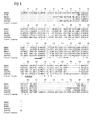
- the degenerate primers for the fatty acid synthesis-related enzyme gene are produced as follows. For example, the amino acid sequences of the C20 elongase (Table 1, FIG. 1 ) and ⁇ 4 desaturase (Table 2, FIG. 2 ) of various microorganisms available from Genbank are compared for homology by alignment analysis across the species. Degenerate primers of 20 to 23 base sequences are then designed based on the information of the amino acid sequences conserved across the species. Table 3 represents the degenerate primer sequences for different enzymes. In Table 3, the sequences are represented by SEQ ID NOS: 1, 2, 3, and 4 from the top. The degenerate primers may be designed from the sequences of the enzyme genes of various organisms. The degenerate primers correspond to the conserved regions of the amino acid sequence of the fatty acid synthesis-related enzyme.
- the presence or absence of a fatty acid synthetics pathway in a microorganism can be determined from the result of a test that detects the amplification of the enzyme gene by the PCR reaction of the designed primers with the genomic DNA extracted from the tested microorganism.
- PCR reaction may be performed by an ordinary method. For example, PCR may be performed under the following conditions: denaturation at 94°C for 60 seconds, followed by 30 cycles consisting of denaturation at 94°C for 30 seconds, annealing at 55°C for 30 seconds, extension and at 72°C for 30 to 60 seconds, and finally 7 minutes of extention at 72°C.
- the presence or absence of a fatty acid synthetic pathway in the microorganism can then be determined by confirming the amplification of the enzyme gene by methods such as electrophoresis.
- the primer set for detecting a fatty acid synthetic pathway in a microorganism includes primers having the base sequences of SEQ ID NOS: 1 and 2, respectively, of the Sequence Listing, and/or primers having the base sequences of SEQ ID NOS: 3 and 4, respectively, of the Sequence Listing.
- the probe set includes each primer of the primer set as a probe.
- a microorganism fatty acid synthetic pathway detection kit is realized by including these probes.
- microorganism is not particularly limited, as long as it is thought to be capable of conducting fatty acid synthesis.
- the particularly preferred microorganisms are those belonging to the class Labyrinthulea.
- Examples of the class Labyrinthulea microorganisms include the genus Labyrinthula, Althornia, Aplanochytrium, Japonochytrium, Labyrinthuloides, Schizochytrium, Thraustochytrium, or the genus Ulkenia and Aurantiochytrium.
- Example 1 The degenerate primers obtained in Example 1 were used to determine the fatty acid synthetic pathways of six known species of Labyrinthulea.
- Table 4 presents the Labyrinthulea species tested. Note that these were all obtained from ATCC. Genomic DNA was extracted from these Labyrinthulea species, using an ISOPLANT (Nippon Gene) according to the protocol of the kit.
- a PCR reaction was run for the genomic DNA extracted from each Labyrinthulea species, using the degenerate primers obtained in Example 1 for the fatty acid synthesis-related enzyme genes.
- the PCR conditions are presented in Table 5.
- the result of the electrophoresis performed for the PCR product obtained by the PCR showed a band at about 230 bp for the C20 elongase ( FIG. 3 ), and at about 700 bp for the ⁇ 4 desaturase ( FIG. 4 ).
- These bands were detected in Thraustochytrium aureum ATCC 34304, Thraustochytrium roseum ATCC 28210, Thraustochytrium striatum ATCC 24473, and Schizochytrium aggregatum ATCC 28209.
- neither band was detected in Aurantiochytrium limacinum SR21 ATCC MYA-1381 and Schizochytrium ( Aurantiochytrium ) sp. ATCC 20888.
- the target bands were cut from the electrophoresed gel, and purified using a Wizard SV gel and PCR clean-up system (Promega) according to the product manual. The PCR purified products were then inserted into a TA cloning vector after adjusting the concentration. Cloning was performed using a pGEM(R)-T Easy Vector System (Promega) according to the product manual. Extraction of the plasmid DNA was performed with a QIAprep Spin Miniprep Kit (QIAGEN). The extracted plasmid was subjected to sequence analysis. Sequence analysis was performed by a dye terminator method. The sequences of the resulting C20-elongase fragment and ⁇ 4-desaturase fragment were then subjected to BLAST homology search (http://blast.ddbj.nig.ac.jp/top-j.html).
- Table 6 presents the results of the homology search for the C20-elongase fragment.
- the C20-elongase fragments obtained from Thraustochytrium aureum ATCC 34304, Thraustochytrium roseum ATCC 28210, Thraustochytrium striatum ATCC 24473, and Schizochytrium aggregatum ATCC 28209 (the each sequence was represented as TAC20, TRC20, TSC20, and SAC20 ,respectively) had 40-48% amino acid sequence homology with the known C20-elongase gene available from database.
- Table 7 presents the results of the homology search for the ⁇ 4-desaturase fragment.
- the ⁇ 4-desaturase fragments obtained from Thraustochytrium aureum ATCC 34304, Thraustochytrium roseum ATCC 28210, Thraustochytrium striatum ATCC 24473, and Schizochytrium aggregatum ATCC 28209 (the each sequence was represented as TAD4, TRD4, TSD4, and SAD4, respectively) had 78-97% amino acid sequence homology with the known ⁇ 4-desaturase gene available from database.
- the present invention concerns a method for determining the fatty acid synthesis pathway of a microorganism, whereby degenerate primers produced for a fatty acid synthesis-related enzyme gene are used to determine the presence or absence of the fatty acid synthesis-related gene in the genomic DNA extracted from the microorganism.
- the method enables the presence or absence of a fatty acid synthesis-related enzyme gene in a microorganism to be conveniently determined, and thus conveniently identifies a microorganism that produces unsaturated fatty acids usefully added to food and/or feed to enhance the health promoting effect.
- the present invention is particularly useful for the development and establishment of a technique for economically producing unsaturated fatty acids in the eukaryotic system. A progress in the unsaturated fatty acid producing technique makes it possible to provide substances useful to sustain healthy human life.
Landscapes
- Chemical & Material Sciences (AREA)
- Life Sciences & Earth Sciences (AREA)
- Analytical Chemistry (AREA)
- Proteomics, Peptides & Aminoacids (AREA)
- Organic Chemistry (AREA)
- Zoology (AREA)
- Wood Science & Technology (AREA)
- Health & Medical Sciences (AREA)
- Engineering & Computer Science (AREA)
- Microbiology (AREA)
- Immunology (AREA)
- Molecular Biology (AREA)
- Biotechnology (AREA)
- Biophysics (AREA)
- Physics & Mathematics (AREA)
- Biochemistry (AREA)
- Bioinformatics & Cheminformatics (AREA)
- General Engineering & Computer Science (AREA)
- General Health & Medical Sciences (AREA)
- Genetics & Genomics (AREA)
- Measuring Or Testing Involving Enzymes Or Micro-Organisms (AREA)
Applications Claiming Priority (2)
| Application Number | Priority Date | Filing Date | Title |
|---|---|---|---|
| JP2009050906 | 2009-03-04 | ||
| PCT/JP2010/053553 WO2010101218A1 (fr) | 2009-03-04 | 2010-03-04 | Méthode de détermination des voies de synthèse des acides gras d'un micro-organisme, et groupe d'amorces pcr utilisé dans cette méthode |
Publications (3)
| Publication Number | Publication Date |
|---|---|
| EP2405018A1 EP2405018A1 (fr) | 2012-01-11 |
| EP2405018A9 true EP2405018A9 (fr) | 2012-03-14 |
| EP2405018A4 EP2405018A4 (fr) | 2013-02-20 |
Family
ID=42709772
Family Applications (1)
| Application Number | Title | Priority Date | Filing Date |
|---|---|---|---|
| EP10748811A Withdrawn EP2405018A4 (fr) | 2009-03-04 | 2010-03-04 | Méthode de détermination des voies de synthèse des acides gras d'un micro-organisme, et groupe d'amorces pcr utilisé dans cette méthode |
Country Status (5)
| Country | Link |
|---|---|
| US (1) | US20120100550A1 (fr) |
| EP (1) | EP2405018A4 (fr) |
| JP (1) | JPWO2010101218A1 (fr) |
| CA (1) | CA2754409A1 (fr) |
| WO (1) | WO2010101218A1 (fr) |
Families Citing this family (1)
| Publication number | Priority date | Publication date | Assignee | Title |
|---|---|---|---|---|
| KR101964168B1 (ko) * | 2010-10-01 | 2019-04-01 | 고쿠리쓰다이가쿠호진 규슈다이가쿠 | 스트라메노파일의 형질 전환 방법 |
Family Cites Families (9)
| Publication number | Priority date | Publication date | Assignee | Title |
|---|---|---|---|---|
| US7217856B2 (en) * | 1999-01-14 | 2007-05-15 | Martek Biosciences Corporation | PUFA polyketide synthase systems and uses thereof |
| US7211418B2 (en) * | 1999-01-14 | 2007-05-01 | Martek Biosciences Corporation | PUFA polyketide synthase systems and uses thereof |
| WO2002081668A2 (fr) * | 2001-01-25 | 2002-10-17 | Abbott Laboratories | Genes desaturase et utilisations de ces derniers |
| JP4280158B2 (ja) * | 2002-12-27 | 2009-06-17 | 富士フイルム株式会社 | ドコサヘキサエン酸生産能を有する微生物及びその利用 |
| KR101234199B1 (ko) * | 2003-03-26 | 2013-02-20 | 마텍 바이오싸이언스스 코포레이션 | Pufa 폴리케타이드 신타제 시스템 및 이의 용도 |
| US7208590B2 (en) * | 2003-07-15 | 2007-04-24 | Abbott Laboratories | Genes involved in polyketide synthase pathways and uses thereof |
| MY140210A (en) * | 2003-12-22 | 2009-11-30 | Suntory Holdings Ltd | Marchantiales-derived unsaturated fatty acid synthetase genes and use of the same |
| DE102004017369A1 (de) * | 2004-04-08 | 2005-11-03 | Nutrinova Nutrition Specialties & Food Ingredients Gmbh | Screeningverfahren zur Identifizierung von PUFA-PKS in Proben |
| JP2007325516A (ja) * | 2006-06-06 | 2007-12-20 | Hokkaido Univ | ホスホパンテテン転移酵素遺伝子及びこれを用いた長鎖多価不飽和脂肪酸の製造方法 |
-
2010
- 2010-03-04 EP EP10748811A patent/EP2405018A4/fr not_active Withdrawn
- 2010-03-04 WO PCT/JP2010/053553 patent/WO2010101218A1/fr not_active Ceased
- 2010-03-04 US US13/254,794 patent/US20120100550A1/en not_active Abandoned
- 2010-03-04 JP JP2011502799A patent/JPWO2010101218A1/ja not_active Withdrawn
- 2010-03-04 CA CA2754409A patent/CA2754409A1/fr not_active Abandoned
Also Published As
| Publication number | Publication date |
|---|---|
| WO2010101218A1 (fr) | 2010-09-10 |
| EP2405018A4 (fr) | 2013-02-20 |
| EP2405018A1 (fr) | 2012-01-11 |
| JPWO2010101218A1 (ja) | 2012-09-10 |
| CA2754409A1 (fr) | 2010-09-10 |
| US20120100550A1 (en) | 2012-04-26 |
Similar Documents
| Publication | Publication Date | Title |
|---|---|---|
| US20210308202A1 (en) | Brassica events lbflfk and lbfdau and methods for detection thereof | |
| JP5665004B2 (ja) | ダイズ油脂中のオレイン酸含量を増加させる突然変異体及びその原因遺伝子 | |
| Nawade et al. | Insights into the Indian peanut genotypes for ahFAD2 gene polymorphism regulating its oleic and linoleic acid fluxes | |
| US20140273113A1 (en) | Chlorophyll deficient algal cell with improved growth and production | |
| CN107828908B (zh) | 甘蓝型油菜种子高油酸含量的分子标记方法及应用 | |
| CA2563430C (fr) | Procede de criblage destine a l'identification de pufa-pks dans des echantillons | |
| CN114592073B (zh) | 影响鸭脂肪酸组成相关基因elovl3的snp | |
| Roslinsky et al. | Development of B. carinata with super-high erucic acid content through interspecific hybridization | |
| CN104328198A (zh) | 检测高油酸花生fad2a和fad2b基因位点突变基因型的引物及其pcr检测方法 | |
| CN113265471A (zh) | 一种检测绵羊fasn基因单核苷酸多态性的方法及其在肉质性状早期筛选中的应用 | |
| EP2405018A9 (fr) | Méthode de détermination des voies de synthèse des acides gras d'un micro-organisme, et groupe d'amorces pcr utilisé dans cette méthode | |
| WO2013004281A1 (fr) | Séquences nucléotidiques mutées par une insertion qui codent pour une protéine tronquée oléate désaturase, protéines, procédés et utilisations | |
| US10238056B2 (en) | High oleic seed oil trait in cotton varieties to elevate oleic acid content of cottonseed oil | |
| KR101273333B1 (ko) | 육용계의 지방산 조성을 확인하기 위한 신규 프라이머 세트 및 이를 이용한 육용계의 선별 방법 | |
| CN114854879B (zh) | 一种湖羊lpl基因snp的检测方法及其在肉质性状早期筛选中的应用 | |
| Anai et al. | Molecular characterization of two high-palmitic-acid mutant loci induced by X-ray irradiation in soybean | |
| CN113755633A (zh) | 高通量检测棉花GhFAD2-1基因高油酸突变位点的KASP分子标记 | |
| RU2789038C1 (ru) | Способ идентификации мутации в первом экзоне гена FAD3A, приводящей к снижению содержания линоленовой кислоты в льняном масле | |
| Wang et al. | Inheritance and QTL mapping identified multi-effects loci for fatty acid related traits in peanut (Arachis hypogaea L.) | |
| RU2806563C1 (ru) | Способ идентификации мутации в пятом экзоне гена FAD3A, приводящей к снижению содержания линоленовой кислоты в льняном масле | |
| RU2806561C1 (ru) | Способ идентификации мутации во втором экзоне гена FAD3B, приводящей к снижению содержания линоленовой кислоты в льняном масле | |
| Wang et al. | Gene screening for fatty acid synthesis of flax based on transcriptome sequencing | |
| KR102949407B1 (ko) | 닭의 가슴근육 내 아라키돈산 함량 판단을 위한 snp 마커 | |
| JP2005218402A (ja) | 突然変異体、及び突然変異体の生産方法 | |
| CN110564621A (zh) | 具有高脂质生产能力的链带藻属物种t9分离株及其用途 |
Legal Events
| Date | Code | Title | Description |
|---|---|---|---|
| PUAI | Public reference made under article 153(3) epc to a published international application that has entered the european phase |
Free format text: ORIGINAL CODE: 0009012 |
|
| 17P | Request for examination filed |
Effective date: 20110928 |
|
| AK | Designated contracting states |
Kind code of ref document: A1 Designated state(s): AT BE BG CH CY CZ DE DK EE ES FI FR GB GR HR HU IE IS IT LI LT LU LV MC MK MT NL NO PL PT RO SE SI SK SM TR |
|
| DAX | Request for extension of the european patent (deleted) | ||
| RIC1 | Information provided on ipc code assigned before grant |
Ipc: C12Q 1/68 20060101AFI20121220BHEP Ipc: C12N 15/09 20060101ALI20121220BHEP |
|
| RIC1 | Information provided on ipc code assigned before grant |
Ipc: C12N 15/09 20060101ALI20130109BHEP Ipc: C12Q 1/68 20060101AFI20130109BHEP |
|
| A4 | Supplementary search report drawn up and despatched |
Effective date: 20130117 |
|
| STAA | Information on the status of an ep patent application or granted ep patent |
Free format text: STATUS: THE APPLICATION IS DEEMED TO BE WITHDRAWN |
|
| 18D | Application deemed to be withdrawn |
Effective date: 20130817 |