EP2408024A1 - Verfahren zum erzeugen von weissem licht und beleuchtungseinrichtung - Google Patents
Verfahren zum erzeugen von weissem licht und beleuchtungseinrichtung Download PDFInfo
- Publication number
- EP2408024A1 EP2408024A1 EP09841311A EP09841311A EP2408024A1 EP 2408024 A1 EP2408024 A1 EP 2408024A1 EP 09841311 A EP09841311 A EP 09841311A EP 09841311 A EP09841311 A EP 09841311A EP 2408024 A1 EP2408024 A1 EP 2408024A1
- Authority
- EP
- European Patent Office
- Prior art keywords
- blue
- light
- yellow
- white light
- layer
- Prior art date
- Legal status (The legal status is an assumption and is not a legal conclusion. Google has not performed a legal analysis and makes no representation as to the accuracy of the status listed.)
- Withdrawn
Links
Images

Classifications
-
- C—CHEMISTRY; METALLURGY
- C09—DYES; PAINTS; POLISHES; NATURAL RESINS; ADHESIVES; COMPOSITIONS NOT OTHERWISE PROVIDED FOR; APPLICATIONS OF MATERIALS NOT OTHERWISE PROVIDED FOR
- C09K—MATERIALS FOR MISCELLANEOUS APPLICATIONS, NOT PROVIDED FOR ELSEWHERE
- C09K11/00—Luminescent materials, e.g. electroluminescent or chemiluminescent
- C09K11/08—Luminescent materials, e.g. electroluminescent or chemiluminescent containing inorganic luminescent materials
- C09K11/77—Luminescent materials, e.g. electroluminescent or chemiluminescent containing inorganic luminescent materials containing rare earth metals
- C09K11/7766—Luminescent materials, e.g. electroluminescent or chemiluminescent containing inorganic luminescent materials containing rare earth metals containing two or more rare earth metals
- C09K11/7774—Aluminates
-
- C—CHEMISTRY; METALLURGY
- C09—DYES; PAINTS; POLISHES; NATURAL RESINS; ADHESIVES; COMPOSITIONS NOT OTHERWISE PROVIDED FOR; APPLICATIONS OF MATERIALS NOT OTHERWISE PROVIDED FOR
- C09K—MATERIALS FOR MISCELLANEOUS APPLICATIONS, NOT PROVIDED FOR ELSEWHERE
- C09K11/00—Luminescent materials, e.g. electroluminescent or chemiluminescent
- C09K11/08—Luminescent materials, e.g. electroluminescent or chemiluminescent containing inorganic luminescent materials
- C09K11/0883—Arsenides; Nitrides; Phosphides
-
- C—CHEMISTRY; METALLURGY
- C09—DYES; PAINTS; POLISHES; NATURAL RESINS; ADHESIVES; COMPOSITIONS NOT OTHERWISE PROVIDED FOR; APPLICATIONS OF MATERIALS NOT OTHERWISE PROVIDED FOR
- C09K—MATERIALS FOR MISCELLANEOUS APPLICATIONS, NOT PROVIDED FOR ELSEWHERE
- C09K11/00—Luminescent materials, e.g. electroluminescent or chemiluminescent
- C09K11/08—Luminescent materials, e.g. electroluminescent or chemiluminescent containing inorganic luminescent materials
- C09K11/56—Luminescent materials, e.g. electroluminescent or chemiluminescent containing inorganic luminescent materials containing sulfur
- C09K11/562—Chalcogenides
- C09K11/565—Chalcogenides with zinc cadmium
-
- C—CHEMISTRY; METALLURGY
- C09—DYES; PAINTS; POLISHES; NATURAL RESINS; ADHESIVES; COMPOSITIONS NOT OTHERWISE PROVIDED FOR; APPLICATIONS OF MATERIALS NOT OTHERWISE PROVIDED FOR
- C09K—MATERIALS FOR MISCELLANEOUS APPLICATIONS, NOT PROVIDED FOR ELSEWHERE
- C09K11/00—Luminescent materials, e.g. electroluminescent or chemiluminescent
- C09K11/08—Luminescent materials, e.g. electroluminescent or chemiluminescent containing inorganic luminescent materials
- C09K11/58—Luminescent materials, e.g. electroluminescent or chemiluminescent containing inorganic luminescent materials containing copper, silver or gold
- C09K11/582—Chalcogenides
- C09K11/584—Chalcogenides with zinc or cadmium
-
- C—CHEMISTRY; METALLURGY
- C09—DYES; PAINTS; POLISHES; NATURAL RESINS; ADHESIVES; COMPOSITIONS NOT OTHERWISE PROVIDED FOR; APPLICATIONS OF MATERIALS NOT OTHERWISE PROVIDED FOR
- C09K—MATERIALS FOR MISCELLANEOUS APPLICATIONS, NOT PROVIDED FOR ELSEWHERE
- C09K11/00—Luminescent materials, e.g. electroluminescent or chemiluminescent
- C09K11/08—Luminescent materials, e.g. electroluminescent or chemiluminescent containing inorganic luminescent materials
- C09K11/77—Luminescent materials, e.g. electroluminescent or chemiluminescent containing inorganic luminescent materials containing rare earth metals
- C09K11/7701—Chalogenides
- C09K11/7702—Chalogenides with zinc or cadmium
-
- C—CHEMISTRY; METALLURGY
- C09—DYES; PAINTS; POLISHES; NATURAL RESINS; ADHESIVES; COMPOSITIONS NOT OTHERWISE PROVIDED FOR; APPLICATIONS OF MATERIALS NOT OTHERWISE PROVIDED FOR
- C09K—MATERIALS FOR MISCELLANEOUS APPLICATIONS, NOT PROVIDED FOR ELSEWHERE
- C09K11/00—Luminescent materials, e.g. electroluminescent or chemiluminescent
- C09K11/08—Luminescent materials, e.g. electroluminescent or chemiluminescent containing inorganic luminescent materials
- C09K11/77—Luminescent materials, e.g. electroluminescent or chemiluminescent containing inorganic luminescent materials containing rare earth metals
- C09K11/7715—Luminescent materials, e.g. electroluminescent or chemiluminescent containing inorganic luminescent materials containing rare earth metals containing cerium
- C09K11/7716—Chalcogenides
- C09K11/7718—Chalcogenides with alkaline earth metals
-
- C—CHEMISTRY; METALLURGY
- C09—DYES; PAINTS; POLISHES; NATURAL RESINS; ADHESIVES; COMPOSITIONS NOT OTHERWISE PROVIDED FOR; APPLICATIONS OF MATERIALS NOT OTHERWISE PROVIDED FOR
- C09K—MATERIALS FOR MISCELLANEOUS APPLICATIONS, NOT PROVIDED FOR ELSEWHERE
- C09K11/00—Luminescent materials, e.g. electroluminescent or chemiluminescent
- C09K11/08—Luminescent materials, e.g. electroluminescent or chemiluminescent containing inorganic luminescent materials
- C09K11/77—Luminescent materials, e.g. electroluminescent or chemiluminescent containing inorganic luminescent materials containing rare earth metals
- C09K11/7728—Luminescent materials, e.g. electroluminescent or chemiluminescent containing inorganic luminescent materials containing rare earth metals containing europium
-
- C—CHEMISTRY; METALLURGY
- C09—DYES; PAINTS; POLISHES; NATURAL RESINS; ADHESIVES; COMPOSITIONS NOT OTHERWISE PROVIDED FOR; APPLICATIONS OF MATERIALS NOT OTHERWISE PROVIDED FOR
- C09K—MATERIALS FOR MISCELLANEOUS APPLICATIONS, NOT PROVIDED FOR ELSEWHERE
- C09K11/00—Luminescent materials, e.g. electroluminescent or chemiluminescent
- C09K11/08—Luminescent materials, e.g. electroluminescent or chemiluminescent containing inorganic luminescent materials
- C09K11/77—Luminescent materials, e.g. electroluminescent or chemiluminescent containing inorganic luminescent materials containing rare earth metals
- C09K11/7766—Luminescent materials, e.g. electroluminescent or chemiluminescent containing inorganic luminescent materials containing rare earth metals containing two or more rare earth metals
- C09K11/77742—Silicates
-
- H—ELECTRICITY
- H01—ELECTRIC ELEMENTS
- H01J—ELECTRIC DISCHARGE TUBES OR DISCHARGE LAMPS
- H01J29/00—Details of cathode-ray tubes or of electron-beam tubes of the types covered by group H01J31/00
- H01J29/02—Electrodes; Screens; Mounting, supporting, spacing or insulating thereof
- H01J29/10—Screens on or from which an image or pattern is formed, picked up, converted or stored
- H01J29/18—Luminescent screens
- H01J29/20—Luminescent screens characterised by the luminescent material
-
- H—ELECTRICITY
- H01—ELECTRIC ELEMENTS
- H01J—ELECTRIC DISCHARGE TUBES OR DISCHARGE LAMPS
- H01J63/00—Cathode-ray or electron-stream lamps
- H01J63/06—Lamps with luminescent screen excited by the ray or stream
-
- Y—GENERAL TAGGING OF NEW TECHNOLOGICAL DEVELOPMENTS; GENERAL TAGGING OF CROSS-SECTIONAL TECHNOLOGIES SPANNING OVER SEVERAL SECTIONS OF THE IPC; TECHNICAL SUBJECTS COVERED BY FORMER USPC CROSS-REFERENCE ART COLLECTIONS [XRACs] AND DIGESTS
- Y02—TECHNOLOGIES OR APPLICATIONS FOR MITIGATION OR ADAPTATION AGAINST CLIMATE CHANGE
- Y02B—CLIMATE CHANGE MITIGATION TECHNOLOGIES RELATED TO BUILDINGS, e.g. HOUSING, HOUSE APPLIANCES OR RELATED END-USER APPLICATIONS
- Y02B20/00—Energy efficient lighting technologies, e.g. halogen lamps or gas discharge lamps
Definitions
- the present invention belongs to microelectronics technical field and relates to a method and device for generating white light, in particular to a method and device for generating white light based on field emission devices.
- field emission device in the vacuum microelectronics filed has revealed a new approach for obtaining the green eco-lighting.
- the operating principle of the field emission device is as follows. In a vacuum environment, a forward voltage is applied on field emission arrays (FEAs) to form an accelerating field by an anode, then the electrons emitted by a cathode bombard the luminescent material on an anode plate after acceleration to emit light.
- FAAs field emission arrays
- Such device has wide operating temperature range (-40 -80 ), short response time ( ⁇ 1 ms), simple structure, and is energy-saving and corresponds to the demands of green environment protection.
- the field emission light source is one kind of energy-saving green lighting source, which can avoid some disadvantages of the fluorescent tube such as environment pollution and visual fatigue caused by pulse flash while maintaining the advantages of fluorescent tube such as high efficiency and energy saving.
- the field emission light source possesses more advantages in the aspects of high power and large scale lighting, and is probable to become a powerful competitor of LED in the aspect of high power light source since its field emission cathode can be prepared in large scale.
- a white light is obtained through the excitation of an electron beam on three-colored fluorescent powder formed by the mixing of red, green and blue (R, G, B) fluorescent powder in appropriate proportions.
- red, green and blue (R, G, B) fluorescent powder in appropriate proportions.
- the color coordinate of generated white light deviates obviously and the light source efficiency declines after a long time of the irradiation of the electron beam since the aging characteristics of each fluorescent material are different.
- the objective of the present invention is to provide a method for generating white light, by which a long service time is realized and the obvious deviation of the color coordinate and the decline of light source efficiency are not easy to appear, aiming at the problems that in the prior lighting method, the color coordinate of generated white light deviates obviously and the light source efficiency declines after a long time of irradiation on the three-colored fluorescent powder since the aging characteristics of different fluorescent material are different.
- Another objective of the present invention is to provide a lighting device for generating white light, by which a long service time is realized and the obvious deviation of the color coordinate and the decline of light source efficiency are not easy to appear, aiming at the problems that in the prior device, a white light is obtained through the excitation of an electron beam on three-colored fluorescent powder formed by the mixing of red, green and blue (R, G, B) fluorescent powder in appropriate proportions; the color coordinate of generated white light deviates obviously and the light source efficiency declines after a long time of irradiation on the three-colored fluorescent powder since the aging characteristics of different fluorescent material are different.
- a method for generating white light comprises exciting a blue cathodoluminescence material by a field emission device (FED) to generate a blue light, exciting a yellow photoluminescence material by the generated blue light to generate a yellow light and complexing residual blue light that do not excite the yellow photoluminescence material and the generated yellow light to generate a white light.
- FED field emission device
- the field emission device is specifically a blue-light field emission device; the blue light generated by the excitation of the blue-light field emission device on the blue cathodoluminescence material exhibits a spectrum peak at a wavelength ranging from 420 nm to 490 nm.
- the blue cathodoluminescence material is selected from a group consisting of Y 2 SiO 5 :Ce, SrGa 2 S 4 :Ce, ZnS:Ag, ZnS:Tm, Sr 2 CeO 4 , ZnS:Zn and AlN:Eu; Or La (1-x) Ga (1-y) Al y O 3 : xTm; wherein a range of x is 0 ⁇ x ⁇ 0.1 and a range of y is 0 ⁇ y ⁇ 1; Or the La (1-x) Ga (1-y) Al y O 3 :xTm in which the La is partly or completely substituted by Y, Gd, Lu or Sc; wherein the range of x is 0 ⁇ x ⁇ 0.1 and the range of y is 0 ⁇ y ⁇ 1.
- the yellow photoluminescence material is preferably rare earth garnet fluorescent powder taking Ce as an activator.
- the rare earth garnet fluorescent powder taking Ce as the activator is preferably RE 3 (Al 1-x Ga x ) 5 O 12 : Ce; wherein a range of x is 0 ⁇ x ⁇ 1 and RE is selected from a group consisting of at least one of Y, Tb, Gd, Lu and La.
- a lighting device for generating white light which comprises a cathode plate component, an anode plate component interval-placed opposite to the cathode plate component and a supporting body connecting the both components together hermetically;
- the anode plate component comprises a transparent substrate provided with a layer of yellow photoluminescence material, on a lower surface of the transparent substrate a transparent anode and a layer of blue cathodoluminescence material are arranged in turn from top to bottom, or on the lower surface of the transparent substrate a layer of blue cathodoluminescence material and a metal anode are arranged in turn from top to bottom.
- the layer of yellow photoluminescence material is specifically a transparent epoxy layer dispersed with the yellow photoluminescence material.
- the layer of yellow photoluminescence material is attached to an upper surface of the transparent substrate or interval-placed above the transparent substrate.
- the layer of yellow photoluminescence material is made from rare earth garnet fluorescent powder taking Ce as an activator.
- the rare earth garnet fluorescent powder taking Ce as the activator is RE 3 (Al 1-x Ga x ) 5 O 12 : Ce; wherein a range of x is 0 ⁇ x ⁇ 1 and RE is at least one of Y, Tb, Gd, Lu and La.
- the layer of blue cathodoluminescence material is a layer of blue cathodoluminescence material generating a blue light exhibits a spectrum peak at a wavelength ranging from 420 nm to 490 nm when excited by the cathode ray.
- the layer of blue cathodoluminescence material is made from Y 2 SiO 5 : Ce, SrGa 2 S 4 : Ce, ZnS: Ag, ZnS: Tm, Sr 2 CeO 4 , ZnS: Zn or AIN: Eu; and La (1-x) Ga (1-y) Al y O 3 : xTm; wherein a range of x is 0 ⁇ x ⁇ 0.1 and a range of y is 0 ⁇ y ⁇ 1; and the La (1-x) Ga (1-y) Al y O 3 : xTm in which the La is partly or completely substituted by Y, Gd, Lu or Sc; wherein the range of x is 0 ⁇ x ⁇ 0.1 and the range of y is 0 ⁇ y ⁇ 1.
- Y 2 SiO 5 Ce means the luminescent material Y 2 SiO 5 which takes Ce as the activator and the meanings of the remaining SrGa 2 S 4 : Ce, ZnS: Ag, ZnS: Tm, ZnS: Zn and AlN: Eu are the same.
- La (1-x) Ga (1-y) Al y O 3 : xTm means the luminescent material La (1-x) Ga (1-y) Al y O 3 which takes Tm as the activator.
- a brand-new method is utilized to realize the white light generation of field emission device in the present invention, that is exciting a blue cathodoluminescence material by a field emission device (FED) to generate a blue light, exciting a yellow photoluminescence material by the generated blue light to generate a yellow light and complexing the residual blue light that do not excite the yellow photoluminescence material and the yellow light to generate a white light.
- FED field emission device
- the overall aging characteristic of the device basically depends on the aging characteristics of this material.
- the aging problem of the light source device can be reduced effectively if only one kind of blue cathodoluminescence material with preferred stability is selected and utilized.
- the probability that the color coordinate deviates and the light source efficiency declines can be reduced significantly thereby on condition that the light source device has been used for a long time.
- the lighting device for generating white light in the present invention is provided with the anode plate component different from that in the prior art besides the existing cathode plate component.
- an anode and a luminescent layer are arranged on the lower surface of the transparent substrate facing the cathode plate.
- the luminescent layer is a layer of blue cathodoluminescence material. When excited by the electron beam, the luminescent layer just emits a blue light with a spectrum peak of 420-490 nm. Meanwhile, there is also a luminescent layer on the upper surface of the transparent substrate.
- the luminescent layer is composed of a yellow photoluminescence material capable of emitting a yellow light and absorbing the blue light at 420-490 nm.
- the blue light passes through the transparent substrate and then illuminates the layer of yellow photoluminescence material, a yellow light with a spectrum peak of 540-590 nm is emitted afterwards.
- a white light is then formed by complexing the residual blue light and the emitted yellow light.
- the aging problem of field emission device can be reduced effectively. Accordingly, the device can be used for a long time and the probability that the color coordinate deviates and the light source efficiency declines is reduced.
- the device in the present invention can be applied on the large scale and high power lighting easily.
- the blue cathodoluminescence material suitable for the present invention comprises Y 2 SiO 5 :Ce, SrGa 2 S 4 :Ce, Sr 2 CeO 4 , ZnS:Ag, ZnS:Tm, ZnS:Zn, AlN:Eu and La (1-x) Ga (1-y) Al y O 3 :xTm (wherein the range of x is 0 ⁇ x ⁇ 0.1 and the range of y is 0 ⁇ y ⁇ 1; besides, La can be partly or completely substituted by Y, Gd, Lu and Sc) etc..
- This kind of material possesses better luminescence property when excited by the cathode ray.
- the yellow photoluminescence material is selected to be the rare earth garnet fluorescent powder taking Ce as the activator, which fits the formula RE 3 (Al 1-x Ga x ) 5 O 12 :Ce; wherein the range of x is 0 ⁇ x ⁇ 1 and the rare earth element RE can be chosen from at least one of Y, Tb, Gd, Lu and La.
- the yellow photoluminescence material is YAG: Ce and TAG:Ce, respectively. This kind of material can absorb the blue light at about 450 nm and emit the yellow light in the range of 540-590 nm effectively.
- the yellow photoluminescence material can be dispersed in the transparent epoxy directly and spread onto the outside surface of the glass substrate directly to form the layer of yellow photoluminescence material. Its preparation is simple and convenient.
- test conditions applied for the cathodoluminescence spectrogram are as follows: the excitation voltage is 5 kV and the beam current is 8 ⁇ A.
- SHIMADZU RF-5301 fluorescence spectrograph is used for the measurement of the excitation and emission spectrum.
- the raw materials in the embodiments can be bought from a common market and can be used immediately.
- Example 1 a method for generating a white light
- the method comprises exciting a blue cathodoluminescence material Y 2 SiO 5 :Ce (the commercial product produced by RIYA chemical industry joint-stock company is utilized) by the blue-light field emission device to generate a blue light at 420-490 nm, exciting a yellow photoluminescence material Y 3 (Al 0.8 Ga 0.2 ) 5 O 12 taking Ce as the activator by use of the generated blue light to generate a yellow light and complexing the residual blue light that do not excite the yellow photoluminescence material and the generated yellow light to generate a white light.
- a blue cathodoluminescence material Y 2 SiO 5 :Ce the commercial product produced by RIYA chemical industry joint-stock company is utilized
- Example 2 a method for generating a white light
- the method comprises exciting a blue cathodoluminescence material SrGa 2 S 4 :Ce by the blue-light field emission device to generate a blue light at 420-490 nm, exciting a yellow photoluminescence material Tb 3 (Al 0.6 Ga 0.4 ) 5 O 12 taking Ce as the activator by use of the generated blue light to generate a yellow light and complexing the residual blue light that do not excite the yellow photoluminescence material and the generated yellow light to generate a white light.
- Example 3 a method for generating a white light
- the method comprises exciting a blue cathodoluminescence material ZnS: Ag (the product produced by Shanxi rainbow fluorescent material LTD is utilized) by the blue-light field emission device to generate a blue light at 420-490 nm, exciting a yellow photoluminescence material Y 3 Al 5 O 12 (the product produced by Dalian LUMING lighting technology LTD is utilized) taking Ce as the activator by the generated blue light to generate a yellow light and complexing the residual blue light that do not excite the yellow photoluminescence material and the generated yellow light to generate a white light.
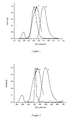
- a is the measured excitation spectrum of the yellow photoluminescence material Y 3 Al 5 O 12 :Ce (YAG:Ce) at a monitoring wavelength of 550 nm.
- b is the measured emission spectrum of the yellow photoluminescence material Y 3 Al 5 O 12 :Ce (YAG:Ce) at a excitation wavelength of 450 nm;
- c is the cathodoluminescence spectrum of ZnS: Ag at an accelerating voltage of 5 kV. All the spectrums above have been normalized. It can be seen from the figure that the cathodoluminescence spectrum of ZnS:Ag is about 450 nm, which is just in the effective excitation range of YAG:Ce.
- a portion of the blue light emitted by ZnS:Ag can be absorbed by YAG:Ce, which emits the yellow light at about 550 nm under the excitation of the cathode ray. Then a white light is produced by complexing the residual blue light that do not excite the yellow photoluminescence material YAG:Ce and the generated yellow light.
- Example 4 a method for generating a white light
- the method comprises exciting a blue cathodoluminescence material AlN:Eu by the blue-light field emission device to generate a blue light at 420-490 nm, exciting a yellow photoluminescence material Gd 3 Ga 5 O 12 taking Ce as the activator by the generated blue light to generate a yellow light and complexing the residual blue light that do not excite the yellow photoluminescence material and the generated yellow light to generate a white light.
- Example 5 a method for generating a white light
- the method comprises exciting a blue cathodoluminescence material ZnS:Zn by the blue-light field emission device to generate a blue light at 420-490 nm, exciting a yellow photoluminescence material (Y 0.9 ,Gd 0.1 ) 3 (Al 0.8 Ga 0.2 ) 5 O 12 taking Ce as the activator by the generated blue light to generate a yellow light and complexing the residual blue light that do not excite the yellow photoluminescence material and the generated yellow light to generate a white light.
- Example 6 a method for generating a white light
- the method comprises exciting a blue cathodoluminescence material ZnS:Tm by the blue-light field emission device to generate a blue light at 420-490 nm, exciting a yellow photoluminescence material Y 3 Ga 5 O 12 taking Ce as the activator by the generated blue light to generate a yellow light and complexing the residual blue light that do not excite the yellow photoluminescence material and the generated yellow light to generate a white light.
- Example 7 a method for generating a white light
- the method comprises exciting a blue cathodoluminescence material La 0.99 GaO 3 :0.01Tm by the blue-light field emission device to generate a blue light at 420-490 nm, exciting a yellow photoluminescence material Y 3 Al 5 O 12 taking Ce as the activator (the product produced by Dalian LUMING lighting technology LTD is utilized) by the generated blue light to generate a yellow light and complexing the residual blue light that do not excite the yellow photoluminescence material and the generated yellow light to generate a white light.
- a and b are the excitation spectrum and emission spectrum of the yellow photoluminescence material Y 3 Al 5 O 12 :Ce, respectively
- d is the cathodoluminescence spectrum of La 0.99 GaO 3 : 0.01Tm at an accelerating voltage of 5 kV. All the spectrums above have been normalized. It can be seen from the figure that the cathodoluminescence spectrum of La 0.99 GaO 3 : 0.01Tm is about 460 nm, which is just in the effective excitation range of YAG:Ce.
- a portion of the blue light emitted by La 0.99 GaO 3 : 0.01Tm can be absorbed by YAG: Ce, which emits the yellow light at about 550 nm under the excitation of the cathode ray. Then a white light is produced by complexing the residual blue light that do not excite the yellow photoluminescence material YAG:Ce and the generated yellow light.
- Example 8 a method for generating a white light
- the method comprises exciting a blue cathodoluminescence material La 0.99 AlO 3 0.01Tm by the blue-light field emission device to generate a blue light at 420-490 nm, exciting a yellow photoluminescence material Lu 3 Ga 5 O 12 taking Ce as the activator by the generated blue light to generate a yellow light and complexing the residual blue light that do not excite the yellow photoluminescence material and the generated yellow light to generate a white light.
- Example 9 a method for generating a white light
- the method comprises exciting a blue cathodoluminescence material La 0.99 (Ga 0.8 Al 0.2 )O 3 : 0.01Tm by the blue-light field emission device to generate a blue light at 420-490 nm, exciting a yellow photoluminescence material La 3 Ga 5 O 12 taking Ce as the activator by the generated blue light to generate a yellow light and complexing the residual blue light that do not excite the yellow photoluminescence material and the generated yellow light to generate a white light.
- Example 10 a method for generating a white light
- the method comprises exciting a blue cathodoluminescence material Y 0.98 (Ga 0.8 Al 0.2 )O 3 :0.02Tm by the blue-light field emission device to generate a blue light at 420-490 nm, exciting a yellow photoluminescence material Y 3 Al 5 O 12 taking Ce as the activator by the generated blue light to generate a yellow light and complexing the residual blue light that do not excite the yellow photoluminescence material and the generated yellow light to generate a white light.
- Example 11 a method for generating a white light
- the method comprises exciting a blue cathodoluminescence material Sc 0.99 (Ga 0.8 Al 0.2 )O 3 : 0.01Tm by the blue-light field emission device to generate a blue light at 420-490 nm, exciting a yellow photoluminescence material Y 3 Al 5 O 12 taking Ce as the activator by the generated blue light to generate a yellow light and complexing the residual blue light that do not excite the yellow photoluminescence material and the generated yellow light to generate a white light.
- Example 12 a method for generating a white light
- the method comprises exciting a blue cathodoluminescence material Lu 0.99 (Ga 0.7 Al 0.3 )O 3 : 0.01Tm by the blue-light field emission device to generate a blue light at 420-490 nm, exciting a yellow photoluminescence material Y 3 Al 5 O 12 taking Ce as the activator by the generated blue light to generate a yellow light and complexing the residual blue light that do not excite the yellow photoluminescence material and the generated yellow light to generate a white light.
- Example 13 a method for generating a white light
- the method comprises exciting a blue cathodoluminescence material Sr 2 CeO 4 by the blue-light field emission device to generate a blue light at 420-490 nm, exciting a yellow photoluminescence material Y 3 Al 5 O 12 taking Ce as the activator by the generated blue light to generate a yellow light and complexing the residual blue light that do not excite the yellow photoluminescence material and the generated yellow light to generate a white light.
- a lighting device for generating a white light comprises a cathode plate component 1, an anode plate component 2 interval-placed opposite to the cathode plate component and a supporting body 3 connecting the both components together hermetically.
- the cathode plate component 1 comprises a cathode plate 101 and a conductive cathode, a grid wire 102 and an electron emission source 103 arranged on the surface of the cathode plate 101.
- the anode plate component 2 comprises a transparent substrate 203.
- the transparent substrate 203 is a glass substrate, on the lower surface of which are provided with a transparent anode 202 and a layer of blue cathodoluminescence material 201 in turn from top to bottom.
- Indium tin oxide ITO or zinc oxide ZnO is mainly used as raw material while the raw material is spread onto the transparent substrate 203 thereafter to form the transparent anode 202 by means of magnetic control sputtering or vacuum evaporation.
- the layer of blue cathodoluminescence material 201 is a layer of cathodoluminescence material ZnS: Ag, which is coated on the lower surface of the transparent anode 202 by means of screen printing.
- a layer of yellow photoluminescence material 204 is arranged above the transparent substrate 203.
- a yellow photoluminescence material YAG that takes Ce as the activator is selected and used in the layer of yellow photoluminescence material 204.
- the yellow photoluminescence material YAG that takes Ce as the activator is firstly dispersed in the transparent epoxy and then the mixture is spread onto the upper surface of the transparent substrate 203 to form the layer of yellow photoluminescence material 204 by means of spinning or spraying.
- the anode plate component 2 and the cathode plate component 1 are separated and sealed to form a vacuum space inside.
- the potential difference between the cathode plate 101 and the transparent anode 202 can be selected to between 1-20KV, for example, each of 2, 4, 5, 7, 10, 12, 15, 17, 18 and 20KV is possible; wherein 4-15KV is preferable.
- a lighting device for generating a white light comprises a cathode plate component 1, an anode plate component 4 interval-placed opposite to the cathode plate component and a supporting body 3 connecting the both components together hermetically.
- the structure of the cathode plate component 1 is the same as that of the cathode plate component 1 in the example 14, which is not illustrated for conciseness.
- the anode plate component 4 comprises a transparent substrate 403 and a layer of blue cathodoluminescence material 402 formed on the transparent substrate 403 (ZnS:Ag is selected as the blue material).
- a layer of metal aluminum is vapor-plated on the layer of blue cathodoluminescence material 402 as the metal anode 401.
- a layer of yellow photoluminescence material 404 (YAG:Ce is selected as the yellow photoluminescence material) is arranged above the transparent substrate 403.
- the layer of yellow photoluminescence material 404 is a transparent epoxy layer dispersed with the yellow photoluminescence material.
- a vacuum space is formed since there is certain space between the layer of yellow photoluminescence material 404 and the transparent substrate 403.
- the coating of the layer of blue cathodoluminescence material 402 is the same as that in the example 14.
- Y 3 Al 5 O 12 Ce, Tb 3 Al 5 O 12 : Ce, Gd 3 Al 5 O 12 : Ce, Lu 3 Al 5 O 12 : Ce, La 3 Al 5 O 12 : Ce, Y 3 Ga 5 O 12 : Ce, Y 3 (Al 0.9 , Ga 0.1 ) 5 O 12 : Ce, Y 3 (Al 0.5 , Ga 0.5 ) 5 O 12 : Ce, Y 3 (Al 0.1 , Ga 0.9 ) 5 O 12 : Ce, Y 3 (Al 0.9 , Ga 0.1 ) 5 O 12 : Ce, (Y 0.9 , Gd 0.1 ) 3 (Al 0.9 , Ga 0.1 ) 5 O 12 : Ce, (Y 0.9 , Gd 0.1 ) 3 (Al 0.9 , Ga 0.1 ) 5 O 12 : Ce, (Y 0.5 , Gd 0.5 ) 3 (Al 0.9, Ga 0.1 ) 5 O 12 : Ce, (Y 0.1 , Gd
Landscapes
- Chemical & Material Sciences (AREA)
- Inorganic Chemistry (AREA)
- Engineering & Computer Science (AREA)
- Materials Engineering (AREA)
- Organic Chemistry (AREA)
- Luminescent Compositions (AREA)
- Discharge Lamps And Accessories Thereof (AREA)
Applications Claiming Priority (1)
| Application Number | Priority Date | Filing Date | Title |
|---|---|---|---|
| PCT/CN2009/070708 WO2010102442A1 (zh) | 2009-03-10 | 2009-03-10 | 产生白光的方法及发光装置 |
Publications (2)
| Publication Number | Publication Date |
|---|---|
| EP2408024A1 true EP2408024A1 (de) | 2012-01-18 |
| EP2408024A4 EP2408024A4 (de) | 2012-09-05 |
Family
ID=42727775
Family Applications (1)
| Application Number | Title | Priority Date | Filing Date |
|---|---|---|---|
| EP09841311A Withdrawn EP2408024A4 (de) | 2009-03-10 | 2009-03-10 | Verfahren zum erzeugen von weissem licht und beleuchtungseinrichtung |
Country Status (5)
| Country | Link |
|---|---|
| US (1) | US20110316452A1 (de) |
| EP (1) | EP2408024A4 (de) |
| JP (1) | JP2012519943A (de) |
| CN (1) | CN102369603B (de) |
| WO (1) | WO2010102442A1 (de) |
Families Citing this family (6)
| Publication number | Priority date | Publication date | Assignee | Title |
|---|---|---|---|---|
| WO2011079434A1 (zh) * | 2009-12-29 | 2011-07-07 | 海洋王照明科技股份有限公司 | 场致发射白光的装置 |
| CN103775909A (zh) * | 2012-10-24 | 2014-05-07 | 海洋王照明科技股份有限公司 | 地埋灯 |
| WO2014067109A1 (zh) * | 2012-10-31 | 2014-05-08 | 海洋王照明科技股份有限公司 | 铝酸盐发光材料及其制备方法 |
| CN103839764A (zh) * | 2012-11-23 | 2014-06-04 | 海洋王照明科技股份有限公司 | 地埋灯 |
| JP2016050249A (ja) * | 2014-08-29 | 2016-04-11 | 株式会社トクヤマ | 深紫外発光材料 |
| CN114284851A (zh) * | 2021-12-24 | 2022-04-05 | 天津理工大学 | 一种全固态白光激光系统 |
Family Cites Families (15)
| Publication number | Priority date | Publication date | Assignee | Title |
|---|---|---|---|---|
| JP2003321675A (ja) * | 2002-04-26 | 2003-11-14 | Nichia Chem Ind Ltd | 窒化物蛍光体及びその製造方法 |
| JP4868685B2 (ja) * | 2002-06-07 | 2012-02-01 | 日亜化学工業株式会社 | 蛍光体 |
| WO2003083010A1 (en) * | 2002-03-28 | 2003-10-09 | Hitachi Chemical Co.,Ltd. | Phosphor and phosphor composition containing the same |
| JP4834827B2 (ja) * | 2003-10-03 | 2011-12-14 | 独立行政法人物質・材料研究機構 | 酸窒化物蛍光体 |
| CN1547266A (zh) * | 2003-12-11 | 2004-11-17 | 南亚塑胶工业股份有限公司 | 以二次激光方式产生白光光源的方法及其白光发光组件 |
| JP3931239B2 (ja) * | 2004-02-18 | 2007-06-13 | 独立行政法人物質・材料研究機構 | 発光素子及び照明器具 |
| US7267787B2 (en) * | 2004-08-04 | 2007-09-11 | Intematix Corporation | Phosphor systems for a white light emitting diode (LED) |
| JP2006291035A (ja) * | 2005-04-11 | 2006-10-26 | Futaba Corp | 電子線励起蛍光発光素子 |
| US8330348B2 (en) * | 2005-10-31 | 2012-12-11 | Osram Opto Semiconductors Gmbh | Structured luminescence conversion layer |
| JP5170640B2 (ja) * | 2005-12-08 | 2013-03-27 | 独立行政法人物質・材料研究機構 | 蛍光体とその製造方法および発光器具 |
| US8513876B2 (en) * | 2007-05-22 | 2013-08-20 | National Institute For Materials Science | Fluorescent substance, method for producing the same, and light-emitting device using the same |
| JP2009032683A (ja) * | 2007-07-03 | 2009-02-12 | Fuji Heavy Ind Ltd | 発光装置 |
| EP2012343A3 (de) * | 2007-07-03 | 2010-09-08 | Fuji Jukogyo Kabushiki Kaisha | Lichtemittierende Vorrichtung |
| JP2009016268A (ja) * | 2007-07-06 | 2009-01-22 | Nemoto & Co Ltd | 平面光源 |
| US20090039375A1 (en) * | 2007-08-07 | 2009-02-12 | Cree, Inc. | Semiconductor light emitting devices with separated wavelength conversion materials and methods of forming the same |
-
2009
- 2009-03-10 EP EP09841311A patent/EP2408024A4/de not_active Withdrawn
- 2009-03-10 CN CN2009801578020A patent/CN102369603B/zh not_active Expired - Fee Related
- 2009-03-10 WO PCT/CN2009/070708 patent/WO2010102442A1/zh not_active Ceased
- 2009-03-10 JP JP2011553250A patent/JP2012519943A/ja active Pending
- 2009-03-10 US US13/255,510 patent/US20110316452A1/en not_active Abandoned
Also Published As
| Publication number | Publication date |
|---|---|
| CN102369603A (zh) | 2012-03-07 |
| JP2012519943A (ja) | 2012-08-30 |
| WO2010102442A1 (zh) | 2010-09-16 |
| EP2408024A4 (de) | 2012-09-05 |
| US20110316452A1 (en) | 2011-12-29 |
| CN102369603B (zh) | 2013-01-30 |
Similar Documents
| Publication | Publication Date | Title |
|---|---|---|
| JP2729190B2 (ja) | 蛍光体 | |
| KR101704942B1 (ko) | 형광체, 그 제조 방법, 발광 장치 및 화상 표시 장치 | |
| US6373184B1 (en) | Red phosphor for fluorescent display and preparation method thereof | |
| KR20140100500A (ko) | 형광체 및 제조 방법, 형광체를 사용하는 발광 장치 및 화상 표시 장치 | |
| EP2408024A1 (de) | Verfahren zum erzeugen von weissem licht und beleuchtungseinrichtung | |
| CN104250555A (zh) | 黄色荧光粉及其制备方法和使用该荧光粉的发光器件 | |
| JP4836229B2 (ja) | 蛍光体および発光装置 | |
| US9909060B2 (en) | Phosphor, light-emitting device, image display device, pigment, and ultraviolet absorber | |
| CN1855352B (zh) | 电子束泵激荧光发射装置 | |
| EP2521160B1 (de) | Feldemissionsvorrichtung zur emission von weisslicht | |
| JP5521247B2 (ja) | 蛍光体および発光装置 | |
| CN101894729B (zh) | 场致发射白光的方法及其装置 | |
| KR100348207B1 (ko) | 란탄갈레이트계 적색 형광체 및 그 제조방법 | |
| KR100825481B1 (ko) | 탄소 나노 튜브를 이용한 백색 발광 면광원 장치, 아노드및 디스플레이 장치 | |
| JPS63135481A (ja) | 電子線励起蛍光体 | |
| JP2008297505A (ja) | 電子線励起用白色蛍光体および白色発光素子乃至装置 | |
| Yacobi et al. | Phosphors | |
| JP2007329027A (ja) | 電界放出型表示装置 | |
| JP2000087032A (ja) | 低速電子線励起用蛍光体 | |
| JPS636082A (ja) | 蛍光体 | |
| WO2006095732A1 (ja) | 電子線励起発光素子 | |
| CN102010714A (zh) | 发光材料及其发光方法 | |
| JPH0629410B2 (ja) | 低速電子線用蛍光体 |
Legal Events
| Date | Code | Title | Description |
|---|---|---|---|
| PUAI | Public reference made under article 153(3) epc to a published international application that has entered the european phase |
Free format text: ORIGINAL CODE: 0009012 |
|
| 17P | Request for examination filed |
Effective date: 20110907 |
|
| AK | Designated contracting states |
Kind code of ref document: A1 Designated state(s): AT BE BG CH CY CZ DE DK EE ES FI FR GB GR HR HU IE IS IT LI LT LU LV MC MK MT NL NO PL PT RO SE SI SK TR |
|
| RTI1 | Title (correction) |
Free format text: METHOD FOR GENERATING WHITE LIGHT AND LIGHTING DEVICE |
|
| DAX | Request for extension of the european patent (deleted) | ||
| A4 | Supplementary search report drawn up and despatched |
Effective date: 20120808 |
|
| RIC1 | Information provided on ipc code assigned before grant |
Ipc: C09K 11/80 20060101ALI20120802BHEP Ipc: C09K 11/54 20060101ALI20120802BHEP Ipc: C09K 11/56 20060101ALI20120802BHEP Ipc: C09K 11/64 20060101ALI20120802BHEP Ipc: H01J 63/06 20060101ALI20120802BHEP Ipc: H01J 29/20 20060101ALI20120802BHEP Ipc: H01L 33/00 20100101AFI20120802BHEP |
|
| 17Q | First examination report despatched |
Effective date: 20130411 |
|
| STAA | Information on the status of an ep patent application or granted ep patent |
Free format text: STATUS: THE APPLICATION IS DEEMED TO BE WITHDRAWN |
|
| 18D | Application deemed to be withdrawn |
Effective date: 20170215 |