EP2415762A2 - Verfahren zur Herstellung von Aminoarylalkylverbindungen - Google Patents
Verfahren zur Herstellung von Aminoarylalkylverbindungen Download PDFInfo
- Publication number
- EP2415762A2 EP2415762A2 EP11175821A EP11175821A EP2415762A2 EP 2415762 A2 EP2415762 A2 EP 2415762A2 EP 11175821 A EP11175821 A EP 11175821A EP 11175821 A EP11175821 A EP 11175821A EP 2415762 A2 EP2415762 A2 EP 2415762A2
- Authority
- EP
- European Patent Office
- Prior art keywords
- aryl
- alkyl
- arylalkyl
- formula
- compounds
- Prior art date
- Legal status (The legal status is an assumption and is not a legal conclusion. Google has not performed a legal analysis and makes no representation as to the accuracy of the status listed.)
- Granted
Links
- 150000001875 compounds Chemical class 0.000 title claims abstract description 129
- 238000000034 method Methods 0.000 title claims description 67
- 238000004519 manufacturing process Methods 0.000 title description 4
- 125000005001 aminoaryl group Chemical group 0.000 title 1
- XEEYBQQBJWHFJM-UHFFFAOYSA-N Iron Chemical compound [Fe] XEEYBQQBJWHFJM-UHFFFAOYSA-N 0.000 claims abstract description 73
- -1 aryl compound Chemical class 0.000 claims abstract description 69
- 229910052794 bromium Inorganic materials 0.000 claims abstract description 39
- 229910052801 chlorine Inorganic materials 0.000 claims abstract description 39
- 125000003118 aryl group Chemical group 0.000 claims abstract description 35
- 238000002360 preparation method Methods 0.000 claims abstract description 32
- 229910052731 fluorine Inorganic materials 0.000 claims abstract description 27
- 125000001072 heteroaryl group Chemical group 0.000 claims abstract description 24
- 239000002253 acid Substances 0.000 claims abstract description 23
- 229910052742 iron Inorganic materials 0.000 claims abstract description 19
- 229910052740 iodine Inorganic materials 0.000 claims abstract description 16
- 125000000623 heterocyclic group Chemical group 0.000 claims abstract description 11
- 150000003839 salts Chemical class 0.000 claims abstract description 11
- 229910052749 magnesium Inorganic materials 0.000 claims abstract description 8
- 125000000129 anionic group Chemical group 0.000 claims abstract description 7
- 229910052791 calcium Inorganic materials 0.000 claims abstract description 7
- 239000003446 ligand Substances 0.000 claims abstract description 7
- 229910052748 manganese Inorganic materials 0.000 claims abstract description 7
- 229910052725 zinc Inorganic materials 0.000 claims abstract description 7
- 125000002837 carbocyclic group Chemical group 0.000 claims abstract description 4
- 125000000217 alkyl group Chemical group 0.000 claims description 54
- 239000000460 chlorine Chemical group 0.000 claims description 35
- 125000006374 C2-C10 alkenyl group Chemical group 0.000 claims description 30
- 125000000027 (C1-C10) alkoxy group Chemical group 0.000 claims description 28
- 150000007513 acids Chemical class 0.000 claims description 16
- 239000003960 organic solvent Substances 0.000 claims description 14
- 125000005865 C2-C10alkynyl group Chemical group 0.000 claims description 12
- 125000004663 dialkyl amino group Chemical group 0.000 claims description 12
- 229910052757 nitrogen Inorganic materials 0.000 claims description 12
- 239000002904 solvent Substances 0.000 claims description 12
- 229910052736 halogen Inorganic materials 0.000 claims description 11
- 150000002367 halogens Chemical class 0.000 claims description 11
- 239000000203 mixture Substances 0.000 claims description 11
- 150000002506 iron compounds Chemical class 0.000 claims description 9
- 239000011777 magnesium Substances 0.000 claims description 8
- 125000000999 tert-butyl group Chemical group [H]C([H])([H])C(*)(C([H])([H])[H])C([H])([H])[H] 0.000 claims description 8
- 229920006395 saturated elastomer Polymers 0.000 claims description 7
- DYHSDKLCOJIUFX-UHFFFAOYSA-N tert-butoxycarbonyl anhydride Chemical compound CC(C)(C)OC(=O)OC(=O)OC(C)(C)C DYHSDKLCOJIUFX-UHFFFAOYSA-N 0.000 claims description 7
- GBXQPDCOMJJCMJ-UHFFFAOYSA-M trimethyl-[6-(trimethylazaniumyl)hexyl]azanium;bromide Chemical compound [Br-].C[N+](C)(C)CCCCCC[N+](C)(C)C GBXQPDCOMJJCMJ-UHFFFAOYSA-M 0.000 claims description 7
- PMVSDNDAUGGCCE-TYYBGVCCSA-L Ferrous fumarate Chemical compound [Fe+2].[O-]C(=O)\C=C\C([O-])=O PMVSDNDAUGGCCE-TYYBGVCCSA-L 0.000 claims description 6
- 229910052751 metal Inorganic materials 0.000 claims description 6
- 239000002184 metal Substances 0.000 claims description 6
- 125000002496 methyl group Chemical group [H]C([H])([H])* 0.000 claims description 6
- 125000004433 nitrogen atom Chemical group N* 0.000 claims description 6
- WKBOTKDWSSQWDR-UHFFFAOYSA-N Bromine atom Chemical compound [Br] WKBOTKDWSSQWDR-UHFFFAOYSA-N 0.000 claims description 5
- ZAMOUSCENKQFHK-UHFFFAOYSA-N Chlorine atom Chemical compound [Cl] ZAMOUSCENKQFHK-UHFFFAOYSA-N 0.000 claims description 5
- PXGOKWXKJXAPGV-UHFFFAOYSA-N Fluorine Chemical compound FF PXGOKWXKJXAPGV-UHFFFAOYSA-N 0.000 claims description 5
- 150000001408 amides Chemical class 0.000 claims description 5
- 150000001412 amines Chemical class 0.000 claims description 5
- GDTBXPJZTBHREO-UHFFFAOYSA-N bromine Substances BrBr GDTBXPJZTBHREO-UHFFFAOYSA-N 0.000 claims description 5
- 125000001495 ethyl group Chemical group [H]C([H])([H])C([H])([H])* 0.000 claims description 5
- 239000011737 fluorine Substances 0.000 claims description 5
- 125000004123 n-propyl group Chemical group [H]C([H])([H])C([H])([H])C([H])([H])* 0.000 claims description 5
- 125000001971 neopentyl group Chemical group [H]C([*])([H])C(C([H])([H])[H])(C([H])([H])[H])C([H])([H])[H] 0.000 claims description 5
- 125000005246 nonafluorobutyl group Chemical group FC(F)(F)C(F)(F)C(F)(F)C(F)(F)* 0.000 claims description 5
- ZCYVEMRRCGMTRW-UHFFFAOYSA-N 7553-56-2 Chemical compound [I] ZCYVEMRRCGMTRW-UHFFFAOYSA-N 0.000 claims description 4
- 125000001797 benzyl group Chemical group [H]C1=C([H])C([H])=C(C([H])=C1[H])C([H])([H])* 0.000 claims description 4
- 239000011630 iodine Substances 0.000 claims description 4
- 125000001997 phenyl group Chemical group [H]C1=C([H])C([H])=C(*)C([H])=C1[H] 0.000 claims description 4
- 125000002914 sec-butyl group Chemical group [H]C([H])([H])C([H])([H])C([H])(*)C([H])([H])[H] 0.000 claims description 4
- 125000001424 substituent group Chemical group 0.000 claims description 4
- 125000003903 2-propenyl group Chemical group [H]C([*])([H])C([H])=C([H])[H] 0.000 claims description 3
- 125000003710 aryl alkyl group Chemical group 0.000 claims description 3
- 150000002170 ethers Chemical class 0.000 claims description 3
- 125000001037 p-tolyl group Chemical group [H]C1=C([H])C(=C([H])C([H])=C1*)C([H])([H])[H] 0.000 claims description 3
- SNOOUWRIMMFWNE-UHFFFAOYSA-M sodium;6-[(3,4,5-trimethoxybenzoyl)amino]hexanoate Chemical compound [Na+].COC1=CC(C(=O)NCCCCCC([O-])=O)=CC(OC)=C1OC SNOOUWRIMMFWNE-UHFFFAOYSA-M 0.000 claims description 3
- 150000001735 carboxylic acids Chemical class 0.000 claims description 2
- 125000006287 difluorobenzyl group Chemical group 0.000 claims description 2
- 125000006182 dimethyl benzyl group Chemical group 0.000 claims description 2
- 125000000959 isobutyl group Chemical group [H]C([H])([H])C([H])(C([H])([H])[H])C([H])([H])* 0.000 claims description 2
- 125000000040 m-tolyl group Chemical group [H]C1=C([H])C(*)=C([H])C(=C1[H])C([H])([H])[H] 0.000 claims description 2
- 230000003647 oxidation Effects 0.000 claims description 2
- 238000007254 oxidation reaction Methods 0.000 claims description 2
- 125000006510 trifluorobenzyl group Chemical group 0.000 claims description 2
- 125000006700 (C1-C6) alkylthio group Chemical group 0.000 claims 1
- 125000000171 (C1-C6) haloalkyl group Chemical group 0.000 claims 1
- CPELXLSAUQHCOX-UHFFFAOYSA-M Bromide Chemical group [Br-] CPELXLSAUQHCOX-UHFFFAOYSA-M 0.000 claims 1
- 125000006725 C1-C10 alkenyl group Chemical group 0.000 claims 1
- FYYHWMGAXLPEAU-UHFFFAOYSA-N Magnesium Chemical group [Mg] FYYHWMGAXLPEAU-UHFFFAOYSA-N 0.000 claims 1
- 125000000484 butyl group Chemical group [H]C([*])([H])C([H])([H])C([H])([H])C([H])([H])[H] 0.000 claims 1
- 150000001805 chlorine compounds Chemical group 0.000 claims 1
- XMBWDFGMSWQBCA-UHFFFAOYSA-N hydrogen iodide Chemical group I XMBWDFGMSWQBCA-UHFFFAOYSA-N 0.000 claims 1
- 125000003261 o-tolyl group Chemical group [H]C1=C([H])C(*)=C(C([H])=C1[H])C([H])([H])[H] 0.000 claims 1
- 150000003460 sulfonic acids Chemical class 0.000 claims 1
- 229910000765 intermetallic Inorganic materials 0.000 abstract 2
- 125000001475 halogen functional group Chemical group 0.000 abstract 1
- 101150009274 nhr-1 gene Proteins 0.000 abstract 1
- IMNFDUFMRHMDMM-UHFFFAOYSA-N N-Heptane Chemical compound CCCCCCC IMNFDUFMRHMDMM-UHFFFAOYSA-N 0.000 description 26
- 239000002585 base Substances 0.000 description 14
- YXFVVABEGXRONW-UHFFFAOYSA-N Toluene Chemical compound CC1=CC=CC=C1 YXFVVABEGXRONW-UHFFFAOYSA-N 0.000 description 12
- KRKNYBCHXYNGOX-UHFFFAOYSA-N citric acid Chemical compound OC(=O)CC(O)(C(O)=O)CC(O)=O KRKNYBCHXYNGOX-UHFFFAOYSA-N 0.000 description 12
- VLKZOEOYAKHREP-UHFFFAOYSA-N n-Hexane Chemical compound CCCCCC VLKZOEOYAKHREP-UHFFFAOYSA-N 0.000 description 12
- 239000000243 solution Substances 0.000 description 11
- WYURNTSHIVDZCO-UHFFFAOYSA-N Tetrahydrofuran Chemical compound C1CCOC1 WYURNTSHIVDZCO-UHFFFAOYSA-N 0.000 description 10
- XYGFISRAXLLACA-UHFFFAOYSA-N 6-propan-2-ylpyridin-3-amine Chemical compound CC(C)C1=CC=C(N)C=N1 XYGFISRAXLLACA-UHFFFAOYSA-N 0.000 description 9
- UHOVQNZJYSORNB-UHFFFAOYSA-N Benzene Chemical compound C1=CC=CC=C1 UHOVQNZJYSORNB-UHFFFAOYSA-N 0.000 description 9
- KFZMGEQAYNKOFK-UHFFFAOYSA-N Isopropanol Chemical compound CC(C)O KFZMGEQAYNKOFK-UHFFFAOYSA-N 0.000 description 8
- UAEPNZWRGJTJPN-UHFFFAOYSA-N methylcyclohexane Chemical compound CC1CCCCC1 UAEPNZWRGJTJPN-UHFFFAOYSA-N 0.000 description 8
- 150000003254 radicals Chemical group 0.000 description 8
- VEXZGXHMUGYJMC-UHFFFAOYSA-N Hydrochloric acid Chemical compound Cl VEXZGXHMUGYJMC-UHFFFAOYSA-N 0.000 description 7
- 125000004432 carbon atom Chemical group C* 0.000 description 7
- QTBSBXVTEAMEQO-UHFFFAOYSA-N Acetic acid Chemical compound CC(O)=O QTBSBXVTEAMEQO-UHFFFAOYSA-N 0.000 description 6
- CWYNVVGOOAEACU-UHFFFAOYSA-N Fe2+ Chemical compound [Fe+2] CWYNVVGOOAEACU-UHFFFAOYSA-N 0.000 description 6
- OFOBLEOULBTSOW-UHFFFAOYSA-N Malonic acid Chemical compound OC(=O)CC(O)=O OFOBLEOULBTSOW-UHFFFAOYSA-N 0.000 description 6
- ZMXDDKWLCZADIW-UHFFFAOYSA-N N,N-Dimethylformamide Chemical compound CN(C)C=O ZMXDDKWLCZADIW-UHFFFAOYSA-N 0.000 description 6
- OFBQJSOFQDEBGM-UHFFFAOYSA-N Pentane Chemical compound CCCCC OFBQJSOFQDEBGM-UHFFFAOYSA-N 0.000 description 6
- NBIIXXVUZAFLBC-UHFFFAOYSA-N Phosphoric acid Chemical class OP(O)(O)=O NBIIXXVUZAFLBC-UHFFFAOYSA-N 0.000 description 6
- HEMHJVSKTPXQMS-UHFFFAOYSA-M Sodium hydroxide Chemical compound [OH-].[Na+] HEMHJVSKTPXQMS-UHFFFAOYSA-M 0.000 description 6
- QAOWNCQODCNURD-UHFFFAOYSA-N Sulfuric acid Chemical compound OS(O)(=O)=O QAOWNCQODCNURD-UHFFFAOYSA-N 0.000 description 6
- 238000006243 chemical reaction Methods 0.000 description 6
- 125000004122 cyclic group Chemical group 0.000 description 6
- SECXISVLQFMRJM-UHFFFAOYSA-N N-Methylpyrrolidone Chemical compound CN1CCCC1=O SECXISVLQFMRJM-UHFFFAOYSA-N 0.000 description 5
- 238000004821 distillation Methods 0.000 description 5
- IXCSERBJSXMMFS-UHFFFAOYSA-N hydrogen chloride Substances Cl.Cl IXCSERBJSXMMFS-UHFFFAOYSA-N 0.000 description 5
- 229910000041 hydrogen chloride Inorganic materials 0.000 description 5
- 239000000047 product Substances 0.000 description 5
- 239000011541 reaction mixture Substances 0.000 description 5
- YLQBMQCUIZJEEH-UHFFFAOYSA-N tetrahydrofuran Natural products C=1C=COC=1 YLQBMQCUIZJEEH-UHFFFAOYSA-N 0.000 description 5
- XDTMQSROBMDMFD-UHFFFAOYSA-N Cyclohexane Chemical compound C1CCCCC1 XDTMQSROBMDMFD-UHFFFAOYSA-N 0.000 description 4
- RGHNJXZEOKUKBD-SQOUGZDYSA-N D-gluconic acid Chemical compound OC[C@@H](O)[C@@H](O)[C@H](O)[C@@H](O)C(O)=O RGHNJXZEOKUKBD-SQOUGZDYSA-N 0.000 description 4
- IAZDPXIOMUYVGZ-UHFFFAOYSA-N Dimethylsulphoxide Chemical compound CS(C)=O IAZDPXIOMUYVGZ-UHFFFAOYSA-N 0.000 description 4
- YNQLUTRBYVCPMQ-UHFFFAOYSA-N Ethylbenzene Chemical compound CCC1=CC=CC=C1 YNQLUTRBYVCPMQ-UHFFFAOYSA-N 0.000 description 4
- VZCYOOQTPOCHFL-OWOJBTEDSA-N Fumaric acid Chemical compound OC(=O)\C=C\C(O)=O VZCYOOQTPOCHFL-OWOJBTEDSA-N 0.000 description 4
- NHTMVDHEPJAVLT-UHFFFAOYSA-N Isooctane Chemical compound CC(C)CC(C)(C)C NHTMVDHEPJAVLT-UHFFFAOYSA-N 0.000 description 4
- UFWIBTONFRDIAS-UHFFFAOYSA-N Naphthalene Chemical compound C1=CC=CC2=CC=CC=C21 UFWIBTONFRDIAS-UHFFFAOYSA-N 0.000 description 4
- PVNIIMVLHYAWGP-UHFFFAOYSA-N Niacin Chemical compound OC(=O)C1=CC=CN=C1 PVNIIMVLHYAWGP-UHFFFAOYSA-N 0.000 description 4
- CTQNGGLPUBDAKN-UHFFFAOYSA-N O-Xylene Chemical compound CC1=CC=CC=C1C CTQNGGLPUBDAKN-UHFFFAOYSA-N 0.000 description 4
- 229910019142 PO4 Inorganic materials 0.000 description 4
- JUJWROOIHBZHMG-UHFFFAOYSA-N Pyridine Chemical compound C1=CC=NC=C1 JUJWROOIHBZHMG-UHFFFAOYSA-N 0.000 description 4
- 150000003863 ammonium salts Chemical class 0.000 description 4
- 229910052799 carbon Inorganic materials 0.000 description 4
- 235000015165 citric acid Nutrition 0.000 description 4
- 238000010511 deprotection reaction Methods 0.000 description 4
- JVSWJIKNEAIKJW-UHFFFAOYSA-N dimethyl-hexane Natural products CCCCCC(C)C JVSWJIKNEAIKJW-UHFFFAOYSA-N 0.000 description 4
- XBDQKXXYIPTUBI-UHFFFAOYSA-N dimethylselenoniopropionate Natural products CCC(O)=O XBDQKXXYIPTUBI-UHFFFAOYSA-N 0.000 description 4
- 125000005842 heteroatom Chemical group 0.000 description 4
- SUMDYPCJJOFFON-UHFFFAOYSA-N isethionic acid Chemical compound OCCS(O)(=O)=O SUMDYPCJJOFFON-UHFFFAOYSA-N 0.000 description 4
- TWBYWOBDOCUKOW-UHFFFAOYSA-N isonicotinic acid Chemical compound OC(=O)C1=CC=NC=C1 TWBYWOBDOCUKOW-UHFFFAOYSA-N 0.000 description 4
- 229960004592 isopropanol Drugs 0.000 description 4
- JVTAAEKCZFNVCJ-UHFFFAOYSA-N lactic acid Chemical compound CC(O)C(O)=O JVTAAEKCZFNVCJ-UHFFFAOYSA-N 0.000 description 4
- BDAGIHXWWSANSR-UHFFFAOYSA-N methanoic acid Natural products OC=O BDAGIHXWWSANSR-UHFFFAOYSA-N 0.000 description 4
- GYNNXHKOJHMOHS-UHFFFAOYSA-N methyl-cycloheptane Natural products CC1CCCCCC1 GYNNXHKOJHMOHS-UHFFFAOYSA-N 0.000 description 4
- TVMXDCGIABBOFY-UHFFFAOYSA-N octane Chemical compound CCCCCCCC TVMXDCGIABBOFY-UHFFFAOYSA-N 0.000 description 4
- 235000021317 phosphate Nutrition 0.000 description 4
- 235000011007 phosphoric acid Nutrition 0.000 description 4
- 150000003013 phosphoric acid derivatives Chemical class 0.000 description 4
- WLJVNTCWHIRURA-UHFFFAOYSA-N pimelic acid Chemical compound OC(=O)CCCCCC(O)=O WLJVNTCWHIRURA-UHFFFAOYSA-N 0.000 description 4
- IUGYQRQAERSCNH-UHFFFAOYSA-N pivalic acid Chemical compound CC(C)(C)C(O)=O IUGYQRQAERSCNH-UHFFFAOYSA-N 0.000 description 4
- 238000010992 reflux Methods 0.000 description 4
- 229910052717 sulfur Inorganic materials 0.000 description 4
- 239000000725 suspension Substances 0.000 description 4
- JOXIMZWYDAKGHI-UHFFFAOYSA-N toluene-4-sulfonic acid Chemical compound CC1=CC=C(S(O)(=O)=O)C=C1 JOXIMZWYDAKGHI-UHFFFAOYSA-N 0.000 description 4
- VZCYOOQTPOCHFL-UHFFFAOYSA-N trans-butenedioic acid Natural products OC(=O)C=CC(O)=O VZCYOOQTPOCHFL-UHFFFAOYSA-N 0.000 description 4
- XLYOFNOQVPJJNP-UHFFFAOYSA-N water Substances O XLYOFNOQVPJJNP-UHFFFAOYSA-N 0.000 description 4
- 239000008096 xylene Substances 0.000 description 4
- FKTXDTWDCPTPHK-UHFFFAOYSA-N 1,1,1,2,3,3,3-heptafluoropropane Chemical group FC(F)(F)[C](F)C(F)(F)F FKTXDTWDCPTPHK-UHFFFAOYSA-N 0.000 description 3
- LFQSCWFLJHTTHZ-UHFFFAOYSA-N Ethanol Chemical compound CCO LFQSCWFLJHTTHZ-UHFFFAOYSA-N 0.000 description 3
- SJRJJKPEHAURKC-UHFFFAOYSA-N N-Methylmorpholine Chemical compound CN1CCOCC1 SJRJJKPEHAURKC-UHFFFAOYSA-N 0.000 description 3
- KWYUFKZDYYNOTN-UHFFFAOYSA-M Potassium hydroxide Chemical compound [OH-].[K+] KWYUFKZDYYNOTN-UHFFFAOYSA-M 0.000 description 3
- ZMANZCXQSJIPKH-UHFFFAOYSA-N Triethylamine Chemical compound CCN(CC)CC ZMANZCXQSJIPKH-UHFFFAOYSA-N 0.000 description 3
- 125000002723 alicyclic group Chemical group 0.000 description 3
- 150000001338 aliphatic hydrocarbons Chemical class 0.000 description 3
- 150000004945 aromatic hydrocarbons Chemical class 0.000 description 3
- WOBLPDAWNVAVAS-UHFFFAOYSA-N butyl carboxy carbonate Chemical compound CCCCOC(=O)OC(O)=O WOBLPDAWNVAVAS-UHFFFAOYSA-N 0.000 description 3
- 238000007796 conventional method Methods 0.000 description 3
- 238000002425 crystallisation Methods 0.000 description 3
- 230000008025 crystallization Effects 0.000 description 3
- 125000000113 cyclohexyl group Chemical group [H]C1([H])C([H])([H])C([H])([H])C([H])(*)C([H])([H])C1([H])[H] 0.000 description 3
- DMEGYFMYUHOHGS-UHFFFAOYSA-N heptamethylene Natural products C1CCCCCC1 DMEGYFMYUHOHGS-UHFFFAOYSA-N 0.000 description 3
- 125000004108 n-butyl group Chemical group [H]C([H])([H])C([H])([H])C([H])([H])C([H])([H])* 0.000 description 3
- 125000006340 pentafluoro ethyl group Chemical group FC(F)(F)C(F)(F)* 0.000 description 3
- 125000005010 perfluoroalkyl group Chemical group 0.000 description 3
- 238000000746 purification Methods 0.000 description 3
- UIIMBOGNXHQVGW-UHFFFAOYSA-M sodium bicarbonate Substances [Na+].OC([O-])=O UIIMBOGNXHQVGW-UHFFFAOYSA-M 0.000 description 3
- GPMORISKRMLPFN-UHFFFAOYSA-N tert-butyl n-(6-propan-2-ylpyridin-3-yl)carbamate Chemical compound CC(C)C1=CC=C(NC(=O)OC(C)(C)C)C=N1 GPMORISKRMLPFN-UHFFFAOYSA-N 0.000 description 3
- 125000002023 trifluoromethyl group Chemical group FC(F)(F)* 0.000 description 3
- NAWXUBYGYWOOIX-SFHVURJKSA-N (2s)-2-[[4-[2-(2,4-diaminoquinazolin-6-yl)ethyl]benzoyl]amino]-4-methylidenepentanedioic acid Chemical compound C1=CC2=NC(N)=NC(N)=C2C=C1CCC1=CC=C(C(=O)N[C@@H](CC(=C)C(O)=O)C(O)=O)C=C1 NAWXUBYGYWOOIX-SFHVURJKSA-N 0.000 description 2
- BJEPYKJPYRNKOW-REOHCLBHSA-N (S)-malic acid Chemical compound OC(=O)[C@@H](O)CC(O)=O BJEPYKJPYRNKOW-REOHCLBHSA-N 0.000 description 2
- POILWHVDKZOXJZ-ARJAWSKDSA-M (z)-4-oxopent-2-en-2-olate Chemical compound C\C([O-])=C\C(C)=O POILWHVDKZOXJZ-ARJAWSKDSA-M 0.000 description 2
- RYHBNJHYFVUHQT-UHFFFAOYSA-N 1,4-Dioxane Chemical compound C1COCCO1 RYHBNJHYFVUHQT-UHFFFAOYSA-N 0.000 description 2
- NFDXQGNDWIPXQL-UHFFFAOYSA-N 1-cyclooctyldiazocane Chemical compound C1CCCCCCC1N1NCCCCCC1 NFDXQGNDWIPXQL-UHFFFAOYSA-N 0.000 description 2
- OXQGTIUCKGYOAA-UHFFFAOYSA-N 2-Ethylbutanoic acid Chemical compound CCC(CC)C(O)=O OXQGTIUCKGYOAA-UHFFFAOYSA-N 0.000 description 2
- 125000004493 2-methylbut-1-yl group Chemical group CC(C*)CC 0.000 description 2
- QDFXRVAOBHEBGJ-UHFFFAOYSA-N 3-(cyclononen-1-yl)-4,5,6,7,8,9-hexahydro-1h-diazonine Chemical compound C1CCCCCCC=C1C1=NNCCCCCC1 QDFXRVAOBHEBGJ-UHFFFAOYSA-N 0.000 description 2
- BMYNFMYTOJXKLE-UHFFFAOYSA-N 3-azaniumyl-2-hydroxypropanoate Chemical compound NCC(O)C(O)=O BMYNFMYTOJXKLE-UHFFFAOYSA-N 0.000 description 2
- 125000003542 3-methylbutan-2-yl group Chemical group [H]C([H])([H])C([H])(*)C([H])(C([H])([H])[H])C([H])([H])[H] 0.000 description 2
- OSWFIVFLDKOXQC-UHFFFAOYSA-N 4-(3-methoxyphenyl)aniline Chemical compound COC1=CC=CC(C=2C=CC(N)=CC=2)=C1 OSWFIVFLDKOXQC-UHFFFAOYSA-N 0.000 description 2
- QAJYCQZQLVENRZ-UHFFFAOYSA-N 6-chloropyridin-3-amine Chemical compound NC1=CC=C(Cl)N=C1 QAJYCQZQLVENRZ-UHFFFAOYSA-N 0.000 description 2
- QTBSBXVTEAMEQO-UHFFFAOYSA-M Acetate Chemical compound CC([O-])=O QTBSBXVTEAMEQO-UHFFFAOYSA-M 0.000 description 2
- XKRFYHLGVUSROY-UHFFFAOYSA-N Argon Chemical compound [Ar] XKRFYHLGVUSROY-UHFFFAOYSA-N 0.000 description 2
- CIWBSHSKHKDKBQ-JLAZNSOCSA-N Ascorbic acid Natural products OC[C@H](O)[C@H]1OC(=O)C(O)=C1O CIWBSHSKHKDKBQ-JLAZNSOCSA-N 0.000 description 2
- IJGRMHOSHXDMSA-UHFFFAOYSA-N Atomic nitrogen Chemical compound N#N IJGRMHOSHXDMSA-UHFFFAOYSA-N 0.000 description 2
- RGSFGYAAUTVSQA-UHFFFAOYSA-N Cyclopentane Chemical compound C1CCCC1 RGSFGYAAUTVSQA-UHFFFAOYSA-N 0.000 description 2
- RGHNJXZEOKUKBD-SQOUGZDYSA-M D-gluconate Chemical compound OC[C@@H](O)[C@@H](O)[C@H](O)[C@@H](O)C([O-])=O RGHNJXZEOKUKBD-SQOUGZDYSA-M 0.000 description 2
- RGHNJXZEOKUKBD-UHFFFAOYSA-N D-gluconic acid Natural products OCC(O)C(O)C(O)C(O)C(O)=O RGHNJXZEOKUKBD-UHFFFAOYSA-N 0.000 description 2
- FEWJPZIEWOKRBE-JCYAYHJZSA-N Dextrotartaric acid Chemical compound OC(=O)[C@H](O)[C@@H](O)C(O)=O FEWJPZIEWOKRBE-JCYAYHJZSA-N 0.000 description 2
- VTLYFUHAOXGGBS-UHFFFAOYSA-N Fe3+ Chemical compound [Fe+3] VTLYFUHAOXGGBS-UHFFFAOYSA-N 0.000 description 2
- CPELXLSAUQHCOX-UHFFFAOYSA-N Hydrogen bromide Chemical compound Br CPELXLSAUQHCOX-UHFFFAOYSA-N 0.000 description 2
- AFVFQIVMOAPDHO-UHFFFAOYSA-N Methanesulfonic acid Chemical compound CS(O)(=O)=O AFVFQIVMOAPDHO-UHFFFAOYSA-N 0.000 description 2
- BZLVMXJERCGZMT-UHFFFAOYSA-N Methyl tert-butyl ether Chemical compound COC(C)(C)C BZLVMXJERCGZMT-UHFFFAOYSA-N 0.000 description 2
- KWYHDKDOAIKMQN-UHFFFAOYSA-N N,N,N',N'-tetramethylethylenediamine Chemical compound CN(C)CCN(C)C KWYHDKDOAIKMQN-UHFFFAOYSA-N 0.000 description 2
- FXHOOIRPVKKKFG-UHFFFAOYSA-N N,N-Dimethylacetamide Chemical compound CN(C)C(C)=O FXHOOIRPVKKKFG-UHFFFAOYSA-N 0.000 description 2
- JLTDJTHDQAWBAV-UHFFFAOYSA-N N,N-dimethylaniline Chemical compound CN(C)C1=CC=CC=C1 JLTDJTHDQAWBAV-UHFFFAOYSA-N 0.000 description 2
- SUAKHGWARZSWIH-UHFFFAOYSA-N N,N‐diethylformamide Chemical compound CCN(CC)C=O SUAKHGWARZSWIH-UHFFFAOYSA-N 0.000 description 2
- GRYLNZFGIOXLOG-UHFFFAOYSA-N Nitric acid Chemical compound O[N+]([O-])=O GRYLNZFGIOXLOG-UHFFFAOYSA-N 0.000 description 2
- MUBZPKHOEPUJKR-UHFFFAOYSA-N Oxalic acid Chemical compound OC(=O)C(O)=O MUBZPKHOEPUJKR-UHFFFAOYSA-N 0.000 description 2
- WQDUMFSSJAZKTM-UHFFFAOYSA-N Sodium methoxide Chemical compound [Na+].[O-]C WQDUMFSSJAZKTM-UHFFFAOYSA-N 0.000 description 2
- KDYFGRWQOYBRFD-UHFFFAOYSA-N Succinic acid Natural products OC(=O)CCC(O)=O KDYFGRWQOYBRFD-UHFFFAOYSA-N 0.000 description 2
- FEWJPZIEWOKRBE-UHFFFAOYSA-N Tartaric acid Natural products [H+].[H+].[O-]C(=O)C(O)C(O)C([O-])=O FEWJPZIEWOKRBE-UHFFFAOYSA-N 0.000 description 2
- 235000011054 acetic acid Nutrition 0.000 description 2
- 150000001298 alcohols Chemical class 0.000 description 2
- 125000001931 aliphatic group Chemical group 0.000 description 2
- 229910000288 alkali metal carbonate Inorganic materials 0.000 description 2
- 150000008041 alkali metal carbonates Chemical class 0.000 description 2
- 229910052784 alkaline earth metal Inorganic materials 0.000 description 2
- 150000001342 alkaline earth metals Chemical class 0.000 description 2
- 125000003545 alkoxy group Chemical group 0.000 description 2
- BJEPYKJPYRNKOW-UHFFFAOYSA-N alpha-hydroxysuccinic acid Natural products OC(=O)C(O)CC(O)=O BJEPYKJPYRNKOW-UHFFFAOYSA-N 0.000 description 2
- 235000010323 ascorbic acid Nutrition 0.000 description 2
- 239000011668 ascorbic acid Substances 0.000 description 2
- 229960005070 ascorbic acid Drugs 0.000 description 2
- SRSXLGNVWSONIS-UHFFFAOYSA-N benzenesulfonic acid Chemical compound OS(=O)(=O)C1=CC=CC=C1 SRSXLGNVWSONIS-UHFFFAOYSA-N 0.000 description 2
- 229940092714 benzenesulfonic acid Drugs 0.000 description 2
- 125000005605 benzo group Chemical group 0.000 description 2
- KDYFGRWQOYBRFD-NUQCWPJISA-N butanedioic acid Chemical compound O[14C](=O)CC[14C](O)=O KDYFGRWQOYBRFD-NUQCWPJISA-N 0.000 description 2
- 150000004649 carbonic acid derivatives Chemical class 0.000 description 2
- 125000002843 carboxylic acid group Chemical group 0.000 description 2
- 125000001511 cyclopentyl group Chemical group [H]C1([H])C([H])([H])C([H])([H])C([H])(*)C1([H])[H] 0.000 description 2
- 239000012973 diazabicyclooctane Substances 0.000 description 2
- ZUOUZKKEUPVFJK-UHFFFAOYSA-N diphenyl Chemical compound C1=CC=CC=C1C1=CC=CC=C1 ZUOUZKKEUPVFJK-UHFFFAOYSA-N 0.000 description 2
- MOTZDAYCYVMXPC-UHFFFAOYSA-N dodecyl hydrogen sulfate Chemical compound CCCCCCCCCCCCOS(O)(=O)=O MOTZDAYCYVMXPC-UHFFFAOYSA-N 0.000 description 2
- 239000003814 drug Substances 0.000 description 2
- AFAXGSQYZLGZPG-UHFFFAOYSA-N ethanedisulfonic acid Chemical compound OS(=O)(=O)CCS(O)(=O)=O AFAXGSQYZLGZPG-UHFFFAOYSA-N 0.000 description 2
- CCIVGXIOQKPBKL-UHFFFAOYSA-M ethanesulfonate Chemical compound CCS([O-])(=O)=O CCIVGXIOQKPBKL-UHFFFAOYSA-M 0.000 description 2
- 238000000605 extraction Methods 0.000 description 2
- 239000012065 filter cake Substances 0.000 description 2
- 235000019253 formic acid Nutrition 0.000 description 2
- 239000001530 fumaric acid Substances 0.000 description 2
- 125000002541 furyl group Chemical group 0.000 description 2
- 229940050410 gluconate Drugs 0.000 description 2
- 239000000174 gluconic acid Substances 0.000 description 2
- 235000012208 gluconic acid Nutrition 0.000 description 2
- 229940093915 gynecological organic acid Drugs 0.000 description 2
- 239000001257 hydrogen Substances 0.000 description 2
- 229910052739 hydrogen Inorganic materials 0.000 description 2
- 150000004679 hydroxides Chemical class 0.000 description 2
- 239000000543 intermediate Substances 0.000 description 2
- NMCUIPGRVMDVDB-UHFFFAOYSA-L iron dichloride Chemical compound Cl[Fe]Cl NMCUIPGRVMDVDB-UHFFFAOYSA-L 0.000 description 2
- AQBLLJNPHDIAPN-LNTINUHCSA-K iron(3+);(z)-4-oxopent-2-en-2-olate Chemical compound [Fe+3].C\C([O-])=C\C(C)=O.C\C([O-])=C\C(C)=O.C\C([O-])=C\C(C)=O AQBLLJNPHDIAPN-LNTINUHCSA-K 0.000 description 2
- QWTDNUCVQCZILF-UHFFFAOYSA-N isopentane Chemical compound CCC(C)C QWTDNUCVQCZILF-UHFFFAOYSA-N 0.000 description 2
- 125000001972 isopentyl group Chemical group [H]C([H])([H])C([H])(C([H])([H])[H])C([H])([H])C([H])([H])* 0.000 description 2
- 125000001449 isopropyl group Chemical group [H]C([H])([H])C([H])(*)C([H])([H])[H] 0.000 description 2
- TYQCGQRIZGCHNB-JLAZNSOCSA-N l-ascorbic acid Chemical compound OC[C@H](O)[C@H]1OC(O)=C(O)C1=O TYQCGQRIZGCHNB-JLAZNSOCSA-N 0.000 description 2
- 239000004310 lactic acid Substances 0.000 description 2
- 235000014655 lactic acid Nutrition 0.000 description 2
- VZCYOOQTPOCHFL-UPHRSURJSA-N maleic acid Chemical compound OC(=O)\C=C/C(O)=O VZCYOOQTPOCHFL-UPHRSURJSA-N 0.000 description 2
- 239000011976 maleic acid Substances 0.000 description 2
- 239000001630 malic acid Substances 0.000 description 2
- 235000011090 malic acid Nutrition 0.000 description 2
- AUHZEENZYGFFBQ-UHFFFAOYSA-N mesitylene Substances CC1=CC(C)=CC(C)=C1 AUHZEENZYGFFBQ-UHFFFAOYSA-N 0.000 description 2
- 125000001827 mesitylenyl group Chemical group [H]C1=C(C(*)=C(C([H])=C1C([H])([H])[H])C([H])([H])[H])C([H])([H])[H] 0.000 description 2
- GDOPTJXRTPNYNR-UHFFFAOYSA-N methylcyclopentane Chemical compound CC1CCCC1 GDOPTJXRTPNYNR-UHFFFAOYSA-N 0.000 description 2
- LNOPIUAQISRISI-UHFFFAOYSA-N n'-hydroxy-2-propan-2-ylsulfonylethanimidamide Chemical compound CC(C)S(=O)(=O)CC(N)=NO LNOPIUAQISRISI-UHFFFAOYSA-N 0.000 description 2
- 125000000740 n-pentyl group Chemical group [H]C([H])([H])C([H])([H])C([H])([H])C([H])([H])C([H])([H])* 0.000 description 2
- 239000011664 nicotinic acid Substances 0.000 description 2
- 235000001968 nicotinic acid Nutrition 0.000 description 2
- 229960003512 nicotinic acid Drugs 0.000 description 2
- 229910017604 nitric acid Inorganic materials 0.000 description 2
- WPHGSKGZRAQSGP-UHFFFAOYSA-N norcarane Chemical compound C1CCCC2CC21 WPHGSKGZRAQSGP-UHFFFAOYSA-N 0.000 description 2
- 150000007524 organic acids Chemical class 0.000 description 2
- 235000005985 organic acids Nutrition 0.000 description 2
- 239000012074 organic phase Substances 0.000 description 2
- 125000003538 pentan-3-yl group Chemical group [H]C([H])([H])C([H])([H])C([H])(*)C([H])([H])C([H])([H])[H] 0.000 description 2
- VLTRZXGMWDSKGL-UHFFFAOYSA-N perchloric acid Chemical class OCl(=O)(=O)=O VLTRZXGMWDSKGL-UHFFFAOYSA-N 0.000 description 2
- 238000005191 phase separation Methods 0.000 description 2
- 150000003016 phosphoric acids Chemical class 0.000 description 2
- 229950010765 pivalate Drugs 0.000 description 2
- 235000019260 propionic acid Nutrition 0.000 description 2
- 125000002098 pyridazinyl group Chemical group 0.000 description 2
- UMJSCPRVCHMLSP-UHFFFAOYSA-N pyridine Natural products COC1=CC=CN=C1 UMJSCPRVCHMLSP-UHFFFAOYSA-N 0.000 description 2
- 125000004076 pyridyl group Chemical group 0.000 description 2
- 125000000714 pyrimidinyl group Chemical group 0.000 description 2
- IUVKMZGDUIUOCP-BTNSXGMBSA-N quinbolone Chemical compound O([C@H]1CC[C@H]2[C@H]3[C@@H]([C@]4(C=CC(=O)C=C4CC3)C)CC[C@@]21C)C1=CCCC1 IUVKMZGDUIUOCP-BTNSXGMBSA-N 0.000 description 2
- 125000003548 sec-pentyl group Chemical group [H]C([H])([H])C([H])([H])C([H])([H])C([H])(*)C([H])([H])[H] 0.000 description 2
- 229910000030 sodium bicarbonate Inorganic materials 0.000 description 2
- 235000017557 sodium bicarbonate Nutrition 0.000 description 2
- 239000007858 starting material Substances 0.000 description 2
- 229940114926 stearate Drugs 0.000 description 2
- HXJUTPCZVOIRIF-UHFFFAOYSA-N sulfolane Chemical compound O=S1(=O)CCCC1 HXJUTPCZVOIRIF-UHFFFAOYSA-N 0.000 description 2
- 125000000542 sulfonic acid group Chemical group 0.000 description 2
- 150000003467 sulfuric acid derivatives Chemical class 0.000 description 2
- 239000011975 tartaric acid Substances 0.000 description 2
- 235000002906 tartaric acid Nutrition 0.000 description 2
- UVYQZSSGENAJPJ-UHFFFAOYSA-N tert-butyl n-(6-chloropyridin-3-yl)-n-[(2-methylpropan-2-yl)oxycarbonyl]carbamate Chemical compound CC(C)(C)OC(=O)N(C(=O)OC(C)(C)C)C1=CC=C(Cl)N=C1 UVYQZSSGENAJPJ-UHFFFAOYSA-N 0.000 description 2
- 150000003512 tertiary amines Chemical class 0.000 description 2
- 125000001544 thienyl group Chemical group 0.000 description 2
- 125000003866 trichloromethyl group Chemical group ClC(Cl)(Cl)* 0.000 description 2
- GETQZCLCWQTVFV-UHFFFAOYSA-N trimethylamine Chemical compound CN(C)C GETQZCLCWQTVFV-UHFFFAOYSA-N 0.000 description 2
- AVQQQNCBBIEMEU-UHFFFAOYSA-N 1,1,3,3-tetramethylurea Chemical compound CN(C)C(=O)N(C)C AVQQQNCBBIEMEU-UHFFFAOYSA-N 0.000 description 1
- 125000005919 1,2,2-trimethylpropyl group Chemical group 0.000 description 1
- 125000005918 1,2-dimethylbutyl group Chemical group 0.000 description 1
- DURPTKYDGMDSBL-UHFFFAOYSA-N 1-butoxybutane Chemical compound CCCCOCCCC DURPTKYDGMDSBL-UHFFFAOYSA-N 0.000 description 1
- 125000004972 1-butynyl group Chemical group [H]C([H])([H])C([H])([H])C#C* 0.000 description 1
- 125000006218 1-ethylbutyl group Chemical group [H]C([H])([H])C([H])([H])C([H])([H])C([H])(*)C([H])([H])C([H])([H])[H] 0.000 description 1
- HZONRRHNQILCNO-UHFFFAOYSA-N 1-methyl-2h-pyridine Chemical compound CN1CC=CC=C1 HZONRRHNQILCNO-UHFFFAOYSA-N 0.000 description 1
- BQRPXCJUYVYHJK-UHFFFAOYSA-N 2-(6-propan-2-ylpyridin-3-yl)acetamide Chemical compound C(C)(C)C1=NC=C(C=C1)CC(=O)N BQRPXCJUYVYHJK-UHFFFAOYSA-N 0.000 description 1
- 125000000069 2-butynyl group Chemical group [H]C([H])([H])C#CC([H])([H])* 0.000 description 1
- MEQBJJUWDCYIAB-UHFFFAOYSA-N 2-chloropyridin-3-amine Chemical compound NC1=CC=CN=C1Cl MEQBJJUWDCYIAB-UHFFFAOYSA-N 0.000 description 1
- 125000006176 2-ethylbutyl group Chemical group [H]C([H])([H])C([H])([H])C([H])(C([H])([H])*)C([H])([H])C([H])([H])[H] 0.000 description 1
- 125000005916 2-methylpentyl group Chemical group 0.000 description 1
- MXTNFIYGTWARIN-UHFFFAOYSA-N 2-methylprop-2-enylbenzene Chemical group CC(=C)CC1=CC=CC=C1 MXTNFIYGTWARIN-UHFFFAOYSA-N 0.000 description 1
- JWUJQDFVADABEY-UHFFFAOYSA-N 2-methyltetrahydrofuran Chemical compound CC1CCCO1 JWUJQDFVADABEY-UHFFFAOYSA-N 0.000 description 1
- XQEKXIYVPKTHAB-UHFFFAOYSA-N 2-oxo-6-propan-2-yl-1h-pyridine-3-carbonitrile Chemical compound CC(C)C1=CC=C(C#N)C(=O)N1 XQEKXIYVPKTHAB-UHFFFAOYSA-N 0.000 description 1
- 125000004485 2-pyrrolidinyl group Chemical group [H]N1C([H])([H])C([H])([H])C([H])([H])C1([H])* 0.000 description 1
- WADSJYLPJPTMLN-UHFFFAOYSA-N 3-(cycloundecen-1-yl)-1,2-diazacycloundec-2-ene Chemical compound C1CCCCCCCCC=C1C1=NNCCCCCCCC1 WADSJYLPJPTMLN-UHFFFAOYSA-N 0.000 description 1
- 125000000474 3-butynyl group Chemical group [H]C#CC([H])([H])C([H])([H])* 0.000 description 1
- KFPMLWUKHQMEBU-UHFFFAOYSA-N 3-methylbenzenesulfonyl chloride Chemical compound CC1=CC=CC(S(Cl)(=O)=O)=C1 KFPMLWUKHQMEBU-UHFFFAOYSA-N 0.000 description 1
- 125000005917 3-methylpentyl group Chemical group 0.000 description 1
- 125000004575 3-pyrrolidinyl group Chemical group [H]N1C([H])([H])C([H])([H])C([H])(*)C1([H])[H] 0.000 description 1
- VHUUQVKOLVNVRT-UHFFFAOYSA-N Ammonium hydroxide Chemical compound [NH4+].[OH-] VHUUQVKOLVNVRT-UHFFFAOYSA-N 0.000 description 1
- 0 CC(*)(C=C1)C=NC=C1N Chemical compound CC(*)(C=C1)C=NC=C1N 0.000 description 1
- OIFBSDVPJOWBCH-UHFFFAOYSA-N Diethyl carbonate Chemical compound CCOC(=O)OCC OIFBSDVPJOWBCH-UHFFFAOYSA-N 0.000 description 1
- ZAFNJMIOTHYJRJ-UHFFFAOYSA-N Diisopropyl ether Chemical compound CC(C)OC(C)C ZAFNJMIOTHYJRJ-UHFFFAOYSA-N 0.000 description 1
- BDAGIHXWWSANSR-UHFFFAOYSA-M Formate Chemical compound [O-]C=O BDAGIHXWWSANSR-UHFFFAOYSA-M 0.000 description 1
- 238000003747 Grignard reaction Methods 0.000 description 1
- DGAQECJNVWCQMB-PUAWFVPOSA-M Ilexoside XXIX Chemical compound C[C@@H]1CC[C@@]2(CC[C@@]3(C(=CC[C@H]4[C@]3(CC[C@@H]5[C@@]4(CC[C@@H](C5(C)C)OS(=O)(=O)[O-])C)C)[C@@H]2[C@]1(C)O)C)C(=O)O[C@H]6[C@@H]([C@H]([C@@H]([C@H](O6)CO)O)O)O.[Na+] DGAQECJNVWCQMB-PUAWFVPOSA-M 0.000 description 1
- 229910021575 Iron(II) bromide Inorganic materials 0.000 description 1
- 229910021577 Iron(II) chloride Inorganic materials 0.000 description 1
- 229910021578 Iron(III) chloride Inorganic materials 0.000 description 1
- 239000012359 Methanesulfonyl chloride Substances 0.000 description 1
- 229910002651 NO3 Inorganic materials 0.000 description 1
- NHNBFGGVMKEFGY-UHFFFAOYSA-N Nitrate Chemical compound [O-][N+]([O-])=O NHNBFGGVMKEFGY-UHFFFAOYSA-N 0.000 description 1
- VYPSYNLAJGMNEJ-UHFFFAOYSA-N Silicium dioxide Chemical compound O=[Si]=O VYPSYNLAJGMNEJ-UHFFFAOYSA-N 0.000 description 1
- 239000005708 Sodium hypochlorite Substances 0.000 description 1
- CIUQDSCDWFSTQR-UHFFFAOYSA-N [C]1=CC=CC=C1 Chemical compound [C]1=CC=CC=C1 CIUQDSCDWFSTQR-UHFFFAOYSA-N 0.000 description 1
- 150000008044 alkali metal hydroxides Chemical class 0.000 description 1
- 125000003342 alkenyl group Chemical group 0.000 description 1
- 125000000304 alkynyl group Chemical group 0.000 description 1
- HSFWRNGVRCDJHI-UHFFFAOYSA-N alpha-acetylene Natural products C#C HSFWRNGVRCDJHI-UHFFFAOYSA-N 0.000 description 1
- 125000003277 amino group Chemical group 0.000 description 1
- 150000003868 ammonium compounds Chemical class 0.000 description 1
- 239000000908 ammonium hydroxide Substances 0.000 description 1
- 238000004458 analytical method Methods 0.000 description 1
- 125000002178 anthracenyl group Chemical group C1(=CC=CC2=CC3=CC=CC=C3C=C12)* 0.000 description 1
- 239000002260 anti-inflammatory agent Substances 0.000 description 1
- 229940124599 anti-inflammatory drug Drugs 0.000 description 1
- 239000008346 aqueous phase Substances 0.000 description 1
- 229910052786 argon Inorganic materials 0.000 description 1
- 150000005840 aryl radicals Chemical group 0.000 description 1
- 125000000499 benzofuranyl group Chemical group O1C(=CC2=C1C=CC=C2)* 0.000 description 1
- HSDAJNMJOMSNEV-UHFFFAOYSA-N benzyl chloroformate Chemical compound ClC(=O)OCC1=CC=CC=C1 HSDAJNMJOMSNEV-UHFFFAOYSA-N 0.000 description 1
- 125000002619 bicyclic group Chemical group 0.000 description 1
- 230000015572 biosynthetic process Effects 0.000 description 1
- 239000004305 biphenyl Substances 0.000 description 1
- 235000010290 biphenyl Nutrition 0.000 description 1
- 235000013877 carbamide Nutrition 0.000 description 1
- BVKZGUZCCUSVTD-UHFFFAOYSA-N carbonic acid Chemical class OC(O)=O BVKZGUZCCUSVTD-UHFFFAOYSA-N 0.000 description 1
- 230000015556 catabolic process Effects 0.000 description 1
- 239000003054 catalyst Substances 0.000 description 1
- 230000003197 catalytic effect Effects 0.000 description 1
- 238000004587 chromatography analysis Methods 0.000 description 1
- 230000008878 coupling Effects 0.000 description 1
- 238000010168 coupling process Methods 0.000 description 1
- 238000005859 coupling reaction Methods 0.000 description 1
- 125000000596 cyclohexenyl group Chemical group C1(=CCCCC1)* 0.000 description 1
- GPTJTTCOVDDHER-UHFFFAOYSA-N cyclononane Chemical compound C1CCCCCCCC1 GPTJTTCOVDDHER-UHFFFAOYSA-N 0.000 description 1
- WJTCGQSWYFHTAC-UHFFFAOYSA-N cyclooctane Chemical compound C1CCCCCCC1 WJTCGQSWYFHTAC-UHFFFAOYSA-N 0.000 description 1
- 239000004914 cyclooctane Substances 0.000 description 1
- 125000002433 cyclopentenyl group Chemical group C1(=CCCC1)* 0.000 description 1
- 238000006731 degradation reaction Methods 0.000 description 1
- 125000001028 difluoromethyl group Chemical group [H]C(F)(F)* 0.000 description 1
- SBZXBUIDTXKZTM-UHFFFAOYSA-N diglyme Chemical compound COCCOCCOC SBZXBUIDTXKZTM-UHFFFAOYSA-N 0.000 description 1
- NKDDWNXOKDWJAK-UHFFFAOYSA-N dimethoxymethane Chemical compound COCOC NKDDWNXOKDWJAK-UHFFFAOYSA-N 0.000 description 1
- AFABGHUZZDYHJO-UHFFFAOYSA-N dimethyl butane Natural products CCCC(C)C AFABGHUZZDYHJO-UHFFFAOYSA-N 0.000 description 1
- XXBDWLFCJWSEKW-UHFFFAOYSA-N dimethylbenzylamine Chemical compound CN(C)CC1=CC=CC=C1 XXBDWLFCJWSEKW-UHFFFAOYSA-N 0.000 description 1
- 238000006073 displacement reaction Methods 0.000 description 1
- FRYHCSODNHYDPU-UHFFFAOYSA-N ethanesulfonyl chloride Chemical compound CCS(Cl)(=O)=O FRYHCSODNHYDPU-UHFFFAOYSA-N 0.000 description 1
- 125000002534 ethynyl group Chemical group [H]C#C* 0.000 description 1
- KTWOOEGAPBSYNW-UHFFFAOYSA-N ferrocene Chemical compound [Fe+2].C=1C=C[CH-]C=1.C=1C=C[CH-]C=1 KTWOOEGAPBSYNW-UHFFFAOYSA-N 0.000 description 1
- 229960002089 ferrous chloride Drugs 0.000 description 1
- 239000000706 filtrate Substances 0.000 description 1
- 125000003983 fluorenyl group Chemical group C1(=CC=CC=2C3=CC=CC=C3CC12)* 0.000 description 1
- 150000004820 halides Chemical class 0.000 description 1
- 125000005843 halogen group Chemical group 0.000 description 1
- 125000006343 heptafluoro propyl group Chemical group 0.000 description 1
- 230000007062 hydrolysis Effects 0.000 description 1
- 238000006460 hydrolysis reaction Methods 0.000 description 1
- 125000002883 imidazolyl group Chemical group 0.000 description 1
- 125000003453 indazolyl group Chemical group N1N=C(C2=C1C=CC=C2)* 0.000 description 1
- 125000003406 indolizinyl group Chemical group C=1(C=CN2C=CC=CC12)* 0.000 description 1
- 125000001041 indolyl group Chemical group 0.000 description 1
- 239000012442 inert solvent Substances 0.000 description 1
- PNDPGZBMCMUPRI-UHFFFAOYSA-N iodine Chemical compound II PNDPGZBMCMUPRI-UHFFFAOYSA-N 0.000 description 1
- RBTARNINKXHZNM-UHFFFAOYSA-K iron trichloride Chemical compound Cl[Fe](Cl)Cl RBTARNINKXHZNM-UHFFFAOYSA-K 0.000 description 1
- NQXWGWZJXJUMQB-UHFFFAOYSA-K iron trichloride hexahydrate Chemical compound O.O.O.O.O.O.[Cl-].Cl[Fe+]Cl NQXWGWZJXJUMQB-UHFFFAOYSA-K 0.000 description 1
- GYCHYNMREWYSKH-UHFFFAOYSA-L iron(ii) bromide Chemical compound [Fe+2].[Br-].[Br-] GYCHYNMREWYSKH-UHFFFAOYSA-L 0.000 description 1
- FZGIHSNZYGFUGM-UHFFFAOYSA-L iron(ii) fluoride Chemical compound [F-].[F-].[Fe+2] FZGIHSNZYGFUGM-UHFFFAOYSA-L 0.000 description 1
- SHXXPRJOPFJRHA-UHFFFAOYSA-K iron(iii) fluoride Chemical compound F[Fe](F)F SHXXPRJOPFJRHA-UHFFFAOYSA-K 0.000 description 1
- ZXEKIIBDNHEJCQ-UHFFFAOYSA-N isobutanol Chemical compound CC(C)CO ZXEKIIBDNHEJCQ-UHFFFAOYSA-N 0.000 description 1
- 125000004491 isohexyl group Chemical group C(CCC(C)C)* 0.000 description 1
- 125000000555 isopropenyl group Chemical group [H]\C([H])=C(\*)C([H])([H])[H] 0.000 description 1
- 125000005956 isoquinolyl group Chemical group 0.000 description 1
- 125000000842 isoxazolyl group Chemical group 0.000 description 1
- 150000002576 ketones Chemical class 0.000 description 1
- IUYHWZFSGMZEOG-UHFFFAOYSA-M magnesium;propane;chloride Chemical compound [Mg+2].[Cl-].C[CH-]C IUYHWZFSGMZEOG-UHFFFAOYSA-M 0.000 description 1
- QARBMVPHQWIHKH-UHFFFAOYSA-N methanesulfonyl chloride Chemical compound CS(Cl)(=O)=O QARBMVPHQWIHKH-UHFFFAOYSA-N 0.000 description 1
- 125000002950 monocyclic group Chemical group 0.000 description 1
- 125000004573 morpholin-4-yl group Chemical group N1(CCOCC1)* 0.000 description 1
- 125000002757 morpholinyl group Chemical group 0.000 description 1
- PSHKMPUSSFXUIA-UHFFFAOYSA-N n,n-dimethylpyridin-2-amine Chemical compound CN(C)C1=CC=CC=N1 PSHKMPUSSFXUIA-UHFFFAOYSA-N 0.000 description 1
- 125000001298 n-hexoxy group Chemical group [H]C([H])([H])C([H])([H])C([H])([H])C([H])([H])C([H])([H])C([H])([H])O* 0.000 description 1
- 125000001280 n-hexyl group Chemical group C(CCCCC)* 0.000 description 1
- 125000001624 naphthyl group Chemical group 0.000 description 1
- 125000004593 naphthyridinyl group Chemical group N1=C(C=CC2=CC=CN=C12)* 0.000 description 1
- 150000002823 nitrates Chemical class 0.000 description 1
- 239000012299 nitrogen atmosphere Substances 0.000 description 1
- QIQXTHQIDYTFRH-UHFFFAOYSA-N octadecanoic acid Chemical compound CCCCCCCCCCCCCCCCCC(O)=O QIQXTHQIDYTFRH-UHFFFAOYSA-N 0.000 description 1
- 150000007530 organic bases Chemical class 0.000 description 1
- 150000005677 organic carbonates Chemical class 0.000 description 1
- 239000003791 organic solvent mixture Substances 0.000 description 1
- 125000002971 oxazolyl group Chemical group 0.000 description 1
- 125000004430 oxygen atom Chemical group O* 0.000 description 1
- 125000001792 phenanthrenyl group Chemical group C1(=CC=CC=2C3=CC=CC=C3C=CC12)* 0.000 description 1
- UHKHUAHIAZQAED-UHFFFAOYSA-N phthalocyaninatoiron Chemical compound [Fe].N=1C2=NC(C3=CC=CC=C33)=NC3=NC(C3=CC=CC=C33)=NC3=NC(C3=CC=CC=C33)=NC3=NC=1C1=CC=CC=C12 UHKHUAHIAZQAED-UHFFFAOYSA-N 0.000 description 1
- 125000004194 piperazin-1-yl group Chemical group [H]N1C([H])([H])C([H])([H])N(*)C([H])([H])C1([H])[H] 0.000 description 1
- 125000004193 piperazinyl group Chemical group 0.000 description 1
- 125000000587 piperidin-1-yl group Chemical group [H]C1([H])N(*)C([H])([H])C([H])([H])C([H])([H])C1([H])[H] 0.000 description 1
- 125000004482 piperidin-4-yl group Chemical group N1CCC(CC1)* 0.000 description 1
- 125000003386 piperidinyl group Chemical group 0.000 description 1
- 229910000028 potassium bicarbonate Inorganic materials 0.000 description 1
- 235000015497 potassium bicarbonate Nutrition 0.000 description 1
- 239000011736 potassium bicarbonate Substances 0.000 description 1
- TYJJADVDDVDEDZ-UHFFFAOYSA-M potassium hydrogencarbonate Chemical compound [K+].OC([O-])=O TYJJADVDDVDEDZ-UHFFFAOYSA-M 0.000 description 1
- 229940086066 potassium hydrogencarbonate Drugs 0.000 description 1
- LPNYRYFBWFDTMA-UHFFFAOYSA-N potassium tert-butoxide Chemical compound [K+].CC(C)(C)[O-] LPNYRYFBWFDTMA-UHFFFAOYSA-N 0.000 description 1
- CAEWJEXPFKNBQL-UHFFFAOYSA-N prop-2-enyl carbonochloridate Chemical compound ClC(=O)OCC=C CAEWJEXPFKNBQL-UHFFFAOYSA-N 0.000 description 1
- 230000000069 prophylactic effect Effects 0.000 description 1
- RUOJZAUFBMNUDX-UHFFFAOYSA-N propylene carbonate Chemical compound CC1COC(=O)O1 RUOJZAUFBMNUDX-UHFFFAOYSA-N 0.000 description 1
- 125000002568 propynyl group Chemical group [*]C#CC([H])([H])[H] 0.000 description 1
- 125000003373 pyrazinyl group Chemical group 0.000 description 1
- 125000003226 pyrazolyl group Chemical group 0.000 description 1
- 125000000719 pyrrolidinyl group Chemical group 0.000 description 1
- 125000000168 pyrrolyl group Chemical group 0.000 description 1
- 125000002294 quinazolinyl group Chemical group N1=C(N=CC2=CC=CC=C12)* 0.000 description 1
- 125000005493 quinolyl group Chemical group 0.000 description 1
- 238000001953 recrystallisation Methods 0.000 description 1
- 239000012266 salt solution Substances 0.000 description 1
- 239000000741 silica gel Substances 0.000 description 1
- 229910002027 silica gel Inorganic materials 0.000 description 1
- SUKJFIGYRHOWBL-UHFFFAOYSA-N sodium hypochlorite Chemical compound [Na+].Cl[O-] SUKJFIGYRHOWBL-UHFFFAOYSA-N 0.000 description 1
- 239000000126 substance Substances 0.000 description 1
- 150000003457 sulfones Chemical class 0.000 description 1
- 125000004434 sulfur atom Chemical group 0.000 description 1
- 238000003786 synthesis reaction Methods 0.000 description 1
- 125000001973 tert-pentyl group Chemical group [H]C([H])([H])C([H])([H])C(*)(C([H])([H])[H])C([H])([H])[H] 0.000 description 1
- 230000001225 therapeutic effect Effects 0.000 description 1
- 125000000335 thiazolyl group Chemical group 0.000 description 1
- 125000004571 thiomorpholin-4-yl group Chemical group N1(CCSCC1)* 0.000 description 1
- 238000004448 titration Methods 0.000 description 1
- FEONEKOZSGPOFN-UHFFFAOYSA-K tribromoiron Chemical compound Br[Fe](Br)Br FEONEKOZSGPOFN-UHFFFAOYSA-K 0.000 description 1
- IMFACGCPASFAPR-UHFFFAOYSA-N tributylamine Chemical compound CCCCN(CCCC)CCCC IMFACGCPASFAPR-UHFFFAOYSA-N 0.000 description 1
- GRGCWBWNLSTIEN-UHFFFAOYSA-N trifluoromethanesulfonyl chloride Chemical compound FC(F)(F)S(Cl)(=O)=O GRGCWBWNLSTIEN-UHFFFAOYSA-N 0.000 description 1
- 150000003672 ureas Chemical class 0.000 description 1
- 125000000391 vinyl group Chemical group [H]C([*])=C([H])[H] 0.000 description 1
- 229920002554 vinyl polymer Polymers 0.000 description 1
- 238000010626 work up procedure Methods 0.000 description 1
Classifications
-
- C—CHEMISTRY; METALLURGY
- C07—ORGANIC CHEMISTRY
- C07D—HETEROCYCLIC COMPOUNDS
- C07D213/00—Heterocyclic compounds containing six-membered rings, not condensed with other rings, with one nitrogen atom as the only ring hetero atom and three or more double bonds between ring members or between ring members and non-ring members
- C07D213/02—Heterocyclic compounds containing six-membered rings, not condensed with other rings, with one nitrogen atom as the only ring hetero atom and three or more double bonds between ring members or between ring members and non-ring members having three double bonds between ring members or between ring members and non-ring members
- C07D213/04—Heterocyclic compounds containing six-membered rings, not condensed with other rings, with one nitrogen atom as the only ring hetero atom and three or more double bonds between ring members or between ring members and non-ring members having three double bonds between ring members or between ring members and non-ring members having no bond between the ring nitrogen atom and a non-ring member or having only hydrogen or carbon atoms directly attached to the ring nitrogen atom
- C07D213/60—Heterocyclic compounds containing six-membered rings, not condensed with other rings, with one nitrogen atom as the only ring hetero atom and three or more double bonds between ring members or between ring members and non-ring members having three double bonds between ring members or between ring members and non-ring members having no bond between the ring nitrogen atom and a non-ring member or having only hydrogen or carbon atoms directly attached to the ring nitrogen atom with hetero atoms or with carbon atoms having three bonds to hetero atoms with at the most one bond to halogen, e.g. ester or nitrile radicals, directly attached to ring carbon atoms
- C07D213/72—Nitrogen atoms
- C07D213/75—Amino or imino radicals, acylated by carboxylic or carbonic acids, or by sulfur or nitrogen analogues thereof, e.g. carbamates
Definitions
- the invention relates to a process for the preparation of aminoarylalkyl compounds, in particular of 5-amino-2-isopropylpyridine.
- Aminoarylalkyl compounds in particular 5-amino-2-isopropylpyridine, are valuable intermediates for the synthesis of medicaments EP 1852431 A the (1S) - (-) - N - [(1-ethyl-1H-pyrazol-4-yl) methyl] -5-hydroxy-N- (6-isopropyl-pyridin-3-yl) -1,2 is described, 3,4-tetrahydronaphthalene-1-carboxamide can be used as a prophylactic and / or therapeutic antiinflammatory drug and is prepared from 5-amino-2-isopropylpyridine.
- 5-amino-2-isopropylpyridine can be prepared by deprotection of an N-protected aminoarylalkyl compound, namely from the 5- (N- (Boc) -amino) -2-isopropylpyridine.
- EP 1852431 A is also known that 5-amino-2-isopropylpyridine can be prepared from 2-hydroxy-6-isopropylnicotinnitrile.
- JP 2008-222593 A describes a process for the preparation of 5-amino-2-isopropylpyridine from 2-isopropylpyridine-5-carboxyamide by Hofmann degradation using sodium hypochlorite.
- aminoarylalkyl compounds starting from N, N-protected aminoarylalkyl halide compounds and iron-catalyzed coupling with Grignard compounds can be converted into N-protected aminoarylalkyl compound in good yields. These N-protected aminoarylalkyl compound can then be converted by deprotection in the Aminoarylalkyriv.
- ARYL is preferably an unsubstituted C 6 -C 24 -aryl or unsubstituted C 3 -C 16 -heteroaryl or a C 6 -C 24 -aryl or substituted C 3 -C 16 -heteroaryl substituted by one to three identical or different substituents, wherein the substituents are selected from the group: C 1 -C 10 alkyl, C 2 -C 10 alkenyl, C 1 -C 10 alkoxy, C 1 -C 10 perhaloalkyl, C 2 -C 10 alkynyl, C 6 -C 24 -aryl, C 3 -C 16 -heteroaryl, -COO- (C 1 -C 10 -alkyl), -COO- (C 7 -C 15 -arylalkyl), -COO- (C 6 -C 24 -Aryl), -OCOO- (C 1 -C 10 -alkyl), -OC
- ARYL preferably represents a phenyl radical which may optionally be substituted by one to three identical or different radicals selected from the group: C 1 -C 10 alkyl, C 2- C 10 alkenyl, C 1- C 10- alkoxy, C 1 -C 10 -perhaloalkyl, C 2 -C 10 -alkynyl, C 6 -C 24 -aryl, C 3 -C 16 -heteroaryl, -COO- (C 1 -C 10 -alkyl), COO- (C 6 -C 24 -aryl), -COO- (C 7 -C 15 -arylalkyl), -OCOO- (C 1 -C 10 -alkyl), -OCOO- (C 7 -C 15 -arylalkyl) , -OCOO- (C 6 -C 24 -aryl), -SO 3 - (C 7 -C 15 -arylalkyl), -
- ARYL preferably represents a pyridyl, pyrimidyl, pyridazinyl or pyrazinyl radical which may optionally be substituted by one to three identical or different radicals selected from the group: C 1 -C 10 -alkyl, C 2 -C 10 Alkenyl, C 1 -C 10 alkoxy, C 1 -C 10 perhaloalkyl, C 2 -C 10 alkynyl, C 6 -C 24 aryl, C 3 -C 16 heteroaryl, -COO- (C 1 - C 10 alkyl), -COO- (C 6 -C 24 aryl), -COO- (C 7 -C 15 arylalkyl), -OCOO- (C 1 -C 10 alkyl), -OCOO- (C 7 -C 15 arylalkyl), -OCOO- (C 1 -C 10 alkyl), -OCOO- (C 7 -C 15 aryl
- ARYL particularly preferably represents a pyridyl radical which may optionally be substituted by one to three identical or different radicals selected from the group consisting of C 1 -C 10 -alkyl, C 2 -C 10 -alkenyl, C 1 -C 4 10 -alkoxy, C 1 -C 10 -perhaloalkyl, C 2 -C 10 -alkynyl, C 6 -C 24 -aryl, C 3 -C 16 -heteroaryl, -COO- (C 1 -C 10 -alkyl), COO- (C 6 -C 24 -aryl), -COO- (C 7 -C 15 -arylalkyl), -OCOO- (C 1 -C 10 -alkyl), -OCOO- (C 7 -C 15 -arylalkyl) , -OCOO- (C 6 -C 24 -aryl), -SO 3 - (
- ARYL is 2-, 3- or 4-pyridinyl.
- R 3 is preferably C 1 -C 10 -alkyl, C 6 -C 24 -aryl or C 2 -C 10 alkenyl.
- R 3 is particularly preferably tert-butyl.
- R 4 is preferably a C 1 -C 10 -alkyl or C 6 -C 24 -aryl which is monosubstituted or polysubstituted but not completely substituted by C 1 -C 10 -alkoxy, Cl, Br or F or R 4 is C 1 -C 10 perhaloalkyl.
- R 1 or / and R 7 are - (CO) -O- (tert-butyl), - (CO) -O- (allyl) - (CO) -O- (methyl), - (CO) - O- (ethyl), - (CO) -O- (s -propyl), - (CO) -O- (n-propyl), - (CO) -O- (n-butyl), - (CO) - O- (s-butyl), - (CO) -O- (i-butyl), - (CO) -O- (neo-pentyl), - (CO) -O- (nonafluorobutyl), -SO 2 - ( Benzyl), -SO 2 - (dimethylbenzyl), -SO 2 - (trimethylbenzyl), -SO 2 - (phenyl), - SO 2 - (o -tolyl),
- R 1 and R 7 are the same.
- R 2 is preferably C 1 -C 10 -alkyl, C 2 -C 10 -alkenyl, C 3 -C 16 -heteroaryl or C 6 -C 24 -aryl which may optionally be further substituted by radicals selected from the group: C 1 -C 10 alkyl, C 2 -C 10 alkenyl, C 1 -C 10 alkoxy, C 1 -C 10 perhaloalkyl, C 2 -C 10 alkynyl, C 6 -C 24 aryl, C 3 -C 16 heteroaryl, -COO- (C 1 -C 10 alkyl), -COO- (C 7 -C 15 arylalkyl), -OCOO- (C 1 -C 10 alkyl), -OCO- (C 7 -C 15 -arylalkyl), -OCOO- (C 6 -C 24 -aryl), -SO 2 - (C 7 -C 15 -arylalkyl
- R 2 is C 1 -C 10 -alkyl, C 2 -C 10 -alkenyl, C 3 -C 16 -heteroaryl, C 7 -C 15 -arylalkyl or C 6 -C 24 -aryl.
- R 2 is methyl, ethyl, s, n-propyl, n-, i-, s-, tert-butyl, neo-pentyl, cyclohexyl, benzyl, o-, m-, p- Tolyl or phenyl. Even more preferably, R 2 is s-propyl.
- Me preferably represents Mg.
- Y preferably represents C 1 -C 10 -alkyl, F, Cl, Br or I. Y particularly preferably represents Cl or Br.
- X is particularly preferred for Cl or Br.
- Iron source in the context of the invention elemental iron or an iron compound.
- the iron source in the context of the invention serves as a catalyst.
- iron source all iron compounds of the oxidation state -2, -1, 0, +1, +2, +3 or elemental iron can be used.
- iron compounds e.g. Iron complex compounds such as, ferrocene, iron (II) phthalocyanine or iron pentacarbonyl or inorganic iron compounds such as e.g. Ferrous halides, e.g. Iron (II) fluoride, iron (II) chloride or iron (II) bromide or e.g. Ferric halides, e.g.
- Iron (III) fluoride, ferric chloride or ferric bromide or hydrated ferrous or ferrous halides such as e.g. Iron (III) chloride hexahydrate or ferrous chloride tetrahydrate or ferrous or ferric, nitrate, sulfates, phosphates, carbonates, perchlorates or organic iron compounds, e.g. Iron (II) or iron (III), acetate, formate, oxalate, acetylacetonate, stearate, pivalate or gluconate or mixtures of such iron sources.
- Iron (II) or iron (III) iron (III)
- iron compound elemental iron or inorganic iron compounds such as preferably iron (II) - or iron (III) -, nitrates, sulfates, phosphates, carbonates, perchlorates or organic iron compounds such as iron (II) - or iron (III ), -, acetate, - formate, oxalate, acetylacetonate, - stearate, pivalate or gluconate or mixtures of such iron sources.
- Particularly preferred iron sources are iron (II) or iron (III) halides or iron (III) or iron (II) acetylacetonates very particularly preferably iron (III) acetylacetonate.
- Alkyl or alkenyl or alkoxy or alkynyl are each independently a straight-chain, cyclic or branched alkyl or Akenyl negligence disrupt alkoxy or alkynyl radical. The same applies to the non-aromatic part of an arylalkyl radical.
- C 1 -C 10 -alkyl is, for example, methyl, ethyl, n-propyl, isopropyl, n-butyl, sec-butyl, tert-butyl, n-pentyl, 1-methylbutyl, 2-methylbutyl, 3 Methylbutyl, neo-pentyl, 1-ethylpropyl, cyclohexyl, cyclo-pentyl, n-hexyl, 1,1-dimethylpropyl, 1,2-dimethylpropyl, 1,2-dimethylpropyl, 1-methylpentyl, 2-methylpentyl, 3 Methylpentyl, 4-methylpentyl, 1,1-dimethylbutyl, 1,2-dimethylbutyl, 1,3-dimethylbutyl, 2,2-dimethylbutyl, 2,3-dimethylbutyl, 3,3-dimethylbutyl, 1-ethyl
- C 1 -C 10 -alkyl is preferably methyl, ethyl, n-propyl, isopropyl, n-butyl, sec-butyl, tert-butyl, n-pentyl, 1-methylbutyl, 2-methylbutyl, 3 Methylbutyl, neo-pentyl, 1-ethylpropyl, cyclohexyl, cyclo-pentyl and n -hexyl.
- C 2 -C 10 -alkenyl is vinyl, allyl, isopropenyl, cyclohexenyl, cyclo-pentenyl and n-but-2-en-1-yl.
- C 1 -C 10 -alkoxy is, for example and preferably, methoxy, ethoxy, n-propoxy, isopropoxy, n-butoxy, sec-butoxy and tert-butoxy, n-pentoxy, 1-methylbutoxy, 2-methylbutoxy, 3-methylbutoxy, neo-pentoxy, 1-ethylpropoxy, cyclohexoxy, cyclo-pentoxy and n-hexoxy.
- C 2 -C 10 -alkynyl is ethynyl, propynyl, 1-butynyl, 2-butynyl or 3-butynyl.
- C 6 -C 24 -aryl represents in the context of the invention a monocyclic, bicyclic or tricyclic carbocyclic aromatic radical having preferably 6 to 24 aromatic carbon atoms.
- the carbocyclic aromatic radicals may be substituted with up to five identical or different substituents per cycle, selected from the group consisting of C 1 -C 10 -alkyl, C 2 -C 10 -alkenyl, C 1 -C 6 -alkoxy, C 1 - C 10 pererhaloalkyl, C 2 -C 10 alkynyl, C 6 -C 24 aryl, C 3 -C 16 heteroaryl, -COO- (C 1 -C 10 alkyl), -COO- (C 7 -C 15 -arylalkyl), -COO- (C 6 -C 24 -aryl), - OCOO- (C 1 -C 10 -alkyl), -OCOO- (C 7 -C 15 -arylal
- C 6 -C 24 -aryl is biphenyl, phenyl, o-, m-, p-tolyl, naphthyl, phenanthrenyl, anthracenyl, acetonaphthylene and fluorenyl.
- C 7 -C 15 -Arylalkyl is in each case independently of one another a straight-chain, cyclic or branched alkyl radical as defined above, which may be monosubstituted, polysubstituted or completely substituted by aryl radicals as defined above.
- C 7 -C 15 arylalkyl is benzyl, 1-phenylethylene, 1-phenylpropylene, 2-phenylpropylene, 1-phenylbutylene or 3-phenyl-2-methylpropylene.
- 3- to 7-membered saturated or partially unsaturated heterocycle in the context of the invention for a heterocycle with up to 3 identical or different heteroatoms from the series S, N and / or O, which is linked via a ring carbon atom or a ring nitrogen atom and the may contain one or two double bonds.
- Examples include: tetrahydrofur-2-yl, tetrahydrofur-3-yl, pyrrolidine-1 yl, pyrrolidin-2-yl, pyrrolidin-3-yl, pyrrolin-1-yl, piperidin-1-yl, piperidin-4-yl, 1,2-dihydropyridin-1-yl, 1,4-dihydropyridine-1 yl, piperazin-1-yl, Morpholin-4-yl, thiomorpholin-4-yl, azepin-1-yl, 1,4-diazepin-1-yl. Preference is given to piperidinyl, piperazinyl, morpholinyl and pyrrolidinyl.
- C 1 -C 10 perhaloalkyl is a fully substituted by halogen atoms, C 1 -C 10 alkyl radical.
- C 1 -C 10 perhaloalkyl is a C 1 -C 10 perfluoroalkyl.
- C 1 -C 10 perhaloalkyl is trifluoromethyl, trichloromethyl, tribromomethyl, pentafluoroethyl, heptafluoropropyl, cylco-nonafluoropentyl, cyclo-nonachlorocyclopentyl, heptafluoroisopropyl and nonafluorobutyl.
- C 1 -C 10 perfluoroalkyl is preferably difluoromethyl, trifluoromethyl, trichloromethyl, tribromomethyl, pentafluoroethyl, heptafluoroisopropyl and nonafluorobutyl. Most preferably, C 1 -C 10 perhaloalkyl or / and C 1 -C 10 perfluoroalkyl is trifluoromethyl, pentafluoroethyl or heptafluoroisopropyl.
- C 3 -C 16 -Heteroaryl in the context of the invention is an aromatic heterocycle having up to 3 identical or different heteroatoms from the series S, N and / or O, via a ring carbon atom of the heteroaromatic, optionally also via a ring nitrogen atom of the heteroaromatic and is between 3 and 16 carbon atoms (C 3 -C 16 heteroaryl), preferably 3 to 7 (C 3 -C 7 ) carbon atoms and more preferably 4 to 5 (C 4 -C 5 ) carbon atoms (C 4 -C 5 heteroaryl).
- C 3 -C 16 heteroaryl, C 3 -C 7 heteroaryl, and C 4 -C 5 heteroaryl always have at least as many heteroatoms that the heteroaromatic is aromatic.
- a C 3 heteroaryl has three carbon atoms and at least two nitrogen atoms or a nitrogen atom and an oxygen atom or a nitrogen atom and a sulfur atom.
- C 3 -C 16 heteroaryl may be further substituted by radicals selected from the group C 1 -C 10 alkyl, C 2 -C 10 alkenyl, C 1 -C 10 alkoxy, C 1 -C 10 perhaloalkyl, C C 2 -C 10 -alkynyl, C 6 -C 24 -aryl, C 3 -C 16 -heteroaryl, -COO- (C 1 -C 10 -alkyl), -COO- (C 6 -C 24 -aryl), COO- (C 7 -C 15 -arylalkyl), -OCOO- (C 1 -C 10 -alkyl), -OCOO- (C 7 -C 15 -arylalkyl), - OCOO- (C 6 -C 24 -aryl) , -SO 3 - (C 7 -C 15 arylalkyl), -SO 3 (C 6 -C 24 -aryl), -
- C 3 -C 16 -heteroaryl may be mentioned: pyridyl, pyrimidyl, pyridazinyl, pyrazinyl, thienyl, furyl, pyrrolyl, pyrazolyl, imidazolyl, thiazolyl, oxazolyl or isoxazolyl, indolizinyl, indolyl, benzo [b] thienyl, benzo [cf. b] furyl, indazolyl, quinolyl, isoquinolyl, naphthyridinyl, quinazolinyl, benzofuranyl or dibenzofuranyl.
- C 1 -C 8 -mono- or dialkylamino stands in the context of the invention for an amino group having one or two identical or different, cyclic, straight-chain or branched alkyl substituents, which preferably each have 1 to 8 carbon atoms.
- C 1 -C 8 -monoalkylamino is methylamino, ethylamino, n-propylamino, isopropylamino, t-butylamino, n-pentylamino and n-hexylamino.
- C 1 -C 8 -dialkylamino is N, N- dimethylamino, N, N is diethylamino, N- ethyl- N- methylamino, N- methyl- N- n-propylamino, N- isopropyl- N- n-propylamino, N -t-butyl- N- methylamino, N- ethyl- N- n-pentylamino and N -n-hexyl- N- methylamino.
- the process according to the invention for the preparation of the compounds of the formula (1) can be carried out in the presence or absence of a solvent.
- the process according to the invention for the preparation of the formula (1) is preferably carried out in the presence of an organic solvent.
- the process according to the invention for the preparation of the compounds of the formula (1) can be carried out in any organic, inert solvent.
- linear, cyclic and branched aliphatic hydrocarbons such as, for example, pentane, hexane, heptane, octane, iso-octane or cyclohexane or aromatic hydrocarbons, such as benzene, toluene, xylene, ethylbenzene, or mesitylene or Ethers such as 1,4-dioxane, tetrahydrofuran, methyltetrahydrofuran, dibutyl ether, methyl t-butyl ether, diisopropyl ether, diethylene glycol dimethyl ether, dimethoxymethane or amines such as tetramethylurea, N, N, N ', N'-tetramethylethylenediamine or amides such as dimethylformamide , Diethylformamide, N-methylpyrrolidone, dimethylacet
- ethers such as, in particular, dioxane, tetrahydrofuran, tert-butyl methyl ether, amines, in particular N, N, N ', N'-tetramethylethylenediamine or amides, in particular N-methylpyrrolidone, dimethylformamide, diethylformamide, dimethylacetamide or dimethyl sulfoxide or sulfolane or mixtures of these solvents used.
- organic solvent N-methylpyrrolidone or an organic solvent mixture containing N-methylpyrrolidone is particularly preference.
- the inventive method for preparing the compounds of formula (1) is for example at temperatures between -100 ° C and 50 ° C, preferably at temperatures between -50 ° C and 10 ° C, more preferably at temperatures between -20 ° C and + 10 ° C performed.
- the inventive method is usually carried out at standard pressure.
- the process can be performed at any pressure.
- the iron sources in molar ratios of 50: 1 to 1:50 based on the compounds of formula (3) are used, preferably the iron sources in molar ratios of 30: 1 to 1:30 based on the compounds of formula (3 ) and particularly preferably used in molar ratios of 20: 1 to 1:20 based on the compounds of formula (3).
- the molar ratios of the compounds of the formula (2) and the compounds of the formula (3) are between 1: 5 and 5: 1, preferably between 1: 5 and 1: 1 and The molar ratios of the compounds of the formula (2) and the compounds of the formula (3) are particularly preferably between 1: 3 and 1: 1.
- the process according to the invention for the preparation of the compounds of the formula (I) from the compounds of the formula (II) is carried out essentially anhydrous.
- substantially anhydrous means that the water content, based on the amount of the reaction mixture used, is preferably between 0.0001% by weight and 0.1% by weight.
- the process according to the invention for the preparation of the compounds of the formula (1) is preferably carried out by initially introducing the compounds of the formula (2), the iron source, and the solvent. Thereafter, the reaction mixture is generally rendered inert by, for example, displacement of the air by means of anhydrous nitrogen or argon. Then, for example, the compounds of formula (3), preferably dosed added.
- the end of the reaction can be determined by analytical methods known to those skilled in the art, for example by chromatography.
- the further work-up is carried out by the skilled worker known and common methods for the hydrolysis of products from Grignard reactions, by adding catalytic amounts of water or water-containing compounds, such as saturated salt solutions and optionally further purification, for example by extraction with organic solvents and / or crystallization.
- the addition of the educts shown above can also be carried out in a different order or in parallel.
- the compound of formula (1) is further purified by recrystallization with organic solvents.
- the compounds of formula (1) may also be in the form of their ammonium salts.
- the ammonium salts of the compounds of the formula (1) can be prepared by conventional methods known to the skilled worker into the free compounds of the formula (1), e.g. and preferably converted by means of reaction or titration with carboxylic acids, in particular with citric acid.
- the invention additionally encompasses a process for the preparation of the compounds of the formula (4), where ARYL and R 2 have the abovementioned meaning, in which the compounds of the formula (1) are reacted in the presence of at least one acid or at least one base to give compounds of the formula (4) or salts thereof.
- Bases according to the invention for the preparation of the compounds of formula (4) from the compounds of formula (1) can be used in the process according to the invention are e.g. Alkaline earth or alkali metal carbonates, hydroxides, hydrogen phosphates, phosphates or tertiary amines.
- Acids in the meaning of the invention for the preparation of the compounds of formula (4) from the compounds of formula (1) represent e.g. Sulfuric acid, nitric acid, hydrohalic acids such as hydrochloric or hydrobromic acid, phosphoric acids such as orthophosphoric acid, sulfamic acid, and also organic acids, in particular aliphatic, alicyclic, aromatic or heterocyclic mono- or polybasic carboxylic, sulfonic or sulfuric acids, e.g.
- Formic acid acetic acid, propionic acid, pivalic acid, diethylacetic acid, malonic acid, succinic acid, pimelic acid, fumaric acid, maleic acid, lactic acid, tartaric acid, malic acid, citric acid, gluconic acid, ascorbic acid, nicotinic acid, isonicotinic acid, methane- or ethanesulfonic acid, ethanedisulfonic acid, 2-hydroxyethanesulfonic acid, benzenesulfonic acid, p Toluenesulfonic acid, naphthalene mono- and disulfonic acids or lauryl sulfuric acid.
- Preferred acids are hydrogen halides, such as HCl or HBr used. Very particular preference is given to using HCl as acid in the process according to the invention.
- the preparation of the compounds of the formula (4) from the compounds of the formula (1) can be carried out by conventional methods known to those skilled in the art for the deprotection of amines from amides or carbamides.
- the compound of formula (4) may also be in the form of its ammonium salts. Therefore, the invention also encompasses a process for the preparation of the compounds of the formula (4) in which the compounds of the formula (4) are present in the form of their ammonium salts.
- the compounds of the formula (2) can be prepared by methods known to the person skilled in the art, such as, for example, in US Pat Journal of Organic Chemistry 2008, 73, 6025-6028 described.
- the invention therefore likewise comprises a process for the preparation of the compounds of the formula (4) or salts thereof, wherein ARYL is an unsubstituted or substituted C 6 -C 24 aryl- or unsubstituted or substituted heteroaromatic C 3 -C 16 heteroaryl radical and
- R 2 C 1 -C 10 alkyl, C 2 -C 10 alkenyl, C 6 -C 24 aryl, C 7 -C 15 arylalkyl, C 3 -C 16 heteroaryl or 3- to 7-membered saturated or partially unsaturated heterocycle which may optionally be further substituted by radicals selected from the group: C 1 -C 10 alkyl, C 2 -C 10 alkenyl, C 1 -C 10 alkoxy, C 1 -C 10 perhaloalkyl, C C 2 -C 10 -alkynyl, C 6 -C 24 -aryl, C 3 -C 16 -heteroaryl, -COO- (C 1 -C 10 -alkyl), -COO- (C 7 -C 15 -arylalkyl), OCOO- (C 1 -C 10 -alkyl), -OCOO- (C 7 -C 15 -arylalkyl), -OCOO- (C 1
- Z is preferably fluorine, chlorine, bromine, iodine, -O-CO 2 - (C 1 -C 10 -alkyl), -O-CO 2 (C 6 -C 24 -aryl), -O-CO 2 - (C 7 -C 15 arylalkyl), -OSO 2 (C 1 -C 10 alkyl)), -OSO 2 (C 6 -C 24 aryl).
- Z is particularly preferably -OCO- (tert-butyl).
- the compounds of the formula (6) are preferably di-tert-butyl dicarbonate, allyl chloroformate, benzyl chloroformate, p-, o-, m-toluenesulfonyl chloride, methanesulfonyl chloride, trifluoromethanesulfonyl chloride or ethanesulfonyl chloride.
- the compound of formula (6) particularly preferably provides di-tert. Butyl dicarbonate is.
- the compounds of the formula (12) and the compounds of the formula (8) and the compounds of the formula (4) are 5-amino-2-isopropylpyridine.
- the compounds (13) are very particularly preferably and in the compounds of formula (9) and in the compounds of formulas (5) to 5-amino-2-chloropyridine.
- the compounds of formula (14) are preferably di (tert-butyl) dicarbonate.
- step a) can be carried out in the presence of bases or in the absence of bases. Preferably, the process is carried out in the absence of additional bases.
- hydrogencarbonates such as sodium and potassium hydrogencarbonate, alkali metal hydroxides or alkylates, e.g. Sodium methylate, potassium tert-butoxide, sodium hydroxide, potassium hydroxide or organic bases, e.g. Pyridine, ammonium compounds, e.g. Ammonium hydroxide or and and tert.
- Amines such as trimethylamine, triethylamine, tributylamine, N, N-dimethylaniline, N, N-dimethylbenzylamine, pyridine, N-methylpyridine, N-methylmorpholine, N, N-dimethylaminopyridine, diazabicyclooctane (DABCO), diazabicyclononene (DBN) and diazabicycloundecene (DBU ) or mixtures of these bases.
- DABCO diazabicyclooctane
- DBN diazabicyclononene
- DBU diazabicycloundecene
- the process according to the invention in step a) is preferably carried out in the presence of an organic solvent.
- Suitable organic solvents for carrying out the process according to the invention are, in particular, nonpolar alicyclic or aromatic hydrocarbons, for example benzene, toluene, xylene, n-pentane, isopentane, hexane, heptane, octane, isooctane, cyclohexane, cyclopentane, cycloheptane, cyclononane, Cyclooctane, methylcyclopentane, methylcyclohexane, bicyclo [4.1.0] heptane, or mixtures of such solvents.
- Particularly preferred solvents are organic, nonpolar branched or unbranched, optionally cyclic, aliphatic hydrocarbons, in particular hexane, heptane, octane, cyclohexane, methylcyclohexane or iso-octane. Very particular preference is given to using n-heptane as the solvent.
- Step a) of the process according to the invention is carried out at temperatures between 20 ° C and 200 ° C.
- step a) of the process according to the invention is carried out at temperatures between 50.degree. C. and 130.degree.
- the molar ratio of the compounds of the formula (6) to the compounds of the formula (5) is between 5: 1 and 1: 5, preferably the molar ratio of the compounds of the formula (6) to the compounds of the formula (5) is between 3: 1 and 1: 3, more preferably between 3: 1 and 1: 1.
- Step a) of the process according to the invention is preferably carried out by initially introducing the compounds of the formula (5), if appropriate in the presence of the organic solvent, and then metering in the compounds of the formula (6), preferably dissolved in the organic solvent , Thereafter, the mixture is heated.
- parts of the solvent are removed from the reaction mixture by distillation during the reaction.
- the reaction mixture is preferably replaced by an appropriate amount of the solvent, optionally and preferably containing compounds of the formula (6).
- the compounds of formula (7) may e.g. be further purified by crystallization.
- step b) of the method according to the invention The procedure for carrying out the compounds of formula (1), temperatures, and preferred ranges also apply to step b) of the method according to the invention.
- Step c) of the process according to the invention can be carried out in the presence or in the presence of organic solvents.
- step c) of the process according to the invention is carried out in the presence of an organic solvent.
- step c) of the process according to the invention as organic solvents linear, cyclic or branched aliphatic hydrocarbons, such as, pentane, hexane, heptane, octane, iso-octane or cyclohexane or aromatic hydrocarbons, such as benzene, toluene, xylene, Ethylbenzene, mesitylene or eg Ketones, alcohols, e.g. Iso-propanol, ethanol, n-, s-, i-butanol or sulfones or amides used.
- Particularly preferred solvents used in step c) of the process according to the invention are alcohols, in particular isopropanol.
- Bases in the sense of step c) of the process according to the invention are, for example, alkaline earth metal or alkali metal carbonates, hydroxides, hydrogenphosphates, phosphates or tertiary amines.
- Acids in the sense of step c) of the process according to the invention provide e.g. Sulfuric acid, nitric acid, hydrohalic acids such as hydrochloric or hydrobromic acid, phosphoric acids such as orthophosphoric acid, sulfamic acid, and also organic acids, in particular aliphatic, alicyclic, aromatic or heterocyclic mono- or polybasic carboxylic, sulfonic or sulfuric acids, e.g.
- Formic acid acetic acid, propionic acid, pivalic acid, diethylacetic acid, malonic acid, succinic acid, pimelic acid, fumaric acid, maleic acid, lactic acid, tartaric acid, malic acid, citric acid, gluconic acid, ascorbic acid, nicotinic acid, isonicotinic acid, methane- or ethanesulfonic acid, ethanedisulfonic acid, 2-hydroxyethanesulfonic acid, benzenesulfonic acid, p Toluenesulfonic acid, naphthalene mono- and disulfonic acids or lauryl sulfuric acid.
- Preferred acids are hydrogen halides, such as HCl or HBr used. Very particular preference is given to using HCl as acid in the process according to the invention.
- step c) of the process according to the invention is carried out at temperatures between 10.degree. C. and 100.degree. C., more preferably at temperatures between 20.degree. C. and 70.degree.
- step c) of the process according to the invention is carried out such that the compounds of the formula (1) are initially introduced and optionally mixed with the solvent. Thereafter, the acids or bases in substance or as a solution are added preferably metered.
- the compounds of formula (4) may e.g. be further purified by distillation, crystallization or extraction.
- the compounds of the formula (4) which are generally present in the form of their salts after the reaction of the compounds of the formula (1) are preferably converted back into the salt-free compounds of the formula (4) by reaction with acids or bases.
- the further purification of the salt-free compounds of the formula (4) is preferably carried out by means of distillation.
- the further purification of the salt-free compounds of the formula (1) is preferably carried out by means of distillation.
- step a), b) and c) of the process according to the invention can be determined by conventional methods known to the person skilled in the art.
- the starting materials and starting materials used in the process according to the invention can either be prepared by processes known to the person skilled in the art or are commercially available.
- the compounds of the formula (1) can be prepared in good yields and efficiently in industrial processes.
- the compounds of the formula (1) can also be efficiently prepared from the compounds of the formula (1) by deprotection with acids or bases, the compounds of the formula (4) which are important intermediates in the preparation of medicaments.
- the batch is slowly cooled to room temperature and stirred for 1 h at room temperature.
- the precipitated product is filtered off and the filter cake washed twice with 120 mL (0.82 mol) of n-heptane.
- the resulting wet product is dried in a vacuum oven at about 60 ° C and ⁇ 100 mbar to constant weight.
- the precipitated product is filtered off and the filter cake washed once with 30 g (0.31 mol) of methylcyclohexane.
- the resulting wet product is dried in a vacuum oven at about 60 ° C and ⁇ 100 mbar to constant weight.
- the resulting suspension is removed at room temperature to a mixture of 150 g (8.3 mol) of demineralized water and 110 g (1.4 mol) of sodium hydroxide solution 50% strength and stirred for 15 min at room temperature. After phase separation, the organic phase is concentrated in vacuo and the remaining oil is fractionally distilled at 8 mbar via a column.
Landscapes
- Chemical & Material Sciences (AREA)
- Organic Chemistry (AREA)
- Organic Low-Molecular-Weight Compounds And Preparation Thereof (AREA)
- Pyridine Compounds (AREA)
- Low-Molecular Organic Synthesis Reactions Using Catalysts (AREA)
- Pharmaceuticals Containing Other Organic And Inorganic Compounds (AREA)
Abstract
Description
- Die Erfindung betrifft ein Verfahren zur Herstellung von Aminoarylalkylverbindungen, insbesondere des 5-Amino-2-isopropylpyridin.
- Aminoarylalkylverbindungen, insbesondere das 5-Amino-2-isopropylpyridin, stellen wertvolle Zwischenprodukte zur Synthese von Arzneimitteln dar. In
EP 1852431 A wird beschrieben das (1S)-(-)-N-[(1-Ethyl-1H-pyrazol-4-yl)methyl]-5-hydroxy-N-(6-isopropylpyridin-3-yl)-1,2,3,4-tetrahydronaphtalene-1-carboxamide als prophylaktisches oder/und therapeutisches, entzündungshemmendes Arzneimittel verwendet werden kann und aus 5-Amino-2-isopropylpyridin hergestellt wird. 5-Amino-2-isopropylpyridin lässt sich durch Schutzgruppenabspaltung aus einer N-geschützten Aminoarylalkylverbindung, nämlich aus dem 5-(N-(Boc)-amino)-2-isopropylpyridine, herstellen. - Aus
EP 1852431 A ist zudem bekannt, dass 5-Amino-2-isopropylpyridin ausgehend von 2-Hydroxy-6-isopropylnicotinnitrile hergestellt werden kann.JP 2008-222593 A - Den bisherigen Verfahren zur Herstellung von Aminoarylalkylverbindungen, insbesondere des 5-Amino-2-isopropylpyridins, ist gemeinsam, dass sie in technischen Prozessen nicht effizient eingesetzt werden können und zudem in Hinblick auf die Anzahl der Verfahrensschritte zu niedrige Ausbeuten liefern.
- Es bestand daher weiterhin ein Bedürfnis nach einem Verfahren zur Herstellung von Aminoarylalkylverbindungen mit dem die Nachteile des Standes der Technik überwunden werden können und Aminoarylalkylverbindungen in guten Ausbeuten und effizient in technischen Prozessen hergestellt werden können.
- Überraschend wurde gefunden, dass Aminoarylalkylverbindungen ausgehend von N,N-geschützten Aminoarylalkylhalogenverbindungen und Eisen katalysierte Kopplung mit Grignardverbindungen zu N-geschützten Aminoarylalkylverbindung in guten Ausbeuten umgesetzt werden können. Diese N-geschützten Aminoarylalkylverbindung können dann durch Schutzgruppenabspaltung in die Aminoarylalkyverbindung überführt werden.
- Gegenstand der Erfindung ist daher ein Verfahren zur Herstellung der Verbindungen der Formel (1)
R1-NH-ARYL-R2 (1)
wobei R1 = -COOR3 oder -SO2-R4 wobei R3 und R4 ausgewählt sind aus der Gruppe: C1-C10-Alkyl, C2-C10-Alkenyl, C1-C10-Perhalogenalkyl, C7-C15-Arylalkyl oder C6-C24-Aryl oder R3 oder R4 = C1-C10-Alkyl oder C6-C24-Aryl die einfach oder mehrfach, aber nicht vollständig substituiert sind durch C1-C10-Alkoxy, Cl, Br oder F oder R1 = -SO2-NH-(C1-C10-Alkyl), -SO2-NH-(C7-C15-Arylalkyl), - SO2NH-(C6-C24-Aryl) oder -SO2(NR5R6) wobei R5 und R6 für C1-C10-Alkyl stehen oder NR5R6 bilden zusammen einen 5- bis 7-gliedrigen Ring und
ARYL für einen unsubstituierten oder substituierten carbocyclischen C6-C24-Aryl- oder unsubstituierten oder substituierten heteroaromatischen C3-C16-Heteroarylrest steht und
R2 = C1-C10-Alkyl, C2-C10-Alkenyl, C6-C24-Aryl, C7-C15-Arylalkyl, C3-C16-Heteroaryl oder 3- bis 7- gliedriger gesättigter oder teilweise ungesättigter Heterozyklus, welche gegebenenfalls weiter substituiert sein können durch Reste ausgewählt aus der Gruppe: C1-C10-Alkyl, C2-C10-Alkenyl, C1-C10-Alkoxy, C1-C10-Perhalogenalkyl, C2-C10-Alkynyl, C6-C24-Aryl, C3-C16-Heteroaryl, -COO-(C1-C10-Alkyl), -COO-(C7-C15-Arylalkyl), -OCOO-(C1-C10-Alkyl), -OCOO-(C7-C15-Arylalkyl), -OCOO-(C6-C24-Aryl), -SO2-(C7-C15-Arylalkyl), -SO3-(C7-C15-Arylalkyl), -SO3(C6-C24-Aryl), -SO3(C1-C10-Alkyl), -COO-(C6-C24-Aryl), -SO2(C1-C10-Alkyl), -SO2(C6-C24-Aryl), -CO-(C1-C10-Alkyl), -CO-(C6-C24-Aryl), -SO2-NH-(C1-C10-Alkyl), -SO2-NH-(C7-C15-Arylalkyl), -SO2NH-(C6-C24-Aryl) oder - SO2(NR9R10) wobei R9 und R10 gleich oder verschieden sein können und unabhängig voneinander für C1-C10-Alkyl oder C6-C24-Aryl stehen oder NR9R10 bilden zusammen einen 5- bis 7- gliedrigen Ring, C1-C8-Mono- bzw. Dialkylamino, Halogen, -OCO-(NR11R12) oder -CO-(NR11R12) wobei R11 und R12 gleich oder verschieden sein können und unabhängig voneinander für C1-C10-Alkyl oder C6-C24-Aryl stehen oder -NR11R12 bilden zusammen einen 5- bis 7-gliedrigen Ring, bei dem Verbindungen der Formel (2)
X = Cl, Br, I oder-OSO2-R8 mit R8 = C1-C10-Alkyl, C1-C10-Perhalogenalkyl, C7-C15-Arylalkyl, C6-C24-Aryl oder R8 = C1-C10-Alkyl oder C6-C24-Aryl die einfach oder mehrfach, aber nicht vollständig substituiert sind durch C1-C10-Alkoxy, Cl, Br oder F, in Gegenwart von mindestens einer Eisenquelle mit Verbindungen der Formel (3)
- ARYL stellt vorzugsweise einen unsubstituierten C6-C24-Aryl oder unsubstituierten C3-C16-Heteroaryl oder einen durch ein bis drei gleiche oder verschiedene Substituenten substiuierten C6-C24-Aryl oder substituierten C3-C16-Heteroaryl dar, wobei die Substituenten ausgewählt sind aus der Gruppe: C1-C10-Alkyl, C2-C10-Alkenyl, C1-C10-Alkoxy, C1-C10-Perhalogenalkyl, C2-C10-Alkynyl, C6-C24-Aryl, C3-C16-Heteroaryl, -COO-(C1-C10-Alkyl), -COO-(C7-C15-Arylalkyl), -COO-(C6-C24-Aryl), -OCOO-(C1-C10-Alkyl), -OCOO-(C7-C15-Arylalkyl), -OCOO-(C6-C24-Aryl), -SO3-(C7-C15-Arylalkyl), - SO3(C6-C24-Aryl), -SO3(C1-C10-Alkyl), -SO2-(C7-C15-Arylalkyl), -SO2(C1-C10-Alkyl), -SO2(C6-C24-Aryl), -CO-(C1-C10-Alkyl), -CO-(C6-C24-Aryl), -SO2-NH-(C1-C10-Alkyl), -SO2-NH-(C7-C15-Arylalkyl), -SO2NH-(C6-C24-Aryl) oder -SO2(NR9R10) wobei R9 und R10 gleich oder verschieden sein können und unabhängig voneinander für C1-C10-Alkyl oder C6-C24-Aryl stehen oder NR9R10 bilden zusammen einen 5- bis 7- gliedrigen Ring, C1-C8-Mono- bzw. Dialkylamino, Halogen, -OCO-(NR11R12) oder -CO-(NR11R12) wobei R11 und R12 gleich oder verschieden sein können und unabhängig voneinander für C1-C10-Alkyl oder C6-C24-Aryl stehen oder -NR11R12 bilden zusammen einen 5- bis 7- gliedrigen Ring.
- In einer Ausführungsform der Erfindung steht ARYL bevorzugt für einen Phenylrest, der gegebenenfalls durch ein bis drei gleiche oder verschiedene Reste substituiert sein kann ausgewählt aus der Gruppe : C1-C10-Alkyl, C2-C10-Alkenyl, C1-C10-Alkoxy, C1-C10-Perhalogenalkyl, C2-C10-Alkynyl, C6-C24-Aryl, C3-C16-Heteroaryl, -COO-(C1-C10-Alkyl), -COO-(C6-C24-Aryl), -COO-(C7-C15-Arylalkyl), -OCOO-(C1-C10-Alkyl), -OCOO-(C7-C15-Arylalkyl), -OCOO-(C6-C24-Aryl), -SO3-(C7-C15-Arylalkyl), -SO3(C6-C24-Aryl), -SO3(C1-C10-Alkyl), -SO2-(C7-C15-Arylalkyl), -SO2(C1-C10-Alkyl), - SO2(C6-C24-Aryl), -CO-(C1-C10-Alkyl), -CO-(C6-C24-Aryl), -SO2-NH-(C1-C10-Alkyl), -SO2-NH-(C7-C15-Arylalkyl), -SO2NH-(C6-C24-Aryl) oder -SO2(NR9R10) wobei R9 und R10 gleich oder verschieden sein können und unabhängig voneinander für C1-C10-Alkyl oder C6-C24-Aryl stehen oder NR9R10 bilden zusammen einen 5- bis 7- gliedrigen Ring, C1-C8-Mono- bzw. Dialkylamino, Halogen, -OCO-(NR11R12) oder -CO-(NR11R12) wobei R11 und R12 gleich oder verschieden sein können und unabhängig voneinander für C1-C10-Alkyl oder C6-C24-Aryl stehen oder -NR11R12 bilden zusammen einen 5- bis 7- gliedrigen Ring.
- In einer anderen Ausführungsform der Erfindung steht ARYL bevorzugt für einen Pyridyl, Pyrimidyl, Pyridazinyl oder Pyrazinylrest, der gegebenenfalls durch ein bis drei gleiche oder verschiedene Reste substituiert sein kann ausgewählt aus der Gruppe : C1-C10-Alkyl, C2-C10-Alkenyl, C1-C10-Alkoxy, C1-C10-Perhalogenalkyl, C2-C10-Alkynyl, C6-C24-Aryl, C3-C16-Heteroaryl, -COO-(C1-C10-Alkyl), -COO-(C6-C24-Aryl), -COO-(C7-C15-Arylalkyl), -OCOO-(C1-C10-Alkyl), -OCOO-(C7-C15-Arylalkyl), -OCOO-(C6-C24-Aryl), -SO3-(C7-C15-Arylalkyl), -SO3(C6-C24-Aryl), -SO3(C1-C10-Alkyl), -SO2-(C7-C15-Arylalkyl), -SO2(C1-C10-Alkyl), -SO2(C6-C24-Aryl), -CO-(C1-C10-Alkyl), -CO-(C6-C24-Aryl), -SO2-NH-(C1-C10-Alkyl), -SO2-NH-(C7-C15-Arylalkyl), -SO2NH-(C6-C24-Aryl) oder - SO2(NR9R10) wobei R9 und R10 gleich oder verschieden sein können und unabhängig voneinander für C1-C10-Alkyl oder C6-C24-Aryl stehen oder NR9R10 bilden zusammen einen 5- bis 7-gliedrigen Ring, C1-C8-Mono- bzw. Dialkylamino, Halogen, -OCO-(NR11R12) oder -CO-(NR11R12) wobei R11 und R12 gleich oder verschieden sein können und unabhängig voneinander für C1-C10-Alkyl oder C6-C24-Aryl stehen oder -NR11R12 bilden zusammen einen 5- bis 7- gliedrigen Ring.
- In einer anderen Ausführungsform der Erfindung steht ARYL besonders bevorzugt für einen Pyridylrest, der gegebenenfalls durch ein bis drei gleiche oder verschiedene Reste substituiert sein kann ausgewählt aus der Gruppe C1-C10-Alkyl, C2-C10-Alkenyl, C1-C10-Alkoxy, C1-C10-Perhalogenalkyl, C2-C10-Alkynyl, C6-C24-Aryl, C3-C16-Heteroaryl, -COO-(C1-C10-Alkyl), -COO-(C6-C24-Aryl), -COO-(C7-C15-Arylalkyl), -OCOO-(C1-C10-Alkyl), -OCOO-(C7-C15-Arylalkyl), -OCOO-(C6-C24-Aryl), -SO3-(C7-C15-Arylalkyl), -SO3(C6-C24-Aryl), -SO3(C1-C10-Alkyl), -SO2-(C7-C15-Arylalkyl), -SO2(C1-C10-Alkyl), -SO2(C6-C24-Aryl), -CO-(C1-C10-Alkyl), -CO-(C6-C24-Aryl), -SO2-NH-(C1-C10-Alkyl), -SO2-NH-(C7-C15-Arylalkyl), -SO2NH-(C6-C24-Aryl) oder -SO2(NR9R10) wobei R9 und R10 gleich oder verschieden sein können und unabhängig voneinander für C1-C10-Alkyl oder C6-C24-Aryl stehen oder NR9R10 bilden zusammen einen 5- bis 7- gliedrigen Ring, C1-C8-Mono- bzw. Dialkylamino, Halogen, -OCO-(NR11R12) oder -CO-(NR11R12) wobei R11 und R12 gleich oder verschieden sein können und unabhängig voneinander für C1-C10-Alkyl oder C6-C24-Aryl stehen oder -NR11R12 bilden zusammen einen 5- bis 7- gliedrigen Ring.
- In einer besonders bevorzugten Ausführungsform der Erfindung steht ARYL für 2-, 3- oder 4-Pyridinyl.
- R1 oder/und R7 stehen bevorzugt für -COOR3 oder -SO2-R4 wobei R3 und R4 gleich oder verschieden sein können und ausgewählt sind aus der Gruppe: C1-C10-Alkyl, C2-C10-Alkenyl, C1-C10-Perhalogenalkyl, C7-C15-Arylalkyl oder C6-C24-Aryl oder R3 oder R4 = C1-C10Alkyl oder C6-C24-Aryl die einfach oder mehrfach, aber nicht vollständig substituiert sind durch C1-C10-Alkoxy, Cl, Br oder F. Bevorzugt steht R3 für C1-C10-Alkyl, C6-C24-Aryl oder C2-C10-Alkenyl. Besonders bevorzugt steht R3 für tert.-Butyl. Bevorzugt steht R4 für ein C1-C10-Alkyl oder C6-C24-Aryl die einfach oder mehrfach, aber nicht vollständig substituiert sind durch C1-C10-Alkoxy, Cl, Br oder F oder R4steht für C1-C10-Perhalogenalkyl. Besonders bevorzugt stehen R1 oder/und R7für -(CO)-O-(tert.Butyl), - (CO)-O-(Allyl) -(CO)-O-(Methyl), -(CO)-O-(Ethyl), -(CO)-O-(s-Propyl), -(CO)-O-(n-Propyl), - (CO)-O-(n-Butyl), -(CO)-O-(s-Butyl), -(CO)-O-(i-Butyl), -(CO)-O-(neo-Pentyl), -(CO)-O-(Nonafluorbutyl), -SO2-(Benzyl), -SO2-(Dimethylbenzyl), -SO2-(Trimethylbenzyl), -SO2-(Phenyl), - SO2-(o-Tolyl), -SO2-(p-Tolyl), -SO2-(m-Tolyl), -SO2-(Difluorbenzyl) oder -SO2-(Trifluorbenzyl). Ganz besonders bevorzugt stehen R1 oder/und R7 für -COO-(tert.Butyl).
- Bevorzugt sind R1 und R7 gleich.
- Bevorzugt steht R2 für C1-C10-Alkyl, C2-C10-Alkenyl, C3-C16-Heteroaryl oder C6-C24-Aryl, welche gegebenenfalls weiter substituiert sein können durch Reste ausgewählt aus der Gruppe: C1-C10-Alkyl, C2-C10-Alkenyl, C1-C10-Alkoxy, C1-C10-Perhalogenalkyl, C2-C10-Alkynyl, C6-C24-Aryl, C3-C16-Heteroaryl, -COO-(C1-C10-Alkyl), -COO-(C7-C15-Arylalkyl), -OCOO-(C1-C10-Alkyl), -OCOO-(C7-C15-Arylalkyl), -OCOO-(C6-C24-Aryl), -SO2-(C7-C15-Arylalkyl), -SO3-(C7-C15-Arylalkyl), -SO3(C6-C24-Aryl), -SO3(C1-C10-Alkyl), -COO-(C6-C24-Aryl), -SO2(C1-C10-Alkyl), -SO2(C6-C24-Aryl), -CO-(C1-C10-Alkyl), -CO-(C6-C24-Aryl), -SO2-NH-(C1-C10-Alkyl), -SO2-NH-(C7-C15-Arylalkyl), - SO2NH-(C6-C24-Aryl) oder -SO2(NR9R10) wobei R9 und R10 gleich oder verschieden sein können und unabhängig voneinander für C1-C10-Alkyl oder C6-C24-Aryl stehen oder NR9R10 bilden zusammen einen 5- bis 7- gliedrigen Ring, C1-C8-Mono- bzw. Dialkylamino, Halogen, -OCO-(NR11R12) oder - CO-(NR11R12) wobei R11 und R12 gleich oder verschieden sein können und unabhängig voneinander für C1-C10-Alkyl oder C6-C24-Aryl stehen oder -NR11R12 bilden zusammen einen 5- bis 7- gliedrigen Ring, -NCO oder -NCS. Besonders bevorzugt steht R2 für C1-C10-Alkyl, C2-C10-Alkenyl, C3-C16-Heteroaryl, C7-C15-Arylalkyl oder C6-C24-Aryl. Ganz besonders bevorzugt steht R2 für Methyl, Ethyl, s-, n-Propyl, n-, i-, s-, tert.-Butyl, neo-Pentyl, cyclo-Hexyl, Benzyl, o-, m-, p-Tolyl oder Phenyl. Noch weiter bevorzugt steht R2 für s-Propyl.
- Me stellt bevorzugt Mg dar.
- Y stellt bevorzugt C1-C10-Alkyl, F, Cl, Br oder I dar. Besonders bevorzugt steht Y für Cl oder Br.
- X stellt bevorzugt Br, Cl, I oder-OSO2-R8 mit R8 = C1-C10,-Alkyl, C1-C10-Perhalogenalkyl, C7-C15-Arylalkyl oder C6-C24-Aryl oder R8 = C1-C10-Alkyl oder C6-C24-Aryl die einfach oder mehrfach, aber nicht vollständig substituiert sind durch C1-C10-Alkoxy, Cl, Br oder F dar. Besonders bevorzugt steht X für Cl oder Br.
- Eisenquelle stellt im Sinne der Erfindung elementares Eisen oder eine Eisenverbindung dar. Die Eisenquelle im Sinne der Erfindung dient als Katalysator. Als Eisenquelle können alle Eisenverbindungen der Oxidationsstufen -2, -1, 0, +1, +2, +3 oder elementares Eisen verwendet werden. Als Eisenverbindungen können z.B. Eisenkomplexverbindungen wie z.B., Ferrocen, Eisen(II)phtahalocyanin oder Eisenpentacarbonyl oder anorganische Eisenverbindungen wie z.B. Eisen(II)halogenide, wie z.B. Eisen(II)fluorid, Eisen(II)chlorid oder Eisen(II)bromid oder z.B. Eisen(III)halogenide wie z.B. Eisen(III)fluorid, Eisen(III)chlorid oder Eisen(III)bromid oder hydratisierte Eisen(II)- oder Eisen(III)halogenide wie z.B. Eisen(III)chlorid-Hexahydrat oder Eisen(II)chlorid-Tetrahydrat oder Eisen(II)- oder Eisen(III)-, -nitrate, -sulfate, -phosphate, -carbonate, -perchlorate oder organische Eisenverbindungen wie z.B. Eisen(II)- oder Eisen(III)-, -acetat, -formiat, -oxalat, -acetylacetonate, -stearat, -pivalat oder -gluconat oder Mischungen solcher Eisenquellen eingesetzt werden. Bevorzugt werden als Eisenverbindung elementares Eisen oder anorganische Eisenverbindungen wie bevorzugt Eisen(II)- oder Eisen(III)-, -nitrate, -sulfate, -phosphate, -carbonate, -perchlorate oder organische Eisenverbindungen wie Eisen(II)- oder Eisen(III)- ,-acetat, -formiat, -oxalat, -acetylacetonate,- stearat, -pivalat oder -gluconat oder Mischungen solcher Eisenquellen eingesetzt. Besonders bevorzugt werden als Eisenquellen Eisen(II)-oder Eisen(III)halogenide oder Eisen(III)- oder Eisen(II)acetylacetonate ganz besonders bevorzugt Eisen(III)-acetylacetonat, eingesetzt.
- Alkyl beziehungsweise Alkenyl beziehungsweise Alkoxy beziehungsweise Alkynyl steht jeweils unabhängig für einen geradkettigen, zyclischen oder verzweigten Alkyl- beziehungsweise Akenylbeziehungsweise Alkoxy- beziehungsweise Alkynyl-Rest. Gleiches gilt für den nichtaromatischen Teil eines Arylalkyl-Restes.
- C1-C10-Alkyl steht beispielsweise für Methyl, Ethyl, n-Propyl, iso-Propyl, n-Butyl, sec.-Butyl, tert.-Butyl, n-Pentyl, 1-Methylbutyl, 2-Methylbutyl, 3-Methylbutyl, neo-Pentyl, 1-Ethylpropyl, cyclo-Hexyl, cyclo-Pentyl, n-Hexyl, 1,1-Dimethylpropyl, 1,2-Dimethylpropyl, 1,2-Dimethylpropyl, 1-Methylpentyl, 2-Methylpentyl, 3-Methylpentyl, 4-Methylpentyl, 1,1-Dimethylbutyl, 1,2-Dimethylbutyl, 1,3-Dimethylbutyl, 2,2-Dimethylbutyl, 2,3-Dimethylbutyl, 3,3-Dimethylbutyl, 1-Ethylbutyl, 2-Ethylbutyl, 1,1,2-Trimethylpropyl, 1,2,2-Trimethylpropyl, 1-Ethyl-1-methylpropyl, 1-Ethyl-2-methylpropyl und 1-Ethyl-2-methylpropyl. Bevorzugt steht C1-C10-Alkyl für Methyl, Ethyl, n-Propyl, iso-Propyl, n-Butyl, sec.-Butyl, tert.-Butyl, n-Pentyl, 1-Methylbutyl, 2-Methylbutyl, 3-Methylbutyl, neo-Pentyl, 1-Ethylpropyl, cyclo-Hexyl, cyclo-Pentyl und n-Hexyl.
- Beispielhaft und vorzugsweise steht C2-C10-Alkenyl für Vinyl, Allyl, Isopropenyl, cyclo-Hexenyl, cyclo-Pentenyl und n-But-2-en-1-yl.
- C1-C10-Alkoxy steht beispielsweise und vorzugsweise für Methoxy, Ethoxy, n-Propoxy, iso-Propoxy, n-Butoxy, sec.-Butoxy und tert.-Butoxy, n-Pentoxy, 1-Methylbutoxy, 2-Methylbutoxy, 3-Methylbutoxy, neo-Pentoxy, 1-Ethylpropoxy, cyclo-Hexoxy, cyclo-Pentoxy und n-Hexoxy.
- Beispielhaft und vorzugsweise steht C2-C10-Alkynyl für Ethinyl, Propinyl, 1-Butinyl, 2-Butinyl oder 3-Butinyl.
- C6-C24-Aryl steht im Rahmen der Erfindung für einen mono-, bi- oder trizyklischen carbozyklischen aromatischen Rest mit vorzugsweise 6 bis 24 aromatischen Kohlenstoffatomen. Weiterhin können die carbozyklischen aromatischen Reste mit bis zu fünf gleichen oder verschiedenen Substituenten pro Zyklus substituiert sein, ausgewählt aus der Gruppe C1-C10-Alkyl, C2-C10-Alkenyl, C1-C6-Alkoxy, C1-C10-Perhalogenalkyl, C2-C10-Alkynyl, C6-C24-Aryl, C3-C16-Heteroaryl, -COO-(C1-C10-Alkyl), -COO-(C7-C15-Arylalkyl), -COO-(C6-C24-Aryl),-OCOO-(C1-C10-Alkyl), -OCOO-(C7-C15-Arylalkyl), -OCOO-(C6-C24-Aryl), -SO3-(C7-C15-Arylalkyl), -SO3(C6-C24-Aryl), -SO3(C1-C10-Alkyl), -SO2-(C7-C15-Arylalkyl), -SO2(C1-C10-Alkyl), -SO2(C6-C24-Aryl), -CO-(C1-C10-Alkyl), -CO-(C6-C24-Aryl), -SO2-NH-(C1-C10-Alkyl), -SO2-NH-(C7-C15-Arylalkyl), -SO2NH-(C6-C24-Aryl) oder - SO2(NR9R10) wobei R9 und R10 gleich oder verschieden sein können und unabhängig voneinander für C1-C10-Alkyl oder C6-C24-Aryl stehen oder NR9R10 bilden zusammen einen 5- bis 7- gliedrigen Ring, C1-C8-Mono- bzw. Dialkylamino, Halogen, -OCO-(NR11R12) oder -CO-(NR11R12) wobei R11 und R12 gleich oder verschieden sein können und unabhängig voneinander für C1-C10-Alkyl oder C6-C24-Aryl stehen oder -NR11R12 bilden zusammen einen 5- bis 7- gliedrigen Ring. Beispielhaft und bevorzugt steht C6-C24-Aryl für Biphenyl, Phenyl, o-, m-, p- Tolyl, Naphthyl, Phenanthrenyl, Anthracenyl, Acetnaphtylen und Fluorenyl.
- C7-C15-Arylalkyl bedeutet jeweils unabhängig voneinander einen geradkettigen, zyklischen, oder verzweigten Alkyl-Rest nach vorstehender Definition, der einfach, mehrfach oder vollständig durch Aryl-Reste gemäß vorstehender Definition substituiert sein kann. Beispielsweise und vorzugsweise steht C7-C15-Arylalkyl für Benzyl, 1-Phenylethylen, 1-Phenylpropylen, 2-Phenylpropylen, 1-Phenylbutylen oder 3-Phenyl-2-methylpropylen.
- 3- bis 7-gliedriger gesättigter oder teilweise ungesättigter Heterozyklus steht im Rahmen der Erfindung für einen Heterozyklus, mit bis zu 3 gleichen oder verschiedenen Heteroatomen aus der Reihe S, N und/oder O, der über ein Ringkohlenstoffatom oder ein Ringstickstoffatom verknüpft ist und der eine oder zwei Doppelbindungen enthalten kann. Bevorzugt ist ein 5- bis 7-gliedriger gesättigter Heterozyklus mit bis zu 2 gleichen oder verschiedenen Heteroatomen aus der Reihe S, N und/oder O. Beispielhaft seien genannt: Tetrahydrofur-2-yl, Tetrahydrofur-3-yl, Pyrrolidin-1-yl, Pyrrolidin-2-yl, Pyrrolidin-3-yl, Pyrrolin-1-yl, Piperidin-1-yl, Piperidin-4-yl, 1,2-Dihydropyridin-1-yl, 1,4-Dihydropyridin-1-yl, Piperazin-1-yl, Morpholin-4-yl, Thiomorpholin-4-yl, Azepin-1-yl, 1,4-Diazepin-1-yl. Bevorzugt sind Piperidinyl, Piperazinyl, Morpholinyl und Pyrrolidinyl.
- C1-C10-Perhalogenalkyl steht für einen vollständig durch Halogenatome substituierten C1-C10-Alkylrest darstellt. Bevorzugt steht C1-C10-Perhalogenalkyl für ein C1-C10-Perfluoralkyl. Beispielhaft und vorzugsweise steht C1-C10-Perhalogenalkyl für Trifluormethyl, Trichlormethyl, Tribrommethyl, Pentafluorethyl, Heptafluorpropyl, cylco-Nonafluorpentyl, cyclo-Nonachlorcylcopentyl, Heptafluorisopropyl und Nonafluorbutyl. Bevorzugt steht C1-C10-Perfluoralkyl für Difluormethyl, Trifluormethyl, Trichlormethyl, Tribrommethyl, Pentafluorehtyl, Heptafluorisopropyl und Nonafluorbutyl. Ganz besonders bevorzugt steht C1-C10-Perhalogenalkyl oder/und C1-C10-Perfluoralkyl für Trifluormethyl, Pentafluorethyl oder Heptafluorisopropyl.
- C3-C16-Heteroaryl steht im Rahmen der Erfindung für einen aromatischen Heterozyklus, mit bis zu 3 gleichen oder verschiedenen Heteroatomen aus der Reihe S, N und/oder O, der über ein Ringkohlenstoffatom des Heteroaromaten, gegebenenfalls auch über ein Ringstickstoffatom des Heteroaromaten verknüpft ist und der zwischen 3 und 16 Kohlenstoffatome (C3-C16-Heteroaryl), vorzugsweise 3 bis 7 (C3-C7) Kohlenstoffatome und besonders bevorzugt 4 bis 5 (C4-C5) Kohlenstoffatome (C4-C5-Heteroaryl) aufweist. C3-C16-Heteroaryl, C3-C7-Heteroaryl, und C4-C5-Heteroaryl weisen immer mindestens so viele Heteroatome auf, dass der Heteroaromat aromatisch ist. Ein C3-Heteroaryl weist also drei Kohlenstoffatome und mindestens zwei Stickstoffatome oder ein Stickstoffatom und ein Sauerstoffatom oder ein Stickstoffatom und ein Schwefelatom auf. C3-C16-Heteroaryl kann weiter substituiert sein durch Reste ausgewählt aus der Gruppe C1-C10-Alkyl, C2-C10-Alkenyl, C1-C10-Alkoxy, C1-C10-Perhalogenalkyl, C2-C10-Alkynyl, C6-C24-Aryl, C3-C16-Heteroaryl, -COO-(C1-C10-Alkyl), -COO-(C6-C24-Aryl), -COO-(C7-C15-Arylalkyl), -OCOO-(C1-C10-Alkyl), -OCOO-(C7-C15-Arylalkyl), - OCOO-(C6-C24-Aryl), -SO3-(C7-C15-Arylalkyl), -SO3(C6-C24-Aryl), -SO3(C1-C10-Alkyl), -SO2-(C7-C15-Arylalkyl), -SO2(C1-C10-Alkyl), -SO2(C6-C24-Aryl), -CO-(C1-C10-Alkyl), -CO-(C6-C24-Aryl), - SO2-NH-(C1-C10-Alkyl), -SO2-NH-(C7-C15-Arylalkyl), -SO2NH-(C6-C24-Aryl) oder -SO2(NR9) wobei R9 und R10 gleich oder verschieden sein können und unabhängig voneinander für C1-C10-Alkyl oder C6-C24-Aryl stehen oder NR9R10 bilden zusammen einen 5- bis 7- gliedrigen Ring, C1-C8-Mono- bzw. Dialkylamino, Halogen, -OCO-(NR11R12) oder -CO-(NR11R12) wobei R11 und R12 gleich oder verschieden sein können und unabhängig voneinander für C1-C10-Alkyl oder C6-C24-Aryl stehen oder -NR11R12 bilden zusammen einen 5- bis 7- gliedrigen Ring.. Beispielhaft und vorzugsweise seien als C3-C16-Heteroaryl genannt: Pyridyl, Pyrimidyl, Pyridazinyl, Pyrazinyl, Thienyl, Furyl, Pyrrolyl, Pyrazolyl, Imidazolyl, Thiazolyl, Oxazolyl oder Isoxazolyl, Indolizinyl, Indolyl, Benzo[b]thienyl, Benzo[b]furyl, Indazolyl, Chinolyl, Isochinolyl, Naphthyridinyl, Chinazolinyl, Benzofuranyl oder Dibenzofuranyl.
- C1-C8-Mono- bzw. Dialkylamino bzw. steht im Rahmen der Erfindung für eine Amino-Gruppe, die mit einem oder zwei gleichen oder verschiedenen, zyklischen, geradkettigen oder verzweigten Alkylsubstituenten, die vorzugsweise jeweils 1 bis 8 Kohlenstoffatomen aufweisen.
- Beispielhaft und vorzugsweise steht C1-C8-Monoalkylamino für Methylamino, Ethylamino, n-Propylamino, Isopropylamino, t-Butylamino, n-Pentylamino und n-Hexylamino.
- Beispielhaft und vorzugsweise steht C1-C8-Dialkylamino für N,N Dimethylamino, N,N Diethylamino, N-Ethyl-N-methylamino, N-Methyl-N-n-propylamino, N-Isopropyl-N-n-propylamino, N-t-Butyl-N-methylamino, N-Ethyl-N-n-pentylamino und N-n-Hexyl-N-methylamino.
- Der Rahmen der Erfindung erfasst alle oben stehenden und im Folgenden aufgeführten allgemeinen oder in Vorzugsbereichen genannten Restedefinitionen, Parameter und Erläuterungen untereinander, also auch zwischen den jeweiligen Bereichen und Vorzugsbereichen in beliebiger Kombination.
- Das erfindungsgemäße Verfahren zur Herstellung der Verbindungen der Formel (1) kann in Gegenwart oder Abwesenheit eines Lösungsmittels durchgeführt werden. Bevorzugt wird das erfindungsgemäße Verfahren zur Herstellung der Formel (1) in Gegenwart eines organischen Lösungsmittels durchgeführt. Das erfindungsgemäße Verfahren zur Herstellung der Verbindungen der Formel (1) kann in jedem organischen, inerten Lösungsmittel durchgeführt werden. Beispielsweise und vorzugsweise können als organische Lösungsmittel lineare, zyklische und verzweigte aliphatische Kohlenwasserstoffe, wie beispielsweise, Pentan, Hexan, Heptan, Octan, iso-octan oder cyclo-Hexan oder aromatische Kohlenwasserstoffe, wie beispielsweise Benzol, Toluol, Xylol, Ethylbenzol, oder Mesitylen oder Ether wie beispielsweise 1,4-Dioxan, Tetrahydrofuran, Methyltetrahydrofuran, Dibutylether, Methyl-t-butylether, Diisopropylether, Diethylenglycol-dimethylether, Dimethoxymethan oder Amine, wie Tetramethylharnstoff, N,N,N',N'-Tetramethylethylendiamin oder Amide wie beispielsweise Dimethylformamid, Diethylformamid, N-Methylpyrrolidon, Dimethylacetamid oder Dimethylsulfoxid oder Sulfolan oder organische Carbonate wie z.B. Propylencarbonat oder Diethylcarbonat oder Gemische dieser Lösungsmittel eingesetzt werden. Besonders bevorzugt werden Ether, wie insbesondere, Dioxan, Tetrahydrofuran, tert.-Butylmethylether, Amine, wie insbesondere, N,N,N',N'-Tetramethylethylendiamin oder Amide wie insbesondere N-Methylpyrrolidon, Dimethylformamid, Diethylformamid, Dimethylacetamid oder Dimethylsulfoxid oder Sulfolan oder Mischungen dieser Lösungsmittel eingesetzt. Ganz besonders bevorzugt wird als organisches Lösungmittel N-Methylpyrrolidon eingesetzt oder ein organisches Lösungsmittelgemisch welches N-Methylpyrrolidon enthält.
- Das erfindungsgemäße Verfahren zur Herstellung der Verbindungen der Formel (1) wird beispielsweise bei Temperaturen zwischen -100 °C und 50 °C, bevorzugt bei Temperaturen zwischen-50 °C und 10 °C, besonders bevorzugt bei Temperaturen zwischen -20 °C und +10°C durchgeführt.
- Das erfindungsgemäße Verfahren wird in der Regel bei Standarddruck durchgeführt. Im Allgemeinen kann das Verfahren bei jedem beliebigen Druck durchgeführt werden.
- Gemäß dem erfindungsgemäßen Verfahren werden die Eisenquellen in Stoffmengenverhältnissen von 50:1 bis 1:50 bezogen auf die Verbindungen der Formel (3) eingesetzt, bevorzugt werden die Eisenquellen in Stoffmengenverhältnissen von 30:1 bis 1:30 bezogen auf die Verbindungen der Formel (3) eingesetzt und besonders bevorzugt in Stoffmengenverhältnissen von 20:1 bis 1:20 bezogen auf die Verbindungen der Formel (3) eingesetzt.
- In dem erfindungsgemäßen Verfahren zur Herstellung der Verbindungen der Formel (1) liegen die Stoffmengenverhältnisse der Verbindungen der Formel (2) und der Verbindungen der Formel (3) zwischen 1:5 und 5:1, bevorzugt zwischen 1:5 und 1:1 und besonders bevorzugt liegen die Stoffmengenverhältnisse der Verbindungen der Formel (2) und der Verbindungen der Formel (3) zwischen 1:3 und 1:1.
- Das erfindungsgemäße Verfahren zur Herstellung der Verbindungen der Formel (I) aus den Verbindungen der Formel (II) wird im Wesentlichen wasserfrei durchgeführt. Im Wesentlichen wasserfrei bedeutet, dass der Wassergehalt bezogen auf die Menge der eingesetzten Reaktionsmischung vorzugsweise zwischen 0.0001 Gew. % und 0.1 Gew.-% liegt.
- Das erfindungsgemäße Verfahren zur Herstellung der Verbindungen der Formel (1) wird vorzugsweise so durchgeführt, dass zunächst die Verbindungen der Formel (2), die Eisenquelle, und das Lösungsmittel vorgelegt werden. Danach wird die Reaktionsmischung im Allgemeinen inertisiert, durch z.B. Verdrängung der Luft mittels wasserfreiem Stickstoff oder Argon. Dann werden z.B. die Verbindungen der Formel (3), vorzugsweise dosiert, hinzugegeben. Das Ende der Reaktion kann mit dem Fachmann bekannten analytischen Verfahren, wie z.B. chromatographisch bestimmt werden. Die weitere Aufarbeitung erfolgt nach dem Fachmann bekannten und gängigen Verfahren zur Hydrolyse der Produkte aus Grignardreaktionen, durch Zugabe katalytischer Mengen an Wasser oder wasserhaltigen Verbindungen, wie z.B. gesättigte Salzlösungen und gegebenenfalls weiterer Aufreinigung z.B. mittels Extraktion mit organischen Lösungsmitteln oder/und Kristallisation. Die oben dargestellte Zugabe der Edukte kann ebenfalls in anderer Reihenfolge oder parallel erfolgen. Bevorzugt wird die Verbindung der Formel (1) durch Umkristallisation mit organischen Lösungsmitteln weiter aufgereinigt.
- Die Verbindungen der Formel (1) können auch in Form Ihrer Ammoniumsalze entstehen. Die Ammoniumsalze der Verbindungen der Formel (1) können nach gängigen dem Fachmann bekannten Verfahren in die freien Verbindungen der Formel (1) z.B. und vorzugsweise mittels Umsetzung bzw. Titration mit Carbonsäuren, insbesondere mit Citronensäure, überführt werden.
- Von der Erfindung ist zudem ein Verfahren zur Herstellung der Verbindungen der Formel (4) umfasst,

- Basen im Sinne der Erfindung zur Herstellung der Verbindungen der Formel (4) aus den Verbindungen der Formel (1) im erfindungsgemäßen Verfahren eingesetzt werden können sind z.B. Erdalkali- oder Alkalimetallcarbonate, -hydroxide, -hydrogenphosphate, -phosphate oder tertiäre Amine.
- Säuren im Sinne der Erfindung zur Herstellung der Verbindungen der Formel (4) aus den Verbindungen der Formel (1) stellen z.B. Schwefelsäure, Salpetersäure, Halogenwasserstoffsäuren wie Chlorwasserstoffsäure oder Bromwasserstoffsäure, Phosphorsäuren wie Orthophosphorsäure, Sulfaminsäure, ferner organische Säuren, insbesondere aliphatische, alicyclische, aromatische oder heterocyclische ein- oder mehrbasige Carbon-, Sulfon- oder Schwefelsäuren, z.B. Ameisensäure, Essigsäure, Propionsäure, Pivalinsäure, Diethylessigsäure, Malonsäure, Bernsteinsäure, Pimelinsäure, Fumarsäure, Maleinsäure, Milchsäure, Weinsäure, Apfelsäure, Citronensäsure, Gluconsäure, Ascorbinsäure, Nicotinsäure, Isonicotinsäure, Methan- oder Ethansulfonsäure, Ethandisulfonsäure, 2-Hydroxyethansulfonsäure, Benzolsulfonsäure, p-Toluolsulfonsäure, Naphthalin-mono- und Disulfonsäuren oder Laurylschwefelsäure dar. Bevorzugt werden als Säuren Halogenwasserstoffsäuren, wie z.B. HCl oder HBr eingesetzt. Ganz besonders bevorzugt wird HCl als Säure im erfindungsgemäßen Verfahren eingesetzt.
- Im Allgemeinen kann die Herstellung der Verbindungen der Formel (4) aus den Verbindungen der Formel (1) nach gängigen dem Fachmann bekannten Verfahren zur Entschützung von Aminen aus Amiden oder Carbamiden erfolgen.
- Die Verbindung der Formel (4) können ebenfalls in Form Ihrer Ammoniumsalze vorliegen. Daher ist von der Erfindung ebenfalls ein Verfahren zur Herstellung der Verbindungen der Formel (4) umfasst, bei dem die Verbindungen der Formel (4) in Form Ihrer Ammoniumsalze vorliegen.
- Die Verbindungen der Formel (2) können nach dem Fachmann bekannten Verfahren, wie z.B. in Journal of Organic Chemistry 2008, 73, 6025-6028 beschrieben ist, hergestellt werden.
- Die Verbindungen der Formel (4) können ausgehend von einer Aminohalogenarylverbindung, insbesondere ausgehend von Amino-2-chlorpyridin unter Verwendung des erfindungsgemäßen Verfahrens zur Herstellung der Verbindungen der Formel (1) in einem Verfahren ausgehend von Verbindungen der Formel (5)

- Von der Erfindung ist daher ebenfalls ein Verfahren zur Herstellung der Verbindungen der Formel (4) oder deren Salze umfasst,

- R2= C1-C10-Alkyl, C2-C10-Alkenyl, C6-C24-Aryl, C7-C15-Arylalkyl, C3-C16-Heteroaryl oder 3- bis 7- gliedriger gesättigter oder teilweise ungesättigter Heterozyklus welche gegebenenfalls weiter substituiert sein können durch Reste ausgewählt aus der Gruppe: C1-C10-Alkyl, C2-C10-Alkenyl, C1-C10-Alkoxy, C1-C10-Perhalogenalkyl, C2-C10-Alkynyl, C6-C24-Aryl, C3-C16-Heteroaryl, -COO-(C1-C10-Alkyl), -COO-(C7-C15-Arylalkyl), -OCOO-(C1-C10-Alkyl), -OCOO-(C7-C15-Arylalkyl), -OCOO-(C6-C24-Aryl), -SO2-(C7-C15-Arylalkyl), -SO3-(C7-C15-Arylalkyl), -SO3(C6-C24-Aryl), -SO3(C1-C10-Alkyl), -COO-(C6-C24-Aryl), -SO2(C1-C10-Alkyl), -SO2(C6-C24-Aryl), -CO-(C1-C10-Alkyl), -CO-(C6-C24-Aryl), -SO2-NH-(C1-C10-Alkyl), -SO2-NH-(C7-C15-Arylalkyl), -SO2NH-(C6-C24-Aryl) oder-SO2(NR9R10) wobei R9 und R10 gleich oder verschieden sein können und unabhängig voneinander für C1-C10-Alkyl oder C6-C24-Aryl stehen oder NR9R10 bilden zusammen einen 5- bis 7- gliedrigen Ring, C1-C8-Mono- bzw. Dialkylamino, Halogen, -OCO-(NR11R12) oder -CO-(NR11R12) wobei R11 und R12 gleich oder verschieden sein können und unabhängig voneinander für C1-C10-Alkyl oder C6-C24-Aryl stehen oder -NR11R12 bilden zusammen einen 5- bis 7- gliedrigen Ring, bei dem in einem Schritt a) Verbindungen der Formel (5)


Z steht für Fluor, Chlor, Brom, Iod oder gegebenenfalls substituiertes oder unsubstituiertes -O-CO2-(C1-C10-Alkyl), -O-CO2(C6-C24-Aryl), -O-CO2-(C7-C15-Arylalkyl), -OSO2(C1-C10-Alkyl)), - OSO2(C6-C24-Aryl), -OSO2-NH-(C7-C15-Arylalkyl) oder -OSO2-(C7-C15-Arylalkyl), zu Verbindungen der Formel (7) umgesetzt werden
W-ARYL-X (7)
in denen ARYL und X die vorgenannte Bedeutung besitzen und W = -NHR1 oder -N(R1)2 wobei R1 die o.g. Bedeutung besitzen und in einem Schritt b) die Verbindungen der Formel (7) mit Verbindungen der Formel (3)
- Z ist bevorzugt Fluor, Chlor, Brom, Iod, -O-CO2-(C1-C10-Alkyl), -O-CO2(C6-C24-Aryl), -O-CO2-(C7-C15-Arylalkyl), -OSO2(C1-C10-Alkyl)), -OSO2(C6-C24-Aryl). Besonders bevorzugt ist Z = -O-CO2-(C1-C10-Alkyl) oder -O-CO2(C6-C24-Aryl) und R1 ist dann -COOR3 mit R3 = C1-C10-Alkyl oder C6-C24-Aryl, die einfach oder mehrfach, aber nicht vollständig substituiert sind durch C1-C10-Alkoxy, Cl, Br oder F. Ganz besonders bevorzugt ist Z = -OCOO-(tert.-Butyl).
- Die Verbindungen der Formel (6) stellen bevorzugt Di-tert-Butyldicarbonat, Chlorameisensäureallylester, Chlorameisensäurebenzylester, p-, o-, m-Toluolsulfonsäurechlorid, Methansulfonsäurechlorid, Trifluormethansulfonsäurechlorid oder Ethansulfonsäurechlorid dar. Besonders bevorzugt stellt die Verbindung der Formel (6) Di-tert.-Butyldicarbonat dar.
- Bevorzugt ist von der Erfindung ein Verfahren zur Herstellung der Verbindungen der Formel (8) umfasst,


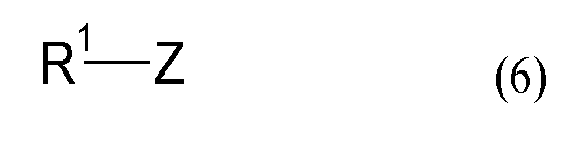
- Z steht für Fluor, Chlor, Brom, Iod oder gegebenenfalls substituiertes oder unsubstituiertes -O-CO2-(C1-C10-Alkyl), -O-CO2(C6-C24-Aryl), -O-CO2-(C7-C15-Arylalkyl), -OSO2(C1-C10-Alkyl)), -OSO2(C6-C24-Aryl), -OSO2-NH-(C7-C15-Arylalkyl) oder -OSO2-(C7-C15-Arylalkyl), zu Verbindungen der Formel (10)
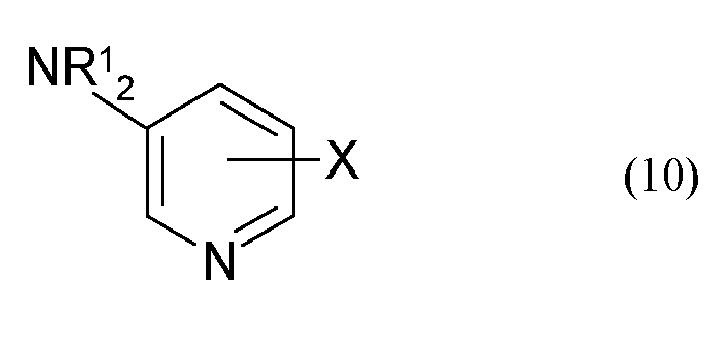


- Besonders bevorzugt umfasst die Erfindung ein Verfahren zur Herstellung der Verbindungen der Formel (12)


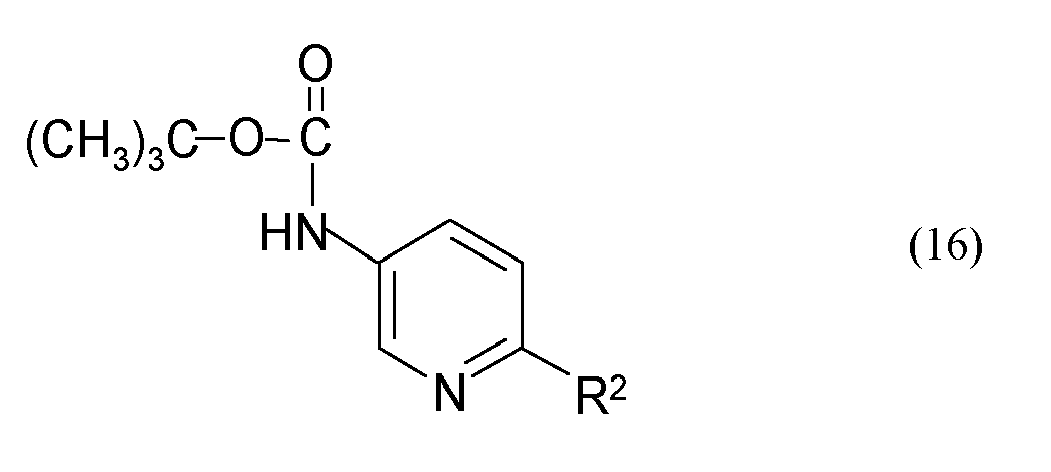
- Ganz besonders bevorzugt handelt es sich bei den Verbindungen der Formel (12) und den Verbindungen der Formel (8) und den Verbindungen der Formel (4) um 5-Amino-2-isopropylpyridin Ganz besonders bevorzugt handelt es sich bei den Verbindungen (13) und bei den Verbindungen der Formel (9) und bei den Verbindungen der Formeln (5) um 5-Amino-2-chlorpyridin.
- Die Verbindungen der Formel (14) stellen bevorzugt Di-(tert.Butyl)dicarbonat dar.
- Da die Herstellung der Verbindungen der Formel (8) und (12) jeweils bevorzugte Ausführungsformen der Herstellung der Verbindungen der Formel (4) darstellen, gelten die im Folgenden beschriebenen erfindungsgemäßen Verfahren gemäß der Schritte a), b) und c) für die Herstellung der Verbindungen der Formel (4), (8) und (12).
- Das erfindungsgemäße Verfahren gemäß Schritt a) kann in Gegenwart von Basen oder in Abwesenheit von Basen durchgeführt werden. Bevorzugt wird das Verfahren in Abwesenheit von zusätzlichen Basen durchgeführt.
- Als Basen im erfindungsgemäßen gemäß Schritt a) können beispielsweise Hydrogencarbonate, wie Natrium- und Kaliumhydrogencarbonat, Alkalimetallhydroxide oder -alkylate, wie z.B. - Natriummethylat, Kalium-tert.-butylat, Natriumhydroxid, Kaliumhydroxid oder organische Basen, wie z.B. Pyridin, Ammmonmiumverbindungen, wie z.B. Ammoniumhydroxid oder und tert. Amine, wie Trimethylamin, Triethylamin, Tributylamin, N,N-Dimethylanilin, N,N-Dimethylbenzylamin, Pyridin, N-Methylpyridin, N-Methylmorpholin, N,N-Dimethylaminopyridin, Diazabicyclooctan (DABCO), Diazabicyclononen (DBN) und Diazabicycloundecen (DBU) oder Gemische dieser Basen eingesetzt.
- Das erfindungsgemäße Verfahren gemäß Schritt a) wird bevorzugt in Gegenwart von einem organischen Lösungsmittel durchgeführt werden. Als organisches Lösungsmittel zur Durchführung des erfindungsgemäßen Verfahrens eignen sich insbesondere unpolare alizyklische oder aromatische Kohlenwasserstoffe wie beispielsweise Benzol, Toluol, Xylol, n-Pentan, iso-Pentan, Hexan, Heptan, Octan, iso-Octan, Cyclohexan, Cyclopentan, Cycloheptan, Cyclononan, Cyclooctan, Methylcyclopentan, Methylcyclohexan, Bicyclo-[4.1.0]-heptan oder Gemische solcher Lösungsmittel. Besonders bevorzugte Lösungsmittel sind organische, unpolare verzweigte oder unverzweigte, gegebenenfalls cyklische, aliphatische Kohlenwasserstoffe, insbesondere Hexan, Heptan, Octan, Cyclohexan, Methylcyclohexan oder iso-Octan. Ganz besonders bevorzugt wird als Lösungsmittel n-Heptan eingesetzt.
- Schritt a) des erfindungsgemäßen Verfahrens wird bei Temperaturen zwischen 20 °C und 200 °C durchgeführt. Vorzugsweise wird Schritt a) des erfindungsgemäßen Verfahrens bei Temperaturen zwischen 50 °C und 130 °C durchgeführt.
- Das Stoffmengenverhältnis der Verbindungen der Formel (6) zu den Verbindungen der Formel (5) liegt zwischen 5:1 und 1:5, bevorzugt liegt das Stoffmengenverhältnis der Verbindungen der Formel (6) zu den Verbindungen der Formel (5) zwischen 3:1 und 1: 3, besonders bevorzugt zwischen 3:1 und 1:1.
- Schritt a) des erfindungsgemäßen Verfahren wird vorzugsweise so durchgeführt, dass zunächst die Verbindungen der Formel (5), gegebenenfalls in Gegenwart des organischen Lösungsmittels, vorgelegt werden und dann die Verbindungen der Formel (6), bevorzugt gelöst in dem organischen Lösungsmittel, dosiert zugegeben werden. Danach wird die Mischung erwärmt. Vorzugsweise werden Teile des Lösungsmittels während der Reaktion destillativ aus dem Reaktionsgemisch entfernt. Vorzugsweise wird das Reaktionsgemisch in diesem Fall mit einer entsprechenden Menge des Lösungsmittels, gegebenenfalls und vorzugsweise Verbindungen der Formel (6) enthaltend, ersetzt. Die Verbindungen der Formel (7) können z.B. mittels Kristallisation weiter aufgereinigt werden.
- Die zur Herstellung der Verbindungen der Formel (1) angegebene Verfahrensdurchführung, Temperaturen, und Vorzugsbereiche gelten ebenfalls für Schritt b) des erfindungsgemäßen Verfahrens.
- Schritt c) des erfindungsgemäßen Verfahren kann in Anwesenheit oder in Gegenwart von organischen Lösungsmitteln durchgeführt werden. Vorzugsweise wird Schritt c) des erfindungsgemäßen Verfahrens in Gegenwart eines organischen Lösungsmittels durchgeführt.
- Vorzugsweise werden in Schritt c) des erfindungsgemäßen Verfahrens als organische Lösungsmittel lineare, zyklische oder verzweigte aliphatische Kohlenwasserstoffe, wie beispielsweise, Pentan, Hexan, Heptan, Octan, iso-Octan oder cyclo-Hexan oder aromatische Kohlenwasserstoffe, wie beispielsweise Benzol, Toluol, Xylol, Ethylbenzol, Mesitylen oder z.B. Ketone, Alkohole, wie z.B. iso-Propanol, Ethanol, n-, s-, i-Butanol oder Sulfone oder Amide eingesetzt. Besonders bevorzugt werden als Lösungsmittel in Schritt c) des erfindungsgemäßen Verfahrens Alkohole, insbesondere iso-Propanol eingesetzt.
- Basen im Sinne des Schrittes c) des erfindungsgemäßen Verfahrens sind z.B. Erdalkali- oder Alkalimetallcarbonate, -hydroxide, -hydrogenphosphate, -phosphate oder tertiäre Amine.
- Säuren im Sinne des Schrittes c) des erfindungsgemäßen Verfahrens stellen z.B. Schwefelsäure, Salpetersäure, Halogenwasserstoffsäuren wie Chlorwasserstoffsäure oder Bromwasserstoffsäure, Phosphorsäuren wie Orthophosphorsäure, Sulfaminsäure, ferner organische Säuren, insbesondere aliphatische, alicyclische, aromatische oder heterocyclische ein- oder mehrbasige Carbon-, Sulfonoder Schwefelsäuren, z.B. Ameisensäure, Essigsäure, Propionsäure, Pivalinsäure, Diethylessigsäure, Malonsäure, Bernsteinsäure, Pimelinsäure, Fumarsäure, Maleinsäure, Milchsäure, Weinsäure, Apfelsäure, Citronensäsure, Gluconsäure, Ascorbinsäure, Nicotinsäure, Isonicotinsäure, Methan-oder Ethansulfonsäure, Ethandisulfonsäure, 2-Hydroxyethansulfonsäure, Benzolsulfonsäure, p-Toluolsulfonsäure, Naphthalin-mono- und Disulfonsäuren oder Laurylschwefelsäure dar. Bevorzugt werden als Säuren Halogenwasserstoffsäuren, wie z.B. HCl oder HBr eingesetzt. Ganz besonders bevorzugt wird HCl als Säure im erfindungsgemäßen Verfahren eingesetzt.
- Vorzugsweise wird Schritt c) des erfindungsgemäßen Verfahrens bei Temperaturen zwischen 10 °C und 100 °C, besonders bevorzugt bei Temperaturen zwischen 20 °C und 70 °C durchgeführt.
- Vorzugsweise wird Schritt c) des erfindungsgemäßen Verfahrens so durchgeführt, dass die Verbindungen der Formel (1) vorgelegt werden und gegebenenfalls mit dem Lösungsmittel vermischt werden. Danach werden die Säuren oder Basen in Substanz oder als Lösung vorzugsweise dosiert hinzugegeben. Die Verbindungen der Formel (4) können z.B. durch Destillation, Kristallisation oder Extraktion weiter aufgereinigt werden. Vorzugsweise werden die Verbindungen der Formel (4) die nach der Umsetzung der Verbindungen der Formel (1) in der Regel in Form ihrer Salze vorliegen, durch Umsetzung mit Säuren oder Basen wieder in die salzfreien Verbindungen der Formel (4) überführt. Die weitere Aufreinigung der salzfreien Verbindungen der Formel (4) geschieht vorzugsweise mittels Destillation. Die weitere Aufreinigung der salzfreien Verbindungen der Formel (1) geschieht vorzugsweise mittels Destillation.
- Das Ende der Reaktionen gemäß Schritt a), b) und c) des erfindungsgemäßen Verfahrens kann mit gängigen dem Fachmann bekannten Verfahren bestimmt werden.
- Die in den erfindungsgemäßen Verfahren verwendeten Einsatzstoffe und Edukte sind entweder nach dem Fachmann bekannten Verfahren herstellbar oder kommerziell erhältlich.
- Mit Hilfe des erfindungsgemäßen Verfahrens lassen sich die Verbindungen der Formel (1) in guten Ausbeuten, effizient in technischen Prozessen herstellen. Zudem lässt sich ebenfalls in effizienter Art und Weise aus den Verbindungen der Formel (1) durch Schutzgruppenabspaltung mit Säuren oder Basen die Verbindungen der Formel (4) herstellen, die bedeutende Zwischenprodukte bei der Herstellung von Arzneimittel darstellen.
- Die folgenden Beispiele dienen der beispielhaften Erläuterung der Erfindung und sind nicht als Beschränkung aufzufassen.
- 100 g (0,76 mol) 5-Amino-2-chlorpyridin werden bei Raumtemperatur mit 120 mL (0,82 mol) n-Heptan sowie 200 g (0,89 mol) Di-tert.-butyl-dicarbonat versetzt. Die resultierende Suspension wird in 2 h auf 60°C aufgeheizt und für 5 h bei dieser Temperatur verrührt. Dann wird eine Lösung von 50 g (0,22 mol) Di-tert.-butyl-dicarbonat in 30 mL (0,20 mol) n-Heptan zugesetzt, zum Rückfluss aufgeheizt und solange Destillat abgenommen bis die Innentemperatur 115°C erreicht. Anschließend wird für 1 h bei 115°C unter Destillatabnahme nachgerührt. Nach Zugabe von 240 mL (1,64 mol) n-Heptan wird zum Rückfluss aufgeheizt und solange Destillat abgenommen bis die Innentemperatur 100°C erreicht. Dann wird unter Rückfluss eine Lösung von 200 g (0,89 mol) Di-tert.-butyl-dicarbonat in 120 mL (0,82 mol) n-Heptan in ca. 12 h gleichmäßig zudosiert und für weitere 4 h unter Rückfluss nachgerührt.
- Der Ansatz wird langsam auf Raumtemperatur abgekühlt und für 1 h bei Raumtemperatur verrührt. Das ausgefallene Produkt wird abfiltriert und der Filterkuchen zweimal mit jeweils 120 mL (0,82 mol) n-Heptan gewaschen. Das erhaltene Feuchtprodukt wird im Vakuumtrockenschrank bei ca. 60°C und <100 mbar bis zur Gewichtskonstanz getrocknet.
- Ausbeute: 241,4 g (0,73 mol, 96 %)
- Bei Raumtemperatur werden unter Stickstoff-Atmosphäre 50 g (0,15 mol) 5-(Di-Boc-amino)-2-chlorpyridin, 140 g (1,94 mol) Tetrahydrofuran sowie 10 g (0,10 mol) N-Methylpyrrolidon vorgelegt. Die resultierende Lösung wird auf ca. -20°C vorgekühlt. Anschließend wird eine Lösung von 3,0 g (8,2 mmol) Eisen(III)-acetylacetonat in 30 g (0,42 mol) Tetrahydrofuran in 3 h bei -20°C parallel mit 215 g (0,42 mol) Isopropyl-magnesiumchlorid, ca. 20%-ige Lösung in Tetrahydrofuran zudosiert. Nach Ende der Dosierung wird für 15 min bei -20°C nachgerührt, dann wird innerhalb von 1 h auf 0°C aufgeheizt und für 30 min bei 0°C nachgerührt. Der Ansatz wird anschließend auf 175 g (0,13 mol) einer 14,3%-igen Lösung von Citronensäure bei max. 10°C ausgetragen und die Reaktionsmischung für 30 min bei Raumtemperatur verrührt. Nach Phasentrennung wird die wässrige Phase einmal mit 40 g (0,13 mol) Xylol extrahiert. Die vereinigten organischen Phasen werden einmal mit 100 mL einer 5%-igen Lösung von Natriumhydrogencarbonat gewaschen und dann über 40 g (ca. 3 cm Betthöhe) Kieselgel filtriert. Anschließend wird das Filtrat im Vakuum bei 50°C bis ca. 100 mbar eingeengt. Der Destillationssumpf wird bei Raumtemperatur mit 60 g (0,61 mol) Methylcyclohexan versetzt und die resultierende Suspension auf 85°C aufgeheizt. Die resultierende klare, rot-orange Lösung wird wieder auf Raumtemperatur abgekühlt und 30 min bei Raumtemperatur nachgerührt. Das ausgefallene Produkt wird abfiltriert und der Filterkuchen einmal mit 30 g (0,31 mol) Methylcyclohexan gewaschen. Das erhaltene Feuchtprodukt wird im Vakuumtrockenschrank bei ca. 60°C und <100 mbar bis zur Gewichtskonstanz getrocknet.
- Ausbeute: 25,7 g (0,11 mol, 72 %)
- 100 g (0,41 mol) 5-(Boc-amino)-2-isopropylpyridin werden bei Raumtemperatur in 500 g (8,3 mol) Isopropanol angeschlämmt. Dann werden 200 g (1,8 mol) einer ca. 33%-igen Lösung von Chlorwasserstoff in Isopropanol bei 25°C eindosiert. Nach Dosierende wird 30 min bei 25°C nachgerührt, dann wird in ca. 1 h auf 50°C aufgeheizt und bei 50°C für 3 h nachgerührt. Anschließend werden unter Normaldruck 600 mL Destillat abgenommen und zur resultierenden Suspension bei 40-50°C 350 g (3,8 mol) Toluol zugesetzt. Die resultierende Suspension wird bei Raumtemperatur auf eine Mischung aus 150 g (8,3 mol) VE-Wasser und 110 g (1,4 mol) Natronlauge 50%-ig ausgetragen und für 15 min bei Raumtemperatur verrührt. Nach Phasentrennung wird die organische Phase im Vakuum eingeengt und das verbleibende Öl bei 8 mbar über eine Kolonne fraktioniert destilliert.
- Ausbeute: 47,7 g (0,35 mol, 85 %)
Claims (14)
- Verfahren zur Herstellung der Verbindungen der Formel (1)
R1-NH-ARYL-R2 (1)
wobei R1 = -COOR3 oder -SO2-R4 wobei R3 und R4 ausgewählt sind aus der Gruppe: C1-C10-Alkyl, C2-C10-Alkenyl, C1-C10-Perhalogenalkyl, C7-C15-Arylalkyl oder C6-C24-Aryl oder R3 oder R4 = C1-C10-Alkyl oder C6-C24-Aryl die einfach oder mehrfach, aber nicht vollständig substituiert sind durch C1-C10-Alkoxy, Cl, Br oder F oder R1 = -SO2-NH-(C1-C10-Alkyl), -SO2-NH-(C7-C15-Arylalkyl), -SO2NH-(C6-C24-Aryl) oder -SO2(NR5R6) wobei R5 und R6 für C1-C10-Alkyl stehen oder NR5R6 bilden zusammen einen 5- bis 7-gliedrigen Ring und
ARYL für einen unsubstituierten oder substituierten carbocyclischen C6-C24-Aryl- oder unsubstituierten oder substituierten heteroaromatischen C3-C16-Heteroarylrest steht und
R2 = C1-C10-Alkyl, C2-C10-Alkenyl, C6-C24-Aryl, C7-C15-Arylalkyl, C3-C16-Heteroaryl oder 3- bis 7-gliedriger gesättigter oder teilweise ungesättigter Heterozyklus, welche gegebenenfalls weiter substituiert sein können durch Reste ausgewählt aus der Gruppe: C1-C10-Alkyl, C2-C10-Alkenyl, C1-C10-Alkoxy, C1-C10-Perhalogenalkyl, C2-C10-Alkynyl, C6-C24-Aryl, C3-C16-Heteroaryl, -COO-(C1-C10-Alkyl), -COO-(C7-C15-Arylalkyl), -OCOO-(C1-C10-Alkyl), -OCOO-(C7-C15-Arylalkyl), -OCOO-(C6-C24-Aryl), -SO2-(C7-C15-Arylalkyl), -SO3-(C7-C15-Arylalkyl), -SO3(C6-C24-Aryl), -SO3(C1-C10-Alkyl), -COO-(C6-C24-Aryl), -SO2(C1-C10-Alkyl), -SO2(C6-C24-Aryl), -CO-(C1-C10-Alkyl), -CO-(C6-C24-Aryl), -SO2-NH-(C1-C10-Alkyl), -SO2-NH-(C7-C15-Arylalkyl), -SO2NH-(C6-C24-Aryl) oder -SO2(NR9R10) wobei R9 und R10 gleich oder verschieden sein können und unabhängig voneinander für C1-C10-Alkyl oder C6-C24-Aryl stehen oder NR9R10 bilden zusammen einen 5- bis 7- gliedrigen Ring, C1-C8-Mono- bzw. Dialkylamino, Halogen, -OCO-(NR11R12) oder -CO-(NR11R12) wobei R11 und R12 gleich oder verschieden sein können und unabhängig voneinander für C1-C10-Alkyl oder C6-C24-Aryl stehen oder -NR11R12 bilden zusammen einen 5- bis 7- gliedrigen Ring,
dadurch gekennzeichnet, dass Verbindungen der Formel (2)
X = Cl, Br, I oder -OSO2-R8 mit R8 = C1-C10-Alkyl, C1-C10-Perhalogenalkyl, C7-C15-Arylalkyl oder C6-C24-Aryl oder R8 = C1-C10-Alkyl oder C6-C24-Aryl die einfach oder mehrfach, aber nicht vollständig substituiert sind durch C1-C10-Alkoxy, Cl, Br oder F in Gegenwart von mindestens einer Eisenquelle
mit Verbindungen der Formel (3)
Y = anionischer Ligand und
Me ein Metall ausgewählt aus der Gruppe Mg, Ca, Mn, Zn ist,
zu Verbindungen der Formel (1) oder deren Salze umgesetzt werden. - Verfahren nach Anspruch 1, dadurch gekennzeichnet, dass ARYL für einen fünf- oder sechsgliedrigen heteroaromatischen Ring mit einem Stickstoffatom steht der gegebenenfalls substituiert sein kann durch 1, 2 oder 3 Substituenten ausgewählt aus der Gruppe C1-C10-Alkyl, C1-C10-Alkenyl, C1-C6-Halogenalkyl, C1-C6-Alkylthio, C6-C24-Aryl, C3-C16-Heteroaryl, 3- bis 7-gliedriger gesättigter oder teilweise ungesättigter Heterozyklus.
- Verfahren nach Anspruch 1 oder 2, dadurch gekennzeichnet, dass R1 oder/und R7 für -(CO)-O-(tert.Butyl), -(CO)-O-(Allyl) -(CO)-O-(Methyl), -(CO)-O-(Ethyl), -(CO)-O-(s-Propyl), -(CO)-O-(n-Propyl), -(CO)-O-(n-Butyl), -(CO)-O-(s-Butyl), -(CO)-O-(i-Butyl), -(CO)-O-(neo-Pentyl), -(CO)-O-(Nonafluorbutyl), -(CO)-O-(Nonafluorbutyl), -SO2-(Benzyl), -SO2-(Dimethylbenzyl), -SO2-(Trimethylbenzyl), -SO2-(Phenyl), -SO2-(o-Tolyl), -SO2-(p-Tolyl), - SO2-(m-Tolyl), -SO2-(Difluorbenzyl) oder -SO2-(Trifluorbenzyl) steht.
- Verfahren nach einem oder mehreren der Ansprüche 1 bis 3, dadurch gekennzeichnet, dass R2 für ein C1-C10-Alkyl, C2-C10-Alkenyl, C3-C16-Heteroaryl, C7-C15-Arylalkyl oder C6-C24-Aryl steht.
- Verfahren nach einem oder mehreren der Ansprüche 1 bis 4, dadurch gekennzeichnet, dass Me für Magnesium steht.
- Verfahren nach einem oder mehreren der Ansprüche 1 bis 5, dadurch gekennzeichnet, dass Y für Chlorid, Bromid oder Iodid steht.
- Verfahren nach einem oder mehreren der Ansprüche 1 bis 6, dadurch gekennzeichnet, dass X für Cl, Br, I, -OSO2(C1-C10-Alkyl)), -OSO2(C6-C24-Aryl) oder -OSO2-(C7-C15-Arylalkyl) steht.
- Verfahren nach einem oder mehreren der Ansprüche 1 bis 7, dadurch gekennzeichnet, dass als Eisenquellen organische Eisenverbindungen der Oxidationsstufe (III) eingesetzt werden.
- Verfahren zur Herstellung der Verbindungen der Formel (4)
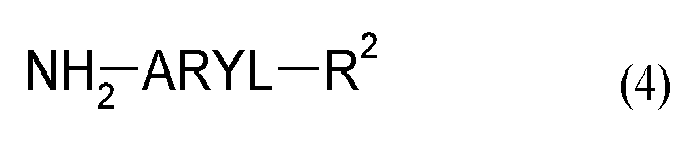
- Verfahren nach Anspruch 9, dadurch gekennzeichnet, das als Säuren Halogenwasserstoffsäure, Sulfonsäuren oder Carbonsäuren eingesetzt werden.
- Verfahren zur Herstellung der Verbindungen der Formel (4) oder deren Salze

R2 = C1-C10-Alkyl, C2-C10-Alkenyl, C6-C24-Aryl, C7-C15-Arylalkyl, C3-C16-Heteroaryl oder 3- bis 7-gliedriger gesättigter oder teilweise ungesättigter Heterozyklus, welche gegebenenfalls weiter substituiert sein können durch Reste ausgewählt aus der Gruppe: C1-C10-Alkyl, C2-C10-Alkenyl, C1-C10-Alkoxy, C1-C10-Perhalogenalkyl, C2-C10-Alkynyl, C6-C24-Aryl, C3-C16-Heteroaryl, -COO-(C1-C10-Alkyl), -COO-(C7-C15-Arylalkyl), -OCOO-(C1-C10-Alkyl), -OCOO-(C7-C15-Arylalkyl), -OCOO-(C6-C24-Aryl), -SO2-(C7-C15-Arylalkyl), -SO3-(C7-C15-Arylalkyl), -SO3(C6-C24-Aryl), -SO3(C1-C10-Alkyl), -COO-(C6-C24-Aryl), -SO2(C1-C10-Alkyl), -SO2(C6-C24-Aryl), -CO-(C1-C10-Alkyl), -CO-(C6-C24-Aryl), -SO2-NH-(C1-C10-Alkyl), -SO2-NH-(C7-C15-Arylalkyl), -SO2NH-(C6-C24-Aryl) oder -SO2(NR9R10) wobei R9 und R10 gleich oder verschieden sein können und unabhängig voneinander für C1-C10-Alkyl oder C6-C24-Aryl stehen oder NR9R10 bilden zusammen einen 5- bis 7- gliedrigen Ring, C1-C8-Mono- bzw. Dialkylamino, Halogen, -OCO-(NR11R12) oder -CO-(NR11R12) wobei R11 und R12 gleich oder verschieden sein können und unabhängig voneinander für C1-C10-Alkyl oder C6-C24-Aryl stehen oder -NR11R12 bilden zusammen einen 5- bis 7- gliedrigen Ring,
dadurch gekennzeichnet, dass in einem Schritt a) Verbindungen der Formel (5)
mit Verbindungen der Formel (6)
R1-Z (6)
in denen R1 = -COOR3 oder -SO2-R4 wobei R3 und R4 gleich oder verschieden sein können und ausgewählt sind aus der Gruppe: C1-C10-Alkyl, C2-C10-Alkenyl, C1-C10-Perhalogenalkyl, C7-C15-Arylalkyl oder C6-C24-Aryl oder R3 oder R4 = C1-C10-Alkyl oder C6-C24-Aryl die einfach oder mehrfach, aber nicht vollständig substituiert sind durch C1-C10-Alkoxy, Cl, Br oder F oder R1 = -SO2-NH-(C1-C10-Alkyl), -SO2-NH-(C7-C15-Arylalkyl), -SO2NH-(C6-C24-Aryl) oder -SO2(NR5R6) wobei R5 und R6 für C1-C10-Alkyl stehen oder NR5R6 bilden zusammen einen 5- bis 7- gliedrigen Ring und
Z für Fluor, Chlor, Brom, Iod oder gegebenenfalls substituiertes oder unsubstituiertes -O-CO2-(C1-C10-Alkyl), -O-CO2(C6-C24-Aryl), -O-CO2-(C7-C15-Arylalkyl), -OSO2(C1-C10-Alkyl)), -OSO2(C6-C24-Aryl), -OSO2-NH-(C7-C15-Arylalkyl) oder -OSO2-(C7-C15-Arylalkyl) steht, zu Verbindungen der Formel (7) umgesetzt werden
W-ARYL-X (7)
in denen ARYL und X die vorgenannte Bedeutung besitzen und W = -NHR1 oder -N(R1)2 wobei R1 die o.g. Bedeutung besitzt und
in einem Schritt b) die Verbindungen der Formel (7) mit Verbindungen der Formel (3)
in Gegenwart von mindestens einer Eisenquelle zu Verbindungen der Formel (1) umgesetzt werden und die Verbindungen der Formel (1)
in einem Schritt c) in Gegenwart von Säuren oder Basen zu Verbindungen der Formel (4) umgesetzt werden. - Verfahren gemäß einem oder mehreren der Ansprüche 1 bis 11, dadurch gekennzeichnet, dass das Verfahren gemäß Schritt b) in Gegenwart eines organischen Lösungsmittels durchgeführt wird.
- Verfahren gemäß Anspruch 12, dadurch gekennzeichnet, dass das organische Lösungsmittel ausgewählt ist aus der Gruppe Ether, Amine, Amide oder Mischungen dieser Lösungsmittel.
- Verfahren gemäß Anspruch 11, dadurch gekennzeichnet, dass die Verbindungen der Formel (6) Di-tert.butyldicarbonat darstellen.
Priority Applications (1)
| Application Number | Priority Date | Filing Date | Title |
|---|---|---|---|
| PL11175821T PL2415762T3 (pl) | 2010-08-06 | 2011-07-28 | Sposób wytwarzania związków aminoaryloalkilowych |
Applications Claiming Priority (1)
| Application Number | Priority Date | Filing Date | Title |
|---|---|---|---|
| DE102010033690A DE102010033690A1 (de) | 2010-08-06 | 2010-08-06 | Verfahren zur Herstellung vom Aminoarylalkylverbindungen |
Publications (3)
| Publication Number | Publication Date |
|---|---|
| EP2415762A2 true EP2415762A2 (de) | 2012-02-08 |
| EP2415762A3 EP2415762A3 (de) | 2012-03-14 |
| EP2415762B1 EP2415762B1 (de) | 2014-04-23 |
Family
ID=44587696
Family Applications (1)
| Application Number | Title | Priority Date | Filing Date |
|---|---|---|---|
| EP11175821.5A Not-in-force EP2415762B1 (de) | 2010-08-06 | 2011-07-28 | Verfahren zur Herstellung von Aminoarylalkylverbindungen |
Country Status (6)
| Country | Link |
|---|---|
| US (1) | US20120071662A1 (de) |
| EP (1) | EP2415762B1 (de) |
| JP (1) | JP2012062307A (de) |
| DE (1) | DE102010033690A1 (de) |
| ES (1) | ES2471872T3 (de) |
| PL (1) | PL2415762T3 (de) |
Families Citing this family (4)
| Publication number | Priority date | Publication date | Assignee | Title |
|---|---|---|---|---|
| KR20160141856A (ko) | 2014-04-24 | 2016-12-09 | 노파르티스 아게 | 포스파티딜이노시톨 3-키나제 억제제로서의 피라진 유도체 |
| KR20160145780A (ko) | 2014-04-24 | 2016-12-20 | 노파르티스 아게 | 포스파티딜이노시톨 3-키나제 억제제로서의 아미노 피리딘 유도체 |
| EP3134397A1 (de) | 2014-04-24 | 2017-03-01 | Novartis AG | Aminopyrazinderivate als phosphatidylinositol-3-kinasehemmer |
| CN107266357B (zh) * | 2017-08-08 | 2018-07-17 | 九江善水科技股份有限公司 | 一种2,3-二氯吡啶的合成方法 |
Citations (2)
| Publication number | Priority date | Publication date | Assignee | Title |
|---|---|---|---|---|
| EP1852431A1 (de) | 2005-02-07 | 2007-11-07 | Mitsubishi Pharma Corporation | Optisch aktives tetrahydronaphthalinderivat |
| JP2008222593A (ja) | 2007-03-09 | 2008-09-25 | Koei Chem Co Ltd | アルキルアミノピリジン類の精製方法 |
Family Cites Families (6)
| Publication number | Priority date | Publication date | Assignee | Title |
|---|---|---|---|---|
| IL112249A (en) * | 1994-01-25 | 2001-11-25 | Warner Lambert Co | Pharmaceutical compositions containing di and tricyclic pyrimidine derivatives for inhibiting tyrosine kinases of the epidermal growth factor receptor family and some new such compounds |
| US7026478B2 (en) * | 2002-05-10 | 2006-04-11 | Studiengesellschaft Kohle Mbh | Iron catalyzed cross coupling reactions of aromatic compounds |
| AP2006003633A0 (en) * | 2003-12-19 | 2006-06-30 | Pfizer | Benzenesulfonylamino-pyridin-2-yl derivatives and related compounds as inhibitors of 11-BETA-hydroxysteroid dehydrogenase type 1 (11-BETA-HSD-1) for the treatment of diabetes and obesity |
| JP2006117568A (ja) * | 2004-10-20 | 2006-05-11 | Mitsubishi Pharma Corp | チオフェン環を有する新規アミド誘導体及びその医薬としての用途 |
| WO2009005638A2 (en) * | 2007-06-27 | 2009-01-08 | Merck & Co., Inc. | Pyridyl and pyrimidinyl derivatives as histone deacetylase inhibitors |
| AU2008282728B2 (en) * | 2007-08-02 | 2012-04-19 | Amgen Inc. | Pl3 kinase modulators and methods of use |
-
2010
- 2010-08-06 DE DE102010033690A patent/DE102010033690A1/de not_active Withdrawn
-
2011
- 2011-07-28 ES ES11175821.5T patent/ES2471872T3/es active Active
- 2011-07-28 EP EP11175821.5A patent/EP2415762B1/de not_active Not-in-force
- 2011-07-28 PL PL11175821T patent/PL2415762T3/pl unknown
- 2011-08-03 US US13/197,046 patent/US20120071662A1/en not_active Abandoned
- 2011-08-08 JP JP2011173118A patent/JP2012062307A/ja active Pending
Patent Citations (2)
| Publication number | Priority date | Publication date | Assignee | Title |
|---|---|---|---|---|
| EP1852431A1 (de) | 2005-02-07 | 2007-11-07 | Mitsubishi Pharma Corporation | Optisch aktives tetrahydronaphthalinderivat |
| JP2008222593A (ja) | 2007-03-09 | 2008-09-25 | Koei Chem Co Ltd | アルキルアミノピリジン類の精製方法 |
Non-Patent Citations (1)
| Title |
|---|
| JOURNAL OF ORGANIC CHEMISTRY, vol. 73, 2008, pages 6025 - 6028 |
Also Published As
| Publication number | Publication date |
|---|---|
| EP2415762B1 (de) | 2014-04-23 |
| PL2415762T3 (pl) | 2014-11-28 |
| US20120071662A1 (en) | 2012-03-22 |
| EP2415762A3 (de) | 2012-03-14 |
| JP2012062307A (ja) | 2012-03-29 |
| ES2471872T3 (es) | 2014-06-27 |
| DE102010033690A1 (de) | 2012-02-09 |
Similar Documents
| Publication | Publication Date | Title |
|---|---|---|
| EP2164831B1 (de) | Verfahren zur herstellung n-substituierter (3-dihalomethyl-1-methyl-pyrazol-4-yl)carboxamide | |
| DE60119283T2 (de) | Verfahren zur herstellung von 3-hydroxypicolinsäure-derivaten | |
| EP2697231A1 (de) | Kontinuierlich betreibbares verfahren zur herstellung von carbonylverbindungen mittels eines nitroxylradikalhaltigen katalysators | |
| EP2504322A1 (de) | Verfahren zur herstellung 5,5-disubstituierter 4,5-dihydroisoxazol-3-thiocarboxamidin-salze | |
| EP2606025A1 (de) | Verfahren zur herstellung einer propiolsäure oder eines derivates davon | |
| DE102009030681A1 (de) | Herstellung von substituierten 2-Fluoracrylsäurederivaten | |
| EP2415762B1 (de) | Verfahren zur Herstellung von Aminoarylalkylverbindungen | |
| DE19732692C2 (de) | Verfahren zur Herstellung von 2-(Pyrazolyl-3'-oxymethylen)nitrobenzolen | |
| DE102004022970A1 (de) | Neue Imidazolderivate, deren Herstellung und deren Verwendung als Intermediate zur Herstellung von Arzneimitteln und Pestiziden | |
| EP2850066B1 (de) | Verfahren zum herstellen von 1-alkyl-3-fluoralkyl-1h-pyrazol-4-carbonsäurechloriden | |
| DE60019606T2 (de) | Verfahren zur herstellung von substituierten pyrimidinen | |
| EP0519291B1 (de) | Aminomethyl-substituierte 2,3-Dihydropyrano(2,3-b)pyridine, Verfahren zu ihrer Herstellung und ihre Verwendung in Arzneimitteln | |
| DE69215266T2 (de) | Verfahren zur Herstellung von 1H-Benzimidazolen | |
| EP2228366B1 (de) | Verfahren zur Herstellung von 2-Amino-4-(halogenalkyl)pyridin-Derivaten durch Cyclisierung geeigneter Nitril-Vorstufen mit Stickstoff-Verbindungen | |
| EP2366680A2 (de) | Verfahren zur Herstellung von 4'-Halogenalkyl-biphenyl-2-carbonsäuren | |
| CN108440365B (zh) | 多取代吡咯衍生物的制备方法 | |
| DE69826845T2 (de) | Verfahren zur herstellung von arylsulfonylchlorid | |
| EP4359372B1 (de) | Hydrierung von estern zu alkoholen in gegenwart eines mn-pnn-komplexes | |
| DD261598A5 (de) | Verfahren zur herstellung von chinazolin-dionen und pyrido-pyrimidin-dionen | |
| DE2804263C3 (de) | Verfahren zur Herstellung von Indolin-Derivaten | |
| DE10208955A1 (de) | Verfahren zur Herstellung von 2-Halogenalkylnicotinsäuren | |
| DE60107248T2 (de) | Neues verfahren zur herstellung von pyrazolopyrimidonen | |
| DE102004060659A1 (de) | Neue substituierte 1H-Pyrrolo[2,3-b]pyridine und deren Herstellung | |
| DE3600332A1 (de) | Verfahren zur herstellung von pyron-3-carboxamidverbindungen | |
| EP0433806B1 (de) | Isocyanatoalkylsulfonate und ein Verfahren zu deren Herstellung |
Legal Events
| Date | Code | Title | Description |
|---|---|---|---|
| AK | Designated contracting states |
Kind code of ref document: A2 Designated state(s): AL AT BE BG CH CY CZ DE DK EE ES FI FR GB GR HR HU IE IS IT LI LT LU LV MC MK MT NL NO PL PT RO RS SE SI SK SM TR |
|
| AX | Request for extension of the european patent |
Extension state: BA ME |
|
| PUAI | Public reference made under article 153(3) epc to a published international application that has entered the european phase |
Free format text: ORIGINAL CODE: 0009012 |
|
| PUAL | Search report despatched |
Free format text: ORIGINAL CODE: 0009013 |
|
| AK | Designated contracting states |
Kind code of ref document: A3 Designated state(s): AL AT BE BG CH CY CZ DE DK EE ES FI FR GB GR HR HU IE IS IT LI LT LU LV MC MK MT NL NO PL PT RO RS SE SI SK SM TR |
|
| AX | Request for extension of the european patent |
Extension state: BA ME |
|
| RIC1 | Information provided on ipc code assigned before grant |
Ipc: C07D 213/75 20060101AFI20120209BHEP |
|
| 17P | Request for examination filed |
Effective date: 20120914 |
|
| RAP1 | Party data changed (applicant data changed or rights of an application transferred) |
Owner name: SALTIGO GMBH |
|
| GRAP | Despatch of communication of intention to grant a patent |
Free format text: ORIGINAL CODE: EPIDOSNIGR1 |
|
| INTG | Intention to grant announced |
Effective date: 20140115 |
|
| GRAS | Grant fee paid |
Free format text: ORIGINAL CODE: EPIDOSNIGR3 |
|
| GRAA | (expected) grant |
Free format text: ORIGINAL CODE: 0009210 |
|
| AK | Designated contracting states |
Kind code of ref document: B1 Designated state(s): AL AT BE BG CH CY CZ DE DK EE ES FI FR GB GR HR HU IE IS IT LI LT LU LV MC MK MT NL NO PL PT RO RS SE SI SK SM TR |
|
| REG | Reference to a national code |
Ref country code: GB Ref legal event code: FG4D Free format text: NOT ENGLISH |
|
| REG | Reference to a national code |
Ref country code: CH Ref legal event code: EP |
|
| REG | Reference to a national code |
Ref country code: AT Ref legal event code: REF Ref document number: 663766 Country of ref document: AT Kind code of ref document: T Effective date: 20140515 |
|
| REG | Reference to a national code |
Ref country code: IE Ref legal event code: FG4D Free format text: LANGUAGE OF EP DOCUMENT: GERMAN |
|
| REG | Reference to a national code |
Ref country code: DE Ref legal event code: R096 Ref document number: 502011002798 Country of ref document: DE Effective date: 20140605 |
|
| REG | Reference to a national code |
Ref country code: NL Ref legal event code: T3 |
|
| REG | Reference to a national code |
Ref country code: LT Ref legal event code: MG4D |
|
| PG25 | Lapsed in a contracting state [announced via postgrant information from national office to epo] |
Ref country code: NO Free format text: LAPSE BECAUSE OF FAILURE TO SUBMIT A TRANSLATION OF THE DESCRIPTION OR TO PAY THE FEE WITHIN THE PRESCRIBED TIME-LIMIT Effective date: 20140723 Ref country code: CY Free format text: LAPSE BECAUSE OF FAILURE TO SUBMIT A TRANSLATION OF THE DESCRIPTION OR TO PAY THE FEE WITHIN THE PRESCRIBED TIME-LIMIT Effective date: 20140423 Ref country code: BG Free format text: LAPSE BECAUSE OF FAILURE TO SUBMIT A TRANSLATION OF THE DESCRIPTION OR TO PAY THE FEE WITHIN THE PRESCRIBED TIME-LIMIT Effective date: 20140723 Ref country code: FI Free format text: LAPSE BECAUSE OF FAILURE TO SUBMIT A TRANSLATION OF THE DESCRIPTION OR TO PAY THE FEE WITHIN THE PRESCRIBED TIME-LIMIT Effective date: 20140423 Ref country code: GR Free format text: LAPSE BECAUSE OF FAILURE TO SUBMIT A TRANSLATION OF THE DESCRIPTION OR TO PAY THE FEE WITHIN THE PRESCRIBED TIME-LIMIT Effective date: 20140724 Ref country code: IS Free format text: LAPSE BECAUSE OF FAILURE TO SUBMIT A TRANSLATION OF THE DESCRIPTION OR TO PAY THE FEE WITHIN THE PRESCRIBED TIME-LIMIT Effective date: 20140823 Ref country code: LT Free format text: LAPSE BECAUSE OF FAILURE TO SUBMIT A TRANSLATION OF THE DESCRIPTION OR TO PAY THE FEE WITHIN THE PRESCRIBED TIME-LIMIT Effective date: 20140423 |
|
| PGFP | Annual fee paid to national office [announced via postgrant information from national office to epo] |
Ref country code: DE Payment date: 20140724 Year of fee payment: 4 Ref country code: NL Payment date: 20140726 Year of fee payment: 4 Ref country code: CH Payment date: 20140728 Year of fee payment: 4 Ref country code: CZ Payment date: 20140718 Year of fee payment: 4 |
|
| PG25 | Lapsed in a contracting state [announced via postgrant information from national office to epo] |
Ref country code: SE Free format text: LAPSE BECAUSE OF FAILURE TO SUBMIT A TRANSLATION OF THE DESCRIPTION OR TO PAY THE FEE WITHIN THE PRESCRIBED TIME-LIMIT Effective date: 20140423 Ref country code: HR Free format text: LAPSE BECAUSE OF FAILURE TO SUBMIT A TRANSLATION OF THE DESCRIPTION OR TO PAY THE FEE WITHIN THE PRESCRIBED TIME-LIMIT Effective date: 20140423 Ref country code: RS Free format text: LAPSE BECAUSE OF FAILURE TO SUBMIT A TRANSLATION OF THE DESCRIPTION OR TO PAY THE FEE WITHIN THE PRESCRIBED TIME-LIMIT Effective date: 20140423 Ref country code: LV Free format text: LAPSE BECAUSE OF FAILURE TO SUBMIT A TRANSLATION OF THE DESCRIPTION OR TO PAY THE FEE WITHIN THE PRESCRIBED TIME-LIMIT Effective date: 20140423 |
|
| PGFP | Annual fee paid to national office [announced via postgrant information from national office to epo] |
Ref country code: FR Payment date: 20140723 Year of fee payment: 4 |
|
| REG | Reference to a national code |
Ref country code: PL Ref legal event code: T3 |
|
| PG25 | Lapsed in a contracting state [announced via postgrant information from national office to epo] |
Ref country code: PT Free format text: LAPSE BECAUSE OF FAILURE TO SUBMIT A TRANSLATION OF THE DESCRIPTION OR TO PAY THE FEE WITHIN THE PRESCRIBED TIME-LIMIT Effective date: 20140825 |
|
| PGFP | Annual fee paid to national office [announced via postgrant information from national office to epo] |
Ref country code: IT Payment date: 20140731 Year of fee payment: 4 |
|
| REG | Reference to a national code |
Ref country code: DE Ref legal event code: R097 Ref document number: 502011002798 Country of ref document: DE |
|
| PG25 | Lapsed in a contracting state [announced via postgrant information from national office to epo] |
Ref country code: SK Free format text: LAPSE BECAUSE OF FAILURE TO SUBMIT A TRANSLATION OF THE DESCRIPTION OR TO PAY THE FEE WITHIN THE PRESCRIBED TIME-LIMIT Effective date: 20140423 Ref country code: DK Free format text: LAPSE BECAUSE OF FAILURE TO SUBMIT A TRANSLATION OF THE DESCRIPTION OR TO PAY THE FEE WITHIN THE PRESCRIBED TIME-LIMIT Effective date: 20140423 Ref country code: RO Free format text: LAPSE BECAUSE OF FAILURE TO SUBMIT A TRANSLATION OF THE DESCRIPTION OR TO PAY THE FEE WITHIN THE PRESCRIBED TIME-LIMIT Effective date: 20140423 Ref country code: EE Free format text: LAPSE BECAUSE OF FAILURE TO SUBMIT A TRANSLATION OF THE DESCRIPTION OR TO PAY THE FEE WITHIN THE PRESCRIBED TIME-LIMIT Effective date: 20140423 |
|
| PG25 | Lapsed in a contracting state [announced via postgrant information from national office to epo] |
Ref country code: LU Free format text: LAPSE BECAUSE OF FAILURE TO SUBMIT A TRANSLATION OF THE DESCRIPTION OR TO PAY THE FEE WITHIN THE PRESCRIBED TIME-LIMIT Effective date: 20140728 |
|
| PGFP | Annual fee paid to national office [announced via postgrant information from national office to epo] |
Ref country code: PL Payment date: 20140718 Year of fee payment: 4 |
|
| PLBE | No opposition filed within time limit |
Free format text: ORIGINAL CODE: 0009261 |
|
| STAA | Information on the status of an ep patent application or granted ep patent |
Free format text: STATUS: NO OPPOSITION FILED WITHIN TIME LIMIT |
|
| 26N | No opposition filed |
Effective date: 20150126 |
|
| REG | Reference to a national code |
Ref country code: IE Ref legal event code: MM4A |
|
| REG | Reference to a national code |
Ref country code: DE Ref legal event code: R097 Ref document number: 502011002798 Country of ref document: DE Effective date: 20150126 |
|
| PG25 | Lapsed in a contracting state [announced via postgrant information from national office to epo] |
Ref country code: SI Free format text: LAPSE BECAUSE OF FAILURE TO SUBMIT A TRANSLATION OF THE DESCRIPTION OR TO PAY THE FEE WITHIN THE PRESCRIBED TIME-LIMIT Effective date: 20140423 |
|
| PGFP | Annual fee paid to national office [announced via postgrant information from national office to epo] |
Ref country code: ES Payment date: 20150611 Year of fee payment: 5 |
|
| PG25 | Lapsed in a contracting state [announced via postgrant information from national office to epo] |
Ref country code: IE Free format text: LAPSE BECAUSE OF NON-PAYMENT OF DUE FEES Effective date: 20140728 |
|
| REG | Reference to a national code |
Ref country code: DE Ref legal event code: R119 Ref document number: 502011002798 Country of ref document: DE |
|
| REG | Reference to a national code |
Ref country code: CH Ref legal event code: PL |
|
| GBPC | Gb: european patent ceased through non-payment of renewal fee |
Effective date: 20150728 |
|
| REG | Reference to a national code |
Ref country code: NL Ref legal event code: MM Effective date: 20150801 |
|
| PG25 | Lapsed in a contracting state [announced via postgrant information from national office to epo] |
Ref country code: GB Free format text: LAPSE BECAUSE OF NON-PAYMENT OF DUE FEES Effective date: 20150728 Ref country code: IT Free format text: LAPSE BECAUSE OF NON-PAYMENT OF DUE FEES Effective date: 20150728 Ref country code: MC Free format text: LAPSE BECAUSE OF FAILURE TO SUBMIT A TRANSLATION OF THE DESCRIPTION OR TO PAY THE FEE WITHIN THE PRESCRIBED TIME-LIMIT Effective date: 20140423 Ref country code: SM Free format text: LAPSE BECAUSE OF FAILURE TO SUBMIT A TRANSLATION OF THE DESCRIPTION OR TO PAY THE FEE WITHIN THE PRESCRIBED TIME-LIMIT Effective date: 20140423 Ref country code: CH Free format text: LAPSE BECAUSE OF NON-PAYMENT OF DUE FEES Effective date: 20150731 Ref country code: CZ Free format text: LAPSE BECAUSE OF NON-PAYMENT OF DUE FEES Effective date: 20150728 Ref country code: DE Free format text: LAPSE BECAUSE OF NON-PAYMENT OF DUE FEES Effective date: 20160202 Ref country code: LI Free format text: LAPSE BECAUSE OF NON-PAYMENT OF DUE FEES Effective date: 20150731 |
|
| REG | Reference to a national code |
Ref country code: FR Ref legal event code: ST Effective date: 20160331 |
|
| PG25 | Lapsed in a contracting state [announced via postgrant information from national office to epo] |
Ref country code: FR Free format text: LAPSE BECAUSE OF NON-PAYMENT OF DUE FEES Effective date: 20150731 Ref country code: NL Free format text: LAPSE BECAUSE OF NON-PAYMENT OF DUE FEES Effective date: 20150801 |
|
| PG25 | Lapsed in a contracting state [announced via postgrant information from national office to epo] |
Ref country code: MT Free format text: LAPSE BECAUSE OF FAILURE TO SUBMIT A TRANSLATION OF THE DESCRIPTION OR TO PAY THE FEE WITHIN THE PRESCRIBED TIME-LIMIT Effective date: 20140423 |
|
| PG25 | Lapsed in a contracting state [announced via postgrant information from national office to epo] |
Ref country code: HU Free format text: LAPSE BECAUSE OF FAILURE TO SUBMIT A TRANSLATION OF THE DESCRIPTION OR TO PAY THE FEE WITHIN THE PRESCRIBED TIME-LIMIT; INVALID AB INITIO Effective date: 20110728 Ref country code: TR Free format text: LAPSE BECAUSE OF FAILURE TO SUBMIT A TRANSLATION OF THE DESCRIPTION OR TO PAY THE FEE WITHIN THE PRESCRIBED TIME-LIMIT Effective date: 20140423 Ref country code: BE Free format text: LAPSE BECAUSE OF FAILURE TO SUBMIT A TRANSLATION OF THE DESCRIPTION OR TO PAY THE FEE WITHIN THE PRESCRIBED TIME-LIMIT Effective date: 20140731 |
|
| PG25 | Lapsed in a contracting state [announced via postgrant information from national office to epo] |
Ref country code: PL Free format text: LAPSE BECAUSE OF NON-PAYMENT OF DUE FEES Effective date: 20150728 |
|
| REG | Reference to a national code |
Ref country code: AT Ref legal event code: MM01 Ref document number: 663766 Country of ref document: AT Kind code of ref document: T Effective date: 20160728 |
|
| PG25 | Lapsed in a contracting state [announced via postgrant information from national office to epo] |
Ref country code: AT Free format text: LAPSE BECAUSE OF NON-PAYMENT OF DUE FEES Effective date: 20160728 |
|
| PG25 | Lapsed in a contracting state [announced via postgrant information from national office to epo] |
Ref country code: ES Free format text: LAPSE BECAUSE OF NON-PAYMENT OF DUE FEES Effective date: 20160729 |
|
| PG25 | Lapsed in a contracting state [announced via postgrant information from national office to epo] |
Ref country code: MK Free format text: LAPSE BECAUSE OF FAILURE TO SUBMIT A TRANSLATION OF THE DESCRIPTION OR TO PAY THE FEE WITHIN THE PRESCRIBED TIME-LIMIT Effective date: 20140423 |
|
| PG25 | Lapsed in a contracting state [announced via postgrant information from national office to epo] |
Ref country code: AL Free format text: LAPSE BECAUSE OF FAILURE TO SUBMIT A TRANSLATION OF THE DESCRIPTION OR TO PAY THE FEE WITHIN THE PRESCRIBED TIME-LIMIT Effective date: 20140423 |
|
| REG | Reference to a national code |
Ref country code: ES Ref legal event code: FD2A Effective date: 20181107 |