EP2417112B1 - Sulfonic amide and sulfoximine-substituted diaryl-dihydropyrimidinones and usage thereof - Google Patents
Sulfonic amide and sulfoximine-substituted diaryl-dihydropyrimidinones and usage thereof Download PDFInfo
- Publication number
- EP2417112B1 EP2417112B1 EP10713311.8A EP10713311A EP2417112B1 EP 2417112 B1 EP2417112 B1 EP 2417112B1 EP 10713311 A EP10713311 A EP 10713311A EP 2417112 B1 EP2417112 B1 EP 2417112B1
- Authority
- EP
- European Patent Office
- Prior art keywords
- formula
- cyano
- phenyl
- alkyl
- substituted
- Prior art date
- Legal status (The legal status is an assumption and is not a legal conclusion. Google has not performed a legal analysis and makes no representation as to the accuracy of the status listed.)
- Active
Links
- 0 *N(*)S(*)(=O)=O Chemical compound *N(*)S(*)(=O)=O 0.000 description 6
- BGUZARZTJQPVQZ-UHFFFAOYSA-N CC(N(C(NC1c(c(SC)c2)ccc2C#N)O)c2cc(C(F)(F)F)ccc2)=C1C(OCC=C)=O Chemical compound CC(N(C(NC1c(c(SC)c2)ccc2C#N)O)c2cc(C(F)(F)F)ccc2)=C1C(OCC=C)=O BGUZARZTJQPVQZ-UHFFFAOYSA-N 0.000 description 1
- BCICOXQWQDXNMV-UIDYPRJRSA-N CC(N(c1cc(C(F)(F)F)ccc1)C(N[C@@H]1c(c(S(NCCC2OCCCC2)(=O)=O)c2)ccc2C#N)=O)=C1C#N Chemical compound CC(N(c1cc(C(F)(F)F)ccc1)C(N[C@@H]1c(c(S(NCCC2OCCCC2)(=O)=O)c2)ccc2C#N)=O)=C1C#N BCICOXQWQDXNMV-UIDYPRJRSA-N 0.000 description 1
- QRMFGAZYJKCMRF-JOCHJYFZSA-N CC(N(c1cc(C(F)(F)F)ccc1)C(N[C@@H]1c(c(S(NCC[n]2nncc2)(=O)=O)c2)ccc2C#N)=O)=C1C#N Chemical compound CC(N(c1cc(C(F)(F)F)ccc1)C(N[C@@H]1c(c(S(NCC[n]2nncc2)(=O)=O)c2)ccc2C#N)=O)=C1C#N QRMFGAZYJKCMRF-JOCHJYFZSA-N 0.000 description 1
- IGALMWKGCKSIHO-JOCHJYFZSA-N CC(NCCNS(c1cc(C#N)ccc1[C@H](C(C#N)=C(C)N1c2cccc(C(F)(F)F)c2)NC1=O)(=O)=O)=O Chemical compound CC(NCCNS(c1cc(C#N)ccc1[C@H](C(C#N)=C(C)N1c2cccc(C(F)(F)F)c2)NC1=O)(=O)=O)=O IGALMWKGCKSIHO-JOCHJYFZSA-N 0.000 description 1
- KNKVNTDAQHBEAW-UHFFFAOYSA-N N#Cc1ccc(C=O)c([N+]([O-])=O)c1 Chemical compound N#Cc1ccc(C=O)c([N+]([O-])=O)c1 KNKVNTDAQHBEAW-UHFFFAOYSA-N 0.000 description 1
Classifications
-
- C—CHEMISTRY; METALLURGY
- C07—ORGANIC CHEMISTRY
- C07D—HETEROCYCLIC COMPOUNDS
- C07D239/00—Heterocyclic compounds containing 1,3-diazine or hydrogenated 1,3-diazine rings
- C07D239/02—Heterocyclic compounds containing 1,3-diazine or hydrogenated 1,3-diazine rings not condensed with other rings
- C07D239/20—Heterocyclic compounds containing 1,3-diazine or hydrogenated 1,3-diazine rings not condensed with other rings having two double bonds between ring members or between ring members and non-ring members
- C07D239/22—Heterocyclic compounds containing 1,3-diazine or hydrogenated 1,3-diazine rings not condensed with other rings having two double bonds between ring members or between ring members and non-ring members with hetero atoms directly attached to ring carbon atoms
-
- A—HUMAN NECESSITIES
- A61—MEDICAL OR VETERINARY SCIENCE; HYGIENE
- A61P—SPECIFIC THERAPEUTIC ACTIVITY OF CHEMICAL COMPOUNDS OR MEDICINAL PREPARATIONS
- A61P11/00—Drugs for disorders of the respiratory system
-
- A—HUMAN NECESSITIES
- A61—MEDICAL OR VETERINARY SCIENCE; HYGIENE
- A61P—SPECIFIC THERAPEUTIC ACTIVITY OF CHEMICAL COMPOUNDS OR MEDICINAL PREPARATIONS
- A61P11/00—Drugs for disorders of the respiratory system
- A61P11/06—Antiasthmatics
-
- A—HUMAN NECESSITIES
- A61—MEDICAL OR VETERINARY SCIENCE; HYGIENE
- A61P—SPECIFIC THERAPEUTIC ACTIVITY OF CHEMICAL COMPOUNDS OR MEDICINAL PREPARATIONS
- A61P11/00—Drugs for disorders of the respiratory system
- A61P11/08—Bronchodilators
-
- A—HUMAN NECESSITIES
- A61—MEDICAL OR VETERINARY SCIENCE; HYGIENE
- A61P—SPECIFIC THERAPEUTIC ACTIVITY OF CHEMICAL COMPOUNDS OR MEDICINAL PREPARATIONS
- A61P11/00—Drugs for disorders of the respiratory system
- A61P11/16—Central respiratory analeptics
-
- A—HUMAN NECESSITIES
- A61—MEDICAL OR VETERINARY SCIENCE; HYGIENE
- A61P—SPECIFIC THERAPEUTIC ACTIVITY OF CHEMICAL COMPOUNDS OR MEDICINAL PREPARATIONS
- A61P43/00—Drugs for specific purposes, not provided for in groups A61P1/00-A61P41/00
-
- A—HUMAN NECESSITIES
- A61—MEDICAL OR VETERINARY SCIENCE; HYGIENE
- A61P—SPECIFIC THERAPEUTIC ACTIVITY OF CHEMICAL COMPOUNDS OR MEDICINAL PREPARATIONS
- A61P9/00—Drugs for disorders of the cardiovascular system
- A61P9/10—Drugs for disorders of the cardiovascular system for treating ischaemic or atherosclerotic diseases, e.g. antianginal drugs, coronary vasodilators, drugs for myocardial infarction, retinopathy, cerebrovascula insufficiency, renal arteriosclerosis
-
- A—HUMAN NECESSITIES
- A61—MEDICAL OR VETERINARY SCIENCE; HYGIENE
- A61P—SPECIFIC THERAPEUTIC ACTIVITY OF CHEMICAL COMPOUNDS OR MEDICINAL PREPARATIONS
- A61P9/00—Drugs for disorders of the cardiovascular system
- A61P9/12—Antihypertensives
-
- C—CHEMISTRY; METALLURGY
- C07—ORGANIC CHEMISTRY
- C07D—HETEROCYCLIC COMPOUNDS
- C07D401/00—Heterocyclic compounds containing two or more hetero rings, having nitrogen atoms as the only ring hetero atoms, at least one ring being a six-membered ring with only one nitrogen atom
- C07D401/02—Heterocyclic compounds containing two or more hetero rings, having nitrogen atoms as the only ring hetero atoms, at least one ring being a six-membered ring with only one nitrogen atom containing two hetero rings
- C07D401/12—Heterocyclic compounds containing two or more hetero rings, having nitrogen atoms as the only ring hetero atoms, at least one ring being a six-membered ring with only one nitrogen atom containing two hetero rings linked by a chain containing hetero atoms as chain links
-
- C—CHEMISTRY; METALLURGY
- C07—ORGANIC CHEMISTRY
- C07D—HETEROCYCLIC COMPOUNDS
- C07D403/00—Heterocyclic compounds containing two or more hetero rings, having nitrogen atoms as the only ring hetero atoms, not provided for by group C07D401/00
- C07D403/02—Heterocyclic compounds containing two or more hetero rings, having nitrogen atoms as the only ring hetero atoms, not provided for by group C07D401/00 containing two hetero rings
- C07D403/12—Heterocyclic compounds containing two or more hetero rings, having nitrogen atoms as the only ring hetero atoms, not provided for by group C07D401/00 containing two hetero rings linked by a chain containing hetero atoms as chain links
-
- C—CHEMISTRY; METALLURGY
- C07—ORGANIC CHEMISTRY
- C07D—HETEROCYCLIC COMPOUNDS
- C07D405/00—Heterocyclic compounds containing both one or more hetero rings having oxygen atoms as the only ring hetero atoms, and one or more rings having nitrogen as the only ring hetero atom
- C07D405/02—Heterocyclic compounds containing both one or more hetero rings having oxygen atoms as the only ring hetero atoms, and one or more rings having nitrogen as the only ring hetero atom containing two hetero rings
- C07D405/12—Heterocyclic compounds containing both one or more hetero rings having oxygen atoms as the only ring hetero atoms, and one or more rings having nitrogen as the only ring hetero atom containing two hetero rings linked by a chain containing hetero atoms as chain links
-
- C—CHEMISTRY; METALLURGY
- C07—ORGANIC CHEMISTRY
- C07D—HETEROCYCLIC COMPOUNDS
- C07D417/00—Heterocyclic compounds containing two or more hetero rings, at least one ring having nitrogen and sulfur atoms as the only ring hetero atoms, not provided for by group C07D415/00
- C07D417/02—Heterocyclic compounds containing two or more hetero rings, at least one ring having nitrogen and sulfur atoms as the only ring hetero atoms, not provided for by group C07D415/00 containing two hetero rings
- C07D417/12—Heterocyclic compounds containing two or more hetero rings, at least one ring having nitrogen and sulfur atoms as the only ring hetero atoms, not provided for by group C07D415/00 containing two hetero rings linked by a chain containing hetero atoms as chain links
-
- C—CHEMISTRY; METALLURGY
- C07—ORGANIC CHEMISTRY
- C07D—HETEROCYCLIC COMPOUNDS
- C07D471/00—Heterocyclic compounds containing nitrogen atoms as the only ring hetero atoms in the condensed system, at least one ring being a six-membered ring with one nitrogen atom, not provided for by groups C07D451/00 - C07D463/00
- C07D471/02—Heterocyclic compounds containing nitrogen atoms as the only ring hetero atoms in the condensed system, at least one ring being a six-membered ring with one nitrogen atom, not provided for by groups C07D451/00 - C07D463/00 in which the condensed system contains two hetero rings
- C07D471/04—Ortho-condensed systems
Definitions
- the present application relates to novel, sulfonamide- or sulfoximine-substituted 1,4-diaryl-dihydropyrimidin-2-one derivatives, processes for their preparation, their use alone or in combinations for the treatment and / or prevention of diseases and their use for the preparation of medicaments for the treatment and / or prevention of diseases, in particular for the treatment and / or prevention of diseases of the lung and the cardiovascular system.
- Human leukocyte elastase (HLE, EC 3.4.21.37), also called human neutrophil elastase (HNE, hNE), belongs to the family of serine proteases. The proteolytic enzyme is found in the azurophilic granules of polymorphonuclear leukocytes ( polymorphonuclear leukocytes, PMN leukocytes ). Intracellular elastase plays an important role in the defense against pathogens by breaking down foreign particles taken up via phagocytosis. Activated neutrophils release the HNE from the granules into the extracellular space (extracellular HNE), leaving some of the released HNE on the outside of the neutrophil cell membrane (membrane-bound HNE).
- extracellular HNE extracellular space
- the highly active enzyme is able to break down a variety of connective tissue proteins, such as the proteins elastin, collagen and fibronectin.
- Elastin is found in high concentrations in all tissue types that show high elasticity, eg in the lungs and in arteries.
- pathological processes eg tissue injury
- HNE plays a role in tissue remodeling .
- HNE is an important modulator in inflammatory processes. For example, HNE induces increased gene expression of interleukin-8 (IL-8).
- IL-8 interleukin-8
- HNE plays an important role in many diseases, injuries and pathological changes whose genesis and / or progression is associated with inflammatory events and / or proliferative and hypertrophic tissue and vascular remodeling. These may be, in particular, diseases and / or damage to the lung or the cardiovascular system, or these may be sepsis, cancers or other inflammatory diseases.
- cystic fibrosis CF
- cystic fibrosis CF
- cystic fibrosis pulmonary emphysema
- ALI acute lung injury
- Diseases and damages of the cardiovascular system in which the HNE is involved are, for example, tissue changes in cardiac insufficiency and reperfusion injury after myocardial infarction (engl. acute myocardial infarct, AMI), cardiogenic shock, acute coronary syndrome (engl. acute coronary syndrome, ACS) and aneurysms.
- Conditions associated with sepsis are, for example, a systemic inflammatory reaction which severe sepsis, septic shock and multiple organ failure (engl multi-organ failure, MOF (engl systemic inflammatory response syndrome, SIRS.). Multi-organ dysfunction, MODS . disseminated intravascular coagulation) and the intravascular coagulation (English, DIC).
- tissue degradation and remodeling in cancer processes are the invasion of cancer cells into the healthy tissue (metastasis) and the reformation of supplying blood vessels (neo-angiogenesis).
- rheumatoid diseases for example rheumatoid arthritis, inflammatory bowel disease ( IBD), Crohn's disease ( CD), ulcerative colitis ( ulcerative colitis) , UC) and arteriosclerosis.
- IBD inflammatory bowel disease
- CD Crohn's disease
- ulcerative colitis ulcerative colitis
- UC arteriosclerosis
- elastase-mediated pathological processes underlie a shifted balance between free elastase and the body's elastase inhibitor protein (mainly alpha-1-antitrypsin, AAT) [ Neutrophils and protease / antiprotease imbalance, Stockley, Am. J. Respir. Crit. Care Med. 160, 49-52 (1999 )].
- AAT alpha-1-antitrypsin
- AAT alpha-1-antitrypsin
- AAT alpha-1-antitrypsin
- the membrane-bound elastase of the activated PMN cells is largely protected from inhibition by AAT.
- AAT the membrane-bound elastase of the activated PMN cells
- the free elastase which is located in a difficult-to-access microcompartment between the neutrophilic cell and the adjacent tissue cell (eg endothelial cell).
- strongly oxidizing conditions prevail in the environment of activated leukocytes (English: oxidative burst ), whereby AAT is oxidized and loses several orders of magnitude in the inhibitory effect.
- new elastase-inhibiting agents should have a low molecular weight in order to be able to reach and inhibit also the membrane-bound HNE and the HNE (see above) in the protected microcompartment.
- a good stability of the substances in vivo is necessary (low in vivo clearance).
- these compounds should be stable under oxidative conditions so as not to lose their inhibitory potency in disease.
- Pulmonary arterial hypertension is a progressive lung disease that, if untreated, leads to an average death within 2.8 years of diagnosis. An increasing Narrowing of the pulmonary circulation leads to an increase in the burden on the right heart, which can lead to right heart failure.
- chronic pulmonary hypertension has a pulmonary arterial mean pressure (mPAP) of> 25 mmHg at rest or> 30 mmHg under exercise (normal value ⁇ 20 mmHg).
- mPAP pulmonary arterial mean pressure
- the pathophysiology of pulmonary arterial hypertension is characterized by vasoconstriction and remodeling of the pulmonary vessels.
- neomuscularization of primarily non-muscularized pulmonary vessels occurs, and the vascular musculature of the already muscularized vessels increases in size.
- Standard therapies on the market e.g., prostacyclin analogs, endothelin receptor antagonists, phosphodiesterase inhibitors
- These are primarily hemodynamic therapy principles that affect vascular tone but have no direct impact on the pathogenic remodeling processes.
- the applicability of these drugs by the z.T. restricted serious side effects and / or complex application forms.
- the period over which the clinical situation of patients can be improved or stabilized under a specific monotherapy is limited (for example due to tolerance development).
- therapy escalation and thus a combination therapy in which several drugs have to be given at the same time.
- New combination therapies are one of the most promising future treatment options for the treatment of pulmonary arterial hypertension.
- the exploration of new pharmacological mechanisms for the treatment of PAH is of particular interest ( Ghofrani et al., Herz 2005, 30, 296-302 ; EB Rosenzweig, Expert Opinion. Emerging Drugs 2006, 11, 609-619 ; T. Ito et al., Curr. Med. Chem. 2007, 14, 719-733 ).
- such treatment options that directly intervene in the remodeling process could be the basis of a more causal treatment and thus bring a great advantage for the patients.
- New therapies should be combinable with the known ones. To be in such a combination therapy the risk of disturbing To minimize drug-drug interactions, these new drugs should not or only to a limited extent inhibit metabolising P450 CYP enzymes.
- tissue remodeling to be observed is induced in the course of the disease process of pulmonary arterial hypertension by an elastase-mediated release of connective tissue growth factors, eg the basic fibroblast growth factor ( bFGF) [ Rabinovitch, Am. J. Physiol. 277, L5-L12 (1999 )].
- connective tissue growth factors eg the basic fibroblast growth factor (bFGF) [ Rabinovitch, Am. J. Physiol. 277, L5-L12 (1999 )].
- bFGF basic fibroblast growth factor
- pulmonary arterial hypertension covers certain forms of pulmonary hypertension, such as those established by the World Health Organization (WHO) ( Clinical Classification of Pulmonary Hypertension, Venice 2003; G. Simonneau et al., J. Am. Coll. Cardiol. 2004, 43, 5S-12S ).
- WHO World Health Organization
- pulmonary arterial hypertension includes idiopathic pulmonary arterial hypertension (IPAH, also referred to as primary pulmonary hypertension, PPH), familial pulmonary arterial hypertension (FPAH), persistent pulmonary hypertension of the newborn and associated pulmonary arterial Hypertension (APAH), which is associated with collagenosis, congenital systemic pulmonary shunt veins, portal hypertension, HIV infection, the use of certain drugs and medications (eg from appetite suppressants), with diseases with significant venous / capillary involvement such as pulmonary veno-occlusive Disease and pulmonary-capillary hemangiomatosis, or with others Diseases such as thyroid disease, glycogen storage diseases, Gaucher disease, hereditary telangiectasia, hemoglobinopathies, myeloproliferative disorders and splenectomy.
- IPH idiopathic pulmonary arterial hypertension
- PPH primary pulmonary hypertension
- FPAH familial pulmonary arterial hypertension
- APAH persistent pulmonary hypertension of the newborn and associated pulmonary arterial Hypertension
- pulmonary hypertension examples include, for example, pulmonary hypertension associated with left ventricular disease, e.g. in ventricular or valvular diseases, pulmonary hypertension associated with respiratory and / or pulmonary diseases, e.g. in chronic obstructive pulmonary disease, interstitial lung disease or pulmonary fibrosis, pulmonary hypertension due to chronic thrombotic and / or embolic diseases, e.g. thromboembolic obstruction of pulmonary arteries, as well as pulmonary hypertension due to inflammatory disease processes or specific causes (e.g., schistosomiasis, sarcoidosis, and tumors).
- pulmonary hypertension associated with left ventricular disease e.g. in ventricular or valvular diseases
- pulmonary hypertension associated with respiratory and / or pulmonary diseases e.g. in chronic obstructive pulmonary disease, interstitial lung disease or pulmonary fibrosis
- pulmonary hypertension due to chronic thrombotic and / or embolic diseases e.
- COPD chronic obstructive pulmonary disease
- COPD chronic obstructive pulmonary disease
- the first symptoms of the disease usually appear from the fourth to fifth decade of life. In the following years, the shortness of breath is often aggravated and it manifests cough, associated with an extensive and sometimes purulent sputum and a stenosis breathing to a dyspnea.
- COPD is primarily a disease of smokers: smoking is responsible for 90% of all COPD cases and 80-90% of all COPD deaths. COPD is a major medical problem and is the sixth most common cause of death worldwide. About 4-6% of over 45's are affected.
- neutrophilic cells and subsequently alveolar macrophages are lured to the lung connective tissue and lumen.
- Neutrophils secrete a protease cocktail containing mainly HNE and proteinase 3. This will be the local Protease / antiprotease balance shifted in favor of the proteases, which, inter alia, to an uncontrolled elastase activity and as a result thereof to an excessive degradation of the elastin of alveolar leads [ JE Gadek et al., J. Clin. Invest. 68, 889-898 (1981 ); Z. Werb et al., J. Invest. Dermatol. 79, 154-159 (1982 ); A. Janoff, Am. Rev. Respir.
- Alpha-1-antitrypsin is a small endogenous protein and, as mentioned above, is the most important endogenous elastase inhibitor.
- AATD Alpha-1-antitrypsin
- the protease / antiprotease balance is shifted.
- the effective radius and the duration of action of the HNE are correspondingly increased by a factor of 2.5 and 6.5 in AATD patients [ TG Liou and EJ Campbell, Biochemistry 1995, 16171-16177 ].
- AATD patients are at an increased risk of developing emphysema or COPD, and in many AATD patients, lung transplantation is indicated.
- a bronchiectasis is an abnormal dilation of the bronchial tree.
- Two forms can be distinguished: saccular, localized bronchiectasis and generalized, cylindrical bronchiectasis.
- Bronchiectasis can occur in an innate form, but are usually acquired and found especially in smokers. The expansion makes emptying the bronchial secretion more difficult, and the retained bronchial secretions favor infections. Bronchiectasis is also often found in congenital mucosal disorders such as cystic fibrosis with abnormal viscosity of bronchial secretions and in the syndrome of ciliary dyskinesia.
- bronchiectasis In this syndrome (Kartagener syndrome), the ciliary architecture and function and thus the secretion drainage are disturbed.
- Other causes of bronchiectasis may be obstruction proximal to ectasia, e.g. through tumors or foreign bodies. The cause is also recurring and persistent infections that weaken the bronchial walls. Furthermore, there are bronchiectasis, which can not be clearly associated with infection or exogenous noxae (idiopathic bronchiectasis).
- Bronchiectasis is characterized by immigration of neutrophils into the lung tissue. Patients show a strong imbalance between neutrophil activity and protective inhibitor proteins, resulting in damage to lung tissue by those of the Neutrophil secreted proteases (mainly HNE) Schaaf et al., Respiration 67, 52-59 (2000 )].
- HNE Neutrophil secreted proteases
- Bronchiolitis obliterans is an inflammation in the bronchioli with epithelial destruction and formation of a fibrin-rich exudate in the bronchioles and the adjacent alveoli.
- connective tissue puddles that extend from the bronchioli into the alveoli arise.
- the disease is characterized by an increased number of neutrophils in the respiratory tract and an imbalance between the free elastase and the endogenous elastase inhibitor protein [ Elssner et al., Transpl. Infect. Dis. 3, 168-176 (2001 )].
- the causes discussed are previous infections as well as medications.
- the disease may also occur as part of a graft rejection reaction.
- ALI and ARDS are defined by an acute causative disorder, bilateral radiologically visible infiltrates, a PaO 2 / FiO 2 index of ⁇ 300 mmHg (ALI) and ⁇ 200, respectively mmHg (ARDS), a pulmonary capillary occlusion pressure of ⁇ 18 mmHg or missing clinical evidence of left atrial hypertension.
- Pulmonary-specific predisposing factors include aspiration of gastric contents, pneumonia, smoke poisoning, pulmonary contusion, and near-drowning. Gastric aspiration and pneumonia in particular are often seen as the initial disease for ALI / ARDS pulmonary origin. Indirect events are mainly polytrauma, sepsis, multiple blood transfusions, acute pancreatitis and burns. The incidence is 17.9 cases for ALI and 13.5 cases for ARDS per 100 000 inhabitants and year [ Luhr et al., Am. J. Respir. Crit. Care Med. 159, 1849-1861 (1999 )].
- a central role in the development of these diseases is the massive inflammatory changes in the lungs, which are triggered by a widespread system of mediators.
- An important role in the development of lung damage also plays the neutrophil granulocytes, the number of which increases constantly with the duration of the inflammatory process [ Chollet-Martin et al., Am. J. Respir. Crit. Care Med. 154, 594-601 (1996 )].
- the effect of the mediators causes damage to the alveolar capillary membranes, resulting in a permeability increase of the alveolar capillary barrier.
- protein-rich fluid can penetrate into the alveoli and also into the interstitium; it forms a pulmonary low-pressure edema.
- ALI / ARDS Characteristic of ALI / ARDS is that this is a non-cardiogenic induced edema.
- the edema fluid mainly contains fibrin, erythrocytes, leukocytes, hyaline membranes and other proteins.
- the protein-rich exudate together with the products of activated neutrophils leads to a dysfunction of the surfactant.
- the inflammatory processes lead to the damage and loss of type II pneumocytes that form surfactant, resulting in a decrease in surfactant production.
- Due to the surfactant deficiency the surface tension in the alveoli increases; Alveoli collapse, atelectases are formed. Continuing perfusion thus results in a ventilation-perfusion disorder, which results in an increase in the pulmonary right-left shunt.
- compliance decreases alveolar dead space increases, as there are areas that are ventilated, but are not adequately perfused due to pulmonary hypertension.
- elastase inhibitors e.g., Sivelestat or Elafin, supra
- an elastase inhibitor is approved in Japan and South Korea (Sivelestat, Elaspol ® ).
- the reversible but reactive compound has only a relatively weak activity against the HNE (K i 200 nM) and also acts against the elastase of the pancreas (IC 50 5.6 ⁇ M).
- the drug is administered intravenously, oral administration is not possible.
- Elafin and structural analogues are also being studied as therapeutically useful elastase inhibitors.
- Elafin is an endogenous small protein that inhibits both elastase and proteinase 3. Due to the proteinogenic nature, however, oral administration of Elafin is not possible.
- the object of the present invention is to provide novel substances which act as low molecular weight, non-reactive and selective inhibitors of human neutrophil elastase (HNE) and, as such, for the treatment and / or prevention, in particular of diseases of the lung and the cardiovascular system -Systems are suitable.
- HNE human neutrophil elastase
- WO 2004/024700 WO 2004/024701 .
- WO 2005/082863 and WO 2005/082864 Various 1,4-diaryl-dihydropyrimidin-2-one derivatives are used as HNE inhibitors for the treatment of chronic obstructive pulmonary disease, acute coronary syndrome, myocardial infarction and heart failure disclosed. Di- and multimers of such compounds for the treatment of respiratory diseases are described in WO 2006/082412 . WO 2006/136857 and WO 2007/042815 claimed.
- WO 2008/003412 discloses the use of certain 1,4-diaryl-dihydropyrimidin-2-one derivatives for the treatment of pulmonary arterial hypertension. 4-aryl-dihydropyrimidin-2-one derivatives are disclosed in U.S. Pat WO 2005/009392 as inhibitors of calcium channel function for the treatment of hypertension.
- 1,4-diaryl-dihydropyrimidin-2-one derivatives are particularly suitable for the treatment and / or prevention of diseases.
- These compounds described below are low molecular weight, non-reactive and selective inhibitors of human neutrophil elastase (HNE), which surprisingly bring about a markedly greater inhibition of this protease compared to the compounds known from the prior art.
- HNE human neutrophil elastase
- the compounds of the invention show an unexpectedly low in vitro clearance to hepatocytes and thus have improved metabolic stability.
- Some of the compounds of the invention also have good solubility in aqueous systems, which is advantageous for their formulatability and / or intravenous applicability.
- the substances of the present invention thus represent promising starting points for new drugs for the treatment and / or prevention, in particular of diseases of the lung and of the cardiovascular system.
- Compounds according to the invention are the compounds of the formula (I) and their salts, solvates and solvates of the salts comprising the compounds of the formulas listed below and their salts, solvates and solvates of the salts and those of the formula (I) encompassed by formula (I), hereinafter referred to as exemplary compounds and their salts, solvates and solvates of the salts, as far as the compounds of formula (I), the compounds mentioned below are not already salts, solvates and solvates of the salts.
- the compounds of the invention may exist in different stereoisomeric forms depending on their structure, i. in the form of configurational isomers or optionally also as conformational isomers (enantiomers and / or diastereomers, including those in atropisomers).
- the present invention therefore includes the enantiomers and diastereomers and their respective mixtures. From such mixtures of enantiomers and / or diastereomers, the stereoisomerically uniform components can be isolated in a known manner.
- the present invention encompasses all tautomeric forms.
- Salts used in the context of the present invention are physiologically acceptable salts of the compounds according to the invention. Also included are salts which are themselves unsuitable for pharmaceutical applications but can be used, for example, for the isolation or purification of the compounds of the invention.
- Physiologically acceptable salts of the compounds of the invention include acid addition salts of mineral acids, carboxylic acids and sulfonic acids, e.g. Salts of hydrochloric, hydrobromic, sulfuric, phosphoric, methanesulfonic, ethanesulfonic, toluenesulfonic, benzenesulfonic, naphthalenedisulfonic, acetic, trifluoroacetic, propionic, lactic, tartaric, malic, citric, fumaric, maleic and benzoic acids.
- Salts of hydrochloric, hydrobromic, sulfuric, phosphoric, methanesulfonic, ethanesulfonic, toluenesulfonic, benzenesulfonic, naphthalenedisulfonic acetic, trifluoroacetic, propionic, lactic, tartaric, malic, citric, fumaric, maleic and benzoic acids.
- Physiologically acceptable salts of the compounds according to the invention also include salts of customary bases, such as, by way of example and by way of preference, alkali metal salts (for example sodium and potassium salts), alkaline earth salts (for example calcium and magnesium salts) and ammonium salts derived from ammonia or organic amines having 1 to 16 carbon atoms, such as, by way of example and by way of illustration, ethylamine, diethylamine, triethylamine, ethyldiisopropylamine, monoethanolamine, diethanolamine, triethanolamine, dicyclohexylamine, dimethylaminoethanol, procaine, dibenzylamine, N- methylmorpholine, arginine, lysine, ethylenediamine and N- methylpiperidine.
- customary bases such as, by way of example and by way of preference, alkali metal salts (for example sodium and potassium salts), alkaline earth salts (for example calcium and magnesium
- Solvates in the context of the invention are those forms of the compounds according to the invention which form a complex in the solid or liquid state by coordination with solvent molecules. Hydrates are a special form of solvates that coordinate with water. As solvates, hydrates are preferred in the context of the present invention.
- the present invention also includes prodrugs of the compounds of the invention.
- prodrugs includes compounds which may themselves be biologically active or inactive, but which are converted during their residence time in the body into compounds of the invention (for example metabolically or hydrolytically).
- radicals are substituted in the compounds according to the invention, the radicals can, unless otherwise specified, be monosubstituted or polysubstituted. In the context of the present invention, the meaning is independent of each other for all radicals which occur repeatedly. Substitution with one or two identical or different substituents is preferred. Very particular preference is given to the substitution with a substituent.
- the diazotization and subsequent sulfochlorination in process step (II) ⁇ (III) is carried out by customary methods known to those skilled in the art by reacting the aniline derivative of the formula (II) first by reaction with sodium nitrite in aqueous hydrochloric acid at -20 ° C to 0 ° C. is converted into the diazonium salt, which is then further reacted in situ at -20 ° C to + 20 ° C with a saturated solution of sulfur dioxide in acetic acid in the presence of copper (I) chloride as a catalyst.
- Inert solvents for the sulfonamide formation in process step (III) + (IV) ⁇ (IA) are customary organic solvents which do not change under the reaction conditions. These include, for example, ethers, such as diethyl ether, diisopropyl ether, methyl tert -butyl ether, 1,2-dimethoxyethane, 1,4-dioxane or tetrahydrofuran, hydrocarbons, such as pentane, hexane, cyclohexane, benzene, toluene or xylene, halogenated hydrocarbons, such as dichloromethane, 1, 2-dichloroethane, trichloromethane or chlorobenzene, or other solvents such as ethyl acetate, acetonitrile, pyridine, dimethylsulfoxide (DMSO), N, N- dimethylformamide (DMF), N, N'-dimethylpropy
- the reaction (III) + (IV) ⁇ (IA) is usually carried out in the presence of an auxiliary base.
- auxiliary base particularly suitable for this purpose are tertiary organic amine bases such as triethylamine, N, N- diisopropylethylamine, N-methylmorpholine, N-methylpiperidine, 1,5-diazabicyclo [4.3.0] non-5-ene (DBN), 1,8-diazabicyclo [5.4.0] undec-7-ene (DBU), pyridine or 4- N, N- dimethylaminopyridine; Preferably, triethylamine or N, N- diisopropylethylamine is used.
- the reaction can also be carried out with an excess of the amine (IV), without further addition of an auxiliary base.
- Suitable oxidizing agents for process step (V) ⁇ (VI) are, in particular, organic or inorganic peroxo compounds. These include, for example, hydrogen peroxide, optionally with the assistance of a catalyst, peracids such as peracetic acid or m- chloroperbenzoic acid, or salts of such compounds as sodium periodate. Hydrogen peroxide is preferably used in the presence of methyltrioxorhenium as catalyst or sodium periodate.
- the oxidation (V) ⁇ (VI) is preferably carried out in alcoholic solvents such as methanol or ethanol, optionally with the addition of water, in a temperature range from -20 ° C to + 100 ° C, preferably at 0 ° C to + 60 ° C, carried out.
- the transformation of the sulfoxide (VI) into N -trifluoroacetyl sulfoximine (VII) is carried out by a method described in the literature via a metal-catalyzed, oxidative imination reaction with 2,2,2-trifluoroacetamide and (diacetoxyiodo) -benzene in the presence of dimeric rhodium (II ) acetate as catalyst and magnesium oxide as base [cf. H. Okamura and C. Bolm, Org. Lett. 6 (8), 1305-1307 (2004 )].
- the reaction is preferably carried out in dichloromethane as solvent in a temperature range from 0 ° C to + 40 ° C.
- the cleavage of the trifluoroacetyl group in process step (VII) ⁇ (I-B) is carried out in a conventional manner by treatment with an alkali metal carbonate or hydroxide in an alcoholic or aqueous solvent.
- an alkali metal carbonate or hydroxide in an alcoholic or aqueous solvent.
- potassium carbonate is used in methanol or acetonitrile / methanol mixtures.
- the reaction is generally carried out in a temperature range of -10 ° C to + 30 ° C.
- Suitable solvents for process step (IX) + (X) + (XI) ⁇ (XII-A) are customary organic solvents which do not change under the reaction conditions. These include, for example, ethers, such as diethyl ether, diisopropyl ether, methyl tert -butyl ether, 1,2-dimethoxyethane, 1,4-dioxane or tetrahydrofuran, alcohols, such as methanol, ethanol, n- propanol, isopropanol, n -butanol or tert -butanol , Hydrocarbons such as pentane, hexane, cyclohexane, benzene, Toluene or xylene, halogenated hydrocarbons such as dichloromethane, 1,2-dichloroethane, trichloromethane or chlorobenzene, or other solvents such as ethyl acetate
- Suitable acids for process step (IX) + (X) + (XI) ⁇ (XII-A) are customary inorganic or organic acids or acid anhydrides. These preferably include carboxylic acids such as acetic acid or trifluoroacetic acid, sulfonic acids such as methanesulfonic acid, trifluoromethanesulfonic acid or p- toluenesulfonic acid, hydrochloric acid, sulfuric acid, phosphoric acid, phosphonic acids or phosphoric acid or phosphonic anhydrides or esters such as polyphosphoric acid, triethyl phosphate, ethyl polyphosphate, phosphorus pentoxide or Propanphosphonklad.
- Phosphoric acid triethyl ester is preferably used in combination with phosphorus pentoxide.
- the acid is generally used in an amount of 0.25 mol to 100 mol, based on 1 mol of the compound (X).
- the process step (IX) + (X) + (XI) ⁇ (XII-A) is generally carried out in a temperature range from + 20 ° C to + 150 ° C, preferably at + 50 ° C to + 100 ° C.
- the reaction can be carried out at normal, elevated or reduced pressure (e.g., from 0.5 to 5 bar); usually one works at normal pressure.
- Suitable solvents for process step (XII-A) + (XIII) ⁇ (XII-B) are customary organic solvents which do not change under the reaction conditions. These include, for example, ethers, such as diethyl ether, diisopropyl ether, methyl tert -butyl ether, 1,2-dimethoxyethane, 1,4-dioxane or tetrahydrofuran, hydrocarbons, such as pentane, hexane, cyclohexane, benzene, toluene or xylene, halogenated hydrocarbons, such as dichloromethane, 1, 2-dichloroethane, trichloromethane or chlorobenzene, or other solvents such as acetone, methyl ethyl ketone, methyl tert -butyl ketone, acetonitrile, dimethylsulfoxide, N, N- dimethylformamide, N,
- Suitable bases for process step (XII-A) + (XIII) ⁇ (XII-B) are customary inorganic or organic bases. These include in particular alkali metal or alkaline earth metal carbonates such as lithium, sodium, potassium, calcium or cesium carbonate, alkali metal alcoholates such as sodium or potassium tert -butoxide, alkali metal hydrides such as sodium or potassium hydride, amides such as lithium or potassium.
- organic amines such as triethylamine, N- methylmorpholine, N- methylpiperidine, N, N -diisopropylethylamine, 1,5-diazabicyclo [4.3.0] non-5-ene (DBN), 1 , 8-diazabicyclo [5.4.0] undec-7-ene (DBU), pyridine or 4- N, N- dimethylaminopyridine, or phosphazene bases (so-called "Schwesinger bases”) such as P1-t-Bu, P2-t-Bu or P4-t-Bu.
- the base is generally used in an amount of from 0.1 mol to 10 mol, preferably from 1 mol to 3 mol, based on 1 mol of the compound (XII-A).
- the process step (XII-A) + (XIII) ⁇ (XII-B) is generally in a temperature range from -78 ° C to + 100 ° C, preferably at -78 ° C to + 80 ° C, particularly preferably at - 78 ° C to + 25 ° C performed.
- the reaction can be carried out at normal, elevated or reduced pressure (e.g., from 0.5 to 5 bar); usually one works at normal pressure.
- the reduction of the nitro compound (XII-A) or (XII-B) to the aniline derivative (II) is carried out by standard methods by catalytic hydrogenation in the presence of a conventional palladium or platinum catalyst; preferably palladium on activated carbon is used.
- the hydrogenation can be done at normal or at elevated hydrogen pressure; usually one works at normal pressure.
- the reaction is preferably carried out at room temperature in alcoholic solvents such as methanol or ethanol, optionally with the use of inert co-solvents such as tetrahydrofuran or ethyl acetate.
- the compounds of the formula (V) can be prepared in an analogous manner by first reacting 4-cyano-2-fluorobenzaldehyde of the formula (XVIII) with a thiol of the formula (XIX) R Z3 -SH (XIX), in which R Z3 has the meaning given above, in the presence of a base to a 2-sulfanyl-substituted benzaldehyde of the formula (XX) in which R Z3 has the meaning given above, reacts and then in exchange for the compound (IX) according to the above-described reaction sequence (IX) + (X) + (XI) ⁇ (XII-A) ⁇ (XII-B) or (IX) + (XIV) + ( XI) ⁇ (XV) ⁇ (XVI) ⁇ (XVII) ⁇ (XII-A) is reacted further (see the following Reaction Scheme 2).
- a separation of the compounds of the invention into the corresponding enantiomers and / or diastereomers may, as appropriate, at the stage of the compounds (IA), (IB) and (IC) or already at the stage of the compounds (II), (V), (VI) or (VII) or else the intermediates (XII-A), (XII-B), (XV), (XVI) or (XVII) or their R Z3 S-substituted analogues, these intermediates then being described in separated form according to the method steps described above.
- Such a separation of the stereoisomers can be carried out by customary methods known to those skilled in the art; Preferably, chromatographic methods, in particular HPLC chromatography on a chiral phase, are used.
- the compounds according to the invention have valuable pharmacological properties and can be used for the prevention and treatment of diseases in humans and animals.
- the compounds according to the invention are low molecular weight, non-reactive and selective inhibitors of human neutrophilic elastase, which surprisingly bring about a markedly greater inhibition of this protease in comparison with the compounds known from the prior art.
- the compounds of the invention unexpectedly have low in vitro clearance to hepatocytes and thus have improved metabolic stability.
- some of the compounds according to the invention have good solubility in aqueous systems, which is advantageous for their general formulatability and / or their intravenous applicability.
- the compounds according to the invention are therefore particularly suitable for the treatment and / or prevention of diseases and pathological processes, in particular those in which neutrophilic elastase (HNE) is involved in the course of an inflammatory event and / or a tissue or vascular remodeling.
- HNE neutrophilic elastase
- these include in particular diseases such as pulmonary arterial hypertension (PAH) and other forms of pulmonary hypertension (PH), chronic obstructive pulmonary disease (COPD), acute respiratory tract syndrome (ARDS), acute lung injury (ALI), alpha -1-antitrypsin deficiency (AATD), pulmonary fibrosis, pulmonary emphysema (eg, cigarette smoke induced emphysema), cystic fibrosis (CF), acute coronary syndrome (ACS), myocarditis, and other autoimmune heart diseases (pericarditis, endocarditis, valvolitis, aortitis, Cardiomyopathies), myocardial infarction, cardiogenic shock, heart failure, aneurysms, sepsis (SIRS), multiple organ failure (MODS, MOF), arteriosclerosis, inflammatory kidney disease, chronic enteritis (IBD, CD, UC), pancreatitis, peritonitis, rheumatoid
- PAH pulmonary arterial
- the compounds of the present invention may further be used for the treatment and / or prevention of asthmatic diseases of varying degrees of severity with intermittent or persistent history (refractive asthma, bronchial asthma, allergic asthma, intrinsic asthma, extrinsic asthma, medication or dust-induced asthma)
- bronchitis chronic bronchitis, infectious bronchitis, eosinophilic bronchitis
- bronchiolitis obliterans bronchiectasis
- pneumonia farmer's lung and related diseases
- cough and colds chronic inflammatory cough, iatrogenic cough
- nasal mucosal inflammation including medicinal rhinitis, vasomotor rhinitis and season-dependent , allergic rhinitis, eg hay fever
- the compounds of the invention may also be used for the treatment and / or prevention of microvascular and macrovascular lesions (vasculitis), reperfusion injury, arterial and venous thrombosis, thrombosis associated with orthopedic surgery in patients with rheumatoid arthritis, diabetic and non-diabetic Nephropathy, glomerulonephritis, glomerulosclerosis, nephrotic syndrome, hypertensive nephrosclerosis, microalbuminuria, acute and chronic renal insufficiency, acute and chronic renal failure, cystitis, urethritis, prostatitis, epidymitis, oophoritis, salpingitis, vulvovaginitis, erectile dysfunction, Hunner's disease Ulcer, Peyronie's disease, arterial hypertension, shock, atrial and ventricular arrhythmias, transitory and ischemic attacks, myocardial insufficiency, stroke, endothelial dysfunction, peripheral and cardiac vascular
- the compounds of the invention are particularly useful for the treatment and / or prevention of pulmonary arterial hypertension (PAH) and other forms of pulmonary hypertension (PH), chronic obstructive pulmonary disease (COPD), acute lung injury (ALI), acute respiratory syndrome (ARDS ), Bronchiectasis, bronchiolitis obliterans, pulmonary emphysema, alpha-1-antitrypsin deficiency (AATD), cystic fibrosis (CF), sepsis and systemic inflammatory response syndrome (SIRS), multiple organ failure (MOF, MODS), inflammatory bowel disease (IBD , Crohn's disease, colitis), chronic bronchitis, asthma, rhinitis, rheumatoid arthritis, inflammatory skin and eye diseases, arteriosclerosis and cancers.
- PAH pulmonary arterial hypertension
- COPD chronic obstructive pulmonary disease
- ALI acute lung injury
- ARDS acute respiratory syndrome
- Bronchiectasis
- Another object of the present invention is the use of the compounds of the invention for the treatment and / or prevention of diseases, in particular the aforementioned diseases.
- Another object of the present invention is the use of the compounds of the invention for the manufacture of a medicament for the treatment and / or prevention of diseases, in particular the aforementioned diseases.
- Another object of the present invention is the use of the compounds of the invention in a method for the treatment and / or prevention of diseases, in particular the aforementioned diseases.
- Another object of the present invention is a method for the treatment and / or prevention of diseases, in particular the aforementioned diseases, using an effective amount of at least one of the compounds of the invention.
- the compounds according to the invention are used in combination with a kinase inhibitor, such as by way of example and preferably bortezomib, canertinib, erlotinib, gefitinib, imatinib, lapatinib, lestaurtinib, lonafarnib, pegaptinib, pelitinib, semaxanib, sorafenib, sunitinib, tandutinib, Tipifarnib, vatalanib, fasudil, lonidamine, leflunomide, BMS-3354825 or Y-27632.
- a kinase inhibitor such as by way of example and preferably bortezomib, canertinib, erlotinib, gefitinib, imatinib, lapatinib, lestaurtinib, lonafarnib, pegaptinib
- the compounds according to the invention are used in combination with a serotonin receptor antagonist, such as by way of example and preferably PRX-08066.
- Antithrombotic agents are preferably understood as meaning compounds from the group of platelet aggregation inhibitors, anticoagulants or profibrinolytic substances.
- the compounds according to the invention are administered in combination with a platelet aggregation inhibitor, such as, by way of example and by way of preference, aspirin, clopidogrel, ticlopidine or dipyridamole.
- a platelet aggregation inhibitor such as, by way of example and by way of preference, aspirin, clopidogrel, ticlopidine or dipyridamole.
- the compounds according to the invention are administered in combination with a thrombin inhibitor, such as, by way of example and by way of preference, ximelagatran, melagatran, bivalirudin or Clexane.
- a thrombin inhibitor such as, by way of example and by way of preference, ximelagatran, melagatran, bivalirudin or Clexane.
- the compounds according to the invention are administered in combination with a GPIIb / IIIa antagonist, such as, by way of example and by way of preference, tirofiban or abciximab.
- a GPIIb / IIIa antagonist such as, by way of example and by way of preference, tirofiban or abciximab.
- the compounds according to the invention are used in combination with a factor Xa inhibitor, such as by way of example and preferably rivaroxaban, DU-176b, fidexaban, razaxaban, fondaparinux, idraparinux, PMD-3112, YM-150, KFA-1982, EMD No. 503982, MCM-17, MLN-1021, DX 9065a, DPC 906, JTV 803, SSR-126512 or SSR-128428.
- a factor Xa inhibitor such as by way of example and preferably rivaroxaban, DU-176b, fidexaban, razaxaban, fondaparinux, idraparinux, PMD-3112, YM-150, KFA-1982, EMD No. 503982, MCM-17, MLN-1021, DX 9065a, DPC 906, JTV 803, SSR-126512 or SSR-128428.
- the compounds according to the invention are administered in combination with heparin or a low molecular weight (LMW) heparin derivative.
- LMW low molecular weight
- the compounds according to the invention are administered in combination with a vitamin K antagonist, such as by way of example and preferably coumarin.
- antihypertensive agents are preferably compounds from the group of calcium antagonists, angiotensin all-antagonists, ACE inhibitors, endothelin antagonists, renin inhibitors, alpha-receptor blockers, beta-receptor blockers, mineralocorticoid receptor antagonists , Rho kinase inhibitors and diuretics understood.
- the compounds according to the invention are administered in combination with a calcium antagonist, such as, by way of example and by way of preference, nifedipine, amlodipine, verapamil or diltiazem.
- a calcium antagonist such as, by way of example and by way of preference, nifedipine, amlodipine, verapamil or diltiazem.
- the compounds according to the invention are administered in combination with an alpha-1-receptor blocker, such as by way of example and preferably prazosin.
- the compounds according to the invention are used in combination with a beta-receptor blocker, such as by way of example and preferably propranolol, atenolol, timolol, pindolol, alprenolol, oxprenolol, penbutolol, bupranolol, metipranolol, nadolol, mepindolol, carazalol, sotalol, Metoprolol, betaxolol, celiprolol, bisoprolol, carteolol, esmolol, labetalol, carvedilol, adaprolol, landiolol, nebivolol, epanolol or bucindolol.
- a beta-receptor blocker such as by way of example and preferably propranolol, atenolol, timolol
- the compounds according to the invention are administered in combination with an angiotensin AII antagonist, such as by way of example and preferably losartan, candesartan, valsartan, telmisartan or embursatan.
- an angiotensin AII antagonist such as by way of example and preferably losartan, candesartan, valsartan, telmisartan or embursatan.
- the compounds according to the invention are administered in combination with an ACE inhibitor, such as by way of example and preferably enalapril, captopril, lisinopril, ramipril, delapril, fosinopril, quinopril, perindopril or trandopril.
- an ACE inhibitor such as by way of example and preferably enalapril, captopril, lisinopril, ramipril, delapril, fosinopril, quinopril, perindopril or trandopril.
- the compounds according to the invention are administered in combination with an endothelin antagonist such as, by way of example and by way of preference, bosentan, darusentan, ambrisentan or sitaxsentan.
- an endothelin antagonist such as, by way of example and by way of preference, bosentan, darusentan, ambrisentan or sitaxsentan.
- the compounds of the invention are administered in combination with a renin inhibitor, such as by way of example and preferably aliskiren, SPP-600 or SPP-800.
- a renin inhibitor such as by way of example and preferably aliskiren, SPP-600 or SPP-800.
- the compounds according to the invention are administered in combination with a mineralocorticoid receptor antagonist, such as by way of example and preferably spironolactone or eplerenone.
- a mineralocorticoid receptor antagonist such as by way of example and preferably spironolactone or eplerenone.
- the compounds according to the invention are used in combination with a rho-kinase inhibitor such as, for example and preferably, Fasudil, Y-27632, SLx-2119, BF-66851, BF-66852, BF-66853, KI-23095, SB-772077, GSK-269962A or BA-1049.
- a rho-kinase inhibitor such as, for example and preferably, Fasudil, Y-27632, SLx-2119, BF-66851, BF-66852, BF-66853, KI-23095, SB-772077, GSK-269962A or BA-1049.
- the compounds according to the invention are administered in combination with a diuretic, such as by way of example and preferably furosemide.
- lipid metabolizing agents are preferably compounds from the group of CETP inhibitors, thyroid receptor agonists, cholesterol synthesis inhibitors such as HMG-CoA reductase or squalene synthesis inhibitors, the ACAT inhibitors, MTP inhibitors, PPAR-alpha, PPAR gamma and / or PPAR delta agonists, cholesterol absorption inhibitors, polymeric bile acid adsorbers, bile acid reabsorption inhibitors, lipase inhibitors and the lipoprotein (a) antagonists understood.
- CETP inhibitors such as HMG-CoA reductase or squalene synthesis inhibitors
- ACAT inhibitors such as HMG-CoA reductase or squalene synthesis inhibitors
- MTP inhibitors MTP inhibitors
- PPAR-alpha PPAR-alpha
- PPAR gamma and / or PPAR delta agonists cholesterol absorption inhibitors
- polymeric bile acid adsorbers
- the compounds according to the invention are administered in combination with a CETP inhibitor, such as by way of example and preferably torcetrapib (CP-529 414), JJT-705 or CETP vaccine (Avant).
- a CETP inhibitor such as by way of example and preferably torcetrapib (CP-529 414), JJT-705 or CETP vaccine (Avant).
- the compounds of the invention are administered in combination with a thyroid receptor agonist such as, by way of example and by way of preference, D-thyroxine, 3,5,3'-triiodothyronine (T3), CGS 23425 or axitirome (CGS 26214).
- a thyroid receptor agonist such as, by way of example and by way of preference, D-thyroxine, 3,5,3'-triiodothyronine (T3), CGS 23425 or axitirome (CGS 26214).
- the compounds of the invention in combination with an HMG-CoA reductase inhibitor from the class of statins, such as by way of example and preferably lovastatin, simvastatin, pravastatin, fluvastatin, atorvastatin, rosuvastatin or pitavastatin.
- statins such as by way of example and preferably lovastatin, simvastatin, pravastatin, fluvastatin, atorvastatin, rosuvastatin or pitavastatin.
- the compounds according to the invention are administered in combination with a squalene synthesis inhibitor, such as by way of example and preferably BMS-188494 or TAK-475.
- a squalene synthesis inhibitor such as by way of example and preferably BMS-188494 or TAK-475.
- the compounds according to the invention are administered in combination with an ACAT inhibitor, such as by way of example and preferably avasimibe, melinamide, pactimibe, eflucimibe or SMP-797.
- an ACAT inhibitor such as by way of example and preferably avasimibe, melinamide, pactimibe, eflucimibe or SMP-797.
- the compounds according to the invention are administered in combination with an MTP inhibitor such as, for example and preferably, implitapide, BMS-201038, R-103757 or JTT-130.
- an MTP inhibitor such as, for example and preferably, implitapide, BMS-201038, R-103757 or JTT-130.
- the compounds of the invention are administered in combination with a PPAR-gamma agonist such as, by way of example and by way of preference, pioglitazone or rosiglitazone.
- a PPAR-gamma agonist such as, by way of example and by way of preference, pioglitazone or rosiglitazone.
- the compounds according to the invention are administered in combination with a PPAR delta agonist, such as by way of example and preferably GW 501516 or BAY 68-5042.
- the compounds according to the invention are administered in combination with a cholesterol absorption inhibitor, such as by way of example and preferably ezetimibe, tiqueside or pamaqueside.
- a cholesterol absorption inhibitor such as by way of example and preferably ezetimibe, tiqueside or pamaqueside.
- the compounds according to the invention are administered in combination with a lipase inhibitor, such as, for example and preferably, orlistat.
- a lipase inhibitor such as, for example and preferably, orlistat.
- the compounds of the invention are administered in combination with a polymeric bile acid adsorbent such as, by way of example and by way of preference, cholestyramine, colestipol, colesolvam, cholesta gel or colestimide.
- a polymeric bile acid adsorbent such as, by way of example and by way of preference, cholestyramine, colestipol, colesolvam, cholesta gel or colestimide.
- the compounds of the invention are administered in combination with a lipoprotein (a) antagonist such as, by way of example and by way of preference, gemcabene calcium (CI-1027) or nicotinic acid.
- a lipoprotein (a) antagonist such as, by way of example and by way of preference, gemcabene calcium (CI-1027) or nicotinic acid.
- compositions containing at least one compound of the invention usually together with one or more inert, non-toxic, pharmaceutically suitable excipients, and their use for the purposes mentioned above.
- the compounds according to the invention can act systemically and / or locally.
- they may be applied in a suitable manner, e.g. oral, parenteral, pulmonary, nasal, sublingual, lingual, buccal, rectal, dermal, transdermal, conjunctival, otic or as an implant or stent.
- the compounds according to the invention can be administered in suitable administration forms.
- the compounds of the invention rapidly and / or modified donating application forms containing the compounds of the invention in crystalline and / or amorphized and / or dissolved form, such.
- Tablets uncoated or coated tablets, for example with enteric or delayed-release or insoluble coatings which control the release of the compound of the invention
- Parenteral administration may be by circumvention of an absorption step (e.g., intravenous, intraarterial, intracardiac, intraspinal, or intralumbar) or by absorption (e.g., inhalation, intramuscular, subcutaneous, intracutaneous, percutaneous, or intraperitoneal).
- absorption step e.g., intravenous, intraarterial, intracardiac, intraspinal, or intralumbar
- absorption e.g., inhalation, intramuscular, subcutaneous, intracutaneous, percutaneous, or intraperitoneal.
- parenteral administration are suitable as application forms u.a. Injection and infusion preparations in the form of solutions, suspensions, emulsions, lyophilisates or sterile powders.
- inhalation medicines including powder inhalers, nebulizers, aerosols
- nasal drops solutions or sprays
- lingual, sublingual or buccal tablets to be applied films / wafers or capsules, suppositories, ear or eye preparations, vaginal capsules, aqueous Suspensions (lotions, shake mixtures), lipophilic Suspensions, ointments, creams, transdermal therapeutic systems (eg patches), milk, pastes, foams, powdered powders, implants or stents.
- the compounds according to the invention can be converted into the stated administration forms. This can be done in a conventional manner by mixing with inert, non-toxic, pharmaceutically suitable excipients.
- excipients for example microcrystalline cellulose, lactose, mannitol
- solvents eg liquid polyethylene glycols
- emulsifiers and dispersing or wetting agents for example sodium dodecylsulfate, polyoxysorbitanoleate
- binders for example polyvinylpyrrolidone
- synthetic and natural polymers for example albumin
- stabilizers eg antioxidants such as ascorbic acid
- dyes eg, inorganic pigments such as iron oxides
- flavor and / or odor remedies include, among others.
- Excipients for example microcrystalline cellulose, lactose, mannitol
- solvents eg liquid polyethylene glycols
- emulsifiers and dispersing or wetting agents for example sodium dodecylsul
- the dosage is about 0.01 to 100 mg / kg, preferably about 0.01 to 20 mg / kg and most preferably 0.1 to 10 mg / kg of body weight.
- Instrument Micromass GCT, GC 6890; Column: Restek RTX-35, 15 m ⁇ 200 ⁇ m ⁇ 0.33 ⁇ m; constant flow with helium: 0.88 ml / min; Oven: 70 ° C; Inlet: 250 ° C; Gradient: 70 ° C, 30 ° C / min ⁇ 310 ° C (hold for 3 min).
- Device type MS Micromass ZQ
- Device type HPLC Waters Alliance 2795; Column: Phenomenex Synergi 2.5 ⁇ MAX-RP 100A Mercury 20 mm x 4 mm; Eluent A: 1 l of water + 0.5 ml of 50% formic acid, eluent B: 1 l of acetonitrile + 0.5 ml of 50% formic acid; Gradient: 0.0 min 90% A ⁇ 0.1 min 90% A ⁇ 3.0 min 5% A ⁇ 4.0 min 5% A ⁇ 4.01 min 90% A; Flow: 2 ml / min; Oven: 50 ° C; UV detection: 210 nm.
- Device type MS Micromass ZQ
- Device type HPLC HP 1100 Series
- UV DAD Column: Phenomenex Gemini 3 ⁇ 30mm x 3.0mm
- Eluent A 1 l of water + 0.5 ml of 50% formic acid
- eluent B 1 l of acetonitrile + 0.5 ml of 50% formic acid
- Oven 50 ° C
- UV detection 210 nm.
- Device Type MS Waters ZQ
- Device type HPLC Waters Alliance 2795
- Eluent A 11 water + 0.5 ml 50% formic acid, eluent B; 1 liter acetonitrile + 0.5 ml 50% formic acid
- Flow 2 ml / min
- Oven 40 ° C
- UV detection 210 nm.
- Device Type MS Waters ZQ
- Device Type HPLC Agilent 1100 Series
- UV DAD Column: Thermo Hypersil GOLD 3 ⁇ 20mm x 4mm
- Eluent A 1 l of water + 0.5 ml of 50% formic acid
- eluent B 1 l of acetonitrile + 0.5 ml of 50% formic acid
- Flow 2 ml / min
- UV detection 210 nm.
- the reaction mixture was then added to saturated aqueous sodium bicarbonate solution ( ⁇ 200 ml) and extracted with ethyl acetate (4 x 50 ml). The combined organic phases were dried over sodium sulfate, filtered and concentrated in vacuo.
- the crude product was flash-chromatographed on silica gel (gradient cyclohexane ⁇ ethyl acetate). The target compound was obtained as a mixture of diastereomers in the form of a colorless solid (2.18 g, quant.).
- reaction mixture was then filtered through kieselguhr, the filtrate concentrated in vacuo and the residue flash chromatographed on silica gel (gradient cyclohexane ⁇ cyclohexane / ethyl acetate 1: 2 ⁇ ethyl acetate).
- the title compound was obtained as a mixture of diastereomers in the form of a solid (25 mg, 8% of theory, 61% purity). This product was used in the subsequent reaction without further purification.
- the reaction mixture was then concentrated in vacuo, the residue with water / acetonitrile ( ⁇ 10: 1) and the solution was lyophilized.
- the obtained substance was dissolved in acetonitrile and then purified by preparative HPLC (column: Waters Sunfire C18, 5 ⁇ m, column dimension: 250 mm x 20 mm, detection: 240 nm, temperature: 28 ° C, flow: 25 ml / min, injection volume : 500 ⁇ l, eluent: acetonitrile / 0.2% trifluoroacetic acid 45:55).
- the title compound was obtained as a solid (0.155 g, 26% of theory).
- Example 21A Diastereomer 1
- 63 mg, 111 ⁇ mol was placed in an acetonitrile / methanol mixture (10: 1, 6 mL).
- solid potassium carbonate 7.6 mg, 55 ⁇ mol, 0.5 eq.
- the reaction was carried out under argon.
- the diastereomer mixture from Example 23A (485 mg, 873 ⁇ mol) was initially charged in an acetonitrile / methanol mixture (10: 1, 44 ml).
- solid potassium carbonate (60.3 mg, 437 ⁇ mol, 0.5 eq.) was added and the reaction was stirred for 15 minutes. It was then neutralized with trifluoroacetic acid (49.8 mg, 437 ⁇ mol, 0.5 eq.), The mixture was concentrated under reduced pressure and the residue was taken up in ethyl acetate (50 ml).
- Diastereomer 1 was obtained as a previously eluting fraction in the form of a solid (296 mg, 74% of theory, content> 99%).
- the potency of the compounds of the invention is determined in an in vitro inhibition test.
- the HNE-mediated amidolytic cleavage of a suitable peptide substrate in this case leads to a fluorescence light increase.
- the signal intensity of the fluorescent light is directly proportional to the enzyme activity.
- the effective concentration of a test compound in which half of the enzyme is inhibited (50% signal intensity of the fluorescent light) is given as an IC 50 value.
- a total of 50 ⁇ l assay buffer (0.1 M HEPES pH 7.4, 0.5 M NaCl, 0.1% w / v BSA, 1% v / v DMSO), enzyme (80 pM HNE, Serva , Heidelberg) and substrate (20 ⁇ M MeOSuc-Ala-Ala-Pro-Val-AMC, from Bachem, Weil am Rhein) in the presence and absence of the test substance for two hours at 37 ° C incubated.
- the fluorescent light intensity of the test mixtures is measured (ex. 380 nm, em. 460 nm).
- the IC 50 values are determined by plotting the fluorescent light intensity versus the drug concentration.
- IC 50 values (at an HNE concentration of 80 pM) for the compounds according to the invention are given in Table A below: ⁇ u> Table A ⁇ / u>: Inhibition of human neutrophil elastase (HNE) Exemplary embodiment no. IC 50 [nM] 1 0.4 2 ⁇ 0.3 3 ⁇ 0.3 4 ⁇ 0.3 10 ⁇ 0.3 11 ⁇ 0.3 13 ⁇ 0.3 14 4.5 21 0.7 37 ⁇ 0.3 38 ⁇ 0.3 41 0.9
- Rat monocrotaline-induced pulmonary hypertension is a widely used animal model of pulmonary arterial hypertension.
- the pyrrolizidine alkaloid monocrotaline is metabolized to the toxic monocrotaline pyrrole after subcutaneous injection in the liver and leads to endothelial damage in the pulmonary circulation within a few days, followed by remodeling of the small pulmonary arteries (medial hypertrophy, de novo mutagenization).
- a single subcutaneous injection is sufficient to induce severe pulmonary hypertension in rats within 4 weeks [ Cowan et al., Nature Med. 6, 698-702 (2000 )].
- the model uses male Sprague-Dawley rats. On day 0 the animals receive a subcutaneous injection of 60 mg / kg monocrotaline. The treatment of the animals begins at the earliest 14 days after the monocrotalin injection and extends over a period of at least 14 days. At the end of the study hemodynamic examinations of the animals as well as a determination of arterial and central venous oxygen saturation are carried out. For hemodynamic measurement, the rats are initially anesthetized with pentobarbital (60 mg / kg).
- the animals are then tracheotomized and artificially ventilated (frequency: 60 breaths / min, inspiration to expiration ratio: 50:50, positive end expiratory pressure: 1 cm H 2 O, tidal volume: 10 ml / kg body weight, FIO 2 : 0.5).
- the anesthesia is maintained by isoflurane inhalation anesthesia.
- Systemic blood pressure is determined in the left carotid artery using a Millar microtip catheter.
- a polyethylene catheter is advanced via the right jugular vein into the right ventricle to determine right ventricular pressure.
- Cardiac output is determined by thermodilution.
- the heart is removed and the ratio of right to left ventricles, including the septum, is determined.
- plasma samples for the determination of biomarkers (for example, proBNP) and plasma substance levels are obtained.
- Elastase-induced lung failure in mice, rats or hamsters is a widely used animal model for acute lung injury (also: acute lung injury, acute respiratory distress syndrome) [ Tremblay et al., Chest 121, 582-588 (2002 ); Kuraki et al., Am. J. Resp. Crit. Care Med. 166, 596-500 (2002 )].
- the animals are treated 1 hour before orotracheal instillation of human neutrophil elastase (HNE). 2 hours after the orotracheal HNE instillation, a bronchoalveolar lavage is performed and the hemoglobin content and the differential cell image in the lavage are determined.
- HNE human neutrophil elastase
- Elastase-induced pulmonary emphysema in mouse, rat or hamster is a widely used animal model for pulmonary emphysema Sawada et al., Exp. Lung Res. 33, 277-288 (2007 )].
- the animals receive orotracheal instillation of porcine pancreatic elastase.
- the treatment of the animals begins on the day of the instillation of the porcine pancreatic elastase and extends over a period of 3 weeks.
- lung compliance is determined and alveolar morphometry performed.
- the ability of substances to inhibit CYP1A2, CYP2C9, CYP2D6 and CYP3A4 in humans is investigated using pooled human liver microsomes as the enzyme source in the presence of standard substrates (see below) that form CYP-specific metabolites.
- the inhibition effects are investigated at six different concentrations of the test compounds [2.8, 5.6, 8.3, 16.7, 20 (or 25) and 50 ⁇ M], compared with the extent of CYP-specific metabolite formation of the standard substrates in the absence of the test compounds and the corresponding IC 50 - Values calculated.
- a standard inhibitor that specifically inhibits a single CYP isoform is always incubated to make results comparable between different series.
- test compounds are preferably dissolved in acetonitrile.
- 96-well plates are incubated for a defined time at 37 ° C with pooled human liver microsomes.
- the reactions are stopped by adding 100 ⁇ l of acetonitrile, which is a suitable internal standard.
- Precipitated proteins are separated by centrifugation, the supernatants are pooled and analyzed by LC-MS / MS.
- the metabolic stability of test compounds to hepatocytes is determined by incubating the compounds at low concentrations (preferably below or around 1 ⁇ M) and at low cell counts (preferably at 1 ⁇ 10 6 cells / ml) to ensure as linear as possible kinetic conditions in the experiment , Seven samples from the incubation solution are taken at a fixed time interval for LC-MS analysis to determine the half-life (ie, degradation) of each compound. From this half-life different "clearance” parameters (CL) and "F max " values are calculated (see below).
- the CL and F max values are a measure of the phase I and phase 2 metabolism of the compounds in the hepatocytes.
- concentration is generally limited to 1% (acetonitrile) or 0.1% (DMSO).
- hepatocyte cell count in the liver 1.1 * 10 8 cells / g liver is expected.
- CL parameters based on half-lives much longer than the incubation period typically 90 minutes can only be considered as rough guidelines.
- At least 4 mg of the test substance are accurately weighed into a wide-necked 10 mm Screw V-Vial (Fa. Glastechnik Gräfenroda GmbH, Item No. 8004-WM-H / V15 ⁇ ) with matching screw cap and septum in a pipetting robot with DMSO until added to a concentration of 50 mg / ml and shaken for 10 minutes.
- Preparation of the starting solution for calibration solutions 10 ⁇ l of the original solution are transferred into a microtiter plate with the aid of a pipetting robot and made up to a concentration of 600 ⁇ g / ml with DMSO. The sample is shaken until completely dissolved.
- Calibration solution 1 (20 ⁇ glml): Mix 34.4 ⁇ l of the stock solution with 1000 ⁇ l of DMSO and homogenize.
- Calibration solution 2 (2.5 ⁇ g / ml): 100 ⁇ l of the calibration solution 1 are mixed with 700 ⁇ l of DMSO and homogenized.
- Sample solution for solubility up to 5 g / liter in PBS buffer pH 6.5 Transfer 10 ⁇ l of the original solution into a microtiter plate and add 1000 ⁇ l of PBS buffer pH 6.5.
- sample solutions prepared in this way are shaken at 1400 rpm for 24 hours at 20 ° C. using a temperature-controlled shaker (eg Eppendorf Thermomixer comfort Article No. 5355 000.011 with interchangeable block Article No. 5362.000.019). 180 ⁇ l of each of these solutions are taken off and transferred to Beckman Polyallomer Centrifuge Tubes (Item No. 343621). These solutions are centrifuged for 1 hour at about 223,000 xg (eg Beckman Optima L-90K Ultracentrifuge with Type 42.2 Ti rotor at 42,000 rpm). Of each sample solution, 100 ⁇ l of the supernatant and diluted with DMSO to 1: 5 and 1: 100. Each dilution is bottled in a suitable vessel for HPLC analysis.
- a temperature-controlled shaker eg Eppendorf Thermomixer comfort Article No. 5355 000.011 with interchangeable block Article No. 5362.000.01
- the samples are analyzed by RP-HPLC. Quantification is via a two-point calibration curve of the test compound in DMSO. The solubility is expressed in mg / liter. Analysis sequence: 1) Calibration solution 2.5 mg / ml; 2) Calibration solution 20 ⁇ g / ml; 3) Sample solution 1: 5; 4) Sample solution 1: 100.
- Agilent 1100 with DAD (G1315A), quat. Pump (G1311A), autosampler CTC HTS PAL, degasser (G1322A) and column thermostat (G1316A); Column: Phenomenex Gemini C18, 50 mm x 2 mm, 5 ⁇ ; Temperature: 40 ° C; Eluent A: water / phosphoric acid pH 2; Eluent B: acetonitrile; Flow rate: 0.7 ml / min; Gradient: 0-0.5 min 85% A, 15% B; Ramp: 0.5-3 min 10% A, 90% B; 3-3.5 min 10% A, 90% B; Ramp: 3.5-4 min 85% A, 15% B; 4-5 minutes 85% A, 15% B.
- Agilent 1100 with DAD (G1315A), quat. Pump (G1311A), autosampler CTC HTS PAL, degasser (G1322A) and column thermostat (G1316A); Column: VDSoptilab Kromasil 100 C18, 60 mm x 2.1 mm, 3.5 ⁇ ; Temperature: 30 ° C; Eluent A: water + 5 ml perchloric acid / liter; Eluent B: acetonitrile; Flow rate: 0.75 ml / min; Gradient: 0-0.5 min 98% A, 2% B; Ramp: 0.5-4.5 min 10% A, 90% B; 4.5-6 min 10% A, 90% B; Ramp: 6.5-6.7 min 98% A, 2% B; 6.7-7.5 min 98% A, 2% B.
- Table C shows the solubility of compounds of the invention in PBS buffer at pH 6.5 determined by this method: ⁇ u> Table C: ⁇ / u> Solubility in PBS buffer pH 6.5 Exemplary embodiment no. Solubility [mg / liter] 11 300 38 300
- the compounds according to the invention can be converted into pharmaceutical preparations as follows:
- the mixture of compound of the invention, lactose and starch is granulated with a 5% solution (m / m) of the PVP in water.
- the granules are mixed after drying with the magnesium stearate for 5 minutes.
- This mixture is compressed with a conventional tablet press (for the tablet format see above).
- a pressing force of 15 kN is used as a guideline for the compression.
- a single dose of 100 mg of the compound of the invention corresponds to 10 ml of oral suspension.
- the rhodigel is suspended in ethanol, the compound according to the invention is added to the suspension. While stirring, the addition of water. Until the completion of the swelling of Rhodigels is stirred for about 6 h.
- the compound of the invention is suspended in the mixture of polyethylene glycol and polysorbate with stirring. The stirring is continued until complete dissolution of the compound according to the invention.
- the compound of the invention is dissolved at a concentration below saturation solubility in a physiologically acceptable solvent (e.g., isotonic saline, 5% glucose solution, and / or 30% PEG 400 solution).
- a physiologically acceptable solvent e.g., isotonic saline, 5% glucose solution, and / or 30% PEG 400 solution.
- the solution is sterile filtered and filled into sterile and pyrogen-free injection containers.
Landscapes
- Chemical & Material Sciences (AREA)
- Organic Chemistry (AREA)
- Health & Medical Sciences (AREA)
- Engineering & Computer Science (AREA)
- Bioinformatics & Cheminformatics (AREA)
- Veterinary Medicine (AREA)
- Life Sciences & Earth Sciences (AREA)
- Public Health (AREA)
- Chemical Kinetics & Catalysis (AREA)
- General Chemical & Material Sciences (AREA)
- Medicinal Chemistry (AREA)
- Nuclear Medicine, Radiotherapy & Molecular Imaging (AREA)
- General Health & Medical Sciences (AREA)
- Pharmacology & Pharmacy (AREA)
- Animal Behavior & Ethology (AREA)
- Pulmonology (AREA)
- Heart & Thoracic Surgery (AREA)
- Cardiology (AREA)
- Vascular Medicine (AREA)
- Urology & Nephrology (AREA)
- Pharmaceuticals Containing Other Organic And Inorganic Compounds (AREA)
- Medicines That Contain Protein Lipid Enzymes And Other Medicines (AREA)
- Plural Heterocyclic Compounds (AREA)
- Nitrogen Condensed Heterocyclic Rings (AREA)
Description
Die vorliegende Anmeldung betrifft neue, Sulfonamid- oder Sulfoximin-substituierte 1,4-Diaryl-dihydropyrimidin-2-on-Derivate, Verfahren zu ihrer Herstellung, ihre Verwendung allein oder in Kombinationen zur Behandlung und/oder Prävention von Krankheiten sowie ihre Verwendung zur Herstellung von Arzneimitteln zur Behandlung und/oder Prävention von Krankheiten, insbesondere zur Behandlung und/oder Prävention von Erkrankungen der Lunge und des Herz-KreislaufSystems.The present application relates to novel, sulfonamide- or sulfoximine-substituted 1,4-diaryl-dihydropyrimidin-2-one derivatives, processes for their preparation, their use alone or in combinations for the treatment and / or prevention of diseases and their use for the preparation of medicaments for the treatment and / or prevention of diseases, in particular for the treatment and / or prevention of diseases of the lung and the cardiovascular system.
Die Humane Leukozyten-Elastase (HLE, EC 3.4.21.37), auch Humane Neutrophile Elastase (HNE, hNE) genannt, gehört zur Familie der Serinproteasen. Das proteolytische Enzym findet sich in den azurophilen Granula der polymorphkernigen Leukozyten (engl. polymorphonuclear leukocytes, PMN leukocytes). Die intrazelluläre Elastase nimmt eine wichtige Funktion in der Pathogenabwehr wahr, indem über Phagozytose aufgenommene Fremdpartikel abgebaut werden. Aktivierte neutrophile Zellen setzen die HNE aus den Granula in den Extrazellulärraum frei (extrazelluläre HNE), wobei ein Teil der freigesetzten HNE an der Außenseite der neutrophilen Zellmembran verbleibt (membranständige HNE). Das hochaktive Enzym ist in der Lage, eine Vielzahl von Bindegewebsproteinen abzubauen, z.B. die Proteine Elastin, Kollagen und Fibronektin. Elastin kommt in hohen Konzentrationen in allen Gewebetypen vor, die eine hohe Elastizität zeigen, z.B. in der Lunge und in Arterien. Bei einer Vielzahl von pathologischen Prozessen (z.B. Gewebeverletzungen) spielt die HNE eine Rolle beim Gewebeab- und -umbau (engl. tissue remodeling). Darüber hinaus ist die HNE ein wichtiger Modulator bei entzündlichen Prozessen. HNE induziert beispielsweise eine erhöhte Genexpression von Interleukin-8 (IL-8).Human leukocyte elastase (HLE, EC 3.4.21.37), also called human neutrophil elastase (HNE, hNE), belongs to the family of serine proteases. The proteolytic enzyme is found in the azurophilic granules of polymorphonuclear leukocytes ( polymorphonuclear leukocytes, PMN leukocytes ). Intracellular elastase plays an important role in the defense against pathogens by breaking down foreign particles taken up via phagocytosis. Activated neutrophils release the HNE from the granules into the extracellular space (extracellular HNE), leaving some of the released HNE on the outside of the neutrophil cell membrane (membrane-bound HNE). The highly active enzyme is able to break down a variety of connective tissue proteins, such as the proteins elastin, collagen and fibronectin. Elastin is found in high concentrations in all tissue types that show high elasticity, eg in the lungs and in arteries. In a variety of pathological processes (eg tissue injury), HNE plays a role in tissue remodeling . In addition, HNE is an important modulator in inflammatory processes. For example, HNE induces increased gene expression of interleukin-8 (IL-8).
Es wird daher angenommen, dass die HNE bei vielen Erkrankungen, Verletzungen und pathologischen Veränderungen, deren Entstehung und/oder Progression mit einem entzündlichen Geschehen und/oder einem proliferativen und hypertrophen Gewebe- und Gefäßumbau in Zusammenhang steht, eine wichtige Rolle spielt. Dies können insbesondere Erkrankungen und/oder Schädigungen der Lunge oder des Herz-Kreislauf-Systems sein, oder es kann sich hierbei um eine Sepsis, um Krebs-Erkrankungen oder um andere entzündliche Erkrankungen handeln.Thus, it is believed that HNE plays an important role in many diseases, injuries and pathological changes whose genesis and / or progression is associated with inflammatory events and / or proliferative and hypertrophic tissue and vascular remodeling. These may be, in particular, diseases and / or damage to the lung or the cardiovascular system, or these may be sepsis, cancers or other inflammatory diseases.
In diesem Zusammenhang zu nennende Erkrankungen und Schädigungen der Lunge sind insbesondere die chronisch-obstruktive Lungenerkrankung (engl. chronic obstructive pulmonary disease, COPD), das akute Atemwegssyndrom (engl. acute respiratory distress syndrome, ARDS), Bronchiektasien, Bronchiolitis obliterans, die zystische Fibrose (engl. cystic fibrosis, CF; auch Mukoviszidose genannt), das Lungenemphysem (engl. lung emphysema) und die akute Lungenschädigung (engl. acute lung injury, ALI). Erkrankungen und Schädigungen des Herz-KreislaufSystems, in denen die HNE involviert ist, sind zum Beispiel Gewebeveränderungen bei einer Herz-insuffizienz und Reperfusionsschäden nach einem Myokardinfarkt (engl. acute myocardial infarct, AMI), der kardiogene Schock, das akute Koronarsyndrom (engl. acute coronary syndrome, ACS) sowie Aneurysmen. Erkrankungen in Zusammenhang mit einer Sepsis sind beispielsweise eine systemische entzündliche Reaktion (engl. systemic inflammatory response syndrome, SIRS), die schwere Sepsis, der septische Schock und das multiple Organversagen (engl. multi-organ failure, MOF; multi-organ dysfunction, MODS) sowie die intravaskuläre Gerinnung (engl. disseminated intravascular coagulation, DIC). Beispiele für einen Gewebeab- und -umbau bei Krebsprozessen sind das Einwandern von Krebszellen in das gesunde Gewebe (Metastasenbildung) und die Neuausbildung von versorgenden Blutgefäßen (Neo-Angiogenese). Andere entzündliche Krankheiten, bei denen die HNE eine Rolle spielt, sind rheumatoide Erkrankungen, zum Beispiel die rheumatoide Arthritis, chronische Darmentzündungen (engl. inflammatory bowel disease, IBD; Morbus Crohn, engl. Crohn's disease, CD; Colitis ulcerosa, engl. ulcerative colitis, UC) und die Arteriosklerose.In particular, chronic obstructive pulmonary disease ( COPD), acute respiratory distress syndrome ( ARDS), bronchiectasis, bronchiolitis obliterans, and cystic fibrosis are diseases and disorders of the lung to be named in this connection cystic fibrosis ( CF), also called cystic fibrosis ), pulmonary emphysema and acute lung injury ( ALI). Diseases and damages of the cardiovascular system in which the HNE is involved are, for example, tissue changes in cardiac insufficiency and reperfusion injury after myocardial infarction (engl. acute myocardial infarct, AMI), cardiogenic shock, acute coronary syndrome (engl. acute coronary syndrome, ACS) and aneurysms. Conditions associated with sepsis are, for example, a systemic inflammatory reaction which severe sepsis, septic shock and multiple organ failure (engl multi-organ failure, MOF (engl systemic inflammatory response syndrome, SIRS.). Multi-organ dysfunction, MODS . disseminated intravascular coagulation) and the intravascular coagulation (English, DIC). Examples of tissue degradation and remodeling in cancer processes are the invasion of cancer cells into the healthy tissue (metastasis) and the reformation of supplying blood vessels (neo-angiogenesis). Other inflammatory diseases in which HNE plays a role are rheumatoid diseases, for example rheumatoid arthritis, inflammatory bowel disease ( IBD), Crohn's disease ( CD), ulcerative colitis ( ulcerative colitis) , UC) and arteriosclerosis.
Im Allgemeinen geht man davon aus, dass Elastase-vermittelten pathologischen Prozessen ein verschobenes Gleichgewicht zugrunde liegt zwischen der freien Elastase und dem körpereigenen Elastase-Inhibitorprotein (hauptsächlich das alpha-1-Antitrypsin, AAT) [
Neue Elastase-inhibierende Wirkstoffe (exogen verabreichte Inhibitoren der HNE) sollten demnach ein niedriges Molekulargewicht aufweisen, um in der Lage zu sein, auch die membranständige HNE und die im geschützten Mikrokompartiment befindliche HNE (s.o.) zu erreichen und zu inhibieren. Hierzu ist auch eine gute Stabilität der Substanzen in vivo notwendig (geringe in vivo-Clearance). Außerdem sollten diese Verbindungen stabil sein unter oxidativen Bedingungen, um im Krankheitsgeschehen nicht an inhibitorischer Potenz zu verlieren.Accordingly, new elastase-inhibiting agents (exogenously administered inhibitors of HNE) should have a low molecular weight in order to be able to reach and inhibit also the membrane-bound HNE and the HNE (see above) in the protected microcompartment. For this purpose, a good stability of the substances in vivo is necessary (low in vivo clearance). In addition, these compounds should be stable under oxidative conditions so as not to lose their inhibitory potency in disease.
Die Pulmonale Arterielle Hypertonie (PAH) ist eine progrediente Lungenerkrankung, die unbehandelt durchschnittlich innerhalb von 2.8 Jahren nach Diagnosestellung zum Tode führt. Eine zunehmende Verengung der Lungenstrombahn führt zu einer Mehrbelastung des rechten Herzens, die bis zum Rechtsherzversagen gehen kann. Definitionsgemäß liegt bei einer chronischen pulmonalen Hypertonie ein pulmonal-arterieller Mitteldruck (mPAP) von > 25 mmHg in Ruhe oder > 30 mmHg unter Belastung vor (Normalwert < 20 mmHg). Die Pathophysiologie der pulmonal-arteriellen Hypertonie ist gekennzeichnet durch Vasokonstriktion und Remodeling der Pulmonalgefäße. Bei der chronischen PAH kommt es zu einer Neomuskularisierung primär nicht muskularisierter Lungengefäße, und die Gefäßmuskulatur der bereits muskularisierten Gefäße nimmt an Umfang zu. Durch diese zunehmende Obliteration der Lungenstrombahn kommt es zu einer progredienten Belastung des rechten Herzens, die zu einer verminderten Auswurfleistung des rechten Herzens führt und letztlich in einem Rechtsherzversagen endet (
Trotz aller Fortschritte in der Therapie der pulmonal-arteriellen Hypertonie gibt es bisher keine Aussicht auf Heilung dieser schwerwiegenden Erkrankung. Auf dem Markt befindliche Standardtherapien (z.B. Prostacyclin-Analoga, Endothelinrezeptor-Antagonisten, Phosphodiesterase-Inhibitoren) sind in der Lage, die Lebensqualität, die körperliche Belastbarkeit und die Prognose der Patienten zu verbessern. Hierbei handelt es sich um primär hämodynamische Therapieprinzipien, die den Gefäßtonus beeinflussen, jedoch keinen direkten Einfluss auf die pathogenen Remodeling-Prozesse haben. Darüber hinaus ist die Anwendbarkeit dieser Medikamente durch die z.T. gravierenden Nebenwirkungen und/oder aufwendigen Applikationsformen eingeschränkt. Der Zeitraum, über den unter einer spezifischen Monotherapie die klinische Situation der Patienten verbessert oder stabilisiert werden kann, ist begrenzt (z.B. aufgrund einer Toleranzentwicklung). Es erfolgt schließlich eine Therapieeskalation und somit eine Kombinationstherapie, bei der mehrere Medikamente gleichzeitig gegeben werden müssen.Despite all advances in the treatment of pulmonary arterial hypertension, there is no prospect of curing this serious disease. Standard therapies on the market (e.g., prostacyclin analogs, endothelin receptor antagonists, phosphodiesterase inhibitors) are able to improve the quality of life, exercise tolerance, and prognosis of patients. These are primarily hemodynamic therapy principles that affect vascular tone but have no direct impact on the pathogenic remodeling processes. In addition, the applicability of these drugs by the z.T. restricted serious side effects and / or complex application forms. The period over which the clinical situation of patients can be improved or stabilized under a specific monotherapy is limited (for example due to tolerance development). Finally, there is a therapy escalation and thus a combination therapy in which several drugs have to be given at the same time.
Neue Kombinationstherapien sind eine der aussichtsreichsten zukünftigen Therapieoptionen zur Behandlung der pulmonalen arteriellen Hypertonie. In diesem Zusammenhang ist die Erkundung neuer pharmakologischer Mechanismen zur Behandlung der PAH von besonderem Interesse (
Heute geht man davon aus, dass die Elastase beim pathologischen Remodeling eine zentrale Rolle spielt. In Tiermodellen und in Patienten mit einem erhöhten arteriellen Lungenblutdruck (pulmonale arterielle Hypertension) konnte eine Fragmentierung des Bindegewebes (interne elastische Lamina) festgestellt werden [
Der Begriff "pulmonale arterielle Hypertonie" umfasst bestimmte Formen der pulmonalen Hypertonie, wie sie z.B. von der Weltgesundheitsorganisation (WHO) festgelegt worden sind (
Die pulmonale arterielle Hypertonie beinhaltet nach dieser Einteilung die Idiopathische Pulmonale Arterielle Hypertonie (IPAH, früher auch als primäre pulmonale Hypertonie, PPH, bezeichnet), die Familiär bedingte Pulmonale Arterielle Hypertonie (FPAH), die persistierende pulmonale Hypertonie der Neugeborenen sowie die Assoziierte Pulmonal-Arterielle Hypertonie (APAH), welche assoziiert ist mit Kollagenosen, kongenitalen systemisch-pulmonalen Shuntvitien, portaler Hypertension, HIV-Infektionen, der Einnahme bestimmter Drogen und Medikamente (z.B. von Appetitzüglern), mit Erkrankungen mit einer signifikanten venösen/kapillären Beteiligung wie der pulmonal-venookklusiven Erkrankung und der pulmonal-kapillären Hämangiomatose, oder mit anderen Erkrankungen wie Schilddrüsenerkrankungen, Glykogenspeicherkrankheiten, Morbus Gaucher, hereditäre Teleangiektasie, Hämoglobinopathien, myeloproliferative Erkrankungen und Splenektomie.According to this classification, pulmonary arterial hypertension includes idiopathic pulmonary arterial hypertension (IPAH, also referred to as primary pulmonary hypertension, PPH), familial pulmonary arterial hypertension (FPAH), persistent pulmonary hypertension of the newborn and associated pulmonary arterial Hypertension (APAH), which is associated with collagenosis, congenital systemic pulmonary shunt veins, portal hypertension, HIV infection, the use of certain drugs and medications (eg from appetite suppressants), with diseases with significant venous / capillary involvement such as pulmonary veno-occlusive Disease and pulmonary-capillary hemangiomatosis, or with others Diseases such as thyroid disease, glycogen storage diseases, Gaucher disease, hereditary telangiectasia, hemoglobinopathies, myeloproliferative disorders and splenectomy.
Andere Formen der pulmonalen Hypertonie umfassen beispielsweise die mit Linksherzerkrankungen assoziierte pulmonale Hypertonie, z.B. bei ventrikulären oder valvulären Erkrankungen, die mit Erkrankungen der Atemwege und/oder der Lunge assoziierte pulmonale Hypertonie, z.B. bei chronisch-obstruktiver Lungenerkrankung, interstitieller Lungenkrankheit oder Lungenfibrose, die auf chronische thrombotische und/oder embolische Erkrankungen zurückzuführende pulmonale Hypertonie, z.B. bei thromboembolischer Obstruktion von Lungenarterien, sowie die durch allgemein entzündliche Krankheitsprozesse oder durch spezielle Ursachen hervorgerufene pulmonale Hypertonie (z.B. bei Schistosomiasis, Sarkoidose und Tumorerkrankungen).Other forms of pulmonary hypertension include, for example, pulmonary hypertension associated with left ventricular disease, e.g. in ventricular or valvular diseases, pulmonary hypertension associated with respiratory and / or pulmonary diseases, e.g. in chronic obstructive pulmonary disease, interstitial lung disease or pulmonary fibrosis, pulmonary hypertension due to chronic thrombotic and / or embolic diseases, e.g. thromboembolic obstruction of pulmonary arteries, as well as pulmonary hypertension due to inflammatory disease processes or specific causes (e.g., schistosomiasis, sarcoidosis, and tumors).
Die chronisch-obstruktive Lungenerkrankung (COPD) ist eine langsam fortschreitende Lungenerkrankung, die durch eine Behinderung der Atemströmung charakterisiert ist, welche durch ein Lungenemphysem und/oder eine chronische Bronchitis hervorgerufen wird. Die ersten Symptome der Erkrankung zeigen sich in der Regel ab dem vierten bis fünften Lebensjahrzehnt. In den darauffolgenden Lebensjahren verschlimmert sich häufig die Kurzatmigkeit und es manifestiert sich Husten, verbunden mit einem ausgiebigen und stellenweise eitrigen Auswurf und einer Stenose-Atmung bis hin zu einer Atemnot (Dyspnoe). COPD ist in erster Linie eine Krankheit von Rauchern: Rauchen ist verantwortlich für 90% aller COPD-Fälle und 80-90% aller COPD-Todesfälle. COPD ist ein großes medizinisches Problem und stellt weltweit die sechsthäufigste Todesursache dar. Von den über 45-jährigen Menschen sind ca. 4-6% betroffen.Chronic obstructive pulmonary disease (COPD) is a slowly progressive lung disease characterized by obstruction of respiratory flow, which is caused by pulmonary emphysema and / or chronic bronchitis. The first symptoms of the disease usually appear from the fourth to fifth decade of life. In the following years, the shortness of breath is often aggravated and it manifests cough, associated with an extensive and sometimes purulent sputum and a stenosis breathing to a dyspnea. COPD is primarily a disease of smokers: smoking is responsible for 90% of all COPD cases and 80-90% of all COPD deaths. COPD is a major medical problem and is the sixth most common cause of death worldwide. About 4-6% of over 45's are affected.
Obwohl die Behinderung der Atemströmung nur partiell und zeitlich befristet sein kann, ist COPD nicht heilbar. Behandlungsziel ist folglich eine Verbesserung der Lebensqualität, die Linderung der Symptome, die Verhinderung akuter Verschlechterungen und die Verlangsamung der fortschreitenden Beeinträchtigung der Lungenfunktion. Bestehende Pharmakotherapien, die sich seit den letzten zwei bis drei Jahrzehnten kaum geändert haben, sind das Verwenden von Bronchodilatoren, um blockierte Atemwege zu öffnen, und in bestimmten Situationen Kortikosteroide, um die Entzündung der Lunge einzudämmen [
Alpha-1-Antitrypsin (AAT) ist ein kleines körpereigenes Protein und stellt, wie oben erwähnt, den wichtigsten endogenen Elastase-Hemmer dar. Bei Patienten mit einer genetisch bedingten Defizienz dieses Proteins (AATD) ist die Protease/Antiprotease-Balance verschoben. Der Wirkradius und die Wirkdauer der HNE ist in AATD-Patienten entsprechend um einen Faktor 2.5 bzw. 6.5 erhöht [
Unter einer Bronchiektasie versteht man eine abnorme Ausweitung des Bronchialbaums. Zwei Formen können unterschieden werden: sackförmige, lokalisierte Bronchiektasen und generalisierte, zylindrische Bronchiektasen. Bronchiektasen können in angeborener Form auftreten, sind aber meist erworben und finden sich insbesondere bei Rauchern. Durch die Ausweitung ist die Entleerung des Bronchialsekrets erschwert, und durch das retinierte Bronchialsekret werden Infektionen begünstigt. Bronchiektasen finden sich oft auch bei angeborenen Schleimhauterkrankungen wie der Mukoviszidose mit abnormer Viskosität des Bronchialsekrets und beim Syndrom der ziliären Dyskinesie. Bei diesem Syndrom (Kartagener-Syndrom) sind die Zilienarchitektur und -funktion und dadurch die Sekretdrainage gestört. Andere Ursachen von Bronchiektasen können Obstruktionen proximal der Ektasie sein, z.B. durch Tumore oder Fremdkörper. Als ursächlich werden auch rezidivierende und persistierende Infekte angenommen, die die Bronchuswände schwächen. Ferner gibt es Bronchiektasien, die nicht eindeutig mit Infektionszuständen oder exogenen Noxen in Zusammenhang gebracht werden können (idiopathische Bronchiektasien).A bronchiectasis is an abnormal dilation of the bronchial tree. Two forms can be distinguished: saccular, localized bronchiectasis and generalized, cylindrical bronchiectasis. Bronchiectasis can occur in an innate form, but are usually acquired and found especially in smokers. The expansion makes emptying the bronchial secretion more difficult, and the retained bronchial secretions favor infections. Bronchiectasis is also often found in congenital mucosal disorders such as cystic fibrosis with abnormal viscosity of bronchial secretions and in the syndrome of ciliary dyskinesia. In this syndrome (Kartagener syndrome), the ciliary architecture and function and thus the secretion drainage are disturbed. Other causes of bronchiectasis may be obstruction proximal to ectasia, e.g. through tumors or foreign bodies. The cause is also recurring and persistent infections that weaken the bronchial walls. Furthermore, there are bronchiectasis, which can not be clearly associated with infection or exogenous noxae (idiopathic bronchiectasis).
Die Bronchiektasie ist charakterisiert durch eine Einwanderung von Neutrophilen in das Lungengewebe. Die Patienten zeigen ein starkes Ungleichgewicht zwischen Neutrophilenaktivität und schützenden Inhibitor-Proteinen, was zu einer Schädigung des Lungengewebes durch die von den Neutrophilen sezernierten Proteasen (hauptsächlich HNE) führt [
Die Bronchiolitis obliterans ist eine in den Bronchioli angreifende Entzündung mit Epitheldestruktion und Bildung eines fibrinreichen Exsudats in den Bronchioli und den angrenzenden Alveolen. Durch Organisation des Exsudats entstehen Bindegewebspfröpfe, die aus den Bronchioli in die Alveolen hineinreichen. Die Erkrankung ist gekennzeichnet durch eine erhöhte Anzahl von Neutrophilen in den Atemwegen und ein Ungleichgewicht zwischen der freien Elastase und dem körpereigenen Elastase-Inhibitorprotein [
Die akute Lungenschädigung (ALI) sowie die ausgeprägtere Form hiervon, das akute Lungenversagen (ARDS), sind schwerwiegende Erkrankungen, die mit einer Mortalität von 50-60% einhergehen. Nach der Definition der North American-European Consensus Conference (NAECC) von 1994 sind ALI und ARDS definiert durch eine akute auslösende Erkrankung, bilaterale radiologisch sichtbare Infiltrate, einen PaO2/FiO2-Index von ≤ 300 mmHg (ALI) bzw. ≤ 200 mmHg (ARDS), einen pulmonal-kapillären Verschlussdruck von < 18 mmHg bzw. fehlende klinische Hinweise auf linksatriale Hypertension.Acute lung injury (ALI) and its more pronounced form, acute respiratory distress syndrome (ARDS), are serious illnesses associated with mortality of 50-60%. According to the definition of the North American-European Consensus Conference (NAECC) of 1994, ALI and ARDS are defined by an acute causative disorder, bilateral radiologically visible infiltrates, a PaO 2 / FiO 2 index of ≤ 300 mmHg (ALI) and ≤ 200, respectively mmHg (ARDS), a pulmonary capillary occlusion pressure of <18 mmHg or missing clinical evidence of left atrial hypertension.
Der Entstehung einer akuten Lungenschädigung können sowohl pulmonale als auch extrapulmonale Erkrankungen vorausgehen. Als lungenspezifische prädisponierende Faktoren gelten Aspiration von Mageninhalt, Pneumonien, Rauchgasvergiftung, Lungenkontusion sowie ein Beinahe-Ertrinken. Vor allem Magensaftaspiration und Pneumonien werden häufig als Ausgangserkrankung für ALI/ARDS pulmonalen Ursprungs gesehen. Als indirekte Ereignisse kommen vor allem Polytrauma, Sepsis, mehrfache Bluttransfusionen, akute Pankreatitis und Verbrennungen vor. Die Inzidenz liegt bei 17.9 Fällen für ALI bzw. 13.5 Fällen für ARDS pro 100 000 Einwohner und Jahr [
Eine zentrale Rolle für die Entstehung dieser Erkrankungen stellen die massiven entzündlichen Veränderungen in der Lunge dar, die durch ein weitverzweigtes System von Mediatoren ausgelöst werden. Eine wichtige Rolle bei der Entwicklung der Lungenschädigung spielen auch die neutrophilen Granulozyten, deren Anzahl sich mit dem Andauern des entzündlichen Prozesses ständig erhöht [
In der bronchoalveolaren Waschflüssigkeit von ARDS-Patienten (BALF) konnte eine erhöhte Elastase-Aktivität gemessen werden, die mit dem Schweregrad der Lungenschädigung einhergeht. In Tiermodellen, in denen die Lunge geschädigt wird (z.B. durch Gabe von LPS), kann dieser Effekt nachgestellt werden. Eine Behandlung mit Elastase-Hemmern (z.B. Sivelestat oder Elafin, s.u.) vermindert hier deutlich die Elastase-Aktivität in der BALF und verbessert die Lungenfunktion.In the bronchoalveolar lavage fluid of ARDS patients (BALF) increased elastase activity was measured, which is associated with the severity of lung injury. In animal models where the lung is damaged (e.g., by administration of LPS), this effect can be replicated. Treatment with elastase inhibitors (e.g., Sivelestat or Elafin, supra) significantly reduces elastase activity in the BALF and improves lung function.
Zur Behandlung einer akuten Lungenschädigung, die mit SIRS assoziiert ist, ist ein Elastase-Hemmer in Japan und Südkorea zugelassen (Sivelestat, Elaspol®). Die reversible, aber reaktive Verbindung besitzt nur eine relativ schwache Wirksamkeit gegenüber der HNE (Ki 200 nM) und wirkt ebenfalls gegenüber der Elastase des Pankreas (IC50 5.6 µM). Der Wirkstoff wird intravenös verabreicht, eine orale Applikation ist nicht möglich.For the treatment of acute lung injury associated with SIRS, an elastase inhibitor is approved in Japan and South Korea (Sivelestat, Elaspol ® ). The reversible but reactive compound has only a relatively weak activity against the HNE (K i 200 nM) and also acts against the elastase of the pancreas (IC 50 5.6 μM). The drug is administered intravenously, oral administration is not possible.
Auch Elafin und strukturelle Analoga werden als therapeutisch nutzbare Elastase-Inhibitoren untersucht. Elafin ist ein körpereigenes kleines Protein, welches sowohl Elastase als auch Proteinase 3 hemmt. Aufgrund des proteinergen Charakters ist jedoch eine orale Verabreichung von Elafin nicht möglich.Elafin and structural analogues are also being studied as therapeutically useful elastase inhibitors. Elafin is an endogenous small protein that inhibits both elastase and proteinase 3. Due to the proteinogenic nature, however, oral administration of Elafin is not possible.
Die Aufgabe der vorliegenden Erfindung liegt in der Bereitstellung neuer Substanzen, die als niedermolekulare, nicht-reaktive und selektive Inhibitoren der humanen neutrophilen Elastase (HNE) wirken und sich als solche zur Behandlung und/oder Prävention insbesondere von Erkrankungen der Lunge und des Herz-Kreislauf-Systems eignen.The object of the present invention is to provide novel substances which act as low molecular weight, non-reactive and selective inhibitors of human neutrophil elastase (HNE) and, as such, for the treatment and / or prevention, in particular of diseases of the lung and the cardiovascular system -Systems are suitable.
In
Es wurde nun gefunden, dass sich bestimmte 1,4-Diaryl-dihydropyrimidin-2-on-Derivate in besonderem Maße für die Behandlung und/oder Prävention von Erkrankungen eignen. Diese im Folgenden beschriebenen Verbindungen sind niedermolekulare, nicht-reaktive und selektive Inhibitoren der humanen neutrophilen Elastase (HNE), die überraschenderweise eine deutlich stärkere Inhibition dieser Protease im Vergleich zu den aus dem Stand der Technik bekannten Verbindungen bewirken. Darüber hinaus zeigen die erfindungsgemäßen Verbindungen eine unerwartet niedrige in vitro-Clearance gegenüber Hepatozyten und weisen damit eine verbesserte metabolische Stabilität auf. Manche der erfindungsgemäßen Verbindungen verfügen zudem über eine gute Löslichkeit in wässrigen Systemen, was vorteilhaft für ihre Formulierbarkeit und/oder intravenöse Anwendbarkeit ist. Die Substanzen der vorliegenden Erfindung stellen somit vielversprechende Ausgangspunkte für neue Arzneimittel zur Behandlung und/oder Prävention insbesondere von Erkrankungen der Lunge und des Herz-Kreislauf-Systems dar.It has now been found that certain 1,4-diaryl-dihydropyrimidin-2-one derivatives are particularly suitable for the treatment and / or prevention of diseases. These compounds described below are low molecular weight, non-reactive and selective inhibitors of human neutrophil elastase (HNE), which surprisingly bring about a markedly greater inhibition of this protease compared to the compounds known from the prior art. In addition, the compounds of the invention show an unexpectedly low in vitro clearance to hepatocytes and thus have improved metabolic stability. Some of the compounds of the invention also have good solubility in aqueous systems, which is advantageous for their formulatability and / or intravenous applicability. The substances of the present invention thus represent promising starting points for new drugs for the treatment and / or prevention, in particular of diseases of the lung and of the cardiovascular system.
Im Einzelnen betrifft die vorliegende Erfindung Verbindungen der allgemeinen Formel (I)
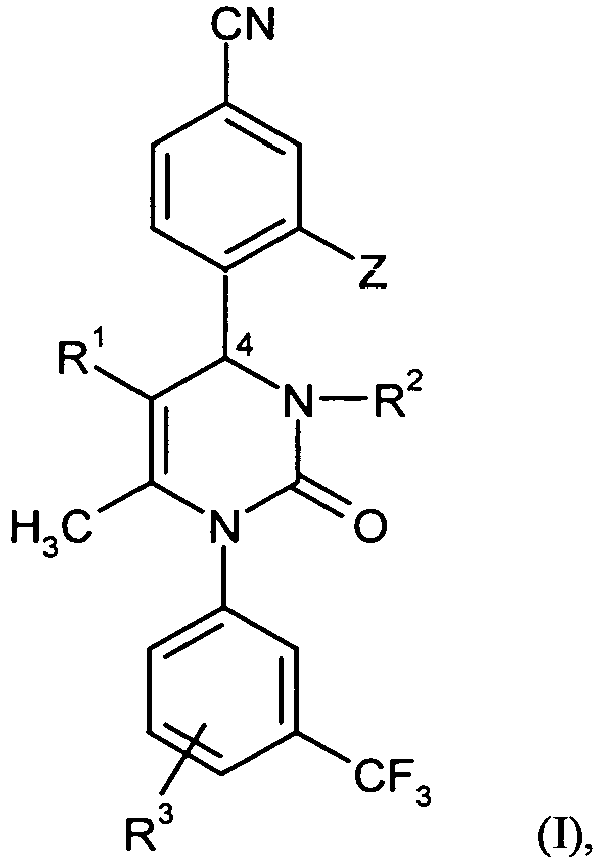
- Z
- für eine Sulfonamid-Gruppierung der Formel


* die Verknüpfungsstelle mit dem Phenyl-Ring kennzeichnet,
RZ1 Wasserstoff oder (C1-C6)-Alkyl, das mit Hydroxy, (C1-C4)-Alkoxy, Amino, Mono- oder Di-(C1-C4)-alkylamino sowie bis zu dreifach mit Fluor substituiert sein kann, bedeutet,
RZ2 Wasserstoff, (C3-C6)-Cycloalkyl, 4- bis 6-gliedriges Heterocyclyl oder 5- oder 6-gliedriges Heteroaryl bedeutet
oder
(C1-C6)-Alkyl bedeutet, das mit Hydroxy, (C1-C4)-Alkoxy, Amino, Mono- oder Di-(C1-C4)-alkylamino, (C1-C4)-Alkylcarbonylamino, (C1-C4)-Alkoxycarbonylamino, (C1-C4)-Alkylsulfinyl, (C1-C4)-Alkylsulfonyl, (C3-C6)-Cycloalkyl, Phenyl, 4- bis 6-gliedrigem Heterocyclyl, 5- oder 6-gliedrigem Heteroaryl oder einer Gruppe der Formel -C(=O)-NRZ5RZ6 sowie bis zu dreifach mit Fluor substituiert sein kann,
wobei der genannte Alkoxy-Substituent seinerseits bis zu dreifach mit Fluor substituiert sein kann,
und wobei
die genannten Heterocyclyl-Gruppen bis zu zweifach, gleich oder verschieden, mit Fluor, (C1-C4)-Alkyl, Oxo, Hydroxy, (C1-C4)-Alkoxy, Amino, Mono- und Di-(C1-C4)-alkylamino substituiert sein können
sowie
die genannte Phenyl-Gruppe und die genannten Heteroaryl-Gruppen bis zu zweifach, gleich oder verschieden, mit Fluor, Chlor, Cyano, (C1-C4)-Alkyl, Difluormethyl, Trifluormethyl und (C1-C4)-Alkoxy substituiert sein können,
und worin
RZ5 und RZ6 gleich oder verschieden sind und unabhängig voneinander Wasserstoff oder (C1-C4)-Alkyl darstellen oder
RZ5 und RZ6 zusammen mit dem Stickstoffatom, an das sie gebunden sind, einen 4- bis 6-gliedrigen Aza-Heterocyclus bilden, der ein weiteres Ring-Heteroatom aus der Reihe N, O oder S enthalten und mit (C1-C4)-Alkyl, Oxo, Hydroxy, (C1-C4)-Alkoxy, Amino, Mono- oder Di-(C1-C4)-alkylamino substituiert sein kann, oder
RZ1 und RZ2 zusammen mit dem Stickstoffatom, an das sie gebunden sind, einen 4- bis 10-gliedrigen Aza-Heterocyclus bilden, der ein weiteres Ring-Heteroatom aus der Reihe N, O oder S enthalten und bis zu zweifach, gleich oder verschieden, mit Fluor, (C1-C4)-Alkyl, Oxo, Hydroxy, (C1-C4)-Alkoxy, Amino, Mono- und Di-(C1-C4)-alkylamino substituiert sein kann,
RZ3 (C1-C6)-Alkyl, das mit (C3-C6)-Cycloalkyl oder bis zu dreifach mit Fluor substituiert sein kann, oder Phenyl, das bis zu zweifach, gleich oder verschieden, mit Fluor, Chlor, Cyano, (C1-C4)-Alkyl, Difluormethyl und Trifluormethyl substituiert sein kann, oder (C3-C6)-Cycloalkyl bedeutet, und
RZ4 Wasserstoff, (C1-C4)-Alkyl oder (C3-C6)-Cycloalkyl bedeutet, - R1
- für Cyano oder Acetyl steht,
- R2
- für Wasserstoff, (C1-C4)-Alkyl oder (C1-C4)-Alkylsulfonyl, welche jeweils bis zu dreifach mit Fluor substituiert sein können, oder eine Gruppe der Formel -CH2-C(=O)-NH-R4 steht, worin
R4 Wasserstoff, (C1-C4)-Alkyl, das mit (C3-C6)-Cycloalkyl oder bis zu dreifach mit Fluor substituiert sein kann, oder (C3-C6)-Cycloalkyl bedeutet,
- R3
- für Wasserstoff, Fluor oder Chlor steht,
- Z
- for a sulfonamide moiety of the formula
* denotes the point of attachment to the phenyl ring,
R Z1 is hydrogen or (C 1 -C 6 ) -alkyl which is hydroxyl, (C 1 -C 4 ) -alkoxy, amino, mono- or di- (C 1 -C 4 ) -alkylamino and up to three times with fluorine may be substituted,
R Z2 is hydrogen, (C 3 -C 6 ) -cycloalkyl, 4- to 6-membered heterocyclyl or 5- or 6-membered heteroaryl
or
(C 1 -C 6 ) -alkyl which is hydroxyl, (C 1 -C 4 ) -alkoxy, amino, mono- or di- (C 1 -C 4 ) -alkylamino, (C 1 -C 4 ) - Alkylcarbonylamino, (C 1 -C 4 ) -alkoxycarbonylamino, (C 1 -C 4 ) -alkylsulfinyl, (C 1 -C 4 ) -alkylsulfonyl, (C 3 -C 6 ) -cycloalkyl, phenyl, 4- to 6-membered Heterocyclyl, 5- or 6-membered heteroaryl or a group of the formula -C (= O) -NR Z5 R Z6 and may be substituted up to three times with fluorine,
wherein said alkoxy substituent in turn may be substituted up to three times by fluorine,
and where
the heterocyclyl groups mentioned up to twice, identically or differently, with fluorine, (C 1 -C 4 ) -alkyl, oxo, hydroxy, (C 1 -C 4 ) -alkoxy, amino, mono- and di- (C 1 -C 4 ) -alkylamino may be substituted
such as
said phenyl group and said heteroaryl groups substituted up to two times, identically or differently, with fluoro, chloro, cyano, (C 1 -C 4 ) alkyl, difluoromethyl, trifluoromethyl and (C 1 -C 4 ) alkoxy could be,
and in which
R Z5 and R Z6 are the same or different and independently of one another represent hydrogen or (C 1 -C 4 ) -alkyl or
R Z5 and R Z6 together with the nitrogen atom to which they are attached form a 4- to 6-membered aza heterocycle containing another ring heteroatom from the series N, O or S and containing (C 1 -C 4 ) -alkyl, oxo, hydroxy, (C 1 -C 4 ) -alkoxy, amino, mono- or di- (C 1 -C 4 ) -alkylamino may be substituted, or
R Z1 and R Z2, together with the nitrogen atom to which they are attached, form a 4- to 10-membered aza heterocycle containing another N, O or S ring heteroatom and up to twice, the same or may be substituted by fluorine, (C 1 -C 4 ) -alkyl, oxo, hydroxy, (C 1 -C 4 ) -alkoxy, amino, mono- and di- (C 1 -C 4 ) -alkylamino,
R Z3 is (C 1 -C 6 ) -alkyl which may be substituted by (C 3 -C 6 ) -cycloalkyl or up to three times by fluorine, or phenyl which may be up to twice, identically or differently, with fluorine, chlorine, Cyano, (C 1 -C 4 ) -alkyl, difluoromethyl and trifluoromethyl, or (C 3 -C 6 ) -cycloalkyl, and
R Z4 is hydrogen, (C 1 -C 4 ) -alkyl or (C 3 -C 6 ) -cycloalkyl, - R 1
- is cyano or acetyl,
- R 2
- is hydrogen, (C 1 -C 4 ) -alkyl or (C 1 -C 4 ) -alkylsulfonyl, each of which may be substituted by up to three times with fluorine, or a group of the formula -CH 2 -C (= O) -NH R 4 is in which
R 4 is hydrogen, (C 1 -C 4 ) -alkyl which may be substituted by (C 3 -C 6 ) -cycloalkyl or up to three times by fluorine, or (C 3 -C 6 ) -cycloalkyl,
- R 3
- is hydrogen, fluorine or chlorine,
Erfindungsgemäße Verbindungen sind die Verbindungen der Formel (I) und deren Salze, Solvate und Solvate der Salze, die von Formel (I) umfassten Verbindungen der nachstehend aufgeführten Formeln und deren Salze, Solvate und Solvate der Salze sowie die von Formel (I) umfassten, nachfolgend als Ausführungsbeispiele genannten Verbindungen und deren Salze, Solvate und Solvate der Salze, soweit es sich bei den von Formel (I) umfassten, nachfolgend genannten Verbindungen nicht bereits um Salze, Solvate und Solvate der Salze handelt.Compounds according to the invention are the compounds of the formula (I) and their salts, solvates and solvates of the salts comprising the compounds of the formulas listed below and their salts, solvates and solvates of the salts and those of the formula (I) encompassed by formula (I), hereinafter referred to as exemplary compounds and their salts, solvates and solvates of the salts, as far as the compounds of formula (I), the compounds mentioned below are not already salts, solvates and solvates of the salts.
Die erfindungsgemäßen Verbindungen können in Abhängigkeit von ihrer Struktur in unterschiedlichen stereoisomeren Formen existieren, d.h. in Gestalt von Konfigurationsisomeren oder gegebenenfalls auch als Konformationsisomere (Enantiomere und/oder Diastereomere, einschließlich solcher bei Atropisomeren). Die vorliegende Erfindung umfasst deshalb die Enantiomeren und Diastereomeren und ihre jeweiligen Mischungen. Aus solchen Mischungen von Enantiomeren und/ oder Diastereomeren lassen sich die stereoisomer einheitlichen Bestandteile in bekannter Weise isolieren.The compounds of the invention may exist in different stereoisomeric forms depending on their structure, i. in the form of configurational isomers or optionally also as conformational isomers (enantiomers and / or diastereomers, including those in atropisomers). The present invention therefore includes the enantiomers and diastereomers and their respective mixtures. From such mixtures of enantiomers and / or diastereomers, the stereoisomerically uniform components can be isolated in a known manner.
Sofern die erfindungsgemäßen Verbindungen in tautomeren Formen vorkommen können, umfasst die vorliegende Erfindung sämtliche tautomere Formen.If the compounds according to the invention can occur in tautomeric forms, the present invention encompasses all tautomeric forms.
Als Salze sind im Rahmen der vorliegenden Erfindung physiologisch unbedenkliche Salze der erfindungsgemäßen Verbindungen bevorzugt. Umfasst sind auch Salze, die für pharmazeutische Anwendungen selbst nicht geeignet sind, jedoch beispielsweise für die Isolierung oder Reinigung der erfindungsgemäßen Verbindungen verwendet werden können. Salts used in the context of the present invention are physiologically acceptable salts of the compounds according to the invention. Also included are salts which are themselves unsuitable for pharmaceutical applications but can be used, for example, for the isolation or purification of the compounds of the invention.
Physiologisch unbedenkliche Salze der erfindungsgemäßen Verbindungen umfassen Säureadditionssalze von Mineralsäuren, Carbonsäuren und Sulfosäuren, z.B. Salze der Chlorwasserstoffsäure, Bromwasserstoffsäure, Schwefelsäure, Phosphorsäure, Methansulfonsäure, Ethansulfonsäure, Toluolsulfonsäure, Benzolsulfonsäure, Naphthalindisulfonsäure, Essigsäure, Trifluoressigsäure, Propionsäure, Milchsäure, Weinsäure, Äpfelsäure, Zitronensäure, Fumarsäure, Maleinsäure und Benzoesäure.Physiologically acceptable salts of the compounds of the invention include acid addition salts of mineral acids, carboxylic acids and sulfonic acids, e.g. Salts of hydrochloric, hydrobromic, sulfuric, phosphoric, methanesulfonic, ethanesulfonic, toluenesulfonic, benzenesulfonic, naphthalenedisulfonic, acetic, trifluoroacetic, propionic, lactic, tartaric, malic, citric, fumaric, maleic and benzoic acids.
Physiologisch unbedenkliche Salze der erfindungsgemäßen Verbindungen umfassen auch Salze üblicher Basen, wie beispielhaft und vorzugsweise Alkalimetallsalze (z.B. Natrium- und Kaliumsalze), Erdalkalisalze (z.B. Calcium- und Magnesiumsalze) und Ammoniumsalze, abgeleitet von Ammoniak oder organischen Aminen mit 1 bis 16 C-Atomen, wie beispielhaft und vorzugsweise Ethylamin, Diethylamin, Triethylamin, Ethyldiisopropylamin, Monoethanolamin, Diethanolamin, Triethanolamin, Dicyclohexylamin, Dimethylaminoethanol, Prokain, Dibenzylamin, N-Methylmorpholin, Arginin, Lysin, Ethylendiamin und N-Methylpiperidin.Physiologically acceptable salts of the compounds according to the invention also include salts of customary bases, such as, by way of example and by way of preference, alkali metal salts (for example sodium and potassium salts), alkaline earth salts (for example calcium and magnesium salts) and ammonium salts derived from ammonia or organic amines having 1 to 16 carbon atoms, such as, by way of example and by way of illustration, ethylamine, diethylamine, triethylamine, ethyldiisopropylamine, monoethanolamine, diethanolamine, triethanolamine, dicyclohexylamine, dimethylaminoethanol, procaine, dibenzylamine, N- methylmorpholine, arginine, lysine, ethylenediamine and N- methylpiperidine.
Als Solvate werden im Rahmen der Erfindung solche Formen der erfindungsgemäßen Verbindungen bezeichnet, welche in festem oder flüssigem Zustand durch Koordination mit Lösungsmittelmolekülen einen Komplex bilden. Hydrate sind eine spezielle Form der Solvate, bei denen die Koordination mit Wasser erfolgt. Als Solvate sind im Rahmen der vorliegenden Erfindung Hydrate bevorzugt. Solvates in the context of the invention are those forms of the compounds according to the invention which form a complex in the solid or liquid state by coordination with solvent molecules. Hydrates are a special form of solvates that coordinate with water. As solvates, hydrates are preferred in the context of the present invention.
Außerdem umfasst die vorliegende Erfindung auch Prodrugs der erfindungsgemäßen Verbindungen. Der Begriff "Prodrugs" umfasst Verbindungen, welche selbst biologisch aktiv oder inaktiv sein können, jedoch während ihrer Verweilzeit im Körper zu erfindungsgemäßen Verbindungen umgesetzt werden (beispielsweise metabolisch oder hydrolytisch).In addition, the present invention also includes prodrugs of the compounds of the invention. The term "prodrugs" includes compounds which may themselves be biologically active or inactive, but which are converted during their residence time in the body into compounds of the invention (for example metabolically or hydrolytically).
Im Rahmen der vorliegenden Erfindung haben die Substituenten, soweit nicht anders spezifiziert, die folgende Bedeutung:
- (C 1 -C 6 )-Alkyl und (C 1 -C 4 )-Alkyl stehen im Rahmen der Erfindung für einen geradkettigen oder verzweigten Alkylrest mit 1 bis 6 bzw. 1 bis 4 Kohlenstoffatomen. Bevorzugt ist ein geradkettiger oder verzweigter Alkylrest mit 1 bis 4 Kohlenstoffatomen. Beispielhaft und vorzugsweise seien genannt: Methyl, Ethyl, n-Propyl, Isopropyl, n-Butyl, iso-Butyl, sec.-Butyl, tert.-Butyl, 1-Ethylpropyl, n-Pentyl, Neopentyl und n-Hexyl.
- (C 1 -C 4 )-Alkylcarbonyl steht im Rahmen der Erfindung für einen geradkettigen oder verzweigten Alkylrest mit 1 bis 4 Kohlenstoffatomen, der über eine Carbonylgruppe verknüpft ist. Beispielhaft und vorzugsweise seien genannt: Acetyl, Propionyl, n-Butyryl, iso-Butyryl, n-Pentanoyl und Pivaloyl.
- (C 1 -C 4 )-Alkoxy steht im Rahmen der Erfindung für einen geradkettigen oder verzweigten Alkoxyrest mit 1 bis 4 Kohlenstoffatomen. Beispielhaft und vorzugsweise seien genannt: Methoxy, Ethoxy, n-Propoxy, Isopropoxy, n-Butoxy und tert.-Butoxy.
- (C 1 -C 4 )-Alkoxycarbonyl steht im Rahmen der Erfindung für einen geradkettigen oder verzweigten Alkoxyrest mit 1 bis 4 Kohlenstoffatomen, der über eine Carbonylgruppe verknüpft ist. Beispielhaft und vorzugsweise seien genannt: Methoxycarbonyl, Ethoxycarbonyl, n-Propoxycarbonyl, Isopropoxycarbonyl, n-Butoxycarbonyl und tert.-Butoxycarbonyl.
- Mono-(C 1 -C 4 )-alkylamino steht im Rahmen der Erfindung für eine Amino-Gruppe mit einem geradkettigen oder verzweigten Alkylsubstituenten, der 1 bis 4 Kohlenstoffatome aufweist. Beispielhaft und vorzugsweise seien genannt: Methylamino, Ethylamino, n-Propylamino, Isopropylamino, n-Butylamino und tert.-Butylamino.
- Di-(C 1 -C 4 )-alkylamino steht im Rahmen der Erfindung für eine Amino-Gruppe mit zwei gleichen oder verschiedenen geradkettigen oder verzweigten Alkylsubstituenten, die jeweils 1 bis 4 Kohlenstoffatome aufweisen. Beispielhaft und vorzugsweise seien genannt: N,N-Dimethylamino, N,N-Diethylamino, N-Ethyl-N-methylamino, N-Methyl-N-n-propylamino, N-Isopropyl-N-methylamino, N-Isopropyl-N-n-propylamino, N,N-Diisopropylamino, N-n-Butyl-N-methylamino und N-tert.-Butyl-N-methylamino.
- (C 1 -C 4 )-Alkylcarbonylamino steht im Rahmen der Erfindung für eine Amino-Gruppe mit einem geradkettigen oder verzweigten Alkylcarbonyl-Substituenten, der 1 bis 4 Kohlenstoffatome im Alkylrest aufweist und über die Carbonylgruppe mit dem N-Atom verknüpft ist. Beispielhaft und vorzugsweise seien genannt: Acetylamino, Propionylamino, n-Butyrylamino, iso-Butyrylamino, n-Pentanoylamino und Pivaloylamino.
- (C 1 -C 4 )-Alkoxycarbonylamino steht im Rahmen der Erfindung für eine Amino-Gruppe mit einem geradkettigen oder verzweigten Alkoxycarbonyl-Substituenten, der 1 bis 4 Kohlenstoffatome im Alkoxyrest aufweist und über die Carbonylgruppe mit dem N-Atom verknüpft ist. Beispielhaft und vorzugsweise seien genannt: Methoxycarbonylamino, Ethoxycarbonylamino, n-Propoxycarbonylamino, Isopropoxycarbonylamino, n-Butoxycarbonylamino und tert.-Butoxycarbonylamino.
- (C 1 -C 4 )-Aklsulfinyl steht im Rahmen der Erfindung für einen geradkettigen oder verzweigten Alkylrest mit 1 bis 4 Kohlenstoffatomen, der über eine Sulfinylgruppe [-S(=O)-] verknüpft ist. Beispielhaft und vorzugsweise seien genannt: Methylsulfinyl, Ethylsulfinyl, n-Propylsulfinyl, Isopropylsulfinyl, n-Butylsulfinyl und tert.-Butylsulfinyl.
- (C 1 -C 4 )-Alkylsulfonyl steht im Rahmen der Erfindung für einen geradkettigen oder verzweigten Alkylrest mit 1 bis 4 Kohlenstoffatomen, der über eine Sulfonylgruppe [-S(=O)2-] verknüpft ist. Beispielhaft und vorzugsweise seien genannt: Methylsulfonyl, Ethylsulfonyl, n-Propylsulfonyl, Isopropylsulfonyl, n-Butylsulfonyl und tert.-Butylsulfonyl.
- (C 3 -C 6 )-Cycloalkyl steht im Rahmen der Erfindung für eine monocyclische, gesättigte Cycloalkylgruppe mit 3 bis 6 Ring-Kohlenstoffatomen. Beispielhaft und vorzugsweise seien genannt: Cyclopropyl, Cyclobutyl, Cyclopentyl und Cyclohexyl.
- Ein 4- bis 10-gliedriger Aza-Heterocyclus steht im Rahmen der Erfindung für einen mono- oder gegebenenfalls bicyclischen, gesättigten Heterocyclus mit insgesamt 4 bis 10 Ringatomen, der ein Ring-Stickstoffatom enthält, über das er zugleich verknüpft ist, und der darüber hinaus ein weiteres Ring-Heteroatom aus der Reihe N, O oder S enthalten kann. Beispielhaft und vorzugsweise seien genannt: Azetidinyl, Pyrrolidinyl, Pyrazolidinyl, 1,3-Oxazolidinyl, 1,3-Thiazolidinyl, Piperidinyl, Piperazinyl, Morpholinyl, Thiomorpholinyl, Hexahydroazepinyl, Hexahydro-1,4-diazepinyl, Octahydroazocinyl, Octahydropyrrolo[3,4-b]pyrrolyl, Octahydroindolyl, Octahydroisoindolyl, Octa-hydropyrrolo[3,2-b]pyridyl, Octahydropyrrolo[3,4-b]pyridyl, Octahydropyrrolo[3,4-c]pyridyl, Octahydropyrrolo[1,2-a]pyrazinyl, Decahydrochinolinyl, Decahydroisochinolinyl, Octahydro-pyrido[1,2-a]pyrazinyl, 7-Azabicyclo[2.2.1]heptyl, 3-Azabicyclo[3.2.0]heptyl, 3-Azabicyclo-[3.2.1]octyl, 8-Azabicyclo[3.2.1]octyl, 8-Oxa-3-azabicyclo[3.2.1]octyl und 9-Azabicyclo[3.3.1]-nonyl. Bevorzugt ist ein mono- oder gegebenenfalls bicyclischer 5- bis 10-gliedriger Aza-Heterocyclus, der neben dem Stickstoffatom ein weiteres Ring-Heteroatom aus der Reihe N oder O enthalten kann, wie beispielsweise Pyrrolidinyl, Pyrazolidinyl, 1,3-Oxazolidinyl, Piperidinyl, Piperazinyl, Morpholinyl, Hexahydroazepinyl, Hexahydro-1,4-diazepinyl, Octahydroazocinyl, Octahydropyrrolo[3,4-b]pyrrolyl, Octahydroindolyl, Octahydroisoindolyl, Octahydropyrrolo[3,2-b]-pyridyl, Octahydropyrrolo[3,4-b]pyridyl, Octahydropyrrolo[3,4-c]pyridyl, Octahydropyrrolo-[1,2-a]pyrazinyl, Decahydrochinolinyl, Decahydroisochinolinyl, Octahydropyrido[1,2-a]pyrazinyl, 7-Azabicyclo[2.2.1]heptyl, 3-Azabicyclo[3.2.0]heptyl, 3-Azabicyclo[3.2.1]octyl, 8-Azabicyclo-[3.2.1]octyl, 8-Oxa-3-azabicyclo[3.2.1]octyl und 9-Azabicyclo[3.3.1]nonyl. Besonders bevorzugt ist ein monocyclischer 5- oder 6-gliedriger Aza-Heterocyclus, der neben dem Stickstoffatom ein weiteres Ring-Heteroatom aus der Reihe N oder O enthalten kann, wie beispielsweise Pyrrolidinyl, 1,3-Oxazolidinyl, Piperidinyl, Piperazinyl und Morpholinyl.
- 4- bis 6-gliedriges Heterocyclyl steht im Rahmen der Erfindung für einen monocyclischen, gesättigten Heterocyclus mit insgesamt 4 bis 6 Ringatomen, der ein oder zwei Ring-Heteroatome aus der Reihe N, O und/oder S enthält und über ein Ring-Kohlenstoffatom oder gegebenenfalls über ein Ring-Stickstoffatom verknüpft ist. Beispielhaft seien genannt: Azetidinyl, Oxetanyl, Pyrrolidinyl, Pyrazolidinyl, Tetrahydrofuranyl, 1,3-Oxazolidinyl, Thiolanyl, 1,3-Thiazolidinyl, Piperidinyl, Piperazinyl, Tetrahydropyranyl, 1,4-Dioxanyl, Tetrahydrothiopyranyl, Morpholinyl und Thiomorpholinyl. Bevorzugt ist ein 4- bis 6-gliedriger Heterocyclus mit ein oder zwei Ring-Heteroatomen aus der Reihe N und/oder O, wie beispielsweise Azetidinyl, Oxetanyl, Pyrrolidinyl, Tetrahydrofuranyl, Piperidinyl, Piperazinyl, Tetrahydropyranyl, 1,4-Dioxanyl und Morpholinyl. Besonders bevorzugt ist ein 5- oder 6-gliedriger Heterocyclus mit ein oder zwei Ring-Heteroatomen aus der Reihe N und/oder O, wie beispielsweise Pyrrolidinyl, Tetrahydrofuranyl, Piperidinyl, Piperazinyl, Tetrahydropyranyl, 1,4-Dioxanyl und Morpholinyl.
- 5- oder 6-gliedriges Heteroaryl steht im Rahmen der Erfindung für einen aromatischen Heterocyclus (Heteroaromaten) mit insgesamt 5 bzw. 6 Ringatomen, der bis zu drei gleiche oder verschiedene Ring-Heteroatome aus der Reihe N, O und/oder S enthält und über ein Ring-Kohlenstoffatom oder gegebenenfalls über ein Ring-Stickstoffatom verknüpft ist. Beispielhaft seien genannt: Furyl, Pyrrolyl, Thienyl, Pyrazolyl, Imidazolyl, Oxazolyl, Thiazolyl, Isoxazolyl, Isothiazolyl, Triazolyl, Oxadiazolyl, Thiadiazolyl, Pyridyl, Pyrimidinyl, Pyridazinyl, Pyrazinyl und Triazinyl. Bevorzugt sind 5- oder 6-gliedrige Heteroaryl-Reste mit ein oder zwei Ring-Heteroatomen aus der Reihe N, O und/oder S, wie beispielsweise Furyl, Pyrrolyl, Thienyl, Pyrazolyl, Imidazolyl, Oxazolyl, Thiazolyl, Isoxazolyl, Isothiazolyl, Pyridyl, Pyrimidinyl, Pyridazinyl und Pyrazinyl.
- Ein Oxo-Substituent steht im Rahmen der Erfindung für ein Sauerstoffatom, das über eine Doppelbindung an ein Kohlenstoffatom gebunden ist.
- (C 1 -C 6 ) -Alkyl and (C 1 -C 4 ) -alkyl are in the context of the invention a straight-chain or branched alkyl radical having 1 to 6 or 1 to 4 carbon atoms. Preferred is a straight-chain or branched alkyl radical having 1 to 4 carbon atoms. Examples which may be mentioned are: methyl, ethyl, n- propyl, isopropyl, n- butyl, iso -butyl, sec -butyl, tert -butyl, 1-ethylpropyl, n- pentyl, neopentyl and n- hexyl.
- (C 1 -C 4 ) -Alkylcarbonyl in the context of the invention is a straight-chain or branched alkyl radical having 1 to 4 carbon atoms, which is linked via a carbonyl group. Examples which may be mentioned by way of example include: acetyl, propionyl, n- butyryl, iso- butyryl, n- pentanoyl and pivaloyl.
- (C 1 -C 4 ) -Alkoxy in the context of the invention is a straight-chain or branched alkoxy radical having 1 to 4 carbon atoms. Examples which may be mentioned by way of example include: methoxy, ethoxy, n- propoxy, isopropoxy, n -butoxy and tert -butoxy.
- (C 1 -C 4 ) -alkoxycarbonyl in the context of the invention represents a straight-chain or branched alkoxy radical having 1 to 4 carbon atoms which is linked via a carbonyl group. By way of example and by way of preference: methoxycarbonyl, ethoxycarbonyl, n- propoxycarbonyl, isopropoxycarbonyl, n- butoxycarbonyl and tert -butoxycarbonyl.
- Mono- (C 1 -C 4 ) -alkylamino in the context of the invention represents an amino group having a straight-chain or branched alkyl substituent which has 1 to 4 carbon atoms. Examples which may be mentioned by way of example include methylamino, ethylamino, n- propylamino, isopropylamino, n -butylamino and tert -butylamino.
- Di (C 1 -C 4 ) -alkylamino in the context of the invention is an amino group having two identical or different straight-chain or branched alkyl substituents, each having 1 to 4 carbon atoms. Preferred examples which may be mentioned are: N, N-dimethylamino, N, N-diethylamino, N -ethyl- N -methylamino, N -methyl- N - n-propylamino, N -Isopropyl- N -methylamino, N- isopropyl- N - n -propylamino, N, N- diisopropylamino, N - n- butyl- N- methylamino and N-tert -butyl- N- methylamino.
- (C 1 -C 4 ) -Alkylcarbonylamino in the context of the invention represents an amino group having a straight-chain or branched alkylcarbonyl substituent which has 1 to 4 carbon atoms in the alkyl radical and is linked via the carbonyl group with the nitrogen atom. Examples which may be mentioned are: acetylamino, propionylamino, n- butyrylamino, iso- butyrylamino, n- pentanoylamino and pivaloylamino.
- (C 1 -C 4 ) -Alkoxycarbonylamino in the context of the invention represents an amino group having a straight-chain or branched alkoxycarbonyl substituent which has 1 to 4 carbon atoms in the alkoxy radical and is linked via the carbonyl group to the N-atom. By way of example and preferably mention may be made of: methoxycarbonylamino, ethoxycarbonylamino, n- propoxycarbonylamino, isopropoxycarbonylamino, n- butoxycarbonylamino and tert -butoxycarbonylamino.
- (C 1 -C 4 ) -Alsulfinyl in the context of the invention is a straight-chain or branched alkyl radical having 1 to 4 carbon atoms, which is linked via a sulfinyl group [-S (= O) -]. By way of example and preferably mention may be made of: methylsulfinyl, ethylsulfinyl, n- propylsulfinyl, isopropylsulfinyl, n- butylsulfinyl and tert -butylsulfinyl.
- (C 1 -C 4 ) -Alkylsulfonyl in the context of the invention represents a straight-chain or branched alkyl radical having 1 to 4 carbon atoms, which is linked via a sulfonyl group [-S (= O) 2 -]. By way of example and by way of preference: methylsulfonyl, ethylsulfonyl, n- propylsulfonyl, isopropylsulfonyl, n- butylsulfonyl and tert -butylsulfonyl.
- (C 3 -C 6 ) -cycloalkyl in the context of the invention is a monocyclic, saturated cycloalkyl group having 3 to 6 ring carbon atoms. By way of example and preferably mention may be made of: cyclopropyl, cyclobutyl, cyclopentyl and cyclohexyl.
- A 4- to 10-membered aza heterocycle is in the context of the invention for a mono- or optionally bicyclic, saturated heterocycle having a total of 4 to 10 ring atoms, which contains a ring nitrogen atom, via which it is also linked, and beyond may contain another ring heteroatom from the series N, O or S. Examples which may be mentioned are: azetidinyl, pyrrolidinyl, pyrazolidinyl, 1,3-oxazolidinyl, 1,3-thiazolidinyl, piperidinyl, piperazinyl, morpholinyl, thiomorpholinyl, hexahydroazepinyl, hexahydro-1,4-diazepinyl, octahydroazocinyl, Octahydropyrrolo [3,4-b] pyrrolyl, octahydroindolyl, octahydroisoindolyl, octa-hydropyrrolo [3,2-b] pyridyl, octahydropyrrolo [3,4-b] pyridyl, octahydropyrrolo [3,4-c] pyridyl, octahydropyrrolo [1, 2-a] pyrazinyl, decahydroquinolinyl, decahydroisoquinolinyl, octahydro-pyrido [1,2-a] pyrazinyl, 7-azabicyclo [2.2.1] heptyl, 3-azabicyclo [3.2.0] heptyl, 3-azabicyclo [3.2.1 ] octyl, 8-azabicyclo [3.2.1] octyl, 8-oxa-3-azabicyclo [3.2.1] octyl and 9-azabicyclo [3.3.1] -nonyl. Preference is given to a mono- or optionally bicyclic 5- to 10-membered aza heterocycle which may contain, in addition to the nitrogen atom, another ring heteroatom from the series N or O, for example pyrrolidinyl, pyrazolidinyl, 1,3-oxazolidinyl, piperidinyl, Piperazinyl, morpholinyl, hexahydroazepinyl, hexahydro-1,4-diazepinyl, octahydroazocinyl, octahydropyrrolo [3,4-b] pyrrolyl, octahydroindolyl, octahydroisoindolyl, octahydropyrrolo [3,2-b] pyridyl, octahydropyrrolo [3,4-b] pyridyl , Octahydropyrrolo [3,4-c] pyridyl, octahydropyrrolo [1,2-a] pyrazinyl, decahydroquinolinyl, decahydroisoquinolinyl, octahydropyrido [1,2-a] pyrazinyl, 7-azabicyclo [2.2.1] heptyl, 3-azabicyclo [ 3.2.0] heptyl, 3-azabicyclo [3.2.1] octyl, 8-azabicyclo [3.2.1] octyl, 8-oxa-3-azabicyclo [3.2.1] octyl and 9-azabicyclo [3.3.1] nonyl , Particular preference is given to a monocyclic 5- or 6-membered aza heterocycle which may contain, in addition to the nitrogen atom, another ring heteroatom from the series N or O, for example pyrrolidinyl, 1,3-oxazolidinyl, piperidinyl, piperazinyl and morpholinyl.
- 4- to 6-membered heterocyclyl is in the context of the invention for a monocyclic, saturated heterocycle having a total of 4 to 6 ring atoms containing one or two ring heteroatoms from the series N, O and / or S and via a ring carbon atom or optionally linked via a ring nitrogen atom. Examples which may be mentioned are: azetidinyl, oxetanyl, pyrrolidinyl, pyrazolidinyl, tetrahydrofuranyl, 1,3-oxazolidinyl, thiolanyl, 1,3-thiazolidinyl, piperidinyl, piperazinyl, tetrahydropyranyl, 1,4-dioxanyl, tetrahydrothiopyranyl, morpholinyl and thiomorpholinyl. Preference is given to a 4- to 6-membered heterocycle having one or two ring heteroatoms from the series N and / or O, such as azetidinyl, oxetanyl, pyrrolidinyl, tetrahydrofuranyl, piperidinyl, piperazinyl, tetrahydropyranyl, 1,4-dioxanyl and morpholinyl. Particularly preferred is a 5- or 6-membered heterocycle having one or two ring heteroatoms from the series N and / or O, such as pyrrolidinyl, tetrahydrofuranyl, piperidinyl, piperazinyl, tetrahydropyranyl, 1,4-dioxanyl and morpholinyl.
- 5- or 6-membered heteroaryl is in the context of the invention for an aromatic heterocycle (heteroaromatic) with a total of 5 or 6 ring atoms, which contains up to three identical or different ring heteroatoms from the series N, O and / or S. a ring carbon atom or optionally linked via a ring nitrogen atom. Examples which may be mentioned are: furyl, pyrrolyl, thienyl, pyrazolyl, imidazolyl, oxazolyl, thiazolyl, isoxazolyl, isothiazolyl, triazolyl, oxadiazolyl, thiadiazolyl, pyridyl, pyrimidinyl, pyridazinyl, pyrazinyl and triazinyl. Prefers are 5- or 6-membered heteroaryl radicals having one or two ring heteroatoms from the series N, O and / or S, such as furyl, pyrrolyl, thienyl, pyrazolyl, imidazolyl, oxazolyl, thiazolyl, isoxazolyl, isothiazolyl, pyridyl, Pyrimidinyl, pyridazinyl and pyrazinyl.
- An oxo substituent in the context of the invention is an oxygen atom which is bonded via a double bond to a carbon atom.
Wenn Reste in den erfindungsgemäßen Verbindungen substituiert sind, können die Reste, soweit nicht anders spezifiziert, ein- oder mehrfach substituiert sein. Im Rahmen der vorliegenden Erfindung gilt, dass für alle Reste, die mehrfach auftreten, deren Bedeutung unabhängig voneinander ist. Eine Substitution mit einem oder zwei gleichen oder verschiedenen Substituenten ist bevorzugt. Ganz besonders bevorzugt ist die Substitution mit einem Substituenten.If radicals are substituted in the compounds according to the invention, the radicals can, unless otherwise specified, be monosubstituted or polysubstituted. In the context of the present invention, the meaning is independent of each other for all radicals which occur repeatedly. Substitution with one or two identical or different substituents is preferred. Very particular preference is given to the substitution with a substituent.
Bevorzugt im Rahmen der vorliegenden Erfindung sind Verbindungen der Formel (I), in welcher
- Z
- für eine Sulfonamid-Gruppierung der Formel


* die Verknüpfungsstelle mit dem Phenyl-Ring kennzeichnet,
RZ1 Wasserstoff oder (C1-C4)-Alkyl, das mit Hydroxy, Methoxy oder Ethoxy substituiert sein kann, bedeutet,
RZ2 Wasserstoff, (C3-C6)-Cycloalkyl, 5- oder 6-gliedriges Heterocyclyl oder 5- oder 6-gliedriges Heteroaryl bedeutet
oder
(C1-C4)-Alkyl bedeutet, das mit Hydroxy, (C1-C4)-Alkoxy, Amino, Mono- oder Di-(C1-C4)-alkylamino, (C1-C4)-Alkylcarbonylamino, (C1-C4)-Alkoxycarbonylamino, (C1-C4)-Alkylsulfinyl, (C1-C4)-Alkylsulfonyl, (C3-C6)-Cycloalkyl, Phenyl, 5- oder 6-gliedrigem Heterocyclyl, 5- oder 6-gliedrigem Heteroaryl oder einer Gruppe der Formel -C(=O)-NRZ5RZ6 sowie bis zu dreifach mit Fluor substituiert sein kann,
wobei der genannte Alkoxy-Substituent seinerseits bis zu dreifach mit Fluor substituiert sein kann,
und wobei
die genannten Heterocyclyl-Gruppen bis zu zweifach, gleich oder verschieden, mit (C1-C4)-Alkyl, Oxo, Hydroxy und (C1-C4)-Alkoxy substituiert sein können
sowie
die genannte Phenyl-Gruppe und die genannten Heteroaryl-Gruppen bis zu zweifach, gleich oder verschieden, mit Fluor, Chlor, Cyano, (C1-C4)-Alkyl, Trifluormethyl und (C1-C4)-Alkoxy substituiert sein können,
und worin
RZ5 und RZ6 gleich oder verschieden sind und unabhängig voneinander Wasserstoff oder (C1-C4)-Alkyl darstellen oder
RZ5 und RZ6 zusammen mit dem Stickstoffatom, an das sie gebunden sind, einen 5- oder 6-gliedrigen Aza-Heterocyclus bilden, der ein weiteres Ring-Heteroatom aus der Reihe N oder O enthalten und mit (C1-C4)-Alkyl, Oxo, Hydroxy oder (C1-C4)-Alkoxy substituiert sein kann, oder
RZ1 und RZ2 zusammen mit dem Stickstoffatom, an das sie gebunden sind, einen 5- bis 10-gliedrigen Aza-Heterocyclus bilden, der ein weiteres Ring-Heteroatom aus der Reihe N oder O enthalten und bis zu zweifach, gleich oder verschieden, mit (C1-C4)-Alkyl, Oxo, Hydroxy und (C1-C4)-Alkoxy substituiert sein kann,
RZ3 (C1-C4)-Alkyl, das mit (C3-C6)-Cycloalkyl oder bis zu dreifach mit Fluor substituiert sein kann, oder Phenyl, das bis zu zweifach, gleich oder verschieden, mit Fluor, Chlor, Cyano, Methyl und Trifluormethyl substituiert sein kann, oder (C3-C6)-Cycloalkyl bedeutet, und
RZ4 Wasserstoff, Methyl oder Cyclopropyl bedeutet, - R1
- für Cyano steht,
- R2
- für Wasserstoff, (C1-C4)-Alkyl oder (C1-C4)-Alkylsulfonyl, welche jeweils bis zu dreifach mit Fluor substituiert sein können, oder eine Gruppe der Formel -CH2-C(=O)-NH-R4 steht, worin
R4 Wasserstoff, Methyl, Cyclopropyl oder Cyclopropylmethyl bedeutet,
- R3
- für Wasserstoff oder Fluor steht,
- Z
- for a sulfonamide moiety of the formula
* denotes the point of attachment to the phenyl ring,
R Z1 is hydrogen or (C 1 -C 4 ) -alkyl which may be substituted by hydroxyl, methoxy or ethoxy,
R Z2 is hydrogen, (C 3 -C 6 ) -cycloalkyl, 5- or 6-membered heterocyclyl or 5- or 6-membered heteroaryl
or
(C 1 -C 4 ) -alkyl which is hydroxyl, (C 1 -C 4 ) -alkoxy, amino, mono- or di- (C 1 -C 4 ) -alkylamino, (C 1 -C 4 ) - Alkylcarbonylamino, (C 1 -C 4 ) alkoxycarbonylamino, (C 1 -C 4 ) -alkylsulfinyl, (C 1 -C 4 ) -alkylsulfonyl, (C 3 -C 6 ) -cycloalkyl, phenyl, 5- or 6-membered Heterocyclyl, 5- or 6-membered heteroaryl or a group of the formula -C (= O) -NR Z5 R Z6 and may be substituted up to three times with fluorine,
wherein said alkoxy substituent in turn may be substituted up to three times by fluorine,
and where
said heterocyclyl groups may be substituted up to two times, identically or differently, by (C 1 -C 4 ) -alkyl, oxo, hydroxy and (C 1 -C 4 ) -alkoxy
such as
said phenyl group and said heteroaryl groups may be substituted up to two times, identically or differently, by fluoro, chloro, cyano, (C 1 -C 4 ) alkyl, trifluoromethyl and (C 1 -C 4 ) alkoxy .
and in which
R Z5 and R Z6 are the same or different and independently of one another represent hydrogen or (C 1 -C 4 ) -alkyl or
R Z5 and R Z6 together with the nitrogen atom to which they are attached form a 5- or 6-membered aza heterocycle containing another ring heteroatom from the series N or O and having (C 1 -C 4 ) Alkyl, oxo, hydroxy or (C 1 -C 4 ) alkoxy, or
R Z1 and R Z2 together with the nitrogen atom to which they are attached form a 5- to 10-membered aza heterocycle containing a further ring heteroatom from the series N or O and up to twice, identically or differently, may be substituted by (C 1 -C 4 ) -alkyl, oxo, hydroxy and (C 1 -C 4 ) -alkoxy,
R Z3 is (C 1 -C 4 ) -alkyl which may be substituted by (C 3 -C 6 ) -cycloalkyl or up to three times by fluorine, or phenyl which may be up to twice, identically or differently, with fluorine, chlorine, Cyano, methyl and trifluoromethyl, or (C 3 -C 6 ) -cycloalkyl, and
R Z4 is hydrogen, methyl or cyclopropyl, - R 1
- stands for cyano,
- R 2
- is hydrogen, (C 1 -C 4 ) -alkyl or (C 1 -C 4 ) -alkylsulfonyl, each of which may be substituted by up to three times with fluorine, or a group of the formula -CH 2 -C (= O) -NH R 4 is in which
R 4 is hydrogen, methyl, cyclopropyl or cyclopropylmethyl,
- R 3
- is hydrogen or fluorine,
Besonders bevorzugt im Rahmen der vorliegenden Erfindung sind Verbindungen der Formel (I), in welcher
- Z
- für eine Sulfonamid-Gruppierung der Formel

* die Verknüpfungsstelle mit dem Phenyl-Ring kennzeichnet,
RZ1 Wasserstoff, Methyl oder 2-Hydroxyethyl bedeutet,
RZ2 Wasserstoff, Cyclopropyl, 5- oder 6-gliedriges Heterocyclyl oder 5- oder 6-gliedriges Heteroaryl bedeutet
oder
(C1-C4)-Alkyl bedeutet, das mit Hydroxy, Methoxy, Ethoxy, Amino, Methylamino, Ethylamino, Dimethylamino, Diethylamino, Acetylamino, Cyclopropyl, 5- oder 6-gliedrigem Heterocyclyl oder einer Gruppe der Formel -C(=O)-NRZ5RZ6 substituiert sein kann,
wobei die genannten Methoxy- und Ethoxy-Substituenten ihrerseits bis zu dreifach mit Fluor substituiert sein können,
und wobei
die genannten Heterocyclyl-Gruppen bis zu zweifach, gleich oder verschieden, mit Methyl, Ethyl, Oxo, Hydroxy, Methoxy und Ethoxy substituiert sein können
sowie
die genannte Heteroaryl-Gruppe bis zu zweifach, gleich oder verschieden, mit Fluor, Chlor, Cyano, Methyl, Ethyl, Trifluormethyl, Methoxy und Ethoxy substituiert sein kann,
und worin
RZ5 und RZ6 unabhängig voneinander Wasserstoff oder Methyl darstellen oder zusammen mit dem Stickstoffatom, an das sie gebunden sind, einen Pyrrolidin-, Piperidin- oder Morpholin-Ring bilden, oder
RZ1 und RZ2 zusammen mit dem Stickstoffatom, an das sie gebunden sind, einen Pyrrolidin-, Piperidin- oder Morpholin-Ring bilden, - R1
- für Cyano steht,
- R2
- für Wasserstoff, Methyl, Methylsulfonyl oder die Gruppe der Formel -CH2-C(=O)-NH2 steht,
- R3
- für Wasserstoff steht,
- Z
- for a sulfonamide moiety of the formula
* denotes the point of attachment to the phenyl ring,
R Z1 is hydrogen, methyl or 2-hydroxyethyl,
R Z2 is hydrogen, cyclopropyl, 5- or 6-membered heterocyclyl or 5- or 6-membered heteroaryl
or
(C 1 -C 4 ) -alkyl which is hydroxyl, methoxy, ethoxy, amino, methylamino, ethylamino, dimethylamino, diethylamino, acetylamino, cyclopropyl, 5- or 6-membered heterocyclyl or a group of the formula -C (= O ) -NR Z5 R Z6 can be substituted,
wherein said methoxy and ethoxy substituents in turn may be substituted up to three times by fluorine,
and where
said heterocyclyl groups may be substituted up to two times, identically or differently, by methyl, ethyl, oxo, hydroxy, methoxy and ethoxy
such as
said heteroaryl group may be substituted up to two times, identically or differently, by fluorine, chlorine, cyano, methyl, ethyl, trifluoromethyl, methoxy and ethoxy,
and in which
R Z5 and R Z6 independently represent hydrogen or methyl or together with the nitrogen atom to which they are attached form a pyrrolidine, piperidine or morpholine ring, or
R Z1 and R Z2 together with the nitrogen atom to which they are attached form a pyrrolidine, piperidine or morpholine ring, - R 1
- stands for cyano,
- R 2
- is hydrogen, methyl, methylsulfonyl or the group of the formula -CH 2 -C (= O) -NH 2 ,
- R 3
- stands for hydrogen,
Besonders bevorzugt im Rahmen der vorliegenden Erfindung sind auch Verbindungen der Formel (I), in welcher
- Z
- für eine Sulfoximin-Gruppierung der Formel

* die Verknüpfungsstelle mit dem Phenyl-Ring kennzeichnet und
RZ3 (C1-C4)-Alkyl, das mit Cyclopropyl oder bis zu dreifach mit Fluor substituiert sein kann, oder Cyclopropyl bedeutet, - R1
- für Cyano steht,
- R2
- für Wasserstoff, Methyl, Methylsulfonyl oder die Gruppe der Formel -CH2-C(=O)-NH2 steht,
- R3
- für Wasserstoff steht,
- Z
- for a sulfoximine moiety of the formula
* denotes the point of attachment to the phenyl ring and
R Z3 is (C 1 -C 4 ) -alkyl which may be substituted by cyclopropyl or up to three times by fluorine, or cyclopropyl, - R 1
- stands for cyano,
- R 2
- is hydrogen, methyl, methylsulfonyl or the group of the formula -CH 2 -C (= O) -NH 2 ,
- R 3
- stands for hydrogen,
Ganz besonders bevorzugt im Rahmen der vorliegenden Erfindung sind Verbindungen der Formel (I), in welcher
- Z
- für eine Sulfonamid-Gruppierung der Formel

* die Verknüpfungsstelle mit dem Phenyl-Ring kennzeichnet und
RZ2 Wasserstoff, Methyl oder die Gruppe der Formel -CH2-C(=O)-NH2 bedeutet, - R1
- für Cyano steht,
- R2
- für Wasserstoff, Methyl oder Methylsulfonyl steht,
- R3
- für Wasserstoff steht,
- Z
- for a sulfonamide moiety of the formula
* denotes the point of attachment to the phenyl ring and
R Z2 is hydrogen, methyl or the group of the formula -CH 2 -C (= O) -NH 2 , - R 1
- stands for cyano,
- R 2
- is hydrogen, methyl or methylsulfonyl,
- R 3
- stands for hydrogen,
Ganz besonders bevorzugt im Rahmen der vorliegenden Erfindung sind auch Verbindungen der Formel (I), in welcher
- Z
- für eine Sulfoximin-Gruppierung der Formel

* die Verknüpfungsstelle mit dem Phenyl-Ring kennzeichnet, - R1
- für Cyano steht,
- R2
- für Wasserstoff, Methyl oder Methylsulfonyl steht,
- R3
- für Wasserstoff steht,
- Z
- for a sulfoximine moiety of the formula
* denotes the point of attachment to the phenyl ring, - R 1
- stands for cyano,
- R 2
- is hydrogen, methyl or methylsulfonyl,
- R 3
- stands for hydrogen,
Von besonderer Bedeutung sind Verbindungen gemäß Formel (I) mit der in Formel (I-ent) wiedergegebenen S-Konfiguration an der 4-Position des Dihydropyrimidinon-Rings

und ihre Salzt, Solvate und Solvate der Salze.Of particular importance are compounds of the formula (I) having the S configuration shown in formula (I- ent ) at the 4-position of the dihydropyrimidinone ring
and their salts, solvates and solvates of salts.
Die in den jeweiligen Kombinationen bzw. bevorzugten Kombinationen von Resten im einzelnen angegebenen Reste-Definitionen werden unabhängig von den jeweiligen angegebenen Kombinationen der Reste beliebig auch durch Reste-Definitionen anderer Kombinationen ersetzt.The residue definitions given in detail in the respective combinations or preferred combinations of residues are also replaced by residue definitions of other combinations, regardless of the particular combinations of the residues indicated.
Ganz besonders bevorzugt sind Kombinationen von zwei oder mehreren der oben genannten Vorzugsbereiche.Very particular preference is given to combinations of two or more of the abovementioned preferred ranges.
Weiterer Gegenstand der Erfindung ist ein Verfahren zur Herstellung von erfindungsgemäßen Verbindungen der Formel (I), in welcher
- Z
- für eine Sulfonamid-Gruppierung der Formel

* die Verknüpfungsstelle mit dem Phenyl-Ring kennzeichnet und
RZ1 und RZ2 die oben angegebenen Bedeutungen haben,

zunächst mit Natriumnitrit und Salzsäure in das entsprechende Diazonium-Salz überführt, anschließend in einer Eintopf-Reaktion mit Schwefeldioxid in Gegenwart von Kupfer(I)chlorid zu einem Sulfochlorid der Formel (III)

umsetzt und dieses dann mit einem Amin der Formel (IV)

gegebenenfalls in Gegenwart einer Hilfsbase zum Sulfonamid der Formel (I-A)

reagiert
und gegebenenfalls die so erhaltenen Verbindungen der Formel (I-A) nach dem Fachmann bekannten Methoden in ihre Enantiomere und/oder Diastereomere trennt und/oder mit den entsprechenden (i) Lösungsmitteln und/oder (ii) Basen oder Säuren in ihre Solvate, Salze und/oder Solvate der Salze überführt.Another object of the invention is a process for the preparation of compounds of the formula (I) according to the invention, in which
- Z
- for a sulfonamide moiety of the formula
* denotes the point of attachment to the phenyl ring and
R Z1 and R Z2 have the meanings given above,
first with sodium nitrite and hydrochloric acid in the corresponding diazonium salt, then in a one-pot reaction with sulfur dioxide in the presence of copper (I) chloride to a sulfochloride of the formula (III)
and this then reacted with an amine of the formula (IV)
optionally in the presence of an auxiliary base to the sulfonamide of the formula (IA)
responds
and, if appropriate, the compounds of the formula (IA) thus obtained are separated into their enantiomers and / or diastereomers by methods known to those skilled in the art and / or with the appropriate (i) solvents and / or (ii) bases or acids in their solvates, salts and / or solvates of the salts.
Die Diazotierung und nachfolgende Sulfochlorierung im Verfahrensschritt (II) → (III) erfolgt nach üblichen, dem Fachmann geläufigen Methoden, indem das Anilin-Derivat der Formel (II) zunächst durch Reaktion mit Natriumnitrit in wässriger Salzsäure bei -20°C bis 0°C in das Diazonium-Salz überführt wird, welches dann in situ bei -20°C bis +20°C mit einer gesättigten Lösung von Schwefeldioxid in Essigsäure in Gegenwart von Kupfer(I)chlorid als Katalysator weiter umgesetzt wird.The diazotization and subsequent sulfochlorination in process step (II) → (III) is carried out by customary methods known to those skilled in the art by reacting the aniline derivative of the formula (II) first by reaction with sodium nitrite in aqueous hydrochloric acid at -20 ° C to 0 ° C. is converted into the diazonium salt, which is then further reacted in situ at -20 ° C to + 20 ° C with a saturated solution of sulfur dioxide in acetic acid in the presence of copper (I) chloride as a catalyst.
Inerte Lösungsmittel für die Sulfonamid-Bildung im Verfahrensschritt (III) + (IV) → (I-A) sind übliche organische Lösungsmittel, die sich unter den Reaktionsbedingungen nicht verändern. Dazu zählen beispielsweise Ether wie Diethylether, Diisopropylether, Methyl-tert.-butylether, 1,2-Dimethoxyethan, 1,4-Dioxan oder Tetrahydrofuran, Kohlenwasserstoffe wie Pentan, Hexan, Cyclohexan, Benzol, Toluol oder Xylol, Halogenkohlenwasserstoffe wie Dichlormethan, 1,2-Dichlorethan, Trichlormethan oder Chlorbenzol, oder andere Lösungsmittel wie Ethylacetat, Acetonitril, Pyridin, Dimethylsulfoxid (DMSO), N,N-Dimethylformamid (DMF), N,N'-Dimethylpropylenharnstoff (DMPU) oder N-Methylpyrrolidinon (NMP). Ebenso ist es möglich, Gemische solcher Lösungsmittel einzusetzen. Bevorzugt wird Tetrahydrofuran, 1,4-Dioxan, Dichlormethan oder 1,2-Dichlorethan verwendet.Inert solvents for the sulfonamide formation in process step (III) + (IV) → (IA) are customary organic solvents which do not change under the reaction conditions. These include, for example, ethers, such as diethyl ether, diisopropyl ether, methyl tert -butyl ether, 1,2-dimethoxyethane, 1,4-dioxane or tetrahydrofuran, hydrocarbons, such as pentane, hexane, cyclohexane, benzene, toluene or xylene, halogenated hydrocarbons, such as dichloromethane, 1, 2-dichloroethane, trichloromethane or chlorobenzene, or other solvents such as ethyl acetate, acetonitrile, pyridine, dimethylsulfoxide (DMSO), N, N- dimethylformamide (DMF), N, N'-dimethylpropyleneurea (DMPU) or N- methylpyrrolidinone (NMP). It is also possible to use mixtures of such solvents. Preference is given to using tetrahydrofuran, 1,4-dioxane, dichloromethane or 1,2-dichloroethane.
Die Umsetzung (III) + (IV) → (I-A) wird üblicherweise in Gegenwart einer Hilfsbase durchgeführt. Hierfür eignen sich insbesondere tertiäre organische Amin-Basen wie Triethylamin, N,N-Diisopropylethylamin, N-Methylmorpholin, N-Methylpiperidin, 1,5-Diazabicyclo[4.3.0]non-5-en (DBN), 1,8-Diazabicyclo[5.4.0]undec-7-en (DBU), Pyridin oder 4-N,N-Dimethylaminopyridin; bevorzugt wird Triethylamin oder N,N-Diisopropylethylamin verwendet. Gegebenenfalls kann die Umsetzung aber auch mit einem Überschuss des Amins (IV), ohne weiteren Zusatz einer Hilfsbase, erfolgen.The reaction (III) + (IV) → (IA) is usually carried out in the presence of an auxiliary base. Particularly suitable for this purpose are tertiary organic amine bases such as triethylamine, N, N- diisopropylethylamine, N-methylmorpholine, N-methylpiperidine, 1,5-diazabicyclo [4.3.0] non-5-ene (DBN), 1,8-diazabicyclo [5.4.0] undec-7-ene (DBU), pyridine or 4- N, N- dimethylaminopyridine; Preferably, triethylamine or N, N- diisopropylethylamine is used. Optionally, the reaction can also be carried out with an excess of the amine (IV), without further addition of an auxiliary base.
Der Verfahrensschritt (III) + (IV) → (I-A) wird im Allgemeinen in einem Temperaturbereich von -20°C bis +60°C, bevorzugt bei 0°C bis +40°C durchgeführt. Die Reaktion kann bei normalem, bei erhöhtem oder bei erniedrigtem Druck erfolgen (z.B. von 0.5 bis 5 bar); in der Regel arbeitet man bei Normaldruck. Weiterer Gegenstand der Erfindung ist ein Verfahren zur Herstellung von erfindungsgemäßen Verbindungen der Formel (I), in welcher
- Z
- für eine Sulfoximin-Gruppierung der Formel

* die Verknüpfungsstelle mit dem Phenyl-Ring kennzeichnet und
RZ3 die oben angegebene Bedeutung hat,

zunächst mit Wasserstoffperoxid, einer Persäure oder einem Periodat zum Sulfoxid der Formel (VI)

oxidiert, anschließend mit 2,2,2-Trifluoracetamid und (Diacetoxyiod)-benzol in Gegenwart von dimerem Rhodium(II)acetat als Katalysator und Magnesiumoxid als Base zu einem N-Acyl-Sulfoximin der Formel (VII)

umsetzt und die Trifluoracetyl-Gruppe in (VII) dann unter basischen Bedingungen zum Sulfoximin der Formel (I-B)

abspaltet
und gegebenenfalls die so erhaltenen Verbindungen der Formel (I-B) nach dem Fachmann bekannten Methoden in ihre Enantiomere und/oder Diastereomere trennt und/oder mit den entsprechenden (i) Lösungsmitteln und/oder (ii) Basen oder Säuren in ihre Solvate, Salze und/oder Solvate der Salze überführt.The process step (III) + (IV) → (IA) is generally carried out in a temperature range from -20 ° C to + 60 ° C, preferably at 0 ° C to + 40 ° C. The reaction can be carried out at normal, at elevated or at reduced pressure (for example from 0.5 to 5 bar); usually one works at normal pressure. Another object of the invention is a process for the preparation of compounds of the formula (I) according to the invention, in which
- Z
- for a sulfoximine moiety of the formula
* denotes the point of attachment to the phenyl ring and
R Z3 has the meaning given above,
first with hydrogen peroxide, a peracid or a periodate to the sulfoxide of the formula (VI)
oxidized, then with 2,2,2-trifluoroacetamide and (diacetoxyiodo) benzene in the presence of dimeric rhodium (II) acetate as catalyst and magnesium oxide as base to give an N- acyl sulfoximine of formula (VII)
and the trifluoroacetyl group in (VII) is then reacted under basic conditions to form the sulfoximine of the formula (IB)
cleaves
and optionally the compounds of the formula (IB) thus obtained are separated into their enantiomers and / or diastereomers by methods known to the person skilled in the art and / or with the corresponding (i) solvents and / or (ii) bases or acids in their solvates, salts and / or solvates of the salts.
Als Oxidationsmittel für den Verfahrensschritt (V) → (VI) sind insbesondere organische oder anorganische Peroxo-Verbindungen geeignet. Dazu zählen beispielsweise Wasserstoffperoxid, gegebenenfalls unter Mitwirkung eines Katalysators, Persäuren wie Peressigsäure oder m-Chlorperbenzoesäure, oder Salze solcher Verbindungen wie Natriumperiodat. Bevorzugt wird Wasserstoffperoxid, in Gegenwart von Methyltrioxorhenium als Katalysator, oder Natriumperiodat eingesetzt.Suitable oxidizing agents for process step (V) → (VI) are, in particular, organic or inorganic peroxo compounds. These include, for example, hydrogen peroxide, optionally with the assistance of a catalyst, peracids such as peracetic acid or m- chloroperbenzoic acid, or salts of such compounds as sodium periodate. Hydrogen peroxide is preferably used in the presence of methyltrioxorhenium as catalyst or sodium periodate.
Die Oxidation (V) → (VI) wird vorzugsweise in alkoholischen Lösungsmitteln wie Methanol oder Ethanol, gegebenenfalls unter Zusatz von Wasser, in einem Temperaturbereich von -20°C bis +100°C, bevorzugt bei 0°C bis +60°C, durchgeführt.The oxidation (V) → (VI) is preferably carried out in alcoholic solvents such as methanol or ethanol, optionally with the addition of water, in a temperature range from -20 ° C to + 100 ° C, preferably at 0 ° C to + 60 ° C, carried out.
Die Transformation des Sulfoxids (VI) zum N-Trifluoracetyl-Sulfoximin (VII) erfolgt nach einer literaturbeschriebenen Methode über eine Metall-katalysierte, oxidative Iminierungsreaktion mit 2,2,2-Trifluoracetamid und (Diacetoxyiod)-benzol in Gegenwart von dimerem Rhodium(II)acetat als Katalysator und Magnesiumoxid als Base [vgl.
Die Abspaltung der Trifluoracetyl-Gruppe im Verfahrensschritt (VII) → (I-B) geschieht auf übliche Weise durch Behandlung mit einem Alkalicarbonat oder -hydroxid in einem alkoholischen oder wässrigen Lösungsmittel. Bevorzugt wird Kaliumcarbonat in Methanol oder Acetonitril/ Methanol-Gemischen eingesetzt. Die Reaktion wird im Allgemeinen in einem Temperaturbereich von -10°C bis +30°C durchgeführt.The cleavage of the trifluoroacetyl group in process step (VII) → (I-B) is carried out in a conventional manner by treatment with an alkali metal carbonate or hydroxide in an alcoholic or aqueous solvent. Preferably, potassium carbonate is used in methanol or acetonitrile / methanol mixtures. The reaction is generally carried out in a temperature range of -10 ° C to + 30 ° C.
Erfindungsgemäße Sulfoximin-Derivate der Formel (I-C)

und
- RZ4A
- für (C1-C4)-Alkyl oder (C3-C6)-Cycloalkyl steht,
RZ4A-X1 (VIII),
in welcher RZ4A die oben angegebene Bedeutung hat
und
- X1
- für eine Abgangsgruppe wie beispielsweise Halogen, Mesylat, Tosylat oder Triflat steht,
and
- R Z4A
- is (C 1 -C 4 ) -alkyl or (C 3 -C 6 ) -cycloalkyl,
R Z4A -X 1 (VIII),
in which R Z4A has the abovementioned meaning
and
- X 1
- represents a leaving group such as halogen, mesylate, tosylate or triflate,
Die Verbindungen der Formel (II) können in Analogie zu literaturbeschriebenen Verfahren beispielsweise hergestellt werden, indem man 4-Cyano-2-nitrobenzaldehyd der Formel (IX)

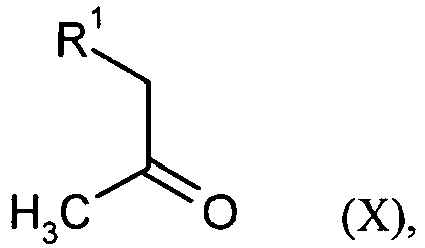
und einem Phenylharnstoff-Derivat der Formel (XI)

zu einer Verbindung der Formel (XII-A)

kondensiert, diese im Falle, dass der Rest R2 in Formel (I) nicht für Wasserstoff steht, in Gegenwart einer Base mit einer Verbindung der Formel (XIII)
R2A-X2 (XIII),
in welcher
- R2A
- die oben angegebene Bedeutung von R2 hat, jedoch nicht für Wasserstoff steht,
- X2
- für eine Abgangsgruppe wie beispielsweise Halogen, Mesylat, Tosylat oder Triflat steht,

umsetzt und die Nitro-Verbindung der Formel (XII-A) bzw. (XII-B) dann zum Anilin-Derivat der Formel (II)

reduziert.The compounds of the formula (II) can be prepared analogously to processes described in the literature, for example, by reacting 4-cyano-2-nitrobenzaldehyde of the formula (IX)
and a phenylurea derivative of the formula (XI)
to a compound of the formula (XII-A)
condenses, in the case that the radical R 2 in formula (I) is not hydrogen, in the presence of a base with a compound of formula (XIII)
R 2A -X 2 (XIII),
in which
- R 2A
- has the abovementioned meaning of R 2 , but does not stand for hydrogen,
- X 2
- represents a leaving group such as halogen, mesylate, tosylate or triflate,
and the nitro compound of the formula (XII-A) or (XII-B) then to the aniline derivative of the formula (II)
reduced.
Für den Verfahrensschritt (IX) + (X) + (XI) → (XII-A) geeignete Lösungsmittel sind übliche organische Lösungsmittel, die sich unter den Reaktionsbedingungen nicht verändern. Dazu zählen beispielsweise Ether wie Diethylether, Diisopropylether, Methyl-tert.-butylether, 1,2-Dimethoxyethan, 1,4-Dioxan oder Tetrahydrofuran, Alkohole wie Methanol, Ethanol, n-Propanol, Isopropanol, n-Butanol oder tert.-Butanol, Kohlenwasserstoffe wie Pentan, Hexan, Cyclohexan, Benzol, Toluol oder Xylol, Halogenkohlenwasserstoffe wie Dichlormethan, 1,2-Dichlorethan, Trichlormethan oder Chlorbenzol, oder andere Lösungsmittel wie Ethylacetat, Acetonitril, Dimethylsulfoxid oder N,N-Dimethylformamid. Ebenso ist es möglich, Gemische solcher Lösungsmittel einzusetzen. Bevorzugt wird Methyl-tert.-butylether, Tetrahydrofuran oder 1,4-Dioxan verwendet.Suitable solvents for process step (IX) + (X) + (XI) → (XII-A) are customary organic solvents which do not change under the reaction conditions. These include, for example, ethers, such as diethyl ether, diisopropyl ether, methyl tert -butyl ether, 1,2-dimethoxyethane, 1,4-dioxane or tetrahydrofuran, alcohols, such as methanol, ethanol, n- propanol, isopropanol, n -butanol or tert -butanol , Hydrocarbons such as pentane, hexane, cyclohexane, benzene, Toluene or xylene, halogenated hydrocarbons such as dichloromethane, 1,2-dichloroethane, trichloromethane or chlorobenzene, or other solvents such as ethyl acetate, acetonitrile, dimethyl sulfoxide or N, N- dimethylformamide. It is also possible to use mixtures of such solvents. Preference is given to using methyl tert -butyl ether, tetrahydrofuran or 1,4-dioxane.
Als Säure für den Verfahrensschritt (IX) + (X) + (XI) → (XII-A) eignen sich übliche anorganische oder organische Säuren oder Säureanhydride. Hierzu gehören bevorzugt Carbonsäuren wie beispielsweise Essigsäure oder Trifluoressigsäure, Sulfonsäuren wie Methansulfonsäure, Trifluormethansulfonsäure oder p-Toluolsulfonsäure, Salzsäure, Schwefelsäure, Phosphorsäure, Phosphonsäuren, oder Phosphorsäure- oder Phosphonsäureanhydride oder -ester wie Polyphosphorsäure, Phosphorsäuretriethylester, Polyphosphorsäureethylester, Phosphorpentoxid oder Propanphosphonsäureanhydrid. Bevorzugt wird Phosphorsäuretriethylester in Kombination mit Phosphorpentoxid verwendet. Die Säure wird im Allgemeinen in einer Menge von 0.25 Mol bis 100 Mol, bezogen auf 1 Mol der Verbindung (X), eingesetzt.Suitable acids for process step (IX) + (X) + (XI) → (XII-A) are customary inorganic or organic acids or acid anhydrides. These preferably include carboxylic acids such as acetic acid or trifluoroacetic acid, sulfonic acids such as methanesulfonic acid, trifluoromethanesulfonic acid or p- toluenesulfonic acid, hydrochloric acid, sulfuric acid, phosphoric acid, phosphonic acids or phosphoric acid or phosphonic anhydrides or esters such as polyphosphoric acid, triethyl phosphate, ethyl polyphosphate, phosphorus pentoxide or Propanphosphonsäureanhydrid. Phosphoric acid triethyl ester is preferably used in combination with phosphorus pentoxide. The acid is generally used in an amount of 0.25 mol to 100 mol, based on 1 mol of the compound (X).
Der Verfahrensschritt (IX) + (X) + (XI) → (XII-A) wird im Allgemeinen in einem Temperaturbereich von +20°C bis +150°C, bevorzugt bei +50°C bis +100°C durchgeführt. Die Umsetzung kann bei normalem, erhöhtem oder erniedrigtem Druck erfolgen (z.B. von 0.5 bis 5 bar); in der Regel arbeitet man bei Normaldruck.The process step (IX) + (X) + (XI) → (XII-A) is generally carried out in a temperature range from + 20 ° C to + 150 ° C, preferably at + 50 ° C to + 100 ° C. The reaction can be carried out at normal, elevated or reduced pressure (e.g., from 0.5 to 5 bar); usually one works at normal pressure.
Für den Verfahrensschritt (XII-A) + (XIII) → (XII-B) geeignete Lösungsmittel sind übliche organische Lösungsmittel, die sich unter den Reaktionsbedingungen nicht verändern. Dazu zählen beispielsweise Ether wie Diethylether, Diisopropylether, Methyl-tert.-butylether, 1,2-Dimethoxyethan, 1,4-Dioxan oder Tetrahydrofuran, Kohlenwasserstoffe wie Pentan, Hexan, Cyclohexan, Benzol, Toluol oder Xylol, Halogenkohlenwasserstoffe wie Dichlormethan, 1,2-Dichlorethan, Trichlormethan oder Chlorbenzol, oder andere Lösungsmittel wie Aceton, Methylethylketon, Methyltert.-butylketon, Acetonitril, Dimethylsulfoxid, N,N-Dimethylformamid, N,N'-Dimethylpropylenharnstoff (DMPU) oder N-Methylpyrrolidinon (NMP). Ebenso ist es möglich, Gemische solcher Lösungsmittel einzusetzen. Bevorzugt wird Tetrahydrofuran, Acetonitril oder N,N-Dimethylformamid verwendet.Suitable solvents for process step (XII-A) + (XIII) → (XII-B) are customary organic solvents which do not change under the reaction conditions. These include, for example, ethers, such as diethyl ether, diisopropyl ether, methyl tert -butyl ether, 1,2-dimethoxyethane, 1,4-dioxane or tetrahydrofuran, hydrocarbons, such as pentane, hexane, cyclohexane, benzene, toluene or xylene, halogenated hydrocarbons, such as dichloromethane, 1, 2-dichloroethane, trichloromethane or chlorobenzene, or other solvents such as acetone, methyl ethyl ketone, methyl tert -butyl ketone, acetonitrile, dimethylsulfoxide, N, N- dimethylformamide, N, N'-dimethylpropyleneurea (DMPU) or N-methylpyrrolidinone (NMP). It is also possible to use mixtures of such solvents. Preference is given to using tetrahydrofuran, acetonitrile or N, N- dimethylformamide.
Als Base für den Verfahrensschritt (XII-A) + (XIII) → (XII-B) eignen sich übliche anorganische oder organische Basen. Hierzu gehören insbesondere Alkali- oder Erdalkalicarbonate wie Lithium-, Natrium-, Kalium-, Calcium- oder Cäsiumcarbonat, Alkali-Alkoholate wie Natrium- oder Kalium-tert.-butylat, Alkalihydride wie Natrium- oder Kaliumhydrid, Amide wie Lithium- oder Kalium-bis(trimethylsilyl)amid oder Lithiumdiisopropylamid (LDA), organische Amine wie Triethylamin, N-Methylmorpholin, N-Methylpiperidin, N,N-Diisopropylethylamin, 1,5-Diazabicyclo[4.3.0]non-5-en (DBN), 1,8-Diazabicyclo[5.4.0]undec-7-en (DBU), Pyridin oder 4-N,N-Dimethylaminopyridin, oder Phosphazen-Basen (so genannte "Schwesinger-Basen") wie beispielsweise P1-t-Bu, P2-t-Bu oder P4-t-Bu. Bevorzugt wird Kaliumcarbonat, Cäsiumcarbonat, Natriumhydrid, Triethylamin, N,N-Diisopropylethylamin oder Lithium-bis(trimethylsilyl)amid verwendet; besonders bevorzugt sind Natriumhydrid und Lithium-bis(trimethylsilyl)amid. Die Base wird im Allgemeinen in einer Menge von 0.1 Mol bis 10 Mol, bevorzugt von 1 Mol bis 3 Mol, bezogen auf 1 Mol der Verbindung (XII-A), eingesetzt.Suitable bases for process step (XII-A) + (XIII) → (XII-B) are customary inorganic or organic bases. These include in particular alkali metal or alkaline earth metal carbonates such as lithium, sodium, potassium, calcium or cesium carbonate, alkali metal alcoholates such as sodium or potassium tert -butoxide, alkali metal hydrides such as sodium or potassium hydride, amides such as lithium or potassium. bis (trimethylsilyl) amide or lithium diisopropylamide (LDA), organic amines such as triethylamine, N- methylmorpholine, N- methylpiperidine, N, N -diisopropylethylamine, 1,5-diazabicyclo [4.3.0] non-5-ene (DBN), 1 , 8-diazabicyclo [5.4.0] undec-7-ene (DBU), pyridine or 4- N, N- dimethylaminopyridine, or phosphazene bases (so-called "Schwesinger bases") such as P1-t-Bu, P2-t-Bu or P4-t-Bu. Preference is given to using potassium carbonate, cesium carbonate, sodium hydride, triethylamine, N, N- diisopropylethylamine or lithium bis (trimethylsilyl) amide; Particularly preferred are sodium hydride and lithium bis (trimethylsilyl) amide. The base is generally used in an amount of from 0.1 mol to 10 mol, preferably from 1 mol to 3 mol, based on 1 mol of the compound (XII-A).
Der Verfahrensschritt (XII-A) + (XIII) → (XII-B) wird im Allgemeinen in einem Temperaturbereich von -78°C bis +100°C, bevorzugt bei -78°C bis +80°C, besonders bevorzugt bei -78°C bis +25°C durchgeführt. Die Umsetzung kann bei normalem, erhöhtem oder erniedrigtem Druck erfolgen (z.B. von 0.5 bis 5 bar); in der Regel arbeitet man bei Normaldruck.The process step (XII-A) + (XIII) → (XII-B) is generally in a temperature range from -78 ° C to + 100 ° C, preferably at -78 ° C to + 80 ° C, particularly preferably at - 78 ° C to + 25 ° C performed. The reaction can be carried out at normal, elevated or reduced pressure (e.g., from 0.5 to 5 bar); usually one works at normal pressure.
Die Reduktion der Nitro-Verbindung (XII-A) bzw. (XII-B) zum Anilin-Derivat (II) erfolgt nach Standardmethoden durch katalytische Hydrierung in Gegenwart eines üblichen Palladium- oder Platin-Katalysators; bevorzugt wird Palladium auf Aktivkohle verwendet. Die Hydrierung kann bei normalem oder bei erhöhtem Wasserstoff-Druck geschehen; in der Regel arbeitet man bei Normaldruck. Die Reaktion wird vorzugsweise bei Raumtemperatur in alkoholischen Lösungsmitteln wie Methanol oder Ethanol, gegebenenfalls unter Verwendung von inerten Ko-Solventien wie beispielsweise Tetrahydrofuran oder Ethylacetat, durchgeführt.The reduction of the nitro compound (XII-A) or (XII-B) to the aniline derivative (II) is carried out by standard methods by catalytic hydrogenation in the presence of a conventional palladium or platinum catalyst; preferably palladium on activated carbon is used. The hydrogenation can be done at normal or at elevated hydrogen pressure; usually one works at normal pressure. The reaction is preferably carried out at room temperature in alcoholic solvents such as methanol or ethanol, optionally with the use of inert co-solvents such as tetrahydrofuran or ethyl acetate.
Im Fall, dass der Rest R1 in Formel (I) für Cyano steht, kann gemäß einer Verfahrensvariante an Stelle der Verbindung (X) auch ein Acetessigester der Formel (XIV)

- T
- für (C1-C4)-Alkyl oder Allyl steht,


und nachfolgende Dehydratisierung der Amid-Gruppierung in das 5-Cyano-Dihydropyrimidinon der Formel (XII-A) [R' = CN] umgewandelt werden (vgl. das nachfolgende Reaktionsschema 1).In the case that the radical R 1 in formula (I) is cyano, according to a process variant instead of the compound (X) also an acetoacetic ester of the formula (XIV)
- T
- is (C 1 -C 4 ) -alkyl or allyl,
and subsequent dehydration of the amide moiety into the 5-cyano-dihydropyrimidinone of formula (XII-A) [R '= CN] (see Reaction Scheme 1 below).
Die Verbindungen der Formel (V) können auf analoge Weise hergestellt werden, indem man zunächst 4-Cyano-2-fluorbenzaldehyd der Formel (XVIII)

RZ3-SH (XIX),
in welcher RZ3 die oben angegebene Bedeutung hat,
in Gegenwart einer Base zu einem 2-Sulfanyl-substituierten Benzaldehyd der Formel (XX)
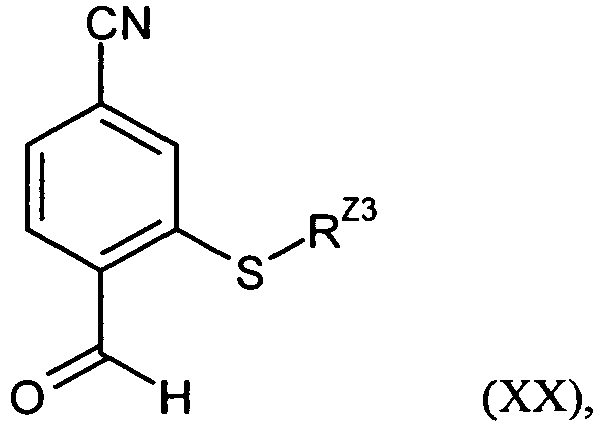
reagiert und diesen dann im Austausch gegen die Verbindung (IX) gemäß der zuvor beschriebenen Reaktionssequenz (IX) + (X) + (XI) → (XII-A) → (XII-B) oder (IX) + (XIV) + (XI) → (XV) → (XVI) → (XVII) → (XII-A) weiter umsetzt (vgl. das nachfolgende Reaktionsschema 2).The compounds of the formula (V) can be prepared in an analogous manner by first reacting 4-cyano-2-fluorobenzaldehyde of the formula (XVIII)
R Z3 -SH (XIX),
in which R Z3 has the meaning given above,
in the presence of a base to a 2-sulfanyl-substituted benzaldehyde of the formula (XX)
reacts and then in exchange for the compound (IX) according to the above-described reaction sequence (IX) + (X) + (XI) → (XII-A) → (XII-B) or (IX) + (XIV) + ( XI) → (XV) → (XVI) → (XVII) → (XII-A) is reacted further (see the following Reaction Scheme 2).
Weitere erfindungsgemäße Verbindungen der Formel (I) können, falls zweckmäßig, auch durch Umwandlungen von funktionellen Gruppen einzelner Substituenten, insbesondere den unter RZ1 und RZ2 aufgeführten, ausgehend von anderen, nach obigem Verfahren erhaltenen Verbindungen der Formel (I) hergestellt werden. Diese Umwandlungen werden nach üblichen, dem Fachmann bekannten Methoden durchgeführt und umfassen beispielsweise Reaktionen wie nukleophile oder elektrophile Substitutionsreaktionen, Übergangsmetall-vermittelte Kupplungsreaktionen (z.B. Suzuki-, Heck- oder Hartwig-Buchwald-Reaktion), Oxidation, Reduktion, Hydrierung, Alkylierung, Acylierung, Aminierung, Hydroxylierung, Veretherung, Veresterung, Esterspaltung und -hydrolyse, Bildung von Nitrilen, Carbonamiden und Carbamaten, sowie die Einführung und Entfernung temporärer Schutzgruppen.Further compounds of the formula (I) according to the invention can, if appropriate, also be prepared by conversions of functional groups of individual substituents, in particular those listed under R Z1 and R Z2 , starting from other compounds of the formula (I) obtained by the above process. These transformations are carried out by customary methods known to those skilled in the art and include, for example, reactions such as nucleophilic or electrophilic substitution reactions, transition metal-mediated coupling reactions (eg Suzuki, Heck or Hartwig-Buchwald reaction), oxidation, reduction, hydrogenation, alkylation, acylation, Amination, hydroxylation, etherification, esterification, ester cleavage and hydrolysis, formation of nitriles, carbonamides and carbamates, as well as the introduction and removal of temporary protecting groups.
Eine Trennung der erfindungsgemäßen Verbindungen in die entsprechenden Enantiomere und/ oder Diastereomere kann, je nach Zweckmäßigkeit, auf der Stufe der Verbindungen (I-A), (I-B) und (I-C) oder bereits auf der Stufe der Verbindungen (II), (V), (VI) oder (VII) oder auch der Intermediate (XII-A), (XII-B), (XV), (XVI) oder (XVII) bzw. deren RZ3S-substituierten Analoga erfolgen, wobei diese Intermediate dann in separierter Form entsprechend den zuvor beschriebenen Verfahrensschritten weiter umgesetzt werden. Eine solche Auftrennung der Stereoisomeren läßt sich nach üblichen, dem Fachmann bekannten Methoden durchführen; vorzugsweise werden chromatographische Verfahren, insbesondere die HPLC-Chromatographie an chiraler Phase, verwendet.A separation of the compounds of the invention into the corresponding enantiomers and / or diastereomers may, as appropriate, at the stage of the compounds (IA), (IB) and (IC) or already at the stage of the compounds (II), (V), (VI) or (VII) or else the intermediates (XII-A), (XII-B), (XV), (XVI) or (XVII) or their R Z3 S-substituted analogues, these intermediates then being described in separated form according to the method steps described above. Such a separation of the stereoisomers can be carried out by customary methods known to those skilled in the art; Preferably, chromatographic methods, in particular HPLC chromatography on a chiral phase, are used.
Die Verbindungen der Formeln (IV), (VIII), (IX), (X), (XI), (XIII), (XIV), (XVIII) und (XIX) sind kommerziell erhältlich oder als solche literaturbekannt, oder sie können nach gängigen, in der Literatur beschriebenen Methoden hergestellt werden.The compounds of the formulas (IV), (VIII), (IX), (X), (XI), (XIII), (XIV), (XVIII) and (XIX) are commercially available or known as such from the literature, or they can be prepared according to common methods described in the literature.
Die oben beschriebenen Verfahren können durch die folgenden Reaktionsschemata beispielhaft veranschaulicht werden:
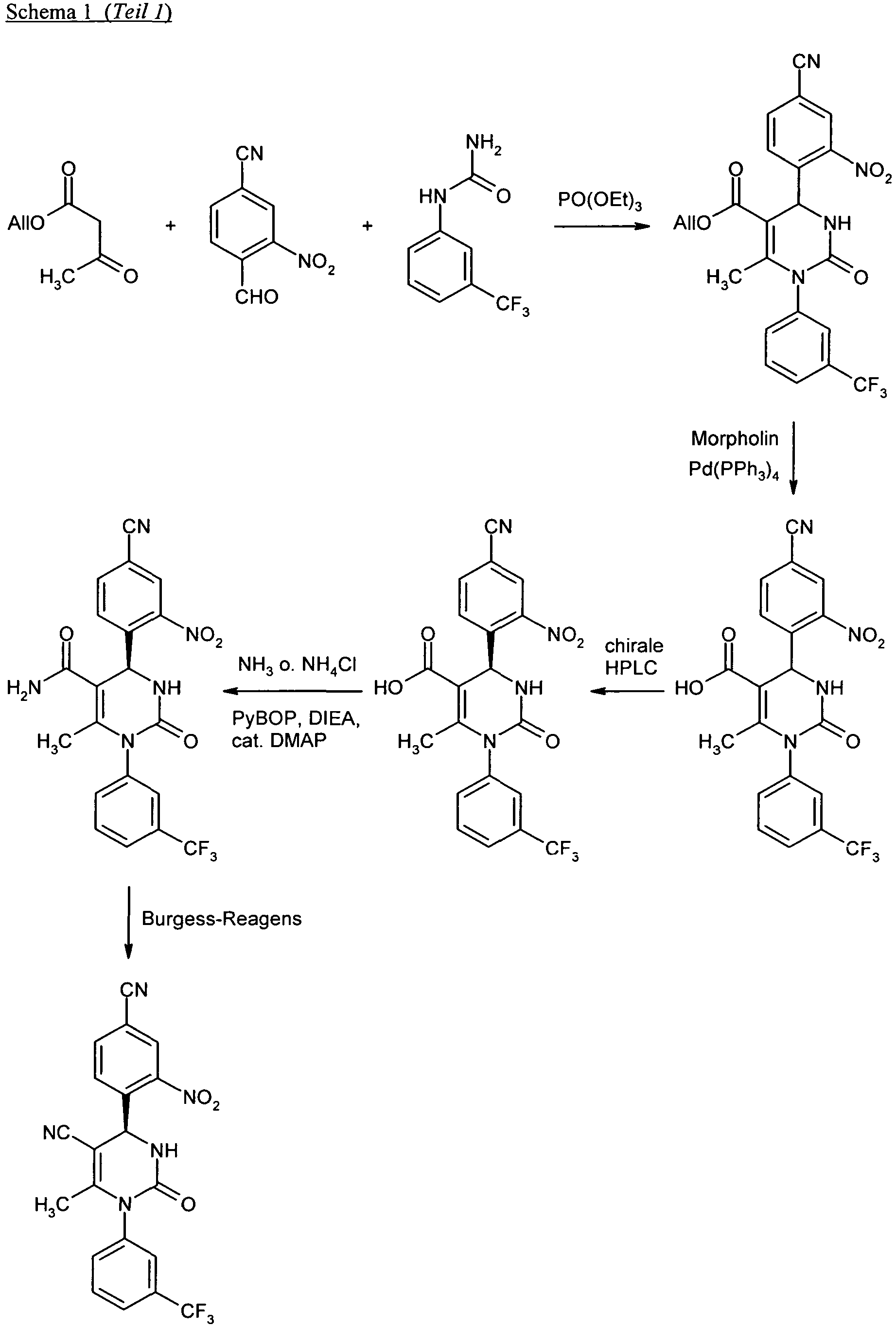



Die erfindungsgemäßen Verbindungen besitzen wertvolle pharmakologische Eigenschaften und können zur Vorbeugung und Behandlung von Erkrankungen bei Menschen und Tieren verwendet werden.The compounds according to the invention have valuable pharmacological properties and can be used for the prevention and treatment of diseases in humans and animals.
Die erfindungsgemäßen Verbindungen sind niedermolekulare, nicht-reaktive und selektive Inhibitoren der humanen neutrophilen Elastase, die überraschenderweise eine deutlich stärkere Inhibition dieser Protease im Vergleich zu den aus dem Stand der Technik bekannten Verbindungen bewirken. Darüber hinaus weisen die erfindungsgemäßen Verbindungen unerwartet eine niedrige in vitro-Clearance gegenüber Hepatozyten auf und verfügen damit über eine verbesserte metabolische Stabilität. Manche der erfindungsgemäßen Verbindungen besitzen zudem eine gute Löslichkeit in wässrigen Systemen, was vorteilhaft für ihre allgemeine Formulierbarkeit und/oder die intravenöse Anwendbarkeit ist.The compounds according to the invention are low molecular weight, non-reactive and selective inhibitors of human neutrophilic elastase, which surprisingly bring about a markedly greater inhibition of this protease in comparison with the compounds known from the prior art. In addition, the compounds of the invention unexpectedly have low in vitro clearance to hepatocytes and thus have improved metabolic stability. In addition, some of the compounds according to the invention have good solubility in aqueous systems, which is advantageous for their general formulatability and / or their intravenous applicability.
Die erfindungsgemäßen Verbindungen eignen sich daher in besonderem Maße zur Behandlung und/oder Prävention von Erkrankungen und pathologischen Prozessen, insbesondere solchen, bei denen im Zuge eines Entzündungsgeschehens und/oder eines Gewebe- oder Gefäßumbaus die neutrophile Elastase (HNE) involviert ist.The compounds according to the invention are therefore particularly suitable for the treatment and / or prevention of diseases and pathological processes, in particular those in which neutrophilic elastase (HNE) is involved in the course of an inflammatory event and / or a tissue or vascular remodeling.
Dazu zählen im Sinne der vorliegenden Erfindung insbesondere Erkrankungen wie die pulmonale arterielle Hypertonie (PAH) und andere Formen der pulmonalen Hypertonie (PH), die chronisch-obstruktive Lungenerkrankung (COPD), das akute Atemwegssyndrom (ARDS), akute Lungenschädigung (ALI), alpha-1-Antitrypsin-Defizienz (AATD), Lungenfibrose, Lungenemphysem (z.B. durch Zigarettenrauch induziertes Lungenemphysem), zystische Fibrose (CF), akutes Koronarsyndrom (ACS), Herzmuskelentzündungen (Myokarditis) und andere autoimmune Herzerkrankungen (Perikarditis, Endokarditis, Valvolitis, Aortitis, Kardiomyopathien), Myokardinfarkt, kardiogener Schock, Herzinsuffizienz, Aneurysmen, Sepsis (SIRS), multiples Organversagen (MODS, MOF), Arteriosklerose, entzündliche Erkrankungen der Niere, chronische Darmentzündungen (IBD, CD, UC), Pankreatitis, Peritonitis, rheumatoide Erkrankungen, entzündliche Hauterkrankungen sowie entzündliche Augenerkrankungen.For the purposes of the present invention, these include in particular diseases such as pulmonary arterial hypertension (PAH) and other forms of pulmonary hypertension (PH), chronic obstructive pulmonary disease (COPD), acute respiratory tract syndrome (ARDS), acute lung injury (ALI), alpha -1-antitrypsin deficiency (AATD), pulmonary fibrosis, pulmonary emphysema (eg, cigarette smoke induced emphysema), cystic fibrosis (CF), acute coronary syndrome (ACS), myocarditis, and other autoimmune heart diseases (pericarditis, endocarditis, valvolitis, aortitis, Cardiomyopathies), myocardial infarction, cardiogenic shock, heart failure, aneurysms, sepsis (SIRS), multiple organ failure (MODS, MOF), arteriosclerosis, inflammatory kidney disease, chronic enteritis (IBD, CD, UC), pancreatitis, peritonitis, rheumatoid diseases, inflammatory Skin diseases and inflammatory eye diseases.
Die erfindungsgemäßen Verbindungen können weiterhin verwendet werden zur Behandlung und/ oder Prävention von asthmatischen Erkrankungen unterschiedlicher Schweregrade mit intermittierendem oder persistierendem Verlauf (refraktives Asthma, bronchiales Asthma, allergisches Asthma, intrinsisches Asthma, extrinsisches Asthma, durch Medikamente oder durch Staub induziertes Asthma), von verschiedenen Formen der Bronchitis (chronische Bronchitis, infektiöse Bronchitis, eosinophile Bronchitis), von Bronchiolitis obliterans, Bronchiektasie, Pneumonie, Farmerlunge und verwandten Krankheiten, Husten- und Erkältungskrankheiten (chronischer entzündlicher Husten, iatrogener Husten), Nasenschleimhautentzündungen (einschließlich medikamentöse Rhinitis, vasomotorische Rhinitis und jahreszeitabhängige, allergische Rhinitis, z.B. Heuschnupfen) und von Polypen.The compounds of the present invention may further be used for the treatment and / or prevention of asthmatic diseases of varying degrees of severity with intermittent or persistent history (refractive asthma, bronchial asthma, allergic asthma, intrinsic asthma, extrinsic asthma, medication or dust-induced asthma) Forms of bronchitis (chronic bronchitis, infectious bronchitis, eosinophilic bronchitis), bronchiolitis obliterans, bronchiectasis, pneumonia, farmer's lung and related diseases, cough and colds (chronic inflammatory cough, iatrogenic cough), nasal mucosal inflammation (including medicinal rhinitis, vasomotor rhinitis and season-dependent , allergic rhinitis, eg hay fever) and polyps.
Darüber hinaus können die erfindungsgemäßen Verbindungen auch eingesetzt werden zur Behandlung und/oder Prävention von mikro- und makrovaskulären Schädigungen (Vasculitis), Reperfusionsschäden, arteriellen und venösen Thrombosen, Thrombosen im Zusammenhang mit orthopädischen Eingriffen bei Patienten mit rheumatoider Arthritis, von diabetischer und nicht-diabetischer Nephropathie, der Glomerulonephritis, der Glomerulosklerose, des nephrotischen Syndroms, der hypertensiven Nephrosklerose, der Mikroalbuminurie, der akuten und chronischen Niereninsuffizienz, des akuten und chronischen Nierenversagens, Cystitis, Urethritis, Prostatitis, Epidymititis, Oophoritis, Salpingitis, Vulvovaginitis, erektiler Dysfunktion, Hunner-Geschwür, Peyronie-Krankheit, arterieller Hypertonie, Schock, atrialen und ventrikulären Arrhythmien, transitorischen und ischämischen Attacken, Herzmuskelschwäche, Hirnschlag, endothelialer Dysfunktion, peripheren und kardialen Gefäßerkrankungen, peripheren Durchblutungsstörungen, Ödembildung wie zum Beispiel pulmonales Ödem, Hirnödem, renales Ödem und Herzinsuffizienz-bedingtes Ödem, Restenosen wie nach Thrombolysetherapien, percutan-transluminalen Angioplastien (PTA), transluminalen Koronarangioplastien (PTCA), Herztransplantationen und Bypass-Operationen, bei erhöhtem Spiegel von Fibrinogen und von LDL geringer Dichte sowie bei erhöhten Konzentrationen von Plasminogenaktivator-Inhibitor 1 (PAI-1), von Dyslipidämien (Hypercholesterolämie, Hypertriglyceridämie, erhöhte Konzentrationen der postprandialen Plasma-Triglyceride, Hypoalphalipoproteinämie, kombinierte Hyperlipidämien) sowie metabolischen Erkrankungen (Metabolisches Syndrom, Hyperglykämie, Insulin-abhängiger Diabetes, Nicht-Insulin-abhängiger Diabetes, Gestationsdiabetes, Hyperinsulinämie, Insulinresistenz, Glukose-Intoleranz, Fettsucht (Adipositas) und diabetische Spätfolgen wie Retinopathie, Nephropathie und Neuropathie), Krebserkrankungen (Hautkrebs, Hirntumore, Brustkrebs, Knochenmarktumore, Leukämien, Liposarcome, Karzinome des Magen-Darm-Traktes, der Leber, Bauchspeicheldrüse, Lunge, Niere, Harnleiter, Prostata und des Genitaltraktes sowie bösartige Tumore des lymphoproliferativen Systems wie z.B. Hodgkin's und Non-Hodgkin's Lymphom), von Erkrankungen des Gastrointestinaltraktes und des Abdomen (Glossitis, Gingivitis, Periodontitis, Oesophagitis, eosinophile Gastroenteritis, Mastocytose, Morbus Crohn, Colitis, Proctitis, Pruritis ani, Diarrhöe, Zöliakie, Hepatitis, Leberfibrose, Leberzirrhose, Pankreatitis und Cholecystitis), von Erkrankungen des Zentralen Nervensystems und neurodegenerativen Störungen (Schlaganfall, Alzheimer'sche Krankheit, Parkinson'sche Krankheit, Demenz, Epilepsie, Depressionen, Multiple Sklerose), Immunerkrankungen, Schilddrüsenerkrankungen (Hyperthyreose), Hauterkrankungen (Psoriasis, Akne, Ekzeme, Neurodermitis, vielfältige Formen der Dermatitis wie z.B. Dermatitis abacribus, Dermatitis actinica, Dermatitis allergica, Dermatitis ammoniacalis, Dermatitis artefacta, Dermatitis autogenica, Dermatitis atrophicans, Dermatitis calorica, Dermatitis combustionis, Dermatitis congelationis, Dermatitis cosmetica, Dermatitis escharotica, Dermatitis exfoliativa, Dermatitis gangraenose, Dermatitis haemostatica, Dermatitis herpetiformis, Dermatitis lichenoides, Dermatitis linearis, Dermatitis maligna, Dermatitis medimencatosa, Dermatitis palmaris et plantaris, Dermatitis parasitaria, Dermatitis photoallergica, Dermatitis phototoxica, Dermatitis pustularis, Dermatitis seborrhoica, Dermatitis solaris, Dermatitis toxica, Dermatitis ulcerosa, Dermatitis veneata, infektiöse Dermatitis, pyogene Dermatitis und Rosazea-artige Dermatitis, sowie Keratitis, Bullosis, Vasculitis, Cellulitis, Panniculitis, Lupus erythematodes, Erythema, Lymphome, Hautkrebs, Sweet-Syndrom, Weber-Christian-Syndrom, Narbenbildung, Warzenbildung, Frostbeulen), von entzündlichen Augenerkrankungen (Saccoidosis, Blepharitis, Conjunctivitis, Iritis, Uveitis, Chorioiditis, Ophthalmitis), viralen Erkrankungen (durch Influenza-, Adeno- und Coronaviren, wie z.B. HPV, HCMV, HIV, SARS), von Erkrankungen des Skelettknochens und der Gelenke sowie der Skelettmuskel (vielfältige Formen der Arthritis wie z.B. Arthritis alcaptonurica, Arthritis ankylosans, Arthritis dysenterica, Arthritis exsudativa, Arthritis fungosa, Arthritis gonorrhoica, Arthritis mutilans, Arthritis psoriatica, Arthritis purulenta, Arthritis rheumatica, Arthritis serosa, Arthritis syphilitica, Arthritis tuberculosa, Arthritis urica, Arthritis villonodularis pigmentosa, atypische Arthritis, hämophile Arthritis, juvenile chronische Arthritis, rheumatoide Arthritis und metastatische Arthritis, des weiteren das Still-Syndrom, Felty-Syndrom, Sjörgen-Syndrom, Clutton-Syndrom, Poncet-Syndrom, Pott-Syndrom und Reiter-Syndrom, vielfältige Formen der Arthropathien wie z.B. Arthropathie deformans, Arthropathie neuropathica, Arthropathie ovaripriva, Arthropathie psoriatica und Arthropathie tabica, systemische Sklerosen, vielfältige Formen der entzündlichen Myopathien wie z.B. Myopathie epidemica, Myopathie fibrosa, Myopathie myoglobinurica, Myopathie ossificans, Myopathie ossificans neurotica, Myopathie ossificans progressiva multiplex, Myopathie purulenta, Myopathie rheumatica, Myopathie trichinosa, Myopathie tropica und Myopathie typhosa, sowie das Günther-Syndrom und das Münchmeyer-Syndrom), von entzündlichen Arterienveränderungen (vielfältige Formen der Arteritis wie z.B. Endarteritis, Mesarteritis, Periarteritis, Panarteritis, Arteritis rheumatica, Arteritis deformans, Arteritis temporalis, Arteritis cranialis, Arteritis gigantocellularis und Arteritis granulomatosa, sowie das Horton-Syndrom, Churg-Strauss-Syndrom und die Takayasu-Arteritis), des Muckle-Well-Syndroms, der Kikuchi-Krankheit, von Polychondritis, Sklerodermia sowie von weiteren Erkrankungen mit einer entzündlichen oder immunologischen Komponente, wie beispielsweise Katarakt, Kachexie, Osteoporose, Gicht, Inkontinenz, Lepra, Sezary-Syndrom und paraneoplastisches Syndrom, bei Abstossungsreaktionen nach Organtransplantationen und zur Wundheilung und Angiogenese insbesondere bei chronischen Wunden.In addition, the compounds of the invention may also be used for the treatment and / or prevention of microvascular and macrovascular lesions (vasculitis), reperfusion injury, arterial and venous thrombosis, thrombosis associated with orthopedic surgery in patients with rheumatoid arthritis, diabetic and non-diabetic Nephropathy, glomerulonephritis, glomerulosclerosis, nephrotic syndrome, hypertensive nephrosclerosis, microalbuminuria, acute and chronic renal insufficiency, acute and chronic renal failure, cystitis, urethritis, prostatitis, epidymitis, oophoritis, salpingitis, vulvovaginitis, erectile dysfunction, Hunner's disease Ulcer, Peyronie's disease, arterial hypertension, shock, atrial and ventricular arrhythmias, transitory and ischemic attacks, myocardial insufficiency, stroke, endothelial dysfunction, peripheral and cardiac vascular diseases, peripheral circulatory disorders, edema formation such as pulmonary edema, cerebral edema, renal edema and congestive heart failure, restenosis such as after thrombolytic therapy, percutaneous transluminal angioplasty (PTA), transluminal Coronary angioplasty (PTCA), heart transplantation and bypass surgery, with elevated levels of fibrinogen and low density LDL and at elevated levels of plasminogen activator inhibitor 1 (PAI-1), dyslipidaemias (hypercholesterolemia, hypertriglyceridemia, increased levels of postprandial plasma triglycerides , Hypoalphalipoproteinemia, combined hyperlipidaemias) as well as metabolic disorders (metabolic syndrome, hyperglycemia, insulin-dependent diabetes, non-insulin-dependent diabetes, gestational diabetes, hyperinsulinemia, insulin resistance, glucose int ololer, obesity and diabetic sequelae such as retinopathy, nephropathy and neuropathy), cancers (skin cancer, brain tumors, breast cancer, bone marrow tumors, leukemia, liposarcoma, carcinomas of the gastrointestinal tract, liver, pancreas, lung, kidney, ureter, Prostate and genital tract, as well as malignant tumors of the lymphoproliferative system such as Hodgkin's and non-Hodgkin's lymphoma), gastrointestinal and abdominal diseases (glossitis, gingivitis, periodontitis, esophagitis, eosinophilic gastroenteritis, mastocytosis, Crohn's disease, colitis, prostitis, pruritis ani , Diarrhea, celiac disease, hepatitis, liver fibrosis, liver cirrhosis, pancreatitis and cholecystitis), diseases of the central nervous system and neurodegenerative disorders (stroke, Alzheimer's disease, Parkinson's disease, dementia, epilepsy, depression, multiple sclerosis), immune diseases, thyroid disorders (Hyperthyroidism), Hauterk stings (psoriasis, acne, eczema, atopic dermatitis, multiple forms of dermatitis such as dermatitis abacribus, dermatitis actinica, dermatitis allergica, ammoniacal dermatitis, dermatitis artefacta, dermatitis autogenica, dermatitis atrophicans, dermatitis calorica, dermatitis combustionis, dermatitis congelationis, dermatitis cosmetica, dermatitis escharotica, dermatitis exfoliativa, dermatitis gangrenoose, dermatitis haemostatica, dermatitis herpetiformis, dermatitis lichenoides, dermatitis linearis, malignant dermatitis, dermatitis medimencatosa, dermatitis palmaris et plantaris, dermatitis parasitaria, dermatitis photoallergica, dermatitis phototoxica, dermatitis pustularis, dermatitis seborrhoica, dermatitis solaris, dermatitis toxica, ulcerative colitis, dermatitis veneata, infectious dermatitis, pyogenic dermatitis and rosacea-like dermatitis, as well as keratitis, bullosis, vasculitis, cellulitis, panniculitis, lupus erythematosus, erythema, lymphoma, skin cancer, sweet syndrome , Weber-Christian syndrome, scarring, wart formation, frostbite), inflammatory eye diseases (saccoidosis, blepharitis, conjunctivitis, iritis, uveitis, choroiditis, ophthalmitis), viral diseases (by influenza, adeno- and coronaviruses, such as HPV, HCMV , HIV, SARS), diseases of the skeletal bone and joints as well as the skeletal muscle (diverse Forms of arthritis such as arthritis alcaptonurica, arthritis ankylosans, arthritis dysenterica, arthritis exsudativa, arthritis fungosa, arthritis gonorrhoica, arthritis mutilans, psoriatic arthritis, arthritis purulenta, arthritis rheumatica, arthritis serosa, arthritis syphilitica, arthritis tuberculosa, arthritis urica, arthritis villonodularis pigmentosa , Atypical Arthritis, Hemophilic Arthritis, Juvenile Chronic Arthritis, Rheumatoid Arthritis and Metastatic Arthritis, Still's Syndrome, Felty's Syndrome, Sjörgen's Syndrome, Clutton's Syndrome, Poncet's Syndrome, Pott's Syndrome and Reiter's Syndrome, various forms arthropathies such as arthropathy deformans, arthropathy neuropathica, ovarian arthropathy, psoriatic arthropathy and arthropathy tabica, systemic sclerosis, multiple forms of inflammatory myopathies such as myopathy epidemica, myopathy fibrosa, myopathy myoglobinurica, myopathy ossificans, myopathy ossificans neurotica, myopathy ossificans progressiva multiplex, myopathy purulenta, myopathy rheumatica, myopathy trichinosa, myopathy tropica and myopathy typhosa, as well as the Günther syndrome and the Münchmeyer syndrome), of inflammatory arterial changes (various forms of arteritis such as endarteritis, mesarteritis, periarteritis, panarteritis, arteritis rheumatica, arthritis deformans, temporal arteritis, cranial arteritis, gigantocellular arteritis and granulomatous arteritis, as well as Horton's syndrome, Churg-Strauss syndrome and Takayasu's arteritis), of Muckle-well syndrome, of Kikuchi's disease, of polychondritis, Scleroderma and other diseases with an inflammatory or immunological component, such as cataract, cachexia, osteoporosis, gout, incontinence, leprosy, Sezary syndrome and paraneoplastic syndrome, rejection reactions after organ transplantation and wound healing and angiogenesis especially in chronic wounds.
Aufgrund ihres Eigenschaftsprofils eignen sich die erfindungsgemäßen Verbindungen insbesondere zur Behandlung und/oder Prävention von pulmonaler arterieller Hypertonie (PAH) und anderen Formen der pulmonalen Hypertonie (PH), chronisch-obstruktiven Lungenerkrankungen (COPD), akuter Lungenschädigung (ALI), akutem Atemwegssyndrom (ARDS), Bronchiektasien, Bronchiolitis obliterans, Lungenemphysem, alpha-1-Antitrypsin-Defizienz (AATD), zystischer Fibrose (CF), Sepsis und systemisch-inflammatorischem Response-Syndrom (SIRS), multiplem Organversagen (MOF, MODS), entzündlichen Darmerkrankungen (IBD, Morbus Crohn, Colitis), chronischer Bronchitis, Asthma, Rhinitis, rheumatoider Arthritis, entzündlichen Haut- und Augenkrankheiten, Arteriosklerose und Krebserkrankungen.Because of their property profile, the compounds of the invention are particularly useful for the treatment and / or prevention of pulmonary arterial hypertension (PAH) and other forms of pulmonary hypertension (PH), chronic obstructive pulmonary disease (COPD), acute lung injury (ALI), acute respiratory syndrome (ARDS ), Bronchiectasis, bronchiolitis obliterans, pulmonary emphysema, alpha-1-antitrypsin deficiency (AATD), cystic fibrosis (CF), sepsis and systemic inflammatory response syndrome (SIRS), multiple organ failure (MOF, MODS), inflammatory bowel disease (IBD , Crohn's disease, colitis), chronic bronchitis, asthma, rhinitis, rheumatoid arthritis, inflammatory skin and eye diseases, arteriosclerosis and cancers.
Weiterer Gegenstand der vorliegenden Erfindung ist die Verwendung der erfindungsgemäßen Verbindungen zur Behandlung und/oder Prävention von Erkrankungen, insbesondere der zuvor genannten Erkrankungen.Another object of the present invention is the use of the compounds of the invention for the treatment and / or prevention of diseases, in particular the aforementioned diseases.
Weiterer Gegenstand der vorliegenden Erfindung ist die Verwendung der erfindungsgemäßen Verbindungen zur Herstellung eines Arzneimittels zur Behandlung und/oder Prävention von Erkrankungen, insbesondere der zuvor genannten Erkrankungen.Another object of the present invention is the use of the compounds of the invention for the manufacture of a medicament for the treatment and / or prevention of diseases, in particular the aforementioned diseases.
Weiterer Gegenstand der vorliegenden Erfindung ist die Verwendung der erfindungsgemäßen Verbindungen in einem Verfahren zur Behandlung und/oder Prävention von Erkrankungen, insbesondere der zuvor genannten Erkrankungen.Another object of the present invention is the use of the compounds of the invention in a method for the treatment and / or prevention of diseases, in particular the aforementioned diseases.
Weiterer Gegenstand der vorliegenden Erfindung ist ein Verfahren zur Behandlung und/oder Prävention von Erkrankungen, insbesondere der zuvor genannten Erkrankungen, unter Verwendung einer wirksamen Menge von mindestens einer der erfindungsgemäßen Verbindungen.Another object of the present invention is a method for the treatment and / or prevention of diseases, in particular the aforementioned diseases, using an effective amount of at least one of the compounds of the invention.
Die erfindungsgemäßen Verbindungen können allein oder bei Bedarf in Kombination mit anderen Wirkstoffen eingesetzt werden. Weiterer Gegenstand der vorliegenden Erfindung sind daher Arzneimittel, enthaltend mindestens eine der erfindungsgemäßen Verbindungen und einen oder mehrere weitere Wirkstoffe, insbesondere zur Behandlung und/oder Prävention der zuvor genannten Erkrankungen. Als geeignete Kombinationswirkstoffe seien beispielhaft und vorzugsweise genannt:
- die Signaltransduktionskaskade inhibierende Verbindungen, beispielhaft und vorzugsweise aus der Gruppe der Kinase-Inhibitoren, insbesondere aus der Gruppe der Tyrosinkinase- und/oder Serin/Threoninkinase-Inhibitoren;
- Verbindungen, die den Ab- und Umbau der Extrazellulärmatrix inhibieren, beispielhaft und vorzugsweise Inhibitoren der Matrix-Metalloproteasen (MMPs), insbesondere Inhibitoren von Stromelysin, Kollagenasen, Gelatinasen und Aggrecanasen (hierbei vor allem von MMP-1, MMP-3, MMP-8, MMP-9, MMP-10, MMP-11 und MMP-13) sowie der Metallo-Elastase (MMP-12);
- Verbindungen, die die Bindung von Serotonin an dessen Rezeptor blockieren, beispielhaft und vorzugsweise Antagonisten des 5-HT2b-Rezeptors;
- organische Nitrate und NO-Donatoren, wie beispielsweise Natriumnitroprussid, Nitroglycerin, Isosorbidmononitrat, Isosorbiddinitrat, Molsidomin oder SIN-1, sowie inhalatives NO;
- NO-unabhängige, jedoch Häm-abhängige Stimulatoren der löslichen Guanylatcyclase, wie insbesondere die in
WO 00/06568 WO 00/06569 WO 02/42301 WO 03/095451 - NO- und Häm-unabhängige Aktivatoren der löslichen Guanylatcyclase, wie insbesondere die in
WO 01/19355 WO 01/19776 WO 01/19778 WO 01/19780 WO 02/070462 WO 02/070510 - Prostacyclin-Analoga, wie beispielhaft und vorzugsweise Iloprost, Beraprost, Treprostinil oder Epoprostenol;
- Verbindungen, die die lösliche Epoxidhydrolase (sEH) inhibieren, wie beispielsweise N,N'-Di-cyclohexylharnstoff, 12-(3-Adamantan-1-yl-ureido)-dodecansäure oder 1-Adamantan-1-yl-3-{5-[2-(2-ethoxyethoxy)ethoxy]pentyl}-harnstoff;
- den Energiestoffwechsel des Herzens beeinflussende Verbindungen, wie beispielhaft und vorzugsweise Etomoxir, Dichloracetat, Ranolazine oder Trimetazidine;
- Verbindungen, die den Abbau von cyclischem Guanosinmonophosphat (cGMP) und/oder cyclischem Adenosinmonophosphat (cAMP) inhibieren, wie beispielsweise Inhibitoren der Phosphodiesterasen (PDE) 1, 2, 3, 4 und/oder 5, insbesondere PDE 5-Inhibitoren wie Sildenafil, Vardenafil und Tadalafil;
- antithrombotisch wirkende Mittel, beispielhaft und vorzugsweise aus der Gruppe der Thrombozytenaggregationshemmer, der Antikoagulantien oder der profibrinolytischen Substanzen;
- den Blutdruck senkende Wirkstoffe, beispielhaft und vorzugsweise aus der Gruppe der Calcium-Antagonisten, Angiotensin All-Antagonisten, ACE-Inhibitoren, Vasopeptidase-Inhibitoren, Endothelin-Antagonisten, Renin-Inhibitoren, alpha-Rezeptoren-Blocker, beta-Rezeptoren-Blocker, Mineralocorticoid-Rezeptor-Antagonisten, Rho-Kinase-Inhibitoren sowie der Diuretika;
- bronchodilatorisch wirkende Mittel, beispielhaft und vorzugsweise aus der Gruppe der betaadrenergen Rezeptor-Agonisten, wie insbesondere Albuterol, Isoproterenol, Metaproterenol, Terbutalin, Formoterol oder Salmeterol, oder aus der Gruppe der Anticholinergika, wie insbesondere Ipratropiumbromid;
- anti-inflammatorisch wirkende Mittel, beispielhaft und vorzugsweise aus der Gruppe der Glucocorticoide, wie insbesondere Prednison, Prednisolon, Methylprednisolon, Triamcinolon, Dexamethason, Beclomethason, Betamethason, Flunisolid, Budesonid oder Fluticason; und/ oder
- den Fettstoffwechsel verändernde Wirkstoffe, beispielhaft und vorzugsweise aus der Gruppe der Thyroidrezeptor-Agonisten, Cholesterinsynthese-Inhibitoren wie beispielhaft und vorzugsweise HMG-CoA-Reduktase- oder Squalensynthese-Inhibitoren, der ACAT-Inhibitoren, CETP-Inhibitoren, MTP-Inhibitoren, PPAR-alpha-, PPAR-gamma- und/oder PPAR-delta-Agonisten, Cholesterin-Absorptionshemmer, Lipase-Inhibitoren, polymeren Gallensäureadsorber, Gallensäure-Reabsorptionshemmer und Lipoprotein(a)-Antagonisten.
- the signal transduction cascade inhibiting compounds, by way of example and preferably from the group of kinase inhibitors, in particular from the group of tyrosine kinase and / or serine / threonine kinase inhibitors;
- Exemplary and preferably inhibitors of the matrix metalloproteases (MMPs), in particular inhibitors of stromelysin, collagenases, gelatinases and aggrecanases (here in particular of MMP-1, MMP-3, MMP-8), inhibit the degradation and remodeling of the extracellular matrix , MMP-9, MMP-10, MMP-11 and MMP-13) as well as the metallo-elastase (MMP-12);
- Compounds which block the binding of serotonin to its receptor, by way of example and preferably antagonists of the 5-HT 2b receptor;
- organic nitrates and NO donors such as sodium nitroprusside, nitroglycerin, isosorbide mononitrate, isosorbide dinitrate, molsidomine or SIN-1, and inhaled NO;
- NO-independent, but heme-dependent stimulators of soluble guanylate cyclase, such as those in
WO 00/06568 WO 00/06569 WO 02/42301 WO 03/095451 - NO- and heme-independent activators of soluble guanylate cyclase, in particular those in
WO 01/19355 WO 01/19776 WO 01/19778 WO 01/19780 WO 02/070462 WO 02/070510 - Prostacyclin analogs, such as by way of example and preferably iloprost, beraprost, treprostinil or epoprostenol;
- Compounds which inhibit the soluble epoxide hydrolase (sEH), such as N, N'-di-cyclohexylurea, 12- (3-adamantan-1-yl-ureido) -dodecanoic acid or 1-adamantan-1-yl-3- {5 - [2- (2-ethoxyethoxy) ethoxy] pentyl} urea;
- the energy metabolism of the heart affecting compounds, such as by way of example and preferably etomoxir, dichloroacetate, ranolazines or trimetazidines;
- Compounds which inhibit the degradation of cyclic guanosine monophosphate (cGMP) and / or cyclic adenosine monophosphate (cAMP), such as inhibitors of phosphodiesterases (PDE) 1, 2, 3, 4 and / or 5, in particular PDE 5 inhibitors such as sildenafil, vardenafil and Tadalafil;
- antithrombotic agents, by way of example and preferably from the group of platelet aggregation inhibitors, anticoagulants or profibrinolytic substances;
- hypotensive agents, by way of example and preferably from the group of calcium antagonists, angiotensin all-antagonists, ACE inhibitors, vasopeptidase inhibitors, endothelin antagonists, renin inhibitors, alpha-receptor blockers, beta-receptor blockers, mineralocorticoid Receptor antagonists, Rho kinase inhibitors and diuretics;
- bronchodilatory agents, by way of example and preferably from the group of betaadrenergic receptor agonists, in particular albuterol, isoproterenol, metaproterenol, terbutaline, formoterol or salmeterol, or from the group of anticholinergics, in particular ipratropium bromide;
- anti-inflammatory agents, by way of example and preferably from the group of glucocorticoids, in particular prednisone, prednisolone, methylprednisolone, triamcinolone, dexamethasone, beclomethasone, betamethasone, flunisolide, budesonide or fluticasone; and or
- lipid metabolism-altering agents, by way of example and preferably from the group of thyroid receptor agonists, cholesterol synthesis inhibitors such as by way of example and preferably HMG-CoA reductase or squalene synthesis inhibitors, ACAT inhibitors, CETP inhibitors, MTP inhibitors, PPAR-alpha , PPAR gamma and / or PPAR delta agonists, cholesterol absorption inhibitors, lipase inhibitors, polymeric bile acid adsorbers, bile acid reabsorption inhibitors and lipoprotein (a) antagonists.
Bei einer bevorzugten Ausführungsform der Erfindung werden die erfindungsgemäßen Verbindungen in Kombination mit einem Kinase-Inhibitor, wie beispielhaft und vorzugsweise Bortezomib, Canertinib, Erlotinib, Gefitinib, Imatinib, Lapatinib, Lestaurtinib, Lonafarnib, Pegaptinib, Pelitinib, Semaxanib, Sorafenib, Sunitinib, Tandutinib, Tipifarnib, Vatalanib, Fasudil, Lonidamin, Leflunomid, BMS-3354825 oder Y-27632, eingesetzt.In a preferred embodiment of the invention, the compounds according to the invention are used in combination with a kinase inhibitor, such as by way of example and preferably bortezomib, canertinib, erlotinib, gefitinib, imatinib, lapatinib, lestaurtinib, lonafarnib, pegaptinib, pelitinib, semaxanib, sorafenib, sunitinib, tandutinib, Tipifarnib, vatalanib, fasudil, lonidamine, leflunomide, BMS-3354825 or Y-27632.
Bei einer bevorzugten Ausführungsform der Erfindung werden die erfindungsgemäßen Verbindungen in Kombination mit einem Serotonin-Rezeptor-Antagonisten, wie beispielhaft und vorzugsweise PRX-08066, eingesetzt.In a preferred embodiment of the invention, the compounds according to the invention are used in combination with a serotonin receptor antagonist, such as by way of example and preferably PRX-08066.
Unter antithrombotisch wirkenden Mittel werden vorzugsweise Verbindungen aus der Gruppe der Thrombozytenaggregationshemmer, der Antikoagulantien oder der profibrinolytischen Substanzen verstanden.Antithrombotic agents are preferably understood as meaning compounds from the group of platelet aggregation inhibitors, anticoagulants or profibrinolytic substances.
Bei einer bevorzugten Ausführungsform der Erfindung werden die erfindungsgemäßen Verbindungen in Kombination mit einem Thrombozytenaggregationshemmer, wie beispielhaft und vorzugsweise Aspirin, Clopidogrel, Ticlopidin oder Dipyridamol, verabreicht.In a preferred embodiment of the invention, the compounds according to the invention are administered in combination with a platelet aggregation inhibitor, such as, by way of example and by way of preference, aspirin, clopidogrel, ticlopidine or dipyridamole.
Bei einer bevorzugten Ausführungsform der Erfindung werden die erfindungsgemäßen Verbindungen in Kombination mit einem Thrombin-Inhibitor, wie beispielhaft und vorzugsweise Ximelagatran, Melagatran, Bivalirudin oder Clexane, verabreicht.In a preferred embodiment of the invention, the compounds according to the invention are administered in combination with a thrombin inhibitor, such as, by way of example and by way of preference, ximelagatran, melagatran, bivalirudin or Clexane.
Bei einer bevorzugten Ausführungsform der Erfindung werden die erfindungsgemäßen Verbindungen in Kombination mit einem GPIIb/IIIa-Antagonisten, wie beispielhaft und vorzugsweise Tirofiban oder Abciximab, verabreicht.In a preferred embodiment of the invention, the compounds according to the invention are administered in combination with a GPIIb / IIIa antagonist, such as, by way of example and by way of preference, tirofiban or abciximab.
Bei einer bevorzugten Ausführungsform der Erfindung werden die erfindungsgemäßen Verbindungen in Kombination mit einem Faktor Xa-Inhibitor, wie beispielhaft und vorzugsweise Rivaroxaban, DU-176b, Fidexaban, Razaxaban, Fondaparinux, Idraparinux, PMD-3112, YM-150, KFA-1982, EMD-503982, MCM-17, MLN-1021, DX 9065a, DPC 906, JTV 803, SSR-126512 oder SSR-128428, verabreicht.In a preferred embodiment of the invention, the compounds according to the invention are used in combination with a factor Xa inhibitor, such as by way of example and preferably rivaroxaban, DU-176b, fidexaban, razaxaban, fondaparinux, idraparinux, PMD-3112, YM-150, KFA-1982, EMD No. 503982, MCM-17, MLN-1021, DX 9065a, DPC 906, JTV 803, SSR-126512 or SSR-128428.
Bei einer bevorzugten Ausführungsform der Erfindung werden die erfindungsgemäßen Verbindungen in Kombination mit Heparin oder einem low molecular weight (LMW)-Heparin-Derivat verabreicht.In a preferred embodiment of the invention, the compounds according to the invention are administered in combination with heparin or a low molecular weight (LMW) heparin derivative.
Bei einer bevorzugten Ausführungsform der Erfindung werden die erfindungsgemäßen Verbindungen in Kombination mit einem Vitamin K-Antagonisten, wie beispielhaft und vorzugsweise Coumarin, verabreicht.In a preferred embodiment of the invention, the compounds according to the invention are administered in combination with a vitamin K antagonist, such as by way of example and preferably coumarin.
Unter den Blutdruck senkenden Mitteln werden vorzugsweise Verbindungen aus der Gruppe der Calcium-Antagonisten, Angiotensin All-Antagonisten, ACE-Hemmer, Endothelin-Antagonisten, Renin-Inhibitoren, alpha-Rezeptoren-Blocker, beta-Rezeptoren-Blocker, Mineralocorticoid-Rezeptor-Antagonisten, Rho-Kinase-Inhibitoren sowie der Diuretika verstanden.Among the antihypertensive agents are preferably compounds from the group of calcium antagonists, angiotensin all-antagonists, ACE inhibitors, endothelin antagonists, renin inhibitors, alpha-receptor blockers, beta-receptor blockers, mineralocorticoid receptor antagonists , Rho kinase inhibitors and diuretics understood.
Bei einer bevorzugten Ausführungsform der Erfindung werden die erfindungsgemäßen Verbindungen in Kombination mit einem Calcium-Antagonisten, wie beispielhaft und vorzugsweise Nifedipin, Amlodipin, Verapamil oder Diltiazem, verabreicht.In a preferred embodiment of the invention, the compounds according to the invention are administered in combination with a calcium antagonist, such as, by way of example and by way of preference, nifedipine, amlodipine, verapamil or diltiazem.
Bei einer bevorzugten Ausführungsform der Erfindung werden die erfindungsgemäßen Verbindungen in Kombination mit einem alpha-1-Rezeptoren-Blocker, wie beispielhaft und vorzugsweise Prazosin, verabreicht.In a preferred embodiment of the invention, the compounds according to the invention are administered in combination with an alpha-1-receptor blocker, such as by way of example and preferably prazosin.
Bei einer bevorzugten Ausführungsform der Erfindung werden die erfindungsgemäßen Verbindungen in Kombination mit einem beta-Rezeptoren-Blocker, wie beispielhaft und vorzugsweise Propranolol, Atenolol, Timolol, Pindolol, Alprenolol, Oxprenolol, Penbutolol, Bupranolol, Metipranolol, Nadolol, Mepindolol, Carazalol, Sotalol, Metoprolol, Betaxolol, Celiprolol, Bisoprolol, Carteolol, Esmolol, Labetalol, Carvedilol, Adaprolol, Landiolol, Nebivolol, Epanolol oder Bucindolol, verabreicht.In a preferred embodiment of the invention, the compounds according to the invention are used in combination with a beta-receptor blocker, such as by way of example and preferably propranolol, atenolol, timolol, pindolol, alprenolol, oxprenolol, penbutolol, bupranolol, metipranolol, nadolol, mepindolol, carazalol, sotalol, Metoprolol, betaxolol, celiprolol, bisoprolol, carteolol, esmolol, labetalol, carvedilol, adaprolol, landiolol, nebivolol, epanolol or bucindolol.
Bei einer bevorzugten Ausführungsform der Erfindung werden die erfindungsgemäßen Verbindungen in Kombination mit einem Angiotensin AII-Antagonisten, wie beispielhaft und vorzugsweise Losartan, Candesartan, Valsartan, Telmisartan oder Embursatan, verabreicht.In a preferred embodiment of the invention, the compounds according to the invention are administered in combination with an angiotensin AII antagonist, such as by way of example and preferably losartan, candesartan, valsartan, telmisartan or embursatan.
Bei einer bevorzugten Ausführungsform der Erfindung werden die erfindungsgemäßen Verbindungen in Kombination mit einem ACE-Inhibitor, wie beispielhaft und vorzugsweise Enalapril, Captopril, Lisinopril, Ramipril, Delapril, Fosinopril, Quinopril, Perindopril oder Trandopril, verabreicht.In a preferred embodiment of the invention, the compounds according to the invention are administered in combination with an ACE inhibitor, such as by way of example and preferably enalapril, captopril, lisinopril, ramipril, delapril, fosinopril, quinopril, perindopril or trandopril.
Bei einer bevorzugten Ausführungsform der Erfindung werden die erfindungsgemäßen Verbindungen in Kombination mit einem Endothelin-Antagonisten, wie beispielhaft und vorzugsweise Bosentan, Darusentan, Ambrisentan oder Sitaxsentan, verabreicht.In a preferred embodiment of the invention, the compounds according to the invention are administered in combination with an endothelin antagonist such as, by way of example and by way of preference, bosentan, darusentan, ambrisentan or sitaxsentan.
Bei einer bevorzugten Ausführungsform der Erfindung werden die erfindungsgemäßen Verbindungen in Kombination mit einem Renin-Inhibitor, wie beispielhaft und vorzugsweise Aliskiren, SPP-600 oder SPP-800, verabreicht.In a preferred embodiment of the invention, the compounds of the invention are administered in combination with a renin inhibitor, such as by way of example and preferably aliskiren, SPP-600 or SPP-800.
Bei einer bevorzugten Ausführungsform der Erfindung werden die erfindungsgemäßen Verbindungen in Kombination mit einem Mineralocorticoid-Rezeptor-Antagonisten, wie beispielhaft und vorzugsweise Spironolacton oder Eplerenon, verabreicht.In a preferred embodiment of the invention, the compounds according to the invention are administered in combination with a mineralocorticoid receptor antagonist, such as by way of example and preferably spironolactone or eplerenone.
Bei einer bevorzugten Ausführungsform der Erfindung werden die erfindungsgemäßen Verbindungen in Kombination mit einem Rho-Kinase-Inhibitor, wie beispielhaft und vorzugsweise Fasudil, Y-27632, SLx-2119, BF-66851, BF-66852, BF-66853, KI-23095, SB-772077, GSK-269962A oder BA-1049, verabreicht.In a preferred embodiment of the invention, the compounds according to the invention are used in combination with a rho-kinase inhibitor such as, for example and preferably, Fasudil, Y-27632, SLx-2119, BF-66851, BF-66852, BF-66853, KI-23095, SB-772077, GSK-269962A or BA-1049.
Bei einer bevorzugten Ausführungsform der Erfindung werden die erfindungsgemäßen Verbindungen in Kombination mit einem Diuretikum, wie beispielhaft und vorzugsweise Furosemid, verabreicht.In a preferred embodiment of the invention, the compounds according to the invention are administered in combination with a diuretic, such as by way of example and preferably furosemide.
Unter den Fettstoffwechsel verändernden Mitteln werden vorzugsweise Verbindungen aus der Gruppe der CETP-Inhibitoren, Thyroidrezeptor-Agonisten, Cholesterinsynthese-Inhibitoren wie HMG-CoA-Reduktase- oder Squalensynthese-Inhibitoren, der ACAT-Inhibitoren, MTP-Inhibitoren, PPAR-alpha-, PPAR-gamma- und/oder PPAR-delta-Agonisten, Cholesterin-Absorptionshemmer, polymeren Gallensäureadsorber, Gallensäure-Reabsorptionshemmer, Lipase-Inhibitoren sowie der Lipoprotein(a)-Antagonisten verstanden.Among the lipid metabolizing agents are preferably compounds from the group of CETP inhibitors, thyroid receptor agonists, cholesterol synthesis inhibitors such as HMG-CoA reductase or squalene synthesis inhibitors, the ACAT inhibitors, MTP inhibitors, PPAR-alpha, PPAR gamma and / or PPAR delta agonists, cholesterol absorption inhibitors, polymeric bile acid adsorbers, bile acid reabsorption inhibitors, lipase inhibitors and the lipoprotein (a) antagonists understood.
Bei einer bevorzugten Ausführungsform der Erfindung werden die erfindungsgemäßen Verbindungen in Kombination mit einem CETP-Inhibitor, wie beispielhaft und vorzugsweise Torcetrapib (CP-529 414), JJT-705 oder CETP-vaccine (Avant), verabreicht.In a preferred embodiment of the invention, the compounds according to the invention are administered in combination with a CETP inhibitor, such as by way of example and preferably torcetrapib (CP-529 414), JJT-705 or CETP vaccine (Avant).
Bei einer bevorzugten Ausführungsform der Erfindung werden die erfindungsgemäßen Verbindungen in Kombination mit einem Thyroidrezeptor-Agonisten, wie beispielhaft und vorzugsweise D-Thyroxin, 3,5,3'-Triiodothyronin (T3), CGS 23425 oder Axitirome (CGS 26214), verabreicht.In a preferred embodiment of the invention, the compounds of the invention are administered in combination with a thyroid receptor agonist such as, by way of example and by way of preference, D-thyroxine, 3,5,3'-triiodothyronine (T3), CGS 23425 or axitirome (CGS 26214).
Bei einer bevorzugten Ausführungsform der Erfindung werden die erfindungsgemäßen Verbindungen in Kombination mit einem HMG-CoA-Reduktase-Inhibitor aus der Klasse der Statine, wie beispielhaft und vorzugsweise Lovastatin, Simvastatin, Pravastatin, Fluvastatin, Atorvastatin, Rosuvastatin oder Pitavastatin, verabreicht.In a preferred embodiment of the invention, the compounds of the invention in combination with an HMG-CoA reductase inhibitor from the class of statins, such as by way of example and preferably lovastatin, simvastatin, pravastatin, fluvastatin, atorvastatin, rosuvastatin or pitavastatin.
Bei einer bevorzugten Ausführungsform der Erfindung werden die erfindungsgemäßen Verbindungen in Kombination mit einem Squalensynthese-Inhibitor, wie beispielhaft und vorzugsweise BMS-188494 oder TAK-475, verabreicht.In a preferred embodiment of the invention, the compounds according to the invention are administered in combination with a squalene synthesis inhibitor, such as by way of example and preferably BMS-188494 or TAK-475.
Bei einer bevorzugten Ausführungsform der Erfindung werden die erfindungsgemäßen Verbindungen in Kombination mit einem ACAT-Inhibitor, wie beispielhaft und vorzugsweise Avasimibe, Melinamide, Pactimibe, Eflucimibe oder SMP-797, verabreicht.In a preferred embodiment of the invention, the compounds according to the invention are administered in combination with an ACAT inhibitor, such as by way of example and preferably avasimibe, melinamide, pactimibe, eflucimibe or SMP-797.
Bei einer bevorzugten Ausführungsform der Erfindung werden die erfindungsgemäßen Verbindungen in Kombination mit einem MTP-Inhibitor, wie beispielhaft und vorzugsweise Implitapide, BMS-201038, R-103757 oder JTT-130, verabreicht.In a preferred embodiment of the invention, the compounds according to the invention are administered in combination with an MTP inhibitor such as, for example and preferably, implitapide, BMS-201038, R-103757 or JTT-130.
Bei einer bevorzugten Ausführungsform der Erfindung werden die erfindungsgemäßen Verbindungen in Kombination mit einem PPAR-gamma-Agonisten, wie beispielhaft und vorzugsweise Pioglitazone oder Rosiglitazone, verabreicht.In a preferred embodiment of the invention, the compounds of the invention are administered in combination with a PPAR-gamma agonist such as, by way of example and by way of preference, pioglitazone or rosiglitazone.
Bei einer bevorzugten Ausführungsform der Erfindung werden die erfindungsgemäßen Verbindungen in Kombination mit einem PPAR-delta-Agonisten, wie beispielhaft und vorzugsweise GW 501516 oder BAY 68-5042, verabreicht.In a preferred embodiment of the invention, the compounds according to the invention are administered in combination with a PPAR delta agonist, such as by way of example and preferably GW 501516 or BAY 68-5042.
Bei einer bevorzugten Ausführungsform der Erfindung werden die erfindungsgemäßen Verbindungen in Kombination mit einem Cholesterin-Absorptionshemmer, wie beispielhaft und vorzugsweise Ezetimibe, Tiqueside oder Pamaqueside, verabreicht.In a preferred embodiment of the invention, the compounds according to the invention are administered in combination with a cholesterol absorption inhibitor, such as by way of example and preferably ezetimibe, tiqueside or pamaqueside.
Bei einer bevorzugten Ausführungsform der Erfindung werden die erfindungsgemäßen Verbindungen in Kombination mit einem Lipase-Inhibitor, wie beispielhaft und vorzugsweise Orlistat, verabreicht.In a preferred embodiment of the invention, the compounds according to the invention are administered in combination with a lipase inhibitor, such as, for example and preferably, orlistat.
Bei einer bevorzugten Ausführungsform der Erfindung werden die erfindungsgemäßen Verbindungen in Kombination mit einem polymeren Gallensäureadsorber, wie beispielhaft und vorzugsweise Cholestyramin, Colestipol, Colesolvam, CholestaGel oder Colestimid, verabreicht.In a preferred embodiment of the invention, the compounds of the invention are administered in combination with a polymeric bile acid adsorbent such as, by way of example and by way of preference, cholestyramine, colestipol, colesolvam, cholesta gel or colestimide.
Bei einer bevorzugten Ausführungsform der Erfindung werden die erfindungsgemäßen Verbindungen in Kombination mit einem Gallensäure-Reabsorptionshemmer, wie beispielhaft und vorzugsweise ASBT (= IBAT)-Inhibitoren wie z.B. AZD-7806, S-8921, AK-105, BARI-1741, SC-435 oder SC-635, verabreicht.In a preferred embodiment of the invention, the compounds of the invention are used in combination with a bile acid reabsorption inhibitor such as, for example, and preferably ASBT (= IBAT) inhibitors such as AZD-7806, S-8921, AK-105, BARI-1741, SC-435 or SC-635.
Bei einer bevorzugten Ausführungsform der Erfindung werden die erfindungsgemäßen Verbindungen in Kombination mit einem Lipoprotein(a)-Antagonisten, wie beispielhaft und vorzugsweise Gemcabene calcium (CI-1027) oder Nicotinsäure, verabreicht.In a preferred embodiment of the invention, the compounds of the invention are administered in combination with a lipoprotein (a) antagonist such as, by way of example and by way of preference, gemcabene calcium (CI-1027) or nicotinic acid.
Weiterer Gegenstand der vorliegenden Erfindung sind Arzneimittel, die mindestens eine erfindungsgemäße Verbindung, üblicherweise zusammen mit einem oder mehreren inerten, nicht-toxischen, pharmazeutisch geeigneten Hilfsstoffen enthalten, sowie deren Verwendung zu den zuvor genannten Zwecken.Another object of the present invention are pharmaceutical compositions containing at least one compound of the invention, usually together with one or more inert, non-toxic, pharmaceutically suitable excipients, and their use for the purposes mentioned above.
Die erfindungsgemäßen Verbindungen können systemisch und/oder lokal wirken. Zu diesem Zweck können sie auf geeignete Weise appliziert werden, wie z.B. oral, parenteral, pulmonal, nasal, sublingual, lingual, buccal, rectal, dermal, transdermal, conjunctival, otisch oder als Implantat bzw. Stent.The compounds according to the invention can act systemically and / or locally. For this purpose, they may be applied in a suitable manner, e.g. oral, parenteral, pulmonary, nasal, sublingual, lingual, buccal, rectal, dermal, transdermal, conjunctival, otic or as an implant or stent.
Für diese Applikationswege können die erfindungsgemäßen Verbindungen in geeigneten Applikationsformen verabreicht werden.For these administration routes, the compounds according to the invention can be administered in suitable administration forms.
Für die orale Applikation eignen sich nach dem Stand der Technik funktionierende, die erfindungsgemäßen Verbindungen schnell und/oder modifiziert abgebende Applikationsformen, die die erfindungsgemäßen Verbindungen in kristalliner und/oder amorphisierter und/oder gelöster Form enthalten, wie z.B. Tabletten (nicht-überzogene oder überzogene Tabletten, beispielsweise mit magensaftresistenten oder sich verzögert auflösenden oder unlöslichen Überzügen, die die Freisetzung der erfindungsgemäßen Verbindung kontrollieren), in der Mundhöhle schnell zerfallende Tabletten oder Filme/Oblaten, Filme/Lyophylisate, Kapseln (beispielsweise Hart- oder Weichgelatinekapseln), Dragees, Granulate, Pellets, Pulver, Emulsionen, Suspensionen, Aerosole oder Lösungen.For the oral administration are according to the prior art working, the compounds of the invention rapidly and / or modified donating application forms containing the compounds of the invention in crystalline and / or amorphized and / or dissolved form, such. Tablets (uncoated or coated tablets, for example with enteric or delayed-release or insoluble coatings which control the release of the compound of the invention), orally disintegrating tablets or films / wafers, films / lyophilisates, capsules (e.g. Soft gelatin capsules), dragees, granules, pellets, powders, emulsions, suspensions, aerosols or solutions.
Die parenterale Applikation kann unter Umgehung eines Resorptionsschrittes geschehen (z.B. intravenös, intraarteriell, intrakardial, intraspinal oder intralumbal) oder unter Einschaltung einer Resorption (z.B. inhalativ, intramuskulär, subcutan, intracutan, percutan oder intraperitoneal). Für die parenterale Applikation eignen sich als Applikationsformen u.a. Injektions- und Infusionszubereitungen in Form von Lösungen, Suspensionen, Emulsionen, Lyophilisaten oder sterilen Pulvern.Parenteral administration may be by circumvention of an absorption step (e.g., intravenous, intraarterial, intracardiac, intraspinal, or intralumbar) or by absorption (e.g., inhalation, intramuscular, subcutaneous, intracutaneous, percutaneous, or intraperitoneal). For parenteral administration are suitable as application forms u.a. Injection and infusion preparations in the form of solutions, suspensions, emulsions, lyophilisates or sterile powders.
Für die sonstigen Applikationswege eignen sich z.B. Inhalationsarzneiformen (u.a. Pulverinhalatoren, Nebulizer, Aerosole), Nasentropfen, -lösungen oder -sprays, lingual, sublingual oder buccal zu applizierende Tabletten, Filme/Oblaten oder Kapseln, Suppositorien, Ohren- oder Augenpräparationen, Vaginalkapseln, wässrige Suspensionen (Lotionen, Schüttelmixturen), lipophile Suspensionen, Salben, Cremes, transdermale therapeutische Systeme (z.B. Pflaster), Milch, Pasten, Schäume, Streupuder, Implantate oder Stents.For other routes of administration are, for example, inhalation medicines (including powder inhalers, nebulizers, aerosols), nasal drops, solutions or sprays, lingual, sublingual or buccal tablets to be applied, films / wafers or capsules, suppositories, ear or eye preparations, vaginal capsules, aqueous Suspensions (lotions, shake mixtures), lipophilic Suspensions, ointments, creams, transdermal therapeutic systems (eg patches), milk, pastes, foams, powdered powders, implants or stents.
Bevorzugt sind die orale oder parenterale Applikation, insbesondere die orale, die intravenöse und die inhalative Applikation.Preference is given to oral or parenteral administration, in particular oral, intravenous and inhalative administration.
Die erfindungsgemäßen Verbindungen können in die angeführten Applikationsformen überführt werden. Dies kann in an sich bekannter Weise durch Mischen mit inerten, nicht-toxischen, pharmazeutisch geeigneten Hilfsstoffen geschehen. Zu diesen Hilfsstoffen zählen u.a. Trägerstoffe (beispielsweise mikrokristalline Cellulose, Lactose, Mannitol), Lösungsmittel (z.B. flüssige Polyethylenglycole), Emulgatoren und Dispergier- oder Netzmittel (beispielsweise Natriumdodecylsulfat, Polyoxysorbitanoleat), Bindemittel (beispielsweise Polyvinylpyrrolidon), synthetische und natürliche Polymere (beispielsweise Albumin), Stabilisatoren (z.B. Antioxidantien wie beispielsweise Ascorbinsäure), Farbstoffe (z.B. anorganische Pigmente wie beispielsweise Eisenoxide) und Geschmacks- und/oder Geruchskorrigentien.The compounds according to the invention can be converted into the stated administration forms. This can be done in a conventional manner by mixing with inert, non-toxic, pharmaceutically suitable excipients. These adjuvants include, among others. Excipients (for example microcrystalline cellulose, lactose, mannitol), solvents (eg liquid polyethylene glycols), emulsifiers and dispersing or wetting agents (for example sodium dodecylsulfate, polyoxysorbitanoleate), binders (for example polyvinylpyrrolidone), synthetic and natural polymers (for example albumin), stabilizers (eg antioxidants such as ascorbic acid), dyes (eg, inorganic pigments such as iron oxides), and flavor and / or odor remedies.
Im Allgemeinen hat es sich als vorteilhaft erwiesen, bei parenteraler Applikation Mengen von etwa 0.001 bis 1 mg/kg, vorzugsweise etwa 0.01 bis 0.5 mg/kg Körpergewicht zur Erzielung wirksamer Ergebnisse zu verabreichen. Bei oraler Applikation beträgt die Dosierung etwa 0.01 bis 100 mg/kg, vorzugsweise etwa 0.01 bis 20 mg/kg und ganz besonders bevorzugt 0.1 bis 10 mg/kg Körpergewicht.In general, it has proven to be advantageous, when administered parenterally, to administer amounts of about 0.001 to 1 mg / kg, preferably about 0.01 to 0.5 mg / kg of body weight, in order to achieve effective results. When administered orally, the dosage is about 0.01 to 100 mg / kg, preferably about 0.01 to 20 mg / kg and most preferably 0.1 to 10 mg / kg of body weight.
Trotzdem kann es gegebenenfalls erforderlich sein, von den genannten Mengen abzuweichen, und zwar in Abhängigkeit von Körpergewicht, Applikationsweg, individuellem Verhalten gegenüber dem Wirkstoff, Art der Zubereitung und Zeitpunkt bzw. Intervall, zu welchem die Applikation erfolgt. So kann es in einigen Fällen ausreichend sein, mit weniger als der vorgenannten Mindestmenge auszukommen, während in anderen Fällen die genannte obere Grenze überschritten werden muss. Im Falle der Applikation größerer Mengen kann es empfehlenswert sein, diese in mehreren Einzelgaben über den Tag zu verteilen.Nevertheless, it may be necessary to deviate from the stated amounts, depending on body weight, route of administration, individual behavior towards the active ingredient, type of preparation and time or interval at which the application is carried out. Thus, in some cases it may be sufficient to manage with less than the aforementioned minimum amount, while in other cases, the said upper limit must be exceeded. In the case of the application of larger quantities, it may be advisable to distribute these in several single doses throughout the day.
Die nachfolgenden Ausführungsbeispiele erläutern die Erfindung. Die Erfindung ist nicht auf die Beispiele beschränkt.The following embodiments illustrate the invention. The invention is not limited to the examples.
Die Prozentangaben in den folgenden Tests und Beispielen sind, sofern nicht anders angegeben, Gewichtsprozente; Teile sind Gewichtsteile. Lösungsmittelverhältnisse, Verdünnungsverhältnisse und Konzentrationsangaben von flüssig/flüssig-Lösungen beziehen sich, sofern nicht anders angegeben, jeweils auf das Volumen.The percentages in the following tests and examples are by weight unless otherwise indicated; Parts are parts by weight. Solvent ratios, dilution ratios and concentration data of liquid / liquid solutions are based on volume, unless stated otherwise.
- AcAc
- Acetylacetyl
- aq.aq.
- wässrig, wässrige Lösungaqueous, aqueous solution
- cc
- Konzentrationconcentration
- cat.cat.
- katalytischcatalytic
- DCDC
- DünnschichtchromatographieTLC
- DCIDCI
- direkte chemische Ionisation (bei MS)direct chemical ionization (in MS)
- dest.least.
- destilliertdistilled
- DIEADIEA
- N,N-Diisopropylethylamin N, N -diisopropylethylamine
- DMAPDMAP
- 4-N,N-Dimethylaminopyridin4- N, N- dimethylaminopyridine
- DMFDMF
- Dimethylformamiddimethylformamide
- DMSODMSO
- Dimethylsulfoxiddimethyl sulfoxide
- d. Th.d. Th.
- der Theorie (bei Ausbeute)the theory (at yield)
- eeee
- Enantiomerenüberschussenantiomeric excess
- entent
- enantiomerenrein, Enantiomerenantiomerically pure, enantiomer
- eq.eq.
- Äquivalent(e)Equivalent (s)
- ESIIT I
- Elektrospray-Ionisation (bei MS)Electrospray ionization (in MS)
- Etet
- Ethylethyl
- GC-MSGC-MS
- Gaschromatographie-gekoppelte MassenspektrometrieGas chromatography-coupled mass spectrometry
- hH
- Stunde(n)Hour (s)
- HATUHATU
- O-(7-Azabenzotriazol-1-yl)-N,N,N;N'-tetramethyluronium-Hexafluorophosphat O- (7-Azabenzotriazol-1-yl) -N, N, N; N'-tetramethyluronium hexafluorophosphate
- HPLCHPLC
- Hochdruck-, HochieistungsflüssigchromatographieHigh pressure, high performance liquid chromatography
- konz.conc.
- konzentriertconcentrated
- LC-MSLC-MS
- Flüssigchromatographie-gekoppelte MassenspektrometrieLiquid chromatography-coupled mass spectrometry
- Meme
- Methylmethyl
- minmin
- Minute(n)Minute (s)
- MPLCMPLC
- Mitteldruckflüssigchromatographiemedium pressure
- MSMS
- MassenspektrometrieMass spectrometry
- MTBEMTBE
- Methyl-tert.-butyletherMethyl tert -butyl ether
- NMRNMR
- Kernresonanzspektrometrienuclear magnetic resonance spectrometry
- Pd/CPd / C
- Palladium auf AktivkohlePalladium on activated carbon
- PhPh
- Phenylphenyl
- PyBOPPyBOP
- Benzotriazol-1-yloxy-tris(pyrrolidino)phosphonium-hexafluorophosphatBenzotriazol-1-yloxy-tris (pyrrolidino) phosphonium hexafluorophosphate
- quant.quant.
- quantitativ (bei Ausbeute)quantitative (at yield)
- racrac
- racemisch, Racematracemic, racemate
- RTRT
- Raumtemperaturroom temperature
- Rt R t
- Retentionszeit (bei HPLC)Retention time (by HPLC)
- Schmp.Mp.
- Schmelzpunktmelting point
- tBuBu
- tert.-Butyl tert -butyl
- TFATFA
- Trifluoressigsäuretrifluoroacetic
- TFAATFAA
- Trifluoressigsäureanhydridtrifluoroacetic
- THFTHF
- Tetrahydrofurantetrahydrofuran
- UVUV
- Ultraviolett-SpektrometrieUltraviolet spectrometry
- vgl.see.
- vergleichecompare
- v/vv / v
- Volumen zu Volumen-Verhältnis (einer Lösung)Volume to volume ratio (of a solution)
Instrument: Micromass GCT, GC 6890; Säule: Restek RTX-35, 15 m x 200 µm x 0.33 µm; konstanter Fluss mit Helium: 0.88 ml/min; Ofen: 70°C; Inlet: 250°C; Gradient: 70°C, 30°C/min → 310°C (3 min halten).Instrument: Micromass GCT, GC 6890; Column: Restek RTX-35, 15 m × 200 μm × 0.33 μm; constant flow with helium: 0.88 ml / min; Oven: 70 ° C; Inlet: 250 ° C; Gradient: 70 ° C, 30 ° C / min → 310 ° C (hold for 3 min).
Instrument: HP 1100 mit DAD-Detektion; Säule: Kromasil 100 RP-18, 60 mm x 2.1 mm, 3.5 µm; Eluent A: 5 ml HClO4 (70%-ig) / Liter Wasser, Eluent B: Acetonitril; Gradient: 0 min 2% B → 0.5 min 2% B → 4.5 min 90% B → 9.0 min 90% B → 9.2 min 2% B → 10 min 2% B; Fluss: 0.75 ml/min; Säulentemperatur: 30°C; UV-Detektion: 210 nm.Instrument: HP 1100 with DAD detection; Column: Kromasil 100 RP-18, 60 mm x 2.1 mm, 3.5 μm; Eluent A: 5 ml HClO 4 (70%) / liter water, eluent B: acetonitrile; Gradient: 0 min 2% B → 0.5 min 2% B → 4.5 min 90% B → 9.0 min 90% B → 9.2 min 2% B → 10 min 2% B; Flow: 0.75 ml / min; Column temperature: 30 ° C; UV detection: 210 nm.
Instrument: HP 1100 mit DAD-Detektion; Säule: Kromasil 100 RP-18, 60 mm x 2.1 mm, 3.5 µm; Eluent A: 5 ml HClO4 (70%-ig) / Liter Wasser, Eluent B: Acetonitril; Gradient: 0 min 2% B → 0.5 min 2% B → 4.5 min 90% B → 6.5 min 90% B → 6.7 min 2% B → 7.5 min 2% B; Fluss: 0.75 ml/min; Säulentemperatur: 30°C; UV-Detektion: 210 nm.Instrument: HP 1100 with DAD detection; Column: Kromasil 100 RP-18, 60 mm x 2.1 mm, 3.5 μm; Eluent A: 5 ml HClO 4 (70%) / liter water, eluent B: acetonitrile; Gradient: 0 min 2% B → 0.5 min 2% B → 4.5 min 90% B → 6.5 min 90% B → 6.7 min 2% B → 7.5 min 2% B; Flow: 0.75 ml / min; Column temperature: 30 ° C; UV detection: 210 nm.
Instrument: Micromass QuattroPremier mit Waters UPLC Acquity; Säule: Thermo Hypersil GOLD 1.9µ 50 mm x 1 mm; Eluent A: 1 1 Wasser + 0.5 ml 50%-ige Ameisensäure, Eluent B: 1 1 Acetonitril + 0.5 ml 50%-ige Ameisensäure; Gradient: 0.0 min 90% A → 0.1 min 90% A → 1.5 min 10% A → 2.2 min 10% A; Fluss: 0.33 ml/min; Ofen: 50°C; UV-Detektion: 210 nm.Instrument: Micromass QuattroPremier with Waters UPLC Acquity; Column: Thermo Hypersil GOLD 1.9μ 50mm x 1mm; Eluent A: 1 l of water + 0.5 ml of 50% formic acid, eluent B: 1 l of acetonitrile + 0.5 ml of 50% formic acid; Gradient: 0.0 min 90% A → 0.1 min 90% A → 1.5 min 10% A → 2.2 min 10% A; Flow: 0.33 ml / min; Oven: 50 ° C; UV detection: 210 nm.
Gerätetyp MS: Micromass ZQ; Gerätetyp HPLC: Waters Alliance 2795; Säule: Phenomenex Synergi 2.5 µ MAX-RP 100A Mercury 20 mm x 4 mm; Eluent A: 1 1 Wasser + 0.5 ml 50%-ige Ameisensäure, Eluent B: 1 1 Acetonitril + 0.5 ml 50%-ige Ameisensäure; Gradient: 0.0 min 90% A → 0.1 min 90% A → 3.0 min 5% A → 4.0 min 5% A → 4.01 min 90% A; Fluss: 2 ml/min; Ofen: 50°C; UV-Detektion: 210 nm.Device type MS: Micromass ZQ; Device type HPLC: Waters Alliance 2795; Column: Phenomenex Synergi 2.5 μ MAX-RP 100A Mercury 20 mm x 4 mm; Eluent A: 1 l of water + 0.5 ml of 50% formic acid, eluent B: 1 l of acetonitrile + 0.5 ml of 50% formic acid; Gradient: 0.0 min 90% A → 0.1 min 90% A → 3.0 min 5% A → 4.0 min 5% A → 4.01 min 90% A; Flow: 2 ml / min; Oven: 50 ° C; UV detection: 210 nm.
Gerätetyp MS: Micromass ZQ; Gerätetyp HPLC: HP 1100 Series; UV DAD; Säule: Phenomenex Gemini 3µ 30 mm x 3.0 mm; Eluent A: 1 1 Wasser + 0.5 ml 50%-ige Ameisensäure, Eluent B: 1 1 Acetonitril + 0.5 ml 50%-ige Ameisensäure; Gradient: 0.0 min 90% A → 2.5 min 30% A → 3.0 min 5% A → 4.5 min 5% A; Fluss: 0.0 min 1 ml/min → 2.5 min/3.0 min/4.5 min 2 ml/min; Ofen: 50°C; UV-Detektion: 210 nm.Device type MS: Micromass ZQ; Device type HPLC: HP 1100 Series; UV DAD; Column: Phenomenex Gemini 3μ 30mm x 3.0mm; Eluent A: 1 l of water + 0.5 ml of 50% formic acid, eluent B: 1 l of acetonitrile + 0.5 ml of 50% formic acid; Gradient: 0.0 min 90% A → 2.5 min 30% A → 3.0 min 5% A → 4.5 min 5% A; Flow: 0.0 min 1 ml / min → 2.5 min / 3.0 min / 4.5 min 2 ml / min; Oven: 50 ° C; UV detection: 210 nm.
Gerätetyp MS: Waters ZQ; Gerätetyp HPLC: Waters Alliance 2795; Säule: Phenomenex Onyx Monolithic C18, 100 mm x 3 mm; Eluent A= 11 Wasser + 0.5 ml 50%-ige Ameisensäure, Eluent B; 1 1 Acetonitril + 0.5 ml 50%-ige Ameisensäure; Gradient: 0.0 min 90% A → 2 min 65% A → 4.5 min 5% A → 6 min 5% A; Fluss: 2 ml/min; Ofen: 40°C; UV-Detektion: 210 nm.Device Type MS: Waters ZQ; Device type HPLC: Waters Alliance 2795; Column: Phenomenex Onyx Monolithic C18, 100 mm x 3 mm; Eluent A = 11 water + 0.5 ml 50% formic acid, eluent B; 1 liter acetonitrile + 0.5 ml 50% formic acid; Gradient: 0.0 min 90% A → 2 min 65% A → 4.5 min 5% A → 6 min 5% A; Flow: 2 ml / min; Oven: 40 ° C; UV detection: 210 nm.
Instrument: Waters Acquity SQD UPLC System; Säule: Waters Acquity UPLC HSS T3 1.8µ, 50 mm x 1 mm; Eluent A: 1 1 Wasser + 0.25 ml 99%-ige Ameisensäure, Eluent B: 1 1 Acetonitril + 0.25 ml 99%-ige Ameisensäure; Gradient: 0.0 min 90% A → 1.2 min 5% A → 2.0 min 5% A; Fluss: 0.40 ml/min; Ofen: 50°C; UV-Detektion: 210-400 nm.Instrument: Waters Acquity SQD UPLC System; Column: Waters Acquity UPLC HSS T3 1.8μ, 50 mm x 1 mm; Eluent A: 1 l of water + 0.25 ml of 99% formic acid, eluent B: 1 l of acetonitrile + 0.25 ml of 99% formic acid; Gradient: 0.0 min 90% A → 1.2 min 5% A → 2.0 min 5% A; Flow: 0.40 ml / min; Oven: 50 ° C; UV detection: 210-400 nm.
Instrument: Micromass Quattro Micro MS mit HPLC Agilent Serie 1100; Säule: Thermo Hypersil GOLD 3µ 20 mm x 4 mm; Eluent A: 1 1 Wasser + 0.5 ml 50%-ige Ameisensäure, Eluent B: 1 1 Acetonitril + 0.5 ml 50%-ige Ameisensäure; Gradient: 0.0 min 100% A → 3.0 min 10% A → 4.0 min 10% A → 4.01 min 100% A (Fluss 2.5 ml/min) → 5.00 min 100% A; Ofen: 50°C; Fluss: 2 ml/min; UV-Detektion: 210 nm.Instrument: Micromass Quattro Micro MS with HPLC Agilent Series 1100; Column: Thermo Hypersil GOLD 3μ 20mm x 4mm; Eluent A: 1 l of water + 0.5 ml of 50% formic acid, eluent B: 1 l of acetonitrile + 0.5 ml of 50% formic acid; Gradient: 0.0 min 100% A → 3.0 min 10% A → 4.0 min 10% A → 4.01 min 100% A (flow 2.5 ml / min) → 5.00 min 100% A; Oven: 50 ° C; Flow: 2 ml / min; UV detection: 210 nm.
Gerätetyp MS: Waters ZQ; Gerätetyp HPLC: Agilent 1100 Series; UV DAD; Säule: Thermo Hypersil GOLD 3µ 20 mm x 4 mm; Eluent A: 1 1 Wasser + 0.5 ml 50%-ige Ameisensäure, Eluent B: 1 1 Acetonitril + 0.5 ml 50%-ige Ameisensäure; Gradient: 0.0 min 100% A → 3.0 min 10% A → 4.0 min 10% A → 4.1 min 100% A (Fluss 2.5 ml/min); Ofen: 55°C; Fluss: 2 ml/min; UV-Detektion: 210 nm.Device Type MS: Waters ZQ; Device Type HPLC: Agilent 1100 Series; UV DAD; Column: Thermo Hypersil GOLD 3μ 20mm x 4mm; Eluent A: 1 l of water + 0.5 ml of 50% formic acid, eluent B: 1 l of acetonitrile + 0.5 ml of 50% formic acid; Gradient: 0.0 min 100% A → 3.0 min 10% A → 4.0 min 10% A → 4.1 min 100% A (flow 2.5 ml / min); Oven: 55 ° C; Flow: 2 ml / min; UV detection: 210 nm.
Instrument MS: Waters ZQ 2000; Instrument HPLC: Agilent 1100, 2-Säulen-Schaltung; Autosampler: HTC PAL; Säule: YMC-ODS-AQ, 50 mm x 4.6 mm, 3.0 µm; Eluent A: Wasser + 0.1 % Ameisensäure, Eluent B: Acetonitril + 0.1% Ameisensäure; Gradient: 0.0 min 100% A → 0.2 min 95% A → 1.8 min 25% A → 1.9min 10% A → 2.0 min 5% A → 3.2 min 5% A → 3.21 min 100% A → 3.35 min 100% A; Ofen: 40°C; Fluss: 3.0 ml/min; UV-Detektion: 210 nm.Instrument MS: Waters ZQ 2000; Instrument HPLC: Agilent 1100, 2-column circuit; Autosampler: HTC PAL; Column: YMC-ODS-AQ, 50 mm x 4.6 mm, 3.0 μm; Eluent A: water + 0.1% formic acid, eluent B: acetonitrile + 0.1% formic acid; Gradient: 0.0 min 100% A → 0.2 min 95% A → 1.8 min 25% A → 1.9 min 10% A → 2.0 min 5% A → 3.2 min 5% A → 3.21 min 100% A → 3.35 min 100% A; Oven: 40 ° C; Flow: 3.0 ml / min; UV detection: 210 nm.

Die Reaktion wurde unter Argon durchgeführt. Allylacetoacetat (5.94 g, 41.5 mmol; 1.0 eq.) wurde in THF (117 ml) bei RT vorgelegt. Anschließend wurden 4-Cyano-2-nitrobenzaldehyd (10.45 g, 70% Reinheit, 41.5 mmol; 1.0 eq.), 1-[3-(Trifluormethyl)phenyl]harnstoff (8.48 g, 41.5 mmol) und Phosphorsäuretriethylester (17.7 g) zugegeben. Das Gemisch wurde 16 h unter Rückfluss gerührt. Zur Aufarbeitung wurde zunächst mit Eiswasser versetzt und dann in Essigsäureethylester (400 ml) aufgenommen. Die organische Phase wurde über festem Natriumsulfat getrocknet, filtriert und im Vakuum eingeengt. Das Rohprodukt wurde aus heißem Wasser/Isopropanol (2:1, ∼400 ml) umkristallisiert. Der erhaltene Feststoff wurde in Diethylether (60 mi) verrührt, erneut abgesaugt, mit wenig Diethylether nachgewaschen und im Hochvakuum getrocknet. Die Titelverbindung wurde als Feststoff erhalten (16.63 g, 82% d. Th.).
LC-MS (Methode 7): Rt = 3.70 min; MS (ESIpos): m/z (%) = 487.1 (100) [M+H]+
1H-NMR (400 MHz, DMSO-d6): δ = 2.10 (s, 3H), 4.40 (m, 2H), 4.95 (d, 1H), 5.05 (d, 1H), 5.70 (m, 1H), 6.15 (d, 1H), 6.05 (d, 1H), 7.70-7.90 (m, 4H), 8.10 (br. d, 1H), 8.25 (dd, 1H), 8.45 (d, 1H), 8.55 (d, 1H).The reaction was carried out under argon. Allyl acetoacetate (5.94 g, 41.5 mmol, 1.0 eq.) Was initially charged in THF (117 mL) at RT. Then, 4-cyano-2-nitrobenzaldehyde (10.45 g, 70% purity, 41.5 mmol, 1.0 eq.), 1- [3- (trifluoromethyl) phenyl] urea (8.48 g, 41.5 mmol) and triethylphosphate (17.7 g) were added , The mixture was stirred at reflux for 16 h. For workup, ice-water was added first and then taken up in ethyl acetate (400 ml). The organic phase was dried over solid sodium sulfate, filtered and concentrated in vacuo. The crude product was recrystallized from hot water / isopropanol (2: 1, ~400 ml). The resulting solid was stirred in diethyl ether (60 ml), filtered off with suction again, washed with a little diethyl ether and dried under high vacuum. The title compound was obtained as a solid (16.63 g, 82% of theory).
LC-MS (Method 7): R t = 3.70 min; MS (ESIpos): m / z (%) = 487.1 (100) [M + H] +
1 H-NMR (400 MHz, DMSO-d 6 ): δ = 2.10 (s, 3H), 4.40 (m, 2H), 4.95 (d, 1H), 5.05 (d, 1H), 5.70 (m, 1H) , 6.15 (d, 1H), 6.05 (d, 1H), 7.70-7.90 (m, 4H), 8.10 (br d, 1H), 8.25 (dd, 1H), 8.45 (d, 1H), 8.55 (i.e. , 1H).
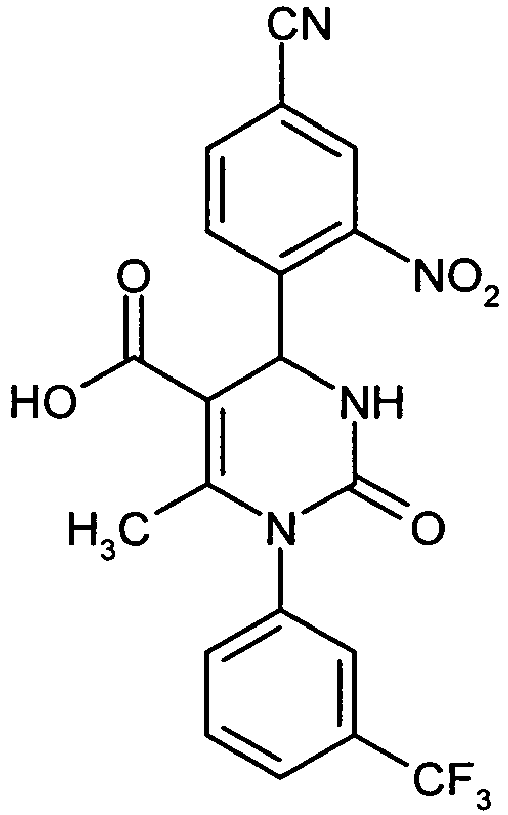
Die Reaktion wurde unter Argon durchgeführt. (rac)-Allyl 4-(4-cyano-2-nitrophenyl)-6-methyl-2-oxo-1-[3-(trifluormethyl)phenyl]-1,2,3,4-tetrahydropyrimidin-5-carboxylat (15.0 g, 30.8 mmol) und Morpholin (1.5 eq., 4.03 g, 46.3 mmol) wurden in trockenem THF (300 ml) bei RT vorgelegt. Das Reaktionsgemisch wurde mehrfach entgast (Evakuierung gefolgt von Belüftung mit Argon). Unter Schutzgas wurde Tetrakis(triphenylphosphin)palladium(O) (0.05 eq., 1.78 g, 1.54 mmol) zugegeben und das Reaktionsgemisch 2 h bei RT gerührt (HPLC-Kontrolle). Das Gemisch wurde dann eingeengt und der Rückstand in Essigsäureethylester (700 ml) aufgenommen. Die organische Phase wurde mit 0.5 N Salzsäure (500 ml) und mit gesättigter Kochsalz-Lösung (300 ml) gewaschen, über Natriumsulfat getrocknet, filtriert und im Vakuum eingeengt. Das Rohprodukt wurde aus Essigsäureethylester umkristallisiert und im Hochvakuum getrocknet. Die Titelverbindung wurde als Feststoff erhalten (12.87 g, 93% d. Th.).
1H-NMR (400 MHz, DMSO-d6): δ = 2.05 (s, 3H), 6.00 (d, 1H), 7.65-7.90 (m, 4H), 8.10 (d, 1H), 8.25 (dd, 1H), 8.40 (d, 1H), 8.50 (d, 1H), 12.5 (br. s, 1H).The reaction was carried out under argon. (Rac) -allyl 4- (4-cyano-2-nitrophenyl) -6-methyl-2-oxo-1- [3- (trifluoromethyl) phenyl] -1,2,3,4-tetrahydropyrimidine-5-carboxylate ( 15.0 g, 30.8 mmol) and morpholine (1.5 eq., 4.03 g, 46.3 mmol) were initially charged in dry THF (300 mL) at RT. The reaction mixture was degassed several times (evacuation followed by aeration with argon). Under protective gas, tetrakis (triphenylphosphine) palladium (O) (0.05 eq., 1.78 g, 1.54 mmol) was added and the reaction mixture was stirred at RT for 2 h (HPLC check). The mixture was then concentrated and the residue taken up in ethyl acetate (700 ml). The organic phase was washed with 0.5 N hydrochloric acid (500 ml) and saturated brine (300 ml), dried over sodium sulfate, filtered and concentrated in vacuo. The crude product was recrystallized from ethyl acetate and dried under high vacuum. The title compound was obtained as a solid (12.87 g, 93% of theory).
1 H-NMR (400 MHz, DMSO-d 6 ): δ = 2.05 (s, 3H), 6.00 (d, 1H), 7.65-7.90 (m, 4H), 8.10 (d, 1H), 8.25 (dd, 1H), 8.40 (d, 1H), 8.50 (d, 1H), 12.5 (br, s, 1H).

(rac)-4-(4-Cyano-2-nitrophenyl)-6-methyl-2-oxo-1-[3-(trifluormethyl)phenyl]-1,2,3,4-tetrahydro-pyrimidin-5-carbonsäure (590 g) wurde durch präparative HPLC-Chromatographie an chiraler Phase in die Enantiomere aufgetrennt [Säule: chirale Kieselgel-Phase basierend auf dem Selektor Poly(N-methacryloyl-L-leucin-tert.-butylamid); Säulendimension: 670 mm x 40 mm; Probenvorbereitung: 100 g Probe gelöst in 2000 ml THF; Injektionsvolumen: 70 ml; Eluent: Essigsäureethyl-ester/Methanol 100:1 → 1:100; Fluss: 80 ml/min; Temperatur: 24°C; Detektion: 260 nm]. Es wurden 280 g (95% d. Th.; 99.6% ee) des 4R-Enantiomeren erhalten.( rac ) -4- (4-cyano-2-nitrophenyl) -6-methyl-2-oxo-1- [3- (trifluoromethyl) phenyl] -1,2,3,4-tetrahydro-pyrimidine-5-carboxylic acid (590 g) was separated into the enantiomers by preparative HPLC chromatography on a chiral phase [column: chiral silica gel phase based on the selector poly ( N- methacryloyl-L-leucine tert -butylamide); Column dimension: 670 mm x 40 mm; Sample preparation: 100 g sample dissolved in 2000 ml THF; Injection volume: 70 ml; Eluent: ethyl acetate / methanol 100: 1 → 1: 100; Flow: 80 ml / min; Temperature: 24 ° C; Detection: 260 nm]. 280 g (95% of theory, 99.6% ee) of the 4R enantiomer were obtained.
Der Enantiomerenüberschuss (ee-Wert) wurde chromatographisch bestimmt [Säule: chirale Kieselgel-Phase basierend auf dem Selektor Poly(N-methacryloyl-L-leucin-tert.-butylamid); Säulendimension: 250 mm x 4.6 mm; Eluent: Essigsäureethylester/Methanol 10:1; Fluss: 2 ml/min; Detektion: 265 nm; Rt = 1.38 min].The enantiomeric excess (ee value) was determined by chromatography [column: chiral silica gel phase based on the selector poly ( N- methacryloyl-L-leucine tert -butylamide); Column dimension: 250 mm x 4.6 mm; Eluent: ethyl acetate / methanol 10: 1; Flow: 2 ml / min; Detection: 265 nm; R t = 1.38 min].

Die Reaktion wurde unter Argon durchgeführt. (4R)-4-(4-Cyano-2-nitrophenyl)-6-methyl-2-oxo-1-[3-(trifluormethyl)phenyl]-1,2,3,4-tetrahydropyrimidin-5-carbonsäure (6.0 g, 11.4 mmol, 85% Reinheit), DMAP (140 mg, 1.143 mmol; 0.1 eq.), DIEA (1.77 g, 13.7 mmol; 1.2 eq.) und PyBOP (7.14 g, 13.71 mmol; 1.2 eq.) wurden in trockenem THF (34 ml) bei RT vorgelegt, nach kurzem Rühren (15 min) mit 0.5 M Ammoniak-Lösung in THF (5 eq., 57.1 mmol) versetzt und anschließend 1 h bei RT gerührt. Das Reaktionsgemisch wurde dann mit Essigsäureethylester (250 ml) versetzt. Die organische Phase wurde nacheinander mit gesättigter Natriumhydrogencarbonat-Lösung, Wasser und gesättigter Kochsalz-Lösung gewaschen, über Natriumsulfat getrocknet, filtriert und im Vakuum eingeengt. Das Rohprodukt wurde an Kieselgel flash-chromatographiert (Laufmittel: Dichlormethan/Methanol 20: 1). Die Titelverbindung wurde als farbloser Feststoff erhalten (5.0 g, 98% d. Th.).
MS (ESIpos): m/z (%) = 446.2 (100) [M+H]+.The reaction was carried out under argon. (4 R) -4- (4-Cyano-2-nitrophenyl) -6-methyl-2-oxo-1- [3- (trifluoromethyl) phenyl] -1,2,3,4-tetrahydropyrimidine-5-carboxylic acid ( 6.0 g, 11.4 mmol, 85% purity), DMAP (140 mg, 1.143 mmol, 0.1 eq.), DIEA (1.77 g, 13.7 mmol, 1.2 eq.) And PyBOP (7.14 g, 13.71 mmol, 1.2 eq.) in dry THF (34 ml) at RT, after brief stirring (15 min) with 0.5 M ammonia solution in THF (5 eq., 57.1 mmol) and then stirred for 1 h at RT. The reaction mixture was then added with ethyl acetate (250 ml). The organic phase was washed successively with saturated sodium bicarbonate solution, water and saturated sodium chloride solution, dried over sodium sulfate, filtered and concentrated in vacuo. The crude product was flash chromatographed on silica gel (eluent: dichloromethane / methanol 20: 1). The title compound was obtained as a colorless solid (5.0 g, 98% of theory).
MS (ESIpos): m / z (%) = 446.2 (100) [M + H] + .

Die Reaktion wurde unter Argon durchgeführt. (4R)-4-(4-Cyano-2-nitrophenyl)-6-methyl-2-oxo-1-[3-(trifluormethyl)phenyl]-1,2,3,4-tetrahydropyrimidin-5-carboxamid (5.0g, 10.1 mmol; 90% Reinheit) wurde in trockenem THF (135 ml) vorgelegt, mit Methoxycarbonylsulfamoyl-triethylammoniumhydroxid (Burgess-Reagens; 3.85 g, 16.17 mmol; 1.6 eq.) versetzt und anschließend 2 h bei RT gerührt. Das Reaktionsgemisch wurde dann mit Essigsäureethylester (300 ml) versetzt. Die organische Phase wurde zweimal mit Wasser und einmal mit gesättigter Kochsalz-Lösung gewaschen, über Natriumsulfat getrocknet, filtriert und im Vakuum eingeengt. Das Rohprodukt wurde aus Cyclohexan/Essigsäureethylester umkristallisiert. Die erhaltenen Kristalle wurden im Hochvakuum getrocknet. Die Titelverbindung wurde als Feststoff erhalten (2.8 g, 65% d. Th.).
1H-NMR (400 MHz, DMSO-d6): δ = 1.80 (s, 3H), 5.95 (s, 1H), 7.75-8.25 (m, 6H), 8.35 (dd, 1H), 8.65 (s, 1H).The reaction was carried out under argon. (4 R) -4- (4-Cyano-2-nitrophenyl) -6-methyl-2-oxo-1- [3- (trifluoromethyl) phenyl] -1,2,3,4-tetrahydropyrimidine-5-carboxamide ( 5.0 g, 10.1 mmol, 90% purity) was initially charged in dry THF (135 ml), combined with methoxycarbonylsulfamoyltriethylammonium hydroxide (Burgess reagent, 3.85 g, 16.17 mmol, 1.6 eq.) And then stirred at RT for 2 h. The reaction mixture was then added with ethyl acetate (300 ml). The organic phase was washed twice with water and once with saturated brine, dried over sodium sulfate, filtered and concentrated in vacuo. The crude product was recrystallized from cyclohexane / ethyl acetate. The resulting crystals were dried under high vacuum. The title compound was obtained as a solid (2.8 g, 65% of theory).
1 H-NMR (400 MHz, DMSO-d 6 ): δ = 1.80 (s, 3H), 5.95 (s, 1H), 7.75-8.25 (m, 6H), 8.35 (dd, 1H), 8.65 (s, 1H).

Die Reaktion wurde unter Argon durchgeführt. (4R)-4-(4-Cyano-2-nitrophenyl)-6-methyl-2-oxo-1-[3-(trifluormethyl)phenyl]-1,2,3,4-tetrahydropyrimidin-5-carbonitril (5.0 g, 11.7 mmol) wurde in absolutem THF (500 ml) vorgelegt und bei -78°C mit einer 1 M Lösung von Lithiumhexamethyldisilazid (LiHMDS) in THF (13.5 ml, 13.5 mmol; 1.15 eq.) versetzt. Nach 30 min Rühren wurde Iodmethan (8.30 g, 58.5 mmol; 5 eq.) in THF zugegeben und die Mischung für 16 h unter allmählicher Erwärmung von -78°C auf RT gerührt. Das Reaktionsgemisch wurde anschließend im Vakuum eingeengt und zunächst mit 1 N Salzsäure (14.0 ml), dann mit MTBE (500 ml) versetzt. Die organische Phase wurde nacheinander mit Wasser (2 x), gesättigter Natriumhydrogencarbonat-Lösung, gesättigter Ammoniumchlorid-Lösung und gesättigter Kochsalz-Lösung gewaschen, über Natriumsulfat getrocknet, filtriert und im Vakuum eingeengt. Die Titelverbindung wurde als Feststoff erhalten (4.3 g, 83% d. Th.).
LC-MS (Methode 4): Rt = 1.28 min; MS (ESIpos): m/z (%) = 442.2 (100) [M+H]+; MS (ESIneg): m/z (%) = 440.2 (50) [M-H]-
1H-NMR (400 MHz, DMSO-d6): δ = 1.80 (s, 3H), 2.70 (s, 3H), 5.95 (s, 1H), 7.75-8.25 (m, 5H), 8.35 (dd, 1H), 8.65 (s, 1H).The reaction was carried out under argon. (4 R) -4- (4-Cyano-2-nitrophenyl) -6-methyl-2-oxo-1- [3- (trifluoromethyl) phenyl] -1,2,3,4-tetrahydropyrimidine-5-carbonitrile ( 5.0 g, 11.7 mmol) was initially charged in absolute THF (500 ml) and treated at -78 ° C. with a 1 M solution of lithium hexamethyldisilazide (LiHMDS) in THF (13.5 ml, 13.5 mmol, 1.15 eq.). After stirring for 30 min, iodomethane (8.30 g, 58.5 mmol, 5 eq.) In THF was added and the mixture was stirred at RT while heating gradually from -78 ° C for 16 h. The reaction mixture was then concentrated under reduced pressure and first treated with 1 N hydrochloric acid (14.0 ml), then with MTBE (500 ml). The organic phase was washed successively with water (2 ×), saturated sodium bicarbonate solution, saturated ammonium chloride solution and saturated sodium chloride solution, dried over sodium sulfate, filtered and concentrated in vacuo. The title compound was obtained as a solid (4.3 g, 83% of theory).
LC-MS (Method 4): R t = 1.28 min; MS (ESIpos): m / z (%) = 442.2 (100) [M + H] + ; MS (ES Ineg): m / z (%) = 440.2 (50) [MH] -
1 H-NMR (400 MHz, DMSO-d 6 ): δ = 1.80 (s, 3H), 2.70 (s, 3H), 5.95 (s, 1H), 7.75-8.25 (m, 5H), 8.35 (dd, 1H), 8.65 (s, 1H).

(4R)-4-(4-Cyano-2-nitrophenyl)-3,6-dimethyl-2-oxo-1-[3-(trifluormethyl)phenyl]-1,2,3,4-tetra-hydropyrimidin-5-carbonitril (6.0 g, 11.3 mmol) wurde unter Argon in Methanol (420 ml) gelöst. Anschließend wurde 10% Palladium auf Aktivkohle (5.5 g) zugegeben und für 5.5 h bei RT und Normaldruck hydriert (genaue HPLC-Kontrolle). Das Reaktionsgemisch wurde dann über Kieselgur filtriert und der Filter-Rückstand mit Methanol (1000 ml) nachgewaschen. Das Filtrat wurde eingeengt und das Rohprodukt an Kieselgel flash-chromatographiert (Laufmittel: Essigsäureethylester/Cyclohexan 2:1). Die Titelverbindung wurde als Feststoff erhalten (2.28 g, 40% d. Th.).
LC-MS (Methode 8): Rt = 1.06 min; MS (ESIpos): m/z (%) = 412.3 (80) [M+H]+; MS (ESIneg): m/z (%) = 410.3 (100) [M-H]-.(4 R) -4- (4-Cyano-2-nitrophenyl) -3,6-dimethyl-2-oxo-1- [3- (trifluoromethyl) phenyl] -1,2,3,4-tetra-hydropyrimidin- 5-Carbonitrile (6.0 g, 11.3 mmol) was dissolved in methanol (420 mL) under argon. Subsequently, 10% palladium on charcoal (5.5 g) was added and hydrogenated for 5.5 h at RT and normal pressure (exact HPLC control). The reaction mixture was then filtered through kieselguhr and the filter residue washed with methanol (1000 ml). The filtrate was concentrated and the crude product flash-chromatographed on silica gel (eluent: ethyl acetate / cyclohexane 2: 1). The title compound was obtained as a solid (2.28 g, 40% of theory).
LC-MS (Method 8): R t = 1.06 min; MS (ESIpos): m / z (%) = 412.3 (80) [M + H] + ; MS (ES Ineg): m / z (%) = 410.3 (100) [MH] - .
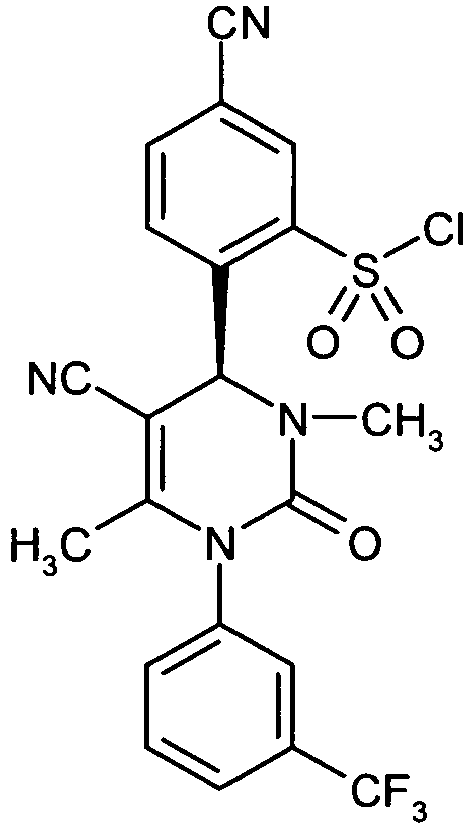
Unter Argon wurde (4R)-4-(2-Amino-4-cyanophenyl)-3,6-dimethyl-2-oxo-1-[3-(trifluormethyl)-phenyl]-1,2,3,4-tetrahydropyrimidin-5-carbonitril (2.1 g, 5.1 mmol) in einem 2:1:1-Gemisch aus Essigsäure/konz. Salzsäure/Wasser (insgesamt 50 ml) bei -10°C vorgelegt. Dazu wurde langsam eine Lösung von Natriumnitrit (371 mg, 5.38 mmol) in Wasser (2 ml) getropft und die Mischung für 40 min bei -10°C bis -5°C gerührt. Diese Lösung wurde dann zu 45 ml einer auf -10°C vorgekühlten, mit Schwefeldioxid gesättigten Suspension von Kupfer(I)chlorid (101.4 mg, 1.0 mmol) in Eisessig (44 ml) gegeben. Der Ansatz wurde ca. 30 min bei 0°C und dann 1 h bei +15°C gerührt (Reaktionskontrolle per HPLC und LC-MS). Die Reaktionsmischung wurde danach wieder auf 0°C gekühlt und anschließend pipettenweise in ca. 300 ml eiskaltes Wasser gegeben. Der Niederschlag wurde abfiltriert und in Essigsäureethylester (150 ml) aufgenommen. Die Lösung wurde zweimal mit gesättigter Kochsalz-Lösung gewaschen, über Natriumsulfat getrocknet, filtriert und im Vakuum eingeengt. Die Titelverbindung wurde als ein Feststoff erhalten (2.13 g, 77% d. Th., 92% Reinheit), welcher ohne weitere Aufreinigung in Folgereaktionen eingesetzt wurde.
LC-MS (Methode 4): Rt = 1.37 min; MS (ESIpos): m/z (%) = 495.1 (100) [M+H]+
1H-NMR (400 MHz, DMSO-d6): δ = 1.80 (s, 3H), 2.70 (s, 3H), 6.55 (s, 1H), 7.75-8.00 (m, 6H), 8.10 (s, 1H).Under argon was added (4 R) -4- (2-amino-4-cyanophenyl) -3,6-dimethyl-2-oxo-1- [3- (trifluoromethyl) phenyl] -1,2,3,4- tetrahydropyrimidine-5-carbonitrile (2.1 g, 5.1 mmol) in a 2: 1: 1 mixture of acetic acid / conc. Hydrochloric acid / water (total 50 ml) at -10 ° C submitted. To this was slowly added dropwise a solution of sodium nitrite (371 mg, 5.38 mmol) in water (2 ml) and the mixture was stirred for 40 min at -10 ° C to -5 ° C. This solution was then added to 45 ml of a sulfur dioxide-saturated, pre-cooled, sulfur dioxide-saturated suspension of copper (I) chloride (101.4 mg, 1.0 mmol) in glacial acetic acid (44 ml). The mixture was stirred for about 30 min at 0 ° C and then for 1 h at + 15 ° C (reaction control by HPLC and LC-MS). The reaction mixture was then cooled again to 0 ° C and then pipetted in about 300 ml of ice-cold water. The precipitate was filtered off and taken up in ethyl acetate (150 ml). The solution was washed twice with saturated brine, dried over sodium sulfate, filtered and concentrated in vacuo. The title compound was obtained as a solid (2.13 g, 77% of theory, 92% purity), which was used without further purification in subsequent reactions.
LC-MS (Method 4): R t = 1.37 min; MS (ESIpos): m / z (%) = 495.1 (100) [M + H] +
1 H-NMR (400 MHz, DMSO-d 6 ): δ = 1.80 (s, 3H), 2.70 (s, 3H), 6.55 (s, 1H), 7.75-8.00 (m, 6H), 8.10 (s, 1H).

(4R)-4-(4-Cyano-2-nitrophenyl)-6-methyl-2-oxo-1-[3-(trifluormethyl)phenyl]-1,2,3,4-tetrahydro-pyrimidin-5-carbonitril (39.5 g, 92.4 mmol) wurde unter Argon in Ethanol (1975 ml) gelöst. Anschließend wurde 10% Palladium auf Aktivkohle (19.8 g) zugegeben und für 2 h bei RT und Normaldruck hydriert (genaue DC-Kontrolle). Das Reaktionsgemisch wurde dann über Kieselgur filtriert. Das Filtrat wurde eingeengt und das erhaltene Rohprodukt an Kieselgel flash-chromatographiert (Laufmittel: Essigsäureethylester/Cyclohexan 2:1). Die Titelverbindung wurde als Feststoff erhalten (25.5 g, 68% d. Th.).
LC-MS (Methode 10): Rt = 2.21 min; MS (ESIpos): m/z (%) = 398.2 (100) [M+H]+.(4 R) -4- (4-Cyano-2-nitrophenyl) -6-methyl-2-oxo-1- [3- (trifluoromethyl) phenyl] -1,2,3,4-tetrahydro-pyrimidin-5- Carbonitrile (39.5 g, 92.4 mmol) was dissolved in ethanol (1975 mL) under argon. Subsequently, 10% palladium on charcoal (19.8 g) was added and for 2 h at RT and atmospheric pressure hydrogenated (exact DC control). The reaction mixture was then filtered through kieselguhr. The filtrate was concentrated and the crude product obtained flash-chromatographed on silica gel (eluent: ethyl acetate / cyclohexane 2: 1). The title compound was obtained as a solid (25.5 g, 68% of theory).
LC-MS (Method 10): R t = 2.21 min; MS (ESIpos): m / z (%) = 398.2 (100) [M + H] + .

Unter Argon wurde (4R)-4-(2-Amino-4-cyanophenyl)-6-methyl-2-oxo-1-[3-(trifluormethyl)-phenyl]-1,2,3,4-tetrahydropyrimidin-5-carbonitril (3.0 g, 7.55 mmol) in einem 2:1:1-Gemisch aus Essigäure/konz. Salzsäure/Wasser (insgesamt 50 ml) bei -10°C vorgelegt. Dazu wurde eine Lösung von Natriumnitrit (547 mg, 7.93 mmol) in Wasser (6 ml) gegeben und die Mischung für 15 min bei -10°C gerührt. Diese Lösung wurde dann zu einer auf -10°C vorgekühlten, mit Schwefeldioxid gesättigten Suspension von Kupfer(I)chlorid (75 mg, 755 µmol; 0.1 eq.) in Eisessig (60 ml) gegeben. Der Ansatz wurde 60 min bei -10°C (Innentemperatur) gerührt und dann langsam innerhalb von 3 h auf +15°C erwärmt (Reaktionskontrolle per HPLC und LC-MS). Die Reaktionsmischung wurde danach wieder auf 0°C gekühlt und anschließend pipettenweise in ca. 300 ml eiskaltes Wasser gegeben. Die wässrige Phase wurde mehrfach mit MTBE extrahiert. Die vereinigten organischen Phasen wurden zweimal mit gesättigter Kochsalz-Lösung gewaschen, über Natriumsulfat getrocknet, filtriert und im Vakuum eingeengt. Die Titelverbindung wurde als ein Feststoff erhalten (1.67 g, 73% Reinheit laut LC-MS, 32% d. Th.) und ohne weitere Aufreinigung in Folgereaktionen eingesetzt.
LC-MS (Methode 6): Rt = 2.52 min; MS (ESIpos): m/z (%) = 481.0 (100) [M+H]+.Under argon was added (4 R) -4- (2-amino-4-cyanophenyl) -6-methyl-2-oxo-1- [3- (trifluoromethyl) phenyl] -1,2,3,4-tetrahydropyrimidine 5-carbonitrile (3.0 g, 7.55 mmol) in a 2: 1: 1 mixture of acetic acid / conc. Hydrochloric acid / water (total 50 ml) at -10 ° C submitted. To this was added a solution of sodium nitrite (547 mg, 7.93 mmol) in water (6 ml) and the mixture stirred at -10 ° C for 15 min. This solution was then added to a sulfur dioxide-saturated, pre-cooled, sulfur dioxide-saturated suspension of copper (I) chloride (75 mg, 755 μmol, 0.1 eq.) In glacial acetic acid (60 ml). The mixture was stirred for 60 min at -10 ° C (internal temperature) and then slowly heated to + 15 ° C within 3 h (reaction control by HPLC and LC-MS). The reaction mixture was then cooled again to 0 ° C and then pipetted in about 300 ml of ice-cold water. The aqueous phase was extracted several times with MTBE. The combined organic phases were washed twice with saturated sodium chloride solution, dried over sodium sulfate, filtered and concentrated in vacuo. The title compound was obtained as a solid (1.67 g, 73% purity according to LC-MS, 32% of theory) and used without further purification in subsequent reactions.
LC-MS (Method 6): R t = 2.52 min; MS (ESIpos): m / z (%) = 481.0 (100) [M + H] + .
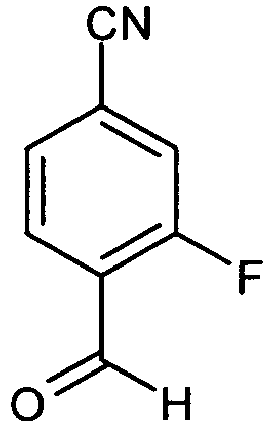
Die Reaktion wurde unter Argon durchgeführt. 3-Fluor-4-methylbenzonitril (121 g, 895 mmol) und N,N-Dimethylformamid-dimethylacetal (245 g, 2.06 mol) wurden in DMF (1.8 Liter) gelöst und über Nacht unter Rückfluss gerührt. Der Kolbeninhalt wurde danach auf Wasser (2 Liter) gegossen, und es wurde zweimal mit Essigsäureethylester extrahiert und die vereinigten organischen Phasen mit gesättigter Kochsalz-Lösung gewaschen. Die organische Phase wurde eingeengt und der Rückstand in THF/Wasser (1:1, 2.7 Liter) erneut gelöst. Es wurde mit Natriumperiodat (503 g, 2.35 mol) versetzt und eine Stunde bei Raumtemperatur gerührt. Dann wurde vom ausgefallenen Niederschlag abgetrennt, das Filtrat gewonnen und mehrfach mit Essigsäureethylester extrahiert. Die vereinigten organischen Phasen wurden einmal mit gesättigter Natriumhydrogencarbonat-Lösung und einmal mit gesättigter Natriumchlorid-Lösung gewaschen, getrocknet und zu einem Öl eingeengt. Dieses wurde durch Säulenchromatographie an Kieselgel gereinigt (Laufmittel: Petrol-ether/Dichlormethan 6:4, dann 4:6, zuletzt reines Dichlormethan). Die Produktfraktionen wurden eingeengt. Man erhielt 28.0 g (20% d. Th.) der Zielverbindung als weißen kristallinen Feststoff.
GC-MS (Methode 1): Rt = 3.63 min; MS (ESIpos): m/z (%) = 149.0 (48) [M]+, 150.0 (5) [M+H]+
1H-NMR (400 MHz, DMSO-d6): δ = 7.89 (d, 1H), 8.00 (t, 1H), 8.11 (d, 1 H), 10.24 (s, 1H).The reaction was carried out under argon. 3-Fluoro-4-methylbenzonitrile (121 g, 895 mmol) and N, N -dimethylformamide dimethyl acetal (245 g, 2.06 mol) were dissolved in DMF (1.8 liters) and stirred at reflux overnight. The contents of the flask were then poured onto water (2 liters) and extracted twice with ethyl acetate, and the combined organic phases were washed with saturated brine. The organic phase was concentrated and the residue was redissolved in THF / water (1: 1, 2.7 liters). It was mixed with sodium periodate (503 g, 2.35 mol) and stirred for one hour at room temperature. Then was separated from the precipitate, the filtrate was collected and extracted several times with ethyl acetate. The combined organic phases were washed once with saturated sodium bicarbonate solution and once with saturated sodium chloride solution, dried and concentrated to an oil. This was purified by column chromatography on silica gel (eluent: petroleum ether / dichloromethane 6: 4, then 4: 6, finally pure dichloromethane). The product fractions were concentrated. This gave 28.0 g (20% of theory) of the target compound as a white crystalline solid.
GC-MS (Method 1): R t = 3.63 min; MS (ESIpos): m / z (%) = 149.0 (48) [M] + , 150.0 (5) [M + H] +
1 H-NMR (400 MHz, DMSO-d 6 ): δ = 7.89 (d, 1H), 8.00 (t, 1H), 8.11 (d, 1H), 10.24 (s, 1H).

3-Fluor-4-formylbenzonitril (2.00 g, 13.4 mmol) wurde in DMSO (27 ml) gelöst und unter Eisbad-Kühlung mit Natriummethanthiolat (1.50 g, 21.5 mmol) versetzt. Es wurde 45 min nachgerührt und dann mit Wasser (100 ml) verdünnt. Das dabei ausfallende Produkt wurde abgesaugt, mit Wasser gewaschen und im Vakuum getrocknet. Man erhielt 1.36 g (51% d. Th.) der Zielverbindung als gelben kristallinen Feststoff.
GC-MS (Methode 1): Rt = 5.90 min; MS (ESIpos): m/z (%) = 177.0 (100) [M]+, 178.0 (11) [M+H]+.3-Fluoro-4-formylbenzonitrile (2.00 g, 13.4 mmol) was dissolved in DMSO (27 ml) and treated with sodium methanethiolate (1.50 g, 21.5 mmol) under ice-bath cooling. The mixture was stirred for 45 minutes and then diluted with water (100 ml). The precipitated product was filtered off, washed with water and dried in vacuo. This gave 1.36 g (51% of theory) of the target compound as a yellow crystalline solid.
GC-MS (Method 1): R t = 5.90 min; MS (ESIpos): m / z (%) = 177.0 (100) [M] + , 178.0 (11) [M + H] + .

Die Reaktion wurde unter Argon durchgeführt. Phosphorsäuretriethylester (1.46 g, 8.04 mmol) und Diphosphorpentoxid (761 mg, 5.36 mmol) wurden über Nacht bei 50°C gerührt. Dann wurde mit MTBE (27 ml) verdünnt, und 4-Formyl-3-(methylsulfanyl)benzonitril (1.18 g, 6.70 mmol), 1-[3-(Trifluormethyl)phenyl]harnstoff (1.37 g, 6.70 mmol) sowie Allylacetoacetat (1.43 g, 10.1 mmol) wurden hinzugefügt. Das Gemisch wurde über Nacht unter Rückfluss gerührt. Zur Aufarbeitung wurde das Lösungsmittel im Vakuum entfernt und der Rückstand mit Diethylether aufgeschlämmt und dann abgesaugt. Man erhielt 978 mg (19% d. Th.) der Titelverbindung.
LC-MS (Methode 4): Rt = 1.37 min; MS (ESIpos): m/z (%) = 488.3 (100) [M+H]+; MS (ESIneg): m/z (%) = 486.2 (65) [M-H]-.The reaction was carried out under argon. Triethyl phosphate (1.46 g, 8.04 mmol) and diphosphorus pentoxide (761 mg, 5.36 mmol) were stirred at 50 ° C overnight. It was then diluted with MTBE (27 ml) to give 4-formyl-3- (methylsulfanyl) benzonitrile (1.18 g, 6.70 mmol), 1- [3- (trifluoromethyl) phenyl] urea (1.37 g, 6.70 mmol) and allyl acetoacetate ( 1.43 g, 10.1 mmol) were added. The mixture was stirred at reflux overnight. For workup, the solvent was removed in vacuo and the residue was slurried with diethyl ether and then filtered off with suction. 978 mg (19% of theory) of the title compound were obtained.
LC-MS (Method 4): R t = 1.37 min; MS (ESIpos): m / z (%) = 488.3 (100) [M + H] + ; MS (ESIneg): m / z (%) = 486.2 (65) [MH] - .
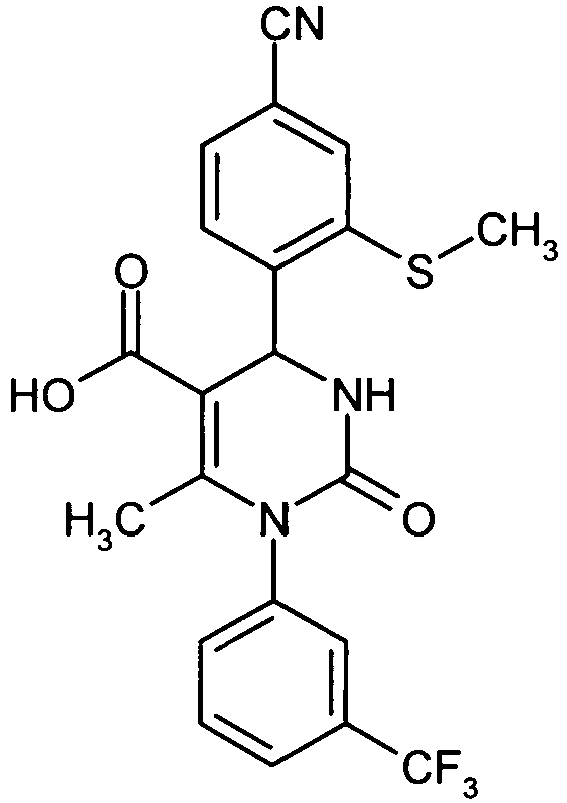
(rac)-4-[4-Cyano-2-(methylsulfanyl)phenyl]-6-methyl-2-oxo-l-[3-(trifluormethyl)phenyl]-1,2,3,4-tetrahydropyrimidin-5-carbonsäure-allylester (750 mg, 1.54 mmol) wurde in THF (10 ml) gelöst und mit Morpholin (201 mg, 2.308 mmol) versetzt. Die Reaktionslösung wurde mit Argon gesättigt (30 min Durchleiten von Argon). Anschließend wurde Tetrakis(triphenylphosphin)palladium(0) (7.47 mg, 0.006 mmol) zugegeben und die Mischung über Nacht bei RT gerührt. Da nach HPLC-Kontrolle nur wenig Umsatz zu beobachten war, wurde erneut Tetrakis(triphenylphosphin)-palladium(0) (7.47 mg), 0.006 mmol) zugesetzt und weitere 3 h bei RT gerührt. Der Koibeninhait wurde dann über Kieselgur filtriert und der Rückstand mit THF nachgewaschen. Das Filtrat wurde im Vakuum eingeengt und der Rückstand aus Diethylether (15 ml) umkristallisiert. Die Kristalle wurden abgesaugt und im Hochvakuum getrocknet. Es wurden 663 mg (96% d. Th.) der Zielverbindung erhalten.
LC-MS (Methode 4): Rt = 1.10 min; MS (ESIpos): m/z (%) = 448.0 (100) [M+H]+; MS (ESIneg): m/z (%) = 446.3 (100) [M-H]-.( rac ) -4- [4-cyano-2- (methylsulfanyl) phenyl] -6-methyl-2-oxo-1- [3- (trifluoromethyl) phenyl] -1,2,3,4-tetrahydropyrimidine-5- Carboxylic acid allyl ester (750 mg, 1.54 mmol) was dissolved in THF (10 mL) and morpholine (201 mg, 2.308 mmol) was added. The reaction solution was saturated with argon (passing argon through for 30 minutes). Subsequently, tetrakis (triphenylphosphine) palladium (0) (7.47 mg, 0.006 mmol) was added and the mixture was stirred at RT overnight. Since little conversion was observed by HPLC control, tetrakis (triphenylphosphine) palladium (0) (7.47 mg), 0.006 mmol) was added again and stirred at RT for a further 3 h. The Koibeninhait was then filtered through diatomaceous earth and the residue washed with THF. The filtrate was concentrated in vacuo and the residue was recrystallized from diethyl ether (15 ml). The crystals were filtered off with suction and dried under high vacuum. 663 mg (96% of theory) of the target compound were obtained.
LC-MS (Method 4): R t = 1.10 min; MS (ESIpos): m / z (%) = 448.0 (100) [M + H] + ; MS (ES Ineg): m / z (%) = 446.3 (100) [MH] - .

(rac)-4-[4-Cyano-2-(methylsulfanyl)phenyl]-6-methyl-2-oxo-1-[3-(trifluormethyl)phenyl]-1,2,3,4-tetrahydropyrimidin-5-carbonsäure (663 mg, 1.48 mmol) wurde durch präparative HPLC-Chromatographie an chiraler Phase in die Enantiomere aufgetrennt [Säule: chirale Kieselgel-Phase basierend auf dem Selektor Poly(N-methacryloyl-D-leucin-dicyclopropylmethylamid); Säulendimension: 670 mm x 40 mm; Probenvorbereitung: Probe wurde in 20 ml Methanol/Ethylacetat 1:3 gelöst; Injektionsvolumen: 15 ml; Gradienten-Elution: Ethylacetat (100%) → Methanol (100%); Fluss: 80 ml/min; Temperatur: 25°C; Detektion: 260 nm]. Es wurden 279 mg (84% d. Th., 96% ee) des 4S-Enantiomeren als farbloser, amorpher Feststoff erhalten.
HPLC (Methode 2): Rt = 4.15 min.
MS (DCI / NH3): m/z = 448.1 [M+H]+
1H-NMR (400 MHz, DMSO-d6): δ = 2.07 (s, 3H), 2.57 (s, 3H), 5.80 (d, 1H), 7.62-7.83 (m, 7H), 8.02 (d, 1H).
Drehwert: [α]20 Na = +14.0° (c = 0.210 in DMF).( rac ) -4- [4-cyano-2- (methylsulfanyl) phenyl] -6-methyl-2-oxo-1- [3- (trifluoromethyl) phenyl] -1,2,3,4-tetrahydropyrimidine-5- carboxylic acid (663 mg, 1.48 mmol) was separated into the enantiomers by preparative HPLC chromatography on a chiral phase [column: chiral silica gel phase based on the selector poly ( N- methacryloyl-D-leucine-dicyclopropylmethylamide); Column dimension: 670 mm x 40 mm; Sample preparation: sample was dissolved in 20 ml of methanol / ethyl acetate 1: 3; Injection volume: 15 ml; Gradient elution: ethyl acetate (100%) → methanol (100%); Flow: 80 ml / min; Temperature: 25 ° C; Detection: 260 nm]. 279 mg (84% of theory, 96% ee) of the 4S enantiomer were obtained as a colorless, amorphous solid.
HPLC (Method 2): R t = 4.15 min.
MS (DCI / NH 3): m / z = 448.1 [M + H] +
1 H-NMR (400 MHz, DMSO-d 6 ): δ = 2.07 (s, 3H), 2.57 (s, 3H), 5.80 (d, 1H), 7.62-7.83 (m, 7H), 8.02 (d, 1H).
Rotation: [α] 20 Na = + 14.0 ° ( c = 0.210 in DMF).

Die Reaktion wurde unter Argon durchgeführt. (4S)-4-[4-Cyano-2-(methylsulfanyl)phenyll-6-methyl-2-oxo-1-[3-(trifluorinethyl)phenyl]-1,2,3,4-tetrahydropyrimidin-5-carbonsäure (240 mg, 0.536 mmol) wurde in THF (5 ml) gelöst und mit PyBOP (419 mg, 0.805 mmol) und Triethylamin (380 mg, 3.76 mmol) versetzt. Nach kurzem Rühren wurde auf 0°C abgekühlt und mit Ammonium-chlorid (143 mg, 2.68 mmol) versetzt. Die Reaktionsmischung wurde über Nacht bei RT gerührt und der Kolbeninhalt dann in 1 N Salzsäure gegeben. Es wurde zweimal mit Essigsäureethylester extrahiert, und die vereinigten organischen Phasen wurden mit 1 N Salzsäure und mit gesättigter Kochsalz-Lösung gewaschen, getrocknet und eingeengt. Der Rückstand wurde durch präparative HPLC gereinigt. Man erhielt 161 mg (67% d. Th.) der Titelverbindung.
LC-MS (Methode 4): Rt = 0.99 min; MS (ESIpos): m/z (%) = 447.1 (100) [M+H]+; MS (ESIneg): m/z (%) = 445.3 (100) [M-H]-.The reaction was carried out under argon. (4 S) -4- [4-cyano-2- (methylsulfanyl) phenyl-6-methyl-2-oxo-1- [3- (trifluorinethyl) phenyl] -1,2,3,4-tetrahydropyrimidine-5- carboxylic acid (240 mg, 0.536 mmol) was dissolved in THF (5 mL) and treated with PyBOP (419 mg, 0.805 mmol) and triethylamine (380 mg, 3.76 mmol). After brief stirring, it was cooled to 0 ° C and treated with ammonium chloride (143 mg, 2.68 mmol). The reaction mixture was stirred at RT overnight and the contents of the flask were then poured into 1 N hydrochloric acid. It was extracted twice with ethyl acetate, and the combined organic phases were washed with 1 N hydrochloric acid and with saturated brine, dried and concentrated. The residue was purified by preparative HPLC. 161 mg (67% of theory) of the title compound were obtained.
LC-MS (Method 4): R t = 0.99 min; MS (ESIpos): m / z (%) = 447.1 (100) [M + H] + ; MS (ES Ineg): m / z (%) = 445.3 (100) [MH] - .

Die Reaktion wurde unter Argon durchgeführt. (4S)-4-[4-Cyano-2-(methylsulfanyl)phenyl]-6-methyl-2-oxo-1-[3-(trifluormethyl)phenyl]-1,2,3,4-tetrahydropyrimidin-5-carboxamid (95.0 mg, 0.213 mmol) wurde in THF (4 ml) gelöst und mit Methoxycarbonylsulfamoyl-triethylammoniumhydroxid (Burgess-Reagens; 101 mg, 0.426 mmol) versetzt. Nach 30 min Rühren bei Raumtemperatur zeigte die HPLC-Kontrolle vollständigen Umsatz an. Es wurde mit Essigsäureethylester (4 ml) verdünnt und mit Wasser (1 ml) versetzt. Die Mischung wurde dann über eine Merck Extrelut® NT3-Säule gegeben und das Filtrat durch präparative HPLC gereinigt. Nach dem Einengen der Produktfraktionen erhielt man 96.0 mg (quant.) der Titelverbindung.
HPLC (Methode 3): Rt = 4.61 min.
MS (DCI / NH3): m/z = 429.1 [M+H]+, 446.1 [M+NH4]+
1H-NMR (400 MHz, DMSO-d6): δ = 1.80 (s, 3H), 2.61 (s, 3H), 5.76 (s, 1H), 7.67-7.89 (m, 7H), 8.28 (s, 1H).The reaction was carried out under argon. (4 S) -4- [4-cyano-2- (methylsulfanyl) phenyl] -6-methyl-2-oxo-1- [3- (trifluoromethyl) phenyl] -1,2,3,4-tetrahydropyrimidine-5 carboxamide (95.0 mg, 0.213 mmol) was dissolved in THF (4 mL) and methoxycarbonylsulfamoyl-triethylammonium hydroxide (Burgess reagent, 101 mg, 0.426 mmol) was added. After stirring for 30 min at room temperature, the HPLC control indicated complete conversion. It was diluted with ethyl acetate (4 ml) and water (1 ml) added. The mixture was then added NT3 column over a Merck Extrelut ® and the filtrate purified by preparative HPLC. Concentration of the product fractions gave 96.0 mg (quant.) Of the title compound.
HPLC (Method 3): R t = 4.61 min.
MS (DCI / NH 3 ): m / z = 429.1 [M + H] + , 446.1 [M + NH 4 ] +
1 H-NMR (400 MHz, DMSO-d 6 ): δ = 1.80 (s, 3H), 2.61 (s, 3H), 5.76 (s, 1H), 7.67-7.89 (m, 7H), 8.28 (s, 1H).

(4S)-4-[4-Cyano-2-(methylsulfanyl)phenyl]-6-methyl-2-oxo-1-[3-(trifluormethyl)phenyl]-1,2,3,4-tetrahydropyrimidin-5-carbonitril (55 mg, 0.13 mmol) wurde in Ethanol (5.5 ml) gelöst und mit Methyltrioxorhenium (3.20 mg, 0.013 mmol) sowie Wasserstoffperoxid (16.0 mg, 0.14 mmol) versetzt. Das Reaktionsgemisch wurde 60 min bei RT gerührt, dann im Vakuum eingeengt und der Rückstand mittels präparativer HPLC gereinigt. Es wurden 27 mg (47% d. Th.) der Zielverbindung als Diastereomerengemisch erhalten.
LC-MS (Methode 4): Rt = 1.05 min; MS (ESIpos): m/z (%) = 445.0 (100) [M+H]+.(4 S) -4- [4-cyano-2- (methylsulfanyl) phenyl] -6-methyl-2-oxo-1- [3- (trifluoromethyl) phenyl] -1,2,3,4-tetrahydropyrimidine-5 Carbonitrile (55 mg, 0.13 mmol) was dissolved in ethanol (5.5 mL) and treated with methyltrioxorhenium (3.20 mg, 0.013 mmol) and hydrogen peroxide (16.0 mg, 0.14 mmol). The reaction mixture was stirred at RT for 60 min, then concentrated under reduced pressure and the residue was purified by preparative HPLC. 27 mg (47% of theory) of the target compound were obtained as mixture of diastereomers.
LC-MS (Method 4): R t = 1.05 min; MS (ESIpos): m / z (%) = 445.0 (100) [M + H] + .
(4S)-4-[4-Cyano-2-(methylsulfanyl)phenyl]-6-methyl-2-oxo-1-[3-(trifluormethyl)phenyl]-1,2,3,4-tetrahydropyrimidin-5-carbonitril (2.00 g, 4.67 mmol) wurde in Methanol/Wasser (4.4:1, ∼40 ml) vorgelegt, mit Natriumperiodat (1.90 g, 8.87 mmol; 1.9 eq.) versetzt und 16 h bei 30°C gerührt. Anschließend wurde erneut Natriumperiodat (0.45 g, 2.10 mmol; 0.45 eq.) hinzugefügt und der Ansatz weitere 4 h bei 50°C gerührt (HPLC-Kontrolle). Das Reaktionsgemisch wurde danach auf gesättigte wässrige Natriumhydrogencarbonat-Lösung (∼200 ml) gegeben und mit Essigsäureethyl-ester (4 x 50 ml) extrahiert. Die vereinigten organischen Phasen wurden über Natriumsulfat getrocknet, filtriert und im Vakuum eingeengt. Das Rohprodukt wurde an Kieselgel flash-chromatographiert (Gradient Cyclohexan → Essigsäureethylester). Die Zielverbindung wurde als Diastereomerengemisch in Form eines farblosen Feststoffs erhalten (2.18 g, quant.).
LC-MS (Methode 9): Rt = 1.98 min; MS (ESIpos): m/z (%) = 402.0 (100), 445.0 (60) [M+H]+; MS (ESIneg): m/z (%) = 400.1 (100), 443.1 (40) [M-H]-.
1H-NMR (400 MHz, DMSO-d6): δ = 1.85 (2 s, 3H), 2.85 (2 s, 3H), 5.75 (2 s, 1H), 7.70-8.50 (m, 8H).(4 S) -4- [4-cyano-2- (methylsulfanyl) phenyl] -6-methyl-2-oxo-1- [3- (trifluoromethyl) phenyl] -1,2,3,4-tetrahydropyrimidine-5 Carbonitrile (2.00 g, 4.67 mmol) was initially charged in methanol / water (4.4: 1, ~40 ml), treated with sodium periodate (1.90 g, 8.87 mmol, 1.9 eq.) And stirred at 30 ° C for 16 h. Then sodium periodate (0.45 g, 2.10 mmol, 0.45 eq.) Was added again and the mixture was stirred for a further 4 h at 50 ° C. (HPLC check). The reaction mixture was then added to saturated aqueous sodium bicarbonate solution (~200 ml) and extracted with ethyl acetate (4 x 50 ml). The combined organic phases were dried over sodium sulfate, filtered and concentrated in vacuo. The crude product was flash-chromatographed on silica gel (gradient cyclohexane → ethyl acetate). The target compound was obtained as a mixture of diastereomers in the form of a colorless solid (2.18 g, quant.).
LC-MS (Method 9): R t = 1.98 min; MS (ESIpos): m / z (%) = 402.0 (100), 445.0 (60) [M + H] + ; MS (ESIneg): m / z (%) = 400.1 (100), 443.1 (40) [MH] - .
1 H-NMR (400 MHz, DMSO-d 6): δ = 1.85 (2 s, 3H), 2.85 (2 s, 3H), 5.75 (2 s, 1H), 7.70-8.50 (m, 8H).

Die Reaktion wurde unter Argon durchgeführt. Das Diastereomerengemisch von (RS, 4S)-4-[4-Cyano-2-(methylsulfinyl)phenyl]-6-methyl-2-oxo-1-[3-(trifluormethyl)phenyl]-1,2,3,4-tetrahydro-pyrimidin-5-carbonitril und (SS , 4S)-4-[4-Cyano-2-(methylsulfinyl)phenyl]-6-methyl-2-oxo-1-[3-(trifluormethyl)phenyl]-1,2,3,4-tetrahydropyrimidin-5-carbonitril (535 mg, 1.2 mmol) wurde in absolutem THF (12 ml) vorgelegt und bei -78°C mit einer 1 M Lösung von Lithiumhexamethyldisilazid (LiHMDS) in THF (1.45 ml; 1.2 eq.) versetzt. Nach 20 min Rühren bei -78°C wurde Iodmethan (854 mg; 5 eq.) zugegeben und die Mischung für 16 h unter allmählicher Erwärmung von -78°C auf RT gerührt. Das Reaktionsgemisch wurde dann im Vakuum eingeengt, mit gesättigter Ammoniumchlorid-Lösung (50 ml) versetzt und anschließend mit Essigsäureethylester (3 x 30 ml) extrahiert. Die vereinigten organischen Phasen wurden über festem Natriumsulfat getrocknet, filtriert, im Vakuum eingeengt und der Rückstand mittels präparativer HPLC gereinigt (Säule: Gromsil C-18 10 µm; Eluent: Acetonitril/Wasser + 0.1 % TFA 10:90 → 90:10). Man erhielt die Titelverbindung als einen Feststoff (488 mg, 88% d. Th.).
LC-MS (Methode 6): Rt = 2.12 min; MS (ESIpos): m/z (%) = 459.0 (100) [M+H]+; MS (ESIneg): m/z (%) = 456.9 (100) [M-H]-.
1H-NMR (400 MHz, DMSO-d6): δ = 1.80 (2 s, 3H), 2.65 (2 s, 3H), 2.90 (2 s, 3H), 5.80 (2 s, 1H), 7.70-8.20 (m, 6H), 8.45 (2 s, 1H).The reaction was carried out under argon. The diastereomeric mixture of ( R s , 4 S ) -4- [4-cyano-2- (methylsulfinyl) phenyl] -6-methyl-2-oxo-1- [3- (trifluoromethyl) phenyl] -1,2,3 , 4-tetrahydro-pyrimidine-5-carbonitrile and (S S, 4 S) -4- [4-cyano-2- (methylsulfinyl) phenyl] -6-methyl-2-oxo-1- [3- (trifluoromethyl) phenyl] -1,2,3,4-tetrahydropyrimidine-5-carbonitrile (535 mg, 1.2 mmol) was initially charged in absolute THF (12 mL) and at -78 ° C with a 1 M solution of lithium hexamethyldisilazide (LiHMDS) in THF (1.45 ml, 1.2 eq.). After stirring at -78 ° C for 20 min, iodomethane (854 mg, 5 eq.) Was added and the mixture stirred for 16 h, with gradual warming from -78 ° C to RT. The reaction mixture was then concentrated in vacuo, treated with saturated ammonium chloride solution (50 ml) and then extracted with ethyl acetate (3 × 30 ml). The combined organic phases were dried over solid sodium sulfate, filtered, concentrated in vacuo and the residue was purified by preparative HPLC (column: Gromsil C-18 10 μm, eluent: acetonitrile / water + 0.1% TFA 10:90 → 90:10). The title compound was obtained as a solid (488 mg, 88% of theory).
LC-MS (Method 6): R t = 2.12 min; MS (ESIpos): m / z (%) = 459.0 (100) [M + H] + ; MS (ES Ineg): m / z (%) = 456.9 (100) [MH] - .
1 H-NMR (400 MHz, DMSO-d 6 ): δ = 1.80 (2 s, 3H), 2.65 (2 s, 3H), 2.90 (2 s, 3H), 5.80 (2 s, 1H), 7.70- 8.20 (m, 6H), 8.45 (2 s, 1H).
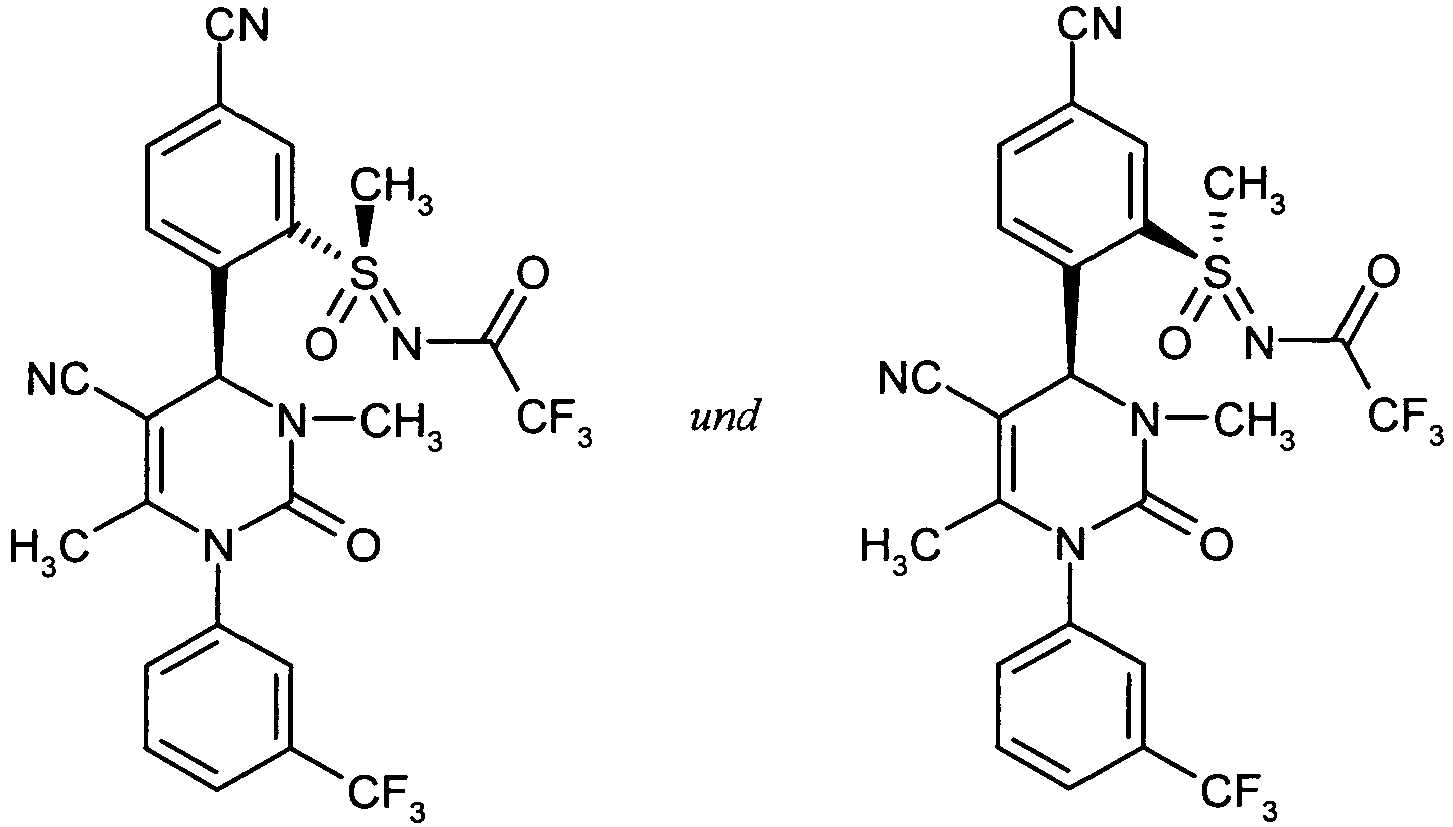
Die Reaktion wurde unter Argon durchgeführt. Das Diastereomerengemisch von (RS , 4S)-4-[4-Cyano-2-(methylsulfinyl)phenyl]-3,6-dimethyl-2-oxo-1-[3-(trifluormethyl)phenyl]-1,2,3,4-tetra-hydropyrimidin-5-carbonitril und (SS , 4S)-4-[4-Cyano-2-(methylsulfinyl)phenyl]-3,6-dimethyl-2-oxo-1-[3-(trifluormethyl)phenyl]-1,2,3,4-tetrahydropyrimidin-5-carbonitril (488 mg, 1.1 mmol) wurde in Dichlormethan (10 ml) vorgelegt und nacheinander mit 2,2,2-Trifluoracetamid (241 mg, 2.13 mmol; 2.0 eq.), Magnesiumoxid (172 mg, 4.26 mmol; 4.0 eq.), Rhodium(II)acetat-Dimer (24 mg, 53 µmol; 0.05 eq.) sowie (Diacetoxyiod)-benzol (514 mg, 1.60 mmol; 1.5 eq.) versetzt. Die Mischung wurde 16 h bei Raumtemperatur gerührt. Anschließend wurden erneut 2,2,2-Trifluoracetamid (120 mg, 1.06 mmol; 1.0 eq.), Magnesiumoxid (86 mg, 2.13 mmol; 2.0 eq.), Rhodium(II)acetat-Dimer (12 mg, 27 µmol; 0.025 eq.) sowie (Diacetoxyiod)-benzol (257 mg, 798 µmol; 0.75 eq.) zugesetzt und weitere 24 h bei Raumtemperatur gerührt. Das Reaktionsgemisch wurde dann über Kieselgur filtriert, das Filtrat im Vakuum eingeengt und der Rückstand mittels präparativer HPLC gereinigt (Säule: Gromsil C-18 10 µm; Eluent: Acetonitril/Wasser + 0.1% TFA 10:90 → 80:20). Man erhielt die Titelverbindung als Diastereomerengemisch in Form eines Feststoffs (160 mg, 25% d. Th.).
LC-MS (Methode 4): Rt = 1.35 min und 1.37 min; MS (ESIpos): m/z (%) = 570.1 (100) [M+H]+; MS (ESIneg): m/z (%) = 567.9 (100) [M-H]-.The reaction was carried out under argon. The diastereomeric mixture of ( R s , 4 S ) -4- [4-cyano-2- (methylsulfinyl) phenyl] -3,6-dimethyl-2-oxo-1- [3- (trifluoromethyl) phenyl] -1,2 , 3,4-tetra-hydropyrimidin-5-carbonitrile and (S S, 4 S) -4- [4-cyano-2- (methylsulfinyl) phenyl] -3,6-dimethyl-2-oxo-1- [3 - (trifluoromethyl) phenyl] -1,2,3,4-tetrahydropyrimidine-5-carbonitrile (488mg, 1.1mmol) was charged to dichloromethane (10ml) and washed sequentially with 2,2,2-trifluoroacetamide (241mg, 2.13g) 2.0 eq.), magnesium oxide (172 mg, 4.26 mmol, 4.0 eq.), rhodium (II) acetate dimer (24 mg, 53 μmol, 0.05 eq.) and (diacetoxyiodo) benzene (514 mg, 1.60 mmol ; 1.5 eq.). The mixture was stirred for 16 h at room temperature. Subsequently, 2,2,2-trifluoroacetamide (120 mg, 1.06 mmol, 1.0 eq.), Magnesium oxide (86 mg, 2.13 mmol, 2.0 eq.), Rhodium (II) acetate dimer (12 mg, 27 μmol, 0.025 eq.) and (diacetoxyiodo) -benzene (257 mg, 798 μmol, 0.75 eq.) were added and stirred at room temperature for a further 24 h. The reaction mixture was then filtered through kieselguhr, the filtrate was concentrated in vacuo and the residue was purified by preparative HPLC (column: Gromsil C-18 10 μm, eluent: acetonitrile / water + 0.1% TFA 10:90 → 80:20). The title compound was obtained as a mixture of diastereomers in the form of a solid (160 mg, 25% of theory).
LC-MS (Method 4): R t = 1.35 min and 1.37 min; MS (ESIpos): m / z (%) = 570.1 (100) [M + H] + ; MS (ES Ineg): m / z (%) = 567.9 (100) [MH] - .

Das Diastereomerengemisch von (RS )-N-[(5-Cyano-2-{(4S)-5-cyano-3,6-dimethyl-2-oxo-1-[3-(trifluormethyl)phenyl]-1,2,3,4-tetrahydropyrimidin-4-yl}phenyl)(methyl)oxido-λ6-sulfanyliden]-2,2,2-trifluoracetamid und (SS )-N-[(5-Cyano-2-{(4S)-5-cyano-3,6-dimethyl-2-oxo-1-[3-(trifluormethyl)phenyl]-1,2,3,4-tetrahydropyrimidin-4-yl}phenyl)(methyl)oxido-λ6-sulfanyliden]-2,2,2-trifluoracetamid (160 mg) wurde durch Flash-Chromatographie an Kieselgel aufgetrennt (Laufmittel-Gradient Cyclohexan → Cyclohexan/Essigsäureethylester 45:55). Das Diastereomer 1 wurde als früher eluierende Fraktion erhalten (Ausbeute: 52 mg).
LC-MS (Methode 4): Rt = 1.38 min; MS (ESIpos): m/z (%) = 570.1 (100) [M+H]+; MS (ESIneg): m/z (%) = 568.3 (100) [M-H]-.The diastereomeric mixture of (R S) - N - [(5-cyano-2 - {(4 S) -5-cyano-3,6-dimethyl-2-oxo-1- [3- (trifluoromethyl) phenyl] -1 , 2,3,4-tetrahydropyrimidine-4-yl} phenyl) (methyl) oxido-λ 6 -sulfanyliden] -2,2,2-trifluoroacetamide and (S S) - N - [(5-cyano-2- { (4 S) -5-cyano-3,6-dimethyl-2-oxo-1- [3- (trifluoromethyl) phenyl] -1,2,3,4-tetrahydropyrimidine-4-yl} phenyl) (methyl) oxido -λ 6 -sulfanylidene] -2,2,2-trifluoroacetamide (160 mg) was separated by flash chromatography on silica gel (eluent gradient cyclohexane → cyclohexane / ethyl acetate 45:55). The diastereomer 1 was obtained as an earlier eluting fraction (yield: 52 mg).
LC-MS (Method 4): R t = 1.38 min; MS (ESIpos): m / z (%) = 570.1 (100) [M + H] + ; MS (ES Ineg): m / z (%) = 568.3 (100) [MH] - .
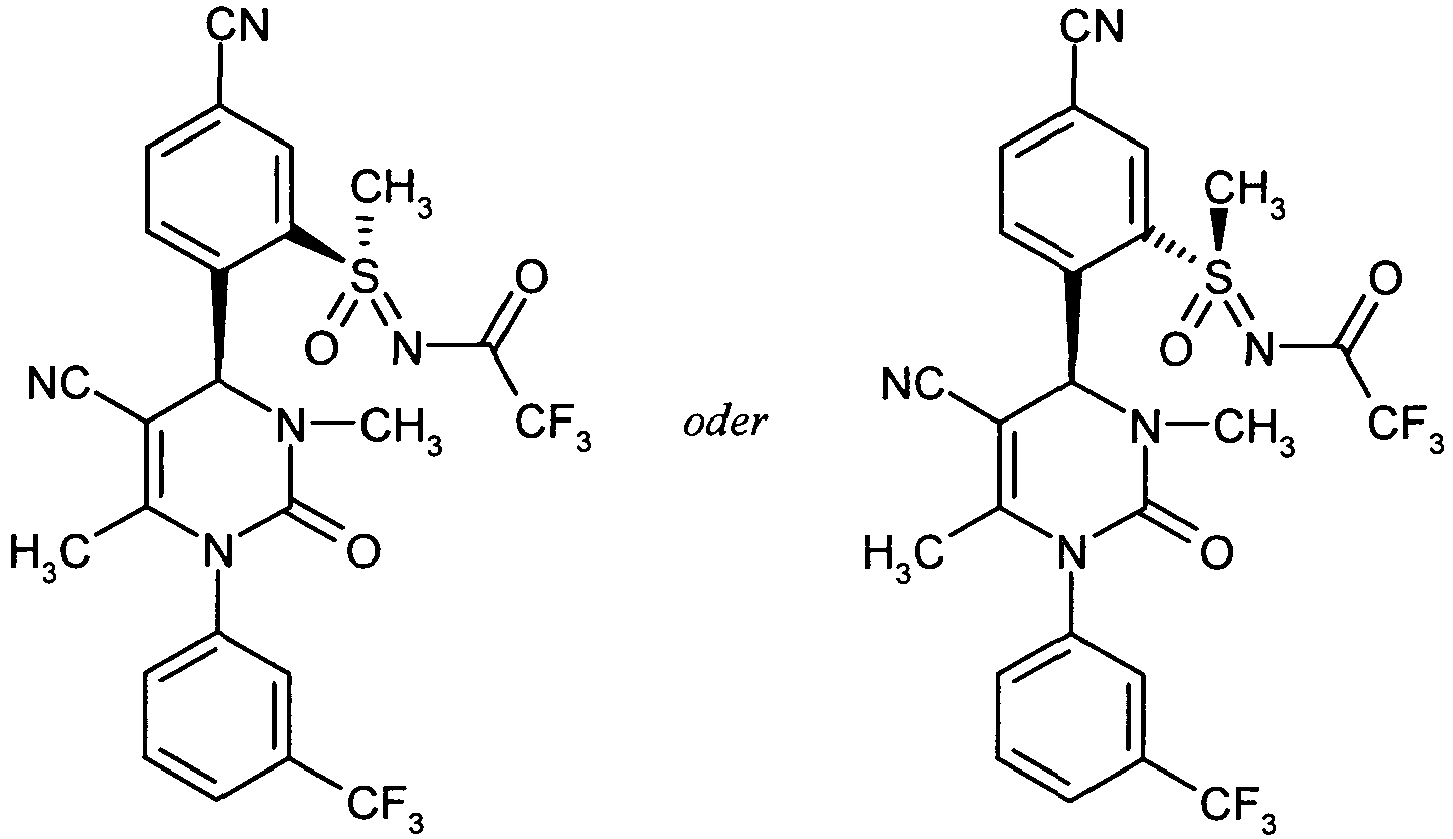
Das Diastereomerengemisch von (RS )-N-[(5-Cyano-2-{(4S)-5-cyano-3,6-dimethyl-2-oxo-1-[3-(trifluormethyl)phenyl]-1,2,3,4-tetrahydropyrimidin-4-yl}phenyl)(methyl)oxido-λ6-sulfanyliden]-2,2,2-trifluoracetamid und (SS )-N-[(5-Cyano-2-{(4S)-5-cyano-3,6-dimethyl-2-oxo-1-[3-(trifluormethyl)phenyl]-1,2,3,4-tetrahydropyrimidin-4-yl}phenyl)(methyl)oxido-λ6-sulfanyliden]-2,2,2-trifluoracetamid (160 mg) wurde durch Flash-Chromatographie an Kieselgel aufgetrennt (Laufmittel-Gradient Cyclohexan → Cyclohexan/Essigsäureethylester 45:55). Das Diastereomer 2 wurde als später eluierende Fraktion erhalten (Ausbeute: 68 mg).The diastereomeric mixture of (R S) - N - [(5-cyano-2 - {(4 S) -5-cyano-3,6-dimethyl-2-oxo-1- [3- (trifluoromethyl) phenyl] -1 , 2,3,4-tetrahydropyrimidine-4-yl} phenyl) (methyl) oxido-λ 6 -sulfanyliden] -2,2,2-trifluoroacetamide and (S S) - N - [(5-cyano-2- { (4 S) -5-cyano-3,6-dimethyl-2-oxo-1- [3- (trifluoromethyl) phenyl] -1,2,3,4-tetrahydropyrimidine-4-yl} phenyl) (methyl) oxido -λ 6 -sulfanylidene] -2,2,2-trifluoroacetamide (160 mg) was separated by flash chromatography on silica gel (eluent gradient cyclohexane → cyclohexane / ethyl acetate 45:55). Diastereomer 2 was obtained as a later eluting fraction (yield: 68 mg).
LC-MS (Methode 4): Rt = 1.35 min; MS (ESIpos): m/z (%) = 570.1 (100) [M+H]+; MS (ESIneg): m/z (%) = 568.4 (100) [M-H]-.LC-MS (Method 4): R t = 1.35 min; MS (ESIpos): m / z (%) = 570.1 (100) [M + H] + ; MS (ES Ineg): m / z (%) = 568.4 (100) [MH] - .

Die Reaktion wurde unter Argon durchgeführt. Das Diastereomerengemisch von (RS , 4S)-4-[4-Cyano-2-(methylsulfinyl)phenyl]-6-methyl-2-oxo-1-[3-(trifluormethyl)phenyl]-1,2,3,4-tetrahydro-pyrimidin-5-carbonitril und (SS , 4S)-4-[4-Cyano-2-(methylsulfinyl)phenyl]-6-methyl-2-oxo-1-[3-(trifluormethyl)phenyl]-1,2,3,4-tetrahydropyrimidin-5-carbonitril (600 mg, 1.35 mmol) wurde in Dichlormethan (13.5 ml) vorgelegt und nacheinander mit 2,2,2-Trifluoracetamid (305 mg, 2.7 mmol; 2.0 eq.), Magnesiumoxid (217 mg, 5.4 mmol; 4.0 eq.), Rhodium(II)acetat-Dimer (29.8 mg, 68 µmol; 0.05 eq.) sowie (Diacetoxyiod)-benzol (652 mg, 2.03 mmol; 1.5 eq.) versetzt. Die Mischung wurde 16 h bei Raumtemperatur gerührt. Anschließend wurden erneut 2,2,2-Trifluoracetamid (152.6 mg, 1.35 mmol; 1.0 eq.), Magnesiumoxid (109 mg, 2.7 mmol; 2.0 eq.), Rhodium(II)acetat-Dimer (15 mg, 34 µmol; 0.025 eq.) sowie (Diacetoxyiod)-benzol (326 mg, 1013 µmol; 0.75 eq.) zugesetzt und weitere 3 h bei Raumtemperatur gerührt. Das Reaktionsgemisch wurde dann über Kieselgur filtriert, das Filtrat im Vakuum eingeengt und der Rückstand an Kieselgel flash-chromatographiert (Gradient Cyclohexan → Essigsäureethylester). Man erhielt die Titelverbindung als Diastereomerengemisch in Form eines Feststoffs (485 mg, 65% d. Th.).
LC-MS (Methode 4): Rt = 1.28 min; MS (ESIpos): m/z (%) = 556.0 (100) [M+H]+.
1H-NMR (400 MHz, DMSO-d6): δ = 1.85 (2 s, 3H), 4.00 (2 s, 3H), 6.50 (2 s, 1H), 7.70-8.55 (m, 8H).The reaction was carried out under argon. The diastereomeric mixture of ( R s , 4 S ) -4- [4-cyano-2- (methylsulfinyl) phenyl] -6-methyl-2-oxo-1- [3- (trifluoromethyl) phenyl] -1,2,3 , 4-tetrahydro-pyrimidine-5-carbonitrile and (S S, 4 S) -4- [4-cyano-2- (methylsulfinyl) phenyl] -6-methyl-2-oxo-1- [3- (trifluoromethyl) phenyl] -1,2,3,4-tetrahydropyrimidine-5-carbonitrile (600 mg, 1.35 mmol) was initially charged in dichloromethane (13.5 ml) and washed successively with 2,2,2-trifluoroacetamide (305 mg, 2.7 mmol, 2.0 eq Magnesium oxide (217 mg, 5.4 mmol, 4.0 eq.), Rhodium (II) acetate dimer (29.8 mg, 68 μmol, 0.05 eq.), And (diacetoxyiodo) benzene (652 mg, 2.03 mmol, 1.5 eq. ). The mixture was stirred for 16 h at room temperature. Subsequently, 2,2,2-trifluoroacetamide (152.6 mg, 1.35 mmol, 1.0 eq.), Magnesium oxide (109 mg, 2.7 mmol, 2.0 eq.), Rhodium (II) acetate dimer (15 mg, 34 μmol, 0.025 eq.) and (diacetoxyiodo) benzene (326 mg, 1013 μmol, 0.75 eq.) were added and stirred at room temperature for a further 3 hours. The reaction mixture was then filtered through kieselguhr, the filtrate concentrated in vacuo and the residue flash chromatographed on silica gel (gradient cyclohexane → ethyl acetate). The title compound was obtained as a mixture of diastereomers in the form of a solid (485 mg, 65% of theory).
LC-MS (Method 4): R t = 1.28 min; MS (ESIpos): m / z (%) = 556.0 (100) [M + H] + .
1 H-NMR (400 MHz, DMSO-d 6 ): δ = 1.85 (2 s, 3H), 4.00 (2 s, 3H), 6.50 (2 s, 1H), 7.70-8.55 (m, 8H).

Die Reaktion wurde unter Argon durchgeführt. Das Diastereomerengemisch von (RS , 4S)-4-[4-Cyano-2-(methylsulfinyl)phenyl]-6-methyl-2-oxo-1-[3-(trifluormethyl)phenyl]-1,2,3,4-tetrahydro-pyrimidin-5-carbonitril und (SS , 4S)-4-[4-Cyano-2-(methylsulfinyl)phenyl]-6-methyl-2-oxo-1-[3-(trifluormethyl)phenyl]-1,2,3,4-tetrahydropyrimidin-5-carbonitril (444.4 mg, 1000 µmol) wurde in THF (10 ml) vorgelegt und bei 0°C mit Natriumhydrid (60% in Mineralöl; 56 mg, 1400 µmol) versetzt. Es wurde auf RT erwärmt und 20 min gerührt. Anschließend wurde eine Lösung von Methansulfonylchlorid (160.4 mg, 1400 µmol; 1.4 eq.) in THF (5 ml) langsam zugetropft. Nach 16 h Reaktionszeit wurde nochmals Methansulfonylchlorid (54 mg, 467 µmol; 0.47 eq.) zugesetzt und erneut für 60 min bei RT gerührt. Das Reaktionsgemisch wurde dann mit gesättigter Ammoniumchlorid-Lösung (50 ml) versetzt und anschließend mit Essigsäureethylester (3 x 30 ml) extrahiert. Die vereinigten organischen Phasen wurden über festem Natriumsulfat getrocknet, filtriert und im Vakuum eingeengt. Das Rohprodukt wurde mittels präparativer HPLC aufgereinigt (Säule: Gromsil C-18 10 µm; Eluent: Acetonitril/Wasser + 0.1% TFA 10:90 → 80:20). Man erhielt die Titelverbindung als einen farblosen Feststoff (245 mg, 47% d. Th.).
LC-MS (Methode 6): Rt = 2.20 min; MS (ESIpos): m/z (%) = 522.9 (100) [M+H]+; MS (ESIneg): m/z (%) = 440.9 (100), 520.9 (100) [M-H]-.
1H-NMR (400 MHz, DMSO-d6): δ = 1.80 (2 s, 3H), 2.90 (2 s, 3H), ∼3.40 (2 s, 3H), 6.40 (2 s, 1H), 7.75-8.20 (m, 6H), 8.50 (2 s, 1 H).The reaction was carried out under argon. The diastereomeric mixture of ( R s , 4 S ) -4- [4-cyano-2- (methylsulfinyl) phenyl] -6-methyl-2-oxo-1- [3- (trifluoromethyl) phenyl] -1,2,3 , 4-tetrahydro-pyrimidine-5-carbonitrile and (S S, 4 S) -4- [4-cyano-2- (methylsulfinyl) phenyl] -6-methyl-2-oxo-1- [3- (trifluoromethyl) phenyl] -1,2,3,4-tetrahydropyrimidine-5-carbonitrile (444.4 mg, 1000 μmol) was initially charged in THF (10 ml) and treated with sodium hydride (60% in mineral oil, 56 mg, 1400 μmol) at 0 ° C. added. It was warmed to RT and stirred for 20 min. Subsequently, a solution of methanesulfonyl chloride (160.4 mg, 1400 μmol, 1.4 eq.) In THF (5 ml) was slowly added dropwise. After a reaction time of 16 hours, methanesulfonyl chloride (54 mg, 467 μmol, 0.47 eq.) Was added again and stirred again at RT for 60 min. The reaction mixture was then treated with saturated ammonium chloride solution (50 ml) and then extracted with ethyl acetate (3 × 30 ml). The combined organic phases were dried over solid sodium sulfate, filtered and concentrated in vacuo. The crude product was purified by preparative HPLC (column: Gromsil C-18 10 μm, eluent: acetonitrile / water + 0.1% TFA 10:90 → 80:20). The title compound was obtained as a colorless solid (245 mg, 47% of theory).
LC-MS (Method 6): R t = 2.20 min; MS (ESIpos): m / z (%) = 522.9 (100) [M + H] + ; MS (ES Ineg): m / z (%) = 440.9 (100), 520.9 (100) [MH] - .
1 H-NMR (400 MHz, DMSO-d 6 ): δ = 1.80 (2 s, 3H), 2.90 (2 s, 3H), ~3.40 (2 s, 3H), 6.40 (2 s, 1H), 7.75 -8.20 (m, 6H), 8.50 (2 s, 1 H).

Die Reaktion wurde unter Argon durchgeführt. Das Diastereomerengemisch von (RS , 4S)-4-[4-Cyano-2-(methylsulfinyl)phenyl]-6-methyl-3-(methylsulfonyl)-2-oxo-1-[3-(trifluormethyl)phenyl]-1,2,3,4-tetrahydropyrimidin-5-carbonitril und (SS , 4S)-4-[4-Cyano-2-(methylsulfinyl)phenyl]-6-methyl-3-(methylsulfonyl)-2-oxo-1-[3-(trifluormethyl)phenyl]-1,2,3,4-tetrahydropyrimidin-5-carbonitril (160 mg, 0.306 mmol) wurde in Dichlormethan (3 ml) vorgelegt und nacheinander mit 2,2,2-Trifluoracetamid (69 mg, 0.612 mmol; 2.0 eq.), Magnesiumoxid (49.4 mg, 1.225 mmol; 4.0 eq.), Rhodium(II)acetat-Dimer (6.8 mg, 15 µmol; 0.05 eq.) sowie (Diacetoxyiod)-benzol (147.9 mg, 0.459 mmol; 1.5 eq.) versetzt. Die Mischung wurde 16 h bei Raumtemperatur gerührt. Anschließend wurden erneut 2,2,2-Trifluoracetamid (34.6 mg, 0.306 mmol; 1.0 eq.), Magnesiumoxid (24.7 mg, 0.612 mmol; 2.0 eq.), Rhodium(II)acetat-Dimer (3.4 mg, 8 µmol; 0.025 eq.) sowie (Diacetoxyiod)-benzol (74 mg, 230 µmol; 0.75 eq.) zugesetzt und weitere 24 h bei Raumtemperatur gerührt. Das Reaktionsgemisch wurde dann über Kieselgur filtriert, das Filtrat im Vakuum eingeengt und der Rückstand an Kieselgel flash-chromatographiert (Gradient Cyclohexan → Cyclohexan/Essigsäureethylester 1:2 → Essigsäureethylester). Man erhielt die Titelverbindung als Diastereomerengemisch in Form eines Feststoffs (25 mg, 8% d. Th., 61% Reinheit). Dieses Produkt wurde ohne weitere Aufreinigung in der Folgereaktion eingesetzt.
LC-MS (Methode 5): Rt = 2.27 min; MS (ESIpos): m/z (%) = 634.1 (100) [M+H]+; MS (ESIneg): m/z (%) = 632.1 (100) [M-H]-.The reaction was carried out under argon. The diastereomeric mixture of ( R s , 4 S ) -4- [4-cyano-2- (methylsulfinyl) phenyl] -6-methyl-3- (methylsulfonyl) -2-oxo-1- [3- (trifluoromethyl) phenyl] -1,2,3,4-tetrahydropyrimidine-5-carbonitrile and (S S, 4 S) -4- [4-cyano-2- (methylsulfinyl) phenyl] -6-methyl-3- (methylsulfonyl) -2- oxo-1- [3- (trifluoromethyl) phenyl] -1,2,3,4-tetrahydropyrimidine-5-carbonitrile (160 mg, 0.306 mmol) was initially charged in dichloromethane (3 ml) and washed successively with 2,2,2- Trifluoroacetamide (69 mg, 0.612 mmol, 2.0 eq.), Magnesium oxide (49.4 mg, 1.225 mmol, 4.0 eq.), Rhodium (II) acetate dimer (6.8 mg, 15 μmol, 0.05 eq.) And (diacetoxyiodo) benzene (147.9 mg, 0.459 mmol, 1.5 eq.). The mixture was stirred for 16 h at room temperature. Subsequently, 2,2,2-trifluoroacetamide (34.6 mg, 0.306 mmol, 1.0 eq.), Magnesium oxide (24.7 mg, 0.612 mmol, 2.0 eq.), Rhodium (II) acetate dimer (3.4 mg, 8 μmol, 0.025 eq.) and (diacetoxyiodo) benzene (74 mg, 230 μmol, 0.75 eq.) were added and stirred for a further 24 h at room temperature. The reaction mixture was then filtered through kieselguhr, the filtrate concentrated in vacuo and the residue flash chromatographed on silica gel (gradient cyclohexane → cyclohexane / ethyl acetate 1: 2 → ethyl acetate). The title compound was obtained as a mixture of diastereomers in the form of a solid (25 mg, 8% of theory, 61% purity). This product was used in the subsequent reaction without further purification.
LC-MS (Method 5): R t = 2.27 min; MS (ESIpos): m / z (%) = 634.1 (100) [M + H] + ; MS (ES Ineg): m / z (%) = 632.1 (100) [MH] - .

5-Cyano-2-{(4S)-5-cyano-6-methyl-2-oxo-1-[3-(trifluormethyl)phenyl]-1,2,3,4-tetrahydropyrimidin-4-yl}benzolsulfonylchlorid (3.10 g, Gehalt 20%, 1.29 mmol) wurde bei Raumtemperatur mit 0.5 M Ammoniak-Lösung in Dioxan (25.79 ml, 12.9 mmol; 10 eq.) sowie Triethylamin (130 mg, 1.3 mmol; 1 eq.) versetzt und die Mischung über Nacht gerührt. Das Reaktionsgemisch wurde danach im Vakuum eingeengt, der Rückstand mit Wasser/Acetonitril (∼10:1) versetzt und die Lösung lyophilisiert. Die erhaltene Substanz wurde in Acetonitril gelöst und dann mittels präparativer HPLC gereinigt (Säule: Waters Sunfire C18, 5 µm; Säulendimension: 250 mm x 20 mm; Detektion: 240 nm; Temperatur: 28°C; Fluss: 25 ml/min; Injektionsvolumen: 500 µl; Eluent: Acetonitril/0.2% Trifluoressigsäure 45:55). Die Titelverbindung wurde als ein Feststoff erhalten (0.155 g, 26% d. Th.).
LC-MS (Methode 4): Rt = 1.10 min; MS (ESIpos): m/z (%) = 462.0 (100) [M+H]+.
1H-NMR (400 MHz, DMSO-d6): δ = 1.85 (s, 3H), 6.30 (s, 1H), 7.73-7.90 (m, 6H), 7.99 (d, 1H), 8.20-8.30 (m, 3H).5-cyano-2 - {(4 S) -5-cyano-6-methyl-2-oxo-1- [3- (trifluoromethyl) phenyl] -1,2,3,4-tetrahydropyrimidine-4-yl} benzenesulfonyl chloride (3.10 g, content 20%, 1.29 mmol) was treated at room temperature with 0.5 M ammonia solution in dioxane (25.79 ml, 12.9 mmol, 10 eq.) And triethylamine (130 mg, 1.3 mmol, 1 eq.) And the mixture stirred overnight. The reaction mixture was then concentrated in vacuo, the residue with water / acetonitrile (~10: 1) and the solution was lyophilized. The obtained substance was dissolved in acetonitrile and then purified by preparative HPLC (column: Waters Sunfire C18, 5 μm, column dimension: 250 mm x 20 mm, detection: 240 nm, temperature: 28 ° C, flow: 25 ml / min, injection volume : 500 μl, eluent: acetonitrile / 0.2% trifluoroacetic acid 45:55). The title compound was obtained as a solid (0.155 g, 26% of theory).
LC-MS (Method 4): R t = 1.10 min; MS (ESIpos): m / z (%) = 462.0 (100) [M + H] + .
1 H-NMR (400 MHz, DMSO-d 6 ): δ = 1.85 (s, 3H), 6.30 (s, 1H), 7.73-7.90 (m, 6H), 7.99 (d, 1H), 8.20-8.30 ( m, 3H).

5-Cyano-2-{(4S)-5-cyano-6-methyl-2-oxo-1-[3-(trifluormethyl)phenyl]-1,2,3,4-tetrahydropyrimidin-4-yl}benzolsulfonylchlorid (40 mg, 83 µmol) wurde in THF (5 ml) gelöst, bei Raumtemperatur mit 2 M Methylamin-Lösung in THF (208 µl, 415 µmol; 5 eq.) versetzt und über Nacht gerührt. Das Reaktionsgemisch wurde danach im Vakuum eingeengt und der Rückstand mittels präparativer HPLC gereinigt (Säule: Gromsil C-18, 10 µm; Eluent: Acetonitril/Wasser + 0.1% TFA 10:90 → 90:10). Es wurde ein farbloser, amorpher Feststoff erhalten (14.3 mg, 36% d. Th.).
LC-MS (Methode 6): Rt = 2.29 min; MS (ESIpos): m/z (%) = 476.0 (100) [M+H]+.
1H-NMR (400 MHz, DMSO-d6): δ = 1.85 (s, 3H), 2.55 (s, 3H), 6.30 (s, 1H), 7.70-8.00 (m, 5H), 8.20-8.30 (m, 4H).5-cyano-2 - {(4 S) -5-cyano-6-methyl-2-oxo-1- [3- (trifluoromethyl) phenyl] -1,2,3,4-tetrahydropyrimidine-4-yl} benzenesulfonyl chloride (40 mg, 83 μmol) was dissolved in THF (5 ml), 2M methylamine solution in THF (208 μl, 415 μmol, 5 eq.) Was added at room temperature and the mixture was stirred overnight. The reaction mixture was then concentrated under reduced pressure and the residue was purified by preparative HPLC (column: Gromsil C-18, 10 μm, eluent: acetonitrile / water + 0.1% TFA 10:90 → 90:10). A colorless, amorphous solid was obtained (14.3 mg, 36% of theory).
LC-MS (Method 6): R t = 2.29 min; MS (ESIpos): m / z (%) = 476.0 (100) [M + H] + .
1 H-NMR (400 MHz, DMSO-d 6 ): δ = 1.85 (s, 3H), 2.55 (s, 3H), 6.30 (s, 1H), 7.70-8.00 (m, 5H), 8.20-8.30 ( m, 4H).

5-Cyano-2-{(4S)-5-cyano-6-methyl-2-oxo-1-[3-(trifluormethyl)phenyl]-1,2,3,4-tetrahydropyrimidin-4-yl}benzolsulfonylchlorid (40 mg, 83 µmol) wurde in THF (5 ml) gelöst, bei Raumtemperatur mit 33%-iger Dimethylamin-Lösung in Ethanol (37 µl, 208 µmol; 2.5 eq.) versetzt und über Nacht gerührt. Das Reaktionsgemisch wurde danach im Vakuum eingeengt und der Rückstand mittels präparativer HPLC gereinigt (Säule: Gromsil C-18, 10 µm; Eluent: Acetonitril/Wasser + 0.1% TFA 10:90 → 90:10). Es wurde ein farbloser, amorpher Feststoff erhalten (13.8 mg, 34% d. Th.).
LC-MS (Methode 6): Rt = 2.41 min; MS (ESIpos): m/z (%) = 489.9 (100) [M+H]+.
1H-NMR (400 MHz, DMSO-d6): δ = 1.80 (s, 3H), 2.80 (s, 6H), 6.20 (s, 1H), 7.70-8.00 (m, 4H), 8.25-8.40 (m, 4H).5-cyano-2 - {(4 S) -5-cyano-6-methyl-2-oxo-1- [3- (trifluoromethyl) phenyl] -1,2,3,4-tetrahydropyrimidine-4-yl} benzenesulfonyl chloride (40 mg, 83 μmol) was dissolved in THF (5 ml), 33% dimethylamine solution in ethanol (37 μl, 208 μmol, 2.5 eq.) Was added at room temperature and the mixture was stirred overnight. The reaction mixture was then concentrated under reduced pressure and the residue was purified by preparative HPLC (column: Gromsil C-18, 10 μm, eluent: acetonitrile / water + 0.1% TFA 10:90 → 90:10). A colorless, amorphous solid was obtained (13.8 mg, 34% of theory).
LC-MS (Method 6): R t = 2.41 min; MS (ESIpos): m / z (%) = 489.9 (100) [M + H] + .
1 H-NMR (400 MHz, DMSO-d 6 ): δ = 1.80 (s, 3H), 2.80 (s, 6H), 6.20 (s, 1H), 7.70-8.00 (m, 4H), 8.25-8.40 ( m, 4H).

5-Cyano-2-{(4S)-5-cyano-6-methyl-2-oxo-1-[3-(trifluormethyl)phenyl]-1,2,3,4-tetrahydropyrimidin-4-yl}benzolsulfonylchlorid (20 mg, 42 µmol) wurde unter Argonschutzgasatmosphäre in absolutem Dichlormethan (2.5 ml) gelöst, bei Raumtemperatur mit Morpholin (7.3 µl, 83 µmol; 2 eq.) versetzt und über Nacht gerührt. Das Reaktionsgemisch wurde danach im Vakuum eingeengt und der Rückstand mittels präparativer HPLC gereinigt (Säule: Gromsil C-18, 10 µm; Eluent: Acetonitril/Wasser + 0.1% TFA 10:90 → 90:10). Es wurde ein farbloser, amorpher Feststoff erhalten (8.6 mg, 35% d. Th.).
LC-MS (Methode 6): Kt = 2.39 min; MS (ESIpos): m/z (%) = 532.0 (100) [M+H]+.
1H-NMR (400 MHz, DMSO-d6): δ = 1.80 (s, 3H), 3.10 (m, 2H), 3.15 (m, 2H), 3.70 (m, 4H), 6.20 (s, 1H), 7.70-8.00 (m, 4H), 8.25-8.40 (m, 4H).5-cyano-2 - {(4 S) -5-cyano-6-methyl-2-oxo-1- [3- (trifluoromethyl) phenyl] -1,2,3,4-tetrahydropyrimidine-4-yl} benzenesulfonyl chloride (20 mg, 42 μmol) was dissolved in absolute dichloromethane (2.5 ml) under argon protective gas atmosphere, admixed with morpholine (7.3 μl, 83 μmol, 2 eq.) At room temperature and stirred overnight. The reaction mixture was then concentrated under reduced pressure and the residue was purified by preparative HPLC (column: Gromsil C-18, 10 μm, eluent: acetonitrile / water + 0.1% TFA 10:90 → 90:10). A colorless, amorphous solid was obtained (8.6 mg, 35% of theory).
LC-MS (Method 6): K t = 2.39 min; MS (ESIpos): m / z (%) = 532.0 (100) [M + H] + .
1 H-NMR (400 MHz, DMSO-d 6 ): δ = 1.80 (s, 3H), 3.10 (m, 2H), 3.15 (m, 2H), 3.70 (m, 4H), 6.20 (s, 1H) , 7.70-8.00 (m, 4H), 8.25-8.40 (m, 4H).

5-Cyano-2-{(4S)-5-cyano-3,6-dimethyl-2-oxo-1-[3-(trifluormethyl)phenyl]-1,2,3,4-tetrahydropyrimidin-4-yl}benzolsulfonylchlorid (50 mg, 101 µmol) wurde unter Argonschutzgasatmosphäre in absolutem THF (2.5 ml) gelöst, bei Raumtemperatur mit Diethanolamin (29 µl, 303 µmol; 3 eq.) sowie Triethylamin (10.2 mg, 101 µmol; 1 eq.) versetzt und über Nacht gerührt. Das Reaktionsgemisch wurde danach im Vakuum eingeengt und der Rückstand mittels präparativer HPLC gereinigt (Säule: Gromsil C-18, 10 µm; Eluent: Acetonitril/Wasser + 0.1% TFA 10:90 → 90:10). Es wurde ein farbloser, amorpher Feststoff erhalten (4.9 mg, 9% d. Th.).
LC-MS (Methode 4): Rt = 1.11 min; MS (ESIpos): m/z (%) = 564.0 (100) [M+H]+; MS (ESIneg): m/z (%) = 562.8 (100) [M-H]-.
1H-NMR (400 MHz, DMSO-d6): δ = 1.80 (s, 3H), 2.65 (s, 3H), 3.45 (m, 4H), 3.65 (m, 4H), 5.00 (br. s, 2H), 6.20 (s, 1H), 7.70-8.00 (m, 4H), 8.25-8.40 (m, 3H).5-cyano-2 - {(4 S) -5-cyano-3,6-dimethyl-2-oxo-1- [3- (trifluoromethyl) phenyl] -1,2,3,4-tetrahydropyrimidine-4-yl } Benzenesulfonyl chloride (50 mg, 101 μmol) was dissolved in absolute THF (2.5 ml) under an argon protective gas atmosphere, and diethanolamine (29 μl, 303 μmol, 3 eq.) and triethylamine (10.2 mg, 101 μmol, 1 eq.) were added at room temperature and stirred overnight. The reaction mixture was then concentrated under reduced pressure and the residue was purified by preparative HPLC (column: Gromsil C-18, 10 μm, eluent: acetonitrile / water + 0.1% TFA 10:90 → 90:10). A colorless, amorphous solid was obtained (4.9 mg, 9% of theory).
LC-MS (Method 4): R t = 1.11 min; MS (ESIpos): m / z (%) = 564.0 (100) [M + H] + ; MS (ES Ineg): m / z (%) = 562.8 (100) [MH] - .
1 H-NMR (400 MHz, DMSO-d 6 ): δ = 1.80 (s, 3H), 2.65 (s, 3H), 3.45 (m, 4H), 3.65 (m, 4H), 5.00 (br. S, 2H), 6.20 (s, 1H), 7.70-8.00 (m, 4H), 8.25-8.40 (m, 3H).

5-Cyano-2-{(4S)-5-cyano-3,6-dimethyl-2-oxo-1-[3-(trifluormethyl)phenyl]-1,2,3,4-tetrahydropyrimidin-4-yl}benzolsulfonylchlorid (50 mg, 101 µmol) wurde unter Argonschutzgasatmosphäre in absolutem THF (2.5 ml) gelöst, bei Raumtemperatur mit Morpholin (26 µl, 303 µmol; 3 eq.) sowie Triethylamin (10.2 mg, 101 µmol; 1 eq.) versetzt und über Nacht gerührt. Das Reaktionsgemisch wurde danach im Vakuum eingeengt und der Rückstand mittels präparativer HPLC gereinigt (Säule: Kromasil C-18, 5 µm; Eluent: Acetonitril/Wasser + 0.1% TFA 10:90 → 90:10). Es wurde ein farbloser, amorpher Feststoff erhalten (44 mg, 80% d. Th.).
LC-MS (Methode 4): Rt = 1.27 min; MS (ESIpos): m/z (%) = 545.9 (100) [M+H]+; MS (ESIneg): m/z (%) = 544.0 (100) [M-H]-.
1H-NMR (400 MHz, DMSO-d6): δ = 1.80 (s, 3H), 2.70 (s, 3H), 3.30 (m, 4H), 3.70 (m, 4H), 6.20 (s, 1H), 7.70-8.05 (m, 4H), 8.25-8.40 (m, 3H).5-cyano-2 - {(4 S) -5-cyano-3,6-dimethyl-2-oxo-1- [3- (trifluoromethyl) phenyl] -1,2,3,4-tetrahydropyrimidine-4-yl } Benzenesulfonyl chloride (50 mg, 101 μmol) was dissolved in absolute THF (2.5 ml) under an argon protective gas atmosphere, and morpholine (26 μl, 303 μmol, 3 eq.) and triethylamine (10.2 mg, 101 μmol, 1 eq.) were added at room temperature and stirred overnight. The reaction mixture was then concentrated under reduced pressure and the residue was purified by preparative HPLC (column: Kromasil C-18, 5 μm, eluent: acetonitrile / water + 0.1% TFA 10:90 → 90:10). A colorless, amorphous solid was obtained (44 mg, 80% of theory).
LC-MS (Method 4): R t = 1.27 min; MS (ESIpos): m / z (%) = 545.9 (100) [M + H] + ; MS (ESIneg): m / z (%) = 544.0 (100) [MH] - .
1 H-NMR (400 MHz, DMSO-d 6 ): δ = 1.80 (s, 3H), 2.70 (s, 3H), 3.30 (m, 4H), 3.70 (m, 4H), 6.20 (s, 1H) , 7.70-8.05 (m, 4H), 8.25-8.40 (m, 3H).
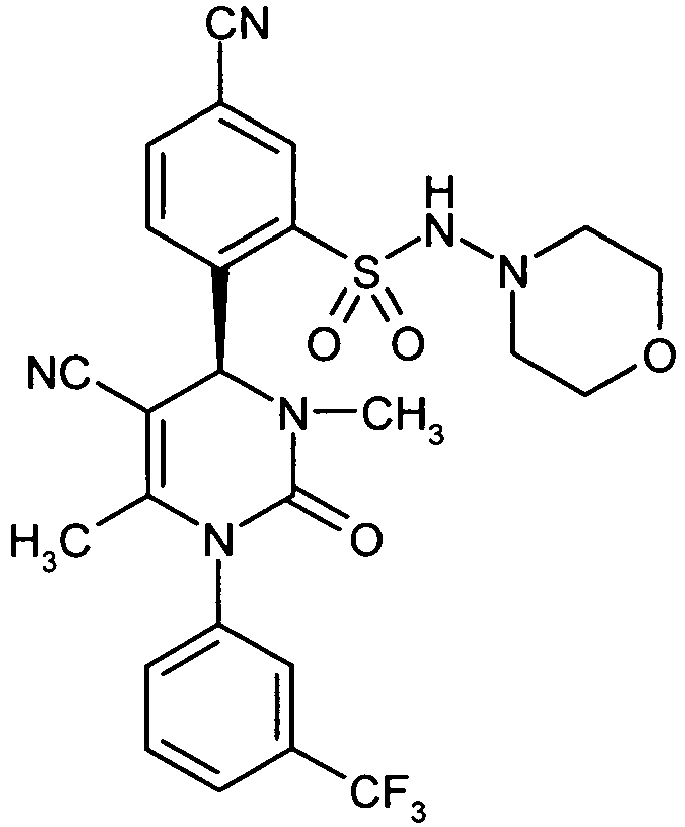
5-Cyano-2-{(4S)-5-cyano-3,6-dimethyl-2-oxo-1-[3-(trifluormethyl)phenyl]-1,2,3,4-tetrahydropyrimidin-4-yl}benzolsulfonylchlorid (50 mg, 101 µmol) wurde unter Argonschutzgasatmosphäre in absolutem THF (2.5 ml) gelöst, bei Raumtemperatur mit N-Aminomorpholin (29 µl, 303 µmol; 3 eq.) sowie Triethylamin (10.2 mg, 101 µmol; 1 eq.) versetzt und über Nacht gerührt. Das Reaktionsgemisch wurde danach im Vakuum eingeengt und der Rückstand mittels präparativer HPLC gereinigt (Säule: Kromasil C-18, 5 µm; Eluent: Acetonitril/Wasser + 0.1% TFA 10:90 → 90:10). Es wurde ein farbloser, amorpher Feststoff erhalten (38 mg, 67% d. Th.).
LC-MS (Methode 5): Rt = 1.98 min; MS (ESIpos): m/z (%) = 101.0 (100), 561.2 (15) [M+H]+; MS (ESIneg): m/z (%) = 459.1 (100), 475.1 (60), 559.2 (30) [M-H]-.
1H-NMR (400 MHz, DMSO-d6): δ = 1.80 (s, 3H), 2.60 (m, 4H), 2.75 (s, 3H), 3.50 (br. s, 4H), 6.50 (s, 1H), 7.70-8.00 (m, 4H), 8.10-8.40 (m, 4H).5-cyano-2 - {(4 S) -5-cyano-3,6-dimethyl-2-oxo-1- [3- (trifluoromethyl) phenyl] -1,2,3,4-tetrahydropyrimidine-4-yl } Benzenesulfonyl chloride (50 mg, 101 μmol) was dissolved in absolute THF (2.5 ml) under argon protective gas atmosphere, at room temperature with N -aminomorpholine (29 μl, 303 μmol, 3 eq.) and triethylamine (10.2 mg, 101 μmol, 1 eq. ) and stirred overnight. The reaction mixture was then concentrated under reduced pressure and the residue was purified by preparative HPLC (column: Kromasil C-18, 5 μm, eluent: acetonitrile / water + 0.1% TFA 10:90 → 90:10). A colorless, amorphous solid was obtained (38 mg, 67% of theory).
LC-MS (method 5): R t = 1.98 min; MS (ESIpos): m / z (%) = 101.0 (100), 561.2 (15) [M + H] + ; MS (ES Ineg): m / z (%) = 459.1 (100), 475.1 (60), 559.2 (30) [MH] - .
1 H-NMR (400 MHz, DMSO-d 6 ): δ = 1.80 (s, 3H), 2.60 (m, 4H), 2.75 (s, 3H), 3.50 (br, s, 4H), 6.50 (s, 1H), 7.70-8.00 (m, 4H), 8.10-8.40 (m, 4H).
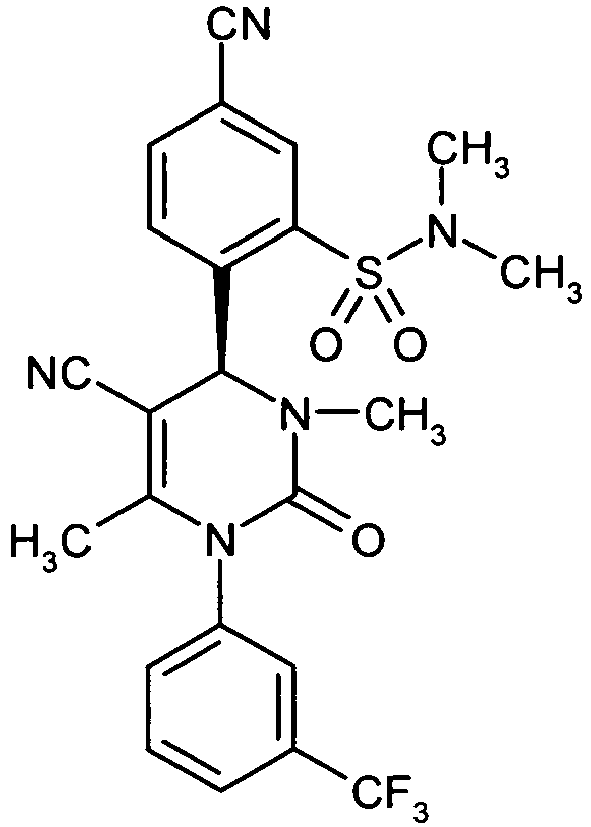
5-Cyano-2-{(4S)-5-cyano-6-methyl-2-oxo-1-[3-(trifluormethyl)phenyl]-1,2,3,4-tetrahydropyrimidin-4-yl}-N,N-dimethylbenzolsulfonamid (50 mg, 108 µmol) wurde unter Argonschutzgasatmosphäre in absolutem THF (4.5 ml) vorgelegt und bei -78°C mit einer 1 M Lösung von Lithiumhexamethyldisilazid (LiHMDS) in THF (130 µl, 130 µmol; 1.2 eq.) versetzt. Nach 30 min Rühren wurde Iodmethan (77 mg, 542 µmol; 5 eq.) in THF (1 ml) zugegeben und die Mischung für 16 h unter allmählicher Erwärmung von -78°C auf RT gerührt. Das Reaktionsgemisch wurde danach mit wenig Essigsäure versetzt und im Vakuum eingeengt. Der Rückstand wurde mittels präparativer HPLC gereinigt (Säule: Gromsil C-18; Eluent: Acetonitril/Wasser + 0.1% TFA 10:90 → 90:10). Es wurde ein farbloser, amorpher Feststoff erhalten (7.6 mg, 14% d. Th.).
LC-MS (Methode 4): Rt = 1.29 min; MS (ESIpos): m/z (%) = 504.1 (100) [M+H]+; MS (ESIneg): m/z (%) = 502.2 (100) [M-H]-.5-cyano-2 - {(4 S) -5-cyano-6-methyl-2-oxo-1- [3- (trifluoromethyl) phenyl] -1,2,3,4-tetrahydropyrimidine-4-yl} - N, N- dimethylbenzenesulfonamide (50 mg, 108 μmol) was initially charged in absolute THF (4.5 ml) under an argon protective gas atmosphere and treated at -78 ° C. with a 1 M solution of lithium hexamethyldisilazide (LiHMDS) in THF (130 μl, 130 μmol, 1.2 eq .). After stirring for 30 min, iodomethane (77 mg, 542 μmol, 5 eq.) In THF (1 mL) was added and the mixture was stirred at RT with gradual warming from -78 ° C to 16 h. The reaction mixture was then treated with a little acetic acid and concentrated in vacuo. The residue was purified by preparative HPLC (column: Gromsil C-18, eluent: acetonitrile / water + 0.1% TFA 10:90 → 90:10). A colorless, amorphous solid was obtained (7.6 mg, 14% of theory).
LC-MS (Method 4): R t = 1.29 min; MS (ESIpos): m / z (%) = 504.1 (100) [M + H] + ; MS (ES Ineg): m / z (%) = 502.2 (100) [MH] - .

5-Cyano-2-{(4S)-5-cyano-3,6-dimethyl-2-oxo-1-[3-(trifluormethyl)phenyl]-1,2,3,4-tetrahydropyrimidin-4-yl}benzolsulfonylchlorid (30 mg, 61 µmol) wurde unter Argonschutzgasatmosphäre in absolutem THF (2 ml) gelöst, bei Raumtemperatur mit einer 2 M Lösung von Methylamin in THF (91 µl, 182 µmol; 3 eq.) sowie Triethylamin (6.1 mg, 61 µmol; 1 eq.) versetzt und 3 h lang gerührt. Das Reaktionsgemisch wurde danach im Vakuum eingeengt und der Rückstand mittels präparativer HPLC gereinigt (Säule: Gromsil C-18; Eluent: Acetonitril/Wasser + 0.1% TFA 10:90 → 90:10). Es wurde ein farbloser, amorpher Feststoff erhalten (25 mg, 83% d. Th.).
LC-MS (Methode 4): Rt = 1.21 min; MS (ESIpos): m/z (%) = 490.1 (100) [M+H]+; MS (ESIneg): m/z (%) = 488.1 (100) [M-H]-.
1H-NMR (400 MHz, DMSO-d6): δ = 1.80 (s, 3H), 2.60 (d, 3H), 2.65 (s, 3H), 6.25 (s, 1H), 7.70-8.30 (m, 8H).5-cyano-2 - {(4 S) -5-cyano-3,6-dimethyl-2-oxo-1- [3- (trifluoromethyl) phenyl] -1,2,3,4-tetrahydropyrimidine-4-yl } Benzenesulfonyl chloride (30 mg, 61 μmol) was dissolved in absolute THF (2 ml) under an argon protective gas atmosphere, at room temperature with a 2 M solution of methylamine in THF (91 μl, 182 μmol, 3 eq.) and triethylamine (6.1 mg, 61 μmol, 1 eq.) and stirred for 3 h. The reaction mixture was then concentrated under reduced pressure and the residue was purified by preparative HPLC (column: Gromsil C-18, eluent: acetonitrile / water + 0.1% TFA 10:90 → 90:10). A colorless, amorphous solid was obtained (25 mg, 83% of theory).
LC-MS (Method 4): R t = 1.21 min; MS (ESIpos): m / z (%) = 490.1 (100) [M + H] + ; MS (ES Ineg): m / z (%) = 488.1 (100) [MH] - .
1 H-NMR (400 MHz, DMSO-d 6 ): δ = 1.80 (s, 3H), 2.60 (d, 3H), 2.65 (s, 3H), 6.25 (s, 1H), 7.70-8.30 (m, 8H).

5-Cyano-2-{(4S)-5-cyano-3,6-dimethyl-2-oxo-1-[3-(trifluormethyl)phenyl]-1,2,3,4-tetrahydropyrimidin-4-yl}benzolsulfonylchlorid (100 mg, 202 µmol) wurde unter Argonschutzgasatmosphäre bei Raumtemperatur mit einer 0.5 M Lösung von Ammoniak in Dioxan (4000 µl, 2021 µmol; 10 eq.) sowie Triethylamin (20.4 mg, 202 µmol; 1 eq.) versetzt und 3 h lang gerührt. Das Reaktionsgemisch wurde danach im Vakuum eingeengt und der Rückstand mittels präparativer HPLC gereinigt (Säule: Gromsil C-18; Eluent: Acetonitril/Wasser + 0.1% TFA 10:90 → 90:10). Es wurde ein farbloser, amorpher Feststoff erhalten (56 mg, 58% d. Th.).
LC-MS (Methode 4): Rt = 1.14 min; MS (ESIpos): m/z (%) = 476.0 (100) [M+H]+; MS (ESIneg): m/z (%) = 473.9 (100) [M-H]-.
1H-NMR (400 MHz, DMSO-d6): δ = 1.80 (s, 3H), 2.70 (s, 3H), 6.25 (s, 1H), 7.60-8.30 (m, 9H).5-cyano-2 - {(4 S) -5-cyano-3,6-dimethyl-2-oxo-1- [3- (trifluoromethyl) phenyl] -1,2,3,4-tetrahydropyrimidine-4-yl } benzene sulfonyl chloride (100 mg, 202 μmol) under argon protective gas atmosphere at room temperature with a 0.5 M solution of ammonia in dioxane (4000 .mu.l, 2021 .mu.mol; 10 eq.) And triethylamine (20.4 mg, 202 .mu.mol; 1 eq.) And 3 stirred for a long time. The reaction mixture was then concentrated under reduced pressure and the residue was purified by preparative HPLC (column: Gromsil C-18, eluent: acetonitrile / water + 0.1% TFA 10:90 → 90:10). A colorless, amorphous solid was obtained (56 mg, 58% of theory).
LC-MS (Method 4): R t = 1.14 min; MS (ESIpos): m / z (%) = 476.0 (100) [M + H] + ; MS (ES Ineg): m / z (%) = 473.9 (100) [MH] - .
1 H-NMR (400 MHz, DMSO-d 6 ): δ = 1.80 (s, 3H), 2.70 (s, 3H), 6.25 (s, 1H), 7.60-8.30 (m, 9H).

5-Cyano-2-{(4S)-5-cyano-3,6-dimethyl-2-oxo-1-[3-(trifluormethyl)phenyl]-1,2,3,4-tetrahydropyrimidin-4-yl}benzolsulfonylchlorid (50 mg, 101 µmol) wurde unter Argonschutzgasatmosphäre in absolutem THF (2.5 ml) gelöst, bei Raumtemperatur mit Ethanolamin (18 µl, 303 µmol; 3 eq.) sowie Triethylamin (10.2 mg, 101 µmol; 1 eq.) versetzt und über Nacht gerührt. Das Reaktionsgemisch wurde danach im Vakuum eingeengt und der Rückstand mittels präparativer HPLC gereinigt (Säule: Kromasil C-18, 5 µm; Eluent: Acetonitril/Wasser + 0.1% TFA 10:90 → 90:10). Es wurde ein farbloser, amorpher Feststoff erhalten (43 mg, 81 % d. Th.).
LC-MS (Methode 4): Rt = 1.13 min; MS (ESIpos): m/z (%) = 520.0 (100) [M+H]+.
1H-NMR (400 MHz, DMSO-d6): δ = 1.80 (s, 3H), 2.65 (s, 3H), 3.00 (m, 2H), 3.45 (m, 2H), 6.30 (s, 1H), 7.70-8.30 (m, 7H), 8.35 (s, 1H), 8.45 (t, 1H).5-cyano-2 - {(4 S) -5-cyano-3,6-dimethyl-2-oxo-1- [3- (trifluoromethyl) phenyl] -1,2,3,4-tetrahydropyrimidine-4-yl } Benzenesulfonyl chloride (50 mg, 101 μmol) was dissolved in absolute THF (2.5 ml) under an argon protective gas atmosphere, ethanolamine (18 μl, 303 μmol, 3 eq.) and triethylamine (10.2 mg, 101 μmol, 1 eq.) were added at room temperature and stirred overnight. The reaction mixture was then concentrated under reduced pressure and the residue was purified by preparative HPLC (column: Kromasil C-18, 5 μm, eluent: acetonitrile / water + 0.1% TFA 10:90 → 90:10). A colorless, amorphous solid was obtained (43 mg, 81% of theory).
LC-MS (Method 4): R t = 1.13 min; MS (ESIpos): m / z (%) = 520.0 (100) [M + H] + .
1 H-NMR (400 MHz, DMSO-d 6 ): δ = 1.80 (s, 3H), 2.65 (s, 3H), 3.00 (m, 2H), 3.45 (m, 2H), 6.30 (s, 1H) , 7.70-8.30 (m, 7H), 8.35 (s, 1H), 8.45 (t, 1H).

5-Cyano-2-{(4S)-5-cyano-3,6-dimethyl-2-oxo-1-[3-(trifluormethyl)phenyl]-1,2,3,4-tetrahydropyrimidin-4-yl}benzolsulfonylchlorid (25 mg, 51 µmol) wurde unter Argonschutzgasatmosphäre in absolutem THF (1.5 ml) gelöst, bei Raumtemperatur mit 3-Aminopropanol (11 µl, 152 µmol; 3 eq.) sowie Triethylamin (5.1 mg, 51 µmol; 1 eq.) versetzt und über Nacht gerührt. Das Reaktionsgemisch wurde danach im Vakuum eingeengt und der Rückstand mittels präparativer HPLC gereinigt (Säule: Kromasil C-18, 5 µm; Eluent: Acetonitril/Wasser + 0.1% TFA 10:90 → 90:10). Es wurde ein farbloser, amorpher Feststoff erhalten (18 mg, 67% d. Th.).
LC-MS (Methode 4): Rt = 1.14 min; MS (ESIpos): m/z (%) = 534.1 (100) [M+H]+; MS (ESIneg): m/z (%) = 532.1 (100) [M-H]-.5-cyano-2 - {(4 S) -5-cyano-3,6-dimethyl-2-oxo-1- [3- (trifluoromethyl) phenyl] -1,2,3,4-tetrahydropyrimidine-4-yl } benzenesulfonyl chloride (25 mg, 51 μmol) was dissolved in absolute THF (1.5 ml) under argon protective gas atmosphere, at room temperature with 3-aminopropanol (11 μl, 152 μmol, 3 eq.) and triethylamine (5.1 mg, 51 μmol, 1 eq. ) and stirred overnight. The reaction mixture was then concentrated under reduced pressure and the residue was purified by preparative HPLC (column: Kromasil C-18, 5 μm, eluent: acetonitrile / water + 0.1% TFA 10:90 → 90:10). A colorless, amorphous solid was obtained (18 mg, 67% of theory).
LC-MS (Method 4): R t = 1.14 min; MS (ESIpos): m / z (%) = 534.1 (100) [M + H] + ; MS (ES Ineg): m / z (%) = 532.1 (100) [MH] - .
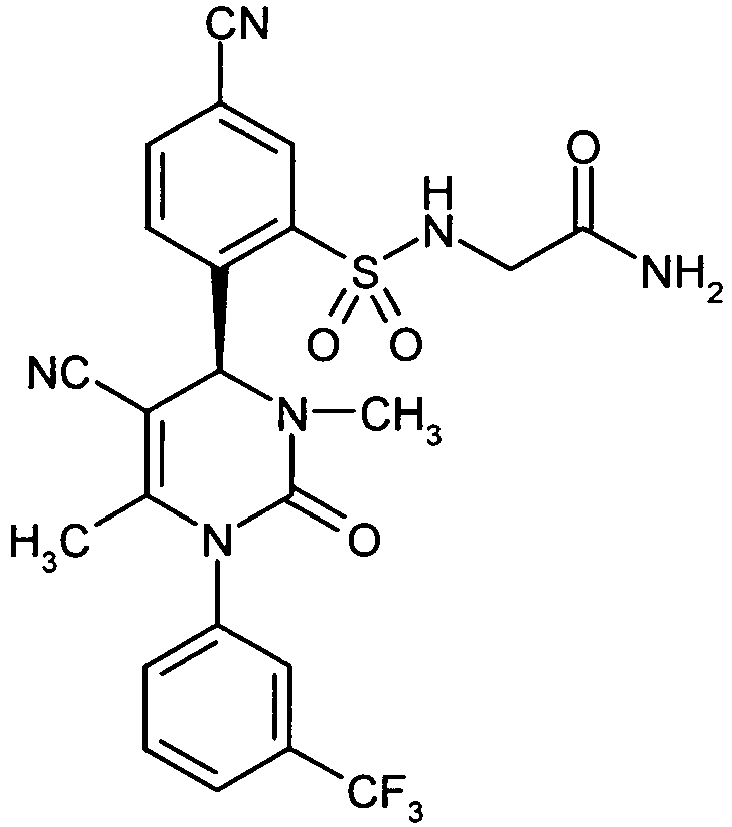
5-Cyano-2-{(4S)-5-cyano-3,6-dimethyl-2-oxo-1-[3-(trifluormethyl)phenyl]-1,2,3,4-tetrahydropyrimidin-4-yl}benzolsulfonylchlorid (50 mg, 101 µmol) wurde unter Argonschutzgasatmosphäre in absolutem THF (2.5 ml) gelöst, bei Raumtemperatur mit Glycinamid-Hydrochlorid (57 mg, 505 µmol; 5 eq.) sowie Triethylamin (102 mg, 1010 µmol; 10 eq.) versetzt und über Nacht gerührt. Das Reaktionsgemisch wurde danach im Vakuum eingeengt und der Rückstand mittels präparativer HPLC gereinigt (Säule: Gromsil C-18, 10 µm; Eluent: Acetonitril/Wasser + 0.1% TFA 10:90 → 90:10). Es wurde ein farbloser, amorpher Feststoff erhalten (39.2 mg, 73% d. Th.).
LC-MS (Methode 4): Rt = 1.09 min; MS (ESIpos): m/z (%) = 532.9 (100) [M+H]+.
1H-NMR (400 MHz, DMSO-d6): δ = 1.80 (s, 3H), 2.65 (s, 3H), 3.60 (m, 2H), 6.30 (s, 1H), 7.15 (s, 1H), 7.40 (s, 1H), 7.70-8.30 (m, 6H), 8.40 (s, 1H), 8.70 (t, 1H).5-cyano-2 - {(4 S) -5-cyano-3,6-dimethyl-2-oxo-1- [3- (trifluoromethyl) phenyl] -1,2,3,4-tetrahydropyrimidine-4-yl Benzenesulfonyl chloride (50 mg, 101 μmol) was dissolved in absolute THF (2.5 mL) under argon blanket gas at room temperature with glycinamide hydrochloride (57 mg, 505 μmol, 5 eq.) and triethylamine (102 mg, 1010 μmol, 10 eq. ) and stirred overnight. The reaction mixture was then concentrated under reduced pressure and the residue was purified by preparative HPLC (column: Gromsil C-18, 10 μm, eluent: acetonitrile / water + 0.1% TFA 10:90 → 90:10). A colorless, amorphous solid was obtained (39.2 mg, 73% of theory).
LC-MS (Method 4): R t = 1.09 min; MS (ESIpos): m / z (%) = 532.9 (100) [M + H] + .
1 H-NMR (400 MHz, DMSO-d 6 ): δ = 1.80 (s, 3H), 2.65 (s, 3H), 3.60 (m, 2H), 6.30 (s, 1H), 7.15 (s, 1H) , 7.40 (s, 1H), 7.70-8.30 (m, 6H), 8.40 (s, 1H), 8.70 (t, 1H).
Die betreffende Amin-Komponente (0.1 mmol) wurde in 1,2-Dichlorethan (0.2 ml) vorgelegt. Anschließend wurden N,N-Diisopropylethylamin (25.8 mg, 0.2 mmol) sowie 5-Cyano-2-{(4S)-5-cyano-6-methyl-2-oxo-1-[3-(trifluormethyl)phenyl]-1,2,3,4-tetrahydropyrimidin-4-yl}benzolsulfo-nylchlorid (48.1 mg, 0.1 mmol), gelöst in 1,2-Dichlorethan (0.3 ml), zugegeben. Das Gemisch wurde über Nacht bei Raumtemperatur gerührt. Danach wurde das Dichlorethan in einer Vakuumzentrifuge abgedampft. Der Rückstand wurde in Dimethylsulfoxid (0.5 ml) gelöst und mittels präparativer HPLC/MS gereinigt.The relevant amine component (0.1 mmol) was initially charged in 1,2-dichloroethane (0.2 ml). Subsequently, N, N-diisopropylethylamine were (25.8 mg, 0.2 mmol) and 5-cyano-2 - {(4 S) -5-cyano-6-methyl-2-oxo-1- [3- (trifluoromethyl) phenyl] - 1,2,3,4-tetrahydropyrimidin-4-yl} benzenesulfonyl chloride (48.1 mg, 0.1 mmol) dissolved in 1,2-dichloroethane (0.3 ml) was added. The mixture was stirred at room temperature overnight. Thereafter, the dichloroethane was evaporated in a vacuum centrifuge. The residue was dissolved in dimethyl sulfoxide (0.5 ml) and purified by preparative HPLC / MS.
Nach dieser Vorschrift wurden die in der folgenden Tabelle aufgeführten Verbindungen erhalten:
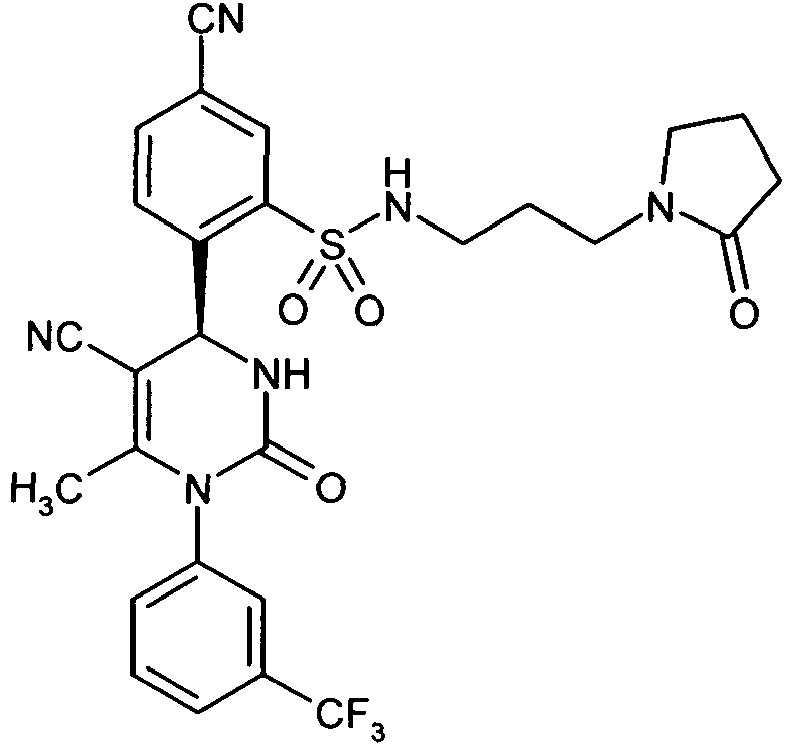
LC-MS (Methode 11):
Rt = 1.97 min.
LC-MS (Methode 11):
Rt = 2.17 min.
LC-MS (Methode 11):
Rt = 1.94 min.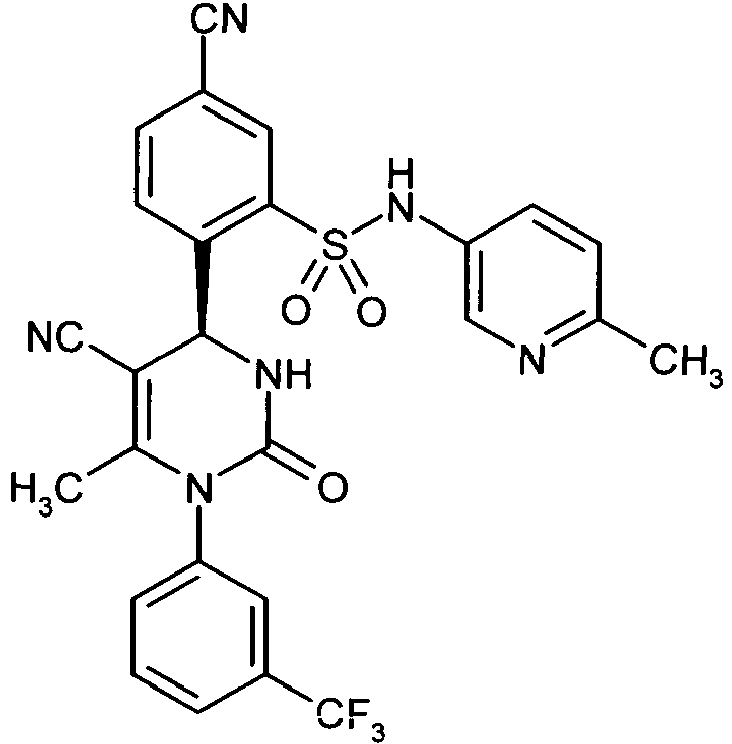
LC-MS (Methode 11):
Rt = 1.79 min.
LC-MS (Methode 11):
Rt = 1.55 min.
LC-MS (Methode 11):
Rt = 2.09 min.
LC-MS (Methode 11):
Rt = 2.13 min.
LC-MS (Methode 11):
Rt = 1.51 min.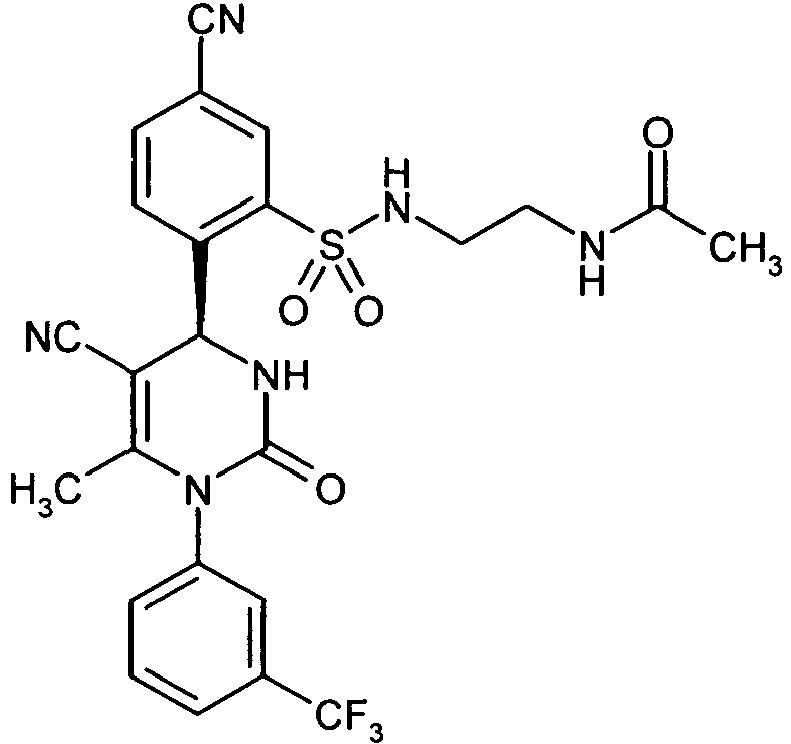
LC-MS (Methode 11):
Rt = 1.86 min.
LC-MS (Methode 11):
Rt = 2.15 min.
LC-MS (Methode 11):
Rt = 1.99 min.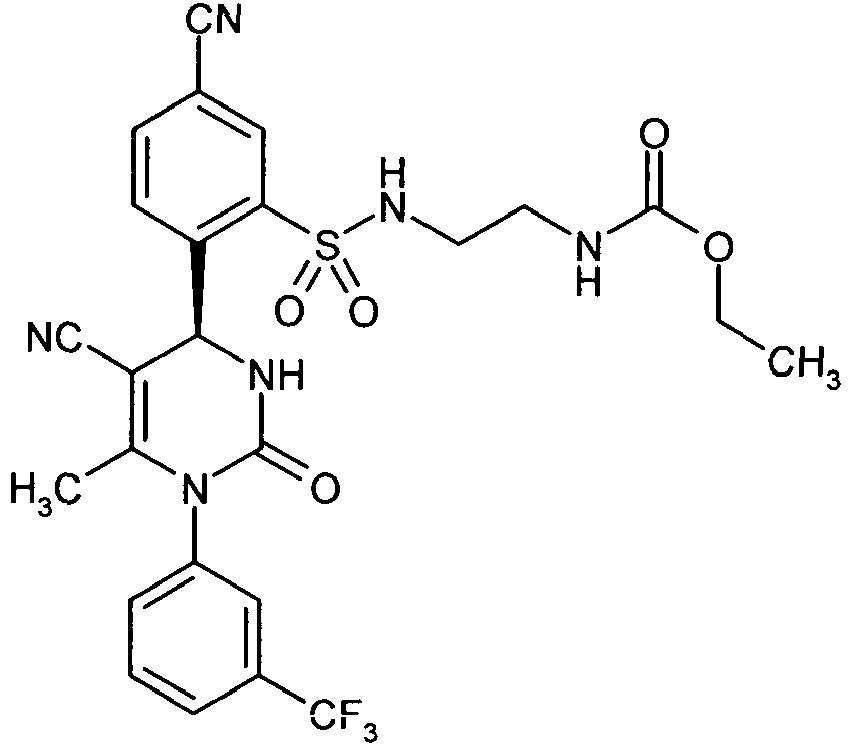
LC-MS (Methode 11):
Rt = 2.01 min.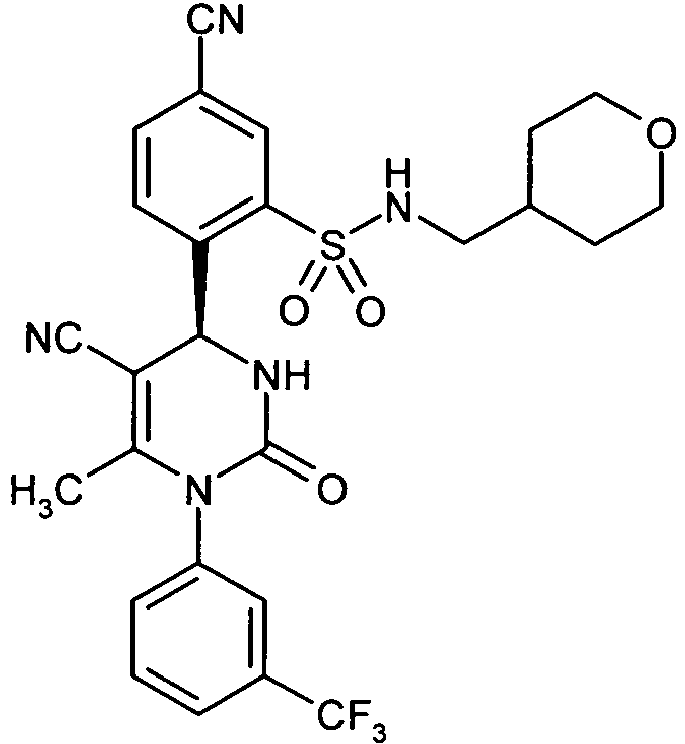
LC-MS (Methode 11):
Rt = 2.03 min.
LC-MS (Methode 11):
Rt = 1.83 min.
LC-MS (Methode 11):
Rt = 1.83 min.
LC-MS (Methode 11):
Rt = 2.18 min.
LC-MS (Methode 11):
Rt = 1.55 min.
LC-MS (Methode 11):
Rt = 2.05 min.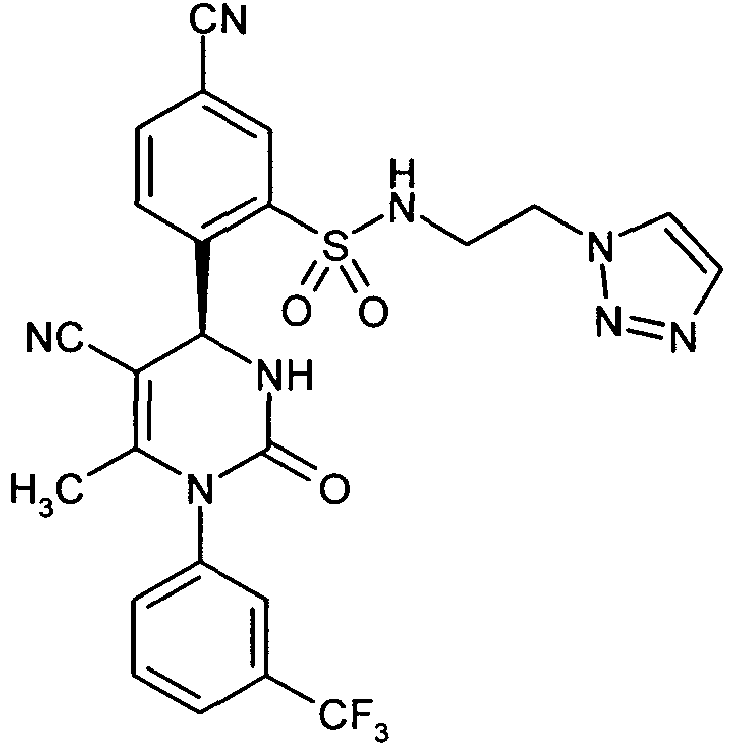
LC-MS (Methode 11):
Rt = 1.91 min.
LC-MS (Methode 11):
Rt = 1.51 min.
LC-MS (Methode 11):
Rt = 2.00 min.
LC-MS (Methode 11):
Rt = 2.01 min.
LC-MS (Methode 11):
Rt = 1.93 min.
LC-MS (Method 11):
R t = 1.97 min.
LC-MS (Method 11):
R t = 2.17 min.
LC-MS (Method 11):
R t = 1.94 min.
LC-MS (Method 11):
R t = 1.79 min.
LC-MS (Method 11):
R t = 1.55 min.
LC-MS (Method 11):
R t = 2.09 min.
LC-MS (Method 11):
R t = 2.13 min.
LC-MS (Method 11):
R t = 1.51 min.
LC-MS (Method 11):
R t = 1.86 min.
LC-MS (Method 11):
R t = 2.15 min.
LC-MS (Method 11):
R t = 1.99 min.
LC-MS (Method 11):
R t = 2.01 min.
LC-MS (Method 11):
R t = 2.03 min.
LC-MS (Method 11):
R t = 1.83 min.
LC-MS (Method 11):
R t = 1.83 min.
LC-MS (Method 11):
R t = 2.18 min.
LC-MS (Method 11):
R t = 1.55 min.
LC-MS (Method 11):
R t = 2.05 min.
LC-MS (Method 11):
R t = 1.91 min.
LC-MS (Method 11):
R t = 1.51 min.
LC-MS (Method 11):
R t = 2.00 min.
LC-MS (Method 11):
R t = 2.01 min.
LC-MS (Method 11):
R t = 1.93 min.
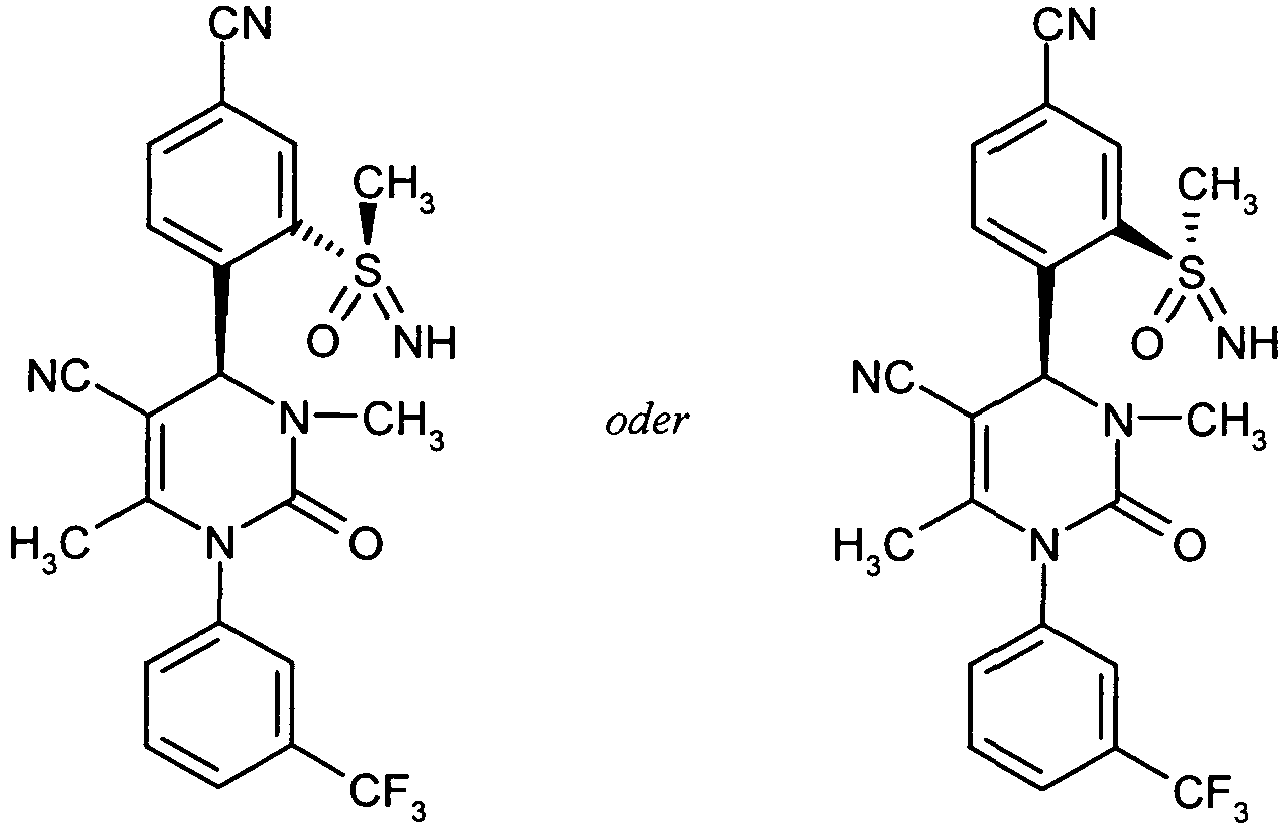
Die Reaktion wurde unter Argon durchgeführt. Die Verbindung aus Beispiel 21A ("Diastereomer 1 "; 63 mg, 111 µmol) wurde in einem Acetonitril/Methanol-Gemisch (10:1, 6 ml) vorgelegt. Bei 0°C wurde festes Kaliumcarbonat (7.6 mg, 55 µmol; 0.5 eq.) hinzugegeben und der Ansatz 15 min lang gerührt. Anschließend wurde mit Trifluoressigsäure (6.3 mg, 55 µmol; 0.5 eq.) neutralisiert, das Gemisch im Vakuum eingeengt und der Rückstand mittels präparativer HPLC gereinigt (Säule: Gromsil C-18, 10 µm; Eluent: Acetonitril/Wasser + 0.1% TFA 10:90 → 80:20). Die Titelverbindung wurde als ein Feststoff isoliert (48 mg, 91% d. Th.).
LC-MS (Methode 8): Rt = 0.99 min; MS (ESIpos): m/z (%) = 474.3 (100) [M+H]+; MS (ESIneg): m/z (%) = 472.4 (100) [M-H]-.
LC-MS (Methode 4): Rt = 1.13 min; MS (ESIpos): m/z (%) = 474.1 (100) [M+H]+; MS (ESIneg): m/z (%) = 472.4 (100) [M-H]-.
1H-NMR (400 MHz, DMSO-d6): δ = 1.80 (s, 3H), 2.70 (s, 3H), 3.30 (s, 3H), 4.85 (s, 1H), 6.75 (s, 1H), 7.70-8.30 (m, 6H), 8.50 (s, 1H).The reaction was carried out under argon. The compound of Example 21A ("Diastereomer 1", 63 mg, 111 μmol) was placed in an acetonitrile / methanol mixture (10: 1, 6 mL). At 0 ° C, solid potassium carbonate (7.6 mg, 55 μmol, 0.5 eq.) Was added and the reaction was stirred for 15 minutes. It was then neutralized with trifluoroacetic acid (6.3 mg, 55 μmol, 0.5 eq.), The mixture was concentrated under reduced pressure and the residue was purified by preparative HPLC (column: Gromsil C-18, 10 μm, eluent: acetonitrile / water + 0.1% TFA 10) : 90 → 80:20). The title compound was isolated as a solid (48 mg, 91% of theory).
LC-MS (Method 8): R t = 0.99 min; MS (ESIpos): m / z (%) = 474.3 (100) [M + H] + ; MS (ES Ineg): m / z (%) = 472.4 (100) [MH] - .
LC-MS (Method 4): R t = 1.13 min; MS (ESIpos): m / z (%) = 474.1 (100) [M + H] + ; MS (ES Ineg): m / z (%) = 472.4 (100) [MH] - .
1 H-NMR (400 MHz, DMSO-d 6 ): δ = 1.80 (s, 3H), 2.70 (s, 3H), 3.30 (s, 3H), 4.85 (s, 1H), 6.75 (s, 1H) , 7.70-8.30 (m, 6H), 8.50 (s, 1H).

Die Reaktion wurde unter Argon durchgeführt. Die Verbindung aus Beispiel 22A ("Diastereomer 2"; 78 mg, 137 µmol) wurde in einem Acetonitril/Methanol-Gemisch (10:1, 7.7 ml) vorgelegt. Bei 0°C wurde festes Kaliumcarbonat (9.5 mg, 68 µmol; 0.5 eq.) hinzugegeben und der Ansatz 15 min lang gerührt. Anschließend wurde mit Trifluoressigsäure (7.8 mg, 68 µmol; 0.5 eq.) neutralisiert, das Gemisch im Vakuum eingeengt und der Rückstand mittels präparativer HPLC gereinigt (Säule: Gromsil C-18, 10 µm; Eluent: Acetonitril/Wasser + 0.1% TFA 10:90 → 80:20). Die Titelverbindung wurde als ein Feststoff isoliert (60 mg, 93% d. Th.).
LC-MS (Methode 8): Rt = 0.98 min; MS (ESIpos): m/z (%) = 474.3 (100) [M+H]+; MS (ESIneg): m/z (%) = 472.4 (100) [M-H]-.
LC-MS (Methode 5): Rt = 1.76 min; MS (ESIpos): m/z (%) = 474.1 (100) [M+H]+; MS (ESIneg): m/z (%) = 472.2 (100) [M-H]-.
Chirale analytische HPLC [Säule: Chiralpak AD-H, 5 µm, 250 mm x 4.6 mm; Eluent: iso-Hexan/ Ethanol 50:50; Fluss: 1 ml/min; Injektionsvolumen: 10 µl; Temperatur: 40°C; Detektion: 220 nm]: Rt = 4.40 min.
1H-NMR (400 MHz, DMSO-d6): δ = 1.80 (s, 3H), 2.70 (s, 3H), 3.30 (s, 3H), 6.80 (s, 1H), 7.70-8.30 (m, 6H), 8.45 (s, 1H).
[α]D 20 = -286.9° (c = 0.49, Chloroform).The reaction was carried out under argon. The compound of Example 22A ("Diastereomer 2", 78 mg, 137 μmol) was charged in an acetonitrile / methanol mixture (10: 1, 7.7 mL). At 0 ° C, solid potassium carbonate (9.5 mg, 68 μmol, 0.5 eq.) Was added and the reaction was stirred for 15 minutes. It was then neutralized with trifluoroacetic acid (7.8 mg, 68 μmol, 0.5 eq.), The mixture was concentrated under reduced pressure and the residue was purified by preparative HPLC (column: Gromsil C-18, 10 μm, eluent: acetonitrile / water + 0.1% TFA 10) : 90 → 80:20). The title compound was isolated as a solid (60 mg, 93% of theory).
LC-MS (Method 8): R t = 0.98 min; MS (ESIpos): m / z (%) = 474.3 (100) [M + H] + ; MS (ES Ineg): m / z (%) = 472.4 (100) [MH] - .
LC-MS (Method 5): R t = 1.76 min; MS (ESIpos): m / z (%) = 474.1 (100) [M + H] + ; MS (ESIneg): m / z (%) = 472.2 (100) [MH] - .
Chiral analytical HPLC [column: Chiralpak AD-H, 5 μm, 250 mm x 4.6 mm; Eluent: iso -hexane / ethanol 50:50; Flow: 1 ml / min; Injection volume: 10 μl; Temperature: 40 ° C; Detection: 220 nm]: R t = 4.40 min.
1 H-NMR (400 MHz, DMSO-d 6 ): δ = 1.80 (s, 3H), 2.70 (s, 3H), 3.30 (s, 3H), 6.80 (s, 1H), 7.70-8.30 (m, 6H), 8.45 (s, 1H).
[α] D 20 = -286.9 ° (c = 0.49, chloroform).
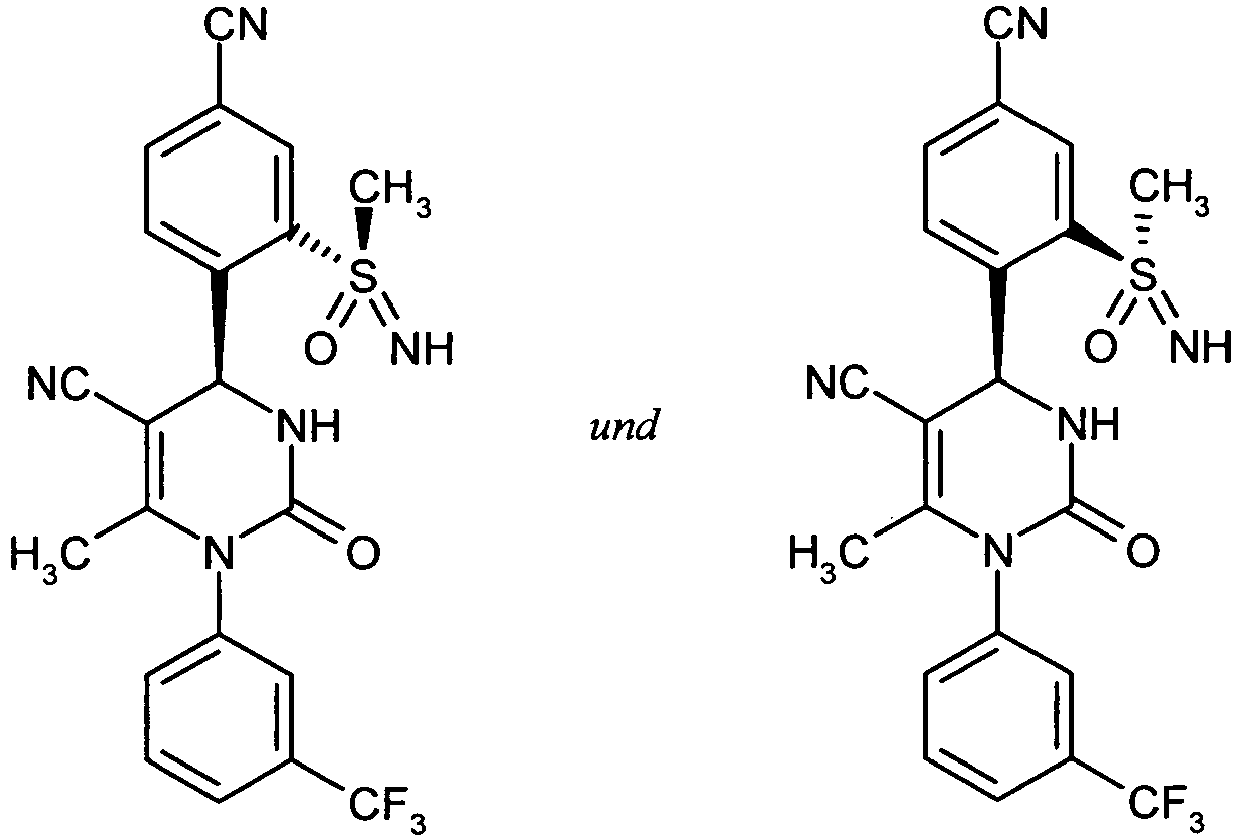
Die Reaktion wurde unter Argon durchgeführt. Das Diastereomerengemisch aus Beispiel 23A (485 mg, 873 µmol) wurde in einem Acetonitril/Methanol-Gemisch (10:1, 44 ml) vorgelegt. Bei 0°C wurde festes Kaliumcarbonat (60.3 mg, 437 µmol; 0.5 eq.) hinzugegeben und der Ansatz 15 min lang gerührt. Anschließend wurde mit Trifluoressigsäure (49.8 mg, 437 µmol ; 0.5 eq.) neutralisiert, das Gemisch im Vakuum eingeengt und der Rückstand in Essigsäureethylester (50 ml) aufgenommen. Die organische Phase wurde mit gesättigter wässriger Natriumchlorid-Lösung (2 x 15 ml) gewaschen, über Natriumsulfat getrocknet, filtriert und im Vakuum eingeengt. Die Titelverbindung wurde als ein Feststoff isoliert (400 mg, quant.).
LC-MS (Methode 6): Rt = 2.03 min; MS (ESIpos): m/z (%) = 417.0 (50), 460.0 (100) [M+H]+.
1H-NMR (400 MHz, DMSO-d6): δ = 1.80 (2 s, 3H), 3.30 (2 s, 3H), 4.75 (2 s, 1H), 6.65 (2 s, 1H), 7.70-8.40 (m, 8H).The reaction was carried out under argon. The diastereomer mixture from Example 23A (485 mg, 873 μmol) was initially charged in an acetonitrile / methanol mixture (10: 1, 44 ml). At 0 ° C, solid potassium carbonate (60.3 mg, 437 μmol, 0.5 eq.) Was added and the reaction was stirred for 15 minutes. It was then neutralized with trifluoroacetic acid (49.8 mg, 437 μmol, 0.5 eq.), The mixture was concentrated under reduced pressure and the residue was taken up in ethyl acetate (50 ml). The organic phase was washed with saturated aqueous sodium chloride solution (2 × 15 ml), dried over sodium sulfate, filtered and concentrated in vacuo. The title compound was isolated as a solid (400 mg, quant.).
LC-MS (Method 6): R t = 2.03 min; MS (ESIpos): m / z (%) = 417.0 (50), 460.0 (100) [M + H] + .
1 H-NMR (400 MHz, DMSO-d 6 ): δ = 1.80 (2 s, 3H), 3.30 (2 s, 3H), 4.75 (2 s, 1H), 6.65 (2 s, 1H), 7.70- 8.40 (m, 8H).

Das Diastereomerengemisch von (RS )-(4S)-4-[4-Cyano-2-(S-methylsulfonimidoyl)phenyl]-6-methyl-2-oxo-1-[3-(trifluormethyl)phenyl]-1,2,3,4-tetrahydropyrimidin-5-carbonitril und (SS )-(4S)-4-[4-Cyano-2-(S-methylsulfonimidoyl)phenyl]-6-methyl-2-oxo-1-[3-(trifluormethyl)phenyl]-1,2,3,4-tetrahydropyrimidin-5-carbonitril (400 mg) wurde durch präparative HPLC-Chromatographie an chiraler Phase aufgetrennt [Säule: Daicel Chiralpak AD-H, 250 mm x 20 mm; Probenvorbereitung: Probe in 20 ml Ethanol gelöst; Injektionsvolumen: 0.750 ml; Eluent: iso-Hexan/Ethanol 3:7; Fluss: 15 ml/min; Temperatur: 40°C; Detektion: 220 nm]. Das Diastereomer 1 wurde als früher eluierende Fraktion in Form eines Feststoffs erhalten (296 mg, 74% d. Th., Gehalt >99%).
LC-MS (Methode 6): Rt = 2.04 min; MS (ESIpos): m/z (%) = 417.0 (40), 460.0 (100) [M+H]+.
1H-NMR (400 MHz, DMSO-d6): δ = 1.85 (s, 3H), 3.25 (s, 3H), 4.85 (s, 1H), 6.65 (s, 1H), 7.70-8.40 (m, 8H).
Chirale analytische HPLC [Säule: Chiralpak AD-H, 5 µm, 250 mm x 4.6 mm; Eluent: iso-Hexan/ Ethanol 3:7; Fluss: 1 ml/min; Injektionsvolumen: 10 µl; Temperatur: 40°C; Detektion: 220 nm]: Rt = 4.16 min.The diastereomeric mixture of (R S) - (4 S) -4- [4-cyano-2- (S -methylsulfonimidoyl) phenyl] -6-methyl-2-oxo-1- [3- (trifluoromethyl) phenyl] -1 , 2,3,4-tetrahydropyrimidine-5-carbonitrile and (S S) - (4 S) -4- [4-cyano-2- (S -methylsulfonimidoyl) phenyl] -6-methyl-2-oxo-1- [3- (trifluoromethyl) phenyl] -1,2,3,4-tetrahydropyrimidine-5-carbonitrile (400 mg) was separated by preparative HPLC chromatography on a chiral phase [column: Daicel Chiralpak AD-H, 250 mm x 20 mm ; Sample preparation: sample dissolved in 20 ml ethanol; Injection volume: 0.750 ml; Eluent: iso-hexane / ethanol 3: 7; Flow: 15 ml / min; Temperature: 40 ° C; Detection: 220 nm]. Diastereomer 1 was obtained as a previously eluting fraction in the form of a solid (296 mg, 74% of theory, content> 99%).
LC-MS (Method 6): R t = 2.04 min; MS (ESIpos): m / z (%) = 417.0 (40), 460.0 (100) [M + H] + .
1 H-NMR (400 MHz, DMSO-d 6 ): δ = 1.85 (s, 3H), 3.25 (s, 3H), 4.85 (s, 1H), 6.65 (s, 1H), 7.70-8.40 (m, 8H).
Chiral analytical HPLC [column: Chiralpak AD-H, 5 μm, 250 mm x 4.6 mm; Eluent: iso-hexane / ethanol 3: 7; Flow: 1 ml / min; Injection volume: 10 μl; Temperature: 40 ° C; Detection: 220 nm]: R t = 4.16 min.

Das Diastereomerengemisch von (RS )-(4S)-4-[4-Cyano-2-(S-methylsulfonimidoyl)phenyl]-6-methyl-2-oxo-1-[3-(trifluormethyl)phenyl]-1,2,3,4-tetrahydropyrimidin-5-carbonitril und (SS )-(4S)-4-[4-Cyano-2-(S-methylsulfonimidoyl)phenyl]-6-methyl-2-oxo-1-[3-(trifluormethyl)phenyl]-1,2,3,4-tetrahydropyrimidin-5-carbonitril (400 mg) wurde durch präparative HPLC-Chromatographie an chiraler Phase aufgetrennt [Säule: Daicel Chiralpak AD-H, 250 mm x 20 mm; Probenvorbereitung: Probe in 20 ml Ethanol gelöst; Injektionsvolumen: 0.750 ml; Eluent: iso-Hexan/Ethanol 3:7; Fluss: 15 ml/min; Temperatur: 40°C; Detektion: 220 nm]. Das Diastereomer 2 wurde als später eluierende Fraktion in Form eines Feststoffs erhalten (103 mg, 26% d. Th., Gehalt >98.5%).
LC-MS (Methode 6): Rt = 2.04 min; MS (ESIpos): m/z (%) = 417.0 (40), 460.0 (100) [M+H]+.
1H-NMR (400 MHz, DMSO-d6): δ = 1.85 (s, 3H), 3.30 (s, 3H), 4.55 (s, 1H), 6.70 (s, 1H), 7.70-8.30 (m, 7H), 8.40 (s, 1H).
Chirale analytische HPLC [Säule: Chiralpak AD-H, 5 µm, 250 mm x 4.6 mm; Eluent: iso-Hexan/ Ethanol 3:7; Fluss: 1 ml/min; Injektionsvolumen: 10 µl; Temperatur: 40°C; Detektion: 220 nm]: Rt = 4.94 min.The diastereomeric mixture of (R S) - (4 S) -4- [4-cyano-2- (S -methylsulfonimidoyl) phenyl] -6-methyl-2-oxo-1- [3- (trifluoromethyl) phenyl] -1 , 2,3,4-tetrahydropyrimidine-5-carbonitrile and (S S) - (4 S) -4- [4-cyano-2- (S -methylsulfonimidoyl) phenyl] -6-methyl-2-oxo-1- [3- (trifluoromethyl) phenyl] -1,2,3,4-tetrahydropyrimidine-5-carbonitrile (400 mg) was separated by preparative HPLC chromatography on a chiral phase [column: Daicel Chiralpak AD-H, 250 mm x 20 mm ; Sample preparation: sample dissolved in 20 ml ethanol; Injection volume: 0.750 ml; Eluent: iso-hexane / ethanol 3: 7; Flow: 15 ml / min; Temperature: 40 ° C; Detection: 220 nm]. The diastereomer 2 was obtained as a later eluting fraction in the form of a solid (103 mg, 26% of theory, content> 98.5%).
LC-MS (Method 6): R t = 2.04 min; MS (ESIpos): m / z (%) = 417.0 (40), 460.0 (100) [M + H] + .
1 H-NMR (400 MHz, DMSO-d 6 ): δ = 1.85 (s, 3H), 3.30 (s, 3H), 4.55 (s, 1H), 6.70 (s, 1H), 7.70-8.30 (m, 7H), 8.40 (s, 1H).
Chiral analytical HPLC [column: Chiralpak AD-H, 5 μm, 250 mm x 4.6 mm; Eluent: iso-hexane / ethanol 3: 7; Flow: 1 ml / min; Injection volume: 10 μl; Temperature: 40 ° C; Detection: 220 nm]: R t = 4.94 min.
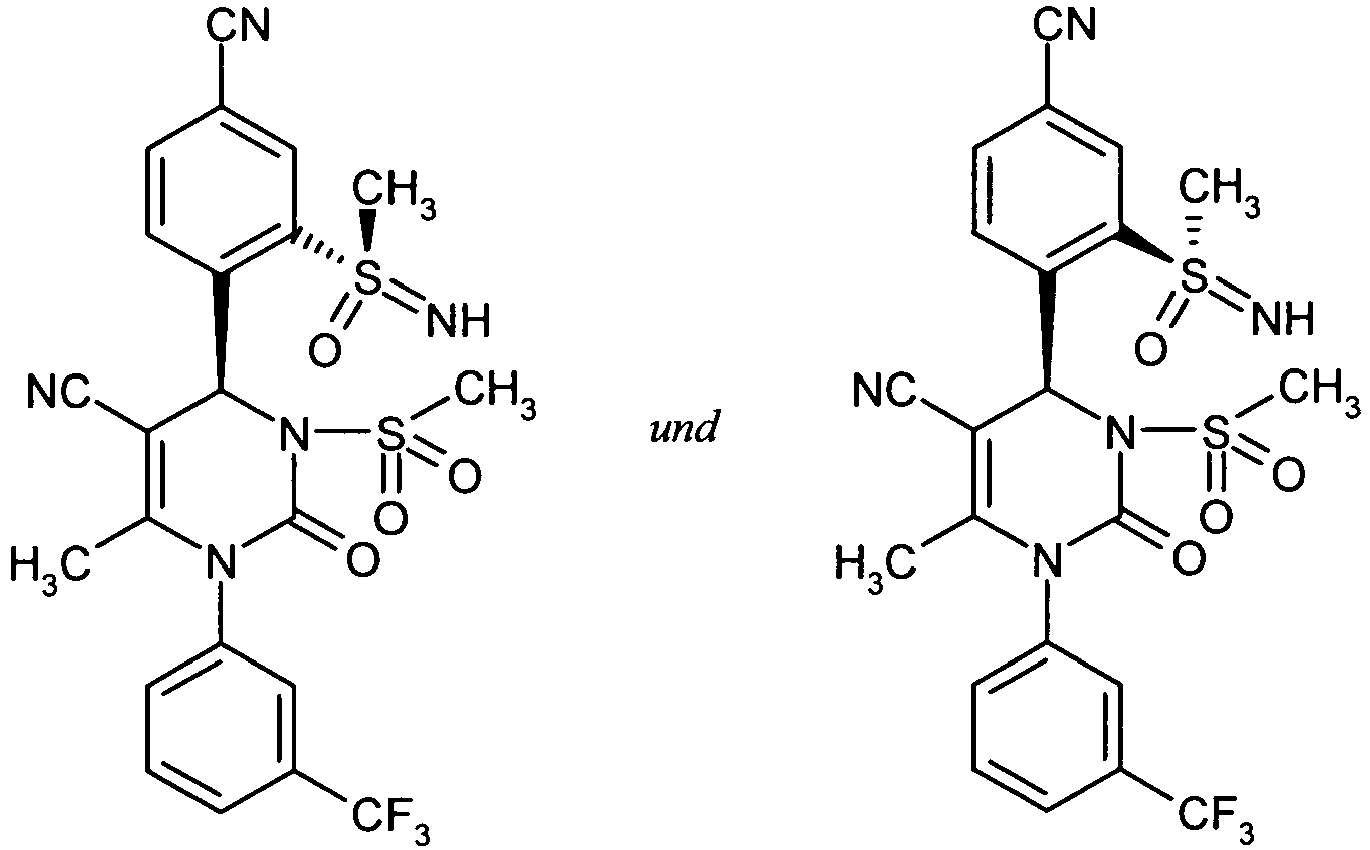
Die Reaktion wurde unter Argon durchgeführt. Das Diastereomerengemisch aus Beispiel 25A (25 mg, 39 µmol) wurde in einem Acetonitril/Methanol-Gemisch (10:1, 2.2 ml) vorgelegt. Bei 0°C wurde festes Kaliumcarbonat (2.7 mg, 20 µmol; 0.5 eq.) hinzugegeben und der Ansatz 15 min lang gerührt. Anschließend wurde mit Trifluoressigsäure (2.3 mg, 20 µmol; 0.5 eq.) neutralisiert, das Gemisch im Vakuum eingeengt und der Rückstand mittels präparativer HPLC gereinigt (Säule: Gromsil C-18, 10 µm; Eluent: Acetonitril/Wasser + 0.1% TFA 10:90 → 75:25). Die Titelverbindung wurde als ein farbloser Feststoff isoliert (4.3 mg, 20% d. Th.).
LC-MS (Methode 5): Rt = 1.84 min; MS (ESIpos): m/z (%) = 538.3 (100) [M+H]+; MS (ESIneg): m/z (%) = 415.3 (100), 536.3 (100) [M-H]-.The reaction was carried out under argon. The diastereomer mixture from Example 25A (25 mg, 39 μmol) was initially charged in an acetonitrile / methanol mixture (10: 1, 2.2 ml). At 0 ° C, solid potassium carbonate (2.7 mg, 20 μmol, 0.5 eq.) Was added and the reaction was stirred for 15 minutes. It was then neutralized with trifluoroacetic acid (2.3 mg, 20 μmol, 0.5 eq.), The mixture was concentrated under reduced pressure and the residue was purified by preparative HPLC (column: Gromsil C-18, 10 μm, eluent: acetonitrile / water + 0.1% TFA 10) : 90 → 75:25). The title compound was isolated as a colorless solid (4.3 mg, 20% of theory).
LC-MS (Method 5): R t = 1.84 min; MS (ESIpos): m / z (%) = 538.3 (100) [M + H] + ; MS (ES Ineg): m / z (%) = 415.3 (100), 536.3 (100) [MH] - .
Die pharmakologische Wirkung der erfindungsgemäßen Verbindungen kann in den nachstehend beschriebenen Assays gezeigt werden:The pharmacological activity of the compounds of the invention can be demonstrated in the assays described below:
- AMCAMC
- 7-Amido-4-methylcumarin7-amido-4-methylcoumarin
- BNPBNP
- brain natriuretic peptidebrain natriuretic peptide
- BSABSA
- bovine serum albuminbovine serum albumin
- HEPESHEPES
- N-(2-Hydroxyethyl)piperazin-N'-2-ethansulfonsäure N - (2-hydroxyethyl) piperazine-N '-2-ethanesulfonic acid
- HNEHNE
- humane neutrophile Elastasehuman neutrophil elastase
- ICIC
- Inhibitionskonzentrationinhibitory Concentration
- MeOSucMeOSuc
- Methoxysuccinylmethoxysuccinyl
- NADPNADP
- Nikotinamid-Adenin-Dinukleotid-PhosphatNicotinamide adenine dinucleotide phosphate
- PBSPBS
- Phosphat-gepufferte Kochsalz-LösungPhosphate-buffered saline solution
- PEGPEG
- Polyethylenglykolpolyethylene glycol
- v/vv / v
- Volumen zu Volumen-Verhältnis (einer Lösung)Volume to volume ratio (of a solution)
- w/vw / v
- Gewicht zu Volumen-Verhältnis (einer Lösung)Weight to volume ratio (of a solution)
Die Wirkstärke der erfindungsgemäßen Verbindungen wird in einem in vitro-Hemmtest ermittelt. Die HNE-vermittelte amidolytische Spaltung eines geeigneten Peptidsubstrates führt hierbei zu einer Fluoreszenzlichtzunahme. Die Signalintensität des Fluoreszenzlichtes ist direkt proportional zur Enzymaktivität. Die Wirkkonzentration einer Testverbindung, bei der die Hälfte des Enzyms inhibiert ist (50% Signalintensität des Fluoreszenzlichtes), wird als IC50-Wert angegeben.The potency of the compounds of the invention is determined in an in vitro inhibition test. The HNE-mediated amidolytic cleavage of a suitable peptide substrate in this case leads to a fluorescence light increase. The signal intensity of the fluorescent light is directly proportional to the enzyme activity. The effective concentration of a test compound in which half of the enzyme is inhibited (50% signal intensity of the fluorescent light) is given as an IC 50 value.
In einer 384 Loch-Mikrotiterplatte werden in einem Testvolumen von insgesamt 50 µl Testpuffer (0.1 M HEPES pH 7.4, 0.5 M NaCl, 0.1% w/v BSA, 1% v/v DMSO), Enzym (80 pM HNE; Fa. Serva, Heidelberg) und Substrat (20 µM MeOSuc-Ala-Ala-Pro-Val-AMC; Fa. Bachem, Weil am Rhein) bei An- und Abwesenheit der Testsubstanz zwei Stunden bei 37°C inkubiert. Die Fluoreszenzlichtintensität der Testansätze wird gemessen (Ex. 380 nm, Em. 460 nm). Die IC50-Werte werden durch eine Auftragung der Fluoreszenzlichtintensität gegenüber der Wirkstoffkonzentration ermittelt.In a 384-well microtiter plate, a total of 50 μl assay buffer (0.1 M HEPES pH 7.4, 0.5 M NaCl, 0.1% w / v BSA, 1% v / v DMSO), enzyme (80 pM HNE, Serva , Heidelberg) and substrate (20 μM MeOSuc-Ala-Ala-Pro-Val-AMC, from Bachem, Weil am Rhein) in the presence and absence of the test substance for two hours at 37 ° C incubated. The fluorescent light intensity of the test mixtures is measured (ex. 380 nm, em. 460 nm). The IC 50 values are determined by plotting the fluorescent light intensity versus the drug concentration.
Für die erfindungsgemäßen Verbindungen repräsentative IC50-Werte (bei einer HNE-Konzentration von 80 pM) sind in der folgenden Tabelle A wiedergegeben:
Die Monocrotalin-induzierte pulmonale Hypertonie der Ratte ist ein weit verbreitetes Tiermodell für die pulmonale arterielle Hypertonie. Das Pyrrolizidin-Alkaloid Monocrotalin wird nach subkutaner Injektion in der Leber zum toxischen Monocrotalinpyrrol metabolisiert und führt innerhalb weniger Tage zu einer Endothelschädigung im Lungenkreislauf, gefolgt von einem Remodeling der kleinen pulmonalen Arterien (Mediahypertrophie, de novo-Muskularisierung). Eine einmalige subkutane Injektion ist ausreichend, um bei Ratten innerhalb von 4 Wochen eine ausgeprägte pulmonale Hypertonie zu induzieren [
Für das Modell werden männliche Sprague-Dawley-Ratten verwendet. An Tag 0 erhalten die Tiere eine subkutane Injektion von 60 mg/kg Monocrotalin. Die Behandlung der Tiere beginnt erst frühestens 14 Tage nach der Monocrotalin-Injektion und erstreckt sich über einen Zeitraum von mindestens 14 Tagen. Am Studienende erfolgen hämodynamische Untersuchungen der Tiere sowie eine Ermittlung der arteriellen und zentralvenösen Sauerstoffsättigung. Für die hämodynamische Messung werden die Ratten initial mit Pentobarbital (60 mg/kg) anästhesiert. Anschließend werden die Tiere tracheotomiert und künstlich beatmet (Frequenz: 60 Atemzüge/min; Verhältnis Inspiration zu Exspiration: 50:50; positiver endexspiratorischer Druck: 1 cm H2O; Atemzugvolumen: 10 ml/kg Körpergewicht; FIO2: 0.5). Die Narkose wird durch Isofluran-Inhalationsnarkose aufrechterhalten. Der systemische Blutdruck wird in der linken A. carotis mittels eines Millar-Microtip-Katheters ermittelt. Ein Polyethylenkatheter wird über die rechte V. jugularis in den rechten Ventrikel vorgeschoben zur Bestimmung des rechten Ventrikeldruckes. Das Herzminutenvolumen wird mittels Thermodilution ermittelt. Im Anschluß an die Hämodynamik wird das Herz entnommen und das Verhältnis rechter zu linker Ventrikel inklusive Septum bestimmt. Weiterhin werden Plasmaproben zur Bestimmung von Biomarkern (zum Beispiel proBNP) und Plasma-Substanzspiegeln gewonnen.The model uses male Sprague-Dawley rats. On day 0 the animals receive a subcutaneous injection of 60 mg / kg monocrotaline. The treatment of the animals begins at the earliest 14 days after the monocrotalin injection and extends over a period of at least 14 days. At the end of the study hemodynamic examinations of the animals as well as a determination of arterial and central venous oxygen saturation are carried out. For hemodynamic measurement, the rats are initially anesthetized with pentobarbital (60 mg / kg). The animals are then tracheotomized and artificially ventilated (frequency: 60 breaths / min, inspiration to expiration ratio: 50:50, positive end expiratory pressure: 1 cm H 2 O, tidal volume: 10 ml / kg body weight, FIO 2 : 0.5). The anesthesia is maintained by isoflurane inhalation anesthesia. Systemic blood pressure is determined in the left carotid artery using a Millar microtip catheter. A polyethylene catheter is advanced via the right jugular vein into the right ventricle to determine right ventricular pressure. Cardiac output is determined by thermodilution. Following hemodynamics, the heart is removed and the ratio of right to left ventricles, including the septum, is determined. Furthermore, plasma samples for the determination of biomarkers (for example, proBNP) and plasma substance levels are obtained.
Elastase-induziertes Lungenversagen an Maus, Ratte oder Hamster ist ein weit verbreitetes Tiermodell für akutes Lungenversagen (auch: "acute lung injury", "acute respiratory distress syndrome") [
Elastase-induziertes Lungenemphysem an Maus, Ratte oder Hamster ist ein weit verbreitetes Tiermodell für Lungenemphysem [
Die Fähigkeit von Substanzen, CYP1A2, CYP2C9, CYP2D6 und CYP3A4 im Menschen inhibieren zu können, wird untersucht mit gepoolten Human-Lebermikrosomen als Enzymquelle in Gegenwart von Standardsubstraten (s.u.), die CYP-spezifische Metaboliten bilden. Die Inhibitionseffekte werden bei sechs verschiedenen Konzentrationen der Testverbindungen untersucht [2.8, 5.6, 8.3, 16.7, 20 (oder 25) sowie 50 µM], mit dem Ausmaß der CYP-spezifischen Metabolitenbildung der Standardsubstrate in Abwesenheit der Testverbindungen verglichen und die entsprechenden IC50-Werte berechnet. Ein Standard-Inhibitor, der eine einzelne CYP-Isoform spezifisch inhibiert, wird immer mit inkubiert, um Ergebnisse zwischen verschiedenen Serien vergleichbar zu machen.The ability of substances to inhibit CYP1A2, CYP2C9, CYP2D6 and CYP3A4 in humans is investigated using pooled human liver microsomes as the enzyme source in the presence of standard substrates (see below) that form CYP-specific metabolites. The inhibition effects are investigated at six different concentrations of the test compounds [2.8, 5.6, 8.3, 16.7, 20 (or 25) and 50 μM], compared with the extent of CYP-specific metabolite formation of the standard substrates in the absence of the test compounds and the corresponding IC 50 - Values calculated. A standard inhibitor that specifically inhibits a single CYP isoform is always incubated to make results comparable between different series.
Die Inkubation von Phenacetin, Diclofenac, Tolbutamid, Dextromethorphan oder Midazolam mit Human-Lebermikrosomen in Gegenwart von jeweils sechs verschiedenen Konzentrationen einer Testverbindung (als potentiellem Inhibitor) wird auf einer Workstation durchgeführt (Tecan, Genesis, Crailsheim, Deutschland). Standard-Inkubationsgemische enthalten 1.3 mM NADP, 3.3 mM MgCl2 x 6 H2O, 3.3 mM Glukose-6-phosphat, Glukose-6-phosphat-Dehydrogenase (0.4 U/ml) und 100 mM Phosphat-Puffer (pH 7.4) in einem Gesamtvolumen von 200 µl. Testverbindungen werden bevorzugt in Acetonitril gelöst. 96-Lochplatten werden eine definierte Zeit bei 37°C mit gepoolten Human-Lebermikrosomen inkubiert. Die Reaktionen werden durch Zugabe von 100 µl Acetonitril, worin sich ein geeigneter interner Standard befindet, abgestoppt. Gefällte Proteine werden durch Zentrifugation abgetrennt, die Überstände werden vereinigt und mittels LC-MS/MS analysiert.Incubation of phenacetin, diclofenac, tolbutamide, dextromethorphan or midazolam with human liver microsomes in the presence of six different concentrations of each test compound (as a potential inhibitor) is performed on a workstation (Tecan, Genesis, Crailsheim, Germany). Standard incubation mixtures contain 1.3 mM NADP, 3.3 mM MgCl 2 × 6 H 2 O, 3.3 mM glucose-6-phosphate, glucose-6-phosphate dehydrogenase (0.4 U / ml) and 100 mM phosphate buffer (pH 7.4) in a total volume of 200 μl. Test compounds are preferably dissolved in acetonitrile. 96-well plates are incubated for a defined time at 37 ° C with pooled human liver microsomes. The reactions are stopped by adding 100 μl of acetonitrile, which is a suitable internal standard. Precipitated proteins are separated by centrifugation, the supernatants are pooled and analyzed by LC-MS / MS.
Die metabolische Stabilität von Testverbindungen gegenüber Hepatozyten wird bestimmt, indem die Verbindungen bei niedrigen Konzentrationen (bevorzugt unter oder um 1 µM) und bei niedrigen Zellzahlen (bevorzugt bei 1 * 106 Zellen/ml) inkubiert werden, um möglichst lineare kinetische Bedingungen im Versuch sicherzustellen. Sieben Proben aus der Inkubationslösung werden in einem festgelegten Zeitraster für die LC-MS-Analytik entnommen, um die Halbwertszeit (d.h. den Abbau) der jeweiligen Verbindung zu bestimmen. Aus dieser Halbwertszeit werden unterschiedliche "Clearance"-Parameter (CL) und "Fmax"- Werte berechnet (s.u.).The metabolic stability of test compounds to hepatocytes is determined by incubating the compounds at low concentrations (preferably below or around 1 μM) and at low cell counts (preferably at 1 × 10 6 cells / ml) to ensure as linear as possible kinetic conditions in the experiment , Seven samples from the incubation solution are taken at a fixed time interval for LC-MS analysis to determine the half-life (ie, degradation) of each compound. From this half-life different "clearance" parameters (CL) and "F max " values are calculated (see below).
Die CL- und Fmax-Werte stellen ein Maß für den Phase 1- und Phase 2-Metabolismus der Verbindungen in den Hepatozyten dar. Um den Einfluss des organischen Lösungsmittels auf die Enzyme in den Inkubationsansätzen möglichst klein zu halten, wird dessen Konzentration im Allgemeinen auf 1% (Acetonitril) bzw. 0.1% (DMSO) begrenzt.The CL and F max values are a measure of the phase I and phase 2 metabolism of the compounds in the hepatocytes. To study the influence of the organic solvent on the To keep enzymes in the incubation approaches as small as possible, its concentration is generally limited to 1% (acetonitrile) or 0.1% (DMSO).
Für alle Spezies und Rassen wird mit einer Hepatozyten-Zellzahl in der Leber von 1.1 * 108 Zellen/g Leber gerechnet. CL-Parameter, deren Berechnung auf Halbwertszeiten beruhen, die wesentlich über die Inkubationszeit hinausgehen (üblicherweise 90 Minuten), können nur als grobe Richtwerte angesehen werden.For all species and breeds, a hepatocyte cell count in the liver of 1.1 * 10 8 cells / g liver is expected. CL parameters based on half-lives much longer than the incubation period (typically 90 minutes) can only be considered as rough guidelines.
Die berechneten Parameter und deren Bedeutung sind:
Für die erfindungsgemäßen Verbindungen repräsentative Werte aus diesem Assay nach Inkubation der Verbindungen mit Ratten-Hepatozyten sind in der folgenden Tabelle B wiedergegeben:
- PBS-Puffer pH 6.5: 90.00 g NaCl p.a. (z.B. Fa. Merck, Art.-Nr. 1.06404.1000), 13.61 g KH2PO4 p.a. (z.B. Fa. Merck, Art.-Nr. 1.04873.1000) und 83.35 g 1 N Natronlauge (z.B. Fa. Bernd Kraft GmbH, Art.-Nr. 01030.4000) werden in einen 1 Liter-Messkolben eingewogen, mit destilliertem Wasser auf 1 Liter aufgefüllt und für 1 Stunde gerührt. Danach wird mit 1 N Salzsäure (z.B. Fa. Merck, Art.-Nr. 1.09057.1000) der pH-Wert auf 6.5 eingestellt.PBS buffer pH 6.5: 90.00 g NaCl pa (for example from Merck, Item No. 1.06404.1000), 13.61 g KH 2 PO 4 pa (for example from Merck, Item No. 1.04873.1000) and 83.35 g 1 N sodium hydroxide solution (eg from Bernd Kraft GmbH, Item No. 01030.4000) are weighed into a 1 liter volumetric flask, made up to 1 liter with distilled water and stirred for 1 hour. Thereafter, the pH is adjusted to 6.5 with 1 N hydrochloric acid (for example from Merck, Item No. 1.09057.1000).
- PEG/Wasser-Lösung (70:30 v/v): 70 ml Polyethylenglykol 400 (z.B. Fa. Merck, Art.-Nr. 8.17003.1000) und 30 ml destilliertes Wasser werden in einem 100 ml-Messkolben homogenisiert.PEG / water solution (70:30 v / v): 70 ml of polyethylene glycol 400 (for example from Merck, Item No. 8.17003.1000) and 30 ml of distilled water are homogenized in a 100 ml volumetric flask.
- PEG/PBS-Puffer pH 6.5 (20:80 v/v): 20 ml Polyethylenglykol 400 (z.B. Fa. Merck, Art.-Nr. 8.17003.1000) und 80 ml PBS-Puffer pH 6.5 werden in einem 100 ml-Messkolben homogenisiert.PEG / PBS buffer pH 6.5 (20:80 v / v): 20 ml of polyethylene glycol 400 (for example from Merck, Item No. 8.17003.1000) and 80 ml of PBS buffer pH 6.5 are placed in a 100 ml volumetric flask homogenized.
- Dimethylsulfoxid (z.B. Fa. Baker, Art.-Nr. 7157.2500)Dimethylsulfoxide (e.g., Baker, Art No. 71572500)
- destilliertes Wasser.distilled water.
Mindestens 4 mg der Testsubstanz werden in ein Weithals-10 mm Screw V-Vial (Fa. Glastechnik Gräfenroda GmbH, Art.-Nr. 8004-WM-H/V15µ) mit passender Schraubkappe und Septum genau eingewogen, in einem Pipettierroboter mit DMSO bis zu einer Konzentration von 50 mg/ml versetzt und 10 Minuten geschüttelt.At least 4 mg of the test substance are accurately weighed into a wide-necked 10 mm Screw V-Vial (Fa. Glastechnik Gräfenroda GmbH, Item No. 8004-WM-H / V15μ) with matching screw cap and septum in a pipetting robot with DMSO until added to a concentration of 50 mg / ml and shaken for 10 minutes.
Herstellung der Ausgangslösung für Kalibrierlösungen (Stammlösung): In eine Mikrotiterplatte werden 10 µl der Urlösung mit Hilfe eines Pipettierroboters überführt und mit DMSO bis zu einer Konzentration von 600 µg/ml aufgefüllt. Die Probe wird bis zu ihrer vollständigen Lösung geschüttelt. Preparation of the starting solution for calibration solutions (stock solution): 10 μl of the original solution are transferred into a microtiter plate with the aid of a pipetting robot and made up to a concentration of 600 μg / ml with DMSO. The sample is shaken until completely dissolved.
Kalibrierlösung 1 (20 µglml): 34.4 µl der Stammlösung werden mit 1000 µl DMSO versetzt und homogenisiert. Calibration solution 1 (20 μglml): Mix 34.4 μl of the stock solution with 1000 μl of DMSO and homogenize.
Kalibrierlösung 2 (2.5 µg/ml): 100 µl der Kalibrierlösung 1 werden mit 700 µl DMSO versetzt und homogenisiert. Calibration solution 2 (2.5 μg / ml): 100 μl of the calibration solution 1 are mixed with 700 μl of DMSO and homogenized.
Probenlösung für Löslichkeit bis 5 g/Liter in PBS-Puffer pH 6.5: In eine Mikrotiterplatte werden 10 µl Urlösung transferiert und mit 1000 µl PBS-Puffer pH 6.5 versetzt. Sample solution for solubility up to 5 g / liter in PBS buffer pH 6.5: Transfer 10 μl of the original solution into a microtiter plate and add 1000 μl of PBS buffer pH 6.5.
Probenlösung für Löslichkeit bis 5 g/Liter in PEGlWasser (70:30): In eine Mikrotiterplatte werden 10 µl Urlösung transferiert und mit 1000 µl PEG/Wasser (70:30) versetzt. Sample solution for solubility up to 5 g / liter in PEGl water (70:30): Transfer 10 μl of the original solution to a microtiter plate and add 1000 μl PEG / water (70:30).
Probenlösung für Löslichkeit bis 5 g/Liter in PEG/PBS-Puffer pH 6.5 (20:80): In eine Mikrotiterplatte werden 10 µl Urlösung transferiert und mit 1000 µl PEG/PBS-Puffer pH 6.5 (20:80) versetzt. Sample solution for solubility up to 5 g / liter in PEG / PBS buffer pH 6.5 (20:80): Transfer 10 μl primary solution into a microtiter plate and add 1000 μl PEG / PBS buffer pH 6.5 (20:80).
Die so hergestellten Probenlösungen werden 24 Stunden bei 1400 rpm mittels eines temperierbaren Schüttlers (z.B. Fa. Eppendorf Thermomixer comfort Art.-Nr. 5355 000.011 mit Wechselblock Art.-Nr. 5362.000.019) bei 20°C geschüttelt. Von diesen Lösungen werden jeweils 180 µl abgenommen und in Beckman Polyallomer Centrifuge Tubes (Art.-Nr. 343621) überführt. Diese Lösungen werden 1 Stunde mit ca. 223.000 x g zentrifugiert (z.B. Fa. Beckman Optima L-90K Ultracentrifuge mit Type 42.2 Ti Rotor bei 42.000 rpm). Von jeder Probenlösung werden 100 µl des Überstandes abgenommen und mit DMSO zu 1:5 und 1:100 verdünnt. Es wird von jeder Verdünnung eine Abfüllung in ein geeignetes Gefäß für die HPLC-Analytik vorgenommen.The sample solutions prepared in this way are shaken at 1400 rpm for 24 hours at 20 ° C. using a temperature-controlled shaker (eg Eppendorf Thermomixer comfort Article No. 5355 000.011 with interchangeable block Article No. 5362.000.019). 180 μl of each of these solutions are taken off and transferred to Beckman Polyallomer Centrifuge Tubes (Item No. 343621). These solutions are centrifuged for 1 hour at about 223,000 xg (eg Beckman Optima L-90K Ultracentrifuge with Type 42.2 Ti rotor at 42,000 rpm). Of each sample solution, 100 μl of the supernatant and diluted with DMSO to 1: 5 and 1: 100. Each dilution is bottled in a suitable vessel for HPLC analysis.
Die Proben werden mittels RP-HPLC analysiert. Quantifiziert wird über eine Zwei-Punkt-Kalibrationskurve der Testverbindung in DMSO. Die Löslichkeit wird in mg/Liter ausgedrückt. Analysensequenz: 1) Kalibrierlösung 2.5 mg/ml; 2) Kalibrierlösung 20 µg/ml; 3) Probenlösung 1:5; 4) Probenlösung 1:100.The samples are analyzed by RP-HPLC. Quantification is via a two-point calibration curve of the test compound in DMSO. The solubility is expressed in mg / liter. Analysis sequence: 1) Calibration solution 2.5 mg / ml; 2) Calibration solution 20 μg / ml; 3) Sample solution 1: 5; 4) Sample solution 1: 100.
Agilent 1100 mit DAD (G1315A), quat. Pumpe (G1311A), Autosampler CTC HTS PAL, Degaser (G1322A) und Säulenthermostat (G1316A); Säule: Phenomenex Gemini C18, 50 mm x 2 mm, 5 µ; Temperatur: 40°C; Eluent A: Wasser/Phosphorsäure pH 2; Eluent B: Acetonitril; Flussrate: 0.7 ml/min; Gradient: 0-0.5 min 85% A, 15% B; Rampe: 0.5-3 min 10% A, 90% B; 3-3.5 min 10% A, 90% B; Rampe: 3.5-4 min 85% A, 15% B; 4-5 min 85% A, 15% B.Agilent 1100 with DAD (G1315A), quat. Pump (G1311A), autosampler CTC HTS PAL, degasser (G1322A) and column thermostat (G1316A); Column: Phenomenex Gemini C18, 50 mm x 2 mm, 5 μ; Temperature: 40 ° C; Eluent A: water / phosphoric acid pH 2; Eluent B: acetonitrile; Flow rate: 0.7 ml / min; Gradient: 0-0.5 min 85% A, 15% B; Ramp: 0.5-3 min 10% A, 90% B; 3-3.5 min 10% A, 90% B; Ramp: 3.5-4 min 85% A, 15% B; 4-5 minutes 85% A, 15% B.
Agilent 1100 mit DAD (G1315A), quat. Pumpe (G1311A), Autosampler CTC HTS PAL, Degaser (G1322A) und Säulenthermostat (G1316A); Säule: VDSoptilab Kromasil 100 C18, 60 mm x 2.1 mm, 3.5 µ; Temperatur: 30°C; Eluent A: Wasser + 5 ml Perchlorsäure/Liter; Eluent B: Acetonitril; Flussrate: 0.75 ml/min; Gradient: 0-0.5 min 98% A, 2% B; Rampe: 0.5-4.5 min 10% A, 90% B; 4.5-6 min 10% A, 90% B; Rampe: 6.5-6.7 min 98% A, 2% B; 6.7-7.5 min 98% A, 2% B.Agilent 1100 with DAD (G1315A), quat. Pump (G1311A), autosampler CTC HTS PAL, degasser (G1322A) and column thermostat (G1316A); Column: VDSoptilab Kromasil 100 C18, 60 mm x 2.1 mm, 3.5 μ; Temperature: 30 ° C; Eluent A: water + 5 ml perchloric acid / liter; Eluent B: acetonitrile; Flow rate: 0.75 ml / min; Gradient: 0-0.5 min 98% A, 2% B; Ramp: 0.5-4.5 min 10% A, 90% B; 4.5-6 min 10% A, 90% B; Ramp: 6.5-6.7 min 98% A, 2% B; 6.7-7.5 min 98% A, 2% B.
In der folgenden Tabelle C ist die nach diesem Verfahren bestimmte Löslichkeit erfindungsgemäßer Verbindungen in PBS-Puffer bei pH 6.5 wiedergegeben:
Die erfindungsgemäßen Verbindungen können folgendermaßen in pharmazeutische Zubereitungen überführt werden:The compounds according to the invention can be converted into pharmaceutical preparations as follows:
100 mg der erfindungsgemäßen Verbindung, 50 mg Lactose (Monohydrat), 50 mg Maisstärke (nativ), 10 mg Polyvinylpyrrolidon (PVP 25) (Fa. BASF, Ludwigshafen, Deutschland) und 2 mg Magnesiumstearat.100 mg of the compound according to the invention, 50 mg of lactose (monohydrate), 50 mg of corn starch (native), 10 mg of polyvinylpyrrolidone (PVP 25) (BASF, Ludwigshafen, Germany) and 2 mg of magnesium stearate.
Tablettengewicht 212 mg. Durchmesser 8 mm, Wölbungsradius 12 mm.Tablet weight 212 mg. Diameter 8 mm, radius of curvature 12 mm.
Die Mischung aus erfindungsgemäßer Verbindung, Lactose und Stärke wird mit einer 5%-igen Lösung (m/m) des PVPs in Wasser granuliert. Das Granulat wird nach dem Trocknen mit dem Magnesiumstearat 5 Minuten gemischt. Diese Mischung wird mit einer üblichen Tablettenpresse verpresst (Format der Tablette siehe oben). Als Richtwert für die Verpressung wird eine Presskraft von 15 kN verwendet.The mixture of compound of the invention, lactose and starch is granulated with a 5% solution (m / m) of the PVP in water. The granules are mixed after drying with the magnesium stearate for 5 minutes. This mixture is compressed with a conventional tablet press (for the tablet format see above). As a guideline for the compression, a pressing force of 15 kN is used.
1000 mg der erfindungsgemäßen Verbindung, 1000 mg Ethanol (96%), 400 mg Rhodigel® (Xanthan gum der Firma FMC, Pennsylvania, USA) und 99 g Wasser.1000 mg of the compound of the invention, 1000 mg of ethanol (96%), 400 mg of Rhodigel ® (xanthan gum of the firm FMC, Pennsylvania, USA) and 99 g of water.
Einer Einzeldosis von 100 mg der erfindungsgemäßen Verbindung entsprechen 10 ml orale Suspension.A single dose of 100 mg of the compound of the invention corresponds to 10 ml of oral suspension.
Das Rhodigel wird in Ethanol suspendiert, die erfindungsgemäße Verbindung wird der Suspension zugefügt. Unter Rühren erfolgt die Zugabe des Wassers. Bis zum Abschluß der Quellung des Rhodigels wird ca. 6 h gerührt.The rhodigel is suspended in ethanol, the compound according to the invention is added to the suspension. While stirring, the addition of water. Until the completion of the swelling of Rhodigels is stirred for about 6 h.
500 mg der erfindungsgemäßen Verbindung, 2.5 g Polysorbat und 97 g Polyethylenglycol 400. Einer Einzeldosis von 100 mg der erfindungsgemäßen Verbindung entsprechen 20 g orale Lösung.500 mg of the compound according to the invention, 2.5 g of polysorbate and 97 g of polyethylene glycol 400. A single dose of 100 mg of the compound according to the invention correspond to 20 g of oral solution.
Die erfindungsgemäße Verbindung wird in der Mischung aus Polyethylenglycol und Polysorbat unter Rühren suspendiert. Der Rührvorgang wird bis zur vollständigen Auflösung der erfindungsgemäßen Verbindung fortgesetzt.The compound of the invention is suspended in the mixture of polyethylene glycol and polysorbate with stirring. The stirring is continued until complete dissolution of the compound according to the invention.
Die erfindungsgemäße Verbindung wird in einer Konzentration unterhalb der Sättigungslöslichkeit in einem physiologisch verträglichen Lösungsmittel (z.B. isotonische Kochsalzlösung, Glucoselösung 5% und/oder PEG 400-Lösung 30%) gelöst. Die Lösung wird steril filtriert und in sterile und pyrogenfreie Injektionsbehältnisse abgefüllt.The compound of the invention is dissolved at a concentration below saturation solubility in a physiologically acceptable solvent (e.g., isotonic saline, 5% glucose solution, and / or 30% PEG 400 solution). The solution is sterile filtered and filled into sterile and pyrogen-free injection containers.
Claims (14)
- Compound of the formula (I)
 Z represents a sulfonamide grouping of the formula
 * denotes the point of attachment to the phenyl ring,RZ1 represents hydrogen, or represents (C1-C6)-alkyl which may be substituted by hydroxyl, (C1-C4) -alkoxy, amino, mono- or di-(C1-C4)-alkylamino and up to three times by fluorine,RZ2 represents hydrogen, (C3-C6)-cycloalkyl, 4- to 6-membered heterocyclyl or 5- or 6-membered heteroarylor
or
represents (C1-C6)-alkyl which may be substituted by hydroxyl, (C1-C4) -alkoxy, amino, mono- or di-(C1-C4)-alkylamino, (C1-C4) -alkylcarbonylamino, (C1-C4) -alkoxycarbonylamino, (C1-C4) -alkylsulfinyl, (C1-C4) -alkylsulfonyl, (C3-C6)-cycloalkyl, phenyl, 4- to 6-membered heterocyclyl, 5- or 6-membered heteroaryl or a group of the formula -C(=O)-NRZ5RZ6 and up to three times by fluorine, where the alkoxy substituent mentioned for its part may be substituted up to three times by fluorine,
and where
the heterocyclyl groups mentioned may be substituted up to two times by identical or different substituents from the group consisting of fluorine, (C1-C4)-alkyl, oxo, hydroxyl, (C1-C4)-alkoxy, amino, mono- and di-(C1-C4)-alkylamino
and
the phenyl group mentioned and the heteroaryl groups mentioned may be substituted up to two times by identical or different substituents from the group consisting of fluorine, chlorine, cyano, (C1-C4)-alkyl, difluoromethyl, trifluoromethyl and (C1-C4)-alkoxy,
and whereRZ5 and RZ6 are identical or different and independently of one another represent hydrogen or (C1-C4) -alkylorRZ5 and RZ6 together with the nitrogen atom to which they are attached form a 4- to 6-membered aza heterocycle which may contain a further ring heteroatom from the group consisting of N, O and S and may be substituted by (C1-C4) -alkyl, oxo, hydroxyl, (C1-C4) -alkoxy, amino, mono- or di- (C1-C4)-alkylamino,RZ1 and RZ2 together with the nitrogen atom to which they are attached form a 4- to 10-membered aza heterocycle which may contain a further ring heteroatom from the group consisting of N, O and S and may be substituted up to two times by identical or different substituents from the group consisting of fluorine, (C1-C4) -alkyl, oxo, hydroxyl, (C1-C4) -alkoxy, amino, mono- and di- (C1-C4) -alkylamino,RZ3 represents (C1-C6)-alkyl which may be substituted by (C3-C6)-cycloalkyl or up to three times by fluorine, or represents phenyl which may be substituted up to two times by identical or different substituents from the group consisting of fluorine, chlorine, cyano, (C1-C4) -alkyl, difluoromethyl and trifluoromethyl, or represents (C3-C6)-cycloalkyl,andRZ4 represents hydrogen, (C1-C4)-alkyl or (C3-C6)-cycloalkyl,R1 represents cyano or acetyl,R2 represents hydrogen, represents (C1-C4)-alkyl or (C1-C4)-alkylsulfonyl which may be substituted up to three times by fluorine, or represents a group of the formula -CH2-C(=O)-NH-R4 in whichandR4 represents hydrogen, represents (C1-C4)-alkyl which may be substituted by (C3-C6)-cycloalkyl or up to three times by fluorine, or represents (C3-C6)-cycloalkyl,R3 represents hydrogen, fluorine or chlorine,and also the salts, solvates and solvates of the salts thereof. - Compound of the formula (I) according to Claim 1 in whichZ represents a sulfonamide grouping of the formula

 * denotes the point of attachment to the phenyl ring,RZ1 represents hydrogen or represents (C1-C4)-alkyl which may be substituted by hydroxyl, methoxy or ethoxy,RZ2 represents hydrogen, (C3-C6)-cycloalkyl, 5- or 6-membered heterocyclyl or 5- or 6-membered heteroarylor
or
represents (C1-C4)-alkyl which may be substituted by hydroxyl, (C1-C4) -alkoxy, amino, mono- or di-(C1-C4)-alkylamino, (C1-C4) -alkylcarbonylamino, (C1-C4) -alkoxycarbonylamino, (C1-C4) -alkylsulfinyl, (C1-C4) -alkylsulfonyl, (C3-C6)-cycloalkyl, phenyl, 5- or 6-membered heterocyclyl, 5- or 6-membered heteroaryl or a group of the formula -C(=O)-NRZ5RZ6 and up to three times by fluorine,
where the alkoxy substituent mentioned for its part may be substituted up to three times by fluorine,
and where
the heterocyclyl groups mentioned may be substituted up to two times by identical or different substituents from the group consisting of (C1-C4)-alkyl, oxo, hydroxyl and (C1-C4) -alkoxy
and
the phenyl group mentioned and the heteroaryl groups mentioned may be substituted up to two times by identical or different substituents from the group consisting of fluorine, chlorine, cyano, (C1-C4)-alkyl, trifluoromethyl and (C1-C4) -alkoxy,
and whereRZ5 and RZ6 are identical or different and independently of one another represent hydrogen or (C1-C4) -alkylorRZ5 and RZ6 together with the nitrogen atom to which they are attached form a 5- or 6-membered aza heterocycle which may contain a further ring heteroatom from the group consisting of N and O and may be substituted by (C1-C4)-alkyl, oxo, hydroxyl or (C1-C4) -alkoxy,RZ1 and RZ2 together with the nitrogen atom to which they are attached form a 5- to 10-membered aza heterocycle which may contain a further ring heteroatom from the group consisting of N and O and may be substituted up to two times by identical or different substituents from the group consisting of (C1-C4) -alkyl, oxo, hydroxyl and (C1-C4) -alkoxy,RZ3 represents (C1-C4)-alkyl which may be substituted by (C3-C6)-cycloalkyl or up to three times by fluorine, or represents phenyl which may be substituted up to two times by identical or different substituents from the group consisting of fluorine, chlorine, cyano, methyl and trifluoromethyl, or represents (C3-C6)-cycloalkyl,andRZ4 represents hydrogen, methyl or cyclopropyl,R1 represents cyano,R2 represents hydrogen, (C1-C4)-alkyl or (C1-C4)-alkylsulfonyl, each of which may be substituted up to three times by fluorine, or represents a group of the formula -CH2-C(=O)-NH-R4 in whichandR4 represents hydrogen, methyl, cyclopropyl or cyclopropylmethyl,R3 represents hydrogen or fluorine,and also the salts, solvates and solvates of the salts thereof. - Compound of the formula (I) according to Claim 1 or 2 in whichZ represents a sulfonamide grouping of the formula
 * denotes the point of attachment to the phenyl ring,RZ1 represents hydrogen, methyl or 2-hydroxyethyl,RZ2 represents hydrogen, cyclopropyl, 5- or 6-membered heterocyclyl or 5- or 6-membered heteroarylor
or
represents (C1-C4)-alkyl which may be substituted by hydroxyl, methoxy, ethoxy, amino, methylamino, ethylamino, dimethylamino, diethylamino, acetylamino, cyclopropyl, 5- or 6-membered heterocyclyl or a group of the formula -C(=O)-NRZ5RZ6,
where methoxy and ethoxy substituents mentioned for their part may be substituted up to three times by fluorine,
and where
the heterocyclyl groups mentioned may be substituted up to two times by identical or different substituents from the group consisting of methyl, ethyl, oxo, hydroxyl, methoxy and ethoxy
and
the heteroaryl group mentioned may be substituted up to two times by identical or different substituents from the group consisting of fluorine, chlorine, cyano, methyl, ethyl, trifluoromethyl, methoxy and ethoxy,
and whereRZ5 and RZ6 independently of one another represent hydrogen or methyl or together with the nitrogen atom to which they are attached form a pyrrolidine, piperidine or morpholine ring,RZ1 and RZ2 together with the nitrogen atom to which they are attached form a pyrrolidine, piperidine or morpholine ring,R1 represents cyano,R2 represents hydrogen, methyl, methylsulfonyl or the group of the formula -CH2-C(=O)-NH2,andR3 represents hydrogen,and also the salts, solvates and solvates of the salts thereof. - Compound of the formula (I) according to Claim 1 or 2 in whichZ represents a sulfoximine grouping of the formula
 * denotes the point of attachment to the phenyl ringandRZ3 represents (C1-C4)-alkyl which may be substituted by cyclopropyl or up to three times by fluorine, or represents cyclopropyl,R1 represents cyano,R2 represents hydrogen, methyl, methylsulfonyl or the group of the formula -CH2-C(=O)-NH2,andR3 represents hydrogen,and also the salts, solvates and solvates of the salts thereof.
 - Compound of the formula (I) according to Claim 1, 2 or 3 in whichZ represents a sulfonamide grouping of the formula
 * denotes the point of attachment to the phenyl ringandRZ2 represents hydrogen, methyl or the group of the formula -CH2-C(=O)-NH2,R1 represents cyano,R2 represents hydrogen, methyl or methylsulfonyl,andR3 represents hydrogen,and also the salts, solvates and solvates of the salts thereof.
 - Compound of the formula (I) according to Claim 1, 2 or 4 in whichZ represents a sulfoximine grouping of the formula
 * denotes the point of attachment to the phenyl ring,R1 represents cyano,R2 represents hydrogen, methyl or methylsulfonyl,andR3 represents hydrogen,and also the salts, solvates and solvates of the salts thereof.
 - Process for preparing compounds of the formula (I) in whichZ represents a sulfonamide grouping of the formulacharacterized in that an aniline derivative of the formula (II)
 * denotes the point of attachment to the phenyl ringandRZ1 and RZ2 have the meanings given in any of Claims 1, 2, 3 and 5,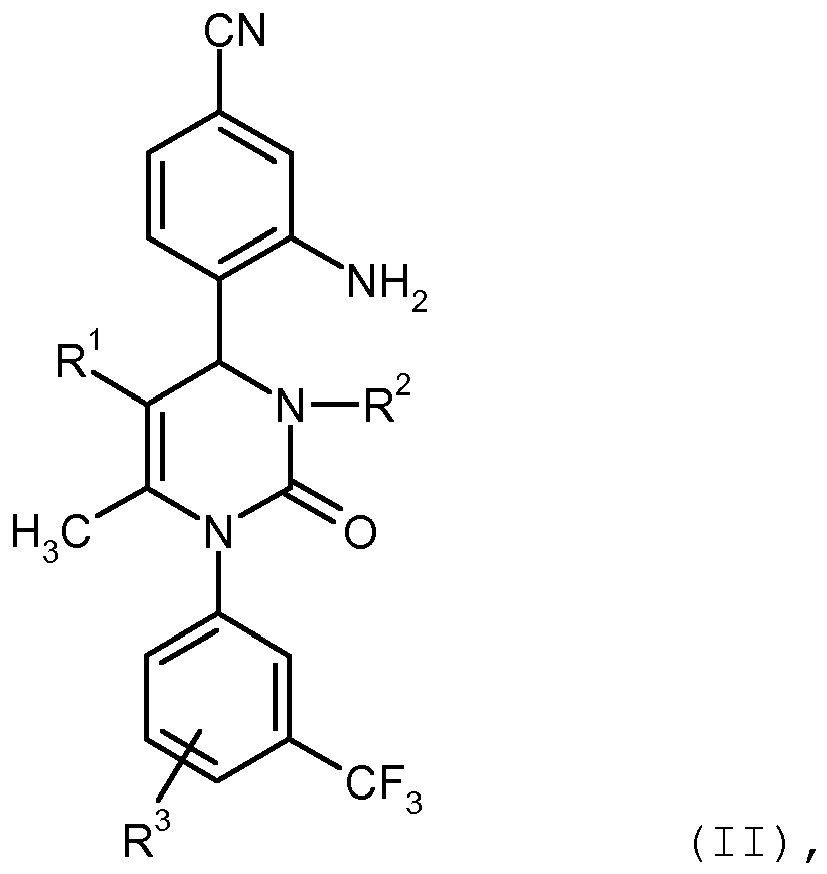
is initially converted with sodium nitrite and hydrochloric acid into the corresponding diazonium salt and then reacted in a one-pot reaction with sulfur dioxide in the presence of copper(I) - chloride to give a sulfonyl chloride of the formula (III)
and this is then reacted with an amine of the formula (IV)
if appropriate in the presence of an auxiliary base, to give the sulfonamide of the formula (I-A)
and the compounds of the formula (I-A) obtained in this manner are, if appropriate, separated by methods known to the person skilled in the art into their enantiomers and/or diastereomers and/or converted with the appropriate (i) solvents and/or (ii) bases or acids into their solvates, salts and/or solvates of the salts. - Process for preparing compounds of the formula (I) in whichZ represents a sulfoximine grouping of the formulacharacterized in that a phenyl thioether derivative of the formula (V)
 * denotes the point of attachment to the phenyl ringandRZ3 has the meaning given in any of Claims 1, 2, 4 and 6,
is initially oxidized with hydrogen peroxide, a peracid or a periodate to give the sulfoxide of the formula (VI)
then converted with 2,2,2-trifluoroacetamide and (diacetoxyiodo)benzene in the presence of dimeric rhodium(II) acetate as catalyst and magnesium oxide as base into an N-acylsulfoximine of the formula (VII)
and the trifluoroacetyl group in (VII) is then removed under basic conditions to give the sulfoximine of the formula (I-B)
and the compounds of the formula (I-B) obtained in this manner are, if appropriate, separated by methods known to the person skilled in the art into their enantiomers and/or diastereomers and/or converted with the appropriate (i) solvents and/or (ii) bases or acids into their solvates, salts and/or solvates of the salts. - Compound as defined in any of Claims 1 to 6 for the treatment and/or prevention of diseases.
- Compound as defined in any of Claims 1 to 6 for use in a method for the treatment and/or prevention of pulmonary arterial hypertension (PAH) and other forms of pulmonary hypertension (PH), of chronic-obstructive pulmonary diseases (COPD), of acute lung injury (ALI), of acute respiratory distress syndrome (ARDS), of pulmonary emphysema, of alpha-1 antitrypsin deficiency (AATD) and of cystic fibrosis (CF).
- Use of a compound as defined in any of Claims 1 to 6 for preparing a medicament for the treatment and/or prevention of pulmonary arterial hypertension (PAH) and other forms of pulmonary hypertension (PH), of chronic-obstructive pulmonary diseases (COPD), of acute lung injury (ALI), of acute respiratory distress syndrome (ARDS), of pulmonary emphysema, of alpha-1 antitrypsin deficiency (AATD) and of cystic fibrosis (CF).
- Medicament comprising a compound as defined in any of Claims 1 to 6 in combination with one or more inert non-toxic pharmaceutically acceptable auxiliaries.
- Medicament comprising a compound as defined in any of Claims 1 to 6 in combination with one or more further active compounds selected from the group of the kinase inhibitors, matrix metalloprotease inhibitors, stimulators and activators of soluble guanylate cyclase, prostacyclin analogs, endothelin receptor antagonists, phosphodiesterase inhibitors, beta-adrenergic receptor agonists, anticholinergics and glucocorticoids.
- Medicament according to Claim 12 or 13 for the treatment and/or prevention of pulmonary arterial hypertension (PAH) and other forms of pulmonary hypertension (PH), of chronic-obstructive pulmonary diseases (COPD), of acute lung injury (ALI), of acute respiratory distress syndrome (ARDS), of pulmonary emphysema, of alpha-1 antitrypsin deficiency (AATD) and of cystic fibrosis (CF).
Applications Claiming Priority (2)
| Application Number | Priority Date | Filing Date | Title |
|---|---|---|---|
| DE102009016553A DE102009016553A1 (en) | 2009-04-06 | 2009-04-06 | Sulfonamide- and sulfoximine-substituted diaryldihydropyrimidinones and their use |
| PCT/EP2010/002000 WO2010115548A1 (en) | 2009-04-06 | 2010-03-30 | Sulfonic amide and sulfoximine-substituted diaryl-dihydropyrimidinones and usage thereof |
Publications (2)
| Publication Number | Publication Date |
|---|---|
| EP2417112A1 EP2417112A1 (en) | 2012-02-15 |
| EP2417112B1 true EP2417112B1 (en) | 2014-07-09 |
Family
ID=42138772
Family Applications (1)
| Application Number | Title | Priority Date | Filing Date |
|---|---|---|---|
| EP10713311.8A Active EP2417112B1 (en) | 2009-04-06 | 2010-03-30 | Sulfonic amide and sulfoximine-substituted diaryl-dihydropyrimidinones and usage thereof |
Country Status (8)
| Country | Link |
|---|---|
| US (1) | US8691817B2 (en) |
| EP (1) | EP2417112B1 (en) |
| JP (1) | JP5608217B2 (en) |
| CN (1) | CN102482231B (en) |
| CA (1) | CA2757654C (en) |
| DE (1) | DE102009016553A1 (en) |
| ES (1) | ES2499417T3 (en) |
| WO (1) | WO2010115548A1 (en) |
Families Citing this family (18)
| Publication number | Priority date | Publication date | Assignee | Title |
|---|---|---|---|---|
| CN101903356B (en) * | 2007-12-20 | 2013-05-22 | 拜耳知识产权有限责任公司 | 4-(4-cyano-2-thioaryl)dihydropyrimidinones and their uses |
| US20140221335A1 (en) | 2013-02-06 | 2014-08-07 | Boehringer Ingelheim International Gmbh | Substituted bicyclic dihydropyrimidinones and their use as inhibitors of neutrophil elastase activity |
| US9115093B2 (en) | 2013-03-04 | 2015-08-25 | Boehringer Ingelheim International Gmbh | Substituted bicyclic dihydropyrimidinones and their use as inhibitors of neutrophil elastase activity |
| USRE47493E1 (en) | 2014-02-20 | 2019-07-09 | Boehringer Ingelheim International Gmbh | Substituted bicyclic dihydropyrimidinones and their use as inhibitors of neutrophil elastase activity |
| US20170022171A1 (en) | 2014-04-03 | 2017-01-26 | Bayer Pharma Aktiengesellschaft | 2,5-disubstituted cyclopentanecarboxylic acids and their use |
| CA2944614A1 (en) | 2014-04-03 | 2015-10-08 | Bayer Pharma Aktiengesellschaft | 2,5-disubstituted cyclopentane carboxylic acids for the treatment of respiratoy tract diseases |
| US20170119776A1 (en) | 2014-04-03 | 2017-05-04 | Bayer Pharma Aktiengesellschaft | Chiral 2,5-disubstituted cyclopentanecarboxylic acid derivatives and use thereof |
| US9440930B2 (en) | 2014-07-31 | 2016-09-13 | Boehringer Ingelheim International Gmbh | Substituted bicyclic dihydropyrimidinones and their use as inhibitors of neutrophil elastase activity |
| US9475779B2 (en) | 2014-07-31 | 2016-10-25 | Boehringer Ingelheim International Gmbh | Substituted bicyclic dihydropyrimidinones and their use as inhibitors of neutrophil elastase activity |
| US9458113B2 (en) | 2014-07-31 | 2016-10-04 | Boehringer Ingelheim International Gmbh | Substituted bicyclic dihydropyrimidinones and their use as inhibitors of neutrophil elastase activity |
| US9290457B2 (en) * | 2014-07-31 | 2016-03-22 | Boehringer Ingelheim International Gmbh | Substituted dihydropyrimidinones and their use as inhibitors of neutrophil elastase activity |
| US9657015B2 (en) | 2014-07-31 | 2017-05-23 | Boehringer Ingelheim International Gmbh | Substituted bicyclic dihydropyrimidinones and their use as inhibitors of neutrophil elastase activity |
| KR20170129191A (en) | 2015-03-18 | 2017-11-24 | 바이엘 파마 악티엔게젤샤프트 | (4S) -4- [4-Cyano-2- (methylsulfonyl) phenyl] -3,6- dimethyl-2-oxo-1- [3- (trifluoromethyl) , 3,4-tetrahydropyrimidine-5-carbonitrile |
| KR20180074793A (en) | 2015-11-13 | 2018-07-03 | 바이엘 파마 악티엔게젤샤프트 | 4- (4-cyano-2-thioaryl) dihydropyrimidinone for chronic wound treatment |
| US12569481B2 (en) | 2020-06-12 | 2026-03-10 | Vanderbilt University | Methods of treatment for gastrointestinal motility disorders |
| WO2024161371A1 (en) * | 2023-02-02 | 2024-08-08 | Gt Gain Therapeutics Sa | Substituted azoles their use in the treatment of diseases associated with alpha-1 -antitrypsin (a1at) deficiency |
| WO2026032210A1 (en) * | 2024-08-05 | 2026-02-12 | 上海壹迪生物技术有限公司 | Pyrimidinone-containing compound, pharmaceutical composition thereof, and use thereof |
| CN118845775B (en) * | 2024-09-24 | 2024-12-20 | 四川大学华西第二医院 | Use of IACS-010759 in the preparation of a medicament for preventing and/or treating primary ciliary immobility syndrome |
Family Cites Families (24)
| Publication number | Priority date | Publication date | Assignee | Title |
|---|---|---|---|---|
| DE19834044A1 (en) | 1998-07-29 | 2000-02-03 | Bayer Ag | New substituted pyrazole derivatives |
| DE19834047A1 (en) | 1998-07-29 | 2000-02-03 | Bayer Ag | Substituted pyrazole derivatives |
| DE19943634A1 (en) | 1999-09-13 | 2001-04-12 | Bayer Ag | Novel dicarboxylic acid derivatives with pharmaceutical properties |
| DE19943636A1 (en) | 1999-09-13 | 2001-03-15 | Bayer Ag | Novel dicarboxylic acid derivatives with pharmaceutical properties |
| DE19943639A1 (en) | 1999-09-13 | 2001-03-15 | Bayer Ag | Dicarboxylic acid derivatives with novel pharmaceutical properties |
| DE19943635A1 (en) | 1999-09-13 | 2001-03-15 | Bayer Ag | Novel aminodicarboxylic acid derivatives with pharmaceutical properties |
| AR031176A1 (en) | 2000-11-22 | 2003-09-10 | Bayer Ag | NEW DERIVATIVES OF PIRAZOLPIRIDINA SUBSTITUTED WITH PIRIDINE |
| DE10110749A1 (en) | 2001-03-07 | 2002-09-12 | Bayer Ag | Substituted aminodicarboxylic acid derivatives |
| DE10110750A1 (en) | 2001-03-07 | 2002-09-12 | Bayer Ag | Novel aminodicarboxylic acid derivatives with pharmaceutical properties |
| DE10220570A1 (en) | 2002-05-08 | 2003-11-20 | Bayer Ag | Carbamate-substituted pyrazolopyridines |
| EP1546113B1 (en) | 2002-09-10 | 2013-05-01 | Bayer Intellectual Property GmbH | Pyrimidinone derivatives as therapeutic agents against acute and chronic inflammatory, ischaemic and remodelling processes |
| WO2004024701A1 (en) | 2002-09-10 | 2004-03-25 | Bayer Healthcare Ag | Heterocyclic derivatives |
| GB2392910A (en) * | 2002-09-10 | 2004-03-17 | Bayer Ag | 2-Oxopyrimidine derivatives and their use as human leukocyte elastase inhibitors |
| US7166603B2 (en) | 2003-07-23 | 2007-01-23 | Bristol-Myers Squibb Co. | Dihydropyrimidone inhibitors of calcium channel function |
| JP4825194B2 (en) | 2004-02-26 | 2011-11-30 | バイエル・シェーリング・ファルマ・アクチェンゲゼルシャフト | 1,4-Diaryl-dihydropyrimidin-2-one compounds and their use as human neutrophil elastase inhibitors |
| ES2428503T3 (en) | 2004-02-26 | 2013-11-08 | Bayer Intellectual Property Gmbh | 1,4-Diaryl-dihydropyrimidin-2-ones and their use as human neutrophil elastase inhibitors |
| US20080103164A1 (en) | 2004-08-02 | 2008-05-01 | Kristjan Gudmundsson | Useful compounds for hpv infection |
| GB0502258D0 (en) | 2005-02-03 | 2005-03-09 | Argenta Discovery Ltd | Compounds and their use |
| GB0512940D0 (en) | 2005-06-24 | 2005-08-03 | Argenta Discovery Ltd | Compounds and their use |
| GB0520743D0 (en) | 2005-10-12 | 2005-11-23 | Argenta Discovery Ltd | Compounds and their use |
| US20100010024A1 (en) | 2006-07-01 | 2010-01-14 | Bayer Healthcare Ag | Use of1,4-diaryl-dihydropyrimidine-2-on derivatives for treating pulmonary arterial hypertension |
| DE102006031314A1 (en) | 2006-07-01 | 2008-01-03 | Bayer Healthcare Aktiengesellschaft | Use of 1,4-diaryl-dihydropyrimidin-2-one derivative for producing a medicament for the treatment and/or prophylaxis of e.g. pulmonary arterial hypertension, chronic-obstructive lung diseases and sleep apnea syndrome |
| EP2064184A1 (en) | 2006-09-04 | 2009-06-03 | AstraZeneca AB | Multimeric heterocyclic compounds useful as neutrophil elastase inhibitors |
| CN101903356B (en) * | 2007-12-20 | 2013-05-22 | 拜耳知识产权有限责任公司 | 4-(4-cyano-2-thioaryl)dihydropyrimidinones and their uses |
-
2009
- 2009-04-06 DE DE102009016553A patent/DE102009016553A1/en not_active Withdrawn
-
2010
- 2010-03-30 ES ES10713311.8T patent/ES2499417T3/en active Active
- 2010-03-30 CN CN201080024887.8A patent/CN102482231B/en not_active Expired - Fee Related
- 2010-03-30 CA CA2757654A patent/CA2757654C/en active Active
- 2010-03-30 WO PCT/EP2010/002000 patent/WO2010115548A1/en not_active Ceased
- 2010-03-30 US US13/262,159 patent/US8691817B2/en active Active
- 2010-03-30 EP EP10713311.8A patent/EP2417112B1/en active Active
- 2010-03-30 JP JP2012503892A patent/JP5608217B2/en not_active Expired - Fee Related
Also Published As
| Publication number | Publication date |
|---|---|
| CN102482231B (en) | 2014-12-17 |
| US20120094968A1 (en) | 2012-04-19 |
| ES2499417T3 (en) | 2014-09-29 |
| HK1171451A1 (en) | 2013-03-28 |
| EP2417112A1 (en) | 2012-02-15 |
| CN102482231A (en) | 2012-05-30 |
| DE102009016553A1 (en) | 2010-10-07 |
| CA2757654C (en) | 2017-03-14 |
| CA2757654A1 (en) | 2010-10-14 |
| JP2012522814A (en) | 2012-09-27 |
| US8691817B2 (en) | 2014-04-08 |
| WO2010115548A1 (en) | 2010-10-14 |
| JP5608217B2 (en) | 2014-10-15 |
Similar Documents
| Publication | Publication Date | Title |
|---|---|---|
| EP2417112B1 (en) | Sulfonic amide and sulfoximine-substituted diaryl-dihydropyrimidinones and usage thereof | |
| EP2234985B1 (en) | 4-(4-cyano-2-thioaryl)dihydropyrimidinones and use thereof | |
| EP2285809B1 (en) | 1,4-diaryl-pyrimidopyridazine-2,5-diones and their use | |
| EP2385945B1 (en) | Triazolo and tetrazolo pyrimidine derivatives as hne inhibitors for treating copd | |
| DE102007061766A1 (en) | New 4-(4-cyano-2-thioaryl)-dihydro-pyrimidinone compounds are human neutrophil elastase inhibitor, useful for the treatment or prevention of e.g. pulmonary arterial hypertonia, acute lung injury and diseases of the cardiovascular system | |
| EP2089380B1 (en) | Substituted dihydropyrazolones and use thereof as hif-prolyl-4 -hydroxylase inhibitors | |
| EP3046911A1 (en) | Heterocyclic substituted trifluoromethyl pyrimidinones and use thereof | |
| WO2015189117A1 (en) | Heterobicyclically substituted 4-oxobutane acid derivatives and use thereof | |
| EP3481823B1 (en) | 7-substituted 1-pyridyl-naphthyridine-3-carboxylic acid amides and use thereof | |
| EP3055313A1 (en) | Cyclic thienouracil-carboxamides and use thereof | |
| EP3126358A1 (en) | 2,5-disubstituted cyclopentane carboxylic acids for the treatment of respiratoy tract diseases | |
| EP2556856A1 (en) | 6-Cyano-substituted Pyrido[2,3-d]pyrimidines as Adenosin Rezeptor Ligands for the Treatment of Cardiovascular Diseases | |
| WO2015150364A1 (en) | Substituted benzotriazinone butane acids and use thereof | |
| EP3126339A1 (en) | 2,5-disubstituted cyclopentane carboxylic acids and use thereof | |
| WO2015150366A1 (en) | Cyclically substituted phenol ether derivatives and use thereof | |
| EP3707141B1 (en) | Substituted 2,4-dihydro-3h-1,2,4-triazol-3-ones and use of same | |
| DE102008052013A1 (en) | New 4-(4-cyano-2-thioaryl)dihydropyrimidinone compounds are neutrophil elastase inhibitors useful to treat or prevent e.g. pulmonary arterial hypertension, chronic obstructive pulmonary disease, acute lung injury, or cystic fibrosis | |
| DE102010030187A1 (en) | New 4-cyano-2-sulfonylphenyl-pyrazolyl-substituted pyridinones and pyrazinones compounds are human neutrophil elastase inhibitors, useful to treat and prevent e.g. pulmonary arterial hypertension and chronic obstructive pulmonary disease |
Legal Events
| Date | Code | Title | Description |
|---|---|---|---|
| PUAI | Public reference made under article 153(3) epc to a published international application that has entered the european phase |
Free format text: ORIGINAL CODE: 0009012 |
|
| 17P | Request for examination filed |
Effective date: 20111107 |
|
| AK | Designated contracting states |
Kind code of ref document: A1 Designated state(s): AT BE BG CH CY CZ DE DK EE ES FI FR GB GR HR HU IE IS IT LI LT LU LV MC MK MT NL NO PL PT RO SE SI SK SM TR |
|
| DAX | Request for extension of the european patent (deleted) | ||
| RAP1 | Party data changed (applicant data changed or rights of an application transferred) |
Owner name: BAYER INTELLECTUAL PROPERTY GMBH |
|
| GRAP | Despatch of communication of intention to grant a patent |
Free format text: ORIGINAL CODE: EPIDOSNIGR1 |
|
| INTG | Intention to grant announced |
Effective date: 20140303 |
|
| GRAS | Grant fee paid |
Free format text: ORIGINAL CODE: EPIDOSNIGR3 |
|
| GRAA | (expected) grant |
Free format text: ORIGINAL CODE: 0009210 |
|
| AK | Designated contracting states |
Kind code of ref document: B1 Designated state(s): AT BE BG CH CY CZ DE DK EE ES FI FR GB GR HR HU IE IS IT LI LT LU LV MC MK MT NL NO PL PT RO SE SI SK SM TR |
|
| REG | Reference to a national code |
Ref country code: GB Ref legal event code: FG4D Free format text: NOT ENGLISH |
|
| REG | Reference to a national code |
Ref country code: CH Ref legal event code: EP Ref country code: AT Ref legal event code: REF Ref document number: 676535 Country of ref document: AT Kind code of ref document: T Effective date: 20140715 |
|
| REG | Reference to a national code |
Ref country code: IE Ref legal event code: FG4D Free format text: LANGUAGE OF EP DOCUMENT: GERMAN |
|
| REG | Reference to a national code |
Ref country code: DE Ref legal event code: R096 Ref document number: 502010007410 Country of ref document: DE Effective date: 20140821 |
|
| REG | Reference to a national code |
Ref country code: ES Ref legal event code: FG2A Ref document number: 2499417 Country of ref document: ES Kind code of ref document: T3 Effective date: 20140929 |
|
| REG | Reference to a national code |
Ref country code: NL Ref legal event code: VDEP Effective date: 20140709 |
|
| REG | Reference to a national code |
Ref country code: LT Ref legal event code: MG4D |
|
| PG25 | Lapsed in a contracting state [announced via postgrant information from national office to epo] |
Ref country code: PT Free format text: LAPSE BECAUSE OF FAILURE TO SUBMIT A TRANSLATION OF THE DESCRIPTION OR TO PAY THE FEE WITHIN THE PRESCRIBED TIME-LIMIT Effective date: 20141110 Ref country code: BG Free format text: LAPSE BECAUSE OF FAILURE TO SUBMIT A TRANSLATION OF THE DESCRIPTION OR TO PAY THE FEE WITHIN THE PRESCRIBED TIME-LIMIT Effective date: 20141009 Ref country code: FI Free format text: LAPSE BECAUSE OF FAILURE TO SUBMIT A TRANSLATION OF THE DESCRIPTION OR TO PAY THE FEE WITHIN THE PRESCRIBED TIME-LIMIT Effective date: 20140709 Ref country code: LT Free format text: LAPSE BECAUSE OF FAILURE TO SUBMIT A TRANSLATION OF THE DESCRIPTION OR TO PAY THE FEE WITHIN THE PRESCRIBED TIME-LIMIT Effective date: 20140709 Ref country code: NO Free format text: LAPSE BECAUSE OF FAILURE TO SUBMIT A TRANSLATION OF THE DESCRIPTION OR TO PAY THE FEE WITHIN THE PRESCRIBED TIME-LIMIT Effective date: 20141009 Ref country code: SE Free format text: LAPSE BECAUSE OF FAILURE TO SUBMIT A TRANSLATION OF THE DESCRIPTION OR TO PAY THE FEE WITHIN THE PRESCRIBED TIME-LIMIT Effective date: 20140709 Ref country code: GR Free format text: LAPSE BECAUSE OF FAILURE TO SUBMIT A TRANSLATION OF THE DESCRIPTION OR TO PAY THE FEE WITHIN THE PRESCRIBED TIME-LIMIT Effective date: 20141010 |
|
| PG25 | Lapsed in a contracting state [announced via postgrant information from national office to epo] |
Ref country code: CY Free format text: LAPSE BECAUSE OF FAILURE TO SUBMIT A TRANSLATION OF THE DESCRIPTION OR TO PAY THE FEE WITHIN THE PRESCRIBED TIME-LIMIT Effective date: 20140709 Ref country code: PL Free format text: LAPSE BECAUSE OF FAILURE TO SUBMIT A TRANSLATION OF THE DESCRIPTION OR TO PAY THE FEE WITHIN THE PRESCRIBED TIME-LIMIT Effective date: 20140709 Ref country code: LV Free format text: LAPSE BECAUSE OF FAILURE TO SUBMIT A TRANSLATION OF THE DESCRIPTION OR TO PAY THE FEE WITHIN THE PRESCRIBED TIME-LIMIT Effective date: 20140709 Ref country code: HR Free format text: LAPSE BECAUSE OF FAILURE TO SUBMIT A TRANSLATION OF THE DESCRIPTION OR TO PAY THE FEE WITHIN THE PRESCRIBED TIME-LIMIT Effective date: 20140709 Ref country code: IS Free format text: LAPSE BECAUSE OF FAILURE TO SUBMIT A TRANSLATION OF THE DESCRIPTION OR TO PAY THE FEE WITHIN THE PRESCRIBED TIME-LIMIT Effective date: 20141109 Ref country code: NL Free format text: LAPSE BECAUSE OF FAILURE TO SUBMIT A TRANSLATION OF THE DESCRIPTION OR TO PAY THE FEE WITHIN THE PRESCRIBED TIME-LIMIT Effective date: 20140709 |
|
| REG | Reference to a national code |
Ref country code: DE Ref legal event code: R097 Ref document number: 502010007410 Country of ref document: DE |
|
| PG25 | Lapsed in a contracting state [announced via postgrant information from national office to epo] |
Ref country code: EE Free format text: LAPSE BECAUSE OF FAILURE TO SUBMIT A TRANSLATION OF THE DESCRIPTION OR TO PAY THE FEE WITHIN THE PRESCRIBED TIME-LIMIT Effective date: 20140709 Ref country code: SK Free format text: LAPSE BECAUSE OF FAILURE TO SUBMIT A TRANSLATION OF THE DESCRIPTION OR TO PAY THE FEE WITHIN THE PRESCRIBED TIME-LIMIT Effective date: 20140709 Ref country code: DK Free format text: LAPSE BECAUSE OF FAILURE TO SUBMIT A TRANSLATION OF THE DESCRIPTION OR TO PAY THE FEE WITHIN THE PRESCRIBED TIME-LIMIT Effective date: 20140709 Ref country code: CZ Free format text: LAPSE BECAUSE OF FAILURE TO SUBMIT A TRANSLATION OF THE DESCRIPTION OR TO PAY THE FEE WITHIN THE PRESCRIBED TIME-LIMIT Effective date: 20140709 Ref country code: RO Free format text: LAPSE BECAUSE OF FAILURE TO SUBMIT A TRANSLATION OF THE DESCRIPTION OR TO PAY THE FEE WITHIN THE PRESCRIBED TIME-LIMIT Effective date: 20140709 |
|
| PLBE | No opposition filed within time limit |
Free format text: ORIGINAL CODE: 0009261 |
|
| STAA | Information on the status of an ep patent application or granted ep patent |
Free format text: STATUS: NO OPPOSITION FILED WITHIN TIME LIMIT |
|
| 26N | No opposition filed |
Effective date: 20150410 |
|
| PG25 | Lapsed in a contracting state [announced via postgrant information from national office to epo] |
Ref country code: LU Free format text: LAPSE BECAUSE OF FAILURE TO SUBMIT A TRANSLATION OF THE DESCRIPTION OR TO PAY THE FEE WITHIN THE PRESCRIBED TIME-LIMIT Effective date: 20150330 Ref country code: MC Free format text: LAPSE BECAUSE OF FAILURE TO SUBMIT A TRANSLATION OF THE DESCRIPTION OR TO PAY THE FEE WITHIN THE PRESCRIBED TIME-LIMIT Effective date: 20140709 |
|
| REG | Reference to a national code |
Ref country code: CH Ref legal event code: PL |
|
| PG25 | Lapsed in a contracting state [announced via postgrant information from national office to epo] |
Ref country code: SI Free format text: LAPSE BECAUSE OF FAILURE TO SUBMIT A TRANSLATION OF THE DESCRIPTION OR TO PAY THE FEE WITHIN THE PRESCRIBED TIME-LIMIT Effective date: 20140709 |
|
| REG | Reference to a national code |
Ref country code: IE Ref legal event code: MM4A |
|
| PG25 | Lapsed in a contracting state [announced via postgrant information from national office to epo] |
Ref country code: LI Free format text: LAPSE BECAUSE OF NON-PAYMENT OF DUE FEES Effective date: 20150331 Ref country code: IE Free format text: LAPSE BECAUSE OF NON-PAYMENT OF DUE FEES Effective date: 20150330 Ref country code: CH Free format text: LAPSE BECAUSE OF NON-PAYMENT OF DUE FEES Effective date: 20150331 |
|
| REG | Reference to a national code |
Ref country code: FR Ref legal event code: PLFP Year of fee payment: 7 |
|
| REG | Reference to a national code |
Ref country code: AT Ref legal event code: MM01 Ref document number: 676535 Country of ref document: AT Kind code of ref document: T Effective date: 20150330 |
|
| PG25 | Lapsed in a contracting state [announced via postgrant information from national office to epo] |
Ref country code: AT Free format text: LAPSE BECAUSE OF NON-PAYMENT OF DUE FEES Effective date: 20150330 |
|
| PG25 | Lapsed in a contracting state [announced via postgrant information from national office to epo] |
Ref country code: MT Free format text: LAPSE BECAUSE OF FAILURE TO SUBMIT A TRANSLATION OF THE DESCRIPTION OR TO PAY THE FEE WITHIN THE PRESCRIBED TIME-LIMIT Effective date: 20140709 |
|
| REG | Reference to a national code |
Ref country code: FR Ref legal event code: PLFP Year of fee payment: 8 |
|
| PG25 | Lapsed in a contracting state [announced via postgrant information from national office to epo] |
Ref country code: HU Free format text: LAPSE BECAUSE OF FAILURE TO SUBMIT A TRANSLATION OF THE DESCRIPTION OR TO PAY THE FEE WITHIN THE PRESCRIBED TIME-LIMIT; INVALID AB INITIO Effective date: 20100330 Ref country code: SM Free format text: LAPSE BECAUSE OF FAILURE TO SUBMIT A TRANSLATION OF THE DESCRIPTION OR TO PAY THE FEE WITHIN THE PRESCRIBED TIME-LIMIT Effective date: 20140709 |
|
| PG25 | Lapsed in a contracting state [announced via postgrant information from national office to epo] |
Ref country code: BE Free format text: LAPSE BECAUSE OF NON-PAYMENT OF DUE FEES Effective date: 20150331 |
|
| PG25 | Lapsed in a contracting state [announced via postgrant information from national office to epo] |
Ref country code: TR Free format text: LAPSE BECAUSE OF FAILURE TO SUBMIT A TRANSLATION OF THE DESCRIPTION OR TO PAY THE FEE WITHIN THE PRESCRIBED TIME-LIMIT Effective date: 20140709 |
|
| REG | Reference to a national code |
Ref country code: FR Ref legal event code: PLFP Year of fee payment: 9 |
|
| PG25 | Lapsed in a contracting state [announced via postgrant information from national office to epo] |
Ref country code: MK Free format text: LAPSE BECAUSE OF FAILURE TO SUBMIT A TRANSLATION OF THE DESCRIPTION OR TO PAY THE FEE WITHIN THE PRESCRIBED TIME-LIMIT Effective date: 20140709 |
|
| REG | Reference to a national code |
Ref country code: DE Ref legal event code: R081 Ref document number: 502010007410 Country of ref document: DE Owner name: PH PHARMA CO., LTD., KR Free format text: FORMER OWNER: BAYER INTELLECTUAL PROPERTY GMBH, 40789 MONHEIM, DE |
|
| REG | Reference to a national code |
Ref country code: GB Ref legal event code: 732E Free format text: REGISTERED BETWEEN 20190704 AND 20190710 |
|
| REG | Reference to a national code |
Ref country code: ES Ref legal event code: PC2A Owner name: PH PHARMA CO., LTD. Effective date: 20190729 |
|
| P01 | Opt-out of the competence of the unified patent court (upc) registered |
Effective date: 20230705 |
|
| PGFP | Annual fee paid to national office [announced via postgrant information from national office to epo] |
Ref country code: DE Payment date: 20240921 Year of fee payment: 15 |
|
| PGFP | Annual fee paid to national office [announced via postgrant information from national office to epo] |
Ref country code: GB Payment date: 20240905 Year of fee payment: 15 |
|
| PGFP | Annual fee paid to national office [announced via postgrant information from national office to epo] |
Ref country code: FR Payment date: 20240905 Year of fee payment: 15 |
|
| PGFP | Annual fee paid to national office [announced via postgrant information from national office to epo] |
Ref country code: IT Payment date: 20240906 Year of fee payment: 15 |
|
| PGFP | Annual fee paid to national office [announced via postgrant information from national office to epo] |
Ref country code: ES Payment date: 20241212 Year of fee payment: 15 |
|
| REG | Reference to a national code |
Ref country code: DE Ref legal event code: R119 Ref document number: 502010007410 Country of ref document: DE |
|
| GBPC | Gb: european patent ceased through non-payment of renewal fee |
Effective date: 20250330 |
|
| PG25 | Lapsed in a contracting state [announced via postgrant information from national office to epo] |
Ref country code: DE Free format text: LAPSE BECAUSE OF NON-PAYMENT OF DUE FEES Effective date: 20251001 |
|
| PG25 | Lapsed in a contracting state [announced via postgrant information from national office to epo] |
Ref country code: GB Free format text: LAPSE BECAUSE OF NON-PAYMENT OF DUE FEES Effective date: 20250330 |
|
| PG25 | Lapsed in a contracting state [announced via postgrant information from national office to epo] |
Ref country code: FR Free format text: LAPSE BECAUSE OF NON-PAYMENT OF DUE FEES Effective date: 20250331 Ref country code: IT Free format text: LAPSE BECAUSE OF NON-PAYMENT OF DUE FEES Effective date: 20250330 |