EP2418800B1 - Procédé et dispositif pour distribuer automatiquement un matériau de touche mis à jour - Google Patents
Procédé et dispositif pour distribuer automatiquement un matériau de touche mis à jour Download PDFInfo
- Publication number
- EP2418800B1 EP2418800B1 EP20100172576 EP10172576A EP2418800B1 EP 2418800 B1 EP2418800 B1 EP 2418800B1 EP 20100172576 EP20100172576 EP 20100172576 EP 10172576 A EP10172576 A EP 10172576A EP 2418800 B1 EP2418800 B1 EP 2418800B1
- Authority
- EP
- European Patent Office
- Prior art keywords
- message
- key
- encrypted
- public key
- current
- Prior art date
- Legal status (The legal status is an assumption and is not a legal conclusion. Google has not performed a legal analysis and makes no representation as to the accuracy of the status listed.)
- Active
Links
Images




Classifications
-
- H—ELECTRICITY
- H04—ELECTRIC COMMUNICATION TECHNIQUE
- H04L—TRANSMISSION OF DIGITAL INFORMATION, e.g. TELEGRAPHIC COMMUNICATION
- H04L9/00—Cryptographic mechanisms or cryptographic arrangements for secret or secure communications; Network security protocols
- H04L9/08—Key distribution or management, e.g. generation, sharing or updating, of cryptographic keys or passwords
- H04L9/0891—Revocation or update of secret information, e.g. encryption key update or rekeying
-
- H—ELECTRICITY
- H04—ELECTRIC COMMUNICATION TECHNIQUE
- H04L—TRANSMISSION OF DIGITAL INFORMATION, e.g. TELEGRAPHIC COMMUNICATION
- H04L63/00—Network architectures or network communication protocols for network security
- H04L63/06—Network architectures or network communication protocols for network security for supporting key management in a packet data network
- H04L63/061—Network architectures or network communication protocols for network security for supporting key management in a packet data network for key exchange, e.g. in peer-to-peer networks
-
- H—ELECTRICITY
- H04—ELECTRIC COMMUNICATION TECHNIQUE
- H04L—TRANSMISSION OF DIGITAL INFORMATION, e.g. TELEGRAPHIC COMMUNICATION
- H04L63/00—Network architectures or network communication protocols for network security
- H04L63/08—Network architectures or network communication protocols for network security for authentication of entities
- H04L63/0823—Network architectures or network communication protocols for network security for authentication of entities using certificates
-
- H—ELECTRICITY
- H04—ELECTRIC COMMUNICATION TECHNIQUE
- H04L—TRANSMISSION OF DIGITAL INFORMATION, e.g. TELEGRAPHIC COMMUNICATION
- H04L2209/00—Additional information or applications relating to cryptographic mechanisms or cryptographic arrangements for secret or secure communication H04L9/00
- H04L2209/80—Wireless
Definitions
- the present disclosure relates to portable electronic devices and in particular to asymmetric encryption of messages on the portable electronic device.
- a recipient of an encrypted message may not be able to decrypt an encrypted message if the recipient device does not have the correct private key.
- a recipient device may not have the correct private key for several reasons, such as: 1) the recipient device's private key has expired and has been deleted and where the sender still encrypts messages using the expired public key; or 2) the recipient device has loaded a new build and has not imported private keys into a local key database.
- U.S. Patent Publication 2002/0106085 discloses a method of handling a breach of security.
- U.S. Patent Publication 2003/0196080 discloses a method of secure communication via the Internet, using public key cryptography where the sender is relieved from key management tasks.
- U.S. Patent Publication 2008/0016337 discloses an apparatus and method for handling expired or expiring key pairs and encrypted information.
- U.S. Patent Publication 2005/0244009 discloses a system and method for updating the status of digital certificate subkeys. There is a need for a solution that makes it easier to deal with messages that are not decryptable.
- the present disclosure relates to secure messaging and provides a method for handling an encrypted message received on an electronic device where the message has not been encrypted using the current public key for the electronic device.
- the portable electronic device automatically generates a reply message to the sender in response to determining that the encrypted message has not been encrypted using the current public key.
- the reply message may notify the sender that the message could not be decrypted and to stop using the old public key to encrypt messages to the recipient.
- the reply message may also contain the current public key of the recipient, and may request the sender to resend the message encrypted with the current public key.
- a method of secure messaging using an electronic device includes storing a current key pair in memory on the device, the current key pair including a current public key and a current private key; receiving, at a device, an encrypted message sent by a sender; determining that the encrypted message is not encrypted with the current public key; and automatically sending a reply message to the sender in response to determining that the encrypted message is not encrypted with the current public key, wherein the reply message includes the current public key.
- a method of secure messaging comprising detecting a new public key on an electronic device, and, in response to detecting the new public key, sending a message containing the new public key to all contacts stored on the electronic device.
- an electronic device includes a communication subsystem for sending and receiving communications over a network; a memory storing a current key pair, the current key pair including a current public key and a current private key; a processor; and a messaging application having computer-executable instructions which, when executed, configure the processor to perform one or more of the methods described herein.
- the present application describes a non-transitory computer-readable medium storing computer-executable instructions, which when executed configured a processor perform any one or more of the methods described herein.
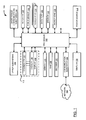
- Figure 1 is a simplified block diagram of components of a portable electronic device in accordance with one example embodiment of the present disclosure
- Figure 1A is schematic diagrams showing select applications or routines of the portable electronic device of Figure 1 ;
- Figure 1B is schematic diagrams showing select databases stored in the memory of the portable electronic device of Figure 1 ;
- Figure 2 is a front view of an example of a portable electronic device 100 in a portrait orientation
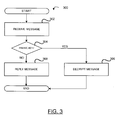
- Figure 3 is a flowchart illustrating a method of sending a reply message to a sender when a message cannot be decrypted by the recipient in accordance with one example embodiment of the present disclosure
- Figure 4 is a flowchart illustrating a method of sending a reply message to a sender indicating a preferred public key to be used in accordance with one example embodiment of the present disclosure
- Figures 5 is a flowchart illustrating a method of sending a reply message by a messaging center when it is determined a recipient cannot decrypt the message in accordance with one example embodiment of the present disclosure.
- the present disclosure generally relates to an electronic device, which in this example embodiment is a portable electronic device 100.
- portable electronic device 100 includes mobile, or handheld, wireless electronic devices such as pagers, cellular phones, cellular smart-phones, wireless organizers, personal digital assistants, wirelessly enabled notebook computers, and so forth.
- the portable electronic device 100 may also be a portable electronic device 100 without wireless communication capabilities, such as a handheld electronic game device, laptop, or other device, provided it has messaging capabilities as will be described below.
- FIG. 1 A block diagram of an example of a portable electronic device 100 is shown in Figure 1 .
- the portable electronic device 100 includes multiple components, such as a processor 102 that controls the overall operation of the portable electronic device 100. Communication functions, including data and voice communication, are performed through a communication subsystem 104. Data received by the portable electronic device 100 is decompressed and decrypted by a decoder 106.
- the communication subsystem 104 receives messages from and sends messages to a wireless network 150.
- the wireless network 150 may be any type of wireless network, including, but not limited to, data wireless networks, voice wireless networks, and networks that support both voice and data communication.
- a power source 142 such as one or more rechargeable batteries or a port to an external power supply, powers the portable electronic device 100.
- the processor 102 interacts with other components, such as Random Access Memory (RAM) 108, memory 110, a display screen 112 (such as a liquid crystal display (LCD)) with a touch-sensitive overlay 114 operably connected to an electronic controller 116 that together comprise a touch-sensitive display 118, one or more actuators 120, one or more force sensors 122, one or more auxiliary input/output (I/O) subsystems 124, a data port 126, a speaker 128, a microphone 130, short-range communication subsystem 132, and other device subsystems 134.
- User-interaction with a graphical user interface (GUI) is performed through the touch-sensitive overlay 114.
- the processor 102 interacts with the touch-sensitive overlay 114 via the electronic controller 116.
- Information such as text, characters, symbols, images, icons, and other items that may be displayed or rendered on a portable electronic device 100, is displayed on the touch-sensitive display 118 via the processor 102.
- the portable electronic device 100 uses a Subscriber Identity Module or a Removable User Identity Module (SIM/RUIM) card 138 for communication with a network, such as the wireless network 150.
- SIM/RUIM Removable User Identity Module
- user identification information may be programmed into memory 110.
- the portable electronic device 100 includes an operating system 146 and software applications or programs 148 that are executed by the processor 102 and are typically stored in a persistent, updatable store such as the memory 110. Additional applications or programs 148 may be loaded onto the portable electronic device 100 through the wireless network 150, the auxiliary I/O subsystem 124, the data port 126, the short-range communication subsystem 132 or any other suitable subsystem 134.
- a received signal such as a text message, an e-mail message, or web page download is processed by the communication subsystem 104 and input to the processor 102.
- the processor 102 processes the received signal for output to the display screen 112 and/or to the auxiliary I/O subsystem 124.
- a subscriber may generate data items, for example e-mail messages, which may be transmitted over the wireless network 150 through the communication subsystem 104.
- the speaker 128 outputs audible information converted from electrical signals
- the microphone 130 converts audible information into electrical signals for processing.
- FIG 2 shows a front view of an example of a portable electronic device 100 in portrait orientation.
- the portable electronic device 100 includes a housing 200 that houses internal components including internal components shown in Figure 1 and frames the touch-sensitive display 118 such that the touch-sensitive display 118 is exposed for user-interaction therewith when the portable electronic device 100 is in use.
- the touch-sensitive display 118 may include any suitable number of user-selectable features rendered thereon, for example, in the form of virtual buttons for user-selection of, for example, applications, options, or keys of a keyboard for user entry of data during operation of the portable electronic device 100.
- the touch-sensitive display 118 may be any suitable touch-sensitive display, such as a capacitive, resistive, infrared, surface acoustic wave (SAW) touch-sensitive display, strain gauge, optical imaging, dispersive signal technology, acoustic pulse recognition, and so forth, as known in the art.
- a capacitive touch-sensitive display includes a capacitive touch-sensitive overlay 114.
- the overlay 114 may be an assembly of multiple layers in a stack including, for example, a substrate, a ground shield layer, a barrier layer, one or more capacitive touch sensor layers separated by a substrate or other barrier, and a cover.
- the capacitive touch sensor layers may be any suitable material, such as patterned indium tin oxide (ITO).
- the auxiliary I/O subsystems 124 could include other input devices such as one or more control keys, a keyboard or keypad, navigation device, or any combination thereof.
- the navigation device may be a depressible/clickable trackball, a depressible/clickable scroll wheel, a touch-sensitive optical trackpad, or a touch-sensitive touchpad.
- a conventional display screen may be provided instead of the touch-sensitive display 118.
- input may be provided via one or more control keys, a keyboard or keypad, navigation device or any combination thereof.
- An asymmetric key algorithm creates a related public key/private key pair for each user or portable electronic device 100.
- a public key of a recipient is used by a sender to encrypt outgoing messages.
- a public key of the sender may be used by a recipient to verify digital signatures on incoming messages if the sender signed the message using their private key.
- a private key of the recipient may be used to decrypt incoming messages that have been encrypted using the receipient's corresponding public key.
- a message from a sender may first be encrypted using a temporary session key.
- the session key is then encrypted using the public key of the recipient.
- the recipient decrypts the session key using the corresponding public key to recover the temporary session key.
- the temporary session key may then be used to decrypt the data portion of the message.
- Any message format that permits encryption and decryption of the message may be used.
- the type of message may include email, SMS and IM messages.
- the user's public/private key pair and public keys of recipients are stored in a key storage 162 in the memory 110 of the portable electronic device 100.
- the key storage 162 may include any portion of memory 110 on the device 100.
- the memory 110 may include a secure area in which sensitive data, such as key material, is stored.
- the secure area may itself be secured using cryptography to prevent unauthorized access.
- a device's public/private key pair is acquired after the device authenticates itself with a remote server using credentials such as an associated email address. Once a device has been authenticated, the portable electronic device 100 retrieves the public/private key pair from the remote server.
- the portable electronic device 100 searches for a valid public key for the recipient in the key database 162, or any available remote server containing public key information. If a valid public key is found, the portable electronic device 100 may encrypt the message with the recipient's public key before it is sent. Where there is no valid public key found, the portable electronic device 100 may be configured to not send the message or to send the message in unencrypted form. The portable electronic device 100 may also retrieve the public key of a recipient from a received email message from that recipient.
- the portable electronic device 100 also includes an encryption unit 160 that obtains keys from the key storage 162 and performs secure messaging functions.
- the secure messaging functions performed on the portable electronic device 100 include encrypting a message with a recipient's public key, decrypting a message using the device's private key, signing a message with a device's private key, and authenticating a received message using a recipient's public key.
- a device may store more than one key pair.
- the terms "current key pair”, “current public key” and “current private key” are used to refer to the primary or current keys the device is configured to use for secure communications.
- a device may store other keys, including an operative but secondary key pair, or an older expired key pair. In some cases older keys that have been expired are deleted from the key storage 162; however, in some instances old expired keys may be retained in the storage 162 or may be inadvertently copied to the key storage 162, such as during a device re-authentication or provisioning process in which portions of the device memory are stored from a secure remote location, if the secure remote location stores old key material.
- Figure 3 illustrates a method of automatically distributing updated key material according to an example embodiment of the present disclosure.
- the portable electronic device 100 determines whether the encrypted message has been encrypted using the current public key. In some instances, this may include attempting to decrypt the message, or a portion of the message (such as the temporary session key) using the current private key. The device thus determines whether it has the correct private key to decrypt the message (block 304).
- the current key pair may not be located in memory on the device (block 304), in which case the portable electronic device 100 may attempt to import the correct current private key from the smart card or media card as there may be a current private key stored in one of these locations. If the current private key is located, the portable electronic device 100 will be able to decrypt the message. Once the current private key is located in the portable electronic device 100, the message will be decrypted using the appropriate private key (block 306).
- the device may be incapable of decrypting the message.
- the private key may not be located, for example, where it has been deleted from the portable electronic device 100.
- the portable electronic device 100 In response to determining that the received encrypted message cannot be decrypted using the current private key, the portable electronic device 100 automatically generates a reply to the sender (block 308).
- the reply generated by the portable electronic device 100 may notify the sender that the message could not be decrypted.
- the reply may be any data message, for example an email, SMS, or IM message.
- the reply may further include the current public key.
- the current public key may be sent as a certificate attachment to the reply message.
- the reply message may also include a request that the sender resend the message encrypted with the current public key.
- a sender that receives the reply message may update its own key storage with the current public key for the recipient to ensure that future messages are sent to the recipient using the correct current public key.
- information in the reply message sent to the sender may be configurable.
- the received encrypted message has been encrypted using a public key for which the recipient device still has stored a private key, although not the current keys.
- the message may have been encrypted using an expired key pair.
- the automatically generated reply from the receiver's portable electronic device 100 may contain both the expired private key and the current public key.
- the automated reply may be signed with the expired private key and contain the correct public key. By signing the reply with the expired private key, the sender of the original message can verify that the received current public key is from the recipient.
- the device may find that there are no private keys on the portable electronic device 100.
- the portable electronic device 100 may obtain a new public/private key pair by sending a request to an authorized remote server, such as one with which the device is associated or from which the device previously obtained a public/private key pair.
- the device 100 may prompt the user to authorize the generation of new key material and may, in response to acceptance, automatically perform the steps of acquiring the key pair and storing the new current public/private key pair in the key storage 162.
- the portable electronic device 100 may automatically generate and send the reply message to the sender (block 308) containing the new current public key of the recipient device.
- the term "automatically”, as used herein, is intended to include the device generating and sending the reply message without any user intervention or input, as well as the device generating a user prompt soliciting an input as to whether to send a reply message and sending the reply message in response to receipt of an input authorizing the reply message.
- the user prompt may include a dialog box or window displayed on a display screen, for example.
- the device may be configured to either send the reply message without receiving authorization, or to await user authorization before sending the reply message. In the latter case, the device may be generate and display a prompt asking as to whether a reply message should be sent to the sender and providing one or more selectable options.
- the portable electronic device 100 may automatically generate the reply message and send it to the sender.
- the reply message may notify the sender that the message was not decryptable.
- the prompt may also provide the option of including the current public key in the reply message.
- an auto-generated reply message may be displayed before sending, thereby providing the user the opportunity to supplement or modify the message.
- the reply message sent by the recipient device may include additional information such as the recipient device's phone number so that the original sender may call and confirm the key hash.
- the information sent in the reply message may be configurable.
- Figure 4 illustrates another example method of secure messaging where a recipient has multiple valid key pairs, including a primary (current) key pair and one or more secondary key pairs, and prefers that the sender use the primary keys.
- the recipient portable electronic device 100 determines whether it has the correct private key to decrypt the message (block 404). If the private key is not available, i.e . neither the current private key nor any secondary private keys will work to decrypt the message, the portable electronic device 100 will generate and send a reply message to the sender indicating that the message cannot be decrypted, and may include the current public key for the sender to use (block 410) in re-encrypting and re-sending the message.
- the portable electronic device 100 will decrypt the message (block 406). Where the portable electronic device 100 has more than one valid key pairs, the portable electronic device 100 will determine whether the message had been encrypted using the preferred current public key. The device may have a user-configurable option to designate a particular key pair as the primary (current) key pair. Other valid key pairs on the portable electronic device 100 may be designated as secondary key pairs. Where the received message was encrypted using the current public key, the process ends. Where the received message was encrypted using a secondary public key, an automated reply may be generated and sent to the sender containing the primary current public key the sender should use in the future (block 412). The automatic reply message may be signed with the secondary private key so that the sender may verify that the new primary current public key is in fact from the recipient. In another embodiment, the user may be prompted as to whether to send the reply message containing the primary current public key to the sender.
- encrypted messages may pass through a messaging center before being forwarded to the recipient.
- the messaging center may include a proxy server, a dedicated messaging server, an enterprise server, or other centralized message handling server.
- Figure 5 illustrates an example method 500 according to this embodiment.
- An encrypted message sent by the sender to a recipient is first be received by the messaging center (block 502).
- the messaging center may determine whether an intended recipient has the correct private key to decrypt a received encrypted message (block 504). In some instances, this include determining whether the message has been encrypted using the current public key.
- the messaging center may filter out messages that the recipient cannot decrypt due to the absence of a private key or that have been encrypted using a key other then the current public key. If the messaging center determines that a recipient has the required private key, e.g.
- the messaging center may automatically send a reply message to the sender indicating that the message cannot be decrypted and that the public key used for a particular recipient is incorrect (block 508).
- the reply message may contain a copy of the correct current public key for the recipient.
- the reply message may also request the sender to re-send the message encrypted with the provided current public key.
- the messaging center may also send a reply message to the sender where the recipient device has a private key for decrypting the encrypted message, but the private key is expired or is a secondary key.
- a recipient device creates a new public/private key pair.
- a user-option may be available for the device to inform all stored contacts when a new public/private key pair has been created for the portable electronic device 100.
- the portable electronic device 100 automatically sends a message to all contacts in response to detecting a new public key/private key pair on the portable electronic device 100.
- the message contains the new current public key of the user and would indicate to the contacts that future messages sent to the device should use the new public key to encrypt the message.
- the message sent to the contacts may be signed with the expired private key to provide the contacts with an assurance that the message has come from the correct device.
- the contacts may be all the known secure email users in a user's address book.
- the group of known secure email users may be determined by analyzing the people from whom the device has received messages or to whom the device has sent messages in the past few days, week, month etc. As previously discussed, in some embodiments the reply message is not sent until user confirmation is received.
- a sender may respond in a number of ways.
- the sender's portable electronic device 100 contains a convenience feature that accepts the reply message and automatically resends the message unencrypted.
- the portable electronic device 100 of the sender automatically stores the new current public key of the recipient in its key storage 162 but does not resend the message to the recipient.
- the sender's device may prompt the sender to authorize the storage of the new current public key in its key storage 162.
- the sender's portable electronic device 100 may store the new current public key and may automatically re-encrypt the message with the current public key before resending the message. The resending of the message re-encrypted with the current public key may also depend on receipt of user confirmation from the sender.
Landscapes
- Engineering & Computer Science (AREA)
- Computer Security & Cryptography (AREA)
- Computer Networks & Wireless Communication (AREA)
- Signal Processing (AREA)
- Computer Hardware Design (AREA)
- Computing Systems (AREA)
- General Engineering & Computer Science (AREA)
- Information Transfer Between Computers (AREA)
- Mobile Radio Communication Systems (AREA)
Claims (10)
- Procédé de messagerie sécurisée utilisant un dispositif électronique (100), le procédé comprenant les étapes consistant à :stocker une paire de clés en vigueur dans une mémoire (162) sur le dispositif, la paire de clés en vigueur comprenant une clé publique en vigueur et une clé privée en vigueur ;recevoir (302, 402, 502), au dispositif, un message crypté envoyé par un expéditeur ;déterminer (304, 404, 504) que le message crypté n'est pas crypté avec la clé publique en vigueur ; etenvoyer automatiquement (308, 410, 508) un message de réponse à l'expéditeur en réponse à la détermination que le message crypté n'est pas crypté avec la clé publique en vigueur, le message de réponse comprenant la clé publique en vigueur.
- Procédé selon la revendication 1, dans lequel la détermination comprend la tentative de décryptage par utilisation de la clé privée en vigueur et la détermination que le décryptage tenté a échoué.
- Procédé selon la revendication 1 ou la revendication 2, dans lequel le message de réponse comprend une demande à l'expéditeur de renvoi du message crypté avec la clé publique en vigueur.
- Procédé selon l'une quelconque des revendications 1 à 3, comprenant, en outre, la réception d'un autre message crypté en provenance de l'expéditeur, et dans lequel l'autre message crypté est crypté par utilisation de la clé publique en vigueur.
- Procédé selon la revendication 1, dans lequel la détermination comprend la détermination que le message crypté est crypté par utilisation d'une ancienne clé publique, et qu'une ancienne clé privée stockée sur le dispositif peut décrypter le message crypté, mais que l'ancienne clé privée est une clé privée expirée.
- Procédé selon la revendication 5, dans lequel le message de réponse est signé par utilisation de la clé privée expirée.
- Procédé selon la revendication 1, dans lequel le dispositif stocke une paire de clés secondaire, comprenant une clé publique secondaire et une clé privée secondaire, et dans lequel la détermination comprend la détermination que le message crypté est crypté par utilisation de la clé publique secondaire.
- Procédé selon l'une quelconque des revendications 1 à 7, dans lequel l'envoi automatique du message de réponse comprend
l'affichage d'une option d'envoi sur le dispositif, et
en réponse à la réception d'une acceptation, l'envoi du message de réponse. - Dispositif électronique (100), agencé pour exécuter le procédé selon l'une quelconque des revendications 1 à 8.
- Support pouvant être lu par ordinateur non transitoire, stockant des instructions exécutables par ordinateur qui, une fois exécutées, configurent un processeur pour mettre en oeuvre le procédé selon l'une quelconque des revendications 1 à 8.
Priority Applications (2)
| Application Number | Priority Date | Filing Date | Title |
|---|---|---|---|
| EP20100172576 EP2418800B1 (fr) | 2010-08-12 | 2010-08-12 | Procédé et dispositif pour distribuer automatiquement un matériau de touche mis à jour |
| CA2738555A CA2738555C (fr) | 2010-08-12 | 2011-05-03 | Procede et dispositif pour la distribution automatique de materiel cle mis a jour |
Applications Claiming Priority (1)
| Application Number | Priority Date | Filing Date | Title |
|---|---|---|---|
| EP20100172576 EP2418800B1 (fr) | 2010-08-12 | 2010-08-12 | Procédé et dispositif pour distribuer automatiquement un matériau de touche mis à jour |
Publications (2)
| Publication Number | Publication Date |
|---|---|
| EP2418800A1 EP2418800A1 (fr) | 2012-02-15 |
| EP2418800B1 true EP2418800B1 (fr) | 2014-10-08 |
Family
ID=43416579
Family Applications (1)
| Application Number | Title | Priority Date | Filing Date |
|---|---|---|---|
| EP20100172576 Active EP2418800B1 (fr) | 2010-08-12 | 2010-08-12 | Procédé et dispositif pour distribuer automatiquement un matériau de touche mis à jour |
Country Status (2)
| Country | Link |
|---|---|
| EP (1) | EP2418800B1 (fr) |
| CA (1) | CA2738555C (fr) |
Families Citing this family (1)
| Publication number | Priority date | Publication date | Assignee | Title |
|---|---|---|---|---|
| CN104270516B (zh) * | 2014-09-23 | 2019-05-24 | 中兴通讯股份有限公司 | 解密方法和移动终端 |
Family Cites Families (4)
| Publication number | Priority date | Publication date | Assignee | Title |
|---|---|---|---|---|
| US20020106085A1 (en) * | 2001-01-05 | 2002-08-08 | Sandeep Jain | Security breach management |
| ATE327610T1 (de) * | 2002-04-16 | 2006-06-15 | Izecom B V | Sichere kommunikation über das internet |
| CA2762119C (fr) * | 2004-04-30 | 2015-06-30 | Michael K. Brown | Systeme et procede pour obtenir un etat de certificat de sous-cles |
| US8108670B2 (en) * | 2006-07-13 | 2012-01-31 | Intel Corporation | Client apparatus and method with key manager |
-
2010
- 2010-08-12 EP EP20100172576 patent/EP2418800B1/fr active Active
-
2011
- 2011-05-03 CA CA2738555A patent/CA2738555C/fr active Active
Also Published As
| Publication number | Publication date |
|---|---|
| EP2418800A1 (fr) | 2012-02-15 |
| CA2738555C (fr) | 2017-10-03 |
| CA2738555A1 (fr) | 2012-02-12 |
Similar Documents
| Publication | Publication Date | Title |
|---|---|---|
| EP3577616B1 (fr) | Terminal pour effectuer des transactions électroniques | |
| US9756021B2 (en) | Secure messaging | |
| US9197406B2 (en) | Key management using quasi out of band authentication architecture | |
| EP2741443B1 (fr) | Récupération de justificatif d'identité | |
| US9621344B2 (en) | Method and system for recovering a security credential | |
| CN107566413B (zh) | 一种基于数据短信技术的智能卡安全认证方法及系统 | |
| US11444897B2 (en) | System and method for providing privacy control to message based communications | |
| US8781128B2 (en) | Method and device for automatically distributing updated key material | |
| EP3486828B1 (fr) | Dispositif électronique comprenant un écran et procédé de cryptage d'informations | |
| CN112003697A (zh) | 密码模块加解密方法、装置、电子设备及计算机存储介质 | |
| WO2010038763A1 (fr) | Système de gestion d'informations, unité de terminal, dispositif serveur et programme | |
| WO2013180745A1 (fr) | Procédés et systèmes pour augmenter la sécurité de clés privées | |
| WO2015124798A2 (fr) | Procédé et système autorisant une opération validée par authentification pour un dispositif de traitement de données | |
| US10181951B2 (en) | Protected encryption key recovery | |
| EP2418800B1 (fr) | Procédé et dispositif pour distribuer automatiquement un matériau de touche mis à jour | |
| US10205599B2 (en) | Methods and systems of increasing security quality of computing-device communications | |
| CN114329510B (zh) | 一种数字授权方法、装置、终端设备及存储介质 | |
| CN110601841B (zh) | Sm2协同签名及解密方法、装置 | |
| CN120046129A (zh) | 解密方法、装置、电子设备及存储介质 | |
| US20150365425A1 (en) | Message protection |
Legal Events
| Date | Code | Title | Description |
|---|---|---|---|
| 17P | Request for examination filed |
Effective date: 20100812 |
|
| AK | Designated contracting states |
Kind code of ref document: A1 Designated state(s): AL AT BE BG CH CY CZ DE DK EE ES FI FR GB GR HR HU IE IS IT LI LT LU LV MC MK MT NL NO PL PT RO SE SI SK SM TR |
|
| AX | Request for extension of the european patent |
Extension state: BA ME RS |
|
| PUAI | Public reference made under article 153(3) epc to a published international application that has entered the european phase |
Free format text: ORIGINAL CODE: 0009012 |
|
| RAP1 | Party data changed (applicant data changed or rights of an application transferred) |
Owner name: BLACKBERRY LIMITED |
|
| RAP1 | Party data changed (applicant data changed or rights of an application transferred) |
Owner name: BLACKBERRY LIMITED |
|
| GRAP | Despatch of communication of intention to grant a patent |
Free format text: ORIGINAL CODE: EPIDOSNIGR1 |
|
| INTG | Intention to grant announced |
Effective date: 20140422 |
|
| GRAS | Grant fee paid |
Free format text: ORIGINAL CODE: EPIDOSNIGR3 |
|
| GRAA | (expected) grant |
Free format text: ORIGINAL CODE: 0009210 |
|
| AK | Designated contracting states |
Kind code of ref document: B1 Designated state(s): AL AT BE BG CH CY CZ DE DK EE ES FI FR GB GR HR HU IE IS IT LI LT LU LV MC MK MT NL NO PL PT RO SE SI SK SM TR |
|
| REG | Reference to a national code |
Ref country code: GB Ref legal event code: FG4D |
|
| REG | Reference to a national code |
Ref country code: AT Ref legal event code: REF Ref document number: 691117 Country of ref document: AT Kind code of ref document: T Effective date: 20141015 Ref country code: CH Ref legal event code: EP |
|
| REG | Reference to a national code |
Ref country code: IE Ref legal event code: FG4D |
|
| REG | Reference to a national code |
Ref country code: DE Ref legal event code: R096 Ref document number: 602010019347 Country of ref document: DE Effective date: 20141120 |
|
| REG | Reference to a national code |
Ref country code: NL Ref legal event code: T3 |
|
| REG | Reference to a national code |
Ref country code: AT Ref legal event code: MK05 Ref document number: 691117 Country of ref document: AT Kind code of ref document: T Effective date: 20141008 |
|
| REG | Reference to a national code |
Ref country code: LT Ref legal event code: MG4D |
|
| PG25 | Lapsed in a contracting state [announced via postgrant information from national office to epo] |
Ref country code: ES Free format text: LAPSE BECAUSE OF FAILURE TO SUBMIT A TRANSLATION OF THE DESCRIPTION OR TO PAY THE FEE WITHIN THE PRESCRIBED TIME-LIMIT Effective date: 20141008 Ref country code: FI Free format text: LAPSE BECAUSE OF FAILURE TO SUBMIT A TRANSLATION OF THE DESCRIPTION OR TO PAY THE FEE WITHIN THE PRESCRIBED TIME-LIMIT Effective date: 20141008 Ref country code: IS Free format text: LAPSE BECAUSE OF FAILURE TO SUBMIT A TRANSLATION OF THE DESCRIPTION OR TO PAY THE FEE WITHIN THE PRESCRIBED TIME-LIMIT Effective date: 20150208 Ref country code: LT Free format text: LAPSE BECAUSE OF FAILURE TO SUBMIT A TRANSLATION OF THE DESCRIPTION OR TO PAY THE FEE WITHIN THE PRESCRIBED TIME-LIMIT Effective date: 20141008 Ref country code: NO Free format text: LAPSE BECAUSE OF FAILURE TO SUBMIT A TRANSLATION OF THE DESCRIPTION OR TO PAY THE FEE WITHIN THE PRESCRIBED TIME-LIMIT Effective date: 20150108 Ref country code: PT Free format text: LAPSE BECAUSE OF FAILURE TO SUBMIT A TRANSLATION OF THE DESCRIPTION OR TO PAY THE FEE WITHIN THE PRESCRIBED TIME-LIMIT Effective date: 20150209 |
|
| PG25 | Lapsed in a contracting state [announced via postgrant information from national office to epo] |
Ref country code: PL Free format text: LAPSE BECAUSE OF FAILURE TO SUBMIT A TRANSLATION OF THE DESCRIPTION OR TO PAY THE FEE WITHIN THE PRESCRIBED TIME-LIMIT Effective date: 20141008 Ref country code: AT Free format text: LAPSE BECAUSE OF FAILURE TO SUBMIT A TRANSLATION OF THE DESCRIPTION OR TO PAY THE FEE WITHIN THE PRESCRIBED TIME-LIMIT Effective date: 20141008 Ref country code: GR Free format text: LAPSE BECAUSE OF FAILURE TO SUBMIT A TRANSLATION OF THE DESCRIPTION OR TO PAY THE FEE WITHIN THE PRESCRIBED TIME-LIMIT Effective date: 20150109 Ref country code: SE Free format text: LAPSE BECAUSE OF FAILURE TO SUBMIT A TRANSLATION OF THE DESCRIPTION OR TO PAY THE FEE WITHIN THE PRESCRIBED TIME-LIMIT Effective date: 20141008 Ref country code: HR Free format text: LAPSE BECAUSE OF FAILURE TO SUBMIT A TRANSLATION OF THE DESCRIPTION OR TO PAY THE FEE WITHIN THE PRESCRIBED TIME-LIMIT Effective date: 20141008 Ref country code: LV Free format text: LAPSE BECAUSE OF FAILURE TO SUBMIT A TRANSLATION OF THE DESCRIPTION OR TO PAY THE FEE WITHIN THE PRESCRIBED TIME-LIMIT Effective date: 20141008 Ref country code: CY Free format text: LAPSE BECAUSE OF FAILURE TO SUBMIT A TRANSLATION OF THE DESCRIPTION OR TO PAY THE FEE WITHIN THE PRESCRIBED TIME-LIMIT Effective date: 20141008 |
|
| REG | Reference to a national code |
Ref country code: DE Ref legal event code: R097 Ref document number: 602010019347 Country of ref document: DE |
|
| PG25 | Lapsed in a contracting state [announced via postgrant information from national office to epo] |
Ref country code: CZ Free format text: LAPSE BECAUSE OF FAILURE TO SUBMIT A TRANSLATION OF THE DESCRIPTION OR TO PAY THE FEE WITHIN THE PRESCRIBED TIME-LIMIT Effective date: 20141008 Ref country code: RO Free format text: LAPSE BECAUSE OF FAILURE TO SUBMIT A TRANSLATION OF THE DESCRIPTION OR TO PAY THE FEE WITHIN THE PRESCRIBED TIME-LIMIT Effective date: 20141008 Ref country code: SK Free format text: LAPSE BECAUSE OF FAILURE TO SUBMIT A TRANSLATION OF THE DESCRIPTION OR TO PAY THE FEE WITHIN THE PRESCRIBED TIME-LIMIT Effective date: 20141008 Ref country code: EE Free format text: LAPSE BECAUSE OF FAILURE TO SUBMIT A TRANSLATION OF THE DESCRIPTION OR TO PAY THE FEE WITHIN THE PRESCRIBED TIME-LIMIT Effective date: 20141008 Ref country code: DK Free format text: LAPSE BECAUSE OF FAILURE TO SUBMIT A TRANSLATION OF THE DESCRIPTION OR TO PAY THE FEE WITHIN THE PRESCRIBED TIME-LIMIT Effective date: 20141008 |
|
| PLBE | No opposition filed within time limit |
Free format text: ORIGINAL CODE: 0009261 |
|
| STAA | Information on the status of an ep patent application or granted ep patent |
Free format text: STATUS: NO OPPOSITION FILED WITHIN TIME LIMIT |
|
| PG25 | Lapsed in a contracting state [announced via postgrant information from national office to epo] |
Ref country code: IT Free format text: LAPSE BECAUSE OF FAILURE TO SUBMIT A TRANSLATION OF THE DESCRIPTION OR TO PAY THE FEE WITHIN THE PRESCRIBED TIME-LIMIT Effective date: 20141008 |
|
| 26N | No opposition filed |
Effective date: 20150709 |
|
| PG25 | Lapsed in a contracting state [announced via postgrant information from national office to epo] |
Ref country code: SI Free format text: LAPSE BECAUSE OF FAILURE TO SUBMIT A TRANSLATION OF THE DESCRIPTION OR TO PAY THE FEE WITHIN THE PRESCRIBED TIME-LIMIT Effective date: 20141008 |
|
| PG25 | Lapsed in a contracting state [announced via postgrant information from national office to epo] |
Ref country code: LU Free format text: LAPSE BECAUSE OF FAILURE TO SUBMIT A TRANSLATION OF THE DESCRIPTION OR TO PAY THE FEE WITHIN THE PRESCRIBED TIME-LIMIT Effective date: 20150812 Ref country code: MC Free format text: LAPSE BECAUSE OF FAILURE TO SUBMIT A TRANSLATION OF THE DESCRIPTION OR TO PAY THE FEE WITHIN THE PRESCRIBED TIME-LIMIT Effective date: 20141008 |
|
| REG | Reference to a national code |
Ref country code: CH Ref legal event code: PL |
|
| PG25 | Lapsed in a contracting state [announced via postgrant information from national office to epo] |
Ref country code: LI Free format text: LAPSE BECAUSE OF NON-PAYMENT OF DUE FEES Effective date: 20150831 Ref country code: CH Free format text: LAPSE BECAUSE OF NON-PAYMENT OF DUE FEES Effective date: 20150831 |
|
| REG | Reference to a national code |
Ref country code: IE Ref legal event code: MM4A |
|
| PG25 | Lapsed in a contracting state [announced via postgrant information from national office to epo] |
Ref country code: IE Free format text: LAPSE BECAUSE OF NON-PAYMENT OF DUE FEES Effective date: 20150812 |
|
| REG | Reference to a national code |
Ref country code: FR Ref legal event code: PLFP Year of fee payment: 7 |
|
| PG25 | Lapsed in a contracting state [announced via postgrant information from national office to epo] |
Ref country code: MT Free format text: LAPSE BECAUSE OF FAILURE TO SUBMIT A TRANSLATION OF THE DESCRIPTION OR TO PAY THE FEE WITHIN THE PRESCRIBED TIME-LIMIT Effective date: 20141008 |
|
| PG25 | Lapsed in a contracting state [announced via postgrant information from national office to epo] |
Ref country code: BG Free format text: LAPSE BECAUSE OF FAILURE TO SUBMIT A TRANSLATION OF THE DESCRIPTION OR TO PAY THE FEE WITHIN THE PRESCRIBED TIME-LIMIT Effective date: 20141008 Ref country code: SM Free format text: LAPSE BECAUSE OF FAILURE TO SUBMIT A TRANSLATION OF THE DESCRIPTION OR TO PAY THE FEE WITHIN THE PRESCRIBED TIME-LIMIT Effective date: 20141008 Ref country code: HU Free format text: LAPSE BECAUSE OF FAILURE TO SUBMIT A TRANSLATION OF THE DESCRIPTION OR TO PAY THE FEE WITHIN THE PRESCRIBED TIME-LIMIT; INVALID AB INITIO Effective date: 20100812 |
|
| REG | Reference to a national code |
Ref country code: FR Ref legal event code: PLFP Year of fee payment: 8 |
|
| PG25 | Lapsed in a contracting state [announced via postgrant information from national office to epo] |
Ref country code: TR Free format text: LAPSE BECAUSE OF FAILURE TO SUBMIT A TRANSLATION OF THE DESCRIPTION OR TO PAY THE FEE WITHIN THE PRESCRIBED TIME-LIMIT Effective date: 20141008 |
|
| PG25 | Lapsed in a contracting state [announced via postgrant information from national office to epo] |
Ref country code: BE Free format text: LAPSE BECAUSE OF FAILURE TO SUBMIT A TRANSLATION OF THE DESCRIPTION OR TO PAY THE FEE WITHIN THE PRESCRIBED TIME-LIMIT Effective date: 20141008 |
|
| PG25 | Lapsed in a contracting state [announced via postgrant information from national office to epo] |
Ref country code: MK Free format text: LAPSE BECAUSE OF FAILURE TO SUBMIT A TRANSLATION OF THE DESCRIPTION OR TO PAY THE FEE WITHIN THE PRESCRIBED TIME-LIMIT Effective date: 20141008 |
|
| REG | Reference to a national code |
Ref country code: FR Ref legal event code: PLFP Year of fee payment: 9 |
|
| PG25 | Lapsed in a contracting state [announced via postgrant information from national office to epo] |
Ref country code: AL Free format text: LAPSE BECAUSE OF FAILURE TO SUBMIT A TRANSLATION OF THE DESCRIPTION OR TO PAY THE FEE WITHIN THE PRESCRIBED TIME-LIMIT Effective date: 20141008 |
|
| REG | Reference to a national code |
Ref country code: DE Ref legal event code: R082 Ref document number: 602010019347 Country of ref document: DE Ref country code: DE Ref legal event code: R081 Ref document number: 602010019347 Country of ref document: DE Owner name: MALIKIE INNOVATIONS LTD., IE Free format text: FORMER OWNER: BLACKBERRY LTD., WATERLOO, ONTARIO, CA |
|
| PGFP | Annual fee paid to national office [announced via postgrant information from national office to epo] |
Ref country code: NL Payment date: 20250825 Year of fee payment: 16 |
|
| PGFP | Annual fee paid to national office [announced via postgrant information from national office to epo] |
Ref country code: DE Payment date: 20250827 Year of fee payment: 16 |
|
| PGFP | Annual fee paid to national office [announced via postgrant information from national office to epo] |
Ref country code: GB Payment date: 20250826 Year of fee payment: 16 |
|
| PGFP | Annual fee paid to national office [announced via postgrant information from national office to epo] |
Ref country code: FR Payment date: 20250825 Year of fee payment: 16 |