EP2420945A1 - Recherche de dossiers par requête stable - Google Patents
Recherche de dossiers par requête stable Download PDFInfo
- Publication number
- EP2420945A1 EP2420945A1 EP11155090A EP11155090A EP2420945A1 EP 2420945 A1 EP2420945 A1 EP 2420945A1 EP 11155090 A EP11155090 A EP 11155090A EP 11155090 A EP11155090 A EP 11155090A EP 2420945 A1 EP2420945 A1 EP 2420945A1
- Authority
- EP
- European Patent Office
- Prior art keywords
- folder
- query
- assets
- data archive
- virtual folder
- Prior art date
- Legal status (The legal status is an assumption and is not a legal conclusion. Google has not performed a legal analysis and makes no representation as to the accuracy of the status listed.)
- Withdrawn
Links
Images


Classifications
-
- G—PHYSICS
- G06—COMPUTING OR CALCULATING; COUNTING
- G06F—ELECTRIC DIGITAL DATA PROCESSING
- G06F16/00—Information retrieval; Database structures therefor; File system structures therefor
- G06F16/10—File systems; File servers
-
- G—PHYSICS
- G06—COMPUTING OR CALCULATING; COUNTING
- G06F—ELECTRIC DIGITAL DATA PROCESSING
- G06F16/00—Information retrieval; Database structures therefor; File system structures therefor
- G06F16/10—File systems; File servers
- G06F16/14—Details of searching files based on file metadata
-
- G—PHYSICS
- G06—COMPUTING OR CALCULATING; COUNTING
- G06F—ELECTRIC DIGITAL DATA PROCESSING
- G06F16/00—Information retrieval; Database structures therefor; File system structures therefor
- G06F16/20—Information retrieval; Database structures therefor; File system structures therefor of structured data, e.g. relational data
Definitions
- Certain conventional data archive systems utilize virtual folders to group assets (i.e., metadata and content such as electronic documents, electronic images, etc.) stored as part of the system. For example, once a user has stored one or more assets as part of the data archive system, the user can add any of the stored assets to a virtual folder.
- assets i.e., metadata and content such as electronic documents, electronic images, etc.
- conventional data archive systems provide the user with the ability to logically organize assets in a manner that makes sense to the user. Additionally, with such a configuration, conventional data archive systems allow the user to perform actions on related assets associated with a particular virtual folder, such as searching and retrieving associated assets.
- content addressable storage is flat (i.e., the assets are not arranged in a hierarchical fashion). Accordingly, in order to track the assets associated with a particular virtual folder, conventional data archive systems store collections of identifiers associated with the virtual folder in a table where each one of the identifiers uniquely identifies an asset or resource.
- the folders in the case where a relatively large number of assets are associated with a single virtual folder (e.g., where there can be millions of resources inside a single folder), the folders must store large numbers of identifiers. Accordingly for large numbers of assets, the flat content addressable storage structure does not scale well and can become expensive to operate.
- Embodiments of the invention relate to the association of stable queries with a virtual folder in a distributed, server-side environment. For example, instead of adding resources into a folder by specifying a list of identifiers, client applications add resources to a virtual folder by specifying a search query that matches the resources to be added. This allows the data archive systems to easily store folder information in a database. Additionally, to ensure that the list of results associated with a particular query does not change after the query is added into the virtual folder, the data archive system captures a generation identifier associated with the particular query (i.e., the iteration of the search indexes at the time the query is received) and stores the generation identifier with the query as part of the virtual folder.
- a generation identifier associated with the particular query i.e., the iteration of the search indexes at the time the query is received
- the virtual folder is, therefore, a collection of search queries and generation identifiers for each of the queries, rather than a collection of resource identifiers.
- the data archive system provides matching results only for a specific generation associated with the query of the indexes. Accordingly, a query issued today can be reissued at a later time and still match the same resources.
- a method of foldering a query includes receiving, by the computerized device, a query from a user device, the query relating to a set of assets stored by the data archive system, retrieving, by the computerized device, a generation identifier associated with a state of the set of assets of the data archive system at the time the query is received, and storing, by the computerized device, the query associated with the set of assets stored by the data archive system and the generation identifier associated with the state of the set of assets in a virtual folder.
- Embodiments of the invention relate to the association of stable queries with a virtual folder in a distributed, server-side environment. For example, instead of adding resources into a folder by specifying a list of identifiers, client applications add resources to a virtual folder by specifying a search query that matches the resources to be added. This allows the data archive systems to easily store folder information in a database. Additionally, to ensure that the list of results associated with a particular query does not change after the query is added into the virtual folder, the data archive system captures a generation identifier associated with the particular query (i.e., the iteration of the search indexes at the time the query is received) and stores the generation identifier with the query as part of the virtual folder.
- a generation identifier associated with the particular query i.e., the iteration of the search indexes at the time the query is received
- the virtual folder is, therefore, a collection of search queries and generation identifiers for each of the queries, rather than a collection of resource identifiers.
- the data archive system provides matching results only for a specific generation associated with the query. of the indexes. Accordingly, a query issued today can be reissued at a later time and still match the same resources.
- Fig. 1 illustrates an example of a data archive system 10 that includes a computerized device, herein referenced as front end server device 12, and one or more back end server devices or search nodes 14 configured as part of an intra-net, such as an internal network.
- the front end server device 12 forms an Archive Services Layer (ASL) and is configured to provide foldering services to a user or client device 16, such as a computerized device, disposed in electrical communication with the data archive system 10 via a network connection.
- ASL Archive Services Layer
- client device 16 such as a computerized device
- the front end server device 12 is configured to create virtual folders within a database 18 on behalf of the client device 16.
- assets associated with a virtual folder are not related to a particular physical location in the data archive system 10. Rather the assets associated with a virtual folder can reside in the data archive system 10 in a variety of physical locations but are aggregated into the virtual folder based upon one or more aggregation criteria.
- the assets stored by the data archive system will change as a client device provides additional assets to the data archive system for storage.
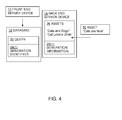
- the client device issues a query 41 to the data archive system for assets having "cats" included in the title.
- the data archive system 10 provides a response 42 to the query 41 where the response 42 includes N matches: “Cats and Dogs” and “Cat Lovers Unite.” Further assume that over time Y, the client device stores additional assets on the data archive system having "cats” included in the title, such as the added asset 44 entitled “My Favorite Cat.” In the case where, at a second time 46 (e.g., the first time 40 + Y), the client device issues a query 41 for assets having "cats” included in the title, because the number of assets having "cats” included in the title has changed, the data archive system provides a response 48 that includes N+X matches: “Cats and Dogs,” “Cat Lovers Unite,” and "My Favorite Cat” where X is the number of assets having "cats” included in the title stored on the data archive system over time Y. Accordingly, due to the dynamic nature of conventional data archive systems, the results for the same queries issued by a client device will change over time.
- the data archive system 10 is configured to track assets stored by all back end devices 14 at particular points in time and associate a generation value with the assets at that time.
- the client device 16 is configured to search for assets stored as part of the data archive system 10 by transmitting asset requests or queries 20 to the data archive system 10.
- the front end server devices 12 create a virtual folder 22 that includes the query 20 and a generation identifier 24 associated with the global state of the data archive system 10 as part of the virtual folder 22.
- the front end server device 12 is configured to store queries 20 received from the client device 16 and a generation identifier 24, such as a generation number, associated with the particular query 20 within a particular virtual folder 22. Accordingly, the front end server device 12 defines a virtual folder 22 as a saved query (or queries) 20 and an associated generation identifier 24. As indicated above, the query 20 relates to a set of assets stored by the data archive system 10. By storing queries rather than query results, the front end server device 12 saves storage space associated with the data archive system 10. Additionally, the generation identifier 24 provides an indication of a state or snapshot of the set of assets of the data archive system 10 at the time the front end server device 12 receives the query 20.
- a generation identifier 24 such as a generation number
- the front end server device 12 By capturing and storing a generation identifier 24 associated with the particular query 20, the front end server device 12 allows the query 20 to be reissued by the client device 16 at a later time and match the resources associated with the earlier-issued query 20 (i.e., the list of results associated with a particular query does not change after the query is added into a folder). Accordingly, by using query-based foldering in association with the generation identifier 24, the data archive system 10 provides a level of stability to queries received from a user device (i.e., to allow a query issued today to be reissued at a later time and still match the same assets).
- the front end server device 12 can obtain the generation identifier 24 in a variety of ways, in one arrangement, the front end server device 12 operates in conjunction with the back end server devices 14 to obtain the generation identifier 24.
- the back end server devices 14, such as devices 14-1, 14-2, and 14-3, are disposed in electrical communication with the front end server device 12, such as by a set of network connections.
- Each of the back end server devices 14 is configured to store assets 26 (i.e., metadata and content such as electronic documents, electronic images, etc.), as well as search indexes 28 such as Apache Lucene search indexes, associated with the archived assets 26. It should be noted that the back end server device 14 maintains search index 28 separately from the stored assets 26. For each back end device 14, each search index has a corresponding generation number associated therewith.
- the back end server device 14 can update its corresponding search indexes to update generation information 29 associated with each index.
- the back end server device 14-1 extracts meaningful text or tokens, such as keywords, from the asset.
- the back end server device 14-1 can then update or roll its corresponding search index 28-1 with the extracted text from the ingested asset.
- the back end server device 14-1 increments the associated generation information 29-1 (e.g., the generation values for an index form a strictly increasing progression) to provide an indication of the state or time affiliation of the index 28-1.
- the set of these values is the generation string, effectively a global snapshot of the index state.
- the front end server device 12 utilizes the generation information 29 from each of the back end server devices 14 to create the generation identifier 24 for storing with a query 20 as part of a virtual folder 22.
- Fig. 3 is a flowchart 100 that illustrates a procedure performed by the front end server device 12 when foldering a query 20.
- the front end server device 12 receives a query 20 from a user device 16, the query 20 relating to a set of assets 26 stored by the data archive system 10.
- the client device 16 transmits a query 20 to the front end server devices 12.
- the client device 16 transmits the query 20 through a firewall or load balancer 15 to the front end server device 12 which is exposed as a web service.
- the front end server device 12 in response to receiving the query 20, creates a virtual folder 22 as part of the database 18, assigns the virtual folder 22 a folder identification 25, such as 1/cal, and stores the query 20 as part of the virtual folder 22.
- the front end server device 12 retrieves a generation identifier 24 associated with a state of the set of assets 26 of the data archive system 10 at the time the query 20 is received. For example, with reference to Fig. 1 , when the client device 16 transmits the query 20 to the front end server device 12, in response to receiving the query 20, the front end server device 12 retrieves the generation information 29-1, 29-2, and 29-3 associated with each of the back end server devices 14-1, 14-2, 14-3, respectively, and combines the generation information 29-1 through 29-3 to form the generation information 29.
- the back end server device 14 concatenates each generation value into a single string which represents the global state or global snapshot of the assets stored by the data archive system 10 at the time the front end server device 12 receives the query 20.
- the string is lightly delta compressed for space efficiency.
- the front end server device 12 stores the query 20 associated with the set of assets 26 stored by the data archive system 10 and the generation identifier 24 associated with the state of the set of assets in a virtual folder 22.
- the front end server devices 12 can, at a future time, retrieve assets associated with the state of the data archive system 10 at the time the query 20 was received, regardless of changes in the state of the assets stored by the data archive system 10.
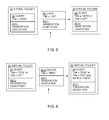
- the back end server devices 14 store assets titled “Cats and Dogs” and “Cat Lovers Unite.” Further assume that in response to a query 20 from the client device 16 for assets having "cats" included in the title, the front end server device 12 stores the query 20 and a generation identifier 24 based upon the first generation information value 29(1). Also, assume that over time, the client device 16 stores additional assets on the data archive system 10, such as the added asset 50 entitled “Cats are Nice,” causing the back end server devices 14 to increment the generation information value to a second generation information value 29(2).
- the client device 16 issues the query 20 for assets having "cats” included in the title, as well as the generation identifier 24, to the front end server device 12. While the assets of the back end server devices 14 have changed over time, because the front end server device 12 has associated the query 20 with the generation identification 29(1), the front end server device 12 retrieves the assets titled "Cats and Dogs" and "Cat Lovers Unite” from the back end server devices 14 and will exclude the added asset 50 entitled "Cats are Nice.” Accordingly, by capturing or producing a generation identifier 24 and associating the generation identifier 24 with a particular query 20, the front end server devices 12 ensure that the query 20 is associated with a specific, set point in time relative to the state of the data archive system 10 and ensures that the list of assets associated with a particular query 20 does not change after the query 20 is added into a folder 22.
- the data archive system 10 allows the front end server device 12 to modify either the content of the virtual folder 22 or the virtual folder 22 itself in response to commands received from the client device 16.
- the front end server device 12 modifies or changes the foldered query 20 based upon input from the client device 16. For example, with reference to Fig. 1 , the front end server device 12 can receive an asset modification command 60 from the client device 16 and modify the query 20 stored in the virtual folder 22 with the folder modification command 60.
- the folder modification command 60 can be configured as an folder addition command 60-1 to add to the query 20 stored by the virtual folder 22.
- the virtual folder 22 stores a query 20 which relates to all assets associated with the data archive system 10 at generation identifier 24(1) having the word "dog" in the title.
- the front end server device 12 receives the folder addition command 60-1, as well as generation identifier 24(1) to add all assets associated with the data archive system 10 at generation identifier 24(1) having the word "cat" in the title, the front end server device 12 inserts the addition into the folder 22.
- the query 20 relates to all assets associated with the data archive system 10 at generation identifier 24(1) having the word "dog” or “cat” in the title.
- the front end server device 12 executes the modified query 20
- the front end server device 12 can then retrieve assets 26 having the word "dog” or “cat” in the title as associated with generation identifier 24(1).
- the folder modification command 60 can be configured as a folder removal command 60-2 to add to the query 20 stored by the virtual folder 22.
- the virtual folder 22 stores a query 20 which relates to all assets associated with the data archive system 10 at generation identifier 24(1) having the word "dog" and the word "cat” in the title.
- the front end server device 12 receives the folder removal command 60-2, as well as generation identifier 24(1) to remove all assets associated with the data archive system 10 at generation identifier 24(1) having the word "nice" in the title, the front end server device 12 inserts the removal into the folder 22.
- the query 20 relates to all assets associated with the data archive system 10 at generation identifier 24(1) having the word "dog” or “cat” and not the word “nice” in the title.
- the front end server device 12 executes the modified query 20
- the front end server device 12 can then retrieve assets 26 that include the word “dog” or “cat” and can exclude assets 26 that include the word “nice” in the title, as associated with generation identifier 24(1).
- the folder modification command 60 can be configured to allow the client device 16 the ability to delete virtual folders 20 from the database 18.
- the front end server device 12 can receive, as the folded modification command 60, a delete folder command from the client device 16. Based upon an identification of the virtual folder 22 included with the delete folder command, the front end server device 12 removes the identified virtual folder 22 from the database 18, such as by disassociating one or more aggregation criteria from the query 20 and generation identifier 24.
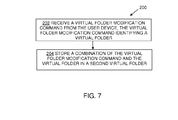
- Fig. 7 is a flowchart 200 that illustrates a procedure performed by the front end server device 12 when combining a virtual folder 22 with a query 20.
- the front end server device 12 receives a virtual folder modification command from the user device 16, the virtual folder modification command identifying a virtual folder 22.
- the virtual folder modification command identifies the virtual folder 22 via the folder identification 25 "1/cal” and indicates a modification of the asset results related to the virtual folder 22, such as "documents with less than 400 pages.”
- the front end server device 12 stores a combination of the virtual folder modification command and the virtual folder 22 in a second virtual folder.
- the front end server device 12 establishes a second virtual folder having a folder identification 25 distinct from the folder identification of the virtual folder 22, such as the folder identification 25 "I/ca2.”
- the front end server device 12 includes as part of the second virtual folder the folder identification 25 of the virtual folder 22,"1/cal," as well as the modifier, such as "pages ⁇ 400" and a generation identifier 24.
- the data archive system 10 allows virtual folders to refer to other virtual folders.
- the data archive system 10 is also configured to allow the client device 16 the ability to retrieve folder information from the database 18, such as the number of resources associated with a particular query 20 or a storage size of the resources associated with a particular query 20.
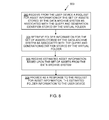
- Fig. 8 is a flowchart 300 that illustrates a procedure performed by the front end server device 12 when retrieving folder information from the database 18.
- the front end server device 12 receives from the user device 16, a request for asset information of the set of assets 26 stored by the data archive system 10 as associated with the query 20 and generation identifier 24 stored by the virtual folder 22.
- the client device 16 can provide the front end server device 12 with a request for the total amount of storage space utilized by the assets associated with a particular query 20 of a particular virtual folder 22.
- the front end server device 12 retrieves folder information (e.g., a number of assets and number of bytes of assets in the folder) for the set of assets stored by the data archive system 10 as associated with the query 20 and generation identifier 24 stored by the virtual folder 22.
- folder information e.g., a number of assets and number of bytes of assets in the folder
- the front end server device 12 receives estimated asset information based upon the set of assets from the data archive system 10. For example, based upon the number of assets in the virtual folder, the back end server device 14 will extrapolate the storage size of the assets associated with a particular query 20 and generation identifier 24 in order to minimize the amount of time required to ascertain the folder information and provide the extrapolated storage size to the front end server device 12.
- the front end server device 12 provides as a response to the request for asset information, the estimated folder information to the user device.
- the front end server device 12 provides the results of the extrapolation to the client device 16 as the asset information (e.g., as the number of assets associated with a particular query 20 and generation identifier 24 or the storage size of the assets associated with a particular query 20 and generation identifier 24).
- the configuration of the data archive system 10 allows for folder-based querying in that created folders can be used in subsequent queries.
- the front end server device 12 can combine a folder A that contains the query "cats" with a folder B that includes the query "dogs.”
- one folder stored by the database 18 can refer to one or more other folders stored by the database.
- circular dependencies can be created among the folders. For example, assume the case where the front end server device 12 creates a folder A that includes a query "cats.” Further assume that the front end server device 12 creates a folder B that includes the query "folderld:folderA" (i.e., folder B includes the entire content of folder A). With such a query, because folder B contains folder A, folder B therefore contains "cats.” However, assume the front end server device 12 adds to folder A the query "folderld:folderB" (i.e., take everything from folder B and include in folder A).
- folder A contains "cats” and folder B and therefore contains folder A, and therefore contains “cats” and folder B, and therefore contains folder A, and therefore contains "cats” and folder B.
- the data archive system 10 is configured to utilize sub query references by substituting tokens for folders. For example, assume the case where the front end device 12 creates a folder A that includes a query "cats.” When the front end device 12 creates a folder B that references folder A, the front end server device 12 substitutes a token for folder A such that folder B contains "folderIdaokenl" and "cats" with sub query reference token1.
- the data archive system 10 will first look up any queries of folder A with no sub query reference attached to them, such as "cats” OR “folderIdaoken2.” The system 10 then looks-up the queries with sub query reference token2, such as "cats” OR “folderId:token1.” The data archive system 10 then looks-up the queries with sub query reference token1, so the final query recites "cats" OR "cats.”
- the data archive system 10 updates the generation information 29 when assets are added to the data archive system 10 (i.e., updated and committed to disk). Such indication is by way of example only.
- the data archive system 10 automatically updates generation information 29 after the expiration of a preset time interval, such as a time interval of thirty minutes.
- the front end server device 12 is configured to store queries 20 received from the client device 16 and a generation identifier 24, such as a generation number, associated with the particular query 20 within a particular virtual folder 22. It should be noted that generation identifier 24 is not required when creating a virtual folder. If not provided, a current generation information value 29 is used from a search index associated with a particular back end server device 14.
- the front end server device 12 in response to receiving the query 20 stores the query 20 as part of a virtual folder 22, retrieves the generation information 29 associated with the back end server devices 14, and associates the generation information 29, as a generation identifier 24, with the query 20 as part of the virtual folder 22.
- the end user at the client device 16 can specify the generation identifier 24 to the front end server device 12.
- the front end server device 12 can be configured in a variety of ways, in one arrangement, as illustrated in Fig. 1 , the front end server device 12 includes a controller 30, such as a memory and a processor, disposed in electrical communication with a communications interface 32.
- the controller 30 stores a stable query foldering application.
- the stable query foldering application installs on the front end server device 12 from a computer program product 34.
- the computer program product 34 is available in a standard off-the-shelf form such as a shrink wrap package (e.g., CD-ROMs, diskettes, tapes, etc.).
- the stable query foldering application causes the front end server device 12 to store a query 20 and an associated generation identifier as part of a virtual folder 22.
Landscapes
- Engineering & Computer Science (AREA)
- Theoretical Computer Science (AREA)
- Data Mining & Analysis (AREA)
- Databases & Information Systems (AREA)
- Physics & Mathematics (AREA)
- General Engineering & Computer Science (AREA)
- General Physics & Mathematics (AREA)
- Library & Information Science (AREA)
- Information Retrieval, Db Structures And Fs Structures Therefor (AREA)
Applications Claiming Priority (2)
| Application Number | Priority Date | Filing Date | Title |
|---|---|---|---|
| US30568010P | 2010-02-18 | 2010-02-18 | |
| US12/789,797 US8495025B2 (en) | 2010-02-18 | 2010-05-28 | Foldering by stable query |
Publications (1)
| Publication Number | Publication Date |
|---|---|
| EP2420945A1 true EP2420945A1 (fr) | 2012-02-22 |
Family
ID=44370344
Family Applications (1)
| Application Number | Title | Priority Date | Filing Date |
|---|---|---|---|
| EP11155090A Withdrawn EP2420945A1 (fr) | 2010-02-18 | 2011-02-18 | Recherche de dossiers par requête stable |
Country Status (2)
| Country | Link |
|---|---|
| US (1) | US8495025B2 (fr) |
| EP (1) | EP2420945A1 (fr) |
Cited By (1)
| Publication number | Priority date | Publication date | Assignee | Title |
|---|---|---|---|---|
| CN103955533A (zh) * | 2014-05-13 | 2014-07-30 | 中国工商银行股份有限公司 | 一种基于缓冲队列的页面树形数据获取装置及方法 |
Families Citing this family (4)
| Publication number | Priority date | Publication date | Assignee | Title |
|---|---|---|---|---|
| US8572376B2 (en) * | 2009-03-27 | 2013-10-29 | Bank Of America Corporation | Decryption of electronic communication in an electronic discovery enterprise system |
| JP6114028B2 (ja) * | 2012-12-28 | 2017-04-12 | 富士通株式会社 | 情報管理プログラム、情報管理方法及び情報管理装置 |
| US10156841B2 (en) | 2015-12-31 | 2018-12-18 | General Electric Company | Identity management and device enrollment in a cloud service |
| US12130809B2 (en) * | 2022-09-19 | 2024-10-29 | Ebay Inc. | Deep navigation via a multimodal vector model |
Citations (3)
| Publication number | Priority date | Publication date | Assignee | Title |
|---|---|---|---|---|
| US20060015482A1 (en) * | 2004-06-30 | 2006-01-19 | International Business Machines Corporation | System and method for creating dynamic folder hierarchies |
| EP1672534A1 (fr) * | 2003-10-10 | 2006-06-21 | Sony Corporation | Systeme de gestion de fichiers |
| WO2006121453A1 (fr) * | 2005-05-10 | 2006-11-16 | Microsoft Corporation | Composition d'interrogation au moyen d'autolistes |
Family Cites Families (12)
| Publication number | Priority date | Publication date | Assignee | Title |
|---|---|---|---|---|
| US6061695A (en) * | 1996-12-06 | 2000-05-09 | Microsoft Corporation | Operating system shell having a windowing graphical user interface with a desktop displayed as a hypertext multimedia document |
| US6810404B1 (en) | 1997-10-08 | 2004-10-26 | Scansoft, Inc. | Computer-based document management system |
| US6820094B1 (en) | 1997-10-08 | 2004-11-16 | Scansoft, Inc. | Computer-based document management system |
| US6484162B1 (en) | 1999-06-29 | 2002-11-19 | International Business Machines Corporation | Labeling and describing search queries for reuse |
| JP3870666B2 (ja) | 2000-06-02 | 2007-01-24 | 株式会社日立製作所 | 文書検索方法および装置並びにその処理プログラムを記録した記録媒体 |
| US7289973B2 (en) | 2002-12-19 | 2007-10-30 | Mathon Systems, Inc. | Graphical user interface for system and method for managing content |
| US20050080807A1 (en) * | 2003-10-12 | 2005-04-14 | Microsoft Corporation | Extensible creation and editing of integrated collections |
| US20050021540A1 (en) * | 2003-03-26 | 2005-01-27 | Microsoft Corporation | System and method for a rules based engine |
| US7606789B2 (en) | 2003-11-14 | 2009-10-20 | Iron Mountain Incorporated | Data access and retrieval mechanism |
| US7680856B2 (en) * | 2004-11-23 | 2010-03-16 | Microsoft Corporation | Storing searches in an e-mail folder |
| US20070143333A1 (en) | 2005-12-16 | 2007-06-21 | Microsoft Corporation | Creating search folders within applications for other applications |
| JP5028022B2 (ja) * | 2006-04-25 | 2012-09-19 | キヤノン株式会社 | 印刷装置及び文書印刷方法 |
-
2010
- 2010-05-28 US US12/789,797 patent/US8495025B2/en not_active Expired - Fee Related
-
2011
- 2011-02-18 EP EP11155090A patent/EP2420945A1/fr not_active Withdrawn
Patent Citations (3)
| Publication number | Priority date | Publication date | Assignee | Title |
|---|---|---|---|---|
| EP1672534A1 (fr) * | 2003-10-10 | 2006-06-21 | Sony Corporation | Systeme de gestion de fichiers |
| US20060015482A1 (en) * | 2004-06-30 | 2006-01-19 | International Business Machines Corporation | System and method for creating dynamic folder hierarchies |
| WO2006121453A1 (fr) * | 2005-05-10 | 2006-11-16 | Microsoft Corporation | Composition d'interrogation au moyen d'autolistes |
Cited By (2)
| Publication number | Priority date | Publication date | Assignee | Title |
|---|---|---|---|---|
| CN103955533A (zh) * | 2014-05-13 | 2014-07-30 | 中国工商银行股份有限公司 | 一种基于缓冲队列的页面树形数据获取装置及方法 |
| CN103955533B (zh) * | 2014-05-13 | 2017-03-08 | 中国工商银行股份有限公司 | 一种基于缓冲队列的页面树形数据获取装置及方法 |
Also Published As
| Publication number | Publication date |
|---|---|
| US20110202506A1 (en) | 2011-08-18 |
| US8495025B2 (en) | 2013-07-23 |
Similar Documents
| Publication | Publication Date | Title |
|---|---|---|
| US7228299B1 (en) | System and method for performing file lookups based on tags | |
| US6952730B1 (en) | System and method for efficient filtering of data set addresses in a web crawler | |
| JP6006267B2 (ja) | 索引キーを使用して検索を絞込むシステムおよび方法 | |
| CN108804510B (zh) | 键值文件系统 | |
| US7421541B2 (en) | Version management of cached permissions metadata | |
| US7987217B2 (en) | Transaction-aware caching for document metadata | |
| US7996380B2 (en) | Method and apparatus for processing metadata | |
| US7917500B2 (en) | System for and method of searching structured documents using indexes | |
| US8271530B2 (en) | Method and mechanism for managing and accessing static and dynamic data | |
| CN103077199B (zh) | 一种文件资源查找定位方法及装置 | |
| US7203709B2 (en) | Transaction-aware caching for access control metadata | |
| US20100070515A1 (en) | Shared namespace for storage clusters | |
| US20050278314A1 (en) | Variable length snippet generation | |
| AU2013210018B2 (en) | Location independent files | |
| US9405784B2 (en) | Ordered index | |
| US20090106196A1 (en) | Transferring records between tables using a change transaction log | |
| US9594794B2 (en) | Restoring records using a change transaction log | |
| CN101211365A (zh) | 用于建立搜索索引的方法和系统 | |
| JP2010134963A (ja) | 文書に付与されたプロパティを用いたサ―ビスの起動方法 | |
| US20140359488A1 (en) | Centralized Management of Link Data for Multiple Applications, Computers and Resources, through Operating Systems and Networked Storage Services | |
| US10275486B2 (en) | Multi-system segmented search processing | |
| US8495025B2 (en) | Foldering by stable query | |
| US7769792B1 (en) | Low overhead thread synchronization system and method for garbage collecting stale data in a document repository without interrupting concurrent querying | |
| US8037090B2 (en) | Processing structured documents stored in a database | |
| US7634517B1 (en) | System and method for dynamically updating a document repository without interrupting concurrent querying |
Legal Events
| Date | Code | Title | Description |
|---|---|---|---|
| AK | Designated contracting states |
Kind code of ref document: A1 Designated state(s): AL AT BE BG CH CY CZ DE DK EE ES FI FR GB GR HR HU IE IS IT LI LT LU LV MC MK MT NL NO PL PT RO RS SE SI SK SM TR |
|
| AX | Request for extension of the european patent |
Extension state: BA ME |
|
| PUAI | Public reference made under article 153(3) epc to a published international application that has entered the european phase |
Free format text: ORIGINAL CODE: 0009012 |
|
| 17P | Request for examination filed |
Effective date: 20120820 |
|
| RAP1 | Party data changed (applicant data changed or rights of an application transferred) |
Owner name: AUTONOMY, INC. |
|
| 17Q | First examination report despatched |
Effective date: 20160506 |
|
| STAA | Information on the status of an ep patent application or granted ep patent |
Free format text: STATUS: THE APPLICATION IS DEEMED TO BE WITHDRAWN |
|
| 18D | Application deemed to be withdrawn |
Effective date: 20160917 |