EP2421572B2 - Ballons de cathéter recouverts de gomme laque et de paclitaxel - Google Patents
Ballons de cathéter recouverts de gomme laque et de paclitaxel Download PDFInfo
- Publication number
- EP2421572B2 EP2421572B2 EP10721115.3A EP10721115A EP2421572B2 EP 2421572 B2 EP2421572 B2 EP 2421572B2 EP 10721115 A EP10721115 A EP 10721115A EP 2421572 B2 EP2421572 B2 EP 2421572B2
- Authority
- EP
- European Patent Office
- Prior art keywords
- balloon
- paclitaxel
- shellac
- catheter
- sec
- Prior art date
- Legal status (The legal status is an assumption and is not a legal conclusion. Google has not performed a legal analysis and makes no representation as to the accuracy of the status listed.)
- Active
Links
Images

Classifications
-
- A—HUMAN NECESSITIES
- A61—MEDICAL OR VETERINARY SCIENCE; HYGIENE
- A61L—METHODS OR APPARATUS FOR STERILISING MATERIALS OR OBJECTS IN GENERAL; DISINFECTION, STERILISATION OR DEODORISATION OF AIR; CHEMICAL ASPECTS OF BANDAGES, DRESSINGS, ABSORBENT PADS OR SURGICAL ARTICLES; MATERIALS FOR BANDAGES, DRESSINGS, ABSORBENT PADS OR SURGICAL ARTICLES
- A61L29/00—Materials for catheters, medical tubing, cannulae, or endoscopes or for coating catheters
- A61L29/14—Materials characterised by their function or physical properties, e.g. lubricating compositions
- A61L29/16—Biologically active materials, e.g. therapeutic substances
-
- A—HUMAN NECESSITIES
- A61—MEDICAL OR VETERINARY SCIENCE; HYGIENE
- A61L—METHODS OR APPARATUS FOR STERILISING MATERIALS OR OBJECTS IN GENERAL; DISINFECTION, STERILISATION OR DEODORISATION OF AIR; CHEMICAL ASPECTS OF BANDAGES, DRESSINGS, ABSORBENT PADS OR SURGICAL ARTICLES; MATERIALS FOR BANDAGES, DRESSINGS, ABSORBENT PADS OR SURGICAL ARTICLES
- A61L29/00—Materials for catheters, medical tubing, cannulae, or endoscopes or for coating catheters
- A61L29/08—Materials for coatings
- A61L29/085—Macromolecular materials
-
- A—HUMAN NECESSITIES
- A61—MEDICAL OR VETERINARY SCIENCE; HYGIENE
- A61L—METHODS OR APPARATUS FOR STERILISING MATERIALS OR OBJECTS IN GENERAL; DISINFECTION, STERILISATION OR DEODORISATION OF AIR; CHEMICAL ASPECTS OF BANDAGES, DRESSINGS, ABSORBENT PADS OR SURGICAL ARTICLES; MATERIALS FOR BANDAGES, DRESSINGS, ABSORBENT PADS OR SURGICAL ARTICLES
- A61L2300/00—Biologically active materials used in bandages, wound dressings, absorbent pads or medical devices
- A61L2300/40—Biologically active materials used in bandages, wound dressings, absorbent pads or medical devices characterised by a specific therapeutic activity or mode of action
- A61L2300/416—Anti-neoplastic or anti-proliferative or anti-restenosis or anti-angiogenic agents, e.g. paclitaxel, sirolimus
-
- A—HUMAN NECESSITIES
- A61—MEDICAL OR VETERINARY SCIENCE; HYGIENE
- A61L—METHODS OR APPARATUS FOR STERILISING MATERIALS OR OBJECTS IN GENERAL; DISINFECTION, STERILISATION OR DEODORISATION OF AIR; CHEMICAL ASPECTS OF BANDAGES, DRESSINGS, ABSORBENT PADS OR SURGICAL ARTICLES; MATERIALS FOR BANDAGES, DRESSINGS, ABSORBENT PADS OR SURGICAL ARTICLES
- A61L2300/00—Biologically active materials used in bandages, wound dressings, absorbent pads or medical devices
- A61L2300/60—Biologically active materials used in bandages, wound dressings, absorbent pads or medical devices characterised by a special physical form
- A61L2300/606—Coatings
-
- A—HUMAN NECESSITIES
- A61—MEDICAL OR VETERINARY SCIENCE; HYGIENE
- A61L—METHODS OR APPARATUS FOR STERILISING MATERIALS OR OBJECTS IN GENERAL; DISINFECTION, STERILISATION OR DEODORISATION OF AIR; CHEMICAL ASPECTS OF BANDAGES, DRESSINGS, ABSORBENT PADS OR SURGICAL ARTICLES; MATERIALS FOR BANDAGES, DRESSINGS, ABSORBENT PADS OR SURGICAL ARTICLES
- A61L2420/00—Materials or methods for coatings medical devices
- A61L2420/02—Methods for coating medical devices
Definitions
- the present invention relates to a method for coating catheter balloons preferably textured catheter balloons with the pharmacological agent paclitaxel and the biological and biodegradable polymer composition shellac and optionally further components.
- the coated catheter balloons can be used alone or in combination with a coated or uncoated stent crimped on the catheter balloon before or after the coating with shellac and paclitaxel.
- restenosis recurrent stenosis
- PTA percutaneous transluminal angioplasty
- Restenosis following stent implantation is one of the major causes for further hospitalization. Vessel traumas induced during stent implantation cause inflammatory reactions which play a decisive role in the healing process during the first seven days. In the recent past, it has also been found that stents provided with a drug-eluting coating may cause late thromboses, i.e. in addition to restenosis the stent may also lead to long-term problems such as late thromboses.
- biostable or bioreabsorbable polymeric matrix of the stent in which the drug is embedded, might induce sustained inflammation with increased neointimal proliferation.
- tissue drug concentration in the stent area is not homogenous: it is highest near to the stent struts, and lowest between the struts, which causes non-uniform inhibition of smooth muscle cell proliferation and may induce delayed and in-homogenous reendothelization in different stent segments. Both mechanisms have been suggested to contribute significantly to late thrombosis and in-stent restenosis.
- a so-called “biological stenting” may be performed using only a coated catheter balloon without any stent, i.e. the vessels are dilated at a constricted site by the dilatation of a coated catheter balloon, wherein, while the catheter balloon is dilated for a short period of time, a sufficient amount of pharmacological agent is transferred to the vessel wall to avoid re-constriction or reocclusion of the vessel due to the dilatation of the vessel and the delivery of active agents.
- Such coated catheter balloons are already known from WO 2005/089855 A1 and the international patent application WO 2004/028582 A1 discloses multifold balloons which are coated, especially within the folds, with a composition of a pharmacological agent and a contrast medium.
- a method for spray coating catheter balloons is described in WO 2004/006976 A1 .
- the late lumen loss was measured in pigs after treatment with PACCOCATH° or DIOR° 1st generation catheter balloon coated with Paclitaxel only against a control group. Treatment with PACCOCATH° lead to a significant reduction of late lumen loss, wherein the group treated with DIOR° catheter balloon showed no significant reduction in late lumen loss in their hands.
- the active agent paclitaxel has proven to be particularly useful in the prevention of restenosis, as can be seen especially in European patent no. EP 0 706 376 B1 , while coated stents, however, are disadvantageous with respect to the late thromboses described above, it is an objective of the present invention to apply the active agent paclitaxel onto a catheter balloon in such manner that a coating is created which is easily detached from the balloon and can be effectively transferred to the vessel wall so that a therapeutic effect concerning reduction of restenosis can be achieved.
- Said method for loading or coating dilatable catheter balloons comprises the following steps:
- the invention is furthermore directed to a catheter balloon comprising a coating with Paclitaxel and shellac, the coating with paclitaxel and shellac being applied to the uncoated balloon in an amount of 1 ⁇ g/mm 2 to 12 ⁇ g/mm 2 in solution.
- uncoated refers to a catheter balloon with a smooth or structured or roughened surface without any drug coating, i.e. the balloon surface does not comprise a pharmaceutically active agent and especially no anti-proliferative, anti-angiogenic or anti-restenosis drug and no coating containing an anti-proliferative, anti-angiogenic or anti-restenosis drug.
- Paclitaxel - shellac - coating is therapeutically highly useful in keeping blood vessels open, in reducing the late lumen loss and in reducing restenosis.
- Paclitaxel DIOR° 1st generation
- the present invention provides a catheter balloon and a catheter balloon comprising a catheter balloon coated with a combination of Paclitaxel and shellac which is even after short dilatation times of 30 seconds therapeutically highly useful in keeping blood vessels open and in reducing the late lumen loss and in reducing restenosis.
- the drug delivery is rapid and homogenous using drug coated dilatable catheter balloon, reaching the maximal tissue drug concentration at the time of the highest level of procedure-induced local tissue injury, which in turn triggers the restenotic and thrombotic cascade.
- WO 2008/046641 discloses coated implants, referring to stents in particular showing in vitro release kinetics of stents coated with 1.0% rapamycin without shellac blend and 1.0% rapamycin/0.5% shellac composite.
- Shellac had a profound impact an stent-based rapamycin by protracting drug release long-term. Uncoated stents with Rapamycin released the drug more efficiently in contrast to shellac and rapamycin coated stents, which released the drug much slower.
- Shellac was deemed to be useful to modulate the release kinetics of an implant-based, e.g. stent-based compound to slow the release kinetic (more than 60 days) that is required to prevent in-stent restenosis at 6-9 months follow up.
- Catheter balloons coated with the method according to the invention resulted in an up to 20-fold higher tissue concentration as compared with prior art balloon types ( Posa et al., Coron Artery Dis, 2008, 19, 243-7 ), reaching an optimal tissue concentration for inhibition of smooth muscle cell proliferation already after dilation for 30 s.
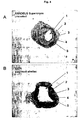
- the efficacy of short Paclitaxel exposure onto the vessel wall was shown by significant smaller neointimal hyperplasia in the overstretch injury model as compared with the uncoated catheter balloon ( Fig.4 ). If applicable the inflation time can be shortened even further to control the amount of drug that is released into the tissue.
- the amount of drug coating on the catheter balloon can be reduced, since the release of the drug is much more efficient, up to 20-times, in comparison to known coated catheter balloons. Consequently it was not obvious to a skilled person that shellac would increase efficacy of a Paclitaxel coated catheter balloon and would allow further reduction of the dilatation time. Rather in contrast a skilled person would expect on the basis of the results disclosed for the Paclitaxel - shellac - coated stent that the presence of shellac would prolong the release of Paclitaxel which would lead to longer dilatation times in order to achieve sufficient Paclitaxel tissue concentrations.
- the balloon inflation time-dependency study showed maximum tissue Paclitaxel concentration after balloon inflation times of 30 s, with minimal further increase in tissue drug concentration after 45 s, and release of the drug into the circulation after a 1-min inflation time.
- the balloon inflation time of 30 s causes less arterial injury and is better tolerated by patients in a clinical scenario.
- a study also demonstrates the efficacy of short Paclitaxel exposure onto the vessel wall as shown by significant smaller neointimal hyperplasia in the overstretch injury model as compared with the conventional balloon.
- the studies were conducted with catheter balloons coated with Paclitaxel and shellac, wherein the weight ratio was from 100:1 to 1:100.
- the Paclitaxel release was best at ratios from 10:1 to 1:10, however Paclitaxel release could be measured from up to 100:1 to 1:100 Paclitaxel and shellac ratio.
- catheter balloon coated with Paclitaxel and shellac allow a homogenous distribution of an antiproliferative compound, which goes beyond the area directly covered by the stent struts.
- this uniformity of deliverance enhances the efficacy of the drug to the vessel wall.
- the drug concentration within the vessel wall is highest at the time of injury when the inflammatory and proliferative processes are most vigorous.
- the catheter balloon coated with Paclitaxel and shellac releases after balloon inflation for 30s preferably >26% of Paclitaxel from the balloon surface, more preferably >30%, more preferable >40%, further more preferable >50%, even more preferable >60% and most preferable >70%. Consequently, a dilatation time for a single dilatation of 30 seconds is preferred. Moreover a total dilatation time of 60 seconds is preferred which means that the single dilatation of 30 seconds is repeated once.
- the catheter balloon coated with Paclitaxel and shellac provides after balloon inflation for 30s a Paclitaxel tissue concentration of preferably > 10 ⁇ M/L, more preferable >30 ⁇ M/L, even more preferable >504/L, further more preferable >80 ⁇ M/L, even more preferable >100 ⁇ M/L, further preferable 120 ⁇ M/L, most preferable >140 ⁇ M/L can be achieved in the dilated segment 45 min post-dilatation.
- a catheter balloon coated with Paclitaxel and shellac further comprises after balloon inflation for 15s a Paclitaxel tissue concentrations of preferably > 1 ⁇ M/L, more preferable >3 ⁇ M/L, even more preferable >5 ⁇ M/L, further more preferable >8 ⁇ M/L, even more preferable >10 ⁇ M/L, further preferable >10 ⁇ M/L, most preferable >20 ⁇ M/L can be achieved in the dilated segment 45 min post-dilatation.
- a catheter balloon is coated with Paclitaxel and shellac, wherein the weight ratio of Paclitaxel to shellac is from 100: 1 to 1 : 100, preferably 95:1 to 1:95, more preferable 90:1 to 1:90, more preferable 85:1 to 1:85, further preferable 80:1 to 1:80, more preferable 75:1 to 1:75, more preferably 70:1 to 1:70, more preferable 65:1 to 1:65, more preferable 60:1 to 1:60, more preferable 55:1 to 1:55, more preferable 50:1 to 1:50, more preferable45:1 to 1:45, more preferable 40:1 to 1:40, more preferable 35:1 to 1:35, more preferable 30:1 to 1:30, more preferable 25:1 to 1:25, more preferable 20:1 to 1:20, even more preferable 15:1 to 1:15, further preferable 10:1 to 1:10 and most preferable 5:1 to 1
- the paclitaxel concentration in the fresh frozen artery walls and balloon surface was measured by high-performance liquid chromatography (H PLC). After thawing, the tissues were weighed at ambient temperature and, depending on weight different volumes of ethanol were added to the samples (sufficient ethanol to cover the tissue completely). The samples were then treated with ultrasound for 40 min, and 200- ⁇ L aliquots were then centrifuged and stored for subsequent measurements. A calibration line was produced in the range between 50 and 5000 ng/mL. For the measurement of the remaining Paclitaxel concentration on the balloon surface, the catheter balloon was immersed in Ethanol (>96%) for 5 minutes. The obtained solution was vortexed for another 5 minutes and then centrifuged. The supernatant was used for measurement via HPLC.
- H PLC high-performance liquid chromatography
- the samples for the calibration line were prepared by dilution of a stock solution with a concentration of 1000 iig/mL. Aliquots of all samples (samples from tissue or balloon and calibration line) were transferred into auto-sampler vials and the same volume of 0.1% formic acid was added.
- the flow rate of the HPLC system was 0.2 mL/min through a column of ODS Hypersil (ThermoElectron Corporation), particle size 5 pore size 120 A.
- the isocratic mobile phase consisted of 70% methanol and 30% 0.1% formic acid.
- Paclitaxel was detected by mass spectrometry in multiple reaction monitoring mode with a transition of paclitaxel from 854 to 105 AMU. The tissue paclitaxel concentration was expressed in ⁇ M/L, which measure is independent from the sample weight.
- any commercially available dilatable catheter balloon may be used as catheter balloon.
- so called multifold balloons are used, as described for example in the international patent application WO 94/23787 A1 by David H. Rammler , Labintelligence, USA; or the international patent application WO 03/059430 A1 by Scimed Life Sciences, Inc., USA; or the international patent application WO 2004/028582 A1 by Prof. Dr. Ulrich Speck or the European Patent No. EP 0519063 B1 by Medtronic Inc., USA.
- Such balloons are provided with folds or wings forming essentially closed cavities when the balloon is in its compressed state but bending outward during dilatation and being capable of releasing substances contained in the folds or respectively of pressing said substances against the vessel wall.
- Such balloons are advantageous since the substances enclosed in the folds or respectively paclitaxel enclosed in the folds are protected from being detached too soon during the insertion of the catheter.
- paclitaxel may also be incorporated or embedded into a carrier substance, preferably a polymeric carrier.
- a most preferred biological biodegradable polymeric carrier is shellac. Regardless the source of shellac, all kinds of shellac types obtained from various locations or from different insects were able to achieve the inventive results so that any kind or sort of shellac can be used in the present invention. Thus there are no limitations in regards of shellac.
- Shellac is a natural resin produced from the glandular secretion of a number of species of lac-producing insects. Lac insects belang to the order of Hemiptera, superfamily Coccoidea such as Metatachardia, Laccifer, Tachordiella, and others, however, members of two families - Lacciferidae and Tachardinidae are more prominent in lac secretion.
- the one that is commercially cultured is Kerria lacca, which is also known by such synonyms as Laccifer lacca Ker, Tachardia lacca, and Carteria lacca.
- Kerria lacca is an Indian scale insect, which infests branches of numerous trees from the East Indies, such as Butea frondos Rasch, Acacia arabica Willd and Ficus religiosa Linn.
- Shellac is the only commercially used natural resin of animal origin and is quite different from all other natural resins. More recently, as a new awareness about the environments and the toxicity of chemical raw-material is noticeable everywhere, shellac or shellac modified resin are gaining importance due to their interesting and unique characteristics.
- Broken branches are sold as stick lac and, after grounding and washing with water to eliminate wood and red pigments (lac dye), seed lac is obtained. Purification of seed lac gives the more homogeneous product known as shellac.
- Raw material shellac consists of 70-80% resin, 4-8% dye, 6-7% hard and high gloss finished wax, 3% water, up to 9% vegetable and animal impurities and aroma substances.
- Shellac resin is a complicated mixture of aliphatic (60%) and sesquiterpenoid acids (32%) and their esters. Sesquiterpenoid acids are jalaric and laccijalaric acids (structure I and II) and aliphatic acids are aleuritic (III) and butolic acid.
- a possibility for chemical description of resin molecule is a structure model where in each case 4 molecules jalaric or laccijalaric acid and aleuritic acid are connected by ester bonding alternately.
- shellolic acid IV
- Purified shellac consists of two main components. These components are 9,10,16-trihydroxypalmitic acid (aleuritic acid) CAS [53-387-9] and shellolic acid (IV).
- a modification with other natural or synthetic resins or co-polymerization with various monomers is possible to cross link shellac, modified shellac resins and shellac copolymers with urea, melamine, formaldehyde, isocyanides, other chemical processes like polymerization, hydroxylation, extrication, etc. are possible.
- the catheter balloons according to the invention were coated with different commercial grades of shellac as well as with varying batches, which differed in the Lac insects, and host tree types used as well as in the time of harvest. There were no differences in Paclitaxel release observable in the various Paclitaxel-shellac coated catheter balloons.
- the carrier substance can be added to the solution of paclitaxel or can be applied as second solution without or even again with paclitaxel.
- Such solutions containing paclitaxel and/or shellac and optionally further carrier substances are then applied onto the catheter balloon surface using conventional coating methods, in particular spattering, spraying or dipping methods.
- Suitable additional carriers are such substances which are also used as balloon material, in particular polymeric and polymerizable substances as listed further below.
- a sufficient amount of the pure active agent paclitaxel may be applied onto the catheter balloon so that even including a calculated amount of
- the paclitaxel is embedded into the shellac, preferably in the range of about 30% of the total amount being detached prematurely during the insertion of the catheter balloon, so that there is still a sufficiently high and therapeutically active amount of paclitaxel present on the balloon once it has reached its target position.
- the active agent paclitaxel from premature detachment by embedment into the shellac on the surface of the catheter balloon and optionally underneath the folds of the balloon.
- an amount of 0.1 ⁇ g to 30 ⁇ g of paclitaxel per mm 2 of the surface of the balloon catheter to be coated can be applied onto the surface of the balloon catheter, while an amount of 0.5 ⁇ g/mm 2 to 6 ⁇ g/mm 2 of paclitaxel are sufficient in order to achieve the desired effect on restenosis prophylaxis.
- the amount of paclitaxel per mm 2 balloon surface is between 1 ⁇ g/mm 2 and 5 ⁇ g/mm 2 , more preferably between 1.5 ⁇ g/mm 2 and 4.5 ⁇ g/mm 2 , still more preferably between 2.0 ⁇ g/mm 2 and 4.0 ⁇ g/mm 2 , and most preferably between 2.5 ⁇ g/mm 2 and 3.5 ⁇ g/mm 2 .
- Preferred is also a total amount of 10 to 1000 ⁇ g of paclitaxel per catheter balloon and most preferably 20 ⁇ to 400 ⁇ g per catheter balloon.
- Paclitaxel is commercially available from several suppliers. Paclitaxel is known under the trademark name of Taxol ® and is also designated with various synonymous names such as:
- Paclitaxel is highly soluble in dimethyl sulfoxide (DMSO) and methanol as well as in anhydrous ethanol, but is comparatively poorly soluble in water. Paclitaxel is especially stable at a pH between 3 and 5 and can be stored for long periods, whereas it is comparatively instable at alkaline pH.
- DMSO dimethyl sulfoxide
- methanol as well as in anhydrous ethanol
- DMSO Dimethyl sulfoxide
- acetone ethyl acetate
- ethanol ethyl acetate
- methanol ethyl acetate
- materials used for the balloon catheter are such materials as listed further below, wherein the following polymers are particularly preferred: polyamides, block copolymers of polyamide, polyether and polyester, polyurethanes, polyesters and polyolefins.
- the inventive coating procedure can be performed in two alternatives ways.
- a uncoated catheter balloon is provided.
- a solution of paclitaxel together with shellac in a suitable solvent such as acetone, ethyl acetate, ethanol, methanol, DMSO, THF, chloroform, methylene chloride or the like is prepared and applied using conventional coating methods such as spray coating, dip coating etc. in order to obtain after the drying step a solid paclitaxel-shellac coating on the surface of the catheter balloon (steps 1 + IIA + IIIA + IV).
- An alternative way is to prepare a paclitaxel solution and a second shellac solution and to apply both solutions simultaneously or subsequently in order to obtain after the drying step a solid paclitaxel-shellac coating on the surface of the catheter balloon (steps I + IIB + IIIB + IV).
- the coating steps 111A) and IV) or IIIB) and IV) respectively can be repeated several times in the inventive coating methods. Usually, the coating procedure is repeated one or two or three times, but said repetition is not obligatory. Even one coating procedure may be sufficient for the application of the required amount of paclitaxel and shellac onto the catheter balloon.
- the drying step IV) can be performed at room temperature or at elevated temperatures to up to 50°C and at atmospheric pressure or under reduced pressure to high vacuum. If the coating steps III) [IIIA) or IIIB)] is repeated, the drying steps IV) are conducted at room temperature and atmospheric pressure, while preferably after the last coating step of the circle the drying step is more intensive, i.e. longer or with vacuum or with elevated temperature.
- the catheter balloon is dilatable or expandable and is most preferably an angioplasty catheter balloon which could be used without crimped stent or with a crimpled stent.
- stent all kinds of common stents, such as self-expandable stents, not self-expandable stents, metal stents, polymer stents, biodegradable stents, bifurcation stents, uncoated (bare) stents, polymer coated stents, drug release coated stents, stents with a pure active agent coating etc. can be used.
- the stent can be crimped an the catheter balloon before the inventive coating procedure is carried out so that catheter balloon and stent are coated together with a shellac-paclitaxel coating. If the catheter balloon is coated first and the stent is crimped an the balloon thereafter, a paclitaxel coated stent or a paclitaxel-shellac coated stent could be used having the same or different concentration of paclitaxel and/or shellac an the surface.
- coated catheter balloon of the present invention without stent.
- the provided catheter balloon is normally a multifold catheter balloon which will also coated under or within the folds. Moreover it is possible to selectively coat or fill the folds.
- the coating within or under the folds has the advantage that during insertion of the catheter balloon the coating and thus the paclitaxel is protected against being washed off by the blood stream.
- catheter balloon can be coated in its expanded (inflated) or deflated state.
- the preferred solvents for shellac and paclitaxel are volatile easily removable solvents such as acetone, ethyl acetate, ethanol, methanol, DMSO (dimethyl sulfoxide), THF (tetrahydrofurane), chloroform, methylene chloride.
- the total surface load with paclitaxel and shellac of the catheter balloon according to the invention is between 1 ⁇ g/mm 2 and 12 ⁇ g/mm 2 .
- the amount of paclitaxel and shellac present an the coated balloon surface is between 2 ⁇ g/mm 2 and 10 ⁇ g/mm 2 balloon surface, more preferably between 3 ⁇ g/mm 2 and 9 ⁇ g/mm 2 , still more preferably between 4 ⁇ g/mm 2 and 8 ⁇ g/mm 2 , still more preferably between 5 ⁇ g/mm 2 and 7 ⁇ g/mm 2 , and most preferably between 5.5 ⁇ g/mm 2 and 6.5 paclitaxel and shellac per mm 2 balloon surface ( ⁇ g/mm 2 ).
- inventive coating method can optionally further comprise the step V):
- the sterilization is most preferably performed with ethylene oxide.
- inventive coating method can optionally further comprise the step IB):
- the surfaces of the balloon catheter with should not be coated with the paclitaxel-shellac composite can be protected by a removable protection sheet such as a plastic bag or plastic foil and only the catheter balloon is left free so that only the free part will be coated. After the coating process is completed, the protection sheet is removed.
- inventive balloon coating method can optionally also further comprise the step VI):
- the removable protection cover is useful to protect the catheter balloon and especially the coating an the catheter balloon.
- the surface of the catheter balloon is textured, smooth, rough, harsh, provided with cavities or provided with channels open towards the outside of the balloon.
- the coating solution containing paclitaxel can optionally contain at least one further carrier substance.
- Said at least one further carrier substance is selected from the group consisting of:
- the surface of the catheter balloon can be textured mechanically, chemically, electronically and/or by means of radiation to allow for an improved adhesion of paclitaxel and to assist the precipitation or crystallization of the paclitaxel.
- the surface of the catheter balloon is to be modified in the range from nanometers to micrometers, i.e. a kind of micro-rough surface structure is to be provided.
- Surface texturing is preferably applied to the whole area to be coated of the catheter balloon and may result in organized or random structures.
- the catheter balloons may be composed of the following materials:
- Polyamides block copolymers of polyamide-polyether-polyester, polyurethanes, polyester and polyolefins are preferred.
- the methods for micro texturing the balloon surface must not lead to the formation of holes, micropores or fissures in the balloon material. Ideally, only the outer surface of the balloon, i.e. to a maximum depth of 1 ⁇ m, is textured.
- the dilatable catheter balloon may be textured mechanically by making use of a rasp-like device, a rasp or a blasting method employing solid particles, such as a sand blasting procedure.
- texturing is performed by means of conductors which are heated by current flow.
- a fine, warm, hot or glowing needle may be used to melt the surface of the balloon material by means of which certain patterns can be created on the surface, especially when the needle is moved along the surface of the catheter balloon.
- An elegant method for generating organized textures, especially in form of micro depressions or micro channels, can consist in the use of lasers or basically of strongly focused radiation. Said radiation means are very accurate and may be especially used for the generation of defined textures such as grids, spirals or lines.
- the textured or micro modified to nano-modified surface of the catheter balloon as well as the not textured catheter balloons may be wetted before applying the coating solution by using all common methods in order to increase adhesion of the coating to the balloon surface.
- Any kind of common coating process can be used to apply the paclitaxel-shellac solution or the paclitaxel solution and the shellac solution onto the ballon surface such as spray coating, brush coating, dip coating, vapour deposition, pipetting and the like.
- the content of paclitaxel in the paclitaxel containing solution is between 1 ⁇ g to 1 mg paclitaxel per ml solution, preferably between 10 ⁇ g to 500 ⁇ g of paclitaxel per 1 ml solution, more preferably between 30 ⁇ g to 300 ⁇ g of paclitaxel per 1 ml solution, and most preferably between 50 ⁇ g to 100 ⁇ g of paclitaxel per 1 ml solution.
- the solution of paclitaxel in ethanol, acetone, ethyl acetate or DMSO may be applied onto the balloon surface by means of spattering, dipping, plasma deposition, brushing or spraying. While the whole surface of the catheter balloon is usually coated when a dipping method or plasma disposition are used, spattering, brushing and spraying may be used when only a portion of the balloon surface is to be coated.
- the catheter balloon does not have to be completely coated. Partial coating of the catheter balloon or partial loading of certain texture elements onto the surface of the catheter balloon may be sufficient.
- a special catheter balloon including micro-needles or micro-pores or micro-chambers is disclosed in the international patent application no. WO 02/043796 A2 issued to Scimed Life Systems, Inc., USA, wherein inflatable and textured areas are present on the balloon surface. In said embodiment, loading or inflating certain portions of the balloon surface would be sufficient to achieve the desired therapeutic success, wherein it is also possible, evidently, that the whole surface is coated.
- Balloon valvuloplasty is a procedure in which a narrowed heart valve is stretched open using a procedure that does not require open heart surgery. In some people the valves are too narrow. Balloon valvuloplasty is performed to improve valve function and blood flow by enlarging the valve opening. It is a treatment for aortic, mitral, and pulmonary stenosis.
- balloon valvuloplasty a thin catheter balloon is inserted through the skin in the groin area into a blood vessel, and then is threaded up to the opening of the narrowed heart valve. The balloon is inflated to stretch the valve open and relieve the valve obstruction.
- catheter balloons that are coated at the whole surface are not suitable, because only a small part in the middle of the catheter balloon is in contact with the valve, wherein the rest of the catheter balloon lies in the ventricle and the atria of the heart. After inflation of the balloon, the walls in the ventricle and atria of the heart come also in contact with the fully drug coated catheter balloon, which is not desirable and could lead to severe side effects.
- the catheter balloon according to the invention is only coated at the area that comes in direct contact with the valve and where an inhibition of restenosis is wanted.
- a preferred embodiment of the present invention is a catheter balloon coated with shellac and paclitaxel only around that part of the catheter balloon which comes into contact with the heart valve.
- Another preferred embodiment of the present invention is directed to a catheter balloon which is completely coated with shellac but which is coated with paclitaxel only around that part of the catheter balloon which comes into contact with the heart valve.
- Another possibility consists in coating the catheter balloon partially, i.e. certain sections of the catheter balloon and, successively, additional areas until a completely coated catheter balloon is obtained, if desired.
- Another active agent may be added to the paclitaxel containing solution.
- Said further active agent can be selected from the following group comprising or consisting of:
- the present invention relates to dilatable and expandable catheter balloons and in particular to multifold balloons for catheters coated according to an inventive method.
- the catheter balloons are coated with essentially pure paclitaxel.
- the catheter balloons carry a layer consisting of active agent in form of paclitaxel incorporated into the biopolymer shellac, wherein in said layer only traces of solvents are present, while optionally another active agent and/or another carrier substance may be present in a same or different amount as the paclitaxel or the shellac.
- the paclitaxel-shellac composite dried at the surface of the catheter balloon has a special consistence, which is hard to characterize but seems to be essential for the transfer to the cell wall and the incorporation, especially into the smooth muscle cells.
- one part of the paclitaxel-shellac containing coating is provided underneath the folds when the balloon is in its compressed, i.e. deflated state. Said amount is sufficient to achieve the desired therapeutic success even if the remaining uncovered balloon surface is not coated with the active agent paclitaxel.
- the present invention also relates to balloon catheters comprising a catheter balloon coated according to the present invention with paclitaxel and shellac and optionally a further active agent and/or optionally a further carrier substance or matrix substance.
- Such catheters are preferably used for treating constricted vessel segments, particularly of blood vessels and for the treatment and prophylaxis of stenosis, restenosis, arteriosclerosis, atherosclerosis and fibrotic vessel constriction.
- catheter balloons which are coated according to the invention are suited for the treatment and/or prophylaxis of in-stent restenosis, i.e. a reoccurring vessel constriction within an already implanted stent in such cases where the placement of an additional stent within an already implanted stent would prove to be very problematic or even impracticable from a medical point of view.
- in-stent restenoses can be effectively treated without an additional stent having to be implanted by applying active agent with the help of a catheter coated according to the present invention or respectively a catheter balloon of a dilatation catheter which balloon is coated according to the present invention.
- catheter balloons coated according to the invention are particularly suited for the treatment of small vessels, preferably such vessels having a vessel diameter of less than 2.25 mm.
- the catheter balloons coated according to the invention are preferably used in the cardiovascular area, but the catheter balloons coated according to the invention are also suited for the treatment of vessel constrictions of biliary tracts, esophagus, urinary tracts, pancreas, renal tracts, pulmonary tracts, trachea, small intestine and large intestine.
- a commercially available dilatation catheter with expandable balloon composed of a polyamide is provided.
- the surface of the catheter balloon is roughened in the range of nanometers to micrometers by means of sand blasting.
- Paclitaxel (commercially available from Sigma, Fermentek, BC Biotech or Arianna International) is dissolved in acetone together with shellac at a concentration of 50 ⁇ g paclitaxel and 100 ⁇ g shellac per ml of acetone.
- the solution of paclitaxel and shellac in acetone is sprayed onto the catheter balloon and is repeated three further times after drying the coated balloon surface.
- the drying process is performed at room temperature and atmospheric pressure.
- the catheter balloon is dried under reduced pressure and sterilized with ethylene oxide.
- the coated balloon surface is protected with a protection cover and packed for shipping or storing.
- a commercially available dilatation catheter with expandable balloon composed of a polyamide is provided.
- Paclitaxel (commercially available from Sigma, Fermentek, BC Biotech or Arianna International) is dissolved in ethanol together with shellac at a concentration of 50 ⁇ g paclitaxel and 100 ⁇ g shellac per ml of ethanol.
- the solution of paclitaxel and shellac in ethanol is applied onto the catheter balloon with a micropipette.
- the catheter balloon is dried under reduced pressure and sterilized with ethylene oxide.
- the coated balloon surface is protected with a protection cover and packed for shipping or storing.
- a commercially available dilatation catheter with expandable balloon composed of a polyamide is provided.
- Paclitaxel (commercially available from Sigma, Fermentek, BC Biotech or Arianna International) is dissolved in ethanol together with shellac at a concentration of 50 ⁇ g paclitaxel and 100 ⁇ g shellac per ml of ethanol.
- the solution of paclitaxel and shellac in ethanol is applied onto the catheter balloon by dipping (dip-coating) the catheter balloon in the solution.
- the catheter balloon is dried under reduced pressure and sterilized with ethylene oxide.
- the coated balloon surface is protected with a protection cover and packed for shipping or storing.
- a multifold balloon such as described, for example, in WO 2004/028582 A1 , WO 94/23787 A1 or WO 03/059430 A1 is provided.
- the multifold balloon is provided with a total of 5 folds enclosing a cavity when the balloon is in compressed state and bending outward when it is in expanded state so that the balloon in its expanded state has an essentially tube-like shape.
- the multifold balloon is expanded and then its surface is roughened by means of a so called “chemical polishing" process, wherein a suspension of fine particles, preferably in the range of micrometers, is used in said process and said suspension is rubbed onto the surface of the expanded catheter balloon such that a roughened surface is created.
- a suspension of fine particles preferably in the range of micrometers
- a solution of 80 ⁇ g of paclitaxel in 1.0 ml of ethyl acetate and a solution of 100 ⁇ g shellac in THF is provided.
- the roughened expanded catheter balloon is dipped several times into said solution of paclitaxel in ethyl acetate and dried at room temperature and atmospheric pressure after each dipping.
- the shellac solution in THF is filled into a pipette and applied onto the dry paclitaxel coating on the balloon surface.
- the total paclitaxel load on the balloon surface is between 1 ⁇ g to 5 ⁇ g of paclitaxel per mm 2 of coated balloon surface.
- the balloon After sterilization, the balloon is provided with a protective sheath intended to protect the active agent on the coated dilatable catheter balloon during transport and storage which sheath is removed prior to the insertion of the catheter by the cardiologist.
- a commercially available dilatation catheter with expandable balloon made of a polymer is provided.
- the catheter balloon consists of a block copolymer of polyamide, polyether and polyester or of polyurethane, a polyester or a polyolefin.
- the balloon surface is smooth and not textured and without channels or cavities.
- a solution of 70 ⁇ g of paclitaxel and 50 ⁇ g of shellac in 1.0 ml of ethanol having a water content of about 3 percent by volume is prepared and applied onto the horizontal area of the surface of the catheter balloon by brushing or spattering.
- the catheter balloon is thoroughly dried and sterilized with ethylene oxide.
- the balloon is provided with a protective sheath intended to protect the active agent on the coated dilatable catheter balloon during transport and storage which sheath is removed prior to the insertion of the catheter by the cardiologist.
- a coated catheter balloon is manufactured having a paclitaxel coating of 3 ug paclitaxel / mm 2 balloon surface.
- the below described technology is used for the coating of PTCA balloon catheter for application in coronary stenosis.
- the coating consists of a degradable, drug eluting shellac-paclitaxel composite with a surface loading of normally totaling 4 to 8 ⁇ g/mm 2 whereas the mass portion of paclitaxel component is preferably nominal 1 to 3 ⁇ g/mm 2 .
- This coating layer is applied with intention to release an effectual portion of paclitaxel to the local wall of the artery at the dilated stenosis.
- release of paclitaxel during balloon dilatation the convenient effect of the mitosis inhibitor shall combined with fast release of biological biodegradable carrier shellac.
- the complete process of quality assurance, coating and packaging is done under cleanroom similar conditions by using a cytostatic safety cabinet and a laminar flow box.
- the coating dilution is a mixture of paclitaxel and shellac in proportion 1:1 in a necessary portion of ethyl alcohol. All raw materials undergo an incoming inspection and are defined be raw material specification.
- the coating quantity Before coating process the coating quantity must be calculated.
- the coating quantity is the product of balloon surface and the specific load of 3 ⁇ g/mm 2 .
- the protection tube After unpacking of the catheter the protection tube must be removed. In cytostatic safety cabinet the catheter will inserted into the working tube and adjusted. After removal of the protection cover the catheter must be inserted to the coating device. Then the catheter would be fixed by a pneumatic actuator and the visual inspection is executed by a microscopical camera. Afterwards the required quantity of coating dilution is applied by a pipette to the distribution rack. The distribution rack is working under influence of a warm air blower until the dilution is distributed at the balloon surface. After evaporation of the ethyl alcohol the coating is fixed with high adhesion at the surface. The postprocessing is done by a drying step with warm air and the visual surface control by microscopical camera.
- the coating process is now completed and the catheter must be removed from fixation, the balloon will protected by a protection cover and inserted to the protection tube.
- the storage of coated devices before packaging is done in a laminar flowbox.
- the paclitaxel-shellac coating process is exclusively executed with calibrated and qualified coating equipment and certified raw materials.
- the total load of paclitaxel and shellac per mm 2 balloon surface is 5 ⁇ g / mm 2 , while the content of paclitaxel per mm 2 balloon surface is 1 ⁇ g / mm 2 .
- the coated PTCA catheters are packaged under laminar flowbox into sterile pouches which are appropriate for ethylene oxide sterilisation.
- An ethylene oxide indicator is added to every pouch. Afterwards the pouches are labelled in accordance with the order. All following packaging steps are severed from the production area.
- EtO sterilization ethylene oxide sterilization
- LAD left anterior descending coronary artery
- LCx left circumflex
- RCA right coronary arteries
- a paclitaxel-shellac coated balloon catheter (3.0 mm in diameter, 20 mm of length) (Eurocor, Bonn Germany) was inserted into the LAD and LCx after the origin of the first major diagonal branch or the proximal RCA.
- the paclitaxel-shellac coated balloon was inflated for 30 sec with 709.27-810.59 kPa (7-8 atm), followed by deflation of the balloon, then repeated inflation for 30 sec with 709.27-810.59 kPa (7-8 atm) was performed. Coronary angiography confirmed the occlusion with complete contact of the balloon with the vessel wall in each dilatation.
- bifurcation intervention was performed: first the main branch (MB) was dilated with the inventive paclitaxel-shellac coated balloon 2x30 sec 709.27-810.59 kPa (7-8 atm), then the side branch (SB) with the inventive paclitaxel-shellac coated balloon (2x30 sex, 607.94-810.59 kPa (6-8 atm)) followed by kissing balloon dilatation with the same inventive paclitaxel-shellac coated balloons.
- Table 1 Location of the paclitaxel-shellac coated balloon dilatation.
- the last 3 pigs underwent PS-balloon dilatation of the proximal LAD and LCx arteries (2x30 sec), and distal part of the LAD and LCX were dilated with non-coated balloons. The femoral arteriotomy was repaired and the pigs were allowed to recover.
- the PS-balloon 5-7 pigs underwent control angiography 2 weeks after balloon dilatation of the left coronary arteries, and then euthanasia was performed.
- the coronary arteries were prepared and stored in formalin for histomorphometric anaysis and immunohistochemistry.
- the paclitaxel concentration of plasma, LAD, LCX, and RCA were measured by HPLC (Anakat Institut fur Biotechnologie GmbH, Berlin, Germany). Briefly, after thawing the tissues at ambient temperature they were weighted and depending on the weights different volumes of ethanol were added to the samples (sufficient ethanol to cover the tissue completely). The samples were treated with ultrasound for 40 minutes 200 ⁇ l of the samples were centrifuged.
- a calibration line was provided in the range between 50 ng/ml up to 5000 ng/ml.
- the samples for the calibration line were prepared by dilution of a stock solution with a concentration of 1000 ⁇ g/ml. An aliquot of all samples (samples from tissue and calibration line) were transferred into auto-sampler vials and the same volume of 0.1% formic acid was added.
- the flow rate of the HPLC system was 0.2 ml/min and the column was 0.2 ml/min and the column was ODS Hypersil from ThermoElectron Corporation, particle size 5 ⁇ , pore size 120 A.
- the isocratic mobile phase consisted of 70% methanol and 30% 0.1% formic acid.
- the ECG and blood pressure were recorded during the balloon dilatations, and at the follow-up coronary angiography.
- inflammation score (adventitia, media, neointima, overall, score for each: 0-3)
- fibrinoid/fibrin deposits (score 0-3)
- haemorrhagia (score 0-3)
- necrosis (score 0-3)
- the tissue paclitaxel concentration was very high, in some bifurcation over 1000 uM/L.
- the calibration curve and the tissue probes have been controlled, but no mistake in measurements were found.
- Some other parallel measured tissues contained very small amount of paclitaxel, which confirmed the accuracy of the measurements.
- 5 samples have been sent 1 week later, they have shown similar high concentration of paclitaxel with the new calibration curve.
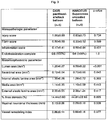
- Table 2 presents the mean and standard deviations of the values in single vessel and bifurcation dilatation.
- the animals were then euthanized for the safety study or allowed to recover for the efficacy study.
- the experiments were conducted in the Institute of Diagnostics and Oncoradiology, University of Kaposvar, Hungary.
- the animal investigations conform to the "Position of the American Heart Association on Research Animal Use", adopted by the AHA on November 11. 1984, and the relevant specific Hungarian laws were followed.
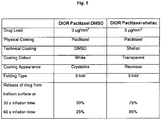
- the DIOR Paclitaxel-shellac catheter balloon (Eurocor GmbH) is a coronary dilation balloon for human use with a 3.0 p,g/mm 2 balloon-surface paclitaxel-shellac coating.
- the drug is dissolved in shellac, which is composed of a network of hydroxy fatty acid esters and sesquiterpene acid esters with a molecular weight of about 1000; aleuritic acid and jalaric acid and/shelloic acid are the major constituents of shellac.
- the 1:1 mixture of paclitaxel and shellac is coated onto the microporous DIORballoon-surface structure.
- DIOR Paclitaxel-shellac catheter balloon (Eurocor GmbH) and tracking to the coronary lesion, the three-folded DIOR Paclitaxel-shellac catheter balloon protects the loaded drug from an early wash-off effect.
- the DIOR Paclitaxel-shellac catheter balloon (Eurocor GmbH) was inserted into the LAD and LCx.
- the DIOR Paclitaxel-shellac catheter balloons were inflated for 15 s in 10 coronary segments, for 20 s in 6 coronary segments, for 30 s in 6 coronary segments, for 45 s in 7 coronary segments and 2x30 sec in 6 coronary segments and at 607.94-1418.53 kPa (6-14 atm) (1.3:1 balloon/artery ratio). Blood samples were taken 5, 10 and 30 min after balloon inflation.
- Euthanasia was performed with saturated potassium chloride at 45 min or 12 h after DIOR Paclitaxel-shellac catheter balloon (Eurocor GmbH) inflation. The balloons were then stored for measurements of remnant surface paclitaxel amount.
- the LAD and LCx dilated coronary arterial segments were prepared with additional proximal and distal reference segments (max. 10 mm proximal or distal from the dilated segment), and fresh-frozen for determination of tissue paclitaxel concentrations.
- Tissue samples connective tissue, fat and myocardium
- 1, 2 and 3 mm beneath the artery were prepared for determination of the depth of vertical paclitaxel penetration into the tissue.
- the paclitaxel concentration in the artery walls, the underlying tissue at 1, 2 and 3 mm deep layers, balloon surface and plasma was measured by high-performance liquid chromatography (HPLC). After thawing, the tissues were weighed at ambient temperature and, depending on weight different volumes of ethanol were added to the samples (sufficient ethanol to cover the tissue completely). The samples were then treated with ultrasound for 40 min, and 200- ⁇ L aliquots were then centrifuged and stored for subsequent measurements. A calibration line was produced in the range between 50 and 5000 ng/mL. The samples for the calibration line were prepared by dilution of a stock solution with a concentration of 1000 ⁇ g/mL.
- Loading dose of clopidogrel (300 mg per os) and acetylsalicylic acid (250 mg per os) were administered 24 h prior to the procedure.
- the medication was continued with a daily dose of 75 mg clopidogrel and 100 mg acetylsalicylic acid during the 2-week follow-up (FUP).
- Each pig was treated with both uncoated AMADEUS Supercross catheter balloon and DIOR Paclitaxel-shellac catheter balloon in a randomized fashion (DIOR Paclitaxel-shellac catheter balloon in either LAD or LCx).
- the balloons (2.75-3 mm of diameter, 15 mm of length) were inflated with 1013.24-1823.84 kPa (10-18 atm) for 30 s in order to achieve the 1.3:1 balloon:artery ratio.
- Control angiography was performed at 2-week FUP, followed by euthanasia.
- the coronary arteries were flushed with 100 ml saline followed by pressure fixation in 4% buffered formaldehyde for 30 min at 100-110 mmHg.
- the arteries were then cut from the epicardial surface and the location of the previous dilation was carefully identified based on the anatomical landmarks (side branches).
- the dilated segment (divided into three sections, such as proximal, mid and distal dilated segments), the proximal and distal reference segments (max. 10 mm proximal or distal from the dilated segment) were then fixed in 2% buffered formalin. Following this preparation, the arterial sections were embedded in paraffin and cut into 4-6- ⁇ m-thick slices and routinely stained with hematoxylin-eosin and Verhoeff-van Gieson-elastin.
- the histological analysis was performed by experienced investigators blinded to the treatments and focused on the arterial injury, and measurements of the neointimal hyperplasia. The following histopathological parameters were measured: injury score, fibrin and inflammation scores, and endothelialization. Vessel injury was determined by the anatomic vessel structures similar to the injury score after stenting ( Schwartz et al., J Am Coll Cardiol, 1992, 19, 267-74 ), and adapted for balloon injury only ( Rosenthal et al., Circulation, 2001, 104, 2222-2227 ).
- a numeric value was assigned according to the of severity injury: Grade 0: (no injury): internal (IEL) and external elastic lamina (IEL) and media intact; Grade 0.05: IEL minimal disruption, media and EEL intact; Grade 1: IEL lacerated, media and EEL intact; Grade 1.5 IEL lacerated, media ⁇ half thickness lacerated, EEL intact; Grade 2: IEL lacerated, media >half thickness lacerated, EEL intact; Grade 2.5: IEL and media (full thickness) lacerated, IEL minimal disruption; Grade 3: IEL, media (full thickness) and EEL lacerated.
- Inflammation score was graded as 0 for no inflammation to minimal amount of interspersed inflammatory cells in media or adventitia; 1 for mild inflammatory infiltration or focally moderated in ⁇ 25% of the vessel area in media or adventita; 2 for moderate inflammatory infiltration or focally marked in 25-50% of the vessel area in media or adventitia; 3 for heavy inflammatory infiltration or focally marked in >50% of the vessel area in media or adventitia, and 4 for granulomatous inflammatory reaction in any layer of the artery.
- Fibrin score was graded from 0 to 3 as no fibrin deposition or mild, moderate or heavy fibrin deposition, involving ⁇ 10%, 10-25% or >25% of the circumference of the vessel, respectively.
- Endothelialization was evaluated with a score system comprising absent, partial or complete.
- the following quantitative histomorphometric parameters of the dilated segment, and proximal and distal reference segments were measured: 1) lumen area, 2) IEL area, 3) EEL area, and 4) maximal neointimal thickness.
- the calculated histomorphometric parameters were as follows: 1) neointima area (difference between IEL and lumen area), 2) media area (difference between EEL and IEL area), 3) %area stenosis ((neointimal area/IEL area)*100), 3) remodeling index (EEL area of the dilated arterial segment / EEL area of the proximal reference segment
- Tissue distribution of paclitaxel after coronary intervention with fluorescent- paclitaxel (Oregon Green 488 Fluorecent paclitaxel conjugate, Molecular Probes, Invitrogen, Paisley PA4 9RF, UK) conjugate-coated stent and DIOR catheter balloon (both 3.0 mm in size and 15 mm in length, balloon inflation time 30 s with 1013.24 kPa (10 atm)) was compared.
- the arteries were prepared from the epicardial surface. The stent was removed carefully, and the arteries were cut longitudinally and unfolded. The intimal surface was displayed with fluorescent microscopy.
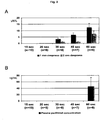
- Paclitaxel concentrations were also detected in proximal and distal reference segments ( Fig. 1 ). There were gradually decreasing remnant amount of paclitaxel on the balloon surfaces after balloon inflation times of 15 (182 ⁇ 12 ⁇ g), 20 (144 ⁇ 10 ⁇ g), 30 (131 ⁇ 12 ⁇ g), 45 (85 ⁇ 4 ⁇ g) and 60 (73 ⁇ 6 ⁇ g) s with an 75 ⁇ 7 and 81 ⁇ 6% drug release from the balloon surface after a balloon inflation duration of 30 or 45 s, respectively.
- the arterial tissue paclitaxel concentration decreased up to 1 ⁇ 0.1 ⁇ M/L, 31 ⁇ 3 ⁇ M/L, 50 ⁇ 8 ⁇ M/L, 47 ⁇ 9 ⁇ M/L and 48 ⁇ 7 ⁇ M/L 12h post-dilation, according to increasing balloon inflation time ( Fig. 1 ).
- the tissues beneath the arteries contained Paclitaxel in increasing amount up to 60 s inflation time at 1 and 2 mm vertical deepness 45 min postdilation ( Fig. 2 ), with maximal paclitaxel concentrations of 12.4 ⁇ 3.2 and 7.3 ⁇ 1.9 ⁇ M/L respectively, while no paclitaxel was detected at 3 mm deepness.
- Paclitaxel concentrations in plasma (up to 85.8 ng/mL; mean 45 ⁇ 28 ng/mL) were only detectable after a balloon inflation time of 60 s, 5 min post exposure.
- Fluorescence paclitaxel derivative-coating of DIOR balloon showed a homogenous distribution of the drug onto the vessel, in contrast with the uneven distribution caused by the fluorescence paclitaxel derivative-coated stent.
Landscapes
- Health & Medical Sciences (AREA)
- Life Sciences & Earth Sciences (AREA)
- General Health & Medical Sciences (AREA)
- Veterinary Medicine (AREA)
- Public Health (AREA)
- Epidemiology (AREA)
- Animal Behavior & Ethology (AREA)
- Chemical & Material Sciences (AREA)
- Medicinal Chemistry (AREA)
- Biomedical Technology (AREA)
- Molecular Biology (AREA)
- Engineering & Computer Science (AREA)
- Materials For Medical Uses (AREA)
- Pharmaceuticals Containing Other Organic And Inorganic Compounds (AREA)
- Chemical Kinetics & Catalysis (AREA)
- Polymers & Plastics (AREA)
- Organic Chemistry (AREA)
Claims (8)
- Ballonnet de cathéter comprenant un revêtement avec du paclitaxel et de la gomme-laque, le revêtement avec du paclitaxel et de la gomme-laque étant appliqué sur le ballonnet non revêtu à hauteur d'une quantité de 1 µg/mm2 à 12 µg/mm2 en solution.
- Procédé pour le revêtement d'un ballonnet de cathéter comprenant les étapes suivantes :I) se procurer un ballonnet de cathéter non revêtu ;
etIIA) se procurer une solution de paclitaxel et de gomme-laque ;
ouIIB) se procurer une solution de paclitaxel et se procurer une solution de gomme-laque ;
etIIIA) revêtir la surface du ballonnet de cathéter avec la solution de paclitaxel et de gomme-laque ;
ouIIIB) revêtir la surface du ballonnet du cathéter avec la solution de paclitaxel et ensuite avec la solution de gomme-laque ou revêtir la surface du ballonnet du cathéter avec la solution de gomme-laque et ensuite avec la solution de paclitaxel ;IV) sécher le ballonnet de cathéter revêtu. - Procédé selon la revendication 2, dans lequel la solution de paclitaxel et la solution de gomme-laque ou la solution de paclitaxel et de gomme-laque sont préparées dans l'acétone, l'acétate d'éthyle, l'éthanol, le méthanol, le DMSO, le THF, le chloroforme, le chlorure de méthylène ou des mélanges des solvants susmentionnés.
- Procédé selon la revendication 2 ou 3, dans lequel la charge en surface totale de paclitaxel et de gomme-laque du ballonnet du cathéter est comprise entre 1 µg/mm2 et 12 µg/mm2 et/ou dans lequel la charge en surface totale de paclitaxel du ballonnet du cathéter est comprise entre 0,5 µg/mm2 et 6 µg/mm2.
- Procédé selon la revendication 2, comprenant en outre l'étape IB) :
IB) protéger les parties du cathéter à ballonnet qui ne doivent pas être revêtues avec une feuille de protection amovible. - Procédé selon la revendication 2, comprenant en outre l'étape VI) :
VI) protéger le ballonnet de cathéter revêtu avec un couvercle de protection amovible. - Procédé selon les revendications 2 à 6, dans lequel au moins une substance porteuse est ajoutée à la solution de revêtement contenant du paclitaxel.
- Cathéter de dilatation comprenant le ballonnet de cathéter revêtu selon la revendication 1.
Priority Applications (1)
| Application Number | Priority Date | Filing Date | Title |
|---|---|---|---|
| EP10721115.3A EP2421572B2 (fr) | 2009-04-24 | 2010-04-26 | Ballons de cathéter recouverts de gomme laque et de paclitaxel |
Applications Claiming Priority (3)
| Application Number | Priority Date | Filing Date | Title |
|---|---|---|---|
| EP09075191A EP2243501A1 (fr) | 2009-04-24 | 2009-04-24 | Ballons de cathéter recouverts de gomme laque et de paclitaxel |
| EP10721115.3A EP2421572B2 (fr) | 2009-04-24 | 2010-04-26 | Ballons de cathéter recouverts de gomme laque et de paclitaxel |
| PCT/EP2010/002824 WO2010121840A2 (fr) | 2009-04-24 | 2010-04-26 | Ballons de cathéter recouverts de gomme-laque et de paclitaxel |
Publications (3)
| Publication Number | Publication Date |
|---|---|
| EP2421572A2 EP2421572A2 (fr) | 2012-02-29 |
| EP2421572B1 EP2421572B1 (fr) | 2016-08-31 |
| EP2421572B2 true EP2421572B2 (fr) | 2021-09-15 |
Family
ID=41035593
Family Applications (2)
| Application Number | Title | Priority Date | Filing Date |
|---|---|---|---|
| EP09075191A Withdrawn EP2243501A1 (fr) | 2009-04-24 | 2009-04-24 | Ballons de cathéter recouverts de gomme laque et de paclitaxel |
| EP10721115.3A Active EP2421572B2 (fr) | 2009-04-24 | 2010-04-26 | Ballons de cathéter recouverts de gomme laque et de paclitaxel |
Family Applications Before (1)
| Application Number | Title | Priority Date | Filing Date |
|---|---|---|---|
| EP09075191A Withdrawn EP2243501A1 (fr) | 2009-04-24 | 2009-04-24 | Ballons de cathéter recouverts de gomme laque et de paclitaxel |
Country Status (6)
| Country | Link |
|---|---|
| US (2) | US10293085B2 (fr) |
| EP (2) | EP2243501A1 (fr) |
| CN (2) | CN102458497B (fr) |
| BR (1) | BRPI1015537B1 (fr) |
| DE (1) | DE202010017248U1 (fr) |
| WO (1) | WO2010121840A2 (fr) |
Cited By (1)
| Publication number | Priority date | Publication date | Assignee | Title |
|---|---|---|---|---|
| US12310843B2 (en) | 2020-08-24 | 2025-05-27 | Edwards Lifesciences Corporation | Balloon cover for a delivery apparatus for an expandable prosthetic heart valve |
Families Citing this family (57)
| Publication number | Priority date | Publication date | Assignee | Title |
|---|---|---|---|---|
| US20040226556A1 (en) | 2003-05-13 | 2004-11-18 | Deem Mark E. | Apparatus for treating asthma using neurotoxin |
| US8414909B2 (en) | 2006-11-20 | 2013-04-09 | Lutonix, Inc. | Drug releasing coatings for medical devices |
| US9700704B2 (en) | 2006-11-20 | 2017-07-11 | Lutonix, Inc. | Drug releasing coatings for balloon catheters |
| US9737640B2 (en) | 2006-11-20 | 2017-08-22 | Lutonix, Inc. | Drug releasing coatings for medical devices |
| US8414910B2 (en) | 2006-11-20 | 2013-04-09 | Lutonix, Inc. | Drug releasing coatings for medical devices |
| US8414526B2 (en) | 2006-11-20 | 2013-04-09 | Lutonix, Inc. | Medical device rapid drug releasing coatings comprising oils, fatty acids, and/or lipids |
| US20080276935A1 (en) | 2006-11-20 | 2008-11-13 | Lixiao Wang | Treatment of asthma and chronic obstructive pulmonary disease with anti-proliferate and anti-inflammatory drugs |
| US8425459B2 (en) | 2006-11-20 | 2013-04-23 | Lutonix, Inc. | Medical device rapid drug releasing coatings comprising a therapeutic agent and a contrast agent |
| US8483831B1 (en) | 2008-02-15 | 2013-07-09 | Holaira, Inc. | System and method for bronchial dilation |
| KR101719824B1 (ko) | 2008-05-09 | 2017-04-04 | 호라이라 인코포레이티드 | 기관지나무 치료용 시스템, 어셈블리 및 방법 |
| EP2926757B1 (fr) | 2009-10-27 | 2023-01-25 | Nuvaira, Inc. | Dispositifs d'administration dotés d'ensembles d'émission d'énergie pouvant être refroidis |
| US8911439B2 (en) | 2009-11-11 | 2014-12-16 | Holaira, Inc. | Non-invasive and minimally invasive denervation methods and systems for performing the same |
| AU2010319477A1 (en) | 2009-11-11 | 2012-05-24 | Holaira, Inc. | Systems, apparatuses, and methods for treating tissue and controlling stenosis |
| EP2335745B1 (fr) * | 2009-12-21 | 2017-11-22 | Biotronik VI Patent AG | Implant doté d'un revêtement |
| DE202009017490U1 (de) * | 2009-12-22 | 2010-04-08 | Sellin, Lothar | Weihrauch- und/oder Boswelliasäuren Beschichtung |
| DE102011000340A1 (de) * | 2010-12-04 | 2012-06-06 | Alexander Rübben | Beschichtung und Beschichtungsverfahren für den Ballon eines Ballonkatheters sowie Ballonkatheter mit beschichtetem Ballon |
| DK2646066T3 (en) * | 2010-12-04 | 2018-06-25 | Aachen Scient International Pte Ltd | Coating and coating method of the balloon on a balloon catheter as well as balloon catheter with coated balloon |
| DE102011100122A1 (de) * | 2011-04-26 | 2012-10-31 | Eurocor Gmbh | Katheterballon beschichtet mit Rapamycin und Schellack |
| WO2013007273A1 (fr) * | 2011-07-08 | 2013-01-17 | Cardionovum Sp.Z.O.O. | Revêtement superficiel pour ballonnets |
| PL2729195T3 (pl) * | 2011-07-08 | 2016-04-29 | Cardionovum Gmbh | Cewnik balonowy z balonem cewnika pokrytym sirolimusem do kontrolowanego uwalniania sirolimusu |
| WO2013079476A1 (fr) | 2011-11-30 | 2013-06-06 | Bayer Materialscience Ag | Appareil médical enduit de produit pharmaceutique et son procédé de fabrication |
| WO2014029442A1 (fr) * | 2012-08-23 | 2014-02-27 | Cardionovum Gmbh | Revêtement de surface de ballonnet pour valvuloplastie |
| CN102911122B (zh) * | 2012-11-08 | 2015-01-21 | 兰亚朝 | 甲硝唑的制备方法 |
| US9398933B2 (en) | 2012-12-27 | 2016-07-26 | Holaira, Inc. | Methods for improving drug efficacy including a combination of drug administration and nerve modulation |
| CN104394898B (zh) * | 2013-05-02 | 2017-10-13 | 卡迪奥诺沃姆有限公司 | 球囊表面涂层 |
| WO2014177221A1 (fr) * | 2013-05-02 | 2014-11-06 | Cardionovum Gmbh | Revêtement de surface de ballonnet |
| CN104174074B (zh) * | 2013-11-27 | 2016-05-18 | 浙江归创医疗器械有限公司 | 一种适用于涂在植入或介入医疗器械表面的药物涂层组合物 |
| EP3089769A1 (fr) * | 2014-01-02 | 2016-11-09 | Boston Scientific Scimed, Inc. | Ballonnet d'élution de médicament avec orientation préférée du médicament pour améliorer l'efficacité de transfert du médicament |
| DE102014106422A1 (de) | 2014-05-08 | 2015-11-12 | Dot Gmbh | Verfahren, Vorrichtung und Zusammensetzung zur Herstellung von beschichteten Ballonkathetern |
| AU2016209105B2 (en) * | 2015-01-22 | 2020-05-14 | Intersect Ent, Inc. | Drug-coated balloon |
| DE102015101380A1 (de) | 2015-01-30 | 2016-08-04 | Dot Gmbh | Medizinprodukt mit Wirkstoffbeschichtung und Verfahren zu dessen Herstellung |
| CN108778390B (zh) * | 2015-10-30 | 2023-09-22 | 北京先瑞达医疗科技有限公司 | 用于动静脉短路的药物涂层球囊导管 |
| US10794523B2 (en) * | 2015-12-14 | 2020-10-06 | Wilmarc Holdings, Llc | Laser induced sealing of concentrically layered materials |
| US10792477B2 (en) | 2016-02-08 | 2020-10-06 | Orbusneich Medical Pte. Ltd. | Drug eluting balloon |
| JP7027319B2 (ja) * | 2016-02-08 | 2022-03-01 | オーバスネイチ・メディカル・プライベート・リミテッド | 薬剤溶出性バルーン |
| DE102016110815B4 (de) | 2016-06-13 | 2018-05-17 | Dot Gmbh | Beschichteter Ballonkatheter und Zusammensetzung zur Beschichtung des Ballonkatheters |
| US11096781B2 (en) | 2016-08-01 | 2021-08-24 | Edwards Lifesciences Corporation | Prosthetic heart valve |
| CN106139259A (zh) * | 2016-08-17 | 2016-11-23 | 林春梅 | 一种具有药物缓释功能血管支架涂层及其制备方法 |
| CN107865868B (zh) | 2016-09-27 | 2020-04-10 | 上海微创医疗器械(集团)有限公司 | 氨来呫诺的新用途 |
| JP7005742B2 (ja) * | 2017-07-26 | 2022-01-24 | 鼎科医療技術(蘇州)有限公司 | 表面液化薬物コートバルーン |
| WO2019110600A1 (fr) * | 2017-12-06 | 2019-06-13 | Biotronik Ag | Substances et méthodes d'administration de médicament intracrânienne |
| CN107982578B (zh) * | 2017-12-15 | 2021-04-13 | 太原理工大学 | 纳米羟基磷灰石/环糊精基聚氨酯复合多孔骨组织工程支架材料的制备方法 |
| US10688289B2 (en) | 2018-06-12 | 2020-06-23 | Intersect Ent, Inc. | Systems and methods for sinus access |
| CN109091748A (zh) * | 2018-08-15 | 2018-12-28 | 山东吉威医疗制品有限公司 | 一种药物涂层球囊及其制备方法 |
| US11672959B2 (en) | 2019-01-18 | 2023-06-13 | Intersect Ent, Inc. | Expandable member systems and methods for drug delivery |
| US11931482B2 (en) | 2019-03-18 | 2024-03-19 | Brown University | Auranofin-releasing antibacterial and antibiofilm polyurethane intravascular catheter coatings |
| SG11202110934WA (en) | 2019-05-02 | 2021-10-28 | Intersect Ent Int Gmbh | Balloon dilation device |
| US12195755B2 (en) | 2019-05-20 | 2025-01-14 | Brown University | Placental lipid bilayer for cell-free molecular interaction studies |
| WO2021087008A1 (fr) | 2019-10-28 | 2021-05-06 | Brown University | Hydrogels sensibles à la bêta-lactamase bactérienne |
| CN111701081B (zh) * | 2020-06-23 | 2021-11-16 | 首都医科大学 | 一种药物涂层球囊用药物涂覆液、药物涂层球囊 |
| WO2022023416A1 (fr) * | 2020-07-29 | 2022-02-03 | Biotronik Ag | Dispositifs médicaux et procédés d'enrobage de médicaments par microsphères |
| CN116829203A (zh) | 2020-11-16 | 2023-09-29 | 亨莫特克股份公司 | 涂覆的医疗产品 |
| JP2023552686A (ja) | 2020-11-16 | 2023-12-19 | ヘモテック アーゲー | 被覆された医療製品 |
| CN113975593A (zh) * | 2021-09-16 | 2022-01-28 | 上海市普陀区中心医院 | 一种可达龙药物球囊及其制备方法 |
| CN116407735A (zh) * | 2021-12-29 | 2023-07-11 | 杭州矩正医疗科技有限公司 | 载药球囊导管及可生成血管微支架的药物的输送系统 |
| CN116407736A (zh) * | 2021-12-29 | 2023-07-11 | 杭州矩正医疗科技有限公司 | 载药球囊导管及其制备方法 |
| CN114533955B (zh) * | 2022-02-16 | 2023-07-28 | 苏州英诺科医疗科技有限公司 | 结合力强的医用镁合金表面涂层及其制备方法 |
Family Cites Families (21)
| Publication number | Priority date | Publication date | Assignee | Title |
|---|---|---|---|---|
| US5102402A (en) | 1991-01-04 | 1992-04-07 | Medtronic, Inc. | Releasable coatings on balloon catheters |
| WO1994023787A1 (fr) | 1993-04-22 | 1994-10-27 | Rammler David H | Catheter a ballon de prelevement |
| CA2472404A1 (fr) | 1993-07-19 | 1995-02-02 | Angiotech Pharmaceuticals, Inc. | Combinaison de stent et d'un facteur anti-angiogenique |
| KR100636338B1 (ko) * | 1998-10-05 | 2006-10-18 | 가부시키가이샤 가네가 | 풍선 카테테르 및 그 제조방법 |
| US6638246B1 (en) | 2000-11-28 | 2003-10-28 | Scimed Life Systems, Inc. | Medical device for delivery of a biologically active material to a lumen |
| CN1568166A (zh) * | 2001-10-15 | 2005-01-19 | 荷姆泰克股份有限公司 | 预防再狭窄的涂层支架 |
| US7160317B2 (en) | 2002-01-04 | 2007-01-09 | Boston Scientific Scimed, Inc. | Multiple-wing balloon catheter to reduce damage to coated expandable medical implants |
| CN100346850C (zh) * | 2003-05-28 | 2007-11-07 | 微创医疗器械(上海)有限公司 | 一种药物涂层支架 |
| DK1521603T3 (da) | 2002-07-12 | 2011-04-18 | Cook Inc | Coated medicinsk anordning |
| DE10244847A1 (de) | 2002-09-20 | 2004-04-01 | Ulrich Prof. Dr. Speck | Medizinische Vorrichtung zur Arzneimittelabgabe |
| DE10322182A1 (de) * | 2003-05-16 | 2004-12-02 | Blue Membranes Gmbh | Verfahren zur Herstellung von porösem, kohlenstoffbasiertem Material |
| AU2005222719B2 (en) | 2004-03-19 | 2011-03-24 | Abbott Laboratories | Multiple drug delivery from a balloon and a prosthesis |
| WO2007003516A2 (fr) * | 2005-07-01 | 2007-01-11 | Cinvention Ag | Dispositifs medicaux comprenant une matiere composite reticulee |
| KR101411100B1 (ko) * | 2006-01-23 | 2014-07-08 | 이슘 리서치 디벨롭먼트 컴퍼니 오브 더 히브루 유니버시티 오브 예루살렘, 엘티디. | 친지성 약물을 함유하는 나노캡슐을 포함하는 미소구체 |
| DE102007010354A1 (de) * | 2006-09-28 | 2008-04-03 | Biosteel Medical Han/Sellin GbR (vertretungsberechtigter Gesellschafter Lothar Sellin, 52074 Aachen) | Beschichtete expandierbare Vorrichtung |
| EP1913960A1 (fr) * | 2006-10-19 | 2008-04-23 | Albert Schömig | implant enrobé |
| EP1916006A1 (fr) * | 2006-10-19 | 2008-04-30 | Albert Schömig | Implant revêtu de cire ou de résine |
| US8414909B2 (en) * | 2006-11-20 | 2013-04-09 | Lutonix, Inc. | Drug releasing coatings for medical devices |
| DE102007003184A1 (de) * | 2007-01-22 | 2008-07-24 | Orlowski, Michael, Dr. | Verfahren zur Beladung von strukturierten Oberflächen |
| JP2011513004A (ja) * | 2008-03-06 | 2011-04-28 | ボストン サイエンティフィック サイムド,インコーポレイテッド | 折り目を有するバルーンを備えたバルーンカテーテル器具 |
| EP2296722B2 (fr) | 2008-05-31 | 2022-01-12 | Lothar Sellin | Système médical et procédé de production associé |
-
2009
- 2009-04-24 EP EP09075191A patent/EP2243501A1/fr not_active Withdrawn
-
2010
- 2010-04-26 CN CN201080028129.3A patent/CN102458497B/zh active Active
- 2010-04-26 EP EP10721115.3A patent/EP2421572B2/fr active Active
- 2010-04-26 CN CN202011304960.9A patent/CN112704769A/zh active Pending
- 2010-04-26 WO PCT/EP2010/002824 patent/WO2010121840A2/fr not_active Ceased
- 2010-04-26 BR BRPI1015537A patent/BRPI1015537B1/pt active IP Right Grant
- 2010-04-26 US US13/266,059 patent/US10293085B2/en active Active
- 2010-04-26 DE DE202010017248U patent/DE202010017248U1/de not_active Expired - Lifetime
-
2019
- 2019-05-14 US US16/411,801 patent/US11167065B2/en active Active
Cited By (1)
| Publication number | Priority date | Publication date | Assignee | Title |
|---|---|---|---|---|
| US12310843B2 (en) | 2020-08-24 | 2025-05-27 | Edwards Lifesciences Corporation | Balloon cover for a delivery apparatus for an expandable prosthetic heart valve |
Also Published As
| Publication number | Publication date |
|---|---|
| CN102458497A (zh) | 2012-05-16 |
| US20190275211A1 (en) | 2019-09-12 |
| WO2010121840A3 (fr) | 2011-11-10 |
| US11167065B2 (en) | 2021-11-09 |
| US10293085B2 (en) | 2019-05-21 |
| BRPI1015537A2 (pt) | 2018-01-16 |
| EP2243501A1 (fr) | 2010-10-27 |
| EP2421572A2 (fr) | 2012-02-29 |
| BRPI1015537B1 (pt) | 2019-01-08 |
| DE202010017248U1 (de) | 2011-08-23 |
| CN112704769A (zh) | 2021-04-27 |
| CN102458497B (zh) | 2020-11-24 |
| US20120143132A1 (en) | 2012-06-07 |
| WO2010121840A2 (fr) | 2010-10-28 |
| EP2421572B1 (fr) | 2016-08-31 |
Similar Documents
| Publication | Publication Date | Title |
|---|---|---|
| US11167065B2 (en) | Shellac and paclitaxel coated catheter balloons | |
| CA2462723C (fr) | Endoprothese revetue servant a prevenir la restenose | |
| CA2910336C (fr) | Revetement de surface de ballonnet comprenant un sel de laque hydrosoluble | |
| JP6097748B2 (ja) | バルーン表面被覆 | |
| US20100145266A1 (en) | Method for loading structured surfaces | |
| US20140107574A1 (en) | Catheter balloon coated with rapamycin and shellac | |
| US9981058B2 (en) | Balloon surface coating | |
| WO2014008875A1 (fr) | Ballonnet de cathéter, procédé de fabrication d'un ballonnet de cathéter revêtu, et utilisation de la substance active pharmacologique | |
| WO2014125465A2 (fr) | Procédé pour ajouter une charge à des ballonnets de cathéters dilatables et cathéters de dilatation ainsi obtenus | |
| JP7335920B2 (ja) | 医療用具のための薬物放出コーティング | |
| EP2643030B1 (fr) | Revêtement de surface de ballonnet | |
| EP2729196B1 (fr) | Revêtement superficiel pour ballonnets | |
| EP2729195B1 (fr) | Cathéter à ballonnet comprenant un ballonnet de cathéter enduit de sirolimus à libération contrôlée | |
| EP2958607B1 (fr) | Revêtement de surface de ballonnet | |
| WO2014177221A1 (fr) | Revêtement de surface de ballonnet |
Legal Events
| Date | Code | Title | Description |
|---|---|---|---|
| PUAI | Public reference made under article 153(3) epc to a published international application that has entered the european phase |
Free format text: ORIGINAL CODE: 0009012 |
|
| 17P | Request for examination filed |
Effective date: 20111123 |
|
| AK | Designated contracting states |
Kind code of ref document: A2 Designated state(s): AT BE BG CH CY CZ DE DK EE ES FI FR GB GR HR HU IE IS IT LI LT LU LV MC MK MT NL NO PL PT RO SE SI SK SM TR |
|
| DAX | Request for extension of the european patent (deleted) | ||
| RAP1 | Party data changed (applicant data changed or rights of an application transferred) |
Owner name: BIOSENSORS EUROPE S.A. |
|
| 17Q | First examination report despatched |
Effective date: 20131002 |
|
| GRAP | Despatch of communication of intention to grant a patent |
Free format text: ORIGINAL CODE: EPIDOSNIGR1 |
|
| INTG | Intention to grant announced |
Effective date: 20160309 |
|
| GRAS | Grant fee paid |
Free format text: ORIGINAL CODE: EPIDOSNIGR3 |
|
| GRAA | (expected) grant |
Free format text: ORIGINAL CODE: 0009210 |
|
| AK | Designated contracting states |
Kind code of ref document: B1 Designated state(s): AT BE BG CH CY CZ DE DK EE ES FI FR GB GR HR HU IE IS IT LI LT LU LV MC MK MT NL NO PL PT RO SE SI SK SM TR |
|
| REG | Reference to a national code |
Ref country code: CH Ref legal event code: EP Ref country code: GB Ref legal event code: FG4D |
|
| RIN1 | Information on inventor provided before grant (corrected) |
Inventor name: ORLOWSKI, MICHAEL |
|
| REG | Reference to a national code |
Ref country code: IE Ref legal event code: FG4D |
|
| REG | Reference to a national code |
Ref country code: DE Ref legal event code: R096 Ref document number: 602010035986 Country of ref document: DE |
|
| REG | Reference to a national code |
Ref country code: AT Ref legal event code: REF Ref document number: 824413 Country of ref document: AT Kind code of ref document: T Effective date: 20161015 |
|
| REG | Reference to a national code |
Ref country code: LT Ref legal event code: MG4D |
|
| REG | Reference to a national code |
Ref country code: NL Ref legal event code: MP Effective date: 20160831 |
|
| REG | Reference to a national code |
Ref country code: AT Ref legal event code: MK05 Ref document number: 824413 Country of ref document: AT Kind code of ref document: T Effective date: 20160831 |
|
| PG25 | Lapsed in a contracting state [announced via postgrant information from national office to epo] |
Ref country code: HR Free format text: LAPSE BECAUSE OF FAILURE TO SUBMIT A TRANSLATION OF THE DESCRIPTION OR TO PAY THE FEE WITHIN THE PRESCRIBED TIME-LIMIT Effective date: 20160831 Ref country code: FI Free format text: LAPSE BECAUSE OF FAILURE TO SUBMIT A TRANSLATION OF THE DESCRIPTION OR TO PAY THE FEE WITHIN THE PRESCRIBED TIME-LIMIT Effective date: 20160831 Ref country code: LT Free format text: LAPSE BECAUSE OF FAILURE TO SUBMIT A TRANSLATION OF THE DESCRIPTION OR TO PAY THE FEE WITHIN THE PRESCRIBED TIME-LIMIT Effective date: 20160831 Ref country code: NO Free format text: LAPSE BECAUSE OF FAILURE TO SUBMIT A TRANSLATION OF THE DESCRIPTION OR TO PAY THE FEE WITHIN THE PRESCRIBED TIME-LIMIT Effective date: 20161130 |
|
| PG25 | Lapsed in a contracting state [announced via postgrant information from national office to epo] |
Ref country code: ES Free format text: LAPSE BECAUSE OF FAILURE TO SUBMIT A TRANSLATION OF THE DESCRIPTION OR TO PAY THE FEE WITHIN THE PRESCRIBED TIME-LIMIT Effective date: 20160831 Ref country code: AT Free format text: LAPSE BECAUSE OF FAILURE TO SUBMIT A TRANSLATION OF THE DESCRIPTION OR TO PAY THE FEE WITHIN THE PRESCRIBED TIME-LIMIT Effective date: 20160831 Ref country code: SE Free format text: LAPSE BECAUSE OF FAILURE TO SUBMIT A TRANSLATION OF THE DESCRIPTION OR TO PAY THE FEE WITHIN THE PRESCRIBED TIME-LIMIT Effective date: 20160831 Ref country code: GR Free format text: LAPSE BECAUSE OF FAILURE TO SUBMIT A TRANSLATION OF THE DESCRIPTION OR TO PAY THE FEE WITHIN THE PRESCRIBED TIME-LIMIT Effective date: 20161201 Ref country code: NL Free format text: LAPSE BECAUSE OF FAILURE TO SUBMIT A TRANSLATION OF THE DESCRIPTION OR TO PAY THE FEE WITHIN THE PRESCRIBED TIME-LIMIT Effective date: 20160831 Ref country code: LV Free format text: LAPSE BECAUSE OF FAILURE TO SUBMIT A TRANSLATION OF THE DESCRIPTION OR TO PAY THE FEE WITHIN THE PRESCRIBED TIME-LIMIT Effective date: 20160831 |
|
| PG25 | Lapsed in a contracting state [announced via postgrant information from national office to epo] |
Ref country code: RO Free format text: LAPSE BECAUSE OF FAILURE TO SUBMIT A TRANSLATION OF THE DESCRIPTION OR TO PAY THE FEE WITHIN THE PRESCRIBED TIME-LIMIT Effective date: 20160831 Ref country code: EE Free format text: LAPSE BECAUSE OF FAILURE TO SUBMIT A TRANSLATION OF THE DESCRIPTION OR TO PAY THE FEE WITHIN THE PRESCRIBED TIME-LIMIT Effective date: 20160831 |
|
| REG | Reference to a national code |
Ref country code: FR Ref legal event code: PLFP Year of fee payment: 8 |
|
| PG25 | Lapsed in a contracting state [announced via postgrant information from national office to epo] |
Ref country code: PL Free format text: LAPSE BECAUSE OF FAILURE TO SUBMIT A TRANSLATION OF THE DESCRIPTION OR TO PAY THE FEE WITHIN THE PRESCRIBED TIME-LIMIT Effective date: 20160831 Ref country code: DK Free format text: LAPSE BECAUSE OF FAILURE TO SUBMIT A TRANSLATION OF THE DESCRIPTION OR TO PAY THE FEE WITHIN THE PRESCRIBED TIME-LIMIT Effective date: 20160831 Ref country code: BE Free format text: LAPSE BECAUSE OF FAILURE TO SUBMIT A TRANSLATION OF THE DESCRIPTION OR TO PAY THE FEE WITHIN THE PRESCRIBED TIME-LIMIT Effective date: 20160831 Ref country code: BG Free format text: LAPSE BECAUSE OF FAILURE TO SUBMIT A TRANSLATION OF THE DESCRIPTION OR TO PAY THE FEE WITHIN THE PRESCRIBED TIME-LIMIT Effective date: 20161130 Ref country code: CZ Free format text: LAPSE BECAUSE OF FAILURE TO SUBMIT A TRANSLATION OF THE DESCRIPTION OR TO PAY THE FEE WITHIN THE PRESCRIBED TIME-LIMIT Effective date: 20160831 Ref country code: PT Free format text: LAPSE BECAUSE OF FAILURE TO SUBMIT A TRANSLATION OF THE DESCRIPTION OR TO PAY THE FEE WITHIN THE PRESCRIBED TIME-LIMIT Effective date: 20170102 Ref country code: SM Free format text: LAPSE BECAUSE OF FAILURE TO SUBMIT A TRANSLATION OF THE DESCRIPTION OR TO PAY THE FEE WITHIN THE PRESCRIBED TIME-LIMIT Effective date: 20160831 Ref country code: SK Free format text: LAPSE BECAUSE OF FAILURE TO SUBMIT A TRANSLATION OF THE DESCRIPTION OR TO PAY THE FEE WITHIN THE PRESCRIBED TIME-LIMIT Effective date: 20160831 |
|
| REG | Reference to a national code |
Ref country code: DE Ref legal event code: R026 Ref document number: 602010035986 Country of ref document: DE |
|
| PLBI | Opposition filed |
Free format text: ORIGINAL CODE: 0009260 |
|
| PG25 | Lapsed in a contracting state [announced via postgrant information from national office to epo] |
Ref country code: IT Free format text: LAPSE BECAUSE OF FAILURE TO SUBMIT A TRANSLATION OF THE DESCRIPTION OR TO PAY THE FEE WITHIN THE PRESCRIBED TIME-LIMIT Effective date: 20160831 |
|
| PLAX | Notice of opposition and request to file observation + time limit sent |
Free format text: ORIGINAL CODE: EPIDOSNOBS2 |
|
| 26 | Opposition filed |
Opponent name: MAINITZ, STEPHAN Effective date: 20170531 |
|
| PG25 | Lapsed in a contracting state [announced via postgrant information from national office to epo] |
Ref country code: SI Free format text: LAPSE BECAUSE OF FAILURE TO SUBMIT A TRANSLATION OF THE DESCRIPTION OR TO PAY THE FEE WITHIN THE PRESCRIBED TIME-LIMIT Effective date: 20160831 |
|
| PLBB | Reply of patent proprietor to notice(s) of opposition received |
Free format text: ORIGINAL CODE: EPIDOSNOBS3 |
|
| PG25 | Lapsed in a contracting state [announced via postgrant information from national office to epo] |
Ref country code: MC Free format text: LAPSE BECAUSE OF FAILURE TO SUBMIT A TRANSLATION OF THE DESCRIPTION OR TO PAY THE FEE WITHIN THE PRESCRIBED TIME-LIMIT Effective date: 20160831 |
|
| PG25 | Lapsed in a contracting state [announced via postgrant information from national office to epo] |
Ref country code: LU Free format text: LAPSE BECAUSE OF NON-PAYMENT OF DUE FEES Effective date: 20170426 |
|
| REG | Reference to a national code |
Ref country code: FR Ref legal event code: PLFP Year of fee payment: 9 |
|
| PG25 | Lapsed in a contracting state [announced via postgrant information from national office to epo] |
Ref country code: MT Free format text: LAPSE BECAUSE OF NON-PAYMENT OF DUE FEES Effective date: 20170426 |
|
| APBM | Appeal reference recorded |
Free format text: ORIGINAL CODE: EPIDOSNREFNO |
|
| APBP | Date of receipt of notice of appeal recorded |
Free format text: ORIGINAL CODE: EPIDOSNNOA2O |
|
| APAH | Appeal reference modified |
Free format text: ORIGINAL CODE: EPIDOSCREFNO |
|
| APBQ | Date of receipt of statement of grounds of appeal recorded |
Free format text: ORIGINAL CODE: EPIDOSNNOA3O |
|
| PG25 | Lapsed in a contracting state [announced via postgrant information from national office to epo] |
Ref country code: HU Free format text: LAPSE BECAUSE OF FAILURE TO SUBMIT A TRANSLATION OF THE DESCRIPTION OR TO PAY THE FEE WITHIN THE PRESCRIBED TIME-LIMIT; INVALID AB INITIO Effective date: 20100426 |
|
| PG25 | Lapsed in a contracting state [announced via postgrant information from national office to epo] |
Ref country code: CY Free format text: LAPSE BECAUSE OF NON-PAYMENT OF DUE FEES Effective date: 20160831 |
|
| PG25 | Lapsed in a contracting state [announced via postgrant information from national office to epo] |
Ref country code: MK Free format text: LAPSE BECAUSE OF FAILURE TO SUBMIT A TRANSLATION OF THE DESCRIPTION OR TO PAY THE FEE WITHIN THE PRESCRIBED TIME-LIMIT Effective date: 20160831 |
|
| PG25 | Lapsed in a contracting state [announced via postgrant information from national office to epo] |
Ref country code: TR Free format text: LAPSE BECAUSE OF FAILURE TO SUBMIT A TRANSLATION OF THE DESCRIPTION OR TO PAY THE FEE WITHIN THE PRESCRIBED TIME-LIMIT Effective date: 20160831 |
|
| PG25 | Lapsed in a contracting state [announced via postgrant information from national office to epo] |
Ref country code: IS Free format text: LAPSE BECAUSE OF FAILURE TO SUBMIT A TRANSLATION OF THE DESCRIPTION OR TO PAY THE FEE WITHIN THE PRESCRIBED TIME-LIMIT Effective date: 20161231 |
|
| APBU | Appeal procedure closed |
Free format text: ORIGINAL CODE: EPIDOSNNOA9O |
|
| PLAB | Opposition data, opponent's data or that of the opponent's representative modified |
Free format text: ORIGINAL CODE: 0009299OPPO |
|
| PLBP | Opposition withdrawn |
Free format text: ORIGINAL CODE: 0009264 |
|
| R26 | Opposition filed (corrected) |
Opponent name: MAINITZ, STEPHAN Effective date: 20170531 |
|
| PUAH | Patent maintained in amended form |
Free format text: ORIGINAL CODE: 0009272 |
|
| STAA | Information on the status of an ep patent application or granted ep patent |
Free format text: STATUS: PATENT MAINTAINED AS AMENDED |
|
| 27A | Patent maintained in amended form |
Effective date: 20210915 |
|
| AK | Designated contracting states |
Kind code of ref document: B2 Designated state(s): AT BE BG CH CY CZ DE DK EE ES FI FR GB GR HR HU IE IS IT LI LT LU LV MC MK MT NL NO PL PT RO SE SI SK SM TR |
|
| REG | Reference to a national code |
Ref country code: DE Ref legal event code: R102 Ref document number: 602010035986 Country of ref document: DE |
|
| P01 | Opt-out of the competence of the unified patent court (upc) registered |
Effective date: 20230524 |
|
| PGFP | Annual fee paid to national office [announced via postgrant information from national office to epo] |
Ref country code: DE Payment date: 20250422 Year of fee payment: 16 |
|
| PGFP | Annual fee paid to national office [announced via postgrant information from national office to epo] |
Ref country code: GB Payment date: 20250423 Year of fee payment: 16 |
|
| PGFP | Annual fee paid to national office [announced via postgrant information from national office to epo] |
Ref country code: FR Payment date: 20250425 Year of fee payment: 16 |
|
| PGFP | Annual fee paid to national office [announced via postgrant information from national office to epo] |
Ref country code: CH Payment date: 20250501 Year of fee payment: 16 |
|
| PGFP | Annual fee paid to national office [announced via postgrant information from national office to epo] |
Ref country code: IE Payment date: 20250422 Year of fee payment: 16 |