EP2429190A1 - Verfahren und Vorrichtung zur Übertragung eines Videostreams - Google Patents
Verfahren und Vorrichtung zur Übertragung eines Videostreams Download PDFInfo
- Publication number
- EP2429190A1 EP2429190A1 EP20100176432 EP10176432A EP2429190A1 EP 2429190 A1 EP2429190 A1 EP 2429190A1 EP 20100176432 EP20100176432 EP 20100176432 EP 10176432 A EP10176432 A EP 10176432A EP 2429190 A1 EP2429190 A1 EP 2429190A1
- Authority
- EP
- European Patent Office
- Prior art keywords
- resolution
- quality
- user
- video stream
- resolutions
- Prior art date
- Legal status (The legal status is an assumption and is not a legal conclusion. Google has not performed a legal analysis and makes no representation as to the accuracy of the status listed.)
- Ceased
Links
Images


Classifications
-
- H—ELECTRICITY
- H04—ELECTRIC COMMUNICATION TECHNIQUE
- H04H—BROADCAST COMMUNICATION
- H04H60/00—Arrangements for broadcast applications with a direct linking to broadcast information or broadcast space-time; Broadcast-related systems
- H04H60/76—Arrangements characterised by transmission systems other than for broadcast, e.g. the Internet
-
- H—ELECTRICITY
- H04—ELECTRIC COMMUNICATION TECHNIQUE
- H04N—PICTORIAL COMMUNICATION, e.g. TELEVISION
- H04N21/00—Selective content distribution, e.g. interactive television or video on demand [VOD]
- H04N21/20—Servers specifically adapted for the distribution of content, e.g. VOD servers; Operations thereof
- H04N21/25—Management operations performed by the server for facilitating the content distribution or administrating data related to end-users or client devices, e.g. end-user or client device authentication, learning user preferences for recommending movies
- H04N21/266—Channel or content management, e.g. generation and management of keys and entitlement messages in a conditional access system, merging a VOD unicast channel into a multicast channel
- H04N21/2662—Controlling the complexity of the video stream, e.g. by scaling the resolution or bitrate of the video stream based on the client capabilities
-
- H—ELECTRICITY
- H04—ELECTRIC COMMUNICATION TECHNIQUE
- H04L—TRANSMISSION OF DIGITAL INFORMATION, e.g. TELEGRAPHIC COMMUNICATION
- H04L65/00—Network arrangements, protocols or services for supporting real-time applications in data packet communication
-
- H—ELECTRICITY
- H04—ELECTRIC COMMUNICATION TECHNIQUE
- H04L—TRANSMISSION OF DIGITAL INFORMATION, e.g. TELEGRAPHIC COMMUNICATION
- H04L65/00—Network arrangements, protocols or services for supporting real-time applications in data packet communication
- H04L65/1066—Session management
- H04L65/1083—In-session procedures
- H04L65/1094—Inter-user-equipment sessions transfer or sharing
-
- H—ELECTRICITY
- H04—ELECTRIC COMMUNICATION TECHNIQUE
- H04N—PICTORIAL COMMUNICATION, e.g. TELEVISION
- H04N21/00—Selective content distribution, e.g. interactive television or video on demand [VOD]
- H04N21/20—Servers specifically adapted for the distribution of content, e.g. VOD servers; Operations thereof
- H04N21/23—Processing of content or additional data; Elementary server operations; Server middleware
- H04N21/234—Processing of video elementary streams, e.g. splicing of video streams or manipulating encoded video stream scene graphs
- H04N21/2343—Processing of video elementary streams, e.g. splicing of video streams or manipulating encoded video stream scene graphs involving reformatting operations of video signals for distribution or compliance with end-user requests or end-user device requirements
- H04N21/234363—Processing of video elementary streams, e.g. splicing of video streams or manipulating encoded video stream scene graphs involving reformatting operations of video signals for distribution or compliance with end-user requests or end-user device requirements by altering the spatial resolution, e.g. for clients with a lower screen resolution
-
- H—ELECTRICITY
- H04—ELECTRIC COMMUNICATION TECHNIQUE
- H04N—PICTORIAL COMMUNICATION, e.g. TELEVISION
- H04N21/00—Selective content distribution, e.g. interactive television or video on demand [VOD]
- H04N21/20—Servers specifically adapted for the distribution of content, e.g. VOD servers; Operations thereof
- H04N21/23—Processing of content or additional data; Elementary server operations; Server middleware
- H04N21/234—Processing of video elementary streams, e.g. splicing of video streams or manipulating encoded video stream scene graphs
- H04N21/2343—Processing of video elementary streams, e.g. splicing of video streams or manipulating encoded video stream scene graphs involving reformatting operations of video signals for distribution or compliance with end-user requests or end-user device requirements
- H04N21/23439—Processing of video elementary streams, e.g. splicing of video streams or manipulating encoded video stream scene graphs involving reformatting operations of video signals for distribution or compliance with end-user requests or end-user device requirements for generating different versions
-
- H—ELECTRICITY
- H04—ELECTRIC COMMUNICATION TECHNIQUE
- H04N—PICTORIAL COMMUNICATION, e.g. TELEVISION
- H04N21/00—Selective content distribution, e.g. interactive television or video on demand [VOD]
- H04N21/20—Servers specifically adapted for the distribution of content, e.g. VOD servers; Operations thereof
- H04N21/23—Processing of content or additional data; Elementary server operations; Server middleware
- H04N21/24—Monitoring of processes or resources, e.g. monitoring of server load, available bandwidth, upstream requests
- H04N21/2402—Monitoring of the downstream path of the transmission network, e.g. bandwidth available
-
- H—ELECTRICITY
- H04—ELECTRIC COMMUNICATION TECHNIQUE
- H04N—PICTORIAL COMMUNICATION, e.g. TELEVISION
- H04N21/00—Selective content distribution, e.g. interactive television or video on demand [VOD]
- H04N21/60—Network structure or processes for video distribution between server and client or between remote clients; Control signalling between clients, server and network components; Transmission of management data between server and client, e.g. sending from server to client commands for recording incoming content stream; Communication details between server and client
- H04N21/63—Control signaling related to video distribution between client, server and network components; Network processes for video distribution between server and clients or between remote clients, e.g. transmitting basic layer and enhancement layers over different transmission paths, setting up a peer-to-peer communication via Internet between remote STB's; Communication protocols; Addressing
- H04N21/647—Control signaling between network components and server or clients; Network processes for video distribution between server and clients, e.g. controlling the quality of the video stream, by dropping packets, protecting content from unauthorised alteration within the network, monitoring of network load, bridging between two different networks, e.g. between IP and wireless
- H04N21/64784—Data processing by the network
- H04N21/64792—Controlling the complexity of the content stream, e.g. by dropping packets
-
- H—ELECTRICITY
- H04—ELECTRIC COMMUNICATION TECHNIQUE
- H04W—WIRELESS COMMUNICATION NETWORKS
- H04W4/00—Services specially adapted for wireless communication networks; Facilities therefor
- H04W4/18—Information format or content conversion, e.g. adaptation by the network of the transmitted or received information for the purpose of wireless delivery to users or terminals
Definitions
- the present invention relates to a method and an apparatus for transferring a video stream.
- Stationary IP multimedia endpoints including a TV set equipped with a USIM card, hardware IP phones, videoconferencing units, embedded devices and software phones allow more convenience of use, but are not mobile. Moving active multimedia sessions between these devices allows mobile and stationary devices to be used concurrently or interchangeably in mid-session, combining their advantages into a single "virtual device.”
- IMS IP Multimedia Subsystem
- an entity in the core network reserves a channel bearer to guarantee a high data rate as demanded by the higher video resolution, By setting up a high data rate channel bearer, the overall user-perceived quality experiencing level of other users consuming other applications may be drastically degraded. As a consequence, those users would be dissatisfied and may switch to other operators.
- the network operator should use the limited network resource in an efficient way. For instance, the operator should optimize the network resource allocation, so that all users are still satisfied or at least having the least impact to other users affected by providing an IUT service to the user.
- one utility function for each application or video stream said utility function indicating for its corresponding application or video stream how the user perceived quality depends on the resolution and the data rate and/or the codec being used; wherein said combined quality measure is calculated based on the individual quality measures of the first, second and third user equipments and their corresponding video streams as indicated by the utility functions of the video streams; wherein said optimization comprises to look for a resource allocation which involves the allocation of one of said plurality of second resolutions to said second user equipment and respective data rates to each of said second and third user equipments to be used at said second and third user equipments after the transfer of said video stream.
- the provision of one utility function for each application or video stream which indicates the quality dependent on the resolution and the data rate and/or the codec allows the optimization to be performed in a manner which takes into account different resolutions.
- the looking for a resource allocation, which yields an optimized combined quality measure allows an IUT service even in scenarios of limited bandwidth.
- the combined quality measure being derived on the quality measures of the individual devices/video streams takes into account all parties involved when performing the optimization procedure.
- said utility function for said stream to be transferred to said second user equipment indicates the user perceived quality based on the selected resolution and based on the selected codec
- said utility functions for said streams received by said third user equipments indicate the user perceived quality based on the selected codec
- the optimization may be performed based on finding the optimum resolution and the optimum data rate, it may be performed based on finding the optimum resolution and the optimum codec, and it may be performed by finding the optimum combination of all three of them.
- different priorities are assigned to correspondingly different resolutions by applying a weighting function to the video utility function which indicates the user perceived quality level at said second user equipment such that for a higher resolution the corresponding user perceived quality level has assigned a higher weight.
- said weighting function comprises a weighting factor which is larger for larger resolutions and which is applied to the user perceived quality as derived from the utility function for the video stream to be transferred to the second user equipment.
- said weighting function comprises a weighting factor being applied to the user perceived quality level as indicated by said utility function, and/or wherein the weighting factor raises steeper at smaller resolutions and raises less steep at larger resolutions.
- said weighting factor is based on one or more of the following: the user perceived quality gain which is achieved when changing from a lower resolution to a higher resolution; a cost function which indicates a cost parameter indicating costs in network resources which are necessary for keeping the user perceived quality level the same when changing from a first resolution to a second resolution.
- said user perceived quality gain is experimentally determined by asking a set of users about their perceived quality gain for a certain change in resolution to thereby obtain a function which indicates the gain in quality gain when changing the resolution from an initial resolution to a higher resolution, and/or said cost function is defined by the network operator to define the cost parameter as a function of the additional bandwidth which is necessary to change an initial resolution to a second higher resolution.
- said combined parameter is, for a certain second resolution and its required additional bandwidth, obtained as a combination of the user obtained quality gain and the cost function for said quality gain and said second resolution.
- an apparatus further comprises means, modules or features to carry out a method according to one of the embodiments of the invention.
- computer program comprising computer program code which when being executed on a computer enables said computer to carry out a method according to one of the embodiments of the invention.
- the proposed method and apparatus uses a QoE-based resource allocation optimization in order to;
- an optimization function or "objective function” which gives an indication of the overall combined quality which is optimized by looking for an input parameter set (which consists of resolution and data rate and/or codec for the different devices) for which the objective function reaches an optimum or extremum.
- the objective function used for the optimization process can be set differently depending on the network operator policy, for example, it can be set such that it maximizes the total quality of all users, the average overall quality of all users, or such that it intends to achieve the same quality for all users.
- the QoE module which is responsible for performing the optimization process.
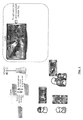
- the a QoE module can be integrated in the network, for example, in 3GPP network architecture as depicted in Figure 1 .
- the user may want to transfer a video from a mobile (e.g. the one in Fig. 1 watched by 3 persons) to a TV set available in a cafe bar and equipped with a USIM card.
- a network entity which is e.g. a base station or an eNodeB serves several (here 3) UEs, and it has a certain limited total data rate/capacity which it can provide to the UEs which it is serving.
- the requested service would lead to exceeding the total network resources (the total available data rate which can be served by eNodeB), then a decision has to be made how to allocate the limited bandwidth or resources such that there can be achieved an optimum compromise between desired quality of experience (QoE) at the UEs which avoids to just deny a certain service such as the IUT service.
- QoE quality of experience
- the problem arises when the requested service is an IUT service where the new UE to which the stream is transferred has a higher resolution and consequently requires a higher bandwidth.
- an IUT application server (IUT AS), which is responsible for handling the IUT.
- the QoE module which is responsible for the optimization of the QoE according to the objective function or "optimization function" based on the given input parameters.
- These input parameters include the possible data rates at the various receiving devices, the different possible resolutions at the target device of the IUT service (in Fig. 1 the large screen), and the corresponding utility functions which indicate for a certain data stream or application and for a certain resolution the dependency of the perceived quality on the data rate.
- the QoE module may then perform the optimization by looking for a resource allocation (a resolution for the second devices and set of allocated data rates allocated to the second and third devices being served) for which the objective function reaches its extremum. This will be explained in somewhat more detail later.
- the utility function indicates the quality not only depending on the resolution and the data rate, but also depending on the chosen codec.
- the codec is an input parameter and may be chosen to perform the overall optimization.
- the interface between the IUT AS and the QoE module allows information exchange such as all possible resolutions and/or codecs available at the TV set, which is to be used later in the QoE module to find an optimal resolution and codec, which is to be seen at the TV set.
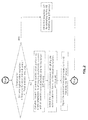
- Figure 2 depicts the flow chart of the QoE module, which takes into account the overall quality of experience information in order to make a decision whether to allow an IUT operation and to select an optimal video resolution for an IUT operation requested by the user.
- AS application server
- the application server checks with the QoE module whether there is enough resource to provide the highest video resolution available on the target device or the video resolution requested (if explicitly specified by the user) without reducing any network resources that are currently given to other users. If there is enough network resources, then the AS allows the requested IUT operation as specified in 3GPP: TS 23.237: lP Multimedia Subsystem (IMS) service continuity (Stage 2) Release 10," December 2009. In such a case an optimization procedure is not necessary, the optimization is only necessary if the limited capacity does not allow to serve all devices with the desired data rates and resolutions.
- IMS Multimedia Subsystem
- the QoE module calculates an impact of introducing a high demand data stream to the overall quality experienced by all users served by the same base station by performing an optimization procedure,
- the QoE module will then select the video resolution or video codec, which gives an optimal outcome to the system performance based on the objective function (or optimization function) previously set by the operator. For instance, the operator may set the objective function in a way that the optimal outcome should give the maximum average of all user perceived quality or the maximum sum of user perceived quality.
- the objective function receives as input the utility functions of the different applications, which indicate the dependency of the overall quality (e.g. indicated by mean opinion score MOPS) depending on the data rate.
- this also includes the dependency of the quality on the different resolutions, which may be available at the target device. For example, if the target device supports VGA, XGA, WXGA, and HD resolutions, then for each of these resolutions there may be a utility function that indicates - for the application, which is to be transferred from the first to the second user equipment - how the user perceived quality depends on the data rate.
- the objective function determines - based on the given utility functions inputted to it - the resource allocation for which the objective function reaches an optimum.
- an objective function may consist in the calculation of an overall quality measure such as the "total quality” or "sum of all quality measures" for the various devices, which receive an application within the same cell form the same base station.
- the objective function or "optimization function” may then look as follows: arg max ⁇ MOS UE ⁇ 1.2 x XGA ⁇ x WXGA ⁇ x HD + MOS UE ⁇ 2 x VGA + MOS UE ⁇ 3 x VGA
- the IUT service consists in transferring a video stream from UE1.1 to UE1.2.
- the optimization then has the goal to find the overall best resource allocation for the devices UE1.2, UE2, and UE3, under the given circumstances, which means a certain limited bandwidth.
- the objective function is designed such that it finds the resource allocation, which maximizes the total sum of the MOS of all three devices.
- MOS UE1.2 is the user perceived quality at the device UE1.2 (the target device)
- MOS UE2 is the MOS at the device UE2
- MOS UE3 is the MOPS at the device UE3.
- UE1.2 offers three possible resolutions, namely XGA, WXGA, and HD.
- X ⁇ XGA is the set of all possible resource allocations (data rates) for the XGA resolution
- X ⁇ WXGA is the set of all possible resource allocations for the WXGA resolution
- X ⁇ HD is the set of possible resource allocations for the HD resolution for UE1.2.
- UE2 and UE3 have only one possible resolution, and therefore for them the set of possible resource allocation is not resolution dependent and depends only on the data rate.
- the utility function - which is predefined, e,g, by having it been measured in advance by test persons for a certain application - indicates for a certain data rate the corresponding quality level (e.g. in terms of MOS).
- the utility function may be stored in advance in the QoE device, or it may have been delivered together with the application (the video stream).
- the target device UE1.2 there may be three different utility functions one for each resolution (XGA, WXGA, and HD). This is reflected by the three separate sets of possible resource allocations which are the parameters of MOS UE1.2 above in (1).
- the QoE module may just try all possible different resource allocations, e.g. by using incremental steps of data rates, and calculate the respective values of the objective function.
- the set of resource allocations, for which the objective function reaches the maximum value, may then be chosen as the resource allocation to the individual UEs after the IUT.
- the QoE module signals the selected video resolution and data rate (and/or the video codec, if this is a parameter to the optimization procedure) to the application server AS handling all IUT requests, and the AS proceeds to the normal procedure of handling the IUT request according to the prior art.
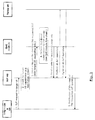
- Figure 3 depicts the high level signalling flow of all steps from the step of initiating the IUT request until the step of executing the request IUT operation.
- First the IUT request to a target UE is forwarded to the IUT application server.
- a check of the available target UE capabilities such as resolution or codec there is sent a check request to the QoE module for checking the requested IUT. This includes information about the capabilities of the target UE.
- the QoE module then performs an optimization based on the (predefined) objective function and selects a resolution and/or a codec and a data rate for the various devices.
- the selected resource allocation is then signalled back to the IUT AS which then performs with the target UE an IUT operation.
- the result is then notified to the originating UE from which the IUT request originally came.
- the resource allocation may involve a selection of a plurality of parameters for the various devices involved in the procedure, namely:
- the optimization of the resource allocation may therefore not only involve the selection of a data rate for all devices served by the base station and the selection of a resolution for the target device, it may also involve the selection of a (possibly other than before) codec with which the video stream is coded.
- the utility function may not only be dependent on the data rate and on the resolution, but it may also be dependent on the codec, which is used. If e.g. there are multiple codecs available, then there may be different utility functions for each codec, each utility function indicating for the given codec and a given resolution the user perceived quality (e.g. in MOS) depending on the data rate. This then means that there are even more input parameters to the objective function; however, it also means that the result, which can be achieved, may be better.
- the result of the objective function is a "resource allocation” which means it is a set of parameters (like data rate and resolution), which are chosen for the various devices such that the quality goal as defined by the "objective function is met.
- the resource allocation involves a slection among the possible resolutions at the target device, a selection of the data rates for the second and the third user equipments among the possible data rates which may be used, and/or a selection of the codec or codecs used for the video streams among the plurality of available codces.
- the resulting resource allocation could mean that the devices which are not directly involved in the IUT, i.e. the devices the stream of which is not transferred, will get allocated a smaller data rate in order "free" some bandwidth which can then be allocated to the target device to enable the IUT operation to be executed in such a manner that there is still "acceptable quality" at the target device.
- the resource allocation as resulting from the optimization procedure may further involve that at the target device there will not be chosen the "maximum possible resolution" but a smaller one in order to avoid too strong quality deterioration at the devices which are not directly involved at the IUT operation.
- the QoE optimization is effective in cases where the overall resources are not sufficient to perform a IUT operation to the target device at its maximum resolution without making any modifications. While the prior art might have just declined the IUT request due to a lack of resources in such a case, the QoE optimization according to the embodiment of the present invention still is capable to find an acceptable solution by trying the variety of possible modifications of the resource allocations (which includes modifications at the resolution of the target device as well as of the data rates and/or codecs of the target device and the other devices not involved in the IUT) in order to find the best possible resource allocation which may still lead to an acceptable quality for all parties/devices involved.
- the chosen allocation may then involve the usage of a smaller than the maximum resolution at the target device, and it may involve the selection of data rates for the third user equipments (UE2 and UE3) which are smaller than their rates before the IUT service.
- UE2 and UE3 third user equipments
- the optimization function cannot find an allocation where the combined quality measure reaches a minimum threshold, then the IUT service as a whole may be denied, If such a threshold is set and at which value is a setting which may be chosen according to the preferences of the network operator.
- the IUT involves the transfer of a stream from a first device device UE1.1 to a second device UE1.2.
- UE2 and UE3 are served by the same eNodeB which has a certain limited bandwidth/resource, which can be allocated to the different devices.
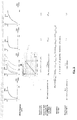
- the first row the Fig. 4 illustrates the different utility functions for the four devices/applications involved. It can be seen that for UE1.1 there is given only one utility function since this device has only one possible resolution to offer.
- the utility function indicates for this resolution how the user perceived quality (in terms of MOS) depends on the data rate (in kbps). It should be noted that this utility function (usually) is typical for a certain application or video stream; another applicationvideo stream may have and usually has a different utility function.
- the device/UE offers multiple resolutions, then this can be reflected by multiple utility functions as illustrated for UE1.2 in Fig. 4 .
- UE2 and UE3 again there is only one utility function.
- the second row in Fig. 4 illustrates the quality level before the IUT was performed. It can be seen that there is no quality level for the UE1.2 yet, since it is not yet used.
- the third row indicates what are the input parameters to the optimization function (objective function), namely the utility functions for the devices UE1.2, UE2, UE3.
- the optimization function in this embodiment consists in finding the resource allocation for which the total sum of the user perceived qualities of all devices (UE1.2, UE2, and UE3) after the IUT reaches its maximum.
- the fifth row then illustrates an exemplary result of the optimization procedure.
- the optimum resource allocation here is such that the XGA resolution is chosen for the device UE1.2, and the resulting MOPS for UE1.2 is 3.3, while it is 3.7 for UE2 and 3.5 for UE3. This means that the quality level at UE2 and UE3 has been decreased somewhat by the optimization procedure in order to enable the IUT operation.
- the combination of choosing the third largest resolution (WXGA) for UE1.2 and a data rate which leads to a slightly reduced quality for UE2 and UE3 therefore in this exemplary case yields the optimum resource allocation which gives the best overall quality as defined by the objective function.
- Another approach for an objective function could be such that it guarantees a certain quality level, which is received by all users/devices; this may be e.g. the minimum quality level, which can be served to all user devices. Based thereon the objective function may optimize the average quality perceived by all devices.
- An even further approach could be to design the objective function such that it minimizes the quality differences between the applications perceived by all users/devices, e.g. such that the quality difference between the device with the highest quality (in terms of MOS) and the one with the lowest quality is minimized.
- the objective function in all embodiments is defined such that it defines an overall combined quality measure based on a combination of the quality of the multiple devices involved in the IUT operation, and that the optimization function is defined such that it looks for the resource allocation which optimizes the overall quality measure, i.e. to look for a resource allocation where the overall quality measure reaches an optimum or extremum.
- a (quality) utility function is used which indicates for a certain application the quality perceived by a user depending on the allocated data rate, the resolution, and possibly also depending on the codec.
- the optimization operation is then performed s such that it calculates a combined quality measure based on the utility functions for the different applications and for different possible resource allocations to the plurality of applications in such a way that said combined quality measure is optimized by finding among the plurality of possible resource allocations (which includes different data rates and different resolutions) the resource allocation for which said quality measure reaches an extremum, to thereby obtain an overall optimized resource allocation for the network after the IUT operation,
- ⁇ UE1.2 which is a parameter which assigns different weights to the different resolutions at the target device.
- ⁇ UE1.2 is a parameter which assigns different weights to the different resolutions at the target device.
- An example of how the value of ⁇ UE1.2 may depend on the resolution is given the second row of Fig. 5 .
- ⁇ UE1.2 grows linearly from 0 to 1 as the resolution increases.
- other ways of defining the weighting factor ⁇ UE1.2 are also possible.
- weighting factor With the weighting factor it becomes possible to assign higher (or lower) weights to the different resolutions or to there respective quality level when they contribute to the overall quality measure. This makes it then possible to prefer higher resolutions over lower ones, and by choosing the weighting factor ⁇ UE1.2 , its amount and its dependency on the resolution, one may chose the extent to which a certain resolution is preferred over other ones by making it contributing more to the overall quality measure than another one, even if their respective MOS would be the same.
- the weighting factor is chosen such that a higher resolution is assigned a higher weight.
- a specific example of this embodiment is the one illustrated in Fig. 5 .
- a first step there is determined the current user perceived quality (MOS) at the device UE1.1 based on the utility function and the corresponding data rate.
- MOS current user perceived quality
- a second step there is then obtained the quality gain function, which indicates the quality gain when transferring a stream from a first resolution o a higher resolution, This function may have been predetermined e.g. by user tests.
- Fig. 6 there is shown the quality gain for changing the resolution form VGA to different other resolutions such as XGA, WXGA, and HD.
- additional data rates can be used to derive - based on a predetermined network cost function which indicates a network cost parameter which corresponds to a certain additional data rate - network costs for changing to the different resolutions.
- the parameter ⁇ UE1.2 is determined based on the user satisfaction gain and the network cost of the different resolutions which have been determined in steps 2 and 4, respectively, by deriving ⁇ UE1.2 based thereon as shown in step 5.
- the network operator can either assign more weight to the change to a higher resolution (higher a) or to the saving of network resources (larger b) by avoiding too large additional network costs.
Landscapes
- Engineering & Computer Science (AREA)
- Signal Processing (AREA)
- Multimedia (AREA)
- Computer Networks & Wireless Communication (AREA)
- Databases & Information Systems (AREA)
- Computer Security & Cryptography (AREA)
- Business, Economics & Management (AREA)
- General Business, Economics & Management (AREA)
- Data Exchanges In Wide-Area Networks (AREA)
- Two-Way Televisions, Distribution Of Moving Picture Or The Like (AREA)
- Compression Or Coding Systems Of Tv Signals (AREA)
Priority Applications (11)
| Application Number | Priority Date | Filing Date | Title |
|---|---|---|---|
| EP20100176432 EP2429190A1 (de) | 2010-09-13 | 2010-09-13 | Verfahren und Vorrichtung zur Übertragung eines Videostreams |
| TW100132464A TW201212636A (en) | 2010-09-13 | 2011-09-08 | Method and an apparatus for transferring a video stream |
| JP2011195697A JP5559113B2 (ja) | 2010-09-13 | 2011-09-08 | ビデオストリームを転送するための方法及び装置 |
| CN2011102663068A CN102404565A (zh) | 2010-09-13 | 2011-09-09 | 用于传送视频流的方法和设备 |
| KR1020110091778A KR101342000B1 (ko) | 2010-09-13 | 2011-09-09 | 비디오 스트림을 전달하기 위한 방법 및 장치 |
| CA2752004A CA2752004A1 (en) | 2010-09-13 | 2011-09-09 | Method and an apparatus for transferring a video stream |
| MX2011009541A MX2011009541A (es) | 2010-09-13 | 2011-09-12 | Metodo y aparato para transferir una corriente de video. |
| AU2011221423A AU2011221423B2 (en) | 2010-09-13 | 2011-09-12 | Method and an apparatus for transferring a video stream |
| RU2011137481/07A RU2492588C2 (ru) | 2010-09-13 | 2011-09-12 | Способ и устройство передачи видеопотока |
| US13/230,172 US20120062791A1 (en) | 2010-09-13 | 2011-09-12 | Method and an apparatus for transferring a video stream |
| BRPI1105259-7A2A BRPI1105259A2 (pt) | 2010-09-13 | 2011-09-13 | Método e um aparelho para transferir um fluxo de vídeo |
Applications Claiming Priority (1)
| Application Number | Priority Date | Filing Date | Title |
|---|---|---|---|
| EP20100176432 EP2429190A1 (de) | 2010-09-13 | 2010-09-13 | Verfahren und Vorrichtung zur Übertragung eines Videostreams |
Publications (1)
| Publication Number | Publication Date |
|---|---|
| EP2429190A1 true EP2429190A1 (de) | 2012-03-14 |
Family
ID=44012608
Family Applications (1)
| Application Number | Title | Priority Date | Filing Date |
|---|---|---|---|
| EP20100176432 Ceased EP2429190A1 (de) | 2010-09-13 | 2010-09-13 | Verfahren und Vorrichtung zur Übertragung eines Videostreams |
Country Status (11)
| Country | Link |
|---|---|
| US (1) | US20120062791A1 (de) |
| EP (1) | EP2429190A1 (de) |
| JP (1) | JP5559113B2 (de) |
| KR (1) | KR101342000B1 (de) |
| CN (1) | CN102404565A (de) |
| AU (1) | AU2011221423B2 (de) |
| BR (1) | BRPI1105259A2 (de) |
| CA (1) | CA2752004A1 (de) |
| MX (1) | MX2011009541A (de) |
| RU (1) | RU2492588C2 (de) |
| TW (1) | TW201212636A (de) |
Cited By (4)
| Publication number | Priority date | Publication date | Assignee | Title |
|---|---|---|---|---|
| CN102905200A (zh) * | 2012-08-07 | 2013-01-30 | 上海交通大学 | 一种视频感兴趣区域双流编码传输方法及系统 |
| WO2013137675A1 (ko) * | 2012-03-16 | 2013-09-19 | 삼성전자 주식회사 | Ims 기반 무선 영상감시 시스템의 주파수 자원관리 자동화를 위한 장치 및 방법 |
| EP3255894A4 (de) * | 2015-02-04 | 2018-09-26 | Nippon Telegraph and Telephone Corporation | System zur optimierung der qualitätserfahrung, vorrichtung zur optimierung der qualitätserfahrung, empfehlungsanfragevorrichtung, verfahren zur optimierung der qualitätserfahrung, empfehlungsanfrageverfahren und programm |
| EP3451672A1 (de) * | 2017-08-29 | 2019-03-06 | Nokia Solutions and Networks Oy | Verfahren und vorrichtung zur optimierung der videoinhaltscodierung in adaptiven streaming-systemen |
Families Citing this family (22)
| Publication number | Priority date | Publication date | Assignee | Title |
|---|---|---|---|---|
| US20130304934A1 (en) * | 2011-09-29 | 2013-11-14 | Avvasi Inc. | Methods and systems for controlling quality of a media session |
| CN102546297B (zh) * | 2011-12-31 | 2015-11-25 | 华为技术有限公司 | 一种用户带宽通知方法和计费装置 |
| US20140177538A1 (en) * | 2012-12-21 | 2014-06-26 | Alcatel-Lucent Usa, Inc. | Load balancing and inter-cell interference coordination for heterorgeneous networks |
| US20180270350A1 (en) | 2014-02-28 | 2018-09-20 | Ultratec, Inc. | Semiautomated relay method and apparatus |
| US10389876B2 (en) | 2014-02-28 | 2019-08-20 | Ultratec, Inc. | Semiautomated relay method and apparatus |
| US10748523B2 (en) | 2014-02-28 | 2020-08-18 | Ultratec, Inc. | Semiautomated relay method and apparatus |
| US10878721B2 (en) | 2014-02-28 | 2020-12-29 | Ultratec, Inc. | Semiautomated relay method and apparatus |
| US20180034961A1 (en) | 2014-02-28 | 2018-02-01 | Ultratec, Inc. | Semiautomated Relay Method and Apparatus |
| US12482458B2 (en) | 2014-02-28 | 2025-11-25 | Ultratec, Inc. | Semiautomated relay method and apparatus |
| EP3343508B1 (de) * | 2015-11-20 | 2020-05-20 | Sony Corporation | Bildverarbeitungsvorrichtung und -verfahren |
| US10504536B2 (en) * | 2017-11-30 | 2019-12-10 | Logmein, Inc. | Audio quality in real-time communications over a network |
| US11343301B2 (en) | 2017-11-30 | 2022-05-24 | Goto Group, Inc. | Managing jitter buffer length for improved audio quality |
| CN109936752B (zh) * | 2017-12-15 | 2021-03-30 | 中国移动通信集团云南有限公司 | 一种图像分层处理方法及装置 |
| CN110740478A (zh) * | 2018-07-18 | 2020-01-31 | 成都鼎桥通信技术有限公司 | 视频分辨率的协商方法和装置 |
| US11089356B2 (en) * | 2019-03-26 | 2021-08-10 | Rovi Guides, Inc. | Systems and methods for media content hand-off based on type of buffered data |
| US12069324B2 (en) | 2019-08-08 | 2024-08-20 | Nec Corporation | Communication control method, communication apparatus, and communication system |
| US11539900B2 (en) | 2020-02-21 | 2022-12-27 | Ultratec, Inc. | Caption modification and augmentation systems and methods for use by hearing assisted user |
| CN111866586B (zh) * | 2020-07-28 | 2022-08-02 | 精英数智科技股份有限公司 | 井下视频数据处理方法、装置、电子设备及存储介质 |
| KR102997134B1 (ko) | 2021-03-10 | 2026-07-28 | 엔티티 인코포레이티드 | 정보 처리 장치, 분석 방법 및 프로그램 |
| WO2022201225A1 (ja) * | 2021-03-22 | 2022-09-29 | 日本電信電話株式会社 | 制御装置、制御方法及びプログラム |
| CN115379291B (zh) * | 2022-07-19 | 2023-12-26 | 百果园技术(新加坡)有限公司 | 一种码表更新方法、装置、设备及存储介质 |
| CN115292019B (zh) * | 2022-08-24 | 2026-07-24 | Oppo广东移动通信有限公司 | 一种资源调度方法、终端设备及存储介质 |
Citations (2)
| Publication number | Priority date | Publication date | Assignee | Title |
|---|---|---|---|---|
| EP1463323A1 (de) * | 2003-03-25 | 2004-09-29 | Broadcom Corporation | Medienverarbeitungssystem mit anpassbaren digitalen Medienparametern auf Basis der Anzeigefähigkeit des Klients |
| WO2010081146A2 (en) * | 2009-01-12 | 2010-07-15 | Starent Networks, Corp | Transferring sessions in a communications network |
Family Cites Families (8)
| Publication number | Priority date | Publication date | Assignee | Title |
|---|---|---|---|---|
| MXPA04012760A (es) * | 2002-06-21 | 2005-03-23 | Thomson Licensing Sa | Disminucion continua de los requerimientos de la calidad de servicios (qos) de red de una corriente almacenada de video en un ambiente de interfuncionamiento inalambrico movil. |
| US8161158B2 (en) * | 2002-09-25 | 2012-04-17 | Nokia Corporation | Method in a communication system, a communication system and a communication device |
| IL160921A (en) * | 2004-03-18 | 2009-09-01 | Veraz Networks Ltd | Method and device for quality management in communication networks |
| JP4108640B2 (ja) * | 2004-04-27 | 2008-06-25 | 三菱電機株式会社 | 映像伝送システム |
| US7984179B1 (en) * | 2004-06-29 | 2011-07-19 | Sextant Navigation, Inc. | Adaptive media transport management for continuous media stream over LAN/WAN environment |
| US8184720B2 (en) * | 2005-04-11 | 2012-05-22 | Tubitak Biltien | Optimal video adaptation for resource constrained mobile devices based on subjective utility models |
| JP4317540B2 (ja) * | 2005-08-30 | 2009-08-19 | 日本電信電話株式会社 | 映像品質推定装置、方法およびプログラム |
| JP2007221318A (ja) * | 2006-02-15 | 2007-08-30 | Nippon Telegr & Teleph Corp <Ntt> | 双方向映像通信サービスの品質管理・品質制御方法、品質管理方法、品質制御方法、品質管理・制御システム、品質管理装置、品質制御装置 |
-
2010
- 2010-09-13 EP EP20100176432 patent/EP2429190A1/de not_active Ceased
-
2011
- 2011-09-08 JP JP2011195697A patent/JP5559113B2/ja not_active Expired - Fee Related
- 2011-09-08 TW TW100132464A patent/TW201212636A/zh unknown
- 2011-09-09 KR KR1020110091778A patent/KR101342000B1/ko not_active Expired - Fee Related
- 2011-09-09 CA CA2752004A patent/CA2752004A1/en not_active Abandoned
- 2011-09-09 CN CN2011102663068A patent/CN102404565A/zh active Pending
- 2011-09-12 RU RU2011137481/07A patent/RU2492588C2/ru not_active IP Right Cessation
- 2011-09-12 AU AU2011221423A patent/AU2011221423B2/en not_active Expired - Fee Related
- 2011-09-12 MX MX2011009541A patent/MX2011009541A/es active IP Right Grant
- 2011-09-12 US US13/230,172 patent/US20120062791A1/en not_active Abandoned
- 2011-09-13 BR BRPI1105259-7A2A patent/BRPI1105259A2/pt not_active IP Right Cessation
Patent Citations (2)
| Publication number | Priority date | Publication date | Assignee | Title |
|---|---|---|---|---|
| EP1463323A1 (de) * | 2003-03-25 | 2004-09-29 | Broadcom Corporation | Medienverarbeitungssystem mit anpassbaren digitalen Medienparametern auf Basis der Anzeigefähigkeit des Klients |
| WO2010081146A2 (en) * | 2009-01-12 | 2010-07-15 | Starent Networks, Corp | Transferring sessions in a communications network |
Non-Patent Citations (12)
| Title |
|---|
| "3rd Generation Partnership Project; Technical Specification Group Services and System Aspects; IP Multimedia Subsystem (IMS) service continuity enhancements; Service, policy and interaction; Stage 2 (Release 9)", 3GPP STANDARD; 3GPP TR 23.838, 3RD GENERATION PARTNERSHIP PROJECT (3GPP),, no. V9.0.0, 1 June 2009 (2009-06-01), pages 1 - 51, XP050363948 * |
| 3GPP: TS 22.228: SERVICE REQUIREMENTS FOR INTERNET PROTOCOL (IP) MULTIMEDIA CORE NETWORK SUBSYSTEM (STAGE 1) RELEASE 10, December 2009 (2009-12-01) |
| 3GPP: TS 23.228: IP MULTIMEDIA SUBSYSTEM (IMS) (STAGE 2) RELEASE 10, December 2009 (2009-12-01) |
| 3GPP: TS 23.237: !P MULTIMEDIA SUBSYSTEM (IMS) SERVICE CONTINUITY (STAGE 2) RELEASE 10, December 2009 (2009-12-01) |
| 3GPP: TS 23.237: IP MULTIMEDIA SUBSYSTEM (IMS) SERVICE CONTINUITY (STAGE 2) RELEASE 10, December 2009 (2009-12-01) |
| 3GPP: TS 24.229: IP MULTIMEDIA CALL CONTROL PROTOCOL BASED ON SESSION INITIATION PROTOCOL (SIP) AND SESSION DESCRIPTION PROTOCOL (SDP) (STAGE 3) RELEASE 9, December 2009 (2009-12-01) |
| JONG-CHOUL YIM, SAN-KI KIM, BYUNG-SUN LEE: "MSF Whitepaper on Service Continuity (IUT)", 1 February 2010 (2010-02-01), pages 1 - 21, XP002638797, Retrieved from the Internet <URL:http://www.msforum.org/techinfo/reports/MSF-TR-SERVICES-003-FINAL.pdf> [retrieved on 20110525] * |
| R. SHACHAM; H. SCHULZRINNE; S. THAKOLSRI; W. KELLERER: "Session Initiation Protocol (SIP) Session Mobility", RFC, vol. 5631, October 2009 (2009-10-01) |
| S. KHAN; S. DUHOVNIKOV; E. STEINBACH; W. KELLERER: "MOS-based multiuser multiapplication cross-layer optimization for mobile multimedia communication", ADVANCES IN MULTIMEDIA, 2007 |
| S. THAKOISRI; S. KHAN; E. STEINBACH; W. KELLERER, JCM, 2009 |
| S. THAKOLSRI; S. KHAN; E. STEINBACH; W, KELLERER: "QoE-Driven Cross-Layer Optimization for High Speed Downlink Packet Access", JOURNAL OF COMMUNICATIONS, SPECIAL ISSUE ON MULTIMEDIA COMMUNICATIONS, NETWORKING AND APPLICATIONS, vol. 4, no. 9, October 2009 (2009-10-01), pages 669 - 680 |
| SRISAKUL THAKOLSRI, SHOAIB KHAN, ECKEHARD STEINBACH, WOLFGANG KELLERER: "QoE-Driven Cross-Layer Optimization for High Speed Downlink Packet Access", JOURNAL OF COMMUNICATIONS, 1 October 2009 (2009-10-01), pages 669 - 680, XP002638796, Retrieved from the Internet <URL:http://ojs.academypublisher.com/index.php/jcm/article/download/0409669680/917> [retrieved on 20110525], DOI: 10.4304/jcm.4.9.669-680 * |
Cited By (6)
| Publication number | Priority date | Publication date | Assignee | Title |
|---|---|---|---|---|
| WO2013137675A1 (ko) * | 2012-03-16 | 2013-09-19 | 삼성전자 주식회사 | Ims 기반 무선 영상감시 시스템의 주파수 자원관리 자동화를 위한 장치 및 방법 |
| US9591659B2 (en) | 2012-03-16 | 2017-03-07 | Samsung Electronics Co., Ltd. | Apparatus and method for automation of frequency resource management of IMS-based wireless video surveillance system |
| CN102905200A (zh) * | 2012-08-07 | 2013-01-30 | 上海交通大学 | 一种视频感兴趣区域双流编码传输方法及系统 |
| CN102905200B (zh) * | 2012-08-07 | 2015-01-14 | 上海交通大学 | 一种视频感兴趣区域双流编码传输方法及系统 |
| EP3255894A4 (de) * | 2015-02-04 | 2018-09-26 | Nippon Telegraph and Telephone Corporation | System zur optimierung der qualitätserfahrung, vorrichtung zur optimierung der qualitätserfahrung, empfehlungsanfragevorrichtung, verfahren zur optimierung der qualitätserfahrung, empfehlungsanfrageverfahren und programm |
| EP3451672A1 (de) * | 2017-08-29 | 2019-03-06 | Nokia Solutions and Networks Oy | Verfahren und vorrichtung zur optimierung der videoinhaltscodierung in adaptiven streaming-systemen |
Also Published As
| Publication number | Publication date |
|---|---|
| RU2492588C2 (ru) | 2013-09-10 |
| MX2011009541A (es) | 2012-03-15 |
| CA2752004A1 (en) | 2012-03-13 |
| RU2011137481A (ru) | 2013-03-27 |
| TW201212636A (en) | 2012-03-16 |
| BRPI1105259A2 (pt) | 2014-06-17 |
| JP2012070373A (ja) | 2012-04-05 |
| KR20120028823A (ko) | 2012-03-23 |
| KR101342000B1 (ko) | 2014-01-02 |
| AU2011221423B2 (en) | 2014-05-29 |
| US20120062791A1 (en) | 2012-03-15 |
| CN102404565A (zh) | 2012-04-04 |
| AU2011221423A1 (en) | 2012-03-29 |
| JP5559113B2 (ja) | 2014-07-23 |
Similar Documents
| Publication | Publication Date | Title |
|---|---|---|
| AU2011221423B2 (en) | Method and an apparatus for transferring a video stream | |
| CN104272706B (zh) | 用于通信网络中应用感知准入控制的系统和方法 | |
| US8391224B2 (en) | Proactive load distribution for 802.111-based wireless LANs | |
| US10397758B2 (en) | Function selection based on utilization level in 5G environments | |
| US9872199B2 (en) | Assigning a variable QCI for a call among a plurality of user devices | |
| US11206298B2 (en) | Method and system utilizing event specific priority in a network controlled uplink media transmission for a collaborative media production | |
| KR20140037248A (ko) | 무선 업링크 세션들을 제어하기 위한 방법 및 장치 | |
| EP2514160A1 (de) | Gruppensitzungsverwaltung und zugangssteuerung von mehreren ip-flüssen | |
| US20150016397A1 (en) | Method and device for allocating air interface resource | |
| Ivesic et al. | Cross-layer QoE-driven admission control and resource allocation for adaptive multimedia services in LTE | |
| Fu et al. | QoE-aware traffic management for mobile video delivery | |
| US11368512B2 (en) | Method and system for utilizing network conditions feedback for improving quality of a collaborative media production | |
| Shehada et al. | QoE-based resource reservation for unperceivable video quality fluctuation during Handover in LTE | |
| US11050800B2 (en) | Network assigning QoS for service based on codec exchanged peer-to-peer | |
| US12476883B2 (en) | Method, apparatus and computer program for determining quality of experience of an application session class | |
| Colarieti et al. | QoE provisioning over mobile networks: The CASPER perspective | |
| EP2429237A1 (de) | Verfahren und Vorrichtung zur Zuweisung von Netzwerkraten | |
| Elnaka et al. | QoS traffic mapping for a multi-participant session in unified communications networks | |
| Ayeoribe | Adaptive Strategies Transmission of High-Definition, 2K, 4K, 6K, 8K and 10K Streams in Multi-PLP DVB-T2 with Efficient Multiplexing Capabilities: A Spectrum Problem-Solving Approach Using Multi-PLP Multiplexing Systems | |
| Chandur et al. | Quality of experience aware video scheduling in LTE networks | |
| US20250024328A1 (en) | Terminal device, wireless communication system, and method for processing terminal device | |
| Brajdic et al. | Quality of Experience based optimization of heterogeneous multimedia sessions in IMS | |
| Luton et al. | Support of mobile TV over an HSPA network | |
| KR20120085735A (ko) | 네트워크에서 트래픽 부하에 전기통신 서비스를 구성하는 장치, 방법 및 컴퓨터 프로그램 | |
| Seyedebrahimi et al. | Ensuring QoE in contemporary mobile networks for video content distribution |
Legal Events
| Date | Code | Title | Description |
|---|---|---|---|
| 17P | Request for examination filed |
Effective date: 20110921 |
|
| AK | Designated contracting states |
Kind code of ref document: A1 Designated state(s): AL AT BE BG CH CY CZ DE DK EE ES FI FR GB GR HR HU IE IS IT LI LT LU LV MC MK MT NL NO PL PT RO SE SI SK SM TR |
|
| AX | Request for extension of the european patent |
Extension state: BA ME RS |
|
| PUAI | Public reference made under article 153(3) epc to a published international application that has entered the european phase |
Free format text: ORIGINAL CODE: 0009012 |
|
| 17Q | First examination report despatched |
Effective date: 20120524 |
|
| GRAP | Despatch of communication of intention to grant a patent |
Free format text: ORIGINAL CODE: EPIDOSNIGR1 |
|
| INTG | Intention to grant announced |
Effective date: 20140110 |
|
| STAA | Information on the status of an ep patent application or granted ep patent |
Free format text: STATUS: THE APPLICATION HAS BEEN REFUSED |
|
| 18R | Application refused |
Effective date: 20151011 |