EP2433406B1 - Verwaltung von roaming-vereinbarungen zwischen ims-netzen - Google Patents
Verwaltung von roaming-vereinbarungen zwischen ims-netzen Download PDFInfo
- Publication number
- EP2433406B1 EP2433406B1 EP09776632.3A EP09776632A EP2433406B1 EP 2433406 B1 EP2433406 B1 EP 2433406B1 EP 09776632 A EP09776632 A EP 09776632A EP 2433406 B1 EP2433406 B1 EP 2433406B1
- Authority
- EP
- European Patent Office
- Prior art keywords
- roaming
- ims
- request
- edge proxy
- network
- Prior art date
- Legal status (The legal status is an assumption and is not a legal conclusion. Google has not performed a legal analysis and makes no representation as to the accuracy of the status listed.)
- Not-in-force
Links
- 238000000034 method Methods 0.000 claims description 59
- 230000004044 response Effects 0.000 claims description 45
- 238000004891 communication Methods 0.000 claims description 9
- 238000004590 computer program Methods 0.000 claims description 6
- YOETUEMZNOLGDB-UHFFFAOYSA-N 2-methylpropyl carbonochloridate Chemical compound CC(C)COC(Cl)=O YOETUEMZNOLGDB-UHFFFAOYSA-N 0.000 claims description 3
- 238000013475 authorization Methods 0.000 claims description 2
- 241000473945 Theria <moth genus> Species 0.000 description 13
- 230000006870 function Effects 0.000 description 12
- 238000010586 diagram Methods 0.000 description 9
- 230000011664 signaling Effects 0.000 description 8
- 230000006399 behavior Effects 0.000 description 4
- 238000007726 management method Methods 0.000 description 4
- 230000001960 triggered effect Effects 0.000 description 4
- 238000013459 approach Methods 0.000 description 3
- 239000000203 mixture Substances 0.000 description 3
- 230000008569 process Effects 0.000 description 3
- 238000012545 processing Methods 0.000 description 3
- 241001522296 Erithacus rubecula Species 0.000 description 2
- 230000001419 dependent effect Effects 0.000 description 2
- 230000004913 activation Effects 0.000 description 1
- 230000006978 adaptation Effects 0.000 description 1
- 230000001934 delay Effects 0.000 description 1
- 238000013461 design Methods 0.000 description 1
- 238000012423 maintenance Methods 0.000 description 1
- 230000007246 mechanism Effects 0.000 description 1
- 238000010295 mobile communication Methods 0.000 description 1
- 238000005457 optimization Methods 0.000 description 1
- 230000003068 static effect Effects 0.000 description 1
- 230000007723 transport mechanism Effects 0.000 description 1
Images





Classifications
-
- H—ELECTRICITY
- H04—ELECTRIC COMMUNICATION TECHNIQUE
- H04L—TRANSMISSION OF DIGITAL INFORMATION, e.g. TELEGRAPHIC COMMUNICATION
- H04L65/00—Network arrangements, protocols or services for supporting real-time applications in data packet communication
- H04L65/10—Architectures or entities
- H04L65/1016—IP multimedia subsystem [IMS]
-
- H—ELECTRICITY
- H04—ELECTRIC COMMUNICATION TECHNIQUE
- H04L—TRANSMISSION OF DIGITAL INFORMATION, e.g. TELEGRAPHIC COMMUNICATION
- H04L65/00—Network arrangements, protocols or services for supporting real-time applications in data packet communication
- H04L65/1066—Session management
- H04L65/1073—Registration or de-registration
-
- H—ELECTRICITY
- H04—ELECTRIC COMMUNICATION TECHNIQUE
- H04W—WIRELESS COMMUNICATION NETWORKS
- H04W8/00—Network data management
- H04W8/02—Processing of mobility data, e.g. registration information at HLR [Home Location Register] or VLR [Visitor Location Register]; Transfer of mobility data, e.g. between HLR, VLR or external networks
- H04W8/06—Registration at serving network Location Register, VLR or user mobility server
-
- H—ELECTRICITY
- H04—ELECTRIC COMMUNICATION TECHNIQUE
- H04L—TRANSMISSION OF DIGITAL INFORMATION, e.g. TELEGRAPHIC COMMUNICATION
- H04L65/00—Network arrangements, protocols or services for supporting real-time applications in data packet communication
- H04L65/10—Architectures or entities
- H04L65/102—Gateways
- H04L65/1033—Signalling gateways
-
- H—ELECTRICITY
- H04—ELECTRIC COMMUNICATION TECHNIQUE
- H04L—TRANSMISSION OF DIGITAL INFORMATION, e.g. TELEGRAPHIC COMMUNICATION
- H04L65/00—Network arrangements, protocols or services for supporting real-time applications in data packet communication
- H04L65/10—Architectures or entities
- H04L65/102—Gateways
- H04L65/1033—Signalling gateways
- H04L65/1036—Signalling gateways at the edge
Definitions
- the invention relates to techniques for managing roaming agreements between IP Multimedia Subsystem (IMS) networks. More specifically, the invention relates to techniques for managing an automatically established roaming agreement between two IMS networks, wherein one IMS network supports multiple proxy nodes at the network edge towards the other IMS network.
- IMS IP Multimedia Subsystem
- the IP multimedia subsystem is a specific domain in mobile communication networks such as in General Packet Radio Service (GPRS) and Universal Mobile Telecommunication Systems (UMTS) networks.
- IMS enables the centralized provision of multimedia and other services to users.
- IMS-based services may be used essentially independently of a particular access technique; for example, while normally the access will be based on a packet-based transport mechanism, a user may also access the IMS via a CS (Circuit Switched) domain of, e.g., a GSM network.
- CS Circuit Switched
- a user Independent of the specific access chosen, a user has to register in IMS in order for a provision of IMS services. Registration and service provisioning to a specific user is controlled by a Serving Call State Control Function (S-CSCF) of the IMS.
- S-CSCF Serving Call State Control Function
- Roaming scenarios as known for the provisioning of speech services, for example, are also relevant for the provisioning of IMS services.
- a user may attempt to register in its home IMS network via the IMS domain of a visited network.
- the user terminal sends its registration request to a Proxy CSCF (P-CSCF) of the visited network, which forwards the registration request to the user's home network.
- P-CSCF Proxy CSCF
- I-CSCF Interrogating CSCF
- the prerequisite for such an IMS roaming scenario is that a roaming agreement is in place between the home network and the visited network which defines that and how a visiting user can access a desired service in its home network via the visited network.
- IMS services today's roaming agreements often merely comprise a tunnelling approach, e.g. because the visiting network does not have an IMS.
- This solution may not assure a desired QoS (Quality of Service) for the user.
- QoS Quality of Service
- IMS domains The number of IMS domains increases and will most probably continue to increase in the future, including IMS networks with local and/or temporary coverage only which are enabled by cost-efficient "IMS in a box" solutions.
- IMS cost-efficient
- IMS in a box In order to be able to flexibly provide multimedia services to the users it is a prerequisite that services can be provided with a desired quality to the IMS users and thus corresponding roaming agreements have to be in place.
- roaming agreements are normally set up manually. However, it appears unfeasible from a practical (business) perspective to manually manage the required numbers of roaming relationships in the future, not only in view of the generally increasing number of IMS domains, but in particular with regard to IMS domains which are only temporarily existing, for example for the duration of an exhibition, conference, cultural event, etc.
- the 3GPP Technical Specifications TS 24.228 and TS 24.229 define IMS signalling flows, including signalling flows between IMS networks in case of roaming. However, in these specifications it is assumed that a roaming agreement is either in place or not, i.e. the procedures are based on manually established roaming agreements.
- the 3GPP Technical Report TR 22.971 describes a form of "automatic" roaming based on a central inter-network service point, which is provided to enable the establishment of roaming relations.
- Network Compositions are based on a concept developed within the "Ambient Networks Project", in which a generic network architecture has been developed, including generalized control functions and standardized reference points between two networks.
- the concepts include a generic automatic negotiation procedure performed between networks, see for example the Ambient Networks Deliverable D3-G.1 "Design of Composition Framework" of November 2006 , available online on http://www.ambient-networks.org/deliverables.html.
- generic scenarios for automated roaming agreement negotiations are discussed, no practically applicable solutions for roaming agreements between IMS networks are provided.
- a roaming arbitrage exchange server when a user roams to a location outside his own home network, a roaming arbitrage exchange server initiates a real time bidding for establishing which network providers covering the current location of the roaming user are offering roaming services. A list of the possible network providers is formed and is sent to the user's home network. One of the networks is then selected based on a number of parameters one of which may be cost.
- an IMS network will comprise multiple I-CSCFs as possible contact points for a P-CSCF from another IMS network. Multiple I-CSCFs may be provided, for example, for reasons of load balancing, reliability, etc.
- a P-CSCF querying for an I-CSCF will have assigned one of these multiple I-CSCFs according to, e.g., a round robin scheme.
- a specific roaming agreement will be handled by one particular I-CSCF from the multiple I-CSCFs.
- the I-CSCF the address of which is provided to the P-CSCF will be in many cases not the I-CSCF in charge of handling the corresponding roaming agreement.
- This will result in inconsistent behaviour; for example, the contacted I-CSCF may try to establish a roaming agreement despite the fact that one is in place already, parallel existing roaming agreements may not be consistent with each other, such that a service with one or the other QoS might be provided at random chance to a roaming user, etc.
- the possibly complex situations with parallel setup and/or maintenance of multiple roaming agreements between two IMS networks will also result in a considerable processing resource usage in all of the nodes involved in managing the roaming agreements and in time delays when serving roaming users.
- the first method is performed in a first edge proxy of the first IMS network and comprises the steps of receiving a registration request of a user terminal via a second IMS network; sending, based on the registration request, a roaming information request indicating the second IMS network to a user database associated with the first IMS network; receiving, in response to the roaming information request, from the user database a roaming information answer indicating information related to the roaming agreement, and forwarding, based on the roaming information answer, the registration request to a second edge proxy of the first IMS network, wherein the second edge proxy is managing the roaming agreement between the first and second IMS network.
- IMS IP Multimedia Subsystem
- edge proxies may be implemented as an Interrogating Call State Control Function "I-CSCF”, Interconnect Border Control Function “IBCF”, or Session Border Gateway “SBG”.
- I-CSCF Interrogating Call State Control Function
- IBCF Interconnect Border Control Function
- SBG Session Border Gateway
- the above-mentioned demand is further satisfied by a second method for managing an automatically established roaming agreement in a first IP Multimedia Subsystem "IMS" network.
- the second method is performed in a user database associated with the first IMS network and comprises the steps of receiving, from a first edge proxy of the first IMS network, a roaming information request indicating a second IMS network; and sending, in response to the roaming information request, to the first edge proxy a roaming information answer indicating information related to the roaming agreement.
- the user database may be implemented as a Home Subscriber Server "HSS".
- the roaming information answer may indicate the second edge proxy.
- the roaming information answer may comprise an indication of a state of the dynamic roaming agreement.
- the automatically established roaming agreement may be a dynamic roaming agreement with an expiry time, in which case the state of the roaming agreement may be, for example, one of 'in preparation', 'established', or 'expired'.
- An implementation of the first method comprises, after the reception of the registration request and before the sending of the roaming information request, the steps of sending a routing permission request to the user database, the routing permission request requesting permission for routing the registration request to a user registrar of the first IMS network; and receiving, in response to the routing permission request, a routing permission response from the user database rejecting the requested permission; wherein the roaming information request is sent to the user database in response to the received rejecting routing permission response.
- the user registrar may be implemented as a Serving Call State Control Function "S-CSCF".
- S-CSCF Serving Call State Control Function
- a single message comprising the routing permission request and the roaming information request is sent to the user database.
- the single message may for example represent a Diameter User Authorization Request command. Additionally or alternatively, only a roaming information answer and no routing permission response is received from the user database.
- An implementation of the second method comprises the step of determining, based on the received routing permission request, if a permanent roaming agreement between the first and second IMS networks exists, wherein the rejecting routing permission response is sent because no permanent roaming agreement between the first and second IMS networks exists.
- the roaming information answer may optionally comprise a roaming agreement template for establishing a roaming agreement between the first and the second IMS network.
- the communication between the first edge proxy and the user database may be based on Diameter messages.
- the above-discussed demand is still further satisfied by a third method for managing an automatically established roaming agreement in a first IP Multimedia Subsystem "IMS" network.
- the method is performed in a second edge proxy of the first IMS network and comprises the step of receiving a user terminal registration request from a first edge proxy of the first IMS network, wherein the registration request has been received by the first edge proxy via a second IMS network and is forwarded to the second edge proxy managing the roaming agreement between the first and second IMS network.
- a computer program product which comprises program code portions for performing the steps of one or more of the methods and method aspects described herein when the computer program product is executed on one or more computing devices, for example an edge proxy, user database or user registrar.
- the computer program product may be stored on a computer readable recording medium, such as a permanent or re-writeable memory within or associated with a computing device or a removable CD-ROM, DVD or USB-stick. Additionally or alternatively, the computer program product may be provided for download to a computing device, for example via a data network such as the Internet or a communication line such as a telephone line or wireless link.
- the above demand is further satisfied by a node implementing a first edge proxy and adapted for managing an automatically established roaming agreement in a first IP Multimedia Subsystem "IMS" network.
- the node comprises a component adapted to receive a registration request of a user terminal via a second IMS network; a component adapted to send, based on the registration request, a roaming information request indicating the second IMS network to a user database associated with the first IMS network; a component adapted to receive, in response to the roaming information request, from the user database a roaming information answer indicating information related to the roaming agreement, and a component adapted to forward, based on the roaming information answer, the registration request to a second edge proxy of the first IMS network, wherein the second edge proxy is managing the roaming agreement between the first and second IMS network.
- the node may further comprise a component adapted to send a routing permission request to the user database, the routing permission request requesting .permission for routing the registration request to a user registrar of the first IMS network; and a component adapted to receive, in response to the routing permission request, a routing permission response from the user database rejecting the requested permission.
- the node may be adapted to send a single message comprising the routing permission request and the roaming information request sent to the user database.
- a node implementing a user database associated with a first IP Multimedia Subsystem "IMS" network and adapted for managing an automatically established roaming agreement in the first IMS network.
- This node comprises a component adapted to receive, from a first edge proxy of the first IMS network, a roaming information request indicating a second IMS network; and a component adapted to send, in response to the roaming information request, to the first edge proxy a roaming information answer indicating information related to the roaming agreement.
- This node may further comprise a component adapted to receive a routing permission request from the first edge proxy, the routing permission request requesting permission for routing the registration request to a user registrar of the first IMS network; and a component adapted to send, in response to the routing permission request, a routing permission response to the first edge proxy rejecting the requested permission.
- the node may be adapted to receive a single message comprising the routing permission request and the roaming information request sent from the first edge proxy and may be further adapted to send only a roaming information answer and no routing permission response to the first edge proxy.
- the nodes implementing the first edge proxy and the user database may be adapted to communicate with each other using the Diameter protocol.
- the above-mentioned demand is further satisfied by a node implementing a second edge proxy and adapted for managing an automatically established roaming agreement in a first IP Multimedia Subsystem "IMS" network.
- the node comprises a component adapted to receive a user terminal registration request from a first edge proxy of the first IMS network, wherein the registration request has been received by the first edge proxy via a second IMS network and is forwarded to the second edge proxy managing the roaming agreement between the first and second IMS network.
- edge proxy functionalities are implemented on one or more Interrogating Call State Control Functions "I-CSCFs"
- the user database is implemented on a Home Subscriber Server "HSS”
- the user registrar is implemented on a Serving Call State Control Function "S-CSCF”
- the user proxy is implemented on a Proxy Call State Control Function "P-CSCF”.
- I-CSCFs Interrogating Call State Control Functions
- HSS Home Subscriber Server
- S-CSCF Serving Call State Control Function
- P-CSCF Proxy Call State Control Function
- the (SIP) edge proxy functionality may not only be implemented on an I-CSCF, but may additionally or alternatively be implemented on an Interconnect Border Control Function "IBCF” or Session Border Gateway "SBG".
- IBCF Interconnect Border Control Function
- SBG Session Border Gateway
- the roles of the user database, user registrar and/or user proxy may each be implemented on one or more appropriate nodes.
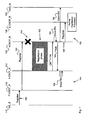
- Fig. 1 illustrates in high-level form an example scenario of how a roaming agreement (RA) may be automatically established between two IMS networks 102 and 104.
- a User Equipment UE_B 116 is a subscriber of IMS network 102.
- UE_B 116 is visiting the IMS network 104.
- the network 102 is also referred to as IMS network B
- the network 104 is also referred to as IMS network A.
- Illustrated in Fig. 1 are the functional entities I-CSSF_B 106, S-CSCF_B 108 and HSS_B 110 of the IMS network B, and I-CSCF A 112 and P-CSCF_A 114 of IMS network 104 A.
- UE_B 116 wants to access IMS services of its home network 102. However, between the IMS networks 102 and 104 no permanent (static) roaming agreement is in place.
- Fig. 1 illustrates a time point when there is also no automatically established (dynamic) roaming agreement in place, but is automatically established triggered by the registration attempt of UE_B 116. It is assumed that the Diameter and SIP protocol is used for signalling between the components illustrated in Fig. 1 and the following figures.
- step 150 the subscriber UE_B attempts to register to its home network 102 and therefore sends a Register message to the P-CSCF_A 114 of visited network 104.
- the P-CSCF_A 114 determines the I-CSCF 106 as the I-CSCF of the home network 102 to which to forward the Register message.
- I-CSCF_B 106 is depicted in Fig. 1 .
- the case of roaming agreement management in case of multiple I-CSCFs in network 102 will be discussed in detail further below.
- step 152 the P-CSCF_A 114 forwards the register message to the I-CSCF_B 106.
- the details of the forwarding step 152 such as gathering an IP address of the I-CSCF 106, the existence of a protected channel on network level between the networks 104 and 102 are known to the skilled person and are therefore omitted here.
- step 154 the I-CSCF_B 106 checks whether a roaming agreement exists with network 104 in order to decide whether to forward the Register request to the S-CSCF_B 108. As illustrated by the cross in Fig. 1 , it is assumed that the I-CSCF_B 106 determines in step 154 that no roaming agreement is in force yet between networks 102 and 104. Thus, the UE_B 116 is not able to register at its home network 102.
- step 156 the entities 106 and 112 of networks 102 and 104, respectively, negotiate a roaming agreement which is valid for at least the particular subscriber 116.
- the negotiation in step 156 may consist of an offer/answer procedure which may comprise one or more cycles.
- the I-CSCFs 106 and 112 are normally the first point of contact between the IMS networks 102 and 104 and therefore form the negotiating partners in step 156.
- the negotiation function or a similar functionality related to an automatic establishment of roaming agreements may additionally or alternatively be located in other nodes of an IMS network.
- such functionality may be located in an S-CSCF in the home IMS network, which may negotiate a roaming agreement with a P-CSCF in the visited network.
- such functionality may be located in an application server or in a dedicated node.
- the I-CSCF may relay the signalling, e.g. the registration request, to the dedicated node.
- the roaming agreement negotiated in step 156 may be provided not only for roaming user 116 but for other users roaming in network 104 as well, using the I-CSCFs of the networks for the automatic roaming agreement establishment process appears advantageous.
- step 158 an OK message is sent and in step 164 an acknowledgement (ACK) message is sent back in order to finalize the negotiation phase 156.
- ACK acknowledgement
- Fig. 1 it is illustrated that the OK is sent from the visited network to the home network, it is noted that the OK may also be sent from the home network to the visited network and the ACK may be sent from the visited network to the home network.
- the negotiated roaming agreement is stored in the corresponding I-CSCFs 106 and 112, respectively, and is also stored in the corresponding user databases, wherein only the step 162 of storing the agreement in HSS 110 is illustrated in Fig. 1 .
- step 168 the procedure for registering user UE_B 116 is performed in the same way as would have been performed when in step 152 a (permanent or dynamic) roaming agreement would have been in force already.
- the roaming agreement negotiated in step 156 may cover the user identity of user 116 or of a group of users.
- the roaming agreement may further indicate the services a roaming user is allowed to access, possibly including predefined QoS characteristics, and technical parameters required for setting up and tearing down sessions between the IMS domains 102 and 104. Such parameters may relate to, e.g., maximum bandwidths, data volumes, etc., and possibly an expiry date of the roaming agreement.
- an automatic negotiation such as that indicated in step 156 can also comprise an agreement that a roaming subscriber may use services of the visited network.
- the roaming agreement of Fig. 1 may also be valid for other users attempting to register via visited network 104 in their home network 102 (and for users of network 104 roaming in network 102). In case the roaming agreement cannot be taken as it is for these subsequent users, the roaming agreement may be adapted, i.e. updated, in response to a further registration request.
- An update procedure of the roaming agreement may include a further negotiation phase similar to that indicated with step 156 in Fig. 1 .
- An update procedure may also be triggered by other events, e.g. at a predetermined point in time, the provision or activation of a new service, etc.
- An automatically established (dynamic) roaming agreement may be valid for a limited or unlimited period of time. Even in case no expiry date has been defined for the roaming agreement, there may be events leading to its termination, e.g. when a negotiated maximum amount of data has been transferred or in case the visited IMS is a temporary IMS network which is switched off at a certain point in time.
- the following description focuses on roaming agreement management in an IMS network having multiple I-CSCFs designated for communication with another IMS network. It is assumed that at most a single roaming agreement should be in place between any two IMS networks. While in principle other configurations may be possible, additional problems may arise in such configurations with regard to consistently and efficiently serving roaming users.
- Fig. 2 illustrates an embodiment of a general approach of managing roaming agreements in an IMS network having designated multiple I-CSCFs.
- the procedure according to Fig. 3 may be implemented in an I-CSCF or similar edge proxy node of an IMS network.
- the I-CSCF receives a registration attempt from a roaming user forwarded by a P-CSCF of a visited network.
- the reception of the registration attempt triggers that in step 204 the I-CSCF requests information regarding a general (permanent) roaming agreement from a HSS or similar user database.
- the HSS provides an indication to the I-CSCF whether a general roaming agreement exists which would allow the user from which the registration attempt originates to roam in the visited network.
- a general roaming agreement may, e.g., be valid for all times and/or any user of the network to which the I-CSCF in Fig. 2 belongs to.
- a general roaming agreement RA
- registration of user 202 would be performed, e.g. the I-CSCF would forward the registration attempt to an appropriate S-CSCF.
- the I-CSCF does not deny the registration but performs a further message exchange 208 with the HSS or user database. Specifically, the I-CSCF requests from the HSS information indicating whether a dynamic roaming agreement exists between the involved networks. The further behaviour of the I-CSCF then depends on the answer from the HSS.
- the I-CSCF starts in step 210 with negotiating a dynamic roaming agreement with the visited network. The negotiation may take place as has been described with regard to the negotiation phase 156 of I-CSCF 106 illustrated in Fig. 1 .
- the I-CSCF acts in step 212 to forward the registration attempt received in step 202 to the I-CSCF in charge of handling the current roaming agreement.
- Fig. 3 illustrates in more detail a specific embodiment of the procedure outlined in Fig. 2 .
- the procedure relates to the handling of a registration attempt of a visiting user in its home network comprising multiple I-CSCFs.
- the example scenario of Fig. 3 refers to the home IMS network 102 and visited IMS network 104 which have been introduced in Fig. 1 . Over those entities which have been discussed already, the home network 102 is depicted as comprising a further I-CSCF 302.
- a DNS server 304 is associated to the visited network 104.
- a user of user equipment (UE) 306 is subscribed in the network 102 and is visiting network 104.
- UE user equipment
- a roaming agreement has been established between home network 102 and visited network 104, wherein the I-CSCFs 106 and 112 are in charge of the roaming agreement and are involved in a corresponding ongoing SIP dialog 308.
- the dialogue 308 is kept alive as long as the roaming agreement exists.
- the UE 306 sends a SIP Register message to the P-CSCF 114 of visited network 104.
- the P-CSCF 114 sends a query to DNS server 306 for an indication of an I-CSCF to contact in the home network 102 of UE 306.
- the DNS server 304 returns an address of an I-CSCF based on, for example, a round robin mechanism in order to in this way ensure load balancing between the multiple I-CSCFs of network 102.
- a round robin mechanism in order to in this way ensure load balancing between the multiple I-CSCFs of network 102.
- the DNS server 304 responds in step 314 with providing an address of the I-CSCF 302 back to the P-CSCF 114 and the P-CSCF 114 correspondingly forwards in step 316 the Register message of UE 306 to I-CSCF 302. The reception of this message corresponds to step 202 of Fig. 2 .
- a dynamic roaming agreement has been negotiated between networks 102 and 104; specifically the I-CSCF 106 is in charge of maintaining the dynamic roaming agreement by means of the SIP dialogue 308.
- the I-CSCF receiving a registration attempt from visited network 104 may be a different one than the I-CSCF 106 involved in the existing roaming agreement between the two networks 102 and 104.
- Such configuration may be avoided, for example, by implementing a single boarder gateway concept.
- the P-CSCF 114 might be configured to send any registration attempts to the I-CSCF 106. In such a configuration, a load balancing would then have to be implemented internally in home network 102.
- a different approach is proposed which offers more flexibility and efficiency.
- the I-CSCF 302 has no information available about a roaming agreement and the status thereof between networks 102 and 104, as the roaming agreement is only handled in the I-CSCF 106.
- the I-CSCF requests from HSS 110 information on whether a general roaming agreement exists with network 104 which would allow user 306 to roam therein, and uses the Diameter User Authentication Request (UAR) command for this purpose.
- UAA User Authentication Answer
- the HSS provides in step 322 an indication to the I-CSCF 204.
- the UAA indicates to the I-CSCF 302 that no general roaming agreement exists with network 104.
- the UAR / UAA message pair in steps 320 and 322 implement step 204 of Fig. 2 .
- the I-CSCF 204 requests in step 324 from HSS 110 information on a dynamic roaming agreement between networks 102 and 104.
- the request is implemented as a Diameter "Roaming Information Request” (RIR).
- the HSS 110 returns in step 326 a corresponding Diameter "Roaming Information Answer” (RIA).
- RIA Diameter "Roaming Information Answer”
- the I-CSCF 204 acts in step 328, which corresponds to step 212 of Fig. 2 , to forward the Register message received in step 316 to the I-CSCF in charge of handling the current roaming agreement, i.e. to the I-CSCF 106.
- the I-CSCFs 106 and 112 perform an appropriate re-negotiation of the existing roaming agreement in order that user 306 is also covered by the agreement.
- the I-CSCF 106 informs the HSS 110, based on a Roaming Update Request (RUR) message, of the re-negotiated roaming agreement allowing user 202 to roam in visited network 104.
- the HSS 110 indicates in step 336 successful update of the data related to the roaming agreement based on a Roaming Update Answer (RUA).
- RUA Roaming Update Answer
- the I-CSCF 106 repeats the UAR unsuccessfully tried by the I-CSCF 302 in step 320.
- the HSS 110 responds with a UAA in step 340 indicating that a registration of roaming user 306 is permitted. Consequently, the I-CSCF 106 forwards the Register message received in step 328 in step 342 to S-CSCF 108. The registration process will further continue in the normal way.
- Fig. 4a illustrates an information element (IE) which may be sent in the RIR in step 324 of Fig. 3 from the I-CSCF 302 in response to the reception of a registration attempt of a visiting user to the HSS.
- the IE 'Visited Network Identifier' may comprise an indicator of the visited network 104 in home network 102.
- This information element may be mandatory ('M').
- Fig. 4b illustrates information elements which may be sent in the RIA in step 326 in Fig. 3 back from the HSS 110 to the I-CSCF 302.
- the RIA may comprise an information element 'Roaming State' indicating a state of a roaming agreement which may control the further behaviour of the I-CSCF 302 as discussed for example with regard to step 208 in Fig. 2 .
- the status indication may extend over the mere indication of whether or not there is a roaming agreement existing for the visited network indicated in the RIR. Possible state indications may comprise, for example, "Established", “Terminated", “Early".
- the RIA may comprise the 'Roaming Template' IE, which field may comprise a roaming agreement template, which would then (step 210 in Fig. 2 ) to be used by the receiving I-CSCF to start negotiating a roaming agreement with an interrogating counterpart in the visited network. Still further, the RIA may comprise the 'Roaming Handler' IE which, in order to enable forwarding of the registration attempt to the responsible I-CSCF, indicates this responsible I-CSCF. For the example scenario of Fig. 2 , the Roaming Handler IE would indicate an IP address, SIP URI, or similar address of the I-CSCF 106 handling the SIP dialogue 308 with visited network 104.
- Fig. 4b only the Roaming State information element is indicated as mandatory IE ('M'), while the other IEs may optionally ('O') be included, dependent on the roaming agreement state.
- IE mandatory IE
- 'O' mandatory IE
- Other implementations may also be considered.
- no Roaming State IE is available, but the I-CSCF receiving the RIA has to indirectly conclude the state from the received IE 'Roaming Template' or 'Roaming Handler'.
- the I-CSCF may conclude that no roaming agreement is currently in place, and will start negotiation.
- the I-CSCF may conclude that a roaming agreement is in place and that the indicated I-CSCF is in charge thereof. In this way the Roaming State IE may be seen as obsolete.
- a possible reaction to the roaming state 'Early' may be to repeat the sending of the RIR to the HSS after a predetermined time span has been elapsed.
- the (mandatory) inclusion of the 'Roaming State' IE ensures proper handling of the received registration attempt.
- this field may carry a specific value indicating that the receiving I-CSCF is itself in charge of the roaming agreement with the visited network indicated in the RIR.
- Figs. 2 and 3 it is illustrated that there are two message exchanges between the I-CSCF and the HSS, namely (referring to Fig. 2 ) the UAR / UAA message pair in steps 320 and 322, and the RIR / RIA message pair in steps 324 and 326.
- Providing the communication between I-CSCF and HSS in the form of two separate message exchanges minimizes the additional implementation efforts and additional adaptations required for IMS networks employing multiple I-CSCFs, as this procedure leaves the conventionally known UAR / UAA message exchange entirely or in part unaltered.
- a minimization of network traffic / signalling is more desirable, instead of two message exchanges, a single message exchange may only be performed.
- the information element "Visited Network Identifier" of Fig. 4a may also be included in the UAR and/or the HSS 110 may be adapted to, in response to the reception of a visited network ID in an UAR, search for both, general (permanent) and dynamic (temporary) roaming agreements with the visited network as indicated.
- the UAA may already include one or more of the information elements illustrated in Fig. 4b . In this way, one message exchange could be saved.
- Fig. 5 schematically illustrates functional building blocks of an exemplary implementation of the I-CSCF 302 of Fig. 3 .
- the I-CSCF 302 comprises a reception component 502, a query component 504, a response component 506, and a forwarding component 508.
- the components of I-CSCF 304. may be adapted for communication based on the Diameter and/or SIP protocol.
- the I-CSCF 302 operates to manage an automatically established roaming agreement in the IMS network 102.
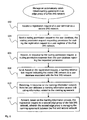
- An exemplary operation of the I-CSCF 302 will now be described with reference to the flow diagram of Fig. 6 , which refers to the scenario of Fig. 3 from the perspective of the I-CSCF 302.
- the reception component 502 receives a registration request from UE 302 via visited network 104 (step 316 in Fig. 3 ).
- the reception component 502 provides the visited network identifier included in the registration attempt to the query component 504 which is thereby triggered to send, in step 604, a routing permission request, more specifically an UAR, to the HSS 110 (step 320).
- the UAR requests permission for routing the registration request to a user registrar of network 102, more specifically to an S-CSCF.
- the response component 506 receives, in response to the UAR, a roaming information answer from the HSS 110, more specifically an UAA (step 322).
- the UAA rejects the requested permission, as there is no general roaming agreement established between networks 102 and 104.
- the query component 504 operates to send, in response to the rejecting UAA, a RIR to the HSS 110 (step 324 in Fig. 3 ).
- the RIR indicates, based for example on the IE illustrated in Fig. 4a the visited network 104 to HSS 110.
- the response component 506 receives in response to the RIR a RIA from HSS 110 (step 326), wherein the RIA contains one or more of the IEs illustrated in Fig. 4b .
- the forwarding component 508 acts in step 612 to forward the registration request received in step 602 to a further I-CSCF, namely I-CSCF 106 of network 102, which has been indicated in the RIA.
- Fig. 7 schematically illustrates functional building blocks of an exemplary implementation of the HSS 110 of Fig. 3 .
- the HSS 110 comprises a reception component 702, a database access component 704, an associated database 706 and a response component 708.
- the components 702 and 708 may be adapted for communication based on the Diameter and/or SIP protocol.
- the HSS 110 operates for contributing to a management of automatically established roaming agreements in the IMS network 102.
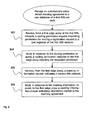
- An exemplary operation of the HSS 110 will now be described with reference to the flow diagram of Fig. 8 , which refers to the scenario of Fig. 3 from the perspective of the HSS 110.
- step 802 an UAR from I-CSCF 302 is received by the reception component 702 (step 320 in Fig. 3 ).
- the database access component 704 accesses database 706 to determine whether a general roaming agreement between networks 102 and 104 exists. As in the example discussed here no such general roaming agreement exists, in step 804 the response component 708 constructs an UAA message rejecting routing permission for the registration attempt of visiting user 306 and sends the UAA back to the I-CSCF (step 322).
- the reception component 702 receives from the I-CSCF 302 a RIR (step 324 in Fig. 3 ).
- the database access component 704 accesses database 706 in order to determine whether there is a dynamic roaming agreement between networks 102 and 104.
- access component 704 accesses look-up table 710 which will be described in more detail below.
- the response component 708 provides a RIA to the I-CSCF 302, wherein the RIA indicates the roaming handler, i.e. the I-CSCF 106 which is in charge of the existing dynamic roaming agreement between networks 102 and 104.
- the RIA may for example comprise the IEs "Roaming State" and "Roaming Handler" as illustrated in Fig. 4b .
- the lookup table 710 in Fig. 7 exemplarily illustrates a structure of data records which may be stored in database 706 in order to enable the HSS 110 to efficiently react to a request for information on a dynamic roaming agreement.
- a data record in the lookup table 710 may comprise a field 712 for representing an indication of a visited network identifier ('Visited Network ID'), a field 714 for representing an indication of a dynamic roaming agreement ('RA ID'), a field 716 may be provided for indicating a roaming handler ('Roaming Handler'), and a field 718 may be provided for representing a state of the dynamic roaming agreement ('RA state'). Further fields may be provided depending on implementation.
- the Visited Network ID in field 712 is be related to the indications of visited networks delivered by the registration attempts of roaming users, i.e. for example to the content of the IE 'Visited Network Identifier' illustrated in Fig. 4a and provided in a RIR to the HSS 110.
- the indication of the roaming handler in field 716 may be, for example, an address, such as an IP address, a SIP URI, or similar indication pointing to the I-CSCF in charge of a dynamic roaming agreement.
- the field 718 may indicate states such as "Early” or “Negotiating", “Established”, or “Not Existing", “Expired”, etc. depending on the current state of the roaming agreement, as discussed above.
- lookup table 710 of Fig. 7 represents only one example of a data structure enabling the HSS to respond to a RIR
- the HSS should have efficient access to an association of a visited network identifier and a roaming handler.
- the IP address, host ID, etc. of the roaming handler might exist at least as long as the roaming agreement is in place.
- the roaming handler address may still be accessible in case the roaming agreement has expired.
- a dynamic roaming agreement with another network might always be negotiated and maintained by one and same I-CSCF.
- the table to be accessed in order to respond to a dynamic roaming information request may comprise a list of roaming agreements, which would require that the HSS for each request has to scan the entire list in order to identify the respective visited network.
- the table could be configured efficiently by, for example, indexing it according to visited network identifier. Such structure is seen as corresponding to the structure 710 as illustrated in Fig. 7 .
- Fig. 9 schematically illustrates functional building blocks of an exemplary implementation of I-CSCF 106 of Fig. 3 which is in charge of negotiating and maintaining the dynamic roaming agreement with I-CSCF 112 of visited network 104.
- the I-CSCF 106 implementation in Fig. 9 comprises a reception component 902, a RA update component 904, a HSS request component 906 and a forwarding component 908.
- An exemplary operation of the I-CSCF 106 will now be described with reference to the flow diagram of Fig. 10 which refers to the scenario of Fig. 3 from the perspective of the I-CSCF 106.
- the reception component 902 receives a registration attempt (step 328 in Fig. 3 ) from I-CSCF 302 of network 102.
- the update component 904 performs a re-negotiation of the dynamic roaming agreement in place between networks 102 and 104 (steps 330, 332).
- the component 906 indicates in step 1006 the re-negotiated roaming agreement to the HSS 110 (steps 334, 336).
- the component 906 operates to request from the HSS 110 information regarding the dynamic roaming agreement according to the procedure illustrated in steps 338 and 340 in Fig. 3 .
- the component 908 forwards the registration attempt received in step 1002 to the S-CSCF 108 (cf. Fig. 2 ).
- the I-CSCF is stateful with regard to dynamic roaming agreements.
- an I-CSCF in charge of negotiating and maintaining a dynamic roaming agreement is configured stateful, i.e. it remembers the details of the roaming agreement negotiated with the other network and has access to information regarding the current state of the roaming agreement.
- the I-CSCF 106 in Fig. 3 in charge of the dynamic roaming agreement between networks 102 and 104 is stateful in that it keeps track of the dynamic roaming agreement and maintains a corresponding SIP dialogue with the corresponding I-CSCF 112 in network 104.
- the I-CSCF receiving a registration attempt must be enabled to receive information regarding a dynamic roaming agreement.
- the RIR / RIA message pair is introduced.
- the information contained in the RIA enables the I-CSCF to either (dependent on implementation) start negotiating a dynamic roaming agreement or to forward the registration attempt to the I-CSCF in charge of the dynamic roaming agreement.
- This latter I-CSCF may re-negotiate the roaming agreement accordingly.
- all registration attempts pertaining to a given dynamic roaming relationship may arrive at a particular I-CSCF which enables an efficient handling of the roaming agreement on the one hand and the user registrations related to the roaming agreement on the other hand.
- an I-CSCF is in charge of managing a roaming agreement
- the proposed functionality may be implemented on any appropriate node, i.e. any SIP proxy, edge proxy, SIP proxy server, border proxy server, etc. may be chosen.
- the techniques proposed herein contribute to a comprehensive framework for enabling an automatic establishment of roaming agreements between IMS networks.
- the proposed techniques enable a consistent management of roaming agreements. Techniques known or discussed for managing general or permanent roaming agreements can be re-used to a large extent.
- an IMS network having initially only a single I-CSCF or edge proxy for communication with other IMS networks can easily be extended to multiple I-CSCFs.
- the proposed techniques contribute to minimizing processing resource usage and network traffic between nodes. Optimizations to existing procedures have also been indicated herein, which may contribute further to minimizing network traffic and/or processing resource usage. Complex situations with parallel roaming agreements and/or a shift of roaming agreements responsibility to other nodes can be avoided. No new nodes needs to be established in order to implement the proposed techniques.
Landscapes
- Engineering & Computer Science (AREA)
- Computer Networks & Wireless Communication (AREA)
- Signal Processing (AREA)
- Multimedia (AREA)
- Databases & Information Systems (AREA)
- Business, Economics & Management (AREA)
- General Business, Economics & Management (AREA)
- Mobile Radio Communication Systems (AREA)
Claims (17)
- Verfahren zur Verwaltung einer automatisch erstellten Roaming-Vereinbarung in einem ersten IP-Multimedia-Subsystem, IMS,-Netz, wobei das Verfahren in einem ersten Netzkanten-Proxy (302) des ersten IMS-Netzes (102) ausgeführt wird und die folgenden Schritte umfasst:• Empfangen (202, 316, 602) einer Registrierungsanforderung eines Benutzerendgeräts (306) über ein zweites IMS-Netz (104);• Senden (208, 324, 608) basierend auf der Registrierungsanforderung einer Roaming-Informationsanforderung, die das zweite IMS-Netz anzeigt, an eine Benutzerdatenbank (110), die mit dem ersten IMS-Netz (102) assoziiert ist;• Empfangen (208, 326, 610) als Reaktion auf die Roaming-Informationsanforderung von der Benutzerdatenbank (110) einer Roaming-Informationsantwort, die Informationen anzeigt die mit der Roaming-Vereinbarung in Beziehung stehen und die Adresse eines zweiten Netzkanten-Proxys (106) im ersten IMS-Netz enthält, welcher die Roaming-Vereinbarung zwischen den ersten und zweiten IMS-Netzen verwaltet, und• Weiterleiten (212, 328, 612) der Registrierungsanforderung, basierend auf der Roaming-Informationsantwort, an den zweiten Netzkanten-Proxy (106).
- Verfahren zur Verwaltung einer automatisch erstellten Roaming-Vereinbarung in einem ersten IP-Multimedia-Subsystem, IMS,-Netz, wobei das Verfahren in einer Benutzerdatenbank (110) ausgeführt wird, die mit dem ersten IMS-Netz (102) assoziiert ist und die folgenden Schritte umfasst:• Empfangen (324, 806) von einem ersten Netzkanten-Proxy (302) des ersten IMS-Netzes einer Roaming-Informationsanforderung, die ein zweites IMS-Netz (104) anzeigt; und• Senden (326, 808), als Reaktion auf die Roaming-Informationsanforderung, einer Roaming-Informationsantwort an den ersten Netzkanten-Proxy (302), die Informationen anzeigt, die mit der Roaming-Vereinbarung in Beziehung stehen und die Adresse eines zweiten Netzkanten-Proxys (106) im ersten IMS-Netz enthalten, welcher die Roaming-Vereinbarung zwischen den ersten und den zweiten IMS-Netzen verwaltet, wobei eine Registrierungsanforderung eines Benutzerendgeräts durch den ersten Netzkanten-Proxy (302) über das zweite IMS-Netz (104) empfangen wurde und die Registrierungsanforderung des Benutzerendgeräts basierend auf der Roaming-Informationsantwort an den zweiten Netzkanten-Proxy (106) weitergeleitet wird.
- Verfahren nach Anspruch 1 oder 2, wobei die Roaming-Informationsantwort den zweiten Netzkanten-Proxy (106) anzeigt, wobei die automatisch erstellte Roaming-Vereinbarung eine dynamische Roaming-Vereinbarung mit einer Ablaufzeit ist, und wobei die Roaming-Informationsantwort eine Anzeige eines Zustands der dynamischen Roaming-Vereinbarung umfasst.
- Verfahren nach Anspruch 1, umfassend die folgenden Schritte nach dem Empfang der Registrierungsanforderung und vor dem Senden der Roaming-Informationsanforderung:• Senden (204, 320, 604) einer Routing-Erlaubnisanforderung an die Benutzerdatenbank (110), wobei die Routing-Erlaubnisanforderung eine Erlaubnis zum Leiten der Registrierungsanforderung an einen Benutzer-Registrator (108) des ersten IMS-Netzes (102) anfordert; und• Empfangen (204, 322, 606) als Reaktion auf die Routing-Erlaubnisanforderung einer Routing-Erlaubnisantwort von der Benutzerdatenbank (110), welche die angeforderte Erlaubnis verweigert;
wobei die Roaming-Informationsanforderung als Reaktion auf die empfangene verweigernde Routing-Erlaubnisantwort an die Benutzerdatenbank (110) gesendet wird. - Verfahren nach Anspruch 1, wobei eine einzige Nachricht, welche die Routing-Erlaubnisanforderung und die Roaming-Informationsanforderung umfasst, an die Benutzerdatenbank gesendet wird, und wobei die einzige Nachricht einen Diameter-Befehl zur Benutzerberechtigungsanforderung darstellt.
- Verfahren nach Anspruch 4 oder 5, wobei nur eine Roaming-Informationsantwort und keine Routing-Erlaubnisantwort von der Benutzerdatenbank empfangen wird.
- Verfahren nach Anspruch 2, umfassend den folgenden Schritt:• Bestimmen basierend auf der empfangenen Routing-Erlaubnisanforderung, ob eine dauerhafte Roaming-Vereinbarung zwischen den ersten und zweiten IMS-Netzen besteht,
wobei die verweigernde Routing-Erlaubnisantwort gesendet wird, da keine dauerhafte Roaming-Vereinbarung zwischen den ersten und zweiten IMS-Netzen besteht. - Verfahren nach einem der vorhergehenden Ansprüche, wobei die Roaming-Informationsantwort optional eine Roaming-Vereinbarungsvorlage zum Erstellen einer Roaming-Vereinbarung zwischen dem ersten und dem zweiten IMS-Netz umfasst, und wobei die Kommunikation zwischen dem ersten Netzkanten-Proxy (302) und der Benutzerdatenbank (110) auf Diameter-Nachrichten basiert.
- Verfahren zur Verwaltung einer automatisch erstellten Roaming-Vereinbarung in einem ersten IP-Multimedia-Subsystem, IMS,-Netz, wobei das Verfahren in einem zweiten Netzkanten-Proxy (106) des ersten IMS-Netzes (102), welcher die Roaming-Vereinbarung zwischen dem ersten IMS-Netz und einem zweiten IMS-Netz (104) verwaltet, ausgeführt wird und die folgenden Schritte umfasst:• Empfangen (328, 1002) einer Registrierungsanforderung eines Benutzerendgeräts von einem ersten Netzkanten-Proxy (302) des ersten IMS-Netzes (102), wobei die Registrierungsanforderung durch den ersten Netzkanten-Proxy über das zweite IMS-Netz (104) empfangen wurde und an den zweiten Netzkanten-Proxy (106) weitergeleitet wird.
- Computerprogrammprodukt, das auf einem computerlesbaren Aufzeichnungsmedium gespeichert ist und Programmcodeabschnitte zum Durchführen des Verfahrens nach einem der vorhergehenden Ansprüche umfasst, wenn das Computerprogrammprodukt auf einem oder mehreren Rechengeräten ausgeführt wird.
- Knoten, der einen ersten Netzkanten-Proxy (302) implementiert und zum Verwalten einer automatisch erstellten Roaming-Vereinbarung in einem ersten IP-Multimedia-Subsystem, IMS,-Netz ausgelegt ist, wobei der Knoten umfasst:• eine Komponente (502), die so ausgelegt ist, dass sie eine Registrierungsanforderung eines Benutzerendgeräts (306) über ein zweites IMS-Netz (104) empfängt;• eine Komponente (504), die so ausgelegt ist, dass sie eine Roaming-Informationsanforderung, die das zweite IMS-Netz anzeigt, die mit dem ersten IMS-Netz (102) assoziiert ist, basierend auf der Registrierungsanforderung, an eine Benutzerdatenbank (110) sendet;• eine Komponente (506), die so ausgelegt ist, dass sie als Reaktion auf die Roaming-Informationsanforderung, von der Benutzerdatenbank (110) eine Roaming-Informationsantwort empfängt, die Information anzeigt die mit der Roaming-Vereinbarung in Beziehung stehen und die Adresse eines zweiten Netzkanten-Proxys (106) im ersten MS-Netz enthält, welcher die Roaming-Vereinbarung zwischen den ersten und den zweiten IMS-Netzen verwaltet, und• eine Komponente (506), die so ausgelegt ist, dass sie basierend auf der Roaming-Informationsantwort die Registrierungsanforderung an den zweiten Netzkanten-Proxy (106) weiterleitet.
- Knoten nach Anspruch 11, ferner umfassend:• eine Komponente (504), die so ausgelegt ist, dass sie eine Routing-Erlaubnisanforderung an die Benutzerdatenbank (110) sendet, wobei die Routing-Erlaubnisanforderung eine Erlaubnis zum Leiten der Registrierungsanforderung an einen Benutzer-Registrator des ersten IMS-Netzes anfordert; und• eine Komponente (506), die so ausgelegt ist, dass sie als Reaktion auf die Routing-Erlaubnisanforderung eine Routing-Erlaubnisantwort von der Benutzerdatenbank (110) empfängt, welche die angeforderte Erlaubnis verweigert,
wobei der Knoten so ausgelegt ist, dass er eine einzige Nachricht, welche die Routing-Erlaubnisanforderung und die Roaming-Informationsanforderung umfasst, an die Benutzerdatenbank sendet. - Knoten, der eine Benutzerdatenbank (110) implementiert, die mit einem ersten IP-Multimedia-Subsystem, IMS,-Netz (102) assoziiert ist, und zum Verwalten einer automatisch erstellten Roaming-Vereinbarung im ersten IMS-Netz ausgelegt ist, wobei der Knoten umfasst:• eine Komponente (702), die so ausgelegt ist, dass sie von einem ersten Netzkanten-Proxy (302) des ersten IMS-Netzes eine Roaming-Informationsanforderung empfängt, die ein zweites IMS-Netz (104) anzeigt; und• eine Komponente (708), die so ausgelegt ist, dass sie als Reaktion auf die Roaming-Informationsanforderung eine Roaming-Informationsantwort an den ersten Netzkanten-Proxy sendet, die Informationen anzeigt, die mit der Roaming-Vereinbarung in Beziehung stehen und die Adresse eines zweiten Netzkanten-Proxys (106) im ersten IMS-Netz enthalten, welcher die Roaming-Vereinbarung zwischen den ersten und den zweiten IMS-Netzen verwaltet, wobei eine Registrierungsanforderung eines Benutzerendgeräts durch den ersten Netzkanten-Proxy (302) über das zweite IMS-Netz (104) empfangen wurde und die Registrierungsanforderung des Benutzerendgeräts basierend auf der Roaming-Informationsantwort an den zweiten Netzkanten-Proxy (106) weitergeleitet wird.
- Knoten nach Anspruch 13, ferner umfassend:• eine Komponente (702), die so ausgelegt ist, dass sie eine Routing-Erlaubnisanforderung vom ersten Netzkanten-Proxy empfängt, wobei die Routing-Erlaubnisanforderung eine Erlaubnis zum Leiten der Registrierungsanforderung an einen Benutzer-Registrator des ersten IMS-Netzes anfordert; und• eine Komponente (708), die so ausgelegt ist, dass sie als Reaktion auf die Routing-Erlaubnisanforderung eine Routing-Erlaubnisantwort an den ersten Netzkanten-Proxy sendet, welche die angeforderte Erlaubnis verweigert.
- Knoten nach Anspruch 13, wobei der Knoten so ausgelegt ist, dass er eine einzige Nachricht empfängt, welche die Routing-Erlaubnisanforderung und die Roaming-Informationsanforderung umfasst und welche vom ersten Netzkanten-Proxy gesendet wird, und ferner so ausgelegt ist, dass er nur eine Roaming-Informationsantwort und keine Routing-Erlaubnisantwort an den ersten Netzkanten-Proxy sendet.
- Knoten, der einen zweiten Netzkanten-Proxy (106) implementiert und zum Verwalten einer automatisch erstellten Roaming-Vereinbarung in einem ersten IP-Multimedia-Subsystem, IMS,-Netz (102) ausgelegt ist, wobei der zweite Netzkanten-Proxy (106) die Roaming-Vereinbarung zwischen dem ersten IMS-Netz und einem zweiten IMS-Netz (104) verwaltet, wobei der Knoten eine Komponente (904) umfasst, die so ausgelegt ist, dass sie eine Registrierungsanforderung eines Benutzerendgeräts von einem ersten Netzkanten-Proxy (302) des ersten IMS-Netzes (102) empfängt, wobei die Registrierungsanforderung durch den ersten Netzkanten-Proxy (302) über das zweite IMS-Netz (104) empfangen wurde und an den zweiten Netzkanten-Proxy (106) weitergeleitet wird.
- Knoten nach einem der Ansprüche 11 bis 16, wobei mindestens einer von dem ersten Netzkanten-Proxy und dem zweiten Netzkanten-Proxy als eine abfragende Verbindungszustandssteuerfunktion "I-CSCF" (302, 106), eine Interconnect Border Control-Funktion "IBCF" oder ein Session Border-Gateway "SBG" implementiert ist, die Benutzerdatenbank als ein Heimat-Teilnehmerserver "HSS" (110) implementiert ist, und der Benutzer-Registrator als eine versorgende Verbindungszustandssteuerfunktion "S-CSCF" (108) implementiert ist, und wobei die Knoten (702, 708), die den ersten Netzkanten-Proxy und die Benutzerdatenbank implementieren, so ausgelegt sind, dass sie unter Verwendung des Diameter-Protokolls miteinander kommunizieren.
Applications Claiming Priority (1)
| Application Number | Priority Date | Filing Date | Title |
|---|---|---|---|
| PCT/EP2009/003584 WO2010133239A1 (en) | 2009-05-19 | 2009-05-19 | Managing roaming agreements between ims networks |
Publications (2)
| Publication Number | Publication Date |
|---|---|
| EP2433406A1 EP2433406A1 (de) | 2012-03-28 |
| EP2433406B1 true EP2433406B1 (de) | 2013-04-17 |
Family
ID=41168696
Family Applications (1)
| Application Number | Title | Priority Date | Filing Date |
|---|---|---|---|
| EP09776632.3A Not-in-force EP2433406B1 (de) | 2009-05-19 | 2009-05-19 | Verwaltung von roaming-vereinbarungen zwischen ims-netzen |
Country Status (4)
| Country | Link |
|---|---|
| US (1) | US9185141B2 (de) |
| EP (1) | EP2433406B1 (de) |
| JP (1) | JP5367909B2 (de) |
| WO (1) | WO2010133239A1 (de) |
Families Citing this family (24)
| Publication number | Priority date | Publication date | Assignee | Title |
|---|---|---|---|---|
| US8620309B2 (en) * | 2010-08-03 | 2013-12-31 | At&T Intellectual Property I, L.P. | Policy enabled roaming gateway in a communication network |
| US8843128B2 (en) * | 2011-10-18 | 2014-09-23 | Alcatel Lucent | Roaming session termination triggered by roaming agreement/partner deletion |
| US8548463B2 (en) * | 2011-10-18 | 2013-10-01 | Alcatel Lucent | PCRN roaming agreement |
| US8850523B2 (en) * | 2012-04-13 | 2014-09-30 | Cable Television Laboratories, Inc. | Watermarks for roaming |
| US8862662B2 (en) * | 2012-10-29 | 2014-10-14 | The Boeing Company | Determination of latent interactions in social networks |
| EP2995108B1 (de) | 2013-05-10 | 2018-01-03 | Nokia Solutions and Networks Oy | Kommunikationsmechanismus mit co-primärer spektrumsteilung |
| US9692711B2 (en) * | 2014-12-22 | 2017-06-27 | Verizon Patent And Licensing Inc. | DNS redirecting for data roaming offering |
| KR102001756B1 (ko) * | 2015-03-27 | 2019-07-18 | 인터랙티브 인텔리전스 그룹, 인코포레이티드 | 프로비저닝 및 레지스트레이션을 위한 시스템 및 방법 |
| WO2017042324A1 (en) | 2015-09-10 | 2017-03-16 | Nokia Solutions And Networks Oy | Selective proprietary protocol support indication removal |
| US10045201B2 (en) * | 2016-08-12 | 2018-08-07 | United States Cellular Corporation | Inter-network operator roaming policy configuration in mobile wireless data networks operated by cooperating network service providers |
| WO2019087045A1 (en) * | 2017-10-30 | 2019-05-09 | Telefonaktiebolaget Lm Ericsson (Publ) | Support for manual roaming for volte |
| WO2019104159A1 (en) * | 2017-11-22 | 2019-05-31 | Geoverse, LLC | Distributed ledger system for management and tracking of exchanges of wireless services between wireless service providers |
| WO2019118903A1 (en) | 2017-12-14 | 2019-06-20 | Geoverse, LLC | Distributed ledger system for management and implementation of exchanges of wireless services between wireless service providers |
| CN111447240B (zh) * | 2020-04-29 | 2022-02-15 | 安康鸿天科技股份有限公司 | 数据通信控制方法、装置、系统、存储介质及计算机设备 |
| US12399274B2 (en) | 2020-07-10 | 2025-08-26 | Skystream LLC | Enhanced LDACS that uses doppler shifts in carrier signals for positioning and navigation |
| US11637627B2 (en) * | 2020-07-10 | 2023-04-25 | Skystream LLC | Enhanced LDACS system having LDACS underlay and overlay networks and associated methods |
| CN114339638B (zh) * | 2020-09-30 | 2025-08-29 | 华为技术有限公司 | 呼叫方法、装置及系统 |
| US12184661B2 (en) * | 2021-02-24 | 2024-12-31 | Cisco Technology, Inc. | Creating network-based consent contracts |
| US12021754B2 (en) | 2021-02-24 | 2024-06-25 | Cisco Technology, Inc. | Enforcing consent contracts to manage network traffic |
| US12309268B2 (en) | 2021-02-24 | 2025-05-20 | Cisco Technology, Inc. | Indicating network-based consent contracts using packet-level data |
| US12301729B2 (en) | 2021-02-24 | 2025-05-13 | Cisco Technology, Inc. | Centralized consent vendors for managing network-based consent contracts |
| US12219656B2 (en) | 2022-08-19 | 2025-02-04 | T-Mobile Usa, Inc. | Selectively restricting Wi-Fi calls supported by telecommunications network |
| US12407739B2 (en) | 2022-10-07 | 2025-09-02 | T-Mobile Usa, Inc. | Interconnection border control function and home subscriber server interface for managing voice calls |
| US12452640B2 (en) | 2022-12-01 | 2025-10-21 | T-Mobile Usa, Inc. | Automated audits relating to network configuration updates in response to roaming partner updates |
Family Cites Families (21)
| Publication number | Priority date | Publication date | Assignee | Title |
|---|---|---|---|---|
| FI991105A7 (fi) | 1999-05-14 | 2000-11-15 | Nokia Corp | Menetelmä ja digitaalinen matkaviestinjärjestelmä |
| JP2002186011A (ja) * | 2000-12-11 | 2002-06-28 | Hitachi Ltd | 移動通信システム |
| WO2002082729A1 (en) | 2001-04-04 | 2002-10-17 | Nokia Corporation | Tracing method and system |
| US7304966B2 (en) | 2001-06-08 | 2007-12-04 | Nokia Corporation | Accessing IP multimedia subsystem |
| US20040243711A1 (en) * | 2001-09-11 | 2004-12-02 | Jaakko Rajaniemi | Method, system and network element for controlling data transmission in a network environment |
| US8121597B2 (en) * | 2002-03-27 | 2012-02-21 | Nokia Siemens Networks Oy | Method of registering and deregistering a user |
| JP4629482B2 (ja) * | 2005-04-13 | 2011-02-09 | 大日本印刷株式会社 | 移動通信端末、icカード、移動通信システム、プログラム及び通信料金通知方法 |
| ATE451798T1 (de) | 2005-05-03 | 2009-12-15 | Ericsson Telefon Ab L M | Vorrichtung und verfahren zum differenzieren von diensten in multimedia-netzwerken für roamende teilnehmer |
| FI20050494A0 (fi) * | 2005-05-10 | 2005-05-10 | Nokia Corp | Palvelun tarjoaminen tietoliikennejärjestelmässä |
| CN1327681C (zh) | 2005-08-08 | 2007-07-18 | 华为技术有限公司 | 一种实现初始因特网协议多媒体子系统注册的方法 |
| CN100388685C (zh) | 2005-08-30 | 2008-05-14 | 华为技术有限公司 | Ip多媒体子系统中ims注册触发实现方法 |
| CN101496387B (zh) * | 2006-03-06 | 2012-09-05 | 思科技术公司 | 用于移动无线网络中的接入认证的系统和方法 |
| DE102006012439B4 (de) * | 2006-03-17 | 2008-03-27 | Nokia Siemens Networks Gmbh & Co.Kg | Verfahren und Vorrichtungen zur Vermeidung einer fehlerhaften Klassifizierung von erwünschten Nachrichten als Spam over Internet Telephony-Nachrichten, abgekürzt SPIT-Nachrichten, in einem Kommunikationsnetzwerk |
| CN100596084C (zh) | 2006-04-20 | 2010-03-24 | 华为技术有限公司 | 移动电路域用户接入ims网络的系统及其接入的注册方法 |
| US20080004006A1 (en) * | 2006-06-30 | 2008-01-03 | Sujay Datta | Method for notifying network application of client registration in a roaming network |
| CN101669376A (zh) * | 2007-01-18 | 2010-03-10 | 泰克莱克公司 | 用于将来自2g网络的短消息服务(sms)消息路由到基于会话发起协议(sip)的网络的方法、系统和计算机程序产品 |
| US8457631B2 (en) | 2007-05-01 | 2013-06-04 | Nextel Communications Inc. | Dispatch network with IMS integration |
| US20090082019A1 (en) * | 2007-09-24 | 2009-03-26 | Marsico Peter J | Methods, systems, and computer readable media for providing dynamic roaming arbitrage service |
| US8244885B2 (en) * | 2007-12-26 | 2012-08-14 | Motorola Solutions, Inc. | Using domain name service for identifying a home domain of a roaming device |
| US8175575B2 (en) * | 2008-04-16 | 2012-05-08 | Alcatel Lucent | Online charging for roaming users in a proxy online charging system of a visited network |
| US8260290B2 (en) * | 2008-10-03 | 2012-09-04 | Telefonaktiebolaget Lm Ericsson (Publ) | System and method for inbound roaming in IP multimedia subsystem networks |
-
2009
- 2009-05-19 EP EP09776632.3A patent/EP2433406B1/de not_active Not-in-force
- 2009-05-19 US US13/320,950 patent/US9185141B2/en not_active Expired - Fee Related
- 2009-05-19 JP JP2012511149A patent/JP5367909B2/ja not_active Expired - Fee Related
- 2009-05-19 WO PCT/EP2009/003584 patent/WO2010133239A1/en not_active Ceased
Also Published As
| Publication number | Publication date |
|---|---|
| WO2010133239A1 (en) | 2010-11-25 |
| US20120185578A1 (en) | 2012-07-19 |
| JP2012527799A (ja) | 2012-11-08 |
| JP5367909B2 (ja) | 2013-12-11 |
| EP2433406A1 (de) | 2012-03-28 |
| US9185141B2 (en) | 2015-11-10 |
| WO2010133239A8 (en) | 2011-04-21 |
Similar Documents
| Publication | Publication Date | Title |
|---|---|---|
| EP2433406B1 (de) | Verwaltung von roaming-vereinbarungen zwischen ims-netzen | |
| EP2433405B1 (de) | Verwaltung von benutzerregistrationen von roamenden ims-benutzern | |
| RU2310284C2 (ru) | Способ, система и сетевое устройство, предназначенные для маршрутизации сообщения временно недоступному пользователю сети | |
| JP4921980B2 (ja) | 移動性管理情報を提供するための、通信システム、装置および方法 | |
| AU2005270966B2 (en) | User registration in a communication system | |
| EP2030402B1 (de) | Handhabung mehrerer benutzerschnittstellen in einem ip multimedia subsystem | |
| JP4315686B2 (ja) | 移動通信システムにおける加入者登録 | |
| US8175576B2 (en) | Method and apparatus for use in a communications network | |
| EP2277352B1 (de) | Mobile vermittlungsplattform mit schnittstellen mit funktionsdefinition durch eine architektur zur bereitstellung paketvermittelter multimedia-teilnehmerdienste | |
| US20050159156A1 (en) | Controlling communication sessions in a communication system | |
| CN101297531A (zh) | 经由电路交换接入提供ims服务 | |
| US20030229699A1 (en) | Method of limiting media description negotiation | |
| US20050176428A1 (en) | Controlling communication sessions in a communication system | |
| US8812557B2 (en) | Database and a method for obtaining the address of a quality of service and charging control entity in an IMS network using such a database | |
| EP2409469B1 (de) | Umvergabe der serving-proxy-funktion im ims | |
| EP1884067B1 (de) | Verfahren zum auffordern eines unregistrierten UE, Registration im IMS auszuführen | |
| EP1873980B1 (de) | Abfragendes Netzwerkelement für ein IMS-Datennetzwerk | |
| CA2605475C (en) | Session initiation from application servers in an ip multimedia subsystem | |
| US9426711B2 (en) | Traffic control within an IP multimedia subsystem | |
| WO2007052894A1 (en) | Distributed hss (home subscriber server) architecture |
Legal Events
| Date | Code | Title | Description |
|---|---|---|---|
| PUAI | Public reference made under article 153(3) epc to a published international application that has entered the european phase |
Free format text: ORIGINAL CODE: 0009012 |
|
| 17P | Request for examination filed |
Effective date: 20111213 |
|
| AK | Designated contracting states |
Kind code of ref document: A1 Designated state(s): AT BE BG CH CY CZ DE DK EE ES FI FR GB GR HR HU IE IS IT LI LT LU LV MC MK MT NL NO PL PT RO SE SI SK TR |
|
| DAX | Request for extension of the european patent (deleted) | ||
| GRAP | Despatch of communication of intention to grant a patent |
Free format text: ORIGINAL CODE: EPIDOSNIGR1 |
|
| RIN1 | Information on inventor provided before grant (corrected) |
Inventor name: MARTINEZ PERALLON, ROSA MARIA Inventor name: VORWERK, MARC Inventor name: PERKHUN, HEIKO Inventor name: REMBARZ, RENE |
|
| GRAS | Grant fee paid |
Free format text: ORIGINAL CODE: EPIDOSNIGR3 |
|
| GRAA | (expected) grant |
Free format text: ORIGINAL CODE: 0009210 |
|
| AK | Designated contracting states |
Kind code of ref document: B1 Designated state(s): AT BE BG CH CY CZ DE DK EE ES FI FR GB GR HR HU IE IS IT LI LT LU LV MC MK MT NL NO PL PT RO SE SI SK TR |
|
| REG | Reference to a national code |
Ref country code: GB Ref legal event code: FG4D |
|
| REG | Reference to a national code |
Ref country code: CH Ref legal event code: EP |
|
| REG | Reference to a national code |
Ref country code: IE Ref legal event code: FG4D |
|
| REG | Reference to a national code |
Ref country code: AT Ref legal event code: REF Ref document number: 607893 Country of ref document: AT Kind code of ref document: T Effective date: 20130515 |
|
| REG | Reference to a national code |
Ref country code: DE Ref legal event code: R096 Ref document number: 602009015055 Country of ref document: DE Effective date: 20130613 |
|
| REG | Reference to a national code |
Ref country code: AT Ref legal event code: MK05 Ref document number: 607893 Country of ref document: AT Kind code of ref document: T Effective date: 20130417 |
|
| REG | Reference to a national code |
Ref country code: LT Ref legal event code: MG4D |
|
| REG | Reference to a national code |
Ref country code: NL Ref legal event code: VDEP Effective date: 20130417 |
|
| PG25 | Lapsed in a contracting state [announced via postgrant information from national office to epo] |
Ref country code: PT Free format text: LAPSE BECAUSE OF FAILURE TO SUBMIT A TRANSLATION OF THE DESCRIPTION OR TO PAY THE FEE WITHIN THE PRESCRIBED TIME-LIMIT Effective date: 20130819 Ref country code: BE Free format text: LAPSE BECAUSE OF FAILURE TO SUBMIT A TRANSLATION OF THE DESCRIPTION OR TO PAY THE FEE WITHIN THE PRESCRIBED TIME-LIMIT Effective date: 20130417 Ref country code: ES Free format text: LAPSE BECAUSE OF FAILURE TO SUBMIT A TRANSLATION OF THE DESCRIPTION OR TO PAY THE FEE WITHIN THE PRESCRIBED TIME-LIMIT Effective date: 20130728 Ref country code: IS Free format text: LAPSE BECAUSE OF FAILURE TO SUBMIT A TRANSLATION OF THE DESCRIPTION OR TO PAY THE FEE WITHIN THE PRESCRIBED TIME-LIMIT Effective date: 20130817 Ref country code: SI Free format text: LAPSE BECAUSE OF FAILURE TO SUBMIT A TRANSLATION OF THE DESCRIPTION OR TO PAY THE FEE WITHIN THE PRESCRIBED TIME-LIMIT Effective date: 20130417 Ref country code: LT Free format text: LAPSE BECAUSE OF FAILURE TO SUBMIT A TRANSLATION OF THE DESCRIPTION OR TO PAY THE FEE WITHIN THE PRESCRIBED TIME-LIMIT Effective date: 20130417 Ref country code: SE Free format text: LAPSE BECAUSE OF FAILURE TO SUBMIT A TRANSLATION OF THE DESCRIPTION OR TO PAY THE FEE WITHIN THE PRESCRIBED TIME-LIMIT Effective date: 20130417 Ref country code: FI Free format text: LAPSE BECAUSE OF FAILURE TO SUBMIT A TRANSLATION OF THE DESCRIPTION OR TO PAY THE FEE WITHIN THE PRESCRIBED TIME-LIMIT Effective date: 20130417 Ref country code: GR Free format text: LAPSE BECAUSE OF FAILURE TO SUBMIT A TRANSLATION OF THE DESCRIPTION OR TO PAY THE FEE WITHIN THE PRESCRIBED TIME-LIMIT Effective date: 20130718 Ref country code: AT Free format text: LAPSE BECAUSE OF FAILURE TO SUBMIT A TRANSLATION OF THE DESCRIPTION OR TO PAY THE FEE WITHIN THE PRESCRIBED TIME-LIMIT Effective date: 20130417 Ref country code: NO Free format text: LAPSE BECAUSE OF FAILURE TO SUBMIT A TRANSLATION OF THE DESCRIPTION OR TO PAY THE FEE WITHIN THE PRESCRIBED TIME-LIMIT Effective date: 20130717 |
|
| PG25 | Lapsed in a contracting state [announced via postgrant information from national office to epo] |
Ref country code: PL Free format text: LAPSE BECAUSE OF FAILURE TO SUBMIT A TRANSLATION OF THE DESCRIPTION OR TO PAY THE FEE WITHIN THE PRESCRIBED TIME-LIMIT Effective date: 20130417 Ref country code: BG Free format text: LAPSE BECAUSE OF FAILURE TO SUBMIT A TRANSLATION OF THE DESCRIPTION OR TO PAY THE FEE WITHIN THE PRESCRIBED TIME-LIMIT Effective date: 20130717 Ref country code: CY Free format text: LAPSE BECAUSE OF FAILURE TO SUBMIT A TRANSLATION OF THE DESCRIPTION OR TO PAY THE FEE WITHIN THE PRESCRIBED TIME-LIMIT Effective date: 20130417 Ref country code: HR Free format text: LAPSE BECAUSE OF FAILURE TO SUBMIT A TRANSLATION OF THE DESCRIPTION OR TO PAY THE FEE WITHIN THE PRESCRIBED TIME-LIMIT Effective date: 20130417 Ref country code: LV Free format text: LAPSE BECAUSE OF FAILURE TO SUBMIT A TRANSLATION OF THE DESCRIPTION OR TO PAY THE FEE WITHIN THE PRESCRIBED TIME-LIMIT Effective date: 20130417 |
|
| REG | Reference to a national code |
Ref country code: CH Ref legal event code: PL |
|
| PG25 | Lapsed in a contracting state [announced via postgrant information from national office to epo] |
Ref country code: CH Free format text: LAPSE BECAUSE OF NON-PAYMENT OF DUE FEES Effective date: 20130531 Ref country code: MC Free format text: LAPSE BECAUSE OF FAILURE TO SUBMIT A TRANSLATION OF THE DESCRIPTION OR TO PAY THE FEE WITHIN THE PRESCRIBED TIME-LIMIT Effective date: 20130417 Ref country code: EE Free format text: LAPSE BECAUSE OF FAILURE TO SUBMIT A TRANSLATION OF THE DESCRIPTION OR TO PAY THE FEE WITHIN THE PRESCRIBED TIME-LIMIT Effective date: 20130417 Ref country code: DK Free format text: LAPSE BECAUSE OF FAILURE TO SUBMIT A TRANSLATION OF THE DESCRIPTION OR TO PAY THE FEE WITHIN THE PRESCRIBED TIME-LIMIT Effective date: 20130417 Ref country code: LI Free format text: LAPSE BECAUSE OF NON-PAYMENT OF DUE FEES Effective date: 20130531 Ref country code: CZ Free format text: LAPSE BECAUSE OF FAILURE TO SUBMIT A TRANSLATION OF THE DESCRIPTION OR TO PAY THE FEE WITHIN THE PRESCRIBED TIME-LIMIT Effective date: 20130417 Ref country code: SK Free format text: LAPSE BECAUSE OF FAILURE TO SUBMIT A TRANSLATION OF THE DESCRIPTION OR TO PAY THE FEE WITHIN THE PRESCRIBED TIME-LIMIT Effective date: 20130417 |
|
| PLBE | No opposition filed within time limit |
Free format text: ORIGINAL CODE: 0009261 |
|
| STAA | Information on the status of an ep patent application or granted ep patent |
Free format text: STATUS: NO OPPOSITION FILED WITHIN TIME LIMIT |
|
| REG | Reference to a national code |
Ref country code: IE Ref legal event code: MM4A |
|
| PG25 | Lapsed in a contracting state [announced via postgrant information from national office to epo] |
Ref country code: RO Free format text: LAPSE BECAUSE OF FAILURE TO SUBMIT A TRANSLATION OF THE DESCRIPTION OR TO PAY THE FEE WITHIN THE PRESCRIBED TIME-LIMIT Effective date: 20130417 Ref country code: IT Free format text: LAPSE BECAUSE OF FAILURE TO SUBMIT A TRANSLATION OF THE DESCRIPTION OR TO PAY THE FEE WITHIN THE PRESCRIBED TIME-LIMIT Effective date: 20130417 Ref country code: NL Free format text: LAPSE BECAUSE OF FAILURE TO SUBMIT A TRANSLATION OF THE DESCRIPTION OR TO PAY THE FEE WITHIN THE PRESCRIBED TIME-LIMIT Effective date: 20130417 |
|
| 26N | No opposition filed |
Effective date: 20140120 |
|
| PG25 | Lapsed in a contracting state [announced via postgrant information from national office to epo] |
Ref country code: IE Free format text: LAPSE BECAUSE OF NON-PAYMENT OF DUE FEES Effective date: 20130519 |
|
| REG | Reference to a national code |
Ref country code: DE Ref legal event code: R097 Ref document number: 602009015055 Country of ref document: DE Effective date: 20140120 |
|
| PG25 | Lapsed in a contracting state [announced via postgrant information from national office to epo] |
Ref country code: MT Free format text: LAPSE BECAUSE OF FAILURE TO SUBMIT A TRANSLATION OF THE DESCRIPTION OR TO PAY THE FEE WITHIN THE PRESCRIBED TIME-LIMIT Effective date: 20130417 |
|
| PG25 | Lapsed in a contracting state [announced via postgrant information from national office to epo] |
Ref country code: TR Free format text: LAPSE BECAUSE OF FAILURE TO SUBMIT A TRANSLATION OF THE DESCRIPTION OR TO PAY THE FEE WITHIN THE PRESCRIBED TIME-LIMIT Effective date: 20130417 |
|
| PG25 | Lapsed in a contracting state [announced via postgrant information from national office to epo] |
Ref country code: LU Free format text: LAPSE BECAUSE OF NON-PAYMENT OF DUE FEES Effective date: 20130519 Ref country code: HU Free format text: LAPSE BECAUSE OF FAILURE TO SUBMIT A TRANSLATION OF THE DESCRIPTION OR TO PAY THE FEE WITHIN THE PRESCRIBED TIME-LIMIT; INVALID AB INITIO Effective date: 20090519 Ref country code: MK Free format text: LAPSE BECAUSE OF FAILURE TO SUBMIT A TRANSLATION OF THE DESCRIPTION OR TO PAY THE FEE WITHIN THE PRESCRIBED TIME-LIMIT Effective date: 20130417 |
|
| REG | Reference to a national code |
Ref country code: FR Ref legal event code: PLFP Year of fee payment: 8 |
|
| REG | Reference to a national code |
Ref country code: FR Ref legal event code: PLFP Year of fee payment: 9 |
|
| REG | Reference to a national code |
Ref country code: FR Ref legal event code: PLFP Year of fee payment: 10 |
|
| REG | Reference to a national code |
Ref country code: DE Ref legal event code: R079 Ref document number: 602009015055 Country of ref document: DE Free format text: PREVIOUS MAIN CLASS: H04L0029060000 Ipc: H04L0065000000 |
|
| PGFP | Annual fee paid to national office [announced via postgrant information from national office to epo] |
Ref country code: GB Payment date: 20220527 Year of fee payment: 14 Ref country code: FR Payment date: 20220525 Year of fee payment: 14 Ref country code: DE Payment date: 20220527 Year of fee payment: 14 |
|
| REG | Reference to a national code |
Ref country code: DE Ref legal event code: R119 Ref document number: 602009015055 Country of ref document: DE |
|
| GBPC | Gb: european patent ceased through non-payment of renewal fee |
Effective date: 20230519 |
|
| PG25 | Lapsed in a contracting state [announced via postgrant information from national office to epo] |
Ref country code: DE Free format text: LAPSE BECAUSE OF NON-PAYMENT OF DUE FEES Effective date: 20231201 Ref country code: GB Free format text: LAPSE BECAUSE OF NON-PAYMENT OF DUE FEES Effective date: 20230519 |
|
| PG25 | Lapsed in a contracting state [announced via postgrant information from national office to epo] |
Ref country code: FR Free format text: LAPSE BECAUSE OF NON-PAYMENT OF DUE FEES Effective date: 20230531 |