EP2434779A2 - Procédé d'adaptation d'un appareil auditif avec audiométrie in situ et appareil auditif correspondant - Google Patents
Procédé d'adaptation d'un appareil auditif avec audiométrie in situ et appareil auditif correspondant Download PDFInfo
- Publication number
- EP2434779A2 EP2434779A2 EP11181751A EP11181751A EP2434779A2 EP 2434779 A2 EP2434779 A2 EP 2434779A2 EP 11181751 A EP11181751 A EP 11181751A EP 11181751 A EP11181751 A EP 11181751A EP 2434779 A2 EP2434779 A2 EP 2434779A2
- Authority
- EP
- European Patent Office
- Prior art keywords
- hearing aid
- eardrum
- user
- hearing
- situ
- Prior art date
- Legal status (The legal status is an assumption and is not a legal conclusion. Google has not performed a legal analysis and makes no representation as to the accuracy of the status listed.)
- Withdrawn
Links
Images

Classifications
-
- A—HUMAN NECESSITIES
- A61—MEDICAL OR VETERINARY SCIENCE; HYGIENE
- A61B—DIAGNOSIS; SURGERY; IDENTIFICATION
- A61B5/00—Measuring for diagnostic purposes; Identification of persons
- A61B5/12—Audiometering
- A61B5/121—Audiometering evaluating hearing capacity
- A61B5/125—Audiometering evaluating hearing capacity objective methods
- A61B5/126—Audiometering evaluating hearing capacity objective methods measuring compliance or mechanical impedance of the tympanic membrane
-
- H—ELECTRICITY
- H04—ELECTRIC COMMUNICATION TECHNIQUE
- H04R—LOUDSPEAKERS, MICROPHONES, GRAMOPHONE PICK-UPS OR LIKE ACOUSTIC ELECTROMECHANICAL TRANSDUCERS; ELECTRIC HEARING AIDS; PUBLIC ADDRESS SYSTEMS
- H04R25/00—Electric hearing aids
- H04R25/70—Adaptation of deaf aid to hearing loss, e.g. initial electronic fitting
-
- A—HUMAN NECESSITIES
- A61—MEDICAL OR VETERINARY SCIENCE; HYGIENE
- A61B—DIAGNOSIS; SURGERY; IDENTIFICATION
- A61B5/00—Measuring for diagnostic purposes; Identification of persons
- A61B5/68—Arrangements of detecting, measuring or recording means, e.g. sensors, in relation to patient
- A61B5/6801—Arrangements of detecting, measuring or recording means, e.g. sensors, in relation to patient specially adapted to be attached to or worn on the body surface
- A61B5/6813—Specially adapted to be attached to a specific body part
- A61B5/6814—Head
- A61B5/6815—Ear
Definitions
- the present invention relates to a method for adapting a hearing device to a user by adjusting the hearing device individually for the user and inserting the hearing device at least partially into the auditory canal of the user. Moreover, the present invention relates to a hearing aid with a signal processing device that is individually adjustable for a user, and a section that can be inserted into an auditory canal of the user.
- Hearing aids are portable hearing aids that are used to care for the hearing impaired.
- different types of hearing aids such as behind-the-ear hearing aids (BTE), hearing aid with external receiver (RIC: receiver in the canal) and in-the-ear hearing aids (IDO), e.g. Concha hearing aids or canal hearing aids (ITE, CIC).
- BTE behind-the-ear hearing aids
- RIC hearing aid with external receiver
- IDO in-the-ear hearing aids
- ITE canal hearing aids
- the hearing aids listed by way of example are worn on the outer ear or in the ear canal.
- bone conduction hearing aids, implantable or vibrotactile hearing aids are also available on the market. The stimulation of the damaged hearing takes place either mechanically or electrically.
- Hearing aids have in principle as essential components an input transducer, an amplifier and an output transducer.
- the input transducer is usually a sound receiver, z. As a microphone, and / or an electromagnetic receiver, for. B. an induction coil.
- the output transducer is usually used as an electroacoustic transducer, z. As miniature speaker, or as an electromechanical transducer, z. B. bone conduction, realized.
- the amplifier is usually integrated in a signal processing unit. This basic structure is in FIG. 1 shown using the example of a behind-the-ear hearing aid. In a hearing aid housing 1 for Carrying behind the ear, one or more microphones 2 are installed for recording the sound from the environment.
- a signal processing unit 3 which is also integrated in the hearing aid housing 1, processes the microphone signals and amplifies them.
- the output signal of the signal processing unit 3 is transmitted to a loudspeaker or earpiece 4, which outputs an acoustic signal.
- the sound is optionally transmitted via a sound tube, which is fixed with an earmold in the ear canal, to the eardrum of the device carrier.
- the power supply of the hearing device and in particular the signal processing unit 3 is effected by a likewise integrated into the hearing aid housing 1 battery. 5
- Hearing aids are primarily adapted to the user taking into account the individual audiogram. Modern hearing aids offer in part the possibility to determine the audiogram without special devices only with the help of the hearing aid itself.
- the test tone is emitted via the receiver of the hearing aid and increased in the level until the sound is perceived by the wearer of the hearing aid.
- the resulting level and thus the estimated hearing threshold is either measured via special microphones in the ear canal or estimated by knowing the output level of the receiver in a calibrated hearing aid.
- the described methods for adjusting or adapting a hearing device have the disadvantage that, in contrast to the determination of the audiogram with the aid of an audiometer, it is not possible to determine the sound conduction hearing threshold.
- the sound conduction hearing threshold is a measure of the extent to which the acoustic conduction (air conduction and bone conduction) is ensured by the outer ear and the middle ear.
- a possible sound-deafness in the case of hearing aids is treated fundamentally differently than a pure sensori-neural deafness, in which the inner ear is damaged.
- the known adaptation methods also have the disadvantage that the measurement of the presentation level by the audiogram in determining the threshold of hearing usually takes place in the plane of the hearing device and not in the area of the eardrum. The resulting frequency-dependent deviation may possibly falsify the measured hearing threshold.
- the object of the present invention is thus to facilitate the adaptation of a hearing aid, in particular for the hearing aid wearer.
- this object is achieved by a method for adapting a hearing device to a user by adjusting the hearing device individually for the user, and insertion of the hearing device at least partially into the auditory canal of the user, as well as in situ measurement of the acoustic impedance of the user's hearing system including at least one Part of the user's ear canal using a tympanometric method and automatically correcting the individual setting of the hearing aid based on the result of the in-situ measurement.
- the invention provides a hearing device with a signal processing device which can be set individually for a user and a section which can be inserted into an auditory canal of the user. and with a measuring device with which the acoustic impedance of the user's hearing system including at least part of the auditory canal of the user in the auditory canal state of the section can be measured with a tympanometric method, wherein the individual adjustment of the signal processing device is automatically corrected based on the tympanometric measurement ,
- the individual adjustment of the hearing aid is carried out with an audiogram.
- a good basic setting of the hearing aid can be achieved before using the hearing aid.
- the hearing aid may have a vent, which is temporarily closed for the in-situ measurement.
- the method can also be used with open supply.
- a test tone of constant level with a frequency between 200 Hz and 300 Hz is emitted by the hearing aid.
- the frequency is in the range between 220 Hz and 230 Hz.
- it is low enough to be substantially dependent on the stiffness of the hearing components and high enough not to be adversely affected by low frequency noise.
- the eardrum can be made temporarily soundproof for in-situ measurement. This results in a changed impedance, which primarily provides information about the ear canal in front of the eardrum.
- the auditory canal is closed to a predetermined extent. Namely, it can be immediately recognized from the tympanogram whether the hearing device is exactly seated in the auditory canal or whether a possibly present vent for the measurement is sufficiently closed.
- the hearing device according to the invention may be designed such that the measuring device comprises a microphone which is integrated into the section of the hearing device that can be inserted into the auditory canal.
- the measuring device comprises a microphone which is integrated into the section of the hearing device that can be inserted into the auditory canal.
- a microphone may be arranged on the side of the hearing device facing the eardrum.
- the idea underlying the invention provides, with methods of tympanometry (measurement method for the mobility of eardrum and middle ear) to measure the auditory canal volume and the acoustic impedance under different conditions in the context of in-situ audiometry and thereby to calculate individual corrections for the audiogram or Make corrections to the setting of the hearing aid automatically.
- the acoustic impedance is a measure of the effective resistance of an acoustic system. At low frequencies, the acoustic impedance corresponds, to a first approximation, to the stiffness portion of the so-called reactance, which in turn is essentially due to the volume of air trapped in the system is determined. Metrology is often referred to as the inverse of the reactance, the so-called compliance, whose magnitude can be clearly expressed by a volume equivalent.
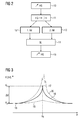
- a hearing aid is preset, for example, using an individual audiogram. This gives the hearing aid a basic setting with which a hearing aid wearer can compensate for significant parts of his hearing loss. It is therefore a default 10 according to FIG. 2 preferably in the non-worn state of the hearing aid make.
- the subsequent refinement of the setting is in-situ.
- the hearing aid is inserted according to step 11 in the ear canal. This may be, for example, an ITE hearing aid that is used completely or almost completely in the auditory canal. But it can also be a BTE hearing aid, in which only one earpiece, for example, a sound tube in the ear canal. As will be explained further below, the earmold must then also hold a microphone or a sound output tube.
- two in-situ measurements 12 and 13 are performed. With you, the impedance or compliance of the acoustic system to the hearing aid, d. H. of the hearing or hearing system.
- the first in-situ measurement 12 takes place in the natural state of the eardrum.
- the second in-situ measurement 13 as will be explained in more detail below, the eardrum is rendered as hard as sound, so that essentially statements can be made about the ear canal area in front of the eardrum.
- a sound line 14 is determined by the hearing aid in the ear. With the help of this sound conduction 14 finally takes place a correction 15 of the adjustment of the hearing aid.
- an additional microphone (“in-situ microphone”) is placed so that sound can be picked up from the ear canal.
- a microphone can be spatially integrated tightly in the hearing aid together with a receiver. It may also be an independent microphone in the additional microphone.
- the in-situ microphone does not necessarily have to be in the ear canal, but can also receive the signals through a suitable sound tube. In this case, appropriate corrections must be taken into account in the compliance calculation.
- FIG. 3 a tympanogram is shown in which the in-situ measurements made are shown in their measurement results.
- the solid line 16 represents a typical tympanogram.
- a resonance value K 1 sets. This value K 1 can be measured by the first in-situ measurement 12 with natural tension of the eardrum (measuring point 17). Another measuring point 18 will be determined by the second in-situ measurement 13, in which the eardrum is biased by Heileinpressung. This results in a compliance value K 2 which, for example, is smaller by a factor of five to ten than the compliance value K 1 .
- the difference between the two compliance values K 1 and K 2 results in the compliance ⁇ K determined by the volume of air between the hearing aid and the eardrum. It represents the value for this air volume.
- ⁇ K there are certain empirical values. If a measured ⁇ K deviates significantly from this empirical value, damage to the middle ear or eardrum can be assumed. For example, if the eardrum torn, the second measuring point 18 is significantly higher and the value for ⁇ K is correspondingly low. Older test persons often have a tympanogram according to curve 19. The sound conduction is hampered by less mobile bones in the middle ear. However, there may also be a cerumen blockage of the ear canal. The first measuring point 17 would then be significantly lower, which also results in a very small value ⁇ K.
- a tympanogram according to curve 20 may result. Then the measuring point 17 is usually significantly higher, and the compliance ⁇ K is significantly above the empirical value. On the basis of the determined values .DELTA.K can then be carried out automatically a correction of the signal processing of the hearing aid. For example, an additional broadband gain or only an additional gain in certain frequency ranges can be applied. Likewise, the gain can be reduced in certain frequency ranges where no frequencies can be transmitted due to middle ear damage. This will extend the life of the hearing aid battery.
- the inventive method for adjusting a hearing aid is preferably used in the run-up to in-situ audiometry and has several advantages. It can be the same an individual ear canal correction calculate the quality of the in-situ audiogram improved. In addition, this correction can be used in the calculation of the target gain of the device and thus allows an optimal adaptation of the hearing aid. In addition, the method allows an estimation of the sound conduction component of the in-situ audiogram and thus an improved calculation of the target gain of the hearing aid. Furthermore, the correct fit of the hearing aid can be checked with the aid of the method according to the invention. This review can also be used in everyday situations, eg. B. after inserting the device, repeat.
Landscapes
- Health & Medical Sciences (AREA)
- Audiology, Speech & Language Pathology (AREA)
- Physics & Mathematics (AREA)
- Engineering & Computer Science (AREA)
- Life Sciences & Earth Sciences (AREA)
- Otolaryngology (AREA)
- Acoustics & Sound (AREA)
- General Health & Medical Sciences (AREA)
- Biomedical Technology (AREA)
- Animal Behavior & Ethology (AREA)
- Biophysics (AREA)
- Heart & Thoracic Surgery (AREA)
- Medical Informatics (AREA)
- Molecular Biology (AREA)
- Surgery (AREA)
- Pathology (AREA)
- Multimedia (AREA)
- Public Health (AREA)
- Veterinary Medicine (AREA)
- Neurosurgery (AREA)
- Signal Processing (AREA)
- Measurement Of The Respiration, Hearing Ability, Form, And Blood Characteristics Of Living Organisms (AREA)
Applications Claiming Priority (1)
| Application Number | Priority Date | Filing Date | Title |
|---|---|---|---|
| DE102010041337A DE102010041337B4 (de) | 2010-09-24 | 2010-09-24 | Verfahren zum Anpassen eines Hörgeräts mit Insitu-Audiometrie und Hörgerät |
Publications (2)
| Publication Number | Publication Date |
|---|---|
| EP2434779A2 true EP2434779A2 (fr) | 2012-03-28 |
| EP2434779A3 EP2434779A3 (fr) | 2016-05-04 |
Family
ID=44651392
Family Applications (1)
| Application Number | Title | Priority Date | Filing Date |
|---|---|---|---|
| EP11181751.6A Withdrawn EP2434779A3 (fr) | 2010-09-24 | 2011-09-19 | Procédé d'adaptation d'un appareil auditif avec audiométrie in situ et appareil auditif correspondant |
Country Status (3)
| Country | Link |
|---|---|
| US (1) | US8605916B2 (fr) |
| EP (1) | EP2434779A3 (fr) |
| DE (1) | DE102010041337B4 (fr) |
Cited By (1)
| Publication number | Priority date | Publication date | Assignee | Title |
|---|---|---|---|---|
| WO2014186910A1 (fr) * | 2013-05-21 | 2014-11-27 | Phonak Ag | Procédé d'ajustement de prothèse auditive et outil de prise d'empreinte |
Families Citing this family (10)
| Publication number | Priority date | Publication date | Assignee | Title |
|---|---|---|---|---|
| CN102630067B (zh) * | 2012-04-02 | 2015-11-25 | 瑞声声学科技(深圳)有限公司 | 多媒体放声系统及其驱动方法 |
| KR102100845B1 (ko) * | 2013-09-16 | 2020-04-16 | 삼성전자주식회사 | 마이크를 외장한 난청 보상 장치 |
| EP2966881A1 (fr) * | 2014-07-11 | 2016-01-13 | Oticon A/s | Dispositif d'aide auditive avec fonction de contrôle de l'oreille |
| IT201700009310A1 (it) * | 2017-01-27 | 2018-07-27 | Vnt Medical Srl | Dispositivo per la misurazione continua del riflesso stapediale |
| WO2018154143A1 (fr) | 2017-02-27 | 2018-08-30 | Tympres Bvba | Réglage d'un dispositif tel qu'une prothèse auditive ou un implant cochléaire sur la base d'une mesure |
| DE102017216829B4 (de) * | 2017-09-22 | 2022-06-30 | Sivantos Pte. Ltd. | Verfahren zum Anpassen einer akustischen Einstellung in einem Hörgerät |
| EP3692729A4 (fr) * | 2017-10-05 | 2021-05-05 | Cochlear Limited | Correction de distraction au niveau d'une prothèse auditive |
| CN110763658B (zh) * | 2018-07-25 | 2023-02-03 | 邓惠群 | 一种耳道和鼓膜声压反射系数的测量装置及测量方法 |
| WO2021191301A1 (fr) * | 2020-03-24 | 2021-09-30 | Vox Medical Aps | Appareil de test audiologique |
| CN119383541A (zh) * | 2024-12-30 | 2025-01-28 | 深圳市智听科技有限公司 | 助听器测听方法及助听器 |
Family Cites Families (5)
| Publication number | Priority date | Publication date | Assignee | Title |
|---|---|---|---|---|
| EP1073314A1 (fr) * | 1999-07-27 | 2001-01-31 | Siemens Audiologische Technik GmbH | Procédé d'adaptation d'une prothése auditive et prothése auditive |
| DE10343291B3 (de) | 2003-09-18 | 2005-04-21 | Siemens Audiologische Technik Gmbh | Hörgerät und Verfahren zur Anpassung eines Hörgeräts |
| US7715577B2 (en) * | 2004-10-15 | 2010-05-11 | Mimosa Acoustics, Inc. | System and method for automatically adjusting hearing aid based on acoustic reflectance |
| WO2006101935A2 (fr) * | 2005-03-16 | 2006-09-28 | Sonicom, Inc. | Systeme et procede de batterie de tests pour l'evaluation d'une fonction auditive |
| US8917892B2 (en) * | 2007-04-19 | 2014-12-23 | Michael L. Poe | Automated real speech hearing instrument adjustment system |
-
2010
- 2010-09-24 DE DE102010041337A patent/DE102010041337B4/de active Active
-
2011
- 2011-09-19 EP EP11181751.6A patent/EP2434779A3/fr not_active Withdrawn
- 2011-09-26 US US13/245,049 patent/US8605916B2/en active Active
Non-Patent Citations (1)
| Title |
|---|
| G. BÖHME, K. WEIZL-MÜLLER: "Audiometrie", 1998, VERLAG HANS HUBER |
Cited By (2)
| Publication number | Priority date | Publication date | Assignee | Title |
|---|---|---|---|---|
| WO2014186910A1 (fr) * | 2013-05-21 | 2014-11-27 | Phonak Ag | Procédé d'ajustement de prothèse auditive et outil de prise d'empreinte |
| US9654884B2 (en) | 2013-05-21 | 2017-05-16 | Sonova Ag | Method of fitting a hearing instrument, and impression tool |
Also Published As
| Publication number | Publication date |
|---|---|
| US8605916B2 (en) | 2013-12-10 |
| DE102010041337A1 (de) | 2012-03-29 |
| DE102010041337B4 (de) | 2013-07-18 |
| US20120076313A1 (en) | 2012-03-29 |
| EP2434779A3 (fr) | 2016-05-04 |
Similar Documents
| Publication | Publication Date | Title |
|---|---|---|
| DE102010041337B4 (de) | Verfahren zum Anpassen eines Hörgeräts mit Insitu-Audiometrie und Hörgerät | |
| EP2178313B1 (fr) | Procédé et appareil auditif destinés à l'adaptation de paramètres en déterminant un seuil de compréhension de discours | |
| DE102007017761B4 (de) | Verfahren zur Anpassung eines binauralen Hörgerätesystems | |
| AU2007229057B2 (en) | Method for individually fitting a hearing instrument | |
| EP1898670B1 (fr) | Procédé et dispositif destinés à la détermination d'un vent effectif | |
| EP4134002B1 (fr) | Procédé et système de génération d'un audiogramme d'une personne soumise à l'essai au moyen d'un instrument auditif | |
| EP2172062B1 (fr) | Procédé d'adaptation d'un appareil de correction auditive à l'aide d'un modèle perceptif | |
| EP2053877A1 (fr) | Procédé et dispositif destinés à l'adaptation d'un appareil auditif à l'aide de DPOAE | |
| EP1931172A1 (fr) | Prothèse auditive avec suppression du bruit et procédé correspondant | |
| DE102012203349B4 (de) | Verfahren zum Anpassen einer Hörvorrichtung anhand des Sensory Memory und Anpassvorrichtung | |
| DE102013207080B4 (de) | Binaurale Mikrofonanpassung mittels der eigenen Stimme | |
| DE102009052574A1 (de) | Hörgerät mit Simulation eines Hörverlusts und Verfahren zur Simulation eines Hörverlusts | |
| DE102010041435A1 (de) | Verfahren zum Rekonstruieren eines Sprachsignals und Hörvorrichtung | |
| DE102012203253B3 (de) | Verstärken eines Sprachsignals in Abhängigkeit vom Eingangspegel | |
| EP2606660B1 (fr) | Procédé d'adaptation d'un appareil auditif | |
| DE102011089865B4 (de) | Verfahren zum Anpassen einer Frequenzkompressionseinrichtung einer Hörvorrichtung und entsprechende Anpassungsvorrichtung | |
| DE102020200752B4 (de) | Verfahren zur Bestimmung eines Restvolumens eines Gehörgangs | |
| EP1516584A1 (fr) | Dispositif et méthode pour détermination d'une gamme d'audibilité | |
| DE102007030067B4 (de) | Hörgerät mit passiver, eingangspegelabhängiger Geräuschreduktion und Verfahren | |
| DE102007035175A1 (de) | Verfahren zum Gewinnen individueller Hörsituationsdaten und entsprechendes Aufzeichnungsgerät | |
| DE102017216829B4 (de) | Verfahren zum Anpassen einer akustischen Einstellung in einem Hörgerät | |
| DE102023200581A1 (de) | Verfahren zum Betrieb eines Hörinstruments | |
| DE102009022037A1 (de) | Simulationsvorrichtung zum Testen eines Hörgeräts und Testverfahren | |
| EP4250762A1 (fr) | Procédé de fonctionnement d'un appareil auditif et appareil auditif | |
| DE102009052575A1 (de) | Verfahren, Hörgerät und Anordnung zur Kalibrierung eines akustischen Anpasssystems |
Legal Events
| Date | Code | Title | Description |
|---|---|---|---|
| PUAI | Public reference made under article 153(3) epc to a published international application that has entered the european phase |
Free format text: ORIGINAL CODE: 0009012 |
|
| AK | Designated contracting states |
Kind code of ref document: A2 Designated state(s): AL AT BE BG CH CY CZ DE DK EE ES FI FR GB GR HR HU IE IS IT LI LT LU LV MC MK MT NL NO PL PT RO RS SE SI SK SM TR |
|
| AX | Request for extension of the european patent |
Extension state: BA ME |
|
| RAP1 | Party data changed (applicant data changed or rights of an application transferred) |
Owner name: SIVANTOS PTE. LTD. |
|
| PUAL | Search report despatched |
Free format text: ORIGINAL CODE: 0009013 |
|
| AK | Designated contracting states |
Kind code of ref document: A3 Designated state(s): AL AT BE BG CH CY CZ DE DK EE ES FI FR GB GR HR HU IE IS IT LI LT LU LV MC MK MT NL NO PL PT RO RS SE SI SK SM TR |
|
| AX | Request for extension of the european patent |
Extension state: BA ME |
|
| RIC1 | Information provided on ipc code assigned before grant |
Ipc: H04R 25/00 20060101AFI20160329BHEP |
|
| 17P | Request for examination filed |
Effective date: 20161027 |
|
| RBV | Designated contracting states (corrected) |
Designated state(s): AL AT BE BG CH CY CZ DE DK EE ES FI FR GB GR HR HU IE IS IT LI LT LU LV MC MK MT NL NO PL PT RO RS SE SI SK SM TR |
|
| 17Q | First examination report despatched |
Effective date: 20171117 |
|
| RAP1 | Party data changed (applicant data changed or rights of an application transferred) |
Owner name: SIVANTOS PTE. LTD. |
|
| STAA | Information on the status of an ep patent application or granted ep patent |
Free format text: STATUS: THE APPLICATION HAS BEEN WITHDRAWN |
|
| 18W | Application withdrawn |
Effective date: 20190206 |