EP2436197B1 - Alert system with controlled load of network - Google Patents
Alert system with controlled load of network Download PDFInfo
- Publication number
- EP2436197B1 EP2436197B1 EP10727513.3A EP10727513A EP2436197B1 EP 2436197 B1 EP2436197 B1 EP 2436197B1 EP 10727513 A EP10727513 A EP 10727513A EP 2436197 B1 EP2436197 B1 EP 2436197B1
- Authority
- EP
- European Patent Office
- Prior art keywords
- lbas
- cell
- relevant
- alert
- information
- Prior art date
- Legal status (The legal status is an assumption and is not a legal conclusion. Google has not performed a legal analysis and makes no representation as to the accuracy of the status listed.)
- Active
Links
Images

Classifications
-
- H—ELECTRICITY
- H04—ELECTRIC COMMUNICATION TECHNIQUE
- H04W—WIRELESS COMMUNICATION NETWORKS
- H04W4/00—Services specially adapted for wireless communication networks; Facilities therefor
- H04W4/90—Services for handling of emergency or hazardous situations, e.g. earthquake and tsunami warning systems [ETWS]
-
- H—ELECTRICITY
- H04—ELECTRIC COMMUNICATION TECHNIQUE
- H04W—WIRELESS COMMUNICATION NETWORKS
- H04W4/00—Services specially adapted for wireless communication networks; Facilities therefor
- H04W4/02—Services making use of location information
-
- H—ELECTRICITY
- H04—ELECTRIC COMMUNICATION TECHNIQUE
- H04W—WIRELESS COMMUNICATION NETWORKS
- H04W4/00—Services specially adapted for wireless communication networks; Facilities therefor
- H04W4/02—Services making use of location information
- H04W4/029—Location-based management or tracking services
-
- H—ELECTRICITY
- H04—ELECTRIC COMMUNICATION TECHNIQUE
- H04W—WIRELESS COMMUNICATION NETWORKS
- H04W76/00—Connection management
- H04W76/50—Connection management for emergency connections
-
- H—ELECTRICITY
- H04—ELECTRIC COMMUNICATION TECHNIQUE
- H04W—WIRELESS COMMUNICATION NETWORKS
- H04W4/00—Services specially adapted for wireless communication networks; Facilities therefor
- H04W4/06—Selective distribution of broadcast services, e.g. multimedia broadcast multicast service [MBMS]; Services to user groups; One-way selective calling services
-
- H—ELECTRICITY
- H04—ELECTRIC COMMUNICATION TECHNIQUE
- H04W—WIRELESS COMMUNICATION NETWORKS
- H04W4/00—Services specially adapted for wireless communication networks; Facilities therefor
- H04W4/12—Messaging; Mailboxes; Announcements
- H04W4/14—Short messaging services, e.g. short message services [SMS] or unstructured supplementary service data [USSD]
Definitions
- the present invention relates to a population alert system for sending alert messages to users staying at a specific geographical location. More specifically, the invention describes a method and a system for efficiently locating and sending messages to mobile phones located within a specific area, without overloading the network, and independent of any user preferences.
- New and efficient methods for alerting and protecting people is therefore a highly focused area within the EU and US, but also in Asian countries which are often exposed to natural disasters like tsunamis and earthquakes.
- Billions of Euros have been spent in developing systems and methods to detect and predict in advance different kinds of natural and man made hazards (e.g. Global Monitoring Environmental Security (GMES) program).
- GMES Global Monitoring Environmental Security
- a predictive monitoring system has less or no value if it is not capable of alerting people exposed to the danger. Finding new and more efficient methods for alerting people is therefore a highly focused topic.
- a complete population alert system must make use of multiple channels for distribution of alert messages, but the capability to alert mobile users is regarded to be the most important and critical feature.
- US-2004/103158 A1 discloses a method and system for utilizing existing wireless communication devices and networks, such as cellular phones and carriers, as an underlying infrastructure in providing emergency information to a targeted percentage of the population in a specified geographical location, without requiring individuals to subscribe to an alerting service and without using information solicited from or provided by the intended recipients of the alert. It does however not teach how to do this without overloading the network, and independent of any user preferences.
- WO-2005/062582 A1 discloses a mobile communication system providing communication service in a plurality of serving cells. Upon the occurrence of an emergency situation, the mobile communication system determines which of the serving cells are affected by an emergency, and begins broadcasting an emergency notification message in the affected cells. Mobile communication devices in the affected cells will only be allowed to communicate a status message to inform others of the user's status, or if the user is an emergency subscriber, the emergency subscriber will receive regular communication service. All other communication service requests will be ignored during the emergency situation.
- EP-1045604 A2 discloses a system for providing guaranteed wireless communication service to priority wireless communication subscribers provides the capability to restrict access to wireless communications services to a selected set of subscribers, such that their access to wireless communication services is not interruptible.
- the present invention is a further advancement of the said LBAS system, and contributes to a fast and efficient alerting without letting the network break down due to overload.
- the present invention is described by a method for preventing overload and blocking of a mobile network when localizing and sending of alert messages to a plurality of mobile phone users located in a specific geographical area, and doing so independently of any user preferences on the mobile phones, where the method is performed in an optimizing message distribution component (A-SMSC) connected to the mobile network, and where the method comprises the following steps:
- A-SMSC optimizing message distribution component
- the invention is also characterized by a system for performing the method described above.
- the object of the present invention is to provide a location based alert service (LBAS) to enable a secure and efficient way of alerting mobile users within a geographical area, and where this is done without overloading or blocking the mobile network that is used for the alerting.
- LBAS location based alert service
- Another object of the invention is to ensure that emergency personnel and other important resources connected to the network via specific MSISDN numbers get access to the mobile network while alerting is in progress.
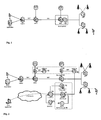
- Fig. 1 shows a general architecture of the system involved when a mobile phone marked as "A” is making a call to another mobile phone marked as "B". This figure visualizes the complexity of the network, and why special considerations are needed when using the mobile infrastructure as the channel for distribution of alert messages.
- GMSC is the switching centre that all mobile to mobile calls are routed through.
- HLR is a global database that resides within a cellular network to hold current details about a subscriber, the equipment in use, the service(s) required, the user's identification encryption code, and the users "Home" cell, and what network the subscriber was last known to be using.
- VLR is a database similar to HLR, but with storing of national location data.
- LAC is the local area code indicating a current geographical area.
- BTS - Base Transceiver Stations is the heart of a cellular mobile phone system, and is a network of distributed transmitting/receiving radios in fixed locations.
- BSC base station system
- Paging is one of the key elements which make mobile telephony possible. It is a critical process, both with regard to correct localization and optimizing of radio network traffic, i.e. what is actually paging and how it is working.
- the VLR has an approximate knowledge of where the mobile device is located.
- the mobile device is located on the local area level (LAC).
- LAC local area level
- a local area will vary from place to place and operator to operator, but it is common that a LAC may contain hundreds of cells. Since the VLR knows which LAC the receiving mobile device is located within it will need to search for the mobile device within the LAC to get the exact cell. This is where the paging process is starting. Briefly explained it works as follows:
- call or message routing is a complex process designed for communication between two mobile devices.
- huge load like automated mass broadcast of messages and careless use of the network, there are several places within the message routing process that can be overloaded and congested.
- Heavy load on both the HLR and VLR can cause serious problems breaking down the mobile "network subsystem”.
- Large paging activities are also a vulnerable signalling activity which can cause congestion and overload of the "Base station subsystem”. These aspects have motivated the creation of LBAS.
- Fig. 2 shows the architecture of LBAS compared to the architecture of traditional distribution of SMS. This figure illustrates how the LBAS system can optimize and reduce the routing process, and thereby avoiding overload of the network when sending a large amount of messages simultaneously.
- the LBAS specific environment is shown within frames with broken lines.
- the extended information LBAS has about the recipients of the message.
- the LBAS database which is described below, is containing the current coverage cell, i.e. the geographical location of each mobile handset belonging or roaming to the mobile operator there is no need to connect to the HLR to find the last reported switch of the called party, or to connect to the VLR to find the location area of the called party. Further there is no need to page all cells within a local area which may be hundreds. It is only necessary to page the cells covering the actual area to alert.
- the LBAS will address the distribution of alert messages in a more direct and efficient way over the SS7 mobile phone network (SS7 is the set of telephony signalling protocols used for setting up public switched telephone network calls) thus avoiding the above mentioned vulnerable operations.
- SS7 is the set of telephony signalling protocols used for setting up public switched telephone network calls
- LBAS is divided into the following major components as shown in fig. 2 :
- Probes 10, 20 are located between HLR and VLR and corresponding MSCs for monitoring traffic and updating the LBAS Databases 15, 25.
- Said A-SMSC 30 will only read and process data from the VLR providing information concerning national location data, since in the case of global alerting, an alert message may be terminated with an unknown operator.
- the probe is a component designed to monitor the traffic between two components within a network without interfering the traffic.
- the traffic between the MSC and said HLR and VLR databases comprises a computer with signalling means connecting to the network for monitoring traffic.
- LBAS software for storing location traffic in a relation database (LBAS Db) is a part of the probe software.
- An LBAS Web service 50, 55 will work as an interface between the alert application/protocol and LBAS core environment. It further performs the following optimization tasks after the localization process has been finished by LBAS GT, but previous to the sending process the following is executed by LBAS A-SMSC:
- the first operation taking place is the localization of the cells covering the relevant area. This is performed by the LBAS GT (Geo-Targeting modulen) 40. Inquiries to the LBAS Db is performed for finding incidents that match with the cells covering the current area.
- the A-SMSC 30 is a key component of LBAS, performing optimized transmission of the short messages.
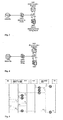
- Fig. 3 shows a probe monitoring the traffic from the MSC to the VLR thereby enabling storing of national location data.
- the probe which is an ss7 component is installed in the operator's network subsystem. Traffic identified as location information is absorbed and updated in the LBAS National Database containing real time location data of all subscribers and roaming visitors within the network.
- the method for storing national location data is as follows:
- the record inserted or updated in LBAS Db is containing: IMSI (International Mobile Subscriber Identity) or MSISDN, Cell Id, Lac Id, date and time.
- IMSI International Mobile Subscriber Identity
- MSISDN Cell Id
- Lac Id date and time.
- Fig. 4 shows a probe monitoring the traffic from the MSC to the HLR enabling storing of global location data.
- the probe is installed in the operator's network subsystem enabling storing of real time location data of all national mobile users abroad.
- the method for storing of global location data is as follows:
- the monitored data comprise: IMSI (International Mobile Subscriber Identity), MSC, Country/part of country, date and time.
- IMSI International Mobile Subscriber Identity
- MSC International Mobile Subscriber Identity
- Country/part of country date and time.
- Global location data is not as exact as national location data since the accuracy is limited to MSC level.
- Fig. 5 shows the standard SMS send procedure together with the steps that are skipped by using LBAS according to the present invention for optimizing the message distribution.
- routing of a message or call is a complex procedure with several vulnerable components. Due to the fact that LBAS both know which cells that are going to be alerted and which phones that are connected to the different cells, all necessary parameters is in place to avoid the resource consuming routing and localization process, thus reducing the load of the operator's "Network Subsystem”. Another aspect is the load on the "Base Station Subsystem”. Since we know which cells that are covering the area, we only want to perform a paging procedure for mobile devices that are still connected to these cells, thus reducing the load on the "Base Station Subsystem".
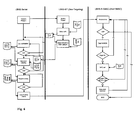
- Fig. 6 shows the modified and optimized work flow of message distribution for locating and alerting a plurality of mobile phone users located in a specific geographical area, and doing so independently of any user preferences, by sending alert messages to relevant mobile phones, and where the method is optimized for avoiding overload and congestion of the network.
- the method is performed in LBAS Server, LBAS GT and LNAS A-SMSC. The method comprises the following steps:
- the A-SMSC is further connected to LBAS GT with information about the geographical area where the alert messages are to be sent.
- LBAS GT receives this information as a request from a LBAS Service requesting initiation of alerting of mobile phones in a specific geographical area represented by different cells.
- the request may comprise a polygon containing the coordinates of the area to alert.
- the LBAS Service is connected to an interface for managing and controlling the method, and the interface is used for selecting type of alert message and the geographical area to where the messages are to be sent.
- LBAS GT will convert the specific geographical area to corresponding cell ids that are located inside the specific area. This is performed by looking up entries in a database cell list, and cell coverage Db, thus acquiring information on which geographical area each cell is covering, and screening only cells that are located in the relevant geographical area.
- the LBAS GT is further connected to a location based alert system database (LBAS Db) with updated information of MSISDN numbers, thus the mobile phones, together with the ids of the serving cells that they are connected to.
- LBAS Db location based alert system database
- the LBAS Db is kept updated by using a probe explained above (ref. figure 3 ).
- the information from the LBAS Db is acquired by LBAS GT and is the input data in step b) above.
- the LBAS GT has received cell ids defining the geographical destination area of the alert message, and the relevant MSISDN numbers with connected cell ids in the geographical destination area.
- A-SMSC continuously receives data from LBAS and performs a paging procedure on each MSISDN number for checking whether the returned ids still are within the range of the cells covering the relevant geographical area.
- the paging procedure itself is performed in a module comprised in the serving MSC, but it is initiated by A-SMSC.
- A-SMSC is further connected to a base station controller (BSC) for controlling cells represented by groups of base transceiver stations (BTS) located at fixed geographical locations ensuring mobility management for mobile stations.
- BSC base station controller
- the alert message is sent from the A-SMSC through said serving MSC to all the relevant mobile phones located in the specific geographical area.
- A-SMSC measures the time elapsed from sending an alert message to an MSISDN number through its connected cell to receiving a confirmation from that cell, and if the time elapsed is above a certain limit, the A-SMSC will reduce the load of the current cell by sending the next alert message through another cell.
- the paging procedure described above is performed on all entries in the LBAS working database until the end of the file in the randomized working LBAS database has been reached.
- the present invention also comprises a method and system for more effective reduction of the load on one or more relevant cells by preventing that relevant MSISDN-numbers are automatically authenticated in normal network traffic. This is done by blocking out- and in- going calls.
- Fig. 7 shows schematically how MSC blocks out- and in- going calls when a prevention tag is set.
- the invention is a further improvement of the LBAS system, and is a method for avoiding overload of blocking of a mobile network when localizing and sending of alert messages to a plurality of mobile phone users located in a specific geographical area. This is performed independently of any user preferences on the mobile phones, and the method is performed in said optimizing message distribution component (A-SMSC) connected to the mobile network.
- A-SMSC optimizing message distribution component
- the invention is also characterized by a system for performing the method described above.
- steps d) and f) that contribute to the present invention.
- the object is as said to prevent that the mobile network used when sending alert messages is overloaded and blocked. This is enabled by placing a prevention tag for the determined relevant mobile phones determined by their corresponding MSISDN numbers. This is performed on MSC/VLR level. The result of this is that MSC prevents that these numbers are identified when mobile phones connected to these tries to initiate a call from the specific geographical area to the MSC. Further, incoming calls to the set relevant MSISDN of the mobile phones will not be connected as long as the prevention tag is placed.
- Fig. 8 shows the architecture used for preventing that specific MSISDN numbers are blocked.
- a priority database (Priority Db) in the system which comprises lists of numbers that are not to be blocked by the prevention tag, selected numbers that are not to be blocked will be able to use the communication network as usual during the sending of alert messages.
- the priority database is connected to the LBAS database, and each number which is blocked via prevention tags set for relevant numbers in VLR is compared with MSISDN numbers stored in the priority database, such that these are not prevented from normal communication out and in from the specific geographical area while alert messages are being sent.
- the present invention also deals with a system for performing the method described above.
- a system may comprise different components with the main goal to be able to perform the inventive method.
- the main claim describes the components comprised in the system with further implementations as described in the corresponding dependent claims.
- LBAS LBAS
- the components of LBAS and the further developed version described here can easily be installed in the environment of the mobile operator without interfering with existing core infrastructure.
- the use of LBAS functionality must however be highly secured both with regard to misuse and personal data protection. Only certain certified systems/applications, e.g. PAS, will be certified to be integrated to LBAS. Users can for instance be emergency authorities in any country.
Landscapes
- Engineering & Computer Science (AREA)
- Computer Networks & Wireless Communication (AREA)
- Signal Processing (AREA)
- Business, Economics & Management (AREA)
- Health & Medical Sciences (AREA)
- Emergency Management (AREA)
- Environmental & Geological Engineering (AREA)
- Public Health (AREA)
- Mobile Radio Communication Systems (AREA)
- Telephonic Communication Services (AREA)
Priority Applications (4)
| Application Number | Priority Date | Filing Date | Title |
|---|---|---|---|
| SI201030863T SI2436197T1 (sl) | 2009-05-27 | 2010-05-27 | Opozorilni sistem z nadzorovano obremenitvijo omreĹľja |
| HRP20150216TT HRP20150216T1 (hr) | 2009-05-27 | 2010-05-27 | Sustav uzbunjivanja s kontroliranim optereä†enjem mreže |
| PL10727513T PL2436197T3 (pl) | 2009-05-27 | 2010-05-27 | System ostrzegania z kontrolowanym obciążeniem sieci |
| CY20151100170T CY1116066T1 (el) | 2009-05-27 | 2015-02-19 | Συστημα συναγερμικης ειδοποιησης με ελεγχομενο φορτιο δικτυου |
Applications Claiming Priority (2)
| Application Number | Priority Date | Filing Date | Title |
|---|---|---|---|
| NO20092069A NO330102B1 (no) | 2009-05-27 | 2009-05-27 | Kontrollert belastning av nettverk |
| PCT/NO2010/000193 WO2010137993A1 (en) | 2009-05-27 | 2010-05-27 | Alert system with controlled load of network |
Publications (2)
| Publication Number | Publication Date |
|---|---|
| EP2436197A1 EP2436197A1 (en) | 2012-04-04 |
| EP2436197B1 true EP2436197B1 (en) | 2014-11-26 |
Family
ID=42736369
Family Applications (1)
| Application Number | Title | Priority Date | Filing Date |
|---|---|---|---|
| EP10727513.3A Active EP2436197B1 (en) | 2009-05-27 | 2010-05-27 | Alert system with controlled load of network |
Country Status (27)
| Country | Link |
|---|---|
| US (1) | US8744402B2 (it) |
| EP (1) | EP2436197B1 (it) |
| JP (1) | JP5513611B2 (it) |
| CN (1) | CN102450038B (it) |
| AP (1) | AP3257A (it) |
| AU (1) | AU2010253536B2 (it) |
| BR (1) | BRPI1012060B1 (it) |
| CA (1) | CA2762136C (it) |
| CL (1) | CL2011002951A1 (it) |
| CO (1) | CO6470859A2 (it) |
| CY (1) | CY1116066T1 (it) |
| DK (1) | DK2436197T3 (it) |
| EA (1) | EA024338B1 (it) |
| EG (1) | EG26718A (it) |
| ES (1) | ES2528945T3 (it) |
| HR (1) | HRP20150216T1 (it) |
| MX (1) | MX2011012563A (it) |
| MY (1) | MY154275A (it) |
| NO (1) | NO330102B1 (it) |
| NZ (1) | NZ596933A (it) |
| PL (1) | PL2436197T3 (it) |
| PT (1) | PT2436197E (it) |
| SG (1) | SG176224A1 (it) |
| SI (1) | SI2436197T1 (it) |
| SM (1) | SMT201500049B (it) |
| WO (1) | WO2010137993A1 (it) |
| ZA (1) | ZA201108916B (it) |
Families Citing this family (6)
| Publication number | Priority date | Publication date | Assignee | Title |
|---|---|---|---|---|
| US9372733B2 (en) * | 2011-08-30 | 2016-06-21 | Open Text S.A. | System and method for a distribution manager |
| DK2962477T3 (da) * | 2013-02-27 | 2019-09-16 | Unified Messaging Systems As | Metode, anordning og system til gennemførelse af prioriterede spærringer af serviceadgang |
| US10212570B1 (en) * | 2015-03-30 | 2019-02-19 | Amazon Technologies, Inc. | System for providing notifications to user devices |
| AU2016306084B2 (en) * | 2015-08-13 | 2019-01-03 | Everbridge Norway As | Methods and systems for sending alert messages in mobile networks |
| CN106412824B (zh) * | 2016-09-05 | 2019-08-09 | 中国联合网络通信集团有限公司 | 一种路径负荷评估方法、装置及显示系统 |
| ES3064689T3 (en) * | 2020-02-10 | 2026-04-28 | Nokia Tech Oy | Warning messages delivery in private networks |
Family Cites Families (4)
| Publication number | Priority date | Publication date | Assignee | Title |
|---|---|---|---|---|
| EP1045604A3 (en) | 1999-04-16 | 2001-04-04 | Lucent Technologies Inc. | System for providing guaranteed wireless communication service to priority subscribers |
| US7617287B2 (en) * | 2002-11-27 | 2009-11-10 | Rga Intl, Inc. | Cellular messaging alert method and system |
| US20060178128A1 (en) | 2003-12-19 | 2006-08-10 | Eaton Eric T | Method of operating a mobile communication device and mobile communication system during an emergency situation |
| US8396153B1 (en) * | 2004-12-07 | 2013-03-12 | Adaptix, Inc. | Cooperative MIMO in multicell wireless networks |
-
2009
- 2009-05-27 NO NO20092069A patent/NO330102B1/no unknown
-
2010
- 2010-05-27 PL PL10727513T patent/PL2436197T3/pl unknown
- 2010-05-27 AP AP2011006049A patent/AP3257A/xx active
- 2010-05-27 ES ES10727513.3T patent/ES2528945T3/es active Active
- 2010-05-27 MX MX2011012563A patent/MX2011012563A/es active IP Right Grant
- 2010-05-27 AU AU2010253536A patent/AU2010253536B2/en not_active Ceased
- 2010-05-27 PT PT107275133T patent/PT2436197E/pt unknown
- 2010-05-27 SI SI201030863T patent/SI2436197T1/sl unknown
- 2010-05-27 US US13/322,068 patent/US8744402B2/en active Active
- 2010-05-27 CN CN201080023336.XA patent/CN102450038B/zh not_active Expired - Fee Related
- 2010-05-27 NZ NZ596933A patent/NZ596933A/en not_active IP Right Cessation
- 2010-05-27 SG SG2011086964A patent/SG176224A1/en unknown
- 2010-05-27 DK DK10727513T patent/DK2436197T3/en active
- 2010-05-27 CA CA2762136A patent/CA2762136C/en not_active Expired - Fee Related
- 2010-05-27 EA EA201190321A patent/EA024338B1/ru not_active IP Right Cessation
- 2010-05-27 MY MYPI2011005517A patent/MY154275A/en unknown
- 2010-05-27 EP EP10727513.3A patent/EP2436197B1/en active Active
- 2010-05-27 JP JP2012512991A patent/JP5513611B2/ja not_active Expired - Fee Related
- 2010-05-27 BR BRPI1012060-2A patent/BRPI1012060B1/pt not_active IP Right Cessation
- 2010-05-27 WO PCT/NO2010/000193 patent/WO2010137993A1/en not_active Ceased
- 2010-05-27 HR HRP20150216TT patent/HRP20150216T1/hr unknown
-
2011
- 2011-11-22 CL CL2011002951A patent/CL2011002951A1/es unknown
- 2011-11-24 EG EG2011111986A patent/EG26718A/en active
- 2011-12-05 ZA ZA2011/08916A patent/ZA201108916B/en unknown
- 2011-12-05 CO CO11166831A patent/CO6470859A2/es active IP Right Grant
-
2015
- 2015-02-19 CY CY20151100170T patent/CY1116066T1/el unknown
- 2015-03-03 SM SM201500049T patent/SMT201500049B/it unknown
Also Published As
Similar Documents
| Publication | Publication Date | Title |
|---|---|---|
| US20090137222A1 (en) | Location-based alert system | |
| EP2695351B1 (en) | A method of and a support node for requesting registration of stationary user equipment in a cellular telecommunication system | |
| CN101682874B (zh) | 通信装置、通信系统以及限制方法 | |
| EP2515558A1 (en) | Machine-to-machine platform service processing method and machine-to-machine platform | |
| EP2436197B1 (en) | Alert system with controlled load of network | |
| KR20120112753A (ko) | 매크로 셀로부터 펨토 셀로의 이동국의 핸드오버를 관리하기 위한 방법 및 장치 | |
| WO2009070029A1 (en) | Location-based alert system | |
| EP2962477B1 (en) | Method, apparatus and system for performing prioritized barring of service access | |
| US20140242938A1 (en) | Method, apparatus and system for performing prioritized barring of service access | |
| HK1165926B (en) | Alert system with controlled load of network | |
| NO327933B1 (no) | Lokasjonsbasert varslingstjeneste | |
| JP2025158523A (ja) | 端末装置 | |
| KR100666131B1 (ko) | 무선가입자망의 가입자 이동성 보장 방법 | |
| HK1213134B (zh) | 用於执行服务访问的优先化限制的方法、装备和系统 | |
| JP2015154432A (ja) | 無線基地局および通信システム | |
| CN103188640A (zh) | 用在移动通信系统的小区重选方法及移动设备 |
Legal Events
| Date | Code | Title | Description |
|---|---|---|---|
| PUAI | Public reference made under article 153(3) epc to a published international application that has entered the european phase |
Free format text: ORIGINAL CODE: 0009012 |
|
| 17P | Request for examination filed |
Effective date: 20111227 |
|
| AK | Designated contracting states |
Kind code of ref document: A1 Designated state(s): AL AT BE BG CH CY CZ DE DK EE ES FI FR GB GR HR HU IE IS IT LI LT LU LV MC MK MT NL NO PL PT RO SE SI SK SM TR |
|
| DAX | Request for extension of the european patent (deleted) | ||
| 17Q | First examination report despatched |
Effective date: 20121121 |
|
| RIC1 | Information provided on ipc code assigned before grant |
Ipc: G08B 27/00 20060101ALI20130415BHEP Ipc: H04W 4/02 20090101AFI20130415BHEP Ipc: H04W 4/22 20090101ALI20130415BHEP |
|
| GRAP | Despatch of communication of intention to grant a patent |
Free format text: ORIGINAL CODE: EPIDOSNIGR1 |
|
| INTG | Intention to grant announced |
Effective date: 20140624 |
|
| GRAS | Grant fee paid |
Free format text: ORIGINAL CODE: EPIDOSNIGR3 |
|
| GRAA | (expected) grant |
Free format text: ORIGINAL CODE: 0009210 |
|
| AK | Designated contracting states |
Kind code of ref document: B1 Designated state(s): AL AT BE BG CH CY CZ DE DK EE ES FI FR GB GR HR HU IE IS IT LI LT LU LV MC MK MT NL NO PL PT RO SE SI SK SM TR |
|
| REG | Reference to a national code |
Ref country code: GB Ref legal event code: FG4D |
|
| REG | Reference to a national code |
Ref country code: CH Ref legal event code: EP |
|
| REG | Reference to a national code |
Ref country code: AT Ref legal event code: REF Ref document number: 698758 Country of ref document: AT Kind code of ref document: T Effective date: 20141215 |
|
| REG | Reference to a national code |
Ref country code: IE Ref legal event code: FG4D |
|
| REG | Reference to a national code |
Ref country code: DE Ref legal event code: R096 Ref document number: 602010020530 Country of ref document: DE Effective date: 20150108 |
|
| REG | Reference to a national code |
Ref country code: ES Ref legal event code: FG2A Ref document number: 2528945 Country of ref document: ES Kind code of ref document: T3 Effective date: 20150213 |
|
| REG | Reference to a national code |
Ref country code: RO Ref legal event code: EPE |
|
| REG | Reference to a national code |
Ref country code: HR Ref legal event code: TUEP Ref document number: P20150216 Country of ref document: HR |
|
| REG | Reference to a national code |
Ref country code: PT Ref legal event code: SC4A Free format text: AVAILABILITY OF NATIONAL TRANSLATION Effective date: 20150220 |
|
| REG | Reference to a national code |
Ref country code: DK Ref legal event code: T3 Effective date: 20150227 |
|
| REG | Reference to a national code |
Ref country code: NL Ref legal event code: T3 |
|
| REG | Reference to a national code |
Ref country code: SE Ref legal event code: TRGR |
|
| REG | Reference to a national code |
Ref country code: EE Ref legal event code: FG4A Ref document number: E010331 Country of ref document: EE Effective date: 20150213 |
|
| REG | Reference to a national code |
Ref country code: GR Ref legal event code: EP Ref document number: 20150400348 Country of ref document: GR Effective date: 20150318 |
|
| PG25 | Lapsed in a contracting state [announced via postgrant information from national office to epo] |
Ref country code: NO Free format text: LAPSE BECAUSE OF FAILURE TO SUBMIT A TRANSLATION OF THE DESCRIPTION OR TO PAY THE FEE WITHIN THE PRESCRIBED TIME-LIMIT Effective date: 20150226 |
|
| REG | Reference to a national code |
Ref country code: SK Ref legal event code: T3 Ref document number: E 18034 Country of ref document: SK |
|
| REG | Reference to a national code |
Ref country code: FR Ref legal event code: PLFP Year of fee payment: 6 |
|
| REG | Reference to a national code |
Ref country code: PL Ref legal event code: T3 |
|
| REG | Reference to a national code |
Ref country code: HR Ref legal event code: T1PR Ref document number: P20150216 Country of ref document: HR |
|
| REG | Reference to a national code |
Ref country code: DE Ref legal event code: R097 Ref document number: 602010020530 Country of ref document: DE |
|
| REG | Reference to a national code |
Ref country code: HU Ref legal event code: AG4A Ref document number: E023944 Country of ref document: HU |
|
| PLBE | No opposition filed within time limit |
Free format text: ORIGINAL CODE: 0009261 |
|
| STAA | Information on the status of an ep patent application or granted ep patent |
Free format text: STATUS: NO OPPOSITION FILED WITHIN TIME LIMIT |
|
| 26N | No opposition filed |
Effective date: 20150827 |
|
| REG | Reference to a national code |
Ref country code: AT Ref legal event code: UEP Ref document number: 698758 Country of ref document: AT Kind code of ref document: T Effective date: 20141126 |
|
| REG | Reference to a national code |
Ref country code: FR Ref legal event code: PLFP Year of fee payment: 7 |
|
| REG | Reference to a national code |
Ref country code: FR Ref legal event code: PLFP Year of fee payment: 8 |
|
| REG | Reference to a national code |
Ref country code: FR Ref legal event code: PLFP Year of fee payment: 9 |
|
| REG | Reference to a national code |
Ref country code: HR Ref legal event code: ODRP Ref document number: P20150216 Country of ref document: HR Payment date: 20190506 Year of fee payment: 10 |
|
| PGFP | Annual fee paid to national office [announced via postgrant information from national office to epo] |
Ref country code: LU Payment date: 20190521 Year of fee payment: 10 Ref country code: NL Payment date: 20190521 Year of fee payment: 10 |
|
| PGFP | Annual fee paid to national office [announced via postgrant information from national office to epo] |
Ref country code: MT Payment date: 20190516 Year of fee payment: 10 Ref country code: BE Payment date: 20190521 Year of fee payment: 10 Ref country code: MT Payment date: 20190424 Year of fee payment: 10 |
|
| PGFP | Annual fee paid to national office [announced via postgrant information from national office to epo] |
Ref country code: AL Payment date: 20190521 Year of fee payment: 10 Ref country code: MK Payment date: 20190419 Year of fee payment: 10 |
|
| REG | Reference to a national code |
Ref country code: HR Ref legal event code: ODRP Ref document number: P20150216 Country of ref document: HR Payment date: 20200520 Year of fee payment: 11 |
|
| PGFP | Annual fee paid to national office [announced via postgrant information from national office to epo] |
Ref country code: RO Payment date: 20200515 Year of fee payment: 11 Ref country code: CH Payment date: 20200520 Year of fee payment: 11 Ref country code: PT Payment date: 20200522 Year of fee payment: 11 Ref country code: FR Payment date: 20200522 Year of fee payment: 11 Ref country code: CZ Payment date: 20200526 Year of fee payment: 11 Ref country code: CY Payment date: 20200525 Year of fee payment: 11 Ref country code: LT Payment date: 20200514 Year of fee payment: 11 Ref country code: FI Payment date: 20200522 Year of fee payment: 11 Ref country code: DE Payment date: 20200520 Year of fee payment: 11 Ref country code: DK Payment date: 20200527 Year of fee payment: 11 Ref country code: IE Payment date: 20200527 Year of fee payment: 11 Ref country code: EE Payment date: 20200518 Year of fee payment: 11 Ref country code: TR Payment date: 20200527 Year of fee payment: 11 |
|
| PGFP | Annual fee paid to national office [announced via postgrant information from national office to epo] |
Ref country code: HU Payment date: 20200617 Year of fee payment: 11 Ref country code: PL Payment date: 20200518 Year of fee payment: 11 Ref country code: HR Payment date: 20200520 Year of fee payment: 11 Ref country code: SK Payment date: 20200525 Year of fee payment: 11 Ref country code: BG Payment date: 20200522 Year of fee payment: 11 Ref country code: LV Payment date: 20200520 Year of fee payment: 11 Ref country code: SI Payment date: 20200514 Year of fee payment: 11 Ref country code: SE Payment date: 20200527 Year of fee payment: 11 Ref country code: IT Payment date: 20200528 Year of fee payment: 11 Ref country code: GB Payment date: 20200527 Year of fee payment: 11 |
|
| PGFP | Annual fee paid to national office [announced via postgrant information from national office to epo] |
Ref country code: AT Payment date: 20200522 Year of fee payment: 11 |
|
| PGFP | Annual fee paid to national office [announced via postgrant information from national office to epo] |
Ref country code: ES Payment date: 20200728 Year of fee payment: 11 |
|
| REG | Reference to a national code |
Ref country code: NL Ref legal event code: MM Effective date: 20200601 |
|
| PG25 | Lapsed in a contracting state [announced via postgrant information from national office to epo] |
Ref country code: MC Free format text: LAPSE BECAUSE OF NON-PAYMENT OF DUE FEES Effective date: 20200602 Ref country code: SM Free format text: LAPSE BECAUSE OF NON-PAYMENT OF DUE FEES Effective date: 20201203 Ref country code: GR Free format text: LAPSE BECAUSE OF NON-PAYMENT OF DUE FEES Effective date: 20201209 |
|
| PG25 | Lapsed in a contracting state [announced via postgrant information from national office to epo] |
Ref country code: NL Free format text: LAPSE BECAUSE OF NON-PAYMENT OF DUE FEES Effective date: 20200601 |
|
| REG | Reference to a national code |
Ref country code: BE Ref legal event code: MM Effective date: 20200531 |
|
| PG25 | Lapsed in a contracting state [announced via postgrant information from national office to epo] |
Ref country code: LU Free format text: LAPSE BECAUSE OF NON-PAYMENT OF DUE FEES Effective date: 20200527 |
|
| PG25 | Lapsed in a contracting state [announced via postgrant information from national office to epo] |
Ref country code: BE Free format text: LAPSE BECAUSE OF NON-PAYMENT OF DUE FEES Effective date: 20200531 |
|
| REG | Reference to a national code |
Ref country code: DE Ref legal event code: R119 Ref document number: 602010020530 Country of ref document: DE |
|
| REG | Reference to a national code |
Ref country code: HR Ref legal event code: PBON Ref document number: P20150216 Country of ref document: HR Effective date: 20210527 |
|
| REG | Reference to a national code |
Ref country code: FI Ref legal event code: MAE |
|
| REG | Reference to a national code |
Ref country code: EE Ref legal event code: MM4A Ref document number: E010331 Country of ref document: EE Effective date: 20210531 |
|
| REG | Reference to a national code |
Ref country code: DK Ref legal event code: EBP Effective date: 20210531 |
|
| REG | Reference to a national code |
Ref country code: LT Ref legal event code: MM4D Effective date: 20210527 |
|
| REG | Reference to a national code |
Ref country code: SE Ref legal event code: EUG |
|
| REG | Reference to a national code |
Ref country code: CH Ref legal event code: PL |
|
| REG | Reference to a national code |
Ref country code: AT Ref legal event code: MM01 Ref document number: 698758 Country of ref document: AT Kind code of ref document: T Effective date: 20210527 |
|
| GBPC | Gb: european patent ceased through non-payment of renewal fee |
Effective date: 20210527 |
|
| REG | Reference to a national code |
Ref country code: SK Ref legal event code: MM4A Ref document number: E 18034 Country of ref document: SK Effective date: 20210527 |
|
| PG25 | Lapsed in a contracting state [announced via postgrant information from national office to epo] |
Ref country code: CY Free format text: LAPSE BECAUSE OF NON-PAYMENT OF DUE FEES Effective date: 20210527 Ref country code: CZ Free format text: LAPSE BECAUSE OF NON-PAYMENT OF DUE FEES Effective date: 20210527 Ref country code: EE Free format text: LAPSE BECAUSE OF NON-PAYMENT OF DUE FEES Effective date: 20210531 Ref country code: SK Free format text: LAPSE BECAUSE OF NON-PAYMENT OF DUE FEES Effective date: 20210527 Ref country code: SE Free format text: LAPSE BECAUSE OF NON-PAYMENT OF DUE FEES Effective date: 20210528 Ref country code: HR Free format text: LAPSE BECAUSE OF NON-PAYMENT OF DUE FEES Effective date: 20210527 Ref country code: HU Free format text: LAPSE BECAUSE OF NON-PAYMENT OF DUE FEES Effective date: 20210528 Ref country code: RO Free format text: LAPSE BECAUSE OF NON-PAYMENT OF DUE FEES Effective date: 20210527 Ref country code: FI Free format text: LAPSE BECAUSE OF NON-PAYMENT OF DUE FEES Effective date: 20210527 Ref country code: AT Free format text: LAPSE BECAUSE OF NON-PAYMENT OF DUE FEES Effective date: 20210527 Ref country code: CH Free format text: LAPSE BECAUSE OF NON-PAYMENT OF DUE FEES Effective date: 20210531 Ref country code: BG Free format text: LAPSE BECAUSE OF NON-PAYMENT OF DUE FEES Effective date: 20211130 Ref country code: LI Free format text: LAPSE BECAUSE OF NON-PAYMENT OF DUE FEES Effective date: 20210531 Ref country code: LT Free format text: LAPSE BECAUSE OF NON-PAYMENT OF DUE FEES Effective date: 20210527 Ref country code: PT Free format text: LAPSE BECAUSE OF NON-PAYMENT OF DUE FEES Effective date: 20211129 |
|
| PG25 | Lapsed in a contracting state [announced via postgrant information from national office to epo] |
Ref country code: SI Free format text: LAPSE BECAUSE OF NON-PAYMENT OF DUE FEES Effective date: 20210528 Ref country code: LV Free format text: LAPSE BECAUSE OF NON-PAYMENT OF DUE FEES Effective date: 20210527 |
|
| REG | Reference to a national code |
Ref country code: SI Ref legal event code: KO00 Effective date: 20220126 |
|
| PG25 | Lapsed in a contracting state [announced via postgrant information from national office to epo] |
Ref country code: IE Free format text: LAPSE BECAUSE OF NON-PAYMENT OF DUE FEES Effective date: 20210527 Ref country code: GB Free format text: LAPSE BECAUSE OF NON-PAYMENT OF DUE FEES Effective date: 20210527 Ref country code: DK Free format text: LAPSE BECAUSE OF NON-PAYMENT OF DUE FEES Effective date: 20210531 Ref country code: DE Free format text: LAPSE BECAUSE OF NON-PAYMENT OF DUE FEES Effective date: 20211201 |
|
| PG25 | Lapsed in a contracting state [announced via postgrant information from national office to epo] |
Ref country code: FR Free format text: LAPSE BECAUSE OF NON-PAYMENT OF DUE FEES Effective date: 20210531 |
|
| PG25 | Lapsed in a contracting state [announced via postgrant information from national office to epo] |
Ref country code: MT Free format text: LAPSE BECAUSE OF NON-PAYMENT OF DUE FEES Effective date: 20200527 |
|
| REG | Reference to a national code |
Ref country code: ES Ref legal event code: FD2A Effective date: 20220805 |
|
| PG25 | Lapsed in a contracting state [announced via postgrant information from national office to epo] |
Ref country code: ES Free format text: LAPSE BECAUSE OF NON-PAYMENT OF DUE FEES Effective date: 20210528 |
|
| PG25 | Lapsed in a contracting state [announced via postgrant information from national office to epo] |
Ref country code: AL Free format text: LAPSE BECAUSE OF NON-PAYMENT OF DUE FEES Effective date: 20200527 |
|
| PG25 | Lapsed in a contracting state [announced via postgrant information from national office to epo] |
Ref country code: PL Free format text: LAPSE BECAUSE OF NON-PAYMENT OF DUE FEES Effective date: 20210527 Ref country code: IT Free format text: LAPSE BECAUSE OF NON-PAYMENT OF DUE FEES Effective date: 20200527 |
|
| PG25 | Lapsed in a contracting state [announced via postgrant information from national office to epo] |
Ref country code: TR Free format text: LAPSE BECAUSE OF NON-PAYMENT OF DUE FEES Effective date: 20210527 |
|
| PG25 | Lapsed in a contracting state [announced via postgrant information from national office to epo] |
Ref country code: IT Free format text: LAPSE BECAUSE OF NON-PAYMENT OF DUE FEES Effective date: 20210527 |
|
| PG25 | Lapsed in a contracting state [announced via postgrant information from national office to epo] |
Ref country code: IS Free format text: LAPSE BECAUSE OF NON-PAYMENT OF DUE FEES Effective date: 20201202 |