EP2437183A1 - Verfahren und system zur verteilung von benutzergenerierten inhalten an ein telekommunikationssystem - Google Patents
Verfahren und system zur verteilung von benutzergenerierten inhalten an ein telekommunikationssystem Download PDFInfo
- Publication number
- EP2437183A1 EP2437183A1 EP10793608A EP10793608A EP2437183A1 EP 2437183 A1 EP2437183 A1 EP 2437183A1 EP 10793608 A EP10793608 A EP 10793608A EP 10793608 A EP10793608 A EP 10793608A EP 2437183 A1 EP2437183 A1 EP 2437183A1
- Authority
- EP
- European Patent Office
- Prior art keywords
- ugc
- sdp
- telecom
- publishing
- internet community
- Prior art date
- Legal status (The legal status is an assumption and is not a legal conclusion. Google has not performed a legal analysis and makes no representation as to the accuracy of the status listed.)
- Withdrawn
Links
Images

Classifications
-
- G—PHYSICS
- G06—COMPUTING OR CALCULATING; COUNTING
- G06Q—INFORMATION AND COMMUNICATION TECHNOLOGY [ICT] SPECIALLY ADAPTED FOR ADMINISTRATIVE, COMMERCIAL, FINANCIAL, MANAGERIAL OR SUPERVISORY PURPOSES; SYSTEMS OR METHODS SPECIALLY ADAPTED FOR ADMINISTRATIVE, COMMERCIAL, FINANCIAL, MANAGERIAL OR SUPERVISORY PURPOSES, NOT OTHERWISE PROVIDED FOR
- G06Q30/00—Commerce
- G06Q30/06—Buying, selling or leasing transactions
-
- G—PHYSICS
- G06—COMPUTING OR CALCULATING; COUNTING
- G06Q—INFORMATION AND COMMUNICATION TECHNOLOGY [ICT] SPECIALLY ADAPTED FOR ADMINISTRATIVE, COMMERCIAL, FINANCIAL, MANAGERIAL OR SUPERVISORY PURPOSES; SYSTEMS OR METHODS SPECIALLY ADAPTED FOR ADMINISTRATIVE, COMMERCIAL, FINANCIAL, MANAGERIAL OR SUPERVISORY PURPOSES, NOT OTHERWISE PROVIDED FOR
- G06Q30/00—Commerce
- G06Q30/06—Buying, selling or leasing transactions
- G06Q30/0601—Electronic shopping [e-shopping]
Definitions
- the present invention relates to the field of communications technologies, and in particular, to a method, an apparatus, and a system for publishing User Generated Content (UGC) onto a telecom system.
- UPC User Generated Content
- SDP Service Delivery Platform
- CP/SP Content/Service Provider
- User/Consumer mainly accesses the SDP through an Internet-enabled mobile phone, to read news, and download audios, videos, and VODs.
- the user as the ultimate consumer pays a certain fee for consuming the media content provided on the SDP, and the CP/SP as the content provider shares the revenues with the OP.
- the dominant provider of the content in the Internet changes gradually from the initial Internet Service Provider (ISP) to the user. Because the Internet is inherently “sharable", the UGC is shared for free, and the media created by the user generate no commercial value.
- ISP Internet Service Provider
- the UGC on the existing SDP is used in the following two ways.
- Scheme 1 The CP/SP acts as an intermediary to buy the UGC, processes the UGC, and publishes the UGC onto the SDP.
- Scheme 2 The SDP provides a portal through which the user publishes content directly, where the user is like a professional CP/SP and the content publishing procedure is the same.
- Scheme 1 The transaction can be concluded between the user and the OP directly, but the CP/SP is also a participant of the activity, which reduces the revenues of the user and the OP. Moreover, the CP/SP needs to consume plenty of manpower and material resources to find useful UGC, which increases the implicit cost of the content and makes the product hardly sellable.
- Embodiments of the present invention provide a method, an apparatus, and a system for publishing UGC onto a telecom system, so that the barrier imposed on the CP of the telecom system can be lowered and the UGC can be published onto the SDP automatically to achieve the consumption value.
- a UGC publishing system includes: an SDP of a telecom system, more than one Internet community, and the foregoing UGC publishing platform, where the Internet community is a site for a user to create UGC, and the UGC is uploaded onto the SDP of the telecom system when the UGC complies with the configured collection policies.
- policies for collecting UGC are configured, and the UGC is published onto an SDP of a telecom system when the UGC complies with the configured collection policies; and revenue sharing is returned to author of the UGC after the published UGC generates consumption gains in the telecom system.
- the barrier imposed on the CP of the telecom system can be lowered, and the UGC can be published onto the SDP automatically to achieve the consumption value.
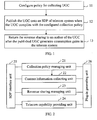
- FIG. 1 is a flowchart of a method for publishing UGC onto a telecom system according to an embodiment of the present invention
- FIG. 2 is a structure diagram of a UGC publishing platform according to an embodiment of the present invention.
- FIG. 3 is a diagram showing an example of an interface for maintaining personal information of a community user according to an embodiment of the present invention
- FIG. 4 is a composition diagram of a UGC publishing system according to an embodiment of the present invention.
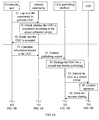
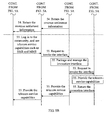
- FIG. 5A and FIG. 5B are a complete implementation flowchart according to an embodiment of the present invention.
- a method for publishing UGC onto a telecom system includes the following steps.
- Step 11 Configure policies for collecting the UGC.
- a typical collection policy is "the Click-Through Rate (CTR) is greater than XXX" (for example, in the Tianya community, the content clicked for more than 500,000 times is collected into the SDP); or the collection policy is "the content authoris XXX” (for example, the content created by the grassroots star "Hu Ge” in the Internet community is collected into the SDP).
- CTR Click-Through Rate
- Step 12 Publish the UGC onto the SDP of the telecom system when the UGC complies with the configured collection policies.
- the publishing mode may be: delivering the media file of the UGC to the SDP through the File Transfer Protocol (FTP).
- FTP File Transfer Protocol
- mapping information such as a unique ID, a content ID, a community ID, and a community user ID
- the user may query the tariff policy from the SDP, or add one, for example, "5000 is charged for transferring this content” or "this content supports revenue sharing at 7:3", for the convenience of subsequent calculation of revenue sharing.
- Step 13 Return the revenue sharing to author of the UGC after the published UGC generates consumption gains in the telecom system.
- the free-of-charge characteristic of the Internet makes most users reluctant to pay for content in the Internet.
- the users are willing to pay for certain content in specific scenarios, for example, to view fee-based information through wireless access to the Internet at the airport, and play a VOD by paying through a mobile phone on a bus.
- a method for publishing UGC from an Internet community to a telecom system is disclosed in this embodiment.
- Policies for collecting the UGC in the Internet community are configured, and the UGC is published onto an SDP of the telecom system when the UGC complies with the configured collection policies.
- the barrier imposed on the CP of the telecom system can be lowered, and the UGC can be published from the Internet community onto the SDP automatically to achieve the consumption value.
- the method provided in this embodiment further includes: providing the Internet community with telecom service capabilities of the SDP.
- the SDP needs to open telecom service capability interfaces and provide the Internet community with the telecom service capabilities such as Short Message Service (SMS)/Multimedia Message Service (MMS) sending, Group Service (GROUP), and personal state information maintenance, which implement seamless communication between community users and enhances the differential competitiveness of the Internet community.
- SMS Short Message Service
- MMS Multimedia Message Service
- GROUP Group Service
- personal state information maintenance which implement seamless communication between community users and enhances the differential competitiveness of the Internet community.
- the method in this embodiment needs to establish a communication interface with the SDP, where the established communication interface is further packaged as a content publishing interface, a revenue sharing query interface, and a telecom service capability invocation interface, which are available to the Internet community.
- the method needs to generate plug-ins deployed in the Internet communities, where the generated plug-ins serve as clients for uploading the UGC in the Internet communities, querying the revenue sharing of the published UGC, and invoking the telecom service capabilities of the SDP.
- the UGC publishing platform includes: a collection policy managing unit 21, a content information collecting unit 22, and a revenue sharing managing unit 23.
- the collection policy managing unit 21 is adapted to configure policies for collecting UGC.
- a typical collection policy is "the CTR is greater than XXX" (for example, in the Tianya community, the content clicked for more than 500,000 times is collected into the SDP); or the collection policy is "the content authoris XXX” (for example, the content created by the grassroots star "Hu Ge” in the Internet community is collected into the SDP).
- the content information collecting unit 22 is adapted to publish the UGC onto the SDP of the telecom system when the UGC complies with the configured collection policies.
- the publishing mode may be: delivering the media file of the UGC to the SDP through the FTP.
- the content information collecting unit 22 needs to store mapping information (such as a unique ID, a content ID, a community ID, and a community user ID) of the published UGC on the SDP, and store a tariff policy selected by the community user for the published UGC.
- mapping information such as a unique ID, a content ID, a community ID, and a community user ID
- the user may query the tariff policy from the SDP, or add one, for example, "5000 is charged for transferring this content” or "this content supports revenue sharing at 7:3", for the convenience of subsequent calculation of revenue sharing.
- the revenue sharing managing unit 23 is adapted to return the revenue sharing to author of the UGC after the UGC published by the content information collecting unit 22 generates consumption gains in the telecom system.
- This unit is responsible for managing the revenue sharing of the UGC and outputting reports related to the revenue sharing to support the subsequent revenue settlement.
- the collection policy managing unit 21 configures policies for collecting UGC in the Internet community; when the UGC complies with the configured collection policies, the content information collecting unit 22 publishes the UGC onto the SDP of the telecom system; after the UGC published by the content information collecting unit 22 generates consumption gains in the telecom system, the revenue sharing managing unit 23 returns the revenue sharing to the author of the UGC. Thereby, the barrier imposed on the CP of the telecom system can be lowered, and the UGC can be published onto the SDP automatically to achieve the consumption value.
- the UGC publishing platform provided in this embodiment further includes:
- the telecom service capabilities of the SDP include: SMS/MMS sending capability, GROUP capability, and personal state information maintenance capability.
- a telecom service capability interface of the SDP is opened to the Internet community to implement seamless communication between the community users and enhance the differential competitiveness of the Internet community.
- the UGC publishing platform needs to further include:
- the SDP interface unit 25 implements interconnection with the SDP, as detailed below:
- the UGC publishing platform in this embodiment acts as a virtual CP/SP to apply for a CP account on the SDP, and the SDP allocates a user password and a content uploading path to the UGC publishing platform; and the content information collecting unit 22 publishes UGC based on this CP account.
- a content publishing interface is configured, and the content information collecting unit 22 further packages this interface as a content publishing interface available to the Internet community.
- a revenue sharing query interface is configured, and the revenue sharing managing unit 23 further packages this interface as a revenue sharing query interface available to the Internet community.
- a telecom service capability invocation interface of the SDP is configured, and the telecom capability providing unit 24 further packages this interface as a telecom service capability invocation interface available to the Internet community.
- the plug-in generating unit 26 generates the plug-ins available to the Internet community.
- the Internet community equipped with the plug-ins supports collection of UGC, as detailed below:
- the plug-in generating unit 26 generates a plug-in available to the Internet community.
- the Internet community deploys the plug-in.
- the plug-in includes the following information:
- the Internet community in this embodiment is regarded as a device, and each plug-in includes a unique device ID.
- the Internet community may implement trustworthy communication on the UGC publishing platform according to the device ID and the authentication code.
- Content publishing interface Through this interface, the relevant user in the Internet community may publish content, and input the content description information and tariff information.
- Revenue sharing query interface Through this interface, the user of the Internet community may query the revenue sharing of the published content.
- Telecom service capability invocation interface Through this interface, the user of the Internet community may send SMS and MMS messages.
- the Internet community may develop a content publishing page and a revenue sharing query page available to users of the Internet community according to the information included in the plug-in. It can be easily understood that, the motives for the Internet community to deploy the plug-in and develop the pages mainly include the following.
- the functions of the plug-in are integrated to increase users' cohesion to the Internet community; and the operator (generally OP or other authorized vendors) of the UGC publishing platform in this embodiment may pay a certain fee to each Internet community.
- the collection policy managing unit 21 configures the content collection policies in the Internet community, namely, sets policies for collecting UGC compliant with certain conditions, as detailed below:
- Each plug-in is deployed in an Internet community, and corresponds to a device ID.
- the collection policy managing unit 21 may set one or more content collection policies for each device ID, and an "OR" relationship exists between the collection policies.
- the plug-in deployed in the Internet community monitors the content in the Internet community. Once certain content complies with the policies, the plug-in notifies the user in the Internet community that "The content is accepted. Please provide more detailed information”.
- the content information collecting unit 22 publishes the content from the Internet community onto the SDP automatically, as detailed below:
- the user selects a tariff policy of the current content (the user may query the tariff policy from the SDP or add one), for example, "5000 is charged for transferring this content” or "this content supports revenue sharing at 7:3".
- the content information collecting unit 22 invokes the content publishing interface configured by the SDP interface unit 25 to publish the content.
- the UGC publishing platform serves as a virtual CP/SP, namely, the CP of the SDP.
- mapping information such as the unique ID, content ID, community ID, and community user ID
- the revenue sharing is calculated by the SDP.
- the UGC publishing platform in this embodiment acts as a virtual CP/SP, and the SDP implements revenue settlement according to the existing model and mechanism for sharing revenues between the OP and the CP/SP.
- the UGC publishing platform in this embodiment converts the virtual CP/SP bills into the user bills according to the detailed bills, as detailed below:
- the revenue sharing managing unit 23 acquires the bill of the corresponding user by querying the locally stored content publishing information data according to the revenue bill of the virtual CP/SP, where the publishing information data includes the stored mapping information and the tariff policy selected by the user.
- an ID of UGC on the SDP is S0001
- the ID of the virtual CP/SP of the Internet community on the SDP is MVNO001
- the ID of the UGC in the Internet community is C0001
- the ID of the user in the Internet community is USER0001. Therefore, the revenue sharing distributed to a user "Zhang San" in a certain period is queried in the mapping information table stored in the content publishing process.
- the telecom capability providing unit 24 provides the Internet community with telecom service capabilities of the SDP, as detailed below:
- the SDP interface unit 25 configures the telecom service capability invocation interface of the SDP, so that the Internet community may invoke the telecom service capabilities of the SDP.
- the telecom capability providing unit 24 further packages the invocation interface, so that the Internet community may use the interface conveniently. For example, after an SMS sending interface is packaged, the Internet community may invoke the interface by inputting only the phone number of the sender, the phone number of the recipient, and the content of the SMS message, without the need of inputting the message format or the version number.
- the plug-in generating unit 26 invokes the code of the client that generates the invocation interface, so that the code is available to the Internet community.
- the SDP interface unit 25 of the UGC publishing platform implements interactions with interfaces such as the music uploading management interface, revenue settlement interface, and SMS sending interface of the music platform of China Mobile.
- the plug-in generating unit 26 of the UGC publishing platform generates the plug-ins applicable to the YouTube community, and the YouTube community assists in deploying the client to be integrated with the community.
- content collection rules in the YouTube community are set in the collection policy managing unit 21.
- One of the rules is "the content clicked for more than 500,000 times is suitable for being published to the music platform”.
- the user may stroll in the YouTube community and give comments on videos uploaded by others as usual, and may also upload the content created by inspiration onto the YouTube community for sharing with others.
- Zhang San When the content created by Zhang San (such as "Two Butterflies") is clicked for more than 500,000 times, Zhang San receives an SMS message "The 'Two Butterflies' created by you has been accepted by the 'Integrated Platform'. Please log in to the website to add necessary information".
- the user receives this message because the mobile number of the user is bound when the user maintains the personal information in the YouTube community.
- the YouTube community sends the SMS message to the user by invoking the telecom service capabilities provided by the telecom capability providing unit 24 of the UGC publishing platform.
- the UGC is processed by the UGC publishing platform as an intermediary, the UGC publishing platform acts as a virtual CP/SP to publish the UGC onto the music platform, and the music platform approves, displays and manages the UGC and handles accounting.
- VAS Voice Added Service
- the revenue sharing managing unit 23 of the UGC publishing platform processes the revenue sharing report, calculates the revenue sharing payable to Zhang San, and pays the corresponding sum to Zhang San by certain means for the UGC created by Zhang San.
- Zhang San needs to contact a user Li Si in the Internet community.
- Zhang San and Li Si know only the ID of each other in the Internet community and Li Si is currently offline, Li Si binds a mobile number and sets "allow others to locate me, and allow a call originated to the bound mobile phone according to the ID".
- Zhang San logs in to the Internet community, queries the current state of Li Si, and knows that Li Si is currently in "North Huaqiang Road in Shenzhen". By clicking a "Talk” button beside Li Si in the Internet community, Zhang San can talk with Li Si.
- the UGC publishing system includes: an SDP 30 of a telecom system, more than one Internet community, and a UGC publishing platform 40.
- the UGC publishing platform 40 is adapted to: configure policies for collecting UGC in the Internet community, and publish the UGC onto the SDP of the telecom system when the UGC complies with the configured collection policies; obtain a revenue bill of the published UGC from the SDP 30 after the published UGC generates consumption gains in the telecom system, and return revenue sharing to the author of the UGC according to the revenue bill and the publishing information data.
- the publishing information data includes the ID of the community user who publishes the UGC, the ID of the Internet community, the ID of the published UGC in the Internet community, the mapping information of the ID of the published UGC on the SDP, and the tariff policy selected by the community user who publishes the UGC.
- the SDP 30 further opens an interface, and the UGC publishing platform 20 provides the Internet community with the telecom service capabilities such as SMS/MMS sending, GROUP, and personal state information maintenance, which implement seamless communication between community users.
- the telecom service capabilities such as SMS/MMS sending, GROUP, and personal state information maintenance, which implement seamless communication between community users.
- the UGC publishing platform 40 is further adapted to: generate the plug-ins deployed in the Internet communities, where the plug-ins act as clients for uploading UGC in the Internet communities, querying the revenue sharing of the published UGC, and invoking telecom service capabilities of the SDP; and establish a communication interface with the SDP, where the established communication interface is further packaged as a content publishing interface, a revenue sharing query interface, and a telecom service capability invocation interface, which are available to the Internet community.
- the UGC publishing platform may act as a functional apparatus deployed in the existing SDP, or act as a stand-alone device for implementing communication between the SDP and the Internet community (device).
- policies for collecting the UGC in the Internet community are configured; the UGC in the Internet community is published onto the SDP of the telecom system when the UGC complies with the configured collection policies.
- the barrier imposed on the CP of the telecom system can be lowered, and the UGC can be published from the Internet community onto the SDP automatically to achieve the consumption value.
- the telecom service capability interface of the SDP is opened to the Internet community, which implements seamless communication between the community users and enhances the differential competitiveness of the Internet community.
- the UGC publishing platform is introduced, so that the UGC is delivered from the Internet to the telecom system and generates consumption gains.
- the foregoing UGC publishing system is detailed below through a complete procedure.
- the procedure includes the following steps.
- Step 51 The community user logs in to the Internet community to create UGC.
- the user of the Internet community does not need to change the content generation environment, but creates the UGC in the existing Internet community, for example, writes a book in the Tianya community, or uploads a video to the YouTube community.
- Step 52 The Internet community checks whether the UGC is acceptable according to the content collection policies set by the UGC publishing platform, and notifies the user that the UGC is accepted if the UGC complies with the preset collection policies.
- the preset collection policies may be based on user characteristics (for example, grassroots stars), or the impact caused by the UGC (for example, the UGC is clicked for more than 1 million times).
- Step 53 The user inputs the information related to the UGC, and the Internet community sends a content publishing request to the UGC publishing platform.
- the UGC publishing platform packages the UGC for a second time before publishing, and logs in to the SDP as a virtual CP/SP to publish the UGC.
- the Internet community triggers the process of publishing the UGC onto the SDP.
- the UGC publishing platform serves as an interaction intermediary, and shields the correlation between the Internet community user and the SDP. To the user, only a page for completing the supplementary information is visible; while to the SDP, the procedure for publishing the UGC is the same as the existing procedure. In this way, the UGC is uploaded onto the SDP automatically.
- the UGC publishing platform stores the relevant mapping relationship, which facilitates subsequent distribution of revenues.
- Step 54 The SDP operates the UGC, and settles the revenue sharing with the UGC publishing platform.
- the UGC publishing platform further generates a revenue sharing report for the community user, and returns the revenue settlement information to the user through the Internet community.
- settlement is performed between the SDP and the UGC publishing platform periodically, and settlement is further performed between the UGC publishing platform and the user of the Internet community.
- the settlement may be based on currencies or other equivalent objects such as the points earned in the Internet community or QQ coins.
- the settlement process is controlled by the UGC publishing platform.
- Step 55 The community user logs in to the community, and uses the telecom service capabilities such as SMS and MMS.
- the Internet community requests to invoke the telecom service capability interface of the SDP.
- the UGC publishing platform packages and manages an invocation interface and requests to invoke the telecom service capability interface from the SDP.
- the SDP provides telecom service capabilities for the user through the UGC publishing platform and the Internet community.
- telecom service capabilities such as SMS receiving and sending, MMS receiving and sending, state management, and location service may be implemented between user A and user B in the Internet-based contact mode such as emails and intra-site messages on the UGC publishing platform in the existing Internet applications.
- policies for collecting the UGC in the Internet community are configured; and the UGC in the Internet community is published onto the SDP of the telecom system when the UGC complies with the configured collection policies.
- the barrier imposed on the CP of the telecom system can be lowered, and the UGC can be published from the Internet community onto the SDP automatically to achieve the consumption value.
- the telecom service capability interface of the SDP is opened to the Internet community, which implements seamless communication between the community users and enhances the differential competitiveness of the Internet community.
- the steps of the method described herein may be implemented through hardware and/or a software module executed by a processor.
- the software module may be located in a Random Access Memory (RAM), a computer memory, a Read Only Memory (ROM), an electrically programmable ROM, an electrically erasable programmable ROM, a register, a hard disk, a removable disk, a Compact Disk-Read Only Memory (CD-ROM), or any other storage media.
- RAM Random Access Memory
- ROM Read Only Memory
- ROM Read Only Memory
- ROM Read Only Memory
- CD-ROM Compact Disk-Read Only Memory
Landscapes
- Business, Economics & Management (AREA)
- Accounting & Taxation (AREA)
- Finance (AREA)
- Development Economics (AREA)
- Economics (AREA)
- Marketing (AREA)
- Strategic Management (AREA)
- Physics & Mathematics (AREA)
- General Business, Economics & Management (AREA)
- General Physics & Mathematics (AREA)
- Engineering & Computer Science (AREA)
- Theoretical Computer Science (AREA)
- Information Transfer Between Computers (AREA)
- Management, Administration, Business Operations System, And Electronic Commerce (AREA)
Applications Claiming Priority (2)
| Application Number | Priority Date | Filing Date | Title |
|---|---|---|---|
| CN2009101487254A CN101938364A (zh) | 2009-07-01 | 2009-07-01 | 实现用户原创内容发布到电信系统的方法、装置及系统 |
| PCT/CN2010/074766 WO2011000313A1 (zh) | 2009-07-01 | 2010-06-30 | 实现用户原创内容发布到电信系统的方法、装置及系统 |
Publications (2)
| Publication Number | Publication Date |
|---|---|
| EP2437183A1 true EP2437183A1 (de) | 2012-04-04 |
| EP2437183A4 EP2437183A4 (de) | 2012-09-12 |
Family
ID=43391513
Family Applications (1)
| Application Number | Title | Priority Date | Filing Date |
|---|---|---|---|
| EP10793608A Withdrawn EP2437183A4 (de) | 2009-07-01 | 2010-06-30 | Verfahren und system zur verteilung von benutzergenerierten inhalten an ein telekommunikationssystem |
Country Status (4)
| Country | Link |
|---|---|
| US (1) | US20120095859A1 (de) |
| EP (1) | EP2437183A4 (de) |
| CN (1) | CN101938364A (de) |
| WO (1) | WO2011000313A1 (de) |
Cited By (1)
| Publication number | Priority date | Publication date | Assignee | Title |
|---|---|---|---|---|
| WO2014085786A1 (en) * | 2012-11-30 | 2014-06-05 | Bazaarvoice, Inc. | Using a financial account statement to present an opportunity to provide content related to a good or service |
Families Citing this family (12)
| Publication number | Priority date | Publication date | Assignee | Title |
|---|---|---|---|---|
| CN102546758B (zh) * | 2011-12-13 | 2014-06-25 | 中国联合网络通信集团有限公司 | 内容发布方法、系统及平台 |
| CN103873525B (zh) * | 2012-12-17 | 2017-06-20 | 沈琼茂 | 创建数字内容运营平台的系统及方法 |
| CN104426922B (zh) * | 2013-08-21 | 2020-02-14 | 中兴通讯股份有限公司 | 资源内容发布处理方法、装置及系统 |
| CN103473344A (zh) * | 2013-09-23 | 2013-12-25 | 广州亮维智能科技有限公司 | 信息查询发布系统 |
| US9467531B1 (en) * | 2014-07-06 | 2016-10-11 | Matthew Gerard Holden | Method and system for integration of user-generated content with social media content management system |
| CN104410647B (zh) * | 2014-12-22 | 2018-01-12 | 中国移动通信集团黑龙江有限公司鸡西分公司 | 一种基于移动互联网的企业与用户通信方法 |
| CN107528822B (zh) * | 2017-07-03 | 2021-03-05 | 创新先进技术有限公司 | 一种业务执行方法以及装置 |
| CN107563805A (zh) * | 2017-08-25 | 2018-01-09 | 苏州点阵信息科技有限公司 | 一种基于区块链技术的内容评价方法 |
| CN107730323A (zh) * | 2017-11-06 | 2018-02-23 | 广州市万表科技股份有限公司 | 一种基于商品内容创作获取收益的方法和平台 |
| CN108347360B (zh) * | 2018-02-07 | 2021-05-25 | 网宿科技股份有限公司 | 网络测试数据的采集方法和网络服务器 |
| CN110321670A (zh) * | 2019-06-05 | 2019-10-11 | 上海易点时空网络有限公司 | 基于发布行为检测的原创内容申明方法及装置 |
| CN110624245B (zh) * | 2019-09-20 | 2023-08-25 | 北京代码乾坤科技有限公司 | 游戏交易的处理方法、装置、存储介质及处理器 |
Family Cites Families (15)
| Publication number | Priority date | Publication date | Assignee | Title |
|---|---|---|---|---|
| WO2001006703A1 (en) * | 1999-07-20 | 2001-01-25 | Getlivemusic.Com | Systems for digital watermarking and distribution of recorded content |
| KR20000059173A (ko) * | 2000-07-19 | 2000-10-05 | 한상천 | 에이전트를 이용한 쇼핑몰 구축과 상품 판매대행 및 몰제공 통합서비스 |
| CN1288909C (zh) * | 2002-12-30 | 2006-12-06 | 北京亚太东方通信网络有限公司 | 一种提供多媒体节目交易服务的方法及其网络平台 |
| CN1953388A (zh) * | 2005-10-21 | 2007-04-25 | 鸿富锦精密工业(深圳)有限公司 | 网络信息自动采集系统及方法 |
| CN1987927A (zh) * | 2005-12-19 | 2007-06-27 | 谢云 | 关于书籍知识产权的保护方法 |
| CN101025808A (zh) * | 2006-02-18 | 2007-08-29 | 黄建国 | 一种信息交易的方法 |
| US8010511B2 (en) * | 2006-08-29 | 2011-08-30 | Attributor Corporation | Content monitoring and compliance enforcement |
| US10204316B2 (en) * | 2006-09-28 | 2019-02-12 | Leaf Group Ltd. | User generated content publishing system |
| US20080300974A1 (en) * | 2007-05-30 | 2008-12-04 | Google Inc. | Flexible Revenue Sharing and Referral Bounty System |
| US20080320102A1 (en) * | 2007-06-22 | 2008-12-25 | Atle Rordam | Information retrieval system |
| US20090132341A1 (en) * | 2007-11-20 | 2009-05-21 | Theresa Klinger | Method and System for Monetizing User-Generated Content |
| US8250096B2 (en) * | 2008-03-31 | 2012-08-21 | Yahoo! Inc. | Access to trusted user-generated content using social networks |
| US7970839B2 (en) * | 2008-06-27 | 2011-06-28 | Microsoft Corporation | Automatic download of images from online storage |
| EP2297685A1 (de) * | 2008-07-04 | 2011-03-23 | Yogesh Chunilal Rathod | Verfahren und systeme für eine plattform von marken-sozialnetzwerken (bsn) |
| US20110246261A1 (en) * | 2010-04-01 | 2011-10-06 | Farhang Kassaei | User-generated content policy optimization |
-
2009
- 2009-07-01 CN CN2009101487254A patent/CN101938364A/zh active Pending
-
2010
- 2010-06-30 WO PCT/CN2010/074766 patent/WO2011000313A1/zh not_active Ceased
- 2010-06-30 EP EP10793608A patent/EP2437183A4/de not_active Withdrawn
-
2011
- 2011-12-29 US US13/340,197 patent/US20120095859A1/en not_active Abandoned
Non-Patent Citations (2)
| Title |
|---|
| See also references of WO2011000313A1 * |
| The claimed subject matter, with due regard to the description and drawings, relates to processes comprised in the list of subject matter and activities excluded from patentability under Art. 52(2) and (3) EPC. The applicant is advised that in accordance with the established practice of the EPO, no search need be performed in respect to those aspects of the claimed invention. The only identifiable technical aspects of the claimed invention relate to the use of conventional, general-purpose data processing technology for processing data of an inherently non-technical nature. The information technology employed is considered to have been generally known as it was widely to available to everyone at the date of filing/priority of the present application. The notoriety of such prior art cannot reasonably be contested. No documentary evidence was therefore considered required. * |
Cited By (1)
| Publication number | Priority date | Publication date | Assignee | Title |
|---|---|---|---|---|
| WO2014085786A1 (en) * | 2012-11-30 | 2014-06-05 | Bazaarvoice, Inc. | Using a financial account statement to present an opportunity to provide content related to a good or service |
Also Published As
| Publication number | Publication date |
|---|---|
| WO2011000313A1 (zh) | 2011-01-06 |
| US20120095859A1 (en) | 2012-04-19 |
| CN101938364A (zh) | 2011-01-05 |
| EP2437183A4 (de) | 2012-09-12 |
Similar Documents
| Publication | Publication Date | Title |
|---|---|---|
| EP2437183A1 (de) | Verfahren und system zur verteilung von benutzergenerierten inhalten an ein telekommunikationssystem | |
| JP4152051B2 (ja) | インターネット・ブラウジング・セッション中に有料の電話コールを行うための方法及びシステム | |
| US20060272028A1 (en) | Platform and service for management and multi-channel delivery of multi-types of contents | |
| US20070203841A1 (en) | Service level digital rights management support in a multi-content aggregation and delivery system | |
| US20140012741A1 (en) | Techniques for correlation of charges in multiple layers for content and service delivery | |
| US20080235104A1 (en) | System and method to promote electronic assets | |
| CN1572085A (zh) | 包括固定站和移动站的网络中内容的超分发方法和设备 | |
| US11962680B2 (en) | Blockchain ledger growth management | |
| US20100062745A1 (en) | Messaging appartus and method | |
| CN103052049B (zh) | 调整用户访问业务的方法、装置及系统 | |
| WO2013108136A1 (en) | Method and apparatus for performing charging control to a sponsored data application | |
| WO2008116425A1 (en) | Method and system for implementing the business of short message advertising | |
| CN101000678A (zh) | 实现交互式电子报刊的系统和方法 | |
| US20070149168A1 (en) | Billing system for usage fees in a content distribution system | |
| CN100395980C (zh) | 实现wap流量计费费用提示功能的方法和系统 | |
| KR20060118051A (ko) | 유료 콘텐츠 선물 전송 시스템 및 방법 | |
| US20020114434A1 (en) | Method and system for transferring communication fee | |
| Iussa | Qantas Group Submission on Western Sydney International Airport Transport Infrastructure | |
| US9530158B2 (en) | Method, system, and graphic user interface for enabling a customer to access information associated with a hosted user profile | |
| Price | AER Approves Jemena's 2022-23 Pricing Proposal | |
| Salis | VIOTAS Submission on Very Fast FCAS Market Ancillary Service Specification | |
| Pesaran et al. | High-Dimensional Forecasting with Known and Unknown Variables | |
| Gilbert | Energy Networks Australia: Smart Meter Data Services and Customer Benefits | |
| Jungerth | CitiPower, Powercor, and United Energy Response to AEMO's MASS Consultation Paper on DER Integration | |
| Watson | ENA Response to AEMC Consultation on AEMO Participant Fee Cost Recovery |
Legal Events
| Date | Code | Title | Description |
|---|---|---|---|
| PUAI | Public reference made under article 153(3) epc to a published international application that has entered the european phase |
Free format text: ORIGINAL CODE: 0009012 |
|
| 17P | Request for examination filed |
Effective date: 20111228 |
|
| AK | Designated contracting states |
Kind code of ref document: A1 Designated state(s): AL AT BE BG CH CY CZ DE DK EE ES FI FR GB GR HR HU IE IS IT LI LT LU LV MC MK MT NL NO PL PT RO SE SI SK SM TR |
|
| A4 | Supplementary search report drawn up and despatched |
Effective date: 20120810 |
|
| RIC1 | Information provided on ipc code assigned before grant |
Ipc: G06Q 30/00 20120101ALI20120806BHEP Ipc: G06F 17/30 20060101AFI20120806BHEP |
|
| DAX | Request for extension of the european patent (deleted) | ||
| STAA | Information on the status of an ep patent application or granted ep patent |
Free format text: STATUS: THE APPLICATION HAS BEEN WITHDRAWN |
|
| 18W | Application withdrawn |
Effective date: 20130228 |