EP2437477A1 - Détection de fraude - Google Patents
Détection de fraude Download PDFInfo
- Publication number
- EP2437477A1 EP2437477A1 EP10251705A EP10251705A EP2437477A1 EP 2437477 A1 EP2437477 A1 EP 2437477A1 EP 10251705 A EP10251705 A EP 10251705A EP 10251705 A EP10251705 A EP 10251705A EP 2437477 A1 EP2437477 A1 EP 2437477A1
- Authority
- EP
- European Patent Office
- Prior art keywords
- caller
- calls
- call
- speech
- voiceprint
- Prior art date
- Legal status (The legal status is an assumption and is not a legal conclusion. Google has not performed a legal analysis and makes no representation as to the accuracy of the status listed.)
- Ceased
Links
Images

Classifications
-
- H—ELECTRICITY
- H04—ELECTRIC COMMUNICATION TECHNIQUE
- H04M—TELEPHONIC COMMUNICATION
- H04M3/00—Automatic or semi-automatic exchanges
- H04M3/22—Arrangements for supervision, monitoring or testing
- H04M3/2281—Call monitoring, e.g. for law enforcement purposes; Call tracing; Detection or prevention of malicious calls
-
- G—PHYSICS
- G10—MUSICAL INSTRUMENTS; ACOUSTICS
- G10L—SPEECH ANALYSIS TECHNIQUES OR SPEECH SYNTHESIS; SPEECH RECOGNITION; SPEECH OR VOICE PROCESSING TECHNIQUES; SPEECH OR AUDIO CODING OR DECODING
- G10L17/00—Speaker identification or verification techniques
- G10L17/04—Training, enrolment or model building
-
- H—ELECTRICITY
- H04—ELECTRIC COMMUNICATION TECHNIQUE
- H04M—TELEPHONIC COMMUNICATION
- H04M2201/00—Electronic components, circuits, software, systems or apparatus used in telephone systems
- H04M2201/40—Electronic components, circuits, software, systems or apparatus used in telephone systems using speech recognition
-
- H—ELECTRICITY
- H04—ELECTRIC COMMUNICATION TECHNIQUE
- H04M—TELEPHONIC COMMUNICATION
- H04M2201/00—Electronic components, circuits, software, systems or apparatus used in telephone systems
- H04M2201/41—Electronic components, circuits, software, systems or apparatus used in telephone systems using speaker recognition
-
- H—ELECTRICITY
- H04—ELECTRIC COMMUNICATION TECHNIQUE
- H04M—TELEPHONIC COMMUNICATION
- H04M2203/00—Aspects of automatic or semi-automatic exchanges
- H04M2203/60—Aspects of automatic or semi-automatic exchanges related to security aspects in telephonic communication systems
- H04M2203/6027—Fraud preventions
-
- H—ELECTRICITY
- H04—ELECTRIC COMMUNICATION TECHNIQUE
- H04M—TELEPHONIC COMMUNICATION
- H04M2203/00—Aspects of automatic or semi-automatic exchanges
- H04M2203/60—Aspects of automatic or semi-automatic exchanges related to security aspects in telephonic communication systems
- H04M2203/6045—Identity confirmation
-
- H—ELECTRICITY
- H04—ELECTRIC COMMUNICATION TECHNIQUE
- H04M—TELEPHONIC COMMUNICATION
- H04M3/00—Automatic or semi-automatic exchanges
- H04M3/42—Systems providing special services or facilities to subscribers
- H04M3/436—Arrangements for screening incoming calls, i.e. evaluating the characteristics of a call before deciding whether to answer it
-
- H—ELECTRICITY
- H04—ELECTRIC COMMUNICATION TECHNIQUE
- H04M—TELEPHONIC COMMUNICATION
- H04M3/00—Automatic or semi-automatic exchanges
- H04M3/42—Systems providing special services or facilities to subscribers
- H04M3/50—Centralised arrangements for answering calls; Centralised arrangements for recording messages for absent or busy subscribers ; Centralised arrangements for recording messages
- H04M3/51—Centralised call answering arrangements requiring operator intervention, e.g. call or contact centers for telemarketing
Definitions
- the invention relates to fraud detection and especially to a method and system for identifying a caller who has initiated many calls to, for example, a contact centre masquerading as a different person each time.
- One way of identifying fraudulent callers is to use speaker recognition.
- the voice of the caller is for example compared to a stored voiceprint of the legitimate account holder or compared to a set of stored voiceprints of already known fraudulent callers. In both cases it is necessary to acquire and store voiceprints for different users otherwise the system will be of no help; unless a voiceprint is stored for a legitimate user a fraudulent caller, whose voiceprint is not stored, could pose as the legitimate user and obtain account details or sensitive business information.
- a method for automatically identifying suspicious calls to an organisation comprising transforming at least a caller portion of the speech of the calls in order to obtain transcript of the calls, associating a claimed identity of the caller with each call, comparing the transcripts of the calls in order to identify one or more groups of calls in which the caller uses similar characteristic wording, comparing the voice in each call in each identified group to the voices in the other calls in the group, comparing claimed caller identities of the calls in each group, and if the associated claimed caller identities are different and the voices match, identifying the calls in the group as being suspicious as they are likely to have been made by the same caller claiming different identities.
- Another advantage is that fraudulent callers can be detected without having a set of voiceprints for legitimate and/or fraudulent callers stored. Instead a fraudulent caller that during a short time makes many calls to a contact centre pretending each time to be a different account holder can be identified based on his use of similar phrases or wording.
- a further advantage is that the search for suspicious calls is not based on predefined keywords but the fraudulent caller can be detected based on any similar phrases or expressions from a rehearsed dialogue, which increases the possibility of identifying fraudulent callers.
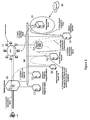
- a contact centre system ( figure 1 ) comprises a telephone system 10 for receiving incoming calls and an Automatic Call Distributor (ACD) 11 for distributing the incoming calls between the contact centre agents.
- ACD Automatic Call Distributor
- IVRS Interactive Voice Response System
- CTI Computer - Telephony Integration Server
- LAN Local Area Network
- LAN Local Area Network
- Audio Acquisition Server 15 a Voice Recording Solution 16 for recording incoming calls
- central data store 17 which is also directly connected to the ACD 11
- Speech Transcription server 18 for transcribing the recorded calls to a phoneme or text transcript
- Fraud Analysis Server 19 The different servers, stores and solutions described here can be installed on the same computer or on different computers.
- the telephone system 10 receives a call from a caller.
- the IVRS 12 plays different options to the caller, who selects one or more of the options, whereafter the call is forwarded to the ACD for connection to a certain contact centre agent based on which option(s) the caller has selected.
- the caller's audio, or speech, of the call is collected by the audio acquisition server 15.
- the captured audio as well as call data, such as CLI (Caller Line Identity), for the call is managed by the voice recording solution 16.
- the audio normally includes both the spoken name of the caller as well as his account number and the voice recording solution 16 will associate the account number with the call as metadata.
- the audio and call data is stored in the central data store 17.
- the stored audio and call data is used by the fraud analysis server 19 to determine calls that are made by the same person using different identities in order to fraudulently obtain for example account details belonging to other customers. Normally a fraudster withholds his CLI (telephone number) when making a call. In this embodiment the fraud analysis server is therefore arranged to only analyse those calls where the CLI is withheld. Alternatively, in other embodiments the system is configured to analyse all calls or any call where the phone number is not registered as belonging to the claimed identity, or name, of the account holder.
- the fraud analysis is performed on a batch of stored calls at the end of each day. In alternative embodiments, the analysis might instead be performed every hour; every second day; or maybe once a week. Preferably the analysis is made at least once a day in order to identify the possible fraudsters and to stop fraudulent transactions as soon as possible.
- the solution proposed here uses the speech transcription server 18 to produce speech to text or phoneme transcriptions of all the calls where the CLI has been withheld from a daily batch of calls.
- the speech transcription server 18 extracts audio files from the central data store 17 at the end of each day; performs speech to transcription on the selected audio files and returns the text files to the central data store 17 for storage.
- the fraud analysis server then gets the transcriptions from the central data store in order to perform a first part of the analysis on these transcriptions.
- the speech transcription service 18 could pass the transcriptions directly to the fraud analysis server 19.
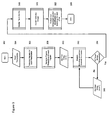
- the fraud analysis server 19 of the preferred embodiment comprises a suite of software programs, or modules, stored on a persistent storage device 21 and a processor 22 for executing the executable programme code of the different modules.
- the modules are a general process module 30 comprising programme code for initiating the different steps of the method, which different steps are performed by the following modules: an approximate string analysis module 23 for comparing transcriptions in order to detect similar phrases in the transcriptions; a grouping module 24 for grouping similar transcriptions and hence calls; a voiceprint generation module 25 for generating voiceprints from each audio file in a group; a voice matching module 26 for matching a voiceprint against speech segments; a calibration module 27 for calibrating the voice matching module; a caller identity comparison module 28 that compares the claimed identities for grouped calls; and a notification module 29 for notifying a contact centre agent about fraudulent calls and discovered fraudulent callers.
- the batch of transcripts to be analysed are uploaded from the central data store 17 by the processor 22, which executes the general process module 30, and stored in a temporary memory.
- the processor next initiates the string analysis module 23.
- the string analysis module 23 reads the stored transcripts [304]; tabulates trigrams, which is a sequence of three words in a word string, used in each transcription [306]; generates trigram probabilities for each trigram [3081; and then selects the first target string [310].
- the string would be the transcription of the entire caller's portion of the call, and would hence also comprise a claimed identity of the caller.
- the string analysis module is configured to use an approximate string matching algorithm. The purpose of this approximate string matching algorithm is twofold:
- the algorithm is therefore effectively looking for specific strings that an imposter caller may have spoken on multiple calls, such that the language is specific to that caller.
- a trigram is a sequence of three words in a word string.
- the string “I would like my balance please” consists of the following trigrams: "I would like”, “would like my”, “like my balance”, "my balance please”.
- Trigram 1 Trigram 2
- Trigram 3 Trigram 4
- Trigram 5 Trigram m Call 1 0 1 1 0 1 0 Call 2 0 1 0 0 1 0 Call 3 1 1 0 0 1 0 Call 4 1 1 0 0 0 1 Call 5 1 0 1 0 0 0 Call 6 1 1 0 1 1 1 Call 7 1 0 0 0 0 0 Call 8 1 0 0 0 1 0 Call 9 1 1 0 1 1 0 Call 10 0 1 0 0 1 1 Call 11 0 0 1 0 1 0 6 Call 13 0 0 0 1 1 1 Call 14 1 1 0 1 0 1 Call N 0 0 0 1 0 0 Trigram Probability 0.53 0.60 0.27 0.40 0.66 0.33
- a score is obtained which reflects the extent to which each of the strings pairs are similar, [312].
- the comparison scores are then ranked from the highest weighted similarity score to the lowest weighted similarity score.
- the top m matches which are defined by the scores that are above a threshold T are selected,[318], these are underlined on the table above and the corresponding string pairs or calls are grouped [320] by the grouping module 24.
- a group is generated by taking all the underlined calls in a given column and row. E.g. looking to see which calls are similar to call 4, a group would be identified by scores s24, s34 and s46. This would form a group consisting of calls 2, 3, 4 and 6. Similarly, looking at call 2 would generate a group consisting of calls 3, 4 and 5; looking at call 3 would generate a group consisting of calls 2, 3; looking at call 5 would generate a group consisting of calls 2 and 5; and looking at call 6 would generate a group consisting of calls 4 and 6.
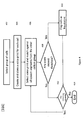
- step [322] is described in more detail in the flow chart shown in figure 4 .
- a group of P calls identified by the transcript comparison algorithm ( figure 3 ) is selected for analysis [402] and then the voiceprint generation module 25 creates and temporarily stores a voiceprint for each call in the group, [404].
- a first voiceprint is selected and matched against all voice recordings from the other P-1 calls in the group in order to generate a set of likelihood scores for how similar the voice is to each of the other voices in the group [406].
- each score is compared to a threshold and if the score exceeds the threshold the call from which the voiceprint was generated and the call it was compared against are determined to be generated by the same caller [408] and the calls and the caller, which most likely is unknown, are flagged as fraudulent [410].
- the caller identity comparison module 28 compares the claimed identities of the callers in the group. If the claimed identities are different and the voices match the notification module 29 notifies a contact centre agent or an automatic alarm system that the calls in the group are probably made by the same caller although this caller has used different identities for asking about different or the same accounts.
- a suitable decision threshold for the voice analysis is estimated in a calibration step by examining the spread of scores obtained by matching segments of speech against the voiceprint for caller 1.
- a speech segment from caller 1 is matched against the voiceprint for caller 1, this produces a score S1.
- the larger the score the more likely it is that the speech segment matches the voice that was used to make the voiceprint. It would therefore be expected that the score for S1, which is from the same caller, would be the largest.
- the speech segment which is matched against the voiceprint is not actually contained in the voiceprint, but is the portion used for calibration, so this gives a realistic estimation of the score that would be expected for the case when the caller's speech does in fact match the voiceprint.
- scores S2 - SP are also calculated by comparing speech segments from the audio samples against the voiceprint from caller 1. If the callers corresponding to these scores are not the same person who made call 1, then the scores would be expected to be smaller than S1.
- the (P-1) scores S2 - SP are ranked in descending value. If the highest score is closer to S1 than it is to the next lower score, then this is a strong indication that the speech used to generate the score S2 came from the same caller as that used to produce S1 and could therefore correspond to a fraudulent caller.
- the exact ratio scores is a system parameter and can be adjusted as required.
- a voiceprint is generated from the speech of the caller (if not already generated) and stored in a fraudulent caller database at the contact centre.
- a speech recognition server will compare speech segments from the call to voiceprints in the fraudulent caller database; the caller identified as a fraudulent caller and consequently prevented from retrieving information or initiating any transactions.
- the above embodiments have the advantage of detecting from a huge batch of calls previously unknown suspicious callers, who may be fraudsters, but whose voices are not already captured on a suspect voiceprint database.
- the proposed method and system actively searches for potential fraudsters and uses characteristics of the fraudster's call pattern, indicative of a rehearsed dialog, to help make a short list of potential fraud candidates.
- the software modules are stored in a persistent memory of the fraud analysis server 19 , the modules could alternatively be stored in a portable memory 20, such as DVD-rom or USB stick, which when inserted in and executed by a general purpose computer performs the preferred embodiments for detecting fraudulent callers.
- the string matching algorithm in the described embodiments uses word trigrams; however the algorithm could also use bigrams, word pairs, or any number of words as well as strings of phonemes.
- Phonemes are the basic unit of speech of a language and a spoken word therefore comprises one or more phonemes.
- the speech transcription solution could therefore transform the speech of the calls to text comprising words or strings of phonemes that constitute parts of these words.
Landscapes
- Engineering & Computer Science (AREA)
- Computer Security & Cryptography (AREA)
- Technology Law (AREA)
- Signal Processing (AREA)
- Health & Medical Sciences (AREA)
- Audiology, Speech & Language Pathology (AREA)
- Human Computer Interaction (AREA)
- Physics & Mathematics (AREA)
- Acoustics & Sound (AREA)
- Multimedia (AREA)
- Telephonic Communication Services (AREA)
Priority Applications (4)
| Application Number | Priority Date | Filing Date | Title |
|---|---|---|---|
| EP10251705A EP2437477A1 (fr) | 2010-09-30 | 2010-09-30 | Détection de fraude |
| EP11764835.2A EP2622832B1 (fr) | 2010-09-30 | 2011-09-27 | Comparaison de voix |
| PCT/GB2011/001399 WO2012042200A1 (fr) | 2010-09-30 | 2011-09-27 | Comparaison de voix |
| US13/877,261 US20130216029A1 (en) | 2010-09-30 | 2011-09-27 | Speech comparison |
Applications Claiming Priority (1)
| Application Number | Priority Date | Filing Date | Title |
|---|---|---|---|
| EP10251705A EP2437477A1 (fr) | 2010-09-30 | 2010-09-30 | Détection de fraude |
Publications (1)
| Publication Number | Publication Date |
|---|---|
| EP2437477A1 true EP2437477A1 (fr) | 2012-04-04 |
Family
ID=43709150
Family Applications (1)
| Application Number | Title | Priority Date | Filing Date |
|---|---|---|---|
| EP10251705A Ceased EP2437477A1 (fr) | 2010-09-30 | 2010-09-30 | Détection de fraude |
Country Status (1)
| Country | Link |
|---|---|
| EP (1) | EP2437477A1 (fr) |
Cited By (24)
| Publication number | Priority date | Publication date | Assignee | Title |
|---|---|---|---|---|
| US20140177841A1 (en) * | 2012-10-21 | 2014-06-26 | Verint Systems Ltd. | System and method for user-privacy-aware communication monitoring and analysis |
| WO2014204855A1 (fr) * | 2013-06-17 | 2014-12-24 | Visa International Service Association | Traitement de transactions vocales |
| US9641680B1 (en) | 2015-04-21 | 2017-05-02 | Eric Wold | Cross-linking call metadata |
| US10198427B2 (en) | 2013-01-29 | 2019-02-05 | Verint Systems Ltd. | System and method for keyword spotting using representative dictionary |
| US10491609B2 (en) | 2016-10-10 | 2019-11-26 | Verint Systems Ltd. | System and method for generating data sets for learning to identify user actions |
| US10546008B2 (en) | 2015-10-22 | 2020-01-28 | Verint Systems Ltd. | System and method for maintaining a dynamic dictionary |
| US10614107B2 (en) | 2015-10-22 | 2020-04-07 | Verint Systems Ltd. | System and method for keyword searching using both static and dynamic dictionaries |
| US10623503B2 (en) | 2015-03-29 | 2020-04-14 | Verint Systems Ltd. | System and method for identifying communication session participants based on traffic patterns |
| US10659588B1 (en) * | 2019-03-21 | 2020-05-19 | Capital One Services, Llc | Methods and systems for automatic discovery of fraudulent calls using speaker recognition |
| EP3654265A1 (fr) * | 2018-11-19 | 2020-05-20 | Olx Global B.V. | Détection de fraude de notes vocales |
| US10846699B2 (en) | 2013-06-17 | 2020-11-24 | Visa International Service Association | Biometrics transaction processing |
| WO2020257393A1 (fr) * | 2019-06-20 | 2020-12-24 | Verint Americas Inc. | Systèmes et procédés d'authentification et de détection de fraude |
| US10958613B2 (en) | 2018-01-01 | 2021-03-23 | Verint Systems Ltd. | System and method for identifying pairs of related application users |
| US10999295B2 (en) | 2019-03-20 | 2021-05-04 | Verint Systems Ltd. | System and method for de-anonymizing actions and messages on networks |
| US11038907B2 (en) | 2013-06-04 | 2021-06-15 | Verint Systems Ltd. | System and method for malware detection learning |
| CN113284513A (zh) * | 2021-07-26 | 2021-08-20 | 中国科学院自动化研究所 | 基于音素时长特征的虚假语音检测方法及装置 |
| WO2022025862A1 (fr) * | 2020-07-27 | 2022-02-03 | Hewlett-Packard Development Company, L.P. | Détermination de texte individuel |
| US20220182485A1 (en) * | 2020-12-04 | 2022-06-09 | Nice Ltd. | Method for training a spoofing detection model using biometric clustering |
| US11399016B2 (en) | 2019-11-03 | 2022-07-26 | Cognyte Technologies Israel Ltd. | System and method for identifying exchanges of encrypted communication traffic |
| US11403559B2 (en) | 2018-08-05 | 2022-08-02 | Cognyte Technologies Israel Ltd. | System and method for using a user-action log to learn to classify encrypted traffic |
| US11451658B1 (en) * | 2021-05-14 | 2022-09-20 | Nice Ltd. | Systems and methods for proactive fraudster exposure in a customer service channel |
| CN115098621A (zh) * | 2022-05-27 | 2022-09-23 | 中国人民解放军战略支援部队信息工程大学 | 话术样本发现方法及系统 |
| US11575625B2 (en) | 2017-04-30 | 2023-02-07 | Cognyte Technologies Israel Ltd. | System and method for identifying relationships between users of computer applications |
| US11868453B2 (en) | 2019-11-07 | 2024-01-09 | Verint Americas Inc. | Systems and methods for customer authentication based on audio-of-interest |
Citations (4)
| Publication number | Priority date | Publication date | Assignee | Title |
|---|---|---|---|---|
| US20060020459A1 (en) * | 2004-07-21 | 2006-01-26 | Carter John A | System and method for immigration tracking and intelligence |
| WO2006126183A2 (fr) * | 2005-05-27 | 2006-11-30 | Nice Systems Ltd. | Procede et appareil de detection de fraude |
| US20080123823A1 (en) * | 2006-11-29 | 2008-05-29 | Cisco Technology, Inc. | Method and system for detecting voice mail spam |
| US20080159488A1 (en) * | 2006-12-27 | 2008-07-03 | Chander Raja | Voice based caller identification and screening |
-
2010
- 2010-09-30 EP EP10251705A patent/EP2437477A1/fr not_active Ceased
Patent Citations (4)
| Publication number | Priority date | Publication date | Assignee | Title |
|---|---|---|---|---|
| US20060020459A1 (en) * | 2004-07-21 | 2006-01-26 | Carter John A | System and method for immigration tracking and intelligence |
| WO2006126183A2 (fr) * | 2005-05-27 | 2006-11-30 | Nice Systems Ltd. | Procede et appareil de detection de fraude |
| US20080123823A1 (en) * | 2006-11-29 | 2008-05-29 | Cisco Technology, Inc. | Method and system for detecting voice mail spam |
| US20080159488A1 (en) * | 2006-12-27 | 2008-07-03 | Chander Raja | Voice based caller identification and screening |
Cited By (44)
| Publication number | Priority date | Publication date | Assignee | Title |
|---|---|---|---|---|
| US9363667B2 (en) * | 2012-10-21 | 2016-06-07 | Verint Systems Ltd. | System and method for user-privacy-aware communication monitoring and analysis |
| US20160330315A1 (en) * | 2012-10-21 | 2016-11-10 | Verint Systems Ltd. | System and method for user-privacy-aware communication monitoring and analysis |
| US10079933B2 (en) | 2012-10-21 | 2018-09-18 | Verint Systems Ltd. | System and method for user-privacy-aware communication monitoring and analysis |
| US20140177841A1 (en) * | 2012-10-21 | 2014-06-26 | Verint Systems Ltd. | System and method for user-privacy-aware communication monitoring and analysis |
| US10198427B2 (en) | 2013-01-29 | 2019-02-05 | Verint Systems Ltd. | System and method for keyword spotting using representative dictionary |
| US11038907B2 (en) | 2013-06-04 | 2021-06-15 | Verint Systems Ltd. | System and method for malware detection learning |
| WO2014204855A1 (fr) * | 2013-06-17 | 2014-12-24 | Visa International Service Association | Traitement de transactions vocales |
| US9754258B2 (en) | 2013-06-17 | 2017-09-05 | Visa International Service Association | Speech transaction processing |
| US10134039B2 (en) | 2013-06-17 | 2018-11-20 | Visa International Service Association | Speech transaction processing |
| US10846699B2 (en) | 2013-06-17 | 2020-11-24 | Visa International Service Association | Biometrics transaction processing |
| US10402827B2 (en) | 2013-06-17 | 2019-09-03 | Visa International Service Association | Biometrics transaction processing |
| US10623503B2 (en) | 2015-03-29 | 2020-04-14 | Verint Systems Ltd. | System and method for identifying communication session participants based on traffic patterns |
| US9641680B1 (en) | 2015-04-21 | 2017-05-02 | Eric Wold | Cross-linking call metadata |
| US10397402B1 (en) | 2015-04-21 | 2019-08-27 | Eric Wold | Cross-linking call metadata |
| US10614107B2 (en) | 2015-10-22 | 2020-04-07 | Verint Systems Ltd. | System and method for keyword searching using both static and dynamic dictionaries |
| US10546008B2 (en) | 2015-10-22 | 2020-01-28 | Verint Systems Ltd. | System and method for maintaining a dynamic dictionary |
| US11386135B2 (en) | 2015-10-22 | 2022-07-12 | Cognyte Technologies Israel Ltd. | System and method for maintaining a dynamic dictionary |
| US11093534B2 (en) | 2015-10-22 | 2021-08-17 | Verint Systems Ltd. | System and method for keyword searching using both static and dynamic dictionaries |
| US10491609B2 (en) | 2016-10-10 | 2019-11-26 | Verint Systems Ltd. | System and method for generating data sets for learning to identify user actions |
| US11303652B2 (en) | 2016-10-10 | 2022-04-12 | Cognyte Technologies Israel Ltd | System and method for generating data sets for learning to identify user actions |
| US10944763B2 (en) | 2016-10-10 | 2021-03-09 | Verint Systems, Ltd. | System and method for generating data sets for learning to identify user actions |
| US11575625B2 (en) | 2017-04-30 | 2023-02-07 | Cognyte Technologies Israel Ltd. | System and method for identifying relationships between users of computer applications |
| US10958613B2 (en) | 2018-01-01 | 2021-03-23 | Verint Systems Ltd. | System and method for identifying pairs of related application users |
| US11336609B2 (en) | 2018-01-01 | 2022-05-17 | Cognyte Technologies Israel Ltd. | System and method for identifying pairs of related application users |
| US11403559B2 (en) | 2018-08-05 | 2022-08-02 | Cognyte Technologies Israel Ltd. | System and method for using a user-action log to learn to classify encrypted traffic |
| EP3654265A1 (fr) * | 2018-11-19 | 2020-05-20 | Olx Global B.V. | Détection de fraude de notes vocales |
| US10999295B2 (en) | 2019-03-20 | 2021-05-04 | Verint Systems Ltd. | System and method for de-anonymizing actions and messages on networks |
| US11444956B2 (en) | 2019-03-20 | 2022-09-13 | Cognyte Technologies Israel Ltd. | System and method for de-anonymizing actions and messages on networks |
| US11943383B2 (en) | 2019-03-21 | 2024-03-26 | Capital One Services, Llc | Methods and systems for automatic discovery of fraudulent calls using speaker recognition |
| US11240360B2 (en) | 2019-03-21 | 2022-02-01 | Capital One Services, Llc | Methods and systems for automatic discovery of fraudulent calls using speaker recognition |
| US12495107B2 (en) | 2019-03-21 | 2025-12-09 | Capital One Services, Llc | Methods and systems for automatic discovery of fraudulent calls using speaker recognition |
| US10659588B1 (en) * | 2019-03-21 | 2020-05-19 | Capital One Services, Llc | Methods and systems for automatic discovery of fraudulent calls using speaker recognition |
| US11115521B2 (en) | 2019-06-20 | 2021-09-07 | Verint Americas Inc. | Systems and methods for authentication and fraud detection |
| WO2020257393A1 (fr) * | 2019-06-20 | 2020-12-24 | Verint Americas Inc. | Systèmes et procédés d'authentification et de détection de fraude |
| US11652917B2 (en) | 2019-06-20 | 2023-05-16 | Verint Americas Inc. | Systems and methods for authentication and fraud detection |
| US11399016B2 (en) | 2019-11-03 | 2022-07-26 | Cognyte Technologies Israel Ltd. | System and method for identifying exchanges of encrypted communication traffic |
| US11868453B2 (en) | 2019-11-07 | 2024-01-09 | Verint Americas Inc. | Systems and methods for customer authentication based on audio-of-interest |
| WO2022025862A1 (fr) * | 2020-07-27 | 2022-02-03 | Hewlett-Packard Development Company, L.P. | Détermination de texte individuel |
| US20220182485A1 (en) * | 2020-12-04 | 2022-06-09 | Nice Ltd. | Method for training a spoofing detection model using biometric clustering |
| US11606461B2 (en) * | 2020-12-04 | 2023-03-14 | Nice Ltd. | Method for training a spoofing detection model using biometric clustering |
| US11451658B1 (en) * | 2021-05-14 | 2022-09-20 | Nice Ltd. | Systems and methods for proactive fraudster exposure in a customer service channel |
| CN113284513B (zh) * | 2021-07-26 | 2021-10-15 | 中国科学院自动化研究所 | 基于音素时长特征的虚假语音检测方法及装置 |
| CN113284513A (zh) * | 2021-07-26 | 2021-08-20 | 中国科学院自动化研究所 | 基于音素时长特征的虚假语音检测方法及装置 |
| CN115098621A (zh) * | 2022-05-27 | 2022-09-23 | 中国人民解放军战略支援部队信息工程大学 | 话术样本发现方法及系统 |
Similar Documents
| Publication | Publication Date | Title |
|---|---|---|
| EP2437477A1 (fr) | Détection de fraude | |
| EP2622832B1 (fr) | Comparaison de voix | |
| US12175983B2 (en) | Speaker recognition in the call center | |
| US7657005B2 (en) | System and method for identifying telephone callers | |
| CA2468363C (fr) | Methode et appareil permettant de valider la correspondance entre les representations textuelles et verbales de mots | |
| US10069966B2 (en) | Multi-party conversation analyzer and logger | |
| JP2023511104A (ja) | ディープ残差ニューラルネットワークを用いたロバストなスプーフィング検出システム | |
| US20160365095A1 (en) | System and method for voice print generation | |
| US12592239B2 (en) | Active voice liveness detection system | |
| US11558506B1 (en) | Analysis and matching of voice signals | |
| WO2022107242A1 (fr) | Dispositif de traitement, procédé de traitement et programme | |
| CA2502533A1 (fr) | Procedes et apparatus de surveillance et d'evaluation de donnees au moyen d'une reconnaissance vocale | |
| CN119967086A (zh) | 基于ai外呼通话记录获取用户画像的方法、设备及介质 | |
| Fogel | A Commercial Implementation of a Free-Speech Speaker Verification System in a Call Center |
Legal Events
| Date | Code | Title | Description |
|---|---|---|---|
| PUAI | Public reference made under article 153(3) epc to a published international application that has entered the european phase |
Free format text: ORIGINAL CODE: 0009012 |
|
| AK | Designated contracting states |
Kind code of ref document: A1 Designated state(s): AL AT BE BG CH CY CZ DE DK EE ES FI FR GB GR HR HU IE IS IT LI LT LU LV MC MK MT NL NO PL PT RO SE SI SK SM TR |
|
| AX | Request for extension of the european patent |
Extension state: BA ME RS |
|
| STAA | Information on the status of an ep patent application or granted ep patent |
Free format text: STATUS: THE APPLICATION HAS BEEN REFUSED |
|
| 18R | Application refused |
Effective date: 20120426 |