EP2442121A2 - Système de capteur acoustique, simulateur de signature acoustique et système de distribution électrique - Google Patents
Système de capteur acoustique, simulateur de signature acoustique et système de distribution électrique Download PDFInfo
- Publication number
- EP2442121A2 EP2442121A2 EP11008369A EP11008369A EP2442121A2 EP 2442121 A2 EP2442121 A2 EP 2442121A2 EP 11008369 A EP11008369 A EP 11008369A EP 11008369 A EP11008369 A EP 11008369A EP 2442121 A2 EP2442121 A2 EP 2442121A2
- Authority
- EP
- European Patent Office
- Prior art keywords
- acoustic
- electrical
- structured
- distribution system
- sensors
- Prior art date
- Legal status (The legal status is an assumption and is not a legal conclusion. Google has not performed a legal analysis and makes no representation as to the accuracy of the status listed.)
- Granted
Links
- 230000005534 acoustic noise Effects 0.000 claims abstract description 14
- 230000003278 mimic effect Effects 0.000 claims abstract description 6
- 239000004020 conductor Substances 0.000 claims description 57
- 125000006850 spacer group Chemical group 0.000 claims description 15
- 238000009413 insulation Methods 0.000 claims description 13
- 239000000919 ceramic Substances 0.000 claims description 4
- 238000001514 detection method Methods 0.000 description 8
- 229910052751 metal Inorganic materials 0.000 description 5
- 239000002184 metal Substances 0.000 description 5
- 238000000034 method Methods 0.000 description 4
- 230000008569 process Effects 0.000 description 4
- 229910001220 stainless steel Inorganic materials 0.000 description 4
- 239000010935 stainless steel Substances 0.000 description 4
- 230000000903 blocking effect Effects 0.000 description 3
- 239000011248 coating agent Substances 0.000 description 3
- 238000000576 coating method Methods 0.000 description 3
- 230000007246 mechanism Effects 0.000 description 3
- 238000012360 testing method Methods 0.000 description 3
- 239000000853 adhesive Substances 0.000 description 2
- 230000001070 adhesive effect Effects 0.000 description 2
- 238000010586 diagram Methods 0.000 description 2
- 238000012544 monitoring process Methods 0.000 description 2
- 238000005457 optimization Methods 0.000 description 2
- 230000036316 preload Effects 0.000 description 2
- RYGMFSIKBFXOCR-UHFFFAOYSA-N Copper Chemical compound [Cu] RYGMFSIKBFXOCR-UHFFFAOYSA-N 0.000 description 1
- 239000006096 absorbing agent Substances 0.000 description 1
- 229910052782 aluminium Inorganic materials 0.000 description 1
- XAGFODPZIPBFFR-UHFFFAOYSA-N aluminium Chemical compound [Al] XAGFODPZIPBFFR-UHFFFAOYSA-N 0.000 description 1
- 230000005540 biological transmission Effects 0.000 description 1
- 229910052802 copper Inorganic materials 0.000 description 1
- 239000010949 copper Substances 0.000 description 1
- 230000008878 coupling Effects 0.000 description 1
- 238000010168 coupling process Methods 0.000 description 1
- 238000005859 coupling reaction Methods 0.000 description 1
- 238000013461 design Methods 0.000 description 1
- 238000009429 electrical wiring Methods 0.000 description 1
- 238000005516 engineering process Methods 0.000 description 1
- 231100001261 hazardous Toxicity 0.000 description 1
- 230000006872 improvement Effects 0.000 description 1
- 238000003331 infrared imaging Methods 0.000 description 1
- 238000002955 isolation Methods 0.000 description 1
- 239000000463 material Substances 0.000 description 1
- 238000012986 modification Methods 0.000 description 1
- 230000004048 modification Effects 0.000 description 1
- 230000003252 repetitive effect Effects 0.000 description 1
- 239000007787 solid Substances 0.000 description 1
- 239000010409 thin film Substances 0.000 description 1
Images





Classifications
-
- G—PHYSICS
- G01—MEASURING; TESTING
- G01R—MEASURING ELECTRIC VARIABLES; MEASURING MAGNETIC VARIABLES
- G01R31/00—Arrangements for testing electric properties; Arrangements for locating electric faults; Arrangements for electrical testing characterised by what is being tested not provided for elsewhere
- G01R31/08—Locating faults in cables, transmission lines, or networks
-
- G—PHYSICS
- G01—MEASURING; TESTING
- G01R—MEASURING ELECTRIC VARIABLES; MEASURING MAGNETIC VARIABLES
- G01R31/00—Arrangements for testing electric properties; Arrangements for locating electric faults; Arrangements for electrical testing characterised by what is being tested not provided for elsewhere
- G01R31/12—Testing dielectric strength or breakdown voltage ; Testing or monitoring effectiveness or level of insulation, e.g. of a cable or of an apparatus, for example using partial discharge measurements; Electrostatic testing
- G01R31/1209—Testing dielectric strength or breakdown voltage ; Testing or monitoring effectiveness or level of insulation, e.g. of a cable or of an apparatus, for example using partial discharge measurements; Electrostatic testing using acoustic measurements
-
- G—PHYSICS
- G01—MEASURING; TESTING
- G01R—MEASURING ELECTRIC VARIABLES; MEASURING MAGNETIC VARIABLES
- G01R31/00—Arrangements for testing electric properties; Arrangements for locating electric faults; Arrangements for electrical testing characterised by what is being tested not provided for elsewhere
- G01R31/12—Testing dielectric strength or breakdown voltage ; Testing or monitoring effectiveness or level of insulation, e.g. of a cable or of an apparatus, for example using partial discharge measurements; Electrostatic testing
- G01R31/1227—Testing dielectric strength or breakdown voltage ; Testing or monitoring effectiveness or level of insulation, e.g. of a cable or of an apparatus, for example using partial discharge measurements; Electrostatic testing of components, parts or materials
- G01R31/1263—Testing dielectric strength or breakdown voltage ; Testing or monitoring effectiveness or level of insulation, e.g. of a cable or of an apparatus, for example using partial discharge measurements; Electrostatic testing of components, parts or materials of solid or fluid materials, e.g. insulation films, bulk material; of semiconductors or LV electronic components or parts; of cable, line or wire insulation
- G01R31/1272—Testing dielectric strength or breakdown voltage ; Testing or monitoring effectiveness or level of insulation, e.g. of a cable or of an apparatus, for example using partial discharge measurements; Electrostatic testing of components, parts or materials of solid or fluid materials, e.g. insulation films, bulk material; of semiconductors or LV electronic components or parts; of cable, line or wire insulation of cable, line or wire insulation, e.g. using partial discharge measurements
-
- H—ELECTRICITY
- H02—GENERATION; CONVERSION OR DISTRIBUTION OF ELECTRIC POWER
- H02H—EMERGENCY PROTECTIVE CIRCUIT ARRANGEMENTS
- H02H1/00—Details of emergency protective circuit arrangements
- H02H1/0007—Details of emergency protective circuit arrangements concerning the detecting means
- H02H1/0015—Using arc detectors
- H02H1/0023—Using arc detectors sensing non electrical parameters, e.g. by optical, pneumatic, thermal or sonic sensors
-
- H—ELECTRICITY
- H02—GENERATION; CONVERSION OR DISTRIBUTION OF ELECTRIC POWER
- H02H—EMERGENCY PROTECTIVE CIRCUIT ARRANGEMENTS
- H02H7/00—Emergency protective circuit arrangements specially adapted for specific types of electric machines or apparatus or for sectionalised protection of cable or line systems, and effecting automatic switching in the event of an undesired change from normal working conditions
- H02H7/22—Emergency protective circuit arrangements specially adapted for specific types of electric machines or apparatus or for sectionalised protection of cable or line systems, and effecting automatic switching in the event of an undesired change from normal working conditions for distribution gear, e.g. bus-bar systems; for switching devices
-
- G—PHYSICS
- G01—MEASURING; TESTING
- G01R—MEASURING ELECTRIC VARIABLES; MEASURING MAGNETIC VARIABLES
- G01R31/00—Arrangements for testing electric properties; Arrangements for locating electric faults; Arrangements for electrical testing characterised by what is being tested not provided for elsewhere
- G01R31/08—Locating faults in cables, transmission lines, or networks
- G01R31/081—Locating faults in cables, transmission lines, or networks according to type of conductors
- G01R31/086—Locating faults in cables, transmission lines, or networks according to type of conductors in power transmission or distribution networks, i.e. with interconnected conductors
-
- G—PHYSICS
- G01—MEASURING; TESTING
- G01R—MEASURING ELECTRIC VARIABLES; MEASURING MAGNETIC VARIABLES
- G01R31/00—Arrangements for testing electric properties; Arrangements for locating electric faults; Arrangements for electrical testing characterised by what is being tested not provided for elsewhere
- G01R31/50—Testing of electric apparatus, lines, cables or components for short-circuits, continuity, leakage current or incorrect line connections
- G01R31/66—Testing of connections, e.g. of plugs or non-disconnectable joints
Definitions
- the disclosed concept pertains generally to acoustic noise induced by electrical conductivity faults and, more particularly, to acoustic sensor systems.
- the disclosed concept also pertains to acoustic signature simulators.
- the disclosed concept further pertains to electrical distribution systems.
- switchgears, switchboards and motor control centers are custom designed and built. This makes it impossible to have a one-fit-all layout design of an acoustic sensing system for these power distribution systems.
- U.S. Patent No. 7,148,696 discloses that an acoustic signature is generated by an arc fault or a glowing contact.
- An acoustic sensor "listens" directly to signature noise generated by a fault, no matter what type of electrical load is present or in what kind of environment in which the fault is generated.
- the acoustic noise generated by an arc fault or a glowing contact has an acoustic signal at one or more specific wavelengths that is (are) directly related to either the basic characteristics of, for example, the arc and its resonance frequency or the AC power source modulated frequency and its harmonics.
- the acoustic signal of an arc fault is detected by an acoustic sensor.
- a resulting trip signal is sent to a trip mechanism to, for example, trip open separable contacts, in order to interrupt the arc fault.
- U.S. Patent No. 7,411,403 discloses a circuit breaker that detects a loose electrical connection condition of a power circuit.
- the circuit breaker includes first and second lugs, and first and second acoustic couplers acoustically coupled to the power circuit.
- An acoustic generator is coupled to the second acoustic coupler and generates a first acoustic signal to the power circuit from the second acoustic coupler.
- An acoustic sensor is coupled to the first acoustic coupler and has a second acoustic signal which is operatively associated with the loose electrical connection condition. The acoustic sensor outputs a sensed acoustic signal.
- a circuit cooperates with the acoustic generator to generate the first acoustic signal, input the sensed acoustic signal, and detect the loose electrical connection condition therefrom.
- the circuit can output a trip signal to a trip mechanism upon detecting an electrical conductivity fault from the sensed acoustic signal.
- embodiments of the disclosed concept which employs acoustic sensors, an acoustic transmitter and/or an acoustic signature simulator to sense noise signals corresponding to electrical conductivity faults and/or to mimic acoustic noise induced by electrical conductivity faults.
- an acoustic sensor system comprises: a first plurality of acoustic sensors; and an acoustic transmitter structured to generate acoustic noise to mimic acoustic noise induced by an electrical conductivity fault, wherein a smaller second number of acoustic sensors of the first plurality of acoustic sensors are structured to identify a plurality of locations in an electrical distribution system having a plurality of electrical joints, in order that the smaller second number of acoustic sensors can monitor all of the plurality of electrical joints of the electrical distribution system.
- At least one of the first plurality of acoustic sensors may be structured to be enabled as the acoustic transmitter with a high voltage pulse circuit.
- the acoustic transmitter may be structured to be moved to a plurality of different locations in the electrical distribution system.
- an acoustic signature simulator comprises: a pulse repetition rate control circuit structured to output a plurality of first pulses at one of a number of repetition rates; a voltage pulse generating circuit structured to output a plurality of second voltage pulses responsive to the plurality of first pulses; an acoustic generator structured to output a plurality of mechanical pulses responsive to the plurality of second voltage pulses; and an interface structured to couple the plurality of mechanical pulses to an electrical power conductor.
- an electrical distribution system comprises: a plurality of electrical conductors comprising a plurality of electrical joints; a plurality of circuit interrupters, each of the circuit interrupters being electrically interconnected with a number of the plurality of electrical conductors; and a plurality of acoustic sensors, wherein the plurality of electrical conductors form a common bus structure, and wherein each of the plurality of acoustic sensors is coupled to a corresponding one of the plurality of electrical conductors, covers a number of the electrical joints of the corresponding one of the plurality of electrical conductors, and is structured to sense a noise signal corresponding to an electrical conductivity fault of the number of the electrical joints.
- Each of a plurality of the plurality of acoustic sensors may sense a corresponding noise signal. Location of the electrical conductivity fault may be defined by the corresponding noise signal being the strongest noise signal of the plurality of the plurality of acoustic sensors.
- number shall mean one or an integer greater than one ( i.e., a plurality).
- acoustic shall mean one or more sounds that are subsonic, sonic and/or ultrasonic.
- electrical power conductor shall mean a wire (e.g., solid; stranded; insulated; non-insulated), a copper conductor, an aluminum conductor, a suitable metal conductor, an electrical bus bar, or other suitable material or object that permits an electric current to flow easily.
- electrical joint shall mean a structure that electrically and mechanically connects a plurality of electrical conductors.
- lug shall mean a terminal or other electrically conductive fitting to which two or more electrical conductors are electrically and mechanically connected.
- electrical conductivity fault shall mean an arc fault, or a loose or other intermittent electrical connection of an electrical conductor, an electrical joint and/or a lug that leads to a glowing contact.
- acoustic coupler shall mean a bolt; an adhesive; a clamp; a fastener; or another suitable coupling mechanism to hold an electrical conductor and an acoustic sensor or an acoustic generator together to allow effective acoustic transmission with or without an electrical connection.
- acoustic signature shall mean something that serves to set apart or identify another thing.
- an acoustic signature serves to set apart or identify an electrical conductivity fault.
- fastener shall mean rivets, adhesives, screws, bolts and the combinations of bolts and nuts (e.g., without limitation, lock nuts) and bolts, washers and nuts.
- bolt shall mean a device or apparatus structured to bolt two or more parts together so as to hold them firmly, such as by bolting an electrical power conductor and a housing including an insulation spacer.
- a bolt can be, for example, a metal rod or pin for fastening objects together that usually has a head at one end and a screw thread at the other end and is secured by a nut.
- clamp shall mean a device or apparatus structured to bind or constrict or to press two or more parts together so as to hold them firmly, such as by holding or compressing an electrical power conductor and an insulation spacer.
- clamp expressly excludes a fastener.
- the disclosed concept is described in association with, for example and without limitation, three-phase electrical distribution equipment and systems, such as low voltage switchgear, low voltage switch boards, low voltage panel boards, motor control centers and medium voltage switchgear.
- three-phase electrical distribution equipment and systems such as low voltage switchgear, low voltage switch boards, low voltage panel boards, motor control centers and medium voltage switchgear.
- the disclosed concept can be employed with a wide range of other applications, such as busway electrical systems for commercial or industrial facilities, aerospace applications, and electric vehicle applications.
- the disclosed concept is not limited to three-phase applications and can be applied to residential or other single-phase applications.
- the acoustic signal has a relatively high attenuation rate with relatively small electrical conductors; hence, each acoustic sensor can cover only a relatively short range of the electrical wiring system.
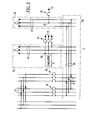
- Figure 1 shows an electrical distribution system, such as switchgear 2, including an acoustic signature simulator 4 and acoustic sensors 6,8,10,12,14,16.
- the example acoustic signature simulator 2 includes an acoustic generator, such as a piezoelectric acoustic transmitter 18, to generate an acoustic signal 20 that mimics an acoustic signal of an electrical conductivity fault, such as an arc fault, a glowing contact or a loose electrical connection that leads to a glowing contact, such as 22 or 24 of Figures 1 and 2 .
- an acoustic generator such as a piezoelectric acoustic transmitter 18 to generate an acoustic signal 20 that mimics an acoustic signal of an electrical conductivity fault, such as an arc fault, a glowing contact or a loose electrical connection that leads to a glowing contact, such as 22 or 24 of Figures 1 and 2 .
- any suitable electrical, mechanical or electro-mechanical acoustic generator, or magnetostrictive device can be employed to simulate acoustic noise generated by an electrical conductivity fault (e.g., the generated acoustic signal wavelet resembles that induced by an electrical conductivity fault with a repetitive rate of a power frequency or its harmonics).
- the example piezoelectric acoustic transmitter 18 can be coupled to different locations of an electrical distribution system, such as the example switchgear 2, to determine where acoustic sensors, such as 6,8,10,12,14,16, should be positioned, in order to provide complete detection coverage for loose electrical connections 22,24 of respective zones 26,28.
- circuit interrupters such as circuit breakers 30,34,36, act as isolators or absorbers of acoustic signals since, for example, the braided flexible conductor or shunt (not shown) electrically connecting the movable contact arm (not shown) and the circuit breaker load side conductor (not shown) acts like an acoustic isolator due to the relatively high attenuation rate of the acoustic signal when it goes through the shunt.
- an acoustic signal from the load (line) side cannot pass through the circuit breaker to reach to the line (load) side.
- any acoustic signal regardless if generated from an actual loose electrical connection or a simulator, will not pass through the circuit breaker, thus dividing the switchgear 2 into acoustically isolated zones, such as 26,28.
- the example circuit breaker 34 is a three-pole circuit breaker.
- the example circuit breaker 30 is a six-pole circuit breaker with two poles paralleled per phase. However, it will be appreciated that a three-pole circuit breaker could be employed.
- the example piezoelectric acoustic transmitter 18 of Figure 4 can be part of a suitable acoustic sensor (e.g., without limitation, a piezoelectric sensor), such as acoustic sensors 6,8,10,12,14,16.
- a suitable acoustic sensor e.g., without limitation, a piezoelectric sensor
- each phase employs a corresponding piezoelectric acoustic sensor. So, for instance, for a three-phase system, there are three acoustic sensors, one for each phase.
- the loose electrical connection 24 is detected by sensor 8 in zone 28 (zone #2).
- the acoustic signal 20 ( Figure 4 ) from acoustic signature simulator 4 can also detected by sensor 8 in zone 28.
- the loose electrical connection 22 is not detected by sensor 8 due to blocking by circuit breaker 30.
- Sensors 14,16 by themselves are unable to detect the loose electrical connection 24 due to the attenuation of the acoustic signal, or may not be able to confirm that the loose electrical connection 24 is in zone 28 (zone #2) due to the relatively low level of noise detected by those sensors 14,16 when compared with the relatively higher level of noise detected by sensor 8 in zone 28.
- Figures 2 and 3 show variations of how the example switchgear 2 works in terms of the simulator 4, the example zones 26,28, the example acoustic sensors 6,8 and the circuit breaker 30 (that provides acoustic isolation). This can either use the simulator 4 to optimize locations of the sensors 6,8,10,12,14,16, or use the sensors 6,8 to detect locations of loose electrical connections 22,24.
- the simulator 4 is moved to a different location; otherwise, the switchgear 2 is the same as the switchgear 2 shown in Figure 1 .
- the loose electrical connection 22 is detected by sensor 6 in zone 26 (zone #1). However, the loose electrical connection 22 is not detected by sensors 8,10,12,14,16 due to blocking by circuit breaker 30, and is not detected by sensors 10,12 due to further blocking by circuit breakers 34,36.
- the simulator 4 is moved to a different location; otherwise, the switchgear 2 is the same as the switchgear 2 shown in Figure 1 .
- the location of loose electrical connection 38 can be "pinpointed” through “triangulation”. Loose electrical connection 38 can be detected and located by comparing measured noise values by sensors 8,14,16. For example, sensor 16 will measure the strongest noise signal, followed by sensor 8 and then by sensor 14. Hence, the loose electrical connection 38 can be confirmed to be part of the common bus structure formed by three-phase buses 40,42,44 shared by those respective sensors 8,14,16, but in relatively closer proximity to sensor 16 on bus 44 rather than sensors 8 or 14 on respective buses 40 or 42.
- FIG 4 shows the example acoustic signature simulator 4 of Figures 1-3 .
- the simulator 4 including the circuit 50 can be powered by an external power supply 46 through a power switch 48, as shown.
- the power lines may not be energized during testing.
- a battery can be employed as the power supply 46.
- the circuit 50 provides a number of repetition rates of electronic pulses 52.
- the pulses 52 trigger a voltage pulse generating circuit 54 at a number of suitable voltages (e.g., without limitation, 150V; 400V; any suitable voltage to provide a suitable acoustic pulse amplitude).
- the output voltage pulses 56 drive the example piezoelectric element 18 to generate mechanical pulses 57 through a suitable interface, such as insulation spacer 58 (e.g., without limitation, a ceramic disk), onto a suitable electrical power conductor, such as bus bar or electrical cable 60, in order to simulate a plurality of acoustic signals 20 induced by loose electrical connections (e.g., without limitation, over-heated electrical joints (not shown, but see electrical joints 61 and loose electrical connections 22,24,38 of Figures 1-3 )).
- the example insulation spacer 58 is disposed between the example piezoelectric element 18 (or a piezoelectric element housing (not shown)) and the example bus bar 60.
- the optional "preload" 62 of the example piezoelectric element 18 optionally compresses the piezoelectric element 18 under pressure in its assembly.
- the example piezoelectric element 18 can either be preloaded to the example insulation spacer 58, or is not preloaded thereto.
- the circuit 50 can include a selection circuit 64 that selects one of a plurality of different high voltages, and a control circuit 66 that provides the electronic pulses 52 at a suitable repetition rate, such as, for example, that of a line frequency.
- the example acoustic signature simulator 4 includes the pulse repetition rate control circuit 66 structured to output the first pulses 52 at one of a number of repetition rates, the voltage pulse generating circuit 54 structured to output the second voltage pulses 56 responsive to the first pulses 52, the example piezoelectric element 18 structured to output the mechanical pulses 57 responsive to the second voltage pulses 56, and the interface 58 structured to couple the mechanical pulses 57 to the electrical power conductor 60.
- the voltage pulse generating circuit 54 can be structured to output the second voltage pulses 56 at a plurality of different voltages (e.g., without limitation, 150V, 400V, any suitable voltage). For example, this can simulate an acoustic signal induced by a loose connection at different locations, different current levels, or even just a variation of acoustic signals generated by the same loose connection. This can include multiple voltages at the same time to simulate the variation of an acoustic signal from a loose electrical connection or just one selected voltage.
- a plurality of different voltages e.g., without limitation, 150V, 400V, any suitable voltage
- the pulse repetition rate control circuit 66 can be structured to select one of a plurality of different repetition rates (e.g., without limitation, corresponding to 50 Hz, 60 Hz, 85 Hz, 120 Hz, 135 Hz, 400 Hz, harmonics and sub-harmonics of the line frequency, any suitable frequency). This can be employed to, for example and without limitation, test an acoustic sensor's detection capability and nuisance detection performance. This can permit a wide range of power line applications (e.g., 60 Hz in the United States; 50 Hz in Europe and Asia; 400 Hz for aerospace applications). Also, the selection of various repetition rates permit testing whether an acoustic sensor can detect and use no frequency other than the power line frequency and its harmonics in order to make sure that it does not cause nuisance tripping.
- a plurality of different repetition rates e.g., without limitation, corresponding to 50 Hz, 60 Hz, 85 Hz, 120 Hz, 135 Hz, 400 Hz, harmonics and sub-harmonics of the line frequency
- the example acoustic piezoelectric transmitter 18 can be structured to generate acoustic pulses conducting through electrical power conductors, such as bus bars and/or power cables, at a frequency from about 10 kHz to about 40 kHz modulated by a line frequency.
- the line frequency can be selected from the group consisting of about 50 Hz, about 60 Hz, about 400 Hz, and harmonics or sub-harmonics of the line frequency.
- the acoustic signature simulator 4 can be moved to a plurality of different locations, such as the example zones 26,28, in the switchgear 2.
- any number of the example acoustic sensors 6,8,10,12,14,16 for electrical conductivity fault detection can be enabled as an acoustic transmitter with the high voltage pulse circuit 54 of Figure 4 .
- the piezoelectric element not shown, but see the example piezoelectric element 18 of Figure 4
- the piezoelectric element (not shown, but see the example piezoelectric element 18 of Figure 4 ) of the corresponding acoustic sensor experiences stress and strain, it generates a voltage output. In this case, it is employed as a sensor.
- the example piezoelectric element 18 when a voltage, such as 56, is applied across the example piezoelectric element 18, the dimension of the example piezoelectric element changes.
- This characteristic can be used as an acoustic transmitter or generator.
- the example high voltage pulse generating circuit 54 can be integrated into the electronic circuitry of the acoustic sensors 6,8,10,12,14,16 in order to generate a simulated electrical conductivity fault acoustic signal 20.
- an acoustic sensor system 68 includes a first plurality of acoustic sensors 6,8,10,12,14,16, and an acoustic transmitter, such as the example piezoelectric transmitter 18 of Figure 4 , structured to generate the acoustic noise 20 to mimic acoustic noise induced by an electrical conductivity fault, such as 22, 24 or 38 ( Figure 3 ).
- a smaller second number of the acoustic sensors such as for example and without limitation one acoustic sensor 6, one acoustic sensor 8, or three acoustic sensors 8,14,16, are structured to identify a plurality of locations in the switchgear 2, in order that such second number of acoustic sensors can monitor all of the plurality of electrical joints 61 thereof.
- the example acoustic sensors 8,14,16 are coupled to respective bus bars 40,42,44 at a plurality of locations in the switchgear 2.
- Each of the acoustic sensors 8,14,16 can cover a number of the electrical joints 61 of a corresponding zone 28,70,72, respectively, of the switchgear 2.
- the sensor 14 can cover the joint 61 of the zone 70
- the sensor 16 can cover the joints 61 (shown in Figure 1 ) of the zone 72.
- the example zone 28 is defined by the circuit interrupters 30,34,36 that block acoustic propagation.
- the example zone 26 of figure 1 is defined by the circuit interrupter 30 that blocks acoustic propagation.
- the disclosed concept allows effective and quick determination of where acoustic sensors should be located in a new electrical distribution system.
- the disclosed acoustic signature simulator generates a simulated acoustic signal that has the same characteristics as that of glowing contacts and is easy to move around in the electrical distribution system.
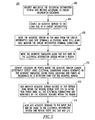
- a process 200 for sensor distribution optimization is shown.
- This process 200 can be applied to an electrical distribution system, such as the example switchgear 2, acoustic signature simulator 4, acoustic sensors 6,8,10,12,14,16, zones 26,28 and circuit interrupters 30,34,36 of Figures 1-3 .
- an electrical distribution system such as the example switchgear 2, acoustic signature simulator 4, acoustic sensors 6,8,10,12,14,16, zones 26,28 and circuit interrupters 30,34,36 of Figures 1-3 .
- couple an acoustic sensor to the load side of a circuit interrupter.
- move the acoustic sensor as far away from the circuit interrupter load side terminals as possible while still being able to monitor the circuit interrupter terminal connection with the acoustic sensor.
- the acoustic simulator moves along the bus bars in the electrical distribution system within a region.
- At least one of the acoustic sensors can be structured to clamp-on an electrical power conductor, such as 60 of Figure 4 .
- an acoustic sensor apparatus 300 includes a clamp, such as the example clamp-on structure 302, for an electrical power conductor, such as the example rectangular power bus bar 304 (shown in phantom line drawing in Figure 6 ).
- the example acoustic sensor apparatus 300 also includes a housing 306 for an acoustic sensor and/or an acoustic generator, such as a low cost piezoelectric element 308 (shown in hidden line drawing in Figure 7 ) housed within the housing 306, and a printed circuit board (PCB) 310 ( Figure 7 ), which can include the example circuit 50 of Figure 4 .
- the housing 306 is clamped onto power bus bar 304 or another power conductor in an electrical system (not shown).
- the exterior of the housing 306 includes an insulation spacer 312, which is coupled to the stainless steel cylindrical canister 318 wherein piezoelectric element 308 (shown in hidden line drawing) is disposed ( Figure 7 ).
- the clamp-on structure 302 is structured to clamp together the insulation spacer 312 and the example power bus bar 304 along with the housing 306.
- the housing 306 can be, for example and without limitation, a metallic housing or an insulative housing having an internal and/or external metal coating structured to provide EMI shielding.
- the metal coating can be, for example and without limitation, a suitable thin film metal coating.
- the example clamp-on structure 302 is disposed through opening 314 of the housing 306.
- the clamp-on structure 302 includes a first insulative clamp portion 316 disposed within the housing 306 and engaging a stainless steel cylindrical canister 318 that houses the piezoelectric element 308 (shown in hidden line drawing) therein, a second insulative clamp portion 320 disposed outside of the housing 306 and being structured to engage the power bus bar 304 ( Figure 6 ), and a threaded coupler, such as the example threaded dowel 322, passing through the first clamp portion 316 and through the housing 306.
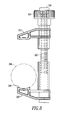
- the threaded dowel 322 has a first end and an opposite second threaded end (shown in Figure 8 ) threadably coupled to the second clamp portion 320 (as shown with the second clamp portion 320' in Figure 8 ).
- a rotatable member such as the example circular, insulative fastening knob 324, is coupled to and structured to rotate along the threaded dowel 322 in order to move up or down to pull or push the second clamp portion 320 and clamp or unclamp, respectively, the housing 306, the power bus bar 304 and the second clamp portion 320.
- An insulative screw cap 326 keeps the knob 324 from rotating off the first end of the threaded dowel 322.
- the second clamp portion 320 has an insulative cushion 328 structured to insulatively engage the power bus bar 304.
- the piezoelectric element 308 is within the example 0.5" diameter stainless steel cylindrical canister 318 and is coupled to the bottom of the canister 318, which is opposite the side of the insulative spacer 312 (e.g., a ceramic disk) ( Figure 6 ).
- the insulative spacer 312 e.g., a ceramic disk
- the example acoustic sensor apparatus 300 includes a fault indicator 158, which can be an LED indicator (e.g., without limitation, green flashing for normal operation; red flashing for detection of an electrical conductivity fault operatively associated with the power bus bar 304).
- An on/off switch 330 can enable or disable a power supply (not shown), which can include a battery 332 as shown in Figure 7 .
- the power supply can accept DC power from an external AC/DC or DC/DC power supply (not shown) through DC power input 334.
- the example housing 306 includes a base 336 and a cover 338.
- the base 336 includes posts 340, which engage corresponding structures (not shown) of the cover 338.
- another clamp-on structure 342 is for a power conductor 344 (shown in phantom line drawing in Figure 8 ) and another acoustic sensor apparatus (not shown), which, except for the clamp-on structure 342, can be the same as or similar to the acoustic sensor apparatus 300 of Figures 6 and 7 .
- the second clamp portion 320' is somewhat different than the second clamp portion 320 of Figure 6 .
- the clamp surface 346 is a concave arcuate surface to accommodate the circular or elliptical cross section of the power conductor 344.
- the second clamp portion 320 of Figure 6 has a flat, generally flat or somewhat convex surface 348 to accommodate the planar surface of the power bus bar 304.
- the clamp-on structure 34 can clamp together a housing, such as 306, the power conductor 344, and optionally an insulative spacer, such as 312.
Landscapes
- Physics & Mathematics (AREA)
- General Physics & Mathematics (AREA)
- Acoustics & Sound (AREA)
- Testing Relating To Insulation (AREA)
- Measurement Of Mechanical Vibrations Or Ultrasonic Waves (AREA)
Applications Claiming Priority (1)
| Application Number | Priority Date | Filing Date | Title |
|---|---|---|---|
| US12/906,258 US8434367B2 (en) | 2010-10-18 | 2010-10-18 | Acoustic sensor system, acoustic signature simulator, and electrical distribution system |
Publications (3)
| Publication Number | Publication Date |
|---|---|
| EP2442121A2 true EP2442121A2 (fr) | 2012-04-18 |
| EP2442121A3 EP2442121A3 (fr) | 2013-01-02 |
| EP2442121B1 EP2442121B1 (fr) | 2016-06-15 |
Family
ID=45406356
Family Applications (1)
| Application Number | Title | Priority Date | Filing Date |
|---|---|---|---|
| EP11008369.8A Not-in-force EP2442121B1 (fr) | 2010-10-18 | 2011-10-18 | Système de capteur acoustique, simulateur de signature acoustique et système de distribution électrique |
Country Status (4)
| Country | Link |
|---|---|
| US (2) | US8434367B2 (fr) |
| EP (1) | EP2442121B1 (fr) |
| CN (1) | CN102539951B (fr) |
| CA (1) | CA2755187A1 (fr) |
Cited By (5)
| Publication number | Priority date | Publication date | Assignee | Title |
|---|---|---|---|---|
| CN103499776A (zh) * | 2013-09-03 | 2014-01-08 | 华北电力大学(保定) | 基于超声波和红外热像的输变电设备故障巡检核心系统 |
| WO2014109817A1 (fr) * | 2013-01-08 | 2014-07-17 | Eaton Corporation | Détection et localisation de connexions électriques ayant une anormalité de micro-interface dans un système électrique |
| CN104333733A (zh) * | 2014-10-17 | 2015-02-04 | 天津全华时代航天科技发展有限公司 | 一种无人机机载电脑系统 |
| FR3079934A1 (fr) * | 2018-04-06 | 2019-10-11 | Hager Controls | Procede de detection d'un evenement survenant au niveau d'un tableau de distribution electrique. |
| US11480600B2 (en) | 2017-04-25 | 2022-10-25 | IRISS Holdings, Inc. | Panel for audible monitoring of electrical components and the detection of electrical faults |
Families Citing this family (17)
| Publication number | Priority date | Publication date | Assignee | Title |
|---|---|---|---|---|
| US8665666B2 (en) * | 2010-10-18 | 2014-03-04 | Eaton Corporation | Acoustic apparatus and acoustic sensor apparatus including a fastener |
| US8434367B2 (en) * | 2010-10-18 | 2013-05-07 | Eaton Corporation | Acoustic sensor system, acoustic signature simulator, and electrical distribution system |
| CA2885185A1 (fr) * | 2012-10-12 | 2014-04-17 | Schweitzer Engineering Laboratories, Inc. | Systemes et procedes de detection coordonnee d'un defaut d'impedance elevee |
| JP6054219B2 (ja) * | 2013-03-19 | 2016-12-27 | 株式会社東芝 | 超音波接合装置 |
| US20150102824A1 (en) * | 2013-10-11 | 2015-04-16 | General Electric Company | Locating loose connections in an electrical circuit |
| US9933285B2 (en) * | 2014-03-21 | 2018-04-03 | Eaton Intelligent Power Limited | Piezoelectric sensor assembly, and sensor attachment assembly and electrical system employing same |
| CN104898013A (zh) * | 2015-06-09 | 2015-09-09 | 北京联合大学 | 一种利用声学测量诊断电路故障的方法及系统 |
| US9952184B2 (en) * | 2015-12-17 | 2018-04-24 | Schneider Electric It Corporation | Ultrasonic monitoring of electrical connections |
| CN109073704A (zh) | 2017-03-02 | 2018-12-21 | 罗斯蒙特公司 | 用于局部放电的趋势函数 |
| US20190041364A1 (en) * | 2017-08-02 | 2019-02-07 | United States Of America As Represented By The Secretary Of The Navy | System and Method for Detecting Failed Electronics Using Acoustics |
| US11067639B2 (en) | 2017-11-03 | 2021-07-20 | Rosemount Inc. | Trending functions for predicting the health of electric power assets |
| FR3075394B1 (fr) * | 2017-12-14 | 2020-10-30 | Commissariat Energie Atomique | Procede de detection d’un dysfonctionnement d’un capteur acoustique couple a un generateur electrochimique et dispositif mettant en œuvre ledit procede |
| US10794736B2 (en) | 2018-03-15 | 2020-10-06 | Rosemount Inc. | Elimination of floating potential when mounting wireless sensors to insulated conductors |
| US11181570B2 (en) | 2018-06-15 | 2021-11-23 | Rosemount Inc. | Partial discharge synthesizer |
| US10833531B2 (en) | 2018-10-02 | 2020-11-10 | Rosemount Inc. | Electric power generation or distribution asset monitoring |
| US11313895B2 (en) | 2019-09-24 | 2022-04-26 | Rosemount Inc. | Antenna connectivity with shielded twisted pair cable |
| CN112517361B (zh) * | 2020-11-30 | 2022-06-03 | 国网山西省电力公司朔州供电公司 | 一种高灵敏多频段复合式空耦超声换能器及其制备方法 |
Citations (2)
| Publication number | Priority date | Publication date | Assignee | Title |
|---|---|---|---|---|
| US7148696B2 (en) | 2005-01-12 | 2006-12-12 | Eaton Corporation | Electrical switching apparatus and method including fault detection employing acoustic signature |
| US7411403B2 (en) | 2005-05-10 | 2008-08-12 | Eaton Corporation | Electrical switching apparatus and method employing active acoustic sensing to detect an electrical conductivity fault of a power circuit |
Family Cites Families (15)
| Publication number | Priority date | Publication date | Assignee | Title |
|---|---|---|---|---|
| FR1181357A (fr) | 1956-08-21 | 1959-06-15 | British Insulated Callenders | Perfectionnements à la localisation de défauts électriques dans des conducteurs électriques isolés |
| DE2641047A1 (de) | 1976-09-11 | 1978-03-16 | Licentia Gmbh | Anordnung zur ortung von stoerlichtboegen in einer gekapselten schaltanlage oder leitung |
| SE9600989D0 (sv) * | 1996-03-15 | 1996-03-15 | Abb Research Ltd | Förfarande och anordning för rymdladdningsmätning i kablar med en pulsad elektroakustisk metod |
| US5821430A (en) * | 1997-02-28 | 1998-10-13 | Southwest Research Institute | Method and apparatus for conducting in-situ nondestructive tensile load measurements in cables and ropes |
| US6114971A (en) * | 1997-08-18 | 2000-09-05 | X-Cyte, Inc. | Frequency hopping spread spectrum passive acoustic wave identification device |
| US6300767B1 (en) | 1998-11-30 | 2001-10-09 | General Electric Company | System and apparatus for predicting failure in insulated systems |
| SG111012A1 (en) | 2000-02-28 | 2005-05-30 | Mitsubishi Electric Corp | Failure determining apparatus of gas-insulated electrical appliance |
| AUPQ672300A0 (en) * | 2000-04-05 | 2000-05-04 | Nu-Lec Industries Pty Limited | Isolating circuit breaker and circuit protection arrangement |
| US6377184B1 (en) | 2000-04-11 | 2002-04-23 | Gary A. Minker | Transmission line safety monitoring system |
| US6810743B2 (en) * | 2001-08-01 | 2004-11-02 | The United States Of America As Represented By The Administrator Of The National Aeronautics And Space Adminstration | Non-destructive evaluation of wire insulation and coatings |
| US6734682B2 (en) * | 2002-03-05 | 2004-05-11 | Eaton Corporation | Testing device for detecting and locating arc faults in an electrical system |
| US7503219B2 (en) * | 2002-09-26 | 2009-03-17 | Siemens Aktiengesellschaft | Monitoring and diagnosing a technical installation using purely mechanically activated signaling means |
| CN1821795A (zh) * | 2006-03-29 | 2006-08-23 | 保定天威集团有限公司 | 一种测定高压电气设备放电故障位置的方法及其装置 |
| US7403129B2 (en) * | 2006-05-10 | 2008-07-22 | Eaton Corporation | Electrical switching apparatus and method employing acoustic and current signals to distinguish between parallel and series arc faults |
| US8434367B2 (en) * | 2010-10-18 | 2013-05-07 | Eaton Corporation | Acoustic sensor system, acoustic signature simulator, and electrical distribution system |
-
2010
- 2010-10-18 US US12/906,258 patent/US8434367B2/en not_active Expired - Fee Related
-
2011
- 2011-10-18 CA CA2755187A patent/CA2755187A1/fr not_active Abandoned
- 2011-10-18 EP EP11008369.8A patent/EP2442121B1/fr not_active Not-in-force
- 2011-10-18 CN CN201110317430.2A patent/CN102539951B/zh not_active Expired - Fee Related
-
2013
- 2013-04-01 US US13/854,523 patent/US8635914B2/en not_active Expired - Fee Related
Patent Citations (2)
| Publication number | Priority date | Publication date | Assignee | Title |
|---|---|---|---|---|
| US7148696B2 (en) | 2005-01-12 | 2006-12-12 | Eaton Corporation | Electrical switching apparatus and method including fault detection employing acoustic signature |
| US7411403B2 (en) | 2005-05-10 | 2008-08-12 | Eaton Corporation | Electrical switching apparatus and method employing active acoustic sensing to detect an electrical conductivity fault of a power circuit |
Cited By (9)
| Publication number | Priority date | Publication date | Assignee | Title |
|---|---|---|---|---|
| WO2014109817A1 (fr) * | 2013-01-08 | 2014-07-17 | Eaton Corporation | Détection et localisation de connexions électriques ayant une anormalité de micro-interface dans un système électrique |
| US9304159B2 (en) | 2013-01-08 | 2016-04-05 | Eaton Corporation | Detection and location of electrical connections having a micro-interface abnormality in an electrical system |
| CN103499776A (zh) * | 2013-09-03 | 2014-01-08 | 华北电力大学(保定) | 基于超声波和红外热像的输变电设备故障巡检核心系统 |
| CN103499776B (zh) * | 2013-09-03 | 2016-08-17 | 华北电力大学(保定) | 基于超声波和红外热像的输变电设备故障巡检核心系统 |
| CN104333733A (zh) * | 2014-10-17 | 2015-02-04 | 天津全华时代航天科技发展有限公司 | 一种无人机机载电脑系统 |
| US11480600B2 (en) | 2017-04-25 | 2022-10-25 | IRISS Holdings, Inc. | Panel for audible monitoring of electrical components and the detection of electrical faults |
| US11762005B2 (en) | 2017-04-25 | 2023-09-19 | IRISS Holdings, Inc. | Panel for audible monitoring of electrical components and the detection of electrical faults |
| US12153080B2 (en) | 2017-04-25 | 2024-11-26 | IRISS Holdings, Inc. | Panel for audible monitoring of electrical components and the detection of electrical faults |
| FR3079934A1 (fr) * | 2018-04-06 | 2019-10-11 | Hager Controls | Procede de detection d'un evenement survenant au niveau d'un tableau de distribution electrique. |
Also Published As
| Publication number | Publication date |
|---|---|
| EP2442121A3 (fr) | 2013-01-02 |
| US8635914B2 (en) | 2014-01-28 |
| US20130192376A1 (en) | 2013-08-01 |
| EP2442121B1 (fr) | 2016-06-15 |
| CA2755187A1 (fr) | 2012-04-18 |
| US8434367B2 (en) | 2013-05-07 |
| US20120090396A1 (en) | 2012-04-19 |
| CN102539951A (zh) | 2012-07-04 |
| CN102539951B (zh) | 2016-04-20 |
Similar Documents
| Publication | Publication Date | Title |
|---|---|---|
| US8434367B2 (en) | Acoustic sensor system, acoustic signature simulator, and electrical distribution system | |
| US8483007B2 (en) | Acoustic sensor system for detecting electrical conductivity faults in an electrical distribution system | |
| US8665666B2 (en) | Acoustic apparatus and acoustic sensor apparatus including a fastener | |
| EP2442123A2 (fr) | Appareil acoustique et appareil de capteur acoustique incluant une pince | |
| US7148696B2 (en) | Electrical switching apparatus and method including fault detection employing acoustic signature | |
| AU2007246766B2 (en) | Electrical switching apparatus and method employing acoustic and current signals to distinguish between parallel and series arc faults | |
| EP2895872B1 (fr) | Procédé et appareil de détection d'une connexion électrique faible dans un système photovoltaïque | |
| AU2009206176B2 (en) | Electrical test device | |
| US7411403B2 (en) | Electrical switching apparatus and method employing active acoustic sensing to detect an electrical conductivity fault of a power circuit | |
| KR101916408B1 (ko) | 배전반 모니터링 장치 | |
| Zhou et al. | Characteristics of overheated electrical joints due to loose connection | |
| JP2728422B2 (ja) | ガス絶縁機器の異常位置標定システム | |
| CN102364349A (zh) | 检测中压开关柜故障的传感器 | |
| KR102945405B1 (ko) | 인공지능과 음향 신호 데이터를 이용한 수배전반용 이상 감시 시스템 | |
| JPH0690892B2 (ja) | ガス絶縁開閉機器の通電異常検出装置 | |
| JP2026056485A (ja) | 部分放電診断装置 | |
| JPS62278468A (ja) | 地絡故障点標定装置 | |
| JPH07128391A (ja) | ガス絶縁開閉装置の部分放電検出システム | |
| JPH0382327A (ja) | ガス絶縁式電気設備 | |
| KR20000011764U (ko) | 활선 점검이 가능한 절연 저항 검전기 |
Legal Events
| Date | Code | Title | Description |
|---|---|---|---|
| PUAI | Public reference made under article 153(3) epc to a published international application that has entered the european phase |
Free format text: ORIGINAL CODE: 0009012 |
|
| AK | Designated contracting states |
Kind code of ref document: A2 Designated state(s): AL AT BE BG CH CY CZ DE DK EE ES FI FR GB GR HR HU IE IS IT LI LT LU LV MC MK MT NL NO PL PT RO RS SE SI SK SM TR |
|
| AX | Request for extension of the european patent |
Extension state: BA ME |
|
| PUAL | Search report despatched |
Free format text: ORIGINAL CODE: 0009013 |
|
| AK | Designated contracting states |
Kind code of ref document: A3 Designated state(s): AL AT BE BG CH CY CZ DE DK EE ES FI FR GB GR HR HU IE IS IT LI LT LU LV MC MK MT NL NO PL PT RO RS SE SI SK SM TR |
|
| AX | Request for extension of the european patent |
Extension state: BA ME |
|
| RIC1 | Information provided on ipc code assigned before grant |
Ipc: H02H 1/00 20060101ALI20121123BHEP Ipc: G01R 31/04 20060101AFI20121123BHEP Ipc: G01R 31/12 20060101ALI20121123BHEP |
|
| 17P | Request for examination filed |
Effective date: 20130523 |
|
| RBV | Designated contracting states (corrected) |
Designated state(s): AL AT BE BG CH CY CZ DE DK EE ES FI FR GB GR HR HU IE IS IT LI LT LU LV MC MK MT NL NO PL PT RO RS SE SI SK SM TR |
|
| 17Q | First examination report despatched |
Effective date: 20150528 |
|
| REG | Reference to a national code |
Ref country code: DE Ref legal event code: R079 Ref document number: 602011027389 Country of ref document: DE Free format text: PREVIOUS MAIN CLASS: G01R0031040000 Ipc: G01R0031080000 |
|
| RIC1 | Information provided on ipc code assigned before grant |
Ipc: G01R 31/12 20060101ALI20151023BHEP Ipc: H02H 1/00 20060101ALI20151023BHEP Ipc: G01R 31/08 20060101AFI20151023BHEP Ipc: G01R 31/04 20060101ALI20151023BHEP |
|
| GRAP | Despatch of communication of intention to grant a patent |
Free format text: ORIGINAL CODE: EPIDOSNIGR1 |
|
| INTG | Intention to grant announced |
Effective date: 20151223 |
|
| RIN1 | Information on inventor provided before grant (corrected) |
Inventor name: SCHOEPF, THOMAS J. Inventor name: ZHOU, XIN |
|
| GRAS | Grant fee paid |
Free format text: ORIGINAL CODE: EPIDOSNIGR3 |
|
| GRAA | (expected) grant |
Free format text: ORIGINAL CODE: 0009210 |
|
| AK | Designated contracting states |
Kind code of ref document: B1 Designated state(s): AL AT BE BG CH CY CZ DE DK EE ES FI FR GB GR HR HU IE IS IT LI LT LU LV MC MK MT NL NO PL PT RO RS SE SI SK SM TR |
|
| REG | Reference to a national code |
Ref country code: CH Ref legal event code: EP Ref country code: CH Ref legal event code: NV Representative=s name: E. BLUM AND CO. AG PATENT- UND MARKENANWAELTE , CH Ref country code: GB Ref legal event code: FG4D |
|
| REG | Reference to a national code |
Ref country code: IE Ref legal event code: FG4D |
|
| REG | Reference to a national code |
Ref country code: AT Ref legal event code: REF Ref document number: 806764 Country of ref document: AT Kind code of ref document: T Effective date: 20160715 |
|
| REG | Reference to a national code |
Ref country code: DE Ref legal event code: R096 Ref document number: 602011027389 Country of ref document: DE |
|
| REG | Reference to a national code |
Ref country code: FR Ref legal event code: PLFP Year of fee payment: 6 |
|
| REG | Reference to a national code |
Ref country code: LT Ref legal event code: MG4D |
|
| REG | Reference to a national code |
Ref country code: NL Ref legal event code: MP Effective date: 20160615 |
|
| PG25 | Lapsed in a contracting state [announced via postgrant information from national office to epo] |
Ref country code: NO Free format text: LAPSE BECAUSE OF FAILURE TO SUBMIT A TRANSLATION OF THE DESCRIPTION OR TO PAY THE FEE WITHIN THE PRESCRIBED TIME-LIMIT Effective date: 20160915 Ref country code: LT Free format text: LAPSE BECAUSE OF FAILURE TO SUBMIT A TRANSLATION OF THE DESCRIPTION OR TO PAY THE FEE WITHIN THE PRESCRIBED TIME-LIMIT Effective date: 20160615 Ref country code: FI Free format text: LAPSE BECAUSE OF FAILURE TO SUBMIT A TRANSLATION OF THE DESCRIPTION OR TO PAY THE FEE WITHIN THE PRESCRIBED TIME-LIMIT Effective date: 20160615 |
|
| PGFP | Annual fee paid to national office [announced via postgrant information from national office to epo] |
Ref country code: GB Payment date: 20160926 Year of fee payment: 6 |
|
| REG | Reference to a national code |
Ref country code: AT Ref legal event code: MK05 Ref document number: 806764 Country of ref document: AT Kind code of ref document: T Effective date: 20160615 |
|
| PG25 | Lapsed in a contracting state [announced via postgrant information from national office to epo] |
Ref country code: GR Free format text: LAPSE BECAUSE OF FAILURE TO SUBMIT A TRANSLATION OF THE DESCRIPTION OR TO PAY THE FEE WITHIN THE PRESCRIBED TIME-LIMIT Effective date: 20160916 Ref country code: HR Free format text: LAPSE BECAUSE OF FAILURE TO SUBMIT A TRANSLATION OF THE DESCRIPTION OR TO PAY THE FEE WITHIN THE PRESCRIBED TIME-LIMIT Effective date: 20160615 Ref country code: SE Free format text: LAPSE BECAUSE OF FAILURE TO SUBMIT A TRANSLATION OF THE DESCRIPTION OR TO PAY THE FEE WITHIN THE PRESCRIBED TIME-LIMIT Effective date: 20160615 Ref country code: NL Free format text: LAPSE BECAUSE OF FAILURE TO SUBMIT A TRANSLATION OF THE DESCRIPTION OR TO PAY THE FEE WITHIN THE PRESCRIBED TIME-LIMIT Effective date: 20160615 Ref country code: LV Free format text: LAPSE BECAUSE OF FAILURE TO SUBMIT A TRANSLATION OF THE DESCRIPTION OR TO PAY THE FEE WITHIN THE PRESCRIBED TIME-LIMIT Effective date: 20160615 Ref country code: RS Free format text: LAPSE BECAUSE OF FAILURE TO SUBMIT A TRANSLATION OF THE DESCRIPTION OR TO PAY THE FEE WITHIN THE PRESCRIBED TIME-LIMIT Effective date: 20160615 |
|
| PGFP | Annual fee paid to national office [announced via postgrant information from national office to epo] |
Ref country code: FR Payment date: 20160926 Year of fee payment: 6 |
|
| PG25 | Lapsed in a contracting state [announced via postgrant information from national office to epo] |
Ref country code: SK Free format text: LAPSE BECAUSE OF FAILURE TO SUBMIT A TRANSLATION OF THE DESCRIPTION OR TO PAY THE FEE WITHIN THE PRESCRIBED TIME-LIMIT Effective date: 20160615 Ref country code: CZ Free format text: LAPSE BECAUSE OF FAILURE TO SUBMIT A TRANSLATION OF THE DESCRIPTION OR TO PAY THE FEE WITHIN THE PRESCRIBED TIME-LIMIT Effective date: 20160615 Ref country code: EE Free format text: LAPSE BECAUSE OF FAILURE TO SUBMIT A TRANSLATION OF THE DESCRIPTION OR TO PAY THE FEE WITHIN THE PRESCRIBED TIME-LIMIT Effective date: 20160615 Ref country code: IS Free format text: LAPSE BECAUSE OF FAILURE TO SUBMIT A TRANSLATION OF THE DESCRIPTION OR TO PAY THE FEE WITHIN THE PRESCRIBED TIME-LIMIT Effective date: 20161015 Ref country code: IT Free format text: LAPSE BECAUSE OF FAILURE TO SUBMIT A TRANSLATION OF THE DESCRIPTION OR TO PAY THE FEE WITHIN THE PRESCRIBED TIME-LIMIT Effective date: 20160615 Ref country code: RO Free format text: LAPSE BECAUSE OF FAILURE TO SUBMIT A TRANSLATION OF THE DESCRIPTION OR TO PAY THE FEE WITHIN THE PRESCRIBED TIME-LIMIT Effective date: 20160615 |
|
| PGFP | Annual fee paid to national office [announced via postgrant information from national office to epo] |
Ref country code: DE Payment date: 20161031 Year of fee payment: 6 Ref country code: CH Payment date: 20161025 Year of fee payment: 6 |
|
| PG25 | Lapsed in a contracting state [announced via postgrant information from national office to epo] |
Ref country code: BE Free format text: LAPSE BECAUSE OF NON-PAYMENT OF DUE FEES Effective date: 20160615 Ref country code: SM Free format text: LAPSE BECAUSE OF FAILURE TO SUBMIT A TRANSLATION OF THE DESCRIPTION OR TO PAY THE FEE WITHIN THE PRESCRIBED TIME-LIMIT Effective date: 20160615 Ref country code: ES Free format text: LAPSE BECAUSE OF FAILURE TO SUBMIT A TRANSLATION OF THE DESCRIPTION OR TO PAY THE FEE WITHIN THE PRESCRIBED TIME-LIMIT Effective date: 20160615 Ref country code: AT Free format text: LAPSE BECAUSE OF FAILURE TO SUBMIT A TRANSLATION OF THE DESCRIPTION OR TO PAY THE FEE WITHIN THE PRESCRIBED TIME-LIMIT Effective date: 20160615 Ref country code: PL Free format text: LAPSE BECAUSE OF FAILURE TO SUBMIT A TRANSLATION OF THE DESCRIPTION OR TO PAY THE FEE WITHIN THE PRESCRIBED TIME-LIMIT Effective date: 20160615 Ref country code: PT Free format text: LAPSE BECAUSE OF FAILURE TO SUBMIT A TRANSLATION OF THE DESCRIPTION OR TO PAY THE FEE WITHIN THE PRESCRIBED TIME-LIMIT Effective date: 20161017 |
|
| REG | Reference to a national code |
Ref country code: DE Ref legal event code: R097 Ref document number: 602011027389 Country of ref document: DE |
|
| PLBE | No opposition filed within time limit |
Free format text: ORIGINAL CODE: 0009261 |
|
| STAA | Information on the status of an ep patent application or granted ep patent |
Free format text: STATUS: NO OPPOSITION FILED WITHIN TIME LIMIT |
|
| 26N | No opposition filed |
Effective date: 20170316 |
|
| PG25 | Lapsed in a contracting state [announced via postgrant information from national office to epo] |
Ref country code: DK Free format text: LAPSE BECAUSE OF FAILURE TO SUBMIT A TRANSLATION OF THE DESCRIPTION OR TO PAY THE FEE WITHIN THE PRESCRIBED TIME-LIMIT Effective date: 20160615 |
|
| REG | Reference to a national code |
Ref country code: IE Ref legal event code: MM4A |
|
| PG25 | Lapsed in a contracting state [announced via postgrant information from national office to epo] |
Ref country code: SI Free format text: LAPSE BECAUSE OF FAILURE TO SUBMIT A TRANSLATION OF THE DESCRIPTION OR TO PAY THE FEE WITHIN THE PRESCRIBED TIME-LIMIT Effective date: 20160615 Ref country code: LU Free format text: LAPSE BECAUSE OF NON-PAYMENT OF DUE FEES Effective date: 20161018 |
|
| PG25 | Lapsed in a contracting state [announced via postgrant information from national office to epo] |
Ref country code: IE Free format text: LAPSE BECAUSE OF NON-PAYMENT OF DUE FEES Effective date: 20161018 |
|
| REG | Reference to a national code |
Ref country code: DE Ref legal event code: R119 Ref document number: 602011027389 Country of ref document: DE |
|
| PG25 | Lapsed in a contracting state [announced via postgrant information from national office to epo] |
Ref country code: HU Free format text: LAPSE BECAUSE OF FAILURE TO SUBMIT A TRANSLATION OF THE DESCRIPTION OR TO PAY THE FEE WITHIN THE PRESCRIBED TIME-LIMIT; INVALID AB INITIO Effective date: 20111018 Ref country code: CY Free format text: LAPSE BECAUSE OF FAILURE TO SUBMIT A TRANSLATION OF THE DESCRIPTION OR TO PAY THE FEE WITHIN THE PRESCRIBED TIME-LIMIT Effective date: 20160615 |
|
| REG | Reference to a national code |
Ref country code: CH Ref legal event code: PL |
|
| GBPC | Gb: european patent ceased through non-payment of renewal fee |
Effective date: 20171018 |
|
| PG25 | Lapsed in a contracting state [announced via postgrant information from national office to epo] |
Ref country code: TR Free format text: LAPSE BECAUSE OF FAILURE TO SUBMIT A TRANSLATION OF THE DESCRIPTION OR TO PAY THE FEE WITHIN THE PRESCRIBED TIME-LIMIT Effective date: 20160615 Ref country code: MK Free format text: LAPSE BECAUSE OF FAILURE TO SUBMIT A TRANSLATION OF THE DESCRIPTION OR TO PAY THE FEE WITHIN THE PRESCRIBED TIME-LIMIT Effective date: 20160615 Ref country code: MC Free format text: LAPSE BECAUSE OF FAILURE TO SUBMIT A TRANSLATION OF THE DESCRIPTION OR TO PAY THE FEE WITHIN THE PRESCRIBED TIME-LIMIT Effective date: 20160615 Ref country code: MT Free format text: LAPSE BECAUSE OF NON-PAYMENT OF DUE FEES Effective date: 20161031 |
|
| REG | Reference to a national code |
Ref country code: FR Ref legal event code: ST Effective date: 20180629 |
|
| PG25 | Lapsed in a contracting state [announced via postgrant information from national office to epo] |
Ref country code: CH Free format text: LAPSE BECAUSE OF NON-PAYMENT OF DUE FEES Effective date: 20171031 Ref country code: GB Free format text: LAPSE BECAUSE OF NON-PAYMENT OF DUE FEES Effective date: 20171018 Ref country code: BG Free format text: LAPSE BECAUSE OF FAILURE TO SUBMIT A TRANSLATION OF THE DESCRIPTION OR TO PAY THE FEE WITHIN THE PRESCRIBED TIME-LIMIT Effective date: 20160615 Ref country code: LI Free format text: LAPSE BECAUSE OF NON-PAYMENT OF DUE FEES Effective date: 20171031 Ref country code: DE Free format text: LAPSE BECAUSE OF NON-PAYMENT OF DUE FEES Effective date: 20180501 |
|
| PG25 | Lapsed in a contracting state [announced via postgrant information from national office to epo] |
Ref country code: FR Free format text: LAPSE BECAUSE OF NON-PAYMENT OF DUE FEES Effective date: 20171031 |
|
| PG25 | Lapsed in a contracting state [announced via postgrant information from national office to epo] |
Ref country code: AL Free format text: LAPSE BECAUSE OF FAILURE TO SUBMIT A TRANSLATION OF THE DESCRIPTION OR TO PAY THE FEE WITHIN THE PRESCRIBED TIME-LIMIT Effective date: 20160615 |