EP2446908A1 - Dispositif d'électrosorption et décomposition pour la purification du sang et d'autres fluides - Google Patents
Dispositif d'électrosorption et décomposition pour la purification du sang et d'autres fluides Download PDFInfo
- Publication number
- EP2446908A1 EP2446908A1 EP11161646A EP11161646A EP2446908A1 EP 2446908 A1 EP2446908 A1 EP 2446908A1 EP 11161646 A EP11161646 A EP 11161646A EP 11161646 A EP11161646 A EP 11161646A EP 2446908 A1 EP2446908 A1 EP 2446908A1
- Authority
- EP
- European Patent Office
- Prior art keywords
- filter
- blood
- electrodes
- electrosorption
- ultrafiltrate
- Prior art date
- Legal status (The legal status is an assumption and is not a legal conclusion. Google has not performed a legal analysis and makes no representation as to the accuracy of the status listed.)
- Granted
Links
Images

Classifications
-
- A—HUMAN NECESSITIES
- A61—MEDICAL OR VETERINARY SCIENCE; HYGIENE
- A61M—DEVICES FOR INTRODUCING MEDIA INTO, OR ONTO, THE BODY; DEVICES FOR TRANSDUCING BODY MEDIA OR FOR TAKING MEDIA FROM THE BODY; DEVICES FOR PRODUCING OR ENDING SLEEP OR STUPOR
- A61M1/00—Suction or pumping devices for medical purposes; Devices for carrying-off, for treatment of, or for carrying-over, body-liquids; Drainage systems
- A61M1/14—Dialysis systems; Artificial kidneys; Blood oxygenators ; Reciprocating systems for treatment of body fluids, e.g. single needle systems for hemofiltration or pheresis
- A61M1/16—Dialysis systems; Artificial kidneys; Blood oxygenators ; Reciprocating systems for treatment of body fluids, e.g. single needle systems for hemofiltration or pheresis with membranes
- A61M1/1694—Dialysis systems; Artificial kidneys; Blood oxygenators ; Reciprocating systems for treatment of body fluids, e.g. single needle systems for hemofiltration or pheresis with membranes with recirculating dialysing liquid
- A61M1/1696—Dialysis systems; Artificial kidneys; Blood oxygenators ; Reciprocating systems for treatment of body fluids, e.g. single needle systems for hemofiltration or pheresis with membranes with recirculating dialysing liquid with dialysate regeneration
-
- A—HUMAN NECESSITIES
- A61—MEDICAL OR VETERINARY SCIENCE; HYGIENE
- A61M—DEVICES FOR INTRODUCING MEDIA INTO, OR ONTO, THE BODY; DEVICES FOR TRANSDUCING BODY MEDIA OR FOR TAKING MEDIA FROM THE BODY; DEVICES FOR PRODUCING OR ENDING SLEEP OR STUPOR
- A61M1/00—Suction or pumping devices for medical purposes; Devices for carrying-off, for treatment of, or for carrying-over, body-liquids; Drainage systems
- A61M1/14—Dialysis systems; Artificial kidneys; Blood oxygenators ; Reciprocating systems for treatment of body fluids, e.g. single needle systems for hemofiltration or pheresis
- A61M1/28—Peritoneal dialysis ; Other peritoneal treatment, e.g. oxygenation
-
- A—HUMAN NECESSITIES
- A61—MEDICAL OR VETERINARY SCIENCE; HYGIENE
- A61M—DEVICES FOR INTRODUCING MEDIA INTO, OR ONTO, THE BODY; DEVICES FOR TRANSDUCING BODY MEDIA OR FOR TAKING MEDIA FROM THE BODY; DEVICES FOR PRODUCING OR ENDING SLEEP OR STUPOR
- A61M1/00—Suction or pumping devices for medical purposes; Devices for carrying-off, for treatment of, or for carrying-over, body-liquids; Drainage systems
- A61M1/34—Filtering material out of the blood by passing it through a membrane, i.e. hemofiltration or diafiltration
- A61M1/3472—Filtering material out of the blood by passing it through a membrane, i.e. hemofiltration or diafiltration with treatment of the filtrate
- A61M1/3482—Filtering material out of the blood by passing it through a membrane, i.e. hemofiltration or diafiltration with treatment of the filtrate by filtrating the filtrate using another cross-flow filter, e.g. a membrane filter
-
- A—HUMAN NECESSITIES
- A61—MEDICAL OR VETERINARY SCIENCE; HYGIENE
- A61M—DEVICES FOR INTRODUCING MEDIA INTO, OR ONTO, THE BODY; DEVICES FOR TRANSDUCING BODY MEDIA OR FOR TAKING MEDIA FROM THE BODY; DEVICES FOR PRODUCING OR ENDING SLEEP OR STUPOR
- A61M1/00—Suction or pumping devices for medical purposes; Devices for carrying-off, for treatment of, or for carrying-over, body-liquids; Drainage systems
- A61M1/34—Filtering material out of the blood by passing it through a membrane, i.e. hemofiltration or diafiltration
- A61M1/3472—Filtering material out of the blood by passing it through a membrane, i.e. hemofiltration or diafiltration with treatment of the filtrate
- A61M1/3486—Biological, chemical treatment, e.g. chemical precipitation; treatment by absorbents
-
- A—HUMAN NECESSITIES
- A61—MEDICAL OR VETERINARY SCIENCE; HYGIENE
- A61M—DEVICES FOR INTRODUCING MEDIA INTO, OR ONTO, THE BODY; DEVICES FOR TRANSDUCING BODY MEDIA OR FOR TAKING MEDIA FROM THE BODY; DEVICES FOR PRODUCING OR ENDING SLEEP OR STUPOR
- A61M1/00—Suction or pumping devices for medical purposes; Devices for carrying-off, for treatment of, or for carrying-over, body-liquids; Drainage systems
- A61M1/36—Other treatment of blood in a by-pass of the natural circulatory system, e.g. temperature adaptation, irradiation ; Extra-corporeal blood circuits
- A61M1/3679—Other treatment of blood in a by-pass of the natural circulatory system, e.g. temperature adaptation, irradiation ; Extra-corporeal blood circuits by absorption
-
- B—PERFORMING OPERATIONS; TRANSPORTING
- B01—PHYSICAL OR CHEMICAL PROCESSES OR APPARATUS IN GENERAL
- B01D—SEPARATION
- B01D61/00—Processes of separation using semi-permeable membranes, e.g. dialysis, osmosis or ultrafiltration; Apparatus, accessories or auxiliary operations specially adapted therefor
- B01D61/14—Ultrafiltration; Microfiltration
- B01D61/145—Ultrafiltration
-
- B—PERFORMING OPERATIONS; TRANSPORTING
- B01—PHYSICAL OR CHEMICAL PROCESSES OR APPARATUS IN GENERAL
- B01D—SEPARATION
- B01D61/00—Processes of separation using semi-permeable membranes, e.g. dialysis, osmosis or ultrafiltration; Apparatus, accessories or auxiliary operations specially adapted therefor
- B01D61/24—Dialysis ; Membrane extraction
- B01D61/243—Dialysis
- B01D61/244—Dialysis comprising multiple dialysis steps
-
- B—PERFORMING OPERATIONS; TRANSPORTING
- B01—PHYSICAL OR CHEMICAL PROCESSES OR APPARATUS IN GENERAL
- B01D—SEPARATION
- B01D61/00—Processes of separation using semi-permeable membranes, e.g. dialysis, osmosis or ultrafiltration; Apparatus, accessories or auxiliary operations specially adapted therefor
- B01D61/24—Dialysis ; Membrane extraction
- B01D61/28—Apparatus therefor
-
- B—PERFORMING OPERATIONS; TRANSPORTING
- B01—PHYSICAL OR CHEMICAL PROCESSES OR APPARATUS IN GENERAL
- B01J—CHEMICAL OR PHYSICAL PROCESSES, e.g. CATALYSIS OR COLLOID CHEMISTRY; THEIR RELEVANT APPARATUS
- B01J20/00—Solid sorbent compositions or filter aid compositions; Sorbents for chromatography; Processes for preparing, regenerating or reactivating thereof
- B01J20/02—Solid sorbent compositions or filter aid compositions; Sorbents for chromatography; Processes for preparing, regenerating or reactivating thereof comprising inorganic material
- B01J20/06—Solid sorbent compositions or filter aid compositions; Sorbents for chromatography; Processes for preparing, regenerating or reactivating thereof comprising inorganic material comprising oxides or hydroxides of metals not provided for in group B01J20/04
-
- B—PERFORMING OPERATIONS; TRANSPORTING
- B01—PHYSICAL OR CHEMICAL PROCESSES OR APPARATUS IN GENERAL
- B01J—CHEMICAL OR PHYSICAL PROCESSES, e.g. CATALYSIS OR COLLOID CHEMISTRY; THEIR RELEVANT APPARATUS
- B01J20/00—Solid sorbent compositions or filter aid compositions; Sorbents for chromatography; Processes for preparing, regenerating or reactivating thereof
- B01J20/02—Solid sorbent compositions or filter aid compositions; Sorbents for chromatography; Processes for preparing, regenerating or reactivating thereof comprising inorganic material
- B01J20/10—Solid sorbent compositions or filter aid compositions; Sorbents for chromatography; Processes for preparing, regenerating or reactivating thereof comprising inorganic material comprising silica or silicate
- B01J20/12—Naturally occurring clays or bleaching earth
-
- B—PERFORMING OPERATIONS; TRANSPORTING
- B01—PHYSICAL OR CHEMICAL PROCESSES OR APPARATUS IN GENERAL
- B01J—CHEMICAL OR PHYSICAL PROCESSES, e.g. CATALYSIS OR COLLOID CHEMISTRY; THEIR RELEVANT APPARATUS
- B01J20/00—Solid sorbent compositions or filter aid compositions; Sorbents for chromatography; Processes for preparing, regenerating or reactivating thereof
- B01J20/02—Solid sorbent compositions or filter aid compositions; Sorbents for chromatography; Processes for preparing, regenerating or reactivating thereof comprising inorganic material
- B01J20/10—Solid sorbent compositions or filter aid compositions; Sorbents for chromatography; Processes for preparing, regenerating or reactivating thereof comprising inorganic material comprising silica or silicate
- B01J20/16—Alumino-silicates
- B01J20/18—Synthetic zeolitic molecular sieves
-
- B—PERFORMING OPERATIONS; TRANSPORTING
- B01—PHYSICAL OR CHEMICAL PROCESSES OR APPARATUS IN GENERAL
- B01J—CHEMICAL OR PHYSICAL PROCESSES, e.g. CATALYSIS OR COLLOID CHEMISTRY; THEIR RELEVANT APPARATUS
- B01J20/00—Solid sorbent compositions or filter aid compositions; Sorbents for chromatography; Processes for preparing, regenerating or reactivating thereof
- B01J20/02—Solid sorbent compositions or filter aid compositions; Sorbents for chromatography; Processes for preparing, regenerating or reactivating thereof comprising inorganic material
- B01J20/20—Solid sorbent compositions or filter aid compositions; Sorbents for chromatography; Processes for preparing, regenerating or reactivating thereof comprising inorganic material comprising free carbon; comprising carbon obtained by carbonising processes
- B01J20/205—Carbon nanostructures, e.g. nanotubes, nanohorns, nanocones, nanoballs
-
- B—PERFORMING OPERATIONS; TRANSPORTING
- B01—PHYSICAL OR CHEMICAL PROCESSES OR APPARATUS IN GENERAL
- B01J—CHEMICAL OR PHYSICAL PROCESSES, e.g. CATALYSIS OR COLLOID CHEMISTRY; THEIR RELEVANT APPARATUS
- B01J20/00—Solid sorbent compositions or filter aid compositions; Sorbents for chromatography; Processes for preparing, regenerating or reactivating thereof
- B01J20/22—Solid sorbent compositions or filter aid compositions; Sorbents for chromatography; Processes for preparing, regenerating or reactivating thereof comprising organic material
- B01J20/223—Solid sorbent compositions or filter aid compositions; Sorbents for chromatography; Processes for preparing, regenerating or reactivating thereof comprising organic material containing metals, e.g. organo-metallic compounds, coordination complexes
- B01J20/226—Coordination polymers, e.g. metal-organic frameworks [MOF], zeolitic imidazolate frameworks [ZIF]
-
- B—PERFORMING OPERATIONS; TRANSPORTING
- B01—PHYSICAL OR CHEMICAL PROCESSES OR APPARATUS IN GENERAL
- B01J—CHEMICAL OR PHYSICAL PROCESSES, e.g. CATALYSIS OR COLLOID CHEMISTRY; THEIR RELEVANT APPARATUS
- B01J20/00—Solid sorbent compositions or filter aid compositions; Sorbents for chromatography; Processes for preparing, regenerating or reactivating thereof
- B01J20/22—Solid sorbent compositions or filter aid compositions; Sorbents for chromatography; Processes for preparing, regenerating or reactivating thereof comprising organic material
- B01J20/24—Naturally occurring macromolecular compounds, e.g. humic acids or their derivatives
-
- B—PERFORMING OPERATIONS; TRANSPORTING
- B01—PHYSICAL OR CHEMICAL PROCESSES OR APPARATUS IN GENERAL
- B01J—CHEMICAL OR PHYSICAL PROCESSES, e.g. CATALYSIS OR COLLOID CHEMISTRY; THEIR RELEVANT APPARATUS
- B01J20/00—Solid sorbent compositions or filter aid compositions; Sorbents for chromatography; Processes for preparing, regenerating or reactivating thereof
- B01J20/22—Solid sorbent compositions or filter aid compositions; Sorbents for chromatography; Processes for preparing, regenerating or reactivating thereof comprising organic material
- B01J20/26—Synthetic macromolecular compounds
- B01J20/265—Synthetic macromolecular compounds modified or post-treated polymers
- B01J20/267—Cross-linked polymers
-
- B—PERFORMING OPERATIONS; TRANSPORTING
- B01—PHYSICAL OR CHEMICAL PROCESSES OR APPARATUS IN GENERAL
- B01J—CHEMICAL OR PHYSICAL PROCESSES, e.g. CATALYSIS OR COLLOID CHEMISTRY; THEIR RELEVANT APPARATUS
- B01J20/00—Solid sorbent compositions or filter aid compositions; Sorbents for chromatography; Processes for preparing, regenerating or reactivating thereof
- B01J20/28—Solid sorbent compositions or filter aid compositions; Sorbents for chromatography; Processes for preparing, regenerating or reactivating thereof characterised by their form or physical properties
- B01J20/28002—Solid sorbent compositions or filter aid compositions; Sorbents for chromatography; Processes for preparing, regenerating or reactivating thereof characterised by their form or physical properties characterised by their physical properties
- B01J20/28004—Sorbent size or size distribution, e.g. particle size
- B01J20/28007—Sorbent size or size distribution, e.g. particle size with size in the range 1-100 nanometers, e.g. nanosized particles, nanofibers, nanotubes, nanowires or the like
-
- B—PERFORMING OPERATIONS; TRANSPORTING
- B01—PHYSICAL OR CHEMICAL PROCESSES OR APPARATUS IN GENERAL
- B01J—CHEMICAL OR PHYSICAL PROCESSES, e.g. CATALYSIS OR COLLOID CHEMISTRY; THEIR RELEVANT APPARATUS
- B01J20/00—Solid sorbent compositions or filter aid compositions; Sorbents for chromatography; Processes for preparing, regenerating or reactivating thereof
- B01J20/28—Solid sorbent compositions or filter aid compositions; Sorbents for chromatography; Processes for preparing, regenerating or reactivating thereof characterised by their form or physical properties
- B01J20/28014—Solid sorbent compositions or filter aid compositions; Sorbents for chromatography; Processes for preparing, regenerating or reactivating thereof characterised by their form or physical properties characterised by their form
- B01J20/28033—Membrane, sheet, cloth, pad, lamellar or mat
-
- B—PERFORMING OPERATIONS; TRANSPORTING
- B01—PHYSICAL OR CHEMICAL PROCESSES OR APPARATUS IN GENERAL
- B01J—CHEMICAL OR PHYSICAL PROCESSES, e.g. CATALYSIS OR COLLOID CHEMISTRY; THEIR RELEVANT APPARATUS
- B01J20/00—Solid sorbent compositions or filter aid compositions; Sorbents for chromatography; Processes for preparing, regenerating or reactivating thereof
- B01J20/30—Processes for preparing, regenerating, or reactivating
- B01J20/32—Impregnating or coating ; Solid sorbent compositions obtained from processes involving impregnating or coating
- B01J20/3202—Impregnating or coating ; Solid sorbent compositions obtained from processes involving impregnating or coating characterised by the carrier, support or substrate used for impregnation or coating
- B01J20/3206—Organic carriers, supports or substrates
- B01J20/3208—Polymeric carriers, supports or substrates
-
- B—PERFORMING OPERATIONS; TRANSPORTING
- B01—PHYSICAL OR CHEMICAL PROCESSES OR APPARATUS IN GENERAL
- B01J—CHEMICAL OR PHYSICAL PROCESSES, e.g. CATALYSIS OR COLLOID CHEMISTRY; THEIR RELEVANT APPARATUS
- B01J20/00—Solid sorbent compositions or filter aid compositions; Sorbents for chromatography; Processes for preparing, regenerating or reactivating thereof
- B01J20/30—Processes for preparing, regenerating, or reactivating
- B01J20/32—Impregnating or coating ; Solid sorbent compositions obtained from processes involving impregnating or coating
- B01J20/3231—Impregnating or coating ; Solid sorbent compositions obtained from processes involving impregnating or coating characterised by the coating or impregnating layer
- B01J20/3234—Inorganic material layers
-
- B—PERFORMING OPERATIONS; TRANSPORTING
- B82—NANOTECHNOLOGY
- B82Y—SPECIFIC USES OR APPLICATIONS OF NANOSTRUCTURES; MEASUREMENT OR ANALYSIS OF NANOSTRUCTURES; MANUFACTURE OR TREATMENT OF NANOSTRUCTURES
- B82Y30/00—Nanotechnology for materials or surface science, e.g. nanocomposites
-
- A—HUMAN NECESSITIES
- A61—MEDICAL OR VETERINARY SCIENCE; HYGIENE
- A61M—DEVICES FOR INTRODUCING MEDIA INTO, OR ONTO, THE BODY; DEVICES FOR TRANSDUCING BODY MEDIA OR FOR TAKING MEDIA FROM THE BODY; DEVICES FOR PRODUCING OR ENDING SLEEP OR STUPOR
- A61M2209/00—Ancillary equipment
- A61M2209/08—Supports for equipment
- A61M2209/088—Supports for equipment on the body
-
- B—PERFORMING OPERATIONS; TRANSPORTING
- B01—PHYSICAL OR CHEMICAL PROCESSES OR APPARATUS IN GENERAL
- B01D—SEPARATION
- B01D2311/00—Details relating to membrane separation process operations and control
- B01D2311/26—Further operations combined with membrane separation processes
- B01D2311/2623—Ion-Exchange
-
- B—PERFORMING OPERATIONS; TRANSPORTING
- B01—PHYSICAL OR CHEMICAL PROCESSES OR APPARATUS IN GENERAL
- B01D—SEPARATION
- B01D2311/00—Details relating to membrane separation process operations and control
- B01D2311/26—Further operations combined with membrane separation processes
- B01D2311/2626—Absorption or adsorption
-
- B—PERFORMING OPERATIONS; TRANSPORTING
- B01—PHYSICAL OR CHEMICAL PROCESSES OR APPARATUS IN GENERAL
- B01D—SEPARATION
- B01D2311/00—Details relating to membrane separation process operations and control
- B01D2311/26—Further operations combined with membrane separation processes
- B01D2311/263—Chemical reaction
- B01D2311/2634—Oxidation
-
- B—PERFORMING OPERATIONS; TRANSPORTING
- B01—PHYSICAL OR CHEMICAL PROCESSES OR APPARATUS IN GENERAL
- B01D—SEPARATION
- B01D2311/00—Details relating to membrane separation process operations and control
- B01D2311/26—Further operations combined with membrane separation processes
- B01D2311/2649—Filtration
-
- B—PERFORMING OPERATIONS; TRANSPORTING
- B01—PHYSICAL OR CHEMICAL PROCESSES OR APPARATUS IN GENERAL
- B01D—SEPARATION
- B01D2311/00—Details relating to membrane separation process operations and control
- B01D2311/26—Further operations combined with membrane separation processes
- B01D2311/2684—Electrochemical processes
-
- B—PERFORMING OPERATIONS; TRANSPORTING
- B01—PHYSICAL OR CHEMICAL PROCESSES OR APPARATUS IN GENERAL
- B01D—SEPARATION
- B01D2311/00—Details relating to membrane separation process operations and control
- B01D2311/26—Further operations combined with membrane separation processes
- B01D2311/2696—Catalytic reactions
Definitions
- the present invention is in the field of purification of fluids by electrosorption and electrocatalytic decomposition, in particular but not limited to biofluids such as blood, as of use in artificial kidneys, artificial livers and hemodialysis systems.
- the invention relates to a stand-alone device for the removal of toxic substances from a biofluid, such as from the blood from a patient, to methods of removing toxic substances from blood using the inventive device in a wearable unit enabling continuous blood purification while being mobile.
- the invention is also applicable to other fluids such as waste water, process chemicals and other biofluids such as removing substances from urine, dialysate fluids, milk, biochemical analysis and processing fluids. In a reverse mode the invented system can be used to release ingredients in a controlled manner.
- Hemodialysis (HD) and peritoneal dialyis (PD) are methods of removing toxic substances (impurities or wastes) from the blood when the kidneys are unable to do so sufficiently.
- Dialysis is most frequently used for patients who have kidney failure, but may also be used to quickly remove drugs or poisons in acute situations. This technique can be life saving in people with acute or chronic kidney failure.
- Best known is hemodialysis, which works by circulating the blood along special filters outside the body in a dialysis machine. Here, the blood flows across a semi-permeable membrane (the dialyser or filter), on the other side of which flows a dialysis fluid in a counter-current direction to the blood flow.
- the dialysing membrane allows passage of substances below a certain molecular cutoff.
- the dialysis fluid removes the toxins from the blood and is generally discarded as waste dialysate.
- the chemical imbalances and impurities of the blood are being brought back in minimal balance and the blood is then returned to the body.
- the efficacy of hemodialysis is 10 - 15%, which means that 10 - 15% of the toxins are being removed from the blood.
- kidneys In order to provide for portable dialysis devices, that will allow patients to engage in normal daily activities, artificial kidneys have been developed. Essentially there are two types of artificial kidneys.
- the principle of the artificial kidney consists of extracting urea and other more toxic middle molecules from blood by dialysis and regeneration of the dialysate by means of an adsorbent, usually activated carbon.
- an adsorbent usually activated carbon.
- Dialysis kidney machines that can be encountered in the prior art include for instance those described in GB 1 406 133 , and US 2003/0097086 .
- GB 1 406 133 discloses an artificial kidney of the recycle type having an improved adsorbent comprising activated carbon and alumina.
- US 2003/0097086 discloses a portable dialysis device comprising dialyzers connected in series that utilize dialysate, and further comprising a plurality of contoured sorbent devices, which are connected in series and are for regenerating the spent dialysate.
- As adsorption materials for regeneration of the spent dialysate activated charcoal, urease, zirconium phosphate, hydrous zirconium oxide and/or activated carbon are provided.
- the principle of the artificial kidney may be based on ultrafiltration, or hemofiltration, using appropriate membranes, wherein large molecules including blood cells are retained in the retentate on the filter, and the toxic substances are collected in the (ultra)filtrate.
- a patient's blood is passed through a set of tubing (a filtration circuit) via a machine to a semipermeable membrane (the filter) where waste products and water are removed. Replacement fluid is added and the blood is returned to the patient.
- hemofiltration involves the movement of solutes across a semi-permeable membrane.
- a positive hydrostatic pressure drives water and solutes across the filter membrane where they are drained away as filtrate.
- An isotonic replacement fluid is added to the resultant filtered blood to replace fluid volume and valuable electrolytes. This is then returned to the patient.
- a key aspect resides in separating the urea from the other components in the ultrafiltrate such as salts which have also passed through the membrane but which must be reincorporated into the blood in order to maintain the electrolyte composition thereof substantially constant.
- Shettigar and Reul disclose a system for simultaneous filtration of blood using a hemofilter and dialysis against its purified filtrate, wherein the filtrate is purified by a multi-adsorption system consisting of charcoal for removal of urea and a cation exchanger.
- US 2004/0147900 discloses a cartridge for treating medical or biological fluid, in particular blood, consisting of a compartmentalized container, wherein each compartment contains adsorbing particles.
- the adsorption materials proposed are essentially those disclosed in US 2003/0097086 described above, and thus may effectively remove urea from blood.
- the adsorbent for regenerating the dialysate is usually activated carbon.
- other adsorbents have been proposed for the removal of substances from dialysis fluids or ultrafiltrate.
- US 3,874,907 discloses microcapsules consisting essentially of a crosslinked polymer containing sulphonic acid groups and coated with a polymer containing quaternary ammonium groups, for use in an artificial kidney.
- the sulphonated polymer include sulphonated styrene/divinyl benzene copolymer and examples of the coating polymer include those obtained by polymerization of for instance vinyldimethylamine monomers. Shimizu et al.
- chemisorbent composition for the removal of urea from dialysis fluid or hemofiltrate for use in an artificial kidney.
- the chemisorbent is based on dialdehyde starch (DAS)-urease conjugates and 4,4'-diamidinodiphenylmethane (DADPM).
- DAS dialdehyde starch
- DADPM 4,4'-diamidinodiphenylmethane
- Another approach relates to electrodialysis, a method to fasten the dialysis process by applying an electrical field over the dialysate membrane similar to electrophoresis systems.
- a dialysate system is proposed with an electrical voltage over the membrane.
- the proposed voltage is in the range of 50-150 Volts. It is claimed that the electrical field promotes the diffusion rate and hereby the clearance rate of toxins such as small solutes, phosphate, creatinine, beta2microglobuline and even urea.
- a major drawback however is the required high voltage resulting in significant heating of the blood. This system therefore requires an additional cooling section making the system bulky and energy consuming.
- such a system is applicable for purification of other fluids such as the purification of water, waste water treatment and purification of e.g. aquarium water.
- Said toxic substances are preferably selected from potassium, phosphate, urea, uric acid, ammonia, creatinine, beta2-microglobulin (2M), and albumin-bound toxins such as paramino hyppuric acid, p-cresol, indoxyl sulphate, CMPF and bilirubin
- the electrosorption filter combines nanostructured sorbent materials with a high specific and selective surface area together with additional electric surface charging delivered by an external power source. This combination enables a very efficient, highly effective and therefore small sized sorption system.
- the electrosorption filter and the electrocatalytic decomposition filter therefore operate in a very synergetic mode: the electrocatalytic decomposition filter enables a strong reduction of the volume of the sorbents in the electrosorption filter, whereas the electrosorption filter removes the resulting uremic toxins and unwanted by-products from the electrocatalytic decomposition filter.
- the electrosorption filter and the electrocatalytic decomposition filter can ideally be integrated into one electrosorption/decomposition system wherein the electrodes of the electrosorption filter are made of electrocatalytic decomposition material.
- the electrosorption and electrocatalytic breakdown process are than combined. This allows a further reduction in size and weight.
- Another important feature of such a combined setup is that the sorption materials are continuously exposed to the electro-catalytic decomposition process. This prevents that sorption materials are being clogged with organic deposites such as proteins.
- the small size and subsequent low weight allows for a small, desk-top size system and even a wearable device for water treatment, blood filtration or hemodialysis or peritoneal dialysis is feasible.
- Said electrosorption filter comprises an absorbing, adsorption, ion-exchange and/or surface crystallisation material with very small nano sized particles or pores offering a large specific surface area in combination with a high chemical surface activity like activated carbon, nanoclays, nanocrystalline hydrotalcites, nanoporous silica's, nanoporous or layered alumina silicates (like zeolites), nanoporous metal oxides and metal hydroxides, metal organic frameworks, zeolite imidazolate frameworks, nanosized and /or activated graphite, cyclo-dextrines, crystallisation seeds, a highly porous matrix material with again a large specific surface area, with tuneable porosity and a high specific chemical activity like carboxymethyl cellulose and like a biopolymer such as oxidized starch modified with functional groups for specific absorption or combinations thereof.
- a high chemical surface activity like activated carbon, nanoclays, nanocrystalline hydrotalcites, nanoporous silica's, nanopor
- Said electrocatalytic decomposition filter comprises a set of electrodes made from or coated with a catalytic material such as Pt, Ni, Ti, Sn, Ir, Ta and Ru and their oxides TiO2, RuO2, RiO2, SnO2, Ta2O3, NiO or hydroxide forms such as and NiOOH and Ni(OH)2 or mixtures thereof.
- a catalytic material such as Pt, Ni, Ti, Sn, Ir, Ta and Ru and their oxides TiO2, RuO2, RiO2, SnO2, Ta2O3, NiO or hydroxide forms such as and NiOOH and Ni(OH)2 or mixtures thereof.
- These materials enable decomposition via electro-oxidation of urea, ureate, ammonia, creatinine and other components with amine groups (like proteins and peptides) into gases such as N2, CO2 and H2 according to the following reaction: CO(NH 2 ) 2 (s) + H 2 O (s) > N 2 (g) + CO 2 (g) +
- the electrocatalytic decomposition filter comprises a set of electrodes in electrical contact with materials with electrocatalytic surface activity such as sorbents coated with Pt, Ni, Ti, Sn, Ir, Ta and Ru and their oxides TiO2, RuO2, RiO2, SnO2, Ta2O3, NiO or hydroxide forms such as and NiOOH and Ni(OH)2 or mixtures thereof.
- porous polymer matrix is based on a cross-linked polymer and/or a charged polymer and/or a polymer modified with specific functional groups for specific absorption.
- said polymer is a biopolymer selected from carbohydrates and proteins.
- said carbohydrate is an oxidized crosslinked starch.
- said carbohydrate is a carboxymethyl cellulose.
- the sorption material is provided in the form of a permanent coating on the electrode, a replaceable gel or replaceable dried granules having a mean size over the range 250 microns to 1500 microns based on the size in dried form.
- the pores in said matrix are of a size that prevents the entry into said matrix of albumin and other useful blood components such as transferrin and vitamin B 12.
- a further embodiment of the device according to the invention is characterized in that said electrosorption filter is provided in the form of a cartridge with said electrodes coated with said sorption material or with said electrodes surrounded by a porous envelop containing said sorption material.
- Another embodiment of the device according to the invention is characterized in that said electrosorption filter is combined with a permeable envelop to form a filter pad comprising an envelope surrounding a filter pad contents, wherein the envelop of said pad comprises a permeable membrane and the contents of said pad comprise said sorption material.
- Another embodiment of the device according to the invention is characterized in that said electrosorption filter is combined with an electrocatalytic decomposition filter with electrodes for the electrocatalytic decomposition and gasification of urea, urate, ammonia, creatinine and other components containing amine groups, wherein the electrodes are being activated with a voltage of 0-20V, preferably with a voltage of 0,5-4 V.
- a low voltage limits direct hydrolysis of water that otherwise will consume additional energy.
- a further embodiment of the device according to the invention is characterized in that said device further comprises a plasmafilter for separating patient blood plasma from patient blood cells.
- a further embodiment of the device according to the invention is characterized in that said device further comprises a hemofilter for separating blood ultrafiltrate from the patients blood, wherein the ultrafiltrate is being separated from blood cells, platelets and large (typically > 50 kDa) molecules such as albumine, protein S and C and LDL-cholesterol.
- a hemofilter for separating blood ultrafiltrate from the patients blood, wherein the ultrafiltrate is being separated from blood cells, platelets and large (typically > 50 kDa) molecules such as albumine, protein S and C and LDL-cholesterol.
- said sorption-filter is combined with a plasma- or hemofilter system in order to form an artifical kidney device for the removal of toxic substances from the blood from a patient, comprising a plasmafilter for separating patient blood plasma from patient blood cells, or a hemofilter to separate blood ultrafiltrate from the patient blood, electrodes in combination with a sorption-filter for removing toxins, toxic small- and middle-sized molecules and protein bound toxins from the patient blood plasma and optionally to supplement the blood with at least one substance selected from the group consisting of vitamins, minerals, anticoagulants, anti microbial agents and other medicaments and electrodes made from or coated with catalytic material for the decomposition and gasification of urea, urate, ammonia and other components with amine -groups.
- a plasmafilter for separating patient's blood plasma from the blood or a hemofilter for separating patient's blood ultrafiltrate from the blood is used followed by the electrosorption and decomposition filter for removing toxic ionic solutes, toxic small- and middle-sized molecules and protein bound toxins from the patient's blood plasma or ultrafiltrate.
- said device is part of a hemodialysis or peritoneal dialysis system in order to improve the absorption capacity of the dialysis fluid or to regenerate the dialysate insitu via said electrosorption and decomposition filter and hereby mimimizing the dialysate fluid volume and the dimensions of the dialysate system, thereby allowing the dialysis system to be wearable.
- said dialysis system is a wearable dialysis system.
- said plasmafilter or hemofilter comprises at least a further outlet for recovery of patient blood cells.
- said plasmafilter or hemofilter and said electrosorption and decomposition filter are combined to form the filter pad wherein said permeable membrane is formed by said plasma filter or hemofilter.
- a still further embodiment of the device according to the invention is characterized in that said device further comprises an electrosorption filter for removing toxins, small and middle-sized molecules from the patient blood plasma.
- a still further embodiment of the device according to the invention is characterized in that said device further comprises an electrocatalytic decomposition filter for removing urea, urate, ammonia, creatinine and other, mainly amine group containing molecules from the patient blood plasma or ultrafiltrate via decomposition into small chemical species and subsequent gasification.
- an electrocatalytic decomposition filter for removing urea, urate, ammonia, creatinine and other, mainly amine group containing molecules from the patient blood plasma or ultrafiltrate via decomposition into small chemical species and subsequent gasification.
- a further embodiment of the device according to the invention is characterized in that said device further comprises means for supplementing said dialysate fluid and/or said (purified) blood plasma or ultrafiltrate with at least one substance selected from the group consisting of vitamins, minerals, anticoagulants, anti microbial agents and other medicaments.
- said device further comprises ion exchange systems and materials in combination with the electrical charge from the electrodes.
- a further embodiment of the device according to the invention is characterized in that the performance of the sorption filter is being monitored with a sensor system measuring the quality of the dialysate, blood or bloodplasma or ultrafiltrate in the outlet.
- the sorptionmaterials are being regenerated with a regeneration fluid in combination with a reversed voltage mode on the electrodes.
- a still further embodiment of the device according to the invention is characterized in that the device comprises a control unit controlling the electrocatalytic decomposition rate and the sorption activity of the sorption material by a voltage between 0-200V of an external power source in order ensure a field strength in the sorption medium of typically 10-20 V/cm.
- the sorption material is connected via electrodes to an external DC electrical power source such as a battery or a rectifier.
- an external DC electrical power source such as a battery or a rectifier.
- the electrical surface charge of sorption material can be externally controlled.
- a voltage in the range of 0-3 V, with typical values of 0,5-1,5 V is used.
- the voltage on the electrodes for catalytic decomposition or urea, urate, ammonia, creatinine and other amine group -containing components is in the range of 0-20 V, with typical values of 0,5-4,0 V.
- a higher voltage will increase the rate of electrolysis of the water with negative effects on the energy consumption.
- the surface charge of the electrodes and the sorption material can be augmented, maintained, diminished or reversed. Since the surface charge is the major driving force for molecular adsorption and binding, the capacity of the sorption material can be increased or decreased depending on the need.
- the sorption material can also be regenerated by operating the device in reversed mode, with a voltage reversal on the electrodes leading to a repulsion of bound toxins.
- the regeneration of sorbents can also be achieved by flushing the sorbents with a regeneration fluid that will promote reversed ion-exchange and subsequent release of toxins.
- a regeneration fluid may consists of a water solution with specific salts, such as NaCl solution (typical concentration 1-10 wt%) or other sodium salts.
- the regeneration fluid might also contain other salts (preferably chlorides) from calcium, magnesium, iron or other components such as vitamines, EPO and medicine.
- the sorbents cannot only be regenerated but also be preloaded with components. These components will then be released to the blood system in normal use. This preloading is also of use in order to neutralise unwanted uptake of specific components by the sorbents.
- the regeneration of sorbents can also be promoted by a reversed electrode mode operation in combination with a regeneration fluid.
- Reversal of the voltage on the electrodes for the electrocatalytic decomposition is needed in order avoid inactivation due to electro-deposition of components from the fluid.
- the frequency for voltage reversal is not very critical and can vary from switching every second to switching every 10-20 minutes. However it is recommended to keep the switching time within a range of 10-100 seconds.
- the voltage of the external source is electronically regulated depending on the reading of the sensor system.
- the voltage of the external source can be reversed into opposite values in order to repell and to release toxins, unwanted deposits and to regenerate the sorption materials.
- the sorption electrodes are preferably planar, circular, tubular or thread electrodes made from Ag, Ti, stainless steel, Cr or other blood compatible materials or with a coating hereof.
- the catalytic electrodes are preferably planar, circular, tubular or thread electrodes made from Pt, Ni, Ti, Ir, Sn, Ta and Ru and their oxides or hydroxide form such as TiO2, RuO2, RiO2, SnO2, Ta2O3, NiO and NiOOH and Ni(OH)2 or mixtures thereof.
- said artificial kidney system is a system that improves the clearance performance of existing hemodialysis and peritoneal systems.
- said artificial kidney system is a system that eliminates the use of a dialysate fluid in an existing hemodialysis system.
- said artificial kidney system is a system that uses a small volume of dialysate fluid that is being regenerated and recirculated.
- said artificial kidney system is a wearable device.
- the present invention provides a device for the removal of toxic substances from a water stream, waste water or biofluid such as blood, blood plasma, ultrafiltrate or dialysate, said device comprising:
- sorption refers to both adsorption and absorption.
- Adsorption is a process that occurs when a gas or liquid or solute (called adsorbate) accumulates on the surface of a solid or more rarely a liquid (adsorbent), forming a molecular or atomic film (adsorbate). It is different from absorption, where a substance diffuses into a liquid or solid to form a "solution”.
- adsorbate gas or liquid or solute
- small-sized molecules refers to molecules with a molecular weight lower than 500 Da, such as uric acid, urea, guanidine, ADMA, creatinine.
- middle-sized molecules refers to molecules with a molecular weight between 500 Da and 5000 Da, such as end products from peptides and lipids, amines, amino acids, protein bound compounds, cytokines, leptins, microglobulins and some hormones.
- nanoporous materials refers to materials having pores that are by definition roughly in the nanometre range, that is between 1x10 -7 and 0.2x10 -9 m and includes reference to the 3 categories set out by IUPAC of microporous materials (such as zeolites) having pore sizes of 0.2-2nm; mesoporous materials having pore sizes of 2-50nm; and macroporous materials having pore sizes of 50-1000nm.
- microporous materials such as zeolites
- ionic solutes refers to components such as phosphates, sulphates, carbon hydrates, chlorides, ammonia, potassium, calcium, sodium.
- Nano sized refers to a size of approximately 1-1000 nm, more preferably 1-100 nm.
- electrosorption refers to a process where ionic solutes and charged molecules in a solution are being adsorpted onto the surface of a sorbent with the help of an additional electrical surface charge on the sorbent provided by an electrical power source.
- electrosorption filter refers to a filter system comprising a sorbent that can be electrically charged or discharged with an external power source via electrodes connected to the sorbent material.
- catalytic refers to a process that specific chemical reactions are being promoted when in contact with another material due to specific intermolecular interactions.
- electrocatalytic refers to a catalytic chemical reaction that is being initiated via electrical activation.
- composition refers to a chemical reaction where a component is broken down to its smaller constituents.
- gasification refers to a chemical reaction where the component is being gasified and released from the system.
- electrocatalytic decomposition refers to a process where a chemical component is being broken down into smaller chemical species, preferrably gaseous species, via electrocatalytic oxidation.
- electrocatalytic decomposition filter refers to a filter system comprising electrodes that remove toxins via electrocatalytic activated decomposition of these toxins and subsequent gasification.
- electrosorption-decomposition filter refers to a filter system that combines an electrosorption filter and an electrocatalytic decomposition filter.
- a device of the present invention can take the form of an electrosorption and decomposition filter package that is placed in the dialysis fluid system of a hemodialysis or peritoneal dialysis system, enabling the removal of toxins from the dialysis fluid.
- the electrosorption and decomposition filter continuously purifies the dialysate fluid, keeping the the toxin concentration in the dialysis fluid low, resulting in an improvement of the hemodialysis and peritoneal dialysis efficiency, typically with 100%, and reduces the consumption of dialysis fluid needed dramatically, ideally down to 1-10 litres.
- An additional and optional function of the sorption filter is to release ingredients for supplementing of the blood such as calcium, vitamin A, C and B12, anti-coagulation agents, anti microbial agents, minerals, specific medicaments etc. This option will simplify the operation of existing hemodialysis and peritoneal dialysis systems and will reduce the chance on occurring infections in the peritoneal dialysis system.
- a device of the present invention can take the form of wearable peritoneal dialysis system wherein the electrosorption and decomposition filter package is placed in a wearable peritoneal dialysis system. Due to the continuous filtering of the electrosorption and decomposition filter, the volume of dialysate fluid can be reduced to typically 1-2 litres.
- the wearable peritoneal dialysis device comprises a tubular access system to the abdominal cavity and a unit comprising a fluid pump, power, sensors, electronic control, a facility to place and replace said electrosorption and decomposition filter package, typically on a daily basis and a system to dispose off excess water.
- An additional and optional function of the sorption filter is to release ingredients for supplementing the blood, such as calcium, vitamin A, anti-coagulation agents, anti microbial agents, minerals, specific medicaments etc. This option will enhance the operation of the peritoneal dialysis system and will reduce the chance on occurring infections.
- a device of the present invention can take the form of wearable hemodialysis system wherein the electrosorption and decomposition filter system is placed in a wearable hemodialysis system. Thanks to the continuous filtering of the electrosorption and decomposition filter, the volume of dialysate fluid can be reduced to typically 200-400 ml.
- the wearable hemodialysis device comprises a vascular access tubing system and a unit comprising a small hemofilter system, fluid pump, power, sensors, electronic control, a facility to place and replace said electrosorption and decomposition filter package, typically on a daily-to-weekly basis, and a system to dispose off excess water.
- An additional and optional function of the electrosorption filter is to release ingredients for supplementing the blood such as calcium, vitamin A, anti-coagulation agents, anti microbial agents, minerals, specific medicaments etc. This option will simplify the operation of the hemodialysis system and will reduce the chance on occurring infections.
- a device of the present invention can take the form of a wearable or desktop sized artificial kidney based on blood plasmafiltration or blood ultrafiltration combined with electrosorption and decomposition filtering.
- the blood plasma filtration step will performed by a special plasma filter, or the ultrafiltrate will be extracted via a special hemofilter, with a relative large pore size, that separates blood from plasma or the ultrafiltrate, allowing toxic solutes, small/middle molecules and protein bound toxins to pass with the plasma or ultrafiltrate into the compartment with the electrosorption-decomposition filter package for cleansing.
- a special hemofilter with a smaller pore size, excess water can be removed from the blood plasma or ultrafiltrate preventing loss of albumin.
- the device further comprises the necessary tubing, vascular access and feedback systems, pumping, electronics, sensors, power packs and other requirements.
- the necessary tubing, vascular access and feedback systems, pumping, electronics, sensors, power packs and other requirements are not essential to the present invention.
- An advantage of the artificial kidney device is that no dialysis fluid will be needed.
- the plasma, ultrafiltrate or hemofilter and the electrosorption and decomposition filter are being combined to form a filter package, said filter package comprising an envelop, made from a hemofilter material, surrounding a filter material and electrodes.
- a representative embodiment of an artificial kidney device of the present invention is depicted in Figures 1 and 2 .
- the device as depicted in Fig. 1 is a cross-sectional presentation of a device for blood purification.
- Blood from a patient is fed via blood inlet 1 to the plasma or a hemofilter 3. Blood is fed back to the patient via outlet 2.
- Plasma or ultrafiltrate is extracted at conduct 4 and fed into the electrosorption and decomposition unit 6.
- the plasma or ultrafiltrate enters the electrocatalytic decomposition section 8 with catalytic electrodes 7.
- urea, urate, ammonia, creatinine and other toxins with amine-groups are being decomposed and degased via gasoutlet 11.
- the voltage over each pair of electrodes can be as high as 20 V but in order to limit hydrolysis, the voltage difference should be kept low, typically below 4 V.
- toxins such as the small solutes potassium and phosphate as well as toxic middle molecules as beta2microglobulin and the protein bound toxins such as p-cresol, indoxylsulphate and hyppuric acid are adsorbed in the electrosorption section 10 where sorbents 9 can be activated and cleansed via electrodes 7.
- the positively charged electrodes with an electrical charge of 0-200 Volt, will attract and bind the negatively charged toxins such as phosphates, beta2microglobulin and most of the other toxic proteins.
- the negatively charged counter electrodes will attract and bind the positively charges toxins such as potassium and ammonia.
- the electrical driving force for the attraction is the electrical field strength in the sorption medium.
- a field strength of typically 10-20 V/cm has proven to be quite effective in accelerating the toxins and in promoting the binding.
- the actual voltage to be applied on the electrodes will therefore depend on the electrode distance.
- a low voltage is recommend, typically 1.2-1.4 V. Such a low voltage is only effective if the electrode distance is small, typically in the range of 0.5-1.0 mm. However, if hydrolysis or other side effects of a high voltage in the fluid can be accepted, an electrode distance of several cm's is possible.
- the nanostructured sorption materials offer a very large surface area and chemical activity to bind a high load of toxins, typically in the range of 10-50% on weight basis.
- This purification mode can be operated until the sorption material is saturated with toxins. This depends on the amount of sorbent used.
- a representative embodiment will comprise 50-150 grams of sorbent, allowing a continuous purification mode to last 12-24 hours.
- the device can be turned into a reverse mode .
- the device is set into reverse mode by switching the external voltage into its opposite sign in combination with a regeneration fluid With the reversed voltage, the sorption function changes into a repellent function and the toxins are enforced to unbind and to leave sorbent surface. Hereby the sorbent is being cleaned and regenerated.
- the released toxins in the compartment are removed by disposing the regeneration fluid plus some ultrafiltrate fluid.
- the volume of the disposed ultrafiltrate is typically around 1-1,5 L per day, the normal amount of excess fluid to be released by a human.
- FIG 2 a similar scheme is depicted but here the system is adapted for a (wearable) hemodialysis unit.
- Blood is cleansed via a dialysate fluid, typically 300-500ml, that is being fed to the hemofilter 3.
- the dialysate is continuously purified with the electrosorption and catalytic decomposition unit.
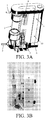
- Fig 3 an engineering drawing is shown of a complete wearable artficial kidney device next to a photo of a laboratory set-up. It comprises a hemofilter in order to exchange toxins from the blood to the dialysate and to extract ultrafiltrate.
- the electrosorption and decomposition unit continuously removes the toxins from the dialysate.
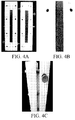
- Prototyped components are shown in Fig 4 , with the electrocatalytic electrodes (left), electrode compartments filled with adsorbents (middle) and a complete unit with stacked electrode chambers for decomposition and electrosorption.
- the hemofilter in a device of the present invention is preferably a commercially available hemofilter (e.g. such as produced by Gambro GmbH, Hechingen, Germany or Membrana GmbH, Wuppertal, Germany).
- a commercially available hemofilter e.g. such as produced by Gambro GmbH, Hechingen, Germany or Membrana GmbH, Wuppertal, Germany.
- the electrosorption and decomposition filter in a device of the invention may comprise an inlet for receiving patient blood plasma or ultrafiltrate exiting said plasmafilter or hemofilter, and at least one outlet for recovery of purified blood plasma or ultrafiltrate.
- a device of the present invention may, in any embodiment, further comprise means for supplementing the (purified) blood plasma or dialysate fluid with at least one substance selected from the group consisting of vitamins such as vitamins A,C and B 12; minerals such as calcium, sodium and potassium; anticoagulants; anti microbial agents and other medicaments.
- a device of the present invention may, in any embodiment, further comprise means for selective sorption of middle molecules, vitamins and minerals such as calcium, sodium and potassium.
- the sorption materials as described smectites, nanoclay, layered double hydroxides, hydrotalcites, crystallisation seeds, metal organic frameworks, modified biopolymers etc. are therefore loaded with a certain amount of minerals, vitamins and can only absorb a designated amount.
- a device of the present invention may, in any embodiment, further comprise means for selective sorption of middle molecules, vitamins and minerals such as calcium, sodium and potassium in the sorption pad via osmotic differences between blood and dialysate fluid in combination with the filterpad.
- the blood plasma or ultrafiltrate in this variant essentially remains in circulation and does not enter as a whole the filter pad, but is being cleaned from toxic substances and is being supplemented with nutrients and other vital substances via the dialysate fluid in combination with the sorption unit.
- the device or filter pad may comprise ion exchange systems.
- the present invention provides a method for removing toxic substances from blood, comprising using a device according to the present invention.
- the present invention provides a method for removing toxic substances from hemodialysis or peritoneal dialysis fluids, comprising using a device according to the present invention.
- the present invention provides a method for removing substances from other fluids such as water, e.g. for making drinking water or purifying aquarium water, and for purifying chemicals used in industrial processes as wel as removing substances from other biofluids such as urine, milk, bio-analytical fluids, comprising using a device according to the present invention.
- the electrosorption and decomposition filter in a device of the present invention may take the form of a filter pad, consisting of a rigid or flexible container comprising the sorption materials and electrodes.
- the electrosorption and decomposition filter in a device of the present invention may take the form of a filter cartridge, consisting of a rigid or flexible container comprising a set of built-in electrodes and a replaceble filter pad with sorption materials.
- the present invention may take the form of a device with built-in electrodes connected to a power supply such as a battery or a rectifier, holding an electrosorption and decomposition filter cartridge in contact with these electrodes and comprising a blood plasma separator or hemofilter and a sorption filter pad with sorption materials for extracting ionic solutes and small and middel sized molecules from the blood plasm, ultrafiltrate or dialysate.
- a power supply such as a battery or a rectifier
- the nanostructured material exhibits sorption capacity of various substances, based on ion-exchange, surface adsorption activity and/or surface nucleation (surface crystallisation).
- the sorption material is preferably functionalized, such as to exhibit improved sorbing properties of toxic substances such as urea as compared to the non-functionalized material.
- the sorption material in the present invention is a nanomaterial, meaning that the material contains particles or contains pores with a size of preferably 100 nanometres or less in order create a large specific surface area.
- a suitable nanostructured sorption material will be based on a blend of nanomaterial components, each component offering a specific functionality. Depending on the individual needs, a selection is made out of the following nanomaterial classes and components:
- a sorbent of the present invention comprising a nanostructured sorption material captured in a porous polymer matrix, may be prepared by providing the nanostructured sorption material and the porous polymer matrix separately and combining the two such that the nanostructured sorption material is inserted in the porous polymer matrix. This may for instance occur by instilling the polymer matrix with a suspension of the nanostructured material.
- a polymer matrix having a nanostructured material dispersed therein in order to obtain a polymer matrix having a nanostructured material dispersed therein, one may prepare the matrix having the desired porosity, and synthesize the nanostructured material therein. Very suitable the polymer matrix may be imbibed with a solution of a metal salt which may then be precipitated the metal salt in the form of a metal hydroxide or metal oxide in the matrix.
- a porous polymer matrix is used in order to immobilize the nanostructured sorption material and to prevent unwanted leakage of nanomaterials.
- the porous structure of the polymer matrix will allow for the trapping of molecules of which the removal from the fluid is sought such as the ionic solutes, small and middle molecules such as urea, creatinine and billirubin.
- the polymer in preferred embodiments is a cross-linked polymer.
- the porosity of the polymer matrix is crucial for enabling selectivity: a high diffusion rate towards the sorption sites is sought for the toxins to be removed, while specific blood components such as albumin need to be prevented for sorption. Since an albumin molecule is approximately an 80 Angstrom diameter sphere, a suitable pore size for the polymer matrix in applications for blood (plasma) or dialysate purification would be less than 80 Angstrom (less than 8 nm).
- the polymer with the nanostructured sorption materials can be electrically surface charged via electrodes.
- the polymer is a chemically charged polymer.
- Polymers used in aspects of the invention may be synthetic or natural polymers.
- Natural polymers suitably comprise a cross-linked carbohydrate or protein, made of oligomeric and polymeric carbohydrates or proteins.
- the biopolymer is preferably a polysaccharide.
- starch family including amylose, amylopectin and dextrins, is especially preferred.
- Other suitable polysaccharides include glucans and celllulose.
- a preferred cellulose is carboxymethylcellulose (CMC, e.g. AKUCELL from AKZO Nobel).
- Carbohydrates which can thus be used are carbohydrates consisting only of C, H and O atoms.
- oligomeric carbohydrates with a degree of polymerization (DP) from DP2 on or polymeric carbohydrates from DP50 on are used.
- the oxidized starch is crosslinked.
- a preferred crosslinking agent is di-epoxide.
- the crosslinking level is between 0.1 and 25%, more preferably between 1 and 5%, and most preferably between 2.5 and 3.5%.
- Proteins which can be used include albumin, ovalbumin, casein, myosin, actin, globulin, hemin, hemoglobin, myoglobin, gelatin and small peptides.
- proteins obtained from hydrolysates of vegetable or animal material can also be used.
- Particularly preferred protein polymers are gelatin or a derivative of gelatin.
- the carbohydrate polymer may for instance be modified by oxidation, substitution with cationic functional groups or with carboxymethyl groups, or by esterification with e.g. acetyl groups.
- Particularly preferred carbohydrate polymers are chosen from the group consisting of starch or a derivative of starch, cellulose or a derivative of cellulose, pectin or a derivative of pectin.
- Modification of the polymers can be accomplished by oxidation, substitution with cationic functional groups or carbonyl and/or carboxymethyl groups and/or esterifying with e.g. acetyl groups. Although in the latter case no charge is added, it is used to make the polymer more hydrophobic to allow complexing of the polymer with nanostructured sorption materials that have little or no charge.
- the polymers will be modified before cross-linking and gelation. It is possible to modify the polymer after cross-linking and gelation only if cross-linking is performed by ether-formation. The person skilled in the art will know how to modify the polymers specified in the invention to provide them with the mentioned groups.
- the charge of the cross-linked polymer can be negative or positive depending on the type of polymer, the type of modification and the type of cross-linking.
- the polymers are of considerable size, i.e. 30 kD or more. This allows for the ready formation of a gel upon cross-linking and it allows for the formation of a lattice, which is capable of taking up the nanostructured sorption material.
- the selectivity of the sorption material of the present invention can further be enhanced by loading the material with specific molecule catchers or receptors receptors such as antibodies, prosthetic groups or carboxyl groups (general: binding partners).
- specific molecule catchers or receptors receptors such as antibodies, prosthetic groups or carboxyl groups (general: binding partners).
- antibodies are very suitable, e.g. from the immunoglobulin superfamily (IgSF), prosthetic groups e.g. from lipid and vitamin derivatives or metal ion such as gold, iron, zinc, magnesium, calcium that covalently bond to proteins, as well as carboxyl groups that can bind to proteins by forming peptide bonds.
- IgSF immunoglobulin superfamily
- prosthetic groups e.g. from lipid and vitamin derivatives or metal ion such as gold, iron, zinc, magnesium, calcium that covalently bond to proteins, as well as carboxyl groups that can bind to proteins by forming peptide bonds.
- Such selective absorbing agents can further enhance the selectivity of the filter pad
- the device of the present invention comprises means for regulating the content of minerals and other substances in the blood plasma via selective sorption and controlled release.
- the device for the removal of toxic substances from blood from a patient comprises a hemofilter and an electrosorption filter, wherein the electrosorption filter removes toxic solutes, small and middle-sized molecules from the blood based, and includes such functions as selective sorption, controlled release and antimicrobial control.
- the plasmafilter of hemofilter, and electrosorption filter are separate parts.
- the plasmafilter or hemofilter may consist of an existing, commercially available plasmafilter, albuflow filter or high flux hemofilter and the electrosorption filter may consist of a cartridge with built in electrodes. In this cartridge also the sorption material is contained. The sorption material can be held in a porous envelop to form a filter pad.
- the device of the present invention can be used for filtering or purification of blood of patients with a (developing) renal failure.
- the device takes the form of a wearable artificial kidney device, but can also be embodied in desktop sized equipment or in adapted hemodialysis or peritoneal dialysis equipment.
- the artificial kidney is able to perform some of the functions which normally will be done by a properly functioning human or animal kidney, in particular filtering of blood and regulation and control of the content of substances in the blood.
- a prototype has been built as depicted in figures 3 and 4 This setup has been tested in a dynamic test using blood plasma and a high flux filter to produce ultrafiltrate.
- the electrosorption and decomposition unit was filled with 25 grams of a nanoclay/polymer composite and 10 grams of a nanoporous active carbon.
- Ti/RuO2/TiO2 catalytic electrodes were used for the decomposition of urea at a voltage of 3 V per electrode pair (mild electro-oxidation) and 5 V per electrode pair (strong electrod-oxidation).
- the total electrode surface amounted to 600 cm 2 .
- the ultrafiltrate flow was set to 50 ml/min. Concentrations of toxins before and after the sorption and decomposition unit were measured.
- a prototype has been built as depicted in figures 3 and 4 This setup has been tested in a dynamic test using dialysate from a dialysis center.
- the toxin concentrations in the dialysate are considerably lower (about a factor 2) than in the ultrafiltrate from example 1.
- the efficiency of the sorption and decomposition proces is therefore somewhat reduced.
- the electrosorption and decomposition unit was filled with 35 grams of a zeolite (4A) and 15 grams of a metaloxyhydroxide sorbent (FeOOH).
- Ti/RuO2/TiO2 catalytic electrodes were used for the decomposition of urea at a voltage of 3,5 V per electrode pair (mild electro-oxidation). The total electrode surface amounted to 600 cm 2 .
- the dialysate flow was set to 50 ml/min. Concentrations of toxins before and after the sorption and decomposition unit were measured. After one hour the following results, being representative for the performance of the device, have been found. Table: Purification of a dialysate flow (50 ml/min) with the electrosorption/decomposition unit filled with 50 g sorbents Concentration ratio outlet/inlet sorbent unit mild oxidation (3,5 V) + sorbents potassium 0,84 phosphate 0,84 creatinine 0,92 Urea 0,86
Landscapes
- Chemical & Material Sciences (AREA)
- Health & Medical Sciences (AREA)
- Engineering & Computer Science (AREA)
- Chemical Kinetics & Catalysis (AREA)
- Heart & Thoracic Surgery (AREA)
- Organic Chemistry (AREA)
- Analytical Chemistry (AREA)
- Life Sciences & Earth Sciences (AREA)
- Vascular Medicine (AREA)
- Biomedical Technology (AREA)
- Hematology (AREA)
- General Health & Medical Sciences (AREA)
- Public Health (AREA)
- Veterinary Medicine (AREA)
- Animal Behavior & Ethology (AREA)
- Anesthesiology (AREA)
- Urology & Nephrology (AREA)
- Inorganic Chemistry (AREA)
- Water Supply & Treatment (AREA)
- Nanotechnology (AREA)
- Emergency Medicine (AREA)
- Materials Engineering (AREA)
- Crystallography & Structural Chemistry (AREA)
- Geochemistry & Mineralogy (AREA)
- Condensed Matter Physics & Semiconductors (AREA)
- Composite Materials (AREA)
- Physics & Mathematics (AREA)
- Dispersion Chemistry (AREA)
- General Physics & Mathematics (AREA)
- Biodiversity & Conservation Biology (AREA)
- Cell Biology (AREA)
- Molecular Biology (AREA)
- Cardiology (AREA)
- External Artificial Organs (AREA)
- Solid-Sorbent Or Filter-Aiding Compositions (AREA)
Priority Applications (5)
| Application Number | Priority Date | Filing Date | Title |
|---|---|---|---|
| EP11161646.2A EP2446908B1 (fr) | 2010-11-02 | 2011-04-08 | Dispositif d'électrosorption et décomposition pour la purification du sang et d'autres fluides |
| PCT/NL2011/050746 WO2012060700A1 (fr) | 2010-11-02 | 2011-11-02 | Dispositif d'électrosorption et de décomposition pour la purification du sang et autres fluides |
| JP2013537627A JP5948336B2 (ja) | 2010-11-02 | 2011-11-02 | 血液、その他の液体の浄化のための電気収着及び分解装置 |
| CN201180063394XA CN103402563A (zh) | 2010-11-02 | 2011-11-02 | 用于纯化血液和其它流体的电吸着和分解装置 |
| US13/874,884 US20130240361A1 (en) | 2010-11-02 | 2013-05-01 | Electrosorption and decomposition device for the purification of blood and other fluids |
Applications Claiming Priority (2)
| Application Number | Priority Date | Filing Date | Title |
|---|---|---|---|
| EP10189728 | 2010-11-02 | ||
| EP11161646.2A EP2446908B1 (fr) | 2010-11-02 | 2011-04-08 | Dispositif d'électrosorption et décomposition pour la purification du sang et d'autres fluides |
Publications (2)
| Publication Number | Publication Date |
|---|---|
| EP2446908A1 true EP2446908A1 (fr) | 2012-05-02 |
| EP2446908B1 EP2446908B1 (fr) | 2015-07-15 |
Family
ID=44123147
Family Applications (1)
| Application Number | Title | Priority Date | Filing Date |
|---|---|---|---|
| EP11161646.2A Active EP2446908B1 (fr) | 2010-11-02 | 2011-04-08 | Dispositif d'électrosorption et décomposition pour la purification du sang et d'autres fluides |
Country Status (5)
| Country | Link |
|---|---|
| US (1) | US20130240361A1 (fr) |
| EP (1) | EP2446908B1 (fr) |
| JP (1) | JP5948336B2 (fr) |
| CN (1) | CN103402563A (fr) |
| WO (1) | WO2012060700A1 (fr) |
Cited By (39)
| Publication number | Priority date | Publication date | Assignee | Title |
|---|---|---|---|---|
| EP2683425A4 (fr) * | 2011-03-09 | 2015-04-08 | Zvi Herschman | Systèmes implantables et procédés pour éliminer des impuretés spécifiques de fluides tels que le sang |
| US20150158033A1 (en) * | 2013-12-09 | 2015-06-11 | Michael C. Larson | Blood purifier device and method |
| WO2015199765A1 (fr) | 2014-06-24 | 2015-12-30 | Medtronic, Inc. | Procédé de recharge en phosphate de zirconium |
| WO2016126596A3 (fr) * | 2015-02-06 | 2016-10-06 | Cabot Corporation | Compositions et méthodes de séquestration de l'urée |
| EP2934619B1 (fr) * | 2012-12-21 | 2017-03-08 | Fresenius Medical Care Deutschland GmbH | Dispositif d'élimination des toxines liées aux protéines dans le plasma sanguin |
| WO2017117117A1 (fr) * | 2015-12-31 | 2017-07-06 | Baxter International Inc. | Dispositifs pour l'électrolyse d'urée et procédés d'utilisation de ceux-ci |
| WO2017117119A1 (fr) * | 2015-12-31 | 2017-07-06 | Baxter International Inc. | Dispositifs pour électrolyse d'urée à cellule d'électrodialyse et d'oxydation d'urée combinée et leurs procédés d'utilisation |
| CN107645959A (zh) * | 2015-05-26 | 2018-01-30 | 美敦力公司 | 用于对磷酸锆和氧化锆模块进行再装填的再装填器 |
| US9981245B2 (en) | 2013-11-26 | 2018-05-29 | Medtronic, Inc. | Method and apparatus for zirconium oxide recharging |
| US10004839B2 (en) | 2013-11-26 | 2018-06-26 | Medtronic, Inc. | Multi-use sorbent cartridge |
| US10052612B2 (en) | 2013-11-26 | 2018-08-21 | Medtronic, Inc. | Zirconium phosphate recharging method and apparatus |
| US10052624B2 (en) | 2013-11-26 | 2018-08-21 | Medtronic, Inc. | Zirconium phosphate and zirconium oxide recharging flow paths |
| US10064986B2 (en) | 2013-11-26 | 2018-09-04 | Medtronic, Inc. | Recharger for recharging zirconium phosphate and zirconium oxide modules |
| US10071323B2 (en) | 2013-11-26 | 2018-09-11 | Medtronic, Inc | Module for in-line recharging of sorbent materials with optional bypass |
| US10099215B2 (en) | 2013-11-26 | 2018-10-16 | Medtronic, Inc. | Management of recharger effluent pH |
| US10099214B2 (en) | 2013-11-26 | 2018-10-16 | Medtronic, Inc. | Zirconium phosphate and zirconium oxide recharger control logic and operational process algorithms |
| US10159957B2 (en) | 2013-11-26 | 2018-12-25 | Medtronic, Inc. | Zirconium phosphate recharging customization |
| US10245365B2 (en) | 2014-06-24 | 2019-04-02 | Medtronic, Inc. | Replenisihing urease in dialysis systems using a urease introducer |
| US10463776B2 (en) | 2015-12-31 | 2019-11-05 | Baxter International Inc. | Methods and apparatuses using urea permselective diffusion through charged membranes |
| US10478545B2 (en) | 2013-11-26 | 2019-11-19 | Medtronic, Inc. | Parallel modules for in-line recharging of sorbents using alternate duty cycles |
| US10537875B2 (en) | 2013-11-26 | 2020-01-21 | Medtronic, Inc. | Precision recharging of sorbent materials using patient and session data |
| CN111686704A (zh) * | 2020-07-02 | 2020-09-22 | 苏州仝康医疗科技有限公司 | 一种血液净化吸附剂及其制备方法和应用 |
| US10807068B2 (en) | 2014-06-24 | 2020-10-20 | Medtronic, Inc. | Sorbent pouch |
| US10821214B2 (en) | 2014-06-24 | 2020-11-03 | Medtronic, Inc. | Urease introduction system for replenishing urease in a sorbent cartridge |
| US10888800B2 (en) | 2014-06-24 | 2021-01-12 | Medtronic, Inc | Replenishing urease in dialysis systems using urease pouches |
| US10926017B2 (en) | 2014-06-24 | 2021-02-23 | Medtronic, Inc. | Modular dialysate regeneration assembly |
| CN112403285A (zh) * | 2020-11-26 | 2021-02-26 | 连云港鹏辰特种新材料有限公司 | 一种高性能管式杂化膜及其制备方法以及在分离烷烃/芳烃混合物中的应用 |
| US10960381B2 (en) | 2017-06-15 | 2021-03-30 | Medtronic, Inc. | Zirconium phosphate disinfection recharging and conditioning |
| US10981148B2 (en) | 2016-11-29 | 2021-04-20 | Medtronic, Inc. | Zirconium oxide module conditioning |
| US11045790B2 (en) | 2014-06-24 | 2021-06-29 | Medtronic, Inc. | Stacked sorbent assembly |
| US11167070B2 (en) | 2017-01-30 | 2021-11-09 | Medtronic, Inc. | Ganged modular recharging system |
| US11213616B2 (en) | 2018-08-24 | 2022-01-04 | Medtronic, Inc. | Recharge solution for zirconium phosphate |
| US11426500B2 (en) | 2019-05-17 | 2022-08-30 | Zvi Herschman | Systems and methods for removing specific impurities from fluids such as blood using a nanotube selector |
| US11857712B2 (en) | 2013-01-09 | 2024-01-02 | Mozarc Medical Us Llc | Recirculating dialysate fluid circuit for measurement of blood solute species |
| US12161788B2 (en) | 2013-01-09 | 2024-12-10 | Mozarc Medical Us Llc | Fluid circuits for sorbent cartridges with sensors |
| US12285552B2 (en) | 2018-08-14 | 2025-04-29 | Mozarc Medical Us Llc | Precision dialysis therapy based on sorbent effluent analysis |
| US12397093B2 (en) | 2021-05-18 | 2025-08-26 | Mozarc Medical Us Llc | Sorbent cartridge designs |
| US12569601B2 (en) | 2021-04-07 | 2026-03-10 | Mozarc Medical Us Llc | Increased operational capabilities of a dialysis system |
| TWI932647B (zh) | 2021-04-06 | 2026-07-21 | 美國華盛頓大學 | 液體透析環路、腎透析系統及再生透析液流體之方法 |
Families Citing this family (31)
| Publication number | Priority date | Publication date | Assignee | Title |
|---|---|---|---|---|
| DE102011078695A1 (de) * | 2011-07-05 | 2013-01-10 | Charité - Universitätsmedizin Berlin | Dialyseverfahren zur Entfernung proteingebundener Toxine aus dem Blut von Patienten unter Einsatz hochfrequenter elektromagnetischer Felder |
| CN103842004B (zh) | 2011-08-22 | 2016-11-23 | 美敦力公司 | 双流吸附剂盒 |
| US9144640B2 (en) | 2013-02-02 | 2015-09-29 | Medtronic, Inc. | Sorbent cartridge configurations for improved dialysate regeneration |
| AU2014243259B2 (en) * | 2013-03-28 | 2019-04-18 | Société des Produits Nestlé S.A. | Indoxyl sulfate as a biomarker of prebiotic efficacy for weight gain prevention |
| EP2862584B1 (fr) * | 2013-10-21 | 2019-03-20 | ICinnovation BV | Dispositif d'électrosorption et décomposition pour la purification du sang et d'autres fluides |
| US9895477B2 (en) | 2013-11-26 | 2018-02-20 | Medtronic, Inc. | Detachable module for recharging sorbent materials with optional bypass |
| BR112016019111A2 (pt) * | 2014-02-19 | 2017-09-26 | Medtronic Inc | módulos paralelos para recarga acoplada de sorventes com o uso de ciclos de trabalho alterna-dos |
| US9764073B2 (en) * | 2014-02-26 | 2017-09-19 | Medtronic, Inc. | Authentication and tracking system |
| DE102014010907A1 (de) | 2014-07-23 | 2016-01-28 | Fresenius Medical Care Deutschland Gmbh | Vorrichtung zur extrakorporalen Entfernung proteingebundener Toxine |
| JP6555528B2 (ja) * | 2014-11-27 | 2019-08-07 | 国立大学法人佐賀大学 | エンドトキシン及び/又はサイトカインの吸着体及びその製造方法、これを配合した皮膚外用製剤及び経口投与用製剤、並びにエンドトキシン及び/又はサイトカインの吸着除去方法 |
| CN104826185A (zh) * | 2015-03-11 | 2015-08-12 | 中国航天员科研训练中心 | 透析液再生装置 |
| EP3115099B1 (fr) | 2015-07-07 | 2019-09-04 | I3 Membrane GmbH | Procede d'electrofiltration et electrosorption a l'aide d'une membrane polymere metallisee et appareil adapte |
| EP3272375A1 (fr) | 2016-07-22 | 2018-01-24 | Fraunhofer-Gesellschaft zur Förderung der angewandten Forschung e.V. | Appareil et procédé de génération de dialysat pour dialyse |
| DE102016125818A1 (de) | 2016-12-28 | 2018-06-28 | I3 Membrane Gmbh | Verfahren zur Separation von geladenen biologisch aktiven Substanzen aus Flüssigkeiten und deren Wiedergewinnung |
| DE102017113853A1 (de) * | 2017-06-22 | 2018-12-27 | B. Braun Avitum Ag | Hämokompatibler Adsorber zur Dialyse proteingebundener Urämietoxine |
| CN107693872A (zh) * | 2017-11-01 | 2018-02-16 | 桂林欣中伊健康产业有限公司 | 一种血浆净化的方法 |
| CN107823740A (zh) * | 2017-11-01 | 2018-03-23 | 桂林欣中伊健康产业有限公司 | 血浆净化处理方法 |
| CN107693873A (zh) * | 2017-11-01 | 2018-02-16 | 桂林欣中伊健康产业有限公司 | 血浆净化简易方法 |
| CN107596474A (zh) * | 2017-11-01 | 2018-01-19 | 桂林欣中伊健康产业有限公司 | 血浆去脂净化处理方法 |
| US11160913B2 (en) * | 2017-11-14 | 2021-11-02 | Fresenius Medical Care Holdings, Inc. | Removal of microbubbles through drip chamber nucleation sites |
| EP3766529A4 (fr) * | 2018-03-14 | 2022-03-23 | Beacon Medcare (HK) Limited | Composition de purification de fluides biologiques |
| CN109045379A (zh) * | 2018-07-12 | 2018-12-21 | 安陆恩彼饲料有限公司 | 一种血浆净化方法 |
| AU2019320727B2 (en) * | 2018-08-17 | 2022-03-03 | University Of Washington | Apparatus and method for urea photo-oxidation |
| US12403412B2 (en) * | 2018-10-23 | 2025-09-02 | Northwestern University | Metal-organic frameworks for the removal of uremic toxins |
| EP3868417A1 (fr) | 2020-02-18 | 2021-08-25 | ICinnovation BV | Dispositif vestimentaire et portable pour la dialyse à recirculation d'écoulement |
| EP4106834A1 (fr) * | 2020-02-18 | 2022-12-28 | ICinnovation BV | Dispositif portatif et à porter sur soi pour dialyse à flux recirculant |
| JP2023522173A (ja) * | 2020-04-07 | 2023-05-29 | サイトソーベンツ・コーポレーション | 血液および毒素濾過装置とその使用方法 |
| WO2022204167A2 (fr) * | 2021-03-23 | 2022-09-29 | Nephria Bio, Inc. | Systèmes, dispositifs et procédés pour une thérapie de remplacement rénal ambulatoire continue |
| US20240100489A1 (en) * | 2022-09-26 | 2024-03-28 | Caromeats Inc. | Carbon-based Systems for Simultaneous Adsorption and Release of Small Molecules |
| US20250339596A1 (en) * | 2024-05-06 | 2025-11-06 | Mozarc Medical Us Llc | Conductivity sensor |
| CN119215862B (zh) * | 2024-09-25 | 2025-11-21 | 泉州师范学院 | 一种金属有机框架复合型吸附剂及其制备方法和血液灌流器 |
Citations (15)
| Publication number | Priority date | Publication date | Assignee | Title |
|---|---|---|---|---|
| US3827961A (en) * | 1970-09-15 | 1974-08-06 | Battelle Memorial Institute | Method for purifying ionically conducting solutions |
| US3874907A (en) | 1972-02-16 | 1975-04-01 | Rhone Poulenc Sa | Microcapsules for use in artificial kidney machines |
| US3878564A (en) | 1972-04-14 | 1975-04-22 | Shang J Yao | Blood and tissue detoxification method |
| GB1406133A (en) | 1972-05-27 | 1975-09-17 | Medecs Co Ltd | Adsorbent for recycling type artificial kidney |
| GB2000150A (en) * | 1977-06-24 | 1979-01-04 | Asahi Chemical Ind | Adsorbent for adsorbing organic compounds adsorbed on proteins |
| US4473449A (en) | 1982-09-22 | 1984-09-25 | The Board Of Trustees Of The Leland Stanford Junior University | Flowthrough electrochemical hemodialysate regeneration |
| US5648508A (en) | 1995-11-22 | 1997-07-15 | Nalco Chemical Company | Crystalline metal-organic microporous materials |
| WO2003020403A1 (fr) | 2001-09-04 | 2003-03-13 | Gradipore Limited | Extraction de constituants metaboliques du sang |
| US20030097086A1 (en) | 2001-11-16 | 2003-05-22 | Victor Gura | Wearable continuous renal replacement therapy device |
| US20040147900A1 (en) | 2003-01-23 | 2004-07-29 | Hans-Dietrich Polaschegg | Low hydraulic resistance cartridge |
| US6893564B2 (en) | 2002-05-30 | 2005-05-17 | Basf Aktiengesellschaft | Shaped bodies containing metal-organic frameworks |
| EP1745808A1 (fr) * | 2004-04-21 | 2007-01-24 | Toray Industries, Inc. | Matiere filtrante a usage medical et colonne de circulation et filtre sanguin extracorporels l'utilisant |
| US20070078431A1 (en) | 2005-09-30 | 2007-04-05 | Sherwood Services Ag | Administration feeding set and flow control apparatus with secure loading features |
| WO2007051145A2 (fr) | 2005-10-26 | 2007-05-03 | Nanoscale Materials, Inc. | Traitement d'odeurs au moyen d'oxydes metalliques nanocristallins |
| EP2092944A2 (fr) | 2008-02-11 | 2009-08-26 | ICinnovation BV | Dispositif d'électrosorption pour la purification du sang et d'autres fluides |
Family Cites Families (3)
| Publication number | Priority date | Publication date | Assignee | Title |
|---|---|---|---|---|
| DE2424091C3 (de) * | 1974-05-17 | 1980-11-27 | Sachs Systemtechnik Gmbh, 8720 Schweinfurt | Verfahren zur anodischen Oxidation organischer Belastungsstoffe im Wasser in einer Wirbelschicht aus leitfähigem Adsorbens |
| US4663006A (en) * | 1983-09-08 | 1987-05-05 | The Montefiore Hospital Association Of Western Pennsylvania | Cyclic controlled electrolysis |
| JP2010512939A (ja) * | 2006-12-21 | 2010-04-30 | ネーデルランド オルガニサティ フォール トウゲパストナチュールウェテンスカッペリューク オンデルツォイック ティーエヌオー | 血液から毒性物質を除去するための装置 |
-
2011
- 2011-04-08 EP EP11161646.2A patent/EP2446908B1/fr active Active
- 2011-11-02 CN CN201180063394XA patent/CN103402563A/zh active Pending
- 2011-11-02 JP JP2013537627A patent/JP5948336B2/ja not_active Expired - Fee Related
- 2011-11-02 WO PCT/NL2011/050746 patent/WO2012060700A1/fr not_active Ceased
-
2013
- 2013-05-01 US US13/874,884 patent/US20130240361A1/en not_active Abandoned
Patent Citations (15)
| Publication number | Priority date | Publication date | Assignee | Title |
|---|---|---|---|---|
| US3827961A (en) * | 1970-09-15 | 1974-08-06 | Battelle Memorial Institute | Method for purifying ionically conducting solutions |
| US3874907A (en) | 1972-02-16 | 1975-04-01 | Rhone Poulenc Sa | Microcapsules for use in artificial kidney machines |
| US3878564A (en) | 1972-04-14 | 1975-04-22 | Shang J Yao | Blood and tissue detoxification method |
| GB1406133A (en) | 1972-05-27 | 1975-09-17 | Medecs Co Ltd | Adsorbent for recycling type artificial kidney |
| GB2000150A (en) * | 1977-06-24 | 1979-01-04 | Asahi Chemical Ind | Adsorbent for adsorbing organic compounds adsorbed on proteins |
| US4473449A (en) | 1982-09-22 | 1984-09-25 | The Board Of Trustees Of The Leland Stanford Junior University | Flowthrough electrochemical hemodialysate regeneration |
| US5648508A (en) | 1995-11-22 | 1997-07-15 | Nalco Chemical Company | Crystalline metal-organic microporous materials |
| WO2003020403A1 (fr) | 2001-09-04 | 2003-03-13 | Gradipore Limited | Extraction de constituants metaboliques du sang |
| US20030097086A1 (en) | 2001-11-16 | 2003-05-22 | Victor Gura | Wearable continuous renal replacement therapy device |
| US6893564B2 (en) | 2002-05-30 | 2005-05-17 | Basf Aktiengesellschaft | Shaped bodies containing metal-organic frameworks |
| US20040147900A1 (en) | 2003-01-23 | 2004-07-29 | Hans-Dietrich Polaschegg | Low hydraulic resistance cartridge |
| EP1745808A1 (fr) * | 2004-04-21 | 2007-01-24 | Toray Industries, Inc. | Matiere filtrante a usage medical et colonne de circulation et filtre sanguin extracorporels l'utilisant |
| US20070078431A1 (en) | 2005-09-30 | 2007-04-05 | Sherwood Services Ag | Administration feeding set and flow control apparatus with secure loading features |
| WO2007051145A2 (fr) | 2005-10-26 | 2007-05-03 | Nanoscale Materials, Inc. | Traitement d'odeurs au moyen d'oxydes metalliques nanocristallins |
| EP2092944A2 (fr) | 2008-02-11 | 2009-08-26 | ICinnovation BV | Dispositif d'électrosorption pour la purification du sang et d'autres fluides |
Non-Patent Citations (2)
| Title |
|---|
| SHETTIGAR, REUL, ARTIF. ORGANS, vol. 6, 1982, pages 17 - 22 |
| SHIMIZU, NIPPON KAGAKU KAISHI, vol. 6, 1985, pages 1278 - 84 |
Cited By (71)
| Publication number | Priority date | Publication date | Assignee | Title |
|---|---|---|---|---|
| US9220829B2 (en) | 2011-03-09 | 2015-12-29 | Zvi Herschman | Implantable systems and methods for removing specific impurities from fluids such as blood |
| EP2683425A4 (fr) * | 2011-03-09 | 2015-04-08 | Zvi Herschman | Systèmes implantables et procédés pour éliminer des impuretés spécifiques de fluides tels que le sang |
| US10117737B2 (en) | 2011-03-09 | 2018-11-06 | Zvi Herschman | Implantable systems and methods for removing specific impurities from fluids such as blood |
| US12042586B2 (en) | 2011-03-09 | 2024-07-23 | Zvi Herschman | Implantable systems and methods for removing specific impurities from fluids such as blood |
| EP2934619B1 (fr) * | 2012-12-21 | 2017-03-08 | Fresenius Medical Care Deutschland GmbH | Dispositif d'élimination des toxines liées aux protéines dans le plasma sanguin |
| US10525187B2 (en) | 2012-12-21 | 2020-01-07 | Fresenius Medical Care Deutschland Gmbh | Apparatus for removing protein-bound toxins from blood plasma |
| US11857712B2 (en) | 2013-01-09 | 2024-01-02 | Mozarc Medical Us Llc | Recirculating dialysate fluid circuit for measurement of blood solute species |
| US12161788B2 (en) | 2013-01-09 | 2024-12-10 | Mozarc Medical Us Llc | Fluid circuits for sorbent cartridges with sensors |
| US10071323B2 (en) | 2013-11-26 | 2018-09-11 | Medtronic, Inc | Module for in-line recharging of sorbent materials with optional bypass |
| US10052612B2 (en) | 2013-11-26 | 2018-08-21 | Medtronic, Inc. | Zirconium phosphate recharging method and apparatus |
| US11219880B2 (en) | 2013-11-26 | 2022-01-11 | Medtronic, Inc | System for precision recharging of sorbent materials using patient and session data |
| US10537875B2 (en) | 2013-11-26 | 2020-01-21 | Medtronic, Inc. | Precision recharging of sorbent materials using patient and session data |
| US10099214B2 (en) | 2013-11-26 | 2018-10-16 | Medtronic, Inc. | Zirconium phosphate and zirconium oxide recharger control logic and operational process algorithms |
| US10478545B2 (en) | 2013-11-26 | 2019-11-19 | Medtronic, Inc. | Parallel modules for in-line recharging of sorbents using alternate duty cycles |
| US10343145B2 (en) | 2013-11-26 | 2019-07-09 | Medtronic, Inc. | Zirconium phosphate recharging method and apparatus |
| US9981245B2 (en) | 2013-11-26 | 2018-05-29 | Medtronic, Inc. | Method and apparatus for zirconium oxide recharging |
| US10004839B2 (en) | 2013-11-26 | 2018-06-26 | Medtronic, Inc. | Multi-use sorbent cartridge |
| US10064986B2 (en) | 2013-11-26 | 2018-09-04 | Medtronic, Inc. | Recharger for recharging zirconium phosphate and zirconium oxide modules |
| US10099215B2 (en) | 2013-11-26 | 2018-10-16 | Medtronic, Inc. | Management of recharger effluent pH |
| US10052624B2 (en) | 2013-11-26 | 2018-08-21 | Medtronic, Inc. | Zirconium phosphate and zirconium oxide recharging flow paths |
| US10159957B2 (en) | 2013-11-26 | 2018-12-25 | Medtronic, Inc. | Zirconium phosphate recharging customization |
| US10004841B2 (en) * | 2013-12-09 | 2018-06-26 | Michael C. Larson | Blood purifier device and method |
| US20150158033A1 (en) * | 2013-12-09 | 2015-06-11 | Michael C. Larson | Blood purifier device and method |
| CN109225178A (zh) * | 2014-06-24 | 2019-01-18 | 美敦力公司 | 磷酸锆再充方法和设备 |
| US11673118B2 (en) | 2014-06-24 | 2023-06-13 | Mozarc Medical Us Llc | Stacked sorbent assembly |
| CN106413878A (zh) * | 2014-06-24 | 2017-02-15 | 美敦力公司 | 磷酸锆再充方法和设备 |
| EP3160640A4 (fr) * | 2014-06-24 | 2018-08-22 | Medtronic Inc. | Procédé et appareil de recharge de phosphate de zirconium |
| CN106470714A (zh) * | 2014-06-24 | 2017-03-01 | 美敦力公司 | 磷酸锆再填装的方法 |
| CN106457068B (zh) * | 2014-06-24 | 2019-03-15 | 美敦力公司 | 氧化锆再填装的方法和装置 |
| US10245365B2 (en) | 2014-06-24 | 2019-04-02 | Medtronic, Inc. | Replenisihing urease in dialysis systems using a urease introducer |
| CN106413878B (zh) * | 2014-06-24 | 2019-06-14 | 美敦力公司 | 磷酸锆再充方法和设备 |
| US9974896B2 (en) | 2014-06-24 | 2018-05-22 | Medtronic, Inc. | Method of zirconium phosphate recharging |
| US10926017B2 (en) | 2014-06-24 | 2021-02-23 | Medtronic, Inc. | Modular dialysate regeneration assembly |
| WO2015199765A1 (fr) | 2014-06-24 | 2015-12-30 | Medtronic, Inc. | Procédé de recharge en phosphate de zirconium |
| US11045790B2 (en) | 2014-06-24 | 2021-06-29 | Medtronic, Inc. | Stacked sorbent assembly |
| EP3160530A4 (fr) * | 2014-06-24 | 2018-03-14 | Medtronic Inc. | Procédé de recharge en phosphate de zirconium |
| CN106470714B (zh) * | 2014-06-24 | 2019-12-20 | 美敦力公司 | 磷酸锆再填装的方法 |
| EP3160610A4 (fr) * | 2014-06-24 | 2018-03-14 | Medtronic Inc. | Procede et appareil pour la recharge d'oxyde de zirconium |
| US10888800B2 (en) | 2014-06-24 | 2021-01-12 | Medtronic, Inc | Replenishing urease in dialysis systems using urease pouches |
| US10821214B2 (en) | 2014-06-24 | 2020-11-03 | Medtronic, Inc. | Urease introduction system for replenishing urease in a sorbent cartridge |
| CN106457068A (zh) * | 2014-06-24 | 2017-02-22 | 美敦力公司 | 氧化锆再填装的方法和装置 |
| US10807068B2 (en) | 2014-06-24 | 2020-10-20 | Medtronic, Inc. | Sorbent pouch |
| EP3725406A1 (fr) | 2014-06-24 | 2020-10-21 | Medtronic Inc. | Procédé de recharge de phosphate de zirconium |
| WO2016126596A3 (fr) * | 2015-02-06 | 2016-10-06 | Cabot Corporation | Compositions et méthodes de séquestration de l'urée |
| CN107645959B (zh) * | 2015-05-26 | 2020-05-12 | 美敦力公司 | 用于对磷酸锆和氧化锆模块进行再装填的再装填器 |
| CN107645959A (zh) * | 2015-05-26 | 2018-01-30 | 美敦力公司 | 用于对磷酸锆和氧化锆模块进行再装填的再装填器 |
| US10406270B2 (en) | 2015-12-31 | 2019-09-10 | Baxter International Inc. | Devices for urea electrolysis with combination electrodialysis and urea oxidation cell and methods of using same |
| WO2017117117A1 (fr) * | 2015-12-31 | 2017-07-06 | Baxter International Inc. | Dispositifs pour l'électrolyse d'urée et procédés d'utilisation de ceux-ci |
| US12220508B2 (en) | 2015-12-31 | 2025-02-11 | Baxter International Inc. | Methods and apparatuses using urea permselective diffusion through charged membranes |
| WO2017117119A1 (fr) * | 2015-12-31 | 2017-07-06 | Baxter International Inc. | Dispositifs pour électrolyse d'urée à cellule d'électrodialyse et d'oxydation d'urée combinée et leurs procédés d'utilisation |
| US11052183B2 (en) | 2015-12-31 | 2021-07-06 | Baxter International Inc. | Devices for urea electrolysis and methods of using same |
| US11129929B2 (en) | 2015-12-31 | 2021-09-28 | Baxter International Inc. | Methods and apparatuses using urea permselective diffusion through charged membranes |
| US11925737B2 (en) | 2015-12-31 | 2024-03-12 | Baxter International Inc. | Devices for urea electrolysis and methods of using same |
| EP4321185A3 (fr) * | 2015-12-31 | 2024-02-21 | Baxter International Inc | Dispositifs d'électrolyse d'urée avec cellule d'électrodialyse et d'oxydation d'urée combinées et leurs procédés d'utilisation |
| EP4299532A3 (fr) * | 2015-12-31 | 2024-02-07 | Baxter International Inc | Dispositifs d'électrolyse d'urée et leurs procédés d'utilisation |
| US10391222B2 (en) | 2015-12-31 | 2019-08-27 | Baxter International Inc. | Devices for urea electrolysis and methods of using same |
| US10463776B2 (en) | 2015-12-31 | 2019-11-05 | Baxter International Inc. | Methods and apparatuses using urea permselective diffusion through charged membranes |
| US11642654B2 (en) | 2016-11-29 | 2023-05-09 | Medtronic, Inc | Zirconium oxide module conditioning |
| US10981148B2 (en) | 2016-11-29 | 2021-04-20 | Medtronic, Inc. | Zirconium oxide module conditioning |
| US11167070B2 (en) | 2017-01-30 | 2021-11-09 | Medtronic, Inc. | Ganged modular recharging system |
| US11883794B2 (en) | 2017-06-15 | 2024-01-30 | Mozarc Medical Us Llc | Zirconium phosphate disinfection recharging and conditioning |
| US10960381B2 (en) | 2017-06-15 | 2021-03-30 | Medtronic, Inc. | Zirconium phosphate disinfection recharging and conditioning |
| US12285552B2 (en) | 2018-08-14 | 2025-04-29 | Mozarc Medical Us Llc | Precision dialysis therapy based on sorbent effluent analysis |
| US11213616B2 (en) | 2018-08-24 | 2022-01-04 | Medtronic, Inc. | Recharge solution for zirconium phosphate |
| US11426500B2 (en) | 2019-05-17 | 2022-08-30 | Zvi Herschman | Systems and methods for removing specific impurities from fluids such as blood using a nanotube selector |
| CN111686704A (zh) * | 2020-07-02 | 2020-09-22 | 苏州仝康医疗科技有限公司 | 一种血液净化吸附剂及其制备方法和应用 |
| CN111686704B (zh) * | 2020-07-02 | 2023-08-08 | 苏州仝康医疗科技有限公司 | 一种血液净化吸附剂及其制备方法和应用 |
| CN112403285A (zh) * | 2020-11-26 | 2021-02-26 | 连云港鹏辰特种新材料有限公司 | 一种高性能管式杂化膜及其制备方法以及在分离烷烃/芳烃混合物中的应用 |
| TWI932647B (zh) | 2021-04-06 | 2026-07-21 | 美國華盛頓大學 | 液體透析環路、腎透析系統及再生透析液流體之方法 |
| US12569601B2 (en) | 2021-04-07 | 2026-03-10 | Mozarc Medical Us Llc | Increased operational capabilities of a dialysis system |
| US12397093B2 (en) | 2021-05-18 | 2025-08-26 | Mozarc Medical Us Llc | Sorbent cartridge designs |
Also Published As
| Publication number | Publication date |
|---|---|
| EP2446908B1 (fr) | 2015-07-15 |
| JP2014508543A (ja) | 2014-04-10 |
| US20130240361A1 (en) | 2013-09-19 |
| JP5948336B2 (ja) | 2016-07-06 |
| WO2012060700A1 (fr) | 2012-05-10 |
| CN103402563A (zh) | 2013-11-20 |
Similar Documents
| Publication | Publication Date | Title |
|---|---|---|
| EP2446908B1 (fr) | Dispositif d'électrosorption et décomposition pour la purification du sang et d'autres fluides | |
| EP2092944B1 (fr) | Dispositif d'électrosorption pour la purification du sang et d'autres fluides | |
| EP2101842B1 (fr) | Dispositif d'épuration des substances toxiques du sang | |
| US9878084B2 (en) | Redox controlled electrosorption and decomposition device for the purification of blood and other fluids | |
| RU2635143C1 (ru) | Картриджи, которые можно использовать в очищающих растворах для диализа | |
| CA2427985C (fr) | Cartouches utiles dans le nettoyage de solutions de dialyse | |
| EP2072117A1 (fr) | Matériau sorbant | |
| AU2002217930A1 (en) | Cartridges useful in cleaning dialysis solutions | |
| JP2023015035A (ja) | 透析デバイスおよび透析システムのための吸着剤 | |
| JP2004525747A5 (fr) | ||
| EP2560702A2 (fr) | Dispositifs, systèmes et procédés d'adsorption | |
| CN114269406B (zh) | 用于肾脏治疗的吸着剂 | |
| CN115916285B (zh) | 包含可逆保持器的透析液再生器 | |
| EP1935441A1 (fr) | Dispositif pour l'élimination de substances toxiques du sang | |
| US12616785B2 (en) | Sorbent regeneration cartridge for dialysis | |
| EP2922585A1 (fr) | Adsorbant pour dialyse |
Legal Events
| Date | Code | Title | Description |
|---|---|---|---|
| PUAI | Public reference made under article 153(3) epc to a published international application that has entered the european phase |
Free format text: ORIGINAL CODE: 0009012 |
|
| AK | Designated contracting states |
Kind code of ref document: A1 Designated state(s): AL AT BE BG CH CY CZ DE DK EE ES FI FR GB GR HR HU IE IS IT LI LT LU LV MC MK MT NL NO PL PT RO RS SE SI SK SM TR |
|
| AX | Request for extension of the european patent |
Extension state: BA ME |
|
| 17P | Request for examination filed |
Effective date: 20121102 |
|
| RIC1 | Information provided on ipc code assigned before grant |
Ipc: B01J 20/24 20060101ALI20141205BHEP Ipc: A61M 1/14 20060101ALI20141205BHEP Ipc: B82Y 30/00 20110101ALI20141205BHEP Ipc: B01J 20/32 20060101ALI20141205BHEP Ipc: B01J 20/20 20060101ALI20141205BHEP Ipc: A61M 1/36 20060101ALI20141205BHEP Ipc: B01J 20/12 20060101ALI20141205BHEP Ipc: B01D 61/28 20060101ALI20141205BHEP Ipc: B01J 20/22 20060101ALI20141205BHEP Ipc: B01J 20/26 20060101ALI20141205BHEP Ipc: B01J 20/18 20060101ALI20141205BHEP Ipc: A61M 1/34 20060101ALI20141205BHEP Ipc: B01D 61/14 20060101ALI20141205BHEP Ipc: B01D 61/24 20060101ALI20141205BHEP Ipc: B01J 20/28 20060101ALI20141205BHEP Ipc: A61M 1/16 20060101AFI20141205BHEP Ipc: B01J 20/06 20060101ALI20141205BHEP |
|
| GRAP | Despatch of communication of intention to grant a patent |
Free format text: ORIGINAL CODE: EPIDOSNIGR1 |
|
| INTG | Intention to grant announced |
Effective date: 20150130 |
|
| GRAS | Grant fee paid |
Free format text: ORIGINAL CODE: EPIDOSNIGR3 |
|
| GRAA | (expected) grant |
Free format text: ORIGINAL CODE: 0009210 |
|
| AK | Designated contracting states |
Kind code of ref document: B1 Designated state(s): AL AT BE BG CH CY CZ DE DK EE ES FI FR GB GR HR HU IE IS IT LI LT LU LV MC MK MT NL NO PL PT RO RS SE SI SK SM TR |
|
| REG | Reference to a national code |
Ref country code: CH Ref legal event code: EP Ref country code: GB Ref legal event code: FG4D |
|
| REG | Reference to a national code |
Ref country code: IE Ref legal event code: FG4D |
|
| REG | Reference to a national code |
Ref country code: AT Ref legal event code: REF Ref document number: 736449 Country of ref document: AT Kind code of ref document: T Effective date: 20150815 |
|
| REG | Reference to a national code |
Ref country code: DE Ref legal event code: R096 Ref document number: 602011017824 Country of ref document: DE |
|
| REG | Reference to a national code |
Ref country code: AT Ref legal event code: MK05 Ref document number: 736449 Country of ref document: AT Kind code of ref document: T Effective date: 20150715 |
|
| REG | Reference to a national code |
Ref country code: LT Ref legal event code: MG4D |
|
| REG | Reference to a national code |
Ref country code: NL Ref legal event code: FP |
|
| PG25 | Lapsed in a contracting state [announced via postgrant information from national office to epo] |
Ref country code: LT Free format text: LAPSE BECAUSE OF FAILURE TO SUBMIT A TRANSLATION OF THE DESCRIPTION OR TO PAY THE FEE WITHIN THE PRESCRIBED TIME-LIMIT Effective date: 20150715 Ref country code: NO Free format text: LAPSE BECAUSE OF FAILURE TO SUBMIT A TRANSLATION OF THE DESCRIPTION OR TO PAY THE FEE WITHIN THE PRESCRIBED TIME-LIMIT Effective date: 20151015 Ref country code: GR Free format text: LAPSE BECAUSE OF FAILURE TO SUBMIT A TRANSLATION OF THE DESCRIPTION OR TO PAY THE FEE WITHIN THE PRESCRIBED TIME-LIMIT Effective date: 20151016 Ref country code: LV Free format text: LAPSE BECAUSE OF FAILURE TO SUBMIT A TRANSLATION OF THE DESCRIPTION OR TO PAY THE FEE WITHIN THE PRESCRIBED TIME-LIMIT Effective date: 20150715 Ref country code: FI Free format text: LAPSE BECAUSE OF FAILURE TO SUBMIT A TRANSLATION OF THE DESCRIPTION OR TO PAY THE FEE WITHIN THE PRESCRIBED TIME-LIMIT Effective date: 20150715 |
|
| PG25 | Lapsed in a contracting state [announced via postgrant information from national office to epo] |
Ref country code: PT Free format text: LAPSE BECAUSE OF FAILURE TO SUBMIT A TRANSLATION OF THE DESCRIPTION OR TO PAY THE FEE WITHIN THE PRESCRIBED TIME-LIMIT Effective date: 20151116 Ref country code: PL Free format text: LAPSE BECAUSE OF FAILURE TO SUBMIT A TRANSLATION OF THE DESCRIPTION OR TO PAY THE FEE WITHIN THE PRESCRIBED TIME-LIMIT Effective date: 20150715 Ref country code: ES Free format text: LAPSE BECAUSE OF FAILURE TO SUBMIT A TRANSLATION OF THE DESCRIPTION OR TO PAY THE FEE WITHIN THE PRESCRIBED TIME-LIMIT Effective date: 20150715 Ref country code: RS Free format text: LAPSE BECAUSE OF FAILURE TO SUBMIT A TRANSLATION OF THE DESCRIPTION OR TO PAY THE FEE WITHIN THE PRESCRIBED TIME-LIMIT Effective date: 20150715 Ref country code: HR Free format text: LAPSE BECAUSE OF FAILURE TO SUBMIT A TRANSLATION OF THE DESCRIPTION OR TO PAY THE FEE WITHIN THE PRESCRIBED TIME-LIMIT Effective date: 20150715 Ref country code: AT Free format text: LAPSE BECAUSE OF FAILURE TO SUBMIT A TRANSLATION OF THE DESCRIPTION OR TO PAY THE FEE WITHIN THE PRESCRIBED TIME-LIMIT Effective date: 20150715 Ref country code: SE Free format text: LAPSE BECAUSE OF FAILURE TO SUBMIT A TRANSLATION OF THE DESCRIPTION OR TO PAY THE FEE WITHIN THE PRESCRIBED TIME-LIMIT Effective date: 20150715 |
|
| REG | Reference to a national code |
Ref country code: DE Ref legal event code: R097 Ref document number: 602011017824 Country of ref document: DE |
|
| REG | Reference to a national code |
Ref country code: FR Ref legal event code: PLFP Year of fee payment: 6 |
|
| PG25 | Lapsed in a contracting state [announced via postgrant information from national office to epo] |
Ref country code: SK Free format text: LAPSE BECAUSE OF FAILURE TO SUBMIT A TRANSLATION OF THE DESCRIPTION OR TO PAY THE FEE WITHIN THE PRESCRIBED TIME-LIMIT Effective date: 20150715 Ref country code: EE Free format text: LAPSE BECAUSE OF FAILURE TO SUBMIT A TRANSLATION OF THE DESCRIPTION OR TO PAY THE FEE WITHIN THE PRESCRIBED TIME-LIMIT Effective date: 20150715 Ref country code: IT Free format text: LAPSE BECAUSE OF FAILURE TO SUBMIT A TRANSLATION OF THE DESCRIPTION OR TO PAY THE FEE WITHIN THE PRESCRIBED TIME-LIMIT Effective date: 20150715 Ref country code: DK Free format text: LAPSE BECAUSE OF FAILURE TO SUBMIT A TRANSLATION OF THE DESCRIPTION OR TO PAY THE FEE WITHIN THE PRESCRIBED TIME-LIMIT Effective date: 20150715 Ref country code: CZ Free format text: LAPSE BECAUSE OF FAILURE TO SUBMIT A TRANSLATION OF THE DESCRIPTION OR TO PAY THE FEE WITHIN THE PRESCRIBED TIME-LIMIT Effective date: 20150715 |
|
| PLBE | No opposition filed within time limit |
Free format text: ORIGINAL CODE: 0009261 |
|
| STAA | Information on the status of an ep patent application or granted ep patent |
Free format text: STATUS: NO OPPOSITION FILED WITHIN TIME LIMIT |
|
| PG25 | Lapsed in a contracting state [announced via postgrant information from national office to epo] |
Ref country code: RO Free format text: LAPSE BECAUSE OF FAILURE TO SUBMIT A TRANSLATION OF THE DESCRIPTION OR TO PAY THE FEE WITHIN THE PRESCRIBED TIME-LIMIT Effective date: 20150715 |
|
| 26N | No opposition filed |
Effective date: 20160418 |
|
| PG25 | Lapsed in a contracting state [announced via postgrant information from national office to epo] |
Ref country code: IS Free format text: LAPSE BECAUSE OF FAILURE TO SUBMIT A TRANSLATION OF THE DESCRIPTION OR TO PAY THE FEE WITHIN THE PRESCRIBED TIME-LIMIT Effective date: 20150715 |
|
| PG25 | Lapsed in a contracting state [announced via postgrant information from national office to epo] |
Ref country code: SI Free format text: LAPSE BECAUSE OF FAILURE TO SUBMIT A TRANSLATION OF THE DESCRIPTION OR TO PAY THE FEE WITHIN THE PRESCRIBED TIME-LIMIT Effective date: 20150715 Ref country code: BE Free format text: LAPSE BECAUSE OF NON-PAYMENT OF DUE FEES Effective date: 20160430 |
|
| PG25 | Lapsed in a contracting state [announced via postgrant information from national office to epo] |
Ref country code: BE Free format text: LAPSE BECAUSE OF FAILURE TO SUBMIT A TRANSLATION OF THE DESCRIPTION OR TO PAY THE FEE WITHIN THE PRESCRIBED TIME-LIMIT Effective date: 20150715 |
|
| REG | Reference to a national code |
Ref country code: FR Ref legal event code: PLFP Year of fee payment: 7 |
|
| REG | Reference to a national code |
Ref country code: FR Ref legal event code: PLFP Year of fee payment: 8 |
|
| PG25 | Lapsed in a contracting state [announced via postgrant information from national office to epo] |
Ref country code: CY Free format text: LAPSE BECAUSE OF FAILURE TO SUBMIT A TRANSLATION OF THE DESCRIPTION OR TO PAY THE FEE WITHIN THE PRESCRIBED TIME-LIMIT Effective date: 20150715 Ref country code: SM Free format text: LAPSE BECAUSE OF FAILURE TO SUBMIT A TRANSLATION OF THE DESCRIPTION OR TO PAY THE FEE WITHIN THE PRESCRIBED TIME-LIMIT Effective date: 20150715 Ref country code: HU Free format text: LAPSE BECAUSE OF FAILURE TO SUBMIT A TRANSLATION OF THE DESCRIPTION OR TO PAY THE FEE WITHIN THE PRESCRIBED TIME-LIMIT; INVALID AB INITIO Effective date: 20110408 |
|
| PG25 | Lapsed in a contracting state [announced via postgrant information from national office to epo] |
Ref country code: TR Free format text: LAPSE BECAUSE OF FAILURE TO SUBMIT A TRANSLATION OF THE DESCRIPTION OR TO PAY THE FEE WITHIN THE PRESCRIBED TIME-LIMIT Effective date: 20150715 Ref country code: MC Free format text: LAPSE BECAUSE OF FAILURE TO SUBMIT A TRANSLATION OF THE DESCRIPTION OR TO PAY THE FEE WITHIN THE PRESCRIBED TIME-LIMIT Effective date: 20150715 Ref country code: MK Free format text: LAPSE BECAUSE OF FAILURE TO SUBMIT A TRANSLATION OF THE DESCRIPTION OR TO PAY THE FEE WITHIN THE PRESCRIBED TIME-LIMIT Effective date: 20150715 Ref country code: MT Free format text: LAPSE BECAUSE OF NON-PAYMENT OF DUE FEES Effective date: 20160430 |
|
| PG25 | Lapsed in a contracting state [announced via postgrant information from national office to epo] |
Ref country code: BG Free format text: LAPSE BECAUSE OF FAILURE TO SUBMIT A TRANSLATION OF THE DESCRIPTION OR TO PAY THE FEE WITHIN THE PRESCRIBED TIME-LIMIT Effective date: 20150715 |
|
| PG25 | Lapsed in a contracting state [announced via postgrant information from national office to epo] |
Ref country code: AL Free format text: LAPSE BECAUSE OF FAILURE TO SUBMIT A TRANSLATION OF THE DESCRIPTION OR TO PAY THE FEE WITHIN THE PRESCRIBED TIME-LIMIT Effective date: 20150715 |
|
| PGFP | Annual fee paid to national office [announced via postgrant information from national office to epo] |
Ref country code: NL Payment date: 20230419 Year of fee payment: 13 Ref country code: LU Payment date: 20230419 Year of fee payment: 13 |
|
| PGFP | Annual fee paid to national office [announced via postgrant information from national office to epo] |
Ref country code: IE Payment date: 20230419 Year of fee payment: 13 Ref country code: FR Payment date: 20230420 Year of fee payment: 13 Ref country code: DE Payment date: 20230420 Year of fee payment: 13 Ref country code: CH Payment date: 20230502 Year of fee payment: 13 |
|
| PGFP | Annual fee paid to national office [announced via postgrant information from national office to epo] |
Ref country code: GB Payment date: 20230419 Year of fee payment: 13 |
|
| REG | Reference to a national code |
Ref country code: DE Ref legal event code: R119 Ref document number: 602011017824 Country of ref document: DE |
|
| REG | Reference to a national code |
Ref country code: CH Ref legal event code: PL |
|
| REG | Reference to a national code |
Ref country code: NL Ref legal event code: MM Effective date: 20240501 |
|
| PG25 | Lapsed in a contracting state [announced via postgrant information from national office to epo] |
Ref country code: LU Free format text: LAPSE BECAUSE OF NON-PAYMENT OF DUE FEES Effective date: 20240408 |
|
| GBPC | Gb: european patent ceased through non-payment of renewal fee |
Effective date: 20240408 |
|
| PG25 | Lapsed in a contracting state [announced via postgrant information from national office to epo] |
Ref country code: LU Free format text: LAPSE BECAUSE OF NON-PAYMENT OF DUE FEES Effective date: 20240408 |
|
| PG25 | Lapsed in a contracting state [announced via postgrant information from national office to epo] |
Ref country code: DE Free format text: LAPSE BECAUSE OF NON-PAYMENT OF DUE FEES Effective date: 20241105 |
|
| PG25 | Lapsed in a contracting state [announced via postgrant information from national office to epo] |
Ref country code: NL Free format text: LAPSE BECAUSE OF NON-PAYMENT OF DUE FEES Effective date: 20240501 |
|
| PG25 | Lapsed in a contracting state [announced via postgrant information from national office to epo] |
Ref country code: GB Free format text: LAPSE BECAUSE OF NON-PAYMENT OF DUE FEES Effective date: 20240408 |
|
| PG25 | Lapsed in a contracting state [announced via postgrant information from national office to epo] |
Ref country code: FR Free format text: LAPSE BECAUSE OF NON-PAYMENT OF DUE FEES Effective date: 20240430 |
|
| PG25 | Lapsed in a contracting state [announced via postgrant information from national office to epo] |
Ref country code: NL Free format text: LAPSE BECAUSE OF NON-PAYMENT OF DUE FEES Effective date: 20240501 Ref country code: GB Free format text: LAPSE BECAUSE OF NON-PAYMENT OF DUE FEES Effective date: 20240408 Ref country code: FR Free format text: LAPSE BECAUSE OF NON-PAYMENT OF DUE FEES Effective date: 20240430 Ref country code: DE Free format text: LAPSE BECAUSE OF NON-PAYMENT OF DUE FEES Effective date: 20241105 Ref country code: CH Free format text: LAPSE BECAUSE OF NON-PAYMENT OF DUE FEES Effective date: 20240430 |
|
| PG25 | Lapsed in a contracting state [announced via postgrant information from national office to epo] |
Ref country code: IE Free format text: LAPSE BECAUSE OF NON-PAYMENT OF DUE FEES Effective date: 20240408 |