EP2447865A1 - Analyse de champ moléculaire basée sur les densités de polarisation cosmique - Google Patents
Analyse de champ moléculaire basée sur les densités de polarisation cosmique Download PDFInfo
- Publication number
- EP2447865A1 EP2447865A1 EP10014109A EP10014109A EP2447865A1 EP 2447865 A1 EP2447865 A1 EP 2447865A1 EP 10014109 A EP10014109 A EP 10014109A EP 10014109 A EP10014109 A EP 10014109A EP 2447865 A1 EP2447865 A1 EP 2447865A1
- Authority
- EP
- European Patent Office
- Prior art keywords
- molecules
- molecular
- surface polarity
- polarity descriptor
- descriptor
- Prior art date
- Legal status (The legal status is an assumption and is not a legal conclusion. Google has not performed a legal analysis and makes no representation as to the accuracy of the status listed.)
- Withdrawn
Links
Images

Classifications
-
- G—PHYSICS
- G16—INFORMATION AND COMMUNICATION TECHNOLOGY [ICT] SPECIALLY ADAPTED FOR SPECIFIC APPLICATION FIELDS
- G16C—COMPUTATIONAL CHEMISTRY; CHEMOINFORMATICS; COMPUTATIONAL MATERIALS SCIENCE
- G16C20/00—Chemoinformatics, i.e. ICT specially adapted for the handling of physicochemical or structural data of chemical particles, elements, compounds or mixtures
- G16C20/30—Prediction of properties of chemical compounds, compositions or mixtures
-
- G—PHYSICS
- G16—INFORMATION AND COMMUNICATION TECHNOLOGY [ICT] SPECIALLY ADAPTED FOR SPECIFIC APPLICATION FIELDS
- G16C—COMPUTATIONAL CHEMISTRY; CHEMOINFORMATICS; COMPUTATIONAL MATERIALS SCIENCE
- G16C20/00—Chemoinformatics, i.e. ICT specially adapted for the handling of physicochemical or structural data of chemical particles, elements, compounds or mixtures
- G16C20/50—Molecular design, e.g. of drugs
Definitions
- the receptor that is being targeted is the lock, and the group occupying said receptor, i.e. the drug or a ligand, is the key.
- the task to be solved in drug design is the development of better keys.
- a drug that binds more selectively to a given receptor may have reduced side-effects compared to a drug with a less specific binding behavior.
- the chance of developing a better key i.e. a better acting drug or an alternative, patent-free drug improves drastically with the information on the lock that is available.
- the "active analog” approach is applied.
- This approach is based on the concept that general chemical and stereochemical aspects also govern biochemical interactions, so that it is reasonable to assume that variations in biological activity within a set of compounds can be explained by variations in their molecular property descriptors, which in turn are local, so that properties of ligands are assumed to play a dominant role. Consequently, the comparison of molecular property descriptors within a set of molecules whose biological activities are well known should be suited for the determination of the molecular properties relevant for a given biological activity, so that one should look specifically for other molecules that show this molecular property and thus may be suitable candidates for this type of biological activity.
- CoMFA C omparative M olecular F ield A nalysis
- steric and electrostatic interaction fields are calculated as descriptors for a set of ligands or molecules with known biological properties on grid points of a rectangular box that is of bigger size than the largest molecule in the set.
- probes are used, e.g. an sp 3 -hybridized Carbon atom for steric interaction and a positive point charge for Coulomb interaction.
- the computer-based method for generating a three-dimensional quantitative structure-activity relationship between a set of molecules and a target molecule or probe atom comprises at least the following steps, preferably performed in this order but potentially including further intermediate steps:
- surface polarity descriptors like the surface polarization charge density ⁇ and derivations thereof, and the local histograms thereof that are made accessible for molecular field analysis methods by this invention contain all relevant information with respect not only to electrostatic information and steric requirements, but also to hydrogen bond interactions and hydrophobic interactions included in a single property without the need to use separate fields for these properties, which in turn need to be weighted appropriately in order to achieve correct results.
- step c) is performed before step b) and the alignment is at least partly based on the surface polarity descriptor. In this way, a very precise alignment can be obtained. It is advantageous if the alignment is based on the surface polarity descriptor and at least one of the group consisting of geometry information and element information.
- step e Another increase in predictive power of the method is achieved if the molecular field analysis or an equivalent statistical analysis performed in step e) is based on the surface polarity descriptor and at least one of the group consisting of geometry information and element information.
- the surface polarity descriptor is the molecular surface polarization charge density ⁇ or comprises the molecular surface polarization charge density ⁇ .
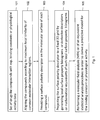
- Figure 1 shows a block diagram illustrating the essential steps of one embodiment of the method of this invention.
- a set of molecules with known binding constants or physiological activity data are chosen, which form the information basis for the structure-activity relationship or a training set.
- information about the structure of the molecule can be obtained for example from a crystallographic database like the Cambridge Crystallographic Database or determined using standard molecular modeling techniques like force field methods like AMBER or GROMOS, as implemented in commonly available simulation packages, or quantum chemical methods like DFT or HF calculations as implemented in TURBOMOLE, DMOL, Gaussian03 and many other quantum chemical software suites.
- step 102 of the method an alignment of the molecules takes place. This alignment aims at an orientation of the molecules in such a way that maximum local similarity of common molecular interaction regions is achieved. It can be done e.g. using the COSMOsim 3D tool, but also using any other alignment tool.
- step 103 of the method a surface polarity descriptor of the molecular surface for the set of molecules is provided. This can be done e.g. by running DFT-COSMO calculations for all compounds.
- Step 104 of the method is a key step for this invention.
- the surface polarity descriptor is projected onto a fixed three-dimensional grid, wherein the same three-dimensional grid is used for all molecules.
- the grid does not have to be cubic or rectangular and can have any shape or design.
- a favorable grid can be designed especially around the molecular surface or have increased resolutions at important surface pieces of the molecule. In this way, increased accuracy can be achieved with the same or less computational demand as in a simple cubic grid.
- the projection involves the use of local surface property histograms or mathematical equivalents or derivatives thereof.
- local surface property histograms or mathematical equivalents or derivatives thereof.
- this figure shows part of a grid plane 200 formed by central grid point A and grid points B, C, D, E, F, G, H, I that belongs to a three-dimensional grid and the line 251 representing the cut through an aligned molecule 250 lying in said plane. It illustrates in a simplified way how the histogram 300 shown in Figure 2b of the surface polarity descriptor for the central grid point A is calculated.
- step 103 of the method the surface polarity descriptor has been calculated for the molecule, which means that the molecule surface has been divided into a number of patches for which a value of the surface polarity descriptor is known.
- Figure 2a shows the patches 501-527 that lie on the line 251 representing the part of the three-dimensional surface of the aligned molecule 250.
- the values of the surface polarity descriptor for each patch 501-527 are binned into five bins 401 - 405 or groups and each of these bins 401 - 405 or groups is assigned a color coding.
- the number of bins 401 - 405 may be varied and is not limited by the value provided in this example.
- the binning and color coding could mean that patches with surface polarity descriptor values between 0 and 99.
- the number of grid points A - I may be considerably smaller than the number of patches 501-526. This allows for the inclusion of highly local information into a rather coarse grid.
- the histogram shown in Figure 2b can be obtained by simply evaluating the area of the patches assigned to a given bin inside a catchment area 210 marked in figure 2a by a dotted line and displaying the corresponding amount of surface area on histogram axis 302 versus the value of the surface polarity descriptor that is binned into bins 401 - 405 on histogram axis 301.
- patch 526 belongs to the first bin 401
- patch 527 belongs to the third bin 403
- patch 502 belongs to the fourth bin 404
- patches 501 and 525 belong to the fifth bin 405.
- the surface area represented by said patches may vary if the patches are not equal in size, as illustrated in figure 2b .
- step 105 of the method a molecular field analysis or an equivalent statistical analysis is performed in order to derive a predictive model for the binding constant or physiological activity based on which a new and/or improved drug can be developed.
- the molecular field analysis or the equivalent statistical analysis is at least partly based on the projection of the surface polarity descriptor to the three-dimensional grid.
- the data points of the histogram could be directly used in common MFA-approaches, as each bin of the histogram can replace one of the multiple descriptors of standard MFA techniques.
- a reduced or derived histogram such as slopes, integrals, moments or correlated regions can be used to increase numerical stability and physical meaning of the descriptor.
Landscapes
- Chemical & Material Sciences (AREA)
- Crystallography & Structural Chemistry (AREA)
- Life Sciences & Earth Sciences (AREA)
- Engineering & Computer Science (AREA)
- Bioinformatics & Cheminformatics (AREA)
- Bioinformatics & Computational Biology (AREA)
- Computing Systems (AREA)
- Theoretical Computer Science (AREA)
- Investigating Or Analysing Biological Materials (AREA)
Priority Applications (1)
| Application Number | Priority Date | Filing Date | Title |
|---|---|---|---|
| EP10014109A EP2447865A1 (fr) | 2010-10-29 | 2010-10-29 | Analyse de champ moléculaire basée sur les densités de polarisation cosmique |
Applications Claiming Priority (1)
| Application Number | Priority Date | Filing Date | Title |
|---|---|---|---|
| EP10014109A EP2447865A1 (fr) | 2010-10-29 | 2010-10-29 | Analyse de champ moléculaire basée sur les densités de polarisation cosmique |
Publications (1)
| Publication Number | Publication Date |
|---|---|
| EP2447865A1 true EP2447865A1 (fr) | 2012-05-02 |
Family
ID=43661883
Family Applications (1)
| Application Number | Title | Priority Date | Filing Date |
|---|---|---|---|
| EP10014109A Withdrawn EP2447865A1 (fr) | 2010-10-29 | 2010-10-29 | Analyse de champ moléculaire basée sur les densités de polarisation cosmique |
Country Status (1)
| Country | Link |
|---|---|
| EP (1) | EP2447865A1 (fr) |
Citations (1)
| Publication number | Priority date | Publication date | Assignee | Title |
|---|---|---|---|---|
| EP0592421B1 (fr) | 1991-06-17 | 1997-03-26 | Tripos Associates, Inc. | Analyse comparative de champs moleculaires |
-
2010
- 2010-10-29 EP EP10014109A patent/EP2447865A1/fr not_active Withdrawn
Patent Citations (1)
| Publication number | Priority date | Publication date | Assignee | Title |
|---|---|---|---|---|
| EP0592421B1 (fr) | 1991-06-17 | 1997-03-26 | Tripos Associates, Inc. | Analyse comparative de champs moleculaires |
Non-Patent Citations (9)
| Title |
|---|
| BHONSLE J. B. ET AL: "Application of 3D-QSAR for identification of descriptors defining bioactivity of antimicrobial peptides", JOURNAL OF MEDICINAL CHEMISTRY, vol. 50, no. 26, December 2007 (2007-12-01), pages 6545 - 6553, XP002629263, ISSN: 0022-2623 * |
| CRUCIANI G. ET AL: "Molecular fields in quantitative structure-permeation relationships: the VolSurf approach", THEOCHEM ELSEVIER NETHERLANDS, vol. 503, no. 1-2, 9 May 2000 (2000-05-09), pages 17 - 30, XP002629262, ISSN: 0166-1280 * |
| ERTL P. ET AL: "FAST CALCULATION OF MOLECULAR POLAR SURFACE AREA AS A SUM FRAGMENT-BASED CONTRIBUTIONS AND ITS APPLICATION TO THE PREDICTION OF DRUG TRANSPORT PROPERTIES", JOURNAL OF MEDICINAL CHEMISTRY, AMERICAN CHEMICAL SOCIETY, WASHINGTON, US, vol. 43, no. 20, 1 January 2000 (2000-01-01), pages 3714 - 3717, XP002942715, ISSN: 0022-2623, DOI: 10.1021/JM000942E * |
| HEVENER K. E. ET AL: "Quantitative structure-activity relationship studies on nitrofuranyl anti-tubercular agents.", BIOORGANIC & MEDICINAL CHEMISTRY 1 SEP 2008 LNKD- PUBMED:18701298, vol. 16, no. 17, 1 September 2008 (2008-09-01), pages 8042 - 8053, XP024524923, ISSN: 1464-3391 * |
| HORNIG M. ET AL: "COSMOfrag: A Novel Tool for High-Throughput ADME Property Prediction and Similarity Screening Based on Quantum Chemistry", JOURNAL OF CHEMICAL INFORMATION AND MODELING, AMERICAN CHEMICAL SOCIETY, WASHINGTON, DC, US, vol. 45, 1 January 2005 (2005-01-01), pages 1169 - 1177, XP007917669, ISSN: 1549-9596, [retrieved on 20050209], DOI: 10.1021/CI0501948 * |
| MACCHIARULO A. ET AL: "Molecular field analysis and 3D-quantitative structure-activity relationship study (MFA 3D-QSAR) unveil novel features of bile acid recognition at TGR5.", JOURNAL OF CHEMICAL INFORMATION AND MODELING SEP 2008 LNKD- PUBMED:18698841, vol. 48, no. 9, September 2008 (2008-09-01), pages 1792 - 1801, XP002629264, ISSN: 1549-9596 * |
| PRASANNA S. ET AL: "Topological polar surface area: a useful descriptor in 2D-QSAR.", CURRENT MEDICINAL CHEMISTRY 2009 LNKD- PUBMED:19149561, vol. 16, no. 1, 2009, pages 21 - 41, XP002629266, ISSN: 0929-8673 * |
| TURABEKOVA M. A. ET AL: "QSAR Analysis of the Structure-Toxicity Relationship of Aconitum and Delphinium Diterpene Alkaloids", CHEMISTRY OF NATURAL COMPOUNDS, KLUWER ACADEMIC PUBLISHERS-CONSULTANTS BUREAU, NE, vol. 41, no. 2, 1 March 2005 (2005-03-01), pages 213 - 219, XP019276706, ISSN: 1573-8388 * |
| VAN DE WATERBEEMD H. ET AL: "ADMET in silico modelling: towards prediction paradise?", NATURE REVIEWS. DRUG DISCOVERY MAR 2003 LNKD- PUBMED:12612645, vol. 2, no. 3, March 2003 (2003-03-01), pages 192 - 204, XP002629265, ISSN: 1474-1776 * |
Similar Documents
| Publication | Publication Date | Title |
|---|---|---|
| Ballester et al. | Ultrafast shape recognition: evaluating a new ligand-based virtual screening technology | |
| Ballester et al. | Ultrafast shape recognition to search compound databases for similar molecular shapes | |
| Vistoli et al. | Assessing drug-likeness–what are we missing? | |
| Yuan et al. | Binding site detection and druggability prediction of protein targets for structure-based drug design | |
| Lewis et al. | Similarity measures for rational set selection and analysis of combinatorial libraries: the diverse property-derived (DPD) approach | |
| Li et al. | Predicting protein-ligand interactions based on bow-pharmacological space and Bayesian additive regression trees | |
| Melquiond et al. | Next challenges in protein–protein docking: from proteome to interactome and beyond | |
| Buck et al. | Toward the virtual cell: automated approaches to building models of subcellular organization “learned” from microscopy images | |
| Boschitsch et al. | Formulation of a new and simple nonuniform size‐modified poisson–boltzmann description | |
| US6708141B1 (en) | Method for modeling cellular structure and function | |
| Zimmer et al. | New scoring schemes for protein fold recognition based on Voronoi contacts. | |
| Reimann et al. | Modeling and simulation of neocortical micro-and mesocircuitry (Part I, anatomy) | |
| Olson et al. | Prediction of protein loop conformations using multiscale modeling methods with physical energy scoring functions | |
| Schaub et al. | Scaffold Generator: a Java library implementing molecular scaffold functionalities in the Chemistry Development Kit (CDK) | |
| White et al. | Generative models for chemical structures | |
| Medina‐Franco et al. | Progress in the visualization and mining of chemical and target spaces | |
| Bajaj et al. | A dynamic data structure for flexible molecular maintenance and informatics | |
| Buchete et al. | Orientation-dependent coarse-grained potentials derived by statistical analysis of molecular structural databases | |
| Galindo‐Murillo et al. | Molecular modeling of nucleic acid structure | |
| Joshi et al. | iMAX FRET (Information Maximized FRET) for multipoint single-molecule structural analysis | |
| WO2005029351A1 (fr) | Procede de modelage et de prevision de liaison de molecules ligands a des molecules cibles, au moyen de procedes de mecanique quantique prenant en consideration l'effet d'un solvant | |
| Tang et al. | Influence of Fines Content and Particle Shape on Limiting Void Ratios of Sand Mixtures: DEM and AI Approaches | |
| Tomovic et al. | Computational structural analysis: multiple proteins bound to DNA | |
| Bertoni et al. | DynBench3D, a web-resource to dynamically generate benchmark sets of large heteromeric protein complexes | |
| Pitera et al. | Graphical visualization of mean hydration from molecular dynamics simulations |
Legal Events
| Date | Code | Title | Description |
|---|---|---|---|
| PUAI | Public reference made under article 153(3) epc to a published international application that has entered the european phase |
Free format text: ORIGINAL CODE: 0009012 |
|
| 17P | Request for examination filed |
Effective date: 20120313 |
|
| AK | Designated contracting states |
Kind code of ref document: A1 Designated state(s): AL AT BE BG CH CY CZ DE DK EE ES FI FR GB GR HR HU IE IS IT LI LT LU LV MC MK MT NL NO PL PT RO RS SE SI SK SM TR |
|
| AX | Request for extension of the european patent |
Extension state: BA ME |
|
| STAA | Information on the status of an ep patent application or granted ep patent |
Free format text: STATUS: EXAMINATION IS IN PROGRESS |
|
| 17Q | First examination report despatched |
Effective date: 20161104 |
|
| RAP1 | Party data changed (applicant data changed or rights of an application transferred) |
Owner name: DASSAULT SYSTEMES DEUTSCHLAND GMBH |
|
| RAP1 | Party data changed (applicant data changed or rights of an application transferred) |
Owner name: DASSAULT SYSTEMES AMERICAS CORP. |
|
| STAA | Information on the status of an ep patent application or granted ep patent |
Free format text: STATUS: THE APPLICATION HAS BEEN WITHDRAWN |
|
| 18W | Application withdrawn |
Effective date: 20240219 |