EP2448991B1 - Selbst abbildbares folienbildendes polymer, zusammensetzungen davon und vorrichtungen und strukturen daraus - Google Patents
Selbst abbildbares folienbildendes polymer, zusammensetzungen davon und vorrichtungen und strukturen daraus Download PDFInfo
- Publication number
- EP2448991B1 EP2448991B1 EP10760134.6A EP10760134A EP2448991B1 EP 2448991 B1 EP2448991 B1 EP 2448991B1 EP 10760134 A EP10760134 A EP 10760134A EP 2448991 B1 EP2448991 B1 EP 2448991B1
- Authority
- EP
- European Patent Office
- Prior art keywords
- polymer
- solution
- polymer composition
- film
- give
- Prior art date
- Legal status (The legal status is an assumption and is not a legal conclusion. Google has not performed a legal analysis and makes no representation as to the accuracy of the status listed.)
- Not-in-force
Links
- 229920000642 polymer Polymers 0.000 title claims description 205
- 239000000203 mixture Substances 0.000 title claims description 132
- YXFVVABEGXRONW-UHFFFAOYSA-N Toluene Chemical compound CC1=CC=CC=C1 YXFVVABEGXRONW-UHFFFAOYSA-N 0.000 claims description 123
- XLYOFNOQVPJJNP-UHFFFAOYSA-N water Substances O XLYOFNOQVPJJNP-UHFFFAOYSA-N 0.000 claims description 63
- 239000002904 solvent Substances 0.000 claims description 55
- 239000000178 monomer Substances 0.000 claims description 52
- -1 poly(hydroxystyrene) Polymers 0.000 claims description 29
- ISWSIDIOOBJBQZ-UHFFFAOYSA-N Phenol Chemical compound OC1=CC=CC=C1 ISWSIDIOOBJBQZ-UHFFFAOYSA-N 0.000 claims description 19
- 229920001519 homopolymer Polymers 0.000 claims description 17
- RTZKZFJDLAIYFH-UHFFFAOYSA-N Diethyl ether Chemical compound CCOCC RTZKZFJDLAIYFH-UHFFFAOYSA-N 0.000 claims description 16
- 239000000654 additive Substances 0.000 claims description 15
- 125000000217 alkyl group Chemical group 0.000 claims description 15
- 238000000034 method Methods 0.000 claims description 15
- 229920003986 novolac Polymers 0.000 claims description 13
- 238000004377 microelectronic Methods 0.000 claims description 11
- 150000002367 halogens Chemical class 0.000 claims description 10
- 230000005693 optoelectronics Effects 0.000 claims description 10
- 150000001875 compounds Chemical class 0.000 claims description 9
- 229910052736 halogen Inorganic materials 0.000 claims description 9
- JFNLZVQOOSMTJK-KNVOCYPGSA-N norbornene Chemical compound C1[C@@H]2CC[C@H]1C=C2 JFNLZVQOOSMTJK-KNVOCYPGSA-N 0.000 claims description 9
- 230000000996 additive effect Effects 0.000 claims description 7
- 125000003545 alkoxy group Chemical group 0.000 claims description 7
- 239000004215 Carbon black (E152) Substances 0.000 claims description 6
- 239000004593 Epoxy Substances 0.000 claims description 6
- 125000002877 alkyl aryl group Chemical group 0.000 claims description 6
- 125000004104 aryloxy group Chemical group 0.000 claims description 6
- 229930195733 hydrocarbon Natural products 0.000 claims description 6
- 150000002430 hydrocarbons Chemical class 0.000 claims description 6
- 238000005266 casting Methods 0.000 claims description 5
- 125000006575 electron-withdrawing group Chemical group 0.000 claims description 5
- 125000002023 trifluoromethyl group Chemical group FC(F)(F)* 0.000 claims description 5
- 125000004051 hexyl group Chemical group [H]C([H])([H])C([H])([H])C([H])([H])C([H])([H])C([H])([H])C([H])([H])* 0.000 claims description 4
- CZGCPAYJJYAUOL-UHFFFAOYSA-N 4-(5-bicyclo[2.2.1]hept-2-enyl)phenol Chemical compound C1=CC(O)=CC=C1C1C(C=C2)CC2C1 CZGCPAYJJYAUOL-UHFFFAOYSA-N 0.000 claims description 3
- 239000000758 substrate Substances 0.000 claims description 3
- PXWNHNNPCYRGHA-UHFFFAOYSA-N 2-(5-bicyclo[2.2.1]hept-2-enyloxymethyl)-1,1,1,3,3,3-hexafluoropropan-2-ol Chemical compound C1C2C(OCC(O)(C(F)(F)F)C(F)(F)F)CC1C=C2 PXWNHNNPCYRGHA-UHFFFAOYSA-N 0.000 claims description 2
- 238000000576 coating method Methods 0.000 claims description 2
- 150000002576 ketones Chemical class 0.000 claims description 2
- IPBVNPXQWQGGJP-UHFFFAOYSA-N phenyl acetate Chemical compound CC(=O)OC1=CC=CC=C1 IPBVNPXQWQGGJP-UHFFFAOYSA-N 0.000 claims 2
- 239000011248 coating agent Substances 0.000 claims 1
- 125000000664 diazo group Chemical group [N-]=[N+]=[*] 0.000 claims 1
- 150000004053 quinones Chemical class 0.000 claims 1
- 239000000243 solution Substances 0.000 description 148
- XEKOWRVHYACXOJ-UHFFFAOYSA-N Ethyl acetate Chemical compound CCOC(C)=O XEKOWRVHYACXOJ-UHFFFAOYSA-N 0.000 description 124
- 238000006243 chemical reaction Methods 0.000 description 92
- WYURNTSHIVDZCO-UHFFFAOYSA-N Tetrahydrofuran Chemical compound C1CCOC1 WYURNTSHIVDZCO-UHFFFAOYSA-N 0.000 description 88
- IJGRMHOSHXDMSA-UHFFFAOYSA-N Atomic nitrogen Chemical compound N#N IJGRMHOSHXDMSA-UHFFFAOYSA-N 0.000 description 80
- WGTYBPLFGIVFAS-UHFFFAOYSA-M tetramethylammonium hydroxide Chemical compound [OH-].C[N+](C)(C)C WGTYBPLFGIVFAS-UHFFFAOYSA-M 0.000 description 74
- 239000007787 solid Substances 0.000 description 73
- VLKZOEOYAKHREP-UHFFFAOYSA-N n-Hexane Chemical compound CCCCCC VLKZOEOYAKHREP-UHFFFAOYSA-N 0.000 description 67
- 235000019439 ethyl acetate Nutrition 0.000 description 59
- PXHVJJICTQNCMI-UHFFFAOYSA-N nickel Substances [Ni] PXHVJJICTQNCMI-UHFFFAOYSA-N 0.000 description 54
- 235000012431 wafers Nutrition 0.000 description 50
- 238000004090 dissolution Methods 0.000 description 47
- 239000011541 reaction mixture Substances 0.000 description 45
- 229910052757 nitrogen Inorganic materials 0.000 description 40
- KDLHZDBZIXYQEI-UHFFFAOYSA-N palladium Substances [Pd] KDLHZDBZIXYQEI-UHFFFAOYSA-N 0.000 description 32
- 0 *(C(C1)C2C=CC1C2)c1ccccc1 Chemical compound *(C(C1)C2C=CC1C2)c1ccccc1 0.000 description 31
- 238000006116 polymerization reaction Methods 0.000 description 31
- HEMHJVSKTPXQMS-UHFFFAOYSA-M Sodium hydroxide Chemical compound [OH-].[Na+] HEMHJVSKTPXQMS-UHFFFAOYSA-M 0.000 description 30
- 229910052710 silicon Inorganic materials 0.000 description 30
- XUIMIQQOPSSXEZ-UHFFFAOYSA-N Silicon Chemical compound [Si] XUIMIQQOPSSXEZ-UHFFFAOYSA-N 0.000 description 29
- 239000010703 silicon Substances 0.000 description 29
- BDAGIHXWWSANSR-UHFFFAOYSA-N methanoic acid Natural products OC=O BDAGIHXWWSANSR-UHFFFAOYSA-N 0.000 description 28
- 229910052760 oxygen Inorganic materials 0.000 description 27
- 238000003756 stirring Methods 0.000 description 27
- QVGXLLKOCUKJST-UHFFFAOYSA-N atomic oxygen Chemical compound [O] QVGXLLKOCUKJST-UHFFFAOYSA-N 0.000 description 25
- 239000001301 oxygen Substances 0.000 description 25
- 239000000843 powder Substances 0.000 description 25
- KFSLWBXXFJQRDL-UHFFFAOYSA-N Peracetic acid Chemical compound CC(=O)OO KFSLWBXXFJQRDL-UHFFFAOYSA-N 0.000 description 24
- QTBSBXVTEAMEQO-UHFFFAOYSA-N acetic acid Substances CC(O)=O QTBSBXVTEAMEQO-UHFFFAOYSA-N 0.000 description 22
- 239000003054 catalyst Substances 0.000 description 17
- 238000005160 1H NMR spectroscopy Methods 0.000 description 16
- VYPSYNLAJGMNEJ-UHFFFAOYSA-N Silicium dioxide Chemical compound O=[Si]=O VYPSYNLAJGMNEJ-UHFFFAOYSA-N 0.000 description 16
- 230000015572 biosynthetic process Effects 0.000 description 16
- LLHKCFNBLRBOGN-UHFFFAOYSA-N propylene glycol methyl ether acetate Chemical compound COCC(C)OC(C)=O LLHKCFNBLRBOGN-UHFFFAOYSA-N 0.000 description 16
- 238000003786 synthesis reaction Methods 0.000 description 16
- OKKJLVBELUTLKV-UHFFFAOYSA-N Methanol Chemical compound OC OKKJLVBELUTLKV-UHFFFAOYSA-N 0.000 description 15
- OSWFIVFLDKOXQC-UHFFFAOYSA-N 4-(3-methoxyphenyl)aniline Chemical compound COC1=CC=CC(C=2C=CC(N)=CC=2)=C1 OSWFIVFLDKOXQC-UHFFFAOYSA-N 0.000 description 14
- VEXZGXHMUGYJMC-UHFFFAOYSA-N Hydrochloric acid Chemical compound Cl VEXZGXHMUGYJMC-UHFFFAOYSA-N 0.000 description 14
- 125000002915 carbonyl group Chemical group [*:2]C([*:1])=O 0.000 description 14
- 235000019253 formic acid Nutrition 0.000 description 14
- 238000003384 imaging method Methods 0.000 description 14
- 238000004566 IR spectroscopy Methods 0.000 description 13
- 125000001183 hydrocarbyl group Chemical group 0.000 description 13
- 230000007062 hydrolysis Effects 0.000 description 13
- 238000006460 hydrolysis reaction Methods 0.000 description 13
- ARXJGSRGQADJSQ-UHFFFAOYSA-N 1-methoxypropan-2-ol Chemical compound COCC(C)O ARXJGSRGQADJSQ-UHFFFAOYSA-N 0.000 description 12
- 101100365016 Arabidopsis thaliana SCL6 gene Proteins 0.000 description 12
- 239000007864 aqueous solution Substances 0.000 description 12
- 125000003118 aryl group Chemical group 0.000 description 12
- 239000011521 glass Substances 0.000 description 11
- SCCDQYPEOIRVGX-UHFFFAOYSA-N Acetyleugenol Chemical compound COC1=CC(CC=C)=CC=C1OC(C)=O SCCDQYPEOIRVGX-UHFFFAOYSA-N 0.000 description 10
- OKTJSMMVPCPJKN-UHFFFAOYSA-N Carbon Chemical compound [C] OKTJSMMVPCPJKN-UHFFFAOYSA-N 0.000 description 10
- IMNFDUFMRHMDMM-UHFFFAOYSA-N N-Heptane Chemical compound CCCCCCC IMNFDUFMRHMDMM-UHFFFAOYSA-N 0.000 description 10
- 229910052739 hydrogen Inorganic materials 0.000 description 10
- CSCPPACGZOOCGX-UHFFFAOYSA-N Acetone Chemical compound CC(C)=O CSCPPACGZOOCGX-UHFFFAOYSA-N 0.000 description 9
- LRHPLDYGYMQRHN-UHFFFAOYSA-N N-Butanol Chemical compound CCCCO LRHPLDYGYMQRHN-UHFFFAOYSA-N 0.000 description 9
- 229910052799 carbon Inorganic materials 0.000 description 9
- 239000008367 deionised water Substances 0.000 description 9
- 229910021641 deionized water Inorganic materials 0.000 description 9
- 239000001257 hydrogen Substances 0.000 description 9
- 229910052759 nickel Inorganic materials 0.000 description 9
- 229920006254 polymer film Polymers 0.000 description 9
- 239000000126 substance Substances 0.000 description 9
- WQDUMFSSJAZKTM-UHFFFAOYSA-N Sodium methoxide Chemical compound [Na+].[O-]C WQDUMFSSJAZKTM-UHFFFAOYSA-N 0.000 description 8
- 229910052681 coesite Inorganic materials 0.000 description 8
- 229910052906 cristobalite Inorganic materials 0.000 description 8
- 125000000753 cycloalkyl group Chemical group 0.000 description 8
- 238000011161 development Methods 0.000 description 8
- 238000007654 immersion Methods 0.000 description 8
- 239000000377 silicon dioxide Substances 0.000 description 8
- 229910052682 stishovite Inorganic materials 0.000 description 8
- 125000001424 substituent group Chemical group 0.000 description 8
- 229910052905 tridymite Inorganic materials 0.000 description 8
- VYZAMTAEIAYCRO-UHFFFAOYSA-N Chromium Chemical compound [Cr] VYZAMTAEIAYCRO-UHFFFAOYSA-N 0.000 description 7
- FYGUSUBEMUKACF-UHFFFAOYSA-N bicyclo[2.2.1]hept-2-ene-5-carboxylic acid Chemical compound C1C2C(C(=O)O)CC1C=C2 FYGUSUBEMUKACF-UHFFFAOYSA-N 0.000 description 7
- 229910052740 iodine Inorganic materials 0.000 description 7
- 239000000463 material Substances 0.000 description 7
- 238000006140 methanolysis reaction Methods 0.000 description 7
- 230000005855 radiation Effects 0.000 description 7
- HEDRZPFGACZZDS-MICDWDOJSA-N Trichloro(2H)methane Chemical compound [2H]C(Cl)(Cl)Cl HEDRZPFGACZZDS-MICDWDOJSA-N 0.000 description 6
- ZMANZCXQSJIPKH-UHFFFAOYSA-N Triethylamine Chemical compound CCN(CC)CC ZMANZCXQSJIPKH-UHFFFAOYSA-N 0.000 description 6
- 238000004458 analytical method Methods 0.000 description 6
- 230000000052 comparative effect Effects 0.000 description 6
- 230000000694 effects Effects 0.000 description 6
- 229940093499 ethyl acetate Drugs 0.000 description 6
- CATSNJVOTSVZJV-UHFFFAOYSA-N heptan-2-one Chemical compound CCCCCC(C)=O CATSNJVOTSVZJV-UHFFFAOYSA-N 0.000 description 6
- 239000012074 organic phase Substances 0.000 description 6
- 229910052763 palladium Inorganic materials 0.000 description 6
- 125000005062 perfluorophenyl group Chemical group FC1=C(C(=C(C(=C1F)F)F)F)* 0.000 description 6
- 229920002959 polymer blend Polymers 0.000 description 6
- 239000000047 product Substances 0.000 description 6
- 239000002253 acid Substances 0.000 description 5
- 125000003710 aryl alkyl group Chemical group 0.000 description 5
- 125000004432 carbon atom Chemical group C* 0.000 description 5
- 150000001732 carboxylic acid derivatives Chemical class 0.000 description 5
- 239000003431 cross linking reagent Substances 0.000 description 5
- URQUNWYOBNUYJQ-UHFFFAOYSA-N diazonaphthoquinone Chemical compound C1=CC=C2C(=O)C(=[N]=[N])C=CC2=C1 URQUNWYOBNUYJQ-UHFFFAOYSA-N 0.000 description 5
- ZUOUZKKEUPVFJK-UHFFFAOYSA-N diphenyl Chemical group C1=CC=CC=C1C1=CC=CC=C1 ZUOUZKKEUPVFJK-UHFFFAOYSA-N 0.000 description 5
- 239000003480 eluent Substances 0.000 description 5
- 150000002431 hydrogen Chemical class 0.000 description 5
- 239000010410 layer Substances 0.000 description 5
- 125000001997 phenyl group Chemical group [H]C1=C([H])C([H])=C(*)C([H])=C1[H] 0.000 description 5
- 238000001556 precipitation Methods 0.000 description 5
- 238000012360 testing method Methods 0.000 description 5
- CZYVCAJKUNEWLC-UHFFFAOYSA-N 2-(5-bicyclo[2.2.1]hept-2-enyl)ethanol Chemical compound C1C2C(CCO)CC1C=C2 CZYVCAJKUNEWLC-UHFFFAOYSA-N 0.000 description 4
- BNCADMBVWNPPIZ-UHFFFAOYSA-N 2-n,2-n,4-n,4-n,6-n,6-n-hexakis(methoxymethyl)-1,3,5-triazine-2,4,6-triamine Chemical compound COCN(COC)C1=NC(N(COC)COC)=NC(N(COC)COC)=N1 BNCADMBVWNPPIZ-UHFFFAOYSA-N 0.000 description 4
- FJKROLUGYXJWQN-UHFFFAOYSA-N 4-hydroxybenzoic acid Chemical compound OC(=O)C1=CC=C(O)C=C1 FJKROLUGYXJWQN-UHFFFAOYSA-N 0.000 description 4
- 229920003270 Cymel® Polymers 0.000 description 4
- UFHFLCQGNIYNRP-UHFFFAOYSA-N Hydrogen Chemical compound [H][H] UFHFLCQGNIYNRP-UHFFFAOYSA-N 0.000 description 4
- 230000002378 acidificating effect Effects 0.000 description 4
- 125000002015 acyclic group Chemical group 0.000 description 4
- 125000003342 alkenyl group Chemical group 0.000 description 4
- 238000004132 cross linking Methods 0.000 description 4
- 125000004122 cyclic group Chemical group 0.000 description 4
- 238000009472 formulation Methods 0.000 description 4
- 125000001188 haloalkyl group Chemical group 0.000 description 4
- 238000010438 heat treatment Methods 0.000 description 4
- 125000004435 hydrogen atom Chemical group [H]* 0.000 description 4
- ZXEKIIBDNHEJCQ-UHFFFAOYSA-N isobutanol Chemical compound CC(C)CO ZXEKIIBDNHEJCQ-UHFFFAOYSA-N 0.000 description 4
- JDSHMPZPIAZGSV-UHFFFAOYSA-N melamine Chemical compound NC1=NC(N)=NC(N)=N1 JDSHMPZPIAZGSV-UHFFFAOYSA-N 0.000 description 4
- CTSLXHKWHWQRSH-UHFFFAOYSA-N oxalyl chloride Chemical compound ClC(=O)C(Cl)=O CTSLXHKWHWQRSH-UHFFFAOYSA-N 0.000 description 4
- IWDCLRJOBJJRNH-UHFFFAOYSA-N p-cresol Chemical compound CC1=CC=C(O)C=C1 IWDCLRJOBJJRNH-UHFFFAOYSA-N 0.000 description 4
- 239000003504 photosensitizing agent Substances 0.000 description 4
- 125000003367 polycyclic group Chemical group 0.000 description 4
- 238000000746 purification Methods 0.000 description 4
- 239000007858 starting material Substances 0.000 description 4
- YLQBMQCUIZJEEH-UHFFFAOYSA-N tetrahydrofuran Natural products C=1C=COC=1 YLQBMQCUIZJEEH-UHFFFAOYSA-N 0.000 description 4
- WFDIJRYMOXRFFG-UHFFFAOYSA-N Acetic anhydride Chemical compound CC(=O)OC(C)=O WFDIJRYMOXRFFG-UHFFFAOYSA-N 0.000 description 3
- WEVYAHXRMPXWCK-UHFFFAOYSA-N Acetonitrile Chemical compound CC#N WEVYAHXRMPXWCK-UHFFFAOYSA-N 0.000 description 3
- 206010042602 Supraventricular extrasystoles Diseases 0.000 description 3
- 150000001336 alkenes Chemical class 0.000 description 3
- 125000001797 benzyl group Chemical group [H]C1=C([H])C([H])=C(C([H])=C1[H])C([H])([H])* 0.000 description 3
- 238000004440 column chromatography Methods 0.000 description 3
- 229920001577 copolymer Polymers 0.000 description 3
- 239000000706 filtrate Substances 0.000 description 3
- 239000003999 initiator Substances 0.000 description 3
- 229910052751 metal Inorganic materials 0.000 description 3
- 239000002184 metal Substances 0.000 description 3
- 239000012299 nitrogen atmosphere Substances 0.000 description 3
- JRZJOMJEPLMPRA-UHFFFAOYSA-N olefin Natural products CCCCCCCC=C JRZJOMJEPLMPRA-UHFFFAOYSA-N 0.000 description 3
- YJVFFLUZDVXJQI-UHFFFAOYSA-L palladium(ii) acetate Chemical compound [Pd+2].CC([O-])=O.CC([O-])=O YJVFFLUZDVXJQI-UHFFFAOYSA-L 0.000 description 3
- NFHFRUOZVGFOOS-UHFFFAOYSA-N palladium;triphenylphosphane Chemical compound [Pd].C1=CC=CC=C1P(C=1C=CC=CC=1)C1=CC=CC=C1.C1=CC=CC=C1P(C=1C=CC=CC=1)C1=CC=CC=C1.C1=CC=CC=C1P(C=1C=CC=CC=1)C1=CC=CC=C1.C1=CC=CC=C1P(C=1C=CC=CC=1)C1=CC=CC=C1 NFHFRUOZVGFOOS-UHFFFAOYSA-N 0.000 description 3
- 239000012071 phase Substances 0.000 description 3
- 229920005989 resin Polymers 0.000 description 3
- 239000011347 resin Substances 0.000 description 3
- 239000002002 slurry Substances 0.000 description 3
- 229910001220 stainless steel Inorganic materials 0.000 description 3
- 239000010935 stainless steel Substances 0.000 description 3
- 230000008961 swelling Effects 0.000 description 3
- 125000000999 tert-butyl group Chemical group [H]C([H])([H])C(*)(C([H])([H])[H])C([H])([H])[H] 0.000 description 3
- CZDYPVPMEAXLPK-UHFFFAOYSA-N tetramethylsilane Chemical compound C[Si](C)(C)C CZDYPVPMEAXLPK-UHFFFAOYSA-N 0.000 description 3
- 125000000391 vinyl group Chemical group [H]C([*])=C([H])[H] 0.000 description 3
- CYPYTURSJDMMMP-WVCUSYJESA-N (1e,4e)-1,5-diphenylpenta-1,4-dien-3-one;palladium Chemical compound [Pd].[Pd].C=1C=CC=CC=1\C=C\C(=O)\C=C\C1=CC=CC=C1.C=1C=CC=CC=1\C=C\C(=O)\C=C\C1=CC=CC=C1.C=1C=CC=CC=1\C=C\C(=O)\C=C\C1=CC=CC=C1 CYPYTURSJDMMMP-WVCUSYJESA-N 0.000 description 2
- LWNGJAHMBMVCJR-UHFFFAOYSA-N (2,3,4,5,6-pentafluorophenoxy)boronic acid Chemical compound OB(O)OC1=C(F)C(F)=C(F)C(F)=C1F LWNGJAHMBMVCJR-UHFFFAOYSA-N 0.000 description 2
- ASZPSEKUSBGADD-UHFFFAOYSA-N (2-oxooxolan-3-yl) bicyclo[2.2.1]hept-2-ene-5-carboxylate Chemical compound C1C(C=C2)CC2C1C(=O)OC1CCOC1=O ASZPSEKUSBGADD-UHFFFAOYSA-N 0.000 description 2
- ZEKLCHCUARAYTN-UHFFFAOYSA-N (4-carbonochloridoylphenyl) ethyl carbonate Chemical compound CCOC(=O)OC1=CC=C(C(Cl)=O)C=C1 ZEKLCHCUARAYTN-UHFFFAOYSA-N 0.000 description 2
- 125000000008 (C1-C10) alkyl group Chemical group 0.000 description 2
- 125000006527 (C1-C5) alkyl group Chemical group 0.000 description 2
- HECLRDQVFMWTQS-RGOKHQFPSA-N 1755-01-7 Chemical compound C1[C@H]2[C@@H]3CC=C[C@@H]3[C@@H]1C=C2 HECLRDQVFMWTQS-RGOKHQFPSA-N 0.000 description 2
- JWUJQDFVADABEY-UHFFFAOYSA-N 2-methyltetrahydrofuran Chemical compound CC1CCCO1 JWUJQDFVADABEY-UHFFFAOYSA-N 0.000 description 2
- YEJRWHAVMIAJKC-UHFFFAOYSA-N 4-Butyrolactone Chemical compound O=C1CCCO1 YEJRWHAVMIAJKC-UHFFFAOYSA-N 0.000 description 2
- 229940090248 4-hydroxybenzoic acid Drugs 0.000 description 2
- WVYWICLMDOOCFB-UHFFFAOYSA-N 4-methyl-2-pentanol Chemical compound CC(C)CC(C)O WVYWICLMDOOCFB-UHFFFAOYSA-N 0.000 description 2
- YSWATWCBYRBYBO-UHFFFAOYSA-N 5-butylbicyclo[2.2.1]hept-2-ene Chemical compound C1C2C(CCCC)CC1C=C2 YSWATWCBYRBYBO-UHFFFAOYSA-N 0.000 description 2
- 229920001342 Bakelite® Polymers 0.000 description 2
- MHAJPDPJQMAIIY-UHFFFAOYSA-N Hydrogen peroxide Chemical compound OO MHAJPDPJQMAIIY-UHFFFAOYSA-N 0.000 description 2
- KFZMGEQAYNKOFK-UHFFFAOYSA-N Isopropanol Chemical compound CC(C)O KFZMGEQAYNKOFK-UHFFFAOYSA-N 0.000 description 2
- JLTDJTHDQAWBAV-UHFFFAOYSA-N N,N-dimethylaniline Chemical compound CN(C)C1=CC=CC=C1 JLTDJTHDQAWBAV-UHFFFAOYSA-N 0.000 description 2
- 238000012644 addition polymerization Methods 0.000 description 2
- 125000000304 alkynyl group Chemical group 0.000 description 2
- 125000002178 anthracenyl group Chemical group C1(=CC=CC2=CC3=CC=CC=C3C=C12)* 0.000 description 2
- 239000008346 aqueous phase Substances 0.000 description 2
- 239000004637 bakelite Substances 0.000 description 2
- 239000004305 biphenyl Chemical group 0.000 description 2
- 235000010290 biphenyl Nutrition 0.000 description 2
- 150000001721 carbon Chemical group 0.000 description 2
- 125000000113 cyclohexyl group Chemical group [H]C1([H])C([H])([H])C([H])([H])C([H])(*)C([H])([H])C1([H])[H] 0.000 description 2
- 125000001511 cyclopentyl group Chemical group [H]C1([H])C([H])([H])C([H])([H])C([H])(*)C1([H])[H] 0.000 description 2
- 238000001514 detection method Methods 0.000 description 2
- 238000004821 distillation Methods 0.000 description 2
- 229920001971 elastomer Polymers 0.000 description 2
- LZCLXQDLBQLTDK-UHFFFAOYSA-N ethyl 2-hydroxypropanoate Chemical compound CCOC(=O)C(C)O LZCLXQDLBQLTDK-UHFFFAOYSA-N 0.000 description 2
- RRAFCDWBNXTKKO-UHFFFAOYSA-N eugenol Chemical compound COC1=CC(CC=C)=CC=C1O RRAFCDWBNXTKKO-UHFFFAOYSA-N 0.000 description 2
- 238000001914 filtration Methods 0.000 description 2
- 229910052731 fluorine Inorganic materials 0.000 description 2
- 239000007789 gas Substances 0.000 description 2
- 125000005842 heteroatom Chemical group 0.000 description 2
- 125000002887 hydroxy group Chemical group [H]O* 0.000 description 2
- 238000010348 incorporation Methods 0.000 description 2
- 229940035429 isobutyl alcohol Drugs 0.000 description 2
- 125000004184 methoxymethyl group Chemical group [H]C([H])([H])OC([H])([H])* 0.000 description 2
- 125000001624 naphthyl group Chemical group 0.000 description 2
- 125000003518 norbornenyl group Chemical group C12(C=CC(CC1)C2)* 0.000 description 2
- 239000003921 oil Substances 0.000 description 2
- 239000012044 organic layer Substances 0.000 description 2
- 239000003960 organic solvent Substances 0.000 description 2
- 125000005003 perfluorobutyl group Chemical group FC(F)(F)C(F)(F)C(F)(F)C(F)(F)* 0.000 description 2
- 125000005004 perfluoroethyl group Chemical group FC(F)(F)C(F)(F)* 0.000 description 2
- 125000005005 perfluorohexyl group Chemical group FC(F)(F)C(F)(F)C(F)(F)C(F)(F)C(F)(F)C(F)(F)* 0.000 description 2
- 125000005009 perfluoropropyl group Chemical group FC(C(C(F)(F)F)(F)F)(F)* 0.000 description 2
- 229920002120 photoresistant polymer Polymers 0.000 description 2
- 238000002360 preparation method Methods 0.000 description 2
- 150000003254 radicals Chemical class 0.000 description 2
- 238000002791 soaking Methods 0.000 description 2
- 239000011877 solvent mixture Substances 0.000 description 2
- 238000009987 spinning Methods 0.000 description 2
- 229910052717 sulfur Inorganic materials 0.000 description 2
- RIOQSEWOXXDEQQ-UHFFFAOYSA-N triphenylphosphine Chemical compound C1=CC=CC=C1P(C=1C=CC=CC=1)C1=CC=CC=C1 RIOQSEWOXXDEQQ-UHFFFAOYSA-N 0.000 description 2
- 229920002554 vinyl polymer Polymers 0.000 description 2
- DSGKWFGEUBCEIE-UHFFFAOYSA-N (2-carbonochloridoylphenyl) acetate Chemical compound CC(=O)OC1=CC=CC=C1C(Cl)=O DSGKWFGEUBCEIE-UHFFFAOYSA-N 0.000 description 1
- RSHKWPIEJYAPCL-UHFFFAOYSA-N (3-ethyloxetan-3-yl)methyl 2-methylprop-2-enoate Chemical compound CC(=C)C(=O)OCC1(CC)COC1 RSHKWPIEJYAPCL-UHFFFAOYSA-N 0.000 description 1
- JAMNSIXSLVPNLC-UHFFFAOYSA-N (4-ethenylphenyl) acetate Chemical compound CC(=O)OC1=CC=C(C=C)C=C1 JAMNSIXSLVPNLC-UHFFFAOYSA-N 0.000 description 1
- QKAIFCSOWIMRJG-UHFFFAOYSA-N (4-methylphenyl)-(4-propan-2-ylphenyl)iodanium Chemical compound C1=CC(C(C)C)=CC=C1[I+]C1=CC=C(C)C=C1 QKAIFCSOWIMRJG-UHFFFAOYSA-N 0.000 description 1
- RYHBNJHYFVUHQT-UHFFFAOYSA-N 1,4-Dioxane Chemical compound C1COCCO1 RYHBNJHYFVUHQT-UHFFFAOYSA-N 0.000 description 1
- 125000004972 1-butynyl group Chemical group [H]C([H])([H])C([H])([H])C#C* 0.000 description 1
- 125000000530 1-propynyl group Chemical group [H]C([H])([H])C#C* 0.000 description 1
- WJFKNYWRSNBZNX-UHFFFAOYSA-N 10H-phenothiazine Chemical compound C1=CC=C2NC3=CC=CC=C3SC2=C1 WJFKNYWRSNBZNX-UHFFFAOYSA-N 0.000 description 1
- OVSKIKFHRZPJSS-UHFFFAOYSA-N 2,4-D Chemical compound OC(=O)COC1=CC=C(Cl)C=C1Cl OVSKIKFHRZPJSS-UHFFFAOYSA-N 0.000 description 1
- RPNMGUBLKCLAEK-UHFFFAOYSA-N 2-(4-chlorophenyl)sulfanyl-n,n-diethylethanamine;hydrochloride Chemical compound [Cl-].CC[NH+](CC)CCSC1=CC=C(Cl)C=C1 RPNMGUBLKCLAEK-UHFFFAOYSA-N 0.000 description 1
- ZIVCZWCNTNQGID-UHFFFAOYSA-N 2-(5-bicyclo[2.2.1]hept-2-enyl)ethyl 2-acetyloxybenzoate Chemical compound CC(=O)OC1=CC=CC=C1C(=O)OCCC1C(C=C2)CC2C1 ZIVCZWCNTNQGID-UHFFFAOYSA-N 0.000 description 1
- ZXROXPWUPHPCTC-UHFFFAOYSA-N 2-(5-bicyclo[2.2.1]hept-2-enyl)ethyl 2-hydroxybenzoate Chemical compound OC1=CC=CC=C1C(=O)OCCC1C(C=C2)CC2C1 ZXROXPWUPHPCTC-UHFFFAOYSA-N 0.000 description 1
- JLHDEZAQFKCWFR-UHFFFAOYSA-N 2-(5-bicyclo[2.2.1]hept-2-enyl)ethyl 4-ethoxycarbonyloxybenzoate Chemical compound C1=CC(OC(=O)OCC)=CC=C1C(=O)OCCC1C(C=C2)CC2C1 JLHDEZAQFKCWFR-UHFFFAOYSA-N 0.000 description 1
- NXVKWTQVEFQQTF-UHFFFAOYSA-N 2-(5-bicyclo[2.2.1]hept-2-enylmethoxy)ethanol Chemical compound C1C2C(COCCO)CC1C=C2 NXVKWTQVEFQQTF-UHFFFAOYSA-N 0.000 description 1
- GBNPJBBNCBLPQT-UHFFFAOYSA-N 2-(5-bicyclo[2.2.1]hept-2-enylmethoxymethyl)oxirane Chemical compound C1C(C=C2)CC2C1COCC1CO1 GBNPJBBNCBLPQT-UHFFFAOYSA-N 0.000 description 1
- NIQLOLNJWXWZHX-UHFFFAOYSA-N 2-(5-bicyclo[2.2.1]hept-2-enylmethyl)-1,1,1,3,3,3-hexafluoropropan-2-ol Chemical compound C1C2C(CC(O)(C(F)(F)F)C(F)(F)F)CC1C=C2 NIQLOLNJWXWZHX-UHFFFAOYSA-N 0.000 description 1
- IUVCFHHAEHNCFT-INIZCTEOSA-N 2-[(1s)-1-[4-amino-3-(3-fluoro-4-propan-2-yloxyphenyl)pyrazolo[3,4-d]pyrimidin-1-yl]ethyl]-6-fluoro-3-(3-fluorophenyl)chromen-4-one Chemical compound C1=C(F)C(OC(C)C)=CC=C1C(C1=C(N)N=CN=C11)=NN1[C@@H](C)C1=C(C=2C=C(F)C=CC=2)C(=O)C2=CC(F)=CC=C2O1 IUVCFHHAEHNCFT-INIZCTEOSA-N 0.000 description 1
- 125000000069 2-butynyl group Chemical group [H]C([H])([H])C#CC([H])([H])* 0.000 description 1
- RCLNKQNEDMOFTJ-UHFFFAOYSA-N 2-carbonochloridoyl-5-ethoxybenzoic acid Chemical compound CCOC1=CC=C(C(Cl)=O)C(C(O)=O)=C1 RCLNKQNEDMOFTJ-UHFFFAOYSA-N 0.000 description 1
- 125000000094 2-phenylethyl group Chemical group [H]C1=C([H])C([H])=C(C([H])=C1[H])C([H])([H])C([H])([H])* 0.000 description 1
- 125000003903 2-propenyl group Chemical group [H]C([*])([H])C([H])=C([H])[H] 0.000 description 1
- 125000001494 2-propynyl group Chemical group [H]C#CC([H])([H])* 0.000 description 1
- UYRZOVOOCHWSJB-UHFFFAOYSA-N 3-(3-bicyclo[2.2.1]hept-2-enyl)propanoic acid Chemical compound C1CC2C(CCC(=O)O)=CC1C2 UYRZOVOOCHWSJB-UHFFFAOYSA-N 0.000 description 1
- FUTNNRHYTGYHSK-UHFFFAOYSA-N 4-(2-bicyclo[2.2.1]hept-4-enylmethyl)-2-methoxyphenol Chemical compound C1=C(O)C(OC)=CC(CC2C3CC=C(C3)C2)=C1 FUTNNRHYTGYHSK-UHFFFAOYSA-N 0.000 description 1
- RLEVYVGYOWNLAX-UHFFFAOYSA-N 4-[5-bicyclo[2.2.1]hept-2-enyl-(4-hydroxy-3-methylphenyl)methyl]-2-methylphenol Chemical compound C1=C(O)C(C)=CC(C(C2C3CC(C=C3)C2)C=2C=C(C)C(O)=CC=2)=C1 RLEVYVGYOWNLAX-UHFFFAOYSA-N 0.000 description 1
- RGGBKNFGPFEDRC-UHFFFAOYSA-N 4-bicyclo[2.2.1]hept-2-enyl(triethoxy)silane Chemical compound C1CC2C=CC1([Si](OCC)(OCC)OCC)C2 RGGBKNFGPFEDRC-UHFFFAOYSA-N 0.000 description 1
- KHLNYSKHLDDQIZ-UHFFFAOYSA-N 4-ethoxyphthalic acid Chemical compound CCOC1=CC=C(C(O)=O)C(C(O)=O)=C1 KHLNYSKHLDDQIZ-UHFFFAOYSA-N 0.000 description 1
- JJGZNGYYMQOSIN-UHFFFAOYSA-N 5-(1-methylcyclopentyl)bicyclo[2.2.1]hept-2-ene Chemical compound C1C(C=C2)CC2C1C1(C)CCCC1 JJGZNGYYMQOSIN-UHFFFAOYSA-N 0.000 description 1
- BEHBBKCBARHMJQ-UHFFFAOYSA-N 5-(2-phenylethyl)bicyclo[2.2.1]hept-2-ene Chemical compound C1C(C=C2)CC2C1CCC1=CC=CC=C1 BEHBBKCBARHMJQ-UHFFFAOYSA-N 0.000 description 1
- LUMNWCHHXDUKFI-UHFFFAOYSA-N 5-bicyclo[2.2.1]hept-2-enylmethanol Chemical compound C1C2C(CO)CC1C=C2 LUMNWCHHXDUKFI-UHFFFAOYSA-N 0.000 description 1
- JHPLUQZQEHCSIP-UHFFFAOYSA-N 5-bicyclo[2.2.1]hept-2-enylmethyl acetate Chemical compound C1C2C(COC(=O)C)CC1C=C2 JHPLUQZQEHCSIP-UHFFFAOYSA-N 0.000 description 1
- ZNWOWBRFEBRMKW-UHFFFAOYSA-N 5-bicyclo[2.2.1]hept-2-enylmethyl(triethoxy)silane Chemical compound C1C2C(C[Si](OCC)(OCC)OCC)CC1C=C2 ZNWOWBRFEBRMKW-UHFFFAOYSA-N 0.000 description 1
- VTWPBVSOSWNXAX-UHFFFAOYSA-N 5-decylbicyclo[2.2.1]hept-2-ene Chemical compound C1C2C(CCCCCCCCCC)CC1C=C2 VTWPBVSOSWNXAX-UHFFFAOYSA-N 0.000 description 1
- QDEOLQXBVGPPDR-UHFFFAOYSA-N 6-acetyl-6-hydroxycyclohexa-2,4-diene-1-carbonyl chloride Chemical compound CC(=O)C1(O)C=CC=CC1C(Cl)=O QDEOLQXBVGPPDR-UHFFFAOYSA-N 0.000 description 1
- ZCYVEMRRCGMTRW-UHFFFAOYSA-N 7553-56-2 Chemical compound [I] ZCYVEMRRCGMTRW-UHFFFAOYSA-N 0.000 description 1
- BSYNRYMUTXBXSQ-UHFFFAOYSA-N Aspirin Chemical compound CC(=O)OC1=CC=CC=C1C(O)=O BSYNRYMUTXBXSQ-UHFFFAOYSA-N 0.000 description 1
- WKBOTKDWSSQWDR-UHFFFAOYSA-N Bromine atom Chemical compound [Br] WKBOTKDWSSQWDR-UHFFFAOYSA-N 0.000 description 1
- VUSMHPJJFLCUOR-UHFFFAOYSA-N C=CC(C(F)(F)F)(C(F)(F)F)O Chemical compound C=CC(C(F)(F)F)(C(F)(F)F)O VUSMHPJJFLCUOR-UHFFFAOYSA-N 0.000 description 1
- AJRPAEICYVORSF-UHFFFAOYSA-N CC(C)(C)OC(COC(C1C(C2)C=CC2C1)=O)=O Chemical compound CC(C)(C)OC(COC(C1C(C2)C=CC2C1)=O)=O AJRPAEICYVORSF-UHFFFAOYSA-N 0.000 description 1
- LXZIJWIEQRZHPQ-UHFFFAOYSA-N CC(C1)C2CC(C(C=O)O)C1C2 Chemical compound CC(C1)C2CC(C(C=O)O)C1C2 LXZIJWIEQRZHPQ-UHFFFAOYSA-N 0.000 description 1
- SAWDCOXDXAERLL-UHFFFAOYSA-N CC(CC1C2)C2CC1C(OC(C)(C)C)=O Chemical compound CC(CC1C2)C2CC1C(OC(C)(C)C)=O SAWDCOXDXAERLL-UHFFFAOYSA-N 0.000 description 1
- GYHWPKJRCWNBJA-UHFFFAOYSA-N CC(OC)OCC(C1)C2C#CC1C2 Chemical compound CC(OC)OCC(C1)C2C#CC1C2 GYHWPKJRCWNBJA-UHFFFAOYSA-N 0.000 description 1
- DVSDFYLMICVGJS-UHFFFAOYSA-N CC(OCC(CC(C1)C2C=CC1C2)COC(C)=O)=O Chemical compound CC(OCC(CC(C1)C2C=CC1C2)COC(C)=O)=O DVSDFYLMICVGJS-UHFFFAOYSA-N 0.000 description 1
- QCXGIPOBUASDAQ-UHFFFAOYSA-N CC(OCCC(C1)C2C=CC1C2)=O Chemical compound CC(OCCC(C1)C2C=CC1C2)=O QCXGIPOBUASDAQ-UHFFFAOYSA-N 0.000 description 1
- KRJJDXSTPKETCM-UHFFFAOYSA-N CC1(CCCC1)OC(C1C(C2)C=CC2C1)=O Chemical compound CC1(CCCC1)OC(C1C(C2)C=CC2C1)=O KRJJDXSTPKETCM-UHFFFAOYSA-N 0.000 description 1
- LNUURGGFXVJJRD-UHFFFAOYSA-N CC1(CCCC1)OC(CC(C1)C2C=CC1C2)=O Chemical compound CC1(CCCC1)OC(CC(C1)C2C=CC1C2)=O LNUURGGFXVJJRD-UHFFFAOYSA-N 0.000 description 1
- QXJRNVPTSXYGJP-UHFFFAOYSA-N CCC1(C=CCCC1)OC(C1C(C2)C=CC2C1)=O Chemical compound CCC1(C=CCCC1)OC(C1C(C2)C=CC2C1)=O QXJRNVPTSXYGJP-UHFFFAOYSA-N 0.000 description 1
- MEPQYLDLCSQYEV-UHFFFAOYSA-N COC(CC(C1)C2C=CC1C2)O Chemical compound COC(CC(C1)C2C=CC1C2)O MEPQYLDLCSQYEV-UHFFFAOYSA-N 0.000 description 1
- 101100243399 Caenorhabditis elegans pept-2 gene Proteins 0.000 description 1
- NPBVQXIMTZKSBA-UHFFFAOYSA-N Chavibetol Natural products COC1=CC=C(CC=C)C=C1O NPBVQXIMTZKSBA-UHFFFAOYSA-N 0.000 description 1
- VEXZGXHMUGYJMC-UHFFFAOYSA-M Chloride anion Chemical compound [Cl-] VEXZGXHMUGYJMC-UHFFFAOYSA-M 0.000 description 1
- ZAMOUSCENKQFHK-UHFFFAOYSA-N Chlorine atom Chemical compound [Cl] ZAMOUSCENKQFHK-UHFFFAOYSA-N 0.000 description 1
- HECLRDQVFMWTQS-UHFFFAOYSA-N Dicyclopentadiene Chemical compound C1C2C3CC=CC3C1C=C2 HECLRDQVFMWTQS-UHFFFAOYSA-N 0.000 description 1
- XTHFKEDIFFGKHM-UHFFFAOYSA-N Dimethoxyethane Chemical compound COCCOC XTHFKEDIFFGKHM-UHFFFAOYSA-N 0.000 description 1
- LFQSCWFLJHTTHZ-UHFFFAOYSA-N Ethanol Chemical compound CCO LFQSCWFLJHTTHZ-UHFFFAOYSA-N 0.000 description 1
- 239000005770 Eugenol Substances 0.000 description 1
- PXGOKWXKJXAPGV-UHFFFAOYSA-N Fluorine Chemical compound FF PXGOKWXKJXAPGV-UHFFFAOYSA-N 0.000 description 1
- UOHXMNNVFUKHRQ-UHFFFAOYSA-N NC(OCC(C1)C2C=CC1C2)=O Chemical compound NC(OCC(C1)C2C=CC1C2)=O UOHXMNNVFUKHRQ-UHFFFAOYSA-N 0.000 description 1
- 238000005481 NMR spectroscopy Methods 0.000 description 1
- LUARUUGUJNXHPK-UHFFFAOYSA-N NN(N)NC(OCC(C1)C2C=CC1C2)=O Chemical compound NN(N)NC(OCC(C1)C2C=CC1C2)=O LUARUUGUJNXHPK-UHFFFAOYSA-N 0.000 description 1
- WGQMFQDQGUGFRX-UHFFFAOYSA-N NN(N)NN(N)NC(OCC(C1)C2C=CC1C2)=O Chemical compound NN(N)NN(N)NC(OCC(C1)C2C=CC1C2)=O WGQMFQDQGUGFRX-UHFFFAOYSA-N 0.000 description 1
- AHWYAEQZOPRLLQ-UHFFFAOYSA-N NNCC(C1)C2CC(CC(C3C(C4)C=CC4C3)=O)CC1C2 Chemical compound NNCC(C1)C2CC(CC(C3C(C4)C=CC4C3)=O)CC1C2 AHWYAEQZOPRLLQ-UHFFFAOYSA-N 0.000 description 1
- IGWREGHWPFVWPU-UHFFFAOYSA-N NONC(OCC(C1)C2C=CC1C2)=O Chemical compound NONC(OCC(C1)C2C=CC1C2)=O IGWREGHWPFVWPU-UHFFFAOYSA-N 0.000 description 1
- 239000007832 Na2SO4 Substances 0.000 description 1
- GRYLNZFGIOXLOG-UHFFFAOYSA-N Nitric acid Chemical compound O[N+]([O-])=O GRYLNZFGIOXLOG-UHFFFAOYSA-N 0.000 description 1
- MKNOUPPYWIBPDW-ONEGZZNKSA-N O/C=C/OCC(C1)=C2C=CC1C2 Chemical compound O/C=C/OCC(C1)=C2C=CC1C2 MKNOUPPYWIBPDW-ONEGZZNKSA-N 0.000 description 1
- LHFIAMMRYGQCJH-UHFFFAOYSA-N O=C(C1CC2OC2CC1)OC1CC2OC2CC1 Chemical compound O=C(C1CC2OC2CC1)OC1CC2OC2CC1 LHFIAMMRYGQCJH-UHFFFAOYSA-N 0.000 description 1
- YMWHWRSSMGBMEK-UHFFFAOYSA-N OC(CC1C(CC2)C(COC(C3C(C4)C=CC4C3)=O)C2C1)(C(F)(F)F)[U] Chemical compound OC(CC1C(CC2)C(COC(C3C(C4)C=CC4C3)=O)C2C1)(C(F)(F)F)[U] YMWHWRSSMGBMEK-UHFFFAOYSA-N 0.000 description 1
- PHSXOZKMZYKHLY-UHFFFAOYSA-N OCCOC(C1C(C2)C=CC2C1)=O Chemical compound OCCOC(C1C(C2)C=CC2C1)=O PHSXOZKMZYKHLY-UHFFFAOYSA-N 0.000 description 1
- UVMRYBDEERADNV-UHFFFAOYSA-N Pseudoeugenol Natural products COC1=CC(C(C)=C)=CC=C1O UVMRYBDEERADNV-UHFFFAOYSA-N 0.000 description 1
- PMZURENOXWZQFD-UHFFFAOYSA-L Sodium Sulfate Chemical compound [Na+].[Na+].[O-]S([O-])(=O)=O PMZURENOXWZQFD-UHFFFAOYSA-L 0.000 description 1
- UIIMBOGNXHQVGW-UHFFFAOYSA-M Sodium bicarbonate Chemical class [Na+].OC([O-])=O UIIMBOGNXHQVGW-UHFFFAOYSA-M 0.000 description 1
- QAOWNCQODCNURD-UHFFFAOYSA-N Sulfuric acid Chemical compound OS(O)(=O)=O QAOWNCQODCNURD-UHFFFAOYSA-N 0.000 description 1
- 239000007983 Tris buffer Substances 0.000 description 1
- 206010047571 Visual impairment Diseases 0.000 description 1
- SJVQYUXGCHVFIN-UHFFFAOYSA-N [4-(4-bicyclo[2.2.1]hept-2-enylmethyl)-2-methoxyphenyl] acetate Chemical compound C1=C(OC(C)=O)C(OC)=CC(CC23CC(CC2)C=C3)=C1 SJVQYUXGCHVFIN-UHFFFAOYSA-N 0.000 description 1
- QDHJPVYLXXGNTO-UHFFFAOYSA-N [4-(5-bicyclo[2.2.1]hept-2-enyl)phenyl] acetate Chemical compound C1=CC(OC(=O)C)=CC=C1C1C(C=C2)CC2C1 QDHJPVYLXXGNTO-UHFFFAOYSA-N 0.000 description 1
- DCGXAAXOEHLEPC-UHFFFAOYSA-N acetic acid;5-bicyclo[2.2.1]hept-2-enylmethanol Chemical compound CC(O)=O.C1C2C(CO)CC1C=C2 DCGXAAXOEHLEPC-UHFFFAOYSA-N 0.000 description 1
- 229960001138 acetylsalicylic acid Drugs 0.000 description 1
- 238000007259 addition reaction Methods 0.000 description 1
- 125000005103 alkyl silyl group Chemical group 0.000 description 1
- HSFWRNGVRCDJHI-UHFFFAOYSA-N alpha-acetylene Natural products C#C HSFWRNGVRCDJHI-UHFFFAOYSA-N 0.000 description 1
- 229910052782 aluminium Inorganic materials 0.000 description 1
- XAGFODPZIPBFFR-UHFFFAOYSA-N aluminium Chemical compound [Al] XAGFODPZIPBFFR-UHFFFAOYSA-N 0.000 description 1
- 150000001408 amides Chemical class 0.000 description 1
- 230000003321 amplification Effects 0.000 description 1
- 125000006615 aromatic heterocyclic group Chemical group 0.000 description 1
- 238000003556 assay Methods 0.000 description 1
- LFYJSSARVMHQJB-QIXNEVBVSA-N bakuchiol Chemical compound CC(C)=CCC[C@@](C)(C=C)\C=C\C1=CC=C(O)C=C1 LFYJSSARVMHQJB-QIXNEVBVSA-N 0.000 description 1
- WPYMKLBDIGXBTP-UHFFFAOYSA-N benzoic acid Chemical compound OC(=O)C1=CC=CC=C1 WPYMKLBDIGXBTP-UHFFFAOYSA-N 0.000 description 1
- 125000002619 bicyclic group Chemical group 0.000 description 1
- UQWLFOMXECTXNQ-UHFFFAOYSA-N bis(trifluoromethylsulfonyl)methylsulfonyl-trifluoromethane Chemical compound FC(F)(F)S(=O)(=O)[C-](S(=O)(=O)C(F)(F)F)S(=O)(=O)C(F)(F)F UQWLFOMXECTXNQ-UHFFFAOYSA-N 0.000 description 1
- MYIAPBDBTMDUDP-UHFFFAOYSA-N bis(trifluoromethylsulfonyl)methylsulfonyl-trifluoromethane Chemical compound FC(F)(F)S(=O)(=O)C(S(=O)(=O)C(F)(F)F)S(=O)(=O)C(F)(F)F MYIAPBDBTMDUDP-UHFFFAOYSA-N 0.000 description 1
- FJBTZWJPRJMVLG-UHFFFAOYSA-N bis[(3-ethyloxetan-3-yl)methyl] benzene-1,3-dicarboxylate Chemical compound C=1C=CC(C(=O)OCC2(CC)COC2)=CC=1C(=O)OCC1(CC)COC1 FJBTZWJPRJMVLG-UHFFFAOYSA-N 0.000 description 1
- GDTBXPJZTBHREO-UHFFFAOYSA-N bromine Substances BrBr GDTBXPJZTBHREO-UHFFFAOYSA-N 0.000 description 1
- 229910052794 bromium Inorganic materials 0.000 description 1
- 239000000872 buffer Substances 0.000 description 1
- 125000004369 butenyl group Chemical group C(=CCC)* 0.000 description 1
- 125000000484 butyl group Chemical group [H]C([*])([H])C([H])([H])C([H])([H])C([H])([H])[H] 0.000 description 1
- 125000003262 carboxylic acid ester group Chemical group [H]C([H])([*:2])OC(=O)C([H])([H])[*:1] 0.000 description 1
- 150000001733 carboxylic acid esters Chemical class 0.000 description 1
- 125000002091 cationic group Chemical group 0.000 description 1
- 239000003795 chemical substances by application Substances 0.000 description 1
- 229910052801 chlorine Inorganic materials 0.000 description 1
- 239000000460 chlorine Substances 0.000 description 1
- 239000012043 crude product Substances 0.000 description 1
- 239000002178 crystalline material Substances 0.000 description 1
- 238000005520 cutting process Methods 0.000 description 1
- 125000000392 cycloalkenyl group Chemical group 0.000 description 1
- 125000000596 cyclohexenyl group Chemical group C1(=CCCCC1)* 0.000 description 1
- 230000007423 decrease Effects 0.000 description 1
- 125000002704 decyl group Chemical group [H]C([H])([H])C([H])([H])C([H])([H])C([H])([H])C([H])([H])C([H])([H])C([H])([H])C([H])([H])C([H])([H])C([H])([H])* 0.000 description 1
- 230000001419 dependent effect Effects 0.000 description 1
- KPUWHANPEXNPJT-UHFFFAOYSA-N disiloxane Chemical group [SiH3]O[SiH3] KPUWHANPEXNPJT-UHFFFAOYSA-N 0.000 description 1
- 239000002612 dispersion medium Substances 0.000 description 1
- 238000005485 electric heating Methods 0.000 description 1
- 125000003700 epoxy group Chemical group 0.000 description 1
- 150000002170 ethers Chemical group 0.000 description 1
- ZILRSGXFDURMQD-UHFFFAOYSA-N ethyl 3-(3-bicyclo[2.2.1]hept-2-enyl)propanoate Chemical compound C1CC2C(CCC(=O)OCC)=CC1C2 ZILRSGXFDURMQD-UHFFFAOYSA-N 0.000 description 1
- RIFGWPKJUGCATF-UHFFFAOYSA-N ethyl chloroformate Chemical compound CCOC(Cl)=O RIFGWPKJUGCATF-UHFFFAOYSA-N 0.000 description 1
- 125000001495 ethyl group Chemical group [H]C([H])([H])C([H])([H])* 0.000 description 1
- 229940116333 ethyl lactate Drugs 0.000 description 1
- 125000002534 ethynyl group Chemical group [H]C#C* 0.000 description 1
- 229960002217 eugenol Drugs 0.000 description 1
- 239000000284 extract Substances 0.000 description 1
- 239000011737 fluorine Substances 0.000 description 1
- IVJISJACKSSFGE-UHFFFAOYSA-N formaldehyde;1,3,5-triazine-2,4,6-triamine Chemical class O=C.NC1=NC(N)=NC(N)=N1 IVJISJACKSSFGE-UHFFFAOYSA-N 0.000 description 1
- 125000002541 furyl group Chemical group 0.000 description 1
- 238000004817 gas chromatography Methods 0.000 description 1
- VPVSTMAPERLKKM-UHFFFAOYSA-N glycoluril Chemical compound N1C(=O)NC2NC(=O)NC21 VPVSTMAPERLKKM-UHFFFAOYSA-N 0.000 description 1
- 125000001046 glycoluril group Chemical group [H]C12N(*)C(=O)N(*)C1([H])N(*)C(=O)N2* 0.000 description 1
- 125000005843 halogen group Chemical group 0.000 description 1
- 125000003187 heptyl group Chemical group [H]C([*])([H])C([H])([H])C([H])([H])C([H])([H])C([H])([H])C([H])([H])C([H])([H])[H] 0.000 description 1
- 125000004404 heteroalkyl group Chemical group 0.000 description 1
- 238000005286 illumination Methods 0.000 description 1
- 150000003949 imides Chemical class 0.000 description 1
- 239000011630 iodine Substances 0.000 description 1
- 239000003456 ion exchange resin Substances 0.000 description 1
- 229920003303 ion-exchange polymer Polymers 0.000 description 1
- 229920000554 ionomer Polymers 0.000 description 1
- 125000000959 isobutyl group Chemical group [H]C([H])([H])C([H])(C([H])([H])[H])C([H])([H])* 0.000 description 1
- 125000001449 isopropyl group Chemical group [H]C([H])([H])C([H])(*)C([H])([H])[H] 0.000 description 1
- 239000004973 liquid crystal related substance Substances 0.000 description 1
- 238000004519 manufacturing process Methods 0.000 description 1
- 238000005259 measurement Methods 0.000 description 1
- QSHDDOUJBYECFT-UHFFFAOYSA-N mercury Chemical compound [Hg] QSHDDOUJBYECFT-UHFFFAOYSA-N 0.000 description 1
- 125000002496 methyl group Chemical group [H]C([H])([H])* 0.000 description 1
- 238000001000 micrograph Methods 0.000 description 1
- 238000001393 microlithography Methods 0.000 description 1
- 238000012544 monitoring process Methods 0.000 description 1
- 125000002950 monocyclic group Chemical group 0.000 description 1
- GTKQRIPEBBDJIN-UHFFFAOYSA-N n-(5-bicyclo[2.2.1]hept-2-enylmethyl)-1,1,1-trifluoromethanesulfonamide Chemical compound C1C2C(CNS(=O)(=O)C(F)(F)F)CC1C=C2 GTKQRIPEBBDJIN-UHFFFAOYSA-N 0.000 description 1
- 125000001971 neopentyl group Chemical group [H]C([*])([H])C(C([H])([H])[H])(C([H])([H])[H])C([H])([H])[H] 0.000 description 1
- 230000007935 neutral effect Effects 0.000 description 1
- 238000006396 nitration reaction Methods 0.000 description 1
- 229910017604 nitric acid Inorganic materials 0.000 description 1
- 125000001400 nonyl group Chemical group [H]C([*])([H])C([H])([H])C([H])([H])C([H])([H])C([H])([H])C([H])([H])C([H])([H])C([H])([H])C([H])([H])[H] 0.000 description 1
- 150000002848 norbornenes Chemical class 0.000 description 1
- 238000003199 nucleic acid amplification method Methods 0.000 description 1
- 125000002347 octyl group Chemical group [H]C([*])([H])C([H])([H])C([H])([H])C([H])([H])C([H])([H])C([H])([H])C([H])([H])C([H])([H])[H] 0.000 description 1
- 238000010943 off-gassing Methods 0.000 description 1
- 150000002921 oxetanes Chemical class 0.000 description 1
- 125000004430 oxygen atom Chemical group O* 0.000 description 1
- 125000001147 pentyl group Chemical group C(CCCC)* 0.000 description 1
- 229950000688 phenothiazine Drugs 0.000 description 1
- 229910052698 phosphorus Inorganic materials 0.000 description 1
- 239000000906 photoactive agent Substances 0.000 description 1
- 238000000206 photolithography Methods 0.000 description 1
- 229920003050 poly-cycloolefin Polymers 0.000 description 1
- 229920000647 polyepoxide Polymers 0.000 description 1
- 239000002685 polymerization catalyst Substances 0.000 description 1
- 229920000098 polyolefin Polymers 0.000 description 1
- 229920001289 polyvinyl ether Polymers 0.000 description 1
- 125000001436 propyl group Chemical group [H]C([*])([H])C([H])([H])C([H])([H])[H] 0.000 description 1
- QQONPFPTGQHPMA-UHFFFAOYSA-N propylene Natural products CC=C QQONPFPTGQHPMA-UHFFFAOYSA-N 0.000 description 1
- 125000004805 propylene group Chemical group [H]C([H])([H])C([H])([*:1])C([H])([H])[*:2] 0.000 description 1
- 125000000168 pyrrolyl group Chemical group 0.000 description 1
- 238000009877 rendering Methods 0.000 description 1
- 239000013557 residual solvent Substances 0.000 description 1
- 229930195734 saturated hydrocarbon Chemical group 0.000 description 1
- 238000007789 sealing Methods 0.000 description 1
- 125000002914 sec-butyl group Chemical group [H]C([H])([H])C([H])([H])C([H])(*)C([H])([H])[H] 0.000 description 1
- 239000004065 semiconductor Substances 0.000 description 1
- 238000005389 semiconductor device fabrication Methods 0.000 description 1
- 238000000926 separation method Methods 0.000 description 1
- WBHQBSYUUJJSRZ-UHFFFAOYSA-M sodium bisulfate Chemical compound [Na+].OS([O-])(=O)=O WBHQBSYUUJJSRZ-UHFFFAOYSA-M 0.000 description 1
- 229910000342 sodium bisulfate Inorganic materials 0.000 description 1
- 229910052938 sodium sulfate Inorganic materials 0.000 description 1
- 230000003381 solubilizing effect Effects 0.000 description 1
- 125000006850 spacer group Chemical group 0.000 description 1
- 238000004528 spin coating Methods 0.000 description 1
- 125000000383 tetramethylene group Chemical group [H]C([H])([*:1])C([H])([H])C([H])([H])C([H])([H])[*:2] 0.000 description 1
- 150000003568 thioethers Chemical group 0.000 description 1
- 239000011345 viscous material Substances 0.000 description 1
- 238000012800 visualization Methods 0.000 description 1
- 125000005023 xylyl group Chemical group 0.000 description 1
Images




Classifications
-
- C—CHEMISTRY; METALLURGY
- C08—ORGANIC MACROMOLECULAR COMPOUNDS; THEIR PREPARATION OR CHEMICAL WORKING-UP; COMPOSITIONS BASED THEREON
- C08G—MACROMOLECULAR COMPOUNDS OBTAINED OTHERWISE THAN BY REACTIONS ONLY INVOLVING UNSATURATED CARBON-TO-CARBON BONDS
- C08G61/00—Macromolecular compounds obtained by reactions forming a carbon-to-carbon link in the main chain of the macromolecule
- C08G61/02—Macromolecular compounds containing only carbon atoms in the main chain of the macromolecule, e.g. polyxylylenes
- C08G61/04—Macromolecular compounds containing only carbon atoms in the main chain of the macromolecule, e.g. polyxylylenes only aliphatic carbon atoms
- C08G61/06—Macromolecular compounds containing only carbon atoms in the main chain of the macromolecule, e.g. polyxylylenes only aliphatic carbon atoms prepared by ring-opening of carbocyclic compounds
- C08G61/08—Macromolecular compounds containing only carbon atoms in the main chain of the macromolecule, e.g. polyxylylenes only aliphatic carbon atoms prepared by ring-opening of carbocyclic compounds of carbocyclic compounds containing one or more carbon-to-carbon double bonds in the ring
-
- C—CHEMISTRY; METALLURGY
- C08—ORGANIC MACROMOLECULAR COMPOUNDS; THEIR PREPARATION OR CHEMICAL WORKING-UP; COMPOSITIONS BASED THEREON
- C08L—COMPOSITIONS OF MACROMOLECULAR COMPOUNDS
- C08L65/00—Compositions of macromolecular compounds obtained by reactions forming a carbon-to-carbon link in the main chain; Compositions of derivatives of such polymers
-
- G—PHYSICS
- G03—PHOTOGRAPHY; CINEMATOGRAPHY; ANALOGOUS TECHNIQUES USING WAVES OTHER THAN OPTICAL WAVES; ELECTROGRAPHY; HOLOGRAPHY
- G03F—PHOTOMECHANICAL PRODUCTION OF TEXTURED OR PATTERNED SURFACES, e.g. FOR PRINTING, FOR PROCESSING OF SEMICONDUCTOR DEVICES; MATERIALS THEREFOR; ORIGINALS THEREFOR; APPARATUS SPECIALLY ADAPTED THEREFOR
- G03F7/00—Photomechanical, e.g. photolithographic, production of textured or patterned surfaces, e.g. printing surfaces; Materials therefor, e.g. comprising photoresists; Apparatus specially adapted therefor
- G03F7/004—Photosensitive materials
- G03F7/022—Quinonediazides
- G03F7/023—Macromolecular quinonediazides; Macromolecular additives, e.g. binders
- G03F7/0233—Macromolecular quinonediazides; Macromolecular additives, e.g. binders characterised by the polymeric binders or the macromolecular additives other than the macromolecular quinonediazides
-
- G—PHYSICS
- G03—PHOTOGRAPHY; CINEMATOGRAPHY; ANALOGOUS TECHNIQUES USING WAVES OTHER THAN OPTICAL WAVES; ELECTROGRAPHY; HOLOGRAPHY
- G03F—PHOTOMECHANICAL PRODUCTION OF TEXTURED OR PATTERNED SURFACES, e.g. FOR PRINTING, FOR PROCESSING OF SEMICONDUCTOR DEVICES; MATERIALS THEREFOR; ORIGINALS THEREFOR; APPARATUS SPECIALLY ADAPTED THEREFOR
- G03F7/00—Photomechanical, e.g. photolithographic, production of textured or patterned surfaces, e.g. printing surfaces; Materials therefor, e.g. comprising photoresists; Apparatus specially adapted therefor
- G03F7/004—Photosensitive materials
- G03F7/038—Macromolecular compounds which are rendered insoluble or differentially wettable
- G03F7/0382—Macromolecular compounds which are rendered insoluble or differentially wettable the macromolecular compound being present in a chemically amplified negative photoresist composition
-
- C—CHEMISTRY; METALLURGY
- C08—ORGANIC MACROMOLECULAR COMPOUNDS; THEIR PREPARATION OR CHEMICAL WORKING-UP; COMPOSITIONS BASED THEREON
- C08G—MACROMOLECULAR COMPOUNDS OBTAINED OTHERWISE THAN BY REACTIONS ONLY INVOLVING UNSATURATED CARBON-TO-CARBON BONDS
- C08G2261/00—Macromolecular compounds obtained by reactions forming a carbon-to-carbon link in the main chain of the macromolecule
- C08G2261/30—Monomer units or repeat units incorporating structural elements in the main chain
- C08G2261/33—Monomer units or repeat units incorporating structural elements in the main chain incorporating non-aromatic structural elements in the main chain
- C08G2261/332—Monomer units or repeat units incorporating structural elements in the main chain incorporating non-aromatic structural elements in the main chain containing only carbon atoms
- C08G2261/3324—Monomer units or repeat units incorporating structural elements in the main chain incorporating non-aromatic structural elements in the main chain containing only carbon atoms derived from norbornene
-
- C—CHEMISTRY; METALLURGY
- C08—ORGANIC MACROMOLECULAR COMPOUNDS; THEIR PREPARATION OR CHEMICAL WORKING-UP; COMPOSITIONS BASED THEREON
- C08G—MACROMOLECULAR COMPOUNDS OBTAINED OTHERWISE THAN BY REACTIONS ONLY INVOLVING UNSATURATED CARBON-TO-CARBON BONDS
- C08G2261/00—Macromolecular compounds obtained by reactions forming a carbon-to-carbon link in the main chain of the macromolecule
- C08G2261/40—Polymerisation processes
- C08G2261/41—Organometallic coupling reactions
- C08G2261/418—Ring opening metathesis polymerisation [ROMP]
Definitions
- the present invention relates generally to norbornene-type polymers useful in compositions for forming self-imageable films and more specifically to such polymers that encompass repeating units that have phenolic functionality for providing self-imageability when a film is imagewise exposed to actinic radiation.
- Both the DNQ/novolak and PHS systems encompass acidic phenol functionality that is deprotonated by aqueous base, in areas exposed to the actinic radiation, during the image development process thus rendering the resulting ionomer soluble and providing a positive image. Further, it is known that both novolaks and PHS polymers dissolve smoothly in aqueous base developer with minimal swelling ( Rao, A. et al. Proc. SPIE, 2006, 6153, 615310-1 and Varanasi, et al. Proc. SPIE, 2005, 5753, 131 , respectively).
- WO 2006/017035 discloses the manufacture of polymers from norbornene group containing monomers. These polymers can be used for making photosensitive coatings by admixing them with a photoactive agent and a solvent.
- aqueous developable norbornene-type film forming polymers and compositions formed thereof will be advantageous for microelectronic and optoelectronic devices, providing such polymers and/or polymer compositions would be useful.
- solubility problems with norbornene-type polymer systems and the creation of polymer compositions and their use is described hereinafter.
- the present invention relates to a film forming polymer composition
- a film forming polymer composition comprising:
- Embodiments in accordance with the present invention are directed to providing polycyclic olefin polymer compositions, such as norbornene-type polymer compositions that are capable of forming films for use in microelectronic and optoelectronic devices.
- such films are self-imageable, that is to say that when image-wise exposed to actinic radiation, such films can be developed to form a patterned film, where such pattern is positively reflective of the image through which the film was exposed and thus provide structures that are or are to become a part of such microelectronic and/or optoelectronic devices.
- polymer composition is meant to include one or more synthesized polymers, as well as residues from initiators, catalysts and other elements attendant to the synthesis of such polymer(s), where such residues are understood as not being covalently incorporated thereto.
- residues and other elements considered as part of the polymer composition are typically mixed or co-mingled with the polymer(s) such that they tend to remain with therewith when it is transferred between vessels or between solvent or dispersion media.
- a polymer composition can also include materials added after synthesis of the polymer(s) to provide or modify specific properties of such composition.
- hydrocarbyl refers to a radical of a group that contains only carbon and hydrogen, non-limiting examples being alkyl, cycloalkyl, aryl, aralkyl, alkaryl, and alkenyl.
- halohydrocarbyl refers to a hydrocarbyl group where at least one hydrogen has been replaced by a halogen.
- perhalocarbyl refers to a hydrocarbyl group where all hydrogens have been replaced by a halogen.
- alkyl refers to a linear or branched acyclic or cyclic, saturated hydrocarbon group having a carbon chain length of, for example, from appropriate C 1 to C 25 groups.
- suitable alkyl groups include, but are not limited to, -(CH 2 ) 3 CH 3 , -(CH 2 ) 4 CH 3 , -(CH 2 ) 5 CH 3 . -(CH 2 ) 9 CH 3 , - (CH 2 ) 23 CH 3 , cyclopentyl and cyclohexyl.
- aryl refers to aromatic groups that include, without limitation, groups such as phenyl, biphenyl, benzyl, xylyl, naphthalenyl, anthracenyl and the like.
- alkaryl or “aralkyl” are used herein interchangeably and refer to a linear or branched acyclic alkyl group substituted with at least one aryl group, for example, phenyl, and having an alkyl carbon chain length of C 1 to C 25 . It will further be understood that the above acyclic alkyl group can be a haloalkyl or perhaloakyl group.
- alkenyl refers to a linear or branched acyclic or cyclic hydrocarbon group having one or more double bonds and having an alkenyl carbon chain length of C 2 to C 25 .
- Non-limiting examples include, among others, vinyl groups, propylene, butenes and the like.
- heterohydrocarbyl to any of the previously described hydrocarbyls, halohydrocarbyls and perhalohydrocarbyls where at least one carbon of the carbon chain is replaced with N, O, S, Si or P.
- Non-limiting examples include heterocyclic aromatic groups such as pyrrolyl, furanyl, and the like, as well as non-aromatic groups such as ethers, thioethers and silyl ethers.
- alkylol refers to alkyl groups that include one or more hydroxyl groups.
- any of the hydrocarbyl, halohydrocarbyl and perhalohydrocarbyl moieties described above can be further substituted, if desired.
- suitable substituent groups include, among others, hydroxyl groups, benzyl groups, carboxylic acid and carboxylic acid ester groups, amides and imides.
- Embodiments in accordance with the present invention are suitable for the preparation of polymers encompassing a wide range of norbornene-type repeating units.
- polycycloolefin poly(cyclic) olefin
- nonorbornene-type are used interchangeably and refer to addition polymerizable monomers (or the resulting repeating unit), that encompass at least one norbornene moiety such as shown below.
- Polymers having one or more repeating units of any of monomers in accordance with the following Formulae I or Ia can additionally be encompassed in polymer blend compositions encompassing the first polymer described above or a polymer blend compositions encompassing the first polymer described above and a second polymer, preferably a second polymer comprising repeat units derived from a monomer represented in Monomer Group EE described below.
- norbornene-type or poly(cyclic) olefin monomer encompassed by embodiments in accordance with the present invention is the bicyclic monomer, bicyclo[2.2.1]hept-2-ene, commonly referred to as norbornene.
- norbornene-type monomer or repeating unit is used herein to mean norbornene itself as well as any substituted norbornene(s), or substituted and unsubstituted higher cyclic derivatives thereof.
- Formula I shown below, is representative of such norbornene monomers:
- compositions of the present invention can encompass a single polymer having at least two repeating units derived from the aforementioned monomers, or a blend of two or more polymers where one or more of such blended polymers can be a homopolymer; such blended polymer also having repeating units derived from the aforementioned monomers.
- Such monomers form polymers via a polymerization reaction that results in the 2,3-enchainment of such monomers via a metal catalyzed addition reaction often referred to a vinyl addition polymerization.
- Suitable metal catalysts are generally Pd or Ni containing and they and the polymerization reactions they cause to occur are described in US Patent No. 6,455,650 and US Patent No. 6,232,417 , respectively.
- R 1 , R 2 , R 3 and R 4 is a hydrocarbyl group
- such group can be a C 1 to C 30 alkyl, aryl, aralkyl, alkaryl, alkenyl, alkynyl, cycloalkyl, cycloalkenyl, alkylidenyl or alkylsilyl group.
- Representative alkyl groups include, but are not limited to, methyl, ethyl, propyl, isopropyl, butyl, isobutyl, sec-butyl, tert-butyl, pentyl, neopentyl, hexyl, heptyl, octyl, nonyl and decyl.
- Representative alkenyl groups include, but are not limited to, vinyl, allyl, butenyl and cyclohexenyl.
- Representative alkynyl groups include, but are not limited to, ethynyl, 1-propynyl, 2-propynyl, 1-butynyl and 2-butynyl.
- Representative cycloalkyl groups include, but are not limited to, cyclopentyl, cyclohexyl and cyclooctyl substituents.
- Representative aryl groups include, but are not limited to, phenyl, naphthyl and anthracenyl.
- Representative aralkyl groups include, but are not limited to, benzyl and phenethyl.
- alkylidenyl groups include methylidenyl and ethylidenyl groups.
- hydrocarbyl groups mentioned above can be substituted, that is to say one of the hydrogen atoms replaced, with C 1 -C 10 alkyl, haloalkyl and perhaloalkyl groups, aryl groups and cycloalkyl groups.
- R 1 to R 4 can also be a halohydrocarbyl group, where such group includes any of the hydrocarbyls mentioned above where at least one, but less than all, of the hydrogen atoms of the hydrocarbyl are replaced by a halogen (fluorine, chlorine, bromine or iodine).
- any of R 1 to R 4 can be a perhalocarbyl, where such group includes any of the hydrocarbyls mentioned above where all of the hydrogen atoms of the hydrocarbyl are replaced by a halogen.
- Useful perfluorinated substituents include perfluorophenyl, perfluoromethyl, perfluoroethyl, perfluoropropyl, perfluorobutyl and perfluorohexyl.
- any of R 1 to R 4 independently represent linear or branched carboxylic acid, carboxylic acid ester, carboxylic acid ether, ether, alcohol and carbonyl groups with the proviso that such groups are not acid labile groups.
- monomers represented in Formula I above can have R 1 and R 4 taken together with the two ring carbon atoms to which they are attached represent a substituted or unsubstituted cycloaliphatic group containing 4 to 30 ring carbon atoms or a substituted or unsubstituted aryl group containing 6 to 18 ring carbon atoms or combinations thereof.
- the cycloaliphatic group can be monocyclic or polycyclic. When unsaturated the cyclic group can contain monounsaturation or multiunsaturation, with monounsaturated cyclic groups being found useful.
- the rings When substituted, the rings contain monosubstitution or multisubstitution wherein the substituents are independently selected from hydrogen, a C 1 -C 5 alkyl, haloalkyl, alkoxy, halogen, or combinations thereof.
- the radicals R 1 and R 4 can be taken together to form the divalent bridging group, -C(O)-G-(O)C-, which when taken together with the two ring carbon atoms to which they are attached form a pentacyclic ring, where G represents an oxygen atom or the group N(R 38 ), and R 38 is selected from hydrogen, halogen, a C 1 -C 10 alkyl, and a C 6 -C 18 aryl.
- a representative structure, Formula Ia is shown in below, where X and m are as previously defined for Formula I.
- the perhalohydrocarbyl groups can include perhalogenated phenyl and alkyl groups.
- the perfluorinated substituents can include perfluorophenyl, perfluoromethyl, perfluoroethyl, perfluoropropyl, perfluorobutyl and perfluorohexyl.
- cycloalkyl, aryl and aralkyl groups of such embodiments can be further substituted with any C 1 -C 5 alkyl and haloalkyl group, aryl groups and cycloalkyl group.
- monomers in accordance with embodiments of the present invention include those shown below in Monomer Groups AA, BB, CC, DD and EE.
- the poly(cyclic) olefin monomer includes 5-(2-hydroxy-2,2-bistrifluoromethyl)ethyl-2-norbornene (HFANB), 5-norbornene-2-methanol hydroxylethylether, t-butyl ester of norbornene 5-carboxylic acid, hydroxyethylester of 5-norbornene carboxylic acid, trimethylsilane ester of 5-norbornene carboxylic acid, 5-norbornene-2-methanol acetate, 5-norbornene-2-methanol, 5-norbornene-2-ethanol, 5-triethoxy-silylnorbornene, 1-methylcyclopentyl ester of 5-norbornene carboxylic acid, tetrahydro-2-oxo-3-furanyl ester of 5-norbornene carboxylic acid and mixtures thereof.
- HANB 5-(2-hydroxy-2,2-bistrifluoromethyl)ethyl-2-norbornen
- At least one of R 1 to R 4 can be a QNHSO 2 R 8 group or a Q(CO)O-(CH 2 ) m -R 8 group, where Q is an optional alkyl or hetero-alkyl spacer of 1 to 5 carbons, m is either 0 or an integer from 1 to 3 inclusive and R 8 is a perhalo group of 1 to about 10 carbon atoms.
- Q is an optional alkyl or hetero-alkyl spacer of 1 to 5 carbons
- m is either 0 or an integer from 1 to 3 inclusive
- R 8 is a perhalo group of 1 to about 10 carbon atoms.
- At least one of R 1 to R 4 is one of groups A, B or C: or or
- Q is not present or is a linear alkyl spacer of 1 to 3 carbons and additionally for group C, Q* is an alkyl spacer of 3 or 4 carbons. In other such embodiments, Q is either not present or is 1 carbon atom.
- m is either 1 or 2.
- X is -CH 2 -, one of R 1 to R 4 is group B and the others are each hydrogen, n is 0 and m is 1
- At least one of R 1 to R 4 is one of groups D, E or F: or
- Q* is one carbon
- X is F
- q is 2 or 3
- p is 2.
- Q* is one carbon and Z is a branched fluorinated alkyl chain of up to 9 carbons units.
- Q* is one carbon and q is 1 or 2.
- At least one of R 1 to R 4 is a group represented by the formula:
- Q is an optional alkyl or heteroalkyl spacer where, if present, is as defined above.
- the others of R 1 to R 4 are each hydrogen and Q is not present or is a linear alkyl spacer of 1 to 3 carbons or hetero-atoms.
- the others of R 1 to R 4 are each hydrogen and Q is not present or is 1 carbon atom and in yet still other embodiments, the others of R 1 to R 4 are each hydrogen and Q is not present.
- At least one of R 1 to R 4 is a group represented HJK shown below:
- At least one of R 1 to R 4 is a group represented by group L:
- embodiments in accordance with the present invention are directed to providing norbornene-type polymers and compositions thereof that are useful for forming films for use in microelectronic and optoelectronic devices.
- such films once formed are self-imageable, that is to say that when image-wise exposed to actinic radiation, such films can be developed to form a patterned film, where such pattern is positively reflective of the image through which the film was exposed.
- an imaged film provides structures that are to become a part of such microelectronic and/or optoelectronic devices.
- such films are useful as planarization layers in liquid crystal displays or as a buffer or redistribution layer in microelectronic devices.
- such films can be employed as sacrificial layers useful for forming airgap structures as well as for forming MEMS (micro-electro-mechanical structure) devices. It will be noted that such examples are only a few of the many uses that such a self-imageable film can provide and do not serve to limit the scope of such films or the polymers and polymer compositions that are used to form them.
- embodiments in accordance with the present invention encompass polymers derived from the aforementioned and described monomers via a metal catalyzed polymerization reaction. While, as mentioned above, such reactions can be either Ni or Pd catalyzed, it should be noted that where a monomer encompasses an acidic pendent group, generally such monomers are provided to the polymerization in a protected form. For example, rather than providing 5-phenol-2-norbornene, 5-phenolacetate-2-norbornene is provided to the polymerization charge and hydrolyzed post-polymerization. Not wishing to be bound to a specific theory, it is believed that where the pKa of a pendent group is higher than about 8, a monomer introduced to a polymerization mixture provides better results if such pendent group is protected.
- the norbornene-type polymers of embodiments in accordance with the present invention are prepared by addition polymerization using neutral or cationic palladium based catalysts such as set forth in U.S. Patent No. 6,455,650 , or nickel based catalysts as set forth in U.S. Patent No. 6,232,417 .
- Exemplary palladium catalysts encompass, among others, trans-[Pd(NCMe)(OAc)(P(i-propyl) 3 ) 2 ]B(C 6 F 5 ) 4 , trans-[Pd(NCC(CH 3 ) 3 )(OAc)(P(i-propyl) 3 ) 2 ]B(C 6 F 5 ) 4 , trans-[Pd(OC(C 6 H 5 ) 2 )(OAc)(P(i-propyl) 3 ) 2 ]B(C 6 F 5 ) 4 , trans-[Pd(HOCH(CH 3 ) 2 )(OAc)(P(i-propyl) 3 ) 2 ]B(C 6 F 5 ) 4 , trans-[Pd(NCMe)(OAc)(P(cyclohexyl) 3 ) 2 ]B(C 6 F 5 ) 4 , Pd(OAc) 2 (P(cyclohexyl) 3 ) 2
- Exemplary nickel catalysts encompass, among others, (toluene)bis(perfluorophenyl) nickel, bis(tetrahydrofuran)bis(perfluorophenyl) nickel, (dimethoxyethane)bis(2,4,6-tris(trifluoromethylphenyl)) nickel, bis(dioxane)bis(perfluorophenyl) nickel, bis(ethylacetate)bis(perfluorophenyl) nickel and mixtures thereof.
- the polymer composition encompasses a blend of two or more norbornene-type polymers where such polymers can be homopolymers ( a polymer having only one type of repeating unit) or copolymers (a polymer having more than one type of repeating unit). In other embodiments of the present invention, the polymer composition encompasses only one norbornene-type polymer where such polymer is a copolymer.
- the polymer composition encompasses a first polymer having repeating units derived from monomers in accordance with one or more of the monomers depicted in Monomer Group DD, a second polymer having repeating units derived from monomers in accordance with one or more of the monomers depicted in Monomer Group EE.
- polymer blend embodiments can optionally encompass other polymers having one or more repeating units such as are defined in any of the previously described Monomer Groups as well as any of the monomers in accordance with Formulae I or Ia.
- Such third polymer encompasses at least one repeating unit derived from the monomers depicted in Monomer Group DD and at least one repeating unit derived from the monomers depicted in Monomer Group EE.
- single norbornene-type polymer embodiments can optionally encompass other one or more other types of repeating units such as are defined in any of the previously described Monomer Groups as well as any of the monomers in accordance with Formulae I or Ia.
- compositions also encompass a casting solvent, a Photo Active Compound (PAC) and optionally one of a novolak and a polyhydroxystyrene (PHS) which are believed to enhance the solubility of the polymer composition in aqueous base solutions.
- PAC Photo Active Compound
- PHS polyhydroxystyrene
- Exemplary casting solvents include, among others, propylene glycol monomethyl ether (PGME), propylene glycol monomethyl ether acetate (PGMEA), ethyl lactate, isobutyl alcohol (IBA), methyl isobutyl carbinol (MIBC), gamma butyro lactone (GBL) and methyl n-amyl ketone (MAK) and mixtures thereof.
- PGME propylene glycol monomethyl ether
- PMEA propylene glycol monomethyl ether acetate
- IBA isobutyl alcohol
- MIBC methyl isobutyl carbinol
- GBL gamma butyro lactone
- MAK methyl n-amyl ketone
- compositions can encompass crosslinking agents such as epoxies, polyvinyl ethers, glycolurils and oxetanes, among others.
- exemplary crosslinking agents include, but are not limited to, tetrakis(methoxymethyl) glycoluril (Powderlink 1174), 3-methacryloxymethyl-3-ethyloxetane (OXMA) and (4,4'-bis[3-ethyl-3-oxetanyl)methoxymethyl]biphenyl) (OXBP) and bis[(3-ethyl-3-oxetanyl)methyl]isophthalate) (OXIPA) all from U B E industries, Ltd., Japan), a methylated melamine formaldehyde polymer under trade name Cymel 301 (CYTEC INDUSTRIES INC., WOODLAND PARK, NJ, USA as well as LX-1 (Daiso Chemical Co., Osaka, Japan) and CEL20
- some embodiments in accordance with the present invention incorporate a thermal initiator and a crosslinking additive to a polymer composition to provide thermally induced crosslinking after image development.
- the compositions shown in Examples C8, C9 and C10 where Powderlink 1174, Hexamethoxymethylmelamine and Cymel 301 are provided, respectively, as crosslinking additives and TAG-382 as the thermal initiator for each composition demonstrate that the incorporation of such additives can have a significant impact on dissolution rate (DR).
- DR dissolution rate
- Example C8 has the highest DR of any composition, and while Examples C9 and C10 have lower DRs, they are close to the DR of the composition described in Example C3.
- Some polymer composition embodiments in accordance with the present invention include a photo acid generator (PAG) and can optionally include a photosensitizer.
- PAGs include, but are not limited to, (p-isopropylphenyl)(p-methylphenyl)-iodonium tetrakis (pentafluorophenyl) borate (Rhodorsil PI 2074, Rhodia, Inc.) and TAG 382 (Toyo Ink):
- PAGs generally absorb actinic radiation over a broad range of wavelengths while in modem photoexposure tools, a limited range of wavelengths or even a single wavelength, is provided. Therefore, in addition to a PAG, a photosensitizer can be included within the polymer composition where such material is selected to be absorbing at a wavelength(s) used for the image-wise exposure. While any appropriate photosensitizer can be employed, a useful photosensitizer for exposure at wavelengths that include 248 nanometers includes CPTX, the structure, name and CAS number of which is shown below:
- HFANB 2-(bicyclo[2.2.1]hept-5-en-2-ylmethyl)-1,1,1,3,3,3-hexafluoropropan-2-ol
- TFSNB N-(bicyclo [2.2.1]hept-5-en-2-ylmethyl)-1,1,1-trifluoromethanesulfonamide
- FPCNB 2,2,3,3,3-pentafluoropropylester of 5-norbornene-2-carboxylic acid
- NBMeOAc 2-hydroxymethyl-5-norbornene acetate NBPhOAc
- MCPNB 5-(1-methylcyclopentyl)bicyclo[2.2.1]hept-2-ene NB norbornene
- TFENB bicyclo[2.2.1]hept-5-ene-2
- a 19-liter Parr Reactor was charged with 900 g (6.8 mol) dicyclopentadiene and 11.2 kg ( ⁇ 98% pure, 54.5 mol) eugenyl acetate and then, while stirring, flushed three times with nitrogen.
- the reaction was brought to 200°C over a period of 3 hr, while the pressure maximized at 0.159 MPa (23 psi) from 0 MPa (0 psi).
- the reaction was stirred for 6 hours at 200 °C and pressure range was 0.083 - 0.159 MPa (12-23 psi) and then allowed to cool to room temperature overnight.
- This material was distilled under high vacuum through 15.24 cm (6-inch) Vigreaux column and distillation head to remove the bulk of excess eugenol acetate. After removal of 580.3g of eugenyl acetate, the 15.24 cm (6-inch) Vigreaux column was removed and the distillation head was connected directly. A total 8855.5 g of eugenol acetate was recovered.
- a 100 ml round bottomed flask was charged with 1.4g (10.1mmol) of 4-hydroxybenzoic acid and 45ml of a 0.68M aqueous solution of sodium hydroxide (30 mmol). The flask was then connected to a bubbler to monitor any gas generation that might occur. The mixture was then stirred until all of the 4-hydroxybenzoic acid was fully dissolved and then cooled to 0°C using ice/water bath. Once at temperature, 2.2g (1.9ml, 20mmol) of ethyl chloroformate was added drop-wise to the reaction mixture and then maintained at 0°C for one half hour with stirring before being allowed to warm slowly to room temperature. Stirring was continued for an additional 16 hours.
- the reaction mixture was then acidified (to pH 2) with a 1M aqueous solution of sodium hydrogen sulfate and the resulting slurry extracted with ethyl acetate (3x35ml).
- the combined extracts were dried with anhydrous Na 2 SO 4 , filtered and the solvents were removed under reduced pressure.
- the resulting residue was triturated with toluene, and a white solid collected by filtration to yield 630mg (30%) of the phenol 4-(chlorocarbonyl) phenyl ethyl carbonate.
- UV light UVP Model UVGL-251amp
- UVP Model UVGL-251amp 254nm UV light
- UV light UVP Model UVGL-251amp
- UVP Model UVGL-251amp 254nm UV light
- the solvents were removed under reduced pressure and the crude product was subjected to column chromatography (2%EtOAc v/v in Toluene, SiO 2 38 ⁇ m - 63 ⁇ m (230-400mesh)Fluka) to yield 980mg (99% yield) of 2-(bicyclo[2.2.1]hept-5-en-2-yl)ethyl 4-(ethoxycarbonyloxy) benzoate as a pure material.
- a 1L 3 necked round bottomed flask equipped with a nitrogen inlet, a rubber septum and a 100ml dropping addition funnel was charged with 24.1 g (3.0 mmol) acetylsalicylic acid and toluene (300ml, 259g). The resulting slurry was placed under a blanket of nitrogen. The reaction was heated to 50°C by which temperature the substrate acid had dissolved. Oxalyl chloride (30.6g, 241mmol, 1.80eq) diluted with toluene (60ml, 52g) was added drop-wise via addition funnel. The reaction was further heated to 85°C and maintained at that temperature for 16 hours.
- UV light UVP Model UVGL-251amp
- UVP Model UVGL-251amp 254nm UV light
- the solvents were removed under reduced pressure and the crude 2-acetylsalicyloyl chloride is used without further purification.
- UV light (UVP Model UVGL-251amp) indicated two major product spots of the exo and endo isomers.
- the TLC analysis also showed the consumption of the starting chloride. Solvents were removed under reduced pressure and the residue was subjected to column chromatography (1-3% EtOAc v/v in Toluene, SiO 2 Fluka 38 ⁇ m - 63 ⁇ m (230-400 mesh) to yield 26.9g (66.8%yield) of NBE2AcOB.
- the reaction was diluted with water (25g) and extracted with two 50 mL aliquots of an Ethyl Acetate/Toluene solvent mixture (1:1 v/v) and once with Ethyl Acetate/Heptane solvent mixture (25ml+2ml) the organic fractions were combined and solvents were removed under reduced pressure.
- the product residue was subjected to column chromatography (1:1 Heptane: Toluene, v/v SiO 2 , 38 ⁇ m - 63 ⁇ m (230-400 mesh), Fluka). The fractions containing the fastest eluting material were collected and the organic solvent was removed under reduced pressure. Collected 1.97g, (76.3% yield) of NBE2OHBz.
- NBPhOAc (20g, 0.088 mol) was dissolved in 94.4g of ethyl acetate (EtOAc) and charged to a reaction vessel. The solution was then sparged with nitrogen for 30 min to remove oxygen and then heated to 80 °C. Once at temperature, NiArf(1.70g, 0.0040035 mol) in 17.2g of EtOAc (prepared in a glove box) was added via syringe to the reaction vessel. The mixture was allowed to stir at 80 °C for 1.5 h, after which the solution was cooled to room temperature and water added to destroy any residual catalyst.
- EtOAc ethyl acetate
- the mixture was then treated with a peracetic acid solution to remove Ni residues, filtered and solvents were removed from the filtrate by rotovaporation to give a solid.
- the solid was redissolved in 1:1 (by weight) THF:MeOH to give a 16.7 wt% solution which was added to a stainless steel reactor along with 23g of a 25% methanolic solution of NaOMe.
- the reactor was pressurized with nitrogen to 0.138 MPa (20 psig) and vented three times and then pressurized to 0.138 MPa (20 psig) a fourth time before being heated to 100 °C and held at that temperature for 3 h.
- the mixture was cooled to room temperature and the methanolysis reaction confirmed to be complete by IR spectroscopy (absence of carbonyl peaks at ⁇ 1730 cm -1 ).
- NBPhOAc (30g, 0.13 mol) was dissolved in 94.4g of EtOAc and charged to a reaction vessel. The solution was sparged with nitrogen for 30 min to remove oxygen and then heated to 80 °C. Once at temperature, ( ⁇ 6 -toluene)Ni(C 6 F 5 ) 2 (2.66g, 0.005 mol) in 25.8g of EtOAc (prepared in a glove box) was added via syringe to the reaction vessel. The mixture was allowed to stir at 80 °C for 1.5 h, after which the solution was cooled to room temperature and water (approximately 0.2 mL) was added to destroy any residual catalyst.
- the mixture was treated with a peracetic acid solution to remove Ni residues, filtered and solvents were removed from the filtrate by rotovaporation to give a solid.
- the solid was redissolved in 1:1 (by weight) THF:MeOH to give a 23 wt% solution which was added to a stainless steel reactor along with 38g of a 25% methanolic solution of NaOMe.
- the reactor was pressurized with nitrogen to 0.138 MPa (20 psig) and vented, three times and then pressurized to 20 psig and heated to approximately 100 °C for 3 h.
- the mixture was cooled to room temperature and the methanolysis reaction confirmed to be complete by IR spectroscopy (absence of carbonyl peaks at ⁇ 1730 cm -1 ).
- NBPhOAc (2.74g, 12.0 mmol) and HFANB (0.8g, 3mmol) was dissolved in 15.2g of EtOAc and charged to a reaction vessel. The solution was sparged with nitrogen for 30 min to remove oxygen and then heated to 80 °C. Once at temperature, NiArf (0.29g, 0.60mmol) in 5.00g of EtOAc (prepared in a glove box) was added via syringe to the reaction vessel. The mixture was allowed to stir at 80 °C for 3.0 h, after which the solution was cooled to room temperature. The solvents were removed from the resulting solution by rotovaporation to give a solid. The solid was redissolved in THF to give a 10.5 wt% solution.
- NBPhOAc (57.0g, 250 mmol) was dissolved in 62.0g of toluene and charged to a reaction vessel. The solution was then sparged with nitrogen for 30 minutes to remove oxygen.
- DANFABA (0.60g, 0.75 mmol) was added to the reaction vessel in a glove box and sealed.
- Formic acid (0.060g, 1.3 mmol) was added to the solution via syringe. The mixture was heated to 90°C.
- Pd 2 (dba) 3 xdba (0.23g, 0.21 mmol) in 22.7g of toluene (prepared in a glove box) was added via syringe to the reaction vessel. The mixture was stirred for 24 hours.
- the reaction vessel was cooled to ambient temperature and opened.
- Sodium hydroxide (30g, 0.75 mol), tetrahydrofuran (50.0g) and water (50.0g) was added to the reaction vessel.
- the reactor was sealed and sparged with nitrogen.
- the mixture was heated to 90°C and stirred for 24 hours.
- the reaction mixture was cooled to ambient temperature and concentrated hydrochloric acid (100g) was added.
- the resulting solution was washed three times with 200mL of water.
- the dissolution rate in 0.26N TMAH of a film of the polymer spun on 4 inch thermal oxide silicon wafer was 109 nm/s.
- NBPhOAc (50.0g, 219 mmol) was mixed with 30.3g of anhydrous EtOAc and charged to a reaction vessel. To this solution was added formic acid (0.20g, 4.3 mmol) as well as 0.350g of a DANTTSM (657 ⁇ mol). The solution was sparged with nitrogen for 30 min to remove oxygen and then heated to 80°C. Once at temperature, Pd 2 (dba) 3 xdba (0.201 g, 219 ⁇ mol) in 9.83g of anhydrous EtOAc (prepared in a glove box) was added via syringe to the reaction vessel. The mixture was allowed to stir at 80°C for 16h, after which the solution was cooled to room temperature.
- the solvents were removed from the resulting solution by rotovaporation to give a solid.
- the solid was redissolved in THF to give a 10 wt% solution. Residual catalyst components were removed from the reaction mixture.
- Sodium hydroxide (263g of 10% solution in water) was then added to the reaction mixture and heated to approximately 60°C for 4h. The mixture was then allowed to cool to room temperature and the reaction was confirmed to be complete by IR spectroscopy (absence of carbonyl peaks at ⁇ 1730 cm -1 ).
- the reaction mixture was then treated with acetic acid solution and then washed with water/EtOAc until the pH exceeded four.
- the solvents were removed by rotovaporation to give a light yellow solid.
- NBPhOAc (34.2g, 150 mmol) was dissolved in 37.2g of toluene and charged to a reaction vessel. The solution was then sparged with nitrogen for 30 minutes to remove oxygen.
- DANFABA (0.36g, 0.45 mmol) was added to the reaction vessel in a glove box and sealed.
- Formic acid (0.030g, 0.75 mmol) was added to the solution via syringe. The mixture was heated to 90°C.
- Pd 2 (dba) 3 xdba (0.14g, 0.15 mmol) in 13.6g of toluene (prepared in a glove box) was added via syringe to the reaction vessel. The mixture was stirred for 17 hours. Residual catalyst components were removed from the reaction mixture.
- NBPhOAc 21g, 92 mmol
- NBMGlyHFP 2.4g, 8.0 mmol
- DANFABA 0.24g, 0.30 mmol
- Formic acid 0.023g, 0.50 mmol
- Pd 2 (dba) 3 xdba 0.92g, 0.085 mmol
- 9.1 g toluene prepared in a glove box
- Residual catalyst components were removed from the reaction mixture and then sodium methoxide (45g of a 25% methanolic solution) was added and the mixture heated to 80°C for 24 hours under a nitrogen atmosphere.
- the reaction mixture was then cooled to ambient temperature, filtered and treated with concentrated hydrochloric acid (75g) and water (150mL).
- the aqueous layer was separated and the organic layer was treated a second time with concentrated hydrochloric acid (30g) and water (100mL).
- the aqueous layer was removed and the organic layer was washed three times with 150mL of water, separated from the water phase and concentrated.
- the molar ratio of NBPhOH to NBMGlyHFP was determined to be 93 to 7 by 1 H NMR.
- the dissolution rate in 0.26N TMAH of a film of the polymer spun on 10.16 cm (4 inch) thermal oxide silicon wafer was 112 nm/s.
- NBPhOAc 21g, 90 mmol
- NBMGlyHFP 3.0g, 10 mmol
- DANFABA 0.24g, 0.30 mmol
- Pd 2 (dba) 3 xdba 0.92g, 0.085 mmol
- Formic acid 0.01g, 0.22 mmol was added to the solution via syringe and heated to 70°C for 24 hours.
- the molar ratio of NBPhOH to NBMGlyHFP was determined to be 91 to 9 by 1 H NMR
- the dissolution rate in 0.26N TMAH of a film of the polymer spun on 10.16 cm (4 inch) thermal oxide silicon wafer was 252 nm/s.
- Example B7 Polymerization and hydrolysis of NBMMPA/NBMGlyHFP
- NBMMPA (6.2g, 24 mmol) and NBMGlyHFP (4.9g, 16 mmol) were dissolved in 12.8g of toluene and charged to a reaction vessel. The solution was then sparged with nitrogen for 30 min to remove oxygen.
- DANFABA (0.096g, 0.12 mmol) was added to the reaction vessel in a glove box and sealed.
- Formic acid (0.01g, 0.22 mmol) was added to the solution via syringe and heated to 80°C.
- Pd 2 (dba) 3 xdba (0.037g, 0.034 mmol) in 3.6g toluene (prepared in a glove box) was added via syringe to the reaction vessel and stirred for 17 hours.
- the molar ratio of NBMMPhOH to NBMGlyHFP was determined to be 64 to 36 by 1 H NMR
- the dissolution rate in 0.26N TMAH of a film of the polymer spun on 10.16 cm (4 inch) thermal oxide silicon wafer was 4.4 nm/s.
- NBPhOAc (8.55g, 37.5 mmol) and NBMGlyHFP (1.5g, 4.2 mmol), a feed ratio of 88:12, were dissolved in 33.2g of anhydrous EtOAc and charged to a reaction vessel. The solution was sparged with nitrogen for 30 min to remove oxygen and then heated to 80 °C. Once at temperature, NiArf (0.672g, 1.39mmol) in 6.78g of EtOAc (prepared in a glove box) was added via syringe to the reaction vessel. The mixture was allowed to stir at 80°C for 2.0 h, after which the solution was cooled to room temperature. The solvents were removed from the resulting solution by rotovaporation to give a solid.
- the solid was redissolved in THF to give a 10 wt% solution.
- Sodium hydroxide (44.9g of a 10% aqueous solution) was then added to the solution and heated to approximately 60°C for 4h. The mixture was then allowed to cool to room temperature and the reaction was confirmed to be complete by IR spectroscopy (absence of carbonyl peaks at ⁇ 1730 cm -1 ).
- the reaction mixture was then treated with a peracetic acid solution to remove Ni residues and then washed with water/EtOAc until the pH exceeded four. The solvents were removed by rotovaporation to give a light yellow solid.
- NBPhOAc (30.76g, 134.8 mmol) and HFANB (9.24g, 33.7 mmol) were mixed with 2.53g of anhydrous EtOAc and charged to a reaction vessel.
- To this solution was added formic acid (0.16g, 3.4 mmol) and 27.0g of a 1% DANTTSM solution in anhydrous EtOAc (510 ⁇ mol).
- the solution was sparged with nitrogen for 30 min to remove oxygen and then heated to 80°C. Once at temperature, Pd 2 (dba) 3 xdba(0.154g, 144 ⁇ mol) in 2.93g of anhydrous EtOAc (prepared in a glove box) was added via syringe to the reaction vessel.
- the mixture was allowed to stir at 80°C for 16 h, after which the solution was cooled to room temperature. The solvents were removed from the resulting solution by rotovaporation to give a solid. The solid was redissolved in THF to give a 10 wt% solution. Sodium hydroxide (202g of 10% solution in water) was then added to the solution and heated to approximately 60°C for 4h. The mixture was then allowed to cool to room temperature and the reaction was confirmed to be complete by IR spectroscopy (absence of carbonyl peaks at ⁇ 1730 cm -1 ). The reaction mixture was then treated with acetic acid solution and then washed with water/EtOAc until the pH exceeded four. The solvents were removed by rotovaporation to give a light yellow solid.
- NBPhOAc (3.00g, 13.1 mmol) and NBMMHFP (1.0g, 3.3 mmol) were mixed with 1.64g of anhydrous EtOAc and charged to a reaction vessel.
- To this solution was added formic acid (0.015g, 0.33 mmol) and 1.32g of a 2% DANTTSM solution in anhydrous EtOAc (49.3 ⁇ mol).
- the solution was sparged with nitrogen for 30 min to remove oxygen and then heated to 80 °C. Once at temperature, Pd 2 (dba) 3 xdba (0.015g, 14 ⁇ mol) in 0.286g of anhydrous EtOAc (prepared in a glove box) was added via syringe to the reaction vessel.
- the mixture was allowed to stir at 80°C for 16 h, after which the solution was cooled to room temperature. The solvents were removed from the resulting solution by rotovaporation to give a solid. The solid was redissolved in THF to give a 10 wit% solution. Sodium hydroxide (15.7g of 10% water solution) was then added to the solution and heated to approximately 60°C for 4h. The mixture was then allowed to cool to room temperature and the reaction was confirmed to be complete by IR spectroscopy (absence of carbonyl peaks at ⁇ 1730 cm -1 ). The reaction mixture was then treated with acetic acid solution and then washed with water/EtOAc until the pH exceeded four. The solvents were removed by rotovaporation to give a light yellow solid.
- NBPhOAc (7.57g, 33.2 mmol) and NBMGlyHFP (2.43g, 7.3 mmol) were dissolved in 32.1 g of anhydrous EtOAc and charged to a reaction vessel. The solution was sparged with nitrogen for 30 min to remove oxygen and then heated to 80 °C. Once at temperature, NiArf(0.784g, 1.62mmol) in 7.85g of EtOAc (prepared in a glove box) was added via syringe to the reaction vessel. The mixture was allowed to stir at 80°C for 2.0 h, after which the solution was cooled to room temperature. The solvents were removed from the resulting solution by rotovaporation to give a solid.
- the solid was redissolved in THF to give a 10 wt% solution.
- Sodium hydroxide 39.8g of 10% water solution
- the mixture was then allowed to cool to room temperature and the reaction was confirmed to be complete by IR spectroscopy (absence of carbonyl peaks at ⁇ 1730 cm -1 ).
- the reaction mixture was then treated with a peracetic acid solution to remove Ni residues and then washed with water/EtOAc until the pH exceeded four. The solvents were removed by rotovaporation to give a light yellow solid.
- NBPhOH (1.68g, 9.0 mmol) and NBM(PhMeOH) 2 (0.32g, mmol) were dissolved in 4.88g of anhydrous EtOAc and charged to a reaction vessel. The solution was sparged with nitrogen for 30 min to remove oxygen and then heated to 80 °C. Once at temperature, NiArf(0.32g, 0.67 mmol) in 3.24g of EtOAc (prepared in a glove box) was added via syringe to the reaction vessel. The mixture was allowed to stir at 80°C for 2.0 h, after which the solution was cooled to room temperature. The solvents were removed from the resulting solution by rotovaporation to give a solid.
- NBM(PhMeOH) 2 (2.00g, 6.25 mmol) was dissolved in 5.96g of anhydrous EtOAc and charged to a reaction vessel. The solution was sparged with nitrogen for 30 min to remove oxygen and then heated to 80°C. Once at temperature, NiArf (0.20g, 0.42 mmol) in 2.04g of EtOAc (prepared in a glove box) was added via syringe to the reaction vessel. The mixture was allowed to stir at 80°C for 2.0 h, after which the solution was cooled to room temperature. The solvents were removed from the resulting solution by rotovaporation to give a solid. The solid was redissolved in THF to give a 10 wt% solution.
- reaction mixture was then treated with a peracetic acid solution to remove Ni residues and then washed with water/EtOAc until the pH exceeded four.
- the solvents were removed by rotovaporation to give a light yellow solid.
- the yellow solid was redissolved in THF (25 wt%) and was added to hexane (50 fold excess) to give a light yellow powder that was filtered and dried at 50°C for 16hr.
- the dissolution rate in 0.26N TMAH of a film of the polymer spun on 4 inch thermal oxide silicon wafer was 80 nm/s.
- NBPhOAc (5.00g, 21.9 mmol) and EPENB (1.06g, 5.46 mmol) were dissolved in 24.2g of anhydrous toluene and 5.2g of MEK and charged to a reaction vessel. The solution was sparged with nitrogen for 30 min to remove oxygen and then heated to 60°C. Once at temperature, NiArf(0.265g, 0.55mmol) in 5g of toluene (prepared in a glove box) was added via syringe to the reaction vessel. The mixture was allowed to stir at 60°C for 3.5 h, after which the solution was cooled to room temperature.40g of THF and 50g of 10% concentration KOH aqueous solution were added to the reaction mixture and heated to approximately 80°C for 8h.
- the molar ratio of NBPhOH and EPANB was determined to be 83 to 17 by 1 H NMR.
- the dissolution rate in 0.26N TMAH of a film of the polymer spun on 4 inch thermal oxide silicon wafer was 880 nm/s.
- Example B15 Polymerization and hydrolysis of NBMMPA/HFANB
- NBMMPA (5.00g, 18.4 mmol) and HFANB (1.26g, 4.60 mmol) were dissolved in 30.1g of anhydrous toluene and 5.3g of MEK and charged to a reaction vessel. The solution was sparged with nitrogen for 30 min to remove oxygen and then heated to 60°C. Once at temperature, NiArf(0.22g, 0.46mmol) in 5g of toluene (prepared in a glove box) was added via syringe to the reaction vessel. The mixture was allowed to stir at 60 °C for 3 h, after which the solution was cooled to room temperature. The solvents were removed from the resulting solution by rotovaporation to give a solid.
- the solid was redissolved in THF to give a 10 wt% solution.
- 50g of 10% concentration KOH aqueous solution was added to the reaction mixture and heated to approximately 80°C for 8h.
- the mixture was then allowed to cool to room temperature and the reaction was confirmed to be complete by IR spectroscopy (absence of carbonyl peaks at ⁇ 1730 cm -1 ).
- the reaction mixture was then treated with acetic acid and formic acid to remove Ni residues and then washed with water/butanol until the pH exceeded four.
- the solvents were removed by rotovaporation to give a light yellow solid.
- Example B16 Polymerization and hydrolysis of NBMMPA/EPENB
- NBMMPA (5.00g, 18.4 mmol) and EPENB (0.89g, 4.59 mmol) were dissolved in 28.4g of anhydrous toluene and 5.0g of MEK and charged to a reaction vessel. The solution was sparged with nitrogen for 30 min to remove oxygen and then heated to 60°C. Once at temperature, NiArf (0.22g, 0.46mmol) in 5g of toluene (prepared in a glove box) was added via syringe to the reaction vessel. The mixture was allowed to stir at 60 °C for 3 h, after which the solution was cooled to room temperature. The solvents were removed from the resulting solution by rotovaporation to give a solid.
- the solid was redissolved in THF to give a 10 wt% solution.
- 50g of 10% concentration KOH aqueous solution was added to the reaction mixture and heated to approximately 80°C for 8h.
- the mixture was then allowed to cool to room temperature and the reaction was confirmed to be complete by IR spectroscopy (absence of carbonyl peaks at ⁇ 1730 cm-1).
- the reaction mixture was then treated with acetic acid and formic acid to remove Ni residues and then washed with water/Butanol until the pH exceeded four.
- the solvents were removed by rotovaporation to give a light yellow solid.
- Example B17 Polymerization and hydrolysis of NBPhOAc/HFANB
- NBPhOAc (23.07g, 101.1 mmol) and HFANB (6.93g, 25.3 mmol) were dissolved in 54.18g of toluene and 59.69g of MEK and charged to a reaction vessel. The solution was sparged with nitrogen for 30 min to remove oxygen and then heated to 60°C. Once at temperature, NiArf (0.612g, 1.26mmol) in 5.51g of anhydrous toluene was added via syringe to the reaction vessel. The reaction mixture was heated to 75°C immediately after the catalyst addition, and then allowed to stir at 75°C for 5h, after which the solution was cooled to room temperature. The reaction mixture was diluted with 120g of THF.
- Example B18 Polymerization and hydrolysis of NBMMPA/EPENB
- NBMMPA (3.00g, 11.0 mmol) and EPENB (1.05g, 5.41mmol), a feed ratio of 67:33, were dissolved in 14.5g of anhydrous toluene and 3.5g of MEK and charged to a reaction vessel. The solution was sparged with nitrogen for 30 min to remove oxygen and then heated to 60 °C. Once at temperature, NiArf(0.1OSg, 0.22mmol) in 5g of toluene (prepared in a glove box) was added via syringe to the reaction vessel. The mixture was allowed to stir at 60 °C for 3 h, after which the solution was cooled to room temperature. The solvents were removed from the resulting solution by rotovaporation to give a solid.
- the solid was redissolved in THF to give a 10 wt% solution.
- 36g of 10% concentration KOH aqueous solution were added to the reaction mixture and heated to approximately 80°C for 8h.
- the mixture was then allowed to cool to room temperature and the reaction was confirmed to be complete by IR spectroscopy (absence of carbonyl peaks at ⁇ 1730 cm -1 ).
- the reaction mixture was then treated with a carboxylic acid and formic acid to remove Ni residues and then washed with water/butanol until the pH exceeded four.
- the solvents were removed by rotovaporation to give a light yellow solid.
- the solid was redissolved in THF to give a 10 wt% solution.
- the reaction mixture was then treated with a peracetic acid solution to remove Ni residues and then washed with water/EtOAc until the pH exceeded four.
- the solvents were removed by rotovaporation to give a light yellow solid.
- the dissolution rate in 0.26M TMAH was measured as 132 nm/sec.
- the solid was redissolved in THF to give a 10 wt% solution.
- the reaction mixture was then treated with a peracetic acid solution to remove Ni residues and then washed with water/EtOAc until the pH exceeded four.
- the solvents were removed by rotovaporation to give a light yellow solid.
- the dissolution rate in 0.26M TMAH was measured as 98 nm/sec.
- NBPhOH (1.75g, 9.39 mmol) and NBM(PhMeOH) 2 (0.75g, 2.40 mmol) were dissolved in 7.70g of anhydrous EtOAc and charged to a reaction vessel. The solution was sparged with nitrogen for 30 min to remove oxygen and then heated to 80 °C. Once at temperature, NiArf(0.23g, 0.47 mmol) in 2.30g of EtOAc (prepared in a glove box) was added via syringe to the reaction vessel. The mixture was allowed to stir at 80 °C for 3.0 h, after which the solution was cooled to room temperature. The solvents were removed from the resulting solution by rotovaporation to give a solid.
- the solid was redissolved in THF to give a 10 wt% solution.
- the reaction mixture was then treated with a peracetic acid solution to remove Ni residues and then washed with water/EtOAc until the pH exceeded four.
- the solvents were removed by rotovaporation to give a light yellow solid.
- the ratio of NBPhOH to NB(PhMeOH) 2 was determined to be 81 to 19 by 1 H-NMR.
- the dissolution rate in 0.26M TMAH was measured as 171 nm/sec.
- the solid was redissolved in THF to give a 10 wt% solution.
- the reaction mixture was then treated with a peracetic acid solution to remove Ni residues and then washed with water/EtOAc until the pH exceeded four.
- the solvents were removed by rotovaporation to give a light yellow solid.
- the dissolution rate in 0.26M TMAH was measured as 111 nm/sec.
- the solid was redissolved in THF to give a 10 wt% solution.
- the reaction mixture was then treated with a peracetic acid solution to remove Ni residues and then washed with water/EtOAc until the pH exceeded four.
- the solvents were removed by rotovaporation to give a light yellow solid.
- the dissolution rate in 0.26M TMAH was measured as 159 nm/sec.
- NBPhOH with a molecular weight of 12800g/mol (10.0g) was dissolved in 40 ml of acetone and charged to a reaction vessel, to which 6 drops of concentrated H 2 SO 4 was added.
- the solution was cooled to 0 °C using an ice bath. Once at temperature, 3.75g concentrated HNO 3 in 10 ml acetone was added dropwise over 30 minutes.
- the reaction mixture was then allowed to warm to room temperature and stirred for 24 hours.
- the solution was then transferred to a separatory funnel and washed with water/EtOAc until the pH exceeded four. The solvents were removed by rotovaporation to give a light yellow solid.
- a 10 ml vial was charged with 1.00g (3.87 mmol) of NBE20HBz and toluene(4g, 4.63ml).
- a magnetic stir bar was added and the vial was sealed and purged with nitrogen while stirring vigorously.
- the vial was placed into a heated oil bath at 40°C; stirring is maintained throughout the reaction.
- a solution of NiArf was prepared by sealing NiArf (64.5mg, 133 ⁇ mol) into a septum vial in a glove box under nitrogen. The NiArf is then dissolved by the addition of dry ethyl acetate (400mg, 443 ⁇ l) via syringe.
- reaction vial Once dissolved the NiArf solution is removed to a syringe and subsequently added to the reaction vial in one portion. Reaction was stirred at 40° C for 80min, heating was ceased and the reaction was continued for 100 hours. Reaction mixture was transferred to a vial with 5 ml 2-MeTHF and treated with a 2ml solution of 1:1:1:1 water, acetic acid, formic acid, and hydrogen peroxide. This was agitated overnight. Reaction was transferred to a separation funnel with 20ml 2-MeTHF and 5ml water. The reaction was agitated and allowed to separate. The lower (aqueous) phase was drained, and the organics were washed (5x20ml water).
- the Polymer Dissolution Rate Table shown above is sorted first by polymer type, with the homopolymers listed first (and also sorted by catalyst type), and next by molecular weight (Mw), with the highest values reported first for each polymer type. Looking at Examples B4, B4a and B4b, it can be seen that these homopolymers follow the general rule that as Mw decreases, dissolution rate increase. However, the homopolymers of B1 and B2 are surprising in that no linear dissolution rate (DR) is observed despite the molecular weights (Mw) of B1 and B2 being comparable to the Mw of the B4, B4a and B4b homopolymers.
- NBPhOH/NBM(PhMeOH) 2 polymers it is observed that DR and Mw do not track closely to each other. Specifically, one would expect that B23 having a Mw more than twice that of B20 would have a lower DR, yet the opposite is seen. It is believed that comparing the DR of B20 to B9 demonstrates the effect that the second repeating unit (NBM(PhMeOH) 2 ) of the polymer on DR. Thus while the higher Mw of B23 seems to be overcome by the higher concentration of the second repeating unit in B20. The data presented in the table also demonstrates that different second repeating units (HFANB versus EPANB) can have a very strong effect on DR.
- B9 and B12 have about the same ratio of first to second repeating units but while B12 has a Mw about three times higher than that of B9, the DR of B12 is almost three times higher than that of B9.
- embodiments in accordance with the present invention can provide a desired DR by controlling the selection of a polymer's Mw, composition (both the selection of a second repeating unit and the amount of such repeating unit provided in the polymer) and the polymerization catalyst.
- all of the polymers having an eugenol based first repeating unit demonstrated a significantly lower DR than those having phenol based repeating unit.
- Comparative Example C1 The polymer from Synthesis Example B1 was dissolved in PGME (20 wt%). The polymer solution was spun on 4 inch thermal oxide silicon wafers and soft baked at 130 °C for 2 min to give a polymer film of from about 0.65 to 1.5 microns. The polymer film dissolution rate in 0.26N TMAH (CD-26, Rohm and Haas) was determined using a DRM 420L dissolution rate monitor by Thickness Detection Solutions. The results are given in Table 1 below.
- Comparative Example C2 The process of Comparative Example C1 was repeated except that the polymer from Synthesis Example B2 employed. The results are given in Table 1 below.
- Example C7 The process of Example C6 was repeated except that polymer only 1 wt% on the polymer of poly(NBMMHFP) was added. The results are given in Table 1 below.
- Example C8 The process of Comparative Example C1 was followed except that Powderlink 1174 (Cytec Industries, 5 wt% on the polymer) and TAG-382 ([2-(4-methoxy-1-naphthalenyl)-2-oxoethyl]dimethylsulfonium tetrakis(pentafluoro phenyl)borate, CAS # 848477-52-1, Toyo Ink, 5 wt% on the polymer) were each added to the polymer solution as individual 5 wt% solutions in PGME. The results are given in Table 1 below.
- Mw 3860, Promerus LLC, 2 wt% in PGMEA
- Example C10 The process of Example C was followed except that Cymel 301 (Cytec Industries, 5 wt% on the polymer) was added to the above solution as a 5 wt% solution in PGME instead of Hexamethoxymethylmelamine. The results are given in Table 1 below.
- Example B24 Also included in Table 1 is the dissolution rate data reported for the polymer of Example B24. This data was obtained in a manner that was in accordance with the methods described for Examples C1-C10, in that it was dissolved in gamma butyrolactone (GBL) to form a 25% solution, spun onto a 10.16 cm (4 inch) wafer, and then baked for 2 minutes at 120°C for 2 min to form a film. It is believed that the remarkable difference in DR from Examples C1 and C2, the unsubstituted analogs, indicate that the incorporation of an electron withdrawing group onto the phenolic ring increases the acidity of the phenol and hence its solubility in an aqueous base such as 0.26N TMAH.
- GBL gamma butyrolactone
- compositions C3-C10 the data provided demonstrates the use of additives to a composition of a NBPhOH homopolymer as a means to control of the dissolution rate (DR) of the film formed therefrom.
- DR dissolution rate
- C8 demonstrates that the addition of a crosslinking agent (Powderlink) and a PAG (TAG-382) can, without another other additives, enhance the DR of polyHFANB and finally C9 and C10 demonstrate the effect on DR of the addition of a crosslinking agent, TAG-392 and polyNBMMFHP to a polyHFANB based composition (Hexamethoxymethylmelamine and Cymel 301, respectively).
- a crosslinking agent TAG-392 and polyNBMMFHP to a polyHFANB based composition
- the DR of the resulting film can controlled through the use a second polymer blended with the first polymer as well as through the use of other additives as mentioned above.
- B24 demonstrates that the DR can be adjusted by providing an electron withdrawing substituent to as little as 7% of the phenol rings in a polymer having a phenolic pendent group.
- the Meyerhofer Plots provided in FIGS 1-6 were constructed, respectfully, from the data provided in each of Tables 2-7 provided below.
- the data in these tables were determined using 10.16 cm (4") silicon wafers having a thermal oxide-coated surface.
- the polymer composition indicated for each group of examples were spin-coated onto one of the aforementioned silicon wafers and subsequently soft baked at 130 °C for 2 min to form a film having a thickness of approximately 0.65 ⁇ m. After the soft bake, half of each wafer was exposed at 365nm using an AB-M mask aligner equipped with an i-line band pass filter, while the other half was not exposed.
- the dissolution rate of the polymer films in 0.26 N TMAH was determined, both exposed and unexposed halves, using a Thickness Detection Solutions DRM 420-L dissolution rate monitor having four sensors, two for each half of the wafer.
- the exposure doses used and the dissolution rates obtained are provided in the aforementioned tables. All weight percent (wt%) values provided below are with respect to the total weight of polymer.
- Example # Wt% PAC DR Unexposed DR Exposed (exposure dose) D1a 0 360 NA D1b 5 117 267 (10 J/cm 2 ) D1c 10 32 189 (10 J/cm 2 ) D1d 15 4.3 136 (10 J/cm 2 ) D1d 20 2.2 67 (200 mJ/cm 2 )
- Example D4 The polymer from Synthesis Example B1 was dissolved in PGME (20 wt%) with 1, 10, and 20 wt% SCL6 PAC (Secant Chemicals). Table 5. Dissolution rates (nm/sec) of NBPhOH homopolymer blended with SCL6 PAC.
- Example # Wt% PAC DR Unexposed DR Exposed (exposure dose) D4a 1 457 764 (200 mJ/cm2)
- Example D5. The polymer from Synthesis example B4 was dissolved in PGMEA (20 wt%) along with 0 and 20 wt% SCL6 PAC (Secant Chemicals). Table 6. Dissolution rates (nm/sec) of NBPhOH homopolymer blended with SCL6 PAC Example # Wt% PAC DR Unexposed DR Exposed (exposure dose) D5a 0 109 NA D5b 20 3.0 34 (1J/cm 2 )
- Example D6 The polymer from Synthesis example B16 was dissolved in PGMEA (20 wt%) along with 0 and 30 wt% TS300 PAC. Table 7. Dissolution rates (nm/sec) of NBMMPhOH/EPANB copolymer blended with TS300 PAC Example # Wt% PAC DR Unexposed DR Exposed (exposure dose) D6a 0 18.8 NA D6b 10 5.0 147.1(0.6J/cm 2 ) D6c 20 0.6 281.3(0.6J/cm 2 ) D6d 30 0.1 396.8(0.6J/cm 2 )
- polymer composition embodiments in accordance with the present invention provide imageable films that have high contrast ratios and which are useful for a variety of applications where structures in microelectronic and optoelectronic devices are desired.
- Examples E1-E6 demonstrate positive tone imageability of polymer composition embodiments in accordance with the present invention while Example E7-E9 demonstrates that such compositions can be formulated to provide negative tone imageability where in all cases the images are developed using an aqueous base developer.
- Example E1 The formulation in Example D4 containing 20% SCL6 was spun onto a thermal oxide silicon wafer, soft baked at 130 °C for 2 min, then exposed at 33 mJ/cm 2 through a chrome on glass mask using an AB-M mask aligner at 365nm using an i-line band pass filter. The wafer was post-exposure baked at 130 °C for 2 min, immersion developed using CD-26 for 10 sec, washed with deionized water while spinning at 500 rpm for 10 sec, then spun dry at 2000 rpm for 60 sec. The wafer was post-develop baked at 130 °C for 2 min. The final thickness of the polymer remaining was 0.59 ⁇ m. As shown in the photomicrographs below ( Figs 7a and 7b ), good resolution was observed down to at least 5 ⁇ m.
- Example E2a The NBPhOH/HFANB polymer from Synthesis Example B3 was dissolved in PGMEA (20 wt%).
- CEL2021 (Daicel Chemical Industries, 50 wt% on the polymer) and TS300 (Daitochemix CAS # 137902-98-8, 20 wt% on the polymer) were added to the polymer solution and mixed until dissolved.
- the final solution was spun onto 10.16 cm (4 inch) thermal oxide silicon wafers and soft baked at 110 °C for 100 seconds to give a polymer film of about 2.7 ⁇ m.
- the film was then exposed at 500mJ/cm 2 through a chrome on glass mask using an mask aligner having a broad band Hg vapor light source (g, h and i bands). After exposure, the wafer was post-exposure baked at 100 °C for 30 min, then at 150 °C for an additional 30 min and then at 180 °C for an additional 3 h to obtain a clear film.
- the wafers were then developed by immersing them in a 3.5% TMAH (0.38N) bath for 60 sec, followed by deionized water was while spinning at 500 rpm for 10sec and subsequently spun dry at 2500rpm for 30sec.
- the final thickness of the polymer was about 2.6 ⁇ m.
- good resolution was observed down to at least 5 ⁇ m.
- Example E2b The polymer solution used in E2a was also spun onto a glass plate and soft baled soft baked at 110 °C for 100 seconds to give a polymer film of about 3 microns and then treated as above through post-exposure bake to obtain a clear film. Transparency of the film was measures at 400nm using an ultraviolet-visible spectroscope (Hitachi U-2000) and found to be 91% transparent. Also, water uptake and tolerance to an organic solvent was evaluated by soaking the film in water and toluene for 24 hours. The weight difference before and after soaking was measured and showed a difference of less than 0.1% for both water and toluene.
- Example E2c The dielectric constant of the film was measured (following the technique of JIS-K6911, a Japanese Industrial Standard) using an aluminum plate coated with a film formed using the above described polymer solution. The film thickness was measured using a laser hologram gauge and was found to be about 4.4 ⁇ m (the average of three measurements). The dielectric constant and dielectric loss were found to be 2.98 and 0.043, respectively at 1 MHz.
- Example E2d The heat resistance of the polymer film was measured by cutting the glass plate coated with the film into several pieces, heating the pieces to 220°C, 250°C and 280°C for 3 minutes on a hot plate, then observing a SEM cross-section of each heated piece.
- the SEM photos provided below show that, in comparison with a piece cross-sectioned just after cure, there is no visible change in the structure's profile thus indicating that the cured polymer film exhibits heat resistance and stability to at least 280°C.
- Examples E2 demonstrate that the above described polymer solution a film formulation with high transparency, low dielectric constant, low water uptake, high tolerance to toluene, and good film properties.
- Example E3 The formulation in example D5 was spun onto a thermal oxide silicon wafer, soft baked at 90°C for 2 min, then exposed at 1 J/cm 2 at 365 nm. The wafer was immersion developed using CD-26 for 100 seconds and washed with deionized water. As shown in the photomicrographs below, good resolution was observed down to at least 10 ⁇ m, see Figs. 10a and 10b
- Example E4 The polymer in example B5 was dissolved in PGMEA (20 wt%) along with 20 wt% of TS300 PAC and spun onto a thermal oxide silicon wafer, soft baked at 110°C for 100 seconds, then exposed at 500 mJ/cm 2 at g, h, i broad band using Canon PLA 501 mask aligner through a chrome on glass mask. The wafer was immersion developed using CD-26 for 150 seconds and washed with deionized water. As shown in the photomicrographs below, good resolution was observed down to at least 5 ⁇ m. See Fig. 11 .
- the polymer in example B17 was dissolved in PGMEA (20 wt%) along with 25 wt% of 4NT-300 PAC and spun onto a thermal oxide silicon wafer, soft baked at 110°C for 100 seconds, then exposed at 500 mJ/cm 2 at g, h, i broad band using Canon PLA 501 mask aligner through a chrome on glass mask..
- the wafer was immersion developed using CD-26 for 60 seconds and washed with deionized water. As shown in the photomicrographs below, good resolution was observed down to at least 5 ⁇ m. See Fig. 12 .
- Example E6 The polymer in example B18 was dissolved in PGMEA (20 wt%) along with 25 wt% of TS300 PAC and spun onto a thermal oxide silicon wafer, soft baked at 110°C for 100 seconds, then exposed at 500 mJ/cm 2 at g, h, i broad band using Canon PLA 501 mask aligner through a chrome on glass mask.. The wafer was immersion developed using CD-26 for 150 seconds and washed with deionized water. As shown in the photomicrographs below, good resolution was observed down to at least 5 ⁇ m. See Fig. 13 .
- Example E7 The polymer in example B18 was dissolved in PGMEA (20 wt%) along with 25 wt% of TMPTGE, 1wt% of CPTX and 2phr of Rhodorsil spun onto a thermal oxide silicon wafer, soft baked at 110°C for 100 seconds, then exposed at 500 mJ/cm 2 at g, h, i broad band using Canon PLA 501 mask aligner through a chrome on glass mask. Then PEB at 110°C for 300seconds. The wafer was immersion developed using 3.5% TMAH aqueous solution for 240 seconds and washed with deionized water. As shown in the photomicrographs below, good resolution was observed down to at least 10 ⁇ m. See Fig. 14 .
- Example E8 The polymer in example B18 was dissolved in PGMEA (20 wt%) along with 25 wt% of TMPTGE, 1wt% of CPTA and 2phr of Rhodsile spun onto a thermal oxide silicon wafer, soft baked at 110°C for 100 seconds, then exposed at 500 mJ/cm 2 at g, h, i broad band using Canon PLA 501. Then PEB at 110°C for 300seconds. The wafer was immersion developed using 3.5% TMAH aqueous solution for 240 seconds and washed with deionized water. As shown in Fig. 15 , good resolution was observed down to at least 10 ⁇ m.
- Example E9 The polymer in example B9 was dissolved in MAK (15 wt%) along with 5 wt% of Powderlink 1174, 5wt% TAG 382, spun onto a thermal oxide silicon wafer, soft baked at 100°C for 60 seconds. The wafer was then exposed at 200 mJ/cm 2 through a negative tone chrome on glass mask using an AB-M mask aligner at 365nm using an i-line band pass filter, followed by a post exposure bake at 100°C for 60 sec. The wafer was immersion developed using 0.26N TMAH aqueous solution for 30 seconds and washed with deionized water. Film thickness of the polymer film before and after development was 0.67 ⁇ m. As shown in the photomicrograph below, good resolution was observed down to at least 25 ⁇ m. See Fig. 16 .
- test wafers were cast onto a test wafer by spin coating, pre exposure baked at 110°C for 100sec on a hot plate and exposed with 500 mJ/cm2 of the appropriate actinic radiation. After a post exposure bake, the test wafers were developed for 60 seconds in a 3.5% TMAH aqueous solution. The imaging results are seen in Figs. 17a and17b for the first composition and 18a and 18b for the second composition.
- both the first composition and the second were found to demonstrate high transparency (91% at 400nm), low dielectric constant (2.98 at I MHz), low water uptake ( ⁇ 0.01%), high tolerance to toluene ( ⁇ 0.01%) and good film properties (no MURA, no peeling, good adhesion to glass).
- embodiments in accordance with the present invention are capable of forming self-imageable films that are useful for forming structures in microelectronic and optoelectronic devices.
- Such embodiments can be both positive-tone or negative-tone compositions that encompass one or more norbornene-type polymers, as have been described hereinabove, and that are aqueous base developable (such as the industry standard 0.26N TMAH).
- dissolution rates of films formed from the polymer composition embodiments in accordance with the present invention can be controlled by a variety of methods, including among others, employing polymer blends, varying the ratio of repeating units within polymers having more than one type of repeating unit, the use of solubility additives such as PACs, PAGs, novolak and PHS resins, crosslinking agents and the like.
Landscapes
- Physics & Mathematics (AREA)
- Chemical & Material Sciences (AREA)
- Spectroscopy & Molecular Physics (AREA)
- Health & Medical Sciences (AREA)
- Chemical Kinetics & Catalysis (AREA)
- Medicinal Chemistry (AREA)
- Polymers & Plastics (AREA)
- Organic Chemistry (AREA)
- General Physics & Mathematics (AREA)
- Addition Polymer Or Copolymer, Post-Treatments, Or Chemical Modifications (AREA)
- Materials For Photolithography (AREA)
- Polyoxymethylene Polymers And Polymers With Carbon-To-Carbon Bonds (AREA)
Claims (19)
- Filmbildende Polymerzusammensetzung, umfassend:ein erstes Polymer, das Repetiereinheiten umfasst, die von einem Monomer abgeleitet sind, das in der Monomergruppe DD repräsentiert ist, bestehend aus
 wobei n = 0-5 ist und Y ein Alkyl, Ether oder Keton ist;
 wobei jedes R10 unabhängig aus einem Halogen, einem einwertigen Kohlenwasserstoff, Alkoxy, Aryloxy oder einer elektronenziehenden Gruppe, die aus -CN, -NO2 und -CF3 ausgewählt ist, ausgewählt ist und jedes n" unabhängig eine ganze Zahl von 0 bis 4 ist; wobei der einwertige Koh-lenwasserstoff ein C1- bis C6-Alkyl, ein C6- bis C12-Aryl oder ein C7- bis C14-Alkaryl ist; wobei das Alkoxy 1 bis 6 Kohlenstoffatome aufweist und das Aryloxy 6 bis 12 Kohlenstoffatome aufweist;ein Gießlösungsmittel; undeine photoaktive Verbindung (PAC).
 - Polymerzusammensetzung gemäß Anspruch 1, die weiterhin ein zweites Polymer umfasst, das mit dem ersten Polymer gemischt ist.
- Polymerzusammensetzung gemäß Anspruch 1 oder 2, wobei das erste Polymer Repetiereinheiten umfasst, die von Phenolacetatnorbornen oder Phenolnorbornen abgeleitet sind.
- Polymerzusammensetzung gemäß Anspruch 3, wobei das erste Polymer ein Homopolymer ist.
- Polymerzusammensetzung gemäß Anspruch 2 bis 4, wobei das zweite Polymer Repetiereinheiten umfasst, die von einem Monomer abgeleitet sind, das in der Monomergruppe EE repräsentiert ist, bestehend aus


- Polymerzusammensetzung gemäß Anspruch 5, wobei das zweite Polymer Repetiereinheiten umfasst, die von wenigstens einem aus HFANB, TFSNB, wie sie in Anspruch 5 definiert sind, und 2-((Bicyclo[2.2.1]hept-5-en-2-yloxy)methyl)-1,1,1,3,3,3-hexafluorpropan-2-ol abgeleitet sind.
- Polymerzusammensetzung gemäß Anspruch 4, wobei das zweite Polymer Repetiereinheiten umfasst, die von HFANB, wie es in Anspruch 5 definiert ist, abgeleitet sind.
- Polymerzusammensetzung gemäß Anspruch 1, die weiterhin ein Löslichkeitsadditiv umfasst.
- Polymerzusammensetzung gemäß Anspruch 8, wobei das Löslichkeitsadditiv Poly(hydroxystyrol) umfasst.
- Polymerzusammensetzung gemäß Anspruch 8, wobei das Löslichkeitsadditiv ein Novolak umfasst.
- Polymerzusammensetzung gemäß Anspruch 2, wobei das zweite Polymer ein Löslichkeitsadditiv umfasst.
- Polymerzusammensetzung gemäß Anspruch 1, wobei das erste Polymer Repetiereinheiten umfasst, die von einem oder mehreren Monomeren, die in der Monomergruppe DD, wie sie in Anspruch 1 definiert ist, repräsentiert sind, und einem oder mehreren Monomeren, die in der Monomergruppe EE, wie sie in Anspruch 5 definiert ist, repräsentiert sind, abgeleitet sind.
- Polymerzusammensetzung gemäß Anspruch 1, wobei das erste Polymer 4-(Bicyclo[2.2.1]hept-5-en-2-yl)phenol- und HFANB-Repetiereinheiten, wie sie in Anspruch 5 definiert sind, umfasst.
- Polymerzusammensetzung gemäß Anspruch 13, wobei die photoaktive Verbindung (PAC) aus
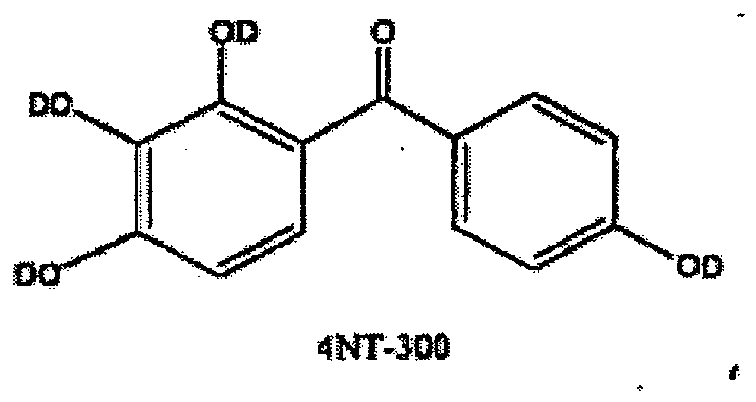 wobei D = H ist oder aus
- Polymerzusammensetzung gemäß Anspruch 14, weiterhin umfassend ein Epoxid-Additiv, das aus


- Verfahren zur Bildung einer mikroelektronischen oder optoelektronischen Struktur, umfassend:Beschichten eines mikroelektronischen oder optoelektronischen Substrats mit der Polymerzusammensetzung gemäß Anspruch 13 unter Bildung eines Films;bildartiges Belichten des Films;Behandeln des belichteten Films mit einem wässrigen alkalischen Entwickler; undHärten des bildtragenden Films unter Bildung der Struktur.
- Filmbildende Zusammensetzung zur Bildung eines Films, der wenigstens eines aus einer Transparenz von wenigstens 85% bei 400 nm, einer Dielektrizitätskonstante von 3 oder weniger bei 1 MHz, einer Wasseraufnahme von 0,1% oder weniger oder einer Toleranz gegenüber Toluol von 0,1% oder weniger aufweist, umfassend:ein erstes Polymer, das 4-(Bicyclo[2.2.1]hept-5-en-2-yl)phenol- und HFANB-Repetiereinheiten, wie sie in Anspruch 5 definiert sind, umfasst;ein Gießlösungsmittel;eine photoaktive Verbindung (PAC); undeine Epoxid-Verbindung.
- Filmbildende Zusammensetzung gemäß Anspruch 17, wobei die Epoxid-Verbindung aus


- Filmbildende Zusammensetzung gemäß Anspruch 17, wobei die photoaktive Verbindung (PAC) ausgewählt ist aus:
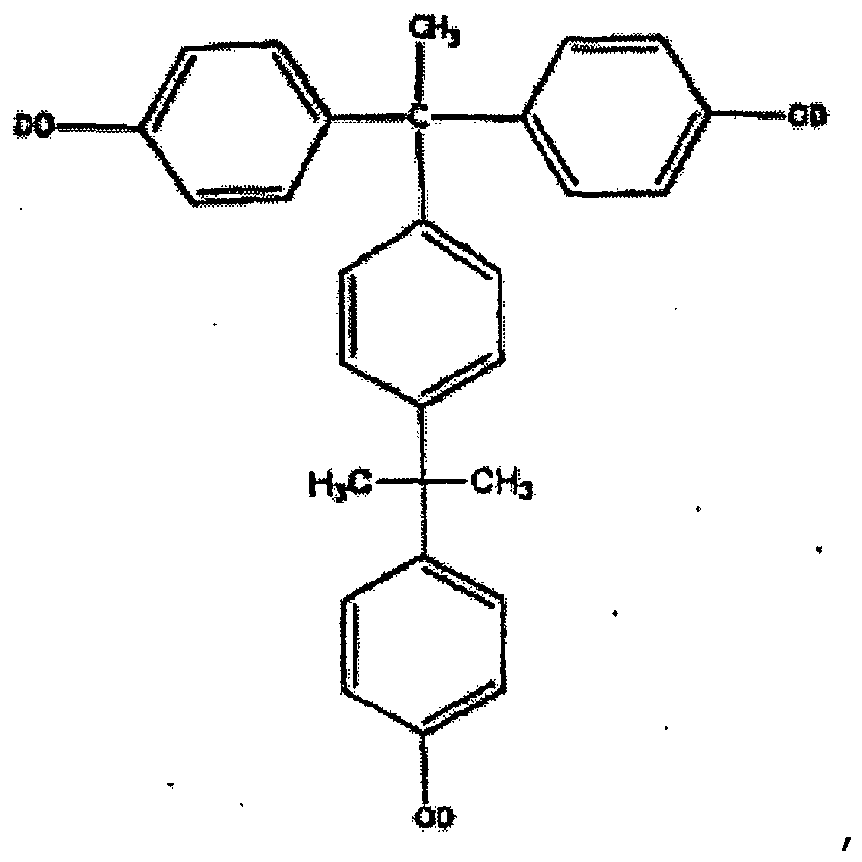
 wobei D = H ist oder aus den folgenden Diazo(naphtho)chinonen (DNQ) ausgewählt ist:
Applications Claiming Priority (3)
| Application Number | Priority Date | Filing Date | Title |
|---|---|---|---|
| US22236609P | 2009-07-01 | 2009-07-01 | |
| US28619509P | 2009-12-14 | 2009-12-14 | |
| PCT/US2010/001887 WO2011002516A2 (en) | 2009-07-01 | 2010-07-01 | A self-imageable film forming polymer, compositions thereof and devices and structures made therefrom |
Publications (2)
| Publication Number | Publication Date |
|---|---|
| EP2448991A2 EP2448991A2 (de) | 2012-05-09 |
| EP2448991B1 true EP2448991B1 (de) | 2014-02-26 |
Family
ID=43086074
Family Applications (1)
| Application Number | Title | Priority Date | Filing Date |
|---|---|---|---|
| EP10760134.6A Not-in-force EP2448991B1 (de) | 2009-07-01 | 2010-07-01 | Selbst abbildbares folienbildendes polymer, zusammensetzungen davon und vorrichtungen und strukturen daraus |
Country Status (4)
| Country | Link |
|---|---|
| US (1) | US8753790B2 (de) |
| EP (1) | EP2448991B1 (de) |
| CN (1) | CN102782001B (de) |
| WO (1) | WO2011002516A2 (de) |
Families Citing this family (11)
| Publication number | Priority date | Publication date | Assignee | Title |
|---|---|---|---|---|
| KR20130141492A (ko) * | 2010-09-28 | 2013-12-26 | 프로메러스, 엘엘씨 | 노르보르난-베이스 pac 밸러스트 및 상기 pac를 포함하는 포지티브형 감광성 수지 조성물 |
| CN103370347B (zh) * | 2010-11-24 | 2016-08-10 | 普罗米鲁斯有限责任公司 | 可自成像成膜聚合物、其组合物以及由其制得的器件和结构 |
| JP5728790B2 (ja) * | 2011-07-14 | 2015-06-03 | 住友ベークライト株式会社 | 自己現像層形成ポリマーおよびその組成物 |
| WO2015135622A1 (en) | 2014-03-12 | 2015-09-17 | Merck Patent Gmbh | Organic electronic compositions and device thereof |
| JP6710903B2 (ja) * | 2015-06-25 | 2020-06-17 | 住友ベークライト株式会社 | 感光性樹脂組成物 |
| WO2017058746A1 (en) * | 2015-10-01 | 2017-04-06 | Promerus, Llc | Fluorine free photopatternable phenol functional group containing polymer compositions |
| CN109196676B (zh) | 2016-05-18 | 2023-07-28 | 默克专利股份有限公司 | 有机介电层及有机电子器件 |
| CN109313388B (zh) * | 2016-06-14 | 2022-06-21 | 住友电木株式会社 | 负型感光性组合物 |
| JP6765501B2 (ja) | 2016-07-28 | 2020-10-07 | プロメラス, エルエルシー | 無水ナジック酸重合体及びそれに由来する感光性組成物 |
| TWI850509B (zh) * | 2019-12-30 | 2024-08-01 | 日商住友電木股份有限公司 | 催化多環烯烴組成物的uv活性衍生物 |
| TWI850512B (zh) | 2019-12-30 | 2024-08-01 | 日商住友電木股份有限公司 | 作為光學材料之uv活性鈀催化多環烯烴聚合物組成物 |
Family Cites Families (11)
| Publication number | Priority date | Publication date | Assignee | Title |
|---|---|---|---|---|
| US3517071A (en) | 1963-07-01 | 1970-06-23 | Eastman Kodak Co | Three-dimensional polycyclic bisphenol polycarbonates and polyesters |
| US5017727A (en) * | 1990-07-10 | 1991-05-21 | Copolymer Rubber & Chemical Corporation | Polymerizable antioxidant composition |
| US5574118A (en) * | 1990-11-02 | 1996-11-12 | Dsm Copolymer, Inc. | Olefin polymers containing bound antioxidant |
| US5554664A (en) | 1995-03-06 | 1996-09-10 | Minnesota Mining And Manufacturing Company | Energy-activatable salts with fluorocarbon anions |
| US6232417B1 (en) | 1996-03-07 | 2001-05-15 | The B. F. Goodrich Company | Photoresist compositions comprising polycyclic polymers with acid labile pendant groups |
| DE69916434T2 (de) * | 1998-02-23 | 2005-03-24 | Sumitomo Bakelite Co. Ltd. | Modifizierte polycyclische polymere |
| US6147177A (en) * | 1998-02-23 | 2000-11-14 | The B. F. Goodrich Company | Polycyclic resist compositions with increased etch resistance |
| ATE286923T1 (de) | 1998-10-05 | 2005-01-15 | Promerus Llc | Katalysator und verfahren zur polymerisation von cycloolefinen |
| US7022790B2 (en) | 2002-07-03 | 2006-04-04 | Sumitomo Bakelite Company, Ltd. | Photosensitive compositions based on polycyclic polymers |
| JP5430066B2 (ja) * | 2004-07-07 | 2014-02-26 | プロメラス, エルエルシー | 絶縁樹脂組成物及びその使用 |
| CN103370347B (zh) * | 2010-11-24 | 2016-08-10 | 普罗米鲁斯有限责任公司 | 可自成像成膜聚合物、其组合物以及由其制得的器件和结构 |
-
2010
- 2010-06-30 US US12/803,602 patent/US8753790B2/en active Active
- 2010-07-01 WO PCT/US2010/001887 patent/WO2011002516A2/en not_active Ceased
- 2010-07-01 CN CN201080038928.9A patent/CN102782001B/zh not_active Expired - Fee Related
- 2010-07-01 EP EP10760134.6A patent/EP2448991B1/de not_active Not-in-force
Also Published As
| Publication number | Publication date |
|---|---|
| US20110104614A1 (en) | 2011-05-05 |
| WO2011002516A9 (en) | 2011-08-11 |
| CN102782001A (zh) | 2012-11-14 |
| WO2011002516A2 (en) | 2011-01-06 |
| US8753790B2 (en) | 2014-06-17 |
| CN102782001B (zh) | 2015-01-07 |
| WO2011002516A3 (en) | 2011-02-24 |
| EP2448991A2 (de) | 2012-05-09 |
Similar Documents
| Publication | Publication Date | Title |
|---|---|---|
| EP2448991B1 (de) | Selbst abbildbares folienbildendes polymer, zusammensetzungen davon und vorrichtungen und strukturen daraus | |
| JP5860193B2 (ja) | マレイミド含有シクロオレフィンポリマーおよびその利用 | |
| EP2643371B1 (de) | Selbst abbildbares folienbildendes polymer, zusammensetzungen davon und vorrichtungen und strukturen daraus | |
| US8715900B2 (en) | Self-imageable layer forming polymer and compositions thereof | |
| JP3847991B2 (ja) | 共重合体樹脂とその製造方法、この共重合体樹脂を含むフォトレジスト、および半導体素子 | |
| TWI401273B (zh) | 直接性光可界定之聚合物組成物及其製造方法 | |
| US9944730B2 (en) | Polymers derived from norbornadiene and maleic anhydride and use thereof | |
| TW565575B (en) | Modified polycyclic polymers | |
| CN109313388B (zh) | 负型感光性组合物 | |
| US7608382B2 (en) | Method of controlling the differential dissolution rate of photoresist compositions, polycyclic olefin polymers and monomers used for making such polymers | |
| US10303057B2 (en) | Fluorine free photopatternable phenol functional group containing polymer compositions | |
| US9932432B2 (en) | Polymers of maleimide and cycloolefinic monomers as permanent dielectric materials | |
| TW200925783A (en) | Positive resist composition, method of forming resist pattern, polymeric compound, and compound | |
| TWI522377B (zh) | 形成可自我成像的層之聚合物以及其組成物 |
Legal Events
| Date | Code | Title | Description |
|---|---|---|---|
| PUAI | Public reference made under article 153(3) epc to a published international application that has entered the european phase |
Free format text: ORIGINAL CODE: 0009012 |
|
| 17P | Request for examination filed |
Effective date: 20120112 |
|
| AK | Designated contracting states |
Kind code of ref document: A2 Designated state(s): AL AT BE BG CH CY CZ DE DK EE ES FI FR GB GR HR HU IE IS IT LI LT LU LV MC MK MT NL NO PL PT RO SE SI SK SM TR |
|
| RIN1 | Information on inventor provided before grant (corrected) |
Inventor name: NG, HENDRA Inventor name: BELL, ANDREW Inventor name: KANDANARACHCHI, PRAMOD Inventor name: ELCE, EDMUND Inventor name: RHODES, LARRY Inventor name: ONISHI, OSAMU Inventor name: BRICK, CHAD Inventor name: EVANS, PAUL J. Inventor name: IKEDA, HARUO |
|
| DAX | Request for extension of the european patent (deleted) | ||
| 17Q | First examination report despatched |
Effective date: 20121213 |
|
| GRAP | Despatch of communication of intention to grant a patent |
Free format text: ORIGINAL CODE: EPIDOSNIGR1 |
|
| INTG | Intention to grant announced |
Effective date: 20130513 |
|
| GRAP | Despatch of communication of intention to grant a patent |
Free format text: ORIGINAL CODE: EPIDOSNIGR1 |
|
| INTG | Intention to grant announced |
Effective date: 20130903 |
|
| GRAS | Grant fee paid |
Free format text: ORIGINAL CODE: EPIDOSNIGR3 |
|
| GRAA | (expected) grant |
Free format text: ORIGINAL CODE: 0009210 |
|
| AK | Designated contracting states |
Kind code of ref document: B1 Designated state(s): AL AT BE BG CH CY CZ DE DK EE ES FI FR GB GR HR HU IE IS IT LI LT LU LV MC MK MT NL NO PL PT RO SE SI SK SM TR |
|
| REG | Reference to a national code |
Ref country code: GB Ref legal event code: FG4D |
|
| REG | Reference to a national code |
Ref country code: CH Ref legal event code: EP |
|
| REG | Reference to a national code |
Ref country code: AT Ref legal event code: REF Ref document number: 653580 Country of ref document: AT Kind code of ref document: T Effective date: 20140315 |
|
| REG | Reference to a national code |
Ref country code: IE Ref legal event code: FG4D |
|
| REG | Reference to a national code |
Ref country code: DE Ref legal event code: R096 Ref document number: 602010013793 Country of ref document: DE Effective date: 20140410 |
|
| REG | Reference to a national code |
Ref country code: NL Ref legal event code: VDEP Effective date: 20140226 |
|
| REG | Reference to a national code |
Ref country code: DE Ref legal event code: R081 Ref document number: 602010013793 Country of ref document: DE Owner name: SUMITOMO BAKELITE CO. LTD., JP Free format text: FORMER OWNERS: PROMERUS LLC, BRECKSVILLE, OHIO, US; SUMITOMO BAKELITE CO. LTD., TOKIO/TOKYO, JP Effective date: 20140522 Ref country code: DE Ref legal event code: R082 Ref document number: 602010013793 Country of ref document: DE Representative=s name: DOMPATENT VON KREISLER SELTING WERNER - PARTNE, DE Effective date: 20140522 Ref country code: DE Ref legal event code: R082 Ref document number: 602010013793 Country of ref document: DE Representative=s name: VON KREISLER SELTING WERNER - PARTNERSCHAFT VO, DE Effective date: 20140522 Ref country code: DE Ref legal event code: R081 Ref document number: 602010013793 Country of ref document: DE Owner name: SUMITOMO BAKELITE CO. LTD., JP Free format text: FORMER OWNER: PROMERUS LLC, SUMITOMO BAKELITE CO. LTD., , JP Effective date: 20140522 |
|
| REG | Reference to a national code |
Ref country code: AT Ref legal event code: MK05 Ref document number: 653580 Country of ref document: AT Kind code of ref document: T Effective date: 20140226 |
|
| REG | Reference to a national code |
Ref country code: LT Ref legal event code: MG4D |
|
| PG25 | Lapsed in a contracting state [announced via postgrant information from national office to epo] |
Ref country code: IS Free format text: LAPSE BECAUSE OF FAILURE TO SUBMIT A TRANSLATION OF THE DESCRIPTION OR TO PAY THE FEE WITHIN THE PRESCRIBED TIME-LIMIT Effective date: 20140626 Ref country code: NO Free format text: LAPSE BECAUSE OF FAILURE TO SUBMIT A TRANSLATION OF THE DESCRIPTION OR TO PAY THE FEE WITHIN THE PRESCRIBED TIME-LIMIT Effective date: 20140526 Ref country code: LT Free format text: LAPSE BECAUSE OF FAILURE TO SUBMIT A TRANSLATION OF THE DESCRIPTION OR TO PAY THE FEE WITHIN THE PRESCRIBED TIME-LIMIT Effective date: 20140226 |
|
| PG25 | Lapsed in a contracting state [announced via postgrant information from national office to epo] |
Ref country code: NL Free format text: LAPSE BECAUSE OF FAILURE TO SUBMIT A TRANSLATION OF THE DESCRIPTION OR TO PAY THE FEE WITHIN THE PRESCRIBED TIME-LIMIT Effective date: 20140226 Ref country code: AT Free format text: LAPSE BECAUSE OF FAILURE TO SUBMIT A TRANSLATION OF THE DESCRIPTION OR TO PAY THE FEE WITHIN THE PRESCRIBED TIME-LIMIT Effective date: 20140226 Ref country code: PT Free format text: LAPSE BECAUSE OF FAILURE TO SUBMIT A TRANSLATION OF THE DESCRIPTION OR TO PAY THE FEE WITHIN THE PRESCRIBED TIME-LIMIT Effective date: 20140626 Ref country code: SE Free format text: LAPSE BECAUSE OF FAILURE TO SUBMIT A TRANSLATION OF THE DESCRIPTION OR TO PAY THE FEE WITHIN THE PRESCRIBED TIME-LIMIT Effective date: 20140226 Ref country code: CY Free format text: LAPSE BECAUSE OF FAILURE TO SUBMIT A TRANSLATION OF THE DESCRIPTION OR TO PAY THE FEE WITHIN THE PRESCRIBED TIME-LIMIT Effective date: 20140226 Ref country code: FI Free format text: LAPSE BECAUSE OF FAILURE TO SUBMIT A TRANSLATION OF THE DESCRIPTION OR TO PAY THE FEE WITHIN THE PRESCRIBED TIME-LIMIT Effective date: 20140226 |
|
| PG25 | Lapsed in a contracting state [announced via postgrant information from national office to epo] |
Ref country code: HR Free format text: LAPSE BECAUSE OF FAILURE TO SUBMIT A TRANSLATION OF THE DESCRIPTION OR TO PAY THE FEE WITHIN THE PRESCRIBED TIME-LIMIT Effective date: 20140226 Ref country code: BE Free format text: LAPSE BECAUSE OF FAILURE TO SUBMIT A TRANSLATION OF THE DESCRIPTION OR TO PAY THE FEE WITHIN THE PRESCRIBED TIME-LIMIT Effective date: 20140226 Ref country code: LV Free format text: LAPSE BECAUSE OF FAILURE TO SUBMIT A TRANSLATION OF THE DESCRIPTION OR TO PAY THE FEE WITHIN THE PRESCRIBED TIME-LIMIT Effective date: 20140226 |
|
| PG25 | Lapsed in a contracting state [announced via postgrant information from national office to epo] |
Ref country code: CZ Free format text: LAPSE BECAUSE OF FAILURE TO SUBMIT A TRANSLATION OF THE DESCRIPTION OR TO PAY THE FEE WITHIN THE PRESCRIBED TIME-LIMIT Effective date: 20140226 Ref country code: DK Free format text: LAPSE BECAUSE OF FAILURE TO SUBMIT A TRANSLATION OF THE DESCRIPTION OR TO PAY THE FEE WITHIN THE PRESCRIBED TIME-LIMIT Effective date: 20140226 Ref country code: RO Free format text: LAPSE BECAUSE OF FAILURE TO SUBMIT A TRANSLATION OF THE DESCRIPTION OR TO PAY THE FEE WITHIN THE PRESCRIBED TIME-LIMIT Effective date: 20140226 Ref country code: EE Free format text: LAPSE BECAUSE OF FAILURE TO SUBMIT A TRANSLATION OF THE DESCRIPTION OR TO PAY THE FEE WITHIN THE PRESCRIBED TIME-LIMIT Effective date: 20140226 |
|
| PGFP | Annual fee paid to national office [announced via postgrant information from national office to epo] |
Ref country code: DE Payment date: 20140625 Year of fee payment: 5 |
|
| REG | Reference to a national code |
Ref country code: DE Ref legal event code: R097 Ref document number: 602010013793 Country of ref document: DE |
|
| PG25 | Lapsed in a contracting state [announced via postgrant information from national office to epo] |
Ref country code: SK Free format text: LAPSE BECAUSE OF FAILURE TO SUBMIT A TRANSLATION OF THE DESCRIPTION OR TO PAY THE FEE WITHIN THE PRESCRIBED TIME-LIMIT Effective date: 20140226 Ref country code: ES Free format text: LAPSE BECAUSE OF FAILURE TO SUBMIT A TRANSLATION OF THE DESCRIPTION OR TO PAY THE FEE WITHIN THE PRESCRIBED TIME-LIMIT Effective date: 20140226 Ref country code: PL Free format text: LAPSE BECAUSE OF FAILURE TO SUBMIT A TRANSLATION OF THE DESCRIPTION OR TO PAY THE FEE WITHIN THE PRESCRIBED TIME-LIMIT Effective date: 20140226 |
|
| PLBE | No opposition filed within time limit |
Free format text: ORIGINAL CODE: 0009261 |
|
| STAA | Information on the status of an ep patent application or granted ep patent |
Free format text: STATUS: NO OPPOSITION FILED WITHIN TIME LIMIT |
|
| 26N | No opposition filed |
Effective date: 20141127 |
|
| PG25 | Lapsed in a contracting state [announced via postgrant information from national office to epo] |
Ref country code: LU Free format text: LAPSE BECAUSE OF FAILURE TO SUBMIT A TRANSLATION OF THE DESCRIPTION OR TO PAY THE FEE WITHIN THE PRESCRIBED TIME-LIMIT Effective date: 20140701 |
|
| REG | Reference to a national code |
Ref country code: CH Ref legal event code: PL |
|
| REG | Reference to a national code |
Ref country code: DE Ref legal event code: R097 Ref document number: 602010013793 Country of ref document: DE Effective date: 20141127 |
|
| GBPC | Gb: european patent ceased through non-payment of renewal fee |
Effective date: 20140701 |
|
| PG25 | Lapsed in a contracting state [announced via postgrant information from national office to epo] |
Ref country code: IT Free format text: LAPSE BECAUSE OF FAILURE TO SUBMIT A TRANSLATION OF THE DESCRIPTION OR TO PAY THE FEE WITHIN THE PRESCRIBED TIME-LIMIT Effective date: 20140226 |
|
| REG | Reference to a national code |
Ref country code: IE Ref legal event code: MM4A |
|
| REG | Reference to a national code |
Ref country code: FR Ref legal event code: ST Effective date: 20150331 |
|
| PG25 | Lapsed in a contracting state [announced via postgrant information from national office to epo] |
Ref country code: CH Free format text: LAPSE BECAUSE OF NON-PAYMENT OF DUE FEES Effective date: 20140731 Ref country code: LI Free format text: LAPSE BECAUSE OF NON-PAYMENT OF DUE FEES Effective date: 20140731 |
|
| PG25 | Lapsed in a contracting state [announced via postgrant information from national office to epo] |
Ref country code: GB Free format text: LAPSE BECAUSE OF NON-PAYMENT OF DUE FEES Effective date: 20140701 Ref country code: SI Free format text: LAPSE BECAUSE OF FAILURE TO SUBMIT A TRANSLATION OF THE DESCRIPTION OR TO PAY THE FEE WITHIN THE PRESCRIBED TIME-LIMIT Effective date: 20140226 Ref country code: FR Free format text: LAPSE BECAUSE OF NON-PAYMENT OF DUE FEES Effective date: 20140731 |
|
| PG25 | Lapsed in a contracting state [announced via postgrant information from national office to epo] |
Ref country code: IE Free format text: LAPSE BECAUSE OF NON-PAYMENT OF DUE FEES Effective date: 20140701 |
|
| REG | Reference to a national code |
Ref country code: DE Ref legal event code: R119 Ref document number: 602010013793 Country of ref document: DE |
|
| PG25 | Lapsed in a contracting state [announced via postgrant information from national office to epo] |
Ref country code: SM Free format text: LAPSE BECAUSE OF FAILURE TO SUBMIT A TRANSLATION OF THE DESCRIPTION OR TO PAY THE FEE WITHIN THE PRESCRIBED TIME-LIMIT Effective date: 20140226 Ref country code: MC Free format text: LAPSE BECAUSE OF FAILURE TO SUBMIT A TRANSLATION OF THE DESCRIPTION OR TO PAY THE FEE WITHIN THE PRESCRIBED TIME-LIMIT Effective date: 20140226 Ref country code: DE Free format text: LAPSE BECAUSE OF NON-PAYMENT OF DUE FEES Effective date: 20160202 |
|
| PG25 | Lapsed in a contracting state [announced via postgrant information from national office to epo] |
Ref country code: GR Free format text: LAPSE BECAUSE OF FAILURE TO SUBMIT A TRANSLATION OF THE DESCRIPTION OR TO PAY THE FEE WITHIN THE PRESCRIBED TIME-LIMIT Effective date: 20140527 Ref country code: BG Free format text: LAPSE BECAUSE OF FAILURE TO SUBMIT A TRANSLATION OF THE DESCRIPTION OR TO PAY THE FEE WITHIN THE PRESCRIBED TIME-LIMIT Effective date: 20140226 Ref country code: MT Free format text: LAPSE BECAUSE OF FAILURE TO SUBMIT A TRANSLATION OF THE DESCRIPTION OR TO PAY THE FEE WITHIN THE PRESCRIBED TIME-LIMIT Effective date: 20140226 |
|
| PG25 | Lapsed in a contracting state [announced via postgrant information from national office to epo] |
Ref country code: TR Free format text: LAPSE BECAUSE OF FAILURE TO SUBMIT A TRANSLATION OF THE DESCRIPTION OR TO PAY THE FEE WITHIN THE PRESCRIBED TIME-LIMIT Effective date: 20140226 Ref country code: HU Free format text: LAPSE BECAUSE OF FAILURE TO SUBMIT A TRANSLATION OF THE DESCRIPTION OR TO PAY THE FEE WITHIN THE PRESCRIBED TIME-LIMIT; INVALID AB INITIO Effective date: 20100701 |
|
| PG25 | Lapsed in a contracting state [announced via postgrant information from national office to epo] |
Ref country code: MK Free format text: LAPSE BECAUSE OF FAILURE TO SUBMIT A TRANSLATION OF THE DESCRIPTION OR TO PAY THE FEE WITHIN THE PRESCRIBED TIME-LIMIT Effective date: 20140226 |
|
| PG25 | Lapsed in a contracting state [announced via postgrant information from national office to epo] |
Ref country code: AL Free format text: LAPSE BECAUSE OF FAILURE TO SUBMIT A TRANSLATION OF THE DESCRIPTION OR TO PAY THE FEE WITHIN THE PRESCRIBED TIME-LIMIT Effective date: 20140226 |