EP2449713B1 - Réception améliorée de signal dans des systèmes de communication sans fil à l'aide de transmissions de requête à répétition automatique et élimination conditionnelle d'une interférence dans le cas d'une mauvaise interprétation d'une absence d'accusé de réception - Google Patents
Réception améliorée de signal dans des systèmes de communication sans fil à l'aide de transmissions de requête à répétition automatique et élimination conditionnelle d'une interférence dans le cas d'une mauvaise interprétation d'une absence d'accusé de réception Download PDFInfo
- Publication number
- EP2449713B1 EP2449713B1 EP10721775.4A EP10721775A EP2449713B1 EP 2449713 B1 EP2449713 B1 EP 2449713B1 EP 10721775 A EP10721775 A EP 10721775A EP 2449713 B1 EP2449713 B1 EP 2449713B1
- Authority
- EP
- European Patent Office
- Prior art keywords
- user
- time interval
- signal
- decoding
- wireless communication
- Prior art date
- Legal status (The legal status is an assumption and is not a legal conclusion. Google has not performed a legal analysis and makes no representation as to the accuracy of the status listed.)
- Not-in-force
Links
Images


Classifications
-
- H—ELECTRICITY
- H04—ELECTRIC COMMUNICATION TECHNIQUE
- H04L—TRANSMISSION OF DIGITAL INFORMATION, e.g. TELEGRAPHIC COMMUNICATION
- H04L1/00—Arrangements for detecting or preventing errors in the information received
- H04L1/12—Arrangements for detecting or preventing errors in the information received by using return channel
- H04L1/16—Arrangements for detecting or preventing errors in the information received by using return channel in which the return channel carries supervisory signals, e.g. repetition request signals
- H04L1/18—Automatic repetition systems, e.g. Van Duuren systems
- H04L1/1829—Arrangements specially adapted for the receiver end
- H04L1/1835—Buffer management
-
- H—ELECTRICITY
- H04—ELECTRIC COMMUNICATION TECHNIQUE
- H04J—MULTIPLEX COMMUNICATION
- H04J11/00—Orthogonal multiplex systems, e.g. using WALSH codes
- H04J11/0023—Interference mitigation or co-ordination
- H04J11/0026—Interference mitigation or co-ordination of multi-user interference
- H04J11/0036—Interference mitigation or co-ordination of multi-user interference at the receiver
- H04J11/004—Interference mitigation or co-ordination of multi-user interference at the receiver using regenerative subtractive interference cancellation
-
- H—ELECTRICITY
- H04—ELECTRIC COMMUNICATION TECHNIQUE
- H04L—TRANSMISSION OF DIGITAL INFORMATION, e.g. TELEGRAPHIC COMMUNICATION
- H04L25/00—Baseband systems
- H04L25/02—Details ; arrangements for supplying electrical power along data transmission lines
- H04L25/03—Shaping networks in transmitter or receiver, e.g. adaptive shaping networks
- H04L25/03006—Arrangements for removing intersymbol interference
- H04L25/03178—Arrangements involving sequence estimation techniques
- H04L25/03248—Arrangements for operating in conjunction with other apparatus
- H04L25/0328—Arrangements for operating in conjunction with other apparatus with interference cancellation circuitry
-
- H—ELECTRICITY
- H04—ELECTRIC COMMUNICATION TECHNIQUE
- H04L—TRANSMISSION OF DIGITAL INFORMATION, e.g. TELEGRAPHIC COMMUNICATION
- H04L1/00—Arrangements for detecting or preventing errors in the information received
- H04L1/004—Arrangements for detecting or preventing errors in the information received by using forward error control
- H04L1/0045—Arrangements at the receiver end
- H04L1/0047—Decoding adapted to other signal detection operation
- H04L1/0048—Decoding adapted to other signal detection operation in conjunction with detection of multiuser or interfering signals, e.g. iteration between CDMA or MIMO detector and FEC decoder
-
- H—ELECTRICITY
- H04—ELECTRIC COMMUNICATION TECHNIQUE
- H04L—TRANSMISSION OF DIGITAL INFORMATION, e.g. TELEGRAPHIC COMMUNICATION
- H04L1/00—Arrangements for detecting or preventing errors in the information received
- H04L1/12—Arrangements for detecting or preventing errors in the information received by using return channel
- H04L1/16—Arrangements for detecting or preventing errors in the information received by using return channel in which the return channel carries supervisory signals, e.g. repetition request signals
- H04L1/18—Automatic repetition systems, e.g. Van Duuren systems
- H04L1/1812—Hybrid protocols; Hybrid automatic repeat request [HARQ]
- H04L1/1816—Hybrid protocols; Hybrid automatic repeat request [HARQ] with retransmission of the same, encoded, message
-
- H—ELECTRICITY
- H04—ELECTRIC COMMUNICATION TECHNIQUE
- H04L—TRANSMISSION OF DIGITAL INFORMATION, e.g. TELEGRAPHIC COMMUNICATION
- H04L1/00—Arrangements for detecting or preventing errors in the information received
- H04L1/12—Arrangements for detecting or preventing errors in the information received by using return channel
- H04L2001/125—Arrangements for preventing errors in the return channel
Definitions
- Wireless communication networks of various types use forms of Automatic Repeat reQuest (ARQ) response signaling.
- ARQ Automatic Repeat reQuest
- transmissions from a given transmitter are acknowledged or not acknowledged, depending on whether they are successfully received.
- Non-acknowledgments prompt the transmitter to retransmit using, for example, the same channel resources that were allocated for its original transmission.
- LTE networks use Hybrid ARQ (H-ARQ).
- H-ARQ Hybrid ARQ
- UE User Equipment
- LTE networks use Hybrid ARQ (H-ARQ).
- H-ARQ Hybrid ARQ
- given mobile terminals or other types of User Equipment (UE) transmit to an eNodeB in one or more LTE subframes, according to uplink assignment grants made by the eNodeB.
- An assignment grant allocates particular OFDM channel resources to particular users.
- the eNodeB receives some number of user signals in each of a series of repeating LTE subframes, and sends ARQ responses to each transmitting user, in dependence on whether that user's signal was successfully received (decoded) by the eNodeB.
- an eNodeB sends an H-ARQ response signal on the Physical H-ARQ Indicator Channel (PHICH), wherein an acknowledgment response-sometimes referred to as an "ack"-indicates that the user signal transmitted on the uplink to the eNodeB by a given User Equipment (UE) was successfully decoded.
- UE User Equipment
- the eNodeB receives some number of user signals in a given LTE subframe, and sends ARQ response signals corresponding to those signals four subframes later, as a PHICH group transmitted on the PHICH.
- the determination of the PHICH group, as well as the different spreading sequences used to differentiate the different ARQ responses by targeted UEs, is determined based on the locations of the corresponding uplink assignments used for the transmissions being acknowledged.
- the PHICH is mapped on OFDM symbol "0" for normal durations, or 0, 1, and 2 for extended durations.
- the ARQ responses (ack or nack signals) for up to eight UEs can be multiplexed into a single PHICH group, and there are several such PHICH groups available.
- the number of PHICH groups depends on the system bandwidth and a semi-static parameter called Ng that dynamically accounts for changes in the number of users.
- Ng a semi-static parameter that dynamically accounts for changes in the number of users.
- the LTE standards define the target probabilities for a given UE misinterpreting an ack signal as a nack signal, and vice versa.
- the target probabilities are defined in terms of Bit Error Rates (BERs) or Block Error Rates (BLERs), for example.
- BERs Bit Error Rates
- BLERs Block Error Rates
- the invention consists in a method according to claim 1 and a wireless communication transceiver according to claim 9.
- an eNodeB allocates specific channel resources to a given UE, for its use in transmitting to the eNodeB in a given LTE subframe. If that transmission is successfully received by the eNodeB, it acknowledges that reception and considers those channel resources as being available for other use.
- the first UE misinterprets the eNodeB's acknowledgment of its reception as a non-acknowledgment, it will retransmit using the same channel resources given that there was no explicit indication of Downlink control information (DCI) Format 0 on the
- PDCCH Physical Downlink Control Channel
- a wireless communication transceiver compensates a given received signal for retransmission interference, at least where (uncompensated) decoding of the given received signals fails.
- the transceiver estimates the retransmission interference bearing on the given received signal based on hypothesizing that another user (or users) mistakenly retransmitted in the same time interval, using some or all of the same channel resources as were allocated to the given received signal.
- the transceiver may retain information in any given interval, indicating the channel allocations used for those user signals successfully received in that interval. That retained information allows the transceiver to determine, with respect to a given signal received in a current time interval, which other users would be interfering users if they mistakenly retransmitted in the current time interval.
- the transceiver retains information about the reliability at which it sends acknowledgment signals, so that it can later identify most likely potentially interfering users, and generates compensating retransmission interference estimates for one or more of the most likely potential interferers. For example, if a given user was acknowledged in a prior interval at a lowered reliability (e.g., at a transmit power computed for a higher BLER target), it is more likely that that particular user misinterpreted the acknowledgment as a non-acknowledgment.
- the transceiver identifies the most significant potentially interfering users, and generates compensating retransmission interference estimates for one or more of the most significant potentially interfering users. For example, mistaken retransmissions by users from the prior interval that shared a larger percentage or amount of the same channel resources as used by the given received signal in the current time period would cause more interference. Such users are considered to be more significant sources of potential retransmission interference.
- one embodiment presented herein comprises a method of decoding user signals in a wireless communication transceiver.
- the method comprises receiving a first user signal in a current time interval, on channel resources allocated to the first user signal in the current time interval, and decoding the first user signal by initially decoding the first user signal without compensating for retransmission interference. If said initial decoding of the first user signal fails, the method provides for performing compensated decoding.
- Compensated decoding comprises hypothesizing that a potentially interfering user mistakenly retransmitted in the current time interval on some or all of the same channel resources allocated to the first user signal, and correspondingly generating an estimate of retransmission interference. Processing continues with obtaining a compensated first user signal by compensating the first user signal according to the estimated retransmission interference, and decoding the compensated first user signal.
- a wireless communication transceiver is configured to receive and decode user signals.
- the wireless communication transceiver comprises receiver circuits configured to receive a first user signal in a current time interval, on channel resources allocated to the first user signal in the current time interval, and decoding and control circuits.
- the decoding and control circuits arc configured to initially decode the first user signal without compensating for retransmission interference, and, if the initial decoding fails, perform compensated decoding of the first user signal.
- the decoding and control circuits are configured to hypothesize that a potentially interfering user mistakenly retransmitted in the current time interval on some or all of the same channel resources allocated to the first user signal, and correspondingly generate an estimate of retransmission interference.
- the decoding and control circuits are configured to obtain a compensated first user signal by compensating the first user signal according to the estimated retransmission interference, and decode the compensated first user signal.
- the decoding and control circuits perform an iterative compensated decoding.
- the channel resources allocated to the first user signal in the current interval may have been allocated different users in a prior interval, such that any one or more of those other users would be interfering users in the current interval with respect to the first signal, if they mistakenly retransmitted in the current interval.
- the control circuit of the wireless communication transceiver is configured to generate a first retransmission interference estimate corresponding to the most likely and/or most significant one of the other potentially interfering users, compensate the first user signal for that first retransmission interference estimate, and then determine whether decoding is successful. If not, the control circuit hypothesizes that it was another one of the potentially interfering users-e.g., the next most likely and/or significant one-and it forms a corresponding retransmission interference estimate, compensates the first user signal accordingly, and attempts decoding with the newly compensated version of the first user signal. This process can be repeated for multiple hypotheses.
- control circuit may hypothesize that more than one other potentially interfering user retransmitted in the current interval, and thus may compensate the user signal for two or more interfering retransmissions at a time. For example, the control circuit may generate an estimate of retransmission interference assuming another user mistakenly retransmitted on a first portion of the channel resources allocated to the first user signal, and generate another estimate of retransmission interference assuming yet another user mistakenly retransmitted on a second portion of the channel resources allocated to the first user signal.
- compensating the first user signal comprises compensating different portions of the first user signal according to the different retransmission interference estimates.
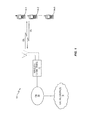
- Fig. 1 illustrates a wireless communication network 10 that includes one or more wireless communication transceivers 12, each configured to transmit downlink (DL) control signals and data to a number of wireless communication transceivers 14 (e.g., 14-1, 14-2, etc.) and receive uplink (UL) transmissions from them.
- the network 10 further includes a core network (CN) 16, which communicatively couples the network 10 to one or more external networks 18, such as the Internet.
- CN core network
- the network 10 comprises a 3GPP LTE network
- the wireless communication transceiver 12 (“transceiver 12") is an LTE eNodeB
- the wireless communication transceivers 14 are LTE mobile terminals or other types of User Equipment (UE).
- UE User Equipment
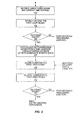
- the illustrated wireless communication transceiver 12 (“transceiver 12") is configured to implement a method of decoding user signals that includes receiving a first user signal in a current time interval, on channel resources allocated to the first user signal in the current time interval (Block 100).
- the transceiver 12 may receive multiple user signals in each one of a series of succeeding or repeating transmission intervals, and may process each one of them similarly.
- the "first user signal” may be understood as any given one of potentially multiple user signals that are received and processed within the given, current time interval.
- the method further includes decoding the first user signal by initially decoding the first user signal without compensating for retransmission interference (Block 102). Further, if the initial decoding of the first user signal fails (YES from Block 104), the method continues with performing compensated decoding (Blocks 106, 108, 110, 112).
- the transceiver 12 hypothesizes that a potentially interfering user mistakenly retransmitted in the current time interval on some or all of the same channel resources allocated to the first user signal and correspondingly generates an estimate of retransmission interference (Block 106). From there, the transceiver 12 obtains a compensated first user signal by compensating the first user signal according to the estimated retransmission interference (Block 108), and decodes the compensated first user signal (Block 110).
- the transceiver 12 continues with its normal post-decoding processing, including acknowledgment signal generation. If decoding of the compensated first user signal fails (YES from Block 112), the transceiver 12 can generate a non-acknowledgment response, to prompt retransmission.
- compensated decoding is an iterative process, and the transceiver 12 is configured to go back and try another retransmission interference hypothesis. For example, there may be three other users whose mistaken retransmissions would interfere with reception of the first user signal by the transceiver 12.
- the transceiver 12 may compensate the first user signal for estimated retransmission interference of each individual one of those three other users, until it successfully decodes the user signal, and/or it may try various combinations, wherein it assumes that two of them retransmitted, or all three of them retransmitted.
- generating the estimate of retransmission interference comprises generating a channelized signal representing an estimate of what would have been received by the wireless communication transceiver if the potentially interfering user had mistakenly retransmitted in the current time interval, and generating the estimate of retransmission interference as a function of the channelized signal.
- the channelized signal is a representation of what would have been received by the transceiver 12, based on its knowledge of what the mistakenly-retransmitting user previously transmitted on the channel resources at issue, and/or on what that user would have retransmitted in the current interval, and on its knowledge of the current-interval and/or prior-interval channel conditions of that other user.
- the step of generating the estimate of retransmission interference comprises (for any one or more other users hypothesized as the mistakenly-retransmitting users) forming a regenerated signal at the wireless communication transceiver.
- the transceiver 12 forms the regenerated signal according to decoded data successfully obtained from an earlier-received user signal corresponding to the hypothesized mistaken retransmission and according to channel estimates determined for the earlier-received user signal. Then, the transceiver 12 generates the estimate of retransmission interference as a function of the regenerated signal.
- the step of compensated decoding includes identifying the potentially interfering user as one or more other users that transmitted one or more user signals to the transceiver 12 in a prior time interval, using some or all of the same channel resources as allocated to the first user signal in the current time interval. Further, in at least one embodiment, the method further includes determining which ones of said one or more other users arc the most significant potential interferers, and performing the steps of obtaining (one or more compensated first user signals) and decoding (the one or more compensated first user signals) using the estimates of retransmission interference as generated for at least one of the most significant potential interferers.
- a "most significant" potentially interfering user is one whose mistaken retransmission likely would cause the most reception interference with regard to the first user signal.
- a user that mistakenly retransmits on only a small number of the channel elements or other channel resources used for transmission of the first user signal likely would cause substantially less serious interference than a mistaken retransmission that nearly or completely overlaps with the first user signal's channel resource allocation(s).
- the transceiver 12 identifies the most significant one or ones, and compensates for that one or ones first. If there are a number of significant potential interferers, the transceiver 12 may compensate for each one in order of significance, or it may try different combinations of the most significant potential interferers first. For example, it could identify several potentially interfering users, rank them in order of significance, and then order its hypotheses and retransmission interference estimates according to that rank.
- compensated decoding includes determining which ones of said one or more other users are the most likely potential interferers based on reliabilities at which acknowledgement signals were sent to those one or more other users in the prior time interval, and performing the steps of obtaining (one or more compensated first user signals) and decoding (the one or more compensated first user signals) using the estimates of retransmission interference as generated for at least one of the most likely potential interferers.
- the step of hypothesizing comprises identifying, according to channel resource allocation and acknowledgment signal reliability information retained by the transceiver 12 from a prior time interval, one or more other users that successfully transmitted user signals to the transceiver 12 in the prior time interval using some or all of the same channel resources as allocated to the first user signal in the current time interval, and that are most likely to have mistakenly retransmitted in the current time interval.
- the transceiver 12 generally will operate with one or more performance targets relating to the reliability at which the transceivers 14 receive its acknowledgment and non-acknowledgment signals.
- the LTE standards for example, set specific Block Error Rates (BLERs) for acknowledgment and non-acknowledgment signals sent by the transceiver 12 for UL transmissions from the transceivers 14.
- BLERs Block Error Rates
- a given BLER or other reliability target maps into a required signal transmit power that changes dynamically with changing reception conditions.
- the transceiver 12 may send a given ARQ response signal at less than the power required to achieve the targeted BLER. Such a transmission would be considered a "lowered reliability" transmission.
- the transceiver 12 may use different BLER or other reliability targets for different transceivers 14.
- those ARQ responses are considered to be comparatively lower in reliability than the ARQ responses that are sent according to higher BLER or other reliability targets.
- the power levels of acknowledgment responses sent by the transceiver 12 to both transceivers 14 would have equal transmit power if the same BLER target were used, but would have unequal transmit power if the BLER targets were different.
- the ARQ response being sent according to the lower BLER target would have a lower transmit power and would be considered a lowered reliability response, as compared to the other one.
- the transceiver 12 retains information in each given time interval that, in a subsequent time interval, allows it to identify: potentially interfering users in the subsequent interval; and identify which ones of those potentially interfering users are the most significant in terms of interference and/or the most likely ones to have mistakenly retransmitted.
- the transceiver 14 retains information indicating which ones of those user signals were successfully decoded and acknowledged. And, for that set of acknowledged user signals, the transceiver 14 further retains information indicating which channel resources were used by which signals, and, optionally, the relative or absolute reliability of the corresponding acknowledgment signals.
- the transceiver 12 stores (for each user signal received and acknowledged in that interval): the decoded signal; the corresponding channel estimates, the corresponding channel resource allocation information; and, optionally, the corresponding acknowledgment signal BLER or other reliability target.
- the transceiver 12 may use a logical "reliability" level scale, and simply store a logical indicator, to indicate whether a given acknowledgment signal was or was not sent at a lowered reliability.
- more detailed grading can be used, such as a two-bit logical flag that can be used to indicate four different levels of reliability. All such reliability indications may be "normalized” or otherwise referenced to nominal reliability levels that are defined by the controlling wireless communication standard. For example, Release 8 of the 3GPP LTE standards defines a BLER target of 10 -3 for acknowledgment signals. In this context, any acknowledgment signal whose transmit power was below the level needed for achieving that targeted BLER could be considered a lower reliability signal.
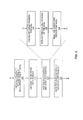
- Fig. 3 illustrates one embodiment of a compensated decoding method according to such processing.
- the transceiver 12 receives a plurality of user signals in a current time interval (Block 120). It decodes the received user signals (Block 122), sends acknowledgment ("ack") signals for the successfully decoded ones of the received user signals (Block 124), and sends non-acknowledgment (“nack”) signals for the unsuccessfully decoded user signals (Block 126).
- ack acknowledgment
- nack non-acknowledgment
- Block 124 is exemplified by the more detailed Blocks 130, 132, 134, wherein the transceiver 12 calculates target powers for each acknowledgment signal to be transmitted (Block 130), e.g., based on a common BLER target and current reception conditions for the individual users being acknowledged.
- the transceiver 12 is configured to reduce the transmit power level of one or more acknowledgment signals below the nominal value needed for the given BLER and current channel conditions. The transceiver 12 may do this because it is power limited in some sense, or because it is configured to strategically reduce its overall power consumption, such as for environmental or economic reasons.
- the transceiver 12 reduces the transmit power setting for one or more of the acknowledgement signals (Block 132), and thus sends the overall set of acknowledgment signals for the given interval, with some at their targeted powers and some at reduced powers (Block 134). Also, rather than using a common BLER for the generation of all acknowledgment signals, the transceiver 12 may use a lowered BLER for acknowledging one or more user signals, which naturally leads to lower transmit powers than would be used for acknowledging at higher reliabilities.
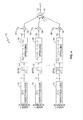
- Fig. 4 illustrates coding and transmission circuits 30, which are included in the transceiver 12 in one or more embodiments, wherein the illustrated circuitry allows the transceiver 12 to lower the power/reliability of individual user acknowledgment signals as needed or desired.
- Coding circuits 32 generate encoded ack or nack bits for each user, and each such set of coded bits is mapped to a corresponding BSPK symbol by mapping circuits 34.
- the resultant BPSK symbol for each user is then spread in a spreading circuit 36, and than amplified in a multiplier circuit 40, by a amplification scale factor G x , where "x" corresponds to a respective one of the users.
- the amplified signals are then combined in a combining circuit 42, in preparation for transmit processing in the transmit circuits 38.
- the value of ( G x ) 2 can be manipulated to set the desired transmit power level.
- the gain value G x or, equivalently the power ( G x ) 2 , for user x can be computed according to the nominal power requirement as set by a given nominal BLER requirement, and then decreased as desired.
- the gain value can be computed according to a lowered BLER.
- the compensated decoding method taught herein includes receiving some number of user signals in each of a series of repeating time intervals. And, for the user signals received in any current one of the time intervals, the method includes decoding the user signals and generating Automatic Repeat reQuest (ARQ) response signals for individual ones of them in dependence on whether decoding succeeds or fails. Further, the method includes retaining information indicating the channel resource allocations used for those user signals that were successfully decoded, and indicating reliabilities or differences in reliabilities for at least some of the ARQ response signals sent for those user signals that were successfully decoded. Further, the method includes using the retained information from a prior time interval in a subsequent time interval, to identify potentially interfering users with respect to a given user signal that fails decoding.
- ARQ Automatic Repeat reQuest
- Fig. 5 depicts a series of repeating time intervals 50, wherein the transceiver 12 receives some number of user signals in each interval 50.
- a user whose signal is "nacked" in a given one of the intervals 50 retransmits in a later time interval, using the previously allocated channel resources.
- the number of time intervals between the original transmission and the retransmission generally is deterministic, or otherwise known, and the transceiver 12 incorporates such retransmissions into its scheduling operations and corresponding channel resource allocations.
- a user that is nacked in a given interval represents a known, planned-for retransmission in a later interval, where that retransmission is accommodated by the transceiver 12 as part of its ongoing scheduling and allocation operations.
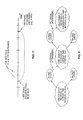
- Fig. 6 illustrates this situation for a current time interval 50-N, a prior time interval 50-(N-x), and a future time interval 50-(N+x).
- N is an integer
- x is another integer, e.g., 1, 2, 3, 4, etc., depending on the number of intervals separating original transmissions and retransmissions.
- Fig. 7 provides an LTE-spccific example of the above scenario.
- the illustrated processing applies to a current time interval-LTE subframe-that is one among a repeating series of LTE subframes on the Physical Uplink Shared Channel (PUSCH).
- the first user signal is a given user equipment signal (UE) signal among a potential plurality of UE signals received by an eNodeB on the Physical Uplink Shared Channel (PUSCH) for the current LTE sub-frame.
- UE user equipment signal
- the method comprises decoding the PUSCH for all UEs transmitting in the current subframe (Block 140). Processing continues with the eNodeB sorting out the subset of UEs where the PUSCH decoding failed (Block 142). For these failed user signals, processing continues with decoding one or them according to the compensated decoding taught herein (Block 144), wherein an interference model is based on the eNodeB assuming that one or more UEs mistakenly retransmitted in the current subframe, based on incorrectly interpreting the acknowledgment signal(s) transmitted by the eNodeB in a prior subframe.
- the eNodeB may send one or more of the corresponding acknowledgement signals on the Physical Hybrid-ARQ Indicator Channel (PHICH) at a lowered reliability.
- PHICH Physical Hybrid-ARQ Indicator Channel
- sending the one or more acknowledgement signals on the PHICH at a lowered reliability comprises ranking those user signals that were received and successfully decoded in the given LTE sub-frame according to their respective channel resource allocations, and choosing in rank order some number of those user signals to be acknowledged at a lowered reliability.
- sending one or more acknowledgment signals on the PHICH at a lowered reliability comprises selectively lowering a transmit power for one or more of the acknowledgment signals to be sent in the current LTE subframe, as needed to limit an overall transmit power used for transmitting on the PHICH in the given LTE sub-frame.
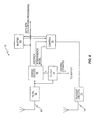
- Fig. 8 illustrates one embodiment of the transceiver 12.
- the transceiver 12 may be a complex processing arrangement, including multiple computer-based processing and communication circuits.
- Fig. 8 therefore provides a simplified but useful functional circuit presentation.
- the wireless communication transceiver 12 comprises one or more receive antennas 60, receiver front-end circuits 62, demodulation/decoding circuits 64, channel estimation circuits 66, signal buffering circuits 68, one or more control circuits 70, and transmit circuits 72 that are associated with one or more transmit antennas 74. (Note that the receiver and transmitter circuits may share antennas.)
- the receiver front-end circuits 62 generally include filters, amplifiers, mixers, and digitizers, for filtering antenna-received signals, applying gain control, converting them to baseband or IF, and digitizing them, to provide streams of digital samples corresponding to the antenna-received signals.
- the demodulation and decoding circuits 64 are configured to perform symbol detection and decoding, where decoded signal data may be buffered temporarily in buffer circuits 68-e.g., successfully decoded signals may be temporarily buffered for use in retransmission interference estimation in a later time interval.
- the demodulation and decoding circuits 64 operate in cooperation with the control circuit 70, which determines whether compensated decoding of given user signals is used, and which provides the interference model information to the demodulation and decoding circuits 64, for use in compensated decoding. Such information may be the particular user or users that are assumed to be the cause of hypothesized retransmission interference, along with any ranking or other information, iteration control for iterative, compensated decoding, etc.
- the control circuit 70 also may be operatively associated with the transmit circuits 72, such as for controlling the reliability of acknowledgment signal transmissions. (The transmit circuitry 30 of Fig. 4 may be located in the transmit circuits 72, for example.)
- the demodulation and decoding circuits 64 and the control circuit 70 are implemented as programmed/programmable digital processing circuits.
- these circuits comprise, in one or more embodiments, one or more microprocessor-based circuits that are configured to implement one or more aspects of the compensated decoding method, based on executing stored computer program instructions.
- the transceiver 12 includes one or more memory circuits (e.g., FLASH, EEPROM, etc.), or some other computer-readable medium, storing such program instructions.
- the transceiver 12 is configured to receive and decode user signals, and it comprises receiver circuits 62 that are configured to receive a first user signal in a current time interval, on channel resources allocated to the first user signal in the current time interval, and further comprises decoding and control circuits 64 and 70.
- the decoding and control circuits 64 and 70 are configured to initially decode the first user signal without compensating for retransmission interference. If the initial decoding fails, these circuits perform compensated decoding of the first user signal.
- these circuits are configured to hypothesize that a potentially interfering user mistakenly retransmitted in the current time interval on some or all of the same channel resources allocated to the first user signal and correspondingly generate an estimate of retransmission interference. They are further configured to obtain a compensated first user signal by compensating the first user signal according to the estimated retransmission interference, and decode the compensated first user signal.
- control circuit 70 is configured to generate the estimate of retransmission interference by generating a channelized signal representing an estimate of what would have been received by the wireless communication transceiver if the potentially interfering user had mistakenly retransmitted in the current time interval, and generating the estimate of retransmission interference in the first user signal as a function of the channelized signal.
- the control circuit 70 makes use of the channel estimates corresponding to the user signals of interest, which, for example, are buffered in the buffer circuits 68.
- control circuit 70 is configured to generate the estimate of retransmission interference by forming a regenerated signal according to buffered decoded data that was successfully obtained from an earlier-received user signal corresponding to the hypothesized mistaken retransmission, and according to buffered channel estimates determined for the earlier-received user signal.
- the control circuit 70 reads this data from the buffer circuits 68, generates the estimate of retransmission interference as a function of the regenerated signal, and provides the estimate of retransmission interference to the demodulation and decoding circuits 64, for creating the compensated first user signal, to be used in the compensated decoding attempt.
- control circuit 70 also may be configured to create the compensated first user signal, and then control the demodulation and decoding circuits 64, such that they decode the compensated user signal.
- compensation may be done before symbol detection (demodulation), or afterwards.
- eNodeB (abbreviated as eNB in the figure) generates acks for both users and sends the acks in a DL subframe, and further assumes that User 1 mistakes its received ack signal as a nack signal (PHICH ACK ⁇ NACK). Still further, the figure assumes that the UL resources that were previously allocated to User 1 in UL subframe n are allocated to another user, User 3, in a later UL subframe n + m . (This reallocation is appropriate from the perspective of the eNB, as it sent an acknowledgment to User 1 for the transmission from User 1 in subframe n , and the eNB thus considers those UL resources as available for reallocation in subsequent UL subframes.)
- the eNB compensates the received signal from User 3 for interference caused by the mistaken retransmission from User 1, where such compensation is applied before or after signal demodulation.
- control circuit 70 may be configured to compensate only for the most significant and/or most likely one or ones of the potentially interfering users, or at least order its compensation iterations to try compensating for those users first.
- the buffer 68 may store channel allocation information that allows the control circuit 70 to recognize which users used which channel resources in one or more prior intervals, and recognize, optionally, whether any of those users were acknowledged using lower-reliability acknowledgment signals.
- the transceiver 12 is an eNodeB configured for operation in an LTE network. Any given time interval is one among a repeating series of LTE subframes on the Physical Uplink Shared Channel (PUSCH), and wherein the first user signal is a given user equipment (UE) signal among a potential plurality ofUE signals received on the PUSCH for the current LTE sub-frame.
- the transceiver 12 is further configured to, for those UE signals received on the PUSCH and successfully decoded by the transceiver 12 in any given LTE sub-frame, send one or more acknowledgement signals on a Physical Hybrid-ARQ Indicator Channel (PHICH) at a lowered reliability.
- PHICH Physical Hybrid-ARQ Indicator Channel
- the transceiver 12 may, for example, send the one or more acknowledgement signals on the PHICH at a lowered reliability by ranking those user signals that were received and successfully decoded in the given LTE sub-frame according to their respective channel resource allocations, and choosing in rank order some number of those user signals to be acknowledged at a lowered reliability.
- the transceiver 12 also may be configured to send the one or more acknowledgment signals on the PHICH at a lowered reliability based on selectively lowering a transmit power for one or more of the acknowledgment signals to be sent in the current LTE sub-frame, as needed to limit an overall transmit power used for transmitting on the PHICH in the given LTE sub-frame.
- T PHICH groups are populated with 0 ⁇ K ⁇ 8 UEs and all UEs in that group are to be sent an ACK.
- k > 0 UEs in a group are to be assigned lower PHICH power.
- N UL_PRBi is the UL allocation in terms of the number of physical resource blocks for the i -th UE.
- the transceiver 12 may be configured to carefully choose the UEs that are acknowledged at lowered reliabilities. For example, its computational resources and/or signal processing timing constraints may practically limit the number of reconstructed interferers it can use in its hypothesized retransmission interference (given that kT >> number of interferers N interfer ). Thus, the transceiver 12 may be configured to minimize k together with PUSCH_alloc .
- This could be on the one hand started by lowering the power for the UE(s) that had the smallest UL assignment-in terms of bandwidth allocation, for example-associated with its/their PHICH until the aggregate required power for the PHICH group meets the available power, This can be expressed as ⁇ i 1 T ⁇ K G ⁇ i 2 ⁇ P avail , where G' i is the (possibly modified) amplitude for UE i .
- Another strategy strategically deciding whether to send acknowledgments at lower reliability takes another approach. Instead of lowering reliability for the acknowledgments sent to the lowest-risk UEs (in terms of the associated resource allocations for the signal(s) being acknowledged), the alternate strategy is based on lowering the acknowledgement signal power for the UE(s) with the largest (or second-largest, etc.) gain G i , such that the number of UEs that may have to be hypothesized as interferers is lower. There is a trade-off between finding a suitable number k in dependence on lowering the acknowledgment signal gain G i for users having high gain settings, versus lowering the gain for those users that transmitted with large UL channel resource allocations.
- the contemplated method increases the robustness of PUSCH transmission that might be subject to time-frequency interference caused by UEs that mistook an ack as a nack, in their PHICH decoding.
- the induced interference potentially caused by this type of mistake is known to the transceiver 12. That is, the transceiver 12 does not necessarily know that the given UE will mistake its acknowledgment signal as a non-acknowledgment signal, but the transceiver 12 does know what the mistaken retransmission will be, assuming it occurs.
- the transceiver knows that a failed PHICH ACK ⁇ NACK increases the redundancy version by one, and it knows the packet size, and in particular, it knows the transmitted bits of the original transmission, since that transmission was acknowledged only because it was correctly decoded.
- the transceiver 12 can reconstruct the interference that would be caused by that UE (or UEs) perfectly, or at least as well as the accuracy of the channel estimates allow.
- the transceiver 12 can be configured to dynamically use its compensated decoding, such as when its transmit power budget over a time interval becomes tight, for example due to physical constraints or other measures, or when processing timing budget is not exhausted. For example, the transceiver 12 may not use compensated decoding at all, even when user signal decoding fails, except in modes where the transceiver 12 sends some or all of its acknowledgment signals at lowered reliabilities.
- any given user signal may reconstruct the interference caused by one or more potentially interfering users one at time, where it compensates for one potentially interfering user, attempts compensated decoding, and moves on to the next potentially interfering user if that attempt fails. Or, its reconstruction can consider more than one potentially interfering user at a time-e.g., up to a predefined number N i nterferer of interferers. In either case, the transceiver 12 knows which channel resources would have been used by which potentially interfering users, and it thus can compensate different parts of the desired user signal, according to which user or users would have retransmitted on the channel resources corresponding to those different parts.
Landscapes
- Engineering & Computer Science (AREA)
- Computer Networks & Wireless Communication (AREA)
- Signal Processing (AREA)
- Power Engineering (AREA)
- Mobile Radio Communication Systems (AREA)
- Detection And Prevention Of Errors In Transmission (AREA)
Claims (16)
- Procédé de décodage de signaux d'utilisateur dans un émetteur/récepteur de communication sans fil comprenant de :recevoir (100) un premier signal d'utilisateur dans un intervalle de temps actuel, sur des ressources de canal allouées au premier signal d'utilisateur dans l'intervalle de temps actuel ;décoder le premier signal d'utilisateur en décodant initialement (102) le premier signal d'utilisateur sans compenser l'interférence de retransmission ; et caractérisé en ce quesi ledit décodage initial du premier signal d'utilisateur échoue (104), effectuer un décodage compensé comprenant de :faire l'hypothèse (106) qu'un utilisateur potentiellement interférent a retransmis par erreur dans l'intervalle de temps actuel sur certaines ou toutes les ressources de canal allouées au premier signal d'utilisateur et générer de manière correspondante une estimation d'interférence de retransmission selon les données décodées avec succès obtenues d'après un signal d'utilisateur reçu plus tôt correspondant à la retransmission hypothétisée par erreur ;obtenir (108) un premier signal d'utilisateur compensé en compensant le premier signal d'utilisateur selon l'interférence de retransmission estimée ; etdécoder (110) le premier signal d'utilisateur compensé.
- Procédé selon la revendication 1, dans lequel ladite étape de génération de l'estimation d'interférence de retransmission comprend de générer un signal chenalisé représentant une estimation de ce qui aurait été reçu par l'émetteur/récepteur de communication sans fil si l'utilisateur potentiellement interférent a retransmis par erreur dans l'intervalle de temps actuel, et générer l'estimation d'interférence de retransmission comme une fonction du signal chenalisé.
- Procédé selon la revendication 1, dans lequel ladite étape de génération de l'estimation d'interférence de retransmission comprend de former un signal régénéré au niveau de l'émetteur/récepteur de communication sans fil selon lesdites données décodées avec succès obtenues d'après ledit signal d'utilisateur reçu plus tôt, correspondant à la retransmission hypothétisée par erreur, et selon les estimations de canal déterminées pour le signal d'utilisateur reçu plus tôt, générer l'estimation d'interférence de retransmission comme une fonction du signal régénéré.
- Procédé selon la revendication 1, dans lequel ladite étape de mise en oeuvre d'un décodage compensé inclut d'identifier l'utilisateur potentiellement interférent comme un ou plusieurs autres utilisateurs qui ont transmis un ou plusieurs signaux d'utilisateur à l'émetteur/récepteur de communication sans fil dans un intervalle de temps antérieur, en utilisant certaines ou toutes les ressources de canal allouées du premier signal d'utilisateur dans l'intervalle de temps actuel.
- Procédé selon la revendication 4, comprenant en outre de déterminer quels autres utilisateurs sont les interférents potentiels les plus significatifs, et effectuer lesdites étapes d'obtention et décodage en utilisant les estimations d'interférence de retransmission tels que générées pour au moins un des interférents potentiels les plus significatifs.
- Procédé selon la revendication 4, comprenant en outre de déterminer lesquels d'un ou plusieurs autres utilisateurs sont les interférents potentiels les plus probables sur la base des fiabilités auxquelles des signaux d'accusé de réception ont été envoyés à ce ou ces autres utilisateurs dans l'intervalle de temps antérieur, et effectuer lesdites étapes d'obtention et décodage en utilisant les estimations d'interférence de retransmission telles que générées pour au moins un des interférents potentiels les plus probables.
- Procédé selon la revendication 1, dans lequel ladite étape d'hypothèse comprend d'identifier, selon l'allocation de ressource de canal et l'information de fiabilité de signal d'accusé de réception retenue par l'émetteur/récepteur de communication sans fil d'un intervalle de temps antérieur, un ou des autres utilisateurs qui ont transmis avec succès des signaux d'utilisateur à l'émetteur/récepteur de communication sans fil dans l'intervalle de temps antérieur utilisant certaines ou toutes les ressources de canal allouées au premier signal d'utilisateur dans l'intervalle de temps actuel, et qui sont les plus susceptibles d'avoir été retransmises par erreur dans l'intervalle de temps actuel.
- Procédé selon la revendication 1, dans lequel le procédé inclut de recevoir un nombre de signaux d'utilisateur dans chacun d'une série d'intervalles de temps répétés, incluant l'intervalle de temps actuel, et, pour les signaux d'utilisateur reçus à n'importe quel intervalle de temps donné :les décoder et générer des signaux de réponse de demande de répétition automatique (ARQ) pour les signaux individuels en fonction de la réussite ou l'échec du décodage ; etretenir l'information indiquant les allocations de ressource de canal utilisées pour les signaux d'utilisateur qui ont été décodés avec succès, et indiquer les fiabilités ou différences de fiabilités pour au moins un des signaux de réponse ARQ envoyés pour les signaux d'utilisateur qui ont été décodés avec succès ; etutiliser l'information retenue d'un intervalle de temps antérieur dans un intervalle de temps subséquent, pour identifier les utilisateurs potentiellement interférents par rapport à un signal d'utilisateur donné dont le décodage échoue.
- Emetteur/récepteur de communication sans fil (12) configuré afin de recevoir et décoder des signaux d'utilisateur, ledit émetteur/récepteur de communication sans fil comprenant :des circuits de récepteur (62) configurés pour recevoir un premier signal d'utilisateur dans un intervalle de temps actuel, sur les ressources de canal allouées au premier signal d'utilisateur dans l'intervalle de temps actuel ; etdes circuits de décodage et commande (64, 70) caractérisés comme étant configurés pour :décoder initialement le premier signal d'utilisateur sans compenser l'interférence de retransmission ; et si le décodage initial échoue, effectuer un décodage compensé du premier signal d'utilisateur dans lequel les circuits de décodage et commande sont configurés pour :faire l'hypothèse qu'un utilisateur potentiellement interférent a retransmis par erreur dans l'intervalle de temps actuel sur certaines ou toutes les ressources de canal allouées au premier signal d'utilisateur et générant de manière correspondante une estimation d'interférence de retransmission selon les données décodées avec succès obtenues d'après un signal d'utilisateur reçu plus tôt correspondant à la retransmission hypothétisée par erreur ;obtenir un premier signal d'utilisateur compensé en compensant le premier signal d'utilisateur selon l'interférence de retransmission estimée ; etdécoder le premier signal d'utilisateur compensé.
- Emetteur/récepteur de communication sans fil selon la revendication 9, dans lequel le circuit de commande est configuré afin de générer l'estimation d'interférence de retransmission en générant un signal chenalisé représentant une estimation de ce qui aurait été reçu par l'émetteur/récepteur de communication sans fil si l'utilisateur potentiellement interférent a retransmis par erreur dans l'intervalle de temps actuel, et en générant l'estimation d'interférence de retransmission comme une fonction du signal chenalisé.
- Emetteur/récepteur de communication sans fil selon la revendication 9, dans lequel l'émetteur/récepteur de communication sans fil comprend un estimateur de canal configuré pour générer les estimations de canal pour les signaux d'utilisateur reçus, et dans lequel le circuit de commande est configuré pour générer l'estimation d'interférence de retransmission en formant un signal régénéré selon lesdites données décodées qui ont été obtenue avec succès et mises en mémoire tampon d'après un signal d'utilisateur reçu plus tôt correspondant à la retransmission hypothétisé par erreur, et selon les estimations de canal mises en mémoire tampon déterminées pour le signal d'utilisateur reçu plus tôt, et générer les estimations d'interférence de retransmission comme une fonction du signal régénéré.
- Emetteur/récepteur de communication sans fil selon la revendication 9, dans lequel le circuit de commande est configuré afin d'identifier l'utilisateur potentiellement interférent comme un ou plusieurs utilisateurs qui ont transmis un ou des signaux d'utilisateur à l'émetteur/récepteur de communication sans fil dans un intervalle de temps antérieur, en utilisant certaine sou toutes les ressources de canal telles qu'allouées au premier signal d'utilisateur dans l'intervalle de temps actuel.
- Emetteur/récepteur de communication sans fil selon la revendication 12, dans lequel le circuit de commande est configuré pour déterminer quels utilisateurs sont les interférents potentiels les plus significatifs, et effectuer lesdites étapes d'obtention et décodage en utilisant les estimations d'interférence de retransmission telles que générées pour au moins un des interférents potentiels les plus significatifs.
- Emetteur/récepteur de communication sans fil selon la revendication 12, dans lequel le circuit de commande est configuré pour déterminer quels utilisateurs sont les interférents potentiels les plus probables sur la base des fiabilités auxquelles des signaux d'accusé de réception ont été envoyés à ce ou ces autres utilisateurs dans l'intervalle de temps antérieur, et effectuer lesdites étapes d'obtention et décodage en utilisant les estimations d'interférence de retransmission telles que générées pour au moins un des interférents potentiels les plus probables.
- Emetteur/récepteur de communication sans fil selon la revendication 9, dans lequel le circuit de commande est configuré pour effectuer ladite étape d'hypothèse en identifiant, selon l'allocation de ressource de canal et l'information de fiabilité de signal d'accusé de réception retenu par l'émetteur/récepteur de communication sans fil d'un intervalle de temps antérieur, un ou plusieurs autres utilisateurs qui ont transmise avec succès des signaux d'utilisateur à l'émetteur/récepteur de communication sans fil dans l'intervalle de temps antérieur en utilisant certaines ou toutes les ressources de canal telles qu'allouées au premier signal d'utilisateur dans l'intervalle de temps actuel, et qui sont les plus susceptibles d'avoir été retransmis par erreur dans l'intervalle de temps actuel.
- Emetteur/récepteur de communication sans fil selon la revendication 9, dans lequel l'émetteur/récepteur de communication sans fil est configuré pour :recevoir un nombre de signaux d'utilisateur dans chacun d'une série d'intervalles de temps répétés, incluant l'intervalle de temps actuel et, pour les signaux d'utilisateur reçus dans n'importe quel intervalle de temps donné :les décoder et générer des signaux de réponse de demande de répétition automatique (ARQ) pour les signaux individuels en fonction de la réussite ou l'échec du décodage ; etretenir une information indiquant les allocations de ressource de canal utilisées pour les signaux d'utilisateur qui ont été décodés avec succès, et indiquer les fiabilités ou différences de fiabilités pour au moins certains des signaux de réponse ARQ pour les signaux d'utilisateur qui ont été décodés avec succès ; etutiliser l'information retenue d'un intervalle de temps antérieur dans un intervalle de temps subséquent, pour identifier les utilisateurs potentiellement interférents par rapport à un signal d'utilisateur donné dans l'intervalle de temps subséquent dont le décodage échoue.
Applications Claiming Priority (3)
| Application Number | Priority Date | Filing Date | Title |
|---|---|---|---|
| US22278409P | 2009-07-02 | 2009-07-02 | |
| US12/635,304 US8249011B2 (en) | 2009-07-02 | 2009-12-10 | Signal reception in wireless communication systems using automatic repeat request transmissions |
| PCT/EP2010/056764 WO2011000626A1 (fr) | 2009-07-02 | 2010-05-18 | Réception améliorée de signal dans des systèmes de communication sans fil à l'aide de transmissions de requête à répétition automatique et élimination conditionnelle d'une interférence dans le cas d'une mauvaise interprétation d'une absence d'accusé de réception |
Publications (2)
| Publication Number | Publication Date |
|---|---|
| EP2449713A1 EP2449713A1 (fr) | 2012-05-09 |
| EP2449713B1 true EP2449713B1 (fr) | 2013-08-21 |
Family
ID=42562707
Family Applications (1)
| Application Number | Title | Priority Date | Filing Date |
|---|---|---|---|
| EP10721775.4A Not-in-force EP2449713B1 (fr) | 2009-07-02 | 2010-05-18 | Réception améliorée de signal dans des systèmes de communication sans fil à l'aide de transmissions de requête à répétition automatique et élimination conditionnelle d'une interférence dans le cas d'une mauvaise interprétation d'une absence d'accusé de réception |
Country Status (6)
| Country | Link |
|---|---|
| US (1) | US8249011B2 (fr) |
| EP (1) | EP2449713B1 (fr) |
| JP (1) | JP5450809B2 (fr) |
| CN (1) | CN102484572B (fr) |
| AU (1) | AU2010268280B2 (fr) |
| WO (1) | WO2011000626A1 (fr) |
Families Citing this family (8)
| Publication number | Priority date | Publication date | Assignee | Title |
|---|---|---|---|---|
| WO2010114340A2 (fr) * | 2009-04-03 | 2010-10-07 | 엘지전자주식회사 | Procédé et dispositif permettant d'effectuer un harq de liaison montante sur un système de communication sans fil |
| KR20120138169A (ko) * | 2011-06-14 | 2012-12-24 | 삼성전자주식회사 | 무선 통신 시스템에서 신호 수신 장치 및 방법 |
| EP2536053B1 (fr) * | 2011-06-14 | 2014-08-13 | Telefonaktiebolaget L M Ericsson (publ) | Dispositif et procédé de contrôle conditionnel d'interférence |
| US9100231B2 (en) * | 2011-11-04 | 2015-08-04 | Qualcomm Incorporated | Hybrid approach for physical downlink shared channel (PDSCH) interference cancellation |
| US9544082B2 (en) | 2012-08-03 | 2017-01-10 | Qualcomm Incorporated | Inter-UE interference cancellation |
| WO2018098675A1 (fr) * | 2016-11-30 | 2018-06-07 | 富士通株式会社 | Dispositif et procédé de retransmission de données et système de communication |
| US10294962B2 (en) | 2017-06-30 | 2019-05-21 | United Technologies Corporation | Turbine engine seal for high erosion environment |
| CN111148209A (zh) * | 2018-11-02 | 2020-05-12 | 中国电信股份有限公司 | 信道优化方法和装置 |
Family Cites Families (4)
| Publication number | Priority date | Publication date | Assignee | Title |
|---|---|---|---|---|
| US7895494B2 (en) * | 2005-12-29 | 2011-02-22 | Interdigital Technology Corporation | Method and system for implementing H-ARQ-assisted ARQ operation |
| CN101296059A (zh) * | 2006-05-03 | 2008-10-29 | 财团法人工业技术研究院 | 通信系统的错误检测方法与通信台和通信装置 |
| US20080069074A1 (en) * | 2006-09-18 | 2008-03-20 | Interdigital Technology Corporation | Successive interference cancellation for multi-codeword transmissions |
| CN101286825A (zh) * | 2007-04-11 | 2008-10-15 | 松下电器产业株式会社 | 实现基于可靠性的混合自动重传的方法、发送端和系统 |
-
2009
- 2009-12-10 US US12/635,304 patent/US8249011B2/en not_active Expired - Fee Related
-
2010
- 2010-05-18 WO PCT/EP2010/056764 patent/WO2011000626A1/fr not_active Ceased
- 2010-05-18 EP EP10721775.4A patent/EP2449713B1/fr not_active Not-in-force
- 2010-05-18 AU AU2010268280A patent/AU2010268280B2/en not_active Ceased
- 2010-05-18 JP JP2012516604A patent/JP5450809B2/ja not_active Expired - Fee Related
- 2010-05-18 CN CN201080039513.3A patent/CN102484572B/zh not_active Expired - Fee Related
Also Published As
| Publication number | Publication date |
|---|---|
| US20110002277A1 (en) | 2011-01-06 |
| AU2010268280B2 (en) | 2014-04-17 |
| WO2011000626A1 (fr) | 2011-01-06 |
| AU2010268280A1 (en) | 2012-02-02 |
| JP2012531772A (ja) | 2012-12-10 |
| CN102484572B (zh) | 2014-10-29 |
| EP2449713A1 (fr) | 2012-05-09 |
| US8249011B2 (en) | 2012-08-21 |
| CN102484572A (zh) | 2012-05-30 |
| JP5450809B2 (ja) | 2014-03-26 |
Similar Documents
| Publication | Publication Date | Title |
|---|---|---|
| EP2449712B1 (fr) | Procédé et appareil pour contrôle arq dans des communications sans fil | |
| EP2449713B1 (fr) | Réception améliorée de signal dans des systèmes de communication sans fil à l'aide de transmissions de requête à répétition automatique et élimination conditionnelle d'une interférence dans le cas d'une mauvaise interprétation d'une absence d'accusé de réception | |
| KR101855502B1 (ko) | Ack/nack 응답 메시지의 매핑 방법 및 단말 | |
| WO2015113214A1 (fr) | Procédés pour mécanisme harq amélioré | |
| US10965404B2 (en) | Method for transmission duration pattern | |
| CN102651678A (zh) | 控制信息的传输方法、装置及系统 | |
| KR20130098317A (ko) | 무선 통신 네트워크 내의 승인 손실 검출 및 관련 처리를 위한 방법 및 장치 | |
| JP7605891B2 (ja) | 端末、通信方法、及び、集積回路 | |
| JP2013509790A (ja) | 通信方法 | |
| WO2018090571A1 (fr) | Support d'informations, appareil et procédé de détection d'informations d'accusé de réception/accusé de réception négatif | |
| CN110637429B (zh) | 第二服务传输中的第一服务数据的打孔成束的方法和装置 | |
| US20190229877A1 (en) | Network node, client device and methods thereof | |
| CN105071903B (zh) | 一种反馈信息的确认方法及装置 | |
| CN113454937B (zh) | 在无线通信系统中确定物理上行链路控制信道pucch不连续传输dtx的方法和装置 | |
| EP3499769B1 (fr) | Procédé et dispositif pour transmettre et recevoir des informations de demande de retransmission automatique hybride | |
| EP3776878B1 (fr) | Récepteur adaptatif dans des systèmes de communication à accès multiple non orthogonal (noma) | |
| HK40058173A (en) | A method and an apparatus for physical uplink control channel (pucch) discontinuous transmission (dtx) determination in a wireless communications system | |
| HK40020483B (en) | Method and device of puncture bundling of data for a first service in a transmission of a second service | |
| HK40020483A (en) | Method and device of puncture bundling of data for a first service in a transmission of a second service |
Legal Events
| Date | Code | Title | Description |
|---|---|---|---|
| PUAI | Public reference made under article 153(3) epc to a published international application that has entered the european phase |
Free format text: ORIGINAL CODE: 0009012 |
|
| 17P | Request for examination filed |
Effective date: 20120118 |
|
| AK | Designated contracting states |
Kind code of ref document: A1 Designated state(s): AL AT BE BG CH CY CZ DE DK EE ES FI FR GB GR HR HU IE IS IT LI LT LU LV MC MK MT NL NO PL PT RO SE SI SK SM TR |
|
| DAX | Request for extension of the european patent (deleted) | ||
| GRAP | Despatch of communication of intention to grant a patent |
Free format text: ORIGINAL CODE: EPIDOSNIGR1 |
|
| INTG | Intention to grant announced |
Effective date: 20130403 |
|
| GRAS | Grant fee paid |
Free format text: ORIGINAL CODE: EPIDOSNIGR3 |
|
| GRAA | (expected) grant |
Free format text: ORIGINAL CODE: 0009210 |
|
| AK | Designated contracting states |
Kind code of ref document: B1 Designated state(s): AL AT BE BG CH CY CZ DE DK EE ES FI FR GB GR HR HU IE IS IT LI LT LU LV MC MK MT NL NO PL PT RO SE SI SK SM TR |
|
| REG | Reference to a national code |
Ref country code: GB Ref legal event code: FG4D |
|
| REG | Reference to a national code |
Ref country code: CH Ref legal event code: EP |
|
| REG | Reference to a national code |
Ref country code: AT Ref legal event code: REF Ref document number: 628623 Country of ref document: AT Kind code of ref document: T Effective date: 20130915 |
|
| REG | Reference to a national code |
Ref country code: IE Ref legal event code: FG4D |
|
| REG | Reference to a national code |
Ref country code: DE Ref legal event code: R096 Ref document number: 602010009648 Country of ref document: DE Effective date: 20131017 |
|
| REG | Reference to a national code |
Ref country code: NL Ref legal event code: T3 |
|
| REG | Reference to a national code |
Ref country code: AT Ref legal event code: MK05 Ref document number: 628623 Country of ref document: AT Kind code of ref document: T Effective date: 20130821 |
|
| REG | Reference to a national code |
Ref country code: LT Ref legal event code: MG4D |
|
| PG25 | Lapsed in a contracting state [announced via postgrant information from national office to epo] |
Ref country code: PT Free format text: LAPSE BECAUSE OF FAILURE TO SUBMIT A TRANSLATION OF THE DESCRIPTION OR TO PAY THE FEE WITHIN THE PRESCRIBED TIME-LIMIT Effective date: 20131223 Ref country code: SE Free format text: LAPSE BECAUSE OF FAILURE TO SUBMIT A TRANSLATION OF THE DESCRIPTION OR TO PAY THE FEE WITHIN THE PRESCRIBED TIME-LIMIT Effective date: 20130821 Ref country code: CY Free format text: LAPSE BECAUSE OF FAILURE TO SUBMIT A TRANSLATION OF THE DESCRIPTION OR TO PAY THE FEE WITHIN THE PRESCRIBED TIME-LIMIT Effective date: 20130821 Ref country code: HR Free format text: LAPSE BECAUSE OF FAILURE TO SUBMIT A TRANSLATION OF THE DESCRIPTION OR TO PAY THE FEE WITHIN THE PRESCRIBED TIME-LIMIT Effective date: 20130821 Ref country code: NO Free format text: LAPSE BECAUSE OF FAILURE TO SUBMIT A TRANSLATION OF THE DESCRIPTION OR TO PAY THE FEE WITHIN THE PRESCRIBED TIME-LIMIT Effective date: 20131121 Ref country code: LT Free format text: LAPSE BECAUSE OF FAILURE TO SUBMIT A TRANSLATION OF THE DESCRIPTION OR TO PAY THE FEE WITHIN THE PRESCRIBED TIME-LIMIT Effective date: 20130821 Ref country code: AT Free format text: LAPSE BECAUSE OF FAILURE TO SUBMIT A TRANSLATION OF THE DESCRIPTION OR TO PAY THE FEE WITHIN THE PRESCRIBED TIME-LIMIT Effective date: 20130821 Ref country code: IS Free format text: LAPSE BECAUSE OF FAILURE TO SUBMIT A TRANSLATION OF THE DESCRIPTION OR TO PAY THE FEE WITHIN THE PRESCRIBED TIME-LIMIT Effective date: 20131221 |
|
| PG25 | Lapsed in a contracting state [announced via postgrant information from national office to epo] |
Ref country code: SI Free format text: LAPSE BECAUSE OF FAILURE TO SUBMIT A TRANSLATION OF THE DESCRIPTION OR TO PAY THE FEE WITHIN THE PRESCRIBED TIME-LIMIT Effective date: 20130821 Ref country code: FI Free format text: LAPSE BECAUSE OF FAILURE TO SUBMIT A TRANSLATION OF THE DESCRIPTION OR TO PAY THE FEE WITHIN THE PRESCRIBED TIME-LIMIT Effective date: 20130821 Ref country code: LV Free format text: LAPSE BECAUSE OF FAILURE TO SUBMIT A TRANSLATION OF THE DESCRIPTION OR TO PAY THE FEE WITHIN THE PRESCRIBED TIME-LIMIT Effective date: 20130821 Ref country code: PL Free format text: LAPSE BECAUSE OF FAILURE TO SUBMIT A TRANSLATION OF THE DESCRIPTION OR TO PAY THE FEE WITHIN THE PRESCRIBED TIME-LIMIT Effective date: 20130821 Ref country code: GR Free format text: LAPSE BECAUSE OF FAILURE TO SUBMIT A TRANSLATION OF THE DESCRIPTION OR TO PAY THE FEE WITHIN THE PRESCRIBED TIME-LIMIT Effective date: 20131122 Ref country code: BE Free format text: LAPSE BECAUSE OF FAILURE TO SUBMIT A TRANSLATION OF THE DESCRIPTION OR TO PAY THE FEE WITHIN THE PRESCRIBED TIME-LIMIT Effective date: 20130821 |
|
| PG25 | Lapsed in a contracting state [announced via postgrant information from national office to epo] |
Ref country code: RO Free format text: LAPSE BECAUSE OF FAILURE TO SUBMIT A TRANSLATION OF THE DESCRIPTION OR TO PAY THE FEE WITHIN THE PRESCRIBED TIME-LIMIT Effective date: 20130821 Ref country code: EE Free format text: LAPSE BECAUSE OF FAILURE TO SUBMIT A TRANSLATION OF THE DESCRIPTION OR TO PAY THE FEE WITHIN THE PRESCRIBED TIME-LIMIT Effective date: 20130821 Ref country code: CZ Free format text: LAPSE BECAUSE OF FAILURE TO SUBMIT A TRANSLATION OF THE DESCRIPTION OR TO PAY THE FEE WITHIN THE PRESCRIBED TIME-LIMIT Effective date: 20130821 Ref country code: SK Free format text: LAPSE BECAUSE OF FAILURE TO SUBMIT A TRANSLATION OF THE DESCRIPTION OR TO PAY THE FEE WITHIN THE PRESCRIBED TIME-LIMIT Effective date: 20130821 Ref country code: DK Free format text: LAPSE BECAUSE OF FAILURE TO SUBMIT A TRANSLATION OF THE DESCRIPTION OR TO PAY THE FEE WITHIN THE PRESCRIBED TIME-LIMIT Effective date: 20130821 |
|
| PG25 | Lapsed in a contracting state [announced via postgrant information from national office to epo] |
Ref country code: IT Free format text: LAPSE BECAUSE OF FAILURE TO SUBMIT A TRANSLATION OF THE DESCRIPTION OR TO PAY THE FEE WITHIN THE PRESCRIBED TIME-LIMIT Effective date: 20130821 Ref country code: ES Free format text: LAPSE BECAUSE OF FAILURE TO SUBMIT A TRANSLATION OF THE DESCRIPTION OR TO PAY THE FEE WITHIN THE PRESCRIBED TIME-LIMIT Effective date: 20130821 |
|
| PLBE | No opposition filed within time limit |
Free format text: ORIGINAL CODE: 0009261 |
|
| STAA | Information on the status of an ep patent application or granted ep patent |
Free format text: STATUS: NO OPPOSITION FILED WITHIN TIME LIMIT |
|
| 26N | No opposition filed |
Effective date: 20140522 |
|
| REG | Reference to a national code |
Ref country code: DE Ref legal event code: R097 Ref document number: 602010009648 Country of ref document: DE Effective date: 20140522 |
|
| PG25 | Lapsed in a contracting state [announced via postgrant information from national office to epo] |
Ref country code: LU Free format text: LAPSE BECAUSE OF FAILURE TO SUBMIT A TRANSLATION OF THE DESCRIPTION OR TO PAY THE FEE WITHIN THE PRESCRIBED TIME-LIMIT Effective date: 20140518 |
|
| REG | Reference to a national code |
Ref country code: CH Ref legal event code: PL |
|
| PG25 | Lapsed in a contracting state [announced via postgrant information from national office to epo] |
Ref country code: LI Free format text: LAPSE BECAUSE OF NON-PAYMENT OF DUE FEES Effective date: 20140531 Ref country code: CH Free format text: LAPSE BECAUSE OF NON-PAYMENT OF DUE FEES Effective date: 20140531 Ref country code: MC Free format text: LAPSE BECAUSE OF FAILURE TO SUBMIT A TRANSLATION OF THE DESCRIPTION OR TO PAY THE FEE WITHIN THE PRESCRIBED TIME-LIMIT Effective date: 20130821 |
|
| REG | Reference to a national code |
Ref country code: IE Ref legal event code: MM4A |
|
| REG | Reference to a national code |
Ref country code: FR Ref legal event code: ST Effective date: 20150130 |
|
| PG25 | Lapsed in a contracting state [announced via postgrant information from national office to epo] |
Ref country code: IE Free format text: LAPSE BECAUSE OF NON-PAYMENT OF DUE FEES Effective date: 20140518 |
|
| PG25 | Lapsed in a contracting state [announced via postgrant information from national office to epo] |
Ref country code: FR Free format text: LAPSE BECAUSE OF NON-PAYMENT OF DUE FEES Effective date: 20140602 |
|
| PG25 | Lapsed in a contracting state [announced via postgrant information from national office to epo] |
Ref country code: MT Free format text: LAPSE BECAUSE OF FAILURE TO SUBMIT A TRANSLATION OF THE DESCRIPTION OR TO PAY THE FEE WITHIN THE PRESCRIBED TIME-LIMIT Effective date: 20130821 |
|
| PG25 | Lapsed in a contracting state [announced via postgrant information from national office to epo] |
Ref country code: SM Free format text: LAPSE BECAUSE OF FAILURE TO SUBMIT A TRANSLATION OF THE DESCRIPTION OR TO PAY THE FEE WITHIN THE PRESCRIBED TIME-LIMIT Effective date: 20130821 |
|
| PG25 | Lapsed in a contracting state [announced via postgrant information from national office to epo] |
Ref country code: BG Free format text: LAPSE BECAUSE OF FAILURE TO SUBMIT A TRANSLATION OF THE DESCRIPTION OR TO PAY THE FEE WITHIN THE PRESCRIBED TIME-LIMIT Effective date: 20130821 |
|
| PG25 | Lapsed in a contracting state [announced via postgrant information from national office to epo] |
Ref country code: HU Free format text: LAPSE BECAUSE OF FAILURE TO SUBMIT A TRANSLATION OF THE DESCRIPTION OR TO PAY THE FEE WITHIN THE PRESCRIBED TIME-LIMIT; INVALID AB INITIO Effective date: 20100518 Ref country code: TR Free format text: LAPSE BECAUSE OF FAILURE TO SUBMIT A TRANSLATION OF THE DESCRIPTION OR TO PAY THE FEE WITHIN THE PRESCRIBED TIME-LIMIT Effective date: 20130821 |
|
| PG25 | Lapsed in a contracting state [announced via postgrant information from national office to epo] |
Ref country code: MK Free format text: LAPSE BECAUSE OF FAILURE TO SUBMIT A TRANSLATION OF THE DESCRIPTION OR TO PAY THE FEE WITHIN THE PRESCRIBED TIME-LIMIT Effective date: 20130821 |
|
| PG25 | Lapsed in a contracting state [announced via postgrant information from national office to epo] |
Ref country code: AL Free format text: LAPSE BECAUSE OF FAILURE TO SUBMIT A TRANSLATION OF THE DESCRIPTION OR TO PAY THE FEE WITHIN THE PRESCRIBED TIME-LIMIT Effective date: 20130821 |
|
| PGFP | Annual fee paid to national office [announced via postgrant information from national office to epo] |
Ref country code: NL Payment date: 20220526 Year of fee payment: 13 |
|
| REG | Reference to a national code |
Ref country code: NL Ref legal event code: MM Effective date: 20230601 |
|
| PG25 | Lapsed in a contracting state [announced via postgrant information from national office to epo] |
Ref country code: NL Free format text: LAPSE BECAUSE OF NON-PAYMENT OF DUE FEES Effective date: 20230601 |
|
| PGFP | Annual fee paid to national office [announced via postgrant information from national office to epo] |
Ref country code: GB Payment date: 20240527 Year of fee payment: 15 |
|
| PGFP | Annual fee paid to national office [announced via postgrant information from national office to epo] |
Ref country code: DE Payment date: 20240530 Year of fee payment: 15 |
|
| REG | Reference to a national code |
Ref country code: DE Ref legal event code: R119 Ref document number: 602010009648 Country of ref document: DE |
|
| GBPC | Gb: european patent ceased through non-payment of renewal fee |
Effective date: 20250518 |