EP2451161B1 - Codage et décodage pour vidéo entrelacé - Google Patents
Codage et décodage pour vidéo entrelacé Download PDFInfo
- Publication number
- EP2451161B1 EP2451161B1 EP12151222.2A EP12151222A EP2451161B1 EP 2451161 B1 EP2451161 B1 EP 2451161B1 EP 12151222 A EP12151222 A EP 12151222A EP 2451161 B1 EP2451161 B1 EP 2451161B1
- Authority
- EP
- European Patent Office
- Prior art keywords
- motion vector
- macroblock
- field
- interlaced
- motion
- Prior art date
- Legal status (The legal status is an assumption and is not a legal conclusion. Google has not performed a legal analysis and makes no representation as to the accuracy of the status listed.)
- Expired - Lifetime
Links
- 230000033001 locomotion Effects 0.000 claims description 1292
- 239000013598 vector Substances 0.000 claims description 1162
- 238000000034 method Methods 0.000 claims description 188
- 230000011664 signaling Effects 0.000 claims description 78
- 230000008569 process Effects 0.000 claims description 35
- 238000012545 processing Methods 0.000 claims description 10
- 238000005562 fading Methods 0.000 description 164
- 241000023320 Luma <angiosperm> Species 0.000 description 105
- OSWPMRLSEDHDFF-UHFFFAOYSA-N methyl salicylate Chemical compound COC(=O)C1=CC=CC=C1O OSWPMRLSEDHDFF-UHFFFAOYSA-N 0.000 description 105
- 230000000750 progressive effect Effects 0.000 description 81
- 238000003817 vacuum liquid chromatography Methods 0.000 description 52
- 230000006835 compression Effects 0.000 description 36
- 238000007906 compression Methods 0.000 description 36
- 230000000875 corresponding effect Effects 0.000 description 35
- 238000010586 diagram Methods 0.000 description 31
- 230000007246 mechanism Effects 0.000 description 27
- 239000000872 buffer Substances 0.000 description 23
- 238000006073 displacement reaction Methods 0.000 description 23
- 230000007727 signaling mechanism Effects 0.000 description 21
- 238000013139 quantization Methods 0.000 description 20
- 238000009795 derivation Methods 0.000 description 19
- 238000005070 sampling Methods 0.000 description 14
- 230000006837 decompression Effects 0.000 description 10
- 238000005192 partition Methods 0.000 description 10
- 238000004891 communication Methods 0.000 description 8
- 238000001514 detection method Methods 0.000 description 8
- 230000008901 benefit Effects 0.000 description 7
- 230000008859 change Effects 0.000 description 7
- 230000008520 organization Effects 0.000 description 7
- 230000003595 spectral effect Effects 0.000 description 7
- 230000002123 temporal effect Effects 0.000 description 6
- 238000012360 testing method Methods 0.000 description 6
- 230000001960 triggered effect Effects 0.000 description 6
- 230000003044 adaptive effect Effects 0.000 description 5
- 238000002156 mixing Methods 0.000 description 5
- 101150115425 Slc27a2 gene Proteins 0.000 description 4
- 230000005540 biological transmission Effects 0.000 description 4
- 238000001914 filtration Methods 0.000 description 4
- 230000006872 improvement Effects 0.000 description 4
- 239000000203 mixture Substances 0.000 description 4
- 238000004458 analytical method Methods 0.000 description 3
- 230000007423 decrease Effects 0.000 description 3
- 230000006870 function Effects 0.000 description 3
- 238000012417 linear regression Methods 0.000 description 3
- 238000013507 mapping Methods 0.000 description 3
- 230000000737 periodic effect Effects 0.000 description 3
- 238000004422 calculation algorithm Methods 0.000 description 2
- 238000004364 calculation method Methods 0.000 description 2
- 230000001364 causal effect Effects 0.000 description 2
- 238000012937 correction Methods 0.000 description 2
- 230000001419 dependent effect Effects 0.000 description 2
- 230000000694 effects Effects 0.000 description 2
- 238000011156 evaluation Methods 0.000 description 2
- 238000013432 robust analysis Methods 0.000 description 2
- 238000007619 statistical method Methods 0.000 description 2
- 230000009466 transformation Effects 0.000 description 2
- 238000000844 transformation Methods 0.000 description 2
- 238000012935 Averaging Methods 0.000 description 1
- 244000180534 Berberis hybrid Species 0.000 description 1
- 208000037170 Delayed Emergence from Anesthesia Diseases 0.000 description 1
- 206010017367 Frequent bowel movements Diseases 0.000 description 1
- 241000489569 Mandevilla x amabilis Species 0.000 description 1
- 244000208734 Pisonia aculeata Species 0.000 description 1
- 230000004913 activation Effects 0.000 description 1
- 238000003491 array Methods 0.000 description 1
- 230000002238 attenuated effect Effects 0.000 description 1
- 230000015572 biosynthetic process Effects 0.000 description 1
- 230000002596 correlated effect Effects 0.000 description 1
- 238000002474 experimental method Methods 0.000 description 1
- 238000005286 illumination Methods 0.000 description 1
- 230000003287 optical effect Effects 0.000 description 1
- 230000008707 rearrangement Effects 0.000 description 1
- 230000009467 reduction Effects 0.000 description 1
- 230000002441 reversible effect Effects 0.000 description 1
- 238000003786 synthesis reaction Methods 0.000 description 1
- 230000007704 transition Effects 0.000 description 1
- 238000012795 verification Methods 0.000 description 1
- 230000000007 visual effect Effects 0.000 description 1
Images





























Classifications
-
- H—ELECTRICITY
- H04—ELECTRIC COMMUNICATION TECHNIQUE
- H04N—PICTORIAL COMMUNICATION, e.g. TELEVISION
- H04N19/00—Methods or arrangements for coding, decoding, compressing or decompressing digital video signals
- H04N19/10—Methods or arrangements for coding, decoding, compressing or decompressing digital video signals using adaptive coding
- H04N19/134—Methods or arrangements for coding, decoding, compressing or decompressing digital video signals using adaptive coding characterised by the element, parameter or criterion affecting or controlling the adaptive coding
- H04N19/157—Assigned coding mode, i.e. the coding mode being predefined or preselected to be further used for selection of another element or parameter
- H04N19/16—Assigned coding mode, i.e. the coding mode being predefined or preselected to be further used for selection of another element or parameter for a given display mode, e.g. for interlaced or progressive display mode
-
- H—ELECTRICITY
- H04—ELECTRIC COMMUNICATION TECHNIQUE
- H04N—PICTORIAL COMMUNICATION, e.g. TELEVISION
- H04N19/00—Methods or arrangements for coding, decoding, compressing or decompressing digital video signals
- H04N19/10—Methods or arrangements for coding, decoding, compressing or decompressing digital video signals using adaptive coding
- H04N19/102—Methods or arrangements for coding, decoding, compressing or decompressing digital video signals using adaptive coding characterised by the element, parameter or selection affected or controlled by the adaptive coding
-
- H—ELECTRICITY
- H04—ELECTRIC COMMUNICATION TECHNIQUE
- H04N—PICTORIAL COMMUNICATION, e.g. TELEVISION
- H04N19/00—Methods or arrangements for coding, decoding, compressing or decompressing digital video signals
- H04N19/10—Methods or arrangements for coding, decoding, compressing or decompressing digital video signals using adaptive coding
- H04N19/102—Methods or arrangements for coding, decoding, compressing or decompressing digital video signals using adaptive coding characterised by the element, parameter or selection affected or controlled by the adaptive coding
- H04N19/103—Selection of coding mode or of prediction mode
- H04N19/109—Selection of coding mode or of prediction mode among a plurality of temporal predictive coding modes
-
- H—ELECTRICITY
- H04—ELECTRIC COMMUNICATION TECHNIQUE
- H04N—PICTORIAL COMMUNICATION, e.g. TELEVISION
- H04N19/00—Methods or arrangements for coding, decoding, compressing or decompressing digital video signals
- H04N19/10—Methods or arrangements for coding, decoding, compressing or decompressing digital video signals using adaptive coding
- H04N19/102—Methods or arrangements for coding, decoding, compressing or decompressing digital video signals using adaptive coding characterised by the element, parameter or selection affected or controlled by the adaptive coding
- H04N19/103—Selection of coding mode or of prediction mode
- H04N19/11—Selection of coding mode or of prediction mode among a plurality of spatial predictive coding modes
-
- H—ELECTRICITY
- H04—ELECTRIC COMMUNICATION TECHNIQUE
- H04N—PICTORIAL COMMUNICATION, e.g. TELEVISION
- H04N19/00—Methods or arrangements for coding, decoding, compressing or decompressing digital video signals
- H04N19/10—Methods or arrangements for coding, decoding, compressing or decompressing digital video signals using adaptive coding
- H04N19/102—Methods or arrangements for coding, decoding, compressing or decompressing digital video signals using adaptive coding characterised by the element, parameter or selection affected or controlled by the adaptive coding
- H04N19/103—Selection of coding mode or of prediction mode
- H04N19/112—Selection of coding mode or of prediction mode according to a given display mode, e.g. for interlaced or progressive display mode
-
- H—ELECTRICITY
- H04—ELECTRIC COMMUNICATION TECHNIQUE
- H04N—PICTORIAL COMMUNICATION, e.g. TELEVISION
- H04N19/00—Methods or arrangements for coding, decoding, compressing or decompressing digital video signals
- H04N19/10—Methods or arrangements for coding, decoding, compressing or decompressing digital video signals using adaptive coding
- H04N19/102—Methods or arrangements for coding, decoding, compressing or decompressing digital video signals using adaptive coding characterised by the element, parameter or selection affected or controlled by the adaptive coding
- H04N19/117—Filters, e.g. for pre-processing or post-processing
-
- H—ELECTRICITY
- H04—ELECTRIC COMMUNICATION TECHNIQUE
- H04N—PICTORIAL COMMUNICATION, e.g. TELEVISION
- H04N19/00—Methods or arrangements for coding, decoding, compressing or decompressing digital video signals
- H04N19/10—Methods or arrangements for coding, decoding, compressing or decompressing digital video signals using adaptive coding
- H04N19/102—Methods or arrangements for coding, decoding, compressing or decompressing digital video signals using adaptive coding characterised by the element, parameter or selection affected or controlled by the adaptive coding
- H04N19/129—Scanning of coding units, e.g. zig-zag scan of transform coefficients or flexible macroblock ordering [FMO]
-
- H—ELECTRICITY
- H04—ELECTRIC COMMUNICATION TECHNIQUE
- H04N—PICTORIAL COMMUNICATION, e.g. TELEVISION
- H04N19/00—Methods or arrangements for coding, decoding, compressing or decompressing digital video signals
- H04N19/10—Methods or arrangements for coding, decoding, compressing or decompressing digital video signals using adaptive coding
- H04N19/102—Methods or arrangements for coding, decoding, compressing or decompressing digital video signals using adaptive coding characterised by the element, parameter or selection affected or controlled by the adaptive coding
- H04N19/13—Adaptive entropy coding, e.g. adaptive variable length coding [AVLC] or context adaptive binary arithmetic coding [CABAC]
-
- H—ELECTRICITY
- H04—ELECTRIC COMMUNICATION TECHNIQUE
- H04N—PICTORIAL COMMUNICATION, e.g. TELEVISION
- H04N19/00—Methods or arrangements for coding, decoding, compressing or decompressing digital video signals
- H04N19/10—Methods or arrangements for coding, decoding, compressing or decompressing digital video signals using adaptive coding
- H04N19/134—Methods or arrangements for coding, decoding, compressing or decompressing digital video signals using adaptive coding characterised by the element, parameter or criterion affecting or controlling the adaptive coding
- H04N19/136—Incoming video signal characteristics or properties
- H04N19/137—Motion inside a coding unit, e.g. average field, frame or block difference
-
- H—ELECTRICITY
- H04—ELECTRIC COMMUNICATION TECHNIQUE
- H04N—PICTORIAL COMMUNICATION, e.g. TELEVISION
- H04N19/00—Methods or arrangements for coding, decoding, compressing or decompressing digital video signals
- H04N19/10—Methods or arrangements for coding, decoding, compressing or decompressing digital video signals using adaptive coding
- H04N19/134—Methods or arrangements for coding, decoding, compressing or decompressing digital video signals using adaptive coding characterised by the element, parameter or criterion affecting or controlling the adaptive coding
- H04N19/136—Incoming video signal characteristics or properties
- H04N19/137—Motion inside a coding unit, e.g. average field, frame or block difference
- H04N19/139—Analysis of motion vectors, e.g. their magnitude, direction, variance or reliability
-
- H—ELECTRICITY
- H04—ELECTRIC COMMUNICATION TECHNIQUE
- H04N—PICTORIAL COMMUNICATION, e.g. TELEVISION
- H04N19/00—Methods or arrangements for coding, decoding, compressing or decompressing digital video signals
- H04N19/10—Methods or arrangements for coding, decoding, compressing or decompressing digital video signals using adaptive coding
- H04N19/134—Methods or arrangements for coding, decoding, compressing or decompressing digital video signals using adaptive coding characterised by the element, parameter or criterion affecting or controlling the adaptive coding
- H04N19/146—Data rate or code amount at the encoder output
-
- H—ELECTRICITY
- H04—ELECTRIC COMMUNICATION TECHNIQUE
- H04N—PICTORIAL COMMUNICATION, e.g. TELEVISION
- H04N19/00—Methods or arrangements for coding, decoding, compressing or decompressing digital video signals
- H04N19/10—Methods or arrangements for coding, decoding, compressing or decompressing digital video signals using adaptive coding
- H04N19/134—Methods or arrangements for coding, decoding, compressing or decompressing digital video signals using adaptive coding characterised by the element, parameter or criterion affecting or controlling the adaptive coding
- H04N19/146—Data rate or code amount at the encoder output
- H04N19/147—Data rate or code amount at the encoder output according to rate distortion criteria
-
- H—ELECTRICITY
- H04—ELECTRIC COMMUNICATION TECHNIQUE
- H04N—PICTORIAL COMMUNICATION, e.g. TELEVISION
- H04N19/00—Methods or arrangements for coding, decoding, compressing or decompressing digital video signals
- H04N19/10—Methods or arrangements for coding, decoding, compressing or decompressing digital video signals using adaptive coding
- H04N19/134—Methods or arrangements for coding, decoding, compressing or decompressing digital video signals using adaptive coding characterised by the element, parameter or criterion affecting or controlling the adaptive coding
- H04N19/157—Assigned coding mode, i.e. the coding mode being predefined or preselected to be further used for selection of another element or parameter
- H04N19/159—Prediction type, e.g. intra-frame, inter-frame or bidirectional frame prediction
-
- H—ELECTRICITY
- H04—ELECTRIC COMMUNICATION TECHNIQUE
- H04N—PICTORIAL COMMUNICATION, e.g. TELEVISION
- H04N19/00—Methods or arrangements for coding, decoding, compressing or decompressing digital video signals
- H04N19/10—Methods or arrangements for coding, decoding, compressing or decompressing digital video signals using adaptive coding
- H04N19/169—Methods or arrangements for coding, decoding, compressing or decompressing digital video signals using adaptive coding characterised by the coding unit, i.e. the structural portion or semantic portion of the video signal being the object or the subject of the adaptive coding
- H04N19/17—Methods or arrangements for coding, decoding, compressing or decompressing digital video signals using adaptive coding characterised by the coding unit, i.e. the structural portion or semantic portion of the video signal being the object or the subject of the adaptive coding the unit being an image region, e.g. an object
- H04N19/172—Methods or arrangements for coding, decoding, compressing or decompressing digital video signals using adaptive coding characterised by the coding unit, i.e. the structural portion or semantic portion of the video signal being the object or the subject of the adaptive coding the unit being an image region, e.g. an object the region being a picture, frame or field
-
- H—ELECTRICITY
- H04—ELECTRIC COMMUNICATION TECHNIQUE
- H04N—PICTORIAL COMMUNICATION, e.g. TELEVISION
- H04N19/00—Methods or arrangements for coding, decoding, compressing or decompressing digital video signals
- H04N19/10—Methods or arrangements for coding, decoding, compressing or decompressing digital video signals using adaptive coding
- H04N19/169—Methods or arrangements for coding, decoding, compressing or decompressing digital video signals using adaptive coding characterised by the coding unit, i.e. the structural portion or semantic portion of the video signal being the object or the subject of the adaptive coding
- H04N19/17—Methods or arrangements for coding, decoding, compressing or decompressing digital video signals using adaptive coding characterised by the coding unit, i.e. the structural portion or semantic portion of the video signal being the object or the subject of the adaptive coding the unit being an image region, e.g. an object
- H04N19/176—Methods or arrangements for coding, decoding, compressing or decompressing digital video signals using adaptive coding characterised by the coding unit, i.e. the structural portion or semantic portion of the video signal being the object or the subject of the adaptive coding the unit being an image region, e.g. an object the region being a block, e.g. a macroblock
-
- H—ELECTRICITY
- H04—ELECTRIC COMMUNICATION TECHNIQUE
- H04N—PICTORIAL COMMUNICATION, e.g. TELEVISION
- H04N19/00—Methods or arrangements for coding, decoding, compressing or decompressing digital video signals
- H04N19/10—Methods or arrangements for coding, decoding, compressing or decompressing digital video signals using adaptive coding
- H04N19/169—Methods or arrangements for coding, decoding, compressing or decompressing digital video signals using adaptive coding characterised by the coding unit, i.e. the structural portion or semantic portion of the video signal being the object or the subject of the adaptive coding
- H04N19/18—Methods or arrangements for coding, decoding, compressing or decompressing digital video signals using adaptive coding characterised by the coding unit, i.e. the structural portion or semantic portion of the video signal being the object or the subject of the adaptive coding the unit being a set of transform coefficients
-
- H—ELECTRICITY
- H04—ELECTRIC COMMUNICATION TECHNIQUE
- H04N—PICTORIAL COMMUNICATION, e.g. TELEVISION
- H04N19/00—Methods or arrangements for coding, decoding, compressing or decompressing digital video signals
- H04N19/10—Methods or arrangements for coding, decoding, compressing or decompressing digital video signals using adaptive coding
- H04N19/169—Methods or arrangements for coding, decoding, compressing or decompressing digital video signals using adaptive coding characterised by the coding unit, i.e. the structural portion or semantic portion of the video signal being the object or the subject of the adaptive coding
- H04N19/184—Methods or arrangements for coding, decoding, compressing or decompressing digital video signals using adaptive coding characterised by the coding unit, i.e. the structural portion or semantic portion of the video signal being the object or the subject of the adaptive coding the unit being bits, e.g. of the compressed video stream
-
- H—ELECTRICITY
- H04—ELECTRIC COMMUNICATION TECHNIQUE
- H04N—PICTORIAL COMMUNICATION, e.g. TELEVISION
- H04N19/00—Methods or arrangements for coding, decoding, compressing or decompressing digital video signals
- H04N19/10—Methods or arrangements for coding, decoding, compressing or decompressing digital video signals using adaptive coding
- H04N19/169—Methods or arrangements for coding, decoding, compressing or decompressing digital video signals using adaptive coding characterised by the coding unit, i.e. the structural portion or semantic portion of the video signal being the object or the subject of the adaptive coding
- H04N19/186—Methods or arrangements for coding, decoding, compressing or decompressing digital video signals using adaptive coding characterised by the coding unit, i.e. the structural portion or semantic portion of the video signal being the object or the subject of the adaptive coding the unit being a colour or a chrominance component
-
- H—ELECTRICITY
- H04—ELECTRIC COMMUNICATION TECHNIQUE
- H04N—PICTORIAL COMMUNICATION, e.g. TELEVISION
- H04N19/00—Methods or arrangements for coding, decoding, compressing or decompressing digital video signals
- H04N19/10—Methods or arrangements for coding, decoding, compressing or decompressing digital video signals using adaptive coding
- H04N19/189—Methods or arrangements for coding, decoding, compressing or decompressing digital video signals using adaptive coding characterised by the adaptation method, adaptation tool or adaptation type used for the adaptive coding
- H04N19/196—Methods or arrangements for coding, decoding, compressing or decompressing digital video signals using adaptive coding characterised by the adaptation method, adaptation tool or adaptation type used for the adaptive coding being specially adapted for the computation of encoding parameters, e.g. by averaging previously computed encoding parameters
-
- H—ELECTRICITY
- H04—ELECTRIC COMMUNICATION TECHNIQUE
- H04N—PICTORIAL COMMUNICATION, e.g. TELEVISION
- H04N19/00—Methods or arrangements for coding, decoding, compressing or decompressing digital video signals
- H04N19/46—Embedding additional information in the video signal during the compression process
-
- H—ELECTRICITY
- H04—ELECTRIC COMMUNICATION TECHNIQUE
- H04N—PICTORIAL COMMUNICATION, e.g. TELEVISION
- H04N19/00—Methods or arrangements for coding, decoding, compressing or decompressing digital video signals
- H04N19/46—Embedding additional information in the video signal during the compression process
- H04N19/463—Embedding additional information in the video signal during the compression process by compressing encoding parameters before transmission
-
- H—ELECTRICITY
- H04—ELECTRIC COMMUNICATION TECHNIQUE
- H04N—PICTORIAL COMMUNICATION, e.g. TELEVISION
- H04N19/00—Methods or arrangements for coding, decoding, compressing or decompressing digital video signals
- H04N19/50—Methods or arrangements for coding, decoding, compressing or decompressing digital video signals using predictive coding
- H04N19/503—Methods or arrangements for coding, decoding, compressing or decompressing digital video signals using predictive coding involving temporal prediction
- H04N19/51—Motion estimation or motion compensation
-
- H—ELECTRICITY
- H04—ELECTRIC COMMUNICATION TECHNIQUE
- H04N—PICTORIAL COMMUNICATION, e.g. TELEVISION
- H04N19/00—Methods or arrangements for coding, decoding, compressing or decompressing digital video signals
- H04N19/50—Methods or arrangements for coding, decoding, compressing or decompressing digital video signals using predictive coding
- H04N19/503—Methods or arrangements for coding, decoding, compressing or decompressing digital video signals using predictive coding involving temporal prediction
- H04N19/51—Motion estimation or motion compensation
- H04N19/513—Processing of motion vectors
- H04N19/517—Processing of motion vectors by encoding
- H04N19/52—Processing of motion vectors by encoding by predictive encoding
-
- H—ELECTRICITY
- H04—ELECTRIC COMMUNICATION TECHNIQUE
- H04N—PICTORIAL COMMUNICATION, e.g. TELEVISION
- H04N19/00—Methods or arrangements for coding, decoding, compressing or decompressing digital video signals
- H04N19/50—Methods or arrangements for coding, decoding, compressing or decompressing digital video signals using predictive coding
- H04N19/503—Methods or arrangements for coding, decoding, compressing or decompressing digital video signals using predictive coding involving temporal prediction
- H04N19/51—Motion estimation or motion compensation
- H04N19/523—Motion estimation or motion compensation with sub-pixel accuracy
-
- H—ELECTRICITY
- H04—ELECTRIC COMMUNICATION TECHNIQUE
- H04N—PICTORIAL COMMUNICATION, e.g. TELEVISION
- H04N19/00—Methods or arrangements for coding, decoding, compressing or decompressing digital video signals
- H04N19/50—Methods or arrangements for coding, decoding, compressing or decompressing digital video signals using predictive coding
- H04N19/593—Methods or arrangements for coding, decoding, compressing or decompressing digital video signals using predictive coding involving spatial prediction techniques
-
- H—ELECTRICITY
- H04—ELECTRIC COMMUNICATION TECHNIQUE
- H04N—PICTORIAL COMMUNICATION, e.g. TELEVISION
- H04N19/00—Methods or arrangements for coding, decoding, compressing or decompressing digital video signals
- H04N19/60—Methods or arrangements for coding, decoding, compressing or decompressing digital video signals using transform coding
- H04N19/61—Methods or arrangements for coding, decoding, compressing or decompressing digital video signals using transform coding in combination with predictive coding
-
- H—ELECTRICITY
- H04—ELECTRIC COMMUNICATION TECHNIQUE
- H04N—PICTORIAL COMMUNICATION, e.g. TELEVISION
- H04N19/00—Methods or arrangements for coding, decoding, compressing or decompressing digital video signals
- H04N19/70—Methods or arrangements for coding, decoding, compressing or decompressing digital video signals characterised by syntax aspects related to video coding, e.g. related to compression standards
-
- H—ELECTRICITY
- H04—ELECTRIC COMMUNICATION TECHNIQUE
- H04N—PICTORIAL COMMUNICATION, e.g. TELEVISION
- H04N19/00—Methods or arrangements for coding, decoding, compressing or decompressing digital video signals
- H04N19/80—Details of filtering operations specially adapted for video compression, e.g. for pixel interpolation
- H04N19/82—Details of filtering operations specially adapted for video compression, e.g. for pixel interpolation involving filtering within a prediction loop
-
- H—ELECTRICITY
- H04—ELECTRIC COMMUNICATION TECHNIQUE
- H04N—PICTORIAL COMMUNICATION, e.g. TELEVISION
- H04N19/00—Methods or arrangements for coding, decoding, compressing or decompressing digital video signals
- H04N19/85—Methods or arrangements for coding, decoding, compressing or decompressing digital video signals using pre-processing or post-processing specially adapted for video compression
- H04N19/86—Methods or arrangements for coding, decoding, compressing or decompressing digital video signals using pre-processing or post-processing specially adapted for video compression involving reduction of coding artifacts, e.g. of blockiness
-
- H—ELECTRICITY
- H04—ELECTRIC COMMUNICATION TECHNIQUE
- H04N—PICTORIAL COMMUNICATION, e.g. TELEVISION
- H04N19/00—Methods or arrangements for coding, decoding, compressing or decompressing digital video signals
- H04N19/90—Methods or arrangements for coding, decoding, compressing or decompressing digital video signals using coding techniques not provided for in groups H04N19/10-H04N19/85, e.g. fractals
- H04N19/93—Run-length coding
-
- H—ELECTRICITY
- H04—ELECTRIC COMMUNICATION TECHNIQUE
- H04N—PICTORIAL COMMUNICATION, e.g. TELEVISION
- H04N19/00—Methods or arrangements for coding, decoding, compressing or decompressing digital video signals
- H04N19/60—Methods or arrangements for coding, decoding, compressing or decompressing digital video signals using transform coding
- H04N19/63—Methods or arrangements for coding, decoding, compressing or decompressing digital video signals using transform coding using sub-band based transform, e.g. wavelets
Definitions
- a typical raw digital video sequence includes 15 or 30 frames per second. Each frame can include tens or hundreds of thousands of pixels (also called pels), where each pixel represents a tiny element of the picture.
- a computer commonly represents a pixel as a set of three samples totaling 24 bits.
- a pixel may include an eight-bit luminance sample (also called a luma sample, as the terms “luminance” and “luma” are used interchangeably herein) that defines the grayscale component of the pixel and two eight-bit chrominance samples (also called chroma samples, as the terms “chrominance” and “chroma” are used interchangeably herein) that define the color component of the pixel.
- the number of bits per second, or bit rate, of a typical raw digital video sequence may be 5 million bits per second or more.
- compression also called coding or encoding
- Compression decreases the cost of storing and transmitting video by converting the video into a lower bit rate form.
- Decompression also called decoding
- a "codec” is an encoder/decoder system. Compression can be lossless, in which the quality of the video does not suffer, but decreases in bit rate are limited by the inherent amount of variability (sometimes called entropy) of the video data. Or, compression can be lossy, in which the quality of the video suffers, but achievable decreases in bit rate are more dramatic. Lossy compression is often used in conjunction with lossless compression - the lossy compression establishes an approximation of information, and the lossless compression is applied to represent the approximation.
- video compression techniques include "intra-picture” compression and "inter-picture” compression, where a picture is, for example, a progressively scanned video frame, an interlaced video frame (having alternating lines for video fields), or an interlaced video field.
- intra-picture compression techniques compress individual frames (typically called I-frames or key frames)
- inter-picture compression techniques compress frames (typically called predicted frames, P-frames, or B-frames) with reference to a preceding and/or following frame (typically called a reference or anchor frame) or frames (for B-frames).
- Inter-picture compression techniques often use motion estimation and motion compensation.
- motion estimation for example, an encoder divides a current predicted frame into 8x8 or 16x16 pixel units. For a unit of the current frame, a similar unit in a reference frame is found for use as a predictor. A motion vector indicates the location of the predictor in the reference frame. In other words, the motion vector for a unit of the current frame indicates the displacement between the spatial location of the unit in the current frame and the spatial location of the predictor in the reference frame.
- the encoder computes the sample-by-sample difference between the current unit and the predictor to determine a residual (also called error signal). If the current unit size is 16x16, the residual is divided into four 8x8 blocks.
- the encoder applies a reversible frequency transform operation, which generates a set of frequency domain (i.e., spectral) coefficients.
- a discrete cosine transform ["DCT”] is a type of frequency transform.
- the resulting blocks of spectral coefficients are quantized and entropy encoded.
- the encoder reconstructs the predicted frame.
- the encoder reconstructs transforms coefficients (e.g., DCT coefficients) that were quantized and performs an inverse frequency transform such as an inverse DCT ["IDCT”].
- the encoder performs motion compensation to compute the predictors, and combines the predictors with the residuals.
- a decoder typically entropy decodes information and performs analogous operations to reconstruct residuals, perform motion compensation, and combine the predictors with the residuals.
- Microsoft Corporation's Windows Media Video, Version 8 ["WMV8”] includes a video encoder and a video decoder.
- the WMV8 encoder uses intra and inter compression
- the WMV8 decoder uses intra and inter decompression.
- Windows Media Video, Version 9 ["WMV9"] uses a similar architecture for many operations.
- interlaced video frames can be rearranged according to a field structure, with the odd lines grouped together in one field, and the even lines grouped together in another field.
- This arrangement known as field coding, is useful in high-motion pictures for reduction of such jagged edge artifacts.
- field coding is useful in high-motion pictures for reduction of such jagged edge artifacts.
- image detail in the interlaced video frame may be more efficiently preserved without such a rearrangement. Accordingly, frame coding is often used in stationary or low-motion interlaced video frames, in which the original alternating field line arrangement is preserved.
- Progressive P-frames can be 1MV or mixed-MV frames.
- a 1MV progressive P-frame includes 1MV macroblocks.
- a 1MV macroblock has one motion vector to indicate the displacement of the predicted blocks for all six blocks in the macroblock.
- a mixed-MV progressive P-frame includes 1MV and/or 4MV macroblocks.
- a 4MV macroblock has from 0 to 4 motion vectors, where each motion vector is for one of the up to four luminance blocks of the macroblock.
- Macroblocks in progressive P-frames can be one of three possible types: 1MV, 4MV, and skipped.
- 1MV and 4MV macroblocks may be intra coded.
- the macroblock type is indicated by a combination of picture and macroblock layer elements.
- a top field motion vector data TOPMVDATA element is associated with the top field blocks
- a bottom field motion vector data BOTMVDATA element is associated with the bottom field blocks.
- the elements are signaled at the first block of each field. More specifically, TOPMVDATA is signaled along with the left top field block and BOTMVDATA is signaled along with left bottom field block.
- TOPMVDATA indicates whether the top field blocks are intra or inter. If they are inter, then TOPMVDATA also indicates the motion vector differential for the top field blocks.
- BOTMVDATA signals the inter/intra state for the bottom field blocks, and potential motion vector differential information for the bottom field blocks.
- CBPCY indicates which fields have motion vector data elements present in the bitstream.
- a MVDATA or BLKMVDATA jointly encodes three things: (1) the horizontal motion vector differential component; (2) the vertical motion vector differential component; and (3) a binary "last" flag that generally indicates whether transform coefficients are present. Whether the macroblock (or block, for 4MV) is intra or inter-coded is signaled as one of the motion vector differential possibilities.
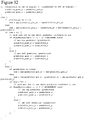
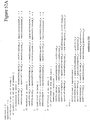
- the pseudocode in Figures 15A and 15B illustrates how the motion vector differential information, inter/intra type, and last flag information are decoded for MVDATA or BLKMVDATA.
- the variable last_flag is a binary flag whose use is described in the section on signaling macroblock information.
- the variable intra_flag is a binary flag indicating whether the block or macroblock is intra.
- Each inter luminance block in a 4MV macroblock has its own motion vector. Therefore, there will be between 0 and 4 luminance motion vectors in a 4MV macroblock.
- the chroma motion vectors are derived from the luminance motion vectors. Also, for 4MV macroblocks, the decision of whether to code chroma blocks as inter or intra is made based on the status of the luminance blocks. The chroma vectors are reconstructed in two steps.
- a nominal chroma motion vector is obtained by combining and scaling luminance motion vectors appropriately.
- the scaling is performed in such a way that half-pixel offsets are preferred over quarter-pixel offsets.
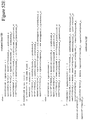
- Figure 16A shows pseudocode for scaling when deriving a chroma motion vector from a luminance motion vector for a 1MV macroblock.
- Figure 16B shows pseudocode for combining up to four luminance motion vectors and scaling when deriving a chroma motion vector for a 4MV macroblock.
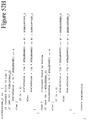
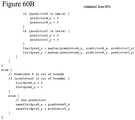
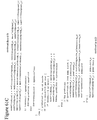
- Figure 13C shows pseudocode for the median3() function, and Figure 16C shows pseudocode for the median4() function.
- a sequence level one-bit element is used to determine if further rounding of chroma motion vectors is necessary. If so, the chroma motion vectors that are at quarter-pixel offsets are rounded to the nearest full-pixel positions.
- a luminance motion vector is reconstructed as done for progressive P-frames.
- each field may have its own motion vector. Therefore, there will be between 0 and 2 luminance motion vectors in a field-coded macroblock.
- the picture layer contains syntax elements that control the motion compensation mode and intensity compensation for the frame. If intensity compensation is signaled, then the LUMSCALE and LUMSHIFT elements follow in the picture layer. LUMSCALE and LUMSHIFT are six-bit values that specify parameters used in the intensity compensation process.
- a one-bit picture-layer INTCOMP value signals whether intensity compensation is used for the frame. If intensity compensation is used, then the LUMSCALE and LUMSHIFT elements follow in the picture layer, where LUMSCALE and LUMSHIFT are six-bit values which specify parameters used in the intensity compensation process for the whole interlaced P-frame. The intensity compensation itself is the same as for progressive P-frames.
- motion compensation for a forward-predicted frame is relative to a single reference frame, which is the previously reconstructed I- or P-frame that immediately precedes the current forward-predicted frame. Since the reference frame for the current forward-predicted frame is known and only one reference frame is possible, information used to select between multiple reference frames is not needed. See, e.g., the H.261 and MPEG 1 standards. In certain encoding/decoding scenarios (e.g., high bit rate interlaced video with lots of motion), limiting motion compensation for forward prediction to be relative to a single reference can hurt overall compression efficiency.
- the reference field selection signals for the motion vectors can consume a lot of bits. For example, for a single 720x288 field with 810 macroblocks, each macroblock having 0, 1, or 2 motion vectors, the reference field selection bits for the motion vectors consume up to 1620 bits. No attempt is made to reduce the bit rate of reference field selection information by predicting which reference fields will be selected for the respective motion vectors. The signaling of reference field selection information is inefficient in terms of pure coding efficiency. Moreover, for some scenarios, however the information is encoded, the reference field selection information may consume so many bits that the benefits of prediction improvements from having multiple available references in motion compensation are outweighed. No option is given to disable reference field selection to address such scenarios.
- the H.262 standard also describes dual-prime prediction, which is a prediction mode in which two forward field-based predictions are averaged for a 16x16 block in an interlaced P-picture. [H.262 standard, section 7.6.3.6.]
- the MPEG-4 standard allows macroblocks of an interlaced video frame to be frame-coded or field-coded.
- the MPEG-4 standard describes selecting between the two reference fields to use for motion compensation.
- MPEG-4 standard, sections 6.3.7.3. For a given motion vector for top field lines or bottom field lines of a macroblock, a single bit is signaled to indicate whether to apply the motion vector to the top reference field or the bottom reference field. [ Id .] For additional detail, see the MPEG-4 standard. Such signaling of reference field selection information has problems similar to those described above for H.262.
- the H.263 standard describes motion compensation for progressive P-frames, including an optional reference picture selection mode.
- [H.263 standard, section 3.4.12, Annex N.] Normally, the most recent temporally previous anchor picture is used for motion compensation.
- reference picture selection mode When reference picture selection mode is used, however, temporal prediction is allowed from pictures other than the most recent reference picture.
- This can improve the performance of real-time video communication over error-prone channels by allowing the encoder to optimize its video encoding for the conditions of the channel (e.g., to stop error propagation due to loss of information needed for reference in inter-frame coding).
- a 10-bit value indicates the reference used for prediction of the group of blocks or slice.
- the reference picture selection mechanism described in H.263 is for progressive video and is adapted to address the problem of error propagation in error-prone channels, not to improve compression efficiency per se.
- the inter prediction process for motion-compensated prediction of a block can involve selection of the reference picture from a number of stored, previously decoded pictures.
- one or more parameters specify the number of reference pictures that are used to decode the picture.
- the number of reference pictures available may be changed, and additional parameters may be received to reorder and manage which reference pictures are in a list.
- a reference index when present indicates the reference picture to be used for prediction.
- the reference index indicates the first, second, third, etc. frame or field in the list. [ Id .] If there is only one active reference picture in the list, the reference index is not present. [ Id .] If there are only two active reference pictures in the list, a single encoded bit is used to represent the reference index. [ Id .] For additional detail, see draft JVT-D157 of the H.264 standard.
- the reference picture selection of JVT-D 157 provides flexibility and thereby can improve prediction for motion compensation.
- the processes of managing reference picture lists and signaling reference picture selections are complex and consume an inefficient number of bits in some scenarios.
- a macroblock header for a macroblock includes a macroblock type MTYPE element, which is signaled as a VLC.
- a MTYPE element indicates a prediction mode (intra, inter, inter + MC, inter + MC +loop filtering), whether a quantizer MQUANT element is present for the macroblock, whether a motion vector data MVD element is present for the macroblock, whether a coded block pattern CBP element is present for the macroblock, and whether transform coefficient TCOEFF elements are present for blocks of the macroblock.
- a MVD element is present for every motion-compensated macroblock.
- a macroblock has a macroblock_type element, which is signaled as a VLC.
- the macroblock_type element indicates whether a quantizer scale element is present for the macroblock, whether forward motion vector data is present for the macroblock, whether a coded block pattern element is present for the macroblock, and whether the macroblock is intra.
- Forward motion vector data is always present if the macroblock uses forward motion compensation.
- a macroblock has a macroblock_type element, which is signaled as a VLC.
- the macroblock_type element indicates whether a quantizer_scale_code element is present for the macroblock, whether forward motion vector data is present for the macroblock, whether a coded block pattern element is present for the macroblock, whether the macroblock is intra, and scalability options for the macroblock.
- Forward motion vector data is always present if the macroblock uses forward motion compensation.
- a separate code (frame_motion_type or field_motion_type) may further indicate the macroblock prediction type, including the count of motion vectors and motion vector format for the macroblock. [Id.]
- a macroblock has macroblock type and coded block pattern for chrominance MCBPC element, which is signaled as a VLC.
- the macroblock type gives information about the macroblock (e.g., inter, inter4V, intra).
- MCBPC and coded block pattern for luminance are always present, and the macroblock type indicates whether a quantizer information element is present for the macroblock.
- a forward motion-compensated macroblock always has motion vector data for the macroblock (or blocks for inter4V type) present.
- the MPEG-4 standard similarly specifies a MCBPC element that is signaled as a VLC. [MPEG-4 standard, sections 6.2.7, 6.3.7,11.1.1.]
- the mb_type element is part of the macroblock layer. [JVT-D157, sections 7.3.5 and 7.4.5.]
- the mb_type indicates the macroblock type and various associated information. [ Id .] For example, for a P-slice, the mb_type element indicates the type of prediction (intra or forward), various intra mode coding parameters if the macroblock is intra coded, the macroblock partitions (e.g., 16x16, 16x8, 8x16, or 8x8) and hence the number of motion vectors if the macroblock is forward predicted, and whether reference picture selection information is present (if the partitions are 8x8).
- the type of prediction and mb_type also collectively indicate whether a coded block pattern element is present for the macroblock.
- motion vector data is signaled.
- a sub_mb_type element per 8x8 partition indicates the type of prediction (intra or forward) for it.
- sub_mb_type indicates the sub-partitions (e.g., 8x8, 8x4, 4x8, or 4x4), and hence the number of motion vectors, for the 8x8 partition.
- motion vector data is signaled.
- the various standards use a large variety of signaling mechanisms for macroblock information. Whatever advantages these signaling mechanisms may have, they also have the following disadvantages. First, they at times do not efficiently signal macroblock type, presence/absence of coded block pattern information, and presence/absence of motion vector differential information for motion-compensated macroblocks. In fact, the standards typically do not signal presence/absence of motion vector differential information for motion-compensated macroblocks (or blocks or fields thereof) at all, instead assuming that the motion vector differential information is signaled if motion compensation is used. Finally, the standards are inflexible in their decisions of which code tables to use for macroblock mode information.
- H.261, H.262, H.263, MPEG-1, MPEG-4, and JVT-D157 specifies some form of motion vector prediction, although the details of the motion vector prediction vary widely between the standards.
- Motion vector prediction is simplest in the H.261 standard, for example, in which the motion vector predictor for the motion vector of a current macroblock is the motion vector of the previously coded/decoded macroblock. [H.261 standard, section 4.2.3.4.] The motion vector predictor is 0 for various special cases (e.g., the current macroblock is the first in a row).
- Motion vector prediction is similar in the MPEG-1 standard. [MPEG-1 standard, sections 2.4.4.2 and D.6.2.3.]
- H.262 Other standards (such as H.262) specify much more complex motion vector prediction, but still typically determine a motion vector predictor from a single neighbor. [H.262 standard, section 7.6.3.] Determining a motion vector predictor from a single neighbor suffices when motion is uniform, but is inefficient in many other cases.
- H.261, H.262, H.263, MPEG-1, MPEG-4, and JVT-D157 specifies some form of differential motion vector coding and decoding, although the details of the coding and decoding vary widely between the standards.
- Motion vector coding and decoding is simplest in the H.261 standard, for example, in which one VLC represents the horizontal differential component, and another VLC represents the vertical differential component.
- H.261 standard, section 4.2.3.4. Other standards specify more complex coding and decoding for motion vector differential information. For additional detail, see the respective standards.
- Chrominance motion vectors are typically derived from luminance motion vectors (which are signaled). For example, in the H.261 standard, luminance motion vectors are halved and truncated towards zero to derive chrominance motion vectors. [H.261 standard, section 3.2.2.] Similarly, luminance motion vectors are halved to derive chrominance motion vector in the MPEG-1 standard and JVT-D157. [MPEG-1 standard, section 2.4.4.2; JVT-D157, section 8.4.1.4.]
- luminance motion vectors are scaled down to chroma motion vectors by factors that depend on the chrominance sub-sampling mode (e.g., 4:2:0, 4:2:2, or 4:4:4).
- chrominance sub-sampling mode e.g., 4:2:0, 4:2:2, or 4:4:4.
- a chrominance motion vector is derived by dividing the luminance motion vector by two and rounding to a half-pixel position.
- a chrominance motion vector is derived by summing the four luminance motion vectors, dividing by eight, and rounding to a half-pixel position.
- Chrominance motion vectors are similarly derived in the MPEG-4 standard. [MPEG-4 standard, sections 7.5.5 and 7.6.2.]
- a weighted prediction flag for a picture indicates whether or not weighted prediction is used for predicted slices in the picture.
- each predicted slice in the picture has a table of prediction weights.
- a denominator for luma weight parameters and a denominator for chroma weight parameters are signaled.
- a luma weight flag indicates whether luma weight and luma offset numerator parameters are signaled for the picture (followed by the parameters, when signaled), and a chroma weight flag indicates whether chroma weight and chroma offset numerator parameters are signaled for the picture (followed by the parameters, when signaled).
- Numerator weight parameters that are not signaled are given default values relating to the signaled denominator values.
- JVT-D157 provides some flexibility in signaling weighted prediction parameters, the signaling mechanism is inefficient in various scenarios.
- mcbpc is a variable length code that is used to derive a macroblock type and the coded block pattern for prominence. It is always included for coded macroblocks.
- cbpy is a variable length code representing a pattern of non-transparent luminance blocks with at least one non intra DC transform coefficient, in a macroblock.
- modb is a variable length code present only in coded macroblocks of B-VOPs. It indicates whether mb_type and/or cbpb information is present for a macroblock.
- cbpb is a 3 to 6 bit code representing coded block pattern in B-VOPs. In case no coefficients are coded for all the non-transparent blocks in the macroblock, modb shall be set to the value indicating cbpb is not present and cbpb shall not be included in the bitstream for this macroblock.
- Touradj Ebrahimi (Editor): "Video Verification Model 7.1", 40. MPEG Meeting; July 21-25, 1997 ; Sweden; (Motion Picture Expert Group or ISO/IEC JTC1/SC29/WG11), no. M2249, July 13, 1997, ISSN: 0000-0320 , relates to separate motion shape texture syntax for I-, P-, and B-VOPs.
- MCBPC Mode and Coded Block Pattern Chrominance
- CPBY Coded Block Pattern for luminance (Y)) specifies those Y blocks in the macroblock for which at least one non-INTRADC transform coefficient is transmitted.
- Macroblock types and included elements for I-and P-VOPs are listed.
- Macroblock types and included elements for Sprite-VOPs are listed.
- the detailed description is directed to various techniques and tools for coding and decoding interlaced video.
- the various techniques and tools can be used in combination or independently.
- the described techniques and tools include, but are not limited to, the following:
- a tool such as a video encoder or decoder determines an initial, derived motion vector predictor for a motion vector of an interlaced forward-predicted field. The tool then checks a variation condition based at least in part on the initial, derived motion vector predictor and one or more neighbor motion vectors. If the variation condition is satisfied, the tool uses one of the one or more neighbor motion vectors as a final motion vector predictor for the motion vector. Otherwise, the tool uses the initial, derived motion vector predictor as the final motion vector predictor.
- Parts of the detailed description are directed to various techniques and tools for using motion vector block patterns that signal the presence or absence of motion vector data for macroblocks with multiple motion vectors.
- the described techniques and tools include, but are not limited to, the following:
- the tool also processes associated motion vector data for each of the luminance motion vectors for which the associated motion vector data is indicated to be signaled in the bitstream.
- the described techniques and tools include, but are not limited to, the following:
- the described techniques and tools include, but are not limited to, the following:
- a tool such as a video encoder or decoder selects a code table from among multiple available code tables for macroblock mode information for interlaced forward-predicted fields.
- the tool uses the selected code table to process a variable length code that indicates macroblock mode information for a macroblock.
- the macroblock mode information includes (1) a macroblock type, (2) whether a coded block pattern is present or absent, and (3) when applicable for the macroblock type, whether motion vector data is present or absent.
- a tool such as a video encoder or decoder processes a signal indicating whether an interlaced forward-predicted field has one reference field or two possible reference fields for motion compensation.
- the tool performs motion compensation for the interlaced forward-predicted field.
- the tool also updates a reference field buffer for subsequent motion compensation without processing additional signals for managing the reference field buffer.
- the described techniques and tools include, but are not limited to, the following:
- a tool such as a video encoder or decoder determines a prevailing polarity among multiple luma motion vectors for a macroblock. The tool then derives a chroma motion vector for the macroblock based at least in part upon one or more of the multiple luma motion vectors that has the prevailing polarity.
- a video encoder and decoder incorporate techniques for encoding and decoding interlaced forward-predicted fields, along with corresponding signaling techniques for use with a bitstream format or syntax comprising different layers or levels (e.g., sequence level, frame level, field level, slice level, macroblock level, and/or block level).
- an encoder and decoder use flags and/or signals in a bitstream. While specific flags and signals are described, it should be understood that this manner of description encompasses different conventions (e.g., 0s rather than 1s) for the flags and signals.
- Figure 19 illustrates a generalized example of a suitable computing environment (1900) in which several of the described embodiments may be implemented.
- the computing environment (1900) is not intended to suggest any limitation as to scope of use or functionality, as the techniques and tools may be implemented in diverse general-purpose or special-purpose computing environments.
- program modules include routines, programs, libraries, objects, classes, components, data structures, etc. that perform particular tasks or implement particular abstract data types.
- the functionality of the program modules may be combined or split between program modules as desired in various embodiments.
- Computer-executable instructions for program modules may be executed within a local or distributed computing environment.
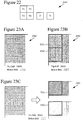
- Figure 23B shows the interlaced video frame (2300) of Figure 23A organized for encoding/decoding as a frame (2330).
- the interlaced video frame (2300) has been partitioned into macroblocks such as the macroblocks (2331) and (2332), which use a 4:2:0 format as shown in Figure 22 .
- each macroblock (2331, 2332) includes 8 lines from the top field alternating with 8 lines from the bottom field for 16 lines total, and each line is 16 pixels long.
- An interlaced I-field is a single, separately represented field of an interlaced video frame.
- An interlaced P-field is a single, separately represented field of an interlaced video frame coded using forward prediction
- an interlaced B-field is a single, separately represented field of an interlaced video frame coded using bi-directional prediction.
- Interlaced P- and B-fields may include intra-coded macroblocks as well as different types of predicted macroblocks.
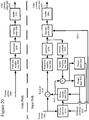
- the encoder system (2000) compresses predicted pictures and key pictures.
- Figure 20 shows a path for key pictures through the encoder system (2000) and a path for forward-predicted pictures.
- Many of the components of the encoder system (2000) are used for compressing both key pictures and predicted pictures. The exact operations performed by those components can vary depending on the type of information being compressed.
- a frequency transformer (2060) converts the spatial domain video information into frequency domain (i.e., spectral) data.
- the frequency transformer (2060) applies a DCT or variant of DCT to blocks of the pixel data or prediction residual data, producing blocks of DCT coefficients.
- the frequency transformer (2060) applies another conventional frequency transform such as a Fourier transform or uses wavelet or subband analysis.
- the frequency transformer (2060) applies an 8x8, 8x4, 4x8, or other size frequency transforms (e.g., DCT) to prediction residuals for predicted pictures.
- the entropy coder (2080) compresses the output of the quantizer (2070) as well as certain side information (e.g., motion information (2015), quantization step size).
- Typical entropy coding techniques include arithmetic coding, differential coding, Huffman coding, run length coding, LZ coding, dictionary coding, and combinations of the above.
- the entropy coder (2080) typically uses different coding techniques for different kinds of information (e.g., DC coefficients, AC coefficients, different kinds of side information), and can choose from among multiple code tables within a particular coding technique.
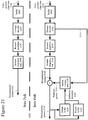
- Figure 21 is a block diagram of a general video decoder system (2100).
- the decoder system (2100) receives information (2195) for a compressed sequence of video pictures and produces output including a reconstructed picture (2105) (e.g., progressive video frame, interlaced video frame, or field of an interlaced video frame).
- a reconstructed picture (2105) e.g., progressive video frame, interlaced video frame, or field of an interlaced video frame.
- Particular embodiments of video decoders typically use a variation or supplemented version of the generalized decoder (2100).
- a motion compensator (2130) applies motion information (2115) to a reference picture (2125) to form a prediction (2135) of the picture (2105) being reconstructed.
- the motion compensator (2130) uses a macroblock motion vector to find a macroblock in the reference picture (2125).
- a picture buffer (2120) stores previous reconstructed pictures for use as reference pictures.
- the motion compensator (2130) can compensate for motion at pixel, 1 ⁇ 2 pixel, 1 ⁇ 4 pixel, or other increments, and can switch the precision of the motion compensation on a picture-by-picture basis or other basis.
- the precision of the motion compensation can be the same or different horizontally and vertically.
- a motion compensator applies another type of motion compensation.
- the prediction by the motion compensator is rarely perfect, so the decoder (2100) also reconstructs prediction residuals.
- the picture store (2120) buffers the reconstructed picture for use in predicting a next picture.
- the encoder applies a deblocking filter to the reconstructed frame to adaptively smooth discontinuities between the blocks of the frame.
- a forward-predicted interlaced video frame may be coded using a mixture of field coding and frame coding, as an interlaced P-frame.
- the macroblock includes lines of pixels for the top and bottom fields, and the lines may be coded collectively in a frame-coding mode or separately in a field-coding mode.
- An interlaced P-field references one or more previously decoded fields.
- an interlaced P-field references either one or two previously decoded fields
- interlaced B-fields refer to up to two previous and two future reference fields (i.e., up to a total of four reference fields).
- Encoding and decoding techniques for interlaced P-fields are described in detail below.
- two previously coded/decoded fields can be used as reference fields when performing motion-compensated prediction of a single, current interlaced P-field.
- the ability to use two reference fields results in better compression efficiency than when motion-compensated prediction is limited to one reference field.
- the signaling overhead is higher when two reference fields are available, however, since extra information is sent to indicate which of the two fields provides the reference for each macroblock or block having a motion vector.
- the benefit of having more potential motion compensation predictors per motion vector does not outweigh the overhead required to signal the reference field selections.
- choosing to use a single reference field instead of two can be advantageous when the best references all come from one of the two possible reference fields. This is usually due to a scene change that causes only one of the two reference fields to be from the same scene as the current field. Or, only one reference field may be available, such as at the beginning of a sequence. In these cases, it is more efficient to signal at the field level for the current P-field that only one reference field is used and what that one reference field is, and to have that decision apply to the macroblocks and blocks within the current P-field. Reference field selection information then no longer needs to be sent with every macroblock or block having a motion vector.
- the reference field that a motion vector (for a macroblock or block) uses is signaled for the motion vector, as is other information for the motion vector.
- the signaled information indicates: (1) the reference field; and (2) the location in the reference field for the block or macroblock predictor for the current block or macroblock associated with the motion vector.
- the reference field information and motion vector information are signaled as described in one of the combined implementations in section XII.
- only one previously coded/decoded field is used as a reference field for the current P-field.
- a motion vector there is no need to indicate the reference field that the motion vector references.
- the signaled information indicates only the location in the reference field for the predictor for the current block or macroblock associated with the motion vector.
- the motion vector information is signaled as described in one of the combined implementations in section XII.
- Motion vectors in the one reference field scheme are typically coded with fewer bits than the same motion vectors in the two reference field scheme.
- an encoder and decoder use one or more additional schemes for numbers of reference fields for interlaced P-fields.
- the encoder and decoder use other and/or additional signals for reference field selection.
- Figures 24A - 24F illustrate positions of reference fields available for use in motion-compensated prediction for interlaced P-fields.
- a P-field can use either one or two previously coded/decoded fields as references.
- Figures 24A and 24B show examples where two reference fields are used for a current P-field.
- NUMREF 1.
- the current field refers to a top field and bottom field in a temporally previous interlaced video frame. Intermediate interlaced B-fields are not used as reference fields.
- the current field refers to a top field and bottom field in an interlaced video frame immediately before the interlaced video frame containing the current field.
- the polarity of the reference field is opposite the polarity of the current P-field, meaning, for example, that if the current P-field is from even lines then the reference field is from odd lines.
- the current field refers to a bottom field in a temporally previous interlaced video frame, and does not refer to the less recent top field in the interlaced video frame. Again, intermediate interlaced B-fields are not allowable reference fields.
- the current field refers to bottom field in an interlaced video frame immediately before the interlaced video frame containing the current field, rather than the less recent top field.
- the polarity of the reference field is the same as the polarity of the current field, meaning, for example, that if the current field is from even lines then the reference field is also from even lines.
- the current field refers to a top field in a temporally previous interlaced video frame, but does not refer to the more recent bottom field. Again, intermediate interlaced B-fields are not allowable reference fields.
- the current field refers to top field rather than the more recent bottom field.
- an encoder and decoder use reference fields at other and/or additional positions or timing for motion-compensated prediction for interlaced P-fields.
- reference fields within the same frame as a current P-field are allowed.
- either the top field or bottom field of a frame may be coded/decoded first.
- An encoder such as the encoder (2000) of Figure 20 signals which of multiple reference field schemes is used for coding interlaced P-fields.
- the encoder performs the technique (2500) shown in Figure 25A .
- the encoder For a given interlaced P-field, the encoder signals (2510) the number of reference fields used in motion-compensated prediction for the interlaced P-field. For example, the encoder uses a single bit to indicate whether one or two reference fields are used. Alternatively, the encoder uses another signaling/encoding mechanism for the number of reference fields.
- Figure 25A does not show the various ways in which the technique (2500) may be integrated with other aspects of encoding and decoding.
- Various combined implementations are described in detail in section XII.
- the decoder receives and decodes (2560) a signal for the number of reference fields used in motion-compensated prediction for the interlaced P-field. For example, the decoder receives and decodes a single bit to indicate whether one or two reference fields are used. Alternatively, the decoder uses another decoding mechanism for the number of reference fields.
- the decoder performs another technique to determine which of multiple reference field schemes is used for decoding interlaced P-fields.
- the decoder has more and/or different options for the number of reference fields.
- various macroblock mode information for macroblocks of interlaced P-fields is jointly grouped for signaling.
- a macroblock of an interlaced P-field may be encoded in many different modes, with any of several different syntax elements being present or absent.
- the type of motion compensation e.g., 1MV, 4MV, or intra
- whether a coded block pattern is present in the bitstream for the macroblock and (for the 1MV case) whether motion vector data is present in the bitstream for the macroblock
- Different code tables may be used for different scenarios for the macroblock mode information, which result in more efficient overall compression of the information.
- signal macroblock mode information with a variable length coded MBMODE syntax element.
- Table selection for MBMODE is signaled through a field-level element MBMODETAB, which is fixed length coded.
- an encoder and decoder use other and/or additional signals for signaling macroblock mode information.
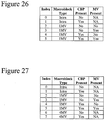
- the macroblock mode indicates the macroblock type (1MV, 4MV or intra), the presence/absence of a coded block pattern for the macroblock, and the presence/absence of motion vector data for the macroblock.
- the information indicated by the macroblock mode syntax element depends on whether the interlaced P-field is encoded as a 1MV field (having intra and/or 1MV macroblocks) or a mixed-MV field (having intra, 1MV, and/or 4MV macroblocks).
- the macroblock mode element for a macroblock jointly represents the macroblock type (intra or 1MV or 4MV), the presence/absence of a coded block pattern for the macroblock, and the presence/absence of motion vector data (when the macroblock type is 1MV, but not when it is intra or 4MV).
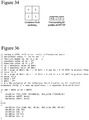
- the table in Figure 27 shows the complete event space for macroblock information signaled by MBMODE in mixed-MV interlaced P-fields.
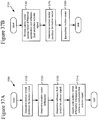
- a decoder such as the decoder (2100) of Figure 21 receives and decodes macroblock mode information for macroblocks of interlaced P-fields. For example, the decoder performs the technique (2850) shown in Figure 28B .
- the decoder receives and decodes (2880) a macroblock mode selection for a macroblock.
- the macroblock mode selection indicates a macroblock type, whether or not a coded block pattern is present, and (if applicable for the macroblock type) whether or not motion vector data is present.
- Various combinations of these options for MBMODE are listed in Figures 26 and 27 .
- the macroblock mode is one of other and/or additional macroblock modes for other and/or additional combinations of macroblock options.
- the decoder repeats (2885, 2880) the receiving and decoding for a macroblock mode for the next macroblock until there are no more macroblock modes to receive and decode for the P-field.
- the pseudocode in Figure 29 shows one technique for an encoder or decoder to determine dominant and non-dominant reference fields.
- the terms "same field” and "opposite field” are relative to the current interlaced P-field. If the current P-field is an even field, for example, the "same field” is the even line reference field, and the "opposite field” is the odd line reference field.
- Figures 5A through 10 show locations of neighboring macroblocks and blocks from which the Predictors A, B, and C are taken.
- the dominant field is the field referenced by the majority of the motion vector predictor candidates. In the case of a tie, the motion vector derived from the opposite field is considered to be the dominant motion vector predictor.
- the encoder determines (3120) the dominant and non-dominant reference field polarities of the motion vector. For example, the encoder follows the pseudocode shown in Figure 29 . Alternatively, the encoder uses another technique to determine the dominant and non-dominant polarities.
- a decoder such as the decoder (2100) of Figure 21 determines dominant and non-dominant reference field polarities for motion vector predictor candidates during decoding of motion vectors for two reference field interlaced P-fields. For example, the decoder performs the technique (3150) shown in Figure 31B .
- the decoder performs another technique to determine dominant and non-dominant polarities for motion vector prediction during decoding of motion vectors for two reference field interlaced P-fields.
- Figure 31B shows separate signaling of the dominant/non-dominant selector and the motion vector differential information, alternatively, this information is jointly signaled.
- this information is jointly signaled.
- Various other reordering is also possible.
- the encoder determines (3510) the motion vector block pattern for the macroblock. For example, the encoder determines a four motion vector block pattern for a 4MV macroblock in an interlaced P-field, or for a 4MV field-coded or frame-coded macroblock in an interlaced P-frame. Or, the encoder determines a two motion vector block pattern for a 2MV field-coded macroblock in an interlaced P-frame. Alternatively, the encoder determines a motion vector block pattern for another kind macroblock and/or number of motion vectors.
- the decoder repeats (3565, 3570) the receiving and decoding of motion vector data until there are no more motion vectors for which motion vector data is signaled (the "No" path out of decision 3565).
- the decoder performs another technique to decode motion vector data for a macroblock using a motion vector block pattern.
- Figure 35B does not show the various ways in which the technique (3550) may be integrated with other aspects of encoding and decoding.
- Various combined implementations are described in detail in section XII.
- the decoder reconstructs (3780) the motion vector by combining the motion vector differential with the motion vector predictor.
- motion vectors for interlaced P-fields use another representation and/or follow another convention for handling vertical displacements for polarity.
- Fading compensation reference field pattern information may be signaled as a FLC or VLC per P-field.
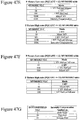
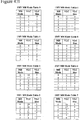
- the table in Figure 44 shows one set of VLCs for pattern information for an element INTCOMPFIELD, which is signaled in a P-field header. Alternatively, the table shown in Figure 47G or another table is used at the field level or another syntax level.
- bitstream syntaxes for bitstream syntaxes, semantics, and decoders are now described, with an emphasis on interlaced P-fields.
- the following description includes a first combined implementation and an alternative, second combined implementation.
- U.S. Patent Application Serial No. 10/857,473, filed May 27,2004 discloses aspects of a third combined implementation.
- Interlaced B-fields and interlaced B-frames have many of the same elements of interlaced P-fields and interlaced P-frames.
- an interlaced B-field may include a 4MVBPTAB (4644) syntax element.
- An interlaced B-frame includes both 2MVBPTAB and 4MVBPTAB (4644) syntax elements, although the semantics of the elements can be different.
- An interlaced P-field may reference either one or two previously decoded fields in motion compensation.
- Interlaced P-fields may be one of two types: 1MV or mixed-MV.
- 1MV P-fields each macroblock is a 1MV macroblock.
- mixed-MV P-fields each macroblock may be encoded as a 1MV or a 4MV macroblock, as indicated by the MBMODE (4661) element at every macroblock.
- 1MV or mixed-MV mode is signaled for an interlaced P-field by the MVMODE (4635) and MVMODE2 (4636) elements.
- the MVDATA (4663) element is present in the macroblock layer in the corresponding position.
- the MVDATA (4663) element encodes the motion vector differential, which is combined with the motion vector predictor to reconstruct the motion vector. If the MBMODE (4661) element indicates that the MVDATA (4663) element is not present, then the motion vector differential is assumed to be zero and therefore the motion vector is equal to the motion vector predictor.
- a 4MV macroblock is one where each of the 4 luma blocks in the macroblock may have an associated motion vector that indicates the displacement between the current and reference pictures for that block.
- the displacement for the chroma blocks is derived from the 4 luma motion vectors.
- the difference between the current and reference blocks is encoded in the block layer.
- the MBMODE (4661) element indicates two things: (1) that the macroblock type is 4MV; and (2) whether the CBPCY (4662) element is present.
- the pseudocode in Figures 51A and 51B describes how motion vector predictors are calculated for the one reference field case.
- the variables fieldpred_x and fieldpred_y in the pseudocode represent the horizontal and vertical components of the motion vector predictor.
- the picture layer contains syntax elements that control the motion compensation mode and intensity compensation for the field.
- MVMODE signals either: 1) one of four motion vector modes for the field or 2) that intensity compensation is used in the field. If intensity compensation is signaled then the MVMODE2 (5736), LUMSCALE (5738) and LUMSHIFT (5739) fields follow in the picture layer.
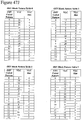
- One of the two tables in Figure 47E are used to decode the MVMODE (5735) and MVMODE2 (5736) fields, depending on whether PQUANT is greater than 12.
Landscapes
- Engineering & Computer Science (AREA)
- Multimedia (AREA)
- Signal Processing (AREA)
- Computing Systems (AREA)
- Theoretical Computer Science (AREA)
- Compression Or Coding Systems Of Tv Signals (AREA)
- Compression, Expansion, Code Conversion, And Decoders (AREA)
Claims (15)
- Procédé de décodage comprenant:la réception des informations vidéo codées dans un flux de bits; etle décodage d'un champ prédit en avant entrelacé en utilisant les informations vidéo codées, y compris le traitement d'un code de longueur variable qui communique conjointement l'information de mode de macrobloc pour un macrobloc du champ prédit en avant entrelacé, dans lequel le macrobloc est compensé en mouvement et dans lequel l'information de mode de macrobloc signalée conjointement est l'une des multiples combinaisons d'options pour (1) un type de macrobloc, (2) l'absence ou la présence d'un motif de bloc codé, et (3) l'absence ou la présence de données de vecteur de mouvement pour le macrobloc compensé en mouvement du champ prédit en avant entrelacé, les plusieurs combinaisons comprenant au moins une combinaison dans laquelle le motif de bloc codé est absent pour le macrobloc compensé en mouvement du champ prédit en avant entrelacé.
- Procédé selon la revendication 1, dans lequel, parmi les trois types possibles de macrobloc dans le champ prédit en avant entrelacé, les types étant un vecteur de mouvement, quatre vecteurs de mouvement et un vecteur intra, le type de macrobloc est un vecteur de mouvement.
- Procédé selon la revendication 1, dans lequel le décodage comprend en outre le traitement d'un second code de longueur variable qui signale conjointement l'information du second mode de macrobloc pour un second macrobloc du champ prédit en avant entrelacé, dans lequel l'information du second mode de macrobloc signalée conjointement inclut (1) un type de macrobloc et (2) la présence ou l'absence d'un motif de bloc codé est présent ou absent, mais non (3) la présence ou l'absence de données du vecteur de mouvement pour le second macrobloc du champ prédit en avant entrelacé.
- Procédé selon la revendication 3, dans lequel le type de macrobloc pour le second macrobloc est un vecteur intra ou contient quatre vecteurs de mouvement.
- Procédé selon la revendication 1, dans lequel la combinaison plurielle d'options inclut:un type de macrobloc intra sans modèle de bloc codé,un type de macrobloc intra avec modèle de bloc codé,un type de macrobloc à vecteur de mouvement sans motif de bloc codé et ni aucune donnée de vecteur de mouvement,un type de macrobloc à vecteur de mouvement avec motif de bloc codé mais sans données de vecteur de mouvement,un type de macrobloc à vecteur de mouvement avec données de vecteur de mouvement mais sans motif de bloc codé,un type de macrobloc à vecteur de mouvement avec motif de bloc codé et données de vecteur de mouvement,un type de macrobloc à quatre vecteurs de mouvement sans motif de bloc codé, etun type de macrobloc à quatre vecteurs de mouvement avec motif de bloc codé,
- Procédé selon la revendication 1, dans lequel le décodage comprend en outre la sélection d'une table de codes parmi plusieurs tables de codes disponibles, dans lequel le traitement du code de longueur variable utilise la table des codes.
- Procédé selon la revendication 6, dans lequel la réception comprend la réception et le traitement d'un code de longueur fixe qui indique la sélection de la table des codes parmi les différentes tables des codes disponibles.
- Procédé de codage vidéo comprenant:le codage d'un champ prédit en avant entrelacé actuel pour produire une information vidéo codée, comprenantla sélection d'une table de codes parmi plusieurs tables de codes disponibles pour l'information de mode de macrobloc pour les champs prédits en avant entrelacés; etl'utilisation de la table des codes sélectionnée pour traiter un code de longueur variable qui indique conjointement l'information de mode de macrobloc pour un macrobloc, dans lequel l'information de mode de macrobloc inclut (1) un type de macrobloc, (2) la présence ou l'absence d'un motif de bloc codé et (3) si cela est applicable pour le type de macrobloc, la présence ou l'absence de données de vecteur de mouvement, dans lequel l'information de mode de macrobloc inclut au moins une combinaison dans laquelle le motif de bloc codé est absent pour le macrobloc compensé en mouvement du champ prédit en avant entrelacé; etla génération des informations codées dans un flux de bits.
- Procédé selon la revendication 8, dans lequel les différentes tables des codes disponibles incluent un premier ensemble de tables pour un premier type de champs prédits en avant entrelacés et un second ensemble de tables pour un second type de champs prédits en avant entrelacés.
- Procédé selon la revendication 9, dans lequel le premier type est un vecteur de mouvement, et dans lequel le second type est un vecteur de mouvement mixte.
- Procédé selon la revendication 8, dans lequel la génération comprend la signalisation d'un code de longueur fixe qui indique la sélection de la table des codes parmi les différentes tables des codes disponibles.
- Procédé selon la revendication 8, dans lequel la table des codes sélectionnée est retenue pour s'utiliser avec des codes de longueur variable pour plusieurs macroblocs du champ prédit en avant entrelacé actuel.
- Procédé selon la revendication 8, dans lequel le type de macrobloc est un vecteur intra ou un vecteur de mouvement.
- Procédé selon la revendication 8, dans lequel le type de macrobloc est un vecteur intra, un vecteur de mouvement ou contient quatre vecteurs de mouvement.
- Procédé selon la revendication 14, dans lequel la présence ou l'absence de données de vecteur de mouvement sont applicables si le type de macrobloc est un vecteur de mouvement mais non applicables si le type de macrobloc est intra ou contient quatre vecteurs de mouvement.
Applications Claiming Priority (4)
| Application Number | Priority Date | Filing Date | Title |
|---|---|---|---|
| US50108103P | 2003-09-07 | 2003-09-07 | |
| US10/857,473 US7567617B2 (en) | 2003-09-07 | 2004-05-27 | Predicting motion vectors for fields of forward-predicted interlaced video frames |
| US10/933,958 US7599438B2 (en) | 2003-09-07 | 2004-09-02 | Motion vector block pattern coding and decoding |
| EP04783324.9A EP1656794B1 (fr) | 2003-09-07 | 2004-09-03 | Codage et decodage pour balayage video entrelace |
Related Parent Applications (3)
| Application Number | Title | Priority Date | Filing Date |
|---|---|---|---|
| EP04783324.9A Division EP1656794B1 (fr) | 2003-09-07 | 2004-09-03 | Codage et decodage pour balayage video entrelace |
| EP04783324.9A Division-Into EP1656794B1 (fr) | 2003-09-07 | 2004-09-03 | Codage et decodage pour balayage video entrelace |
| EP04783324.9 Division | 2004-09-03 |
Publications (2)
| Publication Number | Publication Date |
|---|---|
| EP2451161A1 EP2451161A1 (fr) | 2012-05-09 |
| EP2451161B1 true EP2451161B1 (fr) | 2017-10-25 |
Family
ID=34317471
Family Applications (5)
| Application Number | Title | Priority Date | Filing Date |
|---|---|---|---|
| EP12151222.2A Expired - Lifetime EP2451161B1 (fr) | 2003-09-07 | 2004-09-03 | Codage et décodage pour vidéo entrelacé |
| EP10015978.9A Expired - Lifetime EP2323399B1 (fr) | 2003-09-07 | 2004-09-03 | Codage et décodage pour vidéo entrelacée |
| EP10015977.1A Expired - Lifetime EP2323398B1 (fr) | 2003-09-07 | 2004-09-03 | Codage et décodage de un signal vidéo entrelacé |
| EP04783324.9A Expired - Lifetime EP1656794B1 (fr) | 2003-09-07 | 2004-09-03 | Codage et decodage pour balayage video entrelace |
| EP10015979.7A Expired - Lifetime EP2323406B1 (fr) | 2003-09-07 | 2004-09-03 | Codage et décodage pour vidéo entrelacé. |
Family Applications After (4)
| Application Number | Title | Priority Date | Filing Date |
|---|---|---|---|
| EP10015978.9A Expired - Lifetime EP2323399B1 (fr) | 2003-09-07 | 2004-09-03 | Codage et décodage pour vidéo entrelacée |
| EP10015977.1A Expired - Lifetime EP2323398B1 (fr) | 2003-09-07 | 2004-09-03 | Codage et décodage de un signal vidéo entrelacé |
| EP04783324.9A Expired - Lifetime EP1656794B1 (fr) | 2003-09-07 | 2004-09-03 | Codage et decodage pour balayage video entrelace |
| EP10015979.7A Expired - Lifetime EP2323406B1 (fr) | 2003-09-07 | 2004-09-03 | Codage et décodage pour vidéo entrelacé. |
Country Status (8)
| Country | Link |
|---|---|
| US (1) | US7599438B2 (fr) |
| EP (5) | EP2451161B1 (fr) |
| JP (7) | JP5030591B2 (fr) |
| KR (1) | KR101037816B1 (fr) |
| CN (7) | CN101873486B (fr) |
| MX (1) | MXPA06002525A (fr) |
| PL (1) | PL2323399T3 (fr) |
| WO (1) | WO2005027496A2 (fr) |
Families Citing this family (103)
| Publication number | Priority date | Publication date | Assignee | Title |
|---|---|---|---|---|
| US8064520B2 (en) * | 2003-09-07 | 2011-11-22 | Microsoft Corporation | Advanced bi-directional predictive coding of interlaced video |
| US7983835B2 (en) | 2004-11-03 | 2011-07-19 | Lagassey Paul J | Modular intelligent transportation system |
| US8315307B2 (en) * | 2004-04-07 | 2012-11-20 | Qualcomm Incorporated | Method and apparatus for frame prediction in hybrid video compression to enable temporal scalability |
| US20060165162A1 (en) * | 2005-01-24 | 2006-07-27 | Ren-Wei Chiang | Method and system for reducing the bandwidth access in video encoding |
| JP4760551B2 (ja) * | 2006-06-05 | 2011-08-31 | ソニー株式会社 | 動きベクトル復号化方法および復号化装置 |
| JP4760552B2 (ja) * | 2006-06-06 | 2011-08-31 | ソニー株式会社 | 動きベクトル復号化方法および復号化装置 |
| KR100763917B1 (ko) * | 2006-06-21 | 2007-10-05 | 삼성전자주식회사 | 고속으로 움직임을 추정하는 방법 및 장치 |
| DE102006043707A1 (de) * | 2006-09-18 | 2008-03-27 | Robert Bosch Gmbh | Verfahren zur Datenkompression in einer Videosequenz |
| US8875199B2 (en) * | 2006-11-13 | 2014-10-28 | Cisco Technology, Inc. | Indicating picture usefulness for playback optimization |
| US8155207B2 (en) * | 2008-01-09 | 2012-04-10 | Cisco Technology, Inc. | Processing and managing pictures at the concatenation of two video streams |
| US8873932B2 (en) * | 2007-12-11 | 2014-10-28 | Cisco Technology, Inc. | Inferential processing to ascertain plural levels of picture interdependencies |
| US8416859B2 (en) * | 2006-11-13 | 2013-04-09 | Cisco Technology, Inc. | Signalling and extraction in compressed video of pictures belonging to interdependency tiers |
| US8958486B2 (en) * | 2007-07-31 | 2015-02-17 | Cisco Technology, Inc. | Simultaneous processing of media and redundancy streams for mitigating impairments |
| US8804845B2 (en) * | 2007-07-31 | 2014-08-12 | Cisco Technology, Inc. | Non-enhancing media redundancy coding for mitigating transmission impairments |
| WO2009032255A2 (fr) * | 2007-09-04 | 2009-03-12 | The Regents Of The University Of California | Procédé, logiciel et dispositifs de traitement de vecteur de mouvement hiérarchique |
| CN101904170B (zh) * | 2007-10-16 | 2014-01-08 | 思科技术公司 | 用于传达视频流中的串接属性和图片顺序的方法和系统 |
| US8432975B2 (en) * | 2008-01-18 | 2013-04-30 | Mediatek Inc. | Apparatus and method for processing a picture frame |
| US8416858B2 (en) * | 2008-02-29 | 2013-04-09 | Cisco Technology, Inc. | Signalling picture encoding schemes and associated picture properties |
| WO2009115901A2 (fr) | 2008-03-19 | 2009-09-24 | Nokia Corporation | Vecteur de mouvement combiné et prédiction d'indice de référence pour codage vidéo |
| US8705622B2 (en) * | 2008-04-10 | 2014-04-22 | Qualcomm Incorporated | Interpolation filter support for sub-pixel resolution in video coding |
| US20090257499A1 (en) * | 2008-04-10 | 2009-10-15 | Qualcomm Incorporated | Advanced interpolation techniques for motion compensation in video coding |
| US9077971B2 (en) * | 2008-04-10 | 2015-07-07 | Qualcomm Incorporated | Interpolation-like filtering of integer-pixel positions in video coding |
| US8804831B2 (en) * | 2008-04-10 | 2014-08-12 | Qualcomm Incorporated | Offsets at sub-pixel resolution |
| US9967590B2 (en) | 2008-04-10 | 2018-05-08 | Qualcomm Incorporated | Rate-distortion defined interpolation for video coding based on fixed filter or adaptive filter |
| KR101445791B1 (ko) * | 2008-05-10 | 2014-10-02 | 삼성전자주식회사 | 움직임 벡터 변환을 이용한 비월 주사 영상 부호화/복호화방법 및 장치 |
| WO2009152450A1 (fr) | 2008-06-12 | 2009-12-17 | Cisco Technology, Inc. | Signaux d’interdépendances d’images dans le contexte du mmco pour aider à manipuler un flux |
| US8699578B2 (en) | 2008-06-17 | 2014-04-15 | Cisco Technology, Inc. | Methods and systems for processing multi-latticed video streams |
| US8971402B2 (en) | 2008-06-17 | 2015-03-03 | Cisco Technology, Inc. | Processing of impaired and incomplete multi-latticed video streams |
| US8705631B2 (en) * | 2008-06-17 | 2014-04-22 | Cisco Technology, Inc. | Time-shifted transport of multi-latticed video for resiliency from burst-error effects |
| CN102396221B (zh) * | 2008-06-25 | 2015-03-25 | 思科技术公司 | 阻止特技模式操作的支持 |
| US9445121B2 (en) | 2008-08-04 | 2016-09-13 | Dolby Laboratories Licensing Corporation | Overlapped block disparity estimation and compensation architecture |
| US8599920B2 (en) | 2008-08-05 | 2013-12-03 | Qualcomm Incorporated | Intensity compensation techniques in video processing |
| US9078007B2 (en) * | 2008-10-03 | 2015-07-07 | Qualcomm Incorporated | Digital video coding with interpolation filters and offsets |
| US8503527B2 (en) | 2008-10-03 | 2013-08-06 | Qualcomm Incorporated | Video coding with large macroblocks |
| EP2207357A1 (fr) | 2008-10-06 | 2010-07-14 | Lg Electronics Inc. | Procédé et appareil de codage de vidéo avec de grands macroblocks |
| WO2010041856A2 (fr) | 2008-10-06 | 2010-04-15 | Lg Electronics Inc. | Procédé et appareil permettant de traiter un signal video |
| KR102540547B1 (ko) * | 2018-08-20 | 2023-06-05 | 현대자동차주식회사 | 차량의 연료시스템 냉각 장치 |
| TW201016017A (en) * | 2008-10-08 | 2010-04-16 | Univ Nat Taiwan | Memory management method and system of video encoder |
| US8259817B2 (en) | 2008-11-12 | 2012-09-04 | Cisco Technology, Inc. | Facilitating fast channel changes through promotion of pictures |
| US8326131B2 (en) * | 2009-02-20 | 2012-12-04 | Cisco Technology, Inc. | Signalling of decodable sub-sequences |
| US20100218232A1 (en) * | 2009-02-25 | 2010-08-26 | Cisco Technology, Inc. | Signalling of auxiliary information that assists processing of video according to various formats |
| US8782261B1 (en) | 2009-04-03 | 2014-07-15 | Cisco Technology, Inc. | System and method for authorization of segment boundary notifications |
| JP5481923B2 (ja) * | 2009-04-28 | 2014-04-23 | 富士通株式会社 | 画像符号化装置、画像符号化方法および画像符号化プログラム |
| US8949883B2 (en) * | 2009-05-12 | 2015-02-03 | Cisco Technology, Inc. | Signalling buffer characteristics for splicing operations of video streams |
| US8279926B2 (en) | 2009-06-18 | 2012-10-02 | Cisco Technology, Inc. | Dynamic streaming with latticed representations of video |
| KR101452859B1 (ko) | 2009-08-13 | 2014-10-23 | 삼성전자주식회사 | 움직임 벡터를 부호화 및 복호화하는 방법 및 장치 |
| KR101456498B1 (ko) | 2009-08-14 | 2014-10-31 | 삼성전자주식회사 | 계층적 부호화 단위의 스캔 순서를 고려한 비디오 부호화 방법 및 장치, 비디오 복호화 방법 및 장치 |
| US9237355B2 (en) * | 2010-02-19 | 2016-01-12 | Qualcomm Incorporated | Adaptive motion resolution for video coding |
| KR101752418B1 (ko) | 2010-04-09 | 2017-06-29 | 엘지전자 주식회사 | 비디오 신호 처리 방법 및 장치 |
| JP5736032B2 (ja) | 2010-04-09 | 2015-06-17 | 株式会社Nttドコモ | 算術符号化のための適応型2値化 |
| US8942282B2 (en) * | 2010-04-12 | 2015-01-27 | Qualcomm Incorporated | Variable length coding of coded block pattern (CBP) in video compression |
| US8837592B2 (en) | 2010-04-14 | 2014-09-16 | Mediatek Inc. | Method for performing local motion vector derivation during video coding of a coding unit, and associated apparatus |
| US9118929B2 (en) | 2010-04-14 | 2015-08-25 | Mediatek Inc. | Method for performing hybrid multihypothesis prediction during video coding of a coding unit, and associated apparatus |
| US8971400B2 (en) * | 2010-04-14 | 2015-03-03 | Mediatek Inc. | Method for performing hybrid multihypothesis prediction during video coding of a coding unit, and associated apparatus |
| KR101885258B1 (ko) * | 2010-05-14 | 2018-08-06 | 삼성전자주식회사 | 비디오 신호의 부호화 방법과 그 장치, 및 비디오 복호화 방법과 그 장치 |
| KR101444691B1 (ko) * | 2010-05-17 | 2014-09-30 | 에스케이텔레콤 주식회사 | 참조영상 구성 및 인덱싱 장치 및 방법 |
| US9014271B2 (en) * | 2010-07-12 | 2015-04-21 | Texas Instruments Incorporated | Method and apparatus for region-based weighted prediction with improved global brightness detection |
| US9357229B2 (en) | 2010-07-28 | 2016-05-31 | Qualcomm Incorporated | Coding motion vectors in video coding |
| US20120082228A1 (en) | 2010-10-01 | 2012-04-05 | Yeping Su | Nested entropy encoding |
| US10104391B2 (en) | 2010-10-01 | 2018-10-16 | Dolby International Ab | System for nested entropy encoding |
| US10327008B2 (en) | 2010-10-13 | 2019-06-18 | Qualcomm Incorporated | Adaptive motion vector resolution signaling for video coding |
| KR102450324B1 (ko) | 2011-02-09 | 2022-10-04 | 엘지전자 주식회사 | 영상 부호화 및 복호화 방법과 이를 이용한 장치 |
| US8964853B2 (en) | 2011-02-23 | 2015-02-24 | Qualcomm Incorporated | Multi-metric filtering |
| JP5729817B2 (ja) | 2011-06-29 | 2015-06-03 | 日本電信電話株式会社 | 動画像符号化装置、動画像復号装置、動画像符号化方法、動画像復号方法、動画像符号化プログラム及び動画像復号プログラム |
| US9210426B2 (en) | 2011-06-30 | 2015-12-08 | Mitsubishi Electric Corporation | Image coding device, image decoding device, image coding method, and image decoding method |
| CN103765887B (zh) | 2011-07-01 | 2017-04-12 | 三星电子株式会社 | 用于使用分层数据单元进行熵编码的方法 |
| US10536701B2 (en) | 2011-07-01 | 2020-01-14 | Qualcomm Incorporated | Video coding using adaptive motion vector resolution |
| KR20130034566A (ko) * | 2011-09-28 | 2013-04-05 | 한국전자통신연구원 | 제한된 오프셋 보상 및 루프 필터를 기반으로 하는 영상 부호화 및 복호화 방법 및 그 장치 |
| US9204171B1 (en) | 2011-09-28 | 2015-12-01 | Electronics And Telecommunications Research Institute | Method for encoding and decoding images based on constrained offset compensation and loop filter, and apparatus therefor |
| US9204148B1 (en) | 2011-09-28 | 2015-12-01 | Electronics And Telecommunications Research Institute | Method for encoding and decoding images based on constrained offset compensation and loop filter, and apparatus therefor |
| US9148663B2 (en) | 2011-09-28 | 2015-09-29 | Electronics And Telecommunications Research Institute | Method for encoding and decoding images based on constrained offset compensation and loop filter, and apparatus therefor |
| PL3754982T3 (pl) | 2011-09-29 | 2024-09-02 | Sharp Kabushiki Kaisha | Urządzenie do dekodowania obrazu, sposób dekodowania obrazu, sposób kodowania obrazu i urządzenie kodowania obrazu do realizowania konwersji bipredykcyjnej na unipredykcyjną |
| IN2014CN02377A (fr) | 2011-09-29 | 2015-06-19 | Sharp Kk | |
| CN104378640B (zh) * | 2011-10-17 | 2017-11-24 | 株式会社Kt | 解码视频信号的方法 |
| JP5685682B2 (ja) * | 2011-10-24 | 2015-03-18 | 株式会社Gnzo | 映像信号の符号化システム及び符号化方法 |
| US9253508B2 (en) | 2011-11-04 | 2016-02-02 | Futurewei Technologies, Inc. | Differential pulse code modulation intra prediction for high efficiency video coding |
| KR20130050403A (ko) * | 2011-11-07 | 2013-05-16 | 오수미 | 인터 모드에서의 복원 블록 생성 방법 |
| GB2501535A (en) * | 2012-04-26 | 2013-10-30 | Sony Corp | Chrominance Processing in High Efficiency Video Codecs |
| EP3796651A1 (fr) * | 2012-05-09 | 2021-03-24 | Sun Patent Trust | Procédé pour effectuer une prédiction de vecteur de mouvement, procédés de codage et de décodage, et appareils associés |
| MY181285A (en) * | 2012-07-02 | 2020-12-21 | Samsung Electronics Co Ltd | Method and apparatus for entropy coding video and method and apparatus for entropy decoding video |
| KR102424431B1 (ko) | 2012-07-02 | 2022-07-22 | 엘지전자 주식회사 | 영상 정보 코딩 방법 및 이를 이용하는 장치 |
| CN104813660B (zh) * | 2012-09-28 | 2019-04-05 | 诺基亚技术有限公司 | 用于视频编码和解码的装置和方法 |
| CN103869932A (zh) * | 2012-12-10 | 2014-06-18 | 建兴电子科技股份有限公司 | 光学输入装置及其操作方法 |
| JP2014137099A (ja) * | 2013-01-16 | 2014-07-28 | Jatco Ltd | 変速機の制御装置 |
| US9509998B1 (en) * | 2013-04-04 | 2016-11-29 | Google Inc. | Conditional predictive multi-symbol run-length coding |
| GB2512829B (en) * | 2013-04-05 | 2015-05-27 | Canon Kk | Method and apparatus for encoding or decoding an image with inter layer motion information prediction according to motion information compression scheme |
| US9706229B2 (en) * | 2013-06-05 | 2017-07-11 | Texas Instruments Incorporated | High definition VP8 decoder |
| FR3011429A1 (fr) * | 2013-09-27 | 2015-04-03 | Orange | Codage et decodage video par heritage d'un champ de vecteurs de mouvement |
| WO2015069734A1 (fr) | 2013-11-05 | 2015-05-14 | Arris Enterprises, Inc. | Densité binaire variable pour données de haute précision en sémantique et syntaxe de prédiction pondérée |
| WO2015100522A1 (fr) | 2013-12-30 | 2015-07-09 | Mediatek Singapore Pte. Ltd. | Procédés de prédiction inter-composant par les résidus |
| CN103957424B (zh) * | 2014-04-15 | 2017-04-12 | 南京第五十五所技术开发有限公司 | 一种有效消除视频的乱码或方块的方法 |
| US9998745B2 (en) | 2015-10-29 | 2018-06-12 | Microsoft Technology Licensing, Llc | Transforming video bit streams for parallel processing |
| CN115733977A (zh) * | 2016-01-27 | 2023-03-03 | 韩国电子通信研究院 | 通过使用预测对视频进行编码和解码的方法和装置 |
| US10827186B2 (en) * | 2016-08-25 | 2020-11-03 | Intel Corporation | Method and system of video coding with context decoding and reconstruction bypass |
| US10499081B1 (en) * | 2018-06-19 | 2019-12-03 | Sony Interactive Entertainment Inc. | Neural network powered codec |
| CN116233415A (zh) * | 2018-06-30 | 2023-06-06 | 上海天荷电子信息有限公司 | 限制分叉树的划分大小的取值范围的数据压缩方法和装置 |
| US10701384B2 (en) * | 2018-08-01 | 2020-06-30 | Tencent America LLC | Method and apparatus for improvement on decoder side motion derivation and refinement |
| US11477476B2 (en) * | 2018-10-04 | 2022-10-18 | Qualcomm Incorporated | Affine restrictions for the worst-case bandwidth reduction in video coding |
| US10735745B1 (en) * | 2019-06-06 | 2020-08-04 | Tencent America LLC | Method and apparatus for video coding |
| WO2021110628A1 (fr) * | 2019-12-06 | 2021-06-10 | Interdigital Vc Holdings France, Sas | Procédé de mise à l'échelle pour blocs codés de chrominance conjointe |
| CN113869154B (zh) * | 2021-09-15 | 2022-09-02 | 中国科学院大学 | 根据语言描述的视频动作者分割方法 |
| EP4300955A1 (fr) * | 2022-06-29 | 2024-01-03 | Beijing Xiaomi Mobile Software Co., Ltd. | Codage/décodage de données d'images vidéo |
| US20250184491A1 (en) * | 2023-11-30 | 2025-06-05 | Ati Technologies Ulc | Motion-based hybrid chroma subsampling |
Family Cites Families (280)
| Publication number | Priority date | Publication date | Assignee | Title |
|---|---|---|---|---|
| JPS56128070A (en) * | 1980-03-13 | 1981-10-07 | Fuji Photo Film Co Ltd | Band compressing equipment of variable density picture |
| JPS60158786A (ja) | 1984-01-30 | 1985-08-20 | Kokusai Denshin Denwa Co Ltd <Kdd> | 画像動き量検出方式 |
| US4661849A (en) * | 1985-06-03 | 1987-04-28 | Pictel Corporation | Method and apparatus for providing motion estimation signals for communicating image sequences |
| JPS61205086U (fr) | 1985-06-13 | 1986-12-24 | ||
| EP0207774B1 (fr) | 1985-07-02 | 1992-03-04 | Matsushita Electric Industrial Co., Ltd. | Dispositif de codage en blocs |
| US4661853A (en) * | 1985-11-01 | 1987-04-28 | Rca Corporation | Interfield image motion detector for video signals |
| FR2599577B1 (fr) * | 1986-05-29 | 1988-08-05 | Guichard Jacques | Procede de codage par transformation pour la transmission de signaux d'image. |
| US4800432A (en) * | 1986-10-24 | 1989-01-24 | The Grass Valley Group, Inc. | Video Difference key generator |
| DE3704777C1 (de) | 1987-02-16 | 1988-04-07 | Ant Nachrichtentech | Verfahren zum UEbertragen und zum Wiedergeben von Fernsehbildsequenzen |
| NL8700565A (nl) | 1987-03-10 | 1988-10-03 | Philips Nv | Televisiesysteem waarin aan een transformatiekodering onderworpen gedigitaliseerde beeldsignalen worden overgebracht van een kodeerstation naar een dekodeerstation. |
| EP0290085B1 (fr) * | 1987-05-06 | 1996-03-20 | Philips Patentverwaltung GmbH | Système pour la transmission d'images vidéo |
| DE3854171T2 (de) | 1987-06-09 | 1995-12-21 | Sony Corp | Bewertung von Bewegungsvektoren in Fernsehbildern. |
| DE3854337T2 (de) | 1987-06-09 | 1996-02-01 | Sony Corp | Bewegungskompensierte Interpolation von digitalen Fernsehbildern. |
| FR2648254B2 (fr) * | 1988-09-23 | 1991-08-30 | Thomson Csf | Procede et dispositif d'estimation de mouvement dans une sequence d'images animees |
| US4985768A (en) | 1989-01-20 | 1991-01-15 | Victor Company Of Japan, Ltd. | Inter-frame predictive encoding system with encoded and transmitted prediction error |
| US5379351A (en) * | 1992-02-19 | 1995-01-03 | Integrated Information Technology, Inc. | Video compression/decompression processing and processors |
| JPH07109990B2 (ja) * | 1989-04-27 | 1995-11-22 | 日本ビクター株式会社 | 適応型フレーム間予測符号化方法及び復号方法 |
| USRE35910E (en) | 1989-05-11 | 1998-09-29 | Matsushita Electric Industrial Co., Ltd. | Moving image signal encoding apparatus and decoding apparatus |
| AU612543B2 (en) | 1989-05-11 | 1991-07-11 | Panasonic Corporation | Moving image signal encoding apparatus and decoding apparatus |
| JPH0822064B2 (ja) | 1990-02-15 | 1996-03-04 | 三菱電機株式会社 | 変換符号化方式 |
| JPH03117991A (ja) * | 1989-09-29 | 1991-05-20 | Victor Co Of Japan Ltd | 動きベクトル符号化装置及び復号化装置 |
| US5144426A (en) | 1989-10-13 | 1992-09-01 | Matsushita Electric Industrial Co., Ltd. | Motion compensated prediction interframe coding system |
| EP0715469B1 (fr) | 1989-10-14 | 2001-09-12 | Sony Corporation | Procédé et dispositif de codage/décodage d'un signal vidéo |
| NL9000424A (nl) | 1990-02-22 | 1991-09-16 | Philips Nv | Overdrachtsysteem voor gedigitaliseerde televisiebeelden. |
| JPH082107B2 (ja) * | 1990-03-02 | 1996-01-10 | 国際電信電話株式会社 | 動画像のハイブリッド符号化方法及びその装置 |
| JPH03265290A (ja) | 1990-03-14 | 1991-11-26 | Toshiba Corp | テレビジョン信号走査線変換器 |
| US5103306A (en) * | 1990-03-28 | 1992-04-07 | Transitions Research Corporation | Digital image compression employing a resolution gradient |
| US5091782A (en) * | 1990-04-09 | 1992-02-25 | General Instrument Corporation | Apparatus and method for adaptively compressing successive blocks of digital video |
| US4999705A (en) * | 1990-05-03 | 1991-03-12 | At&T Bell Laboratories | Three dimensional motion compensated video coding |
| US5155594A (en) | 1990-05-11 | 1992-10-13 | Picturetel Corporation | Hierarchical encoding method and apparatus employing background references for efficiently communicating image sequences |
| US5068724A (en) | 1990-06-15 | 1991-11-26 | General Instrument Corporation | Adaptive motion compensation for digital television |
| JP3037383B2 (ja) | 1990-09-03 | 2000-04-24 | キヤノン株式会社 | 画像処理システム及びその方法 |
| EP0484140B1 (fr) | 1990-10-31 | 1996-12-18 | Victor Company Of Japan, Ltd. | Procédé de compression de signaux d'images animées entrelacées |
| US5193004A (en) * | 1990-12-03 | 1993-03-09 | The Trustees Of Columbia University In The City Of New York | Systems and methods for coding even fields of interlaced video sequences |
| USRE35093E (en) | 1990-12-03 | 1995-11-21 | The Trustees Of Columbia University In The City Of New York | Systems and methods for coding even fields of interlaced video sequences |
| US5111292A (en) * | 1991-02-27 | 1992-05-05 | General Electric Company | Priority selection apparatus as for a video signal processor |
| JPH0630280A (ja) | 1991-03-19 | 1994-02-04 | Nec Eng Ltd | 2値画像データのブロック別選択型符号化前処理方式 |
| JP3119888B2 (ja) | 1991-04-18 | 2000-12-25 | 松下電器産業株式会社 | 信号処理方法及び記録再生装置 |
| DE4113505A1 (de) | 1991-04-25 | 1992-10-29 | Thomson Brandt Gmbh | Verfahren zur bildsignalcodierung |
| JPH04334188A (ja) | 1991-05-08 | 1992-11-20 | Nec Corp | 動画像信号の符号化方式 |
| BR9205296A (pt) * | 1991-05-24 | 1993-07-27 | British Broadcasting Corp | Metodo para compensacao de movimento de sinal de video,aparelho para compensacao de movimento de video e metodo e aparelho para derivar um conjunto de vetores de movimento |
| US5317397A (en) * | 1991-05-31 | 1994-05-31 | Kabushiki Kaisha Toshiba | Predictive coding using spatial-temporal filtering and plural motion vectors |
| US5467136A (en) | 1991-05-31 | 1995-11-14 | Kabushiki Kaisha Toshiba | Video decoder for determining a motion vector from a scaled vector and a difference vector |
| JP2977104B2 (ja) | 1991-07-26 | 1999-11-10 | ソニー株式会社 | 動画像データエンコード方法および装置、並びに動画像データデコード方法および装置 |
| US5539466A (en) | 1991-07-30 | 1996-07-23 | Sony Corporation | Efficient coding apparatus for picture signal and decoding apparatus therefor |
| JP2699703B2 (ja) * | 1991-07-31 | 1998-01-19 | 松下電器産業株式会社 | 動き補償予測方法とそれを用いた画像信号符号化方法 |
| US5428396A (en) | 1991-08-03 | 1995-06-27 | Sony Corporation | Variable length coding/decoding method for motion vectors |
| JPH0541862A (ja) * | 1991-08-03 | 1993-02-19 | Sony Corp | 動きベクトルの可変長符号化方式 |
| JP3001688B2 (ja) | 1991-08-05 | 2000-01-24 | 株式会社大一商会 | パチンコ球の循環制御装置 |
| EP0535746B1 (fr) | 1991-09-30 | 1997-01-29 | Philips Electronics Uk Limited | Estimation de vecteur de mouvement, codage et mémorisation d'image en mouvement |
| JP2991833B2 (ja) | 1991-10-11 | 1999-12-20 | 松下電器産業株式会社 | インターレス走査ディジタルビデオ信号の符号化装置及びその方法 |
| JP2586260B2 (ja) * | 1991-10-22 | 1997-02-26 | 三菱電機株式会社 | 適応的ブロッキング画像符号化装置 |
| JP3134424B2 (ja) | 1991-10-31 | 2001-02-13 | ソニー株式会社 | 可変長符号化方法及び装置 |
| JP2962012B2 (ja) * | 1991-11-08 | 1999-10-12 | 日本ビクター株式会社 | 動画像符号化装置及びその復号装置 |
| JPH05137131A (ja) * | 1991-11-13 | 1993-06-01 | Sony Corp | フレーム間動き予測方法 |
| US5227878A (en) | 1991-11-15 | 1993-07-13 | At&T Bell Laboratories | Adaptive coding and decoding of frames and fields of video |
| US5510840A (en) * | 1991-12-27 | 1996-04-23 | Sony Corporation | Methods and devices for encoding and decoding frame signals and recording medium therefor |
| US5594813A (en) | 1992-02-19 | 1997-01-14 | Integrated Information Technology, Inc. | Programmable architecture and methods for motion estimation |
| US6441842B1 (en) | 1992-02-19 | 2002-08-27 | 8×8, Inc. | Video compression/decompression processing and processors |
| US5293229A (en) * | 1992-03-27 | 1994-03-08 | Matsushita Electric Corporation Of America | Apparatus and method for processing groups of fields in a video data compression system |
| US5287420A (en) * | 1992-04-08 | 1994-02-15 | Supermac Technology | Method for image compression on a personal computer |
| KR0166716B1 (ko) | 1992-06-18 | 1999-03-20 | 강진구 | 블럭 dpcm을 이용한 부호화/복호화방법 및 장치 |
| JP3443867B2 (ja) | 1992-06-26 | 2003-09-08 | ソニー株式会社 | 画像信号符号化、復号化方法及び画像信号記録媒体 |
| US6226327B1 (en) | 1992-06-29 | 2001-05-01 | Sony Corporation | Video coding method and apparatus which select between frame-based and field-based predictive modes |
| US6160849A (en) | 1992-06-29 | 2000-12-12 | Sony Corporation | Selectable field and frame based predictive video coding |
| US5412435A (en) * | 1992-07-03 | 1995-05-02 | Kokusai Denshin Denwa Kabushiki Kaisha | Interlaced video signal motion compensation prediction system |
| JPH06153180A (ja) | 1992-09-16 | 1994-05-31 | Fujitsu Ltd | 画像データ符号化方法及び装置 |
| JPH06113287A (ja) | 1992-09-30 | 1994-04-22 | Matsushita Electric Ind Co Ltd | 画像符号化装置と画像復号化装置 |
| US5982437A (en) | 1992-10-26 | 1999-11-09 | Sony Corporation | Coding method and system, and decoding method and system |
| JPH06225279A (ja) | 1992-10-26 | 1994-08-12 | Sony Corp | 符号化方法、復号化方法、符号化装置及び復号化装置 |
| KR0166722B1 (ko) | 1992-11-30 | 1999-03-20 | 윤종용 | 부호화 및 복호화방법 및 그 장치 |
| US5400075A (en) * | 1993-01-13 | 1995-03-21 | Thomson Consumer Electronics, Inc. | Adaptive variable length encoder/decoder |
| US5491516A (en) | 1993-01-14 | 1996-02-13 | Rca Thomson Licensing Corporation | Field elimination apparatus for a video compression/decompression system |
| US5544286A (en) | 1993-01-29 | 1996-08-06 | Microsoft Corporation | Digital video data compression technique |
| US5592228A (en) | 1993-03-04 | 1997-01-07 | Kabushiki Kaisha Toshiba | Video encoder using global motion estimation and polygonal patch motion estimation |
| US5376968A (en) | 1993-03-11 | 1994-12-27 | General Instrument Corporation | Adaptive compression of digital video data using different modes such as PCM and DPCM |
| JP3312417B2 (ja) | 1993-03-18 | 2002-08-05 | ソニー株式会社 | 画像信号符号化装置及び画像信号復号化装置 |
| JPH06276481A (ja) | 1993-03-18 | 1994-09-30 | Sony Corp | 画像信号符号化及び復号化方法、並びに記録媒体 |
| PT651574E (pt) | 1993-03-24 | 2002-02-28 | Sony Corp | Processo e aparelho para codiicar/descodificar um vector de movimento e processo para codificacao/descodificacao de um sinal de imagem |
| JP3500634B2 (ja) * | 1993-04-08 | 2004-02-23 | ソニー株式会社 | 動きベクトル検出装置 |
| US5442400A (en) | 1993-04-29 | 1995-08-15 | Rca Thomson Licensing Corporation | Error concealment apparatus for MPEG-like video data |
| DE69416717T2 (de) * | 1993-05-21 | 1999-10-07 | Nippon Telegraph And Telephone Corp., Tokio/Tokyo | Bewegtbildkoder und -dekoder |
| JPH06343172A (ja) | 1993-06-01 | 1994-12-13 | Matsushita Electric Ind Co Ltd | 動きベクトル検出方法及び動きベクトル符号化方法 |
| US5448297A (en) | 1993-06-16 | 1995-09-05 | Intel Corporation | Method and system for encoding images using skip blocks |
| JPH0730896A (ja) * | 1993-06-25 | 1995-01-31 | Matsushita Electric Ind Co Ltd | 動きベクトル符号化及び復号化方法 |
| US5517327A (en) * | 1993-06-30 | 1996-05-14 | Minolta Camera Kabushiki Kaisha | Data processor for image data using orthogonal transformation |
| US5477272A (en) | 1993-07-22 | 1995-12-19 | Gte Laboratories Incorporated | Variable-block size multi-resolution motion estimation scheme for pyramid coding |
| US5453799A (en) | 1993-11-05 | 1995-09-26 | Comsat Corporation | Unified motion estimation architecture |
| JPH07135660A (ja) | 1993-11-12 | 1995-05-23 | Matsushita Electric Ind Co Ltd | 動きベクトル符号化装置 |
| JP2606572B2 (ja) * | 1993-12-28 | 1997-05-07 | 日本電気株式会社 | 動画像符号化装置 |
| JP3050736B2 (ja) * | 1993-12-13 | 2000-06-12 | シャープ株式会社 | 動画像符号化装置 |
| KR0155784B1 (ko) | 1993-12-16 | 1998-12-15 | 김광호 | 영상데이타의 적응형 가변장 부호화/복호화방법 |
| US5465118A (en) | 1993-12-17 | 1995-11-07 | International Business Machines Corporation | Luminance transition coding method for software motion video compression/decompression |
| EP0675652B1 (fr) | 1994-03-30 | 2009-05-13 | Nxp B.V. | Procédé et circuit d'estimation de mouvement entre images à deux trames entrelacées, et dispositif de codage de signaux numériques comprenant un tel circuit |
| US5550541A (en) | 1994-04-01 | 1996-08-27 | Dolby Laboratories Licensing Corporation | Compact source coding tables for encoder/decoder system |
| TW283289B (fr) | 1994-04-11 | 1996-08-11 | Gen Instrument Corp | |
| US5650829A (en) | 1994-04-21 | 1997-07-22 | Sanyo Electric Co., Ltd. | Motion video coding systems with motion vector detection |
| US5457495A (en) | 1994-05-25 | 1995-10-10 | At&T Ipm Corp. | Adaptive video coder with dynamic bit allocation |
| US5767898A (en) | 1994-06-23 | 1998-06-16 | Sanyo Electric Co., Ltd. | Three-dimensional image coding by merger of left and right images |
| US5796438A (en) | 1994-07-05 | 1998-08-18 | Sony Corporation | Methods and apparatus for interpolating picture information |
| US5594504A (en) * | 1994-07-06 | 1997-01-14 | Lucent Technologies Inc. | Predictive video coding using a motion vector updating routine |
| KR0126871B1 (ko) | 1994-07-30 | 1997-12-29 | 심상철 | 양방향 이동벡터 추정을 위한 고속 블럭정합 방식 |
| US5684538A (en) | 1994-08-18 | 1997-11-04 | Hitachi, Ltd. | System and method for performing video coding/decoding using motion compensation |
| KR0151210B1 (ko) * | 1994-09-23 | 1998-10-15 | 구자홍 | 엠펙2를 수용하는 반화소 움직임 보상조절장치 |
| JP3474005B2 (ja) | 1994-10-13 | 2003-12-08 | 沖電気工業株式会社 | 動画像符号化方法及び動画像復号方法 |
| US5552832A (en) | 1994-10-26 | 1996-09-03 | Intel Corporation | Run-length encoding sequence for video signals |
| US5623311A (en) | 1994-10-28 | 1997-04-22 | Matsushita Electric Corporation Of America | MPEG video decoder having a high bandwidth memory |
| EP0710033A3 (fr) * | 1994-10-28 | 1999-06-09 | Matsushita Electric Industrial Co., Ltd. | Décodeur vidéo MPEG avec une mémoire à large bande |
| JPH08140099A (ja) | 1994-11-11 | 1996-05-31 | Canon Inc | 符号化装置及び方法 |
| EP0720383B1 (fr) * | 1994-12-30 | 2000-09-13 | Daewoo Electronics Co., Ltd | Méthode et appareil pour détecter des vecteurs de mouvement dans un codeur avec décimation d'images |
| EP0721287A1 (fr) | 1995-01-09 | 1996-07-10 | Daewoo Electronics Co., Ltd | Méthode et appareil pour coder un signal vidéo |
| EP0731614B1 (fr) * | 1995-03-10 | 2002-02-06 | Kabushiki Kaisha Toshiba | Codeur et décodeur vidéo |
| KR0181027B1 (ko) * | 1995-03-20 | 1999-05-01 | 배순훈 | 화소 단위 움직임 추정을 이용하는 영상처리 시스템 |
| KR0171118B1 (ko) * | 1995-03-20 | 1999-03-20 | 배순훈 | 비디오신호 부호화 장치 |
| KR0181063B1 (ko) | 1995-04-29 | 1999-05-01 | 배순훈 | 특징점을 이용한 움직임 보상에서의 그리드 형성방법 및 장치 |
| JP3803122B2 (ja) * | 1995-05-02 | 2006-08-02 | 松下電器産業株式会社 | 画像メモリ装置および動きベクトル検出回路 |
| US5654771A (en) | 1995-05-23 | 1997-08-05 | The University Of Rochester | Video compression system using a dense motion vector field and a triangular patch mesh overlay model |
| JP3903496B2 (ja) | 1995-06-05 | 2007-04-11 | ソニー株式会社 | 画像符号化方法、符号化装置、復号方法および復号装置 |
| US5835149A (en) | 1995-06-06 | 1998-11-10 | Intel Corporation | Bit allocation in a coded video sequence |
| GB2301971B (en) | 1995-06-06 | 1999-10-06 | Sony Uk Ltd | Video compression |
| GB2301972B (en) | 1995-06-06 | 1999-10-20 | Sony Uk Ltd | Video compression |
| US5731850A (en) * | 1995-06-07 | 1998-03-24 | Maturi; Gregory V. | Hybrid hierarchial/full-search MPEG encoder motion estimation |
| US6208761B1 (en) * | 1995-07-11 | 2001-03-27 | Telefonaktiebolaget Lm Ericsson (Publ) | Video coding |
| US5687097A (en) | 1995-07-13 | 1997-11-11 | Zapex Technologies, Inc. | Method and apparatus for efficiently determining a frame motion vector in a video encoder |
| US5668608A (en) | 1995-07-26 | 1997-09-16 | Daewoo Electronics Co., Ltd. | Motion vector estimation method and apparatus for use in an image signal encoding system |
| US5825830A (en) | 1995-08-17 | 1998-10-20 | Kopf; David A. | Method and apparatus for the compression of audio, video or other data |
| GB2305797B (en) | 1995-09-27 | 2000-03-01 | Sony Uk Ltd | Video data compression |
| US5883678A (en) | 1995-09-29 | 1999-03-16 | Kabushiki Kaisha Toshiba | Video coding and video decoding apparatus for reducing an alpha-map signal at a controlled reduction ratio |
| US6307967B1 (en) | 1995-09-29 | 2001-10-23 | Kabushiki Kaisha Toshiba | Video coding and video decoding apparatus |
| US5995670A (en) | 1995-10-05 | 1999-11-30 | Microsoft Corporation | Simplified chain encoding |
| US5929940A (en) | 1995-10-25 | 1999-07-27 | U.S. Philips Corporation | Method and device for estimating motion between images, system for encoding segmented images |
| US6192081B1 (en) * | 1995-10-26 | 2001-02-20 | Sarnoff Corporation | Apparatus and method for selecting a coding mode in a block-based coding system |
| KR100211917B1 (ko) | 1995-10-26 | 1999-08-02 | 김영환 | 물체 모양정보 부호화 방법 |
| US5991463A (en) * | 1995-11-08 | 1999-11-23 | Genesis Microchip Inc. | Source data interpolation method and apparatus |
| US5963673A (en) | 1995-12-20 | 1999-10-05 | Sanyo Electric Co., Ltd. | Method and apparatus for adaptively selecting a coding mode for video encoding |
| JP2798035B2 (ja) * | 1996-01-17 | 1998-09-17 | 日本電気株式会社 | 適応動きベクトル補間による動き補償フレーム間予測方法 |
| US5787203A (en) | 1996-01-19 | 1998-07-28 | Microsoft Corporation | Method and system for filtering compressed video images |
| US5799113A (en) | 1996-01-19 | 1998-08-25 | Microsoft Corporation | Method for expanding contracted video images |
| US5692063A (en) | 1996-01-19 | 1997-11-25 | Microsoft Corporation | Method and system for unrestricted motion estimation for video |
| US6957350B1 (en) * | 1996-01-30 | 2005-10-18 | Dolby Laboratories Licensing Corporation | Encrypted and watermarked temporal and resolution layering in advanced television |
| DE69614500T2 (de) | 1996-02-27 | 2001-11-22 | Stmicroelectronics S.R.L., Agrate Brianza | Speicherverminderung für das Grundprofil und die Hauptebene eines MPEG-2-Dekoders |
| US6037887A (en) * | 1996-03-06 | 2000-03-14 | Burr-Brown Corporation | Programmable gain for delta sigma analog-to-digital converter |
| US5982438A (en) | 1996-03-22 | 1999-11-09 | Microsoft Corporation | Overlapped motion compensation for object coding |
| JP3371191B2 (ja) | 1996-03-22 | 2003-01-27 | ソニー株式会社 | 画像信号の符号化方法及び復号方法、並びに、符号化装置及び復号装置 |
| US5764814A (en) | 1996-03-22 | 1998-06-09 | Microsoft Corporation | Representation and encoding of general arbitrary shapes |
| KR100266345B1 (ko) * | 1996-05-17 | 2000-09-15 | 모리시타 요이찌 | 화상 부호화 장치, 화상 복호화 장치, 화상 부호화 방법, 화상복호화 방법, 화상 부호화 프로그램기록 매체, 및 화상 복호화프로그램 기록 매체 |
| DE69718687T2 (de) | 1996-05-28 | 2003-05-22 | Matsushita Electric Industrial Co., Ltd. | Vorrichtung und verfahren zur bildvorhersage und -codierung/ -decodierung. |
| US5847776A (en) | 1996-06-24 | 1998-12-08 | Vdonet Corporation Ltd. | Method for entropy constrained motion estimation and coding of motion vectors with increased search range |
| DE69731517T2 (de) | 1996-07-11 | 2005-10-20 | Koninklijke Philips Electronics N.V. | Übertragung und empfang codierter videobilder |
| EP0825778A3 (fr) | 1996-08-22 | 1998-06-10 | Cirrus Logic, Inc. | Méthode d'estimation de mouvement |
| DE19637522A1 (de) | 1996-09-13 | 1998-03-19 | Bosch Gmbh Robert | Verfahren zur Reduzierung von Daten in Videosignalen |
| US6233017B1 (en) * | 1996-09-16 | 2001-05-15 | Microsoft Corporation | Multimedia compression system with adaptive block sizes |
| JP4049280B2 (ja) * | 1996-09-24 | 2008-02-20 | 株式会社ハイニックスセミコンダクター | グレースケール形状情報符号化/復号化装置及び方法 |
| KR100303685B1 (ko) * | 1996-09-30 | 2001-09-24 | 송문섭 | 영상 예측부호화 장치 및 그 방법 |
| JP3164292B2 (ja) * | 1996-10-11 | 2001-05-08 | 日本ビクター株式会社 | 動画像符号化装置、動画像復号化装置および動画像符号記録方法 |
| JP4034380B2 (ja) | 1996-10-31 | 2008-01-16 | 株式会社東芝 | 画像符号化/復号化方法及び装置 |
| US5748789A (en) * | 1996-10-31 | 1998-05-05 | Microsoft Corporation | Transparent block skipping in object-based video coding systems |
| JPH10145779A (ja) * | 1996-11-06 | 1998-05-29 | Sony Corp | フィールド検出装置およびフィールド検出方法、画像符号化装置および画像符号化方法、並びに記録媒体および記録方法 |
| US6130963A (en) | 1996-11-22 | 2000-10-10 | C-Cube Semiconductor Ii, Inc. | Memory efficient decoding of video frame chroma |
| US5905542A (en) * | 1996-12-04 | 1999-05-18 | C-Cube Microsystems, Inc. | Simplified dual prime video motion estimation |
| AU5410298A (en) | 1996-12-12 | 1998-07-03 | Matsushita Electric Industrial Co., Ltd. | Picture encoder and picture decoder |
| US6377628B1 (en) * | 1996-12-18 | 2002-04-23 | Thomson Licensing S.A. | System for maintaining datastream continuity in the presence of disrupted source data |
| US6167090A (en) | 1996-12-26 | 2000-12-26 | Nippon Steel Corporation | Motion vector detecting apparatus |
| EP0786907A3 (fr) | 1997-01-24 | 2001-06-13 | Texas Instruments Incorporated | Codeur vidéo |
| DE69838639T2 (de) | 1997-02-14 | 2008-08-28 | Nippon Telegraph And Telephone Corp. | Prädiktives kodierungs- und dekodierungsverfahren für dynamische bilder |
| US6201927B1 (en) * | 1997-02-18 | 2001-03-13 | Mary Lafuze Comer | Trick play reproduction of MPEG encoded signals |
| US5991447A (en) | 1997-03-07 | 1999-11-23 | General Instrument Corporation | Prediction and coding of bi-directionally predicted video object planes for interlaced digital video |
| US5974184A (en) | 1997-03-07 | 1999-10-26 | General Instrument Corporation | Intra-macroblock DC and AC coefficient prediction for interlaced digital video |
| US6005980A (en) * | 1997-03-07 | 1999-12-21 | General Instrument Corporation | Motion estimation and compensation of video object planes for interlaced digital video |
| US5844613A (en) | 1997-03-17 | 1998-12-01 | Microsoft Corporation | Global motion estimator for motion video signal encoding |
| US6263065B1 (en) | 1997-03-18 | 2001-07-17 | At&T Corp. | Method and apparatus for simulating central queue for distributing call in distributed arrangement of automatic call distributors |
| US6404813B1 (en) | 1997-03-27 | 2002-06-11 | At&T Corp. | Bidirectionally predicted pictures or video object planes for efficient and flexible video coding |
| WO1998044479A1 (fr) | 1997-03-31 | 1998-10-08 | Matsushita Electric Industrial Co., Ltd. | Procede de visualisation du premier plan d'images et dispositif connexe |
| US5973755A (en) | 1997-04-04 | 1999-10-26 | Microsoft Corporation | Video encoder and decoder using bilinear motion compensation and lapped orthogonal transforms |
| JP3129986B2 (ja) | 1997-04-09 | 2001-01-31 | 日本車輌製造株式会社 | 杭施工機のトルク管理装置 |
| US6148027A (en) | 1997-05-30 | 2000-11-14 | Sarnoff Corporation | Method and apparatus for performing hierarchical motion estimation using nonlinear pyramid |
| JP3164031B2 (ja) * | 1997-05-30 | 2001-05-08 | 日本ビクター株式会社 | 動画像符号化復号化装置、動画像符号化復号化方法、及び動画像符号化記録媒体 |
| US6067322A (en) * | 1997-06-04 | 2000-05-23 | Microsoft Corporation | Half pixel motion estimation in motion video signal encoding |
| DE69808519T2 (de) * | 1997-06-09 | 2003-06-26 | Hitachi, Ltd. | Verfahren zur Bildsequenzcodierung |
| US6574371B2 (en) | 1997-06-09 | 2003-06-03 | Hitachi, Ltd. | Image decoding method |
| JPH1169345A (ja) | 1997-06-11 | 1999-03-09 | Fujitsu Ltd | フレーム間予測動画像符号化装置及び復号装置並びにフレーム間予測動画像符号化方法及び復号方法 |
| GB9712651D0 (en) | 1997-06-18 | 1997-08-20 | Nds Ltd | Improvements in or relating to encoding digital signals |
| US6064771A (en) | 1997-06-23 | 2000-05-16 | Real-Time Geometry Corp. | System and method for asynchronous, adaptive moving picture compression, and decompression |
| US6351563B1 (en) * | 1997-07-09 | 2002-02-26 | Hyundai Electronics Ind. Co., Ltd. | Apparatus and method for coding/decoding scalable shape binary image using mode of lower and current layers |
| JP2897763B2 (ja) * | 1997-07-28 | 1999-05-31 | 日本ビクター株式会社 | 動き補償符号化装置、復号化装置、符号化方法及び復号化方法 |
| KR100244291B1 (ko) | 1997-07-30 | 2000-02-01 | 구본준 | 동영상 움직임 벡터 코딩 방법 |
| US6266091B1 (en) | 1997-07-31 | 2001-07-24 | Lsi Logic Corporation | System and method for low delay mode operation video decoding |
| US6310918B1 (en) | 1997-07-31 | 2001-10-30 | Lsi Logic Corporation | System and method for motion vector extraction and computation meeting 2-frame store and letterboxing requirements |
| FR2766946B1 (fr) * | 1997-08-04 | 2000-08-11 | Thomson Multimedia Sa | Procede et dispositif de pretraitement pour estimation de mouvement |
| US6281942B1 (en) | 1997-08-11 | 2001-08-28 | Microsoft Corporation | Spatial and temporal filtering mechanism for digital motion video signals |
| KR100252342B1 (ko) * | 1997-08-12 | 2000-04-15 | 전주범 | 움직임 벡터 부호화 방법 및 그 장치 |
| KR100249223B1 (ko) * | 1997-09-12 | 2000-03-15 | 구자홍 | 엠팩(mpeg)-4의움직임벡터코딩방법 |
| US5978048A (en) * | 1997-09-25 | 1999-11-02 | Daewoo Electronics Co., Inc. | Method and apparatus for encoding a motion vector based on the number of valid reference motion vectors |
| US6148033A (en) | 1997-11-20 | 2000-11-14 | Hitachi America, Ltd. | Methods and apparatus for improving picture quality in reduced resolution video decoders |
| US6111914A (en) | 1997-12-01 | 2000-08-29 | Conexant Systems, Inc. | Adaptive entropy coding in adaptive quantization framework for video signal coding systems and processes |
| CN1668111A (zh) | 1997-12-01 | 2005-09-14 | 三星电子株式会社 | 运动向量预测方法 |
| US5973743A (en) | 1997-12-02 | 1999-10-26 | Daewoo Electronics Co., Ltd. | Mode coding method and apparatus for use in an interlaced shape coder |
| US6094225A (en) | 1997-12-02 | 2000-07-25 | Daewoo Electronics, Co., Ltd. | Method and apparatus for encoding mode signals for use in a binary shape coder |
| JP3740813B2 (ja) | 1997-12-12 | 2006-02-01 | ソニー株式会社 | 画像符号化方法および画像符号化装置 |
| KR100523908B1 (ko) * | 1997-12-12 | 2006-01-27 | 주식회사 팬택앤큐리텔 | 격행주사 영상에 대한 영상신호 부호화 장치 및 그 방법 |
| KR100252108B1 (ko) * | 1997-12-20 | 2000-04-15 | 윤종용 | Mpeg 압축부호화 및 복호화기를 채용한 디지털 기록 재생장치 및 그 방법 |
| CN1146245C (zh) * | 1997-12-22 | 2004-04-14 | 株式会社大宇电子 | 隔行二进制形状编码方法和装置 |
| US6339656B1 (en) * | 1997-12-25 | 2002-01-15 | Matsushita Electric Industrial Co., Ltd. | Moving picture encoding decoding processing apparatus |
| US5946043A (en) | 1997-12-31 | 1999-08-31 | Microsoft Corporation | Video coding using adaptive coding of block parameters for coded/uncoded blocks |
| US6122017A (en) * | 1998-01-22 | 2000-09-19 | Hewlett-Packard Company | Method for providing motion-compensated multi-field enhancement of still images from video |
| JPH11275592A (ja) * | 1998-01-22 | 1999-10-08 | Victor Co Of Japan Ltd | 動画像符号列変換装置及びその方法 |
| CA2320177A1 (fr) | 1998-02-13 | 1999-08-19 | Quvis, Inc. | Systeme et procede de compression optimisee d'images animees entrelacees |
| EP0940774A3 (fr) | 1998-03-05 | 2000-07-05 | Matsushita Electric Industrial Co., Ltd. | Appareil et méthode pour le codage et décodage des vecteurs de mouvement |
| KR100281463B1 (ko) * | 1998-03-14 | 2001-02-01 | 전주범 | 물체 기반 부호화 시스템의 보조 정보 부호화 장치 |
| DE69801209T2 (de) | 1998-03-20 | 2001-11-08 | Stmicroelectronics S.R.L., Agrate Brianza | Hierarchischer rekursiver Bewegungsschätzer für Bewegtbildkodierer |
| KR100281462B1 (ko) * | 1998-03-30 | 2001-02-01 | 전주범 | 격행 부호화에서 이진 형상 신호의 움직임 벡터 부호화 방법 |
| US6408029B1 (en) | 1998-04-02 | 2002-06-18 | Intel Corporation | Method and apparatus for simplifying real-time data encoding |
| JP3888597B2 (ja) | 1998-06-24 | 2007-03-07 | 日本ビクター株式会社 | 動き補償符号化装置、及び動き補償符号化復号化方法 |
| US6519287B1 (en) * | 1998-07-13 | 2003-02-11 | Motorola, Inc. | Method and apparatus for encoding and decoding video signals by using storage and retrieval of motion vectors |
| US6275531B1 (en) | 1998-07-23 | 2001-08-14 | Optivision, Inc. | Scalable video coding method and apparatus |
| JP4026238B2 (ja) * | 1998-07-23 | 2007-12-26 | ソニー株式会社 | 画像復号装置及び画像復号方法 |
| US6219070B1 (en) * | 1998-09-30 | 2001-04-17 | Webtv Networks, Inc. | System and method for adjusting pixel parameters by subpixel positioning |
| GB2343579A (en) | 1998-11-07 | 2000-05-10 | Ibm | Hybrid-linear-bicubic interpolation method and apparatus |
| US6573905B1 (en) | 1999-11-09 | 2003-06-03 | Broadcom Corporation | Video and graphics system with parallel processing of graphics windows |
| US6081209A (en) | 1998-11-12 | 2000-06-27 | Hewlett-Packard Company | Search system for use in compression |
| US6983018B1 (en) | 1998-11-30 | 2006-01-03 | Microsoft Corporation | Efficient motion vector coding for video compression |
| US6563953B2 (en) * | 1998-11-30 | 2003-05-13 | Microsoft Corporation | Predictive image compression using a single variable length code for both the luminance and chrominance blocks for each macroblock |
| US6418166B1 (en) | 1998-11-30 | 2002-07-09 | Microsoft Corporation | Motion estimation and block matching pattern |
| US6496608B1 (en) | 1999-01-15 | 2002-12-17 | Picsurf, Inc. | Image data interpolation system and method |
| EP1069774A4 (fr) | 1999-02-05 | 2008-09-17 | Sony Corp | Dispositifs de codage et de decodage et methodes correspondantes, systeme de codage et procede correspondant |
| US6259741B1 (en) | 1999-02-18 | 2001-07-10 | General Instrument Corporation | Method of architecture for converting MPEG-2 4:2:2-profile bitstreams into main-profile bitstreams |
| JP2000278692A (ja) * | 1999-03-25 | 2000-10-06 | Victor Co Of Japan Ltd | 圧縮データ処理方法及び処理装置並びに記録再生システム |
| US6320593B1 (en) | 1999-04-20 | 2001-11-20 | Agilent Technologies, Inc. | Method of fast bi-cubic interpolation of image information |
| JP2002543714A (ja) | 1999-04-30 | 2002-12-17 | コーニンクレッカ フィリップス エレクトロニクス エヌ ヴィ | Bフレーム・エンコーディング・モードを有するビデオ・エンコーディング方法 |
| JP2001036908A (ja) | 1999-07-15 | 2001-02-09 | Oki Electric Ind Co Ltd | 動画像圧縮装置 |
| US6968008B1 (en) | 1999-07-27 | 2005-11-22 | Sharp Laboratories Of America, Inc. | Methods for motion estimation with adaptive motion accuracy |
| KR100739281B1 (ko) | 2000-02-21 | 2007-07-12 | 주식회사 팬택앤큐리텔 | 움직임 추정 방법 및 장치 |
| KR100619377B1 (ko) | 2000-02-22 | 2006-09-08 | 주식회사 팬택앤큐리텔 | 움직임 추정 방법 및 장치 |
| US20020114388A1 (en) | 2000-04-14 | 2002-08-22 | Mamoru Ueda | Decoder and decoding method, recorded medium, and program |
| US6819714B2 (en) | 2000-04-20 | 2004-11-16 | Matsushita Electric Industrial Co., Ltd. | Video encoding apparatus that adjusts code amount by skipping encoding of image data |
| US6449312B1 (en) | 2000-06-08 | 2002-09-10 | Motorola, Inc. | Method of estimating motion in interlaced video |
| US6647061B1 (en) | 2000-06-09 | 2003-11-11 | General Instrument Corporation | Video size conversion and transcoding from MPEG-2 to MPEG-4 |
| US6614442B1 (en) | 2000-06-26 | 2003-09-02 | S3 Graphics Co., Ltd. | Macroblock tiling format for motion compensation |
| KR100355831B1 (ko) * | 2000-12-06 | 2002-10-19 | 엘지전자 주식회사 | 2차원 최소 비트 예측 기반의 움직임 벡터 부호화 방법 |
| US6765963B2 (en) | 2001-01-03 | 2004-07-20 | Nokia Corporation | Video decoder architecture and method for using same |
| US6920175B2 (en) | 2001-01-03 | 2005-07-19 | Nokia Corporation | Video coding architecture and methods for using same |
| ATE297099T1 (de) * | 2001-02-13 | 2005-06-15 | Koninkl Philips Electronics Nv | Verfahren zur codierung und decodierung von bewegungsschätzungen |
| US6778610B2 (en) | 2001-03-02 | 2004-08-17 | Redrock Semiconductor, Ltd. | Simultaneous search for different resync-marker patterns to recover from corrupted MPEG-4 bitstreams |
| EP1374429A4 (fr) | 2001-03-05 | 2009-11-11 | Intervideo Inc | Systemes et procedes de codage et de decodage de vecteurs de mouvement redondants dans des trains de bits video comprimes |
| US7206453B2 (en) | 2001-05-03 | 2007-04-17 | Microsoft Corporation | Dynamic filtering for lossy compression |
| US6975680B2 (en) | 2001-07-12 | 2005-12-13 | Dolby Laboratories, Inc. | Macroblock mode decision biasing for video compression systems |
| KR100642043B1 (ko) * | 2001-09-14 | 2006-11-03 | 가부시키가이샤 엔티티 도코모 | 부호화 방법, 복호 방법, 부호화 장치, 복호 장치, 화상 처리 시스템, 및 저장 매체 |
| US6950469B2 (en) | 2001-09-17 | 2005-09-27 | Nokia Corporation | Method for sub-pixel value interpolation |
| US20030095603A1 (en) * | 2001-11-16 | 2003-05-22 | Koninklijke Philips Electronics N.V. | Reduced-complexity video decoding using larger pixel-grid motion compensation |
| PT2268039E (pt) * | 2001-11-21 | 2015-10-26 | Google Technology Holdings LLC | Codificação adaptativa de quadro/campo ao nível dos macroblocos para o conteúdo de vídeo digital |
| US20030099294A1 (en) * | 2001-11-27 | 2003-05-29 | Limin Wang | Picture level adaptive frame/field coding for digital video content |
| US6980596B2 (en) * | 2001-11-27 | 2005-12-27 | General Instrument Corporation | Macroblock level adaptive frame/field coding for digital video content |
| AU2002351389A1 (en) | 2001-12-17 | 2003-06-30 | Microsoft Corporation | Skip macroblock coding |
| CN101448162B (zh) | 2001-12-17 | 2013-01-02 | 微软公司 | 处理视频图像的方法 |
| CN1897703A (zh) * | 2002-01-18 | 2007-01-17 | 株式会社东芝 | 视频编码方法和装置以及视频解码方法和装置 |
| US7003035B2 (en) | 2002-01-25 | 2006-02-21 | Microsoft Corporation | Video coding methods and apparatuses |
| KR100846769B1 (ko) | 2002-02-19 | 2008-07-16 | 삼성전자주식회사 | 고정 연산량을 갖는 동영상 부호화 방법 및 그 장치 |
| EP1347649A1 (fr) | 2002-03-18 | 2003-09-24 | Lg Electronics Inc. | Procédé et dispositif pour la détermination du mode de prédiction d'une image B dans un système de codage vidéo |
| KR20040099100A (ko) | 2002-04-19 | 2004-11-26 | 마쯔시다덴기산교 가부시키가이샤 | 움직임 벡터 계산 방법 |
| US7277587B2 (en) | 2002-04-26 | 2007-10-02 | Sharp Laboratories Of America, Inc. | System and method for lossless video coding |
| US7463684B2 (en) | 2002-05-03 | 2008-12-09 | Microsoft Corporation | Fading estimation/compensation |
| US7020200B2 (en) * | 2002-08-13 | 2006-03-28 | Lsi Logic Corporation | System and method for direct motion vector prediction in bi-predictive video frames and fields |
| US6795584B2 (en) | 2002-10-03 | 2004-09-21 | Nokia Corporation | Context-based adaptive variable length coding for adaptive block transforms |
| KR100506864B1 (ko) | 2002-10-04 | 2005-08-05 | 엘지전자 주식회사 | 모션벡터 결정방법 |
| AU2003290536A1 (en) | 2002-10-23 | 2004-05-13 | Divxnetworks, Inc. | Method and system for supercompression of compressed digital video |
| JP4093405B2 (ja) | 2002-10-25 | 2008-06-04 | 株式会社リコー | 画像処理装置、プログラム及び記憶媒体 |
| BRPI0411765A (pt) | 2003-06-25 | 2006-08-08 | Thomson Licensing | codificação de decisão modal rápida para inter-quadros |
| US7426308B2 (en) * | 2003-07-18 | 2008-09-16 | Microsoft Corporation | Intraframe and interframe interlace coding and decoding |
| US20050013498A1 (en) * | 2003-07-18 | 2005-01-20 | Microsoft Corporation | Coding of motion vector information |
| US7620106B2 (en) * | 2003-09-07 | 2009-11-17 | Microsoft Corporation | Joint coding and decoding of a reference field selection and differential motion vector information |
| US7317839B2 (en) * | 2003-09-07 | 2008-01-08 | Microsoft Corporation | Chroma motion vector derivation for interlaced forward-predicted fields |
| US8107531B2 (en) | 2003-09-07 | 2012-01-31 | Microsoft Corporation | Signaling and repeat padding for skip frames |
| US8064520B2 (en) * | 2003-09-07 | 2011-11-22 | Microsoft Corporation | Advanced bi-directional predictive coding of interlaced video |
| US7961786B2 (en) * | 2003-09-07 | 2011-06-14 | Microsoft Corporation | Signaling field type information |
| US7577200B2 (en) * | 2003-09-07 | 2009-08-18 | Microsoft Corporation | Extended range variable length coding/decoding of differential motion vector information |
| US7567617B2 (en) * | 2003-09-07 | 2009-07-28 | Microsoft Corporation | Predicting motion vectors for fields of forward-predicted interlaced video frames |
| US7295616B2 (en) | 2003-11-17 | 2007-11-13 | Eastman Kodak Company | Method and system for video filtering with joint motion and noise estimation |
| KR20050061762A (ko) | 2003-12-18 | 2005-06-23 | 학교법인 대양학원 | 부호화 모드 결정방법, 움직임 추정방법 및 부호화 장치 |
| KR100586882B1 (ko) | 2004-04-13 | 2006-06-08 | 삼성전자주식회사 | 모션 스케일러빌리티를 지원하는 코딩 방법 및 장치 |
| FR2872973A1 (fr) * | 2004-07-06 | 2006-01-13 | Thomson Licensing Sa | Procede ou dispositif de codage d'une sequence d'images sources |
-
2004
- 2004-09-02 US US10/933,958 patent/US7599438B2/en active Active
- 2004-09-03 JP JP2006525510A patent/JP5030591B2/ja not_active Expired - Lifetime
- 2004-09-03 PL PL10015978T patent/PL2323399T3/pl unknown
- 2004-09-03 EP EP12151222.2A patent/EP2451161B1/fr not_active Expired - Lifetime
- 2004-09-03 EP EP10015978.9A patent/EP2323399B1/fr not_active Expired - Lifetime
- 2004-09-03 EP EP10015977.1A patent/EP2323398B1/fr not_active Expired - Lifetime
- 2004-09-03 EP EP04783324.9A patent/EP1656794B1/fr not_active Expired - Lifetime
- 2004-09-03 MX MXPA06002525A patent/MXPA06002525A/es active IP Right Grant
- 2004-09-03 CN CN2010101107417A patent/CN101873486B/zh not_active Expired - Lifetime
- 2004-09-03 CN CN2004800255753A patent/CN101411195B/zh not_active Expired - Lifetime
- 2004-09-03 KR KR1020067002225A patent/KR101037816B1/ko not_active Expired - Lifetime
- 2004-09-03 CN CN2010101101815A patent/CN101778286B/zh not_active Expired - Lifetime
- 2004-09-03 CN CN2010101101497A patent/CN101848386B/zh not_active Expired - Lifetime
- 2004-09-03 CN CN2010101131721A patent/CN101931802B/zh not_active Expired - Lifetime
- 2004-09-03 EP EP10015979.7A patent/EP2323406B1/fr not_active Expired - Lifetime
- 2004-09-03 WO PCT/US2004/029034 patent/WO2005027496A2/fr not_active Ceased
- 2004-09-03 CN CN2010101101548A patent/CN101902635B/zh not_active Expired - Lifetime
- 2004-09-03 CN CN2010101107741A patent/CN101902636B/zh not_active Expired - Lifetime
-
2011
- 2011-01-19 JP JP2011009037A patent/JP5036883B2/ja not_active Expired - Lifetime
- 2011-01-19 JP JP2011009042A patent/JP5026602B2/ja not_active Expired - Lifetime
- 2011-01-19 JP JP2011009040A patent/JP5043206B2/ja not_active Expired - Lifetime
- 2011-01-19 JP JP2011009038A patent/JP4913245B2/ja not_active Expired - Lifetime
- 2011-01-19 JP JP2011009039A patent/JP5036884B2/ja not_active Expired - Lifetime
- 2011-01-19 JP JP2011009041A patent/JP4916579B2/ja not_active Expired - Lifetime
Non-Patent Citations (1)
| Title |
|---|
| None * |
Also Published As
Similar Documents
| Publication | Publication Date | Title |
|---|---|---|
| EP2451161B1 (fr) | Codage et décodage pour vidéo entrelacé | |
| US7577198B2 (en) | Number of reference fields for an interlaced forward-predicted field | |
| US7620106B2 (en) | Joint coding and decoding of a reference field selection and differential motion vector information | |
| US7317839B2 (en) | Chroma motion vector derivation for interlaced forward-predicted fields | |
| US7616692B2 (en) | Hybrid motion vector prediction for interlaced forward-predicted fields | |
| US7623574B2 (en) | Selecting between dominant and non-dominant motion vector predictor polarities | |
| US8009739B2 (en) | Intensity estimation/compensation for interlaced forward-predicted fields | |
| US7606308B2 (en) | Signaling macroblock mode information for macroblocks of interlaced forward-predicted fields | |
| KR101038822B1 (ko) | 인터레이스형 비디오의 코딩 및 디코딩 | |
| HK1149657B (en) | Coding and decoding for interlaced video | |
| HK1144989B (en) | Coding and decoding for interlaced video | |
| HK1150484B (en) | Coding and decoding for interlaced video | |
| HK1147373B (en) | Coding and decoding for interlaced video |
Legal Events
| Date | Code | Title | Description |
|---|---|---|---|
| PUAI | Public reference made under article 153(3) epc to a published international application that has entered the european phase |
Free format text: ORIGINAL CODE: 0009012 |
|
| 17P | Request for examination filed |
Effective date: 20120116 |
|
| AC | Divisional application: reference to earlier application |
Ref document number: 1656794 Country of ref document: EP Kind code of ref document: P |
|
| AK | Designated contracting states |
Kind code of ref document: A1 Designated state(s): AT BE BG CH CY CZ DE DK EE ES FI FR GB GR HU IE IT LI LU MC NL PL PT RO SE SI SK TR |
|
| 17Q | First examination report despatched |
Effective date: 20120523 |
|
| RAP1 | Party data changed (applicant data changed or rights of an application transferred) |
Owner name: MICROSOFT TECHNOLOGY LICENSING, LLC |
|
| REG | Reference to a national code |
Ref country code: DE Ref legal event code: R079 Ref document number: 602004051969 Country of ref document: DE Free format text: PREVIOUS MAIN CLASS: H04N0007260000 Ipc: H04N0019160000 |
|
| GRAP | Despatch of communication of intention to grant a patent |
Free format text: ORIGINAL CODE: EPIDOSNIGR1 |
|
| RIC1 | Information provided on ipc code assigned before grant |
Ipc: H04N 19/16 20140101AFI20170315BHEP Ipc: H04N 19/109 20140101ALI20170315BHEP |
|
| RIC1 | Information provided on ipc code assigned before grant |
Ipc: H04N 19/109 20140101ALI20170317BHEP Ipc: H04N 19/16 20140101AFI20170317BHEP Ipc: H04N 19/91 20140101ALI20170317BHEP |
|
| INTG | Intention to grant announced |
Effective date: 20170406 |
|
| GRAS | Grant fee paid |
Free format text: ORIGINAL CODE: EPIDOSNIGR3 |
|
| GRAA | (expected) grant |
Free format text: ORIGINAL CODE: 0009210 |
|
| AC | Divisional application: reference to earlier application |
Ref document number: 1656794 Country of ref document: EP Kind code of ref document: P |
|
| AK | Designated contracting states |
Kind code of ref document: B1 Designated state(s): AT BE BG CH CY CZ DE DK EE ES FI FR GB GR HU IE IT LI LU MC NL PL PT RO SE SI SK TR |
|
| REG | Reference to a national code |
Ref country code: GB Ref legal event code: FG4D |
|
| REG | Reference to a national code |
Ref country code: CH Ref legal event code: EP |
|
| REG | Reference to a national code |
Ref country code: AT Ref legal event code: REF Ref document number: 940928 Country of ref document: AT Kind code of ref document: T Effective date: 20171115 |
|
| REG | Reference to a national code |
Ref country code: IE Ref legal event code: FG4D |
|
| REG | Reference to a national code |
Ref country code: DE Ref legal event code: R096 Ref document number: 602004051969 Country of ref document: DE |
|
| REG | Reference to a national code |
Ref country code: NL Ref legal event code: FP |
|
| REG | Reference to a national code |
Ref country code: AT Ref legal event code: MK05 Ref document number: 940928 Country of ref document: AT Kind code of ref document: T Effective date: 20171025 |
|
| PG25 | Lapsed in a contracting state [announced via postgrant information from national office to epo] |
Ref country code: FI Free format text: LAPSE BECAUSE OF FAILURE TO SUBMIT A TRANSLATION OF THE DESCRIPTION OR TO PAY THE FEE WITHIN THE PRESCRIBED TIME-LIMIT Effective date: 20171025 Ref country code: SE Free format text: LAPSE BECAUSE OF FAILURE TO SUBMIT A TRANSLATION OF THE DESCRIPTION OR TO PAY THE FEE WITHIN THE PRESCRIBED TIME-LIMIT Effective date: 20171025 Ref country code: ES Free format text: LAPSE BECAUSE OF FAILURE TO SUBMIT A TRANSLATION OF THE DESCRIPTION OR TO PAY THE FEE WITHIN THE PRESCRIBED TIME-LIMIT Effective date: 20171025 |
|
| PG25 | Lapsed in a contracting state [announced via postgrant information from national office to epo] |
Ref country code: BG Free format text: LAPSE BECAUSE OF FAILURE TO SUBMIT A TRANSLATION OF THE DESCRIPTION OR TO PAY THE FEE WITHIN THE PRESCRIBED TIME-LIMIT Effective date: 20180125 Ref country code: GR Free format text: LAPSE BECAUSE OF FAILURE TO SUBMIT A TRANSLATION OF THE DESCRIPTION OR TO PAY THE FEE WITHIN THE PRESCRIBED TIME-LIMIT Effective date: 20180126 Ref country code: AT Free format text: LAPSE BECAUSE OF FAILURE TO SUBMIT A TRANSLATION OF THE DESCRIPTION OR TO PAY THE FEE WITHIN THE PRESCRIBED TIME-LIMIT Effective date: 20171025 |
|
| REG | Reference to a national code |
Ref country code: DE Ref legal event code: R097 Ref document number: 602004051969 Country of ref document: DE |
|
| PG25 | Lapsed in a contracting state [announced via postgrant information from national office to epo] |
Ref country code: SK Free format text: LAPSE BECAUSE OF FAILURE TO SUBMIT A TRANSLATION OF THE DESCRIPTION OR TO PAY THE FEE WITHIN THE PRESCRIBED TIME-LIMIT Effective date: 20171025 Ref country code: CY Free format text: LAPSE BECAUSE OF FAILURE TO SUBMIT A TRANSLATION OF THE DESCRIPTION OR TO PAY THE FEE WITHIN THE PRESCRIBED TIME-LIMIT Effective date: 20171025 Ref country code: EE Free format text: LAPSE BECAUSE OF FAILURE TO SUBMIT A TRANSLATION OF THE DESCRIPTION OR TO PAY THE FEE WITHIN THE PRESCRIBED TIME-LIMIT Effective date: 20171025 Ref country code: DK Free format text: LAPSE BECAUSE OF FAILURE TO SUBMIT A TRANSLATION OF THE DESCRIPTION OR TO PAY THE FEE WITHIN THE PRESCRIBED TIME-LIMIT Effective date: 20171025 Ref country code: CZ Free format text: LAPSE BECAUSE OF FAILURE TO SUBMIT A TRANSLATION OF THE DESCRIPTION OR TO PAY THE FEE WITHIN THE PRESCRIBED TIME-LIMIT Effective date: 20171025 |
|
| REG | Reference to a national code |
Ref country code: FR Ref legal event code: PLFP Year of fee payment: 15 |
|
| PG25 | Lapsed in a contracting state [announced via postgrant information from national office to epo] |
Ref country code: IT Free format text: LAPSE BECAUSE OF FAILURE TO SUBMIT A TRANSLATION OF THE DESCRIPTION OR TO PAY THE FEE WITHIN THE PRESCRIBED TIME-LIMIT Effective date: 20171025 Ref country code: PL Free format text: LAPSE BECAUSE OF FAILURE TO SUBMIT A TRANSLATION OF THE DESCRIPTION OR TO PAY THE FEE WITHIN THE PRESCRIBED TIME-LIMIT Effective date: 20171025 Ref country code: RO Free format text: LAPSE BECAUSE OF FAILURE TO SUBMIT A TRANSLATION OF THE DESCRIPTION OR TO PAY THE FEE WITHIN THE PRESCRIBED TIME-LIMIT Effective date: 20171025 |
|
| PLBE | No opposition filed within time limit |
Free format text: ORIGINAL CODE: 0009261 |
|
| STAA | Information on the status of an ep patent application or granted ep patent |
Free format text: STATUS: NO OPPOSITION FILED WITHIN TIME LIMIT |
|
| 26N | No opposition filed |
Effective date: 20180726 |
|
| PG25 | Lapsed in a contracting state [announced via postgrant information from national office to epo] |
Ref country code: SI Free format text: LAPSE BECAUSE OF FAILURE TO SUBMIT A TRANSLATION OF THE DESCRIPTION OR TO PAY THE FEE WITHIN THE PRESCRIBED TIME-LIMIT Effective date: 20171025 |
|
| PG25 | Lapsed in a contracting state [announced via postgrant information from national office to epo] |
Ref country code: MC Free format text: LAPSE BECAUSE OF FAILURE TO SUBMIT A TRANSLATION OF THE DESCRIPTION OR TO PAY THE FEE WITHIN THE PRESCRIBED TIME-LIMIT Effective date: 20171025 |
|
| REG | Reference to a national code |
Ref country code: CH Ref legal event code: PL |
|
| REG | Reference to a national code |
Ref country code: BE Ref legal event code: MM Effective date: 20180930 |
|
| REG | Reference to a national code |
Ref country code: IE Ref legal event code: MM4A |
|
| PG25 | Lapsed in a contracting state [announced via postgrant information from national office to epo] |
Ref country code: LU Free format text: LAPSE BECAUSE OF NON-PAYMENT OF DUE FEES Effective date: 20180903 |
|
| PG25 | Lapsed in a contracting state [announced via postgrant information from national office to epo] |
Ref country code: IE Free format text: LAPSE BECAUSE OF NON-PAYMENT OF DUE FEES Effective date: 20180903 |
|
| PG25 | Lapsed in a contracting state [announced via postgrant information from national office to epo] |
Ref country code: CH Free format text: LAPSE BECAUSE OF NON-PAYMENT OF DUE FEES Effective date: 20180930 Ref country code: LI Free format text: LAPSE BECAUSE OF NON-PAYMENT OF DUE FEES Effective date: 20180930 Ref country code: BE Free format text: LAPSE BECAUSE OF NON-PAYMENT OF DUE FEES Effective date: 20180930 |
|
| PG25 | Lapsed in a contracting state [announced via postgrant information from national office to epo] |
Ref country code: TR Free format text: LAPSE BECAUSE OF FAILURE TO SUBMIT A TRANSLATION OF THE DESCRIPTION OR TO PAY THE FEE WITHIN THE PRESCRIBED TIME-LIMIT Effective date: 20171025 |
|
| PG25 | Lapsed in a contracting state [announced via postgrant information from national office to epo] |
Ref country code: HU Free format text: LAPSE BECAUSE OF FAILURE TO SUBMIT A TRANSLATION OF THE DESCRIPTION OR TO PAY THE FEE WITHIN THE PRESCRIBED TIME-LIMIT; INVALID AB INITIO Effective date: 20040903 Ref country code: PT Free format text: LAPSE BECAUSE OF FAILURE TO SUBMIT A TRANSLATION OF THE DESCRIPTION OR TO PAY THE FEE WITHIN THE PRESCRIBED TIME-LIMIT Effective date: 20171025 |
|
| P01 | Opt-out of the competence of the unified patent court (upc) registered |
Effective date: 20230505 |
|
| PGFP | Annual fee paid to national office [announced via postgrant information from national office to epo] |
Ref country code: NL Payment date: 20230822 Year of fee payment: 20 |
|
| PGFP | Annual fee paid to national office [announced via postgrant information from national office to epo] |
Ref country code: GB Payment date: 20230823 Year of fee payment: 20 |
|
| PGFP | Annual fee paid to national office [announced via postgrant information from national office to epo] |
Ref country code: FR Payment date: 20230822 Year of fee payment: 20 Ref country code: DE Payment date: 20230822 Year of fee payment: 20 |
|
| REG | Reference to a national code |
Ref country code: DE Ref legal event code: R071 Ref document number: 602004051969 Country of ref document: DE |
|
| REG | Reference to a national code |
Ref country code: NL Ref legal event code: MK Effective date: 20240902 |
|
| REG | Reference to a national code |
Ref country code: GB Ref legal event code: PE20 Expiry date: 20240902 |
|
| PG25 | Lapsed in a contracting state [announced via postgrant information from national office to epo] |
Ref country code: GB Free format text: LAPSE BECAUSE OF EXPIRATION OF PROTECTION Effective date: 20240902 |
|
| PG25 | Lapsed in a contracting state [announced via postgrant information from national office to epo] |
Ref country code: GB Free format text: LAPSE BECAUSE OF EXPIRATION OF PROTECTION Effective date: 20240902 |