EP2451188A2 - Verwendung von Beschleunigungsmessern zur Links-Rechts-Erkennung von Headset-Ohrhörern - Google Patents
Verwendung von Beschleunigungsmessern zur Links-Rechts-Erkennung von Headset-Ohrhörern Download PDFInfo
- Publication number
- EP2451188A2 EP2451188A2 EP11185664A EP11185664A EP2451188A2 EP 2451188 A2 EP2451188 A2 EP 2451188A2 EP 11185664 A EP11185664 A EP 11185664A EP 11185664 A EP11185664 A EP 11185664A EP 2451188 A2 EP2451188 A2 EP 2451188A2
- Authority
- EP
- European Patent Office
- Prior art keywords
- ear
- earplug
- housing
- sounds
- earplugs
- Prior art date
- Legal status (The legal status is an assumption and is not a legal conclusion. Google has not performed a legal analysis and makes no representation as to the accuracy of the status listed.)
- Withdrawn
Links
Images




Classifications
-
- H—ELECTRICITY
- H04—ELECTRIC COMMUNICATION TECHNIQUE
- H04R—LOUDSPEAKERS, MICROPHONES, GRAMOPHONE PICK-UPS OR LIKE ACOUSTIC ELECTROMECHANICAL TRANSDUCERS; ELECTRIC HEARING AIDS; PUBLIC ADDRESS SYSTEMS
- H04R5/00—Stereophonic arrangements
- H04R5/033—Headphones for stereophonic communication
-
- H—ELECTRICITY
- H04—ELECTRIC COMMUNICATION TECHNIQUE
- H04M—TELEPHONIC COMMUNICATION
- H04M1/00—Substation equipment, e.g. for use by subscribers
- H04M1/02—Constructional features of telephone sets
- H04M1/04—Supports for telephone transmitters or receivers
- H04M1/05—Supports for telephone transmitters or receivers specially adapted for use on head, throat or breast
-
- H—ELECTRICITY
- H04—ELECTRIC COMMUNICATION TECHNIQUE
- H04M—TELEPHONIC COMMUNICATION
- H04M1/00—Substation equipment, e.g. for use by subscribers
- H04M1/60—Substation equipment, e.g. for use by subscribers including speech amplifiers
- H04M1/6033—Substation equipment, e.g. for use by subscribers including speech amplifiers for providing handsfree use or a loudspeaker mode in telephone sets
- H04M1/6041—Portable telephones adapted for handsfree use
- H04M1/6058—Portable telephones adapted for handsfree use involving the use of a headset accessory device connected to the portable telephone
-
- H—ELECTRICITY
- H04—ELECTRIC COMMUNICATION TECHNIQUE
- H04M—TELEPHONIC COMMUNICATION
- H04M1/00—Substation equipment, e.g. for use by subscribers
- H04M1/60—Substation equipment, e.g. for use by subscribers including speech amplifiers
- H04M1/6033—Substation equipment, e.g. for use by subscribers including speech amplifiers for providing handsfree use or a loudspeaker mode in telephone sets
- H04M1/6041—Portable telephones adapted for handsfree use
- H04M1/6058—Portable telephones adapted for handsfree use involving the use of a headset accessory device connected to the portable telephone
- H04M1/6066—Portable telephones adapted for handsfree use involving the use of a headset accessory device connected to the portable telephone including a wireless connection
-
- H—ELECTRICITY
- H04—ELECTRIC COMMUNICATION TECHNIQUE
- H04M—TELEPHONIC COMMUNICATION
- H04M2250/00—Details of telephonic subscriber devices
- H04M2250/12—Details of telephonic subscriber devices including a sensor for measuring a physical value, e.g. temperature or motion
-
- H—ELECTRICITY
- H04—ELECTRIC COMMUNICATION TECHNIQUE
- H04R—LOUDSPEAKERS, MICROPHONES, GRAMOPHONE PICK-UPS OR LIKE ACOUSTIC ELECTROMECHANICAL TRANSDUCERS; ELECTRIC HEARING AIDS; PUBLIC ADDRESS SYSTEMS
- H04R1/00—Details of transducers, loudspeakers or microphones
- H04R1/10—Earpieces; Attachments therefor ; Earphones; Monophonic headphones
- H04R1/1041—Mechanical or electronic switches, or control elements
-
- H—ELECTRICITY
- H04—ELECTRIC COMMUNICATION TECHNIQUE
- H04R—LOUDSPEAKERS, MICROPHONES, GRAMOPHONE PICK-UPS OR LIKE ACOUSTIC ELECTROMECHANICAL TRANSDUCERS; ELECTRIC HEARING AIDS; PUBLIC ADDRESS SYSTEMS
- H04R2201/00—Details of transducers, loudspeakers or microphones covered by H04R1/00 but not provided for in any of its subgroups
- H04R2201/10—Details of earpieces, attachments therefor, earphones or monophonic headphones covered by H04R1/10 but not provided for in any of its subgroups
- H04R2201/109—Arrangements to adapt hands free headphones for use on both ears
-
- H—ELECTRICITY
- H04—ELECTRIC COMMUNICATION TECHNIQUE
- H04S—STEREOPHONIC SYSTEMS
- H04S7/00—Indicating arrangements; Control arrangements, e.g. balance control
- H04S7/30—Control circuits for electronic adaptation of the sound field
Definitions
- earplug sometimes referred to as earplug, earbud, earphone, headphone, or the like
- earplug sometimes referred to as earplug, earbud, earphone, headphone, or the like
- a problem would occur if the user would mix up the earplugs and insert them the wrong way (the right earpiece in the left ear and vice versa).
- the audio effects will be reduced in that case or may even sound very strange. For music, the effect of reversed placement is not so great unless the listener is very familiar with the original sound.
- An aspect of the invention relates to a method to determine which earplug is inserted in which ear by use of accelerometers.
- the earplugs can be made identical, and the user will not have to think about which is the right and which is the left side earplug.
- An aspect of the invention relates to apparatus to determine which earplug of an audio headset is inserted in which ear by use of accelerometers.
- the earplugs can be made identical, and the user will not have to think about which is the right and which is the left side earplug.
- An aspect of the invention relates to an audio headset with earpieces that indicate at which ear they respectively are located.
- the system will automatically adjust the audio channels, so that the correct audio channel is played to each ear.
- the predetermined direction is due to gravity.
- the preferential direction is generally in a forward direction relative to the ear and/or head of a user.
- the predetermined direction is facing generally forward of the ear without regard to which ear.
- an earplug comprising a housing positionable with respect to the ear of a user, a speaker positioned with respect to the housing to at least one of provide sounds to the ear of a user, an accelerometer positioned with respect to the housing and configured to sense a predetermined direction, and an electrical cable exiting the housing and configured to facilitate the tendency for a user to position the housing with respect to an ear with the electrical cable facing a predetermined direction, whereby the relation of the downward direction to the predetermined direction with respect to an ear is indicative of the left or right ear with respect to which the housing is positioned.
- an earplug including a housing positionable with respect to the ear of a user, a speaker positioned with respect to the housing to provide sounds to the ear of a user, an accelerometer positioned with respect to the housing and configured to sense a predetermined direction, an electrical cable exiting the housing and configured to facilitate the tendency for a user to position the hosing with respect to an ear with the electrical cable facing a preferential direction to distinguish from the predetermined direction sensed by the accelerometer, whereby the relation of the predetermined direction to the preferential direction with respect to an ear is indicative of the left or right ear with respect to which the housing is positioned in comparison to a similar earplug similarly in position with respect to the other ear of the user.
- the earplug further comprises a source of signals to provide sounds from one or more earplugs.
- the source of signals is an audio player.
- an earplug accessory including a pair of earplugs, e.g., as above, and including a processor configured to determine automatically the directing or coupling signals representative of sounds to the respective earplugs.
- the determining includes using an accelerometer in the earplug.
- Each earplug 1 includes a feature as an indicator, mechanism or device that may be used to represent a reference direction or orientation for the earplug for properly orienting the earplug in position for use in or at a respective ear 2.
- the reference direction is represented by an arrow 6.
- the reference direction also is referred to herein as reference, preferential direction or preferred direction, as it is a directional relation of an earplug when the earplug is inserted and/or located with a preferred or preferential orientation with respect to the ear.
- the reference or preferential direction is a forward facing direction, e.g., facing toward the front of the face of the user.
- forward facing direction may be considered one coordinate system in which the left ear and right ear positioning of respective earplugs of a headset may be determined.
- a different coordinate system that may be used may be toward the back of the user's head, e.g., opposite the first-mentioned forward facing coordinate system.
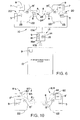
- the accelerometer is used to determine the angle of the gravity vector 5a (predetermined direction) relative to the earplug, e.g., the reference direction. If the angle is positive, the earplug is on one side of the head, and if the angle is negative, the earplug is on the other side of the head. See Figs. 1 and 2 .
- the accelerometer 5 will see that the earth gravity vector 5a is pointing in different directions depending on which ear it is placed in or adjacent.
- the exact placement and orientation of the accelerometer in the earplug is not significant, as long as it is fixed in the accelerometer housing and is the same in respective earplugs 1L, 1R.
- the accelerometer 5 in each earpiece 1 is used to determine what direction is downward.
- a mechanical design of the earpiece that makes it natural for the user to insert the earpiece with an angle in respect to the downward direct e.g., by designing the cable or microphone housing to be directed slightly forward when inserted, this will give information to the system if the earpiece is in the right or left ear. Since human ears are mirrored between right and left side, if the downward direction is determined to be to the right of the cable or microphone housing, the downward direction is determined to the right of the cable or microphone, the earpiece is inserted into the left ear. If the downward direction is determined to be to the left of the cable or microphone housing, the earpiece is inserted in the right ear.
- Signals or output from the accelerometers 5 of the earplugs 1 may be provided to circuitry 9 including, for example, one or more of logic circuitry, a processor configured by computer program instructions in a non-transitory memory 9M, and so on, configured to recognize which earplug is in which ear from the accelerometer output signals.
- the circuitry 9 and/or additional circuitry may be provided and configured to connector to direct respective signals to speakers 8 in the earplugs 1 to provide correct audio sounds to the left ear and right ear.
- circuitry 9 including, for example, one or more of logic circuitry, a processor configured by computer program instructions in a non-transitory memory 9M, and so on, configured to recognize which earplug is in which ear from the accelerometer output signals.
- the circuitry 9 and/or additional circuitry may be provided and configured to connector to direct respective signals to speakers 8 in the earplugs 1 to provide correct audio sounds to the left ear and right ear.
- an earpiece (earplug) 1 is shown inserted in the ear 2 of a user 3.
- earpiece 1 L is seen; in Fig. 5 both earpieces 1 L, 1 R are seen.
- the earpiece 1 is shown as an earbud of a type typically partly or fully inserted in the ear 2 for use; other types of earpieces may be used, as is mentioned above.
- the earpieces 1 illustrated in Figs 3-6 are connected via a wired connection using a wire or cable 10 (referred to as wire below) to a source 12 of signals to cause the earpieces to provide sounds to a user 3.
- the source 12 sometimes is referred to as an audio signal source.
- the source 12 for the sounds e.g., the signals to cause earplugs to provide the sounds, may be, for example, a mobile phone, music player, PDA, radio, BT radio, video player, computer or some other type of portable electronic equipment, etc.
- the source 12 may be a relatively non-portable electronic equipment, e.g., a stereo music system or a computer.
- a wired connection using wire 10 is illustrated, it will be appreciated that various wireless connections may be provided instead of or in addition to the wired connection, e.g., Bluetooth connection, WiFi connection, and so on.
- the wire 10 includes a portion 10a from the earpieces 1 to the connection device 13 and another portion 10b from the connection device 13 to the source 12.
- Either or both wire portions 10a, 10b may be replaced by wireless connection, e.g., Bluetooth, WiFi or other wireless technology, as was mentioned above.
- Components for wireless connection may be in one or more of the earplugs 1, the connection device 13 and/or the source 12.
- the earplug housing 7 has a feature 21 in the form factor including a protruding part (protrusion) 21 p that tends to cause the user 3 to insert the earplug 1 in a comfortable direction, e.g., facing forward rather that facing backward.
- the wire 10 may exit the protruding part 21 p, e.g., extending along the length thereof, or may exit the housing 7 independently of the protruding part.
- the facing direction of the wire 10 and/or of the protruding part 21 p may indicate the preferential direction mentioned herein.
- the function of each of the features 11, 21 and 22 is to tend to guide or to indicate to a user how to place or to orient the earplug in or at an ear so that the earplug is placed to provide a correct preferential direction orientation.
- the feature 22 may be a bump (raised portion) or notch (recess) formed in a wall or surface of the housing 7.
- the feature 22 may be paint, ink or other indicia on the housing, and so on.
- the accelerometer output signal represents the relation of the orientation of the housing 7 in the ear to the gravity vector (predetermined direction; the relation mentioned above is referred to as angle alpha ( ⁇ ).
- the orientation of the earplug 1 according to a reference direction (the preferential direction) in relation to the earth gravity vector (the predetermined direction) can be used to determine whether the earplug is located in the left ear or the right ear, as is described herein.
- Human ears are mirrored between right and left side of the user's head. Therefore, in an example with the earplugs properly oriented generally in the preferred orientation in the left and right ears, respectively, the relationship of the predetermined and the preferential directions is determined and indicates which earplug is in which ear.
- the processor 16 may coordinate which signals are provided to the respective earpieces based on which ear the earpiece is at, and, thus, which sounds are produced by respective earplugs.
- each earpiece 1 includes a circular housing 7 having an interior 23 in which the accelerometer 5, speaker 8 and circuitry 9 are located.
- the form factor of the earplug housing 7 may be other than circular. Additional circuitry and/or components may be included in the housing, e.g., as is illustrated and described below with respect to Fig. 6 .
- the earplug housing 7 also includes an insertion portion 24 from which sounds from the speaker 8 are conveyed into the ear 2.
- the insertion portion 24 may be of a size, shape and material suitable to be inserted at least part way into the ear, e.g., into the ear canal; and when so inserted, the earpiece may be self supporting relative to the ear based on engagement of the insertion portion with the ear.
- the insertion portion 24 may be hollow or have a hollow passageway 25 to facilitate conveying sounds from the speaker 8 into the ear.
- the insertion portion may extend generally perpendicularly relative to or in an axial direction from (e.g., axially along axis A) the major extent of the housing 7.
- the earpiece 1 may be of different form factor than as illustrated and may be wholly or partly inserted in an ear or may be positionable adjacent an ear to provide sounds to the ear.
- the earpiece 1 is designed to make it natural for the user 3 to insert the earpiece such that the reference or reference direction is at an angle in respect to the downward direction, e.g., by inserting the insertion portion 24 in a generally horizontal direction into the ear 2.
- the mechanical design or form factor of the earplug 1 is such as to cause the user to position the earpiece such that the cable tends to extend somewhat forward in the direction of the arrows 30 ( Fig. 7 ) toward the front of the user's head toward the face.
- the mechanical design of the earpiece may be such that the location and angle at which the wire 10 exits the housing 7 is generally fixed relative to the housing. If the reference 11 is other than the wire 10, the wire 10 need not be so fixed in position relative to the housing 7.
- the location of the accelerometer 5 in the housing 7 of an earpiece 1 relative to the location of the wire 10 either is relatively forward or rearward of the location of the wire 10. Forward and rearward for convenience of this description is in the same or opposite direction, respectively, of the arrow 30.
- the applied rule would be forward of the location of the wire 10 may be indicative of the earpiece 1 L being inserted in the left ear 2 of the user 3; rearward may be indicative of the earpiece 1 R being inserted in the right ear 2.
- a user 3 In using an audio headset 7 that includes a pair of earpieces 1, a user 3 would place each earpiece in a respective ear 2 so that a source 12 may provide signals to the earpieces 1 causing them to play sounds, e.g., music, dialog from a movie, sounds from a game, speech from a podcast, participation in a telephone conversation providing another person's speech to listen to, and so on.
- sounds e.g., music, dialog from a movie, sounds from a game, speech from a podcast, participation in a telephone conversation providing another person's speech to listen to, and so on.
- wire 10 e.g., wire 10
- an earbud type earpiece 1 using an earbud type earpiece 1 the earbud is inserted at least part way into the ear 2, e.g., the outer portion of the ear canal, and the wire 10 exits or "comes off" the earbud housing 7 in a preferential direction toward the front of the head, e.g., toward the face, of the user 3.
- Various techniques may be used to tend to cause a user to place the earbud in an ear such that the wire 10 exits the earbud housing in a preferential direction, and several exemplary techniques are described herein.
- the manner in which the wire 10 comes off an earbud housing may be most comfortable such that the wire tends to extend somewhat in a forward direction (30) from the ear, e.g., toward the front of the face rather than toward the back of the head, and the user may typically place the earbuds in the ears such that the wire comes off in such forward direction.
- instructions for using the earbuds may be provided to instruct a user to place both earbuds in the respective ears such that the wires 10 face in the same direction, e.g., toward the front (or, if desired, both toward the back in which case appropriate adjustment may be carried out to apply the opposite rule regarding which earbud is in which ear).
- the earplug housings 7 have a circular cylindrical portion as illustrated and the wires 10 exit the respective earplug housings 7 at the exterior cylinder wall, the exit being shown at 20; and the manner in which the wires exit the housing may provide the feature 11 described above.
- the wires 10 exit the earplug housings 7 at the illustrated outside face of the circular cylindrical housing portion, as is indicated at 20'.
- circuitry 9 may be in one or both earplugs 1L, 1R, in the microphone housing 14 and/or in the source 12. Some of the functions of the circuitry 9 are described above and also are described below with respect to Figs. 8, 9 and 11 . It is noted here that the circuitry 9 provides signals to the speakers 8 to provide output sounds from the earplugs 1. The circuitry 9 also receives accelerometer output signals and is able to decode or to determine from those signals in which ear respective earplugs are located. Further, based on the determination of which ear is the location for which of the earplugs, the circuitry 9 may direct respective left channel and right channel signals from the source 12 to the respective earplugs. The circuitry 9 including the processor 16 and computer program or logic instructions in the non-transitory memory 16m may control one or more of the various functions described herein to be carried out.
- a headset 4 with earplugs 1 having microphones 15' may be used for binaural recording. Tin that use case the microphones 15' in the earplugs 1 are arranged such that the sound reaching the microphones is very close to what would reach the eardrum of the user 3 while listening to sounds reaching the ears from an external source, such as a concert orchestra, outdoor nature sounds, etc. This arrangement provides for recording of sounds with a very realistic stereo feeling, since the user's head shape, outer ears, hair, beard, etc. will color or affect the sound. With a headset 4 having built-in microphones 15' for binaural recordings, it is desirable that the user has the correct earplug in the respective ears.
- the sounds received by the respective microphones 15' and the signals representing those sounds may be identified as to which earplug 1L, 1 R received the sounds using the left and right earplug identification functions described herein. Also, in playing back the sounds, the signals for the respective left ear and right ear as recorded may be directed to the correct left or right ear using features and functions described herein.
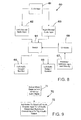
- circuitry 60 represented by a schematic block diagram is illustrated.
- the circuitry 60 may be used for properly delivering signals for left and right audio output, e.g., sounds to be provided by respective speakers 8 according to the ear 2 at which respective earpieces 1 are placed.
- the audio input 61 e.g., signals, is received from the source 12.
- the audio input may include a left channel audio input 62 and a right channel audio input 63.
- the signals from the left and right channel audio inputs 62, 63 are delivered to a switch or switching circuit 64.
- the switching circuit 64 may be operated to deliver a respective left or right channel audio input to the correct left or right audio output or speaker 65, 66 (designated 8 in the respective earplugs 1L, 1 R described above).
- the left audio output /speaker 65 is associated with the earpiece 1 that is in, at or in proximity to the left ear 2L of a user 3 to provide sound to that ear; and the right audio output / speaker 66 is associated with the earpiece 1 in, at or in proximity to the right ear 2R of the user.
- Information pertaining to which earpiece 2 is in which ear is provided the processor, software/logic and circuitry 67, which is configured to respond to such information to identify which earpiece is in which ear of the user.
- the processor, software/logic and circuitry 67 may include circuitry 9, processor 16 and memory 16m and compute program instructions and/or logic to carry out the functions and operations described herein.
- the processor, software/logic and circuitry 67 provides an appropriate input to a controller 68, such as a switch control circuit or other circuit, which operates the switching circuit 64 to direct respective left and right channel audio inputs to the respective speakers 65, 66. The correct sounds then may be listened to by the user.
- Fig. 9 is an example of computer program software flow chart 70 or logic that may be used to operate the processor, software/logic and circuitry 67 shown in Fig. 8 .
- step 71 in the flow chart 70 the step of detecting which earpiece is in which ear (left or right) is carried out.
- the switch 64 ( Fig. 8 ) is set to direct the respective left and right channel audio inputs 62, 63 to the correct left and right audio outputs 65, 66. Therefore, the user 3 will hear the correct left or right ear sounds in the respective left or right ear 2.
- the antenna 83 and circuit 9' also may be configured to provide operation as a mobile phone "built into the ear" with appropriate mobile phone components included in the circuit 9', for example, and the manual input device being operable to answer and hang-up phone calls and, if desired, also configured to provide dialing or other functions associated with a mobile phone.
- the earplugs 81 L, 81 R may include wireless capabilities to communicate with each other to identify which is in which ear based on the above-described operation. Knowing which earplug is in which ear, the correct left and right audio signals can be sent to the correct earplug.
- the processor 110 may be a controller, processor, application specific integrated circuit or other device to carry out the operation and control functions of a mobile phone.
- the processor 110 also may respond to the accelerometer output signals to direct correct left and right channel signals to the correct earplugs 1L, 1R, as is described above.
- Connections between the mobile phone 100 and the earpieces 1L, 1 R may be made via any of a number of devices, such as, wired, wireless or WiFi via the external connector 106 and/or via wireless components in the mobile phone 100 and/or in other parts described above, such as the earplugs 1 and/or the microphone housing 14.
- devices such as, wired, wireless or WiFi via the external connector 106 and/or via wireless components in the mobile phone 100 and/or in other parts described above, such as the earplugs 1 and/or the microphone housing 14.
- Signals may be coupled in one direction or in both directions between the mobile phone (electronic device) 100 and the earpieces 1 L, 1 R.
- Coupling signals whether by wired coupling or transmission or by a wireless coupling or transmission or by both wired and wireless or a combination thereof allows signals to be sent to the earpieces 1 to provide audio output to a user and signals to be received from the earpieces, e.g., from the accelerometers, for processing and/or other use in the portable electronic equipment 4, e.g., mobile phone 100.
- Operation of the mobile phone 100 in cooperation with the audio headset 4 may be under computer program control or the like. Such operation may be performed to carry out the functions of a mobile phone and as a playback system to provide sounds to the user 3, and the various steps, operations and procedures described above may be carried out under computer program control or the like.
- a "computer-readable medium” can be any means that can contain, store, communicate, propagate, or transport the program for use by or in connection with the instruction execution system, apparatus, or device.
- the computer readable medium can be, for example but not limited to, an electronic, magnetic, optical, electromagnetic, infrared, or semiconductor system, apparatus, device, or propagation medium. More specific examples (a nonexhaustive list) of the computer-readable medium would include the following: an electrical connection (electronic) having one or more wires, a portable computer diskette (magnetic), a random access memory (RAM) (electronic), a read-only memory (ROM) (electronic), an erasable programmable read-only memory (EPROM or Flash memory) (electronic), an optical fiber (optical), and a portable compact disc read-only memory (CDROM) (optical).
- an electrical connection having one or more wires
- a portable computer diskette magnetic
- RAM random access memory
- ROM read-only memory
- EPROM or Flash memory erasable programmable read-only memory
- CDROM portable compact disc read-only memory
- the computer-readable medium could even be paper or another suitable medium upon which the program is printed, as the program can be electronically captured, via for instance optical scanning of the paper or other medium, then compiled, interpreted or otherwise processed in a suitable manner if necessary, and then stored in a computer memory.
Landscapes
- Physics & Mathematics (AREA)
- Engineering & Computer Science (AREA)
- Acoustics & Sound (AREA)
- Signal Processing (AREA)
- Headphones And Earphones (AREA)
Applications Claiming Priority (2)
| Application Number | Priority Date | Filing Date | Title |
|---|---|---|---|
| US41074110P | 2010-11-05 | 2010-11-05 | |
| US13/011,050 US20120114154A1 (en) | 2010-11-05 | 2011-01-21 | Using accelerometers for left right detection of headset earpieces |
Publications (2)
| Publication Number | Publication Date |
|---|---|
| EP2451188A2 true EP2451188A2 (de) | 2012-05-09 |
| EP2451188A3 EP2451188A3 (de) | 2012-11-14 |
Family
ID=45531679
Family Applications (1)
| Application Number | Title | Priority Date | Filing Date |
|---|---|---|---|
| EP11185664A Withdrawn EP2451188A3 (de) | 2010-11-05 | 2011-10-18 | Verwendung von Beschleunigungsmessern zur Links-Rechts-Erkennung von Headset-Ohrhörern |
Country Status (3)
| Country | Link |
|---|---|
| US (1) | US20120114154A1 (de) |
| EP (1) | EP2451188A3 (de) |
| TW (1) | TW201220861A (de) |
Cited By (9)
| Publication number | Priority date | Publication date | Assignee | Title |
|---|---|---|---|---|
| CN102973275A (zh) * | 2012-11-14 | 2013-03-20 | 无锡智感星际科技有限公司 | 一种人体运动状态的采集系统及采集方法 |
| CN106465009A (zh) * | 2014-06-18 | 2017-02-22 | 索尼公司 | 耳插入设备 |
| CN108605189A (zh) * | 2016-01-05 | 2018-09-28 | 伯斯有限公司 | 双耳助听操作 |
| CN109151694A (zh) * | 2017-06-15 | 2019-01-04 | 上海真曦通信技术有限公司 | 一种用于检测耳机出耳的电子系统 |
| EP3744113A4 (de) * | 2018-01-24 | 2021-10-13 | Eargo, Inc. | Hörgerät mit einem beschleunigungsmesser |
| CN114915888A (zh) * | 2021-02-10 | 2022-08-16 | 华为技术有限公司 | 耳机佩戴错误识别方法及相关设备 |
| EP4332966A4 (de) * | 2021-11-03 | 2024-11-06 | Samsung Electronics Co., Ltd. | Verfahren und vorrichtung zur tonaufzeichnung durch eine elektronische vorrichtung mit kopfhörern |
| US12549883B2 (en) | 2022-07-28 | 2026-02-10 | Nokia Technologies Oy | Earphone modes of operation |
| WO2026044484A1 (zh) * | 2024-08-27 | 2026-03-05 | 深圳市韶音科技有限公司 | 耳机的佩戴位置检测方法、耳机、以及电子设备 |
Families Citing this family (53)
| Publication number | Priority date | Publication date | Assignee | Title |
|---|---|---|---|---|
| US8621724B2 (en) | 2008-06-27 | 2014-01-07 | Snik Llc | Headset cord holder |
| US10652661B2 (en) | 2008-06-27 | 2020-05-12 | Snik, LLC | Headset cord holder |
| US8954177B2 (en) | 2011-06-01 | 2015-02-10 | Apple Inc. | Controlling operation of a media device based upon whether a presentation device is currently being worn by a user |
| CN103258548B (zh) * | 2012-02-15 | 2017-09-19 | 富泰华工业(深圳)有限公司 | 音频播放装置及其控制方法 |
| US9769556B2 (en) | 2012-02-22 | 2017-09-19 | Snik Llc | Magnetic earphones holder including receiving external ambient audio and transmitting to the earphones |
| US10524038B2 (en) | 2012-02-22 | 2019-12-31 | Snik Llc | Magnetic earphones holder |
| US20130279724A1 (en) * | 2012-04-19 | 2013-10-24 | Sony Computer Entertainment Inc. | Auto detection of headphone orientation |
| US9648409B2 (en) * | 2012-07-12 | 2017-05-09 | Apple Inc. | Earphones with ear presence sensors |
| JP6040635B2 (ja) * | 2012-08-27 | 2016-12-07 | ヤマハ株式会社 | ヘッドフォン |
| US9113246B2 (en) * | 2012-09-20 | 2015-08-18 | International Business Machines Corporation | Automated left-right headphone earpiece identifier |
| US9326058B2 (en) * | 2012-09-26 | 2016-04-26 | Sony Corporation | Control method of mobile terminal apparatus |
| US9516442B1 (en) * | 2012-09-28 | 2016-12-06 | Apple Inc. | Detecting the positions of earbuds and use of these positions for selecting the optimum microphones in a headset |
| US9344792B2 (en) * | 2012-11-29 | 2016-05-17 | Apple Inc. | Ear presence detection in noise cancelling earphones |
| US9049508B2 (en) | 2012-11-29 | 2015-06-02 | Apple Inc. | Earphones with cable orientation sensors |
| US20140146982A1 (en) | 2012-11-29 | 2014-05-29 | Apple Inc. | Electronic Devices and Accessories with Media Streaming Control Features |
| KR102052372B1 (ko) * | 2013-01-11 | 2019-12-05 | 엘지전자 주식회사 | 이어폰을 이용한 데이터 송수신 디바이스 및 그 제어 방법 |
| US9681219B2 (en) | 2013-03-07 | 2017-06-13 | Nokia Technologies Oy | Orientation free handsfree device |
| WO2014167384A1 (en) | 2013-04-10 | 2014-10-16 | Nokia Corporation | Audio recording and playback apparatus |
| US8879722B1 (en) * | 2013-08-20 | 2014-11-04 | Motorola Mobility Llc | Wireless communication earpiece |
| US20170094385A1 (en) * | 2014-02-23 | 2017-03-30 | Hush Technology Inc. | Intelligent earplug system |
| US9906636B2 (en) | 2014-02-23 | 2018-02-27 | Hush Technology Inc. | Intelligent earplug system |
| CN103929697B (zh) | 2014-04-02 | 2018-11-23 | 北京智谷睿拓技术服务有限公司 | 声道配置方法、装置及耳机设备 |
| CN103929698A (zh) * | 2014-04-02 | 2014-07-16 | 北京智谷睿拓技术服务有限公司 | 声道配置方法、装置及耳机设备 |
| US10110984B2 (en) * | 2014-04-21 | 2018-10-23 | Apple Inc. | Wireless earphone |
| US10075571B2 (en) * | 2014-07-02 | 2018-09-11 | Sonetics Holdings, Inc. | Dual antenna communications headset |
| US9917940B2 (en) * | 2014-07-02 | 2018-03-13 | Sonetics Holdings, Inc. | USB programmable dual antenna communications headset system |
| TW201603589A (zh) * | 2014-07-09 | 2016-01-16 | 宏碁股份有限公司 | 耳機及其聲道控制方法 |
| CN105282642A (zh) * | 2014-07-24 | 2016-01-27 | 宏碁股份有限公司 | 耳机及其声道控制方法 |
| US9794692B2 (en) * | 2015-04-30 | 2017-10-17 | International Business Machines Corporation | Multi-channel speaker output orientation detection |
| US9838775B2 (en) | 2015-09-16 | 2017-12-05 | Apple Inc. | Earbuds with biometric sensing |
| US10856068B2 (en) * | 2015-09-16 | 2020-12-01 | Apple Inc. | Earbuds |
| EP3541092B1 (de) | 2015-09-30 | 2021-08-11 | Apple Inc. | Ohrhörergehäuse mit ladesystem |
| US10455306B2 (en) | 2016-04-19 | 2019-10-22 | Snik Llc | Magnetic earphones holder |
| US10631074B2 (en) | 2016-04-19 | 2020-04-21 | Snik Llc | Magnetic earphones holder |
| US10951968B2 (en) | 2016-04-19 | 2021-03-16 | Snik Llc | Magnetic earphones holder |
| US11272281B2 (en) | 2016-04-19 | 2022-03-08 | Snik Llc | Magnetic earphones holder |
| US10225640B2 (en) | 2016-04-19 | 2019-03-05 | Snik Llc | Device and system for and method of transmitting audio to a user |
| CN106101894A (zh) * | 2016-06-27 | 2016-11-09 | 乐视控股(北京)有限公司 | 一种声道自动匹配的方法、装置以及耳机 |
| US10291975B2 (en) | 2016-09-06 | 2019-05-14 | Apple Inc. | Wireless ear buds |
| WO2018048846A1 (en) | 2016-09-06 | 2018-03-15 | Apple Inc. | Earphone assemblies with wingtips for anchoring to a user |
| KR102535726B1 (ko) * | 2016-11-30 | 2023-05-24 | 삼성전자주식회사 | 이어폰 오장착 검출 방법, 이를 위한 전자 장치 및 저장 매체 |
| SE542485C2 (en) | 2017-01-03 | 2020-05-19 | Earin Ab | Charging and storage of wireless earbuds |
| US10277973B2 (en) * | 2017-03-31 | 2019-04-30 | Apple Inc. | Wireless ear bud system with pose detection |
| US9883278B1 (en) * | 2017-04-18 | 2018-01-30 | Nanning Fugui Precision Industrial Co., Ltd. | System and method for detecting ear location of earphone and rechanneling connections accordingly and earphone using same |
| WO2018213336A1 (en) * | 2017-05-16 | 2018-11-22 | Snik Llc | Magnetic earphones holder |
| US20190132895A1 (en) * | 2017-11-01 | 2019-05-02 | Htc Corporation | Multi-connection device and multi-connection method |
| US10932062B2 (en) | 2018-02-17 | 2021-02-23 | Apple Inc. | Ultrasonic proximity sensors, and related systems and methods |
| US10440462B1 (en) * | 2018-03-27 | 2019-10-08 | Cheng Uei Precision Industry Co., Ltd. | Earphone assembly and sound channel control method applied therein |
| CN113497988B (zh) * | 2020-04-03 | 2023-05-16 | 华为技术有限公司 | 一种无线耳机的佩戴状态确定方法及相关装置 |
| US12301748B2 (en) * | 2021-02-08 | 2025-05-13 | Samsung Electronics Co., Ltd. | System and method for simultaneous multi-call support capability on compatible audio devices |
| CN113329301B (zh) * | 2021-06-29 | 2022-10-25 | 歌尔科技有限公司 | 头戴式耳机的左右耳佩戴检测方法、装置及头戴式耳机 |
| CN118870246A (zh) * | 2023-04-27 | 2024-10-29 | 华为技术有限公司 | 佩戴位置的识别方法和电子设备 |
| CN117119344A (zh) * | 2023-09-07 | 2023-11-24 | 昆山联滔电子有限公司 | 一种耳机佩戴状态侦测装置及方法 |
Citations (2)
| Publication number | Priority date | Publication date | Assignee | Title |
|---|---|---|---|---|
| WO2005029911A1 (en) | 2003-09-22 | 2005-03-31 | Koninklijke Philips Electronics N.V. | Electric device, system and method |
| US20090203318A1 (en) | 2008-02-11 | 2009-08-13 | Haan Ido De | Headset |
Family Cites Families (7)
| Publication number | Priority date | Publication date | Assignee | Title |
|---|---|---|---|---|
| US20040042629A1 (en) * | 2002-08-30 | 2004-03-04 | Mellone Charles M. | Automatic earpiece sensing |
| US8254605B2 (en) * | 2007-05-29 | 2012-08-28 | Livescribe, Inc. | Binaural recording for smart pen computing systems |
| US8078120B2 (en) * | 2008-02-11 | 2011-12-13 | Cobra Electronics Corporation | Citizens band radio with wireless cellular telephone connectivity |
| DE102008055180A1 (de) * | 2008-12-30 | 2010-07-01 | Sennheiser Electronic Gmbh & Co. Kg | Steuersystem, Hörer und Steuerungsverfahren |
| US8238570B2 (en) * | 2009-03-30 | 2012-08-07 | Bose Corporation | Personal acoustic device position determination |
| CN102316394B (zh) * | 2010-06-30 | 2014-09-03 | 索尼爱立信移动通讯有限公司 | 蓝牙设备和利用该蓝牙设备的音频播放方法 |
| US9237393B2 (en) * | 2010-11-05 | 2016-01-12 | Sony Corporation | Headset with accelerometers to determine direction and movements of user head and method |
-
2011
- 2011-01-21 US US13/011,050 patent/US20120114154A1/en not_active Abandoned
- 2011-10-13 TW TW100137135A patent/TW201220861A/zh unknown
- 2011-10-18 EP EP11185664A patent/EP2451188A3/de not_active Withdrawn
Patent Citations (2)
| Publication number | Priority date | Publication date | Assignee | Title |
|---|---|---|---|---|
| WO2005029911A1 (en) | 2003-09-22 | 2005-03-31 | Koninklijke Philips Electronics N.V. | Electric device, system and method |
| US20090203318A1 (en) | 2008-02-11 | 2009-08-13 | Haan Ido De | Headset |
Cited By (18)
| Publication number | Priority date | Publication date | Assignee | Title |
|---|---|---|---|---|
| CN102973275A (zh) * | 2012-11-14 | 2013-03-20 | 无锡智感星际科技有限公司 | 一种人体运动状态的采集系统及采集方法 |
| CN110012373B (zh) * | 2014-06-18 | 2021-07-09 | 索尼公司 | 耳内设备 |
| CN106465009A (zh) * | 2014-06-18 | 2017-02-22 | 索尼公司 | 耳插入设备 |
| EP3160159A4 (de) * | 2014-06-18 | 2018-02-14 | Sony Corporation | Ohreneinsetzvorrichtung |
| CN106465009B (zh) * | 2014-06-18 | 2019-01-04 | 索尼公司 | 耳插入设备 |
| CN110012373A (zh) * | 2014-06-18 | 2019-07-12 | 索尼公司 | 耳内设备 |
| CN108605189A (zh) * | 2016-01-05 | 2018-09-28 | 伯斯有限公司 | 双耳助听操作 |
| CN109151694B (zh) * | 2017-06-15 | 2024-01-30 | 上海真曦通信技术有限公司 | 一种用于检测耳机出耳的电子系统 |
| CN109151694A (zh) * | 2017-06-15 | 2019-01-04 | 上海真曦通信技术有限公司 | 一种用于检测耳机出耳的电子系统 |
| EP3744113A4 (de) * | 2018-01-24 | 2021-10-13 | Eargo, Inc. | Hörgerät mit einem beschleunigungsmesser |
| CN114915888A (zh) * | 2021-02-10 | 2022-08-16 | 华为技术有限公司 | 耳机佩戴错误识别方法及相关设备 |
| WO2022170925A1 (zh) * | 2021-02-10 | 2022-08-18 | 华为技术有限公司 | 耳机佩戴错误识别方法及相关设备 |
| CN114915888B (zh) * | 2021-02-10 | 2023-10-20 | 华为技术有限公司 | 耳机佩戴错误识别方法及相关设备 |
| US12513471B2 (en) | 2021-02-10 | 2025-12-30 | Huawei Technologies Co., Ltd. | Method for identifying earbud wearing error and related device |
| EP4332966A4 (de) * | 2021-11-03 | 2024-11-06 | Samsung Electronics Co., Ltd. | Verfahren und vorrichtung zur tonaufzeichnung durch eine elektronische vorrichtung mit kopfhörern |
| US12185072B2 (en) | 2021-11-03 | 2024-12-31 | Samsung Electronics Co., Ltd. | Method and device for recording sound of electronic device using earphones |
| US12549883B2 (en) | 2022-07-28 | 2026-02-10 | Nokia Technologies Oy | Earphone modes of operation |
| WO2026044484A1 (zh) * | 2024-08-27 | 2026-03-05 | 深圳市韶音科技有限公司 | 耳机的佩戴位置检测方法、耳机、以及电子设备 |
Also Published As
| Publication number | Publication date |
|---|---|
| US20120114154A1 (en) | 2012-05-10 |
| TW201220861A (en) | 2012-05-16 |
| EP2451188A3 (de) | 2012-11-14 |
Similar Documents
| Publication | Publication Date | Title |
|---|---|---|
| EP2451188A2 (de) | Verwendung von Beschleunigungsmessern zur Links-Rechts-Erkennung von Headset-Ohrhörern | |
| EP2839675B1 (de) | Automatische erkennung einer kopfhörerausrichtung | |
| CN107438217B (zh) | 无线音响设备 | |
| EP3424229B1 (de) | Systeme und verfahren zur räumlichen audioanpassung | |
| US10764670B2 (en) | System having device-mount audio mode | |
| US7734055B2 (en) | User configurable headset for monaural and binaural modes | |
| US7590233B2 (en) | User configurable headset for monaural and binaural modes | |
| US20140079238A1 (en) | Automated left-right headphone earpiece identifier | |
| EP2410762A1 (de) | Kopfhörer | |
| US20120046768A1 (en) | Method for providing multimedia data to a user | |
| US7532732B2 (en) | Method and apparatus for VoIP telephony call announcement | |
| WO2007017810A2 (en) | A headset, a communication device, a communication system, and a method of operating a headset | |
| US20100104118A1 (en) | Earpiece based binaural sound capturing and playback | |
| US9936296B1 (en) | Device, system, and method for multimedia communications | |
| US20240249711A1 (en) | Audio cancellation | |
| WO2018149073A1 (zh) | 降噪耳机以及电子设备 | |
| EP2216975A1 (de) | Telekommunikationsvorrichtung | |
| CN117278912A (zh) | 扬声器单元、头带组件、头戴设备及其控制方法 | |
| CN216930263U (zh) | 一种多媒体通信设备 | |
| KR102740285B1 (ko) | 스마트 이어셋 | |
| JP7820898B1 (ja) | 3人用仲良しイヤホン、3人用仲良しイヤホンシステム、3人用仲良しワイヤレスイヤホン、3人用仲良しワイヤレスイヤホンシステム、ワイヤレスイヤホン用プログラム、及び3人用仲良しイヤホン動作方法 | |
| US11240620B2 (en) | Methods for making spatial microphone subassemblies, recording system and method for recording left and right ear sounds for use in virtual reality playback | |
| KR101432588B1 (ko) | 휴대 단말기 | |
| KR20180082757A (ko) | 휴대용 음향기기 | |
| KR101439936B1 (ko) | 이어폰이 장착된 휴대전화 케이스 |
Legal Events
| Date | Code | Title | Description |
|---|---|---|---|
| PUAI | Public reference made under article 153(3) epc to a published international application that has entered the european phase |
Free format text: ORIGINAL CODE: 0009012 |
|
| AK | Designated contracting states |
Kind code of ref document: A2 Designated state(s): AL AT BE BG CH CY CZ DE DK EE ES FI FR GB GR HR HU IE IS IT LI LT LU LV MC MK MT NL NO PL PT RO RS SE SI SK SM TR |
|
| AX | Request for extension of the european patent |
Extension state: BA ME |
|
| PUAL | Search report despatched |
Free format text: ORIGINAL CODE: 0009013 |
|
| AK | Designated contracting states |
Kind code of ref document: A3 Designated state(s): AL AT BE BG CH CY CZ DE DK EE ES FI FR GB GR HR HU IE IS IT LI LT LU LV MC MK MT NL NO PL PT RO RS SE SI SK SM TR |
|
| AX | Request for extension of the european patent |
Extension state: BA ME |
|
| RIC1 | Information provided on ipc code assigned before grant |
Ipc: H04M 1/60 20060101ALI20121010BHEP Ipc: H04R 1/10 20060101AFI20121010BHEP Ipc: H04R 5/033 20060101ALN20121010BHEP |
|
| 17P | Request for examination filed |
Effective date: 20130514 |
|
| STAA | Information on the status of an ep patent application or granted ep patent |
Free format text: STATUS: THE APPLICATION IS DEEMED TO BE WITHDRAWN |
|
| 18D | Application deemed to be withdrawn |
Effective date: 20150501 |