EP2451830B1 - Procédé pour augmenter la résistance d'une plante ou une pièce associée à un pathogène, procédé de criblage de la résistance d'une plante ou pièce associée à un pathogène, et utilisation associée - Google Patents
Procédé pour augmenter la résistance d'une plante ou une pièce associée à un pathogène, procédé de criblage de la résistance d'une plante ou pièce associée à un pathogène, et utilisation associée Download PDFInfo
- Publication number
- EP2451830B1 EP2451830B1 EP10734839.3A EP10734839A EP2451830B1 EP 2451830 B1 EP2451830 B1 EP 2451830B1 EP 10734839 A EP10734839 A EP 10734839A EP 2451830 B1 EP2451830 B1 EP 2451830B1
- Authority
- EP
- European Patent Office
- Prior art keywords
- plant
- pathogen
- seq
- resistance
- cercospora
- Prior art date
- Legal status (The legal status is an assumption and is not a legal conclusion. Google has not performed a legal analysis and makes no representation as to the accuracy of the status listed.)
- Active
Links
- 238000000034 method Methods 0.000 title claims description 85
- 244000052769 pathogen Species 0.000 title claims description 67
- 230000001717 pathogenic effect Effects 0.000 title claims description 59
- 238000012216 screening Methods 0.000 title claims description 25
- 230000001965 increasing effect Effects 0.000 title claims description 20
- 108090000623 proteins and genes Proteins 0.000 claims description 158
- 241000196324 Embryophyta Species 0.000 claims description 149
- 102000004169 proteins and genes Human genes 0.000 claims description 96
- 241000222291 Passalora fulva Species 0.000 claims description 53
- 240000003768 Solanum lycopersicum Species 0.000 claims description 44
- 150000007523 nucleic acids Chemical class 0.000 claims description 44
- 102000039446 nucleic acids Human genes 0.000 claims description 37
- 108020004707 nucleic acids Proteins 0.000 claims description 37
- 235000007688 Lycopersicon esculentum Nutrition 0.000 claims description 31
- 235000002637 Nicotiana tabacum Nutrition 0.000 claims description 31
- 241000087479 Pseudocercospora fijiensis Species 0.000 claims description 22
- 241000700605 Viruses Species 0.000 claims description 20
- 241001326550 Dothideomycetes Species 0.000 claims description 19
- 241000233866 Fungi Species 0.000 claims description 19
- 244000061176 Nicotiana tabacum Species 0.000 claims description 18
- 240000008042 Zea mays Species 0.000 claims description 18
- 241000219310 Beta vulgaris subsp. vulgaris Species 0.000 claims description 17
- 229920002101 Chitin Polymers 0.000 claims description 17
- 239000013604 expression vector Substances 0.000 claims description 16
- 240000000905 Nymphoides indica Species 0.000 claims description 15
- 235000017590 Nymphoides indica Nutrition 0.000 claims description 15
- 241000209140 Triticum Species 0.000 claims description 14
- 241000530549 Cercospora beticola Species 0.000 claims description 13
- 230000027455 binding Effects 0.000 claims description 13
- 208000015181 infectious disease Diseases 0.000 claims description 13
- 230000001131 transforming effect Effects 0.000 claims description 13
- 241001157784 Cercospora nicotianae Species 0.000 claims description 12
- 240000007087 Apium graveolens Species 0.000 claims description 11
- 241000905906 Cercospora apii Species 0.000 claims description 11
- 241000766556 Cercospora zeina Species 0.000 claims description 11
- 108090000765 processed proteins & peptides Proteins 0.000 claims description 8
- FWMNVWWHGCHHJJ-SKKKGAJSSA-N 4-amino-1-[(2r)-6-amino-2-[[(2r)-2-[[(2r)-2-[[(2r)-2-amino-3-phenylpropanoyl]amino]-3-phenylpropanoyl]amino]-4-methylpentanoyl]amino]hexanoyl]piperidine-4-carboxylic acid Chemical compound C([C@H](C(=O)N[C@H](CC(C)C)C(=O)N[C@H](CCCCN)C(=O)N1CCC(N)(CC1)C(O)=O)NC(=O)[C@H](N)CC=1C=CC=CC=1)C1=CC=CC=C1 FWMNVWWHGCHHJJ-SKKKGAJSSA-N 0.000 claims description 7
- 108091011157 chitin binding proteins Proteins 0.000 claims description 4
- 102000021178 chitin binding proteins Human genes 0.000 claims description 4
- 230000004665 defense response Effects 0.000 claims description 4
- 241000701161 unidentified adenovirus Species 0.000 claims description 4
- 241001430294 unidentified retrovirus Species 0.000 claims description 4
- 125000003275 alpha amino acid group Chemical group 0.000 claims 1
- 235000018102 proteins Nutrition 0.000 description 91
- 102000053602 DNA Human genes 0.000 description 37
- 108020004414 DNA Proteins 0.000 description 36
- 210000004027 cell Anatomy 0.000 description 34
- 230000014509 gene expression Effects 0.000 description 33
- 239000013598 vector Substances 0.000 description 32
- 239000012636 effector Substances 0.000 description 22
- 108091028043 Nucleic acid sequence Proteins 0.000 description 21
- 241000709992 Potato virus X Species 0.000 description 20
- 241000234295 Musa Species 0.000 description 19
- 230000009466 transformation Effects 0.000 description 18
- 150000001413 amino acids Chemical group 0.000 description 16
- 201000010099 disease Diseases 0.000 description 16
- 208000037265 diseases, disorders, signs and symptoms Diseases 0.000 description 16
- OKKJLVBELUTLKV-UHFFFAOYSA-N Methanol Chemical compound OC OKKJLVBELUTLKV-UHFFFAOYSA-N 0.000 description 15
- 241000208125 Nicotiana Species 0.000 description 15
- 238000004519 manufacturing process Methods 0.000 description 15
- 239000002773 nucleotide Substances 0.000 description 14
- 125000003729 nucleotide group Chemical group 0.000 description 14
- 239000000047 product Substances 0.000 description 13
- 241000894007 species Species 0.000 description 13
- 241000235058 Komagataella pastoris Species 0.000 description 12
- 229920002477 rna polymer Polymers 0.000 description 12
- 239000002299 complementary DNA Substances 0.000 description 11
- 239000013612 plasmid Substances 0.000 description 11
- 230000009261 transgenic effect Effects 0.000 description 11
- 235000018290 Musa x paradisiaca Nutrition 0.000 description 10
- 241000589158 Agrobacterium Species 0.000 description 9
- 108091026890 Coding region Proteins 0.000 description 9
- 108010076504 Protein Sorting Signals Proteins 0.000 description 9
- 235000002017 Zea mays subsp mays Nutrition 0.000 description 9
- 230000002538 fungal effect Effects 0.000 description 9
- 238000012546 transfer Methods 0.000 description 9
- 241000589155 Agrobacterium tumefaciens Species 0.000 description 8
- ZHNUHDYFZUAESO-UHFFFAOYSA-N Formamide Chemical compound NC=O ZHNUHDYFZUAESO-UHFFFAOYSA-N 0.000 description 8
- FAPWRFPIFSIZLT-UHFFFAOYSA-M Sodium chloride Chemical compound [Na+].[Cl-] FAPWRFPIFSIZLT-UHFFFAOYSA-M 0.000 description 8
- 235000016383 Zea mays subsp huehuetenangensis Nutrition 0.000 description 8
- 235000009973 maize Nutrition 0.000 description 8
- 229920001282 polysaccharide Polymers 0.000 description 8
- 239000005017 polysaccharide Substances 0.000 description 8
- 150000004804 polysaccharides Chemical class 0.000 description 8
- 235000021536 Sugar beet Nutrition 0.000 description 7
- 238000003556 assay Methods 0.000 description 7
- 235000021015 bananas Nutrition 0.000 description 7
- 210000001519 tissue Anatomy 0.000 description 7
- 238000013518 transcription Methods 0.000 description 7
- 230000010474 transient expression Effects 0.000 description 7
- PEDCQBHIVMGVHV-UHFFFAOYSA-N Glycerine Chemical compound OCC(O)CO PEDCQBHIVMGVHV-UHFFFAOYSA-N 0.000 description 6
- 241000207746 Nicotiana benthamiana Species 0.000 description 6
- 108700026244 Open Reading Frames Proteins 0.000 description 6
- 230000001488 breeding effect Effects 0.000 description 6
- 238000011081 inoculation Methods 0.000 description 6
- 230000001105 regulatory effect Effects 0.000 description 6
- 230000004044 response Effects 0.000 description 6
- 239000000523 sample Substances 0.000 description 6
- 230000035897 transcription Effects 0.000 description 6
- 240000007594 Oryza sativa Species 0.000 description 5
- 235000007164 Oryza sativa Nutrition 0.000 description 5
- 235000021307 Triticum Nutrition 0.000 description 5
- 230000003321 amplification Effects 0.000 description 5
- 238000009395 breeding Methods 0.000 description 5
- 230000004186 co-expression Effects 0.000 description 5
- 230000000295 complement effect Effects 0.000 description 5
- 238000004520 electroporation Methods 0.000 description 5
- 238000005516 engineering process Methods 0.000 description 5
- 239000003623 enhancer Substances 0.000 description 5
- 230000002068 genetic effect Effects 0.000 description 5
- 238000010353 genetic engineering Methods 0.000 description 5
- 238000009396 hybridization Methods 0.000 description 5
- 230000008595 infiltration Effects 0.000 description 5
- 238000001764 infiltration Methods 0.000 description 5
- 239000003550 marker Substances 0.000 description 5
- 230000001404 mediated effect Effects 0.000 description 5
- 238000003199 nucleic acid amplification method Methods 0.000 description 5
- 235000009566 rice Nutrition 0.000 description 5
- 238000002415 sodium dodecyl sulfate polyacrylamide gel electrophoresis Methods 0.000 description 5
- 238000013519 translation Methods 0.000 description 5
- 238000011144 upstream manufacturing Methods 0.000 description 5
- 239000003981 vehicle Substances 0.000 description 5
- 239000013603 viral vector Substances 0.000 description 5
- 241000894006 Bacteria Species 0.000 description 4
- 101710132601 Capsid protein Proteins 0.000 description 4
- 241000701489 Cauliflower mosaic virus Species 0.000 description 4
- 101710094648 Coat protein Proteins 0.000 description 4
- 206010020751 Hypersensitivity Diseases 0.000 description 4
- 101710125418 Major capsid protein Proteins 0.000 description 4
- 101710141454 Nucleoprotein Proteins 0.000 description 4
- 101710083689 Probable capsid protein Proteins 0.000 description 4
- 230000015572 biosynthetic process Effects 0.000 description 4
- 210000000349 chromosome Anatomy 0.000 description 4
- 125000000151 cysteine group Chemical group N[C@@H](CS)C(=O)* 0.000 description 4
- 238000002474 experimental method Methods 0.000 description 4
- 239000000706 filtrate Substances 0.000 description 4
- 230000012010 growth Effects 0.000 description 4
- 102000004196 processed proteins & peptides Human genes 0.000 description 4
- 239000011780 sodium chloride Substances 0.000 description 4
- 239000006228 supernatant Substances 0.000 description 4
- 230000002103 transcriptional effect Effects 0.000 description 4
- 230000003612 virological effect Effects 0.000 description 4
- 108020004705 Codon Proteins 0.000 description 3
- 238000001712 DNA sequencing Methods 0.000 description 3
- 244000068988 Glycine max Species 0.000 description 3
- 235000010469 Glycine max Nutrition 0.000 description 3
- 102100021181 Golgi phosphoprotein 3 Human genes 0.000 description 3
- 241000209510 Liliopsida Species 0.000 description 3
- 108091034117 Oligonucleotide Proteins 0.000 description 3
- 108010002747 Pfu DNA polymerase Proteins 0.000 description 3
- -1 Rcr3 Proteins 0.000 description 3
- 108700008625 Reporter Genes Proteins 0.000 description 3
- DBMJMQXJHONAFJ-UHFFFAOYSA-M Sodium laurylsulphate Chemical compound [Na+].CCCCCCCCCCCCOS([O-])(=O)=O DBMJMQXJHONAFJ-UHFFFAOYSA-M 0.000 description 3
- 230000000680 avirulence Effects 0.000 description 3
- 239000012148 binding buffer Substances 0.000 description 3
- 239000003795 chemical substances by application Substances 0.000 description 3
- 230000000694 effects Effects 0.000 description 3
- 241001233957 eudicotyledons Species 0.000 description 3
- 239000012634 fragment Substances 0.000 description 3
- 230000006870 function Effects 0.000 description 3
- 239000000417 fungicide Substances 0.000 description 3
- 230000004927 fusion Effects 0.000 description 3
- 230000003993 interaction Effects 0.000 description 3
- 239000000463 material Substances 0.000 description 3
- 239000002245 particle Substances 0.000 description 3
- 244000000003 plant pathogen Species 0.000 description 3
- 229920000642 polymer Polymers 0.000 description 3
- 230000008569 process Effects 0.000 description 3
- 230000003362 replicative effect Effects 0.000 description 3
- 229920005989 resin Polymers 0.000 description 3
- 239000011347 resin Substances 0.000 description 3
- 230000008261 resistance mechanism Effects 0.000 description 3
- 150000003839 salts Chemical class 0.000 description 3
- 230000009870 specific binding Effects 0.000 description 3
- 208000024891 symptom Diseases 0.000 description 3
- 238000012360 testing method Methods 0.000 description 3
- 230000001052 transient effect Effects 0.000 description 3
- YNJBWRMUSHSURL-UHFFFAOYSA-N trichloroacetic acid Chemical compound OC(=O)C(Cl)(Cl)Cl YNJBWRMUSHSURL-UHFFFAOYSA-N 0.000 description 3
- 238000001262 western blot Methods 0.000 description 3
- QKNYBSVHEMOAJP-UHFFFAOYSA-N 2-amino-2-(hydroxymethyl)propane-1,3-diol;hydron;chloride Chemical compound Cl.OCC(N)(CO)CO QKNYBSVHEMOAJP-UHFFFAOYSA-N 0.000 description 2
- KDCGOANMDULRCW-UHFFFAOYSA-N 7H-purine Chemical compound N1=CNC2=NC=NC2=C1 KDCGOANMDULRCW-UHFFFAOYSA-N 0.000 description 2
- CSCPPACGZOOCGX-UHFFFAOYSA-N Acetone Chemical compound CC(C)=O CSCPPACGZOOCGX-UHFFFAOYSA-N 0.000 description 2
- 229920000936 Agarose Polymers 0.000 description 2
- 235000015849 Apium graveolens Dulce Group Nutrition 0.000 description 2
- 235000010591 Appio Nutrition 0.000 description 2
- 241000725138 Banana bunchy top virus Species 0.000 description 2
- 101100243764 Caenorhabditis elegans phb-1 gene Proteins 0.000 description 2
- 101100243775 Caenorhabditis elegans phb-2 gene Proteins 0.000 description 2
- 241001515826 Cassava vein mosaic virus Species 0.000 description 2
- 102000012286 Chitinases Human genes 0.000 description 2
- 108010022172 Chitinases Proteins 0.000 description 2
- 229920001661 Chitosan Polymers 0.000 description 2
- 108020004635 Complementary DNA Proteins 0.000 description 2
- 108010014303 DNA-directed DNA polymerase Proteins 0.000 description 2
- 102000016928 DNA-directed DNA polymerase Human genes 0.000 description 2
- 241000353621 Eilat virus Species 0.000 description 2
- 108050001049 Extracellular proteins Proteins 0.000 description 2
- 206010017533 Fungal infection Diseases 0.000 description 2
- 108091092195 Intron Proteins 0.000 description 2
- 235000003805 Musa ABB Group Nutrition 0.000 description 2
- 208000031888 Mycoses Diseases 0.000 description 2
- 241001620021 Mycosphaerella eumusae Species 0.000 description 2
- 241000344256 Mycosphaerellaceae Species 0.000 description 2
- OVRNDRQMDRJTHS-FMDGEEDCSA-N N-acetyl-beta-D-glucosamine Chemical compound CC(=O)N[C@H]1[C@H](O)O[C@H](CO)[C@@H](O)[C@@H]1O OVRNDRQMDRJTHS-FMDGEEDCSA-N 0.000 description 2
- 241000845082 Panama Species 0.000 description 2
- 241000184297 Pseudocercospora musae Species 0.000 description 2
- 108020004511 Recombinant DNA Proteins 0.000 description 2
- 241000736748 Satyrium parviflorum Species 0.000 description 2
- 244000087991 Silene chilense Species 0.000 description 2
- 235000002634 Solanum Nutrition 0.000 description 2
- 241000207763 Solanum Species 0.000 description 2
- 241000896544 Solanum chmielewskii Species 0.000 description 2
- 241000208122 Solanum peruvianum Species 0.000 description 2
- 244000061456 Solanum tuberosum Species 0.000 description 2
- 235000002595 Solanum tuberosum Nutrition 0.000 description 2
- 241000123055 Stereum hirsutum Species 0.000 description 2
- 108700019146 Transgenes Proteins 0.000 description 2
- 238000009825 accumulation Methods 0.000 description 2
- 235000001014 amino acid Nutrition 0.000 description 2
- 210000004436 artificial bacterial chromosome Anatomy 0.000 description 2
- 210000001106 artificial yeast chromosome Anatomy 0.000 description 2
- 238000009835 boiling Methods 0.000 description 2
- 210000002421 cell wall Anatomy 0.000 description 2
- 239000001913 cellulose Substances 0.000 description 2
- 229920002678 cellulose Polymers 0.000 description 2
- 238000005119 centrifugation Methods 0.000 description 2
- 238000006243 chemical reaction Methods 0.000 description 2
- 239000013611 chromosomal DNA Substances 0.000 description 2
- 238000010367 cloning Methods 0.000 description 2
- 238000010276 construction Methods 0.000 description 2
- 230000001276 controlling effect Effects 0.000 description 2
- 230000001419 dependent effect Effects 0.000 description 2
- 238000011161 development Methods 0.000 description 2
- 230000018109 developmental process Effects 0.000 description 2
- 241001493065 dsRNA viruses Species 0.000 description 2
- 235000013399 edible fruits Nutrition 0.000 description 2
- 239000005712 elicitor Substances 0.000 description 2
- 210000002257 embryonic structure Anatomy 0.000 description 2
- 238000000855 fermentation Methods 0.000 description 2
- 230000004151 fermentation Effects 0.000 description 2
- 244000053095 fungal pathogen Species 0.000 description 2
- 239000000499 gel Substances 0.000 description 2
- 238000012239 gene modification Methods 0.000 description 2
- 230000005017 genetic modification Effects 0.000 description 2
- 235000013617 genetically modified food Nutrition 0.000 description 2
- 235000003869 genetically modified organism Nutrition 0.000 description 2
- 208000006278 hypochromic anemia Diseases 0.000 description 2
- 238000003119 immunoblot Methods 0.000 description 2
- 230000000977 initiatory effect Effects 0.000 description 2
- 238000002347 injection Methods 0.000 description 2
- 239000007924 injection Substances 0.000 description 2
- 238000003780 insertion Methods 0.000 description 2
- 230000037431 insertion Effects 0.000 description 2
- 239000002609 medium Substances 0.000 description 2
- 238000000520 microinjection Methods 0.000 description 2
- 238000005065 mining Methods 0.000 description 2
- 238000010369 molecular cloning Methods 0.000 description 2
- 230000017074 necrotic cell death Effects 0.000 description 2
- 239000000137 peptide hydrolase inhibitor Substances 0.000 description 2
- 238000003752 polymerase chain reaction Methods 0.000 description 2
- 238000006116 polymerization reaction Methods 0.000 description 2
- 238000011160 research Methods 0.000 description 2
- 230000002441 reversible effect Effects 0.000 description 2
- 239000012723 sample buffer Substances 0.000 description 2
- 238000012163 sequencing technique Methods 0.000 description 2
- 229910001415 sodium ion Inorganic materials 0.000 description 2
- 238000010561 standard procedure Methods 0.000 description 2
- 239000007858 starting material Substances 0.000 description 2
- 239000010907 stover Substances 0.000 description 2
- 238000006467 substitution reaction Methods 0.000 description 2
- 238000003786 synthesis reaction Methods 0.000 description 2
- 230000008685 targeting Effects 0.000 description 2
- 230000005026 transcription initiation Effects 0.000 description 2
- 230000014621 translational initiation Effects 0.000 description 2
- 229920001221 xylan Polymers 0.000 description 2
- 150000004823 xylans Chemical class 0.000 description 2
- 108091032973 (ribonucleotides)n+m Proteins 0.000 description 1
- 102000040650 (ribonucleotides)n+m Human genes 0.000 description 1
- VGONTNSXDCQUGY-RRKCRQDMSA-N 2'-deoxyinosine Chemical group C1[C@H](O)[C@@H](CO)O[C@H]1N1C(N=CNC2=O)=C2N=C1 VGONTNSXDCQUGY-RRKCRQDMSA-N 0.000 description 1
- 101710197633 Actin-1 Proteins 0.000 description 1
- 241000701242 Adenoviridae Species 0.000 description 1
- 102100035767 Adrenocortical dysplasia protein homolog Human genes 0.000 description 1
- 102100036826 Aldehyde oxidase Human genes 0.000 description 1
- 244000291564 Allium cepa Species 0.000 description 1
- 235000002732 Allium cepa var. cepa Nutrition 0.000 description 1
- 244000153158 Ammi visnaga Species 0.000 description 1
- 235000010585 Ammi visnaga Nutrition 0.000 description 1
- VHUUQVKOLVNVRT-UHFFFAOYSA-N Ammonium hydroxide Chemical compound [NH4+].[OH-] VHUUQVKOLVNVRT-UHFFFAOYSA-N 0.000 description 1
- 101001073434 Anopheles gambiae Peritrophin-1 Proteins 0.000 description 1
- 241000222195 Ascochyta Species 0.000 description 1
- 241000235349 Ascomycota Species 0.000 description 1
- 101150072119 Avr4 gene Proteins 0.000 description 1
- 108010023063 Bacto-peptone Proteins 0.000 description 1
- 241000701513 Badnavirus Species 0.000 description 1
- 241000335053 Beta vulgaris Species 0.000 description 1
- 102100026189 Beta-galactosidase Human genes 0.000 description 1
- 108010078791 Carrier Proteins Proteins 0.000 description 1
- 241000871189 Chenopodiaceae Species 0.000 description 1
- 108010035563 Chloramphenicol O-acetyltransferase Proteins 0.000 description 1
- 235000010523 Cicer arietinum Nutrition 0.000 description 1
- 244000045195 Cicer arietinum Species 0.000 description 1
- 108020004638 Circular DNA Proteins 0.000 description 1
- 241000699800 Cricetinae Species 0.000 description 1
- 108010005843 Cysteine Proteases Proteins 0.000 description 1
- 102000005927 Cysteine Proteases Human genes 0.000 description 1
- FBPFZTCFMRRESA-KVTDHHQDSA-N D-Mannitol Chemical compound OC[C@@H](O)[C@@H](O)[C@H](O)[C@H](O)CO FBPFZTCFMRRESA-KVTDHHQDSA-N 0.000 description 1
- 108010066133 D-octopine dehydrogenase Proteins 0.000 description 1
- 230000004544 DNA amplification Effects 0.000 description 1
- 230000006820 DNA synthesis Effects 0.000 description 1
- 241000450599 DNA viruses Species 0.000 description 1
- 108090000626 DNA-directed RNA polymerases Proteins 0.000 description 1
- 102000004163 DNA-directed RNA polymerases Human genes 0.000 description 1
- 240000004585 Dactylis glomerata Species 0.000 description 1
- 244000000626 Daucus carota Species 0.000 description 1
- 235000002767 Daucus carota Nutrition 0.000 description 1
- 108010016626 Dipeptides Proteins 0.000 description 1
- YQYJSBFKSSDGFO-UHFFFAOYSA-N Epihygromycin Natural products OC1C(O)C(C(=O)C)OC1OC(C(=C1)O)=CC=C1C=C(C)C(=O)NC1C(O)C(O)C2OCOC2C1O YQYJSBFKSSDGFO-UHFFFAOYSA-N 0.000 description 1
- 102000003951 Erythropoietin Human genes 0.000 description 1
- 108090000394 Erythropoietin Proteins 0.000 description 1
- 241000588724 Escherichia coli Species 0.000 description 1
- 241001326555 Eurotiomycetes Species 0.000 description 1
- 108091092566 Extrachromosomal DNA Proteins 0.000 description 1
- 241000879841 Fusarium oxysporum f. cubense Species 0.000 description 1
- 108700039691 Genetic Promoter Regions Proteins 0.000 description 1
- 241000282412 Homo Species 0.000 description 1
- 101000929940 Homo sapiens Adrenocortical dysplasia protein homolog Proteins 0.000 description 1
- 101000928314 Homo sapiens Aldehyde oxidase Proteins 0.000 description 1
- 101000976075 Homo sapiens Insulin Proteins 0.000 description 1
- 101150062179 II gene Proteins 0.000 description 1
- 206010061217 Infestation Diseases 0.000 description 1
- 102100034343 Integrase Human genes 0.000 description 1
- 101100288095 Klebsiella pneumoniae neo gene Proteins 0.000 description 1
- 102000003960 Ligases Human genes 0.000 description 1
- 108090000364 Ligases Proteins 0.000 description 1
- 108060001084 Luciferase Proteins 0.000 description 1
- 239000005089 Luciferase Substances 0.000 description 1
- 241000227653 Lycopersicon Species 0.000 description 1
- 235000002262 Lycopersicon Nutrition 0.000 description 1
- 229930195725 Mannitol Natural products 0.000 description 1
- 108091027974 Mature messenger RNA Proteins 0.000 description 1
- 241001465754 Metazoa Species 0.000 description 1
- 241000699666 Mus <mouse, genus> Species 0.000 description 1
- 241000699670 Mus sp. Species 0.000 description 1
- 206010028980 Neoplasm Diseases 0.000 description 1
- 108091092724 Noncoding DNA Proteins 0.000 description 1
- 108091005461 Nucleic proteins Proteins 0.000 description 1
- 108010038807 Oligopeptides Proteins 0.000 description 1
- 102000015636 Oligopeptides Human genes 0.000 description 1
- 238000012408 PCR amplification Methods 0.000 description 1
- 229910019142 PO4 Inorganic materials 0.000 description 1
- 241000736122 Parastagonospora nodorum Species 0.000 description 1
- 102000007079 Peptide Fragments Human genes 0.000 description 1
- 108010033276 Peptide Fragments Proteins 0.000 description 1
- 239000001888 Peptone Substances 0.000 description 1
- 108010080698 Peptones Proteins 0.000 description 1
- 235000010627 Phaseolus vulgaris Nutrition 0.000 description 1
- 244000046052 Phaseolus vulgaris Species 0.000 description 1
- 240000004713 Pisum sativum Species 0.000 description 1
- 235000010582 Pisum sativum Nutrition 0.000 description 1
- 241000013557 Plantaginaceae Species 0.000 description 1
- 235000015266 Plantago major Nutrition 0.000 description 1
- 241001330029 Pooideae Species 0.000 description 1
- 102000029797 Prion Human genes 0.000 description 1
- 108091000054 Prion Proteins 0.000 description 1
- 229940124158 Protease/peptidase inhibitor Drugs 0.000 description 1
- CZPWVGJYEJSRLH-UHFFFAOYSA-N Pyrimidine Chemical compound C1=CN=CN=C1 CZPWVGJYEJSRLH-UHFFFAOYSA-N 0.000 description 1
- 235000014443 Pyrus communis Nutrition 0.000 description 1
- 101150090155 R gene Proteins 0.000 description 1
- 108010092799 RNA-directed DNA polymerase Proteins 0.000 description 1
- 241000712907 Retroviridae Species 0.000 description 1
- 108091028664 Ribonucleotide Proteins 0.000 description 1
- 240000004808 Saccharomyces cerevisiae Species 0.000 description 1
- 240000000111 Saccharum officinarum Species 0.000 description 1
- 235000007201 Saccharum officinarum Nutrition 0.000 description 1
- 206010039509 Scab Diseases 0.000 description 1
- 101710110031 Small cysteine-rich protein Proteins 0.000 description 1
- 241000533281 Stagonospora Species 0.000 description 1
- 108700026226 TATA Box Proteins 0.000 description 1
- 108020005038 Terminator Codon Proteins 0.000 description 1
- 108090000848 Ubiquitin Proteins 0.000 description 1
- 102000044159 Ubiquitin Human genes 0.000 description 1
- 241000228452 Venturia inaequalis Species 0.000 description 1
- 108020005202 Viral DNA Proteins 0.000 description 1
- 208000036142 Viral infection Diseases 0.000 description 1
- 235000005824 Zea mays ssp. parviglumis Nutrition 0.000 description 1
- 230000001133 acceleration Effects 0.000 description 1
- OJOBTAOGJIWAGB-UHFFFAOYSA-N acetosyringone Chemical compound COC1=CC(C(C)=O)=CC(OC)=C1O OJOBTAOGJIWAGB-UHFFFAOYSA-N 0.000 description 1
- 108700010877 adenoviridae proteins Proteins 0.000 description 1
- 238000000787 affinity precipitation Methods 0.000 description 1
- 238000013019 agitation Methods 0.000 description 1
- 108010027591 aleurain Proteins 0.000 description 1
- 239000012491 analyte Substances 0.000 description 1
- 238000000137 annealing Methods 0.000 description 1
- 239000002518 antifoaming agent Substances 0.000 description 1
- 238000003782 apoptosis assay Methods 0.000 description 1
- 210000004507 artificial chromosome Anatomy 0.000 description 1
- QVGXLLKOCUKJST-UHFFFAOYSA-N atomic oxygen Chemical compound [O] QVGXLLKOCUKJST-UHFFFAOYSA-N 0.000 description 1
- 230000008901 benefit Effects 0.000 description 1
- 108010005774 beta-Galactosidase Proteins 0.000 description 1
- 230000002457 bidirectional effect Effects 0.000 description 1
- 230000003115 biocidal effect Effects 0.000 description 1
- 239000003124 biologic agent Substances 0.000 description 1
- 239000007853 buffer solution Substances 0.000 description 1
- 201000011510 cancer Diseases 0.000 description 1
- 229940041514 candida albicans extract Drugs 0.000 description 1
- 235000013339 cereals Nutrition 0.000 description 1
- 230000008859 change Effects 0.000 description 1
- 239000007795 chemical reaction product Substances 0.000 description 1
- 210000003763 chloroplast Anatomy 0.000 description 1
- 238000004587 chromatography analysis Methods 0.000 description 1
- 238000003776 cleavage reaction Methods 0.000 description 1
- 150000001875 compounds Chemical class 0.000 description 1
- 239000000470 constituent Substances 0.000 description 1
- 235000005822 corn Nutrition 0.000 description 1
- 230000002939 deleterious effect Effects 0.000 description 1
- 239000005547 deoxyribonucleotide Substances 0.000 description 1
- 125000002637 deoxyribonucleotide group Chemical group 0.000 description 1
- 230000000368 destabilizing effect Effects 0.000 description 1
- 230000001066 destructive effect Effects 0.000 description 1
- AIUDWMLXCFRVDR-UHFFFAOYSA-N dimethyl 2-(3-ethyl-3-methylpentyl)propanedioate Chemical class CCC(C)(CC)CCC(C(=O)OC)C(=O)OC AIUDWMLXCFRVDR-UHFFFAOYSA-N 0.000 description 1
- 238000001962 electrophoresis Methods 0.000 description 1
- 238000007824 enzymatic assay Methods 0.000 description 1
- 229940105423 erythropoietin Drugs 0.000 description 1
- 239000000284 extract Substances 0.000 description 1
- 238000005187 foaming Methods 0.000 description 1
- 235000013305 food Nutrition 0.000 description 1
- 238000010230 functional analysis Methods 0.000 description 1
- 230000036541 health Effects 0.000 description 1
- 238000004128 high performance liquid chromatography Methods 0.000 description 1
- 230000006872 improvement Effects 0.000 description 1
- 238000000338 in vitro Methods 0.000 description 1
- 238000011065 in-situ storage Methods 0.000 description 1
- 238000010348 incorporation Methods 0.000 description 1
- 238000011534 incubation Methods 0.000 description 1
- 239000012678 infectious agent Substances 0.000 description 1
- 230000002458 infectious effect Effects 0.000 description 1
- PBGKTOXHQIOBKM-FHFVDXKLSA-N insulin (human) Chemical compound C([C@@H](C(=O)N[C@@H](CC(C)C)C(=O)N[C@H]1CSSC[C@H]2C(=O)N[C@H](C(=O)N[C@@H](CO)C(=O)N[C@H](C(=O)N[C@H](C(N[C@@H](CO)C(=O)N[C@@H](CC(C)C)C(=O)N[C@@H](CC=3C=CC(O)=CC=3)C(=O)N[C@@H](CCC(N)=O)C(=O)N[C@@H](CC(C)C)C(=O)N[C@@H](CCC(O)=O)C(=O)N[C@@H](CC(N)=O)C(=O)N[C@@H](CC=3C=CC(O)=CC=3)C(=O)N[C@@H](CSSC[C@H](NC(=O)[C@H](C(C)C)NC(=O)[C@H](CC(C)C)NC(=O)[C@H](CC=3C=CC(O)=CC=3)NC(=O)[C@H](CC(C)C)NC(=O)[C@H](C)NC(=O)[C@H](CCC(O)=O)NC(=O)[C@H](C(C)C)NC(=O)[C@H](CC(C)C)NC(=O)[C@H](CC=3NC=NC=3)NC(=O)[C@H](CO)NC(=O)CNC1=O)C(=O)NCC(=O)N[C@@H](CCC(O)=O)C(=O)N[C@@H](CCCNC(N)=N)C(=O)NCC(=O)N[C@@H](CC=1C=CC=CC=1)C(=O)N[C@@H](CC=1C=CC=CC=1)C(=O)N[C@@H](CC=1C=CC(O)=CC=1)C(=O)N[C@@H]([C@@H](C)O)C(=O)N1[C@@H](CCC1)C(=O)N[C@@H](CCCCN)C(=O)N[C@@H]([C@@H](C)O)C(O)=O)C(=O)N[C@@H](CC(N)=O)C(O)=O)=O)CSSC[C@@H](C(N2)=O)NC(=O)[C@H](CCC(N)=O)NC(=O)[C@H](CCC(O)=O)NC(=O)[C@H](C(C)C)NC(=O)[C@@H](NC(=O)CN)[C@@H](C)CC)[C@@H](C)CC)[C@@H](C)O)NC(=O)[C@H](CCC(N)=O)NC(=O)[C@H](CC(N)=O)NC(=O)[C@@H](NC(=O)[C@@H](N)CC=1C=CC=CC=1)C(C)C)C1=CN=CN1 PBGKTOXHQIOBKM-FHFVDXKLSA-N 0.000 description 1
- 238000002955 isolation Methods 0.000 description 1
- 229930027917 kanamycin Natural products 0.000 description 1
- 229960000318 kanamycin Drugs 0.000 description 1
- SBUJHOSQTJFQJX-NOAMYHISSA-N kanamycin Chemical compound O[C@@H]1[C@@H](O)[C@H](O)[C@@H](CN)O[C@@H]1O[C@H]1[C@H](O)[C@@H](O[C@@H]2[C@@H]([C@@H](N)[C@H](O)[C@@H](CO)O2)O)[C@H](N)C[C@@H]1N SBUJHOSQTJFQJX-NOAMYHISSA-N 0.000 description 1
- 229930182823 kanamycin A Natural products 0.000 description 1
- 235000021374 legumes Nutrition 0.000 description 1
- 238000001638 lipofection Methods 0.000 description 1
- 239000002502 liposome Substances 0.000 description 1
- 238000011068 loading method Methods 0.000 description 1
- 108010026228 mRNA guanylyltransferase Proteins 0.000 description 1
- 239000000594 mannitol Substances 0.000 description 1
- 235000010355 mannitol Nutrition 0.000 description 1
- 238000004949 mass spectrometry Methods 0.000 description 1
- 238000001840 matrix-assisted laser desorption--ionisation time-of-flight mass spectrometry Methods 0.000 description 1
- 238000002844 melting Methods 0.000 description 1
- 230000008018 melting Effects 0.000 description 1
- 108020004999 messenger RNA Proteins 0.000 description 1
- 230000002503 metabolic effect Effects 0.000 description 1
- 239000002923 metal particle Substances 0.000 description 1
- 239000006919 modified lb Substances 0.000 description 1
- 239000000178 monomer Substances 0.000 description 1
- 238000007857 nested PCR Methods 0.000 description 1
- SNICXCGAKADSCV-UHFFFAOYSA-N nicotine Chemical compound CN1CCCC1C1=CC=CN=C1 SNICXCGAKADSCV-UHFFFAOYSA-N 0.000 description 1
- 244000309711 non-enveloped viruses Species 0.000 description 1
- 230000009871 nonspecific binding Effects 0.000 description 1
- 108010058731 nopaline synthase Proteins 0.000 description 1
- 238000007899 nucleic acid hybridization Methods 0.000 description 1
- 229940124276 oligodeoxyribonucleotide Drugs 0.000 description 1
- 210000001672 ovary Anatomy 0.000 description 1
- 229910052760 oxygen Inorganic materials 0.000 description 1
- 239000001301 oxygen Substances 0.000 description 1
- 230000036961 partial effect Effects 0.000 description 1
- 239000008188 pellet Substances 0.000 description 1
- 235000019319 peptone Nutrition 0.000 description 1
- 229940066779 peptones Drugs 0.000 description 1
- 230000000737 periodic effect Effects 0.000 description 1
- 150000002989 phenols Chemical class 0.000 description 1
- NBIIXXVUZAFLBC-UHFFFAOYSA-K phosphate Chemical compound [O-]P([O-])([O-])=O NBIIXXVUZAFLBC-UHFFFAOYSA-K 0.000 description 1
- 239000010452 phosphate Substances 0.000 description 1
- 230000008659 phytopathology Effects 0.000 description 1
- 230000008488 polyadenylation Effects 0.000 description 1
- 229930001118 polyketide hybrid Natural products 0.000 description 1
- 125000003308 polyketide hybrid group Chemical group 0.000 description 1
- 102000040430 polynucleotide Human genes 0.000 description 1
- 108091033319 polynucleotide Proteins 0.000 description 1
- 239000002157 polynucleotide Substances 0.000 description 1
- 229920001184 polypeptide Polymers 0.000 description 1
- 239000013641 positive control Substances 0.000 description 1
- OXCMYAYHXIHQOA-UHFFFAOYSA-N potassium;[2-butyl-5-chloro-3-[[4-[2-(1,2,4-triaza-3-azanidacyclopenta-1,4-dien-5-yl)phenyl]phenyl]methyl]imidazol-4-yl]methanol Chemical compound [K+].CCCCC1=NC(Cl)=C(CO)N1CC1=CC=C(C=2C(=CC=CC=2)C2=N[N-]N=N2)C=C1 OXCMYAYHXIHQOA-UHFFFAOYSA-N 0.000 description 1
- 238000001556 precipitation Methods 0.000 description 1
- 230000037452 priming Effects 0.000 description 1
- 238000012545 processing Methods 0.000 description 1
- 230000005522 programmed cell death Effects 0.000 description 1
- 238000002731 protein assay Methods 0.000 description 1
- 238000000159 protein binding assay Methods 0.000 description 1
- 210000004777 protein coat Anatomy 0.000 description 1
- 238000000730 protein immunoprecipitation Methods 0.000 description 1
- 238000001711 protein immunostaining Methods 0.000 description 1
- 210000001938 protoplast Anatomy 0.000 description 1
- 238000010188 recombinant method Methods 0.000 description 1
- 230000010076 replication Effects 0.000 description 1
- 230000001850 reproductive effect Effects 0.000 description 1
- 108091008146 restriction endonucleases Proteins 0.000 description 1
- 238000010839 reverse transcription Methods 0.000 description 1
- 238000012552 review Methods 0.000 description 1
- 239000002336 ribonucleotide Substances 0.000 description 1
- 125000002652 ribonucleotide group Chemical group 0.000 description 1
- 210000003705 ribosome Anatomy 0.000 description 1
- 230000007017 scission Effects 0.000 description 1
- 238000000926 separation method Methods 0.000 description 1
- 102000023888 sequence-specific DNA binding proteins Human genes 0.000 description 1
- 108091008420 sequence-specific DNA binding proteins Proteins 0.000 description 1
- 239000012134 supernatant fraction Substances 0.000 description 1
- 230000009885 systemic effect Effects 0.000 description 1
- 230000005030 transcription termination Effects 0.000 description 1
- 238000011426 transformation method Methods 0.000 description 1
- 241001515965 unidentified phage Species 0.000 description 1
- 108700026220 vif Genes Proteins 0.000 description 1
- 230000029812 viral genome replication Effects 0.000 description 1
- 230000007923 virulence factor Effects 0.000 description 1
- 239000000304 virulence factor Substances 0.000 description 1
- 108700026215 vpr Genes Proteins 0.000 description 1
- 239000012138 yeast extract Substances 0.000 description 1
Images




Classifications
-
- C—CHEMISTRY; METALLURGY
- C12—BIOCHEMISTRY; BEER; SPIRITS; WINE; VINEGAR; MICROBIOLOGY; ENZYMOLOGY; MUTATION OR GENETIC ENGINEERING
- C12N—MICROORGANISMS OR ENZYMES; COMPOSITIONS THEREOF; PROPAGATING, PRESERVING, OR MAINTAINING MICROORGANISMS; MUTATION OR GENETIC ENGINEERING; CULTURE MEDIA
- C12N15/00—Mutation or genetic engineering; DNA or RNA concerning genetic engineering, vectors, e.g. plasmids, or their isolation, preparation or purification; Use of hosts therefor
- C12N15/09—Recombinant DNA-technology
- C12N15/63—Introduction of foreign genetic material using vectors; Vectors; Use of hosts therefor; Regulation of expression
- C12N15/79—Vectors or expression systems specially adapted for eukaryotic hosts
- C12N15/82—Vectors or expression systems specially adapted for eukaryotic hosts for plant cells, e.g. plant artificial chromosomes (PACs)
- C12N15/8241—Phenotypically and genetically modified plants via recombinant DNA technology
- C12N15/8261—Phenotypically and genetically modified plants via recombinant DNA technology with agronomic (input) traits, e.g. crop yield
- C12N15/8271—Phenotypically and genetically modified plants via recombinant DNA technology with agronomic (input) traits, e.g. crop yield for stress resistance, e.g. heavy metal resistance
- C12N15/8279—Phenotypically and genetically modified plants via recombinant DNA technology with agronomic (input) traits, e.g. crop yield for stress resistance, e.g. heavy metal resistance for biotic stress resistance, pathogen resistance, disease resistance
- C12N15/8282—Phenotypically and genetically modified plants via recombinant DNA technology with agronomic (input) traits, e.g. crop yield for stress resistance, e.g. heavy metal resistance for biotic stress resistance, pathogen resistance, disease resistance for fungal resistance
-
- C—CHEMISTRY; METALLURGY
- C07—ORGANIC CHEMISTRY
- C07K—PEPTIDES
- C07K14/00—Peptides having more than 20 amino acids; Gastrins; Somatostatins; Melanotropins; Derivatives thereof
- C07K14/415—Peptides having more than 20 amino acids; Gastrins; Somatostatins; Melanotropins; Derivatives thereof from plants
Definitions
- the present invention relates to the field of plant biotechnology. More in particular, the present invention relates to methods for increasing the resistance of a plant or part thereof that is susceptible to infection with a pathogen comprising an ortholog of the Avr4 protein of Cladosporium fulvum, wherein said plant is not a tomato plant.
- the invention also relates to methods for screening the resistance of a plant or a part thereof to at least one pathogen, wherein said plant is not a tomato plant.
- the invention further relates to the use of such methods.
- banana plants Musa ssp., including plantains and other types of cooking bananas
- bananas are very prone to fungal infections.
- Panama Disease and, more recently, the Sigatoka Disease Complex belong to the most devastating ones.
- the Sigatoka Disease Complex involves three phylogenetically closely related species of the Dothideomycete family of Mycosphaerellaceae, including M. musicola, M. fijiensis and the recently characterized M. eumusae (reviewed in Jones 2000, 2003, Arzanlou et al. 2007).
- Sugar beet ( Beta vulgaris L .) is a member of the Chenopodiaceae family, and accounts for 30% of the world's sugar production. Like wheat and bananas, it is also prone to infection by fungi that belong to the class of Dothideomycetes. The species Cercospora beticola is particularly well known for its capability to infect sugar beets. Sugar beets that have been infected by C. beticola can easily be recognized by distinctive round leaf spots that are often surrounded by a red ring.
- tobacco plant Another type of plant that is commercially grown on a very large scale and that is prone to viral and fungal infection is the tobacco plant (genus Nicotiana ).
- World tobacco production is projected to reach over 7.1 million tonnes of tobacco leaf in the year 2010, up from 5.9 million tonnes in 1997/99.
- the major producers are China, India, Brazil, the US, Turkey, lenders and Malawi, which together provide over 80 percent of the world's tobacco production. Of these producers, China alone accounts for over 35 percent of world production.
- Tobacco plants are also susceptible to fungal infestation by Dothideomycetes. For example, infection of tobacco leaves with Cercospora nicotianae is a main cause of wide-spread tobacco plant diseases such as barn rot and frogeye leaf spot.
- Dothideomycetes are a class of Ascomycete fungi that comprises about 50 families, 650 genera and 6300 known species. Traditionally most of its members were included in the clade Loculoascomycetes. The class contains several important plant pathogens, such as Stagonospora nodorum (causing Stagonospora leaf blotch of cereals), Venturia inaequalis (causing leaf scabs of many plants including apple and pear) and Ascochyta species (causing leaf spot of legumes including pea, chickpea, bean and many others).
- Stagonospora nodorum causing Stagonospora leaf blotch of cereals
- Venturia inaequalis causing leaf scabs of many plants including apple and pear
- Ascochyta species causing leaf spot of legumes including pea, chickpea, bean and many others.
- Cladosporium fulvum is a biotrophic Dothidiomycete that causes leaf mould of tomato ( Lycopersicon esculentum ).
- C. fulvum secretes effector proteins into the apoplast of the infected plants to facilitate disease development (Thomma et al. 2005). These effector proteins can be recognized by cognate C. fulvum (Cf) resistance proteins present in resistant tomato lines. Recognition by Cf proteins results in a rapid elicitation of plant defense responses, culminating in the hypersensitive response (HR), a type of programmed cell death. Cells surrounding the initial infection site quickly die and in this way, further growth of the biotrophic fungus is prevented (De Wit et al. 2008; Joosten & De Wit 1999; Thomma et al. 2005).
- Avr genes have been cloned from C . fulvum and they all encode small cysteine-rich proteins that are secreted during infection. These are the Avr2, Avr4, Avr4E, and Avr9 effector proteins, whose recognition in tomato is mediated by the cognate Cf resistance proteins Cf2, Cf4, Cf4E, and Cf9, respectively (De Wit et al. 2008; Joosten & De Wit 1999; Thomma et al. 2005).
- Ecps extracellular proteins
- Avrs and Ecps are assumed to be virulence factors (Bolton et al. 2008; Thomma et al. 2005; van Esse et al. 2007; van Esse et al. 2008)
- the Avr2 effector inhibits extracellular plant cysteine proteases, including Rcr3, Pip1, aleurain and TDI6 (Krüger et al. 2002; Rooney et al. 2005; Shabab et al. 2008).
- the Avr4 effector is a chitin-binding protein that protects the fungal cell wall against the deleterious effects of plant chitinases (van den Burg et al. 2006; van den Burg et al. 2004; van den Burg et al. 2003).
- Tomato plants that carry the cognate Cf-4 resistance gene recognize Avr4-producing strains of C. fulvum and initiate an HR (Joosten et al. 1994; Joosten et al. 1997, Westerink et al. 2004).
- the nucleic acid sequence of the tomato Cf-4 gene is disclosed in WO 96/35790 , along with the encoded amino acid sequence of Cf4.
- WO 96/35790 also describes a method for increasing the resistance in a plant to C. fulvum by transforming the plant with a nucleic acid sequence encoding for the Cf-4 gene, thereby providing the plant with Cf4 proteins that recognize the Avr4 effector protein.
- the method confers a plant with resistance to C.
- fulvum strains that produce Avr4 its application is limited to plants that are susceptible to infection with C. fulvum, such as a tomato plant and tobacco.
- the method is not suitable for increasing resistance in plants that are susceptible to pathogens other than C. fulvum, i.e. plants such as banana, sugar beet, tobacco, maize, and celery. A method for increasing the resistance to pathogens of plants other than tomato plants is thus still direly needed.
- the current invention provides such a method.
- a method for increasing the resistance of a plant or part thereof that is susceptible to infection with a pathogen comprising an ortholog of the Avr4 protein of Cladosporium fulvum wherein said method comprises transforming said plant or part thereof with a nucleic acid encoding for Cf4 or a functional homologue thereof and wherein said plant is not a tomato or tobacco plant.
- said plant or part thereof is selected from the group consisting of a banana plant, a wheat plant, a sugar beet plant, a maize plant, and a celery plant.
- said functional homologue is an Hcr9-Avr4 protein.
- said transforming comprises introducing a nucleic acid delivery vehicle.
- said delivery vehicle is an expression vector.
- said expression vector is a virus-based expression vector.
- said virus is an adenovirus or a retrovirus.
- Also provided is a method for screening the resistance of a plant or a part thereof to at least one pathogen with the proviso that said pathogen is not Cladosporium fulvum said method comprising: a) screening said at least one pathogen for presence of the Avr4 protein of Cladosporium fulvum or an ortholog thereof, b) selecting at least one pathogen comprising said Avr4 protein of Cladosporium fulvum or an ortholog thereof, c) introducing said at least one pathogen to said plant or part thereof, and d) screening said plant or part thereof for the absence or presence of a defense response to said at least one pathogen, wherein said plant is not a tomato or tobacco plant.
- said plant or part thereof is selected from the group consisting of a banana plant, a wheat plant, a sugar beet plant, a maize plant and a celery plant.
- said ortholog comprises a chitin-binding domain similar to that found in members of the CBM14 superfamily of chitin-binding proteins. More preferably, said ortholog comprises an amino acid sequence that is selected from the group consisting of SEQ ID NO: 1, SEQ ID NO: 2, SEQ ID NO: 3, SEQ ID NO: 4, SEQ ID NO: 5 and SEQ ID NO: 6., more preferably selected from the group consisting of SEQ ID NO: 2, SEQ ID NO: 3, SEQ ID NO: 4, SEQ ID NO: 5 and SEQ ID NO: 6.
- the pathogen in the methods according to the invention is a fungus, with the proviso that said fungus is not Cladosporium fulvum. More preferably, said fungus is a Dothideomycete. Even more preferably, said Dothideomycete is selected from the group consisting of Mycosphaerella fijiensis, Cercospora nicotianae, Cercospora beticola, Cercospora zeina , and Cercospora apii.
- the methods according to the invention for increasing the resistance of a plant or part thereof to at least one pathogen, wherein said plant is not a tomato or tobacco plant.
- the methods according to the invention for screening the resistance of a plant or a part thereof to at least one pathogen, wherein said plant is not a tomato or tobacco plant.
- said plant or part thereof is selected from the group consisting of a banana plant, a wheat plant, a sugar beet plant, a maize plant and a celery plant.
- said pathogen is a fungus, with the proviso that said fungus is not Cladosporium fulvum. More preferably, said fungus is a Dothideomycete.
- said Dothideomycete is selected from the group consisting of Mycosphaerella fijiensis, Cercospora nicotianae, Cercospora beticola, Cercospora zeina, and Cercospora apii.
- the present invention does not comprise any of the methods or plants that are disclosed in WO 96/35790 .
- This specifically relates to a method for introducing Cf4 in plants to provide resistance to C. fulvum, or plants transgenic for the Cf4 sequence.
- tomato and tobacco plants transgenic for the Cf4 sequence or the Avr4 sequence are also excluded.
- plant or part thereof means any complete or partial plant, including single cells and cell tissues such as plant cells that are intact in plants, cell clumps and tissue cultures from which plants can be regenerated.
- plant parts include, but are not limited to, single cells and tissues from pollen, ovules, leaves, embryos, roots, root tips, anthers, flowers, fruits, stems shoots, and seeds; as well as pollen, ovules, leaves, embryos, roots, root tips, anthers, flowers, fruits, stems, shoots, scions, rootstocks, seeds, protoplasts, calli, and the like.
- variable is as defined in the UPOV treaty and refers to a group of similar plants that by structural or genetic features and/or performance can be distinguished from other varieties within the same species.
- cultivar for cultivated variety
- the term “cultivar” is defined as a variety that is not normally found in nature but that has been cultivated by humans, i.e. having a biological status other than a "wild” status, which "wild" status indicates the original non-cultivated, or natural state of a plant or accession.
- the term “cultivar” includes, but is not limited to, semi-natural, semi-wild, weedy, traditional cultivar, landrace, breeding material, research material, breeder's line, synthetic population, hybrid, founder stock/base population, inbred line (parent of hybrid cultivar), segregating population, mutant/genetic stock, and advanced/improved cultivar.
- clade means a monophyletic group, defined as a group consisting of a single common ancestor and all its descendants.
- pathogen as used herein is defined as any biological agent that causes disease or illness to its host. This includes bacteria, fungi, viruses and prions.
- gene means a hereditary unit (often indicated by a sequence of DNA) that occupies a specific location on a chromosome and that contains the genetic instruction for a particular phenotypic characteristics or trait in an organism such as a plant.
- nucleic acid refers to deoxyribonucleotides or ribonucleotides and polymers thereof in either single-or double-stranded form, composed of monomers (nucleotides) containing a sugar, phosphate and a base which is either a purine or pyrimidine. Unless specifically limited, the term encompasses nucleic acids containing known analogs of natural nucleotides which have similar binding properties as the reference nucleic acid and are metabolized in a manner similar to naturally occurring nucleotides. Unless otherwise indicated, a particular nucleic acid sequence also implicitly encompasses conservatively modified variants thereof (e.
- degenerate codon substitutions may be achieved by generating sequences in which the third position of one or more selected (or all) codons is substituted with mixed-base and/or deoxyinosine residues (Batzer et al., 1991; Ohtsuka et al., 1985; Rossolini et al. 1994).
- a "nucleic acid fragment” is a fraction of a given nucleic acid molecule.
- deoxyribonucleic acid DNA
- RNA ribonucleic acid
- nucleotide sequence refers to a polymer of DNA or RNA which can be single-or double-stranded, optionally containing synthetic, non-natural or altered nucleotide bases capable of incorporation into DNA or RNA polymers.
- nucleic acid or “nucleic acid sequence” may also be used interchangeably with gene, cDNA, DNA and RNA encoded by a gene
- homology is defined as (having) one or more similarities between characteristics that is due to their shared ancestry.
- homology can be observed in DNA sequences that code for proteins (genes) and in non-coding DNA.
- protein coding genes one can compare translated amino acid sequences of different genes.
- proteins one can compare amino acid sequences of different proteins. Sequence homology may also indicate common function.
- homolog and “homologue” as used herein mean any gene or protein that is related to a second gene or protein by descent from a common ancestral DNA sequence.
- homolog may apply to the relationship between genes or proteins separated by the event of speciation (orthology) or to the relationship between genes or proteins separated by the event of genetic duplication (paralogy).
- nucleotide or amino acid sequence identity refers to the similarity between the nucleotide sequences of two nucleic acid molecules or between the amino acid sequences of two protein molecules. Estimates of such homology are provided by either DNA-DNA or DNA-RNA hybridization under conditions of stringency as is well understood by those skilled in the art (as described in Haines and Higgins (eds.), Nucleic Acid Hybridization, IRL Press, Oxford, U. K.), or by the comparison of sequence similarity between two nucleic acids or proteins. Two nucleotide or amino acid sequences are homologous when their sequences have a sequence similarity of more than 50%, preferably more than 60%, 70%, 80%, 85%, 90%, 95%, or even 98%.
- ortholog and “orthologue” are defined as any gene or protein in a species that is similar to one or more genes or proteins in other species. This includes orthologs arisen from a common ancestor. Genes or proteins that are found within one clade are orthologs, descended from a common ancestor. Orthologs often, but not always, have the same function. It also includes homologies that have arisen by convergent evolution.
- genetic engineering refers to techniques for direct manipulation of an organism's genes. These techniques are different from traditional breeding, where the organism's genes are manipulated indirectly. They use the techniques of molecular cloning and transformation to alter the structure and characteristics of genes directly. Genetic engineering techniques have found some successes in numerous applications, such as in improving crop technology, the manufacture of synthetic human insulin through the use of modified bacteria, the manufacture of erythropoietin in hamster ovary cells, and the production of new types of experimental mice such as the oncomouse (cancer mouse) for research.
- genetic engineering In general, genetic engineering, recombinant DNA technology, genetic modification/manipulation (GM) and comprise five main steps: 1) isolation of the genes of interest, 2) insertion of the genes into a transfer vector, 3) transfer of the vector to the organism to be modified, 4) transformation of the cells of the organism and 5) selection of the genetically modified organism (GMO) from those that have not been successfully modified.
- GMO genetically modified organism
- transgenic refers to the transfer of a nucleic acid fragment into the genome of a host cell, resulting in genetically stable inheritance.
- Host cells containing the transformed nucleic acid fragments are referred to as "transgenic” cells, and organisms comprising transgenic cells are referred to as "transgenic organisms”.
- methods of transformation of plants and plant cells include Agrobacterium -mediated transformation (De Blaere et al., 1987) particle bombardment technology (Klein et al. 1987; U.S. Patent No. 4,945,050 ), microinjection, CaPO 4 precipitation, lipofection (liposome fusion), use of a gene gun and DNA vector transporter (Kao et al., 2008).
- Whole plants may be regenerated from transgenic cells by methods well known to the skilled artisan (see, for example, Fromm et al., 1990).
- transformed refers to a host organism such as a bacterium or a plant into which a heterologous nucleic acid molecule has been introduced.
- the heterologous nucleic acid molecule can be stably integrated into the genome generally known in the art and are disclosed in Sambrook et al., 1989. See also Innis and Gelfand, 1999.
- “transformed”, “transformant”, and “transgenic” plants or calli have been through the transformation process and contain a foreign gene integrated into their chromosome.
- untransformed refers to normal plants that have not been through the transformation process.
- vector is defined as any DNA molecule used as a vehicle to transfer foreign genetic material into another cell. This includes plasmids, bacteriophages and other viruses, cosmids, and artificial chromosomes.
- the vector may comprise an origin of replication, a multicloning site, and / or a selectable marker.
- expression vector as used herein is defined as any expression construct that is used to introduce a specific nucleic acid into a target cell and express the protein that is encoded by that nucleic acid. Once the expression vector is inside the cell, the protein that is encoded by the nucleic acid may be produced by the cellular-transcription and translation machinery. This includes expression vectors that comprise regulatory sequences that act as enhancer and promoter regions and lead to efficient transcription of the nucleic acid carried on the expression vector. It also includes expression vectors that comprise a termination codon, adjustment of the distance between the promoter and the cloned gene, a transcription termination sequence and / or a PTIS (portable translation initiation sequence).
- Plasmid means any extra-chromosomal DNA molecule separate from the chromosomal DNA which is capable of replicating independently of the chromosomal DNA. This includes any double-stranded generally circular DNA sequence that is capable of automatically replicating in a host cell.
- virus means any microscopic infectious agent that can only reproduce inside a host cell. This includes all non-enveloped viruses, i.e. viruses comprising a protein coat that protects the viruses' genes. It also includes all enveloped viruses, i.e. viruses further comprising an envelope of fat surrounding the viruses when they are outside the host cell. It includes all DNA viruses, RNA viruses and reverse transcription viruses.
- adenovirus as used herein is defined as any non-enveloped icosahedral virus that is composed of a nucleocapsid and a double-stranded linear DNA genome and that belongs to the family Adenoviridae.
- retrovirus means any RNA virus that is replicated in a host cell via the enzyme reverse transcriptase to produce DNA from its RNA genome and that belongs to the family Retroviridae.
- virus-based as used herein is defined as being based on any genetically-engineered virus carrying modified viral DNA or RNA that has been rendered noninfectious, but still comprises viral promoters and the nucleic acid to be translated, thus allowing for translation of the nucleic acid through a viral promoter.
- a “marker gene” encodes a selectable or screenable trait.
- selectable marker refers to a polynucleotide sequence encoding a metabolic trait which allows for the separation of transgenic and non-transgenic organisms and mostly refers to the provision of antibiotic resistance.
- a selectable marker is for example the aph L1 encoded kanamycin resistance marker, the nptII gene, the gene coding for hygromycin resistance.
- Other selection markers are for instance reporter genes such as chloramphenicol acetyl transferase, ⁇ -galactosidase, luciferase and green fluorescence protein.
- reporter genes include, but are not limited to, enzymatic assays and fluorimetric assays. Reporter genes and assays to detect their products are well known in the art and are described, for example in " Current Protocols in Molecular Biology", eds. Ausubel et al., Greene Publishing and Wiley-Interscience: New York (1987 ) and periodic updates.
- peptide and "protein” as used herein are used interchangeably and are defined as any polymer formed from amino acids that are linked in a defined order by amide bonds or peptide bonds. This includes all ribosomal peptides, non-ribosomal peptides, peptones, monopeptides, dipeptides, tripeptides, oligopeptides, polypeptides and peptide fragments.
- coding sequence refers to a DNA or RNA sequence that codes for a specific amino acid sequence and excludes the non-coding sequences. It may constitute an "uninterrupted coding sequence", i.e., lacking an intron, such as in a cDNA or it may include one or more introns bound by appropriate splice junctions.
- An "intron” is a sequence of RNA which is contained in the primary transcript but which is removed through cleavage and re-ligation of the RNA within the cell to create the mature mRNA that can be translated into a protein.
- regulatory sequences refer to nucleotide sequences located upstream (5' non-coding sequences), within, or downstream (3' non-coding sequences) of a coding sequence, and which influence the transcription, RNA processing or stability, or translation of the associated coding sequence. Regulatory sequences include enhancers, promoters, translation leader sequences, introns, and polyadenylation signal sequences. They include natural and synthetic sequences as well as sequences which may be a combination of synthetic and natural sequences. As is noted above, the term “suitable regulatory sequences” is not limited to promoters.
- promoter refers to a nucleotide sequence, usually upstream (5') to its coding sequence, which controls the expression of the coding sequence by providing the recognition for RNA polymerase and other factors required for proper transcription.
- Promoter includes a minimal promoter that is a short DNA sequence comprised of a TATA box and other sequences that serve to specify the site of transcription initiation, to which regulatory elements are added for control of expression.
- Promoter also refers to a nucleotide sequence that includes a minimal promoter plus regulatory elements that is capable of controlling the expression of a coding sequence or functional RNA. This type of promoter sequence consists of proximal and more distal upstream elements, the latter elements often referred to as enhancers.
- an "enhancer” is a DNA sequence which can stimulate promoter activity and may be an innate element of the promoter or a heterologous element inserted to enhance the level or tissue specificity of a promoter. It is capable of operating in both orientations (normal or flipped), and is capable of functioning even when moved either upstream or downstream from the promoter. Both enhancers and other upstream promoter elements bind sequence-specific DNA-binding proteins that mediate their effects. Promoters may be derived in their entirety from a native gene, or be composed of different elements derived from different promoters found in nature, or even be comprised of synthetic DNA segments. A promoter may also contain DNA sequences that are involved in the binding of protein factors which control the effectiveness of transcription initiation in response to physiological or developmental conditions.
- the term "constitutive promoter” refers to a promoter that is able to express the open reading frame (ORF) that it controls in all or nearly all of the plant tissues during all or nearly all developmental stages of the plant.
- ORF open reading frame
- expression refers to the transcription and/or translation of an endogenous gene, open reading frame (ORF) or portion thereof, or a transgene in plants. Expression refers to the transcription and stable accumulation of sense (mRNA) or functional RNA. Expression may also refer to the production of protein.
- Transient expression is expression as a result of a transient transformation event.
- Transient expression of a gene refers to the expression of a gene that is not integrated into the host chromosome but functions independently, either as part of an autonomously replicating plasmid or expression cassette, for example, or as part of another biological system such as a virus.
- primer refers to an oligonucleotide which is capable of annealing to the amplification target allowing a DNA polymerase to attach thereby serving as a point of initiation of DNA synthesis when placed under conditions in which synthesis of primer extension product which is complementary to a nucleic acid strand is induced, i.e., in the presence of nucleotides and an agent for polymerization such as DNA polymerase and at a suitable temperature and pH.
- the (amplification) primer is preferably single stranded for maximum efficiency in amplification.
- the primer is an oligodeoxyribonucleotide.
- primer must be sufficiently long to prime the synthesis of extension products in the presence of the agent for polymerization.
- the exact lengths of the primers will depend on many factors, including temperature and source of primer.
- a "pair of bidirectional primers" as used herein refers to one forward and one reverse primer as commonly used in the art of DNA amplification such as in PCR amplification.
- probe means a single-stranded oligonucleotide sequence that will recognize and form a hydrogen-bonded duplex with a complementary sequence in a target nucleic acid sequence analyte or its cDNA derivative.
- stringency or “stringent hybridization conditions” refer to hybridization conditions that affect the stability of hybrids, e.g., temperature, salt concentration, pH, formamide concentration and the like. These conditions are empirically optimised to maximize specific binding and minimize non-specific binding of primer or probe to its target nucleic acid sequence.
- the terms as used include reference to conditions under which a probe or primer will hybridise to its target sequence, to a detectably greater degree than other sequences (e.g. at least 2-fold over background).
- Stringent conditions are sequence dependent and will be different in different circumstances. Longer sequences hybridise specifically at higher temperatures.
- stringent conditions are selected to be about 5°C lower than the thermal melting point (Tm) for the specific sequence at a defined ionic strength and pH. The Tm is the temperature (under defined ionic strength and pH) at which 50% of a complementary target sequence hybridises to a perfectly matched probe or primer.
- stringent conditions will be those in which the salt concentration is less than about 1.0 M Na+ ion, typically about 0.01 to 1.0 M Na+ ion concentration (or other salts) at pH 7.0 to 8.3 and the temperature is at least about 30°C for short probes or primers (e.g. 10 to 50 nucleotides) and at least about 60°C for long probes or primers (e.g. greater than 50 nucleotides).
- Stringent conditions may also be achieved with the addition of destabilizing agents such as formamide.
- Exemplary low stringent conditions or "conditions of reduced stringency" include hybridization with a buffer solution of 30% formamide, 1 M NaCl, 1% SDS at 37°C and a wash in 2x SSC at 40°C.
- Exemplary high stringency conditions include hybridization in 50% formamide, 1 M NaCl, 1% SDS at 37°C, and a wash in 0.1x SSC at 60°C.
- Hybridization procedures are well known in the art and are described in e.g. Ausubel, F.M., Brent, R., Kingston, R.E., Moore, D.D.,Seidman, J.G., Smith, J.A., Struhl, K. eds. (1998) Current protocols in molecular biology. V.B. Chanda, series ed. New York: John Wiley & Sons .
- orthologs with various degrees of identity to the Avr4 protein of C. fulvum were identified in M. fijiensis (34% iden.), C. nicotianae (32% iden.), C. beticola (27% iden.), C. apii (27% iden.), and C. zeina, (32% iden.), but it is expected that they do occur in all major groups of fungal species belonging to the order of the Dothideomycetes.
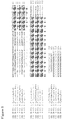
- cysteine residues are present in the C. fulvum Avr4 protein, which are involved in the formation of disulfide bridges occurring in proteins that bind chitin of the CBM14 superfamily (Chitin binding Peritrophin-A; see Figures 1 and 2 ).
- Avr4 protects fungal cell-wall chitin against plant chitinases in vitro and during infection.
- cysteine residues are also conserved in the Avr4 orthologs of M. fijiensis, C. nicotianae, C. beticola, C. zeina, and C. apii, suggesting that those orthologs are also capable of binding chitin. Indeed, the inventors demonstrate that the M.
- fijiensis Avr4 ortholog produced in Pichia pastoris also binds chitin, indicating that it is a genuine ortholog or functional homologue of the C. fulvum Avr4 ( Figure 7 ).
- the practical implication of this important finding is demonstrated in the Example, wherein the inventors demonstrate that co-expression of the M. fijiensis Avr4 ortholog and tomato Cf4 protein elicits a HR response in tobacco plants.
- the resistance of plants other than tomato plants to fungi belonging to the Dothideomycetes, other than Cladosporium fulvum , producing Avr4-orthologs can be increased by providing these plants with Cf4 protein.
- the inventors therefore provide a method for increasing the resistance of a plant or part thereof that is susceptible to infection with a pathogen comprising an ortholog of the Avr4 protein of Cladosporium fulvum, wherein said method comprises transforming said plant or part thereof with a nucleic acid encoding for Cf4 or a functional homologue thereof and wherein said plant is not a tomato or tobacco plant. It will be clear to a skilled person that the method can be applied to any plant other than a tomato plant that is susceptible to infection with a pathogen comprising an ortholog of the Avr4 protein of Cladosporium fulvum.
- said plant or part thereof is selected from the group consisting of a banana plant, a wheat plant, a sugar beet plant, a maize plant or a celery plant.
- the resistance of a banana plant to M. fijiensis may be increased by transforming the banana plant with a nucleic acid encoding for the Cf4 protein.
- Plants may be transformed with any nucleic acid encoding for a functional homologue of Cf4, i.e. a protein comprising an amino acid sequence that shows a high degree of similarity to the amino acid sequence of Cf4 (not being Cf4 itself) and that is capable to recognize Avr4 and orthologs thereof.
- homologous proteins can be found by applying any suitable screening method known in the art. For example, structural homology searches can be performed in databases, either at protein or DNA level. Also, sequenced plant genomes can be mined for homologous nucleotide sequences and protein motifs. When applying mining methods, amplification techniques such as PCR-based techniques may be applied to amplify the found DNA sequences.
- Hcr9-Avr4s are present in species belonging to the Lycopersicon lexicon in the Solanum genus: S. hirsutum (Genbank accession number AJ002235), S. chilense (AY634610), S. chmielewskii (AY634611), S. parviflorum (AY634612) and S. peruvianum (AY634613). These proteins are 93-98% identical to each other, as can be observed in Table 1.
- said functional homologue is preferably an Hcr9-Avr4 peptide.
- Table 1 Amino acid alignment scores of the Hcr9-Avr4 homologues from S. hirsutum , S. peruvianum , S. chmielewskii, S. chilense and S. parviflorum.
- any nucleic acid delivery vehicle may be used for delivery to recipient plant cells.
- DNA segments in the form of plasmids, Agrobacterium binary vectors and viral vectors such as virus-based expression vectors, or linear DNA fragments, in some instances containing only the DNA element to be expressed in the plant, and the like, may be employed.
- virus-based vectors such vectors are preferably based on an adenovirus or a retrovirus.
- the construction of vectors which may be employed in conjunction with the present invention will be known to those of skill of the art in light of the present disclosure (see, e. g., Sambrook et al., 1989; Gelvin et al., 1990).
- Vectors including but not limited to plasmids, cosmids, YACs (yeast artificial chromosomes), BACs (bacterial artificial chromosomes) and DNA segments for use in transforming cells, according to the present invention will, of course, comprise the cDNA, gene or genes necessary for production of the desired protein in the transformant.
- the vector of the invention can be introduced into any plant.
- the genes and sequences to be introduced can be conveniently used in expression cassettes for introduction and expression in any plant of interest.
- the transcriptional cassette will include in the 5'-to-3' direction of transcription, transcriptional and translational initiation regions, a DNA sequence of interest, and transcriptional and translational termination regions functional in plants.
- the termination region may be native with the transcriptional initiation region, may be native with the DNA sequence of interest, or may be derived from another source.
- Convenient termination regions are available from the Ti-plasmid of A . tumefaciens, such as the octopine synthase and nopaline synthase termination regions. See also, Guerineau et al. (1991) Mol. Gen. Genet. 262: 141-144 ; Proudfoot (1991) Cell 64: 671- 674 ; Sanfacon et al. (1991) Genes Dev. 5: 141-149 ; Mogen et al. (1990) Plant Cell 2: 1261-1272 ; Munroe et al. (1990) Gene 91: 151-158 ; Ballas et al. (1989) Nucleic Acids Res. 17: 7891-7903 ; Joshi et al. (1987) Nucleic Acid Res. 15: 9627-9639 .
- Obtaining sufficient levels of transgene expression in the transformed plant is an important aspect in the production of genetically engineered crops.
- Expression of heterologous DNA sequences in a plant host is dependent upon the presence of an operably linked promoter that is functional within the plant host.
- Transformation of plants can be undertaken with a single DNA molecule or multiple DNA molecules (i. e., co-transformation), and both these techniques are suitable for use with the expression cassettes of the present invention.
- Numerous transformation vectors are available for plant transformation, and the expression cassettes of this invention can be used in conjunction with any such vectors. The selection of vector will depend upon the preferred transformation technique and the target species for transformation.
- Suitable methods of transforming plant cells include, but are not limited to, microinjection (Crossway et al., 1986), electroporation (Riggs et al., 1986), Agrobacterium -mediated transformation (Hinchee et al., 1988), direct gene transfer (Paszkowski et al., 1984), and ballistic particle acceleration using devices available from Agracetus, Inc., Madison, Wis. And BioRad, Hercules, Calif. (see, for example, Sanford et al., U. S. Pat. No. 4,945,050 ; and McCabe et al., 1988).
- transformation methods are available to those skilled in the art, such as direct uptake of foreign DNA constructs (see EP 0295959 ), techniques of electroporation (Fromm et al., 1986) or high velocity ballistic bombardment with metal particles coated with the nucleic acid constructs (Klein et al., 1987, and U. S. Patent No. 4,945,050 ). Once transformed, the cells can be regenerated by those skilled in the art.
- the nucleotide sequence coding for an effector protein is placed under control of the CaMV 35S promoter and introduced into an Agrobacterium strain which is also used in protocols for stable transformation. After incubation of the bacteria with acetosyringon or any other phenolic compound which is known to enhance Agrobacterium T-DNA transfer, 1 ml of the Agrobacterium culture is infiltrated into an in situ plant by injection after which the plants are placed in a greenhouse. After 2-5 days the leaves can be scored for occurrence of HR symptoms.
- Also provided is a method for screening the resistance of a plant or a part thereof to at least one pathogen with the proviso that said pathogen is not Cladosporium fulvum said method comprising: a) screening said at least one pathogen for presence of the Avr4 protein of Cladosporium fulvum or an ortholog thereof, b) selecting at least one pathogen comprising said Avr4 protein of Cladosporium fulvum or an ortholog thereof, c) introducing said at least one pathogen to said plant or part thereof, and d) screening said plant or part thereof for the absence or presence of a defense response to said at least one pathogen, wherein said plant is not a tomato plant.
- said plant or part thereof is selected from the group consisting of a banana plant, a wheat plant, a maize plant, a celery plant or a sugar beet plant.
- said ortholog comprises a chitin-binding domain similar to that found in members of the CBM14 superfamily of chitin-binding proteins. More preferably, said ortholog comprises an amino acid sequence that is selected from the group consisting of SEQ ID NO: 1, SEQ ID NO: 2, SEQ ID NO: 3, SEQ ID NO: 4, SEQ ID NO: 5 and SEQ ID NO: 6., more preferably selected from the group consisting of SEQ ID NO: 2, SEQ ID NO: 3, SEQ ID NO: 4, SEQ ID NO: 5 and SEQ ID NO: 6. Also preferred is screening a tobacco plant with an ortholog of Avr4.
- a pathogen may be screened for the presence of Avr4 or an ortholog thereof by applying any method or technique deemed suitable by a person skilled in the art. Such methods include, but are not limited to, protein electrophoresis such as SDS-PAGE, electroblotting, immunoblot or Western blot, protein immunostaining, protein immunoprecipitation, protein assay, mass spectrometry such as MALDI-TOF and ESI-TOF, and chromatography such as HPLC and RPC. For example, several pathogens are screened for the presence of Avr4 or an ortholog thereof by Western blot.
- protein electrophoresis such as SDS-PAGE, electroblotting, immunoblot or Western blot
- protein immunostaining protein immunoprecipitation
- protein assay protein assay
- mass spectrometry such as MALDI-TOF and ESI-TOF
- chromatography such as HPLC and RPC.
- a pathogen comprising Avr4 is selected and introduced to a banana plant. Also screening methods based on bioinformatics may be applied. Also, mathematical similarity searches, such as for example BLAST, are very suitable for screening peptides in pathogens for similarity to Avr4.
- One method to introduce the pathogen comprising the Avr4 protein or an ortholog thereof to a plant that is not a tomato plant is by directly applying the pathogen onto a part of the plant, e.g. a leaf or a stem segment.
- the pathogen may be injected.
- the application of the pathogen will cause disease.
- the Cf4 protein or functional homologue thereof will recognize the Avr4 or ortholog effector protein that is expressed by the pathogen and the cascade leading to the hypersensitive reaction will be started. As discussed before, and as is shown in Figure 4 , this will lead to a local necrosis of the plant tissue, or, in a less strong reaction, to chlorosis of the injected site, which effect can be visually observed.
- ATTA Agrobacterium tumefaciens Transient expression Assay
- nucleotide sequences encoding the effector proteins are disclosed in this description or can be derived from the amino acid sequences that are also provided in the present description, any person of skill will be able to clone a coding sequence into an expression vector that is suitable for Agrobacterium transformation.
- a viral vector can be used.
- a nucleic acid encoding the Avr4 effector protein or an ortholog thereof can be cloned into a viral vector after which the viral particles are used to infect the plant or plant part and to express the protein.
- a viral vector in which the virus stills maintains its infectious properties has a further advantage.
- the absence of the resistance gene will also be visible, because in such plants the disease that is caused by the virus will develop.
- HR hypersensitive response
- Avr4 effector protein or ortholog thereof is excreted to the apoplastic space, because this is the location where the effector protein in nature is found.
- the screening method is based on injecting the protein into the plant, the protein automatically will be present in the apoplastic space.
- a screening method is applied wherein Avr4 or an ortholog thereof is introduced to a plant by a nucleic acid delivery vehicle having the nucleic acid encoding Avr4 or an ortholog thereof, expression into the apoplastic space can be achieved by providing the nucleotide sequence with a signal sequence for extracellular targeting.
- signal sequences are available for a person skilled in the art and one example is the signal sequence of the tobacco PR-1a gene.
- Alternative sequences can be obtained from the Avr4 peptide, the carrot extension gene or from studies on N-terminal signal sequences ( Small, I. et al., 2004, Proteomics 4:1581-1590 ).
- both the method for increasing plant resistance and the method for screening plant resistance as described above will be of use when breeding or constructing plants with a fungal resistance based on the presence of the Avr4/ortholog-Cf4/homologue resistance mechanism.
- a method for increasing the resistance of a plant or part thereof to at least one pathogen wherein said plant is not a tomato or tobacco plant.
- promoters have been isolated that can direct strong near-constitutive expression in monocot and/or dicot plants, including the maize ubiquitin promoter (Christensen et al. 1996), the rice actin1 promoter (McElroy et al. 1990), various enhanced cauliflower mosaic virus (CaMV) 35S promoters (Mitsuhara et al. 1996, Kay et al. 1987, Vai et al. 1996), the sugarcane bacilliform badnavirus (ScBV) (Schenk et al. 1999), the synthetic pEmu promoter (Last et al. 1991), the banana bunchy top virus (BBTV) (Hermann et al. 2001), the cassava vein mosaic virus (CVMV) (Verdaguer et al. 1996), and others (Schünmann et al. 2003) that can be used in these methods as well.
- the maize ubiquitin promoter (Christensen et al.
- the invention is exemplified by the following example. This example is intended to illustrate the invention, without limiting the scope thereof in any way.
- Plasmids for the expression of an N-terminal His 6 -FLAG-tagged MfAvr4 protein in the methylotrophic yeast P. pastoris were generated as described before (Rooney et al. 2005).
- vector pPIC-9 Invitrogen was modified by inserting a cassette, containing a DNA fragment encoding for the His 6 -tag, while the Sma I, Apa I, and SacII restriction sites were introduced for cloning purposes, resulting in vector pPIC-9His.
- the ORF of MfAvr4 encoding for the mature MfAvr4 protein without the signal peptide sequence and after intron removal was amplified from cDNA of the fungus using Pfu polymerase (Stratagene) and primers Avr4F_pichia_FLAGtagged (gactacaaggacgacgatgacaagGCAACGATGCAG GTGCGAAC; primer is phosphorylated at its 5' end) and Avr4R_pchia+EcoRIsite (TCAGAATTCTTACAGTTGTCGCATCC).
- the amplified product was cloned into pPIC-9His with the Sma I and Eco RI restriction sites.
- the plasmid was then introduced into P. pastoris strain GS115 (Invitrogen) by electroporation and transformants were grown on YPD plates. All the media used for growth of P. pastoris, i.e. MD, YPD, and BMMY, were made following the manufacturers' instructions (Invitrogen).
- starter cultures of 50 mL were grown for 2 days at 30°C (OD600 > 10), and were used to inoculate a 2 L vessel containing 900 mL FM22 medium.
- Starter cultures originated from a fresh colony grown on a MD or YPD plate.
- the pH was adjusted to 4.9 with 5.0 M KOH or 25% (w/v) NH 4 OH. Agitation was kept at 1200 rpm, and the airflow was maintained at 1-2 vvm to keep the dissolved oxygen (DO) levels at least above 30%. If needed, excessive foaming was prevented by adding a few droplets of Antifoam 289 (Sigma).
- glycerol depletion was observed by a sharp increase of the DO.
- the glycerol-feed was started at a rate of 10 mL ⁇ L-1 ⁇ h-1 (glycerol fed-batch phase), and properly adjusted to maintain a steady DO reading (near 35%).
- the methanol feed was started at a rate of 3.4mL ⁇ L-1 ⁇ h-1.
- the methanol feed rate was stepwise increased to 6 mL ⁇ L-1 ⁇ h-1 as soon as the culture had fully adapted to growth on methanol (4-6 h). To prevent methanol accumulation a DO spike was performed (a sharp increase in the DO levels has to occur after a halt of the methanol supply; Stratton et al., 1998).
- MfAvr4 has specific affinity for chitin and no insoluble polysaccharides other than chitin, using an affinity precipitation assay (Van den Burg et al. 2006).
- Avr4 from C. fulvum in these experiments was included as a positive control (data not shown).
- His 6 -FLAG-tagged MfAvr4 protein was obtained from crude culture filtrates of P. pastoris transformants after fermentation and binding was examined as previously described (Van den Burg et al. 2006). Briefly, MfAvr4 (100 ⁇ L of P.
- insoluble polysaccharides (crab shell chitin, chitin-agarose resin, chitosan, cellulose, and xylan; all Sigma, except for the resin: New England Biolabs) in 1.8 mL binding buffer consisting of 50 mM Tris.HCl pH8, 150 mM NaCl, and 1 x protease inhibitor.
- the polysaccharide fractions had been pre-equilibrated in the binding buffer. After two hrs of gentle rocking (15 rpm) at ambient temperature, the insoluble fraction was pelleted by centrifugation (3 min, 13,000 ⁇ g) and the supernatant was collected.
- the protein fraction in the recovered supernatant was precipitated adding 10% final concentration (w/v) TCA (trichloroacetic acid) and incubated for 1hr on ice. After centrifugation (16,000 ⁇ g for 30 min), the protein pellet was washed in - 20°C 80% acetone (v/v) and re-dissolved in SDS-PAGE sample buffer (1% sodium dodecyl sulfate, 100 mM DTT, 100mM Tris.HCl pH6.8) by boiling. The insoluble polysaccharides were three times washed in binding buffer. The bound protein fraction was eluted from the insoluble polysaccharides by boiling for 10 min in SDS-PAGE sample buffer. Equal amounts of the supernatant protein fraction and the bound protein fraction were loaded and separated on standard 20% SDS-PAGE and MfAvr4 was detected by immunoblotting using an anti-Flag monoclonal antibody (M2, Sigma).
- PR-1a was amplified using Pfu polymerase (Stratagene) with primers PR1a-F (GGCCATGGGATTTGTTCTCTTTTCAC) and PR1a-R (ATTTTGGGCACGGCAAGAG).
- PR1a-F GGCCATGGGATTTGTTCTCTTTTCAC
- PR1a-R ATTTTGGGCACGGCAAGAG
- the ORF of MfAvr4 encoding for the mature MfAvr4 protein without its original signal peptide sequence and after intron removal ( MfAvr4mature ) was amplified from cDNA of the fungus using Pfu polymerase (Stratagene).
- Primers used for MfAvr4mature amplification were PR1a_MfAvr4-F ( CTTGCCGTGCCCAAAATGCT GGAACGATGCAGGTGCG), introducing at the 5' end of the amplified product 17bps that were complementary to the 3' end of the PR-1a sequence (in Italics and underlined) and MfAvr4-R (GG CTCGAG TTACACGTTGTCGCATCCTG), introducing at the 3' end of the amplified product an Xho I site (in Italics and underlined).
- the fused PR-1a:MfAvr4 mature product was generated by an overlap extension PCR using Super Taq polymerase (HT Biotechnology Ltd) and was subsequently cloned into the pGEM®-T Easy Vector (Promega), according to the manufacturer's instructions (construct pHB1). Authenticity of the fusion product was examined by custom DNA sequencing (Macrogen Inc.), using the standard pUC/M13 Forward and Reverse Sequencing Primer binding sites present in the pGEM®-T Easy Vector.
- the fused PR-1a:MfAvr4 mature product was then excised from pHB1 with an Nco I and Xho I digest and inserted between the 35S promoter and the PI-II terminator in a likewise digested pRH80 vector (An et al. 1989, Van der Hoorn et al. 2000) (construct pHB2). Finally, the 35S::PR-1a:MfAvr4mature::PI-II cassette was excised from pHB2 and subsequently transferred into the binary plasmid pMOG800 (Ho dire et al. 1998, Van der Hoorn et al.
- fulvum effectors Avr4 (pAvr4) and Avr9 (pAvr9) in the binary expression vector pMOG800 were constructed as described for pMfAvr4 and were already available in the lab (Van der Hoorn et al. 2000).
- pSfinx (Takken et al. 2000), a binary vector that facilitates the expression of pathogen cDNAs under the control of the potato virus X (PVX) coat protein promoter, was used as a backbone for all PVX expression constructs used in this study. From left to right border, the T-DNA of this vector consists of a CaMV 35S promoter-driven PVX sequence containing the replicase gene, the triple gene block, the duplicated coat protein promoter, and the coat protein genes. The multiple cloning site of pSfinx for directed insertion of pathogen cDNAs (e.g. Avr genes) is located directly downstream of the duplicated coat protein promoter.
- PVX potato virus X
- pSfinx facilitates transfer of the expression construct to the plant cells by A. tumefaciens, while subsequent virus replication results in expression of the pathogen cDNA that can trigger an HR if the cDNA encodes an avirulence protein that is recognized by a cognate R gene in the plant.
- MfAvr4-F GG CCCGGG GCTGGACGATGCAGGTGCG
- MfAvr4-R GG CTCGAG TTACACGTTGTCGCATCCTG
- PCRs were performed using Super Taq polymerase (HT Biotechnology Ltd) and the product was subsequently cloned into the pGEM®-T Easy Vector (Promega), according to the manufacturer's instructions (construct pHB4).
- the PR-1a:MfAvr4mature cassette was then excised from pHB4 with Xma I and Xho I and ligated into a likewise digested pSfinx vector, resulting in the final construct PVX::PR1a MfAvr4.
- the authenticity of the final construct was examined by custom DNA sequencing at Macrogen Inc.
- PVX10 5'-CAATCACAGTGTTGGCTTGC-3'
- N31 5'-GACCCTATGGGCTGTGTTG-3'
- the final PVX::PR1a MfAvr4 construct was then transformed into A . tumefaciens strain GV301 by electroporation using standard procedures (Hood et al. 1993).
- transformants were cultured on plates containing modified LB medium (10 g 1_1 bacto-peptone; 5 g 1_1 yeast extract; 2.5 g 1_1 NaCl; 10 g 1_1 mannitol) for 48 h at 28°C and, subsequently, colonies were selected and inoculated on four-week-old tomato MM-Cf0 and MM-Cf4 tomato plants by toothpick inoculation (Hammond-Kosack et al. 1995). Systemic HR symptoms were recorded 10-14 days after inoculation ( Fig. 6 ).
- PVX containing the empty pSfinx vector PVX::pSfinx
- the C. fulvum Avr4 in a binary vector PVX::PR1a Aur4
Landscapes
- Health & Medical Sciences (AREA)
- Life Sciences & Earth Sciences (AREA)
- Genetics & Genomics (AREA)
- Chemical & Material Sciences (AREA)
- Organic Chemistry (AREA)
- Molecular Biology (AREA)
- Engineering & Computer Science (AREA)
- Wood Science & Technology (AREA)
- Biochemistry (AREA)
- Biotechnology (AREA)
- General Engineering & Computer Science (AREA)
- General Health & Medical Sciences (AREA)
- Bioinformatics & Cheminformatics (AREA)
- Biophysics (AREA)
- Biomedical Technology (AREA)
- Zoology (AREA)
- Microbiology (AREA)
- Physics & Mathematics (AREA)
- Plant Pathology (AREA)
- Cell Biology (AREA)
- Botany (AREA)
- Gastroenterology & Hepatology (AREA)
- Medicinal Chemistry (AREA)
- Proteomics, Peptides & Aminoacids (AREA)
- Breeding Of Plants And Reproduction By Means Of Culturing (AREA)
- Measuring Or Testing Involving Enzymes Or Micro-Organisms (AREA)
- Investigating Or Analyzing Materials By The Use Of Electric Means (AREA)
- Micro-Organisms Or Cultivation Processes Thereof (AREA)
Claims (14)
- Méthode pour augmenter la résistance d'une plante ou d'une partie de celle-ci qui est susceptible d'être infectée par un pathogène comprenant un orthologue de la protéine Avr4 du Cladosporium fulvum, où la méthode consiste à transformer ladite plante ou partie de celle-ci avec un acide nucléique codant pour Cf4 ou un homologue fonctionnel de celui-ci et dans laquelle la plante n'est pas un plant de tomate ni de tabac.
- Méthode selon la revendication 1, dans laquelle ladite plante ou partie de celle-ci est sélectionnée parmi le groupe constitué d'un bananier, de blé, d'une betterave sucrière, d'un maïs et d'un céleri.
- Méthode selon les revendications 1 ou 2, dans laquelle l'homologue fonctionnel est un peptide de Hcr9-Avr4.
- Méthode selon l'une quelconque des revendications 1 à 3, dans laquelle la transformation consiste à introduire un véhicule d'apport en acide nucléique, de préférence dans laquelle le véhicule d'apport est un vecteur d'expression.
- Méthode selon la revendication 4, dans laquelle le vecteur d'expression est un vecteur d'expression à base de virus, de préférence un adénovirus ou un rétrovirus.
- Méthode pour cribler la résistance d'une plante ou d'une partie de celle-ci en ce qui concerne au moins un pathogène pourvu que ledit pathogène ne soit pas Cladosporium fulvum, ladite méthode consistant à :a) cribler l'au moins un pathogène en ce qui concerne la présence de la protéine Avr4 de Cladosporium fulvum ou d'un orthologue de celle-ci,b) sélectionner au moins un pathogène comprenant la protéine Avr4 de Cladosporium fulvum ou un orthologue de celle-ci,c) introduire l'au moins un pathogène dans ladite plante ou partie de celle-ci, etd) cribler ladite plante ou partie de celle-ci en ce qui concerne l'absence ou la présence d'une réponse de défense vis-à-vis dudit au moins un pathogène, dans laquelle ladite plante n'est pas un plant de tomate ni de tabac et de préférence dans laquelle ladite plante ou partie de celle-ci est sélectionnée parmi le groupe constitué d'un bananier, de blé, d'une betterave sucrière, d'un maïs, et d'un céleri.
- Méthode selon la revendication 6, dans laquelle l'orthologue comprend un domaine de liaison à la chitine similaire à celui trouvé dans des éléments de la super famille CBM14 des protéines de liaison à la chitine.
- Méthode selon l'une quelconque des revendications 6 ou 7, dans laquelle l'orthologue comprend une séquence d'acides aminés qui est sélectionnée parmi le groupe constitué de SEQ ID NO : 1, SEQ ID NO : 2, SEQ ID NO : 3 SEQ ID NO : 4, SEQ ID NO : 5 et SEQ ID NO : 6, de préférence sélectionnée parmi le groupe constitué de SEQ ID NO : 2, SEQ ID NO : 3 SEQ ID NO : 4, SEQ ID NO : 5 et SEQ ID NO : 6.
- Méthode selon l'une quelconque des revendications 1 à 8, dans laquelle le pathogène est un champignon, de préférence dans laquelle le champignon est un Dothideomycete, de manière plus préférée dans laquelle le Dothideomycete est sélectionné parmi le groupe constitué de Mycosphaerella fijiensis, Cercospora nicotianae, Cercospora beticola, Cercospora zeina, et Cercospora apii, pourvu que le pathogène ne soit pas Cladosporium fulvum.
- Utilisation d'une méthode selon l'une quelconque des revendications 1 à 5 pour augmenter la résistance d'une plante ou d'une partie de celle-ci en ce qui concerne au moins un pathogène, dans laquelle ladite plante n'est pas un plant de tomate ni de tabac.
- Utilisation d'une méthode selon l'une quelconque des revendications 6 à 8 pour cribler la résistance d'une plante ou d'une partie de celle-ci en ce qui concerne au moins un pathogène, dans laquelle la plante n'est pas un plant de tomate ni de tabac.
- Utilisation selon les revendications 10 ou 11, dans laquelle la plante ou partie de plante est sélectionnée parmi le groupe constitué d'un bananier, de blé, d'une betterave à sucre, d'un maïs et d'un céleri.
- Utilisation selon l'une quelconque des revendications 10 à 12, dans laquelle le pathogène est un champignon, de préférence dans laquelle le champignon est un Dothideomycete, de manière plus préférée dans laquelle le Dothideomycete est sélectionné parmi le groupe constitué de Mycosphaerella fijiensis, Cercospora nicotianae, Cercospora beticola, Cercospora zeina, et Cercospora apii, pourvu que le pathogène ne soit pas Cladosporium fulvum.
- Méthode pour augmenter la résistance d'une plante ou d'une partie de celle-ci qui est susceptible d'être infectée par un pathogène, dans laquelle le pathogène est un Dothideomycete, pourvu que le pathogène ne soit pas Cladosporium fulvum, de préférence dans laquelle le Dothideomycète est sélectionné parmi le groupe constitué de Mycosphaerella fijiensis, Cercospora nicotianae, Cercospora beticola, Cercospora zeina, et Cercospora apii, la méthode consistant à transformer la plante ou partie de celle-ci avec un acide nucléique codant pour Cf4 ou un homologue fonctionnel de celui-ci, de préférence dans laquelle la plante n'est pas un plant de tomate ni de tabac, de manière plus préférée dans laquelle la plante est sélectionnée parmi le groupe constitué d'un bananier, de blé, d'une betterave à sucre, d'un maïs et d'un céleri.
Priority Applications (1)
| Application Number | Priority Date | Filing Date | Title |
|---|---|---|---|
| EP10734839.3A EP2451830B1 (fr) | 2009-07-08 | 2010-07-07 | Procédé pour augmenter la résistance d'une plante ou une pièce associée à un pathogène, procédé de criblage de la résistance d'une plante ou pièce associée à un pathogène, et utilisation associée |
Applications Claiming Priority (3)
| Application Number | Priority Date | Filing Date | Title |
|---|---|---|---|
| EP09164957 | 2009-07-08 | ||
| EP10734839.3A EP2451830B1 (fr) | 2009-07-08 | 2010-07-07 | Procédé pour augmenter la résistance d'une plante ou une pièce associée à un pathogène, procédé de criblage de la résistance d'une plante ou pièce associée à un pathogène, et utilisation associée |
| PCT/NL2010/050433 WO2011005090A1 (fr) | 2009-07-08 | 2010-07-07 | Procédé pour augmenter la résistance d'une plante ou d'une partie de celle-ci à un pathogène, procédé pour le criblage de résistance d'une plante ou d'une partie de celle-ci à un pathogène et leur utilisation |
Publications (2)
| Publication Number | Publication Date |
|---|---|
| EP2451830A1 EP2451830A1 (fr) | 2012-05-16 |
| EP2451830B1 true EP2451830B1 (fr) | 2016-03-30 |
Family
ID=41264178
Family Applications (1)
| Application Number | Title | Priority Date | Filing Date |
|---|---|---|---|
| EP10734839.3A Active EP2451830B1 (fr) | 2009-07-08 | 2010-07-07 | Procédé pour augmenter la résistance d'une plante ou une pièce associée à un pathogène, procédé de criblage de la résistance d'une plante ou pièce associée à un pathogène, et utilisation associée |
Country Status (8)
| Country | Link |
|---|---|
| US (1) | US20120291156A1 (fr) |
| EP (1) | EP2451830B1 (fr) |
| JP (1) | JP2012532605A (fr) |
| CA (1) | CA2767519A1 (fr) |
| CO (1) | CO6491114A2 (fr) |
| CR (1) | CR20120037A (fr) |
| EC (1) | ECSP12011655A (fr) |
| WO (1) | WO2011005090A1 (fr) |
Families Citing this family (1)
| Publication number | Priority date | Publication date | Assignee | Title |
|---|---|---|---|---|
| CN111944787B (zh) * | 2020-07-30 | 2022-03-29 | 华南理工大学 | 一种融合碳水化合物结合模块的几丁质酶及其制备方法与应用 |
Family Cites Families (5)
| Publication number | Priority date | Publication date | Assignee | Title |
|---|---|---|---|---|
| US4945050A (en) | 1984-11-13 | 1990-07-31 | Cornell Research Foundation, Inc. | Method for transporting substances into living cells and tissues and apparatus therefor |
| NZ225044A (en) | 1987-06-19 | 1990-01-29 | Plant Cell Res Inst | Bertholletia excelsa dna molecule; sulphur rich storage protein |
| ES2097746T3 (es) | 1988-03-08 | 1997-04-16 | Ciba Geigy Ag | Regeneracion de plantas gramineas de la subfamilia pooideae partiendo de protoplastos. |
| GB9509575D0 (en) | 1995-05-11 | 1995-07-05 | Gatsby Charitable Foundation T | Plant pathogen resistance genes and uses thereof |
| US6128098A (en) | 1997-11-17 | 2000-10-03 | Canon Kabushiki Kaisha | Control over print head driving parameters |
-
2010
- 2010-07-07 CA CA2767519A patent/CA2767519A1/fr not_active Abandoned
- 2010-07-07 JP JP2012519489A patent/JP2012532605A/ja active Pending
- 2010-07-07 US US13/382,867 patent/US20120291156A1/en not_active Abandoned
- 2010-07-07 WO PCT/NL2010/050433 patent/WO2011005090A1/fr not_active Ceased
- 2010-07-07 EP EP10734839.3A patent/EP2451830B1/fr active Active
-
2012
- 2012-01-19 CR CR20120037A patent/CR20120037A/es unknown
- 2012-02-06 CO CO12019943A patent/CO6491114A2/es unknown
- 2012-02-07 EC ECSP12011655 patent/ECSP12011655A/es unknown
Also Published As
| Publication number | Publication date |
|---|---|
| CA2767519A1 (fr) | 2011-01-13 |
| US20120291156A1 (en) | 2012-11-15 |
| JP2012532605A (ja) | 2012-12-20 |
| CR20120037A (es) | 2012-06-01 |
| EP2451830A1 (fr) | 2012-05-16 |
| ECSP12011655A (es) | 2012-06-29 |
| CO6491114A2 (es) | 2012-07-31 |
| WO2011005090A1 (fr) | 2011-01-13 |
Similar Documents
| Publication | Publication Date | Title |
|---|---|---|
| US8283519B2 (en) | Plant transcriptional regulators of abiotic stress | |
| CN101321871A (zh) | 具有增强的耐旱性的转基因植物 | |
| WO2000012736A9 (fr) | Nouvelle technique d'identification de genes non hotes de resistance aux maladies dans les plantes | |
| WO2017197322A1 (fr) | Plantes résistantes à la sécheresse | |
| EP4619415A1 (fr) | Nouveaux gènes de résistance associés à la résistance aux maladies du soja | |
| CN109111514B (zh) | 兼抗纹枯病和根腐病的转基因小麦的培育方法及其相关生物材料 | |
| US20260028637A1 (en) | Promoters for regulation of gene expression in plants | |
| EP2449111A2 (fr) | Expression de régulateurs de transcription créant une tolérance à la chaleur | |
| US20190359996A1 (en) | Transcription factor genes and proteins from helianthus annuus, and transgenic plants including the same | |
| JP5173847B2 (ja) | 耐病性植物 | |
| EP2451830B1 (fr) | Procédé pour augmenter la résistance d'une plante ou une pièce associée à un pathogène, procédé de criblage de la résistance d'une plante ou pièce associée à un pathogène, et utilisation associée | |
| CN103261425A (zh) | 病毒启动子、其截短物以及使用方法 | |
| CN102325442B (zh) | 改造植物热稳定的疾病抗性 | |
| US20060236424A1 (en) | Methods and compositions for designing nucleic acid molecules for polypeptide expression in plants using plant virus codon-bias | |
| US8203031B2 (en) | Transgenic plants exhibiting increased resistance to biotic and abiotic stresses and methods for producing the same | |
| US8367891B2 (en) | N-terminal XA27 signal anchor and its use for localization of fusion proteins | |
| WO1999054490A2 (fr) | Gene de resistance tire d'une plante | |
| CN114644694A (zh) | ZmOST1蛋白及其编码基因与在培育抗旱植物中的应用 | |
| EP4654814A1 (fr) | Nouveaux gènes de résistance associés à la résistance aux maladies du soja | |
| EA048048B1 (ru) | Промоторы для регуляции экспрессии генов в растениях | |
| WO2013095125A1 (fr) | Procédé de production d'une plante ayant une résistance accrue aux maladies vis-à-vis des nématodes |
Legal Events
| Date | Code | Title | Description |
|---|---|---|---|
| PUAI | Public reference made under article 153(3) epc to a published international application that has entered the european phase |
Free format text: ORIGINAL CODE: 0009012 |
|
| 17P | Request for examination filed |
Effective date: 20120131 |
|
| AK | Designated contracting states |
Kind code of ref document: A1 Designated state(s): AL AT BE BG CH CY CZ DE DK EE ES FI FR GB GR HR HU IE IS IT LI LT LU LV MC MK MT NL NO PL PT RO SE SI SK SM TR |
|
| AX | Request for extension of the european patent |
Extension state: BA ME RS |
|
| RAP1 | Party data changed (applicant data changed or rights of an application transferred) |
Owner name: WAGENINGEN UNIVERSITEIT |
|
| 17Q | First examination report despatched |
Effective date: 20140307 |
|
| GRAP | Despatch of communication of intention to grant a patent |
Free format text: ORIGINAL CODE: EPIDOSNIGR1 |
|
| INTG | Intention to grant announced |
Effective date: 20150922 |
|
| GRAS | Grant fee paid |
Free format text: ORIGINAL CODE: EPIDOSNIGR3 |
|
| GRAA | (expected) grant |
Free format text: ORIGINAL CODE: 0009210 |
|
| AK | Designated contracting states |
Kind code of ref document: B1 Designated state(s): AL AT BE BG CH CY CZ DE DK EE ES FI FR GB GR HR HU IE IS IT LI LT LU LV MC MK MT NL NO PL PT RO SE SI SK SM TR |
|
| AX | Request for extension of the european patent |
Extension state: BA ME RS |
|
| REG | Reference to a national code |
Ref country code: GB Ref legal event code: FG4D |
|
| REG | Reference to a national code |
Ref country code: CH Ref legal event code: EP |
|
| REG | Reference to a national code |
Ref country code: AT Ref legal event code: REF Ref document number: 785305 Country of ref document: AT Kind code of ref document: T Effective date: 20160415 |
|
| REG | Reference to a national code |
Ref country code: IE Ref legal event code: FG4D |
|
| REG | Reference to a national code |
Ref country code: DE Ref legal event code: R096 Ref document number: 602010031728 Country of ref document: DE |
|
| REG | Reference to a national code |
Ref country code: NL Ref legal event code: FP |
|
| REG | Reference to a national code |
Ref country code: FR Ref legal event code: PLFP Year of fee payment: 7 |
|
| REG | Reference to a national code |
Ref country code: LT Ref legal event code: MG4D |
|
| PG25 | Lapsed in a contracting state [announced via postgrant information from national office to epo] |
Ref country code: GR Free format text: LAPSE BECAUSE OF FAILURE TO SUBMIT A TRANSLATION OF THE DESCRIPTION OR TO PAY THE FEE WITHIN THE PRESCRIBED TIME-LIMIT Effective date: 20160701 Ref country code: FI Free format text: LAPSE BECAUSE OF FAILURE TO SUBMIT A TRANSLATION OF THE DESCRIPTION OR TO PAY THE FEE WITHIN THE PRESCRIBED TIME-LIMIT Effective date: 20160330 Ref country code: HR Free format text: LAPSE BECAUSE OF FAILURE TO SUBMIT A TRANSLATION OF THE DESCRIPTION OR TO PAY THE FEE WITHIN THE PRESCRIBED TIME-LIMIT Effective date: 20160330 Ref country code: NO Free format text: LAPSE BECAUSE OF FAILURE TO SUBMIT A TRANSLATION OF THE DESCRIPTION OR TO PAY THE FEE WITHIN THE PRESCRIBED TIME-LIMIT Effective date: 20160630 |
|
| REG | Reference to a national code |
Ref country code: AT Ref legal event code: MK05 Ref document number: 785305 Country of ref document: AT Kind code of ref document: T Effective date: 20160330 |
|
| PG25 | Lapsed in a contracting state [announced via postgrant information from national office to epo] |
Ref country code: LT Free format text: LAPSE BECAUSE OF FAILURE TO SUBMIT A TRANSLATION OF THE DESCRIPTION OR TO PAY THE FEE WITHIN THE PRESCRIBED TIME-LIMIT Effective date: 20160330 Ref country code: SE Free format text: LAPSE BECAUSE OF FAILURE TO SUBMIT A TRANSLATION OF THE DESCRIPTION OR TO PAY THE FEE WITHIN THE PRESCRIBED TIME-LIMIT Effective date: 20160330 Ref country code: LV Free format text: LAPSE BECAUSE OF FAILURE TO SUBMIT A TRANSLATION OF THE DESCRIPTION OR TO PAY THE FEE WITHIN THE PRESCRIBED TIME-LIMIT Effective date: 20160330 |
|
| PG25 | Lapsed in a contracting state [announced via postgrant information from national office to epo] |
Ref country code: EE Free format text: LAPSE BECAUSE OF FAILURE TO SUBMIT A TRANSLATION OF THE DESCRIPTION OR TO PAY THE FEE WITHIN THE PRESCRIBED TIME-LIMIT Effective date: 20160330 Ref country code: PL Free format text: LAPSE BECAUSE OF FAILURE TO SUBMIT A TRANSLATION OF THE DESCRIPTION OR TO PAY THE FEE WITHIN THE PRESCRIBED TIME-LIMIT Effective date: 20160330 Ref country code: IS Free format text: LAPSE BECAUSE OF FAILURE TO SUBMIT A TRANSLATION OF THE DESCRIPTION OR TO PAY THE FEE WITHIN THE PRESCRIBED TIME-LIMIT Effective date: 20160730 |
|
| PGFP | Annual fee paid to national office [announced via postgrant information from national office to epo] |
Ref country code: GB Payment date: 20160721 Year of fee payment: 7 Ref country code: DE Payment date: 20160722 Year of fee payment: 7 |
|
| PG25 | Lapsed in a contracting state [announced via postgrant information from national office to epo] |
Ref country code: SM Free format text: LAPSE BECAUSE OF FAILURE TO SUBMIT A TRANSLATION OF THE DESCRIPTION OR TO PAY THE FEE WITHIN THE PRESCRIBED TIME-LIMIT Effective date: 20160330 Ref country code: ES Free format text: LAPSE BECAUSE OF FAILURE TO SUBMIT A TRANSLATION OF THE DESCRIPTION OR TO PAY THE FEE WITHIN THE PRESCRIBED TIME-LIMIT Effective date: 20160330 Ref country code: AT Free format text: LAPSE BECAUSE OF FAILURE TO SUBMIT A TRANSLATION OF THE DESCRIPTION OR TO PAY THE FEE WITHIN THE PRESCRIBED TIME-LIMIT Effective date: 20160330 Ref country code: RO Free format text: LAPSE BECAUSE OF FAILURE TO SUBMIT A TRANSLATION OF THE DESCRIPTION OR TO PAY THE FEE WITHIN THE PRESCRIBED TIME-LIMIT Effective date: 20160330 Ref country code: SK Free format text: LAPSE BECAUSE OF FAILURE TO SUBMIT A TRANSLATION OF THE DESCRIPTION OR TO PAY THE FEE WITHIN THE PRESCRIBED TIME-LIMIT Effective date: 20160330 Ref country code: PT Free format text: LAPSE BECAUSE OF FAILURE TO SUBMIT A TRANSLATION OF THE DESCRIPTION OR TO PAY THE FEE WITHIN THE PRESCRIBED TIME-LIMIT Effective date: 20160801 Ref country code: CZ Free format text: LAPSE BECAUSE OF FAILURE TO SUBMIT A TRANSLATION OF THE DESCRIPTION OR TO PAY THE FEE WITHIN THE PRESCRIBED TIME-LIMIT Effective date: 20160330 |
|
| PGFP | Annual fee paid to national office [announced via postgrant information from national office to epo] |
Ref country code: FR Payment date: 20160721 Year of fee payment: 7 |
|
| PG25 | Lapsed in a contracting state [announced via postgrant information from national office to epo] |
Ref country code: IT Free format text: LAPSE BECAUSE OF FAILURE TO SUBMIT A TRANSLATION OF THE DESCRIPTION OR TO PAY THE FEE WITHIN THE PRESCRIBED TIME-LIMIT Effective date: 20160330 |
|
| PGFP | Annual fee paid to national office [announced via postgrant information from national office to epo] |
Ref country code: BE Payment date: 20160720 Year of fee payment: 7 |
|
| REG | Reference to a national code |
Ref country code: DE Ref legal event code: R097 Ref document number: 602010031728 Country of ref document: DE |
|
| PG25 | Lapsed in a contracting state [announced via postgrant information from national office to epo] |
Ref country code: DK Free format text: LAPSE BECAUSE OF FAILURE TO SUBMIT A TRANSLATION OF THE DESCRIPTION OR TO PAY THE FEE WITHIN THE PRESCRIBED TIME-LIMIT Effective date: 20160330 |
|
| PLBE | No opposition filed within time limit |
Free format text: ORIGINAL CODE: 0009261 |
|
| STAA | Information on the status of an ep patent application or granted ep patent |
Free format text: STATUS: NO OPPOSITION FILED WITHIN TIME LIMIT |
|
| REG | Reference to a national code |
Ref country code: CH Ref legal event code: PL |
|
| 26N | No opposition filed |
Effective date: 20170103 |
|
| PG25 | Lapsed in a contracting state [announced via postgrant information from national office to epo] |
Ref country code: MC Free format text: LAPSE BECAUSE OF FAILURE TO SUBMIT A TRANSLATION OF THE DESCRIPTION OR TO PAY THE FEE WITHIN THE PRESCRIBED TIME-LIMIT Effective date: 20160330 |
|
| PG25 | Lapsed in a contracting state [announced via postgrant information from national office to epo] |
Ref country code: LI Free format text: LAPSE BECAUSE OF NON-PAYMENT OF DUE FEES Effective date: 20160731 Ref country code: CH Free format text: LAPSE BECAUSE OF NON-PAYMENT OF DUE FEES Effective date: 20160731 |
|
| REG | Reference to a national code |
Ref country code: IE Ref legal event code: MM4A |
|
| PG25 | Lapsed in a contracting state [announced via postgrant information from national office to epo] |
Ref country code: SI Free format text: LAPSE BECAUSE OF FAILURE TO SUBMIT A TRANSLATION OF THE DESCRIPTION OR TO PAY THE FEE WITHIN THE PRESCRIBED TIME-LIMIT Effective date: 20160330 |
|
| PG25 | Lapsed in a contracting state [announced via postgrant information from national office to epo] |
Ref country code: IE Free format text: LAPSE BECAUSE OF NON-PAYMENT OF DUE FEES Effective date: 20160707 |
|
| PG25 | Lapsed in a contracting state [announced via postgrant information from national office to epo] |
Ref country code: LU Free format text: LAPSE BECAUSE OF NON-PAYMENT OF DUE FEES Effective date: 20160707 |
|
| REG | Reference to a national code |
Ref country code: DE Ref legal event code: R119 Ref document number: 602010031728 Country of ref document: DE |
|
| GBPC | Gb: european patent ceased through non-payment of renewal fee |
Effective date: 20170707 |
|
| REG | Reference to a national code |
Ref country code: FR Ref legal event code: ST Effective date: 20180330 |
|
| PG25 | Lapsed in a contracting state [announced via postgrant information from national office to epo] |
Ref country code: GB Free format text: LAPSE BECAUSE OF NON-PAYMENT OF DUE FEES Effective date: 20170707 Ref country code: DE Free format text: LAPSE BECAUSE OF NON-PAYMENT OF DUE FEES Effective date: 20180201 |
|
| REG | Reference to a national code |
Ref country code: BE Ref legal event code: FP Effective date: 20160628 Ref country code: BE Ref legal event code: MM Effective date: 20170731 |
|
| PG25 | Lapsed in a contracting state [announced via postgrant information from national office to epo] |
Ref country code: HU Free format text: LAPSE BECAUSE OF FAILURE TO SUBMIT A TRANSLATION OF THE DESCRIPTION OR TO PAY THE FEE WITHIN THE PRESCRIBED TIME-LIMIT; INVALID AB INITIO Effective date: 20100707 Ref country code: CY Free format text: LAPSE BECAUSE OF FAILURE TO SUBMIT A TRANSLATION OF THE DESCRIPTION OR TO PAY THE FEE WITHIN THE PRESCRIBED TIME-LIMIT Effective date: 20160330 Ref country code: FR Free format text: LAPSE BECAUSE OF NON-PAYMENT OF DUE FEES Effective date: 20170731 |
|
| PG25 | Lapsed in a contracting state [announced via postgrant information from national office to epo] |
Ref country code: MK Free format text: LAPSE BECAUSE OF FAILURE TO SUBMIT A TRANSLATION OF THE DESCRIPTION OR TO PAY THE FEE WITHIN THE PRESCRIBED TIME-LIMIT Effective date: 20160330 Ref country code: TR Free format text: LAPSE BECAUSE OF FAILURE TO SUBMIT A TRANSLATION OF THE DESCRIPTION OR TO PAY THE FEE WITHIN THE PRESCRIBED TIME-LIMIT Effective date: 20160330 Ref country code: MT Free format text: LAPSE BECAUSE OF NON-PAYMENT OF DUE FEES Effective date: 20160731 |
|
| PG25 | Lapsed in a contracting state [announced via postgrant information from national office to epo] |
Ref country code: BG Free format text: LAPSE BECAUSE OF FAILURE TO SUBMIT A TRANSLATION OF THE DESCRIPTION OR TO PAY THE FEE WITHIN THE PRESCRIBED TIME-LIMIT Effective date: 20160330 |
|
| PGFP | Annual fee paid to national office [announced via postgrant information from national office to epo] |
Ref country code: NL Payment date: 20180620 Year of fee payment: 9 |
|
| PG25 | Lapsed in a contracting state [announced via postgrant information from national office to epo] |
Ref country code: BE Free format text: LAPSE BECAUSE OF NON-PAYMENT OF DUE FEES Effective date: 20170731 |
|
| PG25 | Lapsed in a contracting state [announced via postgrant information from national office to epo] |
Ref country code: AL Free format text: LAPSE BECAUSE OF FAILURE TO SUBMIT A TRANSLATION OF THE DESCRIPTION OR TO PAY THE FEE WITHIN THE PRESCRIBED TIME-LIMIT Effective date: 20160330 |
|
| PG25 | Lapsed in a contracting state [announced via postgrant information from national office to epo] |
Ref country code: NL Free format text: LAPSE BECAUSE OF NON-PAYMENT OF DUE FEES Effective date: 20190801 |
|
| REG | Reference to a national code |
Ref country code: NL Ref legal event code: MM Effective date: 20190801 |