EP2454342B1 - Procede de pyrolyse pour decomposer des produits en caoutchouc - Google Patents
Procede de pyrolyse pour decomposer des produits en caoutchouc Download PDFInfo
- Publication number
- EP2454342B1 EP2454342B1 EP10800085.2A EP10800085A EP2454342B1 EP 2454342 B1 EP2454342 B1 EP 2454342B1 EP 10800085 A EP10800085 A EP 10800085A EP 2454342 B1 EP2454342 B1 EP 2454342B1
- Authority
- EP
- European Patent Office
- Prior art keywords
- product
- vessel
- products
- rubber products
- carbonizing
- Prior art date
- Legal status (The legal status is an assumption and is not a legal conclusion. Google has not performed a legal analysis and makes no representation as to the accuracy of the status listed.)
- Active
Links
Images
Classifications
-
- C—CHEMISTRY; METALLURGY
- C10—PETROLEUM, GAS OR COKE INDUSTRIES; TECHNICAL GASES CONTAINING CARBON MONOXIDE; FUELS; LUBRICANTS; PEAT
- C10B—DESTRUCTIVE DISTILLATION OF CARBONACEOUS MATERIALS FOR PRODUCTION OF GAS, COKE, TAR, OR SIMILAR MATERIALS
- C10B53/00—Destructive distillation, specially adapted for particular solid raw materials or solid raw materials in special form
- C10B53/07—Destructive distillation, specially adapted for particular solid raw materials or solid raw materials in special form of solid raw materials consisting of synthetic polymeric materials, e.g. tyres
-
- C—CHEMISTRY; METALLURGY
- C09—DYES; PAINTS; POLISHES; NATURAL RESINS; ADHESIVES; COMPOSITIONS NOT OTHERWISE PROVIDED FOR; APPLICATIONS OF MATERIALS NOT OTHERWISE PROVIDED FOR
- C09C—TREATMENT OF INORGANIC MATERIALS, OTHER THAN FIBROUS FILLERS, TO ENHANCE THEIR PIGMENTING OR FILLING PROPERTIES ; PREPARATION OF CARBON BLACK ; PREPARATION OF INORGANIC MATERIALS WHICH ARE NO SINGLE CHEMICAL COMPOUNDS AND WHICH ARE MAINLY USED AS PIGMENTS OR FILLERS
- C09C1/00—Treatment of specific inorganic materials other than fibrous fillers; Preparation of carbon black
- C09C1/44—Carbon
- C09C1/48—Carbon black
- C09C1/482—Preparation from used rubber products, e.g. tyres
-
- C—CHEMISTRY; METALLURGY
- C10—PETROLEUM, GAS OR COKE INDUSTRIES; TECHNICAL GASES CONTAINING CARBON MONOXIDE; FUELS; LUBRICANTS; PEAT
- C10B—DESTRUCTIVE DISTILLATION OF CARBONACEOUS MATERIALS FOR PRODUCTION OF GAS, COKE, TAR, OR SIMILAR MATERIALS
- C10B47/00—Destructive distillation of solid carbonaceous materials with indirect heating, e.g. by external combustion
- C10B47/28—Other processes
- C10B47/30—Other processes in rotary ovens or retorts
-
- C—CHEMISTRY; METALLURGY
- C10—PETROLEUM, GAS OR COKE INDUSTRIES; TECHNICAL GASES CONTAINING CARBON MONOXIDE; FUELS; LUBRICANTS; PEAT
- C10G—CRACKING HYDROCARBON OILS; PRODUCTION OF LIQUID HYDROCARBON MIXTURES, e.g. BY DESTRUCTIVE HYDROGENATION, OLIGOMERISATION, POLYMERISATION; RECOVERY OF HYDROCARBON OILS FROM OIL-SHALE, OIL-SAND, OR GASES; REFINING MIXTURES MAINLY CONSISTING OF HYDROCARBONS; REFORMING OF NAPHTHA; MINERAL WAXES
- C10G1/00—Production of liquid hydrocarbon mixtures from oil-shale, oil-sand, or non-melting solid carbonaceous or similar materials, e.g. wood, coal
- C10G1/10—Production of liquid hydrocarbon mixtures from oil-shale, oil-sand, or non-melting solid carbonaceous or similar materials, e.g. wood, coal from rubber or rubber waste
-
- F—MECHANICAL ENGINEERING; LIGHTING; HEATING; WEAPONS; BLASTING
- F23—COMBUSTION APPARATUS; COMBUSTION PROCESSES
- F23G—CREMATION FURNACES; CONSUMING WASTE PRODUCTS BY COMBUSTION
- F23G5/00—Incineration of waste; Incinerator constructions; Details, accessories or control therefor
- F23G5/02—Incineration of waste; Incinerator constructions; Details, accessories or control therefor with pretreatment
-
- F—MECHANICAL ENGINEERING; LIGHTING; HEATING; WEAPONS; BLASTING
- F23—COMBUSTION APPARATUS; COMBUSTION PROCESSES
- F23G—CREMATION FURNACES; CONSUMING WASTE PRODUCTS BY COMBUSTION
- F23G5/00—Incineration of waste; Incinerator constructions; Details, accessories or control therefor
- F23G5/02—Incineration of waste; Incinerator constructions; Details, accessories or control therefor with pretreatment
- F23G5/027—Incineration of waste; Incinerator constructions; Details, accessories or control therefor with pretreatment pyrolising or gasifying stage
-
- F—MECHANICAL ENGINEERING; LIGHTING; HEATING; WEAPONS; BLASTING
- F23—COMBUSTION APPARATUS; COMBUSTION PROCESSES
- F23G—CREMATION FURNACES; CONSUMING WASTE PRODUCTS BY COMBUSTION
- F23G7/00—Incinerators or other apparatus for consuming industrial waste, e.g. chemicals
- F23G7/12—Incinerators or other apparatus for consuming industrial waste, e.g. chemicals of plastics, e.g. rubber
-
- C—CHEMISTRY; METALLURGY
- C01—INORGANIC CHEMISTRY
- C01P—INDEXING SCHEME RELATING TO STRUCTURAL AND PHYSICAL ASPECTS OF SOLID INORGANIC COMPOUNDS
- C01P2006/00—Physical properties of inorganic compounds
- C01P2006/80—Compositional purity
-
- F—MECHANICAL ENGINEERING; LIGHTING; HEATING; WEAPONS; BLASTING
- F23—COMBUSTION APPARATUS; COMBUSTION PROCESSES
- F23G—CREMATION FURNACES; CONSUMING WASTE PRODUCTS BY COMBUSTION
- F23G2201/00—Pretreatment
- F23G2201/30—Pyrolysing
- F23G2201/301—Treating pyrogases
-
- F—MECHANICAL ENGINEERING; LIGHTING; HEATING; WEAPONS; BLASTING
- F23—COMBUSTION APPARATUS; COMBUSTION PROCESSES
- F23G—CREMATION FURNACES; CONSUMING WASTE PRODUCTS BY COMBUSTION
- F23G2201/00—Pretreatment
- F23G2201/30—Pyrolysing
- F23G2201/303—Burning pyrogases
-
- F—MECHANICAL ENGINEERING; LIGHTING; HEATING; WEAPONS; BLASTING
- F23—COMBUSTION APPARATUS; COMBUSTION PROCESSES
- F23G—CREMATION FURNACES; CONSUMING WASTE PRODUCTS BY COMBUSTION
- F23G2201/00—Pretreatment
- F23G2201/60—Separating
- F23G2201/601—Separating different calorific values
-
- F—MECHANICAL ENGINEERING; LIGHTING; HEATING; WEAPONS; BLASTING
- F23—COMBUSTION APPARATUS; COMBUSTION PROCESSES
- F23G—CREMATION FURNACES; CONSUMING WASTE PRODUCTS BY COMBUSTION
- F23G2201/00—Pretreatment
- F23G2201/60—Separating
- F23G2201/602—Separating different sizes
-
- F—MECHANICAL ENGINEERING; LIGHTING; HEATING; WEAPONS; BLASTING
- F23—COMBUSTION APPARATUS; COMBUSTION PROCESSES
- F23G—CREMATION FURNACES; CONSUMING WASTE PRODUCTS BY COMBUSTION
- F23G2201/00—Pretreatment
- F23G2201/60—Separating
- F23G2201/603—Separating recyclable material
-
- F—MECHANICAL ENGINEERING; LIGHTING; HEATING; WEAPONS; BLASTING
- F23—COMBUSTION APPARATUS; COMBUSTION PROCESSES
- F23G—CREMATION FURNACES; CONSUMING WASTE PRODUCTS BY COMBUSTION
- F23G2201/00—Pretreatment
- F23G2201/80—Shredding
-
- F—MECHANICAL ENGINEERING; LIGHTING; HEATING; WEAPONS; BLASTING
- F23—COMBUSTION APPARATUS; COMBUSTION PROCESSES
- F23G—CREMATION FURNACES; CONSUMING WASTE PRODUCTS BY COMBUSTION
- F23G2206/00—Waste heat recuperation
- F23G2206/10—Waste heat recuperation reintroducing the heat in the same process, e.g. for predrying
-
- F—MECHANICAL ENGINEERING; LIGHTING; HEATING; WEAPONS; BLASTING
- F23—COMBUSTION APPARATUS; COMBUSTION PROCESSES
- F23G—CREMATION FURNACES; CONSUMING WASTE PRODUCTS BY COMBUSTION
- F23G2206/00—Waste heat recuperation
- F23G2206/20—Waste heat recuperation using the heat in association with another installation
- F23G2206/203—Waste heat recuperation using the heat in association with another installation with a power/heat generating installation
-
- F—MECHANICAL ENGINEERING; LIGHTING; HEATING; WEAPONS; BLASTING
- F23—COMBUSTION APPARATUS; COMBUSTION PROCESSES
- F23G—CREMATION FURNACES; CONSUMING WASTE PRODUCTS BY COMBUSTION
- F23G2209/00—Specific waste
- F23G2209/28—Plastics or rubber like materials
- F23G2209/281—Tyres
-
- Y—GENERAL TAGGING OF NEW TECHNOLOGICAL DEVELOPMENTS; GENERAL TAGGING OF CROSS-SECTIONAL TECHNOLOGIES SPANNING OVER SEVERAL SECTIONS OF THE IPC; TECHNICAL SUBJECTS COVERED BY FORMER USPC CROSS-REFERENCE ART COLLECTIONS [XRACs] AND DIGESTS
- Y02—TECHNOLOGIES OR APPLICATIONS FOR MITIGATION OR ADAPTATION AGAINST CLIMATE CHANGE
- Y02E—REDUCTION OF GREENHOUSE GAS [GHG] EMISSIONS, RELATED TO ENERGY GENERATION, TRANSMISSION OR DISTRIBUTION
- Y02E20/00—Combustion technologies with mitigation potential
- Y02E20/12—Heat utilisation in combustion or incineration of waste
-
- Y—GENERAL TAGGING OF NEW TECHNOLOGICAL DEVELOPMENTS; GENERAL TAGGING OF CROSS-SECTIONAL TECHNOLOGIES SPANNING OVER SEVERAL SECTIONS OF THE IPC; TECHNICAL SUBJECTS COVERED BY FORMER USPC CROSS-REFERENCE ART COLLECTIONS [XRACs] AND DIGESTS
- Y02—TECHNOLOGIES OR APPLICATIONS FOR MITIGATION OR ADAPTATION AGAINST CLIMATE CHANGE
- Y02P—CLIMATE CHANGE MITIGATION TECHNOLOGIES IN THE PRODUCTION OR PROCESSING OF GOODS
- Y02P20/00—Technologies relating to chemical industry
- Y02P20/141—Feedstock
- Y02P20/143—Feedstock the feedstock being recycled material, e.g. plastics
Definitions
- the present invention relates to a pyrolysis process for decomposing rubber products.
- Rubber products such as used tyres and the like have and will continue to become a waste hazard that cannot be combusted entirely not without extensive flue gas treatment due to the generation of noxious gases e.g. hydrogen sulfide.
- WO 2008/075105 A1 discloses a system and a method for recycling carbon-containing material, in particular tires and plastics materials.
- the system includes a heating arrangement for anaerobically heating carbon containing material to produce carbon-containing gases.
- a condensing arrangement is also used to condense a proportion of the carbon-containing gases to provide condensed gases and non-condensed gases.
- a recirculating arrangement is provided for recirculating the non-condensed gases into the heating arrangement.
- pyrolysis a common method or system known as pyrolysis is used that it is only able to process the shredded products in batches due to its very limited operating capacity in that it's too time consuming especially during loading and unloading of the shredded products into and from this system.
- the present invention provides a pyrolysis process for decomposing rubber products, the process includes the steps of (a) shredding the rubber products, (b) extracting first by-product by at least one magnetic separator and discharging said first by-product for recycling, (c) feeding said shredded products into a carbonizing vessel to decompose said rubber products, (d) drawing out second by-product and third by-product from said carbonizing vessel into a quench vessel to reduce the temperature and further into a condenser where said second by-product which is cooled and condensed flows into a storage tank, cooled an un-condensable third by-product flows to a gas holder to be distributed as fuel for a dual fuel burner for said carbonizing vessel, and fourth by-product which is flue gas generated in the dual fuel burner is passed through the carbonizing vessel and exits the carbonizing vessel passing through a steam generator as an auxiliary burner to maintain generation of steam to drive power generator that provides electrical power to recycling process said fourth by-product further enters scrubbing system and discharge
- the present invention relates to a pyrolysis process for decomposing rubber products.
- this specification will describe the present invention according to the preferred embodiments of the present invention. However, it is to be understood that limiting the description to the preferred embodiments of the invention is merely to facilitate discussion of the present invention.
- the description hereinafter refers to used rubber products such as rubber tyres and the like, it is understood that the invention can be used to decompose unused rubber products such as used rubber tyres or unused rubber products such as unused rubber tyres with defects, or a combination of both.
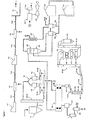
- Fig. 1 relates to a recycling process or carbonization process of used rubber product such as shredded waste tyre chips and the like in a vacuum sealed carbonizing vessel (200) or pyrolysis reactor vessel, whose operating pressure is maintained below atmospheric pressure where the shredded tyre chips are subjected to a controlled high temperature environment while continuously being moved in a defined path at a controlled speed thus enabling shredded tyre chips to be fed constantly into the vessel (200) while the resultant products or by-products of the carbonization process are continually discharged.
- a vacuum sealed carbonizing vessel (200) or pyrolysis reactor vessel whose operating pressure is maintained below atmospheric pressure where the shredded tyre chips are subjected to a controlled high temperature environment while continuously being moved in a defined path at a controlled speed thus enabling shredded tyre chips to be fed constantly into the vessel (200) while the resultant products or by-products of the carbonization process are continually discharged.
- Whole used or waste tyres are delivered to the carbonizing vessel (200) after being de-beaded into a first stage coarse shredder (101) which size reduces the tyres to large particle sizes of no pre-determined dimension.
- a portion of steel wire such as loose steel wire, referred to as first by-product, contained in the tyres is extracted during the coarse shredding process and is discharged from the shredder (101) via a conveyor (C-01) on to a vibrating magnetic separator (102), is captured by the magnetic separator (102) while the remaining shredder particles are conveyed via a conveyor (C-02) to a second size reducing shredder (103) which reduces the large tyre particles to approximately 10mm uniform size.
- the uniform tyre particles are conveyed via a conveyor (C-03) to a second magnetic separator (104) which extracts the loose steel wire from uniformly shredded tyre particles and together with the loose steel wire from magnetic separator (102) is conveyor (B) to a storage area as re-cycle steel.
- the uniformly shredded tyres are conveyed by a conveyor (C-04) to a central collection area (105) from where they are conveyed by a conveyor (A) to a weighing feed hopper (106).
- the uniformly shredded tyre particles are deposited by gravity from the weighing feed hopper (106) into a screw conveyor (SC-01) which feeds an elevating bucket conveyor (BC-01).
- the elevating bucket conveyor (BC-01) lifts the shredded tyre particles up to a predetermined height and deposits the particles into a bi-directional gravity feed duct (107) which evenly distributes the shredded tyre particles into two particle silos (108) and (109).
- a bi-directional gravity feed duct (107) which evenly distributes the shredded tyre particles into two particle silos (108) and (109).
- the thermal energy for the carbonizing reactor (200) is provided from the flue gas, referred as fourth by-product, of a dual fuel burner (201) which receives its fuel from an external fuel supply or, from syngas, referred as third by-product, that is extracted from the waste tyre fed into the process for carbonizing.
- the dual fuel burner (201) is controlled to provide a pre-determined flue gas temperature to the carbonizing reactor (200) which can be modulated to provide the required temperature according to flow by weight of the waste tyre particles as fed to the carbonizing reactor (200).
- waste tyre particles fed into carbonizing reactor (200) are conveyed through the reactor by a continuously rotating drag chain conveyor that travels bi-directionally in a continuously loop in transfer cylinders that operate in a partial vacuum i.e. oxygen is below its stoichiometric level to prevent combustion.
- waste tyre chemically decomposes through a pyrolysis process (carbonizing) inside the reactor (200) oil vapour, referred as second by-product
- a synthesis gas syngas
- the waste tyre particles while the waste tyre is conveyed through the first transfer cylinder leaving small a quantity of partially decomposed waste tyre, carbon black, referred as fifth by-product and the remaining steel wire to be transferred through the second transfer cylinder.
- the remaining small quantity of waste tyre is conveyed through the second transfer cylinder it decomposes into carbon black completing the carbonization process.
- the oil vapour and syngas are drawn out of the reactor (200) by pressure differential and enters a quench (202) where the temperature of the oil vapour and syngas is reduced from at least 450°C to at least 90°C.
- the quench process is achieved through a sealed recycled cooling water heat-exchanger (203) located in the quench vessel (202).
- a defined quantity of recycled oil extracted from the waste tyre is also used for quenching thus ensuring there is no saturation of the oil vapour by a dissimilar fluid during the quenching process thereby avoiding the need for downstream treatment.
- the syngas temperature is reduced in the quench in the same way thereto avoiding contamination of the syngas by the quench fluid.
- the cooled oil vapour and syngas exits from the quench vessel (202) and pass through a water cooler condenser (204) the oil vapour condenses to a liquid and flows to oil storage tank (304).
- the cooled syngas which is non-condensable, exits the condenser (C) and passes through a syngas suction knock-out drum (205) where any entrained oil is removed and returned to oil storage tank (304).
- the syngas is delivered to a gas holder (206) for ultimate delivery as fuel to be burnt in the dual fuel burner (201).
- bottom oil tank (303) which is hydraulically balanced with bottom oil tank (304) the returned fluid being greater in volume than the fluid used for quenching has the excess siphoned off and delivered to the main oil transfer tank (305), while at the same time oil is continually drawn off from bottom oil tank (304) for use as the quench fluid.
- the particulates will fall to the bottom of these oil tanks.
- the oil contaminated by particulate carryover is drawn out from the lower region of the bottom oil tanks (303 and 304) and delivered to a main bottom oil storage tank (306) where it is allowed to settle thus providing time for particulates fall out of solution.
- the bottom oil storage tank is periodically tested and particulate free oil drawn off via a weir and delivered to the main oil storage tank (305).
- the flue gas generated in dual fuel burner (201) provides the thermal energy for the carbonization process in the reactor (200) once the flue gas has passed through the reactor (200) it is delivered to a heat recovery steam generator (307) and from there to a flue gas scrubbing system (308) before eventually being discharged to atmosphere (E).
- High pressure steam generated in the heat recovery steam generator (307) is used to drive a steam turbine generator (309) and the electrical power generated is used to meet the power demand of the overall plant, including the plant's utility systems thus making the waste tyre recycling process independent for its energy demands.
- the carbon black and residual steel wire exit the reactor (200) at, at least, 400°C and pass through a gravity feed cooling tube (401) which delivers the carbon black and residual steel wire to a cooling screw conveyor (SC-05) while being conveyed in (SC-05) the temperature of the carbon black residual steel wire is reduced to at least 100°C.
- SC-05 cooling screw conveyor
- the carbon black and residual steel wire is delivered to a vacuum sealing double damper (402) which monitors volume build up.
- the first damper valve When a define volume set point is reached the first damper valve opens and the carbon black with residual steel wire passes by gravity into the middle section of the vacuum sealing damper (402). As the first damper valve opens an inhibit is initiated which locks the second damper valve in the closed position, once the first damper valve closes the inhibit is lifted and the second damper valve opens allowing the carbon black and residual steel wire to fall into a hopper (403).
- the hopper (403) collects the carbon black and residual steel wire and on reaching a pre-set level and providing the second damper valve is closed, a third damper valve opens and the carbon black and residual steel wire are discharged via (404) on to a continually moving drag chain conveyor (C-06).
- the carbon black and residual steel wire are conveyed by (C-06) to a final cooling screw conveyor (SC-06) which cools the carbon black and residual steel wire from at least 90°C to at least 30°C.
- SC-06 final cooling screw conveyor
- the carbon black and residual steel wire are collected by an elevating bucket conveyor (BC-02) and delivered to a magnetic separator (405) where the residual steel wire is extracted and discharged to a collection skip for recycling.
- the carbon black passes through magnetic separator (405) to roll mill (406) where its size is reduced to predetermined maximum dimension. After passing through the roll mill (406) the carbon black is discharged to rotating sieve (407) to separate the carbon black into pre-determined particle sizes.
- the carbon black and any remaining steel wire are discharged to a final magnetic separator (408) to ensure any remaining residual steel wire is extracted.
- the carbon black is then discharged into a final bucket elevating conveyor (BC-03) which conveys the carbon black to a storage silo (409) used for filing carbon black transportation bags.
Landscapes
- Engineering & Computer Science (AREA)
- Chemical & Material Sciences (AREA)
- Oil, Petroleum & Natural Gas (AREA)
- Organic Chemistry (AREA)
- Mechanical Engineering (AREA)
- General Engineering & Computer Science (AREA)
- Materials Engineering (AREA)
- Environmental & Geological Engineering (AREA)
- Life Sciences & Earth Sciences (AREA)
- Wood Science & Technology (AREA)
- Chemical Kinetics & Catalysis (AREA)
- General Chemical & Material Sciences (AREA)
- Combustion & Propulsion (AREA)
- Separation, Recovery Or Treatment Of Waste Materials Containing Plastics (AREA)
- Processing Of Solid Wastes (AREA)
Claims (10)
- Procédé de pyrolyse destiné à décomposer des produits de caoutchouc, le procédé inclut les étapes de :a) déchiquetage (101) des produits de caoutchouc ;b) extraction d'un premier sous-produit par au moins un séparateur magnétique (102) et décharge dudit premier sous-produit pour recyclage ;c) amenée desdits produits déchiquetés dans une cuve de carbonisation (200) pour décomposer lesdits produits de caoutchouc ;d) extraction d'un deuxième sous-produit et d'un troisième sous-produit de ladite cuve de carbonisation (200) dans une cuve de trempe (202) pour réduire la température et en outre dans un condenseur (204) où ledit deuxième sous-produit qui est refroidi et condensé s'écoule dans une cuve de stockage (304) ; un troisième sous-produit non condensable refroidi s'écoule vers un contenant de gaz (206) pour être distribué en tant que combustible pour un brûleur double combustible (201) pour ladite cuve de carbonisation (200) ; et
un quatrième sous-produit qui est un gaz de carneau généré dans le brûleur double combustible (201) traverse la cuve de carbonisation (200) et sort de la cuve de carbonisation (200) traversant un générateur de vapeur (307) en tant que brûleur auxiliaire pour maintenir la génération de vapeur pour entraîner un générateur d'électricité (309) qui fournit de l'électricité à un procédé de recyclage, ledit quatrième sous-produit entre en outre dans un système d'épuration (308) et est déchargé vers l'atmosphère par la suite ;e) refroidir un cinquième sous-produit et le premier sous-produit résiduel sortant de la cuve de carbonisation (200) dans une première chambre de refroidissement (401) pour réduire la température ;f) extraire le premier sous-produit résiduel par au moins un séparateur magnétique (405) et ultérieurement déchargé pour recyclage ; et g) décharger le cinquième sous-produit refroidi vers un tamis (407) pour séparation et classement en différentes granulométries et en outre transfert dudit cinquième sous-produit refroidi dans un silo de stockage (409) pour emballage et expédition. - Procédé selon la revendication 1, dans lequel les produits de caoutchouc sont des produits de caoutchouc usagés tels que des pneus de caoutchouc usagés ou des produits de caoutchouc non usagés tels que des pneus de caoutchouc non usagés avec des défauts, ou une combinaison des deux.
- Procédé selon la revendication 1, dans lequel ledit premier sous-produit est un fil d'acier ; ledit deuxième sous-produit est une vapeur d'huile ; ledit troisième sous-produit est du gaz de synthèse ; et ledit cinquième sous-produit est du noir de carbone.
- Procédé selon la revendication 1, dans lequel lesdits produits de caoutchouc usagés sont déchiquetés plus avant uniformément par une seconde déchiqueteuse réductrice (103) jusqu'à une taille d'au moins 10 mm.
- Procédé selon la revendication 1, dans lequel ledit premier sous-produit est extrait par un séparateur magnétique vibrant (102) et davantage extrait par un second séparateur magnétique (104) pour minimiser la quantité dudit premier sous-produit dans lesdits produits de caoutchouc déchiquetés.
- Procédé selon la revendication 1, dans lequel ladite cuve de carbonisation (200) requiert de l'énergie thermique avec une température comprise entre 500 °C et 800 °C pour que le procédé de décomposition parvienne à l'achèvement.
- Procédé selon la revendication 1, dans lequel ladite cuve de carbonisation (200) est obturée pour parvenir à une haute température régulée et dont la pression de service est maintenue en dessous de la pression atmosphérique et dans lequel lesdits produits déchiquetés sont continuellement déplacés à une vitesse régulée au sein de ladite cuve (200) permettant d'alimenter constamment lesdits produits.
- Procédé selon la revendication 1, dans lequel ladite cuve de carbonisation (200) fonctionne sous un vide partiel où de l'oxygène est en dessous du niveau stoechiométrique pour empêcher une combustion au sein de ladite cuve (200).
- Procédé selon la revendication 1, dans lequel lesdits sous-produits sortants de ladite cuve de carbonisation (200) à au moins 400 °C ; sortant de ladite première chambre de refroidissement à au moins 90 °C ; et sortant de ladite seconde chambre de refroidissement (SC-06) à au moins 30 °C, ladite seconde chambre de refroidissement (SC-06) est placée entre deux séparateurs magnétiques (405).
- Procédé selon la revendication 1, dans lequel ledit brûleur double combustible (201) reçoit du combustible d'une alimentation externe en combustible ou d'un gaz de synthèse et la température dudit brûleur peut être modulée selon le poids desdits produits de caoutchouc usagés dans ladite cuve de carbonisation (200).
Applications Claiming Priority (2)
| Application Number | Priority Date | Filing Date | Title |
|---|---|---|---|
| MYPI20093010 MY143153A (en) | 2009-07-17 | 2009-07-17 | Carbonization process |
| PCT/MY2010/000123 WO2011008075A1 (fr) | 2009-07-17 | 2010-07-15 | Procede de pyrolyse pour decomposer des produits en caoutchouc |
Publications (3)
| Publication Number | Publication Date |
|---|---|
| EP2454342A1 EP2454342A1 (fr) | 2012-05-23 |
| EP2454342A4 EP2454342A4 (fr) | 2013-09-11 |
| EP2454342B1 true EP2454342B1 (fr) | 2017-12-27 |
Family
ID=43449556
Family Applications (1)
| Application Number | Title | Priority Date | Filing Date |
|---|---|---|---|
| EP10800085.2A Active EP2454342B1 (fr) | 2009-07-17 | 2010-07-15 | Procede de pyrolyse pour decomposer des produits en caoutchouc |
Country Status (7)
| Country | Link |
|---|---|
| US (1) | US8425731B2 (fr) |
| EP (1) | EP2454342B1 (fr) |
| AU (1) | AU2010271568B2 (fr) |
| CA (1) | CA2768240C (fr) |
| MX (1) | MX2012000736A (fr) |
| MY (2) | MY143153A (fr) |
| WO (1) | WO2011008075A1 (fr) |
Cited By (2)
| Publication number | Priority date | Publication date | Assignee | Title |
|---|---|---|---|---|
| CN109289225A (zh) * | 2018-09-12 | 2019-02-01 | 中科钢研节能科技有限公司 | 一种冷凝回收热解气的装置及方法和应用 |
| US12234413B2 (en) | 2020-12-30 | 2025-02-25 | Wastefront As | Desulfurization process of waste tire pyrolysis oil to produce fuel |
Families Citing this family (12)
| Publication number | Priority date | Publication date | Assignee | Title |
|---|---|---|---|---|
| GB201204006D0 (en) * | 2012-03-07 | 2012-04-18 | Tomtom Int Bv | Point of interest database maintenance system |
| US10865345B2 (en) | 2012-08-30 | 2020-12-15 | Frank Riedewald | Process and system for whole tyres and plastic composites pyrolysis to fuel conversion and compound recovery |
| RU2543619C1 (ru) * | 2013-12-30 | 2015-03-10 | Закрытое Акционерное Общество "Научно-Производственное Объединение Инноватех" | Устройство для переработки резиновых отходов |
| WO2018149424A1 (fr) * | 2017-02-15 | 2018-08-23 | Bioland Energy Limited | Procédé unique produisant de l'électricité par pyrolyse de pneu |
| PL3627050T3 (pl) * | 2018-09-20 | 2021-11-02 | Germano Araújo Carreira | Instalacja do pirolizy |
| CN109837104B (zh) * | 2019-03-07 | 2021-04-30 | 李凤凌 | 一种废旧轮胎资源综合利用系统 |
| KR20230029576A (ko) | 2019-12-11 | 2023-03-03 | 노보루프, 인크. | 폐기물 폴리프로필렌의 분해를 위한 조성물 및 방법 |
| EP4211207B1 (fr) | 2020-09-14 | 2025-12-10 | Ecolab USA, Inc. | Agent ameliorant l'ecoulement à froid pour des huiles synthetiques à base de plastique |
| CN112358746A (zh) * | 2020-11-09 | 2021-02-12 | 江西省永固新能源炭黑有限公司 | 一种废轮胎裂解炭黑碳化系统 |
| CA3209451A1 (fr) | 2021-03-10 | 2022-09-15 | Theodore C. Arnst | Additifs stabilisants pour charge d'alimentation synthetique derivee de plastique |
| WO2023064375A1 (fr) | 2021-10-14 | 2023-04-20 | Ecolab Usa Inc. | Agents antisalissure pour matières premières synthétiques dérivées du plastique |
| GB2605002B (en) * | 2022-01-26 | 2023-05-03 | Plastic Energy Ltd | System and method for removing contaminants from a pyrolysis fluid |
Family Cites Families (16)
| Publication number | Priority date | Publication date | Assignee | Title |
|---|---|---|---|---|
| US4284616A (en) * | 1978-02-15 | 1981-08-18 | Intenco, Inc. | Process for recovering carbon black and hydrocarbons from used tires |
| US4839151A (en) * | 1984-10-12 | 1989-06-13 | Fred Apffel | Recovery process |
| US5057189A (en) * | 1984-10-12 | 1991-10-15 | Fred Apffel | Recovery apparatus |
| US4983278A (en) * | 1987-11-03 | 1991-01-08 | Western Research Institute & Ilr Services Inc. | Pyrolysis methods with product oil recycling |
| US5167772A (en) * | 1990-05-21 | 1992-12-01 | Parker Sr Thomas H | Apparatus for pyrolysis of tires and waste |
| US5894012A (en) * | 1993-08-19 | 1999-04-13 | Gilbert W. Denison | Method and system for recovering marketable end products from waste rubber |
| US5437237A (en) * | 1994-03-24 | 1995-08-01 | Digre; John L. | Continuous pyrolysis system |
| AU3377199A (en) | 1998-04-01 | 1999-10-18 | Recycled Power, L.L.C. | Continuous temperature variance pyrolysis for extracting products from tire chips |
| SE513063C2 (sv) * | 1998-08-21 | 2000-06-26 | Bengt Sture Ershag | Förfarande vid återvinning av kol och kolväteföreningar från polymeriskt material, företrädesvis i form av kasserade däck, genom pyrolys i en pyrolysreaktor |
| US6221329B1 (en) * | 1999-03-09 | 2001-04-24 | Svedala Industries, Inc. | Pyrolysis process for reclaiming desirable materials from vehicle tires |
| US6736940B2 (en) * | 1999-12-14 | 2004-05-18 | Renaissance Recycling, Inc. | Process for pyrolyzing tire shreds and tire pyrolysis systems |
| CN1468288A (zh) * | 2000-09-29 | 2004-01-14 | ����Ѭ | 从废橡胶回收可市场化产物的装置和方法 |
| US7264694B2 (en) * | 2004-01-29 | 2007-09-04 | Oil-Tech, Inc. | Retort heating apparatus and methods |
| CA2668886A1 (fr) * | 2006-11-06 | 2008-05-15 | Stanislaw Koster, Sr. | Procedes et appareil pour la pyrolyse de materiaux |
| GB2446797B (en) * | 2006-12-19 | 2012-02-29 | Used Tyre Distillation Res Ltd | Recycling of carbon-containig material |
| CA2689855C (fr) * | 2009-03-24 | 2011-01-04 | Recycling International Petroleum Products Inc. | Methode de recuperation de matieres carbonees contenues dans des pneumatiques mis au rebut |
-
2009
- 2009-07-17 MY MYPI20093010 patent/MY143153A/en unknown
-
2010
- 2010-07-15 EP EP10800085.2A patent/EP2454342B1/fr active Active
- 2010-07-15 AU AU2010271568A patent/AU2010271568B2/en active Active
- 2010-07-15 WO PCT/MY2010/000123 patent/WO2011008075A1/fr not_active Ceased
- 2010-07-15 MX MX2012000736A patent/MX2012000736A/es active IP Right Grant
- 2010-07-15 MY MYPI2011002102 patent/MY145855A/en unknown
- 2010-07-15 US US13/382,889 patent/US8425731B2/en active Active
- 2010-07-15 CA CA2768240A patent/CA2768240C/fr active Active
Non-Patent Citations (1)
| Title |
|---|
| None * |
Cited By (3)
| Publication number | Priority date | Publication date | Assignee | Title |
|---|---|---|---|---|
| CN109289225A (zh) * | 2018-09-12 | 2019-02-01 | 中科钢研节能科技有限公司 | 一种冷凝回收热解气的装置及方法和应用 |
| CN109289225B (zh) * | 2018-09-12 | 2021-02-19 | 国宏中晶集团有限公司 | 一种冷凝回收热解气的装置及方法和应用 |
| US12234413B2 (en) | 2020-12-30 | 2025-02-25 | Wastefront As | Desulfurization process of waste tire pyrolysis oil to produce fuel |
Also Published As
| Publication number | Publication date |
|---|---|
| CA2768240C (fr) | 2017-08-22 |
| WO2011008075A1 (fr) | 2011-01-20 |
| EP2454342A1 (fr) | 2012-05-23 |
| AU2010271568A1 (en) | 2012-03-08 |
| MX2012000736A (es) | 2012-03-26 |
| EP2454342A4 (fr) | 2013-09-11 |
| MY143153A (en) | 2011-03-15 |
| AU2010271568B2 (en) | 2015-09-17 |
| CA2768240A1 (fr) | 2011-01-20 |
| US20120103780A1 (en) | 2012-05-03 |
| MY145855A (en) | 2012-04-30 |
| US8425731B2 (en) | 2013-04-23 |
Similar Documents
| Publication | Publication Date | Title |
|---|---|---|
| EP2454342B1 (fr) | Procede de pyrolyse pour decomposer des produits en caoutchouc | |
| EP2488605B1 (fr) | Procédé de pyrolyse | |
| US20200002630A1 (en) | Pyrolysis processing of solid waste from a water treatment plant | |
| US8518218B2 (en) | Apparatus for decomposing rubber products through pyrolysis | |
| CN102164996B (zh) | 用于分解包括诸如硫化橡胶轮胎等含硫聚合物产品并从中回收资源的方法和设备 | |
| RU2494128C2 (ru) | Устройство для получения сажи из резиновых отходов | |
| CN101307151B (zh) | 一种处理废旧轮胎的装置 | |
| KR20190084713A (ko) | 폐타이어 열분해를 통한 챠르의 정제 및 재생 카본블랙 제조 시스템 및 방법 | |
| WO2012038001A1 (fr) | Dispositif et procédé pour le traitement simultané de combustibles solides et de biomasses avec gazéification ultérieure | |
| CN101307152B (zh) | 一种处理废旧轮胎的装置 | |
| JP2006016594A (ja) | 廃プラスチック油化処理装置および廃プラスチックの油化処理方法 | |
| JP2004183104A (ja) | 合成樹脂類の処理方法及び設備 | |
| TW201819604A (zh) | 柴油生產方法 | |
| US5340037A (en) | Method and apparatus for grinding hot material and recovering gasses emitted therefrom | |
| CN206204224U (zh) | 一种低温连续热解处理废电路板固定床反应器 | |
| JPS6035086A (ja) | 廃物を処理するための方法および装置 | |
| WO2016112371A1 (fr) | Procédé et système de pyrolyse de pneus en combustibles et autres produits | |
| CN112453026A (zh) | 一种生活垃圾资源化利用综合处理工艺 | |
| CN206204225U (zh) | 一种低温连续热解处理废轮胎固定床反应器 | |
| CZ2014531A3 (cs) | Zařízení pro pyrolýzu polymerního odpadu a způsob provádění pyrolýzy | |
| JPH06136362A (ja) | コークス炉への石炭の搬送、装入方法 | |
| KR20120129047A (ko) | 수평 회전식 기름 정제시스템 | |
| HK1174352A (en) | Pyrolysis process | |
| HK1174352B (en) | Pyrolysis process |
Legal Events
| Date | Code | Title | Description |
|---|---|---|---|
| PUAI | Public reference made under article 153(3) epc to a published international application that has entered the european phase |
Free format text: ORIGINAL CODE: 0009012 |
|
| 17P | Request for examination filed |
Effective date: 20120215 |
|
| AK | Designated contracting states |
Kind code of ref document: A1 Designated state(s): AL AT BE BG CH CY CZ DE DK EE ES FI FR GB GR HR HU IE IS IT LI LT LU LV MC MK MT NL NO PL PT RO SE SI SK SM TR |
|
| DAX | Request for extension of the european patent (deleted) | ||
| A4 | Supplementary search report drawn up and despatched |
Effective date: 20130814 |
|
| RIC1 | Information provided on ipc code assigned before grant |
Ipc: C10B 57/14 20060101ALI20130808BHEP Ipc: C10G 1/10 20060101AFI20130808BHEP Ipc: C10B 1/02 20060101ALI20130808BHEP Ipc: F23G 7/12 20060101ALI20130808BHEP |
|
| 17Q | First examination report despatched |
Effective date: 20140207 |
|
| RAP1 | Party data changed (applicant data changed or rights of an application transferred) |
Owner name: GREEN ENERGY AND TECHNOLOGY SDN BHD |
|
| RAP1 | Party data changed (applicant data changed or rights of an application transferred) |
Owner name: GREEN ENERGY AND TECHNOLOGY SDN BHD |
|
| GRAP | Despatch of communication of intention to grant a patent |
Free format text: ORIGINAL CODE: EPIDOSNIGR1 |
|
| RIC1 | Information provided on ipc code assigned before grant |
Ipc: F23G 5/02 20060101ALI20170623BHEP Ipc: C10B 57/14 20060101ALI20170623BHEP Ipc: C10B 47/30 20060101ALI20170623BHEP Ipc: C09C 1/48 20060101ALI20170623BHEP Ipc: C10B 53/07 20060101ALI20170623BHEP Ipc: C10B 1/02 20060101ALI20170623BHEP Ipc: F23G 7/12 20060101ALI20170623BHEP Ipc: F23G 5/027 20060101ALI20170623BHEP Ipc: C10G 1/10 20060101AFI20170623BHEP |
|
| INTG | Intention to grant announced |
Effective date: 20170710 |
|
| GRAS | Grant fee paid |
Free format text: ORIGINAL CODE: EPIDOSNIGR3 |
|
| GRAA | (expected) grant |
Free format text: ORIGINAL CODE: 0009210 |
|
| AK | Designated contracting states |
Kind code of ref document: B1 Designated state(s): AL AT BE BG CH CY CZ DE DK EE ES FI FR GB GR HR HU IE IS IT LI LT LU LV MC MK MT NL NO PL PT RO SE SI SK SM TR |
|
| REG | Reference to a national code |
Ref country code: GB Ref legal event code: FG4D |
|
| REG | Reference to a national code |
Ref country code: CH Ref legal event code: EP |
|
| REG | Reference to a national code |
Ref country code: AT Ref legal event code: REF Ref document number: 958286 Country of ref document: AT Kind code of ref document: T Effective date: 20180115 |
|
| REG | Reference to a national code |
Ref country code: IE Ref legal event code: FG4D |
|
| REG | Reference to a national code |
Ref country code: DE Ref legal event code: R096 Ref document number: 602010047683 Country of ref document: DE |
|
| PG25 | Lapsed in a contracting state [announced via postgrant information from national office to epo] |
Ref country code: FI Free format text: LAPSE BECAUSE OF FAILURE TO SUBMIT A TRANSLATION OF THE DESCRIPTION OR TO PAY THE FEE WITHIN THE PRESCRIBED TIME-LIMIT Effective date: 20171227 Ref country code: LT Free format text: LAPSE BECAUSE OF FAILURE TO SUBMIT A TRANSLATION OF THE DESCRIPTION OR TO PAY THE FEE WITHIN THE PRESCRIBED TIME-LIMIT Effective date: 20171227 Ref country code: NO Free format text: LAPSE BECAUSE OF FAILURE TO SUBMIT A TRANSLATION OF THE DESCRIPTION OR TO PAY THE FEE WITHIN THE PRESCRIBED TIME-LIMIT Effective date: 20180327 |
|
| REG | Reference to a national code |
Ref country code: NL Ref legal event code: MP Effective date: 20171227 |
|
| REG | Reference to a national code |
Ref country code: LT Ref legal event code: MG4D |
|
| REG | Reference to a national code |
Ref country code: AT Ref legal event code: MK05 Ref document number: 958286 Country of ref document: AT Kind code of ref document: T Effective date: 20171227 |
|
| PG25 | Lapsed in a contracting state [announced via postgrant information from national office to epo] |
Ref country code: LV Free format text: LAPSE BECAUSE OF FAILURE TO SUBMIT A TRANSLATION OF THE DESCRIPTION OR TO PAY THE FEE WITHIN THE PRESCRIBED TIME-LIMIT Effective date: 20171227 Ref country code: BG Free format text: LAPSE BECAUSE OF FAILURE TO SUBMIT A TRANSLATION OF THE DESCRIPTION OR TO PAY THE FEE WITHIN THE PRESCRIBED TIME-LIMIT Effective date: 20180327 Ref country code: GR Free format text: LAPSE BECAUSE OF FAILURE TO SUBMIT A TRANSLATION OF THE DESCRIPTION OR TO PAY THE FEE WITHIN THE PRESCRIBED TIME-LIMIT Effective date: 20180328 Ref country code: HR Free format text: LAPSE BECAUSE OF FAILURE TO SUBMIT A TRANSLATION OF THE DESCRIPTION OR TO PAY THE FEE WITHIN THE PRESCRIBED TIME-LIMIT Effective date: 20171227 |
|
| PG25 | Lapsed in a contracting state [announced via postgrant information from national office to epo] |
Ref country code: NL Free format text: LAPSE BECAUSE OF FAILURE TO SUBMIT A TRANSLATION OF THE DESCRIPTION OR TO PAY THE FEE WITHIN THE PRESCRIBED TIME-LIMIT Effective date: 20171227 |
|
| REG | Reference to a national code |
Ref country code: FR Ref legal event code: PLFP Year of fee payment: 9 |
|
| PG25 | Lapsed in a contracting state [announced via postgrant information from national office to epo] |
Ref country code: ES Free format text: LAPSE BECAUSE OF FAILURE TO SUBMIT A TRANSLATION OF THE DESCRIPTION OR TO PAY THE FEE WITHIN THE PRESCRIBED TIME-LIMIT Effective date: 20171227 Ref country code: CZ Free format text: LAPSE BECAUSE OF FAILURE TO SUBMIT A TRANSLATION OF THE DESCRIPTION OR TO PAY THE FEE WITHIN THE PRESCRIBED TIME-LIMIT Effective date: 20171227 Ref country code: CY Free format text: LAPSE BECAUSE OF FAILURE TO SUBMIT A TRANSLATION OF THE DESCRIPTION OR TO PAY THE FEE WITHIN THE PRESCRIBED TIME-LIMIT Effective date: 20171227 Ref country code: SK Free format text: LAPSE BECAUSE OF FAILURE TO SUBMIT A TRANSLATION OF THE DESCRIPTION OR TO PAY THE FEE WITHIN THE PRESCRIBED TIME-LIMIT Effective date: 20171227 Ref country code: EE Free format text: LAPSE BECAUSE OF FAILURE TO SUBMIT A TRANSLATION OF THE DESCRIPTION OR TO PAY THE FEE WITHIN THE PRESCRIBED TIME-LIMIT Effective date: 20171227 |
|
| PG25 | Lapsed in a contracting state [announced via postgrant information from national office to epo] |
Ref country code: RO Free format text: LAPSE BECAUSE OF FAILURE TO SUBMIT A TRANSLATION OF THE DESCRIPTION OR TO PAY THE FEE WITHIN THE PRESCRIBED TIME-LIMIT Effective date: 20171227 Ref country code: PL Free format text: LAPSE BECAUSE OF FAILURE TO SUBMIT A TRANSLATION OF THE DESCRIPTION OR TO PAY THE FEE WITHIN THE PRESCRIBED TIME-LIMIT Effective date: 20171227 Ref country code: SM Free format text: LAPSE BECAUSE OF FAILURE TO SUBMIT A TRANSLATION OF THE DESCRIPTION OR TO PAY THE FEE WITHIN THE PRESCRIBED TIME-LIMIT Effective date: 20171227 Ref country code: IS Free format text: LAPSE BECAUSE OF FAILURE TO SUBMIT A TRANSLATION OF THE DESCRIPTION OR TO PAY THE FEE WITHIN THE PRESCRIBED TIME-LIMIT Effective date: 20180427 Ref country code: AT Free format text: LAPSE BECAUSE OF FAILURE TO SUBMIT A TRANSLATION OF THE DESCRIPTION OR TO PAY THE FEE WITHIN THE PRESCRIBED TIME-LIMIT Effective date: 20171227 |
|
| REG | Reference to a national code |
Ref country code: DE Ref legal event code: R097 Ref document number: 602010047683 Country of ref document: DE |
|
| PLBE | No opposition filed within time limit |
Free format text: ORIGINAL CODE: 0009261 |
|
| STAA | Information on the status of an ep patent application or granted ep patent |
Free format text: STATUS: NO OPPOSITION FILED WITHIN TIME LIMIT |
|
| PG25 | Lapsed in a contracting state [announced via postgrant information from national office to epo] |
Ref country code: DK Free format text: LAPSE BECAUSE OF FAILURE TO SUBMIT A TRANSLATION OF THE DESCRIPTION OR TO PAY THE FEE WITHIN THE PRESCRIBED TIME-LIMIT Effective date: 20171227 |
|
| 26N | No opposition filed |
Effective date: 20180928 |
|
| PG25 | Lapsed in a contracting state [announced via postgrant information from national office to epo] |
Ref country code: SI Free format text: LAPSE BECAUSE OF FAILURE TO SUBMIT A TRANSLATION OF THE DESCRIPTION OR TO PAY THE FEE WITHIN THE PRESCRIBED TIME-LIMIT Effective date: 20171227 |
|
| REG | Reference to a national code |
Ref country code: CH Ref legal event code: PL |
|
| PG25 | Lapsed in a contracting state [announced via postgrant information from national office to epo] |
Ref country code: MC Free format text: LAPSE BECAUSE OF FAILURE TO SUBMIT A TRANSLATION OF THE DESCRIPTION OR TO PAY THE FEE WITHIN THE PRESCRIBED TIME-LIMIT Effective date: 20171227 Ref country code: LU Free format text: LAPSE BECAUSE OF NON-PAYMENT OF DUE FEES Effective date: 20180715 |
|
| REG | Reference to a national code |
Ref country code: BE Ref legal event code: MM Effective date: 20180731 |
|
| REG | Reference to a national code |
Ref country code: IE Ref legal event code: MM4A |
|
| PG25 | Lapsed in a contracting state [announced via postgrant information from national office to epo] |
Ref country code: IE Free format text: LAPSE BECAUSE OF NON-PAYMENT OF DUE FEES Effective date: 20180715 Ref country code: CH Free format text: LAPSE BECAUSE OF NON-PAYMENT OF DUE FEES Effective date: 20180731 Ref country code: LI Free format text: LAPSE BECAUSE OF NON-PAYMENT OF DUE FEES Effective date: 20180731 |
|
| PG25 | Lapsed in a contracting state [announced via postgrant information from national office to epo] |
Ref country code: BE Free format text: LAPSE BECAUSE OF NON-PAYMENT OF DUE FEES Effective date: 20180731 |
|
| PG25 | Lapsed in a contracting state [announced via postgrant information from national office to epo] |
Ref country code: MT Free format text: LAPSE BECAUSE OF NON-PAYMENT OF DUE FEES Effective date: 20180715 |
|
| PG25 | Lapsed in a contracting state [announced via postgrant information from national office to epo] |
Ref country code: TR Free format text: LAPSE BECAUSE OF FAILURE TO SUBMIT A TRANSLATION OF THE DESCRIPTION OR TO PAY THE FEE WITHIN THE PRESCRIBED TIME-LIMIT Effective date: 20171227 |
|
| PG25 | Lapsed in a contracting state [announced via postgrant information from national office to epo] |
Ref country code: HU Free format text: LAPSE BECAUSE OF FAILURE TO SUBMIT A TRANSLATION OF THE DESCRIPTION OR TO PAY THE FEE WITHIN THE PRESCRIBED TIME-LIMIT; INVALID AB INITIO Effective date: 20100715 Ref country code: PT Free format text: LAPSE BECAUSE OF FAILURE TO SUBMIT A TRANSLATION OF THE DESCRIPTION OR TO PAY THE FEE WITHIN THE PRESCRIBED TIME-LIMIT Effective date: 20171227 |
|
| PG25 | Lapsed in a contracting state [announced via postgrant information from national office to epo] |
Ref country code: MK Free format text: LAPSE BECAUSE OF NON-PAYMENT OF DUE FEES Effective date: 20171227 Ref country code: SE Free format text: LAPSE BECAUSE OF FAILURE TO SUBMIT A TRANSLATION OF THE DESCRIPTION OR TO PAY THE FEE WITHIN THE PRESCRIBED TIME-LIMIT Effective date: 20171227 |
|
| PG25 | Lapsed in a contracting state [announced via postgrant information from national office to epo] |
Ref country code: AL Free format text: LAPSE BECAUSE OF FAILURE TO SUBMIT A TRANSLATION OF THE DESCRIPTION OR TO PAY THE FEE WITHIN THE PRESCRIBED TIME-LIMIT Effective date: 20171227 |
|
| P01 | Opt-out of the competence of the unified patent court (upc) registered |
Effective date: 20230725 |
|
| PGFP | Annual fee paid to national office [announced via postgrant information from national office to epo] |
Ref country code: FR Payment date: 20250609 Year of fee payment: 16 |
|
| PGFP | Annual fee paid to national office [announced via postgrant information from national office to epo] |
Ref country code: DE Payment date: 20250730 Year of fee payment: 16 |
|
| PGFP | Annual fee paid to national office [announced via postgrant information from national office to epo] |
Ref country code: IT Payment date: 20250725 Year of fee payment: 16 |
|
| PGFP | Annual fee paid to national office [announced via postgrant information from national office to epo] |
Ref country code: GB Payment date: 20250728 Year of fee payment: 16 |