EP2454364B1 - Production de poliovirus à des titres élevés pour la production de vaccins - Google Patents
Production de poliovirus à des titres élevés pour la production de vaccins Download PDFInfo
- Publication number
- EP2454364B1 EP2454364B1 EP10729895.2A EP10729895A EP2454364B1 EP 2454364 B1 EP2454364 B1 EP 2454364B1 EP 10729895 A EP10729895 A EP 10729895A EP 2454364 B1 EP2454364 B1 EP 2454364B1
- Authority
- EP
- European Patent Office
- Prior art keywords
- poliovirus
- cells
- production
- cell
- vaccine
- Prior art date
- Legal status (The legal status is an assumption and is not a legal conclusion. Google has not performed a legal analysis and makes no representation as to the accuracy of the status listed.)
- Active
Links
Images


Classifications
-
- C—CHEMISTRY; METALLURGY
- C12—BIOCHEMISTRY; BEER; SPIRITS; WINE; VINEGAR; MICROBIOLOGY; ENZYMOLOGY; MUTATION OR GENETIC ENGINEERING
- C12N—MICROORGANISMS OR ENZYMES; COMPOSITIONS THEREOF; PROPAGATING, PRESERVING, OR MAINTAINING MICROORGANISMS; MUTATION OR GENETIC ENGINEERING; CULTURE MEDIA
- C12N7/00—Viruses; Bacteriophages; Compositions thereof; Preparation or purification thereof
- C12N7/02—Recovery or purification
-
- C—CHEMISTRY; METALLURGY
- C12—BIOCHEMISTRY; BEER; SPIRITS; WINE; VINEGAR; MICROBIOLOGY; ENZYMOLOGY; MUTATION OR GENETIC ENGINEERING
- C12N—MICROORGANISMS OR ENZYMES; COMPOSITIONS THEREOF; PROPAGATING, PRESERVING, OR MAINTAINING MICROORGANISMS; MUTATION OR GENETIC ENGINEERING; CULTURE MEDIA
- C12N7/00—Viruses; Bacteriophages; Compositions thereof; Preparation or purification thereof
-
- A—HUMAN NECESSITIES
- A61—MEDICAL OR VETERINARY SCIENCE; HYGIENE
- A61K—PREPARATIONS FOR MEDICAL, DENTAL OR TOILETRY PURPOSES
- A61K39/00—Medicinal preparations containing antigens or antibodies
- A61K39/12—Viral antigens
-
- A—HUMAN NECESSITIES
- A61—MEDICAL OR VETERINARY SCIENCE; HYGIENE
- A61K—PREPARATIONS FOR MEDICAL, DENTAL OR TOILETRY PURPOSES
- A61K39/00—Medicinal preparations containing antigens or antibodies
- A61K39/12—Viral antigens
- A61K39/125—Picornaviridae, e.g. calicivirus
- A61K39/13—Poliovirus
-
- A—HUMAN NECESSITIES
- A61—MEDICAL OR VETERINARY SCIENCE; HYGIENE
- A61P—SPECIFIC THERAPEUTIC ACTIVITY OF CHEMICAL COMPOUNDS OR MEDICINAL PREPARATIONS
- A61P25/00—Drugs for disorders of the nervous system
-
- A—HUMAN NECESSITIES
- A61—MEDICAL OR VETERINARY SCIENCE; HYGIENE
- A61P—SPECIFIC THERAPEUTIC ACTIVITY OF CHEMICAL COMPOUNDS OR MEDICINAL PREPARATIONS
- A61P31/00—Antiinfectives, i.e. antibiotics, antiseptics, chemotherapeutics
- A61P31/12—Antivirals
- A61P31/14—Antivirals for RNA viruses
-
- A—HUMAN NECESSITIES
- A61—MEDICAL OR VETERINARY SCIENCE; HYGIENE
- A61P—SPECIFIC THERAPEUTIC ACTIVITY OF CHEMICAL COMPOUNDS OR MEDICINAL PREPARATIONS
- A61P37/00—Drugs for immunological or allergic disorders
- A61P37/02—Immunomodulators
- A61P37/04—Immunostimulants
-
- C—CHEMISTRY; METALLURGY
- C12—BIOCHEMISTRY; BEER; SPIRITS; WINE; VINEGAR; MICROBIOLOGY; ENZYMOLOGY; MUTATION OR GENETIC ENGINEERING
- C12N—MICROORGANISMS OR ENZYMES; COMPOSITIONS THEREOF; PROPAGATING, PRESERVING, OR MAINTAINING MICROORGANISMS; MUTATION OR GENETIC ENGINEERING; CULTURE MEDIA
- C12N2770/00—MICROORGANISMS OR ENZYMES; COMPOSITIONS THEREOF; PROPAGATING, PRESERVING, OR MAINTAINING MICROORGANISMS; MUTATION OR GENETIC ENGINEERING; CULTURE MEDIA ssRNA viruses positive-sense
- C12N2770/00011—Details
- C12N2770/32011—Picornaviridae
- C12N2770/32611—Poliovirus
- C12N2770/32634—Use of virus or viral component as vaccine, e.g. live-attenuated or inactivated virus, VLP, viral protein
-
- C—CHEMISTRY; METALLURGY
- C12—BIOCHEMISTRY; BEER; SPIRITS; WINE; VINEGAR; MICROBIOLOGY; ENZYMOLOGY; MUTATION OR GENETIC ENGINEERING
- C12N—MICROORGANISMS OR ENZYMES; COMPOSITIONS THEREOF; PROPAGATING, PRESERVING, OR MAINTAINING MICROORGANISMS; MUTATION OR GENETIC ENGINEERING; CULTURE MEDIA
- C12N2770/00—MICROORGANISMS OR ENZYMES; COMPOSITIONS THEREOF; PROPAGATING, PRESERVING, OR MAINTAINING MICROORGANISMS; MUTATION OR GENETIC ENGINEERING; CULTURE MEDIA ssRNA viruses positive-sense
- C12N2770/00011—Details
- C12N2770/32011—Picornaviridae
- C12N2770/32611—Poliovirus
- C12N2770/32651—Methods of production or purification of viral material
-
- Y—GENERAL TAGGING OF NEW TECHNOLOGICAL DEVELOPMENTS; GENERAL TAGGING OF CROSS-SECTIONAL TECHNOLOGIES SPANNING OVER SEVERAL SECTIONS OF THE IPC; TECHNICAL SUBJECTS COVERED BY FORMER USPC CROSS-REFERENCE ART COLLECTIONS [XRACs] AND DIGESTS
- Y02—TECHNOLOGIES OR APPLICATIONS FOR MITIGATION OR ADAPTATION AGAINST CLIMATE CHANGE
- Y02A—TECHNOLOGIES FOR ADAPTATION TO CLIMATE CHANGE
- Y02A50/00—TECHNOLOGIES FOR ADAPTATION TO CLIMATE CHANGE in human health protection, e.g. against extreme weather
- Y02A50/30—Against vector-borne diseases, e.g. mosquito-borne, fly-borne, tick-borne or waterborne diseases whose impact is exacerbated by climate change
Definitions
- the invention relates to the field of cell culture and polio virus production. More particularly, it concerns improved methods for the culturing of cells and production of polio virus therefrom for the production of polio vaccines.
- Polioviruses are members of the Enterovirus genus of the family Picornaviridae. Polioviruses are small, non-enveloped viruses with capsids enclosing a single stranded, positive sense RNA genome. There are three types of polioviruses: types 1, 2 and 3. Infections of susceptible individuals by poliovirus can result in paralytic poliomyelitis. Poliomyelitis is highly contagious. Two different poliovaccines have been developed, the inactivated poliovirus vaccine (IPV) of Salk and the live, attenuated oral poliovirus vaccine (OPV) of Sabin. Both vaccines are safe and effective. Each has its particular advantages and disadvantages, and both have played an important role in the control of poliomyelitis. For a review about polioviruses and poliovaccines see e.g. Kew et al, 2005.
- Oral polio vaccine is cheap and convenient, and has been used massively.
- VAPP vaccine-associated paralytic poliomyelitis
- VAPP vaccine-associated paralytic poliomyelitis
- IPV inactivated poliovirus vaccine
- Propagation of poliovirus in HEK293 cells has been described as a system for the study of neuron-specific replication phenotypes of poliovirus, and it was described that attenuated forms of poliovirus, such as poliovirus containing point mutations in an IRES element as present in the Sabin strains, demonstrated reduced propagation in HEK293 cells (Campbell et al, 2005).
- E1-immortalized human embryonic retina (HER) cells in particular PER.C6 cells, have been described as suitable for propagation of various viruses, with an emphasis on influenza virus ( Pau et al, 2001; WO 01/38362 ).
- WO 01/38362 describes working examples of propagation of various strains of influenza virus, and of Herpes Simplex Virus (HSV) types 1 and 2, measles virus and rotavirus in PER.C6 cells, propagation of poliovirus was not exemplified in WO 01/38362 .
- the conditions for replication of poliovirus in such cells have not been described, and cannot easily be predicted based on replication of unrelated viruses in these cells. Hence, it was hitherto unknown whether it would be feasible to economically produce poliovirus at industrial scale for vaccine production purposes in these cells.
- Vero cells are monkey-derived. Vero cells are widely used for vaccine production, including inactivated as well as live attenuated poliovaccines, and thus far are the most widely accepted continuous cell lines by regulatory authorities for the manufacture of viral vaccines, and use of these cells for vaccine production is expected to rise by experts in the field (Barrett et al, 2009).
- Serum-free production of poliovirus using Vero cells cultivated on microcarriers has also been described by (Card et al, 2005), and although the level of productivity was lower than in static cultures, the microcarrier cultures were described as easier in scale-up.
- Bjare (1984) discloses the production of poliovirus in human lymphoblastoid cells under serum-free conditions, with a mean TCID 50 titer of about 7.5 10 log/ml on day 4 after infection.
- the invention is based on the demonstration of very efficient propagation of poliovirus in PER.C6 cells, wherein unprecedented high titers of poliovirus are obtained according to methods described herein.
- the obtaining of such high titers which provide a significant economic advantage over production of poliovirus in Vero cells, could not have been foreseen based on replication of other viruses in such cells, nor could the conditions for an industrially feasible process be foreseen, since the conditions and obtainable advantages can vary widely for various different types of viruses that have vastly different properties.
- the invention provides a process for the production of poliovirus, comprising the steps of: a) providing a serum-free suspension culture of cells, which are PER.C6 cells as deposited under ECACC no. 96022940, b) infecting said cells with poliovirus, at a cell density of between 2x10 6 cells/ml and 150x10 6 cells/ml, and c) harvesting poliovirus at a time of between 12 and 48 hours after infection.
- said infecting is performed at a cell density of between about 5x10 6 cells/ml and 20x10 6 cells/ml, for instance between about 8x10 6 cells/ml and 15x10 6 cells/ml, e.g. at about 10x10 6 cells/ml.
- said harvesting of the poliovirus is performed at a time of between about 18 and 30 hours after infection, for instance at about 24 hours after infection.
- said poliovirus is wild-type virulent poliovirus for instance poliovirus type 1, poliovirus type 2 or poliovirus type 3.
- said poliovirus is poliovirus type 1 strain Mahoney or Brunenders, poliovirus type 2 strain MEF (or MEF-1), or poliovirus type 3 strain Saukett.
- said poliovirus is an attenuated poliovirus (being less neurovirulent), for instance a Sabin strain (which can also be of type 1, 2 or 3).
- the invention further provides a process for producing a polio vaccine, comprising a process for producing poliovirus according to the invention, further comprising purifying, optionally inactivating, and formulating the harvested poliovirus to obtain a polio vaccine.
- a process for producing polio vaccine comprising a process for producing poliovirus according to the invention, further comprising purifying, optionally inactivating, and formulating the harvested poliovirus to obtain a polio vaccine.
- IPV inactivation by formalin or other means is performed.
- the step of inactivating is not required.
- a poliovirus bulk useful for preparation of a polio vaccine said poliovirus bulk being obtainable by a process for producing poliovirus according to the invention and comprising culture medium and a poliovirus titer of at least 10 9.4 CCID 50 /ml, for instance between about 10 9.5 and 10 11 CCID 50 /ml, for instance between about 10 9.8 and 10 10.8 CCID 50 /ml.
- Said bulk may have a volume of between 1 and 1000 liters.
- Said bulk may contain cells and/or cell debris, of cells used according to the processes of the invention.
- Said bulk may be present in a bioreactor, or may have been removed from the bioreactor and may be present in a suitable container.
- poliovirus and polio vaccine obtainable according to methods of the invention.
- Said poliovirus and/or said vaccine is free of monkey proteins, preferably free of non-human proteins. It will also be free of other non-human host cell residuals.
- poliovirus that has been produced according to conventional methods will contain residual non-human protein and/or other non-human residuals, from the host cells used and/or from the serum used during cell culture.
- poliovirus produced according to the instant invention suffers from less contamination of non-human impurities resulting from the production process than poliovirus produced using conventional processes.
- the invention also provides a process for obtaining a poliovirus preparation in cell culture at a titer of at least about 10 9.4 , preferably at least 10 9.8 , more preferably at least 10 10 , for instance between 10 10.5 and 10 11 CCID 50 /ml, comprising the steps of: a) providing a serum-free suspension culture of cells, which are PER.C6 cells, b) infecting said cells with poliovirus, at a cell density of between 2x10 6 cells/ml and 150x10 6 cells/ml, and c) harvesting poliovirus at a time of between 12 and 48 hours after infection to obtain the poliovirus preparation having said concentration.
- Preferred embodiments are the same as described above for the process for the production of poliovirus according to the invention.
- PER.C6 cells which are immortalized cells, also known in the art as continuous cell lines, and as such have the potential for an infinite lifespan (see e.g. Barrett et al, 2009).
- PER.C6 cells for the purpose of the present application shall mean cells as deposited under ECACC no. 96022940 on 29 February 1996. It will be clear to the skilled person that this definition will include PER.C6 cells from a downstream passage or a descendent of a downstream passage of these deposited cells.
- PER.C6 cells are described in US patent 5,994,128 and in (Fallaux et al, 1998).
- PER.C6 cells are very suitable for influenza virus production to produce cell-based influenza vaccines, since they can be infected and propagate the virus with high efficiency, as for instance described in (Pau et al. 2001) and WO 01/38362 .
- PER.C6 cells are capable of growing in suspension in the absence of serum, as for instance described in (Yallop et al, 2005). It is demonstrated herein that these cells are also very suitable for production of poliovirus to high levels in serum-free suspension cultures.
- microcarriers are not required for the instant invention, in contrast to the widely used processes with Vero cells. Microcarriers contribute to high costs of poliovirus produced using the conventional Vero cell based processes.
- Serum free means that the medium used for cell growth and infection lacks whole serum as an ingredient. It may not be entirely free of serum-derived products such as for example bovine serum albumine (BSA), however in preferred embodiments such components are also not present, or have been recombinantly produced in the absence of any animal derived components.
- BSA bovine serum albumine
- the complete method is carried out in the absence of any components that have been directly derived from animals, such as serum or serum-components, etc.
- the method of producing a vaccine is performed in animal component free conditions. This means that the medium used for cell growth and infection is devoid of any animal derived components. Moreover, any additives supplemented to the medium during the process of vaccine production are also free of animal-derived components.
- PER.C6 cells which are fully characterized human cells and which were developed in compliance with GLP/GMP are very well suited for the use in vaccine manufacturing.
- Different culture media can be used, and choosing the optimal culture medium for the cells and circumstances used is part of the routine tasks of the skilled person in this field.
- Suitable culture media for the purpose of the present invention are thus well known to the skilled person and can generally be obtained from commercial sources in large quantities, or custom-made according to standard protocols. Culturing can be done for instance in dishes, roller bottles or in bioreactors, using batch, fed-batch, continuous systems and the like.
- Serum-free culture media that can be used according to the processes of the invention include but are not limited to standard media that can be ordered from the catalogs of media vendors, including CDM4PERMAb TM (Thermo Scientific HyClone, cat. nos. SH30871, SH30872). Further, custom-ordered media such as Permexcis (Lonza) are suitable. Examples of other serum-free media that may be suitable for use in the processes of the invention are AEM (Invitrogen, cat. no. 12582-011), EX-CELL TM VPRO medium (JRH Biosciences, catalog number 14561) and CDM4Retino TM (HyClone, cat. nos. SH30520, SH30519).
- AEM Invitrogen, cat. no. 12582-011
- EX-CELL TM VPRO medium JRH Biosciences, catalog number 14561
- CDM4Retino TM HyClone, cat. nos. SH30520, SH30519.
- Infecting the cells with poliovirus and/or virus propagation in the processes according to the present invention is for instance suitably performed at a temperature of between about 33°C and 38°C.
- said infecting and/or virus propagation is performed at a temperature of between about 34°C and 36°C, in certain embodiments between about 34.5°C and 35.5°C, e.g. at about 35°C.
- Infecting the cells with poliovirus in the processes according to the present invention can for instance be suitably done at a multiplicity of infection (MOI) of between 0.001 and 10.
- MOI multiplicity of infection
- said infecting is performed at an MOI of between about 1 and 3, for instance at an MOI of about 2.
- MOI multiplicity of infection
- Infecting at such a relatively high MOI (> 0.1, preferably about 1 or higher) may further augment the high efficiency, high yielding process.
- the cells are infected with poliovirus, preferably at a high cell density.
- the infection with poliovirus takes place when the cells have a density of between 2x10 6 cells/ml and 150x10 6 cells/ml.
- said infecting is performed at a cell density ofbetween about 5x10 6 cells/ml and 20x10 6 cells/ml, for instance between about 8x10 6 cells/ml and 15x10 6 cells/ml, for instance at about 10x10 6 cells/ml.
- the processes of the invention provide the highest cell concentrations at which non-adenoviral virus vaccines are manufactured. Advantages of these processes according to the invention are that very high titers of poliovirus can be obtained, i.e. at least an order of magnitude higher than with the conventional Vero processes of the prior art.
- the poliovirus is harvested at a time of between 12 and 48 hours after infection. In certain embodiments, said harvesting of the poliovirus is performed at a time of between about 18 and 30 hours after infection, for instance between about 20 and 28 hours, between about 22 and 26 hours after infection, e.g. at about 24 hours after infection.
- the processes according to the invention can be used to obtain the high titers of poliovirus extremely fast, which also helps in making the processes of the invention economically extremely attractive compared to the much longer processes that are conventional in the art.
- the producer cells are cultured in a perfusion system.
- Perfusion culturing of cells has its conventional meaning in the art, i.e. it means that during culturing cells are retained by a separation device in which there is an outflow of liquid having a lower cell density than prior to separation and in which there is an inflow of cell culture medium.
- the use of perfused culture is in response to the challenge of growing cells at high densities (e.g. 10-50 x 10 6 viable cells/mL).
- the medium is constantly, or intermittently, replaced with a fresh supply in order to make up for nutritional deficiencies and to remove toxic products.
- Perfusion also allows for a better control of the culture environment (pH, dO 2 nutrient levels, etc.).
- Perfusion of fresh medium through the culture can be achieved by retaining the cells with a variety of separation devices (e.g. fine mesh spin filter, hollow fiber or flat plate membrane filters, settling tubes).
- the separation device is a filter module comprising hollow fibers, i.e. tubular membranes.
- the internal diameter of the tube is usually between 0.3 and 6.0 mm, for instance between 0.5 and 2.0 mm.
- the mesh size (pore size) in the membrane is chosen such that the size of the pores in the mesh is close to the diameter of the cells, ensuring a high retention of cells while cell debris can pass the filter.
- the mesh size is significantly smaller than the diameter of the cells.
- the mesh size is between 0.1-30 ⁇ m, e.g. between 0.1 and 3 ⁇ m, e.g. about 0.2 ⁇ m.
- Filter modules comprising hollow fibers are commercially available from for example General Electric (formerly Amersham).
- Perfusion is used in order to maintain desired levels of certain metabolites and to remove and thereby reduce impurities in the culture medium. It is typically the case that perfusion is not carried out at all times during culturing and is generally carried out only from time to time during culturing as desired. For example, perfusion is not typically initiated until after certain media components such as glucose begin to become exhausted and need to be replaced.
- perfusion system is meant the combination of a bioreactor connected to a separation device.
- the separation device can either be incorporated in the bioreactor (e.g. fine mesh spin filter) or remain outside the bioreactor (e.g. hollow fiber). In both cases, as explained above, the separation device prevents washout of the cell mass from the reactor and enables medium refreshment.
- the bioreactors are operated with (connected to) an alternating tangential flow (ATF) perfusion system (e.g. ATF System, Refine Technology, Co., East Hanover, NJ).
- ATF alternating tangential flow
- Tangential flow can be achieved according to methods known to the person skilled in the art and as described in, for example, in US 6,544,424 . Operation of the ATF perfusion system has been described, and is scalable (Furey, 2002). ATF systems allow the cells to be cultured for a longer period of time and to reach high cell densities without having a blocked filter. Indeed, extremely high cell densities of over 100 x 10 6 viable cells/mL can be obtained with the use of an ATF perfusion system, e.g. with PER.C6 cells (see e.g. Yallop et al, 2005 and WO 2005/095578 ). However, in those earlier reports the PER.C6 cells in perfusion systems were used for recombinant production of antibodies, i.e. a completely different purpose, and not infected with poliovirus.
- perfusion with for example an ATF system is advantageous during the preculture phase (i.e. before infection with poliovirus), since it allows obtaining very high cell densities, and the cells are in good condition for subsequent infection with poliovirus.
- the culture medium is in certain aspects at least partially perfused during a portion of time during cell growth.
- perfusion is started once a cell density between about 2x10 6 viable cells/mL and 8x10 6 viable cells/mL is reached.
- cells are infected with poliovirus.
- the virus will be exposed to the appropriate producer cell under optimal conditions, permitting uptake of the virus.
- the person skilled in the art knows how to find the optimal further conditions, i.e. for agitation, pH, dissolved oxygen (dO 2 or DO).
- the optimal agitation is between about 50 and 300 rpm, typically about 100-200, e.g. about 150, typical DO is 5-60%, the optimal pH is between 6.7 and 7.7.
- poliovirus infects the cells of the invention spontaneously, and bringing the cells into contact with poliovirus particles is sufficient for infection of the cells.
- a poliovirus seed stock is added to the culture to initiate infection, and subsequently the poliovirus propagates in the cells.
- the viability of the cell culture prior to infection remains higher then 75%, meaning that at least 75% of the total amount of cells in the culture is viable at the moment of infection.
- the viability of the cell culture at infection is at least 80%, in further embodiments at least 85%. Viability can be measured using routine methods available to the skilled person, e.g. trypan blue exclusion, Casy cell count, and the like.
- the cell density at infection is between about 10x10 6 and 50x10" viable cells/mL, e.g. between about 10x10 6 and 20x10 6 viable cells/mL, e.g. between about 10x10 6 and 15x10 6 viable cells/mL.
- These cell densities allow for high virus productivity with limited accumulation of cell debris and host cell DNA, which gives an advantage of these embodiments in down stream processing of the poliovirus harvest.
- the present invention provides an optimized process for poliovirus production, yielding high titers of poliovirus, while at the same time providing a harvest material that is still manageable for down stream processing purposes.
- the cell density at infection is between about 15x10 6 and 150x10 6 cells/mL, e.g. between about 15x10 6 and 80x10 6 cells/mL, e.g. between about 20x10 6 and 50x 10 6 cells/mL. Infections at these cell densities may produce even higher concentrations of virus.
- a method for producing poliovirus bulk at a titer of at least 10 10 CCID 50 /ml.
- CCID 50 The titer is expressed as CCID 50 , which is 50% of the cell culture infective dose. This is sometimes also referred to as TCID 50 (50% of tissue culture infective dose), but since it is determined by cell culture, the term CCID 50 is used herein.
- the virus is placed in contact with the cells to allow the virus to infect said cells and to propagate.
- the viral seed lot is added to the cell culture and allowed to absorb on the cells, for instance for about 30 minutes at gentle stirring (e.g. about 30 rpm), after which further culture medium may be added and the pH adjusted if desired, stirring speed may be adjusted and the culture maintained.
- amplification of the number of virus particles takes place.
- this step is preferably performed in PER.C6 cells that are cultured in suspension in the absence of serum, and more preferably under conditions that are completely free of components directly derived from animals.
- This step can suitably be performed in bioreactors, for instance at scales of between 1 and 20.000 liters, e.g. between 10 and 2000 liters, e.g. between 50 and 1000 liters. which scale can easily be adjusted to the demand for the vaccine.
- the bioreactor is a single use bioreactor (SUB).
- the virus or components thereof are harvested from the cell culture. This can be done by routine methods, which are as such known to the skilled person.
- the virus produced and released in the cell culture medium can be separated from the cellular biomass by conventional methods, such as centrifugation or ultrafiltration, and harvested in the supernatant. In such a case the centrifugation or filtration is the harvesting step.
- Conventional processes for harvesting the virus can be used, for instance those described in US 4,525,349 .
- the liquid medium suspension containing the virus is typically withdrawn, filtered and concentrated by for instance ultrafiltration. For instance, at the end of the culture, harvesting is carried out by collecting the culture medium containing the viral suspension. The harvest can be filtered, for instance using a 0.22 ⁇ m filter, and optionally stored at 4°C.
- the filtered harvest can optionally be ultrafiltrated to concentrate the viral suspension, and subsequently, the poliovirus can be purified, e.g. using gel filtration and/or ion exchange chromatography, for instance following the procedures as described in US 4,525,349 , or in (Van Wezel et al, 1978).
- the resulting concentrated virus suspension can optionally be diluted, and for preparing IPV the poliovirus therein will be inactivated, for which conventional methods can be used.
- Polio vaccines are based on live virus or inactivated virus. They contain the poliovirus D-antigen, which is the important protective antigen. Virus yields can be
- the D-antigen concentration is also performed by routine techniques well known to the skilled person, e.g. the D-antigen ELISA assay.
- Immunogenicity can for instance be determined by in vivo testing in animals. Potency can be determined using the D-antigen ELISA and by a poliovirus neutralizing cell culture assay on sera from previously immunized rats.
- each of the poliovirus strains is cultured in a separate process, and if for instance a trivalent vaccine containing three types of poliovirus is prepared, the (inactivated, for IPV) viruses are mixed and formulated for preparation of individual dosages.
- a final vaccine per dose e.g. 0.5 ml
- Inactivation of poliovirus can be done according to methods known in the art, for instance with formalin or with ß-propiolactone (BPL) (see e.g. Jiang et al, 1986).
- inactivation is performed with formalin, for instance by the following method: the purified viral suspension is filtered over a 0.22 ⁇ m membrane, heating to 37°C with steady magnetic stirring for 24 hours, after which a formol solution is added to achieve a concentration of 1 per 4,000. While keeping the viral suspension at 37°C, the magnetic stirring is continued for the first four days. On the sixth day, the viral suspension is filtered over a 0.22 micron membrane, and inactivation is continued under suspension at 37°C until the twelfth day. The inactivated viral suspension is homogenized and may be stored, e.g. at 4°C. After this step, concentrated and/or final batches for administration may be prepared for instance by mixing the desired preparations.
- the purified polio virus or viral component is formulated into a pharmaceutical composition.
- a pharmaceutical composition comprising the polio virus and at least a pharmaceutically acceptable excipient.
- a composition may be prepared under conditions known to the skilled person, and may be suitable for administration to humans.
- the composition may comprise buffered culture medium, which may optionally be Medium M-199, which is used as formulation buffer for certain registered conventional inactivated poliovirus vaccines.
- phosphate buffered saline may be used, and the final dosage formulations may comprise for instance 0.5% of 2-phenoxyethanol and a maximum of 0.02% of formaldehyde per dose as antimicrobial preservatives.
- compositions are well known in the art and used extensively in a wide range of therapeutic products.
- carriers are applied that work well in vaccines.
- the vaccines may further comprise an adjuvant, e.g. alum.
- adjuvants are known in the art to further increase the immune response to an applied antigenic determinant.
- the pharmaceutical compositions may comprise the polio virus and a pharmaceutically acceptable carrier or excipient.
- a pharmaceutically acceptable carrier or excipient means that the carrier or excipient, at the dosages and concentrations employed, will not cause any unwanted or harmful effects in the subjects to which they are administered.
- Such pharmaceutically acceptable carriers and excipients are well known in the art (see Remington's Pharmaceutical Sciences, 18th edition, A. R. Gennaro, Ed., Mack Publishing Company [1990 ]; Pharmaceutical Formulation Development of Peptides and Proteins, S. Frokjaer and L. Hovgaard, Eds., Taylor & Francis [2000 ]; and Handbook of Pharmaceutical Excipients, 3rd edition, A.
- the purified inactivated polio virus or immunogenic parts thereof preferably are formulated and administered as a sterile solution.
- Sterile solutions are prepared by sterile filtration or by other methods known per se in the art.
- the solutions are then lyophilized or filled into pharmaceutical dosage containers.
- the pH of the solution generally is in the range of pH 3.0 to 9.5, e.g pH 5.0 to 7.5.
- the polio virus or immunogenic parts thereof typically are in a solution having a suitable pharmaceutically acceptable buffer, and the solution of polio virus may also contain a salt.
- stabilizing agent may be present, such as albumin. Detergent may be added.
- the vaccine may be formulated into an injectable preparation. These formulations contain effective amounts of polio virus or immunogenic parts thereof, are either sterile liquid solutions, liquid suspensions or lyophilized versions and optionally contain stabilizers or excipients.
- a polio vaccine can be monovalent, containing one type of poliovirus (type 1, 2 or 3), or divalent (containing two types of poliovirus, e.g. types 1 and 2, 1 and 3 or 2 and 3), or trivalent (containing three types of poliovirus, i.e. types 1, 2 and 3).
- IPV may be produced from wild-type polioviruses.
- IPV may be produced from non-virulent live poliovirus, e.g. from the Sabin strains, which would further reduce the risk of reintroducing wild-type poliovirus from IPV manufacturing (see e.g. WO 2007/007344, and Doi et al, 2001 ).
- the present invention is suitable for production of wild-type poliovirus (types 1, 2 and 3, e.g. the type 1 strain Mahoney, type 2 strain MEF, or type 3 strain Saukett) as well as of non-virulent types ofpoliovirus (e.g. the Sabin strains).
- the invention can thus be used to produce poliovirus for IPV, as well as for OPV.
- IPV intellectual property
- OPV is cheaper than IPV when prepared according to conventional methods
- the highly efficient processes of the invention can still reduce the costs of the bulk material for OPV and hence reduce the costs thereof as well.
- a polio vaccine can for instance be performed intramuscularly, intradermally, or orally, according to methods known in the art.
- the poliovirus vaccine obtainable according to the invention can be used as a stand-alone vaccine, but can also be combined with other vaccines in the regular manner, e.g. in the form of a combined vaccine against diphtheria, pertussis, tetanus and polio, and can optionally include further vaccine components, e.g. against hepatitis B and/or heamophilus influenzae, etc.
- the poliovirus is suitable for use in the expanded program on immunization (EPI), and can be combined with the vaccines in that program.
- the vaccine produced according to the invention can be given as a single dose, or preferably in prime-boost regimens wherein multiple doses of vaccine are administered with appropriate time intervals, e.g. two injections at a 1-2 month time interval, followed by a booster dose 6-12 months later; or for instance an initial oral dose, followed by a second dose about 8 weeks later and a third dose 8-12 months after the second dose; or for instance for infants a first oral dose at at 6-12 weeks of age, followed by a second dose about 8 weeks after the first dose and a third dose at about 6-18 months of age; or for example only a single dose for previously vaccinated persons at increased risk; etc.
- the optimal dosage regime can be determined according to standard medical practice and will generally follow the same schemes as those for the available poliovirus vaccines.
- Example 1 Efficient production of poliovirus on adherent PER. C6 cells
- poliovirus type 1 (Brunenders), type 2 (MEF-1) and type 3 (Sauckett), were obtained from SBL (Sweden). Titers of these stocks, each produced on Vero cells, were around 10 6 CCID 50 /ml.
- PER.C6 cells (Fallaux et al, 1998) were grown in culture medium (DMEM with 10% FBS and 10mM MgCl 2 ).
- one T175 flask was seeded with 6.25x10 6 Vero cells in 25 ml Vero cell culture medium (Optipro SFM medium supplemented with 4 mM L-glutamine) for each strain of poliovirus and infected with the same MOIs.
- the Vero cultures were also harvested after 3 days, freeze/thawed twice and aliquotted for storage.
- poliovirus was then quantified by a CCID 50 assay using Vero cells.
- a CCID 50 assay using Vero cells.
- 1.25x10 4 Vero cells were seeded in each well of a 96-well plate in 100 ⁇ l medium and incubated at 37°C and 5% CO 2 .
- the next day a series of 15 five-fold dilutions of the poliovirus samples were prepared in Vero cell culture medium and 100 ⁇ l of the dilutions number 5 to 15 were added to column 1 to 11 in the 96-well plate in eight-fold.
- Column 12 served as an uninfected control column.
- Endpoint titer log 10 X o - d / 2 + d / n * ⁇ X i
- X o is the log 10 value of the highest dilution at which all inoculations are still positive
- d is the log 10 value of the dilution factor used
- n is the number of replicates at each dilution
- ⁇ X i is the sum of all wells that are positive including dilution X o .
- Fig. 1 The results of the titration experiment are depicted in Fig. 1 and show that on adherent PER.C6 cells the titers were >5 times higher than on Vero cells for type 1 poliovirus and >10 times higher in case of type 2 and 3. Differences in production of virus particles per cell are expected to be smaller since more PER.C6 cells were seeded. For both PER.C6 and Vero the confluence of the cell monolayer was estimated to be ⁇ 80%.
- Example 2 Efficient production of poliovirus in PER. C6 cells in suspension
- PER.C6 cells were cultured in three different media: AEM (Invitrogen), BMIVg (commercially available as Permexcis TM , from Lonza) and CDM4PERMAb (Hyclone).
- AEM Invitrogen
- BMIVg commercially available as Permexcis TM , from Lonza
- CDM4PERMAb Hyclone
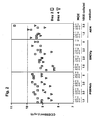
- Fig. 2 depicts the results of titration of these samples for day 2 and day 4 samples (day 3 data not shown).
- PER.C6 cells grown and infected in all three media were able to produce high titers of poliovirus type 1, although BMIVg medium gave somewhat lower titers compared to PERMAb and AEM medium. Furthermore, longer incubation did not result in higher titers. In contrast, the day 2 harvest gave in most cases higher titers compared to day 3 and 4 harvests. A consistent effect of the variation of the MOIs could not be seen in this experiment. Importantly, the use of higher cell densities at infection did result in higher volumetric titers showing that a suspension culture process using high cell densities is beneficial for the yield of infectious poliovirus.
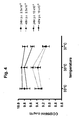
- PER.C6 cells were seeded in AEM medium at 2.5x10 6 cells/ml in 15 ml volumes in shaker flasks and infected with an MOI of 0.1 at 37°C and at 35°C of each poliovirus strain. Cells and medium were harvested 2, 3 and 4 days after infection and processed as described above. Analysis of the virus production under the different conditions was done by determination of CCID 50 values as described above and showed an increase in yield at 35°C compared to 37°C for all three types of poliovirus ( Fig. 3 ). In addition it was confirmed and extended to poliovirus type 2 and 3 that in most cases the highest titers were measured when harvests were taken at day 2.
- Example 3 Y ield of poliovirus on suspension PER. C6 cells increases at higher cell density
- PER.C6 cells in PERMAb medium were seeded in 15 ml volume in shake flasks at the indicated cell densities and infected with 2 CCID50/cell of poliovirus type 1 in triplicate. After 24 and 48 hrs cells and medium were harvested and cleared lysates were prepared by freeze/thawing and centrifugation as described above. In addition to the previously tested temperatures 35 and 37°C, the experiment was also carried out at 33°C.
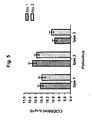
- PER.C6 cells were seeded in PERMAb medium at 10x10 6 cells/ml and infected with 2 CCID50/cell at 35°C in shake flasks in triplicate with the different stocks of poliovirus. Harvests were done after 24 and 48 hrs and cells and medium were processed to cleared lysates as described above. Titration by CCID 50 assay showed that the use of high cell densities also resulted in high yields of virus for type 2 and 3 ( Fig. 5 ).
- Produced poliovirus is harvested and purified according to methods known in the art and used for poliovirus propagated on Vero-cells, inactivated by formalin according to known methods, and subsequently the immunogenicity is tested using a standard rat immunogenicity assay, according to methods well known in the art (e.g. Bevilacqua et al, 1996). It is expected that the poliovirus thus produced has an immunogenicity comparable to poliovirus produced with conventional processes using Vero cells.
- Example 4 Production of poliovirus in PER. C6 cells in a bioreactor
- Cells are thawed from a PER.C6 working cell bank, and propagated in serum free culture medium in a humidified incubator at 37°C and 10% CO 2 . Subculture is performed every 3 to 4 days until sufficient cell density is reached to inoculate a 2L bioreactor at a cell density of 0.2-0.4x10 6 cells/mL. Cells are propagated in the 2L bioreactor at 37°C, DO of 40%, and a pH of 7.3. When a cell density of approximately 2x10 6 cells/mL is reached (day 4 post inoculation) an ATF system is started, to allow the cells to be cultured for a longer period of time and to reach high cell densities.
- a cell density in the 2L bioreactor is reached of more than 50x10 6 cells/mL.
- the cell suspension is transferred to a 10L bioreactor.
- the cell suspension from the 2L bioreactor is diluted 1:5 with serum free culture medium.
- the cell density in the 10L bioreactor is between 10 and 15x10 6 cells/mL.
- the 10L bioreactor is infected with a poliovirus seed stock at an MOI of 2 CCID 50 /cell.
- the production of poliovirus is performed at 35°C, pH 7.3 and DO of 40%.
- the 10L bioreactor is sampled at certain time points for cell count and poliovirus production, and harvest of the poliovirus is suitably performed between 12 and 48 hours post infection.
Landscapes
- Health & Medical Sciences (AREA)
- Life Sciences & Earth Sciences (AREA)
- Chemical & Material Sciences (AREA)
- Virology (AREA)
- Immunology (AREA)
- Medicinal Chemistry (AREA)
- General Health & Medical Sciences (AREA)
- Organic Chemistry (AREA)
- Bioinformatics & Cheminformatics (AREA)
- Engineering & Computer Science (AREA)
- Microbiology (AREA)
- Public Health (AREA)
- Veterinary Medicine (AREA)
- Pharmacology & Pharmacy (AREA)
- Animal Behavior & Ethology (AREA)
- Genetics & Genomics (AREA)
- Wood Science & Technology (AREA)
- Zoology (AREA)
- Biomedical Technology (AREA)
- Epidemiology (AREA)
- Mycology (AREA)
- Biochemistry (AREA)
- Biotechnology (AREA)
- General Engineering & Computer Science (AREA)
- Nuclear Medicine, Radiotherapy & Molecular Imaging (AREA)
- Chemical Kinetics & Catalysis (AREA)
- General Chemical & Material Sciences (AREA)
- Neurosurgery (AREA)
- Communicable Diseases (AREA)
- Molecular Biology (AREA)
- Neurology (AREA)
- Oncology (AREA)
- Micro-Organisms Or Cultivation Processes Thereof (AREA)
- Medicines Containing Antibodies Or Antigens For Use As Internal Diagnostic Agents (AREA)
Claims (10)
- Procédé pour la production de poliovirus, comprenant les étapes de :a) fourniture d'une culture de cellules en suspension sans sérum, qui sont des cellules PER.C6 telles que déposées sous le n° ECACC 96022940,b) infection desdites cellules par le poliovirus, à une densité cellulaire comprise entre 2x10⁶ cellules/ml et 150x106 cellules/ml, etc) récolte du poliovirus à un temps compris entre 12 et 48 heures après l'infection.
- Procédé selon la revendication 1, dans lequel ladite infection et/ou propagation de virus est effectuée à une température comprise entre 34°C et 36°C.
- Procédé selon l'une quelconque des revendications précédentes, dans lequel ladite infection est effectuée à une densité cellulaire comprise entre 5x10⁶ cellules/ml et 20x106 cellules/ml.
- Procédé selon l'une quelconque des revendications précédentes, dans lequel ladite infection est effectuée à une densité cellulaire de l'ordre de 10x106 cellules/ml.
- Procédé selon l'une quelconque des revendications précédentes, dans lequel ladite infection est réalisée à une multiplicité d'infection (MOI) comprise entre 1 et 3, par exemple environ 2.
- Procédé selon l'une quelconque des revendications précédentes, dans lequel ladite récolte de poliovirus est effectuée à un temps compris entre 18 et 30 heures après l'infection, par exemple environ 24 heures après l'infection.
- Procédé selon l'une quelconque des revendications précédentes, dans lequel ledit poliovirus est un poliovirus de type 1, un poliovirus de type 2 ou un poliovirus de type 3.
- Procédé selon la revendication 7, dans lequel ledit poliovirus est un poliovirus de type 1, souche Mahoney, un poliovirus de type 2, souche MEF, ou un poliovirus de type 3 souche Saukett.
- Procédé selon la revendication 7, dans lequel ledit poliovirus est un poliovirus atténué, tel qu'une souche Sabin.
- Procédé de production d'un vaccin contre la polio, comprenant un procédé selon l'une quelconque des revendications précédentes, comprenant en outre la purification, éventuellement l'inactivation, et la formulation du poliovirus récolté pour obtenir un vaccin contre la polio.
Priority Applications (5)
| Application Number | Priority Date | Filing Date | Title |
|---|---|---|---|
| SI201030661T SI2454364T1 (sl) | 2009-07-16 | 2010-07-08 | Izdelava polio virusa v visokih titrih za izdelavo cepiva |
| PL10729895T PL2454364T3 (pl) | 2009-07-16 | 2010-07-08 | Produkcja wirusa polio o wysokim mianie do produkcji szczepionki |
| EP10729895.2A EP2454364B1 (fr) | 2009-07-16 | 2010-07-08 | Production de poliovirus à des titres élevés pour la production de vaccins |
| SM201400079T SMT201400079B (it) | 2009-07-16 | 2014-06-24 | Produzione di poliovirus ad alti titoli per la produzione di vaccino |
| CY20141100560T CY1115578T1 (el) | 2009-07-16 | 2014-07-23 | Παραγωγη ιου της πολιομυελιτιδας σε υψηλους τιτλους για παραγωγη εμβολιου |
Applications Claiming Priority (4)
| Application Number | Priority Date | Filing Date | Title |
|---|---|---|---|
| US27103809P | 2009-07-16 | 2009-07-16 | |
| EP09165620 | 2009-07-16 | ||
| PCT/EP2010/059796 WO2011006823A1 (fr) | 2009-07-16 | 2010-07-08 | Production de poliovirus à titres élevés pour la production de vaccins |
| EP10729895.2A EP2454364B1 (fr) | 2009-07-16 | 2010-07-08 | Production de poliovirus à des titres élevés pour la production de vaccins |
Publications (2)
| Publication Number | Publication Date |
|---|---|
| EP2454364A1 EP2454364A1 (fr) | 2012-05-23 |
| EP2454364B1 true EP2454364B1 (fr) | 2014-04-23 |
Family
ID=41412431
Family Applications (1)
| Application Number | Title | Priority Date | Filing Date |
|---|---|---|---|
| EP10729895.2A Active EP2454364B1 (fr) | 2009-07-16 | 2010-07-08 | Production de poliovirus à des titres élevés pour la production de vaccins |
Country Status (32)
| Country | Link |
|---|---|
| US (4) | US8546123B2 (fr) |
| EP (1) | EP2454364B1 (fr) |
| JP (1) | JP5845178B2 (fr) |
| KR (1) | KR101548790B1 (fr) |
| CN (1) | CN102482647B (fr) |
| AP (1) | AP3140A (fr) |
| AR (1) | AR077314A1 (fr) |
| AU (1) | AU2010272685B2 (fr) |
| BR (1) | BR112012000942B8 (fr) |
| CA (1) | CA2763091C (fr) |
| CO (1) | CO6491042A2 (fr) |
| CU (1) | CU20120006A7 (fr) |
| DK (1) | DK2454364T3 (fr) |
| EA (1) | EA020563B1 (fr) |
| ES (1) | ES2484093T3 (fr) |
| HR (1) | HRP20140597T1 (fr) |
| IL (1) | IL217465A (fr) |
| MA (1) | MA33429B1 (fr) |
| MX (1) | MX2011012648A (fr) |
| MY (1) | MY183385A (fr) |
| NZ (1) | NZ596880A (fr) |
| PE (1) | PE20120571A1 (fr) |
| PL (1) | PL2454364T3 (fr) |
| PT (1) | PT2454364E (fr) |
| RS (1) | RS53377B (fr) |
| SG (1) | SG177655A1 (fr) |
| SI (1) | SI2454364T1 (fr) |
| SM (1) | SMT201400079B (fr) |
| TN (1) | TN2011000628A1 (fr) |
| TW (1) | TWI477606B (fr) |
| WO (1) | WO2011006823A1 (fr) |
| ZA (1) | ZA201108271B (fr) |
Families Citing this family (41)
| Publication number | Priority date | Publication date | Assignee | Title |
|---|---|---|---|---|
| CN101472941B (zh) | 2006-03-31 | 2017-08-08 | 沃弗-威斯康星校友研究基金会 | 用于疫苗的高滴度重组流感病毒 |
| WO2008156778A2 (fr) | 2007-06-18 | 2008-12-24 | Tokiko Watanabe | Virus mutants de protéine m2 de la grippe comme vaccins vivants atténués contre la grippe |
| WO2010060719A1 (fr) | 2008-11-03 | 2010-06-03 | Crucell Holland B.V. | Procédé pour la production de vecteurs adénoviraux |
| AU2010272685B2 (en) | 2009-07-16 | 2015-02-26 | Crucell Holland B.V. | Production of polio virus at high titers for vaccine production |
| JP2013507990A (ja) | 2009-10-26 | 2013-03-07 | ダブリュエーアールエフ−ウィスコンシン アラムナイ リサーチ ファウンデーション | ベロ細胞において増強された複製を有する高力価の組換えインフルエンザウイルス |
| US10130697B2 (en) | 2010-03-23 | 2018-11-20 | Wisconsin Alumni Research Foundation (Warf) | Vaccines comprising mutant attenuated influenza viruses |
| ES2655051T3 (es) | 2011-08-26 | 2018-02-16 | Wisconsin Alumni Research Foundation | Virus de la gripe con segmento génico PB2 mutante como vacunas vivas atenuadas |
| WO2014123967A2 (fr) * | 2013-02-05 | 2014-08-14 | University Of Georgia Research Foundation, Inc. | Lignées cellulaires pour la production de virus et procédés d'utilisation |
| CN105007936B (zh) | 2013-03-08 | 2018-10-02 | 扬森疫苗与预防公司 | 无细胞百日咳疫苗 |
| KR20140112255A (ko) | 2013-03-13 | 2014-09-23 | 고려대학교 산학협력단 | 바이러스 생산능이 증가된 세포주 및 그 제조방법 |
| WO2014142433A1 (fr) | 2013-03-13 | 2014-09-18 | 고려대학교산학협력단 | Souche cellulaire ayant une capacité de production de virus accrue et procédé pour la produire |
| GB201305361D0 (en) | 2013-03-25 | 2013-05-08 | Univ Edinburgh | Enhanced expression |
| PT3010537T (pt) | 2013-06-17 | 2019-12-03 | De Staat Der Nederlanden Vert Door De Mini Van Vws Miniie Van Volksgezondheid Welzijn En Sport | Métodos para a prevenção da agregação de componentes virais |
| WO2015009743A1 (fr) | 2013-07-15 | 2015-01-22 | Wisconsin Alumni Research Foundation | Virus influenza recombinés à titre élevé avec augmentation de la réplication dans les oeufs ou les cellules de la lignée vero ou mdck |
| US20160053281A1 (en) * | 2013-08-15 | 2016-02-25 | The University Court Of The University Of Edinburgh | Enhanced Expression Of RNA Vectors |
| US11008547B2 (en) | 2014-03-25 | 2021-05-18 | Terumo Bct, Inc. | Passive replacement of media |
| US10238730B2 (en) | 2014-06-17 | 2019-03-26 | Janssen Vaccines & Prevention B.V. | Cold-adapted-viral-attenuation (CAVA) and novel attenuated poliovirus strains |
| WO2015194770A1 (fr) | 2014-06-18 | 2015-12-23 | 고려대학교산학협력단 | Procédé pour favoriser l'infection virale et augmenter la production de virus, en utilisant une lignée cellulaire présentant des fonctions perdues du gène bst2 |
| WO2015196150A2 (fr) | 2014-06-20 | 2015-12-23 | Wisconsin Alumni Research Foundation (Warf) | Mutations conférant une stabilité génétique à des gènes supplémentaires dans des virus de la grippe |
| DK3172317T3 (da) | 2014-07-24 | 2019-07-22 | Janssen Vaccines & Prevention Bv | Fremgangsmåde til oprensning af poliovirus fra cellekulturer |
| US10633422B2 (en) | 2015-06-01 | 2020-04-28 | Wisconsin Alumni Research Foundation (Warf) | Influenza virus replication by inhibiting microRNA lec7C binding to influenza viral cRNA and mRNA |
| WO2017004592A1 (fr) | 2015-07-02 | 2017-01-05 | Terumo Bct, Inc. | Croissance cellulaire à l'aide de stimuli mécaniques |
| WO2017007839A1 (fr) | 2015-07-06 | 2017-01-12 | Wisconsin Alumni Research Foundation (Warf) | Réplication améliorée du virus de la grippe pour l'élaboration de vaccin |
| CN109477074B (zh) | 2016-02-19 | 2023-01-24 | 威斯康星旧生研究基金会 | 用于疫苗开发的改进的乙型流感病毒复制 |
| WO2017205667A1 (fr) | 2016-05-25 | 2017-11-30 | Terumo Bct, Inc. | Expansion cellulaire |
| US11104874B2 (en) | 2016-06-07 | 2021-08-31 | Terumo Bct, Inc. | Coating a bioreactor |
| US11685883B2 (en) | 2016-06-07 | 2023-06-27 | Terumo Bct, Inc. | Methods and systems for coating a cell growth surface |
| US10372100B2 (en) * | 2016-08-29 | 2019-08-06 | Ge Healthcare Bio-Sciences Corp. | Manufacturing system for biopharmaceutical products |
| WO2018184028A2 (fr) | 2017-03-31 | 2018-10-04 | Terumo Bct, Inc. | Expansion cellulaire |
| CN107723279B (zh) * | 2017-10-18 | 2020-11-10 | 成都远睿生物技术有限公司 | 一种缺陷型腺病毒AdC68-GP的培养方法 |
| WO2019084310A1 (fr) | 2017-10-25 | 2019-05-02 | Yoshihiro Kawaoka | Virus de la grippe recombinants à ha stabilisé pour la réplication dans des oeufs |
| EP3749757A4 (fr) * | 2018-02-07 | 2021-11-24 | Bharat Biotech International Limited | Procédé de purification et d'inactivation d'entérovirus et compositions de vaccin obtenues à partir de celui-ci |
| JP7783047B2 (ja) | 2018-08-07 | 2025-12-09 | ウィスコンシン アルムニ リサーチ ファンデイション | 組換えの生物学的に封じ込められたフィロウイルスワクチン |
| EP3840780A1 (fr) | 2018-08-20 | 2021-06-30 | Wisconsin Alumni Research Foundation | Vecteurs pour induire des réponses immunitaires à des épitopes non dominants dans la protéine hémagglutinine (ha) |
| WO2020167432A2 (fr) | 2019-01-23 | 2020-08-20 | Yoshihiro Kawaoka | Mutations conférant une stabilité génétique à des gènes supplémentaires dans des virus de la grippe |
| WO2020163804A1 (fr) | 2019-02-08 | 2020-08-13 | Wisconsin Alumni Research Foundation (Warf) | Lignée cellulaire humanisée |
| CN114929269A (zh) | 2019-05-01 | 2022-08-19 | 威斯康星校友研究基金会(Warf) | 用于疫苗开发的改进的流感病毒复制 |
| WO2020229581A1 (fr) | 2019-05-16 | 2020-11-19 | Janssen Vaccines & Prevention B.V. | Méthodes pour induire une réponse immunitaire sûre contre le virus de la polio |
| JP7627911B2 (ja) | 2019-08-27 | 2025-02-07 | ウィスコンシン アルムニ リサーチ ファンデイション | 卵内複製のための安定化されたhaを持つ組換えインフルエンザウイルス |
| EP4093415A1 (fr) | 2020-01-24 | 2022-11-30 | Wisconsin Alumni Research Foundation (WARF) | Virus de la grippe recombinants à na stabilisé |
| US12290562B2 (en) | 2020-03-25 | 2025-05-06 | Wisconsin Alumni Research Foundation (Warf) | Recombinant multivalent influenza viruses |
Family Cites Families (16)
| Publication number | Priority date | Publication date | Assignee | Title |
|---|---|---|---|---|
| US4525349A (en) * | 1981-12-29 | 1985-06-25 | Societe Anonyme Dite: Institut Merueux | Process for the large-scale production of a vaccine against poliomyelitis and the resulting vaccine |
| KR100470180B1 (ko) | 1995-06-15 | 2005-02-04 | 크루셀 홀란드 비.브이. | 유전자 요법에 사용할 수 있는 인간의 재조합아데노바이러스 패키징 시스템 |
| EP1103610A1 (fr) * | 1999-11-26 | 2001-05-30 | Introgene B.V. | Production de vaccins de lignées de cellules mammifère immortalisées |
| US7521220B2 (en) | 1999-11-26 | 2009-04-21 | Crucell Holland B.V. | Production of vaccines |
| US6544424B1 (en) | 1999-12-03 | 2003-04-08 | Refined Technology Company | Fluid filtration system |
| EP1256803A1 (fr) | 2001-05-07 | 2002-11-13 | Crucell Holland B.V. | Méthodes pour l'identification des composés antiviraux |
| WO2004037294A2 (fr) | 2002-10-23 | 2004-05-06 | Crucell Holland B.V. | Nouveaux parametres pour vaccins a base d'adenoviraux recombinants |
| WO2004055187A1 (fr) | 2002-12-17 | 2004-07-01 | Crucell Holland B.V. | Vaccins contre la malaria a base virale recombinante |
| KR101183770B1 (ko) | 2003-05-09 | 2012-09-17 | 크루셀 홀란드 비.브이. | E1-불멸화된 세포의 배양물 및 이로부터 생성 수율을 증가시키기 위한 동일물의 배양 방법 |
| EP1720972B1 (fr) | 2004-03-05 | 2014-01-08 | DSM IP Assets B.V. | Culture de cellules en perfusion continue et flux alternatif tangentiel |
| EP1793852A1 (fr) | 2004-08-27 | 2007-06-13 | Panacea Biotec Ltd. | Vaccin antipoliomyélitique inactivé dérivé de la souche sabin du virus de la polio |
| ES2371175T3 (es) | 2004-10-14 | 2011-12-28 | Crucell Holland B.V. | Vacunas de sensibilización/refuerzo de malaria. |
| CN100500827C (zh) * | 2004-11-26 | 2009-06-17 | 中国医学科学院医学生物学研究所 | 用人胚肺二倍体细胞培养繁殖脊髓灰质炎病毒的方法 |
| EP2081589B1 (fr) | 2006-11-16 | 2010-10-06 | Crucell Holland B.V. | Mutants du facteur v pour l'hémostasis dans les cases d'haemophilie |
| AU2010272685B2 (en) | 2009-07-16 | 2015-02-26 | Crucell Holland B.V. | Production of polio virus at high titers for vaccine production |
| KR20120070015A (ko) | 2010-12-21 | 2012-06-29 | (주)창조바이오텍 | 알파-피넨을 유효성분으로 포함하는 스쿠티카충 구제용 조성물 |
-
2010
- 2010-07-08 AU AU2010272685A patent/AU2010272685B2/en not_active Ceased
- 2010-07-08 SI SI201030661T patent/SI2454364T1/sl unknown
- 2010-07-08 CA CA2763091A patent/CA2763091C/fr active Active
- 2010-07-08 AP AP2012006075A patent/AP3140A/xx active
- 2010-07-08 KR KR1020127001501A patent/KR101548790B1/ko not_active Expired - Fee Related
- 2010-07-08 MY MYPI2012000173A patent/MY183385A/en unknown
- 2010-07-08 HR HRP20140597AT patent/HRP20140597T1/hr unknown
- 2010-07-08 EA EA201270173A patent/EA020563B1/ru not_active IP Right Cessation
- 2010-07-08 RS RS20140325A patent/RS53377B/sr unknown
- 2010-07-08 CN CN201080026814.2A patent/CN102482647B/zh not_active Expired - Fee Related
- 2010-07-08 JP JP2012519981A patent/JP5845178B2/ja not_active Expired - Fee Related
- 2010-07-08 PT PT107298952T patent/PT2454364E/pt unknown
- 2010-07-08 EP EP10729895.2A patent/EP2454364B1/fr active Active
- 2010-07-08 SG SG2012002705A patent/SG177655A1/en unknown
- 2010-07-08 NZ NZ596880A patent/NZ596880A/xx not_active IP Right Cessation
- 2010-07-08 DK DK10729895.2T patent/DK2454364T3/da active
- 2010-07-08 PL PL10729895T patent/PL2454364T3/pl unknown
- 2010-07-08 MA MA34534A patent/MA33429B1/fr unknown
- 2010-07-08 WO PCT/EP2010/059796 patent/WO2011006823A1/fr not_active Ceased
- 2010-07-08 BR BR112012000942A patent/BR112012000942B8/pt not_active IP Right Cessation
- 2010-07-08 MX MX2011012648A patent/MX2011012648A/es active IP Right Grant
- 2010-07-08 ES ES10729895.2T patent/ES2484093T3/es active Active
- 2010-07-08 PE PE2012000051A patent/PE20120571A1/es active IP Right Grant
- 2010-07-14 AR ARP100102556A patent/AR077314A1/es active IP Right Grant
- 2010-07-15 TW TW099123327A patent/TWI477606B/zh not_active IP Right Cessation
- 2010-07-16 US US12/804,242 patent/US8546123B2/en not_active Expired - Fee Related
-
2011
- 2011-11-10 ZA ZA2011/08271A patent/ZA201108271B/en unknown
- 2011-12-07 TN TNP2011000628A patent/TN2011000628A1/en unknown
-
2012
- 2012-01-10 IL IL217465A patent/IL217465A/en active IP Right Grant
- 2012-01-13 CU CU2012000006A patent/CU20120006A7/es unknown
- 2012-01-16 CO CO12005515A patent/CO6491042A2/es unknown
- 2012-10-25 US US13/660,412 patent/US20130052224A1/en not_active Abandoned
-
2013
- 2013-03-15 US US13/843,052 patent/US20130273106A1/en not_active Abandoned
-
2014
- 2014-05-12 US US14/275,392 patent/US9022240B2/en active Active
- 2014-06-24 SM SM201400079T patent/SMT201400079B/xx unknown
Also Published As
Similar Documents
| Publication | Publication Date | Title |
|---|---|---|
| CA2763091C (fr) | Production de poliovirus a titres eleves pour la production de vaccins | |
| ES2488818T3 (es) | Método para la producción a gran escala de virus | |
| PT1427815E (pt) | Métodos para a produção industrial de vacinas | |
| DK3010537T3 (en) | PROCEDURE FOR PREVENTING AGGREGATION OF VIRUS COMPONENTS | |
| IL190578A (en) | A viro cell line and a method to create a virus to prepare vaccines from it | |
| AU2015276235A1 (en) | Cold-Adapted-Viral-Attenuation (CAVA) and novel attenuated Poliovirus strains | |
| HK1164922B (en) | Production of polio virus at high titers for vaccine production | |
| Watari et al. | Establishment of persistent infection of measles virus in Vero cells with special reference to the temperature-sensitivity of parent viruses | |
| HK1223845B (en) | Methods for the prevention of aggregation of viral components |
Legal Events
| Date | Code | Title | Description |
|---|---|---|---|
| PUAI | Public reference made under article 153(3) epc to a published international application that has entered the european phase |
Free format text: ORIGINAL CODE: 0009012 |
|
| 17P | Request for examination filed |
Effective date: 20120116 |
|
| AK | Designated contracting states |
Kind code of ref document: A1 Designated state(s): AL AT BE BG CH CY CZ DE DK EE ES FI FR GB GR HR HU IE IS IT LI LT LU LV MC MK MT NL NO PL PT RO SE SI SK SM TR |
|
| AX | Request for extension of the european patent |
Extension state: BA ME RS |
|
| REG | Reference to a national code |
Ref country code: HK Ref legal event code: DE Ref document number: 1164922 Country of ref document: HK |
|
| GRAP | Despatch of communication of intention to grant a patent |
Free format text: ORIGINAL CODE: EPIDOSNIGR1 |
|
| INTG | Intention to grant announced |
Effective date: 20131217 |
|
| GRAP | Despatch of communication of intention to grant a patent |
Free format text: ORIGINAL CODE: EPIDOSNIGR1 |
|
| GRAS | Grant fee paid |
Free format text: ORIGINAL CODE: EPIDOSNIGR3 |
|
| GRAA | (expected) grant |
Free format text: ORIGINAL CODE: 0009210 |
|
| INTG | Intention to grant announced |
Effective date: 20140304 |
|
| AK | Designated contracting states |
Kind code of ref document: B1 Designated state(s): AL AT BE BG CH CY CZ DE DK EE ES FI FR GB GR HR HU IE IS IT LI LT LU LV MC MK MT NL NO PL PT RO SE SI SK SM TR |
|
| AX | Request for extension of the european patent |
Extension state: BA ME RS |
|
| REG | Reference to a national code |
Ref country code: GB Ref legal event code: FG4D |
|
| REG | Reference to a national code |
Ref country code: CH Ref legal event code: EP |
|
| REG | Reference to a national code |
Ref country code: AT Ref legal event code: REF Ref document number: 663889 Country of ref document: AT Kind code of ref document: T Effective date: 20140515 |
|
| REG | Reference to a national code |
Ref country code: IE Ref legal event code: FG4D |
|
| REG | Reference to a national code |
Ref country code: DE Ref legal event code: R096 Ref document number: 602010015396 Country of ref document: DE Effective date: 20140528 |
|
| REG | Reference to a national code |
Ref country code: HR Ref legal event code: TUEP Ref document number: P20140597 Country of ref document: HR |
|
| REG | Reference to a national code |
Ref country code: PT Ref legal event code: SC4A Free format text: AVAILABILITY OF NATIONAL TRANSLATION Effective date: 20140619 |
|
| REG | Reference to a national code |
Ref country code: DK Ref legal event code: T3 Effective date: 20140717 |
|
| REG | Reference to a national code |
Ref country code: NL Ref legal event code: T3 |
|
| REG | Reference to a national code |
Ref country code: ES Ref legal event code: FG2A Ref document number: 2484093 Country of ref document: ES Kind code of ref document: T3 Effective date: 20140811 |
|
| REG | Reference to a national code |
Ref country code: SE Ref legal event code: TRGR |
|
| REG | Reference to a national code |
Ref country code: EE Ref legal event code: FG4A Ref document number: E009350 Country of ref document: EE Effective date: 20140619 |
|
| REG | Reference to a national code |
Ref country code: NO Ref legal event code: T2 Effective date: 20140423 |
|
| REG | Reference to a national code |
Ref country code: SK Ref legal event code: T3 Ref document number: E 16530 Country of ref document: SK |
|
| REG | Reference to a national code |
Ref country code: HR Ref legal event code: T1PR Ref document number: P20140597 Country of ref document: HR |
|
| REG | Reference to a national code |
Ref country code: PL Ref legal event code: T3 |
|
| REG | Reference to a national code |
Ref country code: GR Ref legal event code: EP Ref document number: 20140401451 Country of ref document: GR Effective date: 20140901 |
|
| REG | Reference to a national code |
Ref country code: HK Ref legal event code: GR Ref document number: 1164922 Country of ref document: HK |
|
| REG | Reference to a national code |
Ref country code: DE Ref legal event code: R097 Ref document number: 602010015396 Country of ref document: DE |
|
| PLBE | No opposition filed within time limit |
Free format text: ORIGINAL CODE: 0009261 |
|
| STAA | Information on the status of an ep patent application or granted ep patent |
Free format text: STATUS: NO OPPOSITION FILED WITHIN TIME LIMIT |
|
| 26N | No opposition filed |
Effective date: 20150126 |
|
| REG | Reference to a national code |
Ref country code: HU Ref legal event code: AG4A Ref document number: E022339 Country of ref document: HU |
|
| REG | Reference to a national code |
Ref country code: DE Ref legal event code: R097 Ref document number: 602010015396 Country of ref document: DE Effective date: 20150126 |
|
| REG | Reference to a national code |
Ref country code: FR Ref legal event code: PLFP Year of fee payment: 6 |
|
| REG | Reference to a national code |
Ref country code: RO Ref legal event code: EPE |
|
| REG | Reference to a national code |
Ref country code: FR Ref legal event code: PLFP Year of fee payment: 7 |
|
| REG | Reference to a national code |
Ref country code: FR Ref legal event code: PLFP Year of fee payment: 8 |
|
| REG | Reference to a national code |
Ref country code: FR Ref legal event code: PLFP Year of fee payment: 9 |
|
| REG | Reference to a national code |
Ref country code: HR Ref legal event code: ODRP Ref document number: P20140597 Country of ref document: HR Payment date: 20190613 Year of fee payment: 10 |
|
| REG | Reference to a national code |
Ref country code: HR Ref legal event code: ODRP Ref document number: P20140597 Country of ref document: HR Payment date: 20200703 Year of fee payment: 11 |
|
| REG | Reference to a national code |
Ref country code: HR Ref legal event code: ODRP Ref document number: P20140597 Country of ref document: HR Payment date: 20210707 Year of fee payment: 12 |
|
| PGFP | Annual fee paid to national office [announced via postgrant information from national office to epo] |
Ref country code: SM Payment date: 20220630 Year of fee payment: 13 Ref country code: SK Payment date: 20220614 Year of fee payment: 13 Ref country code: SE Payment date: 20220615 Year of fee payment: 13 Ref country code: RO Payment date: 20220621 Year of fee payment: 13 Ref country code: PT Payment date: 20220627 Year of fee payment: 13 Ref country code: NL Payment date: 20220615 Year of fee payment: 13 Ref country code: MC Payment date: 20220628 Year of fee payment: 13 Ref country code: LU Payment date: 20220627 Year of fee payment: 13 Ref country code: IE Payment date: 20220609 Year of fee payment: 13 Ref country code: EE Payment date: 20220607 Year of fee payment: 13 Ref country code: CZ Payment date: 20220616 Year of fee payment: 13 Ref country code: BG Payment date: 20220615 Year of fee payment: 13 |
|
| REG | Reference to a national code |
Ref country code: HR Ref legal event code: ODRP Ref document number: P20140597 Country of ref document: HR Payment date: 20220706 Year of fee payment: 13 |
|
| PGFP | Annual fee paid to national office [announced via postgrant information from national office to epo] |
Ref country code: PL Payment date: 20220614 Year of fee payment: 13 Ref country code: LV Payment date: 20220607 Year of fee payment: 13 Ref country code: GR Payment date: 20220622 Year of fee payment: 13 Ref country code: BE Payment date: 20220615 Year of fee payment: 13 |
|
| PGFP | Annual fee paid to national office [announced via postgrant information from national office to epo] |
Ref country code: IS Payment date: 20220609 Year of fee payment: 13 |
|
| PGFP | Annual fee paid to national office [announced via postgrant information from national office to epo] |
Ref country code: TR Payment date: 20220706 Year of fee payment: 13 Ref country code: NO Payment date: 20220708 Year of fee payment: 13 Ref country code: LT Payment date: 20220621 Year of fee payment: 13 Ref country code: HR Payment date: 20220706 Year of fee payment: 13 Ref country code: FI Payment date: 20220712 Year of fee payment: 13 Ref country code: DK Payment date: 20220714 Year of fee payment: 13 Ref country code: CY Payment date: 20220706 Year of fee payment: 13 Ref country code: AT Payment date: 20220627 Year of fee payment: 13 |
|
| REG | Reference to a national code |
Ref country code: EE Ref legal event code: HC1A Ref document number: E009350 Country of ref document: EE |
|
| PGFP | Annual fee paid to national office [announced via postgrant information from national office to epo] |
Ref country code: SI Payment date: 20220615 Year of fee payment: 13 Ref country code: HU Payment date: 20220619 Year of fee payment: 13 |
|
| PGFP | Annual fee paid to national office [announced via postgrant information from national office to epo] |
Ref country code: CH Payment date: 20220801 Year of fee payment: 13 |
|
| PGFP | Annual fee paid to national office [announced via postgrant information from national office to epo] |
Ref country code: MT Payment date: 20220726 Year of fee payment: 13 Ref country code: MK Payment date: 20220608 Year of fee payment: 13 Ref country code: AL Payment date: 20220713 Year of fee payment: 13 |
|
| PGFP | Annual fee paid to national office [announced via postgrant information from national office to epo] |
Ref country code: IT Payment date: 20230612 Year of fee payment: 14 Ref country code: FR Payment date: 20230620 Year of fee payment: 14 |
|
| PGFP | Annual fee paid to national office [announced via postgrant information from national office to epo] |
Ref country code: GB Payment date: 20230601 Year of fee payment: 14 Ref country code: ES Payment date: 20230808 Year of fee payment: 14 |
|
| PGFP | Annual fee paid to national office [announced via postgrant information from national office to epo] |
Ref country code: DE Payment date: 20230531 Year of fee payment: 14 |
|
| REG | Reference to a national code |
Ref country code: HR Ref legal event code: PBON Ref document number: P20140597 Country of ref document: HR Effective date: 20230708 |
|
| PG25 | Lapsed in a contracting state [announced via postgrant information from national office to epo] |
Ref country code: CZ Free format text: LAPSE BECAUSE OF NON-PAYMENT OF DUE FEES Effective date: 20230708 |
|
| REG | Reference to a national code |
Ref country code: LT Ref legal event code: MM4D Effective date: 20230708 |
|
| REG | Reference to a national code |
Ref country code: EE Ref legal event code: MM4A Ref document number: E009350 Country of ref document: EE Effective date: 20230731 |
|
| REG | Reference to a national code |
Ref country code: NO Ref legal event code: MMEP Ref country code: DK Ref legal event code: EBP Effective date: 20230731 |
|
| PG25 | Lapsed in a contracting state [announced via postgrant information from national office to epo] |
Ref country code: MC Free format text: LAPSE BECAUSE OF NON-PAYMENT OF DUE FEES Effective date: 20230731 |
|
| REG | Reference to a national code |
Ref country code: SK Ref legal event code: MM4A Ref document number: E 16530 Country of ref document: SK Effective date: 20230708 |
|
| PG25 | Lapsed in a contracting state [announced via postgrant information from national office to epo] |
Ref country code: MC Free format text: LAPSE BECAUSE OF NON-PAYMENT OF DUE FEES Effective date: 20230731 |
|
| REG | Reference to a national code |
Ref country code: CH Ref legal event code: PL |
|
| REG | Reference to a national code |
Ref country code: SE Ref legal event code: EUG |
|
| REG | Reference to a national code |
Ref country code: NL Ref legal event code: MM Effective date: 20230801 |
|
| REG | Reference to a national code |
Ref country code: AT Ref legal event code: MM01 Ref document number: 663889 Country of ref document: AT Kind code of ref document: T Effective date: 20230708 |
|
| REG | Reference to a national code |
Ref country code: BE Ref legal event code: MM Effective date: 20230731 |
|
| PG25 | Lapsed in a contracting state [announced via postgrant information from national office to epo] |
Ref country code: LU Free format text: LAPSE BECAUSE OF NON-PAYMENT OF DUE FEES Effective date: 20230708 |
|
| PG25 | Lapsed in a contracting state [announced via postgrant information from national office to epo] |
Ref country code: LU Free format text: LAPSE BECAUSE OF NON-PAYMENT OF DUE FEES Effective date: 20230708 |
|
| PG25 | Lapsed in a contracting state [announced via postgrant information from national office to epo] |
Ref country code: GR Free format text: LAPSE BECAUSE OF NON-PAYMENT OF DUE FEES Effective date: 20240207 |
|
| PG25 | Lapsed in a contracting state [announced via postgrant information from national office to epo] |
Ref country code: LT Free format text: LAPSE BECAUSE OF NON-PAYMENT OF DUE FEES Effective date: 20230708 |
|
| PG25 | Lapsed in a contracting state [announced via postgrant information from national office to epo] |
Ref country code: NL Free format text: LAPSE BECAUSE OF NON-PAYMENT OF DUE FEES Effective date: 20230801 |
|
| PG25 | Lapsed in a contracting state [announced via postgrant information from national office to epo] |
Ref country code: AT Free format text: LAPSE BECAUSE OF NON-PAYMENT OF DUE FEES Effective date: 20230708 |
|
| REG | Reference to a national code |
Ref country code: IE Ref legal event code: MM4A |
|
| PG25 | Lapsed in a contracting state [announced via postgrant information from national office to epo] |
Ref country code: SM Free format text: LAPSE BECAUSE OF NON-PAYMENT OF DUE FEES Effective date: 20240215 Ref country code: RO Free format text: LAPSE BECAUSE OF NON-PAYMENT OF DUE FEES Effective date: 20230708 Ref country code: NL Free format text: LAPSE BECAUSE OF NON-PAYMENT OF DUE FEES Effective date: 20230801 Ref country code: LT Free format text: LAPSE BECAUSE OF NON-PAYMENT OF DUE FEES Effective date: 20230708 Ref country code: HU Free format text: LAPSE BECAUSE OF NON-PAYMENT OF DUE FEES Effective date: 20230709 Ref country code: GR Free format text: LAPSE BECAUSE OF NON-PAYMENT OF DUE FEES Effective date: 20240207 Ref country code: FI Free format text: LAPSE BECAUSE OF NON-PAYMENT OF DUE FEES Effective date: 20230708 Ref country code: EE Free format text: LAPSE BECAUSE OF NON-PAYMENT OF DUE FEES Effective date: 20230731 Ref country code: CY Free format text: LAPSE BECAUSE OF NON-PAYMENT OF DUE FEES Effective date: 20230708 Ref country code: BG Free format text: LAPSE BECAUSE OF NON-PAYMENT OF DUE FEES Effective date: 20240131 Ref country code: AT Free format text: LAPSE BECAUSE OF NON-PAYMENT OF DUE FEES Effective date: 20230708 Ref country code: SK Free format text: LAPSE BECAUSE OF NON-PAYMENT OF DUE FEES Effective date: 20230708 Ref country code: PT Free format text: LAPSE BECAUSE OF NON-PAYMENT OF DUE FEES Effective date: 20240108 Ref country code: CH Free format text: LAPSE BECAUSE OF NON-PAYMENT OF DUE FEES Effective date: 20230731 |
|
| PG25 | Lapsed in a contracting state [announced via postgrant information from national office to epo] |
Ref country code: SI Free format text: LAPSE BECAUSE OF NON-PAYMENT OF DUE FEES Effective date: 20230709 |
|
| PG25 | Lapsed in a contracting state [announced via postgrant information from national office to epo] |
Ref country code: SI Free format text: LAPSE BECAUSE OF NON-PAYMENT OF DUE FEES Effective date: 20230709 Ref country code: SE Free format text: LAPSE BECAUSE OF NON-PAYMENT OF DUE FEES Effective date: 20230709 Ref country code: NO Free format text: LAPSE BECAUSE OF NON-PAYMENT OF DUE FEES Effective date: 20230731 Ref country code: LV Free format text: LAPSE BECAUSE OF NON-PAYMENT OF DUE FEES Effective date: 20230708 Ref country code: HR Free format text: LAPSE BECAUSE OF NON-PAYMENT OF DUE FEES Effective date: 20230708 Ref country code: BE Free format text: LAPSE BECAUSE OF NON-PAYMENT OF DUE FEES Effective date: 20230731 |
|
| REG | Reference to a national code |
Ref country code: SI Ref legal event code: KO00 Effective date: 20240423 |
|
| PG25 | Lapsed in a contracting state [announced via postgrant information from national office to epo] |
Ref country code: IE Free format text: LAPSE BECAUSE OF NON-PAYMENT OF DUE FEES Effective date: 20230708 |
|
| PG25 | Lapsed in a contracting state [announced via postgrant information from national office to epo] |
Ref country code: DK Free format text: LAPSE BECAUSE OF NON-PAYMENT OF DUE FEES Effective date: 20230731 |
|
| PG25 | Lapsed in a contracting state [announced via postgrant information from national office to epo] |
Ref country code: IE Free format text: LAPSE BECAUSE OF NON-PAYMENT OF DUE FEES Effective date: 20230708 Ref country code: DK Free format text: LAPSE BECAUSE OF NON-PAYMENT OF DUE FEES Effective date: 20230731 |
|
| PG25 | Lapsed in a contracting state [announced via postgrant information from national office to epo] |
Ref country code: PL Free format text: LAPSE BECAUSE OF NON-PAYMENT OF DUE FEES Effective date: 20230708 |
|
| PG25 | Lapsed in a contracting state [announced via postgrant information from national office to epo] |
Ref country code: PL Free format text: LAPSE BECAUSE OF NON-PAYMENT OF DUE FEES Effective date: 20230708 |
|
| REG | Reference to a national code |
Ref country code: DE Ref legal event code: R119 Ref document number: 602010015396 Country of ref document: DE |
|
| GBPC | Gb: european patent ceased through non-payment of renewal fee |
Effective date: 20240708 |
|
| PG25 | Lapsed in a contracting state [announced via postgrant information from national office to epo] |
Ref country code: DE Free format text: LAPSE BECAUSE OF NON-PAYMENT OF DUE FEES Effective date: 20250201 |
|
| PG25 | Lapsed in a contracting state [announced via postgrant information from national office to epo] |
Ref country code: FR Free format text: LAPSE BECAUSE OF NON-PAYMENT OF DUE FEES Effective date: 20240731 |
|
| PG25 | Lapsed in a contracting state [announced via postgrant information from national office to epo] |
Ref country code: GB Free format text: LAPSE BECAUSE OF NON-PAYMENT OF DUE FEES Effective date: 20240708 |
|
| PG25 | Lapsed in a contracting state [announced via postgrant information from national office to epo] |
Ref country code: IT Free format text: LAPSE BECAUSE OF NON-PAYMENT OF DUE FEES Effective date: 20240708 |
|
| REG | Reference to a national code |
Ref country code: ES Ref legal event code: FD2A Effective date: 20250827 |
|
| PG25 | Lapsed in a contracting state [announced via postgrant information from national office to epo] |
Ref country code: ES Free format text: LAPSE BECAUSE OF NON-PAYMENT OF DUE FEES Effective date: 20240709 |
|
| PG25 | Lapsed in a contracting state [announced via postgrant information from national office to epo] |
Ref country code: IS Free format text: LAPSE BECAUSE OF NON-PAYMENT OF DUE FEES Effective date: 20240205 |