EP2455367B1 - Tetracyxlin-Derivate zur Behandlung bakterieller, viraler und parasitärer Infektionen - Google Patents
Tetracyxlin-Derivate zur Behandlung bakterieller, viraler und parasitärer Infektionen Download PDFInfo
- Publication number
- EP2455367B1 EP2455367B1 EP12151177.8A EP12151177A EP2455367B1 EP 2455367 B1 EP2455367 B1 EP 2455367B1 EP 12151177 A EP12151177 A EP 12151177A EP 2455367 B1 EP2455367 B1 EP 2455367B1
- Authority
- EP
- European Patent Office
- Prior art keywords
- tetracycline
- compound
- compounds
- groups
- term
- Prior art date
- Legal status (The legal status is an assumption and is not a legal conclusion. Google has not performed a legal analysis and makes no representation as to the accuracy of the status listed.)
- Not-in-force
Links
- 0 C*C(C(C([C@](C)(C(CC1Cc(c2c(cc3)OC)c3-c3c(*)c(*)c(*)cc3*)C3(*)*)C(*)=C1C2=O)=*)=C3OC)=O Chemical compound C*C(C(C([C@](C)(C(CC1Cc(c2c(cc3)OC)c3-c3c(*)c(*)c(*)cc3*)C3(*)*)C(*)=C1C2=O)=*)=C3OC)=O 0.000 description 1
Classifications
-
- C—CHEMISTRY; METALLURGY
- C07—ORGANIC CHEMISTRY
- C07C—ACYCLIC OR CARBOCYCLIC COMPOUNDS
- C07C237/00—Carboxylic acid amides, the carbon skeleton of the acid part being further substituted by amino groups
- C07C237/24—Carboxylic acid amides, the carbon skeleton of the acid part being further substituted by amino groups having the carbon atom of at least one of the carboxamide groups bound to a carbon atom of a ring other than a six-membered aromatic ring of the carbon skeleton
- C07C237/26—Carboxylic acid amides, the carbon skeleton of the acid part being further substituted by amino groups having the carbon atom of at least one of the carboxamide groups bound to a carbon atom of a ring other than a six-membered aromatic ring of the carbon skeleton of a ring being part of a condensed ring system formed by at least four rings, e.g. tetracycline
-
- A—HUMAN NECESSITIES
- A61—MEDICAL OR VETERINARY SCIENCE; HYGIENE
- A61K—PREPARATIONS FOR MEDICAL, DENTAL OR TOILETRY PURPOSES
- A61K31/00—Medicinal preparations containing organic active ingredients
- A61K31/65—Tetracyclines
-
- A—HUMAN NECESSITIES
- A61—MEDICAL OR VETERINARY SCIENCE; HYGIENE
- A61P—SPECIFIC THERAPEUTIC ACTIVITY OF CHEMICAL COMPOUNDS OR MEDICINAL PREPARATIONS
- A61P11/00—Drugs for disorders of the respiratory system
- A61P11/02—Nasal agents, e.g. decongestants
-
- A—HUMAN NECESSITIES
- A61—MEDICAL OR VETERINARY SCIENCE; HYGIENE
- A61P—SPECIFIC THERAPEUTIC ACTIVITY OF CHEMICAL COMPOUNDS OR MEDICINAL PREPARATIONS
- A61P17/00—Drugs for dermatological disorders
-
- A—HUMAN NECESSITIES
- A61—MEDICAL OR VETERINARY SCIENCE; HYGIENE
- A61P—SPECIFIC THERAPEUTIC ACTIVITY OF CHEMICAL COMPOUNDS OR MEDICINAL PREPARATIONS
- A61P17/00—Drugs for dermatological disorders
- A61P17/02—Drugs for dermatological disorders for treating wounds, ulcers, burns, scars, keloids, or the like
-
- A—HUMAN NECESSITIES
- A61—MEDICAL OR VETERINARY SCIENCE; HYGIENE
- A61P—SPECIFIC THERAPEUTIC ACTIVITY OF CHEMICAL COMPOUNDS OR MEDICINAL PREPARATIONS
- A61P17/00—Drugs for dermatological disorders
- A61P17/10—Anti-acne agents
-
- A—HUMAN NECESSITIES
- A61—MEDICAL OR VETERINARY SCIENCE; HYGIENE
- A61P—SPECIFIC THERAPEUTIC ACTIVITY OF CHEMICAL COMPOUNDS OR MEDICINAL PREPARATIONS
- A61P25/00—Drugs for disorders of the nervous system
-
- A—HUMAN NECESSITIES
- A61—MEDICAL OR VETERINARY SCIENCE; HYGIENE
- A61P—SPECIFIC THERAPEUTIC ACTIVITY OF CHEMICAL COMPOUNDS OR MEDICINAL PREPARATIONS
- A61P25/00—Drugs for disorders of the nervous system
- A61P25/28—Drugs for disorders of the nervous system for treating neurodegenerative disorders of the central nervous system, e.g. nootropic agents, cognition enhancers, drugs for treating Alzheimer's disease or other forms of dementia
-
- A—HUMAN NECESSITIES
- A61—MEDICAL OR VETERINARY SCIENCE; HYGIENE
- A61P—SPECIFIC THERAPEUTIC ACTIVITY OF CHEMICAL COMPOUNDS OR MEDICINAL PREPARATIONS
- A61P29/00—Non-central analgesic, antipyretic or antiinflammatory agents, e.g. antirheumatic agents; Non-steroidal antiinflammatory drugs [NSAID]
-
- A—HUMAN NECESSITIES
- A61—MEDICAL OR VETERINARY SCIENCE; HYGIENE
- A61P—SPECIFIC THERAPEUTIC ACTIVITY OF CHEMICAL COMPOUNDS OR MEDICINAL PREPARATIONS
- A61P31/00—Antiinfectives, i.e. antibiotics, antiseptics, chemotherapeutics
-
- A—HUMAN NECESSITIES
- A61—MEDICAL OR VETERINARY SCIENCE; HYGIENE
- A61P—SPECIFIC THERAPEUTIC ACTIVITY OF CHEMICAL COMPOUNDS OR MEDICINAL PREPARATIONS
- A61P31/00—Antiinfectives, i.e. antibiotics, antiseptics, chemotherapeutics
- A61P31/04—Antibacterial agents
-
- A—HUMAN NECESSITIES
- A61—MEDICAL OR VETERINARY SCIENCE; HYGIENE
- A61P—SPECIFIC THERAPEUTIC ACTIVITY OF CHEMICAL COMPOUNDS OR MEDICINAL PREPARATIONS
- A61P31/00—Antiinfectives, i.e. antibiotics, antiseptics, chemotherapeutics
- A61P31/12—Antivirals
-
- A—HUMAN NECESSITIES
- A61—MEDICAL OR VETERINARY SCIENCE; HYGIENE
- A61P—SPECIFIC THERAPEUTIC ACTIVITY OF CHEMICAL COMPOUNDS OR MEDICINAL PREPARATIONS
- A61P33/00—Antiparasitic agents
-
- A—HUMAN NECESSITIES
- A61—MEDICAL OR VETERINARY SCIENCE; HYGIENE
- A61P—SPECIFIC THERAPEUTIC ACTIVITY OF CHEMICAL COMPOUNDS OR MEDICINAL PREPARATIONS
- A61P33/00—Antiparasitic agents
- A61P33/02—Antiprotozoals, e.g. for leishmaniasis, trichomoniasis, toxoplasmosis
- A61P33/06—Antimalarials
-
- A—HUMAN NECESSITIES
- A61—MEDICAL OR VETERINARY SCIENCE; HYGIENE
- A61P—SPECIFIC THERAPEUTIC ACTIVITY OF CHEMICAL COMPOUNDS OR MEDICINAL PREPARATIONS
- A61P33/00—Antiparasitic agents
- A61P33/14—Ectoparasiticides, e.g. scabicides
-
- C—CHEMISTRY; METALLURGY
- C07—ORGANIC CHEMISTRY
- C07D—HETEROCYCLIC COMPOUNDS
- C07D207/00—Heterocyclic compounds containing five-membered rings not condensed with other rings, with one nitrogen atom as the only ring hetero atom
- C07D207/02—Heterocyclic compounds containing five-membered rings not condensed with other rings, with one nitrogen atom as the only ring hetero atom with only hydrogen or carbon atoms directly attached to the ring nitrogen atom
- C07D207/18—Heterocyclic compounds containing five-membered rings not condensed with other rings, with one nitrogen atom as the only ring hetero atom with only hydrogen or carbon atoms directly attached to the ring nitrogen atom having one double bond between ring members or between a ring member and a non-ring member
- C07D207/20—Heterocyclic compounds containing five-membered rings not condensed with other rings, with one nitrogen atom as the only ring hetero atom with only hydrogen or carbon atoms directly attached to the ring nitrogen atom having one double bond between ring members or between a ring member and a non-ring member with only hydrogen atoms, hydrocarbon or substituted hydrocarbon radicals, directly attached to ring carbon atoms
-
- C—CHEMISTRY; METALLURGY
- C07—ORGANIC CHEMISTRY
- C07D—HETEROCYCLIC COMPOUNDS
- C07D207/00—Heterocyclic compounds containing five-membered rings not condensed with other rings, with one nitrogen atom as the only ring hetero atom
- C07D207/46—Heterocyclic compounds containing five-membered rings not condensed with other rings, with one nitrogen atom as the only ring hetero atom with hetero atoms directly attached to the ring nitrogen atom
- C07D207/50—Nitrogen atoms
-
- C—CHEMISTRY; METALLURGY
- C07—ORGANIC CHEMISTRY
- C07D—HETEROCYCLIC COMPOUNDS
- C07D211/00—Heterocyclic compounds containing hydrogenated pyridine rings, not condensed with other rings
- C07D211/04—Heterocyclic compounds containing hydrogenated pyridine rings, not condensed with other rings with only hydrogen or carbon atoms directly attached to the ring nitrogen atom
- C07D211/06—Heterocyclic compounds containing hydrogenated pyridine rings, not condensed with other rings with only hydrogen or carbon atoms directly attached to the ring nitrogen atom having no double bonds between ring members or between ring members and non-ring members
- C07D211/08—Heterocyclic compounds containing hydrogenated pyridine rings, not condensed with other rings with only hydrogen or carbon atoms directly attached to the ring nitrogen atom having no double bonds between ring members or between ring members and non-ring members with hydrocarbon or substituted hydrocarbon radicals directly attached to ring carbon atoms
- C07D211/10—Heterocyclic compounds containing hydrogenated pyridine rings, not condensed with other rings with only hydrogen or carbon atoms directly attached to the ring nitrogen atom having no double bonds between ring members or between ring members and non-ring members with hydrocarbon or substituted hydrocarbon radicals directly attached to ring carbon atoms with radicals containing only carbon and hydrogen atoms attached to ring carbon atoms
- C07D211/14—Heterocyclic compounds containing hydrogenated pyridine rings, not condensed with other rings with only hydrogen or carbon atoms directly attached to the ring nitrogen atom having no double bonds between ring members or between ring members and non-ring members with hydrocarbon or substituted hydrocarbon radicals directly attached to ring carbon atoms with radicals containing only carbon and hydrogen atoms attached to ring carbon atoms with hydrocarbon or substituted hydrocarbon radicals attached to the ring nitrogen atom
-
- C—CHEMISTRY; METALLURGY
- C07—ORGANIC CHEMISTRY
- C07D—HETEROCYCLIC COMPOUNDS
- C07D231/00—Heterocyclic compounds containing 1,2-diazole or hydrogenated 1,2-diazole rings
- C07D231/02—Heterocyclic compounds containing 1,2-diazole or hydrogenated 1,2-diazole rings not condensed with other rings
- C07D231/10—Heterocyclic compounds containing 1,2-diazole or hydrogenated 1,2-diazole rings not condensed with other rings having two or three double bonds between ring members or between ring members and non-ring members
- C07D231/12—Heterocyclic compounds containing 1,2-diazole or hydrogenated 1,2-diazole rings not condensed with other rings having two or three double bonds between ring members or between ring members and non-ring members with only hydrogen atoms, hydrocarbon or substituted hydrocarbon radicals, directly attached to ring carbon atoms
-
- C—CHEMISTRY; METALLURGY
- C07—ORGANIC CHEMISTRY
- C07D—HETEROCYCLIC COMPOUNDS
- C07D239/00—Heterocyclic compounds containing 1,3-diazine or hydrogenated 1,3-diazine rings
- C07D239/02—Heterocyclic compounds containing 1,3-diazine or hydrogenated 1,3-diazine rings not condensed with other rings
- C07D239/20—Heterocyclic compounds containing 1,3-diazine or hydrogenated 1,3-diazine rings not condensed with other rings having two double bonds between ring members or between ring members and non-ring members
-
- C—CHEMISTRY; METALLURGY
- C07—ORGANIC CHEMISTRY
- C07D—HETEROCYCLIC COMPOUNDS
- C07D239/00—Heterocyclic compounds containing 1,3-diazine or hydrogenated 1,3-diazine rings
- C07D239/02—Heterocyclic compounds containing 1,3-diazine or hydrogenated 1,3-diazine rings not condensed with other rings
- C07D239/24—Heterocyclic compounds containing 1,3-diazine or hydrogenated 1,3-diazine rings not condensed with other rings having three or more double bonds between ring members or between ring members and non-ring members
- C07D239/26—Heterocyclic compounds containing 1,3-diazine or hydrogenated 1,3-diazine rings not condensed with other rings having three or more double bonds between ring members or between ring members and non-ring members with only hydrogen atoms, hydrocarbon or substituted hydrocarbon radicals, directly attached to ring carbon atoms
-
- C—CHEMISTRY; METALLURGY
- C07—ORGANIC CHEMISTRY
- C07D—HETEROCYCLIC COMPOUNDS
- C07D241/00—Heterocyclic compounds containing 1,4-diazine or hydrogenated 1,4-diazine rings
- C07D241/02—Heterocyclic compounds containing 1,4-diazine or hydrogenated 1,4-diazine rings not condensed with other rings
- C07D241/10—Heterocyclic compounds containing 1,4-diazine or hydrogenated 1,4-diazine rings not condensed with other rings having three double bonds between ring members or between ring members and non-ring members
- C07D241/12—Heterocyclic compounds containing 1,4-diazine or hydrogenated 1,4-diazine rings not condensed with other rings having three double bonds between ring members or between ring members and non-ring members with only hydrogen atoms, hydrocarbon or substituted hydrocarbon radicals, directly attached to ring carbon atoms
-
- C—CHEMISTRY; METALLURGY
- C07—ORGANIC CHEMISTRY
- C07D—HETEROCYCLIC COMPOUNDS
- C07D261/00—Heterocyclic compounds containing 1,2-oxazole or hydrogenated 1,2-oxazole rings
- C07D261/02—Heterocyclic compounds containing 1,2-oxazole or hydrogenated 1,2-oxazole rings not condensed with other rings
-
- C—CHEMISTRY; METALLURGY
- C07—ORGANIC CHEMISTRY
- C07D—HETEROCYCLIC COMPOUNDS
- C07D261/00—Heterocyclic compounds containing 1,2-oxazole or hydrogenated 1,2-oxazole rings
- C07D261/02—Heterocyclic compounds containing 1,2-oxazole or hydrogenated 1,2-oxazole rings not condensed with other rings
- C07D261/04—Heterocyclic compounds containing 1,2-oxazole or hydrogenated 1,2-oxazole rings not condensed with other rings having one double bond between ring members or between a ring member and a non-ring member
-
- C—CHEMISTRY; METALLURGY
- C07—ORGANIC CHEMISTRY
- C07D—HETEROCYCLIC COMPOUNDS
- C07D263/00—Heterocyclic compounds containing 1,3-oxazole or hydrogenated 1,3-oxazole rings
- C07D263/02—Heterocyclic compounds containing 1,3-oxazole or hydrogenated 1,3-oxazole rings not condensed with other rings
- C07D263/30—Heterocyclic compounds containing 1,3-oxazole or hydrogenated 1,3-oxazole rings not condensed with other rings having two or three double bonds between ring members or between ring members and non-ring members
- C07D263/32—Heterocyclic compounds containing 1,3-oxazole or hydrogenated 1,3-oxazole rings not condensed with other rings having two or three double bonds between ring members or between ring members and non-ring members with only hydrogen atoms, hydrocarbon or substituted hydrocarbon radicals, directly attached to ring carbon atoms
-
- C—CHEMISTRY; METALLURGY
- C07—ORGANIC CHEMISTRY
- C07D—HETEROCYCLIC COMPOUNDS
- C07D265/00—Heterocyclic compounds containing six-membered rings having one nitrogen atom and one oxygen atom as the only ring hetero atoms
- C07D265/02—1,2-Oxazines; Hydrogenated 1,2-oxazines
-
- C—CHEMISTRY; METALLURGY
- C07—ORGANIC CHEMISTRY
- C07D—HETEROCYCLIC COMPOUNDS
- C07D265/00—Heterocyclic compounds containing six-membered rings having one nitrogen atom and one oxygen atom as the only ring hetero atoms
- C07D265/28—1,4-Oxazines; Hydrogenated 1,4-oxazines
- C07D265/30—1,4-Oxazines; Hydrogenated 1,4-oxazines not condensed with other rings
-
- C—CHEMISTRY; METALLURGY
- C07—ORGANIC CHEMISTRY
- C07D—HETEROCYCLIC COMPOUNDS
- C07D295/00—Heterocyclic compounds containing polymethylene-imine rings with at least five ring members, 3-azabicyclo [3.2.2] nonane, piperazine, morpholine or thiomorpholine rings, having only hydrogen atoms directly attached to the ring carbon atoms
- C07D295/04—Heterocyclic compounds containing polymethylene-imine rings with at least five ring members, 3-azabicyclo [3.2.2] nonane, piperazine, morpholine or thiomorpholine rings, having only hydrogen atoms directly attached to the ring carbon atoms with substituted hydrocarbon radicals attached to ring nitrogen atoms
- C07D295/12—Heterocyclic compounds containing polymethylene-imine rings with at least five ring members, 3-azabicyclo [3.2.2] nonane, piperazine, morpholine or thiomorpholine rings, having only hydrogen atoms directly attached to the ring carbon atoms with substituted hydrocarbon radicals attached to ring nitrogen atoms substituted by singly or doubly bound nitrogen atoms
- C07D295/125—Heterocyclic compounds containing polymethylene-imine rings with at least five ring members, 3-azabicyclo [3.2.2] nonane, piperazine, morpholine or thiomorpholine rings, having only hydrogen atoms directly attached to the ring carbon atoms with substituted hydrocarbon radicals attached to ring nitrogen atoms substituted by singly or doubly bound nitrogen atoms with the ring nitrogen atoms and the substituent nitrogen atoms attached to the same carbon chain, which is not interrupted by carbocyclic rings
- C07D295/13—Heterocyclic compounds containing polymethylene-imine rings with at least five ring members, 3-azabicyclo [3.2.2] nonane, piperazine, morpholine or thiomorpholine rings, having only hydrogen atoms directly attached to the ring carbon atoms with substituted hydrocarbon radicals attached to ring nitrogen atoms substituted by singly or doubly bound nitrogen atoms with the ring nitrogen atoms and the substituent nitrogen atoms attached to the same carbon chain, which is not interrupted by carbocyclic rings to an acyclic saturated chain
-
- C—CHEMISTRY; METALLURGY
- C07—ORGANIC CHEMISTRY
- C07D—HETEROCYCLIC COMPOUNDS
- C07D307/00—Heterocyclic compounds containing five-membered rings having one oxygen atom as the only ring hetero atom
- C07D307/02—Heterocyclic compounds containing five-membered rings having one oxygen atom as the only ring hetero atom not condensed with other rings
- C07D307/34—Heterocyclic compounds containing five-membered rings having one oxygen atom as the only ring hetero atom not condensed with other rings having two or three double bonds between ring members or between ring members and non-ring members
- C07D307/38—Heterocyclic compounds containing five-membered rings having one oxygen atom as the only ring hetero atom not condensed with other rings having two or three double bonds between ring members or between ring members and non-ring members with substituted hydrocarbon radicals attached to ring carbon atoms
- C07D307/52—Radicals substituted by nitrogen atoms not forming part of a nitro radical
-
- C—CHEMISTRY; METALLURGY
- C07—ORGANIC CHEMISTRY
- C07C—ACYCLIC OR CARBOCYCLIC COMPOUNDS
- C07C2603/00—Systems containing at least three condensed rings
- C07C2603/02—Ortho- or ortho- and peri-condensed systems
- C07C2603/40—Ortho- or ortho- and peri-condensed systems containing four condensed rings
- C07C2603/42—Ortho- or ortho- and peri-condensed systems containing four condensed rings containing only six-membered rings
- C07C2603/44—Naphthacenes; Hydrogenated naphthacenes
- C07C2603/46—1,4,4a,5,5a,6,11,12a- Octahydronaphthacenes, e.g. tetracyclines
-
- Y—GENERAL TAGGING OF NEW TECHNOLOGICAL DEVELOPMENTS; GENERAL TAGGING OF CROSS-SECTIONAL TECHNOLOGIES SPANNING OVER SEVERAL SECTIONS OF THE IPC; TECHNICAL SUBJECTS COVERED BY FORMER USPC CROSS-REFERENCE ART COLLECTIONS [XRACs] AND DIGESTS
- Y02—TECHNOLOGIES OR APPLICATIONS FOR MITIGATION OR ADAPTATION AGAINST CLIMATE CHANGE
- Y02A—TECHNOLOGIES FOR ADAPTATION TO CLIMATE CHANGE
- Y02A50/00—TECHNOLOGIES FOR ADAPTATION TO CLIMATE CHANGE in human health protection, e.g. against extreme weather
- Y02A50/30—Against vector-borne diseases, e.g. mosquito-borne, fly-borne, tick-borne or waterborne diseases whose impact is exacerbated by climate change
Definitions
- New tetracycline analogues have also been investigated which may prove to be equal to or more effective than the originally introduced tetracycline compounds. Examples include U.S. Patent Nos. 2,980,584 ; 2,990,331 ; 3,062,717 ; 3,165,531 ; 3,454,697 ; 3,557,280 ; 3,674,859 ; 3,957,980 ; 4,018,889 ; 4,024,272 ; and 4,126,680 . These patents are representative of the range of pharmaceutically active tetracycline and tetracycline analogue compositions.
- tetracyclines were found to be highly effective pharmacologically against rickettsiae; a number of gram-positive and gram-negative bacteria; and the agents responsible for lymphogranuloma venereum, inclusion conjunctivitis, and psittacosis.
- tetracyclines became known as "broad spectrum" antibiotics.
- the tetracyclines as a class rapidly became widely used for therapeutic purposes.
- US-A-2004242548 and WO-A-2004038001 each provide a method for treating or preventing malaria in a subject.
- the method includes administering to the subject an effective amount of a substituted tetracycline compound, such that malaria is treated or prevented.
- the inventions relateto pharmaceutical compositions which include an effective amount of a tetracycline compound to treat malaria in a subject and a pharmaceutically acceptable carrier.
- the substituted tetracycline compounds of the inventions can be used in combination with one or more anti-malarial compounds or can be used to treat or prevent malaria which is resistant to one or more other anti-malarial compounds.
- WO-A-2004064728 relates to a method for treating a disease with a tetracycline compound having a target therapeutic activity.
- the method includes administering to a subject an effective amount of a tetracycline compound having a target therapeutic activity, such that the disease is treated.
- the present invention pertains, at least in part, to substituted tetracycline compounds of Formula VIII: wherein:
- the invention pertains, at least in part, to a pharmaceutical composition
- a pharmaceutical composition comprising a therapeutically effective amount of a tetracycline compound of the invention and a pharmaceutically acceptable carrier.
- the invention pertains, at least in part, to a tetracycline compound of the invention for use in a method for treating a tetracycline responsive state in a subject.
- the present invention pertains, at least in part, to novel substituted tetracycline compounds as described above.
- These tetracycline compounds can be used to treat numerous tetracycline compound-responsive states, such as bacterial infections, inflammation, and neoplasms, as well as other known applications for minocycline and tetracycline compounds in general, such as blocking tetracycline efflux and modulation of gene expression.
- tetracycline compound includes many compounds with a similar ring structure to tetracycline.
- tetracycline compounds include: chlortetracycline, oxytetracycline, demeclocycline, methacycline, sancycline, chelocardin, rolitetracycline, lymecycline, apicycline; clomocycline, guamecycline, meglucycline, mepylcycline, penimepicycline, pipacycline, etamocycline, penimocycline, etc.
- Other derivatives and analogues comprising a similar four ring structure are also included (See Rogalski, "Chemical Modifications of Tetracyclines "). Table 1 depicts tetracycline and several known other tetracycline derivatives.
- the substituted tetracycline compounds include compounds of Formula VIII: wherein:
- R 7tc is alkylaminoalkyloxy (e.g., dialkylaminoalkyloxy such as dimethylaminoalkyloxy).
- R 7ta and R 7tc are each hydrogen.
- one of R 7ta , R 7tb and R 7tc is halogen.
- R 7tb and R 7tc are linked to form a ring.
- R 7td is methylaminoalkylaminocarbonyl, dimethylaminoalkylaminocarbonyl, diethylaminoalkylaminocarbonyl, diisopropylaminoalkylaminocarbonyl, pyrrolidinylalkylaminocarbonyl, piperidinylalkylaminocarbonyl, furanylalkylaminocarbonyl, ethoxycarbonylalkylaminocarbonyl, methoxyaminocarbonyl, or methoxyalkylaminocarbonyl.
- R 7ta is halogen (e.g., fluorine).
- substituted tetracycline compounds of Formulae VIII include: and pharmaceutically acceptable salts thereof.
- substituted tetracycline compounds of the invention can be synthesized using the methods described in the following schemes and by using art recognized techniques. All novel substituted tetracycline compounds described herein are included in the invention as compounds.
- Scheme 1 depicts generally the synthesis of substituted aromatic 7-substituted tetracycline compounds. Beginning with 1 and performing a Suzuki coupling reaction in the presence of a boronic acid and a palladium catalyst, compounds of general formula 34 are formed. Compounds AW, AX, AY, BA, BB, DL, DM, DO and DP may be synthesized as shown in Scheme 1.
- Scheme 2 also depicts the synthesis of substituted aromatic 7-substituted tetracycline compounds.
- a Suzuki coupling reaction is performed with a boronic acid in the presence of a palladium catalyst to provide intermediate 35 in which R 7tb is either an amine or a carboxylic acid. If R 7tb is a carboxylic acidic moiety, a coupling to a secondary amine in the presence of base and a typical coupling reagent to form 7-substituted tetracyclines similar to 36a.
- Compounds BC, BD, BE, BF, BG, BH, BI, BJ, BK and DQ may be synthesized as illustrated in this manner. If R 7tb is an amino moiety, a coupling to an acid chloride or carboxylic acid in the presence of a base and a typical coupling reagent to form 7-substituted tetracyclines similar to 36b. Compounds BO and BP may be synthesized in this manner.
- alkyl includes saturated aliphatic groups, including straight-chain alkyl groups (e.g ., methyl, ethyl, propyl, butyl, pentyl, hexyl, heptyl, octyl, nonyl, decyl, etc.), branched-chain alkyl groups (isopropyl, tert-butyl, isobutyl, etc.), cycloalkyl (alicyclic) groups (cyclopropyl, cyclopentyl, cyclohexyl, cycloheptyl, cyclooctyl), alkyl substituted cycloalkyl groups, and cycloalkyl substituted alkyl groups.
- straight-chain alkyl groups e.g ., methyl, ethyl, propyl, butyl, pentyl, hexyl, heptyl, octyl, nonyl, decy
- a straight chain or branched chain alkyl has 6 or fewer carbon atoms in its backbone (e.g ., C 1 -C 6 for straight chain, C 3 -C 6 for branched chain), and more preferably 4 or fewer.
- preferred cycloalkyls have from 3-8 carbon atoms in their ring structure, and more preferably have 5 or 6 carbons in the ring structure.
- the term C 1 -C 6 includes alkyl groups containing 1 to 6 carbon atoms.
- alkyl includes both "unsubstituted alkyls" and “substituted alkyls,” the latter of which refers to alkyl moieties having substituents replacing a hydrogen on one or more carbons of the hydrocarbon backbone.
- substituents can include, for example, alkenyl, alkynyl, halogen, hydroxyl, alkylcarbonyloxy, arylcarbonyloxy, alkoxycarbonyloxy, aryloxycarbonyloxy, carboxylate, alkylcarbonyl, arylcarbonyl, alkoxycarbonyl, aminocarbonyl, alkylaminocarbonyl, dialkylaminocarbonyl, alkylthiocarbonyl, alkoxyl, phosphate, phosphonato, phosphinato, cyano, amino (including alkyl amino, dialkylamino, arylamino, diarylamino, and alkylarylamino), acylamino (including alkylcarbonylamino, arylcarbonylamino, carbamoyl and ureido), amidino, imino, sulfhydryl, alkylthio, arylthio, thiocarboxylate, sul
- Cycloalkyls can be further substituted, e.g ., with the substituents described above.
- An "alkylaryl” or an “arylalkyl” moiety is an alkyl substituted with an aryl ( e.g ., phenylmethyl (benzyl)).
- the term “alkyl” also includes the side chains of natural and unnatural amino acids.
- aryl includes groups, including 5- and 6-membered single-ring aromatic groups that may include from zero to four heteroatoms, for example, benzene, phenyl, pyrrole, furan, thiophene, thiazole, isothiaozole, imidazole, triazole, tetrazole, pyrazole, oxazole, isooxazole, pyridine, pyrazine, pyridazine, and pyrimidine, and the like.
- aryl includes multicyclic aryl groups, e.g ., tricyclic, bicyclic, e.g ., naphthalene, benzoxazole, benzodioxazole, benzothiazole, benzoimidazole, benzothiophene, methylenedioxyphenyl, quinoline, isoquinoline, napthridine, indole, benzofuran, purine, benzofuran, deazapurine, or indolizine.
- multicyclic aryl groups e.g ., tricyclic, bicyclic, e.g ., naphthalene, benzoxazole, benzodioxazole, benzothiazole, benzoimidazole, benzothiophene, methylenedioxyphenyl, quinoline, isoquinoline, napthridine, indole, benzofuran, purine, benzofuran, deazapurine, or indolizine
- aryl groups having heteroatoms in the ring structure may also be referred to as "aryl heterocycles,” “heterocycles,” “heteroaryls” or “heteroaromatics.”
- the aromatic ring can be substituted at one or more ring positions with such substituents as described above, as for example, halogen, hydroxyl, alkoxy, alkylcarbonyloxy, arylcarbonyloxy, alkoxycarbonyloxy, aryloxycarbonyloxy, carboxylate, alkylcarbonyl, alkylaminoacarbonyl, arylalkyl aminocarbonyl, alkenylaminocarbonyl, alkylcarbonyl, arylcarbonyl, arylalkylcarbonyl, alkenylcarbonyl, alkoxycarbonyl, aminocarbonyl, alkylthiocarbonyl, phosphate, phosphonato, phosphinato, cyano, amino (including alkyl amino, dialkyla
- alkenyl includes unsaturated aliphatic groups analogous in length and possible substitution to the alkyls described above, but that contain at least one double bond.
- alkenyl includes straight-chain alkenyl groups (e.g ., ethylenyl, propenyl, butenyl, pentenyl, hexenyl, heptenyl, octenyl, nonenyl, decenyl, etc.), branched-chain alkenyl groups, cycloalkenyl (alicyclic) groups (cyclopropenyl, cyclopentenyl, cyclohexenyl, cycloheptenyl, cyclooctenyl), alkyl or alkenyl substituted cycloalkenyl groups, and cycloalkyl or cycloalkenyl substituted alkenyl groups.
- alkenyl includes straight-chain alkenyl groups (e.g ., ethylenyl, propenyl, butenyl, pentenyl, hexenyl, heptenyl, octenyl,
- a straight chain or branched chain alkenyl group has 6 or fewer carbon atoms in its backbone (e.g ., C 2 -C 6 or straight chain, C 3 -C 6 for branched chain).
- cycloalkenyl groups may have from 3-8 carbon atoms in their ring structure, and more preferably have 5 or 6 carbons in the ring structure.
- the term C 2 -C 6 includes alkenyl groups containing 2 to 6 carbon atoms.
- alkenyl includes both "unsubstituted alkenyls" and “substituted alkenyls,” the latter of which refers to alkenyl moieties having substituents replacing a hydrogen on one or more carbons of the hydrocarbon backbone.
- substituents can include, for example, alkyl groups, alkynyl groups, halogens, hydroxyl, alkylcarbonyloxy, arylcarbonyloxy, alkoxycarbonyloxy, aryloxycarbonyloxy, carboxylate, alkylcarbonyl, arylcarbonyl, alkoxycarbonyl, aminocarbonyl, alkylaminocarbonyl, dialkylaminocarbonyl, alkylthiocarbonyl, alkoxyl, phosphate, phosphonato, phosphinato, cyano, amino (including alkyl amino, dialkylamino, arylamino, diarylamino, and alkylarylamino), acylamino (including alkylcarbonylamino, arylcarbonylamino, carbamoyl and ureido), amidino, imino, sulfhydryl, alkylthio, arylthio, thiocarboxylate,
- alkynyl includes unsaturated aliphatic groups analogous in length and possible substitution to the alkyls described above, but which contain at least one triple bond.
- alkynyl includes straight-chain alkynyl groups (e.g ., ethynyl, propynyl, butynyl, pentynyl, hexynyl, heptynyl, octynyl, nonynyl, decynyl, etc.), branched-chain alkynyl groups, and cycloalkyl or cycloalkenyl substituted alkynyl groups.
- alkynyl includes straight-chain alkynyl groups (e.g ., ethynyl, propynyl, butynyl, pentynyl, hexynyl, heptynyl, octynyl, nonynyl, decynyl, etc.), branched-chain alkynyl groups, and cycloalkyl or cycloalkenyl substituted alkynyl groups.
- a straight chain or branched chain alkynyl group has 6 or fewer carbon atoms in its backbone (e.g ., C 2 -C 6 for straight chain, C 3 -C 6 for branched chain).
- the term C 2 -C 6 includes alkynyl groups containing 2 to 6 carbon atoms.
- alkynyl includes both "unsubstituted alkynyls" and “substituted alkynyls,” the latter of which refers to alkynyl moieties having substituents replacing a hydrogen on one or more carbons of the hydrocarbon backbone.
- substituents can include, for example, alkyl groups, alkynyl groups, halogens, hydroxyl, alkylcarbonyloxy, arylcarbonyloxy, alkoxycarbonyloxy, aryloxycarbonyloxy, carboxylate, alkylcarbonyl, arylcarbonyl, alkoxycarbonyl, aminocarbonyl, alkylaminocarbonyl, dialkylaminocarbonyl, alkylthiocarbonyl, alkoxyl, phosphate, phosphonato, phosphinato, cyano, amino (including alkyl amino, dialkylamino, arylamino, diarylamino, and alkylarylamino), acylamino (including alkylcarbonylamino, arylcarbonylamino, carbamoyl and ureido), amidino, imino, sulfhydryl, alkylthio, arylthio, thiocarboxylate,
- lower alkyl as used herein means an alkyl group, as defined above, but having from one to five carbon atoms in its backbone structure.
- Lower alkenyl and “lower alkynyl” have chain lengths of, for example, 2-5 carbon atoms.
- acyl includes compounds and moieties which contain the acyl radical (CH 3 CO-) or a carbonyl group. It includes substituted acyl moieties.
- substituted acyl includes acyl groups where one or more of the hydrogen atoms are replaced by for example, alkyl groups, alkynyl groups, halogens, hydroxyl, alkylcarbonyloxy, arylcarbonyloxy, alkoxycarbonyloxy, aryloxycarbonyloxy, carboxylate, alkylcarbonyl, arylcarbonyl, alkoxycarbonyl, amino carbonyl, alkylaminocarbonyl, dialkylaminocarbonyl, alkylthiocarbonyl, alkoxyl, phosphate, phosphonato, phosphinato, cyano, amino (including alkyl amino, dialkylamino, arylamino, diarylamino, and alkylarylamino), acylamino (including
- acylamino includes moieties wherein an acyl moiety is bonded to an amino group.
- the term includes alkylcarbonylamino, arylcarbonylamino, carbamoyl and ureido groups.
- aroyl includes compounds and moieties with an aryl or heteroaromatic moiety bound to a carbonyl group. Examples of aroyl groups include phenylcarboxy, naphthyl carboxy, etc.
- alkoxyalkyl includes alkyl groups, as described above, which further include oxygen, nitrogen or sulfur atoms replacing one or more carbons of the hydrocarbon backbone, e.g ., oxygen, nitrogen or sulfur atoms.
- alkoxy includes substituted and unsubstituted alkyl, alkenyl, and alkynyl groups covalently linked to an oxygen atom.
- alkoxy groups include methoxy, ethoxy, isopropyloxy, propoxy, butoxy, and pentoxy groups.
- substituted alkoxy groups include halogenated alkoxy groups.
- the alkoxy groups can be substituted with groups such as alkenyl, alkynyl, halogen, hydroxyl, alkylcarbonyloxy, arylcarbonyloxy, alkoxycarbonyloxy, aryloxycarbonyloxy, carboxylate, alkylcarbonyl, arylcarbonyl, alkoxycarbonyl, aminocarbonyl, alkylaminocarbonyl, dialkylaminocarbonyl, alkylthiocarbonyl, alkoxyl, phosphate, phosphonato, phosphinato, cyano, amino (including alkyl amino, dialkylamino, arylamino, diarylamino, and alkylarylamino), acylamino (including alkylcarbonylamino, arylcarbonylamino, carbamoyl and ureido), amidino, imino, sulfhydryl, alkylthio, arylthio, thiocarboxylate
- amine or “amino” includes compounds where a nitrogen atom is covalently bonded to at least one carbon or heteroatom.
- the term includes “alkyl amino” which comprises groups and compounds wherein the nitrogen is bound to at least one additional alkyl group.
- dialkyl amino includes groups wherein the nitrogen atom is bound to at least two additional alkyl groups.
- arylamino and “diarylamino” include groups wherein the nitrogen is bound to at least one or two aryl groups, respectively.
- alkylarylamino alkylaminoaryl or “arylaminoalkyl” refers to an amino group which is bound to at least one alkyl group and at least one aryl group.
- alkaminoalkyl refers to an alkyl, alkenyl, or alkynyl group bound to a nitrogen atom which is also bound to an alkyl group.
- amide includes compounds or moieties which contain a nitrogen atom which is bound to the carbon of a carbonyl or a thiocarbonyl group.
- the term includes "alkaminocarbonyl” or “alkylaminocarbonyl” groups which include alkyl, alkenyl, aryl or alkynyl groups bound to an amino group bound to a carbonyl group. It includes arylaminocarbonyl and arylcarbonylamino groups which include aryl or heteroaryl moieties bound to an amino group which is bound to the carbon of a carbonyl or thiocarbonyl group.
- alkylaminocarbonyl alkenylaminocarbonyl
- alkynylaminocarbonyl alkynylaminocarbonyl
- arylaminocarbonyl alkylcarbonylamino
- alkenylcarbonylamino alkynylcarbonylamino
- arylcarbonylamino alkylcarbonylamino
- alkenylcarbonylamino alkynylcarbonylamino
- arylcarbonylamino alkylcarbonylamino
- carbonyl or “carboxy” includes compounds and moieties which contain a carbon connected with a double bond to an oxygen atom.
- the carbonyl can be further substituted with any moiety which allows the compounds of the invention to perform its intended function.
- carbonyl moieties may be substituted with alkyls, alkenyls, alkynyls, aryls, alkoxy, aminos, etc.
- moieties which contain a carbonyl include aldehydes, ketones, carboxylic acids, amides, esters, anhydrides, etc.
- thiocarbonyl or "thiocarboxy” includes compounds and moieties which contain a carbon connected with a double bond to a sulfur atom.
- ether includes compounds or moieties which contain an oxygen bonded to two different carbon atoms or heteroatoms.
- alkoxyalkyl which refers to an alkyl, alkenyl, or alkynyl group covalently bonded to an oxygen atom which is covalently bonded to another alkyl group.
- esters includes compounds and moieties which contain a carbon or a heteroatom bound to an oxygen atom which is bonded to the carbon of a carbonyl group.
- ester includes alkoxycarboxy groups such as methoxycarbonyl, ethoxycarbonyl, propoxycarbonyl, butoxycarbonyl, pentoxycarbonyl, etc.
- alkyl, alkenyl, or alkynyl groups are as defined above.
- thioether includes compounds and moieties which contain a sulfur atom bonded to two different carbon or hetero atoms.
- Examples of thioethers include alkthioalkyls, alkthioalkenyls, and alkthioalkynyls.
- alkthioalkyls include compounds with an alkyl, alkenyl, or alkynyl group bonded to a sulfur atom which is bonded to an alkyl group.
- alkthioalkenyls and alkthioalkynyls refer to compounds or moieties wherein an alkyl, alkenyl, or alkynyl group is bonded to a sulfur atom which is covalently bonded to an alkynyl group.
- hydroxy or "hydroxyl” includes groups with an -OH or -O - .
- halogen includes fluorine, bromine, chlorine, iodine, etc.
- perhalogenated generally refers to a moiety wherein all hydrogens are replaced by halogen atoms.
- polycyclyl or “polycyclic radical” refer to two or more cyclic rings (e.g ., cycloalkyls, cycloalkenyls, cycloalkynyls, aryls and/or heterocyclyls) in which two or more carbons are common to two adjoining rings, e.g., the rings are "fused rings.” Rings that are joined through non-adjacent atoms are termed "bridged" rings.
- Each of the rings of the polycycle can be substituted with such substituents as described above, as for example, halogen, hydroxyl, alkylcarbonyloxy, arylcarbonyloxy, alkoxycarbonyloxy, aryloxycarbonyloxy, carboxylate, alkylcarbonyl, alkoxycarbonyl, alkylaminoacarbonyl, arylalkylaminocarbonyl, alkenylaminocarbonyl, alkylcarbonyl, arylcarbonyl, arylalkyl carbonyl, alkenylcarbonyl, aminocarbonyl, alkylthiocarbonyl, alkoxyl, phosphate, phosphonato, phosphinato, cyano, amido, amino (including alkyl amino, dialkylamino, arylamino, diarylamino, and alkylarylamino), acylamino (including alkylcarbonylamino, arylcarbonylamino, carbamoy
- heteroatom includes atoms of any element other than carbon or hydrogen. Preferred heteroatoms are nitrogen, oxygen, sulfur and phosphorus.
- the structure of some of the tetracycline compounds of this invention includes asymmetric carbon atoms. It is to be understood accordingly that the isomers arising from such asymmetry (e.g ., all enantiomers and diastereomers) are included within the scope of this invention, unless indicated otherwise. Such isomers can be obtained in substantially pure form by classical separation techniques and by stereochemically controlled synthesis. Furthermore, the structures and other compounds and moieties discussed in this application also include all tautomers thereof.
- the invention also pertains to the substituted tetracycline compounds of the invention for treating a tetracycline responsive states in subject.
- the method comprises administering to a subject an effective amount of a tetracycline compound of the invention such that the tetracycline responsive state is treated.
- treating includes curing as well as ameliorating at least one symptom of the state, disease or disorder, e.g., the tetracycline compound responsive state.
- Tetracycline compound responsive state includes states which can be treated, prevented, or otherwise ameliorated by the administration of a tetracycline compound of the invention
- Tetracycline compound responsive states include bacterial, viral, parasitic, and fungal infections (including those which are resistant to other tetracycline compounds), cancer (e.g ., prostate, breast, colon, lung melanoma and lymph cancers and other disorders characterized by unwanted cellular proliferation, including those described in U.S.
- Compounds of the invention can be used to prevent or control important mammalian and veterinary diseases such as diarrhea, urinary tract infections, infections of skin and skin structure, ear, nose and throat infections, wound infection, mastitis and the like.
- the tetracycline responsive state is not a bacterial infection.
- the tetracycline compounds of the invention are essentially non-antibacterial.
- non-antibacterial tetracycline compounds of the invention may have MIC values greater than about 4 ⁇ g/ml (as measured by assays known in the art and/or the assay given in Example 2).
- Tetracycline compound responsive states also include inflammatory process associated states (IPAS).
- inflammatory process associated state includes states in which inflammation or inflammatory factors (e.g ., matrix metalloproteinases (MMPs), nitric oxide (NO), TNF, interleukins, plasma proteins, cellular defense systems, cytokines, lipid metabolites, proteases, toxic radicals, adhesion molecules, etc.), are involved or are present in an area in aberrant amounts, e.g., in amounts which may be advantageous to alter, e.g., to benefit the subject.
- MMPs matrix metalloproteinases
- NO nitric oxide
- TNF interleukins
- plasma proteins e.g., plasma proteins
- cellular defense systems e.g., cytokines, lipid metabolites, proteases, toxic radicals, adhesion molecules, etc.
- cytokines lipid metabolites
- proteases lipid metabolites
- toxic radicals e.g., to
- the inflammatory process is the response of living tissue to damage.
- the cause of inflammation may be due to physical damage, chemical substances, micro-organisms, tissue necrosis, cancer or other agents.
- Acute inflammation is short-lasting, lasting only a few days. If it is longer lasting however, then it may be referred to as chronic inflammation.
- Tetracycline responsive states also include inflammatory disorders.
- Inflammatory disorders are generally characterized by heat, redness, swelling, pain and loss of function.
- causes of inflammatory disorders include microbial infections (e.g., bacterial and fungal infections), physical agents (e.g., burns, radiation, and trauma), chemical agents (e.g ., toxins and caustic substances), tissue necrosis and various types of immunologic reactions.
- inflammatory disorders include osteoarthritis, rheumatoid arthritis, acute and chronic infections (bacterial and fungal, including diphtheria and pertussis); acute and chronic bronchitis, sinusitis, and upper respiratory infections, including the common cold; acute and chronic gastroenteritis and colitis; acute and chronic cystitis and urethritis; acute and chronic dermatitis; acute and chronic conjunctivitis; acute and chronic serositis (pericarditis, peritonitis, synovitis, pleuritis and tendinitis); uremic pericarditis; acute and chronic cholecystis; acute and chronic vaginitis; acute and chronic uveitis; drug reactions; animal bites ( e.g ., spider bites, snake bites, insect bites and the like); burns (thermal, chemical, and electrical); inflammatory bowel disorder (IBD); common obstructive pulmonary disease (COPD); acute respiratory distress syndrome (ARDS); vasculitis;
- Tetracycline compound responsive states also include NO associated states.
- NO associated state includes states which involve or are associated with nitric oxide (NO) or inducible nitric oxide synthase (iNOS).
- NO associated state includes states which are characterized by aberrant amounts of NO and/or iNOS.
- the NO associated state can be treated by administering tetracycline compounds of the invention.
- the disorders, diseases and states described in U.S. Patents Nos. 6,231,894 ; 6,015,804 ; 5,919,774 ; and 5,789,395 are also included as NO associated states.
- tetracycline compound responsive states include malaria, senescence, diabetes, vascular stroke, hemorrhagic stroke, neurodegenerative disorders (Alzheimer's disease & Huntington's disease), cardiac disease (reperfusion-associated injury following infarction), juvenile diabetes, inflammatory disorders, osteoarthritis, rheumatoid arthritis, acute, recurrent and chronic infections (bacterial, viral and fungal); acute and chronic bronchitis, sinusitis, and respiratory infections, including the common cold; acute and chronic gastroenteritis and colitis; acute and chronic cystitis and urethritis; acute and chronic dermatitis; acute and chronic conjunctivitis; acute and chronic serositis (pericarditis, peritonitis, synovitis, pleuritis and tendonitis); uremic pericarditis; acute and chronic cholecystis; cystic fibrosis, acute and chronic vaginitis; acute and chronic uveitis; drug reactions; insect
- MMPAS matrix metalloproteinase associated states
- MMPAS include states characterized by aberrant amounts of MMPs or MMP activity. These are also include as tetracycline compound responsive states which may be treated using compounds of the invention.
- Examples of other tetracycline compound responsive states includearteriosclerosis, angiogenesis, corneal ulceration, emphysema, osteoarthritis, multiple sclerosis ( Liedtke et al., Ann. Neurol. 1998, 44:35-46 ; Chandler et al., J. Neuroimmunol. 1997, 72:155-71 ), osteosarcoma, osteomyelitis, bronchiectasis, chronic pulmonary obstructive disease, skin and eye diseases, periodontitis, osteoporosis, rheumatoid arthritis, ulcerative colitis, inflammatory disorders, tumor growth and invasion ( Stetler-Stevenson et al., Ann. Rev. Cell Biol.
- MMPAS include those described in U.S. Pat. Nos. 5,459,135 ; 5,321,017 ; 5,308,839 ; 5,258,371 ; 4,935,412 ; 4,704,383 , 4,666,897 , and RE 34,656 .
- the tetracycline compound responsive state is cancer.
- cancers which the tetracycline compounds of the invention may be useful to treat include all solid tumors, i.e ., carcinomas e.g., adenocarcinomas, and sarcomas.
- carcinomas e.g., adenocarcinomas
- sarcomas are carcinomas derived from glandular tissue or in which the tumor cells form recognizable glandular structures.
- Sarcomas broadly include tumors whose cells are embedded in a fibrillar or homogeneous substance like embryonic connective tissue. Examples of carcinomas which may be treated carcinomas of the prostate, breast, ovary, testis, lung, colon, and breast.
- the methods described herein are not limited to the treatment of these tumor types, but extend to any solid tumor derived from any organ system.
- treatable cancers include, but are not limited to, colon cancer, bladder cancer, breast cancer, melanoma, ovarian carcinoma, prostatic carcinoma, lung cancer, and a variety of other cancers as well.
- the methods described herein may also enable the inhibition of cancer growth in adenocarcinomas, such as, for example, those of the prostate, breast, kidney, ovary, testes, and colon.
- the tetracycline responsive state of the invention is cancer. Described herein is a method for treating a subject suffering or at risk of suffering from cancer, by administering an effective amount of a substituted tetracycline compound, such that inhibition cancer cell growth occurs, i.e ., cellular proliferation, invasiveness, metastasis, or tumor incidence is decreased, slowed, or stopped.
- the inhibition may result from inhibition of an inflammatory process, down-regulation of an inflammatory process, some other mechanism, or a combination of mechanisms.
- the tetracycline compounds may be useful for preventing cancer recurrence, for example, to treat residual cancer following surgical resection or radiation therapy.
- the tetracycline compounds useful according to the invention may be substantially non-toxic compared to other cancer treatments.
- the compounds of the invention may be administered in combination with standard cancer therapy, such as chemotherapy.
- tetracycline compound responsive states include neurological disorders which include both neuropsychiatric and neurodegenerative disorders, such as Alzheimer's disease, dementias related to Alzheimer's disease (such as Pick's disease), Parkinson's and other Lewy diffuse body diseases, senile dementia, Huntington's disease, Gilles de la Tourette's syndrome, multiple sclerosis ( e.g ., including relapsing and remitting multiple sclerosis, primary progressive multiple sclerosis, and secondary progressive multiple sclerosis), amyotrophic lateral sclerosis (ALS), progressive supranuclear palsy, epilepsy, and Creutzfeldt-Jakob disease; autonomic function disorders such as hypertension and sleep disorders, and neuropsychiatric disorders, such as depression, schizophrenia, schizoaffective disorder, Korsakoff's psychosis, mania, anxiety disorders, or phobic disorders; learning or memory disorders, e.g ., amnesia or age-related memory loss, attention deficit disorder, dysthy
- Further neurological disorders include, for example, those listed in the American Psychiatric Association's Diagnostic and Statistical manual of Mental Disorders (DSM), the most current version of which is incorporated herein by reference in its entirety.
- DSM Diagnostic and Statistical manual of Mental Disorders
- Other examples of tetracycline compound responsive states are described in WO 03/005971A2 , U.S.S.N. 60/421,248 , and U.S.S.N. 60/480,482 .
- the language "in combination with" another therapeutic agent or treatment includes co-administration of the tetracycline compound, (e.g ., inhibitor) and with the other therapeutic agent or treatment, administration of the tetracycline compound first, followed by the other therapeutic agent or treatment and administration of the other therapeutic agent or treatment first, followed by the tetracycline compound.
- the other therapeutic agent may be any agent that is known in the art to treat, prevent, or reduce the symptoms of a particular tetracycline responsive state.
- the other therapeutic agent may be any agent of benefit to the patient when administered in combination with the administration of a tetracycline compound. Cancers that may be treated by the methods described herein include those described in U.S. Patent Nos. 6,100,248 ; 5,843,925 ; 5,837,696 ; or 5,668,122 .
- the tetracycline compound responsive state is diabetes, e.g., juvenile diabetes, diabetes mellitus, diabetes type I, or diabetes type II.
- protein glycosylation is not affected by the administration of the tetracycline compounds of the invention.
- the tetracycline compound of the invention may be administered in combination with standard diabetic therapies, such as insulin therapy.
- the IPAS includes disorders described in U.S. Patents Nos. 5,929,055 ; and 5,532,227 .
- the tetracycline compound responsive state is a bone mass disorder.
- Bone mass disorders include disorders are disorders and states where the formation, repair or remodeling of bone is advantageous.
- bone mass disorders include osteoporosis (e.g ., a decrease in bone strength and density), bone fractures, bone formation associated with surgical procedures (e.g ., facial reconstruction), osteogenesis imperfecta (brittle bone disease), hypophosphatasia, Paget's disease, fibrous dysplasia, osteopetrosis, myeloma bone disease, and the depletion of calcium in bone, such as that which is related to primary hyperparathyroidism.
- Bone mass disorders include all states in which the formation, repair or remodeling of bone is advantageous to the subject as well as all other disorders associated with the bones or skeletal system of a subject which can be treated with the tetracycline compounds of the invention.
- the bone mass disorders include those described in U.S. Patents Nos. 5,459,135 ; 5,231,017 ; 5,998,390 ; 5,770,588 ; RE 34,656 ; 5,308,839 ; 4,925,833 ; 3,304,227 ; and 4,666,897 .
- the tetracycline compound responsive state is acute lung injury.
- Acute lung injuries include adult respiratory distress syndrome (ARDS), post-pump syndrome (PPS), adelectasis (e.g ., collapsed lung) and trauma.
- Trauma includes any injury to living tissue caused by an extrinsic agent or event. Examples of trauma include crush injuries, contact with a hard surface, or cutting or other damage to the lungs.
- Described herein is a method for treating acute lung injury by administering a substituted tetracycline compound of the invention.
- the tetracycline responsive states of the invention also include chronic lung disorders. Described herein are methods for treating chronic lung disorders by administering a tetracycline compound, such as those described herein.
- the method includes administering to a subject an effective amount of a substituted tetracycline compound such that the chronic lung disorder is treated.
- chronic lung disorders include to asthma, chronic obstructive pulmonary disease (COPD), cystic fibrosis, and emphesema.
- COPD chronic obstructive pulmonary disease
- cystic fibrosis cystic fibrosis
- emphesema emphesema.
- the tetracycline compounds of the invention used to treat acute and/or chronic lung disorders such as those described in U.S. Patents No. 5,977,091 ; 6,043,231 ; 5,523,297 ; and 5,773,430 .
- the tetracycline compound responsive state is ischemia, stroke, hemorrhagic stroke or ischemic stroke. Described herein is a method for treating ischemia, stroke, hemorrhagic stroke or ischemic stroke by administering an effective amount of a substituted tetracycline compound of the invention.
- the tetracycline compounds of the invention are used to treat such disorders as described in U.S. Patents No. 6,231,894 ; 5,773,430 ; 5,919,775 or 5,789,395 .
- the tetracycline compound responsive state is a skin wound.
- a method for improving the healing response of the epithelialized tissue e.g., skin, mucusae
- acute traumatic injury e.g., cut, burn, scrape, etc.
- the method may include using a tetracycline compound of the invention (which may or may not have antibacterial activity) to improve the capacity of the epithelialized tissue to heal acute wounds.
- the method may increase the rate of collagen accumulation of the healing tissue.
- the method may also decrease the proteolytic activity in the epthithelialized tissue by decreasing the collagenolytic and/or gellatinolytic activity of MMPs.
- the tetracycline compound of the invention may be administered to the surface of the skin (e.g., topically).
- the tetracycline compound of the invention may be used to treat a skin wound, and other such disorders as described in, for example, U.S. Patent Nos. 5,827,840 ; 4,704,383 ; 4,935,412 ; 5,258,371 ; 5,308,839 15,459,135 ; 5,532,227 ; and 6,015,804 .
- the tetracycline compound responsive state is an aortic or vascular aneurysm in vascular tissue of a subject (e.g., a subject having or at risk of having an aortic or vascular aneurysm, etc.).
- the tetracycline compound may by effective to reduce the size of the vascular aneurysm or it may be administered to the subject prior to the onset of the vascular aneurysm such that the aneurysm is prevented.
- the vascular tissue is an artery, e.g., the aorta, e.g., the abdominal aorta.
- the tetracycline compounds of the invention are used to treat disorders described in U.S. Patent Nos. 6,043,225 and 5,834,449 .
- Bacterial infections may be caused by a wide variety of gram positive and gram negative bacteria. Some of the compounds of the invention are useful as antibiotics against organisms which are resistant and/or sensitive to other tetracycline compounds.
- the antibiotic activity of the tetracycline compounds of the invention may by using the in vitro standard broth dilution method described in Waitz, J.A., CLSI, Document M7-A2, vol. 10, no. 8, pp. 13-20, 2nd edition, Villanova, PA (1990 ).
- the tetracycline compounds may also be used to treat infections traditionally treated with tetracycline compounds such as, for example, rickettsiae; a number of gram-positive and gram-negative bacteria; and the agents responsible for lymphogranuloma venereum, inclusion conjunctivitis, or psittacosis.
- the tetracycline compounds may be used to treat infections of, e.g., K. pneumoniae, Salmonella , E. hirae , A. baumanii, B. catarrhalis, H. influenzae, P. aeruginosa, E . faecium, E. coli, S. aureus or E.faecalis .
- the tetracycline compound is used to treat a bacterial infection that is resistant to other tetracycline antibiotic compounds.
- the tetracycline compound of the invention may be administered with a pharmaceutically acceptable carrier.
- the language "effective amount" of the compound is that amount necessary or sufficient to treat or prevent a tetracycline compound responsive state.
- the effective amount can vary depending on such factors as the size and weight of the subject, the type of illness, or the particular tetracycline compound. For example, the choice of the tetracycline compound can affect what constitutes an "effective amount.”
- One of ordinary skill in the art would be able to study the aforementioned factors and make the determination regarding the effective amount of the tetracycline compound without undue experimentation.
- the invention also enables methods of treatment against microorganism infections and associated diseases.
- the methods include administration of an effective amount of one or more tetracycline compounds to a subject.
- the subject can be either a plant or, advantageously, an animal, e.g., a mammal, e.g., a human.
- one or more tetracycline compounds of the invention may be administered alone to a subject, or more typically a compound of the invention will be administered as part of a pharmaceutical composition in mixture with conventional excipient, i.e ., pharmaceutically acceptable organic or inorganic carrier substances suitable for parenteral, oral or other desired administration and which do not deleteriously react with the active compounds and are not deleterious to the recipient thereof.
- conventional excipient i.e ., pharmaceutically acceptable organic or inorganic carrier substances suitable for parenteral, oral or other desired administration and which do not deleteriously react with the active compounds and are not deleterious to the recipient thereof.
- the invention also pertains to pharmaceutical compositions comprising a therapeutically effective amount of a tetracycline compound of Formula VIII and a pharmaceutically acceptable carrier.
- pharmaceutically acceptable carrier includes substances capable of being coadministered with the tetracycline compound(s), and which allow both to perform their intended function, e.g ., treat or prevent a tetracycline responsive state.
- Suitable pharmaceutically acceptable carriers include water, salt solutions, alcohol, vegetable oils, polyethylene glycols, gelatin, lactose, amylose, magnesium stearate, talc, silicic acid, viscous paraffin, perfume oil, fatty acid monoglycerides and diglycerides, petroethral fatty acid esters, hydroxymethyl-cellulose, polyvinylpyrrolidone, etc.
- the pharmaceutical preparations can be sterilized and if desired mixed with auxiliary agents, e.g., lubricants, preservatives, stabilizers, wetting agents, emulsifiers, salts for influencing osmotic pressure, buffers, colorings, flavorings and/or aromatic substances and the like which do not deleteriously react with the active compounds of the invention.
- auxiliary agents e.g., lubricants, preservatives, stabilizers, wetting agents, emulsifiers, salts for influencing osmotic pressure, buffers, colorings, flavorings and/or aromatic substances and the like which do not deleteriously react with the active compounds of the invention.
- the tetracycline compounds of the invention that are basic in nature are capable of forming a wide variety of salts with various inorganic and organic acids.
- the acids that may be used to prepare pharmaceutically acceptable acid addition salts of the tetracycline compounds of the invention that are basic in nature are those that form non-toxic acid addition salts, i.e., salts containing pharmaceutically acceptable anions, such as the hydrochloride, hydrobromide, hydroiodide, nitrate, sulfate, bisulfate, phosphate, acid phosphate, isonicotinate, acetate, lactate, salicylate, citrate, acid citrate, tartrate, pantothenate, bitartrate, ascorbate, succinate, maleate, gentisinate, fumarate, gluconate, glucaronate, saccharate, formate, benzoate, glutamate, methanesulfonate, ethanesulfonate, benzenesulfonate
- salts must be pharmaceutically acceptable for administration to a subject, e.g., a mammal
- the acid addition salts of the base compounds of this invention are readily prepared by treating the base compound with a substantially equivalent amount of the chosen mineral or organic acid in an aqueous solvent medium or in a suitable organic solvent, such as methanol or ethanol. Upon careful evaporation of the solvent, the desired solid salt is readily obtained.
- the preparation of other tetracycline compounds of the invention not specifically described in the foregoing experimental section can be accomplished using combinations of the reactions described above that will be apparent to those skilled in the art.
- the tetracycline compounds of the invention that are acidic in nature are capable of forming a wide variety of base salts.
- the chemical bases that may be used as reagents to prepare pharmaceutically acceptable base salts of those tetracycline compounds of the invention that are acidic in nature are those that form non-toxic base salts with such compounds.
- Such non-toxic base salts include those derived from such pharmaceutically acceptable cations such as alkali metal cations (e.g ., potassium and sodium) and alkaline earth metal cations ( e.g ., calcium and magnesium), ammonium or water-soluble amine addition salts such as N-methylglucamine-(meglumine), and the lower alkanolammonium and other base salts of pharmaceutically acceptable organic amines.
- pharmaceutically acceptable base addition salts of tetracycline compounds of the invention that are acidic in nature may be formed with pharmaceutically acceptable cations by conventional methods.
- these salts may be readily prepared by treating the tetracycline compound of the invention with an aqueous solution of the desired pharmaceutically acceptable cation and evaporating the resulting solution to dryness, preferably under reduced pressure.
- a lower alkyl alcohol solution of the tetracycline compound of the invention may be mixed with an alkoxide of the desired metal and the solution subsequently evaporated to dryness.
- tetracycline compounds of the invention and pharmaceutically acceptable salts thereof can be administered via either the oral, parenteral or topical routes.
- these compounds are most desirably administered in effective dosages, depending upon the weight and condition of the subject being treated and the particular route of administration chosen. Variations may occur depending upon the species of the subject being treated and its individual response to said medicament, as well as on the type of pharmaceutical formulation chosen and the time period and interval at which such administration is carried out.
- compositions of the invention may be administered alone or in combination with other known compositions for treating tetracycline responsive states in a subject, e.g., a mammal.
- Preferred mammals include pets (e.g., cats, dogs, ferrets, etc.), farm animals (cows, sheep, pigs, horses, goats, etc.), lab animals (rats, mice, monkeys, etc.), and primates (chimpanzees, humans, gorillas).
- the language "in combination with" a known composition is intended to include simultaneous administration of the composition of the invention and the known composition, administration of the composition of the invention first, followed by the known composition and administration of the known composition first, followed by the composition of the invention.
- the tetracycline compounds of the invention may be administered alone or in combination with pharmaceutically acceptable carriers or diluents by any of the routes previously mentioned, and the administration may be carried out in single or multiple doses.
- the novel therapeutic agents of this invention can be administered advantageously in a wide variety of different dosage forms, i.e ., they may be combined with various pharmaceutically acceptable inert carriers in the form of tablets, capsules, lozenges, troches, hard candies, powders, sprays ( e.g ., aerosols, etc.), creams, salves, suppositories, jellies, gels, pastes, lotions, ointments, aqueous suspensions, injectable solutions, elixirs, syrups, and the like.
- Such carriers include solid diluents or fillers, sterile aqueous media and various non-toxic organic solvents, etc.
- oral pharmaceutical compositions can be suitably sweetened and/or flavored.
- the therapeutically-effective compounds of this invention are present in such dosage forms at concentration levels ranging from about 5.0% to about 70% by weight.
- tablets containing various excipients such as microcrystalline cellulose, sodium citrate, calcium carbonate, dicalcium phosphate and glycine may be employed along with various disintegrants such as starch (and preferably corn, potato or tapioca starch), alginic acid and certain complex silicates, together with granulation binders like polyvinylpyrrolidone, sucrose, gelatin and acacia.
- disintegrants such as starch (and preferably corn, potato or tapioca starch), alginic acid and certain complex silicates, together with granulation binders like polyvinylpyrrolidone, sucrose, gelatin and acacia.
- lubricating agents such as magnesium stearate, sodium lauryl sulfate and talc are often very useful for tabletting purposes.
- compositions of a similar type may also be employed as fillers in gelatin capsules; preferred materials in this connection also include lactose or milk sugar as well as high molecular weight polyethylene glycols.
- the active ingredient may be combined with various sweetening or flavoring agents, coloring matter or dyes, and, if so desired, emulsifying and/or suspending agents as well, together with such diluents as water, ethanol, propylene glycol, glycerin and various like combinations thereof.
- the compositions of the invention may be formulated such that the tetracycline compositions are released over a period of time after administration.
- solutions of a therapeutic compound of the present invention in either sesame or peanut oil or in aqueous propylene glycol may be employed.
- the aqueous solutions should be suitably buffered (preferably pH greater than 8) if necessary and the liquid diluent first rendered isotonic.
- These aqueous solutions are suitable for intravenous injection purposes.
- the oily solutions are suitable for intraarticular, intramuscular and subcutaneous injection purposes. The preparation of all these solutions under sterile conditions is readily accomplished by standard pharmaceutical techniques well known to those skilled in the art.
- suitable preparations include solutions, preferably oily or aqueous solutions as well as suspensions, emulsions, or implants, including suppositories.
- Therapeutic compounds may be formulated in sterile form in multiple or single dose formats such as being dispersed in a fluid carrier such as sterile physiological saline or 5% saline dextrose solutions commonly used with injectables.
- topical administration examples include transdermal, buccal or sublingual application.
- therapeutic compounds can be suitably admixed in a pharmacologically inert topical carrier such as a gel, an ointment, a lotion or a cream.
- topical carriers include water, glycerol, alcohol, propylene glycol, fatty alcohols, triglycerides, fatty acid esters, or mineral oils.
- topical carriers are liquid petrolatum, isopropylpalmitate, polyethylene glycol, ethanol 95%, polyoxyethylene monolauriate 5% in water, sodium lauryl sulfate 5% in water, and the like.
- materials such as anti-oxidants, humectants, viscosity stabilizers and the like also may be added if desired.
- tablets, dragees or capsules having talc and/or carbohydrate carrier binder or the like are particularly suitable, the carrier preferably being lactose and/or corn starch and/or potato starch.
- a syrup, elixir or the like can be used wherein a sweetened vehicle is employed.
- Sustained release compositions can be formulated including those wherein the active component is protected with differentially degradable coatings, e.g ., by microencapsulation, multiple coatings, etc.
- the therapeutic methods also will have significant veterinary applications, e.g ., for treatment of livestock such as cattle, sheep, goats, cows, swine and the like; poultry such as chickens, ducks, geese, turkeys and the like; horses; and pets such as dogs and cats.
- livestock such as cattle, sheep, goats, cows, swine and the like
- poultry such as chickens, ducks, geese, turkeys and the like
- horses and pets
- pets such as dogs and cats.
- the compounds of the invention may be used to treat non-animal subjects, such as plants.
- compounds of the invention for use in treatment can be administered to a subject in dosages used in prior tetracycline therapies. See, for example, the Physicians' Desk Reference .
- a suitable effective dose of one or more compounds of the invention will be in the range of from 0.01 to 100 milligrams per kilogram of body weight of recipient per day, preferably in the range of from 0.1 to 50 milligrams per kilogram body weight of recipient per day, more preferably in the range of 1 to 20 milligrams per kilogram body weight of recipient per day.
- the desired dose is suitably administered once daily, or several sub-doses, e.g ., 2 to 5 sub-doses, are administered at appropriate intervals through the day, or other appropriate schedule.
- a tetracycline compound of Formula VIII for the preparation of a medicament.
- the medicament may include a pharmaceutically acceptable carrier and the tetracycline compound is an effective amount, e.g ., an effective amount to treat a tetracycline responsive state.
- the substituted tetracycline compound is a compound of Table 2.
- Table 2 Code Compound Code Compound DL AW DM AX DO AY DP BA DQ BC BE BD BF BK BG BO BH BP BI BJ
- the sodium acetate solution was added to the microwave reaction vessel which was sealed with a crimper.
- the reaction mixture was then subjected to microwave irradiation for 10 minutes at 110°C, and the reaction was monitored by LC/MS.
- the reaction mixture was filtered through a pad of celite and washed with methanol. After evaporation of organic solvents, the aqueous solution was purified on a fluorinated DVB (DiVinylBenzene) column with gradients of a 50/50 methanol/acetonitrile, 0.1% TFA solution into a 0.1% TFA water solution. The fractions were collected and evaporated to a minimum volume.
- DVB DiVinylBenzene
- the sodium acetate solution was added to the microwave reaction vessel, which was sealed with a crimper.
- the reaction mixture was then subjected to microwave irradiation for 10 minutes at 110°C, and the reaction was monitored by LC/MS.
- the reaction mixture was filtered through a pad of celite and washed with methanol. After evaporation of organic solvents, the aqueous solution was purified on a fluorinated DVB (DiVinylBenzene) column with gradients of a 50/50 methanol/acetonitrile, 0.1% TFA solution into a 0.1% TFA water solution. The fractions were collected and evaporated to dryness to yield an orange solid, which was used in the next step without further purification.
- DVB DiVinylBenzene
- the sodium acetate solution was added to the microwave reaction vessel, which was sealed with a crimper.
- the reaction mixture was then subjected to microwave irradiation for 20 minutes at 120°C, and the reaction was monitored by LC/MS.
- the reaction mixture was then filtered through a pad of celite and washed with methanol. After evaporation of organic solvents, the aqueous solution was purified on a fluorinated DVB (DiVinylBenzene) column with gradients of a 50/50 methanol/acetonitrile, 0.1% TFA solution into a 0.1% TFA water solution. The fractions were collected and evaporated to dryness to yield a brown solid which is used in the next step without further purification.
- DVB DiVinylBenzene
- the gram (+) and gram (-) antibacterial activities of the tetracycline compounds used in the methods of the invention may be assessed.
- Gram (-) and gram (+) antibacterial minimum inhibitory concentration (MIC) values are obtained using CLSI methodology for anti-bacterial susceptibility testing.
- serial dilutions of compounds are prepared in microdilution plates using a Tecan robotic workstation.
- Mueller Hinton broth cultures of representative sensitive and resistant gram negative strains are grown or adjusted to match the turbidity of a 0.5 McFarland standard. 1:200 dilutions are made in an appropriate broth (cation supplemented Mueller Hinton broth) to allow a final inoculum of 1 x 10 5 cfu.
- Plates are incubated at 35 °C in ambient air for 18-24 hours, are read spectrophotometrically and checked manually for evidence of bacterial growth. The lowest dilution of compound that inhibited growth is recorded as the MIC. Lysed horse blood is used to supplement broth for testing S. pneumoniae . The MIC's for each compound are assessed against S. aureus , S. pneumoniae , P. acnes, E. coli and B. theta . The results for minocycline and doxycycline are shown in Table 3.
- the cytotoxicity of the tetracycline compounds used in the methods of the invention may be assessed.
- Mammalian cell cytotoxicity is assessed to evaluate potential in vivo risks associated with the tetracycline compounds of the invention.
- a soluble, non-toxic redox dye (“Resazurin"; Alamar Blue) is used to assess a tetracycline compound's effect on cellular metabolism.
- Resazurin a soluble, non-toxic redox dye
- cultures of mammalian COS-1 or CHO cells are washed, trypsinized, and harvested.
- Cell suspensions are prepared, seeded into 96-well black-walled microtiter plates, and incubated overnight at 37 °C, in 5% CO 2 and approximately 95% humidity. On the next day, serial dilutions of test drug are prepared under sterile conditions and transferred to cell plates.
- the phototoxic potential of the tetracycline compounds used in the methods of the invention may be assessed.
- 3T3 fibroblast cells are harvested and plated at a concentration of 1 x 10 5 cells/mL and the plates are incubated overnight at 37°C, in 5% CO 2 and approximately 95% humidity.
- the medium is removed from the plates and replaced with Hanks' Balanced Salt Solution (HBSS).
- Drug dilutions are made in HBSS and added to the plates.
- a duplicate plate is prepared that was not exposed to light as a control for compound toxicity. Plates are then incubated in a dark drawer (for controls), or under UV light (meter reading of 1.6-1.8 mW/cm 2 ) for 50 minutes.
- the half-life of minocycline and a tetracycline compound of the invention may be assessed under oxidative conditions, as described in Nilges, et al . ( Nilges M, Enochs W, Swartz H. J. Org. Chem. 1991, 56, 5623-30 ). It is believed that the tissue staining may be caused oxidative instability.
- the tetracycline compounds are subjected to accelerated oxidation in a continuous-flow microreactor using a 15 molar excess of sodium periodate at pH 11 and 22 °C. Aliquots of each reaction mixture are quenched at various time points with ascorbic acid and the disappearance of each compound is determined by RP-HPLC.
- the in vivo anti-bacterial activity of the tetracycline compounds used in the methods of the invention may be assessed.
- mice Groups of five mice are injected intraperitoneally with a lethal dose of S. aureus RN450 in a medium of mucin. Mice are evaluated at 24 hours to determine survival. Untreated animals experience 100% mortality. Subcutaneous treatment with a single dose of minocycline or doxycycline results in 100% survival. In some instances, a dose response study is performed with the compound such that a PD 50 (a dose of compound that protects 50% of the animals) may be be calculated. The results for minocycline and doxycycline are shown in Table 6. Table 6 Compound Dose (mg/kg) Percent Survival PD50 (mg/kg) Untreated - 0(0/5) -- Minocycline 5 100 (5/5) 0.72 Doxycycline 5 100 (5/5) 0.13
- the tetracycline compounds may be assessed in a model of carrageenan induced rat paw inflammation.
- the model uses a sub-plantar injection of carrageenan in the rat to induce an inflammatory response.
- the test compound or saline (control) is administered IP 30 minutes before a subplantar injection of carrageenan (1.5 mg/0.1 mL).
- Paw volume is measured (mm 2 ) before subplantar injection and again 3 hours after the injection of carrageenan using a plethysmometer.
Landscapes
- Chemical & Material Sciences (AREA)
- Organic Chemistry (AREA)
- Health & Medical Sciences (AREA)
- Veterinary Medicine (AREA)
- Life Sciences & Earth Sciences (AREA)
- General Health & Medical Sciences (AREA)
- Public Health (AREA)
- Animal Behavior & Ethology (AREA)
- Medicinal Chemistry (AREA)
- Pharmacology & Pharmacy (AREA)
- Chemical Kinetics & Catalysis (AREA)
- General Chemical & Material Sciences (AREA)
- Nuclear Medicine, Radiotherapy & Molecular Imaging (AREA)
- Bioinformatics & Cheminformatics (AREA)
- Engineering & Computer Science (AREA)
- Tropical Medicine & Parasitology (AREA)
- Oncology (AREA)
- Neurosurgery (AREA)
- Neurology (AREA)
- Dermatology (AREA)
- Biomedical Technology (AREA)
- Communicable Diseases (AREA)
- Pulmonology (AREA)
- Pain & Pain Management (AREA)
- Rheumatology (AREA)
- Virology (AREA)
- Hospice & Palliative Care (AREA)
- Otolaryngology (AREA)
- Psychiatry (AREA)
- Epidemiology (AREA)
- Pharmaceuticals Containing Other Organic And Inorganic Compounds (AREA)
- Organic Low-Molecular-Weight Compounds And Preparation Thereof (AREA)
- Pyridine Compounds (AREA)
- Furan Compounds (AREA)
- Heterocyclic Carbon Compounds Containing A Hetero Ring Having Nitrogen And Oxygen As The Only Ring Hetero Atoms (AREA)
- Pyrane Compounds (AREA)
- Pyrrole Compounds (AREA)
- Hydrogenated Pyridines (AREA)
- Thiazole And Isothizaole Compounds (AREA)
- Quinoline Compounds (AREA)
Claims (9)
- Substituierte Tetracyclin-Verbindung der Formel (VIII):

T CR7td ist;
R4 Alkylamino ist;
R4' Wasserstoff ist;
R7te Wasserstoff ist;
R7ta, R7tb und R7tc jeweils unabhängig Wasserstoff sind, Halogen, Hydroxyalkyl, Hydroxyalkylaminocarbonyl, Alkylaminoalkyloxy, Aminocarbonyl, Alkylaminoalkylaminocarbonyl, Aminoalkylaminocarbonyl, Methylpiperazinylcarbonyl, Alkylaminocarbonyl, Heteroarylalkylaminocarbonyl, Alkoxycarbonylalkylaminocarbonyl, Acylaminoalkylaminocarbonyl, Alkoxyaminocarbonyl, Alkoxyalkylaminocarbonyl oder Alkylaminoalkylcarbonylamino, oder R7tb und R7tc verbunden sind, um einen Ring zu bilden; und
R7td Hydroxyalkyl ist, Alkylaminoalkylaminocarbonyl, Dialkylaminoalkylaminocarbonyl, Hydroxyalkylaminocarbonyl, Aminoalkylaminocarbonyl, Methylpiperazinylcarbonyl, Heteroarylalkylaminocarbonyl, Acylaminoalkylaminocarbonyl oder Alkoxyalkylaminocarbonyl, oder
ein pharmazeutisch annehmbares Salz davon,
mit der Einschränkung, dass die Verbindung der Formel (VIII) nicht
- Verbindung gemäß Anspruch 1, wobei R7ta und R7tc jeweils Wasserstoff sind.
- Verbindung gemäß Anspruch 1, wobei eines aus R7ta, R7tb und R7tc Halogen ist.
- Verbindung gemäß Anspruch 3, wobei R7ta Halogen ist.
- Verbindung gemäß Anspruch 1, wobei R7tb und R7tc verbunden sind, um einen Ring zu bilden.
- Verbindung gemäß Anspruch 1, wobei R7td Methylaminoalkylaminocarbonyl ist, Dimethylaminoalkylaminocarbonyl, Diethylaminoalkylaminocarbonyl, Diisopropylaminoalkylaminocarbonyl, Pyrrolidinylalkylaminocarbonyl, Piperidinylalkylaminocarbonyl, Furanylalkylaminocarbonyl, Ethoxycarbonylalkylaminocarbonyl, Methoxyaminocarbonyl oder Methoxyalkylaminocarbonyl.
- Verbindung gemäß Anspruch 1, wobei die Verbindung ausgewählt ist aus der Gruppe


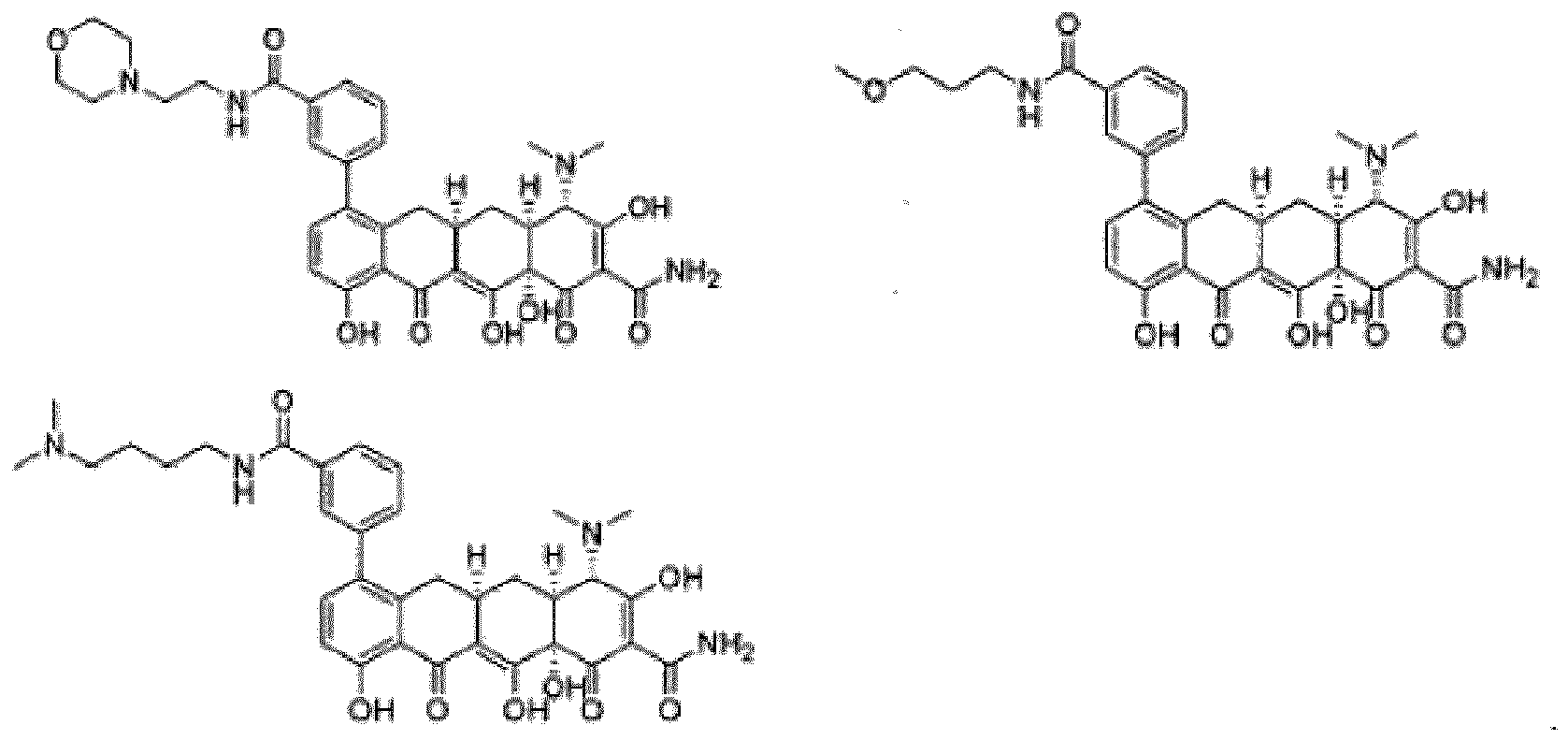
- Substituierte Tetracyclin-Verbindung gemäß irgendeinem der Ansprüche 1 bis 7 zur Verwendung in einem Verfahren zur Behandlung eines auf Tetracyclin reagierenden Zustands in einem Subjekten.
- Pharmazeutische Zusammensetzung, umfassend eine therapeutisch wirksame Menge einer Verbindung aus irgendeinem der Ansprüche 1 bis 7 und einen pharmazeutisch annehmbaren Träger.
Priority Applications (2)
| Application Number | Priority Date | Filing Date | Title |
|---|---|---|---|
| EP15188848.4A EP3045449A1 (de) | 2006-12-21 | 2007-12-21 | Tetracyclinderivate zur behandlung von bakteriellen, viralen und parasitären infektionen |
| EP20198210.5A EP3812372A3 (de) | 2006-12-21 | 2007-12-21 | 7-heterocyclyl substituierte sancyclin derivate zur behandlung von bakteriellen, viralen und parasitären infektionen (z.b. malaria) oder entzündlichen erkrankungen |
Applications Claiming Priority (3)
| Application Number | Priority Date | Filing Date | Title |
|---|---|---|---|
| US87631306P | 2006-12-21 | 2006-12-21 | |
| US94300307P | 2007-06-08 | 2007-06-08 | |
| EP07867938.8A EP2109602B1 (de) | 2006-12-21 | 2007-12-21 | Tetracyclin-derivate zur behandlung bakterieller, viraler und parasitärer infektionen |
Related Parent Applications (3)
| Application Number | Title | Priority Date | Filing Date |
|---|---|---|---|
| EP07867938.8A Division EP2109602B1 (de) | 2006-12-21 | 2007-12-21 | Tetracyclin-derivate zur behandlung bakterieller, viraler und parasitärer infektionen |
| EP07867938.8A Division-Into EP2109602B1 (de) | 2006-12-21 | 2007-12-21 | Tetracyclin-derivate zur behandlung bakterieller, viraler und parasitärer infektionen |
| EP07867938.8 Division | 2007-12-21 |
Related Child Applications (3)
| Application Number | Title | Priority Date | Filing Date |
|---|---|---|---|
| EP20198210.5A Division EP3812372A3 (de) | 2006-12-21 | 2007-12-21 | 7-heterocyclyl substituierte sancyclin derivate zur behandlung von bakteriellen, viralen und parasitären infektionen (z.b. malaria) oder entzündlichen erkrankungen |
| EP15188848.4A Division-Into EP3045449A1 (de) | 2006-12-21 | 2007-12-21 | Tetracyclinderivate zur behandlung von bakteriellen, viralen und parasitären infektionen |
| EP15188848.4A Division EP3045449A1 (de) | 2006-12-21 | 2007-12-21 | Tetracyclinderivate zur behandlung von bakteriellen, viralen und parasitären infektionen |
Publications (2)
| Publication Number | Publication Date |
|---|---|
| EP2455367A1 EP2455367A1 (de) | 2012-05-23 |
| EP2455367B1 true EP2455367B1 (de) | 2015-12-16 |
Family
ID=39495878
Family Applications (6)
| Application Number | Title | Priority Date | Filing Date |
|---|---|---|---|
| EP15188848.4A Withdrawn EP3045449A1 (de) | 2006-12-21 | 2007-12-21 | Tetracyclinderivate zur behandlung von bakteriellen, viralen und parasitären infektionen |
| EP12151178.6A Not-in-force EP2450347B1 (de) | 2006-12-21 | 2007-12-21 | Tetracyxlin-Derivate zur Behandlung bakterieller, viraler und parasitärer Infektionen |
| EP07867938.8A Active EP2109602B1 (de) | 2006-12-21 | 2007-12-21 | Tetracyclin-derivate zur behandlung bakterieller, viraler und parasitärer infektionen |
| EP12151179A Withdrawn EP2452935A3 (de) | 2006-12-21 | 2007-12-21 | Tetracyxlin-Derivate zur Behandlung bakterieller, viraler und parasitärer Infektionen |
| EP12151177.8A Not-in-force EP2455367B1 (de) | 2006-12-21 | 2007-12-21 | Tetracyxlin-Derivate zur Behandlung bakterieller, viraler und parasitärer Infektionen |
| EP20198210.5A Withdrawn EP3812372A3 (de) | 2006-12-21 | 2007-12-21 | 7-heterocyclyl substituierte sancyclin derivate zur behandlung von bakteriellen, viralen und parasitären infektionen (z.b. malaria) oder entzündlichen erkrankungen |
Family Applications Before (4)
| Application Number | Title | Priority Date | Filing Date |
|---|---|---|---|
| EP15188848.4A Withdrawn EP3045449A1 (de) | 2006-12-21 | 2007-12-21 | Tetracyclinderivate zur behandlung von bakteriellen, viralen und parasitären infektionen |
| EP12151178.6A Not-in-force EP2450347B1 (de) | 2006-12-21 | 2007-12-21 | Tetracyxlin-Derivate zur Behandlung bakterieller, viraler und parasitärer Infektionen |
| EP07867938.8A Active EP2109602B1 (de) | 2006-12-21 | 2007-12-21 | Tetracyclin-derivate zur behandlung bakterieller, viraler und parasitärer infektionen |
| EP12151179A Withdrawn EP2452935A3 (de) | 2006-12-21 | 2007-12-21 | Tetracyxlin-Derivate zur Behandlung bakterieller, viraler und parasitärer Infektionen |
Family Applications After (1)
| Application Number | Title | Priority Date | Filing Date |
|---|---|---|---|
| EP20198210.5A Withdrawn EP3812372A3 (de) | 2006-12-21 | 2007-12-21 | 7-heterocyclyl substituierte sancyclin derivate zur behandlung von bakteriellen, viralen und parasitären infektionen (z.b. malaria) oder entzündlichen erkrankungen |
Country Status (15)
| Country | Link |
|---|---|
| US (5) | US8318706B2 (de) |
| EP (6) | EP3045449A1 (de) |
| JP (8) | JP5583411B2 (de) |
| KR (1) | KR101538175B1 (de) |
| AU (1) | AU2007338747B2 (de) |
| BR (1) | BRPI0720569B8 (de) |
| CA (3) | CA2925939C (de) |
| DK (1) | DK2109602T3 (de) |
| ES (2) | ES2463457T3 (de) |
| IL (4) | IL302749A (de) |
| MX (1) | MX2009006846A (de) |
| PL (1) | PL2109602T3 (de) |
| PT (1) | PT2109602E (de) |
| SI (1) | SI2109602T1 (de) |
| WO (1) | WO2008079339A2 (de) |
Families Citing this family (35)
| Publication number | Priority date | Publication date | Assignee | Title |
|---|---|---|---|---|
| US8088820B2 (en) | 2001-04-24 | 2012-01-03 | Paratek Pharmaceuticals, Inc. | Substituted tetracycline compounds for the treatment of malaria |
| AU2005299294B2 (en) | 2004-10-25 | 2012-06-07 | Paratek Pharmaceuticals, Inc. | 4-aminotetracyclines and methods of use thereof |
| WO2006084265A1 (en) | 2005-02-04 | 2006-08-10 | Paratek Pharmaceuticals, Inc. | 11a, 12-DERIVATIVES OF TETRACYCLINE COMPOUNDS |
| WO2008045507A2 (en) | 2006-10-11 | 2008-04-17 | Paratek Pharmaceuticals, Inc. | Substituted tetracycline compounds for treatment of bacillus anthracis infections |
| PT2120963T (pt) | 2006-12-21 | 2018-12-17 | Paratek Pharm Innc | Compostos tetraciclina substituídos para tratamento de distúrbios inflamatórios da pele |
| PL2109602T3 (pl) | 2006-12-21 | 2014-09-30 | Paratek Pharm Innc | Pochodne tetracyliny do leczenia zakażeń bakteryjnych, wirusowych i pasożytniczych |
| BRPI0823405A2 (pt) * | 2007-07-06 | 2012-12-25 | Paratek Pharmaceuticals, Inc. | mÉtodos para sintetizar compostos de tetraciclina substituÍda |
| CA2717703A1 (en) | 2008-03-05 | 2009-09-11 | Paratek Pharmaceuticals, Inc. | Minocycline compounds and methods of use thereof |
| JP2011517697A (ja) * | 2008-04-14 | 2011-06-16 | パラテック ファーマシューティカルズ インコーポレイテッド | 置換テトラサイクリン化合物 |
| EP2341771A4 (de) * | 2008-09-19 | 2012-08-15 | Paratek Pharm Innc | Tetracyclinverbindungen zur behandlung rheumatoider arthritis sowie entsprechende behandlungsverfahren |
| EP2427425B1 (de) | 2009-05-08 | 2017-03-08 | Tetraphase Pharmaceuticals, Inc. | Tetrazyklin verbindungen |
| IN2012DN02502A (de) * | 2009-08-28 | 2015-08-28 | Tetraphase Pharmaceuticals Inc | |
| US8754054B2 (en) * | 2010-07-09 | 2014-06-17 | Albany Molecular Research, Inc. | Antibacterial compounds, methods of making them, and uses thereof |
| US9255068B2 (en) * | 2011-05-12 | 2016-02-09 | Warner Chilcott Company, Llc | Crystalline salts of (4S,4AS,5AR,12AS)-4-dimethylamino-3,10,12,12A-tetrahydroxy-7-[methoxy(methyl)amino)-methyl] acid amide and methods of using the same |
| CA2842838C (en) * | 2011-07-26 | 2017-04-25 | Kbp Biosciences Co., Ltd. | 9-aminomethyl substituted tetracycline compounds |
| GB2496972A (en) * | 2011-11-18 | 2013-05-29 | Redx Pharma Ltd | Oxime and hydrazone derivatives of fluoroquinolone antibacterial drugs |
| CN103387512B (zh) * | 2012-05-08 | 2016-08-31 | 成都睿智化学研究有限公司 | 一种米诺环素的制备方法及其中间体 |
| AU2013262991A1 (en) * | 2012-05-14 | 2014-12-04 | Paratek Pharmaceuticals, Inc. | Methods of using (4S,4aS,5aR,12aS)-4- dimethylamino-3,10,12,12a-tetrahydroxy-7-[(methoxy(methyl)amino)-methyl]-1,11-dioxo-1,4,4a,5,5a,6,11,12a-octahydro-naphthacene-2-carboxylic acid amide |
| CA2874640A1 (en) * | 2012-05-30 | 2013-12-05 | Paratek Pharmaceuticals, Inc. | 7-disubstituted-phenyl tetracycline derivatives |
| AU2013289892A1 (en) * | 2012-07-13 | 2015-02-19 | Paratek Pharmaceuticals, Inc. | Tetracycline compounds for treating neurodegenerative disorders |
| BR112015004523B1 (pt) | 2012-08-31 | 2020-08-04 | Tetraphase Pharmaceuticals, Inc | Compostos de tetraciclina, composições farmacêuticas e seus usos |
| JP2016089002A (ja) * | 2014-10-31 | 2016-05-23 | 出光興産株式会社 | ベンゾフラノチオフェン骨格を有するモノマー及びポリマー、及びそのポリマーを用いた有機薄膜太陽電池材料 |
| DE102015013086A1 (de) | 2015-10-01 | 2017-04-06 | Jutta Regina Giller | Attika für Gebäude |
| GB201615693D0 (en) | 2016-09-15 | 2016-11-02 | Combinatorx Infection Ltd | Combinations |
| CN110582486B (zh) | 2016-10-19 | 2024-01-12 | 四相制药公司 | 艾若威四环素的结晶形式 |
| BR112019008897A2 (pt) | 2016-11-01 | 2019-08-13 | Paratek Pharm Innc | método para tratar pneumonia bacteriana adquirida na comunidade. |
| CN111343991A (zh) | 2017-07-21 | 2020-06-26 | 阿尔米雷尔有限责任公司 | 非炎性病变的治疗 |
| KR102011721B1 (ko) * | 2017-11-28 | 2019-08-19 | 고려대학교 산학협력단 | 포도상구균의 생육을 억제하는 한천 유래 올리고당의 용도 |
| CN115380022A (zh) * | 2018-04-06 | 2022-11-22 | 帕拉特克药品公司 | 萨瑞环素盐酸盐的制造方法 |
| CN109970590A (zh) * | 2018-12-20 | 2019-07-05 | 深圳市祥根生物科技有限公司 | 一种7-氨基米诺环素的制备方法 |
| CN109574868B (zh) * | 2018-12-28 | 2021-11-16 | 天津阿尔塔科技有限公司 | 一种四环素类及其差向异构体氘代内标物的制备方法 |
| US20230181027A1 (en) * | 2019-06-28 | 2023-06-15 | Mayo Foundation For Medical Education And Research | Methods and materials for treating neuromyelitis optica spectrum diseases |
| WO2021231314A1 (en) * | 2020-05-11 | 2021-11-18 | Paratek Pharmaceuticals Inc. | Methods of treating covid-19 using tetracycline compounds |
| CN111574392A (zh) * | 2020-05-27 | 2020-08-25 | 浙江工业大学 | 一种6-去甲基-6-脱水四环素的制备方法 |
| WO2025175063A1 (en) * | 2024-02-14 | 2025-08-21 | Cyclone Therapeutics, Inc. | Tetracycline derivatives, and uses thereof |
Family Cites Families (112)
| Publication number | Priority date | Publication date | Assignee | Title |
|---|---|---|---|---|
| US34656A (en) | 1862-03-11 | Improvement in liquids for exciting galvanic batteries | ||
| US2990331A (en) | 1956-11-23 | 1961-06-27 | Pfizer & Co C | Stable solutions of salts of tetracyclines for parenteral administration |
| US2980584A (en) | 1957-10-29 | 1961-04-18 | Pfizer & Co C | Parenteral magnesium oxytetracycline acetic or lactic acid carboxamide vehicle preparation |
| US3062717A (en) | 1958-12-11 | 1962-11-06 | Pfizer & Co C | Intramuscular calcium tetracycline acetic or lactic acid carboxamide vehicle preparation |
| US3047617A (en) * | 1959-05-18 | 1962-07-31 | Pfizer & Co C | Alkanoic acid esters of 5-hydroxytetracycline and process for preparation |
| GB921252A (en) | 1960-03-09 | 1963-03-20 | Erba Carlo Spa | New tetracycline derivatives |
| US3165531A (en) | 1962-03-08 | 1965-01-12 | Pfizer & Co C | 13-substituted-6-deoxytetracyclines and process utilizing the same |
| GB1108310A (en) | 1964-04-30 | 1968-04-03 | Pfizer & Co C | Derivatives of 6-methylene-tetracycline and process for their preparation |
| US3345379A (en) * | 1965-02-26 | 1967-10-03 | American Cyanamid Co | 7-imidomethyl-6-demethyl-6-deoxytetracyclines |
| US3454697A (en) | 1965-06-08 | 1969-07-08 | American Cyanamid Co | Tetracycline antibiotic compositions for oral use |
| US3304227A (en) | 1965-07-15 | 1967-02-14 | Loyal E Loveless | Antibiotic-containing animal feed |
| NL6607516A (de) | 1966-05-31 | 1967-12-01 | ||
| DE1767891C3 (de) | 1968-06-28 | 1980-10-30 | Pfizer | Verfahren zur Herstellung von wäßrigen arzneilichen Lösungen für die parenterale, perorale und lokale Anwendung mit einem Gehalt an einem Tetracyclinderivat |
| NL158172B (nl) * | 1972-09-18 | 1978-10-16 | Farmaceutici Italia | Werkwijze voor het bereiden van tetracyclinederivaten met een substituent op de 7-plaats. |
| US3957980A (en) | 1972-10-26 | 1976-05-18 | Pfizer Inc. | Doxycycline parenteral compositions |
| GB1469384A (en) | 1974-06-25 | 1977-04-06 | Farmaceutici Italia | Tetracyclines |
| DE2442829A1 (de) | 1974-09-06 | 1976-03-18 | Merck Patent Gmbh | Tetracyclische verbindungen und verfahren zu ihrer herstellung |
| US4018889A (en) | 1976-01-02 | 1977-04-19 | Pfizer Inc. | Oxytetracycline compositions |
| US4126680A (en) | 1977-04-27 | 1978-11-21 | Pfizer Inc. | Tetracycline antibiotic compositions |
| US5064821A (en) | 1982-11-18 | 1991-11-12 | Trustees Of Tufts College | Method and compositions for overcoming tetracycline resistance within living cells |
| US4806529A (en) | 1982-11-18 | 1989-02-21 | Trustees Of Tufts College, Tufts University | Tetracycline activity enhancement |
| US5589470A (en) | 1990-02-26 | 1996-12-31 | Trustees Of Tufts College | Reducing tetracycline resistance in living cells |
| US4704383A (en) | 1983-12-29 | 1987-11-03 | The Research Foundation Of State University Of New York | Non-antibacterial tetracycline compositions possessing anti-collagenolytic properties and methods of preparing and using same |
| US4925833A (en) | 1983-12-29 | 1990-05-15 | The Research Foundation Of State University Of New York | Use of tetracycline to enhance bone protein synthesis and/or treatment of osteoporosis |
| USRE34656E (en) | 1983-12-29 | 1994-07-05 | The Research Foundation Of State University Of New York | Use of tetracycline to enhance bone protein synthesis and/or treatment of bone deficiency |
| US4935412A (en) | 1983-12-29 | 1990-06-19 | The Research Foundation Of State University Of New York | Non-antibacterial tetracycline compositions possessing anti-collagenolytic properties and methods of preparing and using same |
| US4666897A (en) | 1983-12-29 | 1987-05-19 | Research Foundation Of State University | Inhibition of mammalian collagenolytic enzymes by tetracyclines |
| US4806372A (en) | 1985-02-15 | 1989-02-21 | Georgia Oil & Gas Co., Inc. | Nitrite-free-curing of bacon and product thereof |
| JP3016587B2 (ja) | 1989-12-04 | 2000-03-06 | ザ・リサーチ・ファンデーション・オブ・ステート・ユニバーシティ・オブ・ニューヨーク | 非ステロイド抗炎症剤及びテトラサイクリンの配合 |
| US5308839A (en) | 1989-12-04 | 1994-05-03 | The Research Foundation Of State University Of New York | Composition comprising non-steroidal anti-inflammatory agent tenidap and effectively non-antibacterial tetracycline |
| DE4031168A1 (de) | 1990-10-03 | 1992-04-16 | Degussa | Keramischer werkstoff zum verblenden von metallischem zahnersatz |
| US5770588A (en) | 1991-02-11 | 1998-06-23 | The Research Foundation Of State University Of New York | Non-antibacterial tetracycline compositions of the prevention and treatment of root caries |
| US5231017A (en) | 1991-05-17 | 1993-07-27 | Solvay Enzymes, Inc. | Process for producing ethanol |
| US6756365B2 (en) | 1991-11-06 | 2004-06-29 | Trustees Of Tufts College | Reducing tetracycline resistance in living cells |
| US5258371A (en) | 1992-05-29 | 1993-11-02 | Kuraray Co., Ltd. | Method to reduce connective tissue destruction |
| US6043225A (en) | 1992-06-12 | 2000-03-28 | Board Of Regents Of The University Of Washington | Diagnosis and treatment of arterial chlamydial granuloma |
| EP0599397B1 (de) | 1992-11-17 | 1996-08-28 | The Research Foundation Of State University Of New York | Tetracycline inclusive nicht antimicrobiel wirksame, chemisch modifizierte Tetracycline hemmende exzessive Kollagenquervernetzung bei Diabetes |
| US5523297A (en) | 1993-03-02 | 1996-06-04 | The Research Foundation Of State University Of New York | Inhibition of excessive phospholipase A2 activity and/or production by non-antimicrobial tetracyclines |
| US6043231A (en) | 1993-03-02 | 2000-03-28 | The Research Foundation Of State Univ. Of New York | Inhibition of excessive phospholipase A2 activity and/or production by non-antimicrobial tetracyclines |
| US5668122A (en) | 1993-07-28 | 1997-09-16 | Fife; Rose S. | Method to treat cancer with tetracyclines |
| AU1279095A (en) | 1994-02-17 | 1995-09-04 | Pfizer Inc. | 9-(substituted amino)-alpha-6-deoxy-5-oxy tetracycline derivatives, their preparation and their use as antibiotics |
| US5843925A (en) | 1994-12-13 | 1998-12-01 | American Cyanamid Company | Methods for inhibiting angiogenesis, proliferation of endothelial or tumor cells and tumor growth |
| WO1996034852A1 (en) | 1995-05-03 | 1996-11-07 | Pfizer, Inc. | Novel tetracycline derivatives |
| US5834449A (en) | 1996-06-13 | 1998-11-10 | The Research Foundation Of State University Of New York | Treatment of aortic and vascular aneurysms with tetracycline compounds |
| US5827840A (en) | 1996-08-01 | 1998-10-27 | The Research Foundation Of State University Of New York | Promotion of wound healing by chemically-modified tetracyclines |
| US5789395A (en) | 1996-08-30 | 1998-08-04 | The Research Foundation Of State University Of New York | Method of using tetracycline compounds for inhibition of endogenous nitric oxide production |
| US5919774A (en) | 1996-12-10 | 1999-07-06 | Eli Lilly And Company | Pyrroles as sPLA2 inhibitors |
| US5837696A (en) | 1997-01-15 | 1998-11-17 | The Research Foundation Of State University Of New York | Method of inhibiting cancer growth |
| US5773430A (en) | 1997-03-13 | 1998-06-30 | Research Foundation Of State University Of New York | Serine proteinase inhibitory activity by hydrophobic tetracycline |
| US5929055A (en) | 1997-06-23 | 1999-07-27 | The Research Foundation Of State University Of New York | Therapeutic method for management of diabetes mellitus |
| CA2318580A1 (en) | 1998-01-23 | 1999-07-29 | Mark L. Nelson | Pharmaceutically active compounds and methods of use thereof |
| US6277061B1 (en) | 1998-03-31 | 2001-08-21 | The Research Foundation Of State University Of New York | Method of inhibiting membrane-type matrix metalloproteinase |
| US6015804A (en) | 1998-09-11 | 2000-01-18 | The Research Foundation Of State University Of New York | Method of using tetracycline compounds to enhance interleukin-10 production |
| US5977091A (en) | 1998-09-21 | 1999-11-02 | The Research Foundation Of State University Of New York | Method of preventing acute lung injury |
| US5998390A (en) | 1998-09-28 | 1999-12-07 | The Research Foundation Of State University Of New York | Combination of bisphosphonate and tetracycline |
| US6256365B1 (en) | 1999-08-16 | 2001-07-03 | Analogic Corporation | Apparatus and method for reconstruction of images in a computed tomography system using oblique slices |
| EP2327687A3 (de) | 1999-09-14 | 2012-08-15 | Trustees Of Tufts College | Verfahren zur Herstellung von substituierten Tetracyclinen mit Übergangschemien auf Metallbasis |
| US6849615B2 (en) | 1999-09-14 | 2005-02-01 | Paratek Pharmaceuticals, Inc. | 13-substituted methacycline compounds |
| US6500812B2 (en) | 1999-09-14 | 2002-12-31 | Paratek Pharmaceuticals, Inc. | 13-substituted methacycline compounds |
| US6231894B1 (en) | 1999-10-21 | 2001-05-15 | Duke University | Treatments based on discovery that nitric oxide synthase is a paraquat diaphorase |
| AU3105801A (en) | 2000-01-24 | 2001-07-31 | Trustees Of Tufts College | Tetracycline compounds for treatment of cryptosporidium parvum related disorders |
| MXPA02009482A (es) | 2000-03-31 | 2004-05-14 | Tufts College | Compuestos tetraciclinas sustituidos con grupos 7- y 9- carbamato, urea, tiourea, tiocarbamato y heteroaril-amino. |
| WO2001087824A2 (en) | 2000-05-15 | 2001-11-22 | Paratek Pharmaceuticals, Inc. | 7-substituted fused ring tetracycline compounds |
| CN103356996A (zh) | 2000-05-19 | 2013-10-23 | 埃米林药品公司 | Glp-1用于制备治疗急性冠脉综合征的药物的用途 |
| US20020128238A1 (en) | 2000-06-16 | 2002-09-12 | Nelson Mark L. | 7-phenyl-substituted tetracycline compounds |
| US20040224927A1 (en) | 2000-06-16 | 2004-11-11 | Trustees Of Tufts College | 7-N-substituted phenyl tetracycline compounds |
| US20020132798A1 (en) | 2000-06-16 | 2002-09-19 | Nelson Mark L. | 7-phenyl-substituted tetracycline compounds |
| CN1450989A (zh) * | 2000-07-07 | 2003-10-22 | 塔夫茨大学信托人 | 7-取代的四环素化合物 |
| JP4963771B2 (ja) | 2000-07-07 | 2012-06-27 | トラスティーズ・オブ・タフツ・カレッジ | 7、8および9−置換テトラサイクリン化合物 |
| US20050143353A1 (en) | 2000-07-07 | 2005-06-30 | Paratek Pharmaceuticals, Inc. | 13-Substituted methacycline compounds |
| EA013908B1 (ru) | 2000-07-07 | 2010-08-30 | Трастис Оф Тафтс Коллидж | Замещенные соединения миноциклина (варианты), фармацевтическая композиция и способ лечения чувствительного к тетрациклину состояния млекопитающего |
| US7094806B2 (en) | 2000-07-07 | 2006-08-22 | Trustees Of Tufts College | 7, 8 and 9-substituted tetracycline compounds |
| US7553828B2 (en) | 2001-03-13 | 2009-06-30 | Paratek Pharmaceuticals, Inc. | 9-aminomethyl substituted minocycline compounds |
| WO2002072532A1 (en) | 2001-03-13 | 2002-09-19 | Paratek Pharmaceuticals, Inc. | 7, 9-substituted tetracycline compounds |
| EP1241160A1 (de) | 2001-03-13 | 2002-09-18 | Glaxo Group Limited | Tetracyclinderivate und ihre Verwendung als Antibiotica |
| WO2002072506A2 (en) | 2001-03-13 | 2002-09-19 | Paratek Pharmaceuticals, Inc. | 7-pyrollyl tetracycline compounds and methods of use thereof |
| WO2002072031A2 (en) * | 2001-03-14 | 2002-09-19 | Paratek Pharmaceuticals, Inc. | Substituted tetracycline compounds as synergistic antifungal agents |
| JP2004530661A (ja) | 2001-03-14 | 2004-10-07 | パラテック ファーマシューティカルズ インコーポレイテッド | 抗真菌剤としての置換テトラサイクリン化合物 |
| US8088820B2 (en) * | 2001-04-24 | 2012-01-03 | Paratek Pharmaceuticals, Inc. | Substituted tetracycline compounds for the treatment of malaria |
| EP1399414B1 (de) * | 2001-04-24 | 2010-01-13 | Paratek Pharmaceuticals, Inc. | Substituierte tetracyclin-verbindungen zur behandlung von malaria |
| EP2329826A1 (de) * | 2001-07-13 | 2011-06-08 | Paratek Pharmaceuticals, Inc. | Tetracycline zur Behandlung der multiplen Sklerose |
| US20060194773A1 (en) | 2001-07-13 | 2006-08-31 | Paratek Pharmaceuticals, Inc. | Tetracyline compounds having target therapeutic activities |
| AU2002365120A1 (en) | 2001-08-02 | 2003-07-15 | Paratek Pharmaceuticals, Inc. | Medicaments |
| WO2003023568A2 (en) | 2001-09-10 | 2003-03-20 | Paratek Pharmaceuticals, Inc. | Computational method for determining oral bioavailability |
| EP2311799A1 (de) | 2002-01-08 | 2011-04-20 | Paratek Pharmaceuticals, Inc. | 4-Dedimethylamin-Tetracyclinverbindungen |
| JP2005526754A (ja) * | 2002-03-08 | 2005-09-08 | パラテック ファーマシューティカルズ インコーポレイテッド | アミノメチル置換されたテトラサイクリン化合物 |
| KR101083498B1 (ko) | 2002-03-21 | 2011-11-16 | 파라테크 파마슈티컬스, 인크. | 치환된 테트라시클린 화합물 |
| EP1494681A4 (de) | 2002-04-16 | 2008-08-06 | Collagenex Pharm Inc | Verfahren zum gleichzeitigen behandeln von okularer rosacea und akne rosacea |
| CA2492273C (en) | 2002-07-12 | 2013-02-05 | Paratek Pharmaceuticals, Inc. | 3, 10, and 12a substituted tetracycline compounds |
| WO2004038001A2 (en) * | 2002-10-24 | 2004-05-06 | Paratek Pharmaceuticals, Inc. | Substituted tetracycline compounds for the treatment of malaria |
| CA2503446C (en) * | 2002-10-24 | 2012-12-18 | Paratek Pharmaceuticals, Inc. | Methods of using substituted tetracycline compounds to modulate rna |
| WO2004064728A2 (en) * | 2003-01-16 | 2004-08-05 | Paratek Pharmaceuticals, Inc. | Use of specific tetracycline compounds in therapy |
| WO2004091513A2 (en) | 2003-04-10 | 2004-10-28 | Paratek Pharmaceuticals, Inc. | 9-aminomethyl substituted minocycline compounds |
| CA2531728A1 (en) | 2003-07-09 | 2005-02-03 | Paratek Pharmaceuticals, Inc. | Substituted tetracycline compounds |
| US20060287283A1 (en) | 2003-07-09 | 2006-12-21 | Paratek Pharmaceuticals, Inc. | Prodrugs of 9-aminomethyl tetracycline compounds |
| JP4738333B2 (ja) * | 2003-07-09 | 2011-08-03 | パラテック ファーマシューティカルズ インコーポレイテッド | 9−アミノメチルテトラサイクリン化合物のプロドラッグ |
| CA2553510C (en) | 2004-01-15 | 2012-09-25 | Paratek Pharmaceuticals, Inc. | Aromatic a-ring derivatives of tetracycline compounds |
| WO2005082860A1 (en) | 2004-02-27 | 2005-09-09 | National Research Council Of Canada | Tetracyclines and their use as calpain inhibitors |
| CA2892332C (en) * | 2004-05-21 | 2017-03-21 | President And Fellows Of Harvard College | Synthesis of tetracyclines and analogues thereof |
| AU2005299294B2 (en) | 2004-10-25 | 2012-06-07 | Paratek Pharmaceuticals, Inc. | 4-aminotetracyclines and methods of use thereof |
| EP2269985A3 (de) | 2004-10-25 | 2011-09-21 | Paratek Pharmaceuticals, Inc. | Substituierte Tetracyclinverbindungen |
| WO2006084265A1 (en) | 2005-02-04 | 2006-08-10 | Paratek Pharmaceuticals, Inc. | 11a, 12-DERIVATIVES OF TETRACYCLINE COMPOUNDS |
| US20070015738A1 (en) * | 2005-07-15 | 2007-01-18 | Walker Stephen G | Use of non-antibacterial tetracycline formulations for inhibiting bacterial spores from becoming infectious vegetative cells |
| JP2009502809A (ja) * | 2005-07-21 | 2009-01-29 | パラテック ファーマシューティカルズ インコーポレイテッド | 10−置換テトラサイクリンおよびその使用方法 |
| EP2298324A1 (de) | 2006-01-24 | 2011-03-23 | Paratek Pharmaceuticals, Inc. | Verfahren zur Verbesserung der oralen Bioverfügbarkeit von Tetracyclinen |
| AU2007249695A1 (en) | 2006-05-15 | 2007-11-22 | Paratek Pharmaceuticals, Inc. | Methods of regulating expression of genes or of gene products using substituted tetracycline compounds |
| WO2008045507A2 (en) | 2006-10-11 | 2008-04-17 | Paratek Pharmaceuticals, Inc. | Substituted tetracycline compounds for treatment of bacillus anthracis infections |
| PL2109602T3 (pl) * | 2006-12-21 | 2014-09-30 | Paratek Pharm Innc | Pochodne tetracyliny do leczenia zakażeń bakteryjnych, wirusowych i pasożytniczych |
| JP2010523684A (ja) * | 2007-04-12 | 2010-07-15 | パラテック ファーマシューティカルズ インコーポレイテッド | テトラサイクリン化合物を用いる、脊髄筋委縮症を治療するための方法 |
| JP2010525069A (ja) | 2007-04-27 | 2010-07-22 | パラテック ファーマシューティカルズ インコーポレイテッド | アミノアルキルテトラサイクリン化合物の合成方法および精製方法 |
| BRPI0823405A2 (pt) | 2007-07-06 | 2012-12-25 | Paratek Pharmaceuticals, Inc. | mÉtodos para sintetizar compostos de tetraciclina substituÍda |
| EP2341771A4 (de) * | 2008-09-19 | 2012-08-15 | Paratek Pharm Innc | Tetracyclinverbindungen zur behandlung rheumatoider arthritis sowie entsprechende behandlungsverfahren |
-
2007
- 2007-12-21 PL PL07867938T patent/PL2109602T3/pl unknown
- 2007-12-21 CA CA2925939A patent/CA2925939C/en active Active
- 2007-12-21 CA CA3051994A patent/CA3051994A1/en not_active Abandoned
- 2007-12-21 MX MX2009006846A patent/MX2009006846A/es active IP Right Grant
- 2007-12-21 SI SI200731452T patent/SI2109602T1/sl unknown
- 2007-12-21 CA CA2673466A patent/CA2673466C/en active Active
- 2007-12-21 WO PCT/US2007/026178 patent/WO2008079339A2/en not_active Ceased
- 2007-12-21 PT PT78679388T patent/PT2109602E/pt unknown
- 2007-12-21 BR BRPI0720569A patent/BRPI0720569B8/pt active IP Right Grant
- 2007-12-21 IL IL302749A patent/IL302749A/en unknown
- 2007-12-21 EP EP15188848.4A patent/EP3045449A1/de not_active Withdrawn
- 2007-12-21 EP EP12151178.6A patent/EP2450347B1/de not_active Not-in-force
- 2007-12-21 JP JP2009542938A patent/JP5583411B2/ja active Active
- 2007-12-21 DK DK07867938.8T patent/DK2109602T3/da active
- 2007-12-21 KR KR1020097015172A patent/KR101538175B1/ko active Active
- 2007-12-21 ES ES07867938.8T patent/ES2463457T3/es active Active
- 2007-12-21 IL IL270446A patent/IL270446B2/en unknown
- 2007-12-21 EP EP07867938.8A patent/EP2109602B1/de active Active
- 2007-12-21 US US11/963,540 patent/US8318706B2/en active Active
- 2007-12-21 AU AU2007338747A patent/AU2007338747B2/en active Active
- 2007-12-21 EP EP12151179A patent/EP2452935A3/de not_active Withdrawn
- 2007-12-21 ES ES12151178.6T patent/ES2548261T3/es active Active
- 2007-12-21 EP EP12151177.8A patent/EP2455367B1/de not_active Not-in-force
- 2007-12-21 EP EP20198210.5A patent/EP3812372A3/de not_active Withdrawn
-
2010
- 2010-12-20 JP JP2010283844A patent/JP2011093914A/ja active Pending
-
2012
- 2012-11-27 US US13/686,639 patent/US9012433B2/en active Active
-
2014
- 2014-06-12 JP JP2014121362A patent/JP6061897B2/ja not_active Expired - Fee Related
- 2014-09-21 IL IL234755A patent/IL234755A/en active IP Right Grant
-
2015
- 2015-03-26 US US14/669,238 patent/US20160046561A1/en not_active Abandoned
- 2015-08-17 JP JP2015160343A patent/JP2015205939A/ja not_active Withdrawn
-
2017
- 2017-03-01 IL IL25085817A patent/IL250858B/en not_active IP Right Cessation
- 2017-12-13 JP JP2017238683A patent/JP2018039846A/ja not_active Ceased
-
2019
- 2019-03-04 JP JP2019038753A patent/JP2019081802A/ja not_active Withdrawn
-
2021
- 2021-01-04 US US17/140,206 patent/US20210395189A1/en not_active Abandoned
- 2021-01-27 JP JP2021010842A patent/JP2021063137A/ja not_active Withdrawn
-
2023
- 2023-11-24 JP JP2023199075A patent/JP2024009235A/ja active Pending
-
2025
- 2025-01-21 US US19/032,452 patent/US20250388531A1/en active Pending
Also Published As
Similar Documents
| Publication | Publication Date | Title |
|---|---|---|
| EP2455367B1 (de) | Tetracyxlin-Derivate zur Behandlung bakterieller, viraler und parasitärer Infektionen | |
| US7825105B2 (en) | 3, 10, and 12a substituted tetracycline compounds | |
| EP1648859B1 (de) | Substituierte tetracyclinverbindungen | |
| EP1805134B1 (de) | 4-aminotetracycline und verfahren zu ihrer verwendung | |
| US7786099B2 (en) | Aromatic a-ring derivatives of tetracycline compounds | |
| US7553828B2 (en) | 9-aminomethyl substituted minocycline compounds | |
| HK1170218B (en) | Tetracycline derivatives for the treatment of bacterial, viral and parasitic infections | |
| AU2012216640A1 (en) | 4-aminotetracyclines and methods of use thereof | |
| HK1135101B (en) | Tetracycline derivatives for the treatment of bacterial, viral and parasitic infections | |
| HK1155386A (en) | Substituted tetracycline compounds |
Legal Events
| Date | Code | Title | Description |
|---|---|---|---|
| PUAI | Public reference made under article 153(3) epc to a published international application that has entered the european phase |
Free format text: ORIGINAL CODE: 0009012 |
|
| AC | Divisional application: reference to earlier application |
Ref document number: 2109602 Country of ref document: EP Kind code of ref document: P |
|
| AK | Designated contracting states |
Kind code of ref document: A1 Designated state(s): AT BE BG CH CY CZ DE DK EE ES FI FR GB GR HU IE IS IT LI LT LU LV MC MT NL PL PT RO SE SI SK TR |
|
| RIN1 | Information on inventor provided before grant (corrected) |
Inventor name: VERMA, ATUL K. Inventor name: BERNIAC, JOEL |
|
| 17P | Request for examination filed |
Effective date: 20121119 |
|
| 17Q | First examination report despatched |
Effective date: 20131206 |
|
| GRAP | Despatch of communication of intention to grant a patent |
Free format text: ORIGINAL CODE: EPIDOSNIGR1 |
|
| INTG | Intention to grant announced |
Effective date: 20150722 |
|
| GRAS | Grant fee paid |
Free format text: ORIGINAL CODE: EPIDOSNIGR3 |
|
| GRAR | Information related to intention to grant a patent recorded |
Free format text: ORIGINAL CODE: EPIDOSNIGR71 |
|
| GRAA | (expected) grant |
Free format text: ORIGINAL CODE: 0009210 |
|
| INTG | Intention to grant announced |
Effective date: 20151028 |
|
| AC | Divisional application: reference to earlier application |
Ref document number: 2109602 Country of ref document: EP Kind code of ref document: P |
|
| AK | Designated contracting states |
Kind code of ref document: B1 Designated state(s): AT BE BG CH CY CZ DE DK EE ES FI FR GB GR HU IE IS IT LI LT LU LV MC MT NL PL PT RO SE SI SK TR |
|
| REG | Reference to a national code |
Ref country code: GB Ref legal event code: FG4D |
|
| REG | Reference to a national code |
Ref country code: CH Ref legal event code: EP |
|
| REG | Reference to a national code |
Ref country code: IE Ref legal event code: FG4D |
|
| REG | Reference to a national code |
Ref country code: AT Ref legal event code: REF Ref document number: 765485 Country of ref document: AT Kind code of ref document: T Effective date: 20160115 |
|
| REG | Reference to a national code |
Ref country code: DE Ref legal event code: R096 Ref document number: 602007044242 Country of ref document: DE |
|
| REG | Reference to a national code |
Ref country code: NL Ref legal event code: MP Effective date: 20151216 |
|
| REG | Reference to a national code |
Ref country code: LT Ref legal event code: MG4D |
|
| PG25 | Lapsed in a contracting state [announced via postgrant information from national office to epo] |
Ref country code: LT Free format text: LAPSE BECAUSE OF FAILURE TO SUBMIT A TRANSLATION OF THE DESCRIPTION OR TO PAY THE FEE WITHIN THE PRESCRIBED TIME-LIMIT Effective date: 20151216 |
|
| REG | Reference to a national code |
Ref country code: AT Ref legal event code: MK05 Ref document number: 765485 Country of ref document: AT Kind code of ref document: T Effective date: 20151216 |
|
| PG25 | Lapsed in a contracting state [announced via postgrant information from national office to epo] |
Ref country code: BE Free format text: LAPSE BECAUSE OF NON-PAYMENT OF DUE FEES Effective date: 20151231 Ref country code: LV Free format text: LAPSE BECAUSE OF FAILURE TO SUBMIT A TRANSLATION OF THE DESCRIPTION OR TO PAY THE FEE WITHIN THE PRESCRIBED TIME-LIMIT Effective date: 20151216 Ref country code: SE Free format text: LAPSE BECAUSE OF FAILURE TO SUBMIT A TRANSLATION OF THE DESCRIPTION OR TO PAY THE FEE WITHIN THE PRESCRIBED TIME-LIMIT Effective date: 20151216 Ref country code: NL Free format text: LAPSE BECAUSE OF FAILURE TO SUBMIT A TRANSLATION OF THE DESCRIPTION OR TO PAY THE FEE WITHIN THE PRESCRIBED TIME-LIMIT Effective date: 20151216 Ref country code: GR Free format text: LAPSE BECAUSE OF FAILURE TO SUBMIT A TRANSLATION OF THE DESCRIPTION OR TO PAY THE FEE WITHIN THE PRESCRIBED TIME-LIMIT Effective date: 20160317 Ref country code: FI Free format text: LAPSE BECAUSE OF FAILURE TO SUBMIT A TRANSLATION OF THE DESCRIPTION OR TO PAY THE FEE WITHIN THE PRESCRIBED TIME-LIMIT Effective date: 20151216 |
|
| REG | Reference to a national code |
Ref country code: DE Ref legal event code: R119 Ref document number: 602007044242 Country of ref document: DE |
|
| PG25 | Lapsed in a contracting state [announced via postgrant information from national office to epo] |
Ref country code: ES Free format text: LAPSE BECAUSE OF FAILURE TO SUBMIT A TRANSLATION OF THE DESCRIPTION OR TO PAY THE FEE WITHIN THE PRESCRIBED TIME-LIMIT Effective date: 20151216 Ref country code: IT Free format text: LAPSE BECAUSE OF FAILURE TO SUBMIT A TRANSLATION OF THE DESCRIPTION OR TO PAY THE FEE WITHIN THE PRESCRIBED TIME-LIMIT Effective date: 20151216 Ref country code: CZ Free format text: LAPSE BECAUSE OF FAILURE TO SUBMIT A TRANSLATION OF THE DESCRIPTION OR TO PAY THE FEE WITHIN THE PRESCRIBED TIME-LIMIT Effective date: 20151216 |
|
| REG | Reference to a national code |
Ref country code: CH Ref legal event code: PL |
|
| PG25 | Lapsed in a contracting state [announced via postgrant information from national office to epo] |
Ref country code: IS Free format text: LAPSE BECAUSE OF FAILURE TO SUBMIT A TRANSLATION OF THE DESCRIPTION OR TO PAY THE FEE WITHIN THE PRESCRIBED TIME-LIMIT Effective date: 20160416 Ref country code: AT Free format text: LAPSE BECAUSE OF FAILURE TO SUBMIT A TRANSLATION OF THE DESCRIPTION OR TO PAY THE FEE WITHIN THE PRESCRIBED TIME-LIMIT Effective date: 20151216 Ref country code: SK Free format text: LAPSE BECAUSE OF FAILURE TO SUBMIT A TRANSLATION OF THE DESCRIPTION OR TO PAY THE FEE WITHIN THE PRESCRIBED TIME-LIMIT Effective date: 20151216 Ref country code: RO Free format text: LAPSE BECAUSE OF FAILURE TO SUBMIT A TRANSLATION OF THE DESCRIPTION OR TO PAY THE FEE WITHIN THE PRESCRIBED TIME-LIMIT Effective date: 20151216 Ref country code: EE Free format text: LAPSE BECAUSE OF FAILURE TO SUBMIT A TRANSLATION OF THE DESCRIPTION OR TO PAY THE FEE WITHIN THE PRESCRIBED TIME-LIMIT Effective date: 20151216 Ref country code: PT Free format text: LAPSE BECAUSE OF FAILURE TO SUBMIT A TRANSLATION OF THE DESCRIPTION OR TO PAY THE FEE WITHIN THE PRESCRIBED TIME-LIMIT Effective date: 20160418 |
|
| REG | Reference to a national code |
Ref country code: IE Ref legal event code: MM4A |
|
| PG25 | Lapsed in a contracting state [announced via postgrant information from national office to epo] |
Ref country code: MC Free format text: LAPSE BECAUSE OF FAILURE TO SUBMIT A TRANSLATION OF THE DESCRIPTION OR TO PAY THE FEE WITHIN THE PRESCRIBED TIME-LIMIT Effective date: 20151216 |
|
| PLBE | No opposition filed within time limit |
Free format text: ORIGINAL CODE: 0009261 |
|
| STAA | Information on the status of an ep patent application or granted ep patent |
Free format text: STATUS: NO OPPOSITION FILED WITHIN TIME LIMIT |
|
| PG25 | Lapsed in a contracting state [announced via postgrant information from national office to epo] |
Ref country code: PL Free format text: LAPSE BECAUSE OF FAILURE TO SUBMIT A TRANSLATION OF THE DESCRIPTION OR TO PAY THE FEE WITHIN THE PRESCRIBED TIME-LIMIT Effective date: 20151216 Ref country code: LI Free format text: LAPSE BECAUSE OF NON-PAYMENT OF DUE FEES Effective date: 20151231 Ref country code: DE Free format text: LAPSE BECAUSE OF NON-PAYMENT OF DUE FEES Effective date: 20160701 Ref country code: CH Free format text: LAPSE BECAUSE OF NON-PAYMENT OF DUE FEES Effective date: 20151231 Ref country code: IE Free format text: LAPSE BECAUSE OF NON-PAYMENT OF DUE FEES Effective date: 20151221 Ref country code: DK Free format text: LAPSE BECAUSE OF FAILURE TO SUBMIT A TRANSLATION OF THE DESCRIPTION OR TO PAY THE FEE WITHIN THE PRESCRIBED TIME-LIMIT Effective date: 20151216 |
|
| 26N | No opposition filed |
Effective date: 20160919 |
|
| GBPC | Gb: european patent ceased through non-payment of renewal fee |
Effective date: 20160316 |
|
| PG25 | Lapsed in a contracting state [announced via postgrant information from national office to epo] |
Ref country code: BE Free format text: LAPSE BECAUSE OF FAILURE TO SUBMIT A TRANSLATION OF THE DESCRIPTION OR TO PAY THE FEE WITHIN THE PRESCRIBED TIME-LIMIT Effective date: 20151216 |
|
| REG | Reference to a national code |
Ref country code: FR Ref legal event code: ST Effective date: 20161125 |
|
| PG25 | Lapsed in a contracting state [announced via postgrant information from national office to epo] |
Ref country code: GB Free format text: LAPSE BECAUSE OF NON-PAYMENT OF DUE FEES Effective date: 20160316 Ref country code: FR Free format text: LAPSE BECAUSE OF NON-PAYMENT OF DUE FEES Effective date: 20160216 |
|
| PG25 | Lapsed in a contracting state [announced via postgrant information from national office to epo] |
Ref country code: SI Free format text: LAPSE BECAUSE OF FAILURE TO SUBMIT A TRANSLATION OF THE DESCRIPTION OR TO PAY THE FEE WITHIN THE PRESCRIBED TIME-LIMIT Effective date: 20151216 |
|
| PG25 | Lapsed in a contracting state [announced via postgrant information from national office to epo] |
Ref country code: HU Free format text: LAPSE BECAUSE OF FAILURE TO SUBMIT A TRANSLATION OF THE DESCRIPTION OR TO PAY THE FEE WITHIN THE PRESCRIBED TIME-LIMIT; INVALID AB INITIO Effective date: 20071221 Ref country code: BG Free format text: LAPSE BECAUSE OF FAILURE TO SUBMIT A TRANSLATION OF THE DESCRIPTION OR TO PAY THE FEE WITHIN THE PRESCRIBED TIME-LIMIT Effective date: 20151216 |
|
| PG25 | Lapsed in a contracting state [announced via postgrant information from national office to epo] |
Ref country code: CY Free format text: LAPSE BECAUSE OF FAILURE TO SUBMIT A TRANSLATION OF THE DESCRIPTION OR TO PAY THE FEE WITHIN THE PRESCRIBED TIME-LIMIT Effective date: 20151216 |
|
| PG25 | Lapsed in a contracting state [announced via postgrant information from national office to epo] |
Ref country code: MT Free format text: LAPSE BECAUSE OF FAILURE TO SUBMIT A TRANSLATION OF THE DESCRIPTION OR TO PAY THE FEE WITHIN THE PRESCRIBED TIME-LIMIT Effective date: 20151216 Ref country code: TR Free format text: LAPSE BECAUSE OF FAILURE TO SUBMIT A TRANSLATION OF THE DESCRIPTION OR TO PAY THE FEE WITHIN THE PRESCRIBED TIME-LIMIT Effective date: 20151216 |
|
| PG25 | Lapsed in a contracting state [announced via postgrant information from national office to epo] |
Ref country code: LU Free format text: LAPSE BECAUSE OF NON-PAYMENT OF DUE FEES Effective date: 20151221 |