EP2456121B1 - Registrierung von physikalischen, unklonbaren Funktionen mittels eines Challenge-Response - Google Patents
Registrierung von physikalischen, unklonbaren Funktionen mittels eines Challenge-Response Download PDFInfo
- Publication number
- EP2456121B1 EP2456121B1 EP11189269.1A EP11189269A EP2456121B1 EP 2456121 B1 EP2456121 B1 EP 2456121B1 EP 11189269 A EP11189269 A EP 11189269A EP 2456121 B1 EP2456121 B1 EP 2456121B1
- Authority
- EP
- European Patent Office
- Prior art keywords
- value
- response
- challenge
- circuit
- puf
- Prior art date
- Legal status (The legal status is an assumption and is not a legal conclusion. Google has not performed a legal analysis and makes no representation as to the accuracy of the status listed.)
- Active
Links
Images



Classifications
-
- H—ELECTRICITY
- H04—ELECTRIC COMMUNICATION TECHNIQUE
- H04L—TRANSMISSION OF DIGITAL INFORMATION, e.g. TELEGRAPHIC COMMUNICATION
- H04L9/00—Cryptographic mechanisms or cryptographic arrangements for secret or secure communications; Network security protocols
- H04L9/32—Cryptographic mechanisms or cryptographic arrangements for secret or secure communications; Network security protocols including means for verifying the identity or authority of a user of the system or for message authentication, e.g. authorization, entity authentication, data integrity or data verification, non-repudiation, key authentication or verification of credentials
- H04L9/3271—Cryptographic mechanisms or cryptographic arrangements for secret or secure communications; Network security protocols including means for verifying the identity or authority of a user of the system or for message authentication, e.g. authorization, entity authentication, data integrity or data verification, non-repudiation, key authentication or verification of credentials using challenge-response
- H04L9/3278—Cryptographic mechanisms or cryptographic arrangements for secret or secure communications; Network security protocols including means for verifying the identity or authority of a user of the system or for message authentication, e.g. authorization, entity authentication, data integrity or data verification, non-repudiation, key authentication or verification of credentials using challenge-response using physically unclonable functions [PUF]
-
- H—ELECTRICITY
- H04—ELECTRIC COMMUNICATION TECHNIQUE
- H04L—TRANSMISSION OF DIGITAL INFORMATION, e.g. TELEGRAPHIC COMMUNICATION
- H04L9/00—Cryptographic mechanisms or cryptographic arrangements for secret or secure communications; Network security protocols
- H04L9/32—Cryptographic mechanisms or cryptographic arrangements for secret or secure communications; Network security protocols including means for verifying the identity or authority of a user of the system or for message authentication, e.g. authorization, entity authentication, data integrity or data verification, non-repudiation, key authentication or verification of credentials
- H04L9/3271—Cryptographic mechanisms or cryptographic arrangements for secret or secure communications; Network security protocols including means for verifying the identity or authority of a user of the system or for message authentication, e.g. authorization, entity authentication, data integrity or data verification, non-repudiation, key authentication or verification of credentials using challenge-response
-
- H—ELECTRICITY
- H04—ELECTRIC COMMUNICATION TECHNIQUE
- H04L—TRANSMISSION OF DIGITAL INFORMATION, e.g. TELEGRAPHIC COMMUNICATION
- H04L9/00—Cryptographic mechanisms or cryptographic arrangements for secret or secure communications; Network security protocols
- H04L9/32—Cryptographic mechanisms or cryptographic arrangements for secret or secure communications; Network security protocols including means for verifying the identity or authority of a user of the system or for message authentication, e.g. authorization, entity authentication, data integrity or data verification, non-repudiation, key authentication or verification of credentials
- H04L9/3271—Cryptographic mechanisms or cryptographic arrangements for secret or secure communications; Network security protocols including means for verifying the identity or authority of a user of the system or for message authentication, e.g. authorization, entity authentication, data integrity or data verification, non-repudiation, key authentication or verification of credentials using challenge-response
- H04L9/3273—Cryptographic mechanisms or cryptographic arrangements for secret or secure communications; Network security protocols including means for verifying the identity or authority of a user of the system or for message authentication, e.g. authorization, entity authentication, data integrity or data verification, non-repudiation, key authentication or verification of credentials using challenge-response for mutual authentication
-
- H—ELECTRICITY
- H04—ELECTRIC COMMUNICATION TECHNIQUE
- H04L—TRANSMISSION OF DIGITAL INFORMATION, e.g. TELEGRAPHIC COMMUNICATION
- H04L9/00—Cryptographic mechanisms or cryptographic arrangements for secret or secure communications; Network security protocols
- H04L9/32—Cryptographic mechanisms or cryptographic arrangements for secret or secure communications; Network security protocols including means for verifying the identity or authority of a user of the system or for message authentication, e.g. authorization, entity authentication, data integrity or data verification, non-repudiation, key authentication or verification of credentials
- H04L9/3236—Cryptographic mechanisms or cryptographic arrangements for secret or secure communications; Network security protocols including means for verifying the identity or authority of a user of the system or for message authentication, e.g. authorization, entity authentication, data integrity or data verification, non-repudiation, key authentication or verification of credentials using cryptographic hash functions
- H04L9/3242—Cryptographic mechanisms or cryptographic arrangements for secret or secure communications; Network security protocols including means for verifying the identity or authority of a user of the system or for message authentication, e.g. authorization, entity authentication, data integrity or data verification, non-repudiation, key authentication or verification of credentials using cryptographic hash functions involving keyed hash functions, e.g. message authentication codes [MACs], CBC-MAC or HMAC
Definitions
- the present invention relates generally to physically unclonable functions, and more specifically, to provide security for an enrollment process that can continue during or after a challenge-response authentication process.
- SIMPL Systems On a Public Key Variant of Physical Unclonable Functions
- PAFs physical unclonable functions
- US 2010/0250936 A1 describes an integrated circuit which includes an arithmetic circuit having input/output characteristics determined by element-specific physical characteristics; a storage unit having cipher text obtained by performing encryption processing on predetermined secret information using an output value output from the arithmetic circuit with respect to input of a predetermined value and the predetermined value input into the arithmetic circuit stored therein; and a decryption unit that restores the predetermined secret information by inputting the predetermined value stored in the storage unit into the arithmetic circuit and decrypting the cipher text stored in the storage unit using the output value output from the arithmetic circuit when the predetermined secret information is used.
- a method includes a physically unclonable function- (PUF) enabled device that receives a communication that includes a first challenge value, a second challenge value and a remote message authenticity value.
- the PUF-enabled device generates a first response value from the first challenge value by entering the first challenge value into a PUF circuit.
- the PUF-enabled device also generates a plurality of keys by applying the first response value to a key generation circuit.
- the PUF-enabled device verifies the received message authenticity value by comparing the remote message authenticity value to a value generated from the one of the plurality of keys.
- the PUF-enabled device then generates a second response value to the second challenge value by entering the second challenge value into the PUF circuit.
- a local message authenticity value is generated from a second one of the plurality of keys and by the PUF-enabled device.
- the PUF-enabled device encrypts, using a third one of the plurality of keys and the second response value and then a local message authenticity value is used to authenticate the message.
- the PUF-enabled device then transmits the encrypted second response value and message authenticity value.
- Embodiments of the present disclosure are directed toward a device that has a transceiver circuit configured and arranged to receive and transmit messages.
- the device also includes a PUF circuit configured to respond to a challenge value by generating a response value and a processing circuit configured and arranged to process messages from the transceiver circuit by performing a variety of functions.
- the processing circuit is configured to identify, from a message, a first challenge, a second challenge and a remote message authenticity value and to submit the first challenge to the PUF circuit.
- the processing circuit is also configured to receive a first response from the PUF circuit and to generate a plurality of keys from the first response.
- Other functions that the processing circuit is configured to perform include submission of the second challenge to the PUF circuit and the receipt of a second response from the PUF circuit.
- the processing circuit is also configured to encrypt, using a third one of the plurality of keys, the second response. Thereafter, the processing circuit generates a local message authenticity value from a second one of the plurality of keys. This local message authenticity value can be used to authenticate the message. The processing circuit can then use the resulting encrypted second response and the local message authenticity value for submission to the transceiver circuit for transmission thereof.
- a system includes an authentication device which has a non-transitory storage medium containing challenge-response pairs associated with one or more identification values and including a respective challenge value and response value.
- the authentication device can also include a transceiver circuit configured and arranged to communicate with external devices and a processing circuit coupled to the transceiver and the non-transitory storage medium and configured and arranged to retrieve a challenge-response pair in response to receipt of an identification value.
- the processing circuit is also configured to derive a set of key values from a response value of the challenge-response pair and to generate a first authentication value from a first key value of the set of key values.
- the processing circuit can also be configured to send a transmission request to the transceiver circuit, the transmission request including an additional challenge value and the first authentication value and thereafter receive a data transmission from the transceiver circuit.
- the processing circuit is further configured to verify the data transmission by comparing data in the data transmission to both the response value of the challenge-response pair and a third key value of the set of key values.
- the processing circuit is also configured to decrypt the data transmission using a second key value of the set of key values and to store an additional challenge-response pair that includes the additional challenge value and an additional response value received as part of the data transmission.
- a device is configured to provide secure authentication using physically unclonable functions (PUFs).
- PUFs physically unclonable functions
- the device is configured to operate using a challenge-response protocol. As part of the protocol, the device receives a challenge and uses a PUF structure to generate a response. This challenge and response forms a challenge-response pair. The device can then provide the generated response to the provider of the challenge.
- the provider of the challenge authenticates the device by comparing the received response to a previously-obtained challenge-response pair.
- the provider of the challenge can be configured to expire ( e . g ., be consumed to avoid reuse) the challenge-response pair once it has been used.
- the device is configured with a protocol that provides additional challenge-response pairs in a secure manner. The security is provided using response data to protect (through encryption) the additional challenge-response pairs.
- Particular aspects of the present disclosure are directed toward the use of an authentication using a challenge-response PUF to provide additional challenge-response pairs for future authentication.
- a response to a challenge is used to generate one or more key values that are used to secure and authenticate transmissions.
- additional challenge-response pairs can be provided with a high-level of security and thereafter used in a future challenge-response-based authentication.
- the circuit can perform the method using one or more of a specially-programmed processor that is configured with a non-transitory storage medium that stores executable instructions, programmable logic circuitry and/or specially-designed logic circuitry.
- a method is carried out by a device that is configured to receive a communication that includes a first challenge value, a second challenge value and a remote message authenticity value.
- the device is configured to generate a first response value to the first challenge value by entering the first challenge value into a PUF circuit.
- the device is configured to generate a plurality of keys by applying the first response value to a key generation circuit, such as a specially-programmed processor, programmable logic circuit or specially-designed logic circuit.
- the device is also configured to verify the received message authenticity value by comparing the remote message authenticity value to a value generated from the one of the plurality of keys.
- the device is configured to generate a second response value to the second challenge value by entering the second challenge value into the PUF circuit.
- the device is further configured to encrypt, using a third one of the plurality of keys, the second response value.
- the device is also configured to generate a local message authenticity value from a second one of the plurality of key and to use the local message authenticity value to authenticate the message.
- the device is also configured to transmit the encrypted second response value and local message authenticity value.
- a device that includes a transceiver circuit configured and arranged to receive and transmit messages.
- the device also includes a PUF circuit.
- This PUF circuit responds to a challenge value by generating a response value.
- the PUF circuit generates the response by applying the challenge to a physical structure that has complex physical properties. This physical structure provides an output that is a function of both the challenge and the complex physical properties.
- a processing circuit is configured and arranged to process messages from the transceiver circuit. This processing includes identifying, from a message, a first challenge, a second challenge and a remote message authenticity value. The processing involves the presentation of the first challenge to the PUF circuit.
- the PUF circuit produces a first response, which is received by the processing circuit.
- the process proceeds with the processing circuit generating a plurality of keys from this first response.
- the processing circuit then submits the second challenge to the PUF circuit and subsequently receives a second response from the PUF circuit.
- the processing circuit next encrypts, using a third one of the plurality of keys, the second response.
- a local message authenticity value is then generated from a second one of the plurality of keys and used to authenticate the message.
- the resulting message is then submitted to the transceiver circuit for transmission thereof.
- PUF structures are discussed hereafter. Some examples use properties of a circuit-based or silicon PUF circuit. These types of PUF circuits can use, for example, the variations in manufacturing process to produce random circuits with sufficient complexity. This can be implemented, for example, using properties of a delay loop, such as a ring oscillator. Other logic, such as multiplexors can also be used. A particular example presents the challenge value to a set of circuits configured to provide outputs based upon race conditions. In this manner, the physical properties of circuit components cause the delays. These physical properties determine the response to a particular challenge. Various other circuits are possible, e .
- circuits that is sufficiently complex and for which the same chip layout provides different results due to the random variation of the circuit components.
- Other possibilities include, but are not limited to, the use of physical structures that can be accessed by a circuit, whether optical, magnetic, mechanical or otherwise.
- Various aspects of the present disclosure are directed toward the use of different operating modes relative to how access to the PUF structure is provided.
- One such mode is referred to as an initialization mode in which access to the PUF structure is unrestricted.
- the PUF structure can be used to generate a set of responses for a series of challenges.
- An authentication database can be generated for this and other devices by storing sets of challenge-responses for each device.
- This initialization mode might be implemented, for example, immediately after the device has been manufactured.
- the initialization mode can be implemented using a control circuit or processing circuit configured to provide unencrypted and/or otherwise unsecure response values.
- the initialization mode thereby allows the generation and transmission of one or more response values to an authenticating device.
- the authenticating device can receive the one or more response values and store the challenge and response value(s) for later use. Thereafter, a command can be sent to the device to place the control circuit in a standard mode in which responses to challenges are provided encryption and/or other security measures.
- the device can be placed in a standard/secure mode.
- the secure mode the device is configured to limit access to the PUF structure. This can be particularly useful for preventing a nefarious party from generating valid challenge-response pairs that could be used in an attempt to spoof the device.
- the device can implement this security by implementing encryption/hash function(s) to protect the challenge-response pair and/or by requiring verification information before access is granted.
- a single, additional challenge-response pair is generated for each authentication.
- the number of challenge-response pairs stored in an authentication database will remain constant as an additional challenge-response pair will be generated for each authentication. Invalid or failed authentications, however, may result in the loss of a useable challenge-response pair without generating a new/additional challenge-response pair. Accordingly, embodiments of the present disclosure allow the device to be configured to operate in a catch-up mode.
- the device While in the catch-up mode, the device can provide multiple new/additional challenge-response pairs for a single authentication. Accordingly, the number of challenge-response pairs stored in an authentication database can be increased, e.g., to account for failed authentications.
- This catch-up mode can be implemented, for example, by allowing the standard mode to respond to multiple additional challenges or by having a disparate mode initiated by a request or command. In the former implementation, the catch-up mode is primarily an extension of the standard mode that is triggered by the receipt of multiple additional challenges.
- the device identifier can be a unique identifier (UID) that distinguishes the device from other valid devices.
- UID unique identifier
- Challenge-response pairs can be associated with a particular UID.
- a device provides this UID so that the proper challenge-response pair can be used during the authentication.
- a third party may, however, spoof the UID. The inability to provide the proper PUF response by the third party would prevent the third party from using the UID to pretend to be the true PUF-protected device. Notwithstanding, failed authentication attempts might result in the consumption of all challenge-response pairs associated with the spoofed UID.
- the system can be configured to detect that the challenge-responses have been used up (or dropped below a threshold level) for a particular UID.
- the authentication database control server can then stop issuing challenge-responses for the particular UID.
- the control server can send a message that informs the device that a new UID should be activated (to replace the current UID).
- both the device and the control server have one or more alternative UIDs stored in a list. Since both the device and the control server have the alternative UID(s) already, they can each change the active UID to the next alternative UID in the list without transmitting the UID information. In this manner, the spoofing party does not gain knowledge of the new UID. Thereafter, the control server can ignore requests from the old UID.
- Fig. 1 depicts a block diagram for providing authentication using a physically unclonable function (PUF), consistent with embodiments of the present disclosure.
- the block diagram includes two devices 102, 110 that communicate using transceiver circuits 108 and 112, respectively.
- Device 102 includes a processing circuit 104 and a PUF 106.
- Device 110 includes a non-transitory storage medium 116 that stores information about challenge-response pairs generated by the PUF 106.
- the devices 102 and 110 authenticate themselves using challenge-response pairs. Moreover, the devices use data from challenge-response (e . g ., response data) pairs to protect the communications. This protection can include the use of authentication data derived from a response value and the use of encryption using a response value.
- the devices 110 can be configured to generate keys from a response value stored in the storage medium 116. These keys can serve as identification values and/or encryption keys.
- Device 102 can generate a corresponding set of keys using PUF 106 and a corresponding challenge provided by device 110. Additional/new challenge-response values can thereby be authenticated and encrypted using one or more keys known only to devices 102 and 110.
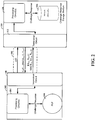
- Fig. 2 depicts a block diagram and message protocol for providing authentication using a PUF, consistent with embodiments of the present disclosure. Maintaining the numbering from Fig. 1 for similar block components, the devices 102 and 110 communicate with one another using the protocol 202.
- This protocol involves a first message sent from device 102 to device 110.
- This first message includes a UID that allows the device 110 to identify and distinguish device 102 from other PUF-based devices.
- the second message includes a first challenge (C n ), a second challenge (C n+1 ) and a Message Authentication Code (MAC(k na )).
- the device 102 responds with a third message that includes a second response value (R n+1 ) (which can be encrypted).
- This third message can be encrypted using a key and appropriate encryption algorithm (E(k nb ).
- the device 102 can also use a key (k nc ) to perform an authentication MAC(k nc ) of the encrypted message.
- Fig. 3 depicts a flow diagram involved in the generation and transmission of the messages discussed in connection with Fig. 2 , consistent with embodiments of the present disclosure.
- Device 110/302 receives the UID from device 102/304 at block 306.
- Device 110/302 uses the UID to retrieve a first challenge-response pair (C n , R n ) from the storage medium 116 at block 308.
- Device 110/302 also generates a new challenge (C n+1 ) at block 309. This new challenge can be generated in a number of different manners including, but not limited to, randomly generated numbers or a predetermined list of numbers ( e . g ., pseudorandom numbers).
- Device 110/302 uses the first response R n to generate three values or keys (k na , k nb , k nc ) at block 310.
- the key values could be portions of the first response R n .
- the key values can be generated using one or more cryptographic hash functions applied to the first response R n and/or portions thereof. Other key generation methods and algorithms are possible.
- Device 110/302 selects one of the keys (k na ) to use as an authentication.
- this authentication key (k na ) is used to generate a Message Authentication Code (MAC).
- the MAC algorithms can be implemented using a one-way hash algorithm, such as HMAC-MD5, HMAC-SHA-1 or HMAC-SHA-256.
- the resulting MAC(k na ) represents an authentication value that can be verified by a device that knows the value of k na and the proper MAC algorithm.
- Device 110/302 then generates and transmits a second message that includes the first response (R n ) (corresponding to the challenge-response pair C n and R n ), the new challenge (C n+1 ) and the MAC(k na ), as shown by block 312.
- Device 102/304 receives (block 314) and processes this second message (e . g ., C n
- the device 102/304 applies the first challenge value (C n ) to the PUF 106. This results in the generation of a response (R' n ) as shown by block 316.
- Device 102/304 uses the response R' n to generate three values or keys (k' na , k' nb , k' nc ) as shown by block 318.
- Device 102/304 uses k' na to verify that authenticity of device 110/302 and the second message MAC(k na ) at block 320. This can be accomplished by generating MAC(k' na ) and comparing to the received MAC(k na ). If the values match, then the authentication is validated. This also suggests that R' n ⁇ R n and that k' na , k' nb , k' nc ⁇ k na , k nb , k nc .
- Device 102/304 next generates an additional response R n+1 by applying C n+1 to the PUF. This results in an additional response pair (C n+1 , R n+1 ) as noted by block 322.
- Device 102/304 next generates and transmits a third message ( e . g ., E(k nb , R n+1 )
- This third message includes the additional response (R n+1 ) and an authentication of the device 102/304 (MAC(k' nc )) that can be encrypted using a key derived from the first response (R' n ).
- this encryption can be implemented using a symmetric encryption technique.
- Device 110/302 receives the third message, which is authenticated by the device 102/304 and then decrypted as shown by block 326. This authentication can be accomplished by comparing a received MAC(k nc ) to a locally-generated MAC(k' nc ). In response to the authentication, device 110/302 store C n+1 and R n+1 in a database as shown by block 328.
- Embodiments of the present invention include various data protection/encryption techniques such as randomizing UIDs and introducing random nonces or dummy data. These techniques are examples of the multitude of possible techniques that can be used.
- Fig. 4 depicts a state diagram having several modes of operation for a device, consistent with embodiments of the present disclosure.
- PUF-capable devices generally rely upon physical characteristics that are sufficiently complex and/or random that they are virtually impossible to predict or model. Accordingly, the challenge-response pairs are not known until after the PUF-capable device has been manufactured. Consistent therewith, a PUF-capable device can be configured to operate in an initialization/manufacturing mode 402. While in the initialization mode 402, the device responds to a challenge by providing a response 404. This allows a database of challenge-response pairs to be built up. Other operations that can be performed during initialization mode 402 include, but are not limited to, generation and sharing of secret (hash) keys and/or public-private keys.
- the initialization mode 402 is generally limited to secure communications that are not susceptible to external attacks or monitoring.
- the communication can use a direct connection between the device and local server and associated local database, rather than over an unsecured network, such as the Internet.
- the device leaves the initialization state to enter a standard/protected mode 406.
- the transition between the initialization mode 402 and the standard mode 406 can be a one-way transition that cannot be reversed. Accordingly, a potential attacker cannot place the device into the initialization mode to obtain information about the PUF and/or to generate a number of challenge-response pairs to spoof the device. Consistent with certain embodiments, the transition can be accomplished using a command that causes the device to enter a logical state that cannot return to the initialization state. In certain implementations, the command involves a physical modification of the device, such as blowing an internal fuse.
- the device While in standard mode 406, the device responds to a challenge value by providing a value based upon a first response.
- This first response can be generated by applying the challenge value to the PUF, as shown by state 408.
- This response value can be used to generate a response value that can be used to verify/authenticate the source of the challenge.
- the device can provide an additional response value corresponding to a second challenge value as shown by state 408.
- This value can be protected (e.g., encrypted and authenticated) using the previous response value, which should be known only by an authentic challenger and the device. Accordingly, the number of challenge-response pairs can be continuously maintained.
- the device can be configured to operate in a catch-up mode 412.
- This catch-up mode can be used to compensate for challenge-response pairs being used without a corresponding replenishment using the additional response state 410.
- This problem can occur, for example, when problems arise with the authentication process. For instance, a failed authentication might occur when an attacker attempts to spoof the PUF-enabled device. In another instance, a failed authentication could occur where the PUF generates a different response value relative to the originally-generated response value.
- the catch-up request can be a message that contains multiple challenges.
- the message can be formatted in a manner that is consistent with various single-additional challenge messages as discussed herein ( e . g ., C n
- the PUF-enabled device provides a message having multiple response values consistent other messages discussed herein ( e . g ., E(k nb ,R n+1
- the catch-up request (or command) can be initiated using a special request value (S).
- This special request value can be derived from, or otherwise secured, a shared secret between the authenticating server/device and the PUF-enabled device. This can be useful for preventing a spoofing device from obtaining a large number of response pairs from a single request.
- the PUF-enabled device can enter the catch-up mode 412.
- the challenge and catch-up request can contain multiple additional challenges.
- the first challenge is used to generate a first response value, as shown by state 414.
- the device can use this first response value to both authenticate the source of the challenge request and to protect the multiple additional responses generated from the multiple additional challenges, as shown by state 416.
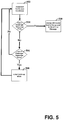
- Fig. 5 depicts a flow diagram that includes an option for changing UIDs, consistent with embodiments of the present disclosure.
- a spoofing device could cause all response-pairs associated with a spoofed UID to be consumed or otherwise invalidated. This occurs because even though a spoofing device might discover or otherwise use a UID, the spoofing device is unable to provide valid responses to challenges associated with the UID. Accordingly, a spoofing device could fail to properly respond to challenges and cause all challenge-response pairs for the UID to be consumed without additional challenge-response pairs being generated and stored at the authenticating server. Thereafter, the authentic device associated with the UID is no longer able to be authenticated because all challenge-response pairs have been consumed.
- the continuous enrollment 502 is used during normal operation. This allows for an additional response-pair to be generated for each challenge-response pair that is consumed.
- a first check 504 determines whether or not all valid challenge-response pairs have been used (or whether or not the valid challenge-response pairs have dropped below a first threshold level). If all response pairs have not been used, a second check 506 determines whether or not the database is low ( e . g ., below a second-higher threshold level) on challenge-response pairs. If the database is not low on challenge-response pairs, the continuous enrollment 502 can continue.
- the device can enter a catch-up mode 508.
- the catch-up mode 508 allows for multiple additional challenge-response pairs to be generated for a single consumed challenge-response pair and thereby increases the level of challenge-response pairs stored in the database.
- the authenticating device can implement an appropriate action 510.
- This action can include, for example, the expiration of the device to block further authentication efforts and/or error handling routines.
- the error handling routines might include notification to the PUF-enabled device, which can be used to notify a user of the device.
- the UID can be changed after every successful protocol exchange between the PUF-enabled device and the authentication server or device. This modification can be based on a secret UID derivation mechanism known by both parties.
Landscapes
- Engineering & Computer Science (AREA)
- Computer Security & Cryptography (AREA)
- Computer Networks & Wireless Communication (AREA)
- Signal Processing (AREA)
- Small-Scale Networks (AREA)
- Storage Device Security (AREA)
- Financial Or Insurance-Related Operations Such As Payment And Settlement (AREA)
- Management, Administration, Business Operations System, And Electronic Commerce (AREA)
- Credit Cards Or The Like (AREA)
- Mobile Radio Communication Systems (AREA)
Claims (13)
- Ein Verfahren zum Bereitstellen einer sicheren Authentifizierung, das Verfahren aufweisend:- Empfangen einer Kommunikation, die einen ersten Aufforderungswert, einen zweiten Aufforderungswert und einen entfernten Nachricht Authentizitätswert beinhaltet;- Erzeugen eines ersten Antwortwerts auf den ersten Aufforderungswert durch Eingeben des ersten Aufforderungswerts in eine physikalisch nicht klonierbare Funktion (PUF) Schaltung;- Erzeugen einer Vielzahl von Schlüsseln durch Anwenden des ersten Antwortwerts auf eine Schlüsselerzeugung Schaltung;- Verifizieren des empfangenen Nachricht Authentizitätswerts durch Vergleichen des entfernten Nachricht Authentizitätswerts mit einem Wert, der aus einem ersten der Vielzahl von Schlüsseln erzeugt wird;- Erzeugen eines zweiten Antwortwerts auf den zweiten Aufforderungswert durch Eingeben des zweiten Aufforderungswerts in die PUF Schaltung;- Verschlüsseln des zweiten Antwortwerts unter Verwendung eines zweiten der Vielzahl von Schlüsseln; und- Erzeugen eines lokalen Nachricht Authentizitätswerts aus einem dritten der Vielzahl von Schlüsseln;- Übertragen des verschlüsselten zweiten Antwortwertes und des lokalen Nachricht Authentizitätswerts;dadurch gekennzeichnet, dass an einer entfernten Vorrichtung, die konfiguriert ist, eine Vorrichtung, die die PUF Schaltung enthält, unter Verwendung eines Aufforderung-Antwort Paares zu authentifizieren,- Abrufen des ersten Aufforderungswerts und eines entsprechenden Gespeicherte-Antwort Werts aus einem Speicher;- Erzeugen des zweiten Aufforderungswerts;- Erzeugen einer weiteren Vielzahl von Schlüsseln durch Anwenden des Gespeicherte-Antwort Werts auf eine Schlüsselerzeugung Schaltung;- Erzeugen des entfernten Nachricht Authentizitätswerts aus einem ersten der weiteren Vielzahl von Schlüsseln und beiden Aufforderungswerten;- Übertragen der Kommunikation, die den ersten Aufforderungswert, den zweiten Aufforderungswert und den entfernten Nachricht Authentizitätswert beinhaltet;- Empfangen des verschlüsselten zweiten Antwortwerts und des lokalen Nachricht Authentizitätswerts;- Verifizieren des lokalen Nachricht Authentizitätswerts;- Entschlüsseln des zweiten Antwortwertes; und- Speichern der Antwort mit dem zweiten Aufforderungswert und dem zweiten Antwortwert;wobei das Verfahren ferner Schritte beinhaltet eines- Bestimmens, dass eine derzeitige Anzahl von Aufforderung-Antwort Paaren, die in einem Authentifizierungsserver gespeichert sind, der von einer Vorrichtung, die die PUF Schaltung enthält, entfernt ist, unterhalb eines Schwellwerts ist; und- in Antwort auf das Bestimmen, dass die Anzahl der Aufforderung-Antwort Paare unter dem Schwellwert ist, Übertragens mehrerer zusätzlicher Aufforderungswerte in Verbindung mit einer einzelnen Verifizierung des empfangenen Nachricht Authentizitätswerts.
- Das Verfahren gemäß Anspruch 1, ferner beinhaltend den Schritt eines Übertragens einer Vorrichtungskennung, wobei das Verschlüsseln des zweiten Antwortwerts die Verwendung eines symmetrischen Verschlüsselungsschemas beinhaltet, bei dem der zweite der Vielzahl von Schlüsseln sowohl bei der Verschlüsselung als auch bei der Entschlüsselung verwendet wird.
- Das Verfahren gemäß Anspruch 1, ferner beinhaltend einen Initialisierungsprozess, der ein Versetzen einer Steuerschaltung zum Begrenzen des Zugriffs auf die PUF Schaltung in einen Initialisierungsmodus beinhaltet, der die Steuerschaltung konfiguriert, auf Aufforderungen zu antworten, indem Antworten in einer unverschlüsselten Form bereitgestellt werden, und der ein darauffolgendes Versetzen der Steuerschaltung in einen Standardmodus beinhaltet, der die Steuerschaltung konfiguriert, auf Aufforderungen zu antworten, indem Antworten in einer verschlüsselten Form bereitgestellt werden.
- Das Verfahren gemäß Anspruch 3, wobei das Versetzen der Schaltung in einen Standardmodus das Auslösen einer Sicherung beinhaltet.
- Das Verfahren gemäß Anspruch 1, ferner beinhaltend einen Schritt eines Empfangens einer Aufholmodus Anfrage und in Antwort darauf eines Bereitstellens mehrerer Antwortwerte in Antwort auf mehrere Aufforderungswerte, die in Verbindung mit einer einzelnen Verifizierung des empfangenen Nachricht Authentizitätswerts empfangen werden.
- Ein System zum Bereitstellen einer sicheren Authentifizierung, welches eine Vorrichtung aufweist, wobei die Vorrichtung aufweist:- eine Sender-Empfänger Schaltung, die konfiguriert und angeordnet ist, um Nachrichten zu empfangen und zu übertragen;- eine physikalisch nicht klonierbare Funktion (PUF) Schaltung, die konfiguriert ist, auf einen Aufforderungswert zu antworten durch Erzeugen eines Antwortwerts;- eine Verarbeitungsschaltung, die konfiguriert und angeordnet ist, um einen Vorrichtungskennung Wert an die Sender-Empfänger Schaltung zu übertragen zur Übertragung davon; und um Nachrichten von der Sender-Empfänger Schaltung zu verarbeiten durch- Identifizieren, aus einer Nachricht, eines ersten Aufforderungswerts, eines zweiten Aufforderungswerts und eines entfernten Nachricht Authentizitätswertes;- Übertragen des ersten Aufforderungswerts an die PUF Schaltung; Empfangen einer ersten Antwort von der PUF Schaltung;- Erzeugen einer Vielzahl von Schlüsseln aus dem ersten Antwortwert;- Verifizieren des entfernten Nachricht Authentizitätswerts durch Vergleichen eines Wertes, der aus dem ersten der Vielzahl von Schlüsseln und sowohl dem ersten als auch dem zweiten Aufforderungswert erzeugt wurde, mit dem entfernten Nachricht Authentizitätswert;- Einreichen des zweiten Aufforderungswerts an die PUF Schaltung;- Empfangen eines zweiten Antwortwerts von der PUF Schaltung;- Verschlüsseln des zweiten Antwortwerts unter Verwendung eines dritten der Vielzahl von Schlüsseln;- Erzeugen eines lokalen Nachricht Authentizitätswerts aus einem zweiten der Vielzahl von Schlüsseln; und- Einreichen der verschlüsselten zweiten Antwort und des lokalen Nachricht Authentizitätswerts an die Sender-Empfänger Schaltung zur Übertragung davon;dadurch gekennzeichnet, dass das System ferner beinhaltet eine entfernte Vorrichtung, die konfiguriert ist, die Vorrichtung, die die PUF Schaltung enthält, unter Verwendung eines Aufforderung-Antwort Paares zu authentifizieren, wobei die entfernte Vorrichtung ferner konfiguriert ist:- abzurufen den ersten Aufforderungswert und einen entsprechenden Gespeicherte-Antwort Wert aus einem Speicher;- zu erzeugen den zweiten Aufforderungswert;- zu erzeugen eine weitere Vielzahl von Schlüsseln durch Anwenden des Gespeicherte-Antwort Werts auf eine Schlüsselerzeugung Schaltung;- zu erzeugen den entfernten Nachricht Authentizitätswerts aus einem ersten der weiteren Vielzahl von Schlüsseln und beiden Aufforderungswerten;- zu übertragen die Kommunikation, die den ersten Aufforderungswert, den zweiten Aufforderungswert und den entfernten Nachricht Authentizitätswert beinhaltet;- zu empfangen den verschlüsselten zweiten Antwortwert und den lokalen Nachricht Authentizitätswert;- zu verifizieren den lokalen Nachricht Authentizitätswert;- zu entschlüsseln den zweiten Antwortwert; und- zu speichern die Antwort mit dem zweiten Aufforderungswert und dem zweiten Antwortwert;- zu bestimmen, dass eine derzeitige Anzahl von Aufforderung-Antwort Paaren, die in einem Authentifizierungsserver gespeichert sind, der von der Vorrichtung, die die PUF Schaltung enthält, entfernt ist, unterhalb eines Schwellwerts ist; und- in Antwort auf das Bestimmen, dass die Anzahl der Aufforderung-Antwort Paare unter dem Schwellwert ist, zu übertragen mehrere zusätzliche Aufforderungswerte in Verbindung mit einer einzelnen Verifizierung des empfangenen Nachricht Authentizitätswerts.
- Das System gemäß Anspruch 6, wobei die PUF Schaltung eine Ausgabe bereitstellt, welche basiert auf einem oder mehreren von den zufälligen Variationen der Verzögerungen von Drähten und Gates darin, den Statischer-Direktzugriffsspeicher (SRAM) Charakteristiken, einer Kreuzkopplung von zwei Latches oder Flip-Flops und eines magnetischen PUF.
- Das System gemäß Anspruch 6, wobei die Verarbeitungsschaltung eines oder mehrere enthält von einem speziell programmierten Prozessor, einer konfigurierbaren Logikanordnung und Logikschaltungen.
- Das System gemäß Anspruch 6, wobei das Erzeugen einer Vielzahl von Schlüsseln aus der ersten Antwort die Verwendung einer oder mehrerer Hash-Funktionen beinhaltet.
- Das System gemäß Anspruch 6, wobei die Verarbeitungsschaltung ferner konfiguriert und angeordnet ist, um in einem Initialisierungsmodus zu arbeiten, während welchem unverschlüsselte Antworten auf Aufforderungen bereitgestellt werden, und danach in einem Standardmodus zu arbeiten, in welchem Antworten auf Aufforderungen verschlüsselt sind.
- Das System gemäß Anspruch 10, wobei die Verarbeitungsschaltung ferner konfiguriert und angeordnet ist, um in Antwort auf einen Befehl irreversibel von dem Initialisierungsmodus in den Standardmodus überzugehen.
- Das System gemäß Anspruch 6, wobei die Verarbeitungsschaltung ein nicht-flüchtiges Speichermedium beinhaltet, das Anweisungen speichert, die, wenn sie durch die Verarbeitungsschaltung ausgeführt werden, die Nachrichten verarbeiten.
- Das System gemäß Anspruch 6, wobei die Verarbeitungsschaltung ferner konfiguriert und angeordnet ist, um einen lokalen Nachricht Authentifizierungswert unter Verwendung eines Einweg-Hash-Algorithmus zu erzeugen und den lokalen Nachricht Authentifizierungswert mit dem entfernten Nachricht Authentifizierungswert zu vergleichen.
Applications Claiming Priority (1)
| Application Number | Priority Date | Filing Date | Title |
|---|---|---|---|
| US12/950,748 US8694778B2 (en) | 2010-11-19 | 2010-11-19 | Enrollment of physically unclonable functions |
Publications (3)
| Publication Number | Publication Date |
|---|---|
| EP2456121A2 EP2456121A2 (de) | 2012-05-23 |
| EP2456121A3 EP2456121A3 (de) | 2015-04-29 |
| EP2456121B1 true EP2456121B1 (de) | 2019-03-27 |
Family
ID=45217216
Family Applications (1)
| Application Number | Title | Priority Date | Filing Date |
|---|---|---|---|
| EP11189269.1A Active EP2456121B1 (de) | 2010-11-19 | 2011-11-16 | Registrierung von physikalischen, unklonbaren Funktionen mittels eines Challenge-Response |
Country Status (3)
| Country | Link |
|---|---|
| US (1) | US8694778B2 (de) |
| EP (1) | EP2456121B1 (de) |
| CN (1) | CN102571748B (de) |
Families Citing this family (87)
| Publication number | Priority date | Publication date | Assignee | Title |
|---|---|---|---|---|
| JP2014523192A (ja) * | 2011-07-07 | 2014-09-08 | ベラヨ インク | デバイス及びサーバの通信におけるファジーな認証情報を用いた暗号化によるセキュリティ |
| EP2747335B1 (de) * | 2011-08-16 | 2017-01-11 | ICTK Co., Ltd. | Vorrichtung und verfahren für puf-basierte sicherheitsauthentifizierung zwischen geräten in der maschine-maschine-kommunikation |
| CN104025500B (zh) | 2011-12-29 | 2017-07-25 | 英特尔公司 | 使用在物理上不可克隆的函数的安全密钥存储 |
| US20130212642A1 (en) * | 2012-02-12 | 2013-08-15 | John J. Walsh | Resilient Device Authentication System |
| CN102710252B (zh) * | 2012-05-28 | 2014-07-30 | 宁波大学 | 一种高稳态多端口puf电路 |
| US9258129B2 (en) * | 2012-07-18 | 2016-02-09 | Sypris Electronics, Llc | Resilient device authentication system |
| US9996480B2 (en) | 2012-07-18 | 2018-06-12 | Analog Devices, Inc. | Resilient device authentication system with metadata binding |
| US20140041040A1 (en) * | 2012-08-01 | 2014-02-06 | The Regents Of The University Of California | Creating secure multiparty communication primitives using transistor delay quantization in public physically unclonable functions |
| KR101419745B1 (ko) * | 2012-08-07 | 2014-07-17 | 한국전자통신연구원 | 물리적 복제 방지 기능을 기반으로 하는 인증 요청 장치, 인증 처리 장치 및 인증 수행 방법 |
| KR101332517B1 (ko) * | 2012-08-21 | 2013-11-22 | 한양대학교 산학협력단 | 인증 정보 처리 장치 및 방법 |
| DE102012216677B3 (de) * | 2012-09-18 | 2013-06-13 | Siemens Aktiengesellschaft | Identifikationsschaltung |
| US9742563B2 (en) * | 2012-09-28 | 2017-08-22 | Intel Corporation | Secure provisioning of secret keys during integrated circuit manufacturing |
| DE102012219112A1 (de) * | 2012-10-19 | 2014-04-24 | Siemens Aktiengesellschaft | Verwenden einer PUF zur Prüfung einer Authentisierung, insbesondere zum Schutz vor unberechtigtem Zugriff auf eine Funktion eines ICs oder Steuergerätes |
| US9279856B2 (en) * | 2012-10-22 | 2016-03-08 | Infineon Technologies Ag | Die, chip, method for driving a die or a chip and method for manufacturing a die or a chip |
| KR20140059485A (ko) * | 2012-11-08 | 2014-05-16 | 숭실대학교산학협력단 | Puf를 이용한 기기 인증 장치 및 방법 |
| US8955058B2 (en) * | 2012-11-15 | 2015-02-10 | International Business Machines Corporation | Automatically generating challenge questions inferred from user history data for user authentication |
| EP2930880A4 (de) * | 2012-12-05 | 2016-08-03 | Sony Corp | Informationsprozessor, verifizierungsprozessor, informationsverarbeitungsverfahren, verifizierungsverarbeitungsverfahren und programm |
| US9038133B2 (en) | 2012-12-07 | 2015-05-19 | International Business Machines Corporation | Self-authenticating of chip based on intrinsic features |
| US8938792B2 (en) | 2012-12-28 | 2015-01-20 | Intel Corporation | Device authentication using a physically unclonable functions based key generation system |
| WO2014112999A1 (en) | 2013-01-16 | 2014-07-24 | Intel Corporation | Grouping of physically unclonable functions |
| DE102013203415B4 (de) * | 2013-02-28 | 2016-02-11 | Siemens Aktiengesellschaft | Erstellen eines abgeleiteten Schlüssels aus einem kryptographischen Schlüssel mittels einer physikalisch nicht klonbaren Funktion |
| EP2779067B1 (de) * | 2013-03-15 | 2019-05-08 | Maxim Integrated Products, Inc. | Sichere Authentifizierung auf Grundlage physikalisch nicht kopierbarer Funktionen |
| US9858052B2 (en) * | 2013-03-21 | 2018-01-02 | Razer (Asia-Pacific) Pte. Ltd. | Decentralized operating system |
| WO2014155163A2 (en) * | 2013-03-24 | 2014-10-02 | Nds Limited | System for efficient generation and distribution of challenge-response pairs |
| KR101440328B1 (ko) * | 2013-05-20 | 2014-09-17 | 주식회사 실리콘웍스 | 메시지 인증 코드 생성 방법 및 이를 수행하는 인증 장치 |
| US9787480B2 (en) * | 2013-08-23 | 2017-10-10 | Qualcomm Incorporated | Applying circuit delay-based physically unclonable functions (PUFs) for masking operation of memory-based PUFs to resist invasive and clone attacks |
| US9992031B2 (en) * | 2013-09-27 | 2018-06-05 | Intel Corporation | Dark bits to reduce physically unclonable function error rates |
| JP2015122620A (ja) * | 2013-12-24 | 2015-07-02 | 富士通セミコンダクター株式会社 | 認証システム、認証方法、認証装置、及び、被認証装置 |
| JP6211949B2 (ja) * | 2014-02-12 | 2017-10-11 | 株式会社東芝 | データベース装置 |
| US9946858B2 (en) | 2014-05-05 | 2018-04-17 | Analog Devices, Inc. | Authentication system and device including physical unclonable function and threshold cryptography |
| US9672342B2 (en) | 2014-05-05 | 2017-06-06 | Analog Devices, Inc. | System and device binding metadata with hardware intrinsic properties |
| US10432409B2 (en) * | 2014-05-05 | 2019-10-01 | Analog Devices, Inc. | Authentication system and device including physical unclonable function and threshold cryptography |
| WO2015178597A1 (ko) * | 2014-05-23 | 2015-11-26 | 숭실대학교산학협력단 | Puf를 이용한 비밀키 업데이트 시스템 및 방법 |
| KR102304927B1 (ko) * | 2014-06-13 | 2021-09-24 | 삼성전자 주식회사 | 메모리 장치, 메모리 시스템 및 메모리 시스템의 동작 방법 |
| CN105337725B (zh) * | 2014-08-08 | 2019-04-23 | 中国科学院数据与通信保护研究教育中心 | 一种密钥管理装置及方法 |
| JP6445570B2 (ja) | 2014-08-29 | 2018-12-26 | 国立研究開発法人産業技術総合研究所 | デバイス固有情報の誤り率制御方法とデバイス固有情報の誤り率制御プログラム |
| US9832027B2 (en) * | 2014-10-01 | 2017-11-28 | Maxim Integrated Products, Inc. | Tamper detection systems and methods for industrial and metering devices not requiring a battery |
| US9722774B2 (en) | 2015-04-29 | 2017-08-01 | Samsung Electronics Co., Ltd. | Non-leaky helper data: extracting unique cryptographic key from noisy F-PUF fingerprint |
| US10135615B2 (en) * | 2015-05-11 | 2018-11-20 | The Trustees Of Columbia University In The City Of New York | Voltage and temperature compensated device for physically unclonable function |
| US10298406B1 (en) * | 2015-05-29 | 2019-05-21 | Silego Technology, Inc. | Security integrated circuit |
| US20160379131A1 (en) * | 2015-06-26 | 2016-12-29 | Nxp B.V. | Fuzzy opaque predicates |
| US10382417B2 (en) * | 2015-08-31 | 2019-08-13 | Mentor Graphics Corporation | Secure protocol for chip authentication |
| US11070532B1 (en) * | 2015-10-05 | 2021-07-20 | National Technology & Engineering Solutions Of Sandia, Llc | Methods for communicating data utilizing sessionless dynamic encryption |
| WO2017087238A1 (en) * | 2015-11-16 | 2017-05-26 | Arizona Board Of Regents Acting For And On Behalf Of Northern Arizona University | Multi-state unclonable functions and related systems |
| US10897363B2 (en) * | 2015-11-17 | 2021-01-19 | Cryptography Research, Inc. | Authenticating a secondary device based on encrypted tables |
| WO2017084895A1 (en) * | 2015-11-20 | 2017-05-26 | Intrinsic Id B.V. | Puf identifier assignment and testing method and device |
| US10956557B2 (en) * | 2016-01-11 | 2021-03-23 | Stc.Unm | Privacy-preserving, mutual PUF-based authentication protocol |
| US10146464B2 (en) | 2016-06-30 | 2018-12-04 | Nxp B.V. | Method for performing multiple enrollments of a physically uncloneable function |
| US10855477B2 (en) | 2016-08-04 | 2020-12-01 | Macronix International Co., Ltd. | Non-volatile memory with physical unclonable function and random number generator |
| US11258599B2 (en) | 2016-08-04 | 2022-02-22 | Macronix International Co., Ltd. | Stable physically unclonable function |
| US10911229B2 (en) * | 2016-08-04 | 2021-02-02 | Macronix International Co., Ltd. | Unchangeable physical unclonable function in non-volatile memory |
| US10469271B2 (en) | 2016-08-04 | 2019-11-05 | Macronix International Co., Ltd. | Physical unclonable function for non-volatile memory |
| TWI624835B (zh) * | 2016-10-06 | 2018-05-21 | 財團法人工業技術研究院 | 物理性不可複製功能電路、磁阻式可變電阻裝置與物理性不可複製功能電路之控制方法 |
| US10050796B2 (en) * | 2016-11-09 | 2018-08-14 | Arizona Board Of Regents On Behalf Of Northern Arizona University | Encoding ternary data for PUF environments |
| US11362845B2 (en) | 2016-11-30 | 2022-06-14 | Taiwan Semiconductor Manufacturing Co., Ltd. | Secure communication between server device and clients utilizing strong physical unclonable functions |
| US11533300B2 (en) * | 2017-03-30 | 2022-12-20 | Arizona Board Of Regents On Behalf Of Northern Arizona University | Encryption schemes with addressable elements |
| US10917250B2 (en) * | 2017-05-16 | 2021-02-09 | Mercury Systems, Inc. | Challenge/response system |
| WO2018219437A1 (en) * | 2017-05-30 | 2018-12-06 | Belgian Mobile Id Sa/Nv | Mobile device authentication using different channels |
| US10425235B2 (en) | 2017-06-02 | 2019-09-24 | Analog Devices, Inc. | Device and system with global tamper resistance |
| US10958452B2 (en) | 2017-06-06 | 2021-03-23 | Analog Devices, Inc. | System and device including reconfigurable physical unclonable functions and threshold cryptography |
| EP3471334B1 (de) * | 2017-10-10 | 2023-07-26 | Nxp B.V. | Verfahren zum konfigurieren eines transponders, transponder und basisstation |
| US10521616B2 (en) | 2017-11-08 | 2019-12-31 | Analog Devices, Inc. | Remote re-enrollment of physical unclonable functions |
| CN118041531A (zh) * | 2018-06-29 | 2024-05-14 | 纳格拉影像有限公司 | 使用物理不可克隆函数的密码密钥配置 |
| EP3594926B1 (de) | 2018-07-11 | 2022-06-22 | Secure-IC SAS | Verbundene synthetische, physikalisch unklonbare funktion |
| US11477039B2 (en) * | 2018-10-11 | 2022-10-18 | Arizona Board Of Regents On Behalf Of Northern Arizona University | Response-based cryptography using physical unclonable functions |
| EP3867785B1 (de) * | 2018-10-17 | 2026-02-11 | Nokia Solutions and Networks Oy | Gesicherter kryptoprozessor |
| US11700136B2 (en) * | 2018-11-26 | 2023-07-11 | Kansas State University Research Foundation | PUF-IPA: a PUF-based identity preserving lightweight authentication protocol using binary string shuffling |
| US11496326B2 (en) * | 2019-03-13 | 2022-11-08 | Arizona Board Of Regents On Behalf Of Northern Arizona University | Physical unclonable function-based encryption schemes with combination of hashing methods |
| US11283633B2 (en) * | 2019-03-13 | 2022-03-22 | Arizona Board Of Regents On Behalf Of Northern Arizona University | PUF-based key generation for cryptographic schemes |
| US11343109B2 (en) | 2019-06-12 | 2022-05-24 | Arizona Board Of Regents On Behalf Of Northern Arizona University | Secure enrollment for physical unclonable function devices |
| US11343108B2 (en) * | 2019-06-12 | 2022-05-24 | Arizona Board Of Regents On Behalf Of Northern Arizona University | Generation of composite private keys |
| US11269999B2 (en) * | 2019-07-01 | 2022-03-08 | At&T Intellectual Property I, L.P. | Protecting computing devices from malicious tampering |
| EP4040719A1 (de) * | 2019-08-05 | 2022-08-10 | Mastercard International Incorporated | Sichere server-client-interaktion |
| US20220337435A1 (en) * | 2019-08-14 | 2022-10-20 | Assa Abloy Ab | Secure identity card using unclonable functions |
| KR102868891B1 (ko) * | 2020-01-23 | 2025-10-02 | 삼성전자주식회사 | 시도-응답 방식을 이용하여 인증을 수행하는 집적 회로 및 이를 사용하는 방법 |
| US11625478B2 (en) | 2020-04-15 | 2023-04-11 | Arizona Board Of Regents On Behalf Of Northern Arizona University | Resilient password management system using an array of addressable physical unclonable functions |
| CN111565110B (zh) * | 2020-05-09 | 2022-03-04 | 西安电子科技大学 | 基于ro puf多核系统的统一身份认证系统及方法 |
| DE102020113198A1 (de) | 2020-05-15 | 2021-11-18 | Infineon Technologies Ag | Kryptografische Operation |
| CN111740995B (zh) * | 2020-06-22 | 2022-07-12 | 南方电网科学研究院有限责任公司 | 一种授权认证方法及相关装置 |
| US11380379B2 (en) | 2020-11-02 | 2022-07-05 | Macronix International Co., Ltd. | PUF applications in memories |
| WO2022132184A1 (en) | 2020-12-20 | 2022-06-23 | Intel Corporation | System, method and apparatus for total storage encryption |
| US20220417042A1 (en) * | 2021-06-25 | 2022-12-29 | Intel Corporation | Platform sealing secrets using physically unclonable function (puf) with trusted computing base (tcb) recoverability |
| US12455701B2 (en) | 2021-07-27 | 2025-10-28 | Intel Corporation | Scalable access control checking for cross-address-space data movement |
| US12250099B2 (en) * | 2021-09-08 | 2025-03-11 | PassiveLogic, Inc. | External activation of quiescent device |
| US12541416B2 (en) | 2021-09-23 | 2026-02-03 | Intel Corporation | Lane based normalized historical error counter view for faulty lane isolation and disambiguation of transient versus persistent errors |
| US12487762B2 (en) | 2022-05-10 | 2025-12-02 | Intel Corporation | Flexible provisioning of coherent memory address decoders in hardware |
| CN119378027B (zh) * | 2024-09-06 | 2025-10-17 | 浙江华云信息科技有限公司 | 一种基于puf硬件的数据加密存储方法及解密方法 |
Family Cites Families (8)
| Publication number | Priority date | Publication date | Assignee | Title |
|---|---|---|---|---|
| US7840803B2 (en) * | 2002-04-16 | 2010-11-23 | Massachusetts Institute Of Technology | Authentication of integrated circuits |
| WO2006053304A2 (en) * | 2004-11-12 | 2006-05-18 | Pufco, Inc. | Volatile device keys and applications thereof |
| WO2009024913A2 (en) * | 2007-08-22 | 2009-02-26 | Intrinsic Id Bv | Identification of devices using physically unclonable functions |
| US8782396B2 (en) * | 2007-09-19 | 2014-07-15 | Verayo, Inc. | Authentication with physical unclonable functions |
| WO2010035202A1 (en) * | 2008-09-26 | 2010-04-01 | Koninklijke Philips Electronics N.V. | Authenticating a device and a user |
| US8699714B2 (en) * | 2008-11-17 | 2014-04-15 | Intrinsic Id B.V. | Distributed PUF |
| JP5423088B2 (ja) * | 2009-03-25 | 2014-02-19 | ソニー株式会社 | 集積回路、暗号通信装置、暗号通信システム、情報処理方法、及び暗号通信方法 |
| EP2491510B1 (de) * | 2009-10-21 | 2016-08-24 | Intrinsic ID B.V. | Verteilungssystem und verfahren zur verteilung von digitalen informationen |
-
2010
- 2010-11-19 US US12/950,748 patent/US8694778B2/en active Active
-
2011
- 2011-11-16 EP EP11189269.1A patent/EP2456121B1/de active Active
- 2011-11-18 CN CN201110378738.8A patent/CN102571748B/zh active Active
Also Published As
| Publication number | Publication date |
|---|---|
| US20120131340A1 (en) | 2012-05-24 |
| EP2456121A2 (de) | 2012-05-23 |
| EP2456121A3 (de) | 2015-04-29 |
| US8694778B2 (en) | 2014-04-08 |
| CN102571748A (zh) | 2012-07-11 |
| CN102571748B (zh) | 2014-09-17 |
Similar Documents
| Publication | Publication Date | Title |
|---|---|---|
| EP2456121B1 (de) | Registrierung von physikalischen, unklonbaren Funktionen mittels eines Challenge-Response | |
| Alladi et al. | A lightweight authentication and attestation scheme for in-transit vehicles in IoV scenario | |
| US10771467B1 (en) | External accessibility for computing devices | |
| US10348706B2 (en) | Assuring external accessibility for devices on a network | |
| US10187373B1 (en) | Hierarchical, deterministic, one-time login tokens | |
| US11329835B2 (en) | Apparatus and method for authenticating IoT device based on PUF using white-box cryptography | |
| US20170126414A1 (en) | Database-less authentication with physically unclonable functions | |
| JP2004030611A (ja) | 通信パスワードをリモートで変更するための方法 | |
| EP2538366B1 (de) | Erzeugung eines Geheimschlüssels einer sicheren Vorrichtung | |
| US9773129B2 (en) | Anti-replay protected flash | |
| US11528144B1 (en) | Optimized access in a service environment | |
| US20240048363A1 (en) | Network packet tampering proofing | |
| Labrado et al. | Fortifying vehicular security through low overhead physically unclonable functions | |
| Tran et al. | RFID anti-counterfeiting for retailing systems | |
| KR102539418B1 (ko) | Puf 기반 상호 인증 장치 및 방법 | |
| Narendrakumar et al. | Token security for internet of things | |
| JP6037450B2 (ja) | 端末認証システムおよび端末認証方法 | |
| Li et al. | A Blockchain-PUF-based Secure Mutual Authentication Scheme for IoT | |
| EP4369210A2 (de) | Sicherstellung der externen zugänglichkeit für vorrichtungen in einem netzwerk | |
| US12432186B2 (en) | System and method for secure and performant ECU pairing | |
| US20240314570A1 (en) | System and method for secure and performant ecu pairing | |
| US20260058832A1 (en) | Physical unclonable function-based encrypted communication method and computing device for performing the same | |
| JP7823369B2 (ja) | 通信装置、通信方法、及びプログラム | |
| Kumar et al. | A PUF based Authentication Technique for IoT Devices | |
| CN120415762A (zh) | 通信加密方法、存储介质、程序产品和电子设备 |
Legal Events
| Date | Code | Title | Description |
|---|---|---|---|
| PUAI | Public reference made under article 153(3) epc to a published international application that has entered the european phase |
Free format text: ORIGINAL CODE: 0009012 |
|
| AK | Designated contracting states |
Kind code of ref document: A2 Designated state(s): AL AT BE BG CH CY CZ DE DK EE ES FI FR GB GR HR HU IE IS IT LI LT LU LV MC MK MT NL NO PL PT RO RS SE SI SK SM TR |
|
| AX | Request for extension of the european patent |
Extension state: BA ME |
|
| 17P | Request for examination filed |
Effective date: 20140331 |
|
| PUAL | Search report despatched |
Free format text: ORIGINAL CODE: 0009013 |
|
| AK | Designated contracting states |
Kind code of ref document: A3 Designated state(s): AL AT BE BG CH CY CZ DE DK EE ES FI FR GB GR HR HU IE IS IT LI LT LU LV MC MK MT NL NO PL PT RO RS SE SI SK SM TR |
|
| AX | Request for extension of the european patent |
Extension state: BA ME |
|
| RIC1 | Information provided on ipc code assigned before grant |
Ipc: H04L 9/32 20060101AFI20150326BHEP |
|
| RBV | Designated contracting states (corrected) |
Designated state(s): AL AT BE BG CH CY CZ DE DK EE ES FI FR GB GR HR HU IE IS IT LI LT LU LV MC MK MT NL NO PL PT RO RS SE SI SK SM TR |
|
| STAA | Information on the status of an ep patent application or granted ep patent |
Free format text: STATUS: EXAMINATION IS IN PROGRESS |
|
| 17Q | First examination report despatched |
Effective date: 20180103 |
|
| GRAP | Despatch of communication of intention to grant a patent |
Free format text: ORIGINAL CODE: EPIDOSNIGR1 |
|
| STAA | Information on the status of an ep patent application or granted ep patent |
Free format text: STATUS: GRANT OF PATENT IS INTENDED |
|
| INTG | Intention to grant announced |
Effective date: 20181109 |
|
| RIN1 | Information on inventor provided before grant (corrected) |
Inventor name: TEUWEN, PHILIPPE Inventor name: NIKOV, VENTZISLAV |
|
| GRAS | Grant fee paid |
Free format text: ORIGINAL CODE: EPIDOSNIGR3 |
|
| GRAA | (expected) grant |
Free format text: ORIGINAL CODE: 0009210 |
|
| STAA | Information on the status of an ep patent application or granted ep patent |
Free format text: STATUS: THE PATENT HAS BEEN GRANTED |
|
| AK | Designated contracting states |
Kind code of ref document: B1 Designated state(s): AL AT BE BG CH CY CZ DE DK EE ES FI FR GB GR HR HU IE IS IT LI LT LU LV MC MK MT NL NO PL PT RO RS SE SI SK SM TR |
|
| REG | Reference to a national code |
Ref country code: GB Ref legal event code: FG4D |
|
| REG | Reference to a national code |
Ref country code: CH Ref legal event code: EP |
|
| REG | Reference to a national code |
Ref country code: AT Ref legal event code: REF Ref document number: 1114300 Country of ref document: AT Kind code of ref document: T Effective date: 20190415 |
|
| REG | Reference to a national code |
Ref country code: IE Ref legal event code: FG4D |
|
| REG | Reference to a national code |
Ref country code: DE Ref legal event code: R096 Ref document number: 602011057478 Country of ref document: DE |
|
| PG25 | Lapsed in a contracting state [announced via postgrant information from national office to epo] |
Ref country code: NO Free format text: LAPSE BECAUSE OF FAILURE TO SUBMIT A TRANSLATION OF THE DESCRIPTION OR TO PAY THE FEE WITHIN THE PRESCRIBED TIME-LIMIT Effective date: 20190627 Ref country code: LT Free format text: LAPSE BECAUSE OF FAILURE TO SUBMIT A TRANSLATION OF THE DESCRIPTION OR TO PAY THE FEE WITHIN THE PRESCRIBED TIME-LIMIT Effective date: 20190327 Ref country code: SE Free format text: LAPSE BECAUSE OF FAILURE TO SUBMIT A TRANSLATION OF THE DESCRIPTION OR TO PAY THE FEE WITHIN THE PRESCRIBED TIME-LIMIT Effective date: 20190327 Ref country code: FI Free format text: LAPSE BECAUSE OF FAILURE TO SUBMIT A TRANSLATION OF THE DESCRIPTION OR TO PAY THE FEE WITHIN THE PRESCRIBED TIME-LIMIT Effective date: 20190327 |
|
| REG | Reference to a national code |
Ref country code: NL Ref legal event code: MP Effective date: 20190327 |
|
| PG25 | Lapsed in a contracting state [announced via postgrant information from national office to epo] |
Ref country code: LV Free format text: LAPSE BECAUSE OF FAILURE TO SUBMIT A TRANSLATION OF THE DESCRIPTION OR TO PAY THE FEE WITHIN THE PRESCRIBED TIME-LIMIT Effective date: 20190327 Ref country code: RS Free format text: LAPSE BECAUSE OF FAILURE TO SUBMIT A TRANSLATION OF THE DESCRIPTION OR TO PAY THE FEE WITHIN THE PRESCRIBED TIME-LIMIT Effective date: 20190327 Ref country code: BG Free format text: LAPSE BECAUSE OF FAILURE TO SUBMIT A TRANSLATION OF THE DESCRIPTION OR TO PAY THE FEE WITHIN THE PRESCRIBED TIME-LIMIT Effective date: 20190627 Ref country code: GR Free format text: LAPSE BECAUSE OF FAILURE TO SUBMIT A TRANSLATION OF THE DESCRIPTION OR TO PAY THE FEE WITHIN THE PRESCRIBED TIME-LIMIT Effective date: 20190628 Ref country code: NL Free format text: LAPSE BECAUSE OF FAILURE TO SUBMIT A TRANSLATION OF THE DESCRIPTION OR TO PAY THE FEE WITHIN THE PRESCRIBED TIME-LIMIT Effective date: 20190327 Ref country code: HR Free format text: LAPSE BECAUSE OF FAILURE TO SUBMIT A TRANSLATION OF THE DESCRIPTION OR TO PAY THE FEE WITHIN THE PRESCRIBED TIME-LIMIT Effective date: 20190327 |
|
| REG | Reference to a national code |
Ref country code: AT Ref legal event code: MK05 Ref document number: 1114300 Country of ref document: AT Kind code of ref document: T Effective date: 20190327 |
|
| PG25 | Lapsed in a contracting state [announced via postgrant information from national office to epo] |
Ref country code: ES Free format text: LAPSE BECAUSE OF FAILURE TO SUBMIT A TRANSLATION OF THE DESCRIPTION OR TO PAY THE FEE WITHIN THE PRESCRIBED TIME-LIMIT Effective date: 20190327 Ref country code: AL Free format text: LAPSE BECAUSE OF FAILURE TO SUBMIT A TRANSLATION OF THE DESCRIPTION OR TO PAY THE FEE WITHIN THE PRESCRIBED TIME-LIMIT Effective date: 20190327 Ref country code: PT Free format text: LAPSE BECAUSE OF FAILURE TO SUBMIT A TRANSLATION OF THE DESCRIPTION OR TO PAY THE FEE WITHIN THE PRESCRIBED TIME-LIMIT Effective date: 20190727 Ref country code: SK Free format text: LAPSE BECAUSE OF FAILURE TO SUBMIT A TRANSLATION OF THE DESCRIPTION OR TO PAY THE FEE WITHIN THE PRESCRIBED TIME-LIMIT Effective date: 20190327 Ref country code: IT Free format text: LAPSE BECAUSE OF FAILURE TO SUBMIT A TRANSLATION OF THE DESCRIPTION OR TO PAY THE FEE WITHIN THE PRESCRIBED TIME-LIMIT Effective date: 20190327 Ref country code: RO Free format text: LAPSE BECAUSE OF FAILURE TO SUBMIT A TRANSLATION OF THE DESCRIPTION OR TO PAY THE FEE WITHIN THE PRESCRIBED TIME-LIMIT Effective date: 20190327 Ref country code: EE Free format text: LAPSE BECAUSE OF FAILURE TO SUBMIT A TRANSLATION OF THE DESCRIPTION OR TO PAY THE FEE WITHIN THE PRESCRIBED TIME-LIMIT Effective date: 20190327 Ref country code: CZ Free format text: LAPSE BECAUSE OF FAILURE TO SUBMIT A TRANSLATION OF THE DESCRIPTION OR TO PAY THE FEE WITHIN THE PRESCRIBED TIME-LIMIT Effective date: 20190327 |
|
| PG25 | Lapsed in a contracting state [announced via postgrant information from national office to epo] |
Ref country code: SM Free format text: LAPSE BECAUSE OF FAILURE TO SUBMIT A TRANSLATION OF THE DESCRIPTION OR TO PAY THE FEE WITHIN THE PRESCRIBED TIME-LIMIT Effective date: 20190327 Ref country code: PL Free format text: LAPSE BECAUSE OF FAILURE TO SUBMIT A TRANSLATION OF THE DESCRIPTION OR TO PAY THE FEE WITHIN THE PRESCRIBED TIME-LIMIT Effective date: 20190327 |
|
| PG25 | Lapsed in a contracting state [announced via postgrant information from national office to epo] |
Ref country code: IS Free format text: LAPSE BECAUSE OF FAILURE TO SUBMIT A TRANSLATION OF THE DESCRIPTION OR TO PAY THE FEE WITHIN THE PRESCRIBED TIME-LIMIT Effective date: 20190727 Ref country code: AT Free format text: LAPSE BECAUSE OF FAILURE TO SUBMIT A TRANSLATION OF THE DESCRIPTION OR TO PAY THE FEE WITHIN THE PRESCRIBED TIME-LIMIT Effective date: 20190327 |
|
| REG | Reference to a national code |
Ref country code: DE Ref legal event code: R097 Ref document number: 602011057478 Country of ref document: DE |
|
| PG25 | Lapsed in a contracting state [announced via postgrant information from national office to epo] |
Ref country code: DK Free format text: LAPSE BECAUSE OF FAILURE TO SUBMIT A TRANSLATION OF THE DESCRIPTION OR TO PAY THE FEE WITHIN THE PRESCRIBED TIME-LIMIT Effective date: 20190327 |
|
| PLBE | No opposition filed within time limit |
Free format text: ORIGINAL CODE: 0009261 |
|
| STAA | Information on the status of an ep patent application or granted ep patent |
Free format text: STATUS: NO OPPOSITION FILED WITHIN TIME LIMIT |
|
| PG25 | Lapsed in a contracting state [announced via postgrant information from national office to epo] |
Ref country code: SI Free format text: LAPSE BECAUSE OF FAILURE TO SUBMIT A TRANSLATION OF THE DESCRIPTION OR TO PAY THE FEE WITHIN THE PRESCRIBED TIME-LIMIT Effective date: 20190327 |
|
| 26N | No opposition filed |
Effective date: 20200103 |
|
| PG25 | Lapsed in a contracting state [announced via postgrant information from national office to epo] |
Ref country code: TR Free format text: LAPSE BECAUSE OF FAILURE TO SUBMIT A TRANSLATION OF THE DESCRIPTION OR TO PAY THE FEE WITHIN THE PRESCRIBED TIME-LIMIT Effective date: 20190327 |
|
| REG | Reference to a national code |
Ref country code: CH Ref legal event code: PL |
|
| PG25 | Lapsed in a contracting state [announced via postgrant information from national office to epo] |
Ref country code: LI Free format text: LAPSE BECAUSE OF NON-PAYMENT OF DUE FEES Effective date: 20191130 Ref country code: LU Free format text: LAPSE BECAUSE OF NON-PAYMENT OF DUE FEES Effective date: 20191116 Ref country code: CH Free format text: LAPSE BECAUSE OF NON-PAYMENT OF DUE FEES Effective date: 20191130 Ref country code: MC Free format text: LAPSE BECAUSE OF FAILURE TO SUBMIT A TRANSLATION OF THE DESCRIPTION OR TO PAY THE FEE WITHIN THE PRESCRIBED TIME-LIMIT Effective date: 20190327 |
|
| REG | Reference to a national code |
Ref country code: BE Ref legal event code: MM Effective date: 20191130 |
|
| GBPC | Gb: european patent ceased through non-payment of renewal fee |
Effective date: 20191116 |
|
| PG25 | Lapsed in a contracting state [announced via postgrant information from national office to epo] |
Ref country code: IE Free format text: LAPSE BECAUSE OF NON-PAYMENT OF DUE FEES Effective date: 20191116 Ref country code: GB Free format text: LAPSE BECAUSE OF NON-PAYMENT OF DUE FEES Effective date: 20191116 |
|
| PG25 | Lapsed in a contracting state [announced via postgrant information from national office to epo] |
Ref country code: BE Free format text: LAPSE BECAUSE OF NON-PAYMENT OF DUE FEES Effective date: 20191130 |
|
| PG25 | Lapsed in a contracting state [announced via postgrant information from national office to epo] |
Ref country code: CY Free format text: LAPSE BECAUSE OF FAILURE TO SUBMIT A TRANSLATION OF THE DESCRIPTION OR TO PAY THE FEE WITHIN THE PRESCRIBED TIME-LIMIT Effective date: 20190327 |
|
| PG25 | Lapsed in a contracting state [announced via postgrant information from national office to epo] |
Ref country code: HU Free format text: LAPSE BECAUSE OF FAILURE TO SUBMIT A TRANSLATION OF THE DESCRIPTION OR TO PAY THE FEE WITHIN THE PRESCRIBED TIME-LIMIT; INVALID AB INITIO Effective date: 20111116 Ref country code: MT Free format text: LAPSE BECAUSE OF FAILURE TO SUBMIT A TRANSLATION OF THE DESCRIPTION OR TO PAY THE FEE WITHIN THE PRESCRIBED TIME-LIMIT Effective date: 20190327 |
|
| PG25 | Lapsed in a contracting state [announced via postgrant information from national office to epo] |
Ref country code: MK Free format text: LAPSE BECAUSE OF FAILURE TO SUBMIT A TRANSLATION OF THE DESCRIPTION OR TO PAY THE FEE WITHIN THE PRESCRIBED TIME-LIMIT Effective date: 20190327 |
|
| P01 | Opt-out of the competence of the unified patent court (upc) registered |
Effective date: 20230724 |
|
| PGFP | Annual fee paid to national office [announced via postgrant information from national office to epo] |
Ref country code: DE Payment date: 20251022 Year of fee payment: 15 |
|
| PGFP | Annual fee paid to national office [announced via postgrant information from national office to epo] |
Ref country code: FR Payment date: 20251023 Year of fee payment: 15 |