EP2460352B1 - Système d'insertion de multimédia - Google Patents
Système d'insertion de multimédia Download PDFInfo
- Publication number
- EP2460352B1 EP2460352B1 EP10773677.9A EP10773677A EP2460352B1 EP 2460352 B1 EP2460352 B1 EP 2460352B1 EP 10773677 A EP10773677 A EP 10773677A EP 2460352 B1 EP2460352 B1 EP 2460352B1
- Authority
- EP
- European Patent Office
- Prior art keywords
- media items
- receiver
- substitutional
- output
- slot
- Prior art date
- Legal status (The legal status is an assumption and is not a legal conclusion. Google has not performed a legal analysis and makes no representation as to the accuracy of the status listed.)
- Active
Links
Images





Classifications
-
- H—ELECTRICITY
- H04—ELECTRIC COMMUNICATION TECHNIQUE
- H04N—PICTORIAL COMMUNICATION, e.g. TELEVISION
- H04N21/00—Selective content distribution, e.g. interactive television or video on demand [VOD]
- H04N21/40—Client devices specifically adapted for the reception of or interaction with content, e.g. set-top-box [STB]; Operations thereof
- H04N21/43—Processing of content or additional data, e.g. demultiplexing additional data from a digital video stream; Elementary client operations, e.g. monitoring of home network or synchronising decoder's clock; Client middleware
- H04N21/439—Processing of audio elementary streams
-
- H—ELECTRICITY
- H04—ELECTRIC COMMUNICATION TECHNIQUE
- H04N—PICTORIAL COMMUNICATION, e.g. TELEVISION
- H04N21/00—Selective content distribution, e.g. interactive television or video on demand [VOD]
- H04N21/20—Servers specifically adapted for the distribution of content, e.g. VOD servers; Operations thereof
- H04N21/25—Management operations performed by the server for facilitating the content distribution or administrating data related to end-users or client devices, e.g. end-user or client device authentication, learning user preferences for recommending movies
- H04N21/258—Client or end-user data management, e.g. managing client capabilities, user preferences or demographics, processing of multiple end-users preferences to derive collaborative data
- H04N21/25866—Management of end-user data
- H04N21/25883—Management of end-user data being end-user demographical data, e.g. age, family status or address
-
- G—PHYSICS
- G06—COMPUTING OR CALCULATING; COUNTING
- G06Q—INFORMATION AND COMMUNICATION TECHNOLOGY [ICT] SPECIALLY ADAPTED FOR ADMINISTRATIVE, COMMERCIAL, FINANCIAL, MANAGERIAL OR SUPERVISORY PURPOSES; SYSTEMS OR METHODS SPECIALLY ADAPTED FOR ADMINISTRATIVE, COMMERCIAL, FINANCIAL, MANAGERIAL OR SUPERVISORY PURPOSES, NOT OTHERWISE PROVIDED FOR
- G06Q30/00—Commerce
- G06Q30/02—Marketing; Price estimation or determination; Fundraising
-
- G—PHYSICS
- G06—COMPUTING OR CALCULATING; COUNTING
- G06Q—INFORMATION AND COMMUNICATION TECHNOLOGY [ICT] SPECIALLY ADAPTED FOR ADMINISTRATIVE, COMMERCIAL, FINANCIAL, MANAGERIAL OR SUPERVISORY PURPOSES; SYSTEMS OR METHODS SPECIALLY ADAPTED FOR ADMINISTRATIVE, COMMERCIAL, FINANCIAL, MANAGERIAL OR SUPERVISORY PURPOSES, NOT OTHERWISE PROVIDED FOR
- G06Q30/00—Commerce
- G06Q30/02—Marketing; Price estimation or determination; Fundraising
- G06Q30/0241—Advertisements
- G06Q30/0251—Targeted advertisements
- G06Q30/0269—Targeted advertisements based on user profile or attribute
-
- H—ELECTRICITY
- H04—ELECTRIC COMMUNICATION TECHNIQUE
- H04H—BROADCAST COMMUNICATION
- H04H20/00—Arrangements for broadcast or for distribution combined with broadcast
- H04H20/10—Arrangements for replacing or switching information during the broadcast or the distribution
-
- H—ELECTRICITY
- H04—ELECTRIC COMMUNICATION TECHNIQUE
- H04N—PICTORIAL COMMUNICATION, e.g. TELEVISION
- H04N21/00—Selective content distribution, e.g. interactive television or video on demand [VOD]
- H04N21/20—Servers specifically adapted for the distribution of content, e.g. VOD servers; Operations thereof
- H04N21/23—Processing of content or additional data; Elementary server operations; Server middleware
- H04N21/234—Processing of video elementary streams, e.g. splicing of video streams or manipulating encoded video stream scene graphs
- H04N21/23424—Processing of video elementary streams, e.g. splicing of video streams or manipulating encoded video stream scene graphs involving splicing one content stream with another content stream, e.g. for inserting or substituting an advertisement
-
- H—ELECTRICITY
- H04—ELECTRIC COMMUNICATION TECHNIQUE
- H04N—PICTORIAL COMMUNICATION, e.g. TELEVISION
- H04N21/00—Selective content distribution, e.g. interactive television or video on demand [VOD]
- H04N21/20—Servers specifically adapted for the distribution of content, e.g. VOD servers; Operations thereof
- H04N21/25—Management operations performed by the server for facilitating the content distribution or administrating data related to end-users or client devices, e.g. end-user or client device authentication, learning user preferences for recommending movies
- H04N21/262—Content or additional data distribution scheduling, e.g. sending additional data at off-peak times, updating software modules, calculating the carousel transmission frequency, delaying a video stream transmission, generating play-lists
- H04N21/26208—Content or additional data distribution scheduling, e.g. sending additional data at off-peak times, updating software modules, calculating the carousel transmission frequency, delaying a video stream transmission, generating play-lists the scheduling operation being performed under constraints
- H04N21/26233—Content or additional data distribution scheduling, e.g. sending additional data at off-peak times, updating software modules, calculating the carousel transmission frequency, delaying a video stream transmission, generating play-lists the scheduling operation being performed under constraints involving content or additional data duration or size, e.g. length of a movie, size of an executable file
-
- H—ELECTRICITY
- H04—ELECTRIC COMMUNICATION TECHNIQUE
- H04N—PICTORIAL COMMUNICATION, e.g. TELEVISION
- H04N21/00—Selective content distribution, e.g. interactive television or video on demand [VOD]
- H04N21/20—Servers specifically adapted for the distribution of content, e.g. VOD servers; Operations thereof
- H04N21/25—Management operations performed by the server for facilitating the content distribution or administrating data related to end-users or client devices, e.g. end-user or client device authentication, learning user preferences for recommending movies
- H04N21/262—Content or additional data distribution scheduling, e.g. sending additional data at off-peak times, updating software modules, calculating the carousel transmission frequency, delaying a video stream transmission, generating play-lists
- H04N21/26258—Content or additional data distribution scheduling, e.g. sending additional data at off-peak times, updating software modules, calculating the carousel transmission frequency, delaying a video stream transmission, generating play-lists for generating a list of items to be played back in a given order, e.g. playlist, or scheduling item distribution according to such list
-
- H—ELECTRICITY
- H04—ELECTRIC COMMUNICATION TECHNIQUE
- H04N—PICTORIAL COMMUNICATION, e.g. TELEVISION
- H04N21/00—Selective content distribution, e.g. interactive television or video on demand [VOD]
- H04N21/20—Servers specifically adapted for the distribution of content, e.g. VOD servers; Operations thereof
- H04N21/25—Management operations performed by the server for facilitating the content distribution or administrating data related to end-users or client devices, e.g. end-user or client device authentication, learning user preferences for recommending movies
- H04N21/266—Channel or content management, e.g. generation and management of keys and entitlement messages in a conditional access system, merging a VOD unicast channel into a multicast channel
- H04N21/2668—Creating a channel for a dedicated end-user group, e.g. insertion of targeted commercials based on end-user profiles
-
- H—ELECTRICITY
- H04—ELECTRIC COMMUNICATION TECHNIQUE
- H04N—PICTORIAL COMMUNICATION, e.g. TELEVISION
- H04N21/00—Selective content distribution, e.g. interactive television or video on demand [VOD]
- H04N21/40—Client devices specifically adapted for the reception of or interaction with content, e.g. set-top-box [STB]; Operations thereof
- H04N21/41—Structure of client; Structure of client peripherals
- H04N21/414—Specialised client platforms, e.g. receiver in car or embedded in a mobile appliance
- H04N21/4147—PVR [Personal Video Recorder]
-
- H—ELECTRICITY
- H04—ELECTRIC COMMUNICATION TECHNIQUE
- H04N—PICTORIAL COMMUNICATION, e.g. TELEVISION
- H04N21/00—Selective content distribution, e.g. interactive television or video on demand [VOD]
- H04N21/40—Client devices specifically adapted for the reception of or interaction with content, e.g. set-top-box [STB]; Operations thereof
- H04N21/43—Processing of content or additional data, e.g. demultiplexing additional data from a digital video stream; Elementary client operations, e.g. monitoring of home network or synchronising decoder's clock; Client middleware
- H04N21/4302—Content synchronisation processes, e.g. decoder synchronisation
-
- H—ELECTRICITY
- H04—ELECTRIC COMMUNICATION TECHNIQUE
- H04N—PICTORIAL COMMUNICATION, e.g. TELEVISION
- H04N21/00—Selective content distribution, e.g. interactive television or video on demand [VOD]
- H04N21/40—Client devices specifically adapted for the reception of or interaction with content, e.g. set-top-box [STB]; Operations thereof
- H04N21/43—Processing of content or additional data, e.g. demultiplexing additional data from a digital video stream; Elementary client operations, e.g. monitoring of home network or synchronising decoder's clock; Client middleware
- H04N21/432—Content retrieval operation from a local storage medium, e.g. hard-disk
- H04N21/4325—Content retrieval operation from a local storage medium, e.g. hard-disk by playing back content from the storage medium
-
- H—ELECTRICITY
- H04—ELECTRIC COMMUNICATION TECHNIQUE
- H04N—PICTORIAL COMMUNICATION, e.g. TELEVISION
- H04N21/00—Selective content distribution, e.g. interactive television or video on demand [VOD]
- H04N21/40—Client devices specifically adapted for the reception of or interaction with content, e.g. set-top-box [STB]; Operations thereof
- H04N21/43—Processing of content or additional data, e.g. demultiplexing additional data from a digital video stream; Elementary client operations, e.g. monitoring of home network or synchronising decoder's clock; Client middleware
- H04N21/433—Content storage operation, e.g. storage operation in response to a pause request, caching operations
- H04N21/4331—Caching operations, e.g. of an advertisement for later insertion during playback
-
- H—ELECTRICITY
- H04—ELECTRIC COMMUNICATION TECHNIQUE
- H04N—PICTORIAL COMMUNICATION, e.g. TELEVISION
- H04N21/00—Selective content distribution, e.g. interactive television or video on demand [VOD]
- H04N21/40—Client devices specifically adapted for the reception of or interaction with content, e.g. set-top-box [STB]; Operations thereof
- H04N21/43—Processing of content or additional data, e.g. demultiplexing additional data from a digital video stream; Elementary client operations, e.g. monitoring of home network or synchronising decoder's clock; Client middleware
- H04N21/44—Processing of video elementary streams, e.g. splicing a video clip retrieved from local storage with an incoming video stream or rendering scenes according to encoded video stream scene graphs
- H04N21/44016—Processing of video elementary streams, e.g. splicing a video clip retrieved from local storage with an incoming video stream or rendering scenes according to encoded video stream scene graphs involving splicing one content stream with another content stream, e.g. for substituting a video clip
-
- H—ELECTRICITY
- H04—ELECTRIC COMMUNICATION TECHNIQUE
- H04N—PICTORIAL COMMUNICATION, e.g. TELEVISION
- H04N21/00—Selective content distribution, e.g. interactive television or video on demand [VOD]
- H04N21/40—Client devices specifically adapted for the reception of or interaction with content, e.g. set-top-box [STB]; Operations thereof
- H04N21/43—Processing of content or additional data, e.g. demultiplexing additional data from a digital video stream; Elementary client operations, e.g. monitoring of home network or synchronising decoder's clock; Client middleware
- H04N21/442—Monitoring of processes or resources, e.g. detecting the failure of a recording device, monitoring the downstream bandwidth, the number of times a movie has been viewed, the storage space available from the internal hard disk
-
- H—ELECTRICITY
- H04—ELECTRIC COMMUNICATION TECHNIQUE
- H04N—PICTORIAL COMMUNICATION, e.g. TELEVISION
- H04N21/00—Selective content distribution, e.g. interactive television or video on demand [VOD]
- H04N21/40—Client devices specifically adapted for the reception of or interaction with content, e.g. set-top-box [STB]; Operations thereof
- H04N21/43—Processing of content or additional data, e.g. demultiplexing additional data from a digital video stream; Elementary client operations, e.g. monitoring of home network or synchronising decoder's clock; Client middleware
- H04N21/442—Monitoring of processes or resources, e.g. detecting the failure of a recording device, monitoring the downstream bandwidth, the number of times a movie has been viewed, the storage space available from the internal hard disk
- H04N21/44213—Monitoring of end-user related data
- H04N21/44222—Analytics of user selections, e.g. selection of programmes or purchase activity
-
- H—ELECTRICITY
- H04—ELECTRIC COMMUNICATION TECHNIQUE
- H04N—PICTORIAL COMMUNICATION, e.g. TELEVISION
- H04N21/00—Selective content distribution, e.g. interactive television or video on demand [VOD]
- H04N21/40—Client devices specifically adapted for the reception of or interaction with content, e.g. set-top-box [STB]; Operations thereof
- H04N21/47—End-user applications
- H04N21/475—End-user interface for inputting end-user data, e.g. personal identification number [PIN], preference data
- H04N21/4755—End-user interface for inputting end-user data, e.g. personal identification number [PIN], preference data for defining user preferences, e.g. favourite actors or genre
-
- H—ELECTRICITY
- H04—ELECTRIC COMMUNICATION TECHNIQUE
- H04N—PICTORIAL COMMUNICATION, e.g. TELEVISION
- H04N21/00—Selective content distribution, e.g. interactive television or video on demand [VOD]
- H04N21/80—Generation or processing of content or additional data by content creator independently of the distribution process; Content per se
- H04N21/81—Monomedia components thereof
- H04N21/812—Monomedia components thereof involving advertisement data
-
- H—ELECTRICITY
- H04—ELECTRIC COMMUNICATION TECHNIQUE
- H04N—PICTORIAL COMMUNICATION, e.g. TELEVISION
- H04N21/00—Selective content distribution, e.g. interactive television or video on demand [VOD]
- H04N21/80—Generation or processing of content or additional data by content creator independently of the distribution process; Content per se
- H04N21/85—Assembly of content; Generation of multimedia applications
- H04N21/854—Content authoring
- H04N21/8547—Content authoring involving timestamps for synchronizing content
-
- H—ELECTRICITY
- H04—ELECTRIC COMMUNICATION TECHNIQUE
- H04N—PICTORIAL COMMUNICATION, e.g. TELEVISION
- H04N7/00—Television systems
- H04N7/16—Analogue secrecy systems; Analogue subscription systems
- H04N7/162—Authorising the user terminal, e.g. by paying; Registering the use of a subscription channel, e.g. billing
- H04N7/165—Centralised control of user terminal ; Registering at central
-
- H—ELECTRICITY
- H04—ELECTRIC COMMUNICATION TECHNIQUE
- H04N—PICTORIAL COMMUNICATION, e.g. TELEVISION
- H04N7/00—Television systems
- H04N7/16—Analogue secrecy systems; Analogue subscription systems
- H04N7/173—Analogue secrecy systems; Analogue subscription systems with two-way working, e.g. subscriber sending a programme selection signal
- H04N7/17345—Control of the passage of the selected programme
Definitions
- the present invention relates to a programme distribution system with local media insertion.
- Media insertion systems involve the selection of a media item for output by a receiver during a predefined slot in a schedule either at time of broadcast or when playing back recorded or video-on-demand (VOD) programming, such as from a Personal Video Recorder (PVR).
- VOD video-on-demand
- PVR Personal Video Recorder
- Such systems may be used for targeted substitutional advertising (TSA), where an advertisement (a commercial in US English) is selected for output based on a predefined user profile, without specific selection of the advertisement by the user.
- TSA targeted substitutional advertising
- the user experience is similar to watching a broadcast with an advertising break, but the advertisements are tailored to the user profile by means of a selection made at the broadcast receiver.
- a default media item may be included in the broadcast programming during the slot, for output by receivers in which media substitution is not enabled, or by receivers not targeted by the substitution.
- a centralised broadcast system such as a satellite broadcast system
- regional variations in the media items must be handled by means of substitution or insertion, rather than by transmitting regional variations only from the corresponding regional headends.
- Another problem with media substitution involves determination of which media items have been output at the receiver.
- information is obtained from survey data from a relatively small number of users, although more accurate information could be provided over a return link.
- the receiver may not have a return link available, or it may be desirable to avoid using the return link, for example where the return channel is over a dial-up modem connectable to the user's main telephone line. Users may also be averse to systems which report specific user behaviour to a remote site.
- Another problem involves the method of selecting the substitutional media items to be output by the receiver, according to the user profile. It would be desirable for the selection criteria to be as flexible as possible, but this would involve storing a large quantity of profile data at the receiver. Furthermore, the broadcast receiver may not be capable of applying complex selection rules to determine which media item to output.
- Another problem involves controlling the probability that a particular media item or set of media items will be output by a particular receiver.
- predicted audience figures and profiles for a particular programme are used to select which advertisements should be scheduled in a break within or adjacent that programme.
- the predicted audience figures are provided in the UK by the Broadcasters' Audience Research Board (BARB).
- BARB Broadcasters' Audience Research Board
- the probability of a particular advertisement being output by a particular receiver is simply determined by the probability of that receiver being tuned to the channel in which the advertisement is scheduled, during the time slot in which the advertisement is scheduled. That probability is a function of the audience segment to which the receiver belongs.
- the probability of a particular substitutional advertisement being output by a particular receiver is also dependent on the probability of that substitutional advertisement being selected by the receiver.
- predicted audience figures may be broken down by audience segment, these segments may not correspond to the segments at which the different substitutional options are targeted. Therefore, predicted audience figures are less useful for scheduling substitutional media items than for scheduling linear media items.
- VOD video on demand
- PVOD push video on demand systems
- Patent publication US-A-2002/083443 discloses a targeted advertisement distribution system in which a queue of targeted advertisements on a set-top box is refreshed when the queue reaches a low-level threshold.
- Each of the media items may have an associated segment definition, defining an associated set or range of receiver profile data values, which may be expressed as one or more rules and/or data.
- the receiver selects which media item to output based on a comparison between the segment definition and the profile data.
- Segment definitions may be allowed to overlap, and a selection between multiple possible media items may be performed at the receiver based on priority levels associated with, and/or independent of, the predefined slot. This may allow improved targeting of audiences, for example by matching the expected audience profile of a programme with the segment definitions of the media items scheduled to the slot.
- the selection between multiple possible media items may alternatively or additionally be based on time or frequency constraints, for example based on previous selections of media items by the receiver.
- the selection between multiple possible media items may be made at least partly on a random or pseudo-random basis, optionally weighted based on one or more of the criteria mentioned above.
- the receiver profile data may be varied by transmitting variable receiver profile data items to the receiver.
- the receiver profile data items may pertain to the segment definitions of a specific set of media items. In this way, segments can be defined flexibly, and may vary for each set of media items.
- the receiver profile data necessary to select a media item from a specific aggregate set may be communicated to the receiver, optionally in combination with segment definitions for determining the application of each segment to the profile data of the receiver.
- the receiver profile data may be derived from a profile database containing information relating to receivers and/or their associated users. In this way, the need to communicate large quantities of profile data to a receiver may be avoided; instead, the necessary profile data are communicated to the receiver only as they are needed.
- the profile data items may be customised to a specific set of media items, in which case the selection rule may be a simple matching rule, and which does not require complex processing by the receiver.
- the selection rule may be a simple matching rule, and which does not require complex processing by the receiver.
- a common set of profile data items may be reused between different sets of media items and their associated segment definitions, thereby avoiding the need to frequently communicate new profile data items.
- Figure 1 shows schematically the main components of a media substitution system in an embodiment of the present invention, in which the programmes are video broadcast programmes and the substitutional media items comprise advertising video clips.
- a sample broadcast receiver 1 comprises a personal video recorder (PVR) arranged to receive broadcast channels from a head end 2 over a broadcast link, and to output at least one of the received broadcast channels to a video display 3.
- PVR personal video recorder
- the receiver 1 stores profile data 5 identifying preferences and/or demographics of one or more users or subscribers associated with the receiver 1.
- the receiver 1 also stores media content 4, comprising substitutional media items and associated metadata. The media items may be received over the broadcast link or another communications network link, in advance of their scheduled broadcast time.
- a media insertion function 6 detects the occurrence of a substitutional slot in a currently received broadcast programme, and may select a substitutional media item for output to the video display during the substitutional slot, in place of the linear media content on the broadcast channel, based on the profile data.
- the linear media content will be output by broadcast receivers for which substitution is not enabled, either because the receiver is not capable of media substitution or because media substitution is inhibited.
- the linear media content will also be output by receivers for which substitution is enabled, but the profile data does not match the segments of any of the substitutional media items for that substitutional slot, or the appropriate substitutional media item has not been received.
- the PVR may record viewing data 7 indicating the broadcast programmes and/or media items output for display by the receiver 1, for reporting purposes.
- Descriptions of the media content 4 necessary for the receivers 1 are compiled by a central scheduling function 8, which determines the scheduling of the media content 4.
- the media content 4 is output to a media broadcast function 9 for broadcast to the receivers 1 in advance of the scheduled times of the media content.
- the scheduling function 8 also outputs linear media items for insertion in a broadcast programme schedule executed by a programme broadcast function 10.
- substitutional media items for a substitutional slot should be broadcast before the occurrence of the substitutional slot in the broadcast schedule. In some circumstances, each item should be broadcast multiple times to maximize the chance that all items are received by most of the receivers 1, in case some of the receivers are occasionally switched off or unable to receive broadcasts. However, it is not essential that all substitutional options be received by all receivers, since the linear content broadcast during the slot may be output if the required substitutional option is unavailable.
- the profile data 5 stored on the receiver 1 may be generated by a profile management function 11, and sent to the receiver 1 by a profile data transmission function 12 at the head end 2.
- the scheduling function 8 may receive the viewing data 7 from the receivers 1, and may be responsive to the viewing data 7 when scheduling substitutional and/or linear media items.
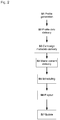
- Figure 2 represents the steps performed in a method of scheduling, delivering and displaying one or more substitutional advertising campaigns, in an embodiment of the invention.
- Each substitutional advertising campaign may comprise one or more media items, sometimes referred to as 'copy' or 'copy items', each media item being associated with a viewer profile segment defined by segment data and/or one or more segment rules associated with that item.
- an advertising campaign for a range of cars may comprise a set of media items, each comprising an advertisement for a particular car in the range, designed to appeal to a segment of the market defined by the associated segment data and/or rule.
- the profile data 5 of each broadcast receiver 1 comprises a set of profile data items stored locally at the receiver.
- Each receiver 1 also has a unique identity, such as a subscriber card number (Subscriber ID) stored on a smart card accessible by the receiver 1.
- Subscriber ID subscriber card number
- the profile management system 11 accesses a database of subscriber details 13 associated with the unique subscriber identities, including subscriber details provided when subscribing to the broadcast service, subscriber preferences provided via the receiver 1 or other communications link, and/or third party data which the subscriber has allowed to be used for this purpose.
- the database 13 stores a wealth of profile data items, which may be used to define profile data and/or segments.
- a predefined, fixed set of profile data items may require excessive processing by the receiver to identify whether the receiver 1 belongs to a particular segment.
- a predefined profile data item may comprise a truncated postcode (used for example to determine a channel set - e.g. a bouquet or sub-bouquet - which the receiver 1 is enabled to receive), while a profile segment may be defined by a much larger region.
- the receiver 1 would need to obtain a list of truncated postcodes corresponding to each region, and compare its truncated postcode with the list of the postcodes.
- profile data items are generated from the profile database 13 for use in one or more specific campaigns.
- a campaign may include different media items for viewers in the North and South of England, so a campaign-specific profile data item may indicate whether a given subscriber is located in the North or South of England.
- the profile management function 11 interrogates the profile database 13 and determines a campaign-specific profile datum for each subscriber ID intended to receive the corresponding campaign.
- the profile data items stored on the profile database 13 may be used flexibly to define the segments for a specific campaign, without requiring a large quantity of profile data to be broadcast to or stored at the receiver 1.
- the profile data may comprise a discrete set of profile data for each campaign, and/or general profile data that is not specific to a particular campaign.
- the general profile data may comprise data likely to be of general use in defining segments, such as gender, age range, location, socio-economic group etc. This general profile data need only be updated occasionally, while campaign-specific data should be updated as new campaigns are introduced.
- campaign metadata are compiled, comprising:
- the updated profile data items and the campaign metadata are acquired by the receivers 1 in advance of the substitutional slots to which the campaign metadata relate. Note that the order in which steps S2 and S3 are performed is not important.
- the updated profile data and campaign metadata may be transmitted periodically on one or more channels separate from programming channels and hidden from users of the receiver 1, and to which each receiver 1 may tune periodically, such as once a week.
- the profile data items may be portioned into blocks according to subscriber ID, so that the receiver 1 need only receive the block relevant to its subscriber ID, thus reducing the time for which the receiver 1 need be tuned to the hidden channel.
- each receiver 1 acquires its corresponding updated profile data items and updates its locally stored profile data accordingly.
- the campaign specific profile data may be broadcast in encrypted form such that only the receiver 1 having the associated subscriber ID may decode the corresponding campaign-specific profile data item(s), for example using a key stored on the smart card.
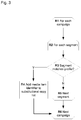
- each receiver 1 acquires and stores the campaign metadata, and builds a substitutional copy list for itself by the following process, as shown in Figure 3 .
- the receiver 1 For each campaign (step R1), the receiver 1 considers each segment in turn (R2), parses the associated segmentation rule, and attempts to match the segmentation rule with its stored profile data (R3). If a match is found, then the media item identifier for that segment is recorded in the substitutional copy list (R4) and the receiver 1 moves to the next campaign (R6); otherwise, the receiver 1 considers the next segment (R5).
- the segmentation rule and profile data may be defined in many different ways. In one embodiment, campaign-specific profile data may simply indicate into which segment the associated receiver 1 has been categorised. The segmentation rule then merely requires the receiver 1 to match its previously indicated segment with one of the segments in the campaign metadata. In another embodiment, each segmentation rule may be expressed as a combination of different profile data items, which may not be campaign-specific, for example:
- the profile data could be dispensed with altogether and the campaign metadata could explicitly identify the receivers belonging to each segment. In that case, profiling is performed internally at the profile management function 11.
- each receiver 1 acquires the media items identified in the substitutional copy list.
- the media items may be stored in a partition of a local hard disc, for example. If an identified media item is already stored locally, it may be removed from the substitutional copy list and need not be acquired.
- each receiver 1 may acquire and store all of the media items for a campaign, and may select one of the media items for output based on a later comparison of the associated profile data with the segment definitions for that campaign. This alternative is more wasteful of local storage, but allows the order of steps S2 and S3 to be reversed.
- a scheduling step S5 the scheduling function schedules the substitutional campaign into the broadcast schedule, as described in detail below.
- this step generates a substitutional schedule indicating which substitutional campaigns can be shown in which substitutional slots in a broadcast schedule.
- Each substitutional slot is defined by a splice point indicating the frame-specific timing of the start and/or end of the substitutional slot in a particular broadcast channel.
- automation events are booked into the broadcast schedule as metadata in the substitutional slot to enable the encoders of the programme broadcast function 10 to generate the splice point messages and perform any stream conditioning necessary to aid splicing at the receivers 1. Additional automation events may be booked into the broadcast schedule at or before the start of each programme break containing substitutional slots to allow the substitution options to be communicated to the receivers 1.
- a booked automation event causes the programme broadcast function 10 to broadcast, in a trigger track associated with a broadcast channel, a substitutional break schedule comprising a list of campaign IDs for each substitutional slot.
- the receivers 1 tuned to that channel receive and process the substitutional break schedule in order to determine for each substitutional slot whether a locally stored media item is available having the campaign ID indicated for a specific slot; if so, that locally stored media item is inserted in the slot in place of a linear media item included in the broadcast channel.
- each media item may comprise a plurality of versions (e.g. standard or high definition) of the same content, and the receiver 1 may select one of the versions for output, for example based on an output mode (e.g. standard or high definition).
- the selected media items are cued by the receiver 1 for output at the defined splice points of the associated slots in the broadcast channel.
- the automation function next generates a splice point trigger at the point indicated by the substitutional slot which is then relayed to the encoder and used to signal the receiver to condition the output stream for splicing.
- the splice points may be defined as splice events within the broadcast channel, using for example the SCTE 35 standard.
- the receiver 1 receives the splice event, it outputs the locally stored media item selected for the corresponding slot, if available, in place of the live broadcast stream.
- the output of the receiver 1 reverts to the live broadcast stream.
- the receiver 1 may delete stored media items which are no longer required, for example which no longer match the stored profile data after the latter is updated, or for which the associated campaign has expired.
- the receiver 1 may also delete campaign-specific profile data items and/or campaign metadata associated with an expired campaign.
- previous versions of at least profile data and campaign metadata may be stored at the receiver 1 for reporting or diagnostic purposes.
- the receiver 1 may update a counter associated with a specific campaign if a media item associated with that campaign has been output.
- the receiver may update a counter associated with respective individual media items, when that media item is output.
- the receiver 1 may transmit the viewing data 7 associated with a particular campaign to the profile management function 11, where the database 13 may be updated with the viewing data 7.
- a particular campaign may have some or all of the following attributes:
- the programming schedule itself may include the following attributes:
- an individual copy (i.e. media) item for a particular campaign has its own set of attributes or metadata:
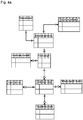
- Figure 4a shows the main entity relationships between the attributes and the campaign and campaign copy (i.e. media items), in a non-aggregated campaign.
- the clash code has a one-to-one relationship with the campaign as a whole, while the campaign target and reporting category have many-to-one relationships with the campaign as a whole.
- the campaign may have a one-to-one relationship with a product category, through which the relationship with the clash code and reporting category is acquired.
- Individual copy items have a many-to-one relationship with the campaign as a whole; in other words, each campaign may have one or more associated copy items.
- Cast Members, Restriction Codes and Presentation Codes each have a many-to-one relationship with an individual copy item.
- a campaign comprises a set of media items, with some attributes (campaign target, clash code, reporting category) associated with the set as a whole, while other attributes (cast member, restriction code, presentation code) are associated with individual media items (or subsets of media items) within the set.
- Each slot contains a linear media item that is included within the broadcast channel, for output by receivers for which substitution is not enabled, or for which the profile data is not addressed by any of the segments.
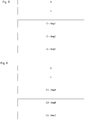
- FIG. 5 shows a first variant, referred to as Single Advertiser Multiple Copy (SAMC), in which the slot S is scheduled to contain a linear media item L and multiple substitutional media items from a single campaign C.
- SAMC Single Advertiser Multiple Copy
- the segment data Seg1, Seg2, Seg3 for each substitutional media item defines the segment addressed by that item.
- Figure 6 shows a second variant, referred to as Multiple Advertiser Single Copy (MASC), in which the slot S is scheduled to contain a linear media item L and multiple substitutional media items, each media item being from a different campaign C1, C2, C3.
- the segment data SegA, SegB, SegC for each media item defines a segment addressed by that item, but the segments from different campaigns may be defined in terms of different profile data items or segment rules; this raises the possibility that the segments may overlap, so that some receivers cannot determine which copy to output, based on a comparison with their profile data.
- MSC Multiple Advertiser Single Copy
- MAMC Multiple Advertiser Multiple Copy
- Scheduling may need to be performed in two stages:
- the scheduling of advertisement campaigns is a combination of two formal classes of mathematical and computational problem, namely constraint satisfaction and optimization.
- Booking involves constraint satisfaction based on attributes of the schedule and of campaigns within a break, and optimization based on the campaign targets of the different campaigns.
- Pre-transmission checking involves constraint satisfaction based on attributes of the programming schedule and the media items booked within a specific break.
- substitutional advertising introduces multiple alternative media items, potentially from multiple different campaigns, within the same substitutional slot within a break. Substitutional advertising gives rise to additional complications, as follows:
- the first substitutional slot contains a SAMC campaign with 3 substitutional options.
- the second substitutional slot contains three MASC campaigns along with the linear campaign. This gives the following break makeup:
- multiple substitutional media items are treated as a single aggregate for the purposes of booking into a linear schedule.
- attributes that are specific to individual media items, or to a subset of the media items are aggregated together and the aggregated attributes are treated as having a many-to-one relationship with a single aggregated Campaigns entity, referred to as an aggregate campaign.
- the aggregate campaign is then booked into the schedule by applying the constraints and/or optimisations to the aggregated attributes.
- An aggregate campaign A is composed of a single linear media item L and a single "pod" P which in turn contains one or more substitutional media items belonging to different campaigns C1, C2, C3.
- the media items are selected so that the user segments SegA, SegB, SegC of media items within a pod do not overlap; this means that a given specific user profile will fall within one segment, at most.
- Attributes of the constituent media items of the aggregate campaign A are aggregated together and the aggregate campaign is scheduled using the aggregate set of attributes as if they were a single set of attributes for a single campaign.
- an aggregate campaign A comprises individual media items for each of the campaigns in the aggregate.
- the schedule includes a set of aggregate slots, into which aggregate campaigns may be scheduled.
- Pods P are formed by grouping compatible substitutional campaigns C1, C2, C3 together. Substitutional campaign compatibility is assessed according to the following factors:
- Each pod P is assigned a unique identifier. Note that the same substitutional campaign can be associated with more than one pod P.
- Each pod P is grouped with a linear campaign L to form an aggregate campaign A.
- Each aggregate campaign A is also assigned a unique identifier. Note that the same pod P may be grouped with more than one linear campaign L, to form a corresponding plurality of aggregate campaigns A.
- Campaign targets of the constituent items of the aggregate campaign may be aggregated into a single set of campaign targets which become the campaign targets of that aggregate campaign A.
- campaigns may be selected for inclusion together in a pod P on the basis of compatible campaign targets.
- Aggregating attributes may give rise to a constraint being applied unnecessarily, such that the aggregate campaigns cannot be scheduled in a break. For example:
- campaign A2 cannot be booked into the break, because a booking constraint prevents two media items having the same clash code being shown in the same break.
- additional information is available about the decomposition of the aggregate campaigns in question:
- campaign A1 and campaign A2 cannot both select a car advertisement for a given subscriber, since the segments of the two car campaigns do not overlap: a subscriber cannot be both in London and the Border region.
- the aggregation function may communicate to the scheduling function whether the clash is reconcilable e.g. because the segments between the two campaigns do not overlap where there is a clash rule invoked. This communication may either occur in real-time or the booking could be allowed and marked as having a warning status and an asynchronous process may query the aggregation function for all bookings with a warning status and prevent booking where the aggregation function indicates that the clash is irreconcilable.
- aggregate campaigns each having the aggregated attributes of the multiple substitutional campaigns contained therein, addresses the additional booking and pre-transmission checking constraints of a substitutional system, without requiring significant changes to a linear scheduling system, and with only a modest increase in processing complexity. This holds true regardless of the number of segments and substitutional options contained within a pod P.
- one or more linear media items may be booked into an available slot separately from the substitutional media items, and preferably before any substitutional media items are booked into that slot.
- the booking of linear media items may be performed using conventional booking techniques. However, it is then preferable to indicate for each slot what kind of substitutional media items can be booked into that slot; this indication comprises so-called 'avail schedule' data which is generated and may be updated during booking.
- the avail schedule data may be based on one or more predetermined substitutional rules of the host campaign, to which the linear media item belongs. For example, if the host campaign targets "adults” then allow substitutional avails to top-slice high income households)
- the avail schedule data may indicate constraints on substitutional media items that can be booked into the break as a whole, such as:
- the avail schedule data may also indicate constraints on substitutional media items that can be booked into a specific slot within the break, such as:
- substitutional media items for each slot may be booked as an aggregate pod P as in the comparative example.
- substitutional media items may be booked individually, in which case the segment exclusions for that slot are updated as the bookings are made.
- Overlapping segments between the different media items booked into each slot are resolved according to a predetermined rule, so that the segments no longer overlap. For example, priority may be given in order of booking; hence, in the example above, the segment of the first substitutional media item is (ABC1 NOT London). If a second substitutional media item, booked subsequently, is targeted at households with children, the actual segment for that item is (children NOT ABC1 NOT London).
- the linear media item is booked first, it is given lower priority than any substitutional media items booked subsequently, and the substitutional media items are given priority in order of booking.
- the segments would be:
- segment priority rules may be used within the scope of the invention. For example, subsequent bookings within a slot may be prevented if the associated segment overlaps with any of the segments already booked into that slot. However, such a rule would require standardization of segment definitions so that overlap can be automatically determined, which reduces the flexibility of the booking system.
- An advantage of this embodiment is that bookings can be confirmed as they are requested, rather than requiring booking requests to be held until aggregate booking can be performed, as in the comparative example.
- the avail schedule data for a specific slot may include one or more clash codes relating to media items already booked in other slots within the same break. For example, if an alcohol-related media item has been booked into another slot within the break, such as a linear or substitutional slot, an 'alcohol' clash code may be included in the avail schedule for the specific slot.
- a predetermined clash code rule then prevents a media item with a 'car' clash code from being booked into the specific slot, to prevent the possibility of car and alcohol-related media items being shown in the same slot.
- fractional media items having a duration that is a fraction (such as one half) of that of a substitutional slot creates additional constraints in that one fractional media item should be matched with one or more other fractional media items and scheduled sequentially so as to make up the duration of one substitutional slot.
- fractional media items are concatenated together to form a concatenated media item having the aggregated attributes of the constituent media items, and the concatenated media item is then treated as a single media item with the aggregated attributes for the purpose of scheduling.
- the fractional media items are scheduled into an aggregate campaign, and the substitutional schedule broadcast to the receiver indicates that the fractional media items are to be shown sequentially rather than as alternatives.
- the schedule may indicate the following substitutional options:
- substitutional options with a campaign or aggregate campaign may be selectively disabled at or just before the time of broadcast, for example by means of modification of the substitutional schedule. This selective disablement may be used to control the frequency with which each substitutional option is displayed.
- the substitutional options to be disabled may be varied during a campaign, so that the delivery of certain substitutional options may be balanced with the need for rescheduling.
- This technique could be applied to a linear scheduling scheme, in which a scheduled campaign defines an inventory of possible media items for a slot, and the linear item for that slot is selected from the inventory of possible items.
- a specific receiver 1 will deterministically select the same substitutional option each time the campaign is scheduled. In some cases, it may be desirable to vary the substitutional option for a specific receiver each time a campaign is scheduled.
- each media item may comprise a sequence of clips, with one clip of the sequence being selected in turn for output by the receiver every time the associated media item is selected for output.
- This embodiment is particularly advantageous for delivery of media items having a total length that is greater than that of a substitutional slot, and enables delivery of a series without the need to schedule each clip of the series in a different, sequential campaign.
- One of the problems mentioned above is to control the delivery of substitutional media items so as to optimize the probability of a particular media item, addressed to a selected audience segment, being output by the receivers 1 falling within that audience segment.
- This problem cannot be solved by scheduling alone, because predicted audience profiles cannot be determined for the variety of segments that might be addressed by the substitutional media items.
- the 'Doctor Who' series provided by the BBC is predominantly watched by children, or at least households including children.
- there are a number of smaller segments that also watch the series such as students, science fiction fans and so on. Advertisements suitable for children are unlikely to appeal to these smaller segments, and vice versa.
- these smaller segments overlap to some extent, so optimal targeting cannot be achieved merely by defining respective substitutional options for students, science fiction fans and so on.
- a particular advertiser may wish to target one of these smaller segments, and may have identified the 'Doctor Who' series as a suitable means for reaching this segment.
- the probability of a media item reaching its targeted segment is not necessarily proportional to the number of placements of that media item within a schedule, because of the size of each segment. For example, a media item targeted at a locality containing only 1000 homes is only ever likely to be selected by a subset of the 1000 homes regardless of the number of placements, whereas a media item targeted at men in the South East of England may result in hundreds of thousands of selections, even if only placed in a few slots in a schedule.
- priority ratings relating to the substitutional media items are transmitted to the receivers, and the selection of substitutional media items by the receivers are based on the priority ratings.
- the priority ratings may include global priority ratings and/or priority ratings that are specific to receivers or groups of receivers. The priority ratings may vary over time.
- substitutional media items assigned to a particular slot may have overlapping segments.
- substitutional media items are booked into slots subject only to the booking and pre-transmission constraints described above. This increases the probability that a receiver falling within a segment of a media item may select that item.
- a ratings system external of the scheduling function 8, gathers information from receivers 1 and/or other sources to allow ratings for substitutional media items to be determined. Global priority ratings are then calculated for each media item or set of media items, based on the associated segments. These global priority ratings are broadcast on a daily basis to all receivers 1, which store the priority ratings for the associated locally stored substitutional media items.
- a system external to the scheduling function 8 determines the degree of matching between a predicted audience profile for a slot, and the segments of the substitutional media items booked into that slot. This degree of matching may be used to calculate a specific priority rating for each of the substitutional media items, although other criteria may be used.
- the specific priority ratings are broadcast to the receivers 1 in the substitutional schedule data, broadcast shortly before the broadcast time of the slot.
- the specific priority ratings may be implicit, for example by broadcasting a specific rating value associated with each substitutional media item, or implicit, for example from the order in which the substitutional media items are indicated for a particular slot in the substitutional schedule data.
- the receiver 1 When the substitutional schedule data, it selects a substitutional item for output, based on a comparison between the segment of the receiver 1 and the segments indicated for the substitutional media items, as described above. However, in this embodiment there may be more than one substitutional media items that match the segment of the receiver 1, in which case one of these is selected for output based on their specific and/or global priority ratings.
- the media item having the higher priority rating may be selected, or a random (or pseudo-random) selection may be made of the matching media items, weighted according to the priority ratings. Some of the weightings may be zero, so for example media items having a low priority may never be selected.
- the zero weighting may be based on one of the priority ratings, such as the specific priority rating, with the remaining media items being weighted according the global priority ratings.
- a priority rating threshold may be predefined, either globally or on a per-campaign basis, so that priority ratings falling below the threshold are allocated zero weighting by the receiver 1 or are otherwise prevented from being selected for output. If none of the possible substitutional media items for a slot have a priority rating above the threshold, the threshold may be adjusted downwards so that one of the possible media items can be selected.
- the receiver 1 may alternatively or additionally select a substitutional media item for output on the basis of a local priority rating, based on historical or other criteria specific to the receiver 1. For example, a predetermined maximum value may be set on the number of times each media item is output by the receiver 1, such that the receiver 1 will no longer select that media item for output once the maximum has been reached, but may instead select another media item, possibly having a lower priority rating. As another example, a minimum interval between successive selections of the same media item may be set, such that the receiver 1 is prevented from re-selecting a media item when less than the minimum interval has elapsed. As another example, a start date constraint may be set such that a media item cannot be selected for output before a specified start date.
- the local priority rating of a substitutional media item may be a function of the global priority rating, the time left until the end of the campaign, and/or the difference between the number of times the item has already been output and the predetermined maximum number of times that item may be output.
- the local priority may increase as the time left to the end of the campaign reduces.
- the local priority may decrease as the number of times the media item has been output approaches the predetermined maximum.
- the above criteria may be set locally at the receiver 1, or may be communicated to the receiver 1.
- the criteria may be specific to particular media items or sets of media items. In this way, the delivery of the media items can be controlled so as to optimize their exposure to the target segment.
- the receiver will always perform media substitution, if a suitable substitutional media item is available, rather than output the linear media item for a slot.
- the linear media item is selected as a default output.
- a disadvantage of this approach is that the target audience of the linear item may not match the profile of a specific receiver.
- a segment is defined for each linear media item, and is communicated to the receivers so that the receivers can select to output the linear media item if the associated segment matches the stored receiver profile. Otherwise, the receiver 1 may output an available substitutional item.
- the segment of the linear item may be defined by creating a campaign ID for the linear item, broadcasting the segment definition of that campaign at the campaign metadata delivery stage S3, and indicating the campaign ID for the linear item in the break schedule at step S6.
- the receiver selects the linear item for output if the associated segment matches the receiver profile.
- the linear item may be selected in preference to any substitutional media item.
- a specific priority rating may be defined for the linear item as well as for the substitutional media items, as described above, and a selection may be made between the linear item and one or more available substitutional media items based on their relative priority ratings. If required, the linear item may have a maximum priority rating.
- the segment for the linear item may be signalled just before the associated break, for example in the trigger track together with the break schedule.
- the receiver 1 determines whether its profile falls within this segment and if, so, does not perform substitution but outputs the linear item in its associated slot.
- the segment for the linear item may be defined in terms of any of the profile data stored at the receivers 1, including general profile data or campaign specific data, as described above.
- the campaign-specific data may or may not be specific to any campaign ID created for the linear item.
- substitutional media items between different slots may be over-constrained, since it is assumed that any of the substitutional media items scheduled for a specific slot may actually have been output by a receiver in that slot.
- one of the substitutional media items scheduled in a slot may be alcohol-related; this would prevent a car-related substitutional media item being scheduled in another slot in the same programme break.
- too few substitutional options may be available, and media items having certain clash codes or adjacency rules may be difficult to schedule.
- constraint satisfaction is divided between the central scheduling function 8 and the receivers 1, as shown in Figure 8 .
- the scheduling function 8 performs constraint satisfaction (step P1) for constraints that apply to all receivers 1, such as slot length, compliance codes (e.g. watershed, HFSS) and restriction codes relating to adjacent programming, while the receivers 1 each perform constraint satisfaction for constraints that are specific to the receiver, such as clash codes between substitutional media items within the same programme break.
- the result of the constraint satisfaction by the scheduling function 8 for each slot is a 'long list' LL identifying all possible substitutional media items that can be output in that slot.
- the respective 'long list' LL for each slot in a break is broadcast to the receivers 1 in the substitutional schedule data immediately before the associated programme break.
- Constraint data CD such as clash codes for each media item, are also broadcast to the receivers 1, for example as metadata received with the corresponding media items.
- each receiver 1 records in advance the substitutional media item or items which match the profile segment of the receiver 1 for each campaign.
- the receiver 1 determines (step P2) which of the indicated media items is available from local storage; these items will be available because they match the profile segment of the receiver 1, and the receiver 1 has been able to receive and record them.
- the available media items from the 'long list' LL comprise a 'short list' SL from which the receiver 1 selects (step P3) up to one media item for output in each slot. If none of the indicated media items is available for a particular slot, then the receiver 1 outputs the linear (i.e. currently broadcast) media content for that slot.
- the receiver 1 selects one media item for output in that slot based, at least in part, on satisfying clash code constraints with the media items selected for output in any other slot within the same break and/or with any linear content item to be output in any slot within the break. These clash code constraints are satisfied locally at the receiver 1, so that constraints are only resolved between the media items actually selected for output at the receiver 1, and over-constraint between potential clashes is avoided.
- the receiver 1 satisfies the clash code constraints by selecting the media item to be output in each slot in turn, and satisfying the clash code constraints for each subsequent slot on the basis of the selection made for the previous slot or slots.
- the clash code constraints may therefore comprise filters on the clash codes of the media items that can be selected, based on the clash codes of the items previously selected. These filters are relatively simple to implement on the receiver 1.
- the receiver 1 may satisfy the clash code constraints by considering some or all possible combinations of selections from the shortlists SL of each substitutional slot within the programme break, and excluding possible combinations where the clash code constraints between the selections for different slots are not satisfied.
- the number of possible combinations is likely to be low, since there may only be 2 or 3 substitutional slots in a break, and only a few media items in each associated shortlist, so that the clash code constraints may still be satisfied without too much complexity at the receiver 1.
- the receiver 1 may select one of the items based on prioritisation, as described above.
- the receiver 1 For each substitutional slot in a break, the receiver 1 obtains the long list LL and filters out invalid or unavailable items at step P2 to obtain a short list SL. Within the selection step P3, the receiver 1 first filters the short list SL (step Q1) by removing those media items that do not satisfy clash code constraints with media items already output in the current break, as recorded by break session data SD.
- the session data SD may comprise the clash codes of the media items already output in the break.
- the receiver 1 may also remove those media items that have already been output by the receiver a predetermined number of times and/or more recently than a predetermined interval, as determined from campaign data CD. The result is a filtered short list FSL.
- the receiver 1 determines how many media items remain in the filtered shortlist FSL. If more than one, the receiver 1 selects the media item having the highest priority (step Q3), which may be determined by a global, specific and/or local priority rating as described above, which is then selected for output (step Q4). If there is only one media item in the filtered shortlist FSL, that item is selected for output (step Q4). In either case, the campaign data CD is updated to record the output of the selected media item, and preferably the time of output so that the interval since the last output can be calculated. If there are no media items in the filtered short list FSL, the linear content is selected for output (step Q5).
- step Q6 the break session data is updated (step Q6) to record any clash codes associated with the output item. If the last substitutional slot has been processed (step Q7), then the process ends for the current break, but may be restarted for the next break. If not, the process repeats at step P2 for the next substitutional slot within the break.
- the receiver 1 may store additional substitutional media items that are not allocated to a particular campaign, but may be selected for output in slots where no campaign-related substitutional media items are available to the receiver 1. These additional media items may be unscheduled, in that they are not indicated in any substitutional schedule, or may be scheduled in specific slots.
- the additional media items may be downloaded to the receiver 1 by including them in a substitutional copy list for the receiver 1, as described above. This may be achieved by creating a pseudo-campaign for the additional media items, with associated segments.
- the additional media items represent 'hyper-local' advertisements, for example relating to local businesses and services, and are divided into a large number of segments based on small geographic areas.
- the receiver 1 may automatically select an additional media item for output in any slot for which no scheduled substitutional media item is available.
- the substitutional schedule may designate only certain slots as being available for additional media items, either exclusively or as an alternative to one or more campaigns designated in the same slot.
- the additional media items may be designated by a campaign ID corresponding to the associated pseudo-campaign.
- the additional media items may be selected so as not to have clash codes that would conflict with other substitutional media items in the same break, so that constraint satisfaction need not be applied to the additional media items.
- the additional media items may be divided into multiple pseudo-campaigns each having different clash codes, and the substitutional schedule may designate one or more specific pseudo-campaign IDs in a slot, so that constraint satisfaction is performed by the scheduling function 8.
- the aggregation function described above may be used to group additional media items into multiple aggregate pseudo-campaigns, each of which is scheduled using the aggregate attributes of the additional media items contained within the aggregate campaign. This aggregation may be done automatically, by selecting additional media items for an aggregate pseudo-campaign based on similarity of attributes.
- the segments of the aggregate pseudo-campaigns may define respective nonoverlapping geographical areas. For example, one aggregate pseudo-campaign may relate to local Indian restaurants, with each media item relating to an Indian restaurant in a different small geographical area.
- the receiver 1 may perform constraint satisfaction of additional media items, by selecting for output an additional media item having a clash code or codes that do not conflict with other media items selected for output in the same break, for example as described above.
- the additional media items will generally have low priority, such that the receiver 1 only selects an additional media item for output after all scheduled substitutional media items have been selected in other slots within a break.
- the above embodiments have been described mainly with reference to live viewing of broadcast programming, with insertion of substitutional media items into the displayed live broadcast stream.
- the received broadcast stream is recorded locally by the receiver 1, such as a PVR
- the inserted substitutional items may be recorded within the recording of the received broadcast stream, so that the displayed content on playback is identical to that seen when watching the live broadcast stream with any inserted substitutional media items.
- This embodiment is advantageous in that the user may see on playback exactly the same content as was seen when viewing the broadcast stream live.
- the above embodiments do not require the broadcast stream to be viewed live; instead, the stream could be recorded for later viewing, with substitutional media items being inserted during recording, or linked to the recorded programme so that they are retrieved automatically and spliced in on playback.
- the recording may include data identifying the splice points and substitutional schedule, and media substitution may be performed on playback, provided the necessary campaign metadata, profile data and substitutional items are still available at the receiver; these items may be saved for the duration that the associated recording is maintained at the receiver 1.
- This approach is more flexible, since any updates to the profile data, campaign metadata and/or substitutional items may be taken into account when selecting a substitutional item for playback.
- the user experience is different from conventional recording, in which the user expects to see on playback the same content that was previously viewed live.
- a substitutional break during playback may be defined differently from a substitutional break in a live broadcast stream (a 'live break') For example, there may be fewer slots defined in the playback break than in the broadcast break. This is advantageous since, on playback, the user is able to skip the break altogether by fast-forwarding or jumping to the end of the break. By providing a shorter break on playback, there is less incentive for the user to skip the break.
- the user may be prevented from skipping the break by technical means, such as inhibiting fast forward or jumping, but this is not too onerous on the user as the playback break is relatively short.
- a further advantage of having few slots in the playback break is that constraint satisfaction is simplified; in the extreme case of only one slot per playback break, constraint satisfaction between different slots in the break is avoided altogether. This is particularly advantageous in embodiments in which some or all of the constraint satisfaction takes place at the receiver.
- the number of slots may be reduced in the playback break simply by removing or skipping one or more of the slots defined in the live break.
- the selection of which slots to remove may be made according to metadata included in the substitutional break schedule, for example. Alternatively, different slots with different substitutional break schedule data may be defined for the playback break.
- the substitutional selection for a slot may differ between a live break and a playback break, even with the same break schedule data.
- the selection may depend on the time of playback. For example, if more than a certain period, such as 7 days, has elapsed since the time of broadcast, substitution may be enabled and the linear media item inhibited, or vice versa.
- One or more of the linear or substitutional media items may have predetermined expiry times, specified for example by the break schedule data and/or campaign metadata, after which they may not be shown on playback.
- the time of day of playback may be taken into account, so that media items having watershed restrictions may not be selected outside the defined watershed times.
- Campaigns may have defined time periods after which they cannot be selected for output. If no other substitutional media items are available, an additional media item may be selected, as described above.
- PVOD Push Video on Demand
- the selection of the campaign to be output for each slot by the receiver 1 is deterministic, given the profile data stored in each receiver 1. It is therefore possible to determine or at least estimate the rating of each campaign, without detecting which campaigns have been output by a particular receiver 1. Instead, all that is necessary is to determine or estimate the number of receivers 1 tuned to each broadcast channel, and the profile data of those receivers.
- viewing data 7 comprising data sets of the form [Subscriber ID], [Channel], [Time of Day] is sufficient; this data may be collected by the profile management function 11 and combined with information from the aggregation function to determine which campaigns would have been output by each receiver. This viewing data may be reported through return channels from the receivers 1, or obtained from survey evidence. In this way, the amount of data to be collected is minimised, and the accuracy of reporting improved.
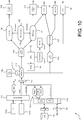
- FIG. 10 shows in detail the functional components of the receiver 1 in specific embodiments of the invention.
- received signals are input to first and second tuners 110a and 110b but any number of tuners may be used in the receiver 1.
- the tuners 110a and 110b are tuneable into the same or different channels of the satellite television broadcast network for simultaneous reception of the same or different television programmes and/or media items.
- Signals from the first and second tuners 110a and 110b are passed to a crossbar switch 111 which separates the data received from the first and second tuners 10a and 10b into data for direct output to a television, data representing received television programmes for recording and subsequent playback, and user services and programme scheduling data, in accordance with the XSI standard, for example.
- the receiver 1 has a hard disk (or other storage medium) 113 which receives from the crossbar switch 111 compressed video and/or audio data for recording and subsequent playback via recording and playback circuitry 116.
- the receiver 1 includes two demultiplexer recording pipes (DMRec1 and DMRec2), which are coupled to Random Access Streaming Protocol circuitry (RASP) for analysing data in a received stream and indexing the data as it is received.
- the recording and playback circuitry 116 is also configured to perform decryption of received data, for example before the video and audio data is transmitted for playback on a display, using stored decryption keys according to the encryption technique used to encrypt the received data.
- the received signals comprise digitally encoded data.
- the data is compressed using the Digital Video Broadcast/Moving Pictures Expert Group 2 or 4 (DVB/MPEG 2/4) or H.264 standard which permits both programme data and additional data (for example metadata and/or schedule data) to be transmitted in a single channel.
- the hard disk 113 receives and stores compressed data. The data is decompressed only after retrieval from the hard disk 113.
- the receiver 1 therefore has an Integrated Conditional Access Module (ICAM) 114 which co-operates with a smart card 114a to determine whether the viewer has subscribed to a particular channel and is therefore authorised to access the channel. Parental control over channel access is also provided, at least in part, by the access control circuit 114.
- the receiver 1 further comprises a demultiplexing and descrambling circuit 115 which receives from a selector 117 data from the crossbar switch 111 for direct output or data from the hard disk 113 for playback.
- the demultiplexing and descrambling circuit 115 separates the data into video data and audio data for distribution to various locations within the receiver 1.
- the demultiplexing and descrambling circuit 115 is also controlled by the access control circuit 114 to enable the descrambling of the signal by authorised subscribers.
- the receiver 1 also comprises a video decoder 118 for decompression and processing of encoded video data received from the demultiplexing and descrambling circuit 115, and an audio decoder 119 for decompression and processing of compressed audio data, operating according to the MPEG 2/4 standard, for example.
- Decompressed video data is supplied to standard definition display circuitry 120 and/or high definition display circuitry 121 which combines the decompressed video data with corresponding standard definition or high definition on-screen display and graphics generated by on-screen display and graphics generation circuitry 122 using the user services and programme scheduling data.
- the standard definition display circuitry 120 provides the combined standard definition video and graphics data to a standard definition digital encoder and Digital to Analogue Converters (DACs) 124 where the data is encoded and converted into an appropriate format for direct input to a television set.
- DACs Digital to Analogue Converters
- the high definition display circuitry 121 supplies the combined high definition video and graphics data to a high definition digital encoder and Digital to Analogue Converter (DAC) 125 where the data is encoded into an appropriate high definition format for output to a high definition TV if so desired.
- DAC Digital to Analogue Converter
- the combined high definition video and graphics data is also supplied to a High Definition Multimedia Interface (HDMI) interface 126 which also receives decompressed audio data from the audio decoder 119 via audio post-processing circuitry 127, for output to an HDMI input of a high definition TV if so desired.
- Decompressed and processed audio data is also supplied to an audio DAC 131 for direct input to an analogue audio device or speakers.
- the demultiplexing and descrambling circuit 115 may also output compressed digital audio to a proprietary audio interface 133, for example in accordance with the Sony/Philips Digital Interconnect Format (SPDIF), for direct input to appropriate audio equipment.
- SPDIF Sony/Philips Digital Interconnect Format
- the receiver 1 is controlled by a processor 123 which communicates with the various units of the receiver via a bus (not shown).
- the processor 123 has associated with it Random Access Memory (RAM) 134.
- the processor 123 controls operation of the receiver 1 by tuning the tuners 110a and 110b to receive signals for the desired channels by controlling the demultiplexing, descrambling and decompression so that the desired programme and/or interactive service data is displayed on the screen of the TV, and by controlling the hard disk 113 to record desired television programmes or to play back previously recorded television programmes.
- Viewer selection of desired programmes and customer services is controlled by viewer manipulation of a remote control unit 128, which in response to such viewer manipulation transmits control signals to an input receiver 129 for input to the processor 123.
- the remote control unit 128 also allows the viewer to control of the operation of the hard disk 13 to record television programmes, to play back recorded television programmes and to program the recording of television programmes, etc.
- Operation of the receiver 1 is controlled by software that makes the processor 123 responsive to control signals from the remote control unit 128 and/or additional data in the received signals.
- Interaction between hardware and software in the receiver 1 may include functionality as described in detail in the Applicant's earlier international patent application published as WO 01/11865 .
- Operation of the receiver 1 in receiving and decoding data representing television programmes and data defining scheduling and other information related to the programmes may include functionality as described in detail in the Applicant's earlier international patent application published as WO 96/37996 .
- Operation of the receiver 1 in providing interactive services may include functionality as described in the Applicant's earlier international patent application published as WO 97/23997 .
- DVB Digital Video Broadcasting
- EPG Electronic Programme Guide
- This DVB standard is known generally as the SI standard and can be found in the specification: ETS 300 468, ETSI Digital Broadcasting Systems for Television, Sound and Data Services; Specification for Service Information (SI) in Digital Video Broadcasting (DVB) Systems 2nd edition. Guidelines for using the specification are given in ETSI ETR 211 - DVB SI Guidelines.
- the receiver 1 is preferably designed to support the SI specification.
- additional data in a channel can include brief programme schedule data representative of so-called event information tables (EITs) defining the scheduling of programmes in each channel.
- the programme schedule data may be stored in the RAM 134 and, once stored, the scheduling information is available effectively instantaneously.
- the programme schedule data may be stored in the hard disk 113.
- the programme schedule data is transmitted regularly so that the receiver 1 will be updated substantially continuously. As those skilled in the art will appreciate, the transmitted information may be brief to enable each channel to carry a reduced set of programme schedule data without excessive overheads in terms of bandwidth requirements in each channel and memory requirements in the receiver.
- a dedicated EPG channel transmits more detailed programme scheduling information, such as programme synopsis or other ancillary data associated with the scheduled programmes, which is stored in the hard disk 113.
- the receiver 1 is arranged to display the programme scheduling information for several of the channels over a predetermined period of time on the TV. Also, a viewer can interact with the receiver 1 to program recordings of television programmes, view a desired part of the available programme schedule, etc., on the basis of the information received via the dedicated EPG channel.
- tuners 10a and 10b can be tuned to receive different channels, it is possible for a first television programme in one channel to be displayed on a TV and recorded on the hard disk 13, while at the same time a second television programme in another channel is also recorded on the hard disk 13. Operation of the receiver 1 in providing simultaneous recording and playback may be as described in the Applicant's earlier international patent application published as WO 01/11865 .
- the hard disk 113 of the receiver 1 may be similar to conventional hard disks used in computer systems for storing large amounts of data.
- the hard disk 113 may have a capacity of many gigabytes (e.g. 400 gigabytes or more) and receive video and audio data via a SATA interface, for example, for storage in the compressed form in which it is received, for example, in accordance with the DVB/MPEG 2 standards as discussed above. This allows for the storage of several hours of television programmes (e.g. 100+ hours) on the hard disk 113.
- the hard disk 113 may comprise two or more storage areas, one for the storage of television programme data, and the other for storing metadata and/or recorded media items.
- the processor 123 controls the operation of the hard disk 113. More specifically, the processor1 23 controls the recording and playback of television programmes to and from the hard disk 113. Other processors (not shown) can be used to control the hard disk 113 as appropriate.
- the receiver 1 also includes an external interface 135, such as a Universal Serial Bus 2 (USB2) port.
- the USB2 interface may be connected to a transcoding device (not shown) via a USB connector, which allows media content in a first format to be supplied from the receiver 1 and transcoded by the connected transcoding device into a second media coding format suitable for playback on a Personal Media Player (not shown). Operation of the receiver 1 in providing transcoding services may be as described in the Applicant's earlier international patent application published as WO 06/125999 .
- the entities described herein, such as the scheduling function 8 and/or the profile management function, may be implemented by computer systems such as computer system 200 as shown in Figure 11 .
- Embodiments of the present invention may be implemented as programmable code for execution by such computer systems 200. After reading this description, it will become apparent to a person skilled in the art how to implement the invention using other computer systems and/or computer architectures.
- Computer system 200 includes one or more processors, such as processor 204.
- Processor 204 may be any type of processor, including but not limited to a special purpose or a general-purpose digital signal processor.
- Processor 204 is connected to a communication infrastructure 206 (for example, a bus or network).
- a communication infrastructure 206 for example, a bus or network.
- Computer system 200 also includes a main memory 208, preferably random access memory (RAM), and may also include a secondary memory 610.
- Secondary memory 210 may include, for example, a hard disk drive 212 and/or a removable storage drive 214, representing a floppy disk drive, a magnetic tape drive, an optical disk drive, etc.
- Removable storage drive 214 reads from and/or writes to a removable storage unit 218 in a well-known manner.
- Removable storage unit 218 represents a floppy disk, magnetic tape, optical disk, etc., which is read by and written to by removable storage drive 214.
- removable storage unit 618 includes a computer usable storage medium having stored therein computer software and/or data.
- secondary memory 210 may include other similar means for allowing computer programs or other instructions to be loaded into computer system 200.
- Such means may include, for example, a removable storage unit 222 and an interface 220.
- Examples of such means may include a program cartridge and cartridge interface (such as that previously found in video game devices), a removable memory chip (such as an EPROM, or PROM, or flash memory) and associated socket, and other removable storage units 222 and interfaces 220 which allow software and data to be transferred from removable storage unit 222 to computer system 200.
- the program may be executed and/or the data accessed from the removable storage unit 222, using the processor 204 of the computer system 200.
- Computer system 200 may also include a communication interface 224.
- Communication interface 224 allows software and data to be transferred between computer system 200 and external devices. Examples of communication interface 224 may include a modem, a network interface (such as an Ethernet card), a communication port, a Personal Computer Memory Card International Association (PCMCIA) slot and card, etc.
- Software and data transferred via communication interface 224 are in the form of signals 228, which may be electronic, electromagnetic, optical, or other signals capable of being received by communication interface 224. These signals 228 are provided to communication interface 224 via a communication path 226.
- Communication path 226 carries signals 228 and may be implemented using wire or cable, fibre optics, a phone line, a wireless link, a cellular phone link, a radio frequency link, or any other suitable communication channel. For instance, communication path 226 may be implemented using a combination of channels.
- computer program medium and “computer usable medium” are used generally to refer to media such as removable storage drive 214, a hard disk installed in hard disk drive 212, and signals 228. These computer program products are means for providing software to computer system 200. However, these terms may also include signals (such as electrical, optical or electromagnetic signals) that embody the computer program disclosed herein.
- Computer programs are stored in main memory 208 and/or secondary memory 210. Computer programs may also be received via communication interface 224. Such computer programs, when executed, enable computer system 200 to implement embodiments of the present invention as discussed herein. Accordingly, such computer programs represent controllers of computer system 200. Where the embodiment is implemented using software, the software may be stored in a computer program product and loaded into computer system 200 using removable storage drive 214, hard disk drive 212, or communication interface 224, to provide some examples.
- VOD video on demand
- PVOD push video on demand
- the substitutional system may be applied to the substitutional system in a similar way to the broadcast system described above.
- substitutional advertising is described with reference to substitutional advertising, but aspects of the invention are not dependent on the content or commercial nature of advertising.
- Substitutional systems as described above are applicable to other media types having other constraint and/or optimisation rules.
- aspects of the invention are applicable to the distribution of programmes with substitutional segments, for example to allow display of alternative content depending on profile data at the receiver. In that case, there may be constraint rules which restrict which combination of segments can be output.
- aspects of the invention are applicable to public service or system announcements targeted at particular user profiles.
- broadcast programmes and substitutional media content comprise video, and associated audio where applicable.
- aspects of the invention are applicable to audio-only content, such as digital radio broadcasts, or a mixture of video and audio-only content; for example, the broadcast programmes may be video programmes, and the substitutional media content may comprise audio-only content that is output over a still picture generated locally at the receiver.
- the above embodiment discloses a time-divided system in which the insertable media items are output during breaks within or between programmes.
- the slots for insertable media items may be concurrent in time with programmes; for example, substitutional content may be superimposed on the display of a programme, or be added to or replace the audio output, for example for dubbing.
- substitutional media items are described in the specific embodiments above as comprising audio and/or video clips, but may alternatively or additionally comprise data and/or instructions that, when executed by the receiver 1, cause audio and/or video content to be output: for example, video items may be defined as 2D or 3D graphical objects, and audio items may be defined as musical instructions, such as MIDI files, or speech synthesis codes.
Landscapes
- Engineering & Computer Science (AREA)
- Signal Processing (AREA)
- Multimedia (AREA)
- Databases & Information Systems (AREA)
- Business, Economics & Management (AREA)
- Marketing (AREA)
- Development Economics (AREA)
- Strategic Management (AREA)
- Finance (AREA)
- Accounting & Taxation (AREA)
- Health & Medical Sciences (AREA)
- Social Psychology (AREA)
- General Health & Medical Sciences (AREA)
- Computer Networks & Wireless Communication (AREA)
- General Physics & Mathematics (AREA)
- Theoretical Computer Science (AREA)
- Game Theory and Decision Science (AREA)
- Entrepreneurship & Innovation (AREA)
- Economics (AREA)
- Physics & Mathematics (AREA)
- General Business, Economics & Management (AREA)
- Computer Graphics (AREA)
- Computer Security & Cryptography (AREA)
- Human Computer Interaction (AREA)
- Two-Way Televisions, Distribution Of Moving Picture Or The Like (AREA)
- Television Systems (AREA)
- Management Or Editing Of Information On Record Carriers (AREA)
- Circuits Of Receivers In General (AREA)
- Input Circuits Of Receivers And Coupling Of Receivers And Audio Equipment (AREA)
Claims (13)
- Un procédé de sélection d'une pluralité d'éléments multimédias, chacun d'eux étant destiné à une production en sortie par un récepteur de programmes (1) dans un créneau correspondant d'une pluralité de créneaux dans une coupure entre programmes, le procédé comprenant, au niveau du récepteur (1) :a. la réception, à partir d'une fonction de planification centrale (8), pour chaque desdits créneaux, d'une liste correspondante (LL) d'un ou de plusieurs éléments multimédias possibles planifiés en vue d'une production en sortie dans ledit créneau,b. la détermination, à partir de chacune desdites listes (LL), d'un ou de plusieurs des éléments multimédias possibles (SL) qui sont disponibles à partir d'un espace mémoire local au niveau du récepteur de programmes (1), etc. la sélection (P3), pour chacun desdits créneaux, parmi les un ou plusieurs éléments multimédias possibles (SL) à partir de la liste correspondante (LL) qui sont disponibles à partir d'un espace mémoire local, d'au maximum un élément multimédia en vue d'une production en sortie dans ce créneau par la résolution d'une ou de plusieurs contraintes associées à un ou plusieurs éléments multimédias sélectionnés en vue d'une production en sortie dans au moins un autre des créneaux à l'intérieur de la coupure.
- Le procédé selon la Revendication 1, où le récepteur (1) enregistre sur un espace mémoire local des éléments multimédias possibles qui correspondent à des données de profil associées au récepteur (1).
- Le procédé selon la Revendication 2, où les éléments multimédias possibles ont été reçus antérieurement par l'intermédiaire d'un canal de radiodiffusion.
- Le procédé selon la Revendication 1, comprenant en outre la réception d'un ou de plusieurs éléments multimédias non planifiés non attribués à un créneau spécifique des créneaux, et la sélection d'un des éléments multimédias non planifiés en vue d'une production en sortie dans un desdits créneaux.
- Le procédé selon la Revendication 4, où l'élément multimédia non planifié est sélectionné en vue d'une production en sortie dans ledit créneau en fonction d'une ou de plusieurs contraintes associées à un ou plusieurs éléments multimédias planifiés en vue d'une production en sortie dans au moins un autre créneau de programme.
- Le procédé selon l'une quelconque des Revendications précédentes, où ledit élément des éléments multimédias possibles est sélectionné en vue d'une production en sortie dans le créneau en fonction de données de priorité associées à au moins certains des éléments multimédias possibles planifiés en vue d'une production en sortie dans ce créneau.
- Le procédé selon l'une quelconque des Revendications précédentes, où au maximum un des éléments multimédias possibles est sélectionné en vue d'une production en sortie en fonction d'une production en sortie antérieure d'au moins un des éléments multimédias possibles par le récepteur (1).
- Le procédé selon l'une quelconque des Revendications précédentes, où un desdits éléments multimédias est sélectionné en vue d'une production en sortie dans le créneau par la satisfaction d'une ou de plusieurs contraintes associées à ce créneau.
- Le procédé selon l'une quelconque des Revendications précédentes, où les éléments multimédias possibles comprennent un élément multimédia linéaire inclus dans un flux de programmes.
- Le procédé selon l'une quelconque des Revendications précédentes, où la liste d'un ou de plusieurs éléments multimédias possibles est reçue par l'intermédiaire d'un canal de radiodiffusion.
- Un produit de programme informatique comprenant un moyen de code de programme agencé de façon à exécuter le procédé selon l'une quelconque des Revendications précédentes.
- Un récepteur de programmes (1) destiné à la sélection d'une pluralité d'éléments multimédias, chacun d'eux en vue d'une production en sortie dans un créneau correspondant d'une pluralité de créneaux dans une coupure entre programmes, le récepteur (1) comprenant :un moyen agencé de façon à recevoir à partir d'une fonction de planification centrale (8), pour chacun desdits créneaux, une liste correspondante (LL) d'un ou de plusieurs éléments multimédias possibles planifiés en vue d'une production en sortie dans ledit créneau,un moyen de détermination, à partir de chacune desdites listes (LL), d'un ou de plusieurs des éléments multimédias possibles (SL) qui sont disponibles à partir d'un espace mémoire local au niveau du récepteur de programmes (1), etun moyen agencé de façon à sélectionner (P3) pour chacun desdits créneaux, à partir des un ou plusieurs éléments multimédias possibles (SL) de la liste correspondante (LL) qui sont disponibles à partir d'un espace mémoire local,au maximum un élément multimédia en vue d'une production en sortie dans ce créneau par la résolution d'une ou de plusieurs contraintes associées à un ou plusieurs éléments multimédias sélectionnés en vue d'une production en sortie dans au moins un autre des créneaux à l'intérieur de la coupure.
- Un système multimédia de substitution comprenant :a. un émetteur d'éléments multimédias (9) destiné à l'émission d'une pluralité d'éléments multimédias vers une pluralité de récepteurs multimédias (1),b. une fonction de planification centrale (8) destinée à la planification de listes (LL) des éléments multimédias vers des créneaux correspondants à l'intérieur d'une coupure entre programmes, etc. ladite pluralité de récepteurs multimédias (1), chacun d'eux étant agencé de façon à :i. recevoir à partir de la fonction de planification centrale, pour chacun desdits créneaux, la liste correspondante (LL) d'un ou de plusieurs éléments multimédias possibles planifiés en vue d'une production en sortie dans ledit créneau,ii. déterminer, à partir de chacune desdites listes (LL), un ou plusieurs des éléments multimédias possibles (SL) qui sont disponibles à partir d'un espace mémoire local au niveau du récepteur de programmes (1), etiii. sélectionner pour chacun desdits créneaux, à partir des un ou plusieurs éléments multimédias possibles (SL) de la liste correspondante (LL) qui sont disponibles à partir d'un espace mémoire local, au maximum un élément multimédia en vue d'une production en sortie dans le créneau correspondant par la résolution d'une ou de plusieurs contraintes associées à un ou plusieurs éléments multimédias sélectionnés en vue d'une production en sortie dans au moins un des créneaux à l'intérieur de la coupure entre programmes.
Priority Applications (12)
| Application Number | Priority Date | Filing Date | Title |
|---|---|---|---|
| EP17178805.2A EP3249915B1 (fr) | 2009-07-31 | 2010-08-02 | Système d'insertion de liquides |
| HRP20180449TT HRP20180449T1 (hr) | 2009-07-31 | 2010-08-02 | Sustav za umetanje medija |
| PL17178793T PL3244627T3 (pl) | 2009-07-31 | 2010-08-02 | System wstawiania mediów |
| EP17178793.0A EP3244627B1 (fr) | 2009-07-31 | 2010-08-02 | Système d'insertion de liquides |
| EP17178815.1A EP3249917B1 (fr) | 2009-07-31 | 2010-08-02 | Système d'insertion de liquides |
| SM20180154T SMT201800154T1 (it) | 2009-07-31 | 2010-08-02 | Sistema di inserimento di media |
| EP17178821.9A EP3249918A1 (fr) | 2009-07-31 | 2010-08-02 | Système d'insertion de liquides |
| SI201031654T SI2460352T1 (en) | 2009-07-31 | 2010-08-02 | Media insert system |
| PL10773677T PL2460352T3 (pl) | 2009-07-31 | 2010-08-02 | System wstawiania mediów |
| DK17178793.0T DK3244627T3 (en) | 2009-07-31 | 2010-08-02 | Media insertion system |
| EP17178813.6A EP3249916B1 (fr) | 2009-07-31 | 2010-08-02 | Système d'insertion de liquides |
| CY181101353T CY1120986T1 (el) | 2009-07-31 | 2018-12-18 | Συστημα εισαγωγης μεσων |
Applications Claiming Priority (5)
| Application Number | Priority Date | Filing Date | Title |
|---|---|---|---|
| GB0913389.3A GB2472264B (en) | 2009-07-31 | 2009-07-31 | Media substitution system |
| GBGB1003034.4A GB201003034D0 (en) | 2009-07-31 | 2010-02-23 | Media substitution system |
| GB1004738.9A GB2473306B (en) | 2009-07-31 | 2010-03-22 | Media substitution system |
| GBGB1008787.2A GB201008787D0 (en) | 2009-07-31 | 2010-05-26 | Media Substitution system |
| PCT/GB2010/051274 WO2011012909A2 (fr) | 2009-07-31 | 2010-08-02 | Système d'insertion de multimédia |
Related Child Applications (10)
| Application Number | Title | Priority Date | Filing Date |
|---|---|---|---|
| EP17178805.2A Division EP3249915B1 (fr) | 2009-07-31 | 2010-08-02 | Système d'insertion de liquides |
| EP17178805.2A Division-Into EP3249915B1 (fr) | 2009-07-31 | 2010-08-02 | Système d'insertion de liquides |
| EP17178793.0A Division EP3244627B1 (fr) | 2009-07-31 | 2010-08-02 | Système d'insertion de liquides |
| EP17178793.0A Division-Into EP3244627B1 (fr) | 2009-07-31 | 2010-08-02 | Système d'insertion de liquides |
| EP17178821.9A Division-Into EP3249918A1 (fr) | 2009-07-31 | 2010-08-02 | Système d'insertion de liquides |
| EP17178821.9A Division EP3249918A1 (fr) | 2009-07-31 | 2010-08-02 | Système d'insertion de liquides |
| EP17178815.1A Division EP3249917B1 (fr) | 2009-07-31 | 2010-08-02 | Système d'insertion de liquides |
| EP17178815.1A Division-Into EP3249917B1 (fr) | 2009-07-31 | 2010-08-02 | Système d'insertion de liquides |
| EP17178813.6A Division EP3249916B1 (fr) | 2009-07-31 | 2010-08-02 | Système d'insertion de liquides |
| EP17178813.6A Division-Into EP3249916B1 (fr) | 2009-07-31 | 2010-08-02 | Système d'insertion de liquides |
Publications (2)
| Publication Number | Publication Date |
|---|---|
| EP2460352A2 EP2460352A2 (fr) | 2012-06-06 |
| EP2460352B1 true EP2460352B1 (fr) | 2017-12-20 |
Family
ID=41129447
Family Applications (6)
| Application Number | Title | Priority Date | Filing Date |
|---|---|---|---|
| EP17178813.6A Active EP3249916B1 (fr) | 2009-07-31 | 2010-08-02 | Système d'insertion de liquides |
| EP17178815.1A Active EP3249917B1 (fr) | 2009-07-31 | 2010-08-02 | Système d'insertion de liquides |
| EP17178805.2A Active EP3249915B1 (fr) | 2009-07-31 | 2010-08-02 | Système d'insertion de liquides |
| EP17178821.9A Ceased EP3249918A1 (fr) | 2009-07-31 | 2010-08-02 | Système d'insertion de liquides |
| EP17178793.0A Active EP3244627B1 (fr) | 2009-07-31 | 2010-08-02 | Système d'insertion de liquides |
| EP10773677.9A Active EP2460352B1 (fr) | 2009-07-31 | 2010-08-02 | Système d'insertion de multimédia |
Family Applications Before (5)
| Application Number | Title | Priority Date | Filing Date |
|---|---|---|---|
| EP17178813.6A Active EP3249916B1 (fr) | 2009-07-31 | 2010-08-02 | Système d'insertion de liquides |
| EP17178815.1A Active EP3249917B1 (fr) | 2009-07-31 | 2010-08-02 | Système d'insertion de liquides |
| EP17178805.2A Active EP3249915B1 (fr) | 2009-07-31 | 2010-08-02 | Système d'insertion de liquides |
| EP17178821.9A Ceased EP3249918A1 (fr) | 2009-07-31 | 2010-08-02 | Système d'insertion de liquides |
| EP17178793.0A Active EP3244627B1 (fr) | 2009-07-31 | 2010-08-02 | Système d'insertion de liquides |
Country Status (22)
| Country | Link |
|---|---|
| US (6) | US10149006B2 (fr) |
| EP (6) | EP3249916B1 (fr) |
| CN (4) | CN105430428B (fr) |
| AU (1) | AU2010277397B2 (fr) |
| BR (3) | BR122013019793B1 (fr) |
| CA (1) | CA2769688C (fr) |
| CY (2) | CY1120218T1 (fr) |
| DK (2) | DK2460352T3 (fr) |
| ES (2) | ES2703213T3 (fr) |
| GB (11) | GB2472264B (fr) |
| HR (2) | HRP20180449T1 (fr) |
| HU (2) | HUE037276T2 (fr) |
| IL (6) | IL217819A0 (fr) |
| LT (2) | LT3244627T (fr) |
| MX (1) | MX2012001405A (fr) |
| NO (1) | NO2460352T3 (fr) |
| NZ (4) | NZ716531A (fr) |
| PL (2) | PL2460352T3 (fr) |
| PT (2) | PT3244627T (fr) |
| SI (2) | SI2460352T1 (fr) |
| SM (1) | SMT201800154T1 (fr) |
| WO (1) | WO2011012909A2 (fr) |
Families Citing this family (41)
| Publication number | Priority date | Publication date | Assignee | Title |
|---|---|---|---|---|
| US8745670B2 (en) | 2008-02-26 | 2014-06-03 | At&T Intellectual Property I, Lp | System and method for promoting marketable items |
| GB2472264B (en) | 2009-07-31 | 2014-12-17 | British Sky Broadcasting Ltd | Media substitution system |
| US9301020B2 (en) * | 2010-11-30 | 2016-03-29 | Google Technology Holdings LLC | Method of targeted ad insertion using HTTP live streaming protocol |
| US9792363B2 (en) * | 2011-02-01 | 2017-10-17 | Vdopia, INC. | Video display method |
| CN108366070A (zh) * | 2011-03-16 | 2018-08-03 | 韩国电子通信研究院 | 用于提供媒体内容的方法和客户端 |
| WO2012129539A2 (fr) * | 2011-03-23 | 2012-09-27 | Invidi Technologies Corporation | Programmation a priori de multiples biens à l'intérieur d'une collection d'opportunités de distribution de biens |
| US10108980B2 (en) * | 2011-06-24 | 2018-10-23 | At&T Intellectual Property I, L.P. | Method and apparatus for targeted advertising |
| US10423968B2 (en) | 2011-06-30 | 2019-09-24 | At&T Intellectual Property I, L.P. | Method and apparatus for marketability assessment |
| US9877054B2 (en) * | 2012-02-22 | 2018-01-23 | Imagine Communications Corp. | Dynamic scheduling for advanced advertising in linear television |
| US9380282B2 (en) * | 2012-03-26 | 2016-06-28 | Max Abecassis | Providing item information during video playing |
| US9609395B2 (en) | 2012-03-26 | 2017-03-28 | Max Abecassis | Second screen subtitles function |
| US9124950B2 (en) * | 2012-03-26 | 2015-09-01 | Max Abecassis | Providing item information notification during video playing |
| CN103458271A (zh) * | 2012-05-29 | 2013-12-18 | 北京数码视讯科技股份有限公司 | 音视频文件拼接方法和装置 |
| US9813325B2 (en) * | 2012-12-27 | 2017-11-07 | Comcast Cable Communications, Llc | Information stream management |
| US9106965B2 (en) | 2012-12-27 | 2015-08-11 | Echostar Technologies L.L.C. | Using idle resources to reduce channel change times |
| US9407954B2 (en) | 2013-10-23 | 2016-08-02 | At&T Intellectual Property I, Lp | Method and apparatus for promotional programming |
| CN103747341B (zh) * | 2013-12-31 | 2017-04-12 | 四川迪佳通电子有限公司 | 一种电视节目属性更新方法以及电视节目属性更新装置 |
| KR101861941B1 (ko) * | 2014-02-10 | 2018-07-02 | 돌비 인터네셔널 에이비 | 완벽 스플라이싱을 위한 인코딩된 오디오의 전송 스트림에의 삽입 |
| US9872058B2 (en) | 2014-02-25 | 2018-01-16 | Google Llc | Splitting content channels |
| GB2528039A (en) * | 2014-07-01 | 2016-01-13 | Canon Kk | Method for identifying objects across time periods and corresponding device |
| US9854306B2 (en) | 2014-07-28 | 2017-12-26 | Echostar Technologies L.L.C. | Methods and systems for content navigation among programs presenting advertising content |
| US9756378B2 (en) | 2015-01-07 | 2017-09-05 | Echostar Technologies L.L.C. | Single file PVR per service ID |
| WO2016139909A1 (fr) * | 2015-03-02 | 2016-09-09 | 日本電気株式会社 | Dispositif de décodage, dispositif de réception, dispositif d'émission, système d'émission/réception, procédé de décodage, et support de stockage dans lequel un programme de décodage est stocké |
| CA2985836C (fr) * | 2015-05-13 | 2024-03-05 | Abdo Shabah Md Inc. | Systeme et procede destines a la gestion de processus dans des environnements isoles |
| US9635413B2 (en) * | 2015-09-23 | 2017-04-25 | Echostar Technologies L.L.C. | Advance decryption key acquisition for streaming media content |
| US9596502B1 (en) | 2015-12-21 | 2017-03-14 | Max Abecassis | Integration of multiple synchronization methodologies |
| US9516373B1 (en) | 2015-12-21 | 2016-12-06 | Max Abecassis | Presets of synchronized second screen functions |
| EP3185564A1 (fr) * | 2015-12-22 | 2017-06-28 | Harmonic Inc. | Épissage de flux vidéo avec "groups of pictures" (gop) |
| CN106210805B (zh) * | 2016-08-15 | 2019-04-02 | 李世平 | 一种利用机顶盒实现播放内容安全的控制方法及系统 |
| US10693642B1 (en) * | 2017-06-05 | 2020-06-23 | Amazon Technologies, Inc. | Output switching for encoded content streams |
| KR101976428B1 (ko) * | 2017-12-21 | 2019-05-10 | 애니포인트미디어 주식회사 | 개인화 홈쇼핑 방송 시스템 |
| US11128914B2 (en) | 2018-04-25 | 2021-09-21 | Roku, Inc. | Client side stitching of content into a multimedia stream |
| US11082734B2 (en) * | 2018-12-21 | 2021-08-03 | Turner Broadcasting System, Inc. | Publishing a disparate live media output stream that complies with distribution format regulations |
| JP7260085B2 (ja) * | 2019-01-24 | 2023-04-18 | 株式会社電通 | 枠交換評価システム、枠交換評価装置及びプログラム |
| CN109996012A (zh) * | 2019-03-29 | 2019-07-09 | 上海晨驭信息科技有限公司 | 一种集分式拼接录播系统 |
| US12444440B2 (en) * | 2019-08-07 | 2025-10-14 | Timothy Kenneth Moore | System and method for automatically preparing personalized video presentations |
| US11651026B2 (en) * | 2019-08-07 | 2023-05-16 | Timothy Kenneth Moore | System and method for automatically preparing personalized video presentations |
| US11792457B1 (en) * | 2019-12-12 | 2023-10-17 | Amazon Technologies, Inc. | Automated predictive content availability strategy provisioning |
| US12093968B2 (en) * | 2020-09-18 | 2024-09-17 | The Nielsen Company (Us), Llc | Methods, systems and apparatus to estimate census-level total impression durations and audience size across demographics |
| GB2611516B (en) | 2021-09-30 | 2023-11-15 | Sky Cp Ltd | Media substitution system |
| WO2025264031A1 (fr) * | 2024-06-21 | 2025-12-26 | 삼성전자 주식회사 | Dispositif électronique et procédé de reconnaissance de la parole |
Family Cites Families (54)
| Publication number | Priority date | Publication date | Assignee | Title |
|---|---|---|---|---|
| US5446919A (en) * | 1990-02-20 | 1995-08-29 | Wilkins; Jeff K. | Communication system and method with demographically or psychographically defined audiences |
| IT1268195B1 (it) | 1994-12-23 | 1997-02-21 | Sip | Decodificatore per segnali audio appartenenti a sequenze audiovisive compresse e codificate. |
| GB9526304D0 (en) | 1995-05-22 | 1996-02-21 | British Sky Broadcasting Ltd | Interactive services interface |
| AU7606696A (en) * | 1995-11-07 | 1997-05-29 | Seiko Communications Systems, Inc. | Selective advertisement presentation |
| PT868816E (pt) | 1995-12-22 | 2002-07-31 | British Sky Broadcasting Ltd | Melhorias em receptores para sinais de televisao |
| US8290351B2 (en) * | 2001-04-03 | 2012-10-16 | Prime Research Alliance E., Inc. | Alternative advertising in prerecorded media |
| US7328448B2 (en) * | 2000-08-31 | 2008-02-05 | Prime Research Alliance E, Inc. | Advertisement distribution system for distributing targeted advertisements in television systems |
| US7096487B1 (en) * | 1999-10-27 | 2006-08-22 | Sedna Patent Services, Llc | Apparatus and method for combining realtime and non-realtime encoded content |
| WO2001011865A1 (fr) | 1999-08-09 | 2001-02-15 | British Sky Broadcasting Limited | Ameliorations de recepteurs pour signaux de television |
| WO2003053056A1 (fr) * | 2000-01-19 | 2003-06-26 | Next Century Media | Systeme et procede pour publicite electronique ciblee personnalisee sur support de diffusion numerique |
| US7028071B1 (en) * | 2000-01-28 | 2006-04-11 | Bycast Inc. | Content distribution system for generating content streams to suit different users and facilitating e-commerce transactions using broadcast content metadata |
| US20050283796A1 (en) * | 2000-02-18 | 2005-12-22 | Prime Research Alliance E., Inc. | Method and system for addressable and program independent advertising during recorded programs |
| US8006261B1 (en) * | 2000-04-07 | 2011-08-23 | Visible World, Inc. | System and method for personalized message creation and delivery |
| GB0012211D0 (en) * | 2000-05-19 | 2000-07-12 | Gemstar Dev Limited | A targeted advertising system |
| AU2002213094A1 (en) * | 2000-10-05 | 2002-04-15 | Expanse Networks, Inc. | Targeting ads in ipgs, live programming and recorded programming, and coordinating the ads therebetween |
| US6909837B1 (en) * | 2000-11-13 | 2005-06-21 | Sony Corporation | Method and system for providing alternative, less-intrusive advertising that appears during fast forward playback of a recorded video program |
| US20020184047A1 (en) * | 2001-04-03 | 2002-12-05 | Plotnick Michael A. | Universal ad queue |
| US20020147990A1 (en) * | 2001-04-10 | 2002-10-10 | Koninklijke Philips Electronics N.V. | System and method for inserting video and audio packets into a video transport stream |
| US7327931B2 (en) * | 2001-05-22 | 2008-02-05 | Texas Instruments Incorporated | Alternate method of showing commercials using personal video recorders |
| US7266832B2 (en) * | 2001-06-14 | 2007-09-04 | Digeo, Inc. | Advertisement swapping using an aggregator for an interactive television system |
| KR20030014020A (ko) | 2001-08-10 | 2003-02-15 | 한국전자통신연구원 | 고정파장 광원을 이용한 파장변환장치 및 이를 적용한광회선분배시스템 |
| US20030058707A1 (en) * | 2001-09-12 | 2003-03-27 | Dilger Bruce C. | System and process for implementing commercial breaks in programming |
| JP4534168B2 (ja) * | 2001-09-27 | 2010-09-01 | ソニー株式会社 | 情報処理装置および方法、記録媒体、並びにプログラム |
| US7274862B2 (en) * | 2001-09-27 | 2007-09-25 | Sony Corporation | Information processing apparatus |
| US20030149975A1 (en) * | 2002-02-05 | 2003-08-07 | Charles Eldering | Targeted advertising in on demand programming |
| US20030154128A1 (en) * | 2002-02-11 | 2003-08-14 | Liga Kevin M. | Communicating and displaying an advertisement using a personal video recorder |
| CN1372220A (zh) * | 2002-03-14 | 2002-10-02 | 王宝成 | 个人信息网络媒体互动广告系统 |
| US20040098743A1 (en) * | 2002-11-15 | 2004-05-20 | Koninklijke Philips Electronics N.V. | Prediction of ratings for shows not yet shown |
| US7716700B2 (en) * | 2002-11-25 | 2010-05-11 | Time Warner Interactive Video Group Inc. | Technique for delivering entertainment programming content including commercial content therein over a communications network |
| CA2534979A1 (fr) * | 2003-09-05 | 2005-03-17 | General Instrument Corporation | Procedes et appareils permettant d'ameliorer la commande de debit pendant les transitions de raccordement |
| US8156444B1 (en) | 2003-12-31 | 2012-04-10 | Google Inc. | Systems and methods for determining a user interface attribute |
| WO2005076961A2 (fr) * | 2004-02-04 | 2005-08-25 | Goldpocket Interactive | Synchronisation et automatisation dans un environnement de television interactive |
| WO2005086865A2 (fr) * | 2004-03-09 | 2005-09-22 | Schiller Jay B | Insertion publicitaire numerique pour video a la demande |
| WO2005117444A1 (fr) * | 2004-05-31 | 2005-12-08 | Matsushita Electric Industrial Co., Ltd. | Systeme de radiodiffusion numerique et procede de transmission et de reception par radiodiffusion numerique |
| US20060013556A1 (en) * | 2004-07-01 | 2006-01-19 | Thomas Poslinski | Commercial information and guide |
| JP4891898B2 (ja) | 2005-03-22 | 2012-03-07 | パナソニック株式会社 | ストリームデータ記録装置、ストリームデータ記録再生装置、ストリームデータ再生装置、ストリームデータ編集装置、ストリーム記録方法、及びストリーム再生方法 |
| GB2426651A (en) | 2005-05-25 | 2006-11-29 | British Sky Broadcasting Ltd | Media transcoding device |
| GB2426623B (en) | 2005-05-23 | 2011-01-26 | British Sky Broadcasting Ltd | Apparatus for media recording and playback |
| US20080046924A1 (en) * | 2006-07-28 | 2008-02-21 | Tandberg Television Inc. | System and methods for competitive dynamic selection of digital advertising assets in a video distribution system |
| WO2008025578A1 (fr) * | 2006-08-31 | 2008-03-06 | International Business Machines Corporation | Publicité personnalisée en télévision mobile |
| US20080127246A1 (en) * | 2006-09-14 | 2008-05-29 | Nortel Networks Limited | Digital media recorder based advertising |
| CN101523911B (zh) * | 2006-10-31 | 2013-08-28 | Tivo有限公司 | 用于将辅助节目数据下载到dvr的方法和装置 |
| GB2444973A (en) | 2006-12-22 | 2008-06-25 | British Sky Broadcasting Ltd | Media demand and playback system |
| US20080152300A1 (en) * | 2006-12-22 | 2008-06-26 | Guideworks, Llc | Systems and methods for inserting advertisements during commercial skip |
| US20080114861A1 (en) * | 2007-01-05 | 2008-05-15 | Gildred John T | Method of inserting promotional content within downloaded video content |
| US20080260352A1 (en) * | 2007-04-19 | 2008-10-23 | Gary Turner | Recorded advertisement enhancement |
| US7934230B2 (en) * | 2007-05-04 | 2011-04-26 | Alcatel Lucent | IPTV architecture for dynamic commercial insertion |
| GB2451518B (en) * | 2007-08-03 | 2010-09-01 | Sony Service Ct | Multicast television system |
| US20090094093A1 (en) * | 2007-10-05 | 2009-04-09 | Yahoo! Inc. | System for selecting advertisements |
| US8997142B2 (en) * | 2009-03-24 | 2015-03-31 | Microsoft Technology Licensing, Llc | Advertisement insertion decisions for set top box management of advertisements |
| US20100280876A1 (en) * | 2009-04-30 | 2010-11-04 | Microsoft Corporation | Implicit rating of advertisements |
| US8774609B2 (en) * | 2009-05-18 | 2014-07-08 | Disney Enterprises, Inc. | System and method for providing time-adapted video content |
| US9521437B2 (en) * | 2009-06-17 | 2016-12-13 | Google Technology Holdings LLC | Insertion of recorded secondary digital video content during playback of primary digital video content |
| GB2472264B (en) | 2009-07-31 | 2014-12-17 | British Sky Broadcasting Ltd | Media substitution system |
-
2009
- 2009-07-31 GB GB0913389.3A patent/GB2472264B/en active Active
-
2010
- 2010-02-23 GB GBGB1003034.4A patent/GB201003034D0/en not_active Ceased
- 2010-03-22 GB GB1418716.5A patent/GB2516386B/en active Active
- 2010-03-22 GB GB1004738.9A patent/GB2473306B/en active Active
- 2010-05-26 GB GBGB1008787.2A patent/GB201008787D0/en not_active Ceased
- 2010-08-02 DK DK10773677.9T patent/DK2460352T3/en active
- 2010-08-02 NZ NZ716531A patent/NZ716531A/en not_active IP Right Cessation
- 2010-08-02 SI SI201031654T patent/SI2460352T1/en unknown
- 2010-08-02 EP EP17178813.6A patent/EP3249916B1/fr active Active
- 2010-08-02 LT LTEP17178793.0T patent/LT3244627T/lt unknown
- 2010-08-02 LT LTEP10773677.9T patent/LT2460352T/lt unknown
- 2010-08-02 HU HUE10773677A patent/HUE037276T2/hu unknown
- 2010-08-02 ES ES17178793T patent/ES2703213T3/es active Active
- 2010-08-02 NO NO10773677A patent/NO2460352T3/no unknown
- 2010-08-02 EP EP17178815.1A patent/EP3249917B1/fr active Active
- 2010-08-02 GB GB201419889A patent/GB2516790B/en active Active
- 2010-08-02 CN CN201610030720.1A patent/CN105430428B/zh active Active
- 2010-08-02 CN CN201080043884.9A patent/CN102550036B/zh active Active
- 2010-08-02 BR BR122013019793-1A patent/BR122013019793B1/pt active IP Right Grant
- 2010-08-02 NZ NZ704055A patent/NZ704055A/en unknown
- 2010-08-02 DK DK17178793.0T patent/DK3244627T3/en active
- 2010-08-02 EP EP17178805.2A patent/EP3249915B1/fr active Active
- 2010-08-02 GB GB1419886.5A patent/GB2516788B/en active Active
- 2010-08-02 CN CN201610030890.XA patent/CN105488700B/zh not_active Expired - Fee Related
- 2010-08-02 HU HUE17178793A patent/HUE041812T2/hu unknown
- 2010-08-02 AU AU2010277397A patent/AU2010277397B2/en active Active
- 2010-08-02 CA CA2769688A patent/CA2769688C/fr active Active
- 2010-08-02 NZ NZ617593A patent/NZ617593A/en not_active IP Right Cessation
- 2010-08-02 ES ES10773677.9T patent/ES2663281T3/es active Active
- 2010-08-02 SM SM20180154T patent/SMT201800154T1/it unknown
- 2010-08-02 MX MX2012001405A patent/MX2012001405A/es active IP Right Grant
- 2010-08-02 GB GB201501023A patent/GB2518792B/en active Active
- 2010-08-02 BR BR122013019795-8A patent/BR122013019795A2/pt not_active Application Discontinuation
- 2010-08-02 CN CN201610030889.7A patent/CN105681824A/zh active Pending
- 2010-08-02 PT PT17178793T patent/PT3244627T/pt unknown
- 2010-08-02 BR BR112012006884-9A patent/BR112012006884B1/pt active IP Right Grant
- 2010-08-02 PL PL10773677T patent/PL2460352T3/pl unknown
- 2010-08-02 EP EP17178821.9A patent/EP3249918A1/fr not_active Ceased
- 2010-08-02 GB GB1203328.8A patent/GB2484877B/en active Active
- 2010-08-02 WO PCT/GB2010/051274 patent/WO2011012909A2/fr not_active Ceased
- 2010-08-02 EP EP17178793.0A patent/EP3244627B1/fr active Active
- 2010-08-02 US US13/388,234 patent/US10149006B2/en active Active
- 2010-08-02 EP EP10773677.9A patent/EP2460352B1/fr active Active
- 2010-08-02 PT PT107736779T patent/PT2460352T/pt unknown
- 2010-08-02 NZ NZ598332A patent/NZ598332A/en unknown
- 2010-08-02 GB GB201419887A patent/GB2516789B/en active Active
- 2010-08-02 PL PL17178793T patent/PL3244627T3/pl unknown
- 2010-08-02 HR HRP20180449TT patent/HRP20180449T1/hr unknown
- 2010-08-02 GB GB1503601.5A patent/GB2520453B/en active Active
- 2010-08-02 SI SI201031823T patent/SI3244627T1/sl unknown
-
2012
- 2012-01-29 IL IL217819A patent/IL217819A0/en active IP Right Grant
-
2015
- 2015-08-13 IL IL240570A patent/IL240570A/en active IP Right Grant
- 2015-11-16 IL IL242626A patent/IL242626A/en active IP Right Grant
- 2015-11-16 IL IL242625A patent/IL242625A/en active IP Right Grant
- 2015-11-16 IL IL242624A patent/IL242624A/en active IP Right Grant
- 2015-11-16 IL IL242627A patent/IL242627A/en active IP Right Grant
-
2017
- 2017-06-29 US US15/637,936 patent/US10667006B2/en active Active
- 2017-06-29 US US15/638,019 patent/US10602217B2/en active Active
- 2017-06-29 US US15/637,974 patent/US10798445B2/en active Active
-
2018
- 2018-03-19 CY CY20181100315T patent/CY1120218T1/el unknown
- 2018-12-13 HR HRP20182117TT patent/HRP20182117T1/hr unknown
- 2018-12-18 CY CY181101353T patent/CY1120986T1/el unknown
-
2020
- 2020-02-21 US US16/797,311 patent/US11006174B2/en active Active
- 2020-09-11 US US17/018,607 patent/US11671652B2/en active Active
Also Published As
Similar Documents
| Publication | Publication Date | Title |
|---|---|---|
| US11671652B2 (en) | Linear media selection | |
| AU2016203924B2 (en) | Media insertion system | |
| AU2014200918B2 (en) | Media insertion system | |
| HK1247763B (en) | Media insertion system | |
| HK1247762B (en) | Media insertion system |
Legal Events
| Date | Code | Title | Description |
|---|---|---|---|
| PUAI | Public reference made under article 153(3) epc to a published international application that has entered the european phase |
Free format text: ORIGINAL CODE: 0009012 |
|
| 17P | Request for examination filed |
Effective date: 20120227 |
|
| AK | Designated contracting states |
Kind code of ref document: A2 Designated state(s): AL AT BE BG CH CY CZ DE DK EE ES FI FR GB GR HR HU IE IS IT LI LT LU LV MC MK MT NL NO PL PT RO SE SI SK SM TR |
|
| DAX | Request for extension of the european patent (deleted) | ||
| 17Q | First examination report despatched |
Effective date: 20140417 |
|
| RAP1 | Party data changed (applicant data changed or rights of an application transferred) |
Owner name: SKY CP LIMITED |
|
| REG | Reference to a national code |
Ref country code: DE Ref legal event code: R079 Ref document number: 602010047520 Country of ref document: DE Free format text: PREVIOUS MAIN CLASS: H04N0007160000 Ipc: G06Q0030020000 |
|
| GRAJ | Information related to disapproval of communication of intention to grant by the applicant or resumption of examination proceedings by the epo deleted |
Free format text: ORIGINAL CODE: EPIDOSDIGR1 |
|
| GRAP | Despatch of communication of intention to grant a patent |
Free format text: ORIGINAL CODE: EPIDOSNIGR1 |
|
| STAA | Information on the status of an ep patent application or granted ep patent |
Free format text: STATUS: EXAMINATION IS IN PROGRESS |
|
| GRAP | Despatch of communication of intention to grant a patent |
Free format text: ORIGINAL CODE: EPIDOSNIGR1 |
|
| STAA | Information on the status of an ep patent application or granted ep patent |
Free format text: STATUS: GRANT OF PATENT IS INTENDED |
|
| RIC1 | Information provided on ipc code assigned before grant |
Ipc: H04N 21/44 20110101ALI20170524BHEP Ipc: H04N 21/4147 20110101ALI20170524BHEP Ipc: G06Q 30/02 20120101AFI20170524BHEP Ipc: H04N 21/81 20110101ALI20170524BHEP Ipc: H04N 21/2668 20110101ALI20170524BHEP |
|
| INTG | Intention to grant announced |
Effective date: 20170628 |
|
| GRAS | Grant fee paid |
Free format text: ORIGINAL CODE: EPIDOSNIGR3 |
|
| GRAA | (expected) grant |
Free format text: ORIGINAL CODE: 0009210 |
|
| STAA | Information on the status of an ep patent application or granted ep patent |
Free format text: STATUS: THE PATENT HAS BEEN GRANTED |
|
| GRAT | Correction requested after decision to grant or after decision to maintain patent in amended form |
Free format text: ORIGINAL CODE: EPIDOSNCDEC |
|
| AK | Designated contracting states |
Kind code of ref document: B1 Designated state(s): AL AT BE BG CH CY CZ DE DK EE ES FI FR GB GR HR HU IE IS IT LI LT LU LV MC MK MT NL NO PL PT RO SE SI SK SM TR |
|
| REG | Reference to a national code |
Ref country code: GB Ref legal event code: FG4D |
|
| REG | Reference to a national code |
Ref country code: CH Ref legal event code: EP |
|
| REG | Reference to a national code |
Ref country code: IE Ref legal event code: FG4D |
|
| REG | Reference to a national code |
Ref country code: AT Ref legal event code: REF Ref document number: 956998 Country of ref document: AT Kind code of ref document: T Effective date: 20180115 |
|
| REG | Reference to a national code |
Ref country code: DE Ref legal event code: R096 Ref document number: 602010047520 Country of ref document: DE |
|
| REG | Reference to a national code |
Ref country code: HR Ref legal event code: TUEP Ref document number: P20180449 Country of ref document: HR |
|
| REG | Reference to a national code |
Ref country code: RO Ref legal event code: EPE |
|
| REG | Reference to a national code |
Ref country code: PT Ref legal event code: SC4A Ref document number: 2460352 Country of ref document: PT Date of ref document: 20180323 Kind code of ref document: T Free format text: AVAILABILITY OF NATIONAL TRANSLATION Effective date: 20180315 |
|
| REG | Reference to a national code |
Ref country code: CH Ref legal event code: NV Representative=s name: KIRKER AND CIE S.A., CH |
|
| REG | Reference to a national code |
Ref country code: NL Ref legal event code: FP |
|
| REG | Reference to a national code |
Ref country code: DK Ref legal event code: T3 Effective date: 20180404 |
|
| REG | Reference to a national code |
Ref country code: SE Ref legal event code: TRGR |
|
| REG | Reference to a national code |
Ref country code: ES Ref legal event code: FG2A Ref document number: 2663281 Country of ref document: ES Kind code of ref document: T3 Effective date: 20180411 |
|
| REG | Reference to a national code |
Ref country code: EE Ref legal event code: FG4A Ref document number: E015277 Country of ref document: EE Effective date: 20180319 |
|
| REG | Reference to a national code |
Ref country code: HR Ref legal event code: T1PR Ref document number: P20180449 Country of ref document: HR |
|
| REG | Reference to a national code |
Ref country code: NO Ref legal event code: T2 Effective date: 20171220 |
|
| REG | Reference to a national code |
Ref country code: FR Ref legal event code: PLFP Year of fee payment: 9 |
|
| REG | Reference to a national code |
Ref country code: SK Ref legal event code: T3 Ref document number: E 26846 Country of ref document: SK |
|
| REG | Reference to a national code |
Ref country code: GR Ref legal event code: EP Ref document number: 20180400766 Country of ref document: GR Effective date: 20180627 |
|
| REG | Reference to a national code |
Ref country code: HU Ref legal event code: AG4A Ref document number: E037276 Country of ref document: HU |
|
| REG | Reference to a national code |
Ref country code: DE Ref legal event code: R097 Ref document number: 602010047520 Country of ref document: DE |
|
| PLBE | No opposition filed within time limit |
Free format text: ORIGINAL CODE: 0009261 |
|
| STAA | Information on the status of an ep patent application or granted ep patent |
Free format text: STATUS: NO OPPOSITION FILED WITHIN TIME LIMIT |
|
| 26N | No opposition filed |
Effective date: 20180921 |
|
| REG | Reference to a national code |
Ref country code: HR Ref legal event code: ODRP Ref document number: P20180449 Country of ref document: HR Payment date: 20190703 Year of fee payment: 10 |
|
| PGFP | Annual fee paid to national office [announced via postgrant information from national office to epo] |
Ref country code: AL Payment date: 20180803 Year of fee payment: 9 |
|
| PGFP | Annual fee paid to national office [announced via postgrant information from national office to epo] |
Ref country code: MT Payment date: 20180802 Year of fee payment: 9 |
|
| PG25 | Lapsed in a contracting state [announced via postgrant information from national office to epo] |
Ref country code: MC Free format text: LAPSE BECAUSE OF NON-PAYMENT OF DUE FEES Effective date: 20190902 Ref country code: SM Free format text: LAPSE BECAUSE OF NON-PAYMENT OF DUE FEES Effective date: 20200302 |
|
| REG | Reference to a national code |
Ref country code: HR Ref legal event code: ODRP Ref document number: P20180449 Country of ref document: HR Payment date: 20200713 Year of fee payment: 11 |
|
| PG25 | Lapsed in a contracting state [announced via postgrant information from national office to epo] |
Ref country code: IS Free format text: LAPSE BECAUSE OF NON-PAYMENT OF DUE FEES Effective date: 20190901 |
|
| REG | Reference to a national code |
Ref country code: AT Ref legal event code: UEP Ref document number: 956998 Country of ref document: AT Kind code of ref document: T Effective date: 20171220 |
|
| REG | Reference to a national code |
Ref country code: HR Ref legal event code: ODRP Ref document number: P20180449 Country of ref document: HR Payment date: 20210730 Year of fee payment: 12 |
|
| PG25 | Lapsed in a contracting state [announced via postgrant information from national office to epo] |
Ref country code: AL Free format text: LAPSE BECAUSE OF NON-PAYMENT OF DUE FEES Effective date: 20190802 Ref country code: MT Free format text: LAPSE BECAUSE OF FAILURE TO SUBMIT A TRANSLATION OF THE DESCRIPTION OR TO PAY THE FEE WITHIN THE PRESCRIBED TIME-LIMIT Effective date: 20190802 |
|
| REG | Reference to a national code |
Ref country code: HR Ref legal event code: ODRP Ref document number: P20180449 Country of ref document: HR Payment date: 20220729 Year of fee payment: 13 |
|
| PGFP | Annual fee paid to national office [announced via postgrant information from national office to epo] |
Ref country code: FI Payment date: 20220809 Year of fee payment: 13 Ref country code: CZ Payment date: 20220714 Year of fee payment: 13 Ref country code: CY Payment date: 20220725 Year of fee payment: 13 |
|
| P01 | Opt-out of the competence of the unified patent court (upc) registered |
Effective date: 20230524 |
|
| REG | Reference to a national code |
Ref country code: HR Ref legal event code: ODRP Ref document number: P20180449 Country of ref document: HR Payment date: 20230720 Year of fee payment: 14 |
|
| PG25 | Lapsed in a contracting state [announced via postgrant information from national office to epo] |
Ref country code: FI Free format text: LAPSE BECAUSE OF NON-PAYMENT OF DUE FEES Effective date: 20230802 Ref country code: CZ Free format text: LAPSE BECAUSE OF NON-PAYMENT OF DUE FEES Effective date: 20230802 Ref country code: CY Free format text: LAPSE BECAUSE OF NON-PAYMENT OF DUE FEES Effective date: 20230802 |
|
| REG | Reference to a national code |
Ref country code: HR Ref legal event code: ODRP Ref document number: P20180449 Country of ref document: HR Payment date: 20240626 Year of fee payment: 15 |
|
| PGFP | Annual fee paid to national office [announced via postgrant information from national office to epo] |
Ref country code: PL Payment date: 20250618 Year of fee payment: 16 |
|
| PGFP | Annual fee paid to national office [announced via postgrant information from national office to epo] |
Ref country code: GB Payment date: 20250612 Year of fee payment: 16 |
|
| PGFP | Annual fee paid to national office [announced via postgrant information from national office to epo] |
Ref country code: LT Payment date: 20250619 Year of fee payment: 16 |
|
| PGFP | Annual fee paid to national office [announced via postgrant information from national office to epo] |
Ref country code: NL Payment date: 20250613 Year of fee payment: 16 Ref country code: BE Payment date: 20250619 Year of fee payment: 16 |
|
| PGFP | Annual fee paid to national office [announced via postgrant information from national office to epo] |
Ref country code: LV Payment date: 20250619 Year of fee payment: 16 |
|
| PGFP | Annual fee paid to national office [announced via postgrant information from national office to epo] |
Ref country code: EE Payment date: 20250620 Year of fee payment: 16 Ref country code: FR Payment date: 20250610 Year of fee payment: 16 |
|
| PGFP | Annual fee paid to national office [announced via postgrant information from national office to epo] |
Ref country code: BG Payment date: 20250613 Year of fee payment: 16 |
|
| PGFP | Annual fee paid to national office [announced via postgrant information from national office to epo] |
Ref country code: RO Payment date: 20250625 Year of fee payment: 16 |
|
| PGFP | Annual fee paid to national office [announced via postgrant information from national office to epo] |
Ref country code: SK Payment date: 20250624 Year of fee payment: 16 |
|
| PGFP | Annual fee paid to national office [announced via postgrant information from national office to epo] |
Ref country code: IE Payment date: 20250610 Year of fee payment: 16 |
|
| PGFP | Annual fee paid to national office [announced via postgrant information from national office to epo] |
Ref country code: SI Payment date: 20250624 Year of fee payment: 16 Ref country code: SE Payment date: 20250610 Year of fee payment: 16 |
|
| PGFP | Annual fee paid to national office [announced via postgrant information from national office to epo] |
Ref country code: LU Payment date: 20250725 Year of fee payment: 16 |
|
| REG | Reference to a national code |
Ref country code: HR Ref legal event code: ODRP Ref document number: P20180449 Country of ref document: HR Payment date: 20250708 Year of fee payment: 16 |
|
| PGFP | Annual fee paid to national office [announced via postgrant information from national office to epo] |
Ref country code: HU Payment date: 20250630 Year of fee payment: 16 |
|
| PGFP | Annual fee paid to national office [announced via postgrant information from national office to epo] |
Ref country code: ES Payment date: 20250903 Year of fee payment: 16 Ref country code: PT Payment date: 20250722 Year of fee payment: 16 |
|
| PGFP | Annual fee paid to national office [announced via postgrant information from national office to epo] |
Ref country code: DK Payment date: 20250814 Year of fee payment: 16 Ref country code: DE Payment date: 20250611 Year of fee payment: 16 |
|
| PGFP | Annual fee paid to national office [announced via postgrant information from national office to epo] |
Ref country code: NO Payment date: 20250808 Year of fee payment: 16 Ref country code: GR Payment date: 20250716 Year of fee payment: 16 |
|
| PGFP | Annual fee paid to national office [announced via postgrant information from national office to epo] |
Ref country code: IT Payment date: 20250722 Year of fee payment: 16 Ref country code: TR Payment date: 20250724 Year of fee payment: 16 |
|
| PGFP | Annual fee paid to national office [announced via postgrant information from national office to epo] |
Ref country code: HR Payment date: 20250723 Year of fee payment: 16 |
|
| PGFP | Annual fee paid to national office [announced via postgrant information from national office to epo] |
Ref country code: AT Payment date: 20250725 Year of fee payment: 16 |
|
| PGFP | Annual fee paid to national office [announced via postgrant information from national office to epo] |
Ref country code: CH Payment date: 20250901 Year of fee payment: 16 |