EP2460771A1 - Réacteur anaérobique pour traitement psychrophile et/ou mésophile des eaux usées - Google Patents
Réacteur anaérobique pour traitement psychrophile et/ou mésophile des eaux usées Download PDFInfo
- Publication number
- EP2460771A1 EP2460771A1 EP20100193829 EP10193829A EP2460771A1 EP 2460771 A1 EP2460771 A1 EP 2460771A1 EP 20100193829 EP20100193829 EP 20100193829 EP 10193829 A EP10193829 A EP 10193829A EP 2460771 A1 EP2460771 A1 EP 2460771A1
- Authority
- EP
- European Patent Office
- Prior art keywords
- chamber
- biofilm
- effluent
- anaerobic reactor
- reactor according
- Prior art date
- Legal status (The legal status is an assumption and is not a legal conclusion. Google has not performed a legal analysis and makes no representation as to the accuracy of the status listed.)
- Withdrawn
Links
- 238000004065 wastewater treatment Methods 0.000 title description 2
- 238000000926 separation method Methods 0.000 claims abstract description 22
- 239000012530 fluid Substances 0.000 claims abstract description 16
- 238000004891 communication Methods 0.000 claims abstract description 8
- 238000000034 method Methods 0.000 claims description 22
- 230000000813 microbial effect Effects 0.000 claims description 9
- 239000008262 pumice Substances 0.000 claims description 9
- 239000012876 carrier material Substances 0.000 claims description 6
- 239000000463 material Substances 0.000 claims description 6
- 239000007788 liquid Substances 0.000 claims description 4
- 230000000694 effects Effects 0.000 claims description 2
- 230000005484 gravity Effects 0.000 claims description 2
- 239000013589 supplement Substances 0.000 claims description 2
- 239000002351 wastewater Substances 0.000 abstract description 29
- 239000010802 sludge Substances 0.000 abstract description 14
- 239000010865 sewage Substances 0.000 description 16
- ISWSIDIOOBJBQZ-UHFFFAOYSA-N Phenol Chemical compound OC1=CC=CC=C1 ISWSIDIOOBJBQZ-UHFFFAOYSA-N 0.000 description 11
- VNWKTOKETHGBQD-UHFFFAOYSA-N methane Chemical compound C VNWKTOKETHGBQD-UHFFFAOYSA-N 0.000 description 10
- 229910019142 PO4 Inorganic materials 0.000 description 9
- 230000029087 digestion Effects 0.000 description 7
- NBIIXXVUZAFLBC-UHFFFAOYSA-K phosphate Chemical compound [O-]P([O-])([O-])=O NBIIXXVUZAFLBC-UHFFFAOYSA-K 0.000 description 7
- 239000010452 phosphate Substances 0.000 description 7
- 230000008901 benefit Effects 0.000 description 5
- 238000005516 engineering process Methods 0.000 description 5
- 238000013459 approach Methods 0.000 description 4
- 238000004519 manufacturing process Methods 0.000 description 4
- QTBSBXVTEAMEQO-UHFFFAOYSA-N Acetic acid Chemical compound CC(O)=O QTBSBXVTEAMEQO-UHFFFAOYSA-N 0.000 description 3
- 239000002028 Biomass Substances 0.000 description 3
- 230000015556 catabolic process Effects 0.000 description 3
- 238000004140 cleaning Methods 0.000 description 3
- 238000010438 heat treatment Methods 0.000 description 3
- 239000010842 industrial wastewater Substances 0.000 description 3
- 238000006731 degradation reaction Methods 0.000 description 2
- 230000014759 maintenance of location Effects 0.000 description 2
- 239000012528 membrane Substances 0.000 description 2
- 230000000696 methanogenic effect Effects 0.000 description 2
- 238000005498 polishing Methods 0.000 description 2
- 238000004886 process control Methods 0.000 description 2
- 230000003134 recirculating effect Effects 0.000 description 2
- 239000002699 waste material Substances 0.000 description 2
- HSQFVBWFPBKHEB-UHFFFAOYSA-N 2,3,4-trichlorophenol Chemical compound OC1=CC=C(Cl)C(Cl)=C1Cl HSQFVBWFPBKHEB-UHFFFAOYSA-N 0.000 description 1
- QTBSBXVTEAMEQO-UHFFFAOYSA-M Acetate Chemical compound CC([O-])=O QTBSBXVTEAMEQO-UHFFFAOYSA-M 0.000 description 1
- -1 Hydrogen- Chemical class 0.000 description 1
- XBDQKXXYIPTUBI-UHFFFAOYSA-M Propionate Chemical compound CCC([O-])=O XBDQKXXYIPTUBI-UHFFFAOYSA-M 0.000 description 1
- 239000005862 Whey Substances 0.000 description 1
- 102000007544 Whey Proteins Human genes 0.000 description 1
- 108010046377 Whey Proteins Proteins 0.000 description 1
- 238000009825 accumulation Methods 0.000 description 1
- 230000000789 acetogenic effect Effects 0.000 description 1
- 238000005273 aeration Methods 0.000 description 1
- 238000003556 assay Methods 0.000 description 1
- 230000009286 beneficial effect Effects 0.000 description 1
- 230000015572 biosynthetic process Effects 0.000 description 1
- 239000002131 composite material Substances 0.000 description 1
- 150000001875 compounds Chemical class 0.000 description 1
- 230000003247 decreasing effect Effects 0.000 description 1
- 238000011161 development Methods 0.000 description 1
- 238000009826 distribution Methods 0.000 description 1
- 238000000635 electron micrograph Methods 0.000 description 1
- 239000003344 environmental pollutant Substances 0.000 description 1
- 238000002474 experimental method Methods 0.000 description 1
- 239000000446 fuel Substances 0.000 description 1
- 125000000524 functional group Chemical group 0.000 description 1
- 239000003295 industrial effluent Substances 0.000 description 1
- 230000005764 inhibitory process Effects 0.000 description 1
- 239000002054 inoculum Substances 0.000 description 1
- 230000007774 longterm Effects 0.000 description 1
- 238000012423 maintenance Methods 0.000 description 1
- 230000001404 mediated effect Effects 0.000 description 1
- 230000004060 metabolic process Effects 0.000 description 1
- 239000002184 metal Substances 0.000 description 1
- 238000012544 monitoring process Methods 0.000 description 1
- 239000010841 municipal wastewater Substances 0.000 description 1
- 230000003071 parasitic effect Effects 0.000 description 1
- 230000002085 persistent effect Effects 0.000 description 1
- 150000002989 phenols Chemical class 0.000 description 1
- 231100000719 pollutant Toxicity 0.000 description 1
- 238000012545 processing Methods 0.000 description 1
- 239000000047 product Substances 0.000 description 1
- 238000005067 remediation Methods 0.000 description 1
- 239000013049 sediment Substances 0.000 description 1
- 239000002689 soil Substances 0.000 description 1
- 239000007787 solid Substances 0.000 description 1
- 239000004575 stone Substances 0.000 description 1
- 238000003860 storage Methods 0.000 description 1
- 239000000126 substance Substances 0.000 description 1
- 239000000758 substrate Substances 0.000 description 1
- 230000002123 temporal effect Effects 0.000 description 1
- 238000012360 testing method Methods 0.000 description 1
- 231100000331 toxic Toxicity 0.000 description 1
- 231100000167 toxic agent Toxicity 0.000 description 1
- 230000002588 toxic effect Effects 0.000 description 1
- 239000003440 toxic substance Substances 0.000 description 1
- 239000002676 xenobiotic agent Substances 0.000 description 1
- 230000002034 xenobiotic effect Effects 0.000 description 1
Images



Classifications
-
- C—CHEMISTRY; METALLURGY
- C02—TREATMENT OF WATER, WASTE WATER, SEWAGE, OR SLUDGE
- C02F—TREATMENT OF WATER, WASTE WATER, SEWAGE, OR SLUDGE
- C02F3/00—Biological treatment of water, waste water, or sewage
- C02F3/28—Anaerobic digestion processes
-
- C—CHEMISTRY; METALLURGY
- C02—TREATMENT OF WATER, WASTE WATER, SEWAGE, OR SLUDGE
- C02F—TREATMENT OF WATER, WASTE WATER, SEWAGE, OR SLUDGE
- C02F3/00—Biological treatment of water, waste water, or sewage
- C02F3/02—Aerobic processes
- C02F3/10—Packings; Fillings; Grids
- C02F3/105—Characterized by the chemical composition
- C02F3/107—Inorganic materials, e.g. sand, silicates
-
- C—CHEMISTRY; METALLURGY
- C02—TREATMENT OF WATER, WASTE WATER, SEWAGE, OR SLUDGE
- C02F—TREATMENT OF WATER, WASTE WATER, SEWAGE, OR SLUDGE
- C02F3/00—Biological treatment of water, waste water, or sewage
- C02F3/28—Anaerobic digestion processes
- C02F3/2806—Anaerobic processes using solid supports for microorganisms
-
- C—CHEMISTRY; METALLURGY
- C02—TREATMENT OF WATER, WASTE WATER, SEWAGE, OR SLUDGE
- C02F—TREATMENT OF WATER, WASTE WATER, SEWAGE, OR SLUDGE
- C02F3/00—Biological treatment of water, waste water, or sewage
- C02F3/28—Anaerobic digestion processes
- C02F3/286—Anaerobic digestion processes including two or more steps
-
- C—CHEMISTRY; METALLURGY
- C02—TREATMENT OF WATER, WASTE WATER, SEWAGE, OR SLUDGE
- C02F—TREATMENT OF WATER, WASTE WATER, SEWAGE, OR SLUDGE
- C02F2301/00—General aspects of water treatment
- C02F2301/10—Temperature conditions for biological treatment
- C02F2301/103—Psychrophilic treatment
-
- Y—GENERAL TAGGING OF NEW TECHNOLOGICAL DEVELOPMENTS; GENERAL TAGGING OF CROSS-SECTIONAL TECHNOLOGIES SPANNING OVER SEVERAL SECTIONS OF THE IPC; TECHNICAL SUBJECTS COVERED BY FORMER USPC CROSS-REFERENCE ART COLLECTIONS [XRACs] AND DIGESTS
- Y02—TECHNOLOGIES OR APPLICATIONS FOR MITIGATION OR ADAPTATION AGAINST CLIMATE CHANGE
- Y02E—REDUCTION OF GREENHOUSE GAS [GHG] EMISSIONS, RELATED TO ENERGY GENERATION, TRANSMISSION OR DISTRIBUTION
- Y02E50/00—Technologies for the production of fuel of non-fossil origin
- Y02E50/30—Fuel from waste, e.g. synthetic alcohol or diesel
-
- Y—GENERAL TAGGING OF NEW TECHNOLOGICAL DEVELOPMENTS; GENERAL TAGGING OF CROSS-SECTIONAL TECHNOLOGIES SPANNING OVER SEVERAL SECTIONS OF THE IPC; TECHNICAL SUBJECTS COVERED BY FORMER USPC CROSS-REFERENCE ART COLLECTIONS [XRACs] AND DIGESTS
- Y02—TECHNOLOGIES OR APPLICATIONS FOR MITIGATION OR ADAPTATION AGAINST CLIMATE CHANGE
- Y02W—CLIMATE CHANGE MITIGATION TECHNOLOGIES RELATED TO WASTEWATER TREATMENT OR WASTE MANAGEMENT
- Y02W10/00—Technologies for wastewater treatment
- Y02W10/10—Biological treatment of water, waste water, or sewage
Definitions
- This invention relates to an anaerobic reactor for the psychrophilic or mesophilic treatment of industrial and other wastewaters.
- Anaerobic digestion involves the breakdown of complex organic molecules through acetate- and H 2 /CO 2 -mediated methanogenesis to methane (CH 4 )-containing biogas.
- the advantages over conventional aerobic treatment systems, of anaerobic waste mineralisation include: a reduction in excess sludge production and the release of methane (CH 4 ), a readily usable fuel, which may be harnessed for external energy uses.
- AD is currently not widely applied for the treatment of dilute wastewaters, such as sewage - because the energy required to heat the digester often exceeds that recoverable from the biogas. This is a key drawback to conventional AD, which has meant that energy-intensive aerobic technologies, such as Activated Sludge, have been the technology of choice for treatment of municipal and dilute industrial wastewaters for decades.
- AD or methanogenesis
- Psychrophilic, or low-temperature ( ⁇ 20°C) AD would indeed, if proven feasible, present a highly attractive alternative to conventional operations, offering a low-cost, low-technology methodology for the treatment of many municipal and industrial effluents (Lettinga et al., 2001
- the application of low-temperature digestion has clear economic benefits in this scenario and this sustainable approach promises to satisfy the socio-economic criteria for the implementation of modern remediation systems on a truly global basis.
- the possibility of anaerobic mineralisation of environmentally persistent, pharmaceutical or xenobiotic wastewaters represents an exciting new commercial application of low-temperature AD.
- an anaerobic reactor for treating liquid effluent at psychrophilic and/or mesophilic temperatures, the reactor comprising a fluid inlet; a mixing chamber supplied by the inlet; a biofilm chamber in fluid communication with the mixing chamber; a biofilm carrier medium locatable within the biofilm chamber; and a separation chamber in fluid communication with the biofilm chamber.
- the carrier medium has a specific gravity lower than the effluent to be treated in the reactor.
- the reactor comprises a porous retainer for retaining the carrier medium within the biofilm chamber while permitting the flow of effluent around the carrier medium.
- the retainer comprises a cassette shaped and dimension for location within the biofilm chamber and operable to retain the biofilm carrier medium therein and having a porous base and top in order to permit the flow of fluid through the cassette.
- the reactor comprises a recirculation chamber disposed between the mixing chamber and the biofilm chamber; and at least one recirculation line permitting the recirculation of effluent and/or biogas from the separation chamber to the recirculation chamber.
- the reactor comprises a unidirectional valve disposed between the mixing chamber and the biofilm chamber and arranged to permit fluid flow from the mixing chamber directly or indirectly into the biofilm chamber.
- the reactor comprises a unidirectional valve disposed between the biofilm chamber and the separation chamber and arranged to permit fluid flow from the biofilm chamber into the separation chamber.
- the biofilm carrier material is granular in form and is graded in size, with the largest elements being located closest to the biofilm chamber and the smallest elements being located closest to the separation chamber.
- the reactor comprises mixing means disposed within the mixing chamber to supplement, in use, the mixing produced by biogas generated within the mixing chamber.
- the mixing means comprises an array of baffles located within the mixing chamber.
- the mixing chamber is operable, in use, as a fluidised bed.
- the reactor comprises a two phase separator in the separation chamber and operable to separate biogas from treated effluent.
- the reactor comprises a passive vacuum stripper downstream of the separation chamber and operable to strip residual dissolved biogas from the treated effluent.
- the biofilm carrier medium comprises a pumice based material.
- a second aspect of the present invention there is provided a method of anaerobic treatment of a liquid effluent at psychrophilic and/or mesophilic temperatures, the method comprising the steps of:
- the method comprises maintaining the temperature within the reactor in the range of between 0°C and 40°C, more preferably between 0°C and 25°C, and most preferably between 4°C and 20°C.
- the method comprises the step of recirculating a quantity of the treated effluent and/or biogas into a recirculation chamber of the reactor.
- the method comprises the step of immobilising the carrier medium within a porous retainer within the reactor.
- the method comprises the step of effecting mixing of the effluent within the fluidised bed section by directing the effluent past an array of baffles within the fluidised bed section.
- anaerobic reactor for use in the treatment of wastewater at psychrophilic and/or mesophilic temperatures and in the production of biogas from such wastewater.
- the reactor 10 comprises four chambers, a fluidised bed chamber 12 located at and forming a base of the reactor 10, a recirculation chamber 14 located directly above the fluidised bed chamber 12 and in fluid communication therewith, a biofilm chamber 16 located above and in fluid communication with the circulation chamber 14, and a separation chamber 18 located above and in fluid communication with the biofilm chamber 16.
- the reactor 12 further comprises an inlet 20 from which, in use, influent wastewater is supplied to the fluidised bed chamber 12 from an influent distribution device 22.
- anaerobic granular sludge Located within the fluidised bed chamber 12, during use, is an anaerobic granular sludge that has been inoculated with specialised anaerobic microbial consortia that are capable of anaerobic digestion under psychrophilic conditions (4°C - 20°C) and/or mesophilic conditions (25°C - 40°C).
- psychrophilic conditions 4°C - 20°C
- mesophilic conditions 25°C - 40°C.
- the volume of biogas produced as a result of the anaerobic treatment of the wastewater, under psychrophilic conditions is generally lower than under mesophilic or thermophilic conditions.
- additional mechanical mixing of the wastewater with the granular sludge within the fluidised bed chamber 12 is beneficial.
- the reactor 10 is therefore provided with an array of baffles 24 within the fluidised bed chamber 12, which aid in the mixing of the anaerobic sludge and wastewater.
- the biofilm chamber 16 contains, in use, a retainer in the form of a cassette 28 that is porous in order to permit the flow of both the effluent and biogas there through.
- the cassette 28 contains and constrains a biofilm carrier material (not shown), for example pumice stone or other pumice composites or pumice based materials, which in use is colonised by a biofilm.
- the pumice based material and associated biofilm promote very significant phosphate removal from wastewater such as sewage. This can be used to reduce the need for chemical or biological phosphate removal processes.
- the pumice based material may be modified by, for example, adding functional groups such as acetonitriles to introduce an enhanced metal removing capability.
- the carrier medium within the cassette 28 is preferably graded, with the largest elements towards the bottom of the cassette 28 and decreasing in size towards the top of the cassette 28.
- the reactor 10 comprises a two phase separator 32 located within the separation chamber 18 and operable to separate the treated effluent from the biogas produced within the reactor 10.
- the separated biogas is withdrawn from the separation chamber 18 via a gas outlet 34 and sent on for cleaning/utilisation/storage.
- the effluent is extracted from the separation chamber 18 via an effluent outlet 36.
- the effluent outlet 36 preferably feeds the treated effluent through a passive vacuum stripper 38 or membrane-based separator (not shown) that is operable to strip any residual dissolved biogas methane from the effluent prior to discharge. This stripped biogas is then fed back into the stream of biogas being drawn from the separation chamber 18 via the gas outlet 34.
- Additional process control, and cleaning of the carrier medium contained in the cassette 28, is provided by the optional facility to recirculate effluent via a recirculation circuit 40 which can feed the effluent into either the recirculation chamber 14 or the fluidised bed chamber 12, depending on the strength and solids content of the wastewater.
- biogas withdrawn at the gas outlet 32 may be passed, via a gas recirculation circuit 42, into the recirculation chamber 14 which can efficiently sparge clean the biofilm chamber 16, when necessary, thus having the advantage of avoiding excessive sheer forces being applied to the granular sludge bed within the fluidised bed chamber 12, which thus remains isolated in the fluidised bed chamber 12.
- the recirculation of both the treated effluent and the biogas may be computer controlled, utilising sensors distributed within the reactor 10 and at the gas outlet 32 and the effluent outlet 34, in order to permit the automated operation of the reactor 10, in particular the recirculation aspect of the reactors operation.
- the present invention thus provides a method and apparatus for high rate, low-temperature anaerobic biological treatment of industrial wastewaters.
- the invention represents an alternative to existing high-rate anaerobic technology for wastewater treatment, which employs bioreactors that must be heated to mesophilic (c. 37°C) or thermophilic (>45°C) temperatures.
- the invention also provides an alternative to existing aerobic processes for the treatment of municipal and industrial wastewaters, such as Activated Sludge Systems.
- the method of the invention can be employed as a stand-alone treatment approach, or in combination with membrane separation or reed-bed (constructed wetlands) depending on the discharge licenses requirements, and is suitable for application at a wide range of scales from 20PE upwards.
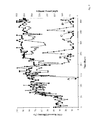
- Phenol was successfully digested in the reactor 10 at both 18°C and 15°C ( Fig. 2 ), thus broadening the range of discharges that may be recognised as suitable for low-temperature anaerobic biological treatment.
- the applied OLR was 5 kg COD m -3 d -1 , while a phenol loading rate of 1.2 kg phenol m -3 d -1 was achieved, with up to 97.5% phenol removal ( Fig. 2 ).
- the reproducibility of the low-temperature anaerobic digestion of the present invention was illustrated by the parallel performance of replicated reactors.
- performance parameters such as hydraulic retention times (HRT; 1.5-48 h), organic loading rates (OLR; 1.5-25 kg COD m -3 d -1 ) and volumetric loading rates (0.2-5 m 3 m -3 d -1 ) were varied with highly reproducible and robust performance.
- the performance of the reactor 10 indicated satisfactory COD removal from both low- and medium-strength wastewater from the food-processing industry, from sewage and from recalcitrant streams.
- a key target for the reactor 10 experimental studies was to demonstrate the use of the invention for the treatment of sewage.
- Initial long-term trials were carried out on sewage was obtained from the Galway City Council sewage treatment plant at Mutton Island and treated in reactors 10 in a 120-day trial (Case study 2; Fig. 3 ).
- Raw and primary settled sewage was successfully digested in reactors 10 at both 15 and 12°C, when compared to a 37°C control ( Figure 3 ).
- the applied OLR ranged from 1.5-6 kg COD m -3 d -1 (Table 1; Fig. 2 ).
- Table 1 Operational and performance characteristics of bioreactors R1 treating raw sewage and R2 treating primary settled sewage.
- the performance of the reactor 10 was robust and stable during the trial and resulted in a COD removal efficiency meeting national (Irish) discharge standards.
- the formation of immobilized microbial biofilm under psychrophilic conditions was observed in the reactor 10 while higher COD removal efficiencies were consistently recorded for the reactors 10 than for EGSB and fully-packed AF controls.
- the upper biofilm chamber 16 of the reactor 10 offered a 'polishing' step for the degradation of acidified wastewater from the initial upflow stages of the fluidised bed chamber 12. This was most obvious in the treatment of recalcitrant wastewaters, when residual chlorinated phenols, produced by trichlorophenol degradation in fluidised bed chamber 12 of the were successfully degraded by de novo biofilm formed in the upper pumice-packed biofilm chamber 16.
- the pumice based material and biofilm provides an excellent means of phosphate attenuation from wastewaters with phosphate removal ranging between 60-80% during the trial referred to in Table 1(Table 1). This is a significant advantage to the present invention and is unique with respect to anaerobic bioreactors.
- SMA Specific Methanogenic Activity
- IC 50 values indicated that propionate-utilising organisms were most sensitive to toxicants in the low-temperature anaerobic system, while the inhibition order among methanogens was acetoclasts>hydrogenotrophs - a feature consistent with reports from conventional anaerobic systems. Importantly, however, IC 50 values were comparable, or indeed higher, for the reactor 10 than those reported previously for mesophilic sludges. This is a further indication that the reactor 10 is robust and suitable for treatment of a wide variety of wastewaters, including those containing toxic or recalcitrant compounds.
- the reactor 10 of the present invention therefore provides the following advantages:
- anaerobic digestion results in net waste sludge production of ⁇ 0.1 kg dry biomass/kg BOD removed.
- the reactor 10 of the present invention because it is operated at lower-temperatures than conventional AD and microbial growth is therefore slower, typically results in net sludge production of ⁇ 0.02 kg dry biomass/kg BOD removed.
- anaerobic sludge is, unlike aerobic sludge, a valuable product as a source of seed inoculum.
- the reactor 10 is operated at ambient temperatures, does not require heating and functions highly efficiently at wastewater temperatures of as low as 3°C.
- the year round temperature of sewage in Ireland is 12 ⁇ 1°C.
- Most industrial discharges are between 15°C-18°C. Therefore there is a net positive energy balance by using the present invention to treat many low-strength wastewaters, unsuitable for conventional AD. Heating accounts for more than 80% of the operating costs of conventional high-rate AD and, consequently, the present invention represents an extremely energy and cost-effective approach.
- the method of the invention embodies a single stage treatment process, and the reactor 10 used to carry out said method has a large height: diameter ratio. This means that the spatial footprint of the reactor 10 is smaller, and the process monitoring far simpler, than high-rate aerobic approaches.
- the 4-chamber configuration of the reactor 10 and the presence of the carrier material results in effluent quality far exceeding that reported for conventional AD systems.
- the use of a pumice based carrier material promotes significant phosphate removal from sewage or the like.
- the present invention as a single-step treatment process discharge standards for treated domestic sewage, for example, to marine environments, and merely requires a passive polishing step, such as a constructed wetland to complete the treatment process for discharge to more sensitive environments.
Landscapes
- Life Sciences & Earth Sciences (AREA)
- Microbiology (AREA)
- Chemical & Material Sciences (AREA)
- Engineering & Computer Science (AREA)
- Hydrology & Water Resources (AREA)
- Biodiversity & Conservation Biology (AREA)
- Environmental & Geological Engineering (AREA)
- Water Supply & Treatment (AREA)
- Organic Chemistry (AREA)
- General Chemical & Material Sciences (AREA)
- Chemical Kinetics & Catalysis (AREA)
- Materials Engineering (AREA)
- Inorganic Chemistry (AREA)
- Purification Treatments By Anaerobic Or Anaerobic And Aerobic Bacteria Or Animals (AREA)
- Biological Treatment Of Waste Water (AREA)
Priority Applications (9)
| Application Number | Priority Date | Filing Date | Title |
|---|---|---|---|
| EP20100193829 EP2460771A1 (fr) | 2010-12-06 | 2010-12-06 | Réacteur anaérobique pour traitement psychrophile et/ou mésophile des eaux usées |
| EP11793427.3A EP2649017B1 (fr) | 2010-12-06 | 2011-12-06 | Réacteur anaérobie de traitement des eaux usées |
| PCT/EP2011/071952 WO2012076541A1 (fr) | 2010-12-06 | 2011-12-06 | Réacteur anaérobie de traitement des eaux usées |
| TR2019/02147T TR201902147T4 (tr) | 2010-12-06 | 2011-12-06 | Atık su arıtımı için anaerobik bir reaktör. |
| ES11793427T ES2711413T3 (es) | 2010-12-06 | 2011-12-06 | Un reactor anaerobio para tratamiento de aguas residuales |
| DK11793427.3T DK2649017T3 (en) | 2010-12-06 | 2011-12-06 | ANAEROBIC WASTE WATER TREATMENT |
| PT11793427T PT2649017T (pt) | 2010-12-06 | 2011-12-06 | Reator anaeróbico para o tratamento de águas residuais |
| US13/991,326 US9758408B2 (en) | 2010-12-06 | 2011-12-06 | Anaerobic reactor for wastewater treatment |
| PL11793427T PL2649017T3 (pl) | 2010-12-06 | 2011-12-06 | Reaktor beztlenowy do oczyszczania ścieków |
Applications Claiming Priority (1)
| Application Number | Priority Date | Filing Date | Title |
|---|---|---|---|
| EP20100193829 EP2460771A1 (fr) | 2010-12-06 | 2010-12-06 | Réacteur anaérobique pour traitement psychrophile et/ou mésophile des eaux usées |
Publications (1)
| Publication Number | Publication Date |
|---|---|
| EP2460771A1 true EP2460771A1 (fr) | 2012-06-06 |
Family
ID=44195897
Family Applications (2)
| Application Number | Title | Priority Date | Filing Date |
|---|---|---|---|
| EP20100193829 Withdrawn EP2460771A1 (fr) | 2010-12-06 | 2010-12-06 | Réacteur anaérobique pour traitement psychrophile et/ou mésophile des eaux usées |
| EP11793427.3A Active EP2649017B1 (fr) | 2010-12-06 | 2011-12-06 | Réacteur anaérobie de traitement des eaux usées |
Family Applications After (1)
| Application Number | Title | Priority Date | Filing Date |
|---|---|---|---|
| EP11793427.3A Active EP2649017B1 (fr) | 2010-12-06 | 2011-12-06 | Réacteur anaérobie de traitement des eaux usées |
Country Status (8)
| Country | Link |
|---|---|
| US (1) | US9758408B2 (fr) |
| EP (2) | EP2460771A1 (fr) |
| DK (1) | DK2649017T3 (fr) |
| ES (1) | ES2711413T3 (fr) |
| PL (1) | PL2649017T3 (fr) |
| PT (1) | PT2649017T (fr) |
| TR (1) | TR201902147T4 (fr) |
| WO (1) | WO2012076541A1 (fr) |
Cited By (3)
| Publication number | Priority date | Publication date | Assignee | Title |
|---|---|---|---|---|
| CN104671406A (zh) * | 2015-02-15 | 2015-06-03 | 清华大学 | 一种气体自循环强化短程反硝化颗粒污泥培养的方法 |
| CN112707505A (zh) * | 2020-12-15 | 2021-04-27 | 北京工业大学 | 一种基于颗粒污泥强化分离装置的厌氧氨氧化反应系统及运行方法 |
| CN117509901A (zh) * | 2023-12-25 | 2024-02-06 | 知和环保科技有限公司 | 一种低温厌氧生物膜反应器 |
Families Citing this family (3)
| Publication number | Priority date | Publication date | Assignee | Title |
|---|---|---|---|---|
| EP2855374A4 (fr) * | 2012-05-30 | 2016-02-24 | Anaergia Inc | Processus de traitement des eaux usées ayant un bioréacteur à lit mobile (mbbr) |
| US11225427B2 (en) | 2017-03-13 | 2022-01-18 | The Regents Of The University Of Colorado | Sequestration of macronutrients from anaerobic wastewater treatment with iron- and steel-making slags |
| WO2025172941A2 (fr) * | 2024-02-14 | 2025-08-21 | Newhub Holding Company | Système et procédé de traitement anaérobie d'eaux usées |
Citations (7)
| Publication number | Priority date | Publication date | Assignee | Title |
|---|---|---|---|---|
| US4322296A (en) * | 1980-08-12 | 1982-03-30 | Kansas State Univ. Research Foundation | Method for wastewater treatment in fluidized bed biological reactors |
| US4530762A (en) * | 1984-03-28 | 1985-07-23 | Love Leonard S | Anaerobic reactor |
| US4613434A (en) * | 1983-01-18 | 1986-09-23 | Oy Tampella Ab | Device for treatment of wastewater by means of anaerobic fermentation |
| EP0335825A1 (fr) * | 1988-03-23 | 1989-10-04 | MANNESMANN Aktiengesellschaft | Procédé et dispositif pour le traitement anarérobe des substrats liquides en deux étapes |
| US5228995A (en) * | 1992-04-23 | 1993-07-20 | Stover Enos L | Biochemically enhanced hybrid anaerobic reactor |
| DE102004055151A1 (de) * | 2004-11-16 | 2006-05-18 | Universität Kassel | Festbettreaktor zur biologischen Reinigung eines Fluides und ein Verfahren hierzu |
| WO2008025098A1 (fr) * | 2006-09-01 | 2008-03-06 | Active Research Pty Ltd | Procédé de traitement et appareil |
Family Cites Families (7)
| Publication number | Priority date | Publication date | Assignee | Title |
|---|---|---|---|---|
| IT1223293B (it) | 1987-08-07 | 1990-09-19 | Snam Progetti | Procedimento per la depurazione bilogica di acque reflue |
| US4956094A (en) * | 1988-12-22 | 1990-09-11 | Biospherics Incorporated | Enhanced phosphate removal from bod-containing wastewater |
| US5580770A (en) * | 1989-11-02 | 1996-12-03 | Alliedsignal Inc. | Support containing particulate adsorbent and microorganisms for removal of pollutants |
| US6325934B1 (en) | 2000-05-09 | 2001-12-04 | James Francis Tobey, Jr. | Enzyme and bacterial combination in a slowly dissolvable matrix for septic tanks, grease traps and waste treatment |
| US6592751B2 (en) * | 2001-09-26 | 2003-07-15 | Council Of Scientific And Industrial Research | Device for treatment of wastewater |
| WO2006133358A2 (fr) * | 2005-06-08 | 2006-12-14 | Hydro Geo Chem, Inc. | Procede et systeme de traitement d'une matrice contenant des contaminants oxydes |
| US20080156726A1 (en) * | 2006-09-06 | 2008-07-03 | Fassbender Alexander G | Integrating recycle stream ammonia treatment with biological nutrient removal |
-
2010
- 2010-12-06 EP EP20100193829 patent/EP2460771A1/fr not_active Withdrawn
-
2011
- 2011-12-06 DK DK11793427.3T patent/DK2649017T3/en active
- 2011-12-06 PL PL11793427T patent/PL2649017T3/pl unknown
- 2011-12-06 WO PCT/EP2011/071952 patent/WO2012076541A1/fr not_active Ceased
- 2011-12-06 TR TR2019/02147T patent/TR201902147T4/tr unknown
- 2011-12-06 PT PT11793427T patent/PT2649017T/pt unknown
- 2011-12-06 EP EP11793427.3A patent/EP2649017B1/fr active Active
- 2011-12-06 US US13/991,326 patent/US9758408B2/en active Active
- 2011-12-06 ES ES11793427T patent/ES2711413T3/es active Active
Patent Citations (7)
| Publication number | Priority date | Publication date | Assignee | Title |
|---|---|---|---|---|
| US4322296A (en) * | 1980-08-12 | 1982-03-30 | Kansas State Univ. Research Foundation | Method for wastewater treatment in fluidized bed biological reactors |
| US4613434A (en) * | 1983-01-18 | 1986-09-23 | Oy Tampella Ab | Device for treatment of wastewater by means of anaerobic fermentation |
| US4530762A (en) * | 1984-03-28 | 1985-07-23 | Love Leonard S | Anaerobic reactor |
| EP0335825A1 (fr) * | 1988-03-23 | 1989-10-04 | MANNESMANN Aktiengesellschaft | Procédé et dispositif pour le traitement anarérobe des substrats liquides en deux étapes |
| US5228995A (en) * | 1992-04-23 | 1993-07-20 | Stover Enos L | Biochemically enhanced hybrid anaerobic reactor |
| DE102004055151A1 (de) * | 2004-11-16 | 2006-05-18 | Universität Kassel | Festbettreaktor zur biologischen Reinigung eines Fluides und ein Verfahren hierzu |
| WO2008025098A1 (fr) * | 2006-09-01 | 2008-03-06 | Active Research Pty Ltd | Procédé de traitement et appareil |
Cited By (4)
| Publication number | Priority date | Publication date | Assignee | Title |
|---|---|---|---|---|
| CN104671406A (zh) * | 2015-02-15 | 2015-06-03 | 清华大学 | 一种气体自循环强化短程反硝化颗粒污泥培养的方法 |
| CN104671406B (zh) * | 2015-02-15 | 2017-04-19 | 清华大学 | 一种气体自循环强化短程反硝化颗粒污泥培养的方法 |
| CN112707505A (zh) * | 2020-12-15 | 2021-04-27 | 北京工业大学 | 一种基于颗粒污泥强化分离装置的厌氧氨氧化反应系统及运行方法 |
| CN117509901A (zh) * | 2023-12-25 | 2024-02-06 | 知和环保科技有限公司 | 一种低温厌氧生物膜反应器 |
Also Published As
| Publication number | Publication date |
|---|---|
| TR201902147T4 (tr) | 2019-03-21 |
| PT2649017T (pt) | 2019-02-26 |
| US20130264283A1 (en) | 2013-10-10 |
| DK2649017T3 (en) | 2019-03-18 |
| WO2012076541A1 (fr) | 2012-06-14 |
| ES2711413T3 (es) | 2019-05-03 |
| PL2649017T3 (pl) | 2019-07-31 |
| US9758408B2 (en) | 2017-09-12 |
| EP2649017A1 (fr) | 2013-10-16 |
| EP2649017B1 (fr) | 2018-11-21 |
Similar Documents
| Publication | Publication Date | Title |
|---|---|---|
| Zheng et al. | Increasing municipal wastewater BNR by using the preferred carbon source derived from kitchen wastewater to enhance phosphorus uptake and short-cut nitrification-denitrification | |
| Shao et al. | Treatment of brewery wastewater using anaerobic sequencing batch reactor (ASBR) | |
| Lin et al. | Acidogenic fermentation of iron-enhanced primary sedimentation sludge under different pH conditions for production of volatile fatty acids | |
| Lettinga et al. | Challenge of psychrophilic anaerobic wastewater treatment | |
| Zhou et al. | Anaerobic digestion of post-hydrothermal liquefaction wastewater for improved energy efficiency of hydrothermal bioenergy processes | |
| Van Lier et al. | High-rate anaerobic wastewater treatment under psychrophilic and thermophilic conditions | |
| Habiba et al. | Improvement of activated sludge stabilisation and filterability during anaerobic digestion by fruit and vegetable waste addition | |
| Zhou et al. | Treatment of high-strength pharmaceutical wastewater and removal of antibiotics in anaerobic and aerobic biological treatment processes | |
| Li et al. | Microbial communities in the functional areas of a biofilm reactor with anaerobic–aerobic process for oily wastewater treatment | |
| Hussain et al. | Specific methanogenic activity test for anaerobic treatment of phenolic wastewater | |
| Cheng et al. | Pilot treatment of wastewater from Dioscorea zingiberensis CH Wright production by anaerobic digestion combined with a biological aerated filter | |
| Bolaños et al. | Phenol degradation in horizontal-flow anaerobic immobilized biomass (HAIB) reactor under mesophilic conditions | |
| EP2649017B1 (fr) | Réacteur anaérobie de traitement des eaux usées | |
| Vijayan et al. | [Retracted] Treatment of Pharma Effluent using Anaerobic Packed Bed Reactor | |
| Liu et al. | Performance and microbial community of a novel combined anaerobic bioreactor integrating anaerobic baffling and anaerobic filtration process for low-strength rural wastewater treatment | |
| Shou-Liang et al. | In situ simultaneous organics and nitrogen removal from recycled landfill leachate using an anaerobic–aerobic process | |
| Ebrahimi et al. | Integrated approach to treatment of high-strength organic wastewater by using anaerobic rotating biological contactor | |
| Ramakrishnan et al. | Effect of hydraulic retention time on the biodegradation of complex phenolic mixture from simulated coal wastewater in hybrid UASB reactors | |
| Xu et al. | Treatment of coal gasification wastewater by a two-phase anaerobic digestion | |
| Jirasaranporn et al. | A pilot-scale anaerobic moving-bed biofilm reactor with PVA gel beads as media for the treatment of fish canning industry wastewater | |
| Song et al. | Tannery wastewater treatment using an upflow anaerobic fixed biofilm reactor (UAFBR) | |
| Van Der Merwe et al. | Anaerobic digestion of baker's yeast factory effluent using an anaerobic filter and a hybrid digester | |
| Li et al. | Iron-enhanced primary sedimentation and acidogenic sludge fermentation to achieve self-sufficient organic carbon supply for enhanced nutrient removal in wastewater treatment✰ | |
| Ouyang et al. | Activated sludge and other aerobic suspended culture processes | |
| Yang et al. | Horizontal-baffled anaerobic reactor for treating diluted swine wastewater |
Legal Events
| Date | Code | Title | Description |
|---|---|---|---|
| PUAI | Public reference made under article 153(3) epc to a published international application that has entered the european phase |
Free format text: ORIGINAL CODE: 0009012 |
|
| AK | Designated contracting states |
Kind code of ref document: A1 Designated state(s): AL AT BE BG CH CY CZ DE DK EE ES FI FR GB GR HR HU IE IS IT LI LT LU LV MC MK MT NL NO PL PT RO RS SE SI SK SM TR |
|
| AX | Request for extension of the european patent |
Extension state: BA ME |
|
| 17P | Request for examination filed |
Effective date: 20121206 |
|
| STAA | Information on the status of an ep patent application or granted ep patent |
Free format text: STATUS: THE APPLICATION IS DEEMED TO BE WITHDRAWN |
|
| 18D | Application deemed to be withdrawn |
Effective date: 20121207 |