EP2460774A2 - Monolithische kammer zur herstellung von floatglas und konstruktionsverfahren - Google Patents
Monolithische kammer zur herstellung von floatglas und konstruktionsverfahren Download PDFInfo
- Publication number
- EP2460774A2 EP2460774A2 EP10804760A EP10804760A EP2460774A2 EP 2460774 A2 EP2460774 A2 EP 2460774A2 EP 10804760 A EP10804760 A EP 10804760A EP 10804760 A EP10804760 A EP 10804760A EP 2460774 A2 EP2460774 A2 EP 2460774A2
- Authority
- EP
- European Patent Office
- Prior art keywords
- refractory
- wall
- forming chamber
- float glass
- roof
- Prior art date
- Legal status (The legal status is an assumption and is not a legal conclusion. Google has not performed a legal analysis and makes no representation as to the accuracy of the status listed.)
- Withdrawn
Links
- 238000010276 construction Methods 0.000 title claims abstract description 47
- 239000011521 glass Substances 0.000 title claims description 36
- 238000000034 method Methods 0.000 claims abstract description 71
- 239000011819 refractory material Substances 0.000 claims abstract description 71
- 239000000203 mixture Substances 0.000 claims abstract description 62
- 239000005329 float glass Substances 0.000 claims abstract description 53
- 238000007496 glass forming Methods 0.000 claims abstract description 53
- 239000012774 insulation material Substances 0.000 claims abstract description 16
- 238000001816 cooling Methods 0.000 claims abstract description 8
- 239000006060 molten glass Substances 0.000 claims abstract description 8
- PNEYBMLMFCGWSK-UHFFFAOYSA-N aluminium oxide Inorganic materials [O-2].[O-2].[O-2].[Al+3].[Al+3] PNEYBMLMFCGWSK-UHFFFAOYSA-N 0.000 claims description 33
- VYPSYNLAJGMNEJ-UHFFFAOYSA-N Silicium dioxide Chemical compound O=[Si]=O VYPSYNLAJGMNEJ-UHFFFAOYSA-N 0.000 claims description 29
- 229910052593 corundum Inorganic materials 0.000 claims description 27
- 229910052751 metal Inorganic materials 0.000 claims description 27
- 239000002184 metal Substances 0.000 claims description 27
- 229910001845 yogo sapphire Inorganic materials 0.000 claims description 26
- 239000000463 material Substances 0.000 claims description 24
- 238000004519 manufacturing process Methods 0.000 claims description 15
- 239000002023 wood Substances 0.000 claims description 15
- 239000007789 gas Substances 0.000 claims description 12
- 239000000377 silicon dioxide Substances 0.000 claims description 12
- GWEVSGVZZGPLCZ-UHFFFAOYSA-N Titan oxide Chemical compound O=[Ti]=O GWEVSGVZZGPLCZ-UHFFFAOYSA-N 0.000 claims description 10
- KKCBUQHMOMHUOY-UHFFFAOYSA-N Na2O Inorganic materials [O-2].[Na+].[Na+] KKCBUQHMOMHUOY-UHFFFAOYSA-N 0.000 claims description 8
- 239000000654 additive Substances 0.000 claims description 8
- 238000009792 diffusion process Methods 0.000 claims description 7
- 238000010438 heat treatment Methods 0.000 claims description 7
- 230000000996 additive effect Effects 0.000 claims description 6
- 238000003980 solgel method Methods 0.000 claims description 6
- 239000004793 Polystyrene Substances 0.000 claims description 5
- 229910052681 coesite Inorganic materials 0.000 claims description 5
- 229910052906 cristobalite Inorganic materials 0.000 claims description 5
- JEIPFZHSYJVQDO-UHFFFAOYSA-N iron(III) oxide Inorganic materials O=[Fe]O[Fe]=O JEIPFZHSYJVQDO-UHFFFAOYSA-N 0.000 claims description 5
- 229910052682 stishovite Inorganic materials 0.000 claims description 5
- 229910052905 tridymite Inorganic materials 0.000 claims description 5
- 229920002223 polystyrene Polymers 0.000 claims description 4
- 239000000919 ceramic Substances 0.000 claims description 3
- 238000007789 sealing Methods 0.000 claims description 3
- 238000005498 polishing Methods 0.000 claims description 2
- ODINCKMPIJJUCX-UHFFFAOYSA-N calcium oxide Inorganic materials [Ca]=O ODINCKMPIJJUCX-UHFFFAOYSA-N 0.000 claims 4
- 239000011796 hollow space material Substances 0.000 claims 3
- 238000003466 welding Methods 0.000 claims 1
- 229910052718 tin Inorganic materials 0.000 description 19
- ATJFFYVFTNAWJD-UHFFFAOYSA-N Tin Chemical compound [Sn] ATJFFYVFTNAWJD-UHFFFAOYSA-N 0.000 description 18
- 238000005266 casting Methods 0.000 description 13
- 238000005516 engineering process Methods 0.000 description 13
- 230000008569 process Effects 0.000 description 12
- 230000008439 repair process Effects 0.000 description 11
- 238000009413 insulation Methods 0.000 description 10
- 229910000831 Steel Inorganic materials 0.000 description 9
- 239000010959 steel Substances 0.000 description 9
- MCMNRKCIXSYSNV-UHFFFAOYSA-N Zirconium dioxide Chemical compound O=[Zr]=O MCMNRKCIXSYSNV-UHFFFAOYSA-N 0.000 description 8
- 238000013461 design Methods 0.000 description 7
- 238000005485 electric heating Methods 0.000 description 7
- 238000002844 melting Methods 0.000 description 7
- 230000008018 melting Effects 0.000 description 7
- 238000006124 Pilkington process Methods 0.000 description 6
- 239000003570 air Substances 0.000 description 6
- 239000011823 monolithic refractory Substances 0.000 description 6
- 230000035939 shock Effects 0.000 description 6
- 230000008901 benefit Effects 0.000 description 5
- 230000035515 penetration Effects 0.000 description 5
- 239000000126 substance Substances 0.000 description 5
- 239000011230 binding agent Substances 0.000 description 4
- 239000008119 colloidal silica Substances 0.000 description 4
- 230000006872 improvement Effects 0.000 description 4
- 230000035699 permeability Effects 0.000 description 4
- 230000015572 biosynthetic process Effects 0.000 description 3
- 230000000295 complement effect Effects 0.000 description 3
- 238000011161 development Methods 0.000 description 3
- 230000018109 developmental process Effects 0.000 description 3
- 238000011156 evaluation Methods 0.000 description 3
- 238000005816 glass manufacturing process Methods 0.000 description 3
- 238000011065 in-situ storage Methods 0.000 description 3
- XLYOFNOQVPJJNP-UHFFFAOYSA-N water Substances O XLYOFNOQVPJJNP-UHFFFAOYSA-N 0.000 description 3
- IJGRMHOSHXDMSA-UHFFFAOYSA-N Atomic nitrogen Chemical compound N#N IJGRMHOSHXDMSA-UHFFFAOYSA-N 0.000 description 2
- XEEYBQQBJWHFJM-UHFFFAOYSA-N Iron Chemical compound [Fe] XEEYBQQBJWHFJM-UHFFFAOYSA-N 0.000 description 2
- CPLXHLVBOLITMK-UHFFFAOYSA-N Magnesium oxide Chemical compound [Mg]=O CPLXHLVBOLITMK-UHFFFAOYSA-N 0.000 description 2
- 241000405961 Scomberomorus regalis Species 0.000 description 2
- 230000000903 blocking effect Effects 0.000 description 2
- 239000004927 clay Substances 0.000 description 2
- 239000005357 flat glass Substances 0.000 description 2
- 238000009434 installation Methods 0.000 description 2
- 238000012423 maintenance Methods 0.000 description 2
- 238000010310 metallurgical process Methods 0.000 description 2
- 230000003647 oxidation Effects 0.000 description 2
- 238000007254 oxidation reaction Methods 0.000 description 2
- 238000004886 process control Methods 0.000 description 2
- 239000010935 stainless steel Substances 0.000 description 2
- 229910001220 stainless steel Inorganic materials 0.000 description 2
- 238000012360 testing method Methods 0.000 description 2
- 238000012546 transfer Methods 0.000 description 2
- UFHFLCQGNIYNRP-UHFFFAOYSA-N Hydrogen Chemical compound [H][H] UFHFLCQGNIYNRP-UHFFFAOYSA-N 0.000 description 1
- 229910019142 PO4 Inorganic materials 0.000 description 1
- 230000001154 acute effect Effects 0.000 description 1
- 239000003513 alkali Substances 0.000 description 1
- 229910045601 alloy Inorganic materials 0.000 description 1
- 239000000956 alloy Substances 0.000 description 1
- INJRKJPEYSAMPD-UHFFFAOYSA-N aluminum;silicic acid;hydrate Chemical compound O.[Al].[Al].O[Si](O)(O)O INJRKJPEYSAMPD-UHFFFAOYSA-N 0.000 description 1
- 239000012080 ambient air Substances 0.000 description 1
- 238000004458 analytical method Methods 0.000 description 1
- 239000004568 cement Substances 0.000 description 1
- 238000002144 chemical decomposition reaction Methods 0.000 description 1
- 239000010431 corundum Substances 0.000 description 1
- KZHJGOXRZJKJNY-UHFFFAOYSA-N dioxosilane;oxo(oxoalumanyloxy)alumane Chemical compound O=[Si]=O.O=[Si]=O.O=[Al]O[Al]=O.O=[Al]O[Al]=O.O=[Al]O[Al]=O KZHJGOXRZJKJNY-UHFFFAOYSA-N 0.000 description 1
- 238000001035 drying Methods 0.000 description 1
- 238000010304 firing Methods 0.000 description 1
- 239000005350 fused silica glass Substances 0.000 description 1
- 239000004519 grease Substances 0.000 description 1
- 239000001257 hydrogen Substances 0.000 description 1
- 229910052739 hydrogen Inorganic materials 0.000 description 1
- 229910052742 iron Inorganic materials 0.000 description 1
- 229910052850 kyanite Inorganic materials 0.000 description 1
- 239000010443 kyanite Substances 0.000 description 1
- 239000007788 liquid Substances 0.000 description 1
- 239000000314 lubricant Substances 0.000 description 1
- 239000000395 magnesium oxide Substances 0.000 description 1
- 238000005259 measurement Methods 0.000 description 1
- 238000010309 melting process Methods 0.000 description 1
- 229910052863 mullite Inorganic materials 0.000 description 1
- 229910052757 nitrogen Inorganic materials 0.000 description 1
- 239000010452 phosphate Substances 0.000 description 1
- NBIIXXVUZAFLBC-UHFFFAOYSA-K phosphate Chemical compound [O-]P([O-])([O-])=O NBIIXXVUZAFLBC-UHFFFAOYSA-K 0.000 description 1
- 239000002985 plastic film Substances 0.000 description 1
- 229920006255 plastic film Polymers 0.000 description 1
- 238000005086 pumping Methods 0.000 description 1
- 230000009467 reduction Effects 0.000 description 1
- 238000011160 research Methods 0.000 description 1
- 230000000284 resting effect Effects 0.000 description 1
- 150000004760 silicates Chemical class 0.000 description 1
- RMAQACBXLXPBSY-UHFFFAOYSA-N silicic acid Chemical compound O[Si](O)(O)O RMAQACBXLXPBSY-UHFFFAOYSA-N 0.000 description 1
- 229910052851 sillimanite Inorganic materials 0.000 description 1
- 230000007480 spreading Effects 0.000 description 1
- 238000003892 spreading Methods 0.000 description 1
- WFKWXMTUELFFGS-UHFFFAOYSA-N tungsten Chemical compound [W] WFKWXMTUELFFGS-UHFFFAOYSA-N 0.000 description 1
- 229910052721 tungsten Inorganic materials 0.000 description 1
- 239000010937 tungsten Substances 0.000 description 1
- 239000012808 vapor phase Substances 0.000 description 1
- 239000003039 volatile agent Substances 0.000 description 1
- 239000002699 waste material Substances 0.000 description 1
Images


Classifications
-
- C—CHEMISTRY; METALLURGY
- C03—GLASS; MINERAL OR SLAG WOOL
- C03B—MANUFACTURE, SHAPING, OR SUPPLEMENTARY PROCESSES
- C03B18/00—Shaping glass in contact with the surface of a liquid
- C03B18/02—Forming sheets
- C03B18/16—Construction of the float tank; Use of material for the float tank; Coating or protection of the tank wall
-
- C—CHEMISTRY; METALLURGY
- C04—CEMENTS; CONCRETE; ARTIFICIAL STONE; CERAMICS; REFRACTORIES
- C04B—LIME, MAGNESIA; SLAG; CEMENTS; COMPOSITIONS THEREOF, e.g. MORTARS, CONCRETE OR LIKE BUILDING MATERIALS; ARTIFICIAL STONE; CERAMICS; REFRACTORIES; TREATMENT OF NATURAL STONE
- C04B35/00—Shaped ceramic products characterised by their composition; Ceramics compositions; Processing powders of inorganic compounds preparatory to the manufacturing of ceramic products
- C04B35/01—Shaped ceramic products characterised by their composition; Ceramics compositions; Processing powders of inorganic compounds preparatory to the manufacturing of ceramic products based on oxide ceramics
- C04B35/03—Shaped ceramic products characterised by their composition; Ceramics compositions; Processing powders of inorganic compounds preparatory to the manufacturing of ceramic products based on oxide ceramics based on magnesium oxide, calcium oxide or oxide mixtures derived from dolomite
- C04B35/04—Shaped ceramic products characterised by their composition; Ceramics compositions; Processing powders of inorganic compounds preparatory to the manufacturing of ceramic products based on oxide ceramics based on magnesium oxide, calcium oxide or oxide mixtures derived from dolomite based on magnesium oxide
- C04B35/043—Refractories from grain sized mixtures
-
- C—CHEMISTRY; METALLURGY
- C04—CEMENTS; CONCRETE; ARTIFICIAL STONE; CERAMICS; REFRACTORIES
- C04B—LIME, MAGNESIA; SLAG; CEMENTS; COMPOSITIONS THEREOF, e.g. MORTARS, CONCRETE OR LIKE BUILDING MATERIALS; ARTIFICIAL STONE; CERAMICS; REFRACTORIES; TREATMENT OF NATURAL STONE
- C04B35/00—Shaped ceramic products characterised by their composition; Ceramics compositions; Processing powders of inorganic compounds preparatory to the manufacturing of ceramic products
- C04B35/01—Shaped ceramic products characterised by their composition; Ceramics compositions; Processing powders of inorganic compounds preparatory to the manufacturing of ceramic products based on oxide ceramics
- C04B35/16—Shaped ceramic products characterised by their composition; Ceramics compositions; Processing powders of inorganic compounds preparatory to the manufacturing of ceramic products based on oxide ceramics based on silicates other than clay
- C04B35/18—Shaped ceramic products characterised by their composition; Ceramics compositions; Processing powders of inorganic compounds preparatory to the manufacturing of ceramic products based on oxide ceramics based on silicates other than clay rich in aluminium oxide
-
- C—CHEMISTRY; METALLURGY
- C04—CEMENTS; CONCRETE; ARTIFICIAL STONE; CERAMICS; REFRACTORIES
- C04B—LIME, MAGNESIA; SLAG; CEMENTS; COMPOSITIONS THEREOF, e.g. MORTARS, CONCRETE OR LIKE BUILDING MATERIALS; ARTIFICIAL STONE; CERAMICS; REFRACTORIES; TREATMENT OF NATURAL STONE
- C04B35/00—Shaped ceramic products characterised by their composition; Ceramics compositions; Processing powders of inorganic compounds preparatory to the manufacturing of ceramic products
- C04B35/66—Monolithic refractories or refractory mortars, including those whether or not containing clay
-
- C—CHEMISTRY; METALLURGY
- C04—CEMENTS; CONCRETE; ARTIFICIAL STONE; CERAMICS; REFRACTORIES
- C04B—LIME, MAGNESIA; SLAG; CEMENTS; COMPOSITIONS THEREOF, e.g. MORTARS, CONCRETE OR LIKE BUILDING MATERIALS; ARTIFICIAL STONE; CERAMICS; REFRACTORIES; TREATMENT OF NATURAL STONE
- C04B2235/00—Aspects relating to ceramic starting mixtures or sintered ceramic products
- C04B2235/02—Composition of constituents of the starting material or of secondary phases of the final product
- C04B2235/30—Constituents and secondary phases not being of a fibrous nature
- C04B2235/32—Metal oxides, mixed metal oxides, or oxide-forming salts thereof, e.g. carbonates, nitrates, (oxy)hydroxides, chlorides
- C04B2235/3201—Alkali metal oxides or oxide-forming salts thereof
-
- C—CHEMISTRY; METALLURGY
- C04—CEMENTS; CONCRETE; ARTIFICIAL STONE; CERAMICS; REFRACTORIES
- C04B—LIME, MAGNESIA; SLAG; CEMENTS; COMPOSITIONS THEREOF, e.g. MORTARS, CONCRETE OR LIKE BUILDING MATERIALS; ARTIFICIAL STONE; CERAMICS; REFRACTORIES; TREATMENT OF NATURAL STONE
- C04B2235/00—Aspects relating to ceramic starting mixtures or sintered ceramic products
- C04B2235/02—Composition of constituents of the starting material or of secondary phases of the final product
- C04B2235/30—Constituents and secondary phases not being of a fibrous nature
- C04B2235/32—Metal oxides, mixed metal oxides, or oxide-forming salts thereof, e.g. carbonates, nitrates, (oxy)hydroxides, chlorides
- C04B2235/3205—Alkaline earth oxides or oxide forming salts thereof, e.g. beryllium oxide
- C04B2235/3208—Calcium oxide or oxide-forming salts thereof, e.g. lime
-
- C—CHEMISTRY; METALLURGY
- C04—CEMENTS; CONCRETE; ARTIFICIAL STONE; CERAMICS; REFRACTORIES
- C04B—LIME, MAGNESIA; SLAG; CEMENTS; COMPOSITIONS THEREOF, e.g. MORTARS, CONCRETE OR LIKE BUILDING MATERIALS; ARTIFICIAL STONE; CERAMICS; REFRACTORIES; TREATMENT OF NATURAL STONE
- C04B2235/00—Aspects relating to ceramic starting mixtures or sintered ceramic products
- C04B2235/02—Composition of constituents of the starting material or of secondary phases of the final product
- C04B2235/30—Constituents and secondary phases not being of a fibrous nature
- C04B2235/32—Metal oxides, mixed metal oxides, or oxide-forming salts thereof, e.g. carbonates, nitrates, (oxy)hydroxides, chlorides
- C04B2235/3217—Aluminum oxide or oxide forming salts thereof, e.g. bauxite, alpha-alumina
-
- C—CHEMISTRY; METALLURGY
- C04—CEMENTS; CONCRETE; ARTIFICIAL STONE; CERAMICS; REFRACTORIES
- C04B—LIME, MAGNESIA; SLAG; CEMENTS; COMPOSITIONS THEREOF, e.g. MORTARS, CONCRETE OR LIKE BUILDING MATERIALS; ARTIFICIAL STONE; CERAMICS; REFRACTORIES; TREATMENT OF NATURAL STONE
- C04B2235/00—Aspects relating to ceramic starting mixtures or sintered ceramic products
- C04B2235/02—Composition of constituents of the starting material or of secondary phases of the final product
- C04B2235/30—Constituents and secondary phases not being of a fibrous nature
- C04B2235/32—Metal oxides, mixed metal oxides, or oxide-forming salts thereof, e.g. carbonates, nitrates, (oxy)hydroxides, chlorides
- C04B2235/3231—Refractory metal oxides, their mixed metal oxides, or oxide-forming salts thereof
- C04B2235/3232—Titanium oxides or titanates, e.g. rutile or anatase
-
- C—CHEMISTRY; METALLURGY
- C04—CEMENTS; CONCRETE; ARTIFICIAL STONE; CERAMICS; REFRACTORIES
- C04B—LIME, MAGNESIA; SLAG; CEMENTS; COMPOSITIONS THEREOF, e.g. MORTARS, CONCRETE OR LIKE BUILDING MATERIALS; ARTIFICIAL STONE; CERAMICS; REFRACTORIES; TREATMENT OF NATURAL STONE
- C04B2235/00—Aspects relating to ceramic starting mixtures or sintered ceramic products
- C04B2235/02—Composition of constituents of the starting material or of secondary phases of the final product
- C04B2235/30—Constituents and secondary phases not being of a fibrous nature
- C04B2235/32—Metal oxides, mixed metal oxides, or oxide-forming salts thereof, e.g. carbonates, nitrates, (oxy)hydroxides, chlorides
- C04B2235/327—Iron group oxides, their mixed metal oxides, or oxide-forming salts thereof
- C04B2235/3272—Iron oxides or oxide forming salts thereof, e.g. hematite, magnetite
-
- C—CHEMISTRY; METALLURGY
- C04—CEMENTS; CONCRETE; ARTIFICIAL STONE; CERAMICS; REFRACTORIES
- C04B—LIME, MAGNESIA; SLAG; CEMENTS; COMPOSITIONS THEREOF, e.g. MORTARS, CONCRETE OR LIKE BUILDING MATERIALS; ARTIFICIAL STONE; CERAMICS; REFRACTORIES; TREATMENT OF NATURAL STONE
- C04B2235/00—Aspects relating to ceramic starting mixtures or sintered ceramic products
- C04B2235/02—Composition of constituents of the starting material or of secondary phases of the final product
- C04B2235/30—Constituents and secondary phases not being of a fibrous nature
- C04B2235/34—Non-metal oxides, non-metal mixed oxides, or salts thereof that form the non-metal oxides upon heating, e.g. carbonates, nitrates, (oxy)hydroxides, chlorides
- C04B2235/3418—Silicon oxide, silicic acids or oxide forming salts thereof, e.g. silica sol, fused silica, silica fume, cristobalite, quartz or flint
-
- C—CHEMISTRY; METALLURGY
- C04—CEMENTS; CONCRETE; ARTIFICIAL STONE; CERAMICS; REFRACTORIES
- C04B—LIME, MAGNESIA; SLAG; CEMENTS; COMPOSITIONS THEREOF, e.g. MORTARS, CONCRETE OR LIKE BUILDING MATERIALS; ARTIFICIAL STONE; CERAMICS; REFRACTORIES; TREATMENT OF NATURAL STONE
- C04B2235/00—Aspects relating to ceramic starting mixtures or sintered ceramic products
- C04B2235/70—Aspects relating to sintered or melt-casted ceramic products
- C04B2235/96—Properties of ceramic products, e.g. mechanical properties such as strength, toughness, wear resistance
-
- C—CHEMISTRY; METALLURGY
- C04—CEMENTS; CONCRETE; ARTIFICIAL STONE; CERAMICS; REFRACTORIES
- C04B—LIME, MAGNESIA; SLAG; CEMENTS; COMPOSITIONS THEREOF, e.g. MORTARS, CONCRETE OR LIKE BUILDING MATERIALS; ARTIFICIAL STONE; CERAMICS; REFRACTORIES; TREATMENT OF NATURAL STONE
- C04B2235/00—Aspects relating to ceramic starting mixtures or sintered ceramic products
- C04B2235/70—Aspects relating to sintered or melt-casted ceramic products
- C04B2235/96—Properties of ceramic products, e.g. mechanical properties such as strength, toughness, wear resistance
- C04B2235/9669—Resistance against chemicals, e.g. against molten glass or molten salts
- C04B2235/9692—Acid, alkali or halogen resistance
Definitions
- the present invention is referred to a monolithic float glass forming chamber and more specifically to a monolithic glass forming chamber and a method for the construction of the same using castable and pumpable refractory to form monolithic refractory structures by sol-gel process on site of construction.
- sol-gel refractory technology has had its mayor and more widely application in the field of metallurgical processes, like repairing and constructing linings for molten metal containers and incinerators kilns.
- sol-gel refractory technology to the glass manufacturing processes is relatively limited and mainly focused towards the repair of some wear areas in the refractory structures of the glass melting furnaces. Even more specifically, none reference was found related with the application of such sol-gel refractory technology for the construction of the refractories for a float glass forming chamber.
- tweel located in the canal and before the lip
- U.S. Pat. No. 3,445,217 states the use of a tweel formed by two different refractories, one of them of a selected as glass wear-resistant refractory forming the lower part in the glass contact section such as fused cast zirconia, alumina or corundum material, and for the upper portion of the tweel formed by a refractory material selected for its mechanical strength and also for its resistance to thermal shock such as the use of pre-fired fire clay bonded calcined kyanite or sillimanite.
- the U.S. Patent No. 3,508,902 states the use of a refractory shape named as a wetback tile which is contacted by the rearward flow of the delivered flow of molten glass. It is stated by this method that the main function of such wet back tile is to divide the backward flow and direct the same backward flow of molten glass outward each side so that it each flow may join the forward flowing portion of the glass, helping to maintain a controlled and steady flow and conducting certain kind of faults like bubbles and inclusions coming from the area of the canal lip towards the edges were do not affect the saleable section of glass ribbon.
- the main properties and design requirements for such refractory structures can be obtained and improved by casting the same refractory structures on site and making use of a relatively new toll applied for the production of refractory materials called sol-gel refractory technology.
- sol-gel refractory technology a relatively new toll applied for the production of refractory materials.
- the bath bottom refractory section and the side wall refractory sections are made by casting the refractory composition to form a monolithic structure. This allows having the refractory structure with eventually cero expansion joints exposed to molten tin on which the glass floats to be formed.
- the method of construction also allows to have a monolithic refractory structure with flexible access for maintenance of electric heating elements necessary to have a better control for the glass forming process.
- sol-gel refractory technology can be derived for example with U.S. Pat 5,900,382 .
- aqueous silica sol to form a binder in conjunction with phosphate and magnesia as accelerator for the process to gel.
- Such refractory binder found to be very useful to obtain refractories materials with wide compositions like alumina, zirconia, mullite and also alumina silicates that can harden and have good properties after short time of drying at room temperature and without requirement of firing as it is the common practice for mayor types of refractory materials.
- the sol-gel refractory technology has had mayor application in the metallurgical processes for the production of iron and steel. In these processes the sol-gel refractory technology is applied for the repair and construction of refractories linings as it is stated in U.S. Pat 5,632,937 .
- U.S. Pat 5,632,937 it is explained a method for applying a refractory lining directly inside a metallic vessel with reduced access for the installation of molds prefabricated and instead of this, such forms or molds are assembled inside the metallic vessel and the refractory lining is formed using a castable refractory compositions prepared also in situ.
- Such castable refractory compositions are cast between the forms and the metallic vessel giving the required refractory lining after allowing hardening.
- Such method to apply the refractory linings has been proved to reduce the costs and time of such operation and can be applicable also to other kind waste incinerators and rotary kilns.
- Such invention states that similar repairs can be done on other parts of the glass melting furnace apart from the bottom and side wall refractories and using same colloidal silica refractories containing mixtures of alumina, zirconia and silica compositions with a silica binder.
- one objective of the present invention is to provide a monolithic float glass forming chamber and method of construction, using refractory materials obtained by sol-gel refractory technology.
- a main objective of the present invention is to provide a monolithic float glass forming chamber and method of construction, wherein the main refractory structures can be constructed on site by the casting technique in three parts; these are; the bath bottom refractory section, the side wall refractory section and the bath roof refractory section.
- the bath bottom refractory section and the side wall refractory section being made by casting the refractory composition to form monolithic refractory structures. This allows having the refractory structure with eventually cero expansion joints exposed to molten tin on which the glass floats to be formed.
- Is other objective of the present invention to provide a monolithic float glass forming chamber and method of construction which in case of the bath roof refractory section allows to have a monolithic refractory structure with flexible access for maintenance of electric heating elements necessary for the glass process.
- An additional objective of the present invention is to provide a monolithic float glass forming chamber and method of construction which allows repairing exclusively damaged points in terms of areas and thickness of the refractory sections at the end of campaigns in an easier way and with lower costs using the same procedure and same composition of material instead of removing whole, blocks as it is required in traditional procedure.
- the material selected for this method has been the Metpump IPSX G which have proved to have acceptable properties for use in float baths in contact with molten tin and bath atmosphere and have the next chemical composition; approximately 60/65 % Al 2 O 3 30/35 % SiO 2 , 3.5 % (TiO 2 + Fe 2 O 3 + CaO) and 0.5 % Na 2 O.
- Another compositions evaluated which gave also good results have as main component 40, 50 and 90 % Al 2 O 3 .
- This type of material have been developed using the sol-gel technology, giving a colloidal silica refractory structure, which have several important properties, like low porosity, low thermal expansion, low gas permeability, high homogeneity, high hot strength, etc.
- Another objective of the present invention is to provide a monolithic float glass forming chamber and method of construction that avoids the need for the refractory to be previously fired for use at high temperatures and can be easily cast to have the required shapes directly on site of the construction.
- FIG. 1 is a plan view showing the principal sections of float glass forming chamber for the manufacture glass plates which consists of a forming section (A) and a cooling section (B).
- the molten glass flows entering the bath to float on molten tin at the hot end (C), through of a zone for heating and cooling equipment (D and E) and where forced to a exit end (F) by mechanical equipment wherein a glass ribbon is forced whether pulling or retaining it in order to have the required thickness profile and where also simultaneously it is required to control the glass temperature whether removing heat using a series of water cooled steel pipes or adding heat using a system of electric heating elements.
- the figure 2 is a cross section of the float glass forming chamber in the zone for heating and cooling equipment of the forming section of the float bath structure, which will be now described.
- the structure of the refractory construction made by the method of the present invention comprises: a bottom casing (1) which is a thick plate of steel that supports and contents the refractory assembly, in conjunction with the sidewall casing (2) also made with steel plate.
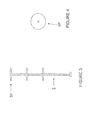
- a system of metal anchors (3) made of steel cold rolled and small rounded steel plates (SP) as shown with more detailed in figures 3 and 4 .
- the first layer of refractory material is composed of an insulation material (5) which is a pumpable and castable refractory material that has the next properties after solidified or hardens; a low heat transfer coefficient, low density and also low thermal expansion.
- the main layer of refractory is composed of the bottom refractory (6) and the main side wall refractory (8). Between these two sections of refractories is left a perimeter bottom expansion gap (7), whose main purpose is to provide a refractory discontinuity to avoid any risk of bubble generation by gas diffusion.
- Such main layers of refractory are made of a castable refractory material with specific characteristics and properties in terms of porosity, gas permeability, thermal expansion and chemical composition, these characteristics and the method to produce such refractory structure are proved to allow the material to perform in a superior way in terms of durability at the extreme working conditions like high temperatures, molten tin attack and alkali chemical attack, thermal changes, etc. together with a consistence stable behavior to allow a minimum affectation to the quality of the glass ribbon due to bubble generation by refractory porosity and gas permeability.
- Between the side wall casing (2) and the cast refractory insulation material (5) is a layer of ceramic cushion material (4), which provides a necessary gap for the thermal expansion of the refractory system at the working temperatures.
- roof refractory In the roof refractory, it is considered the use of a side support columns (9) made of steel where are supported the side structure support (10) also made of steel to support the roof refractory assembly.
- the inner refractory section is formed by the roof refractory (11), made of a castable refractory material with specific characteristics and properties in terms of porosity, gas permeability, thermal expansion and chemical composition, these characteristics and the method to produce such refractory structure are proved to allow the material to perform satisfactory in terms of durability at the specific working conditions like temperatures, gases atmosphere and including presence of alkalis in the vapor phase, thermal changes, etc.
- the insulation refractory material (13) which is also a castable refractory material and that after solidified has properties like; low heat transfer coefficient, low density and also low thermal expansion.
- the electric heating modules (14) that supply the required energy for the temperature control to form the glass ribbon.
- Such electric heating modules (14) have the advantage that can be replaced when it is necessary, for example by breakage or chemical degradation. Also through of the two layers of refractory, are left accesses for the atmosphere supply or pyrometers (15).
- Such accesses are used whether for supply atmosphere (a mixture of nitrogen and hydrogen) or to install supports for pyrometers at desired positions in order to allow the measurements of temperature of glass ribbon for the process control.
- the side sealing (12) formed by metal boxes filled with insulation material and that can be removable when necessary to provide access and windows to the internal process through all the perimeter of the float bath.
- the refractory sections can be made by the casting technique eventually in two parts, that is the bath bottom refractory section and the roof refractory section
- the construction of the bath bottom refractory is made eventually in one piece and without none joint area. To obtain this, the next steps are performed.
- a system of metal anchors (3) is welded to the bottom and side wall casings (1) and (2), to maintain fixed the refractory basement.
- Such metal anchors are made with rolls 3 ⁇ 4" diameter and flat rounded plates of 4 in. diameter and 1 ⁇ 4 in. of thickness.
- Such metal anchors are welded prior to the casting of refractory materials.
- Important factors in the design of anchors are to consider the use of a low expansion steel and high resistance to oxidation like for example a 309 or 310 stainless steel. Also important is to avoid acute shapes and instead have curved shapes and edges to minimize tendency to cracks generation to refractory structure.
- the insulation refractory material (5) is formed by casting a castable refractory mixture in a composition for example from 40 to 50 % Al 2 O 3 and any of the next additives as carlita, thermolita, perlita or verelite, which can supply insulation properties to the refractory structure formed by sol gel process with good mechanical and thermal properties.
- the insulation refractory material mixed with the insulation additive can be formed in a required thickness that can be from 10 to 20 cm. By means of common hand vibrators bars is assured to get the desired density of such castable mixture, removing excess of trapped air and to avoid cavities.
- the main bottom refractory (6) and main side refractory (8) layers are formed by casting a castable refractory mixture and in a required thickness, preferably from about 10 to about 20 cm.
- a castable refractory mixture preferably from about 10 to about 20 cm.
- vibrators bars is allowed to get the desired density of such castable mixture, removing excess of trapped air and to avoid cavities.
- the main sidewall refractory by means of a wall of contention using metal plates as forms or moulds to give the required space to form by casting the complementary refractory material and also to leave the perimeter expansion gap (7) which its main purpose is to prevent gases diffusion to cause bubble faults in the glass production.
- the upper surface is polished by means of a floor rotary polishing machine, to eliminate possible imperfections like roughness, and to have a desired flat and smooth surface.
- a metallic or wood structure which contains the shape of the roof refractory (11), said structure comprising a pair of parallel plates to each side, leaving an space between each other, to form side support walls; and a removable arch structure of a convex-shaped to form the roof, having an internal space, which is resting on the support walls.
- the structure is rested on the lower part (LP) of the metal side structure support (10), leaving a parallel space PS between the side structure support (10) and the structure S.
- the structure is filled with a castable refractory material, in a required thickness that can be from 10 to 20 cm and by means of common hand vibrators bars, it is allowed form the desired density of such castable mixture removing excess of trapped air and to avoid cavities.
- a castable refractory material in a required thickness that can be from 10 to 20 cm and by means of common hand vibrators bars, it is allowed form the desired density of such castable mixture removing excess of trapped air and to avoid cavities.
- it is important to leave the required spaces for access for electric heating modules (14) and access for atmosphere supply or pyrometers (15) using sections of polystyrene (or equivalent material) pieces made with the required and slightly conical shape (from 5 to 10°) and prepared in the surface with lubricant grease or a double thin plastic film, in order make easy the removal when the refractory mixture hardens.
- the castable refractory material has been casted and the roof and side walls (main bath roof refractory 11) have been formed, the metallic or wood structure
- a thin sheet of metal layer (17) and preferably made of stainless steel with high resistance to oxidation and with low expansion coefficient is placed on the upper surface of the bath roof refractory (11). This sheet of metal (17) prevents diffusion and escape of gases to the atmosphere.
- the castable refractory material is preferable a composition from 40 to 50 % Al 2 O 3 and any of the additives such as carlita, thermolita, perlita, verelite or mixture of the same, which can supply insulation properties to the refractory structure formed by sol gel process with good mechanical and thermal properties.
- the mixture of insulation refractory material and additive can be formed in a required thickness that can be from 10 to 20 cm and by means of common hand vibrators bars it is allowed form the desired density of such castable mixture removing excess of trapped air and to avoid cavities.
- a required thickness can be from 10 to 20 cm and by means of common hand vibrators bars it is allowed form the desired density of such castable mixture removing excess of trapped air and to avoid cavities.
- the polystyrene (or equivalent material) shapes are removed and also it is removed the metallic or wooden structure to allow to continue to dry the refractory structure to the ambient air at room temperature.
- differential chemical compositions 40, 50, 60, 70 and 90 % Al 2 O 3
- differential chemical compositions 40, 50, 60, 70 and 90 % Al 2 O 3
- the evaluation consisted mainly in the next points and related with behavior inside float bath at 1100 °C during 30 days in terms of cold crushing strength and metal Sn and Na20 vapor penetration in their structure. Also were tested the thermal shock resistance in cooling cycles to room temperature in air and with more intense conditions of thermal shock tests cooling submerging in water at room temperature.
- Composition Standard 40% Al 2 O 3 40% Al 2 O 3 50% Al 2 O 3 60% Al 2 O 3 70% Al 2 O 3 3 90% Al 2 O 3 % Na 2 O increased in surface composition after 30 days inside Float Bath at 1100 °C. 0.393 0.234 0.171 0.129 0.218 0.408 % Sn increased in surface composition after 30 days inside Float Bath at 1100 °C. 0.00 0.00 0.00 0.029 0.00 0.00 Cold crushing strength after 30 days inside Float Bath at 1100 °C (MPa).
- silica colloidal compositions with 40, 50, 60 and 70 % Al 2 O 3 have lower Na 2 O penetration compared with standard 40 % Al 2 O 3 .
- all silica colloidal refractory compositions 40, 50, 60, 70 and 90 % Al 2 O 3 have better resistance compared with standard 40 % Al 2 O 3 .
- Sn penetration analysis only colloidal compositions with 60 % Al 2 O 3 showed signs of metal penetration.
- a very important test carried out, that is the Thermal shock evaluation showed a better resistance with all silica colloidal refractory compositions 40, 50, 60, 70 and 90 % Al 2 O 3 compared with standard 40 % Al 2 O 3 .
Landscapes
- Chemical & Material Sciences (AREA)
- Engineering & Computer Science (AREA)
- Ceramic Engineering (AREA)
- Materials Engineering (AREA)
- Organic Chemistry (AREA)
- Manufacturing & Machinery (AREA)
- Structural Engineering (AREA)
- Ceramic Products (AREA)
- Joining Of Glass To Other Materials (AREA)
- Furnace Housings, Linings, Walls, And Ceilings (AREA)
Applications Claiming Priority (2)
| Application Number | Priority Date | Filing Date | Title |
|---|---|---|---|
| US12/462,039 US8464555B2 (en) | 2009-07-27 | 2009-07-27 | Monolithic float glass forming chamber and method of construction |
| PCT/MX2010/000071 WO2011014047A2 (es) | 2009-07-27 | 2010-07-27 | Cámara monolítica para el formado de vidrio flotado y método de construcción. |
Publications (2)
| Publication Number | Publication Date |
|---|---|
| EP2460774A2 true EP2460774A2 (de) | 2012-06-06 |
| EP2460774A4 EP2460774A4 (de) | 2017-12-27 |
Family
ID=43496107
Family Applications (1)
| Application Number | Title | Priority Date | Filing Date |
|---|---|---|---|
| EP10804760.6A Withdrawn EP2460774A4 (de) | 2009-07-27 | 2010-07-27 | Monolithische kammer zur herstellung von floatglas und konstruktionsverfahren |
Country Status (4)
| Country | Link |
|---|---|
| US (2) | US8464555B2 (de) |
| EP (1) | EP2460774A4 (de) |
| MX (1) | MX2012001231A (de) |
| WO (1) | WO2011014047A2 (de) |
Cited By (3)
| Publication number | Priority date | Publication date | Assignee | Title |
|---|---|---|---|---|
| WO2015052138A1 (fr) * | 2013-10-07 | 2015-04-16 | Fives Stein Belgium S.A. | Bain de metal en fusion, en particulier d'etain, de ligne de production de verre plat et procede permettant de limiter les dilatations differentielles entre la voûte et la cuve |
| CN105152521A (zh) * | 2015-10-15 | 2015-12-16 | 秦皇岛玻璃工业研究设计院 | 一种全氧燃烧玻璃熔窑的大碹结构及其涂层制作方法 |
| US9963372B2 (en) | 2014-11-14 | 2018-05-08 | Fosbel, Inc. | Monolithic refractory crown and rider arches for glass furnace regenerators and glass furnace regenerators including the same |
Families Citing this family (4)
| Publication number | Priority date | Publication date | Assignee | Title |
|---|---|---|---|---|
| KR101377542B1 (ko) * | 2010-06-01 | 2014-03-26 | 주식회사 엘지화학 | 유리판 제조용 플로트 배스 및 플로트 유리 성형 방법 |
| CN105481395A (zh) * | 2014-09-24 | 2016-04-13 | 上海宝钢工业技术服务有限公司 | 速凝快干的高炉内衬修补泵送料及其制备方法 |
| CN106288808B (zh) * | 2016-08-12 | 2018-12-25 | 上海杰汇炉窑新技术有限公司 | 工业炉窑蓄热室格子体的维修方法及应用 |
| CN107337201A (zh) * | 2016-12-28 | 2017-11-10 | 上海景烯新能源材料科技有限公司 | 新型艾契逊石墨化炉炉头及其制作方法 |
Family Cites Families (30)
| Publication number | Priority date | Publication date | Assignee | Title |
|---|---|---|---|---|
| NL208556A (de) * | 1955-07-01 | |||
| NL128086C (de) | 1957-05-03 | 1900-01-01 | ||
| US3259672A (en) * | 1962-10-02 | 1966-07-05 | Sharon Steel Corp | Method of forming and maintaining refractory bottoms of open hearth furnaces for the manufacture of steel |
| US3290160A (en) * | 1963-09-03 | 1966-12-06 | Harbison Walker Refractories | Method of in situ fabrication of a monolith refractory lining or the like |
| GB1108470A (en) | 1965-11-03 | 1968-04-03 | Pilkington Brothers Ltd | Improvements in or relating to the manufacture of glass |
| ES340737A1 (es) | 1966-06-17 | 1968-06-01 | Pittsburgh Plate Glass Co | Un procedimiento de fabricacion de una cinta de vidrio pla-no. |
| US3594147A (en) * | 1967-12-01 | 1971-07-20 | Ppg Industries Inc | Float bath tank construction and method of making the same |
| US3584477A (en) * | 1967-12-20 | 1971-06-15 | Ppg Industries Inc | Float glass tank construction |
| LU57193A1 (de) * | 1968-10-30 | 1970-05-04 | Glaverbel | |
| LU57196A1 (de) * | 1968-10-30 | 1970-05-04 | ||
| US3587198A (en) * | 1969-04-14 | 1971-06-28 | Universal Oil Prod Co | Heat protected metal wall |
| DE1939383B2 (de) * | 1969-08-02 | 1971-01-07 | Floatglas Gmbh | Abdichtung fuer OEffnungen in einem Floatglasbehaelter |
| US4036626A (en) | 1976-05-18 | 1977-07-19 | Ppg Industries, Inc. | Metallic seal for preventing tin leaks in a float glass furnace |
| US4099950A (en) | 1977-08-04 | 1978-07-11 | Ppg Industries, Inc. | Glass ribbon apparatus with tweel employing glassy silica glass contact refractory |
| US4233047A (en) | 1979-05-01 | 1980-11-11 | Ppg Industries, Inc. | In situ repair of delaminated float bath bottom refractory |
| US4479337A (en) * | 1980-04-14 | 1984-10-30 | Standard Oil Company (Indiana) | Refractory anchor |
| US4680908A (en) * | 1980-04-14 | 1987-07-21 | Amoco Corporation | Refractory anchor |
| US4311508A (en) * | 1980-10-08 | 1982-01-19 | Ppg Industries, Inc. | Float glass forming chamber with cast roof |
| US4322235A (en) * | 1980-10-08 | 1982-03-30 | Ppg Industries, Inc. | Float glass forming chamber with horizontal heating elements |
| US4319908A (en) * | 1980-11-26 | 1982-03-16 | Ppg Industries, Inc. | Float glass forming chamber with a flat slab roof |
| US4340412A (en) | 1981-01-05 | 1982-07-20 | Ppg Industries, Inc. | Float glass forming chamber with externally supported roof |
| US5147830A (en) * | 1989-10-23 | 1992-09-15 | Magneco/Metrel, Inc. | Composition and method for manufacturing steel-containment equipment |
| US5007950A (en) * | 1989-12-22 | 1991-04-16 | Ppg Industries, Inc. | Compressed, wedged float glass bottom structure |
| US5632937A (en) * | 1991-03-22 | 1997-05-27 | Magneco/Metrel, Inc. | Method of installing a refractory lining |
| US5422323A (en) * | 1994-04-15 | 1995-06-06 | Magneco/Metrel, Inc. | Nonhazardous pumpable refractory insulating composition |
| GB9617010D0 (en) | 1996-08-13 | 1996-09-25 | Shaw Richard D | Improved refractory binder |
| US6245287B1 (en) * | 1998-03-24 | 2001-06-12 | Nippon Crucible, Co., Ltd. | Molten metal vessel and molten metal holding furnace |
| US6268018B1 (en) * | 1999-02-09 | 2001-07-31 | Harbison-Walker Refractories Company | Method of applying a non-slumping pumpable castable high purity silica composition |
| ZA200309168B (en) | 2002-12-10 | 2004-07-22 | Magneco Metrel Inc | Refractory system for glass melting furnaces. |
| CA2702890A1 (en) * | 2007-10-17 | 2009-04-23 | Compania Vidriera, S.A. De C.V. | Glass melting furnace entirely built with refractory concrete |
-
2009
- 2009-07-27 US US12/462,039 patent/US8464555B2/en active Active
-
2010
- 2010-07-27 WO PCT/MX2010/000071 patent/WO2011014047A2/es not_active Ceased
- 2010-07-27 EP EP10804760.6A patent/EP2460774A4/de not_active Withdrawn
- 2010-07-27 MX MX2012001231A patent/MX2012001231A/es active IP Right Grant
-
2013
- 2013-05-24 US US13/901,800 patent/US20130255320A1/en not_active Abandoned
Non-Patent Citations (1)
| Title |
|---|
| See references of WO2011014047A2 * |
Cited By (4)
| Publication number | Priority date | Publication date | Assignee | Title |
|---|---|---|---|---|
| WO2015052138A1 (fr) * | 2013-10-07 | 2015-04-16 | Fives Stein Belgium S.A. | Bain de metal en fusion, en particulier d'etain, de ligne de production de verre plat et procede permettant de limiter les dilatations differentielles entre la voûte et la cuve |
| BE1021077B1 (fr) * | 2013-10-07 | 2015-04-21 | Fives Stein S.A. | Bain d'etain de ligne de production de verre plat et procede permettant de limiter les dilatations differentielles entre la voute et la cuve |
| US9963372B2 (en) | 2014-11-14 | 2018-05-08 | Fosbel, Inc. | Monolithic refractory crown and rider arches for glass furnace regenerators and glass furnace regenerators including the same |
| CN105152521A (zh) * | 2015-10-15 | 2015-12-16 | 秦皇岛玻璃工业研究设计院 | 一种全氧燃烧玻璃熔窑的大碹结构及其涂层制作方法 |
Also Published As
| Publication number | Publication date |
|---|---|
| US8464555B2 (en) | 2013-06-18 |
| WO2011014047A2 (es) | 2011-02-03 |
| US20110016924A1 (en) | 2011-01-27 |
| WO2011014047A3 (es) | 2011-10-06 |
| EP2460774A4 (de) | 2017-12-27 |
| US20130255320A1 (en) | 2013-10-03 |
| MX2012001231A (es) | 2012-03-26 |
Similar Documents
| Publication | Publication Date | Title |
|---|---|---|
| US20130255320A1 (en) | Monolithic float glass forming chamber and method of construction | |
| US3800014A (en) | Method of constructing a refractory wall in a float glass furnace | |
| JP6576193B2 (ja) | 電鋳耐火物製タックストーンおよび溶融窯 | |
| JP2007197303A (ja) | 板ガラス成形装置搭載用耐火物成形体の成形方法、耐火物成形体、及び板ガラス成形方法と板ガラス | |
| CN107427904A (zh) | 具有配置的穿孔结构的冶金容器衬里 | |
| US3594147A (en) | Float bath tank construction and method of making the same | |
| JPWO2013179409A1 (ja) | 大迫天井構造 | |
| CN214308175U (zh) | 一种炭素焙烧炉炉顶保温结构 | |
| CN110863083A (zh) | 一种单嘴双孔结构浸渍管及其制造方法 | |
| CN101277799A (zh) | 平板玻璃成形装置搭载用耐火物成形体的成形方法、耐火物成形体、及平板玻璃成形方法和平板玻璃 | |
| CN101319850A (zh) | 铝液保持炉炉内衬浇筑方法 | |
| US3486876A (en) | Composite tweel for chamber utilized in the manufacture of float glass | |
| JP6875609B2 (ja) | 大迫天井構造およびその製造方法 | |
| CN115213390A (zh) | 加筋强化钢包包衬施工方法 | |
| CN101498552B (zh) | 一种用耐火预制块砌筑的熔铝炉熔池工作层 | |
| RU2340568C1 (ru) | Футеровка стен бассейна стекловаренной печи | |
| CN201208644Y (zh) | 混铁车圆型炉壳内衬耐火浇注料浇注工具 | |
| CN117704818A (zh) | 一种工业电炉炉衬结构及其施工方法 | |
| CN112797797B (zh) | 一种炭素焙烧炉炉顶保温结构 | |
| RU2403520C1 (ru) | Вагонетка для туннельной печи | |
| CN221122992U (zh) | 一种焙烧炉加热炉底结构 | |
| CN121428210A (zh) | 一种rh精炼炉中部槽梯度复合耐火结构及砌筑方法 | |
| CN102767954B (zh) | 高温箱式电炉炉衬预制体及其预制方法 | |
| US20250093103A1 (en) | Method for repairing a tank in a glass melting furnace | |
| JP2024008519A (ja) | ガラス物品の製造装置及びその製造方法 |
Legal Events
| Date | Code | Title | Description |
|---|---|---|---|
| PUAI | Public reference made under article 153(3) epc to a published international application that has entered the european phase |
Free format text: ORIGINAL CODE: 0009012 |
|
| 17P | Request for examination filed |
Effective date: 20120223 |
|
| AK | Designated contracting states |
Kind code of ref document: A2 Designated state(s): AL AT BE BG CH CY CZ DE DK EE ES FI FR GB GR HR HU IE IS IT LI LT LU LV MC MK MT NL NO PL PT RO SE SI SK SM TR |
|
| DAX | Request for extension of the european patent (deleted) | ||
| A4 | Supplementary search report drawn up and despatched |
Effective date: 20171123 |
|
| RIC1 | Information provided on ipc code assigned before grant |
Ipc: C04B 35/18 20060101ALI20171117BHEP Ipc: C03B 18/16 20060101AFI20171117BHEP Ipc: C04B 35/043 20060101ALI20171117BHEP Ipc: C04B 35/66 20060101ALI20171117BHEP |
|
| STAA | Information on the status of an ep patent application or granted ep patent |
Free format text: STATUS: THE APPLICATION IS DEEMED TO BE WITHDRAWN |
|
| 18D | Application deemed to be withdrawn |
Effective date: 20180623 |