EP2461991B1 - Procédé et dispositif de conditionnement thermique un habitacle de véhicule automobile - Google Patents
Procédé et dispositif de conditionnement thermique un habitacle de véhicule automobile Download PDFInfo
- Publication number
- EP2461991B1 EP2461991B1 EP10731531.9A EP10731531A EP2461991B1 EP 2461991 B1 EP2461991 B1 EP 2461991B1 EP 10731531 A EP10731531 A EP 10731531A EP 2461991 B1 EP2461991 B1 EP 2461991B1
- Authority
- EP
- European Patent Office
- Prior art keywords
- battery
- temperature
- vehicle
- electric
- journey
- Prior art date
- Legal status (The legal status is an assumption and is not a legal conclusion. Google has not performed a legal analysis and makes no representation as to the accuracy of the status listed.)
- Active
Links
Images
Classifications
-
- B—PERFORMING OPERATIONS; TRANSPORTING
- B60—VEHICLES IN GENERAL
- B60H—ARRANGEMENTS OF HEATING, COOLING, VENTILATING OR OTHER AIR-TREATING DEVICES SPECIALLY ADAPTED FOR PASSENGER OR GOODS SPACES OF VEHICLES
- B60H1/00—Heating, cooling or ventilating devices
- B60H1/0025—Heating, cooling or ventilating devices the devices being independent of the vehicle
-
- B—PERFORMING OPERATIONS; TRANSPORTING
- B60—VEHICLES IN GENERAL
- B60H—ARRANGEMENTS OF HEATING, COOLING, VENTILATING OR OTHER AIR-TREATING DEVICES SPECIALLY ADAPTED FOR PASSENGER OR GOODS SPACES OF VEHICLES
- B60H1/00—Heating, cooling or ventilating devices
- B60H1/00271—HVAC devices specially adapted for particular vehicle parts or components and being connected to the vehicle HVAC unit
- B60H1/00278—HVAC devices specially adapted for particular vehicle parts or components and being connected to the vehicle HVAC unit for the battery
-
- B—PERFORMING OPERATIONS; TRANSPORTING
- B60—VEHICLES IN GENERAL
- B60H—ARRANGEMENTS OF HEATING, COOLING, VENTILATING OR OTHER AIR-TREATING DEVICES SPECIALLY ADAPTED FOR PASSENGER OR GOODS SPACES OF VEHICLES
- B60H1/00—Heating, cooling or ventilating devices
- B60H1/00357—Air-conditioning arrangements specially adapted for particular vehicles
- B60H1/00385—Air-conditioning arrangements specially adapted for particular vehicles for vehicles having an electrical drive, e.g. hybrid or fuel cell
- B60H1/00392—Air-conditioning arrangements specially adapted for particular vehicles for vehicles having an electrical drive, e.g. hybrid or fuel cell for electric vehicles having only electric drive means
-
- B—PERFORMING OPERATIONS; TRANSPORTING
- B60—VEHICLES IN GENERAL
- B60H—ARRANGEMENTS OF HEATING, COOLING, VENTILATING OR OTHER AIR-TREATING DEVICES SPECIALLY ADAPTED FOR PASSENGER OR GOODS SPACES OF VEHICLES
- B60H1/00—Heating, cooling or ventilating devices
- B60H1/00421—Driving arrangements for parts of a vehicle air-conditioning
- B60H1/00428—Driving arrangements for parts of a vehicle air-conditioning electric
-
- B—PERFORMING OPERATIONS; TRANSPORTING
- B60—VEHICLES IN GENERAL
- B60H—ARRANGEMENTS OF HEATING, COOLING, VENTILATING OR OTHER AIR-TREATING DEVICES SPECIALLY ADAPTED FOR PASSENGER OR GOODS SPACES OF VEHICLES
- B60H1/00—Heating, cooling or ventilating devices
- B60H1/00642—Control systems or circuits; Control members or indication devices for heating, cooling or ventilating devices
- B60H1/0065—Control members, e.g. levers or knobs
- B60H1/00657—Remote control devices
-
- B—PERFORMING OPERATIONS; TRANSPORTING
- B60—VEHICLES IN GENERAL
- B60H—ARRANGEMENTS OF HEATING, COOLING, VENTILATING OR OTHER AIR-TREATING DEVICES SPECIALLY ADAPTED FOR PASSENGER OR GOODS SPACES OF VEHICLES
- B60H1/00—Heating, cooling or ventilating devices
- B60H1/00271—HVAC devices specially adapted for particular vehicle parts or components and being connected to the vehicle HVAC unit
- B60H2001/00307—Component temperature regulation using a liquid flow
-
- Y—GENERAL TAGGING OF NEW TECHNOLOGICAL DEVELOPMENTS; GENERAL TAGGING OF CROSS-SECTIONAL TECHNOLOGIES SPANNING OVER SEVERAL SECTIONS OF THE IPC; TECHNICAL SUBJECTS COVERED BY FORMER USPC CROSS-REFERENCE ART COLLECTIONS [XRACs] AND DIGESTS
- Y02—TECHNOLOGIES OR APPLICATIONS FOR MITIGATION OR ADAPTATION AGAINST CLIMATE CHANGE
- Y02T—CLIMATE CHANGE MITIGATION TECHNOLOGIES RELATED TO TRANSPORTATION
- Y02T10/00—Road transport of goods or passengers
- Y02T10/80—Technologies aiming to reduce greenhouse gasses emissions common to all road transportation technologies
- Y02T10/88—Optimized components or subsystems, e.g. lighting, actively controlled glasses
Definitions
- the present invention relates to a method for tempering a vehicle interior and / or a battery according to the preamble of claim 1 and a temperature control system for a vehicle interior and / or a battery according to the preamble of claim 7.
- Electric vehicles are driven exclusively by an electric motor and hybrid vehicles are powered by a combustion and electric motor.
- Hybrid vehicles and electric vehicles in this case have a battery or traction battery for driving the motor vehicle.
- the battery is charged during a standstill of the motor vehicle from an external power grid, in particular a public power grid.
- the motor vehicle generally has a plug, by means of which the motor vehicle is connected to the external power grid and thereby the battery is charged to drive the motor vehicle.
- the stored in the battery electrical energy is limited and limits the range, by means of which the motor vehicle can be driven or moved by electrical energy.
- the hybrid or electric vehicle needs not only the drive for locomotion of the motor vehicle but also energy for temperature control of the vehicle interior and for temperature control of the battery.
- the temperature ie heating or Cooling
- the vehicle interior is required to obtain a comfortable temperature level, for example in the range of 21 ° C for the vehicle occupants in the vehicle interior.
- the vehicle interior is to be heated in winter and cooled in summer.
- the batteries need as electrochemical energy storage a certain operating temperature in the range between 0 ° C and 40 ° C.
- the batteries emit waste heat during charging or discharging, so that a temperature control is also required.
- heating of the batteries prior to discharge is required.
- the DE 196 09 048 C2 shows a heating and air conditioning device, in particular for an electric or hybrid vehicle.
- the heating and air conditioning device has a refrigeration circuit with an evaporator, a condenser and a compressor and a heating device, by means of which, in particular, the vehicle interior is tempered.
- GB 2 446 261 discloses a method according to the preamble of claim 1.
- Inventive method for controlling the temperature of a vehicle interior and / or a battery of an electric or hybrid vehicle with the steps: detecting an actual temperature of the vehicle interior and / or the battery, comparing the actual temperature with a target temperature of the vehicle interior and / or the battery , Temper Schlieren the vehicle interior and / or the battery in a deviation of the actual temperature of the target temperature, wherein the vehicle interior and / or the battery prior to driving by means of electrical energy from an external Mains current is tempered and the electrical energy for tempering during tempering the external power network is withdrawn.
- the hybrid vehicle is preferably in plug-in hybrid vehicle.
- the electrical energy for tempering the vehicle interior and / or the battery is thus not taken from the battery for driving the electric or hybrid vehicle, but the external, public power grid.
- the vehicle interior can be heated from the public power grid in winter and cooled in the summer and also the battery to the required operating temperature in the range between 0 ° C and 40 ° C tempered, so that for tempering the vehicle interior and the battery during the beginning of the Ride no electrical energy needs to be removed from the battery.
- the range can be increased, which can be covered by means of electrical energy from the battery of the electric or hybrid vehicle.
- the electric or hybrid vehicle is for this purpose connected by means of a plug to the external power supply, so that the electric power can be passed through this line from the external power network to at least one temperature control and directly derived from the external power electrical energy for temperature control of the vehicle interior and / or the battery is being used.
- the vehicle interior and / or the battery is tempered prior to driving by means of electrical energy exclusively from the external power grid and / or the, preferably electrical, energy for tempering was not stored in an energy storage, especially a battery, the electric or hybrid vehicle.
- an impending start of the journey with the electric or hybrid vehicle is determined and, preferably during a predetermined period of time, before the start of the journey, the vehicle interior and / or the battery is heated.
- the determination of the upcoming start of the journey is required so that the vehicle interior and / or the battery is not constantly heated during the time when the electric or hybrid vehicle is connected to the external power grid.
- the tempering of the vehicle interior and / or the battery should only be performed when driving with the electric or hybrid vehicle is provided.
- the upcoming journey start is entered by the user.
- the imminent departure is entered by the user by means of a remote control and / or a timer and / or a mobile portable device, in particular a mobile phone or a BlackBerry or a laptop.
- the remote control is a mobile and portable remote control that can come in contact or data exchange in the vicinity of the hybrid or electric vehicle by means of a radio link with the electric or hybrid vehicle.
- the user only has to enter an imminent start of the journey at a remote control so that the vehicle interior and / or the battery are then automatically tempered.
- a timer the time of starting a journey in the future can be entered on the electric or hybrid vehicle.
- the upcoming journey start is determined by means of a coupling with weather information and / or by means of a link to the Internet.
- the electric or hybrid vehicle can receive information about the weather. This information on the expected weather in the field of electric or hybrid vehicle then flow into the control and / or regulation of the temperature of the vehicle interior and / or battery.
- information from the Internet can be transmitted to the electric or hybrid vehicle, in particular a control device of the electric or hybrid vehicle. For example, data entered on the laptop or on the mobile phone is thus transmitted via the Internet interface to the electric or hybrid vehicle.
- the upcoming journey start is determined by means of a coupling with a garage door opener.
- the garage door opener is thus used as an indicator for an upcoming journey.
- a temperature control of the vehicle interior and / or the battery is performed.
- the upcoming journey start is determined on the basis of a temperature utilization history and / or a usage history of the electric or hybrid vehicle.
- the Temper michsloseshistorie represents the Temper michsverlauf and the course of use of the electric or hybrid vehicle in the past.
- this Temper michsstenshistorie the electric or hybrid vehicle can be evaluated and from this an imminent start of the journey can be determined. If, for example, a user of the electric or hybrid vehicle drives into work at 8 am from Monday to Friday morning, then such an approaching journey start can be determined from the temperature hysteria of the electric or hybrid vehicle and the temperature control can be initiated before the imminent ascertained start of the journey. In this tempering can also include information on the expected weather and be taken into account.
- the actual temperature of the vehicle interior and / or the battery is detected by means of at least one temperature sensor.
- the target temperature of the vehicle interior and / or the battery is stored or stored in a control device of the electric or hybrid vehicle.
- the desired temperature of the vehicle interior and / or the battery may also depend on other parameters.
- the parameters here are the outside temperature, the solar radiation or the type of use of the battery, d. H. charging or discharging and / or what power is taken from the battery or what power the battery is charged with.
- Tempering system for a vehicle interior and / or a battery of an electric or hybrid vehicle, comprising: at least one sensor for detecting an actual temperature of the vehicle interior and / or the battery, a control device, at least one tempering device for Temperature control of the vehicle interior and / or the battery, further a method for controlling the temperature of the vehicle interior and / or the battery is described in this patent application.
- the temperature control device is a refrigeration circuit comprising an evaporator, a compressor and a condenser and / or the temperature control device is a, preferably electrical, heating device.
- the vehicle interior and / or the battery can be tempered indirectly by means of a fluid and a heat exchanger, so that the heat energy or cooling energy from the evaporator and / or condenser and / or the heating device to the fluid and then to the vehicle interior, in particular the Air in the vehicle interior and / or the battery is transferable.
- the vehicle interior and / or the battery are thus indirectly heated by the temperature control device.
- the heating or cooling energy is thus first transferred from the tempering to a fluid and passed this fluid through the heat exchanger.
- another fluid, in particular air is passed through the heat exchanger, and this second fluid brought into direct contact with the vehicle interior and / or the battery.
- air is passed through the heat exchanger, which is introduced into the vehicle interior and / or passed air, which is passed to the batteries, which are arranged in a battery housing.
- the battery preferably comprises a plurality of batteries, which are combined to form a battery module.
- a battery module with many batteries is also considered as the battery.
- the temperature control system comprises a data interface for transmitting data relating to an imminent start of the journey.
- the data interface is an interface for the transmission of data by radio or for the transmission of data by means of an electrical line.
- the electrical line may be integrated into the line for connecting the electric or hybrid vehicle to the external power grid or the data may be on the lines for transmitting the power from the external
- the hybrid electric vehicle has a corresponding transmitter and receiver at the data interface.
- the control unit comprises a computer and a data memory for storing the usage history.
- the target temperature of the battery is between 10 ° C and 40 ° C and the target temperature of the vehicle interior is between 15 ° C and 25 ° C or the target temperature of the vehicle interior can be entered by the user by means of an input unit.
- the target temperature of the battery is generally not fixed, but is due to other parameters, eg. As the outside temperature of the sun or the degree or type of use of the battery determined. This applies analogously to the target temperature of the vehicle interior, which can also be entered by the user.
- the battery is a lithium-ion battery and / or the battery serves as a traction battery for driving the electric or hybrid vehicle.
- the battery of the electric or hybrid vehicle is used while driving to drive the electric or hybrid vehicle and also for tempering the vehicle interior and / or the battery.
- the battery is generally removed electrical energy for temperature control of the vehicle interior and / or the battery while driving only when the electric or hybrid vehicle is already running some time and some time is no longer connected to the external power supply, so that the Voremperleiter the vehicle interior and / or the battery before driving is no longer sufficient for a sufficient temperature of the vehicle interior and / or the battery.
- the tempering of the vehicle interior and / or the battery is the heating and / or cooling of the vehicle interior and / or the battery.
- a motor vehicle according to the invention comprises a temperature control system described in this patent application and / or of the Motor vehicle is a method described in this patent application executable.
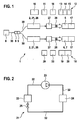
- Fig. 1 a schematic system picture of a temperature control system 1 is shown.
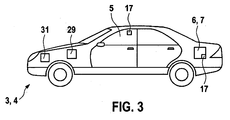
- the temperature control system 1 for an electric vehicle 3 or a hybrid vehicle 4 serves to temper a vehicle interior 5 and / or a battery 6 of the electric or hybrid vehicle 3, 4.
- the tempering is the cooling or heating of the vehicle interior 5 and / or the battery 6 of the electric or hybrid vehicle 3, 4.
- Under the vehicle interior 5 is understood, for example, the air of the vehicle interior 5, which is heated by means of a motor vehicle air conditioning.
- a rear window or a vehicle seat in the interior of the vehicle interior 5 is understood as the vehicle interior.
- a rear window of the electric or hybrid vehicle is heated, for example by means of an electric rear window heater and a vehicle seat of the motor vehicle is heated, for example by means of an electric seat heater.
- the electric vehicle 3 is driven by electric energy from the battery 6 by an electric motor 31 and the hybrid vehicle 4 by means of electrical energy from the battery 6 and by a non-illustrated combustion engine.
- the hybrid vehicle 4 is a so-called plug-in hybrid vehicle 4, in which during the standstill of the hybrid vehicle 4, the battery 6 is charged from an external public grid 8 and while driving the battery 6 is discharged to drive the electric motor 31 for locomotion of the hybrid or electric vehicle 3, 4.
- the temperature control system 1 comprises a cooling circuit 21 and an electrical heating device 26 as the temperature control device 2.
- the cooling circuit 21 comprises an evaporator 22, a compressor 23, a condenser 24 and an expansion valve 25 (FIG. Fig. 2 ).
- the evaporator 22, the compressor 23 and the condenser 24 are connected to each other by means of a refrigerant line 32.
- the heater 26 and the refrigerant circuit 21 can be connected by means of a power line 30 and a connector 9 with a plug and a mating connector to the external power supply 8.
- the external power grid 8 is in particular a public power grid of a power company with a voltage of, for example, 220 volts.
- the two temperature control device 2 can be supplied with electrical energy for controlling the temperature of the vehicle interior 5 and / or the battery 6. Furthermore, the battery 6 is charged from the external power grid 8.
- a portable remote control 10 or a timer 11 Before starting to drive with the electric or hybrid vehicle 3, 4 is inputted by a portable remote control 10 or a timer 11 to the electric or hybrid vehicle 3, 4, an imminent departure. In addition, it is also possible to enter the upcoming journey start by means of a laptop 15 of a Blackberry 14 or a mobile phone 13 as mobile portable devices 12.
- the electric or hybrid vehicle 3, 4 has for this purpose a data interface 29.
- data can be transmitted by wire or wirelessly, by radio.
- the remote control 10 enters radio communication with the data interface 29, thereby enabling impending departure of a control device 18 with a computer 19 and a data memory 20 can be communicated.
- the data interface 29 can also transmit data, for example, from the Internet, so that an impending start of the journey can also be entered by the laptop 15 or the mobile phone 13 or the Blackberry 14, wherein the mobile phone 13 or the Blackberry 14 allows data transmission to the Internet , Furthermore, a device which signals an opening of the garage door to the data interface 29 can be arranged on a garage door opener 16. When opening the garage door 16 is closed by the control unit 18 to an imminent start of the journey with the electric or hybrid vehicle 3, 4.
- the control device 18 compares the actual temperature in the vehicle interior 5 and the actual temperature of the battery 6 with the corresponding setpoint temperature.
- the target temperature may be input with an input unit 33.
- a temperature of the vehicle interior 5 and the battery 6 is initiated by the temperature control device 2.
- the capacitor 24 and / or the heater 26 heats the fluid of the fluid circuit, not shown, and passed through a heat exchanger 27.
- Air is blown through the heat exchanger 27 by means of a blower 28 and this air, which is heated by the heat exchanger 27, is conducted into the vehicle interior 5 or to the batteries 6.
- the batteries 6 are generally arranged in a housing, not shown, so that the air can flow around the batteries 6.
- the electric heater 26 may be disposed directly on the rear window or on the vehicle seat, so that for controlling the rear window or the vehicle seat direct energy transfer from the electric heater 26 is possible without the interposition with a non shown fluid circuit and a heat exchanger 27, not shown.
- the temperature control system 1 only a refrigerant circuit 21.
- the fluid circuit in particular a fluid circuit with a circulating pump, can be thermally coupled to the evaporator 22 and / or the condenser 24 and / or the electric heating device 26 by means of source heat exchangers (not shown).
- the fluid of the fluid circuit also flows through the two heat exchangers 27 for controlling the temperature of the vehicle interior 5 and the battery 6. The fluid thus absorbs heat or cold at the source heat exchangers as heat or cooling source and releases them with the heat exchangers 27.
- At least one valve By means of at least one valve can be controlled, whether only the vehicle interior 5, only the battery 6 or both the vehicle interior 5 and the battery 6 or neither the vehicle interior 5 nor the battery 6 is tempered by the line of the fluid circuit according to at least one valve be opened or closed. Furthermore, it can be controlled by means of the at least one valve, whether as a heat or cold source of the evaporator 22 and / or the capacitor 24 and / or the heater is used.
- the electrical connection is disconnected by means of the connector 9 to the external power supply 8, so that the electrical energy for supplying the temperature control 2 comes from the battery 6. It is generally no longer necessary at the beginning of the journey with the electric vehicle 3 or the hybrid vehicle 4 that the vehicle interior 5 or the battery 6 is tempered, because a pre-tempering during connection with the external power grid 8 has already been performed.
- the temperature of the vehicle interior 5 and the battery 6 is carried out before departure by electrical energy from the external power grid 8. This allows electrical energy of the battery 6 can be saved for the temperature control at the beginning of the journey, so that thereby the range of the electric vehicle 3 and the hybrid vehicle. 4 is increased. In addition, thereby the comfort for the vehicle occupants is increased, because even before driving with the electric vehicle 3 or the hybrid vehicle. 4 a pleasant interior temperature in the vehicle interior 5 in the range of 21 ° C prevails.
Landscapes
- Engineering & Computer Science (AREA)
- Physics & Mathematics (AREA)
- Thermal Sciences (AREA)
- Mechanical Engineering (AREA)
- Life Sciences & Earth Sciences (AREA)
- Sustainable Development (AREA)
- Sustainable Energy (AREA)
- Electric Propulsion And Braking For Vehicles (AREA)
- Air-Conditioning For Vehicles (AREA)
Claims (6)
- Procédé de conditionnement thermique d'un habitacle de véhicule (5) et/ou d'une batterie (6) d'un véhicule électrique ou hybride (3, 4) comportant les étapes suivantes :- détecter une température instantanée de l'habitacle de véhicule (5) et/ou de la batterie (6),- comparer la température instantanée à une température nominale de l'habitacle de véhicule (5) et/ou de la batterie (6),- conditionner thermiquement l'habitacle de véhicule (5) et/ou la batterie (6) lors d'un écart de la température instantanée par rapport à la température nominale,- l'habitacle de véhicule (5) et/ou la batterie (6) est conditionné thermiquement avant le départ au moyen d'énergie électrique provenant d'un réseau électrique externe (8) et, pendant le conditionnement thermique, l'énergie électrique destinée au conditionnement thermique est prélevée du réseau électrique externe (8), dans lequel- un départ imminent du véhicule électrique ou hybride (3, 4) est déterminé et l'habitacle de véhicule (5) et/ou la batterie (6) est/sont conditionné(s) thermiquement avant le départ, de préférence pendant un intervalle de temps prédéterminé,caractérisé en ce que- le départ imminent est déterminé sur la base d'un historique d'utilisation du conditionnement thermique et/ou d'un historique d'utilisation du véhicule électrique ou hybride (3, 4).
- Procédé selon la revendication 1, caractérisé en ce que l'habitacle de véhicule (5) et/ou la batterie (6) est conditionné thermiquement avant le départ au moyen d'énergie électrique provenant exclusivement du réseau électrique externe (8) et/ou en ce que l'énergie destinée au conditionnement thermique, de préférence électrique, n'a pas été accumulée dans un accumulateur d'énergie (6), en particulier une batterie (6), du véhicule électrique ou hybride (3, 4).
- Procédé selon une ou plusieurs des revendications 1 à 2, caractérisé en ce que, lors de la détermination du départ imminent, un couplage avec des informations météorologiques est introduit.
- Procédé selon une ou plusieurs des revendications 1 à 3, caractérisé en ce que le départ imminent est déterminé au moyen d'un couplage avec un dispositif d'ouverture de porte de garage (16).
- Système de conditionnement thermique (1) destiné à un habitacle de véhicule (5) et/ou à une batterie (6) d'un véhicule électrique ou hybride (3, 4), comprenant :- au moins un capteur (17) pour détecter une température instantanée de l'habitacle de véhicule (5) et/ou de la batterie (6),- un dispositif de commande (18),- au moins un dispositif de conditionnement thermique (2) destiné à conditionner thermiquement l'habitacle de véhicule (5) et/ou la batterie (6),caractérisé en ce que
le dispositif de commande (18) met en oeuvre un procédé selon l'une quelconque des revendications précédentes et comprend un ordinateur (19) et une mémoire de données (20) pour stocker l'historique d'utilisation. - Système de conditionnement thermique selon la revendication 5, caractérisé en ce que le système de conditionnement thermique (1) comprend une interface de données (29) pour transmettre des données concernant un départ imminent.
Applications Claiming Priority (2)
| Application Number | Priority Date | Filing Date | Title |
|---|---|---|---|
| DE102009028328A DE102009028328A1 (de) | 2009-08-07 | 2009-08-07 | Verfahren und Vorrichtung zum Temperieren eines Fahrzeuginnenraumes |
| PCT/EP2010/060115 WO2011015431A1 (fr) | 2009-08-07 | 2010-07-14 | Procédé et dispositif de thermorégulation d'un habitacle de véhicule |
Publications (2)
| Publication Number | Publication Date |
|---|---|
| EP2461991A1 EP2461991A1 (fr) | 2012-06-13 |
| EP2461991B1 true EP2461991B1 (fr) | 2016-10-26 |
Family
ID=42557446
Family Applications (1)
| Application Number | Title | Priority Date | Filing Date |
|---|---|---|---|
| EP10731531.9A Active EP2461991B1 (fr) | 2009-08-07 | 2010-07-14 | Procédé et dispositif de conditionnement thermique un habitacle de véhicule automobile |
Country Status (3)
| Country | Link |
|---|---|
| EP (1) | EP2461991B1 (fr) |
| DE (1) | DE102009028328A1 (fr) |
| WO (1) | WO2011015431A1 (fr) |
Families Citing this family (7)
| Publication number | Priority date | Publication date | Assignee | Title |
|---|---|---|---|---|
| WO2012175539A1 (fr) | 2011-06-22 | 2012-12-27 | Behr-Hella Thermocontrol Gmbh | Chauffage électrique pour véhicule avec groupe moteur électrique ou hybride |
| EP2570279A1 (fr) * | 2011-09-13 | 2013-03-20 | Behr France Rouffach SAS | Climatisation de véhicule automobile |
| FR3014062B1 (fr) * | 2013-12-03 | 2015-12-11 | Renault Sas | Procede de gestion de l'energie sur un vehicule hybride comportant une transmission a rapports discrets |
| EP3670247A1 (fr) * | 2018-12-20 | 2020-06-24 | Ningbo Geely Automobile Research & Development Co. Ltd. | Système et procédé de préparation d'un véhicule pour un voyage |
| DE102019119062B4 (de) * | 2019-07-15 | 2024-10-17 | Bayerische Motoren Werke Aktiengesellschaft | Vorrichtung und Verfahren zur automatischen Regelung der Klimaanlage im Fahrzeug |
| DE102020100955A1 (de) | 2020-01-16 | 2021-07-22 | Audi Aktiengesellschaft | Ladeverfahren für ein Elektrofahrzeug |
| EP3984790B1 (fr) * | 2020-10-15 | 2024-07-17 | Ymer Technology AB | Système de gestion thermique d'un véhicule électrique et procédé de gestion thermique du véhicule électrique |
Family Cites Families (6)
| Publication number | Priority date | Publication date | Assignee | Title |
|---|---|---|---|---|
| US5285963A (en) * | 1993-04-29 | 1994-02-15 | Llr Technologies, Inc. | Intelligent controller for equipment heater |
| DE19534427B4 (de) * | 1994-09-23 | 2007-11-08 | Volkswagen Ag | Verfahren und Vorrichtung zur Klimatisierung einer Batterie, insbesondere eines Elektrofahrzeuges |
| DE19609048C2 (de) | 1996-03-08 | 1998-04-16 | Daimler Benz Ag | Heizungs- und Klimatisierungseinrichtung für Kraftfahrzeuge |
| DE19829143C1 (de) * | 1998-06-30 | 1999-07-01 | Hella Kg Hueck & Co | Verfahren zur Änderung der Innenraumtemperatur eines Fahrzeuges |
| US6889762B2 (en) * | 2002-04-29 | 2005-05-10 | Bergstrom, Inc. | Vehicle air conditioning and heating system providing engine on and engine off operation |
| US20080180058A1 (en) * | 2007-01-30 | 2008-07-31 | Bijal Patel | Plug-in battery charging booster for electric vehicle |
-
2009
- 2009-08-07 DE DE102009028328A patent/DE102009028328A1/de not_active Withdrawn
-
2010
- 2010-07-14 WO PCT/EP2010/060115 patent/WO2011015431A1/fr not_active Ceased
- 2010-07-14 EP EP10731531.9A patent/EP2461991B1/fr active Active
Also Published As
| Publication number | Publication date |
|---|---|
| EP2461991A1 (fr) | 2012-06-13 |
| DE102009028328A1 (de) | 2011-02-10 |
| WO2011015431A1 (fr) | 2011-02-10 |
Similar Documents
| Publication | Publication Date | Title |
|---|---|---|
| EP2461992B1 (fr) | Dispositif de thermorégulation pour véhicule à moteur | |
| EP2461991B1 (fr) | Procédé et dispositif de conditionnement thermique un habitacle de véhicule automobile | |
| DE102010036994B4 (de) | Vorrichtung zum Steuern von aus einer externen Energiequelle entnommener Energie in einem Plug-in-Fahrzeug | |
| DE102017126403B4 (de) | HVAC-System für ein Fahrzeug | |
| DE102011079415B4 (de) | Laden eines eine elektrische Klimaanlage umfassenden Elektrofahrzeugs | |
| EP2462325B1 (fr) | Procédé et dispositif permettant de réchauffer une huile moteur et une huile de transmission d'un véhicule hybride | |
| EP2517298B1 (fr) | Procédé destiné à tempérer une source de courant d'un véhicule | |
| EP2117857B1 (fr) | Dispositif de preclimatisation d'un vehicule a l'arret | |
| EP3480897B1 (fr) | Station de recharge pour vehicule electrique et vehicule electrique | |
| DE102018111259A1 (de) | Vorkonditionierung für ein hybridelektrofahrzeug | |
| EP2596978B1 (fr) | Véhicule thermique doté d'une cellule tempérée, isolée thermiquement | |
| DE102016210130A1 (de) | Verfahren zum Steuern von Klimatisierungskomponenten eines Kraftfahrzeugs | |
| DE102014204260A1 (de) | Verfahren und system zum steuern eines elektrofahrzeugs während des aufladens | |
| DE102008037307A1 (de) | Klimaanlage für Fahrzeuge | |
| DE102010018906A1 (de) | Klimatisierungssystem für einen Fahrgastraum eines Fahrzeugs und Verfahren zum Klimatisieren eines Fahrgastraums | |
| DE102012024080A1 (de) | Fahrzeug mit Elektromotor | |
| WO2006082082A1 (fr) | Systeme de climatisation pour vehicule automobile | |
| WO2014037216A1 (fr) | Procédé de conditionnement thermique d'un moteur à combustion interne et/ou de l'habitacle d'un véhicule et véhicule correspondant | |
| DE102014218564A1 (de) | Steuervorrichtung und Verfahren zum prädiktiven, verbrauchsoptimierten Betrieb eines Hybridfahrzeugs | |
| DE102015214452A1 (de) | Thermomanagementsystem für ein Fahrzeug | |
| EP4070986A1 (fr) | Procédé et dispositif de thermorégulation d'une partie de véhicule d'un véhicule automobile doté d'un accumulateur d'énergie électrique | |
| DE102017212504A1 (de) | Standheizung | |
| EP2756974B1 (fr) | Véhicule automobile doté d'un échangeur de chaleur associé à une cabine de conducteur | |
| DE102018203643A1 (de) | Ladeverfahren für einen thermischen Speicher eines Kraftfahrzeugs, Steuereinrichtung sowie Kraftfahrzeug | |
| DE102010046615A1 (de) | Verfahren und Vorrichtung zur Klimatisierung eines Kraftfahrzeugs |
Legal Events
| Date | Code | Title | Description |
|---|---|---|---|
| PUAI | Public reference made under article 153(3) epc to a published international application that has entered the european phase |
Free format text: ORIGINAL CODE: 0009012 |
|
| 17P | Request for examination filed |
Effective date: 20120307 |
|
| AK | Designated contracting states |
Kind code of ref document: A1 Designated state(s): AL AT BE BG CH CY CZ DE DK EE ES FI FR GB GR HR HU IE IS IT LI LT LU LV MC MK MT NL NO PL PT RO SE SI SK SM TR |
|
| DAX | Request for extension of the european patent (deleted) | ||
| GRAP | Despatch of communication of intention to grant a patent |
Free format text: ORIGINAL CODE: EPIDOSNIGR1 |
|
| INTG | Intention to grant announced |
Effective date: 20160609 |
|
| GRAS | Grant fee paid |
Free format text: ORIGINAL CODE: EPIDOSNIGR3 |
|
| GRAA | (expected) grant |
Free format text: ORIGINAL CODE: 0009210 |
|
| AK | Designated contracting states |
Kind code of ref document: B1 Designated state(s): AL AT BE BG CH CY CZ DE DK EE ES FI FR GB GR HR HU IE IS IT LI LT LU LV MC MK MT NL NO PL PT RO SE SI SK SM TR |
|
| REG | Reference to a national code |
Ref country code: GB Ref legal event code: FG4D Free format text: NOT ENGLISH |
|
| REG | Reference to a national code |
Ref country code: CH Ref legal event code: EP |
|
| REG | Reference to a national code |
Ref country code: AT Ref legal event code: REF Ref document number: 839741 Country of ref document: AT Kind code of ref document: T Effective date: 20161115 |
|
| REG | Reference to a national code |
Ref country code: IE Ref legal event code: FG4D Free format text: LANGUAGE OF EP DOCUMENT: GERMAN |
|
| REG | Reference to a national code |
Ref country code: DE Ref legal event code: R096 Ref document number: 502010012632 Country of ref document: DE |
|
| REG | Reference to a national code |
Ref country code: LT Ref legal event code: MG4D |
|
| PG25 | Lapsed in a contracting state [announced via postgrant information from national office to epo] |
Ref country code: LV Free format text: LAPSE BECAUSE OF FAILURE TO SUBMIT A TRANSLATION OF THE DESCRIPTION OR TO PAY THE FEE WITHIN THE PRESCRIBED TIME-LIMIT Effective date: 20161026 |
|
| REG | Reference to a national code |
Ref country code: NL Ref legal event code: MP Effective date: 20161026 |
|
| PG25 | Lapsed in a contracting state [announced via postgrant information from national office to epo] |
Ref country code: GR Free format text: LAPSE BECAUSE OF FAILURE TO SUBMIT A TRANSLATION OF THE DESCRIPTION OR TO PAY THE FEE WITHIN THE PRESCRIBED TIME-LIMIT Effective date: 20170127 Ref country code: LT Free format text: LAPSE BECAUSE OF FAILURE TO SUBMIT A TRANSLATION OF THE DESCRIPTION OR TO PAY THE FEE WITHIN THE PRESCRIBED TIME-LIMIT Effective date: 20161026 Ref country code: NO Free format text: LAPSE BECAUSE OF FAILURE TO SUBMIT A TRANSLATION OF THE DESCRIPTION OR TO PAY THE FEE WITHIN THE PRESCRIBED TIME-LIMIT Effective date: 20170126 Ref country code: SE Free format text: LAPSE BECAUSE OF FAILURE TO SUBMIT A TRANSLATION OF THE DESCRIPTION OR TO PAY THE FEE WITHIN THE PRESCRIBED TIME-LIMIT Effective date: 20161026 |
|
| PG25 | Lapsed in a contracting state [announced via postgrant information from national office to epo] |
Ref country code: ES Free format text: LAPSE BECAUSE OF FAILURE TO SUBMIT A TRANSLATION OF THE DESCRIPTION OR TO PAY THE FEE WITHIN THE PRESCRIBED TIME-LIMIT Effective date: 20161026 Ref country code: FI Free format text: LAPSE BECAUSE OF FAILURE TO SUBMIT A TRANSLATION OF THE DESCRIPTION OR TO PAY THE FEE WITHIN THE PRESCRIBED TIME-LIMIT Effective date: 20161026 Ref country code: NL Free format text: LAPSE BECAUSE OF FAILURE TO SUBMIT A TRANSLATION OF THE DESCRIPTION OR TO PAY THE FEE WITHIN THE PRESCRIBED TIME-LIMIT Effective date: 20161026 Ref country code: HR Free format text: LAPSE BECAUSE OF FAILURE TO SUBMIT A TRANSLATION OF THE DESCRIPTION OR TO PAY THE FEE WITHIN THE PRESCRIBED TIME-LIMIT Effective date: 20161026 Ref country code: IS Free format text: LAPSE BECAUSE OF FAILURE TO SUBMIT A TRANSLATION OF THE DESCRIPTION OR TO PAY THE FEE WITHIN THE PRESCRIBED TIME-LIMIT Effective date: 20170226 Ref country code: PT Free format text: LAPSE BECAUSE OF FAILURE TO SUBMIT A TRANSLATION OF THE DESCRIPTION OR TO PAY THE FEE WITHIN THE PRESCRIBED TIME-LIMIT Effective date: 20170227 Ref country code: PL Free format text: LAPSE BECAUSE OF FAILURE TO SUBMIT A TRANSLATION OF THE DESCRIPTION OR TO PAY THE FEE WITHIN THE PRESCRIBED TIME-LIMIT Effective date: 20161026 |
|
| REG | Reference to a national code |
Ref country code: FR Ref legal event code: PLFP Year of fee payment: 8 |
|
| REG | Reference to a national code |
Ref country code: DE Ref legal event code: R097 Ref document number: 502010012632 Country of ref document: DE |
|
| PG25 | Lapsed in a contracting state [announced via postgrant information from national office to epo] |
Ref country code: RO Free format text: LAPSE BECAUSE OF FAILURE TO SUBMIT A TRANSLATION OF THE DESCRIPTION OR TO PAY THE FEE WITHIN THE PRESCRIBED TIME-LIMIT Effective date: 20161026 Ref country code: CZ Free format text: LAPSE BECAUSE OF FAILURE TO SUBMIT A TRANSLATION OF THE DESCRIPTION OR TO PAY THE FEE WITHIN THE PRESCRIBED TIME-LIMIT Effective date: 20161026 Ref country code: SK Free format text: LAPSE BECAUSE OF FAILURE TO SUBMIT A TRANSLATION OF THE DESCRIPTION OR TO PAY THE FEE WITHIN THE PRESCRIBED TIME-LIMIT Effective date: 20161026 Ref country code: EE Free format text: LAPSE BECAUSE OF FAILURE TO SUBMIT A TRANSLATION OF THE DESCRIPTION OR TO PAY THE FEE WITHIN THE PRESCRIBED TIME-LIMIT Effective date: 20161026 Ref country code: DK Free format text: LAPSE BECAUSE OF FAILURE TO SUBMIT A TRANSLATION OF THE DESCRIPTION OR TO PAY THE FEE WITHIN THE PRESCRIBED TIME-LIMIT Effective date: 20161026 |
|
| PG25 | Lapsed in a contracting state [announced via postgrant information from national office to epo] |
Ref country code: BG Free format text: LAPSE BECAUSE OF FAILURE TO SUBMIT A TRANSLATION OF THE DESCRIPTION OR TO PAY THE FEE WITHIN THE PRESCRIBED TIME-LIMIT Effective date: 20170126 Ref country code: SM Free format text: LAPSE BECAUSE OF FAILURE TO SUBMIT A TRANSLATION OF THE DESCRIPTION OR TO PAY THE FEE WITHIN THE PRESCRIBED TIME-LIMIT Effective date: 20161026 |
|
| PLBE | No opposition filed within time limit |
Free format text: ORIGINAL CODE: 0009261 |
|
| STAA | Information on the status of an ep patent application or granted ep patent |
Free format text: STATUS: NO OPPOSITION FILED WITHIN TIME LIMIT |
|
| 26N | No opposition filed |
Effective date: 20170727 |
|
| PG25 | Lapsed in a contracting state [announced via postgrant information from national office to epo] |
Ref country code: SI Free format text: LAPSE BECAUSE OF FAILURE TO SUBMIT A TRANSLATION OF THE DESCRIPTION OR TO PAY THE FEE WITHIN THE PRESCRIBED TIME-LIMIT Effective date: 20161026 |
|
| REG | Reference to a national code |
Ref country code: CH Ref legal event code: PL |
|
| GBPC | Gb: european patent ceased through non-payment of renewal fee |
Effective date: 20170714 |
|
| REG | Reference to a national code |
Ref country code: IE Ref legal event code: MM4A |
|
| PG25 | Lapsed in a contracting state [announced via postgrant information from national office to epo] |
Ref country code: GB Free format text: LAPSE BECAUSE OF NON-PAYMENT OF DUE FEES Effective date: 20170714 Ref country code: IE Free format text: LAPSE BECAUSE OF NON-PAYMENT OF DUE FEES Effective date: 20170714 Ref country code: LI Free format text: LAPSE BECAUSE OF NON-PAYMENT OF DUE FEES Effective date: 20170731 Ref country code: CH Free format text: LAPSE BECAUSE OF NON-PAYMENT OF DUE FEES Effective date: 20170731 |
|
| REG | Reference to a national code |
Ref country code: BE Ref legal event code: MM Effective date: 20170731 |
|
| PG25 | Lapsed in a contracting state [announced via postgrant information from national office to epo] |
Ref country code: LU Free format text: LAPSE BECAUSE OF NON-PAYMENT OF DUE FEES Effective date: 20170714 |
|
| REG | Reference to a national code |
Ref country code: FR Ref legal event code: PLFP Year of fee payment: 9 |
|
| PG25 | Lapsed in a contracting state [announced via postgrant information from national office to epo] |
Ref country code: BE Free format text: LAPSE BECAUSE OF NON-PAYMENT OF DUE FEES Effective date: 20170731 |
|
| REG | Reference to a national code |
Ref country code: AT Ref legal event code: MM01 Ref document number: 839741 Country of ref document: AT Kind code of ref document: T Effective date: 20170714 |
|
| PG25 | Lapsed in a contracting state [announced via postgrant information from national office to epo] |
Ref country code: MT Free format text: LAPSE BECAUSE OF FAILURE TO SUBMIT A TRANSLATION OF THE DESCRIPTION OR TO PAY THE FEE WITHIN THE PRESCRIBED TIME-LIMIT Effective date: 20161026 |
|
| PG25 | Lapsed in a contracting state [announced via postgrant information from national office to epo] |
Ref country code: AT Free format text: LAPSE BECAUSE OF NON-PAYMENT OF DUE FEES Effective date: 20170714 |
|
| PG25 | Lapsed in a contracting state [announced via postgrant information from national office to epo] |
Ref country code: HU Free format text: LAPSE BECAUSE OF FAILURE TO SUBMIT A TRANSLATION OF THE DESCRIPTION OR TO PAY THE FEE WITHIN THE PRESCRIBED TIME-LIMIT; INVALID AB INITIO Effective date: 20100714 Ref country code: MC Free format text: LAPSE BECAUSE OF FAILURE TO SUBMIT A TRANSLATION OF THE DESCRIPTION OR TO PAY THE FEE WITHIN THE PRESCRIBED TIME-LIMIT Effective date: 20161026 |
|
| PG25 | Lapsed in a contracting state [announced via postgrant information from national office to epo] |
Ref country code: CY Free format text: LAPSE BECAUSE OF NON-PAYMENT OF DUE FEES Effective date: 20161026 |
|
| PG25 | Lapsed in a contracting state [announced via postgrant information from national office to epo] |
Ref country code: MK Free format text: LAPSE BECAUSE OF FAILURE TO SUBMIT A TRANSLATION OF THE DESCRIPTION OR TO PAY THE FEE WITHIN THE PRESCRIBED TIME-LIMIT Effective date: 20161026 |
|
| PG25 | Lapsed in a contracting state [announced via postgrant information from national office to epo] |
Ref country code: TR Free format text: LAPSE BECAUSE OF FAILURE TO SUBMIT A TRANSLATION OF THE DESCRIPTION OR TO PAY THE FEE WITHIN THE PRESCRIBED TIME-LIMIT Effective date: 20161026 |
|
| PG25 | Lapsed in a contracting state [announced via postgrant information from national office to epo] |
Ref country code: AL Free format text: LAPSE BECAUSE OF FAILURE TO SUBMIT A TRANSLATION OF THE DESCRIPTION OR TO PAY THE FEE WITHIN THE PRESCRIBED TIME-LIMIT Effective date: 20161026 |
|
| PGFP | Annual fee paid to national office [announced via postgrant information from national office to epo] |
Ref country code: IT Payment date: 20230731 Year of fee payment: 14 |
|
| PGFP | Annual fee paid to national office [announced via postgrant information from national office to epo] |
Ref country code: FR Payment date: 20230724 Year of fee payment: 14 |
|
| PG25 | Lapsed in a contracting state [announced via postgrant information from national office to epo] |
Ref country code: FR Free format text: LAPSE BECAUSE OF NON-PAYMENT OF DUE FEES Effective date: 20240731 |
|
| PG25 | Lapsed in a contracting state [announced via postgrant information from national office to epo] |
Ref country code: IT Free format text: LAPSE BECAUSE OF NON-PAYMENT OF DUE FEES Effective date: 20240714 |
|
| PGFP | Annual fee paid to national office [announced via postgrant information from national office to epo] |
Ref country code: DE Payment date: 20250924 Year of fee payment: 16 |