EP2463940A1 - Poudre métallique au lithium stabilisée pour applications de type lithium-ion, composition et procédé de production - Google Patents
Poudre métallique au lithium stabilisée pour applications de type lithium-ion, composition et procédé de production Download PDFInfo
- Publication number
- EP2463940A1 EP2463940A1 EP12157983A EP12157983A EP2463940A1 EP 2463940 A1 EP2463940 A1 EP 2463940A1 EP 12157983 A EP12157983 A EP 12157983A EP 12157983 A EP12157983 A EP 12157983A EP 2463940 A1 EP2463940 A1 EP 2463940A1
- Authority
- EP
- European Patent Office
- Prior art keywords
- lithium
- lithium metal
- polymer
- metal powder
- stabilized
- Prior art date
- Legal status (The legal status is an assumption and is not a legal conclusion. Google has not performed a legal analysis and makes no representation as to the accuracy of the status listed.)
- Granted
Links
Images






Classifications
-
- B—PERFORMING OPERATIONS; TRANSPORTING
- B22—CASTING; POWDER METALLURGY
- B22F—WORKING METALLIC POWDER; MANUFACTURE OF ARTICLES FROM METALLIC POWDER; MAKING METALLIC POWDER; APPARATUS OR DEVICES SPECIALLY ADAPTED FOR METALLIC POWDER
- B22F1/00—Metallic powder; Treatment of metallic powder, e.g. to facilitate working or to improve properties
- B22F1/10—Metallic powder containing lubricating or binding agents; Metallic powder containing organic material
- B22F1/102—Metallic powder coated with organic material
-
- B—PERFORMING OPERATIONS; TRANSPORTING
- B22—CASTING; POWDER METALLURGY
- B22F—WORKING METALLIC POWDER; MANUFACTURE OF ARTICLES FROM METALLIC POWDER; MAKING METALLIC POWDER; APPARATUS OR DEVICES SPECIALLY ADAPTED FOR METALLIC POWDER
- B22F1/00—Metallic powder; Treatment of metallic powder, e.g. to facilitate working or to improve properties
- B22F1/16—Metallic particles coated with a non-metal
-
- B—PERFORMING OPERATIONS; TRANSPORTING
- B22—CASTING; POWDER METALLURGY
- B22F—WORKING METALLIC POWDER; MANUFACTURE OF ARTICLES FROM METALLIC POWDER; MAKING METALLIC POWDER; APPARATUS OR DEVICES SPECIALLY ADAPTED FOR METALLIC POWDER
- B22F9/00—Making metallic powder or suspensions thereof
- B22F9/02—Making metallic powder or suspensions thereof using physical processes
- B22F9/06—Making metallic powder or suspensions thereof using physical processes starting from liquid material
-
- H—ELECTRICITY
- H01—ELECTRIC ELEMENTS
- H01M—PROCESSES OR MEANS, e.g. BATTERIES, FOR THE DIRECT CONVERSION OF CHEMICAL ENERGY INTO ELECTRICAL ENERGY
- H01M4/00—Electrodes
- H01M4/02—Electrodes composed of, or comprising, active material
- H01M4/13—Electrodes for accumulators with non-aqueous electrolyte, e.g. for lithium-accumulators; Processes of manufacture thereof
- H01M4/134—Electrodes based on metals, Si or alloys
-
- H—ELECTRICITY
- H01—ELECTRIC ELEMENTS
- H01M—PROCESSES OR MEANS, e.g. BATTERIES, FOR THE DIRECT CONVERSION OF CHEMICAL ENERGY INTO ELECTRICAL ENERGY
- H01M4/00—Electrodes
- H01M4/02—Electrodes composed of, or comprising, active material
- H01M4/36—Selection of substances as active materials, active masses, active liquids
- H01M4/362—Composites
- H01M4/364—Composites as mixtures
-
- H—ELECTRICITY
- H01—ELECTRIC ELEMENTS
- H01M—PROCESSES OR MEANS, e.g. BATTERIES, FOR THE DIRECT CONVERSION OF CHEMICAL ENERGY INTO ELECTRICAL ENERGY
- H01M4/00—Electrodes
- H01M4/02—Electrodes composed of, or comprising, active material
- H01M4/36—Selection of substances as active materials, active masses, active liquids
- H01M4/38—Selection of substances as active materials, active masses, active liquids of elements or alloys
-
- H—ELECTRICITY
- H01—ELECTRIC ELEMENTS
- H01M—PROCESSES OR MEANS, e.g. BATTERIES, FOR THE DIRECT CONVERSION OF CHEMICAL ENERGY INTO ELECTRICAL ENERGY
- H01M4/00—Electrodes
- H01M4/02—Electrodes composed of, or comprising, active material
- H01M4/36—Selection of substances as active materials, active masses, active liquids
- H01M4/38—Selection of substances as active materials, active masses, active liquids of elements or alloys
- H01M4/381—Alkaline or alkaline earth metals elements
- H01M4/382—Lithium
-
- H—ELECTRICITY
- H01—ELECTRIC ELEMENTS
- H01M—PROCESSES OR MEANS, e.g. BATTERIES, FOR THE DIRECT CONVERSION OF CHEMICAL ENERGY INTO ELECTRICAL ENERGY
- H01M4/00—Electrodes
- H01M4/02—Electrodes composed of, or comprising, active material
- H01M4/62—Selection of inactive substances as ingredients for active masses, e.g. binders, fillers
-
- B—PERFORMING OPERATIONS; TRANSPORTING
- B22—CASTING; POWDER METALLURGY
- B22F—WORKING METALLIC POWDER; MANUFACTURE OF ARTICLES FROM METALLIC POWDER; MAKING METALLIC POWDER; APPARATUS OR DEVICES SPECIALLY ADAPTED FOR METALLIC POWDER
- B22F2301/00—Metallic composition of the powder or its coating
- B22F2301/05—Light metals
- B22F2301/054—Alkali metals, i.e. Li, Na, K, Rb, Cs, Fr
-
- B—PERFORMING OPERATIONS; TRANSPORTING
- B22—CASTING; POWDER METALLURGY
- B22F—WORKING METALLIC POWDER; MANUFACTURE OF ARTICLES FROM METALLIC POWDER; MAKING METALLIC POWDER; APPARATUS OR DEVICES SPECIALLY ADAPTED FOR METALLIC POWDER
- B22F2302/00—Metal Compound, non-Metallic compound or non-metal composition of the powder or its coating
- B22F2302/45—Others, including non-metals
-
- H—ELECTRICITY
- H01—ELECTRIC ELEMENTS
- H01M—PROCESSES OR MEANS, e.g. BATTERIES, FOR THE DIRECT CONVERSION OF CHEMICAL ENERGY INTO ELECTRICAL ENERGY
- H01M10/00—Secondary cells; Manufacture thereof
- H01M10/05—Accumulators with non-aqueous electrolyte
- H01M10/052—Li-accumulators
- H01M10/0525—Rocking-chair batteries, i.e. batteries with lithium insertion or intercalation in both electrodes; Lithium-ion batteries
-
- H—ELECTRICITY
- H01—ELECTRIC ELEMENTS
- H01M—PROCESSES OR MEANS, e.g. BATTERIES, FOR THE DIRECT CONVERSION OF CHEMICAL ENERGY INTO ELECTRICAL ENERGY
- H01M4/00—Electrodes
- H01M4/02—Electrodes composed of, or comprising, active material
- H01M4/36—Selection of substances as active materials, active masses, active liquids
- H01M4/38—Selection of substances as active materials, active masses, active liquids of elements or alloys
- H01M4/386—Silicon or alloys based on silicon
-
- H—ELECTRICITY
- H01—ELECTRIC ELEMENTS
- H01M—PROCESSES OR MEANS, e.g. BATTERIES, FOR THE DIRECT CONVERSION OF CHEMICAL ENERGY INTO ELECTRICAL ENERGY
- H01M4/00—Electrodes
- H01M4/02—Electrodes composed of, or comprising, active material
- H01M4/36—Selection of substances as active materials, active masses, active liquids
- H01M4/38—Selection of substances as active materials, active masses, active liquids of elements or alloys
- H01M4/387—Tin or alloys based on tin
-
- Y—GENERAL TAGGING OF NEW TECHNOLOGICAL DEVELOPMENTS; GENERAL TAGGING OF CROSS-SECTIONAL TECHNOLOGIES SPANNING OVER SEVERAL SECTIONS OF THE IPC; TECHNICAL SUBJECTS COVERED BY FORMER USPC CROSS-REFERENCE ART COLLECTIONS [XRACs] AND DIGESTS
- Y02—TECHNOLOGIES OR APPLICATIONS FOR MITIGATION OR ADAPTATION AGAINST CLIMATE CHANGE
- Y02E—REDUCTION OF GREENHOUSE GAS [GHG] EMISSIONS, RELATED TO ENERGY GENERATION, TRANSMISSION OR DISTRIBUTION
- Y02E60/00—Enabling technologies; Technologies with a potential or indirect contribution to GHG emissions mitigation
- Y02E60/10—Energy storage using batteries
Definitions
- the present invention relates to stabilized lithium metal powder ("SLMP") having improved air and solvent stability and having a longer storage life.
- SLMP stabilized lithium metal powder
- Such improved SLMP can be used in a wide variety of applications including organo-metal and polymer synthesis, primary lithium batteries, rechargeable lithium batteries, and rechargeable lithium ion batteries.
- Lithium and lithium-ion secondary or rechargeable batteries have recently found use in certain applications such as in cellular phones, camcorders, and laptop computers, and even more recently, in larger power applications such as in electric vehicles and hybrid electric vehicles. It is preferred in these applications that the secondary batteries have the highest specific capacity possible but still provide safe operating conditions and good cycleability so that the high specific capacity is maintained in subsequent recharging and discharging cycles.
- each construction includes a positive electrode (or cathode), a negative electrode (or anode), a separator that separates the cathode and anode, and an electrolyte in electrochemical communication with the cathode and anode.
- a positive electrode or cathode
- a negative electrode or anode
- a separator that separates the cathode and anode
- an electrolyte in electrochemical communication with the cathode and anode.
- lithium ions are transferred from the anode to the cathode through the electrolyte when the secondary battery is being discharged, i.e., used for its specific application. During this process, electrons are collected from the anode and pass to the cathode through an external circuit.
- the lithium ions are transferred from the cathode to the anode through the electrolyte.
- second lithium batteries were produced using non-lithiated compounds having high specific capacities such as TiS 2 , MoS 2 , MnO 2 and V 2 O 5 , as the cathode active materials. These cathode active materials were often coupled with a lithium metal anode. When the secondary battery was discharged, lithium ions were transferred from the lithium metal anode to the cathode through the electrolyte. Unfortunately, upon cycling, the lithium metal developed dendrites that ultimately caused unsafe conditions in the battery. As a result, the production of these types of secondary batteries was stopped in the early 1990's in favor of lithium-ion batteries.
- Lithium-ion batteries typically use lithium metal oxides such as LiCoO 2 and LiNiO 2 as cathode active materials coupled with a carbon-based anode. In these batteries, the lithium dendrite formation on the anode is avoided thereby making the battery safer. However, the lithium, the amount of which determines the battery capacity, is totally supplied from the cathode. This limits the choice of cathode active materials because the active materials must contain removable lithium. Furthermore, the delithiated products corresponding to LiCoO 2 and LiNiO 2 that are formed during charging (e.g. Li x CoO 2 and Li x NiO 2 where 0.4 ⁇ x ⁇ 1.0) and overcharging (i.e. Li x CoO 2 and Li x NiO 2 where x ⁇ 0.4) are not stable. In particular, these delithiated products tend to react with the electrolyte and generate heat, which raises safety concerns.
- LiCoO 2 and LiNiO 2 the lithium dendrite formation on the anode is avoided thereby making the battery
- lithium metal is lithium metal.
- Lithium metal particularly lithium metal powder; however, because of its high surface area, can be a deterrent for its use in a variety of applications because of its pyrophoric nature.
- the CO 2 -passivated lithium metal powder can be used only in air with low moisture levels for a limited period of time before the lithium metal content decays because of the reaction of the lithium metal and air.
- the present invention provides a lithium metal powder protected by a substantially continuous layer of a polymer.
- a substantially continuous polymer layer provides improved protection such as compared to typical CO 2 -passivation.
- the resulting lithium metal powder has improved air and solvent stability and improved storage life.
- the polymer-protected lithium metal powder exhibits significantly better stability in N-methyl-2-pyrrolidone (NMP), which is commonly used as a slurry solvent in the electrode fabrication process, and reacts with unprotected lithium.
- NMP N-methyl-2-pyrrolidone
- Figure 1 is an ARSST stability test of CO 2 -coated SLMP (comparative example 2) with NMP as received ( ⁇ 100 ppm moisture) and 0.6% water doped NMP.
- Figure 2 is an ARSST stability test of PEO-coated SLMP (example 2) with 0.6% water doped NMP.
- Figure 3 is an ARSST stability test of EVA-coated SLMP with 0.6% water doped NMP, example 10.
- Figure 4 is an ARSST stability test of SBR-coated SLMP with 0.6% water doped NMP, example 7.
- Figure 5 is an ARSST stability test of BYK P 104-coated (low molecular weight polycarboxylic acid polymer) SLMP with 0.6% water doped NMP, example 3.
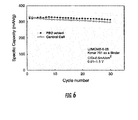
- Figure 6 demonstrates the effect of a polymer-coated lithium on the electrochemical performance
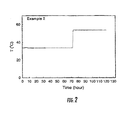
- Figure 7 is an ARSST stability test of CO 2 -coated SLMP and Example 11.
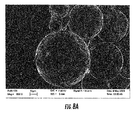
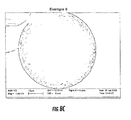
- Figures 8A , 8B , and 8C are SEM images for samples prepared using different process parameters.
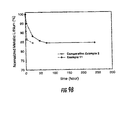
- Figure 9A is a comparison of metallic lithium concentration in anhydrous NMP as a function of time.
- Figure 9B is a comparison of metallic lithium concentration in 0.6% water doped NMP as a function of time.
- the term "about,” as used herein when referring to a measurable value such as an amount of a compound or agent of this invention, dose, time, temperature, and the like, is meant to encompass variations of 20%, 10%, 5%, 1%, 0.5%, or even 0.1% of the specified amount.
- lithium dispersions are prepared by heating the lithium metal powder in a hydrocarbon oil to a temperature above its melting point, subjecting to conditions sufficient to disperse the molten lithium, agitating or stirring vigorously, and contacting the lithium metal powder with a polymer at a temperature that is between this temperature and at or above the melting point of the lithium to provide a substantially continuous layer of the polymer.
- the substantially continuous layer of polymer has a thickness of 25 to 200nm, and often has a thickness of 80 to 120nm.
- Other alkali metals such as sodium and potassium can be coated according to the present invention.
- Suitable polymers can be polymers that are water resistant and that are lithium-ion conducting or non-lithium ion conducting, for example if they are soluble in the common electrolyte solvents.
- the polymers may be reactive with lithium or non-reactive with lithium.
- polystyrene-butadiene- styrene block polymers examples include: polyurethanes, polytetrafluoroethylene, polyvinyl fluoride, polyvinyl chloride, polystyrenes, polyethylenes, polypropylene, polyformaldehyde (Delrin), styrene-butadiene- styrene block polymers, ethylene vinyl acetate, ethylene acrylic acid copolymers, polyethylene oxide, polyimides, polythiophenes, poly(para-phenylene), polyanilines, poly(p-phenylenevinylene), silica titania copolymers, unsaturated polycarboxylic acid polymer and polysiloxane copolymers, etc.
- the polymer can be introduced to contact the lithium droplets during the dispersion, or at a lower temperature after the lithium dispersion has cooled. It is understood that combinations of different types of polymers with different chemical compositions, molecular weights, melting points and hardness could be used to achieve specific coating characteristics for particular applications. For example, degree of stickiness could be controlled to allow introduction of the SLMP using "transfer release paper” concept, where certain degree of stickiness is required. It is also understood that the monomers could be used to create an in-situ polymer coating on the surface of the lithium particles.
- polymer or polymer mixtures with some inorganic for example, Li 2 CO 3 , LiF, Li 3 PO 4 , SiO 2 , Li 4 SiO 4 , LiAlO 2 , Li 2 TiO 3 , LiNbO 3 , Al 2 O 3 , SiO 2 , SnO 2 , ZrO 2 , and the like, to improve both air stability and polar solvent stability that would allow both safer handling and possibility of using commonly used polar solvents that dissolve commonly used polymer binders.
- polar solvent stability that would allow both safer handling and possibility of using commonly used polar solvents that dissolve commonly used polymer binders.
- most polymers are soluble in non-polar solvents at elevated temperatures and solubility at room temperature could be significant (see, Table 2) and solvents used to remove oil from the particles should be selected appropriately.
- dry non-stabilized or stabilized powders could be transferred into non-polar solvents at are compatible with lithium and polymer coatings could be deposited for example, rotovap techniques, thus avoiding solub
- Suitable polymers described above could produce two types of coatings on lithium particles: first type representing physical or adhesive type and second, representing chemically bonded coatings where polymers with functional groups, are used.
- first type representing physical or adhesive type
- second representing chemically bonded coatings where polymers with functional groups
- polymers with functional groups are used.
- PE polyethylene
- PP polypropylene
- PS polystyrene
- This type of polymer is valuable as a coating reagent for lithium particles in that the physical Van der Waals interaction allows carbon-hydrogen molecules to adhere onto the surface of lithium particles.
- polymers such as, for example, poly(acrylic acid) and ethylene vinyl acetate do with lithium since they contain the acid functional groups, thus forming a chemically bonded coating,
- polymers or polymer mixtures could be introduced the melting point of lithium before or after other dispersants (e.g., wax) and coating reagents additions to enhance the chemical bonding and uniformity of protecting layer by changing the reaction interfaces.
- the cooling profile, the temperature at which the polymer is introduced during the dispersion could be used to control degree of crystallinity and obtain samples with pre-determined degree of stickiness.
- Battery grade lithium metal (405g) was cut into 2x2 inch pieces and charged under constant flow of dry argon at room temperature to a 3 liter stainless steel flask reactor with a 4" to fitted with a stirring shaft connected to a fixed high speed stiffer motor.
- the reactor was equipped with top and bottom heating mantles.
- the reactor was then assembled and 1041.4g of Penetek TM oil (Penreco, Division of the Penzoil Products Company) was added.
- the reactor was then heated to about 200°C and gentle stirring was maintained in the range of 250 rpm to 800 rpm to ensure all metal was molten, argon flow was maintained throughout the heating step. Then the mixture was stirred at high speed (up to 10,000 rpm) for 2 minutes.
- Oleic acid 8.1g was charged into the reactor and high speed stirring continued for another 3 minutes followed by the 5.1g CO 2 addition. Then the high speed stirring was stopped, heating removed and dispersion was allowed to cool to about 50°C and transferred the storage bottles. Further, lithium dispersion was filtered and washed three times with and once with n-pentane in an enclosed, sintered lass filter funnel to remove the hydrocarbon oil medium while under argon flow. The funnel was with a heat to remove traces of the solvents and the resulting free-flowing powder was to a tightly capped storage bottles.
- Penetek TM mineral oil (4449 g) and 1724 g of battery grade lithium metal were added to a 15 liter jacketed dispersion reactor under an argon atmosphere at room temperature.
- the reactor was then heated from room temperature to 200 °C by pumping hot heat transfer fluid through the jacket.
- the dispersion agitator was kept at low speed to facilitate heat transfer.
- the dispersion agitator speed was increased to 5000 rpm.
- 36 g of oleic acid was charged into the reactor and high speed stirring continued for other 4.5 minutes followed by addition of 22 g of CO2 gas.
- the high agitator was turned off and the reactor contents were brought down to room temperature.
- the dispersion was kept in suspension using low speed agitation. Lithium dispersion was transferred under argon pressure to a batch filter and the mineral oil was allowed to drain out. The dispersion in the filter was washed four times with hexane; then dry argon was blown through the filter to remove any remaining volatile organics. The dry stabilized polymer coated lithium dispersion removed from the filter as a final product.
- a lithium dispersion (47.30g) passivated with CO 2 gas in oil (27.5%) containing 13.01g of lithium a medium particle size of 45 micron was charged into 120 ml hastelloy can equipped with a 1" Teflon coated stir bar.
- 1.3g of PEO (Polyox WSR N80) dry powder was also added to the can.
- the solution was heated from ambient to 75°C at a rate of 5°C/min and held for 10 minutes.
- the sample was further heated from 75° to 175°C at 5°C/min and held for one hour. This mixture was continuously stirred at 20 rpm during the heating phase. Sample was allowed to cool to room temperature and transferred to the storage bottle.
- lithium dispersion was filtered and washed three times with hexane in an enclosed, sintered lass filter funnel and twice with n-pentane to remove the hydrocarbon oil medium.
- the el was heated with a heat gun to remove traces of the solvents and the resulting free-flowing powder was transferred to tightly capped storage bottles.
- 1.2g of PEO (Polyox WSR N80) dry powder was also added to the can.
- the solution was heated from ambient to 75°C at a rate of 5°C/min and held for 10 minutes.
- the sample was further heated from 75°C to 175°C at 5°C/min and held for one hour.
- a lithium dispersion (44.00g) passivated with CO 2 gas in oil (27.5 %) containing 12.10g of lithium with a medium particle size of 45 micron was charged into 120 ml hastelloy can equipped with a 1" Teflon coated stir bar.
- the solution was heated to 75°C and 1.2ml of BYK-P 104 S (BYK Chemie) was added to the lithium dispersion. This mixture continuously stirred at 200 for one hour.
- Sample was allowed to cool to roo temperature and to a storage bottle.
- lithium dispersion was filtered and washed three times with and twice with n-pentane in an enclosed, sintered glass filter funnel to remove the hydrocarbon oil medium.
- the funnel was heated with a heat gun to remove traces of the solvents and the resulting free-flowing powder was transferred to tightly capped storage bottles.
- a stabilized lithium dispersion (54.99g) in oil (11.275%) containing 6.20g of lithium with a medium particle size of 58 micron was charged into 120 ml hastelloy can equipped with a 1" Teflon coated stir bar.
- 0.62 of SBR in a form of 10 % solution in p-xylene (Aldrich) was added to the lithium dispersion. This mixture was continuously stirred at 200 rpm for 19 hours.
- Sample was transferred to a storage bottle. Further, lithium dispersion was filtered and washed three times with hexane and twice with n-pent in an enclosed, sintered lass filter el to remove the hydrocarbon oil medium. The funnel was heated with a heat gun to remove traces of the solvents and the resulting free-flowing powder was transferred to tightly capped storage bottles.
- a stabilized lithium dispersion (54.68g) in oil (11.275%) containing 6.17g of lithium with a medium particle size of 58 micron was charged into 120 ml hastelloy can equipped with a 1" Teflon coated stir bar.
- EVA Aldrich
- a form of 5 % solution in -xylene (Aldrich) re-dissolved was added to the lithium dispersion. This mixture was continuously stirred at 200 rpm for 2.5 hours.
- Sample was transferred to a storage bottle. Further, lithium dispersion was filtered and ashed three times with and twice with n-pentane in an enclosed, sintered lass filter funnel to remove e hydrocarbon oil medium. The funnel was heated with a heat gun to remove traces of the solvents and the resulting free-flowing powder was transferred to tightly capped storage bottles.
- 0.5 ml of butadiene (Aldrich) and 0.5ml of styrene (Aldrich) were added to the lithium dispersion. This mixture was continuously stirred at 200 rpm for 1 hour. Sample was transferred to a storage bottle. Further, lithium dispersion was filtered and washed three times with and twice with n-pentane in an enclosed, sintered glass filter funnel to remove the hydrocarbon oil medium. The funnel was heated with a eat to remove traces of the solvents and the resulting free-flowing powder was transferred to tightly capped storage bottles.
- SLMP stabilized lithium powder
- a stabilized lithium dispersion (2149.8g) in in oil (11.0%) containing 236.5g of lithium with a medium particle size of 58 micron was charged into 3 liter round bottom flask equipped with a propeller type variable speed mixer.
- EVA Aldrich
- p-xylene Aldrich
- Sample was transferred to a storage bottle.
- lithium dispersion was filtered and washed three times with hexane and twice with n-pentane in an enclosed, sintered glass filter funnel to remove the hydrocarbon oil medium. The funnel was heated with a heat gun to remove traces of the solvents and the resulting free-flowing powder was transferred to tightly capped storage bottles.
- a stabilized lithium dispersion (1127.0g) in oil (11.2%) containing 126.6g of lithium with a medium particle size of 63 micron was charged into 5 liter round bottom flask equipped with a propeller type variable speed mixer. The temperature was raised to 41.3°C and 12.5g EVA (Aldrich) in a form of 5 % solution in p-xylene (Aldrich) was added to the lithium dispersion. This mixture was continuously stirred at 500 rpm for about 6 hours at 40°C and then for another ⁇ 18 hours at the ambient temperature. Sample was transferred to a storage bottle.
- lithium dispersion was filtered and washed three times with hexane and twice with n-pentane in an enclosed, sintered lass filter funnel to remove the hydrocarbon oil medium.
- the funnel was heated with a heat gun to remove traces of the solvents and the resulting free-flowing powder was transferred to tightly capped storage bottles.
- Penetek TM mineral oil 15390 g of and 4415 g of battery lithium metal were added to a 57 liter jacketed dispersion reactor under an argon atmosphere at room temperature.
- the reactor was then from room temperature to 190 °C by pumping hot heat transfer fluid through the jacket.
- the dispersion agitator was kept at low speed to facilitate heat transfer to the reactor contents.
- the dispersion agitator speed was increase to 4800 rpm.
- 90 g of oleic acid was charged into the reactor and high speed stirring continued for another four minutes followed by addition of 56 grams of CO 2 gas.
- Figures 1-5 and 7 below demonstrate stability of the polymer-coated samples in NMP, which is widely used as a solvent in the electrode fabrication process in the rechargeable lithium-ion battery industry.
- the following procedure is use to conduct this test: SLMP and solvent are loaded into the test cell under Argon, then the test cell is brought up to 25°C and isothermal hold continues for 72 hours, then the temperature is ramped up to 55°C and isothermal hold continues for 48 hours; the mixture is continuously stirred.
- the metallic lithium content of samples is measured upon completion of the test: the higher the content the better protecting properties of the coating are. As could be seen in Table 1 below, the lithium concentration is 17.3% and higher for the samples in the presented examples. No adverse effects on electrochemical properties of polymer additive to graphite electrode were observed.
- Figures 8A , 8B , and 8C show the different surface properties of Examples 5, 8, and 9 due to process parameter changes.
- a separate test was conducted to determine lithium content as a function of time with water doped NMP and significant improvement was observed.
- Figures 9A and 9B Table 1.
- Examples of the residual metallic lithium concentration measured using standard ARSST test with the 0.6% water doped NMP Coating agent Example Residual metallic Lithium concentration EVA Example 10 (785-106) 24.3% SBR Example 7 (767-200) 17.3% PEO Example 1 (PEOR043007) 38.2% PEO Example 2 (PEOR050807) 30.9% Table 2.
Landscapes
- Chemical & Material Sciences (AREA)
- Chemical Kinetics & Catalysis (AREA)
- Electrochemistry (AREA)
- General Chemical & Material Sciences (AREA)
- Engineering & Computer Science (AREA)
- Materials Engineering (AREA)
- Manufacturing & Machinery (AREA)
- Composite Materials (AREA)
- Battery Electrode And Active Subsutance (AREA)
- Inorganic Compounds Of Heavy Metals (AREA)
- Powder Metallurgy (AREA)
Applications Claiming Priority (3)
| Application Number | Priority Date | Filing Date | Title |
|---|---|---|---|
| US96926707P | 2007-08-31 | 2007-08-31 | |
| US12/198,313 US20090061321A1 (en) | 2007-08-31 | 2008-08-26 | Stabilized lithium metal powder for li-ion application, composition and process |
| EP08828815.4A EP2186151B1 (fr) | 2007-08-31 | 2008-08-27 | Procédé de fabrication d'une dispersion de lithium et poudre métallique de lithium stabilisée |
Related Parent Applications (2)
| Application Number | Title | Priority Date | Filing Date |
|---|---|---|---|
| EP08828815.4A Division EP2186151B1 (fr) | 2007-08-31 | 2008-08-27 | Procédé de fabrication d'une dispersion de lithium et poudre métallique de lithium stabilisée |
| EP08828815.4 Division | 2008-08-27 |
Publications (2)
| Publication Number | Publication Date |
|---|---|
| EP2463940A1 true EP2463940A1 (fr) | 2012-06-13 |
| EP2463940B1 EP2463940B1 (fr) | 2014-07-02 |
Family
ID=39840712
Family Applications (2)
| Application Number | Title | Priority Date | Filing Date |
|---|---|---|---|
| EP12157983.3A Active EP2463940B1 (fr) | 2007-08-31 | 2008-08-27 | Poudre métallique au lithium stabilisée et anode la comprenant |
| EP08828815.4A Active EP2186151B1 (fr) | 2007-08-31 | 2008-08-27 | Procédé de fabrication d'une dispersion de lithium et poudre métallique de lithium stabilisée |
Family Applications After (1)
| Application Number | Title | Priority Date | Filing Date |
|---|---|---|---|
| EP08828815.4A Active EP2186151B1 (fr) | 2007-08-31 | 2008-08-27 | Procédé de fabrication d'une dispersion de lithium et poudre métallique de lithium stabilisée |
Country Status (10)
| Country | Link |
|---|---|
| US (3) | US20090061321A1 (fr) |
| EP (2) | EP2463940B1 (fr) |
| JP (2) | JP5548126B2 (fr) |
| KR (1) | KR20100081304A (fr) |
| CN (2) | CN105618735A (fr) |
| CA (1) | CA2696771C (fr) |
| DE (2) | DE112008002212B4 (fr) |
| GB (2) | GB2463217B (fr) |
| RU (1) | RU2010112410A (fr) |
| WO (1) | WO2009029270A1 (fr) |
Cited By (4)
| Publication number | Priority date | Publication date | Assignee | Title |
|---|---|---|---|---|
| EP3304635A4 (fr) * | 2015-06-01 | 2018-12-19 | Pneumaticoat Technologies LLC | Revêtements nano-modifiés pour matériaux actifs d'anode, matériaux actifs de cathode, et électrolytes solides et procédés de fabrication de batteries contenant des revêtements nano-modifiés |
| US11996564B2 (en) | 2015-06-01 | 2024-05-28 | Forge Nano Inc. | Nano-engineered coatings for anode active materials, cathode active materials, and solid-state electrolytes and methods of making batteries containing nano-engineered coatings |
| US12027661B2 (en) | 2015-06-01 | 2024-07-02 | Forge Nano Inc. | Nano-engineered coatings for anode active materials, cathode active materials, and solid-state electrolytes and methods of making batteries containing nano-engineered coatings |
| US12401042B2 (en) | 2015-06-01 | 2025-08-26 | Forge Nano Inc. | Nano-engineered coatings for anode active materials, cathode active materials, and solid-state electrolytes and methods of making batteries containing nano-engineered coatings |
Families Citing this family (68)
| Publication number | Priority date | Publication date | Assignee | Title |
|---|---|---|---|---|
| JP3297026B2 (ja) | 1999-10-26 | 2002-07-02 | 元之助 新井 | 道路橋の伸縮装置及びその施工方法 |
| US7968233B2 (en) | 2004-02-18 | 2011-06-28 | Solicore, Inc. | Lithium inks and electrodes and batteries made therefrom |
| US8231810B2 (en) * | 2004-04-15 | 2012-07-31 | Fmc Corporation | Composite materials of nano-dispersed silicon and tin and methods of making the same |
| US20090035663A1 (en) | 2006-10-13 | 2009-02-05 | Fmc Corporation, Lithium Division | Stabilized lithium metal powder for li-ion application, composition and process |
| US20090061321A1 (en) * | 2007-08-31 | 2009-03-05 | Fmc Corporation, Lithium Division | Stabilized lithium metal powder for li-ion application, composition and process |
| CN102576855B (zh) | 2009-08-24 | 2015-11-25 | 赛昂能源有限公司 | 用于电化学电池的剥离系统 |
| US8236452B2 (en) * | 2009-11-02 | 2012-08-07 | Nanotek Instruments, Inc. | Nano-structured anode compositions for lithium metal and lithium metal-air secondary batteries |
| US20110135810A1 (en) * | 2009-12-03 | 2011-06-09 | Marina Yakovleva | Finely deposited lithium metal powder |
| US9073120B2 (en) | 2009-12-18 | 2015-07-07 | Chemetall Gmbh | Surface-passivated lithium metal and method for the production thereof |
| CA2811941C (fr) | 2010-09-28 | 2020-10-20 | Chemetall Gmbh | Poudre metallique de lithium stabilisee pure et son procede de fabrication |
| DE102010044008A1 (de) | 2010-11-16 | 2012-05-16 | Varta Micro Innovation Gmbh | Lithium-Ionen-Zelle mit verbessertem Alterungsverhalten |
| CN102064316A (zh) * | 2010-12-24 | 2011-05-18 | 上海中兴派能能源科技有限公司 | 锂离子电池负极的制作方法及锂离子电池 |
| DE102011003016A1 (de) | 2011-01-24 | 2012-07-26 | Varta Micro Innovation Gmbh | Elektrode für Lithium-Ionen-Batterien und ihre Herstellung |
| KR101336943B1 (ko) * | 2011-05-20 | 2013-12-04 | 고려대학교 산학협력단 | 리튬분말, 리튬바나듐산화물, 젤-고분자 전해질을 사용한 리튬 이차 전지 및 그 전극 제조 방법 |
| JP2012248478A (ja) * | 2011-05-30 | 2012-12-13 | Denso Corp | リチウムイオン二次電池 |
| CN104185522B (zh) * | 2012-01-13 | 2018-02-06 | 罗克伍德锂有限责任公司 | 稳定化的用形成合金的元素涂覆的锂金属成型体及其制备方法 |
| CN104185521B (zh) | 2012-01-13 | 2017-07-28 | 罗克伍德锂有限责任公司 | 用磷涂覆的锂金属产品、其制备方法及用途 |
| CN102642024B (zh) * | 2012-03-06 | 2014-07-23 | 宁德新能源科技有限公司 | 锂离子电池及其阳极片和稳定化锂金属粉末 |
| KR101598650B1 (ko) * | 2012-08-23 | 2016-03-03 | 주식회사 엘지화학 | 음극 및 이를 포함하는 고용량 리튬이차전지 |
| CN103779572B (zh) * | 2012-10-26 | 2016-02-24 | 华为技术有限公司 | 一种锂离子电池负极添加剂及其制备方法、锂离子电池负极片和锂离子电池 |
| US8920925B2 (en) * | 2012-11-09 | 2014-12-30 | Corning Incorporated | Stabilized lithium composite particles |
| US9183994B2 (en) * | 2012-11-28 | 2015-11-10 | Corning Incorporated | Lithium ion capacitors and methods of production |
| US9029013B2 (en) | 2013-03-13 | 2015-05-12 | Uchicago Argonne, Llc | Electroactive compositions with poly(arylene oxide) and stabilized lithium metal particles |
| JP2016511517A (ja) | 2013-03-15 | 2016-04-14 | ビーエイエスエフ・ソシエタス・エウロパエアBasf Se | 保護電極構造 |
| US9728768B2 (en) | 2013-03-15 | 2017-08-08 | Sion Power Corporation | Protected electrode structures and methods |
| WO2014170429A1 (fr) | 2013-04-19 | 2014-10-23 | Rockwood Lithium GmbH | Moulages à base de lithium métal revêtus d'une couche contenant de l'azote et procédé de production desdits moulages |
| JP2017509112A (ja) * | 2014-02-11 | 2017-03-30 | コーニング インコーポレイテッド | 安定化リチウム複合粒子を含むリチウムイオン電池 |
| CN106062995B (zh) | 2014-02-19 | 2020-02-04 | 巴斯夫欧洲公司 | 使用包含抑制电解质的离子导体的复合物的电极保护 |
| US10490796B2 (en) | 2014-02-19 | 2019-11-26 | Sion Power Corporation | Electrode protection using electrolyte-inhibiting ion conductor |
| CN105098188B (zh) * | 2014-04-28 | 2017-09-01 | 比亚迪股份有限公司 | 一种锂离子电池正极材料添加剂及其制备方法、含有该添加剂的正极材料和锂离子电池 |
| JP6375843B2 (ja) * | 2014-10-03 | 2018-08-22 | Tdk株式会社 | 安定化リチウム粉末及びそれを用いたリチウムイオン二次電池 |
| JP6657671B2 (ja) * | 2014-10-03 | 2020-03-04 | Tdk株式会社 | 安定化リチウム粉末、それを用いたリチウムイオン二次電池用負極およびリチウムイオン二次電池 |
| JP6596877B2 (ja) * | 2015-03-31 | 2019-10-30 | Tdk株式会社 | 安定化リチウム粉及びそれを用いたリチウムイオン二次電池 |
| JP6460400B2 (ja) * | 2015-03-31 | 2019-01-30 | Tdk株式会社 | 安定化リチウム粉、及びそれを用いたリチウムイオン二次電池 |
| EP3076470B1 (fr) | 2015-04-03 | 2019-10-16 | Samsung Electronics Co., Ltd. | Batterie secondaire au lithium |
| JP6668642B2 (ja) * | 2015-08-27 | 2020-03-18 | Tdk株式会社 | 安定化リチウム粉末、およびそれを用いた負極およびリチウムイオン二次電池 |
| US11069888B2 (en) * | 2016-01-13 | 2021-07-20 | Applied Materials, Inc. | Anode structure with binders for silicon and stabilized lithium metal powder |
| KR20180116296A (ko) * | 2016-02-23 | 2018-10-24 | 맥스웰 테크놀러지스 인코포레이티드 | 에너지 저장 장치를 위한 원소상 금속 및 탄소 혼합물들 |
| CN107195867A (zh) * | 2016-03-15 | 2017-09-22 | 宁德新能源科技有限公司 | 负极活性材料及其制备方法以及二次电池 |
| CN107644990B (zh) * | 2016-07-21 | 2020-04-21 | 万向一二三股份公司 | 一种具有正温度系数效应的金属锂负极材料 |
| CN107665977B (zh) * | 2016-07-28 | 2020-05-19 | 万向一二三股份公司 | 一种高安全型锂金属负极电池 |
| CN107749489B (zh) * | 2016-08-15 | 2020-03-24 | 万向一二三股份公司 | 一种高安全型高能量密度锂离子电池 |
| CN110168781A (zh) * | 2016-11-22 | 2019-08-23 | 坎麦克斯动力有限责任公司 | 稳定的低电压电化学单体电池 |
| KR20250154525A (ko) * | 2017-08-31 | 2025-10-28 | 알베마를 코포레이션 | 리튬 실리콘 합금을 사용하여 전극을 전리튬화하기 위한 방법 |
| CN109837561A (zh) * | 2017-11-27 | 2019-06-04 | 中国科学院大连化学物理研究所 | 一种金属锂粉及其电化学制备方法 |
| CN109873122B (zh) * | 2017-12-04 | 2021-08-03 | 北京壹金新能源科技有限公司 | 一种超薄金属锂复合体及其制备方法和用途 |
| US11264598B2 (en) | 2018-03-22 | 2022-03-01 | Fmc Lithium Usa Corp. | Battery utilizing printable lithium |
| EP3769357A1 (fr) | 2018-03-22 | 2021-01-27 | FMC Lithium USA Corp. | Procédés d'application de compositions de lithium imprimables pour former des électrodes de batterie |
| US12341199B2 (en) | 2018-03-22 | 2025-06-24 | Livent USA Corp. | Printed lithium foil and film |
| US11735764B2 (en) * | 2018-03-22 | 2023-08-22 | Livent USA Corp. | Printable lithium compositions |
| KR102386322B1 (ko) | 2018-04-17 | 2022-04-14 | 주식회사 엘지에너지솔루션 | 리튬 이차전지용 음극, 이의 제조방법 및 이를 포함하는 리튬 이차전지 |
| KR102415166B1 (ko) * | 2019-01-11 | 2022-06-29 | 주식회사 엘지에너지솔루션 | 리튬 전극 및 이를 포함하는 리튬 이차전지 |
| WO2020190330A1 (fr) | 2019-03-20 | 2020-09-24 | Fmc Lithium Usa Corp. | Batterie utilisant du lithium imprimable |
| SG11202108854XA (en) | 2019-03-20 | 2021-09-29 | Fmc Lithium Usa Corp | Printed lithium foil and film |
| CN110767884A (zh) * | 2019-09-20 | 2020-02-07 | 曲源 | 一种具有核壳结构的惰性金属锂粉 |
| CN112563463B (zh) * | 2019-09-26 | 2022-06-07 | 宁德时代新能源科技股份有限公司 | 一种负极添加剂、二次电池、电池模块、电池包及装置 |
| CN111430674B (zh) * | 2020-01-19 | 2022-07-22 | 蜂巢能源科技有限公司 | 电极极片及其制作方法、半固态电池 |
| US11923535B2 (en) | 2020-02-19 | 2024-03-05 | Livent USA Corp. | Fast charging pre-lithiated silicon anode |
| CN114122368A (zh) * | 2020-08-28 | 2022-03-01 | 比亚迪股份有限公司 | 补锂材料及其制作方法、负极极片、电池 |
| US12555796B2 (en) | 2021-02-03 | 2026-02-17 | A123 Systems Llc | Passivated lithium nitride as cathode pre-lithiation reagent |
| WO2022216460A1 (fr) | 2021-04-08 | 2022-10-13 | Fmc Lithium Usa Corp. | Procédé par voie sèche pour former une électrode |
| CN113346067B (zh) * | 2021-08-02 | 2021-11-26 | 浙江金羽新能源科技有限公司 | 一种柔性复合金属锂薄膜的制备方法及锂离子电池 |
| WO2023076011A1 (fr) | 2021-10-29 | 2023-05-04 | Livent USA Corp. | Traitement à sec de formation d'électrode |
| CN114284503B (zh) * | 2021-11-09 | 2024-05-14 | 浙江南都电源动力股份有限公司 | 一种锂电池正极集流体、电池及制备方法 |
| WO2023239686A1 (fr) | 2022-06-07 | 2023-12-14 | Livent Lithium Llc | Batterie à l'état solide |
| CN117798360A (zh) * | 2023-12-15 | 2024-04-02 | 武汉中科先进技术科技服务有限公司 | 一种稳定锂金属粉末及其制备方法与应用 |
| CN118173735A (zh) * | 2024-02-06 | 2024-06-11 | 西安工业大学 | 锂金属粉末、锂金属负极、锂离子电池及其制备方法 |
| CN119905522A (zh) * | 2025-01-26 | 2025-04-29 | 华中科技大学 | 含有表面保护层的超薄锂箔材的制备方法、其产品以及使用方法 |
Citations (6)
| Publication number | Priority date | Publication date | Assignee | Title |
|---|---|---|---|---|
| US20020119373A1 (en) | 2000-12-22 | 2002-08-29 | Fmc Corporation | Lithium metal dispersion in secondary battery anodes |
| US20050079420A1 (en) | 2003-08-19 | 2005-04-14 | Cho Chung-Kun | Method of preparing a lithium metal anode |
| US20050095504A1 (en) | 2003-10-31 | 2005-05-05 | Hee-Tak Kim | Negative electrode for lithium metal battery and lithium metal battery comprising the same |
| US20050239917A1 (en) | 2004-02-18 | 2005-10-27 | Solicore, Inc. | Lithium inks and electrodes and batteries made therefrom |
| US20050244715A1 (en) | 2004-04-29 | 2005-11-03 | Cho Chung-Kun | Lithium secondary battery |
| WO2008045557A1 (fr) | 2006-10-13 | 2008-04-17 | Fmc Corporation - Lithium Division | Poudre métallique au lithium stabilisée pour une application d'ions li, composition et procédé |
Family Cites Families (55)
| Publication number | Priority date | Publication date | Assignee | Title |
|---|---|---|---|---|
| US3271196A (en) * | 1961-11-08 | 1966-09-06 | Leesona Corp | Fuel cell electrodes |
| US3508967A (en) * | 1967-09-22 | 1970-04-28 | Gulton Ind Inc | Negative lithium electrode and electrochemical battery containing the same |
| JPH0789483B2 (ja) * | 1984-05-07 | 1995-09-27 | 三洋化成工業株式会社 | 二次電池 |
| CA1265580A (fr) * | 1985-05-10 | 1990-02-06 | Akira Yoshino | Accumulateur secondaire |
| US4945014A (en) * | 1988-02-10 | 1990-07-31 | Mitsubishi Petrochemical Co., Ltd. | Secondary battery |
| US5028500A (en) * | 1989-05-11 | 1991-07-02 | Moli Energy Limited | Carbonaceous electrodes for lithium cells |
| US5153082A (en) * | 1990-09-04 | 1992-10-06 | Bridgestone Corporation | Nonaqueous electrolyte secondary battery |
| JP3162437B2 (ja) * | 1990-11-02 | 2001-04-25 | セイコーインスツルメンツ株式会社 | 非水電解質二次電池 |
| US5244757A (en) * | 1991-01-14 | 1993-09-14 | Kabushiki Kaisha Toshiba | Lithium secondary battery |
| DE4101533A1 (de) * | 1991-01-19 | 1992-07-23 | Varta Batterie | Elektrochemisches sekundaerelement |
| DE69325006T2 (de) * | 1992-12-07 | 1999-09-23 | Honda Giken Kogyo K.K., Tokio/Tokyo | Alkalische Ionen absorbierendes/dessorbierendes kohlenstoffhaltiges Material, Elektrodenmaterial für Sekundärebatterie das dieses Material verwendet und Lithiumbatterie die dieses Elektrodematerial verwendet |
| US5776369A (en) | 1993-02-18 | 1998-07-07 | Fmc Corporation | Alkali metal dispersions |
| WO1994019100A1 (fr) * | 1993-02-18 | 1994-09-01 | Fmc Corporation | Dispersions de metal alcalin |
| JP3176172B2 (ja) * | 1993-04-28 | 2001-06-11 | キヤノン株式会社 | リチウム二次電池及びその製造方法 |
| US5366829A (en) * | 1993-06-14 | 1994-11-22 | Valence Technology, Inc. | Method of forming an anode material for lithium-containing solid electrochemical cells |
| US5312623A (en) * | 1993-06-18 | 1994-05-17 | The United States Of America As Represented By The Secretary Of The Army | High temperature, rechargeable, solid electrolyte electrochemical cell |
| CA2127621C (fr) * | 1994-07-08 | 1999-12-07 | Alfred Macdonald Wilson | Composes d'insertion carbones et leur utilisation comme anodes dans les piles rechargeables |
| US5543021A (en) * | 1994-09-01 | 1996-08-06 | Le Carbone Lorraine | Negative electrode based on pre-lithiated carbonaceous material for a rechargeable electrochemical lithium generator |
| US5707756A (en) * | 1994-11-29 | 1998-01-13 | Fuji Photo Film Co., Ltd. | Non-aqueous secondary battery |
| US5595837A (en) * | 1995-04-12 | 1997-01-21 | Valence Technology, Inc. | Process for prelithiation of carbon based anodes for lithium batteries |
| US5753387A (en) * | 1995-11-24 | 1998-05-19 | Kabushiki Kaisha Toshiba | Lithium secondary battery |
| US5672446A (en) * | 1996-01-29 | 1997-09-30 | Valence Technology, Inc. | Lithium ion electrochemical cell |
| US5958622A (en) * | 1996-03-28 | 1999-09-28 | Kabushiki Kaisha Toyota Chuo Kenkyusho | Negative electrode material for lithium secondary batteries |
| US6270926B1 (en) * | 1996-07-16 | 2001-08-07 | Murata Manufacturing Co., Ltd. | Lithium secondary battery |
| US6265110B1 (en) * | 1996-12-20 | 2001-07-24 | Danionics A/S | Lithium secondary battery with flake graphite negative electrode |
| WO1998038688A1 (fr) * | 1997-02-28 | 1998-09-03 | Asahi Kasei Kogyo Kabushiki Kaisha | Batterie d'accumulateurs non aqueuse et son procede de production |
| US6156457A (en) * | 1997-03-11 | 2000-12-05 | Kabushiki Kaisha Toshiba | Lithium secondary battery and method for manufacturing a negative electrode |
| US5807645A (en) * | 1997-06-18 | 1998-09-15 | Wilson Greatbatch Ltd. | Discharge promoter mixture for reducing cell swelling in alkali metal electrochemical cells |
| US5948569A (en) * | 1997-07-21 | 1999-09-07 | Duracell Inc. | Lithium ion electrochemical cell |
| JP3566509B2 (ja) * | 1997-08-13 | 2004-09-15 | 株式会社リコー | 二次電池用電極板及びその製造方法 |
| JPH11135153A (ja) * | 1997-10-31 | 1999-05-21 | Denso Corp | 非水電解質二次電池 |
| KR100245808B1 (ko) * | 1997-12-30 | 2000-03-02 | 박찬구 | 리튬이온 전지용 양극재료의 제조방법 |
| US6034417A (en) * | 1998-05-08 | 2000-03-07 | Micron Technology, Inc. | Semiconductor structure having more usable substrate area and method for forming same |
| US6168885B1 (en) * | 1998-08-21 | 2001-01-02 | Sri International | Fabrication of electrodes and devices containing electrodes |
| KR100326457B1 (ko) * | 1999-03-10 | 2002-02-28 | 김순택 | 리튬 이차 전지용 양극 활물질 및 그 제조 방법 |
| SE516891C2 (sv) * | 1999-06-14 | 2002-03-19 | Ericsson Telefon Ab L M | Bindemedel och/eller elektrolytmateriel för en elektrod i en battericell, elektrod för en battericell samt förfarande för framställning av ett bindemedel och/eller elektrolytmaterial för en elektrod |
| DE19946066A1 (de) * | 1999-09-25 | 2001-03-29 | Merck Patent Gmbh | Beschichtete Lithium-Mischoxid-Partikel und deren Verwendung II |
| US6541156B1 (en) * | 1999-11-16 | 2003-04-01 | Mitsubishi Chemical Corporation | Negative electrode material for non-aqueous lithium secondary battery, method for manufacturing the same, and non-aqueous lithium secondary battery using the same |
| JP4751502B2 (ja) * | 1999-11-19 | 2011-08-17 | 第一工業製薬株式会社 | ポリマー電池 |
| US8980477B2 (en) * | 2000-12-22 | 2015-03-17 | Fmc Corporation | Lithium metal dispersion in secondary battery anodes |
| JP2002313324A (ja) * | 2000-12-22 | 2002-10-25 | Fmc Corp | リチウム金属分散系である二次電池用アノード |
| US7276314B2 (en) * | 2000-12-22 | 2007-10-02 | Fmc Corporation | Lithium metal dispersion in secondary battery anodes |
| US6398125B1 (en) * | 2001-02-10 | 2002-06-04 | Nanotek Instruments, Inc. | Process and apparatus for the production of nanometer-sized powders |
| JP4619000B2 (ja) * | 2001-07-27 | 2011-01-26 | マサチューセッツ インスティテュート オブ テクノロジー | 電池構造、自己組織化構造、及び関連方法 |
| DK200200615A (da) | 2001-12-19 | 2003-06-20 | Fmc Corp | Lithiummetaldispersion i sekundære batterianoder |
| US7303594B2 (en) * | 2001-12-27 | 2007-12-04 | The Gillette Company | Battery electrode and method of making the same |
| US7087348B2 (en) * | 2002-07-26 | 2006-08-08 | A123 Systems, Inc. | Coated electrode particles for composite electrodes and electrochemical cells |
| US20050130043A1 (en) * | 2003-07-29 | 2005-06-16 | Yuan Gao | Lithium metal dispersion in electrodes |
| CN1918727A (zh) * | 2004-02-07 | 2007-02-21 | 株式会社Lg化学 | 用有机/无机复合多孔层涂覆的电极以及包括该电极的电化学装置 |
| GB0414161D0 (en) * | 2004-06-24 | 2004-07-28 | Aea Technology Battery Systems | Anode for lithium ion cell |
| US7588623B2 (en) * | 2005-07-05 | 2009-09-15 | Fmc Corporation Lithium Division | Stabilized lithium metal powder for li-ion application, composition and process |
| JP5256660B2 (ja) * | 2006-08-30 | 2013-08-07 | 信越化学工業株式会社 | 非水系二次電池用セパレータ及びその製造方法並びに非水電解質二次電池 |
| KR101329905B1 (ko) * | 2006-08-30 | 2013-11-14 | 신에쓰 가가꾸 고교 가부시끼가이샤 | 비수계 이차 전지용 세퍼레이터 및 그의 제조 방법 및비수전해질 이차 전지 |
| US8021496B2 (en) * | 2007-05-16 | 2011-09-20 | Fmc Corporation | Stabilized lithium metal powder for Li-ion application, composition and process |
| US20090061321A1 (en) * | 2007-08-31 | 2009-03-05 | Fmc Corporation, Lithium Division | Stabilized lithium metal powder for li-ion application, composition and process |
-
2008
- 2008-08-26 US US12/198,313 patent/US20090061321A1/en not_active Abandoned
- 2008-08-27 GB GB1000554.4A patent/GB2463217B/en active Active
- 2008-08-27 RU RU2010112410/02A patent/RU2010112410A/ru not_active Application Discontinuation
- 2008-08-27 CA CA2696771A patent/CA2696771C/fr not_active Expired - Fee Related
- 2008-08-27 KR KR1020107006808A patent/KR20100081304A/ko not_active Ceased
- 2008-08-27 EP EP12157983.3A patent/EP2463940B1/fr active Active
- 2008-08-27 DE DE112008002212.7T patent/DE112008002212B4/de active Active
- 2008-08-27 JP JP2010522937A patent/JP5548126B2/ja active Active
- 2008-08-27 EP EP08828815.4A patent/EP2186151B1/fr active Active
- 2008-08-27 CN CN201610044145.0A patent/CN105618735A/zh active Pending
- 2008-08-27 WO PCT/US2008/010152 patent/WO2009029270A1/fr not_active Ceased
- 2008-08-27 CN CN200880104518A patent/CN101790806A/zh active Pending
- 2008-08-27 DE DE112008004299.3T patent/DE112008004299B4/de active Active
-
2012
- 2012-06-21 GB GB1211010.2A patent/GB2490433B/en active Active
-
2014
- 2014-05-15 JP JP2014101264A patent/JP6001596B2/ja active Active
-
2017
- 2017-02-01 US US15/422,059 patent/US20170149052A1/en not_active Abandoned
-
2018
- 2018-05-09 US US15/975,470 patent/US11171323B2/en active Active
Patent Citations (6)
| Publication number | Priority date | Publication date | Assignee | Title |
|---|---|---|---|---|
| US20020119373A1 (en) | 2000-12-22 | 2002-08-29 | Fmc Corporation | Lithium metal dispersion in secondary battery anodes |
| US20050079420A1 (en) | 2003-08-19 | 2005-04-14 | Cho Chung-Kun | Method of preparing a lithium metal anode |
| US20050095504A1 (en) | 2003-10-31 | 2005-05-05 | Hee-Tak Kim | Negative electrode for lithium metal battery and lithium metal battery comprising the same |
| US20050239917A1 (en) | 2004-02-18 | 2005-10-27 | Solicore, Inc. | Lithium inks and electrodes and batteries made therefrom |
| US20050244715A1 (en) | 2004-04-29 | 2005-11-03 | Cho Chung-Kun | Lithium secondary battery |
| WO2008045557A1 (fr) | 2006-10-13 | 2008-04-17 | Fmc Corporation - Lithium Division | Poudre métallique au lithium stabilisée pour une application d'ions li, composition et procédé |
Non-Patent Citations (2)
| Title |
|---|
| K NAOI, JOURNAL OF THE ELECTROCHEMICAL SOCIETY, vol. 147, no. 3, March 2000 (2000-03-01), pages 813 - 819 |
| K. NAOI ET AL.: "Modification of the lithium metal surface by nonionic polyether surfactants. II. Investigations with microelectrode voltammetry and in situ quartz crystal microbalance", JOURNAL OF THE ELECTROCHEMICAL SOCIETY, vol. 147, no. 3, March 2000 (2000-03-01), pages 813 - 819, XP002674625, DOI: 10.1149/1.1393277 * |
Cited By (4)
| Publication number | Priority date | Publication date | Assignee | Title |
|---|---|---|---|---|
| EP3304635A4 (fr) * | 2015-06-01 | 2018-12-19 | Pneumaticoat Technologies LLC | Revêtements nano-modifiés pour matériaux actifs d'anode, matériaux actifs de cathode, et électrolytes solides et procédés de fabrication de batteries contenant des revêtements nano-modifiés |
| US11996564B2 (en) | 2015-06-01 | 2024-05-28 | Forge Nano Inc. | Nano-engineered coatings for anode active materials, cathode active materials, and solid-state electrolytes and methods of making batteries containing nano-engineered coatings |
| US12027661B2 (en) | 2015-06-01 | 2024-07-02 | Forge Nano Inc. | Nano-engineered coatings for anode active materials, cathode active materials, and solid-state electrolytes and methods of making batteries containing nano-engineered coatings |
| US12401042B2 (en) | 2015-06-01 | 2025-08-26 | Forge Nano Inc. | Nano-engineered coatings for anode active materials, cathode active materials, and solid-state electrolytes and methods of making batteries containing nano-engineered coatings |
Also Published As
| Publication number | Publication date |
|---|---|
| DE112008002212B4 (de) | 2025-09-11 |
| JP6001596B2 (ja) | 2016-10-05 |
| CN105618735A (zh) | 2016-06-01 |
| KR20100081304A (ko) | 2010-07-14 |
| DE112008004299B4 (de) | 2024-11-14 |
| CN101790806A (zh) | 2010-07-28 |
| JP2010538424A (ja) | 2010-12-09 |
| RU2010112410A (ru) | 2011-10-10 |
| GB2463217A (en) | 2010-03-10 |
| US20090061321A1 (en) | 2009-03-05 |
| GB2490433A (en) | 2012-10-31 |
| GB201000554D0 (en) | 2010-03-03 |
| EP2463940B1 (fr) | 2014-07-02 |
| EP2186151B1 (fr) | 2013-12-04 |
| EP2186151A1 (fr) | 2010-05-19 |
| CA2696771A1 (fr) | 2009-03-05 |
| GB2490433B (en) | 2013-02-27 |
| DE112008002212T5 (de) | 2010-07-08 |
| GB201211010D0 (en) | 2012-08-01 |
| US20180261829A1 (en) | 2018-09-13 |
| US11171323B2 (en) | 2021-11-09 |
| GB2463217B (en) | 2013-02-13 |
| JP5548126B2 (ja) | 2014-07-16 |
| WO2009029270A1 (fr) | 2009-03-05 |
| CA2696771C (fr) | 2016-05-24 |
| US20170149052A1 (en) | 2017-05-25 |
| JP2014167936A (ja) | 2014-09-11 |
Similar Documents
| Publication | Publication Date | Title |
|---|---|---|
| US11171323B2 (en) | Stabilized lithium metal powder for Li-ion application, composition and process | |
| US10374228B2 (en) | Stabilized lithium metal powder for li-ion application composition | |
| CN102601376B (zh) | 应用于锂离子的经稳定的金属锂粉的制备方法 |
Legal Events
| Date | Code | Title | Description |
|---|---|---|---|
| PUAI | Public reference made under article 153(3) epc to a published international application that has entered the european phase |
Free format text: ORIGINAL CODE: 0009012 |
|
| AC | Divisional application: reference to earlier application |
Ref document number: 2186151 Country of ref document: EP Kind code of ref document: P |
|
| AK | Designated contracting states |
Kind code of ref document: A1 Designated state(s): AT BE BG CH CY CZ DE DK EE ES FI FR GB GR HR HU IE IS IT LI LT LU LV MC MT NL NO PL PT RO SE SI SK TR |
|
| 17P | Request for examination filed |
Effective date: 20121213 |
|
| 17Q | First examination report despatched |
Effective date: 20130117 |
|
| RIC1 | Information provided on ipc code assigned before grant |
Ipc: H01M 4/38 20060101ALI20131219BHEP Ipc: H01M 10/0525 20100101ALN20131219BHEP Ipc: B22F 9/06 20060101ALI20131219BHEP Ipc: B22F 1/00 20060101ALI20131219BHEP Ipc: H01M 4/134 20100101AFI20131219BHEP Ipc: H01M 4/36 20060101ALN20131219BHEP |
|
| GRAP | Despatch of communication of intention to grant a patent |
Free format text: ORIGINAL CODE: EPIDOSNIGR1 |
|
| INTG | Intention to grant announced |
Effective date: 20140129 |
|
| RIN1 | Information on inventor provided before grant (corrected) |
Inventor name: PALEPU, PRAKASH THYAGA Inventor name: YAKOVLEVA, MARINA Inventor name: GAO, YUAN Inventor name: FITCH, KENNETH BRIAN Inventor name: LI, YANGXING Inventor name: WOLTERMANN, CHRISTOPHER JAY |
|
| GRAS | Grant fee paid |
Free format text: ORIGINAL CODE: EPIDOSNIGR3 |
|
| GRAA | (expected) grant |
Free format text: ORIGINAL CODE: 0009210 |
|
| AC | Divisional application: reference to earlier application |
Ref document number: 2186151 Country of ref document: EP Kind code of ref document: P |
|
| AK | Designated contracting states |
Kind code of ref document: B1 Designated state(s): AT BE BG CH CY CZ DE DK EE ES FI FR GB GR HR HU IE IS IT LI LT LU LV MC MT NL NO PL PT RO SE SI SK TR |
|
| REG | Reference to a national code |
Ref country code: GB Ref legal event code: FG4D |
|
| REG | Reference to a national code |
Ref country code: CH Ref legal event code: EP |
|
| REG | Reference to a national code |
Ref country code: IE Ref legal event code: FG4D |
|
| REG | Reference to a national code |
Ref country code: DE Ref legal event code: R096 Ref document number: 602008033164 Country of ref document: DE Effective date: 20140814 |
|
| REG | Reference to a national code |
Ref country code: NL Ref legal event code: VDEP Effective date: 20140702 |
|
| REG | Reference to a national code |
Ref country code: LT Ref legal event code: MG4D |
|
| REG | Reference to a national code |
Ref country code: AT Ref legal event code: REF Ref document number: 703735 Country of ref document: AT Kind code of ref document: T Effective date: 20150115 |
|
| PG25 | Lapsed in a contracting state [announced via postgrant information from national office to epo] |
Ref country code: LT Free format text: LAPSE BECAUSE OF FAILURE TO SUBMIT A TRANSLATION OF THE DESCRIPTION OR TO PAY THE FEE WITHIN THE PRESCRIBED TIME-LIMIT Effective date: 20140702 Ref country code: FI Free format text: LAPSE BECAUSE OF FAILURE TO SUBMIT A TRANSLATION OF THE DESCRIPTION OR TO PAY THE FEE WITHIN THE PRESCRIBED TIME-LIMIT Effective date: 20140702 Ref country code: CZ Free format text: LAPSE BECAUSE OF FAILURE TO SUBMIT A TRANSLATION OF THE DESCRIPTION OR TO PAY THE FEE WITHIN THE PRESCRIBED TIME-LIMIT Effective date: 20140702 Ref country code: NO Free format text: LAPSE BECAUSE OF FAILURE TO SUBMIT A TRANSLATION OF THE DESCRIPTION OR TO PAY THE FEE WITHIN THE PRESCRIBED TIME-LIMIT Effective date: 20141002 Ref country code: ES Free format text: LAPSE BECAUSE OF FAILURE TO SUBMIT A TRANSLATION OF THE DESCRIPTION OR TO PAY THE FEE WITHIN THE PRESCRIBED TIME-LIMIT Effective date: 20140702 Ref country code: GR Free format text: LAPSE BECAUSE OF FAILURE TO SUBMIT A TRANSLATION OF THE DESCRIPTION OR TO PAY THE FEE WITHIN THE PRESCRIBED TIME-LIMIT Effective date: 20141003 Ref country code: PT Free format text: LAPSE BECAUSE OF FAILURE TO SUBMIT A TRANSLATION OF THE DESCRIPTION OR TO PAY THE FEE WITHIN THE PRESCRIBED TIME-LIMIT Effective date: 20141103 Ref country code: SE Free format text: LAPSE BECAUSE OF FAILURE TO SUBMIT A TRANSLATION OF THE DESCRIPTION OR TO PAY THE FEE WITHIN THE PRESCRIBED TIME-LIMIT Effective date: 20140702 Ref country code: BG Free format text: LAPSE BECAUSE OF FAILURE TO SUBMIT A TRANSLATION OF THE DESCRIPTION OR TO PAY THE FEE WITHIN THE PRESCRIBED TIME-LIMIT Effective date: 20141002 |
|
| PG25 | Lapsed in a contracting state [announced via postgrant information from national office to epo] |
Ref country code: NL Free format text: LAPSE BECAUSE OF FAILURE TO SUBMIT A TRANSLATION OF THE DESCRIPTION OR TO PAY THE FEE WITHIN THE PRESCRIBED TIME-LIMIT Effective date: 20140702 Ref country code: PL Free format text: LAPSE BECAUSE OF FAILURE TO SUBMIT A TRANSLATION OF THE DESCRIPTION OR TO PAY THE FEE WITHIN THE PRESCRIBED TIME-LIMIT Effective date: 20140702 Ref country code: IS Free format text: LAPSE BECAUSE OF FAILURE TO SUBMIT A TRANSLATION OF THE DESCRIPTION OR TO PAY THE FEE WITHIN THE PRESCRIBED TIME-LIMIT Effective date: 20141102 Ref country code: CY Free format text: LAPSE BECAUSE OF FAILURE TO SUBMIT A TRANSLATION OF THE DESCRIPTION OR TO PAY THE FEE WITHIN THE PRESCRIBED TIME-LIMIT Effective date: 20140702 Ref country code: HR Free format text: LAPSE BECAUSE OF FAILURE TO SUBMIT A TRANSLATION OF THE DESCRIPTION OR TO PAY THE FEE WITHIN THE PRESCRIBED TIME-LIMIT Effective date: 20140702 Ref country code: LV Free format text: LAPSE BECAUSE OF FAILURE TO SUBMIT A TRANSLATION OF THE DESCRIPTION OR TO PAY THE FEE WITHIN THE PRESCRIBED TIME-LIMIT Effective date: 20140702 |
|
| REG | Reference to a national code |
Ref country code: DE Ref legal event code: R119 Ref document number: 602008033164 Country of ref document: DE |
|
| REG | Reference to a national code |
Ref country code: AT Ref legal event code: MK05 Ref document number: 703735 Country of ref document: AT Kind code of ref document: T Effective date: 20140702 |
|
| REG | Reference to a national code |
Ref country code: CH Ref legal event code: PL |
|
| PG25 | Lapsed in a contracting state [announced via postgrant information from national office to epo] |
Ref country code: LI Free format text: LAPSE BECAUSE OF NON-PAYMENT OF DUE FEES Effective date: 20140831 Ref country code: BE Free format text: LAPSE BECAUSE OF NON-PAYMENT OF DUE FEES Effective date: 20140831 Ref country code: RO Free format text: LAPSE BECAUSE OF FAILURE TO SUBMIT A TRANSLATION OF THE DESCRIPTION OR TO PAY THE FEE WITHIN THE PRESCRIBED TIME-LIMIT Effective date: 20140702 Ref country code: MC Free format text: LAPSE BECAUSE OF FAILURE TO SUBMIT A TRANSLATION OF THE DESCRIPTION OR TO PAY THE FEE WITHIN THE PRESCRIBED TIME-LIMIT Effective date: 20140702 Ref country code: IT Free format text: LAPSE BECAUSE OF FAILURE TO SUBMIT A TRANSLATION OF THE DESCRIPTION OR TO PAY THE FEE WITHIN THE PRESCRIBED TIME-LIMIT Effective date: 20140702 Ref country code: CH Free format text: LAPSE BECAUSE OF NON-PAYMENT OF DUE FEES Effective date: 20140831 Ref country code: SK Free format text: LAPSE BECAUSE OF FAILURE TO SUBMIT A TRANSLATION OF THE DESCRIPTION OR TO PAY THE FEE WITHIN THE PRESCRIBED TIME-LIMIT Effective date: 20140702 Ref country code: DK Free format text: LAPSE BECAUSE OF FAILURE TO SUBMIT A TRANSLATION OF THE DESCRIPTION OR TO PAY THE FEE WITHIN THE PRESCRIBED TIME-LIMIT Effective date: 20140702 Ref country code: EE Free format text: LAPSE BECAUSE OF FAILURE TO SUBMIT A TRANSLATION OF THE DESCRIPTION OR TO PAY THE FEE WITHIN THE PRESCRIBED TIME-LIMIT Effective date: 20140702 |
|
| PLBE | No opposition filed within time limit |
Free format text: ORIGINAL CODE: 0009261 |
|
| STAA | Information on the status of an ep patent application or granted ep patent |
Free format text: STATUS: NO OPPOSITION FILED WITHIN TIME LIMIT |
|
| REG | Reference to a national code |
Ref country code: IE Ref legal event code: MM4A |
|
| REG | Reference to a national code |
Ref country code: DE Ref legal event code: R119 Ref document number: 602008033164 Country of ref document: DE Effective date: 20150303 |
|
| PG25 | Lapsed in a contracting state [announced via postgrant information from national office to epo] |
Ref country code: AT Free format text: LAPSE BECAUSE OF FAILURE TO SUBMIT A TRANSLATION OF THE DESCRIPTION OR TO PAY THE FEE WITHIN THE PRESCRIBED TIME-LIMIT Effective date: 20140702 |
|
| 26N | No opposition filed |
Effective date: 20150407 |
|
| GBPC | Gb: european patent ceased through non-payment of renewal fee |
Effective date: 20141002 |
|
| PG25 | Lapsed in a contracting state [announced via postgrant information from national office to epo] |
Ref country code: GB Free format text: LAPSE BECAUSE OF NON-PAYMENT OF DUE FEES Effective date: 20141002 Ref country code: DE Free format text: LAPSE BECAUSE OF NON-PAYMENT OF DUE FEES Effective date: 20150303 |
|
| PG25 | Lapsed in a contracting state [announced via postgrant information from national office to epo] |
Ref country code: IE Free format text: LAPSE BECAUSE OF NON-PAYMENT OF DUE FEES Effective date: 20140827 |
|
| PG25 | Lapsed in a contracting state [announced via postgrant information from national office to epo] |
Ref country code: SI Free format text: LAPSE BECAUSE OF FAILURE TO SUBMIT A TRANSLATION OF THE DESCRIPTION OR TO PAY THE FEE WITHIN THE PRESCRIBED TIME-LIMIT Effective date: 20140702 |
|
| PG25 | Lapsed in a contracting state [announced via postgrant information from national office to epo] |
Ref country code: MT Free format text: LAPSE BECAUSE OF FAILURE TO SUBMIT A TRANSLATION OF THE DESCRIPTION OR TO PAY THE FEE WITHIN THE PRESCRIBED TIME-LIMIT Effective date: 20140702 |
|
| PG25 | Lapsed in a contracting state [announced via postgrant information from national office to epo] |
Ref country code: TR Free format text: LAPSE BECAUSE OF FAILURE TO SUBMIT A TRANSLATION OF THE DESCRIPTION OR TO PAY THE FEE WITHIN THE PRESCRIBED TIME-LIMIT Effective date: 20140702 Ref country code: LU Free format text: LAPSE BECAUSE OF NON-PAYMENT OF DUE FEES Effective date: 20140827 Ref country code: BE Free format text: LAPSE BECAUSE OF FAILURE TO SUBMIT A TRANSLATION OF THE DESCRIPTION OR TO PAY THE FEE WITHIN THE PRESCRIBED TIME-LIMIT Effective date: 20140702 Ref country code: HU Free format text: LAPSE BECAUSE OF FAILURE TO SUBMIT A TRANSLATION OF THE DESCRIPTION OR TO PAY THE FEE WITHIN THE PRESCRIBED TIME-LIMIT; INVALID AB INITIO Effective date: 20080827 |
|
| REG | Reference to a national code |
Ref country code: FR Ref legal event code: PLFP Year of fee payment: 9 |
|
| REG | Reference to a national code |
Ref country code: FR Ref legal event code: PLFP Year of fee payment: 10 |
|
| REG | Reference to a national code |
Ref country code: FR Ref legal event code: PLFP Year of fee payment: 11 |
|
| PGFP | Annual fee paid to national office [announced via postgrant information from national office to epo] |
Ref country code: FR Payment date: 20250821 Year of fee payment: 18 |