EP2464123B1 - Verfahren und Vorrichtung zur Kodierung und Dekodierung von Mehrfachansichtsbildern - Google Patents
Verfahren und Vorrichtung zur Kodierung und Dekodierung von Mehrfachansichtsbildern Download PDFInfo
- Publication number
- EP2464123B1 EP2464123B1 EP12153708.8A EP12153708A EP2464123B1 EP 2464123 B1 EP2464123 B1 EP 2464123B1 EP 12153708 A EP12153708 A EP 12153708A EP 2464123 B1 EP2464123 B1 EP 2464123B1
- Authority
- EP
- European Patent Office
- Prior art keywords
- pictures
- view
- prediction
- inter
- view image
- Prior art date
- Legal status (The legal status is an assumption and is not a legal conclusion. Google has not performed a legal analysis and makes no representation as to the accuracy of the status listed.)
- Not-in-force
Links
Images




Classifications
-
- H—ELECTRICITY
- H04—ELECTRIC COMMUNICATION TECHNIQUE
- H04N—PICTORIAL COMMUNICATION, e.g. TELEVISION
- H04N19/00—Methods or arrangements for coding, decoding, compressing or decompressing digital video signals
- H04N19/50—Methods or arrangements for coding, decoding, compressing or decompressing digital video signals using predictive coding
- H04N19/597—Methods or arrangements for coding, decoding, compressing or decompressing digital video signals using predictive coding specially adapted for multi-view video sequence encoding
-
- H—ELECTRICITY
- H04—ELECTRIC COMMUNICATION TECHNIQUE
- H04N—PICTORIAL COMMUNICATION, e.g. TELEVISION
- H04N19/00—Methods or arrangements for coding, decoding, compressing or decompressing digital video signals
- H04N19/50—Methods or arrangements for coding, decoding, compressing or decompressing digital video signals using predictive coding
- H04N19/593—Methods or arrangements for coding, decoding, compressing or decompressing digital video signals using predictive coding involving spatial prediction techniques
-
- H—ELECTRICITY
- H04—ELECTRIC COMMUNICATION TECHNIQUE
- H04N—PICTORIAL COMMUNICATION, e.g. TELEVISION
- H04N13/00—Stereoscopic video systems; Multi-view video systems; Details thereof
-
- H—ELECTRICITY
- H04—ELECTRIC COMMUNICATION TECHNIQUE
- H04N—PICTORIAL COMMUNICATION, e.g. TELEVISION
- H04N19/00—Methods or arrangements for coding, decoding, compressing or decompressing digital video signals
- H04N19/10—Methods or arrangements for coding, decoding, compressing or decompressing digital video signals using adaptive coding
- H04N19/102—Methods or arrangements for coding, decoding, compressing or decompressing digital video signals using adaptive coding characterised by the element, parameter or selection affected or controlled by the adaptive coding
- H04N19/103—Selection of coding mode or of prediction mode
- H04N19/105—Selection of the reference unit for prediction within a chosen coding or prediction mode, e.g. adaptive choice of position and number of pixels used for prediction
-
- H—ELECTRICITY
- H04—ELECTRIC COMMUNICATION TECHNIQUE
- H04N—PICTORIAL COMMUNICATION, e.g. TELEVISION
- H04N19/00—Methods or arrangements for coding, decoding, compressing or decompressing digital video signals
- H04N19/10—Methods or arrangements for coding, decoding, compressing or decompressing digital video signals using adaptive coding
- H04N19/134—Methods or arrangements for coding, decoding, compressing or decompressing digital video signals using adaptive coding characterised by the element, parameter or criterion affecting or controlling the adaptive coding
- H04N19/146—Data rate or code amount at the encoder output
- H04N19/147—Data rate or code amount at the encoder output according to rate distortion criteria
-
- H—ELECTRICITY
- H04—ELECTRIC COMMUNICATION TECHNIQUE
- H04N—PICTORIAL COMMUNICATION, e.g. TELEVISION
- H04N19/00—Methods or arrangements for coding, decoding, compressing or decompressing digital video signals
- H04N19/10—Methods or arrangements for coding, decoding, compressing or decompressing digital video signals using adaptive coding
- H04N19/169—Methods or arrangements for coding, decoding, compressing or decompressing digital video signals using adaptive coding characterised by the coding unit, i.e. the structural portion or semantic portion of the video signal being the object or the subject of the adaptive coding
- H04N19/17—Methods or arrangements for coding, decoding, compressing or decompressing digital video signals using adaptive coding characterised by the coding unit, i.e. the structural portion or semantic portion of the video signal being the object or the subject of the adaptive coding the unit being an image region, e.g. an object
- H04N19/172—Methods or arrangements for coding, decoding, compressing or decompressing digital video signals using adaptive coding characterised by the coding unit, i.e. the structural portion or semantic portion of the video signal being the object or the subject of the adaptive coding the unit being an image region, e.g. an object the region being a picture, frame or field
-
- H—ELECTRICITY
- H04—ELECTRIC COMMUNICATION TECHNIQUE
- H04N—PICTORIAL COMMUNICATION, e.g. TELEVISION
- H04N19/00—Methods or arrangements for coding, decoding, compressing or decompressing digital video signals
- H04N19/10—Methods or arrangements for coding, decoding, compressing or decompressing digital video signals using adaptive coding
- H04N19/169—Methods or arrangements for coding, decoding, compressing or decompressing digital video signals using adaptive coding characterised by the coding unit, i.e. the structural portion or semantic portion of the video signal being the object or the subject of the adaptive coding
- H04N19/17—Methods or arrangements for coding, decoding, compressing or decompressing digital video signals using adaptive coding characterised by the coding unit, i.e. the structural portion or semantic portion of the video signal being the object or the subject of the adaptive coding the unit being an image region, e.g. an object
- H04N19/176—Methods or arrangements for coding, decoding, compressing or decompressing digital video signals using adaptive coding characterised by the coding unit, i.e. the structural portion or semantic portion of the video signal being the object or the subject of the adaptive coding the unit being an image region, e.g. an object the region being a block, e.g. a macroblock
-
- H—ELECTRICITY
- H04—ELECTRIC COMMUNICATION TECHNIQUE
- H04N—PICTORIAL COMMUNICATION, e.g. TELEVISION
- H04N19/00—Methods or arrangements for coding, decoding, compressing or decompressing digital video signals
- H04N19/46—Embedding additional information in the video signal during the compression process
-
- H—ELECTRICITY
- H04—ELECTRIC COMMUNICATION TECHNIQUE
- H04N—PICTORIAL COMMUNICATION, e.g. TELEVISION
- H04N19/00—Methods or arrangements for coding, decoding, compressing or decompressing digital video signals
- H04N19/50—Methods or arrangements for coding, decoding, compressing or decompressing digital video signals using predictive coding
-
- H—ELECTRICITY
- H04—ELECTRIC COMMUNICATION TECHNIQUE
- H04N—PICTORIAL COMMUNICATION, e.g. TELEVISION
- H04N19/00—Methods or arrangements for coding, decoding, compressing or decompressing digital video signals
- H04N19/50—Methods or arrangements for coding, decoding, compressing or decompressing digital video signals using predictive coding
- H04N19/503—Methods or arrangements for coding, decoding, compressing or decompressing digital video signals using predictive coding involving temporal prediction
Definitions
- Methods and apparatuses generally relate to encoding and decoding a multi-view image, and more particularly, to encoding and decoding a multi-view image in order to perform inter-view prediction and temporal prediction that are required for encoding and decoding at high speed.
- multi-view image encoding images input from a plurality of cameras that provide a multi-view image are simultaneously encoded.
- the multi-view image is compression encoded using temporal correlation and inter-view spatial correlation.
- FIG. 1 illustrates sequences of a multi-view image according to a related art.
- a horizontal axis is a time axis and a vertical axis is a view axis.
- an intra (I) picture is periodically generated for an image from a base view and temporal prediction, or inter-view prediction is performed based on generated I pictures, thereby predictive-encoding other pictures.
- Temporal prediction is performed using temporal correlation between images from a same view, i.e., in a same row.
- Inter-view prediction is performed using spatial correlation between images at a same point of time, i.e., in a same column.
- each row shows an image sequence from each view for a multi-view image over time
- each column shows an image sequence from views 0, 1, 2, through to 7, sequentially from top to bottom.
- the view 0 is a base view and an image sequence in the first row is from the base view.
- Pictures included in the image sequence from the base view are predictive-encoded using only temporal prediction without using inter-view prediction.
- Each column shows multi-view images at same point of time.
- Pictures included in columns 110, 120 and 130, in which an image from the base view is an I picture, are referred to as anchor pictures.
- the anchor pictures are encoded using only inter-view prediction.
- Non-anchor pictures Pictures included in the remaining columns except for the columns 110, 120 and 130 including I pictures are referred to as non-anchor pictures.
- the non-anchor pictures are predictive-encoded using both temporal prediction and inter-view prediction.
- a picture 141 in the second row and the fifth column will be taken as an example.
- Each block included in the picture 141 is predicted using inter-view prediction and temporal prediction. Since a prediction method may differ from block to block, reference should be made to pictures 142 and 143 in odd-numbered rows located adjacent to the picture 141 as well as pictures 111 and 121 that temporally precede or follow the picture 141, in order to predict the picture 141.
- the non-anchor pictures have to be predictive-encoded using inter-view prediction and temporal prediction that require reference to four pictures, resulting in low speed multi-view image encoding.
- the present invention provides a method for encoding a multi-view image in which sequences of a multi-view image can be efficiently encoded at high speed.
- a method of encoding a multi-view image includes determining whether each of pictures included in sequences of the multi-view image, which will hereinafter be referred to as multi-view image sequences, is a reference picture referred to by other pictures included in the multi-view image sequences for inter-view prediction, and encoding the pictures using at least one of inter-view prediction and temporal prediction based on a determination result.
- the encoding of the pictures may include encoding a parameter for each of the pictures, which indicates whether each of the pictures is the reference picture.
- an apparatus for encoding a multi-view image includes a determination unit that determines whether each of pictures included in multi-view image sequences is a reference picture referred to by other pictures included in the multi-view image sequences for inter-view prediction, and an encoding unit that encodes the pictures using at least one of inter-view prediction and temporal prediction based on a determination result.
- the encoding unit may encode information about reference pictures referred to by each of the pictures for at least one of inter-view prediction and temporal prediction based on the determination result.
- a method of decoding a multi-view image includes receiving a bitstream including information indicating whether each of pictures included in multi-view image sequences is a reference picture referred to by other pictures included in the multi-view image sequences for inter-view prediction and data about the multi-view image sequences, extracting the information and the data about the multi-view image sequences from the received bitstream, and decoding the data about the multi-view image sequences based on the extracted information.
- the information may be included in a parameter for each of the pictures.
- an apparatus for decoding a multi-view image includes an extraction unit that receives a bitstream including information indicating whether each of pictures included in multi-view image sequences is a reference picture referred to by other pictures included in the multi-view image sequences for inter-view prediction and data about the multi-view image sequences, and extracts the information and the data about the multi-view image sequences from the received bitstream, and a decoding unit that decodes the data about the multi-view image sequences based on the extracted information.
- a method of encoding a multi-view image includes selecting pictures to be encoded using inter-view prediction and temporal prediction from multi-view image sequences based on temporal levels, and encoding the selected pictures using inter-view prediction and temporal prediction and encoding the remaining pictures included in the multi-view image sequences using one of inter-view prediction and temporal prediction.
- the selecting of the pictures may include selecting non-anchor pictures in temporal levels that are less than a predetermined value from among all the pictures included in the multi-view image sequences.
- the encoding of the selected pictures may include encoding information about the selected pictures.
- an apparatus for encoding a multi-view image includes a selection unit that selects pictures to be encoded using inter-view prediction and temporal prediction from multi-view image sequences based on temporal levels, and an encoding unit that encodes the selected pictures using inter-view prediction and temporal prediction and encodes the remaining pictures included in the multi-view image sequences using one of inter-view prediction and temporal prediction.
- a method of decoding a multi-view image includes receiving a bitstream including information about pictures encoded using inter-view prediction and temporal prediction from multi-view image sequences and data about the multi-view image sequences, extracting the information from the received bitstream, and decoding the data about the multi-view image sequences based on the extracted information.
- the information may be included in a sequence parameter or a supplemental enhancement information (SEI) message.
- SEI Supplemental Enhancement Information
- an apparatus for decoding a multi-view image includes an extraction unit that receives a bitstream including information about pictures encoded using inter-view prediction and temporal prediction from multi-view image sequences and data about the multi-view image sequences, and extracts the information from the received bitstream, and a decoding unit that decodes the data about the multi-view image sequences based on the extracted information.
- a computer-readable recording medium having recorded thereon a program for executing the method of encoding a multi-view image and the method of decoding a multi-view image.
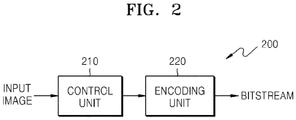
- FIG. 2 is a block diagram illustrating an apparatus 200 for encoding a multi-view image according to an exemplary embodiment.
- the apparatus 200 includes a control unit 210 and an encoding unit 220.
- control unit 210 determines whether pictures included in sequences of a multi-view image (which will hereinafter be referred to as multi-view image sequences) are reference pictures that are referred to by other pictures included in the multi-view image sequences for inter-view prediction.
- the multi-view image sequences are predictive-encoded using temporal correlation between temporally adjacent pictures and spatial correlation between pictures from adjacent views. Some of the multi-view image sequences may have high temporal correlation and low spatial correlation. In this case, inter-view prediction using spatial correlation for all the non-anchor pictures as illustrated in FIG. 1 only increases the time required for multi-view image encoding, without contributing to an improvement in compression rate.
- the apparatus 200 for encoding the multi-view image performs predictive-encoding by performing inter-view prediction only on some non-anchor pictures instead of on all non-anchor pictures.
- the control unit 210 determines whether each picture included in the multi-view image sequences serves as a reference picture used for inter-view prediction. In other words, the control unit 310 determines whether each picture is referred to by other pictures to be predictive-encoded by inter-view prediction.
- control unit 210 selects pictures to be encoded using inter-view prediction and temporal prediction from the multi-view image sequences based on temporal levels.
- the control unit 210 selects which picture is to be encoded using inter-view prediction, instead of determining whether each picture is referred to by other pictures for inter-view prediction.
- all non-anchor pictures are predictive-encoded using inter-view prediction and temporal prediction.
- pictures to be encoded using inter-view prediction and temporal prediction are selected from the multi-view image sequences based on temporal levels.
- a temporal level is a parameter for providing temporal scalability by dividing an image sequence into a plurality of levels in order to allow only some of the levels to be selected and decoded during image decoding, as will be described in detail with reference to FIG. 3 .
- FIG. 3 illustrates temporal levels of multi-view image sequences according to an exemplary embodiment.
- temporal levels of anchor pictures 310 and 312 in the multi-view image sequences are '0'.
- Temporal levels of pictures 314 interposed between the anchor pictures 310 and the anchor pictures 312 are '1'.
- Temporal levels of pictures 316 and 318 interposed between pictures in a temporal level of '0' and pictures in a temporal level of '1' are '2'.
- Temporal levels of the remaining pictures of the multi-view image sequences are '3'.
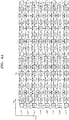
- FIG. 4A illustrates multi-view image sequences according to an exemplary embodiment.
- the multi-view image sequences illustrated in FIG. 4A are generated by the determination of the control unit 210 as to whether each picture included in the multi-view image sequences is referred to for inter-view prediction or by the selection of the control unit 210 regarding pictures to be encoded using inter-view prediction and temporal prediction.
- the multi-view image sequences illustrated in FIG. 4A are different from those according to the related art illustrated in FIG. 1 .
- a picture 144 in the second row and second column refers to a picture 145 in the first row and second column and a picture 146 in the third row and second column for inter-view prediction.
- the picture 145 in the first row and second column and the picture 146 in the third row and second column are reference pictures for inter-view prediction of the picture 144.
- a picture 420 in the second row and second column does not refer to a picture 422 in the first row and second column and a picture in the third row and second column for inter-view prediction. Instead, the picture 420 refers to only a picture 426 in the second row and third column and a picture 428 in the second row and first column for temporal prediction.
- FIG. 4B illustrates multi-view image sequences and temporal levels according to an exemplary embodiment.
- pictures to be referred to for inter-view prediction are determined based on temporal levels.
- non-anchor pictures in a temporal level of '3' are determined not to be encoded using inter-view prediction. In other words, only pictures in temporal levels that are less than a predetermined value are selected to be encoded using inter-view prediction and temporal prediction from among non-anchor pictures.
- the temporal levels that serve as a criterion for the determination or selection of the control unit 210 vary according to the characteristics of the multi-view image sequences, without being limited to those illustrated in FIG. 4B .
- the temporal levels that serve as a criterion for the determination or selection of the control unit 210 vary according to the characteristics of the multi-view image sequences, without being limited to those illustrated in FIG. 4B .
- only pictures in temporal levels of 1 or less may be predicted using inter-view prediction, and in an extreme case, non-anchor pictures may be predicted without using inter-view prediction.
- the encoding unit 220 encodes the multi-view image sequences based on the determination or selection result of the control unit 210.
- the encoding unit 220 predictive-encodes the multi-view image sequences using at least one of inter-view prediction and temporal prediction based on the determination or selection result of the control unit 210.
- the encoding unit 220 predicts each picture included in the multi-view image sequences and subtracts a prediction value of each picture from the original picture, thereby generating residual data of the multi-view image sequences.
- the encoding unit 220 stores reference pictures in a predetermined memory and performs inter-view prediction or temporal prediction by referring to the stored reference pictures.
- the encoding unit 220 stores reference pictures in a predetermined memory and performs inter-view prediction or temporal prediction by referring to the stored reference pictures.
- all pictures for inter-view prediction and temporal prediction should be stored in the memory.
- pictures 422 and 424 located above and below the picture 420 at adjacent views to that of the picture 420 are not reference pictures for inter-view prediction and thus are not required to be stored in the memory, thereby allowing efficient use of the memory.
- the pictures that are determined by the control unit 210 not to be referred to for inter-view prediction are not referred to for inter-view prediction, thereby speeding up prediction.
- the encoding unit 220 predictive-encodes the multi-view image sequences, it also encodes a parameter indicating the determination result of the control unit 210 as to whether each picture is a reference picture used for inter-view prediction, and inserts the encoded parameter into a bitstream. Once the control unit 210 determines whether each picture is referred to for inter-view prediction, the encoding unit 220 encodes information about the determination result of the control unit 210.
- FIG. 5 illustrates syntax of a network abstraction layer (NAL) unit header according to an exemplary embodiment.
- NAL network abstraction layer
- An NAL unit is the unit of packetization of image data. Since one NAL unit generally includes data about a single picture, information about whether each picture is referred to by other pictures for inter-view prediction is included in an NAL unit header in order to be encoded.
- a syntax element 'nal_ref_idc_view' is added to an NAL unit header according to the related art, thereby indicating whether each picture is referred to by other pictures for inter-view prediction.
- the encoding unit 220 when the encoding unit 220 performs encoding, it also encodes information about reference pictures referred to by each picture for inter-view prediction and temporal prediction.
- a syntax element 'RefPicList' indicates such information. Since the control unit 210 determines whether each picture serves as a reference picture used for inter-view prediction, pictures that do not serve as reference pictures for inter-view prediction are not referred to by other pictures when the encoding unit 220 encodes the multi-view image sequences.
- the encoding unit 220 when it encodes information about reference pictures for each picture, it can generate 'RefPicList' excluding pictures that are determined by the control unit 210 not to be referred to for inter-view prediction.
- the pictures 422 and 424 located above and below the picture 420 at adjacent views to that of the picture 420 are reference pictures and information regarding the pictures 422 and 424 is included in 'RefPicList'.
- information about the pictures 422 and 424 determined by the control unit 210 not to be reference pictures for the picture 420 is not included in 'RefPicList'.
- the encoding unit 220 also encodes information about pictures selected by the control unit 210 to be encoded using inter-view prediction and temporal prediction and inserts the encoded information into a bitstream, as will be described in detail with reference to FIGS. 6A and 6B .
- FIG. 6A illustrates syntax of a sequence parameter set according to an exemplary embodiment.
- the encoding unit 220 may include information for specifying pictures selected by the control unit 210 in a sequence parameter set and encode the sequence parameter set.
- the sequence parameter set includes a syntax element and a syntax element 'use_interview_pred_temporal_level[i]'.
- 'temporal_level_max' is information indicating the number of different temporal levels of multi-view image sequences encoded by the apparatus 200 for encoding a multi-view image.
- the multi-view image sequences illustrated in FIG. 3B have temporal levels from '0' to '3', and thus temporal_level_max' is '3'.
- 'use_interview_pred_temporal_level[i]' is information for specifying pictures to be predictive-encoded using inter-view prediction and temporal prediction.
- inter-view prediction is performed on only pictures in a temporal level of '1' or '2' as in FIG. 4B
- 'use_interview_pred_temporal_level[1]' is '1'
- 'use_interview_pred_temporal_level[2]' is '1'.
- 'use_interview_pred_temporal_level[3]' may be set to '0'.
- the values '0' and '1' are flag information indicating whether pictures in a corresponding temporal level are predicted using inter-view prediction.
- Pictures in a temporal level of '0' are anchor pictures. Since the anchor pictures are predictive-encoded using only inter-view prediction, 'use_interview_pred_temporal_level[0]' is not separately set.
- FIG. 6B illustrates syntax of a sequence parameter set according to another exemplary embodiment.
- control unit 210 selects pictures to be predictive-encoded using inter-view prediction and temporal prediction based on temporal levels.
- pictures in a particular temporal level are not temporally predicted.
- those pictures may also be selected based on views as well as temporal levels.
- pictures in a temporal level of '1' or '2' from among pictures in a multi-view image sequence from a view 1 are inter-view predicted and temporally predicted
- pictures in a temporal level of 1 from among pictures in a multi-view image sequence from a view 3 are inter-view predicted and temporally predicted.
- pictures to be inter-view predicted and temporally predicted are selected separately for each view.
- a syntax element for specifying selected pictures for each view is required.
- the sequence parameter set includes syntax elements temporal_level_max' and 'use_interview_pred_temporal_level[i][j]'.
- 'temporal_level_max' is the same as 'temporal_level_max' illustrated in FIG. 6A , but 'use_interview_pred_temporal_level[i][j]' is different from 'use_interview_pred_temporal_level[i]' illustrated in FIG. 6A .
- 'i' indicates a view
- 'j' indicates a temporal level.
- pictures in a temporal level of '1' or '2' from among pictures in a multi-view image sequence from a view 1 are inter-view predicted and temporally predicted
- pictures in a temporal level of '1' from among pictures in a multi-view image sequence from a view 3 are inter-view predicted and temporally predicted.
- 'use_interview_pred_temporal_level[1][1]' is '1'
- 'use_interview_pred_temporal_level[1][2]' is '1'
- 'use_interview_pred_temporal_level[1][3]' is '0'
- 'use_interview_pred_temporal_level[3][1]' is '1'
- 'use_interview_pred_temporal_level[3][2]' is '0'
- 'use_interview_pred_temporal_level[3][3]' is '0'.
- the values '0' and '1' are flag information indicating whether pictures in a corresponding temporal level in a multi-view image sequence from a corresponding view are predicted using inter-view prediction as in FIG. 6A .
- FIG. 6C illustrates a supplemental enhancement information (SEI) message according to an exemplary embodiment.
- SEI Supplemental Enhancement Information
- the encoding unit 220 may include information for specifying pictures selected by the control unit 210 in the SEI message and encode the SEI message.
- the SEI message is additional information required to decode a video coding layer and may include timing information for each picture, information about pan/scan functions, and information required for random access.
- the SEI message may also include information separately defined by a user.
- the SEI message according to the exemplary embodiment of includes information for specifying pictures selected by the control unit 210 for inter-view prediction.
- temporal_level_max' and 'use_interview_prediction_temporal_level[i]' are the same as those in FIG. 6A .
- FIG. 6D illustrates an SEI message according to another exemplary embodiment.
- 'temporal_level_max' and 'use_interview_prediction_temporal_level[i][j]' are the same as those in FIG. 6B .
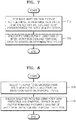
- FIG. 7 is a flowchart illustrating a method of encoding a multi-view image according to an exemplary embodiment.
- the apparatus 200 for encoding a multi-view image illustrated in FIG. 2 determines whether each picture included in multi-view image sequences is a reference picture used for inter-view prediction. In other words, it is determined whether each picture is referred to by other pictures included in the multi-view image sequences for inter-view prediction.
- the apparatus 200 encodes pictures in the multi-view image sequences using at least one of inter-view prediction and temporal prediction based on the determination of operation 710.
- Each of the pictures in the multi-view image sequences are predicted using at least one of inter-view prediction and temporal prediction and a prediction value of each of the pictures is subtracted from the original picture, thereby generating residual data of the multi-view image sequences.
- Inter-view prediction is performed without referring to pictures determined, in operation 710, not to be reference pictures used for inter-view prediction, thereby speeding up prediction and allowing efficient memory use.
- information about pictures determined, in operation 710, to be reference pictures used for inter-view prediction is also encoded and inserted into a bitstream. More specifically, information indicating whether each picture is a reference picture used for inter-view prediction is inserted into a parameter for each picture.
- the information may be included in an NAL unit header in order to be encoded, as mentioned above.
- FIG. 8 is a flowchart illustrating a method of encoding a multi-view image according to another exemplary embodiment.
- the apparatus 200 for encoding a multi-view image illustrated in FIG. 2 selects pictures to be encoded using inter-view prediction and temporal prediction based on temporal levels in operation 810.
- the apparatus 200 may also select the pictures to be encoded using inter-view prediction and temporal prediction for each view of the multi-view image sequences. More specifically, non-anchor pictures in a temporal level less than a predetermined value are selected as the pictures to be encoded using inter-view prediction and temporal prediction.
- the apparatus 200 encodes multi-view image sequences based on the selection result of operation 810. More specifically, the pictures selected in operation 810 are predictive-encoded using inter-view prediction and temporal prediction, and the remaining pictures in the multi-view image sequences are predictive-encoded using one of inter-view prediction and temporal prediction. While all non-anchor pictures in the multi-view image sequences are predictive-encoded using inter-view prediction and temporal prediction according to the related art, only some of the non-anchor pictures are predictive-encoded using inter-view prediction and temporal prediction according to the exemplary embodiment of the present invention, thereby speeding up multi-view image encoding.
- information about the pictures selected for inter-view prediction in operation 810 is also encoded and inserted into a bitstream.
- the information may be encoded in the form of a sequence parameter or an SEI message and inserted into a bitstream.
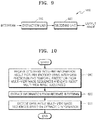
- FIG. 9 is a block diagram illustrating an apparatus 900 for decoding a multi-view image according to an exemplary embodiment.
- the apparatus 900 includes an extraction unit 910 and a decoding unit 920.
- the extraction unit 910 receives a bitstream including data about multi-view image sequences encoded by the method of encoding a multi-view image
- the data about the multi-view image sequences is residual data of the multi-view image sequences
- the bitstream includes information about whether each picture in the multi-view image sequences is a reference picture used for inter-view prediction or information about whether each picture has been encoded inter-view prediction and temporal prediction.
- the extraction unit 910 Upon receipt of the bitstream, the extraction unit 910 extracts information from the received bitstream. More specifically, the extraction unit 910 extracts a parameter indicating each picture is a reference picture used for inter-view prediction or a parameter indicating each picture has been encoded using inter-view prediction and temporal prediction. Preferably, but not necessarily, the extraction unit 910 extracts information included in an NAL unit header, a sequence parameter, or an SEI message.
- the decoding unit 920 decodes data about the multi-view image sequences based on the information extracted by the extraction unit 910.
- the data about the multi-view image sequences included in the bitstream is the residual data of the multi-view image sequences.
- the decoding unit 920 predicts each picture in the multi-view image sequences using at least one of inter-view prediction and temporal prediction based on the information extracted by the extraction unit 910, and adds the prediction result to the residual data of the multi-view image sequences, thereby reconstructing the multi-view image sequences.
- the decoding unit 920 stores reference pictures in a predetermined memory and performs prediction.
- the apparatus 900 does not store pictures that are not reference pictures used for inter-view prediction in the memory based on the information extracted by the extraction unit 910.
- the number of reference pictures to be stored in the memory is reduced during prediction, thereby allowing the efficient use of the memory.
- all non-anchor pictures are not inter-view predicted, thereby improving prediction speed.
- fast random access is possible. For example, when the picture 420 in the second row and second column in FIG. 4A is randomly accessed, it is not necessary to decode the pictures 422 and 424 located above and below the picture 420 at adjacent views to that of the picture 420 because they have already been determined not to be reference pictures used for inter-view prediction. Thus, fast prediction and random access are possible.
- FIG. 10 is a flowchart illustrating a method of decoding a multi-view image according to an exemplary embodiment
- the apparatus 900 for decoding a multi-view image in FIG. 9 receives a bitstream including data about multi-view image sequences in operation 1010.
- the data about the multi-view image sequences is residual data of the multi-view image sequences.
- the apparatus 900 extracts information indicating whether each picture included in the multi-view image sequences is a reference picture used for inter-view prediction or information indicating whether each picture has been encoded using inter-view prediction and temporal prediction from the received bitstream.
- the data about the multi-view image sequences i.e., the residual data, is also extracted.
- information included in an NAL unit header, a sequence parameter, or an SEI message may be extracted.
- the apparatus 900 decodes the multi-view image sequences based on the information extracted in operation 1020. More specifically, the multi-view image sequences are predicted using at least one of inter-view prediction and temporal prediction based on the extracted information and the residual data extracted in operation 1020 is added to the prediction result, thereby reconstructing the multi-view image sequences.
- inter-view prediction In prediction, pictures determined not to be reference pictures used for inter-view prediction based on extracted information are not referred to for inter-view prediction. Since inter-view prediction can be efficiently performed at high speed, the speed of multi-view image decoding also increases.
- the exemplary embodiments can be written as computer programs and can be implemented in general-use digital computers that execute the programs using a computer readable recording medium or other transmission media.
- the computer readable recording medium include magnetic storage media (e.g., ROM, floppy disks, hard disks, etc.), and optical recording media (e.g., CD-ROMs, or DVDs).
- the other transmission media that can include carrier waves (e.g., transmission through the Internet).
- the computer readable recording medium can also be distributed over network coupled computer systems so that the computer readable code is stored and executed in a distributed fashion.
Landscapes
- Engineering & Computer Science (AREA)
- Multimedia (AREA)
- Signal Processing (AREA)
- Compression Or Coding Systems Of Tv Signals (AREA)
- Testing, Inspecting, Measuring Of Stereoscopic Televisions And Televisions (AREA)
Claims (1)
- Verfahren zum Codieren eines Mehrfachansichtsbildes, wobei das Verfahren Folgendes umfasst:Erhalten eines Bilds in einer Ansichtsbildsequenz, die durch Verwenden einer Interansichtsprädiktion aus einer Mehrfachansichtsbildsequenz zu codieren ist, wobei die Bildsequenzen der Mehrfachansichtsbildsequenzen jeweils eine Ansichtssequenz von Bildern, die zeitlich mit einer anderen Ansichtssequenz ausgerichtet sind, umfassen, wobei das erhaltene Bild ein Kein-Anker-Bild umfasst;Bestimmen, ob das erhaltene Bild in einer Ansichtsbildsequenz ein Referenzbild für eine Interansichtsprädiktion der anderen Bilder ist, das durch beliebige andere Bilder, die zeitlich mit dem erhaltenen Bild ausgerichtet sind, in einer anderen Ansichtsbildsequenz unter den Bildsequenzen der Mehrfachansichtsbildsequenzen referenziert wird (710);Codieren des erhaltenen Bilds mit bestimmten Informationen, die angeben, ob das erhaltene Bild entweder ein referenziertes Bild oder ein nicht referenziertes Bild für eine Interansichtsprädiktion der anderen Bilder, die zeitlich mit dem erhaltenen Bild ausgerichtet sind, in einer anderen Ansichtsbildsequenz ist (720), wobei die Informationen in einem NAL-Einheit-Header (NAL: Network Abstraction Layer - Netzabstraktionsschicht) enthalten sind;falls bestimmt wird, dass das erhaltene Bild ein Referenzbild ist, das zur Interansichtsprädiktion der anderen Bilder referenziert wird, Codieren der anderen Bilder, indem sie eine Interansichtsprädiktion mit dem erhaltenen Bild als ein Referenzbild verwendet, und Aufnehmen des erhaltenen Bilds in eine Referenzbildliste der anderen Bilder; undfalls bestimmt wird, dass das erhaltene Bild kein Referenzbild ist, das zur Interansichtsprädiktion der anderen Bilder referenziert wird, Codieren der anderen Bilder unter Verwendung einer Interansichtsprädiktion, ohne das erhaltene Bild zu referenzieren, und Nichtaufnehmen des erhaltenen Bilds in die Referenzbildliste der anderen Bilder.
Applications Claiming Priority (5)
| Application Number | Priority Date | Filing Date | Title |
|---|---|---|---|
| US90761407P | 2007-04-11 | 2007-04-11 | |
| US90775307P | 2007-04-16 | 2007-04-16 | |
| KR1020070065664A KR101301181B1 (ko) | 2007-04-11 | 2007-06-29 | 다시점 영상의 부호화, 복호화 방법 및 장치 |
| KR1020070068186A KR100996850B1 (ko) | 2007-04-11 | 2007-07-06 | 다시점 영상의 부호화, 복호화 방법 및 장치 |
| EP08723299.7A EP2135459B1 (de) | 2007-04-11 | 2008-03-06 | Verfahren und vorrichtung zum codieren und decodieren eines mehrfachansichtbildes |
Related Parent Applications (3)
| Application Number | Title | Priority Date | Filing Date |
|---|---|---|---|
| EP08723299.7A Division-Into EP2135459B1 (de) | 2007-04-11 | 2008-03-06 | Verfahren und vorrichtung zum codieren und decodieren eines mehrfachansichtbildes |
| EP08723299.7A Division EP2135459B1 (de) | 2007-04-11 | 2008-03-06 | Verfahren und vorrichtung zum codieren und decodieren eines mehrfachansichtbildes |
| EP08723299.7 Division | 2008-03-06 |
Publications (2)
| Publication Number | Publication Date |
|---|---|
| EP2464123A1 EP2464123A1 (de) | 2012-06-13 |
| EP2464123B1 true EP2464123B1 (de) | 2018-02-21 |
Family
ID=40152508
Family Applications (5)
| Application Number | Title | Priority Date | Filing Date |
|---|---|---|---|
| EP12153705.4A Not-in-force EP2464120B1 (de) | 2007-04-11 | 2008-03-06 | Verfahren und Vorrichtung zur Kodierung und Dekodierung von Mehrfachansichtsbildern |
| EP12153707.0A Not-in-force EP2464122B1 (de) | 2007-04-11 | 2008-03-06 | Verfahren und Vorrichtung zur Kodierung und Dekodierung von Mehrfachansichtsbildern |
| EP12153708.8A Not-in-force EP2464123B1 (de) | 2007-04-11 | 2008-03-06 | Verfahren und Vorrichtung zur Kodierung und Dekodierung von Mehrfachansichtsbildern |
| EP12153706.2A Not-in-force EP2464121B1 (de) | 2007-04-11 | 2008-03-06 | Verfahren und Vorrichtung zur Kodierung und Dekodierung von Mehrfachansichtsbildern |
| EP12153703.9A Not-in-force EP2464119B1 (de) | 2007-04-11 | 2008-03-06 | Verfahren und Vorrichtung zur Kodierung und Dekodierung von Mehrfachansichtsbildern |
Family Applications Before (2)
| Application Number | Title | Priority Date | Filing Date |
|---|---|---|---|
| EP12153705.4A Not-in-force EP2464120B1 (de) | 2007-04-11 | 2008-03-06 | Verfahren und Vorrichtung zur Kodierung und Dekodierung von Mehrfachansichtsbildern |
| EP12153707.0A Not-in-force EP2464122B1 (de) | 2007-04-11 | 2008-03-06 | Verfahren und Vorrichtung zur Kodierung und Dekodierung von Mehrfachansichtsbildern |
Family Applications After (2)
| Application Number | Title | Priority Date | Filing Date |
|---|---|---|---|
| EP12153706.2A Not-in-force EP2464121B1 (de) | 2007-04-11 | 2008-03-06 | Verfahren und Vorrichtung zur Kodierung und Dekodierung von Mehrfachansichtsbildern |
| EP12153703.9A Not-in-force EP2464119B1 (de) | 2007-04-11 | 2008-03-06 | Verfahren und Vorrichtung zur Kodierung und Dekodierung von Mehrfachansichtsbildern |
Country Status (6)
| Country | Link |
|---|---|
| EP (5) | EP2464120B1 (de) |
| JP (7) | JP2010524381A (de) |
| KR (6) | KR101301181B1 (de) |
| CN (6) | CN101682779B (de) |
| MX (1) | MX2009010933A (de) |
| SG (6) | SG179462A1 (de) |
Families Citing this family (18)
| Publication number | Priority date | Publication date | Assignee | Title |
|---|---|---|---|---|
| KR101301181B1 (ko) * | 2007-04-11 | 2013-08-29 | 삼성전자주식회사 | 다시점 영상의 부호화, 복호화 방법 및 장치 |
| KR101158491B1 (ko) | 2008-12-08 | 2012-06-20 | 한국전자통신연구원 | 다시점 영상 부호화, 복호화 방법 및 그 장치. |
| CN102577375B (zh) * | 2009-05-01 | 2016-08-17 | 汤姆森特许公司 | 用于三维视频的层间依赖性信息 |
| US8780999B2 (en) | 2009-06-12 | 2014-07-15 | Qualcomm Incorporated | Assembling multiview video coding sub-BITSTREAMS in MPEG-2 systems |
| US8411746B2 (en) * | 2009-06-12 | 2013-04-02 | Qualcomm Incorporated | Multiview video coding over MPEG-2 systems |
| EP2617194A1 (de) | 2010-09-14 | 2013-07-24 | Thomson Licensing | Verfahren und vorrichtung zur komprimierung von okklusionsdaten |
| US10027957B2 (en) | 2011-01-12 | 2018-07-17 | Sun Patent Trust | Methods and apparatuses for encoding and decoding video using multiple reference pictures |
| RU2480941C2 (ru) | 2011-01-20 | 2013-04-27 | Корпорация "Самсунг Электроникс Ко., Лтд" | Способ адаптивного предсказания кадра для кодирования многоракурсной видеопоследовательности |
| US10841573B2 (en) | 2011-02-08 | 2020-11-17 | Sun Patent Trust | Methods and apparatuses for encoding and decoding video using multiple reference pictures |
| US9105076B2 (en) | 2011-03-08 | 2015-08-11 | Sony Corporation | Image processing apparatus, image processing method, and program |
| US10165267B2 (en) | 2011-08-30 | 2018-12-25 | Intel Corporation | Multiview video coding schemes |
| WO2013109112A1 (ko) * | 2012-01-19 | 2013-07-25 | 삼성전자 주식회사 | 시점 변환을 위한 다시점 비디오 예측 방법 및 그 장치, 시점 변환을 위한 다시점 비디오 예측 복원 방법 및 그 장치 |
| US9961323B2 (en) * | 2012-01-30 | 2018-05-01 | Samsung Electronics Co., Ltd. | Method and apparatus for multiview video encoding based on prediction structures for viewpoint switching, and method and apparatus for multiview video decoding based on prediction structures for viewpoint switching |
| JP5743968B2 (ja) * | 2012-07-02 | 2015-07-01 | 株式会社東芝 | 動画像復号方法及び動画像符号化方法 |
| US20150331160A1 (en) * | 2012-12-04 | 2015-11-19 | Sectago Gmbh | Security device |
| WO2014092445A2 (ko) * | 2012-12-11 | 2014-06-19 | 엘지전자 주식회사 | 영상 복호화 방법 및 이를 이용하는 장치 |
| BR112015017059A2 (pt) * | 2013-01-17 | 2018-09-25 | Samsung Electronics Co., Ltd. | método decodificador de vídeo, método codificador de vídeo, aparelho decodificador de vídeo, aparelho codificador de vídeo, e mídia de gravação legível por computador. |
| FR3042368A1 (fr) * | 2015-10-08 | 2017-04-14 | Orange | Procede de codage et de decodage multi-vues, dispositif de codage et de decodage multi-vues et programmes d'ordinateur correspondants |
Family Cites Families (14)
| Publication number | Priority date | Publication date | Assignee | Title |
|---|---|---|---|---|
| CN102263962A (zh) * | 2004-12-10 | 2011-11-30 | 韩国电子通信研究院 | 对多视图视频进行统一编码的装置 |
| US7728878B2 (en) * | 2004-12-17 | 2010-06-01 | Mitsubishi Electric Research Labortories, Inc. | Method and system for processing multiview videos for view synthesis using side information |
| KR100779875B1 (ko) * | 2005-01-14 | 2007-11-27 | 주식회사 휴맥스 | 다-시점 코딩을 위한 참조 프레임 순서 설정 방법 및 그방법을 기록한 기록매체 |
| KR100732961B1 (ko) * | 2005-04-01 | 2007-06-27 | 경희대학교 산학협력단 | 다시점 영상의 스케일러블 부호화, 복호화 방법 및 장치 |
| US8228994B2 (en) * | 2005-05-20 | 2012-07-24 | Microsoft Corporation | Multi-view video coding based on temporal and view decomposition |
| KR100728009B1 (ko) | 2005-08-22 | 2007-06-13 | 삼성전자주식회사 | 다시점 동영상을 부호화하는 방법 및 장치 |
| US8559515B2 (en) * | 2005-09-21 | 2013-10-15 | Samsung Electronics Co., Ltd. | Apparatus and method for encoding and decoding multi-view video |
| KR101174901B1 (ko) * | 2005-11-28 | 2012-08-17 | 세종대학교산학협력단 | 다시점 영상에서 적응적 움직임 벡터 예측 장치 및 방법 |
| US7903737B2 (en) * | 2005-11-30 | 2011-03-08 | Mitsubishi Electric Research Laboratories, Inc. | Method and system for randomly accessing multiview videos with known prediction dependency |
| KR100959538B1 (ko) * | 2006-03-30 | 2010-05-27 | 엘지전자 주식회사 | 비디오 신호를 디코딩/인코딩하기 위한 방법 및 장치 |
| KR20070098429A (ko) * | 2006-03-30 | 2007-10-05 | 엘지전자 주식회사 | 비디오 신호의 디코딩 방법 |
| KR20080007086A (ko) * | 2006-07-14 | 2008-01-17 | 엘지전자 주식회사 | 비디오 신호의 디코딩/인코딩 방법 및 장치 |
| KR101301181B1 (ko) * | 2007-04-11 | 2013-08-29 | 삼성전자주식회사 | 다시점 영상의 부호화, 복호화 방법 및 장치 |
| JP5660904B2 (ja) * | 2011-01-19 | 2015-01-28 | 株式会社平和 | 遊技機の基板ユニット |
-
2007
- 2007-06-29 KR KR1020070065664A patent/KR101301181B1/ko not_active Expired - Fee Related
- 2007-07-06 KR KR1020070068186A patent/KR100996850B1/ko active Active
-
2008
- 2008-03-06 EP EP12153705.4A patent/EP2464120B1/de not_active Not-in-force
- 2008-03-06 SG SG2012017067A patent/SG179462A1/en unknown
- 2008-03-06 JP JP2010502926A patent/JP2010524381A/ja active Pending
- 2008-03-06 CN CN200880019798.7A patent/CN101682779B/zh not_active Expired - Fee Related
- 2008-03-06 EP EP12153707.0A patent/EP2464122B1/de not_active Not-in-force
- 2008-03-06 MX MX2009010933A patent/MX2009010933A/es active IP Right Grant
- 2008-03-06 CN CN201210389088.1A patent/CN102984514B/zh not_active Expired - Fee Related
- 2008-03-06 SG SG2012017109A patent/SG179465A1/en unknown
- 2008-03-06 CN CN201210390787.8A patent/CN102892003B/zh not_active Expired - Fee Related
- 2008-03-06 CN CN201210390786.3A patent/CN102892002B/zh not_active Expired - Fee Related
- 2008-03-06 CN CN201210389751.8A patent/CN102984516B/zh not_active Expired - Fee Related
- 2008-03-06 SG SG2012017125A patent/SG179467A1/en unknown
- 2008-03-06 EP EP12153708.8A patent/EP2464123B1/de not_active Not-in-force
- 2008-03-06 EP EP12153706.2A patent/EP2464121B1/de not_active Not-in-force
- 2008-03-06 EP EP12153703.9A patent/EP2464119B1/de not_active Not-in-force
- 2008-03-06 SG SG2012017059A patent/SG179461A1/en unknown
- 2008-03-06 SG SG2012017091A patent/SG179464A1/en unknown
- 2008-03-06 CN CN201210389146.0A patent/CN102984515B/zh not_active Expired - Fee Related
- 2008-03-06 SG SG2012017117A patent/SG179466A1/en unknown
-
2010
- 2010-08-12 KR KR1020100077821A patent/KR101144874B1/ko active Active
- 2010-10-21 KR KR1020100103140A patent/KR101266169B1/ko active Active
- 2010-10-21 KR KR1020100103141A patent/KR101217635B1/ko active Active
-
2012
- 2012-01-11 KR KR1020120003241A patent/KR101266170B1/ko not_active Expired - Fee Related
- 2012-03-14 JP JP2012057574A patent/JP2012147471A/ja active Pending
- 2012-03-14 JP JP2012057571A patent/JP5647161B2/ja not_active Expired - Fee Related
- 2012-03-14 JP JP2012057572A patent/JP2012165403A/ja active Pending
- 2012-03-14 JP JP2012057575A patent/JP5667110B2/ja not_active Expired - Fee Related
- 2012-03-14 JP JP2012057576A patent/JP2012124961A/ja active Pending
- 2012-03-14 JP JP2012057573A patent/JP2012124959A/ja active Pending
Non-Patent Citations (1)
| Title |
|---|
| None * |
Also Published As
Similar Documents
| Publication | Publication Date | Title |
|---|---|---|
| EP2464118B1 (de) | Verfahren und Vorrichtung zur Kodierung und Dekodierung von Mehrfachansichtsbildern | |
| EP2464119B1 (de) | Verfahren und Vorrichtung zur Kodierung und Dekodierung von Mehrfachansichtsbildern |
Legal Events
| Date | Code | Title | Description |
|---|---|---|---|
| PUAI | Public reference made under article 153(3) epc to a published international application that has entered the european phase |
Free format text: ORIGINAL CODE: 0009012 |
|
| AC | Divisional application: reference to earlier application |
Ref document number: 2135459 Country of ref document: EP Kind code of ref document: P |
|
| AK | Designated contracting states |
Kind code of ref document: A1 Designated state(s): AT BE BG CH CY CZ DE DK EE ES FI FR GB GR HR HU IE IS IT LI LT LU LV MC MT NL NO PL PT RO SE SI SK TR |
|
| RAP1 | Party data changed (applicant data changed or rights of an application transferred) |
Owner name: SAMSUNG ELECTRONICS CO., LTD. |
|
| 17P | Request for examination filed |
Effective date: 20121213 |
|
| 17Q | First examination report despatched |
Effective date: 20160412 |
|
| STAA | Information on the status of an ep patent application or granted ep patent |
Free format text: STATUS: EXAMINATION IS IN PROGRESS |
|
| REG | Reference to a national code |
Ref country code: DE Ref legal event code: R079 Ref document number: 602008054164 Country of ref document: DE Free format text: PREVIOUS MAIN CLASS: H04N0007320000 Ipc: H04N0019500000 |
|
| RIC1 | Information provided on ipc code assigned before grant |
Ipc: H04N 19/46 20140101ALI20170627BHEP Ipc: H04N 19/50 20140101AFI20170627BHEP |
|
| GRAP | Despatch of communication of intention to grant a patent |
Free format text: ORIGINAL CODE: EPIDOSNIGR1 |
|
| STAA | Information on the status of an ep patent application or granted ep patent |
Free format text: STATUS: GRANT OF PATENT IS INTENDED |
|
| INTG | Intention to grant announced |
Effective date: 20170915 |
|
| GRAS | Grant fee paid |
Free format text: ORIGINAL CODE: EPIDOSNIGR3 |
|
| GRAA | (expected) grant |
Free format text: ORIGINAL CODE: 0009210 |
|
| STAA | Information on the status of an ep patent application or granted ep patent |
Free format text: STATUS: THE PATENT HAS BEEN GRANTED |
|
| AC | Divisional application: reference to earlier application |
Ref document number: 2135459 Country of ref document: EP Kind code of ref document: P |
|
| AK | Designated contracting states |
Kind code of ref document: B1 Designated state(s): AT BE BG CH CY CZ DE DK EE ES FI FR GB GR HR HU IE IS IT LI LT LU LV MC MT NL NO PL PT RO SE SI SK TR |
|
| REG | Reference to a national code |
Ref country code: GB Ref legal event code: FG4D |
|
| REG | Reference to a national code |
Ref country code: CH Ref legal event code: EP |
|
| REG | Reference to a national code |
Ref country code: AT Ref legal event code: REF Ref document number: 972950 Country of ref document: AT Kind code of ref document: T Effective date: 20180315 |
|
| REG | Reference to a national code |
Ref country code: IE Ref legal event code: FG4D |
|
| REG | Reference to a national code |
Ref country code: DE Ref legal event code: R096 Ref document number: 602008054164 Country of ref document: DE Ref country code: FR Ref legal event code: PLFP Year of fee payment: 11 |
|
| REG | Reference to a national code |
Ref country code: NL Ref legal event code: MP Effective date: 20180221 |
|
| REG | Reference to a national code |
Ref country code: LT Ref legal event code: MG4D |
|
| REG | Reference to a national code |
Ref country code: AT Ref legal event code: MK05 Ref document number: 972950 Country of ref document: AT Kind code of ref document: T Effective date: 20180221 |
|
| PG25 | Lapsed in a contracting state [announced via postgrant information from national office to epo] |
Ref country code: ES Free format text: LAPSE BECAUSE OF FAILURE TO SUBMIT A TRANSLATION OF THE DESCRIPTION OR TO PAY THE FEE WITHIN THE PRESCRIBED TIME-LIMIT Effective date: 20180221 Ref country code: NL Free format text: LAPSE BECAUSE OF FAILURE TO SUBMIT A TRANSLATION OF THE DESCRIPTION OR TO PAY THE FEE WITHIN THE PRESCRIBED TIME-LIMIT Effective date: 20180221 Ref country code: CY Free format text: LAPSE BECAUSE OF FAILURE TO SUBMIT A TRANSLATION OF THE DESCRIPTION OR TO PAY THE FEE WITHIN THE PRESCRIBED TIME-LIMIT Effective date: 20180221 Ref country code: FI Free format text: LAPSE BECAUSE OF FAILURE TO SUBMIT A TRANSLATION OF THE DESCRIPTION OR TO PAY THE FEE WITHIN THE PRESCRIBED TIME-LIMIT Effective date: 20180221 Ref country code: NO Free format text: LAPSE BECAUSE OF FAILURE TO SUBMIT A TRANSLATION OF THE DESCRIPTION OR TO PAY THE FEE WITHIN THE PRESCRIBED TIME-LIMIT Effective date: 20180521 Ref country code: LT Free format text: LAPSE BECAUSE OF FAILURE TO SUBMIT A TRANSLATION OF THE DESCRIPTION OR TO PAY THE FEE WITHIN THE PRESCRIBED TIME-LIMIT Effective date: 20180221 Ref country code: HR Free format text: LAPSE BECAUSE OF FAILURE TO SUBMIT A TRANSLATION OF THE DESCRIPTION OR TO PAY THE FEE WITHIN THE PRESCRIBED TIME-LIMIT Effective date: 20180221 |
|
| PG25 | Lapsed in a contracting state [announced via postgrant information from national office to epo] |
Ref country code: AT Free format text: LAPSE BECAUSE OF FAILURE TO SUBMIT A TRANSLATION OF THE DESCRIPTION OR TO PAY THE FEE WITHIN THE PRESCRIBED TIME-LIMIT Effective date: 20180221 Ref country code: BG Free format text: LAPSE BECAUSE OF FAILURE TO SUBMIT A TRANSLATION OF THE DESCRIPTION OR TO PAY THE FEE WITHIN THE PRESCRIBED TIME-LIMIT Effective date: 20180521 Ref country code: SE Free format text: LAPSE BECAUSE OF FAILURE TO SUBMIT A TRANSLATION OF THE DESCRIPTION OR TO PAY THE FEE WITHIN THE PRESCRIBED TIME-LIMIT Effective date: 20180221 Ref country code: LV Free format text: LAPSE BECAUSE OF FAILURE TO SUBMIT A TRANSLATION OF THE DESCRIPTION OR TO PAY THE FEE WITHIN THE PRESCRIBED TIME-LIMIT Effective date: 20180221 Ref country code: GR Free format text: LAPSE BECAUSE OF FAILURE TO SUBMIT A TRANSLATION OF THE DESCRIPTION OR TO PAY THE FEE WITHIN THE PRESCRIBED TIME-LIMIT Effective date: 20180522 |
|
| PG25 | Lapsed in a contracting state [announced via postgrant information from national office to epo] |
Ref country code: IT Free format text: LAPSE BECAUSE OF FAILURE TO SUBMIT A TRANSLATION OF THE DESCRIPTION OR TO PAY THE FEE WITHIN THE PRESCRIBED TIME-LIMIT Effective date: 20180221 Ref country code: RO Free format text: LAPSE BECAUSE OF FAILURE TO SUBMIT A TRANSLATION OF THE DESCRIPTION OR TO PAY THE FEE WITHIN THE PRESCRIBED TIME-LIMIT Effective date: 20180221 Ref country code: PL Free format text: LAPSE BECAUSE OF FAILURE TO SUBMIT A TRANSLATION OF THE DESCRIPTION OR TO PAY THE FEE WITHIN THE PRESCRIBED TIME-LIMIT Effective date: 20180221 Ref country code: EE Free format text: LAPSE BECAUSE OF FAILURE TO SUBMIT A TRANSLATION OF THE DESCRIPTION OR TO PAY THE FEE WITHIN THE PRESCRIBED TIME-LIMIT Effective date: 20180221 |
|
| REG | Reference to a national code |
Ref country code: CH Ref legal event code: PL |
|
| REG | Reference to a national code |
Ref country code: DE Ref legal event code: R097 Ref document number: 602008054164 Country of ref document: DE |
|
| PG25 | Lapsed in a contracting state [announced via postgrant information from national office to epo] |
Ref country code: DK Free format text: LAPSE BECAUSE OF FAILURE TO SUBMIT A TRANSLATION OF THE DESCRIPTION OR TO PAY THE FEE WITHIN THE PRESCRIBED TIME-LIMIT Effective date: 20180221 Ref country code: CZ Free format text: LAPSE BECAUSE OF FAILURE TO SUBMIT A TRANSLATION OF THE DESCRIPTION OR TO PAY THE FEE WITHIN THE PRESCRIBED TIME-LIMIT Effective date: 20180221 Ref country code: SK Free format text: LAPSE BECAUSE OF FAILURE TO SUBMIT A TRANSLATION OF THE DESCRIPTION OR TO PAY THE FEE WITHIN THE PRESCRIBED TIME-LIMIT Effective date: 20180221 Ref country code: MC Free format text: LAPSE BECAUSE OF FAILURE TO SUBMIT A TRANSLATION OF THE DESCRIPTION OR TO PAY THE FEE WITHIN THE PRESCRIBED TIME-LIMIT Effective date: 20180221 |
|
| REG | Reference to a national code |
Ref country code: BE Ref legal event code: MM Effective date: 20180331 |
|
| REG | Reference to a national code |
Ref country code: IE Ref legal event code: MM4A |
|
| PLBE | No opposition filed within time limit |
Free format text: ORIGINAL CODE: 0009261 |
|
| STAA | Information on the status of an ep patent application or granted ep patent |
Free format text: STATUS: NO OPPOSITION FILED WITHIN TIME LIMIT |
|
| PG25 | Lapsed in a contracting state [announced via postgrant information from national office to epo] |
Ref country code: LU Free format text: LAPSE BECAUSE OF NON-PAYMENT OF DUE FEES Effective date: 20180306 |
|
| 26N | No opposition filed |
Effective date: 20181122 |
|
| PG25 | Lapsed in a contracting state [announced via postgrant information from national office to epo] |
Ref country code: IE Free format text: LAPSE BECAUSE OF NON-PAYMENT OF DUE FEES Effective date: 20180306 |
|
| PG25 | Lapsed in a contracting state [announced via postgrant information from national office to epo] |
Ref country code: LI Free format text: LAPSE BECAUSE OF NON-PAYMENT OF DUE FEES Effective date: 20180331 Ref country code: CH Free format text: LAPSE BECAUSE OF NON-PAYMENT OF DUE FEES Effective date: 20180331 Ref country code: SI Free format text: LAPSE BECAUSE OF FAILURE TO SUBMIT A TRANSLATION OF THE DESCRIPTION OR TO PAY THE FEE WITHIN THE PRESCRIBED TIME-LIMIT Effective date: 20180221 Ref country code: BE Free format text: LAPSE BECAUSE OF NON-PAYMENT OF DUE FEES Effective date: 20180331 |
|
| PG25 | Lapsed in a contracting state [announced via postgrant information from national office to epo] |
Ref country code: MT Free format text: LAPSE BECAUSE OF NON-PAYMENT OF DUE FEES Effective date: 20180306 |
|
| PG25 | Lapsed in a contracting state [announced via postgrant information from national office to epo] |
Ref country code: TR Free format text: LAPSE BECAUSE OF FAILURE TO SUBMIT A TRANSLATION OF THE DESCRIPTION OR TO PAY THE FEE WITHIN THE PRESCRIBED TIME-LIMIT Effective date: 20180221 |
|
| PG25 | Lapsed in a contracting state [announced via postgrant information from national office to epo] |
Ref country code: PT Free format text: LAPSE BECAUSE OF FAILURE TO SUBMIT A TRANSLATION OF THE DESCRIPTION OR TO PAY THE FEE WITHIN THE PRESCRIBED TIME-LIMIT Effective date: 20180221 Ref country code: HU Free format text: LAPSE BECAUSE OF FAILURE TO SUBMIT A TRANSLATION OF THE DESCRIPTION OR TO PAY THE FEE WITHIN THE PRESCRIBED TIME-LIMIT; INVALID AB INITIO Effective date: 20080306 |
|
| PG25 | Lapsed in a contracting state [announced via postgrant information from national office to epo] |
Ref country code: IS Free format text: LAPSE BECAUSE OF FAILURE TO SUBMIT A TRANSLATION OF THE DESCRIPTION OR TO PAY THE FEE WITHIN THE PRESCRIBED TIME-LIMIT Effective date: 20180621 |
|
| PGFP | Annual fee paid to national office [announced via postgrant information from national office to epo] |
Ref country code: FR Payment date: 20230221 Year of fee payment: 16 |
|
| PGFP | Annual fee paid to national office [announced via postgrant information from national office to epo] |
Ref country code: GB Payment date: 20230220 Year of fee payment: 16 Ref country code: DE Payment date: 20230220 Year of fee payment: 16 |
|
| REG | Reference to a national code |
Ref country code: DE Ref legal event code: R119 Ref document number: 602008054164 Country of ref document: DE |
|
| GBPC | Gb: european patent ceased through non-payment of renewal fee |
Effective date: 20240306 |
|
| PG25 | Lapsed in a contracting state [announced via postgrant information from national office to epo] |
Ref country code: DE Free format text: LAPSE BECAUSE OF NON-PAYMENT OF DUE FEES Effective date: 20241001 |
|
| PG25 | Lapsed in a contracting state [announced via postgrant information from national office to epo] |
Ref country code: GB Free format text: LAPSE BECAUSE OF NON-PAYMENT OF DUE FEES Effective date: 20240306 |
|
| PG25 | Lapsed in a contracting state [announced via postgrant information from national office to epo] |
Ref country code: FR Free format text: LAPSE BECAUSE OF NON-PAYMENT OF DUE FEES Effective date: 20240331 |
|
| PG25 | Lapsed in a contracting state [announced via postgrant information from national office to epo] |
Ref country code: GB Free format text: LAPSE BECAUSE OF NON-PAYMENT OF DUE FEES Effective date: 20240306 Ref country code: FR Free format text: LAPSE BECAUSE OF NON-PAYMENT OF DUE FEES Effective date: 20240331 Ref country code: DE Free format text: LAPSE BECAUSE OF NON-PAYMENT OF DUE FEES Effective date: 20241001 |