EP2464703B1 - Verfahren zum raffinieren von rohem tallöl - Google Patents
Verfahren zum raffinieren von rohem tallöl Download PDFInfo
- Publication number
- EP2464703B1 EP2464703B1 EP10808022.7A EP10808022A EP2464703B1 EP 2464703 B1 EP2464703 B1 EP 2464703B1 EP 10808022 A EP10808022 A EP 10808022A EP 2464703 B1 EP2464703 B1 EP 2464703B1
- Authority
- EP
- European Patent Office
- Prior art keywords
- acid
- acids
- mixture
- esterification
- organic acids
- Prior art date
- Legal status (The legal status is an assumption and is not a legal conclusion. Google has not performed a legal analysis and makes no representation as to the accuracy of the status listed.)
- Active
Links
Images

Classifications
-
- C—CHEMISTRY; METALLURGY
- C07—ORGANIC CHEMISTRY
- C07C—ACYCLIC OR CARBOCYCLIC COMPOUNDS
- C07C67/00—Preparation of carboxylic acid esters
- C07C67/08—Preparation of carboxylic acid esters by reacting carboxylic acids or symmetrical anhydrides with the hydroxy or O-metal group of organic compounds
-
- C—CHEMISTRY; METALLURGY
- C10—PETROLEUM, GAS OR COKE INDUSTRIES; TECHNICAL GASES CONTAINING CARBON MONOXIDE; FUELS; LUBRICANTS; PEAT
- C10L—FUELS NOT OTHERWISE PROVIDED FOR; NATURAL GAS; SYNTHETIC NATURAL GAS OBTAINED BY PROCESSES NOT COVERED BY SUBCLASSES C10G OR C10K; LIQUIFIED PETROLEUM GAS; USE OF ADDITIVES TO FUELS OR FIRES; FIRE-LIGHTERS
- C10L1/00—Liquid carbonaceous fuels
- C10L1/02—Liquid carbonaceous fuels essentially based on components consisting of carbon, hydrogen, and oxygen only
- C10L1/026—Liquid carbonaceous fuels essentially based on components consisting of carbon, hydrogen, and oxygen only for compression ignition
-
- C—CHEMISTRY; METALLURGY
- C09—DYES; PAINTS; POLISHES; NATURAL RESINS; ADHESIVES; COMPOSITIONS NOT OTHERWISE PROVIDED FOR; APPLICATIONS OF MATERIALS NOT OTHERWISE PROVIDED FOR
- C09F—NATURAL RESINS; FRENCH POLISH; DRYING-OILS; OIL DRYING AGENTS, i.e. SICCATIVES; TURPENTINE
- C09F1/00—Obtaining purification, or chemical modification of natural resins, e.g. oleo-resins
- C09F1/04—Chemical modification, e.g. esterification
-
- C—CHEMISTRY; METALLURGY
- C10—PETROLEUM, GAS OR COKE INDUSTRIES; TECHNICAL GASES CONTAINING CARBON MONOXIDE; FUELS; LUBRICANTS; PEAT
- C10L—FUELS NOT OTHERWISE PROVIDED FOR; NATURAL GAS; SYNTHETIC NATURAL GAS OBTAINED BY PROCESSES NOT COVERED BY SUBCLASSES C10G OR C10K; LIQUIFIED PETROLEUM GAS; USE OF ADDITIVES TO FUELS OR FIRES; FIRE-LIGHTERS
- C10L1/00—Liquid carbonaceous fuels
- C10L1/10—Liquid carbonaceous fuels containing additives
- C10L1/14—Organic compounds
- C10L1/18—Organic compounds containing oxygen
- C10L1/19—Esters ester radical containing compounds; ester ethers; carbonic acid esters
-
- C—CHEMISTRY; METALLURGY
- C10—PETROLEUM, GAS OR COKE INDUSTRIES; TECHNICAL GASES CONTAINING CARBON MONOXIDE; FUELS; LUBRICANTS; PEAT
- C10G—CRACKING HYDROCARBON OILS; PRODUCTION OF LIQUID HYDROCARBON MIXTURES, e.g. BY DESTRUCTIVE HYDROGENATION, OLIGOMERISATION, POLYMERISATION; RECOVERY OF HYDROCARBON OILS FROM OIL-SHALE, OIL-SAND, OR GASES; REFINING MIXTURES MAINLY CONSISTING OF HYDROCARBONS; REFORMING OF NAPHTHA; MINERAL WAXES
- C10G2300/00—Aspects relating to hydrocarbon processing covered by groups C10G1/00 - C10G99/00
- C10G2300/10—Feedstock materials
- C10G2300/1011—Biomass
- C10G2300/1014—Biomass of vegetal origin
-
- Y—GENERAL TAGGING OF NEW TECHNOLOGICAL DEVELOPMENTS; GENERAL TAGGING OF CROSS-SECTIONAL TECHNOLOGIES SPANNING OVER SEVERAL SECTIONS OF THE IPC; TECHNICAL SUBJECTS COVERED BY FORMER USPC CROSS-REFERENCE ART COLLECTIONS [XRACs] AND DIGESTS
- Y02—TECHNOLOGIES OR APPLICATIONS FOR MITIGATION OR ADAPTATION AGAINST CLIMATE CHANGE
- Y02E—REDUCTION OF GREENHOUSE GAS [GHG] EMISSIONS, RELATED TO ENERGY GENERATION, TRANSMISSION OR DISTRIBUTION
- Y02E50/00—Technologies for the production of fuel of non-fossil origin
- Y02E50/10—Biofuels, e.g. bio-diesel
-
- Y—GENERAL TAGGING OF NEW TECHNOLOGICAL DEVELOPMENTS; GENERAL TAGGING OF CROSS-SECTIONAL TECHNOLOGIES SPANNING OVER SEVERAL SECTIONS OF THE IPC; TECHNICAL SUBJECTS COVERED BY FORMER USPC CROSS-REFERENCE ART COLLECTIONS [XRACs] AND DIGESTS
- Y02—TECHNOLOGIES OR APPLICATIONS FOR MITIGATION OR ADAPTATION AGAINST CLIMATE CHANGE
- Y02P—CLIMATE CHANGE MITIGATION TECHNOLOGIES IN THE PRODUCTION OR PROCESSING OF GOODS
- Y02P30/00—Technologies relating to oil refining and petrochemical industry
- Y02P30/20—Technologies relating to oil refining and petrochemical industry using bio-feedstock
Definitions
- the present invention relates to the conversion of vegetable-based organic acids into corresponding lower alcohol esters.
- a raw material which comprises organic acids is brought into contact with a lower alcohol, in the presence of an acidic catalyst, in order to esterify the acids.
- US patent publication 5 349 075 describes a continuous working methanol esterification of fatty acids, carried out without a catalyst, in which case water was removed from the reaction with the aid of a gaseous stage, at a temperature of 200-260 °C. A 97 % conversion was achieved in three hours, the molar ratio between methanol and fatty acids being 6.
- PCT published patent application WO 2009/021248 describes how the percentage of free fatty acids in the raw material is decreased before the actual transesterification. Generation of soap is avoided because there are no longer any free fatty acids in the raw material of the feed, when the mixture enters into transesterification.
- the raw material is vegetable oil, which is primarily transesterified by using an alkali catalyst.
- the mixer device is a static flow restrictor. The energy intensity achieved in a device such as this is low; on the basis of the example in the publication, the working intensity which is exerted onto the free fatty acids is only less than 0.3 Wh/m 3 .
- an acidic catalyst such as sulphuric acid, para toluene sulphonic acid, Lewis acids or solid ion-exchange resins, when it is desirable to keep both the temperature and the pressure of the esterification low.
- the reaction times are relatively long. At high temperatures of over 250 °C and, correspondingly, at a high pressure, the reaction takes place without a catalyst, but high temperatures cause other unwanted reactions, such as dimerisation and polymerisation.
- a reaction mixture is formed of raw material which comprises organic acids and of lower alcohol, which reaction mixture is brought into conditions in which the mixture cavitates, in order to esterify the organic acids.
- the esterification is continued for long enough to allow the acid number of the raw material, which comprises organic acids, to be reduced by at least 20 % from the original acid number.
- the method according to the present invention is mainly characterized by what is stated in the characterizing part of Claim 1.
- fatty acids typically, fatty acids, resin acids or a mixture therof, are esterified.
- the raw material used is especially crude tall oil and more preferably an acid mixture generated from it, such as crude fatty acid mixture (CFA and, correspondingly, TOFA).
- CFA crude fatty acid mixture
- TOFA crude fatty acid mixture
- Esterification of the raw material is carried out for instance during the distillation of crude tall oil, and from the resin separation column, esters of tall oil resins are recovered as the bottoms product, which esters can be used as adhesives.
- a reaction mixture is formed of the organic acids and the lower alcohol, which mixture is brought into conditions where it cavitates, in order to esterify the organic acids and to lower the acid number of the raw material.
- a raw material which comprises organic acids is processed, which raw material is typically sourced from wood either directly harvested or recovered via pulp cooking (for instance from wood oil or as pitch resin).
- the raw material used is for instance crude tall oil or an acid mixture generated from it.
- the acids are concentrated in the raw material for instance by separating from the initial material other components which are unwanted in the esterification.
- the fatty acid esters are produced from a crude fatty acid mixture (CFA).
- CFA crude fatty acid mixture
- a common composition of crude fatty acid mixture is: Fatty acids 90 % - acid number ⁇ 188 mg KOH/g Resin acids 5.0 % Neutral material 5.0 %
- the raw material of esterification is a fatty acid mixture of tall oil (TOFA).
- crude tall oil (CTO) which comprises, besides fatty acids, also resin acids and neutral material.
- the amount of resin acids is 20 % at the most, preferably 15 % of the total amount/weight of the acids in the raw material, and preferably, their quantity is at maximum 15 % of the total quantity of the raw material.
- fatty acids, resin acids or a mixture thereof are esterified with a lower alcohol, i.e. with a univalent C 1-4 alcanol, such as methanol or ethanol.
- Methanol is more preferable.
- the molar amount of alcohol is approximately 1.1-20 fold compared with the acid equivalent.
- the reaction mixture comprises, besides organic acids and lower alcohol, also an acidic catalyst.
- the catalyst used is a strong acid, and in the first reaction stage this is typically mineral acid or organic acid.
- An example of a suitable catalyst is sulphuric acid, the concentration of which is over 90 % and the quantity of which is approximately 0.1-10 %, especially approximately 0.5-5 %, most suitably approximately 1-3 %, of the weight of the acids to be esterified.
- Para toluene suphonic acid can also be used as catalyst, the amount being approximately 0.01-5 %, especially approximately 0.05-3 %, most suitably approximately 0.1-0.5 % of the weight of the acids to be esterified.
- the reaction mixture formed of the intitial materials is brought into the first reaction stage, in which the acid number of the raw material is reduced in conditions of cavitation by at least 20 %, whereafter the reaction mixture is brought into the second reaction stage.
- the reaction is continued for long enough to allow a significant part, at least 75 weight-% most suitably at least 85 weight-%, more preferably at least 90 weight-%, of the original organic acids to be esterified.
- the second reaction stage is carried out under conditions in which the mixture does not cavitate, for instance in a retention tank. At this stage, the reaction mixture is left undisturbed or possibly it is mixed continuously or, most suitably, discontinuously.
- a strong acid is also used as the catalyst in the second esterification stage, for instance the same acid as in the first reaction stage, or an acidic ion-exchange resin. There is no need to remove the acid used in the first stage between the reaction stages, instead it is possible to bring the reaction mixture directly or unchanged into the second stage.
- the reaction between organic acids and alcohol is continued in the first reaction stage until the reaction mixture comprises at maximum 60 weight-%, preferably at maximum 50-25 weight-%, of the original organic acids.
- the esterification is continued for long enough to allow a significant part of the remaining acids to be esterified. Most suitably, at maximum 15 weight-% of the original organic acids are in acidic form.
- a preferred embodiment of the present invention comprises a process in which the first esterification stage is carried out under cavitating conditions, and the second esterification stage is carried out under noncavitating conditions, in which case the acid number of the raw material (as regards the esterified acids) is reduced as a result of the overall process by at least 80 %, and even more (by 85-100 %).
- the reaction mixture which is formed of the initial material and alcohol is subjected to conditions in which the mixture cavitates under large shear forces by leading it into a dispersion area.
- the dispersion area comprises at least one power dispergator, i.e. power mixer.
- the dispersion area comprises one power dispergator or several power dispergators which are arranged in series, in which case the retention time of the mixture is shorter than approximately 1 second in each power dispergator.
- one or several power mixers are used, each of which comprises at least one rotor. More preferably, one or several power mixers are used, which comprise rotors and stators.
- the methylation is carried out at a temperature and pressure which, with regard to temperature, is equivalent to 90-99 % of the boiling point of the system, stated in degrees Celsius.
- the reaction mixture is subjected to cavitation in the dispersion area, in which an overpressure is maintained, preferably approximately 1.1-20 bar absolute pressure, especially approximately 2-10 bar absolute pressure, especially approximately 2-5 bar absolute pressure, typically approximately 3-4 bar absolute pressure.
- an overpressure is maintained, preferably approximately 1.1-20 bar absolute pressure, especially approximately 2-10 bar absolute pressure, especially approximately 2-5 bar absolute pressure, typically approximately 3-4 bar absolute pressure.
- a temperature is maintained which - at the pressure in the cavitation area - is approximately 1-20 °C, especially approximately 2-10 °C lower than the boiling point of alcohol.
- the method according to the present invention has most suitably two stages, in which case, after the dispersion area, a retention area is arranged where the reaction mixture is left undisturbed, possibly under light stirring.
- a retention area is arranged where the reaction mixture is left undisturbed, possibly under light stirring.
- the esterification continued in the storage tank for instance during a period of 24 hours until it generated an acid number of -1- 0, when the initial esterification had been carried out with a power mixer.
- the product (TOME) which is esterified in the storage tank and methanol split into two different phases when the esterification for the crude fatty acid is carried out immediately after the resin column.
- the reaction mixture which is generated in the cavitation stage is led as such (as a whole), i.e. without separation of its components, to a further reaction.
- a reaction carried out in a retention tank generates a mixture which is separated into two phases, from which mixture it is possible to separate the phases for instance by decanting.
- the light phase comprised 82 % methanol, 0.5 % water and the remainder were fatty acids and fatty acid derivatives (esters).
- the heavy phase in turn, comprised 44 % methanol, 2.5 % water and the remainder were fatty acids and fatty acid derivatives (esters) and a little resin acid. It is obvious that although such a phase-separation, which makes the processing somewhat difficult per se, is at the same time advantageous because less methanol distillation is required.
- the mixture which is generated in the retention tank or which is otherwise a result of leaving the reaction mixture undisturbed, comprises a light stage, which mainly comprises methanol or a corresponding esterifying alcohol. It is possible to recover the alcohol and possibly reuse it after cleaning.
- the lighter of the two phases which, after the esterification, are separated from the material is as such reused for esterification.
- Another preferred embodiment which is part of the present invention, is a pretreatment of the raw material which is brought for esterification.
- This embodiment is based on the unexpected observation that no phase-separation took place when the primary oil was removed by distillation from the crude fatty acids. When a phase-separation took place, the volume of the heavy phase was approximately 10 % of the total volume. When primary oils were distilled from the crude fatty acids, typically approximately 10 %, no phase-separation took place.
- fatty acids mainly palmitinic acid, margaric acid and linolenic acid and, among others, neutral light alcohols of wood and a considerable part of the sulphur compounds in the feed, were removed from the crude fatty acids by distillation at the top of the column.
- a raw material from which the esterified fatty acid product is produced is protectively esterified by using formic acid before the separation of pitch and the separation of resin, in order to avoid losing fatty acids during the internal esterification generated by sterols and other alcohol-comprising groups.
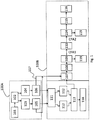
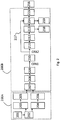
- the figures show the production of methyl ester of fatty acid/resin acid of tall oil during the crude tall oil process.
- the raw material which comprises organic acids is for instance sourced from wood either directly harvested or recovered via pulp cooking (the raw material is sourced for instance from wood oil or as pitch resin).
- the reference numbers 100A, 200A and 300A each represents a storage area in which crude tall is stored and wherein, most suitably, the protective esterification processes 102, 202 and 302 of crude tall oil are carried out
- the reference numbers 100B, 200B and 300B each represents a distillation area, (i.e. in practice the distillation building), where the separation of primary oil 110, 210 and 313, and methylation 111, 211 and 310, conventional distillation of fatty acid, separation of methanol 113, 213 and 312, and desulphurisation 115, 215, 315, are carried out.
- FIG 1 for instance two lines (103 and 105; 104 and 106) have been arranged in the storage area, in which the crude tall oil is received from the pulp cooking and in which it is protectively esterified for instance in mixing tank 102 with formic acid, which acid comes from its own storage tank 101.
- the protective esterification we refer to the solution which is described in our previous FI patent application 20070381 .
- the protective esterification which most suitably is carried out before the separation of pitch and resin, prevents the sterols from being esterified with the fatty acids within the mixture, which reduces the yield of fatty acids.
- the protective esterification is carried out with a power dispergator 102, which is used for treating the alcohol groups of acids of the initial material with formic acid.
- the protective esterification is carried out by using the molar ratio between the initial materials, i.e. formic acid and organic acids, which ratio is approximately 1:1 - 2:1.
- the temperature of the esterification is approximately 10-140 °C, most suitably 50-70 °C. At higher temperatures, the esterification advances faster, but, at the same time, the colour of the product darkens.
- the product is moved into the retention tank 103/104, the contents of which can be stirred. After that, the water and the excess acid are separated in the watering tanks 105/106.
- the mixture which is generated from the protective esterification is led from the storage area, via drying 107 (i.e. dehydration) to the separation of pitch 108.
- drying 107 i.e. dehydration
- the watered product is dried with an evaporator 107 and distilled in order to separate the pitch, for instance in a thin film evaporator 108.
- the resins are separated by distillation from the fatty acids 109, and the resins are removed from the base of the distillation column.
- FIGS 2 and 3 show similar processes in which the reference numbers at the beginning correspond to those in the explanation above.
- CFA1 Cosmetic Fatty Acid 1
- the primary oils are removed by distillation from the crude fatty acids, in which case, after the esterification, one phase is generated which comprises the esterified fatty acids, the unesterified fatty acids, the catalyst and the excess methanol, and the water which is released during the reaction.
- Figure 3 shows an embodiment in which the crude fatty acids are directly esterified, without separation of primary oil, in which case two phases are generated.
- 0.1-20 weight-%, especially approximately 1-15 weight-%, most suitably approximately 5-10 weight-% of the raw material is removed by distillation in the primary oil column 110, before esterification.
- the distillation takes place at a pressure of approximately 5-50 mbar, especially approximately 10-30 mbar, and most suitably at a temperature of 180-280 °C, especially approximately 200-250 °C.
- the upper phase comprised 74 % of the methanol fed, 11 % of the fatty acids and no resin acids at all, and 17 % of the entire amount of water generated. It is possible to reuse this phase for esterification, directly or after removal of the water, as shown in the figure (numbers 218, 318).
- the heavy phase 10 % of the volume, comprised 84 % of all the fatty acids and 67 % of all the water.
- the separation of methanol 113, 213, 312 is carried out for instance by distillation, after which regeneration of the methanol 118, 218, 318, i.e. dewatering, which can be carried out either by distillation or by drying with a molecular sieve.
- the actual product i.e. TOME (TOFA methyl ester, i.e. methyl esters of fatty acids of tall oil), dries to become water-free during the same operation.
- the separation of methyl esters of resin and the separation of resin is carried out using a thin film evaporator and/or distillation column 114, 214, 314. This is the column for distillation of TOME.
- Figure 2 describes a situation where the primary oils are removed by distillation, before any other treatments. In the case of figure 1 , they are distilled in a conventional way, after separation of resin.
- the procedure according to figure 2 is a more preferable embodiment, one which generates a better conversion into esters than the solution in figure 1 .
- two phases are generated, which are brought to further processing.
- the catalyst used was sulphuric acid
- the percentage of the sulphuric acid used was 1 % of the weight of the methanol, and the molar ratio between methanol and fatty acids was 24.9.
- the sulphuric acid stage generated microscopic drops which absorb the water and shift the balance of the reaction in favour of the formation of esters.
- the amount of crude fatty acid fed was 300 kg/h (acid number 188), of methanol 870 kg/h, the temperature after power dispersion was 98 °C and the counter pressure 250 kPa. Sulphuric acid (98 %) was added into methanol, 1 % of the weight of the methanol.
- the power dispergator which was used in our experiments, was of the commercial type Cavitron and it was run at a temperature of 98 °C and a pressure of 2.3 bars, in which the liquid clearly cavitated.
- the device comprised 3 mixing areas, a stator and a rotor, and the counter pressure was 2.3 bars, at a capacity of 5000 l/h.
- the steam pressure of pure methanol at a temperature of 98 °C is 2.8 bars, and thus, being diluted with water and fatty acid esters, it definitely boils, i.e. cavitates at the trailing edge of the rotor blade.
- the engine power of the power dispergator was 22 kW and 75 % of its maximum speed of rotation, which was 2940 r/min, was used.
- the best esterification result was obtained at acid number 0.6 (1 sec with Cavitron and 7 days in the storage tank +20 °C). In that case, the molar ratio between methanol and fatty acid was 20. When the molar ratio was reduced from 20 ⁇ 10, the conversion of Cavitron decreased from 60 % ⁇ 50 %. After a stoppage time of 8 days, the final acid number was in all cases in the range of 5.3 ⁇ 0.6.
- the catalyst used was para toluene sulphonic acid (PTSA), the amount of which was 0.4 % of the mass of the crude fatty acids.
- PTSA para toluene sulphonic acid
Landscapes
- Chemical & Material Sciences (AREA)
- Organic Chemistry (AREA)
- Oil, Petroleum & Natural Gas (AREA)
- Chemical Kinetics & Catalysis (AREA)
- General Chemical & Material Sciences (AREA)
- Engineering & Computer Science (AREA)
- Health & Medical Sciences (AREA)
- Emergency Medicine (AREA)
- Organic Low-Molecular-Weight Compounds And Preparation Thereof (AREA)
- Low-Molecular Organic Synthesis Reactions Using Catalysts (AREA)
- Fats And Perfumes (AREA)
Claims (18)
- Verfahren zur Umwandlung von organischen Säuren auf pflanzlicher Basis in entsprechende niedere Alkoholester, wobei gemäß dem Verfahren- ein Rohstoff, der organische Säuren umfasst, um die Säuren zu verestern, mit einem niederen Alkohol in Gegenwart eines sauren Katalysators in Kontakt gebracht wird, wobei der niedere Alkohol ein C1-C4-Alkanol ist,dadurch gekennzeichnet, dass- aus dem Rohstoff, der organische Säuren umfasst, und dem niederen Alkohol ein Reaktionsgemisch gebildet wird,- das Reaktionsgemisch in eine erste Reaktionsstufe gebracht wird, in der es Bedingungen ausgesetzt wird, unter denen es kavitiert, um die organischen Säuren zu verestern und die Säurezahl des Rohstoffs um mindestens 20 % zu senken, wonach das Reaktionsgemisch in eine zweite Reaktionsstufe gebracht wird, in der die Veresterungsreaktion für mindestens 6-200 Stunden fortgesetzt wird.
- Verfahren nach Anspruch 1, dadurch gekennzeichnet, dass ein Gemisch aus dem Rohstoff, der organische Säuren umfasst, dem niederen Alkohol und dem sauren Katalysator gebildet wird, das in einen Dispersionsbereich geleitet wird, in dem es Bedingungen ausgesetzt wird, in denen es unter großen Scherkräften kavitiert.
- Verfahren nach Anspruch 1 oder 2, dadurch gekennzeichnet, dass die Reaktion zwischen den organischen Säuren und dem Alkohol unter Kavitationsbedingungen fortgesetzt wird, bis das Reaktionsgemisch maximal 50 Gew.-% der ursprünglichen organischen Säuren in Säureform umfasst.
- Verfahren nach einem der Ansprüche 1-3, dadurch gekennzeichnet, dass das Reaktionsgemisch in den Dispersionsbereich, der mindestens einen Energiedispergator umfasst, eingebracht wird, um das Gemisch in Bedingungen zu bringen, in denen es kavitiert.
- Verfahren nach einem der vorstehenden Ansprüche, dadurch gekennzeichnet, dass das Reaktionsgemisch im Dispersionsbereich zur Kavitation gebracht wird, wobei ein Überdruck aufrechterhalten wird.
- Verfahren nach einem der vorstehenden Ansprüche, dadurch gekennzeichnet, dass unter den Kavitationsbedingungen eine Temperatur aufrechterhalten wird, die - bei dem Druck im Kavitationsbereich - 1-20°C niedriger als der Siedepunkt von Alkohol ist.
- Verfahren nach einem der vorstehenden Ansprüche, dadurch gekennzeichnet, dass die zweite Reaktionsstufe unter Bedingungen durchgeführt wird, bei denen das Gemisch nicht kavitiert.
- Verfahren nach einem der vorstehenden Ansprüche, dadurch gekennzeichnet, dass die Reaktion zwischen den organischen Säuren und dem Alkohol in der ersten Reaktionsstufe fortgesetzt wird, bis das Reaktionsgemisch maximal 60 Gew.-% der ursprünglichen organischen Säuren umfasst, und in der zweiten Stufe die Veresterung so lange fortgesetzt wird, um Veresterung eines wesentlichen Teils der verbleibenden Säuren zu erlauben, wobei in diesem Fall höchstens 15 Gew.-% der ursprünglichen organischen Säuren in Säureform vorliegen.
- Verfahren nach einem der vorstehenden Ansprüche, dadurch gekennzeichnet, dass der Rohstoff, der organische Säuren umfasst, aus Holz gewonnen wird, das entweder direkt geerntet oder durch Kochen von Zellstoff oder einer daraus erzeugten sauren Zusammensetzung gewonnen wird.
- Verfahren nach einem der vorstehenden Ansprüche, dadurch gekennzeichnet, dass Fettsäuren, Harzsäuren oder ein Gemisch davon verestert werden.
- Verfahren nach Anspruch 9 oder 10, dadurch gekennzeichnet, dass der verwendete Rohstoff Rohtallöl, Rohfettsäuregemisch oder Rohharzsäure ist.
- Verfahren nach einem der vorstehenden Ansprüche, dadurch gekennzeichnet, dass nach der Veresterung die leichtere Phase der zwei Materialien, die in zwei Phasen getrennt sind, als solche zur Veresterung wiederverwendet wird.
- Verfahren nach einem der vorstehenden Ansprüche, dadurch gekennzeichnet, dass der Rohstoff, aus dem das veresterbare Fettsäureprodukt hergestellt wird, vor der Trennung von Pech und der Trennung von Harz schützend mit Ameisensäure verestert wird, um den Verlust der Fettsäuren bei der inneren Veresterung mit Sterolen und anderen alkoholhaltigen Gruppen zu vermeiden.
- Verfahren nach einem der vorstehenden Ansprüche, dadurch gekennzeichnet, dass der verwendete Rohstoff Rohtallöl oder ein daraus erzeugtes Rohfettsäuregemisch ist, wobei in diesem Fall die Veresterung in Verbindung mit der Destillation von Rohtallöl durchgeführt wird, und aus der Harztrennsäule Ester von Tallölharzen als Bodenprodukt gewonnen werden, wobei die Ester als Klebstoffe verwendet werden können.
- Verfahren nach einem der vorstehenden Ansprüche, dadurch gekennzeichnet, dass der verwendete Katalysator eine starke Säure ist, die eine Mineralsäure oder eine organische Säure oder ein saures lonenaustauscherharz ist.
- Verfahren nach einem der Ansprüche 15, wobei ein homogener Katalysator verwendet wird, dadurch gekennzeichnet, dass der Katalysator dem Methanol zugesetzt wird.
- Verfahren nach einem der vorstehenden Ansprüche, dadurch gekennzeichnet, dass der verwendete Alkohol Methanol ist, um die entsprechenden Methylester herzustellen.
- Verfahren nach einem der vorstehenden Ansprüche, dadurch gekennzeichnet, dass der Ausgangsstoff, der die Säuren umfasst, unter Verwendung eines Kraftmischers, der Rotoren und Statoren umfasst, methyliert wird.
Applications Claiming Priority (2)
| Application Number | Priority Date | Filing Date | Title |
|---|---|---|---|
| FI20095848A FI124686B (fi) | 2009-08-14 | 2009-08-14 | Menetelmä raakamäntyöljyn jalostamiseksi |
| PCT/FI2010/050635 WO2011018558A2 (en) | 2009-08-14 | 2010-08-16 | Method of refining crude tall oil |
Publications (2)
| Publication Number | Publication Date |
|---|---|
| EP2464703A2 EP2464703A2 (de) | 2012-06-20 |
| EP2464703B1 true EP2464703B1 (de) | 2019-07-31 |
Family
ID=41050676
Family Applications (1)
| Application Number | Title | Priority Date | Filing Date |
|---|---|---|---|
| EP10808022.7A Active EP2464703B1 (de) | 2009-08-14 | 2010-08-16 | Verfahren zum raffinieren von rohem tallöl |
Country Status (3)
| Country | Link |
|---|---|
| EP (1) | EP2464703B1 (de) |
| FI (1) | FI124686B (de) |
| WO (1) | WO2011018558A2 (de) |
Families Citing this family (3)
| Publication number | Priority date | Publication date | Assignee | Title |
|---|---|---|---|---|
| CN105969199A (zh) * | 2016-05-26 | 2016-09-28 | 广西众昌树脂有限公司 | 松香酯的制备方法 |
| CN105950020A (zh) * | 2016-05-26 | 2016-09-21 | 广西众昌树脂有限公司 | 松香酯的生产方法 |
| SE545114C2 (en) * | 2021-06-24 | 2023-04-04 | Stora Enso Oyj | Fractionation of crude tall oil |
Family Cites Families (9)
| Publication number | Priority date | Publication date | Assignee | Title |
|---|---|---|---|---|
| NO144129C (no) | 1979-07-09 | 1981-07-01 | Simbas Siv Ing M Bjerkan A S | Sorteringsverk for massegods. |
| FR2577569B1 (fr) * | 1985-02-15 | 1987-03-20 | Inst Francais Du Petrole | Procede de fabrication d'une composition d'esters d'acide gras utilisables comme carburant de substitution du gazole avec de l'alcool ethylique hydrate et composition d'esters ainsi formes |
| IN171820B (de) | 1989-12-22 | 1993-01-16 | Lever Hindustan Ltd | |
| US20050274065A1 (en) * | 2004-06-15 | 2005-12-15 | Carnegie Mellon University | Methods for producing biodiesel |
| CA2626450A1 (en) | 2005-10-26 | 2007-05-03 | Kiram Ab | Automotive fuels and fine chemicals from crude tall oil |
| IN2012DN00444A (de) | 2006-04-28 | 2015-05-15 | Sk Chemicals Co Ltd | |
| FI120540B (fi) | 2007-05-15 | 2009-11-30 | Forchem Oy | Menetelmä mäntyöljyn käsittelemiseksi |
| WO2009020725A1 (en) * | 2007-08-08 | 2009-02-12 | Arisdyne Systems, Inc. | Apparatus and method for producing biodiesel from fatty acid feedstock |
| US7935157B2 (en) | 2007-08-08 | 2011-05-03 | Arisdyne Systems, Inc. | Method for reducing free fatty acid content of biodiesel feedstock |
-
2009
- 2009-08-14 FI FI20095848A patent/FI124686B/fi active IP Right Grant
-
2010
- 2010-08-16 WO PCT/FI2010/050635 patent/WO2011018558A2/en not_active Ceased
- 2010-08-16 EP EP10808022.7A patent/EP2464703B1/de active Active
Non-Patent Citations (1)
| Title |
|---|
| None * |
Also Published As
| Publication number | Publication date |
|---|---|
| WO2011018558A3 (en) | 2011-12-22 |
| WO2011018558A2 (en) | 2011-02-17 |
| FI124686B (fi) | 2014-12-15 |
| FI20095848L (fi) | 2011-02-15 |
| EP2464703A2 (de) | 2012-06-20 |
| FI20095848A0 (fi) | 2009-08-14 |
Similar Documents
| Publication | Publication Date | Title |
|---|---|---|
| Perego et al. | Biomass upgrading through acid–base catalysis | |
| US20100312006A1 (en) | Production of levulinic acid and levulinate esters from biomass | |
| AU2002217070B2 (en) | Method for the production of fatty acid esters | |
| CA2626450A1 (en) | Automotive fuels and fine chemicals from crude tall oil | |
| EP2252626B1 (de) | Rückgewinnung von phytosterolen aus restpflanzenölströmen | |
| EP1594834B1 (de) | Verfahren zur gewinnung von fettsäurealkylestern, harzsäuren und sterinen aus rohtallöl | |
| EP3550005B1 (de) | Verfahren zur herstellung eines produkts auf pflanzenölbasis | |
| WO2022120458A1 (en) | Combination approach to delignification of biomass under ambient conditions | |
| WO2011018558A2 (en) | Method of refining crude tall oil | |
| US10988708B2 (en) | Systems and methods for fatty acid alkyl ester production with recycling | |
| EP4584346A1 (de) | Viskositätsverringerung von biorohöl für hydrothermale verflüssigung | |
| FI122420B (fi) | Menetelmä mäntyöljypien käsittelemiseksi | |
| EP2542520B1 (de) | Verfahren zum erhalten von biolösungsmittelzusammensetzungen durch veresterung und erhaltene biolösungsmittelzusammensetzungen | |
| RU2720410C1 (ru) | Способ получения сложных эфиров жирных кислот и этанола из жиросодержащих отходов | |
| Fischmeister et al. | 10 Catalytic conversion of biosourced raw materials: homogeneous catalysis | |
| US20250129396A1 (en) | Method of making a microbial fatty acid and fatty acid butyl ester using a hybrid biosolvent washing/extraction process and microbial lipid oil and hydrophobic biohydrocarbon as a liquid fuel intermediary | |
| EP2297282B1 (de) | Verfahren zur herstellung von kraftstoff | |
| EP4255915B1 (de) | Verfahren zur reinigung von sterolen aus tallölpech | |
| CA3250830A1 (en) | Acylation combined with esterification of lignin-derived material | |
| WO2022265930A1 (en) | Upgrading bio-waste in fcc |
Legal Events
| Date | Code | Title | Description |
|---|---|---|---|
| PUAI | Public reference made under article 153(3) epc to a published international application that has entered the european phase |
Free format text: ORIGINAL CODE: 0009012 |
|
| 17P | Request for examination filed |
Effective date: 20120312 |
|
| AK | Designated contracting states |
Kind code of ref document: A2 Designated state(s): AL AT BE BG CH CY CZ DE DK EE ES FI FR GB GR HR HU IE IS IT LI LT LU LV MC MK MT NL NO PL PT RO SE SI SK SM TR |
|
| DAX | Request for extension of the european patent (deleted) | ||
| REG | Reference to a national code |
Ref country code: DE Ref legal event code: R079 Ref document number: 602010060320 Country of ref document: DE Free format text: PREVIOUS MAIN CLASS: C09F0001040000 Ipc: C10L0001020000 |
|
| RIC1 | Information provided on ipc code assigned before grant |
Ipc: C10L 1/02 20060101AFI20180313BHEP Ipc: C09F 1/04 20060101ALI20180313BHEP |
|
| GRAP | Despatch of communication of intention to grant a patent |
Free format text: ORIGINAL CODE: EPIDOSNIGR1 |
|
| STAA | Information on the status of an ep patent application or granted ep patent |
Free format text: STATUS: GRANT OF PATENT IS INTENDED |
|
| INTG | Intention to grant announced |
Effective date: 20180424 |
|
| RAP1 | Party data changed (applicant data changed or rights of an application transferred) |
Owner name: FORCHEM OYJ |
|
| GRAS | Grant fee paid |
Free format text: ORIGINAL CODE: EPIDOSNIGR3 |
|
| GRAA | (expected) grant |
Free format text: ORIGINAL CODE: 0009210 |
|
| STAA | Information on the status of an ep patent application or granted ep patent |
Free format text: STATUS: THE PATENT HAS BEEN GRANTED |
|
| AK | Designated contracting states |
Kind code of ref document: B1 Designated state(s): AL AT BE BG CH CY CZ DE DK EE ES FI FR GB GR HR HU IE IS IT LI LT LU LV MC MK MT NL NO PL PT RO SE SI SK SM TR |
|
| REG | Reference to a national code |
Ref country code: CH Ref legal event code: EP Ref country code: GB Ref legal event code: FG4D |
|
| REG | Reference to a national code |
Ref country code: DE Ref legal event code: R096 Ref document number: 602010060320 Country of ref document: DE |
|
| REG | Reference to a national code |
Ref country code: AT Ref legal event code: REF Ref document number: 1160880 Country of ref document: AT Kind code of ref document: T Effective date: 20190815 |
|
| REG | Reference to a national code |
Ref country code: IE Ref legal event code: FG4D |
|
| REG | Reference to a national code |
Ref country code: SE Ref legal event code: TRGR |
|
| REG | Reference to a national code |
Ref country code: NL Ref legal event code: MP Effective date: 20190731 |
|
| REG | Reference to a national code |
Ref country code: LT Ref legal event code: MG4D |
|
| REG | Reference to a national code |
Ref country code: AT Ref legal event code: MK05 Ref document number: 1160880 Country of ref document: AT Kind code of ref document: T Effective date: 20190731 |
|
| PG25 | Lapsed in a contracting state [announced via postgrant information from national office to epo] |
Ref country code: AT Free format text: LAPSE BECAUSE OF FAILURE TO SUBMIT A TRANSLATION OF THE DESCRIPTION OR TO PAY THE FEE WITHIN THE PRESCRIBED TIME-LIMIT Effective date: 20190731 Ref country code: NO Free format text: LAPSE BECAUSE OF FAILURE TO SUBMIT A TRANSLATION OF THE DESCRIPTION OR TO PAY THE FEE WITHIN THE PRESCRIBED TIME-LIMIT Effective date: 20191031 Ref country code: PT Free format text: LAPSE BECAUSE OF FAILURE TO SUBMIT A TRANSLATION OF THE DESCRIPTION OR TO PAY THE FEE WITHIN THE PRESCRIBED TIME-LIMIT Effective date: 20191202 Ref country code: LT Free format text: LAPSE BECAUSE OF FAILURE TO SUBMIT A TRANSLATION OF THE DESCRIPTION OR TO PAY THE FEE WITHIN THE PRESCRIBED TIME-LIMIT Effective date: 20190731 Ref country code: NL Free format text: LAPSE BECAUSE OF FAILURE TO SUBMIT A TRANSLATION OF THE DESCRIPTION OR TO PAY THE FEE WITHIN THE PRESCRIBED TIME-LIMIT Effective date: 20190731 Ref country code: BG Free format text: LAPSE BECAUSE OF FAILURE TO SUBMIT A TRANSLATION OF THE DESCRIPTION OR TO PAY THE FEE WITHIN THE PRESCRIBED TIME-LIMIT Effective date: 20191031 Ref country code: HR Free format text: LAPSE BECAUSE OF FAILURE TO SUBMIT A TRANSLATION OF THE DESCRIPTION OR TO PAY THE FEE WITHIN THE PRESCRIBED TIME-LIMIT Effective date: 20190731 |
|
| PG25 | Lapsed in a contracting state [announced via postgrant information from national office to epo] |
Ref country code: ES Free format text: LAPSE BECAUSE OF FAILURE TO SUBMIT A TRANSLATION OF THE DESCRIPTION OR TO PAY THE FEE WITHIN THE PRESCRIBED TIME-LIMIT Effective date: 20190731 Ref country code: LV Free format text: LAPSE BECAUSE OF FAILURE TO SUBMIT A TRANSLATION OF THE DESCRIPTION OR TO PAY THE FEE WITHIN THE PRESCRIBED TIME-LIMIT Effective date: 20190731 Ref country code: AL Free format text: LAPSE BECAUSE OF FAILURE TO SUBMIT A TRANSLATION OF THE DESCRIPTION OR TO PAY THE FEE WITHIN THE PRESCRIBED TIME-LIMIT Effective date: 20190731 Ref country code: IS Free format text: LAPSE BECAUSE OF FAILURE TO SUBMIT A TRANSLATION OF THE DESCRIPTION OR TO PAY THE FEE WITHIN THE PRESCRIBED TIME-LIMIT Effective date: 20191130 Ref country code: GR Free format text: LAPSE BECAUSE OF FAILURE TO SUBMIT A TRANSLATION OF THE DESCRIPTION OR TO PAY THE FEE WITHIN THE PRESCRIBED TIME-LIMIT Effective date: 20191101 |
|
| PG25 | Lapsed in a contracting state [announced via postgrant information from national office to epo] |
Ref country code: TR Free format text: LAPSE BECAUSE OF FAILURE TO SUBMIT A TRANSLATION OF THE DESCRIPTION OR TO PAY THE FEE WITHIN THE PRESCRIBED TIME-LIMIT Effective date: 20190731 |
|
| PG25 | Lapsed in a contracting state [announced via postgrant information from national office to epo] |
Ref country code: IT Free format text: LAPSE BECAUSE OF FAILURE TO SUBMIT A TRANSLATION OF THE DESCRIPTION OR TO PAY THE FEE WITHIN THE PRESCRIBED TIME-LIMIT Effective date: 20190731 Ref country code: DK Free format text: LAPSE BECAUSE OF FAILURE TO SUBMIT A TRANSLATION OF THE DESCRIPTION OR TO PAY THE FEE WITHIN THE PRESCRIBED TIME-LIMIT Effective date: 20190731 Ref country code: EE Free format text: LAPSE BECAUSE OF FAILURE TO SUBMIT A TRANSLATION OF THE DESCRIPTION OR TO PAY THE FEE WITHIN THE PRESCRIBED TIME-LIMIT Effective date: 20190731 Ref country code: RO Free format text: LAPSE BECAUSE OF FAILURE TO SUBMIT A TRANSLATION OF THE DESCRIPTION OR TO PAY THE FEE WITHIN THE PRESCRIBED TIME-LIMIT Effective date: 20190731 Ref country code: PL Free format text: LAPSE BECAUSE OF FAILURE TO SUBMIT A TRANSLATION OF THE DESCRIPTION OR TO PAY THE FEE WITHIN THE PRESCRIBED TIME-LIMIT Effective date: 20190731 |
|
| PG25 | Lapsed in a contracting state [announced via postgrant information from national office to epo] |
Ref country code: MC Free format text: LAPSE BECAUSE OF FAILURE TO SUBMIT A TRANSLATION OF THE DESCRIPTION OR TO PAY THE FEE WITHIN THE PRESCRIBED TIME-LIMIT Effective date: 20190731 Ref country code: LI Free format text: LAPSE BECAUSE OF NON-PAYMENT OF DUE FEES Effective date: 20190831 Ref country code: CH Free format text: LAPSE BECAUSE OF NON-PAYMENT OF DUE FEES Effective date: 20190831 Ref country code: IS Free format text: LAPSE BECAUSE OF FAILURE TO SUBMIT A TRANSLATION OF THE DESCRIPTION OR TO PAY THE FEE WITHIN THE PRESCRIBED TIME-LIMIT Effective date: 20200224 Ref country code: SK Free format text: LAPSE BECAUSE OF FAILURE TO SUBMIT A TRANSLATION OF THE DESCRIPTION OR TO PAY THE FEE WITHIN THE PRESCRIBED TIME-LIMIT Effective date: 20190731 Ref country code: CZ Free format text: LAPSE BECAUSE OF FAILURE TO SUBMIT A TRANSLATION OF THE DESCRIPTION OR TO PAY THE FEE WITHIN THE PRESCRIBED TIME-LIMIT Effective date: 20190731 Ref country code: LU Free format text: LAPSE BECAUSE OF NON-PAYMENT OF DUE FEES Effective date: 20190816 Ref country code: SM Free format text: LAPSE BECAUSE OF FAILURE TO SUBMIT A TRANSLATION OF THE DESCRIPTION OR TO PAY THE FEE WITHIN THE PRESCRIBED TIME-LIMIT Effective date: 20190731 |
|
| REG | Reference to a national code |
Ref country code: BE Ref legal event code: MM Effective date: 20190831 |
|
| REG | Reference to a national code |
Ref country code: DE Ref legal event code: R097 Ref document number: 602010060320 Country of ref document: DE |
|
| PLBE | No opposition filed within time limit |
Free format text: ORIGINAL CODE: 0009261 |
|
| STAA | Information on the status of an ep patent application or granted ep patent |
Free format text: STATUS: NO OPPOSITION FILED WITHIN TIME LIMIT |
|
| PG2D | Information on lapse in contracting state deleted |
Ref country code: IS |
|
| PG25 | Lapsed in a contracting state [announced via postgrant information from national office to epo] |
Ref country code: IE Free format text: LAPSE BECAUSE OF NON-PAYMENT OF DUE FEES Effective date: 20190816 Ref country code: IS Free format text: LAPSE BECAUSE OF FAILURE TO SUBMIT A TRANSLATION OF THE DESCRIPTION OR TO PAY THE FEE WITHIN THE PRESCRIBED TIME-LIMIT Effective date: 20191030 |
|
| 26N | No opposition filed |
Effective date: 20200603 |
|
| PG25 | Lapsed in a contracting state [announced via postgrant information from national office to epo] |
Ref country code: SI Free format text: LAPSE BECAUSE OF FAILURE TO SUBMIT A TRANSLATION OF THE DESCRIPTION OR TO PAY THE FEE WITHIN THE PRESCRIBED TIME-LIMIT Effective date: 20190731 Ref country code: BE Free format text: LAPSE BECAUSE OF NON-PAYMENT OF DUE FEES Effective date: 20190831 |
|
| GBPC | Gb: european patent ceased through non-payment of renewal fee |
Effective date: 20191031 |
|
| PG25 | Lapsed in a contracting state [announced via postgrant information from national office to epo] |
Ref country code: GB Free format text: LAPSE BECAUSE OF NON-PAYMENT OF DUE FEES Effective date: 20191031 |
|
| PG25 | Lapsed in a contracting state [announced via postgrant information from national office to epo] |
Ref country code: CY Free format text: LAPSE BECAUSE OF FAILURE TO SUBMIT A TRANSLATION OF THE DESCRIPTION OR TO PAY THE FEE WITHIN THE PRESCRIBED TIME-LIMIT Effective date: 20190731 |
|
| PG25 | Lapsed in a contracting state [announced via postgrant information from national office to epo] |
Ref country code: HU Free format text: LAPSE BECAUSE OF FAILURE TO SUBMIT A TRANSLATION OF THE DESCRIPTION OR TO PAY THE FEE WITHIN THE PRESCRIBED TIME-LIMIT; INVALID AB INITIO Effective date: 20100816 Ref country code: MT Free format text: LAPSE BECAUSE OF FAILURE TO SUBMIT A TRANSLATION OF THE DESCRIPTION OR TO PAY THE FEE WITHIN THE PRESCRIBED TIME-LIMIT Effective date: 20190731 |
|
| PG25 | Lapsed in a contracting state [announced via postgrant information from national office to epo] |
Ref country code: MK Free format text: LAPSE BECAUSE OF FAILURE TO SUBMIT A TRANSLATION OF THE DESCRIPTION OR TO PAY THE FEE WITHIN THE PRESCRIBED TIME-LIMIT Effective date: 20190731 |
|
| PGFP | Annual fee paid to national office [announced via postgrant information from national office to epo] |
Ref country code: FI Payment date: 20250807 Year of fee payment: 16 |
|
| PGFP | Annual fee paid to national office [announced via postgrant information from national office to epo] |
Ref country code: DE Payment date: 20250801 Year of fee payment: 16 |
|
| PGFP | Annual fee paid to national office [announced via postgrant information from national office to epo] |
Ref country code: FR Payment date: 20250814 Year of fee payment: 16 |
|
| PGFP | Annual fee paid to national office [announced via postgrant information from national office to epo] |
Ref country code: SE Payment date: 20250807 Year of fee payment: 16 |