EP2465548A2 - Implantierbare polymere Folien - Google Patents
Implantierbare polymere Folien Download PDFInfo
- Publication number
- EP2465548A2 EP2465548A2 EP11250786A EP11250786A EP2465548A2 EP 2465548 A2 EP2465548 A2 EP 2465548A2 EP 11250786 A EP11250786 A EP 11250786A EP 11250786 A EP11250786 A EP 11250786A EP 2465548 A2 EP2465548 A2 EP 2465548A2
- Authority
- EP
- European Patent Office
- Prior art keywords
- glycerol
- medical device
- biopolymer
- polymeric film
- film layer
- Prior art date
- Legal status (The legal status is an assumption and is not a legal conclusion. Google has not performed a legal analysis and makes no representation as to the accuracy of the status listed.)
- Granted
Links
Images







Classifications
-
- A—HUMAN NECESSITIES
- A61—MEDICAL OR VETERINARY SCIENCE; HYGIENE
- A61L—METHODS OR APPARATUS FOR STERILISING MATERIALS OR OBJECTS IN GENERAL; DISINFECTION, STERILISATION OR DEODORISATION OF AIR; CHEMICAL ASPECTS OF BANDAGES, DRESSINGS, ABSORBENT PADS OR SURGICAL ARTICLES; MATERIALS FOR BANDAGES, DRESSINGS, ABSORBENT PADS OR SURGICAL ARTICLES
- A61L17/00—Materials for surgical sutures or for ligaturing blood vessels ; Materials for prostheses or catheters
- A61L17/14—Post-treatment to improve physical properties
- A61L17/145—Coating
-
- A—HUMAN NECESSITIES
- A61—MEDICAL OR VETERINARY SCIENCE; HYGIENE
- A61L—METHODS OR APPARATUS FOR STERILISING MATERIALS OR OBJECTS IN GENERAL; DISINFECTION, STERILISATION OR DEODORISATION OF AIR; CHEMICAL ASPECTS OF BANDAGES, DRESSINGS, ABSORBENT PADS OR SURGICAL ARTICLES; MATERIALS FOR BANDAGES, DRESSINGS, ABSORBENT PADS OR SURGICAL ARTICLES
- A61L17/00—Materials for surgical sutures or for ligaturing blood vessels ; Materials for prostheses or catheters
- A61L17/005—Materials for surgical sutures or for ligaturing blood vessels ; Materials for prostheses or catheters containing a biologically active substance, e.g. a medicament or a biocide
-
- A—HUMAN NECESSITIES
- A61—MEDICAL OR VETERINARY SCIENCE; HYGIENE
- A61L—METHODS OR APPARATUS FOR STERILISING MATERIALS OR OBJECTS IN GENERAL; DISINFECTION, STERILISATION OR DEODORISATION OF AIR; CHEMICAL ASPECTS OF BANDAGES, DRESSINGS, ABSORBENT PADS OR SURGICAL ARTICLES; MATERIALS FOR BANDAGES, DRESSINGS, ABSORBENT PADS OR SURGICAL ARTICLES
- A61L27/00—Materials for grafts or prostheses or for coating grafts or prostheses
- A61L27/28—Materials for coating prostheses
- A61L27/34—Macromolecular materials
-
- A—HUMAN NECESSITIES
- A61—MEDICAL OR VETERINARY SCIENCE; HYGIENE
- A61L—METHODS OR APPARATUS FOR STERILISING MATERIALS OR OBJECTS IN GENERAL; DISINFECTION, STERILISATION OR DEODORISATION OF AIR; CHEMICAL ASPECTS OF BANDAGES, DRESSINGS, ABSORBENT PADS OR SURGICAL ARTICLES; MATERIALS FOR BANDAGES, DRESSINGS, ABSORBENT PADS OR SURGICAL ARTICLES
- A61L27/00—Materials for grafts or prostheses or for coating grafts or prostheses
- A61L27/50—Materials characterised by their function or physical properties, e.g. injectable or lubricating compositions, shape-memory materials, surface modified materials
- A61L27/502—Plasticizers
-
- A—HUMAN NECESSITIES
- A61—MEDICAL OR VETERINARY SCIENCE; HYGIENE
- A61L—METHODS OR APPARATUS FOR STERILISING MATERIALS OR OBJECTS IN GENERAL; DISINFECTION, STERILISATION OR DEODORISATION OF AIR; CHEMICAL ASPECTS OF BANDAGES, DRESSINGS, ABSORBENT PADS OR SURGICAL ARTICLES; MATERIALS FOR BANDAGES, DRESSINGS, ABSORBENT PADS OR SURGICAL ARTICLES
- A61L31/00—Materials for other surgical articles, e.g. stents, stent-grafts, shunts, surgical drapes, guide wires, materials for adhesion prevention, occluding devices, surgical gloves, tissue fixation devices
- A61L31/08—Materials for coatings
- A61L31/10—Macromolecular materials
-
- A—HUMAN NECESSITIES
- A61—MEDICAL OR VETERINARY SCIENCE; HYGIENE
- A61L—METHODS OR APPARATUS FOR STERILISING MATERIALS OR OBJECTS IN GENERAL; DISINFECTION, STERILISATION OR DEODORISATION OF AIR; CHEMICAL ASPECTS OF BANDAGES, DRESSINGS, ABSORBENT PADS OR SURGICAL ARTICLES; MATERIALS FOR BANDAGES, DRESSINGS, ABSORBENT PADS OR SURGICAL ARTICLES
- A61L31/00—Materials for other surgical articles, e.g. stents, stent-grafts, shunts, surgical drapes, guide wires, materials for adhesion prevention, occluding devices, surgical gloves, tissue fixation devices
- A61L31/14—Materials characterised by their function or physical properties, e.g. injectable or lubricating compositions, shape-memory materials, surface modified materials
- A61L31/141—Plasticizers
-
- A—HUMAN NECESSITIES
- A61—MEDICAL OR VETERINARY SCIENCE; HYGIENE
- A61L—METHODS OR APPARATUS FOR STERILISING MATERIALS OR OBJECTS IN GENERAL; DISINFECTION, STERILISATION OR DEODORISATION OF AIR; CHEMICAL ASPECTS OF BANDAGES, DRESSINGS, ABSORBENT PADS OR SURGICAL ARTICLES; MATERIALS FOR BANDAGES, DRESSINGS, ABSORBENT PADS OR SURGICAL ARTICLES
- A61L31/00—Materials for other surgical articles, e.g. stents, stent-grafts, shunts, surgical drapes, guide wires, materials for adhesion prevention, occluding devices, surgical gloves, tissue fixation devices
- A61L31/14—Materials characterised by their function or physical properties, e.g. injectable or lubricating compositions, shape-memory materials, surface modified materials
- A61L31/16—Biologically active materials, e.g. therapeutic substances
-
- A—HUMAN NECESSITIES
- A61—MEDICAL OR VETERINARY SCIENCE; HYGIENE
- A61F—FILTERS IMPLANTABLE INTO BLOOD VESSELS; PROSTHESES; DEVICES PROVIDING PATENCY TO, OR PREVENTING COLLAPSING OF, TUBULAR STRUCTURES OF THE BODY, e.g. STENTS; ORTHOPAEDIC, NURSING OR CONTRACEPTIVE DEVICES; FOMENTATION; TREATMENT OR PROTECTION OF EYES OR EARS; BANDAGES, DRESSINGS OR ABSORBENT PADS; FIRST-AID KITS
- A61F2/00—Filters implantable into blood vessels; Prostheses, i.e. artificial substitutes or replacements for parts of the body; Appliances for connecting them with the body; Devices providing patency to, or preventing collapsing of, tubular structures of the body, e.g. stents
- A61F2/0063—Implantable repair or support meshes, e.g. hernia meshes
Definitions
- the present disclosure relates to implantable medical devices, and more particularly, to implantable medical devices including at least one polymeric film layer made from a mixture of glycerol and a biopolymer.
- a variety of medical conditions may be treated, at least in part, by implanting a medical device into the body of an afflicted patient.
- Medical devices may be implanted into the body temporarily or left in the body for extended periods of time, even indefinitely.
- a surgical mesh may be made from non-biodegradable materials and may be implanted into the abdomen of a patient to repair any type of hernia. The mesh may be either placed over the defect (anterior repair) or under the defect (posterior repair).
- an implantable film made from a bioabsorbable material may be combined with another medical device for delivery of a therapeutic agent.
- these films may include any number of optional ingredients.
- viscosity enhancers, emulsifiers, pH modifiers and the like may be added as optional ingredients to the films to enhance the durability of the device and/or alter the delivery characteristics of a therapeutic agent.
- optional ingredients represent up to about 10% by weight of the device.
- higher concentrations of optional ingredients may provide detrimental effects to the films overall characteristics.
- the addition of a plasticizer in concentrations higher than about 10% often make the film too flexible to be useful as an implantable film.
- implantable medical devices which include at least one polymeric film layer made from a mixture of glycerol and at least one biopolymer, wherein the glycerol and the at least one biopolymer represent a weight ratio ranging from about 3:1 to about 1:3, respectively.
- the polymeric film layer may include at least one therapeutic agent.
- the implantable medical devices described herein may include a medical device having a substrate, at least one polymeric film layer attached to the substrate, the polymeric film layer being made from a mixture of glycerol and at least one biopolymer, wherein the glycerol and the at least one biopolymer represent a weight ratio ranging from about 3:1 to about 1:3, respectively, and at least one therapeutic agent.
- the polymeric layer may be continuous or discontinuous on the substrate of the device.
- Also disclosed are methods of delivery of a therapeutic agent which include implanting a medical device into tissue.
- the medical device including at least one polymeric film layer made from a mixture of glycerol and at least one biopolymer, wherein the glycerol and the at least one biopolymer represent a weight ratio ranging from about 3:1 to about 1:3, respectively, and, at least one therapeutic agent included in the at least one polymeric film layer.
- the present disclosure relates to an implantable medical device which includes at least one polymeric film layer made ftom a mixture of glycerol and at least one biopolymer.
- the glycerol and the at least one biopolymer represent a weight ratio ranging from about 3:1 to about 1:3, respectively.
- glycerol may represent a predominant amount of the polymeric film layer by weight.
- the implantable medical device may be used for delivery of at least one therapeutic agent.
- the medical devices described herein may be positioned, for any duration of time, at a location within a body, such as within a portion of the abdominal cavity.
- the terms “implantation” and “implanted” refer to the positioning, for any duration of time, of a medical device at a location within a body, such as within a portion of the abdominal cavity.
- Glycerol also known as glycerin or glycerine, is a polyol which includes three hydrophilic hydroxyl groups. The hydroxyl groups allow glycerol to be soluble in water, as well as hygroscopic in nature.
- the glycerol may represent from about 25 weight percent to about 75 weight percent of the polymeric film layer. In some embodiments, glycerol may represent from about 33 weight percent to about 67 weight percent of the polymeric film layer. In certain embodiments, the polymeric film layers described herein may include more than 50 weight percent glycerol.
- the glycerol used to form the polymeric films described may be in a solid or liquid form prior to mixing with the at least one biopolymer.
- the glycerol may be in a form such as particulate, powder, granulized, and the like.
- liquid the glycerol may be in a form such as a solution, suspension, emulsion, dispersion, slurry, gel, and the like.
- a glycerol solution may be formed using any suitable technique within the purview of those skilled in the art.
- a glycerol solution may be formed by mixing a glycerol solid with a suitable solvent to form a glycerol solution or liquid.
- solvents suitable for forming the glycerol solutions may include polar and non-polar solvents such as methylene chloride, chloroform, N-methylpyrrolidone, tetrahydrofuran, dimethylformamide, methanol, ethanol, hexanes, acetone, water, saline buffers and combinations thereof.
- the glycerol may be mixed with at least one biopolymer.
- suitable biopolymer materials include polysaccharides, proteins, peptides, and combinations thereof.
- the polysaccharide may include cellulose, dextran, chitin, chitosan, alginate, pectin, mucilage, pullalan, methylcellulose, carboxymethylcellulose (CMC), hydroxypropyl methylcellulose, hydroxyethyl methylcellulose, arabinoxylans, bacterial polysaccharides and combinations thereof.
- the polymeric film layer may consist of glycerol and carboxymethylcellulose.
- the polymeric film layer may include proteins, such as collagen, elastin, fibrin, albumin, fibrinogen, thrombin, silk, and combinations thereof.
- the polymeric film layer may consist of glycerol and collagen.
- the implant has a collagen layer and a carboxymethylcellulose/glycerol layer.
- collagen is meant to include any type of collagen, whether natural or synthetic, of human or animal origin, such as, for example, enriched human collagen of type I, human collagen of type III, also enriched, human collagen of type I+III or of type IV or other collagens such as animal collagen of type I or of type I+III.
- the collagen may be oxidized or non-oxidized.
- the collagen may be oxidized without crosslinking.
- native collagen may be dipped in an acid solution and/or washed, to eliminate the telopeptides, notably by pepsin digestion.
- the collagen may also be modified by oxidative cleavage.
- periodic acid or one of its salts can be used, applying the technique described by M. TARDY et al. ( FR-A-2 601 371 and U.S. Pat. No. 4,931,546 , the entire contents of which are herby incorporated by reference).
- this technique consists of mixing the collagen in acid solution with a solution of periodic acid or one of its salts at a concentration of between 1 and 10 -5 M, preferably between 5 10 -3 and 10 -1 M, at a temperature of between 10 and 25° C. for 10 minutes to 72 hours.
- This process breaks down some of the collagen's components, these being hydroxylysine and the sugars, thus creating reactive sites without causing crosslinking.
- the oxidative cleavage of collagen allows moderate cross-linking later in the collagenic material but does not exclude the possibility of providing this function by other means of moderate cross-linking, for example by beta or gamma irradiation, or other agents of moderate cross-linking, for example chemical reagents at suitably low and non-toxic doses.
- the polymer film layers described herein may include collagen which is not oxidized or a mixture in any proportions of non-oxidized and oxidized collagens.
- the biopolymer may represent from about 25 weight percent to about 75 weight percent of the polymeric film layer. In other embodiments, the biopolymer may represent from about 33 weight percent to about 67 weight percent of the polymeric film layer. In certain embodiments, the polymeric film layers described herein may include less than 50 weight percent biopolymer.
- the biopolymer used to form the polymeric films described may be in a solid or liquid form prior to mixing with the glycerol.
- the biopolymer may be in a form such as particulate, powder, granulized, and the like.
- the biopolymer may be in a form such as a solution, suspension, emulsion, dispersion, slurry, gel, and the like.
- a biopolymer solution may be formed using any suitable technique within the purview of those skilled in the art.
- a biopolymer solution may be formed by mixing a biopolymer solid with a suitable solvent to form a biopolymer solution or liquid.
- carboxymethylcellulose powder may solubilized in water to form a carboxymethylcellulose solution.
- solvents suitable for forming the biopolymer solutions may include polar and non-polar solvents, such as methylene chloride, chloroform, N-methylpyrrolidone, tetrahydrofuran, dimethylformamide, methanol, ethanol, hexanes, acetone, water, saline, buffers and combinations thereof.
- the polymeric film layers described herein may include glycerol and at least one biopolymer at a weight ratio ranging from about 3:1 to about 1:3.
- the glycerol and the biopolymer may represent a weight ratio ranging from about 2:1 to about 1:2.
- the glycerol and the biopolymer may represent a weight ratio greater than about 1.01:1.
- the polymeric film layers may be formed using any suitable method known to those skilled in the art. Some non-limiting examples include casting, extruding, spraying and the like.
- the mixture containing the biopolymer and the glycerol may be cast in a mold and allowed to dry to form a polymeric film layer. The drying may take place at an ambient or elevated temperatures and pressures.
- the polymeric film layers described herein may be sufficient in strength to be implanted without an additional device for mechanical support. However, in some embodiments, the polymeric film layers described herein may be combined with another implantable substrate, i.e., a mesh, to provide additional support.
- another implantable substrate i.e., a mesh
- any implantable substrate suitable for insertion into a patient's body may be combined with the polymeric films described herein.
- Some non-limiting examples include soft tissue repair devices such as sutures, staples, meshes, patches, pledgets, buttresses, clips, clamps, screws, and pins.
- Other suitable devices include staple line reinforcements, tissue fillers, tissue wraps for solid organs or luminal structures, sealing devices, cavity wall and floor reinforcements, intramuscular conduits, access site closure devices, and the like.
- the implantable substrates and the films described herein may be porous or non-porous.
- the implantable substrate is a surgical mesh.
- the surgical mesh described herein may include porous fabrics made from intertwined filaments.
- the filaments may extend horizontally and vertically in a manner which produces sections where the filaments cross-over one another creating points of common intersection.
- the surgical mesh may be woven, non-woven, knitted or braided.
- the filaments may form two-dimensional or three-dimensional meshes.
- the filaments may be monofilaments or multi-filaments and, in embodiments, a plurality of multi-filaments may be combined to form yarns. It is envisioned that the mesh may be configured to any size and/or shape suitable for hernia repair.
- the filaments may comprise core/sheath constructs.
- the implantable substrate may be a surgical mesh knitted on a warp knitting machine, of the tricot or Raschel type, with at least three sheets or warps of yarn and as many guide bars.
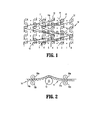
- the knitted mesh may be created by threading a rear bar, one guide full and one guide empty, with first mono- or multi-filaments 10 of a biocompatible polymer as represented as a solid line in FIG. 1 .
- An intermediate bar is threaded, one guide full, three guides empty, with second mono- or multi-filaments 11 of a biocompatible polymer as represented as a broken line in FIG. 1 .
- the intermediate bar works in such a way as to obtain a zigzag openwork pattern between the columns of meshes.
- a front bar is threaded, one guide full, one guide empty, and works in a chain stitch with third mono- or multi-filaments 12 a biocompatible polymer as represented by a thin line in FIG. 1 .
- the third filament 12 i.e., a chain stitch, imprisons first filament 10 and maintains the length of the mesh while contributing to the formation of the mesh with the intermediate sheet formed by the second filament 11.
- the different filaments may form yarns and may be worked according to the following chart: Warp ⁇ Rear bar I Intermediate bar II Front bar III Raschel ⁇ Front bar I Intermediate bar II Rear bar III 7 3 1 7 2 0 - - - 3 4 0 4 5 1 - - - 0 1 0 0 - - 4 2 3 3 - 1 0 - 4 5
- the rear bar places the first filament or yarn in partial weft under the chain stitch and "thrown" onto the needle not forming a chain stitch. For this reason, at the next row, the needle not forming a chain stitch not being supplied permits escape of the filament which forms a loop 14 ⁇ projecting from the front face of the mesh.
- the threading-one guide full, three guides empty-in the intermediate bar, associated with the displacement, makes it possible to form a light ground texture, stable in width, and open-worked to permit good tissue integration.
- the mesh 14 thus obtained may be provided with loops 14 ⁇ ( FIG. 2 ) which may be perpendicular to one of the mesh surfaces. Loops 14a may also include a rigidity and hold at a right angle which may be obtained by the rigidity or nerve of the filaments employed. This rigidity may be necessary for the subsequent formation of spiked naps which ensure a grip function.
- mesh 14 On leaving the loom, mesh 14 may be subjected to a thermosetting operation which stabilizes the mesh length and width. The mesh may then be subjected to a phase of formation of the spiked naps consisting, as is shown in FIG. 2 , in passing the mesh over a cylinder 13 containing an electrical heating resistor. Mesh 14 is pressed flat on cylinder 13 by two pairs of rollers upstream 15 ⁇ , 15 b and downstream 16 ⁇ , 16 b , respectively, which are vertically displaceable for controlling this pressing force.
- Each spiked nap 17 thus may have a substantially rectilinear body protruding perpendicularly with respect to mesh 14 and, at the free end of this body, a head 17 ⁇ of greater width than that of the body.
- Head 17 ⁇ has a generally spheroidal shape or a mushroom shape.
- Spiked naps 17 gives mesh 14 the ability to attach to tissue when implanted.
- spiked naps 17 may attach to other portions of mesh 14 when folded or rolled.
- the polymeric films described herein may be positioned on any portion of the mesh. In some embodiments, the polymeric films may be positioned on a portion of the mesh which does not include the spiked naps. Alternatively, the film may be positioned on a portion of the mesh having spiked naps.
- the films may be posited on any portion of the surface of the implantable substrate.
- the films may form a continuous layer.
- the polymeric films may form a continuous layer on the surface of a surgical mesh, wherein the porosity of the mesh is occluded by the continuous film.
- the films may form a discontinuous layer covering intermittent portions of the surface of the implantable substrate.
- the polymeric films may form a discontinuous layer on the surface of a surgical mesh, wherein the porosity of the mesh is maintained by the discontinuous film.
- the polymeric films may be cast as a film directly on a portion of the implantable substrate surface. In other embodiments, the polymeric films may be spray coated directly on a portion of the implantable substrate surface. In still other embodiments, the polymeric films may be formed before being positioned onto the implantable substrate.
- the implantable substrates described herein may be made from any biocompatible material suitable for implantation.
- the implantable substrate may be made from any biodegradable polymer.
- the biodegradable polymer may be a homopolymer or a copolymer, including random copolymer, block copolymer, or graft copolymer.
- the biodegradable polymer may be a linear polymer, a branched polymer, or a dendrimer.
- the biodegradable polymers may be of natural or synthetic origin.
- biodegradable polymers include, but are not limited to polymers such as those made from lactide, glycolide, caprolactone, valerolactone, carbonates (e.g., trimethylene carbonate, tetramethylene carbonate, and the like), dioxanones (e.g., 1,4-dioxanone), ⁇ -valerolactone, l,dioxepanones (e.g., 1,4-dioxepan-2-one and 1,5-dioxepan-2-one), ethylene glycol, ethylene oxide, esteramides, ⁇ -hydroxyvalerate, ⁇ -hydroxypropionate, alpha-hydroxy acid, hydroxybuterates, poly (ortho esters), hydroxy alkanoates, tyrosine carbonates, polyimide carbonates, polyimino carbonates such as poly (bisphenol A-iminocarbonate) and poly (hydroquinone-iminocarbonate), polyurethanes, polyanhydride,
- the polymeric films include a single layer containing glycerol, a biopolymer and a therapeutic agent.
- the thickness of the polymeric films described herein may on average measure between about 0.1 ⁇ m to about 1000 ⁇ m.
- the polymeric films comprise a multilayer film wherein the first layer contains glycerol and a biopolymer and a second layer contains a therapeutic agent.
- the polymeric films include a tri-layer structure wherein a second layer containing a therapeutic agent is positioned between a first layer containing glycerol and a biopolymer and a third layer containing glycerol and the same or different biopolymer. It is envisioned that the therapeutic agent may also be combined therein any layer of the polymeric films.
- therapeutic agent is used in its broadest sense and includes any substance or mixture of substances that provides a beneficial, therapeutic, pharmacological, and/or prophylactic effect.
- the agent may be a drug which provides a pharmacological effect.
- drug is meant to include any agent capable of rendering a therapeutic affect, such as, antimicrobial agents, anesthetics, analgesics, anticancer agents, angiogenic agents, fibrotic agents, antimitotics, chelating agents, peptides, proteins, DNA, RNA, nucleotides, liposomes, blood products, hormones, water-soluble silver salts, growth factors, antibodies, interleukins, cytokines, and the like.
- agent capable of rendering a therapeutic affect such as, antimicrobial agents, anesthetics, analgesics, anticancer agents, angiogenic agents, fibrotic agents, antimitotics, chelating agents, peptides, proteins, DNA, RNA, nucleotides, liposomes, blood products, hormones, water-soluble silver salts, growth factors, antibodies, interleukins, cytokines, and the like.
- drug is also intended to include any compound that affects or participates in tissue growth, cell growth, cell differentiation, anti-adhesion of tissue; or a compound that may be able to invoke a biological action such as an immune response; or a compound that could play any other role in one or more biological processes.
- water-soluble drugs that may be used in the present self-supporting films include, lidocaine, bupivicaine, tetracaine, procaine, dibucaine, sirolimus, taxol, chlorhexidine, polyhexamethylene, thiamylal sodium, thiopental sodium, ketamine, flurazepam, amobarbital sodium, phenobarbital, bromovalerylurea, chloral hydrate, phenytoin, ethotoin, trimethadione, primidone, ethosuximide, carbamazepine, valproate, acetaminophen, phenacetin, aspirin, sodium salicylate, aminopyrine, antipyrine, sulpyrine, mepirizole, tiaramide, perixazole, diclofenac, anfenac, buprenorphine, butorphanol, eptazocine, dimenhydrinate, dif
- the water-soluble drug may not need to be converted to a salt form, i.e., tetracycline hydrochloride.
- the therapeutic agent may include an anesthetic, i.e., bupivicaine hydrochloride, lidocaine, benzocaine, and the like.
- therapeutic agents have been provided for the purposes of illustration, it should be understood that the present disclosure is not so limited.
- certain therapeutic agents are specifically referred to above, the present disclosure should be understood to include analogues, derivatives and conjugates of such agents.
- the therapeutic agent may be combined with the polymeric film or the implantable substrate.
- the therapeutic agent may be a top-coating on the film or implantable substrate to provide an immediate release of the therapeutic agent following implantation.
- the therapeutic agent may be included in the film to provide sustained release of the therapeutic agent.
- the therapeutic agents may be combined with any suitable solvent to form a therapeutic solution.
- suitable solvent such as organic solvents such as methylene chloride, chloroform, N-methylpyrrolidone, tetrahydrofuran, dimethylformamide, methanol, ethanol, hexanes, acetone, water and combinations thereof.
- the solvent for the therapeutic agent is not a co-solvent for glycerol or the biopolymer.
- the therapeutic agent may form a solution at a concentration ranging from about 1 microgram/ml to about 1 gram/ml. In certain embodiments, the concentration of the therapeutic solution may range from about 1mg/ml to about 500mg/ml. In still other embodiments, the concentration of the therapeutic solution may range from about 10mg/ml to about 300mg/ml.
- the therapeutic preparation is intended to include suspensions, emulsions, dispersions, and the like.
- the therapeutic agent may be combined with the glycerol and biopolymer mixture prior to the formation of the polymeric film.
- the glycerol, biopolymer and therapeutic agent may be combined into a solution using a common solvent.
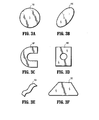
- FIGS. 3A-3F illustrate implantable films 10D-10I which contain glycerol and a biopolymer, and optionally a therapeutic agent.
- films 10D-10I are shown as single layer films, multilayer films are also envisioned. Films 10D-10I maintain flexibility to the extent it can be handled without tearing prior to implantation and can adjust to various amounts of force when implanted.
- FIGS. 3A through 3F show additional embodiments or configurations of the polymeric films described herein.
- the embodiments include polymeric film10D in a circular configuration, polymeric film10E in an oval configuration, polymeric film10F in a U-bend configuration, polymeric film10G in a square configuration having a circular aperture, polymeric film10H in a wave configuration, and polymeric film 10I in an irregular shape configuration.
- Each of the configurations of polymeric film 10D through 10I represent different types of configurations.
- the configurations illustrated are by no means the only possible configurations for polymeric film10.
- One of ordinary skill in the art will appreciate that the specific shape or configuration of polymeric film 10 can vary as desired and that the shapes and configurations depicted in FIG. 1 and FIGS. 3A through 3F are illustrative of only a small number of possible shapes and configurations.
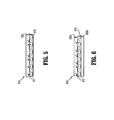
- medical device 410 is a surgical mesh 415 which includes a plurality of spiked naps 417 for grabbing tissue and/or other portions of the mesh.
- Polymeric film layer 420 is positioned on a portion of surgical mesh 415 which does not include spiked naps 417. However, in embodiments, such as those shown in FIG. 5 , polymeric film layer 520 may be positioned on a portion of surgical mesh 515 which includes spiked naps 517.
- medical device 610 may include more than one polymeric film layer 620a and 620b.
- at least one therapeutic agent may be included into any of the medical device, polymeric film layer and combinations thereof for delivery of the therapeutic agent upon implantation.
- the implantable substrates and the polymeric films described herein may be formed by combining any combination of individual parts.
- a polymeric film including glycerol and carboxymethylcellulose may be prepared via solution casting, and a three-dimensional mesh as shown in FIG. 1 may be knit individually.
- the films may be dried and cut or punched to size and connected to a surface of the mesh via any combination of heat, compression, adhesives, mechanical interlocking, and the like.
- the polymeric film layers and the implantable substrates may be formed together.
- the surface of the implantable substrates may be put into contact with the polymeric film layers prior to drying to attach the substrate to the polymeric film layer.
- the substrate and the multiple polymeric film layers may be formed at the same time as a monolithic structure.
- the medical devices described herein may be used to deliver therapeutic agents in the body.
- the delivery of the agents may be immediate or sustained over time.
- the polymeric film layer may consist essentially of a predominant amount of glycerol and a minor amount of a biopolymer, such as carboxymethylcellulose or collagen.
- CMC medium viscosity carboxymethylcellulose
- the 2% CMC stock solution was mixed with varying amounts of glycerol syrup to form 8 separate 100ml solutions of the following concentration ratios: 10:1 (CMC:glycerol); 5:1 (CMC:glycerol); 3:1 (CMC:glycerol); 1:1 (CMC:glycerol); 1:2 (CMC:glycerol); 1:3 (CMC:glycerol); 1:4 (CMC:glycerol); and 100% CMC-no glycerol.
- Each of the eight CMC:glycerol solutions were then poured into silicone frames positioned on top of silicone sheets on a leveling table.
- Each of the silicone frames were about 0.5cm thick and covered an area of about 221 cm 2 .
- Each of the silicone frames and the silicone sheets were clamped to the tables prior to the pouring of the CMC:glycerol solutions.
- the tables were placed into a convection oven set to room temperature and left overnight to dry and form films.
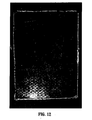
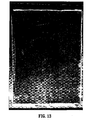
- FIG. 7 Each of the eight CMC:glycerol films are depicted in Figures 7-14 .
- a film is shown which contains only CMC and no glycerol.
- the film was cast from the 2% CMC stock solution as described herein above.
- the dried film consisting of only CMC was wrinkled and not flat or smooth.
- the film was brittle and inflexible and when bent would break or crack.
- films made from a 3:1 mixture of CMC:glycerol and a 1:1 mixture of CMC:glycerol, respectively are less wrinkled or uneven,
- flexibility of the films made from a 3:1 mixture of CMC:glycerol and a 1:1 mixture of CMC:glycerol is also improved making the films easier to handle and less likely to crack.
- films formed from a 1:2 mixture of CMC:glycerol, a mixture of 1:3 CMC:glycerol, and a 1:4 mixture of CMC:glycerol are shown, respectively.
- the films which include a predominant amount of glycerol appear or form less-wrinkled or flatter films, as compared to the films with lesser amounts of glycerol than CMC.
- the elasticity and flexibility of the films in each of Figures 11 , 12 , and 13 is improved by the additional amounts of glycerol as well.
- the films containing higher concentrations of glycerol display a tackiness that may be desired upon attachment to a medical device surface or upon attachment to bodily tissue upon implantation.
- Films formed from a mixture of 1:4 CMC:glycerol displayed a tackiness sufficient to make the film stick to itself when folded over and/or removal from the silicone sheet more difficult.
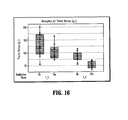
- the sample films were fixed to a piece of cardboard using double-sided tape.
- a sample holder was placed over a portion of the film to further secure the samples.
- a 57R TA probe (made by Texture Technologies Corporation, Scarsdale, New York) was connected a load cell and prompted to approximate the film samples at a rate of 1mm/sec and applied a force of 30g for 5 seconds. After contact with the film samples, the probe was retracted from the film samples at a rate of 10mm/sec. The maximum force of detachment for each group of 8 sample films was recorded.
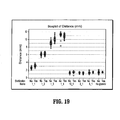
- the sample films were placed over a TA-108s gel film fixture device (made by made by Texture Technologies Corporation, Scarsdale, New York) and secured in place using a circular plate.
- a washer with a 9mm ID was placed in between the film and the circular plate.
- a 3mm circular ball probe was connected a load cell and prompted to travel at a compression direction at a rate of 1 mm/sec. The strength and elongation at burst each group of 8 sample films were recorded.
- the medical device may be rolled prior to being delivered into the body via a cannula, trocar or laparoscopic delivery device.
- the medical devices described herein may be sterilized and packaged into using any suitable sterilization process, i.e., gamma radiation, and any suitable medical device package, i.e., an injectable medical device package.
- any suitable sterilization process i.e., gamma radiation
- any suitable medical device package i.e., an injectable medical device package.
Landscapes
- Health & Medical Sciences (AREA)
- Life Sciences & Earth Sciences (AREA)
- Veterinary Medicine (AREA)
- Public Health (AREA)
- General Health & Medical Sciences (AREA)
- Animal Behavior & Ethology (AREA)
- Epidemiology (AREA)
- Chemical & Material Sciences (AREA)
- Vascular Medicine (AREA)
- Surgery (AREA)
- Engineering & Computer Science (AREA)
- Medicinal Chemistry (AREA)
- Heart & Thoracic Surgery (AREA)
- Dermatology (AREA)
- Molecular Biology (AREA)
- Materials Engineering (AREA)
- Biomedical Technology (AREA)
- Oral & Maxillofacial Surgery (AREA)
- Transplantation (AREA)
- Materials For Medical Uses (AREA)
- Chemical Kinetics & Catalysis (AREA)
- Polymers & Plastics (AREA)
- Organic Chemistry (AREA)
- Laminated Bodies (AREA)
Applications Claiming Priority (1)
| Application Number | Priority Date | Filing Date | Title |
|---|---|---|---|
| US12/896,118 US9572907B2 (en) | 2010-10-01 | 2010-10-01 | Implantable polymeric films |
Publications (3)
| Publication Number | Publication Date |
|---|---|
| EP2465548A2 true EP2465548A2 (de) | 2012-06-20 |
| EP2465548A3 EP2465548A3 (de) | 2014-09-03 |
| EP2465548B1 EP2465548B1 (de) | 2018-11-28 |
Family
ID=44677787
Family Applications (1)
| Application Number | Title | Priority Date | Filing Date |
|---|---|---|---|
| EP11250786.8A Active EP2465548B1 (de) | 2010-10-01 | 2011-09-09 | Implantierbare polymere Folien |
Country Status (5)
| Country | Link |
|---|---|
| US (1) | US9572907B2 (de) |
| EP (1) | EP2465548B1 (de) |
| JP (1) | JP2012075858A (de) |
| AU (1) | AU2011221432A1 (de) |
| CA (1) | CA2744306A1 (de) |
Cited By (8)
| Publication number | Priority date | Publication date | Assignee | Title |
|---|---|---|---|---|
| EP2679253A3 (de) * | 2012-06-28 | 2015-11-11 | Covidien LP | Medizinische Vorrichtungen auf Cellulosebasis |
| EP2983613A1 (de) * | 2013-04-11 | 2016-02-17 | Biom'up | Implantierbare verstärkungsprothese, insbesondere zur verstärkung der bauchdecke |
| US9499636B2 (en) | 2012-06-28 | 2016-11-22 | Covidien Lp | Dissolution of oxidized cellulose and particle preparation by cross-linking with multivalent cations |
| US9522963B2 (en) | 2011-06-29 | 2016-12-20 | Covidien Lp | Dissolution of oxidized cellulose |
| US9687450B2 (en) | 2012-05-31 | 2017-06-27 | Covidien Lp | Oxidized cellulose microspheres |
| US9782430B2 (en) | 2013-03-15 | 2017-10-10 | Covidien Lp | Resorbable oxidized cellulose embolization solution |
| US10328095B2 (en) | 2013-03-15 | 2019-06-25 | Covidien Lp | Resorbable oxidized cellulose embolization microspheres |
| US10413566B2 (en) | 2013-03-15 | 2019-09-17 | Covidien Lp | Thixotropic oxidized cellulose solutions and medical applications thereof |
Families Citing this family (35)
| Publication number | Priority date | Publication date | Assignee | Title |
|---|---|---|---|---|
| FR2962646B1 (fr) | 2010-07-16 | 2012-06-22 | Sofradim Production | Prothese avec element radio-opaque |
| FR2972626B1 (fr) | 2011-03-16 | 2014-04-11 | Sofradim Production | Prothese comprenant un tricot tridimensionnel et ajoure |
| FR2977789B1 (fr) | 2011-07-13 | 2013-07-19 | Sofradim Production | Prothese pour hernie ombilicale |
| FR2977790B1 (fr) | 2011-07-13 | 2013-07-19 | Sofradim Production | Prothese pour hernie ombilicale |
| US9005308B2 (en) | 2011-10-25 | 2015-04-14 | Covidien Lp | Implantable film/mesh composite for passage of tissue therebetween |
| US8932621B2 (en) * | 2011-10-25 | 2015-01-13 | Covidien Lp | Implantable film/mesh composite |
| KR101461652B1 (ko) * | 2011-12-16 | 2014-11-21 | 주식회사 삼양바이오팜 | 유착방지용 조성물, 이를 포함하는 유착방지기능을 갖는 수술용 메쉬 복합체 및 이의 제조 방법 |
| FR2985170B1 (fr) | 2011-12-29 | 2014-01-24 | Sofradim Production | Prothese pour hernie inguinale |
| US10206769B2 (en) | 2012-03-30 | 2019-02-19 | Covidien Lp | Implantable devices including a film providing folding characteristics |
| US9005746B2 (en) * | 2012-05-31 | 2015-04-14 | Covidien Lp | Polymeric ascorbic acid devices for tissue regeneration |
| FR2992662B1 (fr) | 2012-06-28 | 2014-08-08 | Sofradim Production | Tricot avec picots |
| FR2992547B1 (fr) | 2012-06-29 | 2015-04-24 | Sofradim Production | Prothese pour hernie |
| FR2994185B1 (fr) | 2012-08-02 | 2015-07-31 | Sofradim Production | Procede de preparation d’une couche poreuse a base de chitosane |
| FR2995788B1 (fr) | 2012-09-25 | 2014-09-26 | Sofradim Production | Patch hemostatique et procede de preparation |
| FR2995779B1 (fr) | 2012-09-25 | 2015-09-25 | Sofradim Production | Prothese comprenant un treillis et un moyen de consolidation |
| US10130457B2 (en) | 2014-03-05 | 2018-11-20 | Tela Bio, Inc. | Surgical attachment device |
| EP3059255B1 (de) | 2015-02-17 | 2020-05-13 | Sofradim Production | Verfahren zur Herstellung einer Matrix auf Chitosanbasis mit faseroptischem Verstärkungselement |
| EP3085337B1 (de) | 2015-04-24 | 2022-09-14 | Sofradim Production | Prothese zur unterstützung einer bruststruktur |
| EP3106185B1 (de) | 2015-06-19 | 2018-04-25 | Sofradim Production | Synthetische prothese mit einem gewirk und einem nichtporösen film und verfahren zur formung davon |
| WO2017004136A1 (en) | 2015-06-30 | 2017-01-05 | Tela Bio, Inc. | Corner-lock stitch patterns |
| WO2017015421A1 (en) | 2015-07-21 | 2017-01-26 | Tela Bio, Inc. | Compliance control stitching in substrate materials |
| EP3195830B1 (de) | 2016-01-25 | 2020-11-18 | Sofradim Production | Prothese zur hernienreparatur |
| WO2017189772A1 (en) | 2016-04-26 | 2017-11-02 | Tela Bio, Inc. | Hernia repair grafts having anti-adhesion barriers |
| JP7062367B2 (ja) | 2016-04-27 | 2022-05-06 | サンコ テキスタイル イスレットメレリ サン ベ ティク エーエス | 細菌バイオポリマーを含み、特有の外観を有する染色布帛を製造する方法 |
| EP3312325B1 (de) | 2016-10-21 | 2021-09-22 | Sofradim Production | Verfahren zur herstellung eines netzes mit einem daran befestigten nahtmaterial mit widerhaken und dadurch erhaltenes netz |
| EP3398554B1 (de) | 2017-05-02 | 2025-06-25 | Sofradim Production | Prothese zur leistenbruch reparatur |
| EP3399084B1 (de) | 2017-05-02 | 2022-06-29 | Sofradim Production | Verfahren zur erzeugung eines basisgewirks zur herstellung von hernienprothesen |
| EP3697338A1 (de) | 2017-10-19 | 2020-08-26 | C.R. Bard, Inc. | Selbstgreifende hernienprothese |
| EP3761963B1 (de) | 2018-03-09 | 2025-01-22 | Tela Bio, Inc. | Chirurgisches reparaturtransplantat |
| IL262716A (en) | 2018-11-01 | 2018-11-29 | Omrix Biopharmaceuticals Ltd | Oxidized cellulose preparations |
| JP7303511B2 (ja) * | 2019-02-18 | 2023-07-05 | 青葉化成株式会社 | 医療材料およびその製造方法 |
| US11446130B2 (en) | 2019-03-08 | 2022-09-20 | Tela Bio, Inc. | Textured medical textiles |
| US12064330B2 (en) | 2020-04-28 | 2024-08-20 | Covidien Lp | Implantable prothesis for minimally invasive hernia repair |
| US11944825B2 (en) | 2021-01-06 | 2024-04-02 | Medtronic, Inc | Surgical system and methods of use |
| EP4294467A4 (de) * | 2021-02-16 | 2025-01-08 | Cornell University | Penetrationsresistente polysaccharid-glycerol-zusammensetzungen und daraus hergestellte chirurgische barrieren |
Citations (4)
| Publication number | Priority date | Publication date | Assignee | Title |
|---|---|---|---|---|
| FR2601371A1 (fr) | 1986-07-11 | 1988-01-15 | Merieux Inst | Procede de traitement du collagene en vue, notamment, d'en faciliter la reticulation et collagene obtenu par application dudit procede |
| US6596002B2 (en) | 2000-04-20 | 2003-07-22 | Sofradim Production | Abdominal wall reinforcement for the treatment of inguinal hernias by an anterior route |
| US7021086B2 (en) | 2001-10-05 | 2006-04-04 | Sofradim Production | Three-dimensional filet stitch fabric wall reinforcement |
| US7331199B2 (en) | 2000-04-20 | 2008-02-19 | Sofradim Production | Adhering prosthetic knitting fabric, method for making same and reinforcement implant for treating parietal deficiencies |
Family Cites Families (46)
| Publication number | Priority date | Publication date | Assignee | Title |
|---|---|---|---|---|
| US3887699A (en) | 1969-03-24 | 1975-06-03 | Seymour Yolles | Biodegradable polymeric article for dispensing drugs |
| IE52535B1 (en) | 1981-02-16 | 1987-12-09 | Ici Plc | Continuous release pharmaceutical compositions |
| CA1202904A (en) * | 1983-11-21 | 1986-04-08 | Brian G. Sparkes | Chitosan based wound dressing materials |
| US5108424A (en) | 1984-01-30 | 1992-04-28 | Meadox Medicals, Inc. | Collagen-impregnated dacron graft |
| IL74179A (en) | 1984-01-30 | 1992-05-25 | Meadox Medicals Inc | Collagen synthetic vascular graft |
| IT1254170B (it) | 1991-12-18 | 1995-09-11 | Mini Ricerca Scient Tecnolog | Membrane composite per la rigenerazione guidata di tessuti |
| WO1996040302A1 (en) | 1995-06-07 | 1996-12-19 | W.L. Gore & Associates, Inc. | Bioabsorbable space filling soft tissue prosthesis |
| US6500777B1 (en) | 1996-06-28 | 2002-12-31 | Ethicon, Inc. | Bioresorbable oxidized cellulose composite material for prevention of postsurgical adhesions |
| US5800832A (en) | 1996-10-18 | 1998-09-01 | Virotex Corporation | Bioerodable film for delivery of pharmaceutical compounds to mucosal surfaces |
| FR2766716B1 (fr) | 1997-08-01 | 2000-02-18 | Cogent Sarl | Prothese composite pour la prevention des adherences post-chirurgicales et son procede d'obtention |
| US7985415B2 (en) | 1997-09-10 | 2011-07-26 | Rutgers, The State University Of New Jersey | Medical devices employing novel polymers |
| US20040018241A1 (en) * | 1997-09-26 | 2004-01-29 | Noven Pharmaceuticals, Inc. | Bioadhesive compositions and methods for topical administration of active agents |
| FR2783412B1 (fr) | 1998-09-18 | 2000-12-15 | Lhd Lab Hygiene Dietetique | Compresse non adherente sterile |
| US6592853B2 (en) * | 1999-03-10 | 2003-07-15 | Block Drug Company, Inc. | Dentin desensitizer containing stannous fluoride |
| US20020131988A1 (en) | 1999-12-16 | 2002-09-19 | Foster Todd P. | Pharmaceutical implant containing immediate-release and sustained-release components and method of administration |
| AU9576501A (en) | 2000-10-23 | 2002-05-06 | Tissuemed Ltd | Self-adhesive hydratable matrix for topical therapeutic use |
| US7041868B2 (en) | 2000-12-29 | 2006-05-09 | Kimberly-Clark Worldwide, Inc. | Bioabsorbable wound dressing |
| US7357949B2 (en) | 2001-12-21 | 2008-04-15 | Agion Technologies Inc. | Encapsulated inorganic antimicrobial additive for controlled release |
| US7279177B2 (en) | 2002-06-28 | 2007-10-09 | Ethicon, Inc. | Hemostatic wound dressings and methods of making same |
| US7252837B2 (en) | 2002-06-28 | 2007-08-07 | Ethicon, Inc. | Hemostatic wound dressing and method of making same |
| CN1684641A (zh) | 2002-09-26 | 2005-10-19 | 血管内装置有限公司 | 用于递送丝裂霉素通过洗脱生物相容可移植医疗器件的装置和方法 |
| FR2846557B1 (fr) | 2002-10-30 | 2007-06-08 | Statice Sante | Structure implantable pour la liberation prolongee et controlee d'un principe actif |
| DE10318801A1 (de) | 2003-04-17 | 2004-11-04 | Aesculap Ag & Co. Kg | Flächiges Implantat und seine Verwendung in der Chirurgie |
| US7276246B2 (en) | 2003-05-09 | 2007-10-02 | Cephalon, Inc. | Dissolvable backing layer for use with a transmucosal delivery device |
| FR2857851B1 (fr) | 2003-07-23 | 2006-02-24 | Cie De Rech En Composants Impl | Implant prothetique formant ecran anti-adherence utilise notamment dans le domaine de la chirurgie parietale |
| FR2863502B1 (fr) | 2003-12-15 | 2007-03-16 | Cousin Biotech | Implant textile adhesif de refection parietale |
| BRPI0510042B8 (pt) | 2004-04-20 | 2021-06-22 | Genzyme Corp | implante semelhante à malha cirúrgica |
| US7758654B2 (en) | 2004-05-20 | 2010-07-20 | Kensey Nash Corporation | Anti-adhesion device |
| WO2006020922A2 (en) | 2004-08-13 | 2006-02-23 | Mast Biosurgery Ag | Surgical prosthesis having biodegradable and nonbiodegradable regions |
| WO2006037049A2 (en) | 2004-09-28 | 2006-04-06 | Atrium Medical Corporation | Application of a coating on a medical device |
| US9592324B2 (en) | 2006-11-06 | 2017-03-14 | Atrium Medical Corporation | Tissue separating device with reinforced support for anchoring mechanisms |
| US7556598B2 (en) | 2005-04-04 | 2009-07-07 | Boston Scientific Scimed, Inc. | Dissolvable protective treatment for an implantable supportive sling |
| KR20080008364A (ko) | 2005-05-05 | 2008-01-23 | 헤모텍 아게 | 관 스텐트의 전면 코팅 |
| CA2616865C (en) | 2005-07-28 | 2014-07-08 | Carnegie Mellon University | Biocompatible polymers and methods of use |
| US20070098779A1 (en) * | 2005-11-01 | 2007-05-03 | Andries Hanzen | Films and capsules made from modified carboxymethylcellulose materials |
| JP5367692B2 (ja) | 2006-02-08 | 2013-12-11 | タイレックス・インコーポレイテッド | 一時的補剛メッシュ補綴具 |
| US20070244548A1 (en) | 2006-02-27 | 2007-10-18 | Cook Incorporated | Sugar-and drug-coated medical device |
| US9492596B2 (en) | 2006-11-06 | 2016-11-15 | Atrium Medical Corporation | Barrier layer with underlying medical device and one or more reinforcing support structures |
| US20090036996A1 (en) | 2007-08-03 | 2009-02-05 | Roeber Peter J | Knit PTFE Articles and Mesh |
| US10500309B2 (en) | 2007-10-05 | 2019-12-10 | Cook Biotech Incorporated | Absorbable adhesives and their formulation for use in medical applications |
| US9056150B2 (en) * | 2007-12-04 | 2015-06-16 | Warsaw Orthopedic, Inc. | Compositions for treating bone defects |
| US20090163936A1 (en) | 2007-12-21 | 2009-06-25 | Chunlin Yang | Coated Tissue Engineering Scaffold |
| DE102008050122A1 (de) | 2008-10-06 | 2010-04-08 | Global Medical Consulting Gmbh | Postoperative Adhäsionsprophylaxe |
| MX2011003618A (es) | 2008-10-09 | 2011-06-16 | Tufts College | Peliculas de seda modificadas que contienen glicerol. |
| EP2395941B1 (de) | 2009-02-11 | 2017-01-11 | Nanyang Technological University | Mehrschichtige chirurgische prothese |
| DE102009015302A1 (de) * | 2009-03-19 | 2010-09-23 | Aesculap Ag | Chirurgisches Implantat, insbesondere zur Versorgung von Hernien |
-
2010
- 2010-10-01 US US12/896,118 patent/US9572907B2/en active Active
-
2011
- 2011-06-27 CA CA2744306A patent/CA2744306A1/en not_active Abandoned
- 2011-07-22 JP JP2011161080A patent/JP2012075858A/ja active Pending
- 2011-08-30 AU AU2011221432A patent/AU2011221432A1/en not_active Abandoned
- 2011-09-09 EP EP11250786.8A patent/EP2465548B1/de active Active
Patent Citations (5)
| Publication number | Priority date | Publication date | Assignee | Title |
|---|---|---|---|---|
| FR2601371A1 (fr) | 1986-07-11 | 1988-01-15 | Merieux Inst | Procede de traitement du collagene en vue, notamment, d'en faciliter la reticulation et collagene obtenu par application dudit procede |
| US4931546A (en) | 1986-07-11 | 1990-06-05 | Imedex | Process for the treatment of collagen, notably for facilitating its cross-linking, and the collagen obtained by the application of the said process |
| US6596002B2 (en) | 2000-04-20 | 2003-07-22 | Sofradim Production | Abdominal wall reinforcement for the treatment of inguinal hernias by an anterior route |
| US7331199B2 (en) | 2000-04-20 | 2008-02-19 | Sofradim Production | Adhering prosthetic knitting fabric, method for making same and reinforcement implant for treating parietal deficiencies |
| US7021086B2 (en) | 2001-10-05 | 2006-04-04 | Sofradim Production | Three-dimensional filet stitch fabric wall reinforcement |
Cited By (18)
| Publication number | Priority date | Publication date | Assignee | Title |
|---|---|---|---|---|
| US9522963B2 (en) | 2011-06-29 | 2016-12-20 | Covidien Lp | Dissolution of oxidized cellulose |
| US11873350B2 (en) | 2011-06-29 | 2024-01-16 | Covidien Lp | Dissolution of oxidized cellulose |
| US10982012B2 (en) | 2011-06-29 | 2021-04-20 | Covidien Lp | Dissolution of oxidized cellulose |
| US10188608B2 (en) | 2012-05-31 | 2019-01-29 | Covidien Lp | Oxidized cellulose microspheres |
| US10426730B2 (en) | 2012-05-31 | 2019-10-01 | Covidien Lp | Oxidized cellulose microspheres |
| US9687450B2 (en) | 2012-05-31 | 2017-06-27 | Covidien Lp | Oxidized cellulose microspheres |
| US11065204B2 (en) | 2012-05-31 | 2021-07-20 | Covidien Lp | Oxidized cellulose microspheres |
| AU2013206593B2 (en) * | 2012-06-28 | 2016-06-16 | Covidien Lp | Medical devices based on oxidized cellulose |
| EP2679253A3 (de) * | 2012-06-28 | 2015-11-11 | Covidien LP | Medizinische Vorrichtungen auf Cellulosebasis |
| US10040871B2 (en) | 2012-06-28 | 2018-08-07 | Covidien Lp | Medical devices based on oxidized cellulose |
| US10584184B2 (en) | 2012-06-28 | 2020-03-10 | Covidien Lp | Medical devices based on oxidized cellulose |
| US9499636B2 (en) | 2012-06-28 | 2016-11-22 | Covidien Lp | Dissolution of oxidized cellulose and particle preparation by cross-linking with multivalent cations |
| US11053323B2 (en) | 2012-06-28 | 2021-07-06 | Covidien Lp | Dissolution of oxidized cellulose and particle preparation by cross-linking with multivalent cations |
| US10328095B2 (en) | 2013-03-15 | 2019-06-25 | Covidien Lp | Resorbable oxidized cellulose embolization microspheres |
| US10413566B2 (en) | 2013-03-15 | 2019-09-17 | Covidien Lp | Thixotropic oxidized cellulose solutions and medical applications thereof |
| US9782430B2 (en) | 2013-03-15 | 2017-10-10 | Covidien Lp | Resorbable oxidized cellulose embolization solution |
| US11872244B2 (en) | 2013-03-15 | 2024-01-16 | Covidien Lp | Thixotropic oxidized cellulose solutions and medical applications thereof |
| EP2983613A1 (de) * | 2013-04-11 | 2016-02-17 | Biom'up | Implantierbare verstärkungsprothese, insbesondere zur verstärkung der bauchdecke |
Also Published As
| Publication number | Publication date |
|---|---|
| JP2012075858A (ja) | 2012-04-19 |
| US20120082712A1 (en) | 2012-04-05 |
| US9572907B2 (en) | 2017-02-21 |
| EP2465548B1 (de) | 2018-11-28 |
| AU2011221432A1 (en) | 2012-04-19 |
| EP2465548A3 (de) | 2014-09-03 |
| CA2744306A1 (en) | 2012-04-01 |
Similar Documents
| Publication | Publication Date | Title |
|---|---|---|
| EP2465548B1 (de) | Implantierbare polymere Folien | |
| US9211175B2 (en) | Self-detachable medical devices | |
| US9364310B2 (en) | Implantable devices including a mesh and a pivotable film | |
| US9005308B2 (en) | Implantable film/mesh composite for passage of tissue therebetween | |
| US8932621B2 (en) | Implantable film/mesh composite | |
| US9179994B2 (en) | Implantable film/mesh composite | |
| US20130218125A1 (en) | Implantable Devices Including A Mesh And A Perforated Film | |
| EP2644160B1 (de) | Implantierbare Vorrichtungen mit einem Netz und einer ausdehnbaren Folie | |
| EP2644161B1 (de) | Implantierbare Vorrichtungen mit Film Falteigenschaften | |
| CN117715605A (zh) | 包括网状物和泡沫的复合植入物以及与其相关的方法 | |
| EP2668968B1 (de) | Polymere Ascorbinsäurevorrichtungen zur Geweberegeneration |
Legal Events
| Date | Code | Title | Description |
|---|---|---|---|
| PUAI | Public reference made under article 153(3) epc to a published international application that has entered the european phase |
Free format text: ORIGINAL CODE: 0009012 |
|
| AK | Designated contracting states |
Kind code of ref document: A2 Designated state(s): AL AT BE BG CH CY CZ DE DK EE ES FI FR GB GR HR HU IE IS IT LI LT LU LV MC MK MT NL NO PL PT RO RS SE SI SK SM TR |
|
| AX | Request for extension of the european patent |
Extension state: BA ME |
|
| RAP1 | Party data changed (applicant data changed or rights of an application transferred) |
Owner name: COVIDIEN LP |
|
| PUAL | Search report despatched |
Free format text: ORIGINAL CODE: 0009013 |
|
| AK | Designated contracting states |
Kind code of ref document: A3 Designated state(s): AL AT BE BG CH CY CZ DE DK EE ES FI FR GB GR HR HU IE IS IT LI LT LU LV MC MK MT NL NO PL PT RO RS SE SI SK SM TR |
|
| AX | Request for extension of the european patent |
Extension state: BA ME |
|
| RIC1 | Information provided on ipc code assigned before grant |
Ipc: A61L 27/34 20060101ALI20140728BHEP Ipc: A61L 31/16 20060101ALI20140728BHEP Ipc: A61L 31/10 20060101AFI20140728BHEP Ipc: A61L 31/14 20060101ALI20140728BHEP Ipc: A61L 27/50 20060101ALI20140728BHEP |
|
| 17P | Request for examination filed |
Effective date: 20150303 |
|
| RBV | Designated contracting states (corrected) |
Designated state(s): AL AT BE BG CH CY CZ DE DK EE ES FI FR GB GR HR HU IE IS IT LI LT LU LV MC MK MT NL NO PL PT RO RS SE SI SK SM TR |
|
| STAA | Information on the status of an ep patent application or granted ep patent |
Free format text: STATUS: EXAMINATION IS IN PROGRESS |
|
| 17Q | First examination report despatched |
Effective date: 20170102 |
|
| GRAP | Despatch of communication of intention to grant a patent |
Free format text: ORIGINAL CODE: EPIDOSNIGR1 |
|
| STAA | Information on the status of an ep patent application or granted ep patent |
Free format text: STATUS: GRANT OF PATENT IS INTENDED |
|
| INTG | Intention to grant announced |
Effective date: 20180801 |
|
| GRAS | Grant fee paid |
Free format text: ORIGINAL CODE: EPIDOSNIGR3 |
|
| GRAA | (expected) grant |
Free format text: ORIGINAL CODE: 0009210 |
|
| STAA | Information on the status of an ep patent application or granted ep patent |
Free format text: STATUS: THE PATENT HAS BEEN GRANTED |
|
| AK | Designated contracting states |
Kind code of ref document: B1 Designated state(s): AL AT BE BG CH CY CZ DE DK EE ES FI FR GB GR HR HU IE IS IT LI LT LU LV MC MK MT NL NO PL PT RO RS SE SI SK SM TR |
|
| REG | Reference to a national code |
Ref country code: GB Ref legal event code: FG4D |
|
| REG | Reference to a national code |
Ref country code: CH Ref legal event code: EP |
|
| REG | Reference to a national code |
Ref country code: AT Ref legal event code: REF Ref document number: 1069488 Country of ref document: AT Kind code of ref document: T Effective date: 20181215 |
|
| REG | Reference to a national code |
Ref country code: DE Ref legal event code: R096 Ref document number: 602011054264 Country of ref document: DE |
|
| REG | Reference to a national code |
Ref country code: IE Ref legal event code: FG4D |
|
| REG | Reference to a national code |
Ref country code: NL Ref legal event code: MP Effective date: 20181128 |
|
| REG | Reference to a national code |
Ref country code: LT Ref legal event code: MG4D |
|
| REG | Reference to a national code |
Ref country code: AT Ref legal event code: MK05 Ref document number: 1069488 Country of ref document: AT Kind code of ref document: T Effective date: 20181128 |
|
| PG25 | Lapsed in a contracting state [announced via postgrant information from national office to epo] |
Ref country code: NO Free format text: LAPSE BECAUSE OF FAILURE TO SUBMIT A TRANSLATION OF THE DESCRIPTION OR TO PAY THE FEE WITHIN THE PRESCRIBED TIME-LIMIT Effective date: 20190228 Ref country code: HR Free format text: LAPSE BECAUSE OF FAILURE TO SUBMIT A TRANSLATION OF THE DESCRIPTION OR TO PAY THE FEE WITHIN THE PRESCRIBED TIME-LIMIT Effective date: 20181128 Ref country code: LT Free format text: LAPSE BECAUSE OF FAILURE TO SUBMIT A TRANSLATION OF THE DESCRIPTION OR TO PAY THE FEE WITHIN THE PRESCRIBED TIME-LIMIT Effective date: 20181128 Ref country code: LV Free format text: LAPSE BECAUSE OF FAILURE TO SUBMIT A TRANSLATION OF THE DESCRIPTION OR TO PAY THE FEE WITHIN THE PRESCRIBED TIME-LIMIT Effective date: 20181128 Ref country code: IS Free format text: LAPSE BECAUSE OF FAILURE TO SUBMIT A TRANSLATION OF THE DESCRIPTION OR TO PAY THE FEE WITHIN THE PRESCRIBED TIME-LIMIT Effective date: 20190328 Ref country code: ES Free format text: LAPSE BECAUSE OF FAILURE TO SUBMIT A TRANSLATION OF THE DESCRIPTION OR TO PAY THE FEE WITHIN THE PRESCRIBED TIME-LIMIT Effective date: 20181128 Ref country code: BG Free format text: LAPSE BECAUSE OF FAILURE TO SUBMIT A TRANSLATION OF THE DESCRIPTION OR TO PAY THE FEE WITHIN THE PRESCRIBED TIME-LIMIT Effective date: 20190228 Ref country code: FI Free format text: LAPSE BECAUSE OF FAILURE TO SUBMIT A TRANSLATION OF THE DESCRIPTION OR TO PAY THE FEE WITHIN THE PRESCRIBED TIME-LIMIT Effective date: 20181128 Ref country code: AT Free format text: LAPSE BECAUSE OF FAILURE TO SUBMIT A TRANSLATION OF THE DESCRIPTION OR TO PAY THE FEE WITHIN THE PRESCRIBED TIME-LIMIT Effective date: 20181128 |
|
| PG25 | Lapsed in a contracting state [announced via postgrant information from national office to epo] |
Ref country code: RS Free format text: LAPSE BECAUSE OF FAILURE TO SUBMIT A TRANSLATION OF THE DESCRIPTION OR TO PAY THE FEE WITHIN THE PRESCRIBED TIME-LIMIT Effective date: 20181128 Ref country code: GR Free format text: LAPSE BECAUSE OF FAILURE TO SUBMIT A TRANSLATION OF THE DESCRIPTION OR TO PAY THE FEE WITHIN THE PRESCRIBED TIME-LIMIT Effective date: 20190301 Ref country code: AL Free format text: LAPSE BECAUSE OF FAILURE TO SUBMIT A TRANSLATION OF THE DESCRIPTION OR TO PAY THE FEE WITHIN THE PRESCRIBED TIME-LIMIT Effective date: 20181128 Ref country code: PT Free format text: LAPSE BECAUSE OF FAILURE TO SUBMIT A TRANSLATION OF THE DESCRIPTION OR TO PAY THE FEE WITHIN THE PRESCRIBED TIME-LIMIT Effective date: 20190328 Ref country code: SE Free format text: LAPSE BECAUSE OF FAILURE TO SUBMIT A TRANSLATION OF THE DESCRIPTION OR TO PAY THE FEE WITHIN THE PRESCRIBED TIME-LIMIT Effective date: 20181128 |
|
| PG25 | Lapsed in a contracting state [announced via postgrant information from national office to epo] |
Ref country code: NL Free format text: LAPSE BECAUSE OF FAILURE TO SUBMIT A TRANSLATION OF THE DESCRIPTION OR TO PAY THE FEE WITHIN THE PRESCRIBED TIME-LIMIT Effective date: 20181128 |
|
| PG25 | Lapsed in a contracting state [announced via postgrant information from national office to epo] |
Ref country code: IT Free format text: LAPSE BECAUSE OF FAILURE TO SUBMIT A TRANSLATION OF THE DESCRIPTION OR TO PAY THE FEE WITHIN THE PRESCRIBED TIME-LIMIT Effective date: 20181128 Ref country code: DK Free format text: LAPSE BECAUSE OF FAILURE TO SUBMIT A TRANSLATION OF THE DESCRIPTION OR TO PAY THE FEE WITHIN THE PRESCRIBED TIME-LIMIT Effective date: 20181128 Ref country code: CZ Free format text: LAPSE BECAUSE OF FAILURE TO SUBMIT A TRANSLATION OF THE DESCRIPTION OR TO PAY THE FEE WITHIN THE PRESCRIBED TIME-LIMIT Effective date: 20181128 Ref country code: PL Free format text: LAPSE BECAUSE OF FAILURE TO SUBMIT A TRANSLATION OF THE DESCRIPTION OR TO PAY THE FEE WITHIN THE PRESCRIBED TIME-LIMIT Effective date: 20181128 |
|
| REG | Reference to a national code |
Ref country code: DE Ref legal event code: R097 Ref document number: 602011054264 Country of ref document: DE |
|
| PG25 | Lapsed in a contracting state [announced via postgrant information from national office to epo] |
Ref country code: SK Free format text: LAPSE BECAUSE OF FAILURE TO SUBMIT A TRANSLATION OF THE DESCRIPTION OR TO PAY THE FEE WITHIN THE PRESCRIBED TIME-LIMIT Effective date: 20181128 Ref country code: RO Free format text: LAPSE BECAUSE OF FAILURE TO SUBMIT A TRANSLATION OF THE DESCRIPTION OR TO PAY THE FEE WITHIN THE PRESCRIBED TIME-LIMIT Effective date: 20181128 Ref country code: EE Free format text: LAPSE BECAUSE OF FAILURE TO SUBMIT A TRANSLATION OF THE DESCRIPTION OR TO PAY THE FEE WITHIN THE PRESCRIBED TIME-LIMIT Effective date: 20181128 Ref country code: SM Free format text: LAPSE BECAUSE OF FAILURE TO SUBMIT A TRANSLATION OF THE DESCRIPTION OR TO PAY THE FEE WITHIN THE PRESCRIBED TIME-LIMIT Effective date: 20181128 |
|
| PLBE | No opposition filed within time limit |
Free format text: ORIGINAL CODE: 0009261 |
|
| STAA | Information on the status of an ep patent application or granted ep patent |
Free format text: STATUS: NO OPPOSITION FILED WITHIN TIME LIMIT |
|
| PG25 | Lapsed in a contracting state [announced via postgrant information from national office to epo] |
Ref country code: SI Free format text: LAPSE BECAUSE OF FAILURE TO SUBMIT A TRANSLATION OF THE DESCRIPTION OR TO PAY THE FEE WITHIN THE PRESCRIBED TIME-LIMIT Effective date: 20181128 |
|
| 26N | No opposition filed |
Effective date: 20190829 |
|
| PG25 | Lapsed in a contracting state [announced via postgrant information from national office to epo] |
Ref country code: TR Free format text: LAPSE BECAUSE OF FAILURE TO SUBMIT A TRANSLATION OF THE DESCRIPTION OR TO PAY THE FEE WITHIN THE PRESCRIBED TIME-LIMIT Effective date: 20181128 |
|
| PG25 | Lapsed in a contracting state [announced via postgrant information from national office to epo] |
Ref country code: MC Free format text: LAPSE BECAUSE OF FAILURE TO SUBMIT A TRANSLATION OF THE DESCRIPTION OR TO PAY THE FEE WITHIN THE PRESCRIBED TIME-LIMIT Effective date: 20181128 |
|
| REG | Reference to a national code |
Ref country code: CH Ref legal event code: PL |
|
| PG25 | Lapsed in a contracting state [announced via postgrant information from national office to epo] |
Ref country code: IE Free format text: LAPSE BECAUSE OF NON-PAYMENT OF DUE FEES Effective date: 20190909 Ref country code: CH Free format text: LAPSE BECAUSE OF NON-PAYMENT OF DUE FEES Effective date: 20190930 Ref country code: LU Free format text: LAPSE BECAUSE OF NON-PAYMENT OF DUE FEES Effective date: 20190909 Ref country code: LI Free format text: LAPSE BECAUSE OF NON-PAYMENT OF DUE FEES Effective date: 20190930 |
|
| REG | Reference to a national code |
Ref country code: BE Ref legal event code: MM Effective date: 20190930 |
|
| PG25 | Lapsed in a contracting state [announced via postgrant information from national office to epo] |
Ref country code: BE Free format text: LAPSE BECAUSE OF NON-PAYMENT OF DUE FEES Effective date: 20190930 |
|
| GBPC | Gb: european patent ceased through non-payment of renewal fee |
Effective date: 20190909 |
|
| PG25 | Lapsed in a contracting state [announced via postgrant information from national office to epo] |
Ref country code: GB Free format text: LAPSE BECAUSE OF NON-PAYMENT OF DUE FEES Effective date: 20190909 |
|
| PG25 | Lapsed in a contracting state [announced via postgrant information from national office to epo] |
Ref country code: CY Free format text: LAPSE BECAUSE OF FAILURE TO SUBMIT A TRANSLATION OF THE DESCRIPTION OR TO PAY THE FEE WITHIN THE PRESCRIBED TIME-LIMIT Effective date: 20181128 |
|
| PG25 | Lapsed in a contracting state [announced via postgrant information from national office to epo] |
Ref country code: HU Free format text: LAPSE BECAUSE OF FAILURE TO SUBMIT A TRANSLATION OF THE DESCRIPTION OR TO PAY THE FEE WITHIN THE PRESCRIBED TIME-LIMIT; INVALID AB INITIO Effective date: 20110909 Ref country code: MT Free format text: LAPSE BECAUSE OF FAILURE TO SUBMIT A TRANSLATION OF THE DESCRIPTION OR TO PAY THE FEE WITHIN THE PRESCRIBED TIME-LIMIT Effective date: 20181128 |
|
| PG25 | Lapsed in a contracting state [announced via postgrant information from national office to epo] |
Ref country code: MK Free format text: LAPSE BECAUSE OF FAILURE TO SUBMIT A TRANSLATION OF THE DESCRIPTION OR TO PAY THE FEE WITHIN THE PRESCRIBED TIME-LIMIT Effective date: 20181128 |
|
| PGFP | Annual fee paid to national office [announced via postgrant information from national office to epo] |
Ref country code: DE Payment date: 20250820 Year of fee payment: 15 |
|
| PGFP | Annual fee paid to national office [announced via postgrant information from national office to epo] |
Ref country code: FR Payment date: 20250820 Year of fee payment: 15 |