EP2468038B1 - Utilisation d'informations d'historique de cellules visitées d'équipement utilisateur pour identifier une station de base de rattachement - Google Patents
Utilisation d'informations d'historique de cellules visitées d'équipement utilisateur pour identifier une station de base de rattachement Download PDFInfo
- Publication number
- EP2468038B1 EP2468038B1 EP10747695.4A EP10747695A EP2468038B1 EP 2468038 B1 EP2468038 B1 EP 2468038B1 EP 10747695 A EP10747695 A EP 10747695A EP 2468038 B1 EP2468038 B1 EP 2468038B1
- Authority
- EP
- European Patent Office
- Prior art keywords
- cell
- base station
- cells
- access mode
- mobile communications
- Prior art date
- Legal status (The legal status is an assumption and is not a legal conclusion. Google has not performed a legal analysis and makes no representation as to the accuracy of the status listed.)
- Active
Links
Images




Classifications
-
- H—ELECTRICITY
- H04—ELECTRIC COMMUNICATION TECHNIQUE
- H04W—WIRELESS COMMUNICATION NETWORKS
- H04W36/00—Hand-off or reselection arrangements
-
- H—ELECTRICITY
- H04—ELECTRIC COMMUNICATION TECHNIQUE
- H04W—WIRELESS COMMUNICATION NETWORKS
- H04W36/00—Hand-off or reselection arrangements
- H04W36/0005—Control or signalling for completing the hand-off
- H04W36/0055—Transmission or use of information for re-establishing the radio link
- H04W36/0061—Transmission or use of information for re-establishing the radio link of neighbour cell information
-
- H—ELECTRICITY
- H04—ELECTRIC COMMUNICATION TECHNIQUE
- H04W—WIRELESS COMMUNICATION NETWORKS
- H04W48/00—Access restriction; Network selection; Access point selection
- H04W48/18—Selecting a network or a communication service
-
- H—ELECTRICITY
- H04—ELECTRIC COMMUNICATION TECHNIQUE
- H04W—WIRELESS COMMUNICATION NETWORKS
- H04W36/00—Hand-off or reselection arrangements
- H04W36/0005—Control or signalling for completing the hand-off
- H04W36/0083—Determination of parameters used for hand-off, e.g. generation or modification of neighbour cell lists
- H04W36/00837—Determination of triggering parameters for hand-off
- H04W36/008375—Determination of triggering parameters for hand-off based on historical data
-
- H—ELECTRICITY
- H04—ELECTRIC COMMUNICATION TECHNIQUE
- H04W—WIRELESS COMMUNICATION NETWORKS
- H04W36/00—Hand-off or reselection arrangements
- H04W36/08—Reselecting an access point
-
- H—ELECTRICITY
- H04—ELECTRIC COMMUNICATION TECHNIQUE
- H04W—WIRELESS COMMUNICATION NETWORKS
- H04W48/00—Access restriction; Network selection; Access point selection
-
- H—ELECTRICITY
- H04—ELECTRIC COMMUNICATION TECHNIQUE
- H04W—WIRELESS COMMUNICATION NETWORKS
- H04W48/00—Access restriction; Network selection; Access point selection
- H04W48/02—Access restriction performed under specific conditions
-
- H—ELECTRICITY
- H04—ELECTRIC COMMUNICATION TECHNIQUE
- H04W—WIRELESS COMMUNICATION NETWORKS
- H04W48/00—Access restriction; Network selection; Access point selection
- H04W48/08—Access restriction or access information delivery, e.g. discovery data delivery
-
- H—ELECTRICITY
- H04—ELECTRIC COMMUNICATION TECHNIQUE
- H04W—WIRELESS COMMUNICATION NETWORKS
- H04W48/00—Access restriction; Network selection; Access point selection
- H04W48/08—Access restriction or access information delivery, e.g. discovery data delivery
- H04W48/10—Access restriction or access information delivery, e.g. discovery data delivery using broadcasted information
-
- H—ELECTRICITY
- H04—ELECTRIC COMMUNICATION TECHNIQUE
- H04W—WIRELESS COMMUNICATION NETWORKS
- H04W48/00—Access restriction; Network selection; Access point selection
- H04W48/20—Selecting an access point
-
- H—ELECTRICITY
- H04—ELECTRIC COMMUNICATION TECHNIQUE
- H04W—WIRELESS COMMUNICATION NETWORKS
- H04W8/00—Network data management
- H04W8/18—Processing of user or subscriber data, e.g. subscribed services, user preferences or user profiles; Transfer of user or subscriber data
- H04W8/183—Processing at user equipment or user record carrier
-
- H—ELECTRICITY
- H04—ELECTRIC COMMUNICATION TECHNIQUE
- H04W—WIRELESS COMMUNICATION NETWORKS
- H04W84/00—Network topologies
- H04W84/02—Hierarchically pre-organised networks, e.g. paging networks, cellular networks, WLAN [Wireless Local Area Network] or WLL [Wireless Local Loop]
- H04W84/04—Large scale networks; Deep hierarchical networks
- H04W84/042—Public Land Mobile systems, e.g. cellular systems
- H04W84/045—Public Land Mobile systems, e.g. cellular systems using private Base Stations, e.g. femto Base Stations, home Node B
-
- H—ELECTRICITY
- H04—ELECTRIC COMMUNICATION TECHNIQUE
- H04W—WIRELESS COMMUNICATION NETWORKS
- H04W88/00—Devices specially adapted for wireless communication networks, e.g. terminals, base stations or access point devices
- H04W88/02—Terminal devices
-
- H—ELECTRICITY
- H04—ELECTRIC COMMUNICATION TECHNIQUE
- H04W—WIRELESS COMMUNICATION NETWORKS
- H04W88/00—Devices specially adapted for wireless communication networks, e.g. terminals, base stations or access point devices
- H04W88/08—Access point devices
Definitions
- the present invention relates to mobile telecommunications networks, particularly but not exclusively networks operating according to the 3GPP standards or equivalents or derivatives thereof.
- Mobile telecommunications networks enable users of User Equipment (UE) to communicate with other such users via one of a number of base stations and a core network.
- Each base station defines a number of cells of the network.
- UE User Equipment
- RRC Radio Resource Control
- a UE is registered with the network and has an RRC (Radio Resource Control) connection with a base station so that the network knows to which cell the UE belongs and can transmit data to and receive data from the UE.
- RRC Radio Resource Control
- E-UTRAN Long Term Evolution
- the handover procedure allows UEs to have service continuity while moving between LTE cells and when moving to cells of other RATs (Radio Access Technologies), such as UTRAN cells and GERAN cells.
- the serving cell Prior to handover, the serving cell requests the UE to make measurements on neighbouring cells identified on a cell list and to return the measurement results to the serving cell. The serving cell then uses these measurement results to select the target cell for the handover. This selection is usually based on the services that the candidate cells can provide and the signal quality measurements obtained from the UE.
- a UE also has a power conservation or idle state in which, typically, the UE is not transmitting or receiving data and no context about the UE is stored by the base station.
- the location of the UE is known only (to the MME (Mobility Management Entity) in 3GPP) at the granularity of a Tracking Area (TA) comprising a cluster or group of base station cells.
- MME Mobility Management Entity
- TA Tracking Area
- a UE reselects cells on which it will "camp” according to the parameters broadcasted in the BCH (Broadcast Channel) of the current cell on which it is camped, and the base stations are not aware of the cell reselections made by the UE as it moves within the network.
- BCH Broadcast Channel
- Release 8 of the LTE and UTRAN standards introduced the feature of the base station maintaining history information identifying where the UE has roamed during the connected mode and providing this history information to a target base station at the time of handover. This information is useful for making future handover decisions and for detecting unwanted "ping pong" situations where a UE is repeatedly transferred between two base stations.
- the UE may also maintain history information identifying the cells in which the UE has camped. When the UE enters its connected mode, the UE may then provide this history information to the serving cell. Again this UE generated history information may be useful for future handover decisions.
- a UTRAN base station is referred to as a NodeB and an E-UTRAN base station is referred to as an eNodeB or eNB.
- HNB home base stations
- the home base station is operating in accordance with the LTE (Long Term Evolution) standards
- the HNB is sometimes referred to as an HeNB.
- a similar architecture will also be applied in the WiMAX network.
- the home base station is commonly referred to as a femto cell.
- the present application will use the term HNB to refer to any such home base station.
- the HNB will provide radio coverage (for example, 3G/4G/WiMAX) within the home and will connect to the core network via a suitable public network (for example via an ADSL link to the Internet) and in the case of the 3GPP standards, via an optional HNB gateway (HNB-GW) which typically will aggregate traffic from several HNBs.
- a suitable public network for example via an ADSL link to the Internet
- HNB-GW optional HNB gateway
- the HNB may be configured to operate using one of a plurality of access modes, namely: 'closed' in which the HNB operates as a closed subscriber group (CSG) cell; 'hybrid' in which the HNB operates as a CSG cell where at the same time, non-CSG members are allowed access (for example, to allow preferential treatment of CSG members); and 'open' in which the HNB operates as a normal (non-CSG) cell.
- CSG closed subscriber group
- 'hybrid' in which the HNB operates as a CSG cell where at the same time, non-CSG members are allowed access (for example, to allow preferential treatment of CSG members)
- 'open' in which the HNB operates as a normal (non-CSG) cell.
- WO 2008/020280 discloses the generation of mobility information that associates with a mobile device attached to a first access node. The mobility information is then communicated to a second access node for use in a handover of the mobile device from the first access node to the second access node.
- the inventor has realised that with more detailed UE history information, and serving cell information, neighbouring cell information and/or SON information exchanged between the eNBs or eNB and RNC, where CSG mode and access control specific information is exchanged between the nodes, it may be easier to include the UE's HNB within the above described cell list that is sent to the UE just prior to handover. In this way, it is more likely that the UE's HNB will be the target cell that is selected for the handover.
- serving cell information, neighbouring cell information and/or SON information are exchanged in the cell specific messages and not related to UE specific procedures.
- Neighbouring cell information are exchanged in the X2AP X2 SETUP REQUEST and X2AP X2 SETUP RESPONSE, exchanged when X2 is setup between two eNBs. This information could also used to filter the neighbour cell list for the UE or some other purposes for example selectively X2 setup etc.
- SON information is exchanged via the S1 interface (MME does the routeing between the source eNB and target eNB) in the S1AP eNB CONFIGURATION TRNASFER (source eNB -> MME) and S1AP MME CONFIGURATION TRANSFER (MME-> target eNB) messages.
- S1AP eNB CONFIGURATION TRNASFER source eNB -> MME
- S1AP MME CONFIGURATION TRANSFER MME-> target eNB
- the present invention provides a base station operable to communicate with one or more mobile communications devices over a wireless communications link, wherein the base station is operable to maintain cell history data for a mobile communications device, the cell history data identifying the cells with which the mobile communications device has been connected and including, for one or more of the cells, data relating to an access mode of the cell wherein the data relating to the access mode of the cell includes whether or not the cell has any one of an Open, Closed or Hybrid access mode.
- the base station cell may use the stored history data for Radio Resource Management purposes. For example, the base station cell may use the information to identify cells to include in a cell list provided to the at least one mobile communications device. The base station cell may also provide the history information to a neighbouring cell via a base station interface or via a core network interface.
- the present invention provides a mobile communications device operable to store history data identifying the cells in which the mobile communications device has camped during an idle mode and including, for one or more of the cells, data relating to an access mode of the cell wherein the data relating to the access mode of the cell includes whether or not the cell has any one of an Open, Closed or Hybrid access mode.
- the mobile device may report the history data to a serving cell, for example, so that it can use the information for RRM purposes.
- the history data may be reported to the serving cell when the mobile device enters a connected mode to transfer user data with the serving cell.
- the history data may further include data identifying whether or not the mobile device accessed the cell as a CSG member or a non-CSG member.
- the mobile device may simply store the history data or it may use the history data itself, for example to try to identify its own Home base station.
- the present invention also provides a method performed by a mobile communications device having an idle mode and a connected mode and comprising, in the idle mode, storing history data identifying the cells in which the mobile communications device has camped and including, for one or more of the cells, data relating to an access mode of the cell wherein the data relating to the access mode of the cell includes whether or not the cell has any one of an Open, Closed or Hybrid access mode.
- the present invention also provides a method performed by a base station operable to communicate with one or more mobile communications devices over a wireless communications link defining a base station cell, the method comprising maintaining cell history data for a mobile communications device, the cell history data identifying the cells with which the mobile communications device has been registered and including, for one or more of the cells, data relating to an access mode of the cell wherein the data relating to the access mode of the cell includes whether or not the cell has any one of an Open, Closed or Hybrid access mode.
- the invention also provides, for all methods disclosed, corresponding computer programs or computer program products for execution on corresponding user communications devices or network communications devices.
- the invention also provides user communications devices and network communications devices configured or operable to implement the methods and components thereof-) and methods of updating these.
- any functional block diagrams are intended simply to show the functionality that exists within the device and should not be taken to imply that each block shown in the functional block diagram is necessarily a discrete or separate entity.
- the functionality provided by a block may be discrete or may be dispersed throughout the device or throughout a part of the device.
- the functionality may incorporate, where appropriate, hardwired elements, software elements or firmware elements or any combination of these.
- FIG. 1 schematically illustrates a mobile (cellular) telecommunication system 1 in which a user of a mobile telephone (MT) 3 can communicate with other users (not shown) via a macro cell of a 3G Radio Access Network (RAN), such as via UTRAN base station 5-1 (and Radio Network Controller (RNC) 7) or E-UTRAN base station 5-2, and a core telephone network 8 when the user is away from a home base station (HNB) 9 located within a user's home 11.
- RAN 3G Radio Access Network
- RNC Radio Network Controller
- HNB home base station
- the user may also communicate with the other users (not shown) via the home base station 9, a public data network (in this case the Internet 13), a home base station gateway (HNB-GW) 15, and the core telephone network 8 when the user is within range of their home base station 9.
- RAN 3G Radio Access Network
- RNC Radio Network Controller
- the HNB 9 will typically connect to the HNB-GW 15 via a suitable Internet connection such as an ADSL or cable connection 16 and is programmed with the IP address of the HNB-GW 15 so that all uplink communications are transmitted via the HNB-GW 15.
- the HNB 11 can communicate with a number of different mobile telephones 3. It will be further appreciated that there is likely to be a large number of HNBs deployed within the network and there will be many more E-UTRAN and UTRAN base stations 5, although for simplicity of explanation, only one of each base station is illustrated.
- the system 1 is configured to support mobility between cells, including: relocation A of the mobile telephone 3 from the macro cell of the UTRAN base station 5-1 to the HNB 9 (and vice versa); relocation B of the mobile telephone 3 from the macro cell of the E-UTRAN base station 5-2 to the HNB 9 (and vice versa); and relocation C of the mobile telephone 3 from the macro cell of the UTRAN base station 5-1 to the macro cell of the E-UTRAN base station 5-2 (and vice versa).
- the mobile telephone 3 can also relocate from one UTRAN cell to another, from one E-UTRAN cell to another and from one HNB 9 to another, although these are not shown in Figure 1 for simplicity.
- mobile telephones 3 designed for use in LTE and UTRAN communications networks have connected and idle modes or states.
- a mobile telephone 3 In the connected mode a mobile telephone 3 is registered with the network and has an RRC (Radio Resource Control) connection with a base station 5 so that the network knows to which cell the mobile telephone 3 belongs and can transmit data to and receive data from the mobile telephone 3.
- RRC Radio Resource Control
- a handover procedure allows mobile telephones 3 in the connected mode to have service continuity while moving from one LTE cell to another and whilst moving to cells of other RATs (Radio Access Technologies).
- serving UTRAN and E-UTRAN base stations 5/9 collect and store history information for a connected mode mobile telephone 3 that it is serving for as long as the mobile telephone 3 stays in one of its cells.
- the resulting information is then used in subsequent handover preparations by means of the Handover Preparation procedures over the S1 and X2 interfaces, which provide the target base station 5/9 with a list of previously visited cells and associated (per-cell) information elements.
- the Handover Preparation procedures also trigger the target base station 5 to start collection and storage of history information for the mobile telephone 3 and thus to propagate the collected information.
- the cell information collected for a mobile telephone 3 includes, among other things, data identifying the access mode of the cell to which the mobile telephone 3 is connected (eg Open, Closed or Hybrid) and, for cells having a Hybrid access mode, data identifying if the mobile telephone 3 accessed as a CSG member or non-CSG member.
- the serving base station 5 is able to use this access mode information to select better candidate target cells for handover.
- it is just the HNBs 9 that have Open, Closed or Hybrid access modes. However, it is envisaged that in the future other cells, such as the macro cells will also have such access modes.
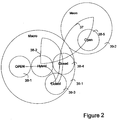
- a typical path 37 travelled by a mobile telephone 3 is illustrated in Figure 2 .
- the path 37 shows that the mobile telephone 3 will typically move between a number of smaller cells 38 (probably HNBs or some other small cells) and between a number of macro cells 39 defined by the E-UTRAN and UTRAN base stations 5.
- the base station 5/9 can process the history data and identify cells that are likely to be the mobile telephone's HNB 9. This is beneficial for the user as the user may have special rates when served by the HNB 9 rather than when it is being served by a macro cell.
- the mobile telephone 3 is configured, when in its idle mode, to maintain similar history data relating to the cells of the cellular communications network in which it has camped and to provide such history data to the serving base station 5 when the mobile telephone 3 first enters its RRC connected mode. If this information is available, the serving base station 5 can also use this idle state history information to predict target cells for future handover and to detect ping pong of the mobile telephone 3 between two cells. The serving base station 5/9 may also use this information to populate the cell history information that the base station builds and maintains whilst the mobile telephone 3 is in its connected mode.
- FIG 3a shows a functional block diagram of the E-UTRAN base station 5-2 shown in Figure 1 .
- the HNB 9 and the UTRAN base station 5-1 will have a similar structure.
- the base station 5-2 has a transceiver circuit 41 for transmitting signals to and for receiving signals from mobile telephones 3 via one or more antenna 43, a network interface 44 (S1) for transmitting signals to and for receiving signals from the core network 7 and a base station interface 45 (X2) for transmitting signals to and for receiving signals from other E-UTRAN base stations 5.
- the E-UTRAN base station 5-2 has a controller 47 to control the operation of the base station 5-2.
- the controller 47 is associated with a memory 49.
- the base station 5-2 will of course have all the usual functionality of a cellular telephone network base station and this may be provided by any one or any combination of hardware, software and firmware, as appropriate.
- Software may be pre-installed in the memory 49 and/or may be downloaded via the telecommunications network 8 or from a removable data storage device (RMD), for example.
- the controller 47 is configured to control overall operation of the base station 5-2 by, in this example, program instructions or software instructions stored within memory 49. As shown, these software instructions include, among other things, an operating system 51, a history processing module 52, a cell reselection control module 53 and a handover module 54.
- the history processing module 52 is operable to build and maintain MT history data 55 for connected mode mobile telephones 3 that it is serving. At the time of the RRC connection for the mobile telephone 3 is set up, the MT history data 55 for the mobile telephone 3 will be empty. If the serving base station 5-2 receives idle mode cell history data from the mobile telephone 3 at the time of RRC connection, the base station 5-2 may use the received history information to populate the MT history data 55. Otherwise the MT history data 55 is started with just the cell information for the currently serving cell. The serving base station 5-2 continues to collect and store history information for a connected mode mobile telephone 3 for as long as the mobile telephone 3 stays in one of its cells.
- the serving base station 5-2 sends the MT history information 55 to the target base station 5/9 (or its RNC controller 7) so that it can continue to build and use the MT history data 55.
- the history processing module 52 is also operable to process the history data 55 to identify candidate target cells for handover and to detect if the mobile telephone 3 has "ping ponged" (ie repeatedly transferred) between two neighbouring cells.
- the history processing module 52 is operable to add the following cell information for the serving cell to the MT history data 55:
- the CGI uniquely identifies the cell within the network.
- the cell type includes various information to identify the cell and whether it is a macro cell, micro cell, pico cell, femto cell etc.
- the CSG type defines whether or not the cell operates a Closed Subscriber Group.
- the access mode of the cell defines if there are restrictions on accessing the cell. For example, Open access mode defines that all mobile telephones 3 are allowed to gain access; Closed access mode defines that only members of a subscriber group can gain access to the cell; and Hybrid access mode defines that all mobile telephones can gain access to the cell, although those on a subscriber list are preferred subscribers that may be given preferential service, especially if the cell is busy.
- the mobile telephone's access mode for the cell identifies, for the case where the cell has a hybrid access mode, whether or not the mobile telephone 3 accessed the cell as a CSG member or as a non-CSG member.
- the timing data identifies the time that the mobile telephone 3 is served by the cell and is added at the time of handover.
- the MT history data 55 built up by the base station is illustrated in Figure 3b .
- n is 16.
- the cell reselection control module 53 is operable to control cell reselection parameters transmitted by the base station 5-2. These parameters determine how the mobile telephones 3 camped on the cell decide whether to remain with the serving cell or reselect a neighbouring cell. If the history processing module 54 detects from idle mode history information provided by a mobile telephone 3 that the mobile telephone 3 ping ponged between the serving cell and a neighbouring cell, then the cell reselection control module 53 changes its cell reselection parameters to try to prevent the same repeated transferring from happening in the future.
- the handover module 54 is operable to control handover of the mobile telephone 3 to another cell of the serving base station 5-2 or to a cell of another base station 5/9.
- the serving cell Prior to deciding on the target cell for the handover, the serving cell will send the mobile telephone 3 a cell list 57 identifying a number of candidate cells on which the mobile telephone 3 should perform signal measurements so that a suitable target cell can be identified for the handover.
- the history processing module 52 processes the information in the mobile telephone history data 55 to identify candidate target cells to include on the cell list 57 for the mobile telephone 3.
- the history processing module 52 processes the history data 55 to identify cells that the mobile telephone 3 returned to a number of times, or cells on which the mobile telephone 3 camped for a long time or cells that have a closed access mode or a hybrid access mode and the mobile telephone 3 accessed as a CSG member. These cells are likely to include the user's home base station 9. Therefore by including the identified cells in the cell list 57, it is more likely that the mobile telephone 3 will handover to its home base station 9 if it is within range thereof.
- the history processing module 52 may decide not to include the smaller sized cells in the cell list 57 and only to include the larger macro cells - as this should reduce the handover signalling for the mobile telephone 3.
- the handover module 54 Once the handover module 54 has decided on the target cell, it will initiate the handover procedure to the target cell. As mentioned above, the handover module 54 sends the mobile telephone's history data 55 to the target base station 5/9 (or its RNC controller 7), so that the target base station 5/9 (or RNC controller 7) can continue to build and maintain the history data and to use the information contained therein to make similar handover decisions.
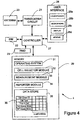
- FIG 4 shows a functional block diagram of the mobile telephone 3 shown in Figure 1 .
- the mobile telephone 3 has a transceiver circuit 21 that is operable to transmit signals to and to receive signals from a base station 5/9 via one or more antenna 23.
- the mobile telephone 3 has a controller 27 to control the operation of the mobile telephone 3 and a SIM (Subscriber Identity Module) 22.
- the controller 27 is associated with a memory 29 and is coupled to the transceiver circuit 71 and to a user interface 28 having a loudspeaker 28a, a microphone 28b, a display 28c, and a keypad 28d.
- the mobile telephone 3 will of course have all the usual functionality of a cellular telephone 3 and this may be provided by any one or any combination of hardware, software and firmware, as appropriate.
- Software may be pre-installed in the memory and/or may be downloaded via the telecommunications network or from a removable data storage device (RMD) 23, for example.
- RMD removable data storage device
- the controller 27 is configured to control overall operation of the mobile telephone 3 by, in this example, program instructions or software instructions stored within memory 29.
- these software instructions include, among other things, an operating system 31; a cell selector module 32 to perform cell reselection in accordance with cell reselection parameters provided by the serving base station 5/9; a measurement module 33 for obtaining measurements of neighbouring cells for the serving base station 5/9 prior to handover; a reporter module 34 for reporting to the serving base station 5/9 data relating to the cells within which the mobile telephone 3 has camped while in the idle state and, prior to handover, measurements on neighbouring cells.
- the memory 29 also provides a data store 35 associated with the reporter module 34 to store idle mode cell history data 36 that includes, in this embodiment for each of the last n cells with which the mobile telephone 3 has camped while in the idle state:
- the cell selector module 32 When the mobile telephone 3 is in its idle mode, the cell selector module 32 reselects cells according to the cell reselection parameters broadcast in the BCH (Broadcast Channel) of the serving cell. Each time the UE reselects a new cell, the reporter module 34 updates the cell history data 36 by adding the appropriate information for the new cell as the nth cell in the cell history data 36, including logging the time at which the mobile telephone 3 switched to the new cell and storing the total time for which the mobile telephone 3 was camped in the previous cell. When the mobile telephone 3 enters its connected mode (for example, in order to make a call), the reporter module 32 reports the idle mode history data 36 to the serving cell so that it can use the information in the manner discussed above.
- BCH Broadcast Channel
- the base station 5 and the mobile telephones 3 are described for ease of understanding as having a number of discrete functional components or modules (such as the history data processing module, cell reselection control module, cell selector module, reporter module etc). Whilst these modules may be provided in this way for certain applications, for example where an existing system has been modified to implement the invention, in other applications, for example in systems designed with the inventive features in mind from the outset, these modules may be built into the overall operating system or code and so these modules may not be discernible as discrete entities.
- modules may be provided in this way for certain applications, for example where an existing system has been modified to implement the invention, in other applications, for example in systems designed with the inventive features in mind from the outset, these modules may be built into the overall operating system or code and so these modules may not be discernible as discrete entities.
- the serving cell informs other cells of the mobile telephone's history data 55.
- the serving E-UTRAN base station 5-2 can inform the target base station by transferring the information over the base station interface (X2) 45.
- the serving cell can inform the UTRAN cell's RNC 7 by transferring a suitable message to the RNC 7 via the core network 8.
- the cell information may also be sent to other nodes in the core network 8.
- X2 setup request/ response messages are used when two E-UTRAN base stations make X2 connections. During this procedure, both base stations exchange its serving cell information and its known neighbouring cell information. In this embodiment, the information that is exchanged also includes the cell access mode and, if available, the CSG ID.
- the Last Visited E-UTRAN Cell Information contains information about a cell that is to be used for RRM purposes.
- the Last Visited UTRAN Cell Information contains information about a cell that is to be used for RRM purposes.
- the PLMN identity consists of 3 digits from MCC followed by either - a filler digit plus 2 digits from MNC (in case of 2 digit MNC) or - 3 digits from MNC (in case of a 3 digit MNC).
- Cell ID M INTEGER (..268435455) This information element identifies a cell uniquely within UTRAN and consists of RNC-ID and C-ID as defined in TS 25.401 [3].
- Cell Type M ENUMERATED (macro, micro, pico, femto, ...) Defined in [50].
- Time UE Stayed In Cell M INTEGER (0..4095) The duration of the time the UE stayed in the cell in seconds.
- this IE is set to 4095 >>PCI M INTEGER (0..503, 8) Physical Cell Identifier of the neighbour cell >>UARFCN M 9.2.26 DL UARFCN for FDD >>CSG Type >>CSG ID Access mode (Open, Hybrid, Closed UE Access mode (Preferential, Non-Preferential)
- This IE contains cell configuration information of a cell that a neighbour eNB may need for the X2 AP interface.
- M ENUMERAT ED (ssp0, ssp1, ssp2, ssp3, ssp4,ssp5, ssp6, ssp7, ssp8, ...) - - >>>>Cyclic Prefix DL M ENUMERAT ED(Normal, Extended,%) - - >>>>Cyclic Prefix UL M ENUMERAT ED(Normal, Extended,%) - - Number of Antenna Ports O 9.2.43 YES ignore Range bound Explanation maxnoofBPLMNs Maximum no. of Broadcast PLMN Ids. Value is 6.
- This IE identifies the nature of the SON information transferred i.e. a request or a reply.
- IE/Group Name Presence Range IE type and reference Semantics description Criticality Assigned Criticality Choice SON Information - >SON Information Request ENUMERATED (X2 TNL Configuration Info, TNL and served cell information ...) - >SON Information Reply 9.2.3.28 -
- This IE contains the SON Information to be replied to the E-UTRAN base station.
- the X2 TNL Configuration Info IE is used for signalling X2 TNL Configuration information for automatic X2 SCTP association establishment.
- IE/Group Name Presence Range IE type and reference Semantics description eNB X2 Transport Layer Addresses 1 to ⁇ maxnoofeNBX2TL As> > Transport Layer Address M 9.2.2.1 Transport Layer Addresses for X2 SCTP end-point.
- Range bound Explanation maxnoofeNBX2TLAs Maximum no. of eNB X2 Transport Layer Addresses for an SCTP end-point. Value is 2.
- the UEs are cellular telephones.
- Other communications nodes or devices may include user devices such as, for example, personal digital assistants, laptop computers, web browsers, etc.
- this data may be provided by another network device or devices.
- both the mobile device and the mobile telephone collected cell history information.
- only one type of cell history information may be collected - either the connected mode history information (that is collected by the base stations) or the idle mode history information that is collected by the mobile telephone.
- the present invention may be implemented in any communications system in which communications devices move between different cells or areas.
- the software modules may be provided in compiled or uncompiled form and may be supplied to the base station or to the UE as a signal over a computer network, or on a recording medium. Further, the functionality performed by part or all of this software may be performed using one or more dedicated hardware circuits. However, the use of software modules is preferred as it facilitates the updating of base station 5 and the UEs 3 in order to update their functionalities.
- UE History information introduced as part of the release-8 LTE/UTRAN architecture.
- This information which is transmitted between different eNBs or between RNC and eNB, involved in UE handover, should contain history information concerning the UE transversal across the cells-UE transverse previously.
- the architecture of LTE is characterised by the fact that there is no central base station controller manages the handovers to the other nodes. On the high level this information is used for RRM purposes, yet the actual usage of this information is implementation specific and not restricted by the specification.
- the eNB can include these cells in the "Listed cells" - these are the cells listed within the measurement object and sent to UE to assist handover. Using this information the eNB/ HeNB can create the neighbouring listed cell as per the deployment conditions.
- H(e)NBs will be deployed in the operator network and hence in order to make real use of UE history information it is necessary to indicate precisely the type of visited cell i.e. Home cell or Marco cell, and if Home cell then the access mode of the cell i.e. Open, Closed or Hybrid. Moreover, if the Home cell is in hybrid mode then whether the UE is accessing the home cell as its preferential user or non-preferential user.
- UE history information is one of the means to assist the easy handover methodology between the cells. In order to have the seamless mobility between the eNBs and the HeNBs it is required to properly filter the neighbouring cells. Another possible use case to not include home cells for high speed UEs.
- UE history information could be better utilized if it is possible to indicate the home cells/ macro cells which UE has visited previously. If network is aware of the cell types at the granularity of for example type eNB/ HeNB, access mode (open, closed, hybrid), CSG ID, UE access mode for Hybrid (preferential, non preferential) information would be useful for the network to configure the cells in the "listed cell”.
- the proposed new information shall be included in the following IEs for RRM and network optimization purposes.
- the Last Visited E-UTRAN Cell Information contains information about a cell that is to be used for RRM purposes.
- the Last Visited UTRAN Cell Information contains information about a cell that is to be used for RRM purposes.
- the PLMN identity consists of 3 digits from MCC followed by either - a filler digit plus 2 digits from MNC (in case of 2 digit MNC) or - 3 digits from MNC (in case of a 3 digit MNC).
- Cell ID M INTEGER (..268435455) This information element identifies a cell uniquely within UTRAN and consists of RNC-1D and C-ID as defined in TS 25.401 [3].
- Time UE Stayed In Cell M INTEGER (0..4095) The duration of the time the UE stayed in the cell in seconds. If the UE stays in a cell more than 4095s, this IE is set to 4095
- This message is sent by an eNB to a neighbouring eNB to transfer the initialization information for a TNL association.
- This message is sent by an eNB to a neighbouring eNB to transfer the initialization information for a TNL association.
- This IE contains cell configuration information of a cell that a neighbour eNB may need for the X2 AP interface.
- M ENUMERAT ED (ssp0, ssp1, ssp2, ssp3, ssp4, ssp5, ssp6, ssp7, ssp8, ...) - - >>>>Cyclic Prefix DL M ENUMERAT ED(Normal, Extended,%) - - >>>>Cyclic Prefix UL M ENUMERAT ED(Normal, Extended,%) - - Number of Antenna Ports O 9.2.43 YES ignore Range bound Explanation maxnoofBPLMNs Maximum no. of Broadcast PLMN Ids. Value is 6.
Landscapes
- Engineering & Computer Science (AREA)
- Computer Networks & Wireless Communication (AREA)
- Signal Processing (AREA)
- Computer Security & Cryptography (AREA)
- Databases & Information Systems (AREA)
- Mobile Radio Communication Systems (AREA)
Claims (15)
- Station de base E-UTRAN adaptée pour communiquer avec un ou plusieurs dispositifs de communication mobile sur une liaison de communication sans fil définie par une cellule de station de base, dans laquelle la station de base (5) est adaptée pour maintenir des données d'historique de cellules pour un dispositif de communication mobile (3), les données d'historique de cellules identifiant les cellules avec lesquelles le dispositif de communication mobile (3) a été enregistré et incluant, pour une ou plusieurs des cellules, des données relatives à un mode d'accès de la cellule ; caractérisée en ce que les données relatives au mode d'accès de la cellule incluent le fait que la cellule a ou non l'un quelconque parmi un mode d'accès ouvert, fermé ou hybride.
- Station de base selon la revendication 1, dans laquelle, pour une cellule ayant un mode d'accès hybride, les données d'historique comprennent en outre des données identifiant le fait que le dispositif mobile a ou non accédé à la cellule comme un membre CSG ou un membre non CSG.
- Station de base selon l'une quelconque des revendications 1 à 2, adaptée pour utiliser les données d'historique stockées à des fins de gestion de ressources radio.
- Station de base selon l'une quelconque des revendications 1 à 3, adaptée pour utiliser les informations d'historique de cellules pour identifier des cellules à inclure dans une liste de cellules fournie à l'au moins un dispositif de communication mobile (3).
- Station de base selon l'une quelconque des revendications 1 à 4, adaptée pour fournir des informations d'historique de cellules à une cellule voisine ou à un noeud de réseau.
- Station de base selon la revendication 5, adaptée pour fournir les informations d'historique à une autre station de base (5) ou à un RNC par le biais d'une interface de station de base ou par le biais d'une interface de réseau central.
- Station de base selon la revendication 5 ou 6, adaptée pour fournir les informations d'historique de cellules à la cellule voisine ou au noeud de réseau au moment d'un transfert du dispositif de communication mobile (3) à une autre station de base (5).
- Station de base selon l'une quelconque des revendications 1 à 7, adaptée pour utiliser les données d'historique stockées pour identifier une station de base de rattachement (5) pour l'au moins un dispositif de communication mobile (3).
- Dispositif de communication mobile E-UTRAN (3) ayant un mode inactif et un mode connecté et adapté, dans le mode inactif, pour stocker des données d'historique identifiant les cellules dans lesquelles le dispositif de communication mobile (3) a séjourné et incluant, pour une ou plusieurs des cellules, des données relatives à un mode d'accès de la cellule ; caractérisé en ce que les données relatives au mode d'accès de la cellule incluent le fait que la cellule a ou non l'un quelconque parmi un mode d'accès ouvert, fermé ou hybride.
- Dispositif selon la revendication 9, adapté pour rapporter les données d'historique à une cellule de desserte.
- Dispositif selon la revendication 9 ou 10, dans lequel, pour une cellule ayant un mode d'accès hybride, les données d'historique comprennent en outre des données identifiant le fait que le dispositif mobile a ou non accédé à la cellule comme un dispositif préférentiel ou non préférentiel.
- Dispositif selon l'une quelconque des revendications 9 à 11, adapté pour utiliser les données d'historique stockées pour identifier une station de base de rattachement (5).
- Procédé effectué par un dispositif de communication mobile E-UTRAN (3) ayant un mode inactif et un mode connecté et incluant, dans le mode inactif, le stockage de données d'historique identifiant les cellules dans lesquelles le dispositif de communication mobile (3) a séjourné et incluant, pour une ou plusieurs des cellules, des données relatives à un mode d'accès de la cellule ; caractérisé en ce que les données relatives au mode d'accès de la cellule incluent le fait que la cellule a ou non l'un quelconque parmi un mode d'accès ouvert, fermé ou hybride.
- Procédé effectué par une station de base E-UTRAN utilisable pour communiquer avec un ou plusieurs dispositifs de communication mobile sur une liaison de communication sans fil définissant une cellule de station de base, le procédé comprenant le maintien de données d'historique de cellules pour un dispositif de communication mobile (3), les données d'historique de cellules identifiant les cellules avec lesquelles le dispositif de communication mobile (3) a été enregistré et incluant, pour une ou plusieurs des cellules, des données relatives à un mode d'accès de la cellule ; caractérisé en ce que les données relatives au mode d'accès de la cellule incluent le fait que la cellule a ou non l'un quelconque parmi un mode d'accès ouvert, fermé ou hybride.
- Produit d'instructions pouvant être mises en oeuvre par ordinateur, comprenant des instructions pouvant être mises en oeuvre par ordinateur pour amener un dispositif de communication à devenir configuré comme la station de base (5) selon l'une quelconque des revendications 1 à 8 ou le dispositif de communication mobile selon l'une quelconque des revendications 9 à 12.
Applications Claiming Priority (2)
| Application Number | Priority Date | Filing Date | Title |
|---|---|---|---|
| GB0914379A GB2472791A (en) | 2009-08-17 | 2009-08-17 | A base station operable to maintain cell history data for a mobile communications device |
| PCT/JP2010/063791 WO2011021592A1 (fr) | 2009-08-17 | 2010-08-10 | Utilisation d'informations d'historique de cellules visitées d'équipement utilisateur pour identifier une station de base de rattachement |
Publications (2)
| Publication Number | Publication Date |
|---|---|
| EP2468038A1 EP2468038A1 (fr) | 2012-06-27 |
| EP2468038B1 true EP2468038B1 (fr) | 2017-07-19 |
Family
ID=41171520
Family Applications (1)
| Application Number | Title | Priority Date | Filing Date |
|---|---|---|---|
| EP10747695.4A Active EP2468038B1 (fr) | 2009-08-17 | 2010-08-10 | Utilisation d'informations d'historique de cellules visitées d'équipement utilisateur pour identifier une station de base de rattachement |
Country Status (7)
| Country | Link |
|---|---|
| US (1) | US9398497B2 (fr) |
| EP (1) | EP2468038B1 (fr) |
| JP (1) | JP5858240B2 (fr) |
| KR (1) | KR101450406B1 (fr) |
| CN (1) | CN102474773B (fr) |
| GB (1) | GB2472791A (fr) |
| WO (1) | WO2011021592A1 (fr) |
Families Citing this family (37)
| Publication number | Priority date | Publication date | Assignee | Title |
|---|---|---|---|---|
| CN106211248B (zh) * | 2010-04-28 | 2020-02-21 | 北京三星通信技术研究有限公司 | 移动通信系统中的基站的处理方法及相应基站 |
| WO2012060757A1 (fr) * | 2010-11-03 | 2012-05-10 | Telefonaktiebolaget L M Ericsson (Publ) | Procédé et noeud de réseau destinés à partager des informations par l'intermédiaire d'une interface dans un système de télécommunications |
| GB201018633D0 (en) | 2010-11-04 | 2010-12-22 | Nec Corp | Communication system |
| WO2012074325A2 (fr) * | 2010-12-03 | 2012-06-07 | Lg Electronics Inc. | Procédé et appareil pour réaliser un contrôle d'accès dans un système de communication sans fil |
| CN102769877B (zh) * | 2011-05-04 | 2017-08-25 | 中兴通讯股份有限公司 | 小区切换方法及基站 |
| JP5659350B2 (ja) * | 2011-06-24 | 2015-01-28 | サイレックス・テクノロジー株式会社 | 無線lan機器および無線ローミング方法 |
| EP2742726A1 (fr) * | 2011-08-11 | 2014-06-18 | Nokia Solutions and Networks Oy | Procédé d'optimisation d'un comportement de transfert intercellulaire d'un réseau de radiocommunications mobiles sur la base d'un enregistrement de données étendu associé à un équipement utilisateur |
| US8731477B2 (en) | 2011-10-26 | 2014-05-20 | Blackberry Limited | Performing inter-frequency measurements in a mobile network |
| EP3737159B1 (fr) | 2012-03-26 | 2022-01-26 | Samsung Electronics Co., Ltd. | Procédé et dispositif pour la préservation de données de mobilité lors d'une transition d'état d'un terminal, et pour un nouvel accès réussi dans un réseau cellulaire hétérogène dans un système de communication mobile |
| CN103428780B (zh) * | 2012-05-14 | 2018-08-24 | 中兴通讯股份有限公司 | 用户设备移动性参数上报方法及系统、ue、网络设备 |
| ES2703336T3 (es) | 2012-08-06 | 2019-03-08 | Alcatel Lucent | Proporcionar información de célula para las últimas N células visitadas desde un equipo de usuario a un nodo de control de red |
| KR101737239B1 (ko) | 2012-08-06 | 2017-05-17 | 엘지전자 주식회사 | 무선 통신 시스템에서 이동성 정보 보고 방법 및 이를 지원하는 장치 |
| US20150038140A1 (en) | 2013-07-31 | 2015-02-05 | Qualcomm Incorporated | Predictive mobility in cellular networks |
| US9474000B2 (en) * | 2013-07-31 | 2016-10-18 | Qualcomm Incorporated | Handover and reselection searching using predictive mobility |
| JP6169434B2 (ja) * | 2013-08-01 | 2017-07-26 | 株式会社Nttドコモ | 無線通信システムおよび場所特性判定方法 |
| KR102153135B1 (ko) * | 2013-10-18 | 2020-09-07 | 에스케이텔레콤 주식회사 | 무선 통신 시스템에서 베어러를 설정하기 위한 장치 및 이를 위한 방법 |
| KR102151533B1 (ko) | 2013-10-18 | 2020-09-03 | 에스케이텔레콤 주식회사 | 무선 통신 시스템에서 셀 히스토리 정보 제공을 위한 장치 및 이를 위한 방법 |
| KR102151555B1 (ko) * | 2013-10-18 | 2020-09-03 | 에스케이텔레콤 주식회사 | 무선 통신 시스템에서 베어러를 설정하기 위한 장치 및 이를 위한 방법 |
| US20150109997A1 (en) * | 2013-10-21 | 2015-04-23 | Alexander Sirotkin | Apparatus, system and method of interfacing between a cellular manager and a wlan access device |
| JP6110565B2 (ja) * | 2013-11-01 | 2017-04-05 | エルジー エレクトロニクス インコーポレイティド | セル訪問履歴伝送方法及びその無線装備 |
| EP3063967B1 (fr) * | 2013-11-01 | 2018-07-04 | Nokia Technologies OY | Signalisation de mobilité et estimation d'un état de mobilité |
| EP3063966B1 (fr) * | 2013-11-01 | 2019-03-06 | LG Electronics Inc. | Procédé d'émission de l'historique des cellules visitées et équipement sans fil associé |
| WO2015092496A1 (fr) * | 2013-12-20 | 2015-06-25 | Nokia Corporation | Signalisation de détails d'informations de la mobilité d'un équipement d'utilisateur relatives à un mode inactif et connecté |
| EP2903386A1 (fr) * | 2014-01-29 | 2015-08-05 | Alcatel Lucent | Procédé et dispositif permettant d'établir une connectivité double entre un équipement utilisateur, un MeNB et un SeNB, en fournissant les informations d'historique d'équipement d'utilisateur |
| KR20160138470A (ko) * | 2014-03-19 | 2016-12-05 | 노키아 솔루션스 앤드 네트웍스 오와이 | 경로 예측 혼잡 회피를 위한 방법 및 시스템 |
| CN104955127A (zh) * | 2014-03-26 | 2015-09-30 | 中兴通讯股份有限公司 | 一种跨系统网络信息交互的方法、终端系统网络网元 |
| JP2015201802A (ja) * | 2014-04-09 | 2015-11-12 | 富士通株式会社 | 基地局、及び基地局制御方法 |
| US9826419B2 (en) | 2014-04-15 | 2017-11-21 | Qualcomm Incorporated | Optimized cell acquisition for LTE TDD systems or CSG/eMBMS capable UEs |
| EP3335465B1 (fr) * | 2015-08-13 | 2021-06-02 | Nokia Solutions and Networks Oy | Gestion de la cellule en service |
| JP2016146675A (ja) * | 2016-05-16 | 2016-08-12 | アルカテル−ルーセント | ユーザ機器特性 |
| CN108811008A (zh) * | 2017-05-05 | 2018-11-13 | 捷开通讯(深圳)有限公司 | 通信状态转换方法及装置 |
| CN109413715A (zh) * | 2018-11-05 | 2019-03-01 | 深圳市有方科技股份有限公司 | 快速接入物联网的实现方法、实现设备及计算机可读存储介质 |
| US11206550B2 (en) | 2018-12-13 | 2021-12-21 | Hewlett Packard Enterprise Development Lp | Assisted network roaming with predictive network tool |
| EP4054254A1 (fr) * | 2019-03-28 | 2022-09-07 | Ofinno, LLC | Gestion de radiomessagerie centrale |
| WO2022032687A1 (fr) * | 2020-08-14 | 2022-02-17 | 华为技术有限公司 | Procédé de communication et appareil de communication |
| CN113438666B (zh) * | 2021-06-10 | 2023-10-03 | 中国联合网络通信集团有限公司 | 一种基站确定方法及设备 |
| CN113438687B (zh) * | 2021-06-23 | 2022-10-11 | 中国联合网络通信集团有限公司 | 一种基站唤醒方法、装置及设备 |
Family Cites Families (10)
| Publication number | Priority date | Publication date | Assignee | Title |
|---|---|---|---|---|
| US20040192313A1 (en) * | 2003-03-25 | 2004-09-30 | Motorola, Inc. | Method for cell selection and reselection by a cellular mobile station in idle mode |
| US8743825B2 (en) * | 2006-08-17 | 2014-06-03 | Nokia Corporation | Handovers in a communication system |
| TW200822773A (en) * | 2006-11-01 | 2008-05-16 | Interdigital Tech Corp | LTE reselectable-only cells and cell info list for handover |
| CN101352093A (zh) * | 2007-01-08 | 2009-01-21 | 华为技术有限公司 | 向移动的目标节点转发学习到的状态信息 |
| DE102007038099A1 (de) | 2007-08-13 | 2009-04-16 | T-Mobile International Ag | Verfahren zur Vermeidung von Ping-Pong-Hand-Over in Mobilfunknetzen |
| EP2028907A1 (fr) * | 2007-08-21 | 2009-02-25 | Nokia Siemens Networks Oy | Procédé et dispositif pour le transfert d'informations condensées à propos d'un équipement utilisateur entre des stations de base |
| US9572089B2 (en) * | 2007-09-28 | 2017-02-14 | Interdigital Patent Holdings, Inc. | Method and apparatus for supporting home Node B services |
| US9648493B2 (en) | 2007-11-16 | 2017-05-09 | Qualcomm Incorporated | Using identifiers to establish communication |
| US8385216B1 (en) * | 2007-11-20 | 2013-02-26 | Spring Spectrum L.P. | Method and system for vertical handoff with target traffic channel setup conveyed via source channel |
| KR101126461B1 (ko) | 2007-11-26 | 2012-03-29 | 노키아 지멘스 네트웍스 오와이 | 위치에서의 로컬 서비스의 이용가능성을 표시하기 위한 방법들, 장치들 및 컴퓨터 매체 |
-
2009
- 2009-08-17 GB GB0914379A patent/GB2472791A/en not_active Withdrawn
-
2010
- 2010-08-10 EP EP10747695.4A patent/EP2468038B1/fr active Active
- 2010-08-10 CN CN201080036511.9A patent/CN102474773B/zh active Active
- 2010-08-10 US US13/390,489 patent/US9398497B2/en active Active
- 2010-08-10 JP JP2012506020A patent/JP5858240B2/ja not_active Expired - Fee Related
- 2010-08-10 KR KR1020127004204A patent/KR101450406B1/ko not_active Expired - Fee Related
- 2010-08-10 WO PCT/JP2010/063791 patent/WO2011021592A1/fr not_active Ceased
Also Published As
| Publication number | Publication date |
|---|---|
| JP2013502748A (ja) | 2013-01-24 |
| GB2472791A (en) | 2011-02-23 |
| KR20120048636A (ko) | 2012-05-15 |
| JP5858240B2 (ja) | 2016-02-10 |
| CN102474773B (zh) | 2014-11-19 |
| US20120142355A1 (en) | 2012-06-07 |
| US9398497B2 (en) | 2016-07-19 |
| EP2468038A1 (fr) | 2012-06-27 |
| CN102474773A (zh) | 2012-05-23 |
| WO2011021592A1 (fr) | 2011-02-24 |
| KR101450406B1 (ko) | 2014-10-14 |
| GB0914379D0 (en) | 2009-09-30 |
Similar Documents
| Publication | Publication Date | Title |
|---|---|---|
| EP2468038B1 (fr) | Utilisation d'informations d'historique de cellules visitées d'équipement utilisateur pour identifier une station de base de rattachement | |
| US8488586B2 (en) | Methods of selecting target cells using neighbor cell information and related network controllers | |
| US8942204B2 (en) | Access point handover control based on closed subscriber group subscription information | |
| US9648512B2 (en) | Apparatuses and methods for measurement reporting in a wireless communications system | |
| US10841849B2 (en) | Communication system | |
| EP2716129B1 (fr) | Prise en charge d'agrégation de porteuses pour stations de base domestiques | |
| US9167487B2 (en) | Communication system including a gateway device and method thereof | |
| US9479975B2 (en) | Communication system | |
| US20140233529A1 (en) | Selecting a type of circuit switched fallback | |
| GB2474071A (en) | The maximum permitted transmission power of a femtocell base station is determined based on the reason for hand-in or reselection. | |
| WO2013066240A2 (fr) | Procédés de sélection de cellules cibles utilisant des informations de cellules voisines et dispositifs de commande de réseau apparentés | |
| JP2012049675A (ja) | 通信システム、通信方法、基地局、基地局の通信方法及び基地局の制御プログラム |
Legal Events
| Date | Code | Title | Description |
|---|---|---|---|
| PUAI | Public reference made under article 153(3) epc to a published international application that has entered the european phase |
Free format text: ORIGINAL CODE: 0009012 |
|
| 17P | Request for examination filed |
Effective date: 20120305 |
|
| AK | Designated contracting states |
Kind code of ref document: A1 Designated state(s): AL AT BE BG CH CY CZ DE DK EE ES FI FR GB GR HR HU IE IS IT LI LT LU LV MC MK MT NL NO PL PT RO SE SI SK SM TR |
|
| DAX | Request for extension of the european patent (deleted) | ||
| GRAP | Despatch of communication of intention to grant a patent |
Free format text: ORIGINAL CODE: EPIDOSNIGR1 |
|
| INTG | Intention to grant announced |
Effective date: 20170206 |
|
| GRAS | Grant fee paid |
Free format text: ORIGINAL CODE: EPIDOSNIGR3 |
|
| GRAA | (expected) grant |
Free format text: ORIGINAL CODE: 0009210 |
|
| AK | Designated contracting states |
Kind code of ref document: B1 Designated state(s): AL AT BE BG CH CY CZ DE DK EE ES FI FR GB GR HR HU IE IS IT LI LT LU LV MC MK MT NL NO PL PT RO SE SI SK SM TR |
|
| REG | Reference to a national code |
Ref country code: GB Ref legal event code: FG4D |
|
| REG | Reference to a national code |
Ref country code: CH Ref legal event code: EP |
|
| REG | Reference to a national code |
Ref country code: IE Ref legal event code: FG4D |
|
| REG | Reference to a national code |
Ref country code: AT Ref legal event code: REF Ref document number: 911513 Country of ref document: AT Kind code of ref document: T Effective date: 20170815 |
|
| REG | Reference to a national code |
Ref country code: NL Ref legal event code: FP |
|
| REG | Reference to a national code |
Ref country code: DE Ref legal event code: R096 Ref document number: 602010043731 Country of ref document: DE |
|
| REG | Reference to a national code |
Ref country code: FR Ref legal event code: PLFP Year of fee payment: 8 |
|
| REG | Reference to a national code |
Ref country code: LT Ref legal event code: MG4D |
|
| REG | Reference to a national code |
Ref country code: AT Ref legal event code: MK05 Ref document number: 911513 Country of ref document: AT Kind code of ref document: T Effective date: 20170719 |
|
| PG25 | Lapsed in a contracting state [announced via postgrant information from national office to epo] |
Ref country code: LT Free format text: LAPSE BECAUSE OF FAILURE TO SUBMIT A TRANSLATION OF THE DESCRIPTION OR TO PAY THE FEE WITHIN THE PRESCRIBED TIME-LIMIT Effective date: 20170719 Ref country code: AT Free format text: LAPSE BECAUSE OF FAILURE TO SUBMIT A TRANSLATION OF THE DESCRIPTION OR TO PAY THE FEE WITHIN THE PRESCRIBED TIME-LIMIT Effective date: 20170719 Ref country code: FI Free format text: LAPSE BECAUSE OF FAILURE TO SUBMIT A TRANSLATION OF THE DESCRIPTION OR TO PAY THE FEE WITHIN THE PRESCRIBED TIME-LIMIT Effective date: 20170719 Ref country code: SE Free format text: LAPSE BECAUSE OF FAILURE TO SUBMIT A TRANSLATION OF THE DESCRIPTION OR TO PAY THE FEE WITHIN THE PRESCRIBED TIME-LIMIT Effective date: 20170719 Ref country code: HR Free format text: LAPSE BECAUSE OF FAILURE TO SUBMIT A TRANSLATION OF THE DESCRIPTION OR TO PAY THE FEE WITHIN THE PRESCRIBED TIME-LIMIT Effective date: 20170719 Ref country code: NO Free format text: LAPSE BECAUSE OF FAILURE TO SUBMIT A TRANSLATION OF THE DESCRIPTION OR TO PAY THE FEE WITHIN THE PRESCRIBED TIME-LIMIT Effective date: 20171019 |
|
| PG25 | Lapsed in a contracting state [announced via postgrant information from national office to epo] |
Ref country code: BG Free format text: LAPSE BECAUSE OF FAILURE TO SUBMIT A TRANSLATION OF THE DESCRIPTION OR TO PAY THE FEE WITHIN THE PRESCRIBED TIME-LIMIT Effective date: 20171019 Ref country code: ES Free format text: LAPSE BECAUSE OF FAILURE TO SUBMIT A TRANSLATION OF THE DESCRIPTION OR TO PAY THE FEE WITHIN THE PRESCRIBED TIME-LIMIT Effective date: 20170719 Ref country code: GR Free format text: LAPSE BECAUSE OF FAILURE TO SUBMIT A TRANSLATION OF THE DESCRIPTION OR TO PAY THE FEE WITHIN THE PRESCRIBED TIME-LIMIT Effective date: 20171020 Ref country code: PL Free format text: LAPSE BECAUSE OF FAILURE TO SUBMIT A TRANSLATION OF THE DESCRIPTION OR TO PAY THE FEE WITHIN THE PRESCRIBED TIME-LIMIT Effective date: 20170719 Ref country code: IS Free format text: LAPSE BECAUSE OF FAILURE TO SUBMIT A TRANSLATION OF THE DESCRIPTION OR TO PAY THE FEE WITHIN THE PRESCRIBED TIME-LIMIT Effective date: 20171119 Ref country code: LV Free format text: LAPSE BECAUSE OF FAILURE TO SUBMIT A TRANSLATION OF THE DESCRIPTION OR TO PAY THE FEE WITHIN THE PRESCRIBED TIME-LIMIT Effective date: 20170719 |
|
| REG | Reference to a national code |
Ref country code: CH Ref legal event code: PL |
|
| REG | Reference to a national code |
Ref country code: DE Ref legal event code: R097 Ref document number: 602010043731 Country of ref document: DE |
|
| PG25 | Lapsed in a contracting state [announced via postgrant information from national office to epo] |
Ref country code: LI Free format text: LAPSE BECAUSE OF NON-PAYMENT OF DUE FEES Effective date: 20170831 Ref country code: RO Free format text: LAPSE BECAUSE OF FAILURE TO SUBMIT A TRANSLATION OF THE DESCRIPTION OR TO PAY THE FEE WITHIN THE PRESCRIBED TIME-LIMIT Effective date: 20170719 Ref country code: CZ Free format text: LAPSE BECAUSE OF FAILURE TO SUBMIT A TRANSLATION OF THE DESCRIPTION OR TO PAY THE FEE WITHIN THE PRESCRIBED TIME-LIMIT Effective date: 20170719 Ref country code: MC Free format text: LAPSE BECAUSE OF FAILURE TO SUBMIT A TRANSLATION OF THE DESCRIPTION OR TO PAY THE FEE WITHIN THE PRESCRIBED TIME-LIMIT Effective date: 20170719 Ref country code: CH Free format text: LAPSE BECAUSE OF NON-PAYMENT OF DUE FEES Effective date: 20170831 Ref country code: DK Free format text: LAPSE BECAUSE OF FAILURE TO SUBMIT A TRANSLATION OF THE DESCRIPTION OR TO PAY THE FEE WITHIN THE PRESCRIBED TIME-LIMIT Effective date: 20170719 |
|
| REG | Reference to a national code |
Ref country code: BE Ref legal event code: MM Effective date: 20170831 |
|
| PLBE | No opposition filed within time limit |
Free format text: ORIGINAL CODE: 0009261 |
|
| STAA | Information on the status of an ep patent application or granted ep patent |
Free format text: STATUS: NO OPPOSITION FILED WITHIN TIME LIMIT |
|
| REG | Reference to a national code |
Ref country code: IE Ref legal event code: MM4A |
|
| PG25 | Lapsed in a contracting state [announced via postgrant information from national office to epo] |
Ref country code: SK Free format text: LAPSE BECAUSE OF FAILURE TO SUBMIT A TRANSLATION OF THE DESCRIPTION OR TO PAY THE FEE WITHIN THE PRESCRIBED TIME-LIMIT Effective date: 20170719 Ref country code: EE Free format text: LAPSE BECAUSE OF FAILURE TO SUBMIT A TRANSLATION OF THE DESCRIPTION OR TO PAY THE FEE WITHIN THE PRESCRIBED TIME-LIMIT Effective date: 20170719 Ref country code: SM Free format text: LAPSE BECAUSE OF FAILURE TO SUBMIT A TRANSLATION OF THE DESCRIPTION OR TO PAY THE FEE WITHIN THE PRESCRIBED TIME-LIMIT Effective date: 20170719 Ref country code: IT Free format text: LAPSE BECAUSE OF FAILURE TO SUBMIT A TRANSLATION OF THE DESCRIPTION OR TO PAY THE FEE WITHIN THE PRESCRIBED TIME-LIMIT Effective date: 20170719 |
|
| 26N | No opposition filed |
Effective date: 20180420 |
|
| PG25 | Lapsed in a contracting state [announced via postgrant information from national office to epo] |
Ref country code: LU Free format text: LAPSE BECAUSE OF NON-PAYMENT OF DUE FEES Effective date: 20170810 |
|
| REG | Reference to a national code |
Ref country code: FR Ref legal event code: PLFP Year of fee payment: 9 |
|
| PG25 | Lapsed in a contracting state [announced via postgrant information from national office to epo] |
Ref country code: IE Free format text: LAPSE BECAUSE OF NON-PAYMENT OF DUE FEES Effective date: 20170810 |
|
| PG25 | Lapsed in a contracting state [announced via postgrant information from national office to epo] |
Ref country code: BE Free format text: LAPSE BECAUSE OF NON-PAYMENT OF DUE FEES Effective date: 20170831 Ref country code: SI Free format text: LAPSE BECAUSE OF FAILURE TO SUBMIT A TRANSLATION OF THE DESCRIPTION OR TO PAY THE FEE WITHIN THE PRESCRIBED TIME-LIMIT Effective date: 20170719 |
|
| PG25 | Lapsed in a contracting state [announced via postgrant information from national office to epo] |
Ref country code: MT Free format text: LAPSE BECAUSE OF NON-PAYMENT OF DUE FEES Effective date: 20170810 |
|
| PGFP | Annual fee paid to national office [announced via postgrant information from national office to epo] |
Ref country code: SE Payment date: 20180926 Year of fee payment: 17 Ref country code: NL Payment date: 20180712 Year of fee payment: 9 |
|
| PG25 | Lapsed in a contracting state [announced via postgrant information from national office to epo] |
Ref country code: HU Free format text: LAPSE BECAUSE OF FAILURE TO SUBMIT A TRANSLATION OF THE DESCRIPTION OR TO PAY THE FEE WITHIN THE PRESCRIBED TIME-LIMIT; INVALID AB INITIO Effective date: 20100810 |
|
| PG25 | Lapsed in a contracting state [announced via postgrant information from national office to epo] |
Ref country code: CY Free format text: LAPSE BECAUSE OF NON-PAYMENT OF DUE FEES Effective date: 20170719 |
|
| PG25 | Lapsed in a contracting state [announced via postgrant information from national office to epo] |
Ref country code: MK Free format text: LAPSE BECAUSE OF FAILURE TO SUBMIT A TRANSLATION OF THE DESCRIPTION OR TO PAY THE FEE WITHIN THE PRESCRIBED TIME-LIMIT Effective date: 20170719 |
|
| PG25 | Lapsed in a contracting state [announced via postgrant information from national office to epo] |
Ref country code: TR Free format text: LAPSE BECAUSE OF FAILURE TO SUBMIT A TRANSLATION OF THE DESCRIPTION OR TO PAY THE FEE WITHIN THE PRESCRIBED TIME-LIMIT Effective date: 20170719 |
|
| REG | Reference to a national code |
Ref country code: NL Ref legal event code: MM Effective date: 20190901 |
|
| PG25 | Lapsed in a contracting state [announced via postgrant information from national office to epo] |
Ref country code: PT Free format text: LAPSE BECAUSE OF FAILURE TO SUBMIT A TRANSLATION OF THE DESCRIPTION OR TO PAY THE FEE WITHIN THE PRESCRIBED TIME-LIMIT Effective date: 20170719 |
|
| PG25 | Lapsed in a contracting state [announced via postgrant information from national office to epo] |
Ref country code: NL Free format text: LAPSE BECAUSE OF NON-PAYMENT OF DUE FEES Effective date: 20190901 Ref country code: FR Free format text: LAPSE BECAUSE OF NON-PAYMENT OF DUE FEES Effective date: 20190831 Ref country code: AL Free format text: LAPSE BECAUSE OF FAILURE TO SUBMIT A TRANSLATION OF THE DESCRIPTION OR TO PAY THE FEE WITHIN THE PRESCRIBED TIME-LIMIT Effective date: 20170719 |
|
| PGFP | Annual fee paid to national office [announced via postgrant information from national office to epo] |
Ref country code: DE Payment date: 20240821 Year of fee payment: 15 |
|
| PGFP | Annual fee paid to national office [announced via postgrant information from national office to epo] |
Ref country code: GB Payment date: 20240826 Year of fee payment: 15 |
|
| REG | Reference to a national code |
Ref country code: DE Ref legal event code: R119 Ref document number: 602010043731 Country of ref document: DE |