EP2468317A2 - Beschichtungsverfahren und Beschichtungsvorrichtung - Google Patents
Beschichtungsverfahren und Beschichtungsvorrichtung Download PDFInfo
- Publication number
- EP2468317A2 EP2468317A2 EP11009385A EP11009385A EP2468317A2 EP 2468317 A2 EP2468317 A2 EP 2468317A2 EP 11009385 A EP11009385 A EP 11009385A EP 11009385 A EP11009385 A EP 11009385A EP 2468317 A2 EP2468317 A2 EP 2468317A2
- Authority
- EP
- European Patent Office
- Prior art keywords
- liquid
- medical implant
- container
- coated
- implant
- Prior art date
- Legal status (The legal status is an assumption and is not a legal conclusion. Google has not performed a legal analysis and makes no representation as to the accuracy of the status listed.)
- Granted
Links
- 238000000576 coating method Methods 0.000 title claims abstract description 55
- 239000011248 coating agent Substances 0.000 title claims abstract description 47
- 239000007943 implant Substances 0.000 claims abstract description 137
- 239000007788 liquid Substances 0.000 claims abstract description 109
- 238000000034 method Methods 0.000 claims abstract description 34
- 239000012528 membrane Substances 0.000 claims abstract description 29
- 239000003242 anti bacterial agent Substances 0.000 claims abstract description 26
- 239000013543 active substance Substances 0.000 claims abstract description 24
- 229940088710 antibiotic agent Drugs 0.000 claims abstract description 22
- 230000002421 anti-septic effect Effects 0.000 claims abstract description 9
- 229940064004 antiseptic throat preparations Drugs 0.000 claims abstract description 7
- 230000003115 biocidal effect Effects 0.000 claims description 28
- 239000000843 powder Substances 0.000 claims description 24
- 238000012546 transfer Methods 0.000 claims description 19
- 239000000126 substance Substances 0.000 claims description 16
- 239000000203 mixture Substances 0.000 claims description 8
- 239000003795 chemical substances by application Substances 0.000 claims description 7
- 238000003780 insertion Methods 0.000 claims description 6
- 230000037431 insertion Effects 0.000 claims description 6
- 238000007654 immersion Methods 0.000 claims description 5
- 210000000988 bone and bone Anatomy 0.000 claims description 4
- 238000004040 coloring Methods 0.000 claims description 3
- 241000237942 Conidae Species 0.000 claims 1
- NDVLTYZPCACLMA-UHFFFAOYSA-N silver oxide Chemical compound [O-2].[Ag+].[Ag+] NDVLTYZPCACLMA-UHFFFAOYSA-N 0.000 abstract description 8
- 229940122361 Bisphosphonate Drugs 0.000 abstract description 4
- QPLDLSVMHZLSFG-UHFFFAOYSA-N Copper oxide Chemical compound [Cu]=O QPLDLSVMHZLSFG-UHFFFAOYSA-N 0.000 abstract description 4
- 239000005751 Copper oxide Substances 0.000 abstract description 4
- 150000004663 bisphosphonates Chemical class 0.000 abstract description 4
- 150000001879 copper Chemical class 0.000 abstract description 4
- 229910000431 copper oxide Inorganic materials 0.000 abstract description 4
- 150000002258 gallium Chemical class 0.000 abstract description 4
- 239000003102 growth factor Substances 0.000 abstract description 4
- 229940088597 hormone Drugs 0.000 abstract description 4
- 239000005556 hormone Substances 0.000 abstract description 4
- 229910003002 lithium salt Inorganic materials 0.000 abstract description 4
- 159000000002 lithium salts Chemical class 0.000 abstract description 4
- 239000013612 plasmid Substances 0.000 abstract description 4
- 150000003378 silver Chemical class 0.000 abstract description 4
- 229910001923 silver oxide Inorganic materials 0.000 abstract description 4
- 239000003270 steroid hormone Substances 0.000 abstract description 4
- 230000003637 steroidlike Effects 0.000 abstract description 4
- 159000000008 strontium salts Chemical class 0.000 abstract description 4
- 230000005540 biological transmission Effects 0.000 abstract description 2
- 229940121363 anti-inflammatory agent Drugs 0.000 abstract 1
- 239000002260 anti-inflammatory agent Substances 0.000 abstract 1
- 229940030225 antihemorrhagics Drugs 0.000 abstract 1
- 239000002874 hemostatic agent Substances 0.000 abstract 1
- 239000000243 solution Substances 0.000 description 43
- RDEIXVOBVLKYNT-VQBXQJRRSA-N (2r,3r,4r,5r)-2-[(1s,2s,3r,4s,6r)-4,6-diamino-3-[(2r,3r,6s)-3-amino-6-(1-aminoethyl)oxan-2-yl]oxy-2-hydroxycyclohexyl]oxy-5-methyl-4-(methylamino)oxane-3,5-diol;(2r,3r,4r,5r)-2-[(1s,2s,3r,4s,6r)-4,6-diamino-3-[(2r,3r,6s)-3-amino-6-(aminomethyl)oxan-2-yl]o Chemical compound OS(O)(=O)=O.O1C[C@@](O)(C)[C@H](NC)[C@@H](O)[C@H]1O[C@@H]1[C@@H](O)[C@H](O[C@@H]2[C@@H](CC[C@@H](CN)O2)N)[C@@H](N)C[C@H]1N.O1C[C@@](O)(C)[C@H](NC)[C@@H](O)[C@H]1O[C@@H]1[C@@H](O)[C@H](O[C@@H]2[C@@H](CC[C@H](O2)C(C)N)N)[C@@H](N)C[C@H]1N.O1[C@H](C(C)NC)CC[C@@H](N)[C@H]1O[C@H]1[C@H](O)[C@@H](O[C@@H]2[C@@H]([C@@H](NC)[C@@](C)(O)CO2)O)[C@H](N)C[C@@H]1N RDEIXVOBVLKYNT-VQBXQJRRSA-N 0.000 description 31
- 210000004379 membrane Anatomy 0.000 description 25
- XLYOFNOQVPJJNP-UHFFFAOYSA-N water Substances O XLYOFNOQVPJJNP-UHFFFAOYSA-N 0.000 description 19
- KRKNYBCHXYNGOX-UHFFFAOYSA-N citric acid Chemical compound OC(=O)CC(O)(C(O)=O)CC(O)=O KRKNYBCHXYNGOX-UHFFFAOYSA-N 0.000 description 11
- 150000003839 salts Chemical class 0.000 description 11
- KDLRVYVGXIQJDK-AWPVFWJPSA-N clindamycin Chemical compound CN1C[C@H](CCC)C[C@H]1C(=O)N[C@H]([C@H](C)Cl)[C@@H]1[C@H](O)[C@H](O)[C@@H](O)[C@@H](SC)O1 KDLRVYVGXIQJDK-AWPVFWJPSA-N 0.000 description 10
- 239000007864 aqueous solution Substances 0.000 description 9
- 108010059993 Vancomycin Proteins 0.000 description 8
- 239000012530 fluid Substances 0.000 description 8
- QORWJWZARLRLPR-UHFFFAOYSA-H tricalcium bis(phosphate) Chemical compound [Ca+2].[Ca+2].[Ca+2].[O-]P([O-])([O-])=O.[O-]P([O-])([O-])=O QORWJWZARLRLPR-UHFFFAOYSA-H 0.000 description 8
- 230000008468 bone growth Effects 0.000 description 7
- 238000011109 contamination Methods 0.000 description 7
- 239000000463 material Substances 0.000 description 7
- ZOMBKNNSYQHRCA-UHFFFAOYSA-J calcium sulfate hemihydrate Chemical compound O.[Ca+2].[Ca+2].[O-]S([O-])(=O)=O.[O-]S([O-])(=O)=O ZOMBKNNSYQHRCA-UHFFFAOYSA-J 0.000 description 6
- 229960001200 clindamycin hydrochloride Drugs 0.000 description 6
- 229960001572 vancomycin hydrochloride Drugs 0.000 description 6
- LCTORFDMHNKUSG-XTTLPDOESA-N vancomycin monohydrochloride Chemical compound Cl.O([C@@H]1[C@@H](O)[C@H](O)[C@@H](CO)O[C@H]1OC1=C2C=C3C=C1OC1=CC=C(C=C1Cl)[C@@H](O)[C@H](C(N[C@@H](CC(N)=O)C(=O)N[C@H]3C(=O)N[C@H]1C(=O)N[C@H](C(N[C@@H](C3=CC(O)=CC(O)=C3C=3C(O)=CC=C1C=3)C(O)=O)=O)[C@H](O)C1=CC=C(C(=C1)Cl)O2)=O)NC(=O)[C@@H](CC(C)C)NC)[C@H]1C[C@](C)(N)[C@H](O)[C@H](C)O1 LCTORFDMHNKUSG-XTTLPDOESA-N 0.000 description 6
- 239000004480 active ingredient Substances 0.000 description 5
- 238000002360 preparation method Methods 0.000 description 5
- 239000008223 sterile water Substances 0.000 description 5
- 238000003756 stirring Methods 0.000 description 5
- 239000000725 suspension Substances 0.000 description 5
- 108010013198 Daptomycin Proteins 0.000 description 4
- OSGAYBCDTDRGGQ-UHFFFAOYSA-L calcium sulfate Chemical compound [Ca+2].[O-]S([O-])(=O)=O OSGAYBCDTDRGGQ-UHFFFAOYSA-L 0.000 description 4
- 229960002227 clindamycin Drugs 0.000 description 4
- 229960005484 daptomycin Drugs 0.000 description 4
- DOAKLVKFURWEDJ-QCMAZARJSA-N daptomycin Chemical compound C([C@H]1C(=O)O[C@H](C)[C@@H](C(NCC(=O)N[C@@H](CCCN)C(=O)N[C@@H](CC(O)=O)C(=O)N[C@H](C)C(=O)N[C@@H](CC(O)=O)C(=O)NCC(=O)N[C@H](CO)C(=O)N[C@H](C(=O)N1)[C@H](C)CC(O)=O)=O)NC(=O)[C@H](CC(O)=O)NC(=O)[C@@H](CC(N)=O)NC(=O)[C@H](CC=1C2=CC=CC=C2NC=1)NC(=O)CCCCCCCCC)C(=O)C1=CC=CC=C1N DOAKLVKFURWEDJ-QCMAZARJSA-N 0.000 description 4
- -1 fatty acid salts Chemical class 0.000 description 4
- 210000001624 hip Anatomy 0.000 description 4
- 238000004519 manufacturing process Methods 0.000 description 4
- 239000004033 plastic Substances 0.000 description 4
- 229920003023 plastic Polymers 0.000 description 4
- 230000004936 stimulating effect Effects 0.000 description 4
- BJEPYKJPYRNKOW-REOHCLBHSA-N (S)-malic acid Chemical compound OC(=O)[C@@H](O)CC(O)=O BJEPYKJPYRNKOW-REOHCLBHSA-N 0.000 description 3
- VTYYLEPIZMXCLO-UHFFFAOYSA-L Calcium carbonate Chemical compound [Ca+2].[O-]C([O-])=O VTYYLEPIZMXCLO-UHFFFAOYSA-L 0.000 description 3
- 239000004743 Polypropylene Substances 0.000 description 3
- BJEPYKJPYRNKOW-UHFFFAOYSA-N alpha-hydroxysuccinic acid Natural products OC(=O)C(O)CC(O)=O BJEPYKJPYRNKOW-UHFFFAOYSA-N 0.000 description 3
- BFNBIHQBYMNNAN-UHFFFAOYSA-N ammonium sulfate Chemical compound N.N.OS(O)(=O)=O BFNBIHQBYMNNAN-UHFFFAOYSA-N 0.000 description 3
- 229910052921 ammonium sulfate Inorganic materials 0.000 description 3
- 235000011130 ammonium sulphate Nutrition 0.000 description 3
- 229940124599 anti-inflammatory drug Drugs 0.000 description 3
- 239000002639 bone cement Substances 0.000 description 3
- 239000001506 calcium phosphate Substances 0.000 description 3
- 229910000389 calcium phosphate Inorganic materials 0.000 description 3
- 235000011010 calcium phosphates Nutrition 0.000 description 3
- 235000015165 citric acid Nutrition 0.000 description 3
- 239000002131 composite material Substances 0.000 description 3
- 238000011161 development Methods 0.000 description 3
- 239000003814 drug Substances 0.000 description 3
- 229940079593 drug Drugs 0.000 description 3
- 230000000027 hemostyptic effect Effects 0.000 description 3
- 235000011090 malic acid Nutrition 0.000 description 3
- 239000001630 malic acid Substances 0.000 description 3
- 229910052751 metal Inorganic materials 0.000 description 3
- 239000002184 metal Substances 0.000 description 3
- 239000003960 organic solvent Substances 0.000 description 3
- 229920001155 polypropylene Polymers 0.000 description 3
- 239000011148 porous material Substances 0.000 description 3
- 230000001737 promoting effect Effects 0.000 description 3
- GBNXLQPMFAUCOI-UHFFFAOYSA-H tetracalcium;oxygen(2-);diphosphate Chemical compound [O-2].[Ca+2].[Ca+2].[Ca+2].[Ca+2].[O-]P([O-])([O-])=O.[O-]P([O-])([O-])=O GBNXLQPMFAUCOI-UHFFFAOYSA-H 0.000 description 3
- ZEUUPKVZFKBXPW-TWDWGCDDSA-N (2s,3r,4s,5s,6r)-4-amino-2-[(1s,2s,3r,4s,6r)-4,6-diamino-3-[(2r,3r,5s,6r)-3-amino-6-(aminomethyl)-5-hydroxyoxan-2-yl]oxy-2-hydroxycyclohexyl]oxy-6-(hydroxymethyl)oxane-3,5-diol;sulfuric acid Chemical compound OS(O)(=O)=O.N[C@@H]1C[C@H](O)[C@@H](CN)O[C@@H]1O[C@H]1[C@H](O)[C@@H](O[C@@H]2[C@@H]([C@@H](N)[C@H](O)[C@@H](CO)O2)O)[C@H](N)C[C@@H]1N ZEUUPKVZFKBXPW-TWDWGCDDSA-N 0.000 description 2
- VAZJLPXFVQHDFB-UHFFFAOYSA-N 1-(diaminomethylidene)-2-hexylguanidine Polymers CCCCCCN=C(N)N=C(N)N VAZJLPXFVQHDFB-UHFFFAOYSA-N 0.000 description 2
- JVTNJDPXUPRGIE-UHFFFAOYSA-N 2-[4,6-diamino-3-[[3-amino-6-(aminomethyl)-3,4-dihydro-2h-pyran-2-yl]oxy]-2-hydroxycyclohexyl]oxy-5-methyl-4-(methylamino)oxane-3,5-diol;sulfuric acid Chemical compound OS(O)(=O)=O.O1CC(O)(C)C(NC)C(O)C1OC1C(O)C(OC2C(CC=C(CN)O2)N)C(N)CC1N JVTNJDPXUPRGIE-UHFFFAOYSA-N 0.000 description 2
- YWMSSKBMOFPBDM-UHFFFAOYSA-N 4-carbamoylbenzenesulfonyl chloride Chemical compound NC(=O)C1=CC=C(S(Cl)(=O)=O)C=C1 YWMSSKBMOFPBDM-UHFFFAOYSA-N 0.000 description 2
- CEAZRRDELHUEMR-URQXQFDESA-N Gentamicin Chemical compound O1[C@H](C(C)NC)CC[C@@H](N)[C@H]1O[C@H]1[C@H](O)[C@@H](O[C@@H]2[C@@H]([C@@H](NC)[C@@](C)(O)CO2)O)[C@H](N)C[C@@H]1N CEAZRRDELHUEMR-URQXQFDESA-N 0.000 description 2
- 229930182566 Gentamicin Natural products 0.000 description 2
- OJMMVQQUTAEWLP-UHFFFAOYSA-N Lincomycin Natural products CN1CC(CCC)CC1C(=O)NC(C(C)O)C1C(O)C(O)C(O)C(SC)O1 OJMMVQQUTAEWLP-UHFFFAOYSA-N 0.000 description 2
- 206010031149 Osteitis Diseases 0.000 description 2
- 206010031252 Osteomyelitis Diseases 0.000 description 2
- 229920002413 Polyhexanide Polymers 0.000 description 2
- KGZHFKDNSAEOJX-WIFQYKSHSA-N Ramoplanin Chemical compound C([C@H]1C(=O)N[C@H](CCCN)C(=O)N[C@H](C(=O)N[C@@H](C(=O)N[C@H](C(=O)NCC(=O)N[C@@H](CC(C)C)C(=O)N[C@H](C)C(=O)N[C@H](C(=O)O[C@@H]([C@@H](C(N[C@@H](C(=O)N[C@H](CCCN)C(=O)N[C@@H](C(=O)N[C@H](C(=O)N[C@@H](C(=O)N[C@H](C(=O)N1)[C@H](C)O)C=1C=CC(O)=CC=1)C=1C=CC(O)=CC=1)[C@@H](C)O)C=1C=CC(O)=CC=1)=O)NC(=O)[C@H](CC(N)=O)NC(=O)\C=C/C=C/CC(C)C)C(N)=O)C=1C=C(Cl)C(O)=CC=1)C=1C=CC(O)=CC=1)[C@@H](C)O)C=1C=CC(O[C@@H]2[C@H]([C@@H](O)[C@H](O)[C@@H](CO)O2)O[C@@H]2[C@H]([C@@H](O)[C@H](O)[C@@H](CO)O2)O)=CC=1)C1=CC=CC=C1 KGZHFKDNSAEOJX-WIFQYKSHSA-N 0.000 description 2
- 150000008051 alkyl sulfates Chemical class 0.000 description 2
- 229910052782 aluminium Inorganic materials 0.000 description 2
- XAGFODPZIPBFFR-UHFFFAOYSA-N aluminium Chemical compound [Al] XAGFODPZIPBFFR-UHFFFAOYSA-N 0.000 description 2
- 229960001656 amikacin sulfate Drugs 0.000 description 2
- 229940126574 aminoglycoside antibiotic Drugs 0.000 description 2
- 239000002647 aminoglycoside antibiotic agent Substances 0.000 description 2
- 244000052616 bacterial pathogen Species 0.000 description 2
- 208000018339 bone inflammation disease Diseases 0.000 description 2
- 235000010216 calcium carbonate Nutrition 0.000 description 2
- CZPLANDPABRVHX-UHFFFAOYSA-N cascade blue Chemical compound C=1C2=CC=CC=C2C(NCC)=CC=1C(C=1C=CC(=CC=1)N(CC)CC)=C1C=CC(=[N+](CC)CC)C=C1 CZPLANDPABRVHX-UHFFFAOYSA-N 0.000 description 2
- 125000002091 cationic group Chemical group 0.000 description 2
- 229960002488 dalbavancin Drugs 0.000 description 2
- 108700009376 dalbavancin Proteins 0.000 description 2
- 235000014113 dietary fatty acids Nutrition 0.000 description 2
- 239000000194 fatty acid Substances 0.000 description 2
- 229930195729 fatty acid Natural products 0.000 description 2
- 239000011888 foil Substances 0.000 description 2
- 229960002518 gentamicin Drugs 0.000 description 2
- 230000002209 hydrophobic effect Effects 0.000 description 2
- 229960005287 lincomycin Drugs 0.000 description 2
- OJMMVQQUTAEWLP-KIDUDLJLSA-N lincomycin Chemical compound CN1C[C@H](CCC)C[C@H]1C(=O)N[C@H]([C@@H](C)O)[C@@H]1[C@H](O)[C@H](O)[C@@H](O)[C@@H](SC)O1 OJMMVQQUTAEWLP-KIDUDLJLSA-N 0.000 description 2
- 230000000813 microbial effect Effects 0.000 description 2
- 244000005700 microbiome Species 0.000 description 2
- 229960003702 moxifloxacin Drugs 0.000 description 2
- FABPRXSRWADJSP-MEDUHNTESA-N moxifloxacin Chemical compound COC1=C(N2C[C@H]3NCCC[C@H]3C2)C(F)=CC(C(C(C(O)=O)=C2)=O)=C1N2C1CC1 FABPRXSRWADJSP-MEDUHNTESA-N 0.000 description 2
- 229960004832 netilmicin sulfate Drugs 0.000 description 2
- SMGTYJPMKXNQFY-UHFFFAOYSA-N octenidine dihydrochloride Chemical compound Cl.Cl.C1=CC(=NCCCCCCCC)C=CN1CCCCCCCCCCN1C=CC(=NCCCCCCCC)C=C1 SMGTYJPMKXNQFY-UHFFFAOYSA-N 0.000 description 2
- RARSHUDCJQSEFJ-UHFFFAOYSA-N p-Hydroxypropiophenone Chemical compound CCC(=O)C1=CC=C(O)C=C1 RARSHUDCJQSEFJ-UHFFFAOYSA-N 0.000 description 2
- 230000000144 pharmacologic effect Effects 0.000 description 2
- 229940093158 polyhexanide Drugs 0.000 description 2
- 229950003551 ramoplanin Drugs 0.000 description 2
- 108010076689 ramoplanin Proteins 0.000 description 2
- 239000002904 solvent Substances 0.000 description 2
- 239000003381 stabilizer Substances 0.000 description 2
- 238000001356 surgical procedure Methods 0.000 description 2
- 229960004477 tobramycin sulfate Drugs 0.000 description 2
- 229960003165 vancomycin Drugs 0.000 description 2
- MYPYJXKWCTUITO-UHFFFAOYSA-N vancomycin Natural products O1C(C(=C2)Cl)=CC=C2C(O)C(C(NC(C2=CC(O)=CC(O)=C2C=2C(O)=CC=C3C=2)C(O)=O)=O)NC(=O)C3NC(=O)C2NC(=O)C(CC(N)=O)NC(=O)C(NC(=O)C(CC(C)C)NC)C(O)C(C=C3Cl)=CC=C3OC3=CC2=CC1=C3OC1OC(CO)C(O)C(O)C1OC1CC(C)(N)C(O)C(C)O1 MYPYJXKWCTUITO-UHFFFAOYSA-N 0.000 description 2
- MYPYJXKWCTUITO-LYRMYLQWSA-O vancomycin(1+) Chemical compound O([C@@H]1[C@@H](O)[C@H](O)[C@@H](CO)O[C@H]1OC1=C2C=C3C=C1OC1=CC=C(C=C1Cl)[C@@H](O)[C@H](C(N[C@@H](CC(N)=O)C(=O)N[C@H]3C(=O)N[C@H]1C(=O)N[C@H](C(N[C@@H](C3=CC(O)=CC(O)=C3C=3C(O)=CC=C1C=3)C([O-])=O)=O)[C@H](O)C1=CC=C(C(=C1)Cl)O2)=O)NC(=O)[C@@H](CC(C)C)[NH2+]C)[C@H]1C[C@](C)([NH3+])[C@H](O)[C@H](C)O1 MYPYJXKWCTUITO-LYRMYLQWSA-O 0.000 description 2
- KGPGQDLTDHGEGT-JCIKCJKQSA-N zeven Chemical compound C=1C([C@@H]2C(=O)N[C@H](C(N[C@H](C3=CC(O)=C4)C(=O)NCCCN(C)C)=O)[C@H](O)C5=CC=C(C(=C5)Cl)OC=5C=C6C=C(C=5O[C@H]5[C@@H]([C@@H](O)[C@H](O)[C@H](O5)C(O)=O)NC(=O)CCCCCCCCC(C)C)OC5=CC=C(C=C5)C[C@@H]5C(=O)N[C@H](C(N[C@H]6C(=O)N2)=O)C=2C(Cl)=C(O)C=C(C=2)OC=2C(O)=CC=C(C=2)[C@H](C(N5)=O)NC)=CC=C(O)C=1C3=C4O[C@H]1O[C@H](CO)[C@@H](O)[C@H](O)[C@@H]1O KGPGQDLTDHGEGT-JCIKCJKQSA-N 0.000 description 2
- 206010053555 Arthritis bacterial Diseases 0.000 description 1
- 208000035143 Bacterial infection Diseases 0.000 description 1
- FEWJPZIEWOKRBE-JCYAYHJZSA-N Dextrotartaric acid Chemical compound OC(=O)[C@H](O)[C@@H](O)C(O)=O FEWJPZIEWOKRBE-JCYAYHJZSA-N 0.000 description 1
- 229920001967 Metal rubber Polymers 0.000 description 1
- PMZURENOXWZQFD-UHFFFAOYSA-L Sodium Sulfate Chemical compound [Na+].[Na+].[O-]S([O-])(=O)=O PMZURENOXWZQFD-UHFFFAOYSA-L 0.000 description 1
- 206010041925 Staphylococcal infections Diseases 0.000 description 1
- FEWJPZIEWOKRBE-UHFFFAOYSA-N Tartaric acid Natural products [H+].[H+].[O-]C(=O)C(O)C(O)C([O-])=O FEWJPZIEWOKRBE-UHFFFAOYSA-N 0.000 description 1
- 108010053950 Teicoplanin Proteins 0.000 description 1
- 239000008186 active pharmaceutical agent Substances 0.000 description 1
- 229940095564 anhydrous calcium sulfate Drugs 0.000 description 1
- 238000013459 approach Methods 0.000 description 1
- 239000011260 aqueous acid Substances 0.000 description 1
- 239000007900 aqueous suspension Substances 0.000 description 1
- 208000022362 bacterial infectious disease Diseases 0.000 description 1
- 210000001124 body fluid Anatomy 0.000 description 1
- 239000010839 body fluid Substances 0.000 description 1
- 229910000019 calcium carbonate Inorganic materials 0.000 description 1
- DDTDNCYHLGRFBM-YZEKDTGTSA-N chembl2367892 Chemical compound CC(=O)N[C@H]1[C@@H](O)[C@H](O)[C@H](CO)O[C@H]1O[C@@H]([C@H]1C(N[C@@H](C2=CC(O)=CC(O[C@@H]3[C@H]([C@H](O)[C@H](O)[C@@H](CO)O3)O)=C2C=2C(O)=CC=C(C=2)[C@@H](NC(=O)[C@@H]2NC(=O)[C@@H]3C=4C=C(O)C=C(C=4)OC=4C(O)=CC=C(C=4)[C@@H](N)C(=O)N[C@H](CC=4C=C(Cl)C(O5)=CC=4)C(=O)N3)C(=O)N1)C(O)=O)=O)C(C=C1Cl)=CC=C1OC1=C(O[C@H]3[C@H]([C@@H](O)[C@H](O)[C@H](CO)O3)NC(C)=O)C5=CC2=C1 DDTDNCYHLGRFBM-YZEKDTGTSA-N 0.000 description 1
- 239000008139 complexing agent Substances 0.000 description 1
- 238000010276 construction Methods 0.000 description 1
- 238000007598 dipping method Methods 0.000 description 1
- POULHZVOKOAJMA-UHFFFAOYSA-N dodecanoic acid Chemical class CCCCCCCCCCCC(O)=O POULHZVOKOAJMA-UHFFFAOYSA-N 0.000 description 1
- 238000004043 dyeing Methods 0.000 description 1
- 239000000806 elastomer Substances 0.000 description 1
- 229920001971 elastomer Polymers 0.000 description 1
- 150000004665 fatty acids Chemical class 0.000 description 1
- 229910052587 fluorapatite Inorganic materials 0.000 description 1
- 210000004394 hip joint Anatomy 0.000 description 1
- 229910052588 hydroxylapatite Inorganic materials 0.000 description 1
- 238000002513 implantation Methods 0.000 description 1
- 239000006115 industrial coating Substances 0.000 description 1
- 238000009776 industrial production Methods 0.000 description 1
- 208000015688 methicillin-resistant staphylococcus aureus infectious disease Diseases 0.000 description 1
- 238000002156 mixing Methods 0.000 description 1
- 239000002667 nucleating agent Substances 0.000 description 1
- 229910000392 octacalcium phosphate Inorganic materials 0.000 description 1
- 150000002942 palmitic acid derivatives Chemical class 0.000 description 1
- XYJRXVWERLGGKC-UHFFFAOYSA-D pentacalcium;hydroxide;triphosphate Chemical compound [OH-].[Ca+2].[Ca+2].[Ca+2].[Ca+2].[Ca+2].[O-]P([O-])([O-])=O.[O-]P([O-])([O-])=O.[O-]P([O-])([O-])=O XYJRXVWERLGGKC-UHFFFAOYSA-D 0.000 description 1
- 239000008177 pharmaceutical agent Substances 0.000 description 1
- 239000000825 pharmaceutical preparation Substances 0.000 description 1
- 229920003229 poly(methyl methacrylate) Polymers 0.000 description 1
- 239000004926 polymethyl methacrylate Substances 0.000 description 1
- 230000002980 postoperative effect Effects 0.000 description 1
- OTYBMLCTZGSZBG-UHFFFAOYSA-L potassium sulfate Chemical compound [K+].[K+].[O-]S([O-])(=O)=O OTYBMLCTZGSZBG-UHFFFAOYSA-L 0.000 description 1
- 229910052939 potassium sulfate Inorganic materials 0.000 description 1
- 235000011151 potassium sulphates Nutrition 0.000 description 1
- 230000001681 protective effect Effects 0.000 description 1
- 210000000323 shoulder joint Anatomy 0.000 description 1
- 229910052938 sodium sulfate Inorganic materials 0.000 description 1
- 235000011152 sodium sulphate Nutrition 0.000 description 1
- 238000003860 storage Methods 0.000 description 1
- 238000010408 sweeping Methods 0.000 description 1
- 235000002906 tartaric acid Nutrition 0.000 description 1
- 239000011975 tartaric acid Substances 0.000 description 1
- 229960001608 teicoplanin Drugs 0.000 description 1
- YIGWVOWKHUSYER-UHFFFAOYSA-F tetracalcium;hydrogen phosphate;diphosphate Chemical compound [Ca+2].[Ca+2].[Ca+2].[Ca+2].OP([O-])([O-])=O.[O-]P([O-])([O-])=O.[O-]P([O-])([O-])=O YIGWVOWKHUSYER-UHFFFAOYSA-F 0.000 description 1
- TUNFSRHWOTWDNC-UHFFFAOYSA-N tetradecanoic acid Chemical class CCCCCCCCCCCCCC(O)=O TUNFSRHWOTWDNC-UHFFFAOYSA-N 0.000 description 1
- 229920001169 thermoplastic Polymers 0.000 description 1
- 239000004416 thermosoftening plastic Substances 0.000 description 1
- XOOUIPVCVHRTMJ-UHFFFAOYSA-L zinc stearate Chemical class [Zn+2].CCCCCCCCCCCCCCCCCC([O-])=O.CCCCCCCCCCCCCCCCCC([O-])=O XOOUIPVCVHRTMJ-UHFFFAOYSA-L 0.000 description 1
Images
Classifications
-
- A—HUMAN NECESSITIES
- A61—MEDICAL OR VETERINARY SCIENCE; HYGIENE
- A61L—METHODS OR APPARATUS FOR STERILISING MATERIALS OR OBJECTS IN GENERAL; DISINFECTION, STERILISATION OR DEODORISATION OF AIR; CHEMICAL ASPECTS OF BANDAGES, DRESSINGS, ABSORBENT PADS OR SURGICAL ARTICLES; MATERIALS FOR BANDAGES, DRESSINGS, ABSORBENT PADS OR SURGICAL ARTICLES
- A61L27/00—Materials for grafts or prostheses or for coating grafts or prostheses
- A61L27/50—Materials characterised by their function or physical properties, e.g. injectable or lubricating compositions, shape-memory materials, surface modified materials
- A61L27/54—Biologically active materials, e.g. therapeutic substances
-
- A—HUMAN NECESSITIES
- A61—MEDICAL OR VETERINARY SCIENCE; HYGIENE
- A61P—SPECIFIC THERAPEUTIC ACTIVITY OF CHEMICAL COMPOUNDS OR MEDICINAL PREPARATIONS
- A61P31/00—Antiinfectives, i.e. antibiotics, antiseptics, chemotherapeutics
- A61P31/04—Antibacterial agents
-
- A—HUMAN NECESSITIES
- A61—MEDICAL OR VETERINARY SCIENCE; HYGIENE
- A61L—METHODS OR APPARATUS FOR STERILISING MATERIALS OR OBJECTS IN GENERAL; DISINFECTION, STERILISATION OR DEODORISATION OF AIR; CHEMICAL ASPECTS OF BANDAGES, DRESSINGS, ABSORBENT PADS OR SURGICAL ARTICLES; MATERIALS FOR BANDAGES, DRESSINGS, ABSORBENT PADS OR SURGICAL ARTICLES
- A61L2300/00—Biologically active materials used in bandages, wound dressings, absorbent pads or medical devices
- A61L2300/40—Biologically active materials used in bandages, wound dressings, absorbent pads or medical devices characterised by a specific therapeutic activity or mode of action
- A61L2300/404—Biocides, antimicrobial agents, antiseptic agents
- A61L2300/406—Antibiotics
-
- A—HUMAN NECESSITIES
- A61—MEDICAL OR VETERINARY SCIENCE; HYGIENE
- A61L—METHODS OR APPARATUS FOR STERILISING MATERIALS OR OBJECTS IN GENERAL; DISINFECTION, STERILISATION OR DEODORISATION OF AIR; CHEMICAL ASPECTS OF BANDAGES, DRESSINGS, ABSORBENT PADS OR SURGICAL ARTICLES; MATERIALS FOR BANDAGES, DRESSINGS, ABSORBENT PADS OR SURGICAL ARTICLES
- A61L2420/00—Materials or methods for coatings medical devices
- A61L2420/02—Methods for coating medical devices
-
- B—PERFORMING OPERATIONS; TRANSPORTING
- B05—SPRAYING OR ATOMISING IN GENERAL; APPLYING FLUENT MATERIALS TO SURFACES, IN GENERAL
- B05D—PROCESSES FOR APPLYING FLUENT MATERIALS TO SURFACES, IN GENERAL
- B05D1/00—Processes for applying liquids or other fluent materials
- B05D1/18—Processes for applying liquids or other fluent materials performed by dipping
-
- B—PERFORMING OPERATIONS; TRANSPORTING
- B05—SPRAYING OR ATOMISING IN GENERAL; APPLYING FLUENT MATERIALS TO SURFACES, IN GENERAL
- B05D—PROCESSES FOR APPLYING FLUENT MATERIALS TO SURFACES, IN GENERAL
- B05D2451/00—Type of carrier, type of coating (Multilayers)
Definitions
- the invention relates to a method for at least partially coating a medical implant, preferably an artificial joint or a fixation for a joint.
- the invention also relates to a device for at least partial coating of a medical implant with such a method.
- the coating of medical implants with pharmaceutical active ingredients has gained increasing attention in recent years.
- a central application of coating methods is the antibiotic protection of the surface of implant materials.
- Another important application is in improving the surface compatibility of non-cemented medical implants to better grow bone material.
- the majority of the coatings described so far are preferably intended for the production of coated implants under industrial conditions. This means that the industrial coating of these implants can only be done with a few substances that are relevant for large-scale application in order to be able to guarantee cost-effective industrial production with correspondingly high quantities.
- antibiotics or antibiotics combinations tailored precisely to the particular germs for coating revision prostheses in the course of To use one-stage or two-stage septic joint replacement to ensure initial antibiotic protection of the implant surfaces.
- the disadvantage hereof is that the methods for coating the medical implants are relatively expensive. A variable short-term application is not possible. Different coated medical implants need to be provided for different situations to meet the needs of different patients. This requires extensive storage and prevents unusual mixtures for special cases.
- the object of the invention is therefore to overcome the disadvantages of the prior art.
- a simple and easy-to-use method and a device for this purpose are to be provided, with which a medical prosthesis can be coated without this disrupting the course of an operation (OP).
- OP course of an operation
- various medical implants can be coated with the procedure and the device.
- the method and the device should be used variably, so that they are adaptable to the medical needs, in particular to a suitable for the patient medication.
- the purity offered in operating theaters should also be taken into account.
- the object of the invention is also to develop the simplest possible coating method that can be used by the surgical staff during an operation with the least expenditure of time for coating a wide variety of implants, which may be produced by any manufacturer, with pharmaceutical preparations. Furthermore, it is an object of the invention to develop a simple coating device that allows the operating room staff to coat implants with minimal effort under operating conditions. The device should continue to be designed so that as possible no excess material for the production of the coating can contaminate the surgical area. Another object is that the device should be particularly suitable for coating non-cemented Gelenkendoprothesen and osteosynthesis materials.
- a medical implant is provided with a surface to be coated, the surface of the medical implant to be coated is immersed in a liquid comprising at least one pharmaceutically active substance, wherein by dipping liquid onto the surface of the medical implant is transferred, and the surface of the medical implant to be coated is pulled out of the liquid, wherein a part of the liquid adheres to the surface to be coated of the medical implant.
- a pharmaceutically active substance means pharmaceutically active agents and agents which have a pharmacological action, as well as those which support a pharmacological action or otherwise support in some way the self-healing powers of the body.
- examples are antibiotics, organic antiseptics, copper salts, copper oxide, gallium salts, strontium salts, lithium salts, silver salts, silver oxide, bisphosphonates, growth factors, steroid hormones, non-steroidal hormones, hemostyptics, anti-inflammatory drugs, plasmids, cosmids, linear DNA and mixtures thereof.
- immersion is not just an immersion in a large amount of the liquid. If the shape of the liquid container is adapted to the shape of the medical implant to be coated, even a small amount of the liquid may be sufficient to coat the entire surface of the medical implant to be coated. The fluid then pushes up between the medical implant and the fluid container.
- the implant to be coated is optionally introduced and withdrawn several times into the liquid.
- the medical implant to be coated is selected from hip joint endoprostheses, shoulder joint endoprostheses, elbow endoprostheses, intramedullary nails and osteosynthesis plates.
- the liquid comprises an aqueous solution of an antibiotic, preferably an aqueous gentamicin sulfate solution with a gentamicin sulfate content of 10.0 to 88.0 percent by weight, with a gentamicin sulfate solution containing a gentamicin sulfate Content of 75.0 to 80.0 weight percent is preferably used.
- This gentamicin sulfate solution has an oily-viscous consistency and adheres very well to metal surfaces.
- compositions may also be provided that pharmaceutically customary stabilizers are contained in the gentamicin sulfate solutions. These improve the durability and thus the usability of the liquid to be applied.
- the invention may also contemplate the use of other aminoglycoside antibiotic solutions, such as aqueous solutions of tobramycin sulfate, of amikacin sulfate, of netilmicin sulfate and of sisomycin sulfate as liquid or liquid components. It is also possible to use aqueous solutions of vancomycin, dalbavancin, ramoplanin, daptomycin, moxifloxacin, clindamycin and lincomycin.
- other aminoglycoside antibiotic solutions such as aqueous solutions of tobramycin sulfate, of amikacin sulfate, of netilmicin sulfate and of sisomycin sulfate as liquid or liquid components. It is also possible to use aqueous solutions of vancomycin, dalbavancin, ramoplanin, daptomycin, moxifloxacin, clindamycin and lincomycin.
- combinations of solutions of different antibiotics may be provided as a liquid.
- Exemplary here are the two-fold combinations of gentamicin sulfate with vancomycin hydrochloride, the double combination of daptomycin with gentamicin sulfate and the double combination of gentamicin sulfate with clindamycin and the triple combination gentamicin sulfate with vancomycin hydrochloride and clindamycin hydrochloride.
- antiseptic solutions are used as the liquid, in particular solutions of chlorhexidine digluconate, of octenidine dihydrochloride and of polyhexanide.
- the liquid is provided in a container having an opening, wherein the medical implant for coating the surface to be coated is inserted through the opening.
- Methods according to the invention can also be characterized in that the medical implant is pushed through a membrane or a membrane is opened before the medical implant is immersed in the liquid, wherein the membrane at least partially covers the liquid, preferably the membrane completely covers the liquid in the container covers.
- a further embodiment of the method according to the invention can provide that a fluid suitable for the treatment situation is provided.
- an antibiotic or antibiotic mixture suitable for the treatment situation is introduced into the fluid. These two measures can be used to address the specific treatment situation of each patient.
- the medical implant is introduced prior to immersion in the liquid in a container in which the liquid is and is pulled out after the transfer of the liquid on the medical implant from the container.
- the medical implant is pushed through a membrane or a membrane is opened before the medical implant is immersed in the liquid, wherein the membrane at least partially covers the liquid, preferably the membrane seals the liquid in the container.
- the membrane prevents contamination of the liquid before use.
- the puncture of the membrane ensures that the protective membrane is opened only shortly before use.
- the membrane should be constructed so that no shreds or other parts of the membrane can get into the liquid or adhere to the medical implant.
- a part of the transferred liquid is stripped off, in particular when withdrawing the medical implant from the container, preferably at a designated scraper.
- contamination of the environment, ie in particular of an operating area, with the liquid can be prevented or at least reduced. This is especially important when using antibiotics, as this can prevent the development of resistant microorganisms in the surgical area.
- At least 50% of the surface of the medical implant preferably at least 80%, particularly preferably at least 90%, of the surface of the medical implant are coated.
- Methods according to the invention may also be distinguished in that a second liquid, preferably comprising at least one pharmaceutically active substance, is transferred via a transfer agent to the surface of the medical implant before the medical implant is immersed.
- the medical implant is painted over an elastically deformable transfer means, wherein when sweeping the transfer means, the second liquid is transferred from the transfer agent to the surface to be coated of the medical implant.
- an elastically deformable transfer means ensures that the second liquid applied by the transfer means can also be applied over a large area on an irregularly shaped medical implant.
- the transfer agent is also porous, wherein the second liquid is stored in the pores of the transfer medium. The transfer agent can then be placed above the (first) liquid without the second liquid dripping into the (first) liquid. This is advantageous especially in combination with a membrane for covering the (first) liquid.
- a powder is applied to the wetted surface of the medical implant, preferably the medical implant is immersed in a powder, the powder preferably comprising at least one bone growth-promoting substance.
- the liquid is dyed, so that the coated area of the medical implant is made color-coded.
- the method is repeated until a complete coating of the surface to be coated of the medical implant is achieved.
- this is advantageous according to the invention in order to produce a sufficiently coated medical implant.
- the container is closed and / or sealed with the inserted implant. This can be done by closing a lid provided for this purpose.
- the container is briefly shaken with the implant enclosed therein.
- the object of the invention is also achieved by a device for at least partially coating a medical implant with such a method, the device comprising a container having a liquid containing at least one pharmaceutically active substance, and the container having an opening for insertion and Removing the medical implant includes.
- the opening is closed by a peelable lid. As a result, contamination of the interior of the container can be avoided.
- a particularly advantageous embodiment of the invention may provide that the device comprises a scraper, which is preferably arranged in the region of the opening, in particular between the opening and the liquid.
- the scraper is disc-shaped and comprises at least one incision connecting the top and bottom of the disc.
- the implant can be introduced into the device. It is particularly advantageous if radial cuts are formed in the wiper. This makes it possible to strip the entire outer periphery of the implants after completion of the coating and thus to remove excess amounts of the solution or suspension from the coated implant surface. Furthermore, it is thereby possible to effectively retain the release of droplets of the liquid which may arise from the liquid when the implant is withdrawn. This largely avoids contamination of the OR.
- the scraper is designed as a conical surface or as a hemispherical surface, wherein the conical tip or the hemisphere is aligned in the direction of the liquid and preferably the conical surface or hemisphere at least one incision containing the top and bottom of the scraper combines.
- a transfer means is arranged above the liquid, with which a second liquid can be transferred to the medical implant, wherein the second liquid is contained in the transfer means.
- the transfer agent comprises pores and in the pores of the transfer medium, the second liquid, preferably in the form of a solution and / or suspension is contained, wherein in the second liquid, preferably a second pharmaceutically active substance is included.
- the transmission means comprises at least one roller, at least one rotatable ball and / or at least one sponge, with or with which or with which the second fluid can be transferred to the surface of the medical implant to be coated.
- the pharmaceutically active substance and preferably also the second pharmaceutically active substance contains antibiotics and / or organic antiseptics, so that the coating to be produced contains a pharmaceutically effective dose.
- the device comprises a vacuum connection, which can be connected to a vacuum source and which is preferably arranged between the wiper and the liquid. This can be additionally ensured by suction of droplets of the liquid and possibly also powder residues that no contamination of the OP takes place with pharmaceutical agents.
- the scraper made of a biocompatible elastomer, thermoplastic or even by a metal foil or composites, which are made of metal-elastomer combinations or metal-plastic combinations consists.
- the scraper is formed as a ring containing radially arranged to the center of the container bristles.
- These bristles can be made of plastic be, with the bristles are mechanically stable and so stable anchored that a cancel or detachment of the bristles is omitted.
- the scraper in the form of rotatable or non-rotatable rollers and / or balls is formed, which are connected by elastic connection means with the container.
- the device can be prefilled with a powder, with a solution of active substance and / or active substance suspension, so that the operating room personnel only have to open the device and then immediately be able to apply the coating of the implant.
- the advantage here is that the time required for this coating is only in the range of a few seconds and valuable operating time can be saved.
- an unfilled device directly in the OP by injecting a drug solution or suspension of active ingredient and / or a powder with one or more active pharmaceutical ingredients.
- a drug solution or suspension of active ingredient and / or a powder with one or more active pharmaceutical ingredients.
- useful pharmaceutically active substances are antibiotics, organic antiseptics, copper salts, copper oxide, gallium salts, strontium salts, lithium salts, silver salts, silver oxide, bisphosphonates, growth factors, steroid hormones, non-steroidal hormones, hemostyptics, anti-inflammatory drugs, plasmids, cosmids, linear DNA and mixtures thereof.
- aqueous solution of an antibiotic preferably an aqueous gentamicin sulfate solution may be provided with a gentamicin sulfate content of 10.0 to 88.0 weight percent, with a gentamicin sulfate solution having a gentamicin sulfate content of 75.0 to 80 , 0 weight percent is preferred.
- This gentamicin sulfate solution has an oily-viscous consistency and adheres very well to metal surfaces.
- compositions may furthermore be present in the gentamicin sulfate solutions.
- aminoglycoside antibiotic solutions such as aqueous solutions of tobramycin sulfate, amikacin sulfate, netilmicin sulfate and sisomycin sulfate. It is also possible to use aqueous solutions of vancomycin, dalbavancin, ramoplanin, daptomycin, moxifloxacin, clindamycin and / or lincomycin. Also within the scope of the invention is the use of combinations of solutions of various antibiotics.
- Exemplary here are the two-fold combinations of gentamicin sulfate with vancomycin hydrochloride, the double combination of daptomycin with gentamicin sulfate and the double combination of gentamicin sulfate with clindamycin and the triple combination gentamicin sulfate with vancomycin hydrochloride and clindamycin hydrochloride.
- antiseptic solutions instead of antibiotic solutions. Examples of this are solutions of chlorhexidine digluconate, octenidine dihydrochloride and polyhexanide.
- solutions of antibiotics and antiseptics containing as solvents organic solvents or combinations of organic solvents or combinations of organic solvents and water.
- antibiotic salts which are sparingly soluble in water, such as laurates, myristates, palmitates and stearates.
- water-soluble antibiotics or antibiotic salts in the form of aqueous suspensions can also be used.
- the optionally used powder contains a bone growth-promoting substance.
- this bone growth promoting substance may be selected from the group consisting of ⁇ -tricalcium phosphate, ⁇ -tricalcium phosphate, amorphous calcium phosphate, tetracalcium phosphate, octacalcium phosphate, hydroxyapatite, fluoroapatite, calcium sulfate hemihydrate, calcium sulfate dihydrate, anhydrous calcium sulfate, powdered antibiotics, organic antiseptics, copper salts , Copper oxide, gallium salts, strontium salts, lithium salts, silver salts, silver oxide, bisphosphonates, growth factors, steroid hormones, non-steroidal hormones, hemostyptics, anti-inflammatory drugs, plasmids, cosmids, linear DNA, and mixtures thereof.
- the powder may also contain complexing agents or else salts which form sparingly soluble complexes or salts with the pharmaceutical active ingredients transferred from the wiper to the implant surface.
- complexing agents or else salts which form sparingly soluble complexes or salts with the pharmaceutical active ingredients transferred from the wiper to the implant surface.
- teicoplanin may be included in the powder, which forms sparingly soluble complexes with gentamicin or other cationic antibiotics in water.
- N-methyl-gluconium salts of fatty acids or alkyl sulfates which upon contact with aqueous solutions of cationic antibiotics may form slightly soluble fatty acid salts or alkyl sulfates of the antibiotics as a result of reciprocal salt exchange in water. In this way it is possible to apply sparingly soluble complexes or salts of pharmaceutical active substances, in particular of antibiotics, to the implant surface in water.
- reactive inorganic powders such as amorphous calcium phosphate, tetracalcium phosphate and calcium sulfate hemihydrate, which cure in the presence of water.
- the curing within a few seconds can be achieved by adding small amounts of calcium sulfate dihydrate as a nucleating agent and ammonium sulfate, sodium sulfate or potassium sulfate as an accelerator to the calcium sulfate hemihydrate, for example, when using calcium sulfate hemihydrate as a powder.
- a further advantage is the use of ⁇ -tricalcium phosphate, ⁇ -tricalcium phosphate and tetracalcium phosphate, which harden by the action of aqueous acids, in particular of aqueous solutions of malic acid, tartaric acid and citric acid, within a few seconds.
- the device is provided as a drug or as a medical device.
- a combination of the device according to the invention with a medical implant could also be offered. This combination is formed from the device and the implant, this combination having a minimum life of 0.1 seconds. The combination arises during the coating process.
- the invention is based on the surprising finding that a liquid with which a medical implant is to be coated can also be applied to the medical implant shortly before its application simply by immersing the implant in the liquid.
- the simply designed method and the device for this ensure the applicability also in the surgical area.
- the medical implant can also be coated immediately prior to insertion.
- relatively short-lived coatings can be used.
- even a still liquid layer can be used, which opens up new fields of application and makes new active ingredients accessible.
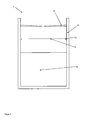
- FIG. 1 shows a schematic cross-sectional view of a device according to the invention 1.
- the device 1 comprises a container 4 in the form of an open-topped pot.
- the side walls of the container 4 are cylindrical and of uniform thickness.
- a scraper 6 is arranged in the interior of the container 4, which closes off the opening.
- the bottom and the side walls of the container 4 and the scraper 6 are made of a hydrophobic material or coated with a hydrophobic layer. Starting from the middle of the scraper 6, the scraper 6 is slotted or cut in eight directions.
- the eight slots / notches do not extend to the side walls of the container 4 and are intended to allow the insertion of a medical implant by the scraper 6.
- the scraper 6 has thereby eight flexible segments which during insertion and removal, or when pulling out of the medical implant, this strip, that is sweep the surface of the implant. This ensures that the scraper 6 substantially sweeps over the entire surface of the medical implant, in particular when pulling out, and thereby strips.
- a liquid 8 Inside the container 4 is a liquid 8, in which a medical implant can be immersed. Above the liquid 8, a membrane 9 is arranged, which covers the entire Cross-section of the container 4 assumes in its interior.
- the fluid 8 is an aqueous solution of antibiotics with which a medical implant is to be coated.
- the membrane 9 is supported by a retaining ring 10, which is arranged on the inside of the container 4 below the scraper 6.
- the membrane 9 closes off the container 4 tightly, so that no contamination from the outside can penetrate into the region below the membrane 9.
- a method according to the invention can be carried out.
- a medical implant (not shown) is pushed through the wiper 6. Subsequently, the medical implant penetrates the membrane 9, which has previously preserved the liquid 8 arranged underneath from external influences. The medical implant is then immersed in the liquid 8. The liquid 8 wets the medical implant. Subsequently, the medical implant is pulled out of the liquid 8. A portion of the liquid 8 remains adhered to the medical implant.
- the surface of the medical implant After the surface of the medical implant has been coated, it is pulled out of the container 4. The coated surface of the medical implant is pulled past the wiper 6. Excess liquid 8 is thereby stripped off the surface of the medical implant. Although the medical implant pulled out of the container 4 is then coated, it no longer drips off. By this measure, it can be prevented that the liquid 8 contaminates the environment. The medical implant coated with the fluid 8 is then ready to be used for surgery.
- the coating device 1 is made of polypropylene, has a height of 25 cm and a diameter of 6 cm.
- the scraper 6 is also made of polypropylene.
- the membrane 9 is formed from aluminum composite foil.
- the retaining ring 10 of the membrane 9 is made of polypropylene and is press-fitted into the interior of the container 4.
- the container 4 may additionally be germ-proofed by an aluminum composite film (not shown) which closes the opening of the container 4 before use.
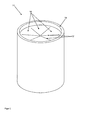
- FIG. 2 shows a schematic perspective view of a second device 11 according to the invention for a method according to the invention.
- the device 11 comprises a container 14 and a scraper 16 which completely covers the container 14 on the top.
- the flexible scraper 16 has six slots 17 and cuts 17, which are the top of the scraper 16 with the inside of the container 14 facing bottom of the scraper sixteenth so that a medical implant (not shown) can be inserted through the wiper 16 into the interior of the container 14 along the then flipped slots 17.
- a liquid (not shown) into which a medical implant can be immersed.
- the liquid contains a pharmaceutically active substance with which the medical implant is coated as soon as the solvent of the liquid in which the pharmaceutically active substance is dissolved has evaporated.
- conventional Zweymüller hip endoprostheses can be inserted briefly into the devices 1, 21 filled with fluid up to the end of the shaft and pulled out again immediately.
- the Zweymüller hip prostheses then have a film of liquid 8 on the shaft surface. After the liquid film has dried out, the Zweymüller hip prostheses can then have a white coating on the stem surface in which the pharmaceutically active substance is located.
- the hip prostheses are ready for use during surgery.
- the medical implant can still be coated with a powder that is contained in a second container into which the medical implant can be inserted.
- the powder in the second container is preferably covered by a second membrane, which is pierced with the medical implant and thereby opened.
- the powder contains a bone growth promoting substance, such as calcium phosphate. Due to the liquid film on the medical implant, the powder adheres well to its surface. This results in a liquid-powder coating on the surface of the medical implant to be coated.
Landscapes
- Health & Medical Sciences (AREA)
- Medicinal Chemistry (AREA)
- Life Sciences & Earth Sciences (AREA)
- Chemical & Material Sciences (AREA)
- General Health & Medical Sciences (AREA)
- Animal Behavior & Ethology (AREA)
- Veterinary Medicine (AREA)
- Public Health (AREA)
- Transplantation (AREA)
- Epidemiology (AREA)
- Oral & Maxillofacial Surgery (AREA)
- Dermatology (AREA)
- Molecular Biology (AREA)
- Biomedical Technology (AREA)
- Engineering & Computer Science (AREA)
- Chemical Kinetics & Catalysis (AREA)
- Nuclear Medicine, Radiotherapy & Molecular Imaging (AREA)
- Communicable Diseases (AREA)
- Organic Chemistry (AREA)
- Oncology (AREA)
- General Chemical & Material Sciences (AREA)
- Pharmacology & Pharmacy (AREA)
- Materials For Medical Uses (AREA)
- Prostheses (AREA)
- Pharmaceuticals Containing Other Organic And Inorganic Compounds (AREA)
Abstract
Description
- Die Erfindung betrifft ein Verfahren zur zumindest bereichsweisen Beschichtung eines medizinischen Implantats, vorzugsweise eines künstlichen Gelenks oder einer Fixierung für ein Gelenk.
- Die Erfindung betrifft auch eine Vorrichtung zur zumindest bereichsweisen Beschichtung eines medizinischen Implantats mit einem solchen Verfahren.
- Die Beschichtung von medizinischen Implantaten mit pharmazeutischen Wirkstoffen hat in den letzten Jahren zunehmend Beachtung gefunden. Eine zentrale Anwendung von Beschichtungsverfahren liegt dabei im antibiotischen Schutz der Oberfläche von Implantatmaterialien. Eine weitere wichtige Anwendung ist in der Verbesserung der Oberflächenkompatibilität von nicht zu zementierenden medizinischen Implantaten zum besseren Anwachsen von Knochenmaterial zu sehen.
- Die Implantation von Gelenkendoprothesen und auch von Osteosynthesematerialien ist immer mit einer gewissen Gefahr einer mikrobiellen Kontamination verbunden. Wenn es mikrobiellen Keimen gelingt, sich an der Implantatoberfläche anzusiedeln, kann es zur Ausbildung einer post-operativen Osteitis/Osteomyelitis kommen. Die Osteitis/Osteomyelitis stellt eine schwerwiegende Komplikation für den Patienten dar, die zusätzlich mit erheblichen Kosten verbunden ist.
- Seit Jahrzehenten wird mit klinischem Erfolg bei zementierten Gelenkendoprothesen mit Gentamicin dotierter PMMA-Knochenzement verwendet. Das im Knochenzement enthaltende Breitbandantibiotikum Gentamicin schützt die Oberfläche des Knochenzementes wirksam gegen bakterielle Infektionen.
- Bei nicht-zementierten Gelenkendoprothesen und bei Osteosynthesematerialien wurde eine Reihe von Lösungswegen vorgeschlagen, um ebenfalls einen lokalen antibiotischen Schutz der Implantatoberflächen zu erreichen.
- So wurde in mehreren Patentdokumenten die Verwendung von in Wasser gering löslichen Antibiotika-Salzen beschrieben. Exemplarisch seien dafür die
EP 0 623 349 A1 ,EP 1 470 829 A1 ,EP 1 374 923 A2 ,DE 101 42 465 A1 undDE 44 04 018 A1 genannt. Diese in Wasser gering löslichen Salze lösen sich unter Freisetzung der enthaltenen Antibiotika durch Einwirkung von Körperflüssigkeiten auf. Vorteilhaft ist die protrahierte Wirkstofffreisetzung. Nachteilig ist jedoch die aufwendige Herstellung dieser Salze. - Alternativ dazu ist es auch möglich, in Wasser lösliche Antibiotika-Salze zu verwenden. Das Problem liegt dabei darin, das Antibiotikum auf der Implantatoberfläche zu fixieren.
- Die Mehrzahl der bisherigen beschriebenen Beschichtungen ist vorzugsweise für die Fertigung von beschichteten Implantaten unter industriellen Bedingungen bestimmt. Das bedeutet, dass die industrielle Beschichtung dieser Implantate nur mit wenigen für die Großanwendung relevanten Wirkstoffen erfolgen kann, um eine wirtschaftliche industrielle Fertigung mit entsprechenden hohen Stückzahlen gewährleisten zu können.
- Insbesondere bei antibiotischen Beschichtungen ist es jedoch im Hinblick auf die sich zunehmend problematisch gestaltende Resistenzsituation und dem dabei vermehrten Auftreten von multiresistenten Keimen, wie MRSA und MRSE von Interesse, genau auf die jeweiligen Keime abgestimmte Antibiotika oder Antibiotika-Kombinationen zur Beschichtung von Revisionsprothesen im Zuge des einzeitigen oder zweizeitigen septischen Gelenkprothesenwechsels einzusetzen, um einen initialen antibiotischen Schutz der Implantatoberflächen zu gewährleisten.
- Nachteilig ist hieran, dass die Verfahren zur Beschichtung der medizinischen Implantate relativ aufwendig sind. Eine variable kurzfristige Anwendung ist nicht möglich. Es müssen für verschiedene Situationen verschiedene beschichtete medizinische Implantate bereitgehalten werden, um den Bedürfnissen der unterschiedlichen Patienten gerecht zu werden. Dies erfordert eine umfangreiche Lagerhaltung und verhindert ungewöhnliche Mischungen für spezielle Fälle.
- Die Aufgabe der Erfindung besteht also darin, die Nachteile des Stands der Technik zu überwinden. Insbesondere soll ein einfaches und leicht anzuwendendes Verfahren und eine Vorrichtung hierfür bereitgestellt werden, mit denen eine medizinische Prothese beschichtet werden kann, ohne dass dadurch der Ablauf einer Operation (OP) gestört wird. Es sollen möglichst viele verschiedene medizinische Implantate mit dem Verfahren und der Vorrichtung beschichtet werden können. Auch sollen das Verfahren und die Vorrichtung variabel einsetzbar sein, so dass sie an die medizinischen Notwendigkeiten, insbesondere an eine für den Patienten geeignete Medikamentierung anpassbar sind. Der in Operationssälen gebotenen Reinheit soll ebenfalls Rechnung getragen werden.
- Die Aufgabe der Erfindung besteht ferner darin, ein möglichst einfaches Beschichtungsverfahren zu entwickeln, das vom OP-Personal während einer OP mit geringstem Zeitaufwand zum Beschichten von unterschiedlichsten Implantaten, die von beliebigen Herstellern produziert sein können, mit pharmazeutischen Zubereitungen eingesetzt werden kann. Weiterhin ist es eine Aufgabe der Erfindung, eine einfache Beschichtungsvorrichtung zu entwickeln, die es dem OP-Personal erlaubt, unter OP-Bedingungen Implantate mit geringstem Aufwand zu beschichten. Die Vorrichtung soll weiterhin so gestaltet sein, dass möglichst kein überschüssiges Material zur Herstellung der Beschichtung den OP-Bereich kontaminieren kann. Eine weitere Aufgabe besteht darin, dass die Vorrichtung besonders zur Beschichtung von nicht-zementierten Gelenkendoprothesen und Osteosynthesematerialien geeignet sein soll.
- Die Aufgabe der Erfindung wird dadurch gelöst, dass ein medizinisches Implantat mit einer zu beschichtenden Oberfläche bereitgestellt wird, die zu beschichtende Oberfläche des medizinischen Implantats in eine Flüssigkeit umfassend zumindest eine pharmazeutisch aktive Substanz getaucht wird, wobei durch das Eintauchen Flüssigkeit auf die Oberfläche des medizinischen Implantats übertragen wird, und die zu beschichtende Oberfläche des medizinischen Implantats aus der Flüssigkeit herausgezogen wird, wobei ein Teil der Flüssigkeit auf der zu beschichtenden Oberfläche des medizinischen Implantats haften bleibt.
- Erfindungsgemäße Verfahren erfolgen vor dem Einsetzen der medizinischen Implantate. Die Verfahren finden also "ex vivo" statt.
- Unter einer pharmazeutisch aktiven Substanz sind erfindungsgemäß pharmazeutisch wirksame Mittel und Mittel zu verstehen, die pharmakologisch wirken, sowie solche, die eine pharmakologische Wirkung unterstützen oder sonst in irgendeiner Weise die Selbstheilungskräfte des Körpers unterstützen. Beispiele sind hierfür Antibiotika, organische Antiseptika, Kupfersalze, Kupferoxid, Galliumsalze, Strontiumsalze, Lithiumsalze, Silbersalze, Silberoxid, Bisphosphonate, Wachstumsfaktoren, Steroidhormone, nichtsteroidale Hormone, Hämostyptika, Antiphlogistika, Plasmide, Cosmide, lineare DNA und deren Mischungen.
- Unter einem Eintauchen ist erfindungsgemäß nicht nur ein Eintauchen in einer großen Menge der Flüssigkeit zu verstehen. Wenn die Form des Flüssigkeitsbehältnisses an die Form des zu beschichtenden medizinischen Implantats angepasst ist, kann auch eine geringe Menge der Flüssigkeit ausreichen, um die gesamte zu beschichtende Oberfläche des medizinischen Implantats zu beschichten. Die Flüssigkeit drückt sich dann zwischen dem medizinischen Implantat und dem Flüssigkeitsbehältnis nach oben.
- Erfindungsgemäß ist auch, dass das zu beschichtende Implantat gegebenenfalls mehrfach in die Flüssigkeit eingeführt und herausgezogen wird.
- Ferner kann vorgesehen sein, dass das zu beschichtende medizinische Implantat aus Hüftgelenkendoprothesen, Schultergelenkendoprothesen, Ellbogenendoprothesen, Marknägeln und Osteosyntheseplatten ausgewählt wird.
- Erfindungsgemäß kann auch vorgesehen sein, dass die Flüssigkeit eine wässrige Lösung eines Antibiotikums umfasst, bevorzugt eine wässrige Gentamicinsulfat-Lösung mit einem Gentamicinsulfat-Gehalt von 10,0 bis 88,0 Gewichtsprozent verwendet wird, wobei ganz besonders eine Gentamicinsulfat-Lösung mit einem Gentamicinsulfat-Gehalt von 75,0 bis 80,0 Gewichtsprozent bevorzugt verwendet wird. Diese Gentamicinsulfat-Lösung hat eine ölig-viskose Konsistenz und haftet sehr gut auf Metalloberflächen.
- Es kann dabei ferner vorgesehen sein, dass pharmazeutisch übliche Stabilisatoren in den Gentamicinsulfat-Lösungen enthalten sind. Diese verbessern die Haltbarkeit und damit die Verwendbarkeit der aufzutragenden Flüssigkeit.
- Erfindungsgemäß kann auch die Verwendung von anderen Aminoglykosid-Antibiotika-Lösungen, wie wässrige Lösungen des Tobramycinsulfats, des Amikacinsulfats, des Netilmicinsulfats und des Sisomycinsulfats als Flüssigkeit oder Flüssigkeitsbestandteile vorgesehen sein. Es ist auch möglich, wässrige Lösungen des Vancomycins, des Dalbavancins, des Ramoplanins, des Daptomycins, des Moxifloxacins, des Clindamycins und des Lincomycins einzusetzen.
- Ferner kann im Rahmen der Erfindung die Verwendung von Kombinationen von Lösungen verschiedener Antibiotika als Flüssigkeit vorgesehen sein. Beispielhaft sind hierbei die Zweifachkombinationen von Gentamicinsulfat mit Vancomycinhydrochlorid, die Zweifachkombination von Daptomycin mit Gentamicinsulfat und die Zweifachkombination von Gentamicinsulfat mit Clindamycin sowie die Dreifachkombination Gentamicinsulfat mit Vancomycinhydrochlorid und Clindamycinhydrochlorid.
- Des Weiteren kann vorgesehen sein, dass als Flüssigkeit Antiseptika-Lösungen verwendet werden, insbesondere Lösungen des Chlorhexidindigluconats, des Octenidindihydrochlorids und des Polyhexanids.
- Gemäß einer besonders vorteilhaften Ausgestaltung der Erfindung kann vorgesehen sein, dass die Flüssigkeit in einem Behälter mit einer Öffnung bereitgestellt wird, wobei das medizinische Implantat zur Beschichtung der zu beschichtenden Oberfläche durch die Öffnung eingeführt wird.
- Erfindungsgemäße Verfahren können sich auch dadurch auszeichnen, dass das medizinische Implantat durch eine Membran gestoßen wird oder eine Membran geöffnet wird, bevor das medizinische Implantat in die Flüssigkeit getaucht wird, wobei die Membran die Flüssigkeit zumindest bereichsweise abdeckt, vorzugsweise die Membran die Flüssigkeit im Behälter vollständig abdeckt. Durch diese beiden Maßnahmen kann das Verfahren leicht an unterschiedlichen Orten eingesetzt werden, da die zu verwendende Vorrichtung leicht transportabel ist.
- Eine weitere erfindungsgemäße Ausgestaltung des Verfahrens kann vorsehen, dass eine zur Behandlungssituation passende Flüssigkeit bereitgestellt wird.
- Auch kann vorgesehen sein, dass ein zur Behandlungssituation passendes Antibiotikum oder Antibiotika-Gemisch in die Flüssigkeit eingebracht wird. Durch diese beiden Maßnahmen kann auf die konkrete Behandlungssituation beim jeweiligen Patienten eingegangen werden.
- Dabei kann vorgesehen sein, dass das medizinische Implantat vor dem Eintauchen in die Flüssigkeit in einen Behälter eingeführt wird, in dem sich die Flüssigkeit befindet und nach der Übertragung der Flüssigkeit auf das medizinische Implantat aus dem Behälter herausgezogen wird.
- Auch kann vorgesehen sein, dass das medizinische Implantat durch eine Membran gestoßen wird oder eine Membran geöffnet wird, bevor das medizinische Implantat in die Flüssigkeit getaucht wird, wobei die Membran die Flüssigkeit zumindest bereichsweise abdeckt, vorzugsweise die Membran die Flüssigkeit im Behälter abdichtet. Die Membran verhindert eine Kontamination der Flüssigkeit vor der Anwendung. Durch das Durchstoßen der Membran wird sichergestellt, dass die schützende Membran erst kurz vor der Anwendung geöffnet wird. Die Membran sollte dazu derart aufgebaut sein, dass keine Fetzen oder andere Teile der Membran in die Flüssigkeit gelangen können oder am medizinischen Implantat haften.
- Besonders bevorzugt ist, dass ein Teil der übertragenen Flüssigkeit abgestreift wird, insbesondere beim Herausziehen des medizinischen Implantats aus dem Behälter, vorzugsweise an einem dafür vorgesehenen Abstreifer. Hierdurch kann eine Kontamination der Umgebung, also insbesondere eines OP-Bereichs, mit der Flüssigkeit verhindert oder zumindest reduziert werden. Dies ist vor allem bei der Verwendung von Antibiotika geboten, da so der Entwicklung resistenter Keime im OP-Bereich vorgebeugt werden kann.
- Ferner kann vorgesehen sein, dass zumindest 50% der Oberfläche des medizinischen Implantats, vorzugsweise zumindest 80%, besonders bevorzugt zumindest 90% der Oberfläche des medizinischen Implantats beschichtet werden.
- Erfindungsgemäße Verfahren können sich auch dadurch auszeichnen, dass eine zweite Flüssigkeit, vorzugsweise umfassend zumindest eine pharmazeutisch aktive Substanz, über ein Übertragungsmittel auf die Oberfläche des medizinischen Implantats übertragen wird, bevor das medizinische Implantat eingetaucht wird.
- Dabei kann vorgesehen sein, dass das medizinische Implantat über ein elastisch deformierbares Übertragungsmittel gestrichen wird, wobei beim Überstreichen des Übertragungsmittels die zweite Flüssigkeit vom Übertragungsmittel auf die zu beschichtenden Oberfläche des medizinischen Implantats übertragen wird. Durch die Verwendung eines elastisch deformierbaren Übertragungsmittels wird erreicht, dass die durch das Übertragungsmittel aufgetragene zweite Flüssigkeit auch auf einem unregelmäßig geformten medizinischen Implantat großflächig aufgetragen werden kann. Besonders bevorzugt ist das Übertragungsmittel auch porös, wobei die zweite Flüssigkeit in den Poren des Übertragungsmittels gespeichert wird. Das Übertragungsmittel kann dann Oberhalb der (ersten) Flüssigkeit angeordnet werden, ohne dass die zweite Flüssigkeit in die (erste) Flüssigkeit tropft. Besonders in Kombination mit einer Membran zum Abdecken der (ersten) Flüssigkeit ist dies vorteilhaft.
- Es kann auch vorgesehen sein, dass nach dem Übertragen der Flüssigkeit auf das medizinische Implantat ein Pulver auf die benetzte Oberfläche des medizinischen Implantats aufgebracht wird, bevorzugt das medizinische Implantat in ein Pulver eingetaucht wird, wobei das Pulver vorzugsweise zumindest eine knochenwachstumsfördernde Substanz umfasst.
- Um den beschichteten Bereich und die Vollständigkeit der Beschichtung sichtbar zu machen, kann erfindungsgemäß vorgesehen sein, dass die Flüssigkeit eingefärbt wird, so dass der beschichtete Bereich des medizinischen Implantats farblich kenntlich gemacht wird.
- Dabei kann vorgesehen sein, dass die Vollständigkeit der Beschichtung des zu beschichtenden Bereichs anhand der Färbung geprüft wird.
- Es kann ferner vorgesehen sein, dass das Verfahren so oft wiederholt wird, bis eine vollständige Beschichtung der zu beschichtenden Oberfläche des medizinischen Implantats erreicht wird. Insbesondere im Zusammenhang mit einer Färbung der Flüssigkeit und der Prüfung der Vollständigkeit der Beschichtung mit Hilfe der Färbung ist dies erfindungsgemäß vorteilhaft, um eine ausreichend beschichtetes medizinisches Implantat zu erzeugen.
- Es kann vorteilhaft sein, wenn der Behälter mit dem eingeschobenen Implantat geschlossen und/oder abgedichtet wird. Dies kann durch Schließen eines dafür vorgesehenen Deckels geschehen.
- Anschließend kann vorgesehen sein, dass der Behälter mit dem darin eingeschlossenen Implantat kurz geschüttelt wird.
- Die Aufgabe der Erfindung wird auch gelöst durch eine Vorrichtung zur zumindest bereichsweisen Beschichtung eines medizinischen Implantats mit einem solchen Verfahren, wobei die Vorrichtung einen Behälter umfasst, der eine Flüssigkeit aufweist, die zumindest eine pharmazeutisch aktive Substanz enthält, und der Behälter eine Öffnung zum Einführen und Herausnehmen des medizinischen Implantats umfasst.
- Dabei kann vorgesehen sein, dass die Öffnung durch einen abziehbaren Deckel verschlossen ist. Hierdurch kann eine Verunreinigung des Inneren des Behälters vermieden werden.
- Eine besonders vorteilhafte Ausgestaltung der Erfindung kann vorsehen, dass die Vorrichtung einen Abstreifer umfasst, der vorzugsweise im Bereich der Öffnung, insbesondere zwischen der Öffnung und der Flüssigkeit, angeordnet ist.
- Dabei kann vorgesehen sein, dass der Abstreifer scheibenförmig ist und mindestens einen Einschnitt umfasst, der die Oberseite und die Unterseite der Scheibe verbindet. Durch diesen mindesten einen Einschnitt kann das Implantat in die Vorrichtung eingebracht werden. Besonders vorteilhaft ist es, wenn radiale Einschnitte in dem Abstreifer ausgebildet sind. Dies macht es möglich, den gesamten äußeren Umfang der Implantate nach Beendigung der Beschichtung abzustreifen und damit überschüssige Mengen der Lösung oder Suspension von der beschichteten Implantatoberfläche zu entfernen. Weiterhin ist es dadurch möglich, die Freisetzung von Tröpfchen der Flüssigkeit, die beim Herausziehen des Implantats aus der Flüssigkeit entstehen können, wirksam zurückzuhalten. Damit wird die Kontamination des OPs weitgehend vermieden.
- Es kann des Weiteren vorgesehen sein, dass der Abstreifer als Kegelmantel oder als Halbkugelfläche ausgebildet ist, wobei die Kegelspitze oder die Halbkugel in Richtung der Flüssigkeit ausgerichtet ist und vorzugsweise der Kegelmantel oder die Halbkugel mindestens einen Einschnitt enthalten, der die Oberseite und die Unterseite des Abstreifers verbindet.
- Erfindungsgemäß kann auch vorgesehen sein, dass über der Flüssigkeit ein Übertragungsmittel angeordnet ist, mit dem eine zweite Flüssigkeit auf das medizinische Implantat übertragbar ist, wobei die zweite Flüssigkeit in dem Übertragungsmittel enthalten ist.
- Dabei kann vorgesehen sein, dass das Übertragungsmittel Poren umfasst und in den Poren des Übertragungsmittels die zweite Flüssigkeit, vorzugsweise in Form einer Lösung und/oder Suspension enthalten ist, wobei in der zweiten Flüssigkeit vorzugsweise eine zweite pharmazeutisch aktive Substanz enthalten ist.
- Eine Weiterbildung der Erfindung sieht vor, dass das Übertragungsmittel zumindest eine Walze, zumindest eine drehbare Kugel und/oder zumindest einen Schwamm umfasst, mit der oder dem oder mit denen die zweite Flüssigkeit auf die zu beschichtende Oberfläche des medizinischen Implantats übertragbar ist. Dadurch kann die Menge der zu verwendenden zweiten Flüssigkeit reduziert werden und ein ungewolltes Vermischen größerer Mengen der zweiten Flüssigkeit mit der (ersten) Flüssigkeit vermieden werden.
- Gemäß einer besonders bevorzugten Ausgestaltung der Erfindung kann vorgesehen sein, dass die pharmazeutisch aktive Substanz und vorzugsweise auch die zweite pharmazeutisch aktive Substanz Antibiotika und/oder organische Antiseptika beinhaltet, so dass die zu erzeugende Beschichtung eine pharmazeutisch wirksame Dosis beinhaltet.
- Ferner kann vorgesehen sein, dass die Vorrichtung einen Vakuumanschluss umfasst, der mit einer Vakuumquelle verbindbar ist und der vorzugsweise zwischen dem Abstreifer und der Flüssigkeit angeordnet ist. Dadurch kann zusätzlich durch Absaugen von Tröpfchen der Flüssigkeit und gegebenenfalls auch Pulverresten sichergestellt werden, dass keine Kontamination des OPs mit pharmazeutischen Wirkstoffen erfolgt.
- Auch kann vorgesehen sein, dass der Abstreifer aus einem biokompatiblen Elastomer, thermoplastischen Kunststoff oder auch durch eine Metallfolie oder auch aus Kompositen, die aus Metall-Elastomer-Kombinationen oder Metall-Kunststoffkombinationen gefertigt sind, besteht.
- Ferner kann vorgesehen sein, dass der Abstreifer als Ring ausgebildet ist, der radial zum Mittelpunkt des Behälters angeordnete Borsten enthält. Diese Borsten können aus Kunststoff gebildet sein, wobei die Borsten mechanisch so stabil und so stabil verankert sind, dass ein Abbrechen oder Ablösen der Borsten unterbleibt.
- Gemäß einer Weiterentwicklung der Erfindung kann auch vorgesehen sein, dass der Abstreifer in Form von drehbaren oder nichtdrehbaren Walzen und/oder auch Kugeln ausgebildet ist, die durch elastische Verbindungsmittel mit dem Behälter verbunden sind. Durch diesen Aufbau wird eine besonders einfache Abstreifbarkeit überschüssiger Flüssigkeit und gegebenenfalls überschüssigen Pulvers erreicht.
- Die Vorrichtung kann erfindungsgemäß mit einem Pulver, mit einer Wirkstofflösung und/oder Wirkstoffsuspension vorbefüllt sein, so dass das OP-Personal nur die Vorrichtung öffnen muss und anschließend sofort die Beschichtung des Implantats vornehmen kann. Vorteilhaft ist hierbei, dass der Zeitaufwand für diese Beschichtung nur im Bereich von wenigen Sekunden liegt und wertvolle OP-Zeit gespart werden kann.
- Alternativ ist es möglich, eine nicht befüllte Vorrichtung direkt im OP durch Einspritzen einer Wirkstofflösung oder Wirkstoffsuspension Einfüllen und/oder eines Pulvers mit einem oder mehreren pharmazeutischen Wirkstoffen auszurüsten. Dadurch ist es im Fall der antibiotischen Beschichtung möglich, entsprechend der vorliegenden Resistenzsituation eine geeignete Auswahl eines Antibiotikums oder einer Antibiotika-Kombination vorzunehmen und damit eine Antibiogramm-gerechte Beschichtung herzustellen.
- Es ist auch möglich, vor der OP nicht befüllte Vorrichtungen in der jeweiligen Klinikapotheke mit geeigneten Wirkstofflösungen oder Wirkstoffsuspensionen zu befüllen, so dass während der OP die Beschichtung ohne Zeitverzug vorgenommen werden kann.
- Beispiele für verwendbare pharmazeutisch aktive Substanzen sind Antibiotika, organische Antiseptika, Kupfersalze, Kupferoxid, Galliumsalze, Strontiumsalze, Lithiumsalze, Silbersalze, Silberoxid, Bisphosphonate, Wachstumsfaktoren, Steroidhormone, nichtsteroidale Hormone, Hämostyptika, Antiphlogistika, Plasmide, Cosmide, lineare DNA und deren Mischungen.
- Als Flüssigkeiten können erfindungsgemäß wässrige Lösung eines Antibiotikums, bevorzugt eine wässrige Gentamicinsulfat-Lösung mit einem Gentamicinsulfat-Gehalt von 10,0 bis 88,0 Gewichtsprozent vorgesehen sein, wobei ganz besonders eine Gentamicinsulfat-Lösung mit einem Gentamicinsulfat-Gehalt von 75,0 bis 80,0 Gewichtsprozent bevorzugt ist. Diese Gentamicinsulfat-Lösung hat eine ölig-viskose Konsistenz und haftet sehr gut auf Metalloberflächen.
- Pharmazeutisch übliche Stabilisatoren können weiterhin in den Gentamicinsulfat-Lösungen enthalten sein.
- Im Rahmen der Erfindung ist ebenfalls die Verwendung von anderen Aminoglykosid-Antibiotika-Lösungen, wie wässrige Lösungen des Tobramycinsulfats, des Amikacinsulfats, des Netilmicinsulfats und des Sisomycinsulfats. Es ist auch möglich, wässrige Lösungen des Vancomycins, des Dalbavancins, des Ramoplanins, des Daptomycins, des Moxifloxacins, des Clindamycins und/oder des Lincomycins einzusetzen. Ebenfalls im Rahmen der Erfindung ist die Verwendung von Kombinationen von Lösungen verschiedener Antibiotika. Beispielhaft sind hierbei die Zweifachkombinationen von Gentamicinsulfat mit Vancomycinhydrochlorid, die Zweifachkombination von Daptomycin mit Gentamicinsulfat und die Zweifachkombination von Gentamicinsulfat mit Clindamycin sowie die Dreifachkombination Gentamicinsulfat mit Vancomycinhydrochlorid und Clindamycinhydrochlorid. Weiterhin ist es möglich, anstelle von Antibiotika-Lösungen auch Antiseptika-Lösungen zu verwenden. Beispielhaft sind hierbei Lösungen des Chlorhexidindigluconats, des Octenidindihydrochlorids und des Polyhexanids.
- Ebenfalls im Rahmen der Erfindung ist die Verwendung von Lösungen von Antibiotika und Antiseptika, die als Lösungsmittel organische Lösungsmittel oder Kombinationen von organischen Lösungsmitteln oder auch Kombinationen von organischen Lösungsmitteln und Wasser enthalten.
- Es ist dadurch möglich, zum Beispiel auch in Wasser gering lösliche Antibiotika-Salze, wie Laurate, Myristate, Palmitate und Stearate zu verwenden. Daneben können auch in Wasser gering lösliche Antibiotika oder Antibiotika-Salze in Form von wässrigen Suspensionen eingesetzt werden.
- Vorzugsweise enthält das gegebenenfalls verwendete Pulver eine knochenwachstumsfördernde Substanz. Diese knochenwachstumsfördernde Substanz kann beispielsweise aus der Gruppe ausgewählt sein, die aus β-Tricalciumphosphat, α-Tricalciumphosphat, amorphem Calciumphosphat, Tetracalciumphosphat, Octacalciumphosphat, Hydroxylapatit, Fluorapatit, Calciumsulfat-Hemihydrat, Calciumsulfat-Dihydrat, wasserfreiem Calciumsulfat, pulverförmigen Antibiotika, organischen Antiseptika, Kupfersalzen, Kupferoxid, Galliumsalzen, Strontiumsalzen, Lithiumsalzen, Silbersalzen, Silberoxid, Bisphosphonaten, Wachstumsfaktoren, Steroidhormonen, nichtsteroidalen Hormonen, Hämostyptika, Antiphlogistika, Plasmiden, Cosmiden, linearer DNA sowie Mischungen davon besteht. In dem Pulver können auch Komplexbildner oder auch Salze enthalten sein, die mit den vom Abstreifer auf die Implantatoberfläche übertragenen pharmazeutischen Wirkstoffen in Wasser gering lösliche komplexe oder Salze bilden. So kann zum Beispiel Teicoplanin im Pulver enthalten sein, das mit Gentamicin oder anderen kationischen Antibiotika in Wasser gering lösliche Komplexe bildet. Es ist auch beispielsweise möglich, dass in dem Pulver N-Methyl-Glucamoniumsalze von Fettsäuren oder von Alkylsulfaten enthalten sind, die bei Kontakt mit wässrigen Lösungen von kationischen Antibiotika infolge eines reziproken Salzaustauschs in Wasser gering lösliche Fettsäuresalze oder Alkylsulfate der Antibiotika bilden können. Auf diese Weise ist es möglich, in Wasser gering lösliche Komplexe oder Salze von pharmazeutischen Wirkstoffen, insbesondere von Antibiotika, auf die lmplantatoberfläche aufzubringen.
- Besonders vorteilhaft ist es, wenn reaktive anorganische Pulver, wie amorphisiertes Calciumphosphat, Tetracalciumphosphat und Calciumsulfat-Hemihydrat verwendet werden, die in Gegenwart von Wasser aushärten. Dadurch ist es möglich, stabile Beschichtungen auszubilden. Die Aushärtung innerhalb von wenigen Sekunden kann dabei erreicht werden, indem zum Beispiel bei Verwendung von Calciumsulfat-Hemihydrat als Pulver geringe Mengen von Calciumsulfat-Dihydrat als Keimbildner sowie Ammoniumsulfat, Natriumsulfat oder Kaliumsulfat als Beschleuniger zu dem Calciumsulfat-Hemihydrat zugegeben werden. Vorteilhaft ist weiterhin die Verwendung von β-Tricalciumphosphat, α-Tricalciumphosphat und Tetracalciumphosphat, die durch Einwirkung von wässrigen Säuren, insbesondere von wässrigen Lösungen der Äpfelsäure, der Weinsäure und der Citronensäure, innerhalb von wenigen Sekunden aushärten.
- Erfindungsgemäß ist es ferner, dass die Vorrichtung als Arzneimittel oder als Medizinprodukt bereitgestellt wird.
- Auch eine Kombination der erfindungsgemäßen Vorrichtung mit einem medizinischen Implantat könnte angeboten werden. Diese Kombination wird aus der Vorrichtung und dem Implantat gebildet, wobei diese Kombination eine Mindestlebensdauer von 0,1 Sekunden hat. Die Kombination entsteht besteht während des Beschichtungsprozesses.
- Der Erfindung liegt die überraschende Erkenntnis zugrunde, dass eine Flüssigkeit, mit der ein medizinisches Implantat beschichtet werden soll, auch kurz vor seiner Anwendung einfach durch Eintauchen des Implantats in die Flüssigkeit auf dem medizinischen Implantat aufgetragen werden kann. Das einfach gestaltete Verfahren und die Vorrichtung hierfür stellen dabei die Anwendbarkeit auch im OP-Bereich sicher.
- Für einen initialen antibiotischen Schutz reicht es aus, wenn für einen Zeitraum von 24 bis 72 Stunden hinreichend hohe Antibiotikum- oder Antibiotika-Konzentrationen an den Implantatoberflächen vorhanden sind. Daher kann auch bei der lokalen Einbringung von einfachen in Wasser löslichen Antibiotika in eine Flüssigkeit ein ausreichender temporärer, lokaler, antibiotischer Schutz des medizinischen Implantats erzielt werden.
- Anstatt also das medizinische Implantat lange im Voraus bei der Herstellung zu beschichten, kann es auch unmittelbar vor dem Einsetzen beschichtet werden. Dadurch können auch relativ kurzlebige Beschichtungen verwendet werden. Zudem kann sogar eine noch flüssige Schicht verwendet werden, was neue Anwendungsgebiete eröffnet und neue Wirkstoffe zugänglich macht.
- Im Folgenden werden Ausführungsbeispiele der Erfindung anhand von zwei schematisch dargestellten Figuren erläutert, ohne jedoch dabei die Erfindung zu beschränken. Dabei zeigt:
-
Figur 1 : eine schematische Querschnittansicht einer erfindungsgemäßen Vorrichtung und -
Figur 2 : eine schematische perspektivische Ansicht einer erfindungsgemäßen Vorrichtung. -
Figur 1 zeigt eine schematische Querschnittansicht einer erfindungsgemäßen Vorrichtung 1. Die Vorrichtung 1 umfasst einen Behälter 4 in Form eines oben offenen Topfs. Die Seitenwände des Behälters 4 sind zylindrisch und von gleichmäßiger Dicke. Im Bereich der Öffnung, kurz unterhalb der Öffnung ist im Inneren des Behälters 4 ein Abstreifer 6 angeordnet, der die Öffnung abschließt. - Der Boden und die Seitenwände des Behälters 4 und der Abstreifer 6 sind aus einem hydrophoben Material gefertigt oder mit einer hydrophoben Schicht beschichtet. Ausgehend von der Mitte des Abstreifers 6 ist der Abstreifer 6 in acht Richtungen geschlitzt beziehungsweise eingeschnitten.
- Die acht Schlitze / Einschnitte (nicht gezeigt) reichen nicht bis zu den Seitenwänden des Behälters 4 und sollen das Einführen eines medizinischen Implantats durch den Abstreifer 6 ermöglichen. Der Abstreifer 6 hat dadurch acht flexible Segmente die beim Einführen und beim Herausnehmen, beziehungsweise beim Herausziehen des medizinischen Implantats, dieses abstreifen, das heißt die Oberfläche des Implantats überstreichen. Dadurch ist sichergestellt, dass der Abstreifer 6 im Wesentlichen die gesamte Oberfläche des medizinischen Implantats, insbesondere beim Herausziehen, überstreicht und dabei abstreift.
- Im Inneren des Behälters 4 befindet sich eine Flüssigkeit 8, in die ein medizinisches Implantat eingetaucht werden kann. Über der Flüssigkeit 8 ist eine Membran 9 angeordnet, die den gesamten Querschnitt des Behälters 4 in seinem Inneren einnimmt. Die Flüssigkeit 8 ist eine wässrige Lösung mit Antibiotika, mit der ein medizinisches Implantat beschichtet werden soll.
- Die Membran 9 wird durch einen Halterungsring 10 getragen, der auf der Innenseite des Behälters 4 unterhalb des Abstreifers 6 angeordnet ist. Die Membran 9 schließt den Behälter 4 dicht ab, so dass keine Verunreinigung von außen in den Bereich unterhalb der Membran 9 vordringen kann.
- Mit der gezeigten Vorrichtung 1 kann ein erfindungsgemäßes Verfahren durchgeführt werden. Ein medizinisches Implantat (nicht gezeigt) wird durch den Abstreifer 6 hindurch geschoben. Anschließend durchstößt das medizinische Implantat die Membran 9, die zuvor die darunter angeordnete Flüssigkeit 8 von äußeren Einflüssen bewahrt hat. Das medizinische Implantat wird dann in die Flüssigkeit 8 eingetaucht. Die Flüssigkeit 8 benetzt das medizinische Implantat. Anschließend wird das medizinische Implantat aus der Flüssigkeit 8 herausgezogen. Ein Teil der Flüssigkeit 8 bleibt am medizinischen Implantat haften.
- Nachdem die Oberfläche des medizinischen Implantats beschichtet wurde, wird es aus dem Behälter 4 herausgezogen. Dabei wird die beschichtete Oberfläche des medizinischen Implantats am Abstreifer 6 vorbeigezogen. Überschüssige Flüssigkeit 8 wird dabei von der Oberfläche des medizinischen Implantats abgestreift. Das aus dem Behälter 4 herausgezogene medizinische Implantat ist dann zwar beschichtet, tropft aber nicht mehr nach. Durch diese Maßnahme kann verhindert werden, dass die Flüssigkeit 8 die Umgebung kontaminiert. Das mit der Flüssigkeit 8 beschichtete medizinische Implantat ist dann bereit, um für eine Operation eingesetzt zu werden.
- Die Beschichtungsvorrichtung 1 ist aus Polypropylen gefertigt, hat eine Höhe von 25 cm und einen Durchmesser von 6 cm. Der Abstreifer 6 besteht ebenfalls aus Polypropylen. Die Membran 9 ist aus Aluminiumverbundfolie gebildet. Der Halterungsring 10 der Membran 9 ist aus Polypropylen gefertigt und ist im Presssitz in den Innenraum des Behälters 4 eingepresst. Der Behälter 4 kann vor der Anwendung zusätzlich durch eine Aluminiumverbundfolie (nicht gezeigt) keimdicht verschlossen sein, die die Öffnung des Behälters 4 verschließt.
-
Figur 2 zeigt eine schematische perspektivische Ansicht einer zweiten erfindungsgemäßen Vorrichtung 11 für ein erfindungsgemäßes Verfahren. Die Vorrichtung 11 umfasst einen Behälter 14 und einen Abstreifer 16, der den Behälter 14 auf der Oberseite vollständig abdeckt. Der flexible Abstreifer 16 hat sechs Schlitze 17 beziehungsweise Einschnitte 17, die die Oberseite des Abstreifers 16 mit der ins Innere des Behälters 14 gewandten Unterseite des Abstreifers 16 verbinden, so dass ein medizinisches Implantat (nicht gezeigt) durch den Abstreifer 16 in das Innere des Behälters 14 entlang der dann umgeklappten Schlitze 17 eingeführt werden kann. - Im Inneren des Behälters 14 befindet sich eine Flüssigkeit (nicht gezeigt) in die ein medizinisches Implantat eingetaucht werden kann. Die Flüssigkeit enthält eine pharmazeutisch aktive Substanz, mit der das medizinische Implantat beschichtet ist, sobald das Lösungsmittel der Flüssigkeit, in der die pharmazeutisch aktive Substanz gelöst ist, verdampft ist.
- Erfindungsgemäß können übliche Zweymüller-Hüftendoprothesen kurz in die mit Flüssigkeit befüllten Vorrichtungen 1, 21 bis zum Ende des Schafts hinein gesteckt und sofort wieder heraus gezogen werden. Die Zweymüller-Hüftprothesen haben dann einen Film einer Flüssigkeit 8 an der Schaftoberfläche. Nach dem Austrocknen des Flüssigkeitsfilms können die Zweymüller-Hüftprothesen dann einen weißen Belag an der Schaftoberfläche haben, in dem sich die pharmazeutisch aktive Substanz befindet. Die Hüftprothesen sind bereit zum Einsatz bei einer Operation.
- Nach der Beschichtung mit der Flüssigkeit 8 kann das medizinische Implantat noch mit einem Pulver beschichtet werden, das in einem zweiten Behälter enthalten ist, in den das medizinische Implantat gesteckt werden kann. Das Pulver im zweiten Behälter ist vorzugsweise durch eine zweite Membran abgedeckt, die mit dem medizinischen Implantat durchstoßen und dadurch geöffnet wird. Das Pulver enthält eine knochenwachstumsfördernde Substanz, wie Calciumphosphat. Durch den Flüssigkeitsfilm auf dem medizinischen Implantat haftet das Pulver gut auf dessen Oberfläche. Daraus resultiert eine Flüssigkeits-Pulver-Beschichtung auf der zu beschichtenden Oberfläche des medizinischen Implantats.
- Im Folgenden werden Beispiele zur Herstellung von Flüssigkeiten und von Pulvern für ein erfindungsgemäßes Verfahren und ein weiteres Beispiel für eine erfindungsgemäße Vorrichtung ausgeführt.
- Beispiel 1: Herstellung einer Beschichtungslösung mit Gentamicinsulfat:
Es wurden 16,0 g Gentamicinsulfat (Fujian Fukang Ltd.) mit 4,0 ml pyrogenfreiem sterilem Wasser bei Raumtemperatur vermischt. Nach 24 Stunden Rühren bei Raumtemperatur mit einem Magnetrührer hatte sich eine ölig-viskose gelbliche Lösung gebildet. Es ergab sich eine Beschichtungslösung mit Gentamicinsulfat als Flüssigkeit zur Beschichtung eines medizinischen Implantats. - Beispiel 2: Herstellung einer Beschichtungslösung mit der Zweifachkombination Gentamicinsulfat und Clindamycinhydrochlorid:
Es wurden 12,0 g Gentamicinsulfat (Fujian Fukang Ltd.), 4,0 g Clindamycinhydrochlorid (Sigma-Aaldrich) mit 4,0 ml pyrogenfreiem sterilem Wasser bei Raumtemperatur vermischt. Nach 24 Stunden Rühren bei Raumtemperatur mit einem Magnetrührer hatte sich eine ölig-viskose gelbliche Lösung gebildet. - Beispiel 3: Herstellung einer Beschichtungslösung mit der Dreifachkombination Gentamicinsulfat, Clindamycinhydrochlorid und Vancomycinhydrochlorid:
Es wurden 4,0 g Gentamicinsulfat (Fujian Fukang Ltd.), 4,0 g Clindamycinhydrochlorid (Sigma-Aaldrich) und 4,0 g Vancomycinhydrochlorid (Sigma-Aldrich) mit 8,0 ml pyrogenfreiem sterilem Wasser bei Raumtemperatur vermischt. Nach 24 Stunden Rühren bei Raumtemperatur mit einem Magnetrührer hatte sich eine viskose gelbliche Lösung gebildet. - Beispiel 4: Herstellung einer Beschichtungslösung enthaltend Gentamicinsulfat und Äpfelsäure:
Es wurden 100 mg Äpfelsäure und 16,0 g Gentamicinsulfat (Fujian Fukang Ltd.) mit 4,0 ml pyrogenfreiem sterilem Wasser bei Raumtemperatur vermischt. Nach 24 Stunden Rühren bei Raumtemperatur mit einem Magnetrührer hatte sich eine ölig-viskose gelbliche Lösung gebildet. - Beispiel 5: Herstellung einer Beschichtungslösung enthaltend Gentamicinsulfat und Citronensäure:
Es wurden 100 mg Citronensäure und 16,0 g Gentamicinsulfat (Fujian Fukang Ltd.) mit 4,0 ml pyrogenfreiem sterilem Wasser bei Raumtemperatur vermischt. Nach 24 Stunden Rühren bei Raumtemperatur mit einem Magnetrührer hatte sich eine ölig-viskose gelbliche Lösung gebildet. - Beispiele 6 - 10: Beschichtung von medizinischen lmplantaten:
Mit konventionellen 10 ml Kunststoffspritzen wurden jeweils 5 ml der Beschichtungslösungen der aufgeführten Beispiele 1 - 5 aufgezogen. Danach wurden mit den befüllten Kunststoffspritzen 4 ml der jeweiligen Wirkstofflösung in den Behälter einer erfindungsgemäßen Vorrichtung gespritzt. Medizinische Implantate wurden mit den in den Beispielen 1 - 5 beschriebenen Lösungen beschichtet, indem sie in den Behälter eingeführt und aus dem Behälter herausgenommen wurden. Es wurden jeweils medizinische Implantate erhalten, die mit den in den verwendeten Lösungen enthaltenen Antibiotika beschichtet waren. - Beispiele 11 - 15: Beschichtung von medizinischen Implantaten mit Antibiotikum und knochenwachstumsstimulierenden Substanzen:
In den Beispielen 11 - 15 wurde gemäß den Beispielen 6 - 10 vorgegangen, wobei die medizinischen Implantate nach der Herausnahme aus dem Behälter in einen zweiten Behälter überführt und anschließend aus diesem herausgenommen wurden. Dieser, durch eine Membran verschlossene zweite Behälter war mit einem Pulvergemisch von 150 g Calciumsulfat-Hemihydrat (Siebfraktion < 64 µm), 15,0 g Calciumsulfat-Dihydrat (Siebfraktion < 64 µm) und 1,5 g Ammoniumsulfat (Siebfraktion < 64 µm) gefüllt. - Beispiele 16 - 20: Beschichtung von medizinischen Implantaten mit Antibiotikum und anderen knochenwachstumsstimulierenden Substanzen:In den Beispielen 16 - 20 wurde gemäß den Beispielen 6 - 10 vorgegangen, wobei die medizinischen Implantate nach der Herausnahme aus dem Behälter in einen zweiten Behälter überführt und anschließend aus diesem herausgenommen wurden. Dieser zweite Behälter war mit einem Pulvergemisch von 100 g Calciumsulfat-Hemihydrat (Siebfraktion < 64 µm), 50,0 g Calciumcarbonat (Siebfraktion < 64 µm), 15,0 g Calciumsulfat-Dihydrat (Siebfraktion < 64 µm) und 1,5 g Ammoniumsulfat gefüllt.
- Beispiele 21- 25: Beschichtung von medizinischen lmplantaten mit Antibiotikum und anderen knochenwachstumsstimulierenden Substanzen:
In den Beispielen 21 - 25 wurde gemäß den Beispielen 6 - 10 vorgegangen, wobei die medizinischen Implantate nach der Herausnahme aus dem Behälter in einen zweiten Behälter überführt und anschließend aus diesem herausgenommen wurden. Dieser zweite Behälter war mit einem 150 g β-Tricalciumphosphat (Siebfraktion < 64 µm) gefüllt. - Beispiele 26 - 30: Beschichtung von medizinischen Implantaten mit Antibiotikum und anderen knochenwachstumsstimulierenden Substanzen:
In den Beispielen 26 - 30 wurde gemäß den Beispielen 6 - 10 vorgegangen, wobei die medizinischen Implantate nach der Herausnahme aus dem Behälter in einen zweiten Behälter überführt und anschließend herausgenommen wurden. Dieser zweite Behälter war mit 150 g α-Tetracalciumphosphat (Siebfraktion < 64 µm) gefüllt. - In den Beispielen 11 - 30 wurden jeweils medizinische Implantate erhalten, die mit den verwendeten Antibiotika und den verwendeten knochenwachstumsfördernden Substanzen beschichtet waren.Die in der voranstehenden Beschreibung, sowie den Ansprüchen, Figuren und Ausführungsbeispielen offenbarten Merkmale der Erfindung können sowohl einzeln, als auch in jeder beliebigen Kombination für die Verwirklichung der Erfindung in ihren verschiedenen Ausführungsformen wesentlich sein.
-
- 1, 11
- Vorrichtung
- 4, 14
- Behälter
- 6, 16
- Abstreifer
- 8
- Flüssigkeit
- 9
- Membran
- 10
- Halterungsring
- 17
- Schlitz / Einschnitt
Claims (20)
- Verfahren zur zumindest bereichsweisen Beschichtung eines medizinischen Implantats, dadurch gekennzeichnet, dass
ein medizinisches Implantat mit einer zu beschichtenden Oberfläche bereitgestellt wird, die zu beschichtende Oberfläche des medizinischen Implantats in eine Flüssigkeit umfassend zumindest eine pharmazeutisch aktive Substanz getaucht wird, wobei durch das Eintauchen Flüssigkeit auf die Oberfläche des medizinischen Implantats übertragen wird, und
die zu beschichtende Oberfläche des medizinischen Implantats aus der Flüssigkeit herausgezogen wird, wobei ein Teil der Flüssigkeit auf der zu beschichtenden Oberfläche des medizinischen Implantats haften bleibt. - Verfahren nach Anspruch 1, dadurch gekennzeichnet, dass
die Flüssigkeit in einem Behälter mit einer Öffnung bereitgestellt wird, wobei das medizinische Implantat zur Beschichtung der zu beschichtenden Oberfläche durch die Öffnung eingeführt wird. - Verfahren nach einem der Ansprüche 1 oder 2, dadurch gekennzeichnet, dass das medizinische Implantat durch eine Membran gestoßen wird oder eine Membran geöffnet wird, bevor das medizinische Implantat in die Flüssigkeit getaucht wird, wobei die Membran die Flüssigkeit zumindest bereichsweise abdeckt, vorzugsweise die Membran die Flüssigkeit im Behälter vollständig abdeckt.
- Verfahren nach einem der vorangehenden Ansprüche, dadurch gekennzeichnet, dass eine zur Behandlungssituation passende Flüssigkeit bereitgestellt wird, insbesondere ein zur Behandlungssituation passendes Antibiotikum oder Antibiotika-Gemisch in die Flüssigkeit eingebracht wird.
- Verfahren nach einem der vorangehenden Ansprüche, dadurch gekennzeichnet, dass das medizinische Implantat vor dem Eintauchen in die Flüssigkeit in einen Behälter eingeführt wird, in dem sich die Flüssigkeit befindet und nach der Übertragung der Flüssigkeit auf das medizinische Implantat aus dem Behälter herausgezogen wird.
- Verfahren nach einem der vorangehenden Ansprüche, dadurch gekennzeichnet, dass ein Teil der übertragenen Flüssigkeit abgestreift wird, insbesondere beim Herausziehen des medizinischen Implantats aus dem Behälter, vorzugsweise an einem dafür vorgesehenen Abstreifer.
- Verfahren nach einem der vorangehenden Ansprüche, dadurch gekennzeichnet, dass zumindest 50% der Oberfläche des medizinischen Implantats, vorzugsweise zumindest 80% der Oberfläche, besonders bevorzugt zumindest 90% der Oberfläche des medizinischen Implantats beschichtet werden.
- Verfahren nach einem der vorangehenden Ansprüche, dadurch gekennzeichnet, dass eine zweite Flüssigkeit über ein Übertragungsmittel auf die Oberfläche des medizinischen Implantats übertragen wird, bevor das medizinische Implantat eingetaucht wird.
- Verfahren nach einem der vorangehenden Ansprüche, dadurch gekennzeichnet, dass nach dem Übertragen der Flüssigkeit auf das medizinische Implantat ein Pulver auf die benetzte Oberfläche des medizinischen Implantats aufgebracht wird, bevorzugt das medizinische Implantat in ein Pulver eingetaucht wird, wobei das Pulver vorzugsweise zumindest eine knochenwachstumsfördernde Substanz umfasst.
- Verfahren nach einem der vorangehenden Ansprüche, dadurch gekennzeichnet, dass die Flüssigkeit eingefärbt wird, so dass der beschichtete Bereich des medizinischen Implantats farblich kenntlich gemacht wird.
- Verfahren nach Anspruch 10, dadurch gekennzeichnet, dass
die Vollständigkeit der Beschichtung des zu beschichtenden Bereichs anhand der Färbung geprüft wird. - Verfahren nach einem der vorangehenden Ansprüche, dadurch gekennzeichnet, dass das Verfahren so oft wiederholt wird, bis eine vollständige Beschichtung der zu beschichtenden Oberfläche des medizinischen Implantats erreicht wird.
- Vorrichtung (1, 11) zur zumindest bereichsweisen Beschichtung eines medizinischen Implantats mit einem Verfahren nach einem der vorangehenden Ansprüche, dadurch gekennzeichnet, dass
die Vorrichtung (1, 11 ) einen Behälter (4, 14) umfasst, der eine Flüssigkeit (8) aufweist, die zumindest eine pharmazeutisch aktive Substanz enthält, und der Behälter (4, 14) eine Öffnung zum Einführen und Herausnehmen des medizinischen Implantats umfasst. - Vorrichtung (1, 11) nach Anspruch 13, dadurch gekennzeichnet, dass die Öffnung durch einen abziehbaren Deckel verschlossen ist.
- Vorrichtung (1, 11) nach einem der Ansprüche 13 bis 14, dadurch gekennzeichnet, dass die Vorrichtung (1, 11) einen Abstreifer (6, 16) umfasst, der vorzugsweise im Bereich der Öffnung, insbesondere zwischen der Öffnung und der Flüssigkeit (8) angeordnet ist.
- Vorrichtung (1, 11) nach Anspruch 15, dadurch gekennzeichnet, dass der Abstreifer (6, 16) scheibenförmig ist und mindestens einen Einschnitt (17) umfasst, der die Oberseite und die Unterseite der Scheibe (6) verbindet.
- Vorrichtung (1, 11) nach Anspruch 15, dadurch gekennzeichnet, dass der Abstreifer (6, 16) als Kegelmantel (16) oder als Halbkugelfläche ausgebildet ist, wobei die Kegelspitze oder die Halbkugel in Richtung der Flüssigkeit (8) ausgerichtet ist und vorzugsweise der Kegelmantel (16) oder die Halbkugel mindestens einen Einschnitt (17) enthalten, der die Oberseite und die Unterseite des Abstreifers (6, 16) verbindet.
- Vorrichtung (1, 11) nach einem der Ansprüche 13 bis 17, dadurch gekennzeichnet, dass über der Flüssigkeit (8) ein Übertragungsmittel angeordnet ist, mit dem eine zweite Flüssigkeit auf das medizinische Implantat übertragbar ist, wobei die zweite Flüssigkeit in dem Übertragungsmittel enthalten ist.
- Vorrichtung (1, 11) nach einem der Ansprüche 13 bis 18, dadurch gekennzeichnet, dass die pharmazeutisch aktive Substanz Antibiotika und/oder organische Antiseptika in einer pharmazeutisch wirksamen Dosis beinhaltet.
- Vorrichtung (1, 11) nach einem der Ansprüche 13 bis 19, dadurch gekennzeichnet, dass die Vorrichtung (1, 11) einen Vakuumanschluss umfasst, der mit einer Vakuumquelle verbindbar ist und der vorzugsweise zwischen dem Abstreifer (6, 16) und der Flüssigkeit (8) angeordnet ist.
Applications Claiming Priority (1)
| Application Number | Priority Date | Filing Date | Title |
|---|---|---|---|
| DE102010055560.6A DE102010055560B4 (de) | 2010-12-23 | 2010-12-23 | Beschichtungsvorrichtung |
Publications (3)
| Publication Number | Publication Date |
|---|---|
| EP2468317A2 true EP2468317A2 (de) | 2012-06-27 |
| EP2468317A3 EP2468317A3 (de) | 2014-10-15 |
| EP2468317B1 EP2468317B1 (de) | 2016-09-07 |
Family
ID=45217138
Family Applications (1)
| Application Number | Title | Priority Date | Filing Date |
|---|---|---|---|
| EP11009385.3A Not-in-force EP2468317B1 (de) | 2010-12-23 | 2011-11-26 | Beschichtungsvorrichtung |
Country Status (7)
| Country | Link |
|---|---|
| US (1) | US9480778B2 (de) |
| EP (1) | EP2468317B1 (de) |
| JP (1) | JP5653338B2 (de) |
| CN (1) | CN102553794B (de) |
| AU (1) | AU2011265336B2 (de) |
| CA (1) | CA2760908C (de) |
| DE (1) | DE102010055560B4 (de) |
Families Citing this family (4)
| Publication number | Priority date | Publication date | Assignee | Title |
|---|---|---|---|---|
| DE102010055561B4 (de) * | 2010-12-23 | 2015-12-31 | Heraeus Medical Gmbh | Beschichtungsverfahren und Beschichtungsvorrichtung |
| CN103977456A (zh) * | 2014-06-05 | 2014-08-13 | 赵全明 | 一种载万古霉素/羟基磷灰石人工关节假体的制备工艺 |
| CN110860518B (zh) * | 2019-12-13 | 2024-09-06 | 四川大学 | 一种牙科钻针的预处理清洗装置 |
| CN115846157B (zh) * | 2021-09-24 | 2024-01-30 | 中国电子科技集团公司第三十六研究所 | 一种紧固件批量点螺纹胶方法 |
Citations (5)
| Publication number | Priority date | Publication date | Assignee | Title |
|---|---|---|---|---|
| EP0623349A1 (de) | 1993-05-05 | 1994-11-09 | MERCK PATENT GmbH | Lösungsmittel für ein schwerlösliches Gentamicin-Salz |
| DE4404018A1 (de) | 1994-02-09 | 1995-08-10 | Merck Patent Gmbh | Protrahiert freisetzende Darreichungsformen enthaltend Clindamycin-Palmitat |
| DE10142465A1 (de) | 2001-08-31 | 2003-07-17 | Heraeus Kulzer Gmbh & Co Kg | Verfahren zur antibiotischen Beschichtung von nichtmetallischen Körpern mit interkonnektierenden Mikrohohlräumen, nichtmetallischer Körper sowie seine Verwendung |
| EP1374923A2 (de) | 2002-06-21 | 2004-01-02 | Heraeus Kulzer GmbH & Co.KG | Poröse Implantatkörper mit antibiotischer Beschichtung, ihre Herstellung sowie Verwendung |
| EP1470829A1 (de) | 2003-04-25 | 2004-10-27 | Heraeus Kulzer GmbH & Co.KG | Peröser Körper mit antibiotischer Beschichtung, Verfahren zur Herstellung sowie Verwendung |
Family Cites Families (21)
| Publication number | Priority date | Publication date | Assignee | Title |
|---|---|---|---|---|
| US6025A (en) * | 1849-01-09 | Island | ||
| US2268642A (en) * | 1937-08-19 | 1942-01-06 | Horace M Carter | Composition in cream form adapted to remove hardened liquid nail polish and method of making same |
| US4282891A (en) * | 1978-06-05 | 1981-08-11 | Revelations Antoine Ltee | Fingernail treating device |
| US4846844A (en) * | 1987-08-31 | 1989-07-11 | Eli Lilly And Company | Antimicrobial coated implants |
| US6523690B1 (en) * | 2000-03-30 | 2003-02-25 | Kimberly-Clark Worldwide, Inc. | Wet wipe container with flexible orifice |
| US6451373B1 (en) * | 2000-08-04 | 2002-09-17 | Advanced Cardiovascular Systems, Inc. | Method of forming a therapeutic coating onto a surface of an implantable prosthesis |
| CA2434254C (en) * | 2001-01-12 | 2013-08-13 | Board Of Regents, The University Of Texas System | Novel antiseptic derivatives with broad spectrum antimicrobial activity for the impregnation of surfaces |
| WO2002060507A1 (en) * | 2001-01-30 | 2002-08-08 | Isotis S.A. | A method for applying a bioactive coating on a medical device |
| US6589591B1 (en) * | 2001-07-10 | 2003-07-08 | Baylor College Of Medicine | Method for treating medical devices using glycerol and an antimicrobial agent |
| IS6390A (is) | 2001-08-31 | 2003-03-03 | Heraeus Kulzer Gmbh & Co. Kg | Reynsla af sýklalyfjahúðun skrokka sem í eru örholrými, þannig húðuðum skrokkum og einnig af notkunþeirra |
| DE10244847A1 (de) * | 2002-09-20 | 2004-04-01 | Ulrich Prof. Dr. Speck | Medizinische Vorrichtung zur Arzneimittelabgabe |
| US6971813B2 (en) * | 2002-09-27 | 2005-12-06 | Labcoat, Ltd. | Contact coating of prostheses |
| US7704544B2 (en) * | 2003-10-07 | 2010-04-27 | Advanced Cardiovascular Systems, Inc. | System and method for coating a tubular implantable medical device |
| DE10351150A1 (de) | 2003-11-03 | 2005-05-25 | Blue Membranes Gmbh | Verfahren und Vorrichtung zum Auftragen einer definierten Menge eines Beschichtungsmaterials auf die Oberfläche eines zu beschichtenden Körpers |
| US7563324B1 (en) | 2003-12-29 | 2009-07-21 | Advanced Cardiovascular Systems Inc. | System and method for coating an implantable medical device |
| JP2007522835A (ja) * | 2004-01-20 | 2007-08-16 | ボード・オブ・リージエンツ,ザ・ユニバーシテイ・オブ・テキサス・システム | 医療装置に消毒組成物をコーティングする、および含浸させる方法 |
| US7585369B2 (en) * | 2004-08-04 | 2009-09-08 | Larson Marian L | Apparatus for coating medical devices |
| US20060251824A1 (en) * | 2005-05-05 | 2006-11-09 | Boulais Dennis R | Coating of medical devices with solids |
| US20070281072A1 (en) * | 2006-06-06 | 2007-12-06 | Boston Scientific Scimed, Inc. | Coating a workpiece using a metering device and workpieces coated with this metering device |
| DE102010055562B4 (de) * | 2010-12-23 | 2015-07-09 | Heraeus Medical Gmbh | Beschichtungsvorrichtung und Beschichtungsverfahren |
| DE102010055559B4 (de) * | 2010-12-23 | 2015-10-29 | Heraeus Medical Gmbh | Beschichtungsverfahren und Beschichtungsvorrichtung |
-
2010
- 2010-12-23 DE DE102010055560.6A patent/DE102010055560B4/de not_active Expired - Fee Related
-
2011
- 2011-11-26 EP EP11009385.3A patent/EP2468317B1/de not_active Not-in-force
- 2011-12-05 CA CA2760908A patent/CA2760908C/en not_active Expired - Fee Related
- 2011-12-19 AU AU2011265336A patent/AU2011265336B2/en not_active Ceased
- 2011-12-21 US US13/333,009 patent/US9480778B2/en not_active Expired - Fee Related
- 2011-12-22 JP JP2011281607A patent/JP5653338B2/ja not_active Expired - Fee Related
- 2011-12-23 CN CN201110439669.7A patent/CN102553794B/zh not_active Expired - Fee Related
Patent Citations (5)
| Publication number | Priority date | Publication date | Assignee | Title |
|---|---|---|---|---|
| EP0623349A1 (de) | 1993-05-05 | 1994-11-09 | MERCK PATENT GmbH | Lösungsmittel für ein schwerlösliches Gentamicin-Salz |
| DE4404018A1 (de) | 1994-02-09 | 1995-08-10 | Merck Patent Gmbh | Protrahiert freisetzende Darreichungsformen enthaltend Clindamycin-Palmitat |
| DE10142465A1 (de) | 2001-08-31 | 2003-07-17 | Heraeus Kulzer Gmbh & Co Kg | Verfahren zur antibiotischen Beschichtung von nichtmetallischen Körpern mit interkonnektierenden Mikrohohlräumen, nichtmetallischer Körper sowie seine Verwendung |
| EP1374923A2 (de) | 2002-06-21 | 2004-01-02 | Heraeus Kulzer GmbH & Co.KG | Poröse Implantatkörper mit antibiotischer Beschichtung, ihre Herstellung sowie Verwendung |
| EP1470829A1 (de) | 2003-04-25 | 2004-10-27 | Heraeus Kulzer GmbH & Co.KG | Peröser Körper mit antibiotischer Beschichtung, Verfahren zur Herstellung sowie Verwendung |
Also Published As
| Publication number | Publication date |
|---|---|
| CA2760908A1 (en) | 2012-06-23 |
| JP5653338B2 (ja) | 2015-01-14 |
| US9480778B2 (en) | 2016-11-01 |
| AU2011265336A1 (en) | 2012-07-12 |
| EP2468317B1 (de) | 2016-09-07 |
| DE102010055560A1 (de) | 2012-06-28 |
| DE102010055560B4 (de) | 2017-02-23 |
| CN102553794B (zh) | 2014-10-22 |
| AU2011265336B2 (en) | 2013-10-31 |
| CA2760908C (en) | 2014-09-23 |
| CN102553794A (zh) | 2012-07-11 |
| JP2012130706A (ja) | 2012-07-12 |
| EP2468317A3 (de) | 2014-10-15 |
| US20120164312A1 (en) | 2012-06-28 |
Similar Documents
| Publication | Publication Date | Title |
|---|---|---|
| EP2468315B1 (de) | Beschichtungsverfahren und Beschichtungsvorrichtung | |
| DE102005002703C5 (de) | Antibiotische Beschichtung von Implantaten sowie Verfahren zur antibiotischen Beschichtung | |
| EP2468923B1 (de) | Beschichtungsverfahren und Beschichtungsvorrichtung | |
| EP2468317B1 (de) | Beschichtungsvorrichtung | |
| EP2392360B1 (de) | Antibiotische Beschichtung | |
| DE102010025533B4 (de) | Verfahren zur knochenwachstumsfördernden Beschichtung | |
| DE102011117526B4 (de) | Beschichtungsverfahren und Beschichtungsvorrichtung für medizinische Implantate | |
| DE102010055562B4 (de) | Beschichtungsvorrichtung und Beschichtungsverfahren |
Legal Events
| Date | Code | Title | Description |
|---|---|---|---|
| 17P | Request for examination filed |
Effective date: 20111212 |
|
| AK | Designated contracting states |
Kind code of ref document: A2 Designated state(s): AL AT BE BG CH CY CZ DE DK EE ES FI FR GB GR HR HU IE IS IT LI LT LU LV MC MK MT NL NO PL PT RO RS SE SI SK SM TR |
|
| PUAI | Public reference made under article 153(3) epc to a published international application that has entered the european phase |
Free format text: ORIGINAL CODE: 0009012 |
|
| PUAL | Search report despatched |
Free format text: ORIGINAL CODE: 0009013 |
|
| AK | Designated contracting states |
Kind code of ref document: A3 Designated state(s): AL AT BE BG CH CY CZ DE DK EE ES FI FR GB GR HR HU IE IS IT LI LT LU LV MC MK MT NL NO PL PT RO RS SE SI SK SM TR |
|
| RIC1 | Information provided on ipc code assigned before grant |
Ipc: A61L 27/54 20060101AFI20140909BHEP |
|
| REG | Reference to a national code |
Ref country code: DE Ref legal event code: R079 Ref document number: 502011010604 Country of ref document: DE Free format text: PREVIOUS MAIN CLASS: A61L0027540000 Ipc: B05D0001180000 |
|
| RIC1 | Information provided on ipc code assigned before grant |
Ipc: A61L 27/54 20060101ALI20160323BHEP Ipc: B05D 1/18 20060101AFI20160323BHEP |
|
| GRAP | Despatch of communication of intention to grant a patent |
Free format text: ORIGINAL CODE: EPIDOSNIGR1 |
|
| INTG | Intention to grant announced |
Effective date: 20160429 |
|
| GRAS | Grant fee paid |
Free format text: ORIGINAL CODE: EPIDOSNIGR3 |
|
| GRAA | (expected) grant |
Free format text: ORIGINAL CODE: 0009210 |
|
| AK | Designated contracting states |
Kind code of ref document: B1 Designated state(s): AL AT BE BG CH CY CZ DE DK EE ES FI FR GB GR HR HU IE IS IT LI LT LU LV MC MK MT NL NO PL PT RO RS SE SI SK SM TR |
|
| REG | Reference to a national code |
Ref country code: GB Ref legal event code: FG4D Free format text: NOT ENGLISH |
|
| REG | Reference to a national code |
Ref country code: CH Ref legal event code: EP |
|
| REG | Reference to a national code |
Ref country code: IE Ref legal event code: FG4D Free format text: LANGUAGE OF EP DOCUMENT: GERMAN |
|
| REG | Reference to a national code |
Ref country code: AT Ref legal event code: REF Ref document number: 826358 Country of ref document: AT Kind code of ref document: T Effective date: 20161015 |
|
| REG | Reference to a national code |
Ref country code: DE Ref legal event code: R096 Ref document number: 502011010604 Country of ref document: DE |
|
| REG | Reference to a national code |
Ref country code: SE Ref legal event code: TRGR |
|
| REG | Reference to a national code |
Ref country code: FR Ref legal event code: PLFP Year of fee payment: 6 |
|
| REG | Reference to a national code |
Ref country code: LT Ref legal event code: MG4D |
|
| REG | Reference to a national code |
Ref country code: NL Ref legal event code: MP Effective date: 20160907 |
|
| PG25 | Lapsed in a contracting state [announced via postgrant information from national office to epo] |
Ref country code: NO Free format text: LAPSE BECAUSE OF FAILURE TO SUBMIT A TRANSLATION OF THE DESCRIPTION OR TO PAY THE FEE WITHIN THE PRESCRIBED TIME-LIMIT Effective date: 20161207 Ref country code: RS Free format text: LAPSE BECAUSE OF FAILURE TO SUBMIT A TRANSLATION OF THE DESCRIPTION OR TO PAY THE FEE WITHIN THE PRESCRIBED TIME-LIMIT Effective date: 20160907 Ref country code: HR Free format text: LAPSE BECAUSE OF FAILURE TO SUBMIT A TRANSLATION OF THE DESCRIPTION OR TO PAY THE FEE WITHIN THE PRESCRIBED TIME-LIMIT Effective date: 20160907 Ref country code: FI Free format text: LAPSE BECAUSE OF FAILURE TO SUBMIT A TRANSLATION OF THE DESCRIPTION OR TO PAY THE FEE WITHIN THE PRESCRIBED TIME-LIMIT Effective date: 20160907 Ref country code: LT Free format text: LAPSE BECAUSE OF FAILURE TO SUBMIT A TRANSLATION OF THE DESCRIPTION OR TO PAY THE FEE WITHIN THE PRESCRIBED TIME-LIMIT Effective date: 20160907 |
|
| PG25 | Lapsed in a contracting state [announced via postgrant information from national office to epo] |
Ref country code: NL Free format text: LAPSE BECAUSE OF FAILURE TO SUBMIT A TRANSLATION OF THE DESCRIPTION OR TO PAY THE FEE WITHIN THE PRESCRIBED TIME-LIMIT Effective date: 20160907 Ref country code: BE Free format text: LAPSE BECAUSE OF NON-PAYMENT OF DUE FEES Effective date: 20161130 Ref country code: ES Free format text: LAPSE BECAUSE OF FAILURE TO SUBMIT A TRANSLATION OF THE DESCRIPTION OR TO PAY THE FEE WITHIN THE PRESCRIBED TIME-LIMIT Effective date: 20160907 Ref country code: LV Free format text: LAPSE BECAUSE OF FAILURE TO SUBMIT A TRANSLATION OF THE DESCRIPTION OR TO PAY THE FEE WITHIN THE PRESCRIBED TIME-LIMIT Effective date: 20160907 Ref country code: GR Free format text: LAPSE BECAUSE OF FAILURE TO SUBMIT A TRANSLATION OF THE DESCRIPTION OR TO PAY THE FEE WITHIN THE PRESCRIBED TIME-LIMIT Effective date: 20161208 |
|
| PG25 | Lapsed in a contracting state [announced via postgrant information from national office to epo] |
Ref country code: EE Free format text: LAPSE BECAUSE OF FAILURE TO SUBMIT A TRANSLATION OF THE DESCRIPTION OR TO PAY THE FEE WITHIN THE PRESCRIBED TIME-LIMIT Effective date: 20160907 Ref country code: RO Free format text: LAPSE BECAUSE OF FAILURE TO SUBMIT A TRANSLATION OF THE DESCRIPTION OR TO PAY THE FEE WITHIN THE PRESCRIBED TIME-LIMIT Effective date: 20160907 |
|
| PG25 | Lapsed in a contracting state [announced via postgrant information from national office to epo] |
Ref country code: PL Free format text: LAPSE BECAUSE OF FAILURE TO SUBMIT A TRANSLATION OF THE DESCRIPTION OR TO PAY THE FEE WITHIN THE PRESCRIBED TIME-LIMIT Effective date: 20160907 Ref country code: IS Free format text: LAPSE BECAUSE OF FAILURE TO SUBMIT A TRANSLATION OF THE DESCRIPTION OR TO PAY THE FEE WITHIN THE PRESCRIBED TIME-LIMIT Effective date: 20170107 Ref country code: PT Free format text: LAPSE BECAUSE OF FAILURE TO SUBMIT A TRANSLATION OF THE DESCRIPTION OR TO PAY THE FEE WITHIN THE PRESCRIBED TIME-LIMIT Effective date: 20170109 Ref country code: SK Free format text: LAPSE BECAUSE OF FAILURE TO SUBMIT A TRANSLATION OF THE DESCRIPTION OR TO PAY THE FEE WITHIN THE PRESCRIBED TIME-LIMIT Effective date: 20160907 Ref country code: BG Free format text: LAPSE BECAUSE OF FAILURE TO SUBMIT A TRANSLATION OF THE DESCRIPTION OR TO PAY THE FEE WITHIN THE PRESCRIBED TIME-LIMIT Effective date: 20161207 Ref country code: SM Free format text: LAPSE BECAUSE OF FAILURE TO SUBMIT A TRANSLATION OF THE DESCRIPTION OR TO PAY THE FEE WITHIN THE PRESCRIBED TIME-LIMIT Effective date: 20160907 Ref country code: CZ Free format text: LAPSE BECAUSE OF FAILURE TO SUBMIT A TRANSLATION OF THE DESCRIPTION OR TO PAY THE FEE WITHIN THE PRESCRIBED TIME-LIMIT Effective date: 20160907 |
|
| REG | Reference to a national code |
Ref country code: DE Ref legal event code: R097 Ref document number: 502011010604 Country of ref document: DE |
|
| PG25 | Lapsed in a contracting state [announced via postgrant information from national office to epo] |
Ref country code: IT Free format text: LAPSE BECAUSE OF FAILURE TO SUBMIT A TRANSLATION OF THE DESCRIPTION OR TO PAY THE FEE WITHIN THE PRESCRIBED TIME-LIMIT Effective date: 20160907 |
|
| PLBE | No opposition filed within time limit |
Free format text: ORIGINAL CODE: 0009261 |
|
| STAA | Information on the status of an ep patent application or granted ep patent |
Free format text: STATUS: NO OPPOSITION FILED WITHIN TIME LIMIT |
|
| PG25 | Lapsed in a contracting state [announced via postgrant information from national office to epo] |
Ref country code: DK Free format text: LAPSE BECAUSE OF FAILURE TO SUBMIT A TRANSLATION OF THE DESCRIPTION OR TO PAY THE FEE WITHIN THE PRESCRIBED TIME-LIMIT Effective date: 20160907 |
|
| 26N | No opposition filed |
Effective date: 20170608 |
|
| REG | Reference to a national code |
Ref country code: IE Ref legal event code: MM4A |
|
| PG25 | Lapsed in a contracting state [announced via postgrant information from national office to epo] |
Ref country code: SI Free format text: LAPSE BECAUSE OF FAILURE TO SUBMIT A TRANSLATION OF THE DESCRIPTION OR TO PAY THE FEE WITHIN THE PRESCRIBED TIME-LIMIT Effective date: 20160907 |
|
| PG25 | Lapsed in a contracting state [announced via postgrant information from national office to epo] |
Ref country code: LU Free format text: LAPSE BECAUSE OF NON-PAYMENT OF DUE FEES Effective date: 20161130 |
|
| REG | Reference to a national code |
Ref country code: FR Ref legal event code: PLFP Year of fee payment: 7 |
|
| PG25 | Lapsed in a contracting state [announced via postgrant information from national office to epo] |
Ref country code: IE Free format text: LAPSE BECAUSE OF NON-PAYMENT OF DUE FEES Effective date: 20161126 |
|
| REG | Reference to a national code |
Ref country code: BE Ref legal event code: MM Effective date: 20161130 |
|
| REG | Reference to a national code |
Ref country code: DE Ref legal event code: R082 Ref document number: 502011010604 Country of ref document: DE Representative=s name: BRAND, NORMEN, DR. RER. NAT., DE Ref country code: DE Ref legal event code: R082 Ref document number: 502011010604 Country of ref document: DE Representative=s name: BRAND, NORMEN, DIPL.-CHEM. UNIV. DR. RER. NAT., DE Ref country code: DE Ref legal event code: R082 Ref document number: 502011010604 Country of ref document: DE Representative=s name: EULER, MATTHIAS, DR., DE |
|
| PG25 | Lapsed in a contracting state [announced via postgrant information from national office to epo] |
Ref country code: HU Free format text: LAPSE BECAUSE OF FAILURE TO SUBMIT A TRANSLATION OF THE DESCRIPTION OR TO PAY THE FEE WITHIN THE PRESCRIBED TIME-LIMIT; INVALID AB INITIO Effective date: 20111126 Ref country code: CY Free format text: LAPSE BECAUSE OF FAILURE TO SUBMIT A TRANSLATION OF THE DESCRIPTION OR TO PAY THE FEE WITHIN THE PRESCRIBED TIME-LIMIT Effective date: 20160907 |
|
| PG25 | Lapsed in a contracting state [announced via postgrant information from national office to epo] |
Ref country code: MK Free format text: LAPSE BECAUSE OF FAILURE TO SUBMIT A TRANSLATION OF THE DESCRIPTION OR TO PAY THE FEE WITHIN THE PRESCRIBED TIME-LIMIT Effective date: 20160907 Ref country code: TR Free format text: LAPSE BECAUSE OF FAILURE TO SUBMIT A TRANSLATION OF THE DESCRIPTION OR TO PAY THE FEE WITHIN THE PRESCRIBED TIME-LIMIT Effective date: 20160907 Ref country code: MC Free format text: LAPSE BECAUSE OF FAILURE TO SUBMIT A TRANSLATION OF THE DESCRIPTION OR TO PAY THE FEE WITHIN THE PRESCRIBED TIME-LIMIT Effective date: 20160907 |
|
| PG25 | Lapsed in a contracting state [announced via postgrant information from national office to epo] |
Ref country code: MT Free format text: LAPSE BECAUSE OF FAILURE TO SUBMIT A TRANSLATION OF THE DESCRIPTION OR TO PAY THE FEE WITHIN THE PRESCRIBED TIME-LIMIT Effective date: 20160907 |
|
| PG25 | Lapsed in a contracting state [announced via postgrant information from national office to epo] |
Ref country code: AL Free format text: LAPSE BECAUSE OF FAILURE TO SUBMIT A TRANSLATION OF THE DESCRIPTION OR TO PAY THE FEE WITHIN THE PRESCRIBED TIME-LIMIT Effective date: 20160907 |
|
| PGFP | Annual fee paid to national office [announced via postgrant information from national office to epo] |
Ref country code: NL Payment date: 20181219 Year of fee payment: 16 Ref country code: AT Payment date: 20181121 Year of fee payment: 8 |
|
| REG | Reference to a national code |
Ref country code: DE Ref legal event code: R082 Ref document number: 502011010604 Country of ref document: DE Representative=s name: BRAND, NORMEN, DR. RER. NAT., DE Ref country code: DE Ref legal event code: R082 Ref document number: 502011010604 Country of ref document: DE Representative=s name: BRAND, NORMEN, DIPL.-CHEM. UNIV. DR. RER. NAT., DE |
|
| REG | Reference to a national code |
Ref country code: SE Ref legal event code: EUG Ref country code: CH Ref legal event code: PL |
|
| PG25 | Lapsed in a contracting state [announced via postgrant information from national office to epo] |
Ref country code: CH Free format text: LAPSE BECAUSE OF NON-PAYMENT OF DUE FEES Effective date: 20191130 Ref country code: LI Free format text: LAPSE BECAUSE OF NON-PAYMENT OF DUE FEES Effective date: 20191130 |
|
| REG | Reference to a national code |
Ref country code: AT Ref legal event code: MM01 Ref document number: 826358 Country of ref document: AT Kind code of ref document: T Effective date: 20191126 |
|
| PG25 | Lapsed in a contracting state [announced via postgrant information from national office to epo] |
Ref country code: SE Free format text: LAPSE BECAUSE OF NON-PAYMENT OF DUE FEES Effective date: 20191127 |
|
| PG25 | Lapsed in a contracting state [announced via postgrant information from national office to epo] |
Ref country code: AT Free format text: LAPSE BECAUSE OF NON-PAYMENT OF DUE FEES Effective date: 20191126 |
|
| PGFP | Annual fee paid to national office [announced via postgrant information from national office to epo] |
Ref country code: DE Payment date: 20211118 Year of fee payment: 11 Ref country code: FR Payment date: 20211122 Year of fee payment: 11 Ref country code: GB Payment date: 20211118 Year of fee payment: 11 |
|
| REG | Reference to a national code |
Ref country code: DE Ref legal event code: R119 Ref document number: 502011010604 Country of ref document: DE |
|
| GBPC | Gb: european patent ceased through non-payment of renewal fee |
Effective date: 20221126 |
|
| PG25 | Lapsed in a contracting state [announced via postgrant information from national office to epo] |
Ref country code: GB Free format text: LAPSE BECAUSE OF NON-PAYMENT OF DUE FEES Effective date: 20221126 Ref country code: DE Free format text: LAPSE BECAUSE OF NON-PAYMENT OF DUE FEES Effective date: 20230601 |
|
| PG25 | Lapsed in a contracting state [announced via postgrant information from national office to epo] |
Ref country code: FR Free format text: LAPSE BECAUSE OF NON-PAYMENT OF DUE FEES Effective date: 20221130 |