EP2471206B1 - Verfahren für den ausgleich der datenpaketgrösse eines multimedia-streams nach blöcken - Google Patents
Verfahren für den ausgleich der datenpaketgrösse eines multimedia-streams nach blöcken Download PDFInfo
- Publication number
- EP2471206B1 EP2471206B1 EP10747034.6A EP10747034A EP2471206B1 EP 2471206 B1 EP2471206 B1 EP 2471206B1 EP 10747034 A EP10747034 A EP 10747034A EP 2471206 B1 EP2471206 B1 EP 2471206B1
- Authority
- EP
- European Patent Office
- Prior art keywords
- packets
- stream
- transmitted
- data packets
- base stream
- Prior art date
- Legal status (The legal status is an assumption and is not a legal conclusion. Google has not performed a legal analysis and makes no representation as to the accuracy of the status listed.)
- Active
Links
- 238000000034 method Methods 0.000 title claims description 22
- 230000005540 biological transmission Effects 0.000 claims description 21
- 230000007246 mechanism Effects 0.000 claims description 6
- 238000012937 correction Methods 0.000 claims description 4
- 238000004590 computer program Methods 0.000 claims description 2
- 238000012545 processing Methods 0.000 claims description 2
- 230000009897 systematic effect Effects 0.000 claims description 2
- 238000004088 simulation Methods 0.000 description 6
- 238000011084 recovery Methods 0.000 description 3
- 230000004913 activation Effects 0.000 description 2
- 230000008901 benefit Effects 0.000 description 2
- 238000010276 construction Methods 0.000 description 2
- 230000002452 interceptive effect Effects 0.000 description 2
- 239000011159 matrix material Substances 0.000 description 2
- 230000006978 adaptation Effects 0.000 description 1
- 230000003321 amplification Effects 0.000 description 1
- 230000000903 blocking effect Effects 0.000 description 1
- 230000015556 catabolic process Effects 0.000 description 1
- 238000004891 communication Methods 0.000 description 1
- 230000006835 compression Effects 0.000 description 1
- 238000007906 compression Methods 0.000 description 1
- 238000006731 degradation reaction Methods 0.000 description 1
- 230000004907 flux Effects 0.000 description 1
- 238000003780 insertion Methods 0.000 description 1
- 230000037431 insertion Effects 0.000 description 1
- 230000006855 networking Effects 0.000 description 1
- 238000003199 nucleic acid amplification method Methods 0.000 description 1
- 238000009877 rendering Methods 0.000 description 1
- 239000002699 waste material Substances 0.000 description 1
Images




Classifications
-
- H—ELECTRICITY
- H04—ELECTRIC COMMUNICATION TECHNIQUE
- H04N—PICTORIAL COMMUNICATION, e.g. TELEVISION
- H04N21/00—Selective content distribution, e.g. interactive television or video on demand [VOD]
-
- H—ELECTRICITY
- H04—ELECTRIC COMMUNICATION TECHNIQUE
- H04L—TRANSMISSION OF DIGITAL INFORMATION, e.g. TELEGRAPHIC COMMUNICATION
- H04L1/00—Arrangements for detecting or preventing errors in the information received
- H04L1/004—Arrangements for detecting or preventing errors in the information received by using forward error control
- H04L1/0041—Arrangements at the transmitter end
-
- H—ELECTRICITY
- H04—ELECTRIC COMMUNICATION TECHNIQUE
- H04L—TRANSMISSION OF DIGITAL INFORMATION, e.g. TELEGRAPHIC COMMUNICATION
- H04L1/00—Arrangements for detecting or preventing errors in the information received
- H04L1/0078—Avoidance of errors by organising the transmitted data in a format specifically designed to deal with errors, e.g. location
- H04L1/009—Avoidance of errors by organising the transmitted data in a format specifically designed to deal with errors, e.g. location arrangements specific to transmitters
-
- H—ELECTRICITY
- H04—ELECTRIC COMMUNICATION TECHNIQUE
- H04N—PICTORIAL COMMUNICATION, e.g. TELEVISION
- H04N21/00—Selective content distribution, e.g. interactive television or video on demand [VOD]
- H04N21/20—Servers specifically adapted for the distribution of content, e.g. VOD servers; Operations thereof
- H04N21/23—Processing of content or additional data; Elementary server operations; Server middleware
- H04N21/235—Processing of additional data, e.g. scrambling of additional data or processing content descriptors
-
- H—ELECTRICITY
- H04—ELECTRIC COMMUNICATION TECHNIQUE
- H04N—PICTORIAL COMMUNICATION, e.g. TELEVISION
- H04N21/00—Selective content distribution, e.g. interactive television or video on demand [VOD]
- H04N21/20—Servers specifically adapted for the distribution of content, e.g. VOD servers; Operations thereof
- H04N21/23—Processing of content or additional data; Elementary server operations; Server middleware
- H04N21/238—Interfacing the downstream path of the transmission network, e.g. adapting the transmission rate of a video stream to network bandwidth; Processing of multiplex streams
- H04N21/2381—Adapting the multiplex stream to a specific network, e.g. an Internet Protocol [IP] network
-
- H—ELECTRICITY
- H04—ELECTRIC COMMUNICATION TECHNIQUE
- H04N—PICTORIAL COMMUNICATION, e.g. TELEVISION
- H04N21/00—Selective content distribution, e.g. interactive television or video on demand [VOD]
- H04N21/20—Servers specifically adapted for the distribution of content, e.g. VOD servers; Operations thereof
- H04N21/23—Processing of content or additional data; Elementary server operations; Server middleware
- H04N21/238—Interfacing the downstream path of the transmission network, e.g. adapting the transmission rate of a video stream to network bandwidth; Processing of multiplex streams
- H04N21/2389—Multiplex stream processing, e.g. multiplex stream encrypting
-
- H—ELECTRICITY
- H04—ELECTRIC COMMUNICATION TECHNIQUE
- H04N—PICTORIAL COMMUNICATION, e.g. TELEVISION
- H04N21/00—Selective content distribution, e.g. interactive television or video on demand [VOD]
- H04N21/40—Client devices specifically adapted for the reception of or interaction with content, e.g. set-top-box [STB]; Operations thereof
- H04N21/43—Processing of content or additional data, e.g. demultiplexing additional data from a digital video stream; Elementary client operations, e.g. monitoring of home network or synchronising decoder's clock; Client middleware
- H04N21/435—Processing of additional data, e.g. decrypting of additional data, reconstructing software from modules extracted from the transport stream
-
- H—ELECTRICITY
- H04—ELECTRIC COMMUNICATION TECHNIQUE
- H04N—PICTORIAL COMMUNICATION, e.g. TELEVISION
- H04N21/00—Selective content distribution, e.g. interactive television or video on demand [VOD]
- H04N21/40—Client devices specifically adapted for the reception of or interaction with content, e.g. set-top-box [STB]; Operations thereof
- H04N21/43—Processing of content or additional data, e.g. demultiplexing additional data from a digital video stream; Elementary client operations, e.g. monitoring of home network or synchronising decoder's clock; Client middleware
- H04N21/438—Interfacing the downstream path of the transmission network originating from a server, e.g. retrieving encoded video stream packets from an IP network
- H04N21/4385—Multiplex stream processing, e.g. multiplex stream decrypting
-
- H—ELECTRICITY
- H04—ELECTRIC COMMUNICATION TECHNIQUE
- H04N—PICTORIAL COMMUNICATION, e.g. TELEVISION
- H04N21/00—Selective content distribution, e.g. interactive television or video on demand [VOD]
- H04N21/60—Network structure or processes for video distribution between server and client or between remote clients; Control signalling between clients, server and network components; Transmission of management data between server and client, e.g. sending from server to client commands for recording incoming content stream; Communication details between server and client
- H04N21/63—Control signaling related to video distribution between client, server and network components; Network processes for video distribution between server and clients or between remote clients, e.g. transmitting basic layer and enhancement layers over different transmission paths, setting up a peer-to-peer communication via Internet between remote STB's; Communication protocols; Addressing
- H04N21/631—Multimode Transmission, e.g. transmitting basic layers and enhancement layers of the content over different transmission paths or transmitting with different error corrections, different keys or with different transmission protocols
-
- H—ELECTRICITY
- H04—ELECTRIC COMMUNICATION TECHNIQUE
- H04N—PICTORIAL COMMUNICATION, e.g. TELEVISION
- H04N21/00—Selective content distribution, e.g. interactive television or video on demand [VOD]
- H04N21/60—Network structure or processes for video distribution between server and client or between remote clients; Control signalling between clients, server and network components; Transmission of management data between server and client, e.g. sending from server to client commands for recording incoming content stream; Communication details between server and client
- H04N21/63—Control signaling related to video distribution between client, server and network components; Network processes for video distribution between server and clients or between remote clients, e.g. transmitting basic layer and enhancement layers over different transmission paths, setting up a peer-to-peer communication via Internet between remote STB's; Communication protocols; Addressing
- H04N21/643—Communication protocols
- H04N21/6437—Real-time Transport Protocol [RTP]
-
- H—ELECTRICITY
- H04—ELECTRIC COMMUNICATION TECHNIQUE
- H04L—TRANSMISSION OF DIGITAL INFORMATION, e.g. TELEGRAPHIC COMMUNICATION
- H04L1/00—Arrangements for detecting or preventing errors in the information received
- H04L2001/0092—Error control systems characterised by the topology of the transmission link
- H04L2001/0093—Point-to-multipoint
Definitions
- the invention is in the field of telecommunications and relates more specifically to a method of equalizing the size of the data packets of a multimedia stream having a succession of variable size data packets to be transmitted in real time.
- a transmitter to one or more receiver (s).
- This method is implemented in a system comprising at least one transmitter and at least one receiver exchanging in real time multimedia data packets of variable sizes, of video, audio and / or data type, via the Internet for example.
- a constantly sought-after goal is to optimize the bandwidth resources while avoiding the loss of information due to reception conditions.
- lost packet recovery systems implementing error correcting codes used in the transmission of packets.
- these systems introduce redundant packets whose receivers take advantage in order to reconstruct any lost packets.
- a trivial example is to repeat the transmitted packets by transmitting redundant copies of these packets.
- the systems used are more sophisticated and allow better performance in restoring lost packets for a given redundancy rate.
- the ALC protocol used in conjunction with the FLUTE protocol offers an effective solution to this problem based on the principle of redundant packets carrying content determined by error correction codes.
- the size of the packets from a video source encoded in real time is very variable. This is incompatible with the use of block codes which requires fixed size packets.
- the object of the invention is to solve the problems of the prior art described above by a method and a robust system allowing a more efficient restoration of the lost packets while ensuring a compromise between the resistance to lost packets and the increase in the number of packets lost. flow required for this purpose.
- the invention recommends a method adapted to any flow of packets of variable sizes, having real-time constraints (latency) and being able to tolerate a limited loss rate according to claims 1 to 4.
- the method according to the invention is implemented in a system for equalizing the size of the block data packets of a multimedia stream comprising a succession of variable size data packets to be transmitted in real time from a transmitter to one or more receiver (s) according to claims 5 and 6.
- the method is implemented by means of a computer program stored on a medium for executing by a processing device to equalize the size of the block data packets of a multimedia stream comprising a succession of variable size data packets to be transmitted in real time from a transmitter to one or several receivers according to claim 8.
- the invention will be described in an example of transmission of a multicast stream using the UDP (User Datagramm Protocol).
- UDP User Datagramm Protocol
- This stream is broadcast over the Internet by a transmitter to a plurality of receivers capable of connecting to a multicast network.
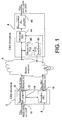
- the system illustrated by the figure 1 comprises a single transmitter 2 and a single receiver 4 exchanging multimedia streams via a multicast network 5.
- the transmitter 2 comprises a packet equalization module 6 and a FEC (Forward Error Correction) encoder 8.
- the packet equalization module 6 has an input 10 which receives a multimedia stream derived for example from an encoder a video consisting of a succession of UDP packets (for "User Datagram Protocol") whose size in bytes are variable, a first output 12 intended to deliver to the multicast network 5 a base stream comprising equalized data packets, and a second output 14 for supplying the FEC 8 encoder FEC packets of the same size as the data packets of the base stream.
- the packet equalization module 6 further comprises a buffer, not shown, for storing a predefined number N of received packets.
- a software module implemented in the packet equalization module 6 calculates the average size Tm of a packet from the different sizes of the N packets stored and generates a base stream comprising N data packets each having a size equal to either the default integer part ⁇ Tm ⁇ , ie to the whole part by excess ⁇ Tm ⁇ of the calculated average size.
- the size of the packets at the output is not strictly equal to said average size Tm because, firstly, according to the nature of the input stream, the total number of bytes contained in the N packets received does not exceed is not necessarily multiple of N, and secondly, the packet equalization module 6 is configured to add a header consisting of a few bytes (for example three) on the transmitted packets to allow the restoration of N packets initials of variable sizes on the receiver side.
- the receiver 4 comprises a module 40 for measuring the packet loss rate, a multiplexer 42 intended to control the reception of the FEC packets associated with the basic data packets in the event of packet loss, a decoder 44 of FEC packets, a module 46 restore original packages of variable size.
- the transmitter 2 transmits, via the output 12, the packets equalized and completed by their header to a first multicast group, while the FEC encoder 8 transmits, via an output 16, the FEC packets to another multicast group.
- the figure 2 schematically illustrates the construction of twelve redundant FEC packets 50 from twelve packets of the base stream 52 using all the words of the extended Golay code.
- the first twelve positions are used to carry information relating to a basic flow, and the last twelve positions are used to carry information relating to a FEC flow.
- a receiver receives a subset of these 24 packets that are missing up to 7 packets, it will be able to reconstruct lost packets bit by bit based on the fact that two words of the Golay code different by at least eight positions.
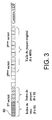
- the figure 3 shows an example of a three-byte header to implement the reconstruction of lost packets. This header is added by the module 6 of equalizing the packets.
- the first byte 60 contains a block index and the packet index for allowing the decoder 44 to group the packets of the same block. This is particularly useful in that the order of received packets is not guaranteed after their transit through the network.
- the second and third bytes contain the size in bytes of the original packet corresponding to the packet index contained in the first byte.
- this header is also used to detect packet loss thanks, for example, to block and packet indexes, even in the presence of jitter. . These two indexes allow the receiver 4 to determine the most recently transmitted packet among all received packets and thus detect any packet, older, which has not yet been received. When the delay between a non-received packet and the most recently transmitted packet among the received packets exceeds a certain threshold, then the non-received packet may be considered lost.
- the packet losses can thus be measured at the receiver by the module 40 for measuring the packet loss rate, in order to dynamically control the activation of the packet loss correction mechanism. If the measured packet loss rate is greater than a predetermined threshold, the receiver 4 automatically triggers the reception of the FEC stream and the decoding of this FEC stream.
- the figure 4 presents graphically the principle of the equalization of the packets.
- In the upper part are represented twelve packs of unequal sizes, and in the lower part B, are represented the twelve packets after equalization.
- the lower part B is also represented the three-byte header consisting of a byte comprising the index of the block, assumed to be 2 in the example of the figure 4 , and the index of the equalized packet varying from 0 to 11.
- the input bytes are arranged in this matrix in order from top to bottom and from left to right. Note that since the total number of input bytes is not divisible by 12, the packet size may differ by one byte. In the example of the figure 4 , the remainder of the division by 12 being equal to 3, thus the first three equalized packets count one additional byte. This slight difference in packet size (in the limit of one byte) is not a problem for the implementation of the FEC since the technique of "stuffing" can be applied to equalize the size of all the packets of the block to that of the first equalized block by adding for example a byte to zero to blocks 3 to 11. It is also possible not to transmit this stuffing byte if the decoder and the encoder are configured to consider that bytes not transmitted have a value equal to zero.
- the restoration of the original packets in the decoder is done by reading the packets from top to bottom and from left to right in the received matrix represented in the lower part B of the decoder. figure 4 .
- the packet equalizer 14 reads for example 13 bytes in the first column of the table to reconstruct the first packet, then 27 bytes starting from the current position in the first column, which leads to the reading of the third column, ....
- This reading takes into account the difference in size of 1 byte between the first three columns (packet index 0 to 2), in the case of this example, and the other columns (package index 3 to 11).
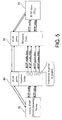
- the figure 5 represents a software architecture for implementing a simulation of the method according to the invention comprising a server RTSP 70 (for Real Time Streaming Protocol) and a client RTSP 72.
- the server RTSP 70 uses the open source server Apple ® Darwin Streaming Server ® and the client RTSP 72 uses a video player RTSP VLC (for VideoLan Player).
- a multimedia session is then initialized using the RTSP protocol.
- the architecture of the figure 5 further comprises a first proxy server 80 (or RTSP proxy) and a second proxy server 82, used to intercept the RTSP messages and to substitute the appropriate information elements for inserting the Golay transmitter and receiver into the path multimedia streams.
- a first proxy server 80 or RTSP proxy
- a second proxy server 82 used to intercept the RTSP messages and to substitute the appropriate information elements for inserting the Golay transmitter and receiver into the path multimedia streams.
- the figure 6 represents the graphic interface of the software module used for the transmission illustrating, in particular, the variable nature of the size of the packets from a video encoder in real time.
- the packets coming from the audio encoder are represented on the upper part C of the figure 6
- the packets from the video encoder are represented on the lower part D of the figure 6 .
- Each vertical line corresponds to a transmitted packet, and the height of this line is representative of the size of the packet.
- the video stream there is a phenomenon of groups of packets transmitted in a very short time interval, each group corresponding to the encoding of an image. These groups of packets are represented by an alternation of black and gray lines on the figure 6 . It can be seen that each group of packets is transmitted at a regular rate which corresponds to the bit rate of the images of the video stream.
- the graphical interface also allows the user to simulate packet losses in the network at the transmitter.
- a Packet Loss Ratio PLR
- PLR Packet Loss Ratio
- the figure 7 represents the GUI of the receiver with buttons (Enable FEC, Disable FEC) respectively to enable or disable the mechanism for recovering lost packets.
- the interface also includes a block counter, an unacknowledged packet counter, a corrupt packet counter.
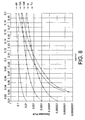
- the figure 8 presents simulation results in the case of using an extended Golay code.
- the packet loss rate on the channel is represented on the abscissa, and the The residual rate of packet loss is represented on a logarithmic scale on the ordinate, after implementation of the lost packet recovery mechanism.
- the "plr” curve is the identity curve, that is to say without activation of the recovery mechanism.
- the "bi" curve is obtained following the sending of a redundant copy of each transmitted packet, that is to say, with the hypothesis of a doubling of the bandwidth.
- the "sort" curve is obtained following the sending of two redundant copies of each transmitted packet, that is to say, with the hypothesis of a tripling of the bandwidth.
- the "GA" curve is the curve established by assuming the use of a Golay code, and assuming that when a block of packets received can not be recovered completely due to missing packets, the other packets of the block remain exploitable .
- the packet equalization system used may result in an inability to restore the original packets for the entire block, since one is not able to restore all the packets of the block. There is therefore a phenomenon of amplification which is represented by the curve "GB" which is established by assuming that, when there is at minus an unrecoverable packet in the block, so all packets in the block are lost.
- the proposed invention makes it possible to significantly improve the packet loss tolerance of any multimedia stream thus offering increased robustness against congestion phenomena that may occur in the network as well as the loss of packets due to poor quality of the radio link.
- the proposed invention is particularly well suited to any flow of packets of variable sizes, having real-time constraints (latency) and can tolerate a limited loss rate.
- video streaming for example IPTV
- audio streaming for example music streaming
- interactive streaming eg videoconferencing, multiplayer online games, etc.
- the invention is also applicable to the entire family of block codes, and in particular those having a short block size. Although applicable in the case of point-to-point transmission (unicast), the invention is particularly valuable in the context of group transmissions (multicast) in which conventional reliability techniques (based on acknowledgment and retransmission) are not possible.
- the invention also allows efficient use of bandwidth by providing the receiver with the ability to detect packet loss and enable FEC support only when needed.
Landscapes
- Engineering & Computer Science (AREA)
- Signal Processing (AREA)
- Multimedia (AREA)
- Computer Networks & Wireless Communication (AREA)
- Data Exchanges In Wide-Area Networks (AREA)
Claims (8)
- Verfahren zum Ausgleichen der Datenpaketgröße eines Multimedia-Streams nach Blöcken, der eine Folge von Datenpaketen mit veränderlichen Größen aufweist, die in Echtzeit von einem Sender zu einem oder zu mehreren Empfängern zu übertragen sind, dadurch gekennzeichnet, dass es die nachfolgenden Schritte umfasst:auf der Seite des Senders (2),- Abspeichern einer Gruppe von N Datenpaketen in einem Pufferspeicher, wobei N eine vorbestimmte ganze Zahl ist,- Berechnen der durchschnittlichen Größe Tm eines Pakets ausgehend von den verschiedenen Größen der genannten N Pakete,- Erzeugen eines Basis-Streams mit N zu übertragenden Datenpaketen, die jeweils eine Größe aufweisen, die entweder gleich dem abgerundet ganzen Teil └Tm┘ oder dem aufgerundet ganzen Teil ┌Tm┐ der durchschnittlichen Größe ist, und Erzeugen von zumindest einem Zusatz-Stream mit N Redundanz-Datenpaketen, die ausgehend von den Paketen des Basis-Streams errechnet werden und die gleiche Größe wie die Pakete des Basis-Streams haben und dazu bestimmt sind, dem Empfänger zu gestatten, gegebenenfalls verlorene Pakete wiederherzustellen, wenn die Verlustquote höher als ein vorbestimmter Schwellwert ist,- Auswerten der Bedingungen beim Empfang der übertragenen Streams,- Übertragen an die Empfänger (4) von entweder nur dem Basis-Stream, wenn kein Paketverlust vorliegt,
oder dem Basis-Stream und zumindest einem Zusatz-Stream im Falle von Paketverlusten und wenn die Verlustquote höher als ein vorbestimmter Schwellwert ist, bei welchem Verfahren der Multimedia-Stream in einem Multicast-Übertragungssystem an zumindest zwei Schichten übertragen wird, die zumindest zwei Multicast-Gruppen verwenden, wobei eine erste Multicast-Gruppe zum Übertragen des Basis-Streams und zumindest eine weitere Multicast-Gruppe zum Übertagen zumindest eines Streams mit Vorwärtsfehlerkorrektur-Code, FEC für Forward Error Correction, verwendet wird, und
auf der Seite der Empfänger (4)- Konfigurieren der Empfänger, um entweder nur den Basis-Stream zu empfangen, wenn kein Paketverlust vorliegt, oder den Basis-Stream und zumindest einen Zusatz-Stream im Falle von Paketverlusten und wenn die Verlustquote höher als ein vorbestimmter Schwellwert ist, zu empfangen. - Verfahren nach Anspruch 1, wobei der Zusatz-Stream eine FEC-Vorrichtung (für Forward Error Correction) mit Vorwärtsfehlerkorrektur-Code anwendet.
- Verfahren nach Anspruch 1, wobei die Pakete des Basis-Streams und die Redundanz-Pakete einen Header enthalten, der dazu bestimmt ist, die Wiederherstellung der N ursprünglichen Pakete mit veränderlichen Größen auf der Empfänger-Seite zu gestatten.
- Verfahren nach Anspruch 2, wobei der FEC-Stream mittels eines erweiterten Golay-Codes erzeugt wird.
- Sender (2) eines Multimedia-Streams, der eine Folge von Datenpaketen mit veränderlichen Größen aufweist, dadurch gekennzeichnet, dass er enthält:- Mittel zum Abspeichern einer Gruppe von N Datenpaketen in einem Pufferspeicher (6), wobei N eine vorbestimmte ganze Zahl ist,- Mittel (6) zum Berechnen der durchschnittlichen Größe Tm eines Pakets ausgehend von den verschiedenen Größen der genannten N Pakete,- Mittel (8) zum Erzeugen eines Basis-Streams mit N zu übertragenden Datenpaketen, die jeweils eine Größe aufweisen, die entweder gleich dem abgerundet ganzen Teil └Tm┘ der durchschnittlichen Größe oder dem aufgerundet ganzen Teil ┌Tm┐ der durchschnittlichen Größe ist, und zum Erzeugen von zumindest einem Zusatz-Stream mit N Redundanz-Datenpaketen, die ausgehend von den Paketen des Basis-Streams errechnet werden und die gleiche Größe wie die Pakete des Basis-Streams haben, wobei die Redundanz-Pakete dazu bestimmt sind, einem Empfänger zu gestatten, gegebenenfalls verlorene Pakete wiederherzustellen, wenn die Verlustquote höher als ein vorbestimmter Schwellwert ist,- ein Modul zum Auswerten der Bedingungen beim Empfang der übertragenen Streams,- ein Modul zum Messen der Daten-Verlustquote,- ein Entscheidungsmodul, das dazu bestimmt ist, die Übertragung von zumindest einem Zusatz-Stream auszulösen, wenn die Verlustquote höher als ein vorbestimmter Schwellwert ist, so dass es den Mechanismus zum Wiederherstellen der verlorenen Pakete nutzt, wobei der Multimedia-Stream in einem Multicast-Übertragungssystem an zumindest zwei Schichten übertragen wird, die zumindest zwei Multicast-Gruppen verwenden, wobei eine erste Multicast-Gruppe zum Übertragen des Basis-Streams und zumindest eine weitere Multicast-Gruppe zum Übertagen zumindest eines FEC-Streams verwendet wird.
- Empfänger (4) eines Multimedia-Streams, der eine Folge von Datenpaketen mit veränderlichen Größen aufweist, die von einem Sender nach Anspruch 5 übertragen werden, dadurch gekennzeichnet, dass er enthält:- Mittel zum Auswerten der Bedingungen beim Empfang der übertragenen Streams (40),- Entscheidungsmittel (42), die gestatten,den Empfänger zu konfigurieren, um entweder nur den Basis-Stream zu empfangen, wenn kein Paketverlust vorliegt, oder den Basis-Stream und zumindest einen Zusatz-Stream im Falle von Paketverlusten und wenn die Verlustquote höher als ein vorbestimmter Schwellwert ist, zu empfangen, wobei der Multimedia-Stream in einem Multicast-Übertragungssystem an zumindest zwei Schichten übertragen wird, die zumindest zwei Multicast-Gruppen verwenden, wobei eine erste Multicast-Gruppe zum Übertragen des Basis-Streams und zumindest eine weitere Multicast-Gruppe zum Übertagen zumindest eines FEC-Streams verwendet wird.
- System zum Ausgleichen der Datenpaketgröße eines Multimedia-Streams nach Blöcken, enthaltend eine Folge von Datenpaketen mit veränderlichen Größen, die in Echtzeit zu übertragen sind, dadurch gekennzeichnet, dass es einen Sender nach Anspruch 5 und einen Empfänger nach Anspruch 6 aufweist.
- Computer-Programm, das auf einem Aufzeichnungsträger abgespeichert und dazu bestimmt ist, von einer Verarbeitungsvorrichtung ausgeführt zu werden, um die Datenpaketgröße eines Multimedia-Streams nach Blöcken auszugleichen, enthaltend eine Folge von Datenpaketen mit veränderlichen Größen, die in Echtzeit von einem Sender nach Anspruch 5 zu einem oder zu mehreren Empfänger(n) nach Anspruch 6 zu übertragen sind, dadurch gekennzeichnet, dass es umfasst:- Anweisungen zum Abspeichern einer Gruppe von N Datenpaketen in einem Pufferspeicher, wobei N eine vorbestimmte ganze Zahl ist,- Anweisungen zum Berechnen der durchschnittlichen Größe Tm eines Pakets ausgehend von den verschiedenen Größen der genannten N Pakete,- Anweisungen zum Erzeugen eines Basis-Streams mit N zu übertragenden Datenpaketen, die jeweils eine Größe aufweisen, die entweder gleich dem abgerundet ganzen Teil └Tm┘ der durchschnittlichen Größe oder dem aufgerundet ganzen Teil ┌Tm┐ der durchschnittlichen Größe ist, und zum Erzeugen von zumindest einem Zusatz-Stream mit N Redundanz-Datenpaketen, die ausgehend von den Paketen des Basis-Streams errechnet werden und die gleiche Größe wie die Pakete des Basis-Streams haben und dazu bestimmt sind, dem Empfänger zu gestatten, gegebenenfalls verlorene Pakete wiederherzustellen, wenn die Verlustquote höher als ein vorbestimmter Schwellwert ist,- Anweisungen zum Auswerten der Bedingungen beim Empfang der übertragenen Streams im Bereich des Empfängers,- Anweisungen zum Übertragen an den Empfänger von entweder nur dem Basis-Stream, wenn kein Paketverlust vorliegt, oder von dem Basis-Stream und zumindest einem Zusatz-Stream im Falle von Paketverlusten und wenn die Verlustquote höher als ein vorbestimmter Schwellwert ist, wobei der Multimedia-Stream in einem Multicast-Übertragungssystem an zumindest zwei Schichten übertragen wird, die zumindest zwei Multicast-Gruppen verwenden, wobei eine erste Multicast-Gruppe zum Übertragen des Basis-Streams und zumindest eine weitere Multicast-Gruppe zum Übertagen zumindest eines FEC-Streams verwendet wird.
Applications Claiming Priority (2)
| Application Number | Priority Date | Filing Date | Title |
|---|---|---|---|
| FR0955876A FR2949632B1 (fr) | 2009-08-28 | 2009-08-28 | Procede d'egalisation de la taille des paquets de donnees par blocs d'un flux multimedia |
| PCT/EP2010/062505 WO2011023776A1 (fr) | 2009-08-28 | 2010-08-26 | Procédé d'égalisation de la taille des paquets de données par blocs d'un flux multimedia |
Publications (2)
| Publication Number | Publication Date |
|---|---|
| EP2471206A1 EP2471206A1 (de) | 2012-07-04 |
| EP2471206B1 true EP2471206B1 (de) | 2015-03-18 |
Family
ID=41611057
Family Applications (1)
| Application Number | Title | Priority Date | Filing Date |
|---|---|---|---|
| EP10747034.6A Active EP2471206B1 (de) | 2009-08-28 | 2010-08-26 | Verfahren für den ausgleich der datenpaketgrösse eines multimedia-streams nach blöcken |
Country Status (4)
| Country | Link |
|---|---|
| US (1) | US8942241B2 (de) |
| EP (1) | EP2471206B1 (de) |
| FR (1) | FR2949632B1 (de) |
| WO (1) | WO2011023776A1 (de) |
Families Citing this family (8)
| Publication number | Priority date | Publication date | Assignee | Title |
|---|---|---|---|---|
| US9787501B2 (en) | 2009-12-23 | 2017-10-10 | Pismo Labs Technology Limited | Methods and systems for transmitting packets through aggregated end-to-end connection |
| US9473274B2 (en) * | 2009-12-23 | 2016-10-18 | Pismo Labs Technology Limited | Methods and systems for transmitting data through an aggregated connection |
| US10218467B2 (en) | 2009-12-23 | 2019-02-26 | Pismo Labs Technology Limited | Methods and systems for managing error correction mode |
| FR2987963B1 (fr) | 2012-03-07 | 2014-12-26 | Commissariat Energie Atomique | Procede de selection d'un routeur dans un reseau rpl |
| CN104935944B (zh) * | 2014-03-18 | 2018-03-13 | 华为技术有限公司 | 一种视频数据编码、解码的方法和装置 |
| CN105227894B (zh) * | 2014-07-01 | 2019-08-27 | 三亚中兴软件有限责任公司 | 一种视频会议的实现方法及多点控制单元 |
| EP3244623A1 (de) | 2016-05-13 | 2017-11-15 | Thomson Licensing | Verfahren und vorrichtung zur bandbreitenoptimierung mit staggercast |
| CA2942257C (en) * | 2016-09-19 | 2022-09-06 | Pleora Technologies Inc. | Methods and systems for balancing compression ratio with processing latency |
Family Cites Families (18)
| Publication number | Priority date | Publication date | Assignee | Title |
|---|---|---|---|---|
| EP1601157B1 (de) * | 1999-08-06 | 2020-01-15 | Godo Kaisha IP Bridge 1 | Datensende- und -empfangsgerät und verfahren |
| US20020146074A1 (en) * | 2001-02-20 | 2002-10-10 | Cute Ltd. | Unequal error protection of variable-length data packets based on recursive systematic convolutional coding |
| KR100458878B1 (ko) * | 2002-05-03 | 2004-12-03 | 학교법인 경희대학교 | Fec 코딩 방식에 기초한 가변길이 패킷 송수신 방법 |
| US8144711B1 (en) * | 2002-07-15 | 2012-03-27 | Rockstar Bidco, LP | Hitless switchover and bandwidth sharing in a communication network |
| IL154739A0 (en) * | 2003-03-04 | 2003-10-31 | Bamboo Mediacasting Ltd | Segmented data delivery over non-reliable link |
| EP1743431A4 (de) * | 2004-05-07 | 2007-05-02 | Digital Fountain Inc | Dateiherunterlade- und -streamingsystem |
| WO2006038054A1 (en) * | 2004-10-06 | 2006-04-13 | Nokia Corporation | Packet transmission using error correction of data packets |
| WO2006038095A1 (en) * | 2004-10-07 | 2006-04-13 | Nokia Corporation | Efficient source blocking algorithm for fec for mbms streaming |
| US20070147314A1 (en) * | 2005-12-22 | 2007-06-28 | Telefonaktiebolaget Lm Ericsson (Publ) | Network processing node and method for manipulating packets |
| EP1980074A4 (de) * | 2006-02-13 | 2012-12-19 | Digital Fountain Inc | Kontinuierliche vorwärtsfehlerkorrektur-übertragung mit summierung paralleler datenströme zur berechnung der vorwärtsfehlerkorrektur |
| CN100558028C (zh) * | 2006-08-11 | 2009-11-04 | 华为技术有限公司 | 一种实现纠错的方法及系统以及一种实现纠错的接入设备 |
| KR20080092501A (ko) * | 2007-04-12 | 2008-10-16 | 엘지전자 주식회사 | 모바일 서비스 데이터 수신 장치 및 제어 방법 |
| US7978669B2 (en) * | 2007-05-09 | 2011-07-12 | Cisco Technology, Inc. | Methods and apparatus for efficient MPEG transmission over 802.11 |
| US8856628B2 (en) * | 2007-10-10 | 2014-10-07 | Qualcomm Incorporated | Method and apparatus for generation and usage of extended golay codes |
| US8201057B2 (en) * | 2008-05-29 | 2012-06-12 | Broadcom Corporation | System and method for inter-packet channel coding and decoding |
| WO2010035969A2 (en) * | 2008-09-23 | 2010-04-01 | Lg Electronics Inc. | Apparatus and method of transmitting and recieving data in soft handoff of a wireless communication system |
| US8737297B2 (en) * | 2009-02-20 | 2014-05-27 | Interdigital Patent Holdings, Inc. | Network coding relay operations |
| US8320364B2 (en) * | 2009-12-15 | 2012-11-27 | Hong Kong Applied Science And Technology Research Institute Co., Ltd. | Control of bit-rate and packet duplication in a real-time media stream |
-
2009
- 2009-08-28 FR FR0955876A patent/FR2949632B1/fr not_active Expired - Fee Related
-
2010
- 2010-08-26 US US13/390,589 patent/US8942241B2/en not_active Expired - Fee Related
- 2010-08-26 EP EP10747034.6A patent/EP2471206B1/de active Active
- 2010-08-26 WO PCT/EP2010/062505 patent/WO2011023776A1/fr not_active Ceased
Non-Patent Citations (1)
| Title |
|---|
| CHRISTOPHE JANNETEAU ET AL: "Context-Aware Multiparty Networking", 10 June 2009 (2009-06-10), XP055126473, Retrieved from the Internet <URL:http://www.repositorio.ufc.br/ri/bitstream/riufc/3713/1/2009_eve_ajvenacioneto context-aware mul.pdf> [retrieved on 20140702] * |
Also Published As
| Publication number | Publication date |
|---|---|
| FR2949632B1 (fr) | 2012-05-18 |
| EP2471206A1 (de) | 2012-07-04 |
| FR2949632A1 (fr) | 2011-03-04 |
| WO2011023776A1 (fr) | 2011-03-03 |
| US20120140779A1 (en) | 2012-06-07 |
| US8942241B2 (en) | 2015-01-27 |
Similar Documents
| Publication | Publication Date | Title |
|---|---|---|
| EP2471206B1 (de) | Verfahren für den ausgleich der datenpaketgrösse eines multimedia-streams nach blöcken | |
| CA2359534C (en) | Information additive group code generator and decoder for communication systems | |
| US7865811B2 (en) | Distribution method, preferably applied in a streaming system | |
| US8370721B2 (en) | Method and system for sensing available bandwidth over a best effort connection | |
| FR2949931A1 (fr) | Procedes et dispositifs de transmission d'un flux de donnees, produit programme d'ordinateur et moyen de stockage correspondants. | |
| JP4506185B2 (ja) | 受信装置および方法、並びにプログラム | |
| JP2019097203A (ja) | 通信システムにおけるパケット伝送方法 | |
| KR20050059238A (ko) | 연쇄 반응 코드의 체계적 인코딩 및 디코딩 | |
| FR2936926A1 (fr) | Systeme et procede de determination de parametres de codage | |
| FR2939994A1 (fr) | Procede de transmission d'un flux de donnees multi-canal sur un tunnel multi-transport, produit programme d'ordinateur, moyen de stockage et tetes de tunnel correspondantes | |
| JP5235800B2 (ja) | Ipストリーム送受信システム、ipストリーム送受信方法、ipストリーム送受信プログラムおよびそのプログラムを記録した記録媒体 | |
| JP4556703B2 (ja) | 映像配信システム | |
| FR2903253A1 (fr) | Procede permettant de determiner des parametres de compression et de protection pour la transmission de donnees multimedia sur un canal sans fil. | |
| WO2009071781A1 (fr) | Procede de transmission de donnees depuis une infrastructure d'un reseau de radiocommunication vers des equipements utilisateur, et equipements pour la mise en œuvre du procede | |
| EP0648063B1 (de) | Methode und Anlage für die Transmission von Sätzen von ATM-Zellen | |
| EP2119077B1 (de) | Verfahren und system gegen burst-verlust in einem dvb-h-übertragungssystem | |
| EP1802022A1 (de) | Gesicherter Fehlerkorrektur-Kode | |
| FR3020543A1 (fr) | Procede de gestion de la communication entre deux dispositifs mutuellement connectes par un lien serie, par exemple un protocole d'interface serie point a point | |
| WO2018115775A1 (fr) | Procédé et dispositif de correction d'erreurs à faible latence pour recouvrement de paquets de données | |
| FR2792476A1 (fr) | Procede de type arq pour procede de transmission utilisant des turbo-codes, et dispositif associe | |
| EP2163020B1 (de) | Für multimedia-datenstrom mit varbiabler rate geeignetes verfahren auf der basis von fehlerkorrekturcodes | |
| EP2436134B1 (de) | Verfahren zum senden von daten von einer funkkommunikationsnetzinfrastruktur zu benutzergeräten und geräte zum implementieren des verfahrens | |
| EP1964301A1 (de) | Sichere übertragung mit fehlerberichtigungscode | |
| FR2873532A1 (fr) | Procede de codage et de decodage d'une sequence d'elements, signal, codeur, decodeur, programmes d'ordinateur et moyens de stockage correspondants | |
| EP0781480A1 (de) | Vorrichtung zur leitweglenkung von paketen |
Legal Events
| Date | Code | Title | Description |
|---|---|---|---|
| PUAI | Public reference made under article 153(3) epc to a published international application that has entered the european phase |
Free format text: ORIGINAL CODE: 0009012 |
|
| 17P | Request for examination filed |
Effective date: 20120207 |
|
| AK | Designated contracting states |
Kind code of ref document: A1 Designated state(s): AL AT BE BG CH CY CZ DE DK EE ES FI FR GB GR HR HU IE IS IT LI LT LU LV MC MK MT NL NO PL PT RO SE SI SK SM TR |
|
| RIN1 | Information on inventor provided before grant (corrected) |
Inventor name: JANNETEAU, CHRISTOPHE Inventor name: ROUX, PIERRE Inventor name: KELLIL, MOUNIR |
|
| DAX | Request for extension of the european patent (deleted) | ||
| GRAP | Despatch of communication of intention to grant a patent |
Free format text: ORIGINAL CODE: EPIDOSNIGR1 |
|
| INTG | Intention to grant announced |
Effective date: 20141013 |
|
| GRAS | Grant fee paid |
Free format text: ORIGINAL CODE: EPIDOSNIGR3 |
|
| GRAA | (expected) grant |
Free format text: ORIGINAL CODE: 0009210 |
|
| AK | Designated contracting states |
Kind code of ref document: B1 Designated state(s): AL AT BE BG CH CY CZ DE DK EE ES FI FR GB GR HR HU IE IS IT LI LT LU LV MC MK MT NL NO PL PT RO SE SI SK SM TR |
|
| REG | Reference to a national code |
Ref country code: GB Ref legal event code: FG4D Free format text: NOT ENGLISH |
|
| REG | Reference to a national code |
Ref country code: CH Ref legal event code: EP |
|
| REG | Reference to a national code |
Ref country code: IE Ref legal event code: FG4D Free format text: LANGUAGE OF EP DOCUMENT: FRENCH |
|
| REG | Reference to a national code |
Ref country code: AT Ref legal event code: REF Ref document number: 717150 Country of ref document: AT Kind code of ref document: T Effective date: 20150415 |
|
| REG | Reference to a national code |
Ref country code: DE Ref legal event code: R096 Ref document number: 602010023215 Country of ref document: DE Effective date: 20150430 |
|
| REG | Reference to a national code |
Ref country code: NL Ref legal event code: VDEP Effective date: 20150318 |
|
| REG | Reference to a national code |
Ref country code: NL Ref legal event code: VDEP Effective date: 20150318 |
|
| PG25 | Lapsed in a contracting state [announced via postgrant information from national office to epo] |
Ref country code: FI Free format text: LAPSE BECAUSE OF FAILURE TO SUBMIT A TRANSLATION OF THE DESCRIPTION OR TO PAY THE FEE WITHIN THE PRESCRIBED TIME-LIMIT Effective date: 20150318 Ref country code: SE Free format text: LAPSE BECAUSE OF FAILURE TO SUBMIT A TRANSLATION OF THE DESCRIPTION OR TO PAY THE FEE WITHIN THE PRESCRIBED TIME-LIMIT Effective date: 20150318 Ref country code: HR Free format text: LAPSE BECAUSE OF FAILURE TO SUBMIT A TRANSLATION OF THE DESCRIPTION OR TO PAY THE FEE WITHIN THE PRESCRIBED TIME-LIMIT Effective date: 20150318 Ref country code: LT Free format text: LAPSE BECAUSE OF FAILURE TO SUBMIT A TRANSLATION OF THE DESCRIPTION OR TO PAY THE FEE WITHIN THE PRESCRIBED TIME-LIMIT Effective date: 20150318 Ref country code: NO Free format text: LAPSE BECAUSE OF FAILURE TO SUBMIT A TRANSLATION OF THE DESCRIPTION OR TO PAY THE FEE WITHIN THE PRESCRIBED TIME-LIMIT Effective date: 20150618 |
|
| REG | Reference to a national code |
Ref country code: AT Ref legal event code: MK05 Ref document number: 717150 Country of ref document: AT Kind code of ref document: T Effective date: 20150318 |
|
| REG | Reference to a national code |
Ref country code: LT Ref legal event code: MG4D |
|
| PG25 | Lapsed in a contracting state [announced via postgrant information from national office to epo] |
Ref country code: GR Free format text: LAPSE BECAUSE OF FAILURE TO SUBMIT A TRANSLATION OF THE DESCRIPTION OR TO PAY THE FEE WITHIN THE PRESCRIBED TIME-LIMIT Effective date: 20150619 Ref country code: LV Free format text: LAPSE BECAUSE OF FAILURE TO SUBMIT A TRANSLATION OF THE DESCRIPTION OR TO PAY THE FEE WITHIN THE PRESCRIBED TIME-LIMIT Effective date: 20150318 |
|
| PG25 | Lapsed in a contracting state [announced via postgrant information from national office to epo] |
Ref country code: NL Free format text: LAPSE BECAUSE OF FAILURE TO SUBMIT A TRANSLATION OF THE DESCRIPTION OR TO PAY THE FEE WITHIN THE PRESCRIBED TIME-LIMIT Effective date: 20150318 |
|
| PG25 | Lapsed in a contracting state [announced via postgrant information from national office to epo] |
Ref country code: SK Free format text: LAPSE BECAUSE OF FAILURE TO SUBMIT A TRANSLATION OF THE DESCRIPTION OR TO PAY THE FEE WITHIN THE PRESCRIBED TIME-LIMIT Effective date: 20150318 Ref country code: PT Free format text: LAPSE BECAUSE OF FAILURE TO SUBMIT A TRANSLATION OF THE DESCRIPTION OR TO PAY THE FEE WITHIN THE PRESCRIBED TIME-LIMIT Effective date: 20150720 Ref country code: CZ Free format text: LAPSE BECAUSE OF FAILURE TO SUBMIT A TRANSLATION OF THE DESCRIPTION OR TO PAY THE FEE WITHIN THE PRESCRIBED TIME-LIMIT Effective date: 20150318 Ref country code: ES Free format text: LAPSE BECAUSE OF FAILURE TO SUBMIT A TRANSLATION OF THE DESCRIPTION OR TO PAY THE FEE WITHIN THE PRESCRIBED TIME-LIMIT Effective date: 20150318 Ref country code: RO Free format text: LAPSE BECAUSE OF FAILURE TO SUBMIT A TRANSLATION OF THE DESCRIPTION OR TO PAY THE FEE WITHIN THE PRESCRIBED TIME-LIMIT Effective date: 20150318 Ref country code: EE Free format text: LAPSE BECAUSE OF FAILURE TO SUBMIT A TRANSLATION OF THE DESCRIPTION OR TO PAY THE FEE WITHIN THE PRESCRIBED TIME-LIMIT Effective date: 20150318 |
|
| PG25 | Lapsed in a contracting state [announced via postgrant information from national office to epo] |
Ref country code: AT Free format text: LAPSE BECAUSE OF FAILURE TO SUBMIT A TRANSLATION OF THE DESCRIPTION OR TO PAY THE FEE WITHIN THE PRESCRIBED TIME-LIMIT Effective date: 20150318 Ref country code: IS Free format text: LAPSE BECAUSE OF FAILURE TO SUBMIT A TRANSLATION OF THE DESCRIPTION OR TO PAY THE FEE WITHIN THE PRESCRIBED TIME-LIMIT Effective date: 20150718 Ref country code: PL Free format text: LAPSE BECAUSE OF FAILURE TO SUBMIT A TRANSLATION OF THE DESCRIPTION OR TO PAY THE FEE WITHIN THE PRESCRIBED TIME-LIMIT Effective date: 20150318 |
|
| REG | Reference to a national code |
Ref country code: DE Ref legal event code: R097 Ref document number: 602010023215 Country of ref document: DE |
|
| PG25 | Lapsed in a contracting state [announced via postgrant information from national office to epo] |
Ref country code: IT Free format text: LAPSE BECAUSE OF FAILURE TO SUBMIT A TRANSLATION OF THE DESCRIPTION OR TO PAY THE FEE WITHIN THE PRESCRIBED TIME-LIMIT Effective date: 20150318 |
|
| PLBE | No opposition filed within time limit |
Free format text: ORIGINAL CODE: 0009261 |
|
| STAA | Information on the status of an ep patent application or granted ep patent |
Free format text: STATUS: NO OPPOSITION FILED WITHIN TIME LIMIT |
|
| PG25 | Lapsed in a contracting state [announced via postgrant information from national office to epo] |
Ref country code: DK Free format text: LAPSE BECAUSE OF FAILURE TO SUBMIT A TRANSLATION OF THE DESCRIPTION OR TO PAY THE FEE WITHIN THE PRESCRIBED TIME-LIMIT Effective date: 20150318 |
|
| 26N | No opposition filed |
Effective date: 20151221 |
|
| PG25 | Lapsed in a contracting state [announced via postgrant information from national office to epo] |
Ref country code: SI Free format text: LAPSE BECAUSE OF FAILURE TO SUBMIT A TRANSLATION OF THE DESCRIPTION OR TO PAY THE FEE WITHIN THE PRESCRIBED TIME-LIMIT Effective date: 20150318 |
|
| PG25 | Lapsed in a contracting state [announced via postgrant information from national office to epo] |
Ref country code: LU Free format text: LAPSE BECAUSE OF FAILURE TO SUBMIT A TRANSLATION OF THE DESCRIPTION OR TO PAY THE FEE WITHIN THE PRESCRIBED TIME-LIMIT Effective date: 20150826 Ref country code: MC Free format text: LAPSE BECAUSE OF FAILURE TO SUBMIT A TRANSLATION OF THE DESCRIPTION OR TO PAY THE FEE WITHIN THE PRESCRIBED TIME-LIMIT Effective date: 20150318 |
|
| REG | Reference to a national code |
Ref country code: CH Ref legal event code: PL |
|
| PG25 | Lapsed in a contracting state [announced via postgrant information from national office to epo] |
Ref country code: LI Free format text: LAPSE BECAUSE OF NON-PAYMENT OF DUE FEES Effective date: 20150831 Ref country code: CH Free format text: LAPSE BECAUSE OF NON-PAYMENT OF DUE FEES Effective date: 20150831 |
|
| REG | Reference to a national code |
Ref country code: IE Ref legal event code: MM4A |
|
| PG25 | Lapsed in a contracting state [announced via postgrant information from national office to epo] |
Ref country code: IE Free format text: LAPSE BECAUSE OF NON-PAYMENT OF DUE FEES Effective date: 20150826 |
|
| REG | Reference to a national code |
Ref country code: FR Ref legal event code: PLFP Year of fee payment: 7 |
|
| PGFP | Annual fee paid to national office [announced via postgrant information from national office to epo] |
Ref country code: GB Payment date: 20160823 Year of fee payment: 7 Ref country code: DE Payment date: 20160817 Year of fee payment: 7 |
|
| PG25 | Lapsed in a contracting state [announced via postgrant information from national office to epo] |
Ref country code: MT Free format text: LAPSE BECAUSE OF FAILURE TO SUBMIT A TRANSLATION OF THE DESCRIPTION OR TO PAY THE FEE WITHIN THE PRESCRIBED TIME-LIMIT Effective date: 20150318 |
|
| PG25 | Lapsed in a contracting state [announced via postgrant information from national office to epo] |
Ref country code: SM Free format text: LAPSE BECAUSE OF FAILURE TO SUBMIT A TRANSLATION OF THE DESCRIPTION OR TO PAY THE FEE WITHIN THE PRESCRIBED TIME-LIMIT Effective date: 20150318 Ref country code: BG Free format text: LAPSE BECAUSE OF FAILURE TO SUBMIT A TRANSLATION OF THE DESCRIPTION OR TO PAY THE FEE WITHIN THE PRESCRIBED TIME-LIMIT Effective date: 20150318 Ref country code: HU Free format text: LAPSE BECAUSE OF FAILURE TO SUBMIT A TRANSLATION OF THE DESCRIPTION OR TO PAY THE FEE WITHIN THE PRESCRIBED TIME-LIMIT; INVALID AB INITIO Effective date: 20100826 |
|
| PG25 | Lapsed in a contracting state [announced via postgrant information from national office to epo] |
Ref country code: CY Free format text: LAPSE BECAUSE OF FAILURE TO SUBMIT A TRANSLATION OF THE DESCRIPTION OR TO PAY THE FEE WITHIN THE PRESCRIBED TIME-LIMIT Effective date: 20150318 |
|
| PG25 | Lapsed in a contracting state [announced via postgrant information from national office to epo] |
Ref country code: BE Free format text: LAPSE BECAUSE OF NON-PAYMENT OF DUE FEES Effective date: 20150831 |
|
| PG25 | Lapsed in a contracting state [announced via postgrant information from national office to epo] |
Ref country code: TR Free format text: LAPSE BECAUSE OF FAILURE TO SUBMIT A TRANSLATION OF THE DESCRIPTION OR TO PAY THE FEE WITHIN THE PRESCRIBED TIME-LIMIT Effective date: 20150318 |
|
| REG | Reference to a national code |
Ref country code: FR Ref legal event code: PLFP Year of fee payment: 8 |
|
| REG | Reference to a national code |
Ref country code: DE Ref legal event code: R119 Ref document number: 602010023215 Country of ref document: DE |
|
| GBPC | Gb: european patent ceased through non-payment of renewal fee |
Effective date: 20170826 |
|
| PG25 | Lapsed in a contracting state [announced via postgrant information from national office to epo] |
Ref country code: MK Free format text: LAPSE BECAUSE OF FAILURE TO SUBMIT A TRANSLATION OF THE DESCRIPTION OR TO PAY THE FEE WITHIN THE PRESCRIBED TIME-LIMIT Effective date: 20150318 |
|
| PG25 | Lapsed in a contracting state [announced via postgrant information from national office to epo] |
Ref country code: DE Free format text: LAPSE BECAUSE OF NON-PAYMENT OF DUE FEES Effective date: 20180301 Ref country code: GB Free format text: LAPSE BECAUSE OF NON-PAYMENT OF DUE FEES Effective date: 20170826 |
|
| REG | Reference to a national code |
Ref country code: FR Ref legal event code: PLFP Year of fee payment: 9 |
|
| PG25 | Lapsed in a contracting state [announced via postgrant information from national office to epo] |
Ref country code: AL Free format text: LAPSE BECAUSE OF FAILURE TO SUBMIT A TRANSLATION OF THE DESCRIPTION OR TO PAY THE FEE WITHIN THE PRESCRIBED TIME-LIMIT Effective date: 20150318 |
|
| PGFP | Annual fee paid to national office [announced via postgrant information from national office to epo] |
Ref country code: FR Payment date: 20240827 Year of fee payment: 15 |