EP2471955A2 - Molécule d'acide nucléique hybridisable spécifique à l'organisme - Google Patents
Molécule d'acide nucléique hybridisable spécifique à l'organisme Download PDFInfo
- Publication number
- EP2471955A2 EP2471955A2 EP12153295A EP12153295A EP2471955A2 EP 2471955 A2 EP2471955 A2 EP 2471955A2 EP 12153295 A EP12153295 A EP 12153295A EP 12153295 A EP12153295 A EP 12153295A EP 2471955 A2 EP2471955 A2 EP 2471955A2
- Authority
- EP
- European Patent Office
- Prior art keywords
- nucleic acid
- dna
- organism
- acid molecule
- pcr
- Prior art date
- Legal status (The legal status is an assumption and is not a legal conclusion. Google has not performed a legal analysis and makes no representation as to the accuracy of the status listed.)
- Granted
Links
Images


Classifications
-
- C—CHEMISTRY; METALLURGY
- C12—BIOCHEMISTRY; BEER; SPIRITS; WINE; VINEGAR; MICROBIOLOGY; ENZYMOLOGY; MUTATION OR GENETIC ENGINEERING
- C12Q—MEASURING OR TESTING PROCESSES INVOLVING ENZYMES, NUCLEIC ACIDS OR MICROORGANISMS; COMPOSITIONS OR TEST PAPERS THEREFOR; PROCESSES OF PREPARING SUCH COMPOSITIONS; CONDITION-RESPONSIVE CONTROL IN MICROBIOLOGICAL OR ENZYMOLOGICAL PROCESSES
- C12Q1/00—Measuring or testing processes involving enzymes, nucleic acids or microorganisms; Compositions therefor; Processes of preparing such compositions
- C12Q1/68—Measuring or testing processes involving enzymes, nucleic acids or microorganisms; Compositions therefor; Processes of preparing such compositions involving nucleic acids
- C12Q1/6876—Nucleic acid products used in the analysis of nucleic acids, e.g. primers or probes
- C12Q1/6888—Nucleic acid products used in the analysis of nucleic acids, e.g. primers or probes for detection or identification of organisms
- C12Q1/6895—Nucleic acid products used in the analysis of nucleic acids, e.g. primers or probes for detection or identification of organisms for plants, fungi or algae
-
- C—CHEMISTRY; METALLURGY
- C12—BIOCHEMISTRY; BEER; SPIRITS; WINE; VINEGAR; MICROBIOLOGY; ENZYMOLOGY; MUTATION OR GENETIC ENGINEERING
- C12Q—MEASURING OR TESTING PROCESSES INVOLVING ENZYMES, NUCLEIC ACIDS OR MICROORGANISMS; COMPOSITIONS OR TEST PAPERS THEREFOR; PROCESSES OF PREPARING SUCH COMPOSITIONS; CONDITION-RESPONSIVE CONTROL IN MICROBIOLOGICAL OR ENZYMOLOGICAL PROCESSES
- C12Q1/00—Measuring or testing processes involving enzymes, nucleic acids or microorganisms; Compositions therefor; Processes of preparing such compositions
- C12Q1/68—Measuring or testing processes involving enzymes, nucleic acids or microorganisms; Compositions therefor; Processes of preparing such compositions involving nucleic acids
- C12Q1/6844—Nucleic acid amplification reactions
-
- C—CHEMISTRY; METALLURGY
- C12—BIOCHEMISTRY; BEER; SPIRITS; WINE; VINEGAR; MICROBIOLOGY; ENZYMOLOGY; MUTATION OR GENETIC ENGINEERING
- C12Q—MEASURING OR TESTING PROCESSES INVOLVING ENZYMES, NUCLEIC ACIDS OR MICROORGANISMS; COMPOSITIONS OR TEST PAPERS THEREFOR; PROCESSES OF PREPARING SUCH COMPOSITIONS; CONDITION-RESPONSIVE CONTROL IN MICROBIOLOGICAL OR ENZYMOLOGICAL PROCESSES
- C12Q2600/00—Oligonucleotides characterized by their use
- C12Q2600/156—Polymorphic or mutational markers
Definitions
- the present invention relates to a method for producing an organism-specific hybridisable nucleic acid molecule, a nucleic acid molecule produced by this method, a kit comprising at least one of the nucleic acid molecules, the use of a nucleotide sequence lying between two elements on the genomic information of an organism for the production of a nucleic acid molecule organism-specific hybridizable nucleic acid molecule, and a method for detecting an organism in a biological sample.
- hybridization the assembly of two single-stranded nucleic acids having complementary base sequences is understood to be double-stranded. hybridization can take place between two DNA strands, one DNA and one RNA strand, and between two RNA strands.
- Hybridizable nucleic acid molecules are, for example, primers for the polymerase chain reaction (PCR primer) or for other amplification methods based on the activity of a nucleic acid polymerase, as well as hybridization probes.
- the primers, for example for the PCR, or hybridization probes can be DNA, RNA or synthetic oligonucleotide molecules which can be used for the detection, characterization or localization of those target nucleic acid molecules which have a nucleotide sequence which corresponds to that of PCR primer or hybridization probes is complementary.
- Methods of making PCR primers or hybridization probes are well known in the art; see.
- Detection of the target nucleic acid molecules allows for indirect detection of the organism carrying the target nucleic acid molecule. In this way, it is possible, for example, to detect pathogenic organisms which contain the target nucleic acid molecule as part of their genomic information. In turn, the identification of pathogenic organisms is the prerequisite for a targeted therapy of a disease caused by the organism.
- Modern phytopathology deals with the disease of plants by abiotic causes or biotic pathogens. These pathogens include plant viruses, bacteria, fungi or parasitic flowering plants.
- pathogens include plant viruses, bacteria, fungi or parasitic flowering plants.
- the subject of phytopathological research is, for example, the development of detection methods with which pathogens can be detected in seed and plant matter, in soil samples, liquid substrates and any other media.
- Conventional test methods of phytopathology are essentially limited to the planting of potentially diseased plants and the visual characterization of the phenotype with regard to characteristic disease characteristics (scoring). However, these visual scoring-based detection methods for plant diseases are very time-consuming and labor-intensive.
- serological methods for the detection of phytopathogens are used in which antibodies directed against the pathogens are used, for example as part of a so-called “enzyme-linked immunosorbent assay” (ELISA).
- ELISA enzyme-linked immunosorbent assay
- serological methods are very costly because the production of specific monoclonal antibodies is associated with high technical workload.
- PCR polymerase chain reaction
- ITS internal transcribed spacer
- highly selective, organism-specific nucleic acid molecules are to be produced which have a reduced cross-reactivity with related pathogenic species or formae specialis .
- a method of producing an organism-specific hybridizable nucleic acid molecule comprising the steps of: (1) providing genomic information derived from an organism; (2) generating a genetic fingerprint of the genomic information to obtain a pattern of amplicon genomic sections by the steps of: (2.1) amplifying portions of genomic information of the organism to obtain a mixture of amplicons, and (2.2) separating the mixture contained amplificates to obtain a pattern of amplicons of genome segments; (3) isolating at least one amplicon from the sample; (4) sequencing the isolated amplificate to obtain a nucleotide sequence; (5) selecting a portion of the nucleotide sequence of 3 to 1000 nucleotides suitable for producing an organism-specific hybridizable nucleic acid molecule, and (6) preparing a nucleic acid molecule having the portion selected in step (5).
- an "organism” means any living being. In particular, they are the living things that can colonize or infest a plant, animal or human host. Possibly. can be triggered by the host diseases. In this context, particular consideration is given to plant diseases which are triggered by plant viruses, bacteria, fungi, oomycetes, parasitic plants and animals, etc.
- genomic information means nucleic acid which is specific for the organism.
- the genome in the form of the DNA is thought of here, but also to the RNA of the organism, which arises from a copy of a genome part.
- the genomic information comprises not only information-bearing but also inter- and / or exogenous sections of the genome.
- step 2 of the method according to the invention 2.1 amplification of sections of the genomic information of the organism to obtain a mixture of amplificates, and 2.2 separation of the amplificates contained in the mixture to obtain a pattern of amplificates of genome sections.
- a “genetic fingerprint” is understood to mean characteristic genetic features of an organism that allow its identification. This identification possibility is based on the occurrence of certain nucleotide sequences in the genomic information of the organism. These include, for example, repetitive, tandemly arranged DNA sequences. A prominent example of these repetitive DNA sequences is the so-called satellite DNA. Satellite DNA consists of a multitude of copies of nucleotide sequences that occur in direct succession. Examples of short such repetition sequences are A, AC, AAT or AAC, although other sequences are also observed. Satellite DNA with AC dinucleotide sequences occurs on average once per 30 kb genome segment. Tri- or tetranucleotide sequences are rarer, once under a few hundred thousand base pairs.
- the number of di-, tri- or tetranucleotides etc. in a satellite DNA is highly polymorphic. That Two alleles are likely to differ in the number of di-, tri-, or tetranucleotides of a given satellite DNA.
- the cause of this polymorphism is slippage in DNA repeats in the replication fork region.
- the satellite DNA is inherited according to Mendel's rules.
- DNA fingerprinting Methods for generating genetic fingerprints used in step 2 of the present invention are well described in the art and are referred to as "DNA fingerprinting", “DNA profiling” or “DNA typing”; These are, for example, described in Weising et al. (1995), “Fingerprinting in Plants and Fungi”, CRS Press, Boca Raton, Fla., USA ; the content of this publication is incorporated herein by reference.
- PCR primers can be made which hybridize to the satellite DNA. It will be understood that the forward and reverse primer are respectively connected to the same satellite DNA or to different satellite DNA, i. different nucleotide sequences, can hybridize. It is only important that the sections lying between two such repetitive sections of the genomic information are amplified, which are referred to below as "amplicons”. This is done in the given example by means of the PCR reaction. It is understood that other methods of nucleic acid amplification may be considered, such as amplification by means of phi-DNA polymerases or thermophilic helicase-dependent amplification (tHDA).
- tHDA thermophilic helicase-dependent amplification
- the respective amplificates can then be separated according to the invention by means of chromatographic or electrophoretic methods, for example, their size, and made visible via specific dyes which bind or associate with DNA.
- a pattern of amplificates obtained due to the addressed polymorphism is characteristic of each analyzed organism. This pattern is called a genetic fingerprint.
- the primer (s) used for DNA fingerprinting only amplify a single fragment of the genomic information, the pattern may consist of only one amplicon according to the invention. It is understood that by "an" amplificate according to the invention it is meant that there are several nucleic acid molecules with identical nucleotide sequence, which consequently do not differ from each other.
- step 3 "one" amplificate is isolated from the obtained genetic fingerprint or the pattern of amplificates. This can be done, for example, by cutting out a band containing the nucleic acid of an amplicon from an electrophoresis gel with a knife, and eluting the nucleic acid contained therein by well-known methods.
- Sequencing of the isolated amplicon in step 4 of the present invention is also performed according to methods well known in the art, for example by the Maxam-Gilbert or Sanger method; see. Sambrook and Russell (supra).
- amplicons obtained in the generation of a genetic fingerprint of the organism are suitable templates for the preparation of highly selective organism-specific and hybridizable nucleic acid molecules, such as probes and PCR primers.
- the inventors have found that in the context of DNA fingerprinting fragments of the genomic information of the organism of interest can be amplified, which are usually between the genes of the organism, i. intergenisch, are arranged, i. do not carry protein coding information. Due to the low or even missing selection pressure, these fragments have a very high variability between individual organisms and thus a high specificity for the respective organism.
- the method according to the invention it is possible to obtain such nucleic acid molecules which can bind highly selectively to such fragments.
- nucleic acid molecules examples include probes and PCR primers or DNA oligomers.
- a molecular biologist or plant pathologist can determine whether such a nucleic acid molecule produced according to the invention can hybridize to genomic information in any biological sample. In the case of hybridization, it can be concluded that the organism in question is contained in the sample.
- the genomic information of the organism is double-stranded DNA.
- This measure has the advantage that the genomic, double-stranded DNA of the organism is particularly suitable for generating a genetic fingerprint.
- the art has described a variety of methods that allow the generation of the genetic fingerprint from the base of double-stranded DNA; see. Weising et al. (Supra). These include the PCR-based method of DNA fingerprinting described in more detail above.
- the amplification in step (2.1) is preferably carried out by means of a polymerase chain reaction (PCR), with sections of satellite DNA, in particular of microsatellite DNA and simple sequence repeats (SSRs) being particularly suitable as primer attachment sites.
- PCR polymerase chain reaction
- Satellite DNA is found mainly in the genome of eukaryotes occurring many times, i. understood repetitive, DNA sequences that can account for up to 90% of the total genome depending on the organism. Satellite DNAs are referred to differently by their repetitive nucleotide sequence length and the number of these tandemly arranged copies. Smaller satellite DNA is often referred to as "microsatellite DNA.” These are di-, tri- or tetranucleotides which occur at 10 to 30 copies within a "clustered" repeating unit. Microsatellite DNA also includes repetitive sequences of 20 to 40 nucleotides and extends over a range of a few kilobases. They are also called “variable number of tandem repeats" (VNTR). "Single sequence repeats” (SSRs), also referred to as “simple sequence repeats”, are short, repetitive, 1 to 4 nucleotide sequences.
- nucleotide sequences of a variety of satellite DNAs are described in the prior art. It is thus easy for the skilled person to generate suitable PCR primers which hybridize to the satellite DNA.
- nucleotide sequences of satellite DNAs can be found on the website of the International Crops Research Institute for the Semi-Arid Tropics (ICRISAT) (supra). The content of this website is incorporated herein by reference.
- Satellite DNA is generally represented by (Nx) n, where N is any nucleotide, and x is an integer of 2-6 for SSRs, x is an integer of 7-30 for microsatellite DNA, and x is an integer of 31-10000 for macrosatellite DNA; n is generally an integer from 2 to 1000, with greater values being possible for both n and x.
- the forward primer in the context of the PCR, to a randomized nucleotide sequence having a length of 3 to 30, preferably from 4 to 20, most preferably from 6 to 10 nucleotides, on the first DNA Strand of the organism, and as the reverse primer, one selected from a nucleotide sequence of 3 to 30, preferably 4 to 20, most preferably 6 to 10 nucleotides long, on the first DNA strand hybridized complementary DNA strand of the organism.
- This measure can also be used to create a genetic fingerprint in the form of a pattern of amplificates of fragments of the genomic information of the organism of interest.
- a forward PCR primer is made having from 3 to 10 arbitrarily selected nucleotides.
- the reverse PCR primer is chosen accordingly.
- the inventors have found that, for statistical reasons, in a variety of organisms, corresponding nucleotide sequences can be found distributed throughout the genome.
- the intervening fragments of the genomic information of the organism are then amplified, which according to findings of the inventors for statistical reasons also have a very high organism specificity, since a large part of the genome is information-free, and therefore for the production of organism-specific hybridizable nucleic acid molecules suitable.
- the forward primer in the context of the PCR, one which hybridizes to a traceable to a viral genome nucleotide sequence on the first DNA strand of the organism
- the reverse primer is selected one which attaches to a a virus genome traceable Nucleotide sequence on the DNA strand complementary to the DNA strand of the organism hybridized.
- Nucleotide sequences attributable to a virus genome can be identified by sequence homologies.
- the invention refers to a nucleotide sequence attributable to a viral genome when portions of the genomic information of at least 10 nucleotides have homology with a corresponding portion of a virus genome of at least 30%, preferably at least 40%, 50%, 60%, 70%, 80% %, 90%, 95%, and most preferably at least 100%.
- the homologies can be determined, for example, by means of the software MegAlign of the laser gene program of DNAStar Inc.
- Nucleotide sequences attributable to a viral genome are described extensively in the art, cf. Cooper and Geoffrey (2000), “The Cell - A Molecular Approach,” 2nd Edition, Sunderland (MA): Sinauer Associates, Inc. ; Brown, TA (2002), “Genomes” 2nd Edition, New York and London: Garland Science ; Pearson and Morrow (1981), "Discrete-length repeated sequences in eukaryotic genomes", Proceedings of the National Academy of Sciences of the United States of America, Vol. 78, pages 4016-4020 ; Bernardi, G. (2005), “Structural and evolutionary genomics - natural selection in genome evolution", Elsevier Science Publications , and Baltimore, D.
- SEQ ID NO. Figure 37 shows an example of a sequence attributable to a viral genome from which suitable PCR primers can be derived. This sequence is from the publication of Shull and Hamer (1996), “Genetic differentiation in the rice blast fungus revealed by the distribution of the Fosbury retrotransposon", Fungal Genetics and Biology 20 (1), pages 59-69 , Further examples of such sequences can be found on the "Medline” website of the National Center for Biotechnology Information (NCBI). http://www.ncbi.nlm.nih.gov/ under the keyword LTR. The content of the above publications and website is incorporated herein by reference.
- the forward primer one which hybridizes to a nucleotide sequence of a transposable element on the first DNA strand of the organism is selected
- the reverse primer one is selected that corresponds to a nucleotide sequence of a nucleotide sequence transposable element hybridized on the DNA strand complementary to the first DNA strand of the organism.
- Transposable or transposable elements are mobile genetic elements, i. DNA regions that can change their position within the genome.
- the inventors have recognized that such transposable elements are similar to, for example, satellite DNA distributed over the genome and intervening genome segments are usually intergenic and highly variable between organisms or individuals.
- transposable elements that can simultaneously represent viral genome-traceable sequences are described in the prior art; see. see. Cooper and Geoffrey (supra); Brown, T.A. (supra); Pearson and Morrow (supra); Bernardi, G. (supra) and Baltimore, D. (supra).
- the forward primer is preferably one which hybridizes to a repetitive nucleotide sequence of a telomer or centromere on the first DNA strand of the organism
- the reverse primer is one selected from a repetitive nucleotide sequence of a telomere or centromere on the DNA strand complementary to the DNA strand of the organism hybridized.
- this measure also succeeds in producing a genetic fingerprint of the genetic information of the organism in the form of a pattern of amplicons of genome fragments. So it is known that In the centromeric and telomeric regions of chromosomes, there are repeats of hundreds or thousands of sequenced DNA segments that correspond in structure to that of satellite DNA. These repetitive nucleotide sequences also have a very high variability between individuals and are therefore equally suitable for the development of highly specific PCR probes and primers for the detection of these individuals or organisms. Repetitive nucleotide sequences in the centromeric and telomeric regions of chromosomes are well described in the art; see. Brown, TA (supra); Griffiths, et al.
- fragments of genomic information which can be obtained by means of DNA fingerprinting of organisms have a very high variability not only between organisms of different species but also between forma specialis and even individuals and, therefore, for the production of organism-specific hybridisable Nucleinklakülen, for example.
- PCR primers and / or hybridization probes are particularly suitable.
- These fragments are usually located between repetitive DNA sequences randomly distributed throughout the genome of the microorganism, such as between satellite DNA or even between such nucleotide sequences attributable to a virus genome, between transposable elements or between repetitive nucleotide sequences of a telomere or centromere.
- nucleotide sequences the between randomized short nucleotide sequences of 3 to 30 nucleotides can be used for this purpose.
- the present invention also relates to the use of a nucleic acid molecule having a nucleotide sequence lying between two elements on the genetic information of an organism, for producing an organism-specific hybridizable nucleic acid molecule, preferably a PCR primer, wherein the two elements are each independently selected from the group consisting of: satellite DNA nucleotide sequence, viral genomic traceable nucleotide sequence, nucleotide sequence of a transposable element, repetitive nucleotide sequence of a telomere / centromere.
- Between two elements on the genetic information of an organism means according to the invention that the nucleotide sequence in question is flanked 5'- and 3'-downward by the two elements, i. the 3'-end of the nucleotide sequence joins the one element and the 3'-end joins the other element.
- the attached sequence listing gives examples of nucleotide sequences of such nucleic acid molecules. These nucleic acid molecules derive from the genomes of the plant pathogens Peronospora arborescens, Peronospora swinglei sl, Fusarium oxysporum, Plasmopara petroselini and Peronospora valerianellae and are flanked both 5 'and 3' by microsatellites or single sequence repeats (SSRs). These exemplary nucleotide sequences are shown in the attached sequence listing under SEQ ID NO. 1 to 8 listed; see. also Table 1.
- the subject of the present invention is also a nucleic acid molecule which has one of the nucleotide sequences SEQ ID Nos. 1 to 8 from the enclosed sequence listing or a nucleotide sequence complementary thereto.
- Said nucleic acid molecules have proven to be particularly suitable for acting as a template for the preparation of hybridizable nucleic acid molecules with which the organisms Peronospora arborescens, Peronospora swinglei sl, Fusarium oxysporum, Plasmopara petroselini and Peronospora valerianellae can be detected in a biological sample.
- the abovementioned nucleic acid molecules have a nucleotide sequence of 3 to 812, preferably 10 to 64, more preferably 12 to 48, more preferably 14 to 36, more preferably 16 to 27 consecutive nucleotides from one of the nucleotide sequences SEQ ID NO 1 to 8 or a nucleotide sequence complementary thereto.
- nucleic acid molecules are already provided which have a portion of sufficient length to act as a PCR primer for the detection of the organisms Peronospora arborescens, Peronospora swinglei sl, Fusarium oxysporum, Plasmopara petroselini and Peronospora valerianellae .
- These PCR primers are capable of hybridizing to those nucleic acid molecules having one of the nucleotide sequences SEQ ID Nos. 1 to 8 or a sequence complementary thereto.
- a further subject of the present invention relates to a nucleic acid molecule which is at least 20%, preferably at least 30%, more preferably 40%, preferably 50%, more preferably 60%, further preferably 70%, more preferably 80%, further preferably 90% preferably 95%, more preferably 99% sequence homology with the above nucleic acid molecules.
- the three mentioned phytopathogenic microorganisms can be detected highly selectively and specifically in a biological sample due to the high homology.
- the homologies can be easily determined by means of methods known to the person skilled in the art, for example a BLAST analysis or by means of the MegAlign module of the laser gene program of DNAStar Inc.
- the identities indicated relate to the entire aforementioned nucleic acid molecule according to the invention or to a section thereof with ⁇ 10 nucleotides.
- a further subject relates to such a nucleic acid molecule which hybridizes under stringent conditions to one of the abovementioned nucleic acid molecules.
- nucleic acid molecule also has the properties of the nucleic acid molecules described above and is therefore suitable for the specific detection of plant pathogens.
- stringent conditions are meant those under which only nearly perfect, i. to 80%, 85%, 90%, 95%, 98%, 99% base-paired nucleic acid strands are formed and remain stable. Stringent conditions can be adjusted, for example, by changing the salt concentrations, the pH, the temperature, etc. in the medium in which the binding of the nucleic acid strands is to take place.
- Another object of the invention relates to a method for producing an organism-specific hybridizable nucleic acid molecule, comprising the following steps: (1) providing a genomic information derived from an organism; (2) incubating the genomic information of the organism with at least one restriction endonuclease to obtain a mixture of restriction fragments; (3) Ligation of oligonucleotides of a defined nucleotide sequence (adapter sequence) to the free ends of the restriction fragments to obtain modified sections of genomic information; (4) generating a genetic fingerprint of the genomic information to obtain a pattern of amplicons of genomic sections by the steps of: (4.1) amplifying the fragments of the genomic information of the organism to obtain a mixture of amplicons, (4.2) separating the mixture contained in the mixture Amplificates to obtain a pattern of amplicons from genomic sections; (5) isolating at least one amplicon from the sample; (6) sequencing the isolated amplificate to obtain a nucleotide sequence; (7) selecting a portion of the nucleotide
- an established method called "amplified fragment length polymorphism” is used in the context of DNA fingerprinting, which also leads to obtaining a pattern of amplicons of genome fragments having properties desired according to the invention.
- AFLP amplified fragment length polymorphism
- the genomic information of the organism of interest is cut with a restriction endonuclease of known interface specificity.
- short nucleic acid molecules are provided as so-called adapters, which are designed by those skilled in the art to be complementary to the ends of the generated restriction fragments and also have hybridization sites for PCR primers for the following PCR step.
- the adapters accordingly have a sequence known to those skilled in the art, which is based on the restriction site and the sequence of the PCR primers for the subsequent amplification.
- amplification of the ligation products or the genomic fragments by means of polymerase chain reaction (PCR).
- PCR polymerase chain reaction
- the genome fragment lying between the adapters is then obtained.
- measures can be taken to reduce the number of genomic fragments, should this, because of the chosen restriction endonuclease particularly high and thus be difficult to handle.
- further amplifications can be followed, resulting in a reduction of the genomic fragments.
- the AFLP method is described, for example, in Weising et al. (Supra). This publication is incorporated herein by reference.
- Another object of the invention relates to a method for producing an organism-specific hybridizable nucleic acid molecule, comprising the following steps: (1) providing a genomic information derived from an organism; (2) generating a genetic fingerprint from the genomic information to obtain a pattern of amplicons of genomic sections by the steps of: (2.1) incubating the genomic information with at least one restriction endonuclease to obtain a mixture of fragments of the genomic information, (2.2) ligation of the fragments (2.3) introduction of the vectors into host organisms, optional (2.3 ') plating of the host organisms on culturing plates, (2.4) amplification of the vectors in the host organisms, (2.5) isolation of the amplified vectors to obtain a mixture of amplificates of Genome sections, and (2.6) separating the amplicons contained in the mixture to obtain a pattern of amplicons of genome sections; (3) isolating at least one amplicon from the sample; (4) sequencing the isolated amplificate to obtain a nucleotide sequence
- this method represents an alternative procedure for the generation of a genetic fingerprint, which can be carried out reliably by means of laboratory-standard reagents and methods.
- the singulation of the amplificates contained in the mixture takes place, for example, by means of a chromatographic and / or electrophoretic method.
- gel electrophoretic methods in which the amplificates are separated from each other by the migration in an electric field, for example, according to their size.
- suitable are also chromatographic methods, such as high performance liquid chromatography (HPLC), as well as all methods which are suitable for the separation of present in a mixture nucleic acid molecules of different composition and / or length and / or charge.
- HPLC high performance liquid chromatography
- At least one such amplificate is isolated from the pattern of amplicons of genome sections, which has been amplified to an above-average extent in relation to the other amplificates.
- Such amplicons which are present in high amounts, are particularly suitable as a template for the preparation of a species-specific hybridizable nucleic acid molecule.
- the portions underlying such amplicons are present either in high copy number in the genomic information or in the genome of the organism of interest or form hardly any disturbing secondary structures in the amplification.
- Such particularly well amplifiable sections can be detected, for example, after gel electrophoretic separation of the mixture of amplicons and subsequent staining with a suitable substance, for example ethidium bromide, using a particularly pronounced or prominent gel band.
- the gel bands can, for example, be measured densitometrically and an average of the measured values can be formed.
- An "above average” strong amplification of an amplificate is present if a gel band in densitometry can be assigned above-average values. It is particularly preferred if an above-average amplified Amplicon is amplified twice, three times, four times, five times, or ten times as much as the average of the amplicons. The isolation of such an above-average amplified amplificate takes place, for example, in that the corresponding band is excised from the gel and the amplificate contained therein is eluted by methods known in the art.
- the organisms preferably microorganisms such as Escherichia coli, "repair" the vector and thus make the amplificate particularly well sequenced.
- the amplificate contained in the vector is thus available for the subsequent process steps in optimal form.
- the portion selected to produce an organism-specific hybridizable nucleic acid molecule preferably has a length of 10 to 64, more preferably 12 to 48, more preferably 14 to 36, more preferably 16 to 27 nucleotides, more preferably the nucleic acid molecule produced in the subsequent step in step PCR -Primer or alternatively configured as a hybridization probe.
- hybridization probes or PCR primers have the abovementioned number of nucleotides which are complementary in their sequence to the target sequence to be detected.
- Hybridization probes and PCR primers may be 5, 10, 15, 20, 30, 50, 100, 150, and 200 to 2000 nucleotides, respectively, whose sequence is complementary to the target sequence. Ideally the number of nucleotides at 20 ⁇ 10. Criteria considered by those skilled in the design of PCR primers can be found in Sambrook and Russel (supra), Chapter 8, Table 8.3, the contents of which are incorporated herein by reference ,
- the inventors have been able to use the method according to the invention to produce a large number of organism-specific hybridizable nucleic acid molecules which can be used as PCR primers and are described in the attached sequence listing under SEQ ID NO. 9 to 35 are listed; see. also table 2.
- the present invention therefore furthermore relates to a nucleic acid molecule which has one of the nucleotide sequences SEQ ID Nos. 9 to 35 from the attached sequence listing or a nucleotide sequence complementary thereto.
- a further subject of the present invention relates to a nucleic acid molecule which is at least 20%, preferably at least 30%, more preferably 40%, preferably 50%, more preferably 60%, further preferably 70%, more preferably 80%, further preferably 90% preferably 95%, more preferably 99% sequence homology with the above nucleic acid molecules.
- nucleic acid molecules can be detected highly selective and species-specific a phytopathogenic microorganism due to the high degree of homology.
- the homologies can easily be determined by methods known to the person skilled in the art, for example a BLAST analysis or by means of the MegAlign module of the laser gene program of DNAStar Inc. The identities indicated relate to the entire aforementioned nucleic acid molecules according to the invention or to a section thereof with ⁇ 10 nucleotides.
- Another object of the present invention relates to a nucleic acid molecule which hybridizes under stringent conditions to one of the nucleic acid molecules described above.
- nucleic acid molecule also has the properties of the nucleic acid molecules described above and is therefore suitable for the specific detection of said microorganisms.
- determination of stringent conditions reference is made to the definition given above.
- Another object of the present invention relates to a kit comprising at least one of the aforementioned nucleic acid molecules, a description of the use of the nucleic acid molecule, preferably in the context of the following inventive detection method, and optionally buffer and chemicals.
- kits can be compiled, for example, for each microorganism to be detected as a diagnostic kit.
- a diagnostic kit then contains, for example, the highly selective for the respective pathogenic organism to be detected PCR primer and a DNA sample of the corresponding organism as a positive control.
- a diagnostic kit contains a description with detailed information on how to perform the subsequent detection method.
- the kit may include suitable buffers, chemicals and other adjuvants to perform the diagnostic procedure. The provision of such a kit has the advantage that all the necessary chemicals and information are provided, so that a corresponding detection method can also be carried out without errors by personnel who may be less well-trained.
- Another object of the invention relates to a method for detecting an organism in a biological sample, for example.
- a seed sample comprising the following steps: 1. Provision of a nucleic acid-containing biological sample, 2. isolation of the nucleic acid from the sample, 3. subjecting the isolated 4. Polymerase Chain Reaction Nucleic Acid (PCR), 4. Determine if in step 3 5. Amplification of the isolated nucleic acid, and 5. Correlation of a positive determination in Step 4 with the presence of the organism in the sample, and correlation of a negative determination in Step 4 with the absence of the organism in the sample, in Step 3 as PCR At least one nucleic acid molecule which has been produced by the process according to the invention is used.
- the PCR reaction is preferably designed as a "nested” or nested PCR reaction.
- This measure has the particular advantage that the specificity and efficiency of the PCR performed is further increased.
- a first round of PCR within the framework of so-called pre-PCR, a first template is amplified over a few cycles.
- the primers are chosen here so that they are relatively far apart, i.
- the forward PCR primer hybridizes relatively close to the 3 'end, whereas the antisense PCR primer, for example, hybridizes near the 5' end of the intergenic organism-specific DNA segment.
- the amplificate of this pre-PCR is then amplified as part of another round of PCR, secondary PCR or post-PCR, using a new PCR primer pair.
- the new PCR primers are located further inside than the first, so that in this second step only the specific DNA segments from the pre-PCR are amplified. As a result, the sensitivity and efficiency of the method according to the invention is significantly increased.
- the bacterial pathogen Xanthomonas campestris pathovar campestris is one of the most important pests in cabbage cultivation.
- pattern comparison a method based on the comparison of genetic fingerprints ("pattern comparison") is used in the prior art. The method and the associated problems will be demonstrated below with reference to 9 pure cultures isolated from the field crops of kohlrabi and various wild plants.
- the standard protocol in the prior art essentially comprises the following 4 steps, namely (a) providing the organisms in the form of a pure culture, (b) the DNA extraction, (c) the production of a genetic fingerprint and (d) the electrophoretic separation of the genetic fingerprints
- the macroscopically identified as diseased plant parts were transferred to a sterile test tube in which a liquid medium such as the NYG medium was introduced. After an incubation period of min. For 12 h at 30 ° C., dilution smears were made on agar plates with variously concentrated solutions of the liquid medium prepared and incubated overnight at 30 ° C. On the other day, isolated bacterial colonies were lifted off the agar plate and further dilution smears made. This process was repeated until it was certain that the smear was indeed a pure culture of the organism. Reinfections were used to verify pathogenicity with these pure cultures according to Koch's postulates. For further experiments, only those pure cultures were used, which had the typical infection symptoms of the pathogen.
- a PCR reaction is set up in a PCR-suitable reaction vessel, for example consisting of 2.5 ⁇ l of 10 ⁇ PCR buffer, 2.5 ⁇ l of a 2 mM solution of the four deoxynucleotide triphosphates (dNTPs), 2.5 ⁇ l of magnesium chloride solution (20 mM).
- a thermostable DNA polymerase for example Taq DNA polymerase
- 1 ⁇ l of, for example, a 25 mM solution of the PCR primer GTC 5 (5'GTCGTCGTCGTCGTC-3 ', SEQ ID No. 39).
- the primer is designed to bind to the microsatellite GTC.
- the mixture is made up to 25 ⁇ l with water.
- the PCR is carried out, for example with the following conditions:
- the incubation in a thermocycler takes place in accordance with the device-specific modalities. First, for example, an incubation, for example. At 94 ° C for 2 min. Subsequently, an incubation at eg. 94 ° C, for 1 min. Thereafter, incubation, for example. At 56 ° C, for 1 min. Subsequently, an incubation, for example. At 72 ° C, for 2 min. The last three steps will follow for example, repeated 30 times. It may then, for example, a final incubation, for example. At 72 ° C for 4 min, performed.
- the amplificates obtained in the PCR are separated, for example by means of gel electrophoresis, for example in an agarose gel.
- This can be prepared, for example, by placing 1 g of agarose in a vessel, filling it to 100 ⁇ l with an ion-containing liquid, for example with Tris-borate-EDTA buffer (TBE).
- TBE Tris-borate-EDTA buffer
- the PCR reaction solution is placed in a preformed well of the agarose gel, for example.
- the electrophoresis itself is carried out in a dedicated electrophoresis chamber filled with an isotonic ion-containing solution to the gel, preferably with the same, which has been used to prepare the agarose gel.
- a voltage for example 140 V
- the migration of the DNA fragments is enforced by the agarose gel, which is separated by the selective retention, which is based in particular on the size of the migrating fragments.
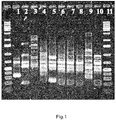
- Fig. 1 agarose gel, 1.5%, stained with ethidium bromide; Primers used: GTC 5 lane 1: Xanthomonas campestris field sample 1; Lane 2: Xanthomonas campestris reference sample; Lane 3: Xanthomonas campestris field sample 2; Lane 4: Xanthomonas campestris field sample 3; Lane 5: Xanthomonas campestris field sample 4; Lane 6: Xanthomonas campestris field sample 5; Lane 7: Xanthomonas campestris field sample 6; Lane 8: Xanthomonas campestris field sample 7; Lane 9: Xanthomonas campestris field sample 8; Lane 10: Xanthomonas campestris field sample 9; Lane 11: DNA size marker (standard) 1
- the presented example shows the typical disadvantages of identification based on "pattern matching" of genetic fingerprints.
- the samples to be compared are usually not exactly identical, individual amplificates are weaker or stronger, amplicons are missing completely or new ones appear.
- different fingerprints based on different PCR primers are made in practice with the same DNA solution.
- the individual comparative investigations are then compared with each other in a complex procedure. The effort is large and not suitable for rapid identification, as required by agricultural practice.
- the result is highly dependent on the separation matrix used or the conditions of the separation as a whole, which makes comparability of test results between individual laboratories very difficult.
- Example 2 Organism-specific DNA regions with flanking repetitive DNA sequences
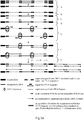
- Fig. 2 is shown schematically a part of the genome of a phytopathogen.
- organization level I a chromosome is shown schematically; the organization stage II shows the DNA double strand on which coding gene segments and regions of intergenic DNA sequences are shown; the organizational level IV provides a sequence example of repetitive (eg, microsatellites, solid line) and organism-specific (dotted line) DNA sequences.
- intergenic sequences including organism-specific DNA sequences lying between or flanking repetitive sequences, are eminently suitable templates for the preparation of organism-specific hybridizable nucleic acid molecules, such as PCR primers, for the following reasons: Intergenic sequences are not protein-coding. ( Fig. 2 (II) ), resulting in a low to missing selection pressure. They have a very high variability between individual organisms or species, but have a high specificity for the respective organism or the respective species. They can be quickly identified by the flanking repetitive DNA sequences, since they are largely statistically distributed in the genome ( Fig. 2 (II) ), but frequently found in intergenic sections ( Fig. 2 (III) ).
- Example 3 Production an organism-specific hybridizable nucleic acid molecule using the example of a PCR primer
- 5 mg of the sporangia are in a reaction vessel of. 2 ml, by means of a device suitable for this purpose, for example a shaking mill, with the addition of grinding media, for example small iron balls, comminuted.
- the comminuted sporangia are mixed with 500 ⁇ l of a detergent solution around the membranes of the organism and thus release the genomic DNA.
- the solution may, for example, consist of 0.1 M Tris pH 8, 0.05 M EDTA, 2% SDS, proteinase K.
- the comminuted sporangia are incubated in the reaction vessel with the abovementioned solution for several minutes, for example 30 minutes, at 65 ° C, incubated.
- the reaction vessel is centrifuged, for example, for 5 min at 10,000 s / t 2 * 9.81 to sediment cell debris.
- the liquid phase is removed and transferred to a new reaction vessel.
- a protein-precipitating preferably a phase-separating solution, for example. Chloroform and isoamyl alcohol in a ratio of 24 to 1, for example, added in the same amount as the liquid already in the reaction vessel.
- the phases are mixed, for example by repeatedly pivoting the reaction vessel along the longitudinal axis.
- the reaction vessel is mixed, for example, for 10 min at 10,000 s / t 2 * 9.81 to separate the phases of protein precipitation.
- the aqueous solution is transferred to a new reaction vessel.
- a DNA-precipitating solution for example. Isopropanol with a volume of 50% of the volume of the transferred aqueous phase. This is followed by incubation with the DNA-precipitating solution, eg. For 20 min at 4 ° C.
- the reaction vessel is centrifuged, for example, for 20 min at 10 000 s / t 2 * 9.81 and 4 ° C to sediment the DNA.
- the supernatant is removed.
- the sedimented DNA is dried, for example by blowing with a moderate air flow.
- the DNA is dissolved in buffer solution or water, for example bi-distilled water.
- a PCR reaction is set up in a PCR-suitable reaction vessel, for example consisting of 2.5 ⁇ l of 10 ⁇ PCR buffer, 2.5 ⁇ l of a 2 mM solution of the four Deoxynucleotide triphosphates (dNTPs), 2.5 ⁇ l magnesium chloride solution (20 mM), 1 U of a thermostable DNA polymerase, eg Taq DNA polymerase, 1 ⁇ l of, for example, 25 mM solution of the PCR primer t3B (5'-AGGTCGCGGTTCGAATCC-3 ' SEQ ID NO: 36).
- the primer is designed so that it can bind to the microsatellite t3B.
- the mixture is made up to 25 ⁇ l with water.
- the incubation in a thermocycler takes place according to the device-specific modalities.
- an incubation for example.
- an incubation at 94 ° C for 2 min.
- an incubation at eg. 94 ° C, for 1 min.
- the batch is cooled to a temperature, for example.
- the primers can hybridize to the microsatellite t3B; see. Fig. 3C .
- the mixture is incubated at the working temperature of the polymerase, for example.
- Fig. 3D The binding of the polymerase is in part Fig. 3E shown. It comes to the synthesis of new for Peronospora swinglei sl specific, ie organism-specific DNA fragments flanked by the repetitive DNA sequences of the t3B microsatellite; see. Fig. 3F ,
- Steps A to F of Fig. 3 are then repeated 20 to 30 times; see. Fig. 3G ,
- the amplicons specific for Peronospora swinglei sl obtained in the PCR are separated, for example by means of gel electrophoresis in an agarose gel; see. Fig. 3H ,
- This can be prepared, for example, by placing 1 g of agarose in a vessel, making up to 100 ⁇ l with an ion-containing liquid, for example with Tris-borate-EDTA buffer (TBE). Thereafter, the PCR reaction solution in a preformed depression of the agarose gel, for example. After addition of 1/6 vol. Glycerol and possibly dyes, which in the electrophoresis in the same direction as the DNA fragments in the agarose gel and the control of the progress of the electrophoresis these.
- the electrophoresis itself takes place in an electrophoresis chamber provided for this purpose, which is filled with an ion-containing solution containing isotonic acid, preferably with the same used for the preparation of the agarose gel.
- an ion-containing solution containing isotonic acid preferably with the same used for the preparation of the agarose gel.
- a voltage for example 140 V
- the migration of the DNA fragments is enforced by the agarose gel, which is separated by the selective retention, which is based in particular on the size of the migrating fragments.
- staining with a dye which associates or binds to nucleic acids, for example ethidium bromide, for example by incubating the agarose gel for half an hour in a dyebath containing ethidium bromide.
- a particularly well amplified band here for example in the range of 400 to 900 bp, is cut out of the agarose gel; see. Fig. 3I ,
- the nucleic acid specific for Peronospora swinglei sl which is contained in this band, is eluted, for example by means of a standard gel extraction kit, for example the QIAquick Gel Extraction Kit, according to the manufacturer QIAGEN; see. Fig. 3J ,
- PCR fragment cloning vector introduction and amplification of the resulting nucleic acid molecule into a PCR fragment cloning vector by means of a commercially available PCR fragment cloning kit, for example the Invitrogen TOPO TA cloning kit according to the manufacturer's instructions.
- a commercially available PCR fragment cloning kit for example the Invitrogen TOPO TA cloning kit according to the manufacturer's instructions.
- the vector, together with the specific nucleic acid fragment specific for Peronospora swinglei sl, are isolated, for example by means of a commercially available plasmid preparation kit, such as the GeneElute HP Plasmid Midiprep Kits from Sigma, according to the manufacturer's instructions.
- Sequencing of the Peronospora swinglei sl-specific nucleic acid fragment contained in the vector is carried out by means of vector-specific sequencing primers and conventional methods, for example by means of the Big-Dye v3.1 Terminator Cycle Sequencing Kit from Applied Biosystems, according to the manufacturer's instructions and subsequently Elucidation of the sequence of the nucleic acid molecule, for example by means of a capillary sequencer, for example the AbiPrism 3730x1 DNA Analyzer from Applied Biosystems, according to the instructions of the manufacturer; see. Fig. 3K , A section of the chromatogram of the sequencing is shown in the partial illustration Fig. 3L shown.
- Table 1 gives some more examples of nucleotide sequences from the genome of various plant pathogens flanked both 5 'and 3' by microsatellites such as the t3B, or single sequence repeats (SSRs).
- Table 1 Examples of nucleic acid molecules or nucleotide sequences which are suitable for producing an organism-specific hybridizable nucleic acid molecule.
- nucleotide sequence of the Peronospora swinglei sl-specific nucleic acid molecule elucidated in step 5 two sections were selected which are suitable for the preparation of PCR primers; see. Fig. 3M , Accordingly, the nucleotide sequence elucidated in step 5 serves as a template for the preparation of two hybridisable nucleic acid molecules which can be used as PCR primers for detecting an infection of a plant with Peronospora swinglei sl.
- nucleotide sequences are chosen so that they hybridize specifically according to the state of the art and even after database alignment (GenBank) are organism-ie Peronospora swinglei sl-specific, since they are individually in parts only in a few and in combination do not find any sequence of a nucleic acid molecule cataloged in GenBank.
- the production of the two PCR primers which can be used to detect infection of a plant with Peronospora swinglei sl, takes place, for example, by means of a 96-Column DNA Synthesizer Workstation from PolyGen according to the manufacturer's instructions; see. Fig. 3N , Numerous commercial suppliers, for example Sigma-Aldrich, offer the preparation of nucleotide oligomers and polymers.
- the hybridizable nucleic acid molecule, designated S_Ps_F, that can be used as a forward PCR primer has the sequence 5'-TGCTCTCGCAGGTCTGACTACC-3 '(SEQ ID NO: 11).
- the hybridizable nucleic acid molecule, designated S_Ps_R, which can be used as a reverse PCR primer, has the sequence 5'-cacgcaaatccctacctctgcc-3 '(SEQ ID NO: 12).
- hybridizable nucleic acid molecules Two additional hybridizable nucleic acid molecules were designed as primers for nested or nested PCR, using a second amplification based on the first amplification to further increase sensitivity.
- the hybridizable nucleic acid molecule designated S_Ps_Fn, which can be used as a forward PCR primer, has the sequence 5'-GTCTTAACGAGACCGCGTGGTC-3 '(SEQ ID NO: 13).
- S_Ps_Rn which can be used as a reverse PCR primer, has the sequence 5'-ATGACGGCAGGTGCTGTCGTTC-3 '(SEQ ID NO: 14).
- Example 2 Use of the nucleic acid molecule according to the invention (PCR primer) for the specific detection of Peronospora swinglei sl in basil seed
- the detection method essentially comprises the following 5 steps: (a) digestion of the seed; (b) DNA extraction; (c) quality inspection of the recovered DNA solution; (d) application of PCR-based detection and (e) electrophoretic separation of the PCR reaction solutions.
- the basil seed of seven different seed lots was mechanically digested for 5 min under liquid nitrogen prior to extraction.
- other digestion techniques such as e.g. comminution in mills, mixers or the enzymatic degradation of the structuring cell components.
- the extraction solution was incubated for 30 min with gentle shaking on ice. After sedimentation of the insoluble constituents by a five-minute Centrifugation at least 9,000 s / t 2 * 9.81, the liquid supernatant was transferred completely to a new centrifugation tube. After adding 0.6 volume of isopropanol (100%), the extraction solution was incubated for 10 minutes with gentle shaking at room temperature. By centrifuging for at least 9,000 s / t 2 * 9.81 for 10 minutes, the now insoluble DNA was sedimented. After complete supernatant lift, the sediment was washed twice with ethanol (70%) and then dried.
- the dried sediment was resuspended in 5 ml of TE buffer and then admixed with 500 ⁇ l of a 1% spermidine solution. After a 15 minute incubation on ice, the insoluble constituents were sedimented by centrifugation for 10 minutes, the supernatant was discarded. After resuspension of the sediment by addition of 1 ml of Spermidine Removal Buffer (sodium acetate: 300 mM, magnesium acetate: 10 mM) and 3 ml of cold ethanol (100%), the mixture is incubated for 1 hour on ice with simultaneous gentle shaking. By centrifuging for at least 9,000 s / t 2 * 9.81 for 10 minutes, the insoluble DNA was sedimented. After complete supernatant lift, the sediment was washed twice with ethanol (70%) and then dried.
- Spermidine Removal Buffer sodium acetate: 300 mM, magnesium acetate: 10 mM
- the isolated and purified DNA was taken up in 500 ⁇ l H 2 O, transferred to a 1.5 ml reaction tube and stored at -18 ° C until further use.
- the DNA was purified using a commercially available DNA purification kit, e.g. by GE Healthcare in the form of the "illustra GFX TM PCR DNA and Gel Band Purification Kit", post-cleaned and retested.
- a commercially available DNA purification kit e.g. by GE Healthcare in the form of the "illustra GFX TM PCR DNA and Gel Band Purification Kit", post-cleaned and retested.
- a PCR reaction is set up in a PCR-compatible reaction vessel, for example consisting of 2.5 ⁇ l of 10 ⁇ PCR buffer, 2.5 ⁇ l of a 2 mM solution of the four deoxynucleotide triphosphates (dNTPs), 2 ⁇ l of magnesium chloride solution (20 mM), 1 U of a thermostable DNA polymerase, eg Taq DNA polymerase, 1 ⁇ l of, for example, 25 mM solution of the PCR primer S_Ps_F (5'-TGCTCTCGCAGGTCTGACTACC -3 '; SEQ ID NO: 11) and S Ps R (5'). -CACGCAAATCCCTACCTCTGCC-3 '; SEQ ID NO: 12).
- the primers are designed to match the identified, for Peronospora swinglei sl specific intergenic DNA segment (SEQ ID NO: 2).
- the mixture is made up to 25 ⁇ l with water.
- the PCR is carried out, for example with the following conditions:
- the incubation in a thermocycler takes place in accordance with the device-specific modalities. First, for example, an incubation at 94 ° C for 5 min. This is followed by incubation at, for example, 94 ° C. for 30 seconds. Thereafter, incubation at 65 ° C. for 30 seconds. This is followed by incubation at 72 ° C. for 40 seconds. The last three steps are then repeated, for example, 45 times. A final incubation at 72 ° C for 4 minutes may then be performed.
- a second detection reaction (nested PCR).
- the incubation in a thermocycler takes place according to the device-specific modalities.
- the amplificates obtained in the detection reaction 2 are separated, for example by means of gel electrophoresis, for example in an agarose gel.
- This can be prepared, for example, by adding 1 g of agarose to a vessel, to 100 ⁇ l with an ion-containing Liquid is filled, for example with Tris-borate-EDTA buffer (TBE). Thereafter, the PCR reaction solution is placed in a preformed well of the agarose gel, for example. After addition of 1/6 vol. Glycerol and optionally dyes, which in the electrophoresis in the same direction as the DNA fragments in the agarose gel and the control of the progress of the electrophoresis serve.
- the electrophoresis itself is carried out in a dedicated electrophoresis chamber filled with an isotonic ion-containing solution to the gel, preferably with the same, which has been used to prepare the agarose gel.
- a voltage for example 140 V
- the migration of the DNA fragments is enforced by the agarose gel, which is separated by the selective retention, which is based in particular on the size of the migrating fragments.
- staining with a dye which associates or binds to nucleic acids for example ethidium bromide, for example by incubating the agarose gel for half an hour in a dyebath containing ethidium bromide.
- a dye which associates or binds to nucleic acids
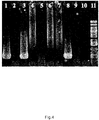
- the traces of the 1.5% agarose gel were as follows: Lane 1: Seed Sample 1 (contaminated); Lane 2: seed sample 2; Lane 3: seed sample 3 (contaminated); Lane 4: seed sample 4; Lane 5: seed sample 5; Lane 6: seed sample 6; Lane 7: seed sample 7; Lane 8: reference DNA from Peronospora swinglei sl (positive control); Lane 9: reference DNA of Ocimum basilicum (basil) (negative control 1); Lane 10: PCR approach without DNA (negative control 2); Lane 11: DNA size marker (standard) 1.
- the reference sample of Peronospora swinglei sl shows a clearly visible amplicon in the size of 500 nt (A).
- the white band is the organism-specific hybridizable nucleic acid molecule of Peronospora swinglei sl.
- the same amplificate is found in the seed mixtures 1 (lane 1) and 3 (lane 3) PCR assays; the amplificate is not present in the seed samples 2, 4-7 (lanes 2, 4 -7) and in the negative controls 1 and 2 (tracks 9 and 10).
- the pathogen Peronospora swinglei sl could thus be clearly detected in the seed samples 1 and 3 using the method according to the invention.
- the smear appearing in lanes 4, 6 and 7 is a nonspecific side reaction typical of nested PCR approaches, which is not to be confused with the specific amplificate in Lanes 1, 3 and 8. False negative reactions can be excluded by the previous quality check. False positive reactions are excluded by the inclusion of the negative controls 1 and 2.
- the application of the method according to the invention in the form of a PCR-based detection leads to a clearly interpretable result.
- the seed lots contaminated with the pathogen Peronospora swinglei sl can be safely identified and removed from the market.
- the proliferation of the target organism, in this case a dangerous pest is prevented.
- the detection method according to the invention has a number of advantages over pattern analysis. It is particularly characterized by its flexible use (line 11) and its high adaptability to new organisms (line 12).
- the production method according to the invention enables the user to develop new organism-specific detection methods within a short time and to use them in practice for the reliable identification of organisms.
Landscapes
- Chemical & Material Sciences (AREA)
- Life Sciences & Earth Sciences (AREA)
- Organic Chemistry (AREA)
- Engineering & Computer Science (AREA)
- Proteomics, Peptides & Aminoacids (AREA)
- Health & Medical Sciences (AREA)
- Zoology (AREA)
- Wood Science & Technology (AREA)
- Analytical Chemistry (AREA)
- Biotechnology (AREA)
- Microbiology (AREA)
- Biochemistry (AREA)
- Biophysics (AREA)
- Molecular Biology (AREA)
- Physics & Mathematics (AREA)
- Genetics & Genomics (AREA)
- General Health & Medical Sciences (AREA)
- Immunology (AREA)
- Bioinformatics & Cheminformatics (AREA)
- General Engineering & Computer Science (AREA)
- Botany (AREA)
- Mycology (AREA)
- Chemical Kinetics & Catalysis (AREA)
- Measuring Or Testing Involving Enzymes Or Micro-Organisms (AREA)
- Saccharide Compounds (AREA)
Priority Applications (1)
| Application Number | Priority Date | Filing Date | Title |
|---|---|---|---|
| EP16181282.1A EP3109328A1 (fr) | 2007-02-23 | 2008-02-21 | Molecule d'acide nucleique hybridisable specifique a l'organisme |
Applications Claiming Priority (2)
| Application Number | Priority Date | Filing Date | Title |
|---|---|---|---|
| DE102007010311A DE102007010311A1 (de) | 2007-02-23 | 2007-02-23 | Organismusspezifisches hybridisierbares Nucleinsäuremolekül |
| EP08715931A EP2129798A2 (fr) | 2007-02-23 | 2008-02-21 | Molécule d'acide nucléique hybridable spécifique d'un organisme |
Related Parent Applications (2)
| Application Number | Title | Priority Date | Filing Date |
|---|---|---|---|
| EP08715931.5 Division | 2008-02-21 | ||
| EP08715931A Division EP2129798A2 (fr) | 2007-02-23 | 2008-02-21 | Molécule d'acide nucléique hybridable spécifique d'un organisme |
Related Child Applications (1)
| Application Number | Title | Priority Date | Filing Date |
|---|---|---|---|
| EP16181282.1A Division EP3109328A1 (fr) | 2007-02-23 | 2008-02-21 | Molecule d'acide nucleique hybridisable specifique a l'organisme |
Publications (3)
| Publication Number | Publication Date |
|---|---|
| EP2471955A2 true EP2471955A2 (fr) | 2012-07-04 |
| EP2471955A3 EP2471955A3 (fr) | 2012-09-05 |
| EP2471955B1 EP2471955B1 (fr) | 2016-07-27 |
Family
ID=39352250
Family Applications (3)
| Application Number | Title | Priority Date | Filing Date |
|---|---|---|---|
| EP16181282.1A Withdrawn EP3109328A1 (fr) | 2007-02-23 | 2008-02-21 | Molecule d'acide nucleique hybridisable specifique a l'organisme |
| EP08715931A Withdrawn EP2129798A2 (fr) | 2007-02-23 | 2008-02-21 | Molécule d'acide nucléique hybridable spécifique d'un organisme |
| EP12153295.6A Not-in-force EP2471955B1 (fr) | 2007-02-23 | 2008-02-21 | Molécule d'acide nucléique hybridisable spécifique à l'organisme |
Family Applications Before (2)
| Application Number | Title | Priority Date | Filing Date |
|---|---|---|---|
| EP16181282.1A Withdrawn EP3109328A1 (fr) | 2007-02-23 | 2008-02-21 | Molecule d'acide nucleique hybridisable specifique a l'organisme |
| EP08715931A Withdrawn EP2129798A2 (fr) | 2007-02-23 | 2008-02-21 | Molécule d'acide nucléique hybridable spécifique d'un organisme |
Country Status (4)
| Country | Link |
|---|---|
| US (1) | US20100055703A1 (fr) |
| EP (3) | EP3109328A1 (fr) |
| DE (1) | DE102007010311A1 (fr) |
| WO (1) | WO2008101701A2 (fr) |
Cited By (1)
| Publication number | Priority date | Publication date | Assignee | Title |
|---|---|---|---|---|
| DE102020121708B3 (de) | 2020-08-19 | 2021-11-11 | Andreas Lange | Tür mit Schauglas für Haushaltsgeräte |
Families Citing this family (2)
| Publication number | Priority date | Publication date | Assignee | Title |
|---|---|---|---|---|
| JP6515884B2 (ja) * | 2016-06-29 | 2019-05-22 | トヨタ自動車株式会社 | Dnaプローブの作製方法及びdnaプローブを用いたゲノムdna解析方法 |
| JP7056012B2 (ja) | 2017-05-19 | 2022-04-19 | トヨタ自動車株式会社 | ランダムプライマーセット、及びこれを用いたdnaライブラリーの作製方法 |
Family Cites Families (16)
| Publication number | Priority date | Publication date | Assignee | Title |
|---|---|---|---|---|
| US5427932A (en) * | 1991-04-09 | 1995-06-27 | Reagents Of The University Of California | Repeat sequence chromosome specific nucleic acid probes and methods of preparing and using |
| US5585238A (en) * | 1994-04-25 | 1996-12-17 | Ciba-Geigy Corporation | Detection of fungal pathogens using the polymerase chain reaction |
| WO1995033075A1 (fr) * | 1994-05-31 | 1995-12-07 | Cornell Research Foundation, Inc. | Procede d'identification d'echantillons d'acide nucleique preleves sur des organismes contenant de l'adn |
| WO1996017082A2 (fr) * | 1994-11-28 | 1996-06-06 | E.I. Du Pont De Nemours And Company | Sondes de microsatellites composes pour la detection de polymorphismes genetiques |
| GB9509112D0 (en) * | 1995-05-04 | 1995-06-28 | Scottish Crop Research Inst | Polynucleotide |
| EP1007730A4 (fr) * | 1996-08-30 | 2004-04-28 | Invitrogen Corp | PROCEDES D'IDENTIFICATION ET D'ISOLEMENT DE SEQUENCES DE NUCLEOTIDES SPECIFIQUES DANS L'ADNc ET L'ADN GENOMIQUE |
| WO1998040515A1 (fr) * | 1997-03-10 | 1998-09-17 | Mansour Samadpour | Procede d'identification de sous-types genetiques |
| DE19835109A1 (de) * | 1997-10-02 | 1999-04-15 | Gvs Ges Fuer Erwerb Und Verwer | Mikrosatellitenmarker für Secale cereale, Triticale und verwandte Spezies |
| US6277571B1 (en) * | 1997-10-03 | 2001-08-21 | Virginia Commonwealth University Intellectual Property Foundation | Sequential consensus region-directed amplification of known and novel members of gene families |
| EP1173612B1 (fr) * | 1999-04-09 | 2004-09-29 | Keygene N.V. | METHODE DE DETECTION ET/OU D'ANALYSE, AU MOYEN DE TECHNIQUES D'EXTENSION D'AMORCES, DE POLYMORPHISMES NUCLEOTIDIQUES UNIQUES DANS DES FRAGMENTS DE RESTRICTION, ET NOTAMMENT DANS DES FRAGMENTS DE RESTRICTION AMPLIFIES GENERES PAR AFLP$m(3) |
| HK1046298A1 (zh) * | 1999-08-10 | 2003-01-03 | Syngenta Participations Ag | 基於-pcr的检测和tapesia yallundae和tapesia针形菌的定量 |
| US6479244B1 (en) * | 2001-04-23 | 2002-11-12 | Galileo Genomics | Method for genotyping microsatellite DNA markers |
| AU2003201060A1 (en) * | 2002-04-08 | 2003-10-20 | Centre For Dna Fingerprinting And Diagnostics | Novel fissr-pcr primers and method of genotyping diverse genomes of plant and animal systems including rice varieties |
| AU2003299694A1 (en) * | 2002-12-20 | 2004-07-22 | Qiagen Gmbh | Nucleic acid amplification |
| TWI334885B (en) * | 2004-07-05 | 2010-12-21 | Food And Drug Administration Dept Of Health | Primers, probes and reference plasmid for detection of meat |
| ITRM20050235A1 (it) * | 2005-05-13 | 2006-11-14 | Biolab S P A | Tracciante alimentare naturale. |
-
2007
- 2007-02-23 DE DE102007010311A patent/DE102007010311A1/de not_active Withdrawn
-
2008
- 2008-02-21 EP EP16181282.1A patent/EP3109328A1/fr not_active Withdrawn
- 2008-02-21 WO PCT/EP2008/001371 patent/WO2008101701A2/fr not_active Ceased
- 2008-02-21 EP EP08715931A patent/EP2129798A2/fr not_active Withdrawn
- 2008-02-21 EP EP12153295.6A patent/EP2471955B1/fr not_active Not-in-force
-
2009
- 2009-08-21 US US12/545,614 patent/US20100055703A1/en not_active Abandoned
Cited By (1)
| Publication number | Priority date | Publication date | Assignee | Title |
|---|---|---|---|---|
| DE102020121708B3 (de) | 2020-08-19 | 2021-11-11 | Andreas Lange | Tür mit Schauglas für Haushaltsgeräte |
Also Published As
| Publication number | Publication date |
|---|---|
| DE102007010311A1 (de) | 2008-08-28 |
| EP3109328A1 (fr) | 2016-12-28 |
| WO2008101701A2 (fr) | 2008-08-28 |
| US20100055703A1 (en) | 2010-03-04 |
| EP2129798A2 (fr) | 2009-12-09 |
| EP2471955B1 (fr) | 2016-07-27 |
| WO2008101701A3 (fr) | 2009-04-02 |
| EP2471955A3 (fr) | 2012-09-05 |
Similar Documents
| Publication | Publication Date | Title |
|---|---|---|
| DE69225333T2 (de) | Verfahren für den Nachweis von Mikroorganismen unter verwendung von direkter undwillkürlicher DNA Amplifikation. | |
| DE3486467T3 (de) | Verfahren zum Nachweis, Identifizieren und Quantifizieren von Organismen und Viren | |
| DE3855064T2 (de) | Selektive Amplifikation von Oligonukleotiden-Zielsequenzen | |
| DE69105959T2 (de) | Verfahren zur unterscheidung von nukleinsäuren auf basis von nukleotidverschiedenheiten. | |
| DE69034219T2 (de) | Nukleinsäure-Sonden und Verfahren zum Nachweis von Fungi | |
| DE69937447T2 (de) | Verfahren zur erkennung von nukleinsäuren | |
| DE69003477T2 (de) | Verfahren zum Nachweis von Nucleinsäuren. | |
| WO2001007648A1 (fr) | Procede permettant de detecter des organismes de façon specifique a l'espece | |
| Hauswirth et al. | Inter-and intrapopulation studies of ancient humans | |
| EP0689591B1 (fr) | Methode de contr le de l'invasion des graines de colza et autres cruciferes par le champignon leptosphaeria maculans | |
| DE69032778T2 (de) | Verfahren zur Untersuchung von durch Mikroorganismen verursachten Lebensmittelvergiftungen und Reagens dafür | |
| EP2446054B1 (fr) | Procédé d'amplification d'adn en utilisant du tétraéthylèneglycole | |
| Sial et al. | Two-step method for rapid isolation of genomic DNA and validation of R81T insecticide resistance mutation in Myzus persicae | |
| Rogstad | [20] Surveying plant genomes for variable number of tandem repeat loci | |
| Armaleo et al. | Sizing the fungal and algal genomes of the lichen Cladonia grayi through quantitative PCR | |
| EP2471955B1 (fr) | Molécule d'acide nucléique hybridisable spécifique à l'organisme | |
| DE102015012691A1 (de) | Verfahren zum quantitativen Nachweis von Vibrio parahaemolyticus, Vibrio vulnificus und Vibrio cholerae | |
| DE102008013715B4 (de) | Verfahren zur DNA-Analyse | |
| Nguyen et al. | Development of molecular tools for the detection of freshwater diatoms | |
| EP0998483A2 (fr) | Molecule d'acide nucleique, necessaire et utilisation | |
| EP0922113A1 (fr) | Hybridation sequentielle d'adn de cellules fongiques ainsi que procede d'analyse de cellules fongiques dans des materiaux cliniques | |
| DE202013004928U1 (de) | Mittel zur schnellen quantitativen und qualitativen Bestimmung von Schimmelpilzen und Hefen | |
| Onache et al. | Comparison of some DNA extraction methods from monovarietal must and wines | |
| EP0879300B1 (fr) | Utilisation d'amorces pour analyse universelle des empreintes digitales d'adn | |
| DE102006022569B4 (de) | Spezies-unabhängiges Nachweisverfahren für biologisches Material |
Legal Events
| Date | Code | Title | Description |
|---|---|---|---|
| AC | Divisional application: reference to earlier application |
Ref document number: 2129798 Country of ref document: EP Kind code of ref document: P |
|
| AK | Designated contracting states |
Kind code of ref document: A2 Designated state(s): AT BE BG CH CY CZ DE DK EE ES FI FR GB GR HR HU IE IS IT LI LT LU LV MC MT NL NO PL PT RO SE SI SK TR |
|
| PUAI | Public reference made under article 153(3) epc to a published international application that has entered the european phase |
Free format text: ORIGINAL CODE: 0009012 |
|
| PUAL | Search report despatched |
Free format text: ORIGINAL CODE: 0009013 |
|
| RIN1 | Information on inventor provided before grant (corrected) |
Inventor name: BRAENDLE, FRANK Inventor name: THINES, MARCO, PROF. DR. |
|
| AK | Designated contracting states |
Kind code of ref document: A3 Designated state(s): AT BE BG CH CY CZ DE DK EE ES FI FR GB GR HR HU IE IS IT LI LT LU LV MC MT NL NO PL PT RO SE SI SK TR |
|
| RIC1 | Information provided on ipc code assigned before grant |
Ipc: C12Q 1/68 20060101AFI20120802BHEP |
|
| 17P | Request for examination filed |
Effective date: 20130301 |
|
| 17Q | First examination report despatched |
Effective date: 20130903 |
|
| 17Q | First examination report despatched |
Effective date: 20140205 |
|
| GRAP | Despatch of communication of intention to grant a patent |
Free format text: ORIGINAL CODE: EPIDOSNIGR1 |
|
| INTG | Intention to grant announced |
Effective date: 20160126 |
|
| GRAS | Grant fee paid |
Free format text: ORIGINAL CODE: EPIDOSNIGR3 |
|
| GRAR | Information related to intention to grant a patent recorded |
Free format text: ORIGINAL CODE: EPIDOSNIGR71 |
|
| GRAA | (expected) grant |
Free format text: ORIGINAL CODE: 0009210 |
|
| INTG | Intention to grant announced |
Effective date: 20160614 |
|
| AC | Divisional application: reference to earlier application |
Ref document number: 2129798 Country of ref document: EP Kind code of ref document: P |
|
| AK | Designated contracting states |
Kind code of ref document: B1 Designated state(s): AT BE BG CH CY CZ DE DK EE ES FI FR GB GR HR HU IE IS IT LI LT LU LV MC MT NL NO PL PT RO SE SI SK TR |
|
| REG | Reference to a national code |
Ref country code: GB Ref legal event code: FG4D Free format text: NOT ENGLISH |
|
| REG | Reference to a national code |
Ref country code: CH Ref legal event code: EP |
|
| REG | Reference to a national code |
Ref country code: AT Ref legal event code: REF Ref document number: 815850 Country of ref document: AT Kind code of ref document: T Effective date: 20160815 |
|
| REG | Reference to a national code |
Ref country code: IE Ref legal event code: FG4D Free format text: LANGUAGE OF EP DOCUMENT: GERMAN |
|
| REG | Reference to a national code |
Ref country code: DE Ref legal event code: R096 Ref document number: 502008014445 Country of ref document: DE |
|
| REG | Reference to a national code |
Ref country code: CH Ref legal event code: NV Representative=s name: ISLER AND PEDRAZZINI AG, CH |
|
| REG | Reference to a national code |
Ref country code: NL Ref legal event code: FP |
|
| REG | Reference to a national code |
Ref country code: LT Ref legal event code: MG4D |
|
| PG25 | Lapsed in a contracting state [announced via postgrant information from national office to epo] |
Ref country code: IT Free format text: LAPSE BECAUSE OF FAILURE TO SUBMIT A TRANSLATION OF THE DESCRIPTION OR TO PAY THE FEE WITHIN THE PRESCRIBED TIME-LIMIT Effective date: 20160727 Ref country code: IS Free format text: LAPSE BECAUSE OF FAILURE TO SUBMIT A TRANSLATION OF THE DESCRIPTION OR TO PAY THE FEE WITHIN THE PRESCRIBED TIME-LIMIT Effective date: 20161127 Ref country code: NO Free format text: LAPSE BECAUSE OF FAILURE TO SUBMIT A TRANSLATION OF THE DESCRIPTION OR TO PAY THE FEE WITHIN THE PRESCRIBED TIME-LIMIT Effective date: 20161027 Ref country code: FI Free format text: LAPSE BECAUSE OF FAILURE TO SUBMIT A TRANSLATION OF THE DESCRIPTION OR TO PAY THE FEE WITHIN THE PRESCRIBED TIME-LIMIT Effective date: 20160727 Ref country code: LT Free format text: LAPSE BECAUSE OF FAILURE TO SUBMIT A TRANSLATION OF THE DESCRIPTION OR TO PAY THE FEE WITHIN THE PRESCRIBED TIME-LIMIT Effective date: 20160727 Ref country code: HR Free format text: LAPSE BECAUSE OF FAILURE TO SUBMIT A TRANSLATION OF THE DESCRIPTION OR TO PAY THE FEE WITHIN THE PRESCRIBED TIME-LIMIT Effective date: 20160727 |
|
| REG | Reference to a national code |
Ref country code: FR Ref legal event code: PLFP Year of fee payment: 10 |
|
| PG25 | Lapsed in a contracting state [announced via postgrant information from national office to epo] |
Ref country code: GR Free format text: LAPSE BECAUSE OF FAILURE TO SUBMIT A TRANSLATION OF THE DESCRIPTION OR TO PAY THE FEE WITHIN THE PRESCRIBED TIME-LIMIT Effective date: 20161028 Ref country code: ES Free format text: LAPSE BECAUSE OF FAILURE TO SUBMIT A TRANSLATION OF THE DESCRIPTION OR TO PAY THE FEE WITHIN THE PRESCRIBED TIME-LIMIT Effective date: 20160727 Ref country code: SE Free format text: LAPSE BECAUSE OF FAILURE TO SUBMIT A TRANSLATION OF THE DESCRIPTION OR TO PAY THE FEE WITHIN THE PRESCRIBED TIME-LIMIT Effective date: 20160727 Ref country code: LV Free format text: LAPSE BECAUSE OF FAILURE TO SUBMIT A TRANSLATION OF THE DESCRIPTION OR TO PAY THE FEE WITHIN THE PRESCRIBED TIME-LIMIT Effective date: 20160727 Ref country code: PT Free format text: LAPSE BECAUSE OF FAILURE TO SUBMIT A TRANSLATION OF THE DESCRIPTION OR TO PAY THE FEE WITHIN THE PRESCRIBED TIME-LIMIT Effective date: 20161128 Ref country code: PL Free format text: LAPSE BECAUSE OF FAILURE TO SUBMIT A TRANSLATION OF THE DESCRIPTION OR TO PAY THE FEE WITHIN THE PRESCRIBED TIME-LIMIT Effective date: 20160727 |
|
| PG25 | Lapsed in a contracting state [announced via postgrant information from national office to epo] |
Ref country code: EE Free format text: LAPSE BECAUSE OF FAILURE TO SUBMIT A TRANSLATION OF THE DESCRIPTION OR TO PAY THE FEE WITHIN THE PRESCRIBED TIME-LIMIT Effective date: 20160727 Ref country code: RO Free format text: LAPSE BECAUSE OF FAILURE TO SUBMIT A TRANSLATION OF THE DESCRIPTION OR TO PAY THE FEE WITHIN THE PRESCRIBED TIME-LIMIT Effective date: 20160727 |
|
| REG | Reference to a national code |
Ref country code: DE Ref legal event code: R097 Ref document number: 502008014445 Country of ref document: DE |
|
| PG25 | Lapsed in a contracting state [announced via postgrant information from national office to epo] |
Ref country code: SK Free format text: LAPSE BECAUSE OF FAILURE TO SUBMIT A TRANSLATION OF THE DESCRIPTION OR TO PAY THE FEE WITHIN THE PRESCRIBED TIME-LIMIT Effective date: 20160727 Ref country code: DK Free format text: LAPSE BECAUSE OF FAILURE TO SUBMIT A TRANSLATION OF THE DESCRIPTION OR TO PAY THE FEE WITHIN THE PRESCRIBED TIME-LIMIT Effective date: 20160727 Ref country code: CZ Free format text: LAPSE BECAUSE OF FAILURE TO SUBMIT A TRANSLATION OF THE DESCRIPTION OR TO PAY THE FEE WITHIN THE PRESCRIBED TIME-LIMIT Effective date: 20160727 Ref country code: BG Free format text: LAPSE BECAUSE OF FAILURE TO SUBMIT A TRANSLATION OF THE DESCRIPTION OR TO PAY THE FEE WITHIN THE PRESCRIBED TIME-LIMIT Effective date: 20161027 |
|
| PLBE | No opposition filed within time limit |
Free format text: ORIGINAL CODE: 0009261 |
|
| STAA | Information on the status of an ep patent application or granted ep patent |
Free format text: STATUS: NO OPPOSITION FILED WITHIN TIME LIMIT |
|
| 26N | No opposition filed |
Effective date: 20170502 |
|
| PG25 | Lapsed in a contracting state [announced via postgrant information from national office to epo] |
Ref country code: SI Free format text: LAPSE BECAUSE OF FAILURE TO SUBMIT A TRANSLATION OF THE DESCRIPTION OR TO PAY THE FEE WITHIN THE PRESCRIBED TIME-LIMIT Effective date: 20160727 |
|
| PG25 | Lapsed in a contracting state [announced via postgrant information from national office to epo] |
Ref country code: MC Free format text: LAPSE BECAUSE OF FAILURE TO SUBMIT A TRANSLATION OF THE DESCRIPTION OR TO PAY THE FEE WITHIN THE PRESCRIBED TIME-LIMIT Effective date: 20160727 |
|
| REG | Reference to a national code |
Ref country code: IE Ref legal event code: MM4A |
|
| REG | Reference to a national code |
Ref country code: FR Ref legal event code: PLFP Year of fee payment: 11 |
|
| PG25 | Lapsed in a contracting state [announced via postgrant information from national office to epo] |
Ref country code: IE Free format text: LAPSE BECAUSE OF NON-PAYMENT OF DUE FEES Effective date: 20170221 |
|
| PGFP | Annual fee paid to national office [announced via postgrant information from national office to epo] |
Ref country code: LU Payment date: 20180216 Year of fee payment: 11 Ref country code: NL Payment date: 20180216 Year of fee payment: 11 |
|
| PGFP | Annual fee paid to national office [announced via postgrant information from national office to epo] |
Ref country code: GB Payment date: 20180216 Year of fee payment: 11 Ref country code: CH Payment date: 20180216 Year of fee payment: 11 |
|
| PGFP | Annual fee paid to national office [announced via postgrant information from national office to epo] |
Ref country code: AT Payment date: 20180219 Year of fee payment: 11 Ref country code: BE Payment date: 20180216 Year of fee payment: 11 Ref country code: FR Payment date: 20180223 Year of fee payment: 11 |
|
| PG25 | Lapsed in a contracting state [announced via postgrant information from national office to epo] |
Ref country code: MT Free format text: LAPSE BECAUSE OF FAILURE TO SUBMIT A TRANSLATION OF THE DESCRIPTION OR TO PAY THE FEE WITHIN THE PRESCRIBED TIME-LIMIT Effective date: 20160727 |
|
| PG25 | Lapsed in a contracting state [announced via postgrant information from national office to epo] |
Ref country code: HU Free format text: LAPSE BECAUSE OF FAILURE TO SUBMIT A TRANSLATION OF THE DESCRIPTION OR TO PAY THE FEE WITHIN THE PRESCRIBED TIME-LIMIT; INVALID AB INITIO Effective date: 20080221 |
|
| REG | Reference to a national code |
Ref country code: CH Ref legal event code: PL |
|
| REG | Reference to a national code |
Ref country code: NL Ref legal event code: MM Effective date: 20190301 |
|
| REG | Reference to a national code |
Ref country code: AT Ref legal event code: MM01 Ref document number: 815850 Country of ref document: AT Kind code of ref document: T Effective date: 20190221 |
|
| GBPC | Gb: european patent ceased through non-payment of renewal fee |
Effective date: 20190221 |
|
| PG25 | Lapsed in a contracting state [announced via postgrant information from national office to epo] |
Ref country code: CY Free format text: LAPSE BECAUSE OF NON-PAYMENT OF DUE FEES Effective date: 20160727 Ref country code: LU Free format text: LAPSE BECAUSE OF NON-PAYMENT OF DUE FEES Effective date: 20190221 |
|
| REG | Reference to a national code |
Ref country code: BE Ref legal event code: MM Effective date: 20190228 |
|
| PG25 | Lapsed in a contracting state [announced via postgrant information from national office to epo] |
Ref country code: CH Free format text: LAPSE BECAUSE OF NON-PAYMENT OF DUE FEES Effective date: 20190228 Ref country code: AT Free format text: LAPSE BECAUSE OF NON-PAYMENT OF DUE FEES Effective date: 20190221 Ref country code: LI Free format text: LAPSE BECAUSE OF NON-PAYMENT OF DUE FEES Effective date: 20190228 |
|
| PG25 | Lapsed in a contracting state [announced via postgrant information from national office to epo] |
Ref country code: NL Free format text: LAPSE BECAUSE OF NON-PAYMENT OF DUE FEES Effective date: 20190301 Ref country code: GB Free format text: LAPSE BECAUSE OF NON-PAYMENT OF DUE FEES Effective date: 20190221 |
|
| PG25 | Lapsed in a contracting state [announced via postgrant information from national office to epo] |
Ref country code: BE Free format text: LAPSE BECAUSE OF NON-PAYMENT OF DUE FEES Effective date: 20190228 Ref country code: FR Free format text: LAPSE BECAUSE OF NON-PAYMENT OF DUE FEES Effective date: 20190228 |
|
| PG25 | Lapsed in a contracting state [announced via postgrant information from national office to epo] |
Ref country code: TR Free format text: LAPSE BECAUSE OF FAILURE TO SUBMIT A TRANSLATION OF THE DESCRIPTION OR TO PAY THE FEE WITHIN THE PRESCRIBED TIME-LIMIT Effective date: 20160727 |
|
| P01 | Opt-out of the competence of the unified patent court (upc) registered |
Effective date: 20230504 |
|
| PGFP | Annual fee paid to national office [announced via postgrant information from national office to epo] |
Ref country code: DE Payment date: 20240325 Year of fee payment: 17 |
|
| REG | Reference to a national code |
Ref country code: DE Ref legal event code: R119 Ref document number: 502008014445 Country of ref document: DE |
|
| PG25 | Lapsed in a contracting state [announced via postgrant information from national office to epo] |
Ref country code: DE Free format text: LAPSE BECAUSE OF NON-PAYMENT OF DUE FEES Effective date: 20250902 |